Archive
Wines of South America: Making Wine Geek and Wine Lover Happy
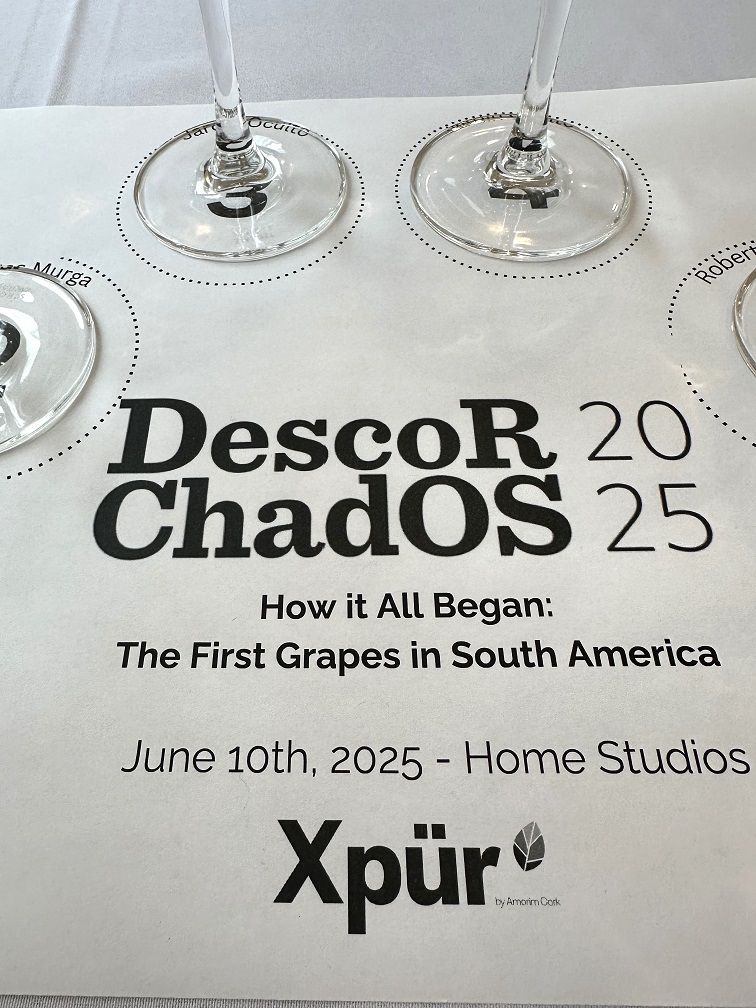 Here is where it gets interesting. We all heard of wine geeks, people who get excited about little nerdy wine details, such as vineyard blocks, blending methodology, or amphorae versus cement tank aging. And then you have the wine lovers, aficionados – the people who simply go after the hedonistic pleasure of wine drinking. Can these two personas be happy at the same time? I can’t speak for all the wine people with multiple personalities, but I can definitely answer for this one, the moi. I attended Descorchados 2025 tasting of South American wines, and both inner geek and aficionado were happy.
Just in case you are curious, DescoRChadOS is a guide for the wine of South America, published since 1999. Descorchados also runs wine tasting events dedicated to the wines of South America, and the 2025 event was the first return of the tasting to New York City since 2019.
As a self-appointed wine geek, I love all the uncommon wine traits – new (to me) and lesser-known grape varieties, new (to me) and unknown, even obscure places, authentic (indigenous, autochthonous) grapes, low intervention/natural wines, unique wines and vineyards (e.g. old vineyards). In this tasting, I found all of these things – indigenous, unknown (and thus new to me) grapes harvested from the 200-year-old vineyards, from the countries I had never tasted the wines from before. Happy, happy, happy wine geek.
And then there were world-class, beautiful, delicious, hedonistic wines – Malbec, Syrah, classic method Sparkling wines – all in the same tasting. As I said, both geek and aficionado were very happy.
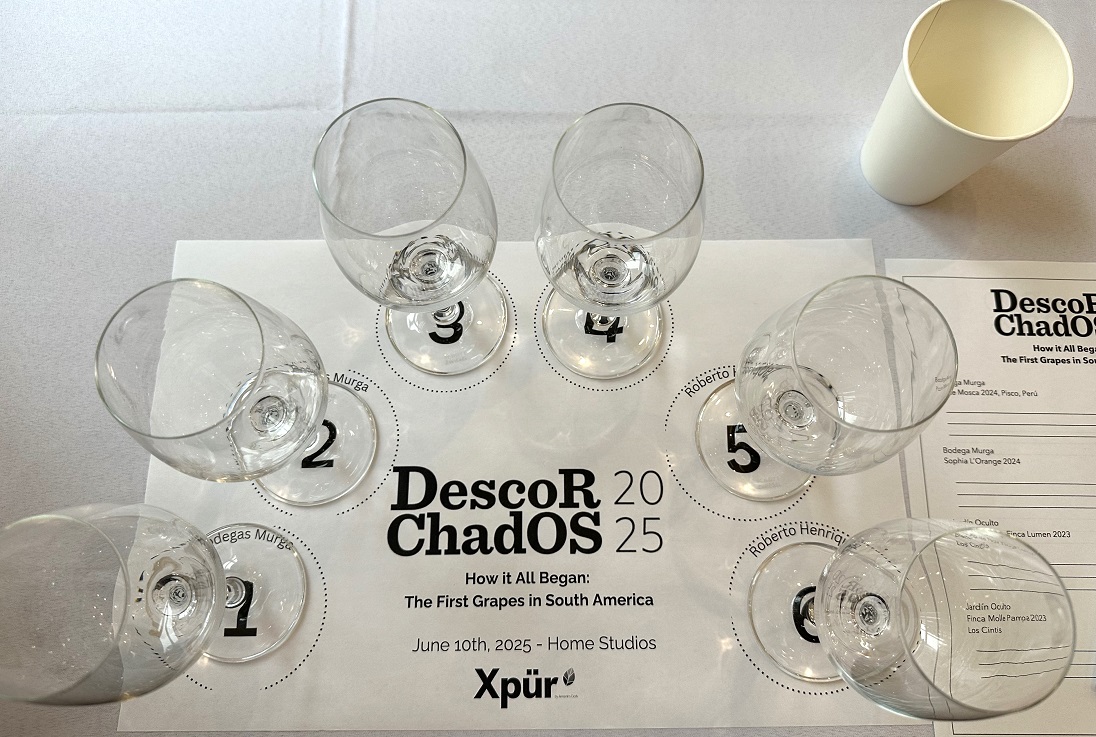
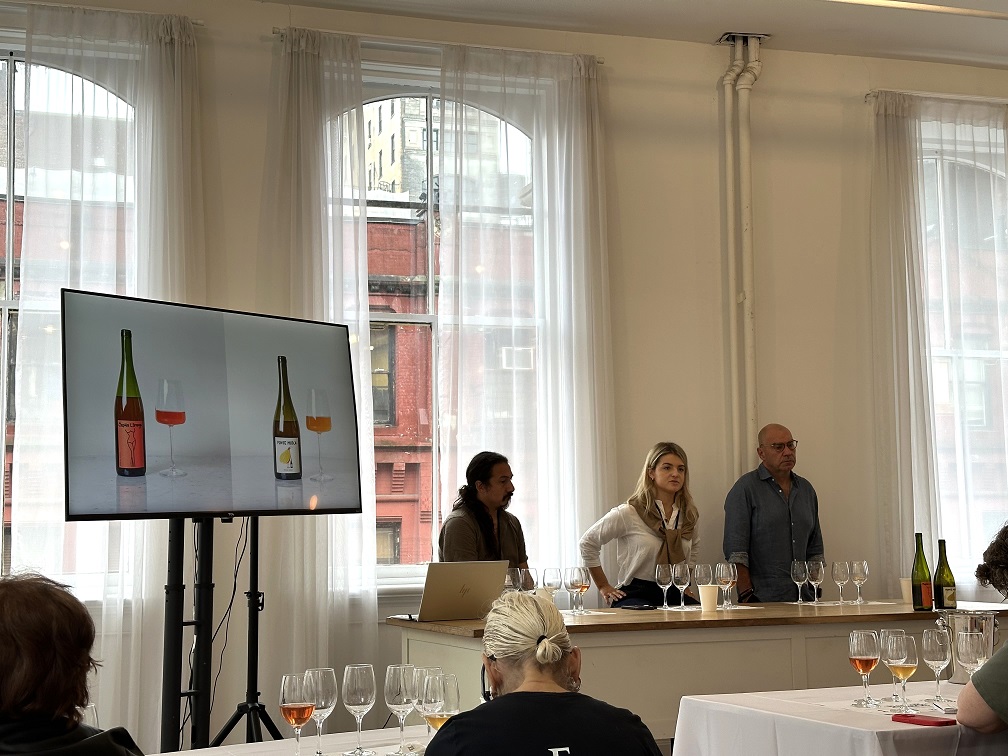
Let’s start with the unique portion first, as I had a chance to attend the masterclass presenting the historical wines of South America.
When it comes to wine from South America, Argentina and Chile are the two countries that come to mind first, followed by Uruguay and maybe Brazil. But the grapes had been growing in most of the South American countries for a long time, with vineyards usually started by European immigrants. It appears that the oldest vineyard in South America is called Tacoma and it is located in Perú, originally planted by Spanish immigrants in the 1540s.
I don’t know if a grape vine can survive for 500 years and continue to bear fruit. However, I now know that 200-year-old vineyards can still produce grapes, as I had an opportunity to taste the wines made with grapes harvested from 200-year-old vines.
In the masterclass, we tasted 6 wines from 3 countries – Perú, Bolivia, and Chile, some of them produced from the unique grapes I never had before, so thanks to this tasting I can now add two countries to my list of Wines around the World, and increase the grape count by 3 – picture happy collector of experiences.
Here is what we tasted in the masterclass – but before the notes, just take a look at these colors! This tasting was definitely a feast for the eyes!
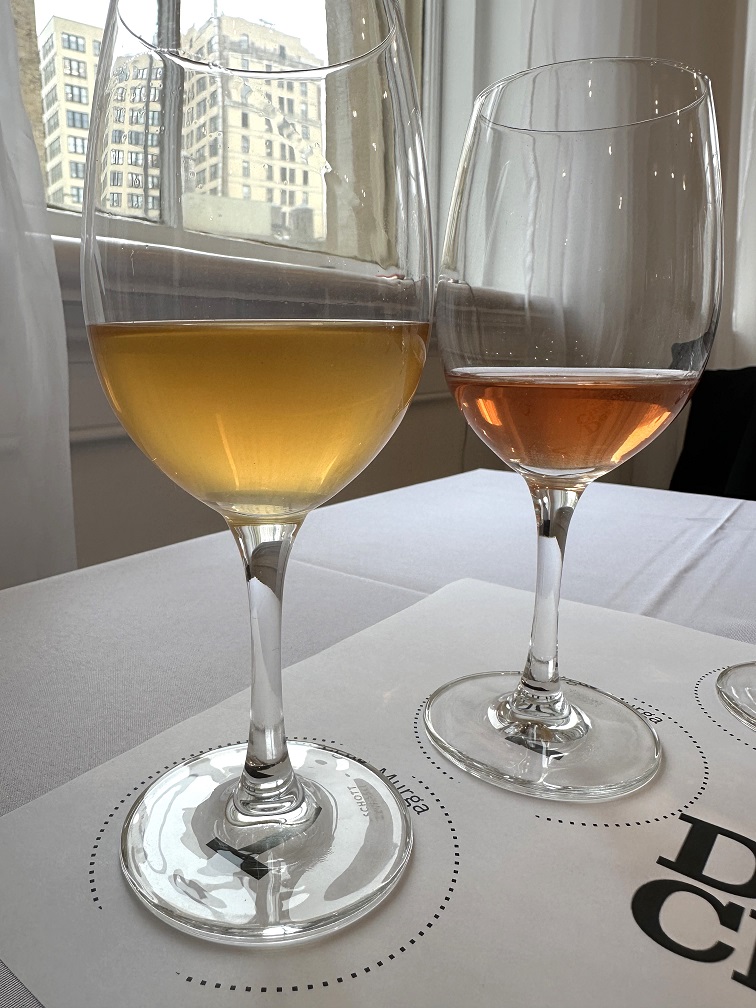
2024 Bodega Murga Ponte Mosca Pisco Perú (12.5% ABV, 34% Moscatel de Alejandría, 33% Moscatel Rosada, 33% Moscatel Negra, 65 days of skin contact)
Pisco is located south of Lima, capital of Perú, 25 minutes away from the Atlantic Ocean, featuring 4 different soil types in the region.
I can’t even comment on the color (beautiful!). The wine had a wonderful nose with explicit nutmeg and a hint of grapefruit. Interestingly dry and tart on the palate, with blood orange on the finish and pure acidity. A great specimen of skin contact wine, but you have to love skin contact. Will be great with seafood.
2024 Bodega Murga Sophia L’Orange Perú (10% ABV, 85% Quebranta, 15% Mollar grapes, 30 days of skin maceration, indigenous yeast)
Muted nose with a hint of smoke, strawberries, sapidity. Smokey strawberries on the palate with salivating clean, crisp acidity on the finish. I absolutely love it, but this is not the wine for everyone (geeks should be happy, though).
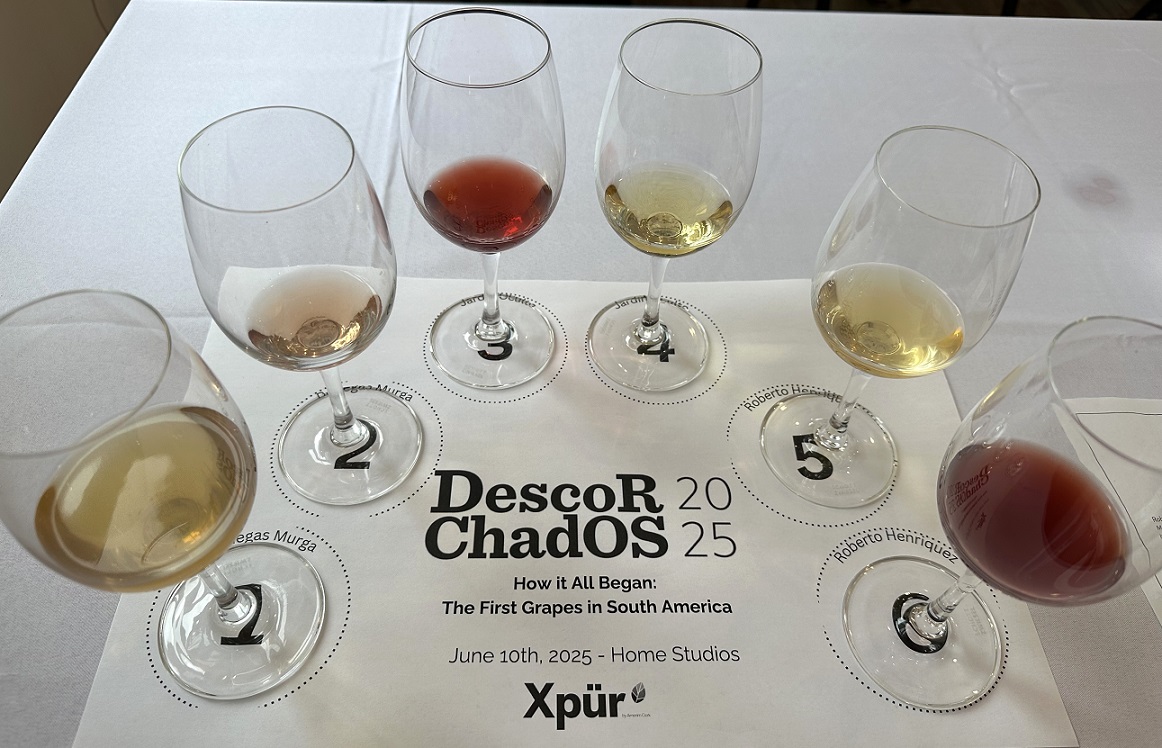
Just look at these colors!
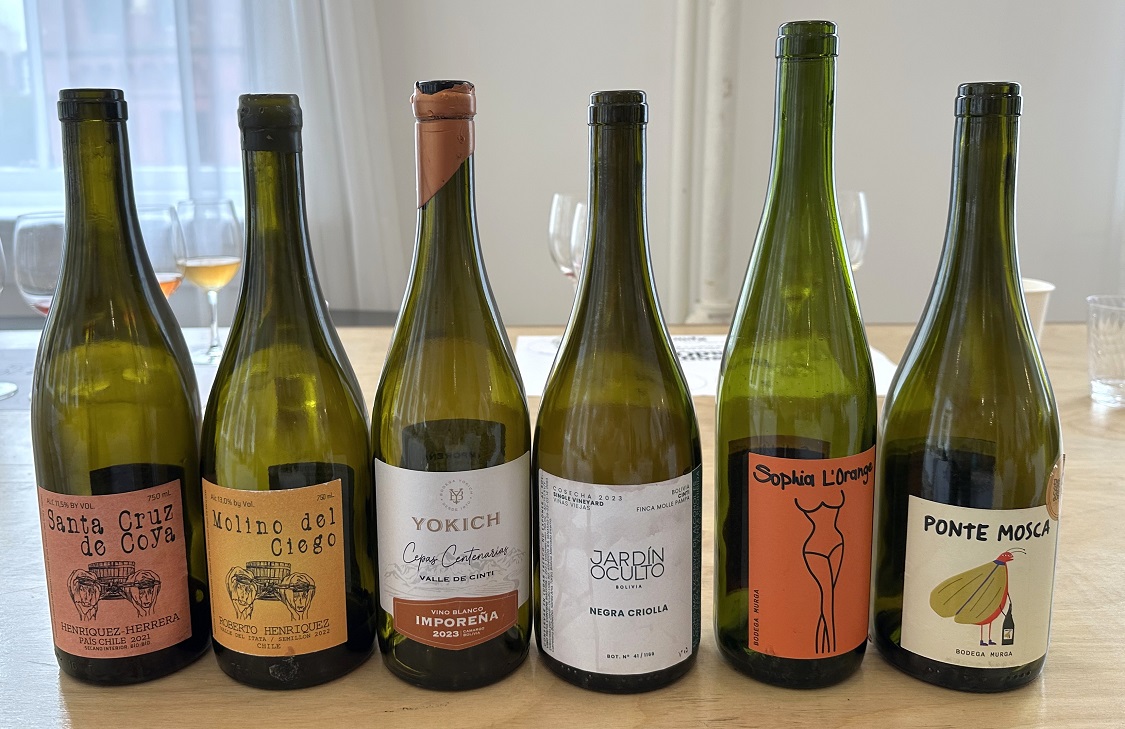
2023 Jardín Oculto Negra Criolla Finca Molle Pampa Cinti Bolivia (200! years old vineyard, 100% Negra Criolla, a.k.a. Listán Prieto a.k.a. País)
Cintis Valley is located in the south of Bolivia, at 7,500 feet altitude, 18” of rain a year – the only place in Bolivia where you can find “winter” for the grapes.
Fresh, crisp, underripe crushed raspberries on the nose. Tart, acidic, with sapidity well present, and with a bitter finish. I can drink it, but this is not your everyday wine; too bitter for me (my palate is particularly sensitive to bitter notes).
2023 Yokich Imporeña Vino Blanco Cepas Cententarias Valle de Cinti Bolivia (13% ABV, 100% Imporeña grape)
What a color! Honey and roasted meat on the nose (yeah, I know, don’t say it), somewhat cloying.
Good acidity on the palate, but I’m not sure this is the wine I want to drink again
2022 Roberto Henriquez Molino Del Ciego Itata Valley Chile (13% ABV, 100% Semillon, 100 years old vineyard)
Jalapeño pepper on the nose, bell peppers and spicy peppers on the palate, good acidity. I’m now hungry. Might be the most unusual rendering of Semillon I’ve ever tasted.
2021 Roberto Henriquez Santa Cruz de Coya Bio Bio Valley Chile (11.5% ABV, 100% País, 200 years old vineyard)
Lightly scented red fruit on the nose, explicit minerality, fresh acidity, tart strawberries, acidity on the finish. This is the wine from the 200-year-old vineyard – very impressive.


Here are the results of the masterclass: 3 new grapes, 2 new countries to add to the list, beautifully colorful wines, lots of geeky excitement (when was the last time you tried wine from a 200-year-old vineyard?).
Then there was a regular tasting with more than 200 wines represented – I didn’t have much time to spend there, but I managed to find some very tasty wines – sparkling and still. Here is the list of the wines I enjoyed outside of the masterclass:


NV Estrelas do Brasil Brut Método Tradicionel
NV Estrelas do Brasil Nature Rose Pinot Noir – superb!
NV Guatambu Nature – excellent
NV Cave Geisse Nature Método Tradicional D.O. Altos de Pinto Bandeira
2020 Neyen Espiritu de Apalta Malbec Colchagua Valley – classic!
2021 Emiliana Coyam Los Robles Estate Valle de Colchagua – excellent but needs time
2021 Emiliana Gê Valle de Colchagua – ready to drink now, delicious


2015 Casa Marin Syrah Miramar Vineyard San Antonio Valley Chile – surprisingly delicious (when I think Chile, I don’t think Syrah – but you should look for this wine)
NV Casa Marin Maria Luz Brut Nature San Antonio Valley Chile
2024 Casa Marin Sauvignon Blanc Cipreses Vineyard
That concludes my encounter with the unique world of South American wines – from geeky pleasures to hedonistic masterpieces, South America has a wine for everyone, you just need to look for it.
What were your geeky discoveries as of late? Or how about some hedonistic pleasures you want to talk about? Cheers!
Grape For The Future, Wine For Today
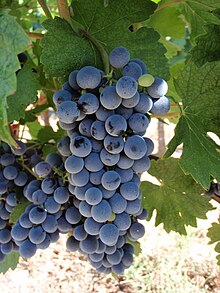
Source: Wikipedia
Have you heard of the grape called Marselan?
If you have – great, pat yourself on the back as you are ahead of many wine lovers.
If you have not – even better, as we are going to fix it right now.
Some grapes have been around seemingly forever (the winemaking is getting older and older with every new discovery – I just learned today that based on the latest research, the wines were made around 11,000 years ago – quite an age), and it is impossible to tell when particular grapes were born. For others, the history is much more definite, as those grapes have been bred with a purpose, and thus their “birthday” is well known.
Marselan is one such grape. It was bred by Professor Paul Truel in 1961. Marselan is a cross of Cabernet Sauvignon and Grenache, and it was bred to be heat-resistant and disease-resistant. While having those desired qualities, Marselan had small-sized berries, which was not a great trait in the 1960s – the desired grape was supposed to have a high yield, thus Marselan ended up on a shelf. As the climate was changing and the temperatures were rising, the need for heat-resistant and disease-resistant grapes became more apparent, and Marselan was brought back to life, entering an official INRA grape registry in France in 1990.
Marselan was bred by Professor Truel in Languedoc near the French coastal town of Marseillan which gave Marselan its name. Marselan is a blue-skinned late-ripening variety, producing large clusters of small berries, leading to a high skin to juice ratio in the winemaking. Marselan prefers dry soil and hot climate, and it has strong disease resistance to botrytis bunch rot, powdery mildew, and other grape malaises. While born in France, Marselan found its great fame in China, where it might be considered a “signature” grape according to Decanter magazine.
Marselan is best known as a blending grape. Nevertheless, varietal Marselan wines started being produced in Languedoc in 2002. Today, about 70 wineries in Languedoc produce varietal Marselan wines. In 2019, Marselan was one of four new red grapes authorized for use in the production of Bordeaux wines. In Bordeaux, Marselan can make up to 10% of Bordeaux Superior and Bordeaux AOC blends, though it cannot be listed on labels. In addition to France and China, Marselan today is growing in Spain, Switzerland, California, Brazil, Uruguay, Israel and other places.
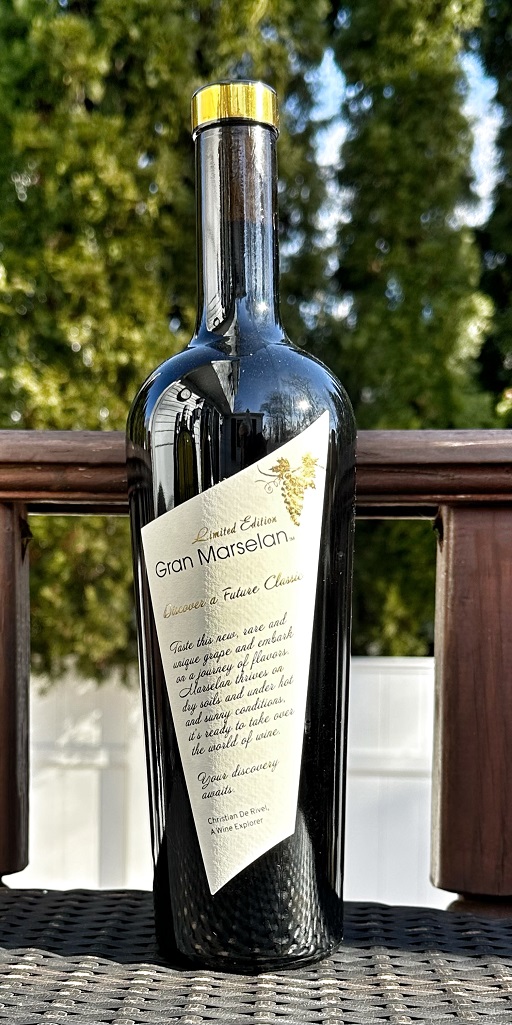
Okay, the formal introduction is over, let’s move on to the fun part – tasting probably the best of the best wine Marselan has to offer – NV Gran Marselan Cuvée du Centenaire Vin de France (14.5% ABV, $169, 100% Marselan, 15 months in 2-years old French oak barrels, 1,716 bottles produced).
This wine had been produced by EdenGrapes with the grapes coming from two best and oldest (40+ year old vines) blocks of Marselan vineyards in Languedoc, discovered after an extensive search. The wine was released in 2024 to celebrate the 100th birthday of Paul Truel, creator of Marselan, who was born in 1924, hence the Cuvée du Centenaire designation.
While speaking with Christian de Rivel, the producer of Gran Marselan, he suggested that it would be very important to decant the wine for anywhere between 2 and 5 hours to let it shine. Well, you never need to ask the wine geek twice to play with his wine.
Long decant? Ha! I got you!
There are many ways to decant the wine. I don’t want to go too far on the tangent here, so I will just give you a “short brief”, and hopefully a more in-depth decanting rundown later in another post. I prepared a few decanting instruments I have at my disposal – a classic decanter, a couple of aerators – VersoVino and Venturi, and even a super-decanting tool, or rather a “hyper-decanting” tool, the blender.
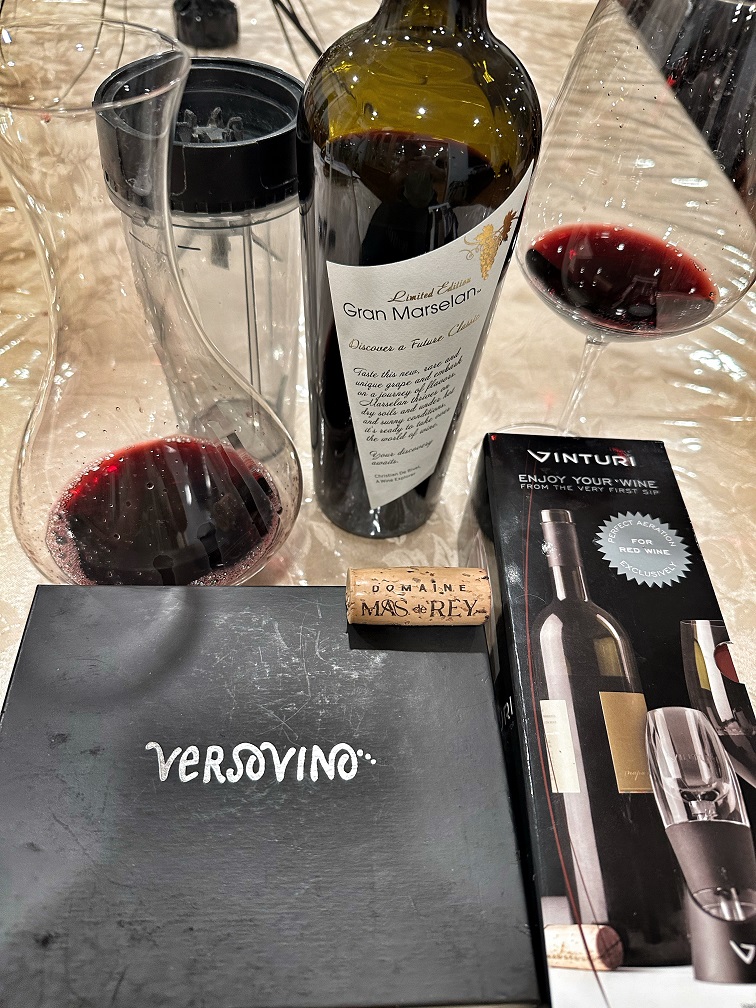
Wine Geek’s Mise an Place
Even if decanting is suggested, to decant or not to decant is a personal choice. I had to taste the wine to decide what I would like to do in terms of decanting, so first I just poured some wine into the glass:
Upon opening
Beautiful color, bright garnet
Nose of wild raspberries and wild blueberries, superb, earthy undertones
Beautiful palate of wild berries, well integrated velvety tannins, firm structure, good acidity, excellent balance 8+/9-, delicious overall and dangerous.
Based on tasting the wine “as is”, hyper-decanting was ruled out – the wine was perfectly drinkable from the get-go, no need for extreme measures. But I had to try the tools nevertheless:
VersoVino
Nose a bit more pronounced and open, adding tart cherries to the aromatics
Palate is a bit smoother, tannins become silkier, overall wine is more polished. I really didn’t expect that. Wow. 9-
Venturi
High intensity nose, now more Cabernet-like profile, a touch of eucalyptus
Excellent palate expression – it doesn’t have cassis, but instead offers gobs of dark fruit, good acidity, more of a chewy structure. After Venturi, the wine actually begs for a steak. It shows bigger. But it is now more in Grenache territory, with dark chocolate undertones. 8+
I definitely like the effect of VersoVino more. The wine is softer and more elegant with VersoVino compared to Venturi.
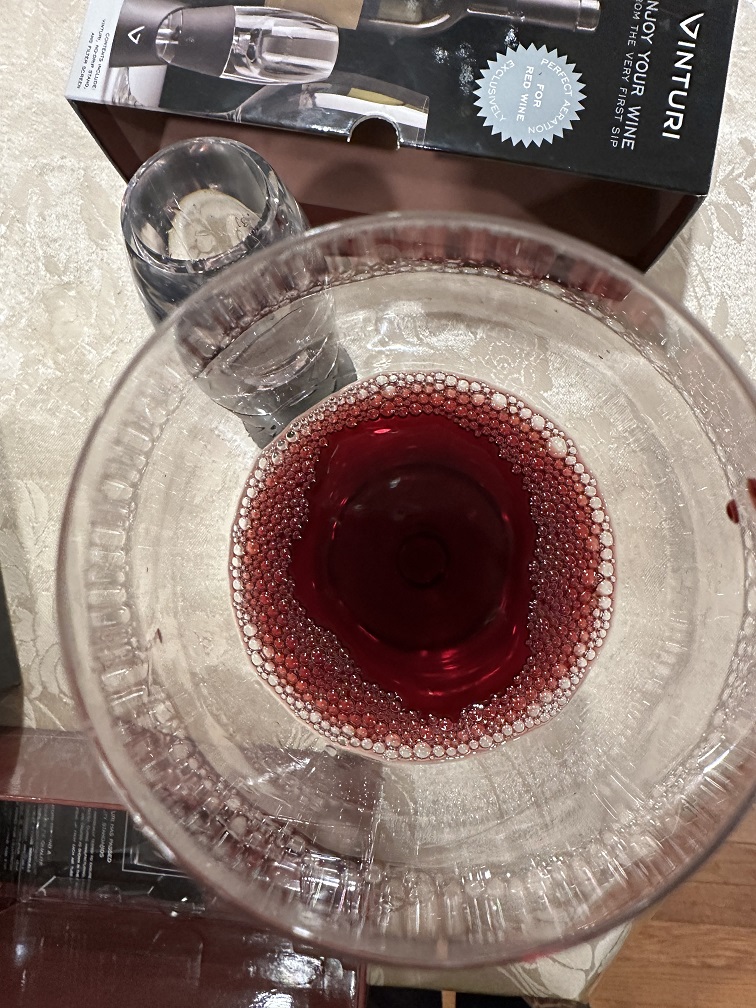
Bubbles – an effect of Venturi
Now we wait.
1 hour control point from decanter
Nose changed, now offering some sapidity undertones, became lean and powerful. Now nose promises big, “serious” wine
Delicious bouquet on the palate. Dark fruit, elegant, balanced, tart cherries woven over the firm structure. Elegant, delicious. 9-
2 hours later
Tart nose, earthy undertones, cherries
Lots of tart cherries on the palate, different representation, firm, tight, lots of energy, now gripping tannins which cut finish somewhat short. Wine is evolving. 8
4.5 hours later
Fresh berries returned on the nose with some earthy undertones
On the palate, the wine is tight with some brushy tannins, good clean dark fruit finish. The wine would perfectly complement steak, but for sipping I would prefer one of the earlier versions. 8
Second day
Still pretty much tastes like the wine after a few hours of decanting.
So what did I learn after tasting the Gran Marselan, besides the fact that I really didn’t need to decant it more than for an hour? The conclusion is easy. The grape has great future potential. But you don’t need to wait for the future – you can simply enjoy the wine right now. Also, I know what you are thinking – this Gran Marselan is expensive. While I can’t argue with that, if you are ever willing to spend $170 on a bottle of a special wine then this wine is well worth your consideration. I know of many California Cabernet Sauvignons in the same price range which will deliver much less pleasure, so this wine is definitely worth it. Maybe one day we will be able to compare the notes? Until that time – cheers!
A Journey of a Thousand Grapes
“A journey of a thousand miles begins with a single step”.
True that.
But sometimes, we have no idea about the journey. We just take a step without putting much thought into it. It is only later on, while looking back, we realize that those were not just some random steps. The journey is going on.
I don’t remember how I learned about The Wine Century Club almost 20 years ago. I guess someone mentioned that it might be something I might be interested in considering my love for wine.
The idea of The Wine Century Club is simple. Take an Excel table with the names of the grapes. Checkmark the grapes you tasted either by themselves or as a part of the blend. Once you checked 100 grapes (century), submit your application and become an official member of The Wine Century Club. And don’t lie – if you do, your palate will be cursed forever.
The table had something around 200 grapes in it, and marking 100 grapes in it was somewhat easy. I submitted my application in June of 2008 and received my certificate in a few months. Mission accomplished. Journey completed.
Ha!
By the time I received my membership certificate, the club evolved to add another level of membership – Doppel, requiring one to try 200 grapes. Okay, then, I can walk a little further, fine. Back to the Excel and wine sleuthing. By the time I submitted my doppel application, the club already had a Treble level (300 grapes). Back to the glass I go.
When I started the Talk-a-Vino blog around June/July of 2010, I was in the middle of the Treble journey, which I started documenting in the blog. One of the first blog posts was on the subject of Trebble journey, just trying to explain what is that I’m talking about.
300 grapes is a lot, right. Okay, finally, the mission is completed for real. Ohhh… Maybe not. Quattro. Pentavini. Hexavin (are you serious, people? Who can try 600 grapes????).
When I reached 500 grapes, I wrote a very happy post and started slowly moving toward the 600, knowing with absolute certainty that this would be it. 600 is very formidable, and yes, I heard that some people are moving toward 700, but there was not even an official designation for that status.
9 years after the 500 submission I finally reached the end of the journey – two days ago I submitted my Hexavin application. While looking for the submission rules that I somewhat forgotten since the last time, I looked at the membership page. Guess what I saw on the membership page…
700 (Heptavin), 800 (Otobis), 900 (Novem) and 1,000 (Millenary) varieties
How about that “end of the journey”, huh? Yep. A journey of thousand miles grapes is going to continue…
Don’t get me wrong. I’m not complaining. Neither I’m bragging. I’m simply documenting my journey on these pages – whether you also want to become a grape geek is entirely up to you. But if, by any chance, you do, then I might be able to help you in that journey.
Few things had been happening recently making this geeky rare grape inquisitive journey a little easier. First, the world is a little smaller now compared to 20 years ago. No, this is not an utter nonsense 🙂 give me a moment to explain. Of course, there are lots more people living in this world – but that is irrelevant to our subject. If you can’t find the wine with specific grapes in your country, you can order it online and not pay a fortune for the delivery. When I ordered Williamson and Magor tea from the UK to be delivered to the US about 25 years ago, about 2 pounds of tea cost $60, and shipping was another $60. Last year I ordered 2 bottles of wine from Malta, and shipping was close to $30. The wines from around the world are more accessible now.
The second, and more important factor, is two-fold, but it is all about grapes. All around the world, ancient grapes are actively brought back to life, some resurrected literally from the last vine left. New grapes are bred to be more disease-resistant or faring better with climate change. And the grape geek’s journey becomes a little easier and faster.
Just for fun of it, here are some of my latest additions to the rare grapes list with a few notes:


Folle Noire (red) – 2020 Château de Bellet Rouge Bellet AOP
Braquet (red) – 2020 Château de Bellet Rouge Bellet AOP
Vlahiko (red) – 2022 Glinavos Paleokerisio Ioannina IGP – very interesting orange lightly fizzed wine. This wine is a blend of Vlahiko and Debina (white) – I don’t mention Debina here as I had it before, but if you will find this wine, you might get two new grapes in this bottle.
Cabernet Cortis (red) – 2022 Petit Sauvage Rouge Vin de France – this wine was unique and interesting – you can learn more here.
Negoska (red) – 2019 Domain Tatsis Xynomavro – Negoska Young Vines Macedonia Greece
Orpicchio (white) – 2020 Dianella Orpicchio Toscana IGT – picked up this grape at the Three Bicchiery event earlier this year.
Amur (red) – 2017 Dr. Konstantin Frank Amur Finger Lakes – Unique grape, well suitable for cold weather.


A few grapes from the Balkans and Moldova – all wines are tasty and really inexpensive – if you want to find them, check The Liquor Barn:
Zupljanka (white) – Vrsacki Vinogradi Banatski Riesling Serbia
Kreazer (white) – Vrsacki Vinogradi Banatski Riesling Serbia
Žilavka (white) – 2019 Tikveš Žilavka Dry White Wine Macedonia
Băbească neagră (red) – 2018 Cricova Rară Neagră Moldova
Lidia (red) – NV Cricova Rose Semisweet Wine Lidia Moldova – it is called semi-sweet, but the wine has only a hint of sweetness. If you are a fun of Izabella grape, you really should try this one…
The next 5 grapes are from Hungary – please read more about the wines here:
Csókaszőlő (red) – 2022 Bussay Pince Csörnyeföldi Csókaszőlő Zala Hungary
Jakab Kadarka (red) – 2021/2022 Bóka Birtok Jakab Kadarka Tolna Hungary
Borsementa (white) – 2023 Turay Családi Pincészet Borsementa Hungary
Fekete Muskotály (red) – 2022 Szentezi Prince Fekete Muskotály Hungary
Turán (red) – 2020 Nyolcas és Fia Borház Turán
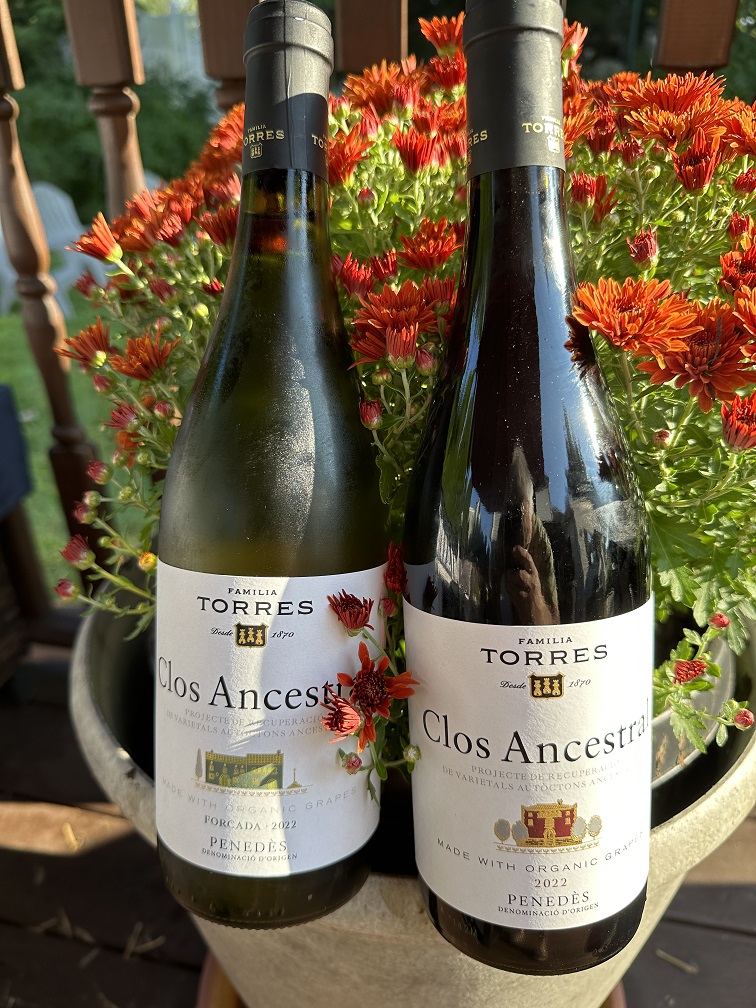 Now Spain comes into the play: as you can tell from the names of the wines, Clos Ancestral, these Spanish wines are celebrating resurrected ancient grapes, all courtesy of one of the largest wine producers in the world:
Forcada (white) – 2022 Familia Torres Clos Ancestral Forcada Penedès DO
Moneu (red) – 2022 Familia Torres Clos Ancestral Red Penedès DO


And here are two more interesting wines from France, not to be outdone:
Mourvedre Blanc (white) – 2021 UNAU Percheron 184 Mourvedre Blanc Vin de France
There is an interesting story behind the name of the wine: “UNAU is named after the female horse at the Fons-Sanatis estate – she is from the Percheron breed. 184 is the size in centimeters of the horse’s withers. Unau is 13 years old. The bottle is from the southwest of France – the cork from Roussillon and the labels are made of vine-plant leaves and stems. There is no use of foil in our packaging – we believe the container should be as environmentally conscious as the content.”
Souvignier Gris (white) – 2023 Petit Sauvage Blanc Vin de France
Also not showing here is one of my latest “strategic” discoveries. There are a few wines in this world produced from many – really many grapes. One such wine is Giribaldi Barolo Cento Uve, made from 152 grapes. Another wine is Vino Della Pace Cantina Produttori Cormòns Vino Blanco, produced from a whopping 855 varieties – while a fun reference, this wine can’t be used to advance your grape count. And then my latest discovery, the wine I had a pleasure tasting this year, Ramos Pinto Urtega from Portugal, produced from 63 grapes (there will be a separate post dedicated to this wine). So yes, there are some shortcuts you can make in this grape journey. And yet a thousand still sounds like an impossible goal.
The journey of a thousand miles begins with a single step. The journey continues one single step after another.
I’m fully enjoying my journey. Wanna come along?
Pleasures of Obscure and Difficulties to Express it in Words
German Pinot Noirs are hard to find in the US.
This story is not about Geman Pinot Noir, but the quest for one played a major role here.
I follow a group of wine-os on Twitter X who are swearing by Pinot Noir from Germany, particularly from Ahr, being the best Pinot Noir in the world, easily rivaling Burgundies in quality. Naturally, my interest was piqued and I started looking for the Pinot Noir from Ahr in the US. The problem is that Ahr is a tiny appellation to begin with, and given the popularity of Ahr Pinot Noir in Europe, this was not an easy task. I found Ahr Pinot Noir on Wine.com and confirmed with the group that it was a good producer. The wine itself was $56 or so, adding shipping and tax was making it even more expensive. Now, American Express credit card often has special offers for variety of merchants, Wine.com often being one of such merchants. I think the deal I registered for was $20 off a $100 purchase – considering that Wine.com shipping for 1 bottle is the same as for 3 (I think it is $20), it was a no-brainer – I just had to find a few bottles to reach $100 and get the discount.
At first, I was looking at some of the familiar wines to add to that Ahr Pinot, but then it dawned on me that I might look for wines to add to my rare grapes collection, which is exactly what I did. In the picture below, you see an end result – a Pinot Noir from Ahr and two wines made from the grapes I have not tried yet.
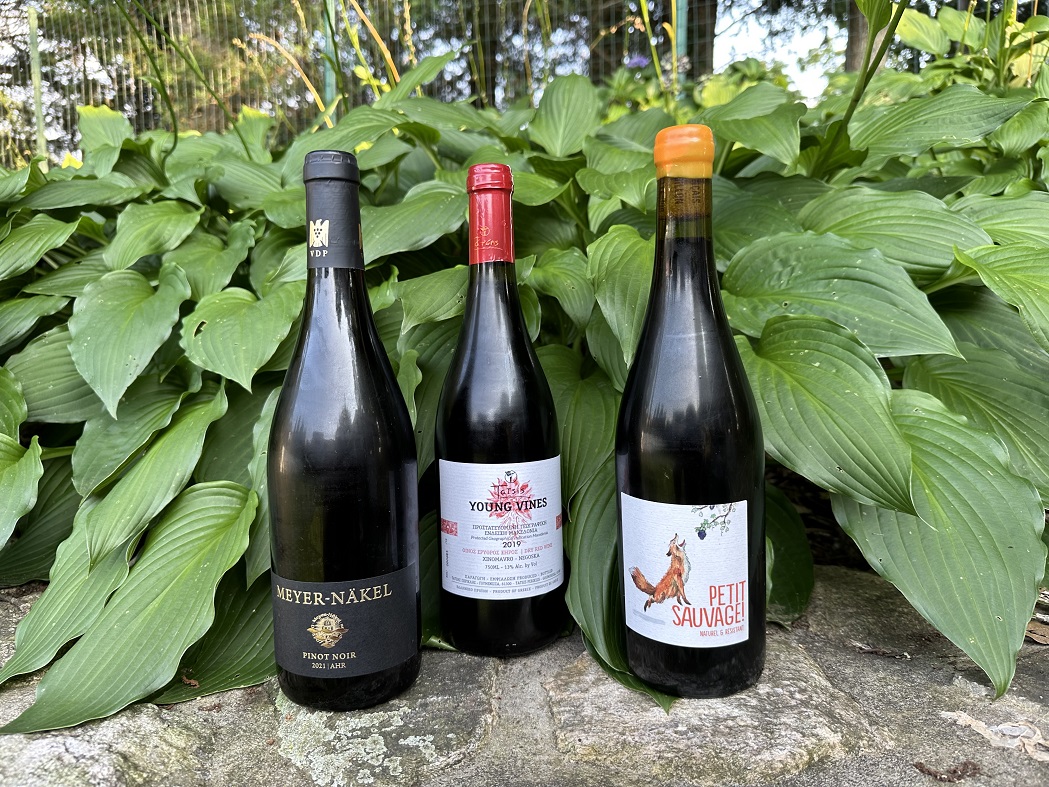
As you might know, I have been a grape geek for a long time, ever since I was bitten by The Wine Century Club bug (probably close to 20 years by now). I’m always happy to taste the wines made from unknown grapes, whether I will be delighted or terrified – it is all a good experience. Also trying a wine made from an unknown grape is extra fun as you can always approach such a wine with an open mind having no references (read: constraints) of any kind.
The 2022 Petit Sauvage Rouge Vin de France (13% ABV) was made from the grape called Cabernet Cortis which I have never had before. Cabernet Cortis is a hybrid grape, created in 1982 in Germany by crossing Cabernet Sauvignon and Solaris, another hybrid grape (last year I tasted the wine made from Solaris in Sweden). The grape was developed to be better adapted to climate change as well as to be disease-resistant.
The wine was uniquely delicious. Some of the uniqueness I need to attribute to the fact that I was unable to describe the perceived qualities of this wine in English. Yes, you heard that right. My mother tongue is Russian, and while Russian is really not the language of wine, one of the Russian words was the best for describing this wine – терпкий (terpkii). The word describes both taste and textural sensation. To give you an idea of the best textural association, I have a strange question for you – have you ever licked velvet with your tongue? I’m serious. Have you ever seen a TV episode where Gary Vaynerchuk explains wine descriptors to Conan O’Brian and forces him to chew on a wet sock? Something like that, only without socks. So if you would ever try to lick a piece of velvet (make sure it is clean if you do), this would be the closest you would get to that descriptor.
I tried translating it using Google Translate, and the best I can get is “tart” – here are a few more options from the Russian-English dictionary: терпкий — tart, harsh, acerbic, acerb, acidy. None of these would do. As a wine descriptor, tart generally means acidic, and devoid of fruit. And this doesn’t describe the textural and taste sensation I experienced when tasting that wine. Tannins probably would work best, especially those called “velvety tannins”, but I’m still not convinced that this is the best way to describe the taste of this Cabernet Cortis wine. All in all, the wine was delicious, a little bit racy and gamey, but this was perfectly integrated into an overall taste profile. And I would gladly drink this wine again if I had a chance.
Well, the only way we can solve this is for you to find this wine, taste it, and explain to me how little I know about wine – I promise to listen, and will be happy to expand my wine vocabulary.
By the way, speaking about tart – the second wine, 2019 Domain Tatsis Xynomavro – Negoska Young Vines Macedonia Greece, made out of Negoska grape, was actually tart, it was tart beyond belief, and basically, not drinkable. It didn’t improve even after a few days. You do have to kiss a lot of frogs in life… But it’s okay, a part of the process.
Here you are, my friends. There are lots more of the rare grapes I need to report on, so stay tuned…
Beautiful Hungarian Wines, a Deep Immersion
Hungarian wines need no introduction to the wine lovers.
Or they actually might.
Hungary is one of the oldest wine-producing regions in the world, going back to the Roman times (also the Hungarian language is one of only three European languages outside of Latin that have wine terms in the language). It is not for nothing one of the better-known wine brands in Hungary is called Royal Tokaji. Tokaji, the dessert wine produced from the local white grape called Furmint, can give the run for money to the best BA and TBA Rieslings and best Sauternes. It used to be a treat suitable and available only for the royalty, with its official appellation classification predating Port by a few decades.
Then it all came to an abrupt halt. First, the Phylloxera epidemic which destroyed literally all vineyards in Hungary at the end of the 19th century. Then, as the wine industry started to recover, came two world wars, and the communist regime right after. Thus while we can say that Hungary has very old wine traditions, the Hungarian wine industry is very young, with its modern history not exceeding even 40 years.
I just came back after spending 4 days in Budapest, the capital city of Hungary. And while working 9-5 all 4 days, I still managed to get a good taste of the Hungarian wines, and I have to say that it was one delicious and very impressive experience. And even as most of these wines would be hard to find outside of Hungary (okay, that should be reasonably not difficult for the people in Europe, but very difficult in the US for sure), I still believe the experience is well worth sharing.
I will simply recount my experience in chronological order, as I was tasting the wines. And by the way, I made my inner grape geek very happy, by adding 5 new rare grapes to the collection.
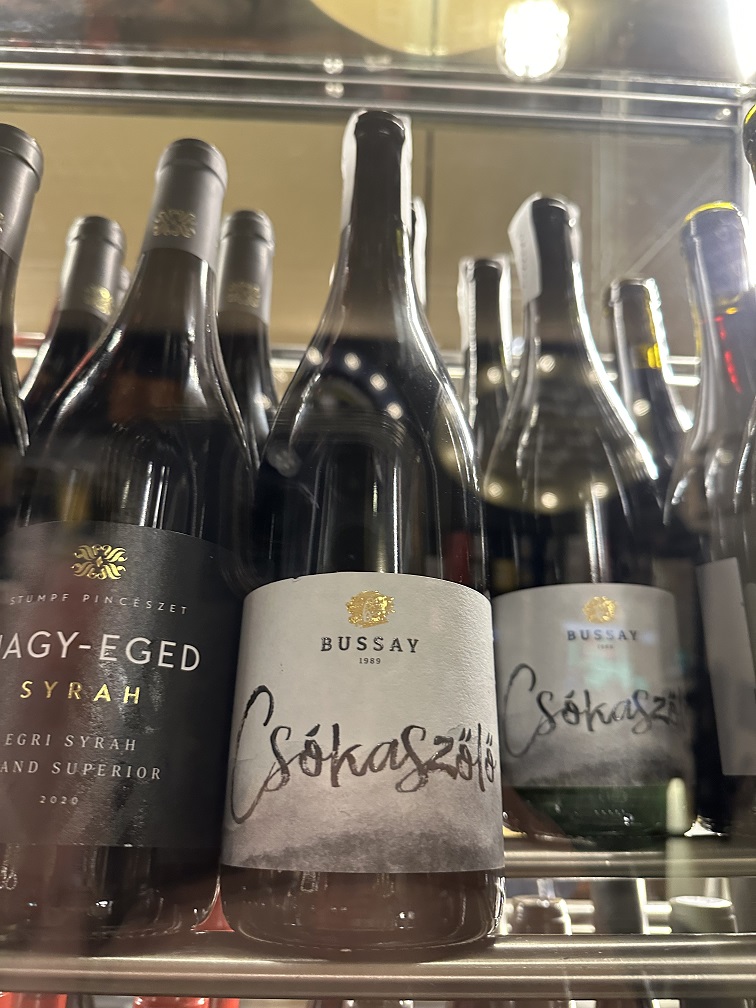
I started my “deep immersion” on Monday night at a dinner. The restaurant had a few interesting (read: made from rare grapes) wines which I was happy to order by the glass.
2022 Bussay Pince Csörnyeföldi Csókaszőlő Zala (11.5% ABV, certified organic, rare grape: Csókaszőlő)
Fresh herbal nose
Fresh acidity, Beaujolais-like mouthfeel, sour cherries, gamey, nice, food friendly
2021/2022 Bóka Birtok Jakab Kadarka Tolna (12.5% ABV, Jakab Kadarka, a.k.a. Jab Kadarka a.k.a. Italian Kadarka, rare grape: Jakab Kadarka)
Red fruit on the nose
Bigger and more round body than a previous one, dark fruit, good balance, good acidity, thoroughly pleasant
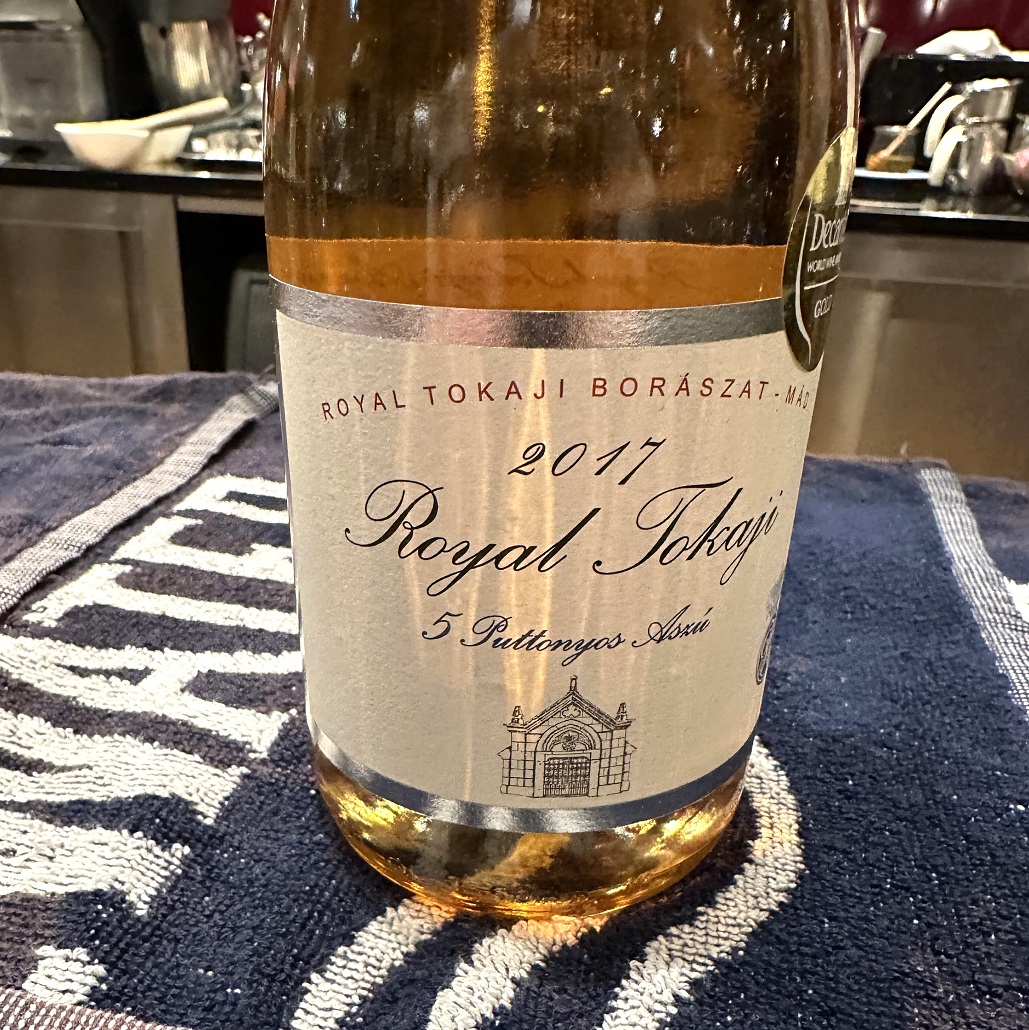
Upon returning to the hotel after dinner, I didn’t feel like going to sleep yet, so I decided to get a glass of wine, and the Tokaji looked very attractive – and at about $11 for a glass, a pure steal.
2017 Royal Tokaji Borászat Mad Royal Tokaji Aszú 5 Puttonyous (11% ABV)
Delicious nose of sweet, ripe fruit – white peach, pear, a touch of honey.
A symphony of flavor on the palate – beautiful ripe fruit, layers of flavor, perfect acidity, perfect balance, pure delight.
Superb.
On Tuesday, we had a short bus tour of Budapest, and our tour guide mentioned that if someone likes wine, he highly recommends visiting a wine bar called Vinlkli. The name was easy to remember – a cross between Vino and Bicycle, and the bar was also conveniently located about 2 minutes walking distance from the hotel where I was staying, so it was a no-brainer decision to visit the place. Boy, what a right decision that was…
When I came over, there was literally no space to sit at this tiny bar. Not speaking the language, I got rather a cold shoulder from both bartenders, so I was intimidated, but determined. A space in the corner opened up so I was able to take it, and then I just pointed to the wine I wanted to taste strictly based on the label (there was no printed wine list of any sort, and I couldn’t understand anything written on the board hanging on the wall).
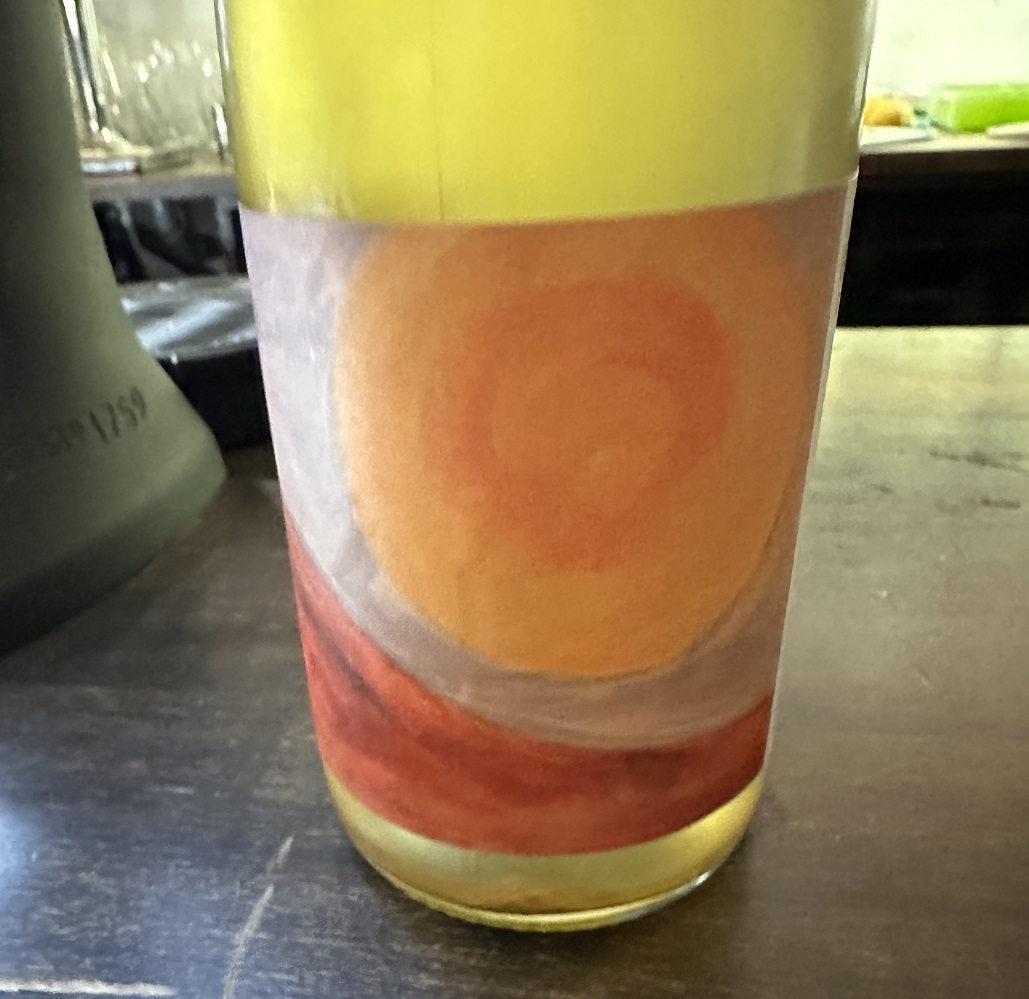
I happened to choose skin contact wine, and it was excellent:
2023 Turay Családi Pincészet Borsementa (11% ABV, 4 days with skin contact, natural wine, rare grape: Borsementa)
You can assume skin contact once you smell the wine – a touch of herbal notes on the nose with a hint of the freshly fermented fruit, following by lemon/apple/peppermint medley on the palate. Fresh, energetic, delicious.
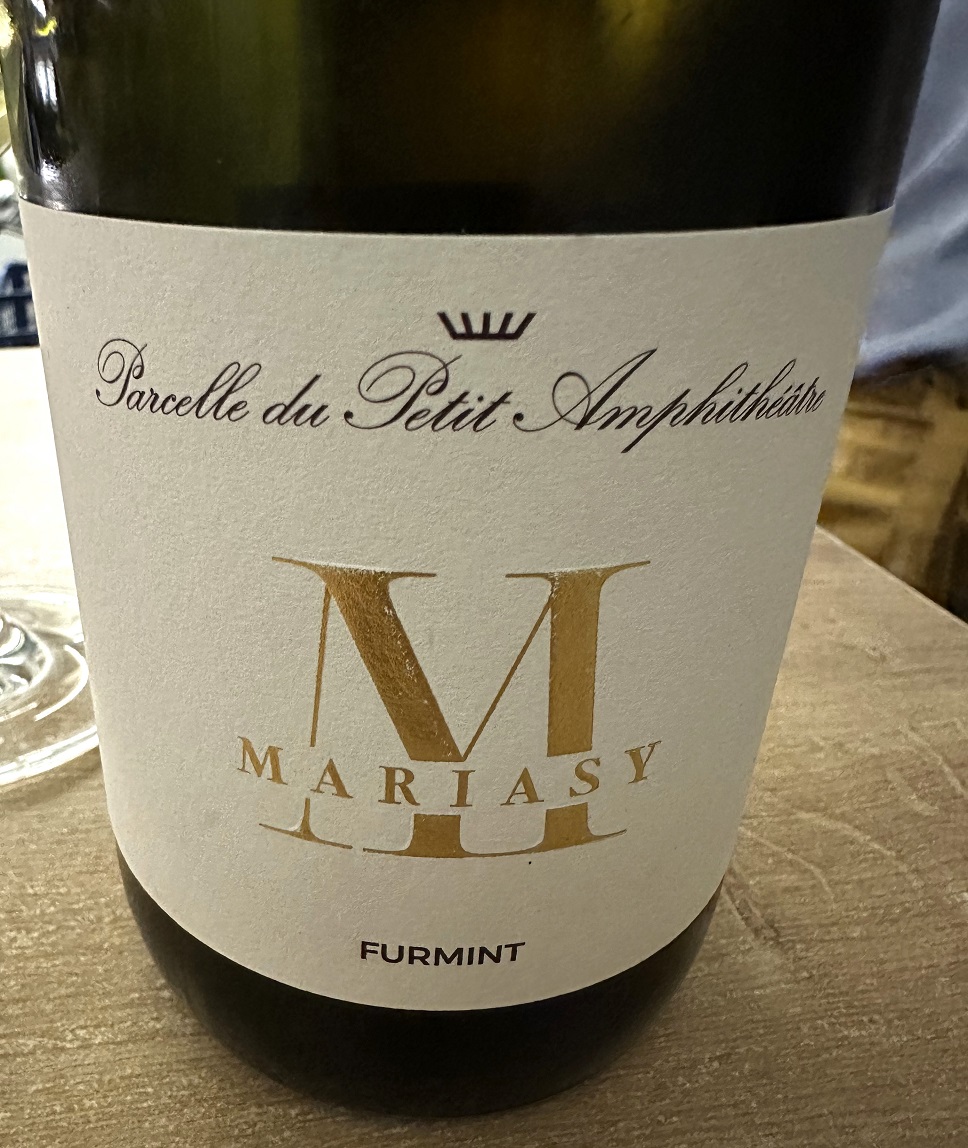
As a few more people left the bar, the bartender finally got a bit more time, and he understood that I was actually at the bar on purpose, so now he started suggesting wines to taste. Next wine white wine was literally out of this world:
2020 Mariasy Tokaji Furmint Hungary (13% ABV)
Wow. Is “blown away” is sufficient wine descriptor?
This wine was truly something else. A hint of honey on the nose, white fruit, fresh and inviting. The palate was mind-blowing – generous, plump, supple, crisp honey and lemon notes, layers and layers of pleasure. This will be easily a “wine of the year” contender. Just superb.
I’m literally salivating as I’m writing this post – I would love to have a glass of this wine right now. Just now.


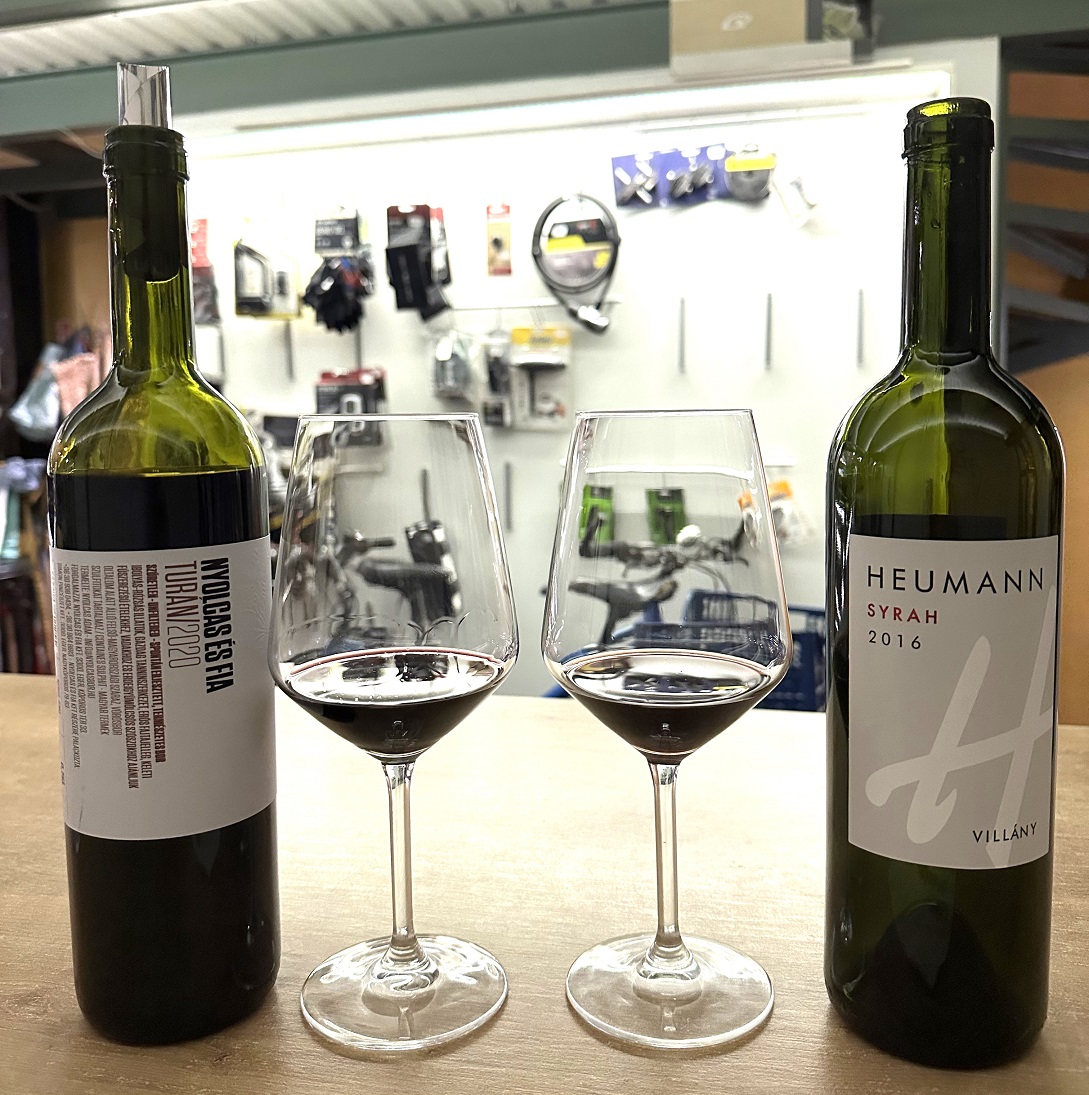
From here on, the new wines were arriving without interruption:
2022 Szentezi Prince Fekete Muskotály (12.5% ABV, rare grape: Fekete Muskotály)
This wine was light and fruity. Somewhat similar to Beaujolais Nouveau but with a bit more substance, loaded with fresh wild berries. Good acidity. Refreshing. Should be great with food.
2022 Sziegl Pince Kadarka Bisztró Hajós-Bahai Hungary (11% ABV)
Yet another light and fruity red, red fruit, simple, clean, light. Well balanced, good acidity.
2020 Nyolcas és Fia Borház Turán (13% ABV, rare grape: Turán)
Dark fruit on the nose, dark fruit on the palate, good mid-palate weight, good structure, excellent wine.
2016 Heumann Syrah Villányi Védett Eredetú Prémium (14% ABV)
Really was not expecting Syrah, but this was an excellent choice. Dark, concentrated, brooding, cherries, a hint of pepper, round, good balance, perfectly well drinkable.
Truth be told, I didn’t have much luck with the food at the restaurants. Yelp is unavailable in Hungary, and I find that TripAdvisor restaurant information is subpar, so the only option left is Google.
Through my search, I found a restaurant called Parisi 6. I almost skipped it at first, as I thought that based on the name it would be a French restaurant. But the menu suggested that this would be a traditional Hungarian restaurant, so I decided to give it a try on the last evening.
The food was excellent (finally had a goulash soup that I enjoyed), and the service was even better than the food if this is possible – ultra-friendly, attentive, and helpful.


Here are the wines we had at a restaurant:
2022 Skrabski Furmint (13% ABV, low histamine (!) wine due to a special strain of yeast used for fermentation)
Whitestone fruit on the nose, Chardonnay-like appearance on the palate, vanilla, fresh apples and hint of apples, fresh acidity. Food friendly.
2022 Szemes Villányi Cabernet Sauvignon Villányi Védett Eredetú Száraz Classicus Vörösbor (14% ABV)
I actually thought asked for a different red wine on the list (Kadarka), but somehow this wine appeared at our table, and the very first sip suggested that mistake or not, this was an excellent choice.
Beautiful core of dark berries, cassis, cassis, and a hint of bell pepper on the palate, round, medium to full body, delicious.
2023 Tokaj Nobilis Szôlôbirtok Kövérszölö Edes Fehérbor
I asked for the dessert wine to have at the end of the dinner. Our waiter suggested that Tokaji would be very expensive, and suggested that this wine would be a more reasonable but still a good choice. Wow. This wine literally delivered an experience. The wine was all into a sweet apple profile – ripe apple on the nose, ripe sweet apples on the palate, perfect sweetness balanced with perfect acidity. And the best part? Our dessert choice was apple strudel, and my oh my, was this a heavenly combination…
That’s my deep dive into Hungarian wines in a good amount of detail. If you have an opportunity, definitely look for the Hungarian wines, I’m sure you will not regret it.
And before we part, two more little tidbits of my experience in Budapest.
I walked a few times to the river, going past this building:
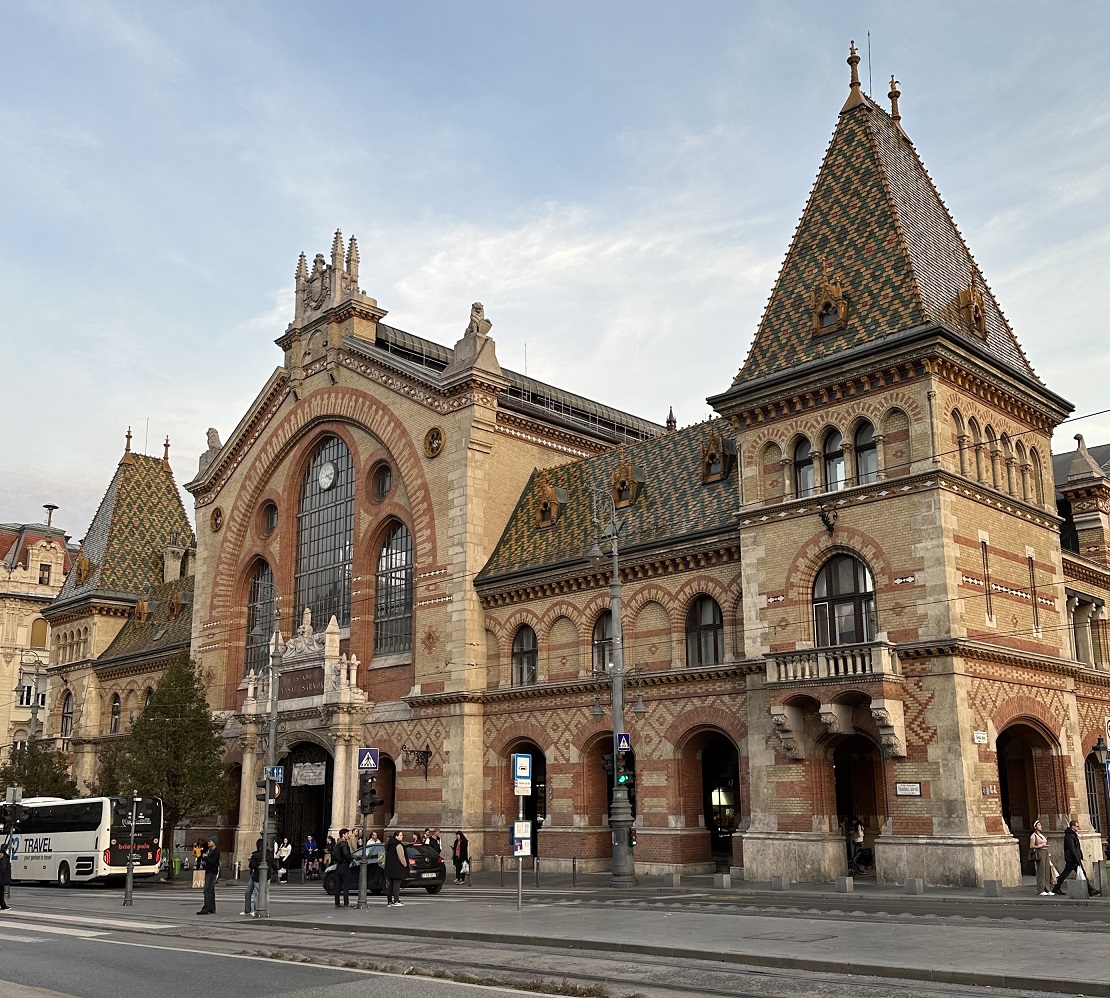
and thinking that this was a museum or some sort of historical building. On my last day, I was looking for a place to get some specialty Hungarian foods, such as Pick salami for example (when fresh, might be the best salami in the world). Somehow, google suggested that there is a supermarket inside that “historic building”. Surprised but obedient, I crossed the road and read the “Central Market” sign above the entrance! The building might be historic, but inside I found lots of small shops offering all types of Hungarian specialty food. The place was somewhat similar to Chelsey Markets in New York – if you ever visited you would get the idea. I was happy to find a pick salami to bring home and much more.
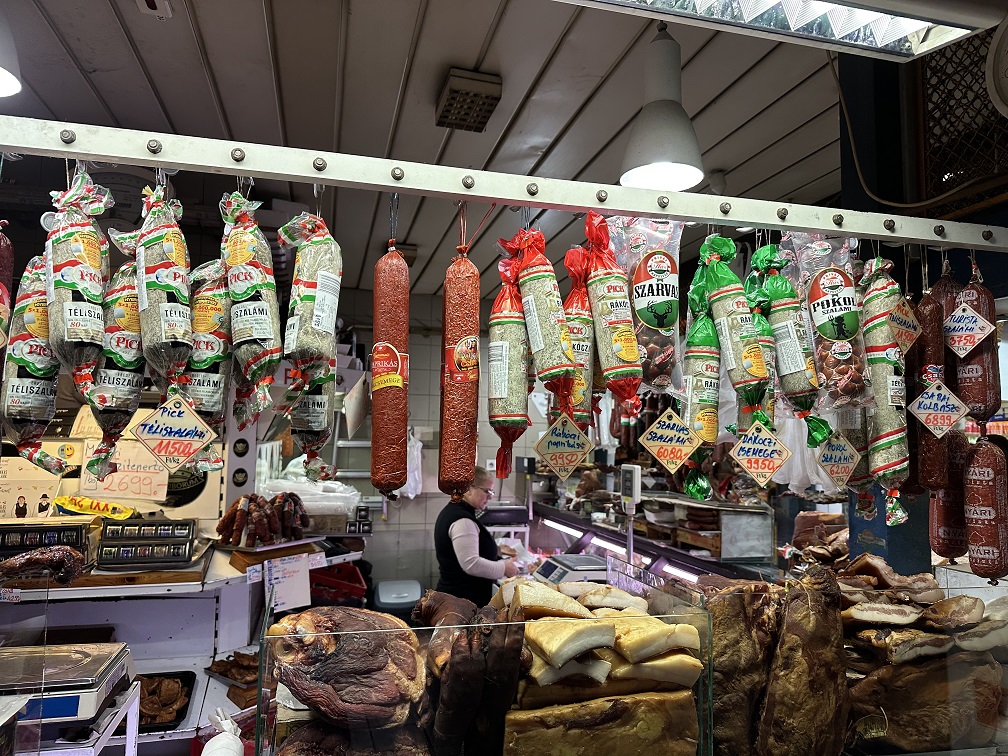
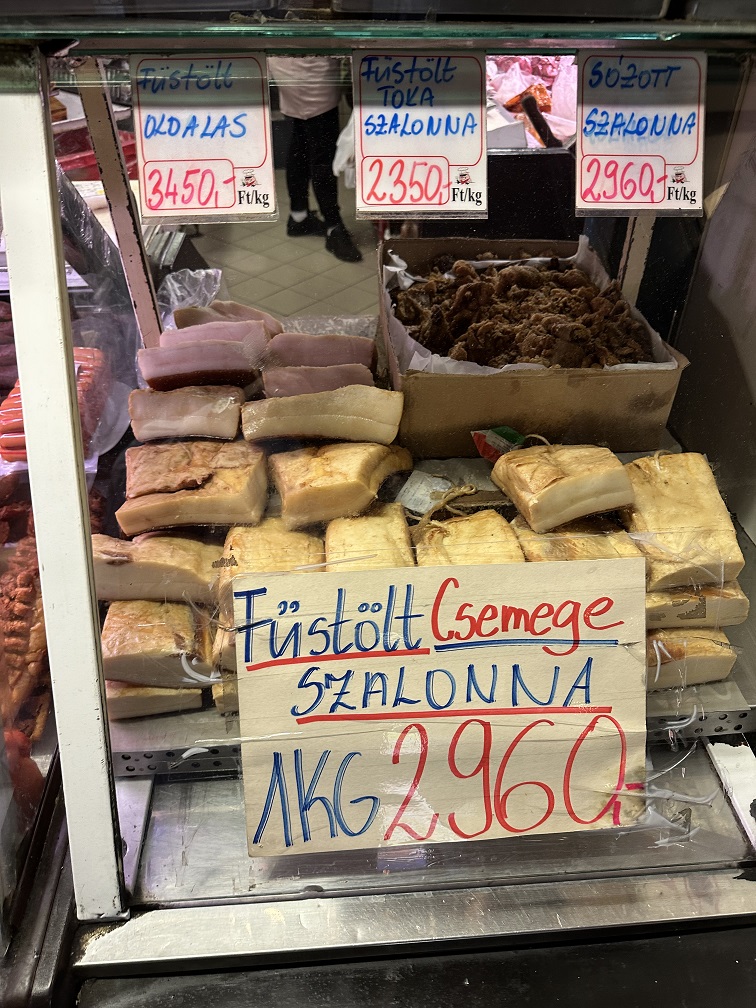
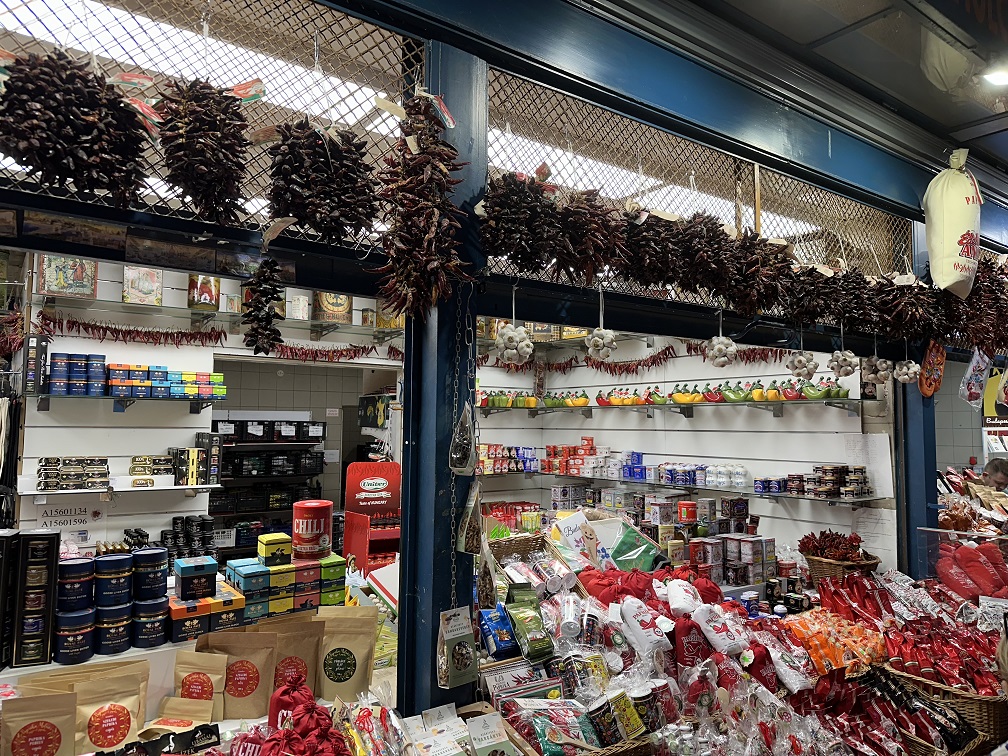
And last but not least, a few pictures of the beautiful Budapest town:




Budapest is a beautiful town, and Hungarian wines are delicious and evolving. Did I just set up your next travel itinerary or what? Cheers!
Travel Diaries: Cote d’Azur, Pink Sunsets and Rare Grapes
Cote d’Azur.
French Riviera.
One of the most coveted vacation destinations in the world. I didn’t know that, but according to Wikipedia, “Riviera is an Italian word that originates from the ancient Ligurian territory of Italy, wedged between the Var and Magra rivers. Côte d’Azur is originally a nickname given by France to the County of Nice after its annexation in 1860, because the climate was similar to that of the north of Italy, even in winter, with “a sky as blue as its sea”.” I know it is summer, but here is my illustration of the point above:


An evening in Antibes
Over the past 10 years, I had to travel to Nice a good number of times, and always for business. As a business traveler, I always held a grudge against these trips to the South of France – I don’t like Nice airport, it is one of the most uncomfortable ones, and I had my share of bad experiences in Nice. But the last trip was admittedly better perceived – I stayed at a brand new Marriott property, Moxy in Sophia-Antipolis, which was very nice. And we spent most of our free evenings in Antibes, which is a beautiful small town – still with lots of tourists, but overall incomparable to the crowds of Nice itself.
As you already know, I’m here to inundate you with pictures. As we visited Antibes (and Nice once) only in the evening, the majority of the pictures are related to the sunset. Here you go:


It is not only the sunsets that provided a source of enjoyment during our walks. Thought-provoking, creative statues by Nicolas Lavarenne were another great entertaining element of the Antibes boardwalk – I have to say that I really enjoyed them. Here are a few of the highlights:


Here are more of the sunset pictures:


And now my most favorite, the one I promised you in the title of this post – pink sunset:

Before we part, a few words about the wine. I had a few of the decent wines during the week, some local, some not. 2023 Estandon Brise Marine Blanc Méditerranée IGP (Clairette, Ugni Blanc) and 2023 Estandon Brise Marine Rosé Méditerranée IGP (Cinsault, Grenache, Syrah) were both on point, crisp, refreshing and light. 2020 Caves de Rauzan Mascottes Olga Cabernet Sauvignon Merlot Bordeaux AOC (13.5% ABV) was also very good, on par with the excellent 2020 vintage, and overall very generous and supple.


My personal highlight was the 2020 Château de Bellet Rouge Bellet AOP (14.5% ABV, 35% Folle Noire, 25% Braquet, 40% Grenache). This was a super-local wine, with the vineyards and winery located in the Nice area. The wine had a nice core of dark fruit, a hint of my beloved barnyard and a silky-smooth texture. Not only the wine was delicious, but it also added two new rare grapes to my collection, inching closer to the coveted Hexavin goal.
That’s all I have for you today. Hope you enjoyed looking at the pictures as much as I had fun taking them.
A Quick Trip To Malta and a Few Rare Grape Sightings
Have you been to Malta?
I have not, but hey, this is a wine blog, remember? As I like to say, “Have wine, will travel” – we can get a tiny bit of Maltese experience with the help of Maltese wine.
I honestly don’t remember why was I searching for a Maltese wine, but let’s try to figure it out. I call myself a “collector of experiences”, and I like seld-made challenges. On this very blog, I have this table that lists all (probably “most” is a better word) of the winemaking countries in the world, and I’m always on the lookout for ways to add checkmarks to that table. I added a few new places this year, and I guess while I was at it, I decided to see what wines from what countries I might be able to find. Malta came up during the search, and I found the website called Malta Products which offers food and crafts from Malta, and also wine.
As I was looking through the available wines, to my delight, I realized that I could kill two birds with one stone. Not only can I put a checkmark next to the Malta name, but I can also advance my rare grapes hunt as I found wines made from the two new indigenous grapes.
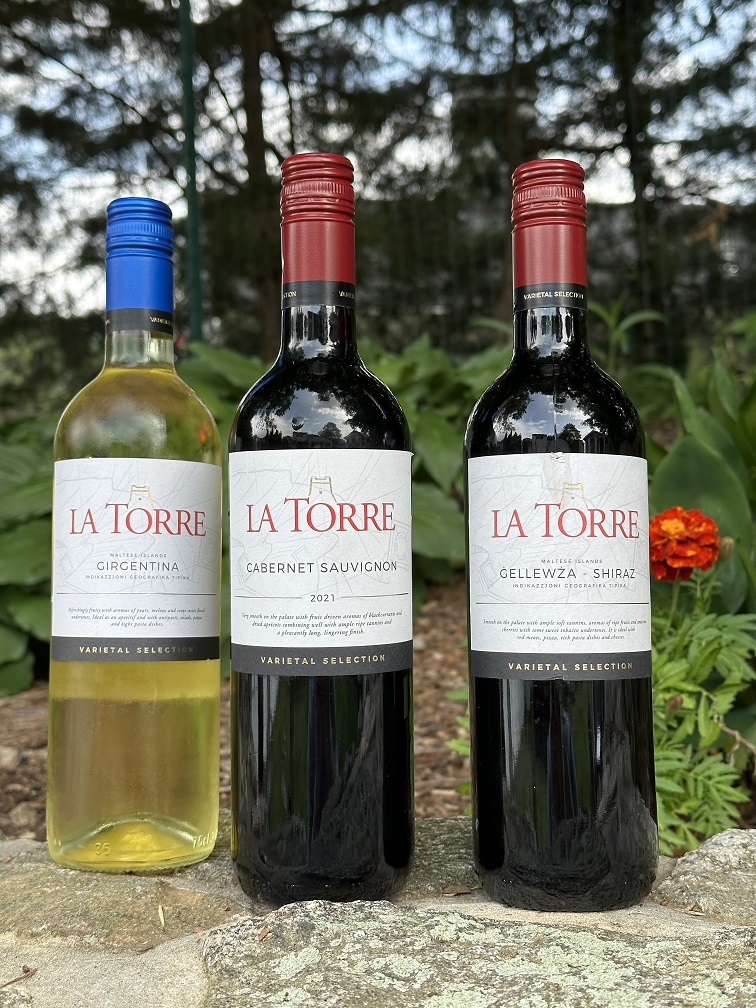


Long story short, I selected two inexpensive wines, one made with the local white grape called Girgentina – 2022 La Torre Girgentina Maltese Islands IGT. The second wine was a red blend containing another indigenous grape – Ġellewża – 2022 La Torre Ġellewża – Shiraz Maltese Islands IGT. The shipping was surprisingly reasonable, so I guess I spent a total of around $50 including shipping directly from Malta.
The wines showed up about 2 weeks later, but when I opened the box I found that instead of Ġellewża – Shiraz I got a bottle of Italian Cabernet Sauvignon from the same producer (La Torre). Considering how inexpensive the wine was, I decided that I would just let it be. On second thought, I decided to at least write to Malta Products customer service and let them know that they sent me the wrong bottle. After I sent them a picture of the wine I received, they apologized and said that they would fix it. I was not expecting anything more than a credit on the card, but instead, about a week later, the proper bottle showed up. It is easy to get cynical in the world we live in today, but then every once in a while we encounter people who actually take pride in the service they provide. If you ever feel like you want to visit Malta via Malta Products, you have my full, unquestionable endorsement.
I finally had an opportunity to try the wines at some point. Girgentina was excellent, bright, round, vibrant and delicious from the get-go. When I took a first sip of Ġellewża – Shiraz, I decided that it’s okay not to like every wine – it was not good [at all]. Not spoiled, but really not drinkable. About an hour later the wine transformed, and while it didn’t become magical, it became light, herbaceous, drinkable red, perfect for a hot summer day. While not a new grape or a place, the 2021 La Torre Cabernet Sauvignon Veneto IGT was simple and quaffable.
That was my quick trip to Malta and the addition of the two rare grapes.
As I’m trying to complete my Hexavin journey and reach that 600 grapes mark, the going doesn’t get any easier (expectedly, but I’m allowed to lament, am I). Or maybe I just like to complain, and it is not that difficult. There is a lot of work done around the world to bring back ancient grapes, to create new wines with a lot of pedigree and heritage, hundreds and hundreds of years of heritage. There are also new grapes, such as Solaris I just wrote about that help grape maniacs geeks move forward. Either way, here are more grapes I’m adding to the collection:
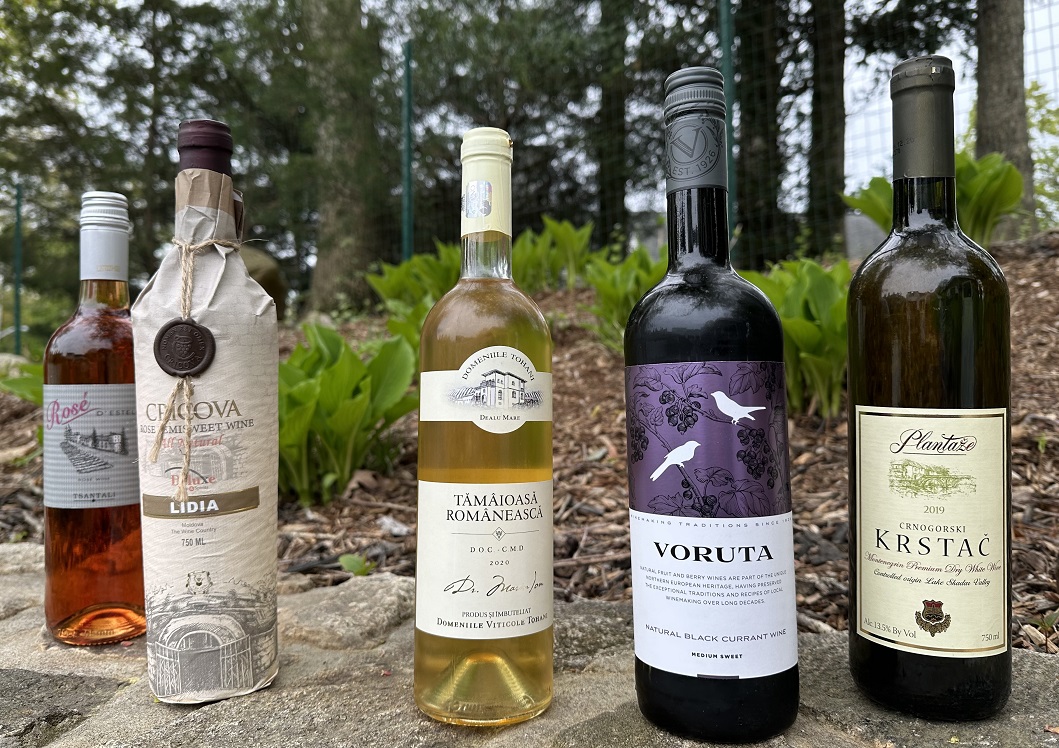


Moschomavro – NV Tsantali Rosé d’Estelle Greece – considering the non-vintage designation, I expected that it would fare worse, but it was drinkable.
Tămâioasă Românească – 2020 Domenile Tohani Tămâioasă Românească DOC Romania – you know that when you you are looking for a princess you might have to kiss a lot of frogs? This was one of them. Horrible.
Busuioacă de Bohotin – 2020 Domain Tohani Busuioacă de Bohotin semi-sweet wine Dealu Mare Region Romania – another surprise. While semi-sweet, the sweetness was nicely restrained and the wine was very tasty.
Krstač – 2019 Plantaže Crnogorski Krstač Montenegro – outstanidng. This was a delicious white wine in its own right. Crispy, focused, delicious.
The next four grapes were picked up last year at the Hudson Valley Wine and Spirits competition last year, where I was one of the judges. These are some interesting grapes, including the hybrid which doesn’t even have the name, only the numbers…
NY81.0315.17 – 2021 Weis Vineyards Perle Finger Lakes
Valvin Muscat – 2021 Milea Estate Vineyard Proceedo Hudson Valley
Regent – 2020 Milea Estate Vineyard Blaufrankish Hudson Valley
Obelin Noir – 2019 Christopher Jacobs Winery Deep Roots New York
Trebbiano Abruzzese – 2022 Masciarelli Trebbiano Abruzzo DOC – this was my recent discovery while working on the Masciarelly post – it appears that Trebbiano Abruzzese is different from the other types of Trebbiano and it is local only to the Abruzzo area…
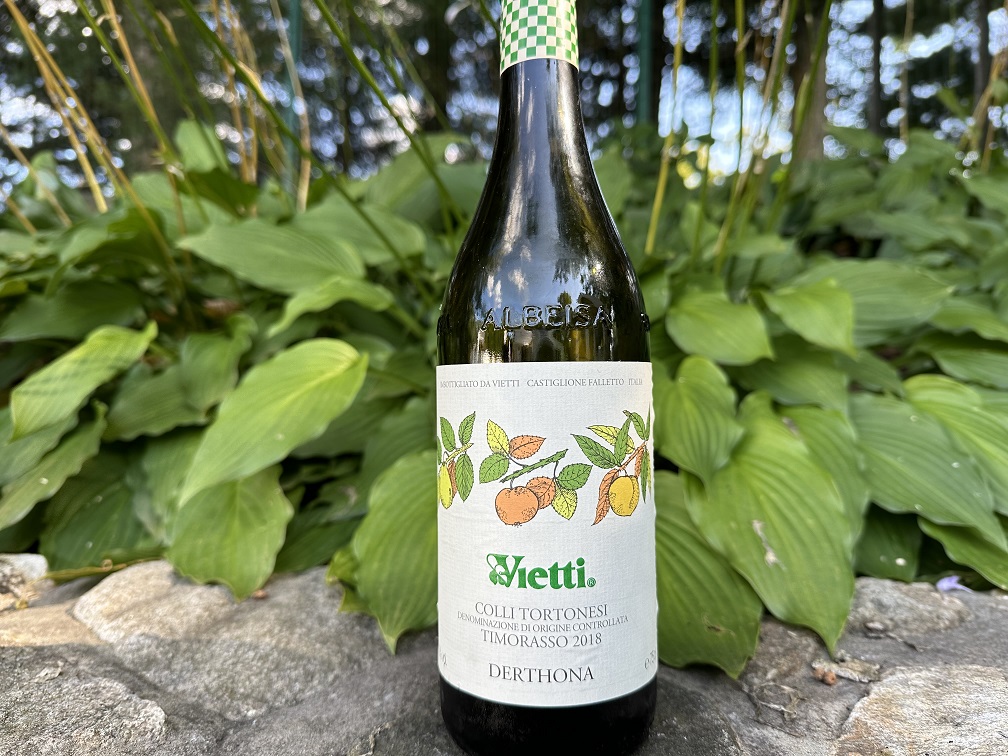
Timorasso – 2018 Vietti Timorasso Derthona Colli Tortonesi DOC – it appears that this grape was already accounted for as part of Giribaldi Cento Uve, so no additional count. The wine, however, was a sheer disappointment – undrinkable.
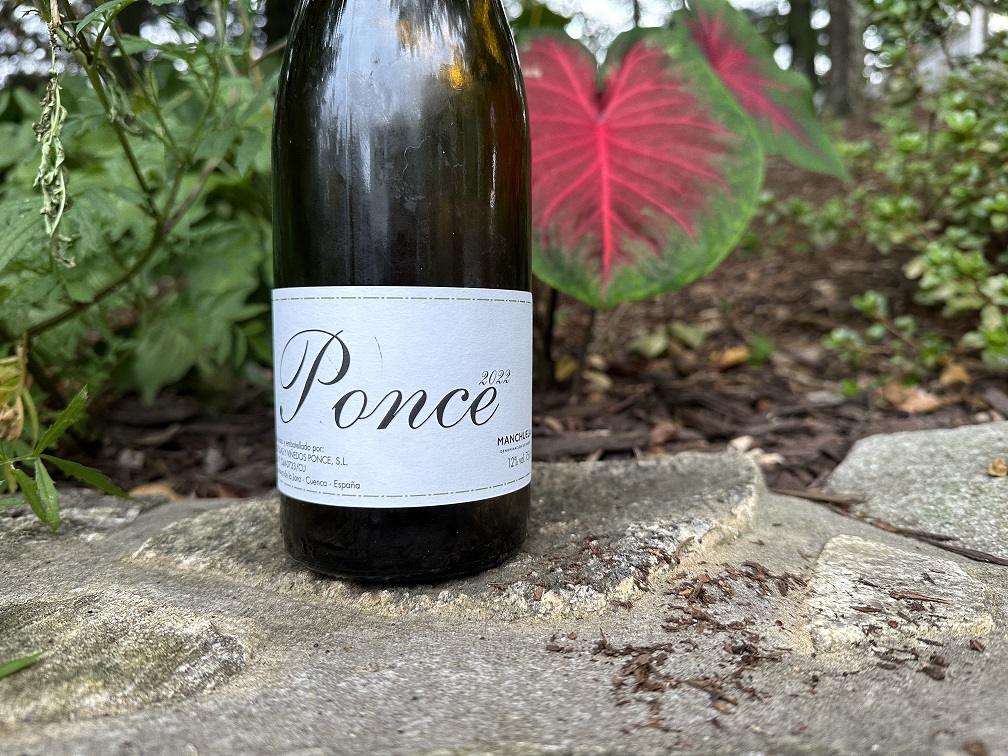
Albilla – 2022 Bodegas Ponce Manchuela DO – this was delicious wine, fresh and vibrant.
All in all, I’m increasing my grape count by 11, and now I’m within the last 10 push before reaching the 600 milestone. I have an easy way of solving this – using clones. I can add 20 clones of Chardonnay, Pinot Noir and Cabernet Sauvignon, all well documented on their usage. Should I do this? I’m not sure, but it is good to have options.
What are the wine artifacts you like to collect?
Rare Grapes, Obscure Tasting
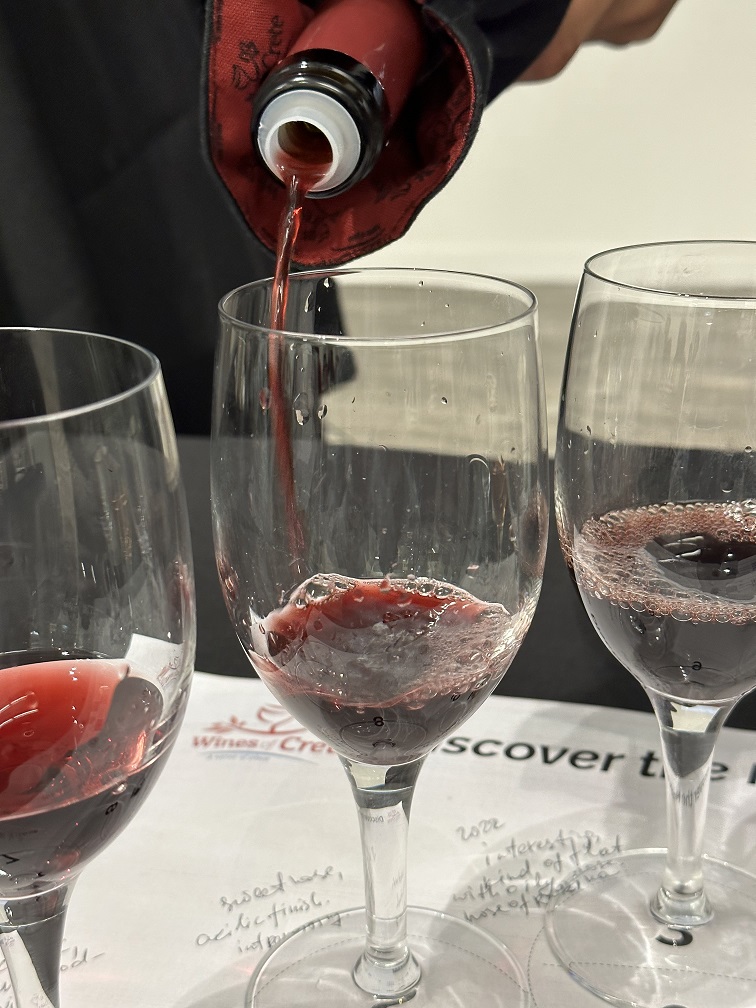 What is your take on wines made from rare, unknown grapes? I can tell you about mine – I love them.
I have two reasons for that. Well, it might be even just one, but with two sides, I guess. First, I’m a wine geek. As a wine geek, I love tasting each and every type and style of wine, made from whatever grapes they are. I’m willing to taste absolutely any wine at least once. After the opinion is formed, this might be the first and the last time, but nevertheless, I’m willing to try anything.
The second reason is that I’m not only a geek, I’m also a collector. I like collecting experiences. As such, for example, I keep track of the US states and world countries I had a chance to taste the wine from. And I keep track of grapes I ever tasted, after being bitten by The Wine Century Club‘s bug. If you are reading this blog on a PC, look to the right side of the screen, and you will see “grape count” – this is the number of grapes I have tasted to date (if you are reading on the phone, just scroll down). With my goal of reaching 600 grapes, I can only increase the current count further by finding rare, obscure, unknown grapes to taste.
When I got an invitation to attend the Wines of Crete trade tasting, the key words which made me say “yes” was exactly that – “rare grapes” – there were lots of grapes mentioned in the invitation, and I didn’t recognize at least a half of them, so the opportunity to taste new grapes (and increase the count) was definitely enticing.
I have to tell you upfront – this was the most peculiar trade tasting I have ever attended. Being only an advanced amateur, if this makes any sense, I attend maybe about 10 trade tastings in a good year, so I wouldn’t pretend that “I’ve seen them all”. Nevertheless, I have a frame of reference for successful and unsuccessful wine tastings, for sure in my personal book – so when I tell you that this was the most peculiar one, I mean it. Let’s talk about it.
First, notwithstanding of any peculiarity, we need to acknowledge the wines of Crete. Any time a passionate wine lover has an encounter with a region that has a deep wine history, it creates an emotional response, almost awe. The wine history doesn’t go much deeper than it is on Crete – Crete, the largest island in Greece and 5th largest in Europe is the cradle of European winemaking, having its winemaking history spanning more than 4,000 years, going well beyond 1,500 BC.
Crete represents the first real wine culture in Europe. There is evidence of wine presses (first in Europe from about 1,600 BC), pressed grapes and stems, clay pots and amphorae. The wine was produced commercially, and it was praised by many poets. Shortly after the beginning of the first millennium, Crete became famous for producing sweet wine from sundried grapes, Vinum Passum. Crete wines reached Switzerland, France and Italy, and so did the cuttings of the Cretan vines.
From the 14th to 17th centuries, Crete became famous for producing sweet wines from Malvasia grapes (interesting tidbit: American Journal of Enology & Viticulture registered 49 different varieties of the Malvasia grape). Malvasia vines made it to Italy during the same timeframe.
Cretan winemaking history is not all warm and fuzzy. For almost 200 years Crete was under Turkish occupation, and wine production was truly minimized, mostly for family consumption only. Then at the beginning of the 20th century, immigrants brought Sultanina grapes to Crete – a.k.a. Thompson Seedless – not the grape you want to use in wine production. In 1972, Crete experienced the invasion of Phylloxera.
The rebirth of Cretan winemaking started in the 1990s, and today young winemakers continue looking for their own path, often using indigenous grapes to their advantage.
There are 4 mountain systems on Crete, the island of 160 miles long and about 40 miles wide. The majority of the vineyards on Crete are located on the mountain slopes, at altitudes from 800 to 3,000 ft. Mountains play an important role in protecting vineyards from the hot winds coming from Africa. The climate is warm Mediterranean with annual rainfall between 250 and 900 mm.
There are about 10,000 acres of vineyards on Crete, which are spread between 6 Protected Geographical Indication (PGI) and 7 Protected Denomination of Origin (PDO) winemaking regions. There are 36 wineries on Crete, producing about 4 million bottles of wine annually. There are 11 indigenous grape varieties growing on Crete (White: Vilana, Vidiano, Dafne, Thrapsathiri, Malvasia di Candia, Muscat of Spina, Plyto and Red: Kotsifali, Liatico, Mandilari/Mandilaria, Romeiko), as well as international varieties. And as I already told you before, these indigenous grapes were the main attraction for me.
Okay, so now I shared with you almost everything I learned about the rich history of the wines of Crete – let’s talk about the peculiar part.
Upon arrival at the tasting, I got a booklet listing all the wines which we would be tasting. The booklet was organized by grapes – but interestingly enough, the description of the wines didn’t include any producer names – just vintage, variety(ies), ABV, style of wine, and maturation notes. I never saw anything like that at any of the tastings – unless you maybe run a blind tasting, but never mind.
Next, we proceeded with the masterclass, where we learned about all the history and present day, and had an opportunity to taste 11 wines. While poured, all of the wine bottles were hidden inside the black pouches. In the presentation, there were no producer names mentioned – only grapes and regions were presented.
As we learned, this was not an oversight. As the event was sponsored by the European Union, it was the requirement not to mention the wine producers in the masterclass and in the tasting, so the producers not present at the tasting wouldn’t get upset.
I’ll let this sink in for a moment.
Think about it.
Now, let me ask you – how stupid, unbelievably stupid is it? [I guess this is what happens when lawyers run the business – I didn’t have to say it, but this is my blog, so I can].
I’m a blogger, and I’m only interested in education and tasting some obscure grapes. But let’s say you work at a restaurant. You taste the wine, you like it, and you would like to start offering it at your restaurant – but officially, you are not allowed to know the name of the wine you just tasted. Say what??? What is the point of this tasting? With this “blind tasting” move, you brilliantly hurt everyone – those who sent their wines for the tasting, and those who have not.
Okay, let’s get back to masterclass tasting.
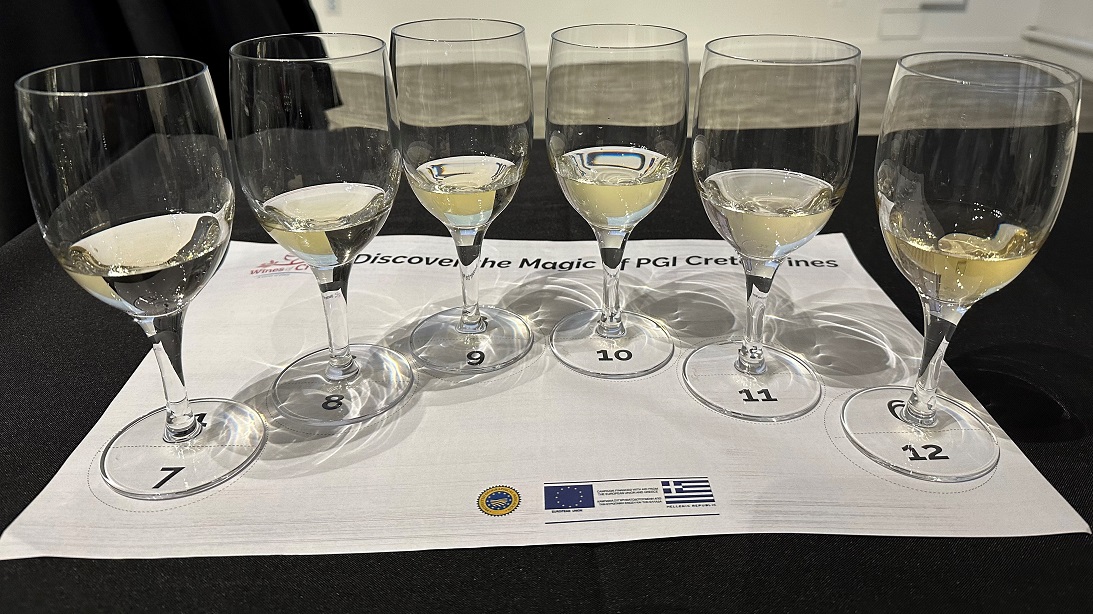
First, we tasted 6 white wines, made from Vilana, Vidiano, Thrapsathiri, and Assyrtiko. Thrapsathiri was a new grape for me, the rest I had tasted before. I don’t believe I liked any of the white wines, unfortunately…
Wine #1 – Vilana grape
Acidic, lean, food-craving
Good
Wine #2 – Vidiano
sweet nose, acidic finish, interesting
Wine #3 – Vidiano
interesting, kind of flat, oily nose, reminiscent of Retsina
Wine #4 – Thrapsathiri
interesting, herbaceous, cut through acidity. Very acidic finish
Wine #5 – Assyrtiko
Smoke, almost moldy on the nose
Corked?
Wine #6 – Vidiano (oak aged)
Plump, oily, full-bodied, crispy finish


Next were 5 reds, made from Liatico, Kotsifali, Mandelaria, and Romeiko. Again, one new grape here – Romeiko. Wine #10 was strange but drinkable. I really loved the Romeiko wine, but this was somewhat of a curveball red wine – it was actually made in the “orange wine” style. Still, this was my favorite wine from the masterclass tasting.
Wine #7 – Liatico 2022
interesting nose, sweet oak
super-tart, tannic, lacks fruit, tart finish
Wine #8 – Liatico/Kotsifali 2016
smoke on the nose, smoke on the palate, insane acidity
Volatile acidity?
Wine #9 – 60% Kotsifali, 40% Mandelaria, 2015
Raisins on the nose, oak, tertiary aromas
flat, tannic, ohhh
Wine #10 – 60% Kotsifali, 40% Syrah, French/American oak aging, 2017
Brett? Spoiled egg level
This is actually drinkable, a little flat on fruit, but good overall
Wine #11 – Romeiko, red grape made as an orange wine
Excellent, delicious, good balance, harmonious, good fruit and acidity, fresh


We managed to convince the staff to show us the wines we tasted, at least some of them, so you can see some of the wines we tasted in the picture above.
Main room tasting had its own issues – it appears that due to some issues with the customs, instead of 64 wines only about 15 were present in the tasting. All black bagged, unfortunately. I tasted another grape I never had before – Plyto, and the wine was quite pleasant, but this is all I can tell you.
There you have it, my friends. For me personally, this was not a waste of time, as I managed to pick up three new grapes I never tasted before. But in the large schema of things, this was a wasteful tasting – and it is sad. The effort was put into organizing it, but would it really help to advance the Wines of Crete in the US – I doubt so very much.
I really hope my next wine tasting will fare better…
Drinking With Purpose
Drinking with purpose.
Okay, so what are we talking about here?
First of all, we are talking about wine. Usually, we drink wine for pleasure. Of course, sometimes people drink just for the buzz, to forget, to relax – there are many reasons why people use alcohol, but wine (I hope) stands a bit apart from the rest of the alcohol. Wine helps us to converse with friends, create memories, enhance our food experiences and simply derive pleasure from the simple moment of existence. Then what is this purpose I’m talking about?
Wine is the product of passion. At least this is how we, wine lovers, want to see it. Wine also enables passion. Not even passion, but passions. It solicits passions. Wine is surrounded by desire, obsession, exclusivity, mysticism, glamor, science, greed, mystery, art, and devotion, it evokes all of these and many other feelings and emotions. Wine allows everyone to find their own passion.
One such passion is collecting. Yes, some people are collecting the wine. In a lot of cases, they simply do this to feel superior to others, as they have something which other people want but can’t have. We can leave this aside, as this is a boring aspect of wine. Collecting unopened bottles is not the only thing to collect around wines.
The wine offers lots of artifacts. People collect unique bottles. People collect unique labels (hundreds of thousands of different wines are produced every year around the world – and many labels can change every year – think of an endless potential here). People collect champagne and sparkling wine bottle caps – this hobby even has an official name, placomusophilia. Peope collect corks and screwtops. I collect grapes and experiences.
Many, many, years ago I came across The Wine Century Club. No, you don’t have to be 100 years old or drink 100 years old wines. It is all about grapes. Anyone who tasted 100 different grapes (obviously, in wines) – don’t have to be individual grapes, blends are totally fine – is welcome to apply to become a member of the club. The application is honor-based (well, if you lie, your palate would be cursed forever – who would want to risk that), and you get the certificate sometime after you submit the application. Tasting the first 100 grapes was relatively easy. By the time I was done with the first 100, the club was already offering the 200 grapes level (Doppel), then 300 (Treble), 400 (Quattro), 500 (Pentavini), and now even 600 (Hexavin).
After I passed the 100 grapes level, hunting for the new grapes became an obsession, which I thoroughly documented on this very blog. I had friends reaching out and asking if I already had such and such grape. I spent countless hours looking for the grape information online, trying to figure out what grapes went into this particular wine from this particular vintage. Hunting down new grapes became drinking with purpose. I didn’t care if I would like the new wine or not – if it had the grapes I didn’t taste before, that was all I needed.
As I mentioned before, I collect not only grapes but also experiences. Wines are made in all of the 50 states in the USA. Wines are made at least in 60 countries around the world, maybe more. I have a personal goal to experience (read: taste) wines of all 50 states. I also would love to taste wines made in all the different countries around the world.
This is how I collect the grapes and experiences. And this is how drinking with purpose happens. A wine from the new state or a country – yes, please! The wine with new grapes? Yes, pretty please!
Recently, I managed to find a few wines with grapes I never had before. Not only that but one of the wines was made in the region which was new to me, so the two proverbial birds were killed with one stone – err, bottle. Here are the quick notes on these wines:


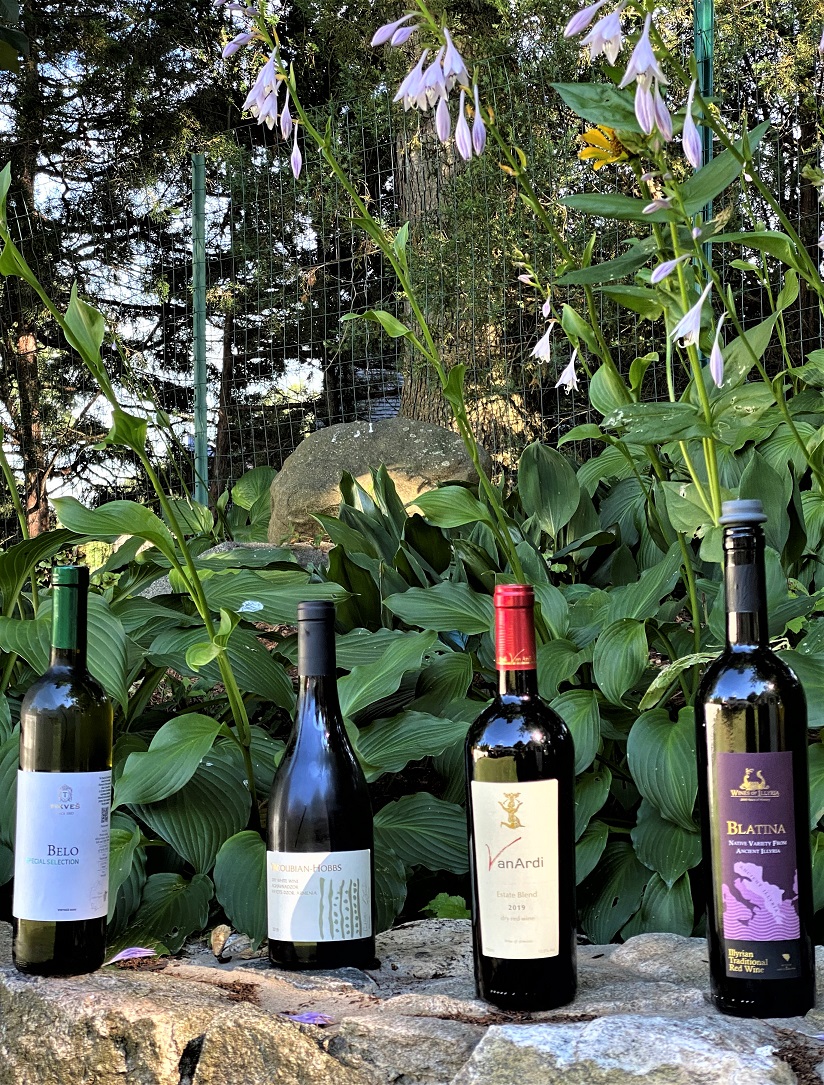
First, two wines from Eastern Europe. I never had the wines of Bosnia and Herzegovina, so this was a new country I was able to add to the list. Both wines were tasty, and Tikveš Belo was probably my favorite wine out of these 4. New grapes are marked in bold:
2015 Čitluk Winery Blatina Bosnia & Herzegovina (13% ABV, 100% Blatina)
Brickish red
Plums, dried fruits, medium intensity
Sour cherries, soft, round, medium body, good acidity, soft tannins
7+, not sure how it was stored. It is still nice, simple, and easy to drink, but probably on the decline.
8, on the second day. Interesting transformation – tertiary aromas are gone, plums, cherries and sage on the palate, nice, round, pleasant.
2020 Tikveš Belo Special Selection North Macedonia (11.5% ABV, Smederevka, Riesling, Marsanne, Roussanne)
A light greenish hue
A hint of gunflint, Whitestone fruit, medium intensity but very confident nose
Lemon, a hint of grass, salivating acidity.
8, this is a beautiful food wine, will compliment a wide range of foods.


It is my second time drinking Armenian wines. I was really looking forward to Yacoubian-Hobbs white, but the wines ended up being a disappointment. The Armenian red was quite drinkable. In any case, when you drink with a purpose, you don’t complain.
2018 Yacoubian-Hobbs Dry White Wine Aghavnadzor Vayots Dzor Armenia (14% ABV, blend of Voskehat, Khatuni, Qrdi, Garan Demak)
Golden color
Stewed fruit on the nose
The palate had some stewed plums, it was overwhelming and had no acidity. The wine was devoid of balance.
N/R, Maybe a bad bottle? Cork broke while I was opening the wine using a standard waiter corkscrew. But the wine didn’t seem oxidized, maybe heat damage?
2019 VinArdi Estate Blend Dry Red Wine Armenia (13.5% ABV, 40% Areni, 35% Haghtanak, 25% Milagh)
Dark Ruby red
Wild berries on the nose
Wild berries, dried herbs, medium+ body, good structure, good acidity, excellent balance.
8-, easy to drink
Now you know all about my wine obsessions. And I get to increase the counter you see on the top of the page from 561 to 567. Little by little…
By the way, there is no stopping in sight. While I’m trying to close on 600, there are people in The Wine Century Club discussing the 800 mark. Talk about obsessions… Enjoy your wine. Cheers!
A Refreshing Trip Around The World
Have wine, will travel.
I love saying that.
Have wine, will travel.
While we might be dreaming about all those ways to instantly travel from our living room to Mount Everest, Bora Bora, or Singapore, wine has this magical ability to transpose, to let us be where we want to be in a blink of an eye. It works best with the bottle of wine you are familiar with, especially if you have had a chance to visit the winery and acquired some great memories. But even if you have never visited the winery, a bottle of wine is quite a unique product – every bottle of wine proudly advertises where it was made, right on the front label – when you see “Italy”, it is not difficult to picture Rome or Bologna. France probably would solicit the image of the Eiffel tower. Does Australia bring up an image of a boxing kangaroo? Oops, this can be just me. Anyway, I’m sure you know what I’m talking about.
So today, let’s take advantage of the instantaneous travel only wine can offer, and let’s go on that trip around the world.
The weather is hot in the Northern hemisphere, so today we will hop onboard of the white wine express.

Our first stop will be in Spain. Thinking about Spanish white wines, what grapes come to mind? To ease up on this question – boy, it is hot outside – what is the first Spanish white wine you can think of? While you are pondering that question, I can give you my answer – Albariño. Of course, you have Viura, Verdejo, Godello, and others, but to me the first association for the Spanish white wine is Albariño.
As you might have suspected already, our first stop is in Rias Baixas, roughly a 3,000 square kilometers region located along the Atlantic ocean’s coast in Galicia, in northwest Spain, where Albariño is the king. Pazos de Lusco winery is farming 12.5 acres of Albariño grapes in the south of the region, 40 km away from the coast. The name of the winery comprises two typical Galician words – “pazo”, which stands for home, usually in the countryside, and “lusco” which defines the beautiful moment between dusk and nightfall.
2021 Pazo de Lusco Albariño Rias Baixas DO (13% ABV, $24.95, Vegan)
Straw pale
Intense aromatics, ripe white fruit, peach, tropical fruit
Nicely restrained palate, crisp, tart, lemon, the wine makes you salivate and want food even if you are not hungry.
8, excellent. Should be great with oysters.
For our next stop, we are staying in Spain but traveling east almost to the French border, to the region called Somontano, where the wine had been produced for more than 2,000 years. In Somontano, there lies the Secastillo Valley (the valley of 7 castles), boasting 100 years old Garnacha vines at 2,100+ feet of elevation and a special Mediterranean microclimate defined by close proximity to Pyrenees mountains. This is where our next wine is coming from, Garnacha Blanca produced at the Pagos de Secastilla:
2020 La Miranda Secastilla Garnacha Blanca Somontano DO (13.5% ABV, $18, 4 months in French oak)
Straw pale
Minerality, a touch of gunflint, underripe white fruit
Beautifully playful, fresh white fruit and berries medley, crisp and clean acidity, excellent balance, delicious.
8


As I was deciding when I will taste these wines, the overarching thought came in – oysters. I want fresh oysters. Luckily, we have a new fish monger opened nearby, so procuring a few dozens of oysters was really simple. I tried Albariño and Garnacha Blanca with the fresh oysters, and while the pairing with Garnacha Blanca was not bad, the Albariño and oysters were simply a match made in heaven. Albariño was a perfect chaser, amplifying the delicious salinity of the oyster juice and if you would close your eyes, it was very easy to imagine yourself standing right next to the ocean waves and smelling the salty, fishy water. If you will have an opportunity – spoil yourself, oysters and Albariño are really tasty together.
Now that we are not hungry, we can continue our journey. We are now traveling northeast to the heart of Europe – we are going to Austria. Let me ask you the same question as before – what grape would you associate with Austria first and foremost? I hope your answer will be the same as mine, as mine is rather obvious – Grüner Veltliner.
Grüner Veltliner is unquestionably the most famous Austrian grape, with more than 37,000 acres planted. It appears to originate in Austria and as it was recently established, it is a natural cross between Traminer and St. Georgen (an almost lost grape, only recently rediscovered). Gruner is capable of a wide variety of expressions, depending on the soil types and the yield. But what sets the grape apart in the world of white grapes is rotundone, which is present in the skin of Grüner Veltliner. I only recently mentioned rotundone in the post about Syrah – rotundone is a chemical compound found in the skin of the grape that is responsible for the peppery flavors in the wine. Such peppery flavors are usually attributed to red wines – but Grüner Veltliner can happily join the “peppery family”.
The first mentions of Domäne Wachau go back to the 12th century. Today, this is one of the leading wine cooperatives in the world – 250 vintners sustainably farm about 1,000 acres of vines, and the wines are exported to 40 countries. Talk about Grüner Veltliner – Domäne Wachau produces more than 3 dozens of different Grüner Veltliner wines. As a fun historical fact, I want also to mention that in the 1930s Domäne Wachau was already producing single-vineyard Grüner Veltliner wines. And if you are a wine nerd like me, Domäne Wachau has assembled a wonderful collection of the Nerd Notes on their website, offering in-depth coverage on the terroir, soils, sustainability, cork stoppers, and lots more.
I had an opportunity to taste two of the Domäne Wachau wines – both delicious:
2020 Domäne Wachau Loess Grüner Veltliner Austria (12.5% ABV, $14 1L bottle)
Straw pale
Whitestone fruit, apple, fresh lemon – inviting and bright
Crisp, grassy notes, cut through acidity, fresh, delicious.
8, delicious and outstanding QPR
2021 Domäne Wachau Grüner Veltliner Federspiel Terrassen Wachau Austria (12.5% ABV, $18.99)
Straw pale
Tropical fruit, candied lemon, herbal undertones, generous, inviting
Crisp, fresh, lemon, a hint of grass, cleansing and vibrant, perfectly balanced.
8, I should’ve tried it with oysters too – the acidity is pronounced, it could’ve worked well.
Now we will have to travel to the Southern hemisphere for our last stop – Chile.
Chilean wines need no introduction to wine lovers. All classic grape varieties are doing extremely well in Chile, producing world-class wines. But as we are taking the white wine express, that reduces the number of available options. The spotlight today is on the Sauvignon Blanc, produced by one of my favorite, all-organic Chilean wineries – Ritual. I extensively wrote about Ritual before, so instead of regurgitating the information here, I would like to ask you to read that post. Ritual Sauvignon Blanc was exactly as one could expect – delicious:
2019 Ritual Sauvignon Blanc Casablanca Valley (13.5% ABV, $20.99, organic grapes)
Straw pale
Open, inviting, clean, intense, a hint of freshly cut grass and currant leaf
Clean, round, full of energy, uplifting, lemon, freshly cut grass, delicious.
8, outstanding.
This concludes our wine journey around the world. Well, of course, you can continue it on your own. And if you will find something tasty, please share it with the rest of us.
Last Bottle Sign Up ($10 credit)




 Talk-A-Vino