Wineries of New England: Newport Vineyards
 Have you heard the term “tourist winery” before? I didn’t, but now I have. Follow along, I will explain.
Recently, the subject of the wines of 50 states came back into my focus – after tasting wines from Vermont, Colorado, Texas and Connecticut, it was kind of easy to get carried away, right? When we arranged a short weekend getaway with family in Newport, Rhode Island, I decided to check on the wineries on Rhode Island. Yes, the almighty google said, there are a few on Rhode Island, and one of them, called Newport Vineyards, is about 20 minutes away from the downtown Newport. My wife likes to visit wineries, and kids are old enough to sustain at least one winery visit, giving me only a reasonable amount of hard time, so our first destination of the trip was set.
Finding our destination was easy – a long building with clear sign, adjacent vineyards and very substantial parking lot ( I understand they got land, but still). Walked in, waited a bit in the lane and bought a ticket for the tasting ($12 allows you to taste 5 wines, or you can pay $15 if you want a logo glass). The tastings were happening in the multiple locations, both inside and outside. We settled for the tasting bar on the second floor, as the crowd appeared to be smaller than in the other places.
We looked at the list of available wines, and it contained 32(!) selections – white, rose, red, sweet – a substantial number of wines, as you see. When I handed the ticket to the gentleman at the bar, I told him that I have a wine blog and would like to try a few more wines if I can. That solicit really no interest, rather a surprise that I asked to taste more wines, and the answer came “okay, may be one or two, but no more”. The next uncomfortable moment came when after the taste of the first wine I did what I usually do at the wine tasting – I used the spittoon for its intended purpose – and the gentleman almost run over to me from another side of the large bar and said that it is fine to use the spittoon to pour over the leftovers of wine if I don’t want to finish it, but I should use it only for that (he didn’t say directly “don’t spit!”, but my wife helped to translate his rather long tirade about usage of the spittoon into the simple instruction). I would guess that seeing someone spit the wine will make the other guests uneasy (and he also said something about “sanitary”). Anyway, moving along…
Before I will talk about the wines, let me tell you a few things about the winery which I picked up from the back and forth conversation with our pourer (it was back and forth as we couldn’t just stand and talk – he had to serve the other guests as well). The winery was founded in 1988. 70% production are the white wines. Winery makes about 22,000 cases a year, primarily from the estate grapes. The mix of grapes is somewhat eclectic, at least judging by the wines of neighboring Connecticut and Massachusetts – for the whites, in addition to Chardonnay, Riesling, Vidal, Cayuga and Seyval Blanc, the winery also grows Sauvignon Blanc and Pinot Gris. The red grapes include Merlot and Cabernet Franc, which are both pretty standard for New England, but Cabernet Sauvignon and Pinot Noir are not so much. Additionally, Newport Vineyards makes single varietal wine from the hybrid grape called Landot Noir – will talk about this wine later. The soils are heavy clay loam (just as a statement of fact – I can’t tell you how does it affect the taste of the wine).
Here is the part of our conversation which I found most interesting. As you know, I’m a big fan of the aged, older wines, and I’m always looking for an opportunity to taste them. If I can’t taste the older wines myself, at least I would like to hear what the winery staff thinks about aging of their own wines, what was was the oldest vintage they ever tasted, what do they think about aging of the current release. Any and all of my inquiries were met with the stern “we don’t do do it”, “no, I have not”, “I never had”, etc, until the phrase came “we are a tourist winery. We have 50,000 people visiting winery every year, and all of our current releases sell out”. This was definitely a revelation for me. I always associate winery existence with utmost passion, borderline obsession to create great wines just for the art of creation (I understand that winery is a business – wines should be created and sold – don’t grab on this, please) – and I always thought that tourists were an afterthought to the winery’s existence. Now, having heard the term almost as an official statement (of course this is not a statement from the winery), that makes me think – yes, I can come up with more examples of the “tourist wineries”, based on my experiences in Temecula Valley and Connecticut. With that concept in mind, I can now better understand the logic of some of the winery decisions which appear puzzling otherwise.
Talking about learning new things, I also learned about new AVA – Southern New England AVA (SENE AVA), which stretches along the Eastern coast of US from Coastal Connecticut through Coastal Rhode Island, South Coast of Massachusetts and into the Cape Cod and the islands. SENE AVA was defined in 1984, so it celebrates 30 years this year. All together, the wineries form the Coastal Wine Trail (here is the link to the web site).


Let’s finally talk about the wines, shall we? I can tell you that the attitude of our pourer changed as we were talking, so we ended up trying way more than the intended 5+1. One general note about most of the wines we tasted – they all had clear cut, vibrant acidity. I don’t know if this is the result of the “heavy clay loam” soils, but the acidity was very present. Here is what we tasted:
2013 Newport Vineyards Newport Chardonnay SENE AVA ($18) – touch of gunflint, apple and tropical fruit on the nose, vibrant cutting-through acidity, apple on the palate. Drinkability: 7+
2013 Newport Vineyards Vintner’s Select Pinot Gris SENE AVA ($22) -very perfumy, pear, substantial sweetness on the nose, fruit forward on the palate, needs acidity. Drinkability: 7
2013 Newport Vineyards Dry Riesling SENE AVA ($23) – traditional east coast Riesling, touch of honeysuckle on the nose, lucks minerality and complexity on the palate, extremely acidic. Drinkability: 7
2013 Newport Vineyards Vidal Blanc SENE AVA ($15) – nice summer wine. Perfumed nose and shellfish-craving acidity on the palate (Muscadet style). Drinkability: 7
2013 Newport Vineyards Rosé White Merlot SENE AVA ($14) – touch of strawberries on the nose. Very light wine with very strong acidity. Drinkability: 7
2012 Newport Vineyards Rochabeau SENE AVA ($19, blend of Merlot, Cabernet Franc, Cabernet Sauvignon and Landot Noir) – fresh fruit nose, nice acidity, old world style. Drinkability: 7
2011 Newport Vineyards Cabernet Franc SENE AVA ($18) – touch of smoke , green bell pepper nose, touch of cassis on the palate, strong acidity. Drinkability: 7
2012 Newport Vineyards Cabernet Sauvignon SENE AVA ($18) -varietally correct profile on the nose and palate (green bell peppers and cassis). Drinkability: 7
2013 Newport Vineyards Landot Noir SENE AVA ($18) -barnyard on the nose, freshly crushed berries on the nose and palate, very unusual. An extra bonus – a new grape. Drinkability: 7+
NV Newport Vineyards Port SENE AVA ($18) -Nice and elegant, clearly a classic Portuguese style, good berry profile, elegant. Drinkability: 7
There you have it, my friends. Definitely an interesting and learning experience. If Newport is in your travel plans, stop by the Newport Vineyards, I’m sure it will worth your time. Cheers!
Weekly Wine Quiz #112: Grape Trivia – Müller-Thurgau
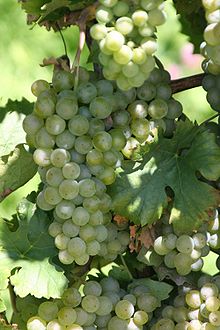
Müller-Thurgau Grapes. Source: Wikipedia
The Wine Quiz series is not meant to intimidate. The whole idea here is to have fun and learn something new. When answering the questions, it is fully encouraged to use all available sources of information, including Google or any other search engine. There are no embarrassing answers – the most embarrassing thing is not giving it a try…
Welcome to the weekend and your new wine quiz!
We are continuing our grape trivia series, and today’s subject is Müller-Thurgau.
Müller-Thurgau is a white grape which was created in 1882 by the Swiss botanist Hermann Müller, who lived in the area called Thurgau, hence the name of the grape. While Hermann Müller thought that he was crossing Riesling with Sylvaner to create Müller-Thurgau, DNA tests of very recent showed that instead of Sylvaner, the second parent was the grape called Madeleine Royale. Riesling, of course, needs no introduction, I would like to mention that Madeleine Royale is known to ripen extremely early, sometimes by the 22nd of July, the feast day of Mary Magdalene (according to Wikipedia), hence the name.
Müller-Thurgau was created to have the great qualities of Riesling, combined with the early ripening ability of ( then thought to be ) Sylvaner. The design worked quite successfully, and resulting grape became quite popular in Germany and many other countries – according to the 2010 data, it was still one of 15 most planted white grapes in the world. Müller-Thurgau is known for its pleasant flavor profile of peaches, apples and pears. The problem with the grape, however, is a low acidity, which generally leads to the flat, flabby wines. This is one of the reasons why Müller-Thurgau mostly used as a blending grapes and rarely becomes the star of its own. However, the grape has worldwide following among winemakers who swear by it and produce interesting wines worth drinking.
And now, to the quiz!
Q1: Which country is not known to produce Müller-Thurgau wines:
a. Australia
b. England
c. Hungary
d. South Africa
e. United States
Q2: True or False: In 2010, plantings of Riesling in Germany were double in size compare to those of Müller-Thurgau
Q3: Wine Spectator calls wines with 90-94 ratings “Outstanding: a wine of superior character and style”. True or False: There are Müller-Thurgau wines rated as Outstanding by Wine Spectator.
Q4: Which one doesn’t belong and why:
a. Kerner
b. Müller-Thurgau
c. Scheurebe
d. Sylvaner
Q5: True or False: There are no sparkling wines produced from Müller-Thurgau
Good luck, enjoy the quiz and your weekend! Cheers!
Sharing the Pleasure – Two Cabernets for the #CabernetDay
Yes, it is a #CabernetDay, and a post about Cabernet wines should be rather appropriate – but somehow, I was on the fence about it, until the AME opened up a little bit… When the wine give you lots of pleasure, why not talk about it? Well, this is how I felt anyway.
Cabernet Sauvignon and Cabernet Franc make some of the very best wines in the world, both when they fly solo, and when assisted by the other grapes. Myriad of love letters err tasting notes, blog posts and articles had been written to those grapes and wines, and hundreds millions of dollars traded hands for the pleasure of owning and drinking the Cabernet wines. Yes, we love our Cabernet wines (even Miles didn’t dare to poop on them). Thus I will not inundate you with another ten (or fifty) interesting facts, and instead will simply share the pleasure I had drinking the wines.
The greatness of the #GrapeDay is in the fact that it helps to select the bottle to be open. It also makes it appropriate to break a special bottle, and so I did.
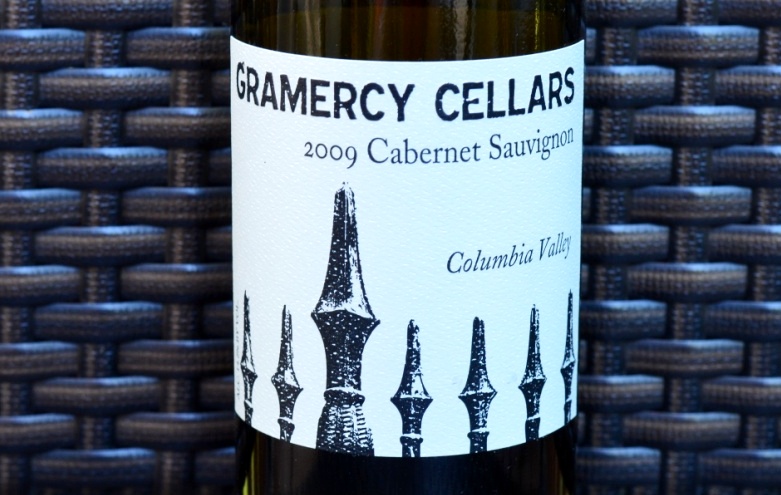
The first bottle opened was 2009 Gramercy Cellars Cabernet Sauvignon Columbia Valley. What makes it special? I had only one bottle, and read some rave reviews advocating giving this wine some time – thus I was waiting for the “special occasion” (thank you #CabernetDay).
I don’t know how this works, but when I think about the wines in the terms of how I would describe them, I get some random analogies at random times. This time my brain decided to go with the athletes analogy. To give you an idea of how this wine tasted, imagine a runner, may be a sprinter – perfectly built slender body, perfectly visible muscles, everything is tightly wound and ready to spring at any moment. A perfectly looking, but minimalist body. That was the impression of this wine – restrained cassis notes, espresso, earth, plums, clean acidity, firm and perfectly structured – a great package all around. (Drinkability:8)
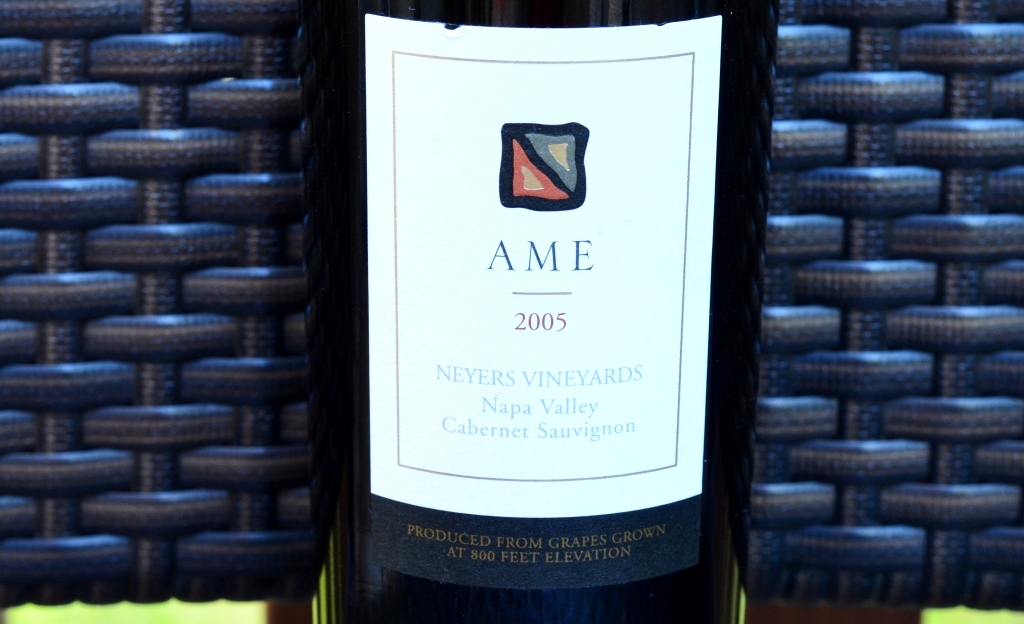
The second wine was 2005 Neyers Vineyards AME Cabernet Sauvignon Napa Valley. What makes it special? I love Neyers wines – their 2003 Cabernet was spectacular, for instance. And I had only two bottles of the AME (I rarely buy wines by the case, so having only two bottles is rather common). I would say that this wine was special even for the Neyers – the AME constitutes first initials of the names of their 3 children – Alexandra, Michael and Elizabeth.
Going to the sports analogy, imagine the same perfectly built athlete, but make all the muscles at least 3 times bigger – still perfect body, no fat, just muscles, but much bigger frame and much bigger muscles. We are not getting to the bodybuilder sizes, but this might be Stallone rather than Schwarzenegger – I hope you got my point.
Delicious open nose of dark fruit, cassis, loads of cassis, eucalyptus, earth. On the palate – so many things happening – cassis, plums, earth, pencil shavings, dark chocolate and espresso combined, clean acidity, perfect balance, firm structure and powerful tannins – a wow wine. (Drinkability:9).
There you have it, my friends – two great wines in honor of #CabernetDay. What is in your glass? Cheers!
Last Bottle Wines Earthquake Marathon Madness – Tomorrow Starting at Noon Eastern
Apologies for the second post in a day, but I just got the e-mail and I have to share it with you. Only today I told you about the WTSO marathon event coming in September, and in about 20 minutes after I pressed the “publish” button, the e-mail announcement came in from the Last Bottle Wines, another purveyor of the fine wines at the value prices.
But before I will tell you about the marathon, I want to mention the important initiative by the Last Bottle Wines. As you know, few days ago Napa Valley was affected by the earthquake. Thousands of people were affected, and as it often happens, those in need are affected the most. Last Bottle Wines donated $5,000 to the Napa Valley Food Bank, and if you want to help, you can donate as well by CLICKING HERE.
Now, starting tomorrow at Noon Eastern/ 9 am Pacific, Last Bottle Wines will run their marathon sale event called Earthquake Marathon Madness.
 The wines will be offered at a neck-breaking speed – no notifications of any sort – you just have to click “refresh” in your browser. No minimum purchase, and all wines will ship for free (within 48 states) in a few weeks. Of course you need to have an account with Last Bottle Wines, and I suggest you will be logged in with your credit card information set, if you want to catch any of the wines which will be sold. In case you don’t have an account, I will be glad to be your “reference” – you can use this link to sign up, and if you will, you will get $5 credit – yes, I will get $20 credit as well – but next time it will be you, when you will sign up your friends…
Happy Wine Wednesday, Happy Hunting and Cheers!
Wednesday’s Meritage – Wine Quiz Answer, #CabernetDay – Tomorrow, WTSO Everything Goes Marathon, Crowdsourced Cabernet, World Wine Challenge
 Meritage time!
Let’s start with the answer to the wine quiz #111, Grape Trivia – Grüner Veltliner.
This wine quiz is a continuation of the trivia series, where we are talking about individual grapes and then you get to answer 5 questions as it relates to that grape. The subject of the last quiz was white grape called Grüner Veltliner.
Here are the questions, now with the answers:
Q1: These flavors are usually associated with red wines, but it is not uncommon to find them in the description of the Grüner Veltliner wines. Do you know what flavors are those (multiple answers are possible)?
a. Chocolate, b. Pencil shavings, c. Pepper, d. Tar, e. Tobacco
A1: While Grüner Veltliner is a white grape, some of its aromas are typically associated with the red grapes, not with the whites – namely, pepper and tobacco can be often perceived in in the Grüner Veltliner wines.
Q2: These vegetables are notorious for been a “wine killer” – in terms of successful pairing, it is. And yet Grüner Veltliner is one of the unique wines (if not the only one) which is known to be able to pair successfully with those offenders. Do you know what vegetables we are talking about?
A2: Asparagus and artichoke are notoriously difficult to pair with the wines, and Grüner Veltliner often works very well with both vegetables.
Q3: Wine Spectator calls wines rated in 95-100 range Classic (the highest and the most prestigious category). True or False: there are no Grüner Veltliner – based wines rated in the Classic category
A3: Correct answer is “false” – there are some Grüner Veltliner rates as “classic” – but literally, there are only very few, mostly late harvest Grüner Veltliner wines rated at 95 as the highest.
Q4: According to one of the well known wine critics, the Grüner Veltliner might be “the next big thing” in which wine making country:
a. Australia, b.Argentina, c. Chile, d. South Africa, e. United States
A4: Wine expert James Halliday considers Grüner Veltliner to be potentially the next big thing in Australia, so the correct answer is a, Australia.
Q5: Which one doesn’t belong and why:
a. Austria, b. Croatia, c. Czech Republic, d. Hungary, e. Slovakia
A5: All the countries in this list are known to produce Grüner Veltliner wines, except Croatia, thus correct answer is b, Croatia.
When it comes to the results, I’m glad to say that we have a winner! apuginthekitchen correctly answered all 5 questions, so she becomes our new champion and gets the coveted prize of unlimited bragging rights! I also want to acknowledge Mario Plazio (no web site), who correctly answered 4 questions out of 5. Well done!
Now, to the interesting stuff around the vine and the web!
First and foremost, tomorrow, August 28th, we are celebrating 5th annual #CabernetDay – two noble grapes, Cabernet Sauvignon and Cabernet Franc, countless wines from all over the world. Open a bottle, enjoy and share with the world – that’s all there is to it. You can also start celebration in style by joining the #WineChat tonight with Jean Edwards Cellars on twitter at 9 pm Eastern/ 6 pm Pacific and talking about your favorite Cabernet wines.
Wine Til Sold Out (@WTSO) is doing it again! The new Marathon will be taking place on Monday, September 8th. Only this time, it will be a very unusual for WTSO “Everything Goes” marathon. Styled after the famous Last Bottle Madness Marathons, there will be all sorts of wines offered at different prices and free shipping on any quantities (no minimums). All orders will be combined and shipped after September 22nd. The Marathon will start at 10 AM Eastern, and as usual, you will get the new wine notification only on twitter. Happy hunting!
Famous Washington State winery, Columbia Crest, recently started a new project – Crowdsourced Cabernet. You can join the group of like-minded people and become an internet winemaker for the 2014 Cabernet Sauvignon. 5 acres of vines, video cameras showing every angle of the grapes, the temperature, vine condition and all other information right in front of you – and now you have to make the decision which will affect your wine – no pressure. I think this is a very cool project – if anything, an interesting learning experience. For more details and to become a winemaker, here is your link. Don’t delay, the harvest is about to start…
And the last one for today – a game. A wine education and trivia game it is, recently released by the Trinchero Family Estates. The game is called World Wine Challenge ( available in iTunes for $2.99), it will help you to learn variety of wine subjects in the interactive fashion, as well as compare your knowledge to the others in the competition format. I didn’t get a chance to download the game yet (plan to do it shortly), but in case you are interested, here is the link with all the information about the game and its features.
And we are done here. The glass is empty – but the refill is on its way! Cheers!
Finally, I’m a Convert
Yes, this will be a post about the wine – what did you think I will be writing about? I completely changed my perception of one wine region, so convert or not, but this is what this post is all about.
Don’t know about you, but when I visit the wine region and wineries in it, I generally come with certain set of expectations, a perceived notion if you will. These perceived notions usually are very opposite and have no middle ground. Perceived notion number one – visiting many wineries, I generally expect to find a lot of wines which I will like, and a few which I will not care for. This would be true for many wine regions in California – Napa, Sonoma, Santa Barbara – but not all of them (for instance, Temecula is not included in that list). Perceived notion number two – I will not care for the most wines I will be tasting, but if I’m lucky, there might be a few wines which I will like. Connecticut wine region would be a good example of this second group – but we will talk about it later in a separate post.
Of course both of this perceived notions are founded based on the prior experience with the wines of the region, both at the winery and outside. It is easy to build – just visit a few wineries, where you don’t like the wines, or buy a few bottles in the store which you will not care for, and that’s enough to label the whole region as “not my thing”. Once the perceived notion is born, it is very hard to overcome and change. I agree that this sounds very shortsighted, but this is how we are [very commonly] wired – try something once, don’t like it (think about first time your mom forced you to eat broccoli), and you might be set in your “unlove” for life. This “tried this, didn’t like it, never again” type of attitude is never practically helpful around food and wine, as it prevents us from having great experiences. This perceived notion is hard to get rid of – but not impossible if you are willing to take an “open mind” approach – try and try again, until a specific experience will trigger the change.
Okay, done with the philosophical intro, let’s get to the conversion details. The region I finally changed my view on is Finger Lakes. During multiple visits over the few years, I kept trying and trying new wineries, only to come up to the same resolution every time – “nope, not my wine” – and that included even Riesling, which is considered the signature wine of the Finger Lakes region. Then I discovered wines of Fox Run and Dr. Konstantin Frank, which created a crack in my preconceived notion. The Finger Lakes #winechat I took part of in May, made the crack wider. But what made me to change the whole perception were the wines of Villa Bellangelo.
Villa Bellangelo is a small producer, located in a close proximity to the Seneca Lake. The family owned winery produces a number of different Rieslings, as well as Chardonnay, Gewurztraminer, Merlot and other wines. About two month ago, I received a sample set of wines form the Villa Bellangelo, 5 bottles of Riesling and a bottle of Chardonnay. As I mentioned in some other posts, while samples sound great (“yay, free wine!”), to me they are more challenging to deal with than the regular wines I buy. I would not crack a sample bottle just casually in the evening – I need to make sure I can give it my undivided attention and spend time with the wine – thus it often takes me quite some time to find the right opportunity. Finally, the moment presented itself and I opened the first bottle of Riesling. Pour, sniff – delicious, take a sip – wow. Clean and beautiful Riesling, perfectly fitting my definition of “classic Riesling”. Next bottle, then next – all 5 Rieslings and the Chardonnay delivered lots of pleasure, sip after sip, bottle after bottle. 6 out of 6? I think this is very convincing performance, hence the title of this post and yes, the change in the perceived notion.


For what it worth, here are the notes on all 6 wines:
2012 Villa Bellangelo Dry Riesling Finger Lakes (12.3% ABV, $19) – Color is lighter than straw pale. On the nose, great Riesling aromatics, classic, honeysuckle, pear, fresh apple. palate is dry, clean, great acidity, very light, green apple, super-refreshing, present minerality, short finish. A wine of a great quality. Drinkability: 8-/8
2013 Villa Bellangelo Dry Riesling Seneca Lake Finger Lakes (11.3% ABV, $19) – Beautiful nose of the white stone fruit, hint of honeydew sweetness. Perfectly balanced on the palate, crisp acidity, minerality, touch of green apple. Excellent overall. Drinkability: 8
2012 Villa Bellangelo Semi-Dry Riesling Finger Lakes (11% ABV, $19) – Nice straw color. Pleasant nose of white apples and touch of apricot. Palate exhibits good acidity, good balance, hint of sweetness and white stone fruit. This wine is showing better once it warms up a bit (not straight from the fridge), which I find interesting. Drinkability: 8-
2013 Villa Bellangelo Semi-Dry Riesling Finger Lakes (10.8% ABV, $N/A) – Open nose of apricot and white peaches. Palate has nice level of sweetness, supported by good acidity. Very refreshing and a pleasure to drink. Drinkability: 8-/8
2012 Villa Bellangelo 1866 Reserve Riesling Finger Lakes (11% ABV, $32) – This wine is a dedication to the Dr. Byron Spence, who in 1866 planted 20 acres of the sloping western hills of Seneca Lake with the wine grapes. This vineyard is where the Villa Bellangelo makes their best wines from, hence the 1866 in the name of the wine.
The wine had a beautiful light golden color. Classic Riesling nose, with honeysuckle, white peach, apricot, all very subdued and delicate; touch of minerality. On the palate, apricot notes together with a touch of the apricot pit bite, touch of white apple, clean and vibrant acidity, present minerality, perfect balanced and nice complexity on the finish. Drinkability: 8/8+
2012 Villa Bellangelo Chardonnay Finger Lakes (13.8% ABV, $20) – Outstanding. Perfect Chablis-like, complex nose – minerality, distant hint of gunflint, touch of fresh apple. Palate is clean, balanced, with white apple and vanilla notes, vibrant acidity. Drinkability: 8
There you have it, my friends. One winery, which finally did it for me. Now Finger Lakes is squarely on my “yes, I love those wines” list. I don’t know what is your opinion about Finger Lakes wines, but if you were like me, find some Bellangelo wines and see if they will make you a convert. Cheers to the great wine discoveries!
Weekly Wine Quiz #111: Grape Trivia – Grüner Veltliner
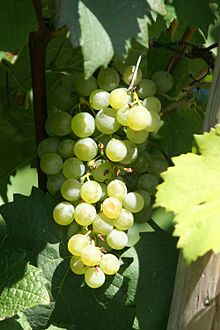
Grüner Veltliner grapes. Source: Wikipedia
The Wine Quiz series is not meant to intimidate. The whole idea here is to have fun and learn something new. When answering the questions, it is fully encouraged to use all available sources of information, including Google or any other search engine. There are no embarrassing answers – the most embarrassing thing is not giving it a try…
Welcome to the weekend and your new wine quiz!
The grape trivia series is back (tell me how happy you are about it!), and today’s subject is Grüner Veltliner.
Grüner Veltliner is a grape which: has some Italian roots in his name; believed to be growing for a few thousands of years; had no known pedigree until 2007. The name Grüner Veltliner stands for “green veltliner”, and veltliner appears to be derived from the name of northern Italian region, Valtellina. The official name of the grape, Grüner Veltliner, seems to appear for the first time in 1855. And only in 2007, after quite an extensive DNA research, it was established that Grüner Veltliner was the result of natural crossing between Savagnin (Traminer) and practically extinct grape which even had no official name when it was found, so it received name of St. Georgener-Rebe, based on the name of the locality where it was found.
Grüner Veltliner has a “middle of the road” ripening season, growing successfully in many European countries. It is, however, susceptible to many types of grape diseases, so it requires attention in the vineyard. Grüner Veltliner generally produces healthy amount of small green-yellowish grapes, so again the special care should be taken to avoid overproduction. Grüner Veltliner is quite versatile in terms of potential styles in which the wine can be made – sparkling wines, dry table wines (both with and without oak aging) and late harvest wines are all successfully produced from the grape. In its more typical expression, as a dry table wine, Grüner Veltliner is known for its acidity and green veggies profile. Coming from the Austrian region of Wachau, home to arguably best renditions of the grape, Grüner Veltliner is also known for its expressive minerality. Often green and restrained while young, Grüner Veltliner wines can develop a considerable complexity as they age and in opinion of the experts (never tried aged Grüner Veltliner myself) can even rival some of the best Burgundies.
Austria has the biggest plantings of the Grüner Veltliner, more than 42,000 acres. Grüner Veltliner is also popular in Czech Republic, Slovakia and some other European countries. As of late, the grape also made its way into the number of New World countries – Australia, New Zealand, United States all have number of plantings of the grape and it seems to produce quite promising results in those regions.
And now, to the quiz!
Q1: These flavors are usually associated with red wines, but it is not uncommon to find them in the description of the Grüner Veltliner wines. Do you know what flavors are those (multiple answers are possible)?
a. Chocolate
b. Pencil shavings
c. Pepper
d. Tar
e. Tobacco
Q2: These vegetables are notorious for been a “wine killer” – in terms of successful pairing, it is. And yet Grüner Veltliner is one of the unique wines (if not the only one) which is known to be able to pair successfully with those offenders. Do you know what vegetables we are talking about?
Q3: Wine Spectator calls wines rated in 95-100 range Classic (the highest and the most prestigious category). True or False: there are no Grüner Veltliner – based wines rated in the Classic category
Q4: According to one of the well known wine critics, the Grüner Veltliner might be “the next big thing” in which wine making country:
Q5: Which one doesn’t belong and why:
a. Austria
b. Croatia
c. Czech Republic
d. Hungary
e. Slovakia
Good luck, enjoy the quiz and your weekend! Cheers!
…And Dinner Becomes an Experience
The dinner is a dinner is a dinner. Sometimes we eat just to satisfy the basic bodily crave for energy. We put something in the mouth, doesn’t really matter what, hopefully chew on it (or not) before gulping it down, and we are done. Then there are family dinners, let’s say spaghetti and meatballs – everything is home made and tasty, but the school day, upcoming play and huge homework project due tomorrow take over the whole experience. And then there are dinners where the food is perfect, the wine pairing is spot on and the good company of friends is amazing – those dinners become the experience.
We have a tradition with our friends – an adults getaway during late summer or early fall. Find B&B to stay within 2-3 hours of driving distance, visit nature trails, little towns and museums, visit wineries, have a good dinner, have fun and most importantly, enjoy the company of each other. Simple, isn’t it? This year would be the our fourth time doing this, and most of our trips had been described in this blog to the various degree. In 2010, we had a great time in Milford, Pennsylvania, and our dinner was definitely an experience. For that dinner, we were allowed to bring our own wines, so we managed to create the special experience (you can read about it here). The next year we went to the Grafton, Vermont – of course we had a great time, but when in Vermont, the cheese is much bigger deal than wine, so it didn’t really make it into this blog, and dinner didn’t make it into the “experience” level. Last year we stayed in the little town in the area of Woodstock, NY (the town was called Palenville), and the highlight of the trip was the visit to the Hudson Distillery (nope, dinner didn’t make it again). This year, we happened to stay in my home state, Connecticut, in the town of Norfolk. We had a great time visiting Connecticut wineries and visiting places in Connecticut, New York and Massachusetts (yep, you can move through all three states within 20 minutes of driving), but the highlight was … yes, you got it – the dinner.
Norfolk, a little town in northern Connecticut, is not exactly a Michelin-starred restaurant oasis. However, does the food needs to be acknowledged with the Micheline star to be good? Not really. It only takes a little bit of love and a little bit of soul. And when we take the soulful food, we can elevate it to the next level with … wine, of course (you didn’t expect me to say coke, didn’t you). And this is how you create an experience – one dish, one wine.
Once we had our plans for Norfolk set (meaning – we reserved our B&B), we reached out to the few restaurants in the area. We said that we are coming in a large group, and we asked for the special tasting menu, which we can pair with wine (preferably brought by us). Chef Heidi Dinsmore of the Wood Creek Bar and Grill offered a tasting menu – and graciously allowed us to bring our own wines without even charging a corking fee. The rest is history – one of the best dinner experiences ever, which you can see (sorry, only see) below.
Appetizers
Crostini with Roasted Pear Gorgonzola and a Balsamic Drizzle
Wine: 2009 Graham Beck Brut Rosé, South Africa


There was a nice combination of flavors in crostini, but we could probably use more pear and less cheese, and the toast itself could probably be a bit less garlic-y. The South African sparkler was very classic, with nice toasted nose, touch of yeast and fine mousse. As for the pairing, I would call it “unoffensive” – both the crostini and wine stayed in its own universe, and they didn’t collide nor complement each other.
Micro greens with Strawberries and a Lemon Vinaigrette
Wine: 2013 La Ferme Saint Pierre Cuvée Juliette Rosé Côtes du Ventoux, France


Salad was nice and fresh (what else do you want from the green salad, right?), and the wine had a nice strawberry profile. The pairing was excellent, the wine really complemented and enhanced the dish, despite the “simple salad” nature of it.
Shrimp with a Champagne Beurre Blanc
Wine: 2011 Bodegas La Cana Albariño Rias Baixas, Spain


Shrimp was cooked perfectly, and Beurre Blanc sauce was outstanding. La Cana Albariño is one of my favorite wines, and this bottle was no exception – bright fruit profile on the nose, but restrained and delicious on the palate. And the pairing? Spectacular, simply spot on. Wine’s acidity was a great complement to the sauce, so the dish was greatly enhanced.
Main Course
Poached Halibut over Spinach, Saffron Heirloom Tomato Sauce
Wine: 2012 Buil & Giné Joan Giné Blanc, Priorat DOQ, Spain


Halibut, which is one of my favorite types of fish, was done “just right”, and together with spinach and the sauce was creating just one spectacular flavor pop. And then the wine… This wine deserves a whole blog post dedicated just to that wine by itself. White Priorat, a blend of 40% White Grenache, 36% Macabeo, 20% Viognier and 4% Pedro Ximenez had stunning complexity – orange peel, white stone fruit, minerality – really an excellent wine, rivaling best Chardonnays. And together with the dish? Another spectacular, spot on pairing, complementing and greatly enhancing flavor.
Beef Tenderloin over Mashed Celery Root, Bordelaise, Tiny mini Potato au Gratin
Wine: 2010 Château de Pibarnon Bandol Rouge Les Restanques de Pibarnon, Bandol, France


Beef was perfectly cooked, and together with the celery root and Bordelaise sauce, every bite was literally divine. The Bandol wine, which is 90% Mourvedre and 10% Grenache, had a warm spice flavor profile, so together with the steak the pairing was just outright delicious.
Guinness Marinated Pork, Cherry Au Jus, Arugula, Crispy Polenta
Wine: 2011 Bodegas Caro ‘Amancaya’ Gran Reserva Malbec – Cabernet Sauvignon, Mendoza, Argentina


The pork was melting in the mouth and the combination with cherries was excellent. The wine, made from two of the Argentina star grapes – Malbec and Cabernet Sauvignon, had an open nose with spicy, cherry-loaded palate. As you can imagine, cherries in the sauce and in the wine played together wonderfully, creating – yep, again – a super-successful pairing.
Dessert
Fresh-made Sorbetto – delicious, clean, refreshing. Perfectly restored the palate before the dessert course.
Chocolate Tart with Fresh Fruit
Wine: 2000 Philip Togni Vineyard Ca’ Togni Sweet Red, Napa Valley


You can’t go wrong with the chocolate, and this dessert was a great proof of that – every bite was a decadent pleasure. And the wine… What can I tell you? It was definitely a mature wine, fragrant, with some sweet cherry notes and balancing acidity. Based on the information on producer’s web site, this wine was inspired by the famous South African dessert wine Klein Constantia, and it is produced from the grape called Black Hamburg (known as Black Muscat), which is quite rare in Napa Valley – and it is also a new grape for me (!). The wine perfectly complemented and literally added a new dimension to the chocolate tart, so our final pairing was again “just perfect”.

Chef Heidi Dinsmore
As we were settling into the dessert, Chef Heidi Dinsmore, the creator of the delicious experience, came to talk to us, so we had an opportunity to thank her and to tell her how much we enjoyed our evening, and how delicious the food was. If you are ever in the area of Norfolk, Connecticut, Wood Creek Bar and Grill should be on your list. Ahh, and I also have to say a very big thank you to our waitress Jessica, who did an amazing job managing our wine program, opening the bottles, changing the glasses and of course serving food – she was absolutely fantastic.
There you have it, my friends – the food, the wine and the company – a simple recipe for an unforgettable experience. Cheers!
Wood Creek Bar and Grill
3 Station Place
Norfolk, CT 06058
(860) 542-1200
http://www.woodcreekbarandgrill.com

Last Bottle Sign Up ($10 credit)




 Talk-A-Vino