A Few Days on Cape Cod, 2025 Edition
I enjoy writing about our trips to Cape Cod as it is always an opportunity to share some picture and talk about wines.
This trip was no exception. We were blessed with beautiful weather, warm and dry. And we drank a lot of delicious wines I’m happy to talk about.
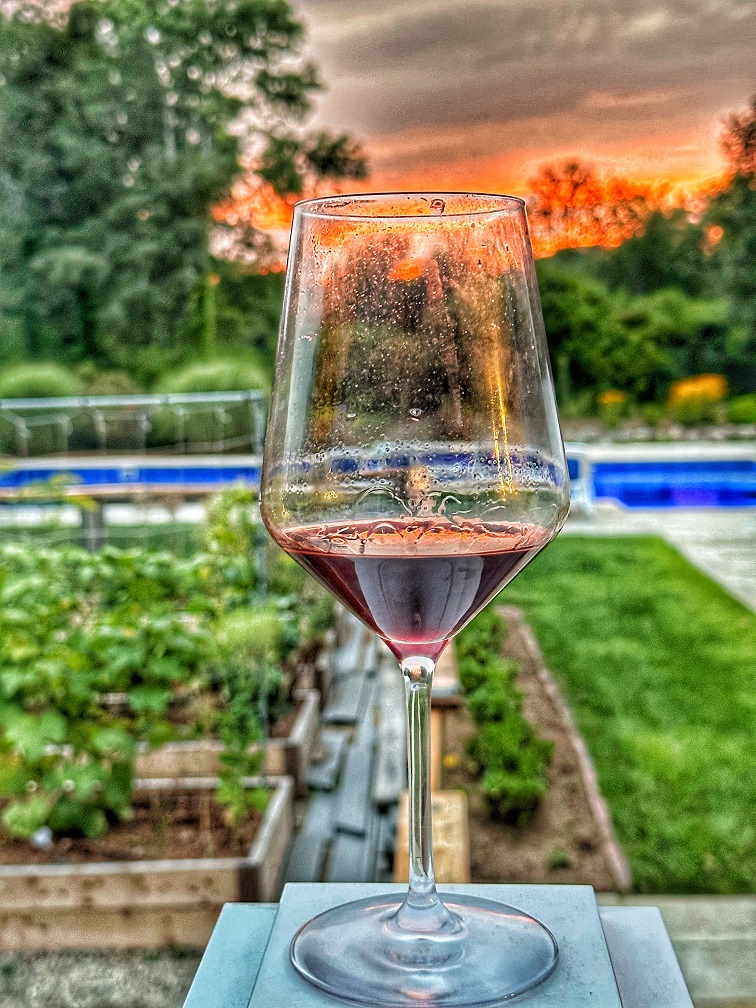
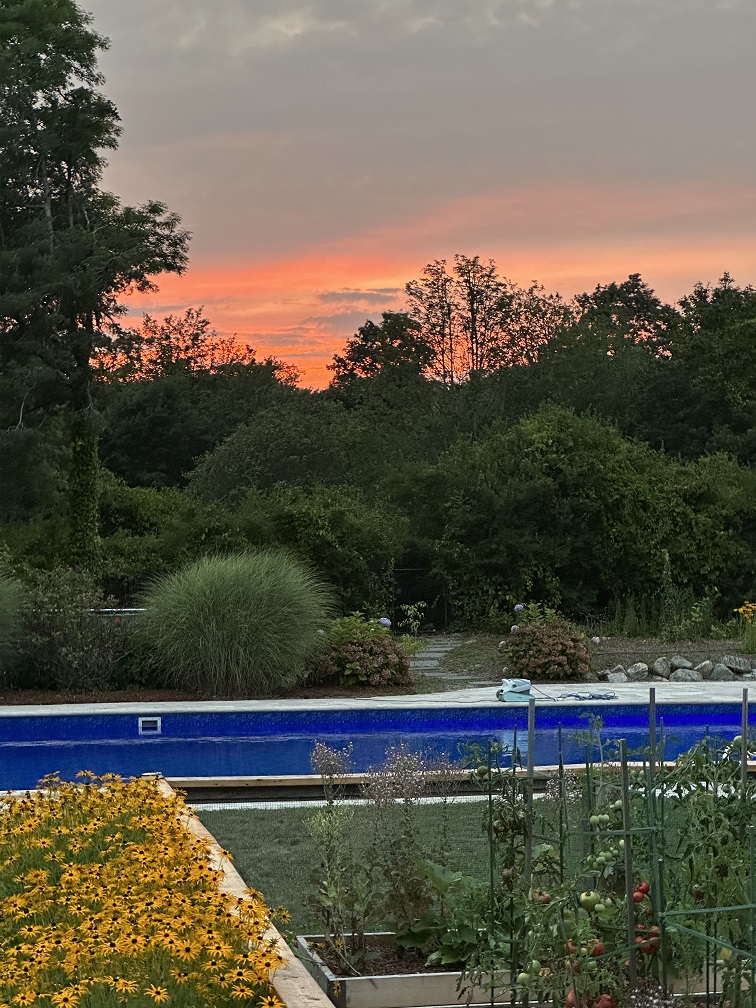
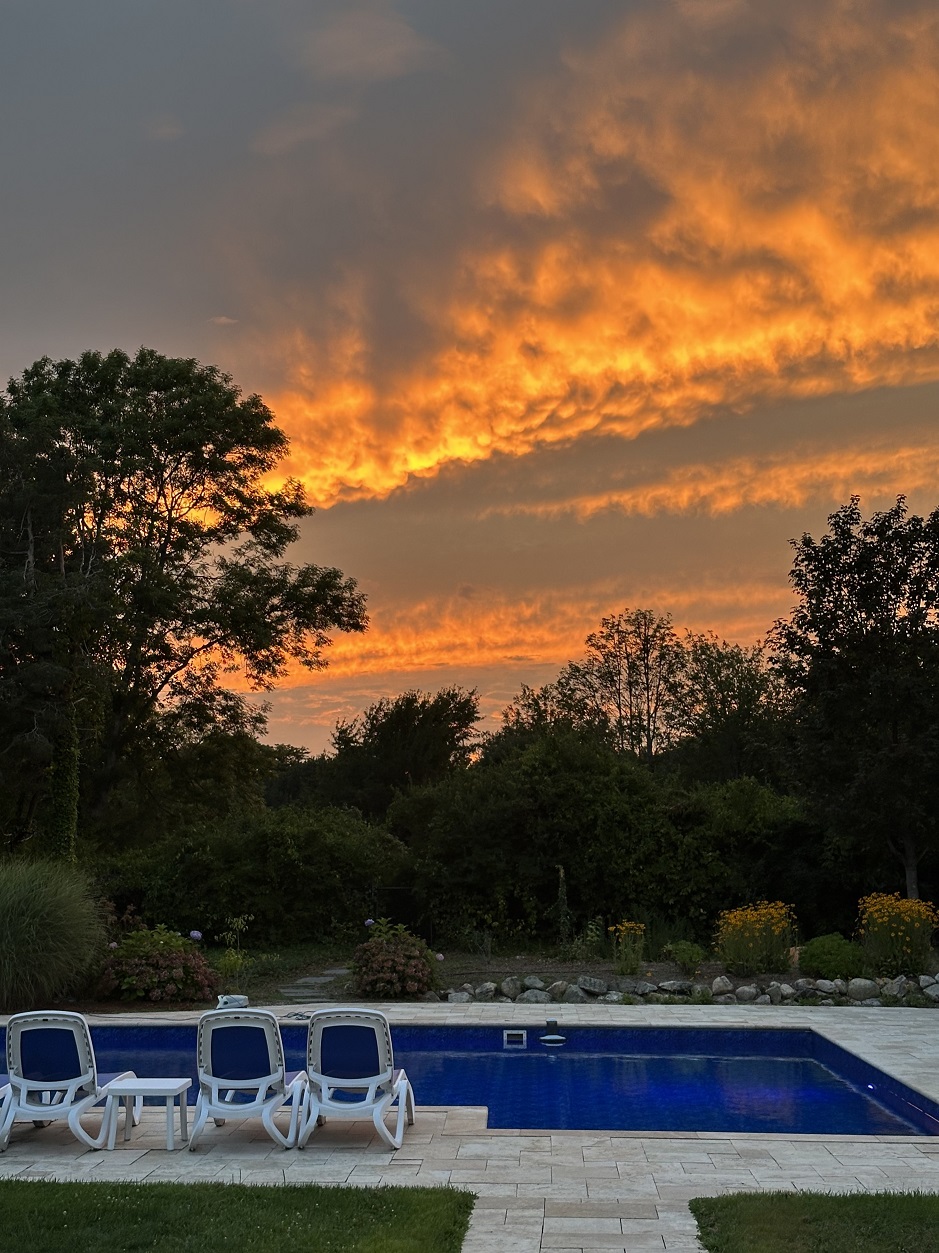
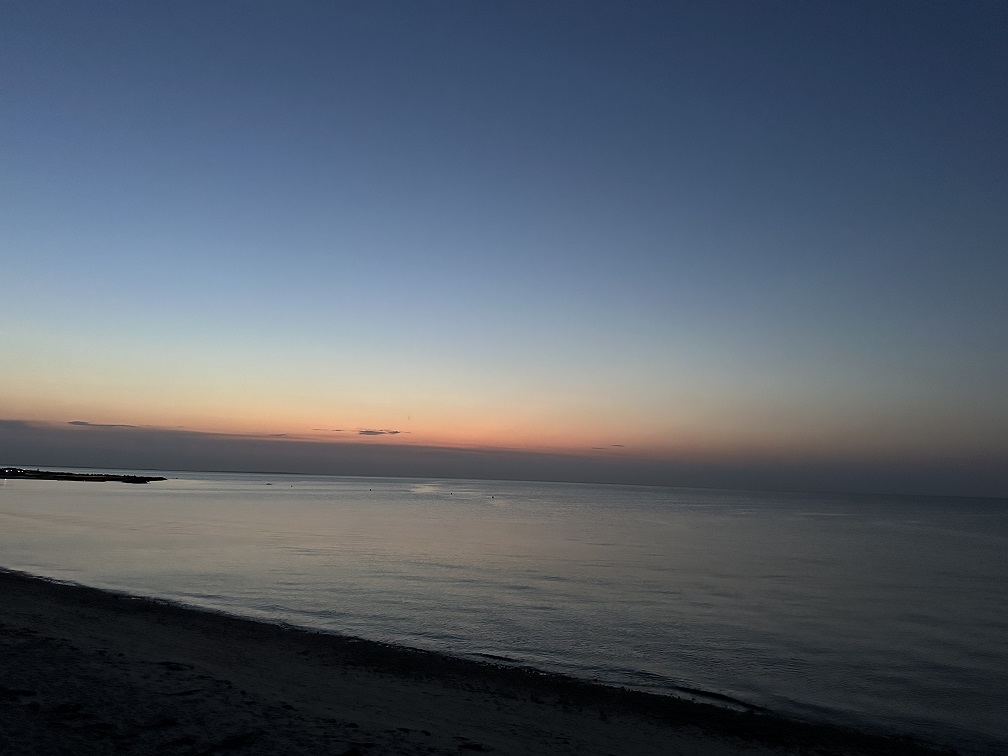
Before we talk about wine, a few of the pictures I love to bring back from Cape Cod:
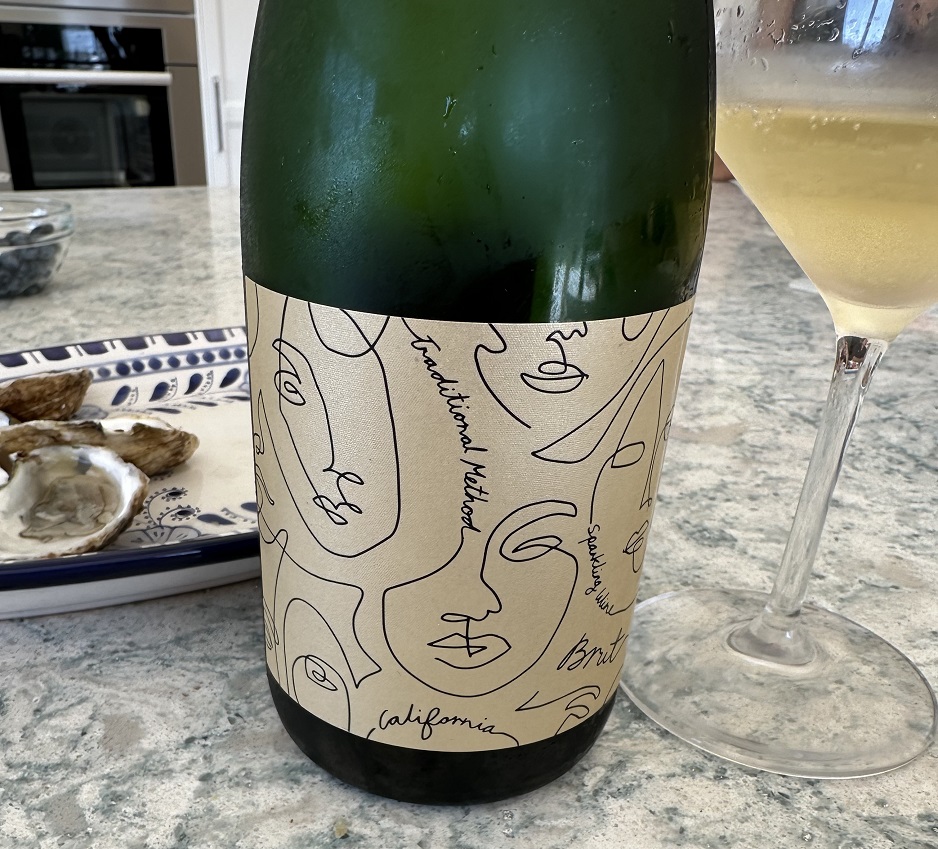
First, a sparkling wine – NV Incandesa Brut Traditional Method California Sparkling Wine (11.5% ABV, 70% Chardonnay, 30% Pinot Noir). The wine was delicious, with a classic nose of baked bread and apples, fine mousse, and a round, generous palate. I had to do a bit of research to learn more about this wine, as the bottle itself offers very little information, and it is not easy to find anything on the web. It appears that it shouldn’t be surprising that this sparkling wine tastes so good – it is made by one of the most famous Spanish Cava producers, Raventos Codorniu, as its first foray into the North American market. Side benefit – this was a perfect pairing for the oysters…


Appropriately for the weather, we enjoyed 3 Rosé wines.
2023 Poggio Stenti Sangiovese Rosato Maremma Toscana DOC (13.5% ABV) was delightful, a Rosé with a presence. A full assemblage of strawberries on display – from aromatics on the nose to the flavors on the palate, coupled with a good mid-palate weight, a well-present body. Too bad this was my last bottle brought back last year after our family European trip.
2024 Turley Zinfandel Rosé California (12% ABV) – I’m so glad Turley started producing this wine some years back – it is absolutely delightful, can perfectly compare to any Provançal Rosé in its lightness, effervescence, and beautiful aromatics.
2024 Field Recordings Domo Arigato (Mr. Ramato) Skin Contact Pinot Grigio SLO Coast (12.5% ABV) – one of my perennial favorites from Field Recordings. This is a skin contact wine, so it is more than just a light Rosé; the wine offered herbaceous undertones on the palate, and had good body weight, with red fruit mixed with herbs. Delicious.
We had only a few of the white wines, so here are notes on one of them.
2024 Field Recordings Super Gnario El Palomar District (13.1% ABV, 100% Malvasia Bianca) – amazing aromatics, with flowers, whitestone fruit, guava, overall very intense. On the palate, the wine might be even a bit too much with “in your face” white plums and green pears, medium to full body, good acidity and lingering fruit on the long finish.
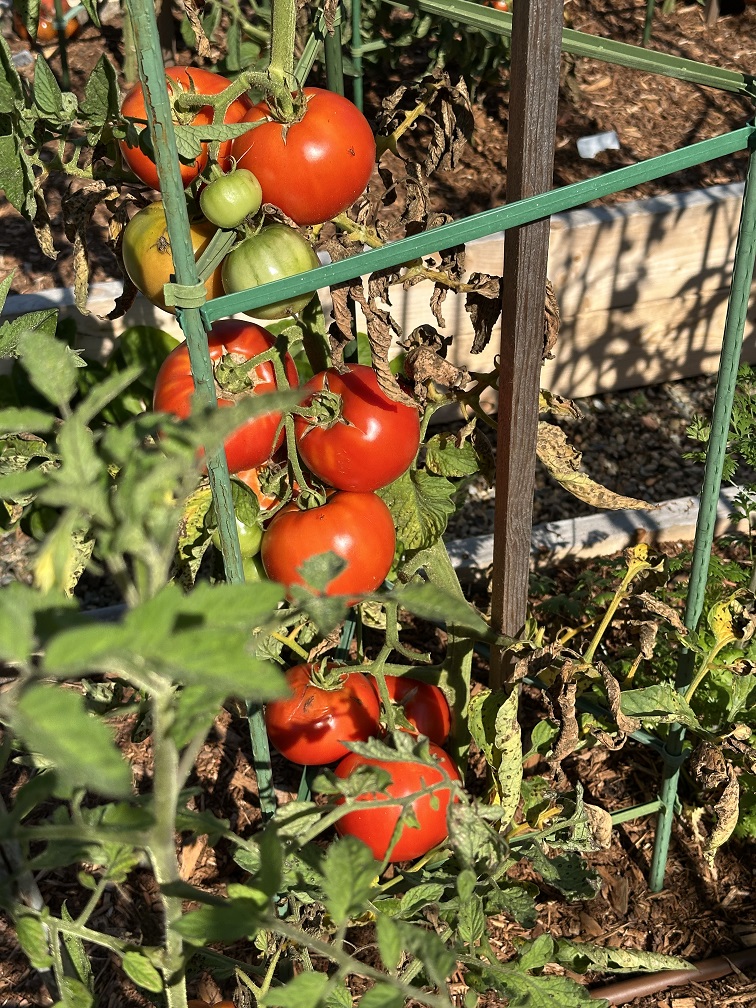
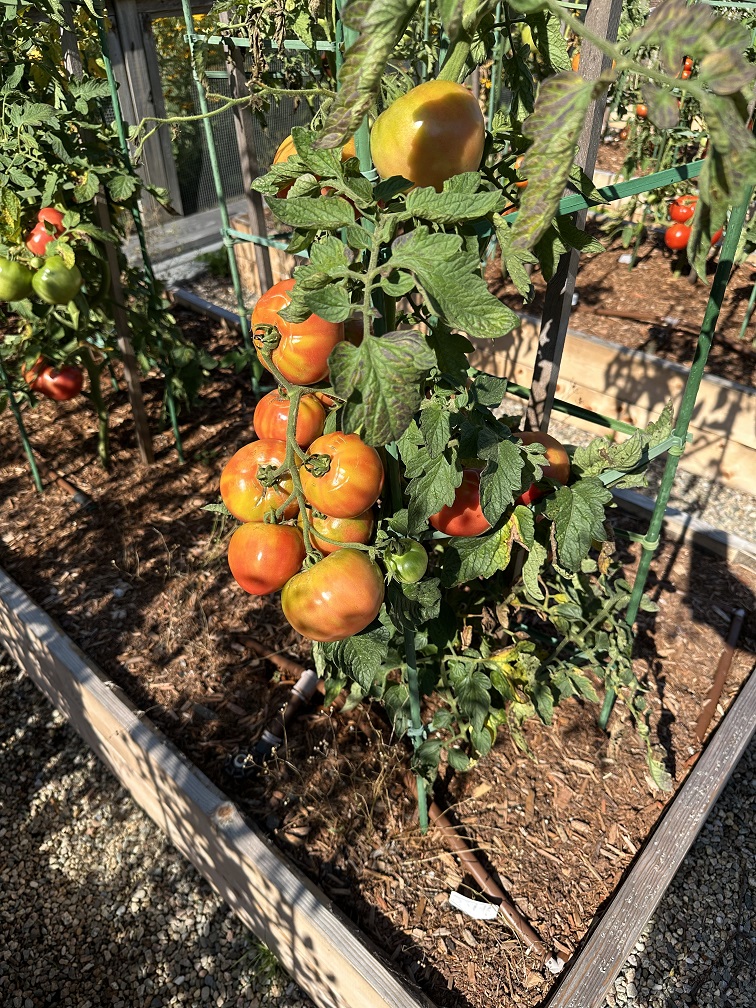
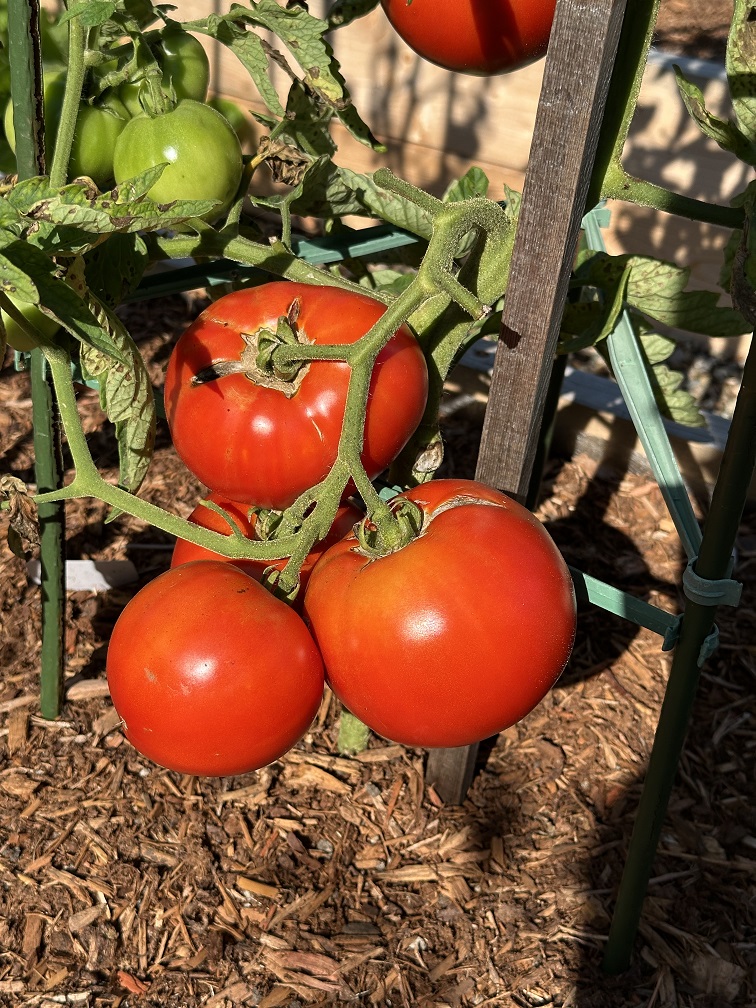
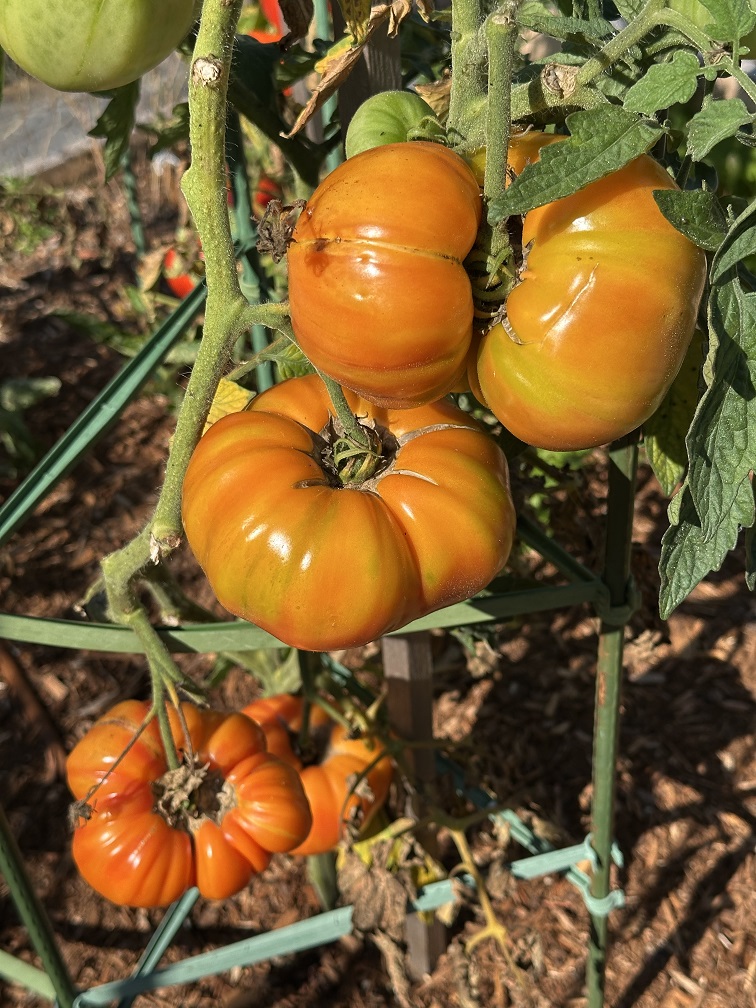
Let’s take a little break from wines – here are some garden pictures for you, and a little bit of food:
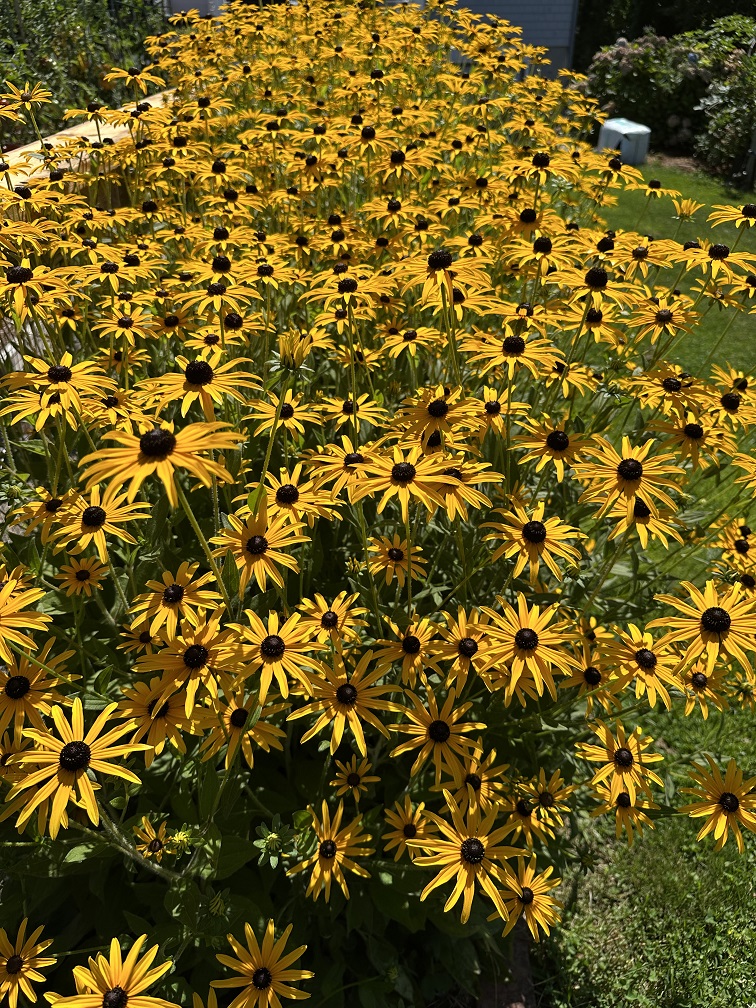
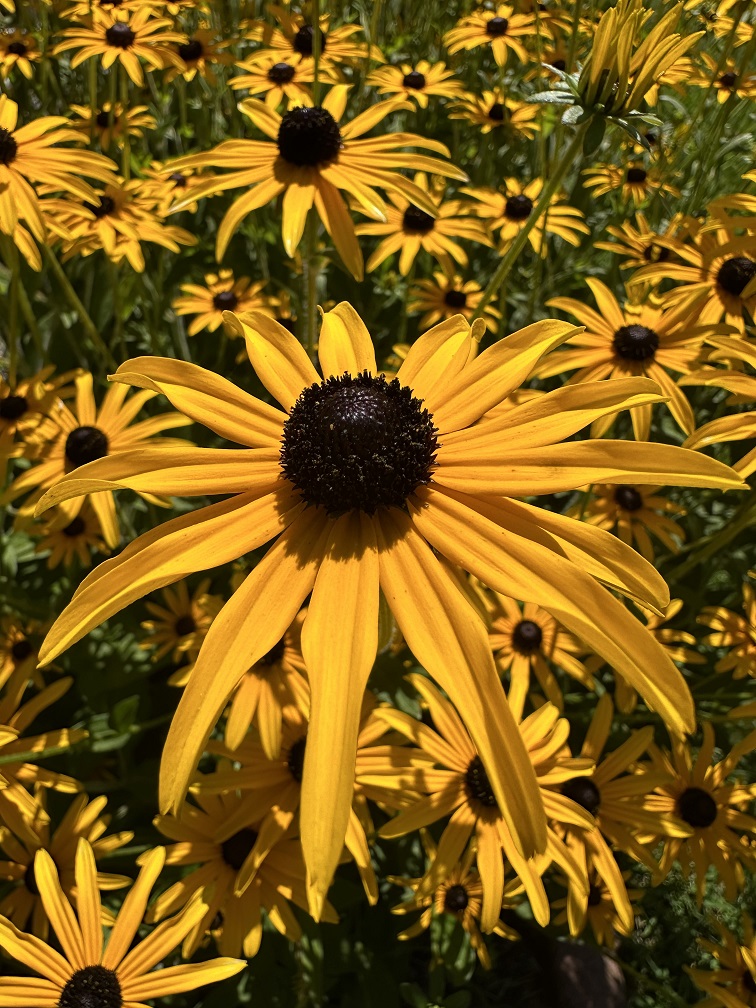
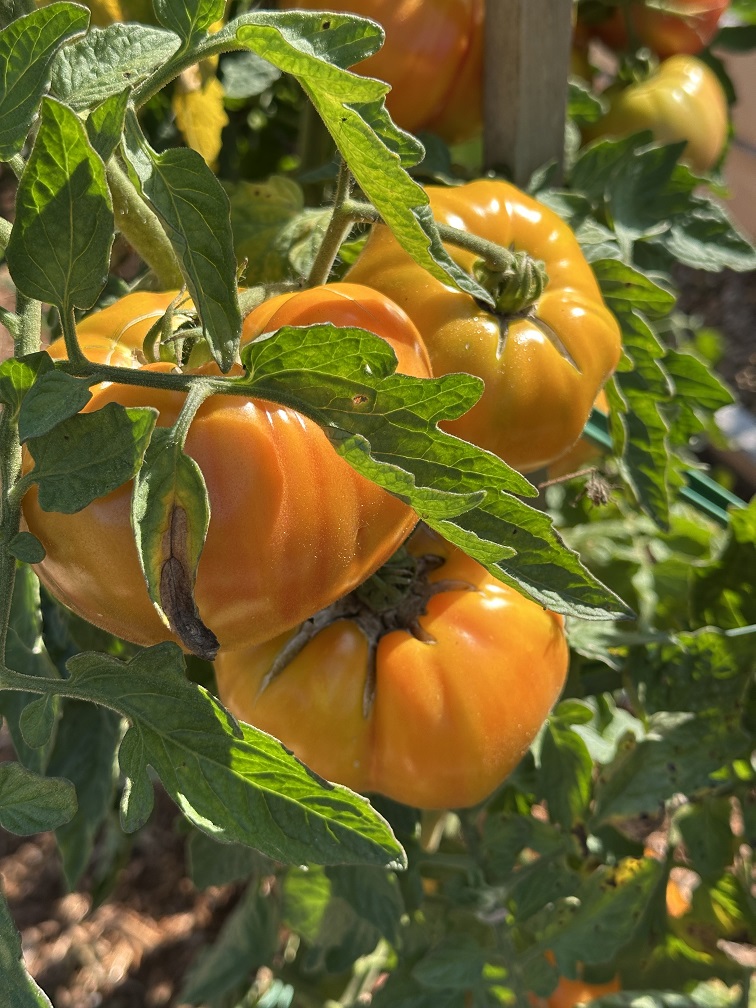
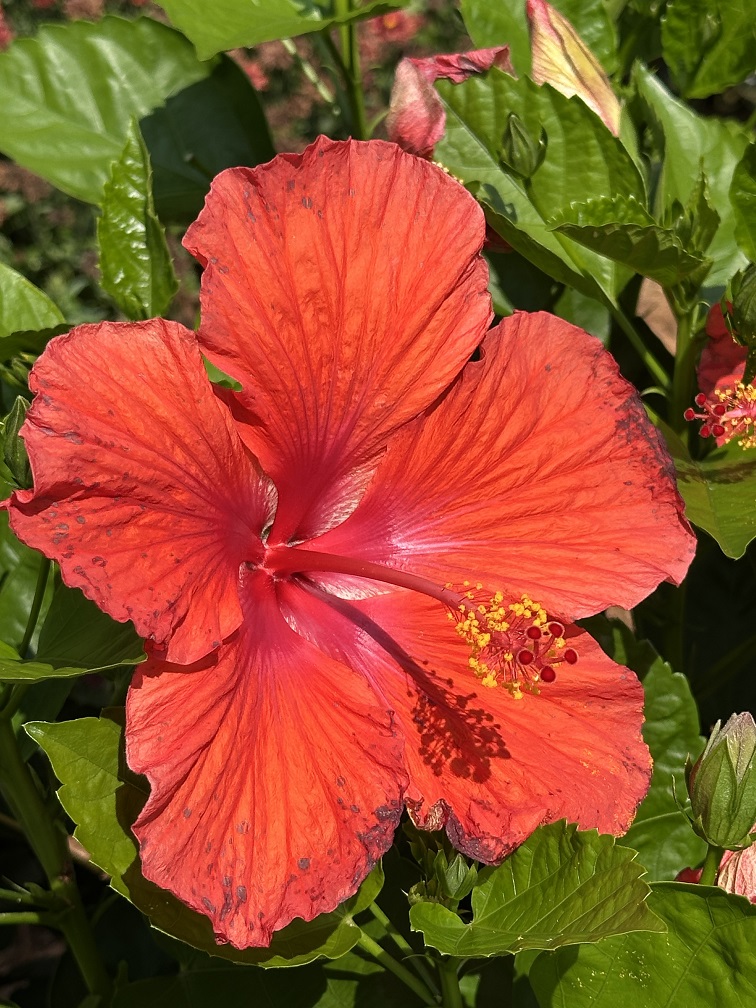
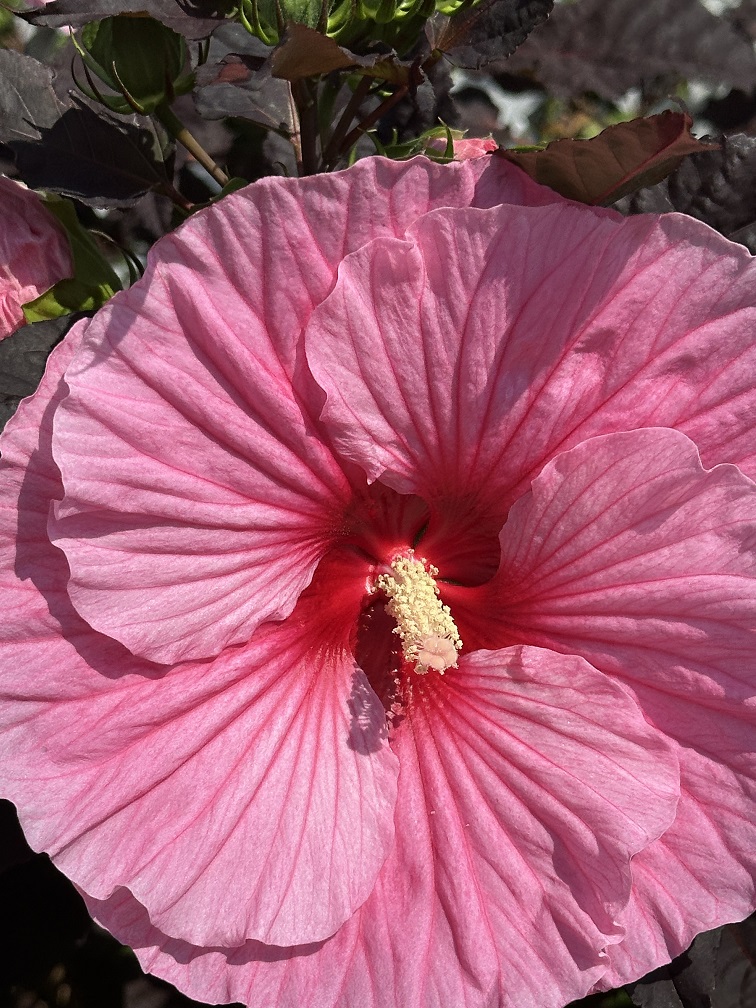


Now, to the reds.
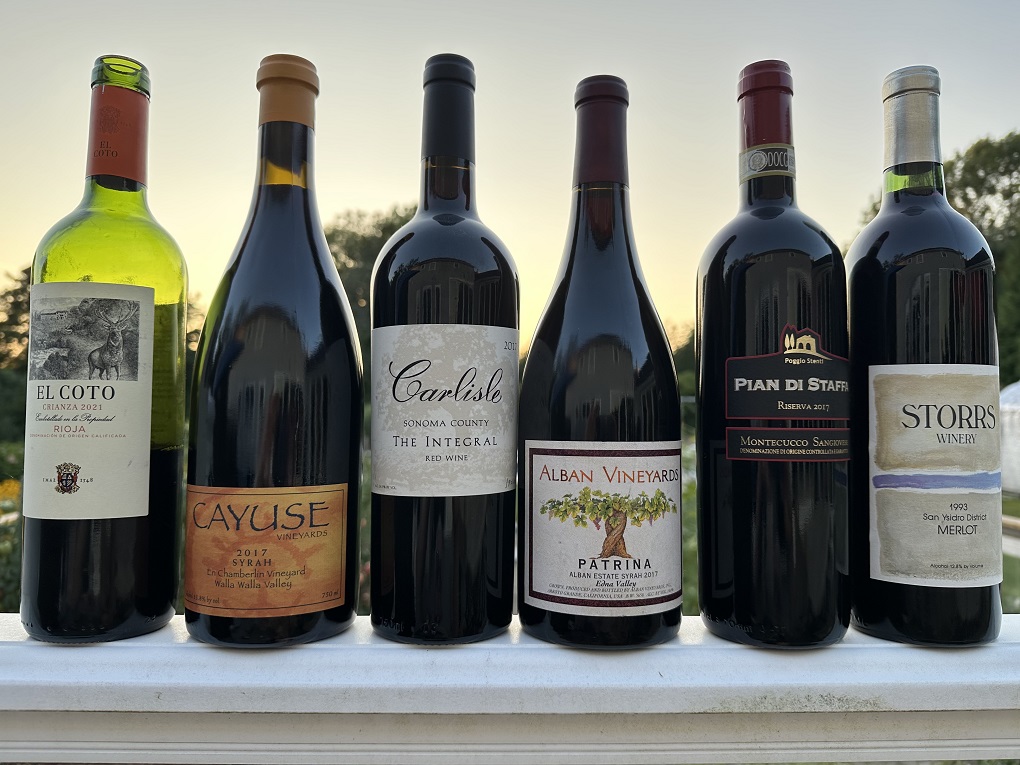
2018 Pedra Cancela Winemaker’s Selection Dão DOC (13% ABV, 40% Touriga Nacional, 30% Alfrocheiro, 30% Tinta Roriz) – Portuguese wines are delivering great QPR, and this wine was no exception. Open and inviting on the nose with red and black fruit continued with black fruit interplay on the palate, with a touch of spices and good earthy undertones. Simple and tasty.
2017 Carlisle The Integral Red Wine Sonoma County (14.5% ABV, 62% Syrah, 38% Mourvèdre) – you rarely can go wrong with Carlisle, and this wine didn’t disappoint. Dark cherries on the nose, dark cherries on the palate, perfectly integrated tannins with elevated but smooth mouthfeel, excellent balance, medium to long finish. An excellent wine.
2017 Alban Vineyards Patrina Estate Syrah Edna Valley (14.8% ABV) – Alban is one of my favorite producers. This Syrah had a beautiful nose of dark fruit with a hint of barnyard. On the palate, the wine was surprisingly sweeter than I expected, with blackberries dominating the palate. My guess is that I opened this wine at the wrong moment in time – it probably needed another 5 years to turn around.


1993 Storr’s Winery Merlot San Ysidro District (12.8% ABV) – I keep opening these old wines that I got from the Benchmark Wine, and so far, not a single one has disappointed. To begin with, just take a look at this cork – it looks like the wine was just made, not 30 years ago. Yes, of course, tertiary aromas dominated, with dry fruit well present, but the wine was still perfectly alive, with medium to full body, good acidity, and perfect balance. This wine was a treat.
There you are, my friends – a few delightful days on Cape Cod. How was your summer?
Reminiscing About Cabernet Sauvignon
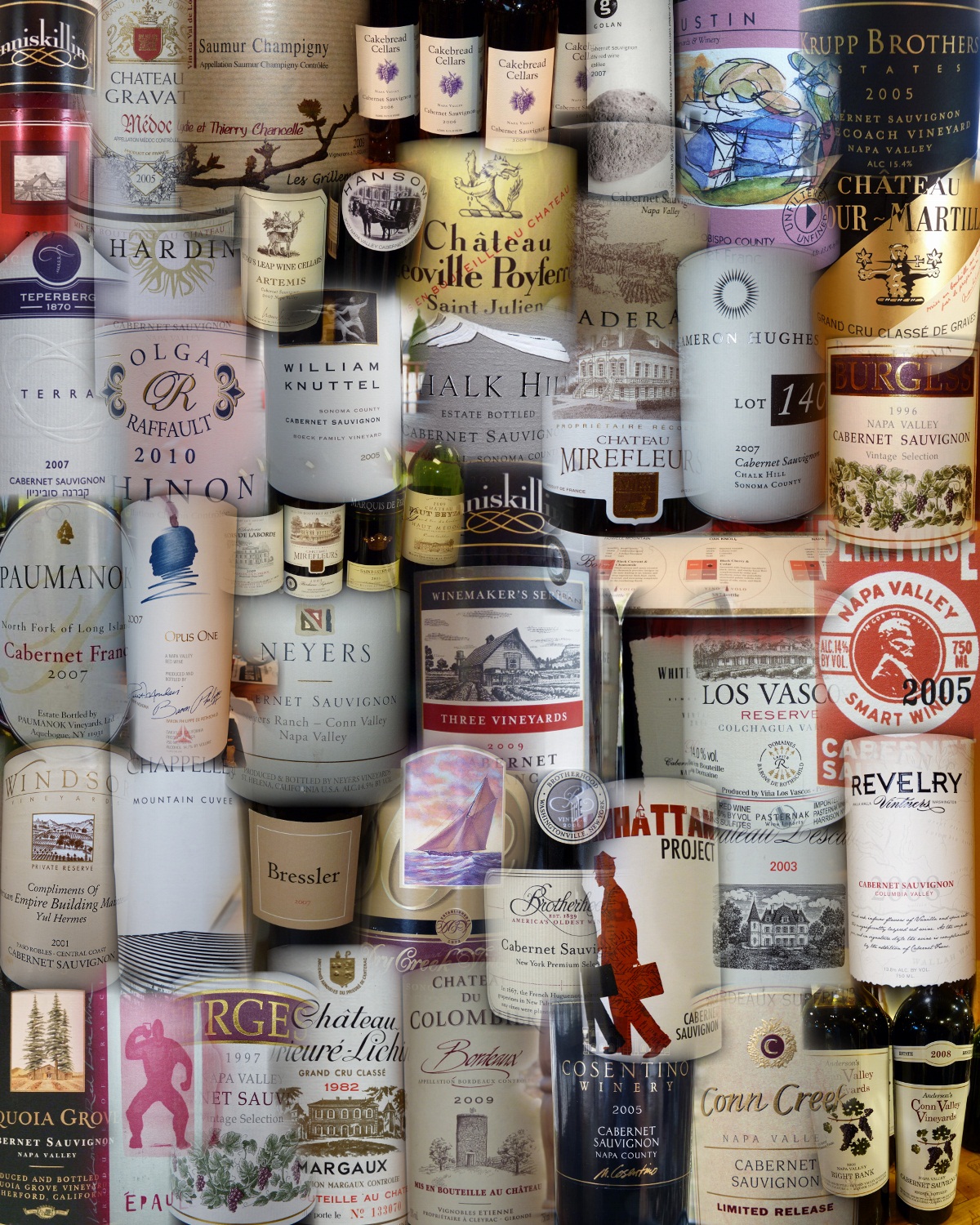 Yesterday we celebrated Cabernet Sauvignon Day. Well, I guess some people did, as I was drinking Tempranillo. But – grape holidays are an excellent opportunity to think about the grape we are honoring, and I’m happy to seize this opportunity.
As you probably know, it is hard for me to pick the favorites. If I were asked directly to name my favorite wine, I would never name any particular wine or grape as a favorite; my answer to this question always is “I love them all”. But deep inside, when nobody is asking, I know I would gravitate toward a good Cabernet Sauvignon when I can.
I’m very particular when it comes to Cabernet Sauvignon. This is one of the very few wines where I perfectly know what flavors I’m looking for. I need cassis, I need eucalyptus, I need a little bit of a bell pepper, and a touch of the cedar box would be nice too. If these flavors are not part of the core profile, I might still enjoy the wine, but I would never remember it as a Cabernet Sauvignon.
I decided to mentally challenge myself – recall my favorite Cabernet Sauvignon wines and associated experiences. Cabernet Sauvignon is one of the most popular wines in the world, produced by everybody and everywhere, so it is easy to name lots of producers. But this is not what I tried to do – I only thought about my most memorable encounters with the Cabernet Sauvignon, no point in regurgitating a bunch of Cabernet Sauvignon producer names.
Let’s see what came to my mind.
As only yesterday I wrote about the wines of Smith-Madrone, let’s start with that. Smith-Madrone has two Cabernet Sauvignon wines in its portfolio – Estate Cabernet Sauvignon and Cook’s Flat Reserve, each one delicious in its own right. Both are textbook Cabernet Sauvignon wines – my textbook that is, as both perfectly demonstrate the exact flavors – cassis, eucalyptus, bell pepper, cedar box. Just thinking about those wines makes me smile.
Next, how about Jordan? Jordan Vineyard and Winery in Alexander Valley in Sonoma produces only three things – “Chardonnay, Cabernet, and Hospitality”, according to John Jordan, winery owner. I had Jordan Cabernet Sauvignon on multiple occasions, and it never disappointed. It also has this classic profile, only with a bit more fat comared to Smith-Madrone, but thoroughly enjoyable on all occasions.
Then there is Kamen Estate. Unlike Smith-Madrone, I had Kamen Estate Cabernet Sauvignon only once during a group dinner we had in Danville in California. The wine was recommended by the wine director at Vine at Bridges, a wine bar/store at the Bridges restaurant. I don’t remember the exact taste profile, but I remember that I was blown away by the purity and beauty of that wine. I still have a bottle of 2006 Kamen Cabernet Sauvignon in the cellar, but finding the right moment to open that bottle will be mission impossible.
An interesting tidbit – thanks to the same wine guy at the Vine at Bridges who recommended Kamen to me, I discovered Field Recordings wines early on, way before they became a crowd favorite. The first Field Recordings wine I ever tried was Fiction, a wild blend of red grapes and not Cabernet Sauvignon at all – but, last year I opened Field Recordings The Armory, a 100% Cabernet Sauvignon wine for my guests. At first, I was not even planning to try it, but seeing how everyone likes it, I decided to give it a try. Whoa! Classic Cabernet profile was tremendously elevated, adding succulent wild blueberries to cassis, together with high intensity, high acidity mouthfeel. This was one of the most “energetic” Cabernet Sauvignon renditions I ever tasted.
The next wine is somewhat of a sad story. I discovered Louis M Martini Cabernet Sauvignon during Windows on the World wine school classes back in 2004, when Kevin Zraly said that Louis Martini delivers a lot in the glass for a very reasonable price. For many years, this was my go-to “around $20” Cabernet Sauvignon, until it was not – now winery makes over-priced, over-done Cabernet Sauvignon wines, but it is still the name I will remember fondly.
Okay, two more.
Beaulieu Vineyards, commonly abbreviated as BV, is another Cabernet Sauvignon staple I must mention. BV wines have this beautiful classic Cabernet Sauvignon profile enhanced with Rutherford dust. Well, basic BV wines might not give you the amount of pleasure you are looking for, but if you can get your hands on a bottle of Georges de Latour Private Reserve Cabernet Sauvignon, believe me, you will think that you have already made it to the winelovers’ heaven.
And lastly, bow to the dark side. Randy Dunn is well known for the wines of dark, brooding power. Dunn wines are not made to be consumed young. But if you are able to find a mature Dunn Howell Mountain Cabernet Sauvignon wine, that will be an amazing treat, weaving dark and brooding power on top of the classic Cab profile. I had an opportunity to drink Dunn Cabernet Sauvignon only a few times in my life, but boy, those were memorable moments!
Here you are, my friends – a little trip down the Cabernet Sauvignon memory lane.
What were your most memorable Cabernet Sauvignon wines?
Beautiful Wines of Smith-Madrone
I love the wines of Smith-Madrone.
I’m not even trying to make it a secret.
Yes, I’m biased. But I’m not ashamed of it.
Stu Smith and his brother, Charlie, founded the winery in 1971 in the Spring Mountain District of Napa Valley. When Stu was buying a property overflowing with trees, he was told that he was making the mistake of his life. But the best wines are born out of conviction – add perseverance, gamption, hard work, ingenuity, and imagination – just get all of these ingredients, and you might also be able to make some beautiful wines.
I told you that I love the wines of Smith-Madrone. Usually, love doesn’t require proof. But if you insist, I have one – not only I wrote about wines of Smith-Madrone on multiple occasions, but their wines had been included in my Top Wines of the Year lists 4 times – #11 in 2018 (Riesling), #1 (Cook’s Flat Reserve) and #14 (Riesling) in 2019, #3 in 2023 (Cabernet Sauvignon), and #4 in 2024 (Cook’s Flat Reserve). I don’t have any other wines that so consistently appear in the Top Wines lists.
For many years, Smith-Madrone produced only three wines – Riesling, Chardonnay, and Cabernet Sauvignon, with the addition of the Cook’s Flat Reserve Cabernet Sauvignon in exceptional years. A few years back, Rosé and Cabernet Franc joined the collection, and I was dying to try them ever since. This year, I finally got my hands on the wines (I rarely ask for samples, but this was one of such rare moments – I did ask…), so now I can share my tasting notes with you.
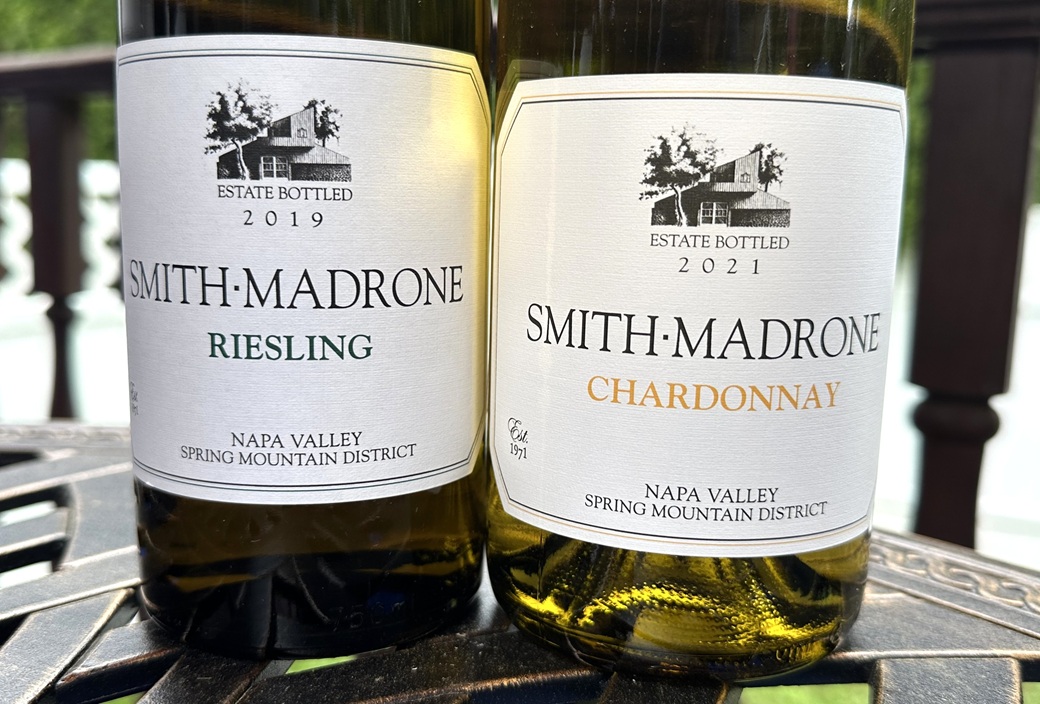
2019 Smith-Madrone Estate Riesling Spring Mountain District Napa Valley (13.3% ABV)
Light golden
Petrol mixed with honey and honeysuckle, a pure aromatherapy in the glass for a Riesling lover. Crisp, bright, honey with lemon in perfect harmony, clean and crisp finish with lots of energy.
9, a pure delight.
2021 Smith-Madrone Estate Chardonnay Spring Mountain District Napa Valley (14% ABV, 10 months in 50% new French oak)
Brilliant golden color
White plums and a touch of vanilla on the nose, a distant hint of gunflint (the wine is almost at room temperature). Apples, a touch of honey, vanilla, more apples, and a cleansing acidity. Delicious.
8+/9-, superb.


2023 Smith-Madrone Estate Rosé Spring Mountain District Napa Valley (14.2% ABV, 50% Merlot, 50% Cabernet Franc)
Beautiful, bright crimson red
Tart cherries, fresh, on the nose. Light, inviting, elegant.
Beautiful tart cherries on the palate, well present, round, delicious.
8+, delicious Rosé with character
2021 Smith-Madrone Estate Cabernet Franc Spring Mountain District Napa Valley (14.7% ABV, 89% Cabernet Franc, 11% Cabernet Sauvignon, 18 months in 60% new French oak)
Dark garnet
Ripe black currant, dark chocolate, fat, juicy, exciting. Delicious, black currant, dark chocolate, a rich California Cab Franc style, bell pepper came in later, together with a beautiful black pepper note, spicy and delicious.
8+/9-
Truth be told, I also got a sample of the 2021 Cabernet Sauvignon – but this is one of my most favorite Cabernet Sauvignons ever, so I couldn’t muster the courage to open the bottle yet, and will be waiting for the right occasion later this year – maybe a Thanksgiving celebration, as I did back in 2018.
I think both Rosé and Cabernet Franc are great additions to the portfolio. Both are produced in small quantities (131 cases of Rosé, 153 cases of Cabernet Franc), and Rosé is already gone (duh, summer is ending), but the Cab Franc is still available. And if we are talking about new additions, maybe we will see a sparkling wine one day? Or wait, I might have even a better idea – how about some late harvest Riesling? Knowing the quality of Smith-Madrone Riesling, if they were ever to produce a dessert-level Riesling, I’m sure it would be an absolute delight. Oh well, maybe one day…
Here you go, my friends. I hope you had a chance to discover the wines of Smith-Madrone for yourself. If you have not, head over to the Smith-Madrone website, admire the scenery of beautiful mountain vineyards, and get a few bottles for yourself to enjoy. I guarantee you will not regret it. Cheers!
An evening with friends, August 2025 Edition
I love to be the wine guy.
When someone says “I’ll cook, you bring wine”, I’m absolutely delighted to oblige. First, it is one of the greatest pleasures for the oenophile to choose wines for dinner. The only pleasure bigger than selecting wine is when your friend takes a sip and says “ah, this is delicious”. And of course, there is a side benefit of taking wine out of the house, where the wine is literally stored everywhere, but let’s leave that aside for a moment.
I generally don’t care too much about what exact dishes will be served. My goal is to have a wine “program”, to bring a range of experiences. If a particular wine doesn’t work with a particular dish, it is not a problem – we can enjoy food on its own, and wine on its own.
On Friday, we got together with friends for dinner, and I was happy to be the wine guy.
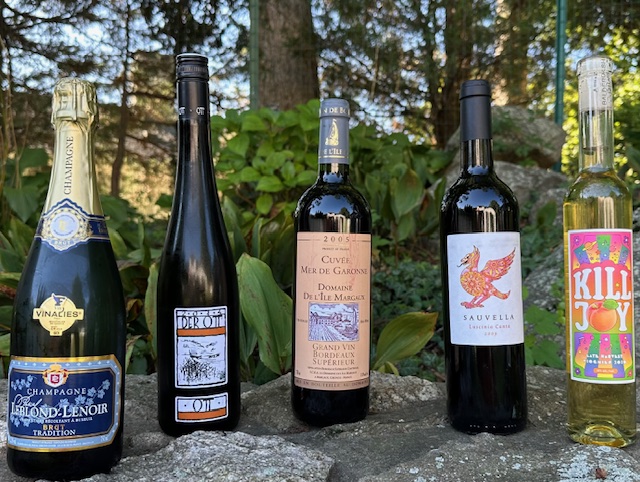
To play it simple, I decided to go with a “classic” line-up – bubbles, white, red, dessert. Here is what transpired.
My choice of bubbles was NV Champagne Pascal Leblond-Lenoir Brut Tradition (12.5% ABV). This is a very generous Champagne, it perfectly combines crispiness with generous body, apples and vanilla eloped with a fine mousse, delivering lots of pleasure with every sip. Everyone loved it, particularly being happy about this Champagne not being too acidic.
Next was the white wine – 2014 Ott Der Ott Grüner Veltliner Austria (12.5% ABV). White wine with age is a real joy, and this 11 years old wine unquestionably delivered. Whitestone fruit with a touch of petrol on the nose (yes, petrol, one of my favorite aromas). Round and elegant body, with more of the whitestone fruit, good earthy undertones, perfectly balanced and perfectly delicious.
Side note: Bernard Ott is one of the very best wine producers in Austria, practicing Biodynamic viticulture after visiting Domaine la Romanée Conti in 2006. And lastly, 2014 vintage was so difficult that no single vineyard wines were produced – I have to say this was a glorious wine from a difficult vintage.
Next, we opened 2009 Sauvella Luscinia Canta Costers del Segre DO (14.1% ABV, Syrah, Cabernet Sauvignon, Grenache). I was blown away by this wine last year (number 7 on the Top 24 of 2024 list) – and the wine continued over deliver. Delicious, generous and round, with wallops of fresh dark fruit, perfect structure and perfect acidity. The wine showed a touch more sweetness and plumpness compared to our second red wine – 2005 Domaine De l’Île Margaux Cuvée Mer de Garonne Grand Vin Bordeaux Supérieur (13.5% ABV, 33% Merlot, 33% Cabernet Sauvignon, 34% Petite Verdot).
This is the second time this year I have enjoyed this wine, which comes from a unique place, a small island in the middle of the Gironde River, overlooking the great estates of Margaux. Perfectly Bordeaux, perfectly on point – a bit leaner than the previous wine, with a precise Bordeaux profile – cassis, eucalyptus, cedar box, a hint of bell pepper, and firm structure with a delicious finish. A pure delight in the glass, and an excellent accompaniment for the lamb stew, which was served as a main course.
Dessert time! Liquid dessert it is.
I always love an opportunity to open a bottle of dessert wine, especially with a group that would appreciate it.
I went through a few options, and somehow decided on 2020 Balderdash Cellars Kill Joy Late Harvest Viognier Eden Valley, California (10% ABV). The wine had a beautiful nose of tropical fruit, and a tropical fruit medley on the palate, not too sweet and with perfectly cleansing acidity. “Ohh, it is so good” was the group’s sentiment.
Here you are, my friends. Happy dinner. Happy diners. Happy memories. And as I’m finishing writing this, I’m ready for a repeat.
15 Years of Blogging
 Wine, food, and life.
This story started 15 years ago when…
Nah…
Well, wait. This is actually true. This blog should’ve started at least 17 years ago, as some of my friends suggested. Then, of course, there was a fear of the unknown, “should I or should I not” inner voice fighting, and slow warming up to “I guess I can at least try… what is the worst thing that can happen?”. In March of 2010, I finally told the world that the new wine blog was coming (here is the link to the very first post on this blog). Four months later, in July of 2010, this blog finally took off.
I love numbers, so for this post, I wanted to share some Talk-a-Vino 15 years stats:
- 1,553 – number of published posts (it averages to 100+ a year, even though earlier years saw a lot more posts than the late ones)
- 1,556,337 words written (only in posts, not including comments; this was a fun project of figuring it out)
- 10,202 comments posted (that includes my replies as well)
- Pinot Noir is the most talked about grape with 79 posts, followed by Cabernet Sauvignon (70) and Chardonnay (55).
- Wine Quiz is still the most popular category with 257 posts, even though I have not been running the series for many years now.
- 640,293 spam comments protected against by Akismet according to the WordPress.com dashboard – this one is the most impressive number 🙂
When I started writing this blog, I was pondering the question – who do I write this blog for? After spending some time researching what others think, I came to a simple conclusion – I will be writing this blog for myself. I will be the one who has to like the posts first and foremost – of course, it would be wonderful to find some soulmates, people who would enjoy reading what I wrote, but I wouldn’t do anything special to find them, “just be myself,” as they like to say.
As an engineer at the core, I wanted my posts to be organized, so I came up with a concept of “series”. I was also very ambitious – for example, one of the series was called Daily Glass – as I drink wine daily, this series was supposed to talk about those daily wines. To date, I have 84 posts in that category – not exactly a daily activity. However, I still find the concept of the series helpful, at least personally, as it delivers the big picture. Usually, the names of the series are self-explanatory, as with the Daily Glass, so I don’t need to explain what “Restaurant Files”, “One on One with Winemaker”, “American Pleasures” (well, this one is actually about great American wines), or “Travel Diaries” actually mean.
Wine, food, and life.
This blog became a place where I store wine, food, and life experiences. There are notes for thousands of wines. There are restaurant experiences and recipes. You can find my travel diaries, whether visiting Japan, Israel, Paris, or my own neighbourhood, all illustrated with countless pictures. Tasting rare grapes is another passion, spurred by being bitten by the Wine Century Club bug – the rare grape experiences are collected throughout these pages, as I continue that Wine Century Club journey. Then there are even more experiences I love to collect, such as tasting wines from as many US states and as many countries as possible.
When I started blogging, the plan was to share my opinion and my opinion alone. When at the first Wine Bloggers Conference I attended, I heard seasoned wine writers saying “interview, interview, interview”, this was completely lost on me. What interviews? Why should I ask someone questions and then try to repeat the conversation in the format of a blog post? Little by little, conversation after conversation, the “aha” moment happened, and you can now find 40 or so conversations with the winemakers and wine people, the interviews. Among those, there is a series called Stories of Passion and Pinot, dedicated to the people who made the finicky grape their passion, most of them coming from Oregon.
And I also have to mention two of my perennial favorites. In my 15 years of blogging, I haven’t missed a single year with my Wine News and Updates, always published on April 1st, always filled with the most sensational happenings in the world of wine (if you have some time, check them out!). Another favorite is the list of the Top Wines of the Year, also published every year from 2010 through 2024. Originally envisioned as being only Top 10, then Top 12 (a dozen), the Top Lists usually reach at least 24 wines, but hey, this is my blog, my rules, and I can break my own rules.
I’m definitely enjoying my journey of 15 years, and I can only hope that I was able to share the joy with you on some occasions. Let’s raise our glasses to Wine, Food, and Life. Cheers!
Wine and Cheese – A Rare Pleasure
 What’s so rare about wine cheese? Nothing, of course. “Wine and cheese” is one of the most abused “topics” of a social gathering. “Ah, let’s get together, I will bring wine and you will bring cheese”. Easy and straightforward, right?
So let me ask you, when was the last time you enjoyed yellow cheddar with a sip of a nice Chardonnay? Never mind Chardonnay, do you think yellow cheddar will work well with a random Pinot Grigio? Or maybe an inexpensive Rioja? I will let you ponder that enjoyable yellow cheddar pairing for a while – let me know when you come up with a good answer.
Wine and food pairing “that works” is an art. When wine and food pairing is attempted, one of the best general results is when wine and food don’t fight each other. In the rare cases when food and wine work together, that creates a pleasure of the next level, a pure hedonistic joy.
There are many books written on the subject of food and wine pairing, so I’m not going to try to cover the subject within a few sentences on this blog. On a basic level, wine and food pairing work well either by contrasting or complementing flavors. For example, an effervescent Moscato d’Asti perfectly complements an angel cake, as the flavors are similar, but Asti elevates the mouthfeel with light bubbles and a touch of acidity. Nice Kabinett Riesling perfectly contrasts spicy Asian dish with its acidity and sweetness, offering a welcoming relief to your fired-up taste buds. Many of the pairings would fall somewhere in between, but the whole point is that a bite of food together with a sip of wine should give you more pleasure than each one on its own.
So, how can you go about finding pleasurable combinations of food and wine? Wait, no, this is a topic for another blog post. Let me rephrase the question – how do you find pleasurable combinations of cheese and wine?
The right answer is: it depends.
Why, it always depends, doesn’t it?
When it comes to cheese, there is one easy hack (workaround is a nicer word :)) – if we are talking about artisanal cheeses, the pairing gets easier. Similar to wines, artisanal cheeses are also a product of terroir – many European cheeses have a protected area of origin. For most of the cases, that means that those artisanal cheeses had been produced in the specific area for a while, and that in turn means that most likely, the wines were produced locally right next to cheese, and therefore they is a good chance that wine and cheese from the same place might pair together well.
I had a perfect opportunity to test this theory. I got an unusual birthday present last month – a selection of artisanal cheeses from the local cheese monger – five cheeses from France and Switzerland. Obviously, that presented a perfect opportunity to try that difficult cheese and wine pairing and see how it would work.

Here are the cheeses I got with a brief wine pairing recommendations collected through an internet search:
– 1 –
Schallenberg
Origin: Switzerland, Alpine region
Milk: Cow (raw)
Age: 10 months
Suggested wine pairings:
White: Riesling, Ice Wine
Red: Pinot Noir, Beaujolais, Barbera
– 2 –
Hornbacher
Origin: Switzerland, Alpine region
Milk: Cow (raw)
Age: 11 months
Suggested wine pairings:
White: Gewurztraminer, Pinot Gris
Other: (fortified dessert wines): Sherry, Port
– 3 –
Abbaye de Tamié
Traditional French cheese crafted by the monks at the Trappist Abbey of Tamié since the 12th century
Origin: France, Savoie, Rhône-Alpes
Milk: Cow (raw)
Suggested wine pairings:
White: Chardonnay, Savoie (Chasselas and others)
Red: Pinot Noir, Beaujolais, Gamay
Other: Champagne, other sparkling wines
– 4 –
Vacherousse d’Argental, double-cream Brie style
Origin: France, Lyon region
Milk: Cow
Suggested wine pairings:
Other: Champagne and other sparkling wines
White: Riesling, Grenache Blanc
– 5 –
Ovalie Cendrée
Origin: France, Loire Valley
Type: Goat (raw? Pasteurized?)
Suggested wine pairings:
White: Sauvignon Blanc, Riesling
Rosé
Red: Pineau d’Aunis

As you can tell, there was quite a range of wines suggested for the pairing, with Pinot Noir and Champagne being a common thread.
I get it about Champagne, as well-made Champagne possibly is the most versatile food pairing wine out there. Pinot Noir sounded a bit surprising, as I think many Pinot Noirs would easily overpower cheeses. And of course, Riesling makes perfect sense to pair with the cheeses, alongside the dessert wines.
While there is a good range of wines that might work with my cheese selection, the goal of this exercise was to get pleasure, not to conduct a comprehensive research of cheese and wine pairings, thus I had to limit the selection of the wines. I had a bottle of Champagne that I wanted to open for a while. I decided to go with Pinot Noir for the red, and luckily (for everyone), I settled on the Burgundian version and not Oregon or California. And last but not east, instead of looking for a right Chardonnay or Sauvignon Blanc or Riesling, I settled on the beautiful rendition of Chenin Blanc from Loire (of course!) from one of the best (best?) producers, Domaine Huet, basing my decision on the fact that one of the cheeses was coming from Loire region, thus giving me hope that local wine will pair well with local cheese.

Here are brief notes about the wines and their pairing with the cheeses:
NV Champagne Domaine les Monts Fournois Premier Cru (12.5% ABV, 70% Pinot Noir, 20% Chardonnay, 10% Pinot Meunier, Bottled in June 2016, Disgorged in September 2022) – superb. A classic nose of brioche and apples, followed by toasted bread and apples on the palate with cleansing acidity. Elegant, supple, delicious. Worked well with all cheeses.
2019 Domaine Huet Clos du Bourg Sec Vouvray AOC (13.5% ABV)
What a delight! Beautiful light golden color, elegant nose of whitestone fruit and a hint of nutmeg, inviting and enticing. Round, roll-off-your-tongue experience on the palate, an elegant white fruit medley, balanced acidity, a welcoming complexity with a medium-long finish. The wine was a riot paired with ashy goat, Ovalie Cendrée.
2019 Domaine Rebourgeon-Mure Cuvée de Maison Dieu Bourgogne (13.5% ABV, 14-18 months in partially new oak barrels)
Elegant would be the best descriptor. The wine was soft and approachable, with red fruit on the nose and more of the red fruit on the palate, medium body, soft and delicate. If I were just to open it to drink on its own, I think I would be disappointed. But paired with cheese, the wine shone, matching nearly perfectly pretty much all the cheeses we had in the tasting. I think my personal favorite was pairing with two of the Swiss hard cheeses, but again, this Burgundian Pinot worked perfectly with all 5 cheeses.


We also opened one more bottle in the evening – 1998 Mondavi Moscato d’Oro Napa Valley – we did’t pair it with the cheese (I’m sure that the pairing would be superb), but it was delicious on its own, with light sweetness of honey notes and still good acidity, still fresh – a delightful finish to the tasty night.
Here you are, my friends – a story of the rare pleasure – a successful pairing of the wine and cheese. Do you have your own stories about wine and cheese?
Wines of South America: Making Wine Geek and Wine Lover Happy
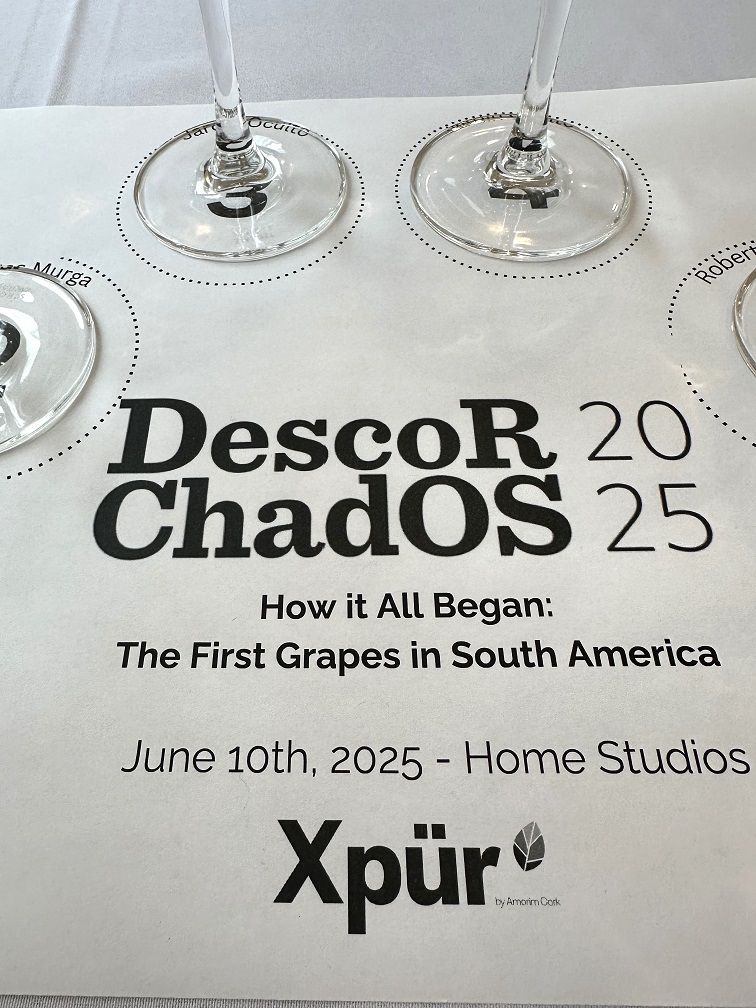 Here is where it gets interesting. We all heard of wine geeks, people who get excited about little nerdy wine details, such as vineyard blocks, blending methodology, or amphorae versus cement tank aging. And then you have the wine lovers, aficionados – the people who simply go after the hedonistic pleasure of wine drinking. Can these two personas be happy at the same time? I can’t speak for all the wine people with multiple personalities, but I can definitely answer for this one, the moi. I attended Descorchados 2025 tasting of South American wines, and both inner geek and aficionado were happy.
Just in case you are curious, DescoRChadOS is a guide for the wine of South America, published since 1999. Descorchados also runs wine tasting events dedicated to the wines of South America, and the 2025 event was the first return of the tasting to New York City since 2019.
As a self-appointed wine geek, I love all the uncommon wine traits – new (to me) and lesser-known grape varieties, new (to me) and unknown, even obscure places, authentic (indigenous, autochthonous) grapes, low intervention/natural wines, unique wines and vineyards (e.g. old vineyards). In this tasting, I found all of these things – indigenous, unknown (and thus new to me) grapes harvested from the 200-year-old vineyards, from the countries I had never tasted the wines from before. Happy, happy, happy wine geek.
And then there were world-class, beautiful, delicious, hedonistic wines – Malbec, Syrah, classic method Sparkling wines – all in the same tasting. As I said, both geek and aficionado were very happy.
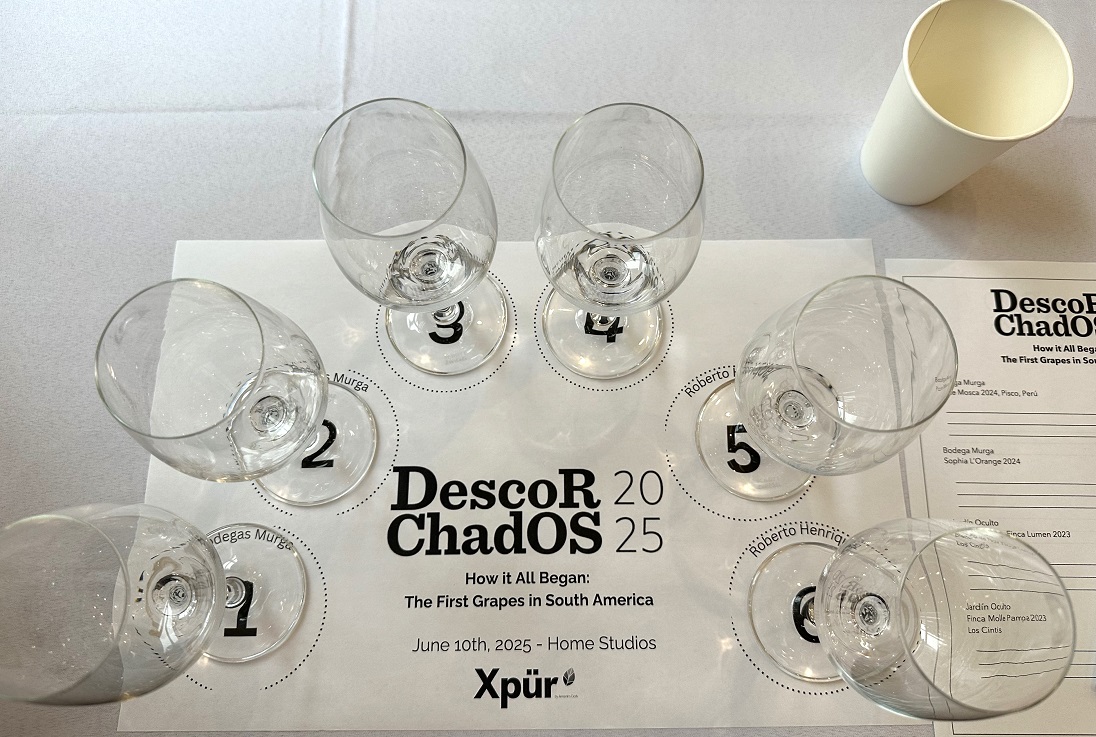
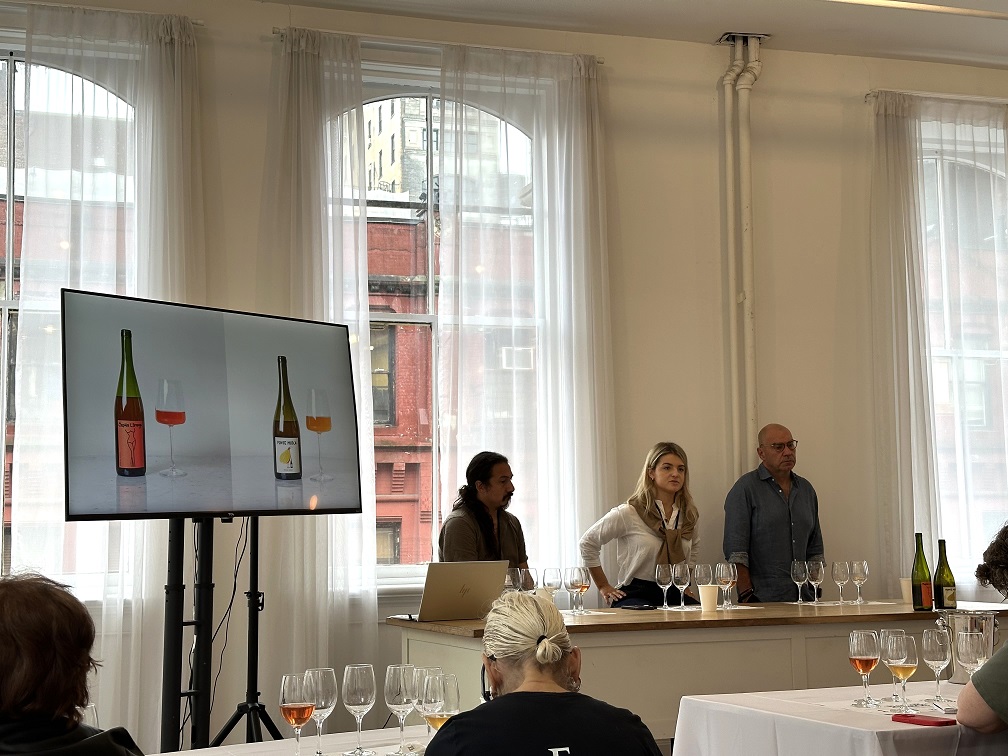
Let’s start with the unique portion first, as I had a chance to attend the masterclass presenting the historical wines of South America.
When it comes to wine from South America, Argentina and Chile are the two countries that come to mind first, followed by Uruguay and maybe Brazil. But the grapes had been growing in most of the South American countries for a long time, with vineyards usually started by European immigrants. It appears that the oldest vineyard in South America is called Tacoma and it is located in Perú, originally planted by Spanish immigrants in the 1540s.
I don’t know if a grape vine can survive for 500 years and continue to bear fruit. However, I now know that 200-year-old vineyards can still produce grapes, as I had an opportunity to taste the wines made with grapes harvested from 200-year-old vines.
In the masterclass, we tasted 6 wines from 3 countries – Perú, Bolivia, and Chile, some of them produced from the unique grapes I never had before, so thanks to this tasting I can now add two countries to my list of Wines around the World, and increase the grape count by 3 – picture happy collector of experiences.
Here is what we tasted in the masterclass – but before the notes, just take a look at these colors! This tasting was definitely a feast for the eyes!
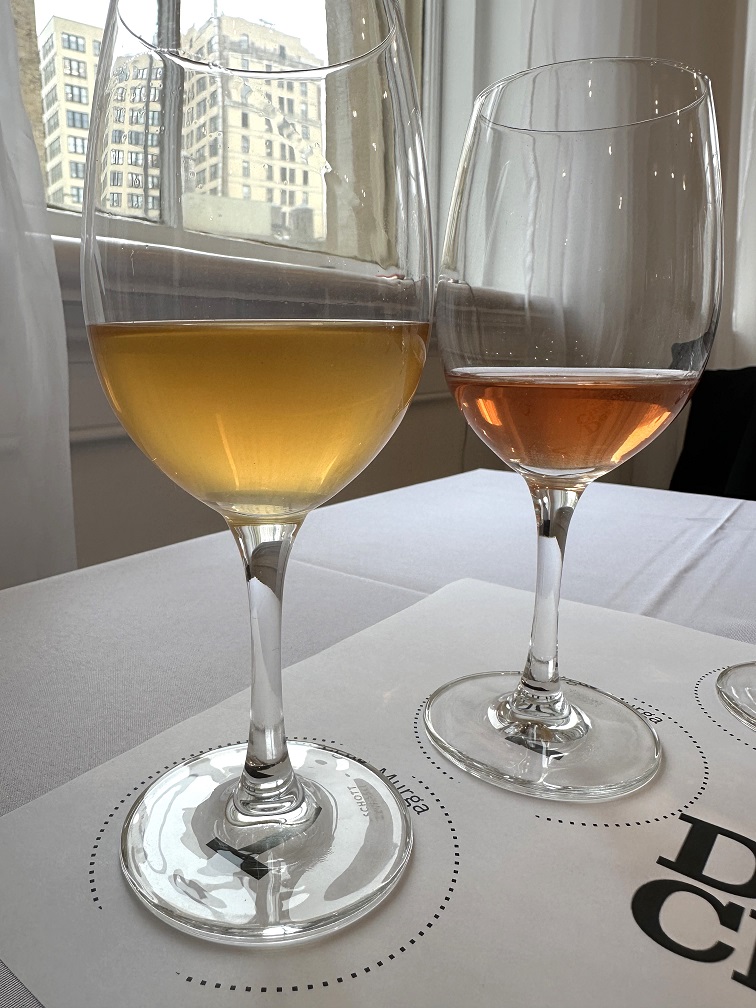
2024 Bodega Murga Ponte Mosca Pisco Perú (12.5% ABV, 34% Moscatel de Alejandría, 33% Moscatel Rosada, 33% Moscatel Negra, 65 days of skin contact)
Pisco is located south of Lima, capital of Perú, 25 minutes away from the Atlantic Ocean, featuring 4 different soil types in the region.
I can’t even comment on the color (beautiful!). The wine had a wonderful nose with explicit nutmeg and a hint of grapefruit. Interestingly dry and tart on the palate, with blood orange on the finish and pure acidity. A great specimen of skin contact wine, but you have to love skin contact. Will be great with seafood.
2024 Bodega Murga Sophia L’Orange Perú (10% ABV, 85% Quebranta, 15% Mollar grapes, 30 days of skin maceration, indigenous yeast)
Muted nose with a hint of smoke, strawberries, sapidity. Smokey strawberries on the palate with salivating clean, crisp acidity on the finish. I absolutely love it, but this is not the wine for everyone (geeks should be happy, though).
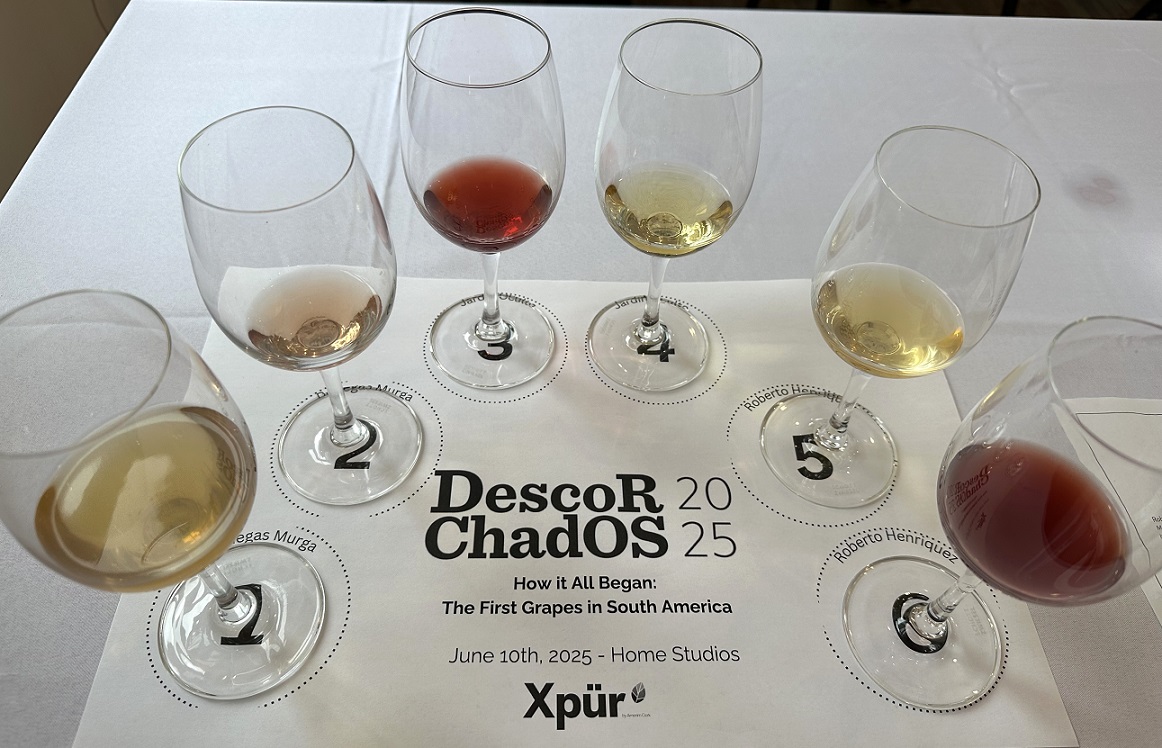
Just look at these colors!
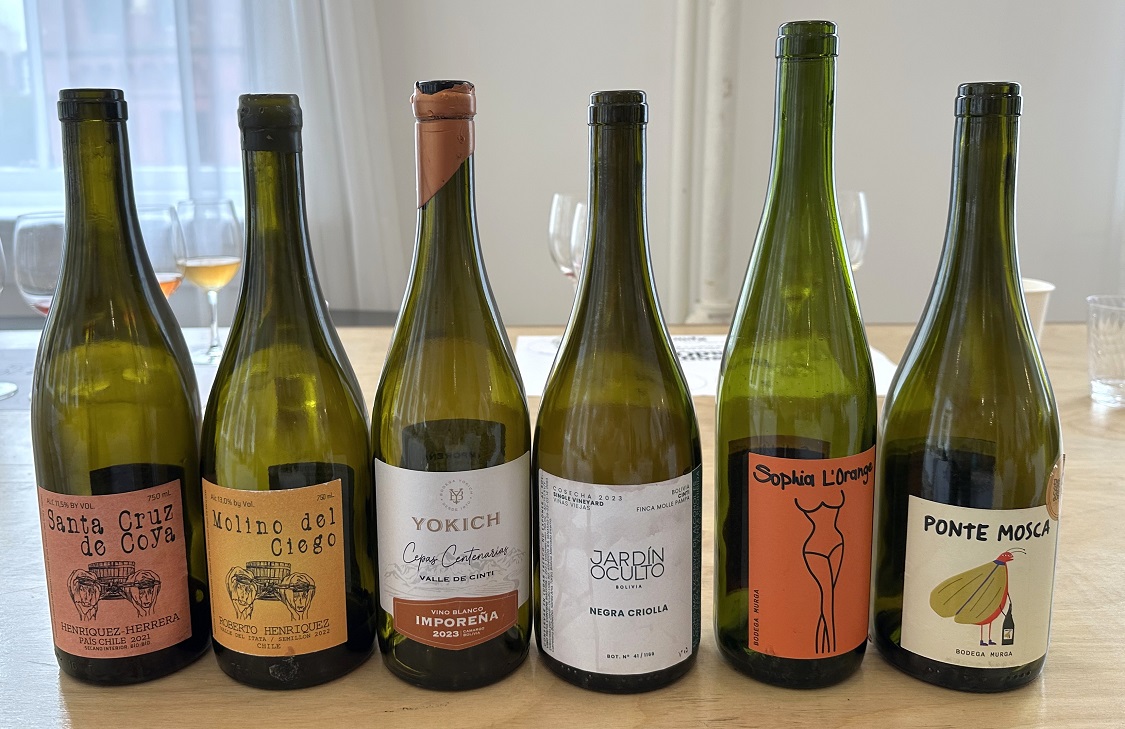
2023 Jardín Oculto Negra Criolla Finca Molle Pampa Cinti Bolivia (200! years old vineyard, 100% Negra Criolla, a.k.a. Listán Prieto a.k.a. País)
Cintis Valley is located in the south of Bolivia, at 7,500 feet altitude, 18” of rain a year – the only place in Bolivia where you can find “winter” for the grapes.
Fresh, crisp, underripe crushed raspberries on the nose. Tart, acidic, with sapidity well present, and with a bitter finish. I can drink it, but this is not your everyday wine; too bitter for me (my palate is particularly sensitive to bitter notes).
2023 Yokich Imporeña Vino Blanco Cepas Cententarias Valle de Cinti Bolivia (13% ABV, 100% Imporeña grape)
What a color! Honey and roasted meat on the nose (yeah, I know, don’t say it), somewhat cloying.
Good acidity on the palate, but I’m not sure this is the wine I want to drink again
2022 Roberto Henriquez Molino Del Ciego Itata Valley Chile (13% ABV, 100% Semillon, 100 years old vineyard)
Jalapeño pepper on the nose, bell peppers and spicy peppers on the palate, good acidity. I’m now hungry. Might be the most unusual rendering of Semillon I’ve ever tasted.
2021 Roberto Henriquez Santa Cruz de Coya Bio Bio Valley Chile (11.5% ABV, 100% País, 200 years old vineyard)
Lightly scented red fruit on the nose, explicit minerality, fresh acidity, tart strawberries, acidity on the finish. This is the wine from the 200-year-old vineyard – very impressive.


Here are the results of the masterclass: 3 new grapes, 2 new countries to add to the list, beautifully colorful wines, lots of geeky excitement (when was the last time you tried wine from a 200-year-old vineyard?).
Then there was a regular tasting with more than 200 wines represented – I didn’t have much time to spend there, but I managed to find some very tasty wines – sparkling and still. Here is the list of the wines I enjoyed outside of the masterclass:


NV Estrelas do Brasil Brut Método Tradicionel
NV Estrelas do Brasil Nature Rose Pinot Noir – superb!
NV Guatambu Nature – excellent
NV Cave Geisse Nature Método Tradicional D.O. Altos de Pinto Bandeira
2020 Neyen Espiritu de Apalta Malbec Colchagua Valley – classic!
2021 Emiliana Coyam Los Robles Estate Valle de Colchagua – excellent but needs time
2021 Emiliana Gê Valle de Colchagua – ready to drink now, delicious


2015 Casa Marin Syrah Miramar Vineyard San Antonio Valley Chile – surprisingly delicious (when I think Chile, I don’t think Syrah – but you should look for this wine)
NV Casa Marin Maria Luz Brut Nature San Antonio Valley Chile
2024 Casa Marin Sauvignon Blanc Cipreses Vineyard
That concludes my encounter with the unique world of South American wines – from geeky pleasures to hedonistic masterpieces, South America has a wine for everyone, you just need to look for it.
What were your geeky discoveries as of late? Or how about some hedonistic pleasures you want to talk about? Cheers!
New Recipe: Best Hummus Ever
Okay, here we go – a very modest title. “Best ever”, nonetheless.
Well, I love hummus, and outside of Israel, for the most part, I much prefer homemade hummus over any store-bought versions. There was one exception to this – for about 9 months, Costco carried ready-made hummus, which was spectacular – and then it disappeared. But for the most part, the store-bought versions just don’t cut it, so the only way for me to enjoy hummus is by making it myself.
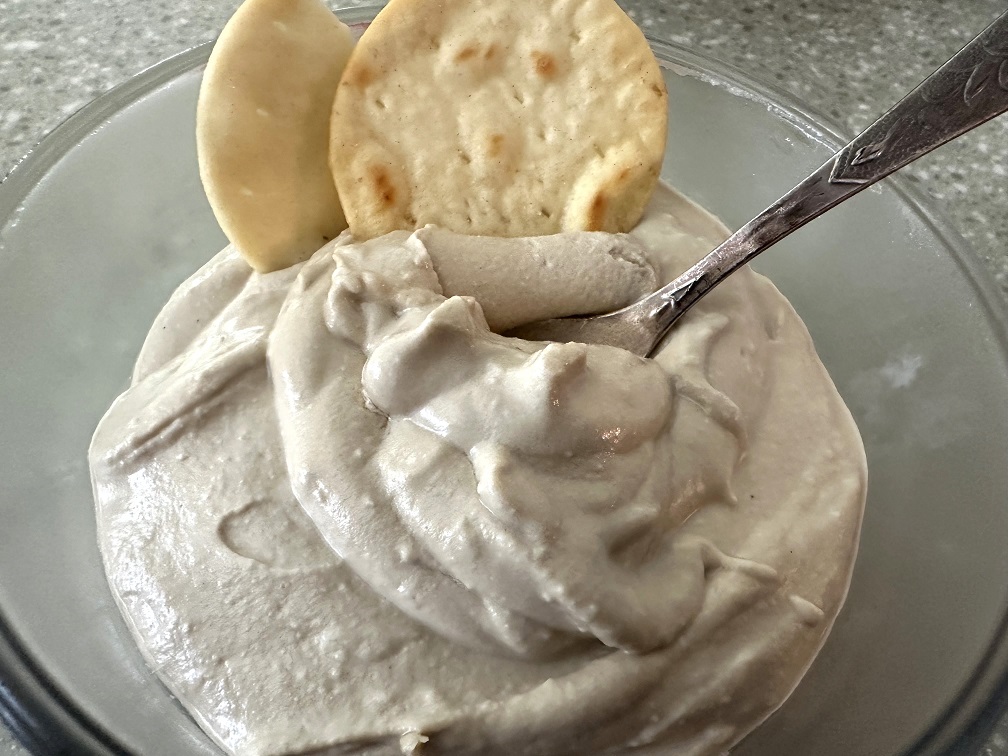
I already shared a hummus recipe on this blog – but since publishing it, I learned a few things, and while this updated recipe uses basically all the same ingredients, the proportions are different, as well as the methodology. Let me list the recipe ingredients first, and then we can talk about it.
Ingredients and tools:
- Dry chickpeas – 1 lb
- Olive oil – 6 tablespoons (approx)
- Kosher salt – 2 teaspoons
- Baking soda – 2 tablespoons
- Tahini – 1 lb (one jar)
- Roasted garlic + roasted garlic oil (see below)
- Fresh Garlic – 3 cloves
- Lemon – 2
- Ice-cold water, 1/3 of a cup
- Blender
In comparison with the previous recipe, this one uses only 2 teaspoons of salt instead of 2 tablespoons, and it requires much less olive oil than the previous one. At the same time, the amount of tahini has doubled. But still this is not a major change. Let’s go step by step through the prep process.
Before we talk about the main hummus ingredient, chickpeas, let’s talk about roasted garlic. In the previous recipe, the garlic was minced and then slowly roasted in the frying pan with olive oil. I now have a much simpler method to make delicious roasted garlic.
Roasted garlic simple recipe:
Preheat oven to 250°F. Peel cloves from 2 heads of garlic. Put garlic cloves in a single layer at the bottom of a small cast-iron or heavy metal oven-safe pan. Pour enough of good olive oil to cover all garlic cloves completely. Cover and put into the oven for 1 hour. In one hour, you will end up with golden roasted garlic cloves and deliciously infused olive oil. Let it cool off, pour into the air-tight container (any used glass jar from preserves or similar will do), and store in the refrigerator. You now have roasted garlic to use as your heart’s desire – for example, to make roasted garlic hummus :). Just take the jar out of the refrigerator a few hours before you are planning to use it (olive oil has a tendency to solidify in the refrigerator).


Now, let’s get back to our hummus.
First, we need to soak garbanzo beans (a.k.a. chickpeas) in cold water overnight, allowing dried beans to expand. Never use canned garbanzo beans as making a tasty hummus from them is mission impossible. By the way, I now have my favorite dried chickpeas to use in this recipe – non-GMO, family-farmed chickpeas from the state of Washington – you can find them on Amazon. In the morning, drain the chickpeas and let them dry a bit.
Put a large pan (the same pan you will use for boiling the chickpeas) on medium heat, put in the chickpeas, sprinkle two tablespoons of baking soda on top, and fry the beans (don’t add water or salt!) for 3-4 minutes. You will need to constantly stir the chickpeas so they will not start sticking to the bottom of the pan. After you see that the chickpeas are starting to get a bit of color, add cold water, bring to a boil, reduce the heat, and let it boil for about 40 minutes. Again, do not add salt! Salt will make the chickpeas cook for about 2 hours, and will make them a lot more dense. While chickpeas are cooking, remove the foam from the surface, and also use a slotted spoon to remove loose floating chickpeas’ “skins” – this will make hummus creamier. At around the 35-minute mark, start checking the chickpeas. Once they are fully tender, you can remove the pan from the heat and drain the chickpeas. Reserve a cup of liquid, just in case the hummus comes out too dense.
Once the chickpeas have cooled off slightly, we can proceed with the next step. Note: I like to make hummus in two batches, it lets me adjust the garlic/salt/lemon profile exactly as I want it to be – for example, if the first batch too garlicky, I can use less garlic in the second batch; if the first batch is undersalted, I can add more salt to the second batch – both batches end up in the same container anyway and get mixed.
For one batch, put into the blender juice of one lemon, 3 tablespoons of olive oil, 1-2 cloves of fresh garlic, any amount of roasted garlic and roasted garlic oil you desire, and blend them together for one minute – this way I’m making sure the garlic cloves are well incorporated into the liquid. Next, add half of the chickpeas, half a jar of tahini (make sure to mix the tahini in the jar well before using), and one teaspoon of kosher salt. Blend for 2 minutes. After two minutes, while the blender is still running, add a small amount of the ice water and continue blending for another 30 seconds. Stop the blender, pour hummus into the container, and taste for garlic, salt, and lemon. Repeat the process with the second batch, adjusting garlic, salt, and lemon as needed for your taste.
Voilà – now your delicious hummus is ready. It will keep in the refrigerator for about two weeks.
That’s all there is to it. Let me know your thoughts in the comments, especially if you decide to make it!
Daily Glass: Oregon Pinot Delight
 If you like Pinot Noir, you already know that Oregon Pinot Noir is one of the best Pinot Noir wines in the world. Wonderful Pinot Noirs are produced everywhere, yes, but Oregon definitely holds its own. Heck, according to Ken Wright, it is better than Burgundy, the hallmark of Pinot Noir wines. “We can see the Burgundy Pinot Noir in the rear view mirror,” Ken said in my interview with him for the Stories of Passion and Pinot series on this blog.
Hey, I’m not trying to start here some sort of scuffle “which Pinot Noir is better” – I only want to share a wonderful experience I had with an amazing Oregon Pinot Noir, luckily even with some age on it.
I got literally double pleasure writing about this wine, as not only does this wine come from one of my favorite producers (sigh, who has now retired), but I also had a great interview with this producer for the same Passion and Pinot series – Vidon Vineyard.
I was in Bellevue, Washington, for work, and had a chance to meet my good wine friend Wendy, who happened to live just 5 minutes away from the hotel where I was staying. When we figured out that we would be able to meet, Wendy said, “I will get some older Pinot for you from the storage”. She knows that I love Pinot Noir, but I also know that she is a fan of bigger wines (think young Cayuse), so I didn’t know what Pinot that might be.
Seeing her with a bottle of 2014 Vidon Vineyard Brigita Clone 777 Estate Pinot Noir Chehalem Mountains made me very happy.
11 years old Oregon Pinot Noir under a glass enclosure (Don Hagge, proprietor at Vidon Vineyard and ex-NASA scientist, was religious about using glass corks) – a great opportunity to learn how well Oregon Pinot Noir under a glass enclosure ages. Plus, it is Vidon Pinot Noir, and you don’t need to ask me twice to drink Vidon wines.
The reason Wendy picked that wine is because she finds Pinot Noir wines made from the 777 clone to be a bit bigger than your average Pinot Noir, so she gets to enjoy the wine too. I have to tell you that after a glass of the Pinot, she switched to the 2 years old Cabernet Sauvignon from Darby – a great Washington producer, but I need a good dollop of time with his wines to be able to enjoy them.


The Vidon Vineyard Pinot Noir was just a pure pleasure in the glass. Brilliant garnet color, the classic Pinot nose of plums, cherries, violets and a whiff of smoke – the aromas you can enjoy for a while without taking a sip. The palate followed with succulent, fresh berries, plums and cherries, a touch of smoke, sapidity and umami, roll-of-your-tongue beautiful and seductive “ha, I know you want another sip” elixir, perfectly balanced with the finish you can reflect upon.
We decided to get a Thai food takeout for dinner – I had mildly spicy beef drunken noodles, and to my great surprise, this Vidon Pinot Noir perfectly complemented the food.
That’s my story. There is a bit of a sad part here, as Don Hagge sold his winery a few years back, and it doesn’t look like the new owners will uphold the level of perfection Don was so attuned to. If you have Vidon wines in your cellar, don’t be afraid to keep them a little longer. And if by some miracle you will come across Vidon wines in wine stores – buy whatever you will be able to, as you will not be buying wine – you will be buying pleasure.
Celebrate Chardonnay! 2025 Edition
 Okay, I missed it again.
On Thursday, May 22, we celebrated Chardonnay Day. And I didn’t post about it.
Well, I didn’t entirely miss it. There was Charodnnay in my glass, so I only missed writing about it on time, but the celebration itself – yes, I participated.
Chardonnay is one of my favorite grapes. Well, those who know me understand that this is a difficult thing for me to say. I love wine in general, and therefore, I really don’t have grapes I don’t like. I might not be a fan of some producers, but grapes or varietal wines per se—I love them all. And yet, when it comes to favorite grapes, I have to shortlist Chardonnay among 20-30 ones I feel comfortable calling “favorites”.
Chardonnay is one of the most versatile grapes, perfectly capable of creating delicious wines from the bone-dry, unoaked versions to the full-on, hedonistic bombs. Chardonnay wines can be wonderful in still, sparkling, and even late harvest renditions, and they are produced literally everywhere – Asia, Middle East, Europe, North America, South America – see, I’m not even trying to be any more region specific, as it is pointless, or I would almost have to name every appellation in existence.
I also have another proof of the “favorite” status. In last year’s Chardonnay’s celebratory post, I counted the number of times Chardonnay wines were included in the Talk-a-Vino Top Wines of the year lists. During 14 years, there were only two years when Chardonnay wines were not present in the top two dozens, and a total of 19 Chardonnay wines were included in those top lists. Then, last year, 2024, the top wines list had 3 Chardonnay wines in it, including the 2024 wine of the year – an Italian Chardonnay from Banfi.
The pleasure of the well-made Chardonnay starts from the very first whiff from the glass. Vanilla, fresh apples, a touch of butter, and, if you are lucky, the honey. This is what makes me say “ahh” in the first place. And then, when vanilla, apples, butter, honey, smothered with a touch of lemon, continue in the first sip, this is where you say “oh my god…”. The key to this Chardonnay pleasure is in full harmony and balance of the flavors – if any of the components sticks out or is absent, this is where the pleasure instantly stops. Of course, the balance is a key element of any wine, but some of the wines can get away with too much acidity or too much oak and still give you pleasure, including a generic Chardonnay. But the harmony and balance are what differentiate a great Chardonnay from an average one.
I also love to use great Chardonnay as a reference point. For example, I compared my 2022 wine of the year, 2020 Abadia Retuerta L’Domaine from Ribera Del Duero, a Sauvignon Blanc-based blend, with Chablis. Chardonnay was also my analogy for the 2024 wine of the year, 2020 Mariasy Tokaji Furmint from Hungary, made from Furmint. And a few weeks ago, I had Grande Rocim White from Alentejo in Portugal (I have yet to write about it), made from 100% Portuguese native Arinto grape, which would successfully compete with Puligny-Montrachet I never had.


The wine I opened to celebrate Chardonnay Day was 2022 Maison Matisco Les Buis Saint-Véran AOC (13% ABV), one of my recent WTSO finds. The wine had a beautiful light golden color, and had a perfect Chardonnay profile as I described above – apples, vanilla, a distant hint of honey and butter (the last two might be just my imagination). The same profile continued on the palate, with the addition of the lemon. The wine initially had a slightly bitter aftertaste, which dissipated after a few hours. This wine will not make a list of great Chardonnays here at Talk-a-Vino, but I will be happy to open it any time I crave a Chard.
There, I told you my story. How did you celebrate Chardonnay Day?
Last Bottle Sign Up ($10 credit)




 Talk-A-Vino