About Coffee, Plus Some Updates
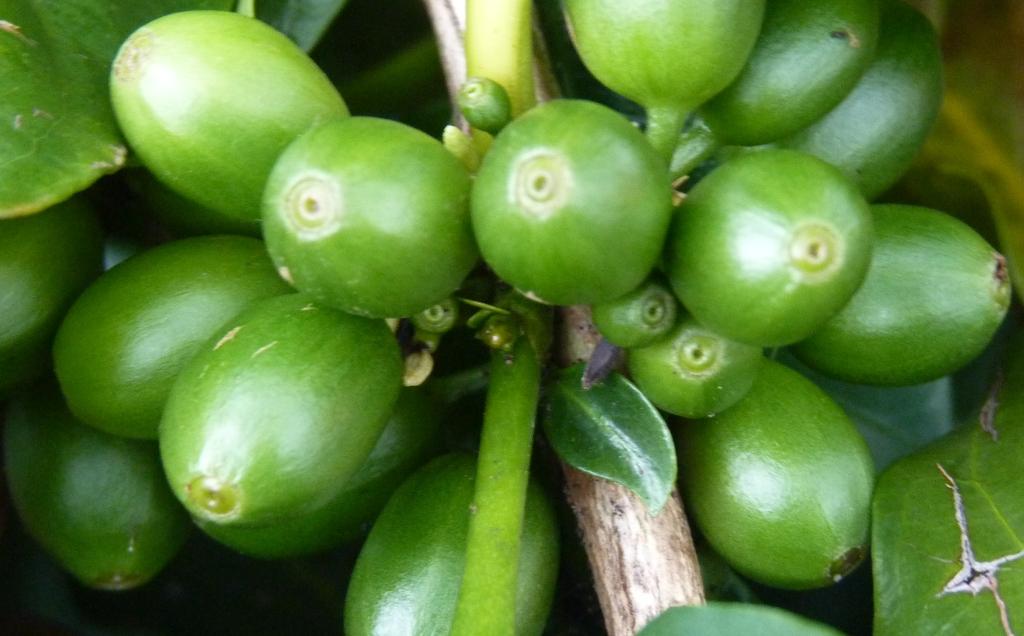
Why coffee? 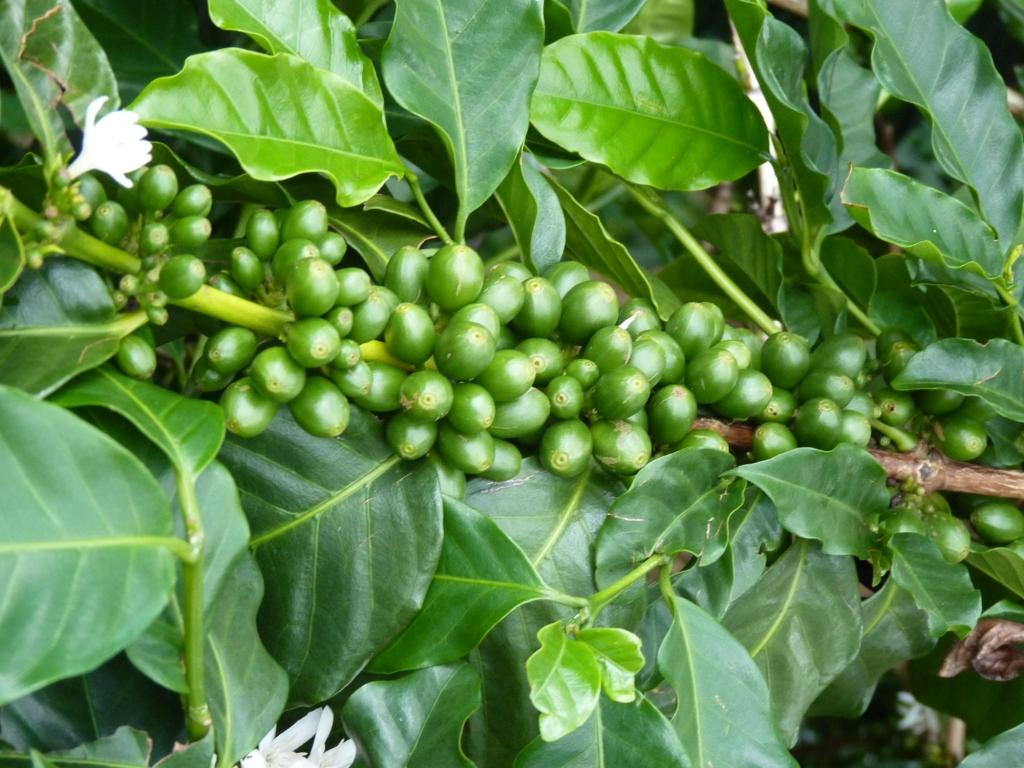 First, this is the answer to the last “What is it” post – it is actually Kona coffee berries (picture taken at Greenwell Farms in Kona, Hawaii). The reason to chose that picture was simple – I was fascinated by a number of similarities in coffee production and wine making – in both cases I’m talking about very good coffee ( Kona is one of the best coffee types in the world) and very good wines. Coffee berries are picked by hand, and also they are picked selectively – only individual ripe berries are taken from the bunch, and the rest is left to ripen. Coffee beans have their skin removed (sounds familiar?), and then they are left to dry under the sun (same as the grapes used for production of Amarone, one of my favorite wines). Once the coffee beans are dried and cleaned, they are left to rest for at least a month or two, before they will be roasted – and this is the step which is enforced by the years of experience and tradition, and nobody asks for explanations – this have to be done just because it has to be done. Again, the same element of mystery and tradition as in production of a good wine. And last, but not least – complexities of the final beverage. Good coffee, similar to the good wine, has layered complexity and brings a lot of pleasure. Anyway, I will look for more obvious picture for the next “what is it ” game.
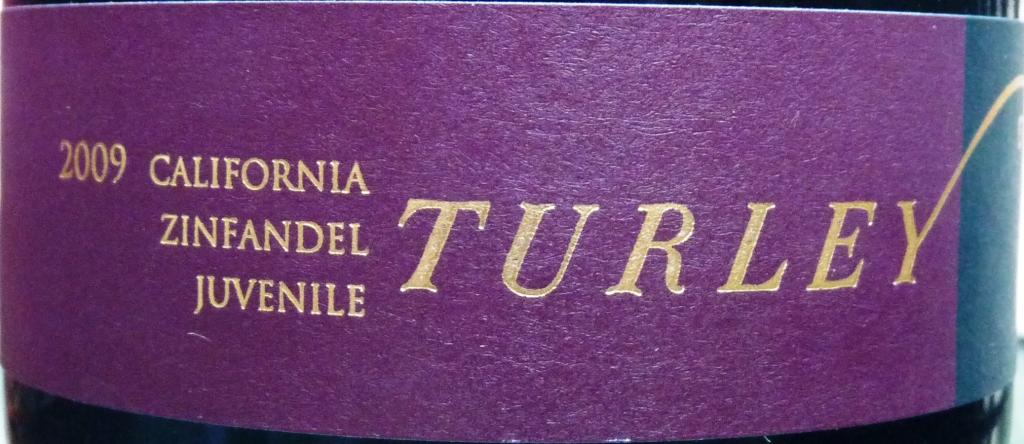
Now, let’s talk about updates. First, the Treble certificate from the Wine Century Club has finally arrived! Not that I want to brag, but let me share the picture with you:
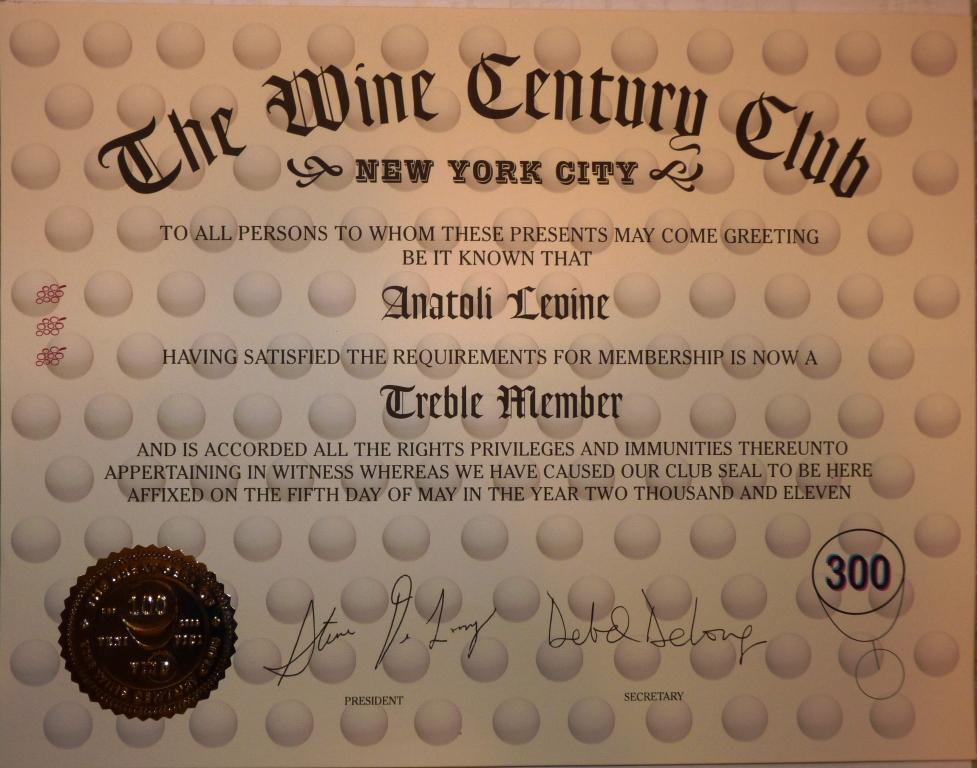
‘nuf said – getting to the Quattro level will not be too easy, so don’t expect to see a picture of another certificate any time soon.
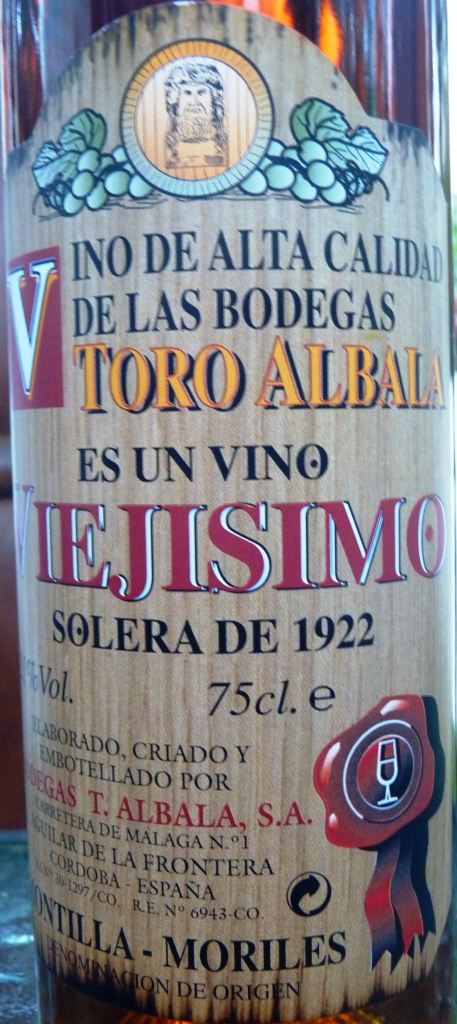
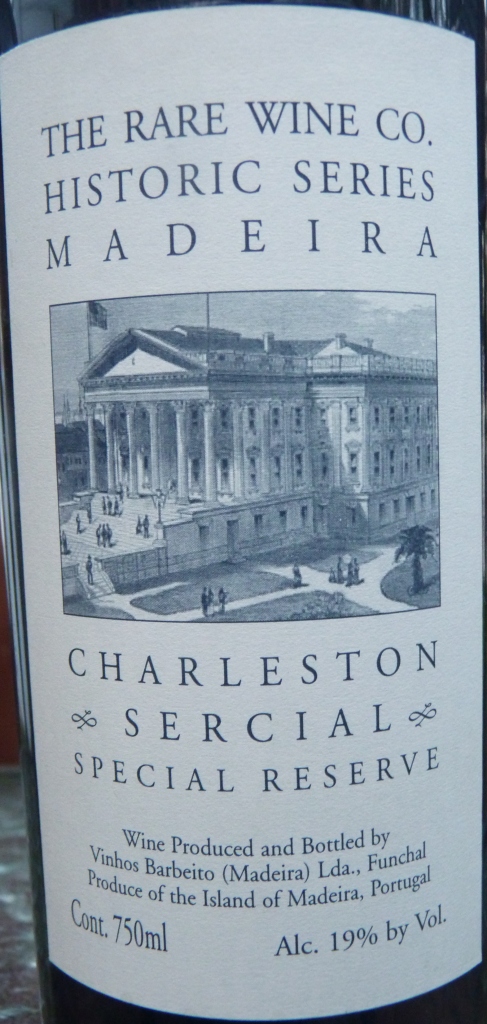
Lastly, I’m continuing writing posts for The Art of Life Magazine. Last two posts were in “Forgotten Vines” series, talking about Jerez (Sherry) and Madeira, both wines are hard to find, but worth seeking – you can find posts here and here.
That’s all for now, folks. Cheers!
Pineapples and Wine Snobbery
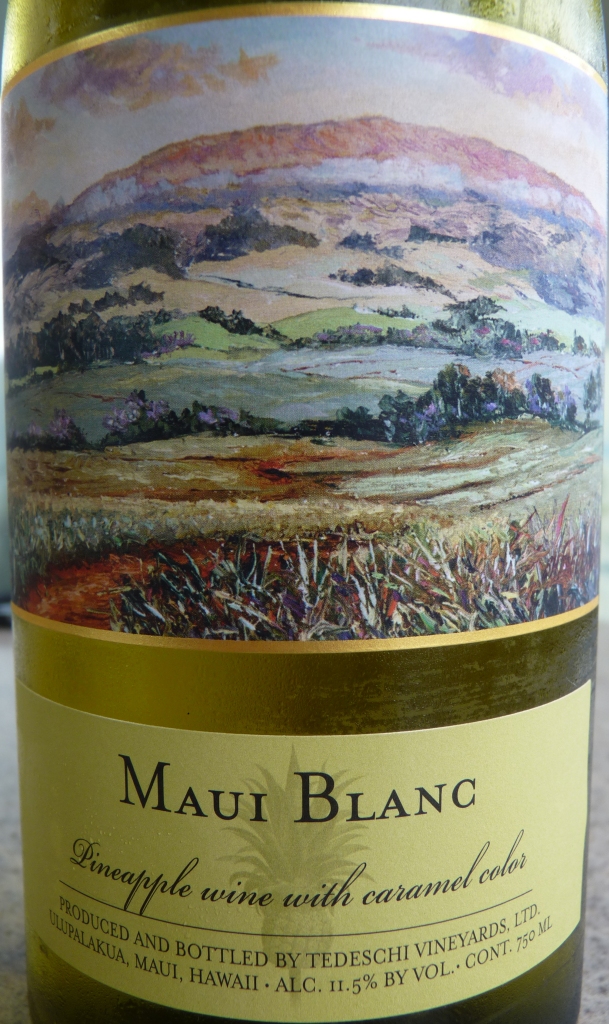 One of the great pleasures of travel is ability to try local food and wine – said it many times before, nothing original here. However, as I’m in Hawaii now, I gladly obey that simple principal. Talking about food, it is a lot of Asian fusion – we had being to a few places, food is consistently very good so far. But – let’s talk about wine.
Hawaiian wine – what can I find here? Yes, I know I’m in Hawaii and not in France. Of course the wine is sold in every supermarket, Walmart and so on – and of course it is wine from all over the world. But we want to go local, remember? So, what is the local grape in Hawaii? I’m sure there is one, as wine is produced in all 50 states in US. Until we will figure the grapes out, let’s think fruit.
Yep, so here it is – a bottle of Tedeschi Vineyards Maui Blanc, a Pineapple wine. Let’s read together wine description from the back label: “Maui Blanc is a wine made from the juice of fresh golden pineapples. Fermentation of the rich golden juice takes place in temperature controlled vats and is stopped at near dryness. The result is a soft, dry fruity wine with an unmistakable pineapple bouquet. Serve chilled.” Don’t know if you typically sport reading back labels on the wine bottles, but based on this description, what do you expect from this wine?
I often talk about expectations in this blog. Expectations is one of essential factors which can affect the way you perceive the wine – at least until the first or second sip. While expectations are based on many factors (you can find more in-depth analysis here), the breadth of your horizon as wine drinker is one of the factors I want to touch on here. Some of the lucky wine lovers try a great wine, like first growth Bordeaux and magnificent Grand Crus of Burgundy and they are set for life in their wine preferences. The story of the most I believe is different. People often start from White Zinfandel, then discover that red wine exists and they like it. After expanding the variety of the personally acceptable red wines, it is possible that some of the wine lovers will stop moving out of the familiar circle and will declare that no other wines would worth their attention. This is the birth-point of wine snobbery. Some people will never move on. But many will – by accident, or by influence of overly insisting friends, they will try a white or rose or desert wine – and discover that the wine world is much bigger that they originally thought. From that point on, they are on the way to becoming real wine connoisseurs.
Sometimes I wonder where am I myself in that journey and how much of the wine snobbery I still keep. Don’t know. I’m really trying not to judge the wine by its cover, err – label, and all of my blind tasting experience is helping to keep the humble view into the wine world. Now coming back to the Maui Blanc, the Pineapple wine, I had no expectations. Here is the bottle, I said I will try it, let’s see what will happen.
The wine actually was very good (in other words, better than I expected despite having no expectations). Nice bright acidity, lots of fruit on the palate (pineapple fruit, needless to say). It probably fell a bit short on the finish, as it didn’t evolve anywhere. But in any case, this is very drinkable wine for the summer day (I will put drinkability at 7).
Try to step out of the familiar circle tonight – just grab a bottle you never tried before, hold your expectations and give it your best try – and prepare to be surprised. There is a good chance that you will be surprised – and in a good way. To the wonderful discoveries – cheers!
What is it?
I think we didn’t play a “what is it” game in a while, so here is the picture for you, and traditional question: what is it? As usual, the answer will come later in the comments.
Wine Retail: PJ Wine
 Buying wine is one of the great pleasures for the wine lover. Of course it is very easy and convenient to buy wine online, as in a lot of cases it also means that you will be able to find good values. However, for the true wine lover ( and if you want to substitute the term with wine geek, be it), being able to unhurriedly browse through the wine store (needless to say – good wine store) is a source of great pleasure. Seeing familiar labels is almost like seeing the old friends – “oh yes, I know you, it is great to see you again”. When you see the wine you don’t know, it is moment of discovery – “hmmm, I wonder how that should taste like?”, “aha, I think it was a good vintage”, “oh, I wonder if this is a good price”. Then it goes to “now, I must try this!”, or “ahh, one day I will definitely have to try this”… There is a lot of anticipation associated with that slow walk along the shelves, and a lot of pleasant expectations.
I already wrote about my favorite wine stores, both “brick and mortar” and online (you can find this post here), and I wrote a post about my most favorite local “go to” store Cost Less Wine and Liquors in Stamford, CT (the post is here). Now, I want to talk about another wine store which I really like – PJ Wine in New York. The store has both great physical location on upper Broadway, as well as very extensive web site at www.pjwine.com.
What do I like so much about PJ Wine? First of all, the store doing a lot to educate people about the wines. PJ Wine hosts great seminars (most of them are free), where people learn and get to try excellent wines, expanding their wine knowledge and taste. In addition to the seminars you can also subscribe to the mailing lists, and receive very extensive wine notes, with a lot of information about wines which is hard to find anywhere else, including winery websites. And then in addition to all the education and information – surprise – the wine store has great selection of … wines! (don’t know what you expected to see here).
First and foremost, PJ Wine is a place for Spanish wines, and Rioja in particular:
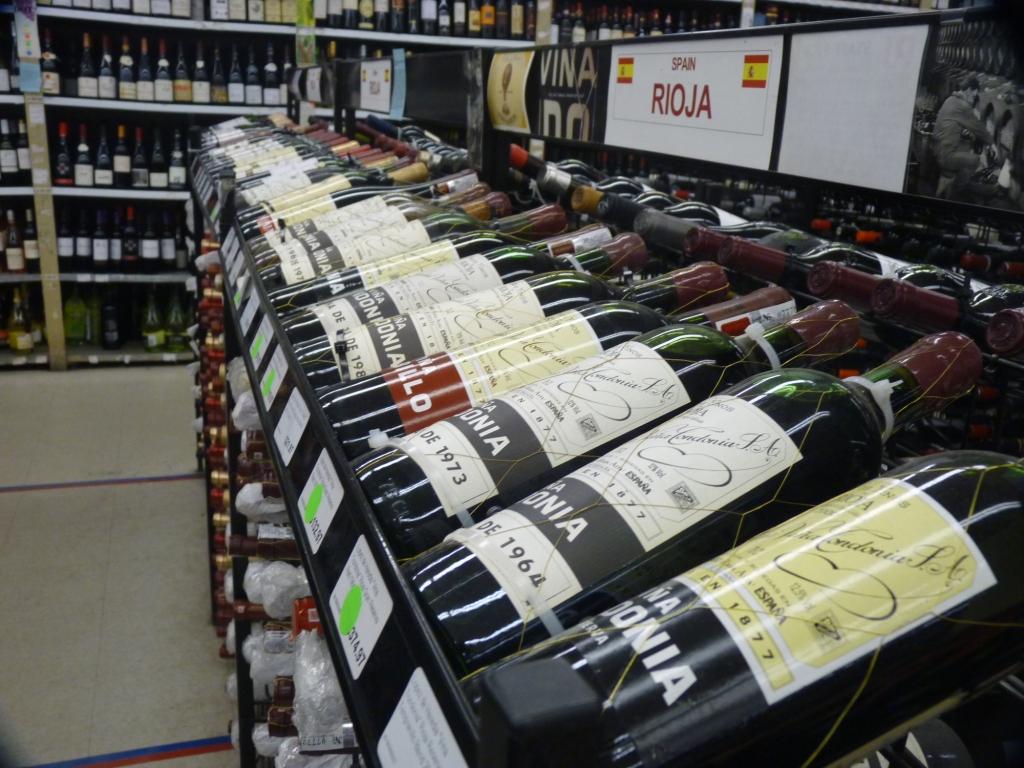
When it comes to Rioja, anything you are looking for – PJ Wine got it, and they got it right there, on the shelf where you can see and touch. Where else can you find 1964 Rioja simply waiting for you?
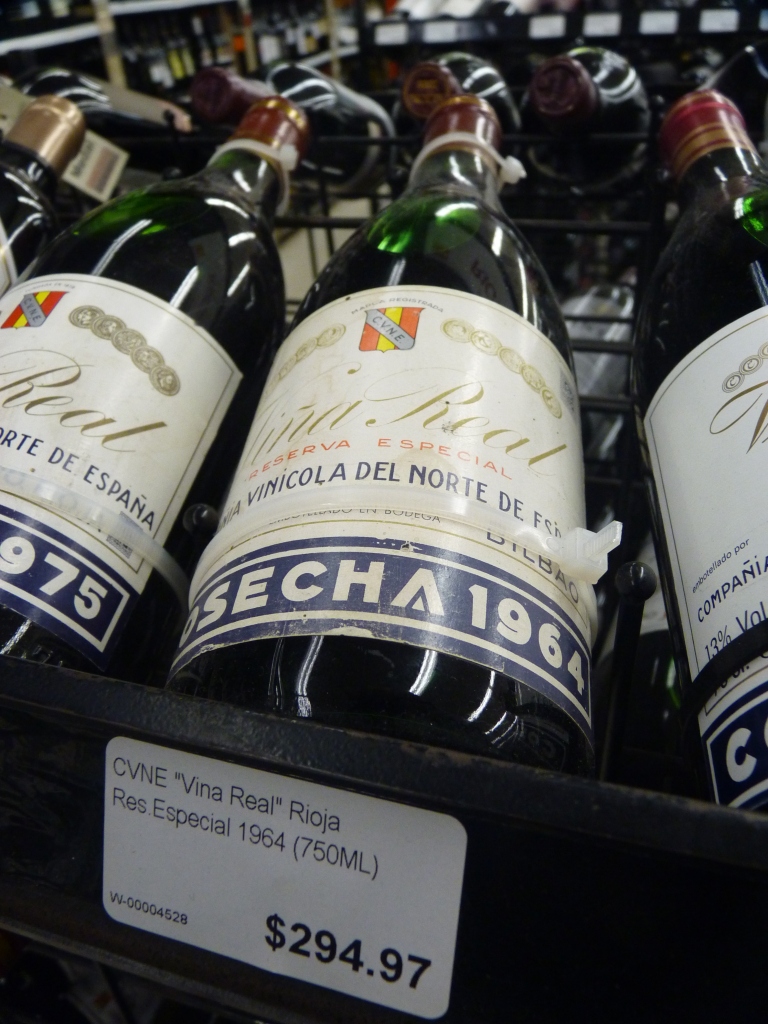
Don’t worry, it is not only Rioja – there are plenty of great wines on the shelves from all over world – hard to find wines from France, incredible selection of Jerez and Madeira, unique Italian wine and many many others.

Last but not least – you can always get good advice, and all the staff actually knows all their wines – not theoretically, but actually tried them and will be able to describe the wines to you in great detail. I’m sure many of you can attest to the fact that you missed such service more than once in your wine shopping adventures.
If you like wine and plan to be in New York – PJ Wine is definitely a worthy destination, you will be pleased with what you can find (of course you can get the wines from their web site – but it is a different experience). PJ Wine delivers unique experiences, from wines themselves to the great learning opportunities, and this is experience is yours to take. Happy wine shopping experience!
Counting Grapes: Some new, some old
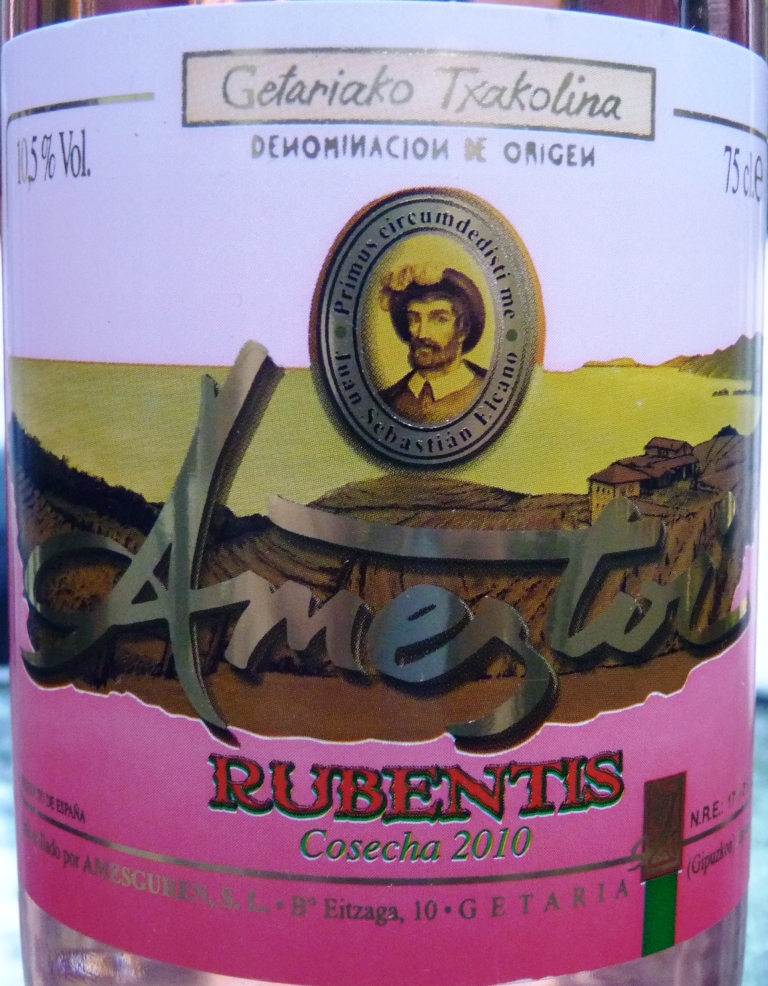 As you know, I’m still counting the new grapes as I come across them. Recently, I was able to add a few to the collection, which I’m happy to report on. I also want to note, that it is quite a rare case when all the new grapes are red (I think there are simply more white varietals used in the wine making), but it happened to be so. Without any particular order, first is the red grape called Hondarribi Beltza, which was one of the grapes used in 2010 Ameztoi Rubentis Rosé Getariako Txakolina wine form Basque region in Spain. The wine is difficult to find, but it worth seeking – very easy to drink, lightly fizzed (should be rather called effervescent), refreshing – perfect wine for the hot day.
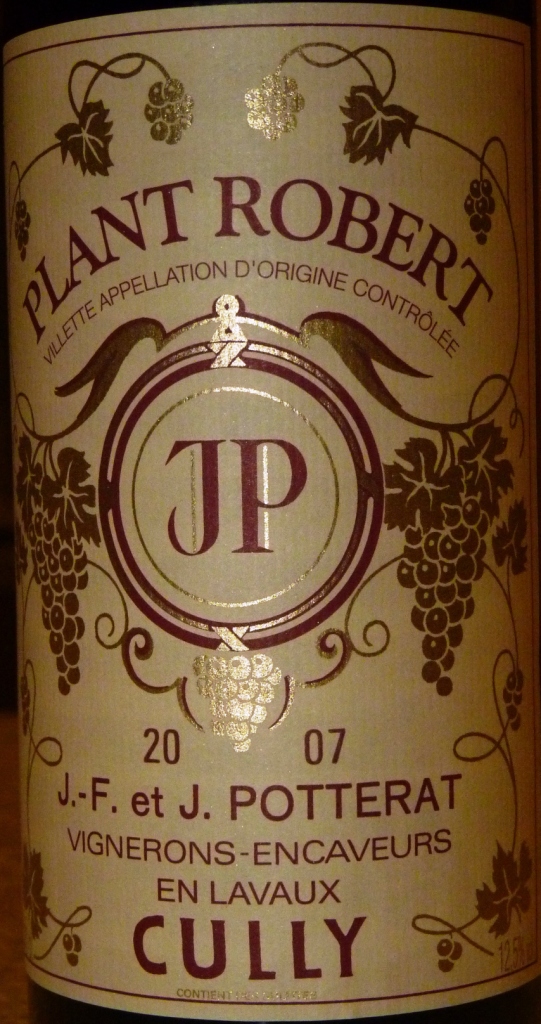 Next wine comes from Switzerland (as usual, courtesy of my friend Patrick), and it is made out of the red grape called Plant Robert. 2007 Plant Robert J-F. et J. Potterat Villette AOC, Cully is very nice, somewhat similar to wines made out of Gamay grape, however, this wine is more spicy and structured than a typical simple Gamay wine. It is very balanced and pleasant to drink (definitely an 8 in Drinkability terms). It is a pity that the wine is not available in US – it is great sipping wine which will also work quite well with wide variety of foods.
Next new grape is called Trepat and it again comes from Spain (as our first grape). I don’t know what is so special about many of these “unknown grapes”, but this 2009 Trepat Josep Foraster, same as many other rare grapes, is very elegant and spicy (of course always possible that my palate is off), with lots of dark fruit and structure on the palate.
So these are the 3 new grapes – so we need to talk about the “old ones”. The old ones are clones – but they are prominent clones. One of such clones makes the wine called Brunello di Montalalcino, and this clone is called Sangiovese Grosso. It is related to the main grape of the Chianti wines, Sangiovese, however, it has a lot more structure and power than regular Chianti wine. I had Brunellos many times, and it has very distinct taste, so this is simply logical to use Sangiovese Grosso as the grape in it’s own right.
Last but not least, another “old grape” is called Tinta de Toro, and it is used in the Toro region in Spain. Technically, Tinta de Toro is a clone of mainstream Spanish grape variety called Tempranillo, which is the main grape in Rioja and Ribero del Duero regions. Toro produces very dense and powerful wines, which require time to mellow out. I had Toro wines before, but my recent experience with the wine called 2007 Teso La Monia Alabaster (there will be a separate post about it) from Toro DO (which is considered best wine produced in Toro region) convinced me that this grape also deserves its own place in the grape quest, as it has lots of differences with the regular Tempranillo.
With the addition of these 5 grapes, I’m inching forward to the next level with 317 grapes accounted for. It’s a long journey to the 400 spot, but it is real fun – let the grape quest continue.
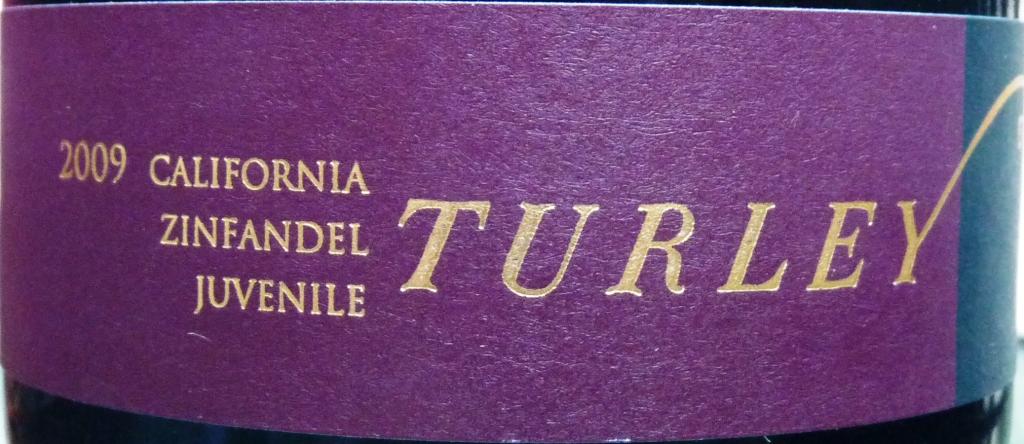
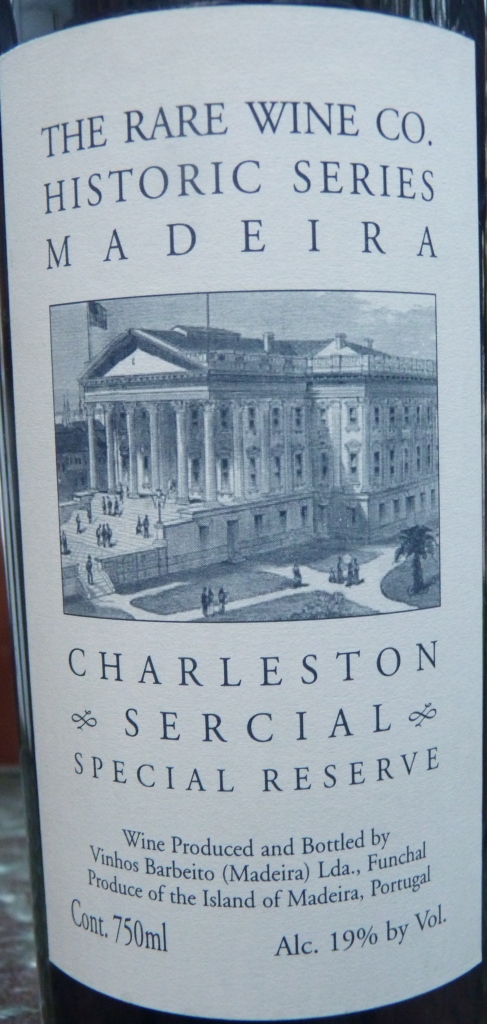
Expectations…


Following Wine Till Sold Out
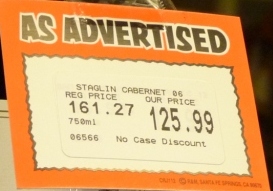 As you could’ve noticed, I’m a big fun of Wine Till Sold Out (WTSO). For the majority of the cases, WTSO is offering good wines at very good prices, which for me is one of the most important things when buying the wine – I like value, a good QPR. As a quick reminder, WTSO offers one wine for sale at a deep discount at any given moment – and if you want to know more about how this service works, you can read about it here.
What prompted me to write yet another blog post was the WTSO 24-hours marathon, which took place on Tuesday, April 26th. During such Marathon (it happens periodically), , which lasts for 24 hours the new wine is offered for sale every 15 minutes, or even sooner. It is somewhat challenging to collect all the information about wines offered during the marathon, as the new wines are announced only through the SMS or on Twitter and not via e-mail. Those messages are short, and typically only provide wine name, ratings (if any) and the discount percentage. As you will see below, I was able to capture some additional information, but this was a very tasking manual process (time to write a special app  ). Also it was very difficult to capture the exact timing of the new wines coming in, so again I did what I can.
In the table below you will easily see some amazing deals, like Chateau Petrus 2004 at $479 (it is not even the price at 54% off, it is just sheer availability – and it lasted online for only 4 minutes), or Chateau Lascombes 2005 at $49.99. One last note before you can devour the information – here is explanation for wine rating abbreviation: WS – Wine Spectator, WA – Wine Advocate, RP – Robert Parker (equivalent to Wine Advocate for most cases), WE – Wine Enthusiast, W&S – Wine & Spirits magazine, WRO – Wine Review Online, ST – Steven Tanzer, IWC – International Wine Cellars (associated with Steven Tanzer), JN – Jonathan H. Newman (wine importer), BH – Bourghound (great source for Burgundy wine ratings).
Now, here it is – enjoy!
| Time | Wine Name | Rating(s) | Original Price | WTSO Price | Min # of Btls | % off |
| 12:00a | Burgess 2002 Cabernet Sauvignon | 68 | ||||
| 6:00a | Antiyal Antiyal Maipo Valley 2006 | 92 | 57 | |||
| Sturino Trotta Cellars Special Select Napa Valley Cabernet Sauvignon 2006 | $120 | $39.99 | 2 | 67 | ||
| Tenimenti Angelini Val Di Suga Brunello di Montalcino 2003 | 91WS | $67.99 | $33.99 | 3 | 50 | |
| Chateau Langoa Barton St. Julien Bordeaux 2005 | 92 | 50 | ||||
| Piper Heidsieck Champagne Brut Vintage 2000 | 93 C.G, 92WA | $75 | $43.99 | 2 | 41 | |
| Tom Eddy Napa Valley Cabernet Sauvignon 2005 | 94 | 56 | ||||
| 7:00a | Schubert Estate Goose Yard Block Barossa Valley Shiraz 2006 | JN96, 95 | 50 | |||
| Terra Valentine Spring Mountain District Napa Valley Estate Cabernet Sauvignon 2006. | 90 | 45 | ||||
| Hartley-Ostini Hitching Post Winery Rio Vista Vineyard Santa Rita Hills Pinot Noir 2006 | ||||||
| Pine Ridge Vineyards Carneros Napa ValleyDijon Clones Chardonnay 2007 | 90 | 41 | ||||
| Quinta do Crasto Vintage Port 1999 | 92 W&S, 92 | 49 | ||||
| 8:00a | Chateau Petrus Pomerol 2006, Free 2nd Day Air | 93 | 49 | |||
| Brookdale Vineyards Napa Valley Cabernet Sauvignon 2006 | 92WE | $49.99 | $24.99 | 2 | 50 | |
| Podere La Vigna Brunello di Montalcino 2004 | 95WS | $69.99 | $48.99 | 2 | 30 | |
| Solaria Brunello di Montalcino 123 Sangiovese Grosso 2004 | 93 WE, 90 | $99.99 | $59.99 | 1 | 40 | |
| Chateau Lascombes Grand Cru Classe Margaux, Bordeaux 2005 | 95WA | $129.99 | $49.99 | 2 | 62 | |
| Amethyst Wines Napa Valley Cabernet Sauvignon 2002 | 91 | 56 | ||||
| 9:00a | Chateau Leoville Barton Saint Julien Bordeaux Blend 2006 #64 Top 100 WS | 94 | ||||
| Giovanni Rosso Barolo Storico Nebbiolo 2004 | 89 | $65.99 | $28.99 | 2 | 56 | |
| Rudd Estate Crossroads Estate Grown Oakville Cabernet Sauvignon 2006 | $74.99 | $35.99 | 2 | 52 | ||
| Poggio Antico Brunello di Montalcino 2003 | 90 | $110.00 | $45.99 | 2 | 58 | |
| Roquette E Cazes Xisto Douro 2004 | 90 | 67 | ||||
| Vignamaggio Wine Obsession Toscana IGT 2004 | 91WS, 90WA | $70.00 | $39.99 | 1 | 43 | |
| Pillar Rock Vineyard Stags Leap District Cabernet Sauvignon 2006 | $125.00 | $39.99 | 2 | 68 | ||
| 10:00a | Feudi di San Gregorio Serpico Irpinia Rosso IGT 2003 | 92WA, 92WRO | $85.00 | $37.99 | 2 | 55 |
| St. Francis Winery Behler Vineyard Sonoma County Estate Merlot Blend 2005 | 92 | $45.00 | $21.99 | 4 | 51 | |
| Chateau Angelus Premier Grand Cru Classe St. Emilion Bordeaux 2006 | 95WA, 95WE | $250.00 | $144.99 | 1 | ||
| Cerbaia Brunello di Montalcino 2004 | 91WS | $69.99 | $39.99 | 1 | 43 | |
| Domaine Louis Latour Chambertin Grand Cru Cuvee Heritiers Latour 2007 | 93WS, 91BH | $250.00 | $110.99 | 1 | 52 | |
| 11.00a | Bodegas Los Astrales Astrales Ribera Del Duero 2007 | 94WE, 92 | 47 | |||
| Broadbent Vintage Port 2003 | 90 | 59 | ||||
| Illumination Napa Valley Sauvignon Blanc 2008 | 95WE, 95 | 44 | ||||
| Round Pond Estate Rutherford, Napa Valley Cabernet Sauvignon 2003 | 92JN | $70.00 | $24.99 | 4 | 64 | |
| Domaine Du Vieux Lazaret Chateauneuf du Pape Cuvee Exceptionnelle Red 2005 | 94WA | $54.99 | $38.79 | 2 | 29 | |
| Juslyn Vineyards Vineyard Select Napa Valley Cabernet Sauvignon 2003 | 91WA | $84.99 | $44.99 | 2 | 47 | |
| Quixote Winery Panza Stag’s Leap Ranch, Napa Valley Cabernet Sauvignon 2005 | 93JN | $49.99 | $24.99 | 3 | 50 | |
| 12:00p | Mitolo Wines Savitar McLaren Vale Shiraz 2007 | 93WA | $75.00 | $37.49 | 3 | 50 |
| Domaine du Galet des Papes Chateaneuf-du-Papes Vieilles Vignes 2007 | 91WS | $49.99 | $29.99 | 3 | 40 | |
| Silver Oak Cellars Alexander Valley Cabernet Sauvignon 2006 | 95WRO, 92WE | $84.99 | $54.99 | 2 | 35 | |
| Domaine Louis Latour Romanee Saint Vivant Grand Cru Les Quatre Journaux 2003 | 91 | 48 | ||||
| Tenuta San Giorgio Ugolforte Brunello di Montalcino DOCG 2003 | 91RP | $71.99 | $34.99 | 2 | 51 | |
| Enkidu Wines Kick Ranch Sonoma County Syrah 2006 | 94 | 35 | ||||
| 1:00p | Round Pond Estate Rutherford, Napa Valley Cabernet Sauvignon 2006 | 92WE | $64.99 | $25.99 | 4 | 60 |
| Champagne Charles Ellner Cuvee De Reserve Brut NV | 92WS, 90WA | $49.99 | $24.99 | 4 | 50 | |
| Two Hands Wines Charlie’s Patch Napa Valley Cabernet Sauvignon 2006 | 92ST, 90+WA | $124.99 | 39.99 | 2 | 69 | |
| Barone Ricasoli Casalferro Toscana IGT 2004 | 92 | 48 | ||||
| Xtant Wines Xtant Napa Valley Cabernet Sauvignon 2003 | 92 | 60 | ||||
| Champagne Veuve Clicquot Ponsardin La Grande Dame Brut 1998 | 92 | 45 | ||||
| Azienda Agricola Cavalier Bartolomeo Barolo Solanotto Altenasso DOCG 2005 | 89 | 60 | ||||
| Benessere Vineyards Napa Valley Phenomenon 2004 | 92 | 43 | ||||
| Rodney Strong Vineyards Symmetry Alexander Valley Meritage Red Wine 2007 | 94WE | |||||
| 2:19p | Solena Estate Domaine Danielle Laurent Willamette Valley Pinot Noir 2007 | 91ST, 90WE | $47.99 | $27.99 | 3 | 42 |
| Cakebread Cellars Napa Valley Cabernet Sauvignon 2007 | 92 | 29 | ||||
| 2:33P | Champagne de Venoge Brut Champagne Rose NV | 90WS | 79.99 | 39.99 | 2 | 50 |
| Celler Laurona Laurona Falset 2005 | 91WA, 90 | 53 | ||||
| Page Wine Cellars Revolver Wine Company The Fury Cabernet Franc 2006 | 39 | |||||
| Cakebread Cellars Napa Valley Chardonnay Reserve 2005 | 89 | 33 | ||||
| 2:51p | Chateau Petrus Pomerol 2004 | 95W&S, 93WS/WA | $1299.99 | $479.99 | 1 | 54 |
| 2.55p | D’Arenberg The Coppermine Road Cabernet Sauvignon 200 | 93WA | $69.99 | $49.69 | 2 | 35 |
| Villa Girardi Amarone della Valpolicella Classico DOC 2004 | 46 | |||||
| Cloud View Vineyards Prichard Hill Napa Valley Red Wine 2006 | 94 | 53 | ||||
| 3:11p | Cabreo Il Borgo Toscana IGT 2007 | 94WS | $60.00 | $41.99 | 2 | 30 |
| Hewitt Vineyard Rutherford Cabernet Sauvignon 2006 | 92 | 45 | ||||
| Two Hands Wines Lily’s Garden McLaren Vale Shiraz 2006 | 92 | 45 | ||||
| Saintsbury Vineyard Stanly Ranch Pinot Noir 2007 | 92WS, 90 | 40 | ||||
| Chateau Guillot Pomerol 2001 Library Release | 93JN | $50.00 | $25,99 | 3 | 48 | |
| 3:38p | I Giusti e Zanza Dulcamara Toscana Rosso 2005 | 93WE | $54.99 | $22.99 | 4 | 58 |
| 3:42p | Enzo Wines Magic Hill Oakville, Napa Valley Cabernet Sauvignon 2006 | 98 | $85.00 | $26.99 | 3 | 68 |
| Domaine Louis Latour Meursault Blagny 1er Cru Chateau De Blagny 2007 | 88 | 40 | ||||
| 4:08p | The Colonial Estate Emigre Barossa Valley Proprietary Red 2006 | 93ST, 92WA | $85.00 | $42.99 | 2 | 49 |
| 4:10p | Chateau Le Prieure Grand Cru Classe St. Emilion 1999 Library Release | 92JN | $50.00 | $24.99 | 3 | 50 |
| 4:15p | Eredi Fuligni Brunello di Montalcino 2005 | 93WA, WS | $79.99 | $39.99 | 2 | 50 |
| 4:25p | Beaulieu Vineyard Georges de Latour Pvt. Reserve Cabernet Sauvignon 2006 | 95WE | $119.99 | $64.99 | 2 | |
| Michele Chiarlo Tortoniano Barolo 2005 | 90 | 52 | ||||
| 4:43p | Azienda Agricola Montevetrano Montevetrano Colli di Salerno IGT 2006 | 94RP | $112.00 | $47.99 | 1 | 57 |
| Vilafonte Series C Paarl 2004 | 91 | 57 | ||||
| Encantado (by The Famous Unnamed Napa Valley winery) Red Blend 2007 | 59 | |||||
| 4:59p | Domaine Louis Latour Corton Clos de la Vigne Au Saint 2003 | 91BH | $89.99 | $49.99 | 2 | 44 |
| 5:00p | David Bruce Winery Santa Rita Hills Pinot Noir 2005 | 88 | 60 | |||
| Tenuta di Biserno Bibbona Insoglio del Cinghiale IGT 2006 | 94 | 50 | ||||
| 5:32p | Laetitia Vineyard & Winery Arroyo Grande Valley Pinot Noir Reserve 2007 | 92WE | $49.99 | $29.99 | 1 | 40 |
| 5:41p | Watkins Family Winery Monte Rosso Vineyard, Sonoma Valley Cabernet Sauvignon 2005 | 92JN | $45.00 | $24.99 | 2 | 44 |
| 4:49p | Grimaldi Luigino Grimaldi Vigna San Biagio Barolo Nebbiolo 2006 | 91 | 53 | |||
| 5:53p | Opus One Napa Valley Proprietary Blend 2007 | 94 | 18 | |||
| 5:56p | Brookdale Vineyards Napa Valley Cabernet Sauvignon 2007 | $45.00 | $24.79 | 3 | 45 | |
| 6:00p | Bacio Divino Cellars Janzen Estate Cloudys Vineyard Cabernet Sauvignon 2006 | 90 | 60 | |||
| Burgess Cellars Library Release Vintage Selection Napa Valley Cabernet Sauvignon 1997 | ||||||
| Poderi Aldo Conterno Gran Bussia Barolo Riserva 2001 | 95ST, 95 | 50 | ||||
| Prince Florent de Merode Corton Les Bressandes Grand Cru 2008 | 50 | |||||
| Seavey Vineyard Napa Valley Cabernet Sauvignon 2006 | 92 | 35 | ||||
| 7:00p | Costers del Siurana Miserere Priorat 2003 | 90 | 50 | |||
| E. Pira & Figli (Chiara Boschis) Barolo Cannubi 2005 | 94WE, 91 | 41 | ||||
| Burgess Cellars Napa Valley Cabernet Sauvignon 2002 Vintage Selection | 68 | |||||
| Podere La Vigna Brunello di Montalcino 2005 | 91 | 42 | ||||
| 8:00p | Domaine Louis Latour Batard Montrachet Grand Cru 2006 | 95WE, 90 | 52 | |||
| Encantado (You Know The Winery!) Napa Valley Cabernet Sauvignon 2009 | 59 | |||||
| Tua Rita Giusto di Notri Toscana 2003 | 90 | 51 | ||||
| Chateau Lafon La Tuilerie St. Emilion Grand Cru Classe 2006 | 60 | |||||
| Feudi di San Gregorio Taurasi Piano di Montevergine Riserva 2001 | 94WA, 93 | 40 | ||||
| Tapanappa Whalebone Vineyard Wrattongbully, Australia Cabernet Shiraz 2005 | 92 | 57 | ||||
| 9:00p | Lisini Brunello di Montalcino 2005 | 91 | 51 | |||
| St. Supery Vineyards & Winery Elu Napa Valley Red Wine 2005 6 Liter Imperial | ||||||
| Chateau Le Gay Pomerol 2006 | 93WA, 93 | 46 | ||||
| Burgess Cellars Ilona Howell Mountain Red Blend 2004 | 92 | 59 | ||||
| Chateau Dauzac MargauxGrand Cru Classe Bordeaux 2007 | 87 | 60 | ||||
| Azienda Agricola Piancornello Brunello di Montalcino Riserva 2004 #64 Top 100 2010 WE!! | ||||||
| Domaine Henri Darnat Meursault Clos Du Domaine 2008. 17 rating and 50% off | 17 | 50 | ||||
| 10:00p | Bacio Divino Cellars Janzen Estate Napa Valley Cabernet Sauvignon 2006 | 89 | 63 | |||
| Maple Lane Winery Napa Valley Cabernet Sauvignon 2006 | 52 | |||||
| Mer Soleil Vineyard (by Caymus) Santa Lucia Highlands Chardonnay 2007 | 42 | |||||
| Azienda Agricola Piancornello Brunello di Montalcino DOCG 2003 [1.5 Liter] Magnum | ||||||
| Domaine du Grand Tinel Chateauneuf du Pape Alexis Establet 2007 | 94WA, 92 | 40 | ||||
| Thumbprint Cellars Four Play Winemakers Reserve Sonoma County 2008 | 56 | |||||
| 11:07p | Caterina Zardini Amarone della Valpolicella Classico Riserva DOC 2006 | 93 | 44 | |||
| 11:22p | Piper Heidsieck Champagne Cuvee Rare Brut 1998 *1.5L Magnum | 92 | 58 | |||
| 11:25p | Domus Vitae Brunello di Montalcino DOCG Riserva 2004 | 90 | 60 | |||
| 11:38p | Tenuta dei Sette Cieli Indaco Super-Tuscan 2006 | 90 | 60 | |||
| 11:48p | Chateau Le Dome St. Emilion Grand Cru 2004 | 90 | 60 |
Three Strikes and … In!
 Very interesting wine ordering experience during the last dinner at The Capital Grille in Paramus, New Jersey. The Capital Grille restaurant itself needs no introduction, of course – whether you like steak or not, every visit there is a dining experience (you can find my previous excited post here). I have to also acknowledge that part of our great experience during this visit was our waiter, Andre – his service was absolutely impeccable.
Ok, so let’s talk about ordering wine. Wine List at the Capital Grille is quite extensive, plus I’m very particular when it comes to wine ( who would’ve thought?) – and one of the things I’m always looking for for is QPR – I want to find the bottle which will taste good, and will have reasonable cost (have a real problem with paying triple-retail in a restaurant). So after 10 minutes of intense reading I finally decided on Ladera Napa Valley Cabernet Sauvignon 2006 – I like the wine very much (you can find one of the previous posts here), besides, at $58 it is less than double retail – makes me very happy. So I ask for the bottle of Ladera 2006, Andre comes back in a few minutes to inform us that they out of Ladera 2006. He start offering 2007 Cabernets – and of course, 2007 Napa valley Cabernets are lauded all over wine press, however, my experience with 2007s is less than stellar – a lot of them simply not ready yet (do I dare to say that they might be just not?). So I refuse his advice, and ask for Central Otago Pinot Noir, Amisfield 2006 – it is outside of QPR comfort zone at $69, but at least I know it is a good wine. Andrea comes back to inform us that they are out of that wine as well. No problems, I was almost ready for that (a bit surprising – two out), so my next choice was Ernesto Catena Locura 2006 blend from Argentina – I didn’t have that before, but at about $55 it was an interesting wine to try. Well, time to ask questions. Do you think we got that wine?
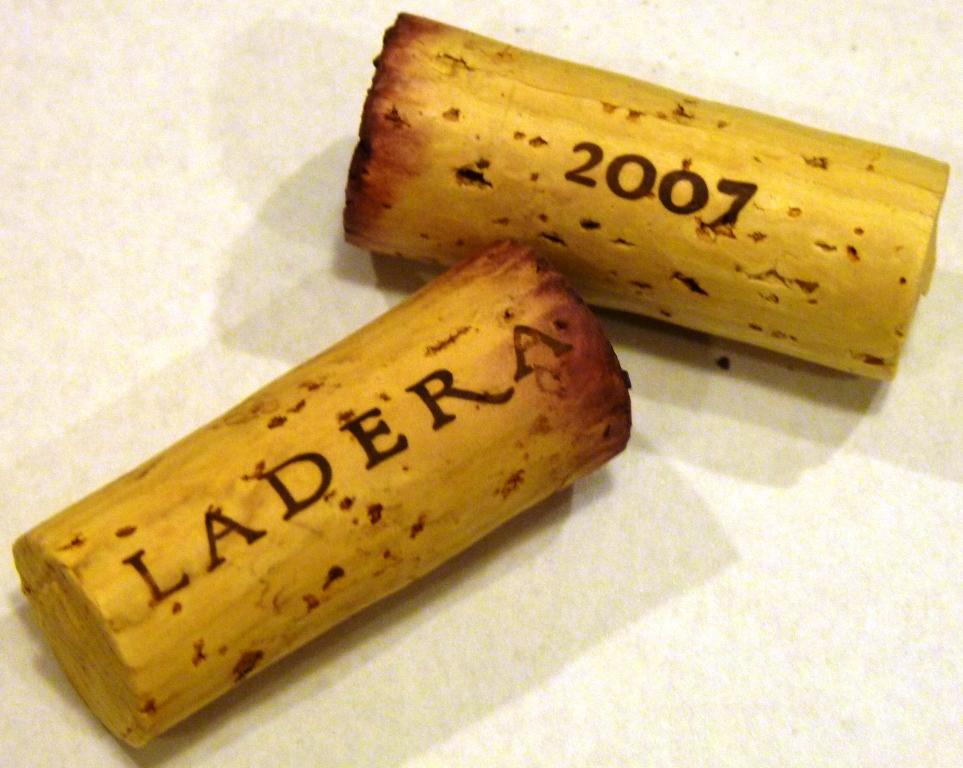 This time Andrea didn’t even show up. Instead, we were approached by the Sommelier (unfortunately we didn’t catch her name) with the bottle of Ladera 2007 in her hand. So we manage to ask for 3 wines from the wine list, which were not available! Of course it happens that the restaurant doesn’t have the wine you ask for, but 3 of them? Wow, we were impressed with our wine picking ability.
Anyway, after Sommelier assured us that she tried that Ladera 2007 and liked it very much, and moreover, if we don’t like the wine we can send it back – we decided to give a try. Oh boy, that happened to be a very good decision, as the wine was beautiful. Soft layered black and red fruit, just right amount of silky tannins, all perfectly balanced with acidity – that was a perfect wine for our dinner, and I would highly recommend this wine to anyone – it is ready to drink now, but as they say, the California Cabernet need about 13 years to shine – it will be interesting to put a few bottles in the cellar and enjoy them later.
So I’m glad to say that this story has a happy end (sometimes restaurant experience can be quite different). Also, if I can give you an advice, for the actual happy ending of the dinner (meaning: desert), try the Cheesecake – it is literally the heaven on earth, and I have to commend Andre for his recommendation – it is the best desert in the house. Until the next time – wishing you all great restaurant experience. Cheers!
Great [Accidental] Experience: Chateau Leoville Poyferre
 I recently mentioned that I started to write a series of posts for The Art Of Life Magazine. Currently, the series is covering Best Hidden Secrets of the Wine World, and last post was dedicated to the second labels. As the whole notion of the second labels was originated in France, of course my intent was to talk about one of the “second label” wines from Bordeaux.
I decided to go with Chateau Leoville Las Cases Clos Du Marquis, which is a second label of Chateau Leoville Las Cases Grand Vin de Leoville. 2005 was available ( and it was a great year), and I ordered (online) the Clos du Marquis for about $50 – of course I would be glad to go with second label of Chateau Latour, but that would ring about $500, which was definitely not budgeted for this exercise.
So I got the wine, it was the right year, and it was Chateau Leoville, so I tasted it for the post. Then I started working on the post, and of course I wanted to mention both first and the second label. This time I used the full name of the wine, Chateau Leoville Poyferre, and when I failed to find it as a second label, I finally understood that something is off! Well, it was a rare case of “off” to my benefit. Actually Chateau Leoville Poyferre which I got instead of Clos De Marquis is a first label (second label for this wine is called Château Moulin Riche), never mind the fact that it costs twice as much as Clos De Marquis was. I ended up getting another, real second label wine for The Art Of life Post, as talking about this wine would not help the goal of the article (La Croix de Beaucaillou was also not bad, as you can read for yourself in that post).
As everything in life has two sides, tasting this wine was also good and bad. The good part was in the fact that this wine, 2005 Chateau Leoville Poyferre from Saint Julien in Medoc, was outstanding. To describe it in the few words, it is muscles and power in a perfect balance. Perfect balance of dark fruit, spices, eucalyptus, tannins and acidity, however all in need of time. This wine needs another 10-12 years to really shine. Don’t get me wrong – it is perfectly enjoyable now – but it begs you to give it time to evolve. I would put drinkability to 9.
Where is the bad part, you ask? The bad part is that at $100 a bottle, it was truly an accidental experience – this is outside of my wine budget, so I will have to hope for another lucky mistake (yeah, fat chance). Oh well, I’m glad I had this experience and I was able to share it with you. Until the next time – cheers!
Tasting The Art of Douglas Laing
 These plastic glasses don’t look much like anything, right? Well, overall aesthetics might not be much anything, but the content is a king as we usually say. These glasses contain 10 different scotches from Douglas Laing, an independent bottler and blender of premium malt scotch whiskies.
Until yesterday, I never heard of Douglas Laing (so don’t feel bad if you didn’t know about them either). It appears that since 1948 they had being in the business of creating their own custom whisky blends, and from 1998 started releasing single malts, to the great pleasure of whisky connoisseurs all over the world.
The group of scotches I had a pleasure tasting (thanks to my friend Zak), included some of the familiar names, like Macallan… come to think of it, this was the only familiar name. It was also very interesting to see very odd ages on many of the scotches. Typically the line you would see for the mainstream brands would be 10, 12, 15, 18 and 25, with the rare addition of 14 and 16. In the list below, you will see some very odd ages like 9, 11 and 20 – but this is something you can do, having amazing supply of good stuff such as Douglas Laing does.
Here is what I tasted with the brief notes (10 scotches in 10 minutes – this is too fast to be able to really reflect on the experience):
Blair Athol 11, Speyside – too tight, not showing much of anything
Benriach 18, Speyside – very nice, acidic, with some wood tones, no sweetness at all
Fettercairn 9, Highlands – nice big bouquet
Braeval 19, Speyside – nice and round, pleasant sweet notes
Craigellacchie 14, Speyside – smooth, with beautiful smokiness and great bouquet. My absolute favorite in the tasting.
Macallan 20, Speyside – this was smooth, but a bit flat.
Macallan 33, Speyside – nice, round, open, with hint of tobacco and tar in the back, very complex. Definitely another one of my favorites, but at around $400 per bottle, I don’t expect to see it in my collection any time soon.
Douglas XO – very soft and too simple, almost too sweet.
Clan Denny Speyside – this is a blend of Macallan, Glenrothes, Glen Grant, Mortlach, Longmorn and other Speyside scotches. Has lots of balanced sweetness. Taking Macallan 33 out of the equation, these was my second favorite (or third with Macallan, of course).
Clan Denny Islay – a blend of Ardbeg, Bowmore, Bunnahabhain, Caol Ila and other Islay scotches. Outstanding, very complex, with hint of smokiness. Also one of my favorites.
I also would like to mention that while I was searching for some information on the scotches, I came across site called Malt Madness, which I think is amazing – anything you need to know about Scotch, this would be a good place to start.
All three of my favorites ( Craigellachie, Clan Denny Islay and Clan Denny Speyside) are expected to appear soon on the shelves of Cost Less Wines and Liquors – if you like scotch, I’m sure you will be as happy as I am. Cheers!
Last Bottle Sign Up ($10 credit)




 Talk-A-Vino