Archive
Stories of Passion and Pinot
An important note: Stories of Passion and Pinot is a series that was started in 2016 and it keeps updating year after year with new stories. This post will serve as the starting page for the series and will be constantly updated as new stories are added…
It is easy to declare this grape a king. It is a lot more difficult to have people agree to and support such a designation. And here I am, proclaiming Pinot Noir worthy of the kingship, despite the fact that this title is typically associated with Barolo (made from Nebbiolo grape) or Cabernet Sauvignon.
Barolo might be a king, why not – but its production is confined strictly to Italy, and can be considered minuscule in terms of volume. Cabernet Sauvignon is commanding attention everywhere – but I would argue that it is more because of the ease of appeal to the consumer and thus an opportunity to attach more dollar signs to the respective sticker. Don’t get me wrong – I love good Cabernet Sauvignon as much or more than anyone else, but having gone through so many lifeless editions, I developed a healthy dose of skepticism in relation to this noble grape.
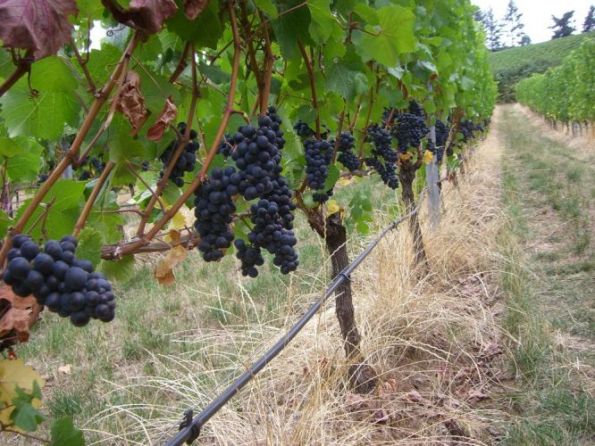
Pinot Noir grapes. Source: Vidon Vineyard
Talking about Pinot Noir, I’m not afraid to again proclaim it a king. If anything, it is the king of passion. Hard to grow – finicky grape, subject to Mother Nature tantrums, prone to cloning, susceptible to grape diseases – and nevertheless passionately embraced by winemakers around the world refusing to grow anything else but this one single grape – a year in, year out.
Historically, Pinot Noir was associated with Burgundy – where the love of the capricious grape originated, and where all the old glory started. Slowly but surely, Pinot Noir spread out in the world, reaching the USA, New Zealand, Australia, Chile, and Argentina – and even Germany, Italy, Spain, Canada, and South Africa are included in this list. Looking at the USA, while the grape started in California, it then made it into Oregon, and now started showing along the East Coast, particularly in Hudson Valley.
I don’t know what makes winemakers so passionate about Pinot Noir. For one, it might be the grape’s affinity to terroir. Soil almost always shines through in Pinot Noir – it is no wonder that Burgundians treasure their soil like gold, not letting a single rock escape its place. While soil is a foundation of the Pinot Noir wines, the weather would actually define the vintage – Pinot Noir is not a grape easily amended in the winery. But when everything works, the pleasures of a good glass of Pinot might be simply unmatched.
However important, terroir alone can’t be “it”. Maybe some people are simply born to be Pinot Noir winemakers? Or maybe this finicky grape has some special magical powers? Same as you, I can’t answer this. But – maybe we shouldn’t guess and simply ask the winemakers?
Willamette Valley in Oregon is truly a special place when it comes to the Pinot Noir. Similar to the Burgundy, Pinot Noir is “it” – the main grape Oregon is known for. It is all in the terroir; the soil is equally precious, and the weather would make the vintage or break it. And passion runs very strong – many people who make Pinot Noir in Oregon are absolutely certain that Oregon is the only place, and Pinot Noir is the only grape. I’m telling you, it is one wicked grape we are talking about.
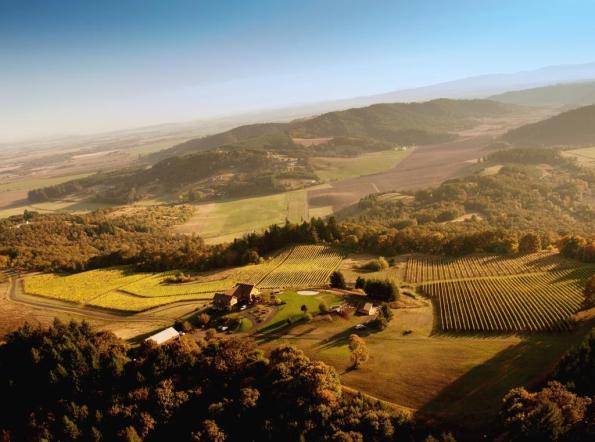
Aerial view of Oregon vineyards. Source: Youngberg Hill Vineyards
I see your raised eyebrow and mouse pointer heading towards that little “x”, as you are tired of all the Pinot Noir mysticism I’m trying to entangle you in. But let me ask for a few more minutes of your time – and not even today, but over the next few weeks.
You see, I was lucky enough to have a conversation (albeit virtual) with a few people who combined Pinot and Passion in Oregon, and can’t see it any other way. What you will hear might surprise you, or maybe it will excite you enough to crave a glass of Oregon Pinot Noir right this second, so before you hear from a pioneer, a farmer, a NASA scientist, and a few other passionate folks, do yourself a favor – make sure you have that Pinot bottle ready. Here are the people you will hear from:
- Ken Wright of Ken Wright Cellars
- David Nemarnik of Alloro Vineyard
- Mike Bayliss of Ghost Hill Cellars
- Wayne Bailey of Youngberg Hill Vineyards
- Steve Lutz of Lenné Estate
- Don Hagge of Vidon Vineyard
I would like to extend a special note of gratitude to Carl Giavanti of Carl Giavanti Consulting, a wine marketing and PR firm, who was very instrumental in making all these interviews possible.
As I publish the posts, I will link them forward (one of the pleasures and advantages of blogging), so at the end of the day, this will be a complete series of stories. And with this – raise a glass of Pinot Noir – and may the Passion be with you. Cheers!
2017 – 2020 Updates:
This Passion and Pinot Series continues to live on. Here is what had been added during these 4 years – and you should expect to see more stories as we continue talking with the winemakers who made Pinot Noir their passion:
- Page Knudsen of Knudsen Cellars
- Tony Rynders of Tendril Cellars
- Dave Specter of Bells Up Winery
- Richard Boyles of Iris Vineyards
- Tom Mortimer of Le Cadeau Vieyard
- Dan Warnshuis of Utopia Vineyard
2021 Updates:
2021 was a good year as I added one more “Passion and Pinot” interview and also met in person with a number of winemakers I only spoke with virtually before – and this resulted in Passion and Pinot Updates.
New interview:
Passion and Pinot Updates:
P.S. Here are the links to the websites for the wineries profiled in this series:
Alloro Vineyard
Battle Creek Cellars
Bells Up Winery
Ghost Hill Cellars
Iris Vineyards
Ken Wright Cellars
Knudsen Vineyards
Le Cadeau Vineyard
Lenné Estate
Tendril Cellars
Vidon Vineyard
Utopia Vineyard
Youngberg Hill Vineyards
Solitude: In Quest for Unattainable?
Solitude. An interesting word, isn’t it? Is it something good or is it something bad? Let’s see what the dictionaries think of solitude:
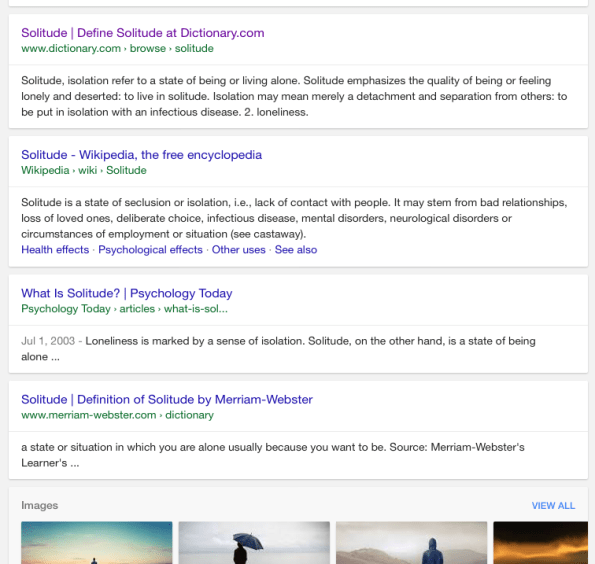
If we think of solitude as a feeling of isolation, this clearly doesn’t sound good. We, humans, are social creatures. We want to connect, communicate, love, laugh, interact. Feeling isolated is really opposite to feeling connected and engaged, so let’s leave it as that – feeling isolated is not what we want, so this is not the solitude we want to talk about.
 Let’s then talk about solitude as the “state in which you are alone usually because you want to be“. Every once in a while, our connected sensors become overloaded. Too many things to do, too many tasks to finish. The new things which must be done arrive without any regard to the things which we are still doing. We are going somewhere all the time, without even understanding the direction, or what is even worse, without understanding of why we are going there.
Solitude is our way out. Have you ever been up in the mountains, where there are no other sounds outside of gentle murmur of leaves and muted whisper of wind? How does it feel? Or may be instead of the mountains, you prefer to stand by the ocean, listening to the dreamy sounds of the slowly pulsating waves? With every wave gently crawling up the sand line, the tension becomes less, the mind becomes clearer, and our energy replenished.
The challenge is that unless we are a lucky few, most of us can’t just magically happen to be by the ocean or up in the mountains when we need it the most. And to take things further to the dark side, most of us now live in the constant state of over-socializing. Think about all the tweets we have to respond to, facebook statuses and instagrams to like, snapchats and periscopes to watch. If we thought we were overloaded before, how can we describe our state now? The state of solitude, which we need for our own well-being, is more ephemeral than ever before. Yes, it is literally unattainable.
While we are talking about life, this is a wine blog after all. Tell me the truth – you knew that I will turn it all to the wine, didn’t you?
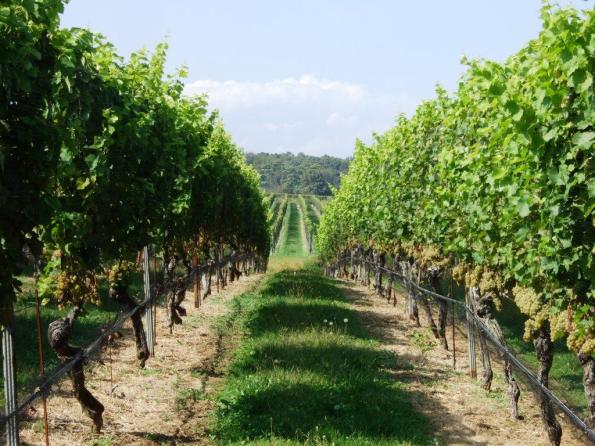
How does the wine relates to the solitude, you ask? To begin with, think about the wine while it is being made. We are seeking solitude by the ocean or up in the mountains – but have you ever stood between the rows vines on a quiet day, without talking or looking at your phone? Did you feel relaxed and restored just by standing there? 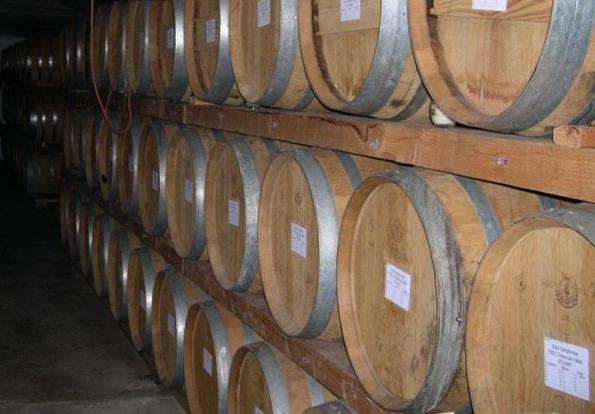
Or have you ever stood in the middle of the dimly lit cellar, breathing the wine smell and admiring the silence, thinking about the wines, quietly and patiently laying there? The wines spend month and month in that perfect solitude, left to themselves, to age and mature, before they will see you again.
And then there is may be the best and easiest moment of solitude any wine lover can experience at any time. Yes, wine is meant to be shared, and it is wonderful when you are in the company of the people who share you passion. But think about that moment when you take a sip of wine, and for that exact moment, the world stops, it doesn’t go anywhere, it becomes quiet. You are left one on one with that wine. You ponder at it. You reflect. You are one on one with yourself, in your moment of solitude, brought to you by that sip of wine.
I remember being in the Rioja seminar, and listening to our guide talk about his experience sharing the bottle of 80 years old Rioja (from 1922) with the group of friends (also wine professionals). He said that they poured the wine and had a sip, and the table was quiet for the next 5 minutes. Nobody wanted to say anything. Everybody were transposed. And they were in their moment of solitude.
Let me leave you with that. Have you ever found your moment of solitude in the glass of wine? I hope you did, and if not – don’t worry, it will come. Just give it time.
This post is an entry for the 26th Monthly Wine Writing Challenge (#MWWC26), with the theme of “Solitude”. Previous themes in the order of appearance were: Transportation, Trouble, Possession, Oops, Feast, Mystery, Devotion, Luck, Fear, Value, Friend, Local, Serendipity, Tradition, Success, Finish, Epiphany, Crisis, Choice, Variety, Pairing, Second Chance, New, Pleasure, Travel
New Versus Old – Is Wine World Upside Down?
This post is an entry for the 23rd Monthly Wine Writing Challenge (#MWWC23), with the theme of “New”. Previous themes in the order of appearance were: Transportation, Trouble, Possession, Oops, Feast, Mystery, Devotion, Luck, Fear, Value, Friend, Local, Serendipity, Tradition, Success, Finish, Epiphany, Crisis, Choice, Variety, Pairing, Second Chance.
New. We all crave, adore and worship new in our lives. New experience. New restaurant. New baby. New job. New car. New iPhone. New house. New puppy. Add “new” to practically any object, and it instantly becomes something exciting.
The “new” is not limited to the things and objects. New ways constantly appear, and we embrace them wholeheartedly. New technologies and new processes are born every day. Self-driving cars. 3D printers. We store our pictures in the cloud. It’s all new, new, new around us.
We love new so much that “old” becomes almost en expletive. We might attach “old” to the experiences, but not to the objects! Think about it. When you are looking for the used car, the dealer will refer to such a car exactly like that – used. She might even say “almost new” or “gently used”. But you will never hear from the dealer that they want to offer you this old car – unless you are in the market for antiques – but even then “old” descriptor will be avoided. Or let’s say you are looking for a house. Ever heard agent saying “let me show you this old house“? We learn to be afraid of the world “old”, as we don’t want to get old ourselves.
 Talking about wine world, the word “new” is exciting as in any other aspect of our lives. In essence, the whole wine world is built on the concept of new – ever year there is a new harvest, and a new wine will be produced from the grapes of that new harvest. New labels are made for the wines. New wineries are founded. New tasting rooms are built. New vineyards are planted. New processes are invented to press the grapes, to ferment them, to preserve wines, to bottle. New packaging (wine in a can, anyone? wine on tap?). New is a most prominent concept in the wine world.
But the concept of “old” is ohh so different when it comes to wines. “Old” in the wine world commands such a respect that we might not find in any other areas of human life. Let’s start in the vineyard. So you planted a new vineyard? Great. Now you need to wait until it will become old, as for the most of vineyards you need to wait at least 3-4 years before they will produce fruit suitable for winemaking. And that vineyard has to become old in the natural way, just by letting the time pass – there is no magic bullet.
To top it off, the older vineyard gets, the better it is. Ever seen the words “old vines” on the bottle? May be viñas viejas? Or how about vieilles vignes? These words mean exactly what they say – that this wine was made from the grapes harvested from the vineyards which had been around for a long time – 20 years, 30 years, 60 years, 100 years. The term “old vines” is typically not regulated, so there is no way of knowing exactly how old the vines are – but often the back label will give you that information. Very often that “age” is also reflected in the price – the older the car, the less it costs – but it is exactly opposite in the wines – the older the vines are, more expensive wine becomes (older vines yield less grapes with higher flavor concentration = tastier wine).
“Old” doesn’t stop in the vineyard. Lots and lots of wines are aged before they are released – both by law and by the desire of the winery. By law, non-vintage Champagne have to age for a minimum of 15 month, and vintage Champagne for at least 3 years – in reality, most of NV is aged for 2-3 years, and vintage is typically 4-10. By law, Rioja Gran Reserva requires at least 5 years of aging before the release. By law, Brunello Rieserva can be sold not earlier than 6 years after the harvest. Many of the wineries in California offer so called “library releases”, when the wines are aged for you in the winery’s cellar in the ideal conditions. Some wineries in Bordeaux sell their wines only 10 years after the harvest, including First Growth Chateau Latour, which recently declared that “vintages will be released when the chateau believes they are ready to drink”. Let’s go down all the way – how about some 100 year old Para Vintage Tawny from Seppeltsfield in Australia, which is released … yes, 100 years after the vintage date.
It is not that “old” is unquestionable winner in the world of wines. More often than not, “new” and “old” are clashing – sometimes in amicable ways, sometimes – not so much. One of the simplest “conflicts” – new oak versus used oak. This, of course, is what making winemakinng an art, as there is no hard and fast rule to when to age wine in old oak barrels versus new oak – each has its own benefits. Another form of the simple “conflict” is an internal fight which oenophile endures trying to decide when the wine from her cellar is ready to drink – there is also lots of good bad advice coming from all the wine professionals and the media – and we still are trying to figure that magical moment when the wine is perfectly “old“, or rather “aged” as we like to say, to maximize our pleasure. And then you got all those violent clashes between old and new – think about “traditional Barolo” versus “new style Barolo”. Think about fight for the Super Tuscans, attempts to introduce the new grapes in Brunello, or just any winemaker trying to do something new against the rules of the appellation.
Now, what do you think? Is wine world upside down for the new and old? Is there anything else which humans do where old commands equal or greater respect than new? Cheers!
Does the Wine Deserves Second Chance?
 This post is an entry for the 22nd Monthly Wine Writing Challenge (#MWWC22), with the theme of “Second Chance”. Previous themes in the order of appearance were: Transportation, Trouble, Possession, Oops, Feast, Mystery, Devotion, Luck, Fear, Value, Friend, Local, Serendipity, Tradition, Success, Finish, Epiphany, Crisis, Choice, Variety, Pairing.
Let me describe to you I’m sure a very familiar situation: the bottle of wine is opened, wine is poured in a glass, you take a sip and … you don’t like it. Too sweet, too acidic, too sharp, too tannic, too “biting” – it is not always that you follow a sip with “wow” or “ahh”. What do you do next? Of course I understand that this question doesn’t have a single answer, as everything depends on the context. And as a side note, it is also implied that the wine is not spoiled – not corked, not cooked, not oxidized – it is simply not to your liking.
Let’s assume that you opened the wine in the comfort of your home. You can simply put the glass aside and decide to wait and see if the wine will change (you of course hope for the better). If this happened in the restaurant, your choices are limited – if you just ordered this bottle out of your own will, in most of the cases you can’t send it back (remember, we said it is not spoiled) – you can ask for the wine to be chilled or decanted, but that is about all you can do. If you are at a friend’s house, you probably have only one choice – to smile and to say that this is delicious, unless you grew tired of that friendship long time ago, so then it might be a good opportunity to end it on a high note.
No matter what setting it was, let’s assume you didn’t get to the point of liking the wine, and now it is in your memory as the wine-I-never-want-to-touch-again. Would you ever think of giving this wine another chance?
Yes, I know. There is such an abundance of wine around us that if we don’t like something, why bother with any “second chances”? It is humanely impossible to taste all the wines produced in the world, so why bother with something which you were done and over with? Yes, by all means you have a point. But is there a tiny little voice inside your head, which says “may be that wine needed more time to open up”, or “may be I was just in the wrong mood”, or “may be my food overpowered the wine”? Do you ever get any of those “may be”s, so you would actually go and try the wine again, just because you are curious?
 I understand that this is matter of personality and an outlook on life in general, but more often than not, I find myself in the “may be?”, a “what if?” group. This is especially true when it comes to the wines which I open at home. If I take a sip of wine and don’t like it, I often put it aside, to try it on the next day. Or may be the day after next. Or may be even after that. One of my favorite examples is the bottle of 2002 Dunn Howell Mountain Cabernet Sauvignon, which opened up only on the 5th day (the wine was 11 years old when it was opened). When I took a first sip after just opening a bottle, the wine was tannic and literally devoid of fruit – there was no pleasure in that wine. Pumped the air out, put it aside for a day. Next day – literally no changes. And so was the story on the next day, and the next day. But I was not not ready to declare the wine a failure and just pour it out – kept giving it second chances. And the reward came on the day number 5, with layered fruit and delicious, powerful wine.
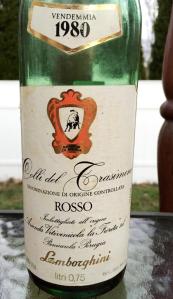
I have another example from literally 2 weeks ago, when we opened a bottle of 1980 Lamborghini Colli del Trasimeno Rosso (I can tell you that I bought the wine strictly on the basis of the fun name – Lamborghini – a car which I’m sure anyone would be happy to drive at least once). The wine was opened, went into a decanter – and for the whole evening nobody liked to drink it, as it tasted more as brine than the wine. I can’t tell you if I was giving the wine a conscious second chance, or was simply lazy to pour it out. Next day before clearing the decanter I decided to take a little sip – why not? And it appeared that the wine actually developed into delicious, mature wine, with the nose of tertiary aromas and palate full of sweet plums. Not the most amazing wine I ever had in my life, but perfectly delicious, mature wine which delivered lots of pleasure.
I could go on and on with similar examples, but I’m sure you got my point – the wine could’ve been discarded as “bad” and the great pleasure would be missed, if it wouldn’t be for the second chances.
So, what do you think? Do you have any “second chance” wine stories of your own, maybe with the happy ending? Do you think wines deserve their second chances? Cheers!
The Drama of Choice
This post is an entry for the 19th Monthly Wine Writing Challenge (#MWWC19), with the theme of “Choice”. Previous themes in the order of appearance were: Transportation, Trouble, Possession, Oops, Feast, Mystery, Devotion, Luck, Fear, Value, Friend, Local, Serendipity, Tradition, Success, Finish, Epiphany, Crisis.
 Choice. Simple word, isn’t it? But think about how powerful the concept of “choice” is. Or better yet, think about how scary the word actually is – think about times when simple phrase “this is your choice” sent chills down your spine? Yep, “choice” is an interesting word.
Choice is closely related to the concept of freedom. When you don’t have freedom, you usually have no choice – well, except may be one – to fight for your freedom or not. Surprising or not, but sometimes we prefer not to have that freedom of choice. Life becomes so much easier when the choice is already made for you. This might not be the best choice (it rarely is) but then a person is happy as the life seems simpler. Choice is hard, choice is difficult, choice is emotionally and intellectually draining. When choosing, we can not know if we are making the “right choice”, and that makes us wary, frustrated, tired and unhappy. It important to understand that “do nothing” is also a choice, not an absence of it. We are choosing it – “doing nothing” doesn’t happen by itself – this is what we decide, we “do nothing” by choice.
We make choices every day, from the moment we wake up until we go to sleep. What to wear, what to eat, which book to read, which task requires our attention first, and which can wait. Most of the choices we make don’t have long term consequences – eggs Benedict versus scrambled eggs is important only for a few minutes you will enjoy your food. Black pants versus grey pants is not the matter as soon you step out of the house. But some of your choices can be extremely far reaching – taking or declining a job offer, going for the third child or not – these choices will shape your life and you will feel their effect for a long while.

Let’s now take a look at the winemaking. I would argue that a lot (most!) of choices made in the winemaking have long term consequences. The wine starts in the vineyard. Which grape to plant? Pinot Noir, Cabernet Franc or Aglianico? Pinot Noir, you said? Which clone? Dijon (which one then exactly), Pommard, AS–2? Now you are growing the grapes with numerous choices regarding irrigation, pruning, canopy management, protection against insects. 5 years down the road your are ready to harvest grapes to make the wine. Harvest date? Hand versus machine? How to crush? Choice of fermentation temperature? Choice of yeast – natural or synthetic? If synthetic, which one of the thousands available in the catalog? Malolactic fermentation or not?
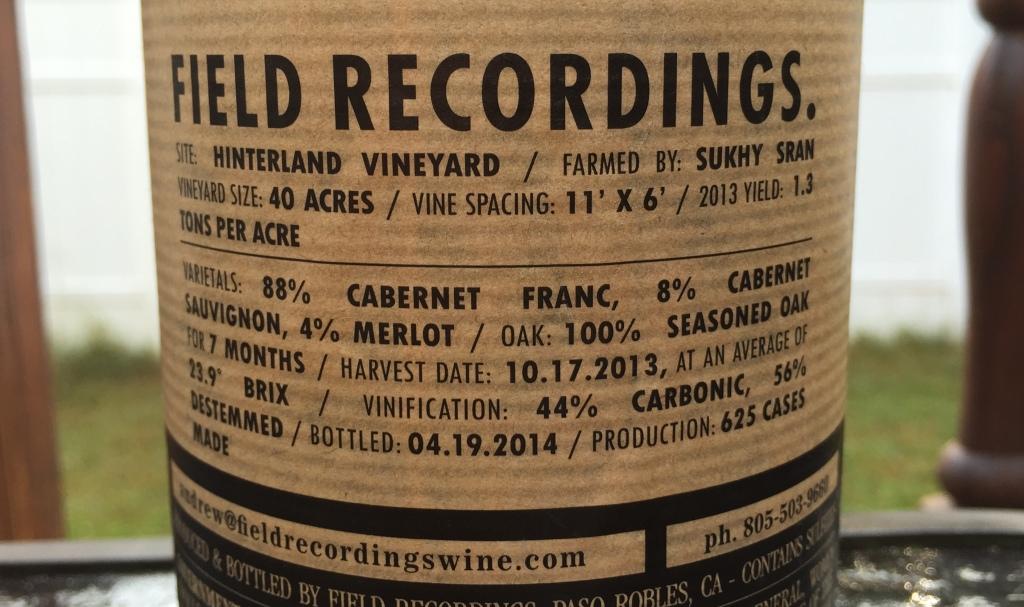
How to age – stainless steel, oak, ceramic, qvevri? For how long? New oak versus old, American versus French? What type of bottle should we use? Screw top, natural cork, synthetic? What is going to be on the label? Below is an example of choices made by the winemaker – captured in the format of the very informative back label – what grapes to use, how long to age, how to ferment – just a glimpse of all the choices which went into production of a bottle of wine…
 Choices, choices, choices… The effect of many choices will not be known for years, sometimes tens and tens of years, until someone will open a bottle of a 50 years old wine, take a sip and say “wow”. Only then we might know that we made right choice years back. Or not.
Yes, we face the drama of choice every day. You know what is important in dealing with this drama? Don’t look back. The choice is made, and it is a part of the past now. The worst thing you can do is to take yourself on the mesmerizing road of “what would’ve happen if I wouldn’t make that choice, if I would’ve chosen differently”. Here you have only one choice – to move forward. Yes, you can’t change or undo the past choices. But you can “do over” – it is always your choice. If you planted the wrong grape, you can replant vineyard with the new one. If you’ve chosen profession you are not happy with – make a choice to change that, learn something new and choose a new path.
You have no luxury of stopping. The very next moment, you will have to make a choice again. And again. And again. Life has an endless supply of the choices for us. Let’s embrace them. Cheers!
P.S. I will not be upset if you will find this post mumbling about nothing new or of substance. But I hope it will at least give ideas and will inspire someone else to choose to write a post for the #MWWC19…
Crisis in Wine
This post is an entry for the 18th Monthly Wine Writing Challenge (#MWWC18), with the theme of “Crisis”. Previous themes in the order of appearance were: Transportation, Trouble, Possession, Oops, Feast, Mystery, Devotion, Luck, Fear, Value, Friend, Local, Serendipity, Tradition, Success, Finish, Epiphany.
Let me ask you a question – do you associate wine with crisis? Not really? Ahh, you are even puzzled why I asked? Let me elaborate. This question is not about “business of wine” – that part is self-evident. Every business has its crisis moments. Some are relatively small, like broken truck with day’s harvest of grapes, leaked barrel or malfunctioning bottling line. Some are bigger, like hail storm during July or a frost in late May. Some are huge, like earthquake in Napa valley or phylloxera epidemic. But – business problems “come with the territory” – the only way to avoid them is not to be in the business at all.
Now, my question about wine and crisis is not about the business, it is about people who like to drink wine. I mean, really like it. Those who make wine into a passion. They often referred to as oenophiles. Or wine aficionados. Or wine geeks. Depending on the circumstances, also known as “wine guy” or a “wine gal”; it is not foreign for them to be called a “wine snob”. Anyway, if you belong to this category, you already identified yourself. If you don’t (but you’re still reading this blog, so thank you), you know who I’m talking about. So I have to tell you that we, oenophile (yes, I closely identify as one), go hand in hand with crisis. We readily create the crisis around the wine, then we work our hardest to resolve it – and we feel proud and relieved that we actually did. Need examples? Here we go.
A wine oenophile is invited to the party (no, this is not a beginning of the anecdote). The bottle of wine is selected, with love and care, very often from one’s cellar, and oenophile almost arrives at the destination, when the horror thought takes over – “what if this bottle is corked, what am I going to do then??? Why did I forget to bring a second bottle, just in case, why?”. If you been there, done that, raise your hand. Have you ever contemplated a fallback solution “if this bottle is bad, I know where the nearby store is so I can quickly drive there and pick up something else”? Yep, oenophiles are crisis-prone like that.
A dear and wine loving friend is coming over to the oenophile’s house. Peering at hundreds bottle strong cellar, the thought process starts – “I think this bottle of Pinot should be good. But I don’t think she is into Pinot too much. May be the Cab? No, that might not work with the meal… Or may be that 1990 will do??? And then Amarone? No, no, no! I DON’T HAVE THE BOTTLE TO OPEN!!!” Do you feel the drama? Do you see the crisis once again, which requires a quick action – unquestionably it will be averted, and oenophile and the friend will be happy (unless the bottle(s) will be corked, but we don’t want to even go there), but the crisis is clearly there.
The simplest form of oenophile’s crisis might take place during the daily ritual of opening the bottle for the regular evening – after touching and pulling out tens of the bottles (from that hundreds bottle strong cellar), the spine-chilling thought comes in: “I don’t have the bottle I can or want to drink right now, what do I do?!?!”
There are many more crisis moments we can talk about – the horrifying moment at the restaurant, where after the 5th scan of the wine list oenophile realizes that there is nothing there which one want to drink or can afford; the process of selecting wine to pair well with food; looking at the rare bottle in the shop and thinking that you must buy it now or you will never see that vintage again. I’m sure you got my point by now (or even well before now), and I’m sure you even feel pity towards that oenophile who have to deal with crisis all so often. But – that is the best form of crisis, as it is immediately forgotten at the first sound of the popped cork and whiff of aroma accompanied by the words “ahh, this is good”. This is one form of crisis which oenophiles are happy to have in their lives – and I’m sure many people will be too. Cheers!
Last Bottle Sign Up ($10 credit)




 Talk-A-Vino