Archive
Woodinville Wineries: Guardian Cellars
 This post is a continuation of the series about my winery experiences in Woodinville, Washington. Here are the links for the first four posts – introduction, Elevation Cellars, Pondera Winery, Des Voigne Cellars and Sparkman Cellars.
Coming out of the Sparkman Cellars, I had my new targets set, and they were outside of the industrial park area. Walking past the open door on the way to my car, I heard the inner voice saying “we must go there”. I don’t know what exactly attracted that inner voice thingy, may be just the name “Guardian”, but I decided not to argue and stepped in. Boy, was I in for the lots of fun!
I was greeted by cheerful and smiling Jennifer, and had the first wine poured – 2013 Guardian Cellars Entrapment Chardonnay. From the get go, this was a delicious wine – chablis-like nose with the hint of gunflint and minerality, round, powerful, medium to full body and perfect vanilla profile. It’s been a while since I had such a beautiful rendition of Chardonnay. Drinkability: 8
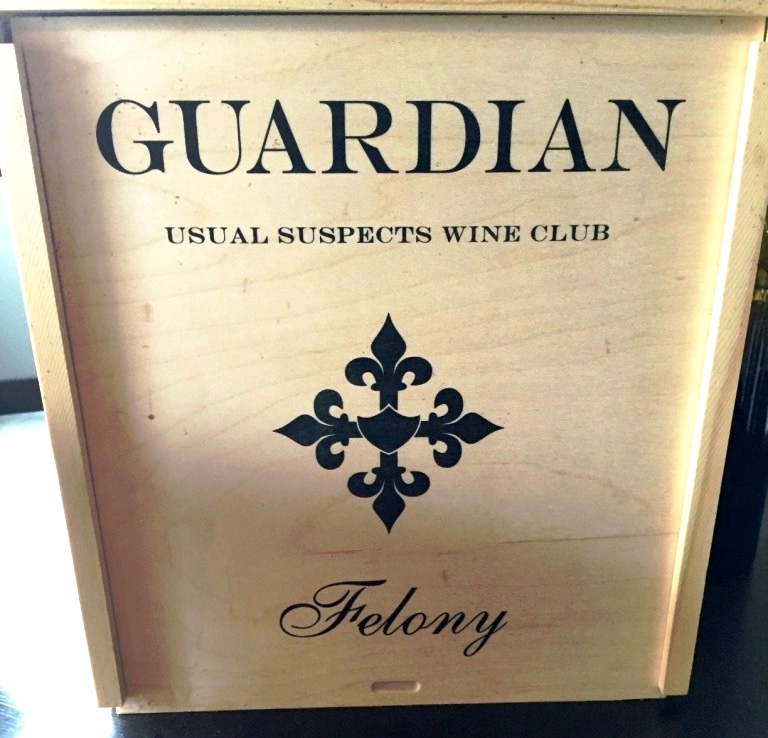
There were two more people in the tasting room (I think I was lucky with the football game happening at the same time, so it definitely lead to the reduced audience at the wineries). The TV screen behind the counter was running a slide show, and Jennifer started commenting on the pictures, telling the story of the winery bit by bit. By pure chance, Jerry Riener (who works as a police officer) one day stopped by the winery, and got fascinated with all the shiny stainless steel tanks and oak barrels. Next time, he offered his help (as a volunteer, of course) at the vineyard during the harvest, and little by little became an indispensable member of the team. This passion fully materialized when Jerry started The Guardian Cellars, which he owns together with his wife Jennifer Sullivan, who also has a full time job as a journalist for The Seattle Times. I can tell you, when you look at the winery and especially after you taste the wines, this passion comes through as something incredible. And to top it of, just look at the names of the wines – Entrapment, Confidential Source, Gun Metal – the pure ingenuity of all those names left me almost speechless. How about “Usual Suspects” as the name of the wine club, huh? Anyone remembers the movie?
I hope I managed to convey my general excitement – what is great is that it was not just the story and creative names of the wines – what was inside the bottles definitely was better than the thousands of words. Here are my notes:
2011 Guardian Cellars Chalk Line Columbia Valley (Cabernet Sauvignon, Syrah, Merlot, Malbec, Cabernet Franc, Petit Verdot) – nice, clean and simple. Looking at the list of grapes used in this wine, it is quite an eclectic mix – but it worked. Drinkability: 7+
2011 Guardian Cellars Confidential Source Columbia Valley (100% Merlot) – Clean Bordeaux notes, light, round, multilayered – it starts simple, and the depth comes back later. Drinkability: 7+
2011 Guardian Cellars Gun Metal Columbia Valley (55% Cabernet Sauvignon, 40% Merlot, 4% Cabernet Franc, 1% Petit Verdot) – delicious! Great texture, perfect concentration, round, smooth – a pleasure in every sip. Drinkability: 8
2011 Guardian Cellars The Informant Syrah Wahluke Slope (Syrah with a splash of Viognier) – an exemplary cool climate Syrah specimen. Dark roasted fruit, spices, pepper, very elegant and excellent overall. This wine broke my resistance – I just felt that I must get a few bottles. Excellent overall. Drinkability: 8
2011 Guardian Cellars The Rookie Cabernet Sauvignon Red Mountain (Klipsun, Obelisco and Ceil du Cheval vineyards) – perfection in the glass. Round, restrained, medium to full body, good mid-palate weight, an excellent aging potential. Impeccable balance. Drinkability: 8
I was very happy I listened to my inner voice and entered the doors of the Guardian Cellars – it resulted in a great encounter with passion, and I discovered delicious wines, which became very handy during one of the restaurant visits ( I think we depleted their whole supply of Guardian Cellars wines).
Finally, it was the time to say good bye to the industrial park wineries and visit those recommended by Randy at the Sparkman Cellars, as I had less than an hour left before 5 PM – time when most tasting rooms are closing. Short 7 minutes drive and I was …
To be continued…
Woodinville Wineries: Sparkman Cellars
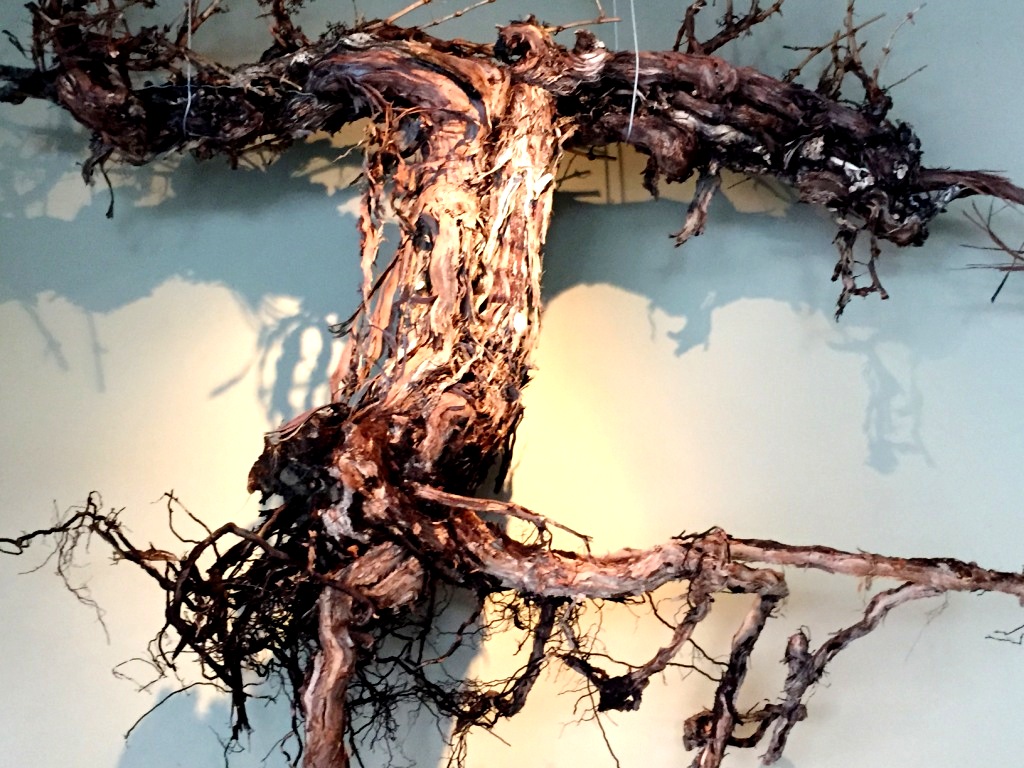
A root of the vine on the wall at Sparkman Cellars
This post is a continuation of the series about my winery experiences in Woodinville, Washington. Here are the links for the first four posts – introduction, Elevation Cellars, Pondera Winery and Des Voigne Cellars.
… and I walked into the winery called Sparkman Cellars. From all the wineries I visited in Woodinville, this was the only winery which was on my original list. It was also mentioned by someone at one of the previous wineries as the place to visit.
I barely finished explaining to Randy, a gentleman at the tasting counter, that I’m a wine blogger and I would like to taste through the wines, as I was literally attacked by one of the two women standing at the same counter. “Where are you from?”, she said, quite demanding. “Stamford, Connecticut”, I said, hoping we are done with the subject. She gave me a big understanding smile and said again “no, where are you from, REALLY?”. I generally don’t have a problem explaining to people that they hear a Russian accent, but this time around I was simply annoyed at the intensity of this inquiry, so I sternly repeated my answer “Stamford, Connecticut”.
At this point Randy decided to defuse the situation with the glass of 2013 Sparkman Cellars Birdie Dry Riesling Columbia Valley – it was nice and clean, with good acidity and that interesting savory minerality of the Washington Rieslings, which I now learnt (I hope!) to recognize as a trait. Drinkability: 7+
The next wine – 2012 Sparkman Cellars Enlightenment Chardonnay French Creek Vineyard Yakima Valley was delicious. Chablis nose (minerality, gunflint, hot granite), which I always enjoy in Chardonnay, was clearly present in this clean and round wine with a touch of vanilla. Drinkability: 8
Meanwhile, the lady next to my changed the tactics and explained that she is genuinely interested in recognizing the accents and figuring out where the people are from. May be it was a good wine, but I also decided to change my “I’m going to ignore you” stance, so we pretty much became friends by the end of the tasting, and both ladies kept telling me how much they like the wines at Sparkman and number of other wineries in the area, and also gave me lots of recommendations on other must visit wineries in Woodinville.
The tasting continued with 2011 Sparkman Cellars Wilderness Red Wine Columbia Valley (34% Cabernet Sauvignon, 27% Malbec, 15% Syrah, 12% Mourvedre, 8% Merlot and 4% Petit Verdot) – rather an eclectic blend as you can tell. The wine was quite delicious, but a bit over-extracted to my taste. Drinkability: 7
2011 Sparkman Cellars Ruby Leigh Columbia Valley (67% Merlot, 22% Cabernet Sauvignon,11% Malbec) was named after the youngest daughter of the winery owners. The wine was light and playful, showing the notes of the smokey raspberries, with medium body and medium finish. Drinkability: 7+
2012 Sparkman Cellars Ruckus Syrah Red Mountain (93% Syrah and 7% Viognier) – delicious dark fruit, roasted notes, spices. Perfect clod-climate Syrah, beautifully restrained. Drinkability: 8
2011 Sparkman Cellars Rainmaker Cabernet Sauvignon Yakima Valley (95% Cabernet Sauvignon and 5% Malbec) was delicious – dark power, tobacco notes, baking spices, very complex with long finish – on outstanding wine. This wine was poured as a “mystery wine” for the wine club members (you can see it above in the picture in the paper bag). Drinkability: 8+
This concluded the tasting at the Sparkman Cellars – sorry for the brief notes, I guess I was a bit distracted at this point. If you need better descriptions, you can take a look at the Sparkman Cellars web site – all the wines are presented quite well there.
Before I left the winery, I asked Randy what other wineries should I visit in my little time left until they all will be closed for the day (absolute majority of the wineries closes at 5 PM on Sunday), and he recommended Fidelitas and Mark Ryan, which were both outside of the industrial park, however still within 5-7 minutes driving distance. As I walked out of the Sparkman Cellars, another winery attracted my attention, and of course I decided to stop by…
To be continued…
Woodinville Wineries: Des Voigne Cellars
This post is a continuation of the series about my winery experiences in Woodinville, Washington. Here are the links for the first three posts – introduction, Elevation Cellars and Pondera Winery.
… and I entered the world of music at the Des Voigne Cellars. Soft jazz music was playing in the background, as I was greeted by the big white dog – of course I started the visit from getting acquainted with the winery dog first – ear-scratching is usually the best way. Melissa, who owns the winery together with her husband Darren (the winemaker), was smiling with relief from behind the counter, happy to see that we made friends.
There was no doubts that music ruled here – it was not only in the air, but also on the labels and inside the glass:
 If you can, spend a few seconds and look at these labels in detail. Both the graphics and the names of the wines are created by Darren, the winemaker, and these definitely join the list of most creative labels I ever saw. And the wines were on par with the labels.
We started with the 2013 Des Voigne Cellars The Groove White Columbia Valley (Chardonnay, Marsanne, Rousanne, Viognier) – vibrant and fresh on the nose, and perfectly clean and simple on the palate. This is the wine to enjoy any time, with or without the food – you just can’t go wrong with it, and at $18, it is simply a steal. Well, almost – with 43 cases production, it’s not going to stay around for too long. Drinkability: 7+
The 2010 Des Voigne Cellars The Groove Red Columbia Valley (43% Syrah, 36% Sangiovese, 17% Cabernet Franc, 4% Petit Verdot) had a very welcoming nose with touch of spice, more spices weer present on the palate with some roasted notes. Another excellent effort, and again a great QPR at $20 (your chances are a bit better with this wine – 210 cases produced). Drinkability: 7+
The next round was very interesting as well – take a look below:
 I was trying to figure out if there should be a correlation between the choice of label (a performer or an event) and the wine itself, but didn’t come to any conclusions. If you tasted these wines, I would be interested in your opinion on this subject.
2012 Des Voigne Cellars San Remo Sangiovese Columbia Valley (100% Sangiovese, Candy Mountain Vineyard) – my first experience with Washington Sangiovese – and a very pleasant one. Nice, clean and simple wine, medium body, some interesting cherry undertones. Definitely playful and resembling the original Sangiovese (the Italian version), only in the lighter package and more fruit driven. Drinkability: 7+
2012 Des Voigne Cellars Duke Zinfandel Walla Walla (95% Zinfandel Walla Walla, 5% Malbec Wahluke Slope) – yet another “first” encounter – first time ever I was tasting Washington Zinfandel. Very nice rendition, unusual nose, showing classic Zinfandel’s smokey raspberries on the palate, light, clean and well balanced. Drinkability: 7+
2010 Des Voigne Cellars Montreux Syrah Columbia Valley (96% Syrah Weinbau Vineyard, 4% Cabernet Sauvignon Dionysus Vineyard) – Finally, the first Syrah of the tasting (out of the 3 wineries – somehow, I expected to see it a lot more often) – inviting nose of red fruit, touch of coffee, baking spices and lavender on the palate, overall very clean and balanced. Drinkability: 8-
Do you want to see more cool labels? Here you go:

2010 Des Voigne Cellars “Untitled” Columbia Valley (57% Cabernet Franc, 29% Syrah, 14% Petit Verdot) – if previous three wines can be characterized as “playful”, these two were the serious hitters. This wine showed excellent concentration, powerful and firm structure, clean Cabernet Franc profile with cassis and bell peppers, as well as grippy tannins. I think it will perfectly open up in about 5-7 years, so you will need to give it time. Drinkability: 8-
2010 Des Voigne Cellars Duet Columbia Valley (94% Cabernet Sauvignon Dionysus Vineyard, 6% Merlot Bacchus Vineyard) – unusually perfumy nose, soft and round on the palate, with good depth – perfectly drinkable now, no need to wait. Drinkability: 7+
So we had the music record, musical events and performers and the musical notations – what’s left is someone to put this all together – The Composer:

2011 Des Voigne Cellars The Composer Wahluke Slope (99% Malbec, 1% Syrah, both from Weinbau Vineyard) – this was a delicious, light and round wine, with good amount of fresh red berries on the palate – simple and very pleasant. Drinkability: 8-
My musical excursion completed, and it was the time to move. The next winery was the only one on my original list, which I planned to visit from the beginning. Short drive around the buildings (moving from Building B to Building E), and I walked into the winery called …
To be continued…
Woodinville Wineries: Pondera Winery
 This post is a continuation of the series about my winery experiences in Woodinville, Washington. Here are the links for the first two posts – introduction and Elevation Cellars.
“What other winery do you recommend I should visit here?” I asked Steve before leaving. “Pondera”, he said. Okay. Short, very short walk from the building A to the building B, and I entered the tasting room of Pondera Winery.
I was greeted by Mel, one of the three owners of the Pondera winery. Pondera is focused on Bordeaux varietals, and it achieved a substantial recognition as a Bordeaux blends producer. As we were woking through the tasting, Mel proudly showed me a collection of gold medal-winning wines – 7 of Pondera wines received double gold medals in the blind tasting competition. Pondera 2009 Prima Donna red wine was recognized as one of the Top 100 wines of Northwest – not a small achievement by all means.
The tasting started from the 2013 Pondera Chardonnay Sagecliff Vineyard Columbia Valley. The wine had a subtle nose of vanilla, and more of the same on the palate. The wine spent 7 month on the lees, and while it had a creamy mouthfeel, the mid-palate was a bit heavy for my taste. Drinkability: 7
The next wine was 2011 Pondera Cabernet Franc Columbia Valley (90% Cabernet Franc, 10% Merlot) – the nose was rather muted, but the palate had a classic cassis and bell peppers – nice, clean and round, with a good balance. Drinkability: 7+
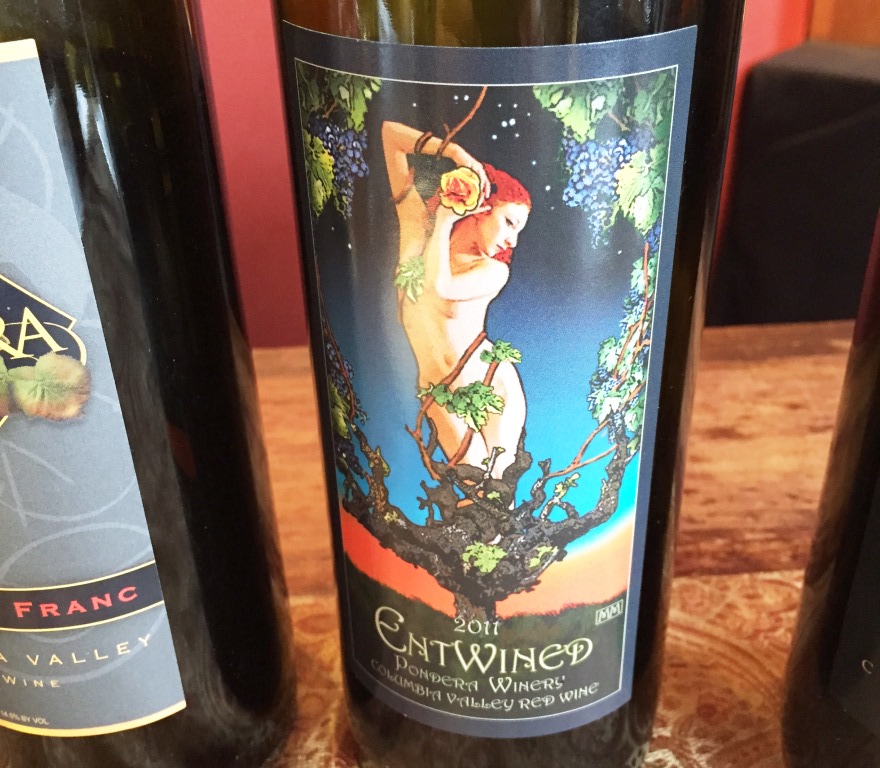
2011 Pondera Entwined Columbia Valley (57% Merlot, 26% Cabernet Sauvignon, 13% Cabernet Franc, 4% Malbec) showed as a classic Bordeaux blend – if I would sniff the glass without knowing what is inside, I would definitely think of classic Bordeaux, made in a bit more of a fruit-forward style, but still quite restrained. The wine showed equally well on the palate – cassis, blackberries, touch of chocolate, clean acidity – and asking for a bit of time with very noticeable tannins. The only non-classic Bordeaux component was a beautiful label. Drinkability: 8-
2011 Pondera SVS Number One Columbia Valley (59% Cabernet Sauvignon, 30% Merlot, 10% Cabernet Franc, 1% Malbec) was yet another classic Bordeaux rendition. Yes, I’m guilty of abusing the word “classic” here, but this was my true impression. Soft, round, clean and perfectly classic. Drinkability: 8-
2011 Pondera Malbec Stillwater Creek Vineyard Columbia Valley (97% Malbec, 3% Cabernet Sauvignon) was, in a word, outstanding. Round, soft, polished, with delicious blueberries and blackberries – this was one of the very few wines I didn’t use the spittoon for in the tasting. Just a pure pleasure. Drinkability: 8+
The last wine was a special treat – 2009 Pondera Prima Donna Columbia Valley (Merlot, Cabernet Franc, Malbec, Cabernet Sauvignon) was made only once, in the exceptional year (2009) only from the 2 exceptional barrels. Delicious, classic Bordeaux style, big, powerful, with chewy tannins and long life perspectives in the cellar (if you can get a bottle, there is). Drinkability: 8
Here you go, my friends. A wonderful Bordeaux blend experience – if you are looking for the bright, delicious, cassis-loaded glass of joy, jot down the name Pondera Winery, and see if you can find a bottle or two. Meanwhile, I’m off to continue my Woodinville discovery journey, stepping literally 5 feet to the left into another door…
To be continued…
Woodinville Wineries: Elevation Cellars
 This is the continuation of the posts about Woodinville wineries – the first part can be found here.
As I walked out of the car, literally the very first winery sign I saw was for the Elevation Cellars. The name sounded appealing, so it was an easy decision – looks like a perfect spot to begin the tastings.
Inside the space looked very much like an upscale large garage with the nice wooden door, but with the addition of shiny stainless steel tanks, as well as some oak barrels. I asked if I can taste the wines (of course – what kind of question is that if the tasting room sign says “Open”, right?), and also explained that I’m a wine blogger, which was taken somewhat matter-o-factly – but very friendly in any case.
We started tasting from 2013 Elevation Cellars Imperium Riesling Lawrence Vineyard Columbia Valley AVA. The Riesling had a very interesting profile with a touch of sweetness and some interesting minerality – it was actually resembling the Washington Riesling I didn’t appreciate during the pro tasting at WBC14 – however, the Elevation Cellars Riesling had an overall round and balanced profile with pleasant tartness in the finish, so overall I liked it quite a bit. Drinkability : 7+
Next I had the 2010 Elevation Cellars Cabernet Sauvignon Stillwater Creek Vineyard Columbia Valley AVA – this wine was almost a perfection in the glass, with clean and classic cassis aroma on the nose. On the palate, the wine was restrained, fresh acidity and medium to full body (lighter than most of the California Cabs would be), overall very round. Definitely an excellent wine for all occasions. Drinkability: 8
Our next wine was a perfect Bordeaux blend with the cool label – 2011 Elevation Cellars Jammin’ Red Blend Red Mountain and Columbia Valley AVA. I can’t describe it any better than to say “perfect Bordeaux blend” again – and in need of time. Cassis, touch of green bell pepper, very noticeable tannins in front of the mouth. Delicious and drinkable now, but it will definitely evolve further. Drinkability: 8-
2010 Elevation Cellars Merlot Stillwater Creek Vineyard Columbia Valley AVA was exactly what you should expect from Washington Merlot – it was bigger than the Washington Cabernet Sauvignon. Coffee and espresso notes, powerful tannins, great depth and again, the need of time. Give this wine 5-6 years, and you will not be able to put your glass down. Drinkability: 8-


I would think you would agree that the tasting looked quite good already, but we continued with more treats.
2009 Elevation Cellars Monolith Bordeaux Blend Hedges Vineyard Red Mountain AVA – absolutely delicious. Again, a clean nose of cassis, concentrated red and black fruit, chewy tannins, round and powerful. I learned that 2009 was an excellent year in Washington, and this wine was pretty much an exemplary rendition of the vintage. We also had an opportunity to drink this wine in the restaurant at dinner other night, and it was an absolute favorite of everyone. Drinkability: 8+
Before I will tell you about the last wine, I have to mention my main treat of the visit – a conversation with Steve Stuart, the winemaker and the owner of Elevation Cellars. At he time of my visit, Steve was working at the winery – there were some issues in the morning with some of the equipment breaking up and subsequent need of cleanup – but he was asked to talk to me, the blogger, so I felt like a real VIP : ). You can read the full story on the Elevation Cellars web site, but to give you a quick round up, Steve is an engineer, and he still works as an engineer during the week, and spending his weekends at the winery, following his passion. I didn’t want to take up too much of his already busy day, so I only asked Steve if he is using natural or cultured yeast for the fermentation, and he gave me an interesting answer (which makes a lot of sense). As an engineer, he likes to be able to control things, so he uses the cultured yeast. But it is not the need of control for the need of control itself – as a small winery, he really can’t afford for the fermentation to fail. When he is using the cultured yeast, he is certain that fermentation will start and finish. We also talked about few other things, but this was my most memorable takeaway. Then I asked if I can take his picture, and Steve agreed, albeit with some degree of resistance :).
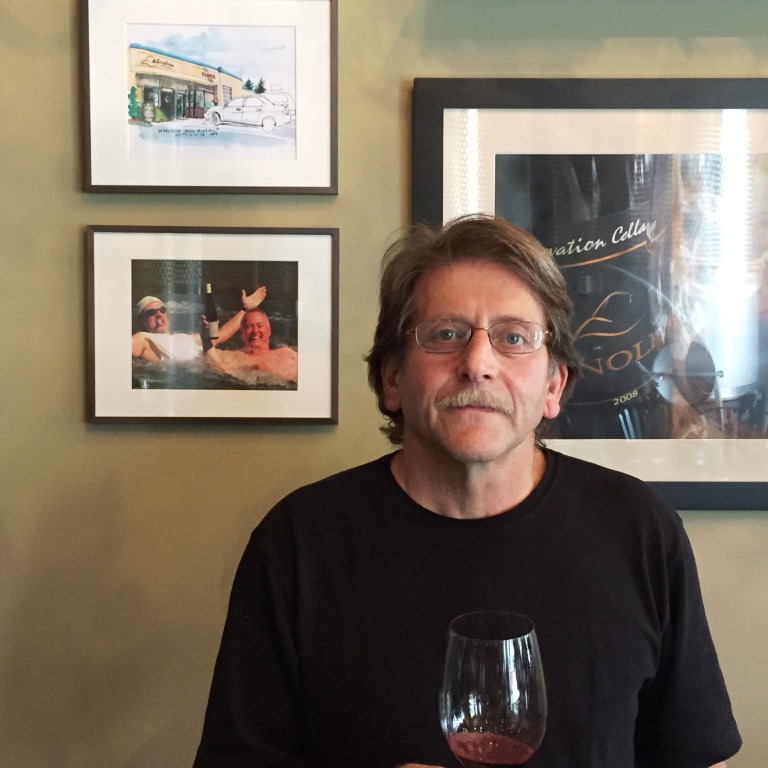
Steve Stuart, winemaker and owner at Elevation Cellars
The wine which Steve has in his hand, which we enjoyed drinking together, was truly a special treat – 2010 Elevation Cellars Reserve Cabernet Sauvignon Stillwater Creek Vineyard Columbia Valley AVA. Steve found out that one of the barrels of 2010 Cabernet Sauvignon was showing substantially better than the others – that barrel was bottled separately to become the Reserve Cabernet Sauvignon. My notes for this wine are very simple – wow! It was very much similar to the standard 2010 Cabernet Sauvignon – only with all the taste elements greatly amplified. Cassis, structure, balance – simply a wow wine. Drinkability: 8+
This sums up my first experience with the Woodinville winery – more posts will follow. Cheers!
Like A Kid In The Candy Store…
I’m traveling again (for my daytime job), and of course, when I travel, I’m always looking for the local wineries to visit. This time I’m in Washington state, and of course, there is no shortage of wineries to visit here. Well, let me critique myself here for that beaten up “of course”. This is not the first time I’m in Washington – however, last time I was here, I couldn’t think of anything but the Chateau St. Michelle as a winery to visit (which was the great visit, by the way, and I love their wines). While the Washington wineries had been on my radar for quite a long time, there was no realization that those wineries are actually the places which can be visited. Until this time.
First, I tried to arrange a visit to the Quilceida Creek, a cult producer. Unfortunately, they were smack in a middle of harvest at the time of my visit, and said that they allow no visitors at that time (oh well, I will try to time my visit better next time). Then I tried Google and got back way too many results. My next step was Twitter, where I got some name recommendations and was given a few posts to read – one from the Wild 4 Washington Wine blog (this is not just one blog post, this is a series), and another one from the Jameson Fink blog. Based on all the information, I wrote down the few wineries I wanted to start from, and decided to figure out the rest on the fly. I also only had about 3 hours available to taste.
I had a bit of a trouble programming my GPS, so I just put whatever address it took. When I arrived at the area called Woodinville Industrial Park, and an electronic voice proclaimed the familiar “you have arrived at your destination”, my first reaction was “wow”!
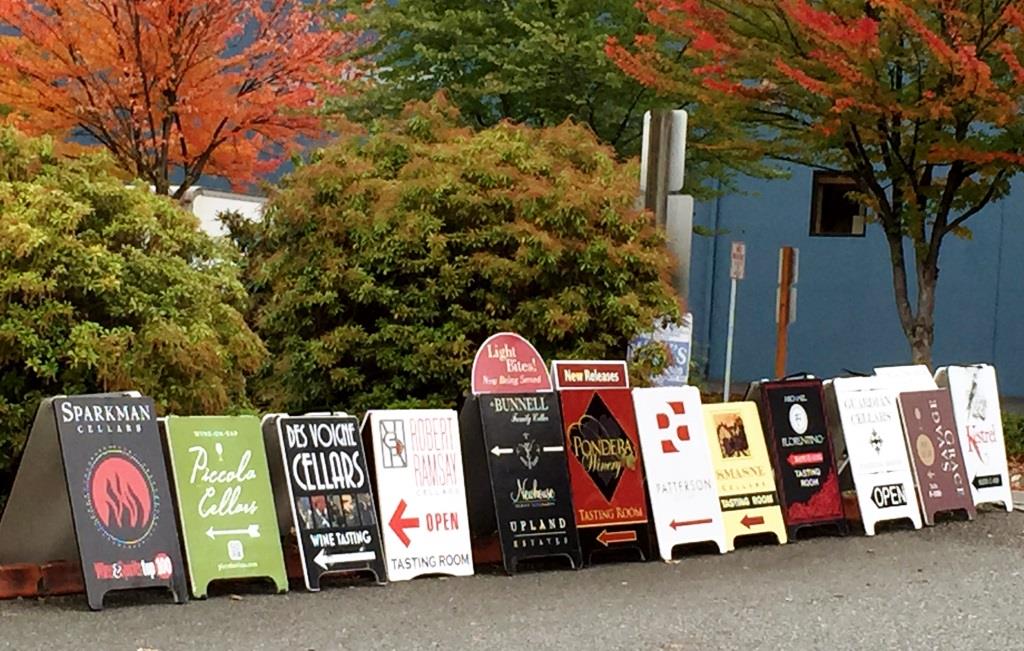 How would you, wine geeks and aficionados out there, feel – greeted with such a view? A Christmas in October? Yay! I was looking for the right way to describe my state of mind once I saw all these signs, and the best I could do was “a kid in the candy store” – wow, I can taste all of these – incredible!
It appears that what started less than 10 years ago from only 5 wineries, finding an inexpensive rent in the Industrial Park, became a 60+ setting now (and there are more than 100 wineries in the Woodinville overall). Going from winery to winery, I met very passionate and very talented people, who are living through their dream. Most of the people I met – winemakers and owners – have another full-time job – an engineer, a police officer, a reporter. And despite the fact that winery is “just a hobby” (who am I kidding – it is not, it is a product of obsession), the wines were simply outstanding. I found it also fascinating that at every tasting room I was given a recommendation on what to visit next. I tasted about 40+ wines during this visit overall – and I literally would be glad to drink any one of those wines again and again. Lots of Bordeaux blends, few of the whites, a bit of Syrah – this was a general line up at all the wineries, and again, the wines were beautifully executed, balanced and with the sense of place. The local wines you would be glad to drink all the time.
What I decided to do is not to produce a monster post trying to cram all the impressions into one, but instead, to make a few posts talking about individual wineries. During this trip, I visited Elevation Cellars, Pondera Winery, Des Voigne Cellars, Sparkman Cellars, Guardian Cellars, Fidélitas, and Mark Ryan Winery – and this is what you should expect to see coming in the next few posts. Therefore, I’m not finishing up this post, but instead, as they like to say, it is “to be continued…”
P.S. Once I started writing this post, I realized that I was really talking about “local wineries”, and “local” is a theme of the Monthly Wine Writing Challenge #12, so let it be my entry into that.
P.P.S. I love the power of the internet – you can link backward, but you can also link forward. As the individual winery posts will be written, I will add the links to the posts under the names above.
Kosher Wines: Trader Joe’s Overdelivers, And More
 I don’t know if there is a single “group” of wines out there, which can brag about such an incredible improvement over the past 10-15 years, as kosher wines. This, of course, is a US-centered opinion, but from my personal experience, 15 years ago, I had to cringe at the thought of Manishewitz cloying concoction as a mandatory element of celebration. About 5-7 years ago, the availability of the dry table kosher wines greatly increased, but for the real wine experience, you had to either pay a lot for the Israeli wines (or have good friends who would take care of you), or resort to the insipid, cooked, unbalanced international wines, proudly advertizing that they are appropriately kosher.
To be kosher, the wine should be made only by the fully observant Jewish people – similarly to any other kosher foods, there are many rules to be followed to make sure the wines will qualify as kosher wines. This is not necessarily a difficult part. The challenging part is related to the special word which appears on some of the wine labels next to the word “kosher” – this special word is “mevushal”. I will not give you the whole history behind the need for the wine to be mevushal (here is the link where you can learn in detail if curious), but here is a quick explanation. Even if the wine is made kosher, it will become “non-kosher” is handled by non-observing people at any moment – pouring etc. However, if the wine is heated to 180F for some time, it becomes “mevushal” – and no matter who will handle mevushal wine, it will still qualify as “kosher”.
Yes – making the wine “mevushal”, which means “cooked” in Hebrew, is an issue, and that explains the problem with the taste – “cooked” wine is one of the well known wine faults (with the exception of Madeira), and no oenophile would be happy faced with the cooked wine. But – the flash pasteurization (rapid heat up for 2-3 seconds), which is known to least alter the real taste of the product, became the tool of choice in making the wine “mevushal” as of late, and the resulting wines improved dramatically.
Now you know everything you need to know about kosher and mevushal wines – let’s move from the theory to practice. Once again, today’s wines are (primarily – I have also a bonus for you) the Trader Joe’s wines, and yes, they are value priced. To be entirely honest, this was not my idea to look for the kosher wines at Trader Joe’s. This post could’ve been easily titled “from your letters” – over the past few month, I got a few of the e-mails from different people, asking for my opinion about few of the Trader Joe’s kosher wines (yes, I was flattered, no questions). My general problem with Trader Joe’s wines is simple – in Connecticut, where I live, Trader Joe’s doesn’t sell the wine. So I had to wait for the opportunity to visit my friends in Boston, where Trader Joe’s sells the wines, and voila – got four different kosher wines (for the whooping $22 for all four). That’s all – now you have the full story, and we can (finally!) talk about the wines.
I had 3 wines made by the same producer, Terrenal – Cabernet Sauvignon, Chardonnay and Malbec. The first two are from Spain (not a typical location for the Cabernet and Chardonnay wines, huh?), and the last one is from Argentina (of course). All three wines are designated as kosher, but only the last one (Malbec) is also a mevushal wine. And the last wine I tried from Trader Joe’s was SaraBee Moscato.
2012 Terrenal Cabernet Sauvignon Yecla, Spain (13.5% ABV, $4.99, kosher, not mevushal) – this was the most unusual experience. On the nose, the wine showed tobacco, coffee, cherries and herbs. On the palate, the wine kept changing, showing green tannins, touch of cherries and cherry pit. After two days (you know me 🙂 ), the green tannins were replaced by the powdery tannins, and wine became more open and balanced. I still have an issue with this wine, as it didn’t show a tiniest trait of Cabernet Sauvignon – but it would be perfectly fitting as Grenache. So either this wine has a good portion of Grenache as part of the blend, or the soil/terroir trumpets the grape tremendously. Drinkability: 7-
2012 Terrenal Chardonnay, Spain (12.5% ABV, $4.99, kosher, not mevushal) – totally different experience compared to the previous wine. As a side note, I don’t remember ever having a Chardonnay from Spain – now I have. On the nose – nice, clean fruit, white apple, hint of tropical fruit, vanilla. Similarly clean package on the palate – nice acidity, apple, vanilla, white stone fruit. Good balance. This was not mind-blowing, but perfectly drinkable and pleasant wine. If you are looking for the white kosher wine, this is definitely recommended. Drinkability: 7/7+
2013 Terrenal Malbec I.P. Mendoza, Argentina (13% ABV, $4.99, kosher, mevushal) – in a word, excellent. On the nose, ripe blackberries, tobacco, baking spice. On the palate, delicious fresh berries without much of sweetness, round, balanced, good acidity, touch of ripe plum, gentle tannins. Again, I would highly recommend it if you are looking for the red kosher mevushal (!) wine. Drinkability: 7+
NV SaraBee Moscato Puglia IGT, Italy (5.5%ABV, $6.99, kosher, mevushal) – sweet, very sweet. Sweetness on the nose, and the same on the palate. Well, this wine is designated on the label as “sweet white wine”, and that is exactly what it is. Very light effervescence, almost unnoticeable. I wouldn’t drink this wine by itself, but – it would be a perfect accompaniment for any dessert dish – an apple strudel, sponge cake, cookies – it will universally fit any non-chocolate dessert. The interesting fact is that while this wine was lacking acidity, it was not perceived a cloying, still had a lightness in it. It also represents a great value as a kosher mevushal wine at $6.99. Drinkability: by itself – 6, with dessert – 7/7+.
There is one more wine I want to mention – 2010 Shiloh Secret Reserve Shiraz Judean Hills, Israel (14.8% ABV, $38, kosher, mevushal). This might not be even fair to mention this wine matter-of-factly at the end of the post, but just in case you are looking for an upscale wine which still should be kosher, this might be your perfect choice (it is available in US). On the nose, dark concentrated fruit and a touch of savory herbs, sage and lavender. On the palate, great concentration of dark berries, blackberries, pepper undertones, brooding, powerful, firm structure and perfectly dense mouthfeel, supple tannins, and balancing acidity. A pleasure in every sip. Drinkability: 8
So here are some of the kosher wines you might enjoy in time of the Jewish high holidays, or just at any time. I do think that Terrenal wines from Trader Joe’s simply over-deliver at the price point of $4.99, so Trader Joe’s has done it again – whomever is responsible for Trader Joe’s wine portfolio can definitely give themselves a pat on the back.
And we are done here. If you ever had any of the wines I mentioned, I would love to know what you think about them. If you have any comments about kosher wines in general, please don’t be shy. Cheers!
Riesling, Oh Riesling – Finger Lakes Riesling Deep Immersion with #WineChat
 There is nothing obscure about Riesling. Unquestionably one of the “big three” white grapes (Chardonnay, Sauvignon Blanc and Riesling). Celebrated through various social media events – “The Summer of Riesling”, “Riesling Month”. An established, de-facto pairing for the Asian or any spicy cuisine for that matter. “Fastest growing white wine in America”. And nevertheless, one of the most unknown, under-appreciated and misunderstood wines, if you ask me.
Walk into any general wine store, and try to find Riesling wines. Are they right in the first aisle, next to the California Chardonnay and Sauvignon Blanc? Nope. Oh yes, a lot of Rieslings come from Europe, so they definitely will be right next to the Burgundy and Loire. Oops – not here again? Here they are – in the back of the back, a side aisle, a small section, ask the sales guy, he will show you. And this is not limited to the wine stores only – most of the restaurant wine lists have one or two Riesling wines, usually in the cheapest group. Similar story in most of our cellars – how many bottles of Riesling do you have on your shelves? A few? And this is despite the fact that Riesling is one of the most age-worthy wines in the world…
So how do these two realities of “one of the fastest growing” and “last row seat” co-exist? I think perception has a lot to do with this. Since Riesling can be sweet, and often it is praised for its sweetness, consumers are stuck in the notion Riesling = Sweet. Take a look at the Wine Spectator ratings – highest rated Kabinett Riesling (typically showing only a hint of sweetness) got 93 points; and then 8 (eight!) Rieslings got 100 points (the absolute top) rating – by the way, it is 8 of only 75 wines which got 100 points from Wine Spectator – and all 8 are Trockenbeerenauslese, the highest sweetness designation. Thus for lots and lots of wine drinkers, Riesling is a dessert wine, and while we love dessert wines a lot more than we are willing to admit, the dessert wine designation means “only for the special moments”.
Can this perception be changed? Of course. How? By educating people. This was one of the reasons for the International Riesling Foundation (IRF) to be created in 2007. The idea behind foundation was exactly this – to make people aware of what Riesling has to offer, and to help people better understand Riesling wines. One of the outcomes of the IRF efforts became the Riesling Taste Profile. According the the specification of that profile, four taste categories are defined – Dry, Medium Dry, Medium Sweet and Sweet. Based on the given set of parameters (sugar, acid and pH), the IRF developed a technical chart which allows winery to estimate how the consumers will likely perceive the wine across the 4 defined taste categories. After that, the winery can print that taste profile on the label (you can see an example at the very beginning of this post) – and then the consumer can quickly set the expectations just by glancing at the label.
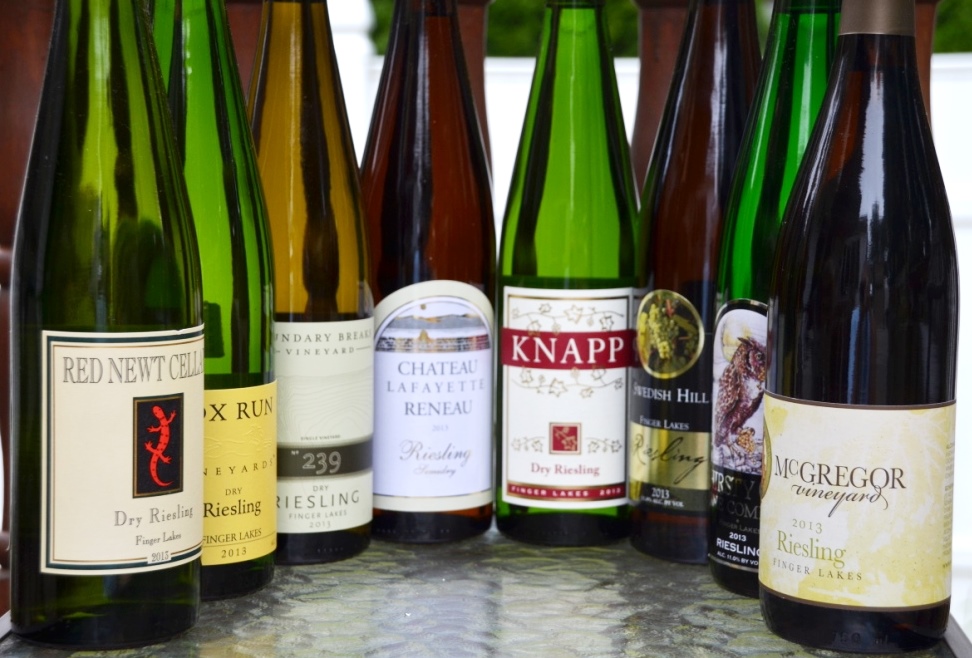
Well, it is good to have an informative label, but when it comes to the wine world, seeing doesn’t really equates to believing. But tasting does. This is where the #winechat comes to the rescue. Last week, a group of enthusiastic oenophiles had a chance to dive deeply into the world of 2013 Finger Lakes Riesling, by tasting through the 8 different wines and sharing the excitement with each other. And the wines were definitely very exciting, full of pleasure in every sip. Finger Lakes region in New York deserves all of your attention – but I already shared my thought about the region at length in the two earlier posts this year, so I will have to refer you to those (first Finger Lakes #winechat and the post about Bellangelo wines).
Below are my notes regarding the individual wines. These notes are based on the longer evaluation of the wines than we would otherwise have during the 60 short minutes of the #winechat, so if you are talking part in another #winechat session on that subject, I suggest you will start tasting your wines now. One last note regarding the wines. As this is my third encounter with the Finger Lakes wines this year, I would like to offer two “bits of wisdom” based on that experience:
- Don’t over-chill.
- Let ’em breathe.
Terroir, minerality are important components of Finger Lakes wines – by serving the wines a bit warmer than you normally would, say at around 50F, and letting them breathe for may be an hour, you will do yourself a big favor and will find a lot more pleasure in every sip. At least I did. Without further ado, here are the 8 beautiful wines:
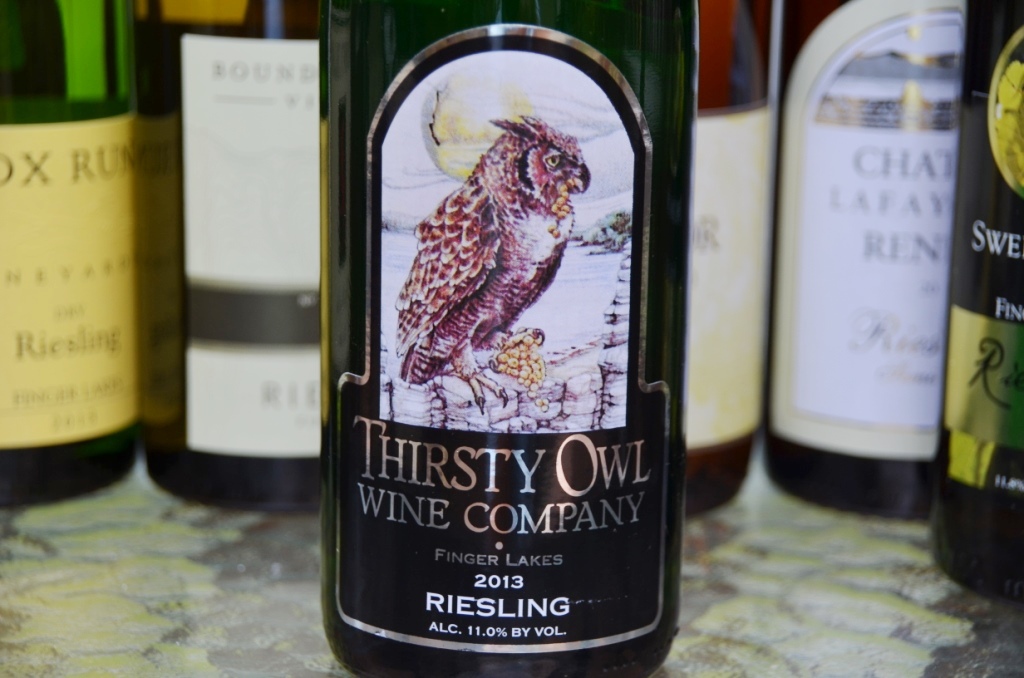 2013 Thirsty Owl Wine Company Riesling Finger Lakes (11.0% ABV, $14.95). IRF scale not shown. On the nose, touch of minerality (gunflint), apricot. Overall nice and restrained. Palate: Clean , crisp acidity, touch of honeysuckle, golden delicious apple. Medium finish, overall very refreshing. Drinkability: 8-
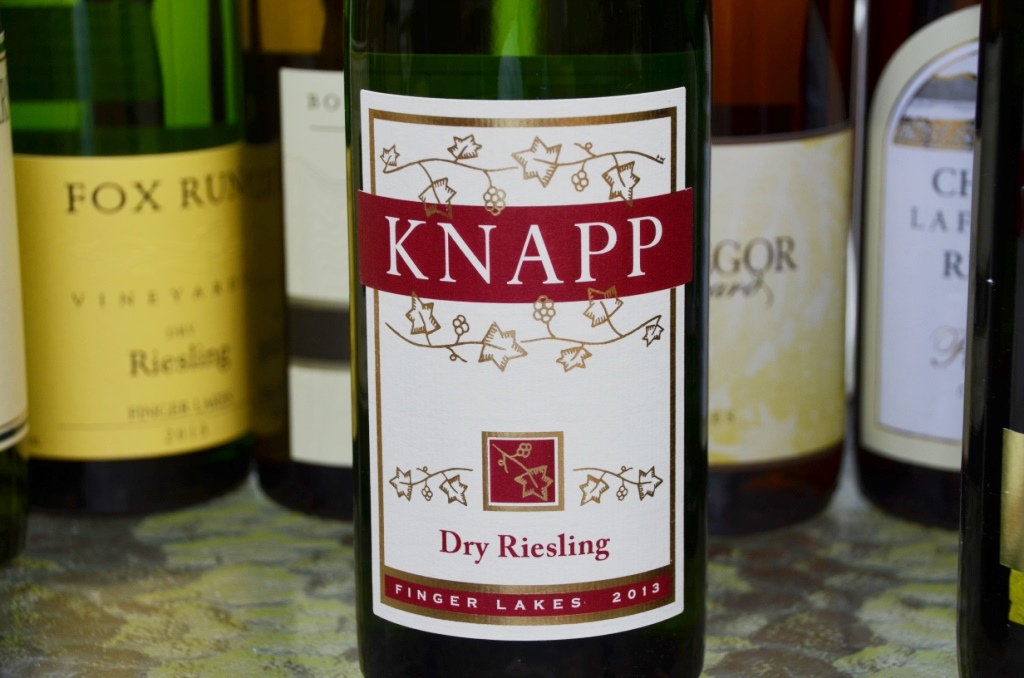 2013 Knapp Dry Riesling Finger Lakes (12%ABV, $15.95) – On the IRF scale, this wine is at the lower part of the Medium Dry style. White apples, honey and lemon on the nose. On the palate, candied lemon peel with fresh lemon juice, complemented by the cut-through acidity. Medium finish, overall a nicely balanced wine. Drinkability: 7+
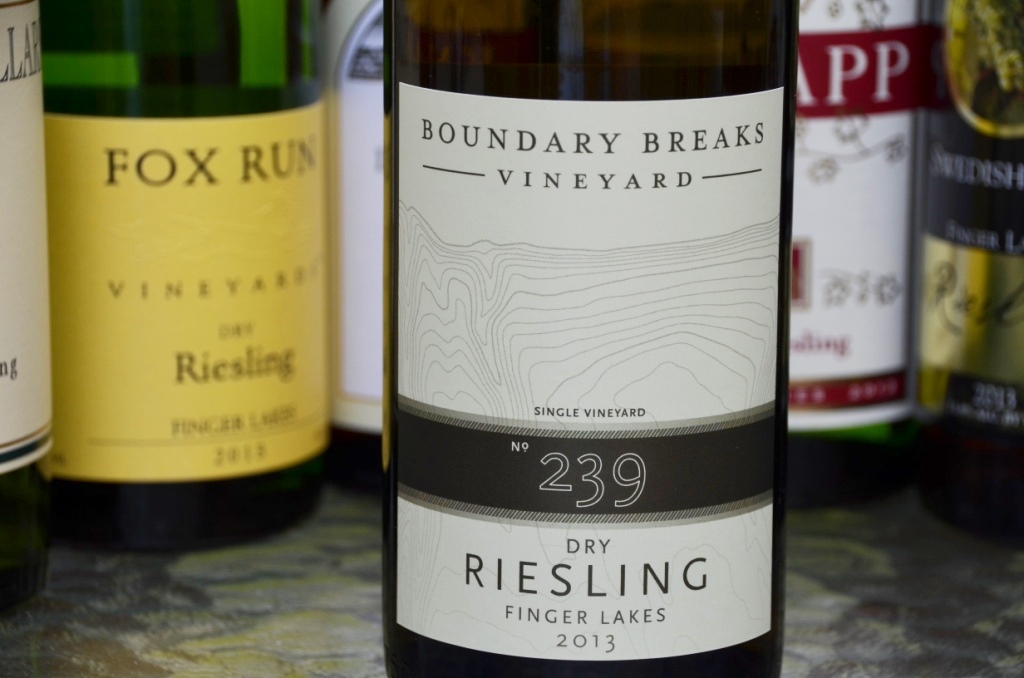 2013 Boundary Breaks Vineyard #239 Dry Finger Lakes (11.6% ABV, $19.95) – right in the middle of “dry” on the IRF scale. This is my second encounter with Boundary Breaks Riesling, and I find that this wine needs breathing time to show itself. Initially, closed on the nose, then opening to show distant hint of lemon, touch of minerality. On the palate – wave of sweetness first, with cut through acidity, lingering for a bit and then finishing dry. Tasting at a later time adds some fresh apple and more minerally undertones. Drinkability: 7+
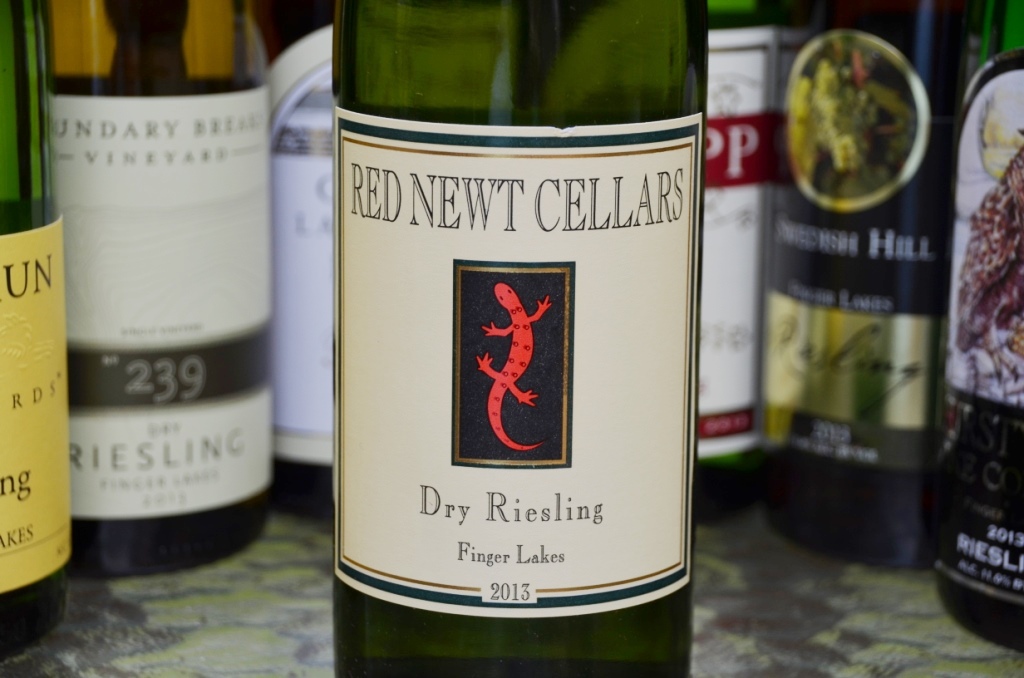 2013 Red Newt Cellars Dry Riesling Finger Lakes (11.8% ABV, $17.00) – right in the middle of “dry” on the IRF scale. On the nose, shows minerality, touch of fresh grass. hint of fresh lime, overall very intense. On the palate – nutmeg, hint of mango, fresh herbs and lemon, crisp, dry. Excellent balance and overall very pleasant. One of my very favorites from the tasting. Drinkability: 8
 2013 Swedish Hill Riesling Finger Lakes (11.8% ABV, $15.99) – IRF scale not shown. Fresh white fruit on the nose, touch of candied lemon. Nose quite intense. On the palate – rich, velvety, ripe peach with touch of fresh lemon, clean acidity, excellent finish (medium plus). Texturally quite unique. Drinkability: 8-
 2013 Fox Run Vineyards Dry Riesling Finger Lakes (11% ABV, $17.99) – According to IRF scale, the wine is right on the border between Dry and Medium Dry. On the nose, subdued notes of peach and honey, touch of lemon, intense. Palate is elegant, mineral-driven, with green apple, touch of Meyer lemon, overall dry and very balanced. Drinkability: 8
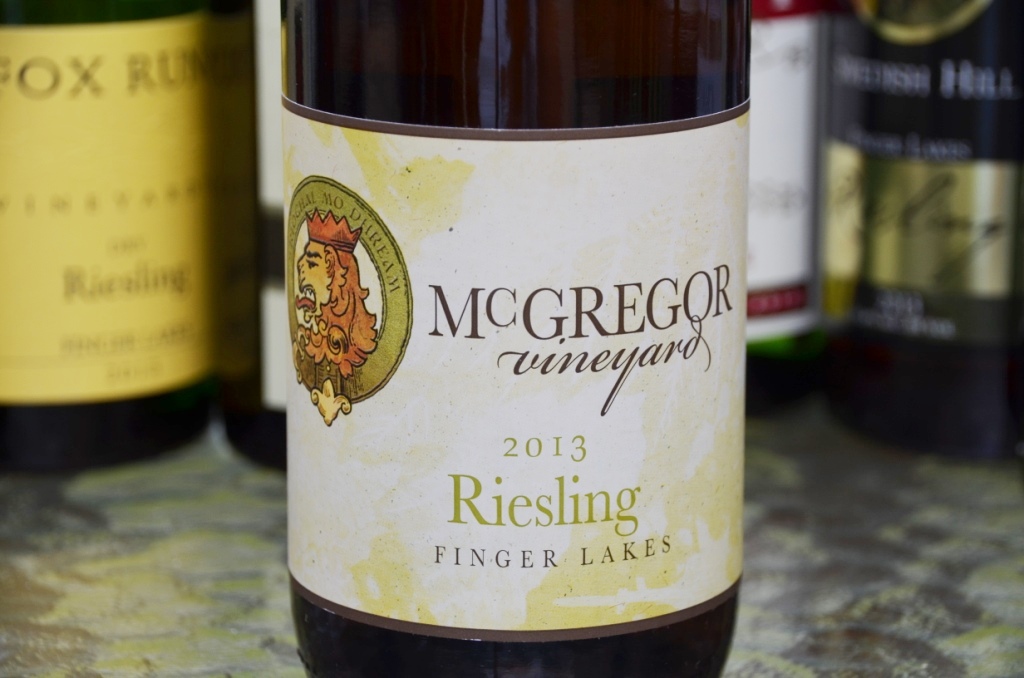 2013 McGregor Vineyard Riesling Finger Lakes (10.5% ABV, $19.99) – IRF scale is not used. A lot is happening on the nose – cantaloupe, honeysuckle, candied orange, openly sweet and intense. On the palate – ripe apricot, honey, ripe white apple, elegant acidity, perfectly refreshing, very good balance. Drinkability: 8-
 2013 Chateau Lafayette Reneau Riesling Semidry Finger Lakes (11.5% ABV, $14.99) – IRF scale is not used. On the nose – rhubarb, floral, touch of grass, white apple. On the palate – honeysuckle, ripe peach, touch of minerality and grass, lemon zest, clean acidity, excellent balance, soft and round mouthfeel. Another top favorite from the tasting. Drinkability: 8
Here we go – 8 great wines, and the region for you waiting to be discovered. September is still on, and it is an official Finger Lakes Riesling month – make an effort to find your new love – a versatile ( and affordable!) wine which you can drink now or put away to enjoy in a few years (or 10 or 20, this is entirely up to you). Cheers!
Last Bottle Sign Up ($10 credit)




 Talk-A-Vino