Archive
Gambero Rosso 2016: Tre Bicchieri Tasting
 Now, let’s talk about most intense part of the Gambero Rosso 2016 event – Tre Bicchieri grand tasting. Both Custoza DOC and Special Awards Master Class seminars were nice and relaxing – you are sitting down, you have at least an hour to evaluate 9 wines – this is “an oenophile at ease” experience. The grand tasting though is more of an “oenophile in hell”, or if this is too strong of an expression, think of it as marathon which you have to run on the tippy-toes – yep, that level of comfort.
Let me repeat the Gambero Rosso numbers – about 50,000 wines are evaluated by the Gambero Rosso staff in a year, comprise 20,000 different labels from more than 2,400 wineries. 421 wines received the coveted Tre Bicchieri (Three Glasses) award in 2016. 193 wineries were present at Tre Bicchieri 2016 tasting in New York, which would roughly translate into about 400 wines – not all of those wines are Tre Bicchieri winners, wineries are allowed to present the wines which got two glasses awards.
This was the fourth year in the row as I attended Gambero Rosso in New York, so at this point I knew the drill – which means that there will be no rant in this post. Nothing changed – there was still a limit of one glass per attendee for the whole tasting, the wineries were still organized by the distributors and not by the regions – but again, I was ready for that before I walked into the room. I had an opportunity to look at the show guide before tasting started, so I had my targets set and thus from the moment I walked into the tasting room, I went directly to the tables I wanted to visit first (where the wines would potentially run out). This was the right strategy and it worked quite well (as you will see in the list down below).
This was also the first time in 4 years my dear friend Stefano was unable to join me at the Gambero Rosso in New York – which also changed the dynamics for me. Usually when we are together, Stefano perseveres until the very last moment, still tasting wines and taking notes. Left to my own devices, I cut it short when I felt tired. By the way, the pictures below will give you an idea how the tasting room looks like in a middle of event – I always like to take a few shots which I call “Hail Mary” – just put the camera up and take a picture of whatever it will point to. I think it will give you an idea for the event:
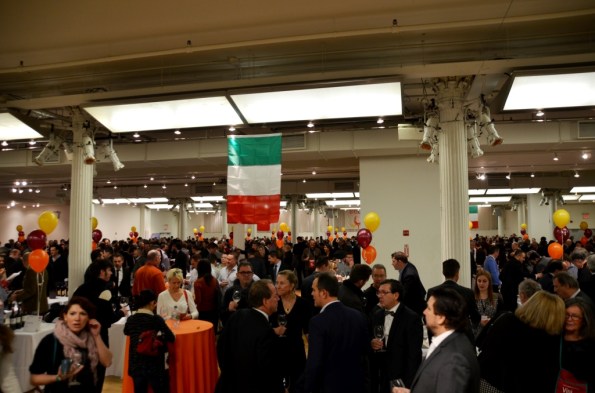
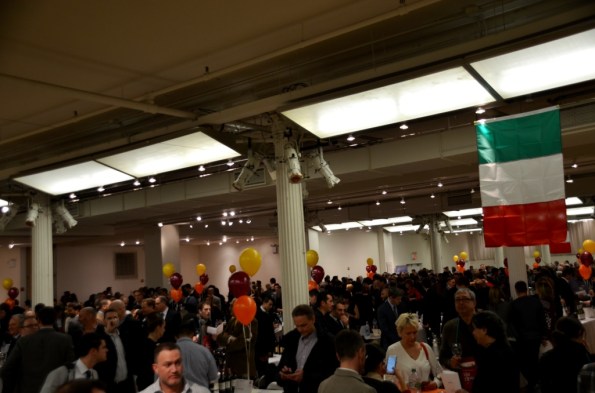 Before I will inundate you with the details on the wines I tasted, I want to offer you some of my main takeaways from the Tre Bicchieri 2016 tasting.
- Out of all the wines I tasted (90+), 4 wines were my absolute favorite:
- Tenuta dell’Ornellaia Bolgheri Superiore Ornellaia – stunning wine – young (2012), but perfectly drinkable, with the balance nothing short of amazing. Down below I will have pictures of the labels – note that starting with 2012 vintage, Ornellaia wines now will have artistic labels on portion of their bottles – 1 bottle in every 6 pack will have an artistic label.
- Eugenio Collavini Collio Bianco Broy – my favorite white wine of the tasting – beautiful clarity, impeccable balance and a bonus story
- Tenuta Viglione Gioia del Colle Primitivo Marpione Riserva – yes, I know that Primitivo is technically a Zinfandel, but I never yet tasted Primitivo which would be reminiscent of a good Zinfandel, like Turley, for instance. This wine was – fresh fruit, ripe raspberries and blackberries, playful – just an excellent wine all together.
- Rosset Terroir Valle d’Aosta Syrah – might be easily my favorite red wine in the tasting – if anything very comparable with Ornellaia in its ability to deliver pleasure. Amazing clarity of spicy fruit, just a pure vibrant note of black pepper – only a few times ever I experienced such pure expression of Syrah. Absolutely delightful.
- Very interesting how things changed in Italian wines. I tasted a number of Barolo, 4-6 years old – they were all very approachable, with good fruit and reasonable tannins – quite a departure even from the few years back. On another hand, most of the Super Tuscans were tannic bombs, with the happy exception of Ornellaia and Le Macchiole. I definitely welcome the Barolo change (will be interesting to see how those wines will age), but I think super Tuscan producers should dial down the use of the new oak – as they are, these wines need quite a bit of time to age.
- Italy is the #1 wine producer in the world (by volume) so it is not surprising that in addition to the ingenious grapes, such as Sangiovese, Nebbiolo, Montepulciano, Italians also mastered all the main international varietals – Cabernet Sauvignon, Cabernet Franc, Merlot, Grenache ( better known as Connonau), Zinfandel (yes, in the form of their native Primitivo) and now even Syrah. 3-4 years ago, I would never associate Italy with the world-class Syrah. But then was Syrah from Cartona, which is delicious, and this year’s discovery, Rosset Terroir Syrah from Valle d’Aosta, left me literally speechless in its purity of expression – and I loved it as much as I did the Ornellaia. So yes, Syrah is also squarely on the master list for Italy. Notable exception – Pinot Noir (should be called Pinot Nero in Italy), the finicky grape the world is in love with, which I yet to find to my liking coming from Italy. This will probably happen at some point, and if it does, I’m curious where and how.
Okay, now it is time to share the notes on my favorite wines. I visited about 45 tables, tasted about 90 wines. Below are the favorites – as typical for the trade tastings with lots of wines to evaluate, I use the “plus” system, where “+++” means “excellent wine”. The list below only includes “+++” or higher; I couldn’t contain my excitement and rated “++++1/2” both Ornellaia and Rosset Syrah, this is as high as I ever went. For what it worth, below are my brief tasting notes, all the wines are sorted by respective regions:


Abruzzo:
2012 Villa Medoro Montepulciano d’Abruzzo Colloie Teramene Adrano – +++1/2, delicious
Alto Adige:
2013 Abbazia di Novacela A.A. Valle Isarco Riesling Praepositus – ++++, clean, balanced
2014 Abbazia di Novacela A.A. Valle Isarco Kerner Praepositus – ++++, delicious!
2011 Elena Walch A.A. Lagrein Castel Ringberg Riserva – +++1/2, excellent, concentrated
2012 Cantina Terlano A.A. Terlano Nova Dominus Riserva – ++++, delicious! 60% Chardonnay, 30% Pinot Blanc, 10% Sauvignon
Basilicata:
2010 Re Manfredi Terre Degli Svevi Aglianico del Vulture Serpara – +++1/2, perfect, nice minerality


Friuli Venezia Giulia:
2013 Jermann Vintage Tunina – +++1/2, great complexity
2013 Jermann W…. Dreams…. – ++++, butter, vanilla, beautiful minerality
2014 Jermann Pinot Grigio – +++
2014 Eugenio Collavini Collio Bianco Broy – ++++, clean, beautiful, 50% Friulano, 30% Chardonnay, 20% Sauvignon, SRP $35, comes from the small small plot behind the house
2013 Livon Braide Alte – +++1/2, Chardonnay, Picolit, Moscato Gialo
Liguria:
2013 Poggio dei Gorgleri Rivera Ligure di Ponente Pigato Albium – +++1/2, Gunflint nose, clean palate


Lombardy:
2009 Ferghettina Franciacorta Extra Brut – +++, beautiful nose, a bit too sweet on the palate
2011 Nino Negri Valtellina Sfursat 5 Stelle – +++1/2, dried fruit, delicate, delicious. 2012 and 2014 were bad years, and no 5 Stelle wine will be produced
2008 Bellavista Franciacorta Extra Brut Vittorio Moretti Riserva – ++++, delicious, classic
Marche:
2013 Umani Ronchi Verdicchio dei Castelli di Jesi Superiore Vecchie Vigne – +++
2011 Umani Ronchi Canero Cùmaro Riesrva DOCG – +++1/2, delicious (Montepulciano 100%)
2011 Umani Ronchi Pelago Marche Rosso IGT – +++1/2, excellent (Cabernet Sauvignon 50%, Montepulciano 40%, Merlot 10%)


Piedmont:
2010 Abbona Barolo Cerviano – +++1/2, lavender, clean, wow!
2011 Marchesi di Barolo Barolo Cannubi – ++++, beautiful
2012 Michele Chiarlo Barbera d’Asti Superoiore Nizza La Court – ++++, outstanding
2011 Malvira Roero Mombeltramo Riserva – +++, nice, clean


Puglia:
2011 Tenuta Viglione Gioia del Colle Primitivo Marpione Riserva – +++1/2, wow, excellent, Zinfandel-comparable
2012 Tenuta Viglione Gioia del Colle Pri-mit-ivo – +++, excellent fruit and balance
Sardinia:
2013 Vigne Surrau Sincaru Cannonau di Sardegna – +++, excellent
2014 Vigne Surrau Sciala Vermentino di Gallura DOCG Superiore – +++
Tuscany:
2012 Poggio al Tesoro Dedicato a Walter Toscana IGT – +++, 100% Cabernet Franc
2012 Poggio al Tesoro Sondraia Bolgheri Superiore – ++++, excellent, Bordeaux blend (65% Cabernet Sauvignon, 25% Merlot, 10% Cabernet Franc
2012 Fabrizio Dionisio Cortona Syrah Il Castagno – +++1/2, beautiful nose, restrained, 100% Syrah


2012 Tenuta dell’Ornellaia Bolgheri Superiore Ornellaia – ++++1/2, wow! polished, ready
2013 Tenuta dell’Ornellaia Bolgheri Rosso Le Serre Nuove – ++++
2013 Tenuta dell’Ornellaia Poggio alle Gazze – ++++, outstanding
2010 Le Chiuse Brunello di Montalcino – +++1/2
2011 Le Chiuse Brunello di Montalcino – +++, beautiful
2013 Le Chiuse Rosso di Montalcino – +++, clean, simple
2012 Villa le Corti Chianti Classico Don Tommaso Gran Selezione – +++, excellent, soft
2012 Tenuta Sette Ponti Oreno – +++1/2, gripping tannins, wow
2013 Tenuta Sette Ponti Crognolo – +++


2012 PETRA Petra Rosso – +++1/2, good balance, Cabernet Sauvignon/ Merlot blend
2012 Le Macchiole Paleo Rosso – ++++, outstanding, 100% Cabernet Franc
Valle d’Aosta:
2013 Rosset Terroir Valle d’Aosta Syrah – ++++1/2, wow, perfect, spicy nose, clean, wow! 100% Syrah


Veneto:
2011 Tenuta Sant’ Antonio Amarone della Valpolicella Campo di Gigle – +++, closed on the nose, well present tannins, but balanced
2011 Viticoltori Speri Amarone della valpolicella Classico Vign Sant’Urbano – +++, good, round
2009 Masi Amarone della Valpolicella Classico Campolongo di Torbe – ++++, delicious!!! (yeah – single vineyard at about $150 retail)
2014 Valdobbiadene Brut Rive di Col San Martino Cuvée del Fondatore Graziano Merotto – +++1/2, nice complexity
2012 Vignalta Colli Euganei Fior d’Arancio Passito Alpianae – +++
Gambero Rosso 2016: Master Class – Special Awards
I recently wrote about discovering the new Italian wine region at the seminar at Gambero Rosso 2016 event (Custoza DOC). Following that was another new event for me – Vini d’Italia 2016 Special Awards Master Class.
More than 50,000 wines are tasted by the Gambero Rosso experts for each annual edition of the publication, which comprise more than 20,000 labels from 2,400+ wineries. In 2016, which was the 29th edition of the Gambero Rosso guide, there were 421 winners of the prestigious Tre Bicchieri status. In parallel, while the work is done to assess the wines for the Tre Bicchieri status, the wines are also considered for the Special Awards which are give in the 9 special categories – take a look at the picture below, this was our printout for taking the notes:

If you would look at my notes below, you would see that my opinion didn’t always match the designation of the wine – which is only important as an illustration to the point I always make when talking to the people who are afraid not to like the wine where someone else (an expert) said that the wine outstanding. Each palate is different, and your good wine is what you like, not someone else…
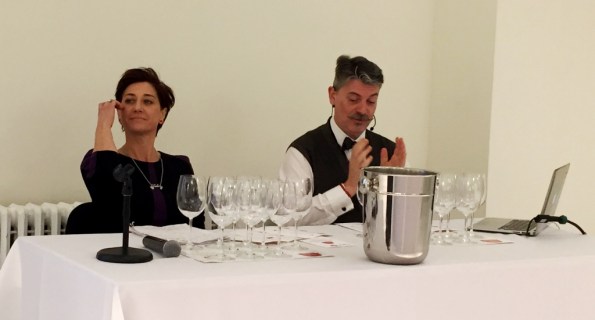
The presentation was led by charismatic Marco Sabellico, Senior Editor of Gambero Rosso, and Eleonora Guerini, Curator of the guide “The Wines of Italy” by Gambero Rosso:
Here are my notes:
Category: Sparkler of the year
2006 Ca Del Bosco Franciacorta Dosage Zéro Noir Vintage Collection Riserva
C: Gold
N: yeast, bread, concentrated
P: great complexity, yeasty, refreshing, crisp acidity
V: 8, excellent sparkling wine
Category: Best value for money
2014 Terre Stregate Falanghina del Sannio Svelato Campania ($10)
C: light golden
N: beautiful concentrated nose, sweet, concentrated, musk aroma
P: clean, good acidity, lots of musk undertones, spicy pear
V: 7, a bit too much on the palate
Category: White of the year
2014 Schiopetto Collio Friulano
C: light golden
N: light fruit notes, fresh, touch of minerality
P: nice, restrained, white stone fruit, good acidity, good balance
V: 8-, nice aging potential
Category: Award for sustainable viticulture
2013 Manincor A.A. Terlano Sauvignon Tannenberg Trentino-Alto Adige
C: straw pale
N: vanilla, butter, petrol
P: delicious play of fruit, restrained, tropical fruit, vanilla, playful, great acidity
V: 8, my favorite white wine of the tasting
Category: Red of the year
2012 Pietradolce Etna Rosso Vigna Barbagalli Sicily (15% ABV)
C: red brick
N: volcanic, smoke, red fruit
P: nice tannins, fresh red fruit, a bit astringent, long finish
V: 8, needs time
Category: Grower of the year
2012 Ca’ del Baio Barbaresco Asili
C: dark Ruby
N: fresh fruit! Strawberries, raspberries, violet, wow
P: excellent balance, fresh tannins, good red fruit, but really tannic finish
V: 8, will improve
Category: Up-and-coming winery
2012 Guado al Melo Bolghery Rosso Superiore Atis (Cabernet Sauvignon 60%, Cabernet Franc 20%, Merlot 20%)
C: dark Ruby, almost black
N: “Rutherford dust”, black currants, eucalyptus
P: powerful tannins, firm structure, fruit is layered under, very powerful wine overall
V: 8-, definitely needs time
Category: Winery of the year
2011 Allegrini Amarone della Valpolicella Classico
C: dark Ruby, almost black
N: dried fruit, roasted meat
P: nice concentration, powerful tannins, tar, tobacco, alcohol burn on back end
V: 7+, needs more balance…
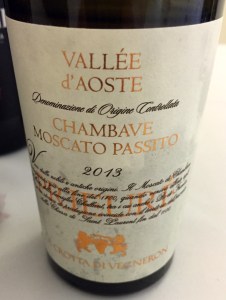
Category: Sweet of the year
2013 La Crotta di Vegneron Valle d’Aosta Chambave Moscato Passito Prieuré
C: golden
N: beautiful, clean, candied apricots, candied orange
P: perfect balance, clean fruit. Yes, it is sweet, but it has perfect acidic backbone, and it doesn’t overpower the palate.
V: 9, outstanding. Yes, I’m a sucker for the good sweet wines, you can call me that.
As you can tell, the dessert wine was my favorite wine of the tasting – well, you can read anything you want into that…
In the next post, I will be talking about Gambero Rosso Tre Bicchieri tasting itself, so until the next time – cheers!
To be continued…
Gambero Rosso 2016: Discovering Italian Wine Regions – Custoza DOC
Few weeks ago, I attended Gambero Rosso Tre Bicchieri event in New York. For those unfamiliar, Gambero Rosso is a leading Italian wine guide, where the wines are rated with the symbol of a glass (bicchiere in Italian). The wine can get a rating of one, two or three glasses, and those three glasses (Tre Bicchieri) rated wines considered to be some of the best wines the Italy has to offer. Every year, Gambero Rosso conducts a series of tastings worldwide, to celebrate these best Italian wines, and the tastings are called Gambero Rosso Tre Bicchieri events.
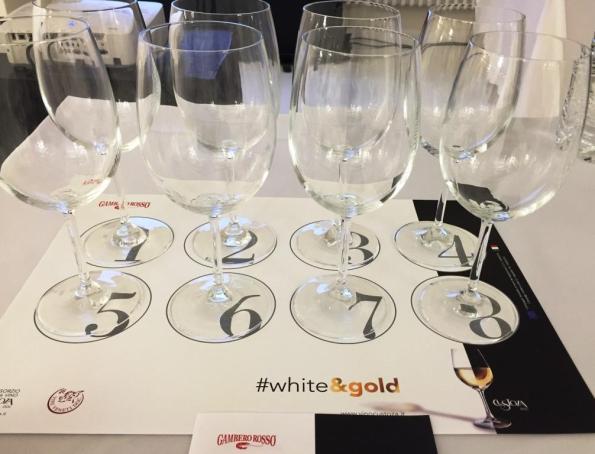
While I had been attending Tre Bicchieri events for the past 4 years, this year was the first time I also attended seminars conducted right before the general tasting. The first seminar was dedicated to the white wines of a small, and I would bet, largely unknown to the majority of the wine drinkers, region in Veneto, called Custoza.
Custoza is located at the south border of the Veneto region, on the shore of the Lake Garda. Excellent terroir to grow wine grapes, and white grapes in particular. Region has mild winters, which definitely helps not to worry about the frost. Another important characteristic of Custoza is mixed soil – clay, sandstone, limestone, which leads to a diversity in the wines. Overall, there are about 700 wine growers in Custoza, 70 wineries, and total wine production is roughly 12 million bottles per year (1 million cases). The region is fast growing on Italian market and represents great value for the money. A number of indigenous grape varieties are use in wine making in Custoza – Garganega, Fernanda/Bianca Fernanda (Cortese clone), Trebbiano di Soave, Trebbianello (known as Tokai Friulano in other regions), Riesling Italico (a.k.a. Welch Riesling), Incrocio Manzoni (cross created in 20th century).
Seminar presenters also made a statement about Custoza wines having a great aging potential – I would like to get back to that after presenting you with the tasting notes. We tasted total of 8 wines in this seminar:
2015 Tinazzi Custoza Cà dei Rocchi (Garganega 40%, Trebbiano di Soave 40%, Bianca Fernanda 20%)
C: pale straw
N: amazing, fresh sweet fruit, candies, through the roof aromatics. Green notes appear after a while.
P: crisp, clean, great acidity, fresh, will work great with seafood
V: 8-, food wine
2015 Gorgo Custoza San Michelin (Garganega, Cortese and Riesling Italico)
C: light gold
N: restrained, candied lemon, herbs, fresh caramel, opened into concentrated sweet baking spices. Smell is an enigma, keep changing. Yes, tropical fruit.
P: clean and crisp, but leaves sweet aftertaste. More concentrated than the previous wine, medium to full body, finish switched to more acidity
V: 7+/8-
2014 Cavalchina Custoza Superiore Amedeo (Garganega 40%, Fernanda 30% (Cortese clone), Trebbianello 15% (Tocai clone), Trebbiano Toscano
15%)
C: light golden
N: hint of smoke, gunflint
P: excellent, clean, green apple, fresh, perfect balance, acidity on the finish. Leaves me desire to take another sip
V: 8
2013 Albino Piona Custoza DOC (Garganega 30%, Trebbiano 35%, Friulano 20%, Trebbianello, Pinot Blanc and Riesling Italico)
C: light golden
N: medicinal, iodine, a nose almost suitable for a scotch
P: lots of fighting components, interesting. It is drinkable, but not together
V: 7-
2013 Menegotti Custoza Superiore Elianto (Cortese, Garganega, Trebbiano)
C: light golden
N: strange, vegetative
P: vegetative/sweet all over the place
V: 7
2013 Monte Del Frà Custoza Superiore Cà del Magro (40% Garganega, 20% Trebbiano Toscano, 5% Tocai Friulano, 10% Cortese, 10% Chardonnay-Riesling Italico-Malvasia and 15% Incrocio Manzoni)
C: golden, nice viscosity
N: minerality, hint of gunflint, white fruit sweetness, restrained
P: delicious. Ripe apples, white stone fruit, minerality, excellent balance
V: 8-
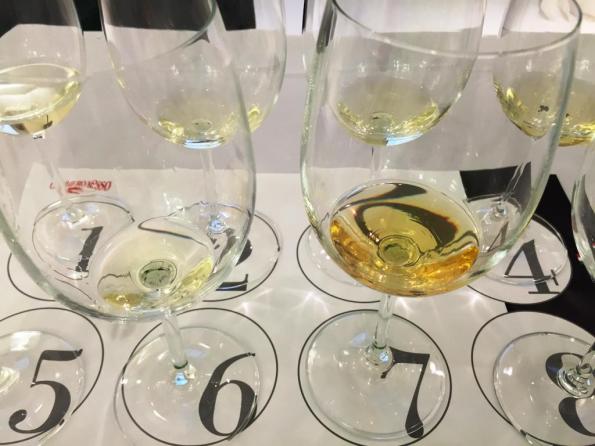
Take a look at the color difference with younger wines
2010 Monte Del Frà Custoza Superiore Cà del Magro (40% Garganega, 20% Trebbiano Toscano, 5% Tocai Friulano, 10% Cortese, 10% Chardonnay-Riesling Italico-Malvasia and 15% Incrocio Manzoni)
C: concentrated gold
N: minerality, volcanic soils, smoke, interesting
P: interesting complexity, still a touch of oxidation, vanilla, sea salt
V: 7+. This is a drinkable wine, and it will stay like that for a while.
2007 Cavalchina Custoza Superiore Amedeo (Garganega 40%, Fernanda 30% (Cortese clone), Trebbianello 15% (Tocai clone), Trebbiano Toscano
15%)
C: concentrated gold
N: slightly oxidative nose, similar to Jura whites
P: vanilla, steely notes
V: 7. May be good with cheese, but not enjoyable on its own
I very much enjoyed young Custoza wines – many were vibrant and delicious. When it comes to the two older wines, I wouldn’t say I was fun (I’m sure you can see it in my notes). Yes, I like tertiary aromas of older wines, but I still want the wine to have harmony and balance – and this was not the case here.
Very interesting learning experience in any case, plus a new grape (Incrocio Manzoni), or even two if I will count Fernanda as a separate clone/grape. So, have you ever had Custoza wines? What do you think of them?
In the next post, I will be talking about Gambero Rosso Special Awards master class, so until the next time – cheers!
To be continued…
Good and Bad in the Booming Wine Country
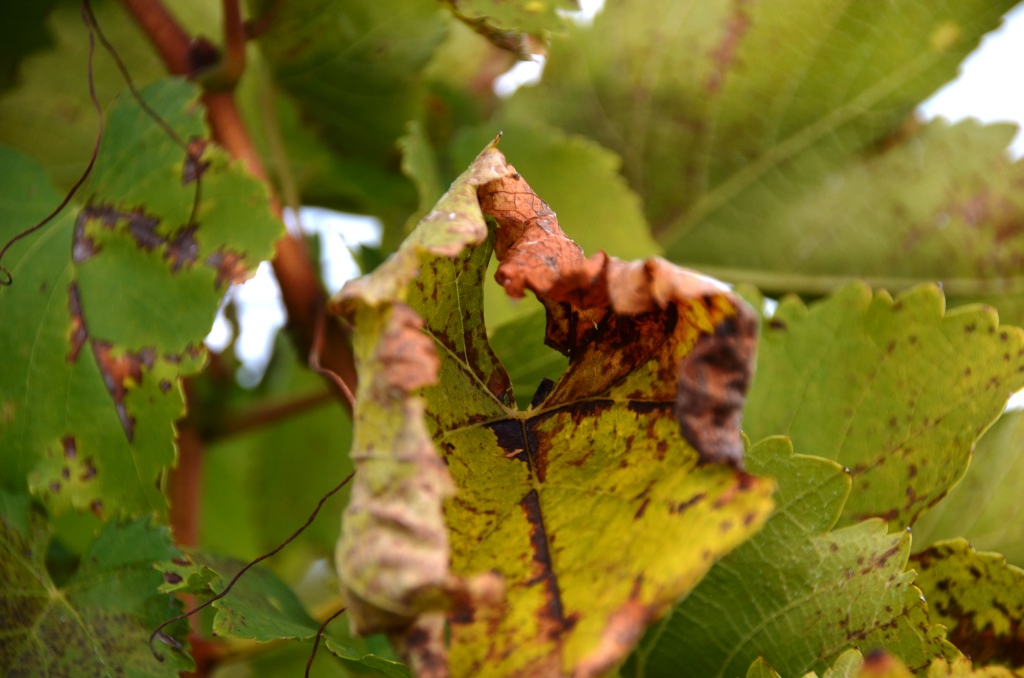 It was definitively bright and sunny. And somewhat windy. And not warm at all. But it didn’t stop us from adhering to a delightful tradition couple of weeks ago – day trip with friends to the Long Island wine country. We’ve done it for the past 7 years if not longer, with very little interruptions (had to miss last year, unfortunately) – visit a few wineries, taste wines, spend few hours in leisurely lunch in a great company.
It was very interesting to observe how the things were changing over those years – some for better, some for worse. As the love of wine is on the upswing in the US over the same 7, may be 10 years, this clearly was visible in sheer number of people you would see at Long Island wineries – more people every year. Of course it is a good thing – outside of the fact that you have to stand longer in line to the tasting counter. I don’t count this as good or bad – this is just a fact. What definitely improving for the better is a quality of the wine. Every year, the number of “wow” wines in seemingly the same tasting lineup was increasing. And not only the “wow” wines, but also “very solid wines”. So this is definitely good and I love the trend.
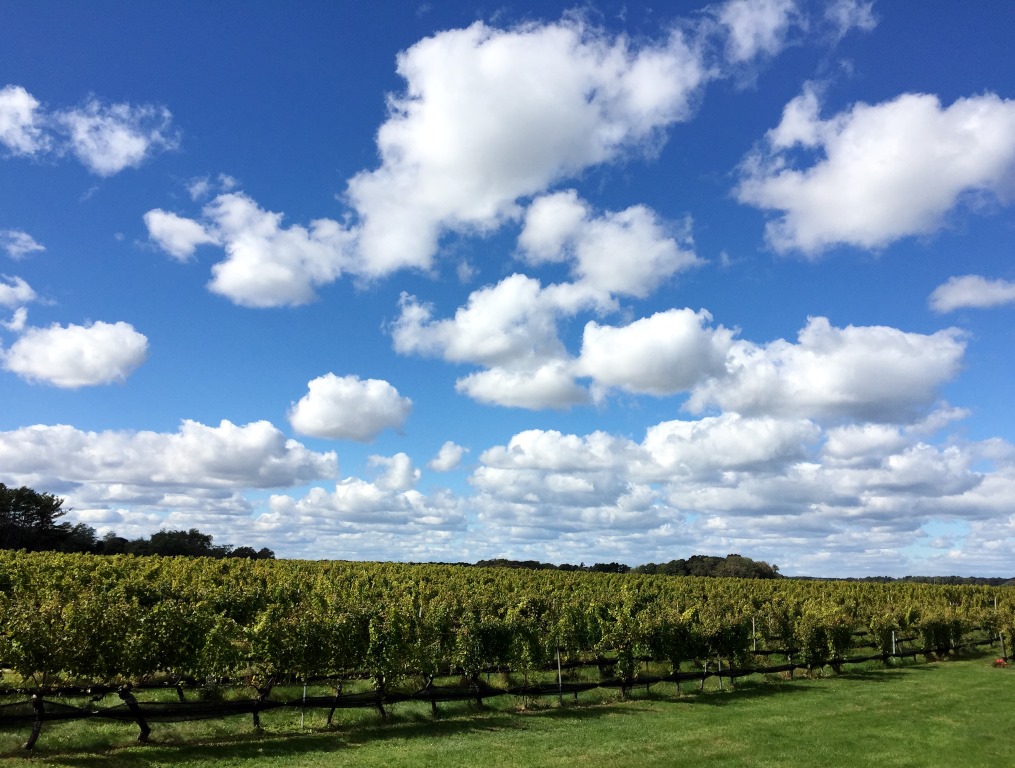 What is not good? Well, let me start from the most questionable gripe around the wine – prices. Yes, I understand that winery is a business, and they charge what they can, and have a cost justification. But $48 for a bottle of Long Island Riesling? It is a good Riesling, but it is not the wine which worth $48. Or $110 for a Long Island Merlot? I understand that the grapes were harvested by hand, and that it is only made in the special years, but again, strictly judging from the taste, this is not a wine which worth $110, for sure if you don’t have an expense account.
I also have to mention the usual sad state of knowledge of their own wines by the people minding the tasting room. One month ago I was told that new and very talented winemaker started at the Jamesport Vineyards. When I asked gentleman at the tasting counter at Jamesport about their new winemaker and if he made any of the wines we are currently tasting, I got back a shy smile and an answer “of course, he made all of them” – that would include even wines from 2007… Oh well…

True, pricing and affordability are extremely subjective – I’m sure there are plenty of people in this world who will gladly pay the $110 for that bottle of wine and also get a case – I’m just not one of them (but this is nobody else’ problem but mine). What I have much bigger issue with is food. As I told you, one of our most favorite activities during the wine country visit is 2 (or longer) hours lunch. For years, our preferred lunch destination was Paumanok winery – they have very nice patio with lots of tables outside, beautiful views and very good wines. We would bring our food – everything you need to make tasty sandwiches, as well as cheese, nuts, fruits – anything you would use to support a slow conversation over a glass(es) of wine. We would find the table, buy a few bottles of wine right at the winery and enjoy ourselves. About 4 years back situation changed, and we had to pay to reserve the table and to use the glasses, but I think we were getting back some of the money towards tasting fees and/or wines. No problems, still works for me. This year, the rules are new again – no outside food allowed. Okay, so it is probably replaced by some sort of deli counter or may be a food truck outside, you would think? Nope. You get the whole menu, but mostly with the items such as pâté or some cheeses, and a little bit of cold cuts. The cold cuts tray for $20 has 6 slices of salami, 6–8 tiny pieces of cheese and about the same quantity of olives and cornichons. All the pâté look like they came directly from Trader Joe’s, and they were served right in the plastic wrap with the short baguette on a side. This is simply wrong, in my opinion. If you are not allowing people to bring their own food anymore, then you should provide an appropriate alternative – or don’t do it at all. Don’t get me wrong – we still had a great time, but the food, unfortunately, was detrimental part of the experience.
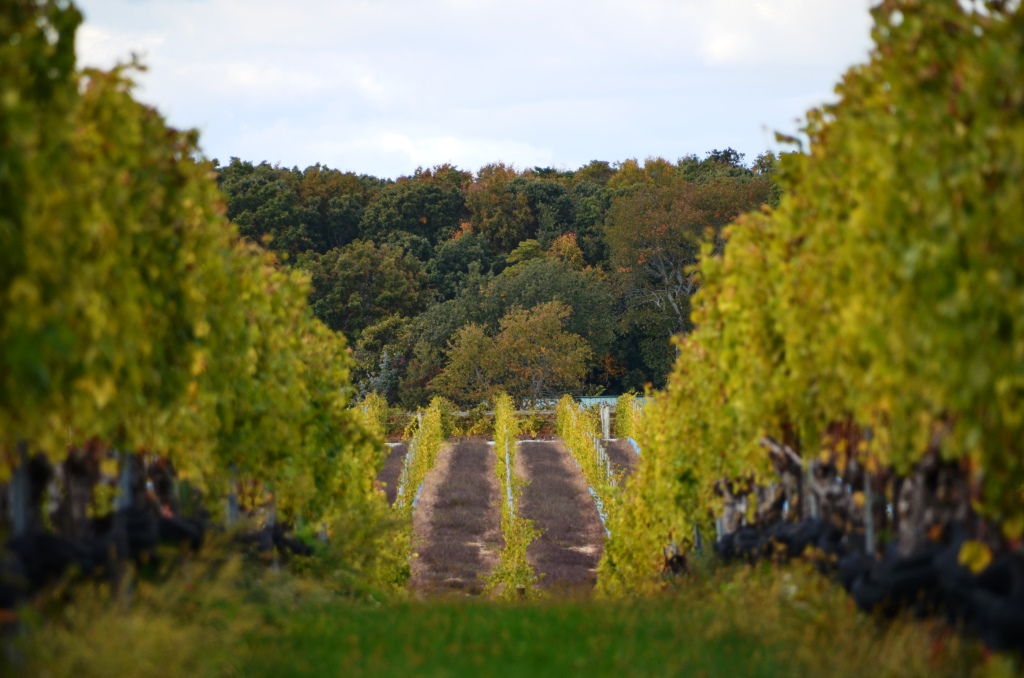

Done with the “bad” – now let’s go back to the good (best) part – the wines themselves. We started our tasting at Jamesport Vineyards winery, which always was one of my favorite wineries on Long Island.
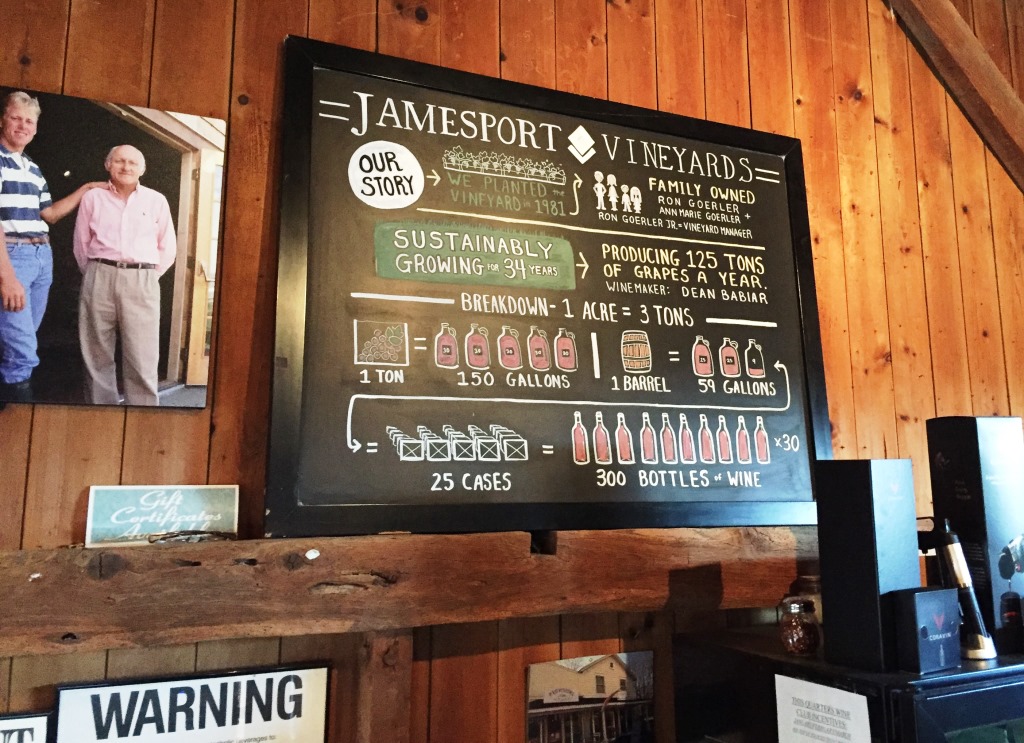
Here are the favorite wines of the tasting:
2014 Jamesport Vineyards East End CINQ Blanc ($16.95, blend of Chardonnay, Sauvignon Blanc, Riesling, Gewurztraminer, Pinot Blanc) – playful, open nose with white fruit, simple, clean, delicious overall
2013 Jamesport Vineyards Riesling ($25.95) – perfect, classic nose with a touch of Petrol and restrained fruit, nice and clean on the palate – excellent overall.
2013 Jamesport Vineyards East End CINQ Red ($16.95, blend of Cabernet Sauvignon, Cabernet Franc, Merlot, Pinot Noir and Syrah) – outstanding. Warm profile, nicely perfumed, good fresh red fruit, delicious


2013 Jamesport Vineyards East End Cabernet Franc ($17.95) – Classic, touch of green notes on the nose, crisp palate, touch of salinity, excellent
2010 Jamesport Vineyards MTK Merlot ($34.95) – Tobacco and field flowers on the nose, great palate, clean, concentrated, delicious
2010 Jamesport Vineyards Mélange de Trois ($34.95, Cabernet Sauvignon, Cabernet Franc, Merlot) – Great power, concentrated, excellent
2007 Jamesport Vineyards Jubilant Reserve ($34.95, predominantly Cabernet Franc, with Merlot, Cabernet Sauvignon, and tiny amounts of Syrah and Petite Verdot) – Nice concentration, good depth
2010 Jamesport Vineyards MTK Syrah ($24.95) – nice peppery notes, classic, open, clean – an excellent cold climate Syrah overall.


Then, of course, Paumanok. Quite honestly, I don’t even remember such a variety of wines offered at Paumanok – Reserve, Single vineyards, wow – lots of excellent wines. I have to admit that at the time of the tasting at Paumanok I was hungry and lazy at the same time, so I simply tasted the wine without taking any notes – here is the limited set of impressions from the Paumanok wines I tried.
Believe it or not, but my favorite wine from Paumanok tasting was 2010 Paumanok Blanc de Blancs ($45) – yep, classic sparkling wine, with perfect nose of yeast and freshly toasted bread, and apple and fresh bread on the palate. Delicious! 2014 Paumanok Chenin Blanc ($28) was fresh and vibrant, and 2013 Paumanok Cabernet Franc ($30) was clean and varietally correct. From the Grand Vintage collection, 2014 Grand Vintage Chardonnay ($45) was excellent, dry and crisp, 2013 Assemblage ($50) and 2013 Grand Vintage Cabernet Franc ($35) were excellent as well, but my favorite was 2013 Grand Vintage Merlot ($40), with deliciously powerful and balanced palate. Lastly, from the Single Vineyard collection, I really liked both 2010 Merlot Tuthills Lane Vineyard ($75) and 2010 Petite Verdot Apollo Drive Vineyard ($75) – they were different, but equally outstanding.


Lastly, for the first time over all these years I made it to the South Fork of Long Island (Hamptons), where we visited Duck Walk and Wölffer Estate wineries. There was nothing at Duck Walk to write home about. At Wölffer Estate, we didn’t do a real tasting as we visited place called The Wine Stand, where you can buy wine by the glass or bottle – main winery was closed for the wedding. Here is what we tried:
2014 Wölffer Estate Summer in a Bottle ($24, 41% Chardonnay, 29% Gewürztraminer, 20% Riesling, 10% Pinot Gris) was fresh and very nicely balanced, which is always appreciated in the white blends. 2012 Wölffer Estate Christian’s Cuvee Merlot ($110, 96.5% Merlot, 3% Cabernet Sauvignon, 0.5% Petit Verdot) was the wine I mentioned before. It was simply not ready – tight, with limited fruit expression. May be 5+ years in the cellar would do wonders…


There you have it – a trip to Long Island wine country with all the good and bad. Unquestionably, we had a great time with friends, and this is what matters. Yes, it would be even better without the gripes, but we can’t have it all, can we? Well, I wish that all your problems would be only small annoyances in this life. And yes, head over to the Long Island wine country, as the wines are delicious. And may be try to sneak in a sandwich? Cheers!
Possibly The Best QPR Wines In The World Today?
 Today, I want to talk about wine and value. “Value” has an interesting meaning in the world of wine – may be as subjective as the concept of a “good wine” itself. To me, the value is not an absolute amount of money one paid for the bottle of wine – if you paid $3, but poured the bottle down the drain after half-finished first sip because it tasted terribly – was that still a “value”? Or was that a pure waste of money? By the same token, if the $20 bottle of wine gave you lots of pleasure in every tiniest drop (including the one you licked of the table), would that be a “good value”? Talking about the “value” of the wine, I prefer to use a proverbial term QPR, so happily adapted by the wine lovers – a Quality Price Ratio (this is what QPR stands for) conveys the “value” concept of wine a lot better than the sheer price itself.
One of the easiest and most straightforward ways to classify and analyze thousands and thousands of wines produced today in the world is by region, as wines from the same geographic area would typically have some similarities. Thinking about all the different wine producing regions in the world, which region do you think delivers the best QPR today? I’m really asking here to think about the region as a whole, rather then individual wines. Yes, you can find delicious Napa reds for $10, but this is rather an anomaly, as on average, you need to spend at least $25 – $30 for a good bottle, so we are definitely not talking about Napa here. Thus the question stands – what is your best QPR wine region in the world?
This question might be more difficult than it seems. Wine regions don’t stand still – they are constantly evolving. As the region becomes better known and more demanded, the price increase often accompanies this rise in popularity – which obviously affects the QPR. I used to consider Greek wines as a great QPR – but many Greek wines are now pushing the $30 boundary, while not consistent in quality – this immediately drives QPR down. I used to think of Israeli wines as a great value – but same thing is happening there, with lots of better wines moving north of $30, and wines under $20 been more of “hit and miss”. My next “go to” wines were Portuguese – but even here I now have a problem – wines under $20 are often only randomly tasty; wines at around $30 and up are consistently excellent, rivaling $100+ wines from the other regions, so in relative terms, they still offer a great value – but probably not the best QPR?
“Knowing what I know now”, the region which I think consistently delivers the best QPR at the moment (!) is Georgia – not the state down south in the US, of course, but an independent country. I always loved Georgian wines, but what prompted this broad statement about QPR was a recent Georgian Wine tasting I attended a week ago at Chelsea Market in New York. Wine after wine was delicious, and priced under $20 – that is a QPR I’m definitely happy about.
You don’t have to take my word for it – you should find a bottle of Georgian wine and try it for yourself. I really hope you did just that last Sunday, October 4th, as it was a #GeorgianWineDay in the social media – and if you actually had Georgian wine, I’m curious to know what it was. In any case, let me share the notes for the wines I tasted at the “Discover Georgia in New York” event at the colorful Chelsea Market. Below are the notes, using the “+” ratings. Pay attention to the prices and corresponding ratings – don’t know what you think, but I think the “QPR” is spelled very clearly across the full range of wines I tasted.


2013 Telavi Wine Cellar Marani Rkatsiteli Kakheti, Georgia ($10.99) – +++, very acidic, requires food
2013 Telavi Wine Cellar Marani Mtsvane-Kisi Kondoli Vineyards Kakheti, Georgia ($14.99) – +++, excellent, clean, lemon notes, touch of food


2013 Telavi Wine Cellar Marani Saperavi Kakheti, Georgia ($11.99) – +++, excellent, simple, an everyday wine, red fruit, crushed berries
2009 Telavi Wine Cellar Marani Red Kvareli Special Vicultural area, Kakheti, Georgia ($15.99) – ++++, beautiful, clean, great depth
2012 Telavi Wine Cellar Marani Saperavi Kondoli Vineyards Kakheti, Georgia ($18.99, 18 months in oak, starting from fermentation) – ++++, stunning! round and delicious


2007 Telavi Wine Cellar Marani Reserve SAPERAVI block Kondoli vineyards, Kakheti, Georgia ($70) – ++++1/2, off the charts, produced only in the best years, complex, round, delicious. Yes, it is $70, and it might be to expensive for an amazing QPR, but you should taste this wine first…


2006 Wineman Cabernet Sauvignon Kakheti, Georgia ($10.99) – ++++, wow!, pick of maturity, dark notes, concentrated – another wow!
2010 Wineman Ikhalto Red Kakheti, Georgia ($12.99, 50% Saperavi, 50% Cabernet Franc) – ++++, wow!, acidity, beautiful wine
2013 Wineman Kindzmarauli Special Viticultural Area Red Semi-Sweet Kakheti, Georgia (12% ABV, $15.99, 100% Saperavi) – ++++, beautiful, perfectly balanced sweetness


2011 Shalvino Kardenakhi Special Viticultural Area Kakheti, Georgia (18% ABV, $18.99, Blend of Rkatsiteli, Khikhvi, Goruli and Mtsvane) – ++++, made using Solera method, delicious, Pedro Ximenez like with a delicate balance
2013 Telavi Wine Cellar Satrapezo Rkatsiteli Ice Wine Kakheti, Georgia (10% ABV, $29.99 500ml) – +++1/2, beautiful, perfect balance, not overly sweet


2013 Teliani Valley Tsinandali White Kakheti, Georgia ($12.99) – +++, great acidity
2012 Teliani Valley Special Vicultural area Kakheti, Georgia ($17.99) – +++, great acidity, perfect, food friendly


2013 Schuchmann Rkatsiteli White Kakheti, Georgia ($15.99) – +++, touch of sweetness, nice balance
2013 Schuchmann Saperavi Red Kakheti, Georgia ($15.99) – +++, perfect, clean, great balance


2012 Vinoterra Kisi Kakheti, Georgia (13% ABV, $NA, Qvevri fermentation, Oak maturation) – +++, complex, very intense, unusual, thought provoking
What do you think? I understand that QPR is subjective and relative term – first, you have to like the wine, and then everyone’s idea of “value” is different – but I was (once again) blown away by the quality and consistency of what I tasted – I didn’t skip a single wine, those are all the wines which were presented in the tasting. This would make it 16 wines out of 16, which I would gladly drink again. I hope it gives you good frame of reference for my experience.
Thinking about the wines of the world, what would be your top region for the best QPR? And if you tasted any of the Georgian wines, what is your opinion about them? Cheers!
5 Highlights and Hundreds of Wines
 Last weekend I attended a trade wine tasting – my first and pretty much the last for this year. My schedule simply didn’t align to do more, but may be it is even for the better?
I’m sure that most of the people see it very simply – “wine tasting = fun”. I tried many times to explain in this blog that “wine tasting = hard, tiring work” – no doubts 9 out of 10 people point to this statement and start laughing – but this is totally fine with me.
The tasting was organized by one of the Connecticut wholesalers – Worldwide Wines, to showcase all the new arrivals from the wineries and importers they represent in the state. According to the invitation, about 1,000 wines, beers and spirits were offered in the tasting. Duration of the event? 3.5 hours. Which simply means, if you want to taste them all, you have to move at a speed of roughly 5 wines/beers/spirits per minute. Yep, 5 per minute, 12 seconds each.
Of course nobody is trying to taste them all – you have to come with the plan. As I’m not operating a retail business, my plan was simple – to taste best of the best, simply based on the names. I mean no disrespect, but it means that Heitz takes precedence over Castle Rock, same way as Gaja would go over Cavit. This year, I managed to complete my plan quite successfully – you will see tasting notes below. At the end of these 3.5 hours I was really, really tired – but hey, it was worth it.
I managed to try close to 200 wines (including some spirits – no beer though), out of which I will share with you a bit more than a 100 – the wines which I really liked (yep, there were a lot). As this will be a very long list, I will first try to come up with 5 main highlights, before leaving you with bunch of wines to scroll through. But even before we get there, I can tell you that pretty much anything we tasted from California from 2012 vintage was excellent; there were 3 Gaja wines present in the tasting, and they were delicious, with Gaja Chardonnay, Rossj-Bass, being off the charts; for the first time I tried line of Cabernet Sauvignon wines from Nickel & Nickel, and they were very good; also for the first time (consistently missed it from a year to a year), I tried Darioush line of wines, and they were excellent. Now, for the promised 5 highlights, here we go:
- California Chardonnays are back! Well, this is a personal statement, of course. Over the past 4-5 years, I developed a tendency to avoid California Chardonnays in any tastings – I find all that “unoaked” stuff boring. I’m not looking for the “oak bombs” as they were called in the past, but I like my Chardonnays with vanilla, touch of butter and some weight on the palate. This year, out of the 10-12 Chardonnays which I tasted, there was not a single one I didn’t like. Of course I had some preferences, but still, as a group, they were outstanding. You will see the list of all Chardonnays I had a pleasure of tasting in the list below.
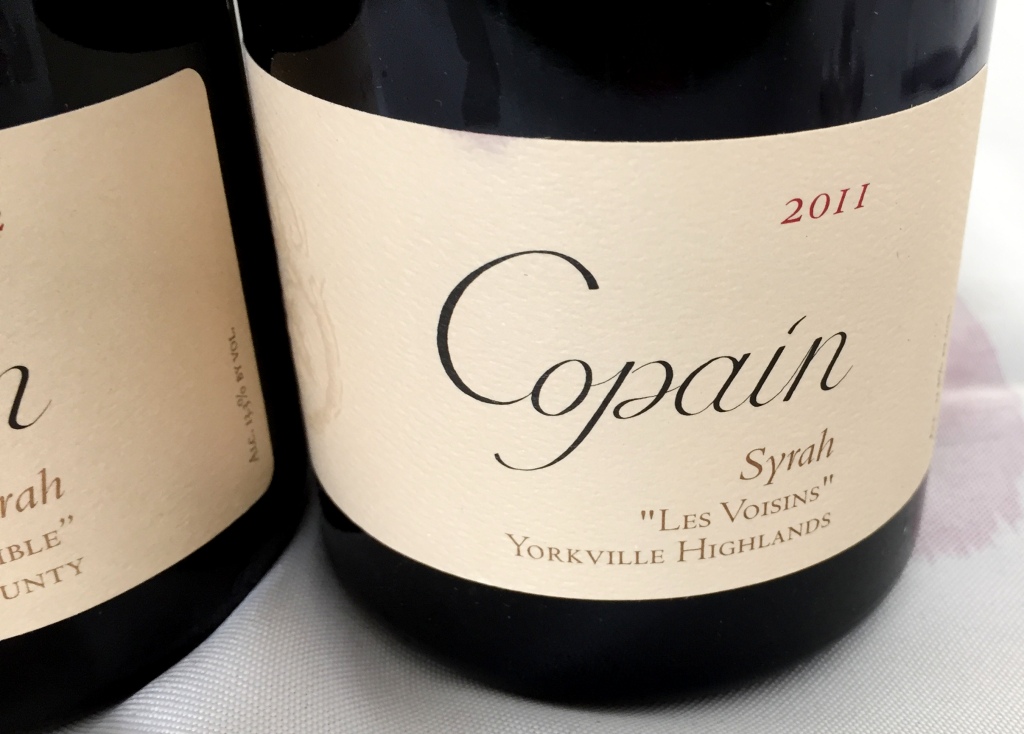
- There were lots and and lots of red wines I tasted at the event, many of them of the cult status – Sassicaia, Heitz, Shafer, Joseph Phelps and others. They were all excellent wines, but still, my absolute favorite red wine of the tasting was Copain Les Voisins Syrah Yorkville Highlands ($24.95) – the wine had stunning clarity of the Syrah, with pepper and restrained earthy profile.
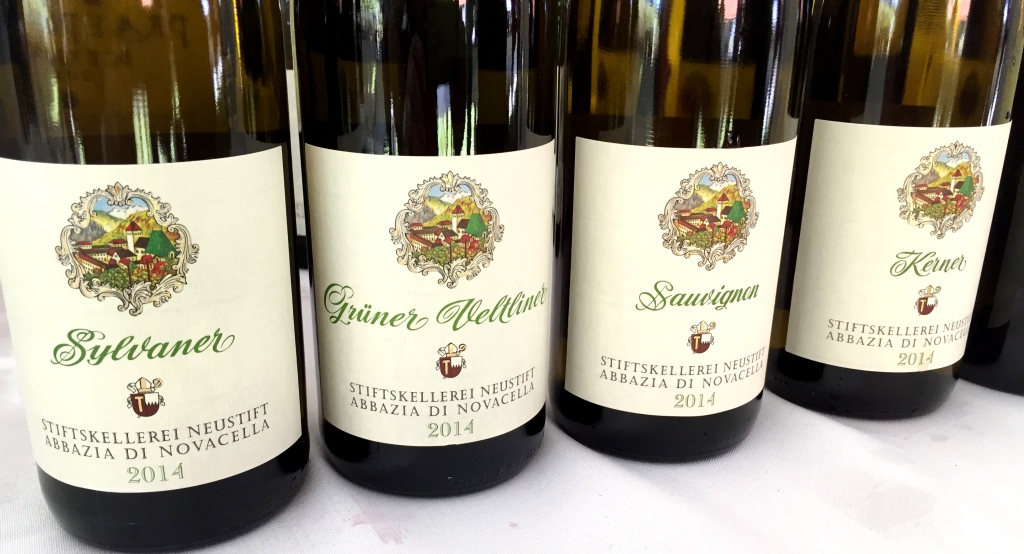
- My top pick for the white wines might be even more surprising – Villa Wolf Gewurztraminer Pfalz, Germany ($10.49!!). I personally consider Gewurztraminer a very difficult grape to do right, for sure for my palate – this wine had such a beautiful balance of spiciness, fruit and acidity, it was simply a perfect sip in the glass. There is yet another highlight which goes to the white wines. Talking about a “group”, 5 white wines from Abbazia di Novacella in Alto Adige in Italy, where literally one better than another – every sip got a “wow” reaction – Kerner, Gruner Veltliner, Sylvaner, Sauvignon Blanc – one better that the other, literally.
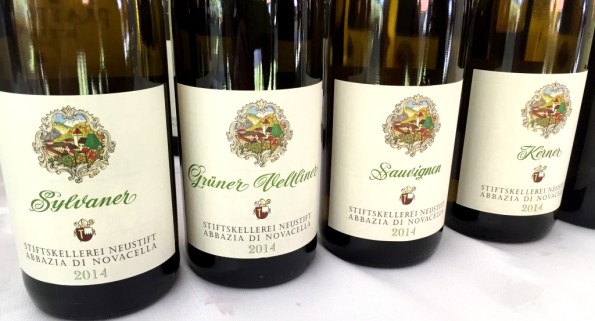
- Not a revelation for me anymore, but still something to ponder at – there are amazing spirits made in the USA. Case in point – St. George Spirits from Alameda, California. You know, I don’t drink vodka at all, as it has no taste, and here I absolutely loved Green Chile Vodka from St. George. And then there was Gin, Absinthe, Coffee liquor – one “wow” after another. I want to include here their motto, as written on the web site: “We don’t distill to meet your expectations, we distill to exceed your imagination“. Yep.


- Last highlight is more of a note to self – “don’t drink Port in a middle of tasting”. For sure if it is a Heitz Ink Grade Port. Okay, let me explain. Generally people have a tendency to leave tasting of the sweet wines “for later”, just to make it easier for the palate. Problem is that by the time you decide to go back to those dessert wines, the tasting is way over. When it comes to the Heitz Ink Grade Port, I heard that it is amazing, but equally powerful, so it is better to leave it “for later” – thus I never tasted it before. This time around, I said “that’s it – I’m tasting it now”. Boy, what a mistake. The Heitz Port is a very interesting wine, made from 6 noble Portuguese grapes, typically used in production of the Port – of course this time growing in California, at one of the Heitz vineyards. This Port was delicious, but it had tremendous power of tannins, multiplied by the factor of the sweet dried fruit, all together shutting down your palate for good. I was desperately searching for the chunk of Parmesan, as I don’t think anything else can restore your palate in such a case. So yes, it was delicious – but I’m not drinking it again in a middle of the tasting…


As promised, those were my highlights. From here on, prepare to be inundated with my brief notes on lots and lots of wines. I used the “+” system for rating, and I didn’t include practically any wines with the “++” rating (there might be one or two). Also, lots of wines were absolutely exceptional, so they got the “++++” ratings. Last explanation: the price in the brackets is so called Connecticut minimal bottle price – the state of Connecticut dictates minimum price at which the wine can be sold to the consumers – retailers are not allowed to go any lower than that “min bottle” price. Therefore, it is likely that prices in many stores in Connecticut will be higher than what I included here. It is also quite possible that you can find lower prices in other states. Lastly, I tried to group the wines mostly by the grape type and/or type, to make it easier for you to navigate. Hope you will find this list useful.
Here we go:
Sparkling Wines:
NV Charles Heidsieck Brut ($55.99) – ++++, yeasty!!
NV Champagne Barons de Rothschild Rosé ($99.99) – +++, excellent
NV Champagne Duval Leroy Premier Cru ($45) – +++1/2, perfect balance
NV Champagne Duval Leroy Rosé ($59.99) – +++
Chardonnay:
2013 Calera Central Coast Chardonnay ($19.99) – +++
2013 Laetitia Chardonnay Estate, Arroyo Grande ($15.49) – ++++
2013 Copain Tous Ensemble Chardonnay Anderson Valley ($18.99) – ++++, beautiful
2013 Darioush Signature Chardonnay Napa Valley ($37.99) – ++++
2013 Far Niente EnRoute Chardonnay ($39.99) – +++, very nice
2013 Flanagan Chardonnay Russian River Valley – +++
2014 Heitz Wine Cellars Chardonnay ($24.99) – +++, great acidity
2014 FARM Napa Valley Chardonnay ($18.99) – +++, nice, bread notes
2014 Hooker “Breakaway” Chardonnay Knights Valley ($14.99) – +++, great QPR
2013 Merryvale Chardonnay Napa Valley ($24.99) – ++++, wow! classic!
2014 Crossbarn Chardonnay Sonoma ($21.99) – +++, perfect
2013 Paul Hobbs Chardonnay Russian River ($38.99) – ++++, beautiful, vanilla, wow!
2013 Maison Roche de Bellene Bourgogne Blanc Vieilles Vignes ($18.99) – ++++, Chablis-like, great minerality and gunflint
2013 Gaja Rossj-Bass Langhe ($77.99) – ++++
Cabernet Sauvignon and blends, California:
2012 Darioush Signature Cabernet Sauvignon Napa Valley ($99.99) – ++++, beautiful
2012 Darioush Signature Merlot Napa Valley ($45.99) – ++++, excellent
2012 Darioush Caravan Cabernet Sauvignon Napa Valley – +++1/2
2012 Darioush Signature Cabernet Franc Napa Valley ($46.99) – ++++, excellent


2012 Nickel & Nickel CC Ranch Cabernet Sauvignon ($79.99) – ++1/2, tannic
2012 Nickel & Nickel Quarry Cabernet Sauvignon ($79.99) – +++, clean, excellent
2012 Nickel & Nickel Sullenger Cabernet Sauvignon ($79.99) – +++, excellent
2012 Flanagan Cabernet Sauvignon Sonoma County ($68.99) – +++, nice
2010 Heitz Wine Cellars Napa Cabernet Sauvignon ($45.99) – +++1/2
2009 Heitz Wine Cellars Trailside Vineyard Cabernet Sauvignon ($63.99) – ++++, clean, excellent
2006 Heitz Wine Cellars Trailside Vineyard Cabernet Sauvignon ($59.99) – ++++, excellent
2010 Heitz Wine Cellars Martha’s Vineyard Cabernet Sauvignon ($174.99) – ++++, powerful
2009 Heitz Wine Cellars Martha’s Vineyard Cabernet Sauvignon ($174.99) – ++++, beautiful
2012 Honig Napa Cabernet Sauvignon ($35.99)- +++1/2
2012 Honig Bartolucci Vineyard Cabernet Sauvignon ($62.49) – ++++, beautifully refined
2012 Hoopes Oakville Cabernet Sauvignon ($49.99) – +++, nice
2012 Joseph Phelps Insignia ($189.99) – +++
2012 Joseph Phelps Cabernet Sauvignon ($55.99) – +++


2011 Shafer Cabernet Sauvignon, Hillside Select, Stags Leap District ($178.49) – +++1/2, excellent
2012 Hooker “Old Boys” Cabernet Sauvignon Na[pa Valley ($29.99) – +++, nice
2013 Venge Scout’s Honor Proprietary Red, Napa Valley ($31.99) – +++1/2, delicious!
2013 Venge Silencieux Cabernet Sauvignon, Napa Valley ($36.49) – ++++, beautiful Cabernet Sauvignon
2010 Merryvale Cabernet Sauvignon Napa Valley ($49.99) – +++, very good
2011 Paul Hobbs Cabernet Sauvignon Napa ($94.99) – +++1/2
2011 Paul Hobbs Cabernet Sauvignon Dr Crane Beckstoffer ($128.99) – ++++, wow!


2013 Pine Ridge Napa Cabernet Sauvignon ($49.99) – +++1/2, very clean
2012 Hanna Cabernet Sauvignon Alexander Valley ($29.99) – +++, herbal
Pinot Noir:
2013 Calera Central Coast Pinot Noir ($24.99) – +++1/2, very nice
2012 Calera deVilliers Vineyard, Mt Harlan Pinot Noir (34.99) – +++1/2, nice balance
2012 Calera Ryan Vineyards, Mt Harlan Pinot Noir ($36.99) – +++
2013 Laetitia Pinot Noir Estate, Arroyo Grande ($19.99) – +++
2013 Laetitia Pinot Noir Reserve du Domaine (32.00) – ++++
2013 Copain Tous Ensemble Pinot Noir Adderson Valley ($23.99) – ++++, wow
2012 Copain Les Voisins Pinot Noir Anderson Valley ($28.99) – ++++, delicious, elegant!
2012 Wild Ridge Pinot Noir Sonoma Coast ($40) – +++, wow! concentrated!


2011 Merryvale Pinot Noir Napa Valley ($29.99) – +++1/2, classic CA Pinot
2012 Foley Pinot Noir, Rancho Santa Rosa Estate ($32.99) – +++1/2
2013 Siduri Willammette Valley, Oregon ($24) – +++, excellent
2013 Archery Summit Premier Cuvee Pinot Noir ($35.99) – ++++, beautiful
2012 Archery Summit Red Hills Estate Pinot Noir ($59.99) – ++++
2011 Maison Roche de Bellene Bourgogne Rouge Vieilles Vignes ($18.99) – +++
2011 Maison Roche de Bellene Gevrey-Chambertin Vieilles Vignes ($38.99) – +++1/2
White Wines:
2014 Heitz Wine Cellars Sauvignon Blanc Napa Valley ($16.49) – +++1/2, excellent, clean
2014 Honig Sauvignon Blanc ($15.49) – +++, delicately balanced
2013 Honig Rutherford Sauvignon Blanc ($19.99) – +++, nice, complex
2013 Merryvale Sauvignon Blanc Napa Valley ($19.99) – +++, beautiful!
2013 Archery Summit Vireton Pinot Gris ($18.99) – +++, nice
2014 Abbazia di Novacella Kerner Alto Adige ($19.99) – ++++, wow! acidity!
2014 Abbazia di Novacella Gruner Veltliner Alto Adige ($19.99) – ++++, wow!
2014 Abbazia di Novacella Sauvignon Blanc Alto Adige ($19.99) – ++++, wow!
2014 Abbazia di Novacella Sylvaner Alto Adige ($19.99) – ++++, wow!
2013 Abbazia di Novacella Praepositus Kerner Alto Adige ($25.99) – ++++, wow!
2012 La Monacesca Verdicchio di Matelica 750ml 2012 12 $144.00 $12.99
2012 La Monacesca Verdicchio di Matelica Mirum 750ml 2012 12 $224.00 $19.99
2013 Villa Wolf Pinot Gris Pfalz ($11.99) – ++++, wow! clean
2014 Villa Wolf Gewurztraminer Pfalz ($10.49) – ++++, wow! beautifully balanced!
2012 Maximin Grunhause Riesling Feinherb Mosel ($15.99) – ++++, petrol!
2014 Dr Loosen Riesling Kabinett Blue Slate Mosel ($14.99) – ++++, beautiful, bright fruit
Red Wines:
2012 Copain Tous Ensemble Syrah Mendocino County ($18.51) – +++, nice, a bit too simplistic
2011 Copain Les Voisins Syrah Yorkville Highlands ($24.99) – ++++, oustanding
2012 Shafer Relentless, Napa Valley ($84.99) – +++, very good
2012 St. Francis Reserve Merlot ($39.99) – +++
2012 St. Francis Reserve Old Vines Zinfandel ($39.99) – +++1/2
2014 Lawer “Knights Valley” Syrah Rosé ($17.99) – ++++, outstanding
2010 Hooker “Blindside” Zinfandel California ($13.99) – +++, good
2011 Hooker “Home Pitch” Syrah Knights Valley ($12.99) – +++


2012 Tenuta San Guido Sassicaia ($174.99) – +++, clean, balanced, wow
2013 Tenuta San Guido Guidalberto ($44.99) – +++, beautiful Cabernet-like
2010 Tenuta di Biserno ($149.99) – +++
2012 Tenuta di Biserno Il Pino di Biserno ($59.99) – +++, herbal profile
2012 Ornellaia Le Serre Nuove Bolgheri ($50.99) – +++1/2
2012 Gaja Ca’Marcanda Magari Bolgheri ($69.99) – +++
2010 Gaja DaGromis Barolo ($71.99) – ++++
2008 Masi Riserva di Costasera Amarone della Valpolicella ($51.00) – +++
2008 VAIO Serego Alghieri Amarone della Valpolicella ($69.99) – +++, outstanding
2006 Masi Mazzano Amarone della Valpolicella ($116.00) – ++, somewhat disappointing for the single-vineyard Masi
2008 Marchesi di Fumanelli Amarone del Valpolicella ($54.49) – ++++, delicious, sweet fruit
2007 Marchesi di Fumanelli Octavius Amarone del Valpolicella Riserva ($100.99) – +++, nice


2012 Arnaldo Caprai Montefalco Rosso, Umbria ($19.99) – +++1/2, powerful
2013 Il Poggione Rosso di Montalcino ($22.99) – +++, simple, nice
2012 Feudo Maccari Saia Nero D’Avola ($26.99) – +++, great minerality
2012 Los Vascos Cabernet Sauvignon Reserve Chile ($16.99) – +++
2012 Los Vascos Carmenere Reserve Chile ($16.99) – +++
2011 Antigal UNO Cabernet Sauvignon, Mendoza, Argentina ($15.99) – +++, nice, classic
2009 Elderton Estate Cabernet Sauvignon Barossa, Australia ($57.99)- ++++, beautiful
2009 Elderton Command Shiraz Barossa, Australia ($73.95) – ++++, beautiful, roasted notes
2013 Two Hands Sexy Beast Cabernet Sauvignon McLaren Vale, Australia ($29.99) – +++, perfect
2008 Casa Ferreirinha Vinha Grande, Douro, Portugal ($14.99) – +++1/2 – delicious
2012 Crasto Old Vine Reserva, Douro, Portugal ($34.99) – +++
2012 Chateau Musar Jeune Rouge, Lebanon ($15.99) – +++1/2, excellent
2007 Chateau Musar Rouge, Lebanon ($N/A) – +++1/2, beautiful
2012 Domaine de Beaurenard Rasteau ($17.99)- +++
2012 Domaine de Beaurenard Boisrenard Chateauneuf du Pape ($49.99) – +++, green
2013 M. Chapoutier La Bernardine ($39.99) – +++


2011 Chateau Moulin de Duhart Pauillac ($38.99) – +++
2009 Chateau La Grave a Pomerol ($55.99) – +++
2009 Blason de L’Evangile Pomerol ($74.99) – ++++
2012 Perrin Cotes du Rhone Nature Organic ($9.99) – ++1/2, an outstanding QPR for an organic red wine
2012 Chateau de Beaucastel Chateauneuf du Pape Rouge ($79.99) – +++
2011 Rust en Vrede Estate Stellenbosch, South Africa ($32.99) – +++1/2
2010 Anthonij Rupert Optima Western Cape South Africa ($26.99) – +++1/2
Dessert wines:
2013 Donnafugata Ben Rye ($30.99) – +++, very nice
NV Heitz Wine Cellars Ink Grade Port ($27.99) – ++++, wow!
Spirits:
St. George Green Chile Vodka ($22.49) – flavor is stunning, with clear presence of Jalapeño and other green earthy peppers. Sipping
St. George California Citrus Vodka ($22.49) – another wow flavor, smooth and delicious
St. George Botanivore Gin ($27.25) – mellow with super-complexity. May be the best gin I ever tasted. Definitely sipping quality
St. George NOLA Coffee Liqueur ($27.25) – good morning, sir. Here is your coffee, extra strong.
St. George Absinthe Verte ($22, 200 ml) – find it and try it, as I can’t describe it. This is first absinthe produced in US after Prohibition. Would gladly drink it at any time.
Turkish Wines – From Cradle to Adolescence
 I’m sure many of you heard about Turkish wines. More interesting question is – how many of you actually tasted Turkish wines, or at least saw them in the stores?
The jury is still out on the question of the birthplace of the winemaking – Turkey, Georgia, Armenia, Iran – I think Middle East was “the place”, but will any single country be ever able to claim the prize? Probably not. “You know, we were making wines 8,000 years ago” is a great conversation opener, but what really matters is what is inside the glass. It is quite possible that the wines made 8,000 years ago were absolutely amazing – don’t know if we will ever know that for sure, though – but that is not even important. What is important that today, even if you make a wonderful wine, the road to the consumer’s glass is long and winding, simply due to the sheer abundance of wines already available at any given moment to any consumer at any wine store.
If you have historical advantage, how do you prove your point? You have to educate people, you have to make them interested, and most importantly, you have to make them to try your wines. Based on my experience, Turkish winemakers and importers of Turkish wines are doing exactly that, and they seem to be determined to succeed.
I recently had an opportunity to taste Turkish wines made by Vinkara winery, and to talk to the winery’s founder, Ardıç Gürsel. First of all, talking about education, Vinkara’s web site offers wealth of information about history of winemaking in the Turkey. For my internal grape geek, it was fascinating to learn that Turkey has about 1,200 indigenous grape varieties (I wonder how would they call a 1000 grape level in The Wine Century club, huh?). Also according to the article on Vinkara’s web site, the winemaking originated about 15,000 years ago in Central Anatolia, which is now Turkey (may be that explains my obsession with wine, simply based on the name matching). Anyway, I will leave it for you to explore the web site, and let’s talk about the wines.
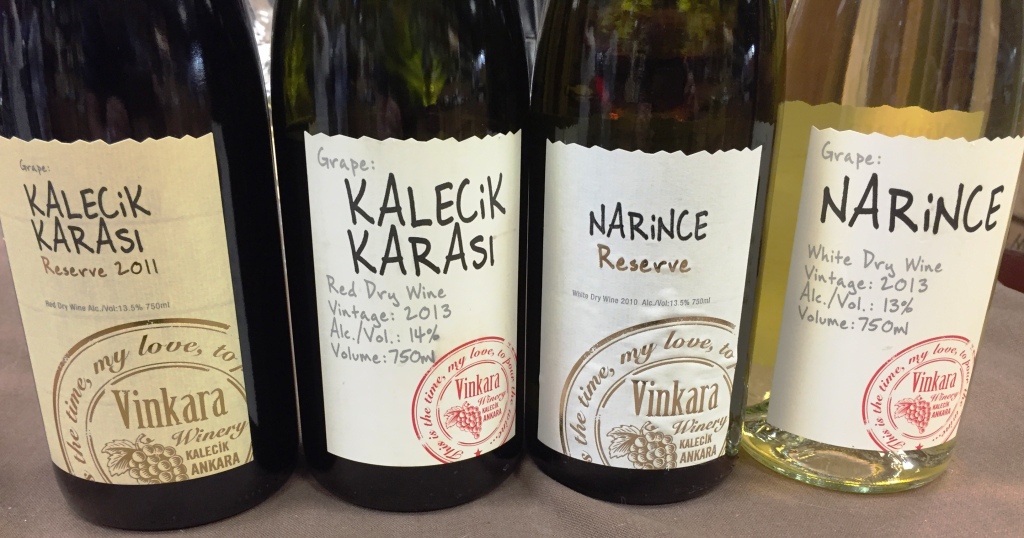
Vinkara seems to be very focused. They only grow 2 grapes, and they only make 4 wines. The two grapes are the white grape called Narince, and the red called Kalecik Karasi. As Vinkara takes great care in educating people, they are making sure you would know how to properly pronounce the names of the grapes, as they are not anything you would expect just by looking at the words themselves. As suggested on the Vinkara’s web site, Narince should be pronounced “Nah-rin-djeh, meaning “delicately” in Turkish”. And Kalecik Karasi is pronounced “Kah-le-djic-car-ah-ser as in British “Father”“. Vinkara makes two regular and two reserve wines, with both reserve wines spending 14 month in oak. I had an opportunity to taste all 4 wines, and here are my notes:
2013 Vinkara Narince Erbaa-Tokat, Turkey (13% ABV, SRP $16, 3 month resting on the lees)
C: Beautiful light yellow
N: grassy, inviting, hint of white fruit
P: touch of white fruit, refreshing, good acidity, excellent balance.
V: 8-, would gladly drink it any time
2010 Vinkara Narince Reserve Erbaa-Tokat, Turkey (13.5% ABV, SRP $28, 14 month in oak, 6 month in bottle)
C: Bright golden
N: Vanilla, butter, inviting, delicious
P: Nice acidity, touch of hazelnut, white plums, medium to full body, silky smooth, good balance
V: 7+, very nice but may be needed a bit more time in the glass to open up
2013 Vinkara Kalecik Karasi Kalecik-Ankara, Turkey (14% ABV, SRP $16, 12 month in stainless steel)
C: bright ruby
N: Touoch of spices, crushed berries, blackberries, tobacco
P: perceived lightness, medium body, long finish, good acidity, touch of ripe raspberries and smoke
V: 8-, food friendly and literally beggin for the grilled meat
2013 Vinkara Kalecik Karasi Kalecik-Ankara, Turkey (14% ABV, SRP $28, 14 month in oak, 6 month in bottle)
C: dark ruby
N: vanilla, baking spices
P: sweet cherries, soft tannins, medium body, sweet finish, touch of spices, hint of chocolate, reminiscent of Grenache
V: 7+, again it possibly needed more time to open up in the glass
As you can tell from my notes, these were definitely the wines I would gladly drink myself and offer to my guests – and the fact that they come with the story is definitely a bonus. As with any “young adults”, it is not easy to establish yourself and become noticeable. However, with the focus on education and on making good, honest, authentic wines, I think Turkish wine industry will make it just fine in this world – at least judging by Vinkara wines, they will.
Next time you are in the wine store and having an urge to try something new – ask for the Turkish wines, you might be pleasantly surprised. And leave me a comment after. Cheers!
Restaurant Files: Grand Experience at Bistro V in Greenwich, Connecticut
For the past 2 years, I had an opportunity to experience many great Connecticut restaurants, often in the group of passionate foodies (also known as bloggers), and to share those experiences with the world. Majority of our visits included food and wine, but I would say that food was always a star. Don’t get me wrong – we had a lot of wonderful cocktails and wines at most of the places we visited, but we had to connect food with wine on our own.
What would make dining experience “Grand”? To me, this is simple – proper pairing of food with the wine completely changes your dining experience. When the wine “works” with the food, the result is greater than the simple sum of two – it is totally different, elevated experience, a true celebration for your taste buds. This is exactly what I experienced at our recent visit to Bistro V & Pâtisserie in Greenwich, Connecticut. Every dish on the menu had its own wine pairing – and most importantly, not just a pairing, but very successful pairing.
Bistro V originally opened in 1980 on the busy Greenwich Avenue strip of shops and restaurants in Greenwich. In 2014, Marc and Evelyne Penvenne (originally from Burgundy, the owners of another successful Greenwich eatery, Méli-Mélo Crêperie & Juice Bar) took over the Bistro V and since then reintroduced it to their customers, maintaining dining experience as French classic as it can be.
We started our evening with the cocktail of Byrrh and Sparkling wine. Byrrh is something I never heard of before. According to Wikipedia, it is “an aromatised wine-based apéritif made of red wine, mistelle, and quinine”. Byrrh was created in 1860s, and it was very popular as an apéritif in Europe and US. It disappeared in US after the Prohibition, and was reintroduced back only in 2012. The cocktail of Byrrh and Monmousseau sparkling wine was excellent, light, refreshing and very easy to drink ( dangerously easy).


While we were enjoying our apéritif, two Hors D’oeuvres showed up, perfectly single bite size – tiny toasts with smoked salmon and similarly sized Paté toasts. Both worked extremely well with our sparkling apéritif.


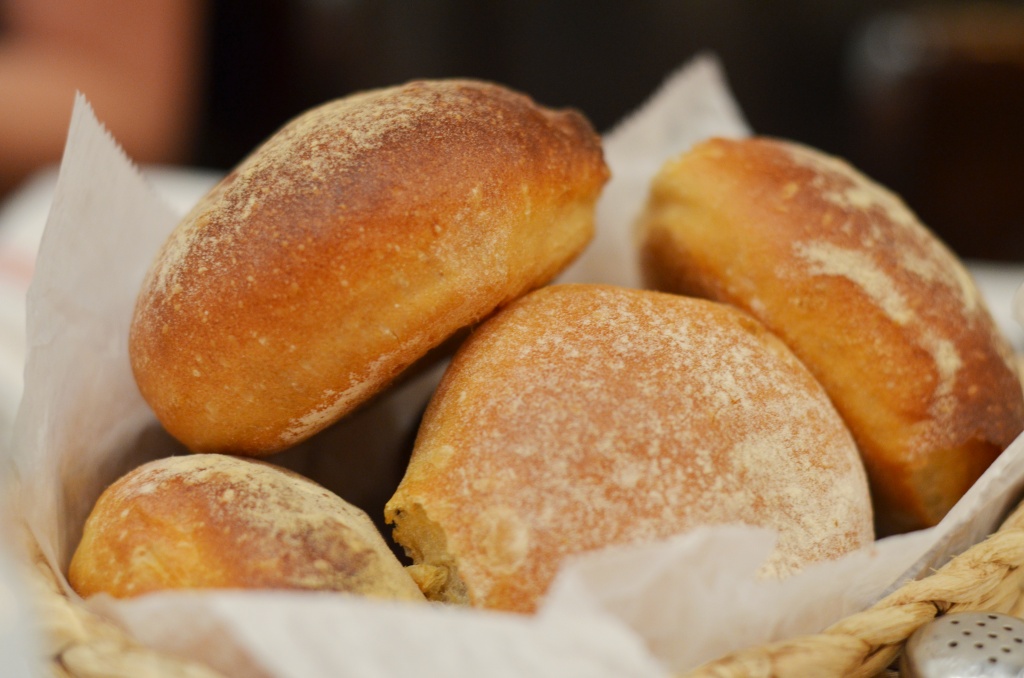
As we situated at our tables, the bread baskets arrived. It is not for nothing there is a word Pâtisserie in the name of the restaurant. Baking is an indelible part of Bistro V, and while these were not the pastries, which Bistro V is famous for (well deserves a separate post), these rolls were incredible – fresh, yeasty, comforting, crusty, warm and fuzzy feeling-inducing. Nope, can’t describe it – but this bread alone is well worth the restaurant visit.
 One fun part of been in a group of bloggers (besides the fact that no dish arriving at the table can be touched until multiple cameras with flash and without would be deployed for the good period of time – and also nobody would scream at you about using the flash) is that you get to see and do things which would be impossible if you just come to eat at the restaurant as a regular customer. For instance, to visit the kitchen. We were given an opportunity to step into the kingdom of the Executive Chef Erik Erlichson and snap a few pictures as the food was ready to be brought out – definitely a fun thing to do.
 Our dinner started with Watermelon Salad (Ricotts salata, Candy-pickled rind, pine nuts, baby arugula, lemon vinaigrette). The contrast of sweet watermelon and sharp cheese was perfect, and addition of peppery arugula and pine nuts provided both spicy undertones and the texture. The intended wine pairing was Barone Fini Pino Grigio from Veneto. I have to tell you that inner snob got in the way here, and I expressed my surprise with the Italian Pinot Grigio at the French restaurant to our server – as the result, my pour was very small and I finished it before salad arrived – I think they would work together well, but I was unable to establish that.
Our next dish was Chilled Maine Lobster (Court-Bouillon-poached, hearts of palm, radish, tomato, cilantro emulsion). With this dish, there was a slight inconsistency, which is probably unavoidable when serving tasting portions – the portions which had mostly the claws were excellent, but the other part of the body were rather chewy. But in any case, the dish paired perfectly with 2014 Domaine La Colombe Rosé, Provence, which was excellent, clean, with touch of strawberries and perfect balance.


Next up – the Iron Skillet Grilled Branzino (Shaved fennel in citrus emulsion, orange “oil”) – an outstanding presentation to begin with. Crispy skin and very tasty dish overall, with an excellent balance of flavor. Here we were first introduced to the range of wines from Lebanon. 2012 Ixsir Altitudes White, Lebanon (blend of Muscat, Viognier, Sauvignon, Sémillon) had a touch of white fruit on the nose, spicy balanced palate of white peaches and a hint of spices, overall an outstanding wine. The pairing was excellent, the wine really boosted the flavor of the dish, moving the whole experience to the next level.


Next dish was Crispy Hudson Valley Duck Breast (Salad of confit, snap peas, carrot ginger dressing) – this was simply a perfection on the plate – every component of the dish was excellent by itself and delicious together. The wine pairing was very surprising – Cabernet Sauvignon blend from France (I would rather expect to see a Pinot Noir with duck), but once again, the wine complemented the dish spot on, delivering the next level of hedonistic pleasure. “F” Cabernet Sauvignon by Dave Phinney, France (15% ABV) had nice red fruit, touch of herbs, dark fruit on the palate, mint, touch of earthiness, nice spice and excellent balance, making the high ABV absolutely unnoticeable.


At this point in the dinner my relationship with the server completely restored after the Pinot Grigio fiasco, and I got to taste the wine which was not a part of the wine program for the evening – 2012 Ixsir Altitudes Rosé, Lebanon, a blend of Syrah and Caladoc (a new grape for me!) which was excellent, crisp, with strawberries on the palate and clean acidity, very refreshing.
Question: have you come across a new phenomenon (for me, at least) – a natural mineral water from Bordeaux? I saw one recently at the wine store, and we got to taste one at the restaurant – we had Ô Muse Grand Cru de l’Eau Natural Mineral Water from Bordeaux, both still and sparkling. I wouldn’t claim that I noticed any difference with any other regular or sparkling water, but I still wanted to mention this as we should expect to see those more often.


Let’s get back to food. While all the dishes were outstanding, I still had a favorite of the evening – Versailles Steak Tartar (Filer Mignon pf grass-fed beef, house sauce, traditional condiments, baguette toasts) – my notes only say “wow! wow!” – do I need to say more? This dish was a fiesta of flavor, simply spectacular. If you like Steak tartar, you owe it to yourself to come and experience it at Bistro V. The wine pairing was absolutely spectacular as well. 2010 Ixsir Altitudes Cabernet Blend, Lebanon (blend of Cabernet Sauvignon, Syrah, Caladoc, Tempranillo) had the nose of herbs, tobacco, smoke and red fruit. The palate was concentrated, with the nice tannins, dark fruit, firm and well structured – an excellent wine overall.


Our dessert was very simple, but uniquely refreshing and delicious – Chilled Fruit Soup (Cedric’s frozen yogurt). It also paired perfectly with Pineau de Charentes, a fortified wine made from the lightly fermented grape must with addition of neutral Cognac brandy.


At the end of the evening, we had an opportunity to thank Executive Chef Erik Erlichson for the delicious meal and inundate him with questions.
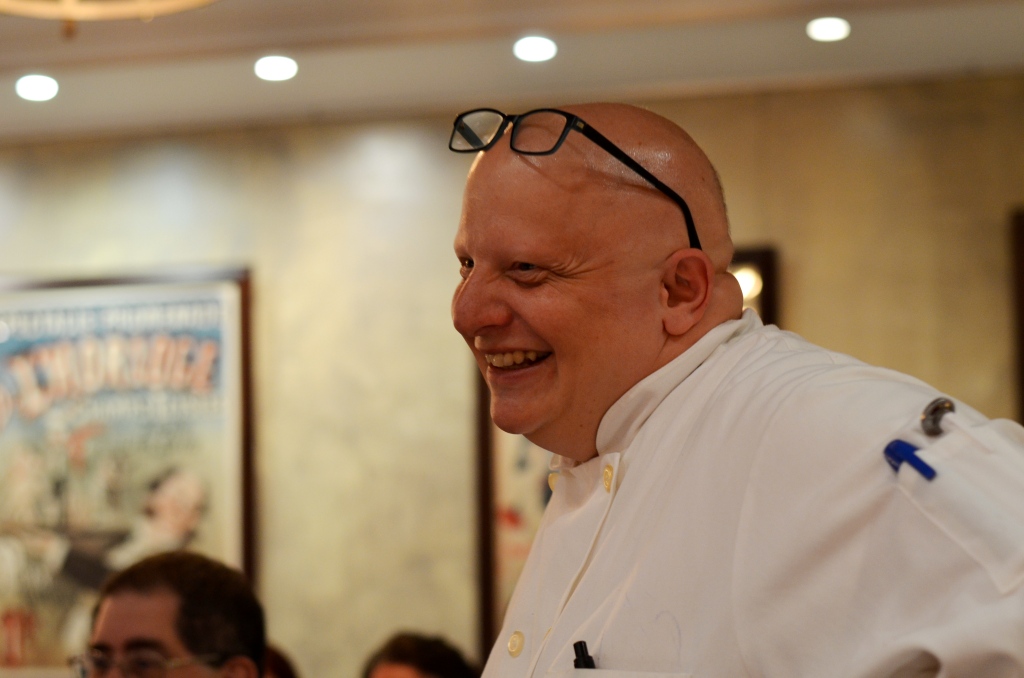 There you have it, my friends – Grand Experience at the Bistro V in Greenwich, Connecticut. If you live in the area or plan to visit, I highly recommend you will make Bistro V a part of your dining plans. Cheers!
Bistro V
339 Greenwich Avenue
Greenwich, CT 06
Phone: 203-661-6634
New Zealand, Familiar and Not
 Here is your motivational quote of the day: “open your mind, and discovery will follow”. If you are wondering what the heck is wrong with this Talkavino guy starting the wine post with motivational quote, read on, I will explain.
Today we will be talking about the wines of New Zealand. What is the first wine which comes to mind when you think “New Zealand”? Don’t know about you, but for me it is a Sauvignon Blanc. Closely followed by Pinot Noir. But then there is beautiful Chardonnay, and Bordeaux blends, and Riesling – please, don’t forget the Riesling!
Two weeks ago I attended the New Zealand wine tasting event in New York. The event consisted of the seminar and the tasting, so below you will find my notes from both. But before I will inundate you with the wines and the tasting notes, let me share some general thoughts.
New Zealand wine industry is relatively young. First Sauvignon Blanc was planted in 1973, and first commercial release took place in 1979. [However, the first vines were planted in New Zealand in 1819, and in 1881 Pinot Noir from Central Otago got gold medal in the “Burgundy” category at the wine show in Sydney – but let’s leave it aside for now]. Through the 1980s, Cloudy Bay found its magic, and New Zealand wines spread out throughout the world (definitely in US). The New Zealand wine export had been growing steadily for many years, from 30M gallons of wine in 2009 to the 44M gallons in 2013, also reaching almost US $1B in revenues in 2013. Also, a lot of New Zealand wineries utilize sustainable winemaking methods and use organic grapes (you can read more here).
What I also sense from reading the blogs and listening to the experts is that the New Zealand winemakers are feeling constrained by what they already achieved and are trying to break the boundaries. Few simple facts for you. There are 11 defined wine regions in New Zealand. However, many winemakers believe that this is not enough, and want to define the sub-regions with much smaller boundaries. Such sub-regions are not yet official [I might stand corrected here – according to the New Zealand wine web site, the sub-regions are defined, but I still don’t know how widespread or how official those designations are], but on many labels you can already see designations for the sub-regions, such as Awatere or Waihopai in Marlborough, or Pisa in Central Otago. Different soils, different micro-climates, different terroirs, if you will – all lead to production of stylistically different wines coming from the different areas of the same bigger region.
There is more to this “breaking the boundaries”. New Zealand wine is not only a Sauvignon Blanc and Pinot Noir. There are Syrah, Merlot, Pinot Gris, Chardonnay and even Grüner Veltliner and Chenin Blanc wines which are shining. And even familiar Sauvignon Blanc is taking to the totally new territories, by using oak and not only – which leads us to the seminar, so we can finally talk wines.
The seminar was very interesting. It was done in the unusual format. There was no classroom with a head table and presenters. There was a big roundtable (well, it was actually a square), with presenters and winemakers sitting around the room among the participants. But this was not the most unique characteristic of the event. There were 9 Sauvignon Blanc wines presented in the event. And all 9 were … oaked. With the various degree, but yes, all Sauvignon Blanc wines went through some oak ageing process. There was also a 7 years old Sauvignon Blanc wine, which was quite unique for me. All in all, it was very different and interesting. Was it successful? I will defer you to my notes below. Here we go.
2014 Amisfield Sauvignon Blanc Central Otago (SRP $20)
C: pale straw
N: fresh cut grass, very restrained, lemon notes, minerality, touch of sapidity, interesting complexity.
P: tremendous acidity, more of a Muscadet style, lots of minerality, food wine (oysters!)
V: nice and restrained, Drinkability: 8-
2014 Nautilus Sauvignon Blanc Marlboro (SRP $17.99)
C: light straw, greenish
N: concentrated green notes, more of a fresh vegetables greens in the garden than grass. Touch of sweetness after swirling the glass.
P: very restrained, complex, salinity, white stone fruit, acidity on the finish.
V: Drinkability: 7+
2014 Huia Sauvignon Blanc Marlboro (SRP $19)
C: pale straw
N: hint of gasoline – disappeared after intense swirling. Touch of white fruit, restrained. Hint of lemon. Overall, nose is not very pronounced.
P: tremendous acidity, hint of Granny Smith apples
V: wine finishes nowhere, lacking conclusion. Drinkability: 7-
2014 Neudorf Sauvignon Blanc Nelson (SRP $17.95)
C: light straw yellow
N: non-typical. But may be a distant hint of grass.
P: lemon, fresh, supple, good acidity, nice textural presence. Still, tremendous amount of acidity is coming through, plus tannins in the finish!
V: Drinkability: 7+, okay wine
2014 Craggy Range Te Muna Road Sauvignon Blanc Marlboro (SRP $28.99)
C: pale yellow
N: touch of vanilla, touch of tropical fruit, hint of grapefruit
P: great complexity, restrained, guava, lemon, minerality, grass, touch of tannins, but it is well integrated.
V: Drinkability: 7+
2013 Seresin Marama Sauvignon Blanc Marlboro (SRP $40)
C: light yellow
N: butter, vanilla, butterscotch- wow, is this is a Chard? Pronounced, concentrated flavors!
P: vanilla, butter, more akin to a butterscotch candy, fresh and exuberant! The clearest expression of butterscotch candy of any wines I ever had (bold, I know)
V: it gets 8 (or even 8+) as a Chardonnay and 6 as Sauvignon Blanc. I would be glad to drink this wine – just don’t tell me what it is.
2013 Trinity Hill Sauvignon Blanc Hawke’s Bay (SRP $16.99)
C: light straw yellow
N: very inexpressive. Whatever I think I smell, is a product of my imagination. After 5 minutes of swirling, grass showed up, more of a typical expected SB. Still Very restrained.
P: nice acidity, good with oysters, nice touch of white fruit, fresh and clean
V: Drinkability: 7
2012 Pegasus Bay Sauvignon Blanc Waipara Valley (SRP $28)
C: pale straw yellow
N: complex aromatics, touch of oak, elevated white fruit (apples, hint of tropical fruit). One of the best on the nose so far. Distant hint of grass
P: Elegant, fresh, well integrated acidity, apples
V: one of the best in the tasting. Drinkability: 8-
2008 Mahi Ballot Block Sauvignon Blanc Marlborough (SRP $24)
C: light yellow, doesn’t show the age at all
N: some vegetative notes and fresh salami (yes, you can unfollow me if you want). Some distant resemblance of fruit. On a second thought, it has a Chablis-like minerality. The sausage is off, Chablis is in.
P: most elegant palate in the tasting. Acidity definitely wore off, but the wine is elegant, complex, mellow, just an interesting wine in the style of nicely aged white Rhône.
V: best of the tasting. Very round and elegant. Drinkability: 8.
And then there was a tasting. I didn’t get an opportunity to taste all the wines. Also, as you would expect, I liked some wines more than the others. Thus below are the wines which I liked the most from what I tasted. Oh wait, I still have to explain myself with that “open your mind” intro. Let me do it now, the story is rather simple.
What flavors do you typically associate with the Sauvignon Blanc? Grass? Check. Lemon? Check. Grapefruit? Check. Gooseberry? As Chris Kassel mentioned recently, most of the people who didn’t live in Europe have no idea how Gooseberry smells or tastes, but okay. Check. Some white tropical fruit? Possible and Check. But what about Black Currant? I don’t know about you, but I don’t associate red or black berry aromas with Sauvignon Blanc. But – black currant is one of the main characteristic aromas of Cabernet Sauvignon. And Sauvignon Blanc is a parent of Cabernet Sauvignon. Thus when I heard from one of the hosts talking about the wine “beautiful black currant aroma”, that was a nail on the head! Yes – exactly – the revelation – forget the damn Gooseberry, just open your mind (talking to myself) and understand that black fruit can be associated with white wine (I’m sure the opposite is true). I would honestly say this was my main discovery of the tasting, the revelation.
Now let’s get back to wines. My absolute favorites where Sophora Sparkling wines (simply a wow and an incredible QPR), Syrah from Elephant Hill, Chenin Blanc from Astrolabe, Sauvignon Blanc from Saint Clair, Doctors Grüner Veltliner and Lake Chalis lightly fizzed Sauvignon Blanc – all shown in blue below. But all in all, lots of delicious wines in the tasting. All prices are suggested retail as listed in the brochure. Let’s go:


2014 Amisfield Sauvignon Blanc Pisa, Otago ($20) – +++, clean, restrained
2013 Amisfield Pinot Gris Pisa, Otago ($25) – +++, nice touch of oak
2011 Amisfied Pinot Noir Pisa, Otago ($35) – ++1/2, nice balance, still needs time
2012 Amisfied Pinot Noir Pisa, Otago ($35) – +++, elegant, round, touch of green notes
2014 Ara Pathway Sauvignon Blanc Waihopai, Marlborough ($16.99) – +++, very good, traditional
2013 Ara Pathway Pinot Noir Waihopai, Marlborough ($18.99) – ++1/2, nice, clean
2014 Ara Single Estate Sauvignon Blanc Waihopai, Marlborough ($19.99) – +++, clean, balanced
2013 Ara Single Estate Pinot Noir Waihopai, Marlborough ($23.99) – ++1/2, very good, tannins, needs time
2012 Astrolabe Province Sauvignon Blanc Marlborough ($23) – +++, excellent, black currant, perfect balance
2014 Astrolabe Province Pinot Gris Marlborough ($23) – +++, beautiful aromatics
2012 Astrolabe Province Pinot Noir Marlborough ($28) – +++1/2, excellent!! Best of tatsing?
2013 Astrolabe Vineyards Chenin Blanc Wrekin Vineyard Southern Valleys, Marlborough ($22) – +++, concentrated, Vouvray-like, excellent, creamy
NV Sophora Sparkling Rosé Hawke’s Bay ($16) – +++, wow! beautiful – aromatics and structure of the classic Chgampagne. Outstanding QPR
NV Sophora Sparkling Cuvée Hawke’s Bay ($16) – +++, equally excellent as the previous wine
2012 Domaine-Thomson Surveyor Thomson Single Vineyard Pinot Noir Lowburn, Otago ($44) – ++1/2
2011 Domaine-Thomson Surveyor Thomson Single Vineyard Pinot Noir Lowburn, Otago ($44) – +++, excellent!
2013 Elephant Hill Syrah Hawke’s Bay ($28) – ++++, spectacular! An absolute precision of Syrah with peppery profile
2014 Fire Road Sauvignon Blanc Marlboro ($13) – ++1/2, nice, simple, balanced
2013 Fire Road Pinot Noir Marlboro ($15) – ++1/2, probably best QPR at the tasting
2013 Doctors Grüner Veltliner Marlborough ($18) – +++, touch of petrol, nice
2014 Doctors Sauvignon Blanc Marlborough ($18) – +++, nice, clean, good acidity
2013 Seifried Pinot Gris Nelson ($18) – ++1/2, clean, nice
2012 Seifried Riesling Nelson ($18) – +++, petrol, beautiful
2013 Maimai Syrah Hawke’s Bay ($20) – +++, excellent, dark
2014 Lake Chalis Cracklin’ Savie Sauvignon Blanc Marlborough ($18) – +++1/2, beautiful, fresh, lightly fizzed, very unique. Similar to Moscato in creaminess, but dry
2014 Lake Chalis Sauvignon Blanc Marlborough ($18) – +++, perfect, black currant, beautiful!
2014 Saint Clair Family Estate Sauvignon Blanc Marlborough ($17.99) – +++, beautiful balance
2014 Saint Clair Pioneer Block 18 Snap Block Sauvignon Blanc Marlborough ($26.99) – +++, interesting complexity
2012 Saint Clair Wairau Reserve Sauvignon Blanc Wairau, Marlborough ($31.99) – +++1/2, very complex, very unusual
2012 Saint Clair Pioneer Block 16 Pinot Noir Awatere, Marlborough ($17.99) – +++, Oregon-like, very elegant
And we are done here. What do you think of New Zealand wines? What are your favorites? Did you ever associated Sauvignon Blanc aromas with black currant? Until the next time – cheers!
Seeing The World Through The Pink Glasses
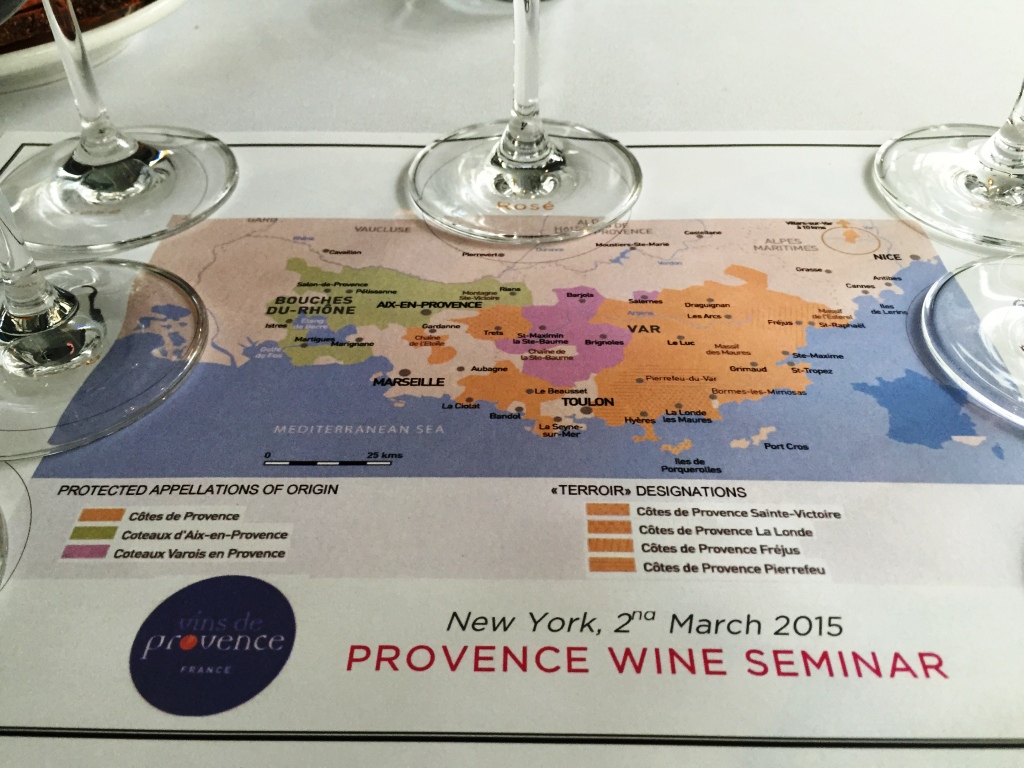 What do you think we will be talking about today? Typically the “pink glasses” is just an expression, an allegory; we use it to say that all is good in the world. But sometimes those allegories can materialize, for instance, in the form of Rosé tasting.
Rosé is Rosé is Rosé. Rosé wines became extremely popular over the last 3–4 years. Nowadays, almost every winery I know of added at least one Rosé to their repertoire, if anything, to be available at least in the tasting room. But then there are those who started it all, for whom Rosé is a way of life and not just following the fashion and consumer demand. I’m sure that by now you figured that I’m talking about Rosé wines from Provence in France.
The Provence wine tasting I attended a few weeks more than two month ago was dedicated to all of the wines made in Provence, not just Rosé. However, if we will look at the stats of wine production in Provence, 89% of those wines are Rosé, 7.5% are red, and 3.5% are white, so it is no wonder that Provence is typically associated with Rosé. Total wine production in Provence in 2014 was about 177 million bottles. To give you more numbers, there are about 600 producers and 40 negociants in Provence. Overall, 9% of the wines produced in the world are Rosé, with the general trend of producing drier wines (particularly Provence Rosé has less than 4g of residual sugar per liter of wine). Provence is the largest region in the world dedicated to production of the Rosé wines. Also, France is the biggest producer and consumer of the Rosé wines, and U.S. is the biggest consumer of Rosé outside of France.
Provence was a cradle of winemaking in France, starting from the 600 B.C. in the area around Marseille. It is easy to understand why the wines were “rosé” in its style – maceration in contact with skin was simply not used, so the wine was produced from the juice which the grapes were “bleeding” after harvest, which would have a pinkish color. Today, the Rosé is produced in the very similar way as for the thousands of years, allowing only brief period of the skin contact. Most of the Provence Rosé are produced from Grenache, Cinsault, Mourvèdre, Tibouren, Carignan and Cabernet Sauvignon.
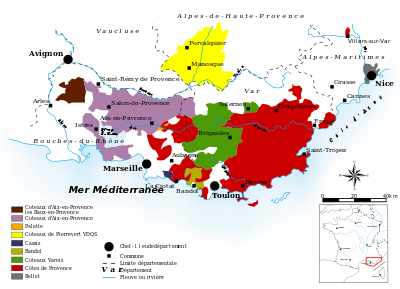
Provence Appellations. Source: Wikipedia
There are three main appellations in Provence, and one of those main appellations has four sub-appellations (you can see them on the map):
- Côtes de Provence AOP
- Côtes de Provence Sainte-Victoire AOP
- Côtes de Provence Fréus AOP
- Côtes de Provence La Londe AOP
- Côtes de Provence Pierrefeu AOP (First vintage in 2013)
- Coteaux d’Aix-en-Provence AOP
- Coteaux Varois en Provence AOP
Now, let’s talk about the seminar and tasting. In the seminar, we tasted 5 different Rosé wines from the different sub-appellations, as well as two reds. To be entirely honest, I didn’t find the dramatic differences between the wines from the different appellations – they were all Rosé wines, and I liked most of them (I’m a sucker for a good Rosé).
Here are my notes, which will give you some level of details:
2014 Château Trains Organic Côtes Varois de Provence (SRP $15, Grenache, Cinsault, Syrah)
C: Pink
N: hint of sweetness, strawberries, intense
P: Dry, tart strawberries, lemon, acidity
V: Pleasant, round, Drinkability: 8-
2014 Château Coussin Cuvée César Côtes de Provence Sainte-Victoire (SRP $45, 75% Grenache, 25% Syrah)
C: Pink
N: Gentle, savory, minerality, onion peel after intense swirl
P: Dry, intense acidity, very clean, beautiful fruit, perfect balance.
V: Nice, clean, very elegant. Drinkability: 8
2014 Château Pas du Cerf (SRP $13.99, Grenache, Syrah, Tibouren)
C: intense pink
N: touch of strawberries, onion peel
P: refreshing, good amount of fruit, ripe strawberries, good balance, full body ( for rose), minerality
V: Very good, Drinkability: 8-
2014 Château Pigoudet Classic Coteaux d’Aix-en-Provence (SRP $17, Grenache, Cinsault, Ugni Blanc)
C: almost white
N: delicious, intense, white flowers, fresh
P: clean, crisp, vibrant, good finish, very pleasant aftertaste
V: Drinkability: 8-
2014 Château Roubine Cru Classé Cuvée Premium (Cinsault, Grenache, Cabernet Sauvignon, Carignan, Tibouren, Syrah, Mourvedre)
C: intense pink
N: strawberries, minerality, onion peel
P: lots of fruit, ripe strawberries, full body, excellent finish
V: Drinkability: 8
2011 Château La Mascaronne Rouge Faziole Côtes de Provence (SRP $25, Syrah, Mourvedre)
C: garnet
N: pepper, spices, herbs, tobacco – beautiful
P: same profile as on the nose – intense pepper, sage, herbs and mineral dominated, has lightness and leaves you desiring another glass. Might not be for everyone
V: Drinkability: 8+
2001 Château de Pourcieux Grand Millésime Côtes de Provence (Syrah, Grenache)
C: garnet
N: soft, touch of plume
P: subtle flavors meld well together, nice package overall
V: Drinkability: 7+/8-
The tasting consisted of 65 different wines, out of which one was white, 7 were red, the the rest (57) were Rosé. What I really liked about this tasting was a very unique format. Nobody was pouring the wines for you. All the wines were standing on the tables in the middle of the room, each wine having a sticker with the number on it. All the numbers were corresponding to the wine descriptions in the tasting booklet. Everybody were walking around and pouring the wines for themselves. The winery representative were all on hand, available to answer any questions. However, because of self pour, there was no need to wait for anyone to pour the wine for you, no need to stand there for 2 minutes, patiently waiting until the person pouring wine would finally notice you – here you could go at your own pace, and it was really convenient. I like this system a lot more than a traditional tasting.


For what it worth, below are my notes. I didn’t taste all 65 wines, but it was something close to it. I used my traditional tasting event rating system with the “+” signs, where “+++” means an excellent and highly recommended wine. All the wines listed below have at least “+++” rating, with the few even exceeding that. I also included additional comments where I had them. Grape composition is provided for all the wines, and suggested retail prices are indicated were available. Lastly, all the wines which don’t specify AOP come from the Côtes de Provence – all other appellations are included as part of the names. Here we go:
Rosé:
2014 Château du Galoupet Cru Classé (Cinsault, Grenache, Syrah, Mourvedre, Tibouren) – +++, very good, balanced
2014 Château de Landue (Cinsault, Grenache, Syrah) – +++
2014 Château La Jeanette Fleurs Côtes de Provence La Londe (Chnsault, Grenache, Syrah) – +++. excellent, round
2014 Château Saint Maur Cru Classé Clos de Capeluine (Grenache, Cinsault, Mourvedre, Rolle) – +++, complex
2014 Château Saint Maur Cru Classé L’Excellence (Grenache, Cinsault, Mourvedre, Rolle) – +++, clean, crisp
2014 Château Les Valentines Organic (SRP $26, Grenache, Cinsault) – +++, beautiful finish
2014 Château Les Valentines Le Caprice de Clémentine (SRP $18, Grenache, Cinsault) – +++1/2, excellent!
2014 Château Des Bormettes Les Vins Bréban (Cinsault, Grenache, Syrah) – +++
2014 Château de Pampelonne Maitres Vignerons de Saint Tropez (SRP $20, Grenache, Cinsault, Syrah, Tibouren) – +++, excellent!
2013 Domaines Sacha Lichine Château D’Esclans Garrus (Grenache, Rolle) – 8+, very interesting, delicious complexity
2014 Château de Brigue (SRP $13.50, 35% Mourvedre, 15% Cinsault, 30% Grenache) – +++
2014 Château de Brigue Signature (SRP $17.50% Grenache, 30% Syrah, 20% Tibouren) – +++
2014 Château de Saint Martin Eternelle Favorite Cru Classé (SRP $25, Cinsault, Grenache, Tibouren) – +++, excellent, crisp
2014 Château de Saint Martin Grande Réserve Cru Classé (SRP $20, Cinsault, Grenache, Tibouren, Syrah, Carignan) – +++, dry, fresh
2014 Domaine de L’Amaurigue (Grenache, Cinsault, Syrah) – +++
2014 Domaine de L’Amaurigue Fleur de L’Amaurigue (Grenache, Cinsault) – +++
2014 Estandon Vignerons Estandon (SRP $13, Grenache, Cinsault, Syrah) – +++, nice balance
2014 Château L’Arnaude Nuit Blanche (50% Cinsault, 35% Grenache, 10% Carignan, 5% Rolle) – +++
2014 Château Roubine Cru Classé Cuvée “R” (Grenache, Syrah, Cinsault) – +++
2014 Domaine Clos de L’ours Grizzly Rosé (Syrah, Grenache, Cinsault, Carignan, Mourvedre, Rolle) – +++
2014 Estadon Vignerons Terres de Saint Louis Côtes Varois de Provence (SRP $12, Grenache, Cinsault, Syrah) – +++
2014 Famille Quiot Domaine Houchart (SRP $15, Grenache, Cinsault, Syrah, Cabernet Sauvignon) – +++
2014 Famille Quiot Domaine Houchart Côtes de Provence Sainte-Victoire (SRP $20, Grenache, Syrah, Mourvedre) – +++1/2, excellent, round
2014 Château Pigoudet Premiére Coteaux d’Aix-en-Provence (SRP $13, Grenache, Cinsault, Cabernet Sauvignon, Syrah) – +++
2014 Château Vignelaure Coteaux d’Aix-en-Provence (Grenache, Syrah, Cabernet Sauvignon) – +++
2014 Château Vignelaure Source de Vignelaure Coteaux d’Aix-en-Provence (Grenache, Cinsault, Syrah, Cabernet Sauvignon) – +++
2014 Château Beaulieu Gassier en Provence Coteaux d’Aix-en-Provence (SRP $16.99, Grenache, Cabernet Sauvignon, Syrah, Cinsault) – +++
2014 Les Quatre Tours “Classique” Coteaux d’Aix-en-Provence (SRP $17, 50% Grenache, 25% Syrah, 15% Cabernet Sauvignon, 10% Rolle) – +++
2014 Maison Saint Aix Coteaux d’Aix-en-Provence (SRP $18-$20, Grenache, Syrah, Cinsault) – +++


White:
2014 Domaine Terre de Mistral Anna Côtes de Provence (Rolle) – +++, nice complexity
Red:
2012 Château Réal d’Or (Cabernet Sauvignon, Grenache, Syrah) – +++, perfect Cab!
2013 Domaine Clos de L’ours Grizzly Red Côtes de Provence (Syrah, Grenache, Mourvedre) – +++, yummy, open, pepper!
2012 Domaine Longue Tubi Red (Syrah, Cabernet Sauvignon) – +++, delicious
All in all, this was an excellent tasting. I don’t know if there is ever a bad year in Provence, but I definitely liked lots of 2014 Rosé, and I think you will too. Also, if you will have an opportunity to try a Provence Red – don’t miss it, those wines are definitely worth your attention. Happy Provence Rosé (and red) hunting! Cheers!
Last Bottle Sign Up ($10 credit)




 Talk-A-Vino