Archive
2023 UGCB Vintage Preview – Classic
 “Classic”.
“Normal”.
This is practically a tradition for me to start the year with the Bordeaux tasting – a UGCB new vintage preview. The Union des Grands Crus de Bordeaux (UGCB) is a market organization representing Grand Cru wineries (Chateaux) in Bordeaux. UGCB currently has 131 members and focuses on the promotion of Bordeaux Grand Cru wines around the world, organizing more than 100 events in 15+ countries.
I had been coming to these events for quite a few years by now, and I always make an effort to ask one question of the winemakers – “How was the vintage”? Among responses, I had an interesting range of opinions, with some of the answers even contradicting each other. For example, one of the winemakers said that they lost 35% of the crop due to the mildew. However, nobody else seems to have the same problem, even within the same appellation.
But no matter what, there seems to be a consensus to call this vintage “classic”, or “normal”, as some people referred to it. There was a good amount of rain in the spring, with even growing conditions throughout the summer and harvest in the fall. So the 2023 Bordeaux shall be known as Classic. My general impressions of the tasting also confirm this designation – I would call the majority of the wines I tasted “a classic Bordeaux”.
The wines below represent the list of favorites, the wines that were drinkable right now, or may be after a short decanting. Where 2022 was mostly ready to drink right away, 2023 being “classic” will definitely benefit from the time in the cellar as it has acidity and structure to build upon. But hey, you will be the judge of it.

Now, to the wines I enjoyed in the tasting:


Pessac-Léognan (the only Grand Cru region in Bordeaux producing both white and red wines). Most of the whites I tried were delicious. The reds were mostly on the leaner side, but overall nice and “classic”.
2023 Château Carbonnieux Blanc Pessac-Léognan
2023 Château Les Carmes Haut-Brion Rouge Pessac-Léognan (’22)
2023 Domaine de Chevalier Blanc Pessac-Léognan (’21, ’22) – probably the most favorite among the whites
2023 Domaine de Chevalier Rouge Pessac-Léognan (’21, ’22) – one of the top red favorites, ready to drink now
2023 Château de Fiuzal Blanc Pessac-Léognan (’21, ’22)
2023 Château de Fiuzal Rouge Pessac-Léognan (’22)
2023 Château Larrivet Haut-Brion Blanc Pessac-Léognan
2023 Château Larrivet Haut-Brion Rouge Pessac-Léognan
2023 Château Latour-Martillac Blanc Pessac-Léognan (’22)
2023 Château Malartic-Lagravière Blanc Pessac-Léognan (’21)
2023 Château Smith Haut Lafitte Blanc Pessac-Léognan – my second favorite white wine. Bright and beautiful.
2023 Château Smith Haut Lafitte Rouge Pessac-Léognan


Margaux
For the first time in many years, this was my favorite region in the tasting. The wines were mostly well-balanced without killing the palate with a tannin attack, as many others did.
2023 Château Brane-Cantenac Margaux (’21, ’22)
2023 Château Cantenac Brown Margaux
2023 Château Dauzac Margaux
2023 Château Giscours Margaux
2023 Château Kirwan Margaux
2023 Château Lascombes Margaux (’22)
2023 Château Rauzan-Ségla Margaux (’21)
2023 Château du Tertre Margaux
Pauillac
I guess I gravitate to Pauillac – almost every one had been on my favorite list for several years in a row. Second favorite group after Margaux.
2023 Château Batailley Pauillac (’21, ’22)
2023 Château Clerc Milon Pauillac (’21, ’22)
2023 Château d’Armailhac Pauillac (’21, ’22)
2023 Château Duhart-Milon Pauillac (’21, ’22)
2023 Château Grand-Puy Ducasse Pauillac (’21, ’22)
2023 Château Haut-Batailley Pauillac (’21, ’22)
2023 Château Lynch-Bages Pauillac (’21, ’22)
2023 Château Lynch-Moussas Pauillac (’22)
2023 Château Pichon BaronPauillac (’22)
Listrac-Médoc
2023 Château Fourcas Dupré Listrac-Médoc
2023 Château Fourcas Hosten Listrac-Médoc


Haut-Médoc
2023 Château Cantemerle Haut-Médoc
2023 Château Coufran Haut-Médoc – love the winemaker’s philosophy – Bordeaux needs to be released aged. 2009 and 2011 vintages are the current vintages sold in the US, 2007 is in the UK.
Pomerol
2023 Château Le Gay Pomerol (’21, ’22)
2023 Château Gazin Pomerol
2023 Château Rouget Pomerol – the only wine in Bordeaux made by a Burgundy guy – according to the winemaker, the Burgundy guy himself.
Saint-Émilion
2023 Chateau Valandraud Saint-Émilion (’21, ’22)
Saint-Estèphe
2023 Château Phélan Ségur Saint-Estèphe (’21, ’22)
2023 Château Ormes De Pez Saint-Estèphe
Saint-Julien
2023 Château Beychevelle Saint-Julien (’21)
2023 Château Léoville Barton Saint-Julien (’21, ’22)
2023 Château Léoville Poyferré Saint-Julien (’21, ’22)
2023 Château Saint-Pierre Saint-Julien (’21)


Sauternes and Barsac
This category was scarcely populated, with only 5 producers presented. When I asked about the vintage, everyone said with an ear-to-ear smile, “Perfect!”. And yet only 2 of 5 wines (below) were perfectly balanced, with cleansing acidity on the finish; the other 3 had a wonderful burst of bright sugar, without acidity on the finish to ever bring the wine to balance.
2023 Château Bastor-Lamontagne Sauternes (’21, ’22)
2023 Château Coutet Barsac
There you are, my friends. The 2023 Bordeaux Grand Cru vintage – The Classic. Cellar it. Or drink it. It is a classic, so unless you can wait for another 40-50 years, just drink it now. Well, maybe decant some of the bottles first.
Ohh, and don’t forget to save some room in your cellars for ’24 and ’25, both mentioned with lots of emotion and pride as something “special”… Let’s just wait one year…
For the Love of Madeira
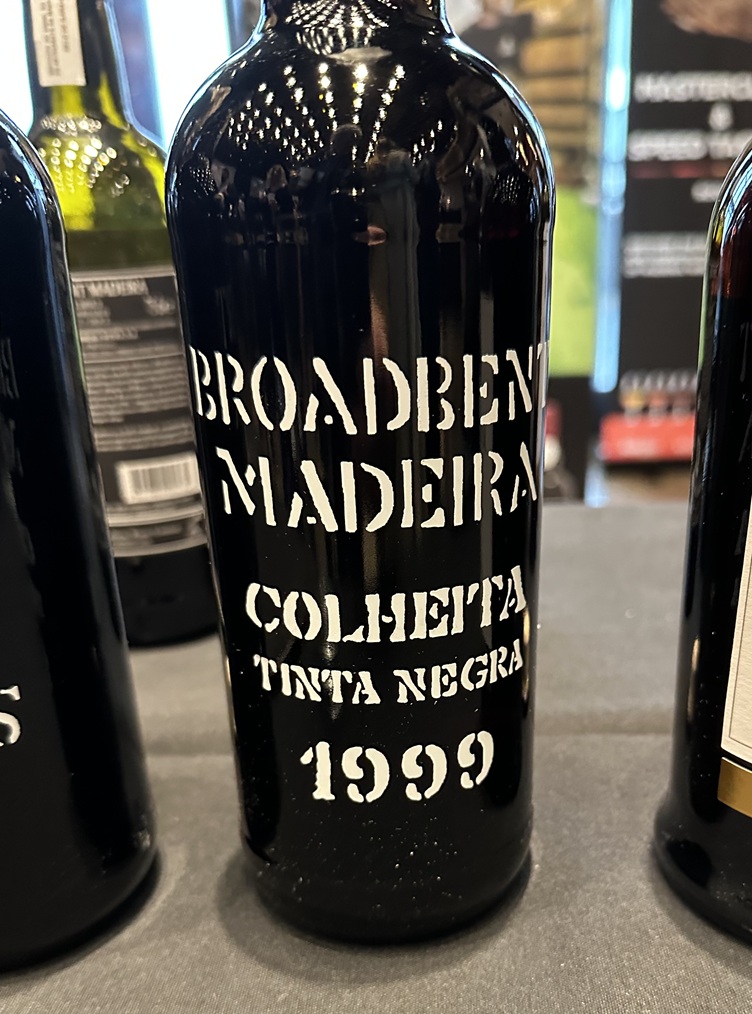 If I were to offer you a glass of Madeira, what would you say?
Okay, let’s take it up a notch: I assure you it will be a good Madeira.
Would you gladly accept it, or would you energetically decline?
I’m betting about 80% on the latter. And if you like wine, that would be simply your loss. But if you are in that 20%, accepting that glass of good Madeira would be a very wise decision.
Madeira has a long history of ups and downs, similar to many other wines. I wrote about Madeira a few times in the past (not enough!), so let me be obnoxious and quote one of my older posts about the history of Madeira.
Madeira wine takes its name from Madeira Island in Portugal. The history of Madeira, which started around the 15th century, is full of accidental discoveries, glory, overcoming of the hardship, rise and fall, and even love – if you are interested in the full story, you should take a look at the Madeira Wine website. In the 15th / 16th centuries, Madeira wine was created when wine was transported in barrels through the ocean to far away places such as India and China. It was found ( by accident, of course) that a long ocean voyage improves the taste of wine compared to the original one that went into the barrel. After many trial-and-error experiments, it became apparent that prolonged exposure to the warm weather was the culprit, and then the method of heating the wine up to 60°C (140°F) was invented. The process of heating up the wine is called Estufagem, and it is done after the wine is fermented in the oak barrels, same as any other wine – again, you can find more details online – you can find less colorful but more technical details on Wikipedia (click here). Just to give you a few more details from Madeira’s history, trade embargoes led to further improving Madeira by adding brandy spirits in order to preserve the wine. Barrels of Madeira left for a prolonged time under the rain led to the development of the new style of Madeira wine, called Rainwater.
In the 18th century, Madeira was one of the most popular wines in the world, especially in England and the United States. Madeira was used to toast the United States Declaration of Independence, and was highly regarded as a drink of distinction. Unfortunately, first mildew and then phylloxera epidemic delivered a way too powerful one-two punch, which the Madeira wine industry was unable to overcome. Madeira subsided to nearly a cooking wine level, and stayed like that for a long time. Luckily, overall uptake on the wine industry throughout the world helps to revive the Madeira industry, and now it is becoming possible to find a great drinking Madeira even in the US – and you will see why. And I have to note that one of the great qualities of Madeira is in the fact that, unlike practically any other wine, once you open a bottle of Madeira, it will stay the same more or less indefinitely, due to both the Estufagem method and fortification with the spirit.
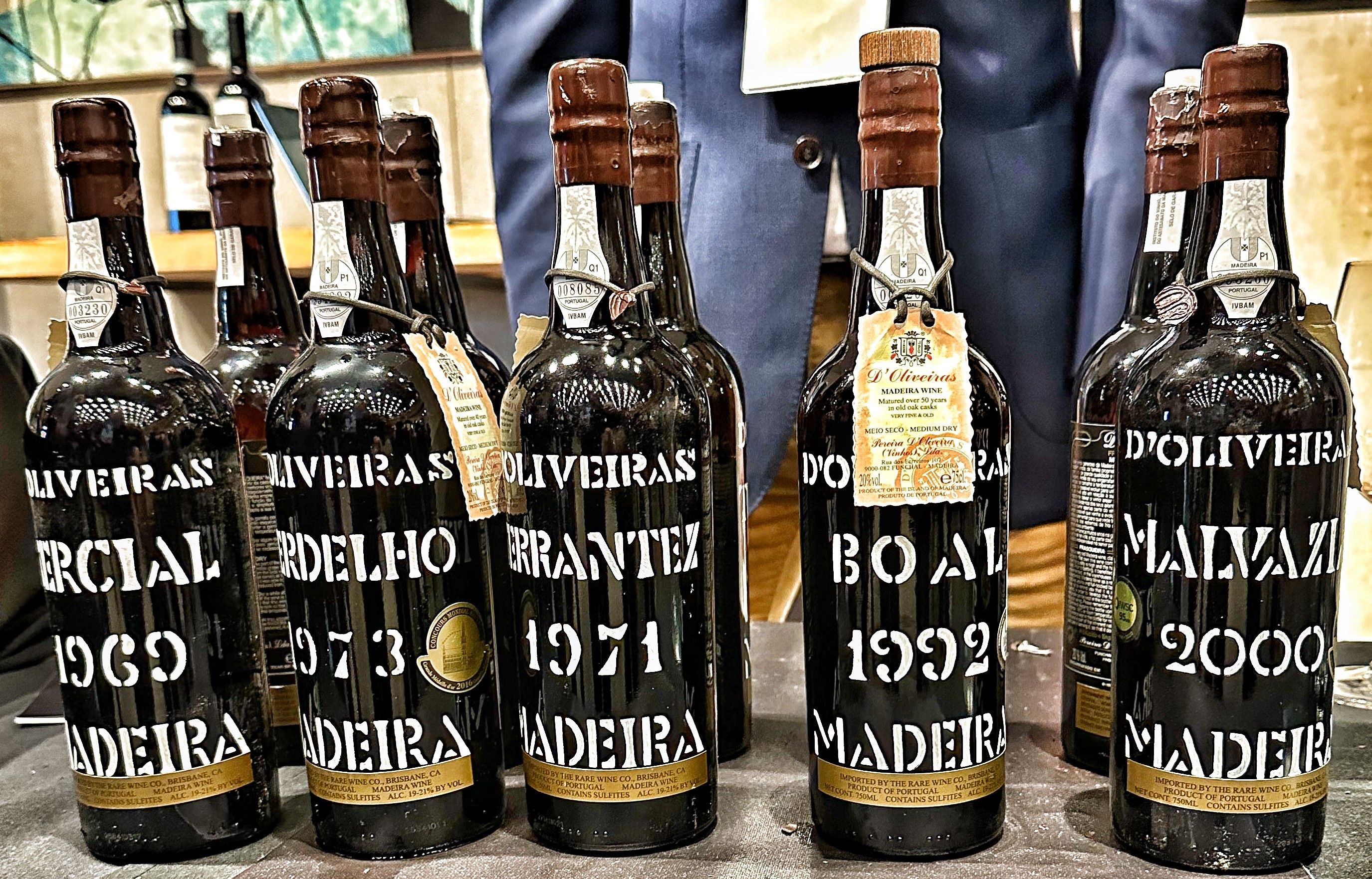
Now that you have a bit of historical perspective, let’s take a deeper dive into Madeira wine.
Madeira is a beautiful island with a subtropical climate and luscious greenery. Madeira’s name means wood, oak – this is what the first settlers saw. Madeira’s climate sports tropical winds, hot summers, mild winters, and high humidity. It also offers lots of microclimates, from south to north. Mountains and forests cover 47% of the island, mostly with altitudes of up to 200 meters, reaching 700 meters in some areas.
There are about 475 hectares of vineyards growing on the island (about 1,200 acres), cultivated by 2,000 growers. Vineyards utilize a pergola system to ensure proper aeration.
Six main grapes are used in wine production on Madeira: Sercial, Verdelho, Boal, Malvasia, Tinta Negra, and Terrantez. It is interesting to note that Verdelho and Verdejo are different grapes! Another interesting fact is that Tinta Negra can be vinified as white, rosé, or red.
After the harvest, the grapes are pressed and fermented as with any other wines. Fermentation is subsequently stopped, depending on the desired sweetness, by adding neutral spirit. Next, the heating process takes place. Less expensive wines are usually subjected to continuous heating in the steel tanks surrounded by coils for at least 90 days. Higher-end Madeiras, especially the single-harvest ones, are usually heated using the system called Canteiro, where the wine in the oak barrels is secured in place using wooden beams (canteiro) and heated by mother nature for a prolonged period of time, inside the winery.
The majority of Madeira wines are blends, with the labels indicating the age and type of grapes (it is also possible to make Madeira without indicating age and the grapes). The age designations can be 5, 10, 15, 20, 30, 40, and 50 years. There are also single-harvest Madeiras, called Colheita, which should be aged for at least 5 years in oak, and Frasqueira which requires at least 20 years in oak. Another beauty of Madeira is in the fact that the wine can stay in the barrel indefinitely, and bottled only when needed – some of the known Frasqueiras exceed 200 years of age.
Three years ago, in 2022, I was lucky to attend the Madeira tasting in New York City, where I had an opportunity to taste some absolutely spectacular wines. The event included a Madeira Master Class as well as a walk-around tasting.
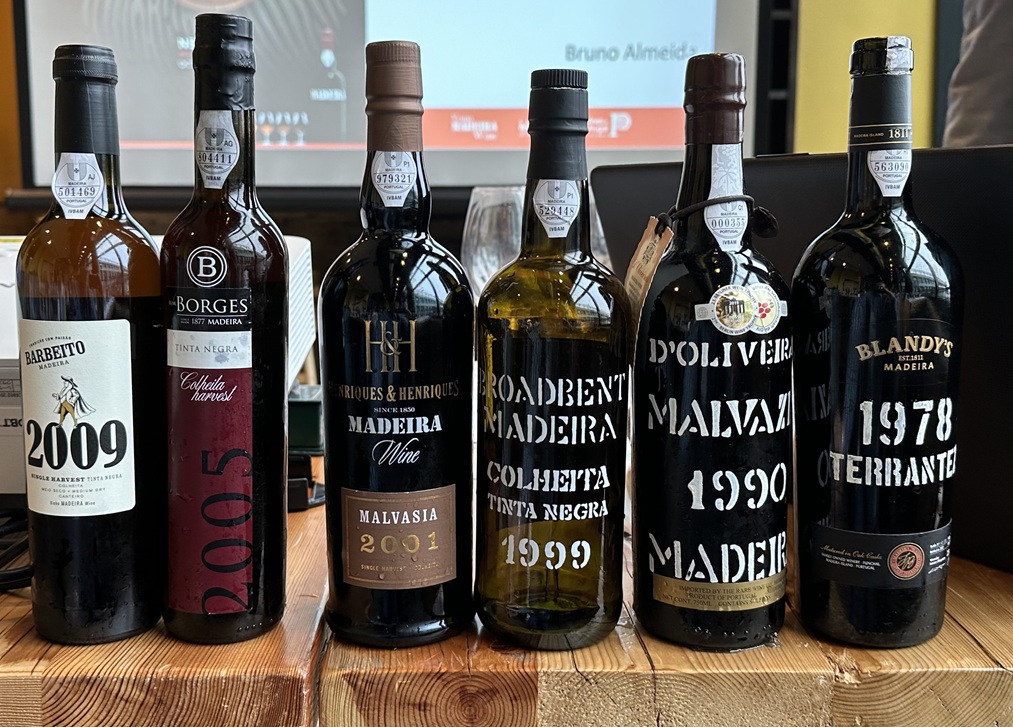
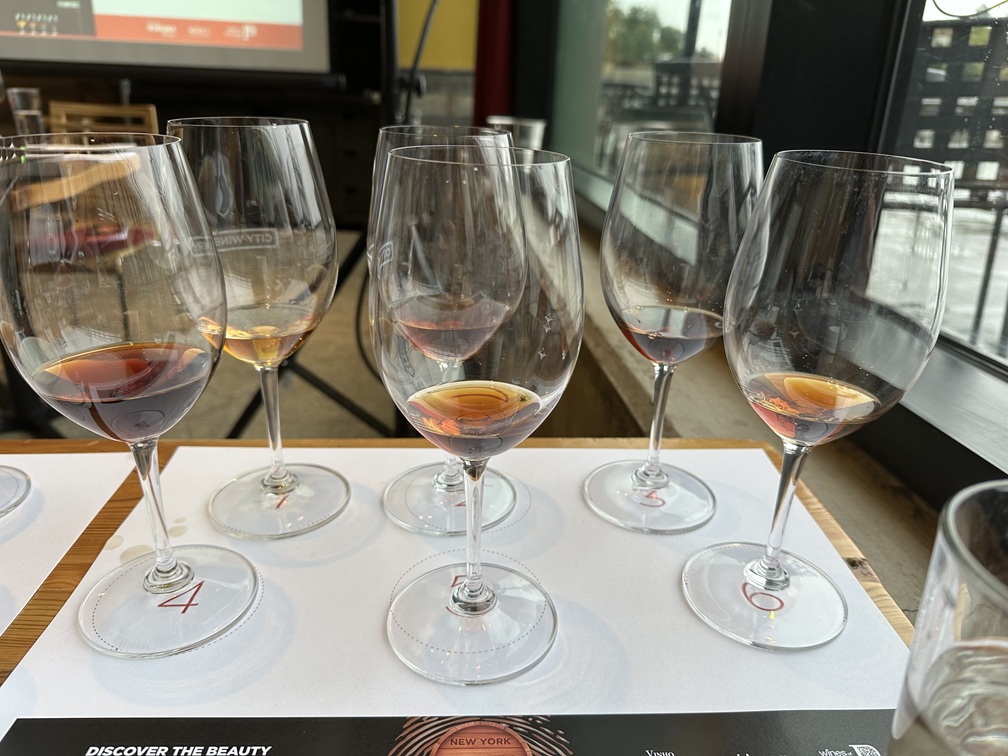


Here are the wines we tasted during the master class:
2009 Barbeito Single Harvest Tinta Negra
clean, open, light, easy to drink
2005 H.M. Borges Tinta Negra Colheita
Hazelnuts, dry fruit, figs, lemon, perfect acidity, beautiful dry fog finish. Lots of pleasure. Foie Gras would be perfect with it.
2001 Henriques and Henriques Malvasia Madeira
Complex herbaceous nose, nicely restrained
Salinity, acidity, supercomplex, dried fruit perfectly balanced
1999 Broadbent Tinta Negra Madeira Colheita
Chocolate, dried fruit compote, very restrained
Dried fruit, great acidity, toffee, tasty notes, outstanding.
1990 Pereira D’Oliveiras Malvasia Fresqueira Madeira
Bottled in 2018
Great herbaceous complexity, fall leaves, medicinal notes, eucalyptus
Amazing palate, dense, complex, loads of dried fruit and hazelnut. Superb.
1978 Blandy’s Fresqueira Terrantez Madeira
beautiful, herbal and vegetative notes, excellent balance, hazelnuts, salinity. Fresh and inviting.


There were lots of gems in the walk-around tasting, such as Justino’s 1996, 1997, and 50 years old Madeiras; D’Olivera Colheita and Fresqueira Madeiras from 2000, 1992, 1973, 1971, and 1969 (1969 was bottled only in 2022); Broadbent 10 years old Sercial, Verdelho, Boal, as well as 1999 Tinta Negra Colheita, and others.
As I said before, Madeira really needs to be experienced, and you have a perfect opportunity to do so.
Coming November 18th, you can experience the beauty of Madeira for yourself. Here are all the details:
Experience the Magic of Madeira – Sip, Taste & Vote!
Tuesday, November 18, 2025 | 5:30pm – 8:30pm
Ideal Glass Studio | 9 W 8th Street, New York, NY 10011
Six producers, six bartenders, one delicious adventure.
You can get 2 tickets for the price of one ($55) using this link.
✨ Your ticket includes:
- Walk-Around Tasting featuring six top Madeira producers — taste rare bottles, some worth over $100.
- Cocktail Competition – six NY bartenders crafting unique Madeira cocktails. Taste and vote for your favorite!
- Food Pairings by Chef Nuno of Leitão.
- Mini “Speed Tastings” with Wines of Portugal Ambassador Eugénio Jardim, exploring Madeira styles in fun, 15-minute bursts.
- Cocktail Seminar: Madeira Cocktails Made Easy with bartender Francesco Dionese — learn how to shake, stir, and sip Madeira at home. (seating is limited).
Don’t miss your opportunity – and you can thank me later. Cheers!
For the Love of Riesling
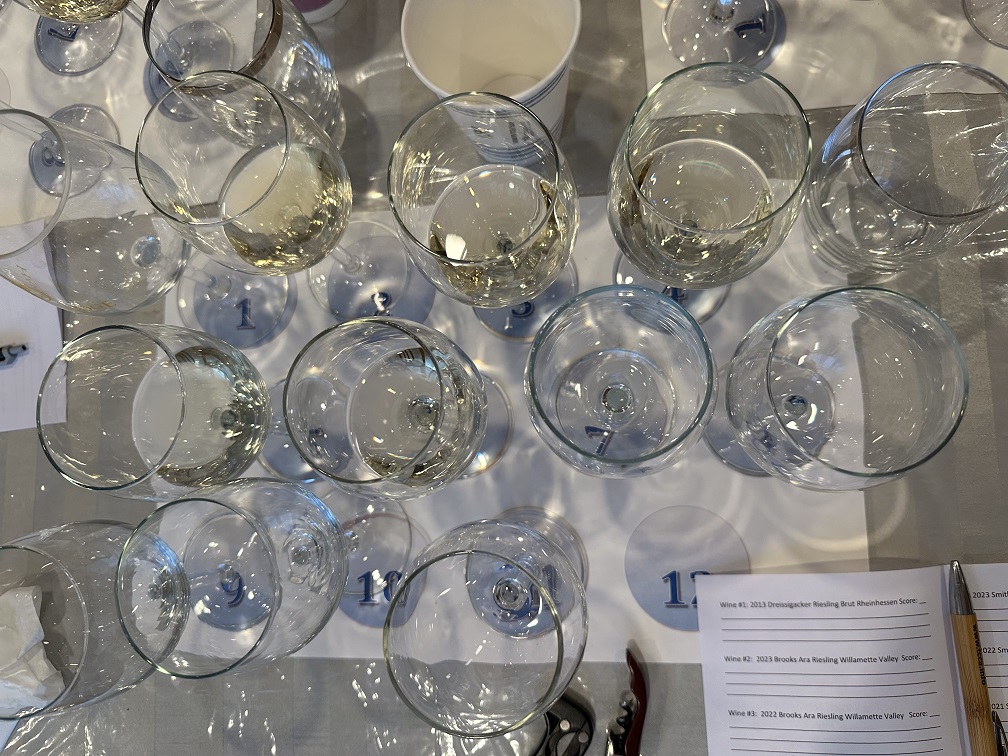 I love Riesling.
What do winelovers do when they love the wine?
That’s easy.
We want to share that love.
The biggest reward for a winelover is to offer someone a glass of wine and hear them say “oh, it is good!”.
Sharing the wine is the most enjoyable part of drinking the wine. We want the other people to experience the same joy as we do, we want them to experience the pleasure only the wine can deliver.
As I said before, I love Riesling.
Riesling might be the most underappreciated white grape. It is one of the main 3 white grapes (Chardonnay, Sauvignon Blanc, and Riesling). Riesling wines are made everywhere in the world – Germany, Alsace, Australia, New Zealand, New York (Finger Lakes, Hudson Valley), Canada, Oregon, California, and so on – and yet many of the wine drinkers wouldn’t even openly admit that they like Riesling and that they are happy to drink it.
It is hard to tell why that is. Many people associate the word Riesling with the word “Sweet”. It is a big mistake, as it means, for example, that they never experienced bone-dry, tongue-twisting Rieslings from the Claire Valley in Australia. I would even dare to say that the majority of the well-made Rieslings are not sweet, unless they are purposefully made to be sweet, such as BA or TBA German Rieslings. The main trait of Riesling, similarly to all other wines, is balance. As long as the Riesling is balanced, it is one of the most enjoyable white wines you can imagine. And it pairs well with the wide range of food. I’m telling you – Riesling is one of the best white wines in the world.
The love for wine needs to be shared. And so earlier in the year, I decided to do a Riesling wine tasting. My audience (family, future in-laws) wanted to learn more about the wines, and I have decided that tasting a bunch of Rieslings will offer an excellent educational opportunity (was I right? I have no idea, but I know we had fun).
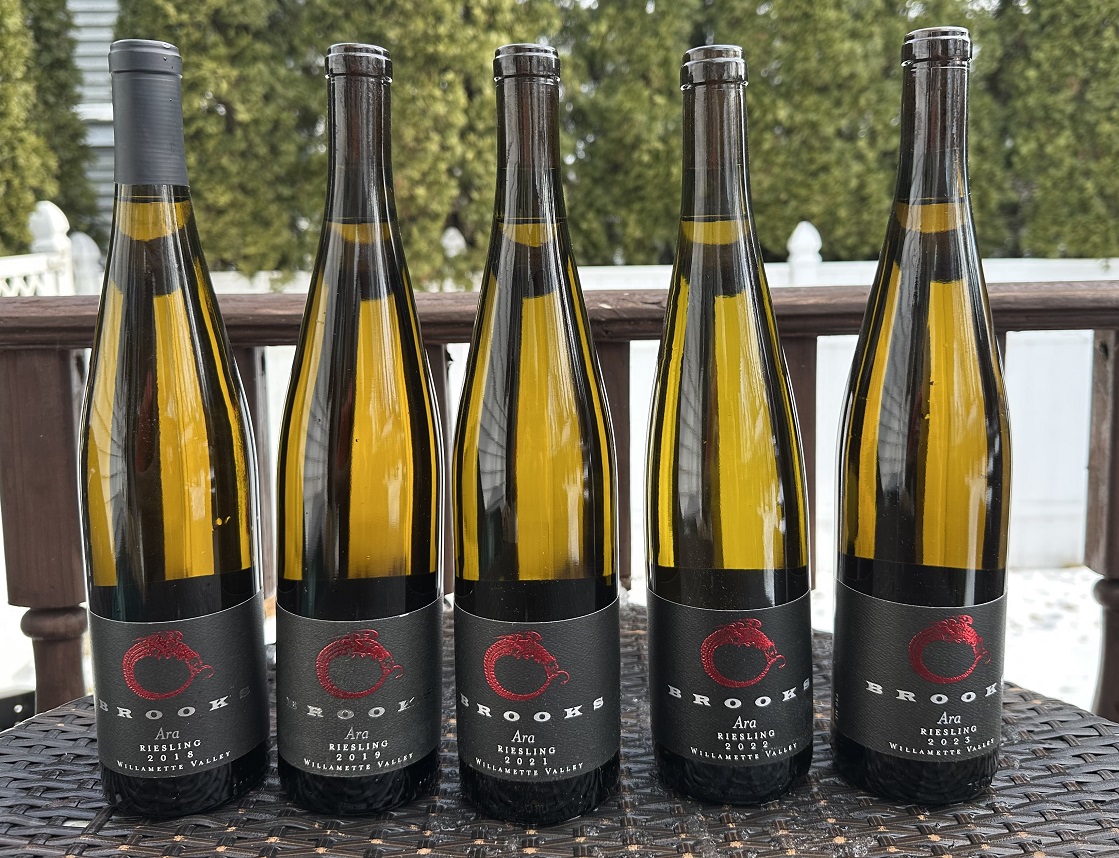
Ask me to name three of my favorite Cabernet Sauvignon producers, and I will quickly become frustrated – can I give you at least 10? 20 or 30 would be even better. The same would be for a Chardonnay, Syrah, and Tempranillo. When it comes to Riesling, however, that would be an easy task. Grosset from Australia. Smith-Madrone from California. Brooks from Oregon. This is my “top 3 Riesling producers” list. I would absolutely love to do a comparative testing of these 3 Rieslings, but I managed to get only 2. I got Smith-Madrone Rieslings first, and then when I got the idea for the tasting, I wrote to Brooks, and they were kind enough to send me a nice vertical of Brooks Rieslings. I also asked Ravines Wine Cellars from Finger Lakes for a similar set, but got no reply, so my tasting consisted of a vertical of Smith-Madrone Rieslings from 2018, 2019, 2021, and 2023, and Brooks Ara Riesling from 2018, 2019, 2021, 2022, and 2023 (both wineries didn’t produce wines in 2020).
It is important to note that Riesling can age very well, and aged Riesling is just a special experience. I did an online search and found out that it is rather hard to find aged Riesling anywhere, at least for the price I was willing to pay (age your Riesling, people, take my advice). I managed to find a bottle from 1997, which was seemingly in reasonable condition. At the same online store, I also managed to find a sparkling wine made out of Riesling, known in Germany as Sekt. I scored a bottle of Sekt at the same online store, and it became our first wine in the tasting.
The tasting was non-blind as it had more of an educational purpose than anything else. Here is what transpired during the tasting (outside of the fact that I numbered Brooks Rieslings in the wrong order, so we tasted them from the older vintages to the newer, where I really wanted to go in the opposite direction):
Wine #1: 2013 Dreissigacker Riesling Brut Rheinhessen (12.5% ABV)
bubbles were still present, lemon, a touch of sugar, well balanced, very nice overall. Believe it or not, but this was the first Sekt that I liked.
8-
Wine #2: 2018 Brooks Ara Riesling Willamette Valley (14% ABV, 325 cases produced)
Beautiful color. Honey, petrol, explivit nose of tropical fruit
Great complexity, perfect balance, showing off an interplay of pear, apples, peach, even vanilla and quince. Delicious. 8
Wine #3: 2019 Brooks Ara Riesling Willamette Valley (13% ABV, 225 cases produced) – a very interesting wine, as my tasting notes for day 1 and upon re-tasting the next day differ dramatically.
Day 1: Very unusual, some honeydew, hint of pear. 8-
Day 2: Superb. Lean. Acidity is through the roof, fresh, crisp. Needs 20 years to become amazing. 8++
Wine #4: 2021 Brooks Ara Riesling Willamette Valley (12.5% ABV, 225 cases produced)
Day 1: Beautiful petrol and flowers on the nose
Fresh, petrol, complex, white fruit, excellent balance. 8+
Day 2: Petrol + earth. Beautiful, honey notes on the palate, much richer than ‘19. Still lean and mean. 8
Wine #5: 2022 Brooks Ara Riesling Willamette Valley (12.5% ABV, 150 cases produced)
Day 1: Flowers, touch of brown sugar
Most complex so far – wow, beautiful. 8+
Day 2: Petrol, hint of tropical fruit. Lemon with a touch of honey, lean, crisp, built for aging, let’s say another 20-something years. 8++
Wine #6: 2023 Brooks Ara Riesling Willamette Valley (12.5% ABV, 100 cases produced)
Day 1: Very muted nose. Palate is young, nice, concentrated. 8-
Day 2: Nose almost non-existent. Very lean palate with a hint of honey mixed with lemon. Need to develop for a long, very long time.
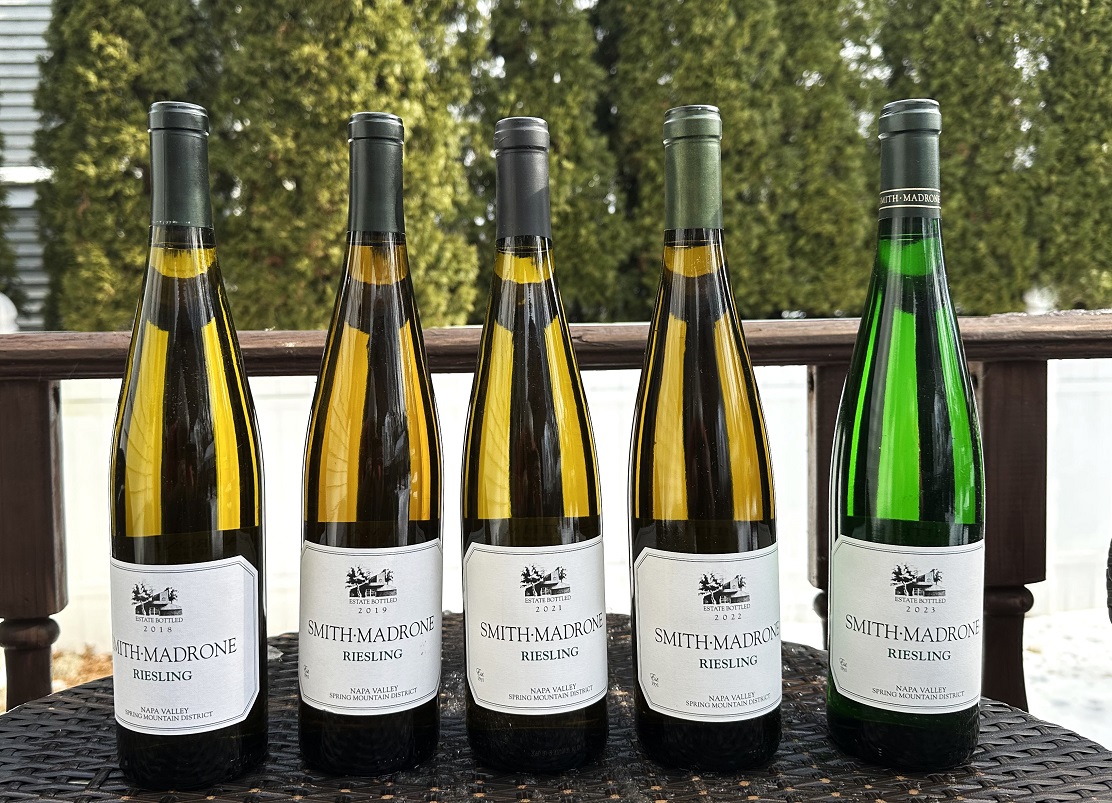
Wine #7: 2023 Smith-Madrone Riesling Spring Mountain (13.2% ABV)
Light color
Candy on the nose
White flowers, fruit medley, bitter orange, crisp, spectacular. 8+
Wine #8: 2022 Smith-Madrone Riesling Spring Mountain (13.2% ABV)
A touch of petrol
White fruit, white apples, delicious. 8+
Wine #9: 2021 Smith-Madrone Riesling Spring Mountain (13.2% ABV)
Petrol, beautiful
Lots of complexity, apples, excellent. 8
Wine #10: 2019 Smith-Madrone Riesling Spring Mountain (13.3% ABV)
Complex aromatics, flowers
Flowers on the palate, a touch of honey, beautiful, complex. 8+
Wine #11: 2018 Smith-Madrone Riesling Spring Mountain (13.3% ABV)
Beautiful, hint of petrol, white fruit.
Wow, playful, amazing. 8++
Wine #12: 1997 Dr. Fischer Ockfener Bockstein Riesling Kabinett Mosel (8% ABV)
Apple juice all the way, past prime. Still an interesting experience.


As always in such tastings, it is fun to figure out the group’s favorite wine. There were 8 of us tasting the wines, and everybody were asked to decide on 3 of their most favorite wines (mine were #11, #8, and #5), and then we took a vote. To my surprise, we had a clear winner after the first round – wine #8, 2022 Smith-Madrone Riesling, was everyone’s favorite, with wine #11, 2018 Smith-Madrone Riesling getting 5 votes. It was interesting that even wine #12, 1997 Riesling, got 3 votes (for me, it was an interesting experience, but not the wine I want to drink again).
As you can see from the notes above, I had a chance to re-taste the wines, this time at a bit of a slower pace. It is very clear that Brooks Rieslings needed more time to open, as you see that on the second day they showed a lot more of what they got, but even then, I believe they would benefit from another 20 years in the cellar, or maybe more.
As I’m writing this, I’m already dreaming of setting up the tasting of 20+ years old Rieslings. Give me Grosset, Brooks, Smith-Madrone, Zind-Humbrecht, and maybe Markus Molitor, from the early 2000s – and this would make it an absolutely amazing tasting. By the way, talking about dreams – what would your dream Riesling tasting include?
I can’t speak for my guests, but I really enjoyed the opportunity to taste such beautiful wines side by side. While both Brooks and Smith-Madrone perfectly exhibited my beloved petrol, Brooks Rieslings on average were a bit leaner than Smith-Madrone, while Smith-Madrone exhibited a richer bouquet on the palate. I’m saying this not in the comparative sense – each one of these wines would make me super-happy any time.
There you are, my friends – my Riesling experience. Do you like Riesling? What are your favorite “go-to” Rieslings?
Wines of South America: Making Wine Geek and Wine Lover Happy
 Here is where it gets interesting. We all heard of wine geeks, people who get excited about little nerdy wine details, such as vineyard blocks, blending methodology, or amphorae versus cement tank aging. And then you have the wine lovers, aficionados – the people who simply go after the hedonistic pleasure of wine drinking. Can these two personas be happy at the same time? I can’t speak for all the wine people with multiple personalities, but I can definitely answer for this one, the moi. I attended Descorchados 2025 tasting of South American wines, and both inner geek and aficionado were happy.
Just in case you are curious, DescoRChadOS is a guide for the wine of South America, published since 1999. Descorchados also runs wine tasting events dedicated to the wines of South America, and the 2025 event was the first return of the tasting to New York City since 2019.
As a self-appointed wine geek, I love all the uncommon wine traits – new (to me) and lesser-known grape varieties, new (to me) and unknown, even obscure places, authentic (indigenous, autochthonous) grapes, low intervention/natural wines, unique wines and vineyards (e.g. old vineyards). In this tasting, I found all of these things – indigenous, unknown (and thus new to me) grapes harvested from the 200-year-old vineyards, from the countries I had never tasted the wines from before. Happy, happy, happy wine geek.
And then there were world-class, beautiful, delicious, hedonistic wines – Malbec, Syrah, classic method Sparkling wines – all in the same tasting. As I said, both geek and aficionado were very happy.
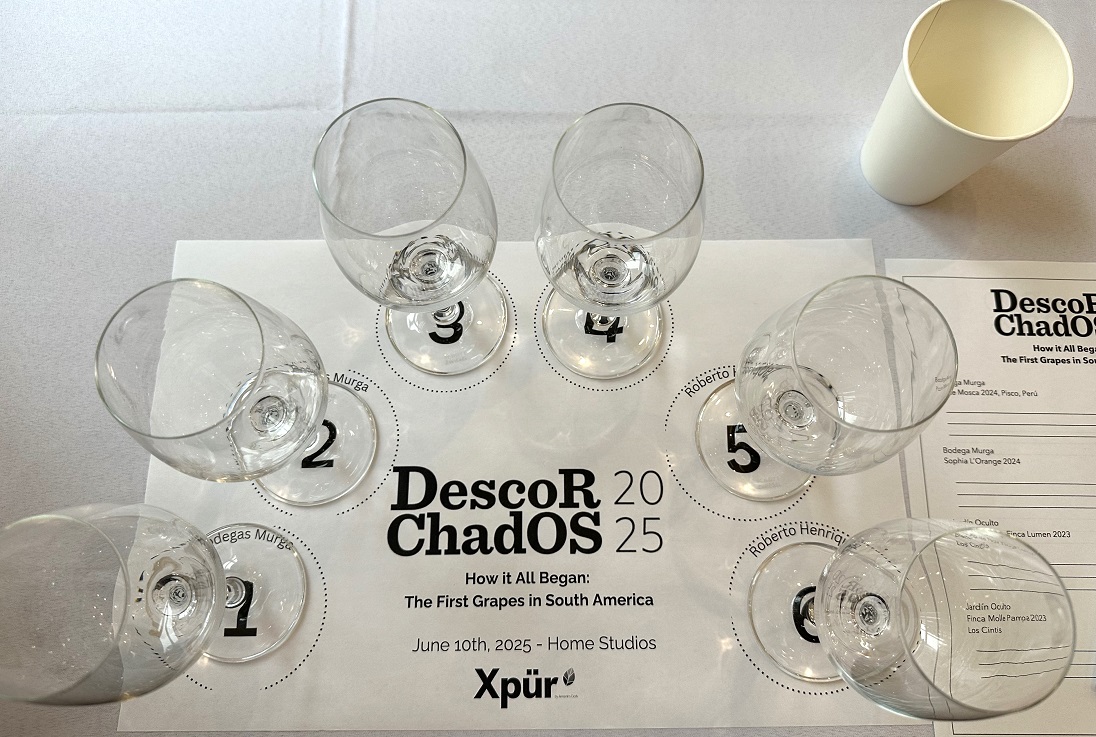
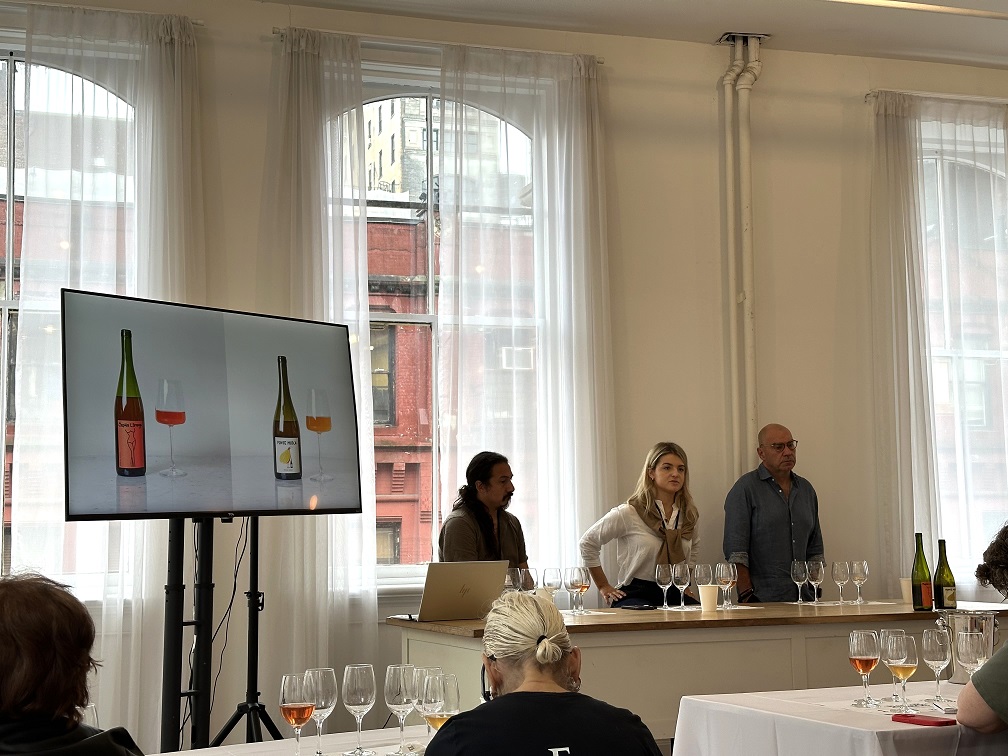
Let’s start with the unique portion first, as I had a chance to attend the masterclass presenting the historical wines of South America.
When it comes to wine from South America, Argentina and Chile are the two countries that come to mind first, followed by Uruguay and maybe Brazil. But the grapes had been growing in most of the South American countries for a long time, with vineyards usually started by European immigrants. It appears that the oldest vineyard in South America is called Tacoma and it is located in Perú, originally planted by Spanish immigrants in the 1540s.
I don’t know if a grape vine can survive for 500 years and continue to bear fruit. However, I now know that 200-year-old vineyards can still produce grapes, as I had an opportunity to taste the wines made with grapes harvested from 200-year-old vines.
In the masterclass, we tasted 6 wines from 3 countries – Perú, Bolivia, and Chile, some of them produced from the unique grapes I never had before, so thanks to this tasting I can now add two countries to my list of Wines around the World, and increase the grape count by 3 – picture happy collector of experiences.
Here is what we tasted in the masterclass – but before the notes, just take a look at these colors! This tasting was definitely a feast for the eyes!
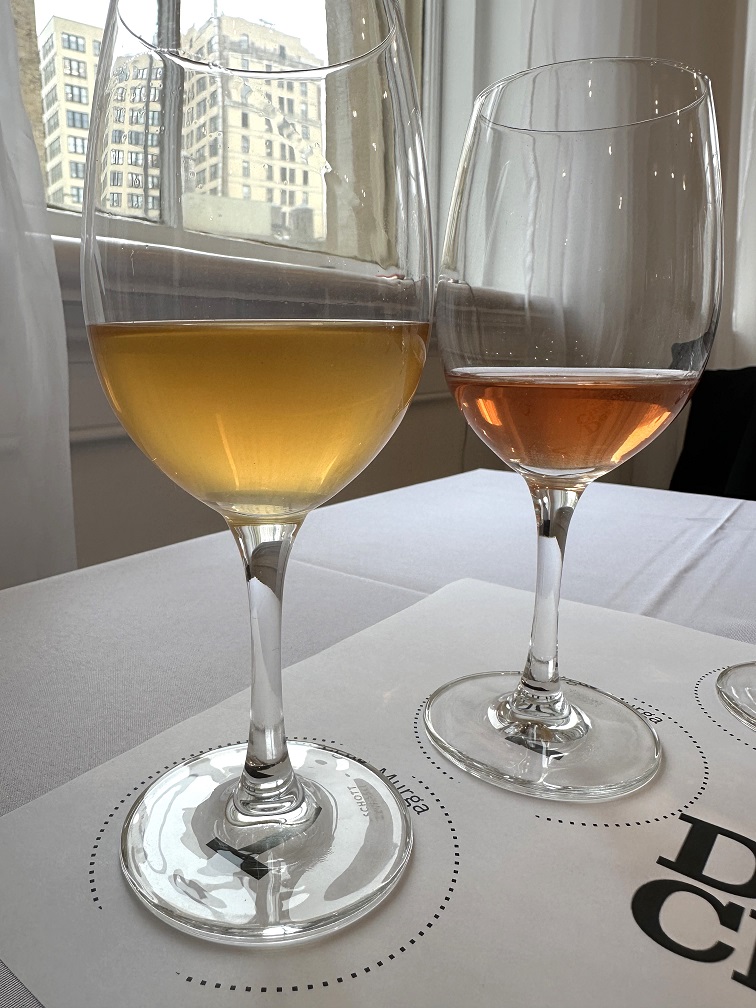
2024 Bodega Murga Ponte Mosca Pisco Perú (12.5% ABV, 34% Moscatel de Alejandría, 33% Moscatel Rosada, 33% Moscatel Negra, 65 days of skin contact)
Pisco is located south of Lima, capital of Perú, 25 minutes away from the Atlantic Ocean, featuring 4 different soil types in the region.
I can’t even comment on the color (beautiful!). The wine had a wonderful nose with explicit nutmeg and a hint of grapefruit. Interestingly dry and tart on the palate, with blood orange on the finish and pure acidity. A great specimen of skin contact wine, but you have to love skin contact. Will be great with seafood.
2024 Bodega Murga Sophia L’Orange Perú (10% ABV, 85% Quebranta, 15% Mollar grapes, 30 days of skin maceration, indigenous yeast)
Muted nose with a hint of smoke, strawberries, sapidity. Smokey strawberries on the palate with salivating clean, crisp acidity on the finish. I absolutely love it, but this is not the wine for everyone (geeks should be happy, though).
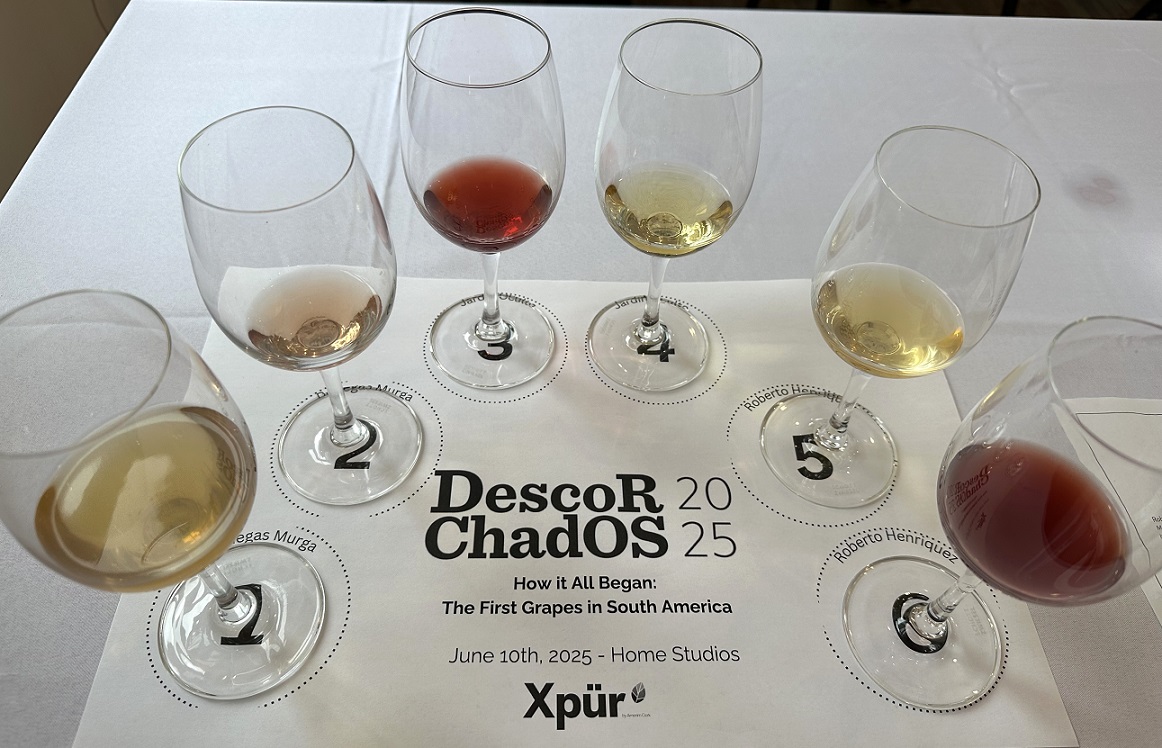
Just look at these colors!
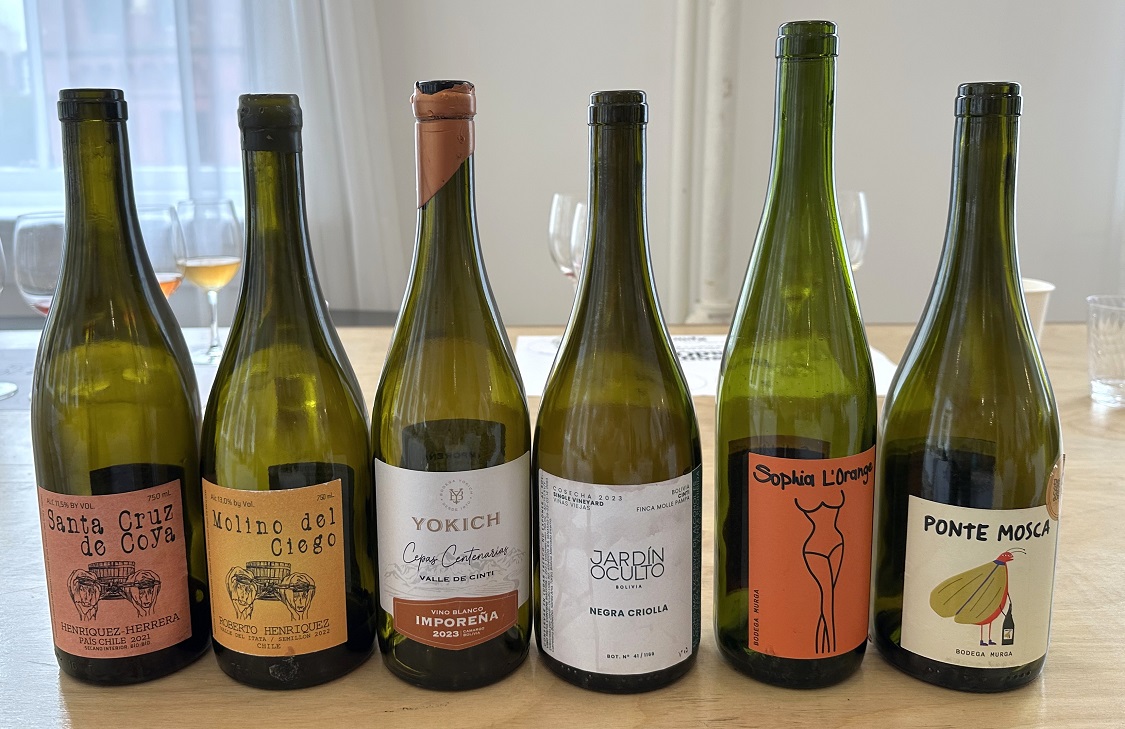
2023 Jardín Oculto Negra Criolla Finca Molle Pampa Cinti Bolivia (200! years old vineyard, 100% Negra Criolla, a.k.a. Listán Prieto a.k.a. País)
Cintis Valley is located in the south of Bolivia, at 7,500 feet altitude, 18” of rain a year – the only place in Bolivia where you can find “winter” for the grapes.
Fresh, crisp, underripe crushed raspberries on the nose. Tart, acidic, with sapidity well present, and with a bitter finish. I can drink it, but this is not your everyday wine; too bitter for me (my palate is particularly sensitive to bitter notes).
2023 Yokich Imporeña Vino Blanco Cepas Cententarias Valle de Cinti Bolivia (13% ABV, 100% Imporeña grape)
What a color! Honey and roasted meat on the nose (yeah, I know, don’t say it), somewhat cloying.
Good acidity on the palate, but I’m not sure this is the wine I want to drink again
2022 Roberto Henriquez Molino Del Ciego Itata Valley Chile (13% ABV, 100% Semillon, 100 years old vineyard)
Jalapeño pepper on the nose, bell peppers and spicy peppers on the palate, good acidity. I’m now hungry. Might be the most unusual rendering of Semillon I’ve ever tasted.
2021 Roberto Henriquez Santa Cruz de Coya Bio Bio Valley Chile (11.5% ABV, 100% País, 200 years old vineyard)
Lightly scented red fruit on the nose, explicit minerality, fresh acidity, tart strawberries, acidity on the finish. This is the wine from the 200-year-old vineyard – very impressive.


Here are the results of the masterclass: 3 new grapes, 2 new countries to add to the list, beautifully colorful wines, lots of geeky excitement (when was the last time you tried wine from a 200-year-old vineyard?).
Then there was a regular tasting with more than 200 wines represented – I didn’t have much time to spend there, but I managed to find some very tasty wines – sparkling and still. Here is the list of the wines I enjoyed outside of the masterclass:


NV Estrelas do Brasil Brut Método Tradicionel
NV Estrelas do Brasil Nature Rose Pinot Noir – superb!
NV Guatambu Nature – excellent
NV Cave Geisse Nature Método Tradicional D.O. Altos de Pinto Bandeira
2020 Neyen Espiritu de Apalta Malbec Colchagua Valley – classic!
2021 Emiliana Coyam Los Robles Estate Valle de Colchagua – excellent but needs time
2021 Emiliana Gê Valle de Colchagua – ready to drink now, delicious


2015 Casa Marin Syrah Miramar Vineyard San Antonio Valley Chile – surprisingly delicious (when I think Chile, I don’t think Syrah – but you should look for this wine)
NV Casa Marin Maria Luz Brut Nature San Antonio Valley Chile
2024 Casa Marin Sauvignon Blanc Cipreses Vineyard
That concludes my encounter with the unique world of South American wines – from geeky pleasures to hedonistic masterpieces, South America has a wine for everyone, you just need to look for it.
What were your geeky discoveries as of late? Or how about some hedonistic pleasures you want to talk about? Cheers!
2021 UGCB Vintage Preview
 Do you ever get the feeling that you already did something, and then, after spending a good half an hour looking for it you realize that you only thought about doing that but actually you never have?
This is my story with the Union des Grands Crus de Bordeaux tasting – I already had 3 opportunities to write about this Bordeaux Grand Crus tasting, and have not done that – and was sure that I did – but only in my mind. Thus finally I want to correct the situation so I will have an actual record.
Let’s start with a short explanation of UGCB, the Union des Grands Crus de Bordeaux. UGCB was founded in 1970s by a group of Bordeaux winemakers to help promote Bordeaux wines in Japan. From that day onward, the promotion of the best Bordeaux wines around the world is what the UGCB has been doing. To give you the current set of numbers (as presented on the UGCB website in January 2024), UGCB has 131 members, all of them Grand Crus throughout the Bordeaux territory. UGCB organizes 80 events per year throughout 15 countries and 65 cities, bringing together 50,000 professionals and wine enthusiasts to taste Bordeaux wines.
For many years, the UGCB tasting has taken place in January in New York City, and all of the events I attended through the years have been at Cipriani restaurant in midtown Manhattan. The 2024 event showcased the 2021 vintage, with about 80 wineries participating, pouring about 90 wines during the 3.5-hour trade tasting event (consumer tasting was a separate event taking place in the evening).
When it comes to events like this, busy and crowded, when you have to try to extend your hand holding the glass between the people’s backs, I’m not good at taking notes – handling the glass, the phone, notebook, and pen is just too much. So I primarily was taking pictures of the wines I liked and was trying to obtain an overall impression about the vintage in general and specific sub-regions in particular. For what it is worth, this is what I’m sharing with you here.
2021 Bordeaux vintage
While tasting wines, I asked many winemakers how they would assess the 2021 vintage. Based on what I heard, I got a mixed feeling, so here is how I see it. The 2021 was good overall, not great. Rain presented somewhat of a challenge, bringing powder mildew as a consequence. 2021 was also cooler than let’s say, 2020. 2021 also resulted in a lesser yield than 2020. Overall wines are leaner than 2020 but well structured. And my impression was also that winemakers had to work harder to achieve good results. To put things into perspective, the Bordeaux 2020 was outstanding, with pretty much ideal weather conditions throughout the whole season (still regret not writing about it on time). And I was told that 2022 was even better than 2020, which would, I guess, make it a proverbial “vintage of the century” – we just need to wait for a year and see.
Below are my bit more detailed impressions, primarily on the appellation level. These are all the wines that I liked to various degrees, with the top favorites shown in bold. As a general observation, I was surprised by the amount of the new oak used across the board.
Note – all of the wines below are Grand Cru wines, hence I didn’t add “Grand Cru” to every wine name below.


Pessac-Léognan – this is the only appellation in Bordeaux that produces both white and red wines at the Grand Cru level. I definitely enjoyed 2021 whites less than 2020. Most of the reds were just okay, nothing special.
2021 Château Smith Haut Lafitte Blanc Pessac-Léognan
2021 Domaine de Chevalier Blanc Pessac-Léognan
2021 Domaine de Chevalier Rouge Pessac-Léognan
2021 Château de Fiuzal Blanc Pessac-Léognan
2021 Château Malartic-Lagravière Blanc Pessac-Léognan
2021 Château Malartic-Lagravière Rouge Pessac-Léognan
2021 Château Olivier Blanc Pessac-Léognan
Margaux – It was hard to find anything I liked in Margaux – I don’t know why, but literally all the wines I tried were incredibly tannic, instantly shutting down the palate.
2021 Château Brane-Cantenac Margaux
2021 Château Rauzan-Ségla Margaux
Pauillac – no specific impressions, but I liked comparatively more wines from this appellation.
2021 Château d’Armailhac Pauillac
2021 Château Clerc Milon Pauillac
2021 Château Duhart-Milon Pauillac
2021 Château Grand-Puy Ducasse Pauillac
2021 Château Lynch-Bages Pauillac
2021 Château Haut-Batailley Pauillac
2021 Château Batailley Pauillac
Pomerol – these Merlot-based wines overall were softer and more approachable than Cabernet-based ones.
2021 Château Petit-Village Pomerol
2021 Château Le Gay Pomerol
2021 Château Le Bon Pasteur Pomerol
Saint-Émilion – I thought that Merlot might be a saving grace in the 2021 vintage, but apparently it is not as I only liked a few wines from this Merlot-driven appellation.
2021 Chateau Valandraud Saint-Émilion
2021 Château Villemaurine Saint-Émilion
Saint-Estèphe – no general impressions, very few wines were present
2021 Château Phélan Ségur Saint-Estèphe – might be my second-most favorite in the tasting.
Saint-Julien – same as with Pauillac, I liked quite a few wines here.
2021 Château Beychevelle Saint-Julien
2021 Château Langoa Barton Saint-Julien – this wine was tasty and had a standout, playful label.
2021 Château Léoville Barton Saint-Julien
2021 Château Léoville Poyferré Saint-Julien
2021 Château Gloria Saint-Julien
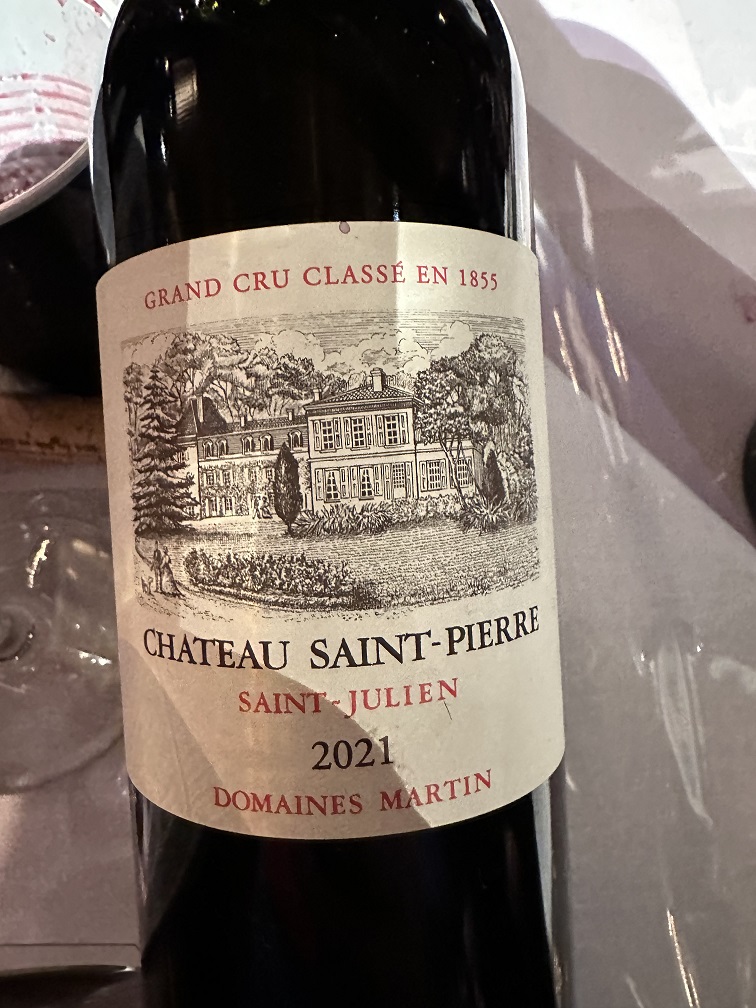
2021 Château Saint-Pierre Saint-Julien – this was probably my favorite wine of the tasting.
Sauternes – I had bad luck with Sauternes during UGCB tastings in the earlier years, as many wines were simply not balanced, with pronounced bitter notes. At this tasting, I literally liked them all. Note that the wines were presented from the different vintages.
2021 Château Rainey Vigneau Sauternes
2016 Château Sigalas Rabaud Sauternes
2016 Château Guiraud Sauternes
2018 Château Doisy-Védrines Sauternes
2016 Château Bastor-Lamontagne Sauternes
There were more appellations in the tasting (Haut-Médoc, Listrac-Médoc, Moulis-en-Médoc), but I didn’t like any particular wines from those so they are not covered here.

Here you are my friends – my report from the 2024 Union des Grands Crus de Bordeaux tasting. I finally did it.
And I’m already looking forward to the 2025 tasting of the 2022 vintage. Will see if reality will match my expectations. Cheers!
Deceptive Simplicity: Masciarelli Linea Classica
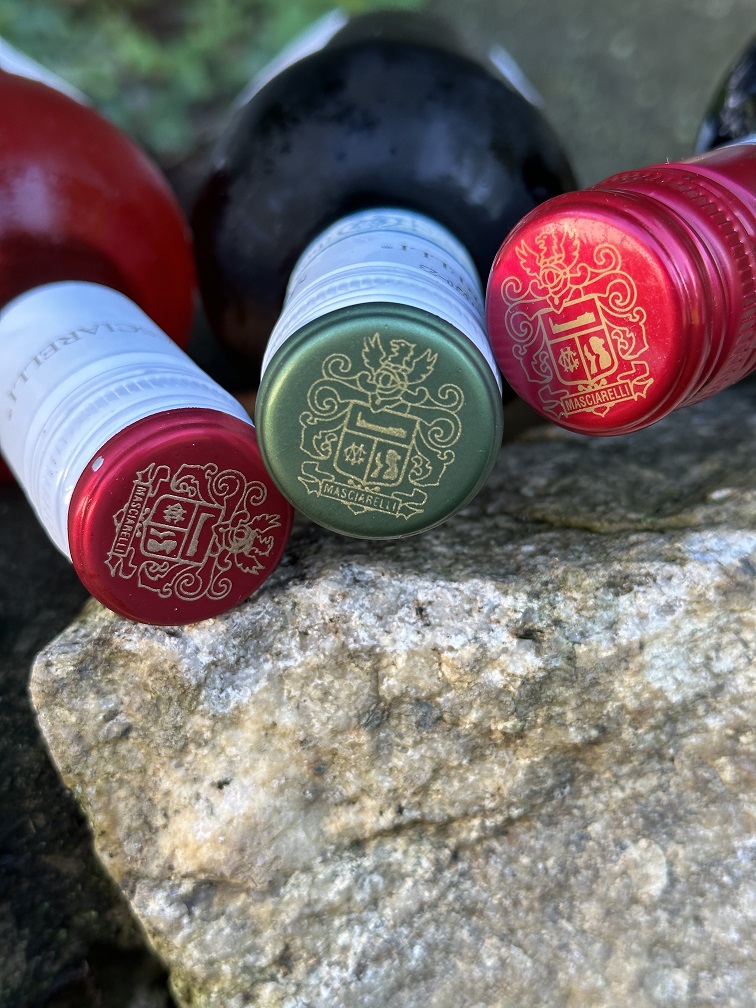 Simple is an interesting word to use around food and wine – there is a lot of dependency on the context.
I love simple recipes – one of my favorite recipes for sauteed eggplant has only 5 ingredients in it, takes 30 minutes to make and the result is consistently delicious. Air-fried salmon bites take less than a minute to prep, consist of only salmon and seasoning, and again, are consistently delicious. Near East couscous takes 5 minutes to make – and it is a perfect side dish every time it is made. When it comes to food, “simple” usually is a good word.
Calling the wine simple requires clarifications, it requires real context. “Simple wine” often means inexpensive, and this is a good thing – as long as the wine tastes good, as long as wine gives you pleasure “simple/inexpensive” is a good word (nobody likes “inexpensive” but crappy). Simple can apply to the label and overall packaging. The wine can also taste simple, and here the truth is in the eye of the beholder – many people prefer simpler-tasting wines so they will not interfere with the food. But if someone is craving complex, thought-provoking, multi-layered wine, “simple” is the last descriptor that someone will be happy about. “Simple wine” has a meaning only in the context.
The interesting part of a “simple wine” designation is that once we call the wine simple based on price and appearance, we make assumptions about the taste. Once we say “simple wine”, we are intuned to take it all the way – assuming that this simply looking wine will be also simply tasting wine.
Can simple packaging and a reasonable price hide the wine of a much grander standing than it appears to be? In other words, can simplicity be deceiving? Of course. Let me present my case to you – a classic lineup (Linea Classica) of wines from Tenuta Agricola Masciarelli in Abruzzo Italy.
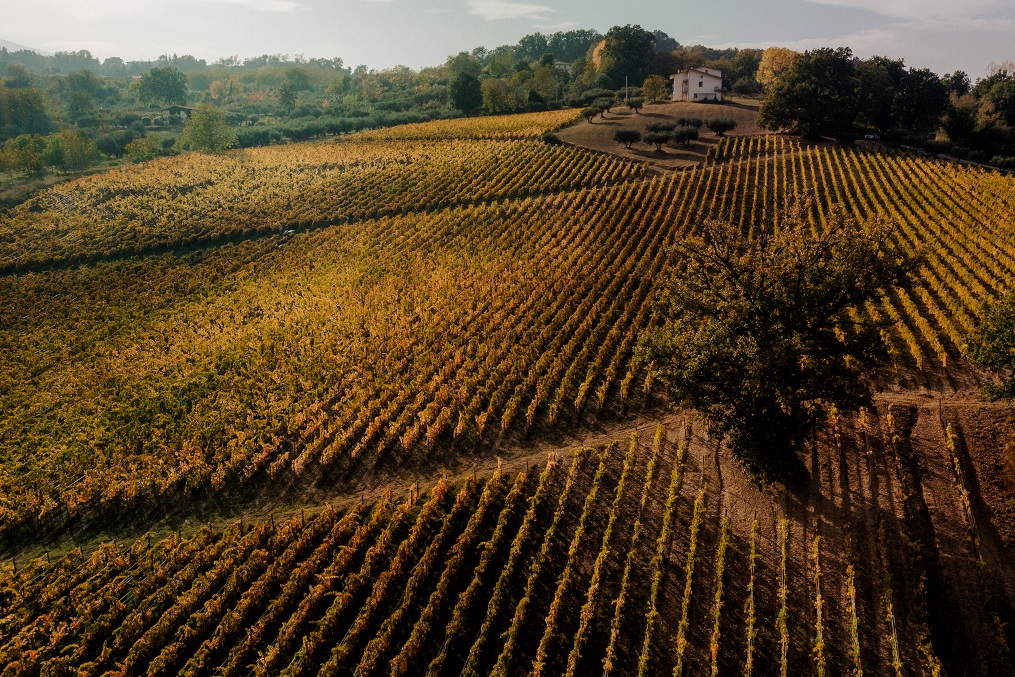
Masciarelli Vineyards. Source: Tenuta Agricola masciarelli
Gianni Masciarelli produced his first vintage of red, white, and Rosé in 1981 from the 5 acres vineyard owned by his grandfather and located near the family house in San Martino in the province of Chieti in Abruzzo. Abruzzo region, located east of Rome along the Adriatic coast is best known for its – here it comes again – simple white and red wines, produced, respectively, from Trebbiano and Montepulciano. From the very beginning, Gianno was convinced that Abruzzo was capable of producing world-class wines. He worked very hard not only in his own winery but pushing forward the whole region. Gianny was the first to introduce a French Guyot training system for the vines and French oak barrels for aging the Montepulciano and Trebbiano wines. By the way, while Trebbiano is a popular white grape that grows all over Italy, Trebbiano Abruzzese is a local ancient Trebbiano clone that is growing only in Abruzzo. Trebbiano Abruzzese has lower yields and produces wines that can age.
Today, Tenuta Agricola Masciarelli is run by Giovanni’s wife, Marina Cvetić, together with their eldest daughter, Miriam Lee Masciarelli. Tenuta Masciarelli is the only winery that owns vineyards in all four provinces in Abruzzo (Chieti, Pescara, Teramo, l’Aquila). The vineyards span 740 acres (300 hectares) and consist of 60 non-adjacent parcels. Masciarelli produces 7 different lines of wines, 4 out of which are exported to the USA. The winery produces about 2.2 million bottles of wine every year that gets exported to 55 countries.
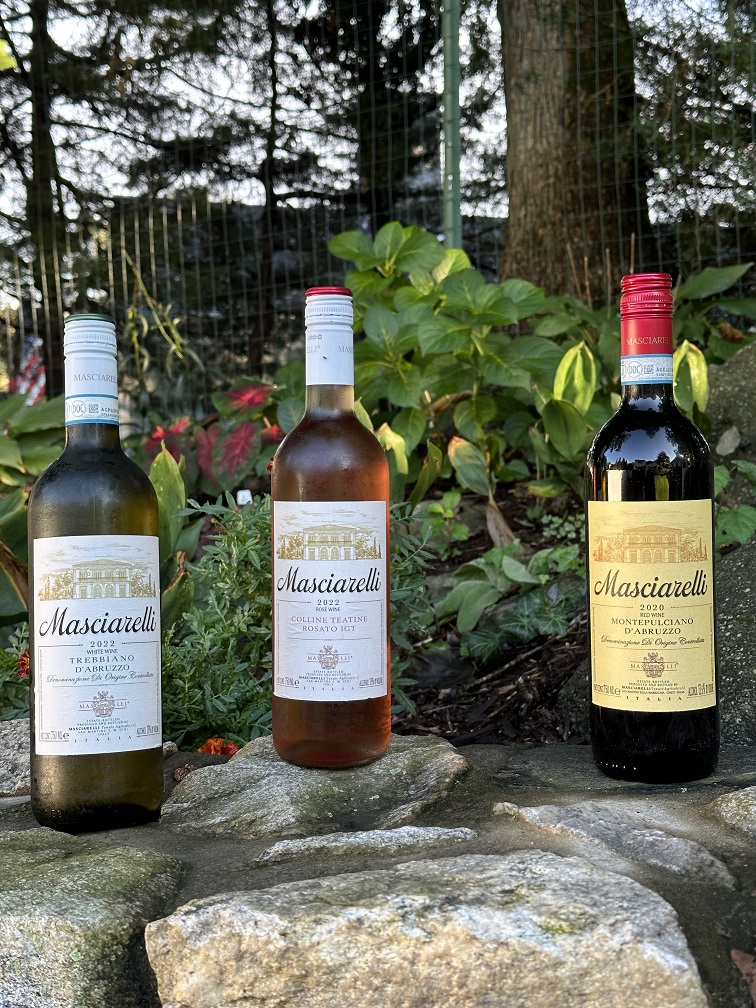 Here are my notes for the Linea Classica wines I had an opportunity to try:
2022 Masciarelli Trebbiano di Abruzzo DOC (13% ABV, $15)
Light golden
Tropical fruit, peach, minerality, medium intensity, inviting
Crisp, fresh, lemon notes, tart minerality, medium long refreshing finish, cleansing acidity, very nice
8-/8
2022 Masciarelli Colline Teatine Rosato IGT (13% ABV, $14)
Beautiful salmon pink
Fresh strawberries on the nose
Strawberries, brilliant fresh strawberries, cranberries, perfect acidity, good mouthfeel presence, crisp and clean finish. Excellent.
8
2020 Masciarelli Montepulciano di Abruzzo DOC (13.5% ABV, $15)
Dark garnet
Earthy, restrained, hint of cherries
Dark tart cherries, succulent, a touch of tobacco, dark, earthy, minerality, good acidity, good balance, medium to full body.
8, excellent
All three wines are unoaked and … yes… simple. At least in their presentation and pricing. But here is the interesting part. You can’t treat them as “simple wines”. Despite being unoaked, all three wines improved on the next day. And the next day. And even the next day. Truth be told, after I just opened and tried the Montepulciano, I was simply upset – the wine was not drinkable. For sure for my palate – green and tart. It became better the next day. And it really blossomed on the third day. In total, I enjoyed this screwtop-capped wine over the 6 days – pouring a glass, twisting the cap back, and leaving it on until the next day on the counter. And the wine kept getting better and better. This is a testament to the quality of this simple wine. And this simple wine can definitely age and it will become better with age. All for under $15.
Simplicity can be deceiving. Don’t take my word for it – try Masciarelli Linea Classica for yourself and let’s compare the notes. Cheers!
Rare Grapes, Obscure Tasting
 What is your take on wines made from rare, unknown grapes? I can tell you about mine – I love them.
I have two reasons for that. Well, it might be even just one, but with two sides, I guess. First, I’m a wine geek. As a wine geek, I love tasting each and every type and style of wine, made from whatever grapes they are. I’m willing to taste absolutely any wine at least once. After the opinion is formed, this might be the first and the last time, but nevertheless, I’m willing to try anything.
The second reason is that I’m not only a geek, I’m also a collector. I like collecting experiences. As such, for example, I keep track of the US states and world countries I had a chance to taste the wine from. And I keep track of grapes I ever tasted, after being bitten by The Wine Century Club‘s bug. If you are reading this blog on a PC, look to the right side of the screen, and you will see “grape count” – this is the number of grapes I have tasted to date (if you are reading on the phone, just scroll down). With my goal of reaching 600 grapes, I can only increase the current count further by finding rare, obscure, unknown grapes to taste.
When I got an invitation to attend the Wines of Crete trade tasting, the key words which made me say “yes” was exactly that – “rare grapes” – there were lots of grapes mentioned in the invitation, and I didn’t recognize at least a half of them, so the opportunity to taste new grapes (and increase the count) was definitely enticing.
I have to tell you upfront – this was the most peculiar trade tasting I have ever attended. Being only an advanced amateur, if this makes any sense, I attend maybe about 10 trade tastings in a good year, so I wouldn’t pretend that “I’ve seen them all”. Nevertheless, I have a frame of reference for successful and unsuccessful wine tastings, for sure in my personal book – so when I tell you that this was the most peculiar one, I mean it. Let’s talk about it.
First, notwithstanding of any peculiarity, we need to acknowledge the wines of Crete. Any time a passionate wine lover has an encounter with a region that has a deep wine history, it creates an emotional response, almost awe. The wine history doesn’t go much deeper than it is on Crete – Crete, the largest island in Greece and 5th largest in Europe is the cradle of European winemaking, having its winemaking history spanning more than 4,000 years, going well beyond 1,500 BC.
Crete represents the first real wine culture in Europe. There is evidence of wine presses (first in Europe from about 1,600 BC), pressed grapes and stems, clay pots and amphorae. The wine was produced commercially, and it was praised by many poets. Shortly after the beginning of the first millennium, Crete became famous for producing sweet wine from sundried grapes, Vinum Passum. Crete wines reached Switzerland, France and Italy, and so did the cuttings of the Cretan vines.
From the 14th to 17th centuries, Crete became famous for producing sweet wines from Malvasia grapes (interesting tidbit: American Journal of Enology & Viticulture registered 49 different varieties of the Malvasia grape). Malvasia vines made it to Italy during the same timeframe.
Cretan winemaking history is not all warm and fuzzy. For almost 200 years Crete was under Turkish occupation, and wine production was truly minimized, mostly for family consumption only. Then at the beginning of the 20th century, immigrants brought Sultanina grapes to Crete – a.k.a. Thompson Seedless – not the grape you want to use in wine production. In 1972, Crete experienced the invasion of Phylloxera.
The rebirth of Cretan winemaking started in the 1990s, and today young winemakers continue looking for their own path, often using indigenous grapes to their advantage.
There are 4 mountain systems on Crete, the island of 160 miles long and about 40 miles wide. The majority of the vineyards on Crete are located on the mountain slopes, at altitudes from 800 to 3,000 ft. Mountains play an important role in protecting vineyards from the hot winds coming from Africa. The climate is warm Mediterranean with annual rainfall between 250 and 900 mm.
There are about 10,000 acres of vineyards on Crete, which are spread between 6 Protected Geographical Indication (PGI) and 7 Protected Denomination of Origin (PDO) winemaking regions. There are 36 wineries on Crete, producing about 4 million bottles of wine annually. There are 11 indigenous grape varieties growing on Crete (White: Vilana, Vidiano, Dafne, Thrapsathiri, Malvasia di Candia, Muscat of Spina, Plyto and Red: Kotsifali, Liatico, Mandilari/Mandilaria, Romeiko), as well as international varieties. And as I already told you before, these indigenous grapes were the main attraction for me.
Okay, so now I shared with you almost everything I learned about the rich history of the wines of Crete – let’s talk about the peculiar part.
Upon arrival at the tasting, I got a booklet listing all the wines which we would be tasting. The booklet was organized by grapes – but interestingly enough, the description of the wines didn’t include any producer names – just vintage, variety(ies), ABV, style of wine, and maturation notes. I never saw anything like that at any of the tastings – unless you maybe run a blind tasting, but never mind.
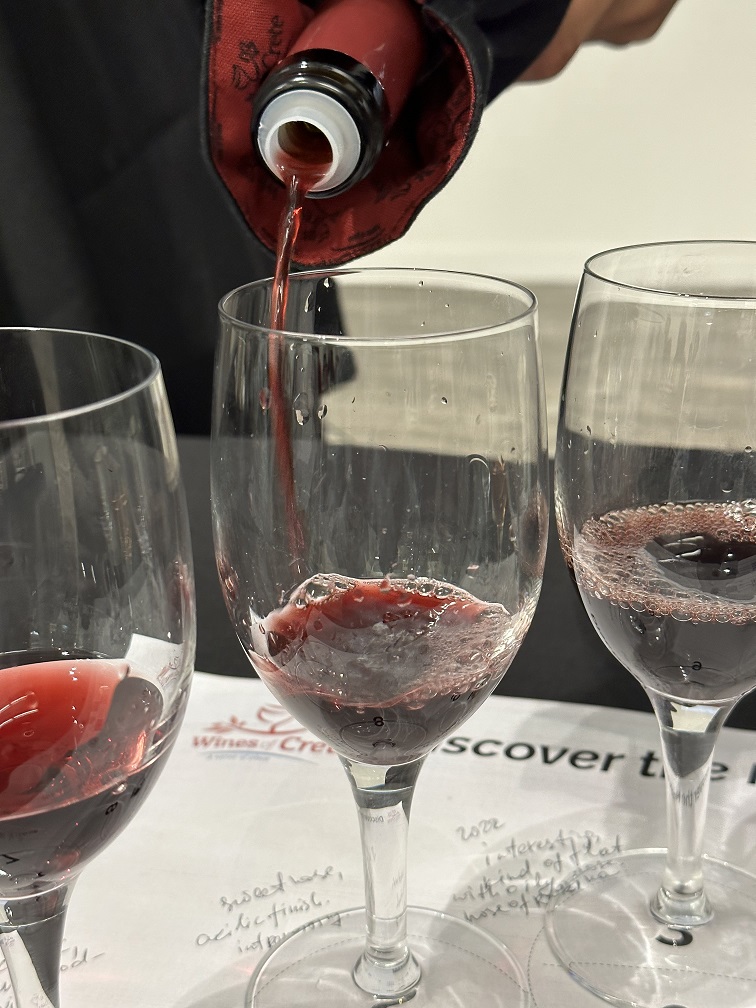
Next, we proceeded with the masterclass, where we learned about all the history and present day, and had an opportunity to taste 11 wines. While poured, all of the wine bottles were hidden inside the black pouches. In the presentation, there were no producer names mentioned – only grapes and regions were presented.
As we learned, this was not an oversight. As the event was sponsored by the European Union, it was the requirement not to mention the wine producers in the masterclass and in the tasting, so the producers not present at the tasting wouldn’t get upset.
I’ll let this sink in for a moment.
Think about it.
Now, let me ask you – how stupid, unbelievably stupid is it? [I guess this is what happens when lawyers run the business – I didn’t have to say it, but this is my blog, so I can].
I’m a blogger, and I’m only interested in education and tasting some obscure grapes. But let’s say you work at a restaurant. You taste the wine, you like it, and you would like to start offering it at your restaurant – but officially, you are not allowed to know the name of the wine you just tasted. Say what??? What is the point of this tasting? With this “blind tasting” move, you brilliantly hurt everyone – those who sent their wines for the tasting, and those who have not.
Okay, let’s get back to masterclass tasting.
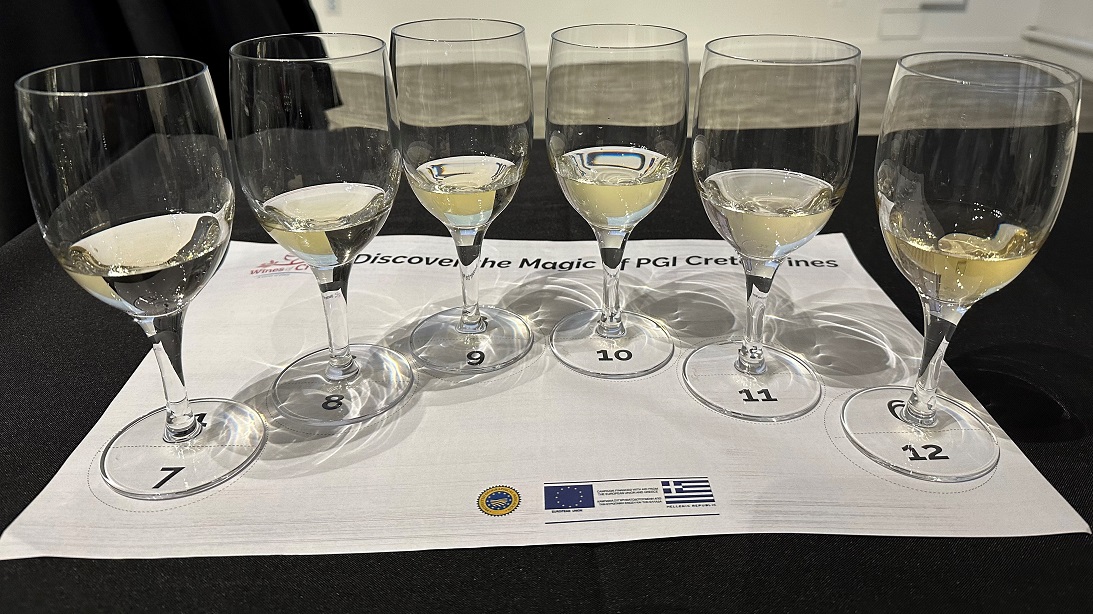
First, we tasted 6 white wines, made from Vilana, Vidiano, Thrapsathiri, and Assyrtiko. Thrapsathiri was a new grape for me, the rest I had tasted before. I don’t believe I liked any of the white wines, unfortunately…
Wine #1 – Vilana grape
Acidic, lean, food-craving
Good
Wine #2 – Vidiano
sweet nose, acidic finish, interesting
Wine #3 – Vidiano
interesting, kind of flat, oily nose, reminiscent of Retsina
Wine #4 – Thrapsathiri
interesting, herbaceous, cut through acidity. Very acidic finish
Wine #5 – Assyrtiko
Smoke, almost moldy on the nose
Corked?
Wine #6 – Vidiano (oak aged)
Plump, oily, full-bodied, crispy finish


Next were 5 reds, made from Liatico, Kotsifali, Mandelaria, and Romeiko. Again, one new grape here – Romeiko. Wine #10 was strange but drinkable. I really loved the Romeiko wine, but this was somewhat of a curveball red wine – it was actually made in the “orange wine” style. Still, this was my favorite wine from the masterclass tasting.
Wine #7 – Liatico 2022
interesting nose, sweet oak
super-tart, tannic, lacks fruit, tart finish
Wine #8 – Liatico/Kotsifali 2016
smoke on the nose, smoke on the palate, insane acidity
Volatile acidity?
Wine #9 – 60% Kotsifali, 40% Mandelaria, 2015
Raisins on the nose, oak, tertiary aromas
flat, tannic, ohhh
Wine #10 – 60% Kotsifali, 40% Syrah, French/American oak aging, 2017
Brett? Spoiled egg level
This is actually drinkable, a little flat on fruit, but good overall
Wine #11 – Romeiko, red grape made as an orange wine
Excellent, delicious, good balance, harmonious, good fruit and acidity, fresh


We managed to convince the staff to show us the wines we tasted, at least some of them, so you can see some of the wines we tasted in the picture above.
Main room tasting had its own issues – it appears that due to some issues with the customs, instead of 64 wines only about 15 were present in the tasting. All black bagged, unfortunately. I tasted another grape I never had before – Plyto, and the wine was quite pleasant, but this is all I can tell you.
There you have it, my friends. For me personally, this was not a waste of time, as I managed to pick up three new grapes I never tasted before. But in the large schema of things, this was a wasteful tasting – and it is sad. The effort was put into organizing it, but would it really help to advance the Wines of Crete in the US – I doubt so very much.
I really hope my next wine tasting will fare better…
Uruguay Wines – Coming Of Age
Do you know the problem many wine lovers share? We are creatures of habit.
Once we develop our inner “favorite wine” profile, we don’t let any changes happen to it. We like what we like. Never heard of this region? Thank you, I’ll pass. God forbid we fall in love with the particular producer – this is even worse than the region – nothing is ever good enough outside of the circle of our favorites.
And this is generally okay. Except we are putting ourselves in danger of losing on new, enlightening, delicious experiences.
When I was invited to the Uruguay wine webinar, my first reaction was “nah”. I mean, Uruguay, really? Between Chile and Argentina, my South American world-class wine circle is already full – do I need to bother with the wines from a totally unknown region?
On second thought – this is a webinar. Wine is coming to me, not like I need to travel somewhere to taste the wines I can potentially be disappointed by. Why not?
I’m glad I accepted the invitation. Both the information and the wines were lots of fun. We learned that while Uruguay has a population of 3.5M people, 2nd smallest size-wise country in Latin America, the country has a 98.7% level of literacy, the highest in Latin America. People in Uruguay are mainly descendants of Italians and Spaniards so they literally have wine embedded in their DNA.
Winemaking in Uruguay started in the 13th century. Today, there are 164 active wineries, producing 70M bottles of wine annually. Uruguay is currently in the process of implementing its own sustainability program. And by the way, the oldest winery in Uruguay dates back to 1854 and is called Los Cerros de San Juan (still open today!).
Uruguay has primarily a maritime climate with strong Atlantic influence, with the majority of low-lying coastal vineyards. Uruguay’s climate is closer to Bordeaux than the rest of South America, and it is significantly wetter if compared with Chile, where it rains only during the winter. Soils are clay based with lots of river deposits. Uruguay has six main winemaking areas, boasting 5 different terroirs. Warm and cold ocean currents collide right around Uruguay, creating significant influence. Interestingly enough, Uruguay is the only winemaking country in South America whose terroir is affected by the Atlantic Ocean.
When it comes to grapes, there are 14,804 acres under vine (a little smaller than Alexander Valley in California). Tannat is unquestionably a star, accounting for 27% of vineyard plantings., but it is not the only grape, obviously – Merlot, Cabernet Sauvignon, Cabernet Franc, Sauvignon Blanc are all quite popular as well.
And before we talk about wines, few more interesting tidbits: cows outnumber humans in Uruguay 4 to 1 and Uruguayans consume more meat per capita than any other country in the world!
Okay, now you know all that I learned in the webinar, and we can talk about the wines.
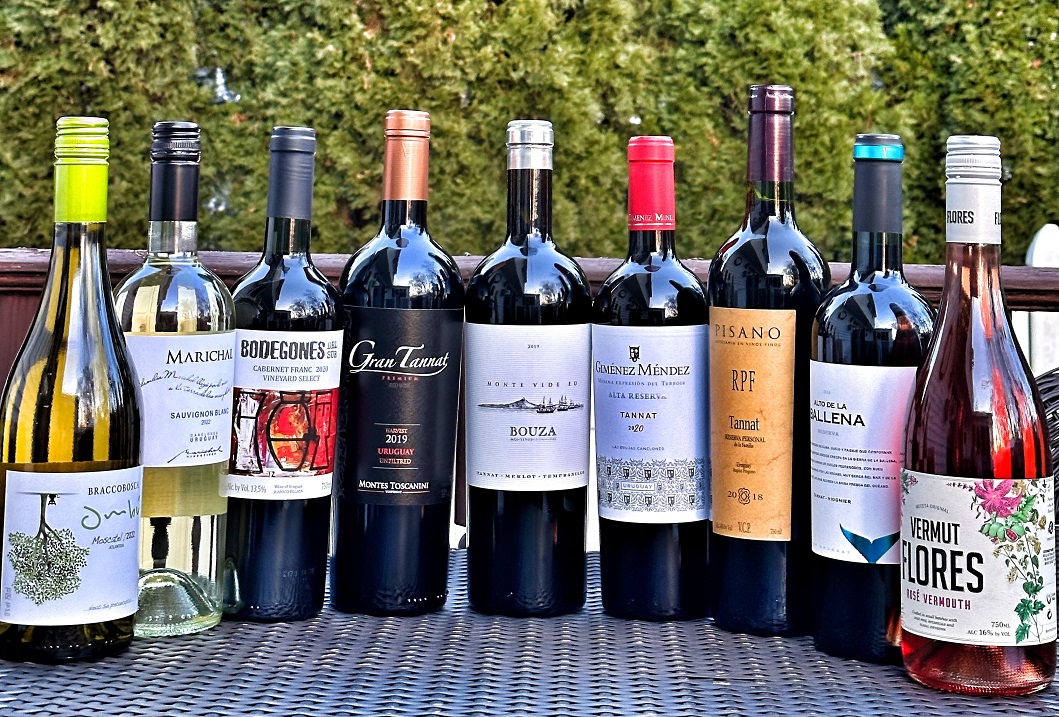
We had 2 whites, 6 reds, and one Vermouth wine in the tasting. Spoiler alert: I literally liked them all. In the blind tasting, these wines would be surely regarded as world-class, placing them in California, France, maybe Chile – Uruguayan origin of these wines would be a total surprise for many – for sure for me. And yet, here they are – world-class wines from Uruguay.
2022 Marichal Sauvignon Blanc Canelones Uruguay (12.5% ABV, $14)
C: light golden
N: plump, round, Whitestone fruit, a hint of gunflint
P: crisp acidity, fresh, bright. More resembling Muscadelle than anything else. Good balance.
V: 8, very refreshing.
2022 Bracco Bosca Ombú Moscatel Atlantida East Costal Region of Uruguay (13% ABV, $16)
C: light golden
N: very interesting. Muscat’s spicy, nutmeg profile comes as a distant hint. A touch of perfume
P: restrained tropical fruit with an acidic finish.
V: 7, not balanced enough for me; On the second and third days the wine showed much better, more coherent and more elegant – Drinkability: 8-.
2020 Familia Deicas Bodegones del Sur Vineyards Select Cabernet Franc Juanico Region Uruguay (13.5% ABV, $20, 30% aged in American and French oak)
C: Beautiful bright ruby
N: round vanilla, new world style
P: interestingly restrained on the palate, with noticeable tannins. The palate shows the absolutely old world (Saumur, Chinon). Interesting cranberry notes after an hour and a half in the open bottle.
V: 7+/8-, a bit unexpected, but not bad
Improved on the second day, became more round. Final: 8-
2020 Giménez Méndez Alta Reserva Tannat Las Brujas Canelonés Uruguay (14% ABV, $18, aged for 9 months)
C: Dark Garnet
N: Open, inviting, dark fruit, blackberries
P: Dark fruit, firm structure, smokey undertones, herbs, very good balance.
V: 8, well drinkable now
2019 Montes Toscanini Gran Tannat Premium Uruguay (14% ABV, $59, 18 months aged in oak, BAB with a huge punt)
C: dark garnet, practically black
N: wow. Cassis, sweet oak, eucalyptus, open, inviting, invigorating. In a blind tasting, I would bet my life on Napa Cabernet Sauvignon.
P: the palate is leaner than the nose suggests. Red and black fruit weave around a firm structure, tannins showed up a while after opening.
V: 8-/8, very impressive
2018 Pisano RPF Reserva de la Familia Tannat Region Progreso Uruguay (% ABV, $24, 10–12 months in French oak)
C: dark garnet
N: dark fruit, coffee, smoke
P: a hint of smoke, sapidity, dark, concentrated but not overpowering. Good balance, medium-long finish
V: 8-/8, very nice. Will be great with the steak.
2018 Alto de la Ballena Tannat – Viognier Uruguay (14% ABV, $24, 85% Tannat, 15% Viognier)
C: Dark garnet, almost black
N: herbs-forward nose, sage, a hint of cherries
P: fresh fruit, salivating acidity, sage, firm structure, and perfectly lingering cherries and cherries pit finish.
V: 8, great by itself, and will be great with beef roast
2019 Bouza Monte Vide Eu Montevideo Uruguay (13.5% ABV, $67, 20% Tempranillo, 30% Merlot, 50% Tannat, vinified separately, 16 months in French and American oak barrels)
C: dark garnet with a beautiful ruby hue
N: very complex, cherries, rosemary
P: roasted notes, dark fruit, elegant package, firm structure with a perfectly balanced mouthfeel.
V: 8, excellent, a world-class wine.
Basta Spirit Vermut Flores Rosé Uruguay (16% ABV, $16, Tannat, 27 botanicals)
C: beautiful salmon pink
N: Herbaceous, but a bit strange, stewed strawberries
P: a bit too sweet for my palate.
V: I’m very particular about the vermouth, so this is probably not the one for me.
Here you are, my friends. Next time you see an Uruguayan wine on the shelf, obey your thirst and grab it – and you don’t even have to thank me later.
2 Regions, 3 Glasses, 1 Wine Geek
The assignment was simple. Compare 6 Cabernet Sauvignon wines from 2 famous winemaking regions in Chile. Find differences. decide on a favorite.
As with any assignment, let’s start with the theory.
Cabernet Sauvignon is unquestionably a king of Chilean wines – it is the best-known Chilean wine worldwide and it is the most widely planted red grape variety in Chile. It accounts for about 20%+ of all vineyard plantings in Chile, covering an area of about 99,000 acres, stretching through the entire country from north to south. At the same time, 97% of the Cabernet Sauvignon plantings are located in the Central Valley, spread between O’Higgins, Maule, and Metropolitan Region.
Narrowing it down to the wine-producing DOs, we are looking at the Maipo Valley and Colchagua Valley, two of the best-known Cabernet Sauvignon areas in Chile. These are also the two regions that are the subject of our assignment.
Maipo Valley is one of the oldest winemaking regions in Chile, with its terroir shaped by the Maipo River, which begins at the Maipo volcano, creating a patchwork of valleys at the elevation of 2,500 feet above sea level. Some of the areas in Maipo Valley see a minimal number of sunny days required for the red grapes to fully ripen, with a climate somewhat similar to Bordeaux.
Colchagua Valley lies about 80 miles south of the city of Santiago. Parts of the valley are crisscrossed by the Tinguinirica River, taking its roots from the volcano crater in the Andes, and descending from about 2,000 feet to the 360 feet of elevation above sea level. Colchagua Valley generally offers much warmer daily temperatures compared to the Maipo Valley.
Here are some of the views of the beautiful regions:
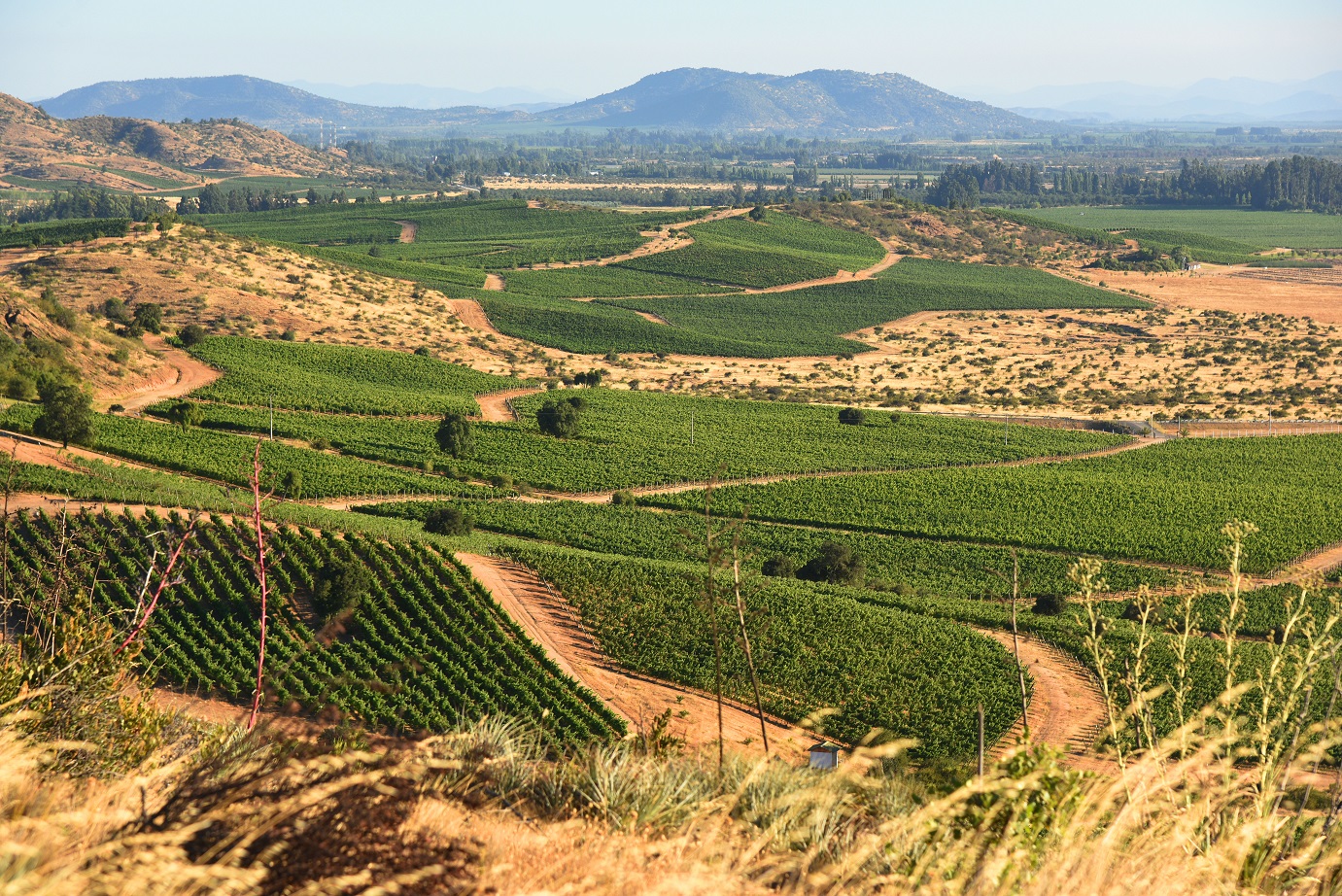
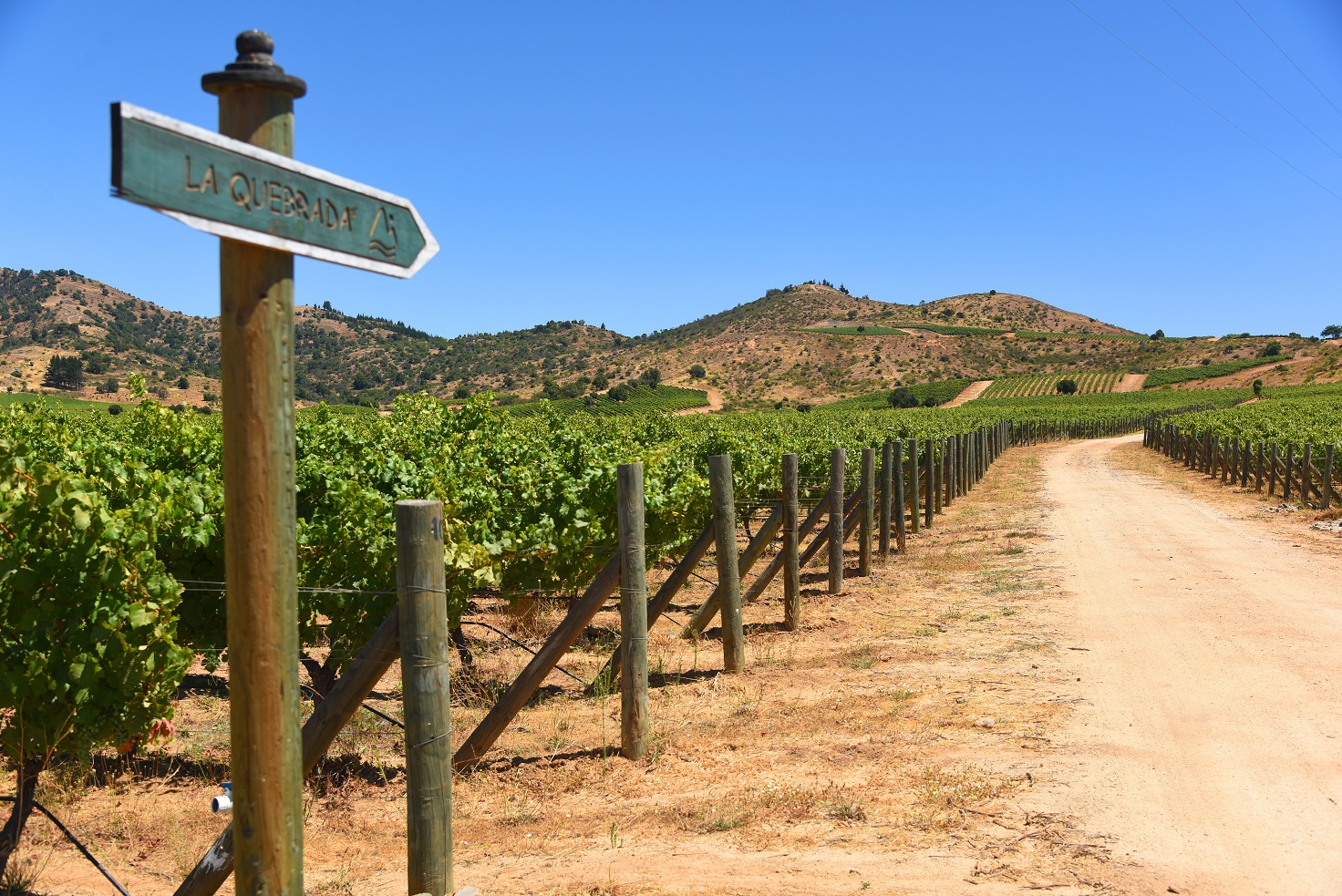
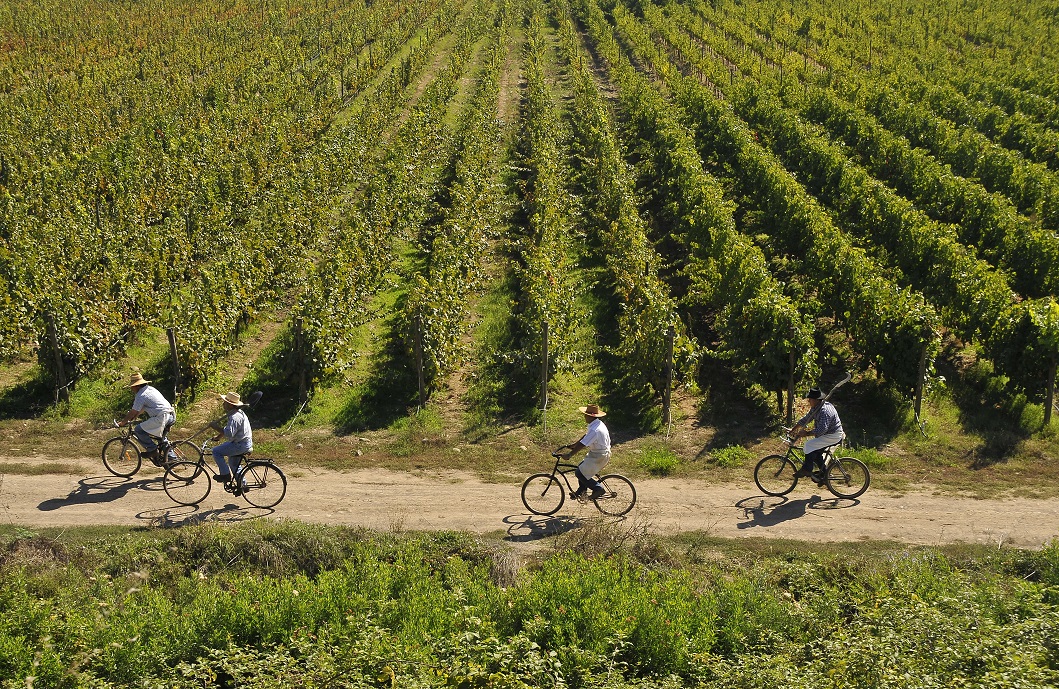
I’m purposefully avoiding descending into the discussion about the different soil types throughout both regions but of course, alluvial soils, colluvial soils, gravel, clay are all intermixed around both regions. I don’t believe I can intelligently speak to the effect of a given soil type as it comes to the resulting taste profile of the wine, but our main difference between the wines from the two regions should be driven by the warmer versus cooler climate and some differences in the elevation.
I hope this is enough of the theory and it is time to get to practice – the lab portion of our assignment.
This is where the inner geek came out guns blazing – and this is where everything all of a sudden became muddy and complicated.
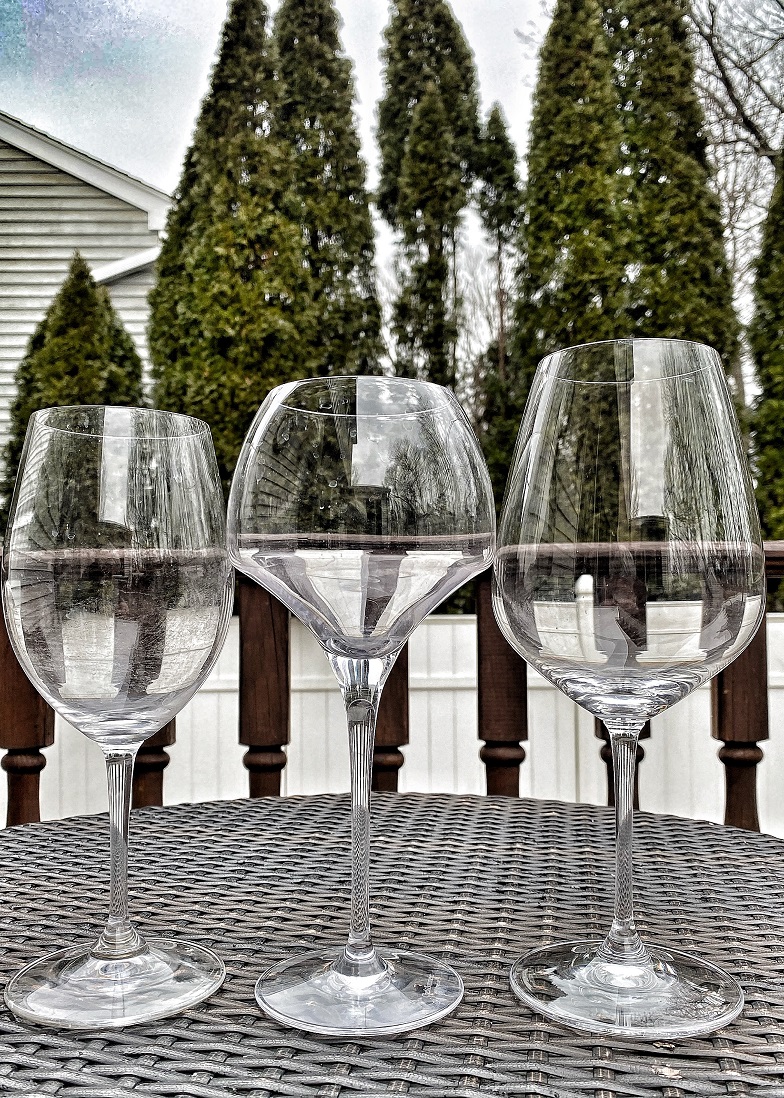
I decided that the challenge of comparing the 6 wines is insufficient, and to make things more fun, I decided to was possessed to try each wine from three different glasses: Glass 1- Riedel Universal tasting glass (this is the one typically offered at all of the wine tastings), Glass 2 – Chef & Sommelier Open’Up glass, one of most aesthetically pleasing glasses for the daily drinking, and Glass 3 – Riedel Radical Cabernet glass (my favorite glass for the Bordeaux varieties).
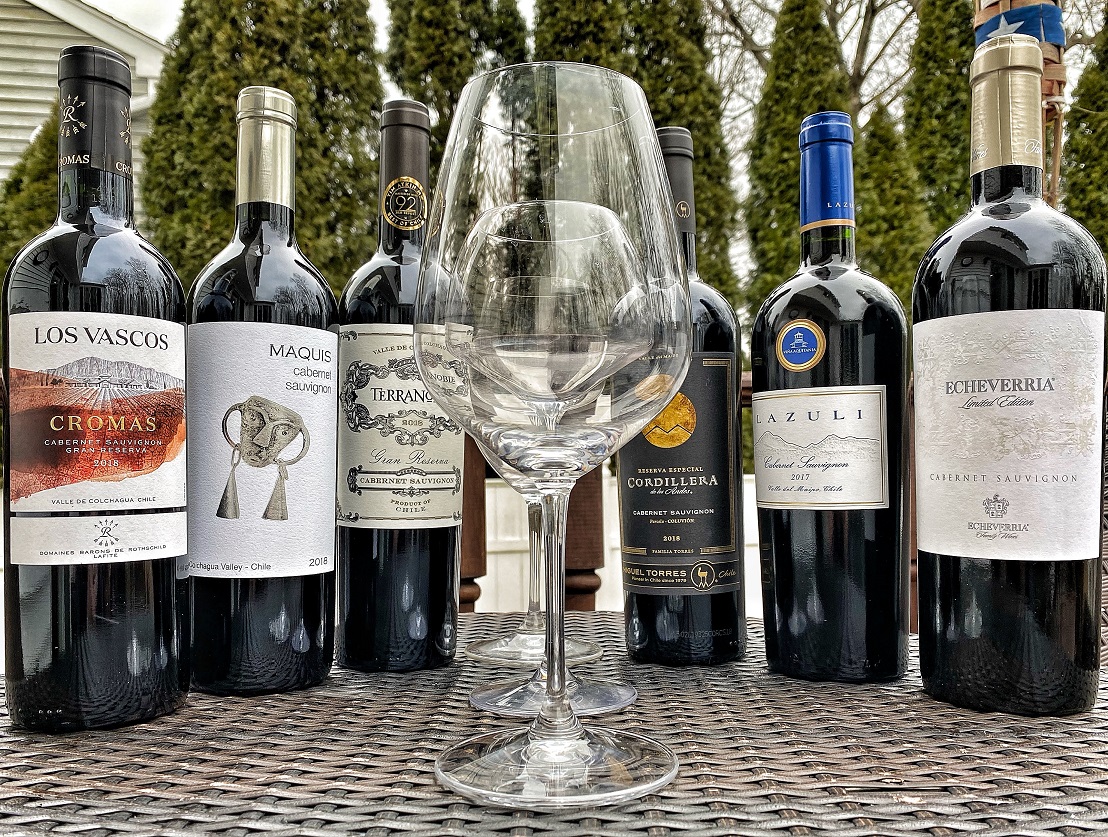
The wines I tasted all come from well-known producers. I was familiar with some prior to this tasting (Los Vascos, TerraNoble, Maquis) and I had a lot of Los Vascos and TerraNoble Cabernet wines in the past. Regardless, this was quite a respectful selection of the wines, expectedly illustrative to represent the two regions. Three of the wines were 100% Cabernet Sauvignon, and 3 had Cabernet Sauvignon as a dominant component.
To explain in more detail what I did: on the first day, I poured each one of the 6 wines into the 3 glasses – non-blind, one by one. I then tasted each wine from those 3 glasses – you will see the notes below, describing my perception of the same wine in each of the 3 glasses. The glasses had their effect, even though Radical Cab and Open’Up glasses offered mostly similar experiences. Open’Up glass required the bottom section to be sufficiently filled or the nose of the wine was becoming lost. All of the second and third day tastings were done only using the Universal tasting glass. Below you can see all of the tasting notes, from which it is very easy to conclude that I was unable to come to any meaningful conclusions and find any meaningful, region-conforming differences between the wines.
Here we go:
Team Maipo Valley:
2017 Lázuli Cabernet Sauvignon Valle del Maipo (14.5 ABV, $45, 100% Cabernet Sauvignon)
Garnet
Glass 1: dark fruit, concentrated, iodine, forest underbrush, pyrazine
Interesting. Quite restrained. Not a lot going on.
Glass 2: much less expressive, just a hint of pyrazine
It is showing better. No idea how. Crunchy berry, soft tannins, still not very expressive
Glass 3: dark fruit, more focused than glass 1, a hint of bell pepper
Similar to glass 2. Dark fruit, baking spices, lots of minerality. Not very much Caberneish if you ask me.
Day 2: not good
Day 3: Fruit showed up. Fresh berries and eucalyptus. Is this a Cab? Not sure. Is it drinkable? Sure, on the third day.
2018 Miguel Torres Cordillera Cabernet Sauvignon Reserva Especial de Les Andes Valle de Maipo (14% ABV, $20, 100% Cabernet Sauvignon)
Concentrated ruby with bright hues
Glass 1: very similar presentation to the first wine. Dark fruit, a hint of bell pepper, very distant hint, a touch of eucalyptus.
Definitely a Cabernet profile, more explicit than the previous wine. Eucalyptus, cassis, bell pepper practically non-existent.
Glass 2: this glass requires much higher pour to get to the aromatics.
The wine appears more refined and elegant on the nose than glass 1, more focused on eucalyptus and cassis.
Delicious, earthy cab. Good acidity, cassis, earthy and restrained.
Glass 3: interesting. Almost gets to the barnyard space. Definitely more earthy than glass 2.
The best experience. Dark fruit, cassis, pencil shavings, crisp tart finish.
Day 2: good
Day 3: excellent. Dark fruit, eucalyptus. Round tannins, good structure, dark and supple.
2016 Echeverría Cabernet Sauvignon Limited Edition Maipo Valley (14% ABV, $25, 85% Cabernet Sauvignon, 10% Syrah, 5% Carménère)
Dark Garnet
Glass 1: very concentrated. Dark fruit, sapidity, earthiness, a hint of eucalyptus. Interestingly enough, all 3 wines so far are really similar.
The nice initial appearance of the fruit is instantly replaced by tannins. Serious French Oak tannins, front of the mouth is locked.
Glass 2: a much more elegant appearance than Glass 1. A hint of eucalyptus and bell pepper.
Fruitier than the previous 2 wines, nice load of dark berries, and then it is all tannins. Again, the wine appears to be more elegant.
Glass 3: similarly elegant to glass 2. Eucalyptus, bell pepper, and a touch of black pepper.
Berries, eucalyptus, and tannins. Should be outstanding with the steak.
Day 2: Excellent
Day 3: very good, open fruit – but not very much of the cab? I liked it more on the day 2
Overall notes: all 3 wines are very similar on the nose, showing differently on the palate. Earthy, concentrated wines. All need time to open.


Now, team Colchagua Valley:
2018 Maquis Cabernet Sauvignon Gran Reserva Colchagua Valley (14% ABV, $20, 90% Cabernet Sauvignon, 6% Cabernet Franc, 3% Carmenere, 1% Petit Verdot)
Garnet
Glass 1: bright and clean aromatics, cassis, eucalyptus, a hint of bell pepper
Plums, a touch of cherries, not a textbook Cabernet Sauvignon
Glass 2: interesting. Volcanic undertones, gunflint, almost a hint of sulfur, fresh crisp berries
Better showing, brighter fruit, some bitter undertones appeared (whole cluster?)
Glass 3: somewhat similar to the glass 2, but a bit more restrained
Amazing how much glass matters. This is almost at the expected level of Cabernet Sauvignon – a hint of cassis, mint. Still very restrained.
I’m so confused that I had to wash the glass.
Re-taste: it is not bad, but didn’t make a difference. Still, dry restrained, with some bitter notes on the finish.
Day 2: tight and closed
Day 3: definitely better. Bitter notes are gone. But the whole presentation is plum/cherry, not so much of the Cab Sauvignon
2018 Los Vascos Cromas Cabernet Sauvignon Gran Reserva Colchagua Valley (14.5% ABV, $22, 85% Cabernet Sauvignon, 10% Syrah, 5% Carmenere)
Concentrated ruby
Glass 1: dark berries, a hint of cassis, vanilla, bell pepper might be a product of my imagination
Delicious. Fresh, open, clean, dark berries, cassis, bell pepper, eucalyptus. A pretty classic cab if you ask me. Best of tasting so far.
Glass 2: Cassis and mint, medium intensity
Delicious. Very similar to glass 1, somehow with a bit more intensity of the flavors.
Glass 3: very restrained, cassis, bell pepper, a touch of tobacco
Delicious. Exactly as two previous glasses. Happy to drink every day.
Day 2: not good. Tight, closed.
Day 3: lots of tobacco and smoke on the nose. Dark fruit, borderline bitter. I don’t get this wine
2018 TerraNoble Cabernet Sauvignon Gran Reserva Valle de Colchagua (14% ABV, $20, 100% Cabernet Sauvignon)
Garnet color
Glass 1: dark berries, eucalyptus
Delicious. Open, bright, good acidity, ripe fruit, not necessarily a textbook cab, but fresh and delicious.
Glass 2: dark berries, sapidity, earthy, a hint of bell pepper
Fresh, delicious, crisp berries, a touch of cherries, a bit of dark chocolate.
Glass 3: a hint of bell pepper, dark fruit, earthy
Bright, open, good structure of tannins. A cab? Maybe…
Day 2: good
Day 3: beautiful, supple, good tannins, good structure, open fruit, good finish.
On the day 2, my preferences were with these three wines:
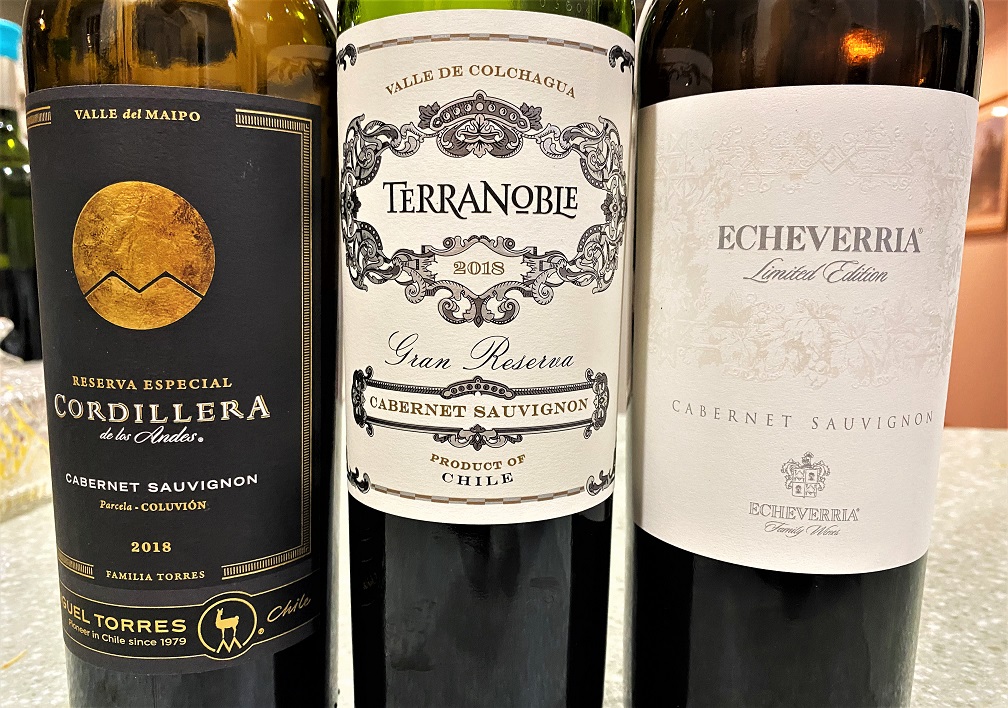
And then there were two. On the third day, I had two wines as my favorites – and they represented two regions.
For the final decision – Torres versus TerraNoble.
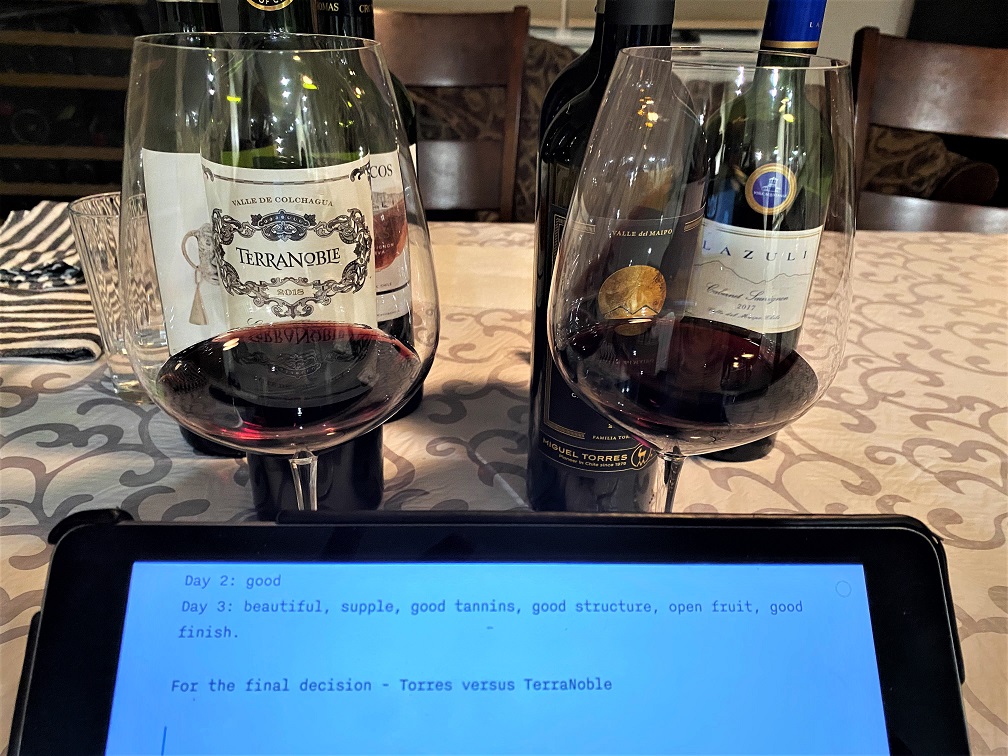
Wine geek at work
Nose: advantage Torres – dark chocolate, a hint of bell pepper. TerraNoble mostly closed
Palate: slight advantage Torres – better structure and better precision. Dark and concentrated. Will continue improving.
The winner: 2018 Miguel Torres Cordillera Cabernet Sauvignon Reserva Especial de Les Andes Valle de Maipo
So we can conclude that Maipo Valley won this strange competition, at least with a margin of error.
The assignment is complete. So what did we learn?
- Don’t play with your glasses, unless this is actually a goal of your exercise. Wine glasses matter and wine glasses
canwill confuse you. - Hey, wine glass matters.
- I probably should’ve done the blind tasting instead
- Chilean Cabs need time. Practically all showed better on the second day.
- I was unable to find the real differences between Colchagua and Maipo wines
Oh well. Play with your wine. Have fun. One way or the other, experience is still an experience, and as long as you desire, there is always something to learn.
Do you have a favorite Chilean Cabernet Sauvignon? Care to share? Cheers!
Spain’s Great Match, 2021 Edition
Spanish wines are some of my most favorite wines in the world.
Spain’s Great Match event in New York is one of my most favorites wine events of the year, always offering an opportunity to discover something new.
And I had not been to New York City in the past 18 months – lots of good reasons to be excited, would you agree?
For the second time in a row, Spain’s Great Match event was held at Mercado Little Spain, a Mecca of Spanish cuisine in one of New York’s hottest new neighborhoods, Hudson Yards. I was able to attend the walk-around tasting and two of the seminars, so here I want to share my impressions.
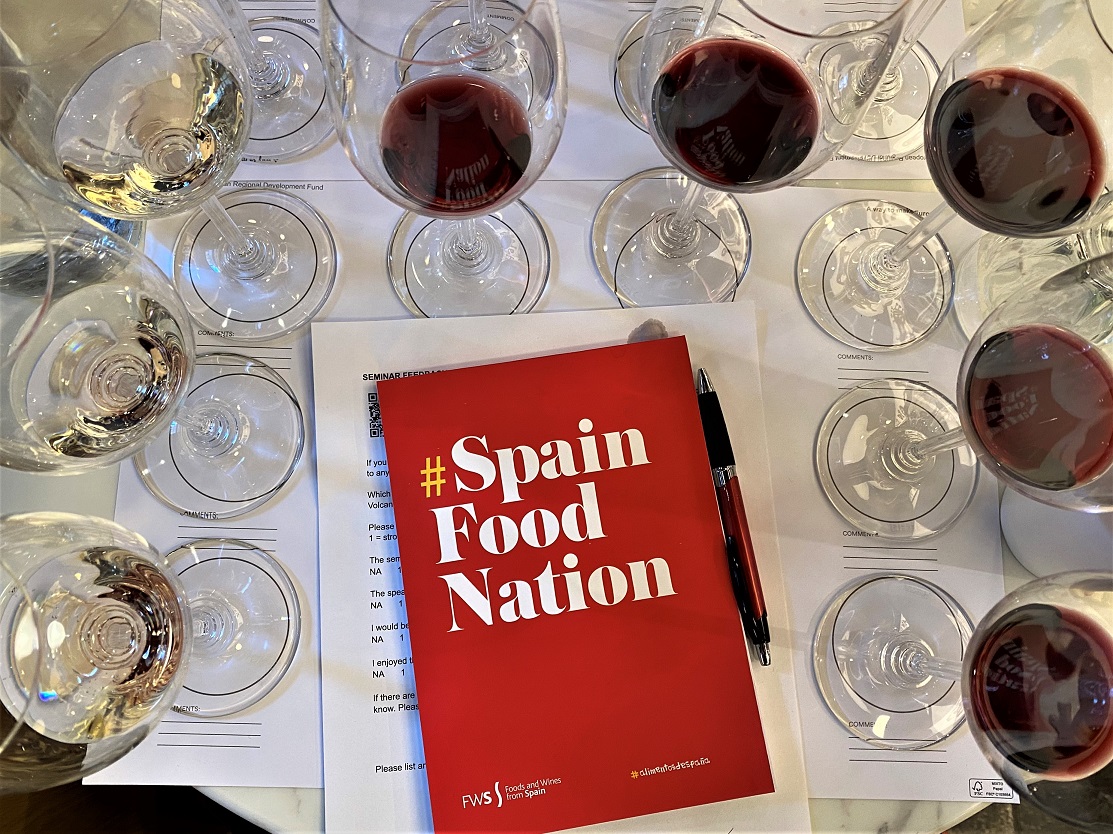
Before we get to the event, just a few facts about Spain’s wine industry. Spain has the biggest grape planting area in the world – more than 2.9 million acres. Spain today (2021) is the second-largest wine producer in the world after Italy. There are more than 600 grape varieties grown in Spain (only about 20 are used to produce the majority of the wines though). Spain has more than 130 defined wine-growing areas.
Now, let me share my observations.
First, Spanish wines are popular. Duh? I can’t argue – I’m starting with the most banal conclusion, but let me explain. Spanish wines were always regarded as the best-kept secret among wine professionals – whatever the general public likes to drink is fine, but the wine professionals would most often resort to the Spanish wines to share amongst themselves and with friends. I don’t know how many people attended the consumer portion of the event in the evening, but the trade event was incredibly busy, also with a significant number of MS and MW in the audience – I never saw these many Masters of Wine and Master Sommeliers attending this event. It might be just me not seeing it before, or it might be a testament to the growing popularity of Spanish wines. I think this popularity is also reflected in the increased prices of the Spanish wines – don’t know if supply issues are muddying things up, but otherwise, it seems that the prices are inching higher.
The trend of “internationalization”. Spanish Rioja and Ribera del Duero wines, the keystones of Tempranillo expression, always had its unique taste profile, driven by well-integrated tannins, minerality, and spicy undertones. This character was largely defined by the use of American oak which was traditional in Rioja. I didn’t taste each and every Rioja wine presented at the event, but based on what I managed to taste, it seems that there is a shift towards using the French oak, which completely changes the presentation of the wine, leading with grippy, mouth-drying tannins which completely lock the front of your mouth for a few minutes after the sip. Barolo used to be like that, and it became much better with tannins lately. Now Rioja is offering this internationally indistinguishable style which becomes borderline boring. If I want to drink a grippy powerful wine, I got plenty of choices outside of Rioja – I understand that this might be a trend with young wine drinkers, but it will be very difficult to maintain individuality and build a following if you are simply “one of many similar ones”.
Where did the Godello go? I saw a very little presence of Godello wines, which was surprising. I always thought that this white grape has an excellent future – this might still be the case, but this was not obvious with 3 whites ruling the show – Rioja Blanco, Albariño, and Verdejo Rueda.
Jerez is absolutely delightful. My love of Jerez is back, and the wines we tasted during the seminar (more details forthcoming) were simply superb.
Don’t forget Spanish bubbles. I tasted a bunch of Cavas, and none of them were mediocre. Fresh, clean, approachable, and reasonably priced – great QPR wines for every day.
Now, here are the wines I tasted during the event (with the exception of the seminar wines). Everything which is mentioned below was well drinkable, and the specific favorites are marked (bold) as such.


2020 Santiago Ruiz Santiago Ruiz D.O. Rias Baixas ($25)
2017 Bodegas LAN Rioja Crianza D.O.Ca. Rioja ($18) – probably my favorite from the Bodegas LAN selection. The most approachable and balanced from this group.
2015 Bodegas LAN Rioja Reserva D.O.Ca. Rioja ($24)
2017 Bodegas LAN D-12 D.O.Ca. Rioja ($25) – single vineyard
2017 Bodegas LAN Xtreme 2017 D.O.Ca. Rioja ($25)
2015 Bodegas LAN Viña Lanaciano D.O.Ca. Rioja ($30)
2018 Bodegas LAN Edicion Limitada D.O.Ca. Rioja ($55)
2015 Bodegas LAN Culmen D.O.Ca. Rioja ($70)
2016 Vins el Cep Gelida Brut Gran Reserva D.O. Cava ($20)
NV Bodegas Llopart Brut Reserva Rosé Corpinnat ($28)
2020 Bodegas Vatán Nisia Las Suertes D.O. Rueda ($32)
2018 Bodegas La Caña Navia D.O. Rias Baixas ($32)
2019 Bodegas Avancia Mencía Old Vines D.O. Valdeorras ($35)
2018 Bodegas Breca Garnacha D.O. Calatayud ($16) – clean, simple
2018 Bodegas Vatán Tritón Tinta de Toro D.O. Toro ($20)
2018 Bodegas Vatán Tinta de Toro D.O. Toro ($45)


2018 Bodegas Muga Flor de Muga Blanco D.O.Ca. Rioja ($50) – my favorite wine white of the event – clean, round, fresh, elegant
2014 Bodegas Muga Prado Enea Gran Reserva D.O.Ca. Rioja ($100) – surprisingly ready to drink
2011 Bodegas Sierra Cantabria Gran Reserva D.O.Ca. Rioja ($40)
2014 Bodegas Alvear Alvear Fino en Rama D.O. Montilla Moriles ($22) – outstanding. It is very rare to find dry sherry made from 100% Pedro Ximenes grapes.
2016 Sierra Salinas Mira Salinas D.O. Alicante ($18, Monastrell) – Elegant, fresh, perfect acidity
2016 Ramirez de la Piscina Ramirez de la Piscina Reserva D.O.Ca. Rioja ($22)
2018 Rafael Cañizares Bodegas Volver Tempranillo Single Vineyards D.O. La Mancha ($20)
2020 Rafael Cañizares Bodegas Volver Paso A Paso Tempranillo Tierra De Castilla ($35) – excellent, elegant, open


All three were excellent:
2013 Agustí Torelló Mata Cava Agustí Torelló Mata Brut Nature Gran Reserva D.O. Cava ($26)
2017 Agustí Torelló Mata Cava Agustí Torelló Mata Brut Reserva D.O. Cava ($21)
2011 Agustí Torelló Mata | Cava Kripta Brut Nature Gran Reserva D.O. Cava ($85) – unique and different, would make a perfect geeky present
2019 Bodegas San Valero S.Coop Cabeza Casa D.O. Cariñena ($11, Garnacha) – elegant, round, excellent QPR
2018 Bodegas San Valero Celebrities Syrah D.O. Cariñena ($11)
MV Bodegas San Valero 801 D.O. Cariñena ($20, blend of 2014 Cabernety Sauvignon, 2015 Merlot, 2016 Syrah) – very good, unusual, multi-vintage
2019 Bodegas San Valero Particular Garnacha D.O. Cariñena ($12)
Now, the seminars. The Jerez seminar was superb, offering lots and lots of knowledge about the fascinating world of sherries. Three white grapes – Palomino Fino, Pedro Ximenez, and Moscatel – are behind the tremendous range of wines, all with unique characters and tastes ranging from absolutely bone dry (sugar content less than 5 g/l) to the syrup level with more than 300 grams of sugar per liter. Another fascinating element of Sherry is the Solera production method, where the resulting wine might technically have trace amounts of 200+ years old wines. Lots and lots of care and attention go into the Sherry production. During the “Spotlight on Sherry” seminar, led by incomparable César Saldaña, General Director of the Jerez Control Board, we learned a lot about sherries and tasted through the outstanding flight of 8 wines (with the exception of the last 2 which I didn’t enjoy that much).
Here are my notes regarding the 8 wines we tasted:
Bodegas Hidalgo Manzanilla La Gitana
4 years Solera
Almonds, hazelnut, sage, brioche
Crisp, dry, fresh, hazelnut, pecorino cheese, sapidity, dusty palate
Excellent, perfect aperitif, and perfect for food
2021 Tio Pepe Fino Tio Pepe en Rama-Saca
Unique and different, blend of selection of 82 butts of Tio Pepe Solera
Bottled unfiltered
Beautiful floral nose,
Crisp, clean, elegant, mostly lemon and 0 sugar, chalky note – typical for this type of wine.
Great complexity, elegant
Valdespino Jerez Fino Ynocente
Single Vineyard in Pago Macharnudo
50 years old Palomino Fino vines
Fermented in cask
10 years Solera, Criaderras Solera
Very elegant, apples, lemon
Chalk, lemon, sapidity, 0 sugar
Williams Humber Amontillado Don Zoilo
Solera 12 years
Biologically aged until the full absence of flor
Butterscotch!
Crisp, fresh, herbaceous
Lustau Almagenista Oloroso Pata de Gallina
Almagenista: Juan Garcia Jarana
38 casks, aged on average 15 years
Butterscotch, caramel
Crisp acidity, sapidity, great complexity, hazelnut
Osborne Palo Cortado Capuchin VORS
Solera was founded in 1790! Potentially, there were traces of 230 years old wine!
5 criaderas
Average age 30 years
Tobacco, mint, basil
Pepper, tobacco, caramel, complex, long finish.
Superb
Bodegas Tradicion Cream Tradicion VOS
Blend of 30 years Oloroso (70%), 6 years old Pedro Ximénez (30%)
Average age 25 years
Dry fruit
Concentrated sugar, not great.
Barbadillo Pedro Ximénez la Chila
Solera system average 5 years
Amazing nose – raisins, figs,
Pure liquid raisins on the palate. I would like more acidity.
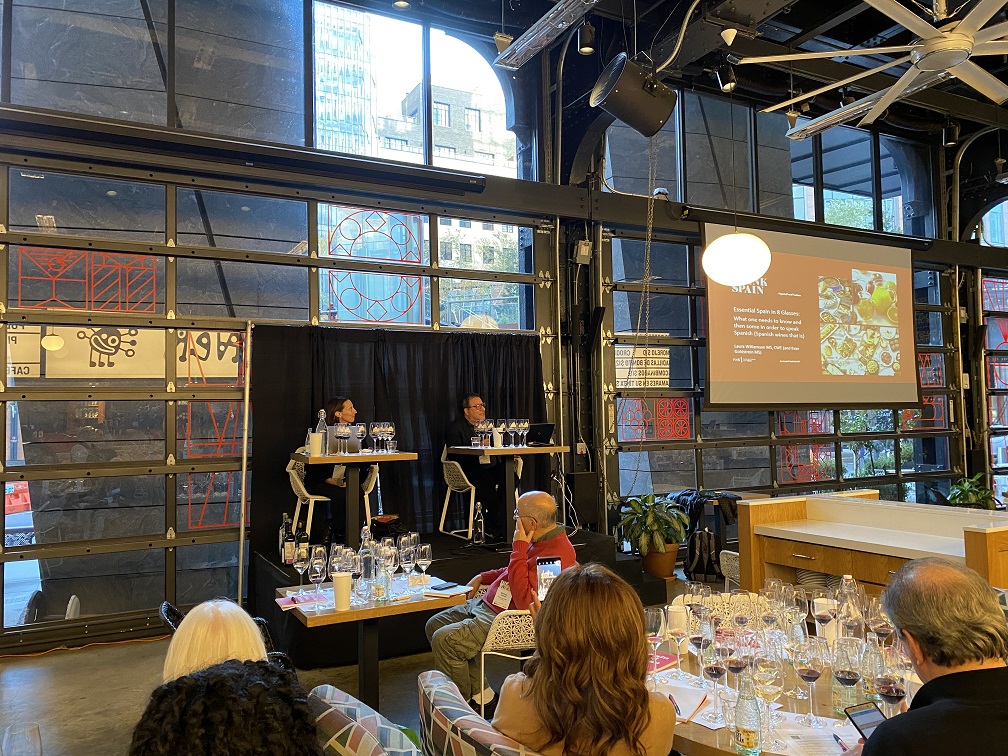
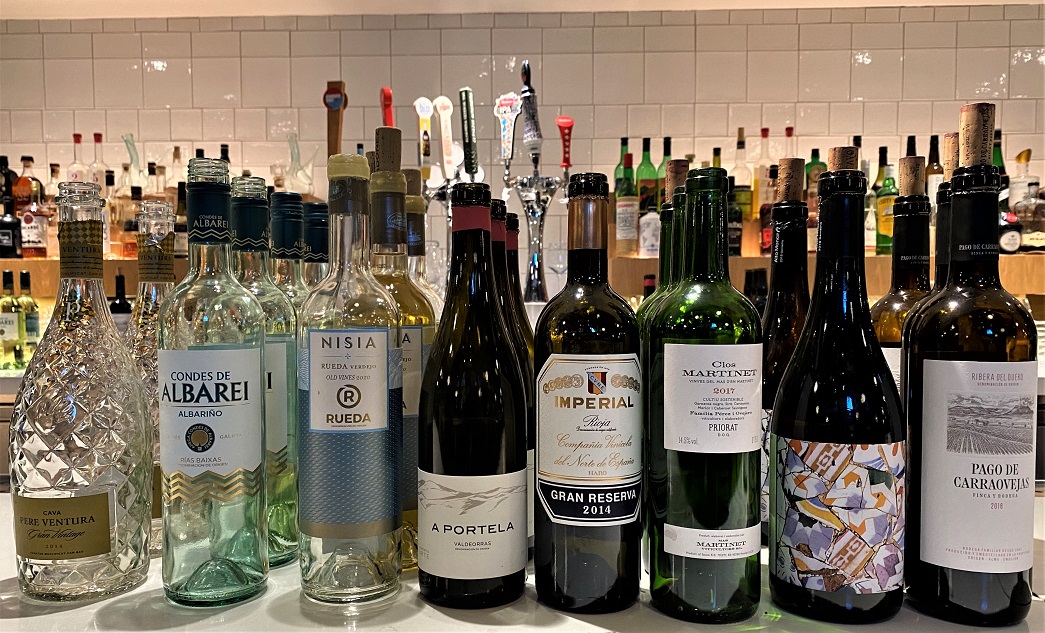
Finally, I attended the seminar called “Essential Spain in 8 Glasses”, presented by Laura Williamson, MS, and Evan Goldstein, MS.
If the country is the second-largest wine producer in the world, cultivating about 600 different grape varieties, is it even fathomable to present such a complex wine world in the format of 8 wines? While it is not easy, you can get reasonably close. I think the presenters made a good effort by including Cava, Albariño, Verdejo, Mencia, Rioja, Priorat, Garnacha, and Ribera del Duero.
2012 Pere Ventura Gran Vintage Brut Paraje Clasificada Cava DO ($55)
Yeasty nose, fresh dough
Crisp, yeasty, yeasty, yeasty, yeasty – not my wine
2020 Condes de Albarei Albariño ($16)
Tropical fruit nose
Acidic, Whitestone fruit, crisp, simple
2020 Bodegas Ordoñez Nisa Verdejo Old World Rueda ($32)
Intense nose with a hint of freshly cut grass, flowers
Rich, caramel component, overdone
2015 Ole Imports a-Portela Mencia ($29)
Very nice nose, fresh, open, fresh berries
Beautiful herbal/gamey component, but then very bitter on the palate – whole cluster not done right?
2014 Imperial Gran Reserva Rioja ($85)
Outstanding. Delicious all around.
2017 Clos Martinet Priorat (65% Grenache, 20% Syrah, 10% Carignan, 4% Merlot, 1% Cabernet Sauvignon)
Smoke, roasted notes
Red and black fruit, perfect balance, great acidity, a touch of chocolate
2018 Also Moncayo VERATON ($35, Garnacha)
Plums, cherries,
Good acidity, fresh, cherries, crisp, great finesse
2018 Pago de Carraovejas Ribera Duero ($39)
Chalk, a hint of cherries,
Cherries, dark concentrated fruit, restrained. Very nice.
Last but not least – there was food! The food was carried around in all the different forms – I didn’t have much time to enjoy it, so I was mostly grabbing pieces of Jamon and Manchego between the tastings – these are the pictures I will leave you with.


This concludes my report. Have you had any Spanish wine discoveries as of late? What are your thoughts about the new wines and new styles?
Last Bottle Sign Up ($10 credit)




 Talk-A-Vino