Archive
Weekend in Wines
Are we losing the sense of time? The weekend was always a special time, and I don’t mean in a TGIF way – most of the time, I’m happy with Friday evening, and I’m happy with Monday morning. But the weekend usually meant different types of activities – going somewhere, meeting with friends, maybe going to the city for a leisure stroll and a dinner – you name it. Now, as we have to be pretty much confined to your house due to the virus, the days are becoming mostly all the same, and the weekend simply means “huh, it is Saturday” (note the absence of exclamation mark).
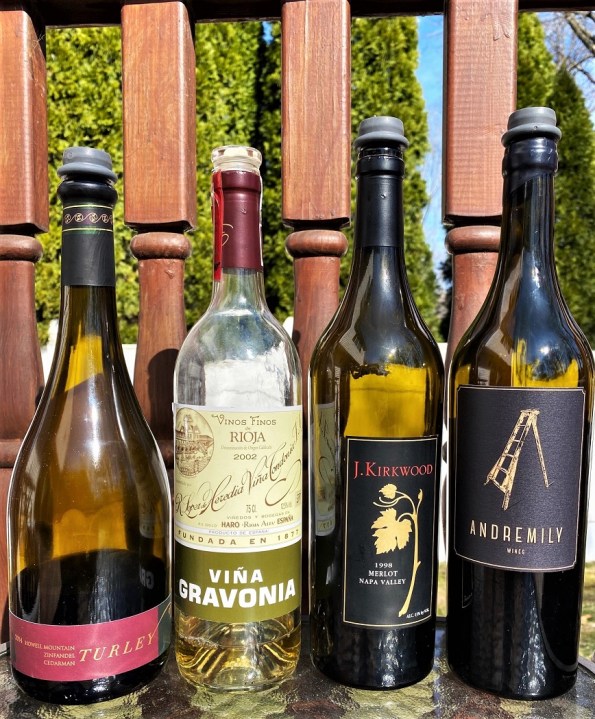
My last weekend, however, was still a bit different, and it translated into some interesting bottles being opened.
On Friday, we had a family dinner. I always ask if anyone wants to drink wine, which defines which bottle will be opened. I got absolutely unexpected “yes, I would like some wine” which sent my heart racing for a second and caused near panic stall. You know how it is – when someone asks oenophile for a glass of wine on short notice, there is an instant desire to please, which translates into an attempt to identify the right bottle in a split second, thus you need to mentally flip through the content of all your wine cabinets (shelves) in the shortest amount of time, as nobody will be patiently waiting for you to perform the shelf dance for 20 minutes while the meat is getting cold.
I can honestly tell you that in a situation like that, the end result almost always ends up the same – I pull a bottle of Turley. Turley literally never disappoints, pretty much without any regard to the age, unlike many other amazing wines which simply can’t be appreciated until at least 10–15 years in the bottle. So the bottle I opened was 2014 Turley Zinfandel Cedarman Howell Mountain (15.6% ABV). There is a no bigger reward for the oenophile’s heart than to hear from someone you are trying to please “ohh, this is such good wine!” – and it really was. Rich, opulent, bursting with smokey blackberries and blueberries, you know that succulent and generous fruit you can’t just put down – the wine was stunning in its open generosity – and perfect balance.
The next day was my daughter’s 18th birthday, so needless to say that the appropriate bottle(s) had to be open. First, I always try to open a bottle of vintage matching the birth year. I don’t have a lot of 2002s laying around, unfortunately, so my decision fell on 2002 Lopez de Heredia Viña Gravonia Rioja DOC (12.5% ABV). Lopez de Heredia is one of the very best (and one of my most favorite) Rioja producers, so I’m always happy to open their wines. Lopez de Heredia white Rioja is legendary – white Riojas are still rare, and not all of them can age. This wine was an excellent example – it had a tremendous interplay of flavors in the glass, moving from succulent white plums, then showing tropical fruit undertones, then bristle with acidity to the point of young Chablis and ending with a beautiful oxidative profile of classic Jura Savagnin. If you like mature white wines, this is a delight for sure.
For the aged red, I decided to open the bottle of 1998 J. Kirkwood Merlot Napa Valley (13% ABV). I got a few bottles from the Benchmark Wine company last year at a great (incredible?) price of about $20 – I never heard of J. Kirkwood, so I really was going by the combination of age and price when ordering this wine. Boy, what a treat. Forget everything you know of and everything you think Merlot is. This wine was loaded with smoke, tar, and spices. Yes, there was a core of fruit, but not your typical aromatic cassis, more of the crunchy blackberries, smothered in exotic spices. Dense, brooding and delicious would be the right way to describe it – as long as I will not try comparing it with our last wine.


I’m sure you’ve been in the same situation. You have a special bottle of wine. You know it is not ready. You are 200% sure it is not ready. But then you simply get fixated on the idea that you want to open the bottle, especially when there is anything (anything!) to celebrate. And so my daughter’s birthday was a perfect reason to open the bottle of 2016 Andremily Wines Syrah No 5 California (15.5% ABV).
First I heard about Andremily wines after I signed up for the waiting list for the mailing list of Sine Qua Non, one of the most coveted wineries in the USA. While waiting to get on the mailing list (still waiting), one of the emails from the winery mentioned new projected, Andremily, related to the Sine Qua Non by way of the Jim Binn, who was working as a cellar master at Sine Qua Non. Jim started Andremily in 2011 with his wife Rachel, and the winery was named after their two kids, Andrew and Emily.
My first attempt to sign up for the Andremily list was also unsuccessful, but I finally got invited a few years after.
I have to tell you that opening that bottle was a mistake, but it was one mistake which I don’t regret. The note from the winery mentioned that it is recommended to decant the wine for 2–3 hours prior to drinking. I did that, and I have to say that 3 hours in decanter had no effect on the wine. Black color (not kidding), the wine was impossible to describe. It had an incredible aromatics of dark berries, ink, cola, iodine, a touch of barnyard. The palate was not tannic, but the power of this wine was beyond imagination – dense, chewy, ultra-concentrated, with dark fruit, tar, iodine, herbs, and sunny meadows, all attacking your senses at once. This was definitely not an enjoyable wine despite the 3 hours in the decanter.
I poured the wine back into the bottle, pumped the air out and tried it the next day. And the next day. And the next day. On day 3, it finally gave up and showed its true and beautiful character. Dark, succulent, tart cherries, sweet oak, pepper, sage, all mellowed down and started to sing together in a round, harmonious way. This wine needs patience, and the patient will be rewarded handsomely. For sure a memorable wine and experience.
These are not the happiest times we are living through, but still, there is plenty to enjoy (well, I always said that we, oenophiles, having it easier than all). What were your recent memorable wine encounters?
Tre Bicchieri 2020: A Mixed Bag
 Tre Bicchieri is the highest distinction awarded to the Italian wine by the popular Italian wine guide, Gambero Rosso. About 45,000 wines are reviewed annually by the team of wine professionals, and about 1% of those wines (465 in 2020) receive the right to put coveted sticker depicting three wine glasses (Tre Bicchieri) on their wine bottles – if they so desire, of course.
Every year these best wines are presented around the world in the series of wine tasting events. I attended Tre Bicchieri tasting in New York which was one of the stops in this annual extravaganza.
I always make an effort to attend the Tre Bicchieri tastings – it is a great opportunity to taste the wines which at least someone considers to be the best Italy can produce. This tasting is typically quite overwhelming with more than 200 wineries, some of them presenting not 1, but 2 or even 3 wines, 4 hours, and a very constrained space with lots of people roaming around. 2020 event included 204 wineries – even with 1 wine per winery, you would have to taste one wine per minute to be able to taste them all – and this is only assuming that all wineries show only one wine, which is mostly not the case.
I always complain about the organization of this event – instead of grouping the wineries by the region, they are all grouped by the distributor. I’m sure this simplifies the logistics for exhibitors, but this doesn’t help attendees even for a bit. Another gripe is that you are given one single glass to use during the tasting, and you have no options of changing is once it becomes sticky and such. Of well… maybe one day organizers will read this blog? … yeah…
This year I decided to use a different navigation tactics – instead of trying to go sequentially from table 1 to table 204, or trying to frantically scavenge the show guide which is only available upon entering the event, and trying to find who you want to see by running through a 200-strong list, I decided first just to walk around, look for familiar names and taste what I want to taste first. Using this method, my first sip at Tre Bicchieri 2020 was 2016 Sassicaia, which provided a perfectly elegant opening to the event. Once I was done with a first walk, I took a pause to now look through the show guide and identify who did I miss and then go again and revisit.

Tre Bicchieri 2020 – busy as always
Thinking about the experience of Tre Bicchieri 2020, I’m not sure I can easily give you a simple and coherent summary of the event. One interesting observation was a noticeable number of Rosato wines represented at the event. I missed Tre Bicchieri tasting last year, but from the previous years, I don’t remember seeing much, if any, Rosé. I also tried to do the Amarone run (meaning: taste as many Amarone as I could), and it was not successful. With the exception of the Pasqua Amarone, which was not amazing but at least drinkable, the most of the rest simply were way too tannic and lacking any pleasure – I really don’t understand what was a rationale of awarding the coveted Tre Bicchieri to the insipid wines, outside of just recognizing the pedigree of the producers.
There were some excellent whites (Italian white wines still grossly underrated on the global scale), excellent sparkling wines (Giulio Ferrari, anyone?), and amazing values (like stunning $9 Sangiovese again from Ferrari), so, all in all, it was a good tasting, but overall I felt a bit underwhelmed. Anyway, here are my “best of tasting”, “worst of tasting” (if it’s okay to be so obnoxious), and notes on other wines I found worth mentioning. I’m using my “plus” ratings here, with “+++” meaning “excellent”, and “++++” being better than excellent :). With the exception of one wine, no wines with less than +++ are included in the list.


Tre Bicchieri 2020 Show favorites:
NV Barone Pizzini Animante Extra Brut Franciacorta – ++++, superb
NV Ruggieri & C. Cartizze Brut Veneto – ++++, outstanding, dry, clean
2008 Ferrari Giulio Ferrari Riserva del Fondatore Trento – +++, excellent
2018 Elena Walch Alto Adige Pinot Grigio Vigna Castel Ringberg – ++++, outstanding
2017 Leonildo Pieropan Soave Classico Calvarino – ++++, excellent
2018 Donnafugata Sicilia Grillo SurSur – ++++, excellent
2016 Tenuta San Guido Sassicaia Bolgheri Superiore – ++++, beautiful, perfect balance
2016 Le Macchiole Paleo Rosso Bolgheri Tuscany – ++++, 100% Cabernet Franc, excellent, perfectly drinkable
Sparkling:
2014 Bellavista Franciacorta Brut Teatro alla Scala Lombardy – +++, superb
2011 Barone Pizzini Franciacorta Dossagio Zero Bagnadore Riserva – +++, excellent
2018 Ruggieri & C. Valdobbiadene Extra Dry Giustino B. – +++, excellent
2018 Andreola Valdobbiadene Rive di Refrontolo Brut Col Del Forno – +++, excellent


White:
2016 Il Colombaio di Santachiara Vernaccia di San Gimignano L’Albereta Riserva – +++, excellent, clean
2018 Rosset Terroir Spraquota 900 Valle D’Aosta – +++, Petite Arvine grape
2017 Ottella Lugana Molceo Riserva – +++
2018 Ottella Lugana Le Creete – +++, excellent
2018 Elena Walch Alto Adige Gewürztraminer Vigna Kastelaz – +++, amazing aromatics, excellent
Rosé:
2018 Varvaglione 1921 Idea Rosa di Primitivo Puglia – ++-|. I was told that it was an attempt to create a Rosé for the red wine drinkers. I’m not sure it was ultra-successful, but it was drinkable.
Red:
2018 Corte Sant’Alda Valpolicella Ca’ Fiui – +++, high acidity
2013 Corte Sant’Alda Amarone della Valpolicella Valmezzane – +++, not bad but too tannic
2013 Masi Amarone della Valpolicella Classico Costasera Riserva – +++
2016 Donnafugata Etna Rosso Fragore Sicily – +++, tart, clean
2017 Pasqua Passimento Rosso Veneto – +++, excellent, approachable, excellent value (sold at Trader Joe’s)
2015 Pasqua Amarone della Valpolicella Famiglia Pasqua – +++, excellent
2011 Paolo Conterno Barolo Ginestra Riserva – +++, excellent
2018 Montalbera Ruché di Castagnole M.to Laccento – +++
2018 Montalbera Ruché di Castagnole M.to la Tradizione – +++, nice, needs time
2016 Ferrari Tenuta Podernovo Auritea (Cabernet Franc) Toscana IGT – +++, excellent
2017 Ferrari Tenute Lunelli Montefalco Rosso Ziggurat – +++, excellent
2011 Bertani Amarone della Valpolicella Classico – +++, very good
2015 Bertani Tenuta Trerose Vino Nobile di Montepulciano Simposio Riserva – +++
2016 Planeta Noto Nero d’Avola Santa Cecilia – +++, excellent
2018 Elena Walch Alto Adige Schiava – +++, easy to drink, light
2015 G.D. Vajra Barolo Bricco delle Viole – +++, excellent
2016 Varvaglione 1921 Primitivo di Manduria Papale Linea Oro – +++, good
Dessert:
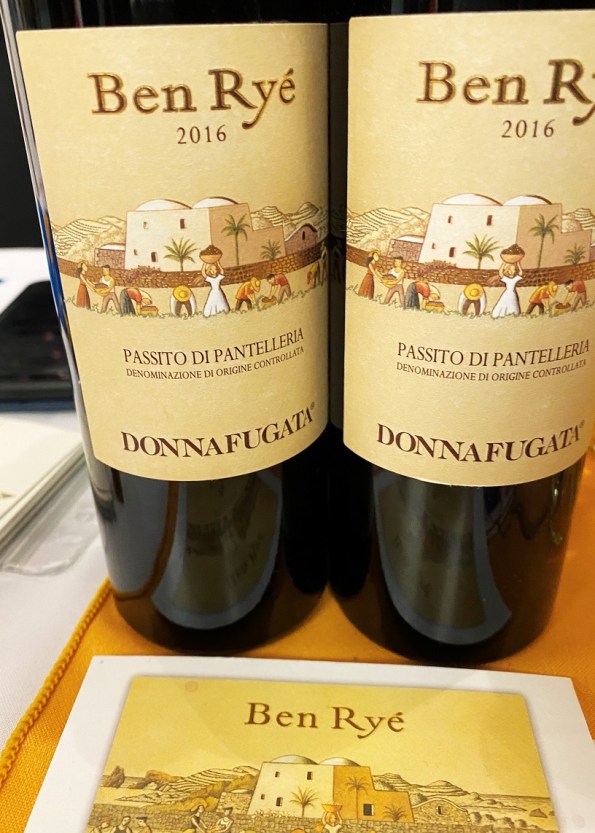
2016 Donnafugata Passito di Pantelleria Ben Ryé Sicily – +++, good
Amarone run:
Tenuta Sant’Antonio (burnt finish, the real impression of a burnt wood), Allegrini (too much oak), Speri (too much oak), Masi single vineyard (too much oak), Corte Sant’Alda (too much oak), Pasqua single vineyard (too big, too tannic), Monte Zovo (too much oak)
This is my story of visiting the Tre Bicchieri 2020 in New York. Have you attended any of the Tre Bicchieri events? What is your take on those? Salute!
Daily Glass: Cab And The Whole Nine Yards
 I’m sure you are well familiar with the phrase “The whole 9 yards” – technically translating into “lots of stuff”. You know what the fun part is? Nobody knows where this expression came from. There is a lot of research, a lot of “true origin” claims and an equal amount of disparaging remarks about the other side not knowing a squat about the subject (which seems to be the sign of times, sigh). We are not here to research or discuss the expression – my intention is to talk about a delicious Cabernet Sauvignon, but I will also give you the whole nine yards of related and unrelated “things”.
Everything started with a simple task – I was in need of the present for a friend’s birthday. My typical present is a bottle of wine of the birth year vintage (1977). However, it is getting more and more difficult to find the wine of such an old vintage at a reasonable price or even at all. After spending some time with Wine-Searcher and Benchmark Wine website, and finding nothing but a few bottles of the vintage Port, I decided that it is the time for the plan B, which means simply finding an interesting bottle of wine.
Next problem – where should I look for an interesting bottle of wine? Online seems to be the most obvious choice – but just to make things more interesting, I have to tell you that my gift recipient owns two liquor stores – yep, surprising him is not a trivial task.
Do you have an American Express credit card? Of course, you are wondering what it has to do with our story? It is most directly related. If you have the American Express credit card (AMEX for short), and if you ever looked at your account online, you probably saw the section called Amex Offers & Benefits. In that section, you can find 100 special offers, allowing you to earn additional points or save money on different items you can buy with the AMEX card. I have a good experience with these offers, these are real savings, so I have a habit of periodically logging into the account and scrolling through the offers. One of the offers I saw quickly attracted my attention – save $50 on a $150 purchase at WineAccess. I don’t know about you, but this sounds like a very good deal for me.
I was not familiar with Wine Access, so I got to the website to see if I can actually put this offer to good use. First thing I saw on the site is that $120 or 6 bottles purchase includes shipping, and if you are buying wine online, you know that shipping cost is one of the most annoying elements of the wine buying experience, so this made deal even sweeter – in case I can find something interesting.
I can’t tell you why and how, I first decided to search for Grosset, one of the very best Australian Riesling producers, and to my surprise and delight, I found Grosset Riesling available. So now I needed to add something else to reach my target number – $150.
I found an interesting Bordeaux, and next, I noticed a red blend from the Three Wine company in Napa, one of my favorite producers. My excitement happened to be premature, as once I started the checkout process, created an account and set my shipping address in Connecticut, I found out that I can’t complete my purchase as Three Wine red blend can’t be shipped to Connecticut (don’t you love US wine laws?).
I had to restart my search, and now I noticed Napa Cabernet Sauvignon called Idiosyncrasy – never heard of it, but Oakville Cab for $25 (this was a 50% discount off a standard price of $50) – why not to try one? I got two bottles, one for me, and one for my friend – done and done.
Once the order was placed I decided to check what exactly I just bought. I did a search for the Idiosyncrasy Cabernet online. I didn’t find too many references, but I did find a post which was very critical of the wine, saying that it was thin, and under-extracted Cabernet Sauvignon, absolutely no worthy of $43 which author paid for the wine. I also learned that this wine was specially produced for the Wine Access wine club by the well-known winemaker.
Truth be told – I don’t like wine clubs. What I learned about the wine, didn’t add confidence to my decision. Oh well – now I just had to wait for the shipment to arrive.
I didn’t have to wait for a long, the box showed up on the doorstep in a few days. Upon opening, I found not only 6 bottles which I ordered, but also neat, well-designed information cards – you can see it here:


Each card offered the story related to the wine, pairing suggestions, ideal drinking window put on the bottle tag which could be easily separated from the page and hang on the bottle in case you store it in the cellar. The back of the info card offered space for personal notes. Again, very well designed – would make any oenophile happy.
I read the story of the Idiosyncrasy Cabernet Sauvignon – it was written from the first person, as winemaker talked about his experience and how he came to the creation of this wine specifically for the Wine Access wine club. While the winemaker mentioned his work at Quintessa, Lail, Dalla Valle, and Purlieu, his latest adventure, his name was not found anywhere on the page. I had to figure out that his name was Julien Fayard by visiting Purlieu website.


Nice paper and story are important, but the truth is in the glass. Remembering the bad review, I poured the glass of 2016 Idiosyncrasy Cabernet Sauvignon Oakville Napa Valley (14.9% ABV), ready to be disappointed. To my delight, I was not. The keyword to describe this wine would be “elegant”. Varietally correct nose with touch cassis and mint. On the palate, the wine was rather of Bordeaux elegance – less ripe but perfectly present fruit, a touch of bell pepper, firm structure, perfect balance (Drinkability: 8/8+). Was this the best Cabernet Sauvignon I ever tasted? It was not. Was it the wine I would want to drink again? Absolutely, any day. Was it a good value at $25? This was a great value at $25, and even at $50, it would still be a good value.
Here you go, my friends – a story of the Cabernet Sauvignon and the whole nine yards. Cheers!
If Grapes Would Fight
The Duel.
How human. Or inhumane. Whatever way we want to spin it.
Yes, duels are the thing of the past. You walk on the street. You lightly bump into someone. You apologize. But the other man says that you didn’t hurt his shoulder. It was his honor which was hurt. And the only way to alleviate that pain is through the duel. Choose the day, the time, and the weapon – pistols are fine, or maybe you prefer the Épée. And be there, or else.
You and your witnesses show up at the agreed time in the agreed place. Your opponent will probably be there already with his suitors. Both of you line up, someone gives the command, you fight. One of you most likely will die. But this was expected. The honor will be cleared and not in pain anymore – for whoever will survive, that is. The end.
Oh, did I mention that those duels were not very legal for the most part even when they were very popular?
Now, imagine if those pistols would shoot grapes instead of bullets, and the only choice of weapon would be the type of grape? Let’s say, you will shoot with Cabernet Sauvignon, and your opponent with Petite Sirah, or maybe you will choose a Zinfandel and your opponent will load up with Syrah? I have no idea how the honor will be defended, but I’m sure nobody would die, and such a duel will be so much fun! I’m sure you have a good imagination – imagine the fully ripened grape hitting one of the opponents on the forehead, and splattering the juice all around, in the slow motion – that would be something to remember!
Okay, so grape shooting pistols are not on the market (yet?), but the grapes can duel all they want – if the winemaker desires.
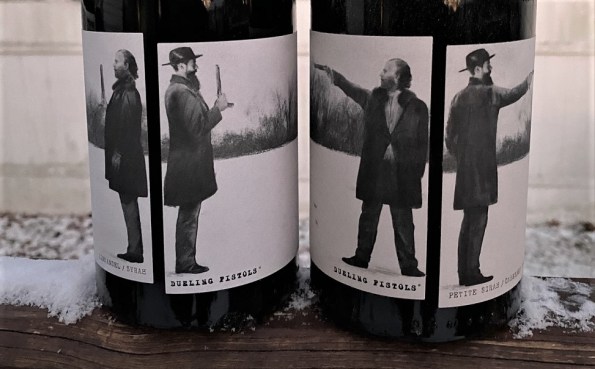
Cue in Dueling Pistols – the wines weaved around the mystery of two men, raising guns at each other at the dawn. We don’t know how they ended up there, or how shootout ends, but it is not important, as we should rather pay attention to wines.
The two Dueling Pistols wines represent 50/50 blends of the grapes that meet each other only after the fermentation is done separately. In one wine, Cabernet Sauvignon and Petite Sirah fight for supremacy; in the second wine, Zinfandel battles Syrah.
Never mind all this fight and battle talk. The wine is all about harmony – you want all the elements of the wine to be in full balance, playing together to deliver an amazing experience. So how these two wines did?


2016 Dueling Pistols Red Blend Dry Creek Valley (15% ABV, $49.99, 50% Syrah, 50% Zinfandel, 18 months in French oak, 30% new)
Dark Garnet
Very intense nose, tar, tobacco, roasted meat, mint
Crisp acidity, tart fruit, much lighter on the palate than expected based on the smell, sour cherries, significant herbal component
7+ initially, needs time
8- on the second and third days, the wine is softer and showing more fruit.
2016 Dueling Pistols Red Blend Paso Robles (15.5% ABV, $49.99, 50% Cabernet Sauvignon, 50% Petite Sirah, 18 months in French oak, 30% new)
Dark Garnet
Inviting nose of cherries and chocolate, with a hint of vanilla and licorice
The palate is smooth and gentle, well extracted, lip-smacking acidity, layers of flavor, velvety texture which makes you crave another sip even before you finished the first.
8/8+, very enjoyable
Here you are. A duel of grapes and even duel of wines. But – nobody got hurt, which is a great outcome of any duel, right?
Judging this fight, I have to say that Cabernet/Petite Sirah won this fight, at least in my corner. But you know what they say? YMMV, so go ahead, stage your own duel and have fun with it. Cheers!
P.S. These two wines were samples provided by Terlato Wines.
Wine Lover’s Guide To Lesser Known Wine Regions – Vinho Verde
Vinho Verde.
Let me ask you, wine lovers – when you hear the words “Vinho Verde”, what are the two things which are instantly come to mind? Let me guess – it should be “green” and “summer” – am I correct?
Let’s leave “green” aside for a minute and let’s talk about “summer”. Do you insist on pairing wine with the season? Of course, rich and opulent California Cabernet Sauvignon or tantalizing Barolo might not be the ideal choice of beverage for the pool party in the middle of summer. But then would you say that white wines should be only drunk when it is hot outside? Even if you will insist, I would have to disagree – the white is simply a color, and white wine can be equally enjoyed during any season. And to prove my point, let’s talk about Vinho Verde.
Oh, and let’s address the “green” thing – there nothing green about Vinho Verde. “Verde” here refers to the young wines – Vinho Verde wines are typically released 3-6 months after the harvest.

Here are some interesting facts about Vinho Verde. Vinho Verde is one of the oldest winemaking regions in Portugal, producing wine for the past 2,000 years. It is also the most northern wine region in Portugal, and the largest, with 51,000 acres planted. There are 19,000 grape growers and 600 wine producers, making over 85 million liters of wine, out of which 86% are white wines, and the rest is divided between Rosé, red and sparkling wines.
45 indigenous grape varieties are growing in Vinho Verde, out of which 9 are recommended – Alvarinho, Avesso, Azal, Arinto, Loureiro, and Trajadura for the whites, and Espadeira, Padeira, and Vinhão for the reds. Vinho Verde region subdivided into the 9 sub-regions named after rivers or towns – Monção, Melgaço, Lima, Basto, Cávado, Ave, Amarante, Baião, Sousa, and Paiva. It is also interesting to note that while Vinho Verde is identified as a DOC (top quality designation, similar to French AOC/AOP), the region called Minho Vinho Regional, completely overlaps Vinho Verde territory, however, its designation is similar to French Vin de Pays (lesser quality requirements).
Vinho Verde wines are typically low in alcohol and pair well with a wide variety of food. Quite often, Vinho Verde whites are also exhibiting very light fizz, this is really a hallmark of the region.
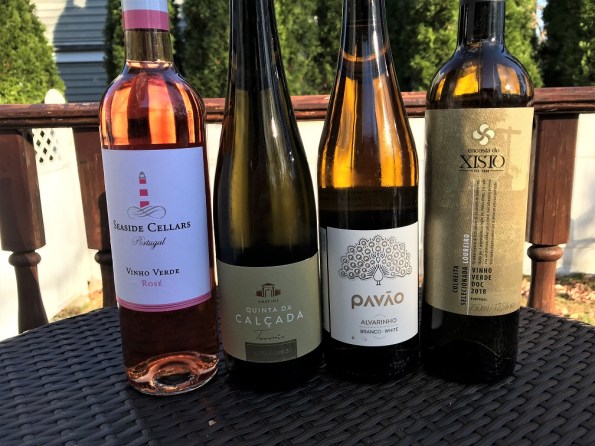
I had an opportunity to taste (samples) 3 whites and one Rosé from the region, here are my notes:
2018 Encosta do XISTO Vinho Verde DOC (12.5% ABV)
Straw pale with greenish hue
Vegetative nose, a touch of grass, sweet basil, restrained
A touch of fizz, lime, a hint of grapefruit, lots of minerality, fresh
8-
2018 Vercoope Pavāo Alvarinho Vinho Regional Minho (12% ABV, $8)
Light golden
Tropical fruit, candied lemon, sage, tobacco
Guava, a touch of honey, candied fruit, a touch of pink grapefruit. Good acidity.
7+/8-
2017 Seaside Cellars Rosé Vinho Verse DOC (11% ABV, $8, 40% Vinhão, 30% Borraçal, 30% Espadeiro)
Wild salmon pink
Nice minerality, whitestone fruit, a typical nose of white wine if there is such a thing
Underripe strawberries, good minerality, a distant hint of fizz, mostly on the finish.
7+/8-, fuller body than most of Rosé, not sweet at all despite low ABV. It also gives me two new rare grapes (Vinhão and Borraçal), which is always a nice bonus.
2018 Quinta da Calçada Alvarinho Vinho Regional Minho (13% ABV)
Light golden
Intense fresh lemon, a touch of grapefruit, noticeable minerality
Tart lemon, a touch of grapefruit, dry, intense, medium to full body, good minerality, good textural presence.
8, perfect any time you want a glass of dry white.
As you can tell, I liked all the wines. No, these wines are not mind-blowing, of course not. But considering the price, often less than $10, these wines offer an excellent, hard to beat QPR.
Here you go, my friends. No need to wait for the hot summer days. Just pick up a bottle of Vinho Verde, and enjoy it by itself, or pair it with good food and good company. You can thank me later. Cheers!
American Pleasures, Part 3 – Murrieta’s Well
How often do you drink wines from Livermore Valley? Not trying to offend, but do you even know where the Livermore valley is?
If you guessed that Livermore Valley is an area in California, or if you simply knew it, yes, of course – Livermore Valley is located a bit north and west of San Francisco and can be considered one of the little wine world secrets for the people in the know. While Napa and Sonoma are the regions everyone is looking up to, Livermore Valley is located a stone throw from both, and in most cases offers a lot more fun in the tasting room for much less money.
Murrieta’s Well Estate Vineyard is located in this exact Livermore Valley and yes, we can consider it as one of the hidden gems. The estate has a rich history, going back to 1884. This is not the first time Murrieta’s Well wines are making an appearance in this blog, so instead of repeating all the historical references, I would like to direct you to my previous post on the subject. Same as the last time, the wines were provided as a courtesy of Snooth, for the virtual tasting – you can find the video recording of that tasting here.
This series is not called American Pleasures for nothing. This is the third post in the series, following the posts about Silverado and Oceano wines and Peju. As I explained in the introduction to the series, I simply had a great number of wines which were surprisingly consistent – wine after wine, they delivered a great deal of pleasure. You can expect to equally enjoy two wines from a good producer; 4 wines in the row is not typical; 6 wines is seriously unexpected. The 4 wines I tasted from the Murrieta’s Well were perfectly consistent and unquestionably enjoyable, offering loads of pleasure. Yes, all four. And what is even more interesting, if you will compare my ratings from 2017 tasting versus 2019, you will see that I rated all the wines higher. It appears that the process is going in the right direction, to the joy of all of us, oenophiles.


Let me share my notes:
2018 Murrieta’s Well Small Lot Dry Orange Muscat Livermore Valley (14.6% ABV, $38, 100% Orange Muscat)
Light golden color
Plums, guava, tropical fruit
Bright acidity, an undertone of sweet tobacco, bright acidity on the finish
8, fresh, excellent
2018 Murrieta’s Well Dry Rosé Livermore Valley (13.5% ABV, $32, 42% Counoise, 33% Grenache, 25% Mourvèdre)
Medium intensity pink color
Underripe strawberries
Tart fresh strawberries, good acidity, clean, vibrant, perfect balance, long finish
8, an excellent wine.
2016 Murrieta’s Well Small Lot Merlot Livermore Valley (14.1% ABV, $48, 95% Merlot, 5% Cabernet Sauvignon)
Dark garnet
Touch of cassis, eucalyptus
Cassis, blackberries, nicely tart, a touch of coffee, good acidity, good structure
8+, excellent.
2017 Murietta’s Well The Spur Livermore Valley (14.5% ABV, $35, 64% Cabernet Sauvignon, 14% Petite Sirah, 13% Merlot, 9% Petit Verdot)
Dark Garnet
Smoke, tar, roasted meat, blackberries
Succulent blackberries, tobacco undertones, good acidity, medium to full body, good balance
8-, excellent
Here you go – 4 excellent wines, 4 sources of the great American [wine] pleasure. Have you had any of these wines? Have you had wines from the Livermore Valley? Cheers!
Top Wines of 2019
And now, it is the time for the Talk-a-Vino Top Wines of 2019. In a bit of broken logic, most of the explanations to the Top Wines list can be found in the 2019 Second Dozen post – here we are continuing where we stopped before – from the wine #12 all the way to the wine #1 – or, maybe, it is wines?


12. 2015 Field Recordings Foeder Old Portero Vineyard Arroyo Grande Valley ($32) – we started the second dozen with the Field Recordings Cabernet Sauvignon (in the can). By the pure accident (feel free not to believe me, but I just realized what happened as I started to write this post), we open the Top list with another wine from the Field Recordings. This wine is a blend of 50% Syrah, 35% Zinfandel, and 15% Mourvèvedre. In the best traditions of the Field Recordings wines, the aromatics of this wine are simply stunning – luscious, dense and layered liquid can make one salivate just at a thought of it.
11. Channing Daughters “Orange” style wines Long Island, New York ($25 – $42) – here comes trouble – it is not one wine, it is actually 5 of them. We visited Channing Daughters Winery on the South Fork of Long Island in October, and our host, Steve, was kind enough to run our group through the most of the Channing Daughters’ portfolio. The winery makes 5 “orange” wines – Ramato, Ribolla Gialla, Research Bianco, Meditazione and The Envelope – each wine is stunning in its own right. These wines might not be crowd-pleasers, but if you are seriously into the wines, or identify as a wine geek, these are the wines to seek.


10. 2017 Knudsen Vineyards Pinot Noir Reserve Dundee Hills Willamette Valley ($70) – Knudsen Vineyards is one of my most favorite producers in Oregon. I had the pleasure of tasting Knudsen wines from the last three vintages, and outside of the fact that these are textbook Oregon Pinot Noir, dark, powerful, and concentrated, I love to see the progression. As the vines are aging, the wine gains a bit more complexity, year after year. These are the wines to watch, for sure.
9. 2005 Giulio Ferrari Riserva del Fondatory Metodo Classico Trento ($140) – One of the very best sparkling wine producers in the world, Champagne included. Giulio Ferrari is just a perfection of the vintage sparkling wines – beautifully complex and perfectly fresh and bright at the same time. No, this is not the wine for everyday consumption (unless you have an expense account and then I beg your pardon), but next time you want to celebrate something in your life, maybe skip the obvious (move over, Dom Perignon) and try to find this bottle.
8. 1995 Navarro Correas Coleccion Privada Cabernet Sauvignon Mendoza ($15) – a total surprise of the tasting – an unknown (to me, at least) 24 years old red wine, showing no age and perfectly presenting itself as a varietally correct Cabernet Sauvignon. It definitely makes me want to try a current vintage.


7. 2018 Tenuta Ammiraglia Alìe Rosé Toscana IGT ($20) – delicious wine, presented in a beautiful setting (check the link). Rosé is made everywhere, but this wine definitely stands apart is perfectly memorable. Special bottle and special glass make the wine ever more enjoyable, but then the wine itself has a perfect combination of beauty and presence, and easily get stuck in your head.
6. 2006 Jermann Vintage Tunina Venezia Giulia IGT ($60) – Not all white wines can age with grace. This wine was a perfect example of white wine that can age. It only gained complexity, this bouquet of apricot, apricot pit, vanilla, and spices, all wrapped in a tight and almost a full-bodied package. I can close my eyes and imagine the taste of this wine in my mouth – not a simple fit.


5. 2015 Bodegas LAN Xtrème Ecológico Crianza Rioja DOC ($15) – I love Rioja. At the same time, I’m very particular about the Rioja and what I like and what I don’t like – the word “Rioja” on the label doesn’t mean anything to me unless I know the producer – or I’m willing to give a new wine a try. While I know of Bodegas LAN, I never heard of Xtrème, and I never tasted before Rioja made with organic grapes. This wine was almost a revelation, it had everything I like about Rioja, with the lip-smacking acidity, fresh cherries, and cigar box, but it also had layers and layers of delight. Great wine, and at a price you will be really challenged to find something which would taste better.
4. 2018 Regueirón Éntoma Godello Valdeorras DO ($50+) – lately, I find myself using the expression “beyond categories” more often. I can’t find a better way to present this wine, as it is truly in a league of its own. This is one of the single-vineyard wines from the new project of Victor Urrutia of CVNE fame. This tiny production Godello presents itself as a grand cru Chablis, with the gunflint, minerality and all of the classic Chardonnay characteristics – but it also has an energy of the tightly wound spring, ready to jump out of your hand. It will not be easy to find this wine, but boy, if you will, you are into lots of pleasure.


3. “This line was intentionally left void” – keep reading, you will see why.
2. “This line was intentionally left void” – see below:
This year I have a problem [again]. I can’t decide on wine #1. Below are my three top wines – interestingly enough, even those three had a “sibling” contender which could literally take their spot. At the rate the wine is evolving around the world, it might be even more difficult to decide on the top wine in the coming years. But you know what? I will gladly accept the challenge. For now – here are the three top wines of 2019:
1. 2013 Smith-Madrone Cook’s Flat Reserve Spring Mountain ($225) – this might be how you spell “phenomenal”. This wine was a pure pleasure. Pure, hedonistic, unadulterated pleasure. This is the wine at the level of magic – you take a sip, you whisper “wow”, you quietly reflect on what is happening, immersing into the moment. Then you take another sip and repeat. Yes, magic.
1. 2016 Tara Red Wine 2 Syrah Atacama Chile ($40) – this wine should be experienced to believe it. This is the wine from the place where the vine is not supposed to grow. Atacama desert. Nevermind the desert. But the salinity of the soil is such that nothing should be growing there. But these vines do. And these 6 years old vines (vineyard planted in 2010) produce the wines of complexity which requires no oak (the wine was not aged in oak) to stop you in your tracks after the first sip. A textbook (ohh, sorry, I like this word a little too much, I know… but still) Syrah – pepper, dark fruit medley, lavender. Seriously, this is one incredible wine.
1. 2017 Peju Province Winery The Experiment Napa Valley ($100) – talk about mindblowing. There is something in the Napa Valley Cabernet Sauvignon. I already talked about magic in this post, and maybe it simply appears so for my palate – but the perfection of this wine is nothing short of “wow”. Again “textbook”? Yes, you can say so. Black currant, licorice, a touch of mint. The fruit is succulent, and it appears in full harmony with tannins and acidity. Balance, balance, balance. This wine is truly unique as it is 2 years old, aged in the new oak – and nevertheless, is perfectly drinkable from the get-go. Did I say “wow” already?
Here you are – the presentation of the Talk-a-Vino Top Wines of 2019 is now complete.
What were your most memorable wines of 2019? Embrace the power of happy thoughts… Cheers!
Top Wines of 2019 – Second Dozen
Ahh, the end of the year. Quiet time (I wish). Time to reflect on the year which is about to become history. Particularly, it is the time for the Top Wines of the year 2019 to be re-lived, re-enjoyed, and shared.
This is the 10th annual Talk-a-Vino Top Wines list, and I have to say that the selection process is not getting any easier – if anything, it is getting more and more difficult to decide on the top wine (hence I had two #1 wines last year).
I never attempt to count how many wines I taste throughout the year. My rough estimate is between 500 and 700 wines, considering all the wines I drink at home, all the samples, and all the tastings I manage to attend during the year. The top list represents the wines which are easily come to mind with the help of notes, label journals or just stuck in the memory as an unforgettable experience. Yes, I’m sure amazing wines will be left outside of this list, but I really have no way of helping it.
For most of the Top lists, I’m not even trying to stick with just a dozen wines – that would be mission impossible. This is the reason behind the second dozen and top dozen posts. Also, while I always say that the order of the top wines is not important, it is not exactly true, for sure in the top wines selection. I’m always happy to include a variety of wines in the Top list, in terms of countries, wine types, prices, styles and so on, but all of these come secondary to the main criteria – the wine must be memorable. And maybe even bring a smile to my face as I get to re-live the happy moment.
Okay, I’m done with all the explanations. Without further ado, let’s get to it. The second dozen of Top Wines 2019:
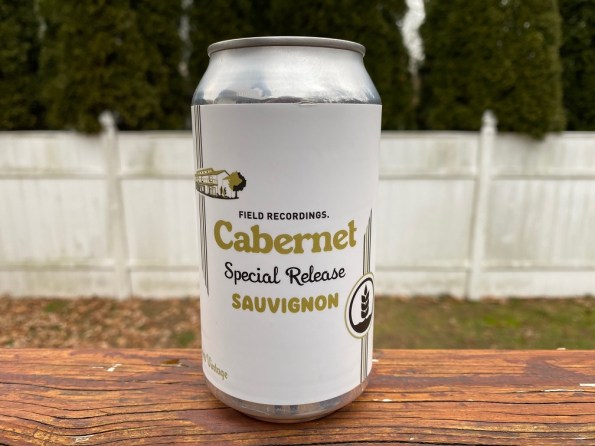
24. 2018 Field Recordings Cabernet Sauvignon Special Release Santa Ynez ($12, 375 ml can) – yes, you are correct – it is the wine in the can. Feel free to stop reading and pledge not to open any of my posts in the future. No, this wine is not included here to be fashionable and appeal to the can-boasting Millenials. This is simply a good wine. What makes it memorable? This wine is made using beer stout starter yeast, and as Field Recordings’ winemaker Andrew Jones explains, the wine shows “crazy good chocolate character wrapped around dark cherries and blackberries” – and I have to agree. Delicious.


23. 2011 Michel Chapoutier Tournon Mathilda Shiraz Victoria, Australia ($14.99) – the pepper is back! I fell in love with this wine after tasting beautifully clean black pepper and spices, back in 2014 (it was wine #4 on my 2014 Top Dozen list). Then pepper mysteriously disappeared, and the wine became blah. It was a joyous moment finding that pepper returned on my last bottle. I share my frustration in the post which is available via the link, but in any case – this was a perfect sip.
22. 2015 Leone de Castris 50° Vendemmia Salice Salentino Riserva DOC ($12) – Generocity of this $12 wine is beyond categories – layers and layers of silky, velvety fruit, weaved on the structure of power. While Californian wine would have a different flavor profile, the wine of the same richness and power will set you back probably ten-fold if not more. Incredible value.
21. 2015 Alfredo Dried Grape Shiraz Nugan Estate South Australia (€20) – Bring on the dried grapes! First I saw the description of this Amarone-like Shiraz, and as I love Amarone as well as any other appassimento-style wines, I had to try it – and the wine didn’t disappoint. Elegant, concentrated Syrah flavor with an additional hint of dried fruit – what’s not to like?


20. Salem Oak Vineyards Brandon Jae New Jersey ($20, Cabernet Franc) – This wine was a star of a delicious, albeit spontaneous tasting at the Salem Oak winery in New Jersey. I was looking for a simple checkmark that I visited a winery in yet another one of 50 winemaking states int he USA. What I found was humble and delicious, world-class, personable wines – at Salem Oak, every wine label tells a story. This Cabernet Franc was a pure, varietally-correct, stand out – the wine to remember.
19. 2015 Mosmieri Saperavi Kakheti Georgia ($16) – Georgian Saperavi is one of my pet peeves and all-time favorites. However, Mosmieri pushed the bar a notch above – with Rhone-like, spicy, earthy and dense rendition. Are you seeking Georgian wines yet?


18. 2017 Le Cadeau Diversité Estate Pinot Noir Willamette Valley ($50) – Pinot Noir supreme. Oregon Pinot Noir is in the class of its own, and Le Cadeau is clearly in front of this class. A beautiful rendition of the grape which Oregon made its star.
17. 2017 Oceano Chardonnay Spanish Springs Vineyard San Luis Obispo County ($38) – in a word, perfect. I smile just at a thought of this Chardonnay. Even the bottle itself is a pleasure to hold. An elegant and powerful rendition of the Chardonnay which doesn’t want to be shy – yes, I’m Chardonnay, I’m beautiful, and I know it. Vanilla, butter, acidity – a full, delicious package.
16. 1990 Dom Ruinart Ruinart Blanc de Blancs Champagne (~$300) – age is just a number. Don’t take my word for it – well, I can’t suggest that you should find a bottle of this Champagne, that would be rather cruel – so unless you have one in your cellar, my word would be it. But, in a word, this was superb vintage Champagne – still fresh, elegant, beautifully balanced, fine fizz. Age is just a number, when the wine is made well.
15. 1995 Estancia Meritage Alexander Valley ($35) – another perfect example of age just being a number – a supremely delicious Bordeaux blend, showing literally no age. Sadly, this wine no longer produced (Estancia still makes Meritage, but from Paso Robles and not from Sonoma) so you need to check the sites such as Benchmark Wine Company if you would like to experience the beauty of this California made Bordeaux-style blend.


14. 2011/2015 Smith-Madrone Riesling Spring Mountain District Napa Valley ($32) – unlike wine number 16, these wines are freely available (at least the current vintage, 2016), so if you want to try the best Riesling made in the USA, go get it. Does this sound like a bold claim? Maybe it does, but if your hallmark of Riesling excellence is Grosset Polish Hill Clare Valley in Australia, then you will easily understand me. If you like Riesling, this is the wine you need to ask for by name. Yes, now.
13. 2011 L’Ecole no 41 Estate Ferguson Vineyard Walla Walla Valley ($65, 57% Cabernet Sauvignon, 32% Merlot, 11% Cabernet Franc) – Ferguson is the newest region in the Walla Walla, producing powerful and concentrated wines, and I was unable to understand the appeal of this region until I tried this 2011 Bordeaux blend – it was layered, it was structured, and it was ready to drink. A stunning example of the power of terroir.
This now concludes the presentation of the second dozen of the Talk-a-Vino Top Wines of 2019. The first dozen post will follow shortly. Cheers!
Seeking Peace with Sherry
Sherry, a.k.a Jerez or Xerez can be considered a graduation wine for the all-encompassing wine lover (pun intended or not, but I believe Sherry is actually a part of the last exam for the WSET diploma candidates, so you can read whatever you want into this). While Sherry has a very long history, it completely lost the clout it had in the 17th–18th centuries, and today it is more of a wine for the people in the know, a sort of the secret handshake for the true wine aficionados. “Do you like Sherry”? “Of course” – that answer would instantly create the bridge of understanding between the participants in the dialog.
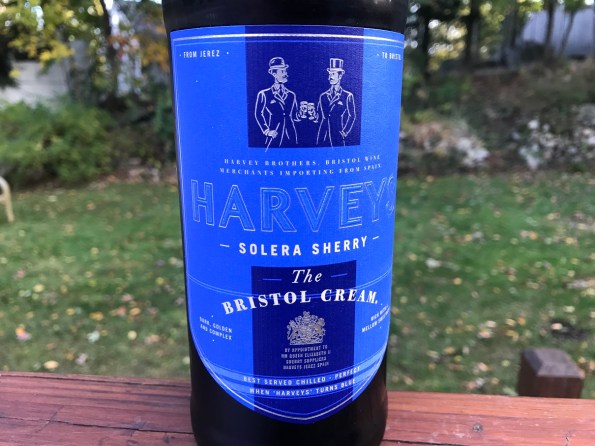
Sherry is fascinating. It is not just another white wine. It offers a very complex taste. Sherry production involves some elements of magic – identified as Flor and Solera. Sherry usually undergoes the long aging process in the barrels. Sometimes, the thin veil, a layer of yeast is formed on top of the wine aging in the barrel – this layer is called Flor. Flor is thick enough to protect the aging wine from the oxidation, but it also requires a very specific level of alcohol in the wine in order to survive. If the wine will finish its aging while protected by the flor, it will become a fino or manzanilla Sherry. However, the formation and survival of the flor is the thing of the mystery.
And then there is Solera. In the solera method of aging the wine, which is often used in the production of Sherry, the set of barrels is always topped off with the younger wine, moving wine from one barrel to another as the wine ages. The barrels are never emptied and never washed, thus if the solera was started 100 years ago, there will be traces of the 100 years old wine in your glass – how cool is that?!
Now, it is time for the hard truth. 7 or 8 years ago, I truly enjoyed the range of Sherry wines, starting from the driest fino and manzanilla, and all the way to the “liquid sugar” Pedro Ximenez – here is the article I wrote back in 2011; I also talked about Sherry in the Forgotten Vines series of posts. Today, I’m avoiding dry Sherry like a plague, as I’m unable to enjoy it much. When I’m offered to taste a sample of the Sherry, I usually have to politely decline. Talking to the fellow bloggers who are raving about their love of Sherry, I usually try to avoid making eye contact as much as possible, so I don’t have to share my opinion.
When I was offered a sample of a Cream Sherry, my first reaction was “no, I’m not touching the Sherry”. But then I thought “hmmm, Cream Sherry – this should be a premixed liqueur, like Baileys and Cream – I can probably do that”, so I agreed to review the wine.
When the bottle showed up with all the explanations, I quickly realized that I was wrong in all of my assumptions.
First, there is no cream in Cream Sherry. It is simply a special style of Sherry – not dry, but not as sweet as Pedro Ximenez would be. The wine I got was Harveys Bristol Cream – and there is a slew of fun fact I would like to share with you, both about the Cream Sherry style and about this particular wine (courtesy of González Byass, a producer and importer of this wine):
 “Did you know that Harveys Bristol Cream…
1) …was first created and registered in 1882 by John Harvey & Sons in Bristol,
England, creators of the “cream” Sherry category?
2) …is not a “cream” liqueur, like Baileys, but a Sherry? They decided to call it
a cream Sherry because the richness rivaled that of cream.
3) …is a blend of more than 30 soleras of Sherries aged from 3-20 years? And
it’s the only Sherry made from 4 different styles of Sherry: Fino,
Amontillado, Oloroso and Pedro Ximenez.
4) …is the only Spanish product with a Royal Warrant from the Queen of
England since 1895?
5) …first came to the United States in 1933 and quickly became a best-seller.
6) …is best served chilled? We think it’s perfect at around 50°-55°F.
7) …is defined by its blue glass bottle and now has a label with a logo that turns
blue when Harveys reaches its perfect temperature.
8) …can be stored in the fridge for up to one month? Although it rarely lasts
that long.
9) …pairs really well with cookies, especially Oreos?
10!…is the number one selling Sherry in the world?”
Secondly, I happened to enjoy this wine! Beautiful mahogany color, more appropriate for cognac or nicely aged scotch, a nose of hazelnut and a touch of fig, plus unmistakable Sherry salinity. The palate shows caramel, burnt sugar, hazelnuts, a dash of sea salt and perfect, clean acidity, which makes this wine a real pleasure to drink. Add a fireplace to this wine over a cold winter night, or a cigar on the deck in the summer, and you got your thirst of guilty pleasure fully satisfied.
Will this be a pivotal wine for me to find Sherry love again? I can’t say it for sure, but I will definitely try. If anything, I’m now at peace with Sherry. And I’m off to pour another glass.
American Pleasures – Part 2, Peju Napa Valley
 A few weeks ago I shared with you my view on [strictly wine] American pleasures – some of the wine samples which I had a pleasure to taste recently. Yes, it is the pure hedonistic pleasure we are talking about here – the wines which have a magical power of making you want another glass even before the first one is empty. Today I want to continue that conversation and talk about Peju Province Winery in Napa Valley.
The story of Peju Province Winery is simple and similar to many others – it started from a dream. Tony Peju had a drawing of the winery with the tower two years prior to the first Peju grape been harvested. Tony found early success in Los Angeles as a horticulturist, using his landscaping skills in the real estate, improving and reselling the houses. But his dream was to own the farm.
After his search for the farm land led him up north to the Napa Valley, he was able to find the location of his dreams – a 30 acres Stephanie vineyard in Rutherford, located next to Robert Mondavi, Inglenook and Beaulieu vineyards, growing Cabernet Sauvignon and Colombard vines, some 60 years old or maybe even older. Tony and his wife, Herta, purchased Stephanie vineyard in 1983. At first, Tony and Herta were only selling the grapes, however taking advantage of Tony’s green thumb, improving the vineyard and learning what it is capable of. They identified the section of the vineyard, about 5 acres in size, which produced the best Cabernet Sauvignon fruit. The vineyard, which was renamed into HB in honor of Tony’s wife, Herta Behensky, was replanted using cuttings from that best section grafted on the phylloxera-resistant rootstock. The time has come to start making Peju’s own wine.
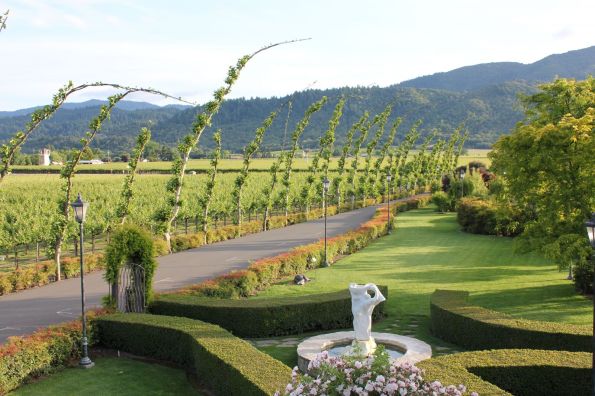
Peju Province Winery Grounds. Source: Peju Province Winery
Tony went on to get a degree in enology from UC Davis, and the rest was history. Well, there is one interesting hurdle worth mentioning. If you remember, Tony had a full drawing of the winery done in 1981, two years before HB vineyard was even found and purchased. Once they had the land and were ready to convert dreams into reality, in order to fund the project, Tony and Herta started selling wine out of their garage converted into the wine tasting room. This, however, was against Napa County’s rules, which required all the wine sales to be made from the legitimate winery building. However, California law allowed winegrowers to sell the wines in the place where the grapes were grown, so the issue ended up in the court. The judge sided with Peju, agreeing that if Tony is growing the grapes, he should be allowed to sell the wine. This became a pivotal case that significantly changed the landscape of the Napa Valley.
Peju went on to build the impressive 50-foot tall tower in the French Provencal style, using Brazilian cherry wood, beams from old Midwestern farm buildings and 1906 antique stained glass window. Way before that new winery building was complete, Peju acquired 350 acres of land at the 2000 feet elevation in the nearby Pope Valley section of Napa, which they named Persephone Vineyard, after the goddess of Greek mythology. In 1997, 120 acres of that land was planted to Cabernet Sauvignon (using HB Vineyard clone), as well as Cabernet Franc, Merlot, Syrah, Petit Verdot, Sauvignon Blanc, Chardonnay, and Zinfandel. In 2007, Rutherford HB vineyard became certified organic, and today all three of Peju vineyards are using sustainable viticultural methods. In 2009, Peju Province Winery was certified as a Napa County Green Winery and Bay Area Green Business. Also in 2006, Peju started installing solar panels on 10,000 square feet of winery roof and generating 35% of all electricity consumed at a winery.
Okay, so now you learned a lot about the winery, so let’s talk about the wines, as a proof is always in the glass. I had an opportunity to try 6 wines from Peju, and I was literally blown away by what I tasted. To be entirely honest, these wines were one of the most inspirational coming up with the title for this series – American Pleasures. 6 out of 6 delicious wines, one better than another – I taste enough wines during the year to tell you that this is not given. Below are my notes:


2018 Peju Province Winery Sauvignon Blanc Napa Valley (13.8% ABV, $25)
Straw pale, practically clear
A touch of freshly cut grass, white flowers, maybe a distant hint of cat pee – only because I want to find it there?
Layers of flavors. Crisp lemony acidity first, then a hint of plums and slightly underripe melon, unusual plumpness for the Sauvignon Blanc, the wine rolls off your tongue like a nice Marsanne.
8, excellent, a unique and different Sauvignon Blanc.
2015 Peju Province WineryCabernet Sauvignon Napa Valley (14.8% ABV, $60, 85% Cabernet Sauvignon, 8% Petit Verdot, 7% Merlot, 18 months in French and American oak, 45% new)
Dark garnet
Black currant, cherries, eucalyptus, sweet oak
A beautiful mix of black currant and cherries on the palate, a touch of herbal notes, good minerality, firm texture, vibrant acidity, medium+ finish
8/8+, the first sip says “I’m a Napa Cab”. Delicious.
The next wine is one of the few in “Nostalgia Series”, where every label depicts a moment in Peju’s history.
2015 Peju Province Winery Nostalgia Series The Farm Napa Valley (15.2% ABV, $80, 80% Cabernet Sauvignon, 20% Sangiovese, 18 months in oak)
Dark garnet, practically black
Dark fruit, eucalyptus, restrained, mineral undertones
Perfectly balanced fresh fruit, soft, luscious, black currant, tar pencil shavings, perfect balance, delicious.
8, delicious wine


2016 Peju Province Winery Merlot Napa Valley (14.8% ABV, $48, 95% Merlot, 4% Cabernet Sauvignon, 1% Petit Verdot, 18 months in oak)
Garnet
Sweet licorice, eucalyptus, underbrush
Coffee, tart cherries, cherry pit, minerality
8-, probably need more time. The finish is a bit astringent, however, it plays well with savory food (cheese and crackers)
Cabernet Franc is one of my favorite grapes – this wine was truly a Cabernet Franc experience.
2013 Peju Province Winery Petit Trois Cabernet Franc Napa Valley (14.8% ABV, $75, 100% Cabernet Franc, 18 months in oak, 333 cases produced)
Deep Garnet
Cassis, licorice, mocha, a hint of sweet tobacco
Cassis, mint, gently present tannins (after a few hours), firm structure, sweet oak, unmistakably California
9-, wow, tons of pleasure in every sip. Needs decanting. Outstanding on the second day.
This wine has its own story. It is the result of the barrel experiments run by Peju winemaker, Sara Fowler. For the 2017 vintage, she worked with 37 different barrel tasting styles and 22 coopers, then discussed the effects of the oak regimen with the group of the fellow Napa Valley winemakers. To have all new-oak, effectively a young wine, to be ready to drink from the get-go is something really incredible in my opinion.
2017 Peju Province Winery The Experiment Napa Valley (14.5% ABV, $100, 100% Cabernet Sauvignon, 18 months in French, American, and Hungarian oak, 100% new, 1075 cases produced)
Dark garnet
An “Oh my god!” nose – Black currant, eucalyptus, pure, intense
Wow, supple black currant, mint, eucalyptus, silky smooth tannins, good minerality, all delivered in layers. Clean acidity, impeccable balance, and immense pleasure.
9/9+, wow. An exemplary Napa Cab
There you have it, my friends – some incredible wines. Of course, these are not inexpensive wines, but in my opinion, the $100 bottle which gives you lots of pleasure is worth splurging for the right moment. Cheers!
Last Bottle Sign Up ($10 credit)




 Talk-A-Vino