Archive
Wines, Wines, Wines
A couple of weeks ago, an interesting (concerning, rather?) thought came in – this is the wine blog. I’m doing my best to keep you entertained and informed, with all the weekly quizzes and potpourri wine news (a.k.a. Wednesday’s Meritage), but I don’t do enough of the core wine blogging stuff – namely, the wine reviews. No, I don’t have a plan to address this radically – say, but introducing a new weekly topic or so. But during the past month, I had quite a few wines worth talking about, so this is exactly what I’m going to do – write a post to review those wines. Well, yeah, I guess you are already reading this very post… The usual warning – there will be pictures,… many pictures…
It is still summer, so let’s start with super-quaffable Prosecco. It is not even Prosecco, it is pretty much a complete cocktail in the bottle. The wine is made by Mionetto, a well known Prosecco producer in Valdobbiadene region in Italy.
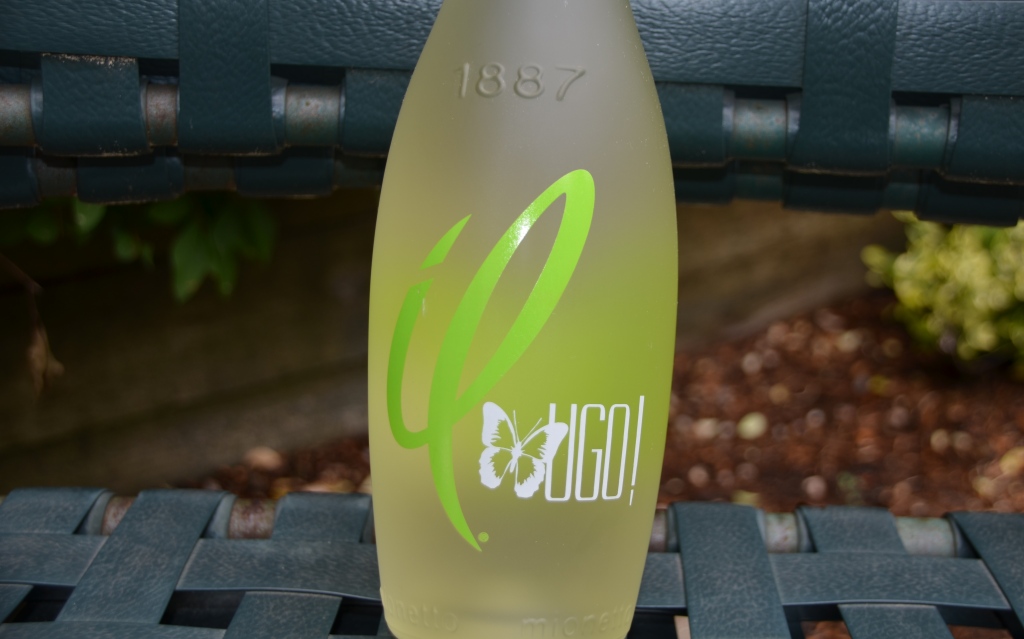
Mionetto Il Ugo
Mionetto Il Ugo, a blend of Prosecco with elderflower blossoms and wildflowers – bright and uplifting on the nose, touch of sweetness with a charismatic bitterness and enough acidity – it is so refreshing, you don’t want to put the glass down. Yes, I know, the purists will disagree – but this is an outstanding wine in my book. Drinkability: 8
Now, a couple of value wines for your consideration. These wines come from Chile under the brand name of the Beach Kite. While you can’t find this information on the wine label, Beach Kite is presumable affiliated with 90+ Cellars. 90+ Cellars has a similar model of operation to Hughes Wines and Oriel (at least the two that I’m familiar with), which is: find good wines which well-known wineries have a hard time selling, bottle under your own private label, and sell for the reasonable price at around $20. Beach Kite seems to be more of a “second label” to the 90+ Cellars wines, considering the price of $7.99 per bottle. But – don’t judge the wine by its price.


2012 Beach Kite Sauvignon Blanc Central Valley Chile (13% ABV) had herbaceous nose, and zesty grapefruit on the palate, a bit more restrained compare to the typical New Zealand Sauvignon Blanc, but still fruit forward next to Sancerre. Refreshing, with good acidity. Drinkability: 7
2012 Beach Kite Pinot Noir Central Valley Chile (13% ABV) – simple, round, good red fruit on the nose and the palate, touch of plums, good acidity – perfect sipping wine for a hot summer day. Drinkability: 7
Next I want to talk about few wines, sorted by the grape.
Riesling
While this is not how I rate the wines, but I would say that I had two Rieslings which were outstanding, and one which was … just spectacular.
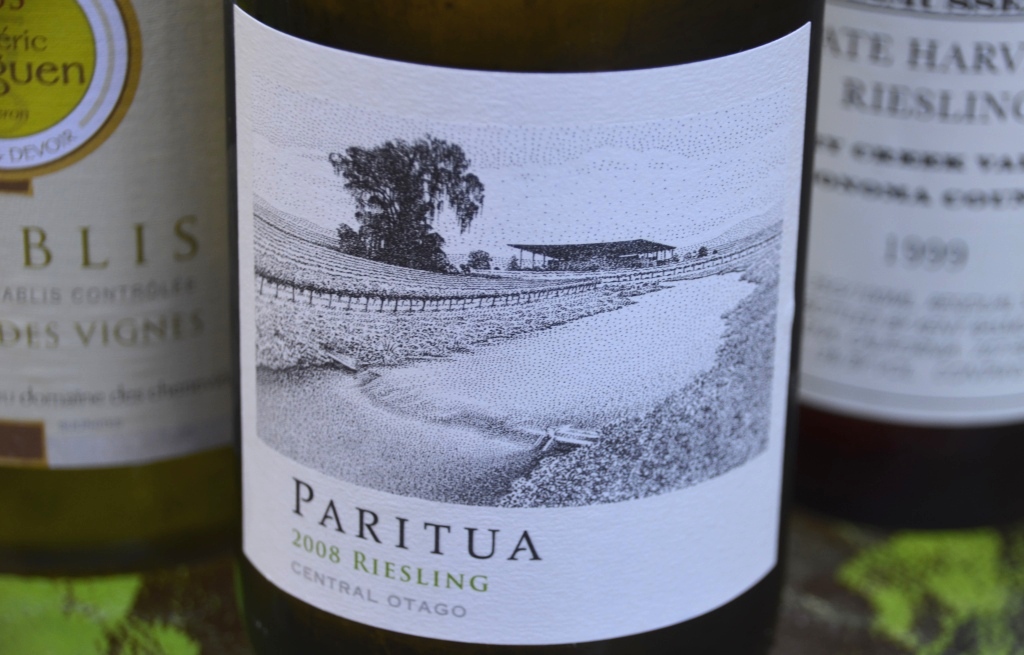
Paritua Riesling Central Otago
2008 Paritua Riesling Central Otago New Zealand (11.5% ABV). I got this wine for $6/bottle at Last Bottle Wines. I was questioning myself a bit when placing an order for this wine, as I never heard of Riesling from Central Otago – a region in New Zealand known for their world-class Pinot Noir, but not Riesling. I’m glad I took my chances and got this wine, as it was outstanding. Perfect ripe peach flavors on the nose with the hint of petrol (yes, I know some people are not very happy about this flavor, but I personally love it). Very delicate on the palate, with some honey and apricot notes, perfect acidity and very restrained sweetness. This New Zealand Riesling would rival many of the German Rieslings at Kabinett level. One night we had it with Thai food, and [as expected] it paired perfectly. Drinkability: 8


2005 Eitelsbacher Karthauserhofberg Riesling Spatlese Mosel-Saar–Ruwer (9% ABV) – what I value the most in Riesling (any Riesling) is balance. My sweet tooth is not any smaller than the one any sweets lover would have out there. But I can’t take bottomless sweetness in the wine – I need acidity to come and play it supportive and refreshing role right next to the sweetness. This Riesling is perfectly balanced, with excellent acidity – and showing no signs of age. Just had an interesting revelation – may be I should replace my “drinkability” ratings with “quaffability”, as this wine was not just drinkable, it was perfectly quaffable. Anyway, I digress. This is not the first Riesling I had from Eitelsbacher Karthauserhofberg – and it seems to be a very interesting winery – but I need to refer you to the Riesling expert Oliver TheWinegetter if you want to learn more. Here is a link to the comment Oliver left on one of my previous posts where he is talking about this winery. Drinkability: 8+

Kurt Rasmussen Late Harvest Riesling
1999 Kurt Rasmussen Late Harvest Riesling Dry Creek Valley (13%ABV) – I’m not sure I can do justice to this wine trying to describe it. In a word – spectacular. Liquid viscous dark gold in the glass, honey, honeydew, caramelized pecan, apricot notes all over, both on the nose and the palate – and perfectly balanced (I’m know I’m abusing this one), with still bright supporting acidity. Drinkability: 9
Next up – Gewurztraminer
To be honest, I don’t drink Gewurztraminer all that often. I find a lot of Gewurztraminer wines to be all over the place in terms of taste – many of them have wonderful nose, but then on the palate the wine often doesn’t appear to be “together”, it shows up quite disjointed. But – not this wine.
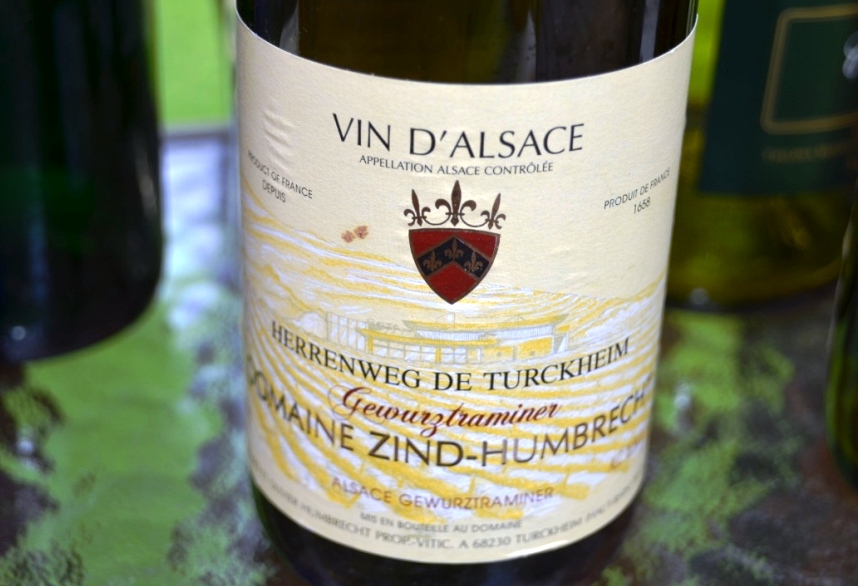
Zind-Humbrecht Gewurztraminer
Domain Zind-Humbrecht is one of the best producers in Alsace, probably best known for its Pinot Gris wines. Just to put things in perspective, 36 wines of Domain Zind-Humbrecht have classic ratings from Wine Spectator (95-100), including perfect score 100 point 2001 Pinot Gris. Well, this is not the wine I’m talking about here.
2002 Domaine Zind-Humbrecht Herrenweg de Turckheim Gewurztraminer Alsace (15.5% ABV) – I got two bottles of this wine at Bottle King in New Jersey on a big sale for about $20 each – this wine typically retails for $60 or so. I had a bottle few years back, and was not impressed. So when I pulled this bottle out, I was not expecting much ( it was more like “yeah, let’s free some space in the wine fridge”). My, was I wrong! In one word, I have to use again my abused wine definition of the day – spectacular. Dark golden color, beautiful nose of candied apricot, perfect honey tones on the palate, fresh acidity, more candied apricot, perfectly balanced. Drinkability: 9
Food break
Tired of wine? Let’s make a short break for some food pictures. First, I promised to Food and Wine Hedonist that when I will make Elotes according to his recipe, I will share my impressions. Elotes is Mexican street food which is essentially a grilled corn with spicy mayo and Cotija cheese – this is precisely what I did and it was tasty! For the recipe, use the link above, and here are the pictures:


Yes, I continue admiring my “mangal”, a special charcoal grill – here are few pictures for your drooling pleasure:


You know what – I think this is enough for one post. Let’s stop here. In the next post – Chardonnay, Cabernet Franc, Pinot Noir and may be something else.
To be continued…
Rosé – Still Misunderstood and Looking for Love?
This Wednesday, August 14th, is the Wine Blogging Wednesday event, where all wine bloggers get the chance to share their thoughts and experiences related to the designated theme. The theme of this upcoming Wine Blogging Wednesday event, or WBW for short, is Rosé – here are the details of the announcement. This is what this blog post is all about.
How often do you drink Rosé? Do you think Rosé is fully understood and appreciated by the consumers en mass? I’m afraid that many wine drinkers still have a notion that Rosé is either sweet, or strictly seasonal, or mostly inferior, or all of the above. I remember being in France about 7 years ago, in November, and ordering a bottle of Tavel in a restaurant. My French colleague gave me a look, and then said sternly “just keep in mind, you are ordering a summer wine” – of course he has an excuse as a Burgundy buff, but still – even in France, people often see Rosé as seasonal wine, not as a wine you can drink all the year around. In the US, yo would rarely find Rosé on the main shelves – they are usually setup on a side, ready to be replaced by the holiday wines, and slowly moving to the “closeout bins” as summer comes to an end.
Many people judge Rosé by the color, which reminds them of White Zinfandel, and think it is a sweet wine. I have seen many people come to taste the wines at the store and refuse the glass of Rosé simply saying “no, thank you, I don’t drink sweet wines”. It really takes time to convince them that the wine they are refusing is actually perfectly dry, refreshing and food friendly – and not only during summer, but all year around.
Having presented this pinkish “doom and gloom” to you, I actually have to admit (happily) that over the past 3-4 years, the situation is changing to the better. Even as a seasonal wine, there is really an abundance of Rosé offered in the wine stores. More and more wineries and winemakers now include Rosé as part of their standard offering, year in, year out. This happens in France, this happens in Georgia, this happens in California, Greece, Italy, Spain, New York and many other places.
The great thing about Rosé is that they are some of the easiest wines to drink – and some of the food-friendliest. Rosé typically has a flavor profile of a light red wine, with strawberries, cranberries and onion peel being some of the main characteristics – it also lacks the punch of tannins as skin, seeds and stems contact is minimized during the winemaking. At the same time, Rosé typically has savory complexity coupled with acidity which is usually a bit less than the acidity of a dry white wine. Overall, it is easy to drink and food friendly – what else do you need from wine? Of course I’m not advocating that the whole world should start drinking only Rosé at this point – but Rosé definitely has its own permanent (not seasonal!) place on the shelves of the wine stores and in your wine cellars.
Let me now give you two great examples of Rosé wines.
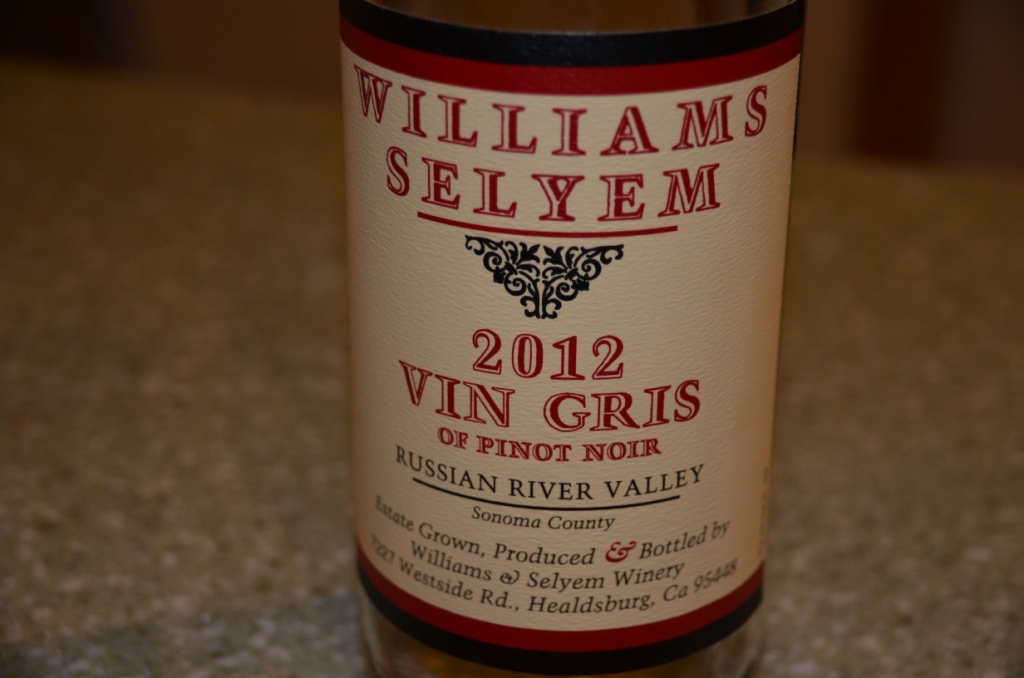
Williams Selyem Vin Gris of Pinot Noir
2012 Williams Selyem Vin Gris of Pinot Noir Russian River Valley (12.9% ABV) – bright concentrated pink color, reminiscent of cranberry juice. Strawberries and cranberries on the nose, same on the palate, lots of strawberries and cranberries, very dry, perfect acidity, very balanced overall and very easy to drink. Drinkability: 8-

Antica Terra Erratica
2011 Antica Terra Erratica Willamette Valley Oregon (13.1% ABV) – another 100% Pinot Noir Rosé. What a treat! Perfectly bright strawberry red in color, nice nose of raspberries and cherries. First the wine opened into a light Pinot Noir, showing some smokiness and earthiness, then evolved into into bright strawberry and onion peel wine, classic Rosé, and then it was gone… Drinkability: 9-
There you have it, my friends. Open a bottle of your favorite Rosé, pour a glass and enjoy – however remember – sometimes Rosé is too easy to drink… Oops, did we just finished this bottle? Cheers!
Divine Experience, or Happy 15th Anniversary Brasitas!
A few days ago I got an invitation to attend the wine dinner at Brasitas restaurant in Stamford, in honor of Brasitas 15 years anniversary. The invitation came through by ways of the Connecticut Bloggers group, run by Wendy and Greg Limauge (if you live and blog in Connecticut, you definitely want to be a part of this group). Now, take your wild guess – do you think I accepted the invitation? Okay, that was a dumb question, so let’s move on – closer to the great food and wine.
I had been to Brasitas a number of times before, and it is safe to say that this is one of my favorite spots in Stamford. Brasitas identifies its cuisine as “Latin Fusion”, and considering the food which is served there, this is a pretty good designation. Now our dinner this time was a special event. The menu consisted of 5 dishes, paired with the special wine program (courtesy of Brescome Barton, one of Connecticut wine distributors) – so let me share that with you (but please keep in mind that this can make you hungry…).
We started our evening in style, with the Cave based version of Kir Royale:


This Codorniu Brut Cava, Penedes had a tiny drop of raspberry liquor, which didn’t change its very dry, austere character of the Cava. It is interesting to note that Codorniu family makes wines for 5 centuries (starting in 1551), and it was one of the first Cava producers in the region in 1872.
The very first dish of the day was Ensalada Catalana (Baby Spinach, Manchego Cheese, Golden Raisins, Pinenuts, Caramelized Quince, Blue Cheese and Sherry Vinaigrette):
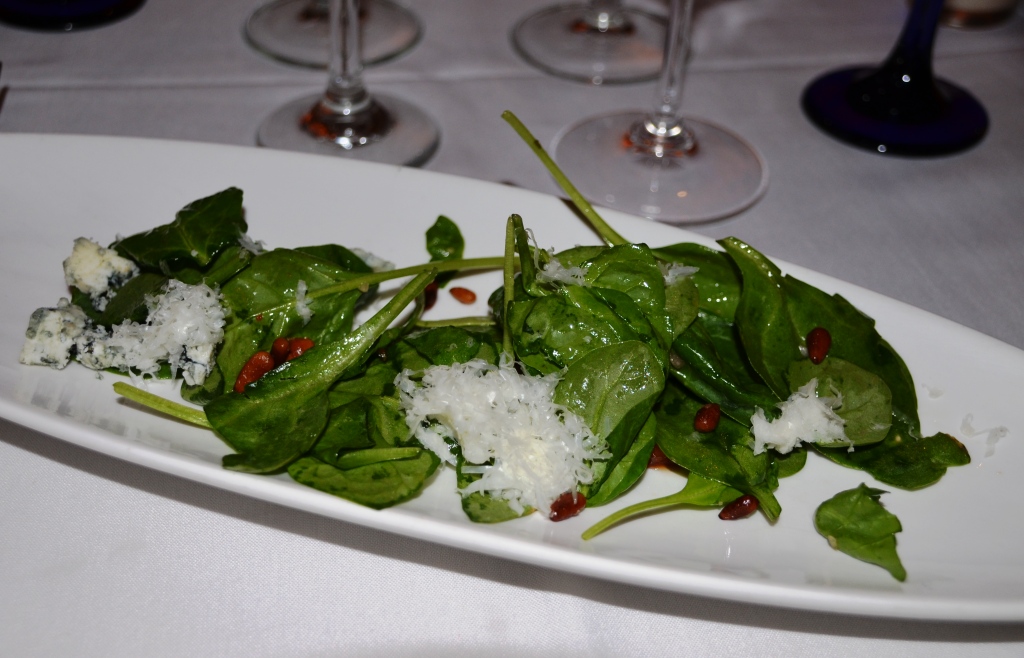
Ensalada Catalana
The caramelized quince provided perfect support for both blue cheese and Manchego, overall creating very nice and refreshing appetizer.
Our next wine was 2012 Mar de Frades Albariño, Val do Salnés, Rias Baixas DO:
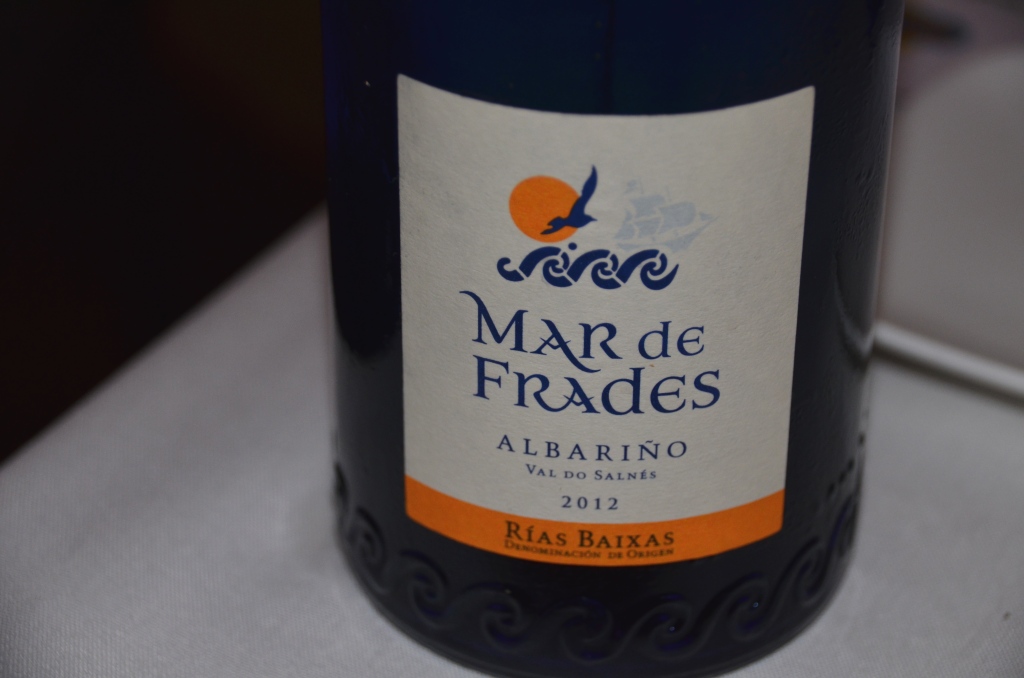
Mar de Frades Albariño
Mar de Frades means “A sea that is also a wine” in Galician. Bodegas Mar de Frades started producing wine in Val do Salnés region of Rias Baixas in 1987. The winery is located in the area where river Umia meets the sea, so you can see this sea relationship perfectly incorporated in the bottle itself. The label on this wine is also pretty unique, showing the blue ship on the label when the wine is at ideal drinking temperature (46F – 50F).
This 2012 Mar de Frades Albariño, Val do Salnés, Rias Baixas DO (100% Albariño, 12.5% ABV) had muted fruit on the nose, with nutty undertones, then it showed some white stone fruit. On the palate the wine was a little flat and acidic. I don’t know if this was really the right drinking temperature for the wine, as it showed more fruit as it warmed up. It was definitely not the Albariño I know, but I would think that it was specifically produced in this less fruity style. Drinkability: 7
Paired with Albariño was the dish called Pulpo a la Portuguesa (Roasted Portuguese Octopus, Bacalhau & Potato Cream, Charred Scallions, Chorizo, Mojo Verde):
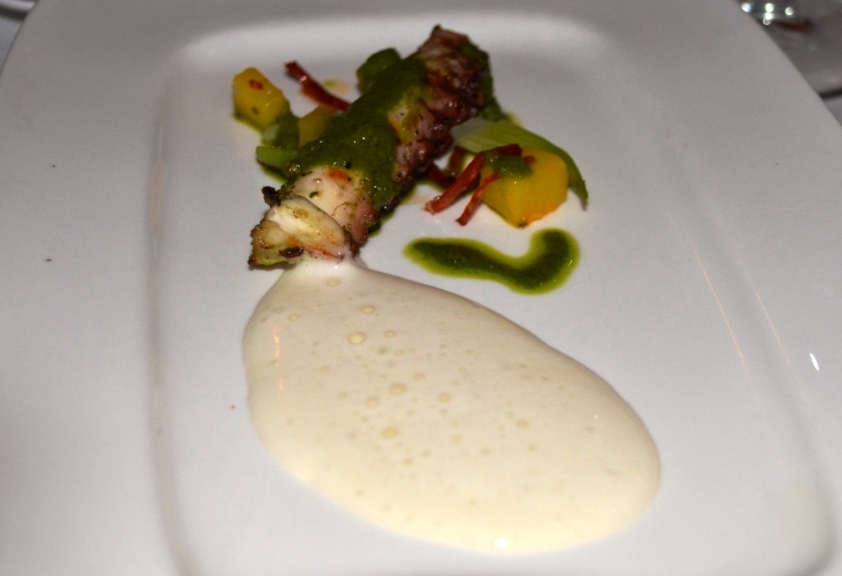
Pulpo a la Portuguesa
The octopus was perfectly cooked it was definitely the star of the dish ( as expected). I have to honestly tell you that Bacalhau was lost for me in that potato cream, and I would probably appreciate a bit more assertive presence from the chorizo, but overall that didn’t take much out of this excellent dish. An interesting side note – this was a first encounter with an octopus for a number of people at our table – but I think they all happened to like it!
Next up was 2010 Ramon Bilbao Crianza Rioja, Spain:


This 2010 Ramon Bilbao Crianza Rioja, Spain (100% Tempranillo, aged for 14 month in oak, 8 month in the bottle, 13.5% ABV) is produced by Bodegas Ramón Bilbao, founded in 1924 in Rioja Alta region. The winery had somewhat of the turbulent past, going through the number of owners but really turning around in 1999. The wine was outstanding (note to all – 2010 was a great vintage in Rioja, make sure to stock up on those wines). Nose was amazing – luscious dark fruit, some hints of eucalyptus. The nose sensation continued on the palate – dark red fruit, soft and luscious, perfect acidity, perfect balance overall, medium long finish. Drinkability: 8
This excellent Rioja was paired with… nothing else, but fish! The dish was called Pajespo con Romesco (Monkfish, Jamón Serrano, Saummer Pea Casserole, Ramesco Sauce, Pisto and Clam Broth):
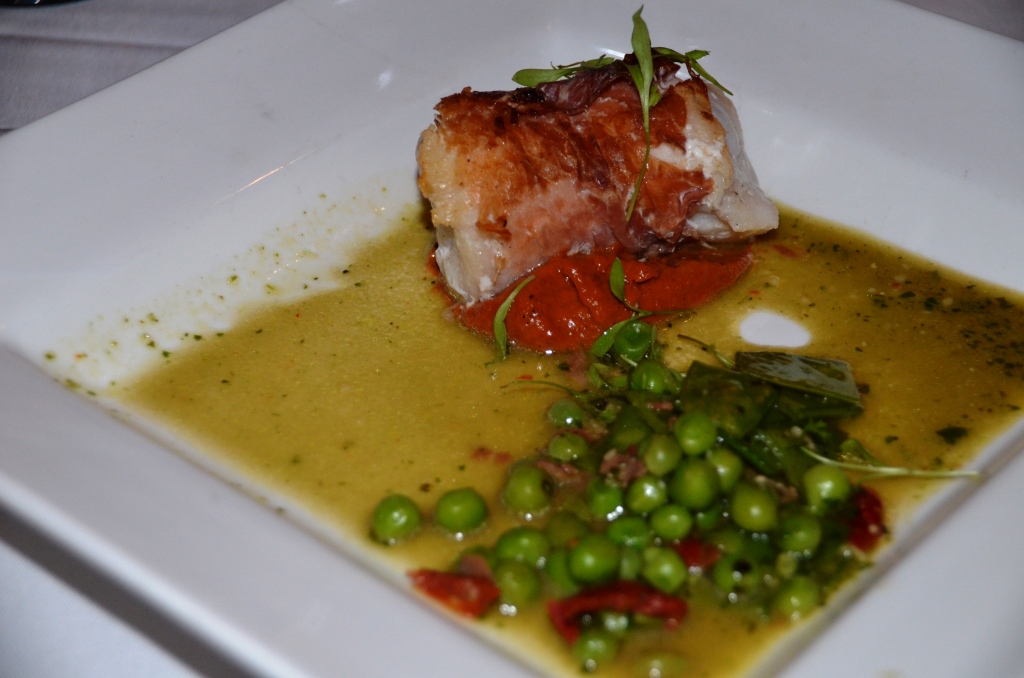
Pajespo con Romesco
How do you think the pairing was? In a word – spectacular! Earthy flavors of the sauce and nice saltiness of the fish wrapped in Jamón Serrano perfectly married the wine! I’m the first to ignore “fish with white…” rule, but in my experience this was the first truly spectacular pairing of such sort which I experienced. Bravo!
This was definitely the hard-to-top-off experience, but the next dish was … well, it was not better, but it was definitely on par.
First, the wine. 2008 Cruz de Alba Crianza Ribera del Duero, Spain:

Crus de Alba Ribera del Duero
This 2008 Cruz de Alba Crianza Ribera del Duero, Spain (100% Tempranillo, 15 month in barrel, 10 month in the bottle, 14.5% ABV) produced by Bodegas Cruz de Alba in Ribero del Duero region. This is relatively young winery, which came into existence only 10 years ago, in 2003. The winery web site is available only in Spanish, so just on my understanding it seems that this is a new venture of Bodegas Ramón Bilbao.
In general, the wines in Ribera del Duero are made from the same Tempranillo grapes as the wines of Rioja – but typically Ribera del Duero wines are more massive and concentrated than those of Rioja. This wine was no exception – dark fruit, structure, power, cherries, espresso and dark chocolate on the palate, perfect cut-through acidity, perfect balance. Definitely an outstanding example of Ribera del Duero wine. Drinkability: 8.
This wine was paired with probably a culmination dish of the evening – Chicharrón (Pork Belly Brined in Smoked Paprika, Cauliflower-Manchego Foam, Crispy Cauliflower, Chanterelle Mushrooms, Solera Vinegar, Pickled Cherries):

Chicharrón
This dish was a symphony of flavor and texture – succulent meat, the sauce with enough sweetness and acidity, crispy skin – all worked together perfectly. Cruz de Alba Crianza, with its sour cherries profile, was creating a delicious combination.
And then there was dessert – Torta de Aceite (Olive Oil and Rosemary Cake, Grapefruit Sorbet, Cosecha Miel Marinated Grapes):
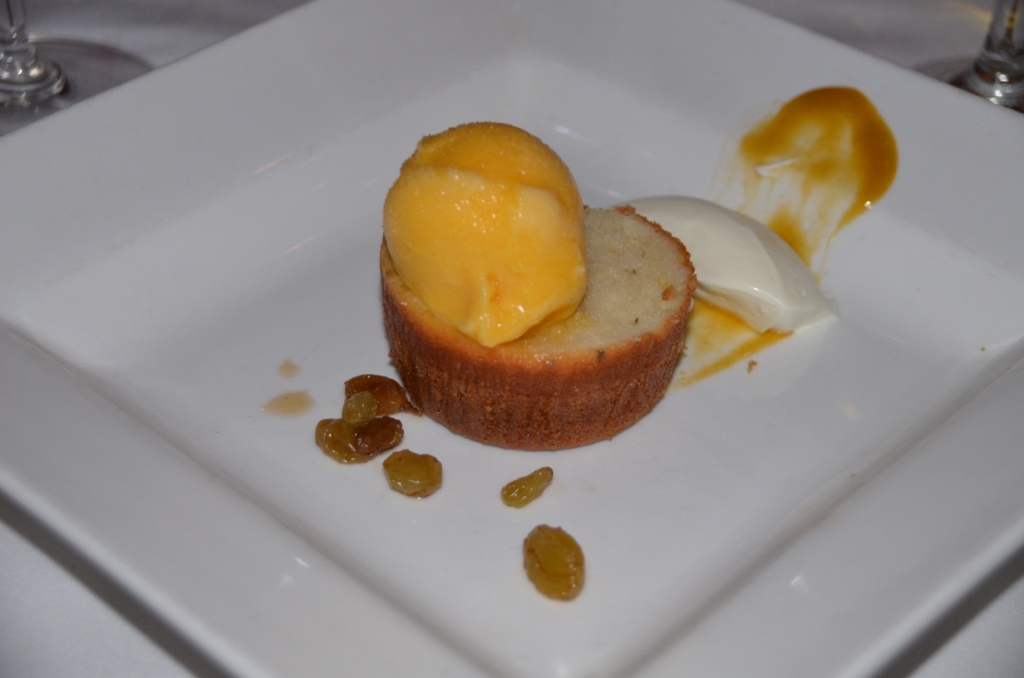
Torta de Aceite
The dessert was paired with Licor 43, a citrus essence with the touch of vanilla, which naturally complemented the dessert perfectly. This was a great finish to the fantastic meal.
Last, but not least – Jaime Guerrero, chef and owner of Brasitas, came to talk to us, which was a great ending for the evening:
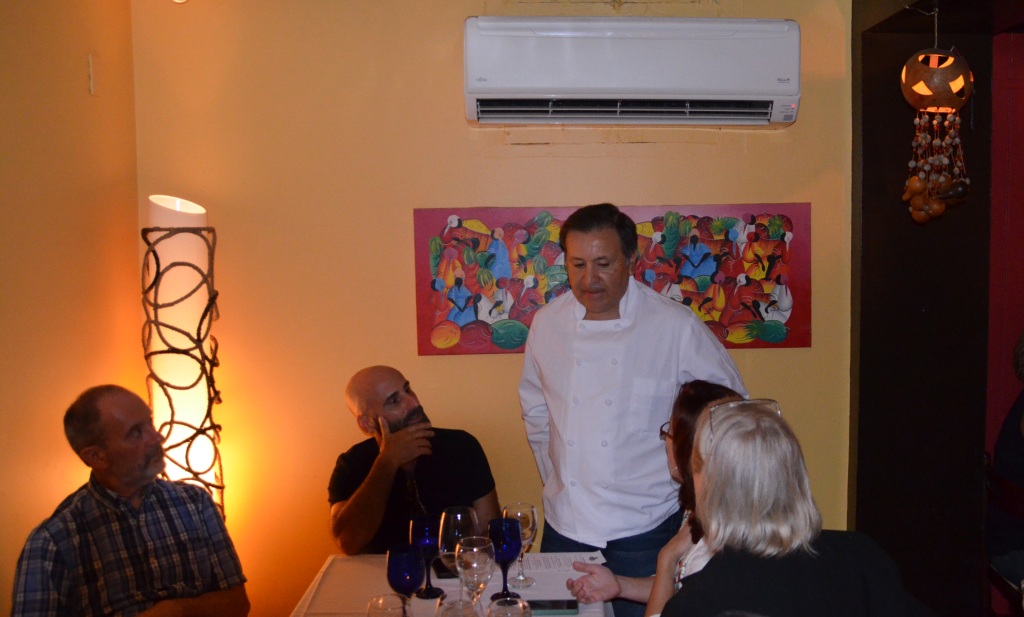
Jaime Guerrero, Chef and Owner of Brasitas, talking to CT Bloggers
There you have it, my friends – great dinner, great food, great wine, great company – life at its best. I really enjoyed meeting all the Connecticut Bloggers who came to this dinner – Denise (and Jay) from DeeCuisine, Alicia from Local Food Rocks, Bonnie from Home Place, Greg and Wendy from Connecticut Bloggers – and I hope to seem them again soon.
And we are done here. Until the next time – cheers!
Brasitas Restaurant
954 E Main St
Stamford, CT 06902
(203) 323-3176
http://www.brasitas.com/
Disclaimer: I was invited to this dinner as a guest of management. All opinions are my own.

Counting Up and Counting Down
 It is that time of year again – all you hear from all the sides is counting up and down. Top 10s, Top 100s, 10 best of this and 5 best of that, umpteen days until Christmas and only so many days before Black Friday and Cyber Monday. So, let’s join in and do some counting here as well.
Starting with the closest one, tomorrow (or today, depending on when you will read this post) Wine Spectator will announce its number one wine of the year. Every year Wine Spectator publishes a list of top 100 wines of the year (paid subscribers can access those lists going all the way back to 1988). For now, top 9 wines of 2011 out of the 10 are already announced, and you can find that list on the Wine Spectator web site (the list is open to public until November 27th). Looking at the list, you can find there wines from California, Italy, France, Washington and Portugal, with ratings from 94 to 96 points and prices ranging from $35 to $90. We only have to wait until tomorrow to find out what the Wine Spectator Wine Of the Year 2011will be.
Moving on to the next countdown, there are only 2 days left until the release of Beaujolais Noveau – first wine of 2011 vintage officially released in France in Beaujolais region . Yes, this holiday didn’t exist until 1985, and you can call it just a marketing ploy – nevertheless, it became a modern tradition which is celebrated with midnight releases, parties, food, wine and all appropriate extravaganza. If we look at the trend of last 3-4 years, we actually have something to look forward to – the quality of the Beaujolais Noveau had being steadily increasing, with 2009 being really good, and last year’s, 2010 being even better than the one before. Stop by your neighborhood wine shop, talk to your friends, check your social media outlets – you will definitely find a place to celebrate wine’s new beginnings in style. If you live close to Stamford, CT, I can recommend the place already – stop by Cost Less Wines on Thursday for the taste of Beaujolais Noveau 2011.
Talking about events, here is last, but definitely not least – there are only 3 days left until PJ Wine Grand Tasting. This coming Friday, November 18th at Metropolitan Pavilion in New York City you will have an opportunity (it might be once in a life time opportunity) to try Dom Perignon, Cristal, Krug, 2006 Cheval Blanc, 2000 Chateau d’Yquem, 1990 Mouton-Rothschild, 1985 Chateau Haut-Brion, 1952 CVNE Vina Real Gran Reserva and many other incredible wines, all in one evening. It is still not too late to get your tickets, and you can use discount code Talk-a-Vino to get $10 off your ticket price (here is the link for you to click).
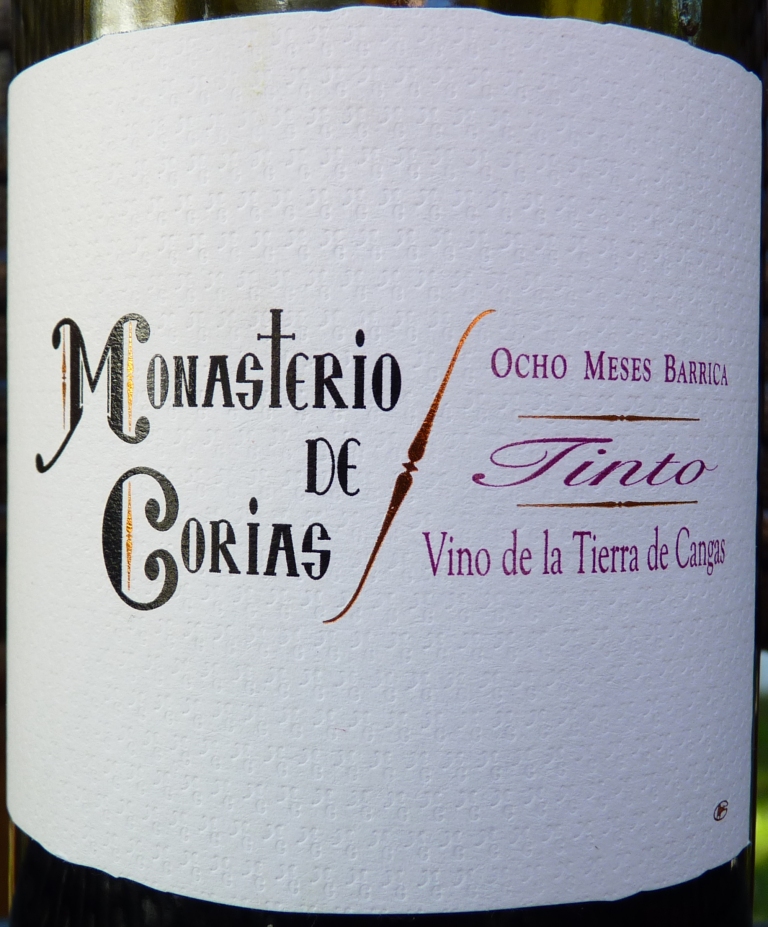
Lastly, I want to report some counting up – I added three more new grapes, thanks to the 2008 Monasterio de Corias Ocho Meses Tinto wine from Spain. The new grapes are Albarin Negro, Carrasquin and Verdejo Negro. The wine was very interesting, with pronounced acidity, limited fruit expression, good minerality and roasted tomatoes on the nose, very food friendly (Drinkability: 7+).
To conclude, I’m curios where you think the Wine Spectator Top Wine of the Year will be from. I’m torn between Oregon and Spain. Oregon is simply because I believe Oregon makes great wines and should be represented in the top 10. At the same time, Spanish wines are getting rapidly growing acceptance, and they are also great in my opinion, so it will be only fair if top wine of the year will be from Spain. Well, we are not going to wait for a long time. If you have any predictions, please share them here. Cheers!
Wine, Aged Beautifully
 Let’s talk about aging. No, that’s not what you think – not people aging and not the world problems with the aging populations. Let’s talk about the aging of the wine. By the way, it appears that second time in the row I’m taking upon the popular subject – in the previous post we were comparing the wine glasses (post can be found here), and now the wine aging.
With all due respect (based on this phrase, my friend Kfir would tell you right away that I’m about to blast something), I completely disagree with the majority of the popular opinion on the subject of wine aging. Open a wine book, read a wine blog, or ask a question on Quora, and for the most part, you will get an answer that 95% of the wines are not supposed to be aged and should be consumed within a year or two from the release date.
Based on my personal experience, I disagree with this viewpoint. I can’t put a percentage or a quantity on it, but I believe that well in excess of half of the wines produced in the world (not by the volume, but by the variety of the actual wines) can age very well for 5 to 10 years – and “age well” means “to improve with age”. My biggest problem with the aging of the wines is … space. If you want to drink aged wine, you either need a lot of space, or you need [typically] lots of money, as most of the aged wines increase in price. If you have a cool and dark area with constant humidity, you can buy wines as they are released. store them and enjoy them later as they evolve and mature. Otherwise, you need to have money and a reputable source of the aged wines (improper storage conditions will ruin any wine in no time). Once you solved your space problem, the rest is easy.
How easy is that? How can we know if that bottle of wine will age well – read: improve with age? There are way too many factors affecting the aging of the wine, and being able to predict age-worthiness of the wine (age-worthiness means that wine will evolve and taste better in the future) is more art than science. As an example, Matt Kramer, one of my favorite wine writers identifies age-worthy wines using characteristic of the mouth-feel, a mid-palate weight of the wine in the mouth. Here is my take on the subject. First, yes, of course, some of the wines are meant to be aged – for instance, Beaujolais Noveau is released in November and should be consumed by May of next year. Outside of the wines which are designated by winemakers as “do not age”, the majority has some aging potential. I believe the biggest dependency here is on the winemaker and what she or he wants to achieve with particular wine – if wine is well made, there is a good chance that it will also age well.
Some wines are helped by their “DNA” – under which I mean from what grape and where in the world the wine is made (of course good/bad year matters too). California Cabernet Sauvignon expected to [typically] reach maturity at around 13 years. Bordeaux easily ages for 30-50 years. Syrah-based wines, whether from Australia or France, can live for 50 years. Many 50-years old Riojas are fresh and vibrant as being just made. But “DNA” alone is not enough – wine should be well made in order to age well.
If you are still reading this post, I guess you might be tired by now by this prolonged escapade into the wine aging, and you might be wondering why, why is all that wine aging might be important? Well, I can’t answer this question. At least not before you will find the wine with a little age on it, which will blow you away. Yes, it is an acquired taste. But once you will actually acquire that “mature wine” taste, this is what you are going to crave, I guarantee you.
 Let me share some recent and exciting discoveries. Let’s start with 1995 Flora Springs Chardonnay Napa Valley. This wine is made out of 100% Chardonnay. While the nose was not very expressive, the level of complexity of this wine is unimaginable. Yes, considering dark golden color, this wine might well be past prime, and without that “acquired taste” for the aged white wine, you might be even upset after the first sip. This wine was exhibiting notes of vanilla which almost moved up to some sort of the almond paste, still showing some acidity. Next are savory notes, almost to the level of saltiness, which was increasing the complexity even further. The wine was in a very stable shape as it tasted the same on the second day as well. Will this wine evolve further? Who knows – but I would be very happy to taste this wine again in five or maybe ten years. Drinkability: 8
 The next wine is 1992 Domaine de Thalabert Crozes-Hermitage from France. Crozes-Hermitage wines are made primarily out of Syrah, typically with a very small addition of Marsanne and Rousanne grapes. As we mentioned before, Syrah wines age quite well, and this was an excellent example of the well-aged Syrah wine. This wine was very playful and soft, with lots of red fruit on the nose and on the palate, very good acidity and a good level of tannins. This wine probably will continue evolving for the next five to ten years, and again I will be glad to help you share the bottle later on – if you will have one. Drinkability: 8-
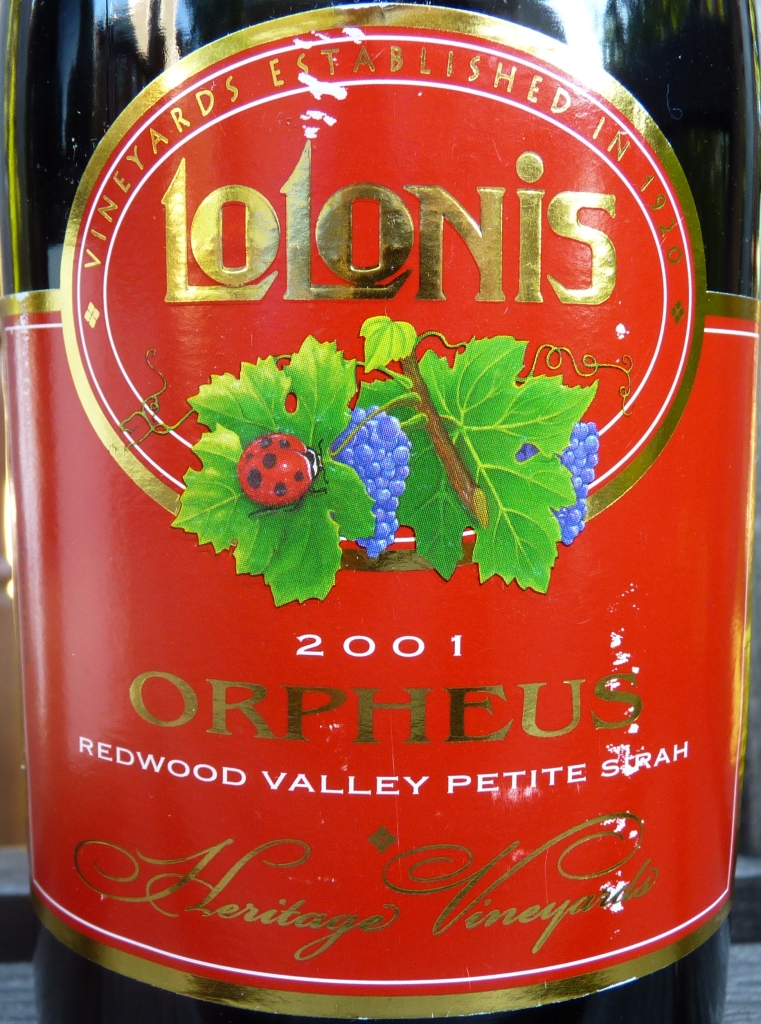 Going back to California, 2001 Lolonis Petite Sirah Redwood Valley. In short – outstanding. This 10 years old wine was completely fresh and beautiful. It is made from organically grown Petite Sirah grape. The wine showed perfect dark fruit, good acidity, full body, excellent tannins, and perfect overall balance. This wine might be evolving for the next 10-20 years – again, the trick will be to find it.
Drinkability: 8+.
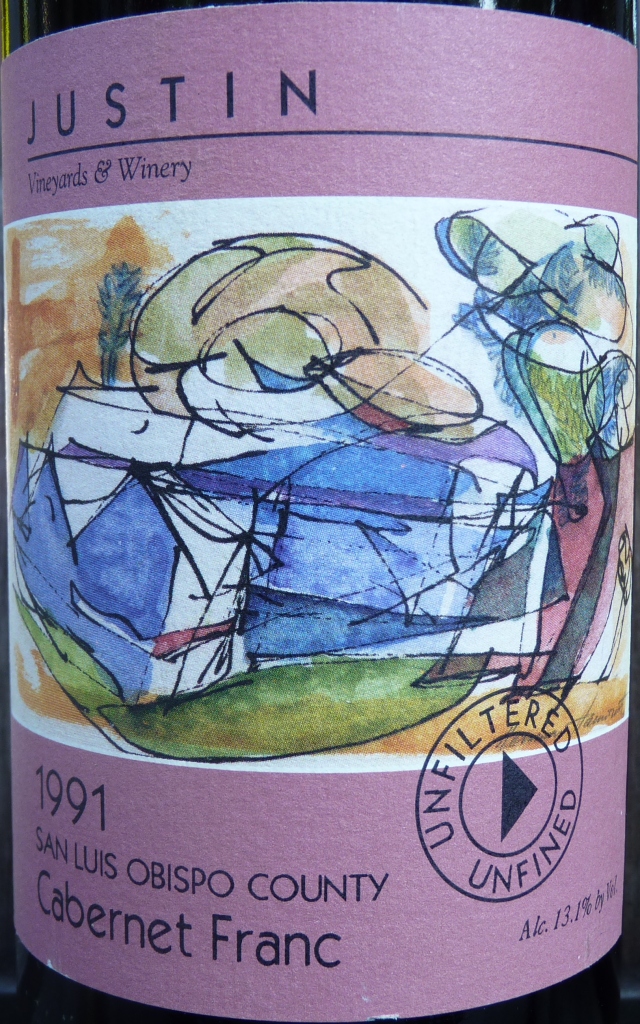
Last, but not least, 1991 Justin Cabernet Franc, San Luis Obispo County. This was the “wow” wine, that exact mind-blowing one. First, while I like Cabernet Franc wines, I had no idea they can age so well. I can literally guarantee that in the blind tasting format, very very few people would be able to guess the age of this wine. Deep garnet color, not a hint of age (no brownish overtones at all). Perfect fresh fruit, soft and luscious, a perfect balance of tannins and acidity. This wine was the oldest in the tasting, and it was definitely the best of tasting. Considering how good it was now, I can’t even guess how much time it has left – but I would be very glad to find a few more bottles to be “wowed” again in the future. Drinkability: 9-
One note before we conclude – this was a rare case of someone doing all the hard work, and me enjoying the results – I got all wines from Benchmark Wine Company and each one of them had been less than $20.
Don’t know if you got the desire to seek well-aged wines – I hope you will one day. For now, I can only wish upon myself, my family, all my friends and all of you, my readers, to age as beautifully as this Justin Cabernet Franc does. Cheers!
Long Overdue–Notes From Michal Skurnik Wine Tasting
 Yes, this post is long overdue, as I hinted that it’s coming a while back. Better late than never, right? Here it is.
Let’s say you are in a wine store. Bottles, bottles are everywhere. Sometimes you know exactly what you want. Sometimes you don’t – and this is when it becomes challenging. How do you know if that bottle of wine is any good? Price is really not an indicator of quality. You can’t try the wine ( at least in the majority of cases). Yes, you can ask for the advice – then it really depends what store you are at (some of the store advice should be avoided at all costs). So, what do you do? Of course, using your iPhone is always an option, but this is not where I’m going right now. One possible solution is to look at the back label, which all the wines in the US have to have. Look for the name of the importer. And if it says “Michael Skurnik” or “Kermit Lynch”, you should smile, because you just learned that chances this bottle of wine is good just increased dramatically.
Why you are asking? Michael Skurnik Wines is so-called “importer” (they are also a wholesaler, but this information is typically not advertised on the label). It means that Michael Skurnik Wines company (MSW) works with thousands and thousands of wineries and other wine merchants all over the world to find the wines which will pass through their rigorous selection process and will be represented by Michael Skurnik Wines.
The wines chosen to be carried in the portfolio might not be all your favorite – but they all will be quality well-made wines. It means that MSW folks are doing all the hard work of selecting the best wines for you, and all you need to do is to enjoy the fruits of labor.
Few times a year wine importers and wholesalers organize special wine tasting events to present their portfolio to the trade. I was lucky to attend Michael Skurnik Wines Spring Grand Tasting, and I would like to share some of my personal highlights.
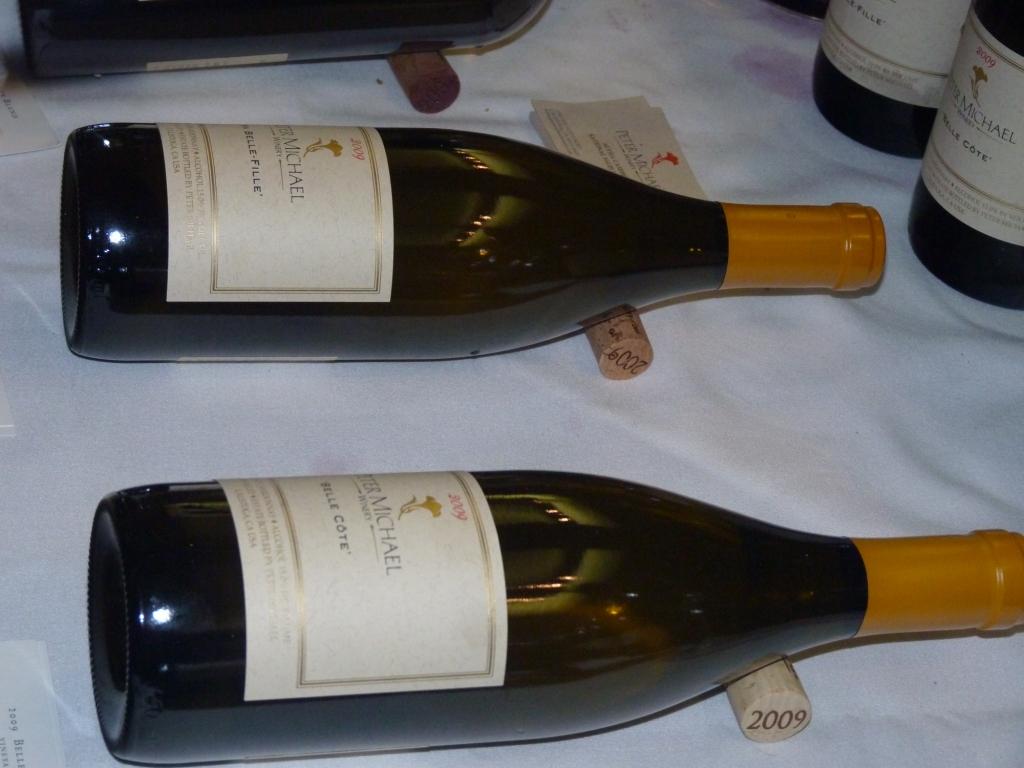
First and foremost, my personal “Best of tasting” is Peter Michael wines. Four 2009 Chardonnays were presented in the tasting (“Mon Plaisir”, “La Carriere”, “Belle Cote” and “Ma Belle-Fille”) – tremendous, all four are the best Chardonnays I ever tasted. Finesse and absolute balance – vanilla, toasted oak and butter all being present, but in absolute harmony with bright acidity, fruit and silky smooth tannins. I would put drinkability for all four at 9+. Just so you know, these are the cult wines, which affects the pricing and availability. These wines are available only through the mailing list or through select merchants – you might be able to find them at Wades Wines and Benchmark Wine Company.
The next highlight was an amazing line of Barolos. A mix of 2005, 2006, 2007 Barolos from Azella, Manzone, Renato Corino, Marengo, Altare, Clerico, Cavalotto – one was better than another, all beautiful and powerful wines. Anyone of the names I mentioned is worth seeking.
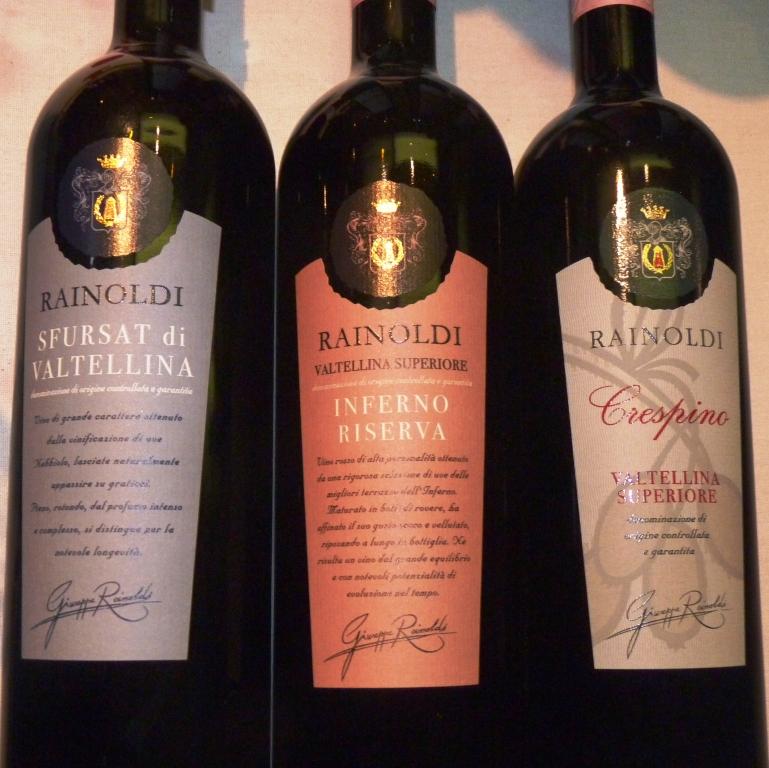 While the Barolos were great, they had a group of contenders, which were literally as good. Wines of Aldo Rainoldi come from the area in Lombardy region called Valtellina. These wines are produced from the same grape as all Barolos – Nebbiolo, with all the vineyards located at the very high altitude of 600+ meters (1800+ feet). I tried four different Aldo Rainoldi wines – 2007 Sassella, 2005 Crespino, 2006 Inferno Reserva and 2007 Sfursat Classico – all were truly outstanding and very comparable with great Barolos, but at the half price as the least.
In addition to all the wines in the tasting (about 700), there were some stronger spirits as well. One of the surprises was Calvados I tried. Calvados is a brandy which is made out of apples in the Calvados region of Normandy in France. Typically, I can drink it, but it is not something I would be seeking out. However, two of the Calvados presented at the tasting – Camut Calvados 6 years old and Camut Calvados Reserve 12 years old were simply incredible. Soft, smooth, elegant, great aroma of fresh apples, very delicate balance. They will not be easy to find, but I would highly recommend you will make an effort. You can try your luck at D&M, and believe me, you will not be disappointed.
That’s all, folks. There were many many more great wines, but you got to stop somewhere, right? Until the next time – cheers!
Pleasant Surprises: Petit Verdot From Spain?!
 You might be as surprised as I was, walking into my local wine store (Cost Less Wines and Liquors, of course) an finding Petit Verdot from Jumilla region in Spain! Let me explain the “surprise” element. Petit Verdot is very rarely used as a single grape to produce a wine. To be more precise, it is primarily is blending grape, used in Bordeaux wines to fortify the structure. It is typically added in the 10% or less quantities. I have to note that in the past 5-10 years, the grape became more popular for single grape bottling, especially in the New World, places like Australia, Chile and United States. Actually, Petit Verdot from Jamesport vineyard on Long Island I tried last year was amazing ( you can read the post here), but it was equally priced at $100 per bottle. But again, this is new world, and Spain is really not in the New World when it comes to wine (fine, may be it is, depending on the region – but this should be a subject for another post).
T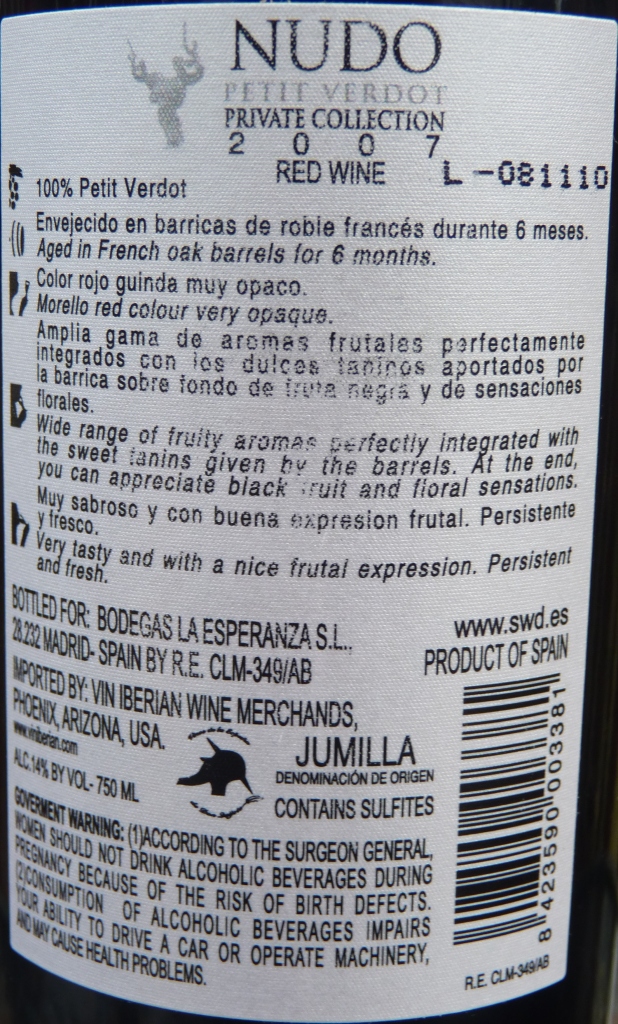 hen comes another part of the surprise – Petit Verdot is really not a typical grape for Jumilla region. Typically, wines from Jumilla are made out of grape called Monastrell. A lot of Monastrell wines ( inexpensive, needless to say) have a grapey taste to them and many of them don’t belong to the group of “my favorites”. Of course, there are wines like El Nido by Bodegas El Nido (blend of Cabernet Sauvignon and Mourvedre, 97 rating by Robert Parker), which are totally different, but even those are rare for the area. Still, 100% Petit Verdot?
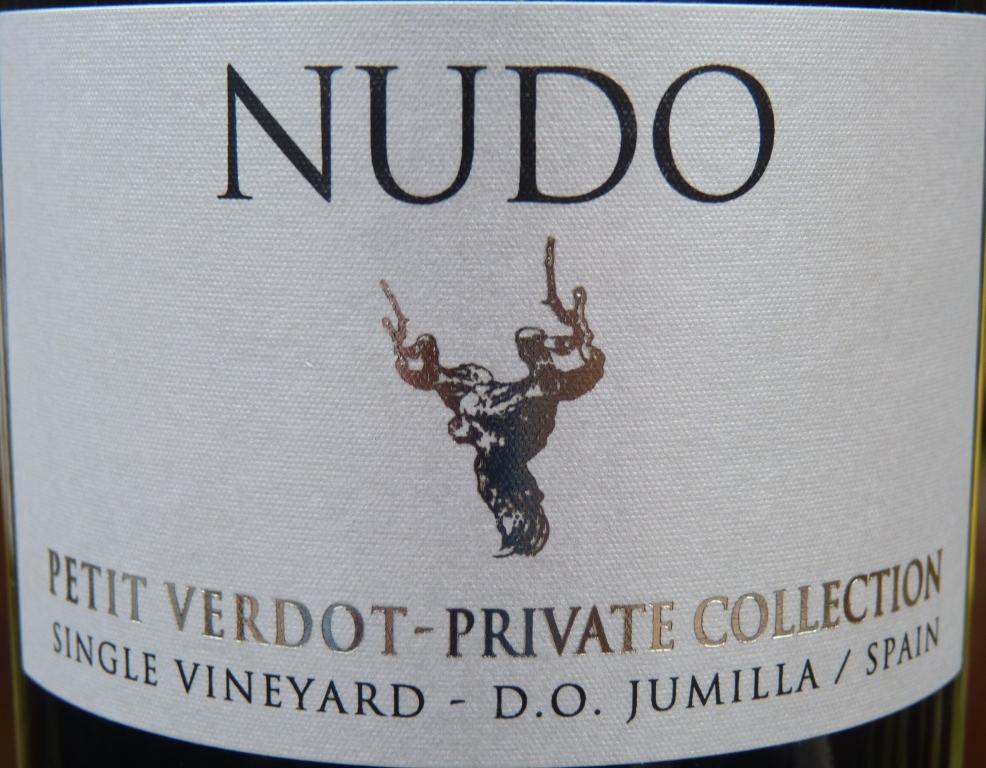
Please meet 2007 Nudo, Single Vineyard Petit Verdot from Jumilla DO, Spain. It is 100% Petit Verdot, aged for 6 month in French oak. Very balanced, beautiful fruit expression complemented by the notes of tobacco and hint of leather. It is not as concentrated as that Jamesport Petit Verdot was, but still very nice and pleasant wine to drink. At $12.99 – it is your great winning every day wine, hands down. Drinkability: 8-
Pleasant surprises are the best – as the wine world delivers better and better wines, be on a lookout for more great unusual wines from unusual places. Cheers!
Value Wines Project: Finishing On The High Note
 Value Wines – it was a fun project. Of course the subject of value wines is endless – there are many blogs fully dedicated to the value wines. However, for me it was a project – here is group of wines, all wines are under $12, let’s see how this group will fare.
I believe the results of this project are in line with the general notion of great improvement in the quality of wines across all regions in the world (I’m sure you read about it in many places). Only one wine out of 15 was really not drinkable, couple of wines were at the border of decency, but majority was quite drinkable with few wines being simply excellent (don’t forget – we are talking about value wines under $12, not first growth Bordeaux).
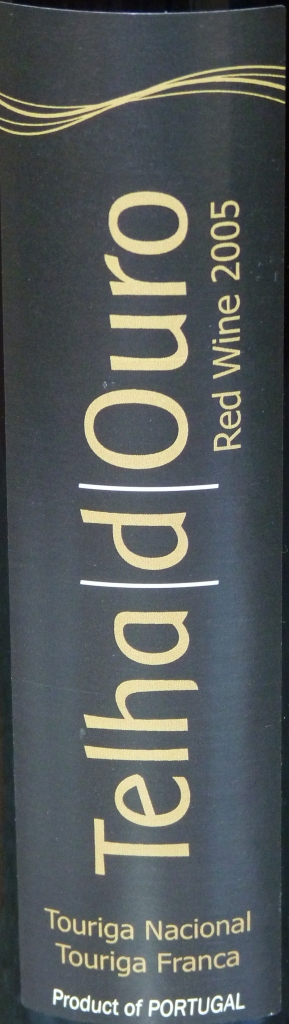
I’m glad to say that the last wine I tried in the project was one of those excellent wines. 2005 Telha d’Ouro Vinho Regional Estremadura ($6.99), blend of two Portuguese noble grapes – 50% Touriga Nacional and 50% Touriga Franca. The wine exhibited blackberries and soft plum on the nose. More ripe plums on the palate together with tobacco and hint of pepper. Tannins were hiding at the beginning ( wine had to breathe for about 30 minutes), then opened very powerfully (may be even over-powering). Presence of good 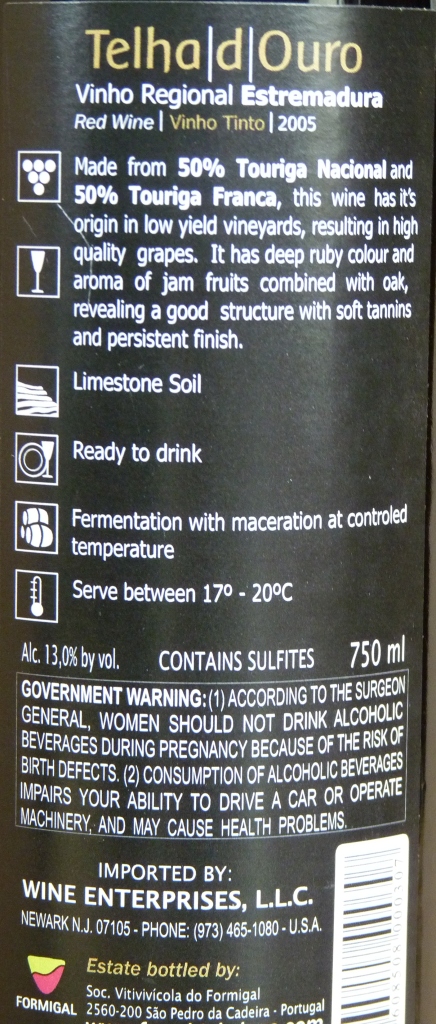 acidity makes this wine nicely balanced. It also shows long finish. All in all, excellent wine and deserves drinkability rating of 8.
I also want to mention that I really love back labels on the Portuguese wines. A lot of wines sold in us have a government warning on the back label, plus sometimes a note explaining how much love went into that particular bottle of wine. Sometimes you can find useful information, but this rather an exception than a norm. When it comes to Portuguese wines, they practically always have a great back label which provides a lot of useful and interesting information, such as grape composition, type of soil, how the wine was fermented, suggested serving temperature and so on ( you can see for yourself). Don’t know about you, but this is type of information I’m typically interested in.
That’s all for this project. I will be glad to see your comments regarding your own value wine experiences, and I wish you all lots of good wine discoveries. Cheers!
Daily Glass: Value Wines Project – Portugal, Italy and Oregon
 Here is another Value Wines project update. We had French, Portuguese and Italian wines covered in the project. Today’s update is bringing in a new region – Oregon.
So far I would say that the outcome of the project is very encouraging – a lot of good, very drinkable wines from all regions mentioned above, all priced very well. The wine from Oregon, 2009 Primarius Pinot Noir, however, I would have to call the biggest surprise of the project. Why so? It is not surprising that we can find good and inexpensive wines coming from Portugal, for instance – wine region is grossly ignored and underrated ( this is changing, though), so the winemakers have to price their wines accordingly. Oregon wines, on another side, are well known worldwide as a source of the Pinot Noirs, rivaling those of Burgundy – and so far my experience with any Oregon Pinot Noir under $15 had been largely negative (wimpy and diluted wines).
All in all, Primarius Pinot Noir ($11.99) was very good wine – smokiness and finesse of the classic Pinot Noir, layered and restrained fruit and very good balance – I think this is a great wine for the price (and even in general). I will put Drinkability at 7+.
 Next wine comes from Italy – 2009 Tedeschi Valpolicella Classico ($10.98), and it has both good and bad sides. For the bad side – the wine never came together in a glass. It tasted as all the taste elements – fruitiness, acidity, tannins and alcohol were pulling in the different directions. The wine is drinkable, but not really enjoyable – by itself. I would guess this is a food wine – paired together with some homemade marinara sauce over fresh pasta, it should taste ( and fare) quite differently. For now, I will put Drinkability at 6+. For the good side, I’m adding 3 new grapes with this wine – Rossignola, Negrara and Dindarella, so the total count increases to 312.
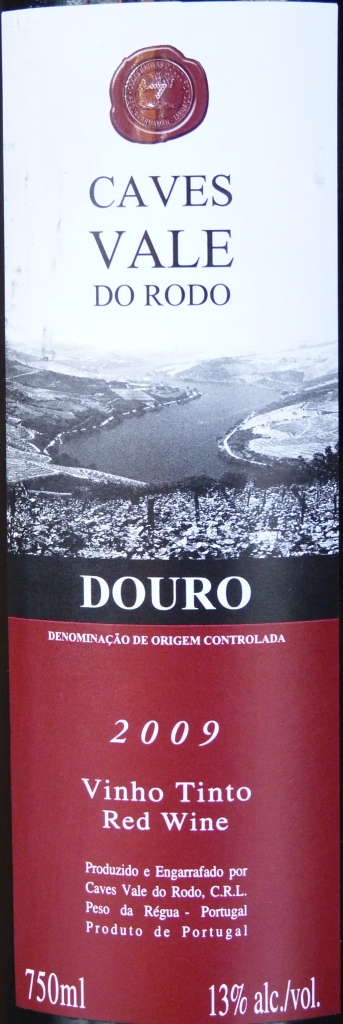
Three more wines from Portugal – 2009 Caves Vale do Rodo, Douro DOC ($6.98), 2003 Primavera Douro DOC Reserva ($6.98) and 2007 Monte Da Cal Vinho Regional Alentejano ($6.47). All three are very nice and simple wines, easy to drink and pleasant – and great value for the money. I will put Drinkability at 7 for all three.
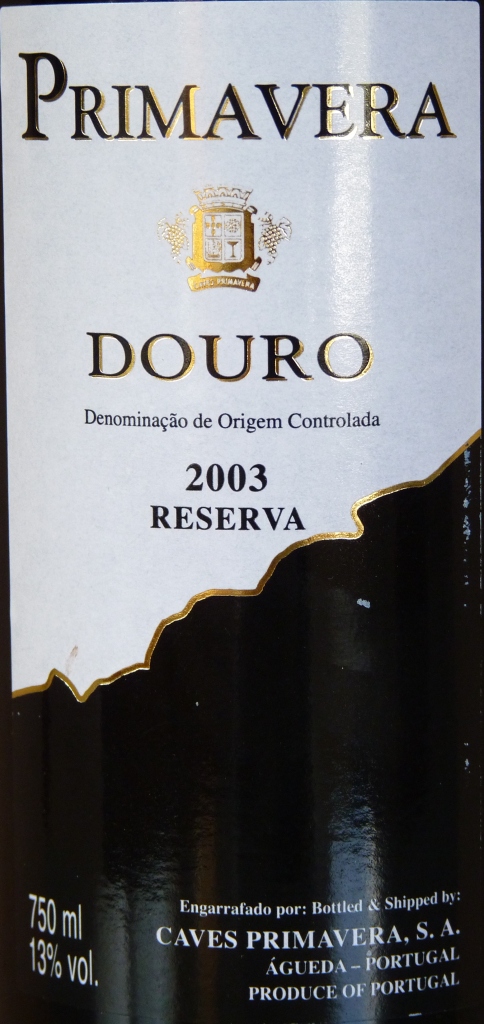
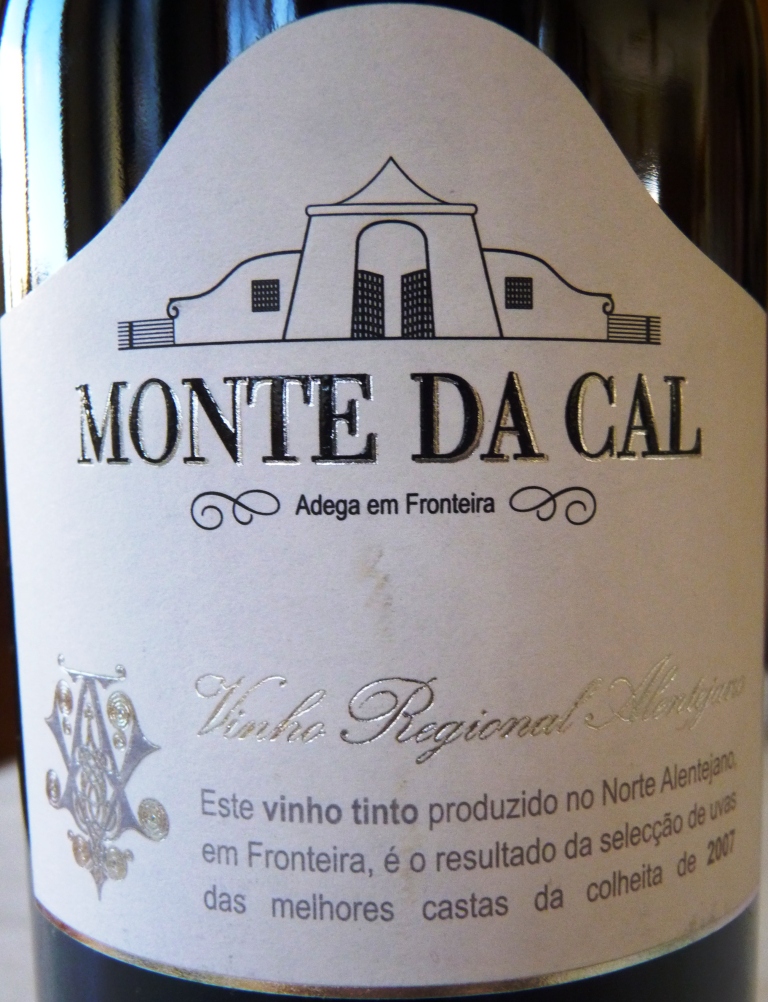
This concludes Value Wines project update for today. Few more wines are left to try in the current batch – as usual, the report will be coming soon.
Value Wines Project And Other Updates
 Few more wines to report on in the Value Wines project. First, 2007 Rengo Valpolicella Classico Superiore Ripasso ($11.98). Valpolicella Ripasso is a little brother (or a sister, take your liking) of Amarone wines, which are my favorite red wines (when they are done right). Ripasso wines made from the second pass of the grapes already used to produce Amarone wines, hence the name “second pass”. So if anything, you should expect that Ripasso wine will resemble the Amarone wine itself. And it actually does in case of this Rengo Ripasso. This wine needs a bit of time for breathing, and then it resembles Amarone with sweet raisiny nose, and then soft fruit and very balanced tannins and acidity. This wine also has medium finish and it is easy to drink. Drinkability: 8-.
 The next wine is from France – 2009 Barc Vallee Borgueil Les Castines ($9.98). Borgueil wines are made out of Cabernet Franc grape. It is not easy to find a good Cabernet Franc wine, especially in this project’s price range. This wine was very nice and gentle, with good earthiness on the palate, good balance, good acidity. This wine is definitely food friendly and should work well with many dishes. It will also drink well over the next 3-4 years. Drinkability: 7+ .
The next wine in the series is called Caves Bonifacio from Portugal ($3.98). I typically avoid writing bad reviews – unfortunately, this particular wine was so bad, it tasted ” chemically engineered”, very unnatural. So it made it for the first bad bottle in the series (first out of 9). I will not even rate Drinkability here as the wine was undrinkable (had to go down the drain). Hopefully the next bottle will be better.
One more update not related to the value wines project. As you might know, I reached my goal of trying wines with 300 grapes for the Treble status in Wine Century club. However, the journey of discovery continues. I just had an opportunity to try another 8 new grapes, and I have another 5 to add shortly. Therefore, I’m continuing the journey without setting the goal of becoming Quattro member, and I changed the “treble status” section to the “grape count”, which will reflect the current state of this process. Will I make it to the quattro level? Who knows – but I will definitely have fun trying.
And one last note – few days ago, I was able to try some truly amazing wines – so be on a lookout for the interesting updates.
Last Bottle Sign Up ($10 credit)




 Talk-A-Vino