Archive
Beaujolais Nouveau 2013 – Well Worth Your Attention
It that time of the year again – the festive labels are lining up in front of the wine stores to remind us that we are entering into literally a six week of non-stop celebrations – Thanksgiving, Christmas, New Year, friends, families, holiday parties. With its festive label, coming out every third Thursday in November, Beaujolais Nouveau signifies both arrival of the wines of the new harvest, and the arrival of the holidays.
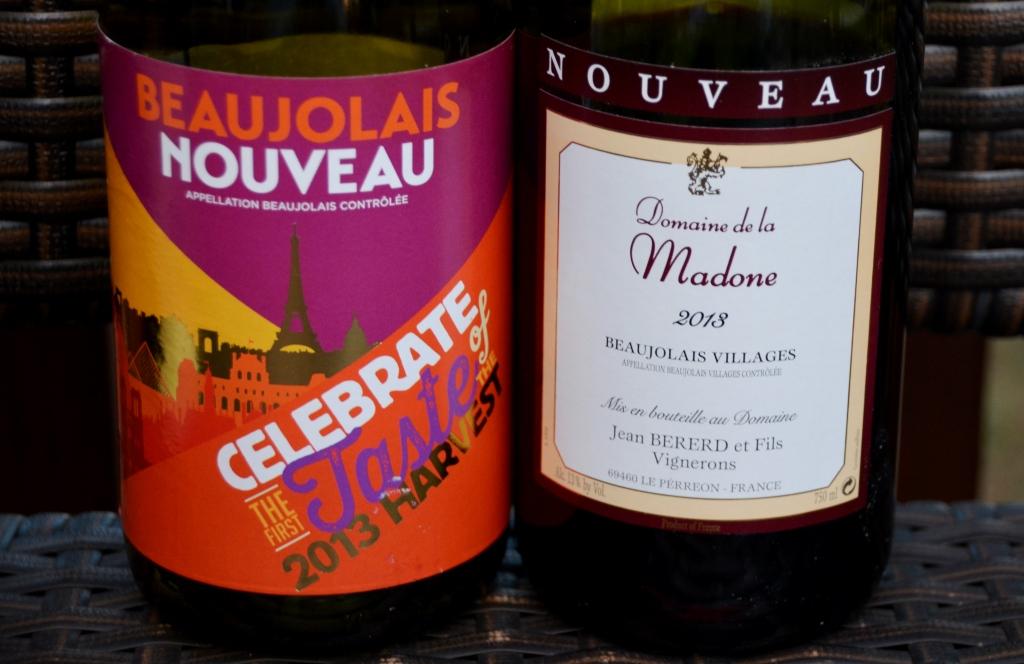
Beaujolais Nouveau Arrived!
The tradition of celebration of the new harvest with the wines of Beaujolais is well more than hundred years old. It became linked to the third Thursday of November in 1985, and then little by little, became a huge marketing success. That huge success became the worst enemy of the wine, with the producers starting to make soulless, insipid wines, void of any substance – and Beaujolais Nouveau phenomenon almost died at the very end of 20th century, with people simply ignoring the wines as only a marketing ploy.
Luckily, over the last few years, the situation started to change to the better, or I would even dare to say, to the “much better”. The wine behind festive labels started to show substance and character. I think Beaujolais Nouveau offers a very unique opportunity for the wine lovers, as you can taste every new vintage of the same wine, and compare – something which is rather difficult to do with many other wines – and you can see how the wine is changes year over year.
This year I had an opportunity to taste two different Beaujolais Nouveau wines – one from Georges Duboeuf, and another one from Jean Bererd & Fils, Domaine de la Madone – technically a Beaujolais Villages Nouveau, which is a different AOC designation, but for all intents and purposes it is produced in the same way as a regular Beaujolais Nouveau.
Can the wine be made better and better every year? Of course the question is way too generic to have an answer, but I can tell you that in case of Georges Duboeuf Beaujolais Nouveau, the answer is “yes”. I was quite happy with the 2012 wine, but I think this year it is even better. The 2013 Georges Duboeuf Beaujolais Nouveau (12% ABV, $10.99) showed beautiful dark purple inky color in the glass. The nose was full of bright fresh fruit – ripe cherries, succulent raspberries, some violets. The palate came in quite restraint and structured, even firm – good fruit presence of the same dark cherries and ripe raspberries, but not over the top, showing of respectfully mature, concentrated wine with good acidity and medium finish. Depending on the serving temperature, the acidity was more of less noticeable, and overall the wine showed well balanced. Definitely recommended for your Thanksgiving table, perfectly attune to the Harvest celebration. Drinkability: 8-
The 2013 Jean Bererd & Fils Domaine de la Madone Beaujolais Villages Nouveau (13% ABV, $10.99) had very similar inky purple color in the glass. On the nose, it exhibited very similar notes of dark cherries and raspberries. And yes, the palate profile was very similar, but somehow, while the wine was perfectly drinkable and enjoyable, also showing firm structure, I was unable to find the right temperature when acidity was fully in check and harmony with the rest of the wine. Still, not a bad wine by all means. Drinkability: 7
When it comes to Thanksgiving, which we are about to celebrate, my choice of wine tends to be all-American – Chardonnay, Pinot Noir, Zinfandel – but nevertheless, I love opening the celebration with the glass of Beaujolais Nouveau – that clearly sets the mood to the Holidays, which have arrived.
Did you happen to taste Georges Duboeuf or any other Beaujolais Nouveau wines? What do you think? Happy Holidays and Cheers!
Trader Joe’s Wines – Again Exceeding Expectations
Every time I get in a close proximity of the Trader Joe’s stores which sell wine, I always have to go and check out what is happening there – and, of course, try some wines. This time it was in November in California.
I don’t get to visit the Trader Joe’s wine section all that often – yes, we have Trader Joe’s here in Connecticut, but the only type of alcohol the stores can sell here is beer. My last experience with the wine section in Trader Joe’s was about a year ago. This time, I thought that the selection of wines and hard liquors expanded quite a bit, even though it was rather substantial even before. This time I saw a number of large format bottles, including 3L Italian wine for about $20! More spirits, including Calvados for $19.99 (I challenge you to find a Calvados for such a price at any wine store you frequent). I don’t know how Trader Joe’s can do this, but this is pretty remarkable.
Usually, when you see a cheap bottle of wine, the thought is – is that any good? So clearly in the spirit of research, I willingly subjected myself to the scientific drinking experiment – what $20 can buy for you? Okay, I have to be honest with you – I spent more money. A whole $3 more. So the experiment should be officially called “What wine $23 can buy for you at Trader Joe’s”. You can see my tasting line up in the picture below, and the notes follow right after.

What $23 can buy you at Trader Joe’s
And here are the notes:
2012 Cosmia Pinot Noir Sonoma County (13.5% ABV, $7.99) – ruby red in the glass, sweet cherries with a touch of smokiness on the nose, dark sweet cherries on the palate with some mushroom notes, round, simple, medium to long finish. Probably [one of] the best Pinot Noir wines the money can buy for $8. Drinkability: 7+
2013 Trader Joe’s Vinas Chilenas Chardonnay Reserva, Valle Central, Chile (13% ABV, $2.99) – light straw color in the glass, white apples, vanilla and touch of tropical fruit on the nose, crispy apple on the palate, vanilla, nice acidity, very round and balanced. Note that most of the notes are taken on the day number 4 after the bottle was opened – stored with the regular cork in the fridge. Pretty spectacular considering the price. Drinkability: 7+
2010 Cala de Poeti Maremma Toscana IGT, Italy (13% ABV, $5.99) – A super-Tuscan for $5.99, huh? Should be pretty laughable, you think? Not at all! Dark garnet color in the glass, nose of dark plums and herbs, dark cherries, eucalyptus, tart raspberries and dark chocolate on the palate, firm structure, still present tannins (on the day 4!), excellent balance. I’m duly impressed. Drinkability: 8-
2012 Black Mountain Vineyard Zinfandel, California (12.5% ABV, $5.99) – dark garnet color in the glass, gunpowder (!) and cherries on the nose (yep, I know, sorry), raspberries and blueberries on the palate, but not overly sweet, with balancing acidity, more of tobacco and gunpowder note on the palate (is that “too much sulfites”? No idea, the wine didn’t give me any adverse reaction). Quite an unusual rendition of Zinfandel, but very, very enjoyable. Drinkability: 7+
That’s all I have for you for today. Have you tasted these Trader Joe’s wines? What do you think of them? What do you think about Trader Joe’s wines in general? Comment away! Cheers!
Month in Wines – October 2013
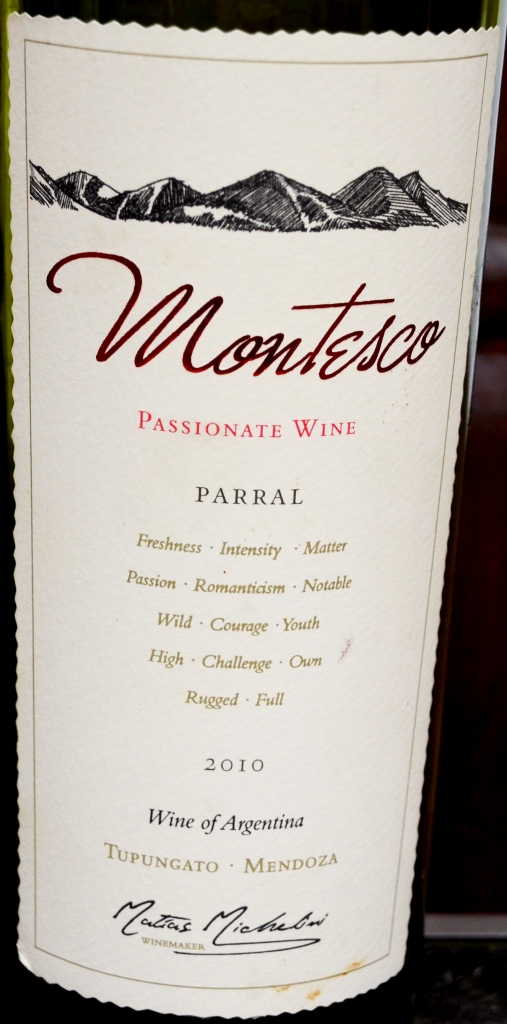
Montesco Passionate Wine
Another month is passing by, and it is the time to summarize the best experiences. Definite highlight of this month were all the wonderful wines I tasted in Portugal – the 1970 White Port is hard to topple – but there were other great wines…
Without any particular order, here we go:
2010 Montesco Passionate Wine Parral, Tupungato, Mendoza (14% ABV, 40% Malbec, 30% Cabernet Sauvignon, 30% Bonarda) – the name says it all. Very inviting nose, layers of fruit, dark cherries, blackberries, supple tannins, energetic acidity and joy in every sip – excellent wine all around. 8+
2009 Turley Zinfandel Tofanelli Vineyard, Napa Valley (15.2% ABV) – dark, concentrated, with the core of traditional Zinfandel’s blackberry aromatics and palate, perfectly accentuated by espresso and dark chocolate notes. Perfectly dry, structured, firm and balanced, with a long finish. 9-
NV Lagranja 360 Cava Brut (11.5% ABV, 70% Xarel-lo, 30% Parellada) – simple and elegant, perfectly refreshing, just a touch of sweetness, good acidity, very balanced overall. 8-
NV Egly-Ouriet Brut Tradition Grand Cru, Ambonay (70% Pinot Noir, 30% Chardonnay) – a beautiful wine. Touch of yeast on the nose, crisp acidity and noticeable fruit notes on the palate. Outstanding. 8+
NV H. Blin Brut, Vincelles (80% Pinot Meunier, 20% Chardonnay) – perfect acidity with somewhat of a medium body, nice mid-palate weight, very round. Excellent. 8-
NV Pierre Gimonnet & Fils 1er Cru Brut Blanc de Blancs Sélection Belles Anneés (100% Charodnnay) – very nice nose of brioche and touch of apple, same on the palate with some interesting mineral undertones. Very good. 8-
2003 Quevedo Colheita Tawny Port (barrel tasted) – mature, dried fruit, like figs and may be dried apricots, but it was very balanced and still perfectly fresh. 8+
1996 Quevedo Colheita Tawny Port (barrel tasted) – outstanding, mature, with the perfect medley of dried fruit, figs, raisins, and excellent supporting acidity. 9-
1970 Quevedo White Port (barrel tasted) – Elegant, complex, somewhat reminiscent of the mature Pedro Ximenez sherry, but with the dialed back sweetness, perfectly mature fruit, hazelnuts and, believe it or not, still very refreshing and all around spectacular. 9+
1974 Quevedo Colheita Tawny Port (tasted pre-bottled) – very complex, with the good amount of dried fruit, that nuttiness which only well aged Port or Jerez can demonstrate, all with still very present acidity. 9
2007 Arrayán Petit Verdot, DO Mentrida, Spain (14% ABV, 100% Petit Verdot) – concentrated, powerful, very dense, firm and structured, but showing some nice blueberries. Noticeable earthiness with some pencil shavings. 8
2007 Jamesport Vineyards Petit Verdot Reserve, Long Island, NY – powerful, all around dark fruit, notes of the dark chocolate, soft tannins, balancing acidity. Needs some time to open. Will age nicely for the next 10-15 years. 8
2005 Jamesport Vineyards Merlot Block E, Long Island, NY (13.5% ABV, 80% Merlot, 10% cabernet Sauvignon, 10% Syrah) – beautiful nose of dark fruit and chocolate. Velvety, silky slick on the palate, layers of supple dark fruit, soft tannins, clean acidity, overall very balanced with long, sexy finish. 8+
2012 Ernie Els “Big Easy” Chenin Blanc, Western Cape, South Africa – nice body presence – medium to full body, somewhat plump with white stone fruit notes and soft acidity. Overall, very pleasant. 8-
That should be about all for the month of October. Did you have any memorable wine experiences? Care to share? Cheers!
Simplicity, Brisket and Wine
I recently came across the post by The Food and Wine Hedonist, where he was talking about the fundraiser party he cooked for. One of the dishes he made was beef brisket sandwiches (I think the name “pulled beef brisket” should be the most suitable). In the comment to that post, I mentioned that beef brisket is one of my favorite dishes to make, and promised to share the recipe in the near future.
Beef brisket is one of the traditional dishes on the menu for Rosh Hashanah, Jewish New Year which we celebrated a few days ago, hence I took the opportunity to take a few pictures and share the recipe.
One of my favorite things about cooking beef brisket is simplicity (this is why “simplicity” is a part of the title). The simplicity is associated with the cooking of beef brisket in many ways – it is both simple to prepare and simple to cook, with virtually no possibility of ruining it.
The recipe I’m talking about here is a dry rub based (there are many ways of cooking the beef brisket, of course). Basically, the cooking consist of a few simple steps – rub the brisket with spices ( anything goes!), wrap in foil, refrigerate overnight, take it out, put it in the oven for 6-7 hours at a low temperature, get it out and enjoy. That’s it. If you want a bit more details, here it is
- Prep time – 10 minutes, cooking time – 3 – 6 hours
- Beef brisket, trimmed of excess fat, any size – size will only be essential for the cooking time
- Dry rub spices – anything your heart desires – garlic powder, chipotle, chili powder, paprika, salt, pepper, etc – again, the amount should be proportional to the size of brisket
- Dry fruit – dried apricots, figs, prunes
- optional – baby carrots,
- 1/2 to the whole bottle of red wine (can be replaced with broth or just water) – amount depends on how much brisket you are cooking.
- cooking time – 45 min per pound, 300F
Cooking instructions: Take brisket, trim excessive fat. Rub with any spices or spice mixes you desire (see picture below – yes, I know, I went a little too far), wrap in the foil, refrigerate overnight. Take the brisket out of the fridge about 2 hours before cooking, just to let it warm up. Preheat oven to 300F. Take a cooking pan, put dried fruits and carrots (if using) on the bottom. Unwrap the brisket and put into the pan, fat side up. Add wine ( or any liquid you are using) – you need it to prevent brisket from drying up during the long cooking time. Cover baking dish with foil and put into the oven. Cook for about 45 minutes per pound. Take out of the oven periodically and braise the brisket with cooking liquid. When done, let it rest for 10 minutes. Cut brisket across the grain with the sharp knife. Serve with boiled potatoes or any other starch of your choice. Additionally, if you made too much brisket, you can use leftovers to make pulled brisket sliders – break it apart using fork or fingers, add BBQ sauce and put it on the buns.
Now, below are the same cooking instructions in the form of pictures:
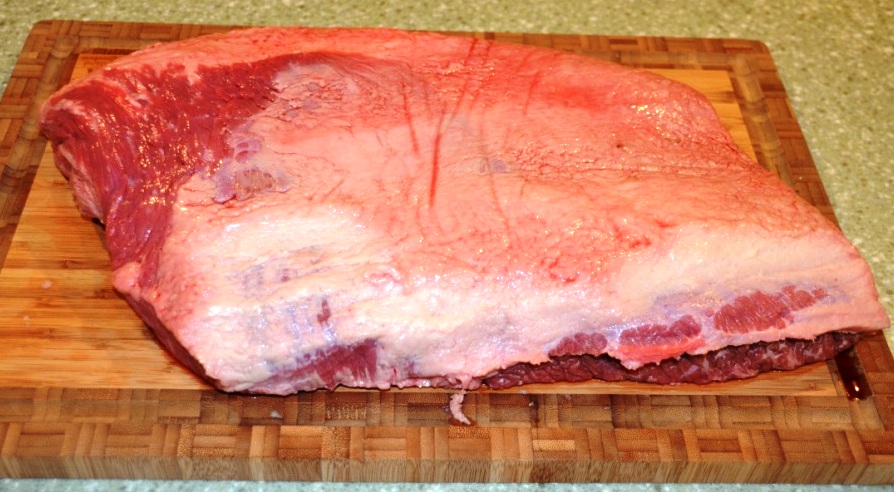
Beef brisket, excessive fat trimmed

Spices for dry rub – anything you have in your pantry
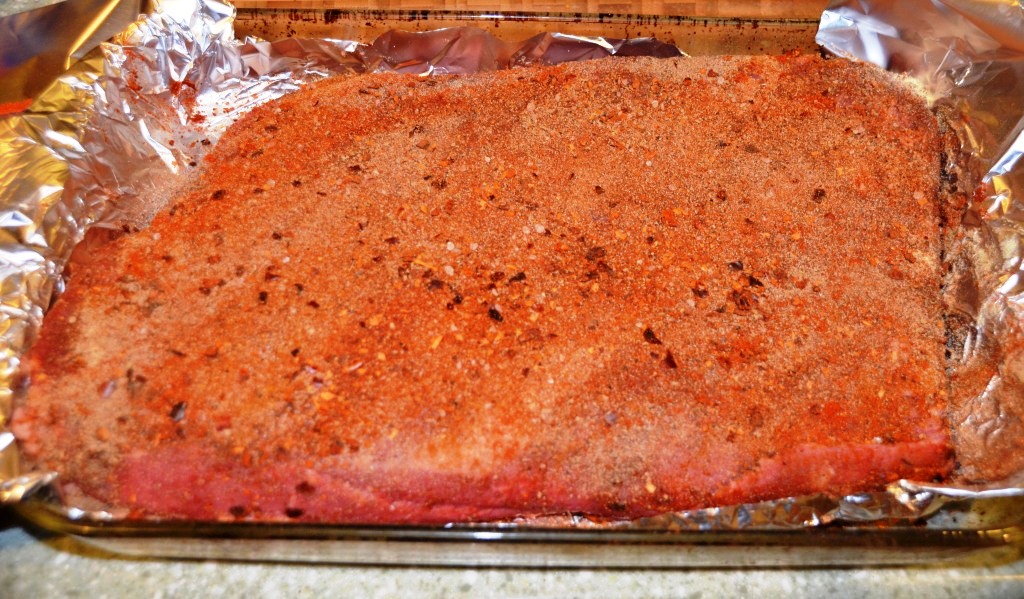
Brisket in the foil, covered with rub

wrap completely in foil and refrigerate overnight
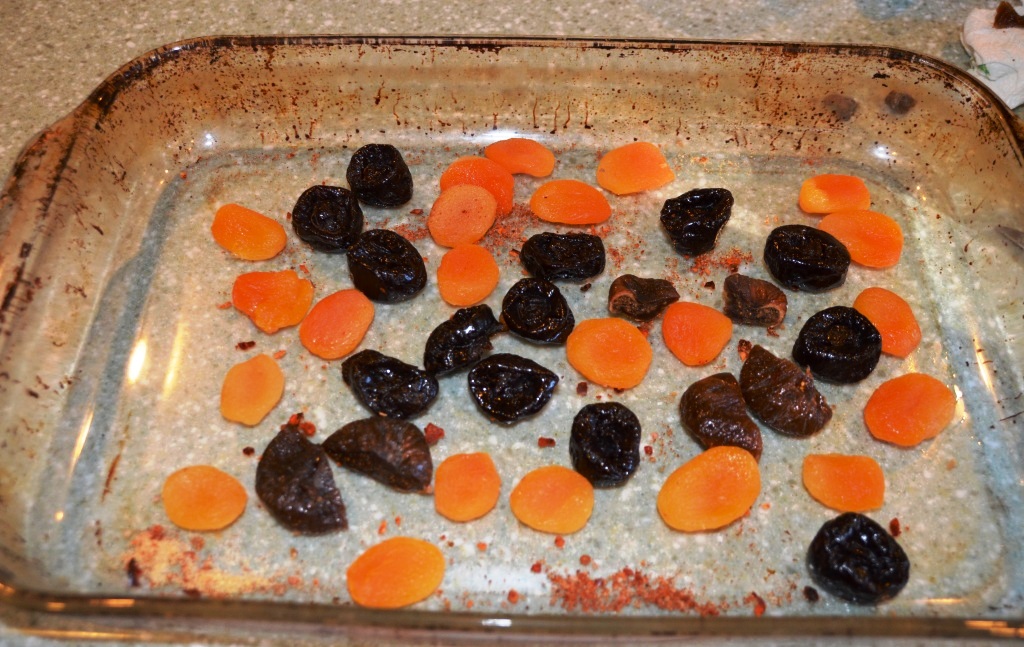
prepare the pan with dried fruit on the bottom
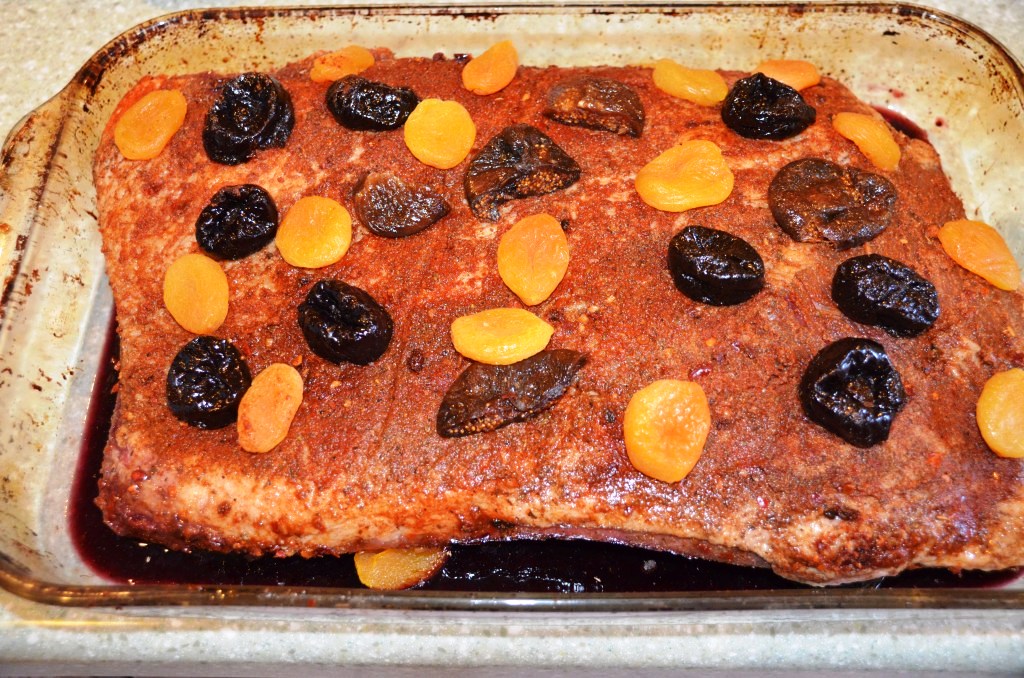
Put in brisket, add dried fruit on top. Add wine
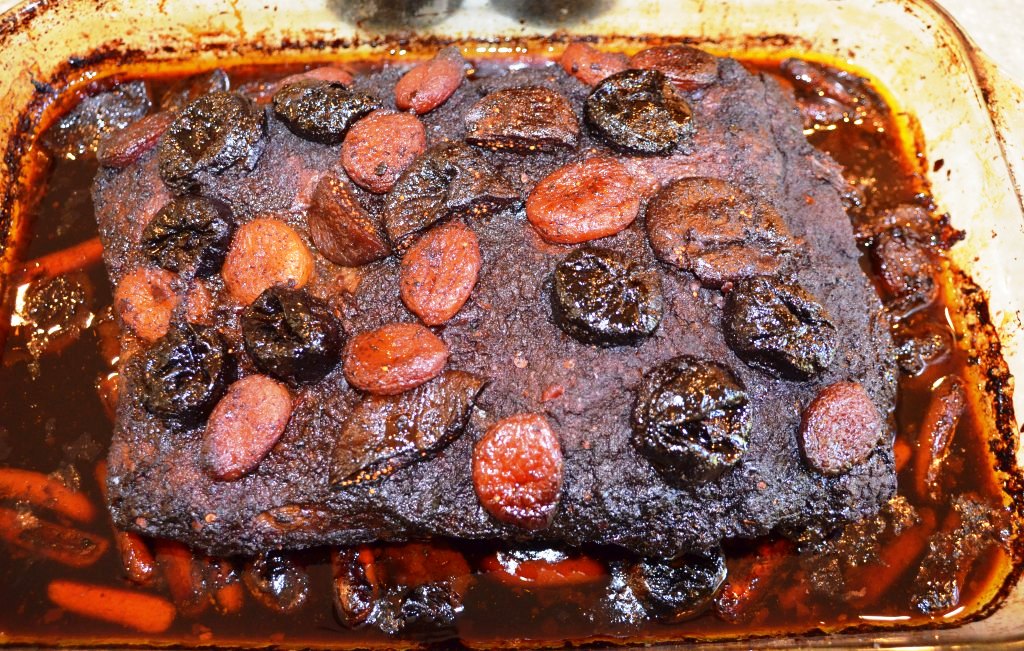
6 hours later …done! Brisket is ready for your enjoyment
I don’t know what you think, but this is a really simple recipe as far as I see it.
And of course there was wine:
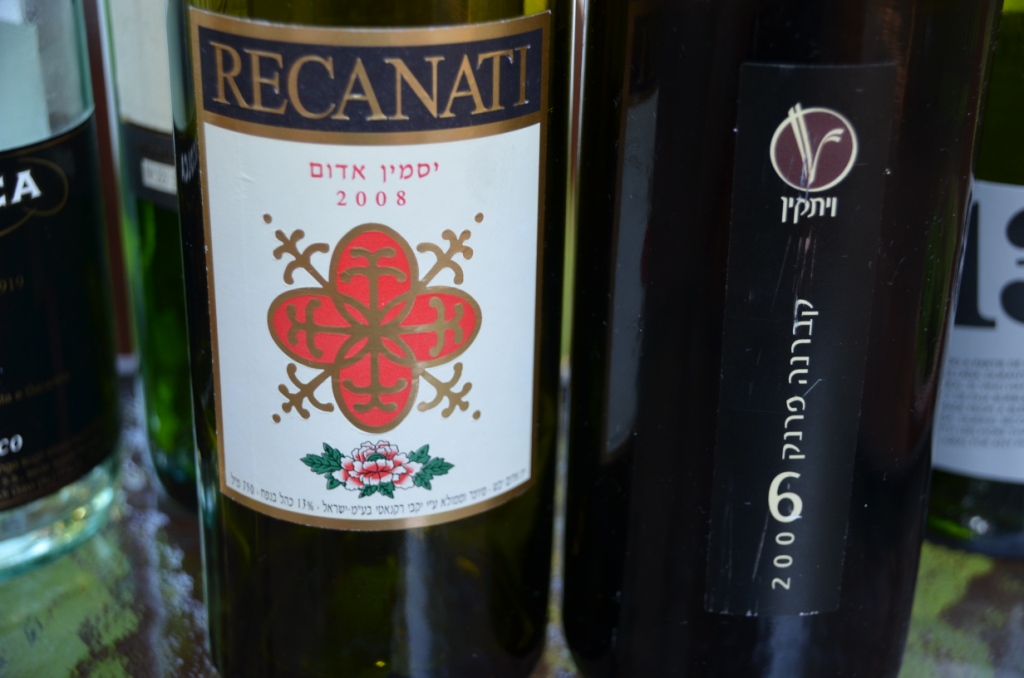
Recanati and Vitkin
Twice a year, my wine selection conundrum ( what to open, what to open) is resolved with ease – for Passover and Rosh Hashanah, the choice is simple – it should be an Israeli wine. This year I opened two bottles, from two well-known producers – Recanati and Vitkin.
2008 Recanati Red Wine – I don’t read Hebrew, and this wine came directly from Israel, so there is not a thing I can tell you about the grape composition of this wine. Red fruit on the nose, a touch of warm spices on the palate, some blackberries and plums, tannins are barely noticeable, medium finish. Okay wine, but really nothing special. Drinkability: 7
2006 Vitkin Cabernet Franc (14% ABV, 86% Cabernet Franc, 14% Petite Verdot, aged 14 months in small oak barrels) – outstanding. You know, some wines you define as “a lot going on”. And some wines demonstrate singular perfection. This Cabernet Franc wine had this singular perfection – Cassis all the way. A perfect bouquet of Cassis on the nose. Same on the palate – luscious, soft and rolling mouthfeel (this wine is unfiltered), pronounced Cassis notes with an addition of dark chocolate, supple tannins, firm structure and cutting acidity in the back, perfectly balanced, with the long finish. Definitely belongs to the “dangerous wines” category. Drinkability: 8+
And we are done here! While the wines might be difficult to find in the US (but Vitkin is definitely worth asking for by name), I hope that at least you can put a brisket recipe to good use. If you will decide to make it, drop me a note – I will be really curious to know what do you think. And until the next time – cheers!
Cabernet Day 2013: 1996 Burgess Cabernet Sauvignon
I’m glad we have all those Grape days – Grenache Day, Chardonnay Day, Cabernet Day, Tempranillo Day (it is also great when those grape days are not overlapping, as Cabernet Day and Tempranillo Day had in 2011). Not that we need an extra reason to have a glass of wine – no, we don’t. But when you have a Grape day to celebrate, that greatly helps with the difficult oenophile issue – what do I open tonight? What do I open, what do I open… Shiraz? No, just had it two days ago… Rioja? Well, may be, but I have only a few bottles… Zinfandel? Not in the mood for… Okay, I’m sure you got the point, and being there, done that uncountable number of times.
When you plan to celebrate a “grape day”, you are done with a good half of the problem – you know what type of wine it should be. As today is a Cabernet Day, my decision was very simple. Need a good bottle of Cabernet Sauvignon, preferably ready to drink. I actually have very few bottles of Cabernet which I consider to be ready to drink (my criteria – 10+ years of age). My choice for today? 1996 Burgess Cellars Cabernet Sauvignon Library Release.

Burgess Cabernet Sauvignon
Burgess Cellars is located on outskirts of Howell Mountain in Napa, and it had being producing wine since 1972. In 1980, the winery started a Library program for its Cabernet Sauvignon wine – each year, a 500 cases or so are put aside in the wine cellar, to let the wine age in the ideal conditions. The wines are released to the consumers after 10 or 15 years of ageing, when they are actually ready to drink. The wine we opened for the Cabernet Day was the part of this exact Library Release.
Before I will share the tasting notes with you, let me lament for a moment about the wine being an amazing memory facilitator. We shared the bottle with my wife, as we usually do, and once we looked at the label, one of the first thoughts was “ahh, 1996 – this is when we first met!”. My own recollection later on was of an exciting discovery of Wine Til Sold Out (WTSO) – this was one of the very first wines I ordered from WTSO in 2010 at an amazing discount (MSRP: $69, WTSO price: $22.50). Wine’s capability to tune you into the “memory lane” is nothing short of spectacular and truly fascinating. Now, let’s get back to the wine.
1996 Burgess Cellars Cabernet Sauvignon Library Release Nape Valley (13% ABV; 80% Cabernet Sauvignon, 12% Merlot, 8% Cabernet Franc) – Wine was poured into the decanter, but rather to prevent sediment from getting in the glass, not so much for breathing. Dark ruby color, bright enough for 17 years old wine. Dark fruit, some dust and plums on the nose, raspberries and cherries on the palate, high acidity, tannins on the finish. Doesn’t show as typical California Cabernet, rather closer to the Claret style, with high pitch acidity and dialed back fruit. As the wine was breathing, it showed a bit more of the fruit with the warm notes. Drinkability: 8-
There you have it, my friends – my Cabernet Day experience. What was yours? Cheers!
Daily Glass: Take Your Journey, Any Time: Odisea Wines
One of the most fascinating aspects of wine is its ability to change your emotional state. Best steak in the world will only pick you up during those 15 minutes you will spend enjoying it. Yes, if the meal was “an experience”, it might stay with you forever, but still, it is very hard, for instance, to enjoy your steak during 2 – 3 hours of quiet time in the evening (never mind five evenings in a row).
Wine is different. You can start from admiring it in the glass – color, nose, legs – and then slowly move on to the first sip, and go on from there, simply observing and enjoying the transformation for a while. But this is not all. Wine, unlike many other foods, very often comes with the stories. Stories of the people who made it, or who started making it 500 years ago. You can learn about their dreams, their aspirations, their hard work. Yes, there was a lot of hard work involved in making of that steak – but it is very hard to make a unique and emotional story out of it.
What is the point of this rambling? Let me explain. Over the last three days we undertook a journey, right in the comfort of our living room (okay, actually, we were mostly sitting outside on the deck, but this is besides the point). Not just any journey, an odyssey. Lead by the Odisea Wine Company out of California, we traveled through unusual grape varieties and unique sensual expressions. Odisea Wine Company was created in 2004 by two friends, Adam Webb and Mike Kuenz, and it is focused on making the wines from “Rhone and Iberian grape varietals grown in California”.


Here is my account of this odyssey:
2009 Odisea Veritable Quandary, California (13.5% ABV; 25% Syrah, 17%Grenache, 17% Tempranillo, 14% Petite Sirah, 12% Field Blend, 12% Alvarinhao, 3% Carignane; 850 cases made) – dark garnet color, nose of dark fruit and touch of dark chocolate. Velvety palate of plums, touch of warm spices, profile of a classic Spanish Grenache, only slightly more restrained. Round, soft, perfectly balanced. Drinkability: 8
2009 Odisea Devil’s Share, California (13.9% ABV; 48% Syrah, 30% Grenache, 14% Mourvedre, 6% Petite Sirah, 2% Viognier; 335 cases made) – dark garnet color. Needs time to come to its senses (slightly disjointed on the first sip with acidity going sky high). Cherries and herbs on the nose. Spices, hint of barnyard, sage, dark fruit, raspberries, may be a touch of tobacco notes – very round, balanced and pleasant, with the long finish. A dangerous wine once it is opened… Drinkability: 8
2010 Odisea Unusual Suspects, California (13.9% ABV; 50% Carignane, 25% Tempranillo, 15% Grenache, 10% Cinsault; 600 cases made) – dark ruby color in the glass. Fresh raspberries on the nose, with the hint of tobacco. Some raspberries on the palate, but then green, almost vegetative notes (not the tree brunches, more of a hay, dry grass style), supported by tobacco and a savory profile. Warm feeling on the palate, good acidity in the back, very soft tannins over a medium finish. This wine begs for food, but nothing as sharp or as powerful as steak – it would be good with a veal roast, a slow cooked beef stew or roasted eggplant. Drinkability: 7+
I bought these wines online a while ago at the Wade’s Wines, I guess mostly based on the unusual names – and most of them are still available, at $16.99 or so, in case if you are interested in taking the journey for yourself. In any case, I’m glad I had mine. Cheers!
Madonia Restaurant: Good Food, Great Wine
 I like to write about restaurant experiences. In general, I do it only when I’m really wowed. And for just plain restaurant reviews I typically use Yelp. However, recently I discovered Urbanspoon – well, I knew about Urbanspoon for a while already, but I didn’t know that, unlike Yelp and TripAdvisor, Urbanspoon actually allows you to link your blog post to the particular restaurant’s page, which to me is somewhat of a game-changer. Taking this into account, you should expect to see more restaurant “reviews” in this blog. Well, let’s make it straight – I’m not going to convert into a restaurant critic. My reviews will [continue to] comprise of a bunch of pictures and a few words about food and wine. But I will make an effort to write more posts about our restaurant experiences.
And here we go…
The restaurant I want to talk about today is called Madonia and it is located in Stamford, CT. The restaurant defines its food as Modern Mediterranean – however, looking at the menu, I would simply classify it as Italian, considering the prevalence of the traditional Italian dishes. The restaurant is also offering a “tasting menu” featuring seasonal ingredients.
Talking about food, nothing was really stunning or even simply standing out – with the exception of the white bean spread served with the bread, which was outstanding and gone in two seconds. We ordered a number of dishes (some pictures are below), and all of them shared the same trait [unfortunately] – they were good but plain. All the food was perfectly cooked – but real seasoning, the “umph”, was missing, while it was greatly desired.
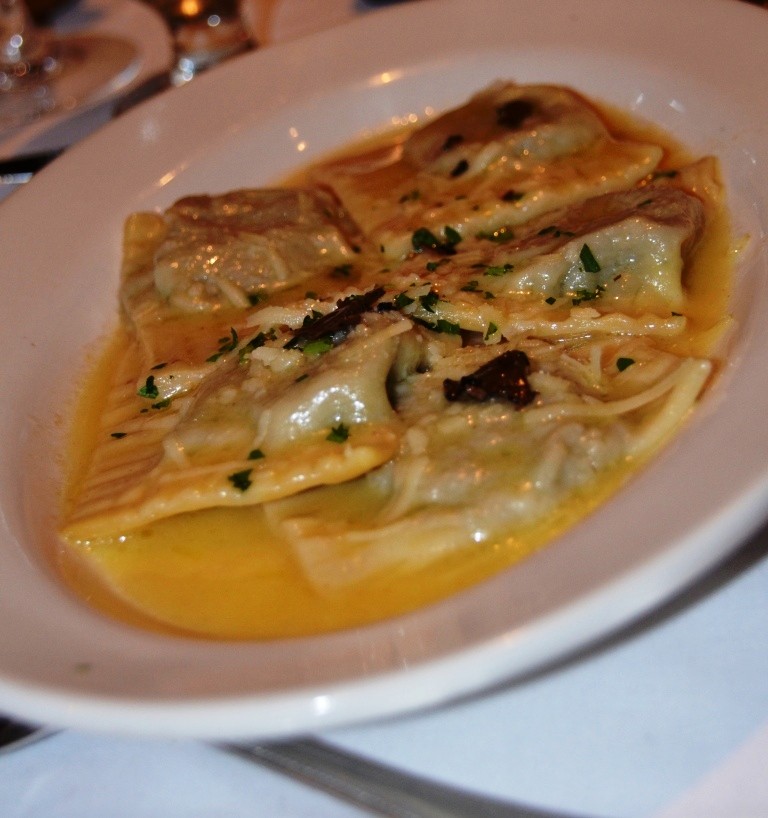
Mushroom Ravioli
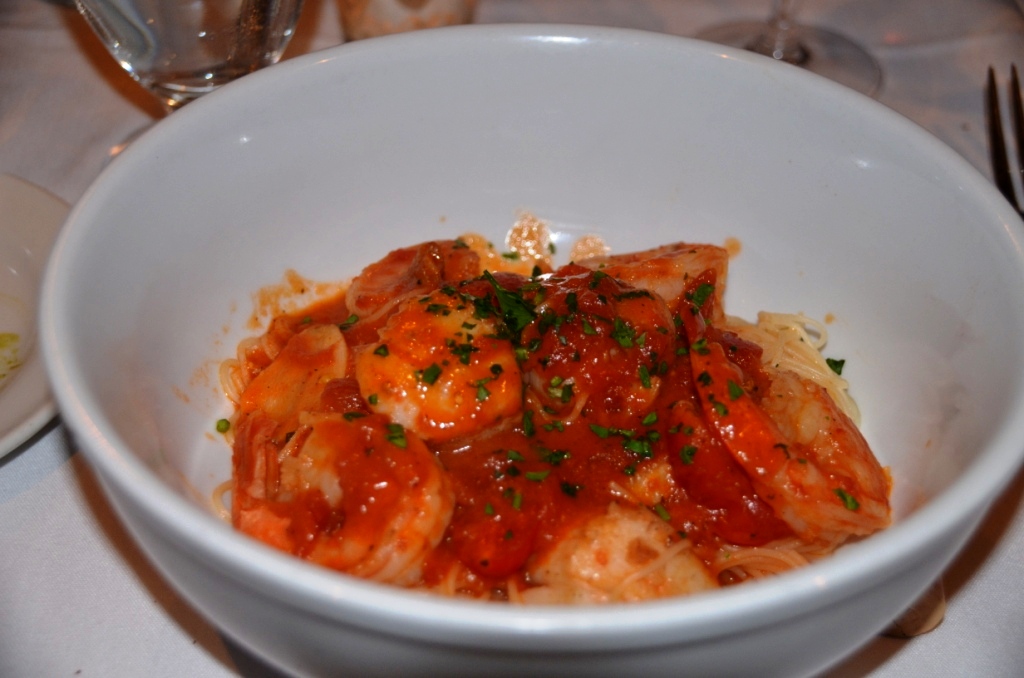
Capellini with Shrimp and Scallops
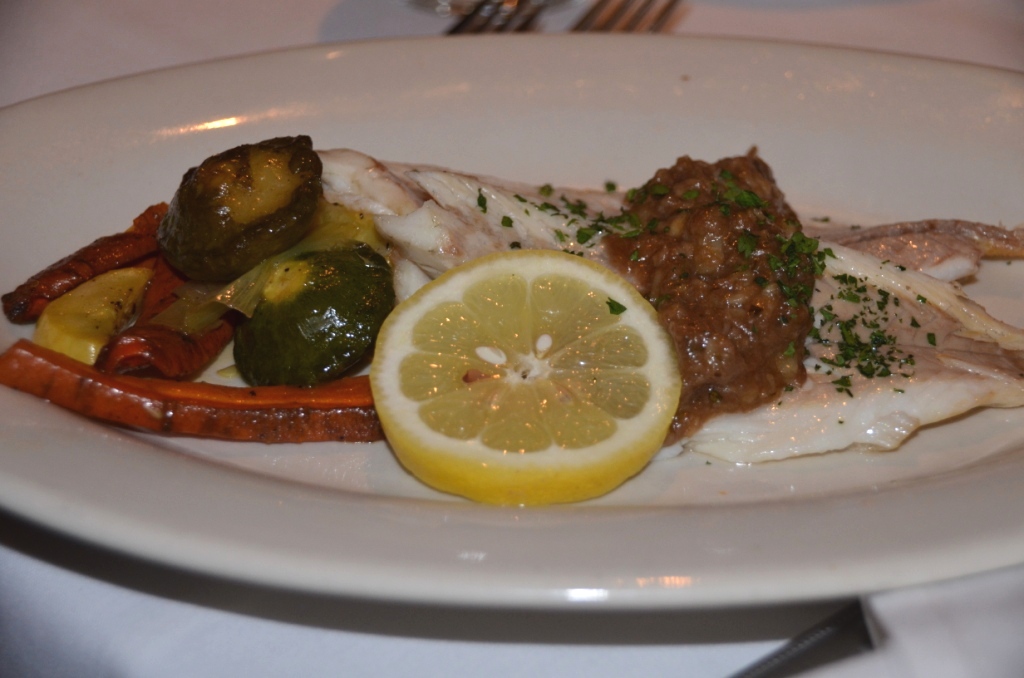
Branzino

Chicken Milanese
The wines, luckily, represented a different story. First of all, the wine list was well priced (there is enough selection of decent wines in the proximity of $30, which is not often in restaurants). Chef (and owner) Enzo is quite passionate about the wines, and he likes to please his guests. We started talking about wine, and Enzo mentioned that he has a number of wines that are not on the list, and which he will be glad to offer to us. One of those wines was called Shatter, a Grenache wine out of France.
I heard of Shatter before, I believe I read a rave review in one of the blogs (sorry, it’s been a while). Shatter is a joint project of Dave Phinney, the winemaker at Orin Swift Cellars, and Joel Gott, the winemaker at the eponymous winery. My initial thought was “no, thank you, I don’t want this wine”. First, I don’t like the style of Orin Swift wines – one of their most famous wines is called Prisoner, a Zinfandel blend, which I find over-extracted. Second, I lost my love of French Grenache – I definitely prefer the Spanish Grenache style, in general, more velvety and round than the French and less biting. But then, considering our other options, the fact that I heard about the wine before and the great price ($45) – oh well, we decided to give this wine a try – and we happened to hit the home run.
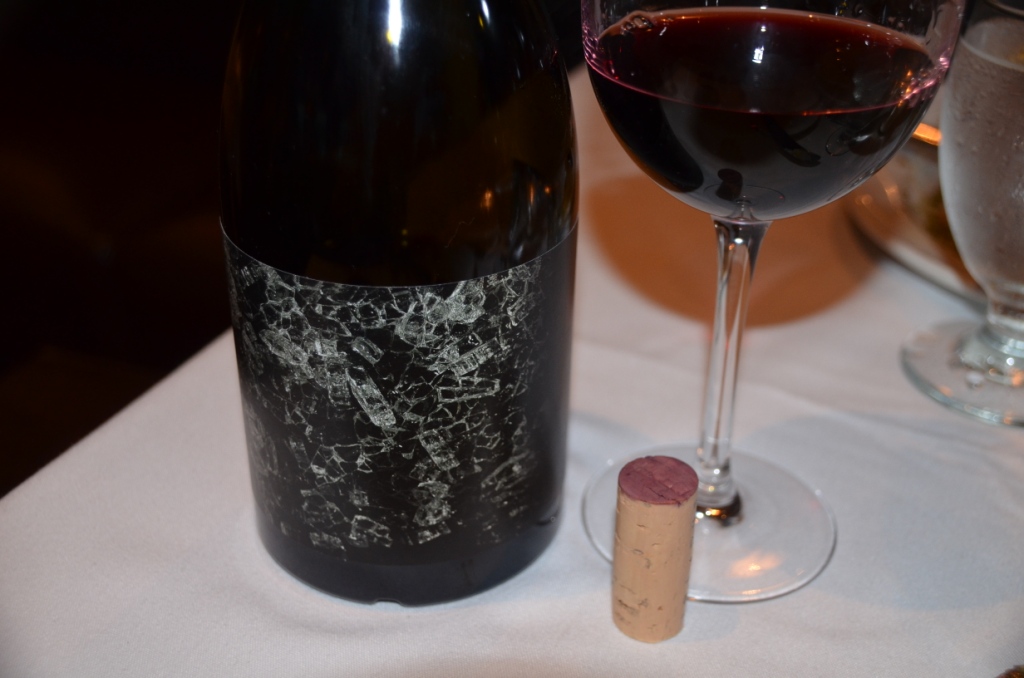
Shatter
2011 Shatter Grenache Vin de Pays des Côtes Catalanes, France (15.9% ABV, 100% Grenache, 10 months in French oak, 30% new) – dark garnet color in the glass, nose of dark fruit with a hint of espresso beans. On the palate, velvety texture with blueberries and cherries prevalent, a touch of spice, few peppery notes, dark chocolate, firm structure, supple tannins, perfect acidity, and overall very balanced. I have to say, surprisingly balanced (again) for 15.9% ABV. Drinkability: 8
Then there was dessert, and so here are more food pictures for you:


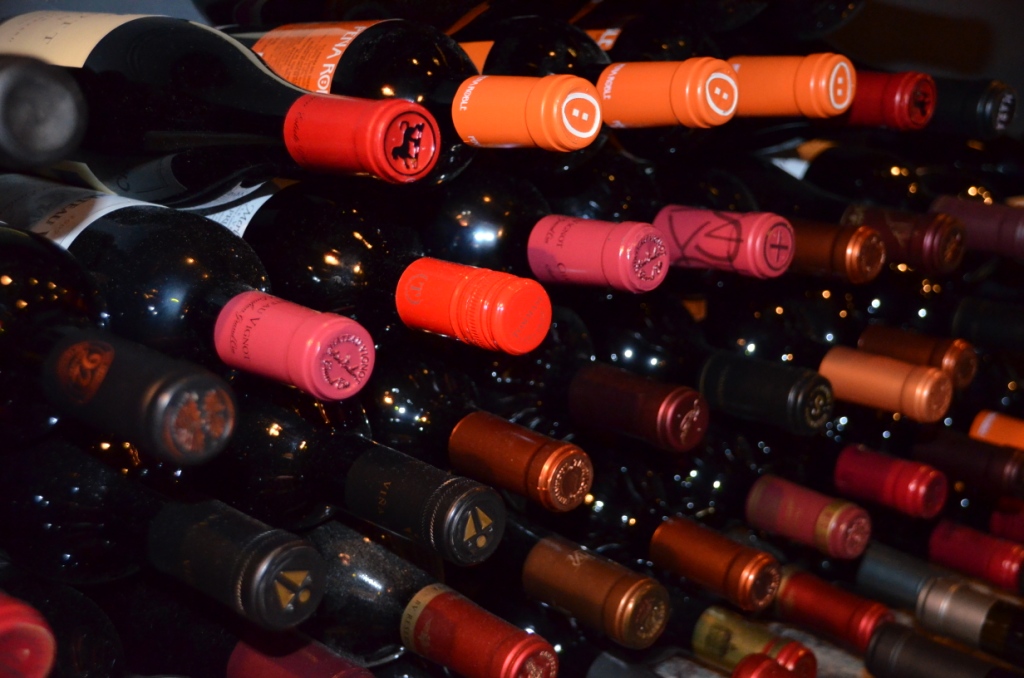
Overall, it was a good meal, definitely anchored on the great wine experience. And we plan to come back, as Enzo showed us his secret wine room – the room is used both as a cellar and the place for the special wine dinners. You can eat surrounded by wine – don’t think I know of any other restaurant in Stamford where you can do the same. Yes, we will be back…

Ready for wine dinner
That’s all I have for you for today, my friends. Cheers!
Madonia
1297 Long Ridge Rd
Stamford, CT 06903
(203) 322-8870
https://www.madoniarestaurant.com/

Wines, Wines, Wines – Part 2
As promised, here is the second part of the Wines, Wines, Wines post. In the first part, we talked about great Riesling and Gewurzrtraminer wines, with some extra value wines and Prosecco. Let’s continue our “memorable wine extravaganza” with a couple of Chardonnays.
Chardonnay
It is so interesting how things work in life. You might walk past say, a picture, every day, and never notice it. And then all of a sudden you say “what is it? Was it always here, or is it something new??”, and people around you look at you like you have two heads or something. Where am I going with this? Give me a minute, I will make my point.
Couple of month ago I got a bottle of Chardonnay, accompanied by the words “try it, it is pretty good”. I’m a sucker for good Chardonnay (yeah, true, you can substitute “Chardonnay” with any other varietal – I’m just a sucker for any good wine, but this can be a subject for a different post). But this Chardonnay was from New Zealand. And New Zealand in by book is the land of Sauvignon Blanc and Pinot Noir – but not really a Chardonnay. So I finally got the bottle opened and … wow.

Seresin Chardonnay
2008 Seresin Chardonnay Reserve Marlboro New Zealand (13.5% ABV, 11 month in oak). The symbol of the hand on the label has a deep meaning. Quoting few words from Seresin Estate web site, “The hand is a symbol of strength, gateway to the heart, tiller of the soil, the mark of the artisan, and embodies the philosophy of Seresin Estate”. Here are my tasting notes for this wine: Outstanding, classic. Perfect nose of vanilla and white apples, just right. Very balanced fruit on the palate – hint of butter, vanilla, oak, good acidity – one of the most balanced Chardonnays ever. Drinkability: 8+
Oh yes, you are still waiting for me to connect to the opening sentence about passing by and not seeing things around for the long time, right? As of very recently, as I walked in the New Zealand isle in the store, I noticed all of a sudden that almost every producer now features Chardonnay in addition to Sauvignon Blanc and Pinot Noir. When did it happen, how long this was the case with New Zealand Chardonnays – I don’t have any idea, but based on this experience, I definitely want to try more.
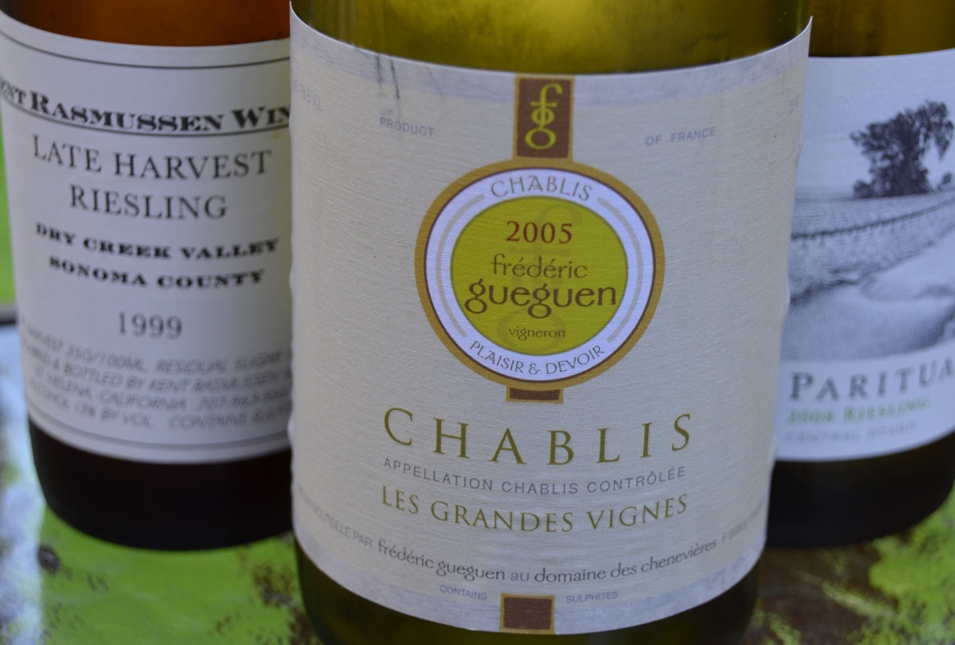
Frédéric Gueguen Chablis
2005 Frédéric Gueguen Chablis Les Grandes Vignes (13% ABV) – I don’t have a lot of experience with Chablis overall. I had a few bottles of Chablis here and there, but never was really impressed with it (I never had Chablis of a Grand Cru or even Premier Cru level). I don’t know what possessed me to get this wine from the Benchmark Wine Company, I guess it was in the right price range ( under $20), and somehow caught my attention. Then I read somewhere, that Chablis requires on average about 10 years of age in the bottle to really start transforming and going past the initial “steely acidity” flavor profile to get to the next level. And then I tried this Frédéric Gueguen wine – wow. Here are my tasting notes: some darker yellow color, but not quite golden yet. Amazing nose, reminiscent of Côte-Rôtie – almost a touch of sulfur (think freshly burnt matches), or even more of a smell of a hot piece of granite on a summer day, a “roasted rock”. Side note: pardon my naive definition here – I recently learned that professionals call it a “gunflint” – but I will not use this term as it doesn’t lead to any associations for me. Perfect complexity on the palate – white fruit, vanilla. Lots and lots of minerality. Full bodied and very balanced, excellent wine overall. Drinkability: 8+
Pinot Noir
And we are moving along to the Pinot Noir wines – both of the wines below were excellent:

Siduri Pinot Noir
2011 Siduri Pinot Noir Sonoma County (13.1% ABV) – perfectly clean California Pinot – good smokey nose, with a touch of red fruit aromas. Light cherries on the palate, hint of earthiness, medium body, perfect acidity, very clean and balanced. Drinkability: 8-
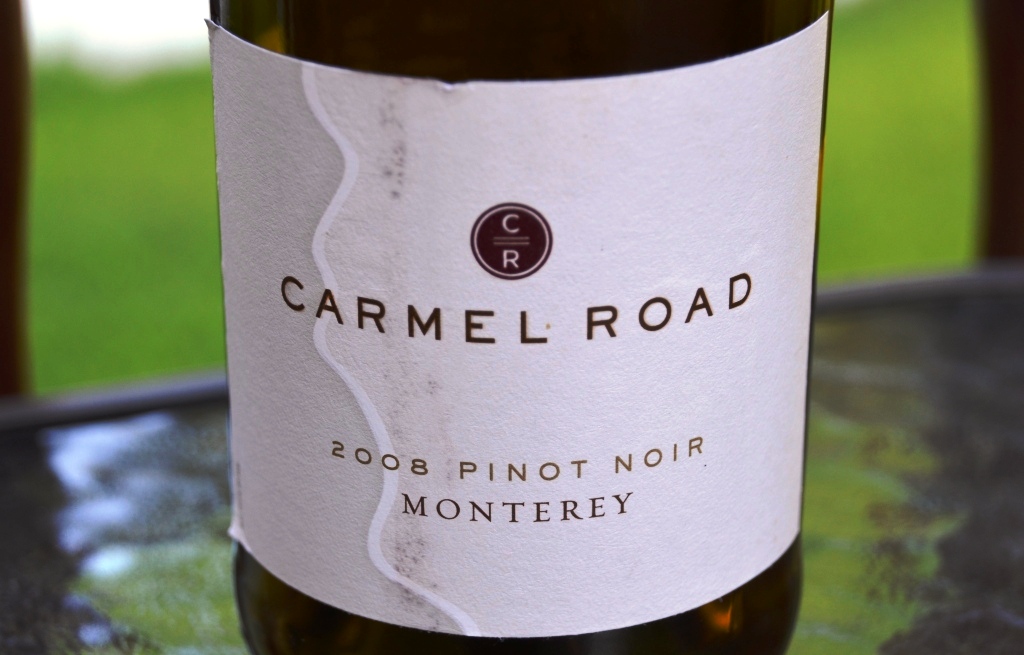
Carmel Road Pinot Noir
2008 Carmel Road Pinot Noir Monterey (14.0% ABV) – outstanding. Bright ruby color in the glass, raspberries and hint of smokiness on the nose. Raspberries, cranberries and cherries on the palate. Medium to full body. Excellent acidity, overall perfectly balanced. Drinkability: 8+
Cabernet Franc
I have only one wine for you here, but it was mind blowing.
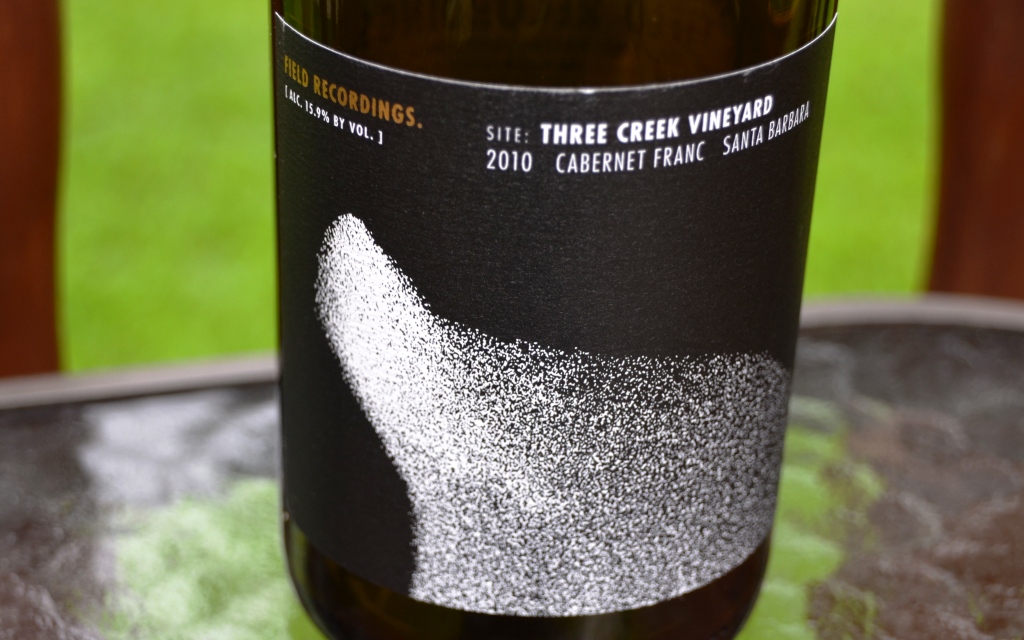
Field Recordings Cabernet Franc
2010 Field Recordings Three Creek Vineyard Cabernet Franc Santa Barbara (15.9% ABV, 90% Cabernet Franc, 10% Malbec, 18 month in French oak) – spectacular. If you read this blog on the regular basis, you know that I’m very impartial to the wines of Field Recordings – but this is not my fault, it is Andrew Jones’ fault ( Andrew Jones is the winemaker behind Field Recordings). This wine had beautiful garnet color in the glass. The nose was clean and open, withhint of black currant and other red fruit. The palate is stunning with black currant, cherries, touch of black pepper, dark chocolate, perfect acidity, soft and supple tannins, all in the format of full-bodied wine. Perfect balance of fruit, acidity, tannins and alcohol – which is pretty amazing at 15.9% ABV. Drinkability: 9
Last, but not least – Syrah
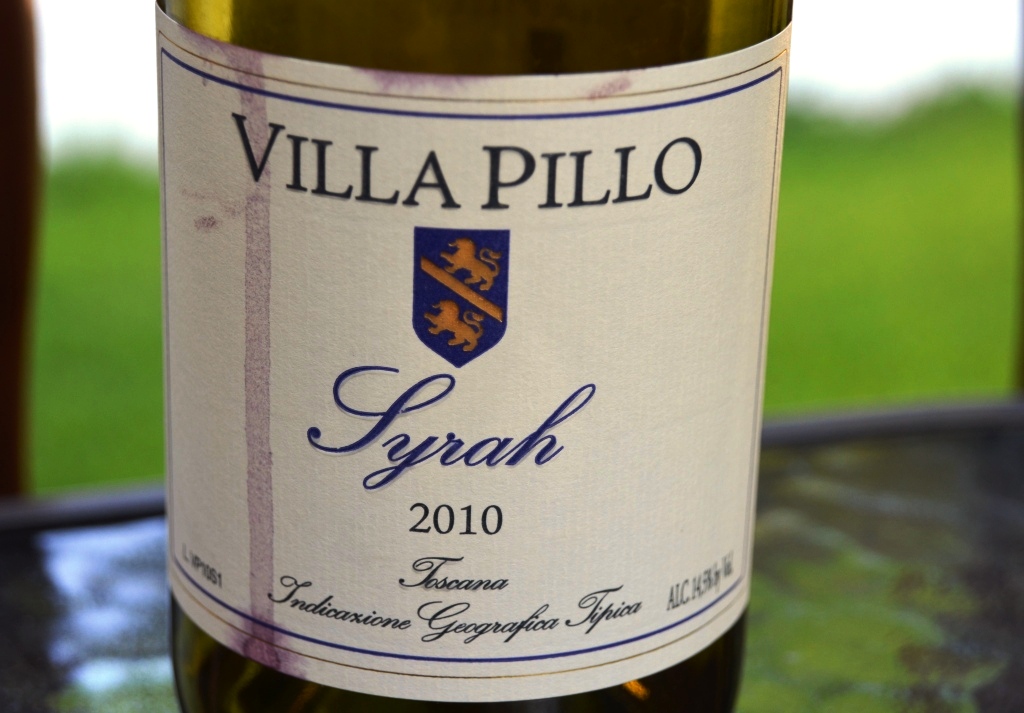
Villa Pillo Syrah
Appearance of the large amount of Italian Syrah wines is also somewhat of a revelation, similar to the one I mentioned at the beginning of this post. All of a sudden I start noticing that there are more Italian Syrah wines showing in the wine stores, and people are just talking more about them, in the blogs and otherwise.
2010 Villa Pillo Syrah Toscana IGT (14.5% ABV) – we got this wine when we visited Millbrook Winery in New York (this will be a subject of a separate post), as they are importing this and a number of other wines from Italy. Tasting notes: Dark garnet color in the glass. Nose of dark fruit and dark chocolate. Outstanding on the palate – hint of pepper, cherries, plums and raspberries, more dark chocolate. Full bodied, with the velvety texture weaved over firm structure. Drinkability: 8
Whew, we are done here! Enjoy the rest of your weekend and cheers!
Last Bottle Sign Up ($10 credit)




 Talk-A-Vino