Archive
Riesling, Oh Riesling – Finger Lakes Riesling Deep Immersion with #WineChat
 There is nothing obscure about Riesling. Unquestionably one of the “big three” white grapes (Chardonnay, Sauvignon Blanc and Riesling). Celebrated through various social media events – “The Summer of Riesling”, “Riesling Month”. An established, de-facto pairing for the Asian or any spicy cuisine for that matter. “Fastest growing white wine in America”. And nevertheless, one of the most unknown, under-appreciated and misunderstood wines, if you ask me.
Walk into any general wine store, and try to find Riesling wines. Are they right in the first aisle, next to the California Chardonnay and Sauvignon Blanc? Nope. Oh yes, a lot of Rieslings come from Europe, so they definitely will be right next to the Burgundy and Loire. Oops – not here again? Here they are – in the back of the back, a side aisle, a small section, ask the sales guy, he will show you. And this is not limited to the wine stores only – most of the restaurant wine lists have one or two Riesling wines, usually in the cheapest group. Similar story in most of our cellars – how many bottles of Riesling do you have on your shelves? A few? And this is despite the fact that Riesling is one of the most age-worthy wines in the world…
So how do these two realities of “one of the fastest growing” and “last row seat” co-exist? I think perception has a lot to do with this. Since Riesling can be sweet, and often it is praised for its sweetness, consumers are stuck in the notion Riesling = Sweet. Take a look at the Wine Spectator ratings – highest rated Kabinett Riesling (typically showing only a hint of sweetness) got 93 points; and then 8 (eight!) Rieslings got 100 points (the absolute top) rating – by the way, it is 8 of only 75 wines which got 100 points from Wine Spectator – and all 8 are Trockenbeerenauslese, the highest sweetness designation. Thus for lots and lots of wine drinkers, Riesling is a dessert wine, and while we love dessert wines a lot more than we are willing to admit, the dessert wine designation means “only for the special moments”.
Can this perception be changed? Of course. How? By educating people. This was one of the reasons for the International Riesling Foundation (IRF) to be created in 2007. The idea behind foundation was exactly this – to make people aware of what Riesling has to offer, and to help people better understand Riesling wines. One of the outcomes of the IRF efforts became the Riesling Taste Profile. According the the specification of that profile, four taste categories are defined – Dry, Medium Dry, Medium Sweet and Sweet. Based on the given set of parameters (sugar, acid and pH), the IRF developed a technical chart which allows winery to estimate how the consumers will likely perceive the wine across the 4 defined taste categories. After that, the winery can print that taste profile on the label (you can see an example at the very beginning of this post) – and then the consumer can quickly set the expectations just by glancing at the label.
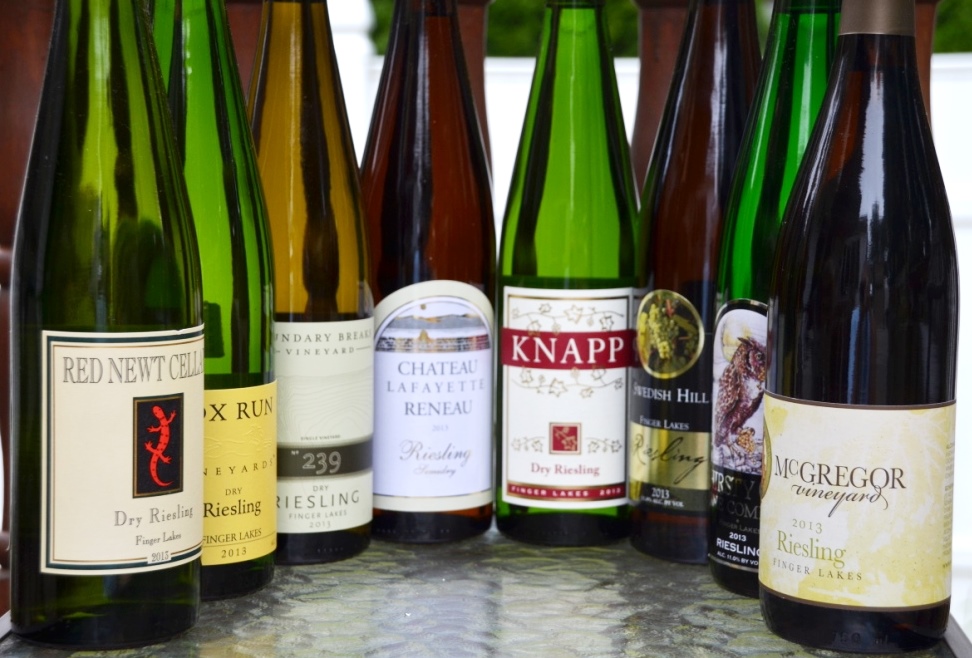
Well, it is good to have an informative label, but when it comes to the wine world, seeing doesn’t really equates to believing. But tasting does. This is where the #winechat comes to the rescue. Last week, a group of enthusiastic oenophiles had a chance to dive deeply into the world of 2013 Finger Lakes Riesling, by tasting through the 8 different wines and sharing the excitement with each other. And the wines were definitely very exciting, full of pleasure in every sip. Finger Lakes region in New York deserves all of your attention – but I already shared my thought about the region at length in the two earlier posts this year, so I will have to refer you to those (first Finger Lakes #winechat and the post about Bellangelo wines).
Below are my notes regarding the individual wines. These notes are based on the longer evaluation of the wines than we would otherwise have during the 60 short minutes of the #winechat, so if you are talking part in another #winechat session on that subject, I suggest you will start tasting your wines now. One last note regarding the wines. As this is my third encounter with the Finger Lakes wines this year, I would like to offer two “bits of wisdom” based on that experience:
- Don’t over-chill.
- Let ’em breathe.
Terroir, minerality are important components of Finger Lakes wines – by serving the wines a bit warmer than you normally would, say at around 50F, and letting them breathe for may be an hour, you will do yourself a big favor and will find a lot more pleasure in every sip. At least I did. Without further ado, here are the 8 beautiful wines:
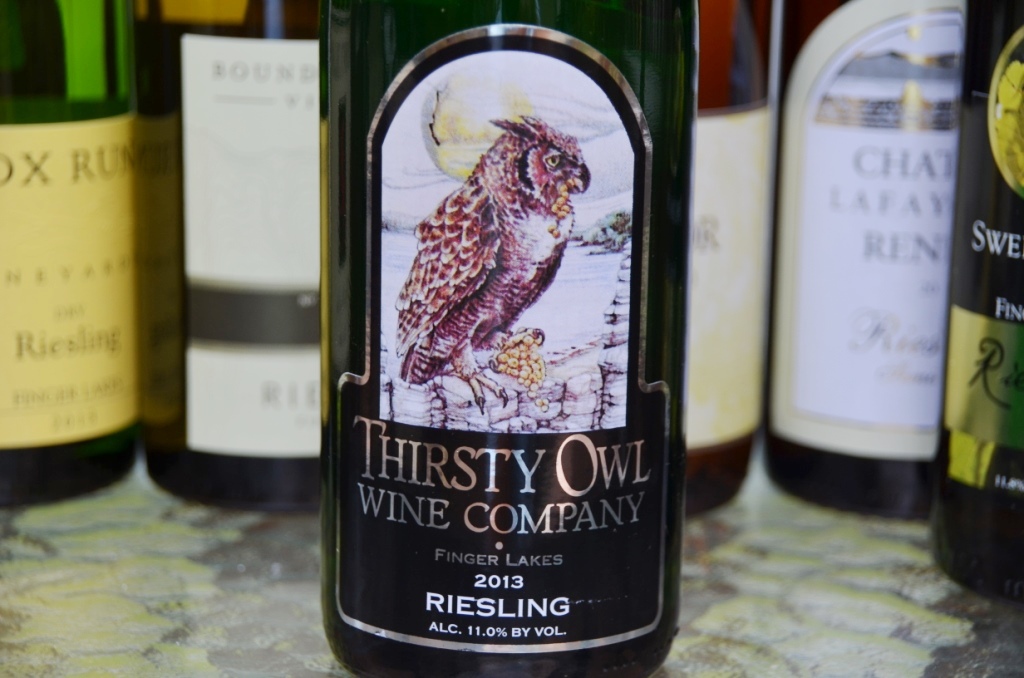 2013 Thirsty Owl Wine Company Riesling Finger Lakes (11.0% ABV, $14.95). IRF scale not shown. On the nose, touch of minerality (gunflint), apricot. Overall nice and restrained. Palate: Clean , crisp acidity, touch of honeysuckle, golden delicious apple. Medium finish, overall very refreshing. Drinkability: 8-
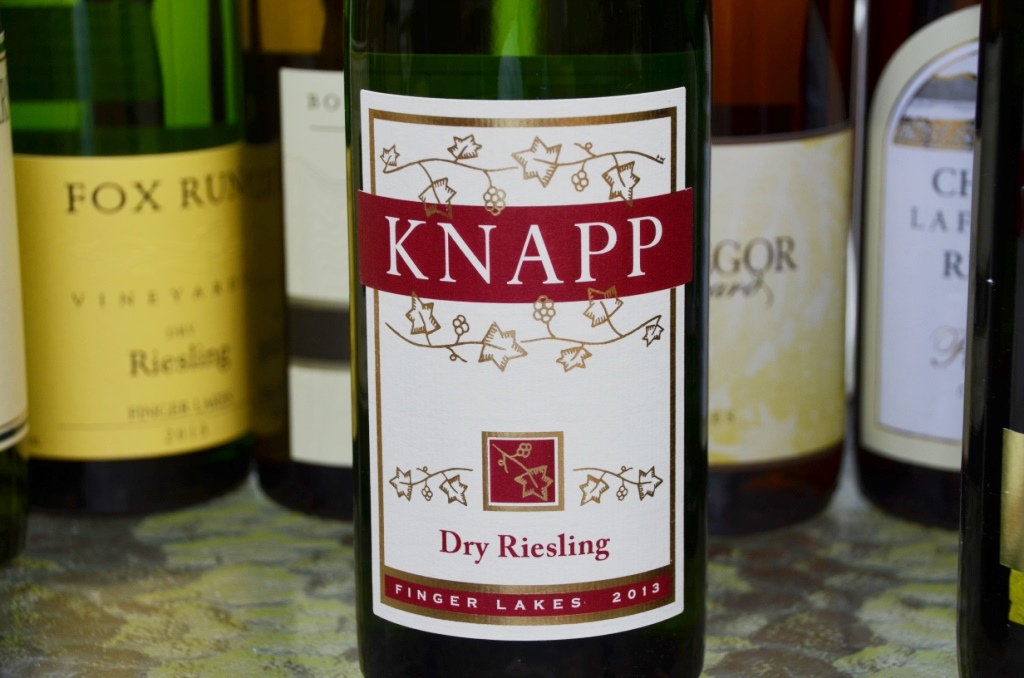 2013 Knapp Dry Riesling Finger Lakes (12%ABV, $15.95) – On the IRF scale, this wine is at the lower part of the Medium Dry style. White apples, honey and lemon on the nose. On the palate, candied lemon peel with fresh lemon juice, complemented by the cut-through acidity. Medium finish, overall a nicely balanced wine. Drinkability: 7+
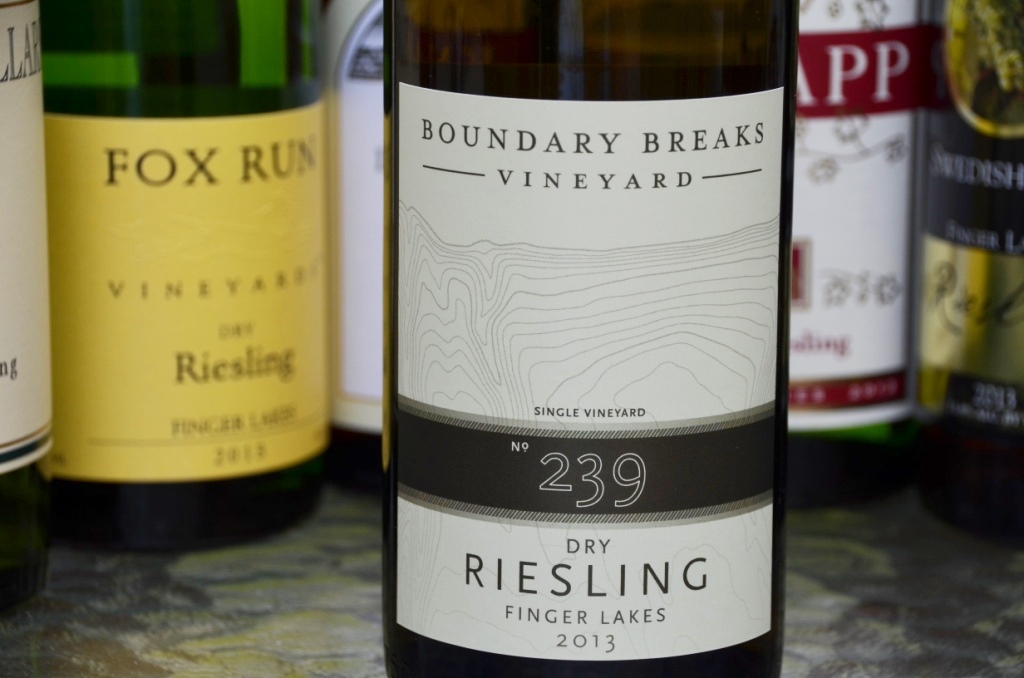 2013 Boundary Breaks Vineyard #239 Dry Finger Lakes (11.6% ABV, $19.95) – right in the middle of “dry” on the IRF scale. This is my second encounter with Boundary Breaks Riesling, and I find that this wine needs breathing time to show itself. Initially, closed on the nose, then opening to show distant hint of lemon, touch of minerality. On the palate – wave of sweetness first, with cut through acidity, lingering for a bit and then finishing dry. Tasting at a later time adds some fresh apple and more minerally undertones. Drinkability: 7+
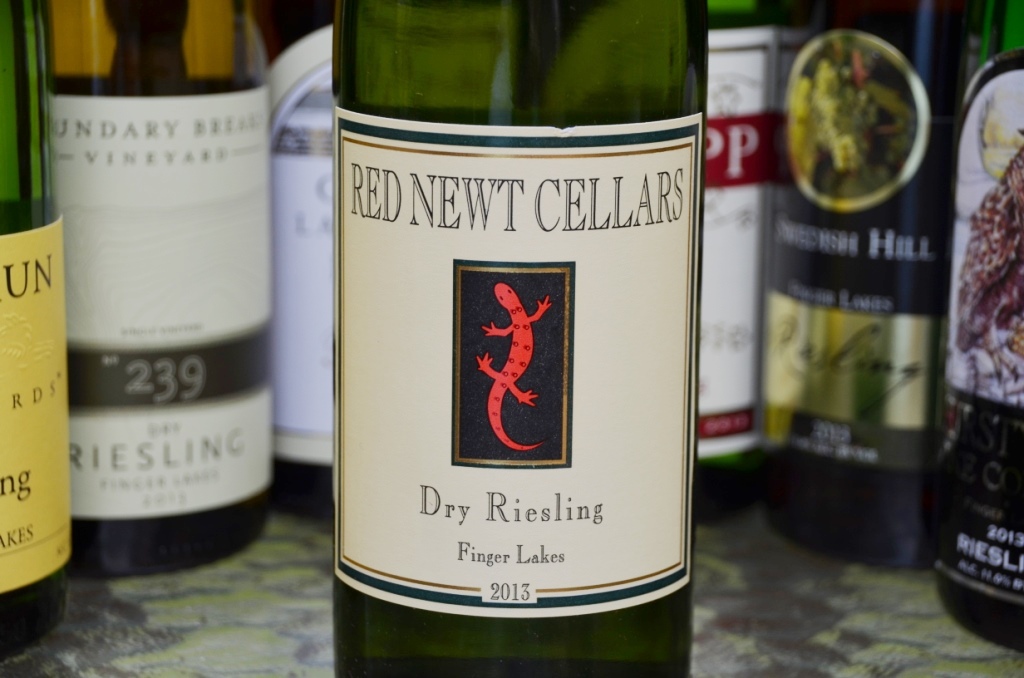 2013 Red Newt Cellars Dry Riesling Finger Lakes (11.8% ABV, $17.00) – right in the middle of “dry” on the IRF scale. On the nose, shows minerality, touch of fresh grass. hint of fresh lime, overall very intense. On the palate – nutmeg, hint of mango, fresh herbs and lemon, crisp, dry. Excellent balance and overall very pleasant. One of my very favorites from the tasting. Drinkability: 8
 2013 Swedish Hill Riesling Finger Lakes (11.8% ABV, $15.99) – IRF scale not shown. Fresh white fruit on the nose, touch of candied lemon. Nose quite intense. On the palate – rich, velvety, ripe peach with touch of fresh lemon, clean acidity, excellent finish (medium plus). Texturally quite unique. Drinkability: 8-
 2013 Fox Run Vineyards Dry Riesling Finger Lakes (11% ABV, $17.99) – According to IRF scale, the wine is right on the border between Dry and Medium Dry. On the nose, subdued notes of peach and honey, touch of lemon, intense. Palate is elegant, mineral-driven, with green apple, touch of Meyer lemon, overall dry and very balanced. Drinkability: 8
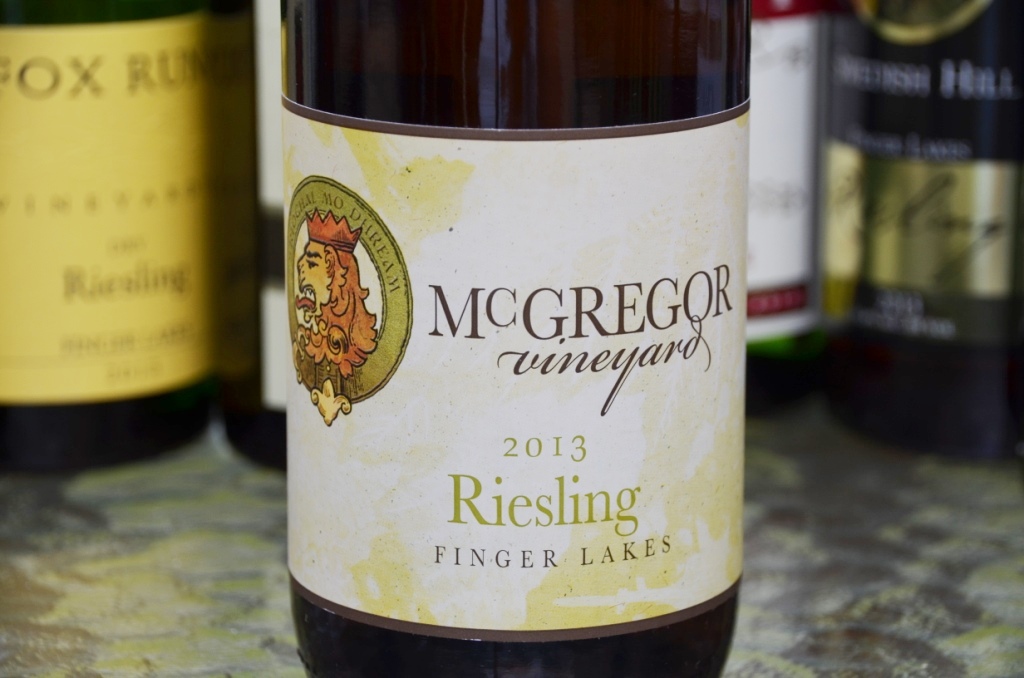 2013 McGregor Vineyard Riesling Finger Lakes (10.5% ABV, $19.99) – IRF scale is not used. A lot is happening on the nose – cantaloupe, honeysuckle, candied orange, openly sweet and intense. On the palate – ripe apricot, honey, ripe white apple, elegant acidity, perfectly refreshing, very good balance. Drinkability: 8-
 2013 Chateau Lafayette Reneau Riesling Semidry Finger Lakes (11.5% ABV, $14.99) – IRF scale is not used. On the nose – rhubarb, floral, touch of grass, white apple. On the palate – honeysuckle, ripe peach, touch of minerality and grass, lemon zest, clean acidity, excellent balance, soft and round mouthfeel. Another top favorite from the tasting. Drinkability: 8
Here we go – 8 great wines, and the region for you waiting to be discovered. September is still on, and it is an official Finger Lakes Riesling month – make an effort to find your new love – a versatile ( and affordable!) wine which you can drink now or put away to enjoy in a few years (or 10 or 20, this is entirely up to you). Cheers!
Do You Wine Club?
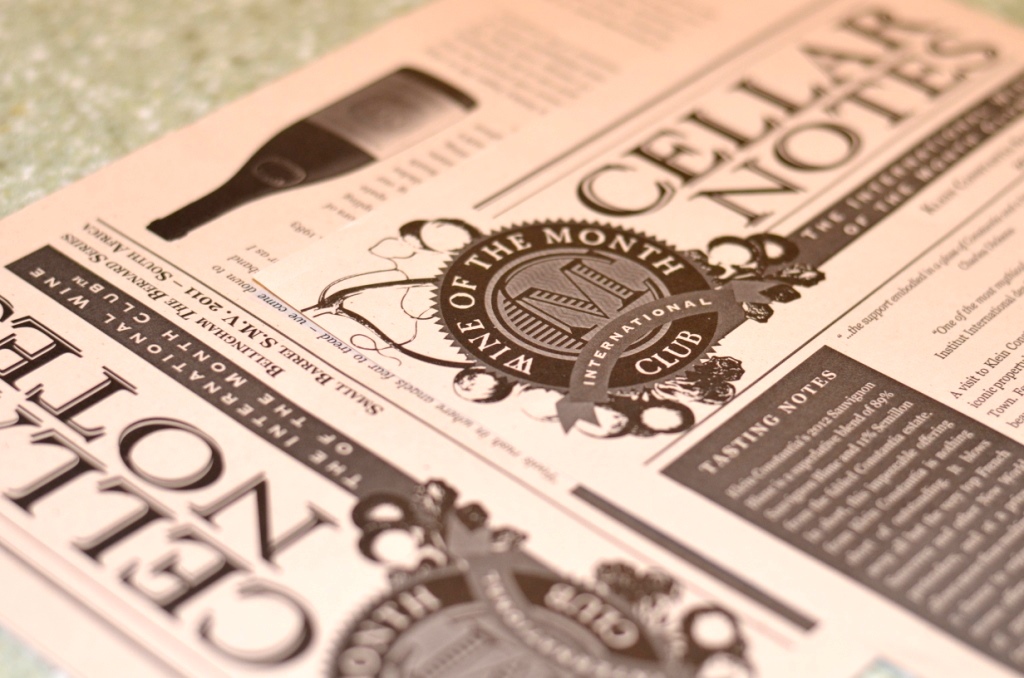 What do you think of the Wine Clubs? Do you belong to one, or two or five? Have you in the past? Would you recommend a wine club membership to your friends?
Yes, I know, the subject of the wine clubs was well discussed in the past, and it is hard to say something new here. However, a few months ago, I was asked if I would be interested in receiving a sample from the International Wine of the Month Club, which I accepted with the usual condition – I will write about the wines only if I like them. I tasted the wines a while back, and yes, I liked them – only now I finally found the time to write about it. But – I don’t want just to share the tasting notes and be done with it – I would like to take this opportunity to ponder at the subject of the wine clubs (beer and spirits too for that matter).
My love for the [wine] clubs started the way back, in the middle of 1990s, when I subscribed for the first time to the Beer Across America monthly club. To begin with, the club had a great story of two friends quitting their IT jobs, coming up with the concept and trying to (unsuccessfully) start the business, then literally with the last of their savings creating leaflets and going in Chicago neighborhood door to door, leaving those leaflets in the mailboxes of people in time for the holidays – and seeing the business to pick up. Every month UPS would deliver a box to my doorstep with two six packs of beer – not just any beer, but only microbrewery products, coming from all over the country. Today any wine store carries literally hundreds of selections – but this was 20 years back, and microbreweries very hard to find. Every shipment would also include information about microbrewery, about the particular beer we received, recipes and lots more. I was definitely looking forward to those shipments – you would never know where the next beer would be coming from, and what the story might be behind it, so it was definitely fun.
I think I stayed with that club for about two years – the club changed the concept slightly at some point and went from the regular 0.33 beer bottles to the large format, 22 oz, and those started to accumulate, so I had to stop it as the whole process became somewhat boring.
Since that time I had a few other club experiences. For about year and a half, I was in the D&M Scotch club – this was great, very unique selections, but I just don’t drink enough Scotch, so it started to pile up, and I had to stop it; to be entirely honest, if I would be able to reduce the frequency of the shipments, I would still continue it. A few years back (say 6-7, to be more precise), many newspapers started their wine clubs. I subscribed to the Wall Street Journal wine club, but that experience wore off very quickly, as out of the case of wine, only 3-4 bottles would be somewhat drinkable, so paying about $180 for 4 “okay” bottles was not my idea of the bargain. I wouldn’t recommend the newspaper wine club – the selection there is simply not good.
All in all, I think all the wine clubs are different, and some of them have their place. For majority of the cases, you get a great deal of information with your wine club shipment – and I really like that. Also, for those few bottles which you will be receiving, you get two additional [oenophile-specific] benefits – you don’t need to chose anything, and you have an element of surprise with every “mystery” box you receive. As it was the case with the my sample shipment from the International Wine of the Month Club.
This club offers three different levels of membership – Premier, Masters and Collectors. The difference between the levels is in the price of wine you will be receiving – otherwise, each shipment contains 2 bottles of wine, which can be red and white, or just two reds. The sample I received contained the 2011 Bellingham The Bernard Series Small Barrel S.M.V. from the Masters series, and 2012 Klein Constantia Sauvignon Blanc form the Collectors series, both wines from South Africa.


2011 Bellingham The Bernard Series Small Barrel S.M.V. South Africa (14% ABV, 75% Shiraz, 22% Mourvèdre, 3% Viognier) took one day to open up. Dark, Concentrated, with raspberries and blackberries on the nose, touch of tobacco and earthiness. On the palate, the wine was firm, structured, with cherries and lavender, touch of espresso, good acidity, hint of eucalyptus and sage, well balanced. Long finish with tobacco aftertaste. Drinkability: 8-
2012 Klein Constantia Sauvignon Blanc Estate Wine, South Africa (13.5% ABV, 89% Sauvignon Blanc, 11% Semillon) is produced by the famed Klein Constantia, makers of the iconic Vin de Constance, favorite wine of Napoleon. This Sauvignon Blanc had gooseberry, fresh grass and lemon on the nose, with touch of sweetness. On the palate, the wine had nice zippy acidity, lemon zest, lemon and a touch of freshly cut grass and mineral complexity. It is interesting that this wine also required a day to open up and to develop a balance – from the pop and pour, the wine a was a bit disjointed and sharp, and it became soft, balanced and cohesive on the second day. I believe this wine can age, and it would be interesting to see what would happen with in a few years. Drinkability: 8
Remember I started this post with the question? How about a simple poll – I’m just curious what you think about wine clubs, so here are two questions for you. First, just tell me if you ever belonged to the wine club:
And now, if you did (or still do), how often do you get your shipments?
So, what do you think? Is there a wine club for you out there? Oh yes, before I will forget – wine clubs make perfect gift! I heard the holidays are coming… Cheers!
Finally, I’m a Convert
Yes, this will be a post about the wine – what did you think I will be writing about? I completely changed my perception of one wine region, so convert or not, but this is what this post is all about.
Don’t know about you, but when I visit the wine region and wineries in it, I generally come with certain set of expectations, a perceived notion if you will. These perceived notions usually are very opposite and have no middle ground. Perceived notion number one – visiting many wineries, I generally expect to find a lot of wines which I will like, and a few which I will not care for. This would be true for many wine regions in California – Napa, Sonoma, Santa Barbara – but not all of them (for instance, Temecula is not included in that list). Perceived notion number two – I will not care for the most wines I will be tasting, but if I’m lucky, there might be a few wines which I will like. Connecticut wine region would be a good example of this second group – but we will talk about it later in a separate post.
Of course both of this perceived notions are founded based on the prior experience with the wines of the region, both at the winery and outside. It is easy to build – just visit a few wineries, where you don’t like the wines, or buy a few bottles in the store which you will not care for, and that’s enough to label the whole region as “not my thing”. Once the perceived notion is born, it is very hard to overcome and change. I agree that this sounds very shortsighted, but this is how we are [very commonly] wired – try something once, don’t like it (think about first time your mom forced you to eat broccoli), and you might be set in your “unlove” for life. This “tried this, didn’t like it, never again” type of attitude is never practically helpful around food and wine, as it prevents us from having great experiences. This perceived notion is hard to get rid of – but not impossible if you are willing to take an “open mind” approach – try and try again, until a specific experience will trigger the change.
Okay, done with the philosophical intro, let’s get to the conversion details. The region I finally changed my view on is Finger Lakes. During multiple visits over the few years, I kept trying and trying new wineries, only to come up to the same resolution every time – “nope, not my wine” – and that included even Riesling, which is considered the signature wine of the Finger Lakes region. Then I discovered wines of Fox Run and Dr. Konstantin Frank, which created a crack in my preconceived notion. The Finger Lakes #winechat I took part of in May, made the crack wider. But what made me to change the whole perception were the wines of Villa Bellangelo.
Villa Bellangelo is a small producer, located in a close proximity to the Seneca Lake. The family owned winery produces a number of different Rieslings, as well as Chardonnay, Gewurztraminer, Merlot and other wines. About two month ago, I received a sample set of wines form the Villa Bellangelo, 5 bottles of Riesling and a bottle of Chardonnay. As I mentioned in some other posts, while samples sound great (“yay, free wine!”), to me they are more challenging to deal with than the regular wines I buy. I would not crack a sample bottle just casually in the evening – I need to make sure I can give it my undivided attention and spend time with the wine – thus it often takes me quite some time to find the right opportunity. Finally, the moment presented itself and I opened the first bottle of Riesling. Pour, sniff – delicious, take a sip – wow. Clean and beautiful Riesling, perfectly fitting my definition of “classic Riesling”. Next bottle, then next – all 5 Rieslings and the Chardonnay delivered lots of pleasure, sip after sip, bottle after bottle. 6 out of 6? I think this is very convincing performance, hence the title of this post and yes, the change in the perceived notion.


For what it worth, here are the notes on all 6 wines:
2012 Villa Bellangelo Dry Riesling Finger Lakes (12.3% ABV, $19) – Color is lighter than straw pale. On the nose, great Riesling aromatics, classic, honeysuckle, pear, fresh apple. palate is dry, clean, great acidity, very light, green apple, super-refreshing, present minerality, short finish. A wine of a great quality. Drinkability: 8-/8
2013 Villa Bellangelo Dry Riesling Seneca Lake Finger Lakes (11.3% ABV, $19) – Beautiful nose of the white stone fruit, hint of honeydew sweetness. Perfectly balanced on the palate, crisp acidity, minerality, touch of green apple. Excellent overall. Drinkability: 8
2012 Villa Bellangelo Semi-Dry Riesling Finger Lakes (11% ABV, $19) – Nice straw color. Pleasant nose of white apples and touch of apricot. Palate exhibits good acidity, good balance, hint of sweetness and white stone fruit. This wine is showing better once it warms up a bit (not straight from the fridge), which I find interesting. Drinkability: 8-
2013 Villa Bellangelo Semi-Dry Riesling Finger Lakes (10.8% ABV, $N/A) – Open nose of apricot and white peaches. Palate has nice level of sweetness, supported by good acidity. Very refreshing and a pleasure to drink. Drinkability: 8-/8
2012 Villa Bellangelo 1866 Reserve Riesling Finger Lakes (11% ABV, $32) – This wine is a dedication to the Dr. Byron Spence, who in 1866 planted 20 acres of the sloping western hills of Seneca Lake with the wine grapes. This vineyard is where the Villa Bellangelo makes their best wines from, hence the 1866 in the name of the wine.
The wine had a beautiful light golden color. Classic Riesling nose, with honeysuckle, white peach, apricot, all very subdued and delicate; touch of minerality. On the palate, apricot notes together with a touch of the apricot pit bite, touch of white apple, clean and vibrant acidity, present minerality, perfect balanced and nice complexity on the finish. Drinkability: 8/8+
2012 Villa Bellangelo Chardonnay Finger Lakes (13.8% ABV, $20) – Outstanding. Perfect Chablis-like, complex nose – minerality, distant hint of gunflint, touch of fresh apple. Palate is clean, balanced, with white apple and vanilla notes, vibrant acidity. Drinkability: 8
There you have it, my friends. One winery, which finally did it for me. Now Finger Lakes is squarely on my “yes, I love those wines” list. I don’t know what is your opinion about Finger Lakes wines, but if you were like me, find some Bellangelo wines and see if they will make you a convert. Cheers to the great wine discoveries!
The Wine I’m Willing To Drink For The Next Ten Days – Marcus by Marco Sambin
Yes, you read it right, and it is a pretty bold [personal] statement. “I will be glad to drink this wine over the next 10 days” was the first emotional reaction as I took a sip of this wine. The reason for this bold statement? Simple. The wine was ready to drink from the get go. You know how often you take a sip of wine and say “well, I think it needs to breathe a little”, or “nice, but let me give it some time”? This wine didn’t need time. Fruit, body, acidity, tannins – all present in a cohesive, as I often call it, “together” package. Instantly available. Instantly delicious.
What makes this “bold personal statement”? My reaction to the first sip was “ahh, I will be glad to drink this every day. Period”. I never experienced this before – with the best wines I had, I would still pick something else to drink the next day, even if that “best wine” was still available. With this wine – yes, I would gladly keep opening the same bottles day after day. Well, possibly that was a reaction to the fact that this was my one and only bottle.
This bottle was actually a sample, and before I will continue talking about the wine, I want to share my frustration with samples. I don’t actively solicit samples (as a general rule – but yes, with exceptions), but then I don’t refuse samples either; I always warn the submitters that the review will be posted only if I happen to like the wine. When the sample arrives, especially if it is a red wine, the frustrating cycle starts. On one hand, I need to open it sooner rather than later, as the sender is awaiting my feedback. On another hand, I treat samples same as the regular wines – I wouldn’t open wine just to take a sip and dump the rest, even if it is only a sample. And I would also make an effort to involve my wife into the tasting, and as she generally prefers the red wines, it becomes difficult to find the right time to open the bottle. All in all, I’m getting torn between the need to open the bottle and the desire to still find the right time for it. There, I let it out.
Now, this particular sample has its own story. Back in April I was contacted by the winery called Marco Sambin from Italy, inviting me to come and taste their flagship wine, called Marcus, at the Vinitaly expo in Verona. When I mentioned that I will not be attending the Vinitaly, they offered to send me a sample – however, they could deliver it only inside Italy. You know, I already said it many times in this blog – having good friends is one of the most important things in life. My dear friend Stefano, who is constantly in between US and Italy, was able to get this bottle for me (it took only about two month for the bottle to get from the Italy into my hands). It then also took me about 6 additional weeks for find the right moment to open the bottle – hence my rant about samples (see above).
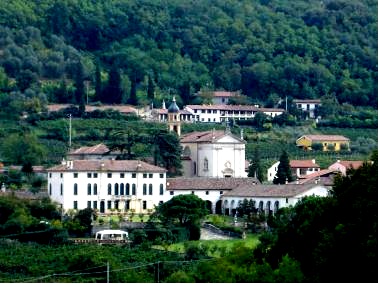
Villa Contarini in Valnogaredo, from the Marco Sambin presentation
Never mind all of that. What important is that I was able to experience a great bottle of wine. Marco Sambin winery (Azienda Agricola Marco Sambin), a small 10 acres estate, was founded in 2002 in Euganean Hills area in Veneto by Marco Sambin, Full Professor of Psychology at the University of Padova. I don’t want to recite all the information from the web site – you can read it for yourself here, and these are just some of the interesting facts. Cabernet Sauvignon, Merlot, Cabernet Franc and Syrah are all growing at the estate. The estate is farmed using organic and biodynamic principles. All the harvest is done by hand, and once the grapes are sorted and destemmed , they are gently crushed and fermentation process starts using only natural yeast, each grape variety fermented on its own. After the fermentation, which lasts for about 15 days, the wine is pressed and goes into the French oak barrels (both new and used), still each variety on its own; the wine will age in oak for the next 12 month. Only then the final cuvée is blended and bottled. Once bottled, the wine will still spend 6 -12 month before it can be released. On average, only 6,000 bottles are produced every year.


And now, here are my notes about the wine itself. The 2010 Marco Sambin Marcus Veneto IGT (14% ABV, Cabernet Sauvignon 45%, Merlot 40%, Cabernet Franc 10%, Syrah 5%) had very dark garnet color in the glass. On the nose, it showed concentrated red fruit, cassis, pencil shavings, baking spices and lavender, very complex and inviting. The palate delivered delicious fruit, perfectly present but not over the top, clean acidity, supple tannins and impeccable balance. Long finish, and every sip was leaving you craving another one. Drinkability: 9
Here you have it – the wine I’m willing to drink for the next ten days. Except it was my one and only bottle, and this wine is not available in US (if you are an importer who is reading this by any chance, the winery is looking for representation in the US – you can contact them using the information on the web site, or drop me a note, I will be glad to connect you). Is there a wine you will be glad to drink day after day after day? Cheers!
Albariño Day’s Pleasures – Albariño Pedralonga, a Glass Of Ocean Air
 Yesterday was yet another wine day holiday – Albariño Day. As mentioned many times in this blog, yes, I do like the specific “wine days”. Reason is simple – it removes the headache of deciding what bottle of wine should be opened. By the way, this might also explain why I’m very indifferent to the “National Drink Wine Day” – thank you very much, I drink wine every day anyway, and this faceless holiday doesn’t really help with the decision.
Albariño is one of the best known Spanish white grapes and a star of the small region of Rias Baixas, located in the norther part of the country in Galicia. Rias Baixas has a lot of maritime influence, both in the types of soil and in the overall climate. Albariño are some of my favorite summer wines, generally very bright, medium to full body, with explicit white stone fruit (peaches, apricots) notes and excellent acidity. But of course one shouldn’t generalize too much, as all the wines are made different. This Albariño would be a great example of the “don’t generalize” rule.
The very first sniff of 2011 Adega Pedralonga Albariño, Rias Baixas, Spain (13% ABV, $22) was saying “ocean” to me. I don’t know how it is possible, and I didn’t read anything about this wine before I tasted it, but that very first smell was just full of the fresh ocean air; breezy, friendly, unmistakably ocean, when you stand by the water, mesmerized by its royal endlessness. This wine didn’t have a lot of bright fruit – but it had a lot of minerality, it was genuinely complex, with the granite coming off both in the smell and on the palate. I had it first at the wine fridge temperature, at around 53°F. I chilled it a bit more, and the wine showed those bright apricot notes, but more as an afterthought, carrying over its minerality. I would compare it to Chablis, but only in the mineral-driven quality, as it had the granite, but not the gunflint of Chablis.
Just to give you reference, here is how this wine is described on the winery site: “Pure distilled granite, bathed by the atlantic rain and the characteristic sun of a south facing vineyard, tuned by it’s malolactic fermentation”. Yep, a pure distilled granite – I completely agree with that. I just have to add the word “delicious”. Delicious pure distilled granite sounds about right. And let’s not forget “thought provoking”. Drinkability: 8+
Do you want a glass of fresh ocean air on your table? Go find this wine. And you don’t have to thank me. Thank the people at Adega Pedralonga who made this wine – they well deserve it. Cheers!
Daily Glass: Wonderwall Pinot Noir
I had to settle for this simple title of the post after a few futile attempts to be clever. “Don’t judge the wine by the first sip”, “Give it some time”, “Patience, the most important virtue of Oenophile” were all contenders, but none of them where hitting the spot, so I went for a simple, not catchy title for this post, just with the name of the wine.
But we have to talk about first sip, time and patience, as we have a great case in point. 2013 Wonderwall Pinot Noir Edna Valley (14.9% ABV) is made by Field Recordings, one of my all time favorite producers from California – I wrote about Field Recordings wines many times in this blog. I don’t think I ever had a Field Recordings wine I didn’t like. Or such was my very first thought after the very first sip of this wine.


On the first sip, the wine was simply … sweet. No, nothing is wrong with the sweet wines – but not when the wine is called Pinot Noir. The wine had tons of nice fresh fruit – but more in the compote flavor profile. Well, this is the young wine, very young – it is 2013 vintage, and probably was bottled just a few month ago – so the first thing to do, before declaring the wine been no good, is to give it time. Which I did. In about 30 minutes, the sweetness subsided, and acidity increased. The longer this wine was opened, the more restrained it became.
The next day the wine converted itself into a powerful, full bodied California Pinot Noir, with the hint of smoke on the nose, and ripe plums and hint of blueberries on the palate, with good structure and very good balance (Drinkability: 8 -). I was really glad that Field Recordings came around for me, and I can still call it a favorite producer without any afterthoughts.
And the general lesson(s)? Don’t judge the wine by the very first sip – in a lot of cases, freshly opened bottle might not taste as you expect it, especially if the wine is young – you should really refrain from judging the young wine until it had an opportunity to breathe and open up. And be patient. I’m sure this wine would show itself quite differently in the 4-5 years, so quite often, waiting for the wine to be ready, to be at its peak, makes a lot of sense.
Have you ever been in situation when you declared the wine “not good” based on the first sip, only to find out (or not) that the wine considerably improved after some breathing time? Comment away! Cheers!
Daily Glass: World Cup-Appropriate Wine
As I didn’t have time to look for the interesting news and articles for the traditional Meritage post, I will skip it and will give you the quiz answers next week. And for today, let’s just talk about an interesting wine find.
Literally days before the World Cup started (even if you are not following the World Cup 2014, I assume you are aware of the soccer’s (it is football for the world outside of the United States) main tournament, taking place in Brazil), I got an e-mail from the Last Bottles Wine, offering the wine with the picture of the soccer ball on the label.

How appropriate, I thought, I definitely should get this wine, especially considering the price of $18 per bottle – and so I did. Not only this wine has a picture of soccer ball on the label, it is also associated with one of the best known names in the soccer today – Leo Messi, the star of the Argentinian team and one of the very best players in the world.
Same as Leo Messi, the wine hails from Argentina, and yes, it is a Malbec (star player to star grape), and it is produced by the Casa Bianchi, an excellent Argentinian winery which makes a wide range of wines, from simple everyday wines to the ultra-premium, cellar-worthy bottles. The connection between the wine and Leo Messi? Simple. As the back label says, “collaborate with the Leo Messi Foundation in long lasting commitment to building projects focused in health-care and educational developments for children with social disadvantages”.
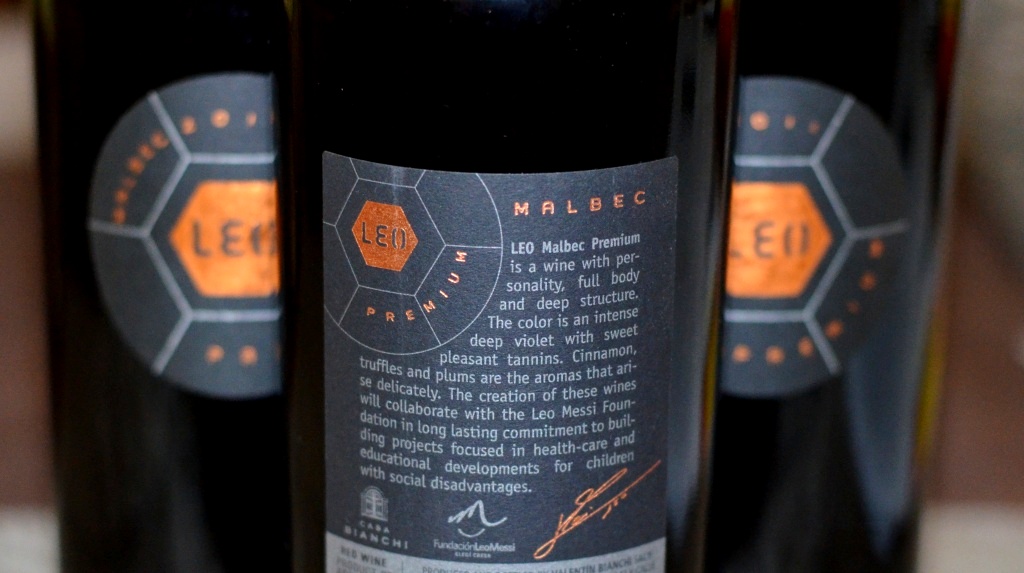
Let’s talk about the wine – 2011 Casa Bianchi Premium Leo Malbec, Mendoza, Argentina (15% ABV). It was definitely World Cup game -worthy. Dark garnet color in the glass. Beautiful nose of supple fruit, herbs and spices – a touch of eucalyptus, a bit of the dark chocolate – very promising. On the palate, the wine opened up very dense, balanced and smooth, then showing some spicy spikes as it was breathing in the glass. On the second day the wine showed more of that spicy nature, with some acidity and tannins not always dancing together. I believe it will come around in another 3-4 years, it is a bit too young at the moment to show its full potential. Drinkability: 8-
That’s all I have for you – go back to the game and wish Leo Messi all the luck – he and his team will need it. Cheers!
International Tempranillo Face Off – USA Fares Well
 Thinking about Tempranillo, what wines come to mind first? Rioja is an unquestionable champion, with its bright fruit expressions packaged into eucalyptus laden cigar box. Ribera del Duero is definitely next, with its perfect, firm structure, and then Toro, with layers upon layers of power. Tempranillo has one of the most synonyms, most of which point back to the different areas in Spain, so it is given that outside of three regions we just mentioned, the grape is very popular all around Spain. And then… well, there is not much outside of Spain. Portugal, where Tempranillo is known under the names of Aragonez and Tinta Roriz, is the only internationally renown source of Tempranillo wines outside of Spain – even then mostly using Tempranillo as a part of the blend. Australia and a few other countries also experiment with the grape – but I’m not sure they produce something worth bragging about.
And then, of course, there is the USA. Tempranillo made it into the California at the beginning of the 20th century, but really didn’t find much success there as a single varietal wine. You can find some of the Tempranillo made in the southern California, in places like Temecula Valley, but those wines are little known outside of the wineries which produce them. On a big scale, Texas probably is having the biggest success with Tempranillo in USA, where the grape is considered a signature state grape, and Tempranillo wines produced by many wineries. But our conversation today will not be about Texas Tempranillo – we are going a lot further North on the map, to the state of Oregon.
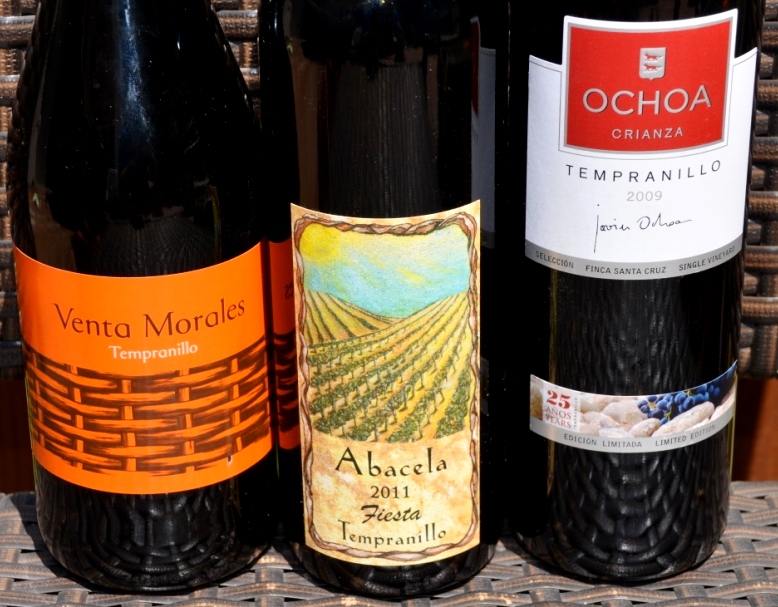
No, Oregon is not an internationally renowned source of Tempranillo wines, not yet anyway. However, while I was recently participating in the #winechat about Oregon Pinot Noir, someone mentioned Tempranillo as one of the grapes in Oregon which might have a bright future. As I’m very partial to the Tempranillo wines with the great love of Rioja, that piqued my interest. Tempranillo? From Oregon? Really? How good can that be? I was told that Abacela winery in Oregon produces excellent Tempranillo wine. I reached out to the winery, and – got the bottle to taste. But – I didn’t want to taste this wine on its own – I wanted to create some frame of reference. Yes, I would love to get the Texas Tempranillo, but – that would take a lot of time. Of course the best available source of Tempranillo wines is Spain, so I decided to get a few different wines from Spain. I purposefully avoided Rioja – those wines are rarely 100% pure Tempranillo, and the winemaking style is very specific to Rioja, so it wouldn’t be a good reference. Ribera del Duero wines also might be a bit too specific for this exercise, and Toro wines pack way too much power. I looked for generic Tempranillo renditions in my local wine store, and came up with two bottles from Spain – one from Navarra and one from La Mancha.
Before we talk about our “face off”, let me say a few words about our competitor from USA – Abacela winery. According to the winery’s web site, Abacela name comes from “an ancient and now almost obsolete verb, ‘abacelar’ common to three Iberian languages-Spanish, Galician and Portuguese-and which means “to plant a grape vine.”” Abacela winery started in 1992, when Earl and Hilda Jones purchased a 19th century property in Umpqua Valley in Southern Oregon. This purchase was the result of a very long and intense research on the climate, soil and landscape, to find the place ideally suited to produce a Tempranillo wine on par with the best Spanish Tempranillo. If you are interested to see how the pursuit of passion looks like, read the section called Story on Abacela web site – I wish the other wineries will give you even half of the information about their wines and vineyards.
Our tasting, which I proudly called Face Off, was very simple – I sat down with my wife to try these three wines. We tried the wines in the exact order as you will see it below.


Here are the detailed notes:
2010 Venta Morales Tempranillo La Mancha, Spain (13.5% ABV, $7.99)
Color/visual: Dark garnet, almost black. Very substantial legs
Nose: Baking spices, ripe plums, touch of earthiness
Palate: Prunes, touch of figs, nice acidity, slight imbalance at midpalate
Verdict: Shows slightly “overboard”. Drinkability: 7
2011 Abacela Fiesta Tempranillo Umpqua Valley, Oregon (13.6% ABV, 17 months in barrel, $23)
Color/visual: Garnet, noticeable rim variation as well as legs
Nose: dark chocolate, herbs
Palate: Very elegant, nice fresh fruit, good acidity, very noticeable cherries, present tannins, medium to long finish
Verdict: overall very nice wine. Should be able to stand up against Ribera del Duero. Drinkability: 8-
2009 Bodegas Ochoa Finca Santa Cruz Tempranillo Crianza Limited Edition, Navarra, Spain (13.5% ABV, aged 1 year in American oak, $15.99)
Color/visual: Garnet color, very slight rim variation, noticeable legs
Nose: Touch of sweet fruit, sweet cherries, eucalyptus
Palate:Elegant, perfectly balanced, soft sweet fruit, tobacco, smoke, incredible textural complexity, touch of dust
Verdict: An outstanding Tempranillo, one of the very best I ever tried. Drinkability: 8
As you can see, Abacela Tempranillo definitely worth its salt soil, and I would highly recommend it (if you can find it). I also want to note that Abacela Fiesta is only an introductory Tempranillo – they produce another 3 wines out of Tempranillo, plus a full range of very unusual for the Oregon (or even USA) wines, such as Tannat, Dolcetto and Tinta Amarela – full list looks very impressive and tempting.
As for my little Tempranillo competition, we are done here. Have you ever had an “unusual” Tempranillo wine? Have you ever tried Abacela Tempranillo or any of their wines? What do you think? Cheers!
Last Bottle Sign Up ($10 credit)




 Talk-A-Vino