Archive
Learning With #WineStudio – Coup de Foudre Pétillant Naturel from Vermont
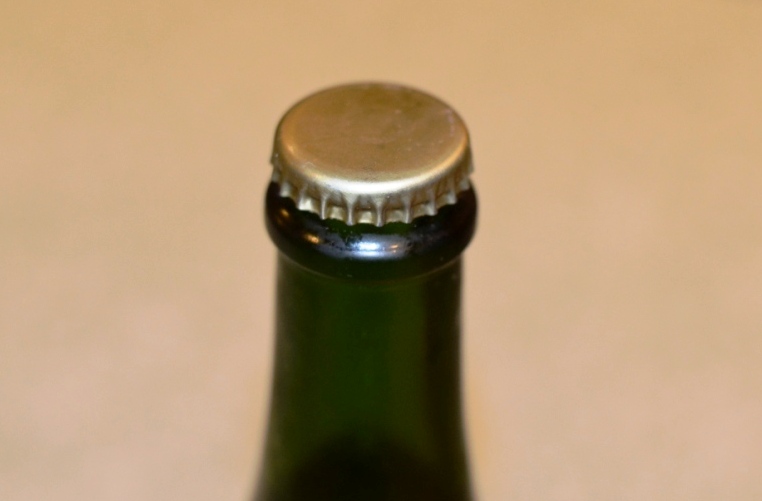 Have you tasted wines from Vermont? Do you know what Pétillant Naturel is, or have you tasted any of them before? Yep, me neither – until I joined the #winestudio event a few weeks ago. In case you are still not familiar with the concept (which you should be by now!), #winestudio events are intended to showcase unique and often lesser known wines and wine regions; these events are usually organized in series, take place every Tuesday on Twitter (just search for the hashtag #winestudio), and represent great learning opportunity.
The event I’m talking about was part of the series discovering lesser known wines of United States – Colorado, Texas, Vermont, Virginia, Wisconsin – not a bad line up, huh? This particular session was dedicated to the wines of Vermont, and for me, there couldn’t be a better wine selected to represent the Vermont in the series. Just look at the bottle top in the picture – how many wines did you see with this type of closure? Yep, not many. And the learning? Wow, all the way!
Let’s start with Pétillant Naturel. It was the first time I encountered this type of wine, and looking for the information on internet, I discovered that I’m almost missing a train (well, I’m on it now). Classic méthode champenoise sparkling wines are made with the secondary fermentation taking place in the bottle. Pétillant Naturel wines are also sparkling wines, but made with the first(!) fermentation finishing in the bottle. No blending, not chaptalization, only the grapes and (usually) the natural yeast. The resulting wines are typically more fruit forward and expressive of the terroir, and also lighter than Champagne and such. They also develop only half of the pressure of the typical Champagne bottle, thus a standard “beer bottle” closure works quite well. Talking about “missing the train”, it appears that Pétillant Naturel wines are made all over the world and have quite a substantial following – here is an interesting article from the Wine & Spirits magazine.


Let’s continue with the learning and let’s talk about the wine. First, I love the name – French expression “Coup de Foudre” stands for “love at first sight” (unfortunately, the winery will not be able to use this name going forward, as there is now the winery in Napa Valley under the same name, so going forward the wine will be called “CdeF”).
I don’t want to use the term “natural wine” here due to the associated controversy in the wine media, but I will let you be the judge of it. The La Garagista winery is using organic methods and in the process of conversion to biodynamic. The grapes for this wine had been hand harvested and foot tread (!), and fermented with the natural yeast in the glass semijohn for about 5 weeks, then bottled to finish fermentation under cap as pétillant naturel. I think this is as natural as the winemaking can be.
And the love at first sight (and sniff and sip) it was for me! 2013 La Garagista Coup de Foudre White Pétillant Naturel, Vermont (11% ABV) had a yellow tingled color in the glass, quite intense. The nose was hard to describe – minerality was the first thing which was coming to mind, but also it was light, balanced, showing flowers and fresh bread, touch medicinal. On the palate, the wine was very refreshing, with herbs and touch of white stone fruit + minerality. If I can give you a frame of reference, the natural wines of Jean-Pierre Robinot and Frank Cornelissen come to mind, with their pure expression of terroir. I couldn’t stop drinking this CdeF wine, and the best overall descriptor I can come up with is “delicious”. Drinkability: 8
Added [personal] bonus – this wine is made out of the grape called Brianna, which is a cross between European varieties Bourboulenc and Tibouren Gris – this is a new grape for me, so I’m inching forward towards the coveted 500.
That’s all I wanted to share with you. If you like to learn more about unique wines and regions, do yourself a favor and join the #winestudio conversations, I’m sure you will be happy you did. If you can find this Coup de Foudre wine anywhere – buy a case (and send me a few bottles, will you?) Also, go and look for the Pétillant Naturel wines – you might discover the new love. Cheers!
Weekly Wine Quiz #102: Grape Trivia – Blends, Part 6
 The Wine Quiz series is not meant to intimidate. The whole idea here is to have fun and learn something new. When answering the questions, it is fully encouraged to use all available sources of information, including Google or any other search engine. There are no embarrassing answers – the most embarrassing thing is not giving it a try…
Welcome to the weekend and your new wine quiz!
We are continuing our grape trivia series, focusing on the blends, even if it is a blend of 1. White, Red, Rosé, Sparkling, Still, Fortified and Dessert – all goes. Oh yes, and we will blend in some regions and even wineries as well, just to make it more fun.
Absolute majority of the wines are the blends of some sort, but there is one wine which to me is a complete standout in terms of the art of blending – I’m talking about Champagne. A typical bottle of the so called Non-Vintage Champagne is a blend of different wines from different vintages, all magically concocted together to achieve the consistent taste. As a special tribute to Champagne, I would like to focus today’s quiz only on the sparkling wines, which nowadays are produced absolutely everywhere.
And now, to the quiz!
Q1: French sparkling wines produced outside of the Champagne region are generally called Crémant. Today, the Crémant wines are produced in most of the well known regions in France, each region imposing its own requirements on the winemaking techniques. For one of sparkling wines below, if it is identified as Crémant Blanc, it is required for at least 50% of the grapes to be Chardonnay. Do you know which wine has this requirement?
a. Crémant d’Alsace
b. Crémant de Bordeaux
c. Crémant de Bourgogne
d. Crémant du Jura
Q2: Among other reasons, complexity of sparkling wines comes from the extended time the fermented juice have to stay in contact with the yeast (it is also called aging on the lees). Sort the list of the sparkling wines below based on the minimum time required for the non-vintage wine to be aged on the lees, from the longest to the shortest:
a. Cava
b. Champagne
c. Franciacorta
d. Trento
Q3: Dom Pérignon, a benedictine monk, largely considered to be the father of Champagne, had a very significant impact on creation the Champagne as we know it. From the list below, what do you think was Dom Pérignon’s major claim to fame?
a. He created the Champagne bottle
b. He discovered the Méthode Champenoise
c. He created the riddling table
d. He mastered the art of blending to improve the taste of the resulting wine
Q4: Below is the blend composition of the sparkling wine – can you name it?
Chardonnay, Chenin Blanc, Mauzac
Q5: As tomorrow is the Mother’s Day in US, here is probably an open ended and debatable question, but: Who would you call the Mother of Champagne and why?
Good luck, enjoy the quiz and your weekend! Cheers!
Sparkling New Year Experiences
My brain is limited – it can only support one obsession at a time. Generally, this blog wins, but last month I got hooked on the Doctor Who series (yes, I’m a science fiction junkie), and over the last couple of days, the Doctor Who was clearly winning over the blog writing, as I couldn’t stop watching. Taking the obsession under control, I will try to switch some attention to this beloved blog.
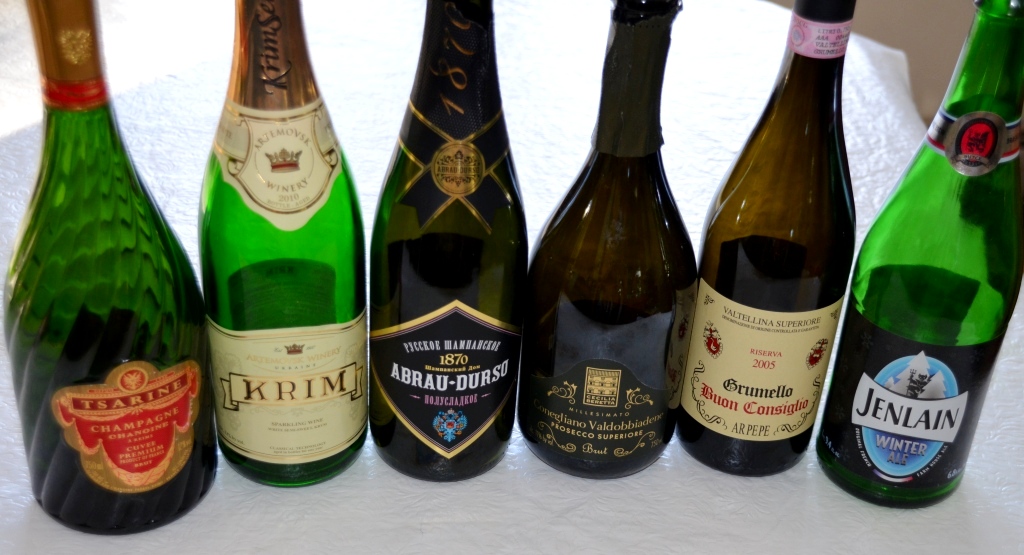 New Year’s day is a Sparkling wine time for me. It doesn’t have to be Champagne, but bubbles are indispensable part of the welcoming the New Year. And then January 1st is generally the day of bubbles – we have friends coming over for the small dinner and lots of bubbles on that first day of the New Year.
The 2014 was not an exception at all – so here are some of the Sparkling wines which added sparkle to our celebration. Oh yes, of course there were few other things to drink besides the sparkling wines.
If you look at the picture above, down on the right you will see… yes, this is beer! Somehow, I felt compelled to include it into the wine line up, as I was drinking it while we were cooking the day before the New Year. Also, when I see a French beer, there is almost a calling in my head “ahh, French beer, I must try it”. This was Brasserie Duyck Jenlain Winter Ale, a seasonal brew from France, produced using three French barley malts and three varieties of the most aromatic hops from Alsace (according to the back label). In style it was an Amber Ale, so it was round and delicate, with a spicy nose and very easy to drink, without any bite – in general Amber is one of my favorite beer styles, right next to the Porter.
Coming to the New Year’s day, we started our evening with 2012 Cecilia Beretta Brut Millesimato Prosecco Superiore Coneglian Valdobbiadene DOCG, Italy (11% ABV) – yes, I already talked about this wine before (here is the post), and I think at this point this is my most memorable Prosecco out of many I tried. It is perfectly together, balanced, elegant, structured and refreshing – and unbeatable value on top of everything. Drinkability: 8-
Then we had two non-common sparkling wines – one from Russia, and one from Ukraine. The Russian Sparkler was NV Abrau-Durso Semi-Sweet Sparkling Wine, Russia (10.5%-12.5% ABV) – fine mousse, touch of sweetness, ripe apples on the palate with a hint of peach, good acidity, overall quite elegant. Drinkability: 7+
The 2010 Artemovsk Krim Semi-Sweet Sparkling Wine, Ukraine (12% ABV, blend of Pinot Blanc, Aligote, Chardonnay and Riesling) was a notch up compare to the Abrau-Durso – perfectly refreshing bubbles, supple nose of apples with touch of yeast, just a hint of sweetness on the palate with balancing, rounding up acidity. If off-dry sparkling wine is your style (or a craving of the moment), I would highly recommend this wine. Drinkability: 8


What can be better than a nice wine label? Of course, a nice wine behind that label! This was the case with this NV Tsarine Champagne Cuvée Premium, Reims (12% ABV, 34% Chardonnay, 33% Pinot Meunier, 33% Pinot Noir). I was so impressed with the bottle and overall packaging, that I even had a wine quiz dedicated to this wine. I was a bit worrying that behind a gorgeous, royal, flashy label will be a so-so wine. Once I popped the cork and pour the wine, the worry went away in the instant. Perfect fizz, lots of energy in the glass. The nose shows everything which signifies Champagne to me – freshly baked bread, touch of yeast, a touch of an apple. On the palate, it had all of the same toasted bread, yeast and apple, coupled with clean, vibrant acidity – and lots of pleasure. Needless to say that this wine was gone in no time. Drinkability: 8
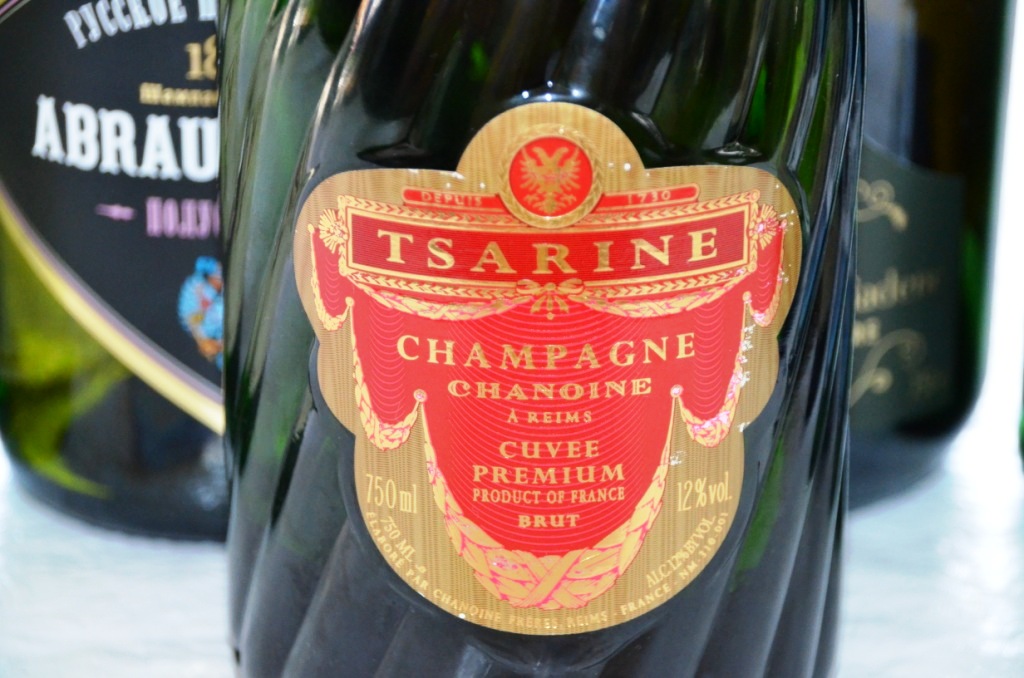
Tsarine Champagne
Our last bottle of the evening was 2005 AR Pe Pe Grumello Riserva Buon Consiglio Valtelina Superiore DOCG (13% ABV, 100% Chiavennasca, a.k.a. Nebbiolo), which Stefano generously brought over. This was an absolutely delicious rendition of Nebbiolo – brick orange hue in the glass, delicate aromas of plums and violets, with may be a whiff of cinnamon, fragrant, earthy and delicate on the palate – very un-Barolo in style, but perfectly balanced with the long finish and lots of pleasure in every drop. Drinkability: 8

Ar Pe Pe Grumello
And then, of course, there was food – I will give you just a few pictures – lots of traditional Russian style dishes – cold cuts, red caviar, salads, lots of pickled vegetables. I might share some recipes later on.


That concludes my report on our New Year’s extravaganza. Cheers!
Trader Joe’s Wines Update
 Few weeks ago, I wrote a post about noteworthy wine discoveries I made at Trader Joe’s store in California. As we visited our close friends in Boston for the Thanksgiving, I couldn’t miss the opportunity to explore the wine shelves at the nearby Trader Joe’s store, looking for great values. Once again, the mission was very successful – I can definitely recommend 3 wines out of 4 that I tried, which is an excellent outcome.
As we are now in the “holiday mood”, I’m trying to focus a bit more on the Sparkling wines of all sorts, so two out of four wines I want to present to you today are sparkling wines.
2012 Cecilia Beretta Brut Millesimato Prosecco Superiore Coneglian Valdobbiadene DOCG, Italy (11% ABV, $9.99) – I mentioned this wine already in my November “Month in Wines” update, so here are the same notes again – tiny refreshing bubbles, notes of fresh apple on the nose, round and roll-of-your-tongue on the palate with more of the fresh apple and yeast notes. Excelllent sparkling wine, and probably one of my very best in that price range. Drinkability: 8-
NV Trader Joe’s Reserve Brut Sparkling Wine, North Coast, California (12.5% ABV, $9.99, 62% Chardonnay, 26% Pinot Noir, 12% Semillon) – hint of fresh apples on the nose. Simple and clean on the palate, notes of white apples, good acidity. I would prefer a bit more substance in my glass (a bit heavier in the body and higher intensity of the bubbles), but this is definitely a very good wine for the money. Drinkability: 7+
2010 VINTJS Cabernet Sauvignon North Coast, California (13.5% ABV, $7.99) – I bought this wine based pretty much on the label alone – it looks very grand. Well, the content behind the label was not as grand as I would want it to be. Dark garnet color in the glass, dark fruit notes on the nose, hint of raspberries on the palate, medium to full body, good acidity – but no harmony, all the components where on their own. There are better choices at TJ’s at the same or lesser amount of money. Drinkability: 7-
2012 Marchigüe Carménère Reserva D.O. Colchagua Valley, Chile (13.5% ABV, $8.99) – quite honestly, I was craving Carménère for a past few month (I have none in my fridge), so when I saw this wine at the Trader Joe’s, it was an instant “yesss” decision. This is a very young wine for what it is, so if you want to enjoy it right away, I recommend decanting it – it needs to open up for at least 30 minutes to an hour. Dark ruby color in the glass. Perfect herbaceous hue on the nose – a hint of mint, so characteristic for the good Carménère. Sweet mint on the palate, cassis, a touch a eucalyptus, ripe raspberries, silky smooth texture, full body, excellent acidity and overall very balanced. This wine is definitely highly recommended. Drinkability: 8-
Here are all the wines I presented to you, now in pictures:
Note: the same wines might have different prices in the different states. The prices mentioned above are all from the Trader Joe’s store in Massachusetts.
If you tasted or will taste any of these wines, let me know if you like them! Cheers!
Celebrate Tempranillo!
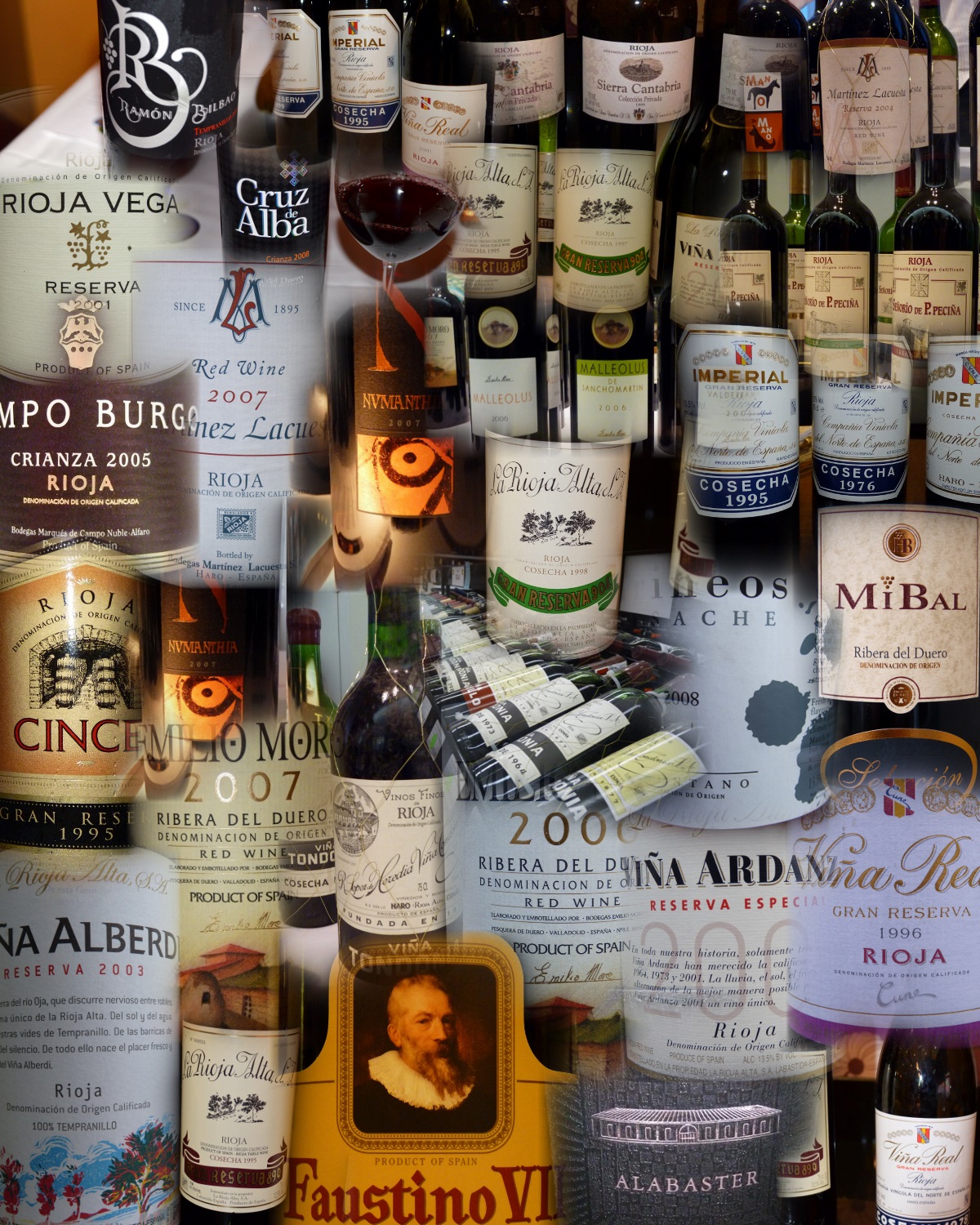 Today is an International Tempranillo Day 2013!
Tempranillo is an indigenous grape originated in Spain (by the way, do you know that Spain has the biggest area of grape plantings in the world?), with more than 2000 years of history. It is black, thick-skinned grape, capable of surviving temperature swings of Mediterranean climate, with very hot days and cool nights. Name Tempranillo comes from Spanish word temprano, which means “early”. Tempranillo typically ripens two weeks earlier compare to many other grapes. Tempranillo also one of the most widely planted red grapes in the world, with about 500,000 acres planted world-wide.
Tempranillo grapes are naturally low in acid and sugar content, so they often rely on blending partners to complement on both. Flavor profile of Tempranillo typically includes berries, leather (so famous in Rioja wines) and tobacco. Most famous Tempranillo wines come from Spain, from Rioja and Ribera del Duero regions, but Tempranillo is successfully growing in many other regions, including Portugal, California, Texas (up and coming star), South Africa, Australia and others. It is also interesting to note that Tempranillo is known under lots of different names (and as such, can throw some curve balls to The Wine Century club aficionados) – it is known in Spain as Tempranillo, Tinto Fino, Ull de Llebre, Tinto de Toro (this grape actually has clonal differences, similar to Sangiovese/Sangiovese Grosso), Cencibel and many others. It is known in Portugal as Tinta Roriz, Aragonez and Tinta Aragonez. But for the rest of the world it is simply known as Tempranillo.
So what is so great about Tempranillo? It has a few qualities which squarely set it on the line with the bets of the best in the wine world.
First, it has a great affinity for oak – Tempranillo wines can age and improve for the very long time in the oak barrels, and the resulting wine will pick up subtle nuances and complexity from that oak.
Tempranillo wines are very good at ageing. Best Tempranillo wines will rival best Bordeaux and Burgundy when it comes to improving with age and maintaining its youthful character. I have a first-hand account I can share with you – here is my experience with 1947 Rioja Imperial.
Last but absolutely not least in my book – Tempranillo wines are affordable! You can drink absolutely fabulous wines in the price range of $20 to $50, occasionally going into the $80+ – can you say the same about California Cabernet, or Burgundy, or Bordeaux? Not really… But with Tempranillo wines you do have this luxury. Of course there are Tempranillo wines which will cost $600+, but those are the exception, not the norm.
So what Tempranillo wines should you be drinking today, or any other day for that matter? I would love to give you a variety of recommendations, but come to think of it, I can only mention a few names coming strictly from Spain. There is nothing I can tell you about about Portuguese Tempranillo wines, as Tinta Roriz is typically blended with other grapes to produce Port. And while Tempranillo wines are made in Texas, California, Oregon, Washington and probably other states in US, most of those wines are available only at the wineries and rarely leave state limits.
But – when it comes to Tempranillo from Spain, I got favorites! Let me give you a few names of the producers – all the recommendations are personal, as I tasted many of their wines.
Rioja: La Rioja Alta, Bodegas Muga, Vina Real, Lopez de Heredia, Cune Imperial
Ribero del Duero: Emilio Moro, Vega Sicilia, Hasienda el Monsterio, Bodegas Alion
Toro: Teso La Monja, Numanthia
DO La Mancha: Bodegas Volver (one of the singularly best wines money can buy for around $15)
So I think it is the time to have a glass wine. Before we part let me leave you with a few interesting resources:
A vintage chart of Rioja wines, going all the way back to the 1925
A general vintage chart of Spanish wines, starting from 1992
A map of Spanish wine regions
And we are done here. Ahh, before I forget – Tempranillo Day now has a permanent spot in the calendar! It will be celebrated every second Thursday in November. Have a great Tempranillo Day and cheers!
Axial Vinos – Spanish Wine Intro
A while ago I got an email from the Axial Vinos marketing, informing me that two of the Spanish wines from Axial Vinos portfolio had been recently added to the Trader Joe’s wine selection. I was also asked if I would accept a sample of the wines. As you might now, I have a difficult relationship with the samples – I don’t actively solicit them, and I consider each request individually. To be entirely honest, I had less than a handful of requests for sending the samples, and so far I didn’t reject any. I don’t have a strong criteria for rejection, it would probably have to be something like a Crane Lake of Sutter Home, for me to say “no, thank you”, but nevertheless, that makes me feel better.
As the wines which were offered to me were Spanish wines, which are some of my favorites in the world, of course I said “yes, please”. A few weeks later, the wines arrived, and then I had an opportunity to taste them – and now I would like to share my impressions with you.
Before we get to the wines, a few words about Axial Vinos. It appears that Axial Vinos is an export company, which works with the wineries in different regions of Spain, where it sources all of their wines. Axial Vinos portfolio includes more than a dozen of different wineries, located in all the leading regions, such as Ribera Del Duero, La Rioja, Penedes and others.
Now, let’s talk about the wines. From the get go, I really liked the packaging:
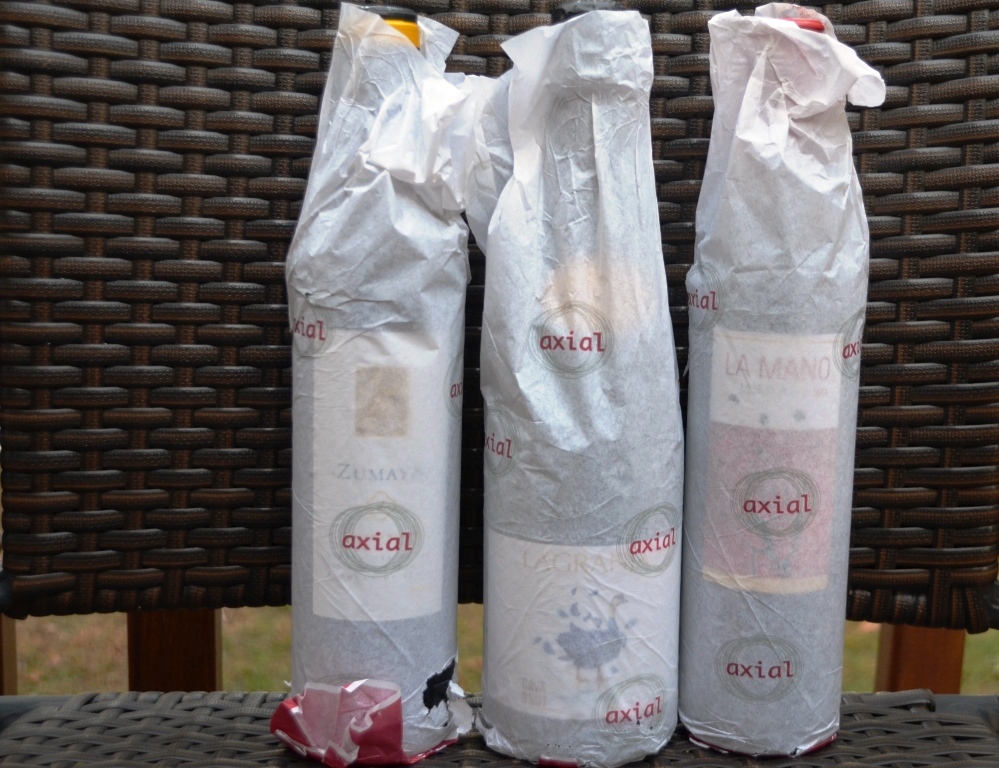
You know, this additional layer of paper, wrapped around the bottles, enhances an element of mystery. Wine in the bottle is always a mystery, this is what makes it such fun – you really don’t know what is there, behind the cork, so your imagination can run wild, simply based on all the visual cues – the shape of the bottle, the label, the capsule. Here you can’t clearly see even those details, so the mystery multiplies.
But of course the next step is to unwrap the bottles (and admire the labels):
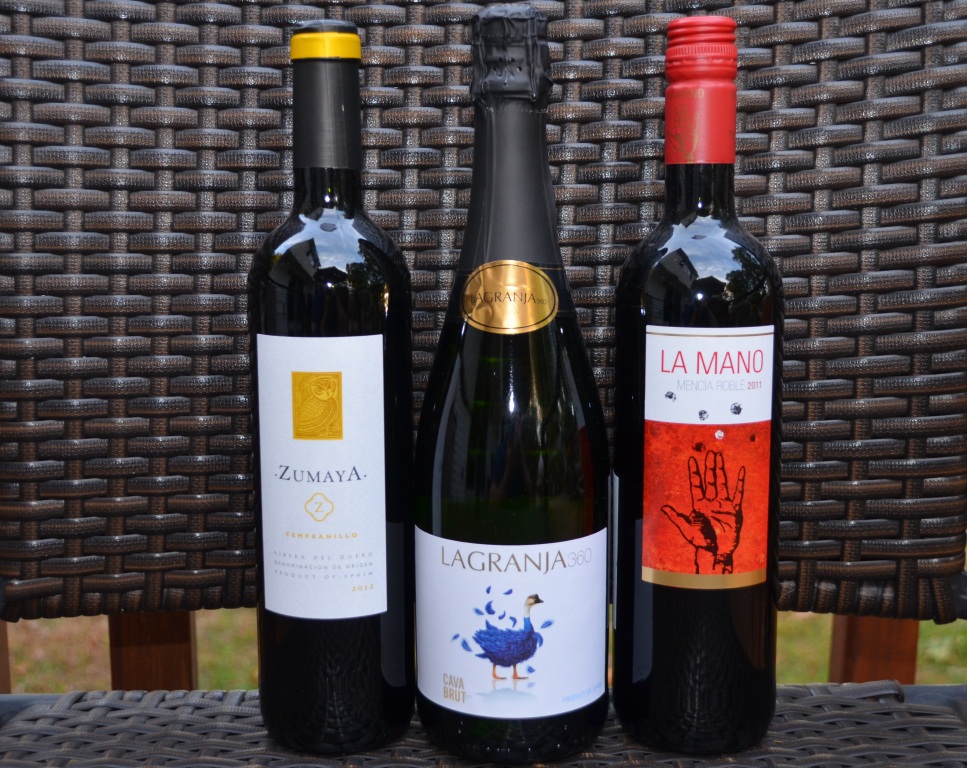 Okay, so we are done looking at the bottles, let’s talk about the content.
2012 Zumaya Tempranillo Ribera del Duero DO (13.5% ABV, 100% Tempranillo) – nice and simple, food friendly wine. Hint of dark fruit on the nose, some blackberries and espresso notes on the palate. Tannins are soft and light, good acidity, good balance. Easy to drink. Drinkability: 7
2011 LA MANO Mencía Roble Bierzo DO (13% ABV, 100% Mencía) – what I like about Mencía-based wines as a whole is energy. Somehow all the Mencía wines I tasted to the date have this universal bright and uplifting character. This wine had nice, freshly pressed juice on the nose with the prevailing aromas of the fresh cherries. Similar cherries/plum profile on the palate, simple, clean, medium body, round dark fruit, easy to drink. Drinkability: 7+
NV La Granja 360 Cava Brut (11.5% ABV, 70% Xarel-lo, 30% Parellada) – simple and elegant, perfectly refreshing, just a touch of sweetness, good acidity, very balanced overall. Drinkability: 8-
All in all, this 3 wines can serve as a perfect introduction into the wonderful world of Spanish wines. To all the lucky people who can buy their wines at Trader Joe’s (Trader Joe’s in Connecticut doesn’t sell wines, so I’m not one of them), I highly recommend not to miss on all these wines. Considering that the Turkey Day is coming, I believe all three wines will pair quite well with the Thanksgiving feast, and I’m sure you will not break the bank to get them. If you will try or have tried these wines already – let me know what do you think.
That’s all I have for you for today, folks. Enjoy your Friday – and the weekend is coming! Cheers!
Bread and Amarone
Puzzled by the title? Don’t be. This is simply the post about our last Valentine’s Day experience – yes, somewhat belated, but still worth sharing.
Let’s start with the picture. No pink hearts here, only roses, but take a look – what is that lurking in the fuzzy background?

Yep, a Champagne glass, the Tulip! Before we get to the bread and Amarone, let’s talk about Champagne Sparkling wine. By the way, this political correctness is very tiring. Champagne is much faster to say and to write, but no-ooo, Champagne only comes from Champagne, and everything else should be called a Sparkling Wine. It is two words versus one, and takes twice as much time to say and read! And the worst part is that the Sparkling wine in very many cases tastes much better than Champagne, and don’t even get me going on the pricing… Okay, sorry, unintentional rant, let’s cut it out and go back to what I actually wanted to talk about.
 My definite preference is to start a holiday, especially the one like Valentine’s Day, with the glass of
 Cham, errr, Sparkling Wine. It creates mood. It says (loudly) “Celebrate!”. Lightness and effervesce of the bubbles simply picks you up. So this past Valentine’s day our choice of bubbly (yes, jargon – but – it is one word! and it means any sparkling wine, Champagne or not) was 2003 Roederer Estate L’Ermitage Brut Anderson Valley California. Perfectly structured, perfectly balanced, with full harmony both on the nose and the palate. Fresh bread, yeast, toasted apple, perfect acidity, long-living bubbles – all in all, one of the best sparkling wines I ever tasted. Drinkability: 8+
Now, to the bread! Let me not be original – I’m simple going to repeat the note (a huge Thank You, rather) of appreciation which is being expressed all over the blogosphere – the useful content, the advice, information, ideas which are shared by the bloggers are simply staggering. About a month ago I read the blog post by one of the fellow bloggers, Kim from She Wines Sometimes (if you are not following her blog – fix this mistake right now). The post was talking about making the bread! At home! In a simple way!
I have to admit – I love bread. When in France, I can survive on just baguette alone (okay, throw in a little cheese, will you?). But baking the bread at home was not anything I would fathom in my wildest dreams. Until I read Kim’s blog post. It sounded so easy – I had no choice, but to say – this is it, I’m making the bread!
When it comes to baking, I dread the precision of the recipes. I consider myself to be an okay cook – I can substitute ingredients, I can come up with my own recipes, where I can measure all the ingredients with very precise “I think this is enough” accuracy. It doesn’t work like that in baking. Replace baking powder with baking soda and you might end up with a complete flap instead of a good tasting product – and the same goes for many other ingredients. This is why I usually think about baking as something better left to the professionals – but then again, all the professionals start somewhere, don’t they?
I’m not going to repeat the recipe here – here is the link to the original. Of course I ended up making some mistakes. The recipe calls specifically for King Arthur bread flour. I didn’t print the recipe before going to the store, and of course I ended up with the regular King Arthur flour. At first I even forgot to buy the yeast – and the second trip to the store was in order. But, you know what? All this doesn’t matter. Because the bread tasted AMAZING!
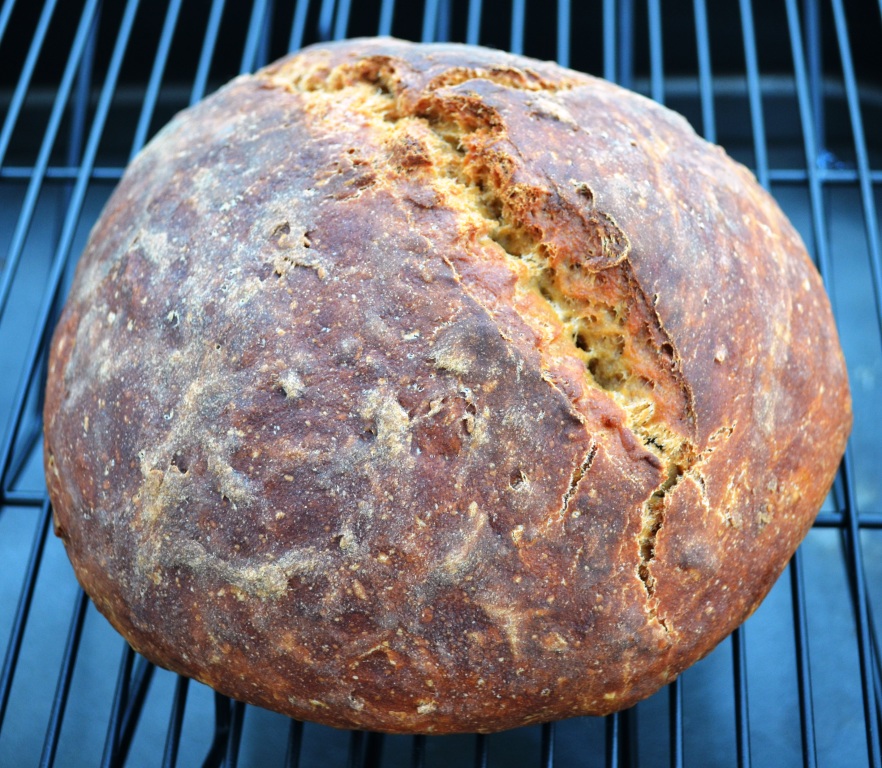
And the smell of the freshly baked bread when you just walk into the house – it is simply something heavenly (and pretty much priceless). The only thing I need to add here – Thank You Kim!
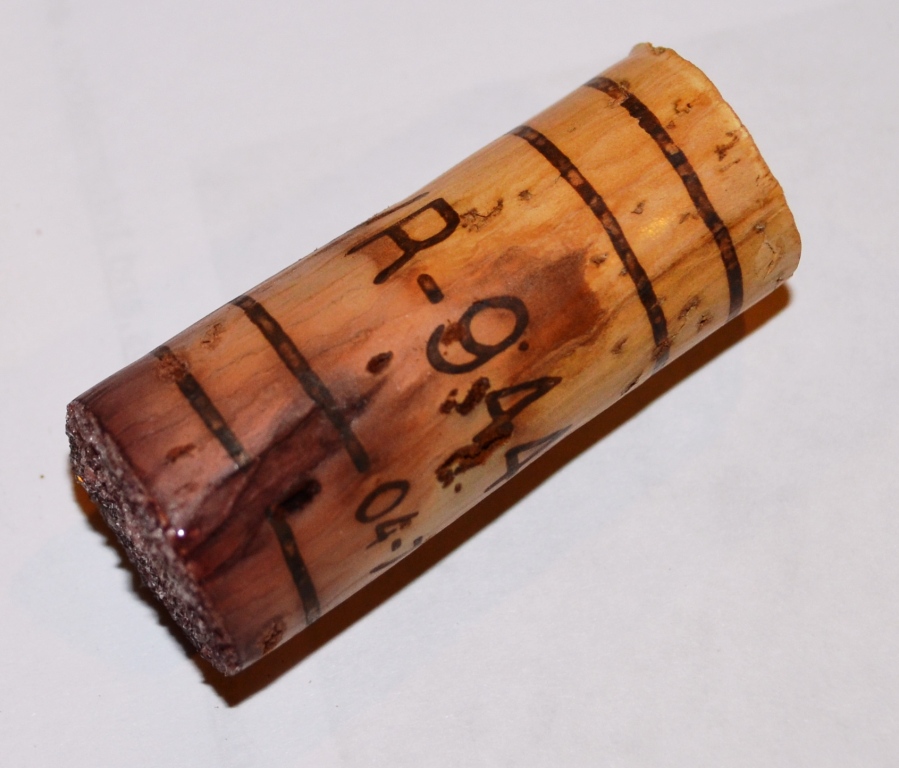 And now, to the wine. Not just any wine – Amarone! If you followed this blog for some duration of time, you know that I’m always on the lookout for the perfect Amarone, trying to replicate my moment of bliss smelling succulent raisins and tasting perfectly dry and powerful wine (here you can find a collection of my Amarone posts ). That “perfect wine” was 1997 Le Ragose Amarone, which I tasted in 2004, so the wine was 7 years old. And now it was Le Ragose Amarone again.
Looking at the cork, can you try to guess how the wine was? Did you write down your answer? Okay, good.
We opened the bottle of 1990 Le Ragose Amarone Della Valpolicella (so, did you guess correctly?). I have some experience opening old wines, and when you open a bottle of wine which is 23 years old, you expect trouble. I had my double-prong bottle opener ready, but when I removed the foil and looked at the cork, it appeared to be as fresh as it would be on the new bottle. And it actually was – the standard waiter corkscrew worked just fine!

And the wine was outstanding. No, it didn’t replicate my experience with 1997 – this was a lot more mature wine. But it had a perfect nose of dried fruit – not only raisins, but probably some dried cherries, fig, prunes. The palate showed mature beauty, with the fruit which is tamed, but still has perfect acidity to make it all work together – there was more dried fruit on the palate, more cherries, more prunes, leather and earthiness. Definitely was a great wine, and as an added bonus – it was only 14% ABV! All the modern Amarone are trying to exceed 16% by now, and one of the geniuses of the winemaking recently even told me that you need high alcohol to preserve the wine… ok, stop. Sorry. One rant per post. This one will have to wait for another time. All in all this 1990 Le Ragose was a great experience, so let’s live it at that. Drinkability: 9-.
That’s all I have for you for today folks. It is too late to ask about your Valentine’s day experiences by now, but did you drink any amazing wines lately? Or made bread : ) ? Cheers!
Re-Post: Best Hidden Secrets Of The Wine World: French Sparkling Wines
During 2011, I wrote a number of posts for the project called The Art Of Life Magazine – of course talking about my favorite subject, wine. The project closed and even the web site is down, but I still like those posts, so I decided to re-post them in this blog. Also, in that project, posts were grouped into mini-series, such as “Best Hidden Secrets” you see here – I will continue re-posting them from time to time.
Also note that the series was written for a slightly different audience – I hope none of my readers will take offense in the fact that sometimes I’m stating the obvious…
 So far we talked about a number of “secrets” of the wine world: Rioja, Second Labels, Amarone, wines of Georgia. Let’s continue our journey of discovery. This time we are going to talk about French Sparkling Wines.
Everybody knows about Champagne, a special wine for celebrations. If we think that occasion is special enough, the first thought is: we need a bottle of Champagne to celebrate. Of course producers of Champagne also know that, and respond with ever increasing prices – it is practically impossible to find the bottle of Champagne for less than $35 – and as with any other wine, there is no limit on top.
What is Champagne anyway? First of all Champagne is a place, a region in northern France – the only place in the world which can produce bottles of the sparkling beverage with the Champagne name on it. Second of all, Champagne is a sparkling wine, made in accordance with very specific winemaking rules and techniques, which are typically referred to as “Méthode Champenoise”. In that method (which legend has, was discovered by accident), the wine is fermented twice, and second fermentation takes place in the closed bottle, which leads to the wine becoming carbonated (hence the generic name “sparkling wine”). One quick note on the grapes – traditional champagne is produced from Chardonnay, Pinot Noir and Pinot Meunier, in various combinations as decided by the producer. If you want to read more, as usual Wikipedia offers great wealth of information (you can read it here).
Today sparkling wines are made all over the world, and of course none of them can be called Champagne, as the word “Champagne” on the label is protected by law. I’m sure you heard many of the names and tried many of the wines, but to give you a brief summary, Spain produces sparkling wine under the name Cava, Italy typically makes Prosecco (there are some other lightly sparkled wines, like Moscato D’Asti, but we will leave it aside for this post). Sekt is made in Germany, and most of the other countries simply use the term “Sparkling wine”, sometimes also identifying the grape, such as Sparkling Shiraz from Australia or Sparkling Malbec from Argentina.
With such a diversity and widely available offerings, why French sparkling wines are such a secret? While being the closest to the original (Champagne), they offer probably the best QPR (Quality Price Ratio), beating often California Sparkling wines and even Cava – and they taste really authentic.
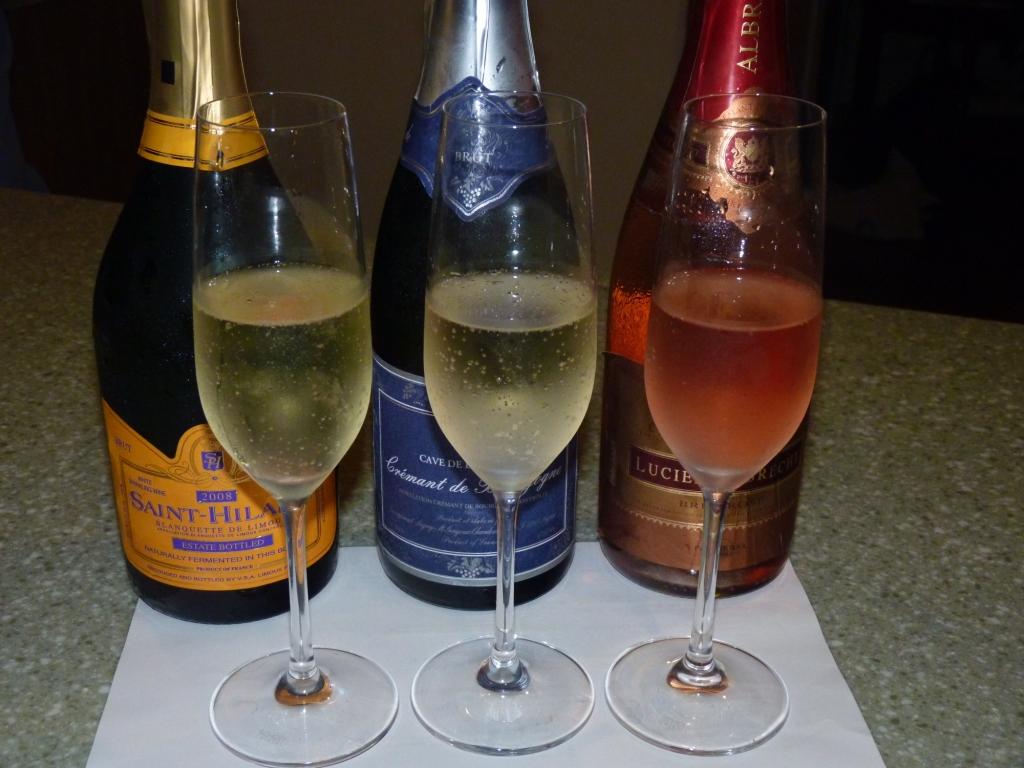 There is a substantial variety of Sparkling wines coming from France alone. Almost each and every wine producing region (Burgundy, Bordeaux, Alsace, Loire, Jura, …) produces its own versions of the sparkling wines, in most of the cases called Cremant: Cremant de Bordeaux, Cremant de Bourgogne, Cremant de Jura, Cremant de Loire and others. You can find additional information on the sparkling wines here. All of these Cremant wines are made using the same “méthode champenoise”, however, typical regional grapes can be used to make the wine.
So as usual, I wanted to prove to you that the knowledge I’m sharing is worthy of a “secret” designation, which can be of course done by forcing you, me readers, to buy the wine and taste it (and then telling me that I was right). However, as this is not an easy undertaking, I took this function upon myself, and here are the results of tasting of 3 inexpensive French Sparkling wines. I got 3 French Sparkling wines – Saint-Hilaire Blanquette de Limoux Brut ($10.99), Cave de L’Aurance Cremant de Buourgogne Brut ($11.99) and Lucien Albrecht Cremant de Alsace Rose Brut ($14.99). Before we talk about tasting notes, I want to mention that the Saint-Hilaire Blanquette de Limoux claims to be the first sparkling wine ever, produced by Benedictine Monks in Saint-Hilaire abbey in 15th century ( beating Champagne by at least a hundred years) – but I guess they never put much effort into marketing, while Champagne did, so the result is obvious (however, it is better for us, consumers).
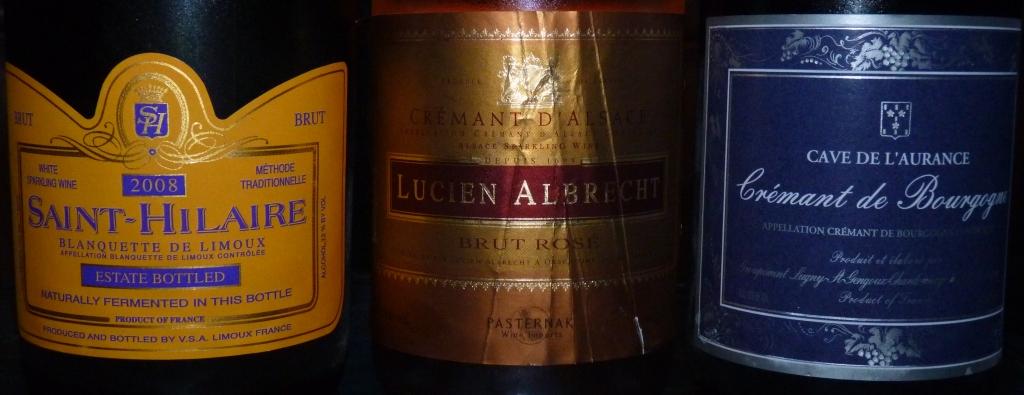 Anyway, here are the notes:
2008 Saint-Hilaire Blanquette de Limoux Brut: closest to the classic champagne. Nose of yeast and hint of fresh bread, very refreshing, good acidity, citrus notes, dry, medium to full body. Best of tasting.
Cave de L’Aurance Cremant de Bourgogne Brut: quite limited expression on the nose, but very elegant on the palate. Offers golden delicious apple and ripe white grapefruit notes, medium body.
Lucien Albrecht Cremant de Alsace Brut Rose: very complex on the nose, with some onion peel and white truffle. On the palate offers strawberries, pink grapefruit, medium body.
Now you know one more secret. No, you don’t need to trust me. I would definitely encourage you to get a bottle of your favorite Champagne. Then you need to get a bottle of Blanquette de Limoux, and compare them in the blind tasting. I have done this with the group of friends, and you can find the surprising results here. I challenge you to do it – and then leave me a comment with the result – I will be waiting.
That’s all for now, folks. For the next secret of the wine world – stay tuned. More secrets are coming…
Daily Glass: Wine Happenings on New Year’s Day, as well as before and after
New Year holiday in our family always means lots of food and drinks. And it is not even New Year’s evening – all the festivities start a few days before, and continue going into the New Year’s day itself. As the result, it means that a lot of wines were opened, and I don’t even want to talk about food (I refuse to touch the scale at least for the next two weeks).
We didn’t drink anything amazing (well, may be with the exception of one wine), at the same time we didn’t drink anything really bad, so here is a summary of what we went through (side note – I will make an attempt to produce “wine review” posts more regularly this year – call it New Year’s resolution or what).
 E1 Locations, Spain ($20, 14.5 ABV) – This wine is made by Dave Phinney, winemaker behind Orin Swift wines, and its goal is to showcase best grapes form the best places. E1 Locations is a blend of Garnacha, Tempranillo and Carinena, all grown in three famous regions in Spain – Rioja, Ribera Del Duero and Priorat. To be very honest with you, this is not my style of wine – it has a lot of heavy fruit ( I call it “burnt fruit”), some warm spice and hint of oak with not enough acidity – however, the wine opened up somewhat next day, showing brighter fruit and more harmony. Drinkability: 7+
 2009 Chateau Maison Blanche Medoc ($19.99?, 14% ABV, sorry for the picture of the ripped label) – tasting of this wine was an interesting experience. On the first day, it was drinkable, but lacked any excitement. The next day, it became plain bad – but I don’t pour wine down the drain easily, so I put it aside. Day number 3 – same story, not the wine I want to drink – and again I let it be. On the day number four, I decided to give this wine one final taste before disposing of it – and found it completely changed. The wine opened up, showing nice luscious fruit, supple tannins, good acidity and good overall balance, it became soft and round. This wine definitely needs time. And before I forget – this wine is made of 85% Merlot, 13% Cabernet Sauvignon, 2% Cabernet Franc. Drinkability: 8- (either decant when serving or cellar for a while).
 2008 Bogle Vineyards Phantom ($17, 14.5% ABV) – Bogle Vineyards is one of my favorite producers of inexpensive California wines. While they make pretty much a full line (Chardonnay, Zinfandel, Cabernet Sauvignon, etc.), Bogle Vineyards Petite Sirah typically represents an unbeatable QPR – it is simply an excellent wine usually priced at $11.99. The wine we had, Phantom, is a bit of a higher end – it is a blend of Zinfandel, Petite Sirah and Mourvedre. It drinks very well, showing a bouquet of warm spices on the nose, and a lot of nice bright fruit on the palate, ripe plums, touch of cinnamon and nutmeg, good acidity – quite an enjoyable wine. Drinkability: 8-
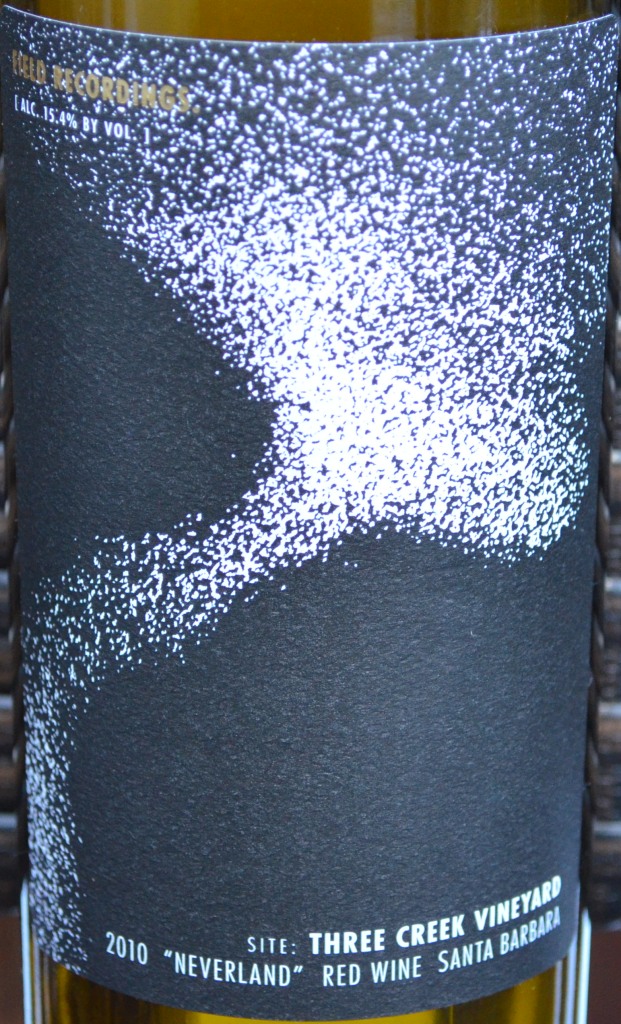 2010 Field Recordings “Neverland” Red Wine Santa Barbara ($26, 15.4% ABV) – Have you ever tried any wines from Field Recordings? You know, may be I shouldn’t even talk about this wine here? Too many people will find out, it will be hard to get, do I really need all that hassle? Well, okay – feels good sharing a secret.
Andrew Jones, winemaker behind Field Recordings, was grape grower first, working with many wineries and tending to their vineyards. Later on he started making his own wines, each of them coming from the different sites, from the places were particular grapes do particularly well. This wine, called Neverland, comes form the Three Creek Vineyard site, and it is a blend of 60% Cabernet Sauvignon, 24% Petit Verdot and 16% Malbec. The wine was perfectly balanced, with layered soft fruit, black currant and touch of blueberries, dark chocolate notes, very long and pleasant finish. Why I wanted to keep such a great wine to myself? Very simple – total production: 150 cases. When it’s gone, it’s gone… Drinkability: 9-
2011 Brick Lane Pinot Noir California ($?, 13.4% ABV) – When faced with the wines like this one, I always have a dilemma – do I write about them in this blog, or do I not? I don’t want to pretend to be a big critic and proudly proclaim my scores – I look at the wine rating mostly as a fun exercise. Anyway, as you probably guessed, this was not a very good wine. Thin, green, acidic, unbalanced, drinkable, but not delivering any pleasure. Drinkability: 6-
 2011 Dr. Hans VonMuller Riesling Spatlese Mosel ($11.99, 8% ABV) – I either don’t drink enough Riesling, or I don’t write enough about it, or both – somehow, I think Rieslings are scarcely discussed in this blog. For the Spatlese, this was a very modest Riesling – yes, it had an explicit sweetness – but it was not cloying by all means ( some of the 2010 and 2011 German Rieslings I tried had this clinging sweetness even at the Kabinett level). Sweetness was nicely balanced by acidity, and overall this was a very pleasant wine with good amount of white fruit, some apricot and may be peach, very enjoyable. Drinkability: 7+
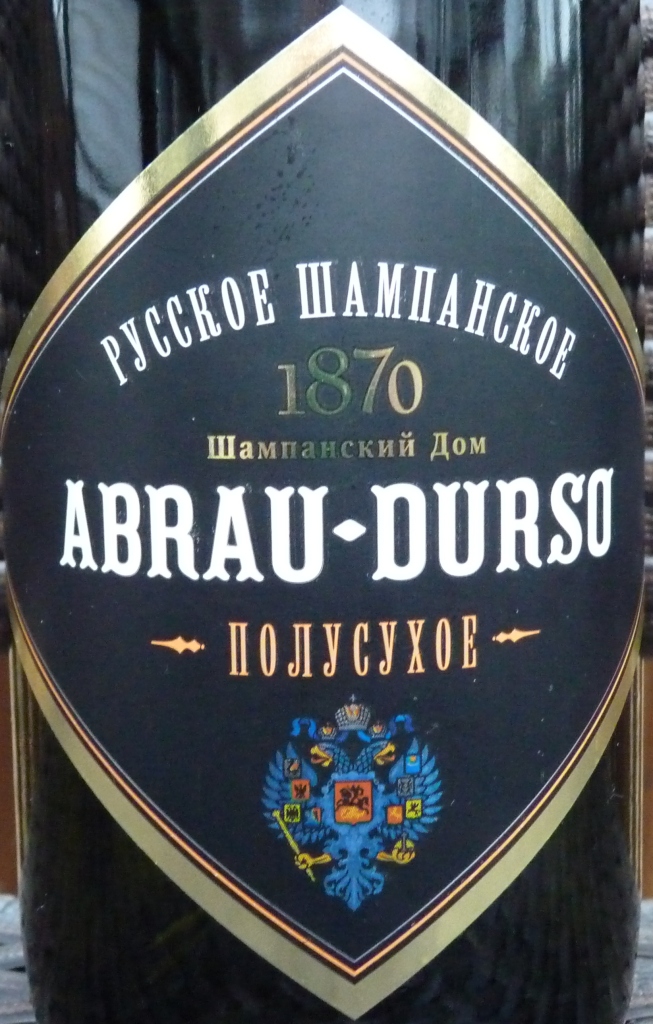 Now it is time to talk about Sparkling wines – I have a few to share with you. First, NV Abrau-Durso Semi-dry, Russia ($12.99) – as planned, we ringed the New Year 2013 with this wine. Yes, it is not the first time I write about Abrau-Durso in this blog (it was also my wine #19 in the Top wines of 2012 list) – but I can’t help it, as the wine is good! Apple and touch of yeast on the nose, very restrained white fruit on the palate, good acidity, hint of sweetness, perfectly refreshing bubbles – you have to try it to believe it. Drinkability: 8
We are almost done, I promise! A few more sparkling wines:
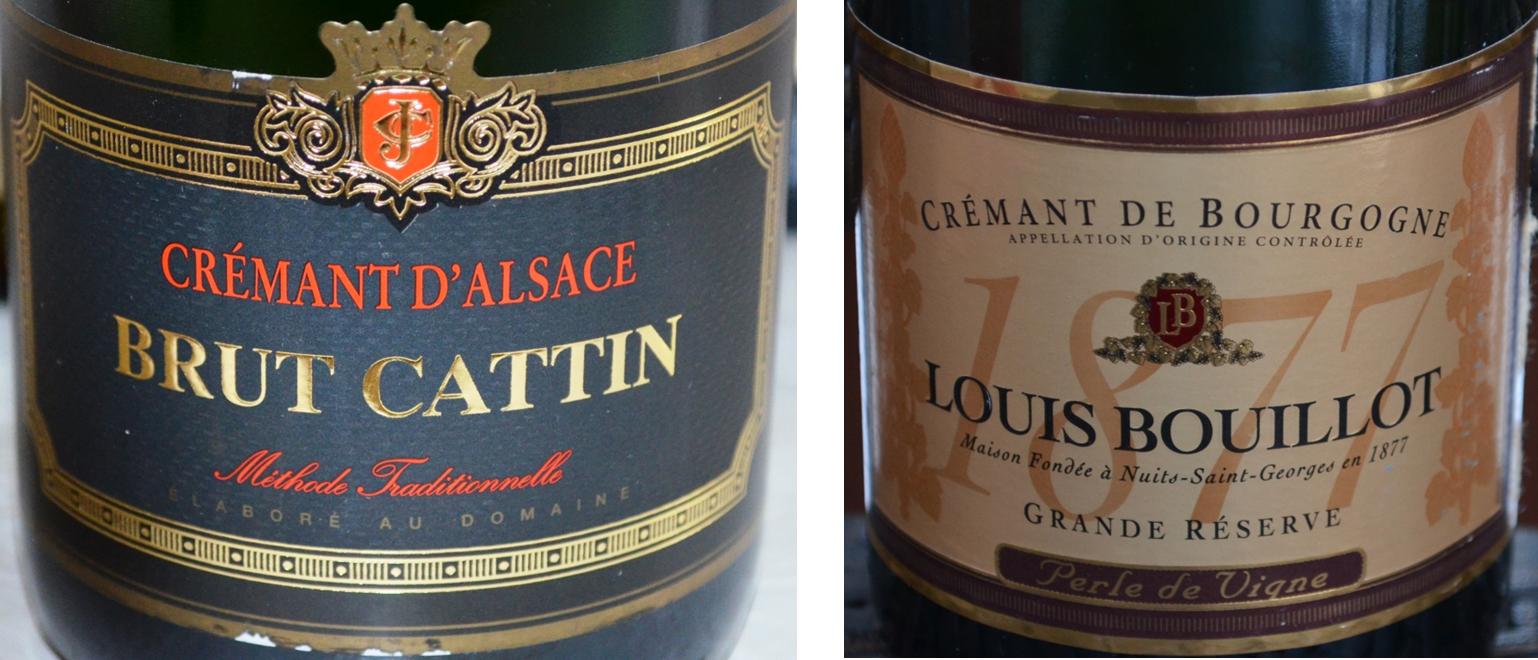
So here are NV Cremant D’Alsace Brut Cattin ($16.99, 12% ABV) and NV Cremant de Bourgogne Louis Bouillot Grande Reserve Perle de Vigne ($?, 12% ABV) – the reason I lump these two wines together is that they are literally indistinguishable (unfortunately!). It is interesting that grape composition is quite different between them – Cremant d’Alsace is made out of Pinot Blanc, Pinot Gris, Pinot Noir, Riesling and Chardonnay. Cremant de Bourgogne is a blend of Pinot Noir, Chardonnay, Gamay, and Aligoté. Both wines are drinkable – a bit of yeast, good acidity, crisp and refreshing – but not exciting. Drinkability: 7
 Peach Canei Italy ($4, 7.5% ABV) – I guess by even mentioning this “wine” ( it is more of a wine cocktail – it is peach flavored grape wine) in this blog I have to officially renounce a self-awarded title of a wine snob and never even try to claim it again.
I told my friend Zak that way back ( about 20 years ago), when I was just slowly getting into wines, Peach Canei was one of our favorite wines. I think only a young age protected Zak from having a heart attack – he was completely shocked. So he got me a bottle of the wonderful beverage as part of my New Year’s present. As you can imagine, I had no reason to cellar it, so we decided to open the bottle right away. It had a pronounced peach flavor, with a bit too much sweetness, lightly fizzed, probably could’ve used a bit more acidity. But – it was drinkable, and we managed to finish a bottle. It is highly unlikely that I would ever crave this wine, but again, it is not that terrible as you might think. Drinkability: 6.
That’s all I have for you regarding the wines – wait, don’t go yet. New Year is usually celebrated with lots of food – here are couple of pictures which will give you an idea of how the table looked like:


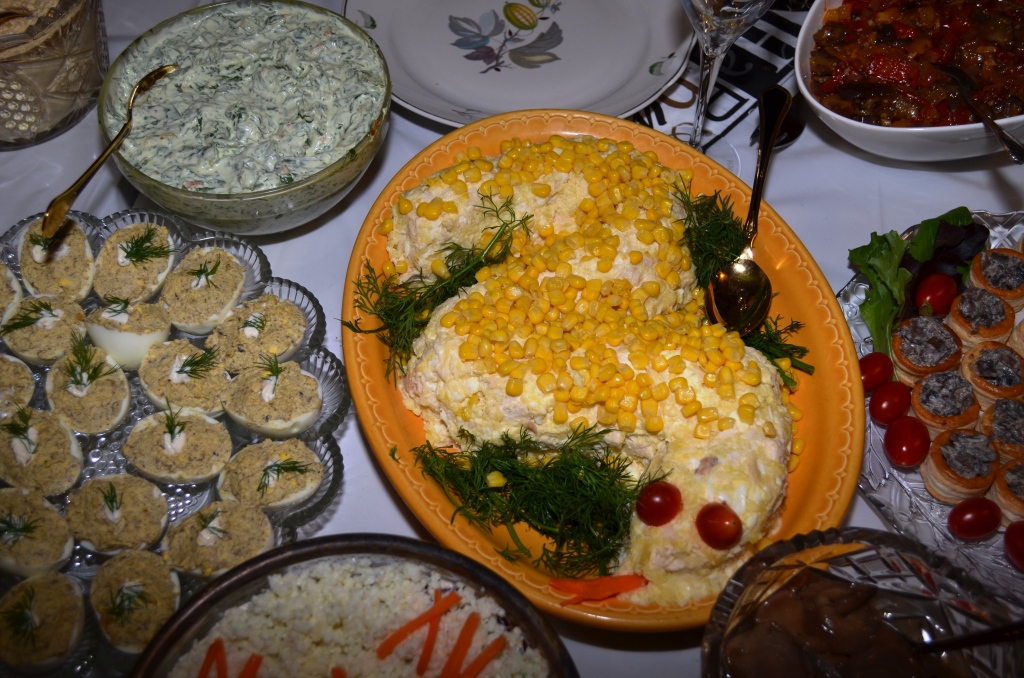
That’s all for today, folks. Did you have a most memorable New Year’s wine? Please use the comments section below and share! Cheers!
Bubbles, Bubbles, Bubbles Everywhere!
New Year is around the corner, and of course, we are all talking about sparkling wines. That little effervescence, the tiny bubbles, they create mood and tell us “this is all good, we got something to celebrate, let’s have fun”.
There is hardly a wine blogger today who didn’t write about Bubbly. Let me join them, and share some recent encounters and (in the spirit of summing up a year) some of the old ones.
My favorite wine store, Cost Less Wines in Stamford, had a Sparkling wine tasting today. Here is what you could try:
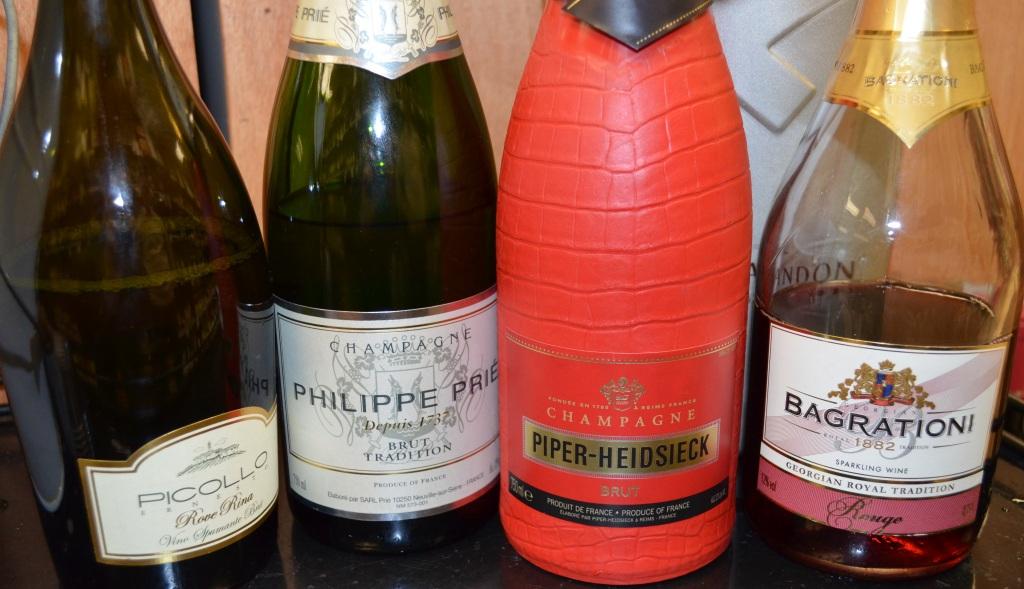
Picollo Ernesto Rove Rina Vino Spumante Brut – Italian sparkling wine made in the Gavi region out of Cortese grape. Simple and refreshing, probably could use a touch more acidity. Has apple undertones on the palate.
Champagne Philippe Prie Brut Tradition NV – very yeasty, lots of freshly baked bread on the nose. Probably could use a touch more acidity (either there was something wrong with me, or may be the wines were a bit too warm…)
Champagne Piper-Heidsieck Brut NV – yeast, baked bread, green apples on the nose – very balanced and refreshing on the palate. Best of tasting.
Bagrationi 1882 Sparkling Wine Rouge NV, Georgia – while I had a number of Bagrationi sparkling wines before, this was my first tasting of the Bagrationi Red. This wine is a blend of 4 different grapes. Very nice nose of fresh fruit. Full bodied, with the touch of sweetness on the palate, but only a touch. Very refreshing and very pleasant.
Here are few extra bubbles for you. First, for the full immersion into the sparkling world, visit this Pinterst collection of all things Champagne.
Now, here are the links for some of my past blog posts about Sparkling wines – a 2006 newspaper article and 2011 update to it.
In 2012, I learned how to saber the bottle of sparkling wine with the wine glass. Here is a link to the blog post about it. And here is how professionals do it.
And here are the Champagne and Sparkling wines which are planned to be open on the New Year’s night:
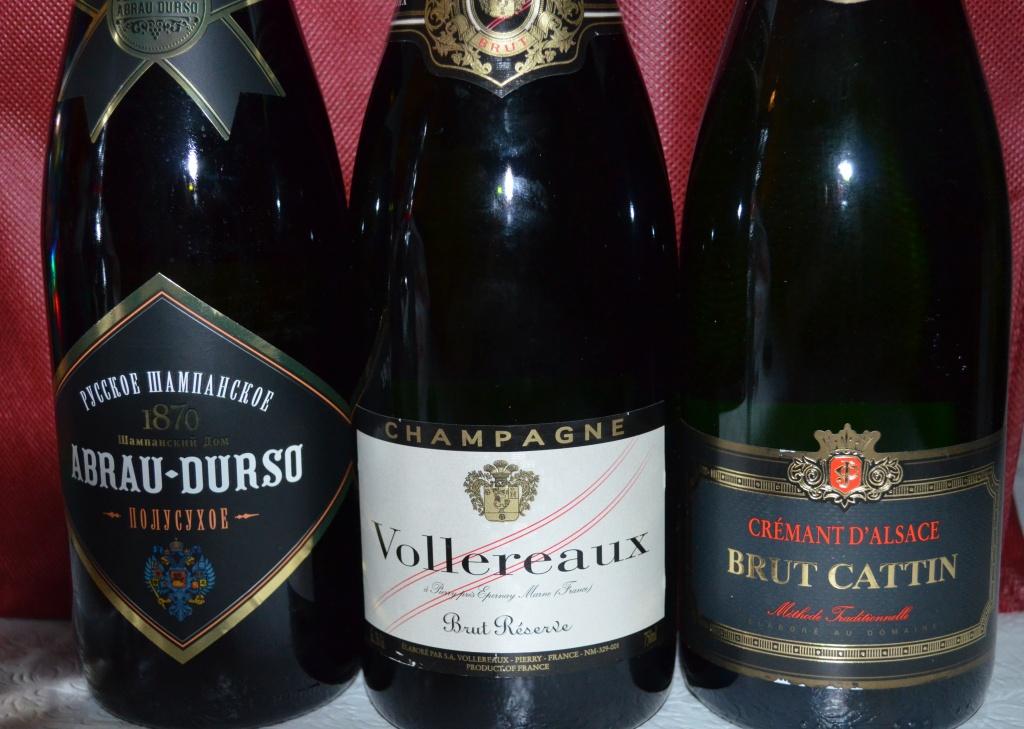
What bubbly will be in your glass? Cheers!
Last Bottle Sign Up ($10 credit)




 Talk-A-Vino