Archive
Ah, Tempranillo!
And just like that, I almost miss another grape holiday. This time, it is Tempranillo Day!
Of course, you know this well by now – I like all the grapes. And I always say that there is one that I like the most – and every time I say it, it is a different grape.
Guilty as charged.
And yet, Tempranillo is really special.
You don’t have to read them, but just look at the names of some of my posts:
Magnificent Tempranillo
Tempranillo, Transposed
The Art of Tempranillo
Magnificent Rioja: CVNE Deep Dive
I think this qualifies as a pure expression of love, don’t you think?
I discovered the beauty of Tempranillo a long time ago, when I tasted a vertical of Rioja wines going all the way to 50+ years old. Rioja is one of my favorite expressions of Tempranillo, covered in this blog a countless number of times. Of course, Tempranillo is one of the major Spanish grapes, and it does very well in the US (Washington, California, Oregon, even the Hudson Valley), but if I can, I would always gravitate towards Rioja.
What I like about Rioja is that, in most cases, Rioja is predictable. Of course, it is great if you know the producer. La Rioja Alta, CVNE, Lopez de Heredia, Bodegas Lan, Bodegas Beronia, El Coto, Oscar Tobia – I will be happy to open a bottle with any of these names at any moment. But even when you don’t know the name, I would prefer to take my chances with an unknown Rioja rather than an unknown Chianti, an unknown Bordeaux, or an unknown Pinot Noir (oh, that might be the scariest of all).
Case in point. I’m currently in Stockholm, and at the restaurant, the wine list was short and without any names I could recognize. After an internal debate, I decided to take my chances with an unknown Rioja – and I didn’t regret my choice for a second, and neither did my dining companions.
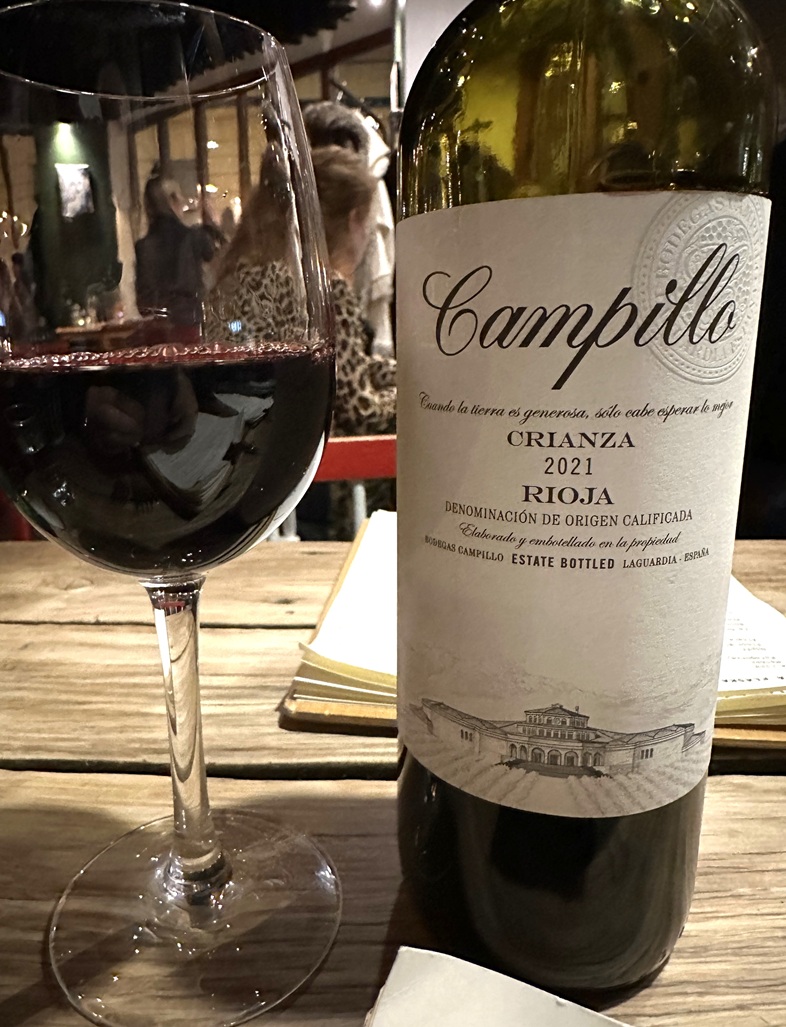
2021 Bodegas Campillo Rioja Crianza DOC (14.5% ABV, 12 months in oak) was simply delicious. Fresh dark fruit on the nose, loads of dark fruit on the palate, cedar box, cherries, silky-smooth, roll-of-your-tongue goodness, medium to full body – a pure joy. Every sip was literally accompanied by the collective “ah”. You can call it pure luck, but I trusted my tempranillo, and the tempranillo didn’t disappoint.
Here you go, my friends. A grape holiday tribute to one of my favorite grapes – and the discovery of a new Rioja name.
How are you celebrating Tempranillo?
Rioja Worth Seeking – El Coto de Rioja
 I love Rioja wines.
This is not a secret for anyone who has been following this blog for some time.
But despite such a strong proclamation, this love is not unconditional. Rather, it is very selective.
I have more of an exclusive club in Rioja. This is a club with a very limited membership. Anyone can apply, but only a select few can become members. Those in the club enjoy unconditional love and forgiveness for their little mistakes. For the rest of them… well, good luck making the cut.
I guess I need to change my opening line.
I’m a Rioja snob.
I love Rioja, but this love is very selective.
There, this would be a better opener.
The founding members of my exclusive club are CVNE with all of their lines (Vina Real, Imperial, Contino, …), La Rioja Alta, and Lopez de Heredia. Bodegas Tobias, Bodegas Beronia, and Bodegas Lan also have full membership.
Okay, let’s put another spin on this snobbish endeavor.
Rioja is a large region in Spain. There are about 14,800 grape growers, and about 574 wine producers in Rioja. That means lots of different styles and lots of different quality levels – even though all bottles will say “Rioja” on them. Seeing a bottle of Rioja doesn’t make me excited – seeing the name of a familiar producer who I know makes quality Rioja wine does. Hence my exclusive Rioja “club” – simply the list of my favorite Rioja producers.
What might be more important is that this “club” is actively taking applications (the approval rate is very low though), and I feel that it is time to formally add one more member there – El Coto de Rioja. El Coto wines were mentioned a few times in the blog already, but now let’s make it official.
El Coto de Rioja was founded in 1970 located in the town of Oyón. Over the 50 years of its history, El Coto de Rioja became the largest winery in Rioja, farming 1804 acres of estate vineyards. El Coto de Rioja plantings include 8 individual vineyards located across all Rioja DOCa sub-zones, such as Rioja Alta, Rioja Baja and Rioja Alavesa. One of the vineyards, Finca Carbonera, located in Rioja Alta, is the highest altitude vineyard in Rioja DOCa. In addition to all of the traditional Rioja red grape varieties, a significant portion of plantings are dedicated to the white grape varieties including new ones for Rioja – Verdejo, Chardonnay, and Sauvignon Blanc. El Coto de Rioja also built a winery directly in the vineyard, dedicated to the white wine production.
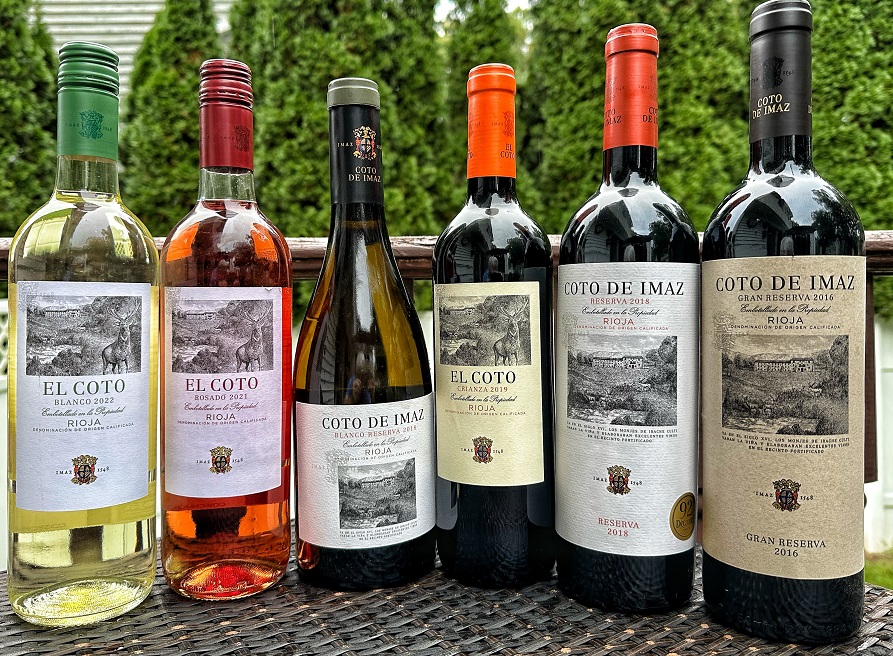
I had an opportunity to taste (samples) a range of wines from El Coto de Rioja – here are my notes:
2022 El Coto Coto de Imaz Blanco Rioja DOC (12% ABV, $11.99, 93% Viura, 4% Sauvignon Blanc, 3% Verdejo)
Pale green
An enticing nose with lemon, acidity and minerality, fresh and vibrant
Lemon, Whitestone fruit, crisp, clean, refreshing.
8, delicious.
2021 El Coto Coto de Imaz Rosado Rioja DOC (13.5% ABV, $11.99, 90% Tempranillo, 10% Garnacha)
Intense salmon pink
Beautiful, inviting, fresh strawberries
Fresh strawberries and cranberries on the palate, pleasant tartness, fresh and round
8, excellent
2018 El Coto Coto De Imaz Blanco Reserva Rioja DOC (12.5% ABV, $24.99, 100% Chardonnay, 12 months in new French oak)
Beautiful light golden color
A touch of butter and vanilla
A hint of butter, vanilla, Granny Smith apples, crisp, elegant, good acidity.
8, I want to try it in 5 years, I expect it to develop beautifully
2019 El Coto Imaz Crianza Rioja DOCa (14.5% ABV, $16.99, 100% Tempranillo, minimum of 12 months in American oak, at least 6 months in the bottle)
Garnet
Dark fruit, sapidity, gunflint, intense
Bright, uplifting, medium body, dark berries, smoke, crisp acidity, very “new world” in style, good balance, tannins show on the finish – will age and evolve well
8-
2018 El Coto Imaz Reserva Rioja DOCa (14.5% ABV, $22.99, 100% Tempranillo, minimum of 18 months in American oak, at least 18 months in the bottle)
Dark garnet
Dark fruit, earthy, being of herbs, medium intensity
Brilliant, classic Rioja, succulent cherries, cedar box, sage, salivating acidity intermingling with well integrated tannins, perfect balance.
8, delicious.
2016 El Coto Imaz Gran Reserva Rioja DOCa (14.5% ABV, $34.99, 100% Tempranillo, minimum of 24 months in American oak, at least 36 months in the bottle)
Dark garnet
A touch of minerality, cigar box, hint of cherries
Black fruit, concentrated, firm structure, well-integrated tannins, good acidity, good balance.
8, very good but will benefit from time in the cellar
I have to honestly say that while the red El Coto wines were good, I loved both whites and Rosé even more. The El Coto Rioja Blanco is a perfect quaffer any time you want a glass of refreshing white wine. Blanco Reserva is in the category of its own, a delicious Chardonnay rendition for any occasion when you crave a thought-provoking white wine.
El Coto de Rioja wines are well worth seeking – they are both delicious and still reasonably priced for the quality they deliver. And they are also widely available, so off you go to the store. Cheers!
New Releases From Bodegas Beronia
 When it comes to Rioja, Bodegas Beronia is a relative newcomer, founded in 1973 by a group of friends who fell in love with La Rioja while visiting on a holiday – compared with many of the Rioja’s finest taking its roots from the 19th century.
I wrote about Beronia wines many times before, so instead of sending you to this link to read about the winery itself, here is simply an excerpt from that post:
The name Beronia is not random – here is the explanation: “name linked to the history of the land where the winery is found. In the 3rd Century BC, the area known as Rioja today was inhabited by a Celtic tribe called the ‘Berones’. They inhabited the towns of Tricio, Varea, and Leiva, marking the limits of the Berones region, today La Rioja.”
Originally, the wines were produced literally by friends for the friends, without much thought of commercial sales. In 1982, Bodegas Beronia became a part of González Byass family, and at that point, wines of Bodegas Beronia started to appear on the international markets.
Beronia style starts in the vineyard, practicing sustainable viticulture. Different vineyards are used for different types of wines – Crianza, Reserva, Gran Reserva. For example, Gran Reserva wines are typically produced from 80-90 years old vineyards. And talking about the style, wines are manipulated as little as possible.
Bodegas Beronia Rioja wines represent an intersection of tradition and modernity. While “traditional” and “modern” styles of Rioja can be a subject of great debate with a lot of wine consumed to prove the point, I would offer a very simplistic viewpoint. Tempranillo has a great affinity to the oak; the resulting Rioja wine is well influenced by the oak regimen. Traditionally, Rioja is matured in American oak casks. Modern-style Rioja often uses French oak. Here is your style distinction – American oak versus French. Bodegas Beronia goes a step further than many. They create their own barrels, using both American and French oak elements in one barrel. Thus the wine is not defined by blending of the separately aged components, but instead, it is aging in a mixed environment.
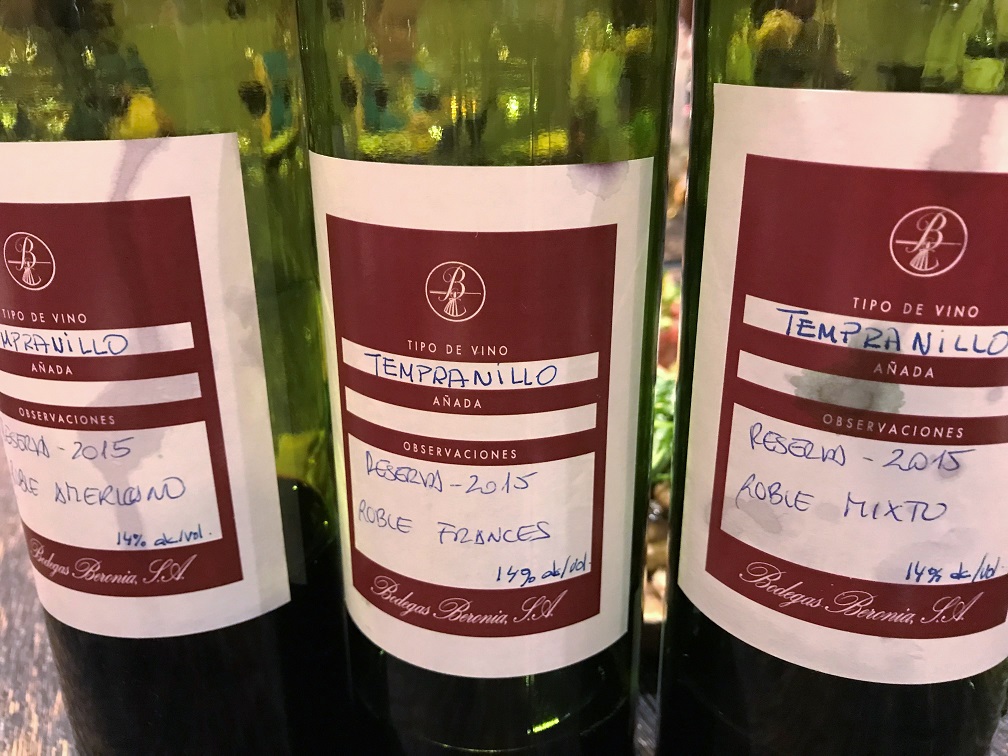
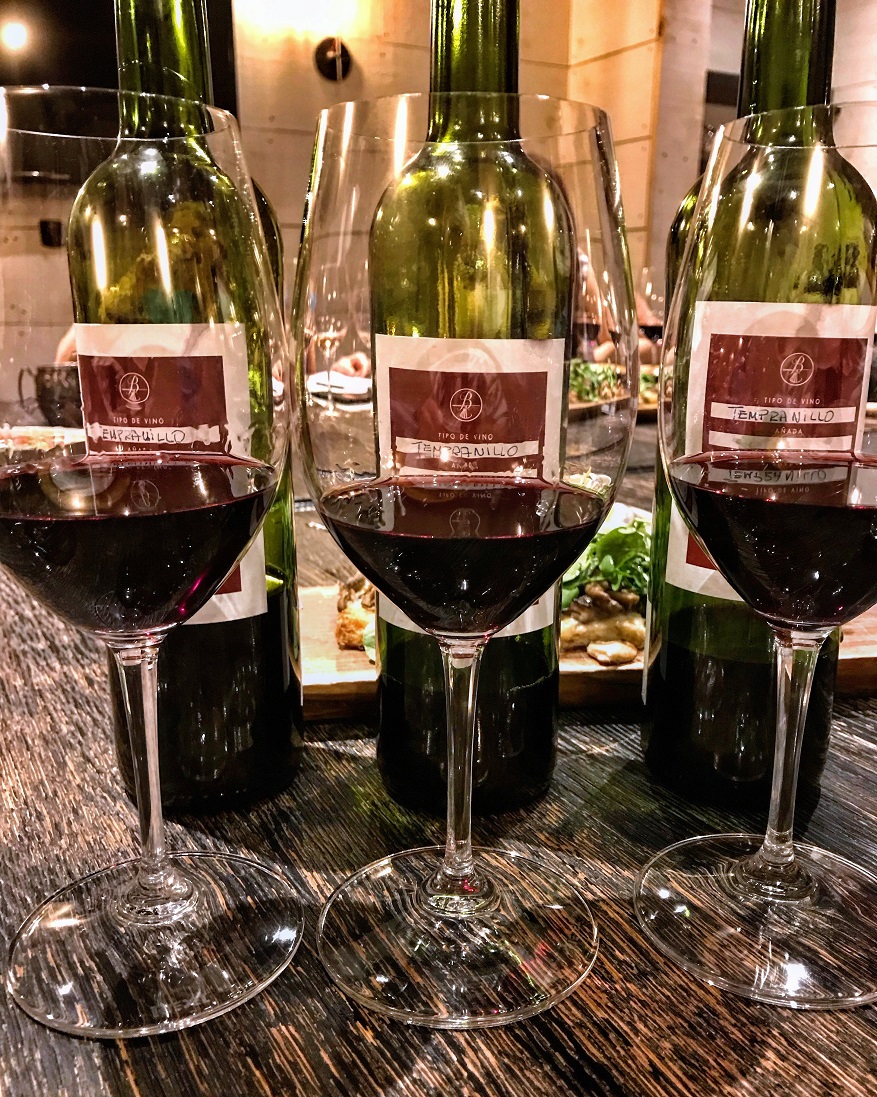
Now, here is something I never shared before. In June of 2018, I had an opportunity to attend a lunch with Bodegas Beronia winemaker, Matias Calleja. During that lunch, we were able to actually taste the differences between the same exact wine, 2015 Tempranillo, aged for 18 months in 3 different types of oak – French, American, and Beronia’s own, mixed.
When we tasted these three wines side by side, the wine aged in the American oak had the brightest fruit. The French oak-aged was more earthy and had a bigger presence on the palate. The wine aged in the mixed barrels provided the most complexity, and fell in the middle, with interesting spicy notes. Pepper, which is not a typical Tempranillo descriptor, was very pronounced on the mixed barrels. The mixed-barrel one was my favorite.

Now, we can talk about the latest release from Bodegas Beronia – pay attention to the notes on the oak regimen:
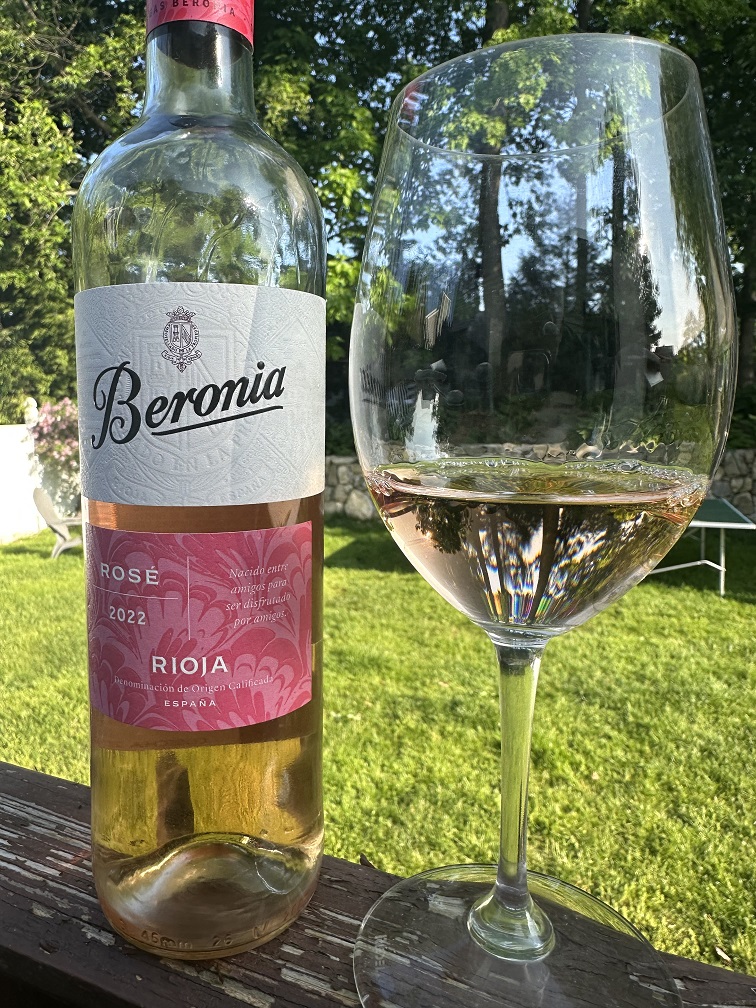
2022 Bodegas Beronia Rosé Rioja DOC (13.5% ABV, $12.99, 55% Garnacha, 45% Tempranillo)
Very light pink, almost a rose gold
Very restrained, a hint of underripe strawberries
Crisp, tart, very limited fruit, a distant hint of strawberries with a tartness of cranberries, medium finish
8-, Provençal style, clean, refreshing
2019 Bodegas Beronia Rioja Crianza DOC (13.5% ABV, $14.99, 95% Tempranillo, 4% Garnacha, 1% Mazuelo, 12 months in mixed American oak (staves) and French oak (ends) barrels, 3 months in the bottle)
Dark garnet
Cherries, cigar box, a hint of sweet tobacco
On the first day, the wine had a lot of baby fat, too round
Second day – much better, tart cherries with good acidity and earthy undertones.
8-, needs time. The wine is either genuinely too young, or this is a problem with the screwtop enclosure, not allowing the wine to properly breathe, therefore properly mature.
2018 Bodegas Beronia Rioja Reserva DOC (13.5% ABV, $24.99, 95% Tempranillo, 4% Graciano, 1% Mazuelo, 18 months in mixed American and French oak barrels, 18 months in the bottle)
Dark garnet
Earthy, dense, inviting
A hint of barnyard, tart cherries, vanilla, good acidity, good balance
8-/8, elegant and round. Asking for food
2015 Bodegas Beronia Rioja Gran Reserva (14.5% ABV, $29.99, 94% Tempranillo, 5% Graciano, 1% Mazuelo, 28 months in French oak barrels, 36 months in the bottle)
Dark Garnet
A touch of barnyard, dark and earthy, anis appeared on the 3rd day
Cigar box, sapidity, roasted meat, cherries and plums, clean acidity, firm structure, well-integrated tannins. On the third day, a touch of espresso on the finish.
8+, delicious. Will evolve. I would love to taste this wine in 10 years. And then in 20.
Just to summarize this tasting experience – the Rosé was excellent. I really didn’t love the screw top on Crianza – I believe it doesn’t let the wine properly mature in the bottle. And the Gran Reserva for $30 MSRP is the wine to get by the case and let it gracefully mature…
What were your latest Rioja discoveries?
Spanish Wines: Old and New
 If I start calling wines “friends”, does it make me an alcoholic or a sad psychopath?
Whatever. We are who we are.
If you love wines, what are the emotions you experience when looking at a familiar bottle? “Ahh, I know you. Of course, I remember you. Oh, we had a great time together. Remember what happened the last time we met?” Wouldn’t that be very similar to a meeting with an old friend? I’m not equating humans and bottles in any way, but emotions connect us, and good wine always solicits emotion.
What happens when you see a new wine? If something strikes your interest – label, region, producer, grape, anything – your think “yeah, I want to get to know you better”. Making new friends in the human world would work pretty much the same – but I think we better get back to talking about wines before I will dig myself too deep.
I love Spanish wines – and you are well aware of this. I’m always happy to meet old wine friends. I’m equally excited to make new acquaintances. Especially when both old and new friends are Spanish wines.


The first wine I would like to talk about… Well, speaking of friends, it is an old and wonderful friend who makes you feel uneasy at a first sight. You know the feeling when you see an old friend and you are super-happy to embrace him (or her), and then your joy is instantly blemished with the next thought of “ohhh, I promised to send him the book, and I never did”. So this Godello from Arano wines is this exact friend. I had this wine a few years ago, was blown away, promised to myself to write about it – and yet never did. Yep, that feeling.
Speaking about Spanish white wines, most people would probably think of Albarino first, followed by Rueda/Verdejo, and then probably get to white Rioja (usually made from the Viura grape). Meanwhile, Godello might be the most interesting Spanish white grape, in many instances producing white wines easily rivaling the best renditions of Chardonnay. This Godello is definitely in the group:
2020 Virgen Del Galir Pagos del Galir Godello Valdeorras DO (13.5% ABV, $21)
Light golden
Whitestone fruit and lemon
Whitestone fruit, plump, mouthfeel between Chardonnay and Roussanne, round, perfect acidity, delicious.
8+, would perfectly compete with any Chardonnay
Here comes another old friend – Bela, one of the new projects of the Rioja powerhouse CVNE in the Ribera del Duero region. I tasted the 2017 vintage of Bela 3 years ago, which gives me the “old friend” rights. There are some notable differences between 2020 and 2017 vintages – 2017 was well-drinkable almost from the get-go, and 2020 needed 3 days to become the beauty it had become. I don’t know if the oak regimen can actively contribute to such a dire difference (the 2017 vintage spent 6 months in the mix of 1-year-old French and American oak, and 2020 seems to spend 9 months in the new French oak) – but nevertheless, this is definitely the wine for the long haul.
2020 CVNE Bela Ribera del Duero DO (14.5% ABV, $18, 95% Tempranillo, 5% Cabernet Sauvignon and Merlot, 9 months in French Oak barrels, 3 months in the bottle)
Dark Garnet
Earthy spicy herbal nose with dark fruit undertones and a touch of tasted meat
Cherries and cherry pit, tart, focus, firm, concentrated – beautiful on the 3rd day. Day one needed time and day 2 was completely closed.
Drinkability: (day 3): 8+


Now, my most beloved wine category – Rioja.
As you know, everything in life has two sides. Rioja is my favorite wine – but on the flip side, I’m very particular about my Rioja. Despite the absolute world-class of CVNE, I never saw this Bakeder Rioja before, which to me means “proceed with caution”. It appears that this wine is a tribute to the car-free village of La Guardia. As this is a new wine for me, let me quote from the CVNE website: “Bakeder, pronounced back-aid-er, is a wine from Laguardia, a village from Rioja Alavesa. The name, “beautiful as peace” is a loose translation from the Basque language. Let the Whole World know the beauty of the fortified medieval village of Laguardia, protected by its great sierra; its solemn churches and monuments; its historic vineyards, and of course, its magnificent wines.” All my fears dissipated with the first sip:
2019 CVNE Bakeder Rioja Alavesa DOC (13.5% ABV, 100% Tempranillo, 10 months in French oak barrels)
Dark ruby
Cherries, cigar box, eucalyptus
Cherries, plums, well-integrated but present tannins, earthy, firm structure, good acidity, perfect balance. Lots and lots of pleasure.
8+, pop’n’pour the wine you don’t want to stop to drink
The last wine for today comes from the legendary Spanish producer – René Barbier from Clos Mogador in Priorat. Clos Mogador needs no introduction to wine lovers as a producer of some of the most coveted wines in the world. Com Tu, which I never had before, is a relatively new wine, commercially produced only since 2005 from 35-50 years old Garnacha vines. The wine’s name can be summarized as ” I am like you (Com tú), you are like me”, has a lot of meaning and history as a special project, so I would like to simply direct you to the Clos Mogador website to read about it.
2019 Clos Mogador Com Tu Garnatxa Negra de la Figueroa Montsant DO (14.5% ABV, 100% Garnatxa (Grenache), 18 months in a foudre)
Dark ruby
Dark ripe fruit and dark chocolate
Cherries, plums, chocolate, good acidity, sage, good balance.
8, light and pleasant on day 1
Here you are, my friends – some old and some old new “wine faces” – each delivering lots and lots of pleasure.
I wish you many pleasant encounters with friends old and new. Cheers!
Daily Glass: Yin and Yang
 Obey your inspiration.
Yin and Yang are too big of a concept to casually use while discussing everyday wines. Black and white. Darkness and light. Night and day. Passive and active. There is a lot of meaning behind the revolving black and white semi-spheres, and we would need a few (4, 5, …) bottles of wine to discuss it. So what gives?
I was drinking a bottle of wine for 5 days. Open, pour a little into a glass, drink, hope to be amazed, close, pump the air out, put aside. Repeat. And then I opened a bottle for a Friday night dinner of homemade tacos, and the wine was delicious and approachable from the moment it hit the glass. Yin and Yang, the brain said. This is a perfect title for the post. Who am I to argue?
Yin is a black portion of the circle of life. 2014 Bodegas Riojanas Rioja Gran Reserva (13.5% ABV, $19.99 at WTSO, $49.99 on the web) was the Yin at the moment.
Bodegas Riojanas was founded in 1890 by the Artacho family which had a long winemaking history prior to that. Unlike many other Rioja’s Greats, who set up their wineries close to the train station in Haro, Bodegas Riojanas winery was built in Cenicero, where the grapes grew. Bodegas Riojanas was among the 13 founding wineries behind the Rioja DOC denomination. Today, Bodegas Riojanas farms 250 acres of vineyards and produces a large number of white, red, Rosé, and sparkling wines.
Bodegas Riojanas Gran Reserva is one of the flagship wines. 100% Tempranillo, aged for 24-30 months in the casks, produced in traditional Rioja style. 2014 vintage was rated “good” in the official Rioja vintage classification – the best years are identified as “Excellent”, then “very good”, and then “good” – so we can say that this was an okay year. Traditional style Gran Reserva wines are typically tight and need time – and so was this wine. For 5 days, as I was tasting it little by little, the wine was opening up ever so slightly. Don’t get me wrong – it was drinkable for someone who likes the power and likes to drink super-structured, super-tight wines. On day 5, there was a glimpse of cherries and a cigar box, which was slowly replaced by the tannins on the finish. This is the wine with promise, but we need to wait until the Yin will turn.
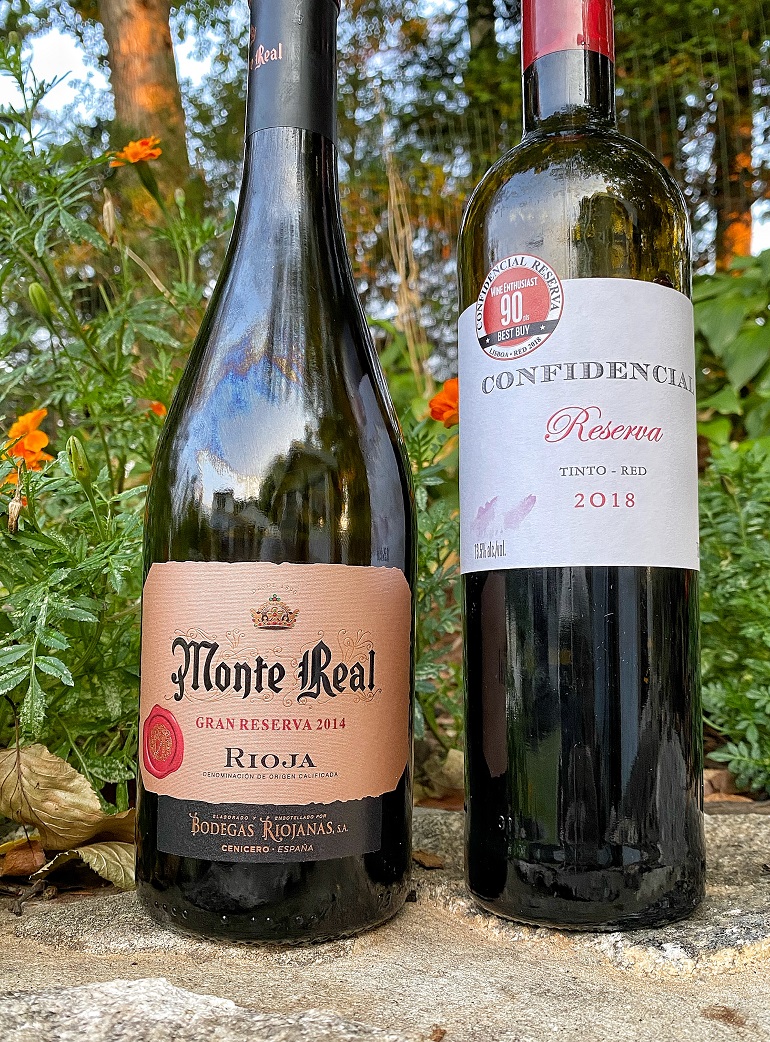
Now, the Yang – 2018 Casa Santos Lima Confidencial Reserva Vinho Regional Lisboa (13.5% ABV, $9.99, 10+ grape varieties, 6 months in the French oak cask).
Casa Santos Lima also has a history that lasts more than 100 years. The company had great success as a producer and exporter at the end of the 19th century. In 1990, the company was restarted, and today 90% of the produced wines are exported to more than 50 countries on 5 continents. Casa Santos Lima produces a wide range of wines in all the regions in Portugal, with a significant focus on providing value.
It is not for nothing this wine is called Confidencial. You might know that I excel and take pride in being a very capable grape sleuth. And nevertheless, as the name says, I was only able to find out that the wine is produced out of more than 10 confidential varieties – nowhere there are any hints on what those grapes might be.
This is not necessarily surprising. Yes, it can be a clever marketing play (humans love mystery), but at the same time, lots of grapes in Portugal are growing as field blends, where the grape grower doesn’t exactly know what grapes are growing in a given vineyard or a given plot – this might be a great idea to simply declare such blend as “confidential”.
Based on my experience with Portuguese grapes varieties, I would think that Touriga Nacional is a part of the blend, with the wild strawberries being a telltale sign. In any case, the wine was delicious with soft and supple wild strawberries and raspberries forming the core, and sage and other garden herbs playing a supporting role. Layered, velvety, and round – perfectly approachable and enjoyable right at this moment. (Drinkability: 8-/8).
Yin and Yang are all about harmony, and things that are changing in life – what was white can become black, and the other was around. The light can bring warmth or it can kill. The darkness can be scary, or it can be comforting.
With time, these two wines can completely change places. The Rioja might become absolutely stunning in 25-30 years., The Portuguese red might be past prime even in 10. The Yin and Yang can swap places. But we don’t know what will happen in the future, and that makes it all fun. Let’s drink to the harmony in life. Cheers!
Tempranillo, Transposed
How do you transpose a grape, any grape?
What does this title even mean? You transpose matrices (in algebra), or, at the very least, the notes of music. But Tempranillo???
Let me put my geek’s hat on, and let’s look at the definition of the “transpose” as the infinitely wise internet presents it:

“transfer to a different place or context”
The legendary CVNE had been producing Tempranillo wines in Rioja since 1879. Step by step, new vineyards were planted, and new styles of Rioja were going into production, each one with its own unique style and character – CVNE, the original earthy Rioja; softer and gentler Viña Real, powerful and concentrated Imperial, elegant and modern Contino. These are all Rioja wines, a blend of Tempranillo and a few other varieties, each one with its own personality and its own following.
Achieving success, some of us can just sit quietly and enjoy it. And some of us just want to say “I’m here now, and this is great, but I can’t stop. Let’s go further”. And down south CVNE decided to go, into the Ribera del Duero area.
Rioja is unquestionably famous with its Tempranillo wines, with producer such as CVNE, Muga, La Rioja Alta, Lopez de Heredia, and Contador. Ribera del Duero, down south from Rioja, got Vega Sicilia, Pingus, Pesquera, Emilio Moro – all amazing Tempranillo renditions as well. Now, the question is – why would a famous Rioja producer expand into a different region? Well, this is somewhat of a “why did the chicken cross the road” type of question – simply to get to the other side. CVNE doesn’t want to stop. CVNE goes beyond Rioja, into Ribera del Duero, the land of 100% Tempranillo wines – and the folks in Rioja know a thing or two about Tempranillo…
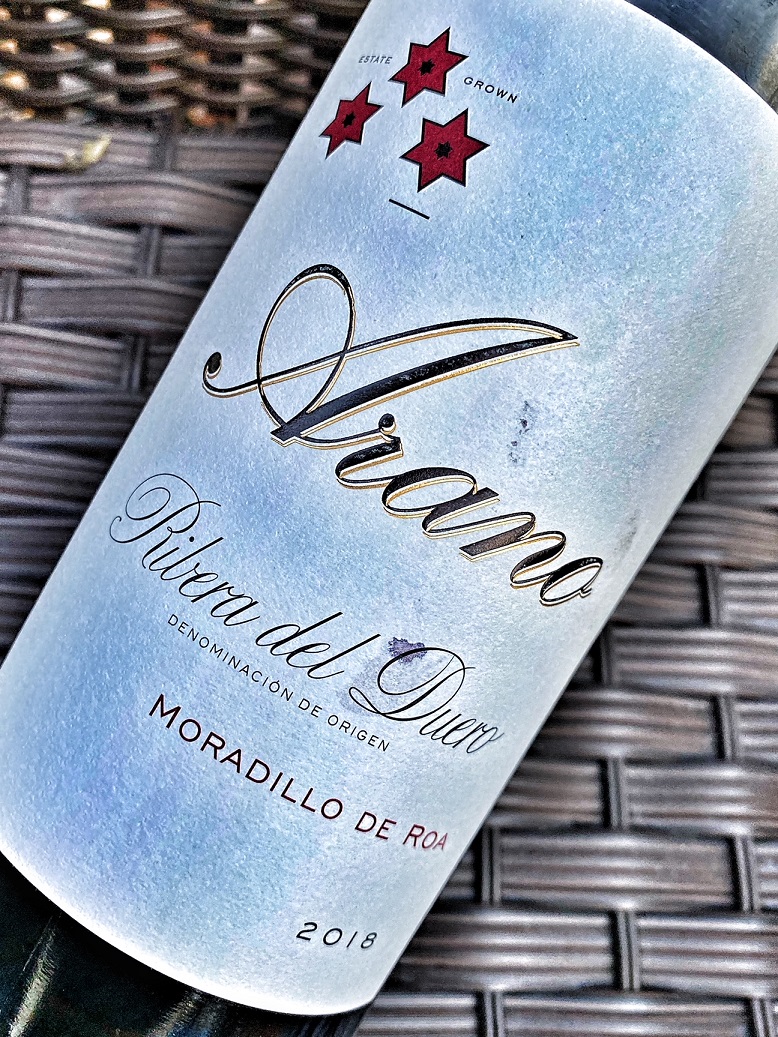
This is how the new brand of CVNE wines from Ribera del Duero was born – and it is called Arano. I had a few questions about this new adventure for CVNE, and so I asked those questions of Victor Urrutia, CEO of CVNE, to understand why the Arano name, why Tempranillo from Ribera del Duero, and what does the future hold. Victor graciously agreed to answer my questions – here is our conversation:
[TaV]: Why Arano label? What is the relationship between Arano and CVNE?
[Victor Urrutia]: CVNE is the owner and founder of Bela and Arano. The Bela and Arano labels are facsimiles of a label of ours, that is to say from CVNE in Rioja, from 1910. It is a simple and beautiful label from our archives. When we try and invent things we realise that we’re not very good at it, and that in fact, what our forefathers did is far better. CVNE is a family company and has been since it was founded in 1879. The 3 stars on the label represent the 3 children of CVNE’s cofounder, Eusebio Real de Asúa. He had 2 daughters and one son. Their names were Sofia, Ramon, and Aurea Minerva. The eldest, Sofia, was known as Bela. That is the name we have given to this winery, and it is also the first estate wine that we have made in Ribera del Duero. It’s the first star. The second star is for Arano. The only son was called Ramon and his mothers’ maiden name was Arano. We chose this name for the second estate wine to be released from the winery.
Bela is Tempranillo from our vineyard in the village of Villalba, on clay soils. Aged for 9 to 12 months in barrel. The vineyard is around 70 hectares. Arano is Tempranillo from our vineyard in the village of Moradillo de Roa, on limestone and pebbled soils. Aged over 12 months in barrel. The vineyard is around 9 hectares.
[TaV]: Why Ribera del Duero? What was the inspiration for CVNE to expand into Ribera del Duero?
[Victor Urrutia]: We want to bring our take on rioja’s elegance to rugged Ribera del Duero. The latter makes excellent wines and is a historic region. As ambassadors for Spain across the world, we felt it was our obligation to own vineyards and make wine in Ribera del Duero; and to make these known everywhere.
[TaV]: What is the future hold for Arano Ribera del Duero wines? Do you plan to produce Reserva and Gran Reserva?
[Victor Urrutia]: In Ribera del Duero we are making wines that express the vineyards that we own in this appellation. We label some of these as Crianza, for instance, because some consumers find it helpful; but it is not an important consideration for us when we conceive the wine. As we get to work and know our vineyards better, we will consider releasing new wines from this winery. After all, there is another star in the label, that we need to make a wine for. We haven’t yet found this vineyard. Or rather, haven’t found the way to express what must be our grand cru in this region. But we are working on it.
[TaV]: Any future plans for CVNE to expand further south, maybe into the Toro region?
[Victor Urrutia] There are some great producers in Toro, like the García family behind Mauro. But in general, we find the wines of Toro to be very dense and powerful, and I’m not sure we know how to make wines in that style. Our future lies in continuing to make wines of elegance and age-worthiness.
We need to continue looking for vineyards that will allow us to make those kinds of wines. They’re probably in higher elevations and northern exposures. There’s much to continue doing in Rioja, Ribera and of course, Galicia, where our Virgen del Galir winery has started to make wines of great depth from the vineyards that we bought as well those we’ve planted there. We bottle Godello, Mencia as well as Merenzao, varieties that we hardly knew about some years ago and the wines are phenomenal. We even have Palomino (locals call it Jerez, or sherry) that, arguably, expresses the terroir better than anything, given its neutral profile as a grape variety. Is it perfect? No, but it’s honest. And also quite interesting. Like everything that we try to do.
Now let’s talk about CVNE’s latest and greatest – 2018 Arano Crianza. As Victor mentioned, the grapes for this wine are coming from 4 different plots in the Moradillo de Roa vineyard, located at an altitude of about 3,000 feet above sea level. I had an opportunity to taste this wine, and it was unquestionably Ribera del Duero in style, much leaner and tighter than a typical Rioja wine. Here are my notes:
2018 Arano Crianza Ribera del Duero DO (14.5% ABV, $30, 15 months in French oak barrels, Vegan)
Dark garnet
Aromas of roasted meat and earth jump out of the glass at least a foot away from it. Espresso and herbs come at you at high intensity.
The palate is somewhat unexpectedly mellow, with dark fruit and herbs, good acidity, long and supple finish.
Better concentration on the second and third day, the wine feels tighter with more energy.
Drinkability: 8-. Enjoyable now, built for the long haul
The journey is getting more and more exciting by the minute. This is not algebra, but we are definitely looking at the case of the successful transposition of a grape – go find the results of this Tempranillo transposition, and we can compare notes. Cheers!
Magnificent Rioja: CVNE Deep Dive
It is no secret that I have a special relationship with Rioja – I happily admitted it many times. When asked about my favorite wine, I always say that I don’t have one. And every time I give this answer, deep inside there is a bit of the uneasy feeling, the one you get when you know you are not lying, but somewhat flirting with the truth, as Rioja is probably “the one”.
What would make the Rioja so special for me? For one, it was a pivotal experience at the PJ Wine Rioja seminar, where I tasted through an incredible lineup, including a 45 years old Rioja, and it was still absolutely beautiful (later on I tasted 65 years old Rioja which was, again, superb). Also, when it comes to Rioja, I can easily give you a bunch of producer names, whose wines I would wholeheartedly recommend to a friend and also would be excited to drink at any time myself – come to California, I might have to pause for a moment while looking for the favorites to recommend – I hope it tells you something.
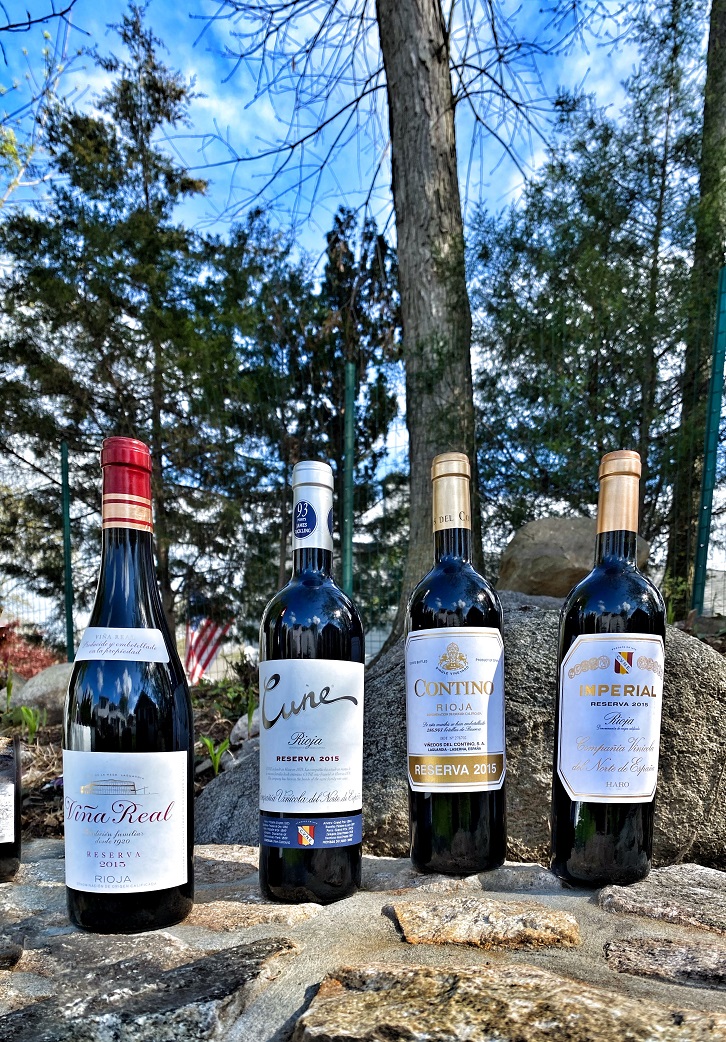
Speaking about favorite Riojas, I want to talk to you today about CVNE, also known as Cune due to a typesetting mistake. In 1879, the Real de Asúa brothers arrived in Haro for the reason not related to wine. Nevertheless, that’s how the story of Compañía Vinícola del Norte de España (C.V.N.E.), one of the most prominent Rioja producers, has begun. During its 140 years, CVNE remained a hallmark of quality and creativity. In 1915, CVNE introduced the very first White Rioja wine, Monopole. In 1973, CVNE founded Vinedos del Contino, the very first single-vineyard Rioja. Now in its 5th generation, CVNE continues to be a family winery and continues its advancement, now venturing even outside of Rioja, into Ribera del Duero and Valdeorras.
CVNE Rioja wines are produced at 5 wineries. First, there is the original Cune, which is simply a misspelled word for the CVNE, founded in 1879. In 1920, CVNE started production of Viña Real and Imperial Riojas. Viña Real was envisioned to be a more modern rendition of Rioja (in the 1920s), and Imperial was specifically produced for English markets. Imperial went on to become one of the most coveted Rioja wines, even becoming the wine #1 on the Wine Spectator’s Top 100 Wines list in 2013.
In 1973, Viñedos del Contino was created to become the first single-vineyard Rioja wine. In 1994, CVNE started its latest Rioja project, Real de Asúa, to honor the founders of the winery and create the most modern rendition of Rioja, using grapes from high altitude Villalba vineyards in Rioja Alta area.
Each one of these Riojas has its own, unique style. But can we taste the differences? I had a perfect opportunity to try answering this question. I got samples of 3 of the CVNE Rioja Reserva wines – Cune, Viña Real, and Imperial, all from 2015,. I also happened to have a few bottles of 2015 Contino Reserva and altogether this set out a perfect stage to try 4 different Rioja wines from the same vintage and technically, the same producer.
Before we get to wines, let’s say a few words about the vintage. Production of Rioja wines is strictly regulated by its governing body, Rioja Consejo Regulador, to ensure quality, and subsequently, the reputation of the Rioja wines around the world. All the vintages in Rioja have their official vintage ratings – Excellent, Very Good, Good, Medium, Normal. 2015 was officially designated as Very Good (not Excellent, such as 2001, 2004, or 2010, but still Very Good), which should still set a good level of expectations. 2015 vintage had a couple of unique characteristics, though. 2015 had the earliest harvest in the history of Rioja, starting early in September. It was also a very short harvest – typically, the harvest in Rioja takes about 2 months, with the feast of Virgen del Pilar usually taking place on October 12th, to celebrate the peak of the picking season. In 2015, the harvest was completed in 4 weeks so by October 12th all the picking was pretty much complete. How does any of this manifest in wines? I’m honestly not sure, that would require actually a vertical tasting – which I would be happy to conduct if I would have an opportunity.


So how were the wines? In a word – amazing. All four wines were absolutely gorgeous, delicious right now, and will continue to be delicious for the many years ahead. Here are my notes:
2015 Viña Real Reserva Rioja DOCa (14% ABV, $37, 90% Tempranillo, 10% Garnacha, Graciano, and Mazuelo)
Dark Garnet
Dark fruit, tobacco, espresso, expressive
Red and black fruit, cedar box, herbs, forest underbrush, firm, good structure
8/8+, lip smacking goodness. Delicious. If you are looking for a massive, earth-shattering wine, such as Walla Walla or California Cab, this is not the wine for you. But if you are looking for the wine which seduces and sings to you, give this wine a try.
2015 CVNE Cune Reserva Rioja DOCa (14% ABV, $29, 85% Tempranillo, 15% Garnacha, Graciano, and Mazuelo)
Dark garnet, almost black
Dark, brooding, minerality, cedar box, funk
Dark fruit, plums, explicit tannins, firm structure, fresh, good acidity.
8/8+, excellent, comforting, powerful, impossible to stop drinking.
2015 Contino Reserva Rioja DOCa (14% ABV, $46, 85% Tempranillo, 10% Graciano, 5% Mazuelo and Garnacha)
Dark garnet, almost black
Plums, cigar box, sweet tobacco
Complex, multilayered, earthy, dark fruit, clean acidity, lots of energy
8/8+, This is very early for this wine, but it is very enjoyable now, and it will be amazing with age


2015 Imperial Reserva Rioja DOCa (14% ABV, $50, 85% Tempranillo, 15% Graciano, Mazuelo, and Garnacha)
Dark Garnet
Earthy, spicy, red and black fruit, medium-plus intensity
Dark fruit, cigar box, firm, perfectly structured, delicious.
8+/9-, outstanding, lots of pleasure.
Believe it or not, but Imperial Rioja was my accidental pairing with BBQ chicken pizza, and the wine worked perfectly with it.
So now the secret is out. I’m lying when I’m claiming that I don’t have a favorite wine, and Rioja is the one. Well, I’m quite happy with my choice of affection – but do you have enough courage to name your favorite wine? Oh yes, with the coming holidays, any one of these Riojas would make a perfect present – to a friend, or to yourself. Go ahead, find it – everyone deserves a tasty Rioja. Cheers!
Hey, Rioja, What’s New?
I love Rioja.
But you already know that.
Well-made Rioja, opened in its due time, is one of the ultimate indulgences wine lovers can experience. I can bet this is also nothing new for you.
So what’s new with Rioja?
Every new vintage of any wine is unique and different, true, but talking about new vintages unquestionably banal. How about then Rioja made from organic grapes? What do you think about classic Rioja made from organic grapes – and timely conversation during April, the Earth Month?
CVNE, Compañía Vinícola del Norte del España, one of the oldest producers in Rioja (CVNE celebrated 140th anniversary last year), requires no introduction to any Spanish wine lover. CVNE produces a number of different Rioja lines – Cune, Viña Real, Imperial, Contino are some of the best known. Now, the Cune line has brand new Rioja to brag about – the first Rioja red wine made with organic grapes. The wine is made out of 100% Tempranillo (not very common) from the vineyards which were organically farmed, from the vintage with an Excellent rating (2019 was rated Excellent by Rioja DOC). The wine is also Vegan certified, and even sports the label produced from recycled materials. Most importantly, this is a simple, and tasty wine:
2019 CVNE Cune Rioja DOC (13.5% ABV, $15, 100% Tempranillo, organic grapes, Vegan certified, wild yeast fermentation, 4 months aging in oak)
Dark ruby with purple hues
Dark berries and cedar box
Soft, round, good acidity, soft ripe fruit, medium-long finish mostly acidic.
7+, food-friendly, simple, and easy to drink.
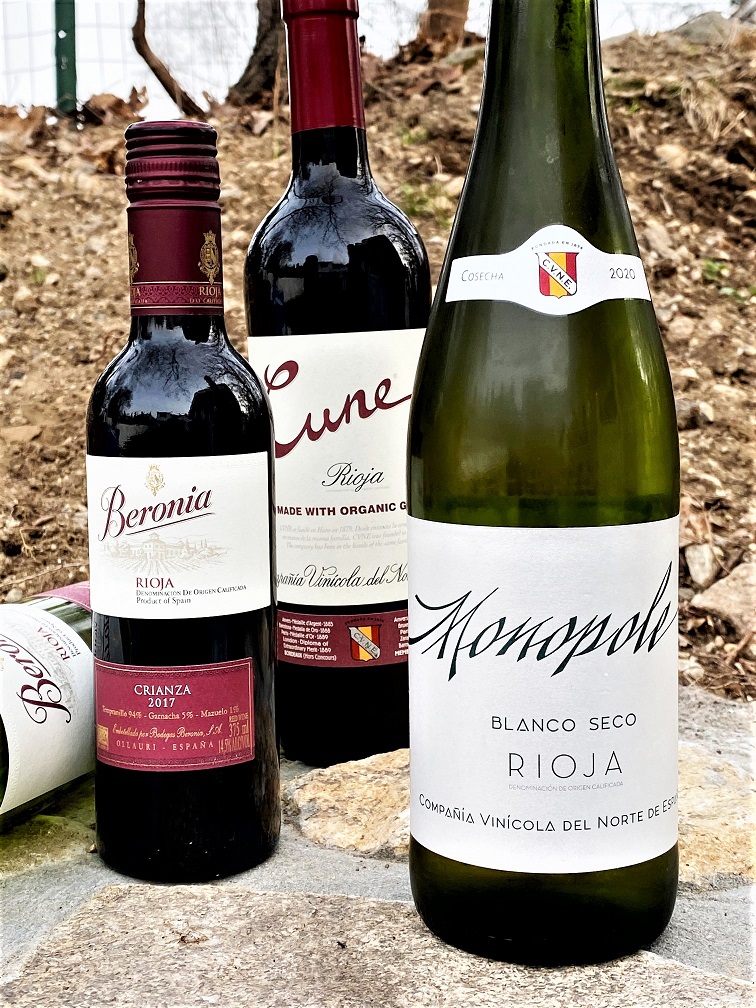
Back in 1915, CVNE produced Rioja’s first white wine – Monopole. It was not only the first white Rioja – this was the first white wine produced in Spain.
I had the pleasure of tasting many vintages of CVNE Monopole, and I have to honestly say that this 2020 was by far my favorite Monopole I tasted – I know I said talking about new vintages is banal, and here I am, yeah. Oh well. The wine needed a bit of time to open, but after 20 minutes in the glass, it was absolutely beautiful.
2020 CVNE Monopole Blanco Seco Rioja DOC (12.5% ABV, $16, 100% Viura, Vegan certified)
Straw pale, literally clear
Explicit minerality, a touch of gunflint
Crisp, tight, lean, hint of whitestone fruit, explicit minerality.
8+, outstanding.
Bodegas Beronia is much younger than CVNE, founded in 1973 by a group of friends from the Basque country. In 1982, Bodegas Beronia became a part of González Byass’s portfolio, and at that point, Bodegas Beronia wines appeared on the international market.
Bodegas Beronia is known for its innovative approach to winemaking. Rioja wines are traditionally aged in American oak, which gave them a rustic, “traditional” taste profile. Recently, many winemakers switched to using the French oak, which gives the Rioja more of the international, “modern” taste profile, making wines also more approachable at a younger age. Bodegas Beronia pioneered the use of specially made barrels, which use both American and French oak in its construction, to create a unique taste profile, an intersection of tradition and modernity.
In this release of 2017 Crianza, Bodegas Beronia recognized the new realities of 2021, where people have to spend more time by themselves, and added the 375 ml, a half bottle to the portfolio, making it easier for the wine lovers to open a bottle for a solo night.
2017 Bodegas Beronia Crianza Rioja DOC (14.5% ABV, $14.99/750ml bottle, $7.99/375ml bottle, 94% Tempranillo, 5% garnacha, 1% Mazuelo)
Ruby red
Freshly crushed red berries, a touch of barnyard, smoke, earthy
Red fruit, eucalyptus, clean acidity, excellent balance.
7+ at the moment, needs time
There you have it, my friends. A brand new organic wine from Rioja, a superb white Rioja, and a thoughtful Rioja, coming in different formats, all reasonably priced, perfectly suited for life at the moment. Cheers!
A Quick Trip To Spain
 Hey friends!
Who else is feeling travel-deprived? Who else is dreaming of the airline food and 2-hours long passport control line after 12 hours flight?
I know it is not only me. I know we all do. But we still have to wait until any of that is a reality. For now, travel is just virtual.
Virtual travel has many ways. You can go back to the pictures you took while vacationing. You can go on Instagram or Pinterest, type in “Italy”, “Amalfi Coast”, “Maldives”, “Everest”, or “Machu Pichu”, and get lost for hours, exploring every little angle of the paradise through the eyes of others. You can find plenty to read, from blogs to books to everything in between, making it easy to imagine yourself in a French cafe, on the beach in Goa, or looking at the world while standing on the Great Wall.
Then, of course, there is food. There are many cuisines available within anyone’s reach today, no matter where you live. You can have paella at the Spanish restaurant, Mexican street corn at the Mexican place, black truffle risotto at Italian, or cassoulet at the French restaurant. Will that be an authentic experience that will bring back happy memories? That depends. The food might be amazing, but if you will not get the exact match to your expectations, to what you experienced during the travel, that might end up being a great meal, but not memory-inducing at all. For sure my own experience with paella or cassoulet is always hit and miss.
And then there is wine – of, course, you knew that it will all end up at “have wine, will travel”, right? Remember that proverbial “sense of place”? The sense of place is an indelible part of the wine. Even more importantly, wine can trigger an outpour of memories even before it will be opened and poured. One quick glance at the label is often enough to start the emotions going, to recall, to remember, to re-live. Of course, you can find authentic dishes in restaurants and market places. There are tons of original and authentic foods imported and readily available. It still doesn’t mean that on the moment’s notice you can retrieve that aged Swiss Gruyère, French Raclette, or a Spanish Jamón and have a smile from ear to ear. However, take out that bottle of Brunello, Australian Shiraz, Provençal Rosé, or Spanish Rioja – and watch out for that smile.
Ahh, I just said “Rioja” – remember I promised you a quick trip to Spain? Instead of musing on the subject, how about we will actually take this trip – and we don’t even need to pack a suitcase or wait for a taxi – get a bottle of Rioja, and you can instantly imagine yourself strolling the streets of Barcelona, or maybe admiring the old train station in Haro. Have wine, will travel – who is with me?
The Rioja I would like to bring to your attention today is as classic as it gets – coming from CVNE (Compañía Vinícola del Norte del España), one of the oldest producers in Rioja, who celebrated it’s 140th anniversary last year. CVNE produces a number of distinct lines of Rioja wines, under Cune, Imperial, Viña Real, and Contino labels, but the company is also expanding into areas such as Ribera Del Duero, Valdeorras, and others.


I recently had two delicious samples of the latest offerings from CVNE – you really can’t go wrong with either one of them, and the QPR is absolutely unbeatable:
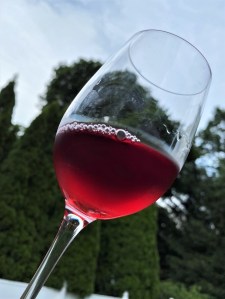
2019 Cune Rosado Rioja DO (14.5% ABV, $13, 100% Tempranillo)
Cranberry juice color
Fresh cranberries, herbal notes, sage and violets
Fresh, crunchy cranberries, with characteristic acidity and tiny bitter undertones. Bone dry and very present. Balanced and elegant. Un-Provence and proud.
8/8+. If you are looking for Rosé with an umpf, this is your wine.
2016 Viña Real Crianza Rioja DOC (14.5% ABV, $17, 90% Tempranillo, 10% Garnacha, Graciano and Mazuelo)
Intense garnet
Eucalyptus, sage, crunchy berries, tobacco
Fresh red fruit, elegant, medium body, good acidity, a touch of sapidity, excellent balance
8, fresh and delightful. Daughter said it was good with an ice cream cake (surprise!)
Where would you like to go next? Cheers!
Magnificent Tempranillo
Let’s start with some definitions:

Of course, you know what “magnificent” means. Still, I feel compelled to start with the definition to explain my rather overzealous title. After looking at the Merriam-Webster and Google definitions for “magnificent”, I decided to go with the one from Dictionary.com, as it perfectly underscores the emotions which I tried to express with this title.
Wine is personal. Wine solicit the emotion, but it is personal – the appeal of the liquid in the glass is first and foremost for the person who is taking a sip. Two people can have a sip of exactly the same wine and have completely opposite reactions – one might love it and the other might hate it. Thus calling the wine magnificent is personal – and it is simply the expression of the emotion one had after taking a sip of that wine.
Today Tempranillo is grown around the world. You can find delicious renditions coming from Australia, Napa Valley, Oregon, Lodi. My first Tempranillo love, however, is Rioja, and this is where it still stays. A sip of La Rioja Alta, Lopez de Heredia, CVNE, or El Coto makes everything right with the world. Same as with any other wine, Rioja can’t be taken for granted – you need to know the producer. But in the hands of the right producer, Rioja becomes … magnificent. It is the wine of exceptional beauty, it is extraordinarily fine and superb, and it is noble and sublime – exactly as the definition above says.
Of course, it is not just Rioja which makes Tempranillo a star. Ribera del Duero, located a bit more down south and central, is another source of magnificent Tempranillo wines – if you had a pleasure to try the wines from Emilio Moro, Pesquera, Vega Sicilia you know what I’m talking about. Again, in the hands of the good producers, Ribera del Duero Tempranillo is every drop magnificent.
To make this conversation about magnificent Tempranillo more practical I want to offer you my notes on a few samples of Tempranillo wines I had an opportunity to enjoy recently.


CVNE (Compañía Vinícola del Norte del España) needs no introduction for the Tempranillo fans. Founded in 1879 (yes, this year is the 140th anniversary of CVNE) by two brothers, the CVNE is still run by the family, and today consists of 4 wineries – CVNE, Imperial, Vina Real, and Contino. However, those are the Rioja wineries and today CVNE is taking its 140 years of winemaking experience to the other regions. Here is an example for you – Bela from Ribera del Duero.
The grapes for Bela wine came from 185 acres Tempranillo vineyard, located at the altitude of 2,400 feet in the village of Villalba de Duero and planted in 2002. Here is the story behind the name of the wine and the picture on the label: “Bela’s label is a facsimile of an old CVNE label from the 1910’s. The stars represent each of the children of CVNE’s cofounder, Eusebio Real de Asúa. His brother Raimundo, the other co‐founder, had no descendants. Each star represents one of the children: Sofia, Áurea, and Ramón. Sofia was known as Bela. We descend from her.”
2017 Bela Ribera Del Duero (14% ABV, $18, 100% Tempranillo, 6 months in 1-year-old American and French oak barrels)
Dark garnet, almost black
Roasted meat, coffee, cedar box
Beautifully complex palate, black cherries, blackberries, eucalyptus, fresh, balanced.
8-, excellent wine, built for the long haul, will evolve.
Contino was the first single-vineyard Rioja created by CVNE and the owners of the Contino estate (which takes its history from the 16th century). 150 acres Lacerna vineyard in Rioja Alavesa is the source of grapes for the Contino line of wines. Here is the story behind the name: “The “contino” was the officer in charge of a guard corps of a hundred soldiers who protected the royal family “de contino” (continuously) from the times of the Catholic Monarchs onwards. According to the tradition, Saint Gregory, the patron saint of vineyards, passed through the lands of this same Rioja property, giving rise to the use of his figure in the logo of this winery, and to the use of his name for some of the plots now planted with vines.”
2012 Contino Rioja Reserva Rioja DOC (13.5% ABV, $45, 85% Tempranillo,10% Graciano, 5% Mazuelo and Garnacha, 2 years in used American and French oak plus 2 years in the bottle)
Dark garnet, almost black
Cherries, cigar box
Bright, uplifting dark fruit medley, clean acidity, a touch of minerality, velvety texture with well-integrated tannins, perfect balance
8+, delicious, lots of pleasure in every sip


Bodegas Beronia was founded in 1973 by a group of friends who fell in love with La Rioja while visiting on a holiday. The name Beronia is not random – here is the explanation: “name linked to the history of the land where the winery is found. In the 3rd Century BC the area known as Rioja today was inhabited by a celtic tribe called the ‘Berones’. They inhabited the towns of Tricio, Varea and Leiva, marking the limits of the Berones region, today La Rioja.”
Originally, the wines were produced literally by friends for the friends, without much thought of commercial sales. In 1982, Bodegas Beronia became a part of González Byass family, and at that point wines of Bodegas Beronia started to appear on the international markets.
Bodegas Beronia Rioja wines represent an intersection of tradition and modernity. While “traditional” and “modern” styles of Rioja can be a subject of great debate with a lot of wine consumed to prove the point, I would offer a very simplistic viewpoint. Tempranillo has a great affinity to the oak; the resulting Rioja wine is well influenced by the oak regimen. Traditionally, Rioja is matured in American oak casks. Modern style Rioja often uses French oak. Here is your style distinction – American oak versus French. Bodegas Beronia goes a step further than many. They create their own barrels, using both American and French oak elements in one barrel. Thus the wine is not defined by blending of the separately aged components, but instead, it is aging in the mixed environment.
Here are the notes for the two wines I was able to taste:
2015 Bodegas Beronia Crianza Rioja DOC (13.5% ABV, $14.99, 91% Tempranillo, 8% Graciano, 1% Mazuelo, 12 months in American and French oak barrels)
Dark garnet
Vanilla, plums, cedar box
Fresh dark berries, ripe cherries, tobacco, a touch of sapidity, medium-plus body, clean acidity, a touch of eucalyptus, medium-long finish
8-, the second day was better than the first. 8+ day 2 and 3
2013 Bodegas Beronia Rioja Reserva DOC (13.5% ABV, $19.99, 95% Tempranillo, 4% Graciano, 1% Mazuelo, 3 years in American and French oak barrels and in the bottle)
Dark garnet
Plums, cherries, tobacco
Dark fruit, tar, tobacco, cherries, a touch of cherry pit, bright acidity, firm texture, noticeable minerality, medium finish
8, excellent. Day 3 is more open.


No, we are not done yet. I have one more Rioja to discuss with you – from Bodegas LAN.
Bodegas LAN was founded in 1972. Here is another winery name which is not random: “A name – LAN – composed of the initials of the three provinces that make up the D.O.Ca. Rioja: Logroño (now La Rioja), Álava and Navarra.” Bodegas LAN owns about 170 acres vineyard called Viña Lanciano, which is subdivided into the 22 parcels, each with a unique microclimate. These 22 parcels are growing Tempranillo, Garnacha, Mazuelo, and Graciano, most of them on the 40 -60 years old vines.
Grapes for LAN Xtrème Ecológico wine come from 12.5 acres parcel of 100% organically certified Tempranillo, located at the altitude of 1,200 feet.
2015 Bodegas LAN Xtrème Ecológico Crianza Rioja DOC (14.5% ABV, $15, 100% organically-certified Tempranillo, 14 months in new French oak, 9 months in the bottle)
Dark garnet, practically black
Cherries, cedar box, eucalyptus, tobacco, open and inviting
Gorgeous, layers of dark fruit, soft but present tannins, baking spices, firm and perfectly structured, tart cherries on the finish, tannins taking over.
8+, a long haul wine, will be perfect in 10 years or longer. A total steal at a price.
Culmen is one of the top wines made by Bodegas LAN, produced only in exceptional vintages. The grapes for this wine come from 13 acres El Rincón parcel, located at the 1,500 feet altitude.
2011 Bodegas LAN Culmen Rioja Reserva DOC (13.5% ABV, $55, 88% Tempranillo, 12% Graciano, 26 months in new French oak, 20 months in the bottle)
Dark garnet with a purple hue
Red and black fruit, roasted meat, warm granite, sweet cherries, medium-plus intensity
Fresh tart succulent cherries are popping in your mouth, changing into sour cherry compote with tar, tobacco and cedar box. Delicious long finish. Lots of pleasure in every sip.
8+/9-, outstanding.
Here you go, my friends. Six delicious, or shall we say, magnificent, Tempranillo renditions. I will be happy to drink any of them again, at a moment’s notice. What do you think of Tempranillo wines? Got any favorites to share? Cheers!
Last Bottle Sign Up ($10 credit)




 Talk-A-Vino