Archive
New and Noteworthy: Few Spanish Wine Recommendations
I’m an eternal optimist, for sure – I keep creating new “series” of the posts (like the one you now see in the title – New and Noteworthy) in the hope that I will remember to use it all the time. Well, I had or still have a number of series in this blog, but very few of them are current ongoing. Will see what will happen with this one. Here is the idea behind this series: I do get to taste many of the newly released wines, some of them are samples, some are not; the wines which I like I intend to share with you in this series of posts. ‘Nuf said, let’s go.
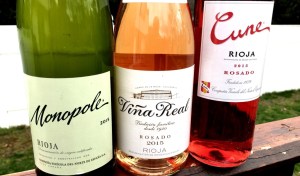 My love affair with Rioja started after tasting of the beautiful line up of Viña Real, CVNE and Imperial Rioja (all essentially produced by CVNE), all the way up to the 1964. They were all delicious red wines. For the long time Rioja associated for me only with the red wines, until I tasted Lopez de Heredia Blanco and Rosato, both being about 15 years old and delicious. This is how I discovered that Rioja actually is not only red wines. My next discovery of Rioja white wines was Rioja Monopole (100% Viura), which (to my shame) is produced since 1915 – well, “live and learn” (or “better late than never”, whatever you prefer to comfort yourself). And few years ago I also encountered the Rioja Rosato – so now I definitely know that Rioja is a lot more than just delicious reds.
Recently I had an opportunity to taste the latest releases of few of the white and Rosé wines from Spain, not only from Rioja but also from few other regions, and I want to share those wines with you. I don’t know if this is luck, or if I lost all of my taste buds already, but I liked all the wines I tasted – below you will see my tasting notes on the 6 wines, and I would gladly recommend all 6 to you. As a bonus, all 6 are also a great value (under $20). Well, you will be the judge once you will have an opportunity to taste these wines.
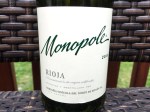 2015 CVNE Monopole Rioja (13% ABV, SRP: $13, 100% Viura) – the oldest continuously produced white wine in Rioja, starting from 1915. I didn’t realize this was a 100th vintage (assuming there was no break in production years).
C: straw pale
N: beautiful white fruit with tropical fruit nuances, lemon, intense
P: clean, crisp and round at the same time – is it possible?, white stone fruit, medium to full body, refreshing, nice acidity on the finish
V: 8-, this wine would brighten up any summer day
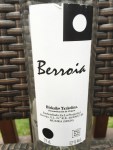 2014 Bodega Berroia Bizkaiko Txakolina DO (12% ABV, $19, 85% Hondarrabi Zuri, 10% Riesling, 5% Folle Blanche, Vegan) – Txakoli is dangerously looking but actually easy to pronounce (just say “Cha-Coh-Lee”) wine coming from the Basque country in Spain. My first encounter with Txakoli was about 8 years ago – it is a clean and refreshing wine, perfect all year around and especially in summer. Similar to many other Spanish whites, it didn’t make it in the US in any major way, but you can still find some of the Txakoli wines in the wine stores – and they well worth your attention.
C: Straw pale
N: concentrated, intense, inviting, touch of peach, candied fruit
P: fresh, undertones of candied fruit but with dry core. Somehow reminiscent of grapefruit, but without much sweetness of bitterness. Medium body and intriguing, leaves you with a sense of mystery which is hard to grasp.
V: 8-/8, excellent and dangerous. Once you start drinking it, it is hard to stop.
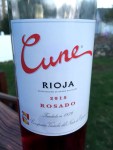 2015 CVNE Rosado Rioja (13.3% ABV, SRP: $13, 100% Tempranillo) – shhh, don’t tell anyone, this was my favorite wine out of the group – but it is a secret.
C: Dark, concentrated pink, bright fresh cranberry juice level
N: intense, floral, with fresh berries and the leaves – imagine smelling the raspberries right on the brunch with leaves on a hot summer day
P: wow, crunchy strawberries and cranberries which just plop in your mouth as you bite them. Clean acidity, super refreshing and every sip is asking for the next.
V: 8+/9-, outstanding, one of the very best Rosé I ever tasted.
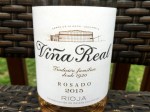 2015 Viña Real Rosado Rioja (13% ABV, SRP: $15, 85% Viura, 15% Tempranillo) – you don’t need my comments here – Viña Real needs no introduction to Rioja wine lovers.
C: orange onion peel
N: very restrained, hint of herbs
P: ripe strawberries, good acidity, medium body, unusual. Second day: delicious, round, refreshing, cohesive. Just needed to let it breeze
V: 7+, need to try again to make up my mind. Second day: 8-, excellent, clean, good fruit presence and perfectly refreshing
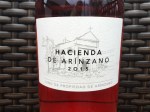 2015 Hacienda de Arínzano Rosè Tempranillo Pago de Arínzano (13.5% ABV, SRP $19.99, 100% Tempranillo) – Pago is the highest denomination for wine quality in Spain, above DOC, and it is not easy to achieve it. You can think of Pago as single winery becoming its own appellation – as Arínzano is in our case. What is also interesting about this wine is that it comes from the Tempranillo vineyard which is designated for the production of the Rosé wine, so Rosé here is the goal, not an afterthought.
C: bright pink, beautiful
N: inviting, herbal notes, strawberries, fresh
P: outstanding. Soft, polished, fresh strawberries, excellent balance, lip smacking delicious, medium body.
V: 8, excellent wine, easy to drink with perfect balance.
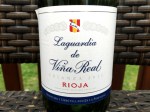 2012 Laguardia de Viña Real Crianza Rioja (13.5% ABV, $12.99, 100% Tempranillo) – can’t leave you without a red, can’t I? Viña Real Rioja Crianza is one of my favorite wines, and it is also one of the best value wines for about $15 or under (depending on where you shop). I never had, however, Laguardia de Viña Real, so was definitely interested in trying this wine when I saw it in the store.
Once I poured it in the glass and took sip, I was not happy. The wine was rather lean and biting, not what Viña Real usually offers in the glass. I decided to decant it, and then after about two and a half hours, the magical Rioja showed up.
C: dark garnet
N: eucalyptus, cigar box, cherries
P: fresh fruit, herbs, sweet oak, medium to full body, well noticeable acidity
V: 8- (after decanting), very nice wine, but give it 5 years or so.
We are done here – let me know if you tried any of the wines I mentioned above and what you think of them. Cheers!
Terrenal: Delicious Kosher Wines, and Great Values Too
What I like about wine world is that many things are changing, and most of them changing for the better. Winemakers around the world are more in tune with the nature, their means and ways are greatly improved, and it shows in the wines. The best testament to that is when you are poured a random glass of wine, you take a sip, you say “ahh, this is good”, and only then you care to look at the label to find out what you are drinking.
Over the past 5-8 years, Kosher wines improved so dramatically that there is no need anymore to defend them and advocate that “they can be good too” – if you are still wondering what Kosher wines are, I can offer you a short crash course in this post. Kosher wines today are definitely in that category I described above – you take a sip, then look at the back label and say “wow, this is actually a kosher wine!” – been there, done that.
When it comes to Terrenal, I knew that these are the kosher wines, but only from the experience – here is the link to the blog post about selection of Terrenal wines which I found at Trader Joe last year, and they were excellent as the wines and simply outstanding as a value.


Few weeks ago I got a sample of two of the new wines from Terrenal. First wine is made out of one of my most favorite red grapes – Tempranillo. The second wine closely mimics composition of one of the Spanish flagship wines – El Nido from Gil family estates, with the same blend of Monastrell and Cabernet Sauvignon in similar proportions. For what it worth, below are the tasting notes:
2014 Terrenal Tempranillo Yecla DO Spain (13.5% ABV, $4.99, 100% Tempranillo, kosher non-mevushal, certified Vegan )
C: dark garnet
N: blackberries, eucalyptus, sage, plums
P: nicely restrained, mouthwatering acidity, fresh fruit, tart blackberries, short finish, easy to drink
V: 7+, nice and simple, will work well with wide range of dishes
2014 Terrenal Seleccionado Yecla DO Spain (15% ABV, $7.99, 70% Cabernet Sauvignon, 30% Monastrell, kosher non-mevushal, certified Vegan)
C: dark garnet, almost black
N: sweet plums, hint of cinnamon, nutmeg, mocha
P: polished, round, restrained fruit, silky mouthfeel, hint of chocolate, good structure.
V: 8-, excellent wine, easy to drink and “dangerous”. Will evolve in 4-5 years.
Here you go, my friends. Two very tasty wines with an unbeatable QPR and a number of bonus points – Kosher and Vegan. Terrenal Seleccionado will not match El Nido in the extraction level and concentration, but $7.99 versus $150+ puts it in a very interesting perspective. Yes, of course, conduct your own experiment – get a bottle of each and taste them blind side by side – I wounder what you would think.
The only challenge might be that the Terrenal wines are only available at Trader Joe’s stores, at least in the United States, so if you have one close by, you are in luck. If you will see them anywhere else, please comment so the others would know where to look for them. Happy [Kosher, Vegan] value wine hunting. Cheers!
OTBN 2016: Two Spanish Jewels, And What The Others Opened
 I don’t like making decisions. Here, I said it. Not around the wines for sure. But I have a justification for this indecisiveness – and I’m sure many oenophiles will attest to the same. You see, I like to drink aged wines. Despite popular notion from many wine professionals that people don’t understand what is good for them and should drink their wines young (here is the latest piece from Steve Heimoff on the subject), I still like my wines with a little age on them. Heck no, I actually like them well aged. But most wines in my cellar are in the single quantities (yes, that means One bottle) – therefore, if I open it, I will not be able to find out if it will improve with age. As you can imagine, this can lead to many, many “indecisive moments”.
So for the people like myself, Open That Bottle Night was invented. I will not go again into the history of the OTBN – I already wrote about it extensively here. But the event itself really makes you to take decisions and “just do it”.
Yes, the decision making is frustrating. But once decision is made, frustration is out and anticipation and excitement are in. It would be so interesting to understand how the mind (subconscious?) arrives at a decision where there are lots of possibilities, all promising similarly happy outcome (in the end of the day, no matter what bottle you will open, as long as it is not spoiled, you will still be happy – with a 99% chance). Someone really have to study how the oenophile’s mind works. So in this mysterious way, all of a sudden the decision came to open two of the Spanish wines I had for a little while. To be absolutely honest – first I decided on those two wines, then I started figuring out what was making them special – and these wines are special.
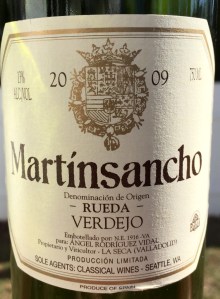 How special? Both wines were made by pioneers, and they represent true passion and vision which makes winemaking so unique. The first wine was called Martinsancho, made out of the grape called Verdejo in Rueda, Spain. Martinsancho is the name of the vineyard in Rueda, where Verdejo had been planted since 17th century. But you see, in the mid 1970s, the whole size of the vineyard was only 1 acre, and it was pretty much the last of Verdejo left in Spain, due to natural (phylloxera) and man made (political, economic) causes. Angel Rodriguez had a passion, vision and tenacity to preserve that vineyard, replant the original cuttings on the 25 acres, and literally single-handedly restart Verdejo production in Rueda. Angel Rodriguez’s hard work was even honored by the King of Spain Juan Carlos.
How was the wine? One word – delicious. One of the very best Spanish white wines I ever had. Here are the notes:
2009 Ángel Rodrígues Martinsancho Verdejo Rueda DO (13% ABV, $17, 100% Verdejo)
C: light golden, very pretty
N: restrained, touch of grass, minerality, almonds
P: great deal of finesse, it is smooth, silky, good acidity, medium to full body, elegant
V: 8+, great world class wine
Our second started with this view once the top foil was removed:
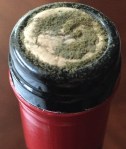 From my experience, this doesn’t mean the wine is spoiled (at least so far it never happened), but it still makes you uneasy – there are no substitutes in this game. This was the only hiccup though, the wine itself was unaffected.
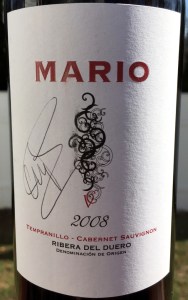 Similar to the first wine, this one was also a product of a passion, a dream. Clara Concejo Mir inherited the vineyard from her grandfather Mario. Located at the high altitude of 7,750 feet, this is first vineyard in teh Ribera del Duero region; the vineyard is also adjacent to the vineyards of legendary Vega Sicilia. While Tempranillo is a king in Ribera del Duero (often called Tinto Fino), Clara also had a vision to add Cabernet Sauvignon to her wine which she called Mario (yes, in honor of her grandfather). She also had perseverance to lobby the regulatory body of Ribera del Duero to allow officially put Cabernet Sauvignon on the label of the Ribera del Duero wine. The rest of this can be subsided to a moan which you will produce upon taking a sip of this wine.
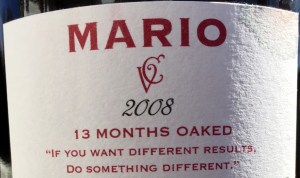
2008 Vegaclara Mario Ribera Del Duero DO (13.5% ABV, $25, 77% Tempranillo, 23% Cabernet Sauvignon, 13 month in oak – 33% French, 33% American, 33% Hungarian)
C: dark garnet
N: fresh berries, touch of barnyard, eucalyptus, black currant
P: yum! (is that a good descriptor?) silky smooth, polished, great depth and concentration, black currant, dusty mouthfeel, flawless, perfect balance
V: 9, a wine of an outstanding finesse
Now that I told you about wonderful wines and passion we experienced, I want to give you a glimpse into what the others were drinking. First of all, I was very happy to see an increased number of posts about OTBN all over the social media – or as at least it seemed as an increased number of posts to me. And then over the course of the week I inundated lots of people on Twitter, keep asking them what are they going to drink (and making sure they will remember about OTBN) – I hope it didn’t cost me any followers, but oh well, it is a good cause. So below is a small collection of tweets plus some blogs posts about the OTBN wines, in no particular order:
https://twitter.com/FWHedonist/status/703811785808179200
Wine Raconteur wrote about the wines he will not be opening for OTBN:
https://thewineraconteur.wordpress.com/2016/02/27/open-that-bottle-night-2/
Margot Davies: (by the way, I would really love to try that wine)
https://twitter.com/gatherandgraze/status/702622651668262912
These are the snippets of conversations I had about #OTBN – I’m sure I missed some too. So what did you end up opening for OTBN and did you like your choice after the cork was pulled out? I would love to know – you know where the comments section is.
Before we part, I want to remind you that actually you have the power to make any night an Open That Bottle Night – no need to wait a year to open That Bottle. Just do it! Cheers!
Garnacha from Cariñena
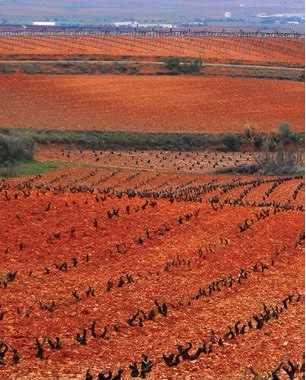
Beautiful Cariñena Vineyards.
Source: Cariñena DOP
Today we will be talking about Garnacha, better known around the world under its French name of Grenache. But the region we will focus on is located in Spain, so let’s use regionally-appropriate name.
Garnacha is one of the most important grapes of Spain, rivaled only by Tempranillo. It is planted practically in all the regions, and used both solo and as a blending grape, delivering tremendous range of expression.
Let’s narrow down our focus a bit and talk about Garnacha from Cariñena. Cariñena is a region in the central part of Spain, second oldest official DO (protected origin) in Spain and one of the first in Europe, created in 1932. Most of the vineyards in Cariñena are situated on the mountains, from 400 meters to 800+ meters (1300 ft – 2600 ft) above sea level. One of the best known grapes from the region is … Cariñena, which I find quite confusing considering that this is also the name of the region itself. However, the most planted grape is…yes, Garnacha, which takes 55% of all the grape plantings. Another interesting fact is that Garnacha plantings in Cariñena are some of the oldest in Spain, with age of some vines more than 100 years old.
I will not inundate you here with information which you can find on your own, for instance, on the official D.O.P. Cariñena web site. I recently heard that Andrea Immer Robinson, one of the 18 women Master Sommeliers, and an official Sommelier for Delta Airlines, selected Cariñena Garnacha wines to serve to the Business Class passengers on Delta flights due to its affinity to the high altitude. Obviously I got intrigued with this statement, and I was lucky enough to reach out to Andrea and ask a few questions about it. Here is what I was able to learn:
Q: It sounds like different wines might have different affinity to showing best at the high altitude? Is that really true? Can you elaborate on this a bit?
A: Yes it is true. At altitude your sense of smell is muted and your palate is less hydrated. Consequently, more restrained wine scent/flavor profiles or more intensely tannic wines may not present as well in-flight.
Q: Do you have an example of the wine which is delicious on the ground, and doesn’t taste that well up in the sky?
A: It is less that a wine doesn’t taste well in the sky, and more that it may seem less expressive or flavorful. The subtlety of Italian Pinot Grigio is an example of a style that classically seems muted and less flavorful at altitude. But I did find a great one that belies the broad-brush experience I have had which is exciting.
[TaV comment]: Obviously this is where the limitations of the virtual conversation kick in, as I would love to ask Andrea what was that great Pinot Grigio which she was able to find to serve at the high altitude.
Q: What do you think makes Garnacha from Cariñena good wines to drink at the high altitude? Do you think all Garnacha from Cariñena wines are equally good to drink at the high altitude, or is it only few particular wines?
A: The Garnacha from Carinena is expressive and concentrated and the tannins though present, are soft and ripe – so, the wine shows a lot of character and is not drying to the palate in flight. The particular example that is getting rave reviews presently is a 9 year old Reserva – that extra bottle age gives complexity that customers are going ape over. I don’t thin every wine would garner this type of response–I think the bottle age and complexity of the Reserva level are a big part of it.
[TaV comment]: Yep, here we go again – would love to know what Reserva wine was that…
Q: What are your favorite Garnacha from Cariñena wines, whether on the ground or on the board of the plane?
A: I love the Monasterio de las Vinas Reserva that we are serving on Delta now. I also really love the Castillo de Monserran and the Paniza Vinas Viejas on the ground (haven’t tried them in flight). Perfect as we get into stew season!


I also was able to taste a few of Garnacha from Cariñena wines, and below are my impressions:
2012 Viñas Viejas de Paniza Garnacha Cariñena DO (14% ABV, $18, 100% Garnacha, 6 month in oak)
C: dark ruby
N: lavender, espresso, touch of dark fruit
P: hint of chocolate, cherries, medium body, good acidity
V: 7+
2012 Bodegas San Valero Particular Garnacha Old Vine Cariñena DO (14% ABV, $14.99, 100% Garnacha, 14 month in oak)
C: dark garnet, almost black
N: intense, whiff of alcohol, dark fruit, raspberries
P: fresh raspberries, open, bright, medium body, herbal undertones, pronounced acidity, short to medium finish, but then tannins come in after a while.
V: 7+ at the moment, needs time. Judging by the acidity and late tannins, this wine needs at least 5 years to develop
2013 Corona de Aragon Special Selection Garnacha Cariñena DO (13.5% ABV, $14, 50% Garnacha, 50% Cariñena, 5 month in oak)
C: Dark garnet
N: restrained with herbal undertones, pencil shavings (rarely use this descriptor, but it was very deserving here), hint of blackberries
P: fresh, delicious, dark chocolate, cherries, classic Grenache rendition with good acidity and excellent balance
V: 8-, my favorite of the tasting, would happily drink this wine every day – definitely an excellent QPR
Have you had any of the Garnacha Cariñena wines? What are your thought on the wines at the high altitude? Don’t be shy, comment away! Cheers!
P.S. I would like to thank kind folks at Gregory White PR for providing samples and reaching out to Andrea Immer Robinson
How Good Celebrity Chef’s Restaurant Can be? Mesa Grill in Las Vegas
 Have you ever watched any of the cooking competitions on the Food Network or any other food channels on TV and wondered – how good those chefs really are? Okay, I’m going too far – they must be good at cooking, that shouldn’t be questioned. But – many of those celebrity chefs own restaurants, and in some cases, multiple restaurants, and it is obvious that they don’t personally cook there on an average day, so how good those restaurants can be?
When it comes to the celebrity chefs, Bobby Flay is surely leading the pack. He is an Iron Chef, and he has his own show “Beat Bobby Flay”, where he is fiercely competes with guest chefs – no questions, Bobby Flay knows how to cook.
Bobby Flay owns multiple restaurants around the country. During my recent trip to Las Vegas, I stayed at Caesars Palace casino – which happened to be a home to one of Bobby Flay’s restaurants, Mesa Grill. As you can imagine, I had to use such opportunity to try it out.
We arrived at the restaurant at around 6:30 p.m., and to my surprise we were told that yes, no problems, you will have to wait only for 5 minutes (of course it was in a middle of the week, but still I was expecting a much longer wait). 5 minutes later we were sitting at the table.
 Let’s start from the wine list. The wine list was reasonably sized with good diversity – California, Washington, France, Italy, Spain. There were enough of the reasonably priced wines (under $50); overall, most of the wines were prices at the triple retail. Spanish wine selection was particularly good – Rioja, Ribera Del Duero, Priorat. We settled for 2012 Dominio de Pingus Psi (14% ABV, $85 restaurant wine list price, 100% Tempranillo). This wine comes from the vineyards neighboring the main vineyard of Dominio de Pingus, one of the most “cult” wineries in Spain. The wine was perfectly restrained, with the nose of dark black fruit, firm structure on the palate, young, but well integrated tannins, licorice and fresh acidity. Great wine to have with food and without (finding this wine in the stores might be a challenge though).
And now, let’s talk food. First, the bread basket appeared, featuring Jalapeño bread, raisin and walnut bread and corn bread. All bread was excellent, but Jalapeño bread was a particular standout, delivering nice kick few moments after you would finish chewing on it.
Our appetizer was Goat Cheese “Queso Fundido” (Rajas, Blistered Serrano Vinaigrette + Blue Corn Tortilla Strips), served with house made tortilla chips. Nice presentation, great flavor, touch of heat, very tasty.


There were lots of good choices for the main course – Sixteen Spice Chicken, Cascabel Chile Crusted Rabbit and Mango+Spice Crusted Tuna Steak all sounded very appealing, but I had to settle for Blue Corn Crusted Halibut (Warm Salsa Cruda, Sweet 100 Tomatoes, Kalamata Olives, Oregano + Jalapeno). Our waiter mentioned that Halibut was in the prime season, and somehow all the ingredients sounded very appealing, thus I had to go with it. The dish was just “wow” – great dance of flavors, very creative use of Kalamata olives to add saltiness instead of capers, perfectly cooked fish – delicious! As an added bonus I have to mention that our Tempranillo wine perfectly complemented the dish, enhancing the earthy profile – this happened to be a spot on pairing. We also enjoyed a side order of Roasted Corn (Chipotle Aioli, Lime Cilantro + Cotija) – I generally like this dish often called “Mexican Street Corn”, and the one at the restaurant was nicely done.

Choosing the dessert was also very hard – I wanted to ask for a bite of every dessert on menu, but then I had to bully down that inner kid and we only asked for one – Chocolate Cajeta Cake (Chocolate + Vanilla Swirl Ice Cream + Salted Chocolate Crunch) – the cake was a bit dense, but overall the combination with crunch and ice cream was very tasty.
Overall, this was an outstanding dining experience, and I’m glad to see that my fear of disappointment never materialized. Of course Las Vegas became a culinary mecca nowadays, but in itself this is no guarantee of an amazing meal – thus I’m glad to recommend Mesa Grill as well worthy your attention when you will have an opportunity. Another win for Chef Bobby Flay and a great meal for us. Cheers!
Mesa Grill
3570 Las Vegas Boulevard S
Las Vegas, NV 89109
Phone: (877) 346-4642
http://www.mesagrill.com/las-vegas-restaurant/
Sangria, Any Time You Want One
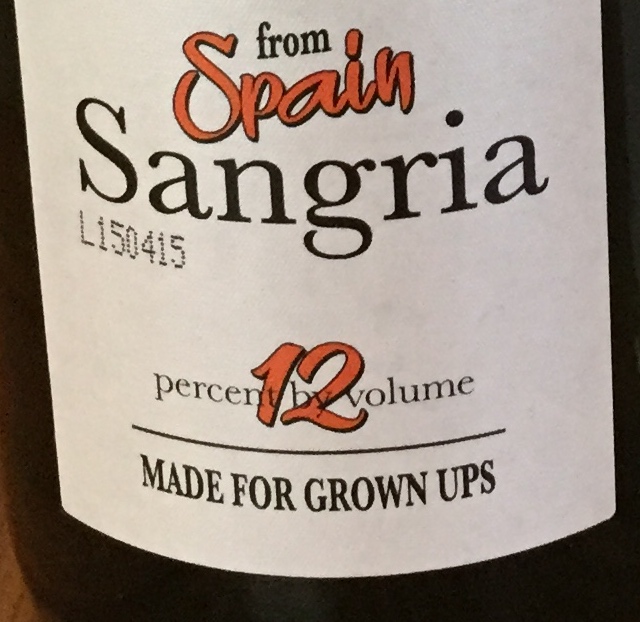 Sangria, anyone? Yes, I see happy smiles and people nodding. Sangria is a refreshing wine, a cocktail, if you will, which typically combines white or red wine with various fruit (oranges, apples, pineapples, lemon, strawberries and anything else your heart desires), often enhanced with a splash of brandy. Sangria originates in Spain and Portugal, and you can often find it served at many Spanish restaurants (but not only there).
While it sounds simple – wine and fruit, right? – making good tasting Sangria is an art. You don’t want Sangria to be too sweet, but you do want to have the fruit present. You need to start with the right wine (California Cabernet Sauvignon might be a bad choice), and you need to steep the fruit in the wine to achieve robust and satisfying flavor. I’m sure anyone who tried to make good tasting Sangria at home, or ordered one in a restaurant, would agree with me – it is easier said than done.
But what if I tell you that your quest for delicious Sangria just got a lot easier? Enters Joya™ – Joya™ Sangria from Spain, to be precise. I recently got a sample of White and Red Joya™ Sangria, and was delighted with what I tasted.

Joya™ White Sangria Spain (12% ABV, SRP $12.99/750, $29.99/3L box, Airén grape, all natural essences of fresh Mediterranean citrus fruit) – slightly muted nose of fresh white fruit, peaches and guava. Palate is perfectly balanced with white stone fruit, plums, refreshing grapefruit bitterness and touch of honeydew sweetness – you can add ice and fruit, or you can perfectly enjoy it as it is. Drinkability: 7+
Joya™ Red Sangria Spain (12% ABV, SRP $12.99/750, $29.99/3L box, Tempranillo, Garnacha, Bobal grapes, all natural essences of fresh Mediterranean citrus fruit) – freshly crushed red fruit on the nose, nice blackberries and dark plums on the palate with the orange peel and mint cutting through the mid-palate. Excellent balance. Playful and very enjoyable by itself, with or without any ice and fruit addition. Drinkability: 7+
While working on this short post, I also learned an interesting fact – the word Sangria on the bottle of wine is protected under EU law, and can appear only on the wines coming from Spain and Portugal.
There you have it my friends – delicious Sangria any time you crave one, also at a good price. Drop a bottle of Joya™ in the fridge and enjoy it. Be careful though – it is really easy to drink… Happy summer, folks! Cheers!
Rare and Beautiful
 If you read this blog even on a semi-regular basis, you probably noticed that I’m a sucker for the obscure grapes. So let me just proclaim it in the simple and direct way – I love rare grapes. The more obscure, the lesser known the grape, the better it is.
What I like about rare grapes is a complete mystery in the glass. As the grape is unknown, nothing gets in the way of perceiving it exactly for what and how it is. The closest thing to this experience is a blind tasting, but even then you have some knowledge for what you might be tasting, so instead of been focused on just what is in the glass in front of you, your brain is also trying to place it into some potential brackets, fit it into something familiar – but not in case of the unknown and rare grape. Tasting the unknown grape is an open book without any restrictions – you can write there whatever you want.
In addition to the mystery element, I have to say that most of of my “rare grape” encounters so far were quite pleasant. Of course there were some wines I didn’t care for, but still, the majority were interesting and thought provoking. If anything, my only gripe with the rare grapes is that the respective wines are equally rare – the production is usually very small, and even smaller quantities are imported (for sure in U.S.), which makes those wines very hard to find.
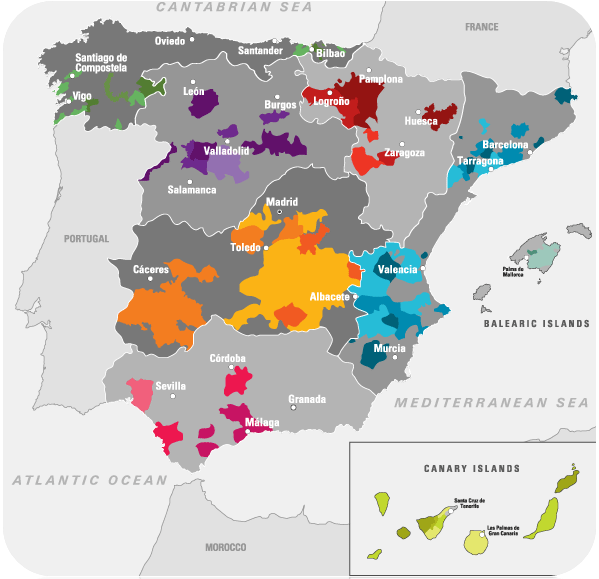
Now you understand that when I was asked if I would be interested to participate in the virtual tasting of rare Spanish grapes, I enthusiastically said “yes, of course!”. I’m a big fun of the Spanish wines in general, and now the rare grapes? That doubles the fun on the spot!
The wines arrived, and then the day of the tasting. The tasting was done in the virtual format, with Lucas Payà presenting over the ustream TV, and all the bloggers and media asking questions through the social media channels (Twitter, primarily). Lucas Payà is a well known figure in the wine industry – particularly, he worked for 5 years as head sommelier for acclaimed chef Ferran Adrià’s elBulli, and he was definitely a wealth of knowledge on the subject of Spain’s lesser known wine regions and rare grapes. I will not be trying to recite here an hour long presentation – if you have a bit of time, the recording is available here. Instead, I will give you my thoughts and tasting notes on the 8 excellent wines we had an opportunity to taste.
Here we go:


2014 Baron de Ley Rioja White (12% ABV, SRP $10.99, 90% Viura, 10% Malvasia) – out of 123,000 acres of vineyards in Rioja, less than 10% is planted with white grapes (11,000 acres), so it is given that white Rioja wines are rare. This wine was simple and well quaffable.
C: pale straw
N: touch of the candied fruit, white peach, expressive
P: intense fresh white fruit, good acidity, short finish
V: dangerous wine, too easy to drink 7+
2013 A Coroa Godello Valdeorras DO (13.5% ABV, SRP $23, 100% Godello) – Valdeorras region is located in Galicia, and it is a part of so called Green Spain – a territory with wet and cool climate. Godello grape was nearly extinct with only 400 vines remaining in 1980. Today Godello is starting to compete with Albariño in popularity, and it is capable of a great depth of expression.
C: light yellow
N: white stone fruit, touch of vanilla, spices
P: fresh, light white fruit, lemon, grapefruit, clean
V: good, 7/7+, finish is a bit sweet
2013 Raventós i Blanc Silencis Xarel-lo Penedes DO (12% ABV, SRP $21, 100% Xarel-lo) – Penedes region is best known for its sparkling wines, Cava, and Raventós is the oldest producer of Cava. Xarel-lo, difficult to pronounce grape (listen to it here), is one of the main components of Cava, but increasingly it is bottled as a dry still wine, and I would say it is worth seeking.
C: light straw, almost invisible
N: hazelnut, vanilla, touch of tropical fruit
P: creamy, intense, plump, green apple, good acidity, reach
V: 8-
2013 Guímaro Tinto Ribeira Sacra DO (13% ABV, SRP $18, 100% Mencía) – Ribeira Sacra is another region classified as Green Spain (cool and wet), and this is second region focused on the indigenous Spanish grape called Mencía. The first region is Bierzo, where Mencía makes powerful, concentrated reds. Here in Ribeira Sacra, Mencía shows totally different, with the emphasis on fresh, fruity profile.
C: garnet red
N: bright, fresh fruit, gamay-like
P: beautiful! Pepper, dark fruit, touch of smokiness, earthy, bright, delicious
V: 8-
2013 Suertes del Marques 7 Fuentes Valle de la Orotava DO Tenerife (Canary Islands) (13% ABV, $22, blend of Listán Negro, Tintilla) – Canary Islands, and Tenerife in particular, have a lot of unique climatic zones – and unique grapes. The two grapes used in production of this wine – Listán Negro and Tintilla – are the new grapes for me, adding up to the count. The volcanic soil influence is spectacular, and this wine is a treat for any wine geek.
C: ruby red
N: smoke, mushrooms, forest, dark intensity
P: smoke, forest floor, campfire, spice, beautiful
V: 8
2012 Bodegas Margón Pricum Primeur Tierra de León DO (13.5% ABV, SRP $28, 100% Prieto Picudo) – another indigenous grape, Prieto Picudo, coming from the vineyards which are 60 – 100 years old. Truly special wine, definitely worth seeking.
C: dark garnet red
N: slightly vegetative, touch of plums, earthy, unusual, chocolate
P: texture, velvety, silky, good dark fruit, very round
V: 8, excellent
2012 Navaherreros Garnacha de Bernabeleva Viños de Madrid DO (15% ABV, SRP $25, blend of Garnacha, small quantities of Albillo, Macabeo) – Garnacha is definitely not a rare grape in Spain, but here it has yet a different expression compare to Priorat or Borsao. The grapes for this wine come from the 40 – 80 years old vineyards, and the wine itself is a perfect rendition of Garnacha.
C: bright garnet red
N: dark chocolate, fruit, open, nice, touch of blueberries
P: dark chocolate, good acidity, good fruit, clean and excellent
V: 8, excellent
Lustau Palo Cortado Península Jerez (19% ABV, SRP $22, 100% Palomino Fino) – Sherry (Jerez) is grossly under-appreciated wine as a category, which allows wine aficionados to enjoy unique taste without having to spend a fortune.
C: dark golden yellow
N: mint, herbs, caramel, hazelnuts
P: perfectly balanced, touch of salinity and expressive acidity, begging for some aged cheese
V: 8-
There you have it, my friends – a unique experience of the rare grapes and regions, and beautiful wines which I would be happy to drink every day. Are you familiar with any of these wines, grapes or regions? When presented with an opportunity to try the new and unknown grape, would you gladly go for it, or would you ask for Pinot Noir instead? Comment away! Cheers!
Wednesday’s Meritage – #MWWC16 Vote, #SauvBlanc Day, WTSO Marathon, Chianti in New York
Meritage Time!
Don’t have a lot today – but a few things are worth mentioning.
First – Monthly Wine Writing Challenge #MWWC16, “Finish” concluded with a very modest 7 entrees. All of you, who were busy (or lazy) – and you know who you are – think about it, this is not cool. I really hope you will eagerly fix that behavior for the next time around, or the whole MWWC will be finished. Nevertheless, it is time to vote note – you can do it here.
Last time I reminded you about whole bunch of coming and going wine and grape holidays, so here I will focus only on one – Sauvignon Blanc Day (known in the social media as #SauvBlanc Day), which will be celebrated this coming Friday, April 24th, [hopefully] right in your glass. Sauvignon Blanc is one of the most delicious wines, showing a great range of expression from Sancerre in France to Marlboro in New Zealand to Chile and on to California – it is somewhat similar and ohh so different. One thing in common, no matter where the wine would come from – Sauvignon Blanc always means fun! Festivities will take place all over the world, both on April 24th and onward. On April 30th, New Zealand Sauvignon Blanc will be celebrated in New York – information about this event can be found on the New Zealand Wine web site. If you will scroll down, on the same page to the right you will see information about various events taking place on April 24th in New Zealand, Australia, UK and Canada. You should check Twitter and Facebook (look for #SauvBlanc tag) – I’m sure there will be celebrations all over the world, no matter where you are. Most importantly – pour yourself a glass of delicious Sauvignon Blanc – this is all you need to join the festivities.
Wine Til Sold Out (WTSO), one of the finest purveyors on the great wines at the value prices, is doing “it” again. What “it”? Of course the Marathon! This time it is Magnum Marathon, which will take place on Tuesday, April 28th. WTSO went extra step and created a great information page about all of their Marathons, so now it is easy to learn about what, when and how (and I don’t need to repeat the rules every time) – here is the link.
The last one for today – Chianti anyone? If you like Chianti, and live in a close proximity to New York, you are in luck, as Consorzio Vino Chianti will be hosting Taste of Italy Chianti tasting event in New York on Monday, April 27th at the High Line Hotel. The event will be open to the public – you can find all the information here.
And we are done here. The glass is empty, but the refill is on the way. Cheers!
Wednesday’s Meritage – #MWWC16, Grape and Wine Holidays, Spirits Talk on the Radio, M. Chapoutier Tasting, LBW Marathon
Meritage Time!
Today’s news are a very eclectic mix – from big international grape celebrations to the interesting, but very local updates. Nevertheless – let’s get to it!
First – this is the last reminder for Monthly Wine Writing Challenge #MWWC16, “Finish” – the deadline to submit your entry is Monday, April 20th. I don’t think I saw a single entry so far, which is sad, as I think the theme is great. Come on – I know you can do it (addressing myself as well as part of the group) – so let’s just do it!
Grape and wine holidays, anyone? I don’t know who, where and how comes up with all of those holidays, but still, as oenophiles, we must support them, aren’t we? First of all, April is the Michigan Wine Month. Well, this might be a tough celebration for those who don’t live in Michigan – don’t know about your state, but Michigan wines are nowhere to be found in the state of Connecticut. If you don’t have an access to the Michigan wine, at least you can read about it – here is the link to the Michigan Wine web site.
Up and coming in the glass next to you is… Malbec! Friday, April 17th is a Malbec World Day. Unquestionably associated with Argentina today, but really one of the core Bordeaux varietals, Malbec often creates soft, luscious and approachable wines well appreciated by the wine lovers everywhere. Your celebration instructions are simple – open a bottle of Malbec, pour, smell, sip and savor. Don’t forget to say “ahhh” if you really enjoy it, and tell the world about it #MalbecWorldDay.
Next holiday is a Sauvignon Blanc Day (#SauvBlancDay), which will be celebrated on April 24th, less than 10 days from now. Actually, when it comes to this holiday, we know where and when – it was created by the folks at the St. Supéry winery in California 6 years ago, to celebrate one of the most popular white grapes in the world, Sauvignon Blanc. If should be easy for you to join the festivities by opening the bottle of Sauvignon Blanc, and then sharing your impressions in the social media.
The last wine holiday for today is a 2nd annual Rioja Week, which will start on May 2nd with the Wine and Tapas Festival taking place in Chicago. Again, easy to celebrate – get a bottle of Rioja and drink it with friends!
How familiar are you with the wines of Michel Chapoutier, one of the oldest producers in France (established in 1808), best known for his Rhône wines? Whether you are well familiar or not, you are not going to miss out on a tasting of a few of Chapoutier’s Hermitage wines, wouldn’t you? On April 19th, Total Wines & More, one of the largest wine retailers in US, will be conducting a virtual tasting event, where you will have an opportunity to taste (for real) some of the great wines made by Michel Chapoutier. The tasting will take place at the Total Wines stores near you – for more information and to get tickets (priced at $25) please use this link.
Be forewarned – the madness is coming! Nope, not the apocalypse type. Just a simple wine madness. Last Bottle Wines, purveyor of great wines at value prices, will conduct their Madness Marathon tomorrow (04/16), starting at 12 PM Eastern/9 AM Pacific time, and continuing for the next 48 hours, or until the Last Bottle cellar will be empty.
During the Madness Marathon, all the wines will be offered in the rapid succession, without any notifications – no twitter, no e-mails, no text messages. The only way to follow the madness is by constantly refreshing your browser window. There are no minimum purchases to get a free shipping – you can buy 1 bottle at a time, it is fine. All the wines you will buy will ship together after April 27th.
You will need to have an account with Last Bottle Wines, and all account information should be pre-filled – speaking from the experience, the wine you want might be well gone by the time you will finish putting in an expiration date for your credit card. In case you don’t have a Last Bottle account already, I will be glad to be your reference – not that you need a reference, but if you will sign up using this link, you will get $5 credit on your first order – and yes, I will get $20 credit after your first purchase – but once you are in, you will be the one who will tell your friends about it. In case the link doesn’t work, feel free to send me an e-mail to talkavino-info (at) yahoo (dot) com.
Lastly, two updates more of a local nature. First, last Friday I had an opportunity once again to talk (yep, that is something I like to do) about my favorite subject. Well, with a slight twist – the conversation was about liquid pleasures outside of wine – Vodka, Scotch, Bourbon and the others. Once again, I was a guest at the Off the Vine Radio Show with Benita Johnson – and you can listen to that show here. Next time, you should call in and ask questions – will make it more fun!
Before we part, I want to mention that I finally produced a post #4 in a series of the Spanish Wine Recommendations – this post is focused on the places where you can buy Spanish wines around the world. The reason I’m mentioning it here is because after I published the post, I got very useful comments extending the coverage of the good places to get Spanish wines around the world. I updated the post with those comments, so if you read the post already, you might want to check it out again. Here is the link for you to make it easier. If you also got any suggestions or comments, please make sure to share them.
And we are done here. The glass is empty, but the refill is on the way. Cheers!
Spanish Wine Recommendations, Part 4 – Where to Buy Spanish Wines
 As I was rather hoping for, this post is becoming a living thing – I started receiving suggestions for the additional sources of Spanish wines in different regions of the world – and will be updating the post with those. If you have suggestions of your own – please reach out!
And we are back with the Spanish wine recommendations series. In the previous three posts I talked about my long-time favorite ( and therefore, recommended) Spanish wines in the three different price categories – under $20, from $20 to $50, and from $50 to infinity. Now I want to talk about seemingly a non-subject – where can you buy Spanish wines.
This seems to be a non-subject as the answer is simple – in the wine store, duh. Well, of course, but it is not that fast and easy. Most of the wine stores in US would have a section of the Spanish wines – however, majority of the wines in that section will be the “value wines” – unknown producers, unknown wines, limited selection of Rioja of unknown pedigree and some of the better names at often inflated prices. You really need a “specialty retailer”, someone who has a passion for the Spanish wines, to be able to buy exactly what you want at a price you want.
So in this post, I will share with you what I know about buying the Spanish wines. As I live in US, I will give you first-hand recommendations based on my own buying experience. Well, US is a big country, and I live in a close proximity to New York, so again, this is where my experiences come from. However, I will include some store recommendations for other areas in US, and I will do the same for the Europe and Australia- but this will be mostly based on the information I found on Internet, not something I know myself. Of course my recommendations will include both online and “brick and mortar” sources – as you can imagine, there is only a handful of the physical wine stores I’m familiar with, so most of the recommendations will pertain to the online stores.
Before we begin talking about the stores, I want to make a few general comments about buying Spanish wines. It may be even just one comment – when it comes to the Spanish wines, the information on the wine label matters. Another “duh moment”? Well, may be it is, but still – I want to make sure it is something you clearly understand. The words such as Reserva or Gran Reserva are protected by the law – unlike US, for instance, where the words such as “Special Reserve” can appear on the bottle at winemaker’s desire, and actually mean nothing regarding the wine. Why is it important? Reserva typically cost more than Crianza, and Gran Reserva typically costs more than Reserva – and you need to understand that to avoid surprises and to be able to buy exactly what you intended to buy and at a right price. And the vintage and producer matter – of course, this is universal, no mater where the wine is coming from.
Okay, let’s now talk about good places to buy good Spanish wines from.
Before we get country-specific, let me elaborate on the first “duh moment” – the place to buy Spanish wine is at the wine store. It is definitely true, as a trusted wine retailer is your best source of the Spanish wines. To me, “trusted wine retailer” means exactly that – a person you trust with giving you the best deal and taking care of you. As in any other business, some retailers will be simply looking for the quick buck, but some will be there for the mutually beneficial, long term relationship – retailer gets paid, and you get an access to the wines you want at a price which makes sense. If you have a wine retailer you trust, this might be your best source of the Spanish wines, or at least, one of the best sources. But again, “trusted” is a key word here – and if you have a retailer like that, you are in luck, as hunting down good Spanish wines is a challenge.
One more (last!) general note: if you are looking for the particular wine (where to get it from) or just want to check if the price you see makes sense, Wine-Searcher is the place where you should start. Of course it has limitations – if the wine store, for instance, doesn’t sell online, you will not see it come up in the Wine-Searcher results. Also, even if you see the wine to be available in the particular store, especially if you plan to drive to the store, check with the store first if the wine is still available. And Wine-Searcher can’t tell you anything about the reputation and reliability of the store (had my share of issues). Still, it is a great tool to start your search. It is also available as an app on the mobile devices.
United States:
I have to start with my favorite wine store – the wine owned my friend Zak in Stamford, Connecticut – Cost Less Wines. Zak is exactly that “trusted retailer” – not just for me, but for hundreds and hundreds of his regular customers. The Spanish wines section in his store was built gradually over the last 2-3 years (your truly was a bit of a motivational factor, I have to modestly admit) – but at this point, Zak has an excellent selection – La Rioja Alta, R. Lopez Heredia, CVNE, Imperial, Bodegas Juan Gil, Alto Moncayo and many other wines I mentioned in my recommendations are readily available at his store. It is not just the selection – the prices are great too. For instance, you can’t even find 2001 La Rioja Alta Viña Ardanza Reserva Especial in the stores anymore. Using Wine-searcher, I found one place online where this exact wine was still available – at $89 per bottle. Zak has this wine on the shelf as $29.99. Unfortunately, Coast Less Wines doesn’t sell online, but if you live in a reasonable proximity to Stamford and looking for a good Spanish wine at a good price, this store would worth a drive.
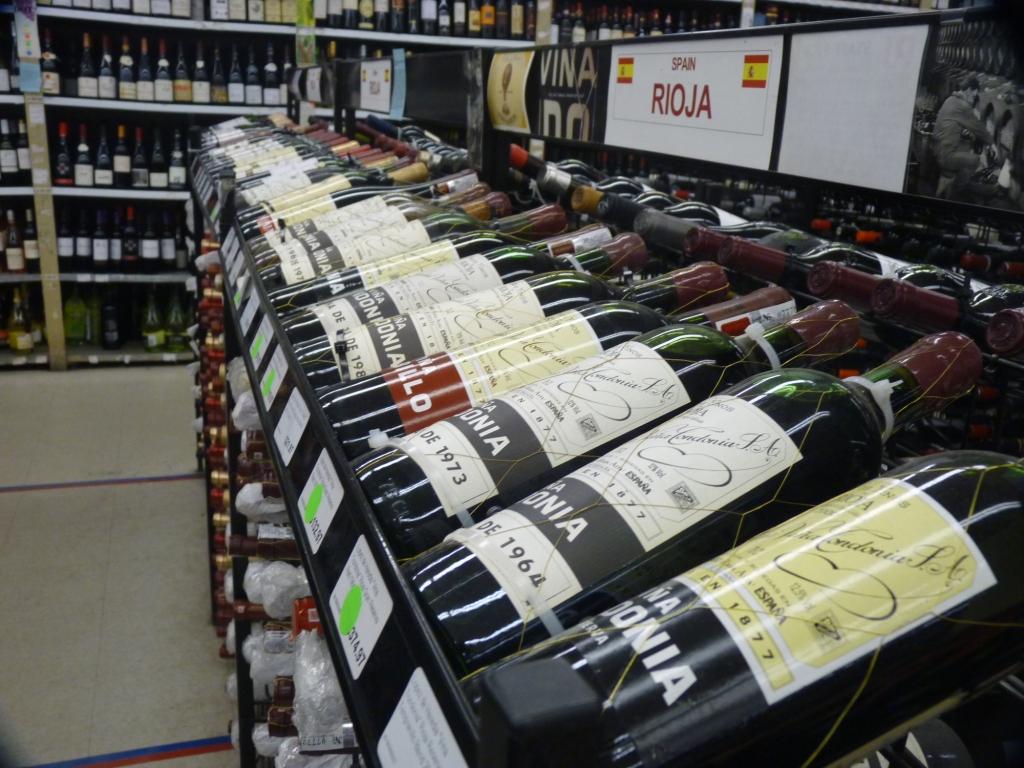
Next store I have to mention is called PJ Wine, and it is located in New York City. This store and its owner, Peter Yi, literally put Spanish wines for me on the map (Peter is incredibly passionate about Spanish wines). First I discovered the store online, while looking for some specific wine, and this is how I ended up on their mailing list. Then I got an email advertizing free Spanish Rioja seminar – I signed up, drove to the city – the rest was a history and a love from the first sip (especially a first sip of 1964 Rioja). PJ Wine sells both in the store and online, and their selection is nothing short of incredible, including lots of Rioja from the best years – 1964, 1978, 1994 and lots more – all in stock. Again, if you live in New York city or a close proximity, this store absolutely worth a special visit (just do me a favor – decide on your spending limit before you come there, or better yet, leave all credit cards at home and bring limited amount of cash, as once you will start shopping, you will not be able to stop – and don’t tell me I didn’t warn you). Online selection is equally excellent.
One more store I have a good experience with is the Bottle King in New Jersey. It is not just one store, it is a number of stores, mostly located in Northern New Jersey – plus an online store called The Wine Buyer. Overall Bottle King offers good selection of the Spanish wines at good prices. What is important to know about Bottle Kings, however, that the selection will vary from the store to the store, and most importantly, the selection and pricing online at The Wine Buyer might differ from the physical stores – stores often offer deals and discounts not available through the online outlet.
I wish I can offer you a selection of the stores in any of the large metropolis around the country, like Atlanta, Chicago, Dallas or Denver – but I’m not aware of any of the “Spanish wine” specialty retailers. By the way, if you know of any good “Spanish wine” specialist stores in your areas – please let me know, I will be glad to amend the post.
Going all the way to the west coast, there is not a whole lot I can offer as well. However. there is one store I would like to mention – K&L Wine Merchants. They operate three stores in California, as well as an online store. At the time of this writing, the online store offered selection of about 330 Spanish wines, many with the reasonable prices, so I believe it is worth mentioning here.
Last two sources I would like to bring to your attention are both online only. First of all, my beloved Wine Til Sold Out, WTSO.com (also available as an app). While there are other sites with the similar model (Last Bottles, Last Call Wines and more), WTSO has the best deals when it comes to the Spanish Wines. Yes, you have to be on a look out, true (sign up for email and twitter updates from them), and when the deal shows up, you have to act quickly, but still, they have by far the best selection alongside of recommendations I made. Just to give you an example of a recent deal I got there – 2002 R. Lopez de Heredia Reserva, $23 at WTSO and about $35 (give or take) most anywhere else.
The last one for the US is the online store called Wine.com. To tell you the truth, I never bought anything from Wine.com myself, but I checked their inventory, and at the moment they are offering about 300 different Spanish wines, including many of the names I talked about in this series (CVNE, La Rioja Alta, Carchelo “C” etc.), and the prices seem to be reasonable, so I feel inclined to include them into my recommendations ( if you have a first hand experience with Wine.com, I would appreciate your comments below).
Europe:
Okay, so let’s get things straight. As I live in US, I don’t have a first hand experience buying Spanish wines in Europe. So for the stores which I found, I made sure the selection looks good and the prices look reasonable. What I found was a link to an excellent article which pretty much summarizes the online sources for Spanish wines in Europe, so in essence, I only need to direct you to read this article here. Note that not all the stores in the article are equally reputable – for example, a reader told me that Uvinum is known to have problems (poor deliveries and bad customer service), so check the references before you will use them.
Now, this was the part of the original post: If you know if any wine stores with the good selection of Spanish wines (with good prices!) in your country in Europe – please let me know and I will be glad to add them to this post. Lastly, don’t forget that Wine-Searcher works internationally, so you can specify your country when searching for the specific wine.
As I have the reader suggestions now, I will include them below:
Germany:
As recommended by Julian of Vino in Love:
“I highly recommend the online retailer www.vinos.de. They have a great selection (I mostly buy my Spanish wines from them). Vinos also has stores in Berlin and Munich for those who do not like to buy wine online.”
United Kingdom:
As recommended by Mathias of The Winecurious (some stores are reviewed in the Mathias’ blog, so check it out):
“For those in the UK I can strongly recommend Moreno Wines (http://www.morenowines.co.uk) in Maida Vale. They have an excellent selection of Spanish wines and are almost every other year awarded Spanish wine merchant of the year.
Australia:
Quite unexpectedly for me, it appears that Spanish wines represent a tough love when it comes to Australia. I understand that Australia produces a lot of their own wine, but so does the United States and many other countries. Yet searching for La Rioja Alta and CVNE for the whole of Australia yield only one result. Many of the Australian wine store web site don’t recognize the word “Rioja” and suggest correcting it to “Rosado”. I reached out to The Wine Wankers, very popular and knowledgeable wines bloggers who happen to live in Australia, and I got a few recommendations, out of which I would like to mention Dan Murphy’s, which is a chain of the wine stores in Australia, where you can find at least some of the wines we talked about in this series. Well, not sure if Australia might be a next opportunity for the Spanish wines, but at least this is the story at the moment. Same as for all of my European friends – if you live an Australia and know of a wine store with a good Spanish wine selection, please let me know and I will be glad to include it here.
And we are done – now you have my Spanish wine recommendations as well as the some of the places where you can buy those wines. I still want to write one more post and summarize all we talked about here, therefore, I’m not waving good bye yet.
To be concluded…
Last Bottle Sign Up ($10 credit)




 Talk-A-Vino