Archive
Gambero Rosso 2016: Tre Bicchieri Tasting
 Now, let’s talk about most intense part of the Gambero Rosso 2016 event – Tre Bicchieri grand tasting. Both Custoza DOC and Special Awards Master Class seminars were nice and relaxing – you are sitting down, you have at least an hour to evaluate 9 wines – this is “an oenophile at ease” experience. The grand tasting though is more of an “oenophile in hell”, or if this is too strong of an expression, think of it as marathon which you have to run on the tippy-toes – yep, that level of comfort.
Let me repeat the Gambero Rosso numbers – about 50,000 wines are evaluated by the Gambero Rosso staff in a year, comprise 20,000 different labels from more than 2,400 wineries. 421 wines received the coveted Tre Bicchieri (Three Glasses) award in 2016. 193 wineries were present at Tre Bicchieri 2016 tasting in New York, which would roughly translate into about 400 wines – not all of those wines are Tre Bicchieri winners, wineries are allowed to present the wines which got two glasses awards.
This was the fourth year in the row as I attended Gambero Rosso in New York, so at this point I knew the drill – which means that there will be no rant in this post. Nothing changed – there was still a limit of one glass per attendee for the whole tasting, the wineries were still organized by the distributors and not by the regions – but again, I was ready for that before I walked into the room. I had an opportunity to look at the show guide before tasting started, so I had my targets set and thus from the moment I walked into the tasting room, I went directly to the tables I wanted to visit first (where the wines would potentially run out). This was the right strategy and it worked quite well (as you will see in the list down below).
This was also the first time in 4 years my dear friend Stefano was unable to join me at the Gambero Rosso in New York – which also changed the dynamics for me. Usually when we are together, Stefano perseveres until the very last moment, still tasting wines and taking notes. Left to my own devices, I cut it short when I felt tired. By the way, the pictures below will give you an idea how the tasting room looks like in a middle of event – I always like to take a few shots which I call “Hail Mary” – just put the camera up and take a picture of whatever it will point to. I think it will give you an idea for the event:
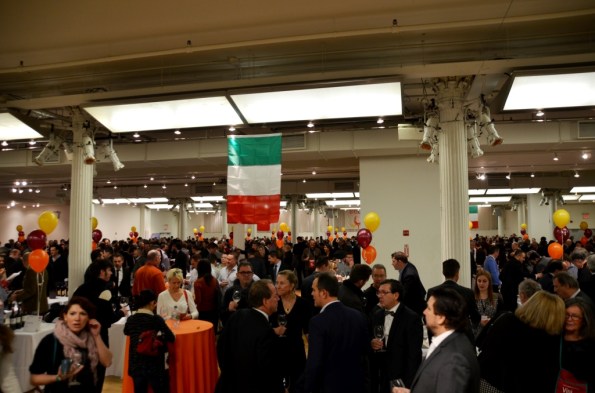
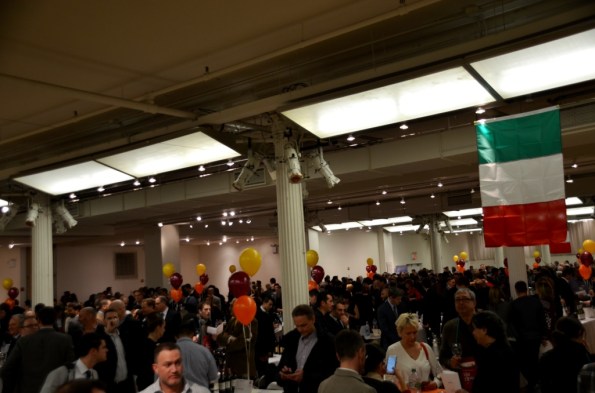 Before I will inundate you with the details on the wines I tasted, I want to offer you some of my main takeaways from the Tre Bicchieri 2016 tasting.
- Out of all the wines I tasted (90+), 4 wines were my absolute favorite:
- Tenuta dell’Ornellaia Bolgheri Superiore Ornellaia – stunning wine – young (2012), but perfectly drinkable, with the balance nothing short of amazing. Down below I will have pictures of the labels – note that starting with 2012 vintage, Ornellaia wines now will have artistic labels on portion of their bottles – 1 bottle in every 6 pack will have an artistic label.
- Eugenio Collavini Collio Bianco Broy – my favorite white wine of the tasting – beautiful clarity, impeccable balance and a bonus story
- Tenuta Viglione Gioia del Colle Primitivo Marpione Riserva – yes, I know that Primitivo is technically a Zinfandel, but I never yet tasted Primitivo which would be reminiscent of a good Zinfandel, like Turley, for instance. This wine was – fresh fruit, ripe raspberries and blackberries, playful – just an excellent wine all together.
- Rosset Terroir Valle d’Aosta Syrah – might be easily my favorite red wine in the tasting – if anything very comparable with Ornellaia in its ability to deliver pleasure. Amazing clarity of spicy fruit, just a pure vibrant note of black pepper – only a few times ever I experienced such pure expression of Syrah. Absolutely delightful.
- Very interesting how things changed in Italian wines. I tasted a number of Barolo, 4-6 years old – they were all very approachable, with good fruit and reasonable tannins – quite a departure even from the few years back. On another hand, most of the Super Tuscans were tannic bombs, with the happy exception of Ornellaia and Le Macchiole. I definitely welcome the Barolo change (will be interesting to see how those wines will age), but I think super Tuscan producers should dial down the use of the new oak – as they are, these wines need quite a bit of time to age.
- Italy is the #1 wine producer in the world (by volume) so it is not surprising that in addition to the ingenious grapes, such as Sangiovese, Nebbiolo, Montepulciano, Italians also mastered all the main international varietals – Cabernet Sauvignon, Cabernet Franc, Merlot, Grenache ( better known as Connonau), Zinfandel (yes, in the form of their native Primitivo) and now even Syrah. 3-4 years ago, I would never associate Italy with the world-class Syrah. But then was Syrah from Cartona, which is delicious, and this year’s discovery, Rosset Terroir Syrah from Valle d’Aosta, left me literally speechless in its purity of expression – and I loved it as much as I did the Ornellaia. So yes, Syrah is also squarely on the master list for Italy. Notable exception – Pinot Noir (should be called Pinot Nero in Italy), the finicky grape the world is in love with, which I yet to find to my liking coming from Italy. This will probably happen at some point, and if it does, I’m curious where and how.
Okay, now it is time to share the notes on my favorite wines. I visited about 45 tables, tasted about 90 wines. Below are the favorites – as typical for the trade tastings with lots of wines to evaluate, I use the “plus” system, where “+++” means “excellent wine”. The list below only includes “+++” or higher; I couldn’t contain my excitement and rated “++++1/2” both Ornellaia and Rosset Syrah, this is as high as I ever went. For what it worth, below are my brief tasting notes, all the wines are sorted by respective regions:


Abruzzo:
2012 Villa Medoro Montepulciano d’Abruzzo Colloie Teramene Adrano – +++1/2, delicious
Alto Adige:
2013 Abbazia di Novacela A.A. Valle Isarco Riesling Praepositus – ++++, clean, balanced
2014 Abbazia di Novacela A.A. Valle Isarco Kerner Praepositus – ++++, delicious!
2011 Elena Walch A.A. Lagrein Castel Ringberg Riserva – +++1/2, excellent, concentrated
2012 Cantina Terlano A.A. Terlano Nova Dominus Riserva – ++++, delicious! 60% Chardonnay, 30% Pinot Blanc, 10% Sauvignon
Basilicata:
2010 Re Manfredi Terre Degli Svevi Aglianico del Vulture Serpara – +++1/2, perfect, nice minerality


Friuli Venezia Giulia:
2013 Jermann Vintage Tunina – +++1/2, great complexity
2013 Jermann W…. Dreams…. – ++++, butter, vanilla, beautiful minerality
2014 Jermann Pinot Grigio – +++
2014 Eugenio Collavini Collio Bianco Broy – ++++, clean, beautiful, 50% Friulano, 30% Chardonnay, 20% Sauvignon, SRP $35, comes from the small small plot behind the house
2013 Livon Braide Alte – +++1/2, Chardonnay, Picolit, Moscato Gialo
Liguria:
2013 Poggio dei Gorgleri Rivera Ligure di Ponente Pigato Albium – +++1/2, Gunflint nose, clean palate


Lombardy:
2009 Ferghettina Franciacorta Extra Brut – +++, beautiful nose, a bit too sweet on the palate
2011 Nino Negri Valtellina Sfursat 5 Stelle – +++1/2, dried fruit, delicate, delicious. 2012 and 2014 were bad years, and no 5 Stelle wine will be produced
2008 Bellavista Franciacorta Extra Brut Vittorio Moretti Riserva – ++++, delicious, classic
Marche:
2013 Umani Ronchi Verdicchio dei Castelli di Jesi Superiore Vecchie Vigne – +++
2011 Umani Ronchi Canero Cùmaro Riesrva DOCG – +++1/2, delicious (Montepulciano 100%)
2011 Umani Ronchi Pelago Marche Rosso IGT – +++1/2, excellent (Cabernet Sauvignon 50%, Montepulciano 40%, Merlot 10%)


Piedmont:
2010 Abbona Barolo Cerviano – +++1/2, lavender, clean, wow!
2011 Marchesi di Barolo Barolo Cannubi – ++++, beautiful
2012 Michele Chiarlo Barbera d’Asti Superoiore Nizza La Court – ++++, outstanding
2011 Malvira Roero Mombeltramo Riserva – +++, nice, clean


Puglia:
2011 Tenuta Viglione Gioia del Colle Primitivo Marpione Riserva – +++1/2, wow, excellent, Zinfandel-comparable
2012 Tenuta Viglione Gioia del Colle Pri-mit-ivo – +++, excellent fruit and balance
Sardinia:
2013 Vigne Surrau Sincaru Cannonau di Sardegna – +++, excellent
2014 Vigne Surrau Sciala Vermentino di Gallura DOCG Superiore – +++
Tuscany:
2012 Poggio al Tesoro Dedicato a Walter Toscana IGT – +++, 100% Cabernet Franc
2012 Poggio al Tesoro Sondraia Bolgheri Superiore – ++++, excellent, Bordeaux blend (65% Cabernet Sauvignon, 25% Merlot, 10% Cabernet Franc
2012 Fabrizio Dionisio Cortona Syrah Il Castagno – +++1/2, beautiful nose, restrained, 100% Syrah


2012 Tenuta dell’Ornellaia Bolgheri Superiore Ornellaia – ++++1/2, wow! polished, ready
2013 Tenuta dell’Ornellaia Bolgheri Rosso Le Serre Nuove – ++++
2013 Tenuta dell’Ornellaia Poggio alle Gazze – ++++, outstanding
2010 Le Chiuse Brunello di Montalcino – +++1/2
2011 Le Chiuse Brunello di Montalcino – +++, beautiful
2013 Le Chiuse Rosso di Montalcino – +++, clean, simple
2012 Villa le Corti Chianti Classico Don Tommaso Gran Selezione – +++, excellent, soft
2012 Tenuta Sette Ponti Oreno – +++1/2, gripping tannins, wow
2013 Tenuta Sette Ponti Crognolo – +++


2012 PETRA Petra Rosso – +++1/2, good balance, Cabernet Sauvignon/ Merlot blend
2012 Le Macchiole Paleo Rosso – ++++, outstanding, 100% Cabernet Franc
Valle d’Aosta:
2013 Rosset Terroir Valle d’Aosta Syrah – ++++1/2, wow, perfect, spicy nose, clean, wow! 100% Syrah


Veneto:
2011 Tenuta Sant’ Antonio Amarone della Valpolicella Campo di Gigle – +++, closed on the nose, well present tannins, but balanced
2011 Viticoltori Speri Amarone della valpolicella Classico Vign Sant’Urbano – +++, good, round
2009 Masi Amarone della Valpolicella Classico Campolongo di Torbe – ++++, delicious!!! (yeah – single vineyard at about $150 retail)
2014 Valdobbiadene Brut Rive di Col San Martino Cuvée del Fondatore Graziano Merotto – +++1/2, nice complexity
2012 Vignalta Colli Euganei Fior d’Arancio Passito Alpianae – +++
Gambero Rosso 2016: Master Class – Special Awards
I recently wrote about discovering the new Italian wine region at the seminar at Gambero Rosso 2016 event (Custoza DOC). Following that was another new event for me – Vini d’Italia 2016 Special Awards Master Class.
More than 50,000 wines are tasted by the Gambero Rosso experts for each annual edition of the publication, which comprise more than 20,000 labels from 2,400+ wineries. In 2016, which was the 29th edition of the Gambero Rosso guide, there were 421 winners of the prestigious Tre Bicchieri status. In parallel, while the work is done to assess the wines for the Tre Bicchieri status, the wines are also considered for the Special Awards which are give in the 9 special categories – take a look at the picture below, this was our printout for taking the notes:

If you would look at my notes below, you would see that my opinion didn’t always match the designation of the wine – which is only important as an illustration to the point I always make when talking to the people who are afraid not to like the wine where someone else (an expert) said that the wine outstanding. Each palate is different, and your good wine is what you like, not someone else…
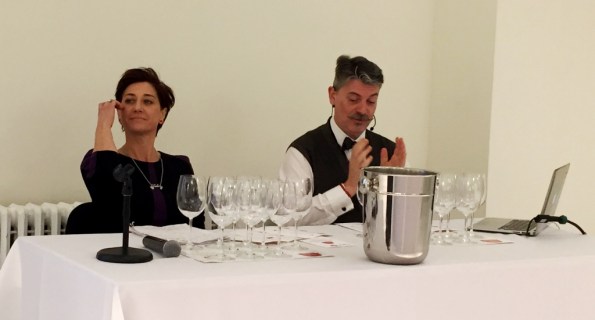
The presentation was led by charismatic Marco Sabellico, Senior Editor of Gambero Rosso, and Eleonora Guerini, Curator of the guide “The Wines of Italy” by Gambero Rosso:
Here are my notes:
Category: Sparkler of the year
2006 Ca Del Bosco Franciacorta Dosage Zéro Noir Vintage Collection Riserva
C: Gold
N: yeast, bread, concentrated
P: great complexity, yeasty, refreshing, crisp acidity
V: 8, excellent sparkling wine
Category: Best value for money
2014 Terre Stregate Falanghina del Sannio Svelato Campania ($10)
C: light golden
N: beautiful concentrated nose, sweet, concentrated, musk aroma
P: clean, good acidity, lots of musk undertones, spicy pear
V: 7, a bit too much on the palate
Category: White of the year
2014 Schiopetto Collio Friulano
C: light golden
N: light fruit notes, fresh, touch of minerality
P: nice, restrained, white stone fruit, good acidity, good balance
V: 8-, nice aging potential
Category: Award for sustainable viticulture
2013 Manincor A.A. Terlano Sauvignon Tannenberg Trentino-Alto Adige
C: straw pale
N: vanilla, butter, petrol
P: delicious play of fruit, restrained, tropical fruit, vanilla, playful, great acidity
V: 8, my favorite white wine of the tasting
Category: Red of the year
2012 Pietradolce Etna Rosso Vigna Barbagalli Sicily (15% ABV)
C: red brick
N: volcanic, smoke, red fruit
P: nice tannins, fresh red fruit, a bit astringent, long finish
V: 8, needs time
Category: Grower of the year
2012 Ca’ del Baio Barbaresco Asili
C: dark Ruby
N: fresh fruit! Strawberries, raspberries, violet, wow
P: excellent balance, fresh tannins, good red fruit, but really tannic finish
V: 8, will improve
Category: Up-and-coming winery
2012 Guado al Melo Bolghery Rosso Superiore Atis (Cabernet Sauvignon 60%, Cabernet Franc 20%, Merlot 20%)
C: dark Ruby, almost black
N: “Rutherford dust”, black currants, eucalyptus
P: powerful tannins, firm structure, fruit is layered under, very powerful wine overall
V: 8-, definitely needs time
Category: Winery of the year
2011 Allegrini Amarone della Valpolicella Classico
C: dark Ruby, almost black
N: dried fruit, roasted meat
P: nice concentration, powerful tannins, tar, tobacco, alcohol burn on back end
V: 7+, needs more balance…
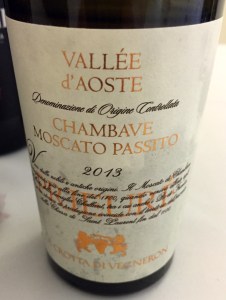
Category: Sweet of the year
2013 La Crotta di Vegneron Valle d’Aosta Chambave Moscato Passito Prieuré
C: golden
N: beautiful, clean, candied apricots, candied orange
P: perfect balance, clean fruit. Yes, it is sweet, but it has perfect acidic backbone, and it doesn’t overpower the palate.
V: 9, outstanding. Yes, I’m a sucker for the good sweet wines, you can call me that.
As you can tell, the dessert wine was my favorite wine of the tasting – well, you can read anything you want into that…
In the next post, I will be talking about Gambero Rosso Tre Bicchieri tasting itself, so until the next time – cheers!
To be continued…
Gambero Rosso 2016: Discovering Italian Wine Regions – Custoza DOC
Few weeks ago, I attended Gambero Rosso Tre Bicchieri event in New York. For those unfamiliar, Gambero Rosso is a leading Italian wine guide, where the wines are rated with the symbol of a glass (bicchiere in Italian). The wine can get a rating of one, two or three glasses, and those three glasses (Tre Bicchieri) rated wines considered to be some of the best wines the Italy has to offer. Every year, Gambero Rosso conducts a series of tastings worldwide, to celebrate these best Italian wines, and the tastings are called Gambero Rosso Tre Bicchieri events.
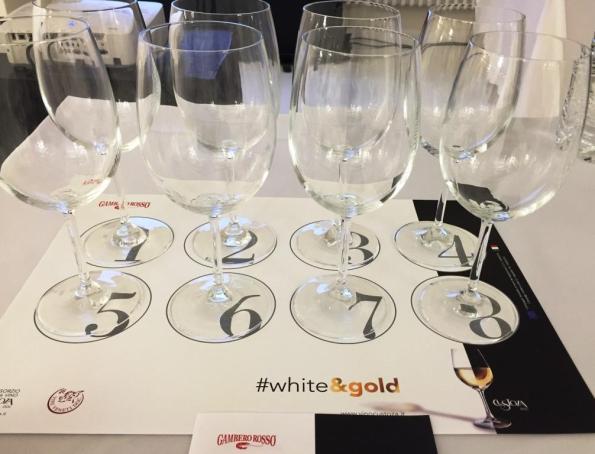
While I had been attending Tre Bicchieri events for the past 4 years, this year was the first time I also attended seminars conducted right before the general tasting. The first seminar was dedicated to the white wines of a small, and I would bet, largely unknown to the majority of the wine drinkers, region in Veneto, called Custoza.
Custoza is located at the south border of the Veneto region, on the shore of the Lake Garda. Excellent terroir to grow wine grapes, and white grapes in particular. Region has mild winters, which definitely helps not to worry about the frost. Another important characteristic of Custoza is mixed soil – clay, sandstone, limestone, which leads to a diversity in the wines. Overall, there are about 700 wine growers in Custoza, 70 wineries, and total wine production is roughly 12 million bottles per year (1 million cases). The region is fast growing on Italian market and represents great value for the money. A number of indigenous grape varieties are use in wine making in Custoza – Garganega, Fernanda/Bianca Fernanda (Cortese clone), Trebbiano di Soave, Trebbianello (known as Tokai Friulano in other regions), Riesling Italico (a.k.a. Welch Riesling), Incrocio Manzoni (cross created in 20th century).
Seminar presenters also made a statement about Custoza wines having a great aging potential – I would like to get back to that after presenting you with the tasting notes. We tasted total of 8 wines in this seminar:
2015 Tinazzi Custoza Cà dei Rocchi (Garganega 40%, Trebbiano di Soave 40%, Bianca Fernanda 20%)
C: pale straw
N: amazing, fresh sweet fruit, candies, through the roof aromatics. Green notes appear after a while.
P: crisp, clean, great acidity, fresh, will work great with seafood
V: 8-, food wine
2015 Gorgo Custoza San Michelin (Garganega, Cortese and Riesling Italico)
C: light gold
N: restrained, candied lemon, herbs, fresh caramel, opened into concentrated sweet baking spices. Smell is an enigma, keep changing. Yes, tropical fruit.
P: clean and crisp, but leaves sweet aftertaste. More concentrated than the previous wine, medium to full body, finish switched to more acidity
V: 7+/8-
2014 Cavalchina Custoza Superiore Amedeo (Garganega 40%, Fernanda 30% (Cortese clone), Trebbianello 15% (Tocai clone), Trebbiano Toscano
15%)
C: light golden
N: hint of smoke, gunflint
P: excellent, clean, green apple, fresh, perfect balance, acidity on the finish. Leaves me desire to take another sip
V: 8
2013 Albino Piona Custoza DOC (Garganega 30%, Trebbiano 35%, Friulano 20%, Trebbianello, Pinot Blanc and Riesling Italico)
C: light golden
N: medicinal, iodine, a nose almost suitable for a scotch
P: lots of fighting components, interesting. It is drinkable, but not together
V: 7-
2013 Menegotti Custoza Superiore Elianto (Cortese, Garganega, Trebbiano)
C: light golden
N: strange, vegetative
P: vegetative/sweet all over the place
V: 7
2013 Monte Del Frà Custoza Superiore Cà del Magro (40% Garganega, 20% Trebbiano Toscano, 5% Tocai Friulano, 10% Cortese, 10% Chardonnay-Riesling Italico-Malvasia and 15% Incrocio Manzoni)
C: golden, nice viscosity
N: minerality, hint of gunflint, white fruit sweetness, restrained
P: delicious. Ripe apples, white stone fruit, minerality, excellent balance
V: 8-
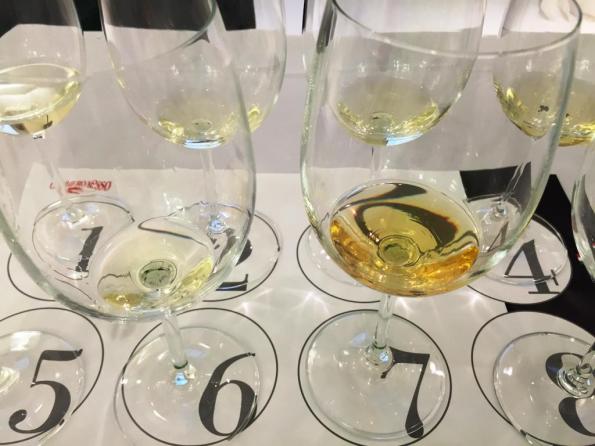
Take a look at the color difference with younger wines
2010 Monte Del Frà Custoza Superiore Cà del Magro (40% Garganega, 20% Trebbiano Toscano, 5% Tocai Friulano, 10% Cortese, 10% Chardonnay-Riesling Italico-Malvasia and 15% Incrocio Manzoni)
C: concentrated gold
N: minerality, volcanic soils, smoke, interesting
P: interesting complexity, still a touch of oxidation, vanilla, sea salt
V: 7+. This is a drinkable wine, and it will stay like that for a while.
2007 Cavalchina Custoza Superiore Amedeo (Garganega 40%, Fernanda 30% (Cortese clone), Trebbianello 15% (Tocai clone), Trebbiano Toscano
15%)
C: concentrated gold
N: slightly oxidative nose, similar to Jura whites
P: vanilla, steely notes
V: 7. May be good with cheese, but not enjoyable on its own
I very much enjoyed young Custoza wines – many were vibrant and delicious. When it comes to the two older wines, I wouldn’t say I was fun (I’m sure you can see it in my notes). Yes, I like tertiary aromas of older wines, but I still want the wine to have harmony and balance – and this was not the case here.
Very interesting learning experience in any case, plus a new grape (Incrocio Manzoni), or even two if I will count Fernanda as a separate clone/grape. So, have you ever had Custoza wines? What do you think of them?
In the next post, I will be talking about Gambero Rosso Special Awards master class, so until the next time – cheers!
To be continued…
How Do You Spell “Delicious” in Italian? Marchesi de’ Frescobaldi Might be a Good Answer
Virtual tastings are always fun. For sure for the conversation and learning part. And of course the best part is while your conversation is virtual, tasting of the real wines. As always with wines, you like some, and some you don’t (OMG, I let the cat out of the bag!!!). And sometimes you are simply blown away.
The tasting of wines of Marchesi de’ Frescobaldi was the latter. As a young oenophile, I heard about the wines of Machesi de’ Frescobaldi, a 700 years old winemaking family, for the first time in the early 2000, when I read an article in Wine Spectator, profiling Italy’s “big three” – Antinori, Banfi and Frescobaldi. However, until a few days ago, I wouldn’t claim that I had any real encounter with Frescobaldi wines.
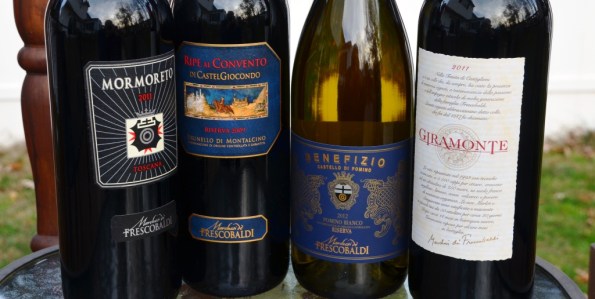
I guess there was a certain element of luck that my acquaintance with Frescobaldi wines started from their single vineyard, or so called “CRU” wines. Nevertheless, to be literally blown away by 4 wines out of 4 in the tasting is not something which happens often. I had plenty of single vineyard and high-end wines which left me simply indifferent. These 4 wines of Marchesi de’ Frescobaldi had me say “wow” every single time I had a sip.
I will not inundate you with the history of the winery or any other facts – you can read that at your leisure at the winery’s web site. However, each wine we tasted is unique in its own ways – and this is something I want to share with you here. Below are my tasting notes, including the interesting facts I pondered across. Here we go:


2012 Marchesi de’ Frescobaldi Pomino Bianco Benefizio Riserva DOC (13% ABV, $45, 100% Chardonnay)
C: light golden
N: classic – light touch of butter, vanilla, apples, delicious and inviting
P: delicious. Golden Delicious apple, touch of vanilla, touch of lemon, crisp acidity on the finish, perfectly lingering.
V: 8+/9-, a treat. Would compete with any white Burgundies in elegance, and has great aging potential
Interesting wine notes: Chardonnay was planted by Frescobaldi in 1855. In 1878, Pomino was awarded Gold medal at Paris Exposition. Benefizio was produced in 1973 from the vineyard with elevation 700 meters (2,200 feet), and it was the first barrel-fermented wine in Italy.
2011 Marchesi de’ Frescobaldi Mormoreto Toscana IGT (14.5% ABV, $79, 64% Cabernet Sauvignon, 26 % Cabernet Franc, 5% Petit Verdot, 5% Merlot)
C: dark garnet
N: dark fruit, plums, eucalyptus, hint of dark chocolate, intense, warm and inviting
P: spectacular. Firm, structured, black currant, chewy tannins, soft and powerful at the same time. Medium-long finish.
V: 8+, a “wow” wine. Would easily go up against any Bordeaux
Interesting wine notes: The vineyard of Mormoreto started in 1976 (while Cabernet Sauvignon, Cabernet Franc, Petite Verdot and Merlot had been growing there for 150 years), with the first harvest in 1983. The name “Mormoreto” means “murmur” in Italian – the constant breeze from the valley makes vine leaves to move all the time, creating soft and gentle “murmur” sound. The wine is only produced in most favorable years.


2011 Marchesi de’ Frescobaldi Giramonte Toscana IGT (14.5% ABV, $150, Merlot and Sangiovese)
C: dark garnet, almost black
N: beautiful, refined, restrained black berries, distant hint of dark chocolate
P: wow! Powerful, restrained, beautifully refined, dark fruit, fresh tannins, perfect balance, elegant, elegant, elegant. Long finish
V: 8+/9-. A wine in its own class. A clear nod to Italian heritage, weaved into a very modern, I-am-the-best, work of art.
2009 Marchesi de’ Frescobaldi Ripe al Convento di CastelGiocondo Brunello di Montalcino Riserva DOCG (15% ABV, $138, 100% Sangiovese)
C: dark ruby
N: plums, lavender, sweet oak, open, intense
P: complex, sweet plums, violets, nice herbal profile, delicious overall – perfectly ready to drink
V: 8+, delicious. One of the very best Brunello wines I ever had, period.
Four wines, one delicious tasting. Yes, these are not inexpensive wines, and for many people these can’t be everyday wines. However, any of these 4 wines are truly worth experiencing, so if you pride yourself with being an oenophile, put these wines on your “must try” list. Okay, you can thank me later. Cheers!
Many thanks to the kind folks at Colangelo PR for including me in the tasting and providing samples.
#WineChat, #WineChat, #WineChat, #WineChat!
I guess you are thinking that I accidentally fell asleep at the keyboard, and the same word was repeated multiple times in the title. Or may be I’m working on the new wine riddle. Well, no, I’m not asleep and I’m not good at creating riddles. But over the next few days, there will be 4 different #WineChats or #WineChat style events which I would like to bring to your attention.
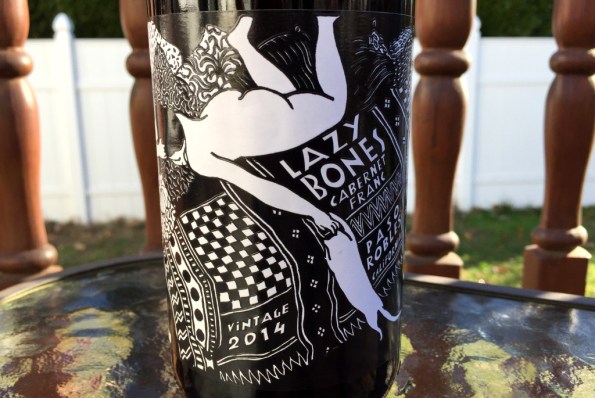
First, on Friday, December 4th (which is today!), we will be celebrating Cabernet Franc, one of the noble grape varietals and one of the “parents” of the Cabernet Sauvignon. This #CabFrancDay celebration is started by Lori and Michael of Dracaena Wines, and the culmination point of the celebration will be a live #WineChat on Twitter, starting at 8 PM Eastern time. The celebration is easy to join – pour yourself a glass of Cabernet Franc (you got lots of choices – Bordeaux, Loire, Languedoc, California, Australia, New York state, Oregon, Argentina and many other regions), open Twitter and chat away.
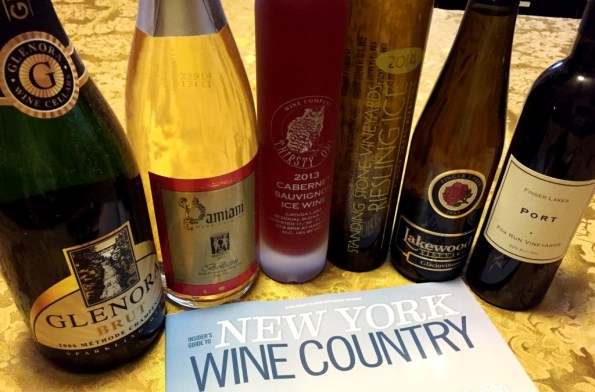
Next virtual event will take place on Wednesday, December 9th, 7 – 8 PM Eastern – Finger Lakes Wine Alliance will conduct its traditional Sparkling and Dessert Wines tasting. The event will take place on Twitter using hash tag #FLXwineVT, together with the live broadcast on UStream. 6 wineries will participate in the tasting – Damiani Wine Cellars, Fox Run Vineyards, Glenora Wine Cellars, Lakewood Vineyards, Standing Stone Vineyards and Thirsty Owl Wine Company.
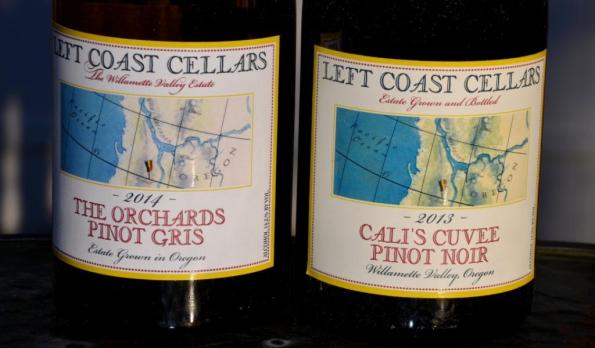
After you and your fingers will take one hour break, it will be a time to join a #WineChat! At 9 PM Eastern, Luke McCollom, General Manager, Viticulturist and Founding Wine Maker of Left Coast Cellars from Oregon will be discussing “the advantages of a single vineyard estate”. All you need to do to join the conversation, which I’m sure will be very interesting (I published a two-part interview with Luke McCollom a short while ago – part 1 and part 2), is to open Twitter and join the conversation with the hash tag #WineChat.
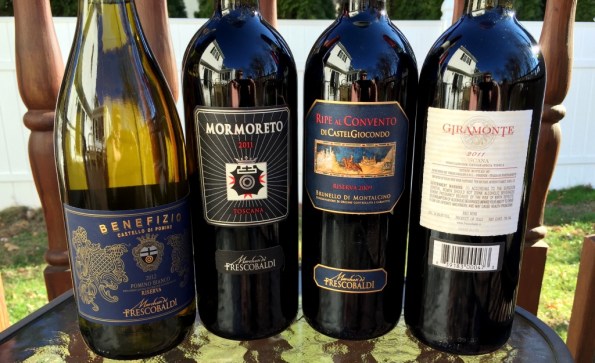
Last but not least, on Thursday, December 10th, there will be a virtual tasting of 700 year old Marchesi de’ Frescobaldi’s “CRU wines from its signature estates (Castello di Nipozzano, Castello di Pomino, Tenuta di Castelgiocondo, Tenuta di Castiglioni)”. The tasting will start at 1 PM Eastern (was originally scheduled for 2 PM), and it will be done as a live broadcast over UStream. Tasting will be conducted by Lamberto Frescobaldi, President and 30th generation of Marchesi de’ Frescobaldi. Join in!
I hope you will find time to join at least one tasting – the conversations at those events are always live and entertaining. Until the next time – cheers!
Wines Worth Seeking, and The Food To Match
When it comes to the wine produced in the world, Italy is an unquestionable leader – Italy produces more than twice as much wine as country in the second place – France, and 10 times more than US, which is #4 on the list (numbers from 2014). That essentially means two things:
- There are plenty of Italian wines available at any wine store, definitely the case in US.
- There are lots and lots of producers in Italy which are just starting to conquer the worldwide markets – and they often make wonderful wines.
What is the first region which comes to mind when you think about Italian wines? I bet it is Tuscany for the most, followed probably by Piedmont and then may be the Veneto. Well, we are not going to talk about any of those. Producer which I would like to bring to your attention comes from much lesser known area in central Italy, up on the Adriatic coast – the region called Marche.

Hills of Marche (source: San Giovanni web site)
I can confidently state that 6–7 years ago, absolute majority of the wine drinkers in US never heard of the region Marche. Over the past few years, the situation changed, and Marche wines started showing up in the wine stores, often offering a nice surprise to the consumers who are not afraid to venture out of the all so familiar Chianti, Barolo and Pinot Grigio.
As you probably guessed by now, Marche wines is what we will be talking about today – let me introduce to you Azienda Agrobiologica San Giovanni winery, located on the Piceno hills, few miles from town of Offida. Offida gives name to the Offida DOCG, a wine production area focused on the grape called Pecorino.
San Giovanni winery was officially founded in 1990 (the family was making wine for much longer time). The vineyards extend across 75 acres around the green hills, at an average altitude of about 1000 feet (320 meters). From the very beginning, the winery was built on all organic principles, with utmost respect to the land and the environment. As you would probably expect, the winery practices dry farming and uses only natural yeast. In a quest to produce wines most attuned with nature, San Giovanni winery is even using a different type of natural cork, produced from the sugar cane. As I was reading online, sugar cane corks are touted specifically as the best enclosure for organic wines, and they even boast negative carbon footprint, as sugar cane captures carbon dioxide – not sure how that works, but here is a link in case you want to educate yourself.
Before we will talk about the wines, one more important note about San Giovanni wines. Not only all the wines are organic, they are also Vegan! There are no animal products used in production of the wines, and in 2014 the winery became certified vegan as “Qualità Vegetariana Vegan” by CSQA.
San Giovani uses typical local varieties to produce their wines – Passerina, Pecorino, Trebbiano, Montepulciano and Sangiovese. Overall, San Giovanni makes two different lines of wines – Gyo, meant for an early consumption, and a group of wines more of a “reserve” level (I’m using the word “reserve” here as a very loose term, for the lack of common group’s name). During the tasting, which was also accompanied by a delicious meal, we had a pleasure of trying 4 different San Giovanni wines.
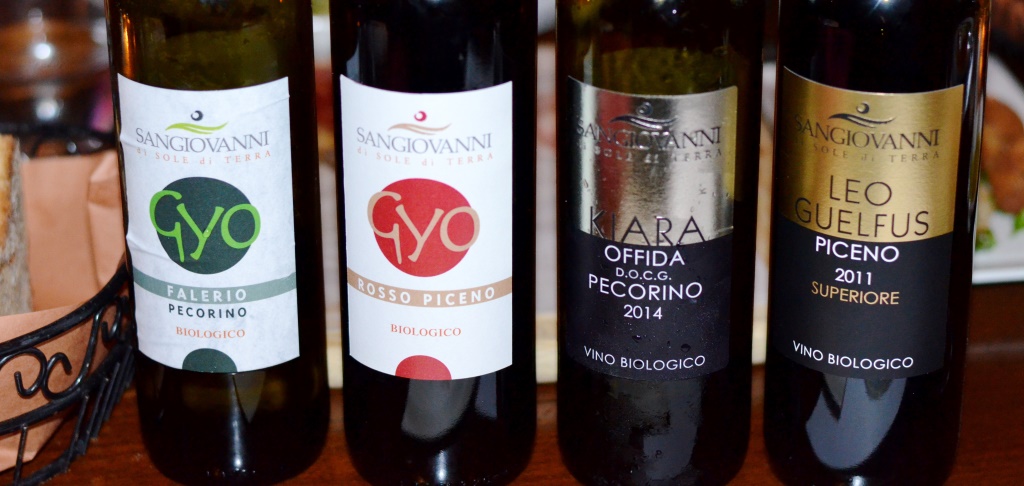 Here are my notes:
2014 Sangiovanni Gyo Pecorino Falerio DOP, Marche (13% ABV, SRP $13, 85% Pecorino, 15% Trebbiano)
N: White fruit, touch of grass
P: Hint of lemon peel, nice plumpness – almost Chardonnay-like, silky. Medium+ body, touch of bitterness.
V: 7+, nice
2014 Sangiovanni Kiara Pecorino Offida DOCG, Marche (13.5% ABV, SRP $20, 100% Pecorino) – this wine is named after owner’s daughter, Kiara. An interesting note – it is considered that Pecorino is at its best after 3 years in the bottle.
N: Bright stone fruit, leeches
P: sweet notes on the palate, apricots, medium to full body, nice acidity, good balance, long finish.
V: 8-, excellent


2014 Sangiovanni Gyo Ross Piceno DOP, Marche (13% ABV, SRP $13, 70% Montepulciano, 30% Sangiovese)
N: crushed fruit, fresh, blackberries
P: soft warm red fruit, nice layers, silky texture, polished and balanced
V: 8. Would be perceived as an expensive wine in the blind tasting. I would gladly drink this wine every day.
2014 Sangiovanni Leo Guelfus Piceno Superiore DOC, Marche (13.5% ABV, SRP $20, 70% Montepulciano, 30% Sangiovese, 18 month in oak, 18 month in the bottle)
N: Concentrated, plums, cherries, touch of herbs
P: Wow! Delicious, fruit, layers, spices, silky smooth, refined, long finish
V: 8+/9-, outstanding wine by itself, and one of the best values you can find at a price. This might be the wine with the best QPR I tasted throughout entire year.


As I mentioned already, the pleasures of the evening were not limited only to the wines. Our tasting took place at Cotto Wine Bar, a wonderful small outpost of authentic Italian cooking in Stamford, Connecticut.
Our hosts spent quite a bit of time going over the menu, looking for the dishes which would help to showcase the wines. As a first course, we had an excellent selection of various cured meats and cheeses – both Gyo and Kiara Pecorino wines perfectly accompanied these, providing nice backbone of acidity.


Next two pasta dishes arrived – Fettucine alla Bolognese (Fresh Homemade Pasta, Meat Ragu, Shaved Ricotta Salata) and Gnocchi alla Genovese (Basil Pesto, Oven Dried Tomato, Pine Nuts, Fresh Perline di Mozzarella), each one being very tasty. Sangiovanni Gyo Rosso Piceno was a perfect suitor here, weaving itself into the flavor profile of the dish.


Our last course consisted of two meat dishes – Agnello Scottadito (Grilled Lamb Chops, sauteed Brussel Sprouts, Pine Nuts and Raisins) and Straccetti Arugula e Parmigiano (Thinly sliced USDA Prime beef served with arugula, Parmesan Cheese and Balsamic Vinegar from Modena), meat cooked to perfection and delicious on its own. The Sangiovanni Leo Guelfus Piceno Superiore, with its firm structure, dark fruit and gentle tannins, perfectly complemented the meats, happily elevating every bite.


There you have it, my friends. Of course, there are lots of wines out there. But the great part of enjoyment of wine comes from the joy of discovery. And this is exactly what I’m taking about here. Sangiovanni wines bring together lots of unique qualities – not only these are tasty wines, but they are also organic, they are good for vegans, and they deliver an outstanding QPR. These are definitely the wines worth seeking.
And if you are ever in Stamford, and craving good Italian food, Cotto Wine Bar might be just “it”. Cheers!
Cotto Winebar and Trattoria
51 Bank St
Stamford, CT 06901
Phone: (203) 914-1400
http://cottowinebar.com/
Top Highlights From Gambero Rosso Tre Bicchieri 2015
 At this point, you most likely already read a number of reviews from Gambero Rosso 2015 (here are the links for the John and Stefano posts, the two that I know of), so it will be difficult for me to add much there. Considering that lots of hard work is already done by the others, I will take an easy path and this year will limit my post only to the 10 (or so) of the personal highlights. But before we will get to those, a couple of notes.
First of all, just in case you didn’t read the other posts and in case you are not familiar with Tre Bicchieri, let me explain what Tre Bicchieri is all about. In 1986, an Italian food  and wine magazine was created under the name of Gambero Rosso (in translation from Italian it simply means “red shrimp”, and it comes after the name of the tavern in Pinocchio). Starting in 2002, the magazine introduced the rating of the Italian wines using the symbol of glasses (Bicchieri), with 3 glasses (Tre Bicchieri) being the highest rating. This rating proved to be successful and demanded, and since then the Gambero Rosso created a special event, called Tre Bicchieri, to celebrate all those best wine Italy has to offer. Tre Bicchieri events take place around the globe, and the event I attended was in New York (it was the third Tre Bicchieri event I attended in the past 3 years, all in New York).
For the next note, here comes the rant. Yes, Tre Bicchieri is a great event which gives an opportunity to taste some of the best Italian wines. But in terms of the overall organization, this is one of the worst wine tastings I ever attended. I have two major problems with the event. Just so you understand the size of the event – there were 185 producers showing between 1 and 3 wines each, which would roughly equate to 350 wines. First problem is that all the producers were not organized by the region. And they were not organized alphabetically by the producer, oh no, that would be too logical, right? Instead, the tables were arranged in the alphabetical order of the … distributors! So the wine from Tuscany stands next to the wine from Sicily. What makes it even worse is that the numbering of the tables is not straightforward, so the table #142 can be next to the table #50; to make matters even more interesting, some of the distributors who pour the wine, don’t have enough people to cover all the separate tables, so some of the tables had been simply “pulled in” to have #122 to be nested between #42 and #43 – makes it easy to find, eh?
This story was the same for the past 3 years I attended the event – but I still can’t get used to it and still find it very annoying.
The second problem was probably even more annoying, and for all I remember, it is getting worse, year after year. The problem can be expressed with one word (okay, two) – wine glasses. Puzzled? Let me elaborate. When you arrive to the event and show your registration, you get a little piece of paper, which is your coupon for the wine glass (! only at Gambero Rosso!). You come to the counter and exchange your coupon for the glass. All is good so far. Now, you start tasting, which means that white, red and even dessert wines get to be poured into the same glass – after 50 – 60 pours, the glass has traces of wine all over it, inside and outside, and what you can do at the regular wine tasting is to put your glass aside and go get a fresh glass. Makes sense, right? But not at the Tre Bicchieri. They bring best wines of Italy for a special tasting – but they can’t procure enough glasses for the people who would want to get a fresh glass to be able to do so. Believe me – I tried, was almost screamed at. I don’t remember having this problem 2 years ago; I was able to get a clean glass with the organizers intervention last year, but this year – no, was told to go away by the multiple people. Of course I appreciate been invited to the event where you can taste the best Italian wines, yes, for free – but I just think that organizers must make an effort to match the level of the wines with the overall level of the event.
Okay, I vented, so it is the end of the rant. Now let’s talk about the wines.
As you tell from the title, I want to mention here only the highlights. Before we talk about those, a few general notes.
- No, I didn’t taste all 350+ wines. May be someone did, but no, that was not me.
- There were lots and lots of truly spectacular wines, as you would expect at an event like Tre Bicchieri, where only the best wines are presented. But don’t assume that I found all wines to be spectacular. Some were just good, some were just okay, and a few I regarded in my personal notes as “terrible”. Taste is personal, and that’s okay.
- I want to reiterate it again – while there were lots of wines and wineries worth mentioning, I’m purposefully limiting this post only by 10 – they might not be all around the best, but they were the most memorable. Oh yes, these are not the wines – these are rather 10 wineries – yep, guilty as charged.
- As usual in the overwhelming tastings like this, I’m using the “plus” ratings. “+++” should stand for Excellent, but trust me, I had more than a fair share of “++++” spectacular.
Okay, now we are ready – here we go.
I want to start with one of my favorite wines which I was very happy to find at the Tre Bicchieri event – Podere Il Carnasciale Caberlot from Tuscany. This wine is made out of unique, “self-created” but officially recognized grape called Caberlot, which came to being as a cross between Cabernet Sauvignon and Merlot. First time I tasted this wine was 2 years ago, and it was a love at first sight, errr, taste. The wine is produced in minuscule quantities and only made in magnums – and needless to say, very hard to find. We tasted the following wines:
2012 Poderel Il Carnasciale Carnasciale, Tuscany – +++. excellent, old world style
2010 Poderel Il Carnasciale Caberlot, Tuscany – ++++, wow! classic Bordeaux blend, spectacular taste profile
2011 Poderel Il Carnasciale Caberlot, Tuscany – ++++, similar to the 2010, only with more tannins
There were lots of other great wines coming from Tuscany ( just think about all the super-Tuscans), so I had to limit myself in what to include in this post. Here is one more winery where I was literally blown away by the quality – Azienda Agricola I Luoghi:
2010 Azienda Agricola I Luoghi Campo al Fico, Bolgheri Superiore – ++++, wow!
2011 Azienda Agricola I Luoghi Ritorti, Bolgheri Superiore – ++++, beautiful, clean
2011 Azienda Agricola I Luoghi Fuori Solco, Bolgheri Superiore – ++++, 100% Cabernet Sauvignon, wow!, precision!
Moving from Tuscany up north to Piedmont, Michele Chiarlo was perfectly representative of the area. Yes, there were other Barolo present in the tasting, but some were boring, and some where plain undrinkable due to the tannin attack (not just attack, a juggernaut rather). This wine was just perfect.
2010 Michele Chiarlo Barolo Cerequio, Piedmont – ++++, outstanding, clean, lavender, herbs
Continuing to explore the Northern Italy, we are now moving to Trentino, where we can find one of my favorite Italian Sparkling wines, Ferrari. While Ferrari wines are very hard to find in US, they are well worth seeking. Ferrari had 3 wines presented at the Tre Bicchieri, one better than another:
2004 Ferrari Trento Brut Giulio Ferrari Riserva del Fondatore – ++++, spectacular, notes of fresh dough, bread, yeast
2006 Ferrari Trento Brut Lunelli Riserva – ++++, very unique sparkling wine, undergoing maturation process in the oak casks, silky smooth palate
2007 Ferrari Trento Brut Perlé – ++++, beautiful!
Representing Campania, a few delicious wines. First, a beautiful white:
2013 Pietracupa Fiano di Avelino, Campania – ++++, fresh fruit on the nose, perfect palate with lemon and tart apples
And then the red and the white from the Fattoria Alois:
2011 Fattoria Alois Trebulanum Casavecchia, Campania – +++, rare grape, powerful tannins
2013 Fattoria Alois Pallagrello Bianco Caiati, Campania – +++, nice, acidic, clean, with some oily notes, unique and different. Plus, a new grape – Pallagrello Bianco.
A few wines from Puglia:
2012 Torrevento Castel del Monte Rosso Bolonero, Puglia – +++-|, fruity, open, beautiful ripe raspberries
2012 Torrevento Primitivo di Manduria Ghenos, Puglia – +++-|, playful, notes of tobacco and cedar
and
2012 Tenute Eméra Sud del Sud Salento IGT – +++, very good, soft approachable, reminiscent of Gamay, chocolate mocha notes
2013 Tenute Eméra Qu.ale Salento IGT – ++++, spectacular, great palate – not only this wine was outstanding, it was also a part of the very interesting project called Wine Democracy, which is all about making great affordable wines for the people and taking care of our little planet. Great cause, great wine.


Now, I need to mention another one of my favorite Italian producers – Jermann. Jermann wines represent Friuli Venezia Giulia, and I think these are some of the most thought-provoking Italian wines you can find. And as a side benefit, many of Jermann wines will age extremely well.
2012 Jermann W…. Dreams…. Friuli Venezia Giulia IGT – +++-|, spectacular, Chablis nose, light palate
2012 Jermann Vintage Tunina Friuli Venezia Giulia IGT – ++++, complex, delicious
2013 Jermann Pinot Grigio, Friuli Venezia Giulia IGT – +++
We are already at 9, and there are yet a few more wines I have to mention. I guess I’m really bad at math and self-control. Oh well, I hope you are still with me – here are few more wines, wineries and regions.
A very interesting wine from Lazio:
2012 Principe Pallavicini Casa Romana Rosso Lazio IGT – ++++, outstanding claret, perfectly classic
And then an excellent wine from Veneto. Of course Veneto is best known for its Amarone. And those who can’t afford Amarone, should settle for the Valpolicella, often made from the same set of grapes (Corvina/Molinara etc.). I generally not a big fun of Valpolicella, as I hadn’t been successful in finding the Valpolicella wines which would speak to me. Until now.
2012 Musella Valpolicella Superopre DOCG – ++++, simple, clean, with dried fruit on the palate, excellent! Wine is produced biodynamically, and probably the most amazing part is cost, at about €5! For the price, this is simply a stunning wine.
I would feel bad if I wouldn’t have at least one wine to mention from Sicily, where volcanic soils produce unique minerally-driven wines.
2013 Cantine Rallo Beleda Alcamo Catarratto, Sicily – ++++, spectacular, touch of sweetness, full body
And we are going to finish with some sparkling wines from Emilia-Romagna. There were lots of sparkling wines at the tasting, and many of them were outstanding. However, these wines really stood apart for me, as they were produced from the grape which generally commands very little respect – Lambrusco, and they were pretty much on par with any classic Champagne.


2013 Cantina Della Volta Lambrusco di Sorbara Rimosso, Emilia-Romagna – +++, excellent, fresh, crisp
2010 Cantina Della Volta Lambrusco di Modena Brut Rosé, Emilia-Romagna – ++++, classic Champagne nose
2010 Cantina Della Volta Lambrusco di Modena Brut, Emilia-Romagna – +++, excellent!
Yep, this is the end of my report. As I said before, this is only a small excerpt from a great selection of spectacular wines – but I have to draw the line somewhere. I’m curious in your opinion if you had any of these wines. Cheers!
Daily Glass: Memorable Wines
 Wine = Memories. Well, okay, we need to correct that statement. Great Wines = Memories, now that is better. Of course we remember the wines we drink, and this is how the opinions are formed and this is how the wine list in the restaurant doesn’t look that intimidating anymore. But this should be characterized more as a general knowledge, not specifically as “memories”. Great wines, on the other hand (I’m not going to define the term “great wine” – this is highly personal, you define it for yourself), become memory anchors. We remember when, why and how, we remember who we shared it with, and we can retrieve those memories on the moment’s notice. That is what “great wine” can do to you.
Case in point – a great evening with friends, which had all three elements at its perfection – the wine, the food and the company. An evening, when the time flies so fast, you don’t understand how late it is already. And the wines – stunning, each one in its own right. We started with Gosset Grand Réserve Brut Champagne – a non-vintage Champagne from one of the old and classic producers. I have to honestly admit that I was never impressed with other Gosset wines in the past, but this Grand Réserve, poured from the magnum, was outstanding – round, creamy, yeasty just enough, with a touch of apple and fresh bread on the palate – an excellent start of the evening.
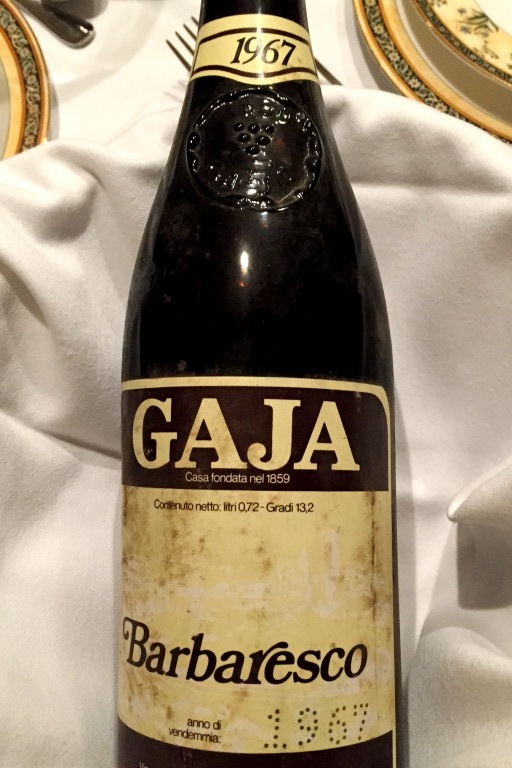
Then the awe inspiring, almost 50 years old 1967 Gaja Barbaresco was gently uncorked. It was not simple, as cork did crumble – but this is nothing which strainer and decanter can’t fix. The first whiff – nothing smells off, which is a great sign of relief. While we put the wine aside to let it breathe a bit, we reached out for another white – 2007 François Cazin Le Petit Chambord Cour-Cheverny AOC.
This is a rare French white wine made from 100% Romorantin grape. I remember a few years back trying this wine at a 10 years of age – and I remember been simply blown away by the exuberant beauty of this seemingly unassuming wine (new vintages retail at around $15 – the QPR is through the roof on this). The nose of that 2007 was amazing, with fresh white fruit, guava, mango, honeysuckle, lemon and lemon zest. On the palate, behind the first wave of Riesling-like appearance with touch of sweetness and tropical fruit notes, there were layers and layers of acidity and minerality. After about 10 minutes of breathing time, the wine was almost bone dry, very crisp and refreshing. I still have 3 bottles of the 2007, and now the trick will be to keep my hands away from them, as they still benefit from time.
Time to get back to that 1967 Barbaresco. We were somewhat waiting for the main course to start drinking it, and I was concerned that as it happens with many older wines, this wine might also succumb to the neverland if not consumed within that short window of time. Silly me. The wine kept going and opening for the next 2 hours. It had all those sweet plums, sapidity of the onion peel, minerality, all weaved around a well defined structure with perfect acidity and perfect balance. The “wows’ kept flowing until there was nothing left in the decanter – this was definitely a treat. And a perfect memory anchor, an experience which stays forever.


Our next wine was also very interesting and delicious in its own right, by fate or the accident made from the exact same grape as the Barbaresco, the Nebbiolo –2004 Ar.Pe.Pe Rocce Rosse Riserva, Valtellina Superiore Sassella DOCG, Italy. Valtellina red wines are typically made in the way similar to Amarone – with the grapes drying out after the harvest for about 120 days, and only then pressed and vinified. The Sassella Rocce Rosse from Ar.Pe.Pe stands apart, with Nebbiola grapes (locally known as Chiavennasca) left on the vine to raisin, and then pressed. Fresh, succulent plums and cherries on the nose and palate, together with effervescent lightness and firm structure (this might not make sense right away, but this is the way I perceive it), which I always find in Ar Pe Pe wines. Again, a delicious red.
Our last wine was 2003 Sella & Mosca Anghelu Ruju Rosso Passito Riserva Alghero DOC, Sardinia, Italy – very unique and interesting fortified wine, made out of partially sun-dried Grenache, locally known as Cannonau. This wine was mostly resembling the Port, with a hint of dried fruit on the nose, supported by perfectly balanced, soft body of plums and sweet oak, with perfect amount of sugar to make it a light dessert wine, but not an overbearing sweet monster.
Here we are – a perfect set of very memorable wines, compliments of dear friend Stefano (Clicks & Corks/Flora’s Table), and an evening with friends which will stay in memory, anchored by that 1967 Barbaresco. Considering that I’m finishing this post right on the Open That Bottle Night, I hope you increased your memory bank with some spectacular experiences, both of wines and the company – and I will be glad to hear about them. To the great life experiences! Cheers!
What To Drink On Valentine’s Day
 I generally avoid holiday-related wine posts, and I do it for a number of reasons. First of all, every information source on the planet considers it to be their duty to produce some piece of writing with wine recommendations. And then for someone who drinks wine all the time, the holidays are not so much of a special occasion to have a reason to open a bottle of wine. Oh well – somehow I felt compelled to share my thoughts on the wines for the Valentine’s Day, hence this post…
Pink. Red. Extreme. Commercialized beyond belief, still increasingly so year after year. Heart-shaped to the point of insanity. There are many things which turn people away from the Valentine’s Day, and I can understand that. However, I take this holiday as an extra opportunity to celebrate love and life. All you need to do is to find your way – ignore pink paraphernalia, ignore meaningless cards, ignore conveyer belt – style experience at the restaurants – and celebrate love and romance as a pure meaning of this holiday.
Let’s agree that we will celebrate love and romance in our oenophile’s way, and let’s talk about wine – without wine on the table, celebration is … just another boring dinner, right? By the way, when I said “felt compelled” in the opening of this post, this was not entirely true. I also had a pleasure to be a guest at the Off the Vine Radio Show, talking with Benita and Latisha about … you guessed it – Valentine’s Day wines – thus as you can imagine, I gave some thought to the subject (and then yes, “felt compelled”). In case you have a bit of time, you can listen to that episode here.
What can I tell you about wines for the Valentine’s Day? First of all, if you have a plan already, it doesn’t matter what I have to say. If you have some specific celebratory dish in mind, and have a pairing ready – it doesn’t matter what I have to say. But if you are still thinking how to make this holiday special, then let me share my thoughts with you. But remember – drink what you like. The wine for the Valentine’s day doesn’t have to be pink, and it doesn’t have to be sweet. It has to be something which will give you pleasure – as simple as that.
The wine for the Valentine’s Day should have balance and it should have finesse. While thought provoking is good for the wine, on Valentine’s Day you should focus on romance and not on deciphering the complex flavors. Go after balance, finesse and simplicity. This is why I would never suggest, for instance, the natural wines of Frank Cornelissen or Jean-Pierre Robinot, or the dark magic of Randy Dunn with his Howell Mountain Cabernet Sauvignon – those wines will drain you emotionally, and it is a wrong angle for the Valentine’s day. Thus let’s talk about balance and finesse.
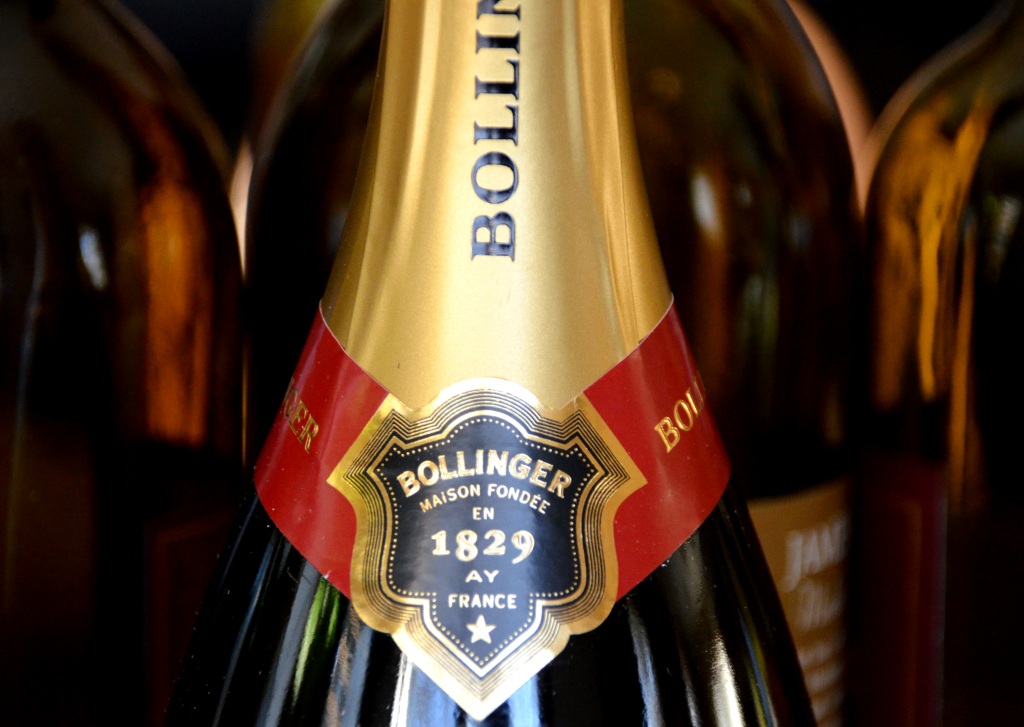
First wine I want you to consider is Champagne. As the very least, it can be an Italian Sparkling wine from Franciacorta or Trento, or some of the California sparklers. Prosecco, Cava and many other sparklers are simply not consistent enough, so for the Valentine’s Day, go with classic – remember – balance and finesse. For the Champagne, my choice would be Bollinger, as I think it is one of the finest non-vintage Champagnes, with lots of finesse. Ferrari from Trento and Bellavista from Franciacorta in Italy would definitely my next choice. But – I don’t want to forget California – Roederer Estate L’Ermitage, Schramsberg Rosé, J Cuvée 20 or any of the Gloria Ferrer sparkling wines would live you with a happy smile.
Moving on, let’s talk white wines. As we are looking for the balance and finesse, I have a few recommendations for you – and you might be surprised with these. For this holiday, I want you to step outside of your “usual circle”. My first recommendation is for the white wines of the Rhône valley in France. Yes, Rhône is mostly known for their reds, but the white wines there are equally stunning. For instance, try to find Domaine Saint Préfert Cuvée Speciale – I called this wine once “a symphony in the glass”. But in general, look for the Clairette or Grenache Blanc wines from Southern Rhône, or Marsanne/Roussanne from the North – those wines are often not easy to find, but they will deliver lots of balance, finesse and pleasure.
Let me give you a few more suggestions – equally difficult to find, but worth looking for. Viognier from Washington is a white wine worthy of celebrating love and romance with. Look for Mark Ryan or Willis Hall – their Viognier is nothing short of stunning. To close on the whites, here are 3 more rare beauties. First, 2 Sauvignon Blanc from … Italy: Gaja Alteni di Brassica and Poggio alle Gazze dell’Ornellaia – stunning balance and finesse. And the last one – Ken Forrester The FMC. You can’t go wrong with either one of these wines – go, start looking, you don’t have lots of time.
Now, we arrived at the red wine junction. Looking for the balance and finesse will dramatically reduce our choices. I would say, let’s go for Pinot Noir. I will limit my recommendations to this one grape only – and here is why. We are looking for the balance and finesse, right? Think about Cabernet Sauvignon from California – what would be the first word or words you would use to describe those wines – probably “big and powerful” – and this is not what I’m looking for suggesting the wines for the Valentine’s Day. Same goes for many Merlot, Syrah and Grenache wines – never mind the Petite Sirah. Even with my beloved Rioja – there are few wines, which will deliver that exact balance and finesse – La Rioja Alta Reserva Especiale would be definitely the one – and I highly recommend it. But for the Rioja – and then for Barolo, Brunello and even Super-Tuscan – as a general class, the probability of running into “big and powerful” is a lot higher than finding “balance and finesse”.
Talking about Pinot Noir, I wish I would recommend some of the classics to you – yes, the Burgundy – but unfortunately, my exposure to the Burgundy is way too limited, so you will need to ask your trusted wine merchant for the advice. Next up – California and Oregon. For the most of the time, California Pinot Noir will deliver exactly that – balance and finesse. To give you a few names, go look for Siduri, Loring Wine Company, Calera, Drew, Copain, Laetitia – but there are many others and it is hard to go wrong with California Pinot Noir. Oregon would be also a perfect choice – look for Adelsheim, Chehalem, Antica Terra, Evening Land – finesse is a middle name for the Oregon Pinot, so you will not be disappointed. And last but not least – don’t forget the New Zealand! Pinot Noir from Central Otago, Marlborough and Martinborough are typically well balanced and round, perfectly fitting our quest for finesse. Look for the wines from Craggy Range, Mt. Difficulty and Amisfield among the others.


Dessert time! People often underestimate how bad the dessert wines can be – one sip of the cloying, single-sugar-note wine would ruin the experience of an amazing dinner. You really have to put a lot of care in selecting the dessert wine which will have balance and finesse. Of course I would like to recommend Sauternes and Barsac wines for you, but again, my personal experience is very limited. I’m sure you can’t go wrong with Château d’Yquem – if you can afford it, go for it! What would be a bit easier to find (and afford) is a Port. Not just any Port – balance and finesse, remember – so go for a nicely aged Tawny, 20-, 30- or 40-years old. As Port ages, it loses power, and becomes fragrant and sublime, guaranteed to deliver lots of pleasure. Look for Rozes, Graham, Quinta do Noval – lot’s of excellent choices. Then of course, the king of the dessert wines – Riesling. For the special experience, I would only recommend to go to the BA and TBA levels – you know, the stuff which always comes in the small bottles. You see, it is very hard to mass-produce BA or TBA level Rieslings – you can’t harvest enough grapes at those sugar levels – thus it is hard to go wrong with BA or TBA Riesling from any producer. And the last recommendation for today – an Icewine. Not any Icewine, but I want to recommend my personal favorite – Inniskillin Cabernet Franc Icewine. This wine is vibrant, perfectly balanced and has lots of finesse – I guarantee you will finish your Valentine’s Day dinner on a high note with this wine.
Here you go, my friends – in the quest for the balance and finesse, these are some of my personal recommendations to enhance you Valentine’s Day experience. Let me know what do you think about my suggestions and feel free to provide your own. Happy Valentine’s Day and cheers!
An Eventful Friday – Sparkling, Port, Radio Talk Show and more
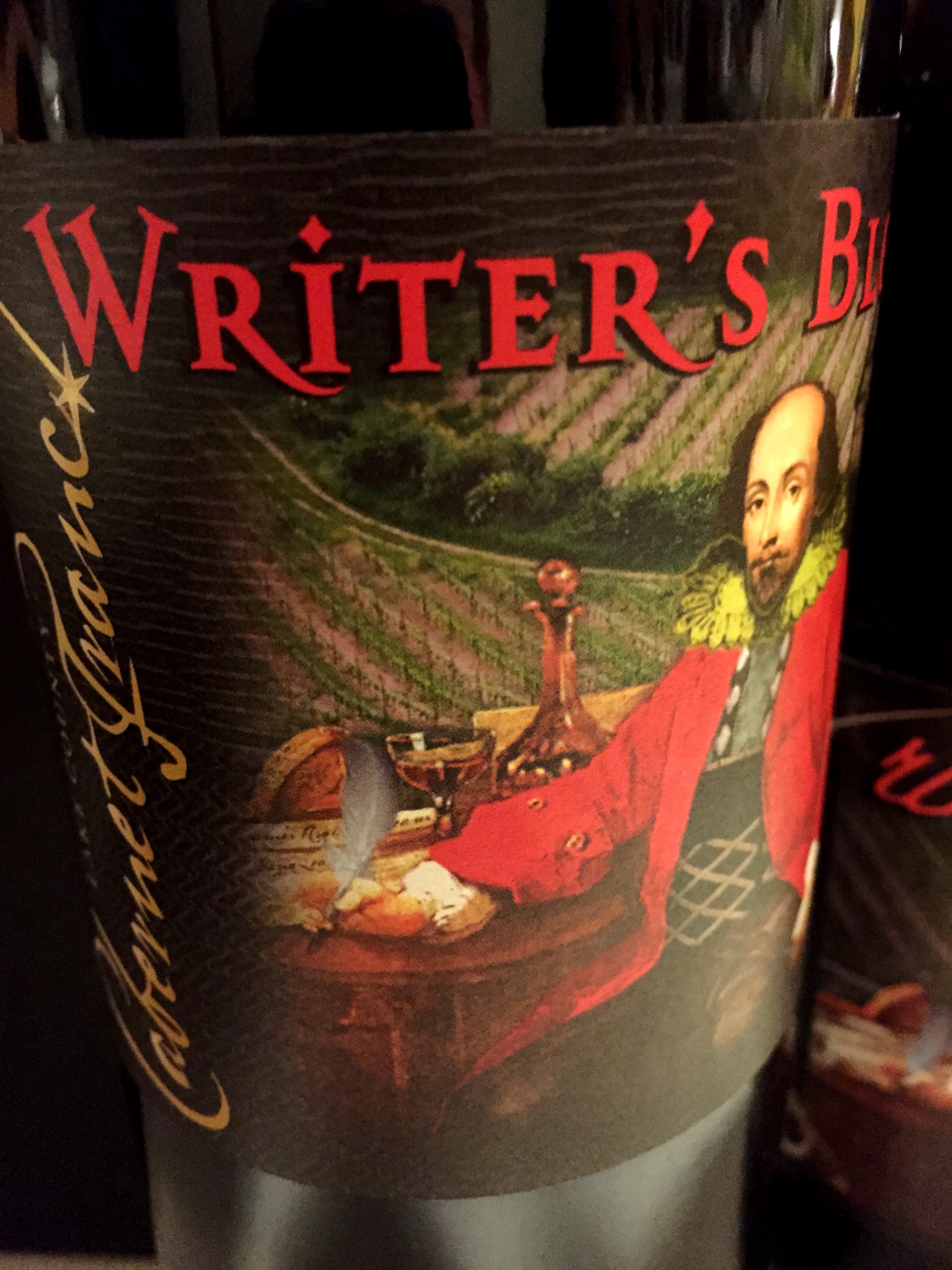 As you probably noticed, the number of posts on Talk-a-Vino is down very significantly. There are many reasons for that – different workload from my day time job, few time consuming projects we tackle at home, and of course the plain familiar writer’s block. Yep, the writer’s block – when there is lots running in your head, and you have a great difficulty to put something out on the “paper”. I tried to address the last one using the wine, I would hope specially made for such an occasion – the wine called Writer’s Block and made by Steele Wines in California. I first saw this wine mentioned in the blog I follow, called Mrsugarbears, and as you might see in my comment to that post, “Must. Find. This. Wine” was the first thing I said. I found the wine, and I got the Cabernet Franc and Grenache to try, out of the vast variety of the wines under that “Writer’s Block” label (you can see the full line of wines here).
We opened the 2011 Writer’s Block Cabernet Franc Lake County, California (13.8% ABV, $17) – it had eucalyptus, tobacco and fresh leaves on the nose. Palate was showing a medium body, tart blackberries, green bell peppers and more tobacco. On Friday, the characteristic cassis showed up, which made me happy while finishing the wine. Not sure it helped with my writer’s block, but I will gladly drink it again. Will try the Grenache next time. Drinkability: 7+
Let’s get back to that Friday. In the morning, the shipment of Horsepower Syrah arrived. I’m not sure how I managed to get on the list for this first release of super-highly allocated wine – but somehow I did, back in May. The wines comes from the legendary Christophe Baron (Cayuse, No Girls), from the tiny vineyards in Walla Walla Valley, all farmed sustainably and biodynamically (here you can read more about Horsepower Vineyards).
Okay, so it is all great, but not my main point here. I got a shipping notice from UPS at the beginning of the week, and then I got shipping delay notice from UPS, saying that the wine would be delivered only on Monday, which would be a problem as I’m traveling again next week, and there would be good chance that nobody would be able to sign for the wine during the day. This is why the delivery on Friday was so exciting that I even decided to share it in this post. This was also the first wine I received wine in the nice wooden box – so here are some pictures for you.


The next event on Friday was a really a double pleasure. At the beginning of the week, I connected to the @TheVineWineClub on Twitter, and then I got a note about possibly joining a radio talk show about the wine. Really? Yes, I can talk wine, I actually love to talk wine, so I said that I will be glad to do it – and it instantly happened, right on that Friday. At 3 PM, I was a guest at the regular radio talk show called “Off the Vine Radio Show with Benita and Terricinia“, hosted as you can tell from the name, by Benita and Terricinia. The theme was about the sparkling wines, so to support the conversation I decided to open a sample which I recently got – Ferrari Perlé from Trento in Italy. I almost feel guilty talking about Ferrari wine just matter-of-factly – the winery was founded by the Guido Ferrari in 1902; he was responsible for bringing Chardonnay grape into Italy, and he can be pretty much considered a father of Italian Méthode Champenoise wine industry. Full range of Ferrari sparkling wines is nothing short of spectacular and again, it really deserves it own coverage in a separate blog post.


This 2007 Ferrari Perlé Trento DOC, Italy (12.5% ABV, $35, 100% Chardonnay) was absolutely delicious – fine mousse, delicate aromas of apple and hint of toasted bread, perfect balance on the palate – apples, yeast, toasted bread, acidity – just very classic wine, making you say “ahh” after every sip. Drinkability: 8+
And the radio show – it was fun all the way! Benita and Terricinia were great hosts, very knowledgeable about the wine, so we definitely had a fun conversation (I really hope I didn’t overstepped my boundaries by talking to much)! I’m not going to recite our conversation here, but if you got a bit of time, here is the link for you for the broadcast. And if you will actually listen to the program – let me know (honestly!) what you think.
And the last highlight of the day – Port and Madeira tasting!


The tasting was focused on the Graham Port wines, one of the oldest Port houses in Portugal. There were 4 different ports presented in the tasting. The first one was really special, produced in the total quantity of 500 cases (less than 300 cases imported to US). This port was produced as part of the “Six Grapes” line, but for the first time in more than 100 years, it was done using the best grapes from 2011 and 2012 vintages, which were both simply outstanding vintages (some are saying that 2011 was one of the two or three very best over the last 100 years), and this is something never done before. You can read the full story here. Well, for what it worth, here are my notes:
Graham’s Six Grapes Old Vines Port ($34.99) – young and aggressive. Needs some time to mellow down – it has a sharpness of young fruit which still needs some polishing when it comes to the Port wine. After a bit of the breathing time, will perfectly finish a meal.
2011 Graham’s Vintage Port ($75.99) – again, this is the port from the amazing vintage, so it needs a lot of time to develop. Young bright fruit, blueberries and blackberries, firm and powerful body, excellent balance. Give it a 20 years, it will show what it is capable of.
Graham’s 10 Years Old Tawny ($27.99) – delicious. Dried fruit all over – figs, apricots, touch of hazelnut. And I love the bottle’s look and feel – this is a new packaging for this port which I think makes the wine shine even more.
Graham’s 20 Years Old Tawny ($45.99 – great price!) – make it double delicious. More dried fruit, nuttiness all the way, extremely complex. Thought provoking and might make you forget all the world troubles if you will be left alone with the bottle. My favorite from the tasting.
Last but not least – Blandy’s Malmsey 10 Years old Madeira ($23.99 – an amazing QPR) – a bit of sweet fruit on the palate, lots of complexity between nutty and salty profiles – delicious all the way.
Here we are, my friends – one eventful Friday. Writer’s blog, be bone – I can’t deal with you. Cheers and have a great week ahead!
Last Bottle Sign Up ($10 credit)




 Talk-A-Vino