Archive
International Tempranillo Face Off – USA Fares Well
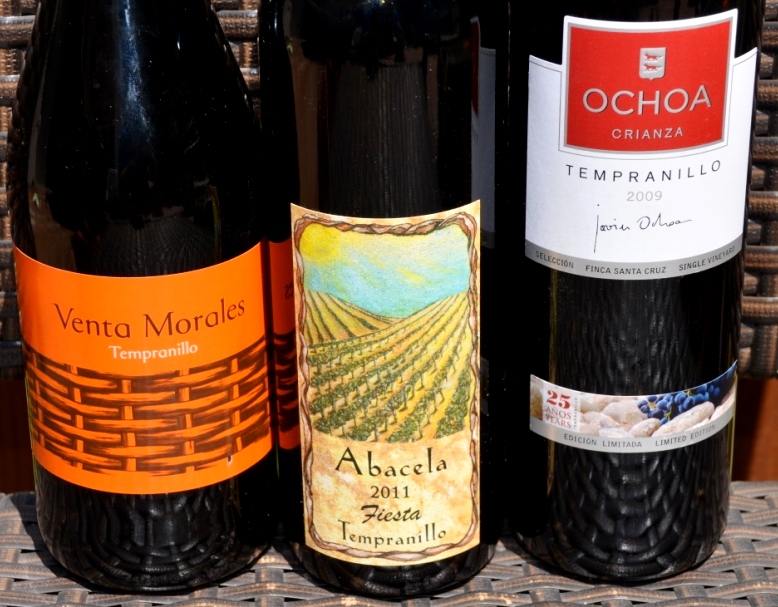 Thinking about Tempranillo, what wines come to mind first? Rioja is an unquestionable champion, with its bright fruit expressions packaged into eucalyptus laden cigar box. Ribera del Duero is definitely next, with its perfect, firm structure, and then Toro, with layers upon layers of power. Tempranillo has one of the most synonyms, most of which point back to the different areas in Spain, so it is given that outside of three regions we just mentioned, the grape is very popular all around Spain. And then… well, there is not much outside of Spain. Portugal, where Tempranillo is known under the names of Aragonez and Tinta Roriz, is the only internationally renown source of Tempranillo wines outside of Spain – even then mostly using Tempranillo as a part of the blend. Australia and a few other countries also experiment with the grape – but I’m not sure they produce something worth bragging about.
And then, of course, there is the USA. Tempranillo made it into the California at the beginning of the 20th century, but really didn’t find much success there as a single varietal wine. You can find some of the Tempranillo made in the southern California, in places like Temecula Valley, but those wines are little known outside of the wineries which produce them. On a big scale, Texas probably is having the biggest success with Tempranillo in USA, where the grape is considered a signature state grape, and Tempranillo wines produced by many wineries. But our conversation today will not be about Texas Tempranillo – we are going a lot further North on the map, to the state of Oregon.
No, Oregon is not an internationally renowned source of Tempranillo wines, not yet anyway. However, while I was recently participating in the #winechat about Oregon Pinot Noir, someone mentioned Tempranillo as one of the grapes in Oregon which might have a bright future. As I’m very partial to the Tempranillo wines with the great love of Rioja, that piqued my interest. Tempranillo? From Oregon? Really? How good can that be? I was told that Abacela winery in Oregon produces excellent Tempranillo wine. I reached out to the winery, and – got the bottle to taste. But – I didn’t want to taste this wine on its own – I wanted to create some frame of reference. Yes, I would love to get the Texas Tempranillo, but – that would take a lot of time. Of course the best available source of Tempranillo wines is Spain, so I decided to get a few different wines from Spain. I purposefully avoided Rioja – those wines are rarely 100% pure Tempranillo, and the winemaking style is very specific to Rioja, so it wouldn’t be a good reference. Ribera del Duero wines also might be a bit too specific for this exercise, and Toro wines pack way too much power. I looked for generic Tempranillo renditions in my local wine store, and came up with two bottles from Spain – one from Navarra and one from La Mancha.
Before we talk about our “face off”, let me say a few words about our competitor from USA – Abacela winery. According to the winery’s web site, Abacela name comes from “an ancient and now almost obsolete verb, ‘abacelar’ common to three Iberian languages-Spanish, Galician and Portuguese-and which means “to plant a grape vine.”” Abacela winery started in 1992, when Earl and Hilda Jones purchased a 19th century property in Umpqua Valley in Southern Oregon. This purchase was the result of a very long and intense research on the climate, soil and landscape, to find the place ideally suited to produce a Tempranillo wine on par with the best Spanish Tempranillo. If you are interested to see how the pursuit of passion looks like, read the section called Story on Abacela web site – I wish the other wineries will give you even half of the information about their wines and vineyards.
Our tasting, which I proudly called Face Off, was very simple – I sat down with my wife to try these three wines. We tried the wines in the exact order as you will see it below.


Here are the detailed notes:
2010 Venta Morales Tempranillo La Mancha, Spain (13.5% ABV, $7.99)
Color/visual: Dark garnet, almost black. Very substantial legs
Nose: Baking spices, ripe plums, touch of earthiness
Palate: Prunes, touch of figs, nice acidity, slight imbalance at midpalate
Verdict: Shows slightly “overboard”. Drinkability: 7
2011 Abacela Fiesta Tempranillo Umpqua Valley, Oregon (13.6% ABV, 17 months in barrel, $23)
Color/visual: Garnet, noticeable rim variation as well as legs
Nose: dark chocolate, herbs
Palate: Very elegant, nice fresh fruit, good acidity, very noticeable cherries, present tannins, medium to long finish
Verdict: overall very nice wine. Should be able to stand up against Ribera del Duero. Drinkability: 8-
2009 Bodegas Ochoa Finca Santa Cruz Tempranillo Crianza Limited Edition, Navarra, Spain (13.5% ABV, aged 1 year in American oak, $15.99)
Color/visual: Garnet color, very slight rim variation, noticeable legs
Nose: Touch of sweet fruit, sweet cherries, eucalyptus
Palate:Elegant, perfectly balanced, soft sweet fruit, tobacco, smoke, incredible textural complexity, touch of dust
Verdict: An outstanding Tempranillo, one of the very best I ever tried. Drinkability: 8
As you can see, Abacela Tempranillo definitely worth its salt soil, and I would highly recommend it (if you can find it). I also want to note that Abacela Fiesta is only an introductory Tempranillo – they produce another 3 wines out of Tempranillo, plus a full range of very unusual for the Oregon (or even USA) wines, such as Tannat, Dolcetto and Tinta Amarela – full list looks very impressive and tempting.
As for my little Tempranillo competition, we are done here. Have you ever had an “unusual” Tempranillo wine? Have you ever tried Abacela Tempranillo or any of their wines? What do you think? Cheers!
Celebrate Tempranillo!
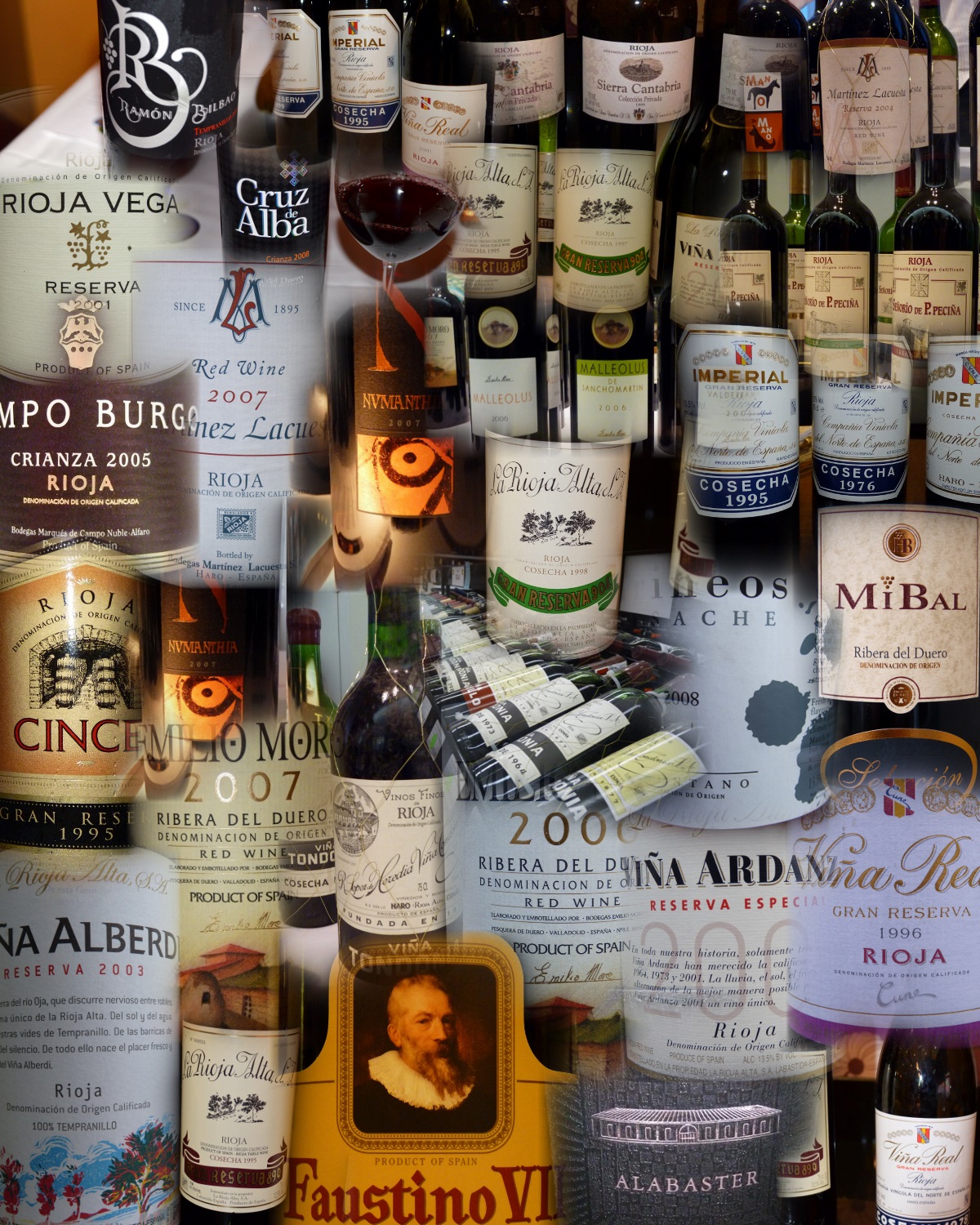 Today is an International Tempranillo Day 2013!
Tempranillo is an indigenous grape originated in Spain (by the way, do you know that Spain has the biggest area of grape plantings in the world?), with more than 2000 years of history. It is black, thick-skinned grape, capable of surviving temperature swings of Mediterranean climate, with very hot days and cool nights. Name Tempranillo comes from Spanish word temprano, which means “early”. Tempranillo typically ripens two weeks earlier compare to many other grapes. Tempranillo also one of the most widely planted red grapes in the world, with about 500,000 acres planted world-wide.
Tempranillo grapes are naturally low in acid and sugar content, so they often rely on blending partners to complement on both. Flavor profile of Tempranillo typically includes berries, leather (so famous in Rioja wines) and tobacco. Most famous Tempranillo wines come from Spain, from Rioja and Ribera del Duero regions, but Tempranillo is successfully growing in many other regions, including Portugal, California, Texas (up and coming star), South Africa, Australia and others. It is also interesting to note that Tempranillo is known under lots of different names (and as such, can throw some curve balls to The Wine Century club aficionados) – it is known in Spain as Tempranillo, Tinto Fino, Ull de Llebre, Tinto de Toro (this grape actually has clonal differences, similar to Sangiovese/Sangiovese Grosso), Cencibel and many others. It is known in Portugal as Tinta Roriz, Aragonez and Tinta Aragonez. But for the rest of the world it is simply known as Tempranillo.
So what is so great about Tempranillo? It has a few qualities which squarely set it on the line with the bets of the best in the wine world.
First, it has a great affinity for oak – Tempranillo wines can age and improve for the very long time in the oak barrels, and the resulting wine will pick up subtle nuances and complexity from that oak.
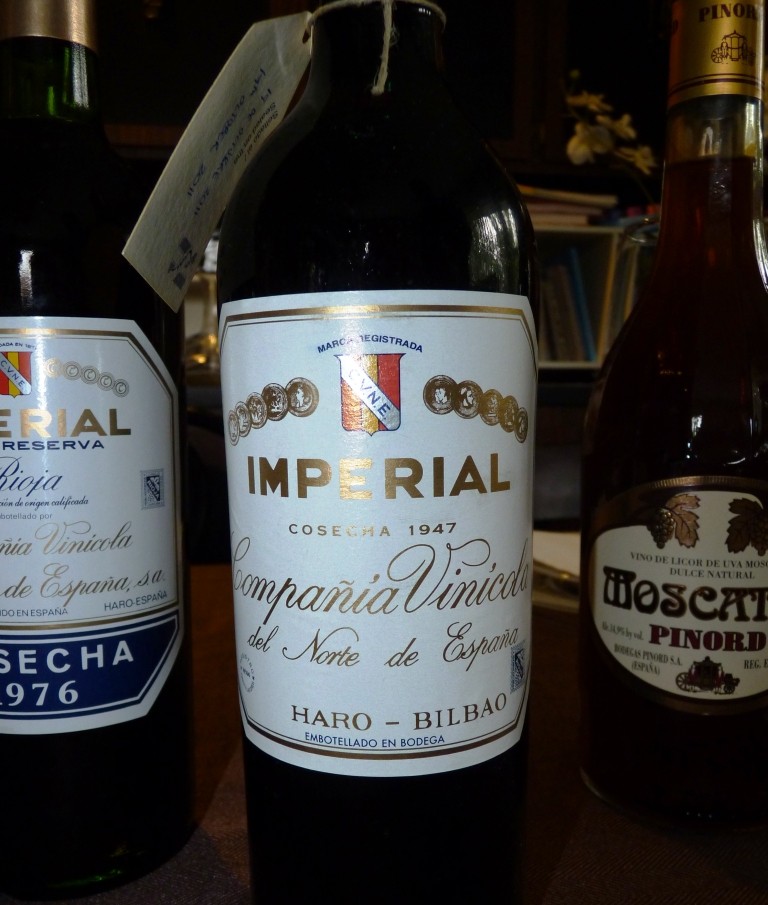
Tempranillo wines are very good at ageing. Best Tempranillo wines will rival best Bordeaux and Burgundy when it comes to improving with age and maintaining its youthful character. I have a first-hand account I can share with you – here is my experience with 1947 Rioja Imperial.
Last but absolutely not least in my book – Tempranillo wines are affordable! You can drink absolutely fabulous wines in the price range of $20 to $50, occasionally going into the $80+ – can you say the same about California Cabernet, or Burgundy, or Bordeaux? Not really… But with Tempranillo wines you do have this luxury. Of course there are Tempranillo wines which will cost $600+, but those are the exception, not the norm.
So what Tempranillo wines should you be drinking today, or any other day for that matter? I would love to give you a variety of recommendations, but come to think of it, I can only mention a few names coming strictly from Spain. There is nothing I can tell you about about Portuguese Tempranillo wines, as Tinta Roriz is typically blended with other grapes to produce Port. And while Tempranillo wines are made in Texas, California, Oregon, Washington and probably other states in US, most of those wines are available only at the wineries and rarely leave state limits.
But – when it comes to Tempranillo from Spain, I got favorites! Let me give you a few names of the producers – all the recommendations are personal, as I tasted many of their wines.
Rioja: La Rioja Alta, Bodegas Muga, Vina Real, Lopez de Heredia, Cune Imperial
Ribero del Duero: Emilio Moro, Vega Sicilia, Hasienda el Monsterio, Bodegas Alion
Toro: Teso La Monja, Numanthia
DO La Mancha: Bodegas Volver (one of the singularly best wines money can buy for around $15)
So I think it is the time to have a glass wine. Before we part let me leave you with a few interesting resources:
A vintage chart of Rioja wines, going all the way back to the 1925
A general vintage chart of Spanish wines, starting from 1992
A map of Spanish wine regions
And we are done here. Ahh, before I forget – Tempranillo Day now has a permanent spot in the calendar! It will be celebrated every second Thursday in November. Have a great Tempranillo Day and cheers!
Daily Glass: Take Your Journey, Any Time: Odisea Wines
One of the most fascinating aspects of wine is its ability to change your emotional state. Best steak in the world will only pick you up during those 15 minutes you will spend enjoying it. Yes, if the meal was “an experience”, it might stay with you forever, but still, it is very hard, for instance, to enjoy your steak during 2 – 3 hours of quiet time in the evening (never mind five evenings in a row).
Wine is different. You can start from admiring it in the glass – color, nose, legs – and then slowly move on to the first sip, and go on from there, simply observing and enjoying the transformation for a while. But this is not all. Wine, unlike many other foods, very often comes with the stories. Stories of the people who made it, or who started making it 500 years ago. You can learn about their dreams, their aspirations, their hard work. Yes, there was a lot of hard work involved in making of that steak – but it is very hard to make a unique and emotional story out of it.
What is the point of this rambling? Let me explain. Over the last three days we undertook a journey, right in the comfort of our living room (okay, actually, we were mostly sitting outside on the deck, but this is besides the point). Not just any journey, an odyssey. Lead by the Odisea Wine Company out of California, we traveled through unusual grape varieties and unique sensual expressions. Odisea Wine Company was created in 2004 by two friends, Adam Webb and Mike Kuenz, and it is focused on making the wines from “Rhone and Iberian grape varietals grown in California”.


Here is my account of this odyssey:
2009 Odisea Veritable Quandary, California (13.5% ABV; 25% Syrah, 17%Grenache, 17% Tempranillo, 14% Petite Sirah, 12% Field Blend, 12% Alvarinhao, 3% Carignane; 850 cases made) – dark garnet color, nose of dark fruit and touch of dark chocolate. Velvety palate of plums, touch of warm spices, profile of a classic Spanish Grenache, only slightly more restrained. Round, soft, perfectly balanced. Drinkability: 8
2009 Odisea Devil’s Share, California (13.9% ABV; 48% Syrah, 30% Grenache, 14% Mourvedre, 6% Petite Sirah, 2% Viognier; 335 cases made) – dark garnet color. Needs time to come to its senses (slightly disjointed on the first sip with acidity going sky high). Cherries and herbs on the nose. Spices, hint of barnyard, sage, dark fruit, raspberries, may be a touch of tobacco notes – very round, balanced and pleasant, with the long finish. A dangerous wine once it is opened… Drinkability: 8
2010 Odisea Unusual Suspects, California (13.9% ABV; 50% Carignane, 25% Tempranillo, 15% Grenache, 10% Cinsault; 600 cases made) – dark ruby color in the glass. Fresh raspberries on the nose, with the hint of tobacco. Some raspberries on the palate, but then green, almost vegetative notes (not the tree brunches, more of a hay, dry grass style), supported by tobacco and a savory profile. Warm feeling on the palate, good acidity in the back, very soft tannins over a medium finish. This wine begs for food, but nothing as sharp or as powerful as steak – it would be good with a veal roast, a slow cooked beef stew or roasted eggplant. Drinkability: 7+
I bought these wines online a while ago at the Wade’s Wines, I guess mostly based on the unusual names – and most of them are still available, at $16.99 or so, in case if you are interested in taking the journey for yourself. In any case, I’m glad I had mine. Cheers!
Divine Experience, or Happy 15th Anniversary Brasitas!
A few days ago I got an invitation to attend the wine dinner at Brasitas restaurant in Stamford, in honor of Brasitas 15 years anniversary. The invitation came through by ways of the Connecticut Bloggers group, run by Wendy and Greg Limauge (if you live and blog in Connecticut, you definitely want to be a part of this group). Now, take your wild guess – do you think I accepted the invitation? Okay, that was a dumb question, so let’s move on – closer to the great food and wine.
I had been to Brasitas a number of times before, and it is safe to say that this is one of my favorite spots in Stamford. Brasitas identifies its cuisine as “Latin Fusion”, and considering the food which is served there, this is a pretty good designation. Now our dinner this time was a special event. The menu consisted of 5 dishes, paired with the special wine program (courtesy of Brescome Barton, one of Connecticut wine distributors) – so let me share that with you (but please keep in mind that this can make you hungry…).
We started our evening in style, with the Cave based version of Kir Royale:


This Codorniu Brut Cava, Penedes had a tiny drop of raspberry liquor, which didn’t change its very dry, austere character of the Cava. It is interesting to note that Codorniu family makes wines for 5 centuries (starting in 1551), and it was one of the first Cava producers in the region in 1872.
The very first dish of the day was Ensalada Catalana (Baby Spinach, Manchego Cheese, Golden Raisins, Pinenuts, Caramelized Quince, Blue Cheese and Sherry Vinaigrette):
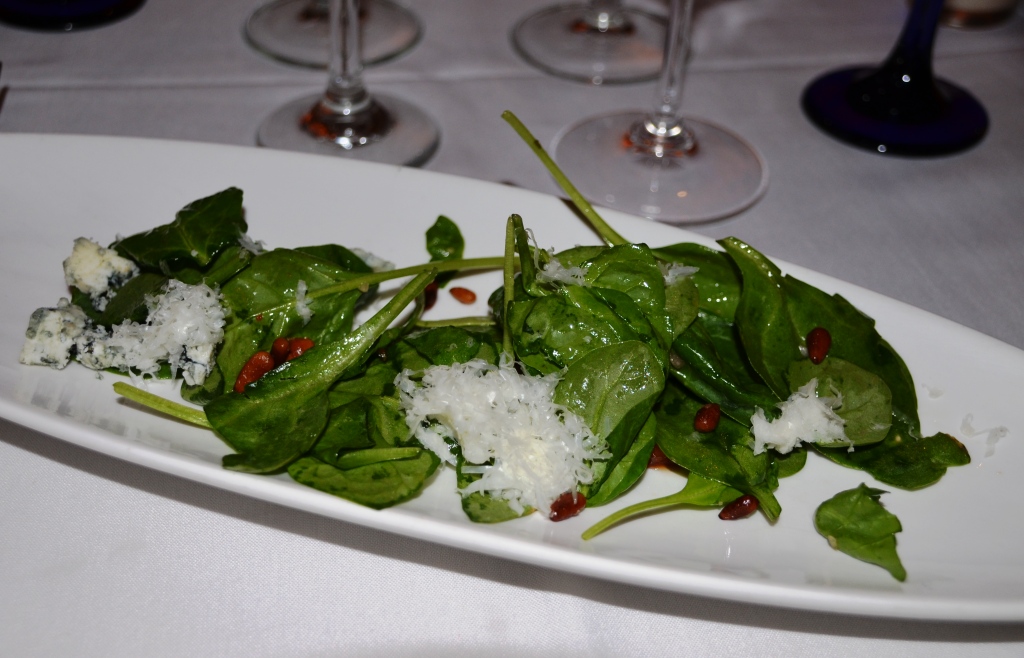
Ensalada Catalana
The caramelized quince provided perfect support for both blue cheese and Manchego, overall creating very nice and refreshing appetizer.
Our next wine was 2012 Mar de Frades Albariño, Val do Salnés, Rias Baixas DO:
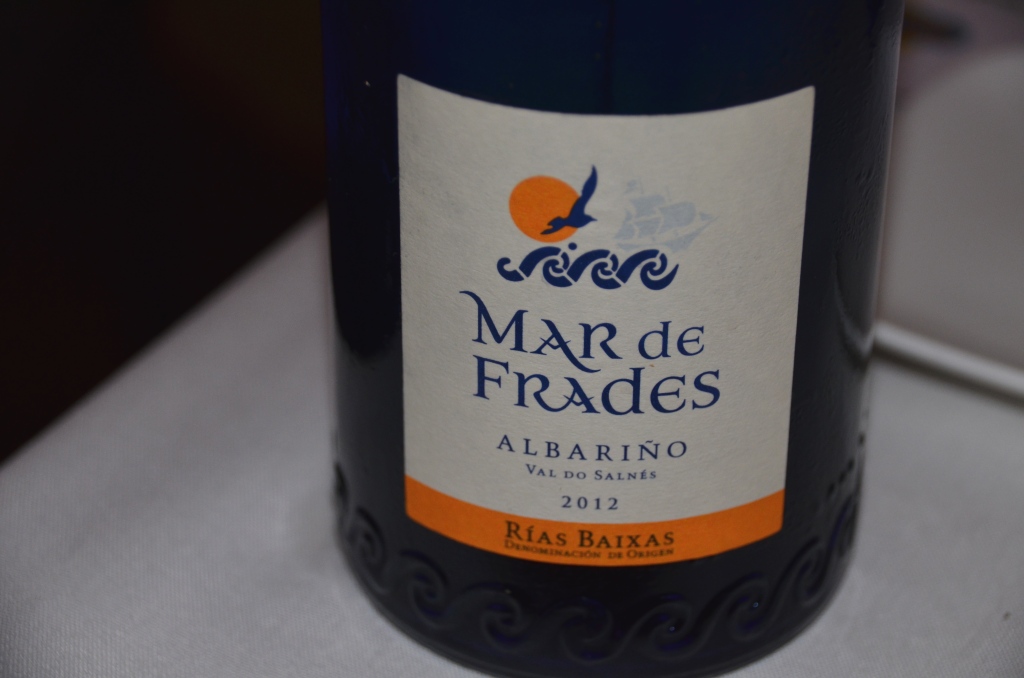
Mar de Frades Albariño
Mar de Frades means “A sea that is also a wine” in Galician. Bodegas Mar de Frades started producing wine in Val do Salnés region of Rias Baixas in 1987. The winery is located in the area where river Umia meets the sea, so you can see this sea relationship perfectly incorporated in the bottle itself. The label on this wine is also pretty unique, showing the blue ship on the label when the wine is at ideal drinking temperature (46F – 50F).
This 2012 Mar de Frades Albariño, Val do Salnés, Rias Baixas DO (100% Albariño, 12.5% ABV) had muted fruit on the nose, with nutty undertones, then it showed some white stone fruit. On the palate the wine was a little flat and acidic. I don’t know if this was really the right drinking temperature for the wine, as it showed more fruit as it warmed up. It was definitely not the Albariño I know, but I would think that it was specifically produced in this less fruity style. Drinkability: 7
Paired with Albariño was the dish called Pulpo a la Portuguesa (Roasted Portuguese Octopus, Bacalhau & Potato Cream, Charred Scallions, Chorizo, Mojo Verde):
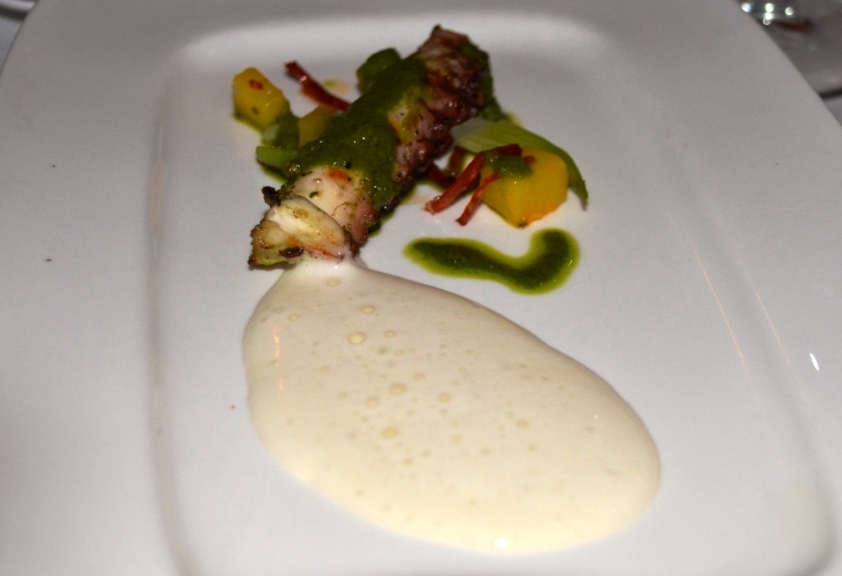
Pulpo a la Portuguesa
The octopus was perfectly cooked it was definitely the star of the dish ( as expected). I have to honestly tell you that Bacalhau was lost for me in that potato cream, and I would probably appreciate a bit more assertive presence from the chorizo, but overall that didn’t take much out of this excellent dish. An interesting side note – this was a first encounter with an octopus for a number of people at our table – but I think they all happened to like it!
Next up was 2010 Ramon Bilbao Crianza Rioja, Spain:


This 2010 Ramon Bilbao Crianza Rioja, Spain (100% Tempranillo, aged for 14 month in oak, 8 month in the bottle, 13.5% ABV) is produced by Bodegas Ramón Bilbao, founded in 1924 in Rioja Alta region. The winery had somewhat of the turbulent past, going through the number of owners but really turning around in 1999. The wine was outstanding (note to all – 2010 was a great vintage in Rioja, make sure to stock up on those wines). Nose was amazing – luscious dark fruit, some hints of eucalyptus. The nose sensation continued on the palate – dark red fruit, soft and luscious, perfect acidity, perfect balance overall, medium long finish. Drinkability: 8
This excellent Rioja was paired with… nothing else, but fish! The dish was called Pajespo con Romesco (Monkfish, Jamón Serrano, Saummer Pea Casserole, Ramesco Sauce, Pisto and Clam Broth):
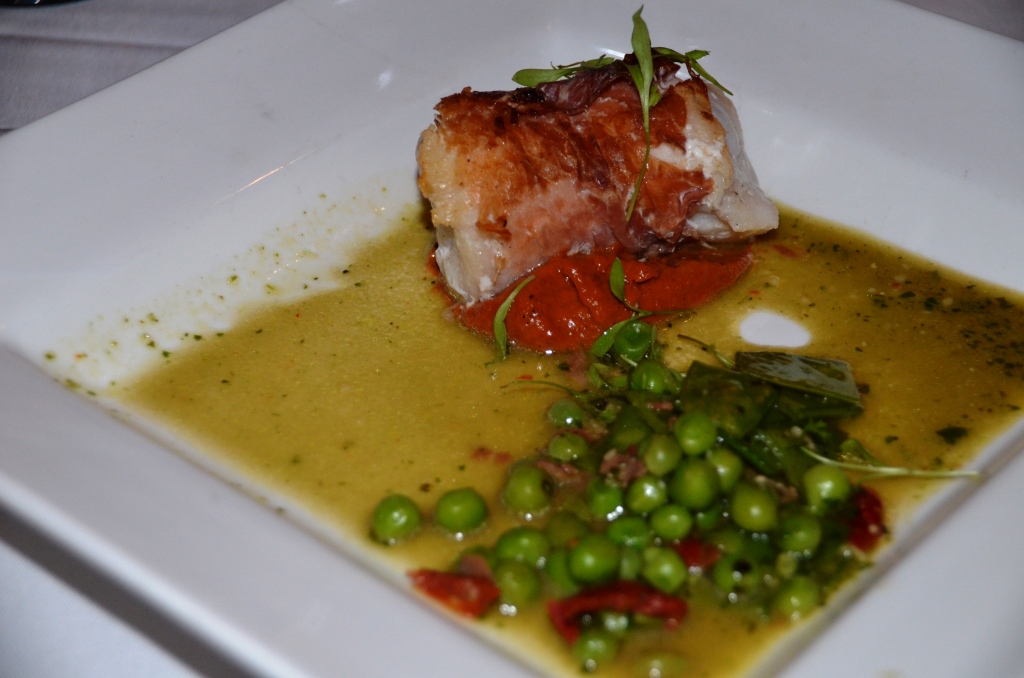
Pajespo con Romesco
How do you think the pairing was? In a word – spectacular! Earthy flavors of the sauce and nice saltiness of the fish wrapped in Jamón Serrano perfectly married the wine! I’m the first to ignore “fish with white…” rule, but in my experience this was the first truly spectacular pairing of such sort which I experienced. Bravo!
This was definitely the hard-to-top-off experience, but the next dish was … well, it was not better, but it was definitely on par.
First, the wine. 2008 Cruz de Alba Crianza Ribera del Duero, Spain:

Crus de Alba Ribera del Duero
This 2008 Cruz de Alba Crianza Ribera del Duero, Spain (100% Tempranillo, 15 month in barrel, 10 month in the bottle, 14.5% ABV) produced by Bodegas Cruz de Alba in Ribero del Duero region. This is relatively young winery, which came into existence only 10 years ago, in 2003. The winery web site is available only in Spanish, so just on my understanding it seems that this is a new venture of Bodegas Ramón Bilbao.
In general, the wines in Ribera del Duero are made from the same Tempranillo grapes as the wines of Rioja – but typically Ribera del Duero wines are more massive and concentrated than those of Rioja. This wine was no exception – dark fruit, structure, power, cherries, espresso and dark chocolate on the palate, perfect cut-through acidity, perfect balance. Definitely an outstanding example of Ribera del Duero wine. Drinkability: 8.
This wine was paired with probably a culmination dish of the evening – Chicharrón (Pork Belly Brined in Smoked Paprika, Cauliflower-Manchego Foam, Crispy Cauliflower, Chanterelle Mushrooms, Solera Vinegar, Pickled Cherries):

Chicharrón
This dish was a symphony of flavor and texture – succulent meat, the sauce with enough sweetness and acidity, crispy skin – all worked together perfectly. Cruz de Alba Crianza, with its sour cherries profile, was creating a delicious combination.
And then there was dessert – Torta de Aceite (Olive Oil and Rosemary Cake, Grapefruit Sorbet, Cosecha Miel Marinated Grapes):
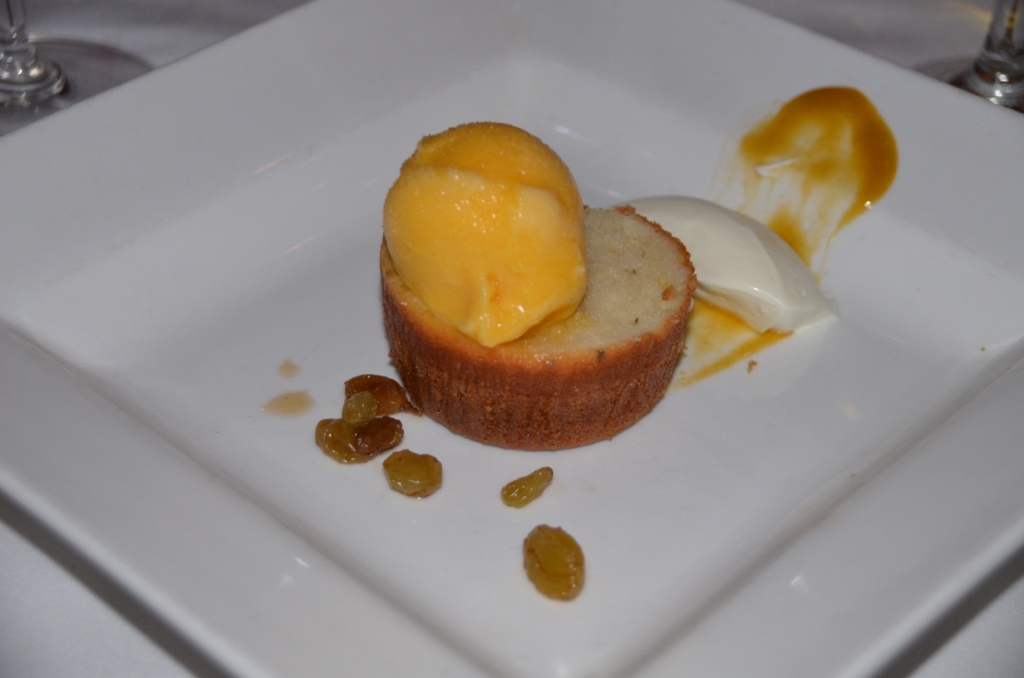
Torta de Aceite
The dessert was paired with Licor 43, a citrus essence with the touch of vanilla, which naturally complemented the dessert perfectly. This was a great finish to the fantastic meal.
Last, but not least – Jaime Guerrero, chef and owner of Brasitas, came to talk to us, which was a great ending for the evening:
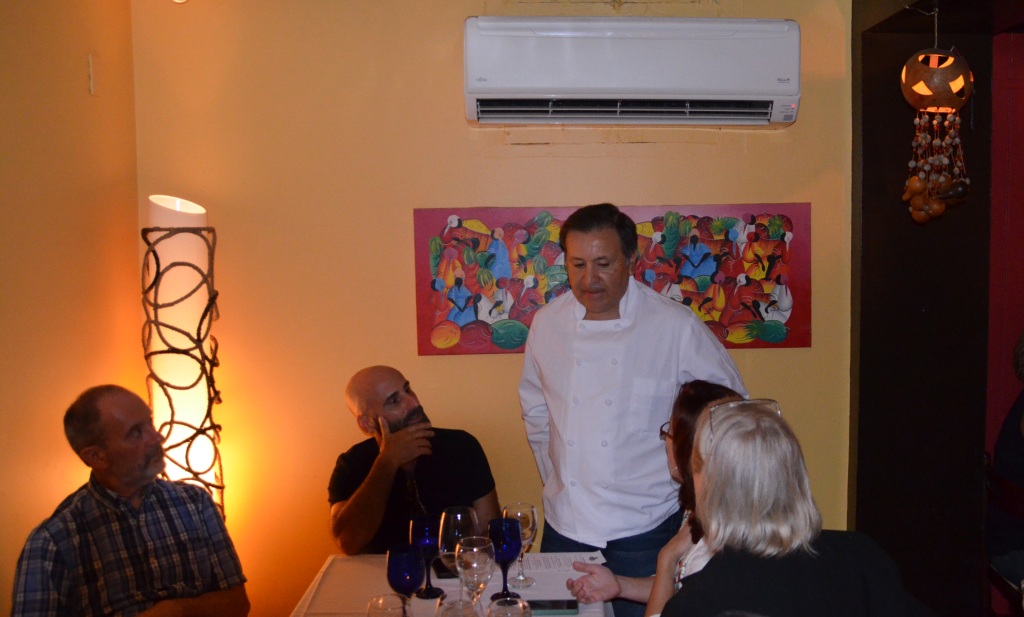
Jaime Guerrero, Chef and Owner of Brasitas, talking to CT Bloggers
There you have it, my friends – great dinner, great food, great wine, great company – life at its best. I really enjoyed meeting all the Connecticut Bloggers who came to this dinner – Denise (and Jay) from DeeCuisine, Alicia from Local Food Rocks, Bonnie from Home Place, Greg and Wendy from Connecticut Bloggers – and I hope to seem them again soon.
And we are done here. Until the next time – cheers!
Brasitas Restaurant
954 E Main St
Stamford, CT 06902
(203) 323-3176
http://www.brasitas.com/
Disclaimer: I was invited to this dinner as a guest of management. All opinions are my own.

Wednesday’s Meritage – Wine Quiz Answer, WTSO Cheapskate Wednesday in Progress, How To Taste Wine and more
Meritage Time!
 Let’s start with the answer to the wine quiz #61, grape trivia – Tempranillo. In the quiz, you were supposed to answer 5 questions about Tempranillo, the noble Spanish grape. Here are the questions with the answers:
Q1: What is the meaning of the name Tempranillo?
A1: Name Tempranillo comes from Spanish word temprano, which means “early”. Tempranillo typically ripens two weeks earlier compare to many other grapes.
Q2: Name 3 grapes, traditional blending partners of Tempranillo
A2: Traditionally, in Rioja wines, Tempranillo is blended with Mazuello, Grenache and Graciano.
Q3: What is common between Bodegas Muga, La Rioja Alta, Lopez de Heredia and Vina Real outside of the fact that all four are very famous Rioja producers and of course make wines out of Tempranillo?
A3: This was definitely a difficult question. What this four wonderful Rioja producers have in common is … location. All for wineries are located within walking distance from each other around old train station in Haro.
Q4: Tempranillo is used in production of the wine outside of Spain, which is at least equally famous to Rioja. Do you know what wine is that?
A4: Port. Tempranillo is known in Portugal under the name of Tinta Roriz, and it is one of the essential grapes in Port production.
Q5: Name two producers of Tempranillo wines – one is the most famous and another one is probably the most expensive.
A5: Another pretty difficult question. Vega Sicilia is definitely the most famous producer of Tempranillo wines with their flagship wine called Unico. And while it is quite expensive at $500+ per bottle, Dominio de Pingus makes probably the most expensive Tempranillo wines. Both wineries are located in Ribera del Duero region.
Based on the low participation in this quiz I can only say – people, you have to drink more Spanish wines (see, I’m only using bold font instead of capitalizing = screaming)! Especially from Rioja and Ribera del Duero. Anyway, as I said, at least two questions were quite difficult. We don’t have clear winner today, with Emil ( he doesn’t have a blog) coming the closest with about 3.5 points, so he definitely gets an honorable mention.
And now to the interesting stuff around vine and web!
First – don’t miss the WTSO Cheapskate Wednesday which is taking place today, June 19th. Yes, it is not super convenient to keep WTSO open in the browser and hit refresh all the time, but you have very few alternatives to that. You can also follow WTSO on Twitter – the only medium where new wine information is updated in real time. Make sure you have all your correct information on file with WTSO – shipping address and the credit card – otherwise you are risking to miss on the wine you want while you will be filling up the details (being there, done that). I posted many times before about WTSO events – if you are interesting in taking the look at the past sales, use this link.
Next, I want to bring to your attention an interesting article by Master Sommelier Tim Gaiser, called “How to taste wine”. I’m sure that many of you tried at various occasion to figure out what exactly is in your glass – it is a fun challenge to take random glass of wine, look, sniff, swirl, sip – and confidently say “Shiraz, Barossa, Penfolds, 1998 or 1999” and then find out that you’ve been right, or may be it was actually an Argentinian Malbec. Using techniques offered as part of any serious wine education (Master Sommeliers, WSET, Master of Wine, etc.) can actually increase your chances of being right. This article explains in good detail the approach to the blind tasting taken by Master Sommeliers.
If you are a Pinot Noir aficionado, this article might be for you. Written by Jay McInerney for Wall Street Journal, it is dedicated to David Hirsch of Hirsch Vineyards, one of the pioneers of Sonoma cool climate Pinot Noir.
Last but not least, here is an interesting blog post by W. Blake Gray, where he is talking about the study regarding cork taint. According to that study, 10% of the people actually prefer corked wines! For the first 10 minutes after I read it, I had mostly expletives roaming through my head – then I was able to compose myself and leave a [decent] comment. Yeah, well, no further comments – read it for yourself…
That’s all I have for you for today – the glass is empty! Refill is coming, and until the next time – cheers!
Weekly Wine Quiz #61: Grape Trivia – Tempranillo
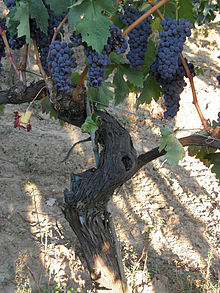
Tempranillo grapes as captured in Wikipedia
Welcome to the weekend! Here is your new wine quiz you’ve been waiting for so hard (yeah, okay, I know I’m pushing it, but may be at least a bit?)
And yes, we are continuing the grape trivia subject – by the way, if you are tired of it, do tell me – I will come up with something else. Just to let you know, we have two more red grapes to go through, and then we will switch to the whites for may be 8 different white grapes – then will see where we will end up.
Today’s subject is – Tempranillo! Just saying the word Tempranillo makes me very excited, as Rioja, one of the most well-known wines made out of Tempranillo grapes, are some of my all time favorites.
Tempranillo is indigenous grape originating in Spain, with more than 2000 years of history. It is black, thick-skinned grape, capable of surviving temperature swings of Mediterranean climate, with very hot days and cool nights. Tempranillo grapes are naturally low in acid and sugar content, so they often rely on blending partners to complement on both. Flavor profile of Tempranillo typically includes berries, leather (so famous in Rioja wines) and tobacco. Most famous Tempranillo wines come from Spain, from Rioja and Ribera del Duero regions, but Tempranillo is successfullygrowing in many other regions, including Portugal, California, Texas (up and coming star), South Africa, Australia and others.
And now, to the quiz!
Q1: What is the meaning of the name Tempranillo?
Q2: Name 3 grapes, traditional blending partners of Tempranillo
Q3: What is common between Bodegas Muga, La Rioja Alta, Lopez de Heredia and Vina Real outside of the fact that all four are very famous Rioja producers and of course make wines out of Tempranillo?
Q4: Tempranillo is used in production of the wine outside of Spain, which is at least equally famous to Rioja. Do you know what wine is that?
Q5: Name two producers of Tempranillo wines – one is the most famous and another one is probably the most expensive.
Enjoy the weekend and good luck with the quiz. And don’t forget to celebrate Dad tomorrow – Father’s Day, yay! Cheers!
Tempranillo and My [Successful!] DIY Experience
 I guess you are wondering what is the relation between Tempranillo and Do-It-Yourself, and if I started making my own wine. Rest assured – there are no plans for “Chateau Talk-a-Vino” in foreseeable future, no need to be scared. But – my “successful DIY experience” has a direct relationship with wine, so let me tell you about it first, despite the fact that today is International Tempranillo Day and we actually have to be talking about Tempranillo wines.
About a week ago I noticed a strange clicking sound in the kitchen. Something clicks, not too loud. A few minutes later, another click, and then again – I think you got the picture. I don’t know about you, but I don’t like any unexplained sounds in the house. If you hear something which you are not supposed to hear, that often means trouble. And somehow this clicking sound is associated in my mind with electricity, which I like even less.
Next day – the same story. I’m puzzled, but still, I have to let it go, as I have no idea what this can be.
Then, while sitting at the table, my eyesight stops at the wine fridge, and I see the temperature. A big red sign reads “75”.
75! Do you know the proper storage temperature for the wine? Yes, it is 55, not 75 at all! Do you want to guess the first word which comes to my mind? Yes, you are absolutely correct, that one and you are right about the second one too.
I unplug the fridge, wait a few minutes, plug it back – no effect, and then I hear the clicking sound. Okay, so as it always goes in life, I just got good news and bad news at the same time. Good news – the source of the clicking noise is discovered. Bad news – my wine fridge is busted. It is not new, okay, but it holds about 60 bottles of wine… And the new fridge is definitely not budgeted 😦
Okay, google to the rescue. The fridge is unloaded, and I start trying different suggestions from the internet. I even found an official troubleshooting guide for my Vinotemp VT-60 and went step by step as recommended. No, it is not the control card, and it seems that the next suggestion from the troubleshooting guide simply recommends replacing the compressor, which not only requires a new compressor, but also some good welding skills and equipment, which is definitely out of my league. Not good. Need better advice, please!
I decided to start looking for just troubleshooting around different parts. LG compressor. Found full spec and the manual – no help. Okay, what is this little cover on the side? I guess it is the relay some people referred to in the posts I saw. I see the part number (P6R8MC), put it in google, and… this blog post comes up, where someone named Chad Munkers is talking exactly about my fridge! Okay, step by step, similar to what I did, yes, the relay and overload protector, and if I will disassemble this small part, take a little disk out, flip, and put it back it will magically work? Seriously? Another 15 minutes, put the plug back in – ahh, I love that sound! This is what a working wine fridge sounds like! Here are some pictures for you – these are just random, and all the actually useful pictures can be found in the blog post shown above:

Wine fridge – view from the back
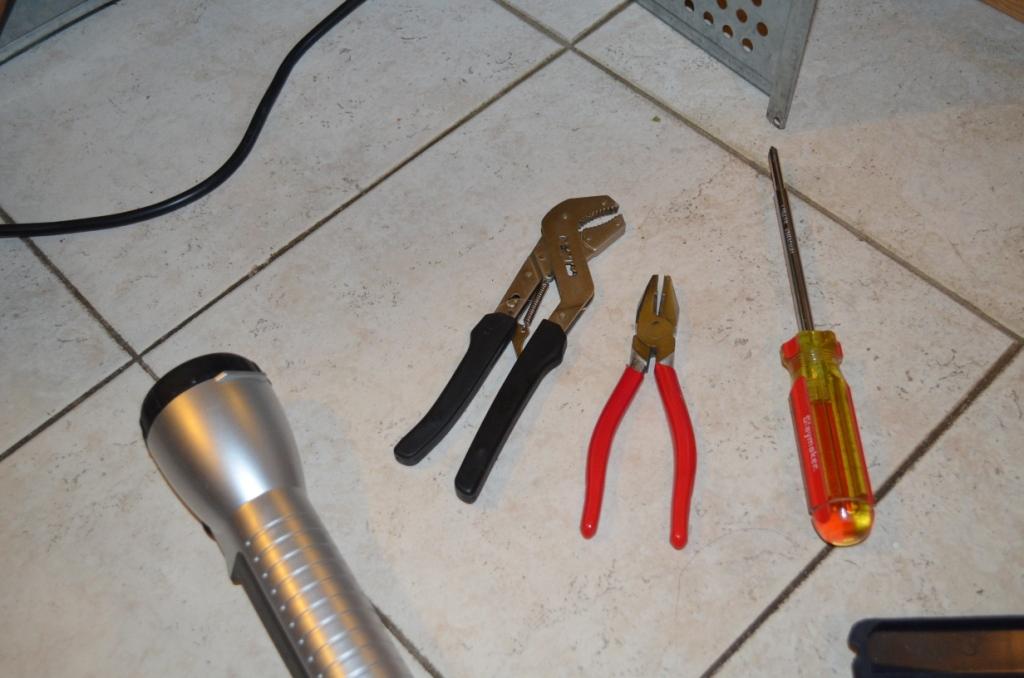
some tools

and some parts…
Sorry for sharing in such detail – a lot of my DIY, or maybe rather FIY (Fix-It-Yourself) projects are not so successful – for instance, I fully disassembled our Nintendo Wii (twice), cleaned it up, and then even replaced the laser head – only to throw it out later, still not working. So you can see how successfully revitalizing the wine fridge made me happy.
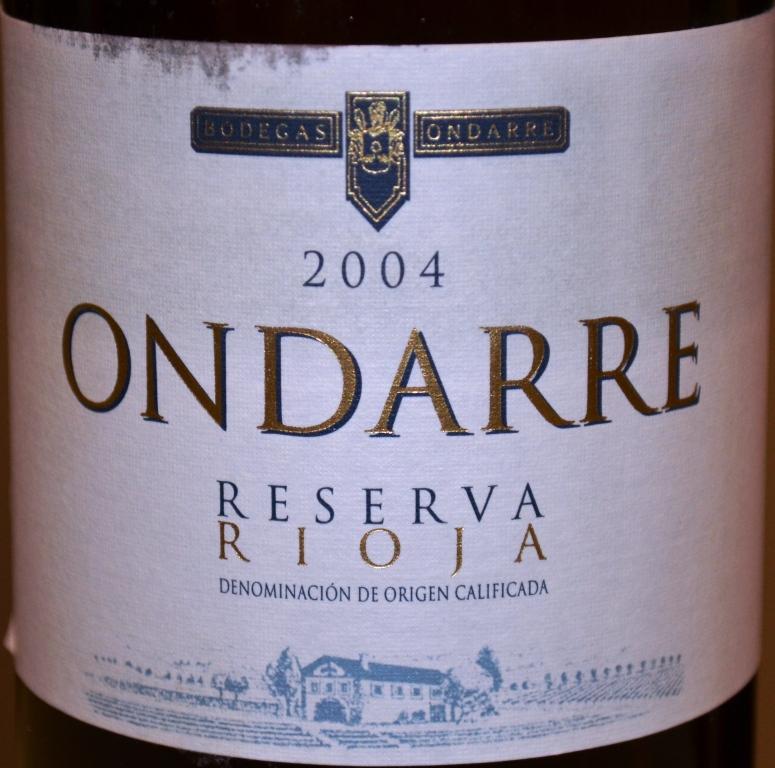
And now – to the wine! My Tempranillo wine for today’s International Tempranillo Day was 2004 Bodegas Ondarre Rioja Reserva DOC ($16.98, 13.5% ABV). 2004 was an outstanding year for Rioja, one of the best vintages ever. This wine was perfectly drinkable from the get-go – nice dark fruit on the nose, the same on the palate with some cherries, raspberries, a touch of plums and cedar box notes, perfect acidity, and soft tannins. Very balanced and enjoyable. The wine was practically unchanged on the second day, so I’m sure it will last quite well in the cellar. Drinkability: 8-.
That’s all for today, folks. Hope your Tempranillo Day experience was great, and I would love to hear about it. Cheers!
September 2022 update: 10 years later, as you can tell, the fridge stopped working again. I decided that the only reason for it to stop working can be that same relay. As the disk was used now on both sides, my only option was to get a new relay, which luckily was readily available on Amazon for only $6. I didn’t disassemble much, just removed the cover, pulled off the old relay, installed the new one, and voila – the fridge is working again! I really hope it will last for many more years, especially considering the prices of the new wine fridges…
Weekly Wine Quiz #35: What is Missing?
It is Saturday, people, and therefore it is time for the wine quiz!
Next Thursday, November 8th, will be an International Tempranillo day. As Tempranillo makes some of my all time favorite wines, I think it would be only appropriate to dedicate this quiz to the Spain’s “noble” grape.
When I was thinking about this post, I went over a lot of interesting facts about Tempranillo, and I couldn’t come up with the right question or a set of questions to ask. As I didn’t come up with the straightforward question, I will have to ask you for the straightforward answer (my logic is perfect, isn’t it).
Below is a group of numbers which have a direct relationship to the Tempranillo. You will need to figure out what those numbers mean and tell me what two numbers are missing and why do you think they should be there:
1934, 1948, 1952, 1955, 1958, ?, 1982, 1994, 1995, ? 2004, 2005, 2010, 2011
If you like Tempranillo wines this quiz will not be too difficult.
Have a great weekend and good luck! Cheers!
Weekly Wine Quiz #9 – What Is In The Name?
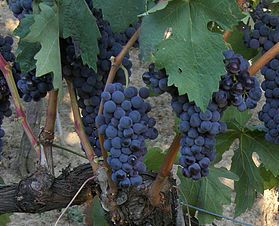 For today’s wine quiz, let’s talk about grapes, or more precisely, about the grape names. Just to make sure wine consumers are sufficiently confused, one and the same grape is called something completely different in various regions around the world. For instance, the grape which we know as Pinot Noir, is also known as Pinot Nero in Italy, Pinot Franc in the eastern-European countries, Spätburgunder in Germany and Blauburgunder in Austria.
Tempranillo is a grape which is used in production of many wonderful wines all over the world. It is particularly popular in Spain, where it is used to produce magnificent Rioja and Ribera del Duero wines, as well as in Portugal and many other countries. Tempranillo also has one the largest numbers of synonyms compare to the majority of other grapes, which makes it a good subject for today’s quiz.
Below you can see a number of grape names which are synonyms with Tempranillo – all except one. Can you identify which one is it?
Have fun! Cheers!
Tasting Spanish Wines – Blind, Of Course
 Once again, we got together with the group of friends to play a fun game of blind wine tasting. This time the subject was Spain (in the past we had a lot of fun blind tasting Pinot Noir and Sparkling wines – you can read the posts here and here).
Why Spain? Spanish wines are getting a lot of recognition among wine lovers of all walks. On average, they deliver the best quality for the price (QPR) among most of other wine regions, and in the end end of the day they simply taste great and deliver lots of pleasure. So the theme was set, the bottles wrapped (every participant have to bring a bottle wrapped in paper bag) and opened, and the numbers are randomly assigned to the bottles.
We had total of six wines, all red. The idea would be may be to identify the grape (an added bonus, of course), but mainly to see a consensus as to which wine would be the most favorite of the group – blind tasting has a great leveling effect – you are not intimidated by the price or a label, so you can stay true to your taste buds. Just to set the stage as to what are the most popular Spanish grapes, I prepared the following cheat sheet, which I’m including here in its entirety:
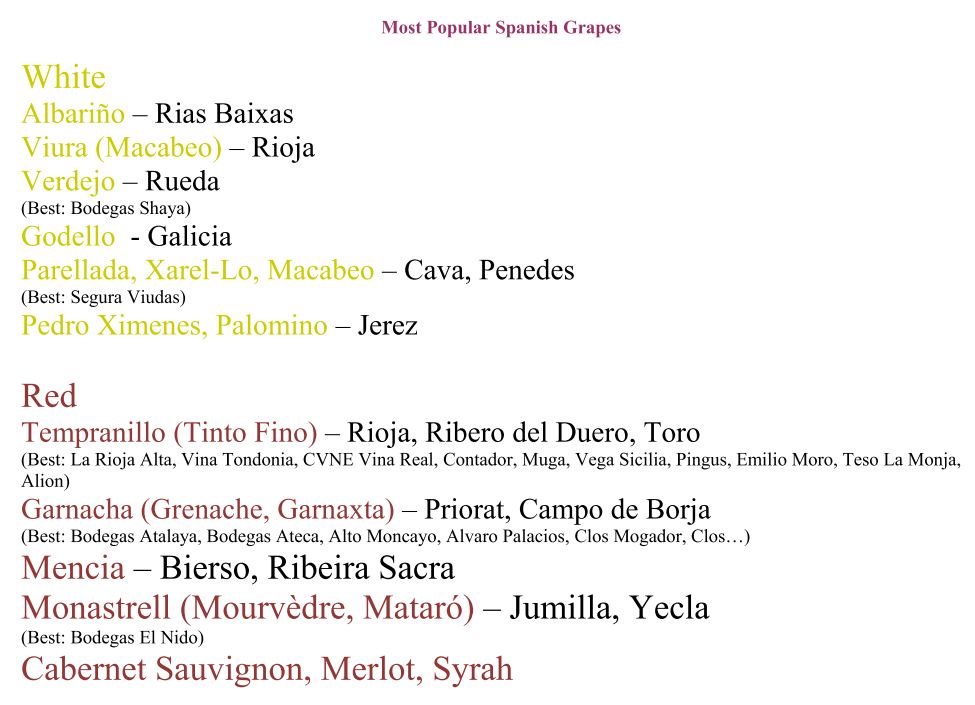
Off we went, so for what it worth, here are my notes as I took them during tasting – no corrections afterwards:
1 brick dust on the nose, good acidity, pepper – tempranillo
2 young wine, good fruit, open – mencia, monastrell?
3 earthy, tame fruit, age, good fruit, dark color, great acidity, pomegranate, smokiness
4 feels like it is corked, but I hope it is not. Fruit at the bottom. Final verdict – corked.
5 beautiful, most balanced, good fruit, plums- Grenache?
6 classic Rioja, cherries, acidity, best of tasting.
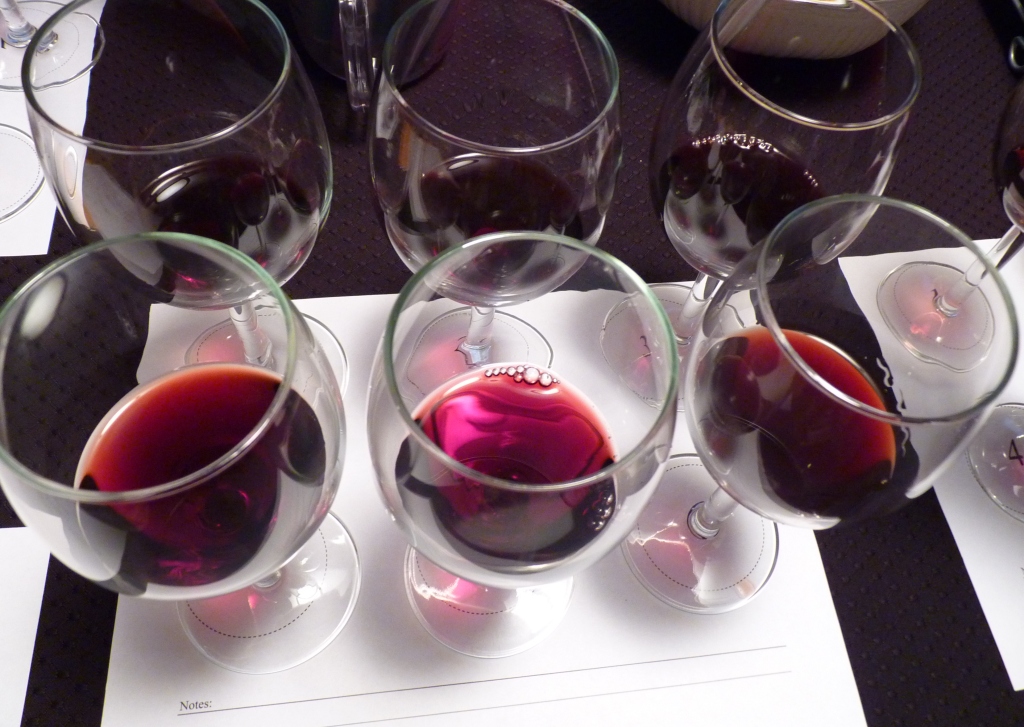
So, reading the descriptions, what do you think those wines are? This is always not an easy guess, as your mind is racing trying to pinpoint taste, texture and any other sensations you are experiencing at the moment against your mental database of the wines you tasted (that database is either resisting and says “nothing found” or goes all the way and says “it is similar to all 10 of these”).
And here are the actual wines:
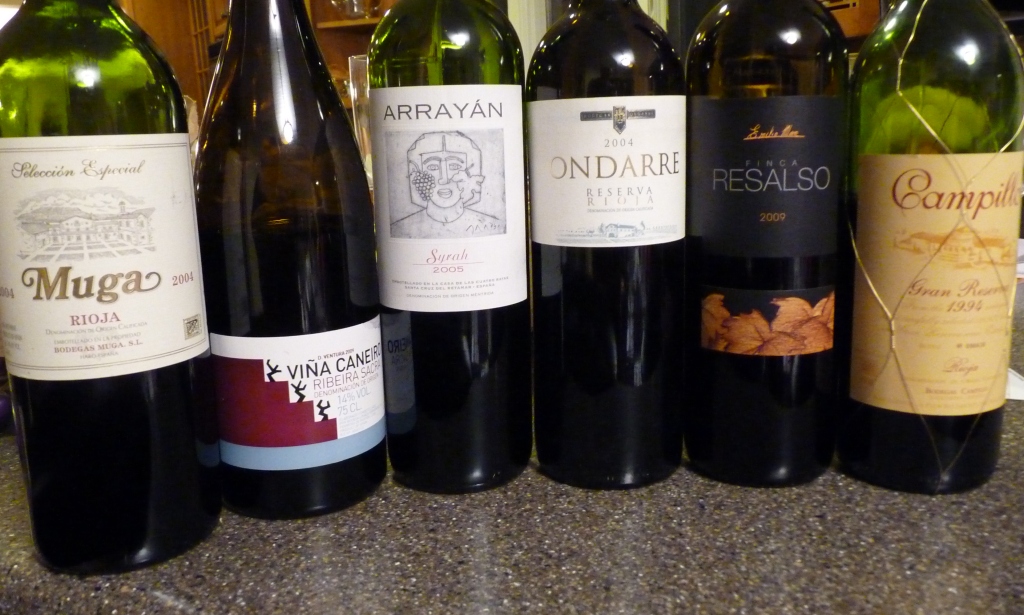
1. 2004 Bodegas Muga Rioja Selection Especiale
2. 2009 D. Ventura Vina Caneiro Ribeira Sacra DO
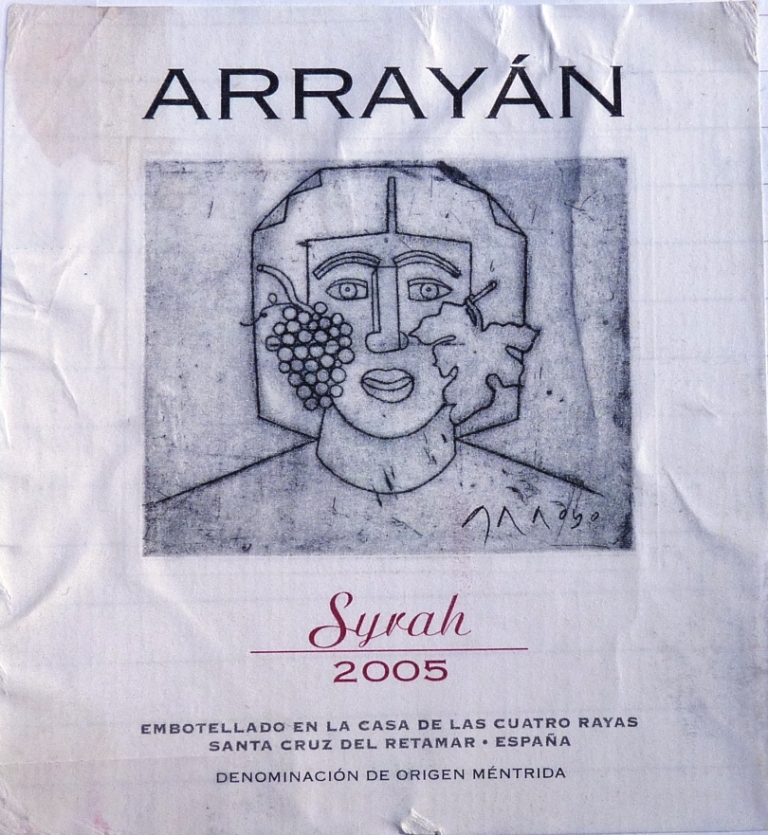
3. 2005 Arrayan Syrah, Mentrida DO
4. 2004 Bodegas Ondarre Rioja
5. 2009 Emilio Moro Finca Resalso, Ribero del Duero
6. 1994 Campillo Rioja Gran Reserva
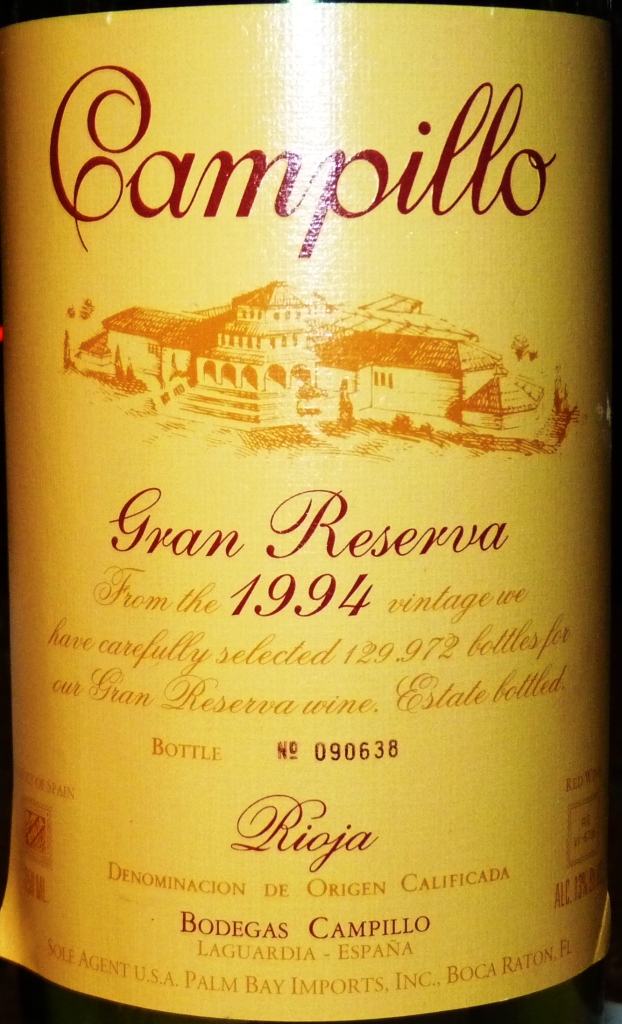 Now for the popularity vote, here is how it works. Everybody can vote for up to two wines (but don’t have to). If there will be one wine which will receive a majority of the votes, it will be declared a winner. If two bottles will receive the same number of votes, we would vote again for the one favorite out of the two.
Can you guess which wine won? If you guessed “Bodegas Campillo” (as the very least judging by the label to the left), you are correct. It won by the unanimous vote – everybody liked it. Distant second was Arrayan Syrah (half of the group voted for it). Bodegas Campillo was classic and pure Rioja, with all the clean flavors of cherries and cedar box, great acidity and very fresh, not even a hint of 17 years of age. Arrayan Syrah was probably the most unusual and unexpected wine in the group – beautiful, balanced, and very pleasant to drink. But just to give due respect to all 6 wines we tasted, all except the corked bottle were very good wines, worthy of being in the competition.
If you feel encouraged to try blind tasting on your own, I would suggest to avoid doing it for the whole country. Single region or a single grape (or a stable blend, such as GSM or Bordeaux) would work much better to showcase the range of possibilities. But other than this remark, I think blind tasting is the best way to learn about your wine preferences, to have great experience and to have fun! If you got blind tasting experiences of your own – please share them here! Cheers!
Last Bottle Sign Up ($10 credit)




 Talk-A-Vino