Archive
WBC16: Day 2 – Speed Tasting, Reds
A few days ago I told you about the live blogging session at the Wine Bloggers Conference 2016, dedicated to the White and Rosé wines. On the second day, we had a similar session, only now dedicated to the red wines. The same format – 60 minutes, 19 (or so) tables, 25 (or so) wines, 5 minutes to taste, take pictures, ask questions and share impressions in the social media, of course. Also with the higher chance of damage – clothes damage, it is, as we were dealing with red wine and time-pressed pourers. But this is part of fun, isn’t it?
Same as before, I would like to offer to you my twitter notes. Just to make it even more fun, you can compare my notes with Jim Van Bergen’s, a fellow blogger we had a pleasure of sharing the table with (alongside other great people – I think we had the most fun table in the house).
Here we go:
Wine #1: 2014 The Federalist Zinfandel Lodi ($17.76 MSRP) – very nice start for our Reds extravaganza
Wine #2: 2013 Windrun Pinot Noir Sta Rita Hills (100% Pinot Noir, blend of 5 clones from Lafond Vineyard) – nice and classic California Pinot
Wine #3: 2012 Corner 103 Zinfandel Dry Creek Valley Sonoma County – clean and varietally correct
Wine #4: 2012 Prie Vineyards Zinfandel Lodi – another excellent Zinfandel
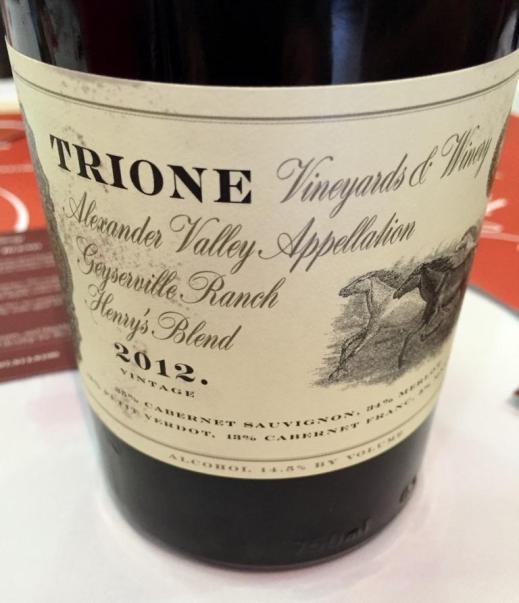
Wine #5: 2012 Trione Vineyards Henry’s Blend Alexander Valley (35% Cabernet Sauvignon, 34% Merlot, 13 % Petite Verdot, 13% Cabernet Franc, 5% Malbec) – a welcome deviation from Zinfandel, a classic Bordeaux blend. I also realized that my tweet didn’t have the picture, so picture is now included:
Wine #6: 2013 Peirano Estate ‘The Immortal’ Zin Old Vine Zinfandel (120 years old vines!) – if anything, the age of the vines commands utmost respect. Note that my tweet incorrectly puts the vintage as 2012, where it is 2013 (I blame it on the speed).
Wine #7: 2013 Klinker Brick Farrah Syrah Lodi – an excellent rendition of one of my most favorite grapes
Wine #8: 2013 Abundance Vineyards Carignane Lodi (90% Carignane, 10% Petite Sirah)
Wine #9: 2014 Oak Ridge Winery OZV Old Vine Zinfandel (Zinfandel/Petite Sirah blend) – Number one selling Zinfandel in California and a great value at $10.99
Wine #10: 2013 Harney Lane Old Vine Zinfandel Lizzy James Vineyard Lodi – one of the best Zinfandels in the tasting
Wine #11: 2013 Michael David Winery Inkblot Cabernet Franc Lodi – in the land of Zinfandels, we finished tasting with an absolute standout of 100% Cabernet Franc – you have to taste it for yourself
Here we go, folks. As you can tell, I can’t even count – we had 11 wines and not 10 during these 60 minutes, but yes, it was lots of fun. And I’m far from being done talking about Wine Bloggers Conference 2016 in Lodi.
Until the next time – cheers!
WBC16: Overwhelmed Even Before The Day One
 Yet another ambitious plan goes nowhere. While attending the Wine Bloggers Conference 2016 in Lodi, I had a great idea of posting a recap of the prior day in the morning. No need to start checking for the missing posts from me – none of it happened. Every day was so packed from dawn to dusk that what seemed to be a great idea didn’t survive the test of the reality. Yes, I probably could muscle a few lines in, but it would come at the expense of the great time talking to the fellow bloggers, which was the trade off I didn’t want to make.
So here we are, the conference is over, so now I will do my best to share my perspective of the events as they took place. Here we go.
I took a flight early morning on Thursday to arrive to San Francisco. After getting the rental car, my first stop was in Napa, at Oxbow Public Market, where I met for lunch Danielle Irwin and her husband Derek. Oxbow Public Market is a very interesting place, conceptually somewhat close to the Chelsea Markets in New York, only built in modern, contemporary style, with lots of small artisan shops and restaurants, offering food and wine, fresh produce, coffee and whatever else your heart desires. Great place to stop by if you are looking for a break during your winery visits.
It was a great pleasure to meet Danielle and Derek face to face. I had been virtually talking to Danielle for a while – she is writing her blog Danielle Dishes The Vineyard Dirt at Naggiar Vineyards in Sierra Foothills, where her husband Derek is the winemaker. Derek is a vigneron who is involved in a lot of vineyard and winery projects, and he also produces his own wines under Irwin Family Wines label. I had a pleasure of tasting his Tempranillo, which was the first California Tempranillo I ever tasted. Conversation with Derek was an excellent introduction into the Lodi wines, as he gave me some ideas for what to expect there.
A hour an a half later, after a ride along route 12 which I wouldn’t call pleasant (lots of stop and go traffic, not a fun ride) I arrived to the Hampton Inn in Lodi, which became home outside of home for the next 3 days.
The first event of the night was the conference opening reception at the Mohr Fry Ranch, sponsored by Lodi Wine. With that reception came my first real encounter with Lodi wines.
Until coming to Lodi, I only knew it as a source of many Zinfandel wines. And then there was a perception of hot, high alcohol wines, based on the tasting of occasional Cabernet Sauvignon with Lodi regional designation. Yep, that’s all I had on Lodi in my head.
The very first taste of the Lodi wine broke that perception. By the end of the tasting, it was shattered completely and didn’t exist anymore.


I stopped at the table of the Fields Family Wines, and the very first white wine I tasted was 2015 Fields Family Wines Clay Station Vineyard Grenache Blanc Lodi. I never tasted Grenache Blanc from California, let alone the fact that it is coming from one of the hottest regions (yep, sense my fear?) – yet the wine had clean acidity, touch of minerality, restrained fruit – a great start.
You know what – now I’m afraid to bore you away with all this “acidity and restrained fruit”, but this was the trait of literally every Lodi wine I had an opportunity to taste – there were no fruit bombs, there were no hot wines, there were delicious, well made world-class wines, made with love and care. I just have to tell you this, as it was really an overarching impression over the three days of tasting, so now I will [try to] avoid repeating myself all the time.
Have to be honest – the next red wine I approached with trepidation (huh, like the previous one I did not, right). Tempranillo from Lodi? I already told you that I had good experience with Irwin Family Tempranillo from Napa, but it was one particular wine, which doesn’t guarantee anything in a long run. And if you are reading this blog for a while, you know my passion for the Spanish Tempranillo wines – and now in my mind I was facing a clear opportunity to be disappointed. First sip of this 2010 Fields Family Wines Tempranillo Lodi put all my doubts to rest – the wine had a nose of black fruit and spices, and it was dark and brooding on the palate, with those espresso notes so characteristic in the wines of Toro in Spain. An outstanding rendition by all means, and I would love to see it in a blind tasting against the actual Toro wines.
2010 Fields Family Wines Estate Grown Syrah Lodi was an excellent example of the cold climate Syrah – touch of roasted meat, dark fruit, spicy with clean acidity – great rendition of another one of my favorite grapes. 2011 Fields Family Wines Estate Grown Syrah Lodi added more complexity and more roasted meat, all with perfect balance. 2010 Fields Family Wines Petitte Sirah Lodi was simply outstanding, offering silky smooth, velvety texture, supple ripe black and blue fruit with enough acidity in the core to make the wine perfectly balanced. As you can tell, Fields Family Wines provided a splendid introduction into the wines of Lodi.


My [now exciting] Lodi wine deep dive continued at the next table. Successful first experience should’ve really put me at ease – and still, an Albariño on the label triggered a subconscious alarm – Lodi doesn’t leave the impression of the Rias Baixas (not that I visited Spain, unfortunately, but just a mental image of coastal region), so “just in case, prepare for the worst”, the concerned brain said. This happened to be really a needless worry. 2015 Harney Lane Albariño Lodi had a a nose of white fruit and excellent acidity on the palate, which is the typical characteristic of the Spanish Albariño. 2013 Harney Lane Tempranillo Lodi was a bit lighter than the Fields Tempranillo version (it was also 3 years younger), but still preserving the core of dark fruit and good acidity. 2013 Harney Lane Lizzy James Vineyard Old Vines Sinfandel Lodi was as classic as Lodi Zinfandel can be – blueberries, blackberries, spices – very tasty.
I could continue tasting Lodi wines as there were many more winemakers present. However, there is something you need to know about Wine Bloggers Conference. In addition to all of the program events, there are always lots and lots of activities taking place somewhere around the WBC space. Call them private tastings or what, but this is something to pay attention to. Thus we left the reception, and after a short drive arrived at a house where Troon Vineyards tasting was taking place.


Troon Vineyards started in Southern Oregon in 1976 (vines were planted in 1972). I’m sure that when you hear “Oregon wine”, your first thought is Pinot Noir – nevertheless, Troon Vineyard doesn’t produce any Pinot Noir wines, and instead focuses on Mediterranean grape varietals (and Zinfandel). Another interesting fact is that many of the Troon wines (especially the whites) are co-fermented, meaning that different varietals are fermented together at the same time, as opposed to fermenting separately and blending afterwards.
I tried a number of Troon wines, with the two favorites been 2015 Troon Blue Label Longue Carabine, Applegate Valley, Southern Oregon (blend of Vermentino, Viognier, Marsanne and Roussanne) – touch of perfume on the nose, medium to full body with expressive minerality and good acidity. 2013 Troon Black Label M*T Reserve, Applegate Valley, Souther Oregon (blend of Malbec and Tannat) had nose of black fruit with dark core and good structure, medium to full body and good balance.
The last stop of the long day (remember, I left the house at 5 am in the Eastern time zone) was at the Rodney Strong Vineyards party, which was luckily taking place right at the hotel.


Rodney Strong winery had been producing wines in Sonoma for more than 50 years and would well deserve its own post to talk about their long history (the oldest vineyard at Rodney Strong was planted in 1904) and their achievements. But for the sake of this post, let me just talk about few of their wines I had an opportunity to enjoy.
2015 Estate Sauvignon Blanc, Charlotte’s Home, Northern Sonoma was excellent – grassy nose, fresh, crisp and restrained palate, with just a touch of grass and lemon – delicious and very refreshing. 2009 Ramey Platt Vineyard Chardonnay Sonoma Coast was a stand out (no wonder Ramey Chardonnay was one of Decanter magazine’s 10 best Chardonnay wines in the world outside of Burgundy) – classic intense vanilla nose, vanilla apple and pear on the palate, excellent balance and excellent overall. As an extra bonus, the wine was poured from double-magnum (3L) bottle. In case you are wondering about connection here, David Ramey is a consulting winemaker at Rodney Strong.


The reds of Rodney Strong provided an amazing finish to the very long but very exciting day. 2013 Davis Bynum 2013 Jane’s Vineyard Pinot Noir Dijon Clone 115 Russian River Valley was a classic California Pinot Noir – with plums and smoke, soft and round. 2010 Rodney Strong Symmetry Meritage Alexander Valley is one of the very best Bordeaux blends from California – again, classic, classic, classic – cassis, green bell pepper, mint, perfect structure, absolutely delicious wine. The last three reds were flagship single vineyard Cabernet Sauvignon wines – 2009 Rodney Strong Alexander’s Crown Single Vineyard Cabernet Sauvignon Alexander Valley, 2013 Rodney Strong Rockaway Single Vineyard Cabernet Sauvignon Alexander Valley and 2013 Rodney Strong Brothers Single Vineyard Cabernet Sauvignon Alexander Valley. Considering the end of a very long day, I’m not going to give you any details on the notes other than that all three were classic Cabernet wines, pure, varietally correct and delicious – I would love to drink those at any day.
If you are still with me, aren’t you tired reading this post? I’m tired even writing it – but we are done here. My first WBC16 report is over – and more to follow. Cheers!
To be continued…
Daily Glass: Red with Dessert
When ordering wine with dinner, especially eating by myself, I practically never think of wine and food together. I usually look for the wine which would be interesting and affordable, without regard to the color or style. As last night was probably my 4th dinner of the trip at the same hotel restaurant, I knew that my choices were limited – I already had some (didn’t want to repeat), and some where just out of my price range. After scanning the list back and forth multiple times, I finally settled on 2013 M. Chapoutier Petite Ruche Crozes-Hermitage AOC (€7.20 per glass at the restaurant).
That choice combined together a few of the favorites. First, Crozes-Hermitage is an appellation which encircles the famous, but tiny Hermitage, and the wines in both areas are made from the same grape – Syrah, one of my absolute favorites – with Crozes-Hermitage been a lot more affordable. Second, this wine was made by Michel Chapoutier, one of my favorite producers, who I had a pleasure of meeting (and still have a blog post about it in the works 😦 ). The wine was just absolutely delicious – expressive nose of lavender and red fresh berries, touch of smoke, luscious, velvety palate with perfect black pepper and red fruit core, clean acidity and perfectly balanced.

I was very happy with the wine just by itself, but it also perfectly matched the main course, which I was contemplating for almost the whole trip, somehow not finding the right moment for – Steak Tartar. I don’t know when and how it became one of my favorites – I still like to recount the story of my horror when I ordered it for the first time at one of the Paris restaurants (8 years ago), and the plate with simply chopped raw beef appeared in front of me. After mixing the beef up with all the condiments, I found it absolutely delicious, and I do ever since. You can find steak tartar in US restaurants, but for some strange reason served already mixed, so I was definitely happy to have the classic version where I’m in control. And yes, the wine was working with the dish just fine.

As I loved the wine very much, I was in the mood for another glass, which quickly appeared on the table. Now it was the dessert time, and all of a sudden I was on the mission to find a good pairing. Desserts and dry wines are a tricky combination – more often than not you can end up having sweetness fighting with structure and tannins of the wine. I didn’t feel like cheese (also pairing of cheese and wine is greatly overrated – it is actually very difficult to create matching combination). My only option seemed to be a chocolate cake, but with that I was a bit concerned that chocolate might overpower the wine which was luscious, but quite light. Thus I decided to ask for the advice of my waiter. I found his recommendation a bit surprising – a modern dessert which combines fresh raspberries with almond tartlets and vanilla cream. However, he had a point, suggesting that the fruity core of the wine (same raspberries) would match well with the fruit in the dessert. Well, why not?

The dessert arrived, I took the first bite and the sip of wine – and couldn’t hold a smile. The dish and wine worked together like a charm, perfectly complementing each other and blending together, with the peppery notes of wine adding an interesting twist.
There you have it – a story of successful red wine and dessert pairing, something I would be skeptical of before – but now I know. Love all this learning opportunities the world of wine holds for us – and may your glass never be empty. Cheers!
Wine Bloggers Conference (#WBC14), Day 3
 A month after, but we are on the finishing stretch! Don’t know if it makes sense to provide such a detailed account of the day’s events now – but, I feel compelled to complete this self-appointed assignment. Here is what was happening during the Day3, technically the last day of the Wine Bloggers Conference (here are my notes from the Day 1 and Day 2).
We started our morning a bit earlier than the day before, and with the breakout session, not with the brunch (yeah, I was getting very comfortable starting to drink the wine at 10 am, but no…). From the group of offered breakout sessions I chose the one called Business of Blogging. Considering the amount of time, hard work and obsession going into all of the blogs, it is only reasonable to expect that bloggers would be interested in learning about the ways their passion can bear some tangible fruit (yep, I’m talking about money here).
The session was presented by the twin sisters, Alexandra and Kymberly Williams, who run popular fitness blog called Fun and Fit. Their blog is also a successful business, thus they definitely have a lot of good advice to offer. Here are few of the basic takeaways from that session:
- Ethics – your reputation is all you got. Make sure you have the business ethics rules, and follow them.
- Referrals! (Cooperate, don’t compete) – help the others, and they will help you.
- Say no when necessary – don’t take upon every project which might be coming your way – sometimes, “no” is the best answer.
- Ask what you want (people can’t read your mind) – I think this is quite clear
- Clarify and define – work on your offerings!
- Negotiate – find the way to get what you want!
- Work with brand partners, help them to make money, and build relationships – I think you got this one
- Know your readers and service to their lifestyle – know your followers and give them what they want
Second breakout session was about Search Engine Optimization (SEO), and still no wine…. SEO is literally one and only tool bloggers have to be found and to build the listening audience. The session was presented by Timothy Resnik from the company called Moz, which provides set of tools for search optimization and web site analytics. Timothy’s presentation was excellent and very detailed – unfortunately, I can’t take an advantage of most of his suggestions, as it requires a self-hosted blog web site, such as WordPress.org, and I’m using here WordPress.com, where I pretty much have no control over analytics data. Just in case this information might help you, Timothy’s presentation is available on SlideShare – here is the link.
Next – yes, we got to drink wine, as this was the lunch time! It was the lunch with with the Santa Barbara County winemakers, and there were many of them present, pouring and explaining at the same time. I have to admit that the choice of food for the lunch with wine was very strange – technically, the only choice was green salad with grilled chicken, made in three slight variations of flavor – this is not the food to serve if you expect people to drink the wine. Well, anyway, the were many good wines, and here are just a very few highlights:
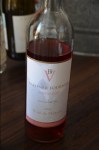
2013 Baehner Fournier Rosé de Merlot, Santa Ynez Valley – very impressive, clean strawberries profile on the nose and the palate, supple, plump, with substantial body and overall delicious. Drinkability: 8
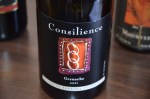
2011 Consilience Grenache Santa Barbara County – restrained fruit on the nose, round, well balanced, smokey fruit in the back. Drinkability: 8-
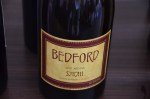
2010 Bedford Archive Syrah Santa Barbara County – elegant dark fruit on the nose and palate, dark and dense. Drinkability: 8-
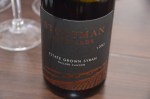
2012 Stolpman Vineyards Estate Syrah Ballard Canyon – dark roasted fruit, touch of spices, good balance. Drinkability: 8-
We started afternoon again with the breakout sessions. This time all the sessions were dedicated to wine and of course, included the tasting (Theme: Wine Discovery Breakout Sessions). Out of the 3 available, I picked Ballard Canyon Syrah session (two others were Sanford Winery Sta. Rita Hills and Wines of Greece) – I love Syrah in all forms, and I never heard of Ballard Canyon, so it was an easy choice for me.
Let me say a few words about Ballard Canyon appellation first. Ballard Canyon AVA is not even one year old – it was approved in October of 2013. Syrah is the primary grape in this small appellation located right in the middle of the Santa Barbara County:
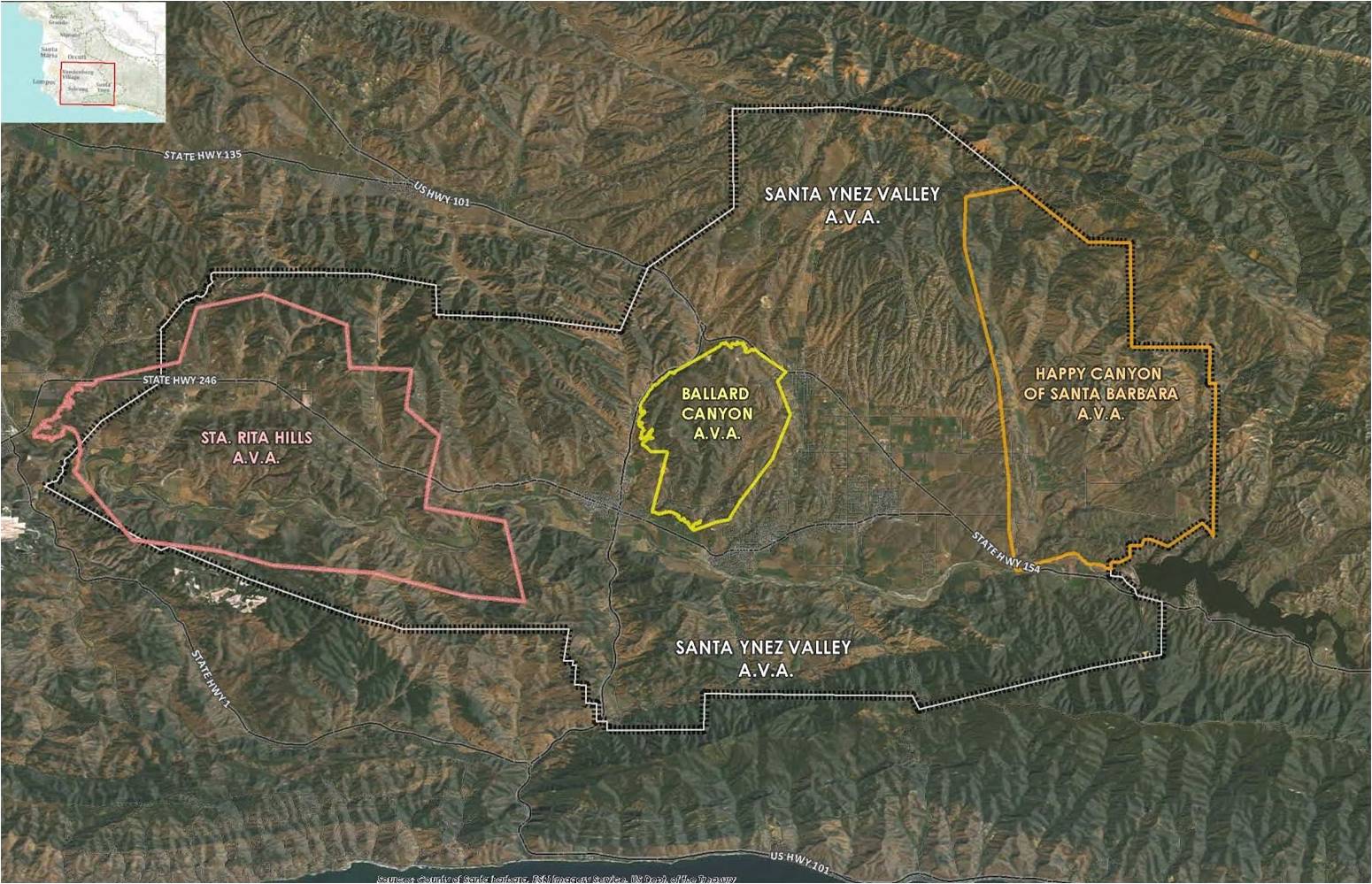 Ballard Canyon AVA was created to capture the essence of soil and climate through the noble grape, Syrah, which is significant enough for this AVA to be known as “Syrah Territory”. Well, yes, Syrah is not the only grape growing in Ballard Canyon AVA, but Syrah plantings exceed plantings of all other grapes, red and white, combined.
The session was presented as a panel discussion, with Patrick Comiskey, Senior Editor for the Wine & Spirits Magazine starting it off with introduction into the state of Syrah in the US. Patrick is one of the leading authorities on the Rhone varieties (and Syrah is squarely one of them), and he is also writing the book on American Rhône movement. I was surprised to hear from Patrick that Syrah is not doing well in US, that it is very difficult to sell and it doesn’t get much recognition. Leaving Shiraz aside for a moment, best known Syrah wines in the world are coming from France. If we will compare Syrah with Cabernet, Merlot and Pinot Noir based on the French wines, and then will look at the US, the proportions of popularity/demand are about the same. And thinking about all the cult and impossible to get wines such as Sin Qua None, Alban, Saxum, Cayuse, No Girls and many others, I think Syrah is doing not that bad… Oh well, I would love to debate it with Patrick over a glass of 1999 La Landonne, but let’s get back to our Ballard Canyon session.


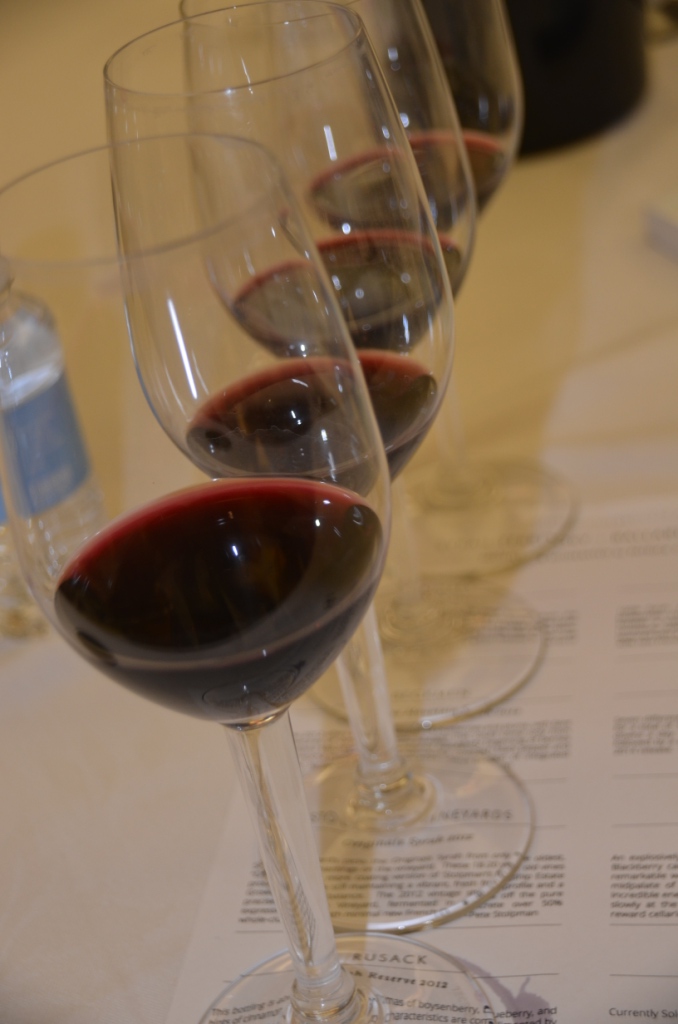 Eight Ballard Canyon winemakers presented at our session (which is a half of total of 16 wineries in the Ballard Canyon AVA), and we had an opportunity to try 7 different wines (the Saarloos + Sons was completely sold out). Here are my notes from the tasting:
2012 Kimsey Syrah
Southwest corner of the appellation. Soft fruit on the nose, dark roasted notes. Spicy, mineral, strong acidity. Young vineyard. Drinkability: 7
2012 Beckmen Purisma Mountain Syrah
BiodynamicLly farmed since 2006, certified since 2009. Tobacco on the nose, nice dark fruit, inviting. Nice, soft fruit, perfect acidity, dark chocolate. Drinkability: 8-/8
2012 Stolpman Original Syrah
Nice, open nose, fresh red fruit,blueberries, a bit sharp on the palate, cherries, espresso. Drinkability: 7+
2012 Rusack Syrah Reserve
Nice, concentrated nose, hint of fresh berries – blueberries, raspberries, touch of roasted flavors. Beautiful fruit on the palate, fresh berries, but supported by fresh tannins. Needs time as tannins are overpowering. Drinkability: 7+
2010 Harrison Clarke Cuvée Charlotte Syrah (15.2% ABV)
Hint of barnyard! dark fruit, baking spices. Cherries on the palate, tannins explicit. Drinkability: 8-
2010 Larner Estate Syrah
Bright Fresh berries, touch medicinal smell on the nose (iodine?), inviting. Beautiful palate, a touch of pepper, enveloping tannins, fresh and open berries, lavender. Drinkability: 8
2010 Jonata Sangre de Jonata Syrah
Bright nose of your fruit, touch of blueberries. More bright fruit on the palate, but then green branches and strong tannins, lacking pleasure. Drinkability: 7
Our day continued with the Panel of Professional Print Wine Writers. Steve Heimoff, James Conaway and Mike Dunne, professional journalists, wine writers and authors of a number of wine books, talked about various aspects of the wine writing. This happened to be one of the most controversial panels of the WBC14, which generated multiple blog posts and whirlwind of opinionated exchanges among the participants. I would have to agree with the Messrs. Heimoff, Conaway and Dunne that in a big schema of things, the quality of writing in the wine blogs can be greatly improved (this very blog you are reading is definitely the subject of such criticism). For the rest of it, just google “Panel of Professional Print Wine Writers wbc14”, and you will get tons of reading material blasting this session, presenters and content – though I have to say that I disagree with a lot of popular criticism. When presented with information, often it is our personal choice whether we will see it as positive or negative, so let’s leave it at that (yes, I do think it was a useful session overall).
Moving on, our next session was the Live Wine Blogging – The Reds, the speed tasting of the red wines, which I already covered in the full detail here. Well, it was actually the last organized session for the day. We still had more wine to drink events in the agenda, but from point of view of the organized sessions we were done.
Our next event was Wines of the World Reception, where we had an opportunity to taste wines from Greece, Italy, Portugal and other countries. At this point in time, I lost an ability to take any kind of reasonable tasting notes, so I had to go simply by “aha, this is good” or “ouch, moving on”. I have to mention that wines of Greece helped me to make a good progress with my Wine Century Club journey towards the coveted Pentavini (500 grapes tasted level) – I added 5 new grapes:
Liatico – 2011 Domaine Douloufakis “Dafnios” Liatiko Crete (red)
Krassato – 2007 Tsantali Rapsani reserve Rapsani AOP Greece (red)
Stavroto – 2007 Tsantali Rapsani reserve Rapsani AOP Greece (red)
Avgoustiatis – 2013 Mercouri Estate Lampadias Rose, Greece (red)
Savatiano – 2013 Papagiannakos Savatiano Greece (white)
Last two events of the day – Wine Blog Awards Presentation and Dinner. To me, Wine Blog Awards feels like a coveted achievement. However, for the last three years, watching the process of nomination, then selection of the finalists and then, for the first time, presentation of the awards, gives me only a thought of diminishing returns. The duration of the time for nomination is literally reducing from a year to a year, and nomination period is open out of blue (I don’t know if this is the attempt to reduce the number of nominations?). This year, we didn’t even know who the judges were. Selection of the wine blogs for the finalists is very strange, as many of the same blogs are nominated for the different categories, and moreover, the blogs are nominated year after year after year. And finally, out of the 9 awards, only two winners were present at the WBC to pick up their awards… It is funny that if you go to the Wine Blog Awards web site now, instead of finding information about the 2014 winners, you can finally find out who the judges were… The whole wine blog awards process needs a revamp and a fresh start, it is way too disorganized as it is.
You know what – this blog post is becoming one of the longest I ever written, so I need to round it up. The food at the dinner was okay, the wines were very good – there was a good selection of the Santa Barbara County wines present at every table, and the selection was different from the table to a table. After dinner, there was more wine – not only parties continued in the number of rooms and suites, but also a number of people brought the wines with them to share, and it was really the last night to drink them. I tried for the first time Horton Norton from Virginia – I had Norton wines before, but this was the first time I tried any of the Horton wines, which is considered one of the best wineries in Virginia (the wine was excellent). Then there were Texas wines, courtesy of SAHMMelier. She brought 2012 Brennan Vineyards Viognier (perfumy and delicious) and 2011 Bending Branch Winery Tannat (powerful and sophisticated). We also tasted 2001 Cottonwood Canyon Pinot Noir Santa Maria Valley (fragrant and beautiful for the 13 years old wine), and 2011 Kalyra MC2 Santa Ynez Valley (restrained and balanced). For some reason, I’m under impression that there was also a wine from Oklahoma (!), but – no picture and no notes, so yeah, it is my loss.


And we are done, done, done here! Sometimes procrastination has its rewards – only yesterday I got the email from organizers of WBC14, Zephyr Adventures, which also included the link to the blog post with all presentations from the WBC14 – here it is if you would like to look at them. And (almost) last but not least – Wine Bloggers Conference 2015 will take place in the beautiful town of Corning in the Finger Lakes region in New York, August 13-16, 2015 – if you are into the wine blogging, you definitely have to be there, you have to experience WBC to yourself. The registration is open now, and (this is what they say) availability is limited, so you might want to think about putting the stake into the ground now…
Last thing (I promise) before we are done – I would like to thank Zephyr Adventures and Santa Barbara Vintners for the great event they put together for all the wine bloggers. I know firsthand how hard it is to organize a great conference, and especially considering the size and diversity of the wine bloggers group, I can only say wholeheartedly “Thank you very much!!” for all the hard work put into bringing together such a great event.
Yes, we are done. If you are still with me, thank you very much for reading. Cheers!
Month in Wines – June 2014
Quite expectedly, with the arrival of the consistently warm weather, June saw an increase in the Rosé wine appearances – luckily, those were good Rosé. There were also a number of great Cabernet Sauvignon wines worth mentioning, including some candidates for the Top Dozen list of 2014. And some Syrah – rather magnificent. And other great wines. Anyway, for what it worth, the list is below. As usual, most of the wines were rated at 8- or higher, with some exceptions (and explanations) for the lower ratings.
Here we go:
2013 Rocher de La Garde Cinsault Vin de France (12.5% ABV, $9.99) – beautiful light pink color, inviting nose of fresh strawberries, more strawberries on the palate. Well balanced with nice acidity, refreshing, easy to drink and very pleasant. A perfect summer day quaff. 8
2013 Temperamento Bobal Rosé Utiel-Requena DOP (12% ABV) – Beautiful in and out. Perfectly pink in the glass. Strawberries on the nose, ripe strawberries on the palate. Round, balanced, together, very good overall. 8-
2012 Albero Bobal Rosé Utiel-Requena DOP (12.5% ABV, $5.99 at Trader Joe’s) – simple and delicious. Beautiful pink color, refreshing, good acidity, strawberries profile. Unbeatable QPR. 8-
2013 14-18h Dry Rosé Wine Agiorgitico, Peloponnisos PGI, Greece (13% ABV) – beautiful intense pink color. Delicious, concentrated, cranberry laden wine. My perennial favorite for the past 7 -8 years. Never disappoints. 8
2013 La Gordonne Billette Bouquet de Provence Cuvée Tradition, Côtes de Provence (13.5% ABV) – it’s no wonder this wine is one of the best selling Rosé in France – light, clean, refreshing, each sip having enough substance to hold on to, and perfectly balanced at the same time. 8
2013 Les Lauzeraies Tavel, France (13.5% ABV) – I love Tavel wines any time of year – but they feel especially appropriate during summer. Beautiful, concentrated pink color. Nose of cranberries and rose petals. Cranberries and herbs on the palate, medium bodyu, concentrated, excellent balance. 8-
2006 Selbach-Oster Schmitt Zeltinger Schlossberg Riesling Auslese Mosel Saar Ruwer QmP, Germany (8.5% ABV) – Delicious. Slightly viscous, layers of sweet fruit (apricots, peaches), honeysuckle. Perfect acidity. 8-
2013 Bodegas Shaya “Shaya” Old Vines Verdejo, Rueda, Spain – one of my all times favorite white wines. Delicious complexity in the plump, mouth-coating, round package – this wine can rival any Chardonnay any day. If you never had it, make it your next wine. 8+
2011 Org de Rac Cuvée La Verne Blanc de Blancs Brut, Swartland, South Africa (12.5% ABV) – classic and delicious. Hint of yeast and bread on the nose, fine mousse on the palate, clean and crisp acidity, perfect body weight mid-palate. Excellent sparkling wine overall. 8-
2010 St. Clement Oroppas Cabernet Sauvignon Napa Valley (14.6% ABV) – amazing Cabernet Sauvignon, from nose to the palate. On the nose, the wine showed cassis, a hint of blueberries and a touch of espresso. On the palate, this wine was powerful and dense. Dark fruit, perfectly restrained, thick, practically chewy mouthfeel, perfectly structured and dry, layered and silky smooth at the same time. 9-
2003 Neyers Cabernet Sauvignon Neyers Ranch Conn Valley, Napa Valley (14.5% ABV) – Sheer exuberance. On the nose, beautiful dark fruit, fresh berries and the touch of barnyard. The palate was even better than the nose – lots of stuff happening, eucalyptus, herbs, sage, bell peppers, cassis, blueberries, truffles, dark chocolate, espresso – just beautiful, beautiful wine. 9
2011 Michel Chapoutier Marius Red, France IGP (13.5% ABV) – Touch of barnyard on the nose. Nicely restrained on the palate. Touch of spiciness, black pepper, dark fruit, good balance. Very pleasant overall. 8-
2008 Alban Vineyards Patrina Estate Syrah Edna Valley (14.7% ABV) – My first taste of Alban wines, a cult Rhone-style wine producer in California. Beautiful dark fruit, dense, earthy, plums, velvety texture, perfect balance. Every sip was a pleasure. 9-
2011 Abacela Fiesta Tempranillo Umpqua Valley, Oregon (13.6% ABV) – very respectful rendition of Tempranillo – savory, well structured, with good amount of power typical for Ribero del Duero wines. 8-
2009 Bodegas Ochoa Finca Santa Cruz Tempranillo Crianza Limited Edition, Navarra, Spain (13.5% ABV) – another excellent Tempranillo, this time from Spain – round, ripe, deliciously layered with incredible textural complexity, tobacco, smoke, perfect balance. 8
NV Molo 8 Lambrusco Mantovano DOC (8.5% ABV) – simple and delicious! Perfectly in check, balanced, good acidity, fresh red fruit on the palate, pleasant fizz. 8-
2007 Burgess Cellars Merlot, Napa Valley – dark fruit on the nose and the palate, hint of dark chocolate, cassis, raspberry and sweet blueberry undertones on the palate, good balance. 8-
2004 Club de Sommeliers Chateauneauf-du-Pape Red, Chateauneuf-du-Pape AOC , France (14.5% ABV) – a very solid effort for the France supermarket wine – it aged nicely, good open red fruit, touch of spices, good balance. 7+
2010 Celler de Capcanes Costers del Gravet Red Wine, Montsant DO (14.5% ABV, 50% Cabernet Sauvignon, 30% Garnacha, 20% Samso) – dark power, focused, concentrated, starts from the classic Cabernet profile with layered and open support from Grenache. Full body, yet perfectly balanced between fruit, tannins and acidity. Delicious wine. 8+
That completes the report on the June wine highlights. Did you have any of these wines? What were your best wine discoveries of the last month? Cheers!
From Languedoc, With Love and Pride – Wines of Paul Mas
 Talking about wines of Languedoc, with the risk of being boring, let me mention a few of the basic facts about the region. Languedoc is the biggest single wine-producing region not only in France, but also in the world. According to Wikipedia, only 13 years ago (in 2001), Languedoc was producing more wine than entire United States. Another important distinction of Languedoc is the fact that it practically has no restrictions on the type of grapes which can be grown there. While Mourvedre, Syrah, Cinsault and Grenache might be main red varietals, pretty much any of the international varietals are also permitted and grown in Languedoc. While such a liberal approach encourages winemaking, its flip side is that a lot of wines are produced under the designation of Vin de Pays d’Oc, which technically stands for “country wines”, a step below in classification compare appellation-specific wines (AOC wines such as Bordeaux, Pomerol, Medoc, etc.).
What this all means to the wine consumer? Value. For the long time, Languedoc had being known as a hidden gem, a secret source of excellent wines which you can enjoy every day, without the need for the special occasion (I actually wrote a post about Languedoc as one of the wine world hidden secrets – you can find it here).
Let me explain why we are talking now about Languedoc wines. A short while ago, I was invited to participate in the virtual tasting of the wines of Chateau Paul Mas. Paul Mas family had been making wines in Languedoc since 1892. Jean-Claude Mas, the 4th generation winemaker, set out to expand farther the family vineyards and winemaking business overall. Starting in 2000, Domaines Paul Mas plantings increased from about 86 acres to 440 acres of vineyards, and it has another 2000 acres under the contract. Just to give you few more facts, in 2006 Jean-Claude was awarded the title of International Mediterranean Entrepreneur of the Year by Ernst and Young; in 2008, he was named one of the Top 30 Winemakers of Tomorrow by L’Express magazine in France.
Domaines Paul Mas vineyards are planted with more than 25 varieties including Syrah, Grenache, Cabernet Sauvignon, Merlot, Viognier and Chardonnay. Obviously, there is a wide range of wines produced under the Domaines Paul Mas label, including some of the widely successful everyday wines such as Arrogant Frog.
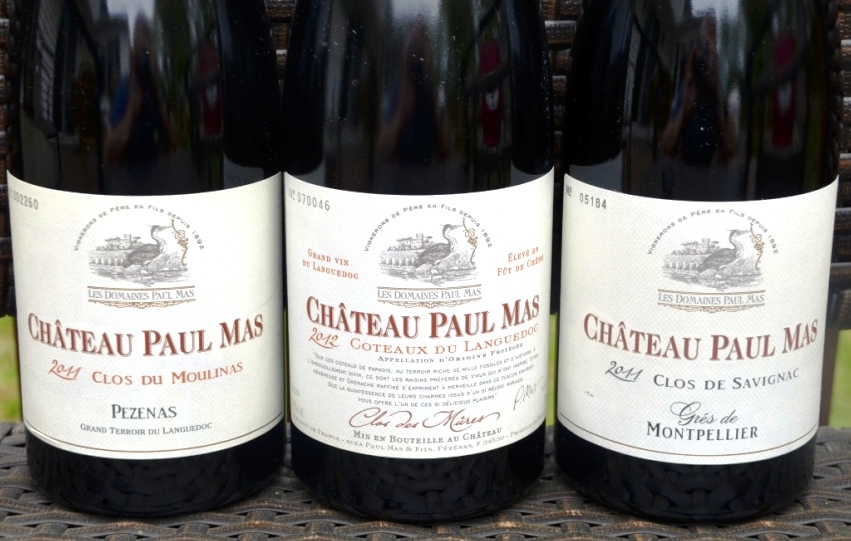
The focus of our tasting was on the single vineyard wines of Chateau Paul Mas. Guillaume Borrot, the winemaker of the Chateau Paul Mas, who was presenting the wines during the virtual tasting, touted them as “affordable luxury”. And the wines were actually made to support this claim. Even the bottle itself, Burgundian in shape and very heavy, was supporting the “luxury” claim. And the fact that all three wines we tasted are available in retail for less than $25 each, definitely makes them affordable.
Well, it is not the look and weight of the wine bottle which will determine the “luxurious” designation. It is the wine itself which should support that claim – and all three wines perfectly delivered. Dense, concentrated and balanced, all well made and ready to be consumed now, or 5-10 years down the road – if you have enough patience though. Here are the more detailed notes on the 3 wines we tasted:
2012 Château Paul Mas Clos des Mures Coteaux du Languedoc AOP (14.5% ABV, 85% Syrah, 10% Grenache, 5% Mourvedre, 10 month aged in oak)
Color: Dark Garnet
Nose: Dark fruit, touch of spices, earthiness
Palate: Spicy cherries, touch of pepper, earthy profile, espresso, soft tannins, medium-long finish.
Verdict: Needs time, should develop nicely. Drinkability: 8-
2011 Château Paul Mas Grés de Montpellier Clos des Savignac Coteaux du Languedoc AOP (14.5% ABV, 50% Mourvedre, 30% Syrah, 20% Grenache, 2 month aged in oak barrels)
Color: Practically black
Nose: Rich, dark chocolate, ripe blueberries, spices
Palate: Loads of pepper, dark ripe fruit, blueberries, perfect balance.
Verdict: Delicious! Drinkability: 8
2011 Château Paul Mas Pezenas Clos du Moulinas Coteaux du Languedoc AOP (14.5% ABV, 55% Syrah, 45% Grenache, 12 month aged in oak barrels, 3,500 cases produced)
Color: Very dark garnet, almost black
Nose: Loads of fruit, nice, open, touch of earthiness
Palate: Earth, hint of sweet fruit, loads of complexity, leather, tobacco, pepper, perfect balance, wow!
Verdict: My favorite wine of the tasting, Has great potential. Drinkability: 9-
There you have it – an encounter with everyday luxury wines, made with love and pride in Languedoc. Some of these wines should be available in US, so make sure to look for them.
Have you had Domaines Paul Mas wines before? Do you have any favorites? What do you think about Languedoc wines in general? Cheers!
Another “How Do They Do It?” Set of Trader Joe’s Wines
 On the multiple occasions, I wrote about Trader Joe’s wines in this blog. I generally only can taste them when I travel, as Trader Joe’s stores in Connecticut can’t sell wine. Thus if I’m in the close proximity of the Trader Joe’s store, and schedule allows, I always make an effort to taste something new.
While Trader Joe’s wine selection generally includes wines at the different price levels, my focus is always on the most inexpensive wines. The rationale is simple – at $9.99 and above, there is a great selection of wines in my neighborhood wine store. At the same time, there is practically nothing in the $4.99 – $6.99 price range, thus it is very interesting how good (or how bad) such wines can be.
In general, I can’t complain about Trader Joe’s wines. My typical “success rate” is somewhat of the 3 out of 4 ratio – if I would taste 4 wines, at least 3 of them would be at “I want to drink it again” level. But this time, while in San Diego, California, I was simply blown away – 6 out of 6, 3 wines at $4.99 and 3 at $5.99, where perfectly drinkable wines which I would gladly drink again on any day! This was definitely a “how do they do it???” moment, as I would never expect, for instance, Rosé or Zinfandel from California to have such a QPR, to taste as good as they did considering the amount of money I had to pay for them.
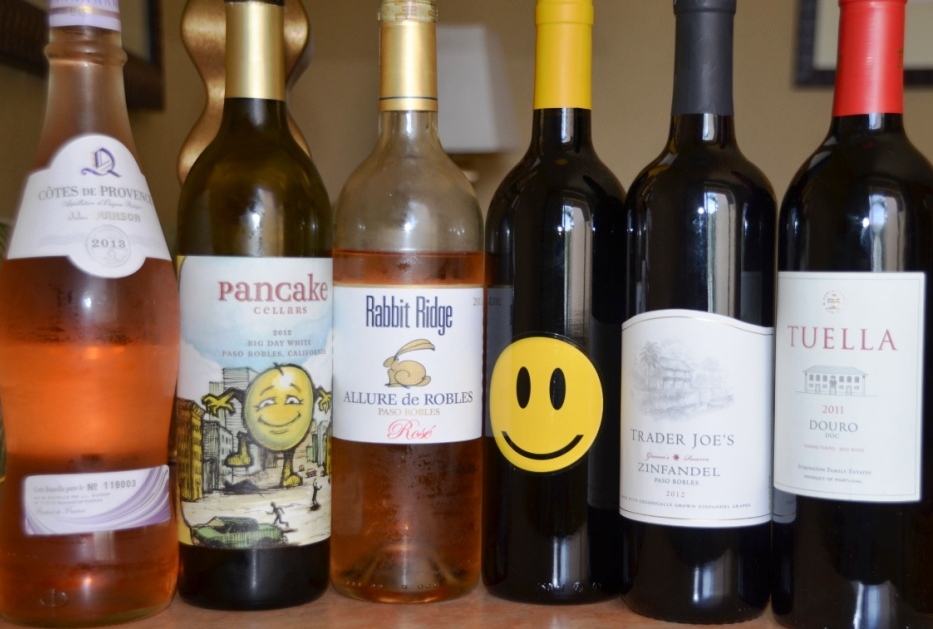
Without further ado, let me present to you my 6 out of 6 set of “how do they do it?” wines from Trader Joe’s.
2012 Pancake Cellars Big Day White Paso Robles, California (13.5% ABV, $4.99, 37% Chardonnay, 23% Sauvignon Blanc, 15% Viognier, 15% Pinot Blanc, 10% Muscat Canelli) – I can only guess this is modeled after the Conundrum, only this wine I actually enjoyed (and it costs 1/4 of the Conundrum)! Very nice and refreshing nose of white fruit with herbal undertones. On the palate, nice, round, good acidity, white fruit, white apples, very good balance. While not the most complex, definitely very enjoyable! Drinkability: 7+/8-
2013 Rabbit Ridge Allure de Robles Rosé Paso Robles, California (13.5% ABV, $4.99, Mourvedre 49%, Grenache 26%, Syrah 25%) – you can safely assume that I had zero expectations opening a bottle of Rhone-style Rosé from California which cost $4.99. Boy, was I wrong. The wine was simply outstanding – bright, cheerful, full of strawberries and cranberries, perfect acidity – get it by the case to make your summer days super enjoyable. Drinkability: 8-
2013 J.L. Quinson Cotes de Provence AOP (12.5% ABV, $5.99) – same as the one above, zero expectations for Provence Rosé for $5.99 – sorry, the internal snob is speaking. First sniff and sip – wow, I’m convinced. Perfectly restrained, mineral, light, refreshing acidity – as classic as Provençal Rosé gets, only at half price or even less, depending on the bottle. Another case buy for the summer, in case you need my recommendation. Drinkability: 7+
2012 Oreana Wines Project Happiness Syrah California (13.5% ABV, $5.99) – see the happy face on the label? This is what this wine is – happy. No, this is not the most thought provoking Syrah you can drink, but it is simple, easy to drink, round and balanced, good fruit on the palate, a tiny bit of pepper. Throw in a little barbequed meat – and your face might look exactly as the one on the label. Drinkability: 7
2011 Symington Family Estate Tuella Douro DOC, Portugal (13.5% ABV, $5.99) – Douro wines are slowly but surely gaining their international reputation, so this is definitely a good deal of a very solid wine which you can also age. It was showing a little tight, with reserved fruit expression, but good overall balance and acidity. At this price, if you got some space in the cellar, forget a few bottles there – you might thank me in a 3-4 years. Drinkability: 7
2012 Trader Joe’s Grower’s Reserve Zinfandel Paso Robles (13.5% ABV, %4.99) – the first smell exhorts the “wow”. Good Zinfandel at $4.99 didn’t sound to me even as a remote possibility. And then this Grower’s reserve comes in – perfectly open, with clean smokey raspberries and blackberries, very round fruit expression on the palate, with the same smokey berries being very present and well matching the nose – the QPR on this wine simply goes through the roof. No, this wine doesn’t have the richness of Turley or Carlisle, but then you don’t need to cellar it for 10 years before you can really enjoy it. If you like Zinfandel – this is definitely the wine you have to experience. Drinkability: 7+/8-
I tip my hat to whomever is responsible for sourcing the wines for Trader Joe’s stores – to say “well done” is almost to say nothing – great job, and please keep doing it over and over again, to the delight of all the wine lovers out there. Cheers!
Month in Wines – April 2014
April was a good month for the good wines, with some of the gems worthy of Top Dozen consideration. Syrah and Pinot Noir were probably the biggest stars, but not the only stars. I already wrote about some of the wines before, so I will not inundate you with the repetitive details, and instead will simply give you the reference to the prior post. All the wines are rated on the 10 points scale, with + and – adjustments. These summary posts only include the wines with the ratings of 8- and higher – in the very very rare cases, I might include 7+ wines if I feel that the wine was simply unique.
Let’s go!


2010 Lenné Estate Pinot Noir Yamhill-Carlton AVA, Oregon (14% ABV, $45) – dark and delicious, and will age well for the next 10-12 years. 8+
2010 Renieri Invetro Rosso Toscano IGT (14% ABV) – delicious Super-Tuscan, powerful, round, a pure joy. 8+
2011 Michel Chapoutier Tournon Mathilda Shiraz Victoria, Australia (13% ABV, $14.99) – simply spectacular. A clear pepper profile on the nose and the palate. A stunning beauty. 9
2003 J.L. Chave Offerus Saint-Joseph, France (13.5% ABV) – Barnyard, touch of spice (pepper), dark and delicious. 8
2005 Domaine Philippe Bornard Arbois Pupillin La Chamade Ploussard (12.8% ABV) – beautiful, powerful, multi-layred. Pleasure in every sip. 8+
2012 J Wrigley Estate Pinot Noir Proposal Block McMinnville AVA (14% ABV, aged 10 Month in French oak, 250 cases produced. $45 SRP) – chocolate, mocha, a bit of mushrooms. Nice and balanced, and will age well. 8-
2010 Joel Gott Cabernet Sauvignon Napa Valley (SRP: $47.99) – perfect Claret, if you will. This wine would rival many top California Cabernet Sauvignon wines, which would also cost at least 2-3 times as much. 8
2007 La Rioja Alta Vina Alberdi Rioja Riserva, Spain (SRP: $19.99) – Perfect balance of fruit, structure, power and earthiness which only Rioja possess. Beautifully round and delicious. 8+
2001 La Rioja Alta 904 Rioja Gran Riserva, Spain (SRP: $47.99) – Mature and delicious, with lots of subtle nuances. A thought provoking wine. 8+


2009 Shiloh Legend Judean Hills, Israel (14.2% ABV, 45% Shiraz, 40% Petite Sirah, 9% Petite Verdot, 6% Merlot, each grape vinified and oak-cask aged separately for 8 month, then blended and aged for another 8 month) – round, velvety, delicious, with dark fruit core and firm structure. Perfect balance of power and concentration. 8
2012 Tousey Chardonnay Estate, Hudson River, New York (12% ABV) – a Chablis on Hudson would be a good way to define this wine. Chablis style minerality and hint of gunflint on the nose, creamy and round on the palate, with subtle apple and vanilla notes. Delicious Chardonnay. 8-
2012 M. Chapoutier Les Vignes des Bila-Haut White Côtes-du-Roussillon (13% ABV, $13.99, blend of Grenache Blanc, Grenache Gris and Macabeu) – in a word, delicious. Bright white fruit on the nose, fresh lemon, some earthiness. Perfect balance on the palate, each sip makes you crave for another. 8+
2004 Bodegas Ondarre Rioja Reserva Rioja DOC (13% ABV) – dark fruit on the nose, with the hint of eucalyptus and cigar box. Palate full of dark fruit with earthy profile, supple tannins and bright acidity, very balanced. 8-
2010 Chapelle-St-Arnoux Côtes du Rhône AOC (13.5 % ABV, $10.99) – nose of inviting dark fruit, the same on the palate with addition of dark chocolate notes and rounding acidity. Very dense and well structured for Côtes du Rhône. A steal for the price (sorry, it was some sort of closeout). 8
2010 Les Trois Chemins Côtes du Rhône AOP (13% ABV, $8.99) – fresh red fruit on the nose, blackberries and cherries, more of the same on the palate, coupled with bright acidity. Simple and elegant, and beyond steal at the price (again, a closeout of sorts). 8-
That concludes my report on the April wine highlights. Did you taste any of these wines? What were your best wine experiences of the month? Cheers!
Syrah – Nice and Spectacular, Plus a Case Buy Recommendation
Syrah wines have a special status in our house – this is my wife’s most favorite type of wine, so I’m always trying to keep some on hand. With the status of “favorite”, it is customary for us to open a bottle of Syrah for different celebratory occasions. Sometimes, Friday feels like a special occasion (I’m sure you can easily relate to that), so yes, Syrah it was.
I was thinking about opening this wine for a while. As I don’t employ any cellar organization systems, neither software nor paper, I simply have a general idea of the wines I have, and then I get more opportunities to touch many bottles in the search of one to be opened. I noticed that particular Syrah bottle during few of the recent searches, so I was mentally getting ready to part with it (most of the bottles I have are in the single bottle quantities, so yes, I need some mental prep to deal with that). Thus when the Friday came, it was an easy decision – it will will be a Syrah Friday (well, to be entirely honest, Syrah Friday decision was made on Thursday, but I don’t think it matters here all that much).

2003 J.L. Chave Offerus Saint-Joseph, France (13.5% ABV), a 100% Syrah from Northern Rhone appellation. Just to give a you a bit of the reference, J.L Chave (Jean-Louis Chave) represents the latest generation of the winemaking family from Northern Rhone. Their first Hemitage wine was produced in 1481. Try to remember J.L. Chave name next time you are looking for the Rhone wines, you can’t go wrong with their wines.
Talking about this 2003 Syrah – no sign of age on the color – dark, concentrated garnet ruby. On the nose, the wine had a whiff of the barnyard, which I personally find very attractive, and some dark fruit. The palate was showing more of the dark fruit, plums and blackberries, with a touch of minerality and clean acidity. Elegant, round, perfectly structured, full bodied, with spicy kick in the back and long finish. The bottle disappeared without a trace. I think “restrained elegance” would be the best descriptor for this wine. Drinkability: 8
And then there was another Syrah. About a week ago, I got an e-mail from PJ Wine, one of the best wine stores in New York, describing “secret” Shiraz. That wine was made by an excellent French producer, Michel Chapoutier (a seventh generation winemaker himself), in Australia, and it had 94 rating by Robert Parker, while priced under $12. I generally don’t buy the wines based on ratings, and I also consider that we have a “palate misalignment” with Mr. Parker, but 94 points and $12 is definitely something to think about. When I saw the wine in my local Cost Less Wines, I simply had to get it (it was $14.99 here in CT).

2011 Michel Chapoutier Tournon Mathilda Shiraz Victoria, Australia (13% ABV) – screw top is off, wine is poured. Bright ruby color in the glass. First smell and the very first reaction – what is it? Really? Pepper? Wow! Yes, peppery notes are the signature of the Syrah grape – but I’m used to finding it after the sip, not in-you-face once you smell the wine. Here it was – bright, fresh black pepper, as I was smelling the pepper mill instead of a glass. The first sip extends the “wow” moment even further – it is a rare luck in my experience, when there is a full match between the smell and the taste. Here is was – freshly ground black pepper, perfectly present without overpowering the taste. The black pepper was elegantly weaved into a core of red plums and tart cherries – delicious, sip after sip. This was definitely an exciting wine – clean, elegant, alive, sexy and vibrant. The grapes for this wine were macerated for 2-3 weeks in stainless steel and cement tanks for the better tannins extraction, and then aged for 12 month in stainless steel and cement tanks (no oak!). A pure expression of a beautiful Syrah. This is the wine to be experienced – and to buy by the case. It is gone at PJ Wine, unfortunately, but according to the wine-searcher, it is still available in the number of other stores find this wine. I don’t say it too often, but I feel this is very appropriate now – this is the wine to buy by the case! Drinkability: 9
That concludes the tale of two Syrah wines. While Offerus was very classic old world version, the Tournon Mathilda was definitely an eye-opener for me – if you can find this wine, you should experience it just to get acquainted with Syrah in its pure expression – it was a very delicious encounter for me. And I guess I need to look for more Robert Parker recommended wines – either his palate is changing, or may be its mine… Cheers!
Daily Glass: Take Your Journey, Any Time: Odisea Wines
One of the most fascinating aspects of wine is its ability to change your emotional state. Best steak in the world will only pick you up during those 15 minutes you will spend enjoying it. Yes, if the meal was “an experience”, it might stay with you forever, but still, it is very hard, for instance, to enjoy your steak during 2 – 3 hours of quiet time in the evening (never mind five evenings in a row).
Wine is different. You can start from admiring it in the glass – color, nose, legs – and then slowly move on to the first sip, and go on from there, simply observing and enjoying the transformation for a while. But this is not all. Wine, unlike many other foods, very often comes with the stories. Stories of the people who made it, or who started making it 500 years ago. You can learn about their dreams, their aspirations, their hard work. Yes, there was a lot of hard work involved in making of that steak – but it is very hard to make a unique and emotional story out of it.
What is the point of this rambling? Let me explain. Over the last three days we undertook a journey, right in the comfort of our living room (okay, actually, we were mostly sitting outside on the deck, but this is besides the point). Not just any journey, an odyssey. Lead by the Odisea Wine Company out of California, we traveled through unusual grape varieties and unique sensual expressions. Odisea Wine Company was created in 2004 by two friends, Adam Webb and Mike Kuenz, and it is focused on making the wines from “Rhone and Iberian grape varietals grown in California”.


Here is my account of this odyssey:
2009 Odisea Veritable Quandary, California (13.5% ABV; 25% Syrah, 17%Grenache, 17% Tempranillo, 14% Petite Sirah, 12% Field Blend, 12% Alvarinhao, 3% Carignane; 850 cases made) – dark garnet color, nose of dark fruit and touch of dark chocolate. Velvety palate of plums, touch of warm spices, profile of a classic Spanish Grenache, only slightly more restrained. Round, soft, perfectly balanced. Drinkability: 8
2009 Odisea Devil’s Share, California (13.9% ABV; 48% Syrah, 30% Grenache, 14% Mourvedre, 6% Petite Sirah, 2% Viognier; 335 cases made) – dark garnet color. Needs time to come to its senses (slightly disjointed on the first sip with acidity going sky high). Cherries and herbs on the nose. Spices, hint of barnyard, sage, dark fruit, raspberries, may be a touch of tobacco notes – very round, balanced and pleasant, with the long finish. A dangerous wine once it is opened… Drinkability: 8
2010 Odisea Unusual Suspects, California (13.9% ABV; 50% Carignane, 25% Tempranillo, 15% Grenache, 10% Cinsault; 600 cases made) – dark ruby color in the glass. Fresh raspberries on the nose, with the hint of tobacco. Some raspberries on the palate, but then green, almost vegetative notes (not the tree brunches, more of a hay, dry grass style), supported by tobacco and a savory profile. Warm feeling on the palate, good acidity in the back, very soft tannins over a medium finish. This wine begs for food, but nothing as sharp or as powerful as steak – it would be good with a veal roast, a slow cooked beef stew or roasted eggplant. Drinkability: 7+
I bought these wines online a while ago at the Wade’s Wines, I guess mostly based on the unusual names – and most of them are still available, at $16.99 or so, in case if you are interested in taking the journey for yourself. In any case, I’m glad I had mine. Cheers!
Last Bottle Sign Up ($10 credit)




 Talk-A-Vino