Archive
Starfield Vineyards: Delicious Wines, Passion, and a Dash of Astronomy
Do you know what happens when you combine the passion for astronomy, photography, and winemaking together? It is not a trick question. And this question has a simple answer.
Tasty wine.
Let’s start with the Astronomy.
Father and son duo, Tom and Rob Sinton, believe that not only is the location of the vineyard very important (of course), but the exposure to the stars makes it extra special (hence the name of the vineyard, Starfield). Okay, it is not just stars, even though it is easier to observe them from a high mountain elevation, such as the one where Starfield vineyards are located in the Sierra Nevada Mountains in California. In addition to stars looking down at the vineyards, the vineyards are also surrounded by a large assortment of pine trees. High elevation allows for more oil to permeate the leaves, the bark, and the grape skins themselves, imparting more spice and flavor.
Next, the Photography.
You know that legends warn you about looking directly at the sun (you can lose your sight). And if you ever tried to look directly at the sun with an unprotected eye, the experience becomes too painful too quickly. But you still can, with the help of a special technique in photography called a pinhole camera. And when you are up in the mountains, and you know how to construct a pinhole camera, you can get pictures of the beautiful sun arches, called solargraphs. Next? You can use your solargraph pictures on your wine labels, aligning each unique solargraph with the unique wine in the bottle. Let us get back to the solargraphs in the moment.
Now, let’s talk about the Vineyard…
Let’s remember, the Sierra Nevada Mountains are located in El Dorado, where the gold rush originated, and where the rush might still be strong (I have no idea if the gold can still be found). Considering that Sintons have an affinity for Rhône grape varieties, and taking into account the “rush”, it might not be even surprising that, after extensive research, the Sintons planted 31 acres of grapes, consisting of 17 varieties in twenty-four blocks of roughly 1.5 acres each. Grenache, Syrah, Mourvèdre, Cinsaut, Counoise, Tannat, Grenache Blanc, Marsanne, Roussanne and Viognier make up 66% of the vineyard. Aglianico, Barbera, Fiano and Muscat of Alexandria make up 30% of the vineyard, and the balance consists of Tannat, Tempranillo and Petite Sirah.
We mentioned all the surrounding trees before; to complete the picture of the vineyards, there are a few more things to mention. The Starfield Vineyards has practiced sustainable, fish-friendly farming since 2012. Some patches of the forest are left untouched around the vineyards, and cover crops are allowed to flourish to protect the harmonious habitat, in tune with nature.
And now, the Wines.
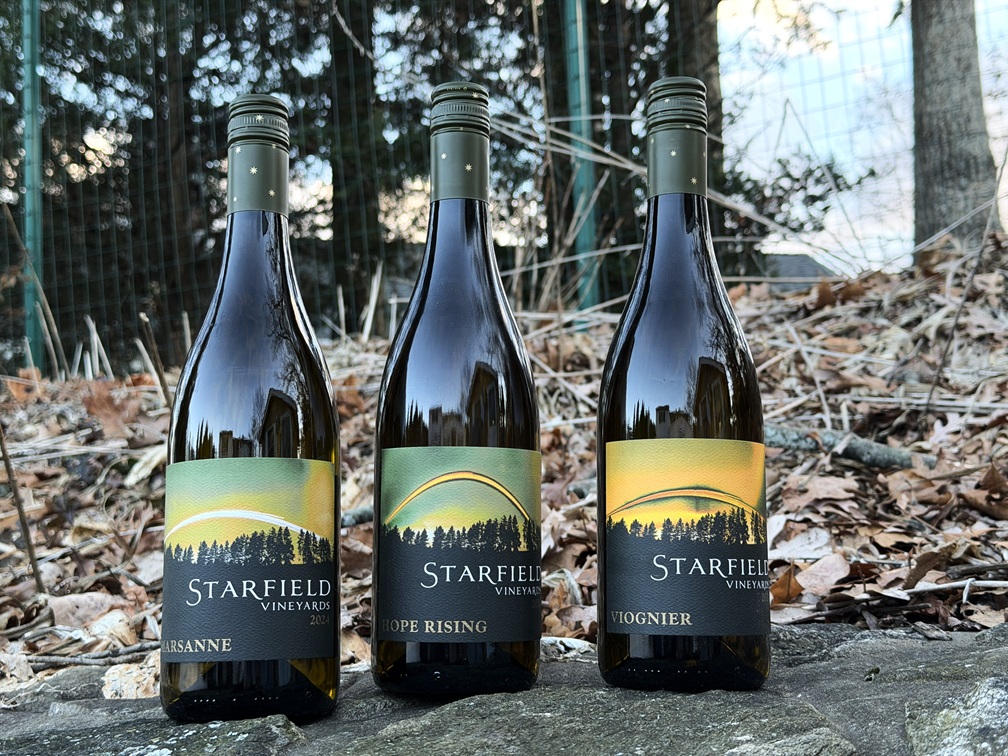
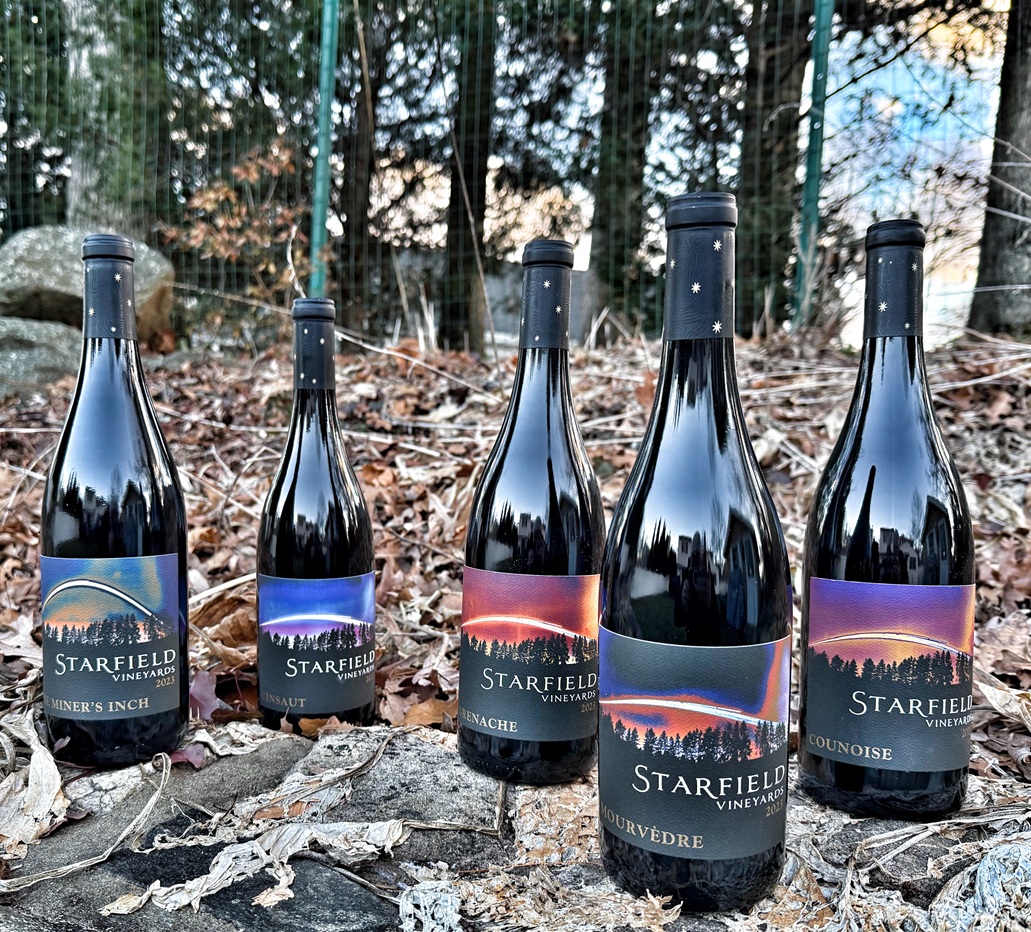
First, please take a look at the labels. I got a set of 8 samples, 5 reds and 3 whites, and as you can tell, all the labels are adorned with a picture of a solargraph, and each solargraph is different in its color and shape. I was curious about all the differences, and I had an opportunity to ask Rob Sinton to explain the logic. Here is his reply:
“Each Solargraph is intentionally different. The lower, shallower arcs are reserved for single-varietal wines, while the taller, more expansive arches represent blends, wines that become greater than the sum of their parts. Each image is then colorized to reflect the spirit of the wine itself, a kind of visual synesthesia for flavor and texture.”
Talk about Passion.
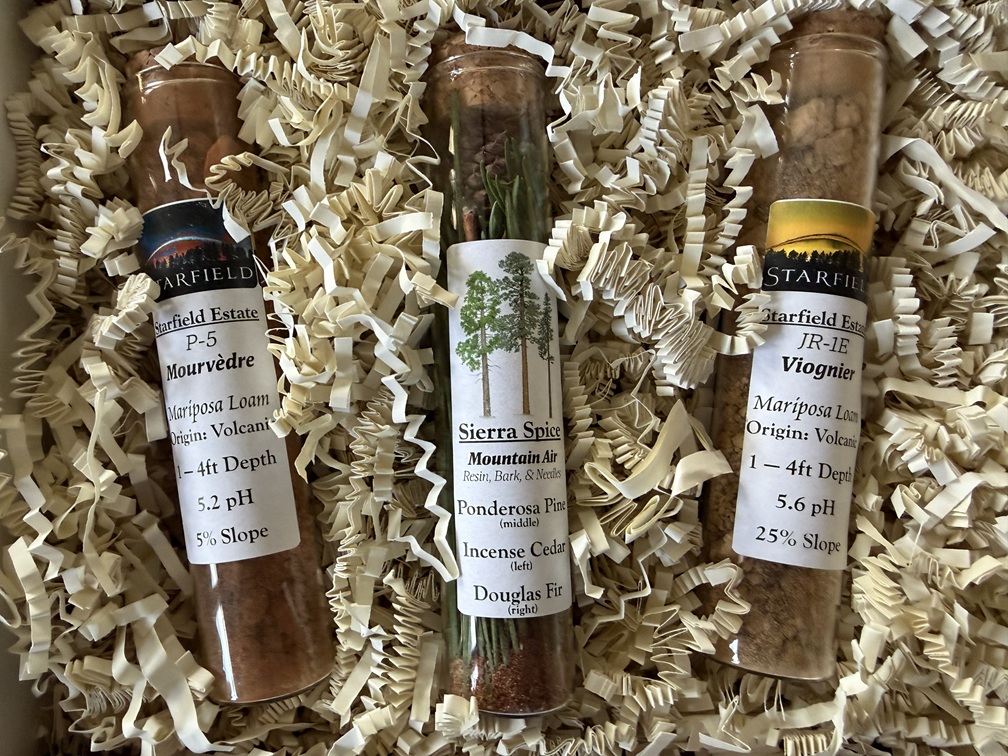
In the wine world, passion has no limits. When visiting the winery, you often hear about the soil. Sometimes, you can see the soil, or, rather, soils, on various displays. But getting samples, maybe there was one time when I got some soil samples with the wines. With the samples from Starfield Vineyards, I got tubes with two samples of soil from two different plots, as well as the sample of the Sierra Spice (as Tom and Rob call it) mountain air with the needles of Ponderosa Pine, Incense Cedar, and Douglas Fir. I used that tube when tasting the wines, and it definitely helped to better understand what you are tasting.
And take a look at the wines themselves. Every year Starfield Vineyards produces 20-25 different wines, including Sparkling, Rosé, and dessert wines. The majority of the wines I tasted were single-grape (or almost single-grape). What is interesting is that Sintons represented Mediterranean varieties so well that they, for example, are one of the very few, if not the only winery (in the world!) that produces single-grape Counoise. They had some wine professional in training for sommelier positions and such reach out to them specifically to taste that wine, as that was the only opportunity to taste single-grape Counoise.
And now it is time to talk about the actual wines. I had an opportunity to taste a number of the new release wines from Starfield Vineyards, and the wines were literally one better than another:
2024 Starfield Vineyards Viognier El Dorado (13.7% ABV, SRP $36; 275 cases made; 93% Viognier, 5% Roussanne, 2% Marsanne)
Straw pale
Beautifully perfumy nose, white stone fruit
A touch of peach, spicy undertones, hint of honeysuckle, delicious.
8
2024 Starfield Vineyards Marsanne El Dorado (12.9% ABV, $36; 72 cases; 95% Marsanne, 5% Roussanne)
Straw pale
Muted nose with a distant hint of white fruit and minerality
A couple of days after opening, the wine developed a characteristic Marsanne plumpness, elevated by acidity. Still sufficiently light, but texturally present wine.
8, will be great with food, let’s say some creamy chicken dish.
2024 Starfield Vineyards Hope Rising El Dorado (13.4% ABV, $36; 181 cases; 45% Marsanne, 45% Roussanne, 10% Viognier)
Straw pale
Very interesting. After smelling the tube (very intense), the wine exhibits very similar profile, only a bit more delicate – but still similar aromatics of Douglas fir, pine and cedar. Wow.
Beautiful palate, tropical fruit with a touch of butter and plumpness of Marsanne/Roussanne, and a hint of viognier spiciness. Excellent.
8+
2022 Starfield Vineyards Mourvèdre El Dorado (14.3% ABV, $42; 342 cases; 99% Mourvèdre, 1% Roussanne)
Dark garnet
Beautiful nose of fresh succulent fruit, wild berries, eucalyptus
Generous, luscious, layered, dark dusty fruit, perfect balance, hint of tobacco, medium finish
8+, beautiful even on the day 4
2022 Starfield Vineyards Miner’s Inch El Dorado (14.2% ABV, $38; 208 cases made; 30% Grenache, 17% Aglianico, 14% Tempranillo, 14% Petite Sirah, 9% Mourvèdre, 9% Cinsaut, 4% Roussanne)
Dark Garnet
Cherries and cedar on the nose
Cherries, a touch of tobacco, earthy minerally undertones, well integrated tannins, perfect acidity, perfect balance. Will age very well.
8+, excellent
2022 Starfield Vineyards Counoise El Dorado (13.4% ABV, $38; 95 cases; 95% Counoise, 5% Grenache)
Dark ruby
Earthy, minerally nose with fresh berries, crisp, inviting
Fresh berries, tangy, medium to full body, pleasantly gripping tannins deliver an excellent depth to perceivably light wine. Good acidity, excellent balance, long minerally driven finish.
8/8+, outstanding. Food friendly, even food demanding wine. Makes me think of savory rack of lamb.
2023 Starfield Vineyards Grenache El Dorado (14.1% ABV, $42; 378 cases; 100% Grenache)
Dusty Ruby, probably the lightest Grenache I ever saw
Minerality, earth, a touch of iodine, cherries and a hint of oregano
Underripe, greenish fruit, lean, tart with sweet cherries coming through as an undertone.
7+, this wine is built for aging.
2023 Starfield Vineyards Cinsault El Dorado (13.3% ABV, $38; 461 cases; 95% Cinsaut, 5% Grenache).
Ruby
Tart fresh berries, rocks and underbrush, may be a touch of tobacco
Fresh raspberries, tart cherries, a touch of smoke, crisp, light, acidic
8-, a food wine, also should age well
There you are, my friends. Astronomy, photography, passion, delicious wines.
Follow your passion. It will lead you to happiness.
World-class American Tempranillo
If you will ask me “what is your favorite wine”, I would always honestly tell you that I don’t have one. Which is generally a true statement. With may be an exception of the Spanish wines – and Tempranillo wines in particular. Deep, deep down, I know that I have a tiny bias towards Tempranillo. Or at least if you will ask about the most memorable wine experiences, Tempranillo wines would be definitely at the forefront.
The “world-class” is not necessarily a generic term when it comes to wines – but this is how I like to refer to the wines which are best of the best in my opinion. The “world-class” in my vocabulary is reserved to the wines which don’t leave you indifferent; these wines solicit emotional response from the person drinking them, and for the most cases that response is a simple three letter “word” – wow (is this actually a word? Not so sure…).
Tempranillo is a great grape of Spain. Rioja, Ribera del Duero and Toro are close to any oenophile’s heart, with lots of unquestionably world-class wines, with hundreds years of winemaking history. Tempranillo made it to the California at the beginning of the 20th century, but was planted in the wrong places too many times (Tempranillo does the best on higher appellations and in the cooler climates), and was mostly used in the blends. In the 1990s, it made it to Oregon, Washington and then Texas, where it started showing excellent results in the single-varietal wines. I had an opportunity to taste single-varietal Tempranillo from Abacela winery in Oregon, and few of the Tempranillo wines from Texas, and they all were good and promising wines.
Couple of days after I published my Spanish Wine Recommendations posts, I got an email from Danielle Irwin, who I knew as a blogger at Naggiar Vineyards, the winery in the Sierra Foothills region in California, where her husband Derek works as a winemaker. Danielle offered to send me a sample of their Tempranillo wine, bottled under their own label as Irwin Family Vineyards. As you can imagine, I gleefully agreed (I rarely refuse a sample, never mind a bottle of Tempranillo), and in a few days the package arrived with two bottles and a letter from Derek inside. The letter included all the technical details regarding the Tempranillo bottle, as to where the grapes were growing (specific plot of the estate vineyard at 1,500 ft elevation), when the grapes were picked (in October 2010), how grapes were fermented (stainless steel and large format French oak barrels) and then how the wine was aged. I let the wine rest for a few days after the trip (to try to avoid “bottle shock”), but then patience worn out, and I opened that bottle…
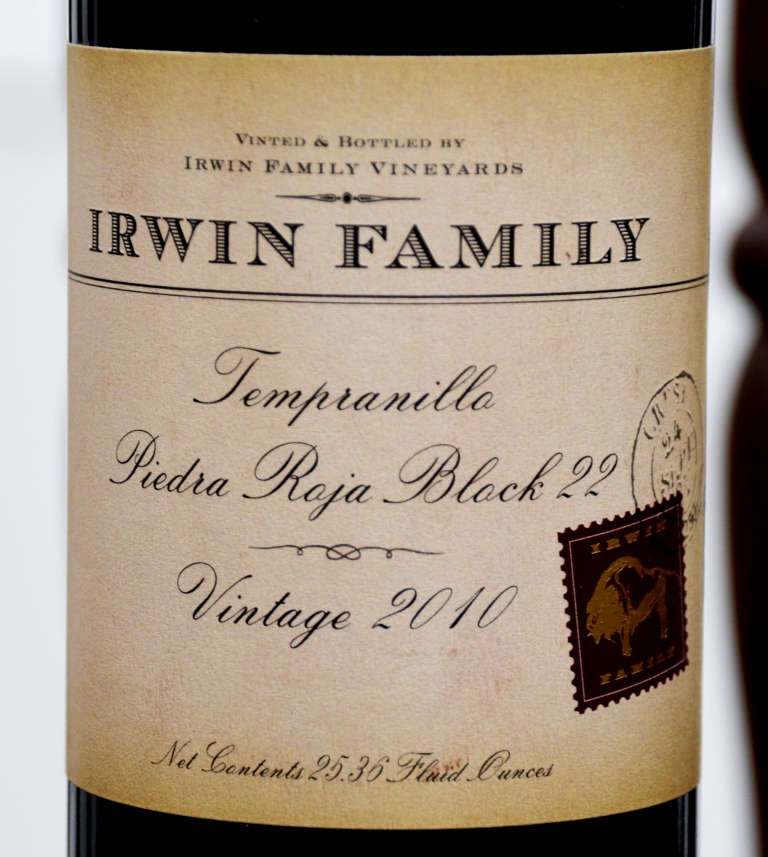
2010 Irwin Family Tempranillo Piedra Roja Block 22 Sierra Foothills ($36, 13.5% ABV, 90% French Oak, 10% American Oak, 28 month)
Color: Dark garnet
Nose: Cherries, cedar box, spices
Palate: Dense, chewy, layered, blackberries, dusty texture (reminiscent of the famous Rutherford Dust). Great complementing tannins, soft but well supporting the structure. Perfect balance. Coffee and mocha in the long lingering finish.
Verdict: outright delicious, world-class wine. Drinkability: 8+. I would drink this wine in a heartbeat at any time. As an interesting side note, the wine paired amazingly well with the Comte cheese.
Derek mentioned in his note that this wine was inspired by the wines of Toro region, which typically are the most concentrated renditions of the Tempranillo, and I definitely see that parallel.
The second bottle was a Tempranillo blend:
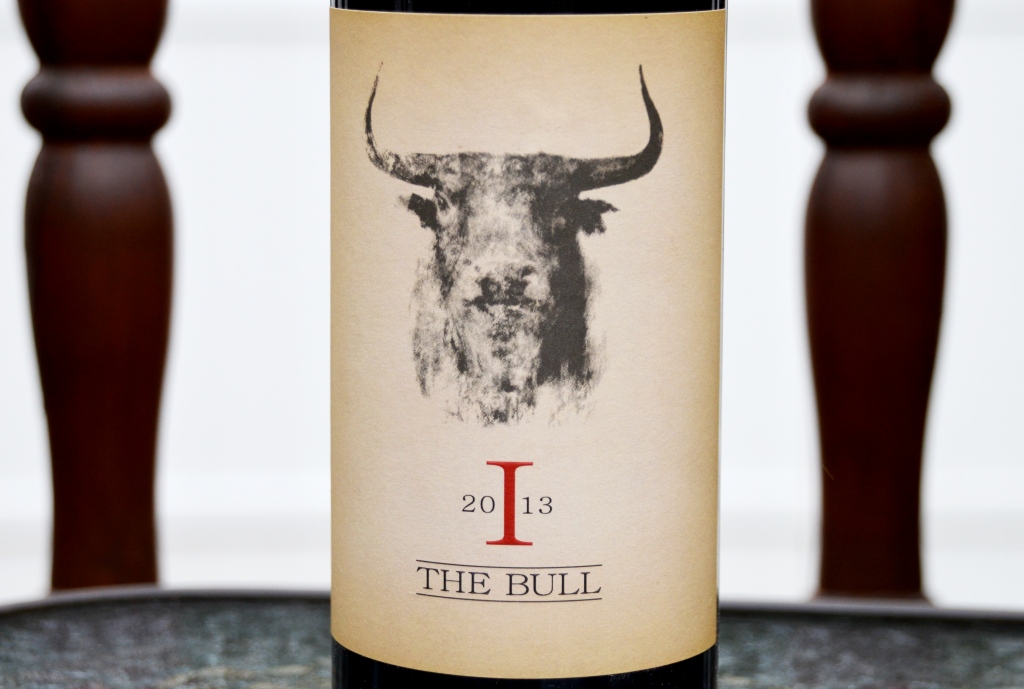
2013 Irwin Family Vineyards The Bull Sierra Foothills ($24, 13.8% ABV, 44% Tempranillo, 28% Malbec, 28% Petite Sirah)
Color: Dark Garnet
Nose: sweet plums, vanilla, nutmeg, dark chocolate
Palate: medium body, touch of spices, perfect acidity, nice textural presence, nutmeg, impeccable balance, lots of dark chocolate both on the palate and in the medium-long finish
Verdict: Delicious! Drinkability: 8. Bonus: works very well with food, especially charcuterie (meat and cheese).
There you go, my friends – two delicious wines from the region which I really want to explore in depth (Sierra Foothills), and the world-class American Tempranillo. You don’t have to believe me – head over to the Napa and taste it at Irwin Family Vineyards, or sign up for their wine club (Tempranillo is only available for the club members). Cheers!
Last Bottle Sign Up ($10 credit)