Archive
Daily Glass: A Rare Turley, And a Question of Wait
 I love Turley wines.
My first encounter with Turley was way back, maybe 20 years ago, when my friend and I were having dinner at a restaurant in Manhattan, and we saw a bottle of Turley on the wine list, probably a Juvenile Zinfandel or the Old Vines Zin, and it was one of the most affordable wines on the list, so we decided to try it. Right after the first sip, I remember we looked at each other and said ‘wow”. Turley became the love from the first sight sip for both of us, and when I go visit him, I always bring a bottle of Turley, which makes him very happy.
If you will ask a wine lover about Turley, most likely you will get an instant reaction “ahh, Zinfandel”. More advanced wine lovers might also add “oh yes, and Petite Sirah”. First and foremost, Turley Wine Cellars is known for its Zinfandels, and yes, the Petite Sirah. Altogether, Turley produces 50 wines from 50 different vineyards. And while an absolute majority of those wines are Zinfandels, there are few exceptions – two white wines, Sauvignon Blanc and the White Coat, Cinsault from 135 years old Bechthold Vineyard in Lodi, Casa Nuestra and Tecolote red blends, two Cabernet Sauvignon wines, and one Zinfandel Rosé, which sometimes is playfully identified as White Zinfandel (believe me, it is a proper Rosé, not a sweet plonk). With the exception of the Estate Cabernet, it is pure luck when any of these non-Zin, non-Petite Sirah wines are included in your allocation – doesn’t happen often.
Another question we can ask wine lovers – should Zinfandel wines be aged or consumed upon release? I don’t want to get too far into the woods by presenting such a broad question, but for the sake of simplicity here we are talking only about well-made wines from producers such as Turley, Carlisle, Robert Biale, Ridge, and similar. Again, posing this question to the wine lovers I heard the same answer from a number of well-qualified individuums: “I like my Zinfandel with some age on it”.
From my personal experience, mostly with Turley and Carlisle, I definitely appreciate the age on my Zins, but it also depends on the style of the wine. Turley Juvenile and Old Vines Zins are built to be enjoyed young, however, they are also perfectly capable of aging for 8-10 years with no issues. The majority of single-vineyard Zinfandels definitely benefit from aging, and best not being touched for the first 5-7 years upon release. The same applies to the Petite Sirah, probably even in the higher degree – it is better to wait for about 8-10 years to enjoy a bottle of Turley Petite Sirah.
Okay, so this is all nice, cool, and theoretical, but then, in reality, we don’t always follow our own best advice, don’t we?
I generally don’t open a new bottle of wine late in the evening. Yesterday, coming home after Taekwondo training, I realized that I crave a glass of wine. This is really a bad thought at around 9 pm because the process of selecting the bottle to open can take another 30 minutes or so. I have a lot of Turley bottles stored in the simple wine cage, which makes the selection process a lot easier as I don’t need to move the wine fridge shelves back and forth, so this is where I decided to look. I looked past most of the younger Zins – as you remember, I also like them with some age, and then I saw a bottle of 2018 Tecolote. It was pure luck that I had it, as it came via the special offer for the 2020 holiday season – this wine is typically available only in the tasting room. I never had this wine before, which provided a legitimate opportunity to ignore my own aging rules and simply open the bottle, which is exactly what I did.
Tecolote is a blend of 60% Grenache and 40% Carignane, both grapes harvested from dry-farmed Pesenti Vineyard in Paso Robles, from the vines planted in the 1920s. As this is a Catalon-inspired blend, and the grapes come from the specific plot in Pesenti vineyard which looks like an owl, the wine was called Tecolote, which is the Spanish word for “owl”.
Boy, was I happy with my decision… The first sniff of the 2018 Turley Tecolote Red Wine Paso Robles (15.9% ABV) was pure heaven – barnyard, forest underbrush, and spices. I know that the “barnyard” descriptor is polarizing, and deeply hated by some – I always love it, for sure on the red wines (never had it on the white), so I really enjoyed that aroma. On the palate, the wine had pure tart cherries, acidic, juicy, and succulent, fully supporting and continuing the initial enjoyment of the smell. I literally couldn’t stop refilling the glass until only about a third of the bottle was left.
And again I have to state that I’m happy that I left some of the wine for the second day, as the wine transformed. I usually preserve the wines by pumping the air out of the bottle. Sometimes I preserve the wines like that for 2,3,4,5 days, tasting the wine, pumping the air out, and leaving it until the next day. From my experience, I consider that each next day the wine still tastes good or even better than the day before is equivalent to the 5 years of aging. So if you don’t like the barnyard smell, don’t touch your Tecolote for another 5 years. When I opened the wine today, the barnyard smell was gone, and it was replaced by cherries and a telltale sign of Grenache in my book – dark chocolate. The wine also had cherries and dark chocolate on the palate and it was perfectly balanced and absolutely delicious (Drinkability: 9-). What is even more interesting, the wine paired very well with dark chocolate-covered raisins from Trader Joe’s and Italian truffled cheese. Go figure…
Here you are, my friends – a delicious wine, good when young, and perfectly capable of aging. If you can, go find your bottle…
Seeking Cabernet
 Now, this is frustrating.
At the recent dinner with friends at Knife Pleat restaurant (amazing food!), I assumed my role of designated Wine Guy and was going through 20+ pages of the wine list. 1970 Solar di Samaniego Rioja Gran Reserva caught my eye – at $200, it represented an amazing value for a 51-year-old wine. After confirming with the Somm that the wine is still well drinkable, only more delicate than powerful, I had to wriggle an approval for spending $200 on a bottle (I was not paying).
After the wine made it into the glasses, it appeared that everyone was really enjoying the nose, which was complex and spectacular. The first sip of the wine, served at the cellar temperature, was met with more than subdued enthusiasm – let’s be honest here, it was rather a sigh of disappointment. There was nothing wrong with the wine, but it was well closed and at least needed the time to open up.
After a few attempts to enjoy the wine, my friend asked “can you recommend any big, round, smooth, and velvety wines”? It turns out a few years back when she just arrived in Irvine, she got a bottle of wine at the local store. The wine was on sale for about $20 a bottle, and all she remembers was Cabernet Sauvignon and that she really enjoyed the wine – but she has no idea about the producer, the vintage, or any other essential elements.
Have you been in a situation where a simple question can lead to literally complete paralysis while trying to answer it? This might be a situation where your knowledge becomes your big handicap, as you try to hastily dissect the complexity of such a simple question.
Basically, the question asks “can I recommend an amazingly good California Cabernet Sauvignon at a reasonable price to someone who is not a wine aficionado, but just want to occasionally enjoy a good glass of wine?” – how easy this should be to answer for the Wine Guy? For yours truly Wine Guy, not so easy.
Good California Cabernet Sauvignon might be one of the best pleasures on Earth. I’m talking about the wine which unequivocally extorts “oh my god” from the red wine lover after the first sip. Of course, this is a simple idea – but not so simple to provide a recommendation. We need to take into account price, availability, and readiness to drink. BV Georges de Latour Private Reserve might be amazing with proper age, but with the price of $100+ per bottle and pretty much undrinkable upon release, this is not the wine I can recommend. The same story would be with Kamen, one of the most amazing Cabernet Sauvignon wines I ever tasted. Textbook, Turley, or Waterstone would offer more reasonably priced options (under $50), but still, I don’t know how amazing these wines are upon release. Suggesting non-winos to decant will not work. Asking them to keep the wine in the cellar until it reaches perfection will not be received very well. That leaves us with only one option – we need to find a Cabernet Sauvignon which is delicious upon release.
In an attempt to rehabilitate me after (almost) an epic failure at the restaurant, I decided to look for the simplest solution – the wines from Trader Joe’s. Trader Joe’s wines rarely disappoint; they are light on the wallet and don’t require cellaring or decanting to be enjoyed.
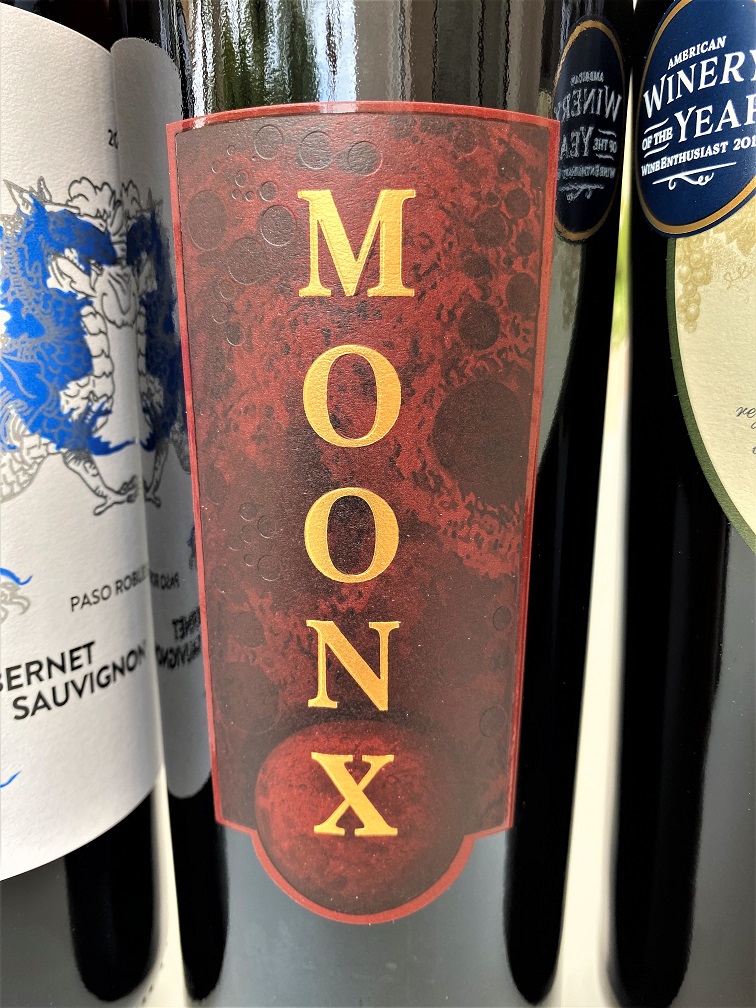
Trader Joe’s offers a good selection of Cabernet Sauvignon wines. Choosing the wines was a combination of prior experience and just good-looking labels – Justin makes outstanding wines in Paso Robles; you can’t go wrong with or beat the prices of the Bogle wines); I had MOONX wines before, and have good memories of them.
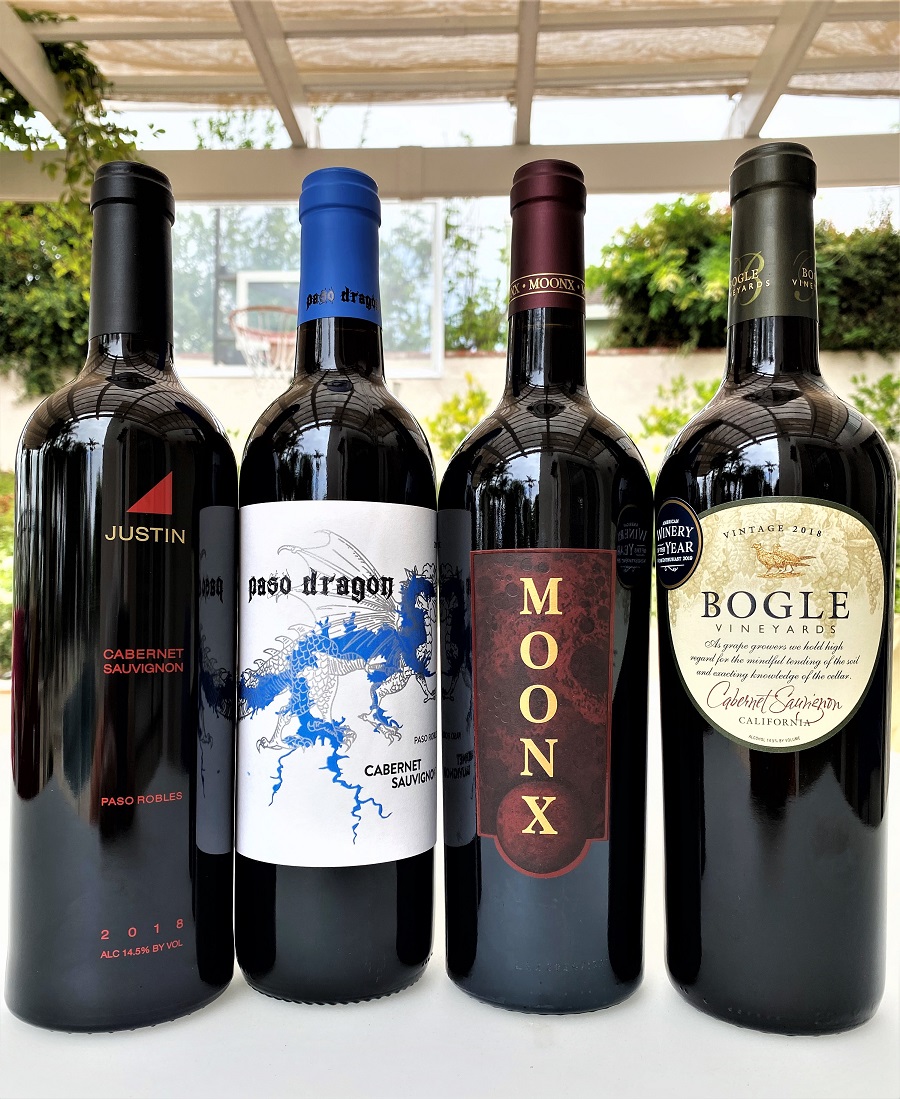
Here are the Cabernet Sauvignon wines from Trader Joe’s I offered to my friend to taste (notes are mine, of course):
2018 Paso Dragon Cabernet Sauvignon Paso Robles (13.5% ABV, $6.99)
Garnet
sage, blackberries, red and black fruit
Blackberries, herbs, medium body, clean acidity, nice finish with a touch of pepper
7+, a bit too weak for the Cab, but easy to drink wine. Can’t really identify as Cabernet Sauvignon.
2018 Justin Cabernet Sauvignon Paso Robles (14.5% ABV, $24.95)
Ruby
A touch of eucalyptus and mint, blackberries; second day – earthy and complex, a hint of gunflint.
A distant hint of cassis and tobacco
Second day: Classic cab is coming through, cassis and mint, clean acidity, crisp tannins.
8/8+, this wine needs at least 5, better yet 10+ years in the cellar to shine.
2018 Boggle Cabernet Sauvignon California (14.5% ABV, $7.99)
Light garnet
Bell peppers, a hint of cassis
Blackberry preserve with tobacco and a touch of coffee. More herbaceous than anything else.
7+, it is a drinkable wine, but might be the least Cabernet of the group.
2019 Moonx Cabernet Sauvignon California (13% ABV, $6.99)
Garnet
A touch of cassis, berries compote, a hint of bell pepper
Lodi fruit presentation, a hint of cinnamon, warm spices, sweet tobacco, berries preserve, a touch of fresh tannins, medium finish.
8-, easy to drink, good balance, pleasant, great QPR.
My friend’s favorite on the first day was Paso Dragon. MOONX was a favorite on the second day. She declared Justin “not bad” on the second day. And she was unmoved by Bogle on either day.
From my point of view, only Justin was worthy of Cabernet Sauvignon designation – give it time, and it will be a spectacular one. MOONX was very good too, but it didn’t necessarily scream Cabernet Sauvignon. We need to remember though that my friend’s love and desire for Cabernet is simply based on the good prior experience with the wine named Cabernet Sauvignon, but was that a classic Cab nobody would ever know.
There you go, my friends. Let’s go on the quest to find the best, varietally correct Cabernet Sauvignon, perfectly drinkable upon release, at a price that leaves 401k intact. Ready to offer recommendations? Be my guest…
If Grapes Would Fight
The Duel.
How human. Or inhumane. Whatever way we want to spin it.
Yes, duels are the thing of the past. You walk on the street. You lightly bump into someone. You apologize. But the other man says that you didn’t hurt his shoulder. It was his honor which was hurt. And the only way to alleviate that pain is through the duel. Choose the day, the time, and the weapon – pistols are fine, or maybe you prefer the Épée. And be there, or else.
You and your witnesses show up at the agreed time in the agreed place. Your opponent will probably be there already with his suitors. Both of you line up, someone gives the command, you fight. One of you most likely will die. But this was expected. The honor will be cleared and not in pain anymore – for whoever will survive, that is. The end.
Oh, did I mention that those duels were not very legal for the most part even when they were very popular?
Now, imagine if those pistols would shoot grapes instead of bullets, and the only choice of weapon would be the type of grape? Let’s say, you will shoot with Cabernet Sauvignon, and your opponent with Petite Sirah, or maybe you will choose a Zinfandel and your opponent will load up with Syrah? I have no idea how the honor will be defended, but I’m sure nobody would die, and such a duel will be so much fun! I’m sure you have a good imagination – imagine the fully ripened grape hitting one of the opponents on the forehead, and splattering the juice all around, in the slow motion – that would be something to remember!
Okay, so grape shooting pistols are not on the market (yet?), but the grapes can duel all they want – if the winemaker desires.
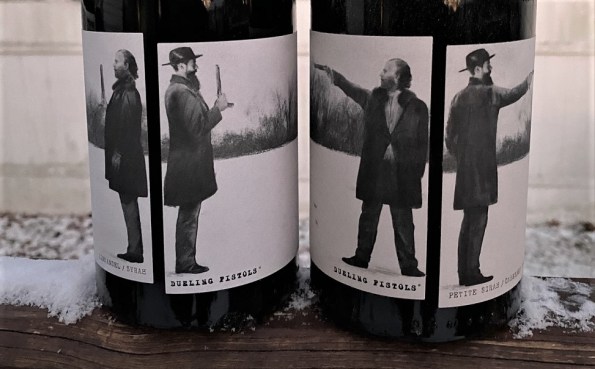
Cue in Dueling Pistols – the wines weaved around the mystery of two men, raising guns at each other at the dawn. We don’t know how they ended up there, or how shootout ends, but it is not important, as we should rather pay attention to wines.
The two Dueling Pistols wines represent 50/50 blends of the grapes that meet each other only after the fermentation is done separately. In one wine, Cabernet Sauvignon and Petite Sirah fight for supremacy; in the second wine, Zinfandel battles Syrah.
Never mind all this fight and battle talk. The wine is all about harmony – you want all the elements of the wine to be in full balance, playing together to deliver an amazing experience. So how these two wines did?


2016 Dueling Pistols Red Blend Dry Creek Valley (15% ABV, $49.99, 50% Syrah, 50% Zinfandel, 18 months in French oak, 30% new)
Dark Garnet
Very intense nose, tar, tobacco, roasted meat, mint
Crisp acidity, tart fruit, much lighter on the palate than expected based on the smell, sour cherries, significant herbal component
7+ initially, needs time
8- on the second and third days, the wine is softer and showing more fruit.
2016 Dueling Pistols Red Blend Paso Robles (15.5% ABV, $49.99, 50% Cabernet Sauvignon, 50% Petite Sirah, 18 months in French oak, 30% new)
Dark Garnet
Inviting nose of cherries and chocolate, with a hint of vanilla and licorice
The palate is smooth and gentle, well extracted, lip-smacking acidity, layers of flavor, velvety texture which makes you crave another sip even before you finished the first.
8/8+, very enjoyable
Here you are. A duel of grapes and even duel of wines. But – nobody got hurt, which is a great outcome of any duel, right?
Judging this fight, I have to say that Cabernet/Petite Sirah won this fight, at least in my corner. But you know what they say? YMMV, so go ahead, stage your own duel and have fun with it. Cheers!
P.S. These two wines were samples provided by Terlato Wines.
Enjoying The Wine In The Can
Let me start with the question: what do you think of wines in the can?
I’ve seen rather an interesting reaction in social media (both Instagram and Twitter) when I post a picture of the wine in the can. It ranges from “Hmmm” to “Really???” to “How you can even talk about wine in the can???” to “I can’t believe there can be any good wine in the can”. Mind you, this doesn’t come from uninitiated people – wine pros of different walks have a very similar reaction when seeing the reference to the wine in the can. And I find this a bit surprising.
It’s been almost 5 years since I tried my first wine in the can. I don’t think I ever had a question “why wine in the can” (my first reaction was “wow, cool, something new and different!”) – my only question was “is it good?”. A can is just a different form of packaging – nothing more and nothing less. If you follow the subject of wine in the can, I’m sure you saw lots of different reasons and explanations to the question of “why” – “democratize wine”, “pinkies down”, “appeal to millennials” and blah blah blah. Whatever. I don’t think that simply putting wine in the can is the “magic bullet” for anything.
Of course, unique and different packaging helps to appeal to potentially a different category of consumers. But – the wine is binary. You either like it – or not. The proverbial question of the desire of the second glass is the key. Consumers might buy the can for the first time for its unique form. But they have to like it to come back and buy it again.
There is another interesting side of wine in the can in addition to the form factor. Making wine in the can allows winemakers to get ultimately creative, as you can work with a very small batches – and you can do truly uncommon things, such as finishing wine with beer hops or mixing Zinfandel with coffee – I’ve had plenty of oddly interesting concoctions, courtesy of Filed Recordings Can Club, the true pioneers of the wine in the can (Field Recordings Wine and Can club is the only wine club I belong to – because it never gets boring with Andrew Jones). Such a variety is also making it interesting for the curious wine lovers, who always have something new and different to try. And if you like something, you really want to run and grab it, while you can – the flip side of the small batch winemaking is that the wine is gone in no time.
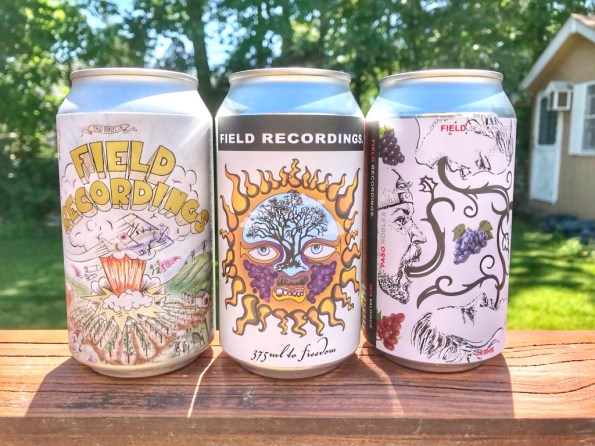
 Just to give an example, here are the notes for two of the latest shipments I received this year from the Field Recordings can club. The first one arrived just a few days ago, but I made an effort to familiarize myself with the wines quickly :). In case you are wondering, all these wines are priced at $5 per 375 ml can, so two cans would be somewhat equal to the $10 bottle of wine.
2018 Field Recordings Chardonnay Coquina VIneyard Rancho Arroyo Grande (12.1% ABV, 6 barrels produced) – fresh crunchy plums all the way, sprinkled with the lemon juice and some granny smith apples. Refreshing, round and delightful. Will make a beautiful summer day even better.
2018 Field Recordings Charbono Guglielmo Giovanni Vineyard Paso Robles (11.8% ABV) – how often do you drink Charbono (known in Argentina as Bonarda)? The producer recommended to serve this wine at the cellar temperature – I had it at a room temperature, and after 5 minutes in the glass (by the way, if you drink at home, feel free to use your favorite glass, you don’t have to drink from the can if you don’t want to) the wine was delicious – medium weight, supple dark fruit and spices, simple and easy to drink. Another winner for the summer day.
2018 Field Recordings Valdiguié Shell Creek Vineyard Paso Robles (13.7% ABV, one puncheon produced) – How about the Valdiguié grape? While typically found in the South of France, in Languedoc, the grape found its way into the US and was known for a while as Napa Gamay. I tried this wine at room temperature (too acidic and herbaceous, literally “leaf-forward”), from the fridge (much better than at the room temperature, good acidity, and underripe berries), and then at the “cellar temperature” (as recommended) – best, with excellent complexity, young berries, fennel, mint and lemon.
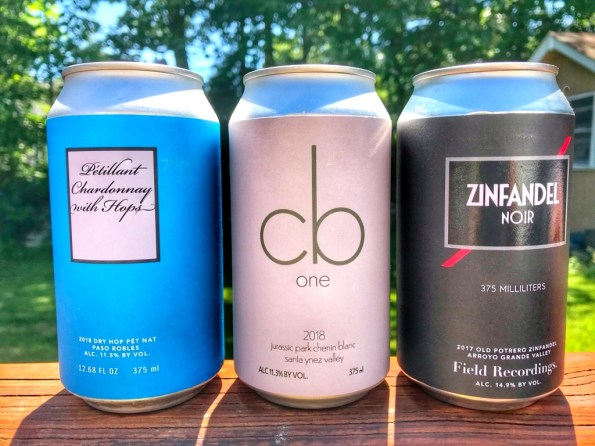 Here are the wines from the shipment earlier this year – note the completely different style of the labels – isn’t it fun? I tried only two of these so far, both superb:
2018 Field Recordings Dry Hop Chardonnay Pét Nat Paso Robles (11.5% ABV, 3 barrels produced) – ohhh, what a pleasure! Light fizz, dry hoppy notes, fresh apple, vibrant acidity, an impression of simply walking in the meadow – the can disappear in a few gulps, literally.
2018 Field Recordings Jurassic Park Chenin Blanc Santa Ynez Valley (11.3% ABV) – Chenin Blanc from Field Recordings never disappoints. This wine was made in two formats – a bottle and a can. It is yet something I need to try, but I have high hopes.
2017 Field Recordings Old Potrero Zinfandel Arroyo Grande Valey (14.9% ABV, 6 barrels produced) – this was mind-boggling. While I accept canned wines wholeheartedly, I still expect canned wines to challenge me – but there was nothing challenging about this wine. From the first smell and sip, this was an amazing California Zinfandel in its beauty – powerful, dense, loaded with blackberries, a touch of dark chocolate, lusciously layered and dangerous (we almost had to fight for the last drops). A wow in the can.
As you can tell, I’m pretty excited about the canned wines I tried – but this is not my main point. I’m simply suggesting that you should look at the wine in the can not as a gimmick, but as a product made with a purpose. Are all wines in the can good? Of course not. There will be some which you will like, and some which you will not. But it is the same with the wine in the bottle – there are some which you like, and some which you don’t. Don’t be afraid of the wine can – just give it a try. And prepare to be pleasantly surprised. Cheers!
Versatility of Paso
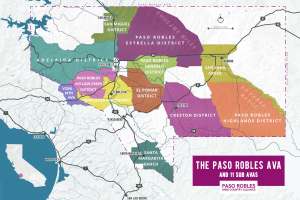
Source: Pasowine.com
When a typical wine consumer hears the words “California wine” what is the first thing which comes to his or her mind? I would bet that in 9 out of 10 cases, the first thought is: “Is this wine from Napa?”.
Yes, Napa Valley is the king, but the California wine landscape is a lot bigger. Today, I want to talk about a different California wine region – one of the oldest, and probably, the most versatile – the region originally known as El Paso de Robles, “The Pass of the Oaks”, which today is typically called Paso Robles, and sometimes passionately abbreviated just as “Paso!”.
At the beginning of the 1880s, Zinfandel plantings appeared in Paso Robles. For a while, Zinfandel was really “it”, adding some of the most famous vineyards, such as Dusi and Pesenti at the beginning of the 1920s. At the beginning of the 1960s, Cabernet Sauvignon, Chardonnay and Pinot Noir arrived to the region, followed by first plantings of Syrah in the whole state of California in 1970s. From there on, the region (Paso Robles AVA was established in 1983) moved forward to collect numerous accolades of Wine Region of the Year, Best Vineyard in the world and others. Today, Paso Robles has 11 sub-appellations, more than 40,000 acres of vineyards and more than 200 wineries, growing more than 40 grape varieties, from Bordeaux greats to Rhone and to Spanish varieties – and did we mention Zinfandel yet?
“Versatility” is really the key word when it comes to Paso. First, there is a great diversity of the terroirs, with 11 well-defined sub-appellations (you can see them on the map), stretching from just 6 miles away from the Pacific Ocean on the west to the mountains on the east – and let’s not forget that while only 40,000 acres are under vineyards, the whole Paso Robles appellation is more than 600,000 acres, which is about three times of size of Napa Valley AVA. Such a great diversity of microclimates is very conducive to the wide variety of grapes made into the world-class wines all around the AVA. Let’s see how many times you will nod when I will mention some of the Paso Robles greats: Saxum Vineyards, making some of the best in the world Syrah; how about Zinfandel from Turley and Carlisle, some of the best of the best in the world of Zin; Tablas Creek – one of the Rhône pioneers in the area; Justin Winery, with their delicious Bordeaux blends – Isosceles, anyone?; Dracaena Wines – Cabernet Franc fanatics; Field Recordings – truly a personal favorite, making everything from Chardonnay to Pinot Noir to Chenin Blanc to Cabernet Sauvignon and Cabernet Franc to Petite Sirah, Sangiovese and Valdiguié – and all deliciously well. So, how is this list to you?
 Let me take this conversation one step further and share with you some of my latest discoveries from Paso Robles:
2015 Halter Ranch Grenache Blanc Paso Robles Adelaida District (13.3% ABV, $28, 80% Grenache Blanc, 14% Picpoul Blanc, 4% Roussanne, 2% Viognier)
Light golden color
Medium intensity lemon nose, hint of jasmine flowers and lots of granite with a touch of gunflint lots of minerality – on the nose, it is minerality driven wine.
The palate is acidity-driven, fresh, crisp, bright, lemon, a touch of grass, and a distant hint of plumpness – the wine will show differently as it will warm up.
Drinkability: 8, delicious from the get-go, lots of energy
2014 J. Lohr Hillside Cabernet Sauvignon Paso Robles (14.8% ABV, $35, 90% Cabernet Sauvignon, 6% Petit Verdot, 4% Cabernet Franc, 18 months in 60% new French oak)
Dark garnet, almost black
Licorice, sage, dark chocolate, coffee, roasted meat, minerality on the nose
The palate is savory, bright acidity, blackberries, more licorice, coffee, medium plus body, lots of energy in every sip, dark and concentrated.
Drinkability: 8-/8, softer and rounder next day, showing up some cassis.
2014 Treana Red Paso Robles (15% ABV, $45, 75% Cabernet Sauvignon, 25% Syrah, 17 months in French oak, 70% new)
Dark garnet with a purple hue
Concentrated cherry pit and some funk initially, noticeable green bell pepper – or was it corked?
The bright palate, good amount of savory fruit with licorice, blueberries and cassis, noticeable sapidity, medium to full body, good acidity, nice balance
Drinkability: N/R. This was not a bad wine, but there was an annoying component in the taste profile, which gave a borderline corked impression and was adding sharpness to the wine – also it didn’t subside. I need to try this wine again to have an opinion.


2014 Aaron Petite Sirah Paso Robles (15.6% ABV, $48, 88% Petite Sirah, 12% Sirah, 22 months on lees in 50-60% new oak)
Black color. Just black with a touch of dark garnet hue on the rim.
Nose most reminiscent of a nice espresso, with a touch of vanilla. Swirling opens up some blackberries and massive, colored legs (I always thought the color in the legs is the trait of Syrah, but apparently, Petite Sirah has the same).
The palate is dense, concentrated, roasted meat with some coffee and blueberries, nice pronounced acidity, velvety texture. Massive wine, but surprisingly approachable.
Drinkability: 8, would be amazing with the steak.
2015 Peachy Canyon Westside Zinfandel Paso Robles (14.5% ABV, $22, 78% Zinfandel, 11% Petite Sirah, 7% Alicante, 2% Tannat, 2% Syrah, 16 months in 30% new oak barrels)
Dark garnet
Pleasant aromatics, medium plus intensity, Chinese five spice
A touch of tobacco, good acidity, expressive tannins. Needs time
3 days later – wow, dramatic difference. I simply put this wine aside with a cork, without pumping the air. Significantly improved aromatics, tobacco, blackberries, hint of caraway seed. The bright and round palate, cherries, great interplay of acidity. I never thought I would say this, but it seems a lot more of an Italian Primitivo style also with the back end minerality. Happy wine for sure – I can finish the bottle by myself. Drinkability: 8 (day 3)
2015 Eberle Steinbeck Vineyard Syrah Paso Robles (14.8% ABV, $28, 100% Syrah, 18 months in 50/50 American/French oak)
Dark garnet
Closed nose from the get-go, the palate shows some dark fruit, a touch of vanilla, but not much more. Second day (just re-closed without pumping the air out) – what a difference! Dark fruit on the nose, supple berries on the palate, a touch of pepper, round, medium to full body, good acidity, overall delicious.
Drinkability: 8 (second day)
What do you think – did I prove my point about the versatility of Paso Robles? What are your favorite Paso producers and wines? Cheers!
Daily Glass: Textbook Precision
Once you fully embrace the wine world, one of the important lessons you learn is rather simple – “there are no guarantees”. The bottle of wine can perfectly say “Cabernet Sauvignon” – there are absolutely no guarantees that Cabernet Sauvignon from Washington, California, and Chile will have any smell and taste similarities, never mind Cabernet Sauvignon from China, Czech Republic, and Moldova. And this is okay, we can all accept it – at the end of the day, the only thing which matter is whether we like the wine or not.
Despite all the differences, when it comes to the major grapes, such as Cabernet Sauvignon, Chardonnay, Merlot, Sauvignon Blanc, Pinot Noir and so on, we usually know how the “classic” wine should taste like – especially if we take any formal wine education or make enough effort to study the wine, pay attention to what we drink and make it a lesson to learn. Yes, there might be a bit of our perception in it too, but still, we usually have that “classic profile ” idea in the mind.
What prompted this post was a lucky happenstance, an encounter with two classic, textbook wine profiles for two nights in the row.
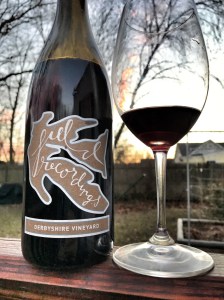 First, there was Pinot Noir. When it comes to Pinot Noir, there are probably four classic profiles – Burgundy (of course!), with lots of dark fruit power and a little bit of funk (especially with age, but drinking young Burgundy is almost like killing a baby, right?). Then you have New Zealand, which usually can be identified by the pronounced acidity. Oregon Pinot Noir often screams minerality, mocha and dark chocolate. And then you got California, with luscious smokey plums and silky, seductive texture.
So the wine I had a pleasure of experiencing was a textbook, unmistakable California Pinot Noir – 2015 Field Recordings Derbyshire Vineyard Pinot Noir San Luis Obispo County (13.1% ABV, $28, 20% whole cluster fermentation, foot tread in open top bins, 12 month in French oak) – smokey plums on the nose, bright cherries and plums profile on the palate with a perfect balance of acidity, velvety layers – tremendous amount of pleasure in every sip. Drinking this wine evokes comparisons with other California classics such as Siduri. It doesn’t reach the ultra-luxurious texture of Sandhi, but if you have any experience with classic California Pinot, one sip of this wine will perfectly put you in the right place.
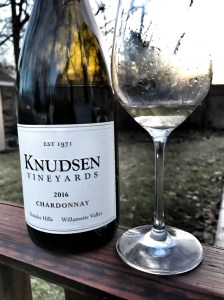 Now, talking about classics, let’s talk about the grape which is not a relative of Pinot Noir, but more often than not, a closest friend and neighbor – Chardonnay. What is interesting about Chardonnay, in my opinion, is that good Chardonnay is a lot more cosmopolitan than a Pinot Noir. With the exception of Chablis, which often can be recognized by the gunflint on the nose, the classic Chardonnay profile includes vanilla, apples and a touch of butter. You can often differentiate Burgundy from California by the amount of butter (California usually offers lots more) and acidity (that’s what you will get with the young Burgundy), but still, Chardonnays from Australia, Burgundy, Chablis, and California have quite a bit of similarity.
Oregon, which is definitely an established world leader when it comes to Pinot Noir, lately also started to show its Chardonnay provenance. Two years ago, I was blown away by the perfection of Vidon Chardonnay. This time around, the 2016 Knudsen Vineyards Chardonnay Dundee Hills (13.5% ABV, $45) made me say “wow” many, many times. Perfect nose of vanilla and golden delicious apples with a distant hint of butter and even honey (honey is usually showing up in Chardonnay after some aging) was supported by the same profile on the palate – vanilla, apples, butter – all perfectly mended together in cohesive, sublime package resting on the vibrant core of acidity. This was definitely a textbook Chardonnay for me, and the one which I would love to see aged, at least for another 5-7 years.
Here you go, my friends – a textbook experience with two classic grapes. What are your textbook wine experiences? Cheers!
Last Bottle Sign Up ($10 credit)




 Talk-A-Vino