Archive
Have a Car? Love Wine? Let’s Travel!
In today’s world, wine advanced its standing far beyond just an alcoholic drink. Yes, we get a lot of pleasure from the glass of a good wine, but leaving that aside for a moment, just think about the source of the wine – the grapes, the vineyards, the wineries. Think about rows of vines, which are always tended to so they look immaculate, with all those perfectly positioned lines. And then think about all the slopes – vines love hills, so think about all those beautiful rows covering the sides of the hills and mountains and ascending into the fog… And how about all those winding roads, where with every turn you keep repeating “oh my, just look there! Did you see it? Did you see it?” Before the liquid in the bottle, the pleasure comes from admiring all that beauty in its simple, natural form.
Want to see and experience that beauty of the vineyards? Most likely, you will need a car. Of course, you can always hire a driver, but then you are not fully in control as to where you will stop, what you will see, and how slow (or fast) you will go. As most of us, wine lovers, have to travel to see the vineyards, a rental car is our friend. So the CarRentals put together an infographic (love infographic as a concept), presenting 8 different wine routes around the world, giving you all the details you need to enjoy your trip. You can read the detailed descriptions of those eight routes in their blog post.
So, where are you going next? Cheers!

Source: CarRentals.Com
Wednesday’s Meritage: Chowdafest, Champagne in Space, WBC18, Losing the Donuts and more
Meritage Time!
I have a lot of interesting tidbits for you, so let’s get going.
 First and foremost, the Chowdafest. Now in its 11th year, one of my all-time favorite fun culinary events keep on going strong. Same as the last year, 40 culinary teams (restaurants, catering, etc) will compete in 5 categories (Classic New England Clam Chowder, Traditional Chowders (Manhattan/Rhode Island’s), Creative Chowder, Soup/Bisque, and Vegetarian). Even the lobster chowder is expected to be present this year. As usual, the guests will be sampling and judging. To put things in perspective, 40 of 1 oz samples make it for 40 oz of chowder – that is 2.5 lb of chowder combined! I don’t know how you see it, but this is a lot of chowder! Oh well, if you are anywhere within a few hours drive, the event is well worth it, so see you there!
Next one might be an old news for many (for sure my kids are already all over it) – the famed Dunkin’ Donuts is going to lose the donuts! Not to worry, only in its name. As it seems to be popular nowadays, the iconic chain which had been around since 1948, is going to change its name to just Dunkin’ – as my kids said, this is how everybody calls it anyway, so no big deal. I hope this renaming will be more successful compared to the recent failure of the IHOP->IHOB->IHOP attempt – and it most likely will. You can find more details about renaming at the Dunkin’s (can we already call them like that?) website.
The next subject I want to touch on is something I would typically include into my April 1st posts – but today is not April 1st, so this is actually not a joke and not a prank. It seems that in only a couple of years, anyone who has a spare $10M or so will be able to book their hotel room in … yes, space. It is obvious that such a unique achievement have to be properly celebrated – and what else says “celebration” if not a glass of Champagne? Challenge is that it is hard to pour a glass of revered bubbly in space – but have no fear, Champagne house of Mumm set out to solve the problems by teaming up with the designer Octave de Gaulle. The problem will be solved by creating a special two-chamber bottle which will create a foam out of Champagne, which will then return to its traditional bubbly state directly in the consumer’s mouth. For more details, please see the original article here (thanks to my friend Emil for bringing this to my attention).
Now, let’s talk about numbers – can you not like talking about numbers? When we hear numbers, we think we are in the know – if we can measure something, we are now in control, right? Okay, these are obviously wine-related numbers (you didn’t expect me to talk about Prius production here, didn’t you?) – and they relate to the wine consumption in different states in the USA. Well, not even wine – the alcohol consumption overall. VinePair just published a ranking of all 50 states in terms of the alcohol consumption per capita. Want to guess which state leads the pack? I will give you a moment to ponder at it. Ready? If you said New Hampshire, you won! Wait, I don’t have any prizes here. Well, pat yourself on the back, will you? New Hampshire is leading in terms of alcohol consumption in the USA, with 4.76 gallons per capita per year. Washington, DC is second, with 3.85, followed by Delaware at 3.72. At the bottom of the table is state of Utah (I’m sure we could predict that), with 1.34 gallons per capita. When it comes to numbers, I always remember the old adage of “there are lies, damn lies, and statistics” – I have no idea where all these numbers came from – for example, if most of my wines come directly from the wineries through the mailing lists, is that accounted for? Anyway, the numbers are always fun, so for the full report, please follow this link.
Last one for today, and it is not even really the news. The Wine Bloggers Conference of 2018 (WBC18 for short) will start in a mere week, on October 4th, in Walla Walla, Washington. I will be attending WBC18 (I know a lot of bloggers can’t make it, unfortunately), so if you are reading this and will be attending the conference, please find me and say “hi”. The state of Washington makes amazing wines, and Walla Walla is on the forefront of producing those amazing wines, so I’m definitely looking forward to experiencing the wines and meeting all the wine people next week.
And we are done here, my friends. The glass is empty, but the refill is on the way. Until the next time – cheers!
Restaurant Files: Smoke, Fire, and Spice, and Everything is Nice – at Bobby Q’s in Norwalk, Connecticut
 I love food – well, of course, this is not a secret. Let me refine that. I love good food. That would be a much more precise statement (duh, who doesn’t). Same as with the wine, where I can never name my favorite grape or wine, I can’t tell you what my favorite food is. Except for that one type – good food. Good food is what I love – will it be sushi, steak or vegan burger – as long as the food is tasty, it will be my favorite food of the moment.
And then there is barbecue. Is that my most favorite food? No, it is not – this is why I gave you the opening statement. But, nevertheless, I really appreciate good, tasty, smoky, spicy food. The barbecue (or BBQ, as it is often abbreviated) might be the only authentic American cuisine – okay, the Southern cuisine is, but BBQ is indelibly a quintessence of Southern cooking – whether it is Texas, Tennessee, Kansas, Georgia, or Alabama – the BBQ there is “it”. And on the East Coast of the US? Well, BBQ is popular, and many restaurants say that they do it – only to fail the actual taste test. This is why the visit to Bobby Q’s in Norwalk, Connecticut was so vibrantly refreshing.


Bobby Q’s restaurant had been around since 2004 – however, located in Westport, just a next town over from Norwalk. It won numerous accolades of “Best in Connecticut”, “Best in Fairfield County” and many other “bests”. But in 2016, the building it was in was sold, and the restaurant had to find a new home – which it did at the Waypointe District in downtown Norwalk, where it opened its doors last year.


Before we talk about food (have you had dinner yet? take a moment, go eat something first, will you?), let’s talk about the drinks. The drinks menu is heavily focused on the whiskey and bourbon (that’s what BBQ is typically calling for, right?), but also includes a good number of cocktails. I had Smoking Gun (Bulleit Bourbon, maple, black walnut & creole bitters, hickory smoke), which was tasty and very potent, first. Then I continued with Bramble On (Buffalo Trace, maple, lemon, blackberries, lime & rosemary) which was not too sweet (my pet peeve – don’t like sweet cocktails) and very refreshing. There is a limited number of wines on the drinks menu, but we decided to stay only with the cocktails for the evening.


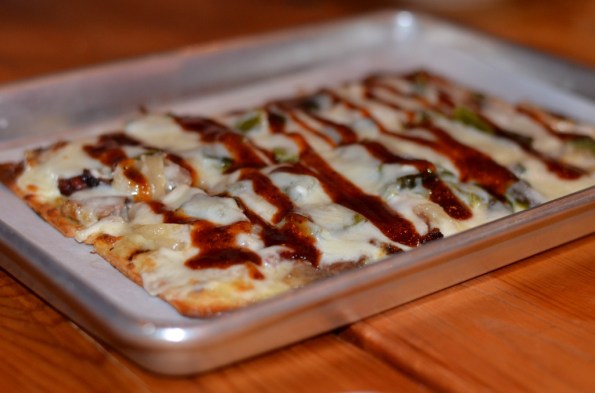
We started our dinner with Spicy Brisket Hand Pie (Guacamole, chipotle aioli, empanada crust) – very tasty, and then Bobby Q’s Classic BBQ Nachos (crispy tortilla chips, pulled pork from the pit, jack and cheddar cheese), served in the ‘Q It Up Version (pit beans, sour cream, guacamole, house pickled jalapeño) – I love nachos, and I love loaded nachos even more – so this was Super-Loaded nachos dish, absolutely delicious (healthy? of course not!), with perfectly cooked pulled pork, perfectly flavorful, with pickled jalapeños, just yum. Wood-kissed Wings (Korean BBQ, Nashville Hot) were outstanding. Nashville Hot were my favorite, as I really appreciate the dry rub on the wings, and these were superb, with a good, but the very controlled amount of heat, and a perfect amount of smoke. Austin City Limits Flatbread (brisket, roasted poblano peppers, caramelized onion, gruyere, Big Rack Bold BBQ drizzle) finished our introductory course and was also very tasty.


Next, we had a Vegan/Vegetarian BBQ Sandwich (Jackfruit, coleslaw). I heard that cooked Jackfruit has the texture similar to the pulled pork – this was definitely the case here. Without cole slaw, this sandwich can be served as vegan, and the addition of coleslaw makes it vegetarian. Cue’bano Sandwich (pulled pork, smoked turkey, Swiss, pickles, caramelized onions with Carolina Mustard sauce, grilled sourdough) and The Colonel Sandwich (Fried chicken, pickles, jalapeno-bleu cheese slaw, hot sauce, bun) were both excellent. The Cue & Co Burger (Pimento cheese, tomato, arugula, bacon jam) was served with Fire Fries (Ghost Chili dust, Basin’ BBQ, jalapenos, habanero, chipotle mayo), which was one of my favorite dishes of the evening. The Fire Fries looked quite innocent, and at first, they even tasted like that. A few seconds later, the fire started – these fries are not called Fire Fries for nothing – 15 seconds later, the whole mouth was on fire, albeit delicious.


And now, the time has come for the main attraction – BBQ platter (house pickles), which included Beef Brisket, Beef Burnt Ends, St. Louis Ribs, Texas Pork Sausage, served with the sides of Mac & Cheese (sharp cheddar, smoked gouda), Yankee Corn Bread (maple bacon butter) and Pit Beans (molasses, burnt ends, finished in the pit) – I don’t even know where to start. Yankee corn bread – superb, Pit Beans – outstanding, with a delicious amount of smoke and excellent addition of meat. Brisket was tender, juicy and perfectly smoked. The ribs had dry rub and were excellent, burnt ends – in general, one of my all-time favorite BBQ foods, and this rendition didn’t disappoint at all; sausage was flavorful and had the perfect texture. Simply a great smoked food extravaganza.


Do you think we left without having a dessert? Think again! The Apple Cider Doughnuts (Vanilla Anglaise) were melting in your mouth, Banana Pudding (Ripe bananas, Nilla Wafers, melted butterscotch drizzle) was sublime, and Bacon-laced Ice Cream Sandwich (soft baked chocolate chip cookies, vanilla ice cream, bits of bacon)… Ice cream with the bacon. Do I need to say anything else? Yep, it was as good as you think it should be, and maybe even slightly better.
Here you are, my friends – an account of smoky, spicy and even fiery experience. If barbecue is your crave, Bobby Q’s is well worth a special trip – and you can thank me later. Cheers!
Thinking About Grenache with Bokisch Vineyards Garnacha
Grenache. Garnacha. Garnatxa. One of the 10 most popular red grapes in the world, one of the most planted grapes in the world (according to the Court of Master Sommeliers, “world’s most widely planted grape”). Some call it “unsung hero”; I generally designate it as King of the Blends. While Grenache can perfectly perform solo (think about Sine Qua Non, Horsepower, No Girls, Bodegas Alto Moncayo, some of the Chateauneuf-du-Pape), it typically plays its part in the blends – that’s what “G” stands for in all of the GSM renditions, whether coming from Australia, Southern Rhône, Southe Africa, or California; it helps with Rioja and Priorat, and with lots of other wines.
Yesterday, wine lovers celebrated International Grenache Day, which prompted some thoughts on the subject. As I confessed many times, I like aged wines. Of course, I thoroughly enjoy the exuberance of the young wines, but my honest preferences are with the wines which gain some complexity after been aged. Out of 10 most popular grapes – Pinot Noir, Tempranillo, Sangiovese, Merlot, Zinfandel, Malbec, Grenache, Cabernet Sauvignon, Nebbiolo, Syrah/Shiraz – Grenache is the one which concerns me the most with its ageability. Of course, the Grenache wines produced by Sine Qua Non, Horsepower, Bodegas Alta Moncaya Aquilon, Châteauneuf-du-Pape from Clos des Papes or Domaine de la Janasse can age perfectly for a very long time – but all of these wines will set you back for hundred(s) of dollars, so their ageability is rather expected. Meanwhile, I had lots of Cabernet Sauvignon, Pinot Noir, Zinfandel, Sangiovese, Tempranillo, Syrah (oh well, pretty much all of those 10 major grapes), priced in the $15-$25 range and age beautifully (here is one example for you) – but I don’t have a great luck with aged Grenache in that price category – maybe because the most of it comes in the blends (don’t try aging Côtes du Rhône reds – it is just not going to happen).

If you are an oenophile who can spend 15 minutes pulling back and forth numerous bottles in your cellar, unable to decide what to open for the evening, I’m sure you really appreciate the grape holidays. Your selection shrinks down, as now only the appropriate bottle can be opened, so the life becomes much easier. This recent Grenache Day gave me a good reason to finally open the bottle of the 2011 Bokisch Vineyards Garnacha Terra Alta Vineyard Clements Hill Lodi (14.5% ABV, $25) – I had this bottle in my hands a few times this year, but always put it back as “not this time” object.
Lodi was one of my relatively recent discoveries as one of the very best wine regions in California, and in the US in general – both with the wines and with the people who make the wines there. Lodi might be most famous for its Zinfandel vineyards, but it is really a capital of Mediterranean grape varieties in the USA, and so Lodi Grenache is something to look for as a category. And if Lodi is the capital, Markus Bokisch might well be the king of those Mediterranean varieties – he started planting Spanish varieties in Lodi back in 1999 and only made his first Zinfandel wines a few years back. Markus’s range includes all best-known Spanish varieties – from Albariño and Verdejo to Garnacha, Monastrell, Tempranillo, and Graciano.
In a word, I made an excellent choice of the celebratory wine for the International Grenache Day, as the wine was beautiful from the get-go. Garnet color; espresso and mint jump right out of the glass, intense aroma, tar, a whiff of the dark chocolate came as the second layer, minerality, spices – I could actually smell this wine for about … forever. The palate? Wow. Tart blackberries, tobacco, a touch of pepper, bright acidity, perfect firm structure, delicious. The wine was going and going, further opening up over the next two days and showing the smoke and rocky minerality which I previously experienced with No Girls Grenache (here is a bonus, Bokisch Garnacha is only a quarter of a price of No Girls Grenache). Drinkability: 8+/9-. The wine was a perfect example of Grenache which can age – and could’ve waited for longer to be opened, for sure – but it was definitely enjoyed (of course this was my only bottle, you don’t need to ask).
What do you think of Grenache? Do you have a favorite Grenache wine or a region? Cheers!
Blending Art and Wine – Galer Estate in Eastern Pennsylvania
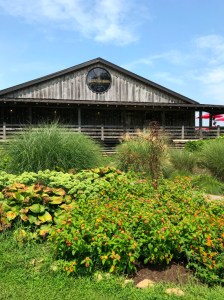 Do you like surprises? It depends, you say? Okay, let me rephrase: do you like pleasant surprises? Of course, you do – and so do I.
What’s up with this “surprises” prelude? Simple – was prompted by the recent experience in Eastern Pennsylvania – at Galer Estate Vineyards and Winery.
With the fear to sound obnoxious (feel free to stamp “snob” and stop reading), I have to say that East Coast wineries are a hit and miss experience. I’m sure this is not just an East Coast phenomenon, but here I experienced it enough to state it. When visiting the winery, I’m looking for the “full experience”. I want the winery to have an ambiance, to have a soul. To me, the wine is a thing of comfort, and this is what I want to experience when I come to taste the wine. I don’t care for glitz and glamor, I don’t care for all the little “look how many cool and utterly useless things you can buy here”. The winery to me is all about a comfort and pleasure, and, most importantly, the real, good, tasty wine.
Oh, and one more thing to add – a conversation, conversation with the person who pours the wine into your glass. I don’t want to be pontificated upon (recent experience at Akash winery in Temecula was beyond terrible), I don’t want to be ignored (“I don’t know anything, I’m just here for a weekend job, here is your wine”). I want a person who pours the wine to share their passion and pride – it makes wine tasting a lot more enjoyable.
I’m happy to say that we had this exact “full experience” on the recent visit to Galer Estate. While the winery, located just a stone throw away from the Longwood Gardens (actually, while driving to the winery, I thought I made a mistake and will simply get inside the gardens instead of the winery), started only about 10 years ago, it looks like it had been there for centuries. It is rustic, it perfectly blends into the surroundings, and it is beautifully decorated – I’m sure the fact that Lele Galer, the co-owner of the winery, is an artist, comes to play here.


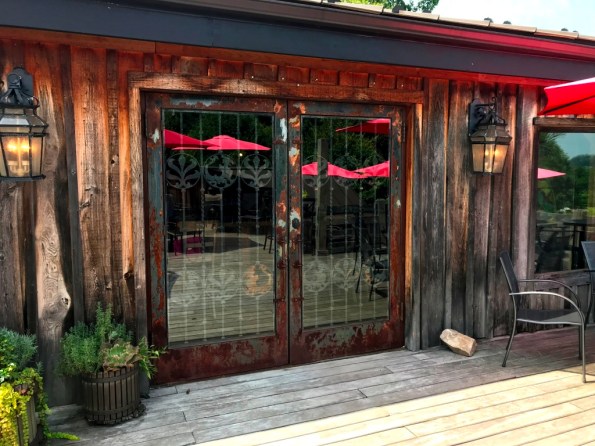
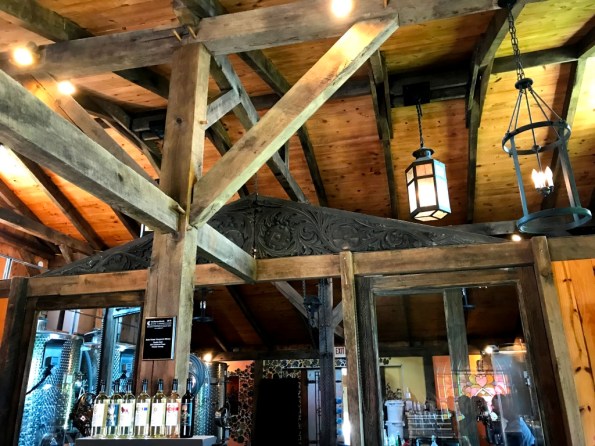


The doors of the tasting room had been brought from France, some of the panels are from Italy, stained glass windows are from the midwest USA. The view of the Chardonnay vineyard from the tasting room is beautiful, and all those little details together create the right ambiance for the tasting.
The Galer Estate owns two vineyards, and when necessary, they bring grapes from other vineyards, but all the grapes are still local, coming from the vineyards within 30 miles radius, all located in the Chester County. The selection of grapes is quite eclectic – it was my first time trying Grüner Veltliner and Albariño from the East Coast. Here is what we tasted:


2017 Galer Estate Grüner Veltliner Chester County Pennsylvania ($25) – fresh nose, beautiful grassy palate, great acidity. 8-, excellent effort.
2017 Galer Estate The Huntress Vidal Blanc Chester County Pennsylvania ($25) – Excellent, restrained, nice balance of white fruit, good acidity, elegant. 8, one of the best renditions of Vidal Blanc I ever had.
2016 Galer Estate Red Lion Chardonnay Chester County Pennsylvania ($18) – gunflint on the nose, crisp, green apples, lemon, clean. 8, excellent wine. I’ll take a gunflint on my Chardonnay at any time, and was literally ecstatic to find it here.
2017 Galer Estate Albariño Chester County Pennsylvania ($35) – excellent, varietally correct, touch of perfume on the nose, mineral lemon notes on the palate. 7+, Unique and different – East Coast Albariño, not the wine you can expect to find here.
2015 Galer Estate Chardonnay Reserve Chester County Pennsylvania ($32) – not my favorite – I’ll leave it at that. May be a “sleeper” bottle?
2017 Galer Estate Pinot Noir Rosé Chester County Pennsylvania ($30) – practically no color in the glass. I would prefer a Rosé with more extraction. Not my favorite
2016 Galer Estate The Huntress Red Blend Chester County Pennsylvania ($30, blend of Cabernet Franc, Carmine, Petit Verdot) – excellent, clean, cassis on the nose, cassis and raspberries on the palate. Soft, good balance. 8-, an added bonus – a new grape, Carmine – the grape (a blend of Cabernet Sauvignon and Carignan) was specifically designed to withstand the cold of the East Coast.
We had a great time while tasting, as our host was knowledgeable and engaging. It was also great to have lunch right in the cellar room – it was too hot to sit outside, so after the view of the vineyards, the view, and mostly the smell, of the tanks might be the most exciting for the wine lovers.
And of course we had an opportunity to snap some pictures of the vines and grapes:


Here you are, my friends. If you are visiting Longwood Gardens in Kennett Square, which is one of my most favorite places, put aside some time to visit the Galer Estate. Considering the full experience, this was one of the very best East Coast wineries I ever visited. And even if you have take a special trip over, you will not regret it. Cheers!
Restaurant Files: Art of Food And Wine at Domaine Hudson in Wilmington, Delaware
 Almost for as long as this blog exists, and practically every year around this time, I confess my love of traditions. The reason it happens every year around August is rather simple – this is the time when we typically have our “Adults getaway” – a group of friends going away for a weekend of food, wine, and laughter, an insane amount of laughter.
We always spend time arranging for a special dinner – this year was not an exception. It took a bit of work, but after calling and emailing many places around our destination – Longwood Gardens in Kennett Square in Pennsylvania – we found the place which was willing to accommodate our group and seemed to offer good food and wine options. Typically we try to find the restaurant which will offer a tasting menu and allow us to bring our own wines. It does take a bit of effort to come up with wine pairings for the dishes we never tasted – but usually, we fare reasonably well at that exercise. This year, for a change, we found the restaurant which offered us a tasting menu – and paired all the dishes with wines, so all we needed to do is to come and enjoy (one would hope, at least).
It was not just the fully paired tasting menu which was different this time. Typically, when we select a restaurant, we go by Yelp ratings and close proximity to the place we are staying at. As we usually stay in small towns, the restaurants we find are more of a “local significance”. The story with Domaine Hudson is quite different as the restaurant has Wine Spectator’s Best of Award of Excellence. There are only about 1200 restaurants with this type of awards in the whole of the United States, so I hope you agree that it builds some level of expectations.
All the planning behind, and finally we arrived at the Domaine Hudson in Wilmington. Once we got situated, the dinner started with the “Chef’s Surprise” (the Amuse-bouche), which became a double-surprise. The first part of the surprise was in the fact that it was not expected, of course. But the second surprise was the dish itself – Deviled Eggs.
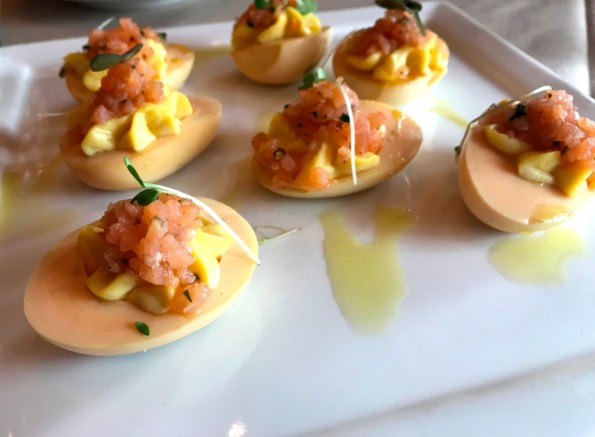
Okay, what can be surprising about the deviled eggs, you ask? You see, for people with Russain heritage, deviled eggs is a staple of the party, and I’m very, very particular to how this simple dish is executed. I had deviled eggs on multiple occasions in the restaurants, and don’t mean to offend anyone, but in the absolute majority of the cases the dish could be described simply as “blah”. Not here. At Domaine Hudson, this was one superb deviled eggs – the egg white was smoked, the filling was creamy and perfectly seasoned, and the smoked salmon on top gave the texture and completed the dish. The simply delicious beginning of the evening.
Before we continue, I have a confession to make. Every once in a while, you want to forget all your social media obligations (obsessions?) and just be a normal person on vacation – don’t take pictures, don’t take notes, don’t try to memorize the experience, just relax, have fun and enjoy the moment. This is what I honestly tried to do. I didn’t bring my SLR, I decided not to take any pictures, just enjoy the dinner and the company. After the first sip of wine and bite of food, which were both excellent, all good intentions went out of the window, and the need to “document the story” kicked in, more as an instinct, a muscle memory so to speak. But – I was left with only my cell phone (meaning – mediocre pictures), and any missed picture opportunities are just that – missed picture opportunities. Now, let’s get back to our dinner and the wine pairings.
Duck Liver Mousse (port wine aspic, pickled stone fruit, grilled bread)
Wine: 2015 Rubus Old Vine Zinfandel Lodi
Superb is a word. The mousse was delicious – texture, flavor combination with all the condiments – I finished the full ramekin by myself, couldn’t stop until the last morsel. The wine was excellent as well – nice raspberries profile, a touch of fresh fruit, not overbearing, but enough sweetness to perfectly complement the mousse. A successful pairing by all means.


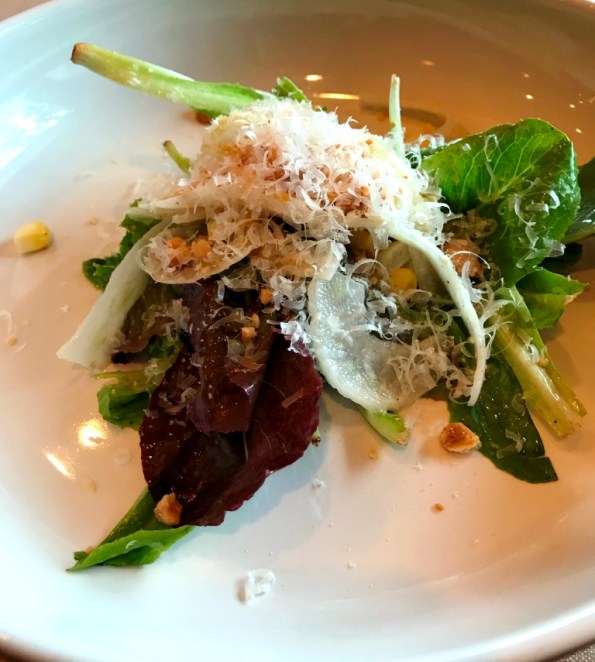
Culver Farms Baby Greens (grilled corn, fennel, Marcona almonds, lemon aioli, Pecorino)
Wine: 2017 Gateway Vinho Verde DOC, Portugal
Another delicious dish. Fresh, simple, light, very summer-y, fun to eat with all the different crunch elements. Vinho Verde was fresh, grassy and lemony, just as you would expect, and it obviously played perfectly with the salad. Another successful pairing.


Ricotta Gnocchi (forest mushrooms, hazelnuts, summer truffle cream)
Wine: 2016 Domaine Cornu-Camus Bourgogne Hautes-Côtes de Beaune, France
I love mushrooms, so this dish definitely delivered that – great variety of mushrooms, a perfect textural addition of hazelnuts, truffle cream was very flavorful. The gnocchi, which were supposed to be the star of the dish were too dense, I would definitely prefer for them to be lighter and fluffier. Still, not the dish you can really complain about. The wine was fresh and young, red crunchy berries, great minerality, very firm and structured, with excellent acidity – an excellent young Burgundy. However, the pairing didn’t work. I guess the idea was to pair on the contrast, but that didn’t work for me. But – I definitely enjoyed the wine on its own.


Nordic Halibut (Fava beans, Holland leeks, forest mushrooms, lemon butter sauce)
Wine: 2015 Talley Vineyards Estate Chardonnay Arroyo Grande Valley
Crispy fish? Check. Fava beans? One of my personal favorites; check. Mushrooms? Check. You got all my happy ingredients, and they worked very well together. Chardonnay was spot on – varietally correct, just a touch of butter, vanilla, apples, fresh, well balanced with good acidity. And a successful pairing for sure.


Prime Holstein New York Strip (fingerling potatoes, Fois Gras butter, braised greens, red wine demi)
Wine: 2013 Three Wine Company Suscol Creek Cabernet Sauvignon Block 5 Napa Valley
Steak and Cab – need I say more? The steak was perfectly cooked, great flavor, juicy, good sauce – nothing else I can say – if you like steak, you would like this dish. But then the wine… This was easily the best Cabernet Sauvignon I tasted in a long time (bold statement for me, I know). This was in-your-face, juicy, powerful, super-extracted, luscious wine only California can produce – imagine having a ripe bunch of cassis in your hand, and just taking a full bite right there – cassis, blackberries, mint, eucalyptus, everything is there – but perfectly balanced, with good acidity and unquestionably dry – wow. I would never guess this wine had 15.3% ABV – it was just perfectly integrated. Bottom line – superb wine and excellent pairing.
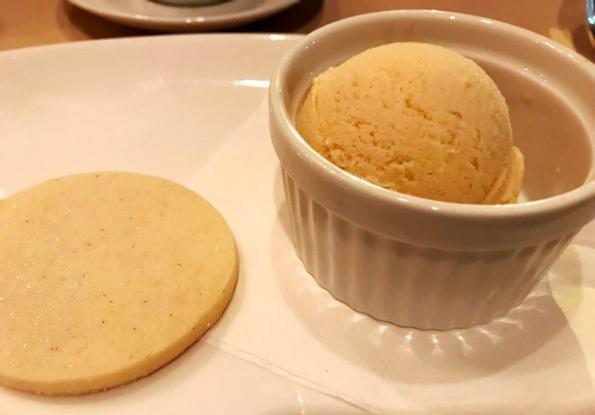
Plum Gelato with Sugar Cookie
The meal should have a sweet ending, right? Excellent gelato, light, fresh, good flavor. A perfect finishing touch.
Let’s summarize the experience – in a word, outstanding. The food was very good, and the wine program was excellent, most of the pairings worked, so I have to say that the Best of Award of Excellence has a good merit, and it definitely makes sense to me.
Have you dined at the restaurant with similar distinctions? How was your experience? Cheers!
Versatility of Paso
Source: Pasowine.com
When a typical wine consumer hears the words “California wine” what is the first thing which comes to his or her mind? I would bet that in 9 out of 10 cases, the first thought is: “Is this wine from Napa?”.
Yes, Napa Valley is the king, but the California wine landscape is a lot bigger. Today, I want to talk about a different California wine region – one of the oldest, and probably, the most versatile – the region originally known as El Paso de Robles, “The Pass of the Oaks”, which today is typically called Paso Robles, and sometimes passionately abbreviated just as “Paso!”.
At the beginning of the 1880s, Zinfandel plantings appeared in Paso Robles. For a while, Zinfandel was really “it”, adding some of the most famous vineyards, such as Dusi and Pesenti at the beginning of the 1920s. At the beginning of the 1960s, Cabernet Sauvignon, Chardonnay and Pinot Noir arrived to the region, followed by first plantings of Syrah in the whole state of California in 1970s. From there on, the region (Paso Robles AVA was established in 1983) moved forward to collect numerous accolades of Wine Region of the Year, Best Vineyard in the world and others. Today, Paso Robles has 11 sub-appellations, more than 40,000 acres of vineyards and more than 200 wineries, growing more than 40 grape varieties, from Bordeaux greats to Rhone and to Spanish varieties – and did we mention Zinfandel yet?
“Versatility” is really the key word when it comes to Paso. First, there is a great diversity of the terroirs, with 11 well-defined sub-appellations (you can see them on the map), stretching from just 6 miles away from the Pacific Ocean on the west to the mountains on the east – and let’s not forget that while only 40,000 acres are under vineyards, the whole Paso Robles appellation is more than 600,000 acres, which is about three times of size of Napa Valley AVA. Such a great diversity of microclimates is very conducive to the wide variety of grapes made into the world-class wines all around the AVA. Let’s see how many times you will nod when I will mention some of the Paso Robles greats: Saxum Vineyards, making some of the best in the world Syrah; how about Zinfandel from Turley and Carlisle, some of the best of the best in the world of Zin; Tablas Creek – one of the Rhône pioneers in the area; Justin Winery, with their delicious Bordeaux blends – Isosceles, anyone?; Dracaena Wines – Cabernet Franc fanatics; Field Recordings – truly a personal favorite, making everything from Chardonnay to Pinot Noir to Chenin Blanc to Cabernet Sauvignon and Cabernet Franc to Petite Sirah, Sangiovese and Valdiguié – and all deliciously well. So, how is this list to you?
 Let me take this conversation one step further and share with you some of my latest discoveries from Paso Robles:
2015 Halter Ranch Grenache Blanc Paso Robles Adelaida District (13.3% ABV, $28, 80% Grenache Blanc, 14% Picpoul Blanc, 4% Roussanne, 2% Viognier)
Light golden color
Medium intensity lemon nose, hint of jasmine flowers and lots of granite with a touch of gunflint lots of minerality – on the nose, it is minerality driven wine.
The palate is acidity-driven, fresh, crisp, bright, lemon, a touch of grass, and a distant hint of plumpness – the wine will show differently as it will warm up.
Drinkability: 8, delicious from the get-go, lots of energy
2014 J. Lohr Hillside Cabernet Sauvignon Paso Robles (14.8% ABV, $35, 90% Cabernet Sauvignon, 6% Petit Verdot, 4% Cabernet Franc, 18 months in 60% new French oak)
Dark garnet, almost black
Licorice, sage, dark chocolate, coffee, roasted meat, minerality on the nose
The palate is savory, bright acidity, blackberries, more licorice, coffee, medium plus body, lots of energy in every sip, dark and concentrated.
Drinkability: 8-/8, softer and rounder next day, showing up some cassis.
2014 Treana Red Paso Robles (15% ABV, $45, 75% Cabernet Sauvignon, 25% Syrah, 17 months in French oak, 70% new)
Dark garnet with a purple hue
Concentrated cherry pit and some funk initially, noticeable green bell pepper – or was it corked?
The bright palate, good amount of savory fruit with licorice, blueberries and cassis, noticeable sapidity, medium to full body, good acidity, nice balance
Drinkability: N/R. This was not a bad wine, but there was an annoying component in the taste profile, which gave a borderline corked impression and was adding sharpness to the wine – also it didn’t subside. I need to try this wine again to have an opinion.


2014 Aaron Petite Sirah Paso Robles (15.6% ABV, $48, 88% Petite Sirah, 12% Sirah, 22 months on lees in 50-60% new oak)
Black color. Just black with a touch of dark garnet hue on the rim.
Nose most reminiscent of a nice espresso, with a touch of vanilla. Swirling opens up some blackberries and massive, colored legs (I always thought the color in the legs is the trait of Syrah, but apparently, Petite Sirah has the same).
The palate is dense, concentrated, roasted meat with some coffee and blueberries, nice pronounced acidity, velvety texture. Massive wine, but surprisingly approachable.
Drinkability: 8, would be amazing with the steak.
2015 Peachy Canyon Westside Zinfandel Paso Robles (14.5% ABV, $22, 78% Zinfandel, 11% Petite Sirah, 7% Alicante, 2% Tannat, 2% Syrah, 16 months in 30% new oak barrels)
Dark garnet
Pleasant aromatics, medium plus intensity, Chinese five spice
A touch of tobacco, good acidity, expressive tannins. Needs time
3 days later – wow, dramatic difference. I simply put this wine aside with a cork, without pumping the air. Significantly improved aromatics, tobacco, blackberries, hint of caraway seed. The bright and round palate, cherries, great interplay of acidity. I never thought I would say this, but it seems a lot more of an Italian Primitivo style also with the back end minerality. Happy wine for sure – I can finish the bottle by myself. Drinkability: 8 (day 3)
2015 Eberle Steinbeck Vineyard Syrah Paso Robles (14.8% ABV, $28, 100% Syrah, 18 months in 50/50 American/French oak)
Dark garnet
Closed nose from the get-go, the palate shows some dark fruit, a touch of vanilla, but not much more. Second day (just re-closed without pumping the air out) – what a difference! Dark fruit on the nose, supple berries on the palate, a touch of pepper, round, medium to full body, good acidity, overall delicious.
Drinkability: 8 (second day)
What do you think – did I prove my point about the versatility of Paso Robles? What are your favorite Paso producers and wines? Cheers!
Drink Local: Texas, Georgia, Walmart
Whenever I travel, whether for work or leisure, I always love to try local wines – adding an occasional winery visit is a cherry on top, for sure.
Drinking local had been a habit for a long time (here are some posts if you are interested in my past discoveries), and I have to say that more often than not, the curiosity is rewarded handsomely, with tasty, unique and different wine discoveries.
At the end of June, I was in Texas, and of course, I wanted to taste the local wines. I didn’t have time to visit a supermarket, so to my delight, I found a full line of Texas wines at the happy hour at the Residence Inn hotel where I was staying. All the wines where from the winery called Messina Hof, which, according to the website, is a very prolific producer, offering 70 different wines – well, everything is bigger in Texas, right? Here is what I had an opportunity to try:


2017 Messina Hof GSM Texas (14%ABV, 52% Syrah, 35% Mourvedre, 13% Grenache) – earthy aromas, cherries, good acidity, tart blackberries, good structure, excellent overall. 8-
2016 Messina Hof Reflections of Love Private Reserve Texas (13.5% ABV, Merlot based blend?)
Touch of eucalyptus and dark fruit on the nose
Perfectly clean, varietals correct Bordeaux with cassis, well integrated tannins, crisp structure, excellent overall. 8
2016 Messina Hof Pinot Noir Private Reserve Texas (13.5% ABV) cherries on the nose, good cherries and and plums on the palate, well integrated, well balanced, medium plus weight, round, smooth. Not necessarily a traditional Pinot Noir rendition, but well enjoyable. 7+.


The only supermarket I managed to find the time to visit while in Texas was the one at Walmart. There was no Texas wine there (sad, but rather expected), but I couldn’t leave empty-handed, couldn’t I? I settled on two wines, both of which I picked solely on the basis of a cool label (yes, sorry, you can make as much fun of me as you want – I did like that critter label with the duck) and the price. I have to tell you that I actually got lucky, and ended up with two very decent wines:
NV Lucky Duck Shiraz South Eastern Australia (13% ABV, $3.99) – yes, simple, but very clean and nicely balanced. Good but not overbearing amount of red and black fruit, good acidity, warm spices. Medium body. Pleasant and easy to drink, outstanding QPR. 7+
2016 Prophecy Sauvignon Blanc Marlboro (12.5% ABV, $8.99) – unquestionably a New Zealand Sauvignon Blanc, while surprisingly restrained. Fresh, Crisp, cassis undertones, touch of tropical fruit and fresh cut grass, Meyer lemon notes, clean acidity. Excellent QPR. 8-
At the end of July, I had an opportunity to spend a weekend in Atlanta. I didn’t have much time, but still managed to squeeze in a quick visit to the local Total Wines, which, to my delight, carried the selection of the local wines:
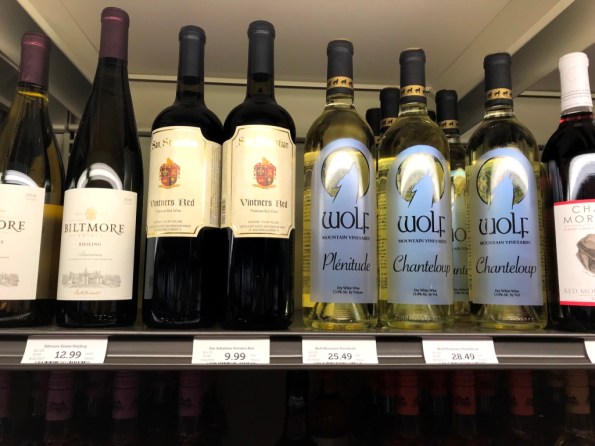

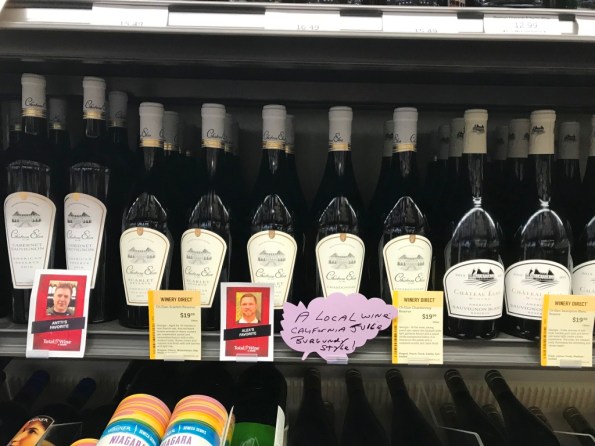
Many of the wines were either fruit wines or pointedly sweet wines, however, I managed to find the Château Élan wines, which promised to be dry, and were priced in the category I consider “reasonable” (at $19.99). Here are the notes for the wines I got:


2015 Château Élan American Sauvignon Blanc Reserve Georgia (13% ABV, $19.99)
Light golden
Touch of gunflint on the nose, herbal profile
Very unique and different on the palate compare to most of the Sauvignon Blanc wines. Green apple, tart lemon acidity, clean, fresh.
8-, more reminiscent of Chardonnay than Sauvignon Blanc – well drinkable and delicious overall.
2016 Château Élan American Cabernet Sauvignon Reserve Georgia (14.5% ABV, $19.99)
Dark garnet, almost black
Classic Cabernet all around – nose is open and inviting, with a touch of casis and mint
same on the palate – dark fruit, cassis, fresh cherries, medium+ body, soft tannins, good acidity and overall good balance.
8-, very quaffable
I wish I had an extra few hours to visit the winery, which I understand is located about an hour away from Atlanta, but this will have to wait until the next visit. In any case, I get to update my “wines of 50 United States” page with one more check-mark :).
That’s all I have for you, my friends. Any local discoveries you want to share? Cheers!
Seeking Pleasure in Bordeaux

Source: Cotes de Bordeaux website
Let me take a safe guess: if you consider yourself a wine lover (oenophile, wine aficionado – you can choose your own designation), the word “Bordeaux” is sacred for you. Even if you hadn’t had a glass of Bordeaux in five years, I would safely bet that there was a period in your oenophile’s life when Bordeaux was “it”, the wine to admire and worship, and you would never pass a glass of a good Bordeaux if an opportunity will present itself – and if you ever had that “glass of a good Bordeaux”, you will happily attest to that.
Of course, the clout of Bordeaux is often linked to the so-called First Growth chateaux, 5 of the most famous producers in Bordeaux and in the world, and a few others having a similar level of influence, such as Chateau Petrus. However, for the most of oenophiles, First Growth and other wines of the same caliber are mostly a dream – you can never find them, and even if you will find them, you can’t afford them. However, Bordeaux, being one of the largest wine regions in France, both in terms of the size of vineyards and a volume of wine production, is so much more than just the First Growth – there are lots and lots of Bordeaux wines worth seeking.
Case in point – Côtes de Bordeaux appellation – approximately 1/10th of the Bordeaux appellation, both in size of vineyards and wine production. In exact terms, Côtes de Bordeaux consists of 6 sub-appellations (Côtes de Bordeaux, Blaye Côtes de Bordeaux, Cadillac Côtes de Bordeaux, Castillon Côtes de Bordeaux, Francs Côtes de Bordeaux and Sainte-Foy Côtes de Bordeaux). However, based on the old adage of “rising tide floats all boats”, the Union des Côtes de Bordeaux was created in 2007 and it united all sub-appellations under the single AOC Côtes de Bordeaux, which was launched in 2009. The individual sub-appellations are still indicated on the label under their names (Blaye, Cadillac and so on) to signify differences in the terroir, but we all know the power of the brand marketing…
Leaving all the technical details aside, the beauty of the Côtes de Bordeaux is in its artisanal wine producers, many of whom are certified organic and biodynamic, and more and more producers embracing sustainable methods – which all translates into the quality of the wines. Also, considering that most of the producers don’t have big brands to support, the wines also deliver great QPR.
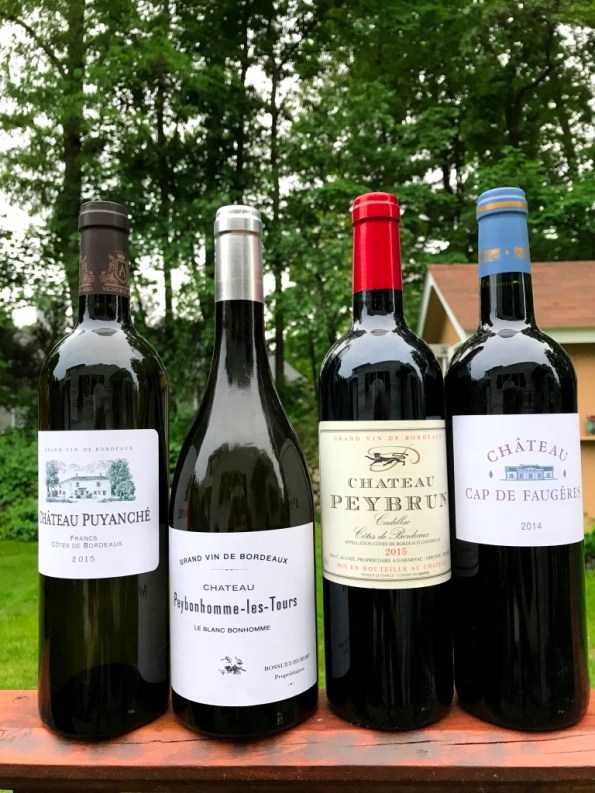
Let’s move from the theory to practice – yes, you got me right – let’s taste some wines. I had an opportunity to taste 2 white and 2 red wines from the region and was literally blown away by these beautiful wines and the value they delivered. As usual, I also played a bit with the wines to see how they will evolve – you will see it below in the notes.


2015 Château Puyanché Blanc Sec Francs Côtes de Bordeaux AOC (14% ABV, $14, 55% Sauvignon Blanc, 45% Semillon, 7 months in 30% new oak)
Light golden color
Ripe white stone fruit, vanilla, touch of butter.
Ripe white fruit, minerality, round, mellow, touch of butter, beautiful
8+, lots of pleasure
2016 Château Peybonhomme-les-Tours Blaye Côtes de Bordeaux (13%, $20, 50% Sauvignon, 50% Sémillon, Vin Demeter)
Light golden color
White stone fruit, apricot, tropical fruit notes
Beautiful ripe white fruit, vanilla, apples, butter, clean acidity, can be easily mistaken for Chardonnay
8+/9-, superb, just wow. Lots of pleasure.


2014 Château Cap de Faugères Castillo Côtes de Bordeaux AOC (14% ABV, $17, 85% Merlot, 10% Cabernet Franc, 5% Cabernet Sauvignon)
Dark Garnet, almost black
Mint, eucalyptus, green bell pepper, touch of underripe berries
Underripe blackberries, tart, crisp, firm, mouthwatering acidity. Finish extends mostly into mouthwatering acidity with a touch of tannins and slight alcohol burn.
7, needs time. Might work well with food, but on the first day, not tremendously enjoyable on its own.
Day 2: 8-, cassis, ripe fruit, good power good balance
Day 3: 8-/8, soft, layered, full body, great aromatics on the nose, voluptuous and generous. Great transition.
2015 Château Peybrun Cadillac Côtes de Bordeaux AOC (13% ABV, $18, 80% Merlot, 17% Cabernet Sauvignon, 3% Cabernet Sauvignon, aged in thermo-regulated tanks)
Dark garnet
Green bell pepper, baking spices, intense, distant hint of barnyard, touch of nutmeg
Pepper, tart cherries, noticeable acidity, medium-light body, well noticeable tannins on the medium-long finish.
7, needs time.
Day 2: 8-, dark fruit, soft, round
Day 3: 8-, great aromatics, touch of roasted meat, licorice, sweet cherries. Eucalyptus and cherries on the palate, touch of iodine, soft, well integrated, good balance.
As you can tell, the reds were excellent, and the whites were stunning (which is great considering that only 3% of the total wine production in the region are whites – 97% are red). If you will take into account the prices, these wines represent simply some solid and unbeatable deals (yep, a case buy, if you will).
Côtes de Bordeaux common message is Bordeaux, Heart & Soul – after tasting these wines, I have to agree. If you are seeking pleasure in Bordeaux wines, maybe you don’t need to look any further. Cheers!
Restaurant Files: Flinders Lane – Visiting Australia in Stamford
 For those of us who like to travel, why do we like it so much? More often than not, the travel itself is not fun – the stress of the airport, cramped planes with the seats getting narrower by the minute, airline food – it leaves lots to be desired. But once we arrive, it is the experience that makes all those travel troubles worth it – the culture, the people, food, wine – this is what we are looking for.
Visiting Australia is squarely on my “bucket list” – I’m sure one day I will be able to experience the culture. I had been drinking Australian wines for a long time – this doesn’t replace visiting the winery, but it is as close as it can get. When it comes to food, the only place in the USA which can be associated with Australia is a chain of Outback Steakhouse restaurants – they constantly run the ads on the TV, with supposedly an Australian-accented narration – this is as much of the Australian experience as you can get there (the voice in the ad might be the most authentic part of experience).
And then Flinders Lane Australian restaurant opened in Stamford. Of course, when I was invited to visit, I was excited – not as much as if it would be an actual country, but still. I would guess the name of the restaurant takes its roots from one of the oldest streets in Melbourne, Flinders Lane, which now hosts a variety of little shops and the restaurants.


What authentic Australian food should you expect to find at the Flinders Lane? I actually know very little about authentic Australian food, so let’s see: Kangaroo? Check. Vegemite (have you heard of it? I will explain later)? Check. That’s about all I know, so let’s just talk about our experience.


You have to start the evening with a cocktail, right? Well, even if you disagree, it is still right – and this is what we did. Fresh Grapefruit Mule (Absolut Elyx Vodka, Cucumber, Grapefruit, Lime, Bundaberg Ginger Beer) was very refreshing. Floral Cucumber Margarita (Blanco Tequila, Elderflower, Cucumber, Thai Chili Tincture, Lime, Agave) was different but equally refreshing. Limoncello Collins (Villa Massa Limoncello, Vodka, Lemon, Club Soda) – just look at that presentation, isn’t it too pretty to drink? Nicely lemony and very tasty overall.
If we are talking cocktails, we have to talk about the wines. The wine list is not very large, but diverse and versatile, with reasonable prices and a good selection of wines by the glass. I also was happy to see the Australian wines on the list (which is not common for the most of the restaurants, but hey – if not at Flinders Lane, the Australian restaurant, where else?). I had prior experience with Hewitson Baby Bush Mourvèdre, and this 2014 was outstanding – soft, round, supple, perfectly balanced – it was an excellent accompaniment to our dinner.
The dinner was divided into the courses, so here is what transpired:


Course 1
We started with Arancini (black garlic mayo, pecorino cheese), which were outstanding, very good texture and flavor. Pork Sausage Rolls (sambal mayo) was more of a traditional Australian style (at least this was my understanding), and a very tasty bite. And Heirloom Tomato, Burrata, Truffle Soy dressing was perfectly presented just for the single bite – and there are very, very few things which are more delicious than a combination of fresh burrata and heirloom tomato. Yum!


Course 2
Next, we had Tuna Tartare (soy mirin dressing, cucumber, plantain chip) – I’m extremely particular about my tuna tartare, and I have to honestly say that this was not bad, but not my favorite. Something was not matching in the flavor profile – for my palate, of course. Pork and Veal Meatballs (ricotta salata, grilled baguette) were delicious, crispy on the outside, but airy enough inside.

Course 3
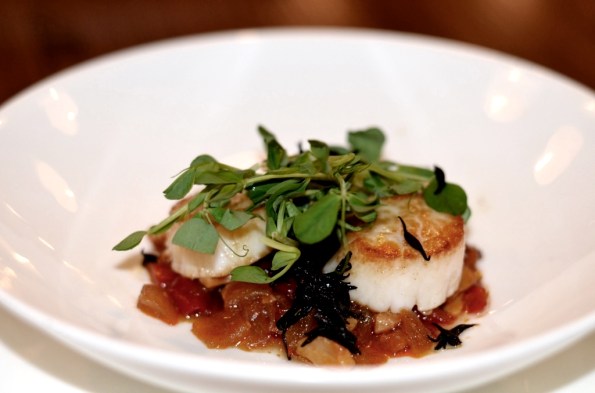
Truth be told, scallops are probably my most favorite choice of protein. If there is a scallop dish on the menu, there is a very, very good chance that that would be the dish I would pick. Diver Scallops (cashew chili relish, hijiki) didn’t disappoint – perfectly cooked, perfectly spicy – very tasty. And then the Kangaroo salad (chili lime dressing, cilantro, crispy garlic) – my first taste of the kangaroo, lean and gamey taste profile, rather as expected, overall quite tasty.


Course 4
Branzino is another one of my favorites, and this Pan-seared Branzino (sesame ginger broth, bok choy) was excellent – delicious, great flavor combination, might be the tastiest dish of the whole dinner. Of course, you have to have the Australian lamb if you are visiting the Australian restaurant – Braised Lamb Gnocchi (tomato, pecorino) had a nice flavor, but very lamb-y in your face, which is generally not my thing, but overall this was not a bad dish.
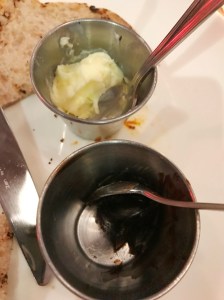
Okay, now let’s talk Vegemite. First, the disclaimer – Vegemite was not a part of our dinner – this was something I knew as quite famous in Australia (not always in a good sense) and was very much interested in experiencing, so I asked Chef Brad Stewart if we will be able to try it, and he gladly obliged. If you are wondering what the heck is Vegemite, you can read about it here. It is a paste made from yeast, and it has an extremely (my opinion) pungent flavor. It plays somewhat of a role of peanut butter in the Australian school lunches, typically used a spread on a piece of bread or a toast. I made a mistake of not trying it with butter as it was offered to us, and I can tell you – it is not my thing. But – I tried it, that what matters! 🙂


Course 5 – Chef’s selection desserts
Do you think Australians eat dessert? Of course they do – and here what had an opportunity to try
We had Lamington (traditional Australian dessert), Sticky Date Pudding (another traditional Australian dessert and Chef Brad’s grandma’s recipe), Carrot Cake (Chef Brad mom’s recipe) and Pavlova – don’t ask me for individual notes, please – they were all one better than the other, absolutely delightful, and a great finish to our dinner.
Here you are, my friends, I hope I didn’t make you too hungry – while you are contemplating your trip to Australia, you can come to Flinders Lane here in Stamford to get a little taste of it now. No boarding pass required. Cheers!
Last Bottle Sign Up ($10 credit)




 Talk-A-Vino