Archive
New England’s Fall Colors, 2021 Edition
And here we are again in my favorite season – fall. It is still warm enough to enjoy the outdoors lightly clothed; running the air conditioning is no longer a necessity to survive indoors. And the colors, the abundance of colors – every season has its beauty, but fall offers the most profound expression of it.

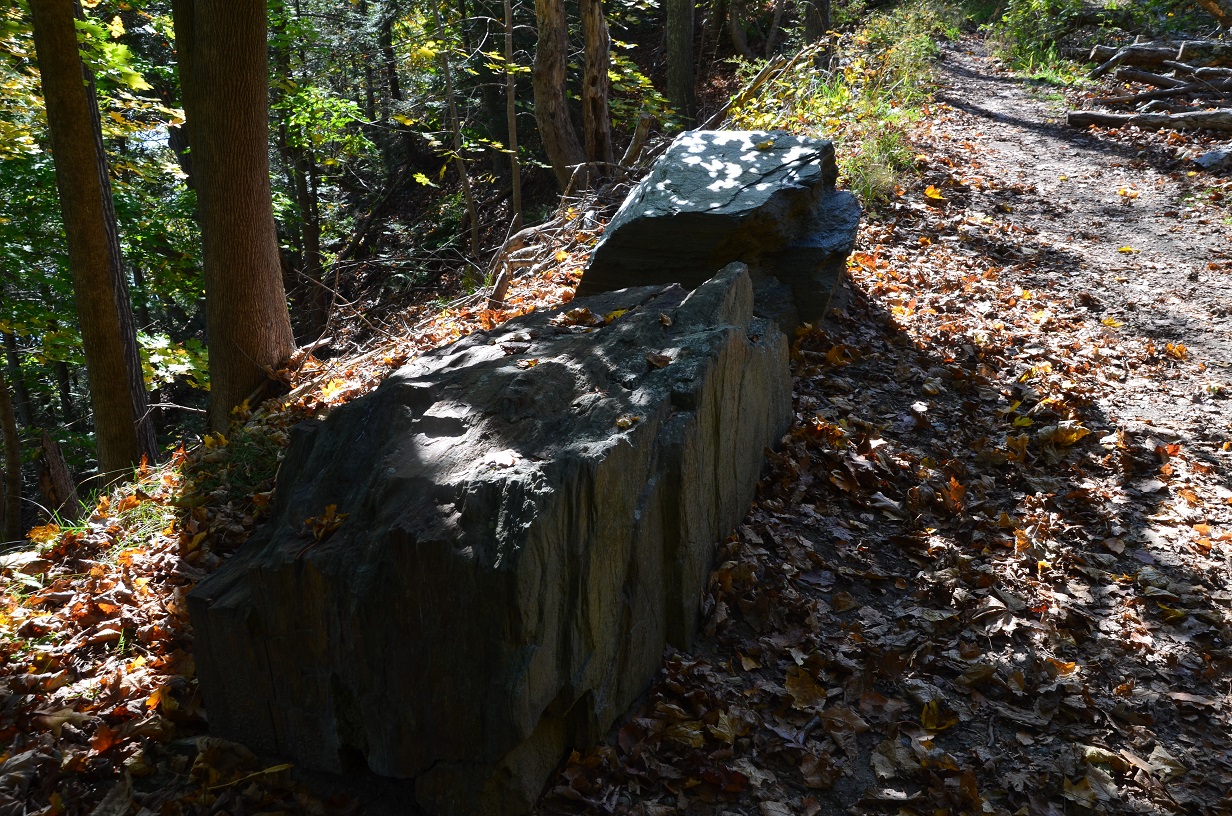
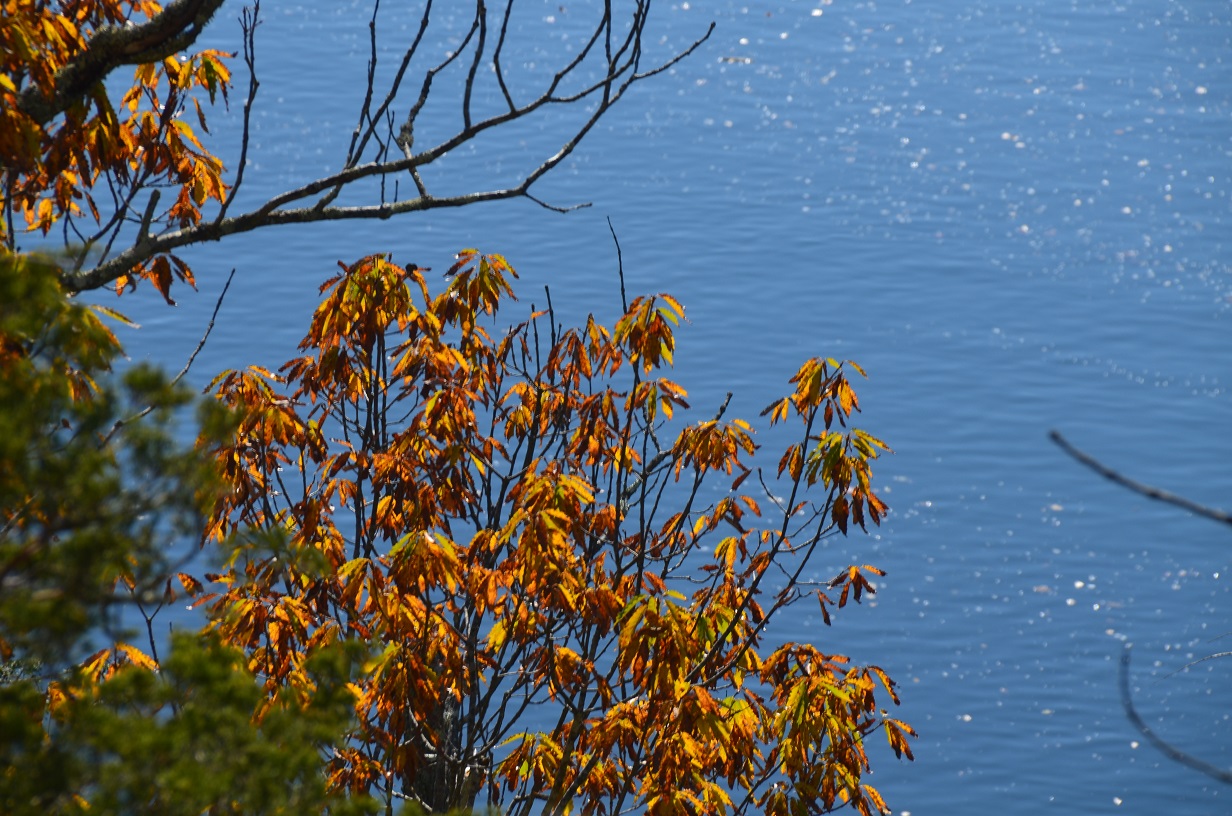
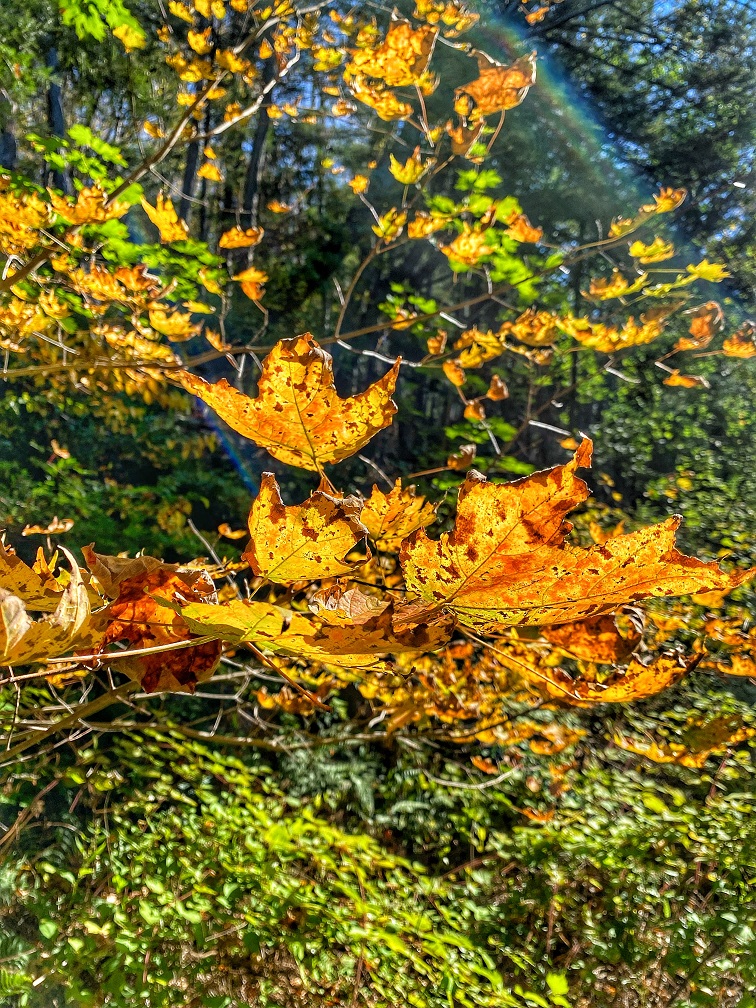
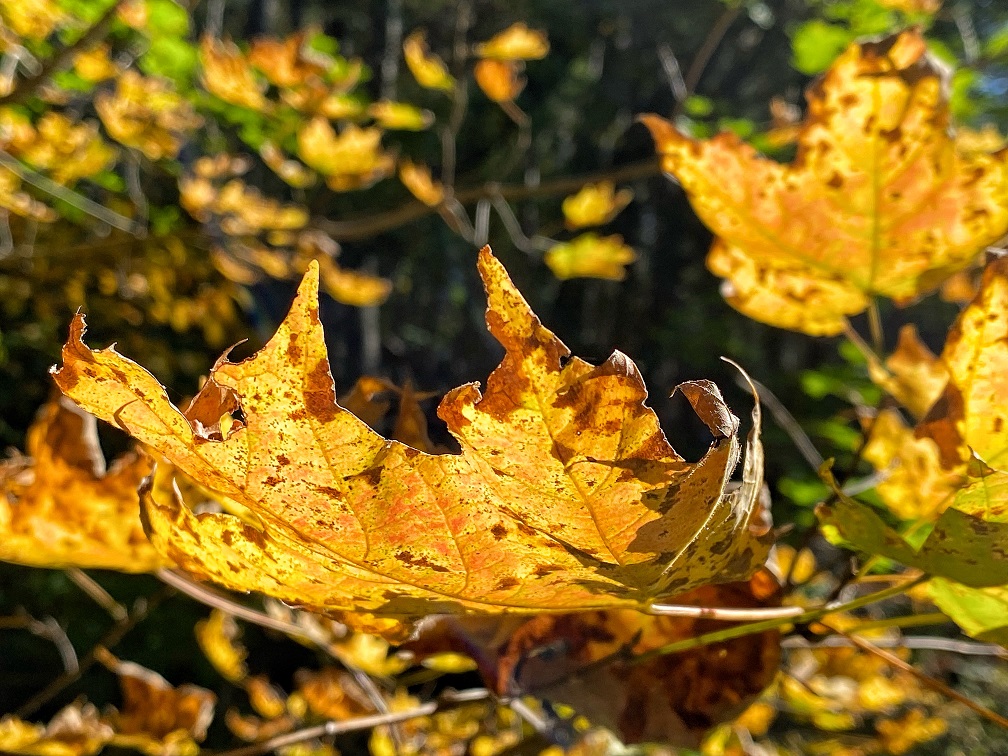
This 2021 fall season is interesting (it is not over yet). It is still continuously warm, and so the leaves are still mostly green – it is occasional branches and individual leaves which all of a sudden offer a full brilliant display of red, golden, and orange. In this traditional New England fall post, I usually share pictures from my neighborhood walks, a tiny circle of two streets next to the house. Yesterday we wanted to get out of the house, and so we took about an hour drive to New Milford up north in Connecticut to visit Lover’s Leap State Park. We spent there about an hour, slowly walking the narrow path covered with fallen leaves, and admiring, or rather indulging, on absolute silence, crisp fall air, and views of the Housatonic River.
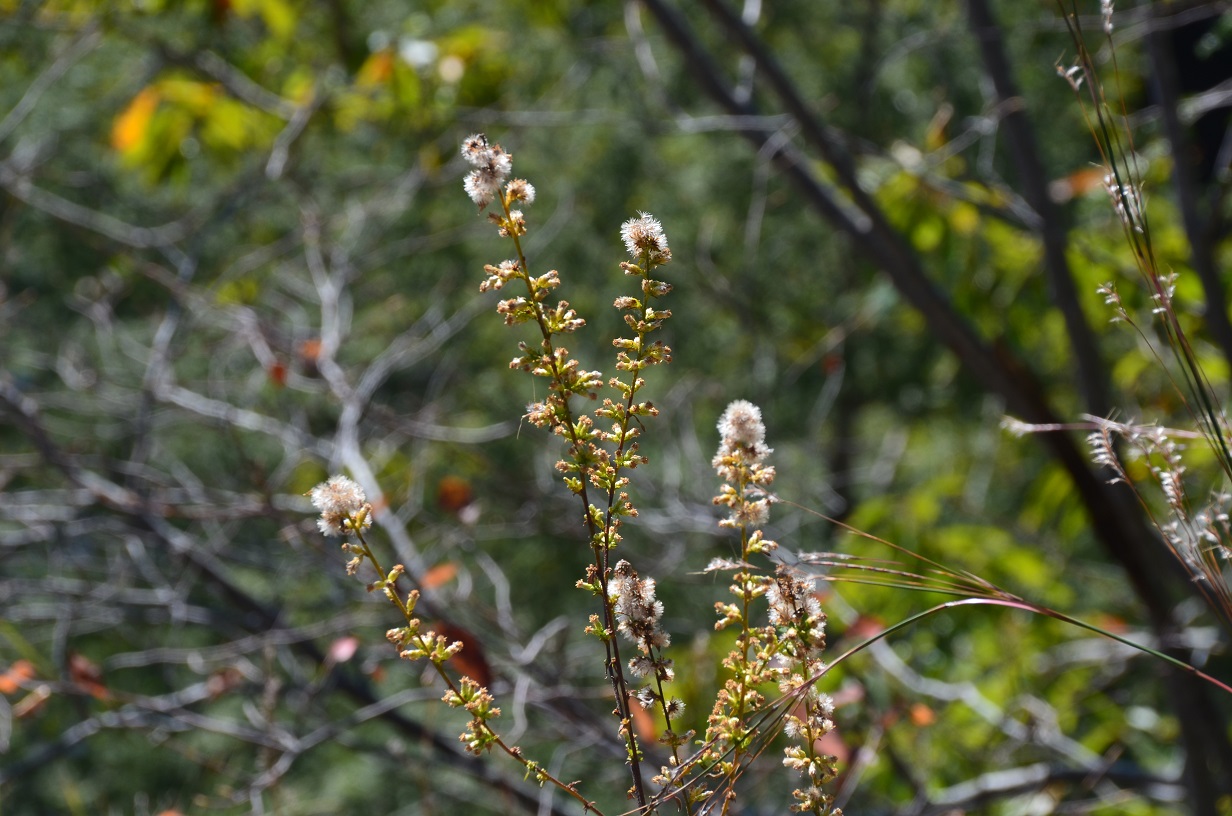
Absolute silence is a rare treasure – somehow, in the middle of the park you are far enough from the road, and maybe we just got lucky, but it was really an amazing feeling – not being disturbed by anything. It is hard to convey the silence and the smell of the autumn leaves through the words – so I have pictures for you – many, many pictures. Yes, pictures also don’t do justice to the perfect fall day outdoors but let me at least try…
Without further ado, here they are for your viewing enjoyment:
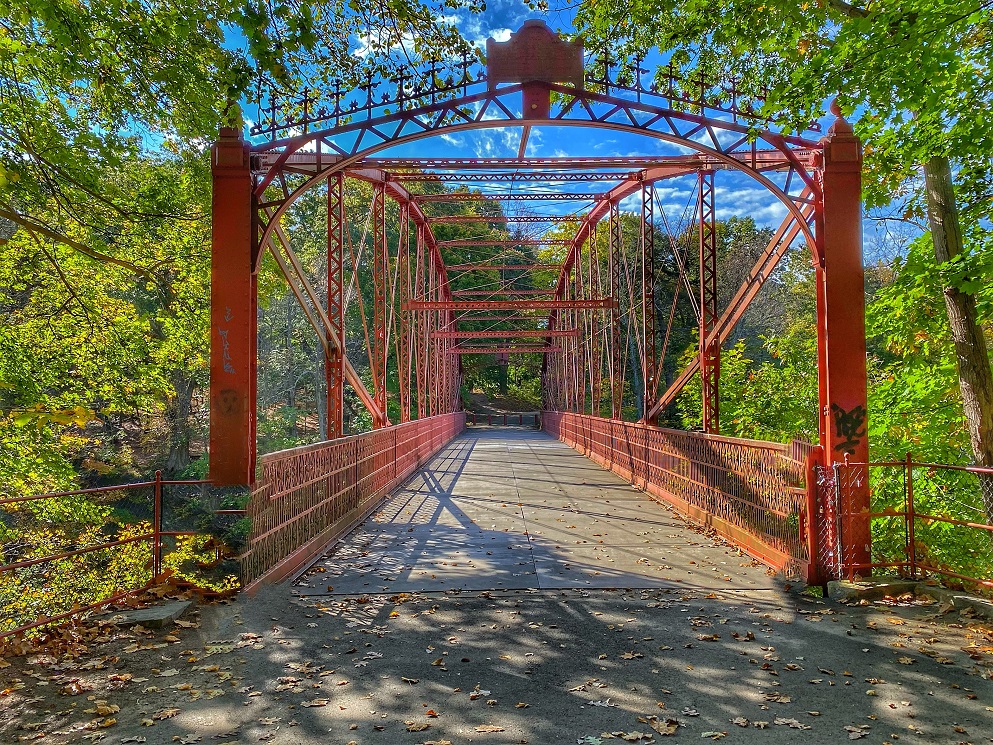

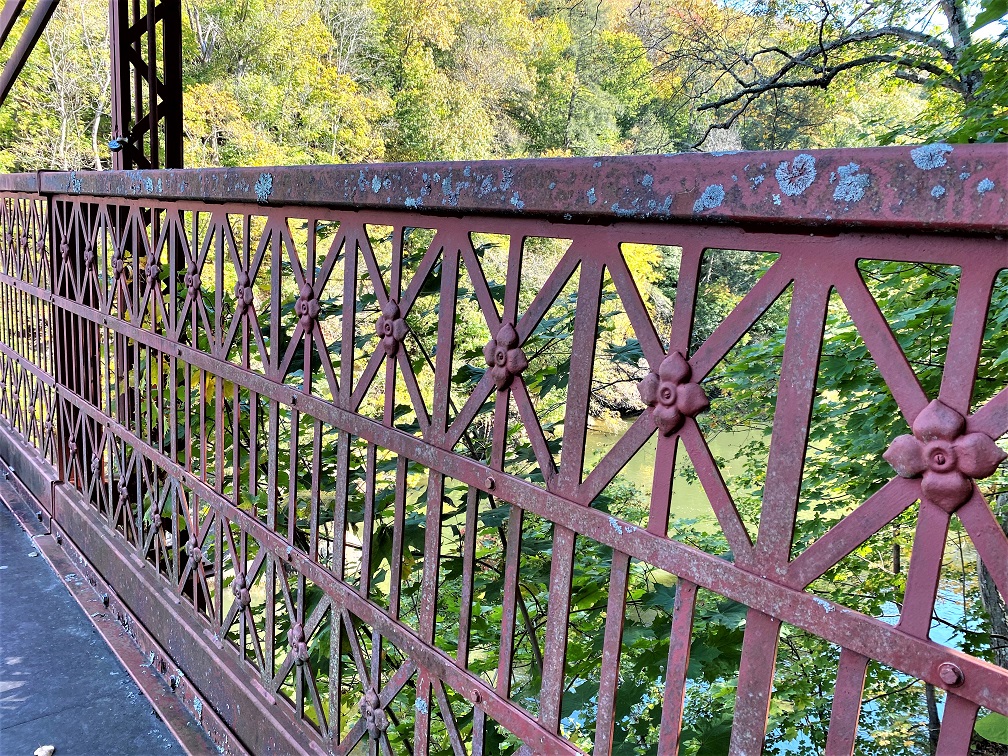

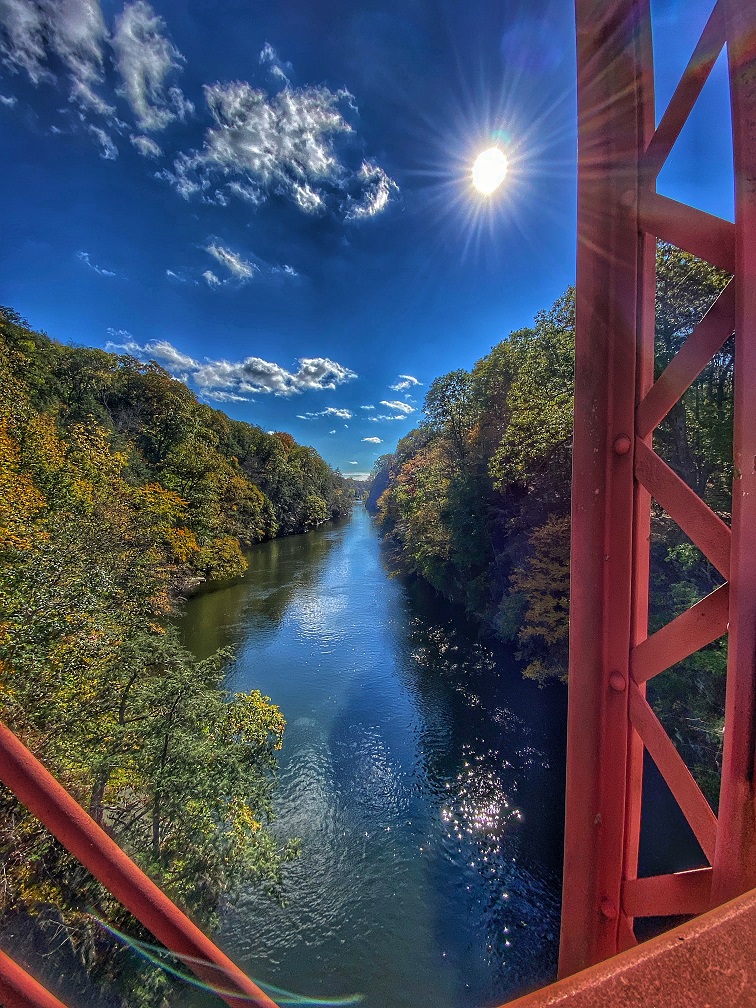
Here are more of the river views:


 The trail:

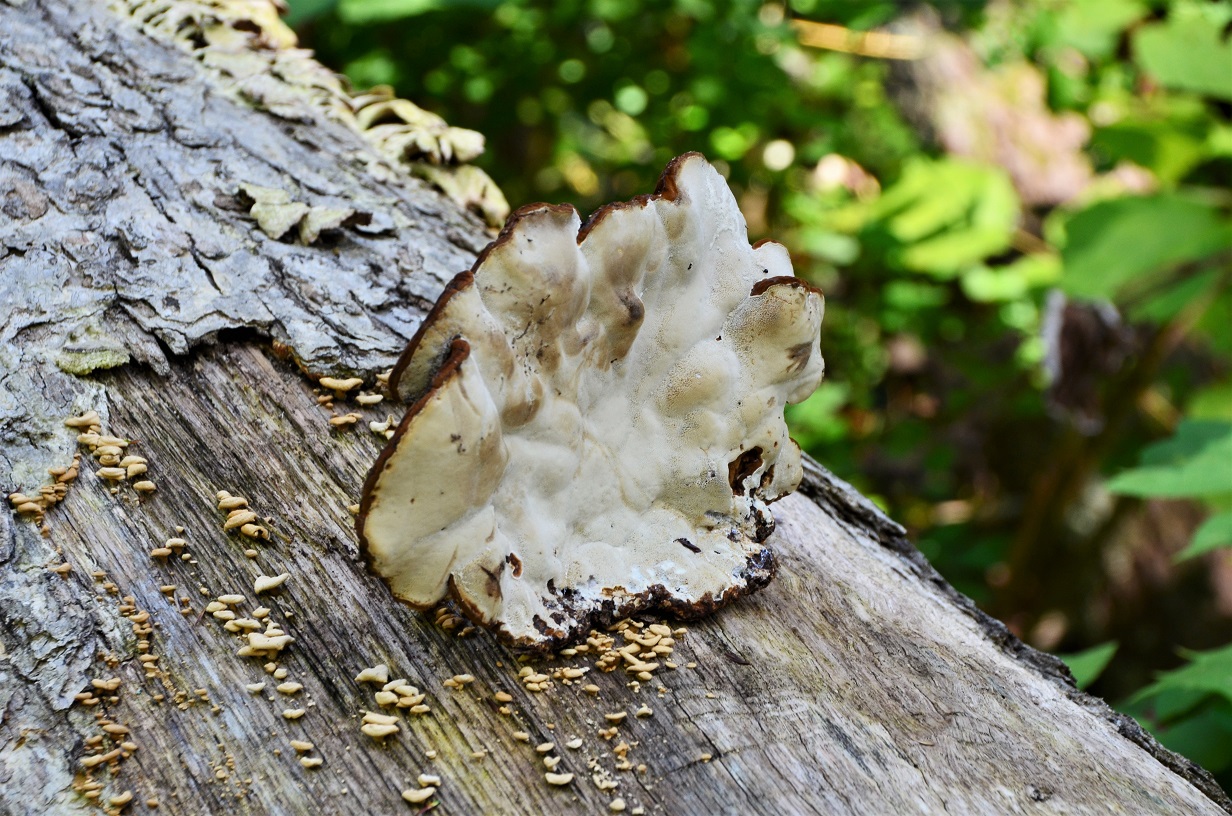
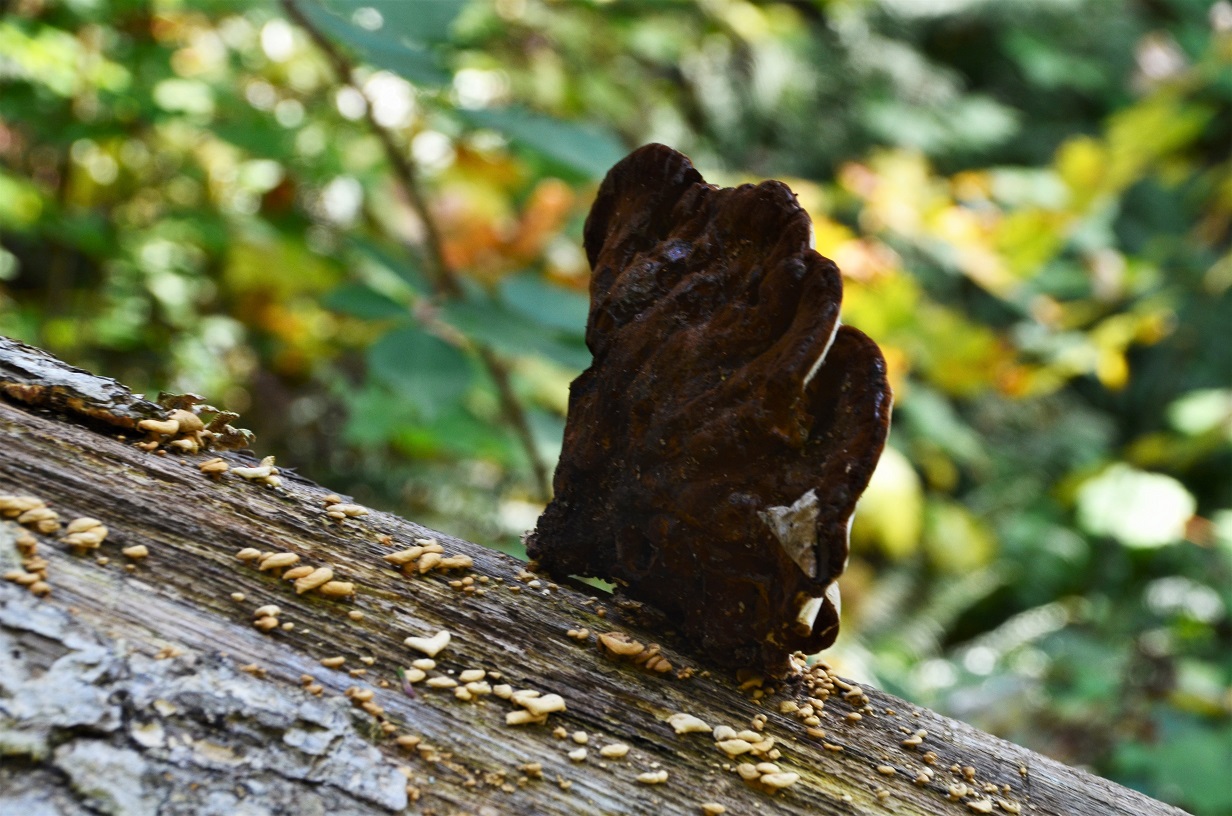
Few of the random tree mushrooms:

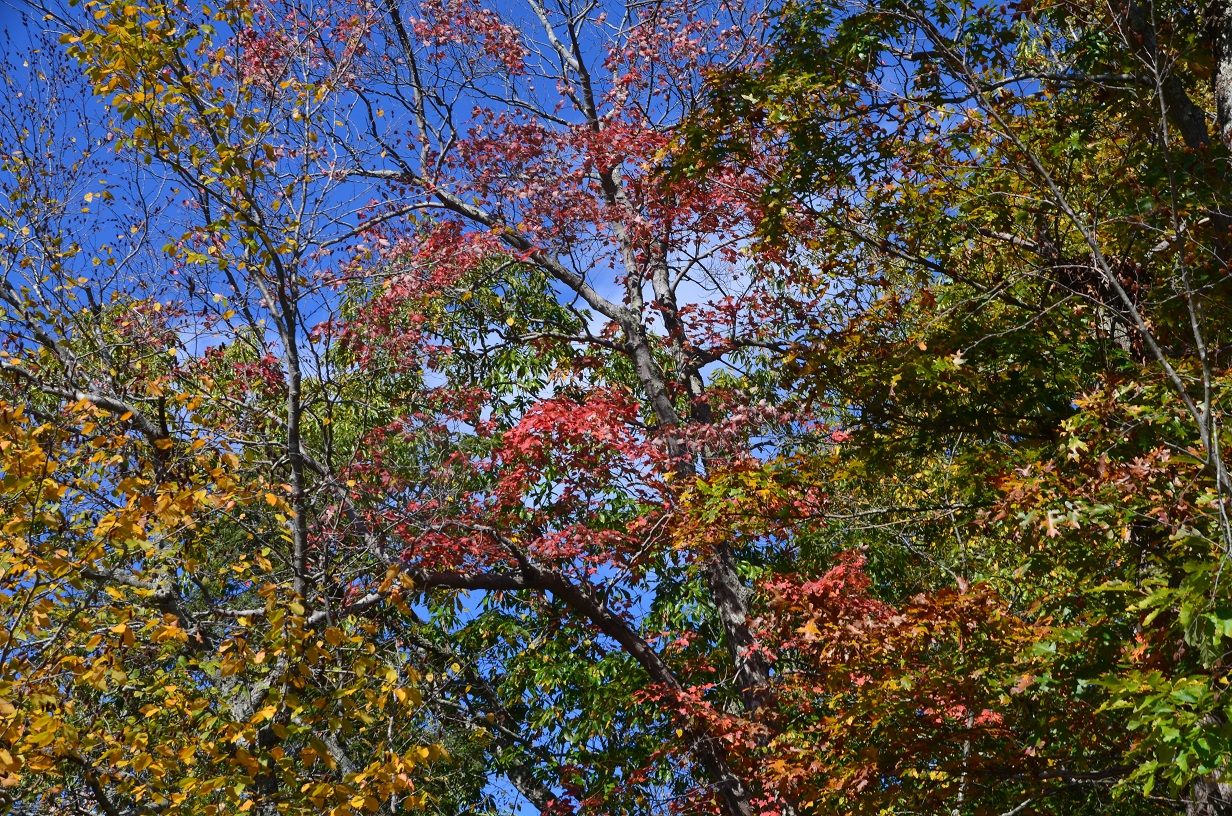
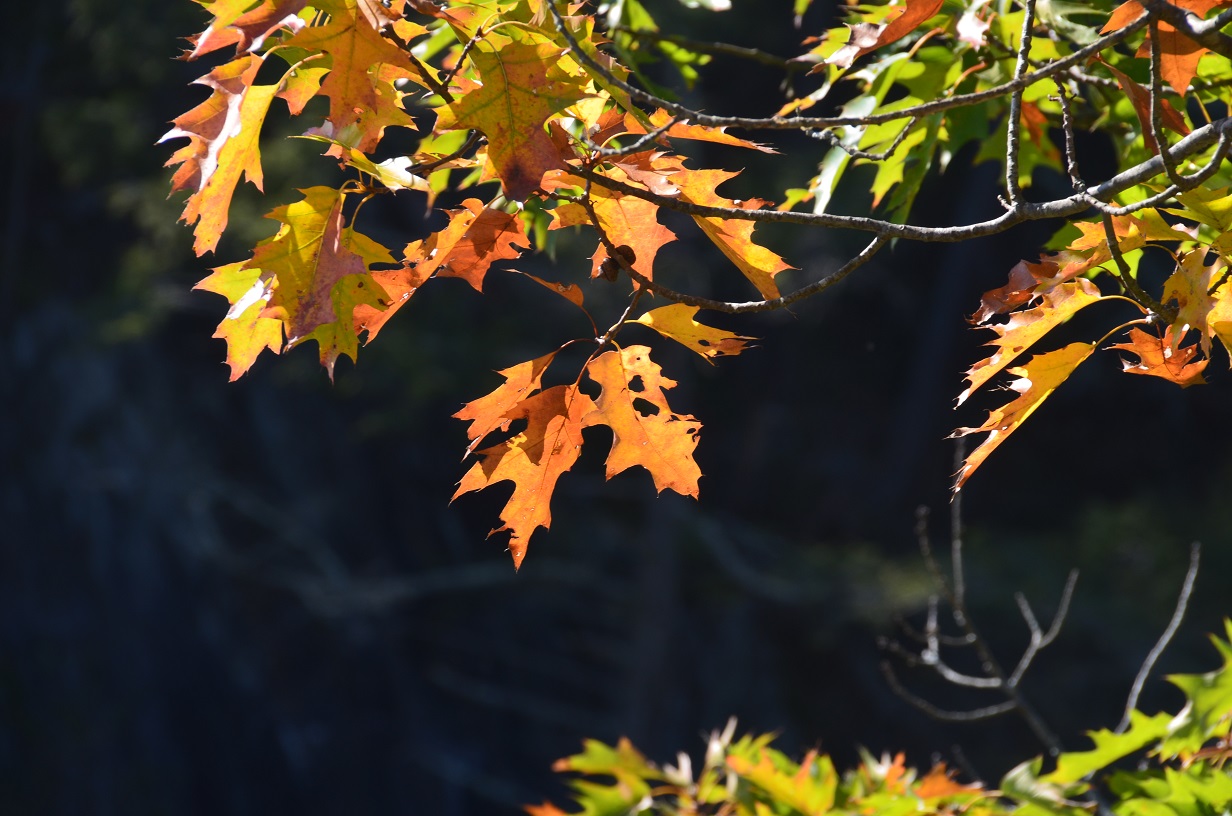
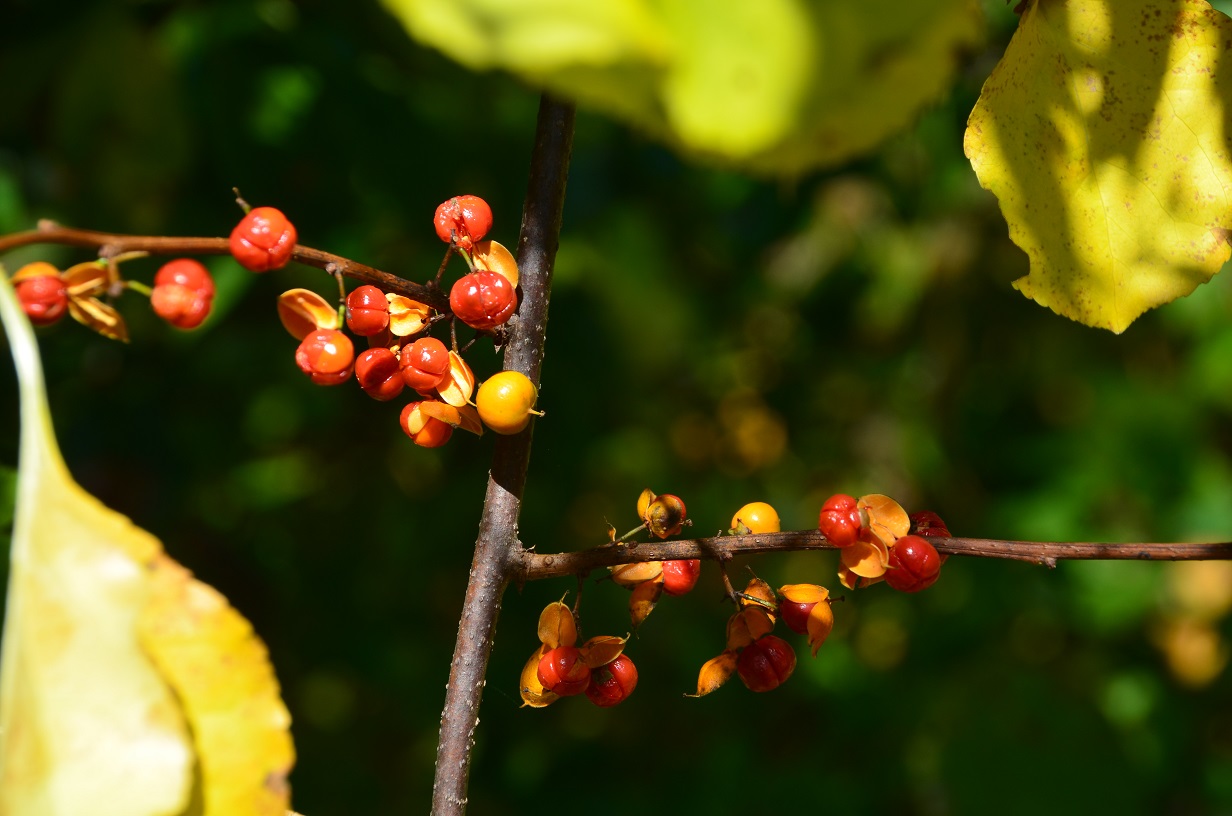
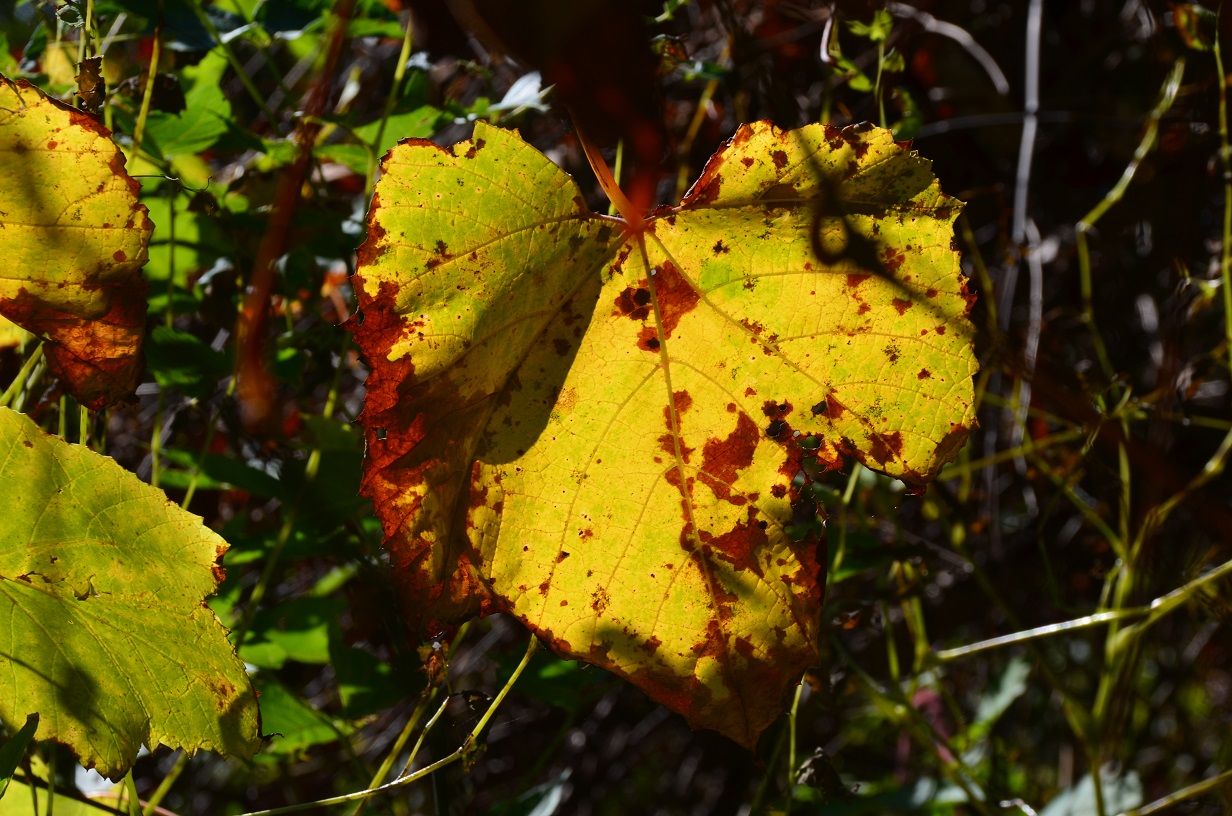
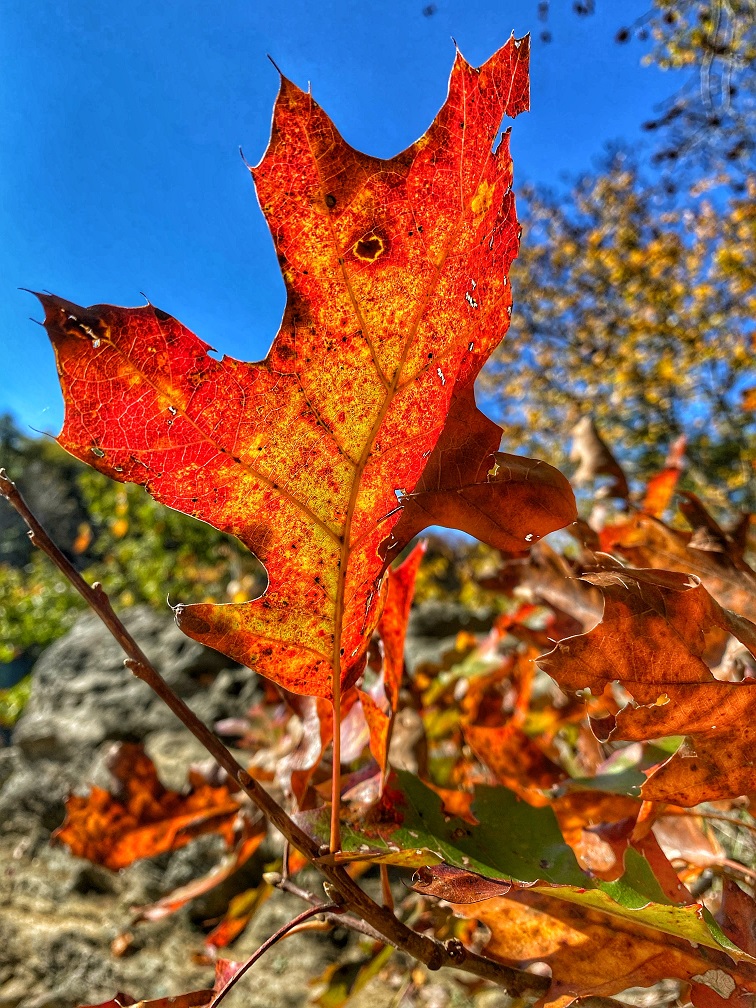
And now, the color display:


The Next World Class Wine Frontier: Desert Wine
Can you think of a desert? Even if you never visited one, and only saw them in the movies or read about them in the books, I’m sure the image readily jumps to the head. Sand. Heat. Hot air. Wind. More sand. More heat. More wind. Maybe a half-dried cactus. I’m sure that the luscious greens of a healthy vineyard are not part of that image.
Meanwhile, every desert has an oasis. If there is water, nothing stops beautiful greens from prospering in the desert. Desert doesn’t mean only heat. It is hot during the day, but cold during the night – and the diurnal shift – the difference between the hottest and coldest temperatures during the day – is beneficial for all the plants. If you are into the wine, I’m sure you heard of the importance of the diurnal shift to help build flavor in the grapes. And if we are talking about grapes, let me mention yet another benefit of the dry, arid air – it helps to avoid many diseases in the vineyard, such as mildew.
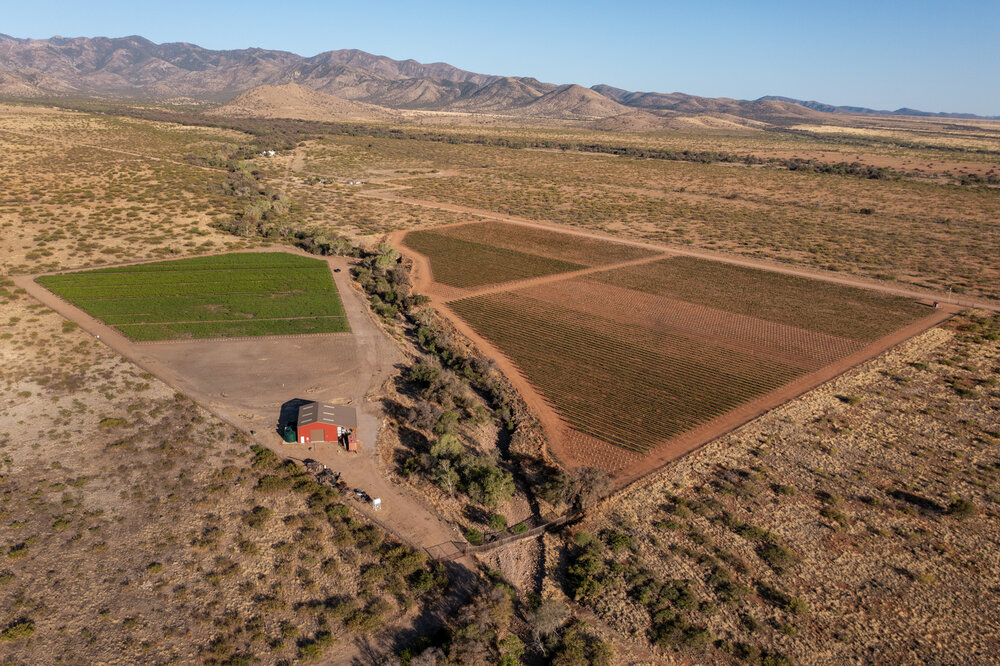
Let me ask you another question. Have you tried desert wines? The wines produced in the vineyards surrounded by desert? Before you will be quick to say “no”, I will ask you to think again. If you had wines from Argentina or Chile, there is a very good chance those wines came from the desert vineyards – Leyda Valley and the Atacama in Chile are nothing but desert; Uco Valley, Salta and overall large portions of Mendoza in Argentina are nothing but the desert. So yes, I believe you have. And today I want to bring to your attention yet another example of desert wines, these ones coming from the US – Aridus Wine Company in Arizona.
Source: Aridus Wine Company
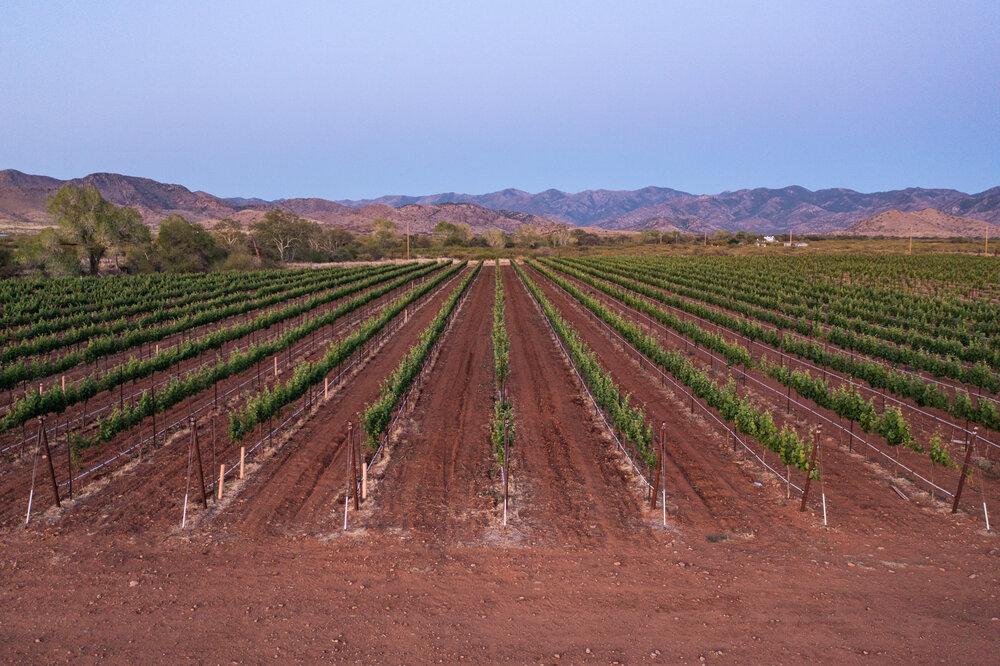
Source: Aridus Wine Company
Aridus (Latin for dry or arid) started from purchasing 40 acres of land on Turkey Creek in the southeast corner of the Arizona state in the foothills of Chiricahua Mountain, at an elevation of 5,200 feet.
In 2012, Aridus opened its cellar doors, after refurbishing an old 28,000 sq. ft. apple warehouse (it was done so well that in 2014 Aridus was honored with the Design Excellence award for sustainability). The Aridus wines were made with the grapes brought from the vineyards in Arizona, New Mexico, and California; the cellar also served as a custom crush facility. Interestingly enough, this is not my first encounter with Aridus – back in 2014, while attending my first wine bloggers conference in Santa Barbara, I had 2013 Aridus Viognier presented during the speed tasting session, which was my first time tasting a wine from Arizona – and it was a very impressive wine.
Aridus started planting white grapes at its estate vineyard in 2015, with the first estate harvest taking place in 2017. The red grapes were planted from 2017 through 2020, and Aridus is planning to gradually increase the proportion of the wines made exclusively from the estate fruit every year. The plantings currently include Malvasia Bianca, Sauvignon Blanc, Viognier, Tempranillo, Petite Verdot, Merlot, Syrah, Cabernet Franc, Cabernet Sauvignon, Graciano, Petite Sirah, and Malbec, so nobody needs to worry about the range of Aridus estate wines.
Lisa Strid, who just celebrated her 5th year as the Aridus winemaker, definitely appreciates the unique challenges of working at the desert winery. Finding rattlesnakes, owls, roadrunners, hawks, and javelinas on the crash pad might be the least of her problems. Monsoons, strong rains and winds which run seasonally from mid-June through mid-September, represent a much bigger issue, as they have the potential to inflict a lot of damage on the grapes, especially when rain also comes with the hail.
But – it might be all well worth it as long as you can produce good wines. Based on the two wines I tasted, these desert vineyards deserve the full attention of wine lovers.


First, I was blown away by the Sauvignon Blanc – here are my notes:
2020 Aridus Sauvignon Blanc Arizona (12.6% ABV, $28)
Straw pale
White peach, guava, intense, round, inviting
Beautiful bright tropical fruit on the palate, fresh, crisp, good acidity, generous
8, this is summer in the bottle. New World Sauvignon Blanc “in your face”. “I’m bright, I’m beautiful, and you know that”.
Then the Aridus Malbec was perfectly on point:
2019 Aridus Malbec American (13.6% ABV, $36, 95% Malbec, 5% Petit Verdot, 15 months in French oak barrels, New Mexico fruit)
Dark garnet, almost black
Cassis, a hint of bell pepper, iodine, a touch of minerality
More cassis on the palate, both berries and leaves, soft, velvety, crisp acidity, long finish
8, excellent
Thinking about analogies, both wines are perfectly New World in style, without going overboard and losing their balance. The Sauvignon Blanc was somewhere between Californian and Chilean renditions with all of its bright fruit – yes, if you are craving the restraint of Cloudy Bay, this is not your wine – but if you want to simply brighten up your day, that would be a perfect pick.
And the Aridus Malbec was reminiscent of the best mountain desert Malbecs from Argentina – Amalaya, Casarena, and many others, again, fresh and well balanced.
Will the desert wines be the next rave? I’m bad at predictions, so I really can’t tell you that. But you are welcome to try answering this question on your own simply by finding the bottle of Aridus wine and giving it a try. Once you do, let’s compare notes. Cheers!
Celebrate Life! Celebrate Champagne!
Is it only me or did the time accelerate for everyone? How come the store shelves are full of baking supplies and turkey condiments? It is still really warm here in Connecticut – did the summer end already? Does it mean that the holidays are coming?
Oh yes, the holidays!
I’m ashamed to admit but I believe I missed all or most of the wine holidays this year. Surprised with a large number of references to Champagne on social media, I decided to check the calendar, and yes – I almost missed yet another wine holiday – Champagne Day!
In victory you deserve it, in defeat you need it
It doesn’t matter who really said that (Napoleon, Churchill, or anyone else), but whoever said it, was right – in life, there is always a place for a glass of Champagne.
There are lots and lots of praise-worthy bubbles produced around the world – the rest of France outside of Champagne, Italy, Spain, Australia, California, Oregon, Georgia, and every place in between – but today it is all about Champagne.
Champagne had a tough time with the pandemic and other events, such as absolutely moronic labeling laws introduced in Russia, but nevertheless, people around the world are ready to celebrate, and Champagne sales are getting back to the pre-pandemic levels.
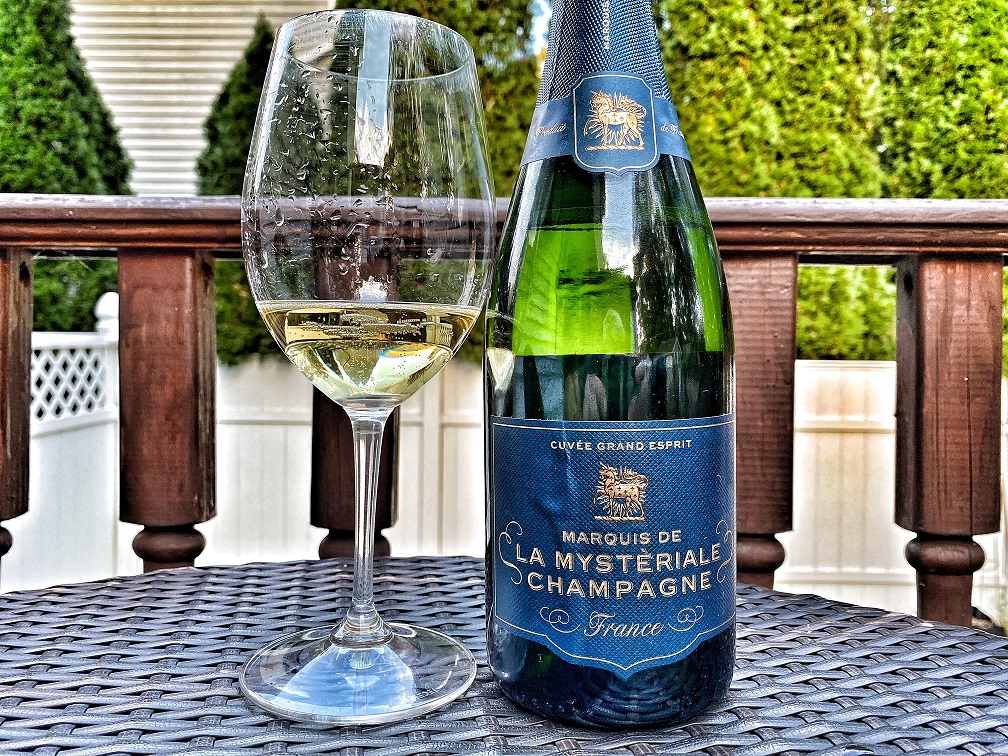
My celebratory Champagne of choice today is NV Marquis de la Mysteriale Brut Cuvée Grand Espirit (12.5% ABV) – perfectly suitable for every day, showing toasted bread notes on the nose, and crisp and refreshing on the palate. There is nothing spectacular about this wine, but for $20 (WTSO price), it is perfectly “good enough” to simply celebrate life, one day at a time. This was also the first time (I think) I had Champagne designated as MA – “Marque d’ Acheteur – A brand name owned by the purchaser, such as a restaurant, supermarket or wine merchant.”
A big part of Champagne fun is the process of opening the bottle using typically a special sword – so-called sabrage. Last year, I shared with you a little compilation of the sabrage gone wrong – very wrong. This year, I have a video collection of the amazing success of sabrage done with absolutely random objects, including tablespoon, iPhone, teaspoon, and even the high-heel shoe (and many others – see for yourself):
Here you are, my friends. Open a bottle of Champagne and celebrate life! Cheers!
Daily Glass: Two Wines and The Sunset
Oenophiles are mysterious and easily influenced.
There.
Prove me wrong.
Here is the story of my weekend.
First, the “easily influenced” part, taking place on Saturday. My twitter wine friend Le Bov Vin #inmyglass likes to play a game – post a picture of a glass of wine with the description, asking everybody to guess the wine in the glass. Saturday’s post described the wine as “Redcherry.Blackfruit n strawberry,vanilla,licorice,hints of wood,smokedmeat Veryfresh,wellbalanced, polishedtannins,lingering finish“. My first guess was Pinotage, the second guess was leading to Washington Syrah/Grenache, but something here was also suggesting Spain, so I put all of these guesses into a tweet. After getting a confirmation that Spain is the right place, my first inclination was Ribera del Duero or Toro, as Rioja rarely would offer smoked meat notes – could’ve been something from Priorat, of course, but I decided to go with the first idea – and somehow I managed to hit it – the actual wine in the glass was Bodega Tinto Pesquera, one of the most classic producers from Ribera del Duero.
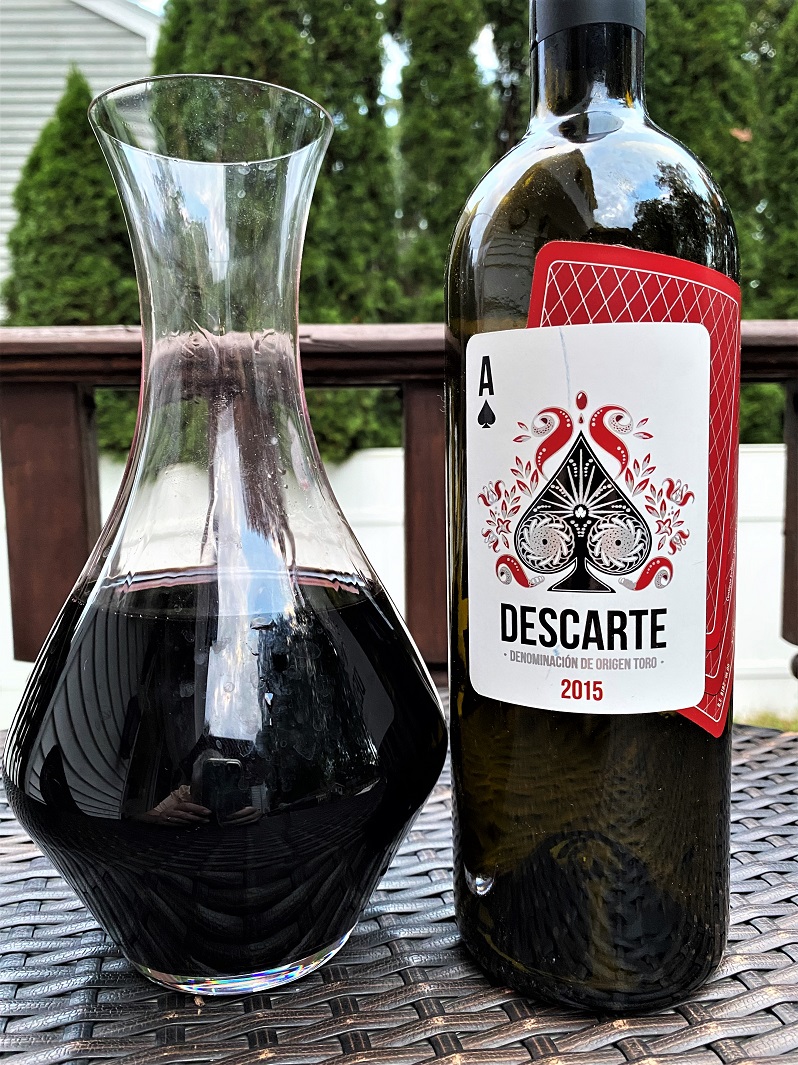
That made me crave Ribera del Duero wine, but somehow, while I always have a good amount of Rioja on hand, Ribera del Duero is a rare bird in my cellar. At this particular moment, it was as rare as none – but I recalled that I have a few bottles from Toro, the area down south from Ribera del Duero, producing densely concentrated and powerful renditions of Tempranillo, so I decided to obey my crave with 2015 Elias Mora Descarte Toro DO.
I wrote about this wine at the beginning of the year, when I called it Vinous Vino. Unlike the last time, I decided not to wait for the wine to come around slowly, and the wine went directly into the decanter upon opening. This definitely worked, as after about an hour in the decanter the wine showed massive and powerful, but also approachable enough to be enjoyed already, with dark cherries, espresso, and herbs-loaded profile.
Then there was Sunday, and the weather was noticeably cooler, one of the first cold days this fall so far. I wanted to sit down outside with a glass of wine, which obviously begged the question “what to open”. While going through the options inside my head, my inner voice insistingly proclaimed “Chardonnay”. I tried to argue – why Chardonnay, we can do Albarino, Chenin, Viognier, Riesling – but most importantly – why should it even be the white wine? It is cold enough to crave red! But the inner voice was unyielding – it has to be Chardonnay, there is nothing to discuss.
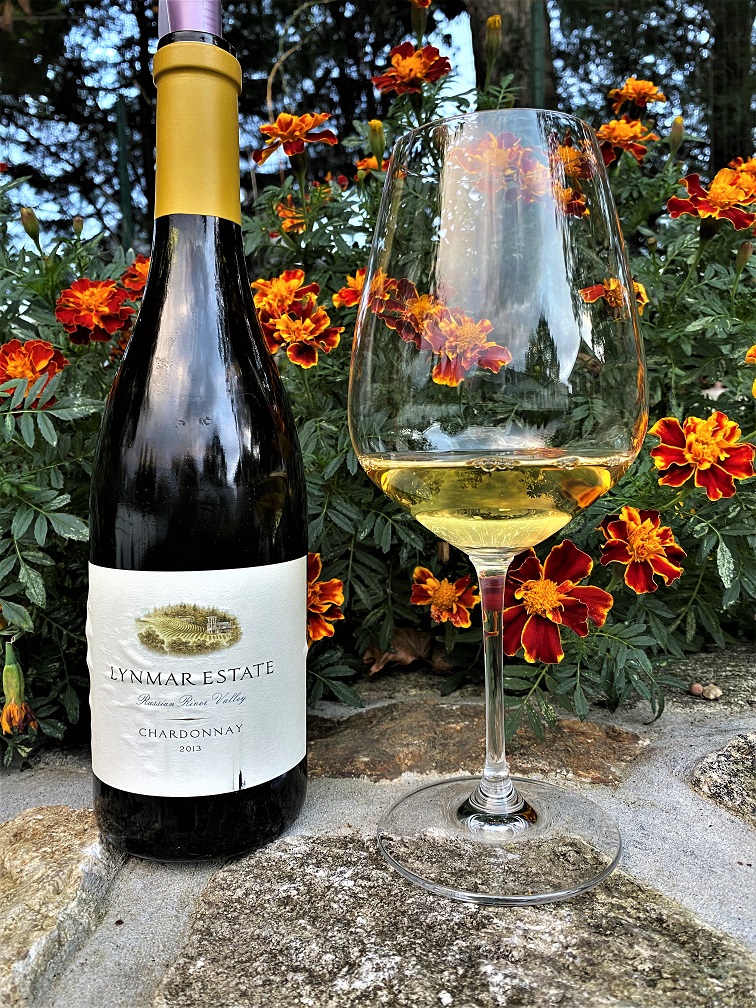
I don’t have a huge selection of Chardonnay, so the 2013 Lynmar Estate Chardonnay Russian River Valley (14.5% ABV) was almost the easiest choice. Boy, what a good choice it was… After a few minutes in the glass, the wine was singing with a core of vanilla with supporting voices of butter and green apples, all in perfect harmony. I don’t know if the wine was at its peak, or if it had another 10 years of life left – but it was perfect at the moment, no matter what mystery possessed me to open the bottle of Chardonnay.
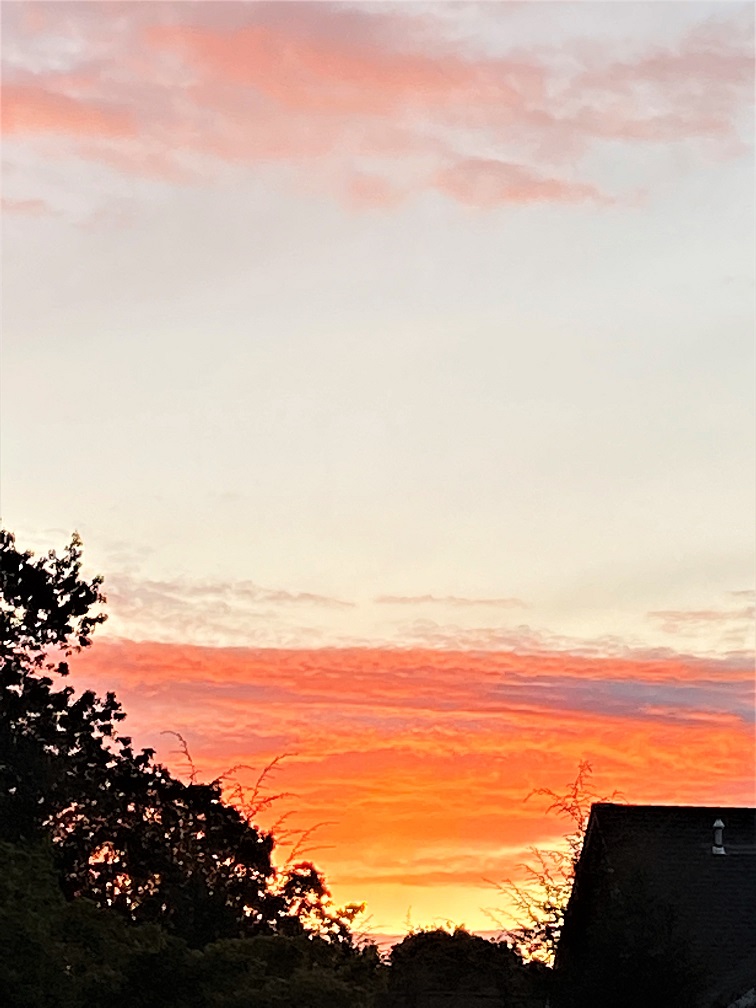
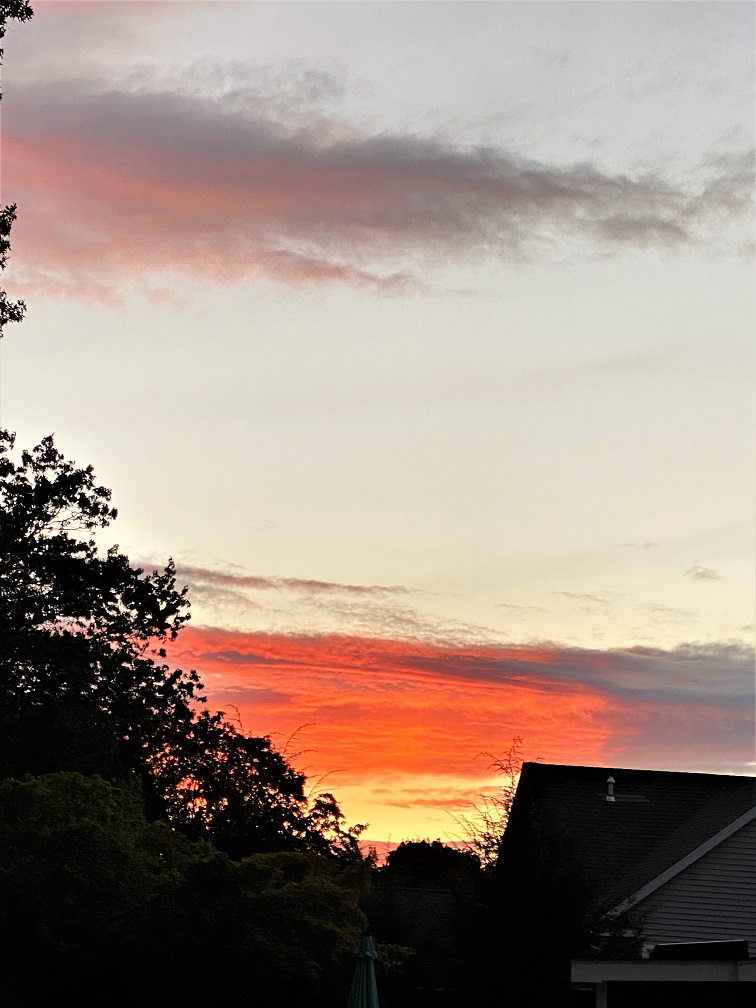
And then there was the sunset. I love taking pictures of the sunset, one of my most favorite types of photography. I often can take a decent picture of sunset right from my backyard – not all of those worth sharing though. But this Sunday sunset happened to be really special. A little rain started all of a sudden in the evening, forcing me to seek cover under the umbrella on the deck. The rain was very short, maybe 5 minutes or less. Once the rain didn’t look bothersome anymore, I stepped out from under the umbrella to go sit in the chair in the backyard – and then I saw THIS:
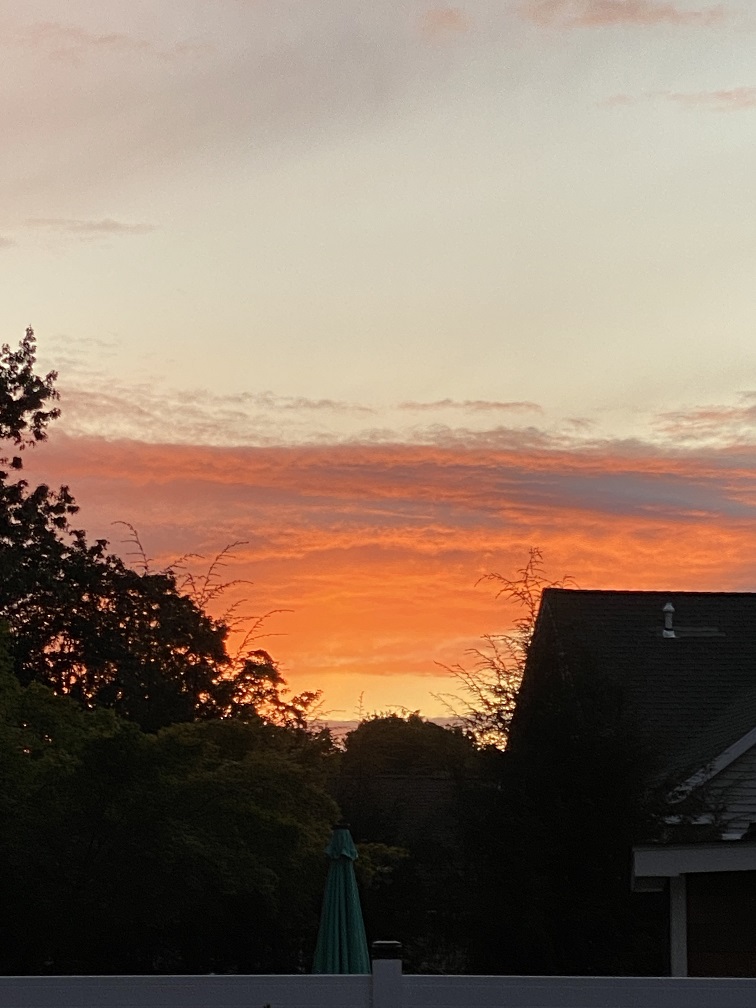
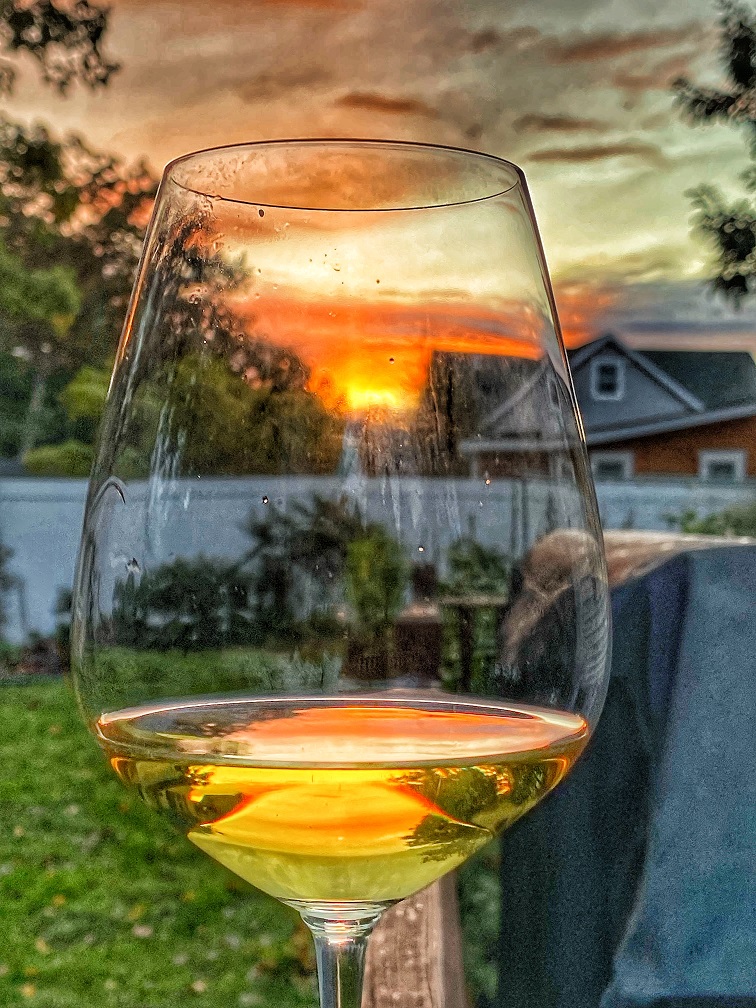
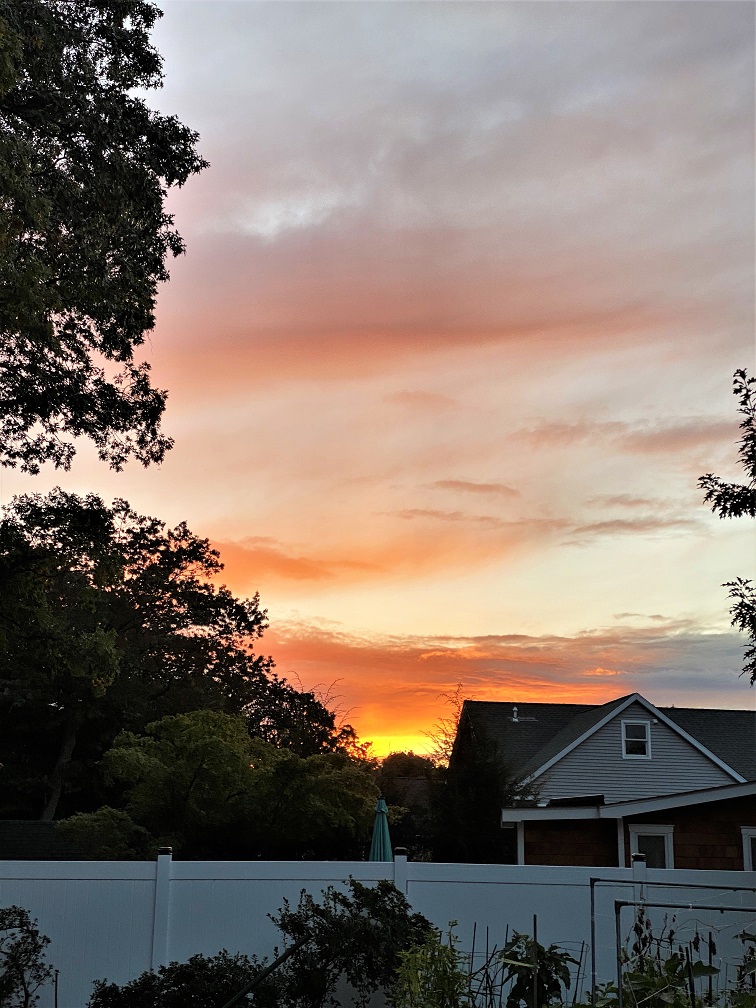
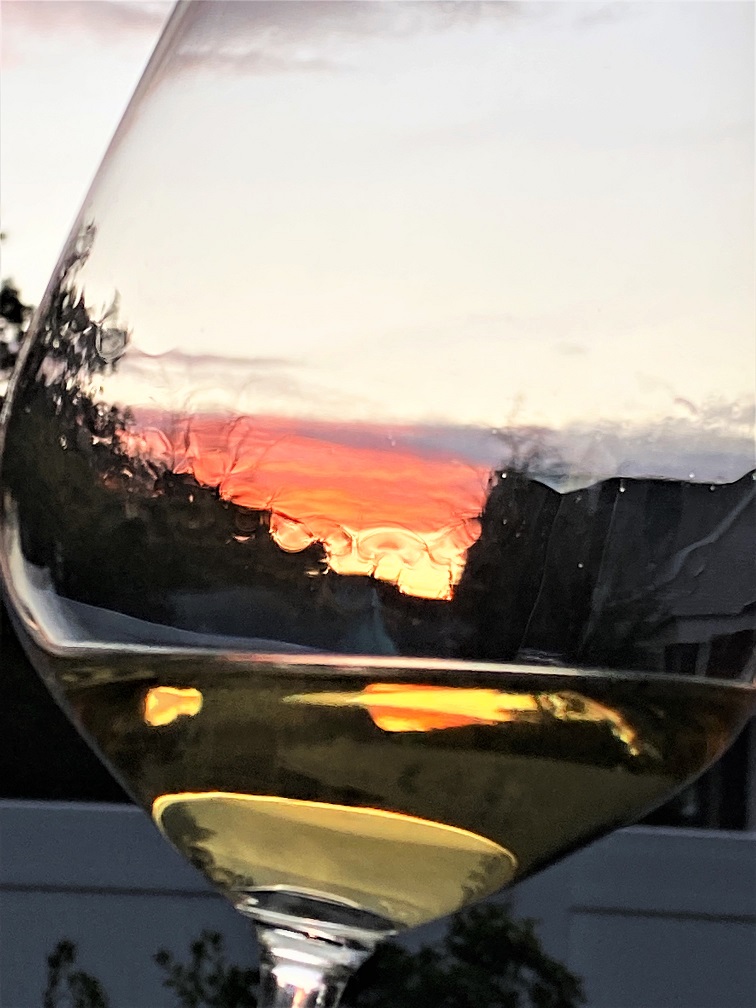
It appears that rain before the sunset creates some truly magical conditions for the sunset – some of the most memorable sunset experiences all took place after the rain. Once I saw this sunset, I spent the next 15 minutes taking pictures, with the glass and without, every moment being special and really worth capturing. Below are some of those pictures, I hope you will enjoy them as much as I did while talking them:
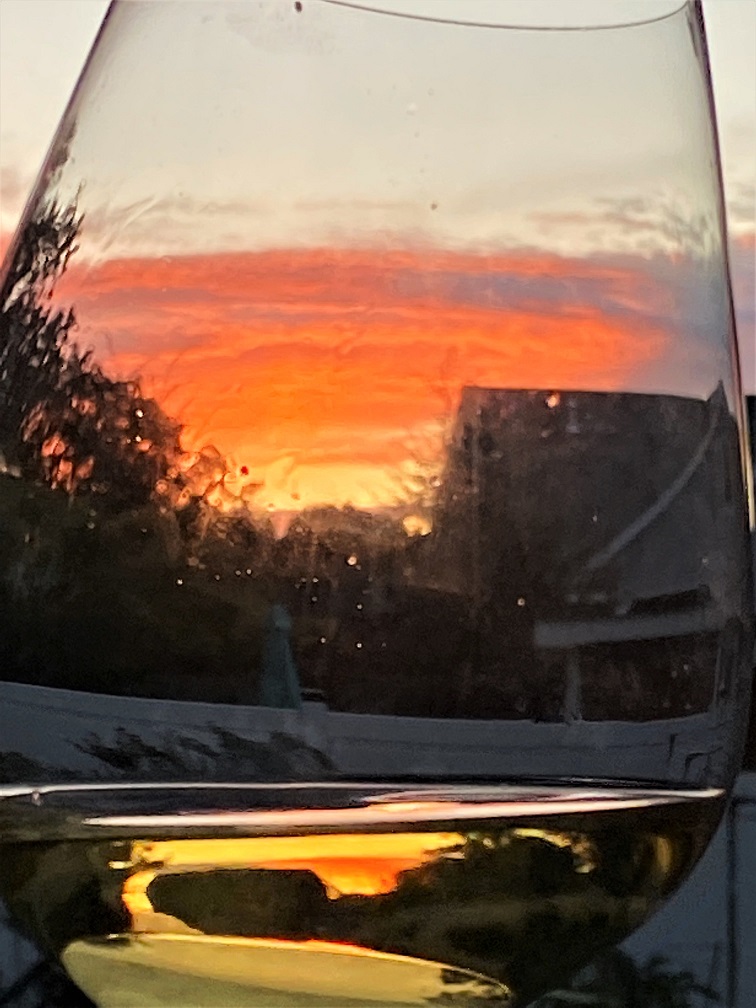
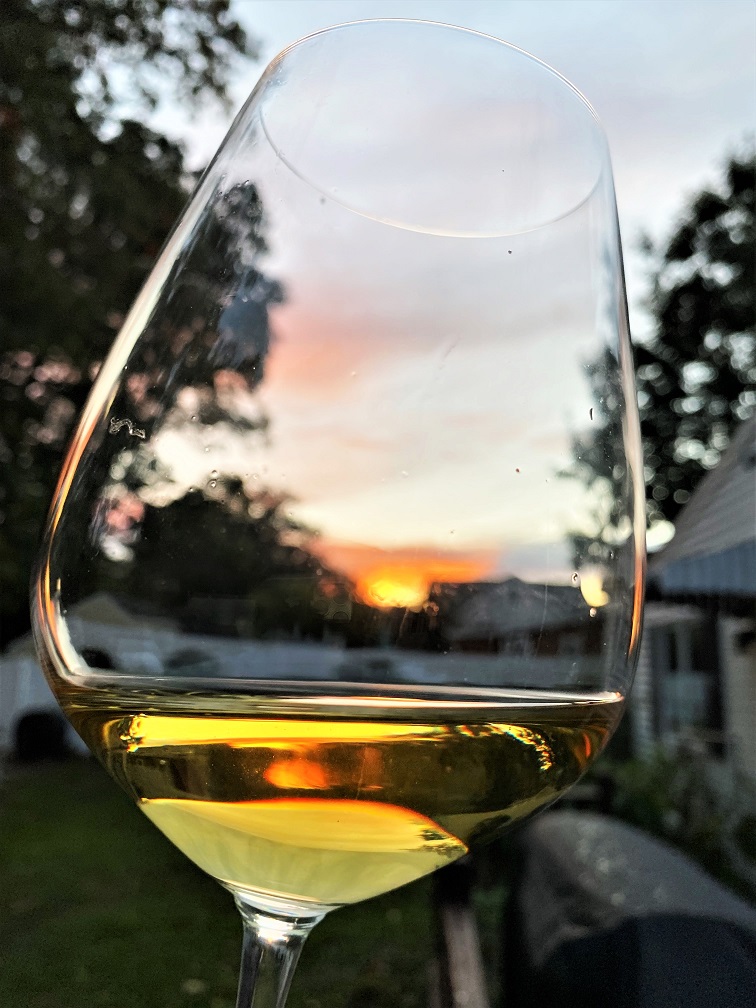
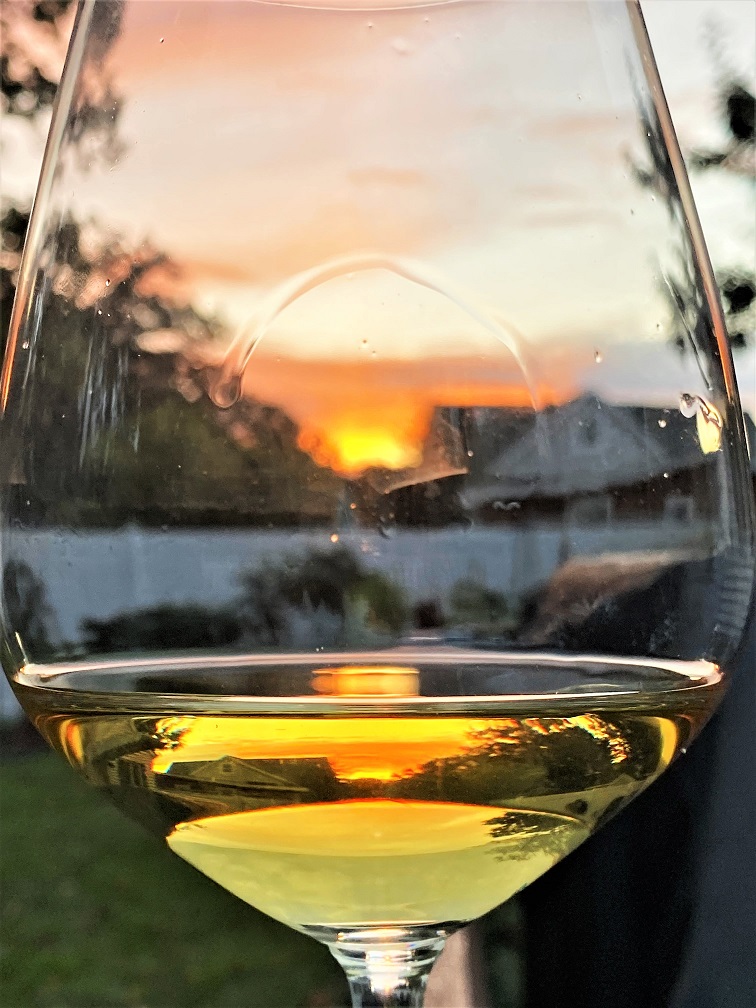
My failed attempt to catch the reflection of the sunset on the glass
That’s all I have to share for now. How was your weekend?
Leading The Charge: From Sustainable to Organic
 Sustainability is the trend. A global trend, across countries and across industries. We, humans, want to make sure that there will be some inhabitable Earth left for future generations.
When it comes to grape growing and winemaking, sustainability is a major trend, with many winemaking countries and regions adding new sustainable vineyards and wineries at double-digit annual percentage rates.
For New Zealand wineries and vineyards, sustainability is done and over with – New Zealand wineries started sustainability journey in 1995. In 2016, 98% of New Zealand’s vineyard area (about 89,000 acres) was sustainable winegrowing certified, which is based on the data collected from 1,918 vineyards and 254 wineries (the data is based on the 2016 New Zealand winegrowing sustainability report). Sustainability certification is based on a number of key aspects, such as land management, water consumption management, pest and disease management, treatment of the people, business practices, and many more (you can find all the information in the report).
The forward movement doesn’t stop in the New Zealand winemaking industry. Next frontier – organic grape growing and winemaking. Organic grape growing imposes further restrictions on what can and can’t be used to produce healthy grapes, and it takes on average 3 years to convert from sustainable to organic methods, but New Zealand winemakers are used to the challenge.

At the end of September, the New Zealand organic winemaking was celebrated via the Organic Wine Week, consisting of a series of tastings and presentations by New Zealand’s vignerons. I attended one of the events (virtual, of course), where we could learn about the development of organic winemaking in New Zealand. Just to share some numbers, there are currently 45 fully organic certified wineries, plus another 7 which produce wines mostly from organic grapes, offering a total of 102 organic wine labels. There are a bit more than 6,000 acres of organic and biodynamic certified vineyards, including about 1,000 acres in conversion (as we mentioned before, it takes about 3 years to convert vineyard from sustainable to organic). If you are interested in learning more details about New Zealand organic wine production, I would highly recommend checking this dedicated website of Organic Winegrowers New Zealand – I have to honestly say that when it comes to the well-presented, comprehensive winemaking region information, New Zealand wine associations do by far the best job out there – you need to check this for yourself.
If you ever looked at the labels of organic wines sold in the US, you probably noticed that many bottles say “made with organic grapes”, instead of simply been “organic”. I was curious to understand the significance of such wording, and it was perfectly explained during the seminar. It appears that based on the US organic labeling laws, to be just called “organic wine”, it is not enough to just use the certified organic grapes – the winemaking processes have a number of additional restrictions, particularly the use of sulfites is not allowed. It is very difficult to make good wine without the use of sulfites, thus most of the winemakers prefer to simply use a statement “made with organic grapes” instead of going the full circle and sacrifice the quality of their wines. I was happy to finally learn about this designation, as I tasted lots of “made with organic grapes” wines this year and always was wondering about such a specific wording.
As part of the seminar, I was also happy to receive samples of the New Zealand organic wines, which were packaged in tiny bottles. Definitely an interesting concept – and I understand the logic behind it – however, I’m really curious if such a format can negatively affect the taste of wine – take a look at my notes below particularly for the Chardonnay.
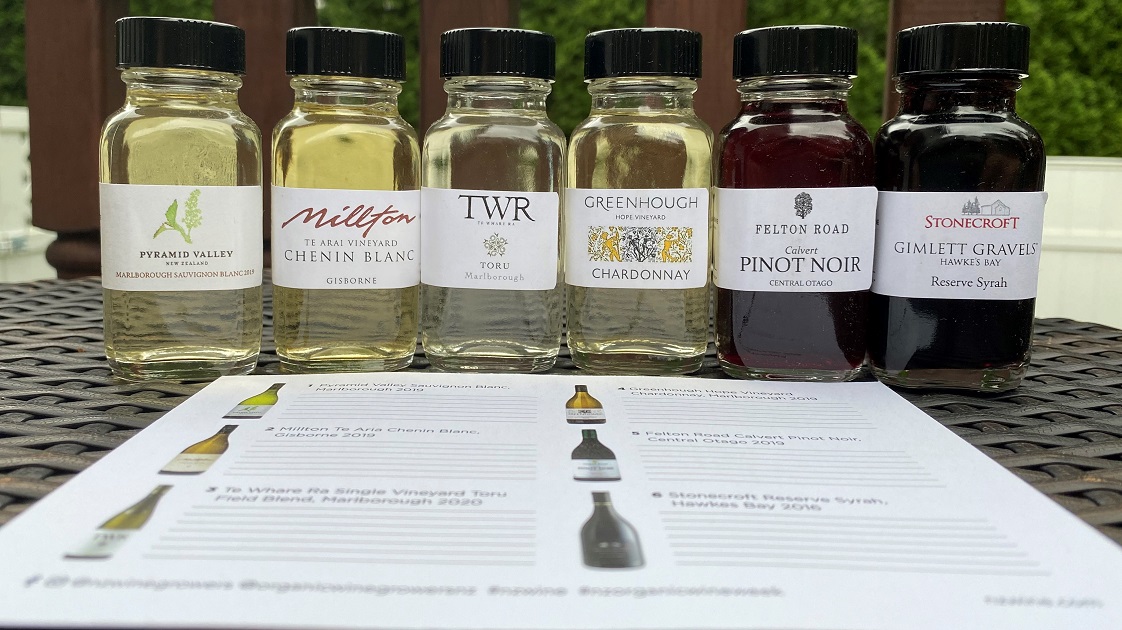
Here are the extended tasting notes for the wines – as a side note, all of these wines are vegan-friendly:
2019 Pyramid Valley Sauvignon Blanc Marlboro (13% ABV)
Straw pale color.
Clean, restrained nose with a touch of freshly cut grass, mineral notes
Restrained palate, crisp, acidic, uncharacteristic for the Sauvignon Blanc wine, more Muscadet-like
2019 Millton Chenin Blanc Te Arai Vineyard Gisborne (12% ABV, Demeter certified biodynamic)
Light golden color
A touch of gunflint and barnyard.
Whitestone fruit, unripe apricot, a hint of honey, medium to full body, granny smith apples over the long finish. “Te Arai” roughly translates to “the place where you pause before going on toward the land of eternal sunshine.”
2020 Te Whare Ra TORU Marlboro (13.4% ABV, 67% Gewurztraminer, 22% Riesling, 11% Pinot Gris, 1150 cases produced)
Very light straw color, almost like water
Playful floral nose, tropical fruit, intense
Well-balanced palate, honey, honeysuckle, round, plump, viscous, stays with your palate.
Unusual
Toru means “three” in Maori – the wine is made out of 3 grapes. All grapes are co-fermented at the winery.
2019 Greenhough Chardonnay Hope Vineyard Nelson (13.85% ABV)
light golden color
Heavy nose of gunflint, a touch of barnyard, nothing else is coming through.
A touch of vanilla, bitter on the palate, all covered in acidity. Chardonnay profile is coming through. Very acidic finish, really not enjoyable overall
2019 Felton Road Pinot Noir Calvert Central Otago (13.5% ABV, biodynamic)
Brilliant Ruby color
Intense nose of sweet plums, licorice, graphite
Light, spicy, creamy, red fruit, underbrush, tart cherries came later, good finish, delicious.
2016 Stonecroft Gimblett Gravels Reserve Syrah Hawke’s Bay (13% ABV, 110 cases produced)
Dark purple ink, almost black
Fresh, red and black fruit, fresh lacquer (I know it doesn’t sound right)
Black pepper, clean, intense black fruit, perfect balance, medium to full body, liquid black pepper.
Impressive wine. Selection of the best barrels from the vintage. Vines planted in 1984
As you can see, Sauvignon Blanc and TORU were two of my favorite whites. I love Central Otago Pinot Noir, and Felton Road is one of my perennial favorites, so I’m happy that the wine was as good as I was expecting it to be. New Zealand Syrah is still not a “thing” here in the USA, but the rendition presented in the tasting (Stonecroft) was outstanding – I would be happy to drink such a wine on a regular occasion.
Organic winemaking is good for the Earth, and it is good for the people. New Zealand is leading the way towards organic viticulture, but the other regions are definitely catching up – for example, Chile is rapidly advancing its sustainable and organic winemaking (we will talk about Chilean sustainable and organic wines in the next few posts). And this is something I’m happy to raise my glass to. Cheers!
Daily Glass: Uncomfortable Wine
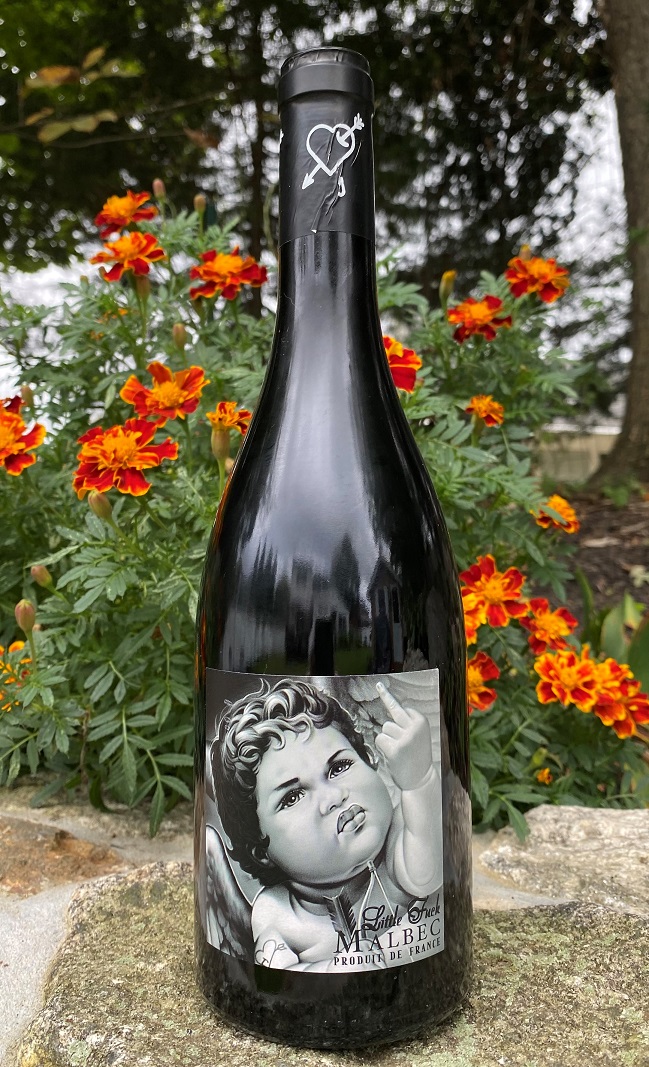 “Uncomfortable wine”??? What utter nonsense, right? Did the author had one too many glasses while writing this post?
The wine can be spoiled. The wine can taste bad. We can call it plonk, we can pour it out. But uncomfortable?
Shoes can be uncomfortable. The dress can be uncomfortable. The shirt’s collar might be too tight. Not knowing how to start a conversation with an attractive stranger might be uncomfortable. Not knowing how to answer a live interview question for the position you dreamed of your entire life is uncomfortable. Many, many things can be uncomfortable. But wine?
When I refer to wine as an art, the typical association in my mind is painting. As an art form, I imply that there are similarities between the bottle of wine and the painting on the wall. But maybe a book would be a better art form to compare?
Reaction to painting is instantaneous – you can, of course, spend hours looking at elaborate details and discovering new elements even if you saw the painting a thousand times before – but your first impression is unlikely to change, it might only deepen as time goes on. But with the book, first we see the cover, then we start reading, and if we found the book which speaks to us, by the time we reach the second page, nobody cares about that cover anymore.
When it comes to the wine, the bottle and the label matter – until we take the first sip. If we found “our wine”, the same as 300 pages book can be obsessively consumed within a few hours, a good bottle of wine will be gone in no time. And while you will be enjoying it, most likely you wouldn’t even remember how the label looked like.
What’s with this interlude and our comfort/uncomfort discussion you ask? Don’t worry, this is all connected.
So what can be uncomfortable about wine? Actually, many things. Remember – in the wine world, it is all about perception – except the taste, the pleasure, and your desire to have a second glass – of course, if you chose to be honest with yourself. Otherwise, perception is everything. Enjoying a glass of 2 buck chuck is uncomfortable. Bringing a $5 bottle of wine to your friends’ house is uncomfortable – knowing that it is an amazing bottle of wine without any regard for a price doesn’t make it less uncomfortable. Enjoying the glass of wine while your best friend hates it is uncomfortable. And then there are labels.
Okay, call me “captain obvious”, but this is where I was leading you all the way – the label can make you uncomfortable. There are enough wines in this world that have, for example, sexually suggestive or simply offensive words or images on the label. Ever saw the bottle of If You See Kay? This is a perfect example of suggestive language on the label – the book cover – for a perfectly delicious wine produced by Jayson Woodbridge. And there are wines that don’t even use suggestive language anymore – like the Little Fuck Malbec from Cahors.


When a friend sent me a picture of this label a few days ago, my first reaction was literally WTF – how can such a label be even approved (Jayson Woodbridge had lots of trouble getting his If You See Kay label approved 9 years ago)? But as the wine was available, I decided that I would not judge the book by its cover, and actually try reading it – and so I got the bottle.
I have to say that as soon as I got a hold of the bottle my negative impressions instantly started to diminish. This is hard to explain, as I don’t know if all the oenophiles feel the same way, but there are bottles that express “comfort” with its shape, weight, and overall feel in your hands. Once you take such a bottle in your hands, you can’t help yourself but say “oh, this is nice”. This was precisely the bottle. Outside of the wine name and the image on the label, the bottle was very comfortable and really created the anticipation – “oh yeah, I do want to open that bottle”. Even the label looked well designed in its shape and size and added the overall “comfort” feeling.
The wine didn’t disappoint – 2020 Vellas Père Et Fils Little Fuck Malbec Cahors AOP (14% ABV) was unapologetically a New World Malbec – big and brooding – and in a blind tasting I would confidently place it into Argentina, but never into the old world. The wine was full of raspberries, smoke, and sweet tobacco – on the nose and on the palate. Big, full-bodied, and powerful, but also well balanced and delicious – a very unapologetic Malbec I might be ashamed to bring to the acquaintance’s house but would be happy to drink at home or with close friends.
I’m really curious about the backstory of this wine. I don’t believe the name and images are random. Nicolas Vellas is a vigneron in the 4th generation at Vignobles Vellas, farming 300 acres of vines and producing a wide range of wines in the South of France. If this would be the only wine produced at the winery, yes, we could dismiss it as a gimmick. But this is simply one of many and the only one with such a unique label, so I truly believe there is a story for this wine, which is not easy to figure out – I even sent a message to the winery asking them to share the story if they can, but I’m not very hopeful. Well, actually lots of Vignoble Vellas wines have very creative labels – you can see them here, but I don’t know if there are any more of the “uncomfortable” ones.
Here you go, my friends. Uncomfortable wine which also happened to be delicious. Yeah, I’m okay with that. I’ll take delicious any day. And comfort? It comes after delicious.
Daily Glass: For The Love Of Appassimento
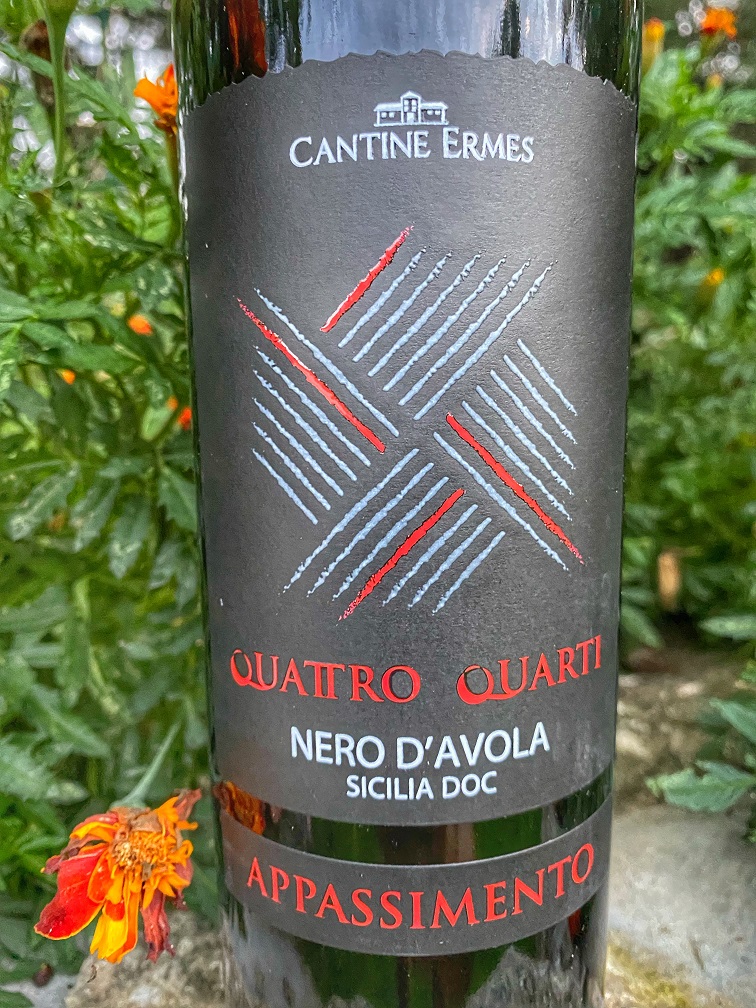 Appassimento is an Italian word that means “drying”. Thus very appropriately, appassimento is the process where after the harvest, grapes are dried for some time (from 3 weeks to 6 months) before being pressed and fermented. Now, the question to the audience: name any wine (just type, no need for producer) which is made from such dried grapes?
If you said Amarone della Valpolicella, Passito di Pantelleria, Recioto di Soave, or Recioto della Valpolicella, you can definitely give yourself a high five. While this method of wine production originated in Greece, Italy produces most of the appassimento wines in the world. Drying of the grapes increases the concentration of flavors and sugars and changes the structure of the tannins, bringing an extra layer of complexity to the wine.
While getting more complexity is great for any wine, it also comes at a cost. Drying of the grapes requires additional space, whether inside with good ventilation, or outside under the sun. There is additional time required to dry the grapes. And while drying, grapes lose moisture, thus you need to use a lot more grapes to get that same bottle of wine – no wonder Amarone is usually an expensive wine – but if you ever experienced good Amarone, or Passito, Recioto, Sfursat (Sforzato di Valtellina), Vin Santo, you know that it was well worth it.
Making wines from partially dried grapes is not limited only to Italy – I had delicious Australian Shiraz made from partially dried grapes (Alfredo Dried Grape Shiraz from South Australia), Pedro Ximenez Sherry from Spain. Overall, the wines from dried grapes are produced in most of the winemaking regions – Eastern Europe, Germany, Greece, USA, and others.
The appassimento wine which I would like to bring to your attention today is produced in Italy, but it is far from common. Nero d’Avola is known to produce big, well-structured Sicilian reds. But when you take Nero d’Avola grapes from four of the areas in Sicily where Nero d’Avola is known to grow best, then you dry the bunches of the grapes for 3 weeks in fruttaia (well-ventilated rooms) and then continue to make wine, you end up with delicious, round, perfectly approachable wine in its youth.
2019 Cantine Ermes Quattro Quarti Nero d’Avola DOC Appassimento (14% ABV, 100% Nero d’Avola, 4 months in 500l oak barrels) is produced by Cantine Ermes we spoke about earlier this year – the coop of 2,355 producers, farming 26,000 acres across a number of provinces in Sicily. The wine was ready to drink from the get-go, offering beautiful dark berries medley with sweet oak, herbs, and a hint of dried fruit, exactly as one would expect when appassimento is involved – soft, layered, comforting, and dangerous – the bottle was gone very quickly, not being able to put the glass down.
This was a perfect example of the appassimento wine – yes, it didn’t have the power of Amarone, but it also didn’t need any cellaring time, offered instant gratification, and it is a lot more affordable. Definitely the wine worth seeking.
Now, what are your favorite appassimento wines – Amarone and not?
Last Bottle Sign Up ($10 credit)




 Talk-A-Vino