Archive
Wines of South America: Making Wine Geek and Wine Lover Happy
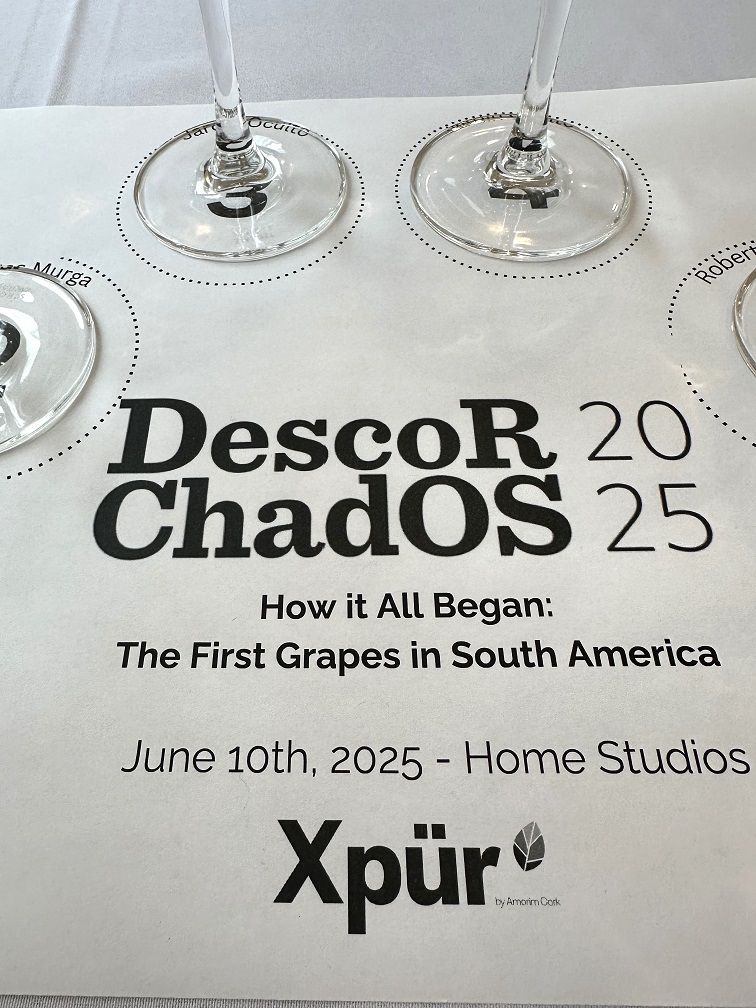 Here is where it gets interesting. We all heard of wine geeks, people who get excited about little nerdy wine details, such as vineyard blocks, blending methodology, or amphorae versus cement tank aging. And then you have the wine lovers, aficionados – the people who simply go after the hedonistic pleasure of wine drinking. Can these two personas be happy at the same time? I can’t speak for all the wine people with multiple personalities, but I can definitely answer for this one, the moi. I attended Descorchados 2025 tasting of South American wines, and both inner geek and aficionado were happy.
Just in case you are curious, DescoRChadOS is a guide for the wine of South America, published since 1999. Descorchados also runs wine tasting events dedicated to the wines of South America, and the 2025 event was the first return of the tasting to New York City since 2019.
As a self-appointed wine geek, I love all the uncommon wine traits – new (to me) and lesser-known grape varieties, new (to me) and unknown, even obscure places, authentic (indigenous, autochthonous) grapes, low intervention/natural wines, unique wines and vineyards (e.g. old vineyards). In this tasting, I found all of these things – indigenous, unknown (and thus new to me) grapes harvested from the 200-year-old vineyards, from the countries I had never tasted the wines from before. Happy, happy, happy wine geek.
And then there were world-class, beautiful, delicious, hedonistic wines – Malbec, Syrah, classic method Sparkling wines – all in the same tasting. As I said, both geek and aficionado were very happy.
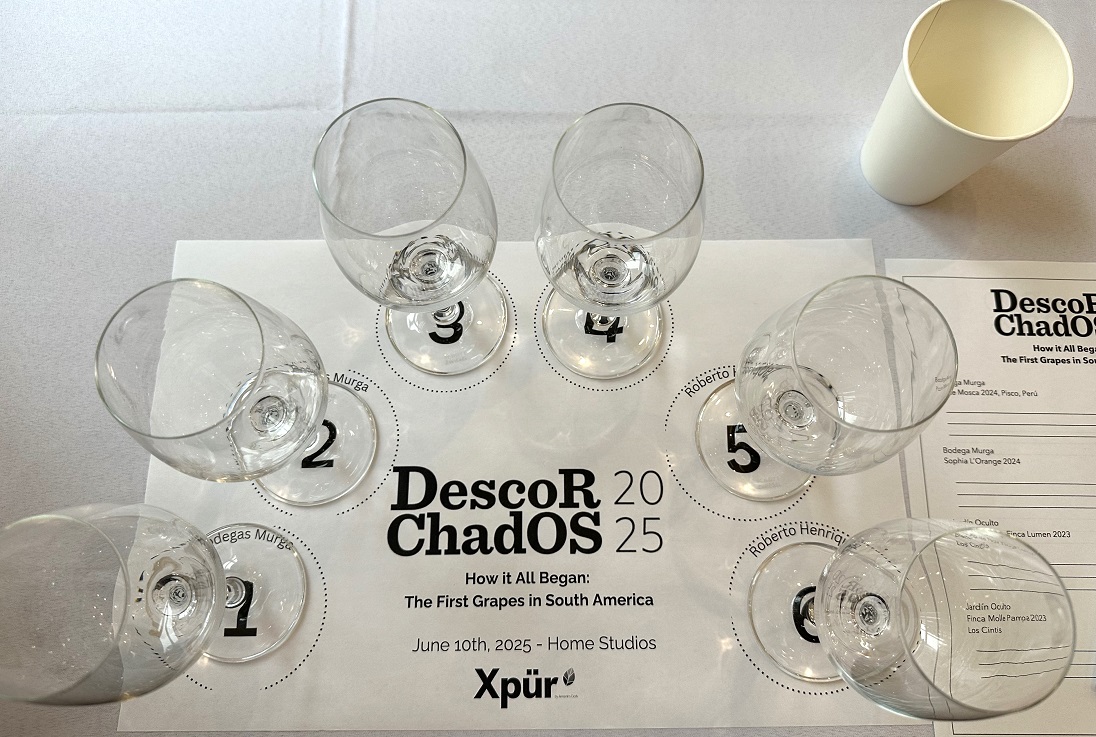
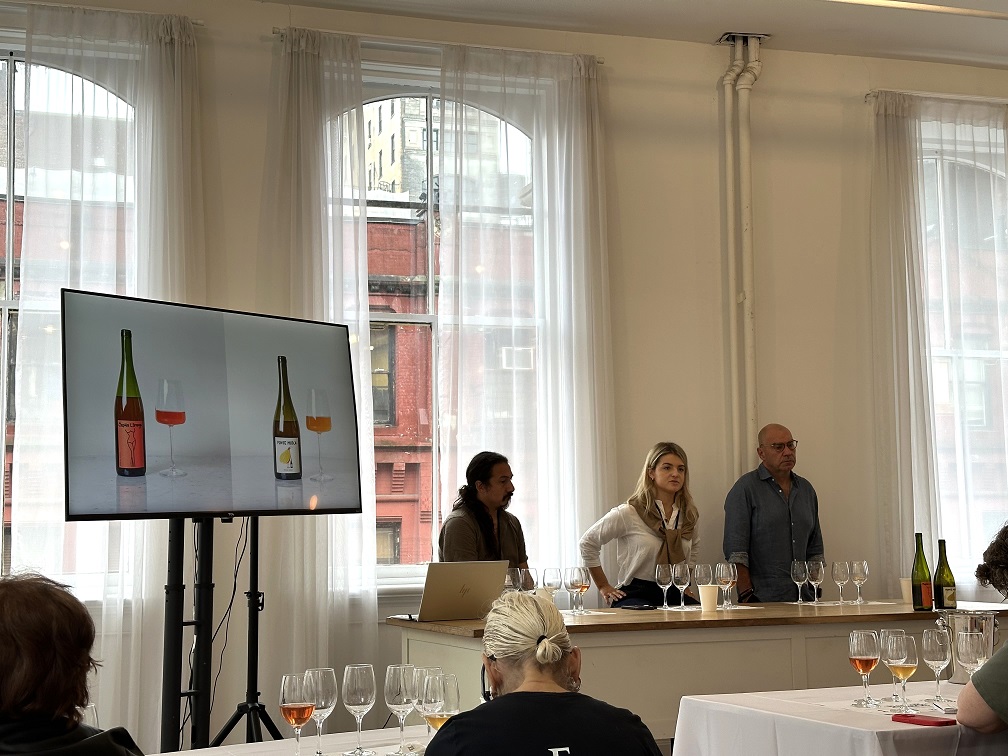
Let’s start with the unique portion first, as I had a chance to attend the masterclass presenting the historical wines of South America.
When it comes to wine from South America, Argentina and Chile are the two countries that come to mind first, followed by Uruguay and maybe Brazil. But the grapes had been growing in most of the South American countries for a long time, with vineyards usually started by European immigrants. It appears that the oldest vineyard in South America is called Tacoma and it is located in Perú, originally planted by Spanish immigrants in the 1540s.
I don’t know if a grape vine can survive for 500 years and continue to bear fruit. However, I now know that 200-year-old vineyards can still produce grapes, as I had an opportunity to taste the wines made with grapes harvested from 200-year-old vines.
In the masterclass, we tasted 6 wines from 3 countries – Perú, Bolivia, and Chile, some of them produced from the unique grapes I never had before, so thanks to this tasting I can now add two countries to my list of Wines around the World, and increase the grape count by 3 – picture happy collector of experiences.
Here is what we tasted in the masterclass – but before the notes, just take a look at these colors! This tasting was definitely a feast for the eyes!
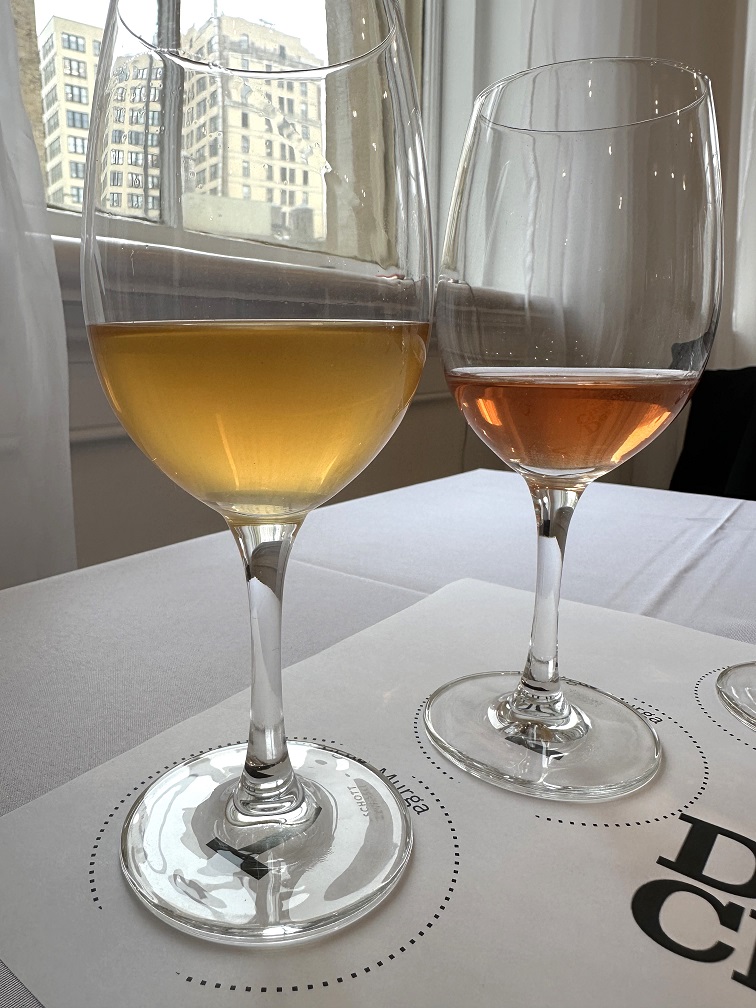
2024 Bodega Murga Ponte Mosca Pisco Perú (12.5% ABV, 34% Moscatel de Alejandría, 33% Moscatel Rosada, 33% Moscatel Negra, 65 days of skin contact)
Pisco is located south of Lima, capital of Perú, 25 minutes away from the Atlantic Ocean, featuring 4 different soil types in the region.
I can’t even comment on the color (beautiful!). The wine had a wonderful nose with explicit nutmeg and a hint of grapefruit. Interestingly dry and tart on the palate, with blood orange on the finish and pure acidity. A great specimen of skin contact wine, but you have to love skin contact. Will be great with seafood.
2024 Bodega Murga Sophia L’Orange Perú (10% ABV, 85% Quebranta, 15% Mollar grapes, 30 days of skin maceration, indigenous yeast)
Muted nose with a hint of smoke, strawberries, sapidity. Smokey strawberries on the palate with salivating clean, crisp acidity on the finish. I absolutely love it, but this is not the wine for everyone (geeks should be happy, though).
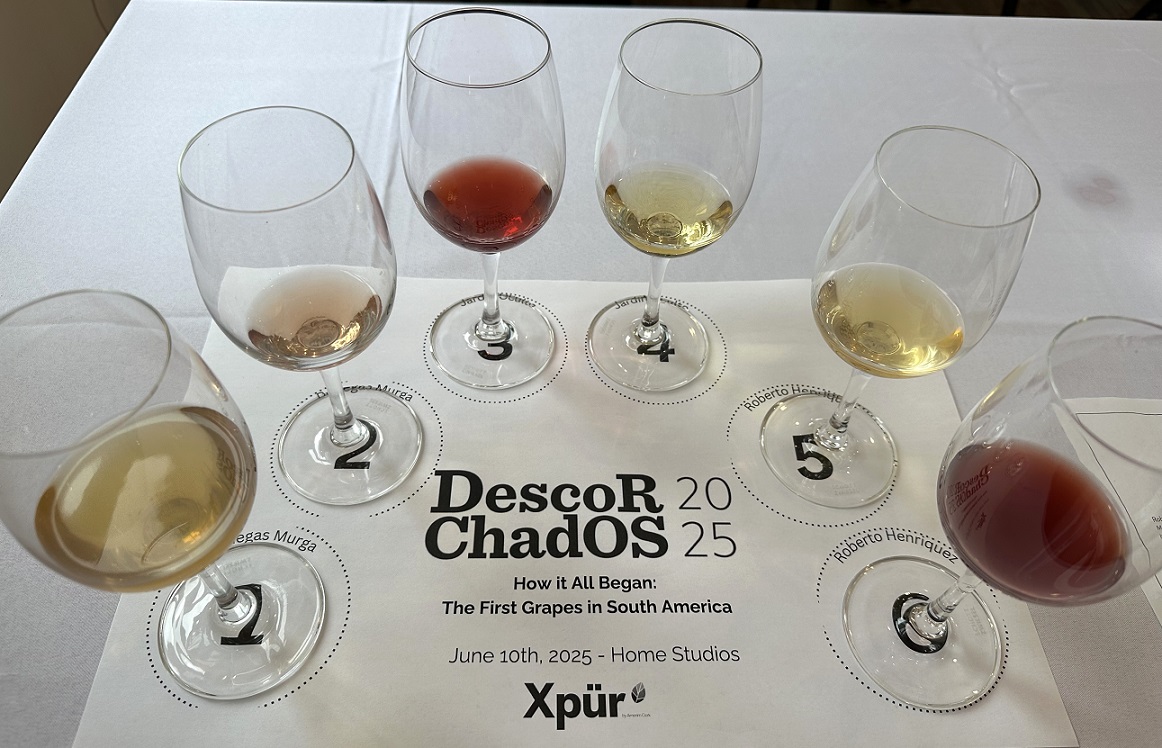
Just look at these colors!
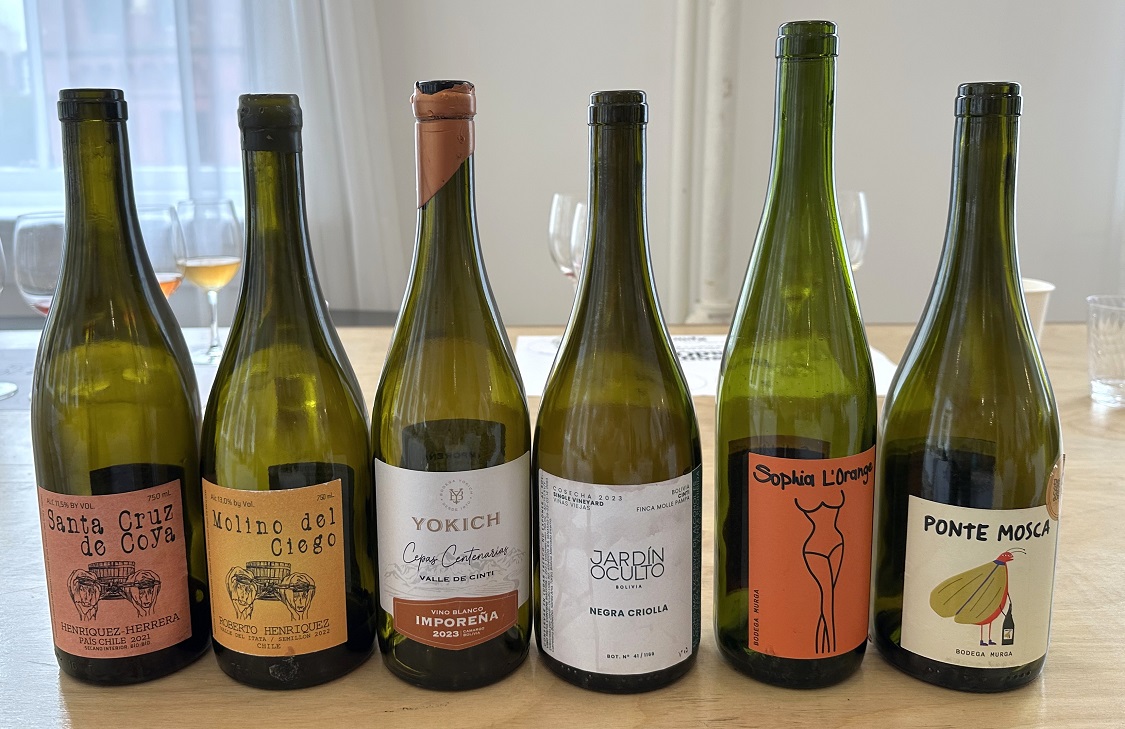
2023 Jardín Oculto Negra Criolla Finca Molle Pampa Cinti Bolivia (200! years old vineyard, 100% Negra Criolla, a.k.a. Listán Prieto a.k.a. País)
Cintis Valley is located in the south of Bolivia, at 7,500 feet altitude, 18” of rain a year – the only place in Bolivia where you can find “winter” for the grapes.
Fresh, crisp, underripe crushed raspberries on the nose. Tart, acidic, with sapidity well present, and with a bitter finish. I can drink it, but this is not your everyday wine; too bitter for me (my palate is particularly sensitive to bitter notes).
2023 Yokich Imporeña Vino Blanco Cepas Cententarias Valle de Cinti Bolivia (13% ABV, 100% Imporeña grape)
What a color! Honey and roasted meat on the nose (yeah, I know, don’t say it), somewhat cloying.
Good acidity on the palate, but I’m not sure this is the wine I want to drink again
2022 Roberto Henriquez Molino Del Ciego Itata Valley Chile (13% ABV, 100% Semillon, 100 years old vineyard)
Jalapeño pepper on the nose, bell peppers and spicy peppers on the palate, good acidity. I’m now hungry. Might be the most unusual rendering of Semillon I’ve ever tasted.
2021 Roberto Henriquez Santa Cruz de Coya Bio Bio Valley Chile (11.5% ABV, 100% País, 200 years old vineyard)
Lightly scented red fruit on the nose, explicit minerality, fresh acidity, tart strawberries, acidity on the finish. This is the wine from the 200-year-old vineyard – very impressive.


Here are the results of the masterclass: 3 new grapes, 2 new countries to add to the list, beautifully colorful wines, lots of geeky excitement (when was the last time you tried wine from a 200-year-old vineyard?).
Then there was a regular tasting with more than 200 wines represented – I didn’t have much time to spend there, but I managed to find some very tasty wines – sparkling and still. Here is the list of the wines I enjoyed outside of the masterclass:


NV Estrelas do Brasil Brut Método Tradicionel
NV Estrelas do Brasil Nature Rose Pinot Noir – superb!
NV Guatambu Nature – excellent
NV Cave Geisse Nature Método Tradicional D.O. Altos de Pinto Bandeira
2020 Neyen Espiritu de Apalta Malbec Colchagua Valley – classic!
2021 Emiliana Coyam Los Robles Estate Valle de Colchagua – excellent but needs time
2021 Emiliana Gê Valle de Colchagua – ready to drink now, delicious


2015 Casa Marin Syrah Miramar Vineyard San Antonio Valley Chile – surprisingly delicious (when I think Chile, I don’t think Syrah – but you should look for this wine)
NV Casa Marin Maria Luz Brut Nature San Antonio Valley Chile
2024 Casa Marin Sauvignon Blanc Cipreses Vineyard
That concludes my encounter with the unique world of South American wines – from geeky pleasures to hedonistic masterpieces, South America has a wine for everyone, you just need to look for it.
What were your geeky discoveries as of late? Or how about some hedonistic pleasures you want to talk about? Cheers!
Drinking With Purpose
Drinking with purpose.
Okay, so what are we talking about here?
First of all, we are talking about wine. Usually, we drink wine for pleasure. Of course, sometimes people drink just for the buzz, to forget, to relax – there are many reasons why people use alcohol, but wine (I hope) stands a bit apart from the rest of the alcohol. Wine helps us to converse with friends, create memories, enhance our food experiences and simply derive pleasure from the simple moment of existence. Then what is this purpose I’m talking about?
Wine is the product of passion. At least this is how we, wine lovers, want to see it. Wine also enables passion. Not even passion, but passions. It solicits passions. Wine is surrounded by desire, obsession, exclusivity, mysticism, glamor, science, greed, mystery, art, and devotion, it evokes all of these and many other feelings and emotions. Wine allows everyone to find their own passion.
One such passion is collecting. Yes, some people are collecting the wine. In a lot of cases, they simply do this to feel superior to others, as they have something which other people want but can’t have. We can leave this aside, as this is a boring aspect of wine. Collecting unopened bottles is not the only thing to collect around wines.
The wine offers lots of artifacts. People collect unique bottles. People collect unique labels (hundreds of thousands of different wines are produced every year around the world – and many labels can change every year – think of an endless potential here). People collect champagne and sparkling wine bottle caps – this hobby even has an official name, placomusophilia. Peope collect corks and screwtops. I collect grapes and experiences.
Many, many, years ago I came across The Wine Century Club. No, you don’t have to be 100 years old or drink 100 years old wines. It is all about grapes. Anyone who tasted 100 different grapes (obviously, in wines) – don’t have to be individual grapes, blends are totally fine – is welcome to apply to become a member of the club. The application is honor-based (well, if you lie, your palate would be cursed forever – who would want to risk that), and you get the certificate sometime after you submit the application. Tasting the first 100 grapes was relatively easy. By the time I was done with the first 100, the club was already offering the 200 grapes level (Doppel), then 300 (Treble), 400 (Quattro), 500 (Pentavini), and now even 600 (Hexavin).
After I passed the 100 grapes level, hunting for the new grapes became an obsession, which I thoroughly documented on this very blog. I had friends reaching out and asking if I already had such and such grape. I spent countless hours looking for the grape information online, trying to figure out what grapes went into this particular wine from this particular vintage. Hunting down new grapes became drinking with purpose. I didn’t care if I would like the new wine or not – if it had the grapes I didn’t taste before, that was all I needed.
As I mentioned before, I collect not only grapes but also experiences. Wines are made in all of the 50 states in the USA. Wines are made at least in 60 countries around the world, maybe more. I have a personal goal to experience (read: taste) wines of all 50 states. I also would love to taste wines made in all the different countries around the world.
This is how I collect the grapes and experiences. And this is how drinking with purpose happens. A wine from the new state or a country – yes, please! The wine with new grapes? Yes, pretty please!
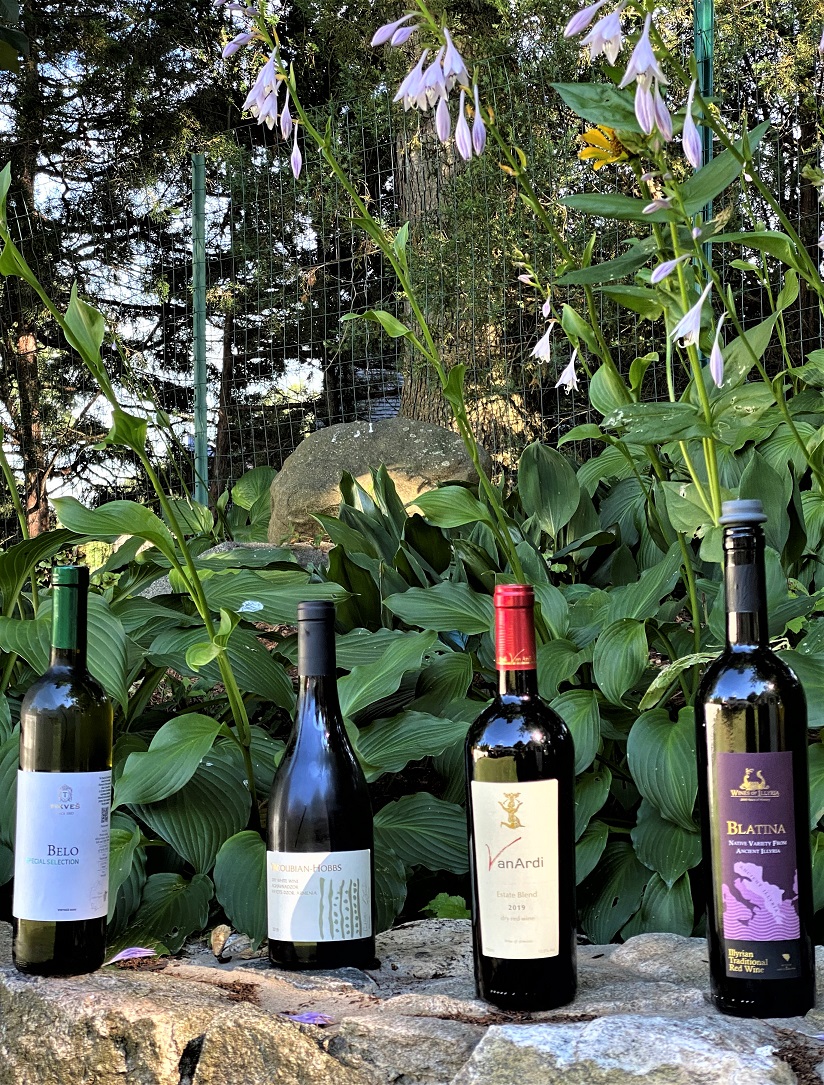
Recently, I managed to find a few wines with grapes I never had before. Not only that but one of the wines was made in the region which was new to me, so the two proverbial birds were killed with one stone – err, bottle. Here are the quick notes on these wines:


First, two wines from Eastern Europe. I never had the wines of Bosnia and Herzegovina, so this was a new country I was able to add to the list. Both wines were tasty, and Tikveš Belo was probably my favorite wine out of these 4. New grapes are marked in bold:
2015 Čitluk Winery Blatina Bosnia & Herzegovina (13% ABV, 100% Blatina)
Brickish red
Plums, dried fruits, medium intensity
Sour cherries, soft, round, medium body, good acidity, soft tannins
7+, not sure how it was stored. It is still nice, simple, and easy to drink, but probably on the decline.
8, on the second day. Interesting transformation – tertiary aromas are gone, plums, cherries and sage on the palate, nice, round, pleasant.
2020 Tikveš Belo Special Selection North Macedonia (11.5% ABV, Smederevka, Riesling, Marsanne, Roussanne)
A light greenish hue
A hint of gunflint, Whitestone fruit, medium intensity but very confident nose
Lemon, a hint of grass, salivating acidity.
8, this is a beautiful food wine, will compliment a wide range of foods.


It is my second time drinking Armenian wines. I was really looking forward to Yacoubian-Hobbs white, but the wines ended up being a disappointment. The Armenian red was quite drinkable. In any case, when you drink with a purpose, you don’t complain.
2018 Yacoubian-Hobbs Dry White Wine Aghavnadzor Vayots Dzor Armenia (14% ABV, blend of Voskehat, Khatuni, Qrdi, Garan Demak)
Golden color
Stewed fruit on the nose
The palate had some stewed plums, it was overwhelming and had no acidity. The wine was devoid of balance.
N/R, Maybe a bad bottle? Cork broke while I was opening the wine using a standard waiter corkscrew. But the wine didn’t seem oxidized, maybe heat damage?
2019 VinArdi Estate Blend Dry Red Wine Armenia (13.5% ABV, 40% Areni, 35% Haghtanak, 25% Milagh)
Dark Ruby red
Wild berries on the nose
Wild berries, dried herbs, medium+ body, good structure, good acidity, excellent balance.
8-, easy to drink
Now you know all about my wine obsessions. And I get to increase the counter you see on the top of the page from 561 to 567. Little by little…
By the way, there is no stopping in sight. While I’m trying to close on 600, there are people in The Wine Century Club discussing the 800 mark. Talk about obsessions… Enjoy your wine. Cheers!
Wines of the World – A Sequel Challenge
Yesterday I posted about the challenge of trying the wines from all 50 states in US and visiting wineries in those 50 states. One of the comments had a suggestion – how about the wines of the world? Really, how about it?
It is not that simple even to create the list of wine-producing countries of the world. Considering that the wine is at its peak of popularity, many countries are entering the winemaking arena. Yes, of course, there is a core of the wine-producing countries – about ten or so – but based on the data in Wikipedia (which also differs between different articles), about 60 countries produce the wines in the world today, give or take a few.
I wanted to find a good map to illustrate the wineries concentration around the world, but that didn’t happen, so here is the map of the winemaking areas according to the Wikipedia article:
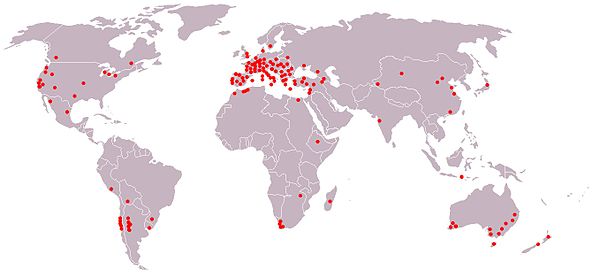
Source: Wikipedia
Now, how many of you tried the wine from Algeria or Thailand (well, I know that Oliver did)? I’m sure those are not easy to find in your local wine boutique. I would argue that the typical [good] wine store in US would have the wines from about 15 countries; some of the best stores will probably account for about 20 at a time. Thus if you really want to try the wines from many different countries, you will have to make an effort.
Is that a worthwhile effort? That is strictly a personal question. I’m genuinely curious how the different wines taste like, so I’m excited to try the wines pretty much from anywhere. Should you expect to find great wines? You definitely will – I had many mind-blowing wines from Serbia, Croatia, Lebanon, Israel, Georgia and other lesser known wine-making countries. Of course you will encounter a lot of plonk along the way, that is also given. So, should you take upon this challenge? I can’t answer that question – as I said, this is strictly driven by the personal interest, so you be the judge.
If you are curious where do you stand now, use this word document to track your progress. As a reference, I can tell you that at this point, I tasted wines from 36 different countries out of 58 listed in the document, and visited wineries in 6 (yeah, need to travel more…). What would be your score?
Below is the table showing my exact list of wines and wineries per country.Challenge yourself! Cheers!
Weekly Wine Quiz #51 – Hiding in the Plain Sight, Part 2
It is Saturday again, therefore, it is time for the wine quiz!
I want to continue the theme of the previous wine quiz #50, where you were supposed to find as many wine and winery names as possible in a small fragment of [poorly written] fictional dialog. The quiz seemed to be successful, but it happened to be focused mostly on California wines. Below you will find the text where I really made an effort to include the wines from all over the world. Just to give you some clues – it is possible that some of the words will lead to multiple wine/winery names – you will need to name at least one. Also, a lot of words (but not all) below will be a part of the two-word wine/winery name – you will need to name the full two-word name for it to count. To give you an example – if you would see the name Phelps in the text, the right answer would be Joseph Phelps, as it is an official name of the California winery. Capish? I thought so. Last note – it is okay to use Goggle – I think it will be a fun game in any case. Let’s proceed.
– Hey, Gloria, Mr. Giribaldi is here. You really have to tell me if you are going to Sicilia with him. The ticket will cost only $890. Your aunt Elena and cousin Ben will be excited to see you. Your great-grand aunt Olga is turning hundred! Everybody will be there. Remember Livio, the blue eyed boy? He was such a little angel… Anyway, he is coming with Virginia, and I’m sure you will have lots of catching up to do.
– okay, mom, I will go. By the way, if you see Kay, tell him that I’m through with him.
Again, there should be more than ten wines (and I will also wait for someone to tell me about the wines I even didn’t know exist) – but even if you can’t find any – your comment will be loved in any case.
Good luck, have fun, have a great weekend and cheers!
Last Bottle Sign Up ($10 credit)




 Talk-A-Vino