Archive
Wine and Time
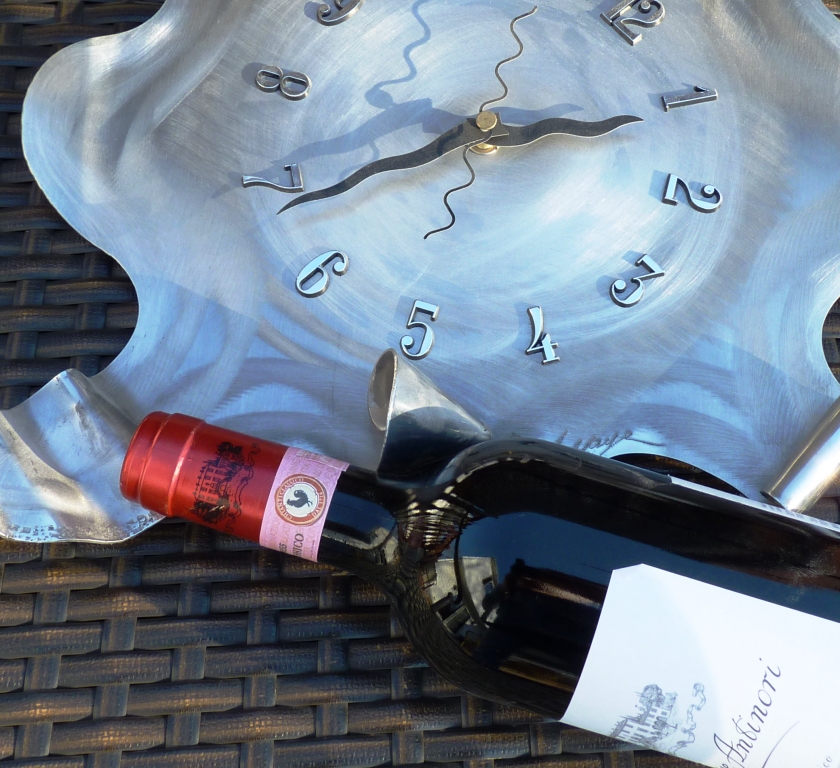 Of course time had being here forever, always moving, and always in one direction (someone, please prove me wrong!). Wine had being around for about 8,000 years, first appearing in the ancient Georgia (no, not the one down south, but the one from the Caucus region, on another continent). Wine is one of the few products literally not changed for such a long time in its form and its production methods – sans reverse osmosis machines, electrical presses and micro-oxygenation boxes. Considering such a long history, you can imagine that relationship between wine and time is very complex, and you would be right.
First, time is a necessary part and an attribute of the wine making process. For the vast majority of wines, if you read winery’s description of the wine, you will see something like “aged for so many month in …”. Sometimes the wine is aged in stainless steel tanks. Sometimes the wine is aged in clay vessels (very popular in Georgia now, the vessels are called Kvevri and produce very distinct wines). Lots of red wines are aged in oak barrels – American oak, French oak, Hungarian Oak, new oak, old oak – variations are endless. For many wines, duration and the type of the aging is a sole decision of winemaker (no pressure, but this decision will greatly affect quality and the taste of wine, and will define success and failure for it). For some of the wines, aging in a specific type of barrels is mandatory before the wine can be released – Rioja Gran Reserva should be aged for a minimum of 2 years in oak barrel and 3 years in the bottle to be officially designated as Rioja Gran Reserva. Barolo must be aged for 3 years, at least two of them in the oak barrel, and Barolo Riserva should be aged at least for 5 years. During the aging process, the wine is changing. Oak imparts very specific flavor, which we, humans, tend to like. Oak aging also acts as a preservative and helps wines to live long life.
Once all the aging is complete (in the tanks, barrels and bottles – whatever the aging was), wine is released – and this is when the second phase of the wine and time relationship kicks in.
This second phase is as tricky, if not trickier, as the first. Have you heard the phrase “needs time” in relation to the particular bottle of wine? If you will look at the wine reviews in Wine Spectator or any other publication which provides wine reviews, you would often see one of the phrases “Drink now”, “Best 2014-2020”, “Best after 2013” – these are the suggestions for how long the wine should be kept in the cellar before it should be consumed.
Why is that? What with all this aging? Why not open the bottle right away and just drink the wine? What was discovered at some point (don’t ask me when, but it was long time ago) is that wine actually changes its taste as it spends time in the bottle (the aging). And it doesn’t just change the taste arbitrarily, it tastes better. Young wines are often sharp, or somewhat single-toned in their taste – you might get pronounced acidity, or only sweetness, or lots of white apples – but only white apples. During aging, trace amounts of air are making its way into he bottle, and they lead to the wine changing its taste, improving to the better in majority of the cases – it becomes complex, bite softens up, bright and diverse fruit tones compensate for the pronounced acidity and the wine brings a lot more pleasure compare to the young wines. Mature wines deliver more pleasure – this is the whole philosophy behind wine aging.
Simple and easy, right? Well, this is were everything becomes complicated and confusing – as not all the wines should be aged (do not try to age Beaujolais Noveau, please) and also it is very tricky to make sure you would drink the wine at its peak – as whatever comes up, goes down in mother nature. This is where time transforms from the friend to the foe – and as a foe, it is merciless. After reaching maturity and staying there for a while, the wines are typically starting their decline in the taste (wine loses fruit, become very acidic, may be oxidized – and it stops delivering pleasure). Different wines made in the different styles will have different peak times and different lifespans. Some of the Jerez, Madeira and similar wines can go on literally for the hundreds of years. Good Rioja, Barolo or Bordeaux can be perfectly aged for 50 years or longer. Simple Cote du Rhone might only last for 3-5 years, same would be true for many of the Chardonnay wines. There is not crystal ball telling you precisely how long the wine will last and when will it taste the best – human trial and error is the best way to find that out. Of course there are many factors which might help you to decide whether to age the wine and if yes, for how long – the winery, the winemaker, the region’s wine style, success of the vintage and many others – but in the end of the day you would need to do the work (err, I meant the wine drinking) as the wine ages to find out when it tastes best to you.
So, does it worth to age wines if you don’t know what will happen to them in the end? For anyone who is into wines, and who had an opportunity to try a mature wine, the wine which reached its optimum taste, I’m sure this is a no-brainer question – yes, of course, and please, please give me more.
How one can experience aged wines? You got a few options. First, you can age it in your own cellar. Second, you can buy aged wines, either in a good wine store, such as Cost Less Wines in Stamford or Benchmark Wine Company. Note that you have to buy aged wines only from the trusted source – not aging the wines in the right conditions will simply ruin them, so you have to trust your source. Third option is to attend a wine tasting, such as PJ Wine Grand Tasting, where you can taste really amazing wines. However, you don’t have to wait of the Grand tasting, which takes place only once a year. If you live in a close proximity to Stamford, CT, you can attend a wine tasting at the Franklin Street Works gallery on Thursday, January 19th at 5:30 pm (here is the link for RSVP). The event is free and open to all. Here are the wines which will be presented in the tasting (the list might change at any time):
2003 Riesling, Mosel Saar River, Germany
1998 Merlot, Italy
2009 Stag’s Leap Hands of Time, Napa Valley
2009 Stag’s Leap Hands of Time, hyper-decanted using Nathan Myhrvold’s methodology.
So you should come and experience the relationship between time and wine for yourself – there is a good chance that you will even enjoy it! Cheers!
Vino Volo: Great Wines On The Go
Did you have any good wine at the airport lately? I hope you have, because I did. No, I didn’t need to sneak anything past security or convince myself that no name Merlot for $15/glass is great wine and great value. Your gateway to the good wine experience at the airport is called Vino Volo, and I recommend that you will look them up next time you are in the airport and in the mood for a good glass of wine.
Great thing about Vino Volo (actually, there are multiple) is that they have good wine selection and good prices, and you can also buy a bottle if you like something. On top of that is my favorite feature – wine tasting flights, opportunity to experience and learn. At any given moment they offer 4-5 different wine tasting flights, with selection slanted towards local wines – as much as possible, of course. So if you are in California, you should expect to find more Californian wines, and if you are in Portland, Oregon – you will find more wines from Oregon and Washington.
I stopped by Vino Volo in Oakland airport in California, and selected tasting flight of 3 California Cabernets (there were 6 different tasting flights available). I think spending $19 to try 3 different California Cabernets ranging from $48 to $87 per bottle represents a very good value.
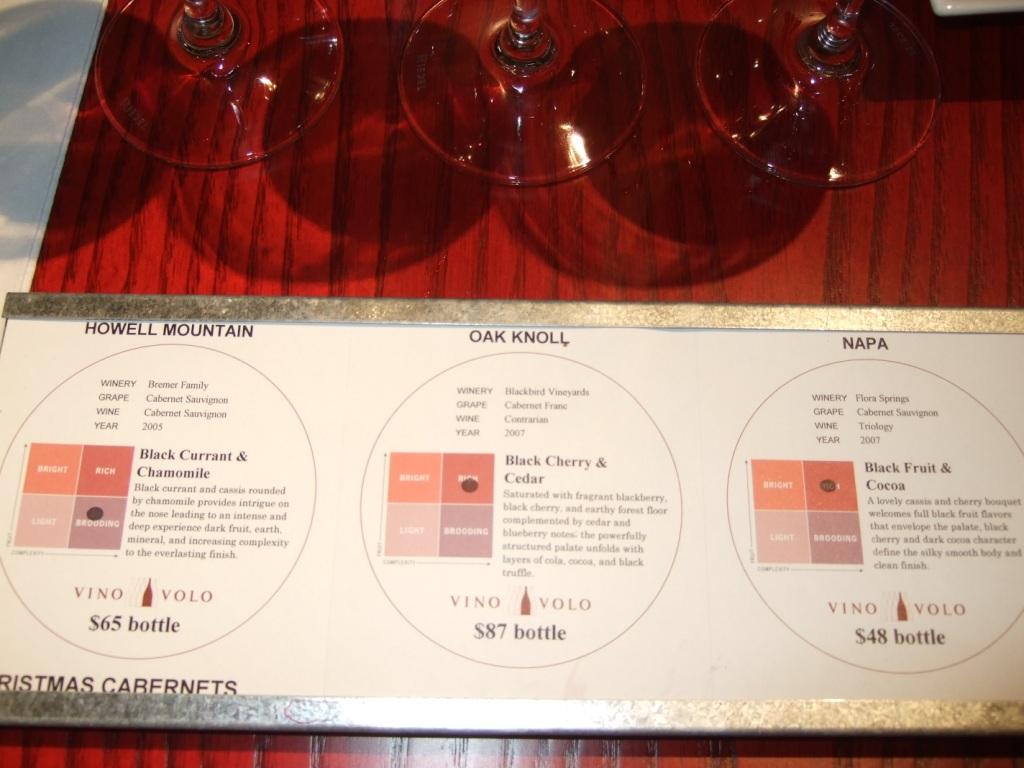 All three wines were good and solid – no, they were not amazing, but they were good. Bremer Family Howell Mountain Cabernet Sauvignon 2005 was the best of tasting – it had all the classic cedar and blackberry aromas, and had good balanced tannins and acidity. Blackbird Vineyards Contrarian 2007, which is a Bordeaux blend of Cabernet Franc and Merlot, was not ready to drink. It was way to aggressive on the palate and will probably open up in another 5 years. And Flora Springs Trilogy 2007 had all the great aromatics, but unfortunately was disappearing in the mouth leaving you with the impression that something is missing (needed more structure). I might be totally wrong on this wine, however, as it might be simply too young – well, the time will tell. And last note I want to make here – out of curiosity, I wanted to check how bad Vino Volo’s prices are. I checked prices on the wine-searcher, and happy to report that all the prices were within $5 range from the best price which can be found on the wine-searcher (and it doesn’t include shipping), plus Bremer Family is available only from the winery so it is also a great find.
I can only thank folks at Vino Volo for their great service to all the wine lovers – and next time you are in the airport, remember – you CAN find good wine there…
Stew Leonard’s Wines: Meeting Winemaker Chester Osborn
 A few times lately I have come across blog posts talking about too many wines on the shelves of the stores and poor consumers being intimidated and having troubles to find what they want. Quite honestly, I find this annoying – I believe convincing consumers that they should be intimidated is the wrong thing to do. Why am I annoyed with this? Very simple. Today, you need a very few things to navigate the world of wine and feel comfortable. One is desire to learn (if someone doesn’t want to learn, it makes no sense to complain that one can not). Learning about wines simply means trying them and making an effort to remember what you like and what you don’t. Another helpful thing – finding a good wine store.
There are quite a few good wine stores where I live – I do plan to write a separate blog post (or may be a few) covering some of those in more detail. One of such good wine stores is Stew Leonard’s Wines in Norwalk, CT. What makes the wine store “good”? It is easy to navigate, it has helpful and knowledgeable personnel, and it is helping you to learn about wines. You got all of that at Stew Leonard’s Wines – easy to navigate, helpful staff and great education. What do I mean by education? When it comes to wines, education consist of learning about wines and tasting them. One of the ultimate forms of “education” then is when you can learn from the best and taste excellent wine – and did I mention that it is usually free? Yep, it is free and available, almost every Friday and Saturday, again, thanks to the folks at Stew Leonard’s Wines. Every Friday and and Saturday, you can come to the store for the wine tasting, and if you are lucky – you will also learn from the winemaker, as it was the case last Friday, September 24th , when Chester Osborn, winemaker of the famed Australian winery, d’Arenberg, was presenting his wines.
d’Arenberg produces quite a few different wines in the McLaren Vale region in the South Australia, of course with Shiraz being a star grape. Five different wines were presented at the tasting. First, Lightly Oaked Chardonnay – it is actually very nice and simple, with clear fruit and light oak expression. Then comes The Stump Jump 2008, which is also should be known at GSM. GSM stands for Grenache, Shiraz and Mourvèdre, and it is a blend modeled after wines from Southern Rhone. It is also interesting to note that Friday, September 24th was the First International Grenache Day which was proudly stressed by Chester holding up the bottle of GSM. Stump Jump is a very nice and approachable wine with great and powerful fruit expression. The next wine was classic The Footbolt Shiraz 2007 (Footbolt actually was the name of the horse), nicely showing spicy bouquet of MacLaren Vale’s shiraz (need my rack of lamb wit that one). And then the flagship Dead Arm Shiraz 2006 – great wine which will need another 15-20 years to be enjoyed fully, very earthy and dense, drinkable now, but boy, will it evolve! In case anyone wonders, the Dead Arm has nothing to do with human body parts – the name is related to the grapevine disease, which can kill part of the plant, producing “dead arm”, or a “dead branch” – in this case the grapes on the surviving part have very high flavor concentration.
And last wine presented was Sticky Chardonnay – beautiful desert wine, made from Chardonnay grapes, exhibiting honey and white peaches notes, all with nice minerals, acidity and green apple bite. At $9.99, the wine of such quality is a pure steal. All in all, it was a pleasure meetings Chester d’Arenberg Osborn, learning from him and experiencing his wines.
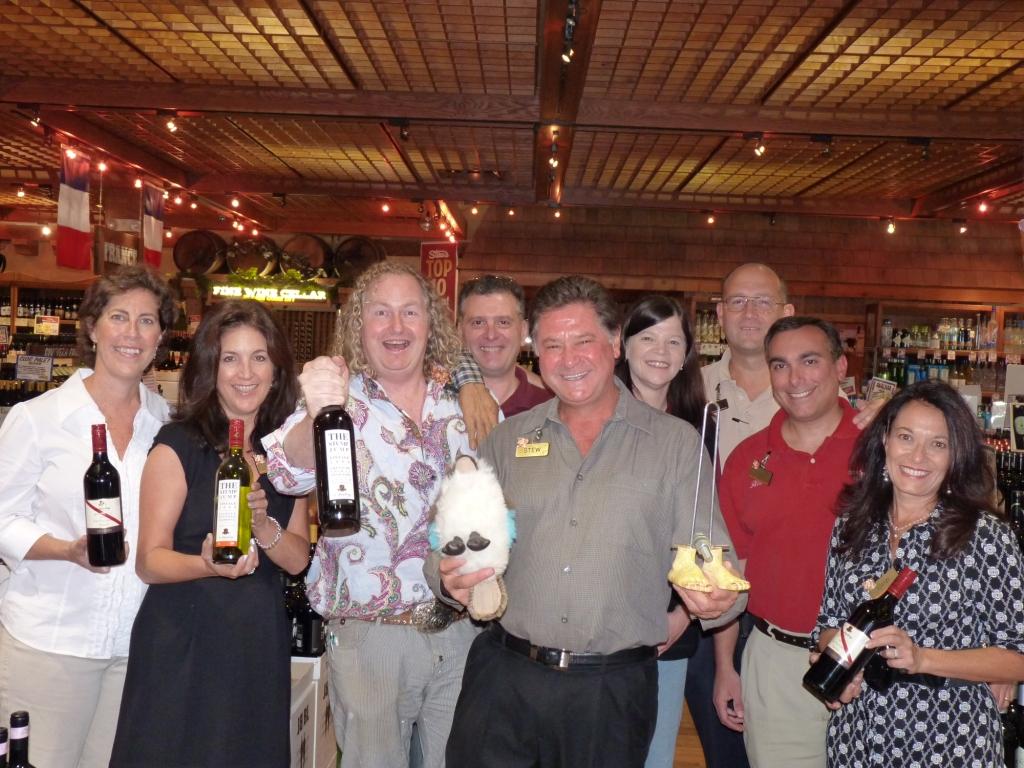
To complete the story, I would like to include a picture of the great folks from Stew Leonard’s Wines, including Stew Leonard Jr. himself:
Going back to where we started – it is not difficult to learn about wines today – all you have to do is make an effort. As one of my teachers was saying, when the student is ready, the teacher will come…
Can Wine Tasting Be Double Blind?
 Can wine tasting be double-blind? You think this is a misnomer, right? Let me explain myself. The basic premise of the “blind” wine tasting is that the taster has no idea what is he or she is dealing with, and by using swirling, sniffing, gargling and any other techniques should identify grape (or grapes), the place where the wine was made, and ideally the producer and the year. For the example of amazing blind tasting I have to refer you to the movie Bottle Shock (if you are into wines, definitely worth watching).
In general, tasting wines 100% blind is rare. What I mean is that even in the case of the blind tasting, there are some limiting factors which help you to identify the wine. For instance, when the wines are tasted blind for Wine Spectator ratings, usually the territory and a year and well known (and the goal of the tasting is simply to rate the wines as good and bad, not to identify grapes and producer). Even when I was tasting the wines for the Certified Sommelier exam (for more info – see About section), it was known that there will be no Pinot Grigio in the glass and grape choices would be really limited.
So what would I call a double-blind wine tasting? I was asked to taste home made wine and provide my opinion. I was asked a number of times and couldn’t refuse. I do call this double-blind – all I know is that the wine is made at home of someone leaving in Connecticut, and I don’t even know if it is made out of grapes or may be berries? Of course the whole purpose of this exercise was only to say whether I like the wine or not (no need to identify producer and the year 🙂 ), but who doesn’t want to play detective in such a case? Yes, I want to guess the grapes, and I want to guess it right!
While sharing my detailed tasting notes is really useless, as absolute majority of my readers will never taste this wine, I would like to still share a short summary. First and foremost, I did like it! I honestly don’t classify myself as a wine snob – I would gladly drink two buck chuck, as long as it tastes good. But I had a lot of home-made wines before – they are all sweet concoctions, mostly made out of fruit with addition of powerful alcohols – so they really have nothing to do with actual grape wines. This wine actually looked, smelled and tasted good, so here my notes, for what it worth:
Color: dark garnet.
Nose: wine opened with freshly squeezed berries, like raspberries and blueberries, complemented by lime zest.
Palate: very nice fruit (again raspberries, blueberries, ripe plums, some tropical fruit – very unusual for red wine), complemented with vibrant acidity and good tannins.
As you can see, it is a description of a very nice wine – and it was very nice indeed. So was it perfect? Well, it took me some time to realize what this wine was lacking. It was lacking place. There was no notion of terroir, no earth and no minerals. This wine can be from anywhere (and being made in Connecticut, it definitely is). Again, the wine was very drinkable, and a lot of commercially made wine have no notion of place whatsoever – but I think this is something to note when tasting the wine, so here it is.
What would you put as a grape(s) under such description? My top guess is Zinfandel, and if not, my next guess is Syrah. I don’t know the right answer, and I promise to share it – once I will find out.
And as I mentioned before – blind tasting is fun! Get your friends together and play the wine detectives game – I guarantee you a great time!
The Capital Grille Experience – Great Wine and Dine
It is interesting how we experience things in life. Some things just happen, and some are long-planned and anticipated, maybe for no reason at all (as long as we get the experience we want before we cross the finishing line, we are doing good, right?). 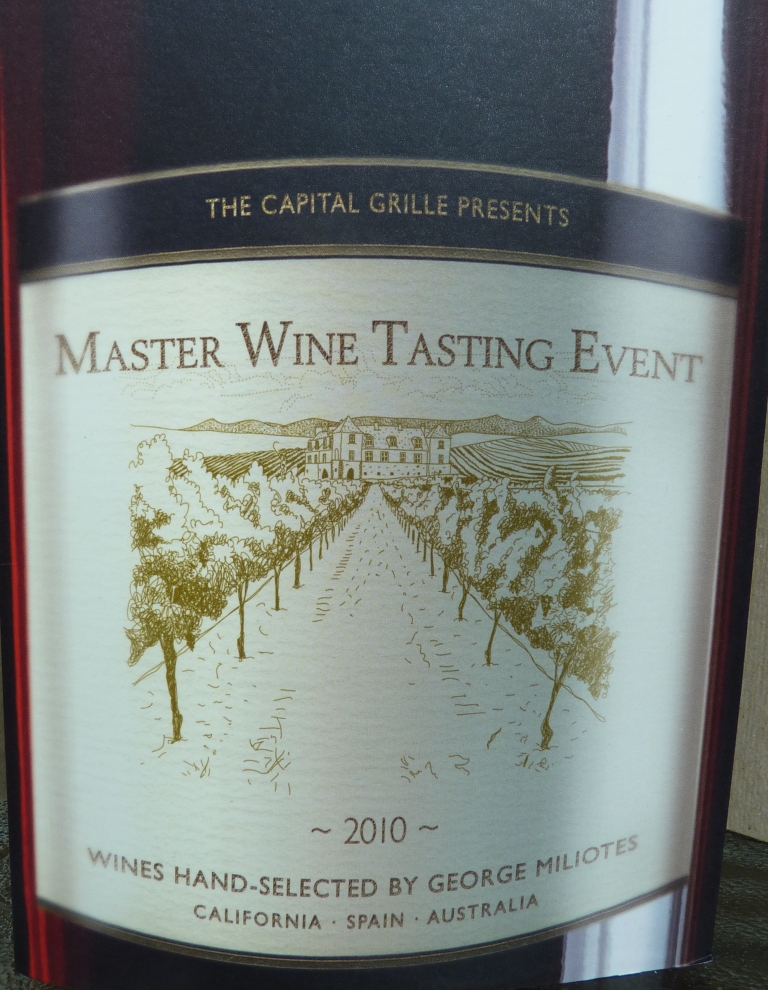 Same as Norton grape on my “to try” list for a long time ( see my last post on the subject), The Capital Grille was on the “to visit” list also for a while, at least from the moment the restaurant opened in Stamford. So finally this experience came through due to a combination of good circumstances – we had a good reason to visit (our anniversary), The Capital Grille was participating in Stamford Restaurant Week (as the restaurant is expensive, that makes it a lot more affordable), and The Capital Grille was running Master Wine tasting event, with 11 wines assembled by The Capital Grille’s Master Sommelier George Miliotes (you know by now that wines come first in this blog). So we decided that we have a great opportunity to see where the “we wine. we dine” motto of The Capital Grille will take us, and there we went.
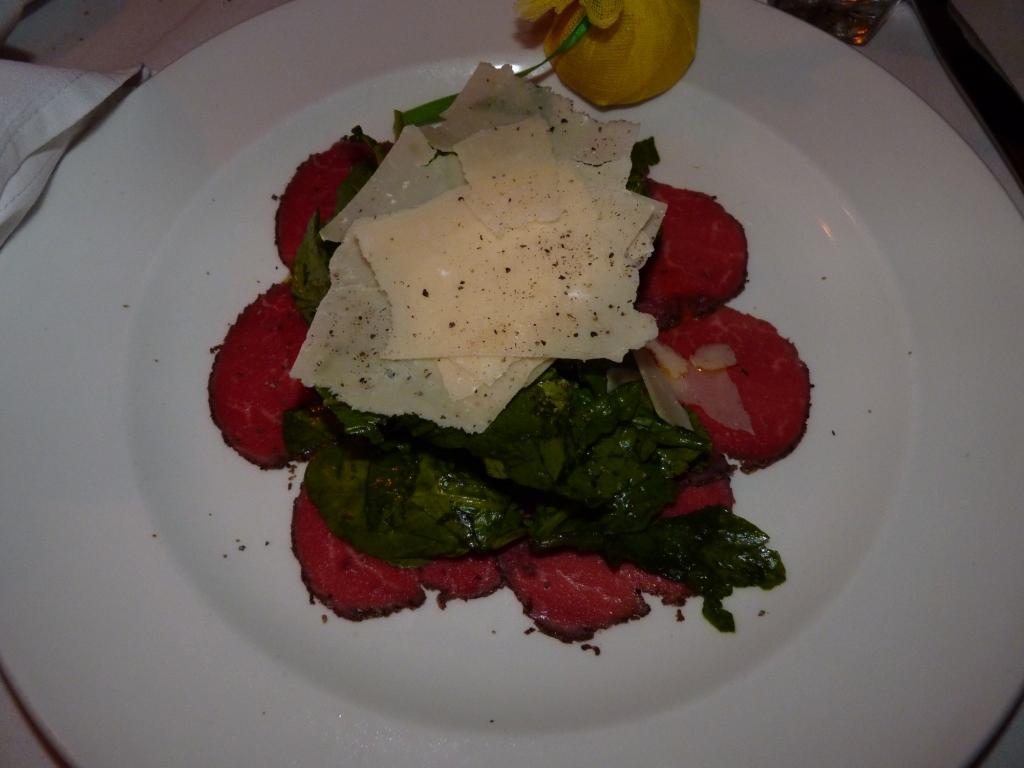
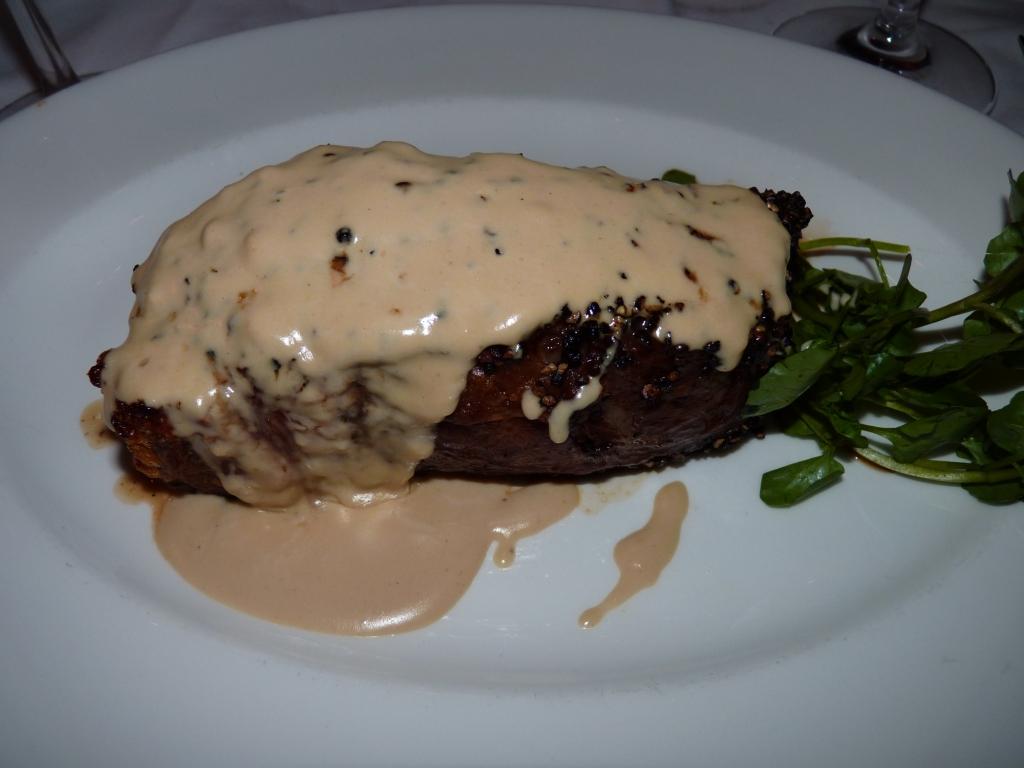
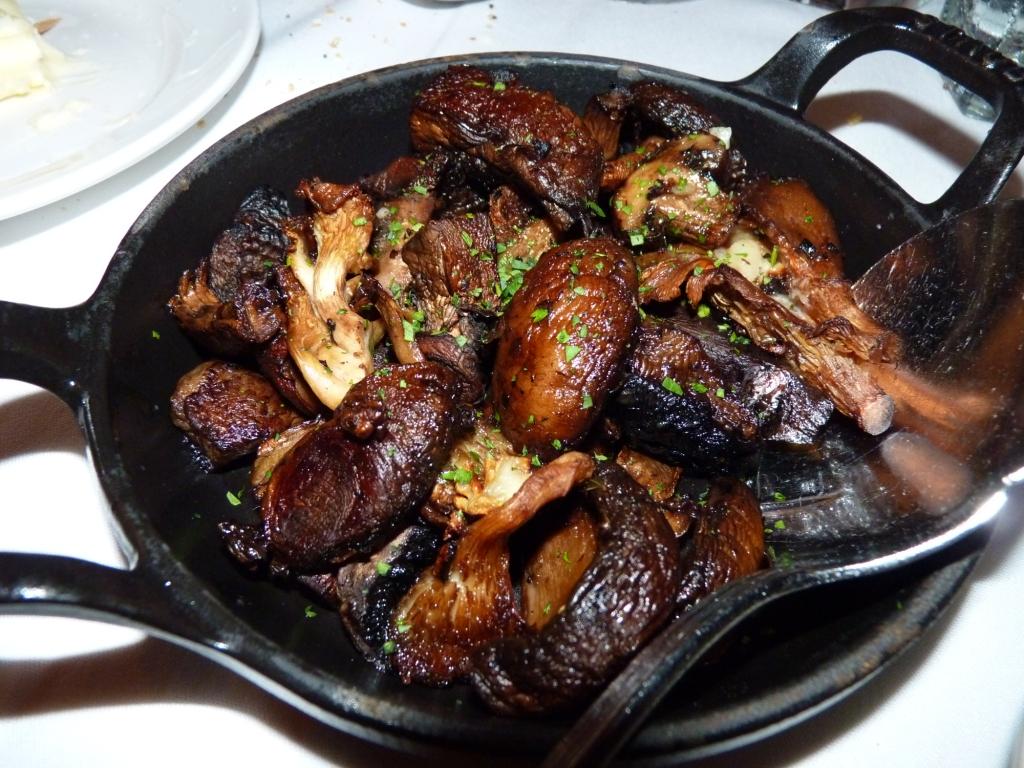
What a great experience! (should I declare this post complete?). From food to wine to service we had a great time all the way. Talking about food, the Wagyu Beef Carpaccio appetizer had an incredible flavor profile combining razor-thin slices of Wagyu beef, Parmesan cheese, and fresh arugula. Next, I have to say that nice thing about ordering steak done to your liking is that in addition to the standard scale of rare-medium-well done you can specify something like medium-rare plus, which is more than rare but less than medium – and then it is even better when you get the steak precisely the way you wanted ( yeah, I know, this is what we typically expect – but how often our expectations had not been met?). All four steaks had being done perfectly as requested, and the sides were outstanding (for the personal taste, Roasted Mushrooms had been my favorite).
Now, let’s talk about wine. The Master Event selection included 11 wines from California, Spain, and Australia, which in turn consisted of 6 reds, 3 whites, sparkling, and dessert wines. I was pleasantly surprised to see a number of wines from 2003 and even 2002. All the wines were very good and considering that the price of the Master Wine Tasting event was $25, I believe it presented a great value. As this is mostly a wine blog, let’s take a more detailed look at the wines included in this tasting (I’m going in the actual order of tasting). For what it is worth, each wine has a “drinkability” rating attached.
The Chook Sparkling Shiraz, Australia – was not tremendously impressive, medium body dry wine with bubbles 🙂 – Drinkability: 7
Whites:
Penfolds Bin 311, Thumbarumba 2008, Australia – I was recently surprised ( in a good way) by the quality of Penfolds Chardonnays. This particular wine was very nice, with a hint of oak and vanilla and a pleasant finish. Drinkability: 8-
Cambria Bench Break Chardonnay 2006, Santa Maria, California – This was one of the two “best of tasting” wines – it had a very noticeable amount of vanilla, butter, and toasted oak, but all of it was extremely balanced. This wine had great finesse. Drinkability: 8
Botani Muscat 2008, Malaga, Spain – beat all expectations. Incredible aromatics, fresh floral and various citrus fruit notes, great acidity – very nice wine overall. Another “best of tasting” wine. Drinkability: 8
Reds:
Triton Tinta del Toro Tempranillo 2008, Castilla y Leon, Spain – This wine was very dense and very earthy. In general, Toro wines are concentrated – and this one didn’t exhibit even a hint of fruit. I would guess it is either a food-only wine, or it needs time (probably both). Drinkability: 7
Avante Mencia 2009, Bierzo, Spain – Mencia makes some of the hottest wines right now. This wine was very interesting, light and fruity, with a hint of spicy cedar, with substantial tannins and a very, very long finish ( did I mention the long finish?). Probably will evolve with age. Drinkability: 7+
Greg Norman Reserve Cabernet Sauvignon 2002, Coonawarra, Australia – I have to honestly admit that I’m not a big fan of Greg Norman wines. This wine had a lot of eucalyptus notes and some dark berries, but it did lack an “umph” factor. Drinkability: 7
Greg Norman Reserve Shiraz 2003, Limestone Coast, Australia – same story as the wine before – lots of fruit, but not enough substance. Drinkability: 7
Freemark Abbey Cabernet Sauvignon Sycamore Vineyards 2003, Napa Valley, California – interesting wine, a bit all over the place. Has fresh fruit and fresh acidity, soft tannins. Drinkability: 7
Beringer Bancroft Ranch Merlot 2003, Howell Mountain, Napa Valley, California – Best of the red wines. Very good fruit, tannins and acidity which leads to overall good balance. This wine was perfect with the steak. Drinkability: 8-
Dessert:
Jorge Ordonez Muscat of Alexandria Victoria #2 2007, Malaga, Spain – nice dessert wine, has lots of honey, white peach and pear notes, has medium acidity and not enough minerality. This wine perfectly complemented the Classic Creme Brulee dessert. Drinkability: 7
As usual, here are some pictures:
Wagyu Beef Carpaccio:
Dry-Aged Steak au Poivre with a Courvoisier Cream Sauce:
Roasted Mushrooms (Portabella, Oyster, Shiitake and Crimini):
And last but not least, Steak Oscar:

As I mentioned before, the service was excellent, thanks to Mike Sabini – all the wine and food were showing on time and in proper order.
All in all – there are still few days left in both Master Wine Tasting and Stamford Restaurant Week programs – get up and go, use a good opportunity to experience great wine and food – in the words of Capital Grille, wine and dine.
Last Bottle Sign Up ($10 credit)




 Talk-A-Vino