Archive
Simple Recipe: Chicken Liver Pate
It’s been a while since I published any recipes on this blog. It doesn’t mean, however, that I don’t have any recipes to share. So let’s correct it.
As the title says, I like simple recipes. The meaning of “simple” is relative. For example, I’m sure that the absolute majority of people consider an omelette simple – both in recipe and in the making. And yet making an omelette can be a test for the chef, which is easy to fail. And take a look at the Japanese omelettes, those that are oozing when sliced on top of other food. Good luck making those in your home kitchen. Simple? Maybe not so much.
In my book, simple means primarily the way of cooking. For example, chicken legs or braised beef in the slow cooker are simple – put together all ingredients at once, turn it on, close the lid, walk away, come back in 6 to 8 hours for a delicious meal. That is what I call simple. Making delicious onion soup, on the other hand, is very far from simple. Despite a very few ingredients, the process is very involved – look away, and you will have to start all over. I’m sure you got my point.
Okay, now to the chicken liver pate. I love chicken liver pate. When it is well-made and tasty, just spread it on the toast, maybe add some onion preserve or a cornichon, take a bite, and your taste buds start singing. To me, it is one of the simple pleasures.
I started making chicken liver pate a while back, as it is very difficult to find a tasty version in the store. For the longest time, my go-to recipe was the one from Emeril Lagasse from the Food Network, which I followed very closely. Making chicken liver pate using this recipe is an involved step-by-step process, requiring about an hour or a bit more of active labor.
And then there is Instagram. It really became a source of cooking inspiration for me, with lots and lots of interesting recipes (not all recipes are created equal; you have to be ready to fail). A few days ago, I saw someone making a chicken liver pate in a very simple way, combining all ingredients in the tray and baking all at once in the oven, then processing it through the blender, and voila – enjoying the chicken liver pate. So I decided to try more or less the same, just incorporating a couple of elements from Emeril’s recipe into the process.
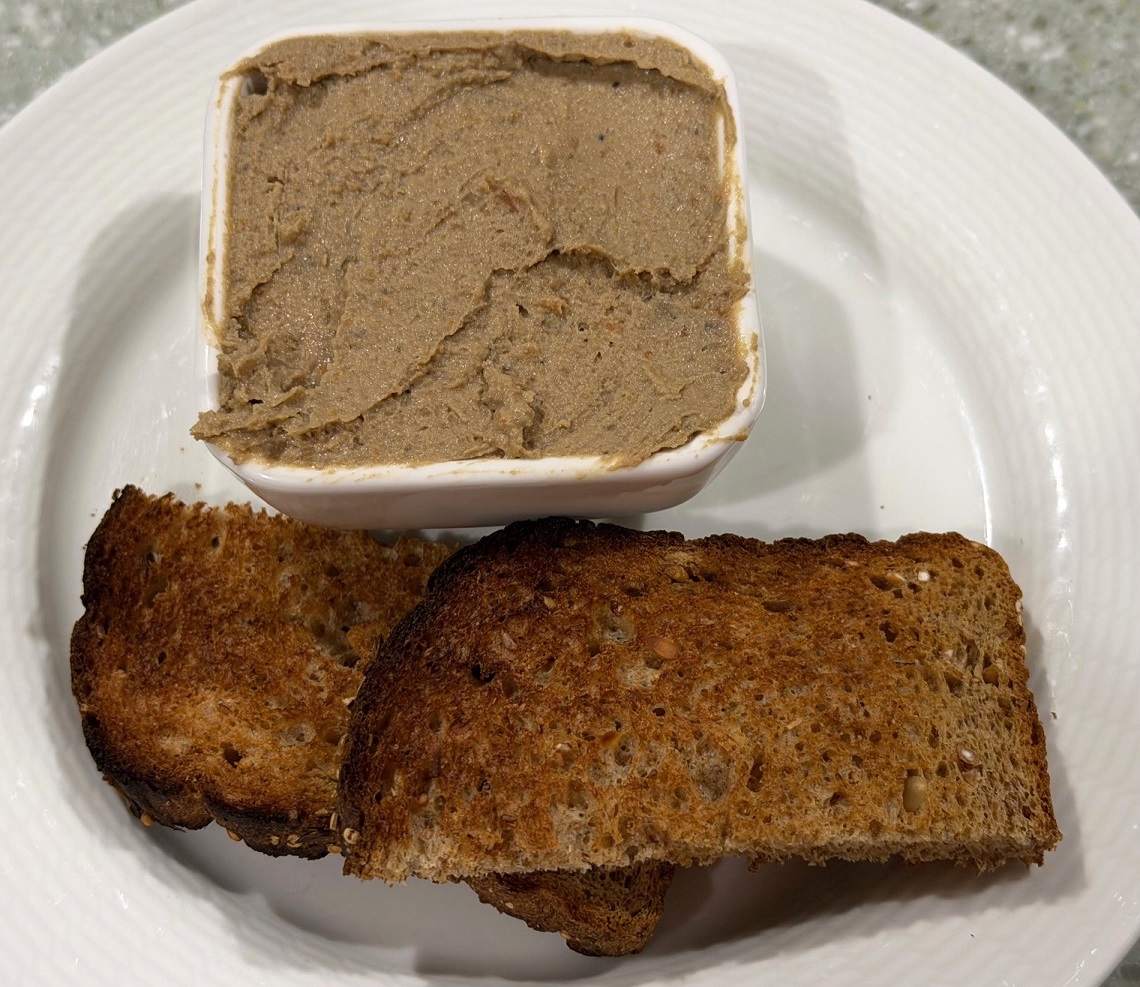
Two elements that I decided to add were cognac and green peppercorns. While making the chicken liver pate throughout the years, I tried different options, and found both irreplaceable, at least for my taste. So here is my new favorite recipe for the chicken liver pate.
Ingredients:
- 1 pound of fresh chicken livers
- 1 stick of butter
- 1 large red onion, sliced into 8 pieces
- 2 carrots, peeled and roughly sliced into big chunks
- 1 Granny Smith apple, cored and sliced into quarters (don’t peel it)
- 3-4 garlic cloves
- 1/4 of a cup Cognac or Brandy
- 1 teaspoon green peppercorns
- 3-4 bay leaves
- 3-4 allspice
- Salt and pepper to taste
Directions:
1. Preheat oven to 350 F
2. In a small roasting pan (I used a 9×9 glass pan), combine chicken livers, slices of carrots, onion chunks, apple chunks, garlic, 1/3 of the stick of butter sliced into chunks and placed evenly, bay leaves, and allspice. Add salt and pepper.
3. Put into the oven and bake uncovered for 45 minutes.
4. Take the pan out of the oven, add green peppercorns, and pour in the cognac. Mix the contents of the pan, and put it back into the oven for 10-15 minutes.
5. Take the pan out of the oven. Let it cool for 5 minutes or so. Remove bay leaves and allspice.
6. Transfer the content of the pan into a blender and add the rest of the butter (2/3 of a stick) to the blender in small chunks.
7. Blend until smooth, 2-3 minutes, scraping the walls of the can as needed.
8. Transfer into a glass container, let it cool off, and place it in the refrigerator for 3-4 hours (preferably overnight).
That’s all! Next, enjoy it with the toast or whatever way you like.
Notes:
1. Emeril’s recipe calls for soaking chicken livers in the milk for 2 hours in the fridge to remove bitterness. I have done it both ways, soaking and not, and I don’t see a difference. I didn’t soak it this time, and it was just delicious.
2. You can adjust the amount of green peppercorns to your liking. More peppercorns means spicier pate. But it is a mild spice.
3. Don’t substitute green peppercorns with black. The taste will be too aggressive. Green peppercorns are also softer, so if you use black peppercorns, the texture will be affected. If you can’t find green peppercorns in the store, you can buy them on Amazon.
4. Don’t substitute cognac with other types of alcohol (yes, you can use Armagnac or other brandy). Cognac brings both sweetness and a flavor profile that goes well with the other ingredients. I tried once using a bourbon, and the taste was ruined.
That’s all I have for you for now. But more of the simple recipes are coming.
Bon appetit!
New Recipe: Best Hummus Ever
Okay, here we go – a very modest title. “Best ever”, nonetheless.
Well, I love hummus, and outside of Israel, for the most part, I much prefer homemade hummus over any store-bought versions. There was one exception to this – for about 9 months, Costco carried ready-made hummus, which was spectacular – and then it disappeared. But for the most part, the store-bought versions just don’t cut it, so the only way for me to enjoy hummus is by making it myself.
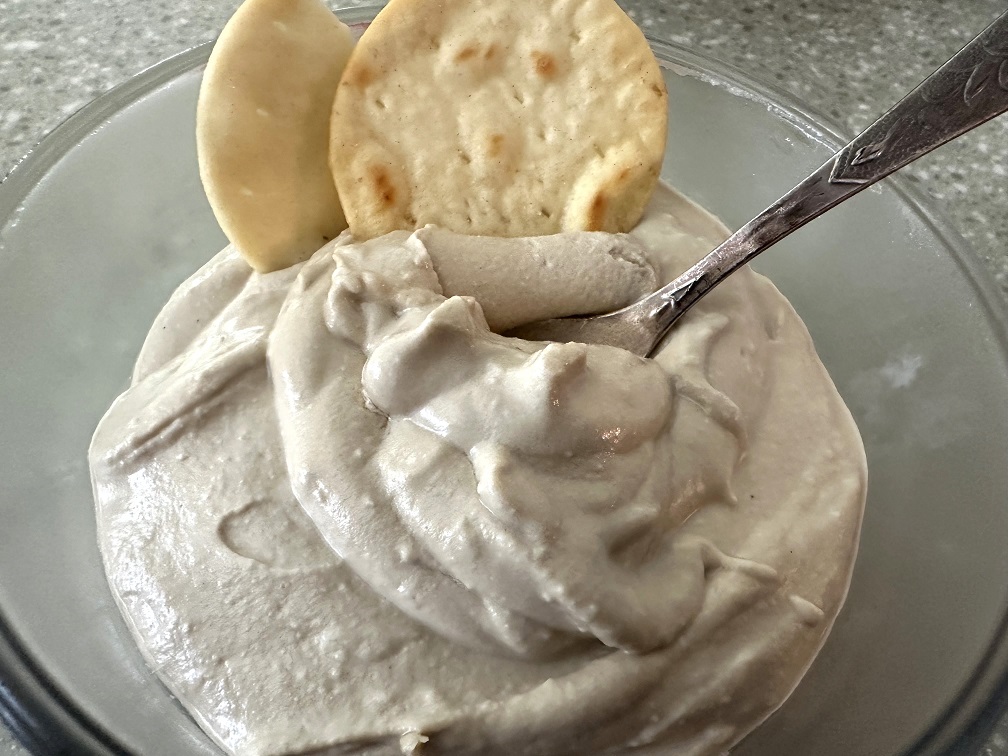
I already shared a hummus recipe on this blog – but since publishing it, I learned a few things, and while this updated recipe uses basically all the same ingredients, the proportions are different, as well as the methodology. Let me list the recipe ingredients first, and then we can talk about it.
Ingredients and tools:
- Dry chickpeas – 1 lb
- Olive oil – 6 tablespoons (approx)
- Kosher salt – 2 teaspoons
- Baking soda – 2 tablespoons
- Tahini – 1 lb (one jar)
- Roasted garlic + roasted garlic oil (see below)
- Fresh Garlic – 3 cloves
- Lemon – 2
- Ice-cold water, 1/3 of a cup
- Blender
In comparison with the previous recipe, this one uses only 2 teaspoons of salt instead of 2 tablespoons, and it requires much less olive oil than the previous one. At the same time, the amount of tahini has doubled. But still this is not a major change. Let’s go step by step through the prep process.
Before we talk about the main hummus ingredient, chickpeas, let’s talk about roasted garlic. In the previous recipe, the garlic was minced and then slowly roasted in the frying pan with olive oil. I now have a much simpler method to make delicious roasted garlic.
Roasted garlic simple recipe:
Preheat oven to 250°F. Peel cloves from 2 heads of garlic. Put garlic cloves in a single layer at the bottom of a small cast-iron or heavy metal oven-safe pan. Pour enough of good olive oil to cover all garlic cloves completely. Cover and put into the oven for 1 hour. In one hour, you will end up with golden roasted garlic cloves and deliciously infused olive oil. Let it cool off, pour into the air-tight container (any used glass jar from preserves or similar will do), and store in the refrigerator. You now have roasted garlic to use as your heart’s desire – for example, to make roasted garlic hummus :). Just take the jar out of the refrigerator a few hours before you are planning to use it (olive oil has a tendency to solidify in the refrigerator).


Now, let’s get back to our hummus.
First, we need to soak garbanzo beans (a.k.a. chickpeas) in cold water overnight, allowing dried beans to expand. Never use canned garbanzo beans as making a tasty hummus from them is mission impossible. By the way, I now have my favorite dried chickpeas to use in this recipe – non-GMO, family-farmed chickpeas from the state of Washington – you can find them on Amazon. In the morning, drain the chickpeas and let them dry a bit.
Put a large pan (the same pan you will use for boiling the chickpeas) on medium heat, put in the chickpeas, sprinkle two tablespoons of baking soda on top, and fry the beans (don’t add water or salt!) for 3-4 minutes. You will need to constantly stir the chickpeas so they will not start sticking to the bottom of the pan. After you see that the chickpeas are starting to get a bit of color, add cold water, bring to a boil, reduce the heat, and let it boil for about 40 minutes. Again, do not add salt! Salt will make the chickpeas cook for about 2 hours, and will make them a lot more dense. While chickpeas are cooking, remove the foam from the surface, and also use a slotted spoon to remove loose floating chickpeas’ “skins” – this will make hummus creamier. At around the 35-minute mark, start checking the chickpeas. Once they are fully tender, you can remove the pan from the heat and drain the chickpeas. Reserve a cup of liquid, just in case the hummus comes out too dense.
Once the chickpeas have cooled off slightly, we can proceed with the next step. Note: I like to make hummus in two batches, it lets me adjust the garlic/salt/lemon profile exactly as I want it to be – for example, if the first batch too garlicky, I can use less garlic in the second batch; if the first batch is undersalted, I can add more salt to the second batch – both batches end up in the same container anyway and get mixed.
For one batch, put into the blender juice of one lemon, 3 tablespoons of olive oil, 1-2 cloves of fresh garlic, any amount of roasted garlic and roasted garlic oil you desire, and blend them together for one minute – this way I’m making sure the garlic cloves are well incorporated into the liquid. Next, add half of the chickpeas, half a jar of tahini (make sure to mix the tahini in the jar well before using), and one teaspoon of kosher salt. Blend for 2 minutes. After two minutes, while the blender is still running, add a small amount of the ice water and continue blending for another 30 seconds. Stop the blender, pour hummus into the container, and taste for garlic, salt, and lemon. Repeat the process with the second batch, adjusting garlic, salt, and lemon as needed for your taste.
Voilà – now your delicious hummus is ready. It will keep in the refrigerator for about two weeks.
That’s all there is to it. Let me know your thoughts in the comments, especially if you decide to make it!
A Few Days in Paris
If you have followed this blog for some time, you know what the “a few days” title means. Yes, pictures. Lots and lots of pictures. This post will not be an exception – get ready to scroll.
Pictures have such an important role in our lives. Pictures solicit emotions, bring back memories and moments, and let us re-live those moments. Pictures can also serve as a personal journal, keeping all the dates in perfect order.

Probably my favorite shot of the entire week
Based on the pictures stored on my computer, I was able to figure out that the last time I was in Paris was almost 13 years ago, in October 2010. Of course, even if one is not familiar with Paris from the books, once you visit, that memory will be with you forever. Yes, I knew what I will find in Paris in a general sense, but the particulars, such as navigating this sprawling city, became rather blurred.
Once I arrived, though, it all came back rather quickly. Paris has one of the very best subway systems in the world when it comes to navigation – before every entrance, there is a full list of stations which you will find in a given direction – as long as you know where you are going, getting there is really easy.
This was a trip for work, and I was definitely lucky with the location of the meetings – a stone’s throw from the Eiffel Tower. For 5 days straight, I could look at the Eiffel Tower any time I would want. We even took some pictures from the roof of the building, admiring it from an even closer distance.
We also had a dinner cruise along the Sienne, allowing this photography junky to take a beautiful picture of the well-lit Eiffel Tower during the night – despite the rain which was going on the whole night but conveniently stopped as we were passing the Eiffel Tower, allowing for some magnificent pictures to be taken.
And then there were numerous strolls around the streets of Paris, allowing more magic to be captured. Remember I promised to inundate you with pictures? Here you go – and when you will be done scrolling, we will switch our attention to – yes, you guessed it – food and wine. See you in a minute or so.

















Now, food and wine, as nobody can talk about Paris without paying attention to food and wine. And wine and food.
Let’s talk about wine first.
First of all, I now did what I usually do during my trips, especially the European ones – visited the supermarket to see the selection of wines. Considering the location in the center of Paris, I think the prices look quite reasonable – good luck finding $3 wines in New York.
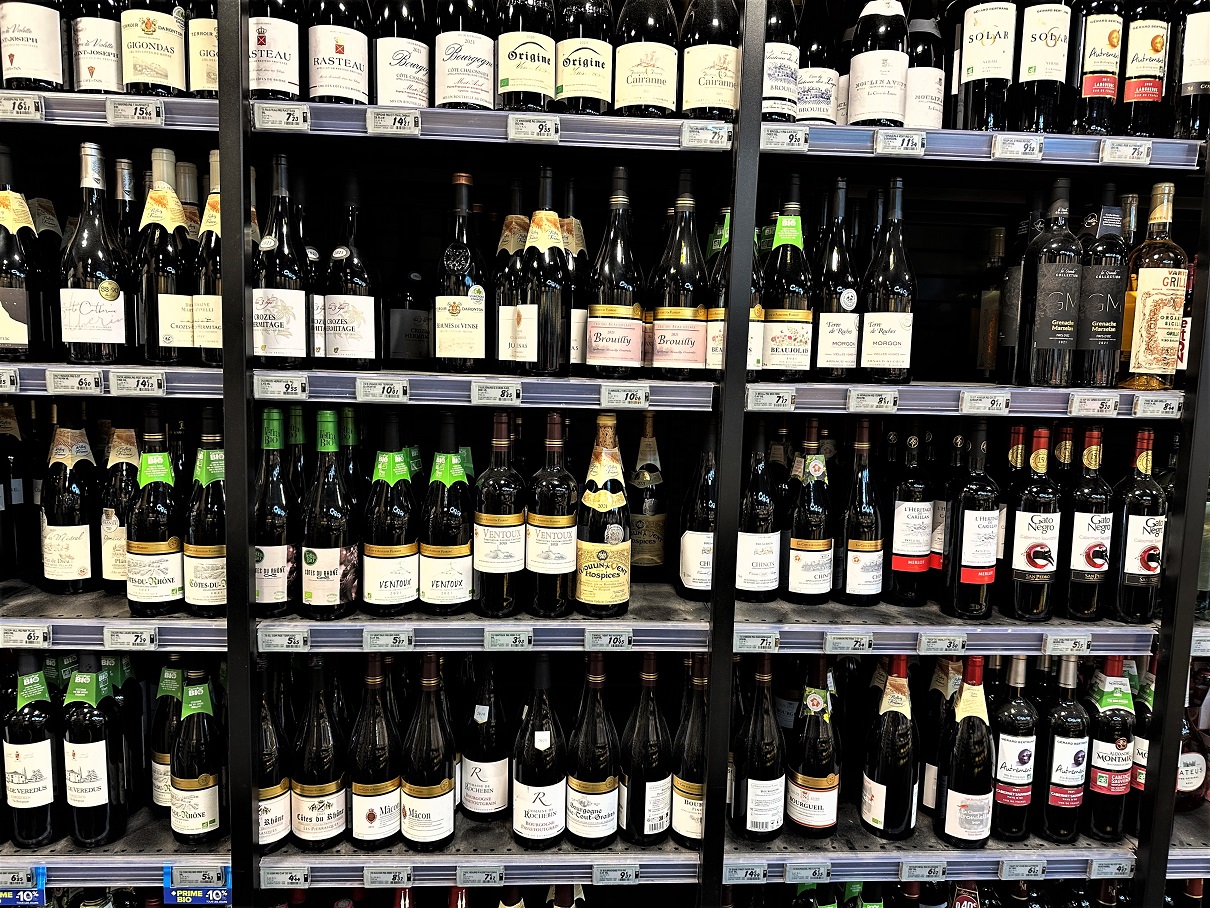


I grabbed two bottles to enjoy in my hotel room during the week. 2020 Rasteau AOP Cru de Cotes du Rhone at €7.23 was a very nice find. The wine needed a bit of time to open, but then offered a smokey, concentrated, powerful mouthfeel with a good amount of dark fruit. My second bottle was a bit more expensive – €9.28. It was 2021 Gérard Bertrand Solar 6 Syrah Cévennes IGP, a certified organic (Bio) and bee-friendly wine from the South of France. Along with Domaines Paul Max, Gérard Bertrand is one of my “safe choices” for situations where I need to pick a decent bottle of wine for a modest amount of money. This Syrah was quite generous, good amount of fruit, a tiny hint of black pepper, round and well-balanced. I run into the Gérard Bertrand wines a few more times during the trip – last time at the airport lounge in the form of the 2021 Gérard Bertrand Crémant de Limoux An 825 Brut, a blend of Chenin Blanc, Chardonnay and Pinot Noir, which was delicious in its own, but also perfect in Mimosa, with its firm structure and consistent bubbles.


I need to mention a few more wines. Of course, when in France, you should drink French wine. Except, maybe, when you are in a kosher restaurant. We visited L’As du Fallafel restaurant twice during the week (one of my colleagues eats Kosher, and then, of course, the food is just tasty), and an Israeli wine was a perfect option in my opinion. 2020 Gamla Cabernet Sauvignon Galilee was well approachable from the get-go, nice amount of dark fruit, good acidity, good structure, well-integrated tannins – a very nice wine overall. Last but not least was Chablis I had at the restaurant called Au Petit Marguery.
2021 Jean-Marc Brocard Chablis Vieilles Vignes de Sainte Claire was excellent. First, there was the nose of sapidity, minerality, and a touch of gunflint. I spent a good few minutes just admiring the aromatics before taking the first sip. The wine continued on the palate offering savory and complex mouthfeel with good acidity and restrained expression of the white-stone fruit. While working on this post, I looked up this wine – turns out that the grapes for this wine are harvested from the 70 years old vineyard with the roots of the vines extending for 25 meters into the Kimmeridgian soil. Now that will guarantee some complexity.
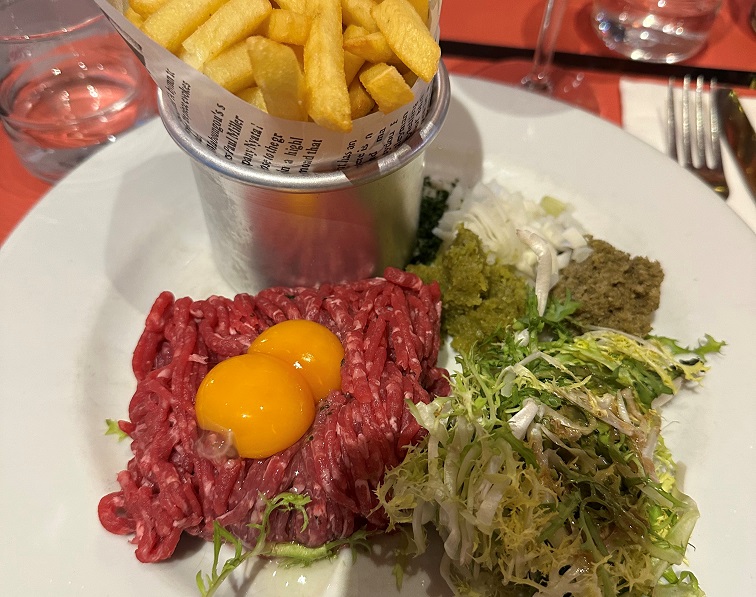
Now, let’s talk about food. There are two restaurants I want to mention. First called Suffren was an accidental find, as we were walking around looking for a place for dinner. I’m glad we stumbled upon it, as the food was outstanding, and the service was even better – happy and friendly. It was fun sitting at the table close to the entrance and observing the people waking in, shaking hands and talking with waiters – truly a neighborhood spot. The steak tartar was my choice of main course, and it was delicious. Everybody also got desserts, and polished their plates – profiteroles, baked Alaska, Crêpes Suzette (made tableside, of course).
 The second restaurant was Au Petit Marguery. I found the restaurant via search as an affordable restaurant offering traditional French cuisine. The food was good even though it didn’t leave me speechless. Foie Gras was good overall, but it was served with some sort of a sweet toast which I didn’t appreciate at all, and I was really expecting more condiments to accompany such a rich dish.


My main course was fish (have no idea which one), which was not bad, but again, not truly memorable. For dessert, I got an oversize profiterole which was not bad but not amazing, but again maybe it was competing with my overinflated expectations.
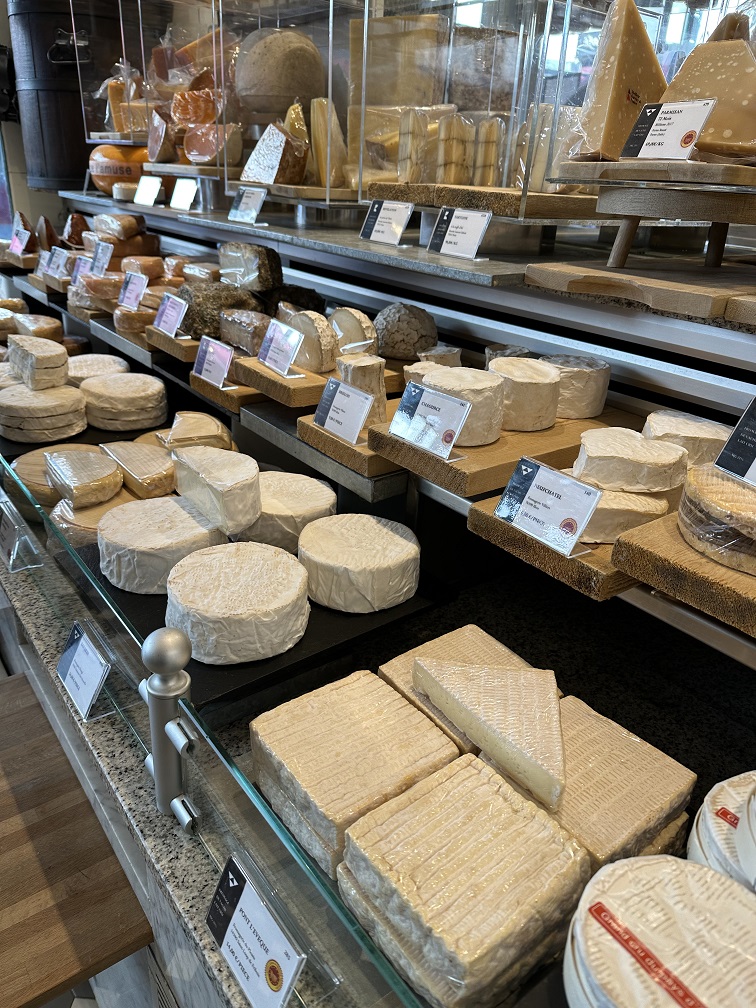
I also stopped by a few of the cheese stores – this is literally a mandatory activity when in France. Tea is something I love, but talk much about tea in this blog. I found my favorite tea store, Mariage Frères, a short walking distance from my hotel, and I got a few teas to bring home. Around the corner from the tea store, I found another one of my favorites – Le Café Lenôtre. I was really hoping for a cup of hot chocolate but was laughed at as nobody else wants to drink hot chocolate in July.


And now you have my full report. It was definitely fun to spend a week in Paris and see how your memories are coming back to you. Before we part, I would like to leave you with one of my favorite pictures, taken during the rainy trip along the Seine. I think it gives you a perfect Paris mood in one shot…

Thanksgiving Day Experiences – 2020 Edition
 2020. What a year.
Thanksgiving is my favorite holiday, as it revolves around family, food, wine, and friends. Close friends, who are more a family. Friends we celebrated Thanksgiving together with for the past 29 years. And 2020 managed to put a damper on that too, among a vast array of destruction this year will leave behind. Thanksgiving 2020 was about immediate family, food, and wine.
But even in 2020, the proverbial silver lining can be found. This probably was the most relaxing Thanksgiving ever. The menu was dramatically reduced – the family of 4 doesn’t need much of the elaborate appetizers and a vast array of side dishes, so cooking was mostly stress-free. Mostly, however, is a keyword here, as the cooking of the turkey became an unintended study of the operations of our oven.
I’ve cooked the turkey using most of the possible ways over the years, with the exception of deep-frying – roasted, roasted in the bag, turducken, deboned and roasted, smoked (smoked was the house favorite for the past 3 years). I’m also a big fan of slow cooking when you cook low and slow for a long time, so we decided that this was the way to go this year. Turkey was all buttered up with cavity stuffed with aromatics (garlic, lemon, celery, herbs), and the turkey went into the oven at around midnight at 200°F. Or at least I thought that it was 200°F. In the morning, the thigh registered only 152°F (you really need 185°F there) – this is when we decided to check the temperature in the oven using the same meat thermometer, and found out that it was at least 20 degrees lower, barely reaching 180°F, which greatly extends cooking time. We spent the next 6-7 hours playing with that temperature until we finally reached the desired doneness. 40 minutes at 450°F uncovered rendered a beautiful bird with crispy skin. So as long as you trust your oven, slow cooking is the way to go. Added benefit – the best ever turkey gravy, made from the drippings (here is the link to the recipe in case you need one).


The rest of the food prep caused no heartburn, everything came out quite well. We did the same stuffing for the second year in a row. While the recipe is very simple (but it takes time), the result is simply a delightful dish loved by everyone. One more standout was Nantucket Cranberry Pie, which is incredibly simple to make but yet again, the result is superb.
What didn’t work well at all (every occasion needs a flap, right?) was my attempt to recreate childhood memories. I ordered black caviar from Costco (yes, guilty as charged), which came pre-packaged with Creme Fraiche and tiny blinis (a dollar-coin-sized Russian pancakes). First, the caviar itself was just so-so, both in texture and in the taste. But following the instructions and serving it with blinis was a complete disaster, as those dry nibbles resembling poorly made English muffins were, in a word, disguising, both in the taste and texture, especially the texture. Talk about disappointments… But as I said, this was the only flap.
And then there were wines. Over the years, I developed an “All-American” approach to my Thanksgiving wine selection. 2020 was not an exception, and I decided to open definitely more than we could drink, but still have fun with the wines.


Two out of four wines came as part of the mystery pack from Last Bottles which were offered during Thanksgiving. I always missed that deal, but this year I managed to grab the 12 bottles for $144, which made it a great deal. So far I tried 5 bottles out of those 12, and they were all excellent, so the white and Rosé were coming from that set. Vinum Cab Franc was a sample that I received as a preparation for the upcoming #CabFrancDay celebration. I also managed to get cellar-aged Cayuse as part of this year’s offering (directly from Cayuse), so I decided that it might make the Thanksgiving celebration quite special. And yes, it did…
For what it worth, here are my wine notes:
2017 Casino Mine Ranch Vermentino Shenandoah Valley (14.1% ABV)
Light golden
Honeysuckle, white flowers, inviting
Delicious. Whitestone fruit and tropical fruit, a touch of honey undertones, Gewurz-like spiciness, good acidity, good balance.
Should play well with food (pre-dinner notes)
8-, it was good with food
2018 Azur Rosé Napa Valley (12.5% ABV)
Gold with a copper hue
Similar to the previous wine, honeysuckle, ripe strawberries
Good acidity, strawberries all the way, fresh, vibrant, full of energy. Excellent.
8-/8, tremendous acidity on the second day. Worked well with food.
2016 Vinum Cellars The Scrapper Cabernet Franc El Dorado (15.18% ABV, $35, 26 months in 2 year French Oak)
Dark garnet
Red and black fruit, a touch of black currant
Black currant, dark chocolate, sweet cherries
8, good balance, well-made wine.
2011 Cayuse Syrah En Cerise Vineyard Walla Walla Valley (13.9% ABV)
Dark garnet, almost black
Liquid rocks, a touch of barnyard, iodine, can’t stop smelling
Liquid rock, tart cherries, tar, pepper, iodine, firm structure, layers and layers of flavor. Wow.
9-/9. Surprising pairing – worked amazingly well with Nantucket cranberry pie. Worked well with turkey as well.
As you can tell, the wine program was a complete success – and I definitely can’t complain about spending the holidays with just the closest family
That’s my Thanksgiving story. Hope you had fun too!
Perfection, or When Everything Works Together…
 If you are into wine and food (or food and wine, whatever your preferences are), I can safely bet you were looking for that climactic moment of combining the food and wine to reach a new, higher level of pleasure. Yes, I’m talking about that “oh my God” moment when your taste buds experienced that already exceptional bite of food becoming something beyond exceptional in combination with the sip of the wine. By the same token, if you were looking for that moment, I’m sure that more often than not (actually, a lot more often than not) you couldn’t find it – those beautiful pairings are often equally evasive.
Here I want to share with you my account of my recent encounter with perfection, that climatic experience if you will.
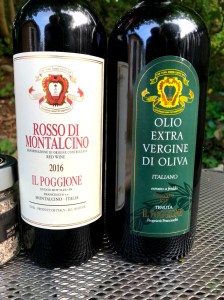
A few months ago I got a box in the mail (one of the little perks of the wine blogger). Inside, there was a bottle of wine, a bottle of olive oil, a jar of sea salt and a recipe – for Bistecca alla Fiorentina.
Bistecca alla Fiorentina is a dish coming from Tuscany (Florence) and depending on the historical account, it traces its origins either to the 16th or the 19th century – well, the history of Bistecca all Fiorentina is definitely not something we will be talking about here, so let’s move on. I’m sure you understand that “Bistecca” simply stands for “beef steak”. However, the recipe calls not for any steak, but specifically for the porterhouse or T-bone steak, which should be simply prepared rare or medium-rare over the charcoal. As the recipe is very simple, here it is in its entirety:
Ingredients (serves 4):
2 (1.5″ thick) bone-in porterhouse steaks (3.5 lb)
1/4 cup Il Poggione EVOO
Tuscan sea salt and freshly ground black pepper, to taste
2 sprigs rosemary


Get the charcoal ready. The distance between the hot charcoal and the steak should be about 4 inches (10 cm). The steak should be at room temperature before you start grilling (it should be out of the fridge for about 10 hours to get to room temperature). Grill steak on one side for 5-8 minutes, flip it with tongs (no forks of any kind!), salt the top surface with Tuscan sea salt and pour some olive oil. Cook for another 5-8 minutes, then stand the steaks on the bone and cook for another 5 minutes. Take it off the heat, put it down to rest, salt the other side and put some olive oil on it. After 5 minutes of rest, you can slice and serve your steak. See, can it get any simpler?


Now, it is time to talk about perfection.
First, the perfection started with the exceptional meat. In addition to what I already described, the box contained a gift card for Pat LaFrieda. The story of Pat LaFrieda Meat Purveyors started at the beginning of the 20th century when Anthony LaFrieda arrived in the USA and opened his first butchery – you can read the rest of the story on Pat LaFrieda website. Whatever the story is, the proof is always in the pudding – or on the fork in this case. I have to honestly tell you that I never had a better steak than this – the meat was sublime and was simply melting in the mouth – a good start for the perfect experience.


The second element of the perfection was, of course, the wine – 2016 Il Poggione Rosso di Montalcino (14% ABV, $27, 12 months in large oak barrels). Tenuta Il Poggione is one of the oldest producers in the Montalcino area, started to make Sangiovese wines – now known as Brunello – at the beginning of the 1900s. Today, it is one of the largest wineries in Montalcino, with 1500 acres, out of which more than 300 acres are under vines and 170 acres planted with olive trees (that Il Poggione EVOO in the package was superb).
The wine actually happened to be one of the best Rosso di Montalcino wines I tasted in a long time. The key word to describe this wine is finesse – it had a welcoming nose of tart cherries, medium intensity, and a hint of herbs. That profile perfectly continued on the palate, where delicate fresh cherries were joined by sage and rosemary, with clean acidity and excellent balance. Definitely one lip-smacking, delicious wine (8+).


Let’s not miss any details – we are talking about the perfect pairing here. As the devil is in the detail, there was one more element – little, but essential – to this amazing pairing, besides superb meat and outstanding wine. The last element? Tuscan sea salt. This was not some random sea salt – this one was Tuscan Sea Salt from AG Ferrari, listing the following ingredients: “Italian sea salt, fresh rosemary, fresh garlic, sugar, fresh sage, ground black pepper” – this Tuscan Sea Salt became the bridge which connected the flavor of the seasoned meat with the perfectly aligned flavor profile of the Il Poggione Rosso di Montalcino, delivering the genius pairing and an amazing experience.
I have to honestly tell you – I tried to replicate this experience two days ago – and failed. I used the same Tuscan Sea Salt, but I had a steak from the local supermarket butcher shop (1/3 of the price compared to Pat LaFrieda), and the wine was 2015 Collosorbo Rosso di Montalcino. The steak was simply not good (happy to be blamed for it as a cook – but I cooked the one from Pat LaFrieda too). The wine was okay, but a lot fruitier than Il Poggione, thus the pairing simply didn’t work. This once again proves my point about the evasive nature of a great wine pairing.
Did you have any climactic food and wine pairing experiences you care to share with the world? Or maybe you want to recount the worst moments? Will be happy to hear about it either way. Cheers!
Restaurant Files: Smoke, Fire, and Spice, and Everything is Nice – at Bobby Q’s in Norwalk, Connecticut
 I love food – well, of course, this is not a secret. Let me refine that. I love good food. That would be a much more precise statement (duh, who doesn’t). Same as with the wine, where I can never name my favorite grape or wine, I can’t tell you what my favorite food is. Except for that one type – good food. Good food is what I love – will it be sushi, steak or vegan burger – as long as the food is tasty, it will be my favorite food of the moment.
And then there is barbecue. Is that my most favorite food? No, it is not – this is why I gave you the opening statement. But, nevertheless, I really appreciate good, tasty, smoky, spicy food. The barbecue (or BBQ, as it is often abbreviated) might be the only authentic American cuisine – okay, the Southern cuisine is, but BBQ is indelibly a quintessence of Southern cooking – whether it is Texas, Tennessee, Kansas, Georgia, or Alabama – the BBQ there is “it”. And on the East Coast of the US? Well, BBQ is popular, and many restaurants say that they do it – only to fail the actual taste test. This is why the visit to Bobby Q’s in Norwalk, Connecticut was so vibrantly refreshing.


Bobby Q’s restaurant had been around since 2004 – however, located in Westport, just a next town over from Norwalk. It won numerous accolades of “Best in Connecticut”, “Best in Fairfield County” and many other “bests”. But in 2016, the building it was in was sold, and the restaurant had to find a new home – which it did at the Waypointe District in downtown Norwalk, where it opened its doors last year.


Before we talk about food (have you had dinner yet? take a moment, go eat something first, will you?), let’s talk about the drinks. The drinks menu is heavily focused on the whiskey and bourbon (that’s what BBQ is typically calling for, right?), but also includes a good number of cocktails. I had Smoking Gun (Bulleit Bourbon, maple, black walnut & creole bitters, hickory smoke), which was tasty and very potent, first. Then I continued with Bramble On (Buffalo Trace, maple, lemon, blackberries, lime & rosemary) which was not too sweet (my pet peeve – don’t like sweet cocktails) and very refreshing. There is a limited number of wines on the drinks menu, but we decided to stay only with the cocktails for the evening.


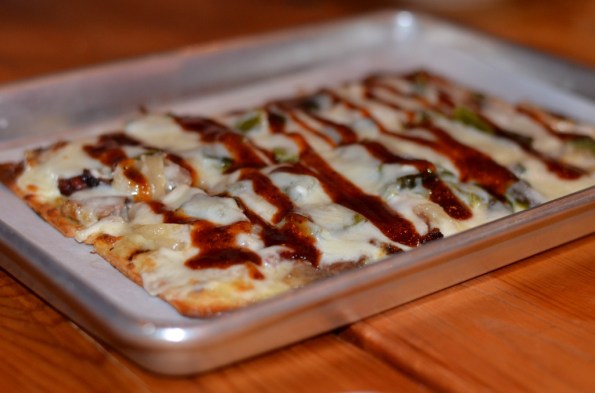
We started our dinner with Spicy Brisket Hand Pie (Guacamole, chipotle aioli, empanada crust) – very tasty, and then Bobby Q’s Classic BBQ Nachos (crispy tortilla chips, pulled pork from the pit, jack and cheddar cheese), served in the ‘Q It Up Version (pit beans, sour cream, guacamole, house pickled jalapeño) – I love nachos, and I love loaded nachos even more – so this was Super-Loaded nachos dish, absolutely delicious (healthy? of course not!), with perfectly cooked pulled pork, perfectly flavorful, with pickled jalapeños, just yum. Wood-kissed Wings (Korean BBQ, Nashville Hot) were outstanding. Nashville Hot were my favorite, as I really appreciate the dry rub on the wings, and these were superb, with a good, but the very controlled amount of heat, and a perfect amount of smoke. Austin City Limits Flatbread (brisket, roasted poblano peppers, caramelized onion, gruyere, Big Rack Bold BBQ drizzle) finished our introductory course and was also very tasty.


Next, we had a Vegan/Vegetarian BBQ Sandwich (Jackfruit, coleslaw). I heard that cooked Jackfruit has the texture similar to the pulled pork – this was definitely the case here. Without cole slaw, this sandwich can be served as vegan, and the addition of coleslaw makes it vegetarian. Cue’bano Sandwich (pulled pork, smoked turkey, Swiss, pickles, caramelized onions with Carolina Mustard sauce, grilled sourdough) and The Colonel Sandwich (Fried chicken, pickles, jalapeno-bleu cheese slaw, hot sauce, bun) were both excellent. The Cue & Co Burger (Pimento cheese, tomato, arugula, bacon jam) was served with Fire Fries (Ghost Chili dust, Basin’ BBQ, jalapenos, habanero, chipotle mayo), which was one of my favorite dishes of the evening. The Fire Fries looked quite innocent, and at first, they even tasted like that. A few seconds later, the fire started – these fries are not called Fire Fries for nothing – 15 seconds later, the whole mouth was on fire, albeit delicious.


And now, the time has come for the main attraction – BBQ platter (house pickles), which included Beef Brisket, Beef Burnt Ends, St. Louis Ribs, Texas Pork Sausage, served with the sides of Mac & Cheese (sharp cheddar, smoked gouda), Yankee Corn Bread (maple bacon butter) and Pit Beans (molasses, burnt ends, finished in the pit) – I don’t even know where to start. Yankee corn bread – superb, Pit Beans – outstanding, with a delicious amount of smoke and excellent addition of meat. Brisket was tender, juicy and perfectly smoked. The ribs had dry rub and were excellent, burnt ends – in general, one of my all-time favorite BBQ foods, and this rendition didn’t disappoint at all; sausage was flavorful and had the perfect texture. Simply a great smoked food extravaganza.


Do you think we left without having a dessert? Think again! The Apple Cider Doughnuts (Vanilla Anglaise) were melting in your mouth, Banana Pudding (Ripe bananas, Nilla Wafers, melted butterscotch drizzle) was sublime, and Bacon-laced Ice Cream Sandwich (soft baked chocolate chip cookies, vanilla ice cream, bits of bacon)… Ice cream with the bacon. Do I need to say anything else? Yep, it was as good as you think it should be, and maybe even slightly better.
Here you are, my friends – an account of smoky, spicy and even fiery experience. If barbecue is your crave, Bobby Q’s is well worth a special trip – and you can thank me later. Cheers!
Flavor, Next Level – Beyond Salt And Pepper
 I love cooking. Cooking allows you to be creative, and you are only limited by your own imagination in what will show up on the table in the end. That and maybe some skill – but skill, of course, can be learned and mastered.
While creativity, imagination, and skill are important, one quality will separate success and failure in the final dish – flavor. Of course, the situation is not that dramatic in real life – this is what “not too bad” and “interesting” descriptors are for, but the flavor rules. This for sure is true in the home cooking. If dish on the table looks great – excellent, definitely a bonus. The texture typically is important too – if the rice more resembles mashed potatoes, that is not really cool. But flavor rules – once we take the first bite, the presentation becomes secondary and the flavor is what we are looking for to either jump of joy and pleasure or make face and say “ouch” (don’t strangle that inner kid in you, let the reaction come out).
One of my favorite shows on the TV is “Beat Bobby Flay” on the Food Network. Bobby Flay, who is an Iron Chef and a well-known restaurateur, is challenged by some other, also well established and well-regarded chefs, to cook the dish of their choice, their own “signature dish”. The panel of three judges decides on who made a better dish in a blind taste test. Quite often, Bobby Flay wins even when he has to cook the dish he only tried once in his life and never cooked before – and sometimes even those which he never tried. What makes him the winner? When you listen to the judges explaining their decision, there is one most important word which you hear over and over again – flavor. The dish might not look anything like the classic version, and sometimes even not taste anything like the classic version, and nevertheless, the Flavor is the word you hear the most often, explaining the vote of A versus B.
If you see home cooking as a chore, this is probably not the post you want to continue reading. If, however, you are after the pleasure of both cooking and then eating the tasty food, let’s talk more about flavor. As a home cook, you have an arsenal of tools available to you to achieve the flavor – you start simply with herbs and spices, and then enlist the help of various techniques and methods – marinating, basting, slow cooking, pressure cooking and on, and on, and on. I personally like cooking with open fire, and thus grilling is definitely one of my preferred methods, especially when the weather is cooperating.
One of the things I like using to enhance the flavor of the food on the grill is a cedar plank. I would typically make salmon on the cedar plank so the salmon would have that delicious sweet smokey flavor. There is only one problem with this – I typically forget to pre-soak the plank at least for an hour – and unless the wood is soaked, it will burn in no time on its encounter with open flames.
It appears, that my problem (don’t tell me it is only my problem, and looking on a gorgeous piece of salmon you never had to hit yourself on a forehead saying “why I didn’t prepare the plank before”) had been solved! Here comes Beyond Salt and Pepper – a company which was founded (I’m very happy to give you full disclosure here) by my close friend Henry. We always shared our love for cooking with Henry, but Beyond Salt and Pepper takes that passion to the next level.
Pre-soaking of the plank is required before using it for cooking. I’m sure that when you think about soaking of the wood, you think water. But why only water? Wine is a liquid too, and wine is used in cooking, so maybe…? That’s right – we can use the wine, but not only the wine, also beer, rum, bourbon and any other type of alcohol – each one bringing its own unique flavor profile to the table – your table.
I visited my friend – and essentially, the headquarters of Beyond Salt and Pepper, located in the garage, as any self-respecting startup should – and we had a blast (a feast would be a better word).


First, I saw the process – the pre-cut planks of cedar – but not only cedar, Henry uses white oak too and says that imparts particularly nice flavor on the steaks – are soaked in the liquid of choice for days. Then the planks are getting into the machine where they are vacuum-sealed. Put on the label, pack, and voilà, ready for shipping.
And then there was cooking, lots of cooking. If you are still thinking planks are only for salmon, forget this notion as soon as possible. Unleash your imagination – you can make anything you want on the planks – and you can see the proof here in the pictures.


When cooking with the planks, there is a bit of technique which goes into the process – all explained in the recipes available on the Beyond Salt and Pepper web site. In most of the cases, you need to pre-heat the plank by putting in on a hot grill for 1 – 2 minutes on each side. And then you slightly pre-cook the food – for instance, sear steak on one side, and then flip it over on the plank and let it continue cooking as usual – that’s about all the special technique you need.


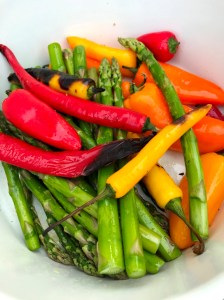
We had asparagus, artichokes and snap peas cooked on the Chardonnay-soaked planks – we couldn’t keep the snap peas on the table, everyone loved them. How about some little red wine infused smoke on the mushrooms and potatoes? Salmon and tiger shrimp on the Bourbon soaked planks? Yes, please! Chicken with some Merlot smoke on it – yum! Then the steak on the white oak and rum planks – superb. And then some cheese for dessert – but of course, made on the Chardonnay infused plank. Flavor, flavor, flavor – there are no limits to one’s creativity.

Here you are, my friends – a simple tool to add to your cooking tools arsenal, to get the flavor to the next level. If you are interested in trying these planks for yourself (and you should, seriously), you can get them directly from the website, or on Amazon (the website offers a bit wider selection). If you need some inspiration and cooking ideas, follow Beyond Salt and Pepper on Instagram. And by the way, while on the website, look for their selection of gourmet peanut butter… Mmmmm… Happy cooking!
Restaurant Files: Tavern 489 in Stamford, CT – Come for Food, Stay for Music and Wine
If I will describe a restaurant as “classy rustic”, would that make sense to you? Can you walk into the restaurant and feel that time and place all of a sudden changed on you? The modern, fast, noisy city disappeared, and instead, you find yourself in the cozy shack up in the woods?
That’s what Tavern 489 does to you. You walk in and instantly taken by the ambiance – no detail of decor is left to a chance – every element is used to create that tavern feel, the rustic ambiance – and it puts you in the right mood.


We visited restaurant back in May, when it was only opened. Eric Monte, a well-known restaurateur in Stamford, CT and an avid wine collector, put together a special dinner menu for us, with all the dishes paired with the different wines.
And not only the wines. Tavern 489 is the only restaurant in Connecticut which serves Moosehead Lager, the beer made at the oldest Canadian brewery (founded in 1867) – and Moosehead Lager was our first pairing of the night.
Before we get to food – yes, of course, there was a cocktail to start the evening. Tavern 489 is located on the street called Glenbrook Road, one of the oldest streets in Stamford – how you can pass on an opportunity to taste the Glenbrook Mule cocktail (which was very tasty)?


Our first dish was Venison Balls (red wine green peppercorn sauce), served with the Moosehead Lager. The balls were nicely spicy, and the beer was working perfectly with the dish. And what I loved the most was the presentation – perfectly fitting for the tavern food.


Next up was Cold Spring tomato Soup, and we also switched to wine to continue our dinner. Our first wine was 2013 Les Costiéres de Pomerols Picpoul de Pinet AOP – touch of honeysuckle on the nose, clean, simple palate, tart. The wine didn’t work with the soup (how many wines do?), despite the fact that the soup was very tasty. But it perfectly complemented Taunton Bay fried oysters (lemon, tamarind, curry, tomato sauce), which were delicious and again, beautifully presented dish – we eat with our eyes first, and the oysters were a pure delight on the plate.


Remember I mentioned music? So the music has a special place at the Tavern 489 – right in front of the house, and it is live. Tavern 489 brings in many musicians, so all you really need is a glass of wine (or a Moosehead Lager), sit down (or stand for that matter), and get carried away:
 The food continued with the selection of the burgers – Bison Burger, Blackened Angus Burger w/Blue Cheese and Tavern Burger w/Pesto Truffle – my favorite was the Blackened Burger – great flavor, and of course it is hard to resist a blue cheese topping. With the meat, the new wine showed up – this time red, 2010 Grand Palais Bordeaux Supérieur – typical Bordeaux nose, green bell peppers, supple palate, good balance. This wine perfectly paired with my favorite dish of the evening – Charred octopus (Kidney bean, tomato, shallots, garlic, parsley, pomegranate chimichurri dressing) – this dish had both perfect finess of flavor, and just a rustic, homey, comfort food feel – simply a wow.


Our main course was a true carnivore dream and a masterpiece in the presentation – Dirty Tomahawk steak – bone-in thick ribeye steak (served with Chef Suggestions – potatoes, broccoli rabe, bacon-wrapped asparagus). Definitely a treat, and if you are into the meat, that is your dish. Another wine was served with this dish – 2012 Shooting Star Blue Franc Blaufrankisch Washington State – generous, rich, brooding – delicious wine overall. The wine was unique and different – how often you get to drink wine made in the USA from the Austrian/German grape such as Blaufränkisch? Definitely a treat – and an interesting story on the back label.


And finally – the dessert – very tasty Chocolate Mousse, light and delicious.
 We had an opportunity to thank Eric Monte and his wife Donna and Chef Regis Saget, and of course to ask them questions, which we did:


 This was the end of our evening of delicious food, music, and wine – and I highly recommend that you will head over to the Tavern 489 and check it out for yourselves. You can thank me later. Cheers!
Tavern 489
489 Glenbrook Road
Stamford, CT 06906
Ph: 203-355-0360
http://www.tavern489.com/
Restaurant Files: Mountain View Brasserie in Greenville, NY
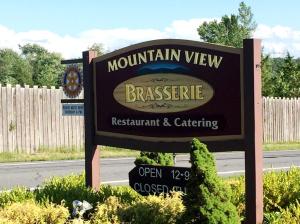 We already talked about our day in the Hudson Valley during traditional adults getaway trip (you can read about it here). Culmination point of the Saturday night was a special dinner. I call it “special” as this is something we always spend time preparing for as part of our getaway. Our ideal scenario is to find a restaurant which would do a special tasting menu for our group, and would allow us to bring our own wines which we would pair with the dishes. More often than not we are successful in this plan – this year was no exception.
The Mountain View Brasserie restaurant in Greenville, New York agreed to create for us a special tasting menu, and we came up with the wine pairings for all the dishes. Of course, the challenging part is doing the “blind” pairing if you will – all we have is the list of ingredients in the dish, and the pairing is solely based on our imagination. The good thing is that we usually do this “hard work” together with my friend Zak, who owns the wine store, so we have a good number of wine options. We always make an effort to keep the cost reasonable – talking about this dinner, only one of the wines was $25 retail, the rest were $20 or less.
For what it worth, here is our dinner menu, with the wine and pairing notes, and addition of the pictures. As the idea here was a relaxing dinner with friends and not a blogger’s dinner, all the pictures are taken with the iPhone and, well, it is what it is…


We started dinner with NV Rivarose Brut Rosé, Provence, France (Syrah/Grenache blend) which was nice, round and simple, well supporting the conversation.


Our first dish was Maryland Crab Cakes served with Lobster Sauce, which was delicious and very generous in size. We paired it with 2014 Templar Cellars Komtur Ekko Pinot Gris, Czech Republic (100% Pinot Gris) – I wrote about this wine before, and while the wine was excellent on its own, the pairing was simply outstanding, with the wine nicely complementing the dish.


Our next dish was House-smoked Salmon Napoleon with horseradish cream and gaufrettes garnished with capers and red onion – the dish was interesting, quite tasty, but rather unexpected under the category of “Napoleon”. Our wine pairing was 2015 Notorious Pink Grenache Rosé, Vin de France (100% Grenache), which was medium bodied Rosé, and the pairing was okay, but not mind-blowing (the flavors didn’t fight, but were not enhancing each other either).
Warm Hazelnut Crusted Goat Cheese with Market Greens was more successful as a dish, nice crunch on outside contrasting with the goat cheese acidic profile. We used the same wine for the pairing and it worked perfectly, complementing the dish very well.


You can’t have dinner without salad, right? We had Grilled Portobello Salad with Roasted Peppers, Fresh Mozzarella Cheese, Tomatoes, Spicy Walnuts, Market Greens with Balsamic Vinaigrette which was very tasty, but most importantly, it paired deliciously with 2014 Sangiovanni Kiara Pecorino Offida DOCG, Marche, Italy (100% Pecorino). Yet another wine I tasted before and loved, and it was perfectly complementing the salad flavors.
Vegetable Risotto with Parmigiano-Reggiano Cheese served with Roasted Sea Scallop was one of the absolute favorite dishes – perfectly seared scallop, working nicely with sweet flavors of corn risotto. Interestingly enough, we missed the sweetness as dominant taste element in this dish (just one word in our defense – corn was not listed among ingredients), and the same wine, Pecorino, didn’t work that well – it was just an okay pairing.


Our next dish was Baked Salmon Fillet with Orange and Olive Butter – again, perfect execution, moist and flavorful fish. The wine, 2011 Portal del Priorat Trossos Tros Blanc, Montsant, Spain (100% Grenache Blanc) was full-bodied, plump and delicious, working very well with the dish.


We were definitely looking forward to the Sautéed Wiener Schnitzel with Spaetzle, and the dish didn’t disappoint – very tasty, perfectly seasoned, delicious sauce. The pairing choice was 2013 Templar Cellars Komtur Ekko Pinot Noir, Czech Republic (100% Pinot Noir), yet again the wine I was familiar with – and I’m glad to admit that the pairing was spot on, with the perfect melding of flavors.


We finished our main course with Roasted Herb Crusted Rack of Lamb Provencal – I’m sure that even from the quick glance at the picture, you would expect that this was a tasty dish, as you can tell that meat was properly cooked – and you would be right, as it tasted appropriately delicious. Equally appropriate was our choice of wine pairing – succulent 2012 Seigneurs d’Aiguilhe, Côtes de Castillon, Bordeaux (Merlot/Cabernet Franc blend) Bordeaux, classic cassis and mint taste profile and classic complement to the lamb – outstanding pairing.
This concluded main portion of our dinner – and before we talk about dessert, I would like to commend restaurant on the smart way to present the tea. Take a look below:
 If you look in the middle of the picture on top, you will see a sand clock – what a great and simple way to help you steep that perfect cup of tea? Very thoughtful!


Our first dessert was Warm Apple Tart with Vanilla Bean Ice Cream and Caramel Bourbon Sauce – I’m sure you don’t need my lame description here, it was simply indulgent. And for the pairing – you can’t beat one of the best and most universal dessert wine pairings – Moscato d’Asti. We had 2015 Cascinetta Vietti Moscato D’Asti DOCG, Italy (100% Moscato d’Asti) – light, effervescent and clean.


Our last dish was Grand Marnier Chocolate Mousse with Fresh Orange Sections – excellent by itself, and pairing very well with 2014 Quady Essencia, California (100% Orange Muscat).
I think this was one of the most successful tasting dinners we put together, so for the next year, we have a very difficult task at hand – but we are up for the challenge. Cheers!
Mountain View Brasserie
10697 State Route 32
Greenville, NY 12083
Ph: (518) 966-5522
Restaurant Files: Off The Chart Experience at Portside Tavern in Hyannis
 Yes, I love food. This never been a secret in this blog. And yes, I get overly excited when I come across really tasty experiences.
Concept of “food” is multidimensional. At home, tasty food and family (and friends) around the table is usually all you need. Mix in a bit of ambiance and a glass of a good wine, and you got a great experience, right there.
When it comes to visiting the restaurant, you need a bit more than just food for the great and memorable experience – good service is important; another element which is near and dear to me is cost. This is not even the “cost” in the absolute terms – it is more the perceived value which matters, the infamous “price/performance” – an amazing burger for $20 might be a great experience, and tasteless, rubbery steak for $15 will not be the one.
As you can see in the title of this post, I want to talk about “off the chart” experience. The source of this exuberant designation was our recent visit at the Portside Tavern in Hyannis on Cape Cod (love weekend getaways, even with 5 hours in traffic). To go along the lines of a great experience in the restaurant, I was with the family, food was amazingly tasty, service was great, and the value was unbeatable – that’s all.
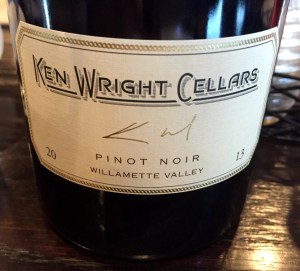 First, of course, was the wine. Don’t get me wrong – the restaurant also offers full bar with interesting cocktails, but my attention was on the wine list, which offers lots of great options, both by the glass (most of the wines priced in $7 – $12 range), and by the bottle (prices starting from $30 and some even for less). I couldn’t pass by the 2013 Ken Wright Pinot Noir Willamette Valley for $50 – talk about value – even if you can find this wine in retail, which is not easy, it will cost you at least $25, so I consider $50 at the restaurant to be a great value. After a bit of the breathing time, the wine was gorgeous, dense and powerful, with the signature Oregon aromatics of earth and cocoa.
Next, there was a pure indulgence from start to finish. Chowder (Local clams, new potatoes, applewood smoked bacon, cream) was not too heavy, not too thick, very well balanced in flavor.
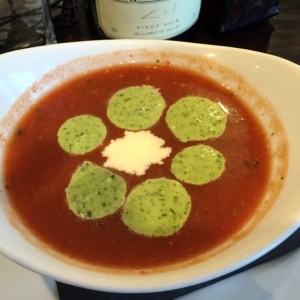
Watermelon Gazpacho (Sweet basil drizzle, whipped feta) was different and refreshing – outstanding on any hot day, light, and again, very tasty.
One of my favorite ways to cook chicken wings is to slow roast them at a low temperature (say 215ºF or so) – they develop great flavor and then easily fall off the bone this way. I was happy to find the same style chicken wings at the restaurant – Confit Chicken Wings (Choice of harissa, rhubarb BBQ, or sweet basil sauce – we chose BBQ sauce) were super-tasty and the chicken wings were literally melting in the mouth. Continuing to deliver a great dining pleasure was Poutine (House cut fries, cheddar curds, foie gravy) – love this interpretation of French fries. This rendition was on par with best of the best I had in Quebec – flavor, texture, cheese, gravy – everything was just spot on. Finishing our divine appetizer experience was perfectly executed Mac & Cheese (Gemelli, local cheeses, buttered crumbs) – again, very tasty.


Our main course dishes were equally delicious. Chicken Risotto (Asparagus, prosciutto, baby tomatoes, balsamic reduction) was very well executed, great smokey flavor, nice contrast of balsamic, very tasty. Half-Pound Burger (Caramelized onions, bacon, garlic aioli, tomato jam, brioche) had an excellent fresh beef flavor, was cooked as requested and overall was very enjoyable.


Cuban (Braised pork, ham, Gruyere, dijon aioli, house-made pickle, grilled french bread) was done exactly as I like it – good amount of meat, flat pressed bread, great combination of flavors – one of the best Cuban sandwich experiences. It was also served with a side of Wedge salad (one of the available choices), which is one of my favorite salads any time I see one. Grilled BBQ Chicken Pizza (Bacon, red onion, cheddar) was delicious, good crust and again, great flavor combination.


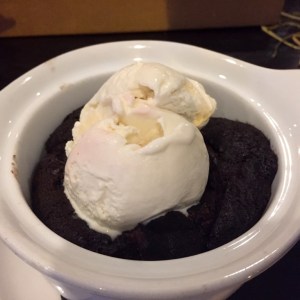
As you can imagine, we were absolutely full at this point. But considering how good all the food was, we had to try at least one dessert. After back and forth, we settled on Double Chocolate Cookie (Vanilla Ice Cream), which was more resembling a chocolate lava cake, and was instantly devoured with the help of four spoons.
 There you have it, my friends. If travel will take you to Cape Cod, make sure not to miss Portside Tavern – and then leave me a thank you note here. Cheers!
Portside Tavern
72 North Street
Hyannis, MA 02601
Ph: 508-534-9600
http://www.theportsidetavern.com
Last Bottle Sign Up ($10 credit)




 Talk-A-Vino