Daily Glass: Wine, Beautiful and Different
Have you ever caught yourself using the same expression over and over again, to the point of being annoyed with oneself, but not been able to do anything about it? One of my expressions, pretty much a single word, is “beautiful”. Yes, of course I mean it in the wine context. The best case scenarios include the first “wow” once your nose encounters the aroma exuding from the glass, connecting to the “wow, this is beautiful” after the first sip, when aroma and bouquet altogether transform into a beautiful (oops, sorry), memorable experience. Yes, I know, reading the wine reviews consisting of “wow, this is beautiful” notes is somewhat pointless, and if it draws your ire, feel free to take it out in the comments section below – but I have to say it when it happens.
The wine I’m talking about today was exactly like that. I got this bottle from a friend back in October. The wine is made by his father in Sicily – a small family production, for all I understand. One consequence is the fact that there is no information available on internet – and the bottle doesn’t have a back label, so I can only share my impressions. But – it was a beautiful wine.

The color of this 2012 Contrada Santa Croce Casteltermini Sicilia Cuvée Artisanale Chardonnay Grillot (13.5% ABV) was intense yellow with an orange hue – I don’t think the wine was aged in oak, but it was definitely fermented on the lees, and probably was aged on the lees for a good few month, to have such an intense color. It was also showing a bit cloudy in the glass – I can assume it was unfiltered.
And then there was was the nose. You know, that aroma which you can commonly pick up on many wines from Sicily – the volcanic soils, the touch of sun and minerals, inviting and promising, with hint of lemon zest. And then the palate. Totally unique. Starting from light, dry, almost effervescent midpalate feel. Then showing mature fruit, apricot and apricot pit, finishing with mouthwatering acidity, prickling sides of the tongue with fresh lemon notes. One sip inviting another. Until the wine is gone, and you are left with the memory.
Let’s drink for the beautiful wines and people making them. Cheers!
Wednesday’s Meritage – Texas Wine Country Trip Contest, #MWWC7 Results, Robert Parker Addresses Wine Writers, Amphorae to the Rescue?
Meritage time!
Same as a last week, today’s Meritage doesn’t have the wine quiz answer portion – as there was no quiz last week. Thus let’s jump right away to the interesting stuff around the vine and the web.
Have you heard the expression “Everything is bigger in Texas”? Do you want to check it out for yourself? You have about 5 days to enter Wine Enthusiast’s contest to win a trip for 2 to the Texas Hill County. The winner of the prize will receive:
- Round-trip flights and transportation for two to Texas
- Up to 8-night accommodations at local B&Bs and winery accommodations in the Texas Hill Country
- Guaranteed visits at up to 12 wineries
- Select exquisite multi-course wine-and-food dinners
There are less than 21000 entries so far, so I think you have good chances! For all details and to enter the contest, please use this link.
#MWWC7 has concluded and we have the new champion – Kara of The Sweet Sommelier blog. This round was quite difficult, with the theme “devotion” putting many people on the offensive, but it still had a very good showing with 22 entries. You can read very interesting analysis by the SAHMelier, the host of #MWWC7, in her concluding post. And you can read the winning entry here. Now we will be eagerly awaiting the new theme for #MWWC8.
Last week, the Symposium for Professional Wine Writers took place in Napa. As you can judge from the name of the event, a lot of professional wine writers were in attendance. There were a number of interesting keynotes at the symposium, including one by none other but the Robert Parker (I don’t care what do you think of his ratings, but his influence over the wine world is indisputable). Alder Yarrow, who runs blog called Vinography and is a professional wine writer himself, recorded the full keynote and shared it in the blog post which you can find here. It is a bit long (slightly longer than an hour), but may be well worth your time.
Last note for today is all about experimental winemaking. As you know from the ancient history, an amphorae was one and only tool available to the winemakers thousands of years ago. Now, Andrew Beckham, a ceramics artist and high school teacher, started making amphorae and use them to make wines – and the results seems to be very encouraging, with the wines taking on the explicit earthiness and minerality trait. It is very early to tell when and if the amphorae will become a mainstream winemaking vessel – but nevertheless, it makes a very interesting read – here is the link to the article.
And we are done for today. The glass is empty – but the refill is on its way. Cheers!
VIA Masterclass: Amarone
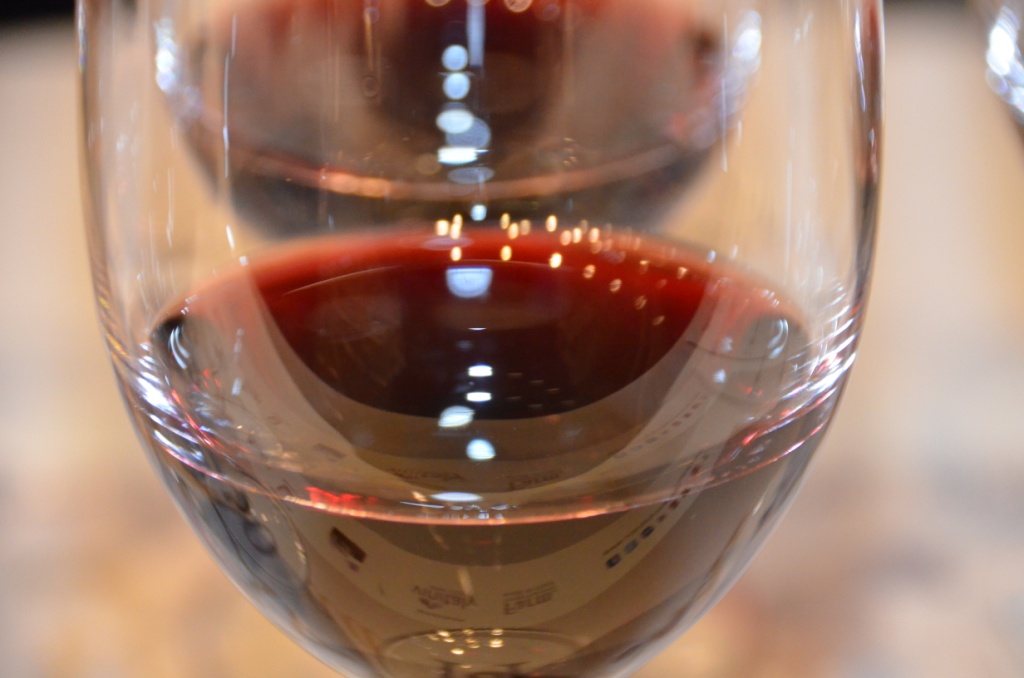 Continuing the subject of VIA Masterclass (here is the link to the previous post about Barolo masterclass), I want to talk about Amarone, one of the most uniquely Italian wines. The class was called “Amarone – The Velvet Underground”, and I think the name is very fitting. Let me explain.
Have you ever experienced a great Amarone? To me, the great Amarone starts with the nose which you can’t forget. As the wine is made from the grapes which had been dried under the sun for at least 90 days and thus more resembling the raisins than actual grapes before they will be pressed, it shows all those beautiful flavors of the dry, sun-aged fruit. After the aromas, which you can’t stop inhaling, comes the body – perfectly dry, perfectly full, perfectly powerful. This is what good Amarone is supposed to be. If you will think about the process, you will understand why Amarone has its price (think about the fact that most of the grapes lose about 40% of their mass – how many more grapes do you need to make the same bottle of wine?) – but if good Amarone is your wine, you will be willing to pay the price.
If you will search my blog for Amarone, you will find many posts, a lot of them complaining, hinting at my disappointment (I very rarely talk negatively about wines – I prefer not to write about bad experiences instead of bashing them). As of late, it became increasingly difficult to find Amarone as I described above, soft and velvety, but powerful and beautiful at the same time. A lot of the wines have very muted nose, and super-alcoholic, over-extracted, unbalanced body (and I just boasted about my non-confrontational style, huh).
This is where information from our Masterclass became very helpful. Yes, first we listened to the history of Amarone (discovered by accident, when the cask of Recioto, a famous sweet wine made from the dried grapes (passito) , was allowed to ferment through and became a dry elegant wine with – alas – bitter taste! Hence the name – Amarone, from the word Amaro – bitter). Then we talked about the geography and various sub-zones of Valpolicella region in Veneto – this is where Amarone is produced, with the best Amarone coming from the (not surprisingly!) hillside vineyards. Over the last decade, there was a huge increase in demand for Amarone worldwide. Think about the following facts. Consortium of Amarone producers was established in 1973 to regulate production of Amarone – so the production statistics are available from approximately that time. Amarone area plantings increased from 11431 acres in 1972 to 15723 in 2009. At the same time, all the way until early 2000s, there were about 1 million bottles of Amarone produced per year. In 2007, this number jumped to 8 (!) million, and then to the 16 (!!) million in 2008. Yes, it is great to have such a demand, but – where do you get the grapes to increase your production so dramatically over such a short period of time? You have to allow your vineyards to overproduce, and you have to lower your standards of quality and harvest the grapes from the vineyards which in the past you will never take the grapes from for your flagship wines. You see, Amarone is a top wine of Valpolicella. Amarone wines are typically made from Corvina, Corvinone, Molinara and Rondinella grapes, taken in the different ratios as each grape brings its own qualities tot he wine. Wines of Valpolicella are made from the same grapes – but it would be those which were not good enough to be made into Amarone.
To satisfy this huge demand in Amarone, there is also a push to extend the production area of Amarone, which would lead to the further deterioration of quality. In 2013, Amarone Consortium approved the increase of Amarone production zone by 30%, which will mainly come from the flatlands. To fight against it, 12 Amarone producers (Allegrini, Begali, Brigaldara, Masi, Musella, Nicolis, Speri, Tedeschi, Tenuta Sant’Antonio, Tommasi, Venturini, Zenato) created Amarone Family association (Famiglia dell’Amarone d’Arte) back in 2009, with the goal of pushing back and defending traditions of quality in production of Amarone. Marilisa Allegrini, currently the Head of Amarone Family association was present at the masterclass and she had an opportunity to talk briefly to all the attendees.
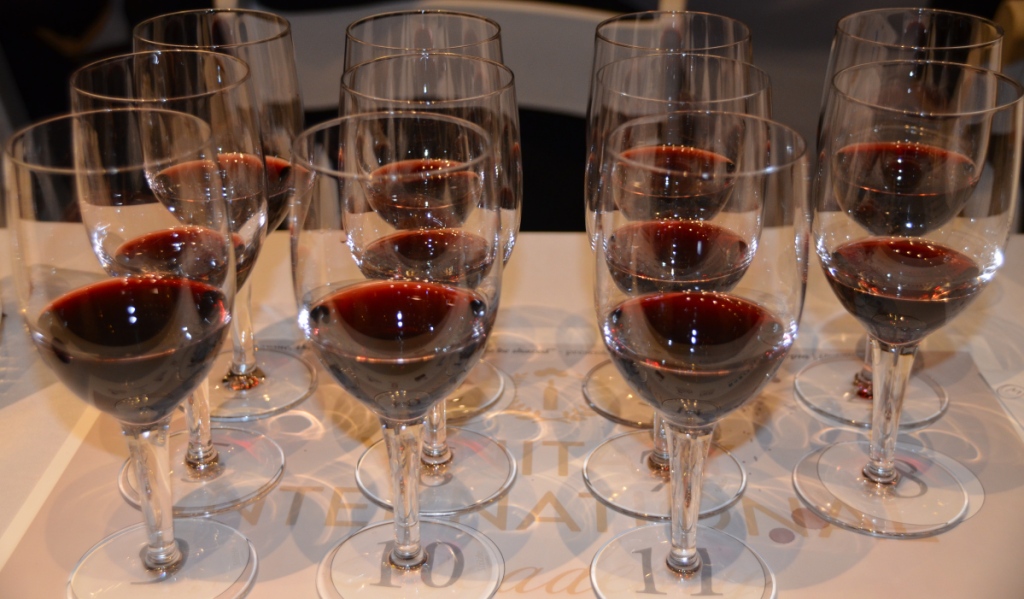
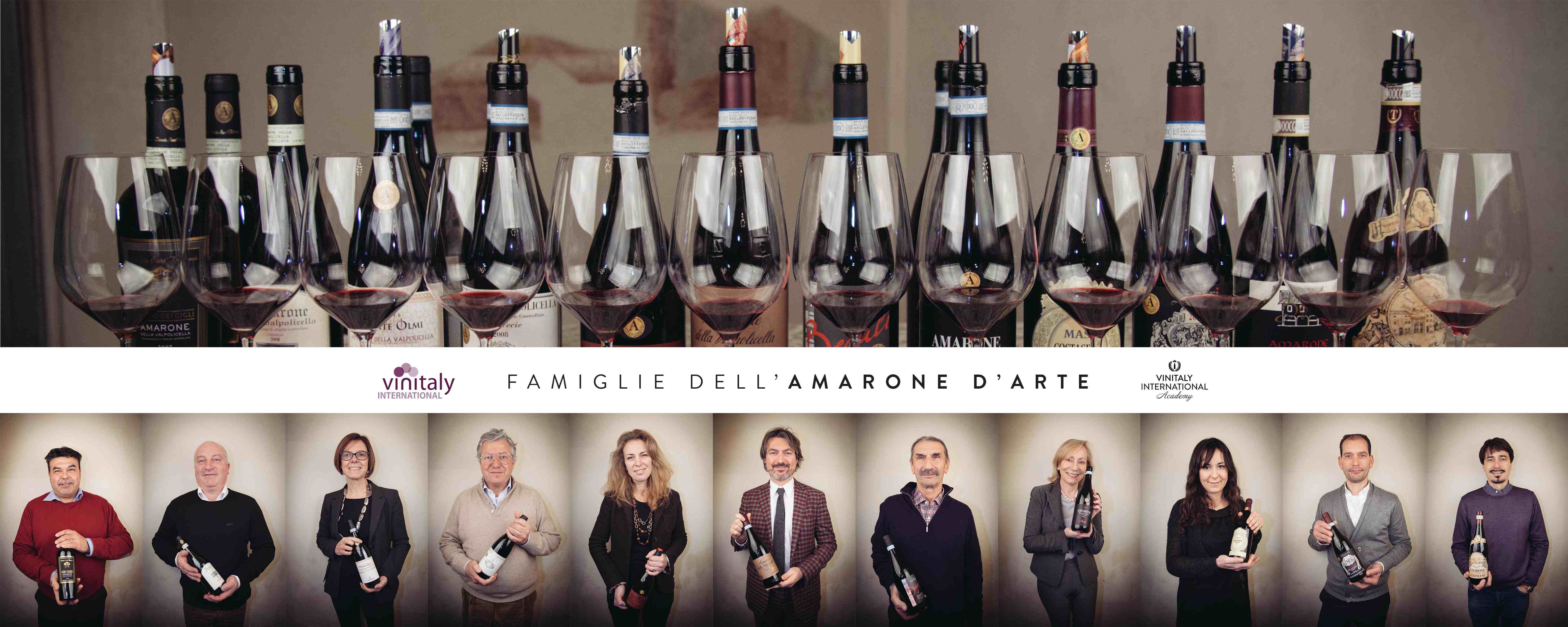 And then there was the tasting, of course. We went through 11 different Amarone wines, and here are the notes (this are my actual notes in its progression, like declaring the wine “best so far”).
1. 2010 Tommasi Viticoltori Amarone della Valpolicella Classico DOC
Nose: ok, traditional nose of a red wine, but not Amarone
Palate: over extracted and super-bitter
2. 2008 Begali Amarone Classico
Nose: campfire, then dark fruit with medicinal undertones
Palate: bitter, biting
3. 2009 Speri Amarone Classico Vegneto Monte Sant’Urbano
Nose: green and vegetative
Palate: bitter, over extracted.
4. 2009 Masi Agricola SPA Amarone Costasera
Nose: nice, open, hint of sweet fruit
Palate: not bad. Not too bitter, good power, clean balance. ++-|
5. 2009 Allegrini Amarone
Nose: best so far – beautiful, nice, open, fresh berries
Palate: closed, bitter
6. 2009 Zenato Amarone della Valpolicella Classico DOC
Nose: exceptional – true Amarone nose – fresh jammy fruit, but very balanced – raisins, figs – wow! +++
Palate: nice, soft, round – very good.
7. 2008 Musella Amarone della Valpolicella Riserva
Nose: nice! Fresh, open, good fruit
Palate: excellent. Best so far – nice, clean wine, powerful tannins without bitterness. +++
8. 2008 Brigaldara Amarone Case Vecie
Nose: nice, good dried fruit
Palate: good, clean, round – outstanding! Even better than the previous wine +++
9. 2008 Tedeschi Capitel Monte Olmi della Valpolicella Classico DOC
Nose: nice, concentrated fruit, good
Palate: needs time, but still perfectly round +++
10. 2008 Venturini Amarone
Nose: interesting nose, but pretty closed.
Palate: too austere. Not bad as a wine, but not good as Amarone
11. 2007 Tenuta Sant’Antonio Amarone Campo dei Gigli
Nose: dark, concentrated fruit, blueberries, raspberries
Palate: very good, but a bit bitter. It’s a bummer as I had a great experience with this wine at the tasting in September.
That’s all I have for you for today. What do you think of Amarone? Share your experience! Cheers!
Open That Bottle Night–Oops
Last Saturday, February 22nd, was the Open That Bottle Night – the movement started by Dorothy Gaiter and John Brecher, the wirters of the Wall Street Journal Tastings column. I this is a great way to help oenophiles to open that special bottle in their cellars without really waiting for the moment which might never come. To support the OTBN idea, I’m going to reblog all of the OTBN posts which I will see from my fellow bloggers. Below is the one written by Jeff, better known as The Drunken Cyclist. Enjoy!

As I mentioned a couple of days ago, this past Saturday was Open That Bottle Night (OTBN). OTBN was started back in the 1990’s by the then wine writers for The Wall Street Journal, Dottie Gaiter and John Brecher. Their ingenious idea: Most wine lovers have (at least) one bottle of wine that they have been saving for an as yet undetermined “special occasion.” Inevitably, this bottle remains unopened year after year since we can not determine whether a given occasion is “special enough” to warrant the sacrificing of the prized bottle. Gaiter and Brecher proposed that once a year on the last Saturday in February, we create, in essence, a “special” occasion and Open That Bottle.
I started thinking about what to have for OTBN at least a few weeks ago, knowing that I would change my mind at least 37 times before actually pulling a cork. A…
View original post 991 more words
VIA Masterclass: Barolo Cannubi
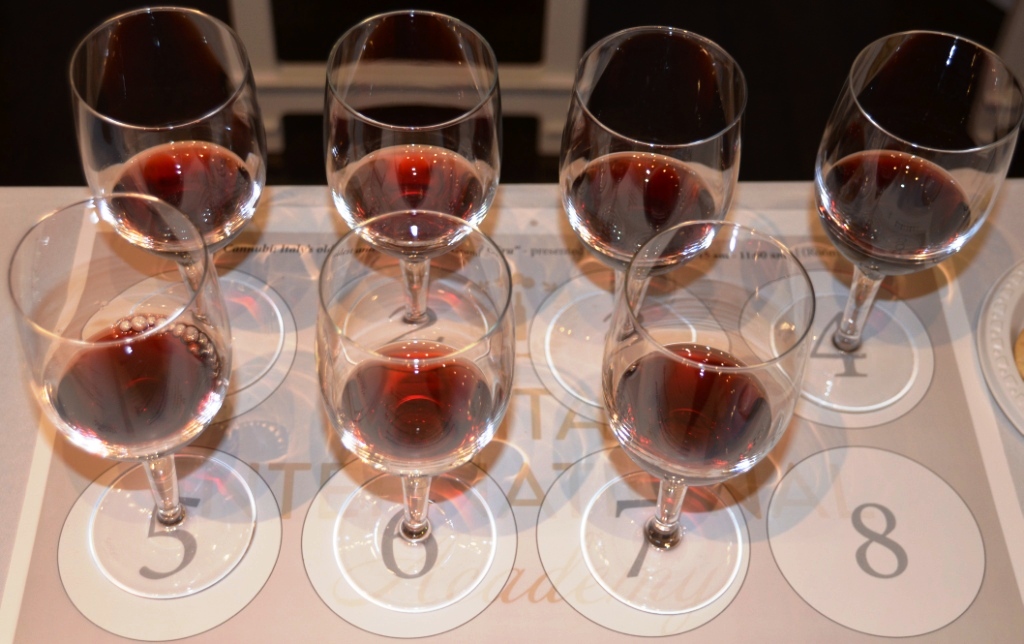 As promised, I’m continuing the VinItaly 2014 series (here is the first post). Barolo Cannubi was the first Masterclass I attended. The exact name of the class was “Barolo Cannubi: Italy’s oldest and most famous Grand Cru”, and it was taught by Dr. Ian D’Agata, the Scientific Director of Vinitaly International Academy (VIA).
You probably know that Barolo is considered one of the most famous wines produced in Italy – “The king of wines, the wine for the kings”. Barolo is a part of Piedmont, the region in the northern part of Italy. Nebbiolo is one of the main grapes of Piedmont, with the winemaking history going back more than 700 years (first mentions of Nebbiolo are dated at 1268) , while Barolo wines only became well known some starting from 1962.
It is interesting to note that Barolo region is often compared with the Burgundy. In Burgundy, the soil is the king, and different vines, located seemingly next to each other, can produce vastly different wines. Burgundy’s classification is based on Cru system, where all the Crus are assigned based on the established quality of the wines. While Barolo doesn’t have an official “Cru” system, the parallels are often made to designate some of the Barolo production zones as “Grand Crus” of Barolo. Today, Barolo has 11 of such “Grand Cru” zones – even though you will never see the words “Grand Cru” on the label of Barolo. The “Grand Cru” supposedly should have higher quality, which then translates into the ability to charge premium for your wines.
Cannubi, the subject of our master class, is the oldest “Grand Cru” zone in Barolo, officially recognized since 1752. Cannubi is about 37 acres in size, and has 4 different sub-zones – San Lorenzo, Muscatel, Boschis and Valletta, each having its own soil type. Recently, Cannubi was a subject of controversy, where the number of winemakers tried to limit the use of the name “Barolo Cannubi” to apply only to the wines produced from the 15 acres sub-zone, and force the producers to use exact designation of the sub-zone, such as Cannubi Boschis or Cannubi Muscatel on the bottles of the Barolo if the grapes are harvested in one of those specific areas. This caused a revolt, and the attempt fail, leaving the situation as it always was. The producers have the right to designate their wines as Barolo Cannubi or Barolo Cannubi [sub-zone] or Barolo [sub-zone] as long as the grapes are harvested within 37 acres of Cannubi zone – this might not be best for the wine aficionados, but this is how things were historically.
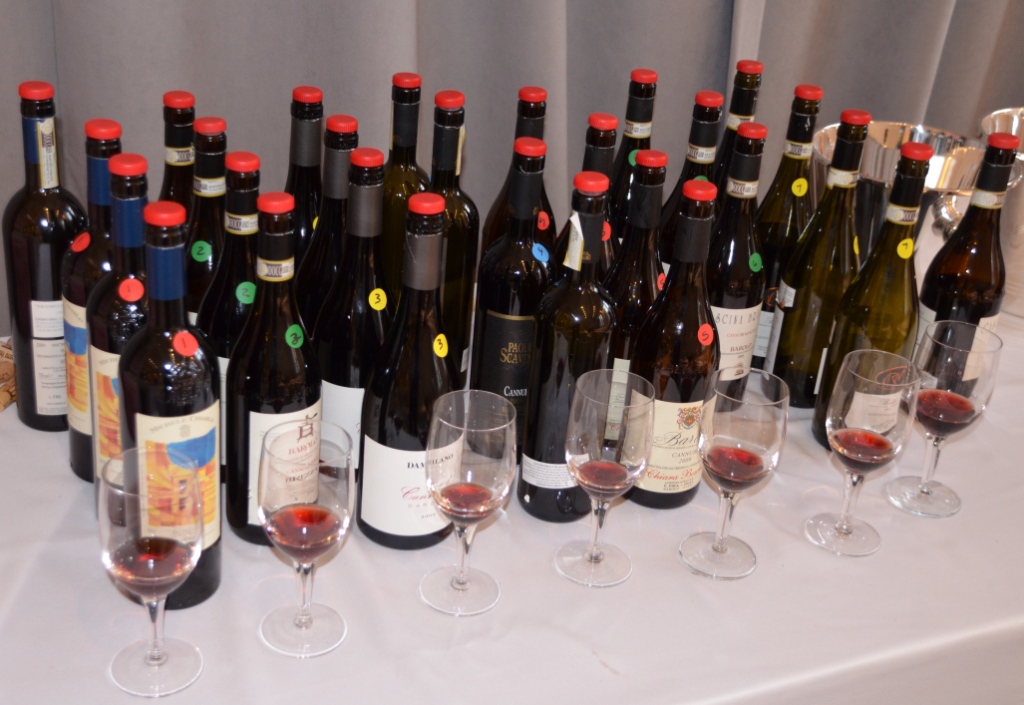 In the tasting, we had an opportunity to try 7 different Barolo Cannubi wines, all from the 2009 vintage (there was supposed to be 8 wines, but the wine #8, Ceretto Barolo didn’t make it through customs on time). As you can imagine, the color of the wines were quite similar, somewhat of the brickish red with the hint of an orange hue, a characteristic color of Nebbiolo – therefore I will not be pinpointing individual colors in the notes below.
2009 Michele Chiarlo Barolo Cannubi
Nose: Pretty closed, a bit of sweet cherries/plums in the back
Palate: very delicate, but not very impressive
2009 Brezza Giacomo & Figli Barolo Cannubi
Nose: Touch of sweetness, violet, rose petals
Palate: Strong tannins, mostly locked in.
2009 Damilano Barolo Cannubi
Nose: Sweet, with rose petals
Palate: Cherries, good round tannins ++-|
2009 Scavino Paolo Barolo Cannubi
Nose: Quite closed
Palate: Cherries, Tannins
2009 Chiara Bsochis Barolo Cannubi
Nose: Beautiful – open, bright, lots of black fruit
Palate: cherries and tannins, but open, balanced, inviting. One of my favorites +++
2009 Cascina Bruciata Barolo Cannubi Muscatel
Nose: nice sweetness
Palate: Cherries, herbs, interesting palate – most unusual from the group
2009 Virna Barolo Cannubi Boschis
Nose: Beautiful – touch of sweetness, plums, violets
Palate: Lots going on on the palate – cherries, raspberries, firm tannin structure, good acidity, one of my very favorite wines in the tasting +++
This was definitely a very interesting masterclass. We learned lots of interesting facts about Barolo – while I heard about Burgundy comparison before, only now I started getting an understanding of it, so this was definitely a personal discovery. This is the great thing about the wine world – opportunities for learning and discovery are endless!
Next up – an Amarone Masterclass report. Stay tuned… Cheers!
Having Fun With Crock Pot Cooking
 Do you like French Onion soup? Okay, this is not necessarily the question I want to ask. It is not about the soup, the question is really about the small, typically glazed and bright brown in color crock pots in which the French onion soup is often served in the restaurant. I don’t know about you, but for me the sight alone of such a crock pot is heartwarming and homey, it has the words “comfort” and “relax” written all over it in the big bold letters.
The great things about those little crock pots is that their versatility allows you to go well beyond just the french onion soup – this is a mini casserole dish, which is perfectly suitable for making any type of stew. Also, because of the small size and somewhat individual portioning, while you might be making mostly the same dish for the family, you can make adjustments to each small pot based on the individual preferences – no broccoli in this one, no mushrooms in that, and triple jalapeno for the last.
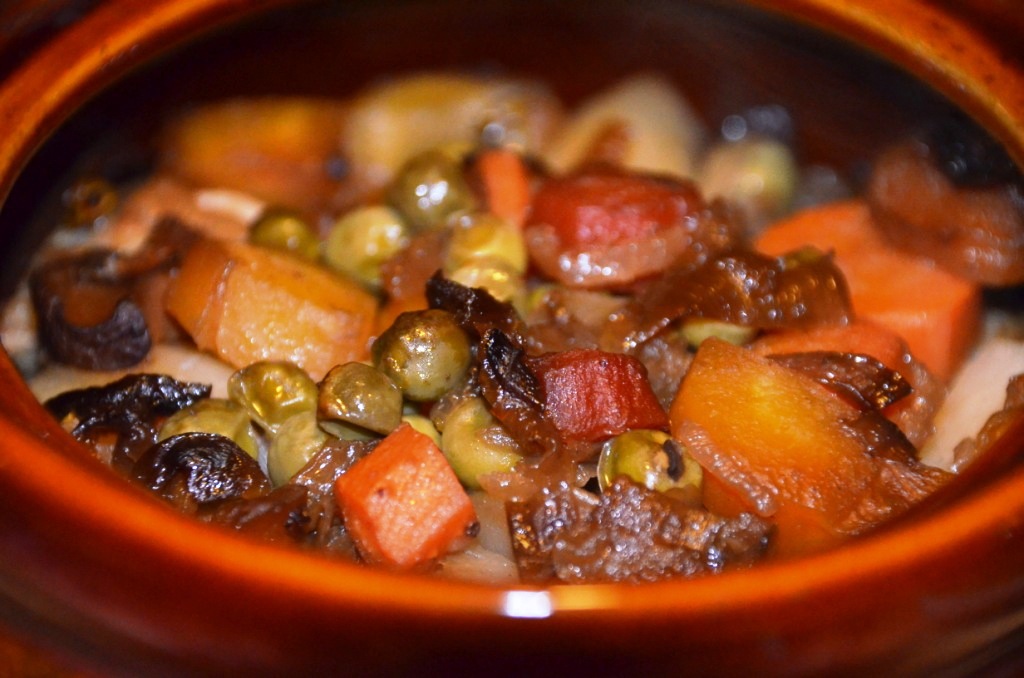
The dish which I want to talk about today is pretty much chicken and potatoes stew. My original idea was to use the chicken sausage, but – my daughter doesn’t like sausage, so this is where the small pot versatility comes to the play – I can easily make an adjustment for her and use just chicken instead of the sausage. And yes, of course, the same is true about all other ingredients. I’m sure you got my point.
Okay, here we go:
Crock Pot Chicken and Potatoes Stew (makes 4 crock pots)
Prep time: 40 minutes, cooking time: 1 hour
1 lb of chicken thighs (you can use sausages, chicken breast, anything), cut up in a small pieces about an inch in size
2 large onions, diced
1.5 lb carrots, sliced into small pieces (1/4″)
4 large potatoes, peeled and sliced
1 lb mushrooms, sliced
1/2 lb fresh peas
4 tbsp chicken broth (can be substituted with water, wine, any cooking liquid)
salt, pepper to taste
[olive] oil for frying
4 dry bay leaves
whole allspice (optional) – few berries per crock pot
Cut up chicken and/or sausages you will be using and start searing it in the pan using the olive oil (if you are using just the chicken, season with salt and pepper prior to searing). You don’t have to cook it completely, but you want to give it a nice sear, so it will take you about 10 minutes on the medium to high heat. Put aside.


Slice onions and start sauteing them on medium heat, for about 15 minutes, or until onion becomes soft and translucent. Dice up carrots (I was using tri-color carrots, just for fun) and slice mushrooms, then add to the pan with the onion once it is ready. Continue sauteing on the medium heat for another 10 minutes. Add peas and continue the process for another 5 minutes. Put aside. Peel and cut the potatoes into the small chunks, add salt, pepper and 1 tbsp olive oil and toss the potatoes well.


Preheat oven to the 350°F. Put the crock pots onto the large oven pan. Put the layer of potatoes on the bottom, then layer of chicken and top it of with the vegetable mix. Of course this is when you can make all those individual adjustments for the ingredients for your picky eaters. Add 1 tbsp of broth (or wine, beer, etc.), put in a bay leaf and 2-3 allspice berries (this is entirely optional). Cover and put into the oven for 1 hour.


And we are done!

Bon Appétit and cheers!
Let’s Do Brunch – Oak+Almond in Norwalk, CT
Who doesn’t like brunch, raise your hands. Yep, I thought so. It is literally impossible not to like the slow flow of the delicious food on Sunday, when you still have some of your weekend left, and the late breakfast becoming an early lunch is one of the indulgences of the weekend time with the family.
When it comes to brunch, you have to make some choices. I don’t mean “to drink Mimosa or not”, but most fundamental choice is between brunch buffet and the regular a-la-cart brunch menu. There are pro and cons for both, but this is not a subject of today’s post. What I want to talk about is a recent experience at one of the newest restaurants in lower Fairfield county in Connecticut – Oak+ Almond in Norwalk, CT.
Oak + Almond opened in the Fall of 2013 at the same location where Tuscan Oven restaurant was located for almost 20 years. Oak + Almond is classified as new American cuisine, which I think is quite fitting – lots of focus on local farms and products – you know where the cheese came from, you know where the chicken came from, you know where the eggs, berries and produce came from. As much as possible, everything is fresh and local, which is definitely a trait in the new American restaurant style.
The place is nicely decorated, reusing some of the components of the old Italian restaurant to their advantage, such as the pizza oven (those are always nice to have on hand, aren’t they). The decor overall should be classified as retro modern (or modern retro, whatever way you see it), with some very unusual lighting and heavy dark oak furniture. Here are the few pictures for you:


Charred Octopus (guajillo squid ink sauce. potatoes. andouille. celery) – well done, octopus was just as exact “chewiness” where it is pleasant (I think cooking octopus without making it into a rubber is an art).
Funghi Flatbread (charred green onion. fontina. balsamic) – this was a masterpiece – with all due respect to all other dishes, the mushrooms were soooo … mushroomy! If you like mushrooms – don’t miss it.
O+A Margherita Flatbread (Hamden burrata. tomato. calabrian chile) – this was okay, but slightly… pedestrian, especially comparing to the previous flatbread.


We also had 3 “communal” boards to share – the Artisan Cheese Board (fruit preserves. nuts. crostini), the selection of 6 local cheeses – Cremont, Nancy Camembert, Nettle Meadow Kunik, Fiscalini Bandaged Cheddar, North Coutry Blue and Ocooch Mountain, all from the Artisanal Cheese); Meat Board (hand selected meats, pickles, crostini) and House Cured Salmon. All three dishes were well done and quite tasty.


Oak + Almond
544 Main Ave
Norwalk, CT 06851
203.846.4600

Wednesday’s Meritage – OTBN, #MWWC7 Time To Vote, The Art Of The Wine Label, State Liquor Law Changes and more
Meritage Time!
I had to skip the wine quiz last Saturday, as we are taking a family vacation this week, so you can enjoy your quiz break too. Therefore, let’s go directly to the interesting stuff around the vine and the web.
First and foremost – the upcoming Saturday, February 22nd, is Open That Bottle Night (OTBN). The concept of opening that special bottle of wine instead of hoarding it was invented by Dorothy J. Gaiter and John Brecher, wine columnists for the Wall Street Journal – here is the link to one of the articles on the subject. The event is always taking place on the last Saturday in February – this is when you open and enjoy that special bottle of wine you were holding on to, not being able to find the right reason to pull the cork (or twist the top). As I think this is a great holiday for all oenophiles, I would like offer to you the following – if you open that special bottle of wine, will write a blog post about it and send me the link (through e-mail, comment, or Twitter), I will gladly re-blog it in my blog, and I will also add the link to the permanent page dedicated to the OTBN. So, what are you going to open?
Next up – #MWWC7 just concluded. The theme of Devotion was definitely challenging, but I think it led to a number of great entries. Here is the link to the SAHMMelier’s blog post, where you can see the list of all entries, and most importantly now, take a vote! Don’t miss it!
Have you heard of Sine Qua Non, the cult winery in California, making unique wines that are impossible to get? Did you know that every vintage of every wine produced by Sine Qua Non is released under a different label? And also each and every label is essentially a work of art, created by Manfred Krankl, the winemaker and owner at Sine Qua Non. To read more about these labels and Sine Qua Non wines, here is a link to the very interesting article at Wine Spectator – I highly recommend that you will read it.
I would assume that you know (or at least you know now) that States of the United States are in charge of individual laws regarding alcohol sales and distribution in those states. This leads to the situation where people’s access to alcohol in the neighboring states can be dramatically different (for instance, until recently, sales of alcohol were prohibited on Sundays in Connecticut – as the result, the people had to take their dollars to the neighboring New York state). The good thing is that in many states, the state laws are slowly changing to the benefit of the wine consumers (don’t take it for granted – some states are still trying to change it around and backward). Here is a very interesting article from the Wine Business publication, where you can learn about some of those changes in the works.
Before we part, I want to bring to your attention two more articles on the subject of Italian wines, both are quite controversial. Ten years ago, the movie called Mondovino made Michele Rolland and Robert Parker quite upset. Now, the new movie called “Natural Resistance”, made by the same director Jonathan Nossiter is talking about natural wines in Italy, also taking an aim at the Italian DOC system and overall approach to quality – here is the link to the article on the wine-searcher where you can get more details.
It turns out that people at Gambero Rosso, one of the leading Italian wine rating publications, are not the big fans of the natural wines. A blanket statement about “natural wines been bad wines which will give you a headache” doesn’t sound right coming from the organization which should simply embrace and promote best Italian wines. So it is not surprising that Italian natural wine producers have an issue with Gambero Rosso – for more details, here is the link to the wine-searcher article.
That’s all I have for you for today, folks. The glass is empty – but the refill is on its way. Cheers!
Devotion – The Blog Post I Can Not Write
 As soon as I saw the new theme for the Monthly Wine Writing Competition #7, Devotion, my very first thought was “hmmmm, this will be hard, or more precisely, extremely hard”. The problem is that when I hear the word “devotion”, the immediate mental picture is of a giant cross at the very best, or no picture at all – but I can assure you it ain’t the picture of a bottle of Cabernet Sauvignon.
Ever since the theme was announced I was struggling to find the connection of “devotion” to the wine world. I’m sure the examples of the true devotion are abundant in the wine world. May be even more than in many other trades, the success requires a lot of sweat, blood and sacrifice. Not been a wine historian, but rather only a very appreciative and dedicated consumer, I don’t have those stories of sweat and blood handy, and searching the Internet and rewriting someone else’s stories is not something I usually do, thus search for the connection between wine and devotion became literally a daily routine. To no avail.
I thought that I will start my post with the analysis of the word “devotion” – yes, the linguistic analysis. Oliver did it it perfectly in his post for the #MWWC7, as he was struggling with the theme in pretty much the same way as I did. Oliver took the Latin route for the meaning of “devotion”, so I can still refer to the English meaning of the word. Here is a nice representation of the Google search for the definition of “devotion”:
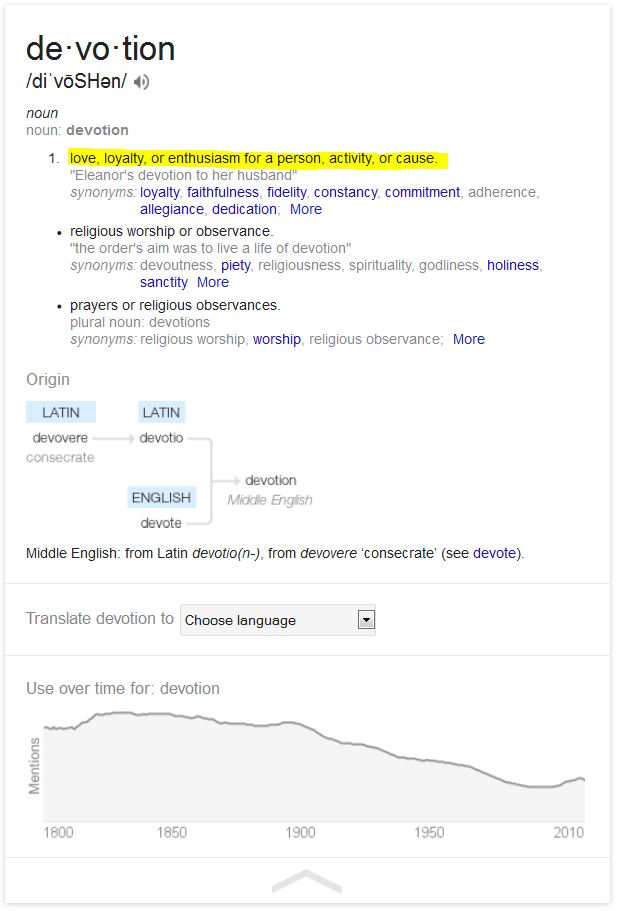
Yes, love and loyalty (or dedication for that matter) sound like the right way to go here – but if that is the direction, I would simply use the word love, and not devotion. Nope. It doesn’t connect.
So as today is a pretty much the last day to submit the entry, I still don’t have it.
But let me give you somewhat of an interesting twist here. Let’s put the word “devotion” aside for a minute, and let’s go back to the wine. Think about two sides of the wine world (not exclusively two – but let’s simplify here). On one side, winemaker should be willing to make an honest wine, the wine he or she will be willing (and proud) to offer (sell) to any consumer. On another side of the spectrum is the consumer who should be willing to buy the wine. Let’s make this statement even more precise – the consumer who should be willing (and eager) to drink the wine. Do you think we can find devotion on both sides here? Does it take devotion to make the best possible wine? Yes this is an easy case, I would say (and it was perfectly presented by Jeff at FoodWineClick in his photo essay about devotion of the winegrower). And how do we get to the devotion of the wine consumer? While this might not sound all too fitting for the term, but one should be devoted enough to the wine world to be willing to open the bottle – any bottle, a cult (DRC, Petrus, Screaming Eagle), or the most obscure, of unknown grape and producer; the wine which costs thousands, and the wine which costs $1.99. Open and give that wine a chance, step over the preconceived notions (“ahh, I don’t drink California Chardonnay”) and make an effort to understand the wine for what it is. Is that a behavior of the wine-devoted consumer, an oenophile? We are not talking here about people who buy the wine as an investment, with the sole purpose of selling the wine once its price will increase – those people are devoted to money, not to the wine. But for the oenophile, the wine is approached with an open mind – that doesn’t mean that the one should equally love all the different styles and tastes – but that one has equal respect to them all.
And let me tell about devotion of the winemaker through the eyes, nose and palate of the devoted oenophile (yep, myself in this case).
I brought the bottle of 1966 Louis M. Martini California Mountain Pinot Noir from Chicago about a month ago. I was in the store, shopping for the older vintage wines, and I couldn’t resist to buy such an old wine for $25 – yes,this is how much this wine was.
I didn’t want to hold it for too long, so Valentine’s Day seemed like a perfect opportunity to open a special bottle of wine (yes, I should’ve wait for the Open That Bottle Night, but we are always traveling over the actual OTBN day, as it generally falls on the kids’ school vacation).
When I told my friend Zak (who owns the wine store) that I will be opening the 1966 California Pinot Noir for the Valentine’s Day, his reaction was “why? You understand that the wine will not be any good, just keep the bottle as is for the decoration”. My thought was “I can always keep the empty bottle as a decoration. I have to give this wine a try”.
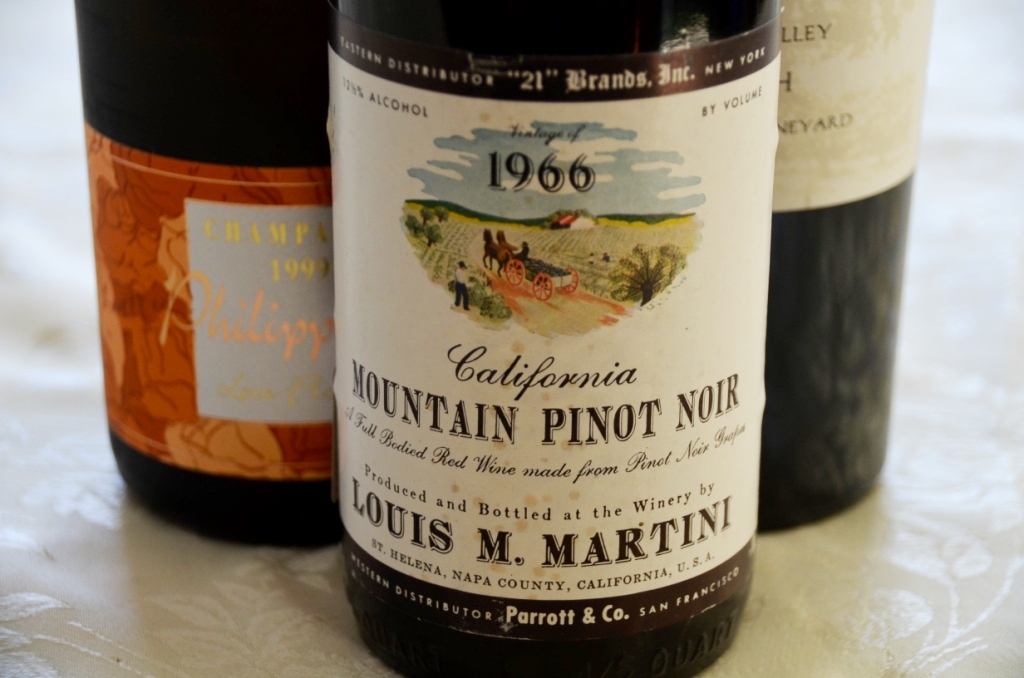
I honestly didn’t know what to expect. 1966 Pinot Noir from California? Not made by the star winemaker at the state of the art modern winery? The only thing I knew about the wine that it was made at Louis M. Martini winery. And Louis M. Martini doesn’t even make Pinot Noir wines today! Okay, let me come clean here – I had an additional reinforcement of my hope. I remember my wine class on Californian wines at the Windows on the World wine school, where after we tasted the line of California Cabernets, Kevin Zraly said “this wine is made by the Louis M. Martini. They make make excellent wines, and they could charge a lot more for them, but they chose not to”.
Louis M. Martini was an Italian immigrant who came to the United States in 1899. After working in the wine trade for a while, he opened Louis M. Martini winery in Napa Valley in 1933, as Prohibition was ending. Last year, the winery celebrated its 80th anniversary. You can read the history on the Louis M. Martini winery web site, but I want to mention that Louis P. Martini, the son of Louis M. Martini, went on to become one of the pioneers of California Pinot Noir and Merlot, and he was inducted to California Vintners Hall of Fame in 2008.
Let’s get back to the wine. It was the time to open that 1966 bottle, so I armed myself with the waiter’s corkscrew and the two-prong cork pull. I even had a thought of using Port Tongues, but that sounded a bit too fancy. Foil was cut, and I was presented with pristine looking cork top. Considering that appearance, I used the the regular waiter’s corkscrew, only moving it very slowly. The cork struggled only a tiny bit, and came out as a whole – and just look at this cork! I had 5 years old wines, where cork was in the terrible condition, never mind 48 years old wine!
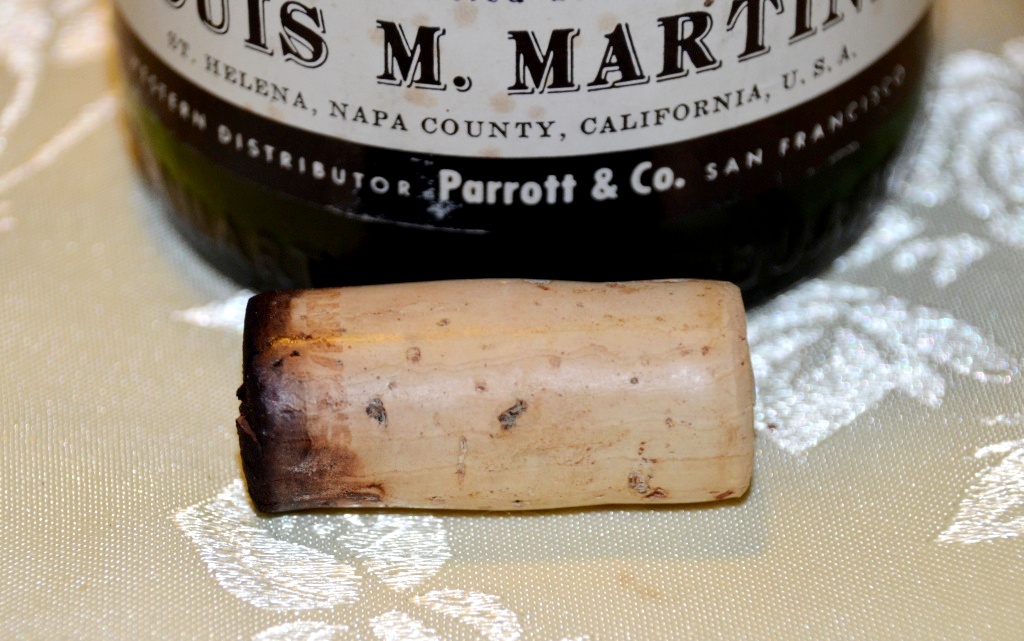 So I poured the wine into the glass – beautiful red brick color, with an orange hue, reminiscent of signature Barolo color. I was really concerned about the first smell – hoping not to find a sauerkraut or vinegar there – and the nose was perfect! Yes, the herbal flavors were prevailing over the fruit, but nevertheless, it was a very pleasant nose without anything disturbing. The first sip – wow. This wine is beautiful! Yes, lots of herbs – sage, eucalyptus, may be even lavender, but also with the nice plum component, and most importantly, balancing acidity. An extremely complex and thought provoking wine – but in the perfect elegance of all the components. The wine opened up a bit more, showing a bit more sweet fruit notes – and then it was gone – we finished it all. Truly spectacular and almost unbelievable – but it was real. I would love to compare this wine to the old Burgundy – I guess this is what it will taste like, if I’m lucky.
And you are looking for connection to the today’s theme, devotion? To me, it is simple. To make the wine which will last for so long and stay in such a perfect condition (go back and look at that cork again) requires a dedication, it requires the full devotion of the winemaker, it requires the unconditional love to what you do. And this wine had it all.
Raise your glasses, my friends, for the true devotion of the winemakers and oenophiles. Cheers!
VinItaly and Slow Wine 2014 – Fun, Education, and Lots of Wines
 The story started 48 years ago, with the event called “Italian Wine Days”, which hosted a number of Italian wineries willing to present their wines to the world. Since then, VinItaly grew into one of the biggest wine shows in the world – its main 4 days event typically is taking place in April in Verona and attracts more than 140,000 visitors from 116 countries. Starting in 2013, VinItaly started the new initiative, called VinItaly International, with the goal of taking the Italian wines on the road and bringing them to the United States, Russia, China and other countries.
Outraged by the planned construction of McDonalds restaurant on Spanish Steps in Rome, the Slow Food movement was created in Italy in 1986, quickly becoming an international phenomenon, aiming at educating people about slow, real and delicious food, just the way it should be. Since then, Slow Food movement was embraced by millions of people in more than 160 countries around the world. Starting in 2010, Slow Food started publishing its wine guide, called (you guessed it) Slow Wine, dedicated to the wines which are best at demonstrating the Slow Food values, the wines with the sense of place.
For the second year in the row, I had a pleasure of attending combined VinItaly and Slow Wine event in New York city (here is the link to the post about last year’s event). This year, the pleasure was also greatly enhanced by the fact that I was joined by Oliver (the winegetter), his wife Nina and Stefano (Clicks & Corks) – as you can imagine, everything is better in a great company.
In addition to all of the wines being available for the walk around tasting, VinItaly also brought a great educational program to this year’s event. This educational program, consisting of the multiple seminars presented during the day, was part of the new VinItaly’s initiative, called Vinitaly International Academy (VIA). I talked to Stevie Kim, Managing Director of the VinItaly International, who explained that this new VIA program will offer both educational seminars (called Masterclass) on various Italian regions and wines, as well as unique tasting opportunities, such as for instance, a tasting of the vertical of Sassicaia – I really hope my invitation to such a Masterclass will not get lost in the mail. Dr. Ian D’Agata, a researcher, journalist and an author of a number of books about Italian wines, was appointed as the Scientific Director of VIA, and he was teaching a number of masterclasses presented at New York’s event. I was lucky enough to attend most of the Masterclasses offered during the VinItaly event – I will have separate posts for those, as subjects of Barolo Cannubi, Amarone and Franciacorta are well worth it.
Here is a small filmstip prepared by VinItaly with Stevie Kim and Ian D’Agata, explaining what the VIA is all about:
 Before I will talk about some of the wine highlights from the event, I want to share some of the interesting stats offered during the press conference. The data below present various numbers regarding wine imports into the US – if you are in love with numbers as much as I am, these are the interesting stats, all shared as part of the information package by VinItaly tour. These are the various import statistics as presented by the US Department of Commerce:
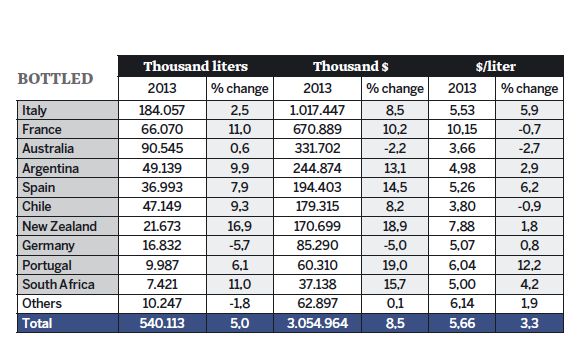
Imports to US Jan – Sep 2013

Compare the data above with this one – Imports to Canada Jan – Sep 2013

Imports to US 2007- 2012 year over year data
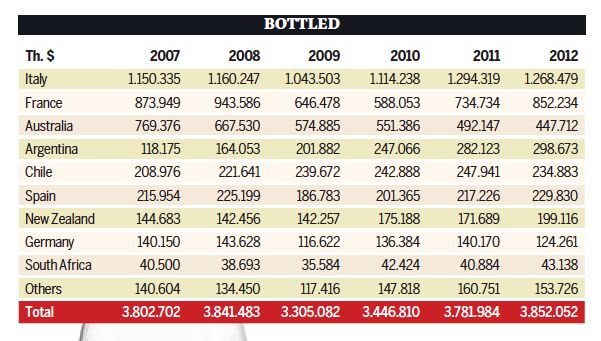
Imports to US 2007- 2012 Still Wines

Imports to US 2007- 2012 Sparkling Wines
I would assume you are sufficiently inundated by numbers, so let’s talk a bit about the wines before we round up this post.
With all the Masterclasses presented at VinItaly, this is where my focus really was – learning about and tasting lots of great wines, per-arranged by Ian D’Agata. I had about 2 hours of time on the tasting floor itself, primarily focused on giving a “rare varieties” whirlwind run tour to Nina. As usual, I took an extremely short notes and primarily used my trade show rating system of +. ++ and +++ (yes, with exceptions for ++-| and ++++). Below are some of the most memorable wines from that tasting:
2011 Aquila del Torre Riesling Friuli Venezia Giulia – +++ excellent
2010 Aquila del Torre Refosco Friuli Venezia Giulia – +++ clean, open
NV Brut Rosé Prima Nera Friuli Venezia Giulia – +++, very unusual sparkler made from the rare red grape called Schiopettino
2012 Cantine San Marco Romae Bianco, Lazio – +++ clean, beautiful (this wine is made out of Malvasia del Lazio)
2012 Sant’Isidoro Colli Maceratesi Ribona Pausula, Marche – ++-|, nice, good acidity (made out of rare grape Maceratino, which is a new grape for me!)
2010 G.D. Vajra Langhe Freisa Kyé, Piedmont – ++-|
Three great wines from Planeta (Planeta is a great producer from Sicily, and it rarely disappoints)
2011 Planeta Cerasuolo di Vittoria Classico Dorilli , Sicily – +++. beautiful complexity
2008 Planeta Noto Nero d’Avola Santa Cecilia, Sicily – +++ power!
2012 Planeta Sicilia Fiano Cometa, Sicily – +++
2012 La Parrina Vermentino, Tuscany – +++
Montenidoli Il Templare, Tuscany – +++, good
And then one and only – Caberlot!
2010 Podere Il Carnasciale Caberlot, Tuscany – ++++ nose, complexity!
2009 Podere Il Carnasciale Caberlot, Tuscany – ++++ spices, amazing
2011 Podere Il Carnasciale Il Carnasciale, Tuscany – +++ (this is second label of Caberlot wines)
2010 Boscarelli Vino Nobile di Montepulciano, Tuscany – +++
2011 Leonido Pieropan Soave Classico La Rocca, Veneto – +++ beautiful
2011 Leonido Pieropan Valpolicella Superiore Ruberpan, Veneto – +++
2010 Antonelli San Marco Montefalco Rosso, Umbria – +++
2009 Tabarrini Montefalco Sagrantino Colle Grimaldesco, Umbria – +++
2010 Tabarrini Montefalco Rosso, Umbria – +++
And that concludes my first report from the VinItaly 2014 event in New York city – more posts to come, so stay tuned… Cheers!
Last Bottle Sign Up ($10 credit)




 Talk-A-Vino