Month in Wines – June 2014
Quite expectedly, with the arrival of the consistently warm weather, June saw an increase in the Rosé wine appearances – luckily, those were good Rosé. There were also a number of great Cabernet Sauvignon wines worth mentioning, including some candidates for the Top Dozen list of 2014. And some Syrah – rather magnificent. And other great wines. Anyway, for what it worth, the list is below. As usual, most of the wines were rated at 8- or higher, with some exceptions (and explanations) for the lower ratings.
Here we go:
2013 Rocher de La Garde Cinsault Vin de France (12.5% ABV, $9.99) – beautiful light pink color, inviting nose of fresh strawberries, more strawberries on the palate. Well balanced with nice acidity, refreshing, easy to drink and very pleasant. A perfect summer day quaff. 8
2013 Temperamento Bobal Rosé Utiel-Requena DOP (12% ABV) – Beautiful in and out. Perfectly pink in the glass. Strawberries on the nose, ripe strawberries on the palate. Round, balanced, together, very good overall. 8-
2012 Albero Bobal Rosé Utiel-Requena DOP (12.5% ABV, $5.99 at Trader Joe’s) – simple and delicious. Beautiful pink color, refreshing, good acidity, strawberries profile. Unbeatable QPR. 8-
2013 14-18h Dry Rosé Wine Agiorgitico, Peloponnisos PGI, Greece (13% ABV) – beautiful intense pink color. Delicious, concentrated, cranberry laden wine. My perennial favorite for the past 7 -8 years. Never disappoints. 8
2013 La Gordonne Billette Bouquet de Provence Cuvée Tradition, Côtes de Provence (13.5% ABV) – it’s no wonder this wine is one of the best selling Rosé in France – light, clean, refreshing, each sip having enough substance to hold on to, and perfectly balanced at the same time. 8
2013 Les Lauzeraies Tavel, France (13.5% ABV) – I love Tavel wines any time of year – but they feel especially appropriate during summer. Beautiful, concentrated pink color. Nose of cranberries and rose petals. Cranberries and herbs on the palate, medium bodyu, concentrated, excellent balance. 8-
2006 Selbach-Oster Schmitt Zeltinger Schlossberg Riesling Auslese Mosel Saar Ruwer QmP, Germany (8.5% ABV) – Delicious. Slightly viscous, layers of sweet fruit (apricots, peaches), honeysuckle. Perfect acidity. 8-
2013 Bodegas Shaya “Shaya” Old Vines Verdejo, Rueda, Spain – one of my all times favorite white wines. Delicious complexity in the plump, mouth-coating, round package – this wine can rival any Chardonnay any day. If you never had it, make it your next wine. 8+
2011 Org de Rac Cuvée La Verne Blanc de Blancs Brut, Swartland, South Africa (12.5% ABV) – classic and delicious. Hint of yeast and bread on the nose, fine mousse on the palate, clean and crisp acidity, perfect body weight mid-palate. Excellent sparkling wine overall. 8-
2010 St. Clement Oroppas Cabernet Sauvignon Napa Valley (14.6% ABV) – amazing Cabernet Sauvignon, from nose to the palate. On the nose, the wine showed cassis, a hint of blueberries and a touch of espresso. On the palate, this wine was powerful and dense. Dark fruit, perfectly restrained, thick, practically chewy mouthfeel, perfectly structured and dry, layered and silky smooth at the same time. 9-
2003 Neyers Cabernet Sauvignon Neyers Ranch Conn Valley, Napa Valley (14.5% ABV) – Sheer exuberance. On the nose, beautiful dark fruit, fresh berries and the touch of barnyard. The palate was even better than the nose – lots of stuff happening, eucalyptus, herbs, sage, bell peppers, cassis, blueberries, truffles, dark chocolate, espresso – just beautiful, beautiful wine. 9
2011 Michel Chapoutier Marius Red, France IGP (13.5% ABV) – Touch of barnyard on the nose. Nicely restrained on the palate. Touch of spiciness, black pepper, dark fruit, good balance. Very pleasant overall. 8-
2008 Alban Vineyards Patrina Estate Syrah Edna Valley (14.7% ABV) – My first taste of Alban wines, a cult Rhone-style wine producer in California. Beautiful dark fruit, dense, earthy, plums, velvety texture, perfect balance. Every sip was a pleasure. 9-
2011 Abacela Fiesta Tempranillo Umpqua Valley, Oregon (13.6% ABV) – very respectful rendition of Tempranillo – savory, well structured, with good amount of power typical for Ribero del Duero wines. 8-
2009 Bodegas Ochoa Finca Santa Cruz Tempranillo Crianza Limited Edition, Navarra, Spain (13.5% ABV) – another excellent Tempranillo, this time from Spain – round, ripe, deliciously layered with incredible textural complexity, tobacco, smoke, perfect balance. 8
NV Molo 8 Lambrusco Mantovano DOC (8.5% ABV) – simple and delicious! Perfectly in check, balanced, good acidity, fresh red fruit on the palate, pleasant fizz. 8-
2007 Burgess Cellars Merlot, Napa Valley – dark fruit on the nose and the palate, hint of dark chocolate, cassis, raspberry and sweet blueberry undertones on the palate, good balance. 8-
2004 Club de Sommeliers Chateauneauf-du-Pape Red, Chateauneuf-du-Pape AOC , France (14.5% ABV) – a very solid effort for the France supermarket wine – it aged nicely, good open red fruit, touch of spices, good balance. 7+
2010 Celler de Capcanes Costers del Gravet Red Wine, Montsant DO (14.5% ABV, 50% Cabernet Sauvignon, 30% Garnacha, 20% Samso) – dark power, focused, concentrated, starts from the classic Cabernet profile with layered and open support from Grenache. Full body, yet perfectly balanced between fruit, tannins and acidity. Delicious wine. 8+
That completes the report on the June wine highlights. Did you have any of these wines? What were your best wine discoveries of the last month? Cheers!
International Tempranillo Face Off – USA Fares Well
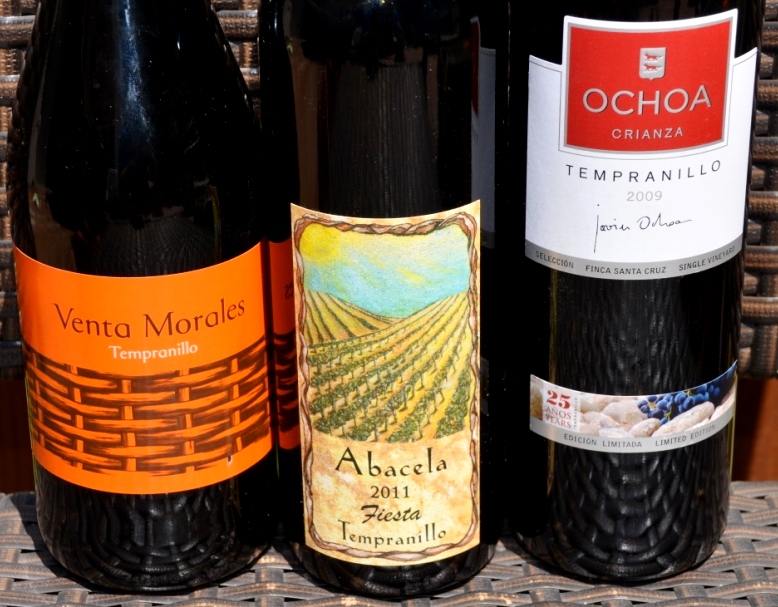 Thinking about Tempranillo, what wines come to mind first? Rioja is an unquestionable champion, with its bright fruit expressions packaged into eucalyptus laden cigar box. Ribera del Duero is definitely next, with its perfect, firm structure, and then Toro, with layers upon layers of power. Tempranillo has one of the most synonyms, most of which point back to the different areas in Spain, so it is given that outside of three regions we just mentioned, the grape is very popular all around Spain. And then… well, there is not much outside of Spain. Portugal, where Tempranillo is known under the names of Aragonez and Tinta Roriz, is the only internationally renown source of Tempranillo wines outside of Spain – even then mostly using Tempranillo as a part of the blend. Australia and a few other countries also experiment with the grape – but I’m not sure they produce something worth bragging about.
And then, of course, there is the USA. Tempranillo made it into the California at the beginning of the 20th century, but really didn’t find much success there as a single varietal wine. You can find some of the Tempranillo made in the southern California, in places like Temecula Valley, but those wines are little known outside of the wineries which produce them. On a big scale, Texas probably is having the biggest success with Tempranillo in USA, where the grape is considered a signature state grape, and Tempranillo wines produced by many wineries. But our conversation today will not be about Texas Tempranillo – we are going a lot further North on the map, to the state of Oregon.
No, Oregon is not an internationally renowned source of Tempranillo wines, not yet anyway. However, while I was recently participating in the #winechat about Oregon Pinot Noir, someone mentioned Tempranillo as one of the grapes in Oregon which might have a bright future. As I’m very partial to the Tempranillo wines with the great love of Rioja, that piqued my interest. Tempranillo? From Oregon? Really? How good can that be? I was told that Abacela winery in Oregon produces excellent Tempranillo wine. I reached out to the winery, and – got the bottle to taste. But – I didn’t want to taste this wine on its own – I wanted to create some frame of reference. Yes, I would love to get the Texas Tempranillo, but – that would take a lot of time. Of course the best available source of Tempranillo wines is Spain, so I decided to get a few different wines from Spain. I purposefully avoided Rioja – those wines are rarely 100% pure Tempranillo, and the winemaking style is very specific to Rioja, so it wouldn’t be a good reference. Ribera del Duero wines also might be a bit too specific for this exercise, and Toro wines pack way too much power. I looked for generic Tempranillo renditions in my local wine store, and came up with two bottles from Spain – one from Navarra and one from La Mancha.
Before we talk about our “face off”, let me say a few words about our competitor from USA – Abacela winery. According to the winery’s web site, Abacela name comes from “an ancient and now almost obsolete verb, ‘abacelar’ common to three Iberian languages-Spanish, Galician and Portuguese-and which means “to plant a grape vine.”” Abacela winery started in 1992, when Earl and Hilda Jones purchased a 19th century property in Umpqua Valley in Southern Oregon. This purchase was the result of a very long and intense research on the climate, soil and landscape, to find the place ideally suited to produce a Tempranillo wine on par with the best Spanish Tempranillo. If you are interested to see how the pursuit of passion looks like, read the section called Story on Abacela web site – I wish the other wineries will give you even half of the information about their wines and vineyards.
Our tasting, which I proudly called Face Off, was very simple – I sat down with my wife to try these three wines. We tried the wines in the exact order as you will see it below.


Here are the detailed notes:
2010 Venta Morales Tempranillo La Mancha, Spain (13.5% ABV, $7.99)
Color/visual: Dark garnet, almost black. Very substantial legs
Nose: Baking spices, ripe plums, touch of earthiness
Palate: Prunes, touch of figs, nice acidity, slight imbalance at midpalate
Verdict: Shows slightly “overboard”. Drinkability: 7
2011 Abacela Fiesta Tempranillo Umpqua Valley, Oregon (13.6% ABV, 17 months in barrel, $23)
Color/visual: Garnet, noticeable rim variation as well as legs
Nose: dark chocolate, herbs
Palate: Very elegant, nice fresh fruit, good acidity, very noticeable cherries, present tannins, medium to long finish
Verdict: overall very nice wine. Should be able to stand up against Ribera del Duero. Drinkability: 8-
2009 Bodegas Ochoa Finca Santa Cruz Tempranillo Crianza Limited Edition, Navarra, Spain (13.5% ABV, aged 1 year in American oak, $15.99)
Color/visual: Garnet color, very slight rim variation, noticeable legs
Nose: Touch of sweet fruit, sweet cherries, eucalyptus
Palate:Elegant, perfectly balanced, soft sweet fruit, tobacco, smoke, incredible textural complexity, touch of dust
Verdict: An outstanding Tempranillo, one of the very best I ever tried. Drinkability: 8
As you can see, Abacela Tempranillo definitely worth its salt soil, and I would highly recommend it (if you can find it). I also want to note that Abacela Fiesta is only an introductory Tempranillo – they produce another 3 wines out of Tempranillo, plus a full range of very unusual for the Oregon (or even USA) wines, such as Tannat, Dolcetto and Tinta Amarela – full list looks very impressive and tempting.
As for my little Tempranillo competition, we are done here. Have you ever had an “unusual” Tempranillo wine? Have you ever tried Abacela Tempranillo or any of their wines? What do you think? Cheers!
Beauty of Chardonnay and The Game of the Blind Tasting
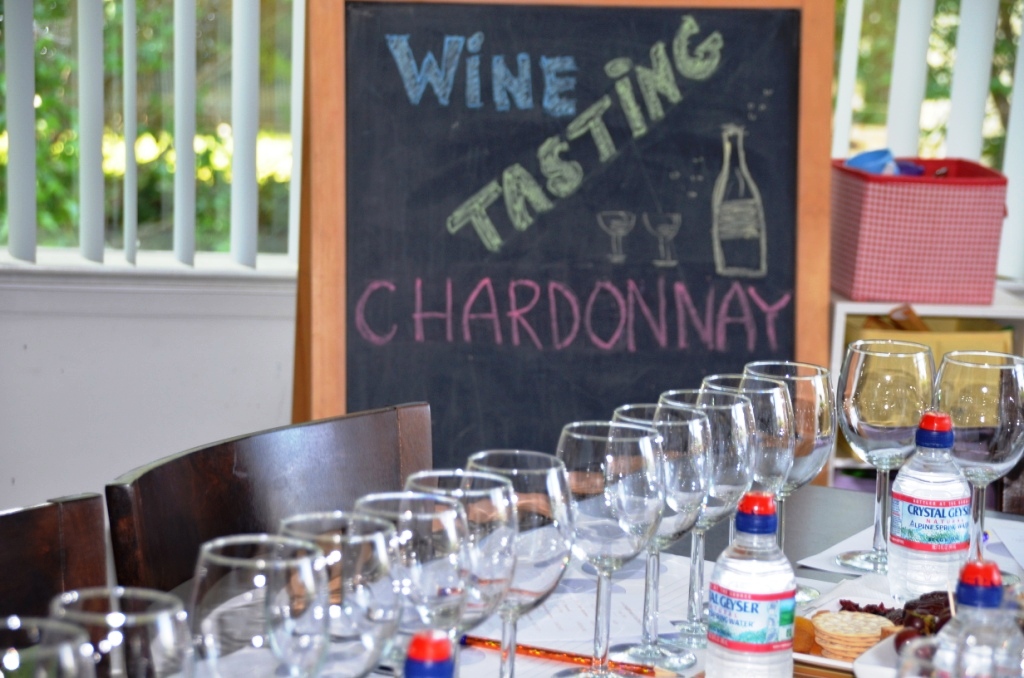 Blind tasting is probably one of the most favorite pastimes of any oenophile – especially when it is done in the non-competitive and non-intimidating manner, let’s say as a part of the fun evening with friends. While the words “blind tasting” sound simplistic, there are actually multiple options of it, all with the varying levels of difficulty. The most difficult type is a double blind tasting – you are just given a random glass of wine, and you have to identify the grape(s), the place, the vintage and possibly even the producer – this is the level at which the Court of Master Sommeliers plays, the ultimate challenge so to speak. The next level down would be a regular blind tasting – there would be at least one common factor between all the wines – let’s say, they all will be made out of Cabernet Sauvignon grape. Or they all might be the Bordeaux wines. While the level of a challenge is unquestionably lower that in the previous case, this type of tasting is great for assessment of the wine without an influence of the external factors, such as producer, label, region, etc. I also call it “an ultimate wine snobbery squasher”, as looking at the bottle of your supposedly favorite wine and realizing you just thought it was terrible (while you had no idea what was in your glass), is really a humbling experience.
My recent blind tasting experience was yet different. It was mostly the regular blind tasting, as it had a theme – Chardonnay, but it was also more limited, may be even “framed” is the right word – we knew all 10 Chardonnay wines which were present in the tasting, so it was not really wide open. And to make it more fun, we tried to identify each wine we tasted, and of course, look for the group’s favorite. To avoid crowding the table too much, we split the tasting into two sets of 5, and then we went over our notes to come up with our guesses – and then, of course, there was the moment of truth – when the bottles were revealed.


Chardonnay needs no introduction, of course. One of the most popular white grapes in the world, with literally every wine producing country having its stake in satisfying the thirst of Chardonnay lovers around the globe. I would dare to say that left alone, Chardonnay is great at expressing the terroir, the soil and climate of the area where it was growing, may be better than most of the other white grapes (may be Riesling can contest that). From the gravely soils of New Zealand to the expressive ‘gunflint” minerality of Chablis, biting acidity of Champagne, the round goodness of the mature Burgundy, to the warm and toasty expressions (sigh – hard to find it anymore) of California – Chardonnay rules them all. Our tasting was extremely representative of this world-wide phenomena – California, Long Island, Burgundy, Italy, Hungary, New Zealand and Australia were all present! Not a bad line up, huh?!
Okay so let me tell you about the wines. First, I will give you my notes, together with the guesses I made as we were going along. Once we completed the tasting of all 10 wines, we had a bit of time to think through and to complete our tasting cards to say what was what. And then of course, we unwrapped the bottles for the “moment of truth”.
Here are my notes as we went along with the tasting:
#1: Touch of butter, green apples, a bit harsh, tannins, young, lots of tannins. 7+/8-. Not sure what it can be.
#2: Minerality (gunflint) on the nose, green apple, great acidity, good balance. Classic. 8. Positive it is a Burgundy
#3: Fresh flowers on the nose, caramel, butterscotch, fig, pears, unusual, apples. 7/7+. I’m sure this is Long Island, no questions.
#4: Savory nose, oxidized, past prime, lost fruit. N/R. Considering the group, must be the Mersault (it is a well known and very unfortunate problem for the producers in Mersault – starting from some time in 2000, their wines lost ability to age and oxidize very quickly).
#5: Mint, rosemary, thyme on the nose, touch of oak, apples, very delicate profile, nice tannins, slightly off balance. 7+/8-. Australia?
#6: Butterscotch on the nose! Vanilla, amazing, very balanced, apples, vanilla, beautiful! 8. I’m quite convinced it is Hungary – I had this wine before and I believe this is the one.
#7: Beautiful nose! White fruit, lychee, spiciness on the palate, apples, delicate fruit. 8+. Not sure what it can be.
#8: Minerality, very unusual, herbs, – sorry for possibly putting some people off, but – a dog poop! (Yeah, I know, sounds crazy – but I’m speaking from experience as a dog owner), salty, herbal, acidic profile, more minerality on the palate. 8-. Again, not sure. Need to think about it.
#9: Candy on the nose, noticeable malolactic fermentation on the palate, and then acidity, acidity, acidity. 7. Not sure.
#10: Minerality, hint of butter, a bit too sweet, not enough acidity, not balanced. 6. No idea.
That was the end of the tasting. Now, we took a bit of time to compose our thoughts and come up with our “final answer”. As this was not a competition, it was also okay to consult each other. I was quite convinced about wines #3, #4 and #6, so it was making my task easier. Also my friend Zak was positive about #7 being Jermann, as he recently tasted that wine. The rest had to fall in place after some thinking. Now, the drum roll, please…
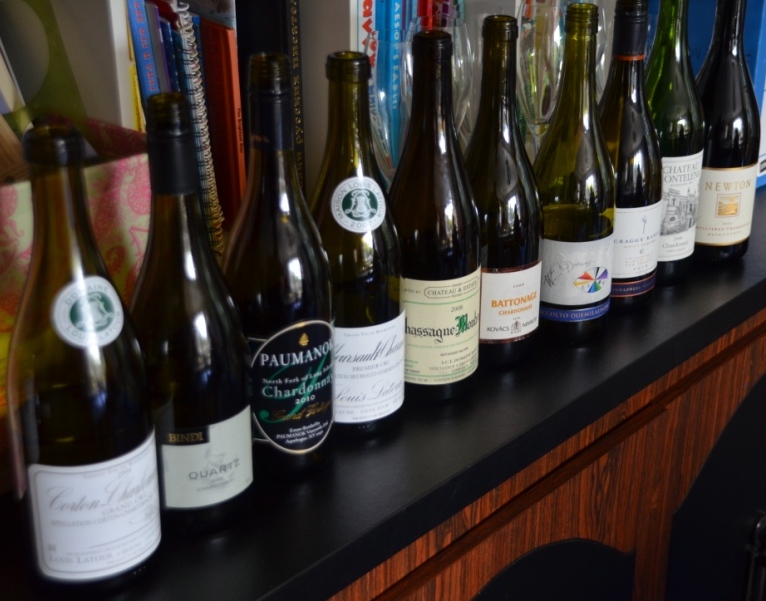 And the wines were:
1. 2006 Louis Latour Cortone-Charlemane, Burgundy
2. 2009 Bindi Quartz, Australia
3. 2010 Paumanok Grand Vintage Estate Chardonnay, Long Island, NY
4. 2007 Louis Latour Mersault-Charmes, Burgundy
5. 2008 S.C.E. Domaine Ramonet Chassagne-Montrachet, Burgundy
6. 2008 Kovács Nimród Winery Battonage Chardonnay, Hungary
7. 2011 Jermann W… Dreams … Chardonnay, Italy
8. 2008 Craggy Range Kidnappers Vineyard Hawkes Bay, New Zealand
9. 2008 Chateau Montelena Chardonnay, Napa Valley
10. 2008 Newton Unfiltered Chardonnay, Napa Valley
With a bit of knowledge and a bit of luck, I managed to get all the wines correctly with the exception of Bindi and Chassagne-Montrachet, which I got in reverse – it is interesting how I thought that #2 was a classic Burgundy, and it turned out to be an Australian wine. We also did a popularity vote, which was won by the Newton Chardonnay – quite awkward, as this was my least favorite wine. My favorite was probably the Jermann, but it is hard to pick a favorite from such a group of outstanding wines. It is also very interesting how different and unique the wines tasted, greatly demonstrating their terroir- and winemaking style-driven differences. Here are all the wines we tasted again, now in more detail for the labels:
And then, of course, there was food – lots of wonderful, home made dishes. It will take too much time to describe it all, so I will just leave you with the few pictures.


Now, I have a bit of the strangely sad part to share (nothing terrible, don’t worry). To complement all the wonderful Chardonnays, I brought a bottle of Sherry to add to our dessert list. 2011 Bodegas Alvear Pedro Ximemez de Añada Montilla-Moriles DO – the wine was excellent, more or less along the lines of what I would expect from Pedro Ximenez – considering the age, it was young and nicely balanced, both with sweetness and acidity. Where is the sad part? Take a look at the picture of that bottle:
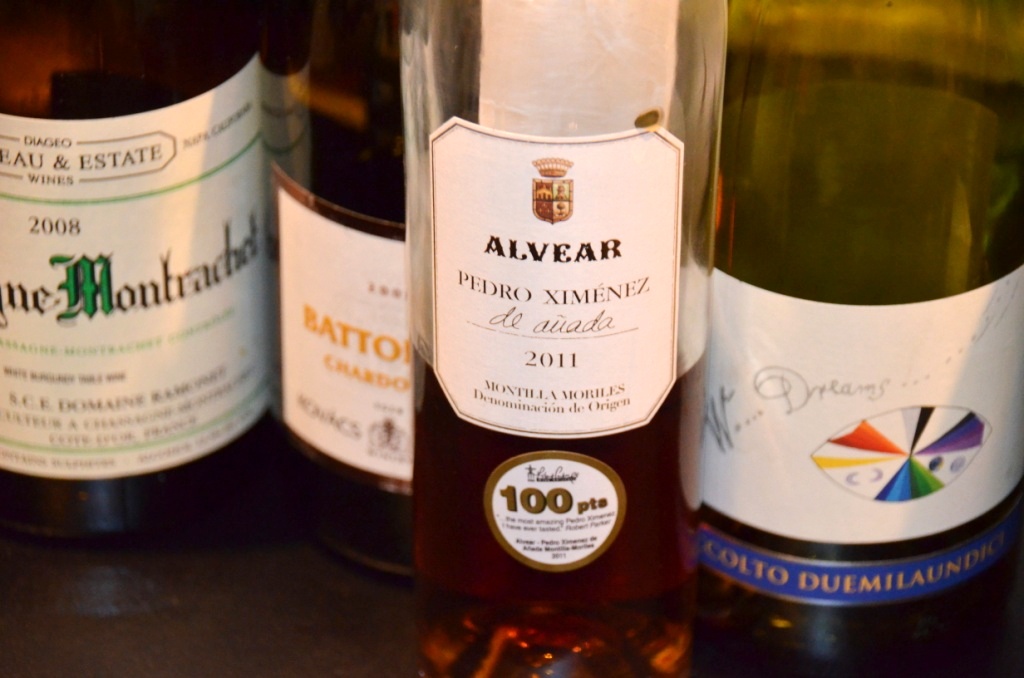
Bodegas Alvear PX de Añada
See that sticker “RobertParker 100 pts”? Yes, this was the 100 points rated wine from Robert Parker!!!!! First time I tried anything rated 100 points by one of the biggest wine critics in the world!!! And I have nothing to write home about it. The wine was good – but I don’t remember it as being earth-shattering. Not sure what to take out of it, but surely feels strange. My only consolation is that I have another bottle of the same wine – and I will keep it for as long as I can before drinking it again – may be then I will be able to see what Robert Parker found in this wine.
That concludes my report on the wonderful game of Chardonnay tasting. We had a great time, and I think restricting the level of “blindness” in this tasting was a very interesting twist, making that blind tasting exercise even more enjoyable. Until the next time – cheers!
Weekly Wine Quiz – Once again, A Grape Trivia Anthology
 Welcome to the weekend and your … Nope, no new wine quiz today. I’m out of time, and really need to assess what grapes I can still include into the quizzes while keeping them interesting. So for today, instead of giving a new quiz, I will give you something to ponder at – a collection of all the Grape Trivia wine quizzes to this date – feel free to play : )
Here we go:
Red grapes:
WWQ #53 – Cabernet Sauvignon – Answer
WWQ #55 – Pinot Noir – Answer
WWQ #60 – Sangiovese – Answer
WWQ #61 – Tempranillo – Answer
WWQ #78 – Petit Verdot – Answer
WWQ #79 – Cabernet Franc – Answer
WWQ #81 – Petite Sirah – Answer
WWQ #92 – Montepulciano – Answer
WWQ #94 – Bonarda/Charbono – Answer
WWQ #96 – Alicante Bouschet – Answer
White grapes:
WWQ #65 – Sauvignon Blanc – Answer
WWQ #66 – Chardonnay – Answer
WWQ #67 – Pinot Gris – Answer
WWQ #68 – Chenin Blanc – Answer
WWQ #70 – Gewurztraminer – Answer
WWQ #74 – Trebbiano (Ugni Blanc) – Answer
There you have it, my friends. What quiz-worthy grapes do you think I’m missing? Enjoy your weekend and cheers!
Restaurant Files: Canoe Restaurant in Atlanta – Great Food, And Close Encounter With The Rare Bird
Think about your best restaurant experiences – what do they consist of? Of course the company is first and foremost – if you are in the wrong company, nothing will taste or appear right – this is given. So outside of the company, food, wine, service, views, decor, ambiance – all play a role, these are all essential factors of your great restaurant experience.
As I mentioned many times before, when traveling, I always look for the opportunity to experience new restaurants. My last trip to Atlanta, Georgia was not an exception by all means – of course I looked for a good restaurant to visit. I used Yelp as my reference source, and it worked quite well. Canoe restaurant, located in the Vinings neighborhood, was well worth the 4.5 stars yelp rating out of 626 reviews (this was the number of reviews at the time of our restaurant visit).
I read in some of the reviews that the Canoe Restaurant had a perfectly romantic appeal. It definitely had, especially considering how dark it was in the dining room (hooray to all the FlashLight apps on the smartphones, we would be left hungry without them). But on a more serious note, the restaurant is situated right by the river, with luscious greens and smart lighting making an outside look like it was a Thomas Kinkade’a painting. My photos will not do any justice to that outside setting, but I hope they will give you an idea of beauty and tranquility.


Going back to our dinner, while everybody were looking at the menus, I grabbed the wine list (what a surprise, right?). That wine list…. How can I describe it… It was probably the best wine list I ever held in my hands – there was an incredible amount of the excellent wines (that it not necessarily unique), priced in a very (did I say “very”?) appealing way. Moreover, one line in that list almost made me speechless – the rare bird was there, and it looked almost, almost – for the group of like-minded friends – affordable. Take a look below – can you spot the rare bird I’m talking about?

I’m assuming you found it – yes, it is the Screaming Eagle. Of course $850 is an exorbitant amount of money for the bottle of wine, but considering that this wine is simply impossible to find at any price, it might not sound that bad – I have a few friends who would simply jump at such an opportunity. But I was not with those friends, so as you can imagine, I was left salivating about such a close encounter with this rare bird.
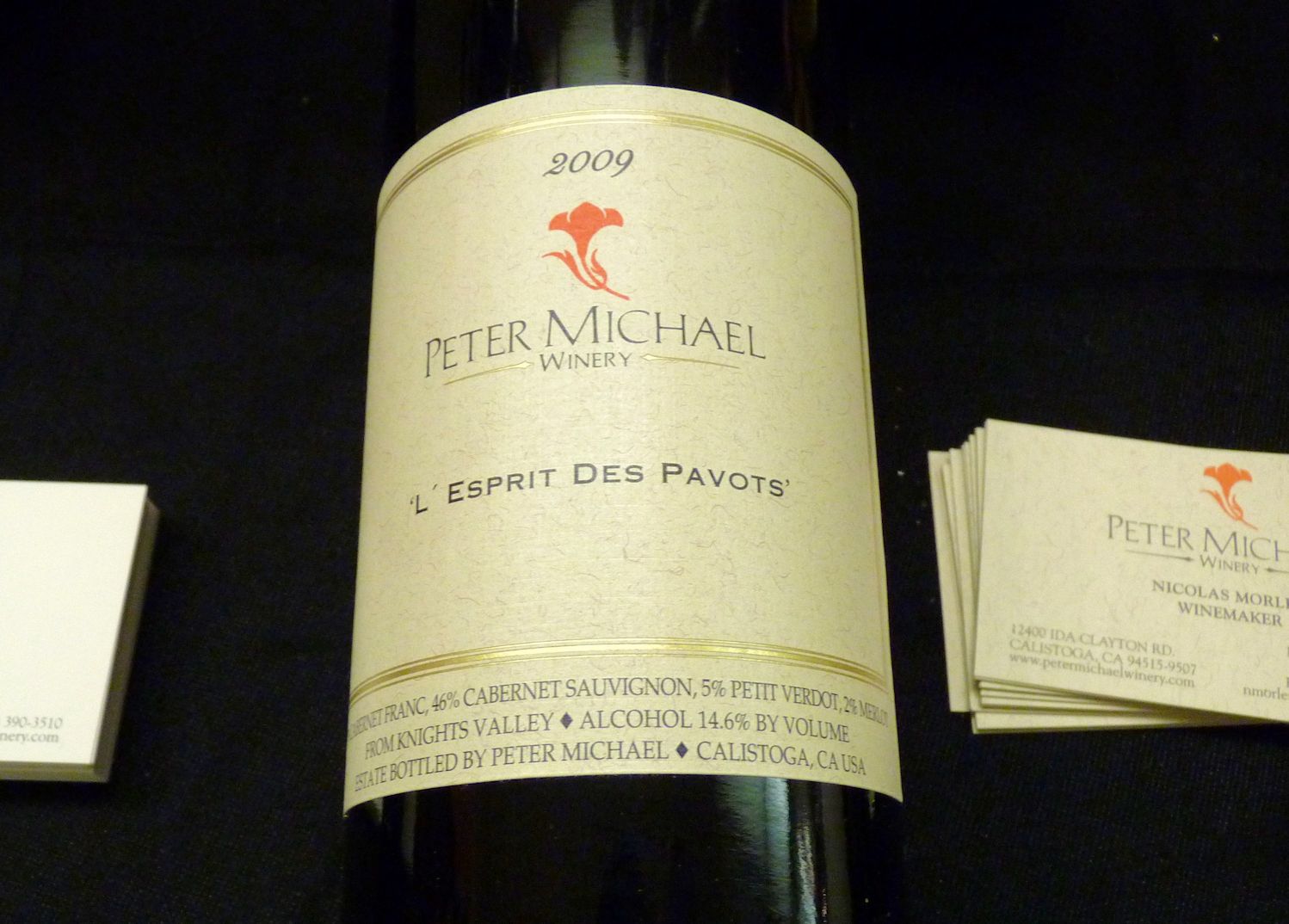
Have you ever got excited of seeing something, took a picture, and only later on, looking at the picture, noticed that there was a more to see in the object of your “excitement-driven” photograph? This was precisely my case. Only looking at. The picture I realized that the Screaming Eagle bottle was actually a second label of this cult wine, called Second Flight (it doesn’t make a difference from point of view of the opportunity of trying this rare wine). Then also noticed lots of other cult wines being present in that list, such as Harlan and many others, many at a extremely reasonable price (for example, Peter Michael Le Pavots retails for $175 – $225 on the wine list is a steal). Anyway, I think I have a great incentive to go back to Atlanta, and drag a couple of friends along.
Enough about the wines we didn’t drink, let’s talk about the wines we had. For the white, we got the 2012 Sigalas Assyrtiko-Athiri, Santorini, Greece – touch of minerality on the nose, white stone fruit, refreshing palate with crisp acidity and more of the white stone fruit undertones. Our choice of red was 2011 Chehalem Three Vineyards Pinot Noir from Oregon – nice smokey nose, good fresh red fruit on the palate, some raspberries and sweet cherries, good acidity and good overall balance. It was nice and easygoing wine to drink, and it complemented well most of the group’s dinner selections.


Now, let’s talk about the food. Our waiter (we had a great service, by the way) explained that the restaurant’s specialties are the game and seafood. Somehow, I felt like embracing seafood (we only scored 9 pm reservation, so it was rather a late dinner), and I didn’t regret that at all. For the started, I had an Grilled Australian Octopus (Chorizo, Peppers, Horseradish Tomato Broth) – the octopus was perfectly cooked and it was chewy just enough to preserve the texture, and very tasty overall. For the entree, I went with Bacon Wrapped George’s Bank Monkfish (Asparagus, Brioche, Grape Tomato Vinaigrette), which was absolutely delicious – perfectly cooked, the flaky fish was melting in the mouth, and the vegetables were nicely fitting in.


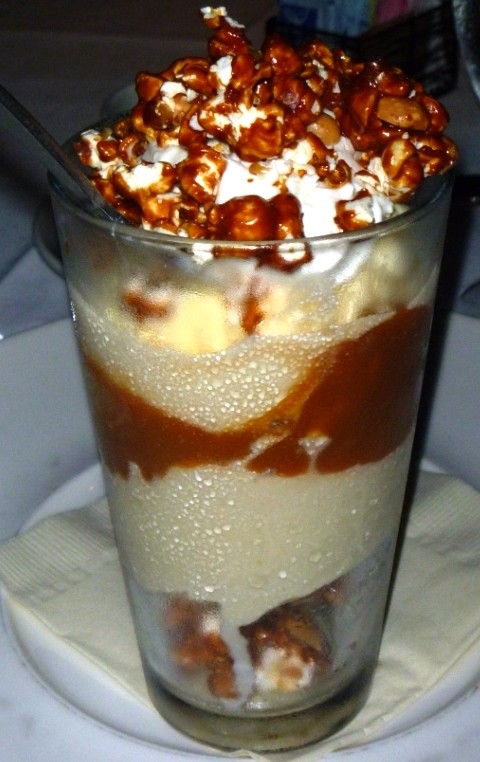
And then it was the time for a dessert. Our waiter, who brought the dessert menu, mentioned that restaurant’s pastry chef was a genius, so after such an endorsement I had to change my mind (I wanted to skip the dessert altogether). With the dishes such as Caramelized Goat’s Cheese Cake (Bourbon Cherries, Balsamic) or Rhubarb Crisp (Strawberry Ice Cream, Oatmeal Crunch), it was almost impossible to decide on something. I ended up taking Popcorn Ice Cream Sundae (Canoe’s Cracker Jack), which was absolutely delicious and very unusual. Freshly made vanilla ice cream with chocolate covered popcorn and caramel sauce – this might be one of the possible spellings for “nirvana”.
To conclude my report of the wonderful dining experience, I can only say that this was an excellent and very memorable meal, and if your travel plans will take you to Atlanta, I highly recommend you will find the time to visit the Canoe Restaurant – and you can thank me later. Cheers!
Canoe Restaurant
4199 Paces Ferry Road, SE
Atlanta, Georgia 30339
(770) 432-2663

Wednesday’s Meritage – Wine Quiz Answer, #WBC14, Project Genome, What is in the Price
Meritage time!
Let’s start with the answer to the wine quiz #107, Grape Trivia – Blends, Part 10.
This was the last quiz in the Blends theme of the grape trivia – we are going back to the single grape quizzes for a while, before changing the subject of the quizzes to something else. But for now, here is the final set of the questions about blends – now with the answers.
Q1: Name the region in France, where total of seven of red and white grapes are permitted, but absolute majority of the wines is made out of three grapes, which includes both red and white. Blend and single grape wines are permitted, and majority of the wines (even made from single grape variety) are blended.
A1: Champagne. While Arbane, Chardonnay, Petit Meslier, Pinot Blanc, Pinot Gris, Pinot Meunier, and Pinot Noir are all allowed grapes in Champagne, absolute majority of wines is made out of Chardonnay, Pinot Noir and Pinot Meunier.
Q2: Name region in France, where multiple red and multiple white grapes are allowed to be used in production of a single red wine.
A2: Châteauneuf-du-Pape. 18 grapes are allowed to be used in production of this famous red wine, a mix of both reds and whites.
Q3: This wine in the old world wine region are traditionally made as a blend of 4 grapes (only 4 are allowed) , with one grape considered to be the major, and 3 others used in various proportions, or possibly none at all. These wines are known to have great affinity to oak and have classification based on the aging time in oak and in the bottle. Flavor profile often includes eucalyptus and cigar box, and wines have great ability to age, especially in the best years. Can you name this region?
A3: Rioja. Rioja wines are made out of the combination of Tempranillo, Mazuello, Garnacha and Graciano, with Tempranillo typically being the main grape.
Q4: This protected (trade mark protected) word came around a bit more than 25 years ago to designate the wine blend (can be both red and white) which resembles in its composition and grape usage one of the most prestigious and best known wines and overall wine styles in the world. Do you know what this word might be?
A4: Meritage! in 1988, Meritage Alliance was created in California by the group of winemakers, to promote creation of the Bordeaux-style blends, both red and white, without infringing on the Bordeaux protected name. According to Wikipedia, the red Meritage wine “must be made from a blend of at least two of the following varieties: Cabernet Sauvignon, Merlot, Cabernet Franc, Malbec, Petit Verdot, or Carmenère, with no varietal comprising more than 90% of the blend”. The same goes for the white Meritage wine: “must be made from a blend of at least two or more of the following varieties: Sauvignon blanc, Sémillon or Muscadelle du Bordelais, with no varietal comprising more than 90% of the blend”. Another interesting fact is that Meritage is a trademark protected word, and any winery using it on their labels must pay the alliance a license fee.
Q5: Wine Spectator’s rating of 100 points ( an “absolute perfection” so to speak), is not easy to get – to the date, there are only 75 wines which got the 100 rating from Wine Spectator. Taking into account only the red wines on the top 100 list, which grape or grape-dominated blend got the score of 100 most often? Different vintages of the same wine should be counted as separate votes.
a. Cabernet Sauvignon or Cabernet Sauvignon based blend, b. Merlot or Merlot based blend, c. Nebbiolo, d. Pinot Noir, e. Syrah or Syrah based blend
A5: Cabernet Sauvignon and Cabernet Sauvignon based blends are definitely in the lead among this elite group – 17 different wines received the coveted 100 points rating from the Wine Spectator. Merlot and Merlot based wines are trailing behind with 11 different wines receiving the honors.
When it comes to the results, looks like I can never estimate the difficulty of the quiz properly. I thought this was somewhat difficult, but I was proven wrong – today we have 3 winners! Jennifer Lewis (no web site), Gene Castellino (no web site) and benway69 (no web site) all correctly answered 5 out of 5 questions, so they are all the winners of this quiz and they all get the coveted prize of unlimited bragging right. Excellent Work! vinoinlove gets an honorable mention with 4 correct answers out of 5.
Now, to the interesting stuff around the vine and the web!
In the mere two weeks, The Wine Bloggers Conference 2014, dubbed WBC14, will take place in Santa Barbara County in California. More than 300 people have signed up to attend the 3 days event, to meet, greet, talk, learn and of course, drink the wine. I’m very excited as this will be my first WBC event, and of course full report will follow. I’m looking forward meeting everyone there (I know that both SAHMMelier and the drunken cyclist will be in attendance), so if you are going, let’s connect! You can find all the details about the conference at the WBC web site.
While the next interesting read item is geared more towards the wine professionals, I think many of you will find it quite interesting. Constellations Brands, one of the biggest wine producers and distributors in the world, recently published the result of the multi-year study of the behavior of the wine consumers, under the name of the Project Genome. Based on the results of that study, all wine consumers are split into the 6 different categories (Price Driven, Everyday Loyals, Overwhelmed, Image Seekers, Engaged Newcomers, Enthusiasts), with the detailed analysis of buying patterns of all the people in each category. There is a lot of interesting info in this article, so I suggest you will go read it for yourself here.
Last one for today is an interesting article at Wine-Searcher, written by Tyler Colman (who is also known as Dr. Vino). In the article, Tyler is attempting to break up a price of a $100 and then a $2 bottles of wine, to identify the price elements attributed to the different participants – the winery, distributor and the retailer, as the bottle of wine is making its way to the consumer’s hands. While it is not necessarily 100% precise, it gives you some food for thought. You can find the article here.
And we are done here. The glass is empty – but the refill is on its way! Cheers!
Weekly Wine Quiz #107: Grape Trivia – Blends, Part 10
The Wine Quiz series is not meant to intimidate. The whole idea here is to have fun and learn something new. When answering the questions, it is fully encouraged to use all available sources of information, including Google or any other search engine. There are no embarrassing answers – the most embarrassing thing is not giving it a try…
Welcome to the weekend and your new wine quiz!
We are continuing our grape trivia series, focusing on the blends, even if it is a blend of 1. Well, I think this will be the last quiz in blends series – we had a good run of 10 quizzes (counting the one I’m about to present to you), so we will go back to the individual grapes for a short while, before ending this whole Grape Trivia series.
This quiz might be a bit harder than the previous ones in the Blends series, but I really don’t plan for it to be as hard as the previous one was, and hope to see some answers.
Let’s play!
Q1: Name the region in France, where total of seven of red and white grapes are permitted, but absolute majority of the wines is made out of three grapes, which includes both red and white. Blend and single grape wines are permitted, and majority of the wines (even made from single grape variety) are blended.
Q2: Name region in France, where multiple red and multiple white grapes are allowed to be used in production of a single red wine.
Q3: This wine in the old world wine region are traditionally made as a blend of 4 grapes (only 4 are allowed) , with one grape considered to be the major, and 3 others used in various proportions, or possibly none at all. These wines are known to have great affinity to oak and have classification based on the aging time in oak and in the bottle. Flavor profile often includes eucalyptus and cigar box, and wines have great ability to age, especially in the best years. Can you name this region?
Q4: This protected (trade mark protected) word came around a bit more than 25 years ago to designate the wine blend (can be both red and white) which resembles in its composition and grape usage one of the most prestigious and best known wines and overall wine styles in the world. Do you know what this word might be?
Q5: Wine Spectator’s rating of 100 points ( an “absolute perfection” so to speak), is not easy to get – to the date, there are only 75 wines which got the 100 rating from Wine Spectator. Taking into account only the red wines on the top 100 list, which grape or grape-dominated blend got the score of 100 most often? Different vintages of the same wine should be counted as separate votes.
a. Cabernet Sauvignon or Cabernet Sauvignon based blend
b. Merlot or Merlot based blend
c. Nebbiolo
d. Pinot Noir
e. Syrah or Syrah based blend
Good luck, enjoy the quiz and your weekend! Cheers!
Beautiful Land, Beautiful Wines, and Pursuit of Passion – #WineStuidio Experience with ZGR Imports
Once again, I’m starting the blog post with rhetorical and repetitious opening: have you ever had… (I can imagine some of you rolling your eyes and may be even clicking away… but let me finish, nevertheless) the wines from the region called Le Marche in Italy? With high degree of confidence, I would guess that many of you would say “no” – while better known in Italy and in Europe, wines of the Region Marche are not all that familiar to the wine consumers in US – but it is what we will be talking about here.
Region Marche is located in the Central Italy, up on the Adriatic Sea. As many other areas in Italy, Marche boasts beautiful hills, serene beaches and old city citadels, the towers and the walls which you can see when you drive along any of the highways and the roads. And of course, you can find wine and olive oil pretty much everywhere.


When I visited Marche for the first time about 9 years ago, the area was known best for its white wine called Verdicchio. Verdicchio is actually a white grape, which is known to produce slightly perfumed, brightly acidic, medium bodied wines. Two of the best production areas for Verdicchio are Verdicchio de Castelli di Jesi DOC and Verdicchio di Matelica DOC. When it comes to the reds of Le Marche, I was not all that impressed at that time. Rosso Piceno, one of the most popular red wines in Marche, a blend of Montepulciano and Sangiovese, which I tasted during my visit, was rather simplistic. Lacrima di Morro d’Alba, one of the indigenous red grapes of Le Marche, was also rather unimpressive, with the wines coming through as too acidic and too light. All in all, my first encounter with the wines of Le Marche left me with great impression of Marche’s whites, and so-so opinion of the reds. Another conclusion we can make that I simply was not very lucky with my selection of red wines.
It was then. Now, a bit more than a month ago, I participated in the virtual educational event on twitter called #WineStudio. In the past, I wrote a number of times about #WineChat events, where people get together for the virtual wine tasting on Wednesday night. The difference between #winechat and #WineStudio is that #WineChat events are usually a single-time events (one hour on Wednesday night starting at 6 PM Pacific/9 Eastern), but #WineStudio events usually span the period of three weeks, with one hour long sessions every Tuesday nights at 6 PM Pacific/ 9PM Eastern. And another (most important) difference between two events is #WineStudio’s focus on education, on presentation of the wine region and the host itself, where the host can be wine importer or a distributor.
While I definitely had a delay with this post (this time it was not really a procrastination – life was simply getting in the way), as it often happens, the delay was helpful. Last week Matt Kramer published a wonderful article in the Wine Spectator, called “The Most Powerful Force in Fine Wine Today“, where he was explaining the role and importance of the wine importers in educating wine consumers and creating the appreciation, demand and overall market for the fine wine. One of the major traits all of the successful wine importers have in common is passion. It is the passion for the wine region, passion for the winemakers, passion for the wines what makes them successful. And passion for the Le Marche – the land, the people, the wines – was clearly showing in conversation with Jonathan Zeiger, the principal at ZGR Imports, our host for the Le Marche #winestudio event.
Jonathan’s company solely focuses on the wines of Le Marche, and I can tell you, that focus and the passion were clearly showing in the wines. Jonathan explained that while Verdicchio is well known and well established, the rising star in the region is the white grape called Pecorino (yes, it is the grape and not the cheese). The wine which we tasted, clearly supported that claim. 2012 Centanni Pecorino Offida DOCG, Italy (14.5% ABV) – the wine started as acidic and grassy, and when warmed up a bit, became creamy and round. It became a a supple white, with lots of big flavors, very concentrated, but still refreshing, and quite unique and different. Drinkability: 8-
And the reds… Both red wines were designated as Rocco Piceno, and both were the blends of Sangiovese and Montepulciano – but this is where the similarities end. To say that I was blown away by the first taste of Centanni Rosso di Forca would be an understatement. 2012 Centanni Rosso Di Forca Rosso Piceno DOP, Italy (13.5% ABV) – one of the best Pop-and-Pour wines I ever had. From the moment the glass “cork” was pulled out, it was a luscious, luxurious, round and delicious wine, one sip after another. Loads of fruit, silky smooth tannins, perfectly present texture, velvety mouthcoat (are you salivating by now?), perfect balance. Drinkability: 9-.
During the last session of the event we tasted 2010 Rio Maggio Rosso Piceno DOC (13.5% ABV) – excellent wine, but very different from the previous one – dark restrained fruit, a touch of cherry pit, perfect acidity. The wine was very restrained, but equally elegant at the same time – it was very vinous, if that makes sense to you as a descriptor, and thought provoking. Drinkability: 8-
There you have it, my friends. You should really follow the passion – the passion of the people who make the wine, and the passion of the people who go out of their way to bring those wines to you – and that quest for passion will never fail you. Discover the passion – and you will drink well. Cheers!
Wednesday’s Meritage – Wine Quiz Answer, Luxury Wines in US, Rosé for How Much?, Last Call Wines
 Meritage time!
Let’s start with the answer to the wine quiz #106, Father’s Day Special – An Odd Bunch. Exactly as the name says, it was a Father’s Day special quiz with somewhat of an odd questions. The key to solving this quiz was in the descriptive sentence where I mentioned that it will be “a little bit about politics, a little bit about power, a little bit about the money, and may be just a touch about dreams”. I will explain below.
Here are the questions, now with the answers:
Q1: What the following wineries have in common? Chester-Kidder, Modus Operandi Cellars, Beckmen Vineyards, Mumm Napa, Peter Michael
A1: As you can see, the “politics” was the first item I mentioned. You can decide whether this was a good hint or not, but the wines of all of these wineries had being served at various times at so called State Dinners – the dinners which US President hosted at White House in honor of the dignitaries from the other countries. For more information, you can take a look here, for example.
Q2: What the following producers have in common? Pol Roger, Domaine William Fevre, Domaine de la Romanée Conti, Château Lynch-Bages, Veuve Clicquot
A2: This is also a “political” item. All of these wines had being served by the Queen Elizabeth during the dinners in honor of the different state dignitaries. Here is the link where you can read more.
Q3: What is common between the following wines/producers? Arbois Vin Jaune, Chateau d’Yquem, Romanée Conti, Château Lafite, Château Cheval Blanc, Heidsieck
A3: This is the “money” connection! The wines of these producers (with the exception of Vin Jaune, which I listed simply as a wine), had being sold at the different wine auctions at astonishing amounts of money. Just to give you some numbers, 1774 Arbois Vin Jaune was sold at the auction for about $74,000; 1787 Chateau d’Yquem for $100,000; 1907 Heidsieck for $275,000. Here you can find more information on most expensive wines in the world.
Q4: What the following grapes have in common? Sagrantino, Tannat, Bonarda/Charbono, Norton, Vranac
A4: This might be the most obscure of all. The connection is “power”, but this can be somewhat misleading, as this is my own way of classifying these grapes as “power” grapes. All of the grapes mentioned here are known for their typically very thick, often black, skin and very pronounced tannins in the wine. They also known (according to the various research) to deliver substantial medical benefits due to the very high concentration of phenols and anthocyanins.
Q5: This one you can consider a bonus question, as it is almost personal. What is common between DRC, Petrus, Screaming Eagle, Quintarelli and Pingus?
A5: Did I mentioned the “dream” and “personal”? Yes, this is my personal [shortened] dream list of the wines I would love to taste rather sooner than later. You can find the full dream list here.
When it comes to the results I’m somewhat disappointed – nobody even tried to answer! Yes, I know, the quiz came out rather difficult, but I was still hoping at least someone would try to answer at least a few questions. Didn’t happen. Well, I hope that participation in the next quiz will be better.
Now, to the interesting stuff around the vine and the web!
Let’s start with some numbers. Wines &Vines Analytics compiled special report regarding the 20 best selling luxury wine brands (bottle prices at $20 and up) in the United States. Turns out that the best selling luxury wine #1 is… Santa Margherita Pinot Grigio, with more than 147,000 cases sold for more than $36M! The very next wine #2, Decoy by Duckhorn is sold at nearly half of both volume (about 86,000 cases) and total revenues of about $20M. I think this is an interesting data you can ponder at. One question I would have for you – how many of those top selling wines do you have at any given moment in your cellar? I personally only have a few bottles of Jourdan, so I guess my answer would be 1 out of 20. Here is the link for you to explore all the data on your own.
Now, a question for you. How much are you willing to pay for the bottle of Rosé? Okay, it is not your average Rosé, it is made by Sine Qua Non iconic winery from California, but then it is 1995 vintage, might be a bit past prime… So are you willing to pay at least $37,20o? Well, yes, I know, me too – but someone did. This was the highest bid price for this wine at the WineBid auction. You can read more about it in the Alder Yarrow’s rant in his Vinography blog.
Last but not least for today, I want to bring to your attention my latest discovery of the source of value wines – the web site called Last Call Wines. Their model is very similar to the Wine Til Sold Out – new wines are announced all the time, and there is a minimum number of bottles (I only saw 4 or less) which you need to order in order to receive a free shipping. But – they have a very nice feature on their site, which is called “past wines”. Where WTSO simply tells you about the wines you already missed, Last Call Wines actually allows you to combine your bottles from the current and past offerings in order to get to the minimum required number. Of course you can do it until the past wine is actually sold out – but you also know the available inventory for all the past and current offerings. I like this feature very much and took an advantage of it a few times. Go ahead and sign up for the Last Call Wines mailing list – and yes, you can thank me later.
And we are done here. The glass is empty – but the refill is on its way! Cheers!
From Languedoc, With Love and Pride – Wines of Paul Mas
 Talking about wines of Languedoc, with the risk of being boring, let me mention a few of the basic facts about the region. Languedoc is the biggest single wine-producing region not only in France, but also in the world. According to Wikipedia, only 13 years ago (in 2001), Languedoc was producing more wine than entire United States. Another important distinction of Languedoc is the fact that it practically has no restrictions on the type of grapes which can be grown there. While Mourvedre, Syrah, Cinsault and Grenache might be main red varietals, pretty much any of the international varietals are also permitted and grown in Languedoc. While such a liberal approach encourages winemaking, its flip side is that a lot of wines are produced under the designation of Vin de Pays d’Oc, which technically stands for “country wines”, a step below in classification compare appellation-specific wines (AOC wines such as Bordeaux, Pomerol, Medoc, etc.).
What this all means to the wine consumer? Value. For the long time, Languedoc had being known as a hidden gem, a secret source of excellent wines which you can enjoy every day, without the need for the special occasion (I actually wrote a post about Languedoc as one of the wine world hidden secrets – you can find it here).
Let me explain why we are talking now about Languedoc wines. A short while ago, I was invited to participate in the virtual tasting of the wines of Chateau Paul Mas. Paul Mas family had been making wines in Languedoc since 1892. Jean-Claude Mas, the 4th generation winemaker, set out to expand farther the family vineyards and winemaking business overall. Starting in 2000, Domaines Paul Mas plantings increased from about 86 acres to 440 acres of vineyards, and it has another 2000 acres under the contract. Just to give you few more facts, in 2006 Jean-Claude was awarded the title of International Mediterranean Entrepreneur of the Year by Ernst and Young; in 2008, he was named one of the Top 30 Winemakers of Tomorrow by L’Express magazine in France.
Domaines Paul Mas vineyards are planted with more than 25 varieties including Syrah, Grenache, Cabernet Sauvignon, Merlot, Viognier and Chardonnay. Obviously, there is a wide range of wines produced under the Domaines Paul Mas label, including some of the widely successful everyday wines such as Arrogant Frog.
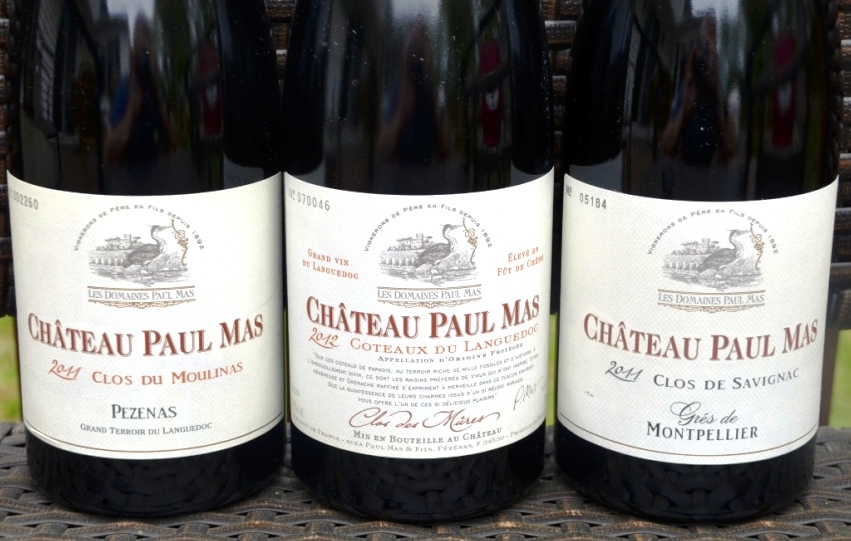
The focus of our tasting was on the single vineyard wines of Chateau Paul Mas. Guillaume Borrot, the winemaker of the Chateau Paul Mas, who was presenting the wines during the virtual tasting, touted them as “affordable luxury”. And the wines were actually made to support this claim. Even the bottle itself, Burgundian in shape and very heavy, was supporting the “luxury” claim. And the fact that all three wines we tasted are available in retail for less than $25 each, definitely makes them affordable.
Well, it is not the look and weight of the wine bottle which will determine the “luxurious” designation. It is the wine itself which should support that claim – and all three wines perfectly delivered. Dense, concentrated and balanced, all well made and ready to be consumed now, or 5-10 years down the road – if you have enough patience though. Here are the more detailed notes on the 3 wines we tasted:
2012 Château Paul Mas Clos des Mures Coteaux du Languedoc AOP (14.5% ABV, 85% Syrah, 10% Grenache, 5% Mourvedre, 10 month aged in oak)
Color: Dark Garnet
Nose: Dark fruit, touch of spices, earthiness
Palate: Spicy cherries, touch of pepper, earthy profile, espresso, soft tannins, medium-long finish.
Verdict: Needs time, should develop nicely. Drinkability: 8-
2011 Château Paul Mas Grés de Montpellier Clos des Savignac Coteaux du Languedoc AOP (14.5% ABV, 50% Mourvedre, 30% Syrah, 20% Grenache, 2 month aged in oak barrels)
Color: Practically black
Nose: Rich, dark chocolate, ripe blueberries, spices
Palate: Loads of pepper, dark ripe fruit, blueberries, perfect balance.
Verdict: Delicious! Drinkability: 8
2011 Château Paul Mas Pezenas Clos du Moulinas Coteaux du Languedoc AOP (14.5% ABV, 55% Syrah, 45% Grenache, 12 month aged in oak barrels, 3,500 cases produced)
Color: Very dark garnet, almost black
Nose: Loads of fruit, nice, open, touch of earthiness
Palate: Earth, hint of sweet fruit, loads of complexity, leather, tobacco, pepper, perfect balance, wow!
Verdict: My favorite wine of the tasting, Has great potential. Drinkability: 9-
There you have it – an encounter with everyday luxury wines, made with love and pride in Languedoc. Some of these wines should be available in US, so make sure to look for them.
Have you had Domaines Paul Mas wines before? Do you have any favorites? What do you think about Languedoc wines in general? Cheers!
Last Bottle Sign Up ($10 credit)




 Talk-A-Vino