Wednesday’s Meritage – #MWWC16 Vote, #SauvBlanc Day, WTSO Marathon, Chianti in New York
Meritage Time!
Don’t have a lot today – but a few things are worth mentioning.
First – Monthly Wine Writing Challenge #MWWC16, “Finish” concluded with a very modest 7 entrees. All of you, who were busy (or lazy) – and you know who you are – think about it, this is not cool. I really hope you will eagerly fix that behavior for the next time around, or the whole MWWC will be finished. Nevertheless, it is time to vote note – you can do it here.
Last time I reminded you about whole bunch of coming and going wine and grape holidays, so here I will focus only on one – Sauvignon Blanc Day (known in the social media as #SauvBlanc Day), which will be celebrated this coming Friday, April 24th, [hopefully] right in your glass. Sauvignon Blanc is one of the most delicious wines, showing a great range of expression from Sancerre in France to Marlboro in New Zealand to Chile and on to California – it is somewhat similar and ohh so different. One thing in common, no matter where the wine would come from – Sauvignon Blanc always means fun! Festivities will take place all over the world, both on April 24th and onward. On April 30th, New Zealand Sauvignon Blanc will be celebrated in New York – information about this event can be found on the New Zealand Wine web site. If you will scroll down, on the same page to the right you will see information about various events taking place on April 24th in New Zealand, Australia, UK and Canada. You should check Twitter and Facebook (look for #SauvBlanc tag) – I’m sure there will be celebrations all over the world, no matter where you are. Most importantly – pour yourself a glass of delicious Sauvignon Blanc – this is all you need to join the festivities.
Wine Til Sold Out (WTSO), one of the finest purveyors on the great wines at the value prices, is doing “it” again. What “it”? Of course the Marathon! This time it is Magnum Marathon, which will take place on Tuesday, April 28th. WTSO went extra step and created a great information page about all of their Marathons, so now it is easy to learn about what, when and how (and I don’t need to repeat the rules every time) – here is the link.
The last one for today – Chianti anyone? If you like Chianti, and live in a close proximity to New York, you are in luck, as Consorzio Vino Chianti will be hosting Taste of Italy Chianti tasting event in New York on Monday, April 27th at the High Line Hotel. The event will be open to the public – you can find all the information here.
And we are done here. The glass is empty, but the refill is on the way. Cheers!

Wednesday’s Meritage – #MWWC16, Grape and Wine Holidays, Spirits Talk on the Radio, M. Chapoutier Tasting, LBW Marathon
Meritage Time!
Today’s news are a very eclectic mix – from big international grape celebrations to the interesting, but very local updates. Nevertheless – let’s get to it!
First – this is the last reminder for Monthly Wine Writing Challenge #MWWC16, “Finish” – the deadline to submit your entry is Monday, April 20th. I don’t think I saw a single entry so far, which is sad, as I think the theme is great. Come on – I know you can do it (addressing myself as well as part of the group) – so let’s just do it!
Grape and wine holidays, anyone? I don’t know who, where and how comes up with all of those holidays, but still, as oenophiles, we must support them, aren’t we? First of all, April is the Michigan Wine Month. Well, this might be a tough celebration for those who don’t live in Michigan – don’t know about your state, but Michigan wines are nowhere to be found in the state of Connecticut. If you don’t have an access to the Michigan wine, at least you can read about it – here is the link to the Michigan Wine web site.
Up and coming in the glass next to you is… Malbec! Friday, April 17th is a Malbec World Day. Unquestionably associated with Argentina today, but really one of the core Bordeaux varietals, Malbec often creates soft, luscious and approachable wines well appreciated by the wine lovers everywhere. Your celebration instructions are simple – open a bottle of Malbec, pour, smell, sip and savor. Don’t forget to say “ahhh” if you really enjoy it, and tell the world about it #MalbecWorldDay.
Next holiday is a Sauvignon Blanc Day (#SauvBlancDay), which will be celebrated on April 24th, less than 10 days from now. Actually, when it comes to this holiday, we know where and when – it was created by the folks at the St. Supéry winery in California 6 years ago, to celebrate one of the most popular white grapes in the world, Sauvignon Blanc. If should be easy for you to join the festivities by opening the bottle of Sauvignon Blanc, and then sharing your impressions in the social media.
The last wine holiday for today is a 2nd annual Rioja Week, which will start on May 2nd with the Wine and Tapas Festival taking place in Chicago. Again, easy to celebrate – get a bottle of Rioja and drink it with friends!
How familiar are you with the wines of Michel Chapoutier, one of the oldest producers in France (established in 1808), best known for his Rhône wines? Whether you are well familiar or not, you are not going to miss out on a tasting of a few of Chapoutier’s Hermitage wines, wouldn’t you? On April 19th, Total Wines & More, one of the largest wine retailers in US, will be conducting a virtual tasting event, where you will have an opportunity to taste (for real) some of the great wines made by Michel Chapoutier. The tasting will take place at the Total Wines stores near you – for more information and to get tickets (priced at $25) please use this link.
Be forewarned – the madness is coming! Nope, not the apocalypse type. Just a simple wine madness. Last Bottle Wines, purveyor of great wines at value prices, will conduct their Madness Marathon tomorrow (04/16), starting at 12 PM Eastern/9 AM Pacific time, and continuing for the next 48 hours, or until the Last Bottle cellar will be empty.
During the Madness Marathon, all the wines will be offered in the rapid succession, without any notifications – no twitter, no e-mails, no text messages. The only way to follow the madness is by constantly refreshing your browser window. There are no minimum purchases to get a free shipping – you can buy 1 bottle at a time, it is fine. All the wines you will buy will ship together after April 27th.
You will need to have an account with Last Bottle Wines, and all account information should be pre-filled – speaking from the experience, the wine you want might be well gone by the time you will finish putting in an expiration date for your credit card. In case you don’t have a Last Bottle account already, I will be glad to be your reference – not that you need a reference, but if you will sign up using this link, you will get $5 credit on your first order – and yes, I will get $20 credit after your first purchase – but once you are in, you will be the one who will tell your friends about it. In case the link doesn’t work, feel free to send me an e-mail to talkavino-info (at) yahoo (dot) com.
Lastly, two updates more of a local nature. First, last Friday I had an opportunity once again to talk (yep, that is something I like to do) about my favorite subject. Well, with a slight twist – the conversation was about liquid pleasures outside of wine – Vodka, Scotch, Bourbon and the others. Once again, I was a guest at the Off the Vine Radio Show with Benita Johnson – and you can listen to that show here. Next time, you should call in and ask questions – will make it more fun!
Before we part, I want to mention that I finally produced a post #4 in a series of the Spanish Wine Recommendations – this post is focused on the places where you can buy Spanish wines around the world. The reason I’m mentioning it here is because after I published the post, I got very useful comments extending the coverage of the good places to get Spanish wines around the world. I updated the post with those comments, so if you read the post already, you might want to check it out again. Here is the link for you to make it easier. If you also got any suggestions or comments, please make sure to share them.
And we are done here. The glass is empty, but the refill is on the way. Cheers!
Spanish Wine Recommendations, Part 4 – Where to Buy Spanish Wines
 As I was rather hoping for, this post is becoming a living thing – I started receiving suggestions for the additional sources of Spanish wines in different regions of the world – and will be updating the post with those. If you have suggestions of your own – please reach out!
And we are back with the Spanish wine recommendations series. In the previous three posts I talked about my long-time favorite ( and therefore, recommended) Spanish wines in the three different price categories – under $20, from $20 to $50, and from $50 to infinity. Now I want to talk about seemingly a non-subject – where can you buy Spanish wines.
This seems to be a non-subject as the answer is simple – in the wine store, duh. Well, of course, but it is not that fast and easy. Most of the wine stores in US would have a section of the Spanish wines – however, majority of the wines in that section will be the “value wines” – unknown producers, unknown wines, limited selection of Rioja of unknown pedigree and some of the better names at often inflated prices. You really need a “specialty retailer”, someone who has a passion for the Spanish wines, to be able to buy exactly what you want at a price you want.
So in this post, I will share with you what I know about buying the Spanish wines. As I live in US, I will give you first-hand recommendations based on my own buying experience. Well, US is a big country, and I live in a close proximity to New York, so again, this is where my experiences come from. However, I will include some store recommendations for other areas in US, and I will do the same for the Europe and Australia- but this will be mostly based on the information I found on Internet, not something I know myself. Of course my recommendations will include both online and “brick and mortar” sources – as you can imagine, there is only a handful of the physical wine stores I’m familiar with, so most of the recommendations will pertain to the online stores.
Before we begin talking about the stores, I want to make a few general comments about buying Spanish wines. It may be even just one comment – when it comes to the Spanish wines, the information on the wine label matters. Another “duh moment”? Well, may be it is, but still – I want to make sure it is something you clearly understand. The words such as Reserva or Gran Reserva are protected by the law – unlike US, for instance, where the words such as “Special Reserve” can appear on the bottle at winemaker’s desire, and actually mean nothing regarding the wine. Why is it important? Reserva typically cost more than Crianza, and Gran Reserva typically costs more than Reserva – and you need to understand that to avoid surprises and to be able to buy exactly what you intended to buy and at a right price. And the vintage and producer matter – of course, this is universal, no mater where the wine is coming from.
Okay, let’s now talk about good places to buy good Spanish wines from.
Before we get country-specific, let me elaborate on the first “duh moment” – the place to buy Spanish wine is at the wine store. It is definitely true, as a trusted wine retailer is your best source of the Spanish wines. To me, “trusted wine retailer” means exactly that – a person you trust with giving you the best deal and taking care of you. As in any other business, some retailers will be simply looking for the quick buck, but some will be there for the mutually beneficial, long term relationship – retailer gets paid, and you get an access to the wines you want at a price which makes sense. If you have a wine retailer you trust, this might be your best source of the Spanish wines, or at least, one of the best sources. But again, “trusted” is a key word here – and if you have a retailer like that, you are in luck, as hunting down good Spanish wines is a challenge.
One more (last!) general note: if you are looking for the particular wine (where to get it from) or just want to check if the price you see makes sense, Wine-Searcher is the place where you should start. Of course it has limitations – if the wine store, for instance, doesn’t sell online, you will not see it come up in the Wine-Searcher results. Also, even if you see the wine to be available in the particular store, especially if you plan to drive to the store, check with the store first if the wine is still available. And Wine-Searcher can’t tell you anything about the reputation and reliability of the store (had my share of issues). Still, it is a great tool to start your search. It is also available as an app on the mobile devices.
United States:
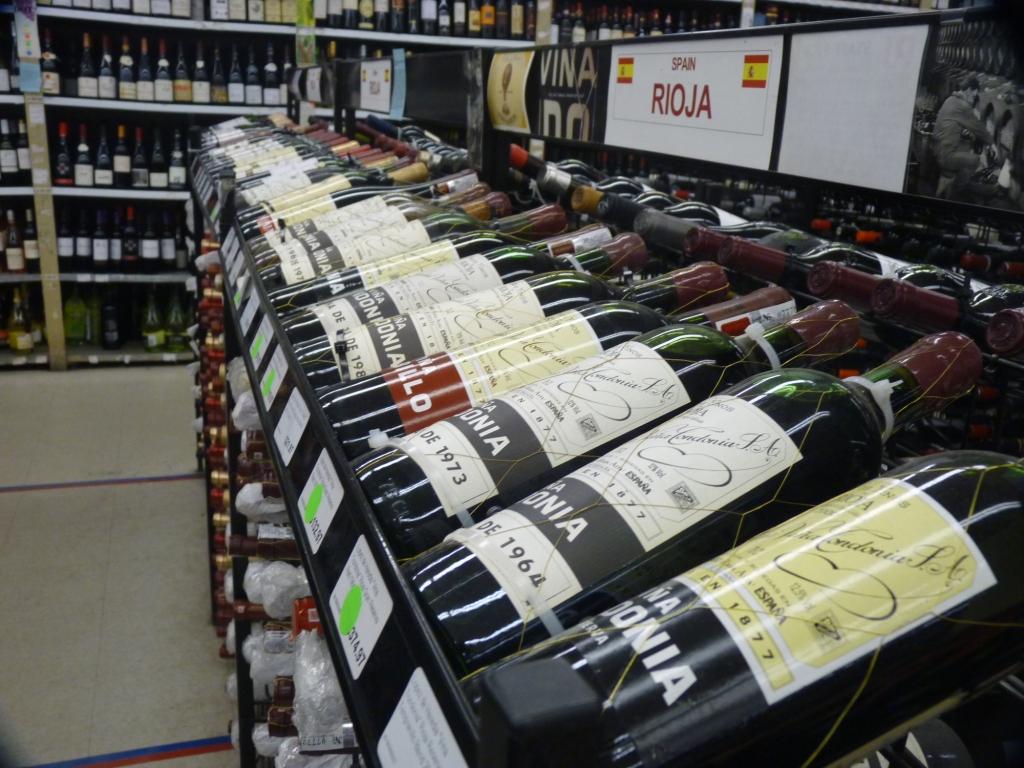
I have to start with my favorite wine store – the wine owned my friend Zak in Stamford, Connecticut – Cost Less Wines. Zak is exactly that “trusted retailer” – not just for me, but for hundreds and hundreds of his regular customers. The Spanish wines section in his store was built gradually over the last 2-3 years (your truly was a bit of a motivational factor, I have to modestly admit) – but at this point, Zak has an excellent selection – La Rioja Alta, R. Lopez Heredia, CVNE, Imperial, Bodegas Juan Gil, Alto Moncayo and many other wines I mentioned in my recommendations are readily available at his store. It is not just the selection – the prices are great too. For instance, you can’t even find 2001 La Rioja Alta Viña Ardanza Reserva Especial in the stores anymore. Using Wine-searcher, I found one place online where this exact wine was still available – at $89 per bottle. Zak has this wine on the shelf as $29.99. Unfortunately, Coast Less Wines doesn’t sell online, but if you live in a reasonable proximity to Stamford and looking for a good Spanish wine at a good price, this store would worth a drive.
Next store I have to mention is called PJ Wine, and it is located in New York City. This store and its owner, Peter Yi, literally put Spanish wines for me on the map (Peter is incredibly passionate about Spanish wines). First I discovered the store online, while looking for some specific wine, and this is how I ended up on their mailing list. Then I got an email advertizing free Spanish Rioja seminar – I signed up, drove to the city – the rest was a history and a love from the first sip (especially a first sip of 1964 Rioja). PJ Wine sells both in the store and online, and their selection is nothing short of incredible, including lots of Rioja from the best years – 1964, 1978, 1994 and lots more – all in stock. Again, if you live in New York city or a close proximity, this store absolutely worth a special visit (just do me a favor – decide on your spending limit before you come there, or better yet, leave all credit cards at home and bring limited amount of cash, as once you will start shopping, you will not be able to stop – and don’t tell me I didn’t warn you). Online selection is equally excellent.
One more store I have a good experience with is the Bottle King in New Jersey. It is not just one store, it is a number of stores, mostly located in Northern New Jersey – plus an online store called The Wine Buyer. Overall Bottle King offers good selection of the Spanish wines at good prices. What is important to know about Bottle Kings, however, that the selection will vary from the store to the store, and most importantly, the selection and pricing online at The Wine Buyer might differ from the physical stores – stores often offer deals and discounts not available through the online outlet.
I wish I can offer you a selection of the stores in any of the large metropolis around the country, like Atlanta, Chicago, Dallas or Denver – but I’m not aware of any of the “Spanish wine” specialty retailers. By the way, if you know of any good “Spanish wine” specialist stores in your areas – please let me know, I will be glad to amend the post.
Going all the way to the west coast, there is not a whole lot I can offer as well. However. there is one store I would like to mention – K&L Wine Merchants. They operate three stores in California, as well as an online store. At the time of this writing, the online store offered selection of about 330 Spanish wines, many with the reasonable prices, so I believe it is worth mentioning here.
Last two sources I would like to bring to your attention are both online only. First of all, my beloved Wine Til Sold Out, WTSO.com (also available as an app). While there are other sites with the similar model (Last Bottles, Last Call Wines and more), WTSO has the best deals when it comes to the Spanish Wines. Yes, you have to be on a look out, true (sign up for email and twitter updates from them), and when the deal shows up, you have to act quickly, but still, they have by far the best selection alongside of recommendations I made. Just to give you an example of a recent deal I got there – 2002 R. Lopez de Heredia Reserva, $23 at WTSO and about $35 (give or take) most anywhere else.
The last one for the US is the online store called Wine.com. To tell you the truth, I never bought anything from Wine.com myself, but I checked their inventory, and at the moment they are offering about 300 different Spanish wines, including many of the names I talked about in this series (CVNE, La Rioja Alta, Carchelo “C” etc.), and the prices seem to be reasonable, so I feel inclined to include them into my recommendations ( if you have a first hand experience with Wine.com, I would appreciate your comments below).
Europe:
Okay, so let’s get things straight. As I live in US, I don’t have a first hand experience buying Spanish wines in Europe. So for the stores which I found, I made sure the selection looks good and the prices look reasonable. What I found was a link to an excellent article which pretty much summarizes the online sources for Spanish wines in Europe, so in essence, I only need to direct you to read this article here. Note that not all the stores in the article are equally reputable – for example, a reader told me that Uvinum is known to have problems (poor deliveries and bad customer service), so check the references before you will use them.
Now, this was the part of the original post: If you know if any wine stores with the good selection of Spanish wines (with good prices!) in your country in Europe – please let me know and I will be glad to add them to this post. Lastly, don’t forget that Wine-Searcher works internationally, so you can specify your country when searching for the specific wine.
As I have the reader suggestions now, I will include them below:
Germany:
As recommended by Julian of Vino in Love:
“I highly recommend the online retailer www.vinos.de. They have a great selection (I mostly buy my Spanish wines from them). Vinos also has stores in Berlin and Munich for those who do not like to buy wine online.”
United Kingdom:
As recommended by Mathias of The Winecurious (some stores are reviewed in the Mathias’ blog, so check it out):
“For those in the UK I can strongly recommend Moreno Wines (http://www.morenowines.co.uk) in Maida Vale. They have an excellent selection of Spanish wines and are almost every other year awarded Spanish wine merchant of the year.
Australia:
Quite unexpectedly for me, it appears that Spanish wines represent a tough love when it comes to Australia. I understand that Australia produces a lot of their own wine, but so does the United States and many other countries. Yet searching for La Rioja Alta and CVNE for the whole of Australia yield only one result. Many of the Australian wine store web site don’t recognize the word “Rioja” and suggest correcting it to “Rosado”. I reached out to The Wine Wankers, very popular and knowledgeable wines bloggers who happen to live in Australia, and I got a few recommendations, out of which I would like to mention Dan Murphy’s, which is a chain of the wine stores in Australia, where you can find at least some of the wines we talked about in this series. Well, not sure if Australia might be a next opportunity for the Spanish wines, but at least this is the story at the moment. Same as for all of my European friends – if you live an Australia and know of a wine store with a good Spanish wine selection, please let me know and I will be glad to include it here.
And we are done – now you have my Spanish wine recommendations as well as the some of the places where you can buy those wines. I still want to write one more post and summarize all we talked about here, therefore, I’m not waving good bye yet.
To be concluded…
Wednesday’s Meritage – Wine Blog Awards, #MWWC16, Making Money With Your Blog and more
It’s been a while since I posted “Wednesday Meritage”, the wine world news potpourri, which used to come out like a clockwork every Wednesday. Well, anyway, there are many things I want to share, so the Meritage it is.
Let me start with the Wine Blog Awards subject. Wine Blog Awards is an annual endeavor since 2007, where the best (supposedly) blogs are recognized as standing out in a number of different categories (best writing, best photography and so on). After a few years of poor execution (2013 and 2014 nominations were announced too late and judging lacked clarity), there is seemingly a desire to make things right. Nomination period is now open until April 22nd, and submission can be made for all of the 8 different categories. And yes, if you like this very blog, I would greatly appreciate your nomination, which can be made here.
Next up is Monthly Wine Writing Challenge, now in its 16th reincarnation. The theme of the #MWWC16 is “Finish“, as assigned by the winner of the previous round Jim of jvb uncorked fame. The submission deadline is April 20th, which is less than 2 weeks away – if you plan to finish, the time to start is now. Don’t forget to tag your entry with #MWWC16 and share it on twitter with the same tag.
Now, let’s talk about the money. For those of you who invests countless hours into this product of your obsession, also known as a “blog”, tell me – have you ever thought “that would be awfully nice to get paid, even a little bit, for all that labor of love”? I don’t know about you, but I definitely had those thoughts. Of course this is not why we blog, but still, monetization of the blog is an interesting subject. Thus I want to bring to your attention an excellent assembly of the stories of the 7 bloggers who make money with their blogs, and they all make very decent money, at least in my opinion. If anything, this is an interesting food for thought, and you can find the link here. Also, just in case you are not aware of it, one of the pages in my blog is designated as a collection of the useful tips regarding blogging, search engine optimization and more – you might find it useful and it is available here. It is also available from the top menu under the “Resources”.
Next, I want to bring to your attention a new collaboration project, masterminded by the Margot from the Gather and Graze (which is a blog you should follow in its own right). The project is called The Dinner Party Collective, or TDPC for the short, and it will be focused on creation of the easy to replicate, seasonal menus for both hemispheres. 12 bloggers are set to collaborate on creating of the menus which will be also fully paired with the suggested wine selections. You can find and follow TDPC here, as well as on Twitter (@tdpcollective) and Facebook.
If you like spicy (hot!!!) food, and live in a close proximity of New York, or plan to visit the city in a few weeks, this might be an event for you. 3rd Annual NYC Hot Sauce Expo will take place April 25/26 in Brooklyn Expo Center in Brooklyn, New York. I’m sure it will be super hot and super interesting, so I’m really contemplating a visit. Here is the link with more information.
I started today’s post with some SSP (yep, the Shameless Self Promotion), and I want to finish with the same. I want to make sure you know that Talk-a-Vino blog has a page on the Facebook, which is used to share different tidbits of information, typically not making it into the blog posts here – wine fun facts, events, special deals and more. If you are on Facebook, and you are not following Talk-a-Vino page, question is – why not? You can solve this problem right here. If you are already following Talk-a-Vino page – thank you very much – how about suggesting it to your friends as well?
And lastly, without any connection to the wine world, I just want to finish this post with the song – again, it has nothing to do with the wine world, but I happened to like it, so.. why not? It resonates with my mood, so there:
And we are done here. Cheers!
Spanish Wine Recommendations, Part 3 – From $50 to Infinity
In the first two posts I shared my recommendations for the Spanish wines under $20, and then between $20 and $50. In today’s post, we will drop all the limits and talk about the wines which will cost more than $50. Heck, most of them will cost way above $50. So let’s explore what the money can buy in the world of the Spanish wines.
Few notes before we dive in. First of all, there will be no white wines in this price category. There might be Spanish white wines which cost more than $50 – I simply not aware of them, hence they will not appear in this post. Now, it is important to explain my basis for the recommendations. No, I didn’t personally taste each and every wine I will recommend to you below. But – I was lucky enough to taste a lot of them – at various events and seminars, I was able to experience some of the best Rioja from the legendary 1964 vintage, Vega Sicilia Unico and even the untouchable 2005 Clos Erasmus. No, my point is not bragging, not at all. In the wine world, price can’t be equated with the quality. Not every $100 or $300 bottle of wine is worth paying for and drinking. There are no guarantees that you will get 10 times more pleasure from the $300 bottle of wine versus the $30 bottle of wine. But the wines I will be talking about below are special. If you like wine, if you consider yourself an oenophile, most of the wines I’m recommending here have a soul and worth experiencing, at least once. This is the rationale behind this list.
As you will see below, the list will be still dominated by Tempranillo, but the focus will somewhat shift down south, from Rioja to Ribera del Duero and Toro. And the wines of Priorat have much bigger play in this price category. Also, in this list, if the vintage is mentioned, it is a part of the essential information. This is different from the two previous lists, where prices were provided for currently available vintages. But here, a 1968 Rioja most likely will not taste as good 1964, and what is worth paying paying for 1964, might not be for the 1968. And the last note – availability of the wines. General availability was one of the factors I took into account when recommending the wine – the wines have to be available, at least online, in order to be included in the under $20 and $20-$50 categories. When it comes to this list, this will not be the case anymore. If you love Spanish wines, make it your dream list, this is your call – but many of the wines I will mention will have very scarce availability. Sorry about that, but this simply the way it is.
Well, pour yourself a glass of Rioja, and let’s talk about Spanish wine “best of the best”.
Tempranillo and Tempranillo-based:
Rioja:
CVNE Imperial Gran Reserva Rioja – powerful and always age-worthy – well, I will have to say this about most or even all. Around $70, but sometimes can be found on sale at around $50.
CVNE Pagos de Viña Real Rioja – 100% Tempranillo fruit for this wine is selected from the best plots of the vineyard. One of the very best wines CVNE makes, and scarcely available. About $90 in current releases?
La Rioja Alta Viña 904 Gran Reserva Rioja – balanced and delicious. Generally this wine costs above $50, but at the moment of the writing of this post, it seems to be widely available for about $45 – this is a steal for this quality.
La Rioja Alta Viña 890 Gran Reserva Rioja – La Rioja Alta flagship, the 890 commemorates the year (1890) when La Rioja Alta came into being. Restrained, earthy and extremely long living. I had a pleasure of tasting both 890 and 904 on multiple occasions (here is one of the posts), and this wine never ceases to amaze. Around $120, but price will vary from vintage to vintage.


R. López de Heredia Viña Tondonia Gran Reserva Rioja – restrained, balanced, delicious. Prices vary based on vintage, but you will probably pay more than $150.
R. López de Heredia Viña Bosconia Gran Reserva Rioja – never tasted this one. Expect it to be spectacular. Expect to pay around $300, but again, the price will depend on the vintage.
1964 Rioja – anything you can find from the legendary 1964 vintage is worth trying, if you are willing to pay – expect to pay at least $300 for anything in this group. Prepare to be awe-stricken after you will taste these 50+ years old wines. Of course there were other spectacular vintages – 1922, 1947, 1978, 1994, 1995 and so on – you can consult the Rioja vintage chart for more details.
Ribera del Duero:
While there are plenty of Rioja wines in this price category, their prices are vintage driven. The consistent lead in this price category belongs to Ribera del Duero wines, which are very expensive based even on their release prices.
Bodegas Emilio Moro Malleolus de Valderramiro Ribera Del Duero – Full throttle delicious expression of Tempranillo. Around $140.
Bodegas Emilio Moro Malleolus de Sanchomartin Ribera Del Duero – Luscious and spectacular. Around $170.
Bodegas Vega Sicilia – a legendary wine producer from Spain. Many countries have a producer, whose name is considered to be a legend, and alone is enough to solicit a dreamy and understanding “ahh” from the group of oenophiles, the people who loves wines, not necessarily the sommeliers and other wine pros. France might be an exception with multiple names capable of causing this reaction (Bordeaux first growth, DRC, Petrus, Chateau d’Yquem), but most other countries have one or very few, like Penfolds in Australia, Cloudy Bay in New Zealand, Screaming Eagle (may be) in US. Vega Sicilia is the one for Spain, a quintessence of creme of the crop. Here are three Vega Sicilia wines for you, oenophiles:
Bodegas Vega Sicilia Valbuena 5° – mostly Tempranillo with some addition of Cabernet Sauvignon and Merlot. Pretty much an introductory Vega Sicilia wine, perfectly balanced and delicious. Around $140
Bodegas Vega Sicilia Unico Gran Reserva – mostly Tempranillo with addition of Cabernet Sauvignon. This wine is produced only in the best years, and it is only released 10 years after the vintage. Beauty and finesse. $500+
Bodegas Vega Sicilia Unico Reserva Especial – I never had this wine – this is a non-vintage blend of different Unico wines. I’m sure it is spectacular, and practically unavailable. I would guess that the price will be roughly the same as Unico, around $500


Dominio de Pingus Ribera del Duero – this might be the most cult wine coming from Spain. Tiny production, practically unavailable. I never tried that wine. If you will come across this wine and can afford it – I’m sure it should be spectacular. $700+
Toro:
Two more wines from Eguren Family Teso La Monja:
Teso La Monja Victorino Toro – powerful, but with nice herbal undertones. Around $55
Teso la Monja Alabaster Toro – if there is one single wine which should identified with “power”, this is the one. I tried this wine a few times – it was always a young wine though – and within a second this wine takes all over your mouth and locks it completely for next 60 seconds or so – there is simply no other sensory elements except tannins. But – definitely the wine worth experiencing, just with an age on it. Around $180
Garnacha and Garnacha-based (yep, a.k.a Grenache):
In this price range, this is squarely a Priorat territory. Garnacha is a star there, but international varieties are used quite often as well. Before we get to Priorat, one beautiful wine from Campo de Borja:
Bodegas Alto Moncayo ‘Aquilon” Garnacha Campo de Borja – dark chocolate on the firm and powerful structure. Delicious. Around $110
Coming from Priorat:
René Barbier Clos Mogador, Priorat DOCa – a blend of Garnacha with Carignan, Syrah, Cabernet Sauvignon. An excellent wine. Around $80
Clos i Terrasses Clos Erasmus, Priorat DOCa – one of the very few Spanish wines to ever get a perfect score (100 points) from the wine critic (Robert Parker). As I mentioned before, I was lucky enough to try this specific vintage, and it was spectacular wine. New releases are about $200. The 2005 (this is the one with the perfect score) is about a $1000 and practically unavailable.


Alvaro Palacios L’Ermita Velles Vinyes, Priorat DOCa – this wine might be even more iconic that Vega Sicilia. Alvaro Palacios is an extremely important figure in the Spanish winemaking, well outside of Priorat, influencing lots of winemakers to do their best. Never had a pleasure of trying this wine, but it should be spectacular. It is hard to figure out the pricing, as this wine is practically not available anywhere. I guess you would pay $700+, but this is an extremely rough estimate.
Monastrell and Monastrell-based (a.k.a. Mourvedre)
Not the whole lot to present to you here – but this wine is typically big and delicious:
Bodegas Juan Gil El Nido D.O. Jumilla – 30% Monastrell, 70% Cabernet Sauvignon. Of course this is more of a Cabernet Sauvignon than a Monastrell wine. So here you get the power of Cabernet Sauvignon with playfulness of Monastrell. Lots of power. Around $140


And we are done here. This list is not all encompassing by all means, but it is based on what I know and/or have experienced. Yes, these wines are expensive. Do they worth it? I can’t answer this question for you, my mission is to enable you to make the right decision when the moment comes…
No, we are not done with the series – so far we talked about “what”, but we still have to talk about “where” and “how”.
To be continued…
Latest Wine News
There were a number of interesting developments in the world of wine and related “beverages”, which prompted this post. Here are some of the latest happenings:
Who doesn’t like Rum and Coke? It is easy, simple and refreshing, and it clearly says “warm days are here”. Yielding to the ever increasing popular demand, Coca-Cola company just announced the brand new product – Rum and Coke in the can, which should be available in the supermarkets next to you starting in May. Going an extra mile, and taking an advantage of thawing relationship between US and Cuba, Coca-Cola signed an agreement with Bacardi company to use their famous authentic Cuban Rum for this product line, thus this new line from Coca-Cola will appear under the name of “The Real Rum and Coke“. Coca-Cola arch nemesis, Pepsi-Cola Corporation is reportedly peeved by the announcement and entered into the talks with the famous French Cognac producer, Hennessy, to come up with some authentic concoction. Stay tuned for the further updates.
Starbucks recently announced that in addition to the Starbucks Evenings program, which adds wine and beer offerings at a number of select Starbucks locations, the purveyor of the fine coffee will add a Starbucks Mornings program, which will feature a special morning beer program to be available in select markets nationwide. The pilot will start in Las Vegas and New Orleans stores, and then it is expected to expand to New York and Los Angeles markets. Starbucks also announced a partnership with Blue Moon Brewing Company to produce a special light morning brew called “Blue Bucks”. A number of analysts in the industry believe that Starbucks Mornings program will be widely successful.
Considering recent acquisitions of Siduri Wines by Jackson Family and J Vineyards by the Gallo, Bronco Wine Company, producer of the famous Fransia and Two Buck Chuck wines, decided not to be outdone by the competitors and made an offer to buy a legendary California producer, Sine Qua None, at an undisclosed amount. To express his reaction to the Bronco’s offer, Manfred Krankl, proprietor at the Sine Qua None, responded in his usual eclectic fashion by sending a case of one of his latest and greatest wines, a 100% Grenache, to the Bronco’s headquarters. The wine, called Middle Finger, had specially designed unique label, surprisingly quickly approved by TTB. There is a great suspicion in the industry that the acquisition talks might collapse after that.
And just a few more tidbits. Screaming Eagle, producer of the eponymous most desired California Cabernet Sauvignon, recently acknowledged growing trend of “Rosé Rules” by announcing the brand new Rosé, made from the best plots of Cabernet Sauvignon, under the name of “Screaming Hen”. The new Rosé wine will be priced at the $500 per bottle, and will be available to the mailing list subscribers. 150 cases will be produced. After this information became public, Christian Moueix, producer of the famous Petrus wines in Bordeaux, reportedly attempted to enter into the partnership with Chateau Miraval in Provence, to produce the best and most expensive in the world Rosé. Based on the limited information available to the press, the talks fell through as Christian Moueix was unable to convince Brandelina team to rip out Cinsault and replant it with Merlot.
That’s all I have for you for today. Happy Wine Wednesday and Cheers!
Spanish Wine Recommendations, Part 2 – Wines under $50
Here we are again, talking about Spanish wines recommendations. My previous post was dedicated to the wines under $20, and now we are moving up and will look at what few extra dollars can buy you. And I actually mean it – despite the fact that our prices can go to the $50, there are still plenty of amazing Spanish wines at the lower end of the price range, mostly under $30.
Another interesting note is that in this price category transition we will mostly see all the new producer names – this will not be so much the case when we will jump the $50 limit, but – you will have to wait until we get there. I also want to remind you of the same basic concepts we discussed last time – 1) this list is mostly based on my experience with particular producers throughout the years; 2) I’m recommending producers and some specific wines, but not the vintages – with these producers, you stand an excellent chance of been happy no matter what the vintage rating was; 3) The list will include mostly red wines – there are really very few Spanish white wines in that price category which I have the long-term experience with and feel comfortable to recommend.
Ahh, before I will forget – note that absolute majority wines in this list (with the exception of the first white wine), will age extremely well. If you will age these wines, you might want to pay some attention to the vintage charts, but you will be fine even without it.
And the last (I promise!) generic note. Rioja wines are a very big part of my love of Spanish wines. When it comes to Rioja, I’m somewhat conservative, and I might be missing on some of the modern experimental concoctions. By “conservative” I also mean that there are some producers I trust completely, which means that I will gladly drink any wines from those producers, whatever I can acquire or be offered to drink. There are only 3 producers like that – La Rioja Alta, La Compañía Vinícola del Norte de España (CVNE) and R. López de Heredia. While it is only 3 producers, all started in the late 1800s (if you are interested in a bit of a history, here is one of my older posts on the subject), each of the producers offers multiple lines of wines – 4 or 5 different lines. The reason I bring it up? While I’m familiar with many of their wines, I obviously didn’t taste each and every one of them. But – and this is why I wanted to mention them before we get to the exact recommendations – if you see the name of any one of these 3 producers on the bottle – go for it. There are a few reasons for such a blunt recommendation. First, a lot of their wines are produced only in a good years – for instance, you would never see a Gran Reserva from La Rioja Alta from the average vintage. Another good thing is that generally these producers release their wines when they are ready to drink, which is not based on the minimum aging requirements, so you will always stand a good chance to enjoy their wines once they get in your glass.
Finally, done with introductions – let’s talk wine now.
White Wines:
NV Segura Viudas Reserva Heredad – one of my favorite Sparkling wines, has medium body with a good weight for the Sparkling wine, and lots of complexity on the palate. As an added bonus, beautiful bottle makes it a nice conversation piece. Around $22.
R. López de Heredia – as I already mentioned, one of my absolute favorites. Here are two white wines from López de Heredia:
R. López de Heredia Viña Gravonia Rioja – an interestingly complex white wine. Around $25.
R. López de Heredia Viña Tondonia Blanco Reserva Rioja – usually has very nice age on it by the time of the release. Combination of incredible complexity and freshness. Around $40 (I put is at $35 initially, but it seems that $40 is more realistic).


Red Wines:
Tempranillo and Tempranillo-based:
Rioja:
Multiple wines under CVNE brand:
CVNE Viña Real Reserva Rioja – usually bright with a good fruit presence. Around $25
CVNE Viña Real Gran Reserva Rioja – usually has more powerful structure compare to the regular Reserva. Around $35
CVNE Cune Reserva Rioja – similar to Viña Real Reserva in style. Actually, in price as well – around $25
CVNE Imperial Reserva Rioja – in the old days, this wine was specifically created for the England markets to compete with Claret. Good structure and complexity. Around $40

R. López de Heredia Viña Tondonia Reserva Rioja – very complex, earthy, usually more restrained than the others in the similar category. Around $40
R. López de Heredia Viña Bosconia Reserva Rioja – nice and classic. Around $32
La Rioja Alta Viña Ardanza Reserva Rioja – bright and dangerous – once you open a bottle, you can’t stop. Around $30
La Rioja Alta Viña Arana Reserva Rioja – a bit more restrained than the Viña Ardanza, but typically round and polished. Around $30
La Rioja Alta Viña Alberdi Reserva Rioja – Most structured out of 3 Reservas. Typically 100% Tempranillo. Around $25


Ribera del Duero:
I’m sure there are many worthy wines from Ribera del Duero in this price range – but I don’t have lots of consistent experiences there, hence only two recommendations:
Bodegas Alejandro Fernandez Tinto Pesquera Crianza Ribera Del Duero – soft and approachable, very round Tempranillo rendering with herbal undertones. Generally under $30.
Bodegas Emilio Moro Malleolus Ribera Del Duero – this is an “introductory” wine from the magnificent Malleolus wines. A beautiful expression of Tempranillo, full of fragrant power. Around $45.
Toro:
I probably should’ve mentioned Toro in the previous post. This is the third Tempranillo-based region in Spain, after Rioja and Ribera del Duero. Tempranillo is known here under the name of “Ink of Toro”, and typically has the most powerful expression compare to any other wines. I don’t have a consistent experience with any of the Toro wines in “under $20” range, but there is one I can recommend here:
Teso La Monja Almirez Toro – dark and dense, very powerful wine. Around $25
Garnacha and Garnacha-based (yep, a.k.a Grenache):
Again, I have a limited experience with the Garnacha wines in this price range, unfortunately. I’m sure there should be some excellent Garnacha wines from Priorat, but most of the Priorat wines I know of are in the next price range up. Therefore, just two recommendations from the same producer – Alto Moncayo:
Bodegas Alto Moncayo Veraton Campo de Borja – fruit forward, with excellent balance. Around $25
Bodegas Alto Moncayo Alto Moncayo Grenache Campo de Borja– shows more power than Veraton, but still has an excellent balance. Around $40
Monastrell and Monastrell-based (a.k.a. Mourvedre)
Again, not the whole lot to present to you here – but this wine is typically big and delicious:
Bodegas Juan Gil Clio D.O. Jumilla – 70% Monastrell, 30% Cabernet Sauvignon. Bodegas Juan Gil produces a lot of wines in a lot of different regions in Spain. However, I’m only including one wine here, which I happened to like more often than not. Bright, fresh and lip smacking. Around $40
And that concludes our list. If you had any of these wines, I would be curious to know what do you think of them. In any case, stay tuned for the part 3, as it will include a lot of drool-worthy wines.
To be continued…
Spanish Wine Recommendations, Part 1 – Wines under $20
List, list, list – who doesn’t like to make lists? Especially the lists of your favorites, where you basically regurgitate something familiar, and you can happily stumble on each and every entry, basking in the happy memories for a moment or three. Yep. That’s the wine list I’m talking about, people. Nope, not the restaurant wine list (that one more often than not is only a source of frustration) – the list of your favorite wines it is.
A short while ago, I was asked by one of the readers for some Spanish wine recommendations. Spanish wines as a group are probably my most favorite, so I happily engaged in the e-mail conversations. After few e-mail exchanges, I got the idea – how about I would simply create a list – a list of Spanish wines I would gladly recommend? Yep, I liked the idea, hence the post which I’m presenting to you.
Before we start, let me clarify a few things. First, I will split this list into the 3 parts – wines under $20, wines from $20 to $50, and the last one will be from $50 onward, with no limitations – no, Spanish wines can’t really compete with Petrus or DRC, but there are some wines there which would clearly require an expense account or lots and lots of passion. Another important note is that I will bring to your attention particular wines from the particular wineries – but for the most cases, without specifying the particular vintages – I tried absolute majority of recommended wines throughout the years, and wines had been always consistent, hence they are on the list. Ahh, and one more thing – I will not be trying to make balanced recommendation – the wines will be heavily skewed towards the reds – sorry about it. Okay, let’s get to it.
While I promised to focus on the reds, I have a few perennial favorites among Spanish whites which I have to mention.
White Wines:
Bodegas La Cana Albariño – the wine is more round than a typical Albariño, with lesser acidity, but it is nevertheless delicious. Typically around $15.
Botani Moscatel Seco DO Sierras de Malaga – incredible aromatics followed by the dry, perfectly balanced body. One of my favorite summer wines. Around $16
Bodegas Angel Rodriguez Martinsancho Verdejo Rueda – might be the best Verdejo in Spain from a small artisan producer. Wonderfully complex. Around $16


Red Wines:
Let’s start with Rioja. Believe it or not, but good Rioja is hard to find in this price category, so here are few names which I know are consistent:
Bodegas LAN Rioja – one of the best values in Rioja, typically at $12 or less. Consistent, round, balanced. Not going to blow your mind – but not going to disappoint either. A perfect party wine too – often available in magnums.
CVNE Vina Real Rioja Crianza – outstanding introductory level Rioja from one of the best Rioja producers. Once you try it, you wouldn’t want to drink anything else. Typically around $15.
Grupo Olarra Bodegas Ondarre Reserva Rioja – soft and round, with nice brightness and acidity. A great introduction into the Rioja wines. Around $15.
Continuing with Tempranillo, here are a few more recommendations:
Bodegas Emilio Moro Ribera del Duero DO – Ribera del Duero is a source of powerful, clean 100% Tempranillo wines – but there are practically none available for under $20. Emilio Moro is a happy exception at around $18. Layered wine with broad shoulders. Great introduction into the Ribera del Duero region.
Viña Mayor Reserva Ribera del Duero DO – another excellent Tempranillo rendition from Ribera del Duero – dark, concentrated and polished. Can be found under $20.
Bodegas Ochoa Tempranillo Crianza Navarra – Tempranillo is the most planted red grape in Spain, so of course the wines are made everywhere. This wine is an excellent rendition of Tempranillo – round, polished, with nice fruit and traditional tobacco notes. Around $16.
Bodegas Volver Volver Red Wine DO La Mancha – another Tempranillo rendition, this one simply bursting with raw power. Powerful, brooding, very muscular wine – which is a great pleasure to drink at the same time. Around $16.


Here comes another darling of the Spanish red wine grapes – Garnacha, a.k.a. Grenache in the rest of the world.
Bodegas Borsao Tres Picos Garnacha DO Campo de Borja – one of the best red wines you can buy overall for $12. Simple and delicious.
Alvaro Palacios Camins del Priorat, Priorat DOCa – okay, this is a Garnacha blend, but considering that this wine comes from Priorat, one of the most exclusive winemaking regions in Spain, you should hardly complain. An excellent introduction into the region – dialed back red fruit and mineral complexity. Around $15.
And the last from the best known traditional Spanish varietals – Monastrell, a.k.a. Mourevdre in the rest of the world.
Bodegas Luzón Luzón Red Wine, DO Jumilla – simple, fruity, approachable, and nicely balanced. Almost an exception in this list at about $10.
Bodegas Carchelo Carchelo “C” Red Wine, DO Jumilla – a blend of Monastrell, Tempranillo and Cabernet Sauvignon. After my first encounter with this wine I coined the term “dangerous wine” (or at least I think this was the wine) – what makes this wine dangerous is the fact that after the very first sip you can’t stop until the bottle is empty. Perfect balance of fruit and power. Around $15.
Torres Atrium Merlot, Penedes – as a fun fact, did you know that Torres is the biggest wine producer in Spain? Well, this might not be a fair recommendation, but still. I had this wine only once, but it was extremely memorable. The recommendation might be not fair as I’m not sure you can get it in the store – in Connecticut, it reserved for the restaurants only. I had it in Florida in a restaurant for $26, and if you will be able to buy it in the store, it would be around $12. If you can find it anywhere – go for it, as the wine is simply stunning, with or without taking the price into account.
Before we part, one more note. Outside of well-known grape varieties, such as Tempranillo, Garnacha and Monastrell, don’t be afraid to take the risk with lesser known Spanish varietals in the under $20 range. Look for the white wines made from Godello, or the reds made from Mencia, Bobal, Trepat and the others – there is a good chance you will not be disappointed.
And we are done! I was not trying to give you a comprehensive list – theses are all my favorites, you can just print this post and go to your local wine store, if you feel inclined, and then we can compare notes. The next post will cover wines in the $20 – $50 range – there are lots of treats there, my mouth starts watering as soon as I start thinking about those.
To be continued…
Of Wine And Balance
 When assessing the wine, there are many characteristics which are important. The color, the intensity and the type of the aromas on the nose, the bouquet, body and flavors on the palate, the finish. When I’m saying “important”, I don’t mean it in the form of the fancy review with “uberflowers”, “dimpleberries” and “aromas of the 5 days old steak”. All the characteristics are important for the wine drinker thyself, as they help to enhance the pleasure drinking of the wine.
One of the most important wine characteristics for me is balance. Well, I’m sure not only for me, otherwise the organizations such as IPOB (In Pursuit Of Balance) wouldn’t even exist. Of course as everything else around wine, the concept of the balance is highly personable – or is it? What makes the wines balanced? What does it even mean when we say that “the wine is balanced”? This is the big question, and I don’t mean to ponder at it at a great depth, as this is a purposefully a short post. But nevertheless, let’s just take a quick stub at it, shall we?
In my own definition, the wine is balanced when all the taste components are, well, in balance. Okay, don’t beat me up – we can replace the word “balance” with the word “harmony”. In a typical glass of a red wine, you will find acidity, fruit and tannins (which is mostly a perceived tactile sensation in the form of drying feeling in your mouth). You will also often find other flavors such as barnyard, toasted oak or burning matches, which are typically imparted by the vineyard’s soil and/or a winemaking process, choice of yeast, type of aging and so on. But – in the balanced wine, nothing should stand out – you don’t want to taste only fruit, only tannins or only acidity – you want all the components to be in harmony, you want them to be complementing each other, enhancing the pleasure you derive from drinking of the wine.
And then you got an alcohol. On one side, I should’ve listed the alcohol above, as one of the components of the taste – alcohol often can be associated with the perceived “weight” of the wine in your mouth, which we usually call a “body”. Alcohol can be also related to the so called “structure”. But the reason I want to single out an alcohol is because way too often, we tend to use it to set our expectations of the balance we will find in the glass of wine, as this is the only objective, measured descriptor listed on the bottle. You might not taste the “raspberries and chocolate” as the back label was promising, but if it says that the wine has 14.5% “Alcohol by Volume” (ABV), this would be usually very close to the truth. Of course there is a correlation in the perceived balance and the alcohol in the wine – if you taste alcohol in direct form when you drink wine, it will render the wine sharp, bitter and clearly, unbalanced. But – and this is a big but – can we actually use the ABV as an indicator of balance, or is it more complicated than that?
When IPOB started, this was their premise – search for the wines with lower alcohol content (don’t know if it still is). Typical ABV in the old days was 13.9% (there were also tax implications of crossing that border). So should we automatically assume that any wine which boasts 14.5% ABV will not be balanced? I do have a problem with such approach. I had the wines at the 13.5% ABV, which were devoid of balance – including one from the very reputable Napa producer who will remain unnamed. And then there is Loring Pinot Noir, where ABV is dancing right under 15% (at 14.7% to 14.9%). Pushing envelope even further, you got Turley and Carlisle Zinfandels, where ABV is squarely stationed between 15% and 16% (occasionally exceeding even that level). Have you tasted Loring, Turley or Carlisle wines? How did you find them? To me, these wines are absolutely spectacular, with balance been a cornerstone of pleasure.
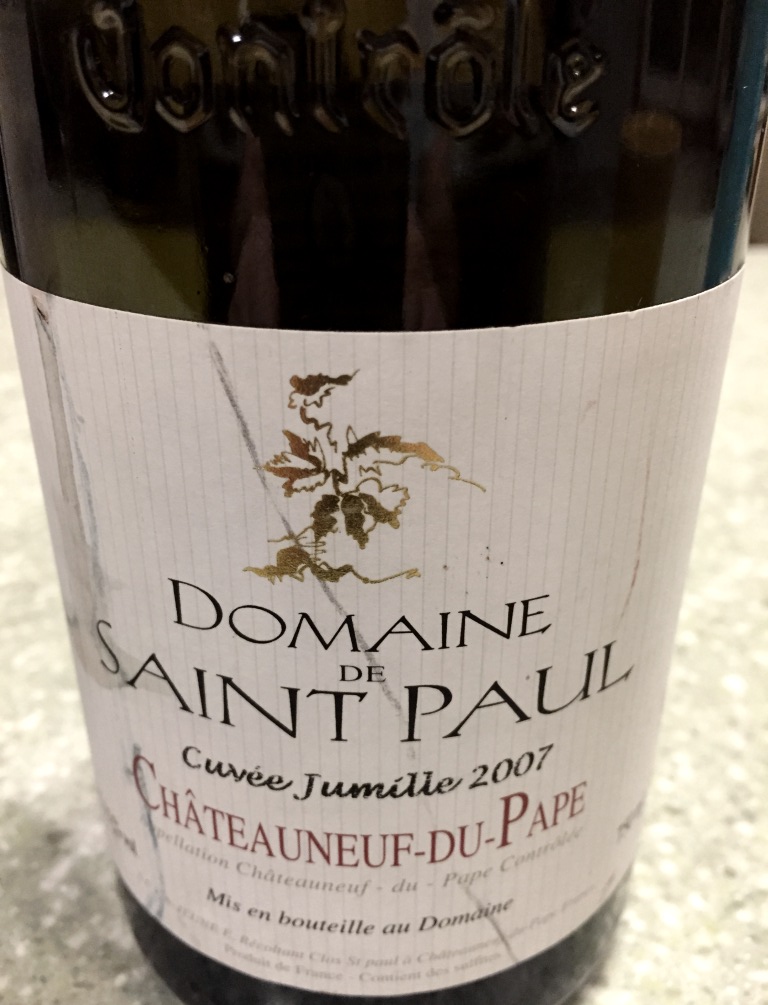
What prompted this post was the wine I had yesterday – 2007 Domaine de Saint Paul Cuvée Jumille Chateauneuf-du-Pape (95% Grenache, 5% Muscardin), which was absolutely delicious, and perfectly balanced, with round, smokey, chocolatey profile. The wine also had a touch of an interesting sweetness on the finish, which prompted me to look carefully at the label – and then my eyes stopped at 15% ABV, with the first thought was “this is amazing – I don’t find even a hint of the alcohol”. Judging by this ABV number alone, the “alcohol burn” would be well expected.
Yes, the notion of the balance is personal. Still – what makes the wine balanced? Can we say that some types of grapes, such as Grenache or Zinfandel, for instance, are better suited to harmoniously envelope higher alcohol levels? Is it all just in the craft, skill, mastery and magic of the winemaker? I don’t have the answers, I only have questions – but I promise to keep on digging. Cheers!
Last Bottle Sign Up ($10 credit)




 Talk-A-Vino