The Dinner Party Collective – Full Fall/Autumn Menu
 A quick update on the fun project I had been involved with – The Dinner Party Collective (TDPC for short). For those of you unfamiliar with TDPC – it is a collaborative project of food and wine bloggers, aimed at creating full dinner menus with focus on seasonal ingredients in both northern and southern hemispheres, and with all the dishes on the menu coming with suggested wine pairings. TDPC is a brain child of Margot from Gather and Graze, which started early in 2015. TDPC was mentioned in the WordPress article in July as one of the 4 food blogs to watch. Earlier in the year, we published a set of Winter and Summer menus.
Now the time has come for the Fall/Autumn and Spring menus. First, the Fall/Autumn menu was fully published, so here are all the links:
Appetizer – Trio of Root Vegetable Dips
Main Course – Beef Bourguignon
All the recipes include wine pairing notes and suggestions from Stefano (Flora’s Table, Clicks & Corks).
Spring menu overview will be coming out tomorrow, with the wine pairings and all the dishes to follow. Happy cooking! Cheers!
Turkish Wines – From Cradle to Adolescence
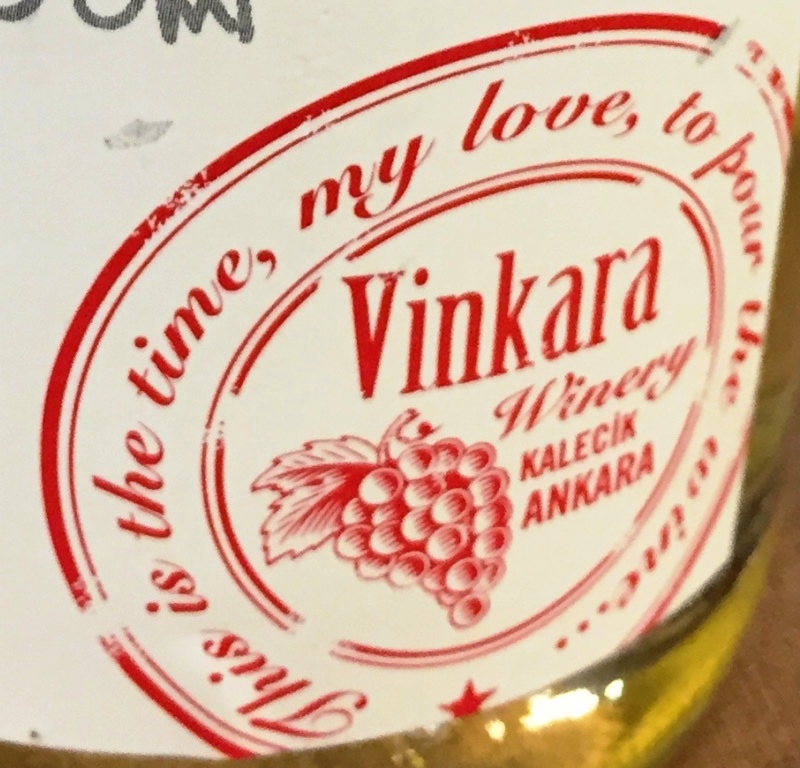 I’m sure many of you heard about Turkish wines. More interesting question is – how many of you actually tasted Turkish wines, or at least saw them in the stores?
The jury is still out on the question of the birthplace of the winemaking – Turkey, Georgia, Armenia, Iran – I think Middle East was “the place”, but will any single country be ever able to claim the prize? Probably not. “You know, we were making wines 8,000 years ago” is a great conversation opener, but what really matters is what is inside the glass. It is quite possible that the wines made 8,000 years ago were absolutely amazing – don’t know if we will ever know that for sure, though – but that is not even important. What is important that today, even if you make a wonderful wine, the road to the consumer’s glass is long and winding, simply due to the sheer abundance of wines already available at any given moment to any consumer at any wine store.
If you have historical advantage, how do you prove your point? You have to educate people, you have to make them interested, and most importantly, you have to make them to try your wines. Based on my experience, Turkish winemakers and importers of Turkish wines are doing exactly that, and they seem to be determined to succeed.
I recently had an opportunity to taste Turkish wines made by Vinkara winery, and to talk to the winery’s founder, Ardıç Gürsel. First of all, talking about education, Vinkara’s web site offers wealth of information about history of winemaking in the Turkey. For my internal grape geek, it was fascinating to learn that Turkey has about 1,200 indigenous grape varieties (I wonder how would they call a 1000 grape level in The Wine Century club, huh?). Also according to the article on Vinkara’s web site, the winemaking originated about 15,000 years ago in Central Anatolia, which is now Turkey (may be that explains my obsession with wine, simply based on the name matching). Anyway, I will leave it for you to explore the web site, and let’s talk about the wines.
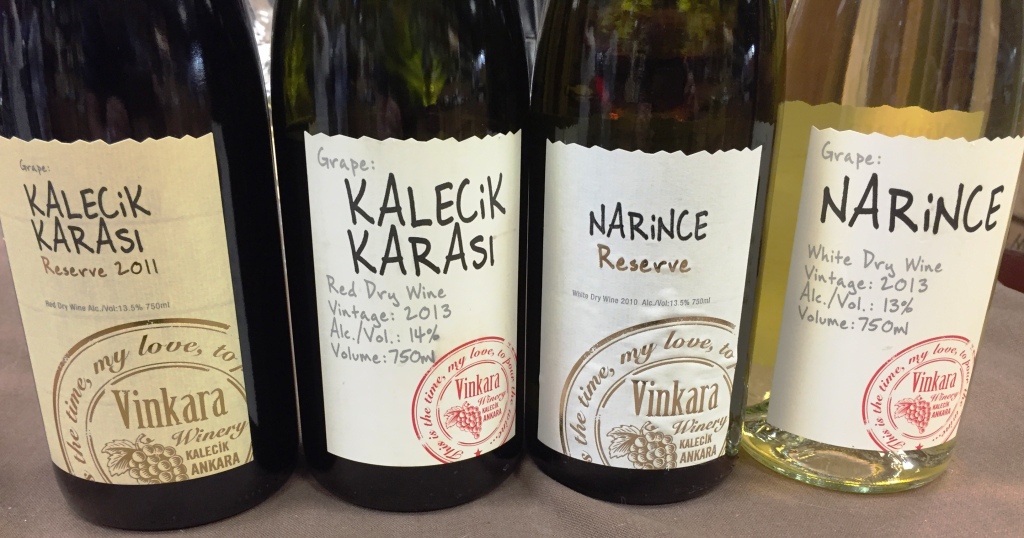
Vinkara seems to be very focused. They only grow 2 grapes, and they only make 4 wines. The two grapes are the white grape called Narince, and the red called Kalecik Karasi. As Vinkara takes great care in educating people, they are making sure you would know how to properly pronounce the names of the grapes, as they are not anything you would expect just by looking at the words themselves. As suggested on the Vinkara’s web site, Narince should be pronounced “Nah-rin-djeh, meaning “delicately” in Turkish”. And Kalecik Karasi is pronounced “Kah-le-djic-car-ah-ser as in British “Father”“. Vinkara makes two regular and two reserve wines, with both reserve wines spending 14 month in oak. I had an opportunity to taste all 4 wines, and here are my notes:
2013 Vinkara Narince Erbaa-Tokat, Turkey (13% ABV, SRP $16, 3 month resting on the lees)
C: Beautiful light yellow
N: grassy, inviting, hint of white fruit
P: touch of white fruit, refreshing, good acidity, excellent balance.
V: 8-, would gladly drink it any time
2010 Vinkara Narince Reserve Erbaa-Tokat, Turkey (13.5% ABV, SRP $28, 14 month in oak, 6 month in bottle)
C: Bright golden
N: Vanilla, butter, inviting, delicious
P: Nice acidity, touch of hazelnut, white plums, medium to full body, silky smooth, good balance
V: 7+, very nice but may be needed a bit more time in the glass to open up
2013 Vinkara Kalecik Karasi Kalecik-Ankara, Turkey (14% ABV, SRP $16, 12 month in stainless steel)
C: bright ruby
N: Touoch of spices, crushed berries, blackberries, tobacco
P: perceived lightness, medium body, long finish, good acidity, touch of ripe raspberries and smoke
V: 8-, food friendly and literally beggin for the grilled meat
2013 Vinkara Kalecik Karasi Kalecik-Ankara, Turkey (14% ABV, SRP $28, 14 month in oak, 6 month in bottle)
C: dark ruby
N: vanilla, baking spices
P: sweet cherries, soft tannins, medium body, sweet finish, touch of spices, hint of chocolate, reminiscent of Grenache
V: 7+, again it possibly needed more time to open up in the glass
As you can tell from my notes, these were definitely the wines I would gladly drink myself and offer to my guests – and the fact that they come with the story is definitely a bonus. As with any “young adults”, it is not easy to establish yourself and become noticeable. However, with the focus on education and on making good, honest, authentic wines, I think Turkish wine industry will make it just fine in this world – at least judging by Vinkara wines, they will.
Next time you are in the wine store and having an urge to try something new – ask for the Turkish wines, you might be pleasantly surprised. And leave me a comment after. Cheers!
Following Wines Til Sold Out – Anything Goes Marathon, September 2015
 It was a while since I posted one of these, but when I saw the announcement for the Wine Til Sold Out “Anything Goes” marathon, somehow I felt inclined to collect the data and create this post. As nobody has time to constantly watch all the wines been offered, the table below presents all (I hope) wines which were included in the marathon, so you can ponder at your own leisure – sorry, that might lead to some regrets too, but I can’t help you with that.
The fact that I didn’t do this in a while shows in the quality of data below, unfortunately – quite a bit of information is missing. I had to recreate the script, and the computer went to sleep right in a middle of a data collection and I lost it all on the wake up. But I hope you will still find it useful as limited as it is. You can see below the prices, the ratings and at what time the wines were offered and for how long they lasted.
Without further ado, here is the table with all the wines offered during marathon (including super-beauty double Barolo package offered right after). If you took part in the marathon, I’m curious to know what you got. And if you missed some wines – well, you can rant in that comments space below. Happy Wine Wednesday and cheers!
Here is the guide to the rating abbreviations (this list is ever inclusive – not all of them are used below): WS – Wine Spectator, WA – Wine Advocate, ST – Steven Tanzer, WE – Wine Enthusiast, WRO – Wine Review Online, W&S – Wine and Spirits, JS – James Suckling, RP – Robert Parker, JHN – Jonathan H. Newman, D – Decanter Magazine, rating goes in stars ( 5 stars is max), JH – James Halliday, TRR – The Rhone Report, BH – Burghound, IWR – International Wine Report, TLC – The Library Collection, PR – Pinot Report, TWN – The Wine News, LM – Luca Maroni, Sn – Snooth.com.
| Time | Wine | Rating | MSRP | Price | %off |
| 12:00a | Giacosa Barbaresco Santo Stefano 2005/2007 2-Pack | WA95, ST95 | $520.00 | $199.99 | 62% |
| 11:45p | Sullivan Vineyards Rutherford Estate 2012 Cabernet Sauvignon | JHN93 | $70.00 | $29.99 | 57% |
| 11:29p | Podere la Regola ‘La Regola’ Super Tuscan IGT Red Blend 2008 | WA93 | $46.00 | $22.99 | 50% |
| 11:13p | Achaval-Ferrer ‘Finca Mirador’ Mendoza Malbec 2008 | WA96, 93WS | $150.00 | $59.99 | 60% |
| 11:00p | Col d’Orcia ‘Il Veltro’ Brunello di Montalcino DOCG 2008 | $50.00 | $23.99 | 52% | |
| 10:44p | Clarendon Hills ‘Liandra Vineyard’ Clarendon Syrah 2007 | JH95 | $85.00 | $33.99 | 60% |
| 10:35p | Casalvento ‘Janus’ Toscana 2011 Half Bottle (375.00ml) | JS93 | $60.00 | $19.99 | 67% |
| 10:20p | Giacomo Borgogno et Figli Barolo Riserva DOCG 2004 Special Edition | JS93 | $110.00 | $39.99 | 64% |
| 10:06p | Chateau Luchey-Halde Pessac-Leognan Red Blend 2009 | IWR92+ | $95.00 | $29.99 | 68% |
| 9:50p | Philippe LeClerc Gevrey-Chambertin Les Champeaux 1er Cru 2011 | JHN92 | $120.00 | $49.99 | 58% |
| 9:36p | Champagne Tendil & Lombardi Cuvee Rose NV | WS90 | $69.00 | $29.99 | 57% |
| 9:30p | Domaine de Beaurenard Chateauneuf-du-Pape Boisrenard 2011 | WS93 | $75.00 | $39.99 | 47% |
| 9:15p | Eagles Trace Winery Estate Grown Napa Valley Merlot 2007 | $45.00 | $22.99 | 49% | |
| 9:00p | Barolo 2009 Single Vineyard Cru Ciabot Berton Roggeri | WRO94, JS93 | $90.00 | $32.99 | 63% |
| 8:45p | Marques del Puerto Bentus Reserva 2005 | WE92 | $60.00 | $19.99 | 67% |
| 8:36p | Rancho Zabaco Monte ‘Toreador’ 2010 Rosso Vineyard Sonoma Valley Zinfandel | WA93 | $60.00 | $26.99 | 55% |
| 8:23p | La Esquina Torrontes 2014 | $22.00 | $9.99 | 55% | |
| 8:09p | Corte Campagnola Amarone della Valpolicella Classico Gli Archi 2004 | WE92 | $54.99 | $29.99 | 45% |
| 8:00p | Krutz Family Cellars Stagecoach Vineyard Cabernet Sauvignon Napa Valley 2011 | $74.00 | $39.99 | 47% | |
| 7:49p | Lisini 2009 Brunello di Montalcino 93 rating and 53% | IWR93, WS91 | $78.00 | $36.99 | 53% |
| 7:34p | Sancerre 2013 ‘Les 7 Hommes ‘ 100% Sauvignon Blanc By Cherrier Pere & Fils | IWR90+ | $39.00 | $17.99 | 54% |
| 7:26p | Quinta Seara d’Ordens Vintage Port 2011 | WE92 | $90.00 | $37.99 | 58% |
| 7:16p | Colle Lungo Campo Cerchi Chianti Classico Riserva 2006 | $50.00 | $24.99 | 50% | |
| 7:04p | Domaine du Grand Tinel Chateauneuf du Pape 2012 | WS91, WA91 | $60.00 | $26.99 | 55% |
| 6:52p | Robert Young Estate Winery ‘Red Winery Road’ Chardonnay 2013 | $35.00 | $17.99 | 49% | |
| 6:41p | Piper Heidsieck Champagne Brut Rose Sauvage NV | WRO93, WS92 | $69.99 | $39.99 | 43% |
| 6:31p | Tempranillo ‘Valnuevo’ Toro 2006 Bodegas y Vinedos Tardencuba | WA93+ | $70.00 | $39.99 | 43% |
| 6:23p | Eagles Trace Wines ‘Latitude 38’ Estate Grown Napa Valley Red Blend 2011 | $85.00 | $34.99 | 59% | |
| 6:12p | Gaston and Pierre Ravaut Aloxe-Corton Vieilles Vignes 2009 Cote de Beaune | WS90 | $70.00 | $35.99 | 49% |
| 5:58p | Citille di Sopra ‘Poggio Ronconi’ Brunello di Montalcino DOCG 2010 | JS97 | $95.00 | $46.99 | 51% |
| 5:50p | Encantado Rutherford 2012 Cabernet Sauvignon | $50.00 | $22.99 | 54% | |
| 5:38p | Ernest Meurgey-Perron Meursault Premier Cru White Burgundy 2013 | JHN92 | $100.00 | $39.99 | 60% |
| 5:24p | Champagne Philippe Prie Cuvee Archange NV | WS92 | $95.00 | $34.99 | 63% |
| 5:15p | Mendoza Vineyards Gran Reserva Malbec 2011 | WA92 | $60.00 | $19.99 | 67% |
| 4:58p | Fontanafredda ‘Varej’ Barbera Piedmont DOC 2013 | $17.99 | $9.99 | 44% | |
| 4:48p | Champagne Henri Abele Rose NV | WS91 | $55.00 | $27.99 | 49% |
| 4:42p | Long Meadow Ranch Rutherford 2013 Reserve Red Blend | JHN93 | $100.00 | $29.99 | 70% |
| 4:36p | Antolini ‘Moropio’ Amarone della Valpolicella Classico 2010 | WE93 | $79.00 | $27.99 | 65% |
| 4:22p | Domaine Roger Sabon Chateauneuf-du-Pape Cuvee Prestige 2011 | WS93, WA93 | $80.00 | $39.99 | 50% |
| 4:16p | Sojourn Cellars ‘Campbell Ranch Vineyard’ Sonoma Coast Chardonnay 2012 | PR94 | $45.00 | $39.99 | 11% |
| 4:08p | Fattoria Scopone Brunello di Montalcino ‘Olivare’ DOCG 2010 | JS95 | $80.00 | $36.99 | 54% |
| 3:56p | Super Tuscan ‘Marchesale’ Terre del Marchesato Toscana IGT 2007 | WE94 | $80.00 | $33.99 | 58% |
| 3:44p | Ribera del Duero 2009 ‘Antonio Izquierdo’ Vendimia Seleccionada Bodegas Izquiredo | WA93 | $120.00 | $45.99 | 62% |
| 3:28p | Keating Wines ‘Buchignani Vineyard’ Dry Creek Valley Zinfandel 2012 | WE91 | $35.00 | $19.99 | 43% |
| 3:14p | Burgess Cellars ‘Library Release’ Napa Valley 1992 Cabernet Sauvignon | $150.00 | $89.99 | 40% | |
| 3:11p | Antonin Rodet Macon-Ige ‘Le Chaillou’ Chardonnay 2011 | JHN91 | $35.00 | $14.99 | 57% |
| 2:55p | Domaine Louis Cheze Cuvee ‘Anges’ Saint-Joseph AOC Syrah 2007 | WS93 | $75.00 | $29.99 | 60% |
| 2:42p | Sullivan Vineyards Rutherford Estate 2012 Cabernet Sauvignon | JHN93 | $70.00 | $29.99 | 57% |
| 2:29p | Bodegas Bioenos Gorys Crespiello 2010 91 rating and 72% | WA91 | $100.00 | $27.99 | 72% |
| 2:18p | Fontanafredda ‘Lazzarito’ Vigna La Delizia Barolo DOCG 1999 | WA92 | $170.00 | $49.99 | 71% |
| 2:08p | Guillaume Baptiste ‘L’Evidence’ 2014 Pouilly-Fume | JHN91+ | $35.00 | $15.99 | 54% |
| 1:58p | Pannier Egerie Champagne 2002 | WE92 | $100.00 | $39.99 | 60% |
| 1:52p | Casalvento Vineyards and Winery Chianti Classico Riserva DOCG 2010 | 94 | 47% | ||
| 1:46p | C. Donatiello Winery Russian River Valley Pinot Noir 2012 | 92 | 56% | ||
| 1:34p | Eagles Trace ‘Latitude 38’ Estate Grown Napa Valley Red Blend 2009 | 51% | |||
| 1:26p | Chateau Moulin de la Rose Saint-Julien 2008 | WE92 | 59% | ||
| 1:16p | Clarendon Hills ‘Blewitt Springs’ Clarendon Grenache 2007 | 93 | 46% | ||
| 1:08p | Valentina Cubi ‘Morar’ 2008 Amarone della Valpolicella | 93 | 59% | ||
| 1:01p | Beaulieu Vineyard Cabernet Sauvignon Rutherford 2012 | 94 | 43% | ||
| 12:50p | Tenimenti Soprani Barolo DOCG 2010 | 56% | |||
| 12:37p | Jamieson Ranch Vineyards ‘Reata’ 2012 Sonoma Coast Pinot Noir | 92 | 56% | ||
| 12:24p | Buoncristiani Family Winery ‘O.P.C.’ Napa Valley 2010 Proprietary Red Blend | 92 | 40% | ||
| 12:16p | Loacker Corte Pavone Brunello di Montalcino DOCG 2008 | 93 | 59% | ||
| 12:09p | H. Blin Champagne Brut NV | 91 | 59% | ||
| 11:50a | Maroon Winery Spring Mountain District Reserve 2011 Cabernet Sauvignon | 50% | |||
| 11:39a | Prosecco Bosco dei Cirmioli Veneto NV | 50% | |||
| 11:24a | Lisini 2009 Brunello di Montalcino | 93 | 53% | ||
| 11:16a | Vintage Port Wine and Soul ‘Pintas’ 2011 | 96 | 38% | ||
| 11:07a | Gran Reserva Rioja 2001 Bodegas Lar de Paula Gran Baroja | 90 | 47% | ||
| 11:02a | Encantado 2012 Stags Leap District Cabernet Sauvignon | 62% | |||
| 10:55a | Joseph Mellot Vigne de la Demoiselle Sancerre Rose 2014 | 44% | |||
| 10:47a | Bruno Giacosa Barbaresco DOCG 2005 | 50% | |||
| 10:41a | Pinot Noir Premier Cru Beaune Perrieres 2007 Maison Louis Latour | 90 | 57% | ||
| 10:26a | Champagne Veuve Doussot Brut Rose NV 100% Pinot Noir | 90 | 63% | ||
| 10:17a | Robert Stemmler Winery Estate Grown Carneros Pinot Noir 2011 | 91 | 55% | ||
| 10:08a | Groth Vineyards and Winery Reserve 2010 Cabernet Sauvignon | 94 | 36% | ||
| 9:53a | Barolo DOCG Cascina Adelaide ‘Fossati’ 2008 | WS93 | $125.00 | $39.99 | 68% |
| 9:44a | Domaine Roger Sabon Chateauneuf-du-Pape Cuvee Prestige 2008 | 93 | 63% | ||
| 9:34a | Sancerre 100% Sauvignon Blanc Vieilles Vignes 2012 Domaine Raimbault | 91 | 62% | ||
| 9:29a | Cru du Rhone Gigondas Vieilles Vignes 2011 Domaine du Grand Montmirail | 91 | 64% | ||
| 9:22a | Casa Brancaia ‘Ilatraia’ 2009 Maremma Toscana IGT | 94 | 56% | ||
| 9:15a | Beaulieu Vineyard ‘Tapestry’ Napa Valley Reserve Red Blend 2011 | 54% | |||
| 9:00a | Piper-Heidsieck Vintage Brut 2006 | 92 | 33% |
Wines Worth Seeking, and The Food To Match
When it comes to the wine produced in the world, Italy is an unquestionable leader – Italy produces more than twice as much wine as country in the second place – France, and 10 times more than US, which is #4 on the list (numbers from 2014). That essentially means two things:
- There are plenty of Italian wines available at any wine store, definitely the case in US.
- There are lots and lots of producers in Italy which are just starting to conquer the worldwide markets – and they often make wonderful wines.
What is the first region which comes to mind when you think about Italian wines? I bet it is Tuscany for the most, followed probably by Piedmont and then may be the Veneto. Well, we are not going to talk about any of those. Producer which I would like to bring to your attention comes from much lesser known area in central Italy, up on the Adriatic coast – the region called Marche.

Hills of Marche (source: San Giovanni web site)
I can confidently state that 6–7 years ago, absolute majority of the wine drinkers in US never heard of the region Marche. Over the past few years, the situation changed, and Marche wines started showing up in the wine stores, often offering a nice surprise to the consumers who are not afraid to venture out of the all so familiar Chianti, Barolo and Pinot Grigio.
As you probably guessed by now, Marche wines is what we will be talking about today – let me introduce to you Azienda Agrobiologica San Giovanni winery, located on the Piceno hills, few miles from town of Offida. Offida gives name to the Offida DOCG, a wine production area focused on the grape called Pecorino.
San Giovanni winery was officially founded in 1990 (the family was making wine for much longer time). The vineyards extend across 75 acres around the green hills, at an average altitude of about 1000 feet (320 meters). From the very beginning, the winery was built on all organic principles, with utmost respect to the land and the environment. As you would probably expect, the winery practices dry farming and uses only natural yeast. In a quest to produce wines most attuned with nature, San Giovanni winery is even using a different type of natural cork, produced from the sugar cane. As I was reading online, sugar cane corks are touted specifically as the best enclosure for organic wines, and they even boast negative carbon footprint, as sugar cane captures carbon dioxide – not sure how that works, but here is a link in case you want to educate yourself.
Before we will talk about the wines, one more important note about San Giovanni wines. Not only all the wines are organic, they are also Vegan! There are no animal products used in production of the wines, and in 2014 the winery became certified vegan as “Qualità Vegetariana Vegan” by CSQA.
San Giovani uses typical local varieties to produce their wines – Passerina, Pecorino, Trebbiano, Montepulciano and Sangiovese. Overall, San Giovanni makes two different lines of wines – Gyo, meant for an early consumption, and a group of wines more of a “reserve” level (I’m using the word “reserve” here as a very loose term, for the lack of common group’s name). During the tasting, which was also accompanied by a delicious meal, we had a pleasure of trying 4 different San Giovanni wines.
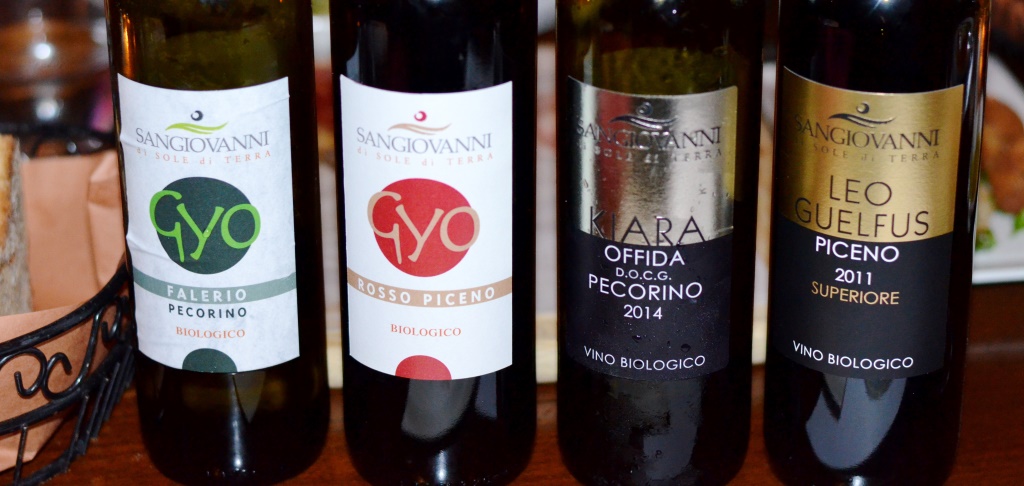 Here are my notes:
2014 Sangiovanni Gyo Pecorino Falerio DOP, Marche (13% ABV, SRP $13, 85% Pecorino, 15% Trebbiano)
N: White fruit, touch of grass
P: Hint of lemon peel, nice plumpness – almost Chardonnay-like, silky. Medium+ body, touch of bitterness.
V: 7+, nice
2014 Sangiovanni Kiara Pecorino Offida DOCG, Marche (13.5% ABV, SRP $20, 100% Pecorino) – this wine is named after owner’s daughter, Kiara. An interesting note – it is considered that Pecorino is at its best after 3 years in the bottle.
N: Bright stone fruit, leeches
P: sweet notes on the palate, apricots, medium to full body, nice acidity, good balance, long finish.
V: 8-, excellent


2014 Sangiovanni Gyo Ross Piceno DOP, Marche (13% ABV, SRP $13, 70% Montepulciano, 30% Sangiovese)
N: crushed fruit, fresh, blackberries
P: soft warm red fruit, nice layers, silky texture, polished and balanced
V: 8. Would be perceived as an expensive wine in the blind tasting. I would gladly drink this wine every day.
2014 Sangiovanni Leo Guelfus Piceno Superiore DOC, Marche (13.5% ABV, SRP $20, 70% Montepulciano, 30% Sangiovese, 18 month in oak, 18 month in the bottle)
N: Concentrated, plums, cherries, touch of herbs
P: Wow! Delicious, fruit, layers, spices, silky smooth, refined, long finish
V: 8+/9-, outstanding wine by itself, and one of the best values you can find at a price. This might be the wine with the best QPR I tasted throughout entire year.


As I mentioned already, the pleasures of the evening were not limited only to the wines. Our tasting took place at Cotto Wine Bar, a wonderful small outpost of authentic Italian cooking in Stamford, Connecticut.
Our hosts spent quite a bit of time going over the menu, looking for the dishes which would help to showcase the wines. As a first course, we had an excellent selection of various cured meats and cheeses – both Gyo and Kiara Pecorino wines perfectly accompanied these, providing nice backbone of acidity.


Next two pasta dishes arrived – Fettucine alla Bolognese (Fresh Homemade Pasta, Meat Ragu, Shaved Ricotta Salata) and Gnocchi alla Genovese (Basil Pesto, Oven Dried Tomato, Pine Nuts, Fresh Perline di Mozzarella), each one being very tasty. Sangiovanni Gyo Rosso Piceno was a perfect suitor here, weaving itself into the flavor profile of the dish.


Our last course consisted of two meat dishes – Agnello Scottadito (Grilled Lamb Chops, sauteed Brussel Sprouts, Pine Nuts and Raisins) and Straccetti Arugula e Parmigiano (Thinly sliced USDA Prime beef served with arugula, Parmesan Cheese and Balsamic Vinegar from Modena), meat cooked to perfection and delicious on its own. The Sangiovanni Leo Guelfus Piceno Superiore, with its firm structure, dark fruit and gentle tannins, perfectly complemented the meats, happily elevating every bite.


There you have it, my friends. Of course, there are lots of wines out there. But the great part of enjoyment of wine comes from the joy of discovery. And this is exactly what I’m taking about here. Sangiovanni wines bring together lots of unique qualities – not only these are tasty wines, but they are also organic, they are good for vegans, and they deliver an outstanding QPR. These are definitely the wines worth seeking.
And if you are ever in Stamford, and craving good Italian food, Cotto Wine Bar might be just “it”. Cheers!
Cotto Winebar and Trattoria
51 Bank St
Stamford, CT 06901
Phone: (203) 914-1400
http://cottowinebar.com/
[Wednesday’s] Meritage – Grenache Day, SHARE Campaign, Discover Georgia in New York
 Yes, I’m aware that this is very much not Wednesday, nevertheless – Meritage Time!
First of all – tomorrow, Friday September 18th, we will be [once again] celebrating the grape – this time, it is Grenache, a.k.a. Garnacha. Grenache definitely is one of the wine world’s darlings, enjoying huge popularity everywhere – France, Spain, California, Washington, Australia, South Africa. Whether part of a blend or playing solo, Grenache offers tremendous range of expressions and can easily be one of the most versatile red grapes. So tomorrow, grab a bottle of your favorite Grenache wine, join the festivities, and of course, share it with the world – use tag #GrenacheDay on Twitter or Instagram. You can also check out Grenache Day website and Facebook page.
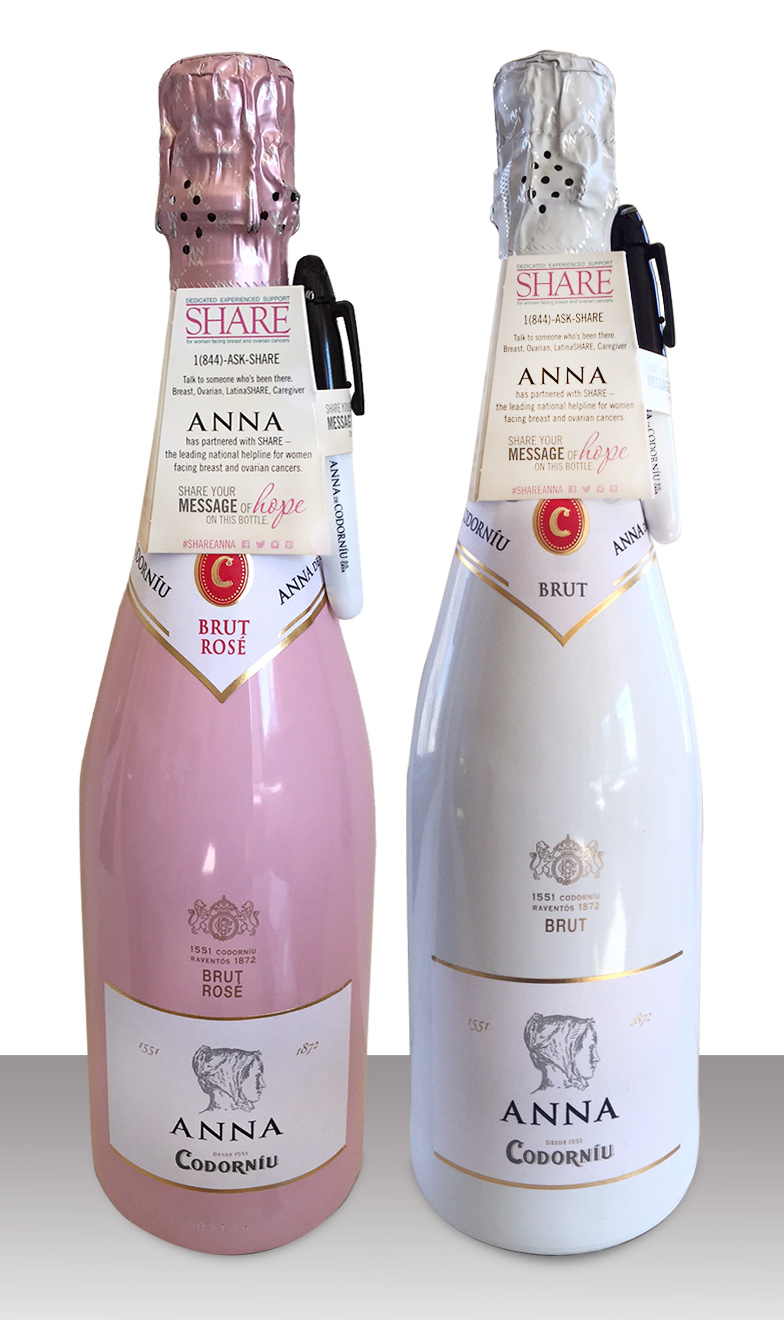
While this might be “an obsession of oenophile”, I can’t help but to notice how often wine is a subject of many “do good” initiatives – charity auctions, fund raisers. “drink for a cause” events. Here I want to bring to your attention one of such “do good” initiatives – partnership between Anna Codorniu, one of the best Cava producers from Spain, and SHARE, “a national organization that provides informed peer support, empowerment and educational resources to women affected by breast and ovarian cancers”. To support this cause, Anna Codorniu created special campaign called “Message on a Bottle” – I very rarely cite text from press releases, but let me just include this passage as a reference: “Anna de Codorníu will encourage consumers to engage with SHARE through the Message on a Bottle campaign encouraging consumers to write their messages of hope on the Anna bottle and connect with #SHAREANNA on social media. In-store displays and bottles will prominently feature information about SHARE, to access their services and become more involved. On September 21, Anna de Codorníu Brut and Brut Rosé will be served at the 12th Annual A Second Helping of Life benefit in New York City, featuring top chefs such as April Bloomfield, Anita Lo and Christina Tosi. (www.sharebenefit.org)”.
Last week I mentioned that Georgian Food and Wine event will take place in New York city on September 25-27, at Chelsea Markets – and here is the link for more information. Georgian hospitality is second to none, so if you have a slightest possibility of attending the event, I would highly recommend that you will make an effort to visit Chelsea Markets and experience #GeorgianBazaar firsthand.
And that is all I had for you for today. The glass is empty, but refill is on the way. Cheers!
Daily Glass: Red with Dessert
When ordering wine with dinner, especially eating by myself, I practically never think of wine and food together. I usually look for the wine which would be interesting and affordable, without regard to the color or style. As last night was probably my 4th dinner of the trip at the same hotel restaurant, I knew that my choices were limited – I already had some (didn’t want to repeat), and some where just out of my price range. After scanning the list back and forth multiple times, I finally settled on 2013 M. Chapoutier Petite Ruche Crozes-Hermitage AOC (€7.20 per glass at the restaurant).
That choice combined together a few of the favorites. First, Crozes-Hermitage is an appellation which encircles the famous, but tiny Hermitage, and the wines in both areas are made from the same grape – Syrah, one of my absolute favorites – with Crozes-Hermitage been a lot more affordable. Second, this wine was made by Michel Chapoutier, one of my favorite producers, who I had a pleasure of meeting (and still have a blog post about it in the works 😦 ). The wine was just absolutely delicious – expressive nose of lavender and red fresh berries, touch of smoke, luscious, velvety palate with perfect black pepper and red fruit core, clean acidity and perfectly balanced.

I was very happy with the wine just by itself, but it also perfectly matched the main course, which I was contemplating for almost the whole trip, somehow not finding the right moment for – Steak Tartar. I don’t know when and how it became one of my favorites – I still like to recount the story of my horror when I ordered it for the first time at one of the Paris restaurants (8 years ago), and the plate with simply chopped raw beef appeared in front of me. After mixing the beef up with all the condiments, I found it absolutely delicious, and I do ever since. You can find steak tartar in US restaurants, but for some strange reason served already mixed, so I was definitely happy to have the classic version where I’m in control. And yes, the wine was working with the dish just fine.

As I loved the wine very much, I was in the mood for another glass, which quickly appeared on the table. Now it was the dessert time, and all of a sudden I was on the mission to find a good pairing. Desserts and dry wines are a tricky combination – more often than not you can end up having sweetness fighting with structure and tannins of the wine. I didn’t feel like cheese (also pairing of cheese and wine is greatly overrated – it is actually very difficult to create matching combination). My only option seemed to be a chocolate cake, but with that I was a bit concerned that chocolate might overpower the wine which was luscious, but quite light. Thus I decided to ask for the advice of my waiter. I found his recommendation a bit surprising – a modern dessert which combines fresh raspberries with almond tartlets and vanilla cream. However, he had a point, suggesting that the fruity core of the wine (same raspberries) would match well with the fruit in the dessert. Well, why not?

The dessert arrived, I took the first bite and the sip of wine – and couldn’t hold a smile. The dish and wine worked together like a charm, perfectly complementing each other and blending together, with the peppery notes of wine adding an interesting twist.
There you have it – a story of successful red wine and dessert pairing, something I would be skeptical of before – but now I know. Love all this learning opportunities the world of wine holds for us – and may your glass never be empty. Cheers!
Missing Vino Volo at Newark Airport – Oeno is Just Not It
Don’t know if you can figure out from the title, but yes, this will be a rant. There were a few rants in this blog before (I even have a dedicated category for that) – and every time I contemplate the same question – “should I do it or not”. The problem with the rant is that while it is often a quick “feel good” solution for the “rantee”, it can theoretically have some consequences for the object of rant. But outside of the letting the steam to blow off from a bad experience, I see the rant as a criticism, and criticism is a good thing – it identifies problems which can be fixed (or not, of course). Okay, let me not making this post a rant about rant – let’s proceed to our subject.
I’m regularly traveling for business for the long time. As previously reported in this blog, the situation with food significantly improved at most of the US airports. And not only with food, but with wine as well – on a multiple occasions I wrote happy posts about Vino Volo stores available in many airports – including the one at Newark Airport in New Jersey (here is the link). At Vino Volo, you can always expect to find an interesting wine flight at a reasonable price, especially considering the airport location, and a tasty and thoughtful bite of food.
Now, as it happened last year, Vino Volo was kicked out of the Terminal C, and replaced by the restaurant called Oeno Wine Bar. Oeno tried to replicate Vino Volo’s model by offering wine flights as well as wine by the glass and by the bottle, and of course, food to go with it. So far so good, right?
First thing as you walk into Oeno is that nobody greets you. Okay, quite common at the airport. Next, you have to find the table, sit yourself, and start navigating the iPad on the stand which crowns every table at the restaurant. The iPad presents all the food and wine, grouped in the number of categories. 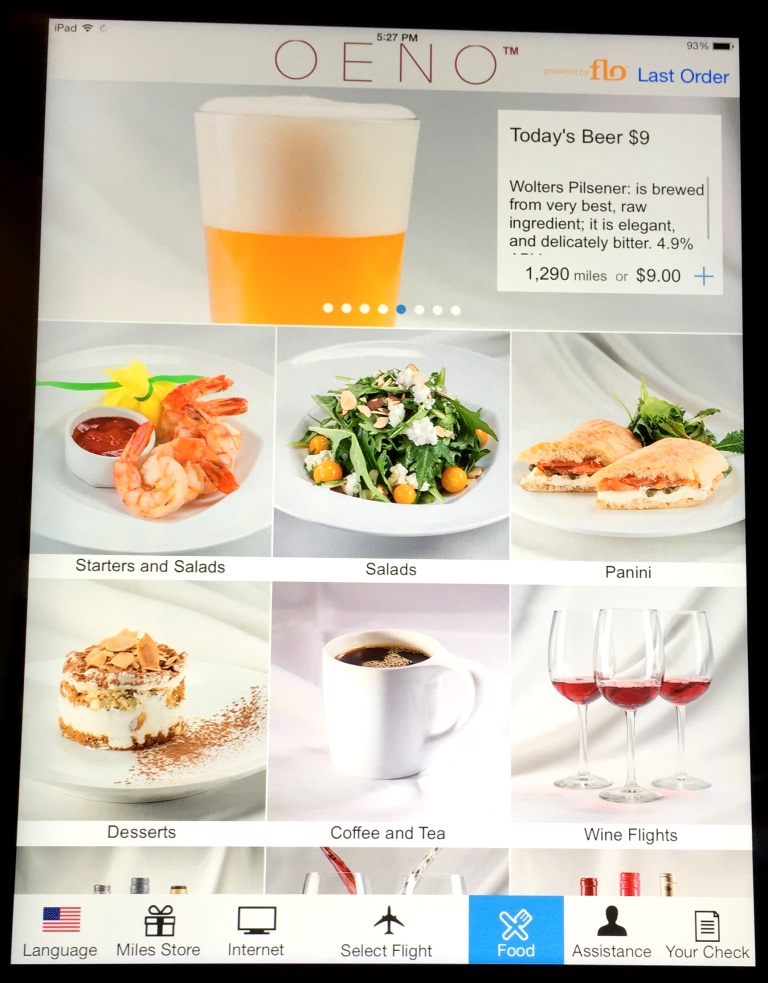
Now, as you try to dig into the wines, there are a few surprises which one runs into. First of all, the prices – there are 6 wine flights offered, priced either at $36 or $54 – most of the Vino Volo flights were priced under $25, so $54 for the tasting flight, seriously? The prices for the glass of wine range from $10 going into the $40s (not bad for the airport, right? – $40+ for a glass of wine on the go). But – for me, an oenophile who was served by Vino Volo very amicably, the biggest gripe is the full lack of information. Despite the fact that you have in front of you an iPad, an electronic device which allows to have pretty much an unlimited amount of information for each and every item offered, Oeno menu provides literally no relevant information. It seems that the only reason to offer the menus on the iPads is to make it easy to charge the customers in dollars or in frequent flyer currency – points/miles. Nobody cares also to provide a service with that, make sure people actually like what you are offering (yes, I mean “information” by the service).


Let me advance my gripe further. Considering complete lack of information, I decided to at least order something inexpensive, so I went with Jelu Pinot Noir, at $10.50 per glass. I couldn’t figure it out where the wine was from, as no information was available. After tasting something pretty much undrinakble – hot, unbalanced, biting wine – I had to look it up. It appears that this was a Pinot Noir from Argentina, and it also appears the the whole bottle cost as much in retail as I paid for the glass. Had I known that this was a Pinot Noir from Argentina, I would simply avoid ordering that – you can hardly go wrong with Malbec from Argentina at any price level, but when it comes to Pinot Noir, you better know the wine and/or producer.

Leaving the wine aside (as I did with my glass), the food was also marginally successful. I ordered a Smoked Salmon Panini. While I understand that Panini is a pressed sandwich, I didn’t expect that smoked salmon panini would be put under a hot press. Ever had hot smoked salmon? This is not the most delicious food in the world, as the heat accentuates the saltiness of the salmon, and really makes it marginally enjoyable. Never mind the price of $14.25 – for that amount of money, you can have 2 or even 3 excellent sandwiches in most of the European airports…
The iPad system at Oeno is really focused on getting money or miles (the points) out of you, at the same time providing as little service as possible, as you do everything on that iPad (you have to place an order and pay before anything gets to your table). To add insult to the injury, the tip of 20% is added to your payment at the time of the order (for some reason it is called “check-out”, even it is the first thing you have to do to get your food). The only service you get is your food placed in front of you, but nevertheless, you are paying as you are at a high end restaurant with great service.
And the last thing which I found extremely annoying: the push to get you to use your frequent flyer miles. If you travel enough, I’m sure you know that all those “rewards points” don’t come very easily, with the airlines constantly looking for the ways to reduce your frequent flyer benefits. Now, every item on the menu has price both in dollars and in miles. For the glass of Prosecco, you could elect to pay $14.10, or use 2,020 miles. As long as you don’t analyze the numbers, and have millions of frequent flyer miles in your account, you probably don’t care about “just 2000” miles. Now, think about this: if you have no status with United, to earn the same 2000 miles, you have to buy a $400+ ticket (it should be $400 before taxes and fees), as you are only getting 5 miles per dollar on United. If you are short 2,000 miles for your award ticket, you can buy them from United, at a measly price of $70 – but here you are, offered to spend that same 2,000 miles on a glass of bubbly instead of $14. And when you refuse to do so, you are asked to fill out a survey to explain why did you refuse the offer to pay with miles. Don’t know about you, but I find this preposterous.
Okay, let’s end this Friday rant. If you travel through Newark airport, and especially if you are an oenophile, I have only one recommendation for you – avoid Oeno. Unless someone at Oeno wakes up and makes changes to transform it into really a desirable destination, as Vino Volo was. Until then, take your hard earned money elsewhere, and – Vino Volo, I miss you very much… Cheers!
Oeno Wine Bar
Newark Liberty International Airport
Terminal C
Gates 70-89
Wednesday’s Meritage – Critic on Criticism, #MWWC19 Reminder, Wine and Food Festivals Abound, Allegrini Wine Dinner and more
Meritage Time!
First, I want to bring to your attention an interesting article by none less than Jancis Robinson, who wrote a very interesting piece called “Jancis Robinson on wine experts versus amateurs“, recently published in Financial Times. In the article, she is talking about the challenges professional wine critics face in today’s world, where literally everyone have an opinion about wines, and not afraid to share it. Definitely worth a few minutes of your time.
Next up – a Monthly Wine Writing Challenge Number 19 (#MWWC19) reminder – there is less than a week left in the current challenge (last day is September 14th), and if I’m not mistaken, there were very few submissions so far. I understand that theme is challenging – “Choice” can mean all and nothing at the same time – but this is why it is a challenge, and this is why your participation is required! If this can be a source of inspiration, here is the link to my own mumbling on the subject – I’m sure you can do better. Write up, people!
Now, last weekend of September might be challenging for the food and wine lovers, as multiple events will be competing for your time and attention:
Greenwich Wine and Food Festival 2015, presented by Serendipity, will take place September 23-26 in Greenwich, Connecticut – lots of celebrities, Food Network Chefs, wine, food contests and more are in the program. Here is the link for detailed information, tickets and more.
The 10th annual Newport Mansions Wine & Food Festival will take place on September 25-27, 2015 at The Elms, Rosecliff & Marble House mansions in Newport, Rhode Island. Food& Wine Magazine will be hosting the festivities, and there is a very long list of celebrities and celebrity chefs who will be in attendance there – Martha Stewart, Jacques Pepin and many others will be present, so you can expect lots of delicious food, great wines and fun time. Here is the link for detailed information.
Georgian Food and Wine Festival should take place in New York City on September 25-27 at Chelsea Markets. At this point, this is all information I have – I can’t even give you a link – but just in case, if you are in New York city, see if a visit to Chelsea Markets will fit into your schedule – this will be a free event and I’m sure you will not regret making it.
Now, a bit more of a local event, but on Tuesday, September 15th, Vespa restaurant in Westport, Connecticut, will be hosting an Allegrini wine dinner, where 5 different wines from Allegrini & Poggio al Tesoro estates will be paired with the dishes specially created by the Chef David White. Allegrini is well known producer our of Veneto in Italy (so yes, there will be Amarone on the list), and they also own Poggio al Tesoro vineyards in Tuscany. To get full information about the dinner and to reserve your spot, please visit Vespa Westport web site.
And the last one for today: WTSO, the best of the best in the world of the value wines, will conduct their famous “Anything Goes” Marathon on Monday, September 21st, starting at 9 AM US Eastern time. Wines will be offered in a rapid succession, new wines will be advertised only through the Twitter (no emails and no App notifications), no minimums to buy to get free shipping. But you better have all your information ready, as wines will be flying. If you are not already doing so, you might want to follow WTSO on Twitter. Happy hunting!
And this is all I have for you for today. The glass is empty, but the refill is on the way. Cheers!
Daily Glass: Pleasures of a Simple Côtes du Rhône
What do you think of Côtes du Rhône wines? Côtes du Rhône (I like to call them CdR for short) are some of my favorite home wines. A “little brother” of Chateauneuf-du-Pape, they often offer similar, may be a bit less expressive taste profile, usually at a fraction of a price. They are also quite versatile with food, offering a wide pairing range, from lamb to game to cheeses.
I was reminded today of how good these simple CdR wines can be. While traveling (I’m in south of France at the moment, near Nice), I asked for the local red wine at the restaurant. Red Provence (that would be a true local wine) are made in a very minuscule quantities, so it is not surprising that restaurant at a small hotel didn’t have any. I was offered to look at the wines from the neighboring territories, such as Côtes Du Rhône, and I ended up picking the cheapest wine on the menu. It so happened that 2013 Antoine Ogier Artesis Côtes du Rhône AOC (14% ABV, €21 at a restaurant) was an excellent choice. The wine had red fruit on the nose with a touch of lavender, very soft tannins on the palate, soft and silky profile, plums, touch of minerality and excellent acidity, overall very balanced. After about 30 minutes the wine also showed tobacco and touch of pepper on the palate – a very classic profile overall. Drinkability: 8-
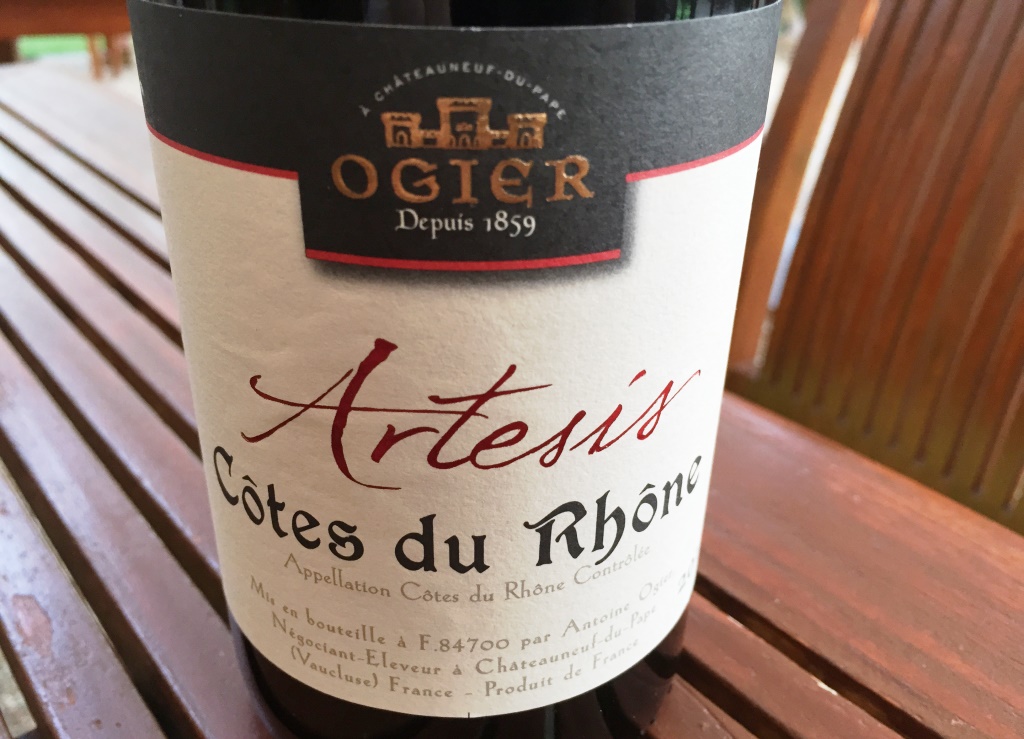
What was even better than just a nice glass of wine was that wine worked perfectly with food – this was an accidental success, as I didn’t think about the wine at all while ordering the food. The wine paired spot on with the Rabbit Pate, elevating each bite. It did the same thing with Grilled Veal with Creamy Mushroom Sauce. Believe it or not, but it was not even disturbed by an interesting dessert – a Pineapple Carpaccio (called on the menu “raw marinated pineapple”) with Lime Sorbet. All I can say that this was probably one of the most versatile wines I ever had – kudos to the winemaker for crafting such food friendly wines – I guess 155 years of history mean something.


Before we part, I want to live you with a couple of curiosities. Below you will see the back label of that bottle of wine, providing sulfates warning in 21 languages (I already shared that on Twitter). I find this interesting and a bit ridiculous (sorry – wine always contains sulfates, and no, they don’t cause the headache). The second picture shows an extremely thoughtful presentation of the condiments. I shared this on Twitter too, noting that I like the classy presentation, something which French mastered perfectly, only to be ridiculed by someone asking me if ketchup is a French food. Of course it is not, but think about how many times you were presented with the bottle of ketchup at a restaurant, only to think “where should I put it to – on the plate or directly on the fries” – by the way, both are equally uncomfortable choices? In this case, the problem is solved in the best possible way – here is your personal bottle, and you don’t need to deal with any puzzles, just enjoy your food.


Voilà! I’m done with my “notes from the road”. If you are in US, happy few last hours of the Labor Day holiday weekend. Until the next time – cheers!
The Drama of Choice
This post is an entry for the 19th Monthly Wine Writing Challenge (#MWWC19), with the theme of “Choice”. Previous themes in the order of appearance were: Transportation, Trouble, Possession, Oops, Feast, Mystery, Devotion, Luck, Fear, Value, Friend, Local, Serendipity, Tradition, Success, Finish, Epiphany, Crisis.
 Choice. Simple word, isn’t it? But think about how powerful the concept of “choice” is. Or better yet, think about how scary the word actually is – think about times when simple phrase “this is your choice” sent chills down your spine? Yep, “choice” is an interesting word.
Choice is closely related to the concept of freedom. When you don’t have freedom, you usually have no choice – well, except may be one – to fight for your freedom or not. Surprising or not, but sometimes we prefer not to have that freedom of choice. Life becomes so much easier when the choice is already made for you. This might not be the best choice (it rarely is) but then a person is happy as the life seems simpler. Choice is hard, choice is difficult, choice is emotionally and intellectually draining. When choosing, we can not know if we are making the “right choice”, and that makes us wary, frustrated, tired and unhappy. It important to understand that “do nothing” is also a choice, not an absence of it. We are choosing it – “doing nothing” doesn’t happen by itself – this is what we decide, we “do nothing” by choice.
We make choices every day, from the moment we wake up until we go to sleep. What to wear, what to eat, which book to read, which task requires our attention first, and which can wait. Most of the choices we make don’t have long term consequences – eggs Benedict versus scrambled eggs is important only for a few minutes you will enjoy your food. Black pants versus grey pants is not the matter as soon you step out of the house. But some of your choices can be extremely far reaching – taking or declining a job offer, going for the third child or not – these choices will shape your life and you will feel their effect for a long while.

Let’s now take a look at the winemaking. I would argue that a lot (most!) of choices made in the winemaking have long term consequences. The wine starts in the vineyard. Which grape to plant? Pinot Noir, Cabernet Franc or Aglianico? Pinot Noir, you said? Which clone? Dijon (which one then exactly), Pommard, AS–2? Now you are growing the grapes with numerous choices regarding irrigation, pruning, canopy management, protection against insects. 5 years down the road your are ready to harvest grapes to make the wine. Harvest date? Hand versus machine? How to crush? Choice of fermentation temperature? Choice of yeast – natural or synthetic? If synthetic, which one of the thousands available in the catalog? Malolactic fermentation or not?
How to age – stainless steel, oak, ceramic, qvevri? For how long? New oak versus old, American versus French? What type of bottle should we use? Screw top, natural cork, synthetic? What is going to be on the label? Below is an example of choices made by the winemaker – captured in the format of the very informative back label – what grapes to use, how long to age, how to ferment – just a glimpse of all the choices which went into production of a bottle of wine…
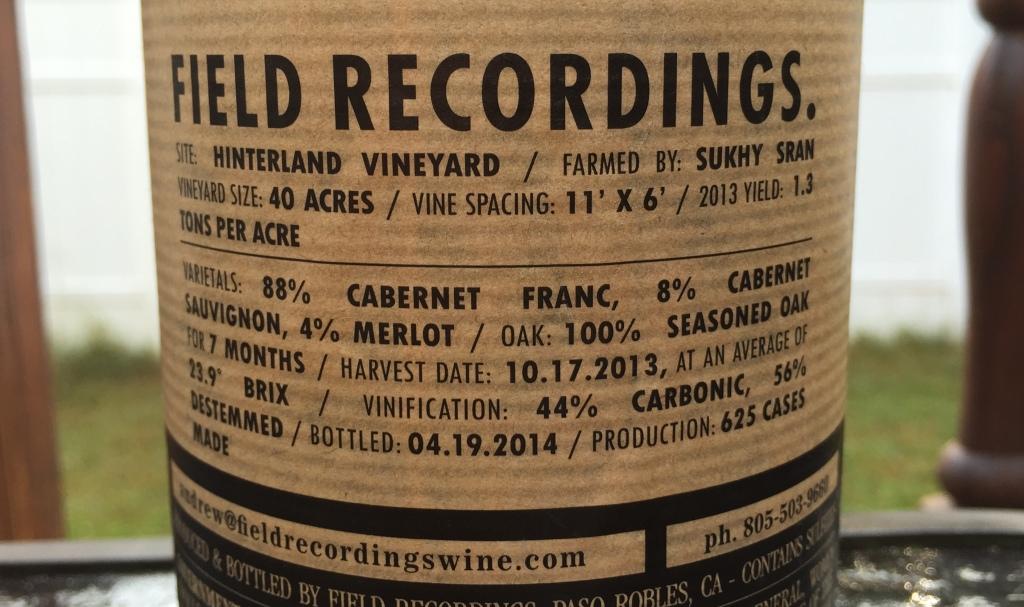 Choices, choices, choices… The effect of many choices will not be known for years, sometimes tens and tens of years, until someone will open a bottle of a 50 years old wine, take a sip and say “wow”. Only then we might know that we made right choice years back. Or not.
Yes, we face the drama of choice every day. You know what is important in dealing with this drama? Don’t look back. The choice is made, and it is a part of the past now. The worst thing you can do is to take yourself on the mesmerizing road of “what would’ve happen if I wouldn’t make that choice, if I would’ve chosen differently”. Here you have only one choice – to move forward. Yes, you can’t change or undo the past choices. But you can “do over” – it is always your choice. If you planted the wrong grape, you can replant vineyard with the new one. If you’ve chosen profession you are not happy with – make a choice to change that, learn something new and choose a new path.
You have no luxury of stopping. The very next moment, you will have to make a choice again. And again. And again. Life has an endless supply of the choices for us. Let’s embrace them. Cheers!
P.S. I will not be upset if you will find this post mumbling about nothing new or of substance. But I hope it will at least give ideas and will inspire someone else to choose to write a post for the #MWWC19…
Last Bottle Sign Up ($10 credit)




 Talk-A-Vino