Month in Wines – November 2015
November 2015 was an interesting month. On one side, I traveled intensely throughout the month, which definitely affected memorable wine encounters. At the same time, this month brought some very unique highlights, such as Chinese wine and a full range of Beaujolais Nouveau wines (never before I tasted 5 Beaujolais Nouveau in the row). And I can’t help myself – I really love the labels on some of the Beaujolais Nouveau wines – festive and uplifting:


Here is what was “wine-interesting” in November 2015:
1421 Gold Chardonnay Xinjiang China – sorry, no idea about ABV or a price – very nice and classic in its Chardonnay profile, good apple and lemon notes, well rounded. 8-
2010 Tolaini Al Passo Toscana IGT (13.5% ABV, $20? – don’t know Costco price, Merlot/Sangiovese blend) – nicely restrained, unmistakably Italian, good taste profile, soft tannins, good acidity, good structure. 8-
2012 Penfolds Kalimna Shiraz Bin 28 South Australia (14.5% ABV, $28) – tar and tobacco on the nose, dark fruit, dark chocolate. Tobacco and pencil shavings on the palate, good fruit, good acidity, perfect balance. 8-
2011 Turley Estate Zinfandel Napa Valley (15.6% ABV, $38) – delicious nose of ripe raspberries with a touch of tobacco, a classic Zin. Soft and delicious on the palate, perfect balance, fresh fruit, dark chocolate, hint of smoke, perfect balance. An excellent wine. 8
Changyu Red Wine Blend Ningxia, China (ABV?, about $33 at a restaurant) – definitely a highlight – spot on Bordeaux taste profile, round and balanced. 8/8+


2005 Bernard Magrez Temperancia Toro, Spain (15% ABV, $11.99 WTSO price) – I got this wine earlier in the year from the Wine Til Sold Out (WTSO). It has a delicious dense core, with dark fruit and espresso. Full bodied and perfectly well integrated. 8-
2012 Casey Flat Ranch Open Range Proprietary Red, California (14.8% ABV, $9.99, Blend: 52% Syrah, 33% Petite Sirah, 8% Merlot, 5% Mourvedre, 2% Cabernet Franc) – concentrated dark fruit, plums, dark chocolate, touch of cinnamon and a touch of tar. Scrumptiously together. 8-
2006 Monasterio De Las Viñas Reserva Cariñena DO ($15?, Garnacha 70%, Tempranillo 20%, Cariñena 10%) – out of all places, had it at hotel in Korea, and it was outstanding – firm, well structured, medium to full bodied, lavender and plums on the palate, perfect balance. 8
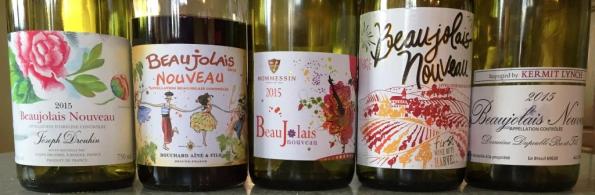
2015 Georges Dubœuf Beaujolais Nouveau (13% ABV, $10.99) – exceeding expectations. A new height for Beaujolais Nouveau. 8-
2015 Joseph Drouhin Beaujolais Nouveau (13% ABV, $11.99) – a solid effort. 7/7+
2015 Domaine Dupeuble Beaujolais Nouveau (13% ABV, $13.99) – rivaling Dubœuf with may be even slight edge up. Would never identify as Beaujolais Nouveau in a blind tasting. 8-/8
2015 Mommessin Beaujolais Nouveau (11%–14% ABV, $10.99) – Classic Beaujolais Nouveau. Enough said. 7+
2015 Bouchard Beaujolais Nouveau (11%–14% ABV, $9.99) – see above. 7+
And we are done here. Did you have any of the wines I’m talking about here? What were your recent wine highlights? Cheers!
From Marche to Mendoza, With Vine
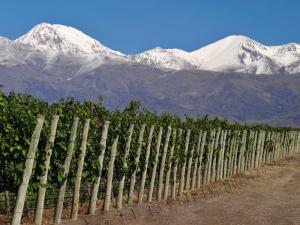
Rutini Vineyards. Source: Rutini Wines web site
In 1884, Felipe Rutini arrived to Mendoza area in Argentina. Continuing family traditions from the early 1800s when his father, Francisco Rutini, started making wine in the area known as Le Marche in Italy, he planted grapes and started making wine now in Argentina. Don Felipe, as he became later known at, was 19 years old when he founded La Rural winery in the district of Coquimbito. In 1925, Rutini family continued pioneering traditions of Don Felipe by planting first vines in the Tupungato area of the Uco Valley, a high altitude home to some of the very best vineyards in Argentina.
Today Rutini family is one of the biggest wine producers in Argentina, making about 9.5 million bottles of wine per year and exporting it to the 40 countries. You might be well familiar with the line of wines under a common name of Trumpeter, which include Chardonnay, Torrontes, Malbec, Cabernet Sauvignon, Pinot Noir and a number of others – Trumpeter is one of the 6 different ranges produced by Rutini Wines. Recently, Rutini Wines started introducing a new “Classic Series” line of wines in the United States, and I wanted to share my impressions from few of the wines in this line which I had an opportunity to taste.
But before we talk about the wines, let’s talk a bit more about Rutini family wine business today. Once again, I got together – well, yes, virtually, same as few times in the past – with Mariano Di Paola, head winemaker for Rutini Wines and one of the top winemakers in Argentina, and I had an opportunity to ask him a few questions. Here is what we talked about:
Q: Rutini family started making wines in Italy. Is there still a connection today at the Rutini Winery back to the traditions and customs of Region Marche?
A: No there are no direct links, but we still try to use the original Rutini winemaking influence today. Felipe Rutini was a visionary man who believed in Argentina’s winemaking capabilities, planting the first vines in Mendoza, and generations after we still work hard to maintain his legacy.
Q: If I understand correctly, Rutini is introducing its Classic Collection wines in the US. For how long had you been producing the Classic Collection wines? What were the main markets for it until now?
The Rutini collection was first released in Argentina with the 1996 Malbec, followed by Merlot and Gewürztraminer. It has been available in the U.S.: NY, TX, FL, MD, DC, MA, RI, and CA since the end of 2013.
Q: What are the oldest vines growing at Rutini vineyards?
A: Select Malbec vines in La Consulta date back over 100 years.
Q: What was the source of inspiration for the Rutini Sauvignon Blanc?
A: We wanted to create a well- balanced Sauvignon Blanc that spoke to the true characteristics of this varietal and represented the best quality of this wine.
Q: Sauvignon Blanc is really not the grape Argentina is known for. Do you think Argentinian Sauvignon Blanc has its own style and will become a wide movement?
A: Yes, Argentine Sauvignon Blanc has its own style which is heavily dictated by the particular growing region. Our continental climate, highly influenced by the Andes, and high altitude provide us with optimal grape growing conditions. Sunny day and dry summer conditions allow us to harvest fully ripened grapes. The cool evening temperatures and controlled irrigation serve to prolong hang time and to create a good balance between sugar and acidity. As there is more interest to try other Argentine varietals, there will be more Sauvignon Blanc production. Our Sauvignon Blanc style, of course, offers really good acidity, lemongrass aromas, floral aromas, but we also focus on producing a mineral style.
Q: Malbec is unquestionably a star red grape of Argentina. Is there a next great Argentinian Grape on the horizon, or is it going to be Malbec for a while?
A: We are always experimenting with different varietals, and while the native varietal Torrontes produces an exceptional and distinct white wine, Malbec will always shine when grown in this region, and it really speaks for the tradition and future of winemaking in Argentina.
Q: Do you use any of sustained, organic or biodynamic methods in production of your wines?
A: In our vineyards we do not practice organic or biodynamic methods, due to the health and hygiene of the plants themselves and the nobility of our soils, all of which , the use of pesticides that may eventually affect the vineyard is not necessary.
Q: It seems that most of the Rutini wines made from the grapes coming from the multiple vineyards. Do you have any plans to produce single vineyard or even single plot wines?
A: Yes, we do have plans to produce single-vineyard wines. At the moment wines are in the aging process and will launch in the market soon. ( Malbec and Cabernet Sauvignon ).
Q: Probably a very unexpected question 🙂 – I understand that Rutini wines are sold in China. How big and/or important that market for Rutini family wines? What wines sell best in China?
China is a very important market for Rutini. As of 2013, the U.S. and China represented 50% of our sales, with the Rutini collection being the most popular brand sold. Chinese consume mostly red wines /red blends and for Argentina, they prefer of course Malbec and Cabernet Sauvignon. Sparkling also sells well in this market.
So, what do you think? I think it was a very interesting conversation, albeit virtual. But now, I’m sure you are thirsty, so let’s have some wines. Here are my notes on the 3 Rutini wines form the Classic collection which I tasted:


2012 Rutini Wines Rutini Sauvignon Blanc Mendoza Argentina (12.5% ABV, $25, 3 months in oak, 50% new, 50% 2nd and 3rd use)
C: light golden
N: minerality, Chablis-like nose, very restrained
P: plump, creamy, delicious. I would never identify this as Sauvignon Blanc – Marsanne, Roussanne or Chardonnay come to mind. The wine was also not over-chilled, just chilled slightly. This wine is an enigma – coming straight from the fridge, it shows more of restrained sweetness, somewhat between New Zealand and California style
V: 8-, unique and interesting. The price looks somewhat high, but then this wine clearly aims at a nice Sancerre, so this provides a rationale behind it
2012 Rutini Wines Rutini Malbec Mendoza Argentina (14% ABV, $35, 12 months in oak, 80% new French oak, 20% new American oak)
C: dark garnet
N: licorice, a touch of tobacco, dark chocolate, blackberries, very inviting
P: fresh berries, touch dark chocolate, raspberries and blueberries, very smooth, medium body
V: 8-. I have to be very honest – this is not exactly my type of wine – however, there is a large category of wine drinkers who will be ecstatic about this wine because of its smoothness.
2012 Rutini Wines Rutini Cabernet Sauvignon Mendoza Argentina (14% ABV, $35, 14 months in oak, 50% new oak, 50% second use oak)
C: dark garnet
N: a touch of mint, fresh berries, black currant, a touch of barnyard, very interesting
P: surprisingly light and smooth, medium body (very unusual for the Cab), blackberries, vibrant acidity, good balance. Shows firmer structure after 10–15 minutes in the glass.
V: 8-, lighter style with lots of pleasure, this wine would definitely appeal to the people who prefer their reds to be not too heavy
Have you had any of the Rutini Wines, Classic Series, Trumpeter or any other? What are your thoughts?
I would like to thank kind folks at Gregory White PR for helping with the virtual interview and for providing the samples. Cheers!
#WineChat, #WineChat, #WineChat, #WineChat!
I guess you are thinking that I accidentally fell asleep at the keyboard, and the same word was repeated multiple times in the title. Or may be I’m working on the new wine riddle. Well, no, I’m not asleep and I’m not good at creating riddles. But over the next few days, there will be 4 different #WineChats or #WineChat style events which I would like to bring to your attention.
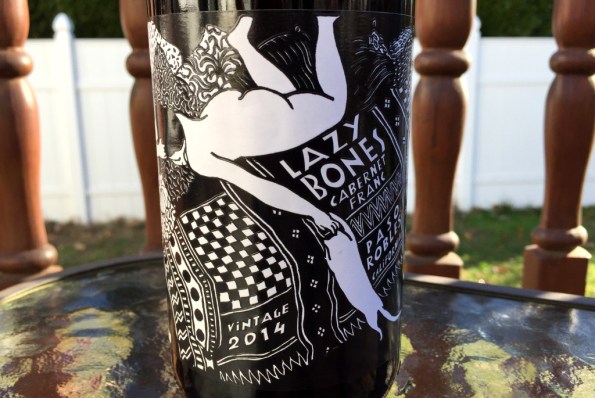
First, on Friday, December 4th (which is today!), we will be celebrating Cabernet Franc, one of the noble grape varietals and one of the “parents” of the Cabernet Sauvignon. This #CabFrancDay celebration is started by Lori and Michael of Dracaena Wines, and the culmination point of the celebration will be a live #WineChat on Twitter, starting at 8 PM Eastern time. The celebration is easy to join – pour yourself a glass of Cabernet Franc (you got lots of choices – Bordeaux, Loire, Languedoc, California, Australia, New York state, Oregon, Argentina and many other regions), open Twitter and chat away.
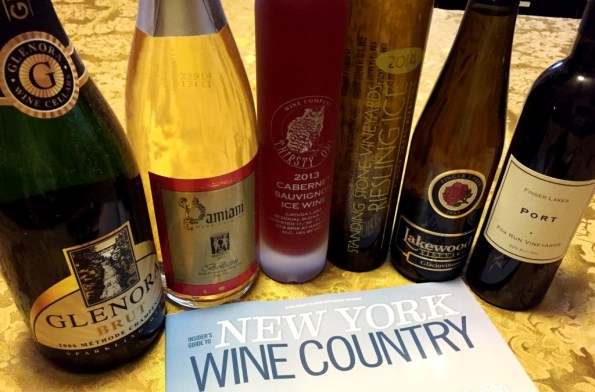
Next virtual event will take place on Wednesday, December 9th, 7 – 8 PM Eastern – Finger Lakes Wine Alliance will conduct its traditional Sparkling and Dessert Wines tasting. The event will take place on Twitter using hash tag #FLXwineVT, together with the live broadcast on UStream. 6 wineries will participate in the tasting – Damiani Wine Cellars, Fox Run Vineyards, Glenora Wine Cellars, Lakewood Vineyards, Standing Stone Vineyards and Thirsty Owl Wine Company.
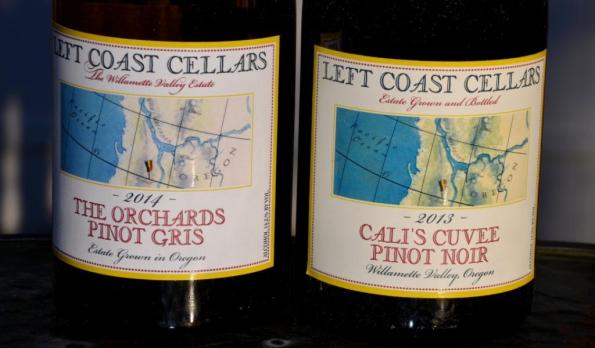
After you and your fingers will take one hour break, it will be a time to join a #WineChat! At 9 PM Eastern, Luke McCollom, General Manager, Viticulturist and Founding Wine Maker of Left Coast Cellars from Oregon will be discussing “the advantages of a single vineyard estate”. All you need to do to join the conversation, which I’m sure will be very interesting (I published a two-part interview with Luke McCollom a short while ago – part 1 and part 2), is to open Twitter and join the conversation with the hash tag #WineChat.
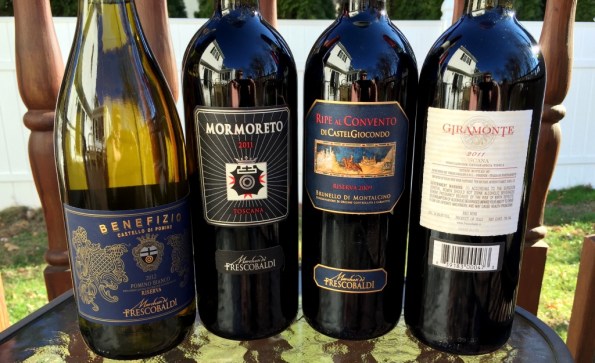
Last but not least, on Thursday, December 10th, there will be a virtual tasting of 700 year old Marchesi de’ Frescobaldi’s “CRU wines from its signature estates (Castello di Nipozzano, Castello di Pomino, Tenuta di Castelgiocondo, Tenuta di Castiglioni)”. The tasting will start at 1 PM Eastern (was originally scheduled for 2 PM), and it will be done as a live broadcast over UStream. Tasting will be conducted by Lamberto Frescobaldi, President and 30th generation of Marchesi de’ Frescobaldi. Join in!
I hope you will find time to join at least one tasting – the conversations at those events are always live and entertaining. Until the next time – cheers!
Online Wine Auction, December 4th and 5th – Petrus, Anyone?
I was asked to help promote a live wine auction which will take place online, hosted by the company called Invaluable, so text below is simply an information about this Holiday Auction. Whether you are planning to bid or not, I think it is fun to scroll through the offering of some of the most coveted wines in the world. And by the way, if anyone is still thinking what to get me for the holidays, I’m telling you right now – I’m not very picky, so anything from this collection will do… Deal?


This two day auction, Zachys Early Fall Auction NYC, starts at 9:30 AM EST on December 4th and 5th. We will be auctioning off over 1,800 exceptional lots from an international collection. Collecting wine has been a labor of love for this dedicated connoisseur. He has lived in Germany and Thailand, and has bought selectively in each country. He then painstakingly air-shipped his wines to New York under temperature-controlled conditions. In New York, the wines were stored in a custom-built temperature-controlled home cellar.
Here are a few noteworthy lots from the event:
Lot 245 – Petrus 2000
Estimated Price: $36,000-$55,000
Quantity: 12, Size: 750ml
Notes: Three lightly scuffed labels, one scuffed label, two 6-pack original wood cases
Lot 334 – Chateau Mouton Rothschild 2000
Estimated Price: $24,000-$36,000
Quantity: 1, Size: 15L
Notes: This 15L bottle was bought by Mr. Hudson at the 2008 South Beach Wine and Food Festival Auction, at which Baroness de Rothschild was the donor.
Lot 112 – Chateau Haut Brion 1989
Estimated Price: $12,000-$18,000
Quantity: 12, Size: 750ml
Notes: Producer:Haut Brion. 1.5cm or better, one lightly damp-stained label, one lightly marked label
Finally, don’t forget the two charitable consignments in this sale. The first is Lot 263, a 19th-century shipwrecked bottle of Château Gruaud Larose from the “Marie Therese”, bottled with the ’00 vintage and sold to benefit les Jardins du Monde with an estimated price of $2,000 – $3,000. There is also a section of fine Burgundy consigned by Bob Dickinson, a meticulous and generous collector, sold to benefit Camillus House in Miami (Lots 1259-1309).
Invaluable has a variety of wine and spirits along with collectibles up for auction daily, so you might want to get on the mailing list with them, you never know what you might find.
Happy [Fine Wine] hunting! Cheers!
Oversold and Underappreciated Premise of Wine Pairing
 This post is an entry for the 21st Monthly Wine Writing Challenge (#MWWC21), with the theme of “Pairing”. Previous themes in the order of appearance were: Transportation, Trouble, Possession, Oops, Feast, Mystery, Devotion, Luck, Fear, Value, Friend, Local, Serendipity, Tradition, Success, Finish, Epiphany, Crisis, Choice, Variety.
Let’s start from the mini quiz – is food and wine pairing an art or a science? Or is it neither and the question makes no sense?
I’m sure you can successfully argue both sides, as they do in debate competitions. Technically, cooking process is based on science – heat conduction, protein’s reaction to heat and cold, combining acid and alkaline – we can go on and on, of course the scientific approach to the food and then the pairing can be argued very well. But one and the same dish can be flawlessly composed from the scientific point of view – think about a steak which is perfectly cooked with a beautiful crust – but missing on all the seasoning and having either none or way too much salt – it would require an artistry and magic of the Chef to make it a wow food experience. So may be food and wine pairing is an art after all?
I don’t have an answer, and I don’t believe it is even important. The problem is that in many cases, that “food and wine pairing”, which is typically sought out and praised, is not possible, not universal and even not needed.
Yes, there are rules for the pairing of wine and food. Contrast, complement, balance of the body of the wine with the perception of the “weight” of the food, tannins and fat and so on. The rules work well when you create a tasting menu and pair each dish individually with the very specific wine, based on practical trial and error. However, once you try to extend your recommendation to say “try this stew with some Syrah wine”, that begs only one question – really? And overbearing Shiraz from Australia, or earthy, spicy and tremendously restrained Côte-Rôtie or espresso loaded Syrah from Santa Ynez Valley – which one?
Here is another example, simply a personal one. At a restaurant, my first food preference is seafood – scallops, bouillabaisse, fish – anything. My wife typically prefers meat, and so do many of our friends. Going by the standard rules (white with fish etc.), we are either stuck with water or have to order wine by the glass, and ordering wine by the glass is typically not something I enjoy doing – very often, “by the glass” list is short, boring and grossly overpriced. So instead of trying to pair wine with the food (don’t get me wrong – I like the “spot-on” pairing as much as any other foodie and oenophile), I prefer to pair the wine with the moment – a good bottle of wine which doesn’t match the food is still a lot better than crappy wine which would denigrate the experience.
Still not convinced? Think about a simple situation – old friends are coming for a visit, and you know that these friends like wine. Yes, I’m sure you will give some thought to the food, however, there is a good chance that you will comb your cellar over and over again in a search of the wines to create the meaningful wine program for the evening, even if the whole dinner would consist of one dish. You will spend time and time again thinking about your friends and trying to come up with a perfect, special, moment-appropriate and moment-enhancing wines.
Wine is an emotional connector. Wine elevates our experiences, making them a lot more memorable. You might have problem remembering what dish you had at a restaurant, but if the bottle of wine made you say “wow” on the first sip, there is a good chance that the special moment will stay in your memory, thanks to that special pairing which took place.
We pair wine with moments, and we pair wine with the people, for good and bad of it. If Aunt Mary comes for a visit, who enjoys a glass of Chardonnay with a cube of ice in it, is it really the time to break out Peter Michael or Gaja Rossj Bass? A Bogle Chardonnay would pair perfectly with Aunt Mary (not that there is anything wrong with Bogle – it is just perfectly priced for such occasions). However, if you know that your friend Jeff will stop by, who you know as a Pinot Noir aficionado, all the best Pinot Noir in your cellar will all of a sudden enter into a “chose me, I’m better” competition. And if none of them will win, the Pinot Noir at near by store will enter the fray. And keep in mind, all of this will be happening whether you will be serving steak, salmon or cheese and crackers…
Yes, when food is well paired with wine, it is really a special experience. But food and wine pairing which doesn’t work is really not the end of the world, it is still just a nuisance – and a learning experience, if you will. When the wine pairs well with the moments and the people, that’s when the memories are created, and that, as MasterCard likes to teach us, is priceless. Let’s drink to lots of special moments in our lives. Cheers!
Unexpected Wines of Macedonia
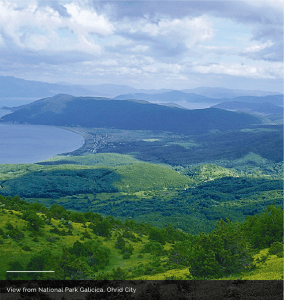
Macedonia landscape – View from National Park Galicica. Source: Wines of Macedonia Web Site
Macedonia (The Republic of Macedonia, to be precise) is a small country right in a middle of Balkan Peninsula in Europe. While it exists under its current name only since 1991, it is one of the oldest countries in Europe, tracing its history for more than 7,000 years. Similar to its neighbors – Turkey, Greece and others – Macedonia also has very long wine history, but still remains “one of the Europe’s last undiscovered wine country”, as stated on Wines of Macedonia web site.
Macedonia has about 62,000 acres of vines planted, split between 3 regions and 16 wine districts. There are 28 grape varietals growing there, equally split between white and red. The climate in Macedonia is a cross between Mediterranean and Continental with warm, dry summer and fall, which definitely helps with wine production.
Okay, enough of the facts – you can read that all on your own. Now let me explain the “unexpected” part of the title. In my mind, Macedonian mostly associated with indigenous grapes, such as Vranec (there are 7 indigenous grapes in Macedonia at the moment). When I was offered a sample of Macedonian wines, I was hoping to find something new and unusual, and may be even advance my grape count.
When the box arrived and was opened, to my surprise I found inside a bottle of Rkatsiteli and a bottle of Merlot. Rkatsiteli to me is a Georgian variety (yes, I heard that it is growing in some of the Balkan countries). And Merlot – don’t think we need to discuss the origins of that. I don’t know what I was expecting, but Merlot and Rkatsiteli definitely surprised me. Both wines came from the region called Tikveš, which is the biggest wine region out of three in Macedonia. Well, of course I tasted the wines, and below you can find my thoughts:


2014 Stobi Rkatsiteli Tikveš, Macedonia (12.3% ABV, $12, 100% Rkatsiteli)
C: Pale straw
N: touch of minerality, white peaches, candied lemon zest, overall very inviting
P: lemony acidity, underripe green apple, nice creaminess, touch of minerality, medium+ body, clean
V: 7+, food wine – fresh seafood, oysters
2009 Bovin Merlot Barrique Tikveš, Macedonia (14% ABV, $N/A, 12 month in Macedonian oak)
C: dark garnet, almost black
N: delicious dark chocolate, ripe fruit, hint of black currant, blueberries
P: medium to full body, baking spices, slightly overripe cherries, short finish.
V: I had this wine over the period of a few days. Here is the conclusion from the initial tasting: 7-, beautiful nose; interesting taste components on the palate, but not coherent together. Two days later, the wine became surprisingly coherent, rounded up and showed an silky dark power and excellent balance, so the final verdict is 7+/8-.
There you have it, my friends – two wines, may be unexpected, but well drinkable. Next time if you see a wine from Macedonia on the shelf – give it a try, you might be pleasantly surprised. Cheers!
China Travel Tidbits
In the previous post, I shared my food and wine experiences in China. In this post, I want to inundate you with pictures, and also share a bit of the first-hand advice. I had certain level of expectations, but those were no match to the actual experiences, hence the post.
One important disclaimer is that while I was traveling on business, I was all on my own, without any arrangements made, outside of having a visa and having the hotel room reservation. I had company for most of the business activities, but overall coming in and out, and moving around for the sightseeing was all by myself. Another important “disclaimer” – I only visited Beijing – your experience in the other cities might be quite different, so keep that in mind.
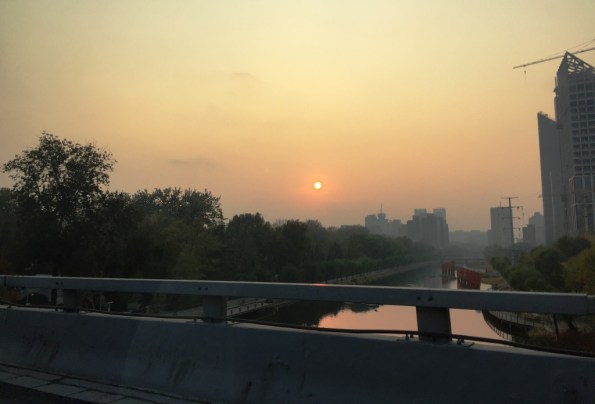
While in the taxi on the way from airport, I took a pictures of my last “sun sighting” for the week in Beijing
I will not be trying to recount the daily activities, as this would be boring and long, but instead, here are my main takeaways regarding travel to China.
Language barrier: yes, I expected it, but it was much more than I expected. Absolute majority of the people don’t speak or understand English (duh). That includes taxi drivers. Yes, there are signs in English, but it doesn’t help you if your taxi driver doesn’t understand a word of what you are saying. Even in hotels, lots of service personnel don’t speak English. The places which offer welcome relief? Anywhere someone wants to sell you something – from Pearl Market to the little street shops by the Great Wall, all sellers are very proficient with “how much” and “tell me your price”.
What exacerbates the language problem is the sheer size (huge!) of the city and everything in it. Let me explain with the simplest, but probably the most critical for any visitor, example – hotels. New York City has around 470 hotels. Seoul has roughly 430 hotels. Beijing has more than 5,500 hotels. 5,500! Do you think any of the taxi drivers had any idea where Sheraton Great Wall is located? No, they didn’t! Even when you have a special card from the hotel where the address is written in Chinese, and the driver speaks decent English – all I got was a smile and “I don’t know where it is”. Keep that in mind. If you have to, have hotel’s number on a speed dial – the taxi driver at the airport called hotel to find out where to go (works at the airport, doesn’t work that well on the street).

Sheraton Great wall was built about 30 years ago and was one of the very first hotels where foreigners were allowed to stay
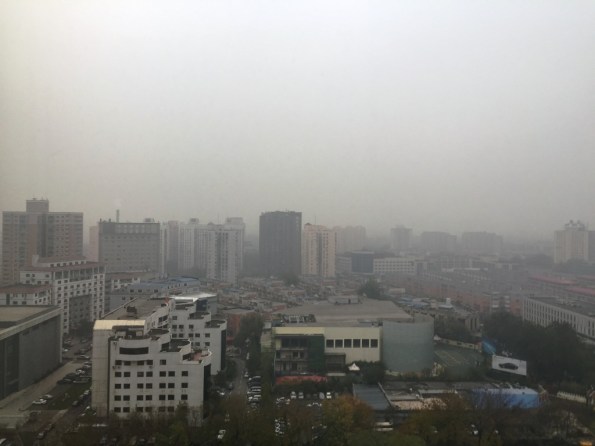
A typical morning view from my hotel room
Subway is your friend. I can’t give enough praise to the Beijing subway. Not only it is clean, spacious and all the trains are brand spanking new, but all the signs are bi-lingual. As long as you know where do you need to go, you can buy a ticket from the machine, which can be easily switched into all English prompts with one button. All the fares are distance based, with I think 5 yuan been the most within most areas in Beijing, so it is very inexpensive. Not that the taxi cost a lot – the taxi fares in Beijing are only distance based, independent from the time – which is vital considering insurmountable traffic in Beijing at any time (for sure during the day). The starting fare in taxi is 13 yuan, and you can drive quite a distance before the meter will advance – but then you might be able to walk faster…
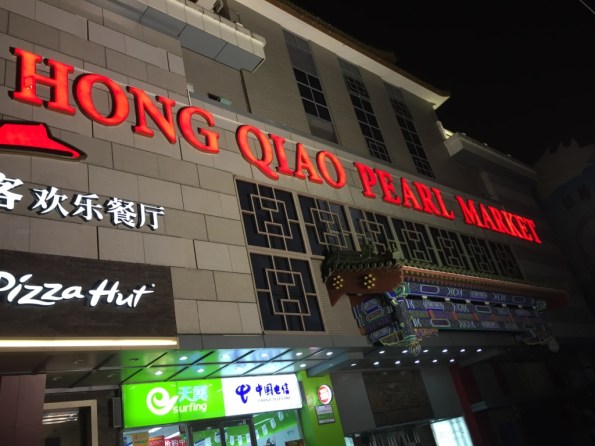
Pearl Market in Beijing
Bargaining. Just a little note here, as I really don’t enjoy the process, but bargaining is unavoidable if you want to buy anything on the street or at any of the tourist-focused shops (which are lots). Two small examples. When visiting pearl market (went there with friends), I didn’t need pearls, but wanted to buy two small key chains. I found some little wooden key chains, and lady asked me for 230 yuan (about $40 for two tiny pieces of wood!). I said “20”, and simply started to walk away. The lady screamed at me to come back, and with the face expression showing that I just offended her beyond belief, asked me to give her the money. So I bought 2 key chains for about $3 each, which I think is a fair price (instead of $20 as requested originally). Thus I recommend that 10% is what you need to start from if you want to buy something from the street vendors. One more example – I was looking at the small pendant with the one single pearl in it. The lady asked the same 230 yuan for it (must be the day, huh). Native speaking colleague standing next to me, quickly found exact same pendant for 19 yuan on Ali-Baba – it is all made in China after all, right?
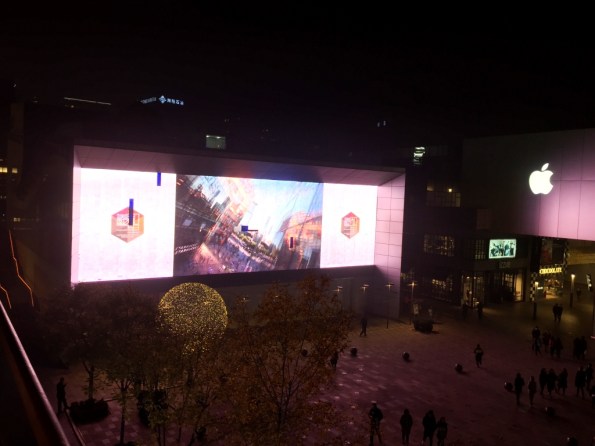
One of the countless ultra modern shopping centers in Beijing
I’m almost ready to talk about sightseeing I was able to do in Beijing, but before we get there, one more important note – a bit out of place, as it concerns my experience at the airport, but I want to mention it as it might save you some aggravation. It appears the Chinese security at the airport has particular admiration for the power charging sticks, a portable batteries in any forms. They request you to take it out of your carry on and put it through the X-ray machine. What they are actually looking for is the capacity (1 Ah, 2.8 Ah, 3.7 Ah, anything of this kind) written on the battery pack. My battery stick, which saved me countless number of times for the last year, didn’t have the capacity written on it, as I got it at one of the conferences as a present, and therefore, it was confiscated. I tried to argue, but you know how much you can argue with airport security, especially in China… Therefore, if you plan to travel to China, check that your power stick has the capacity written on it, to avoid any unpleasant experiences (those little things get you…).
Now, it is the time for a barrage of pictures (almost). I was able to visit Great Wall and Forbidden City, which are probably what any tourist would want to see. There are few locations to get on top of the Great Wall – I chose the place called Mutianyu, which is about 1.5 hours away from Beijing, and it is less crowded than the others. Take a look at the pictures below – while it was extremely foggy, the experience was still magnificent. If you will go there, make sure you would wear something very comfortable, both shoes and clothes – going up and down on the little stairs is quite a strenuous workout.
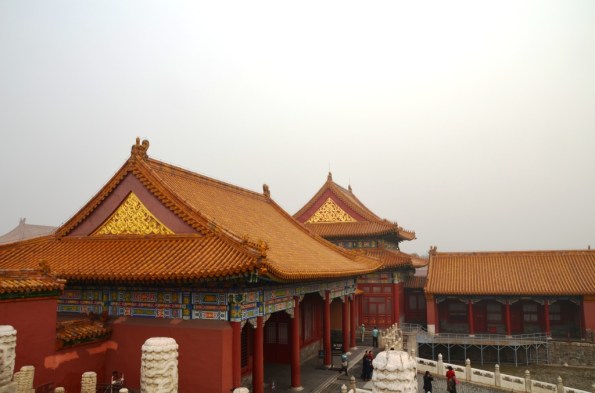
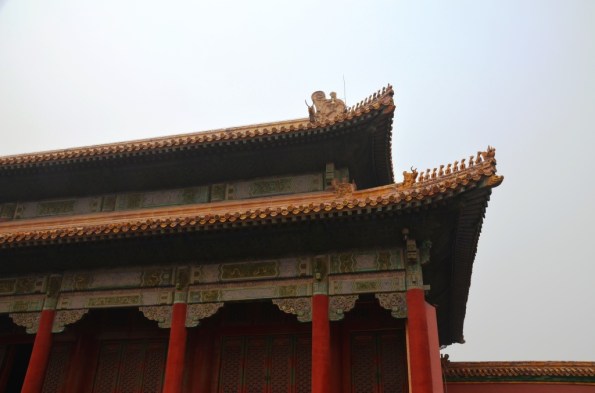
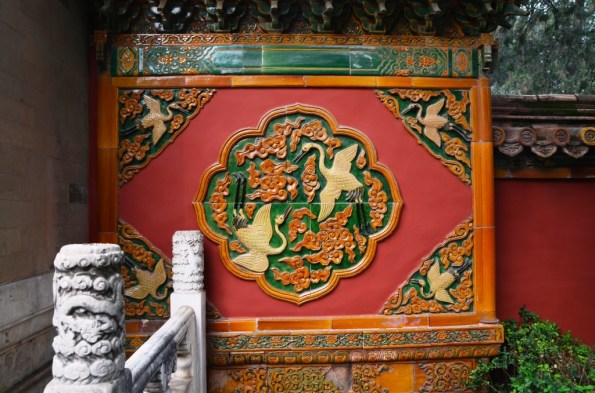
The Forbidden City, which is located right in the center of Beijing and is the largest wooden structure of this kind in the world, is interesting to see, but I would honestly say that it is not a “must see” type. Colorful, yes, but in the end of the day, it is just a bunch of buildings… Anyway, the rest of my China travel expressions are below in the form of the pictures – I also will include comments where possible. By the way, there is a mini-quiz there – scroll through slowly, so you will see the quiz and the answer should be somewhere there as well. Cheers!
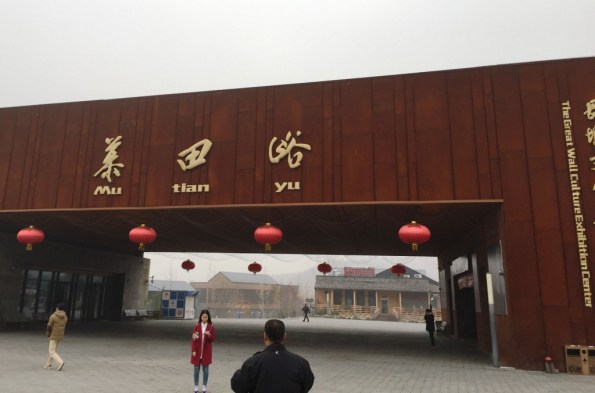
The entrance to the Mutianyu Great Wall complex
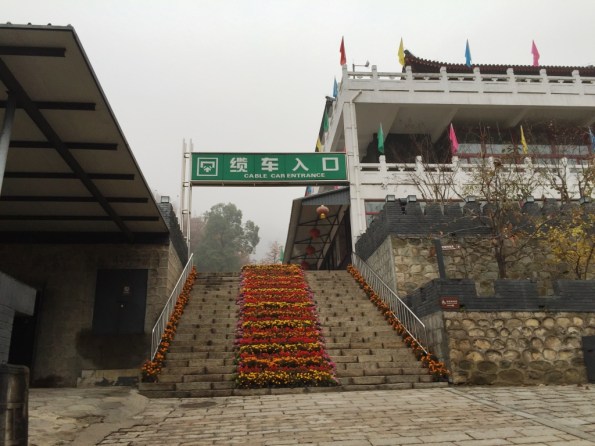
After you take a ride on the shuttle bus, this is your way up to the cable car
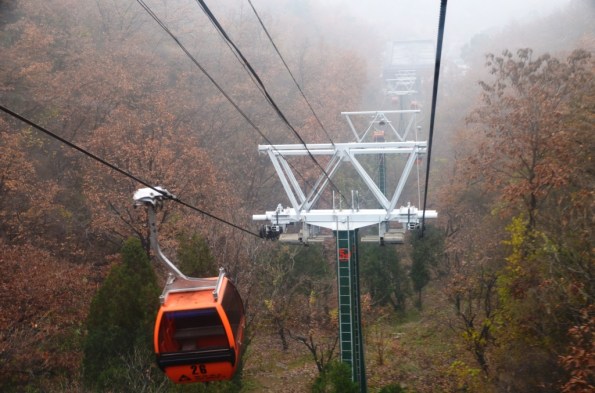
Up on the cable car

Yep, you are finally there
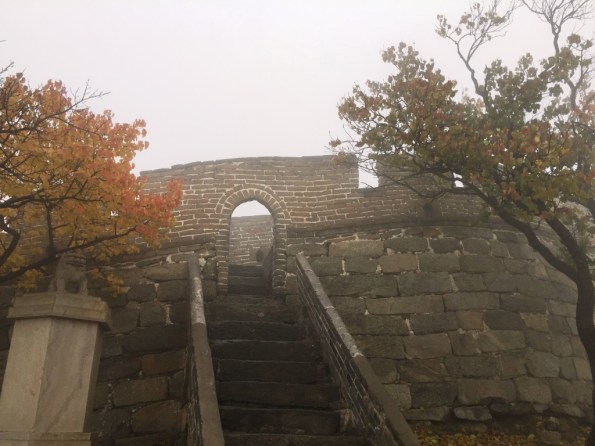
The actual entrance to the very top
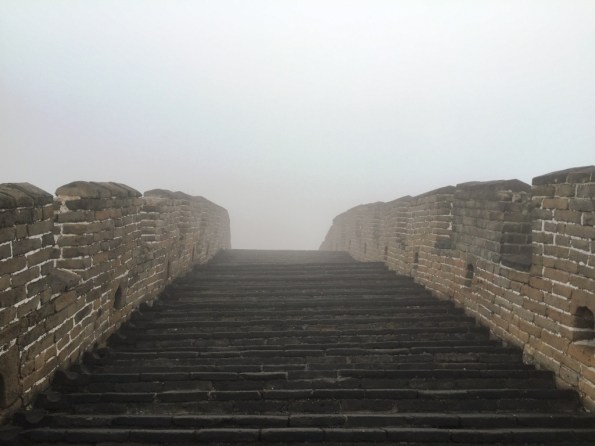
Up and down the Great wall – take a look at the tiny height of the steps – but make sure you pay attention while walking, or else
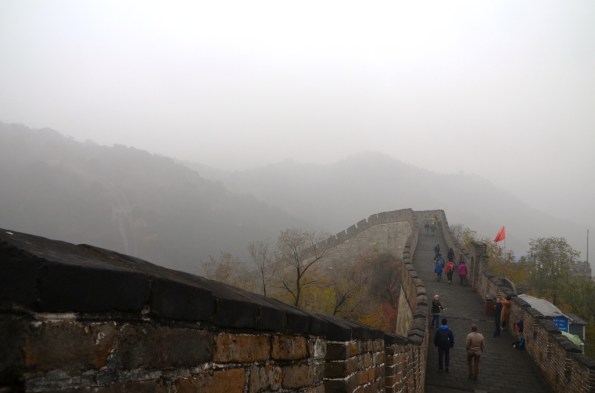
The Great Wall
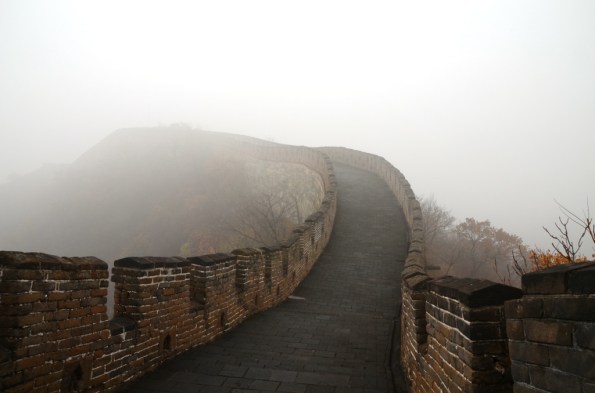
Magnificent…
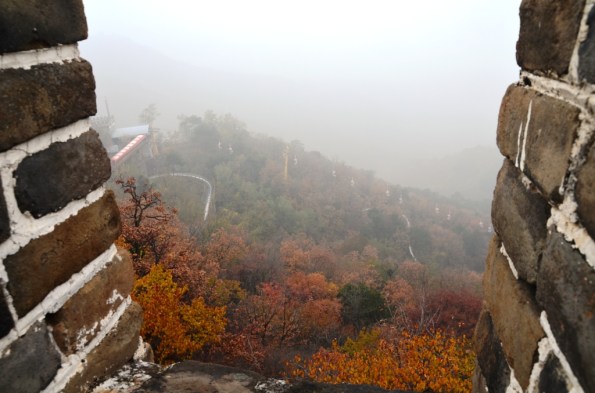
more of the magnificent views, even in the fog…

Probably the best shot of the Great Wall I could take
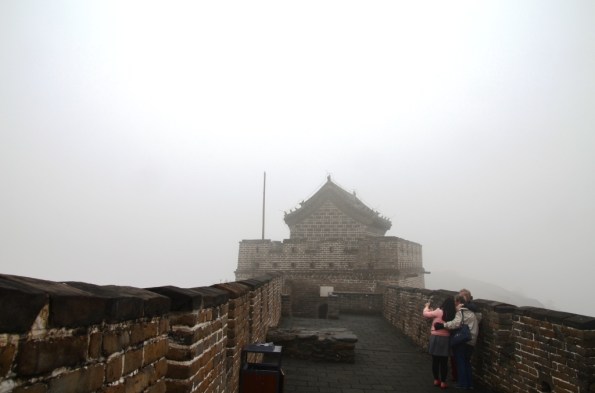
One of the Guard towers
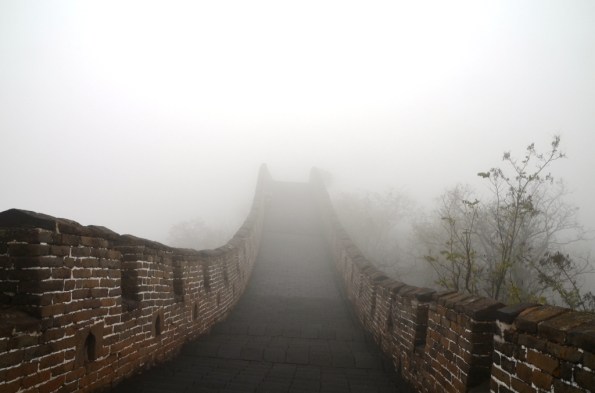
Into the fog…
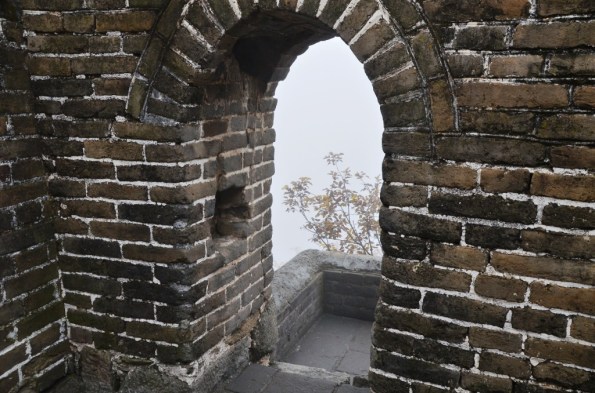
The defence view
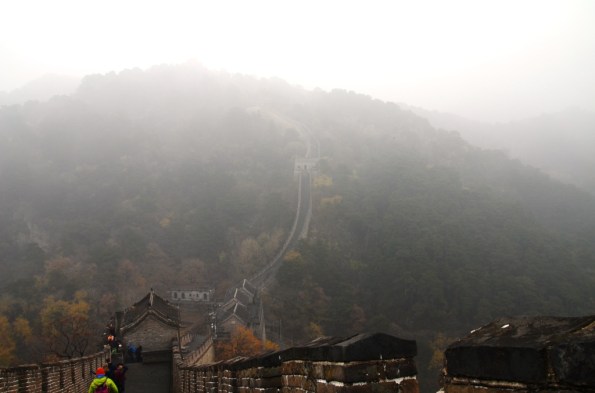
Yep, still on the wall
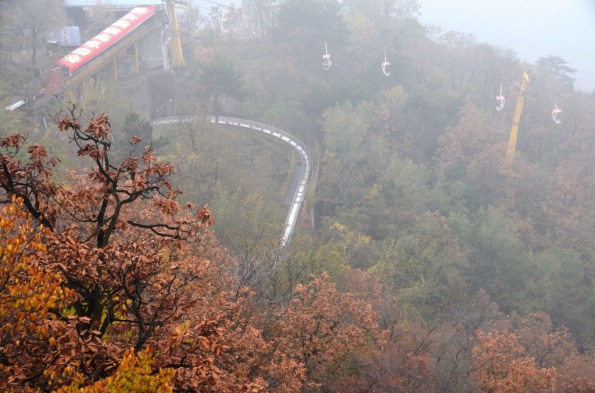
Toboggan – the best way down. You can also see the ski lift which you can take to get up instead of the Cable Car.
And now, The Forbidden City:

Walk towards the entrance to the Forbidden City
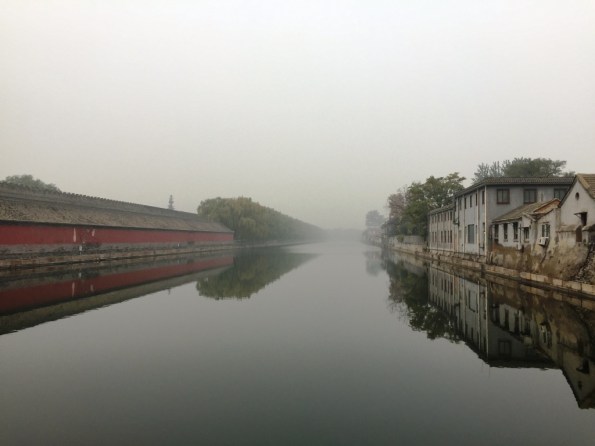
The side wall of the Forbidden City. Love the perspective…
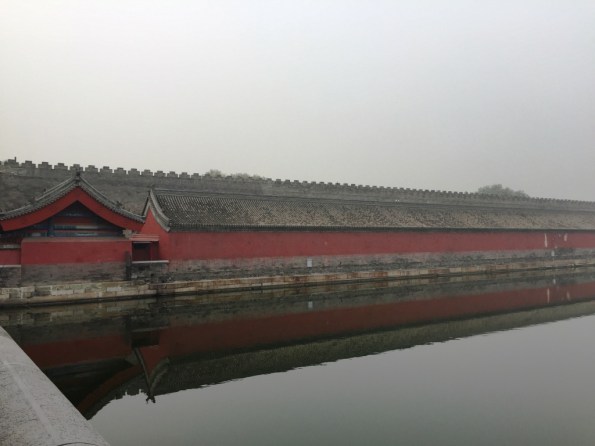
and one more view of the side wall – Forbidden City
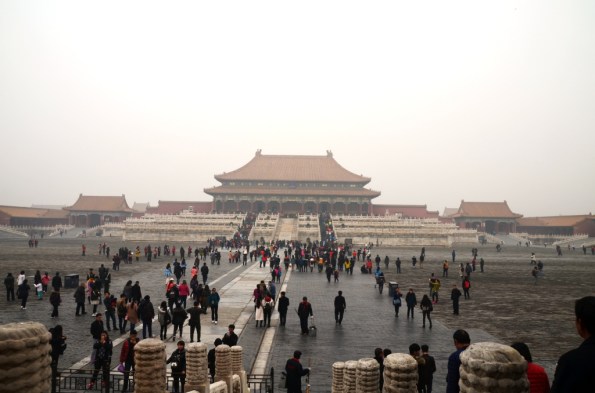
Forbidden City – just the beginning. I wish you could see how many people carry selfies sticks…

From here on – the fragments of beautiful timeless architecture.
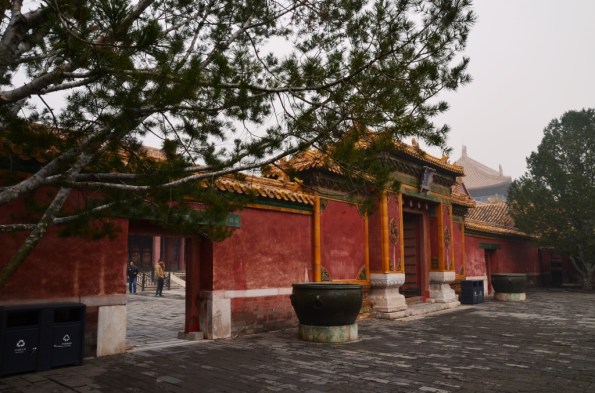
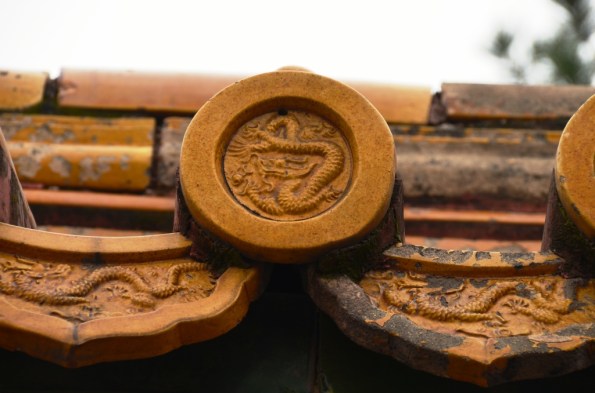


Here is your Quiz – what this urn is for?

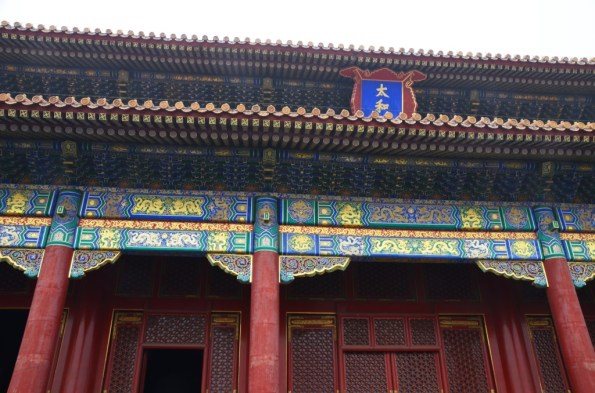



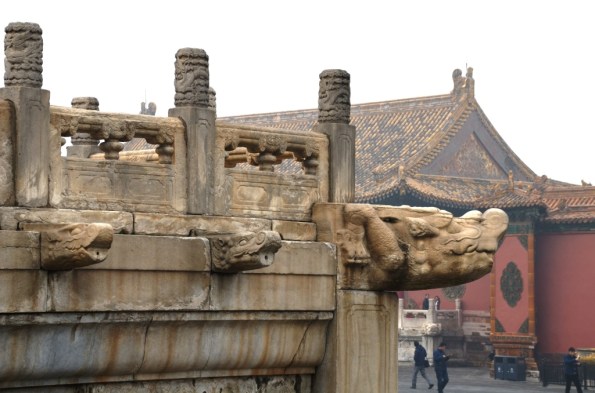


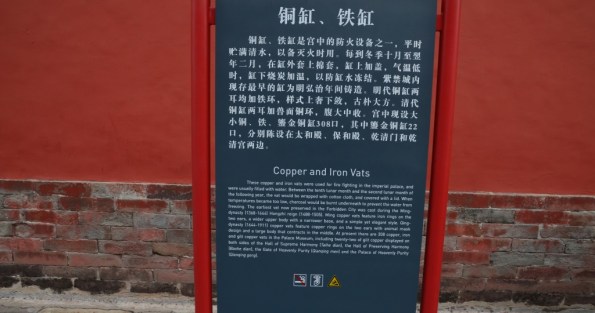
Here is the answer to the quiz – the urn was a fire extinguisher…

And the sun shined (okay, as much as it is possible in Beijing) above the Forbidden City by the time I was leaving
Not that this is anything special, but here is the China Airline birdy which took me to Seoul…

Bye bye China
Beaujolais Nouveau Est Arrivé! 2015 Edition
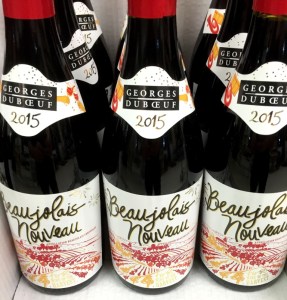 Have you looked at the calendar today? Yes, it is the third Thursday of November, which means that … Beaujolais Nouveau has arrived! All the wine stores around you should carry bottles with the festive labels, and there are multiple events and parties to celebrate the arrival of the new wine, the wine of 2015.
I know that many hardcore wine drinkers scoff at the Beaujolais Nouveau wine and the whole celebration, considering the wine to be a plonk and the celebration only a marketing gimmick. Speaking for myself, I love to partake in this celebration, as may be the first wine holiday ever created (now we have the ever-increasing number of “grape days” throughout the year, to make sure we have enough reasons to open a bottle of wine).
Besides just liking the idea of the celebration of the first wine of the harvest, I find that quality of the Beaujolais Nouveau is consistently improving, year after year. Thus I happily ran to the store today at the first available opportunity to get some Beaujolais Nouveau. 5–6 years ago Georges Dubœeuf Beaujolais Nouveau was the only option. A few years back, Joseph Drouhin joined the company. This year, I had a choice of 4 wines to pick from, so I decided to limit my tasting to 3.


I don’t want to give you any overall impressions until you will skim through the tasting notes, so here we go:
2015 Georges Dubœuf Beaujolais Nouveau (13% ABV, $10.99)
C: Dark Garnet, very unexpected
N: restrained, fresh berries with the touch of herbs. Very different from the previous years, a lot less fruity. More reminiscent of a traditional Beaujolais or a nice Chinon
P: outstanding. Fresh, open, perfectly balanced fruit, ripe cherries, medium body, medium-long finish.
V: 8-, very unexpected, would never guess in the blind tasting that this is a Nouveau wine. Not sure what kind of magic Dubœeuf used, but this is a pretty spectacular wine on its own.
2015 Joseph Drouhin Beaujolais Nouveau (13% ABV, $11.99)
C: dark garnet, another unexpected color
N: more traditional nose of freshly crushed berries, still not overboard, with underpinning of spices
P: delicious young wine, nice fresh fruit, finish mostly acidic
V: 7/7+, more in line with expectations of Beaujolais Nouveau – a very well made one, but still
2015 Domaine Dupeuble Beaujolais Nouveau (13% ABV, $13.99)
C: dark garnet, one more wow
N: restrained, with acidity and minerality been in the lead, touch floral, may a bit of tart cherries
P: excellent, round, more of classic Burgundy in style, not a hint of “nouveau” on the palate, very fresh with a distant hint of smoke and tobacco on the palate.
V: 8-, outstanding. Again a complete surprise.
What can I tell you? Very impressive. Excellent wines, well made and tasty, and offering great QPR for what they are. If you celebrate Thanksgiving, this might be a great addition to your table. And if you don’t, Beaujolais Nouveau 2015 is well worth your attention. And if this Beaujolais Nouveau is any indication, 2015 might be (yet again) the vintage of the century. Beaujolais Nouveau Est Arrivé! À votre santé!
P.S. After this post was written, I tried two more Beaujolais Nouveau wines, so here are the additional notes just to make the 2015 experience more complete:
2015 Mommessin Beaujolais Nouveau (11%–14% ABV, $10.99)
C: Bright Ruby
N: initially a typical Beaujolais Nouveau nose with freshly crushed berries, eventually becoming more restrained with additional herbal component
P: fresh tart cherries, crisp, fresh, with the vibrant acidity which makes the wine show quite complex
V: 7+, well-made wine, simple and pleasant
2015 Bouchard Beaujolais Nouveau (11%–14% ABV, $9.99)
C: dark Ruby
N: fresh berries with a touch of green leaves
P: freshly crushed berries, crisp, vibrant, good acidity
V: 7+, traditional Beaujolais Nouveau, simple and tasty
China Food and Wine Experiences
For the first time ever, my business took me to China. Not only China, but it was also my first visit to Asia, so definitely a new experience. Of course, I read and heard many China food-related stories from people, but as we all know, there is a big difference between the two – “virtual” and “real-life” experiences are vastly different, especially when it comes to something which you put into your mouth.
During the week in Beijing, I had an opportunity to try many different dishes and visit a number of restaurants. One challenge is that for most of the restaurants I visited, I don’t have their English names or addresses, so what I will share with you will be mostly a collection of impressions, primarily in the pictures, without many useful references for you in case you will be visiting China any time soon. But I hope at least you will get an idea for what to expect, especially if you grew up on mostly European food. I also plan another post which will be just about the “tourist” experiences, for things outside of the food per se.
The first restaurant I visited was a “Noodle House” type if I’m not mistaken, and it was located right around the corner from the Sheraton Great Wall hotel where I was staying.


The main dish at Noodle House was, of course, the noodles, but before we got to them we also had lots of appetizers. Pork belly with roasted garlic and Quail eggs was particularly tasty, and it became only better with time, as it had its own heat and garlic continued cooking. Noodles were good, but hard to finish after all the food prior. Chicken with peanuts (as opposed to traditional cashew nuts in the US) was also very tasty.


Now, I have to mention the first experience (well, the actual “first” was undrinkable wine at the reception, but that we will skip). When I poured myself a glass of Chinese Chardonnay (at a happy hour), I had no expectations – just curiosity. First sip, and – wow – not bad at all! 1421 Gold Chardonnay Xinjiang China had a characteristic nose of Chardonnay, with a touch of vanilla. The palate had a touch of golden apples, vanilla, good acidity – overall, very enjoyable. I like the brand’s description on the 1421 website: “1421….the year Admiral Zheng He, leading one of the largest fleets ever seen, sailed to many, many parts of the world. Wine much like travel, has served as a link between different cultures, people and countries. Today at the beginning of the 21st century, 1421 follows the same mission as Admiral Zheng He, sharing his spirit for a better world.” – the Chardonnay I had was definitely the wine worth sharing.


My next experience was a first encounter with the traditional Peking Duck, a whole duck seasoned and roasted in a special oven, with its crispy skin being the most sought-after delicacy. The place we went to, Dadong Roasted Duck Restaurant, defines itself as an Artistic Concept Food, and it does it – “Artistic Concept” – very successfully – in ambiance, food presentation, service – all the elements are there, definitely a world-class restaurant.


Of course, my encounter with the restaurant started with the wine list, which was something to look at. The list was very substantial, with a wide range of offerings, adequately priced for the “concept restaurant”. I don’t remember which exact Bordeaux wine was that, but it was priced at a measly ¥28,000 (the ¥ symbol depicts Chinese Yuan, often also called RMB), which would translate into roughly $4,800. You could also have Penfolds Grange for only ¥7,200, which would be roughly $1,200 – which is almost reasonable (hope it was not a young vintage).


So after hopelessly scanning the wine list for a few minutes, I finally discovered what I was looking for – a small section of Chinese wines. Luckily, I already was given the name of one of the best wines in China (according to the local sources, of course) – the wine called Changyu, and there it was on the list. There was no vintage listed, but there were three wines offered with different “age” – 1, 3 and 5 years. I’m not sure what it means, but one year old looked as good to me as all others, and at ¥196 ($33) I felt very comfortable with my choice, whether the wine would be good or bad.


Turns out that Changyu was the oldest commercial winery in China, started in 1892, then of course significantly destroyed in 1949 and now getting back to their roots. The only thing I was able to figure out from the label was that the wine was made out of the grape called Cabernet Gernischt, which, according to the article by Jancis Robinson, is actually a Carmenere. I couldn’t figure out the vintage or any other details, but I can tell you that this Changyu Red Wine Blend Ningxia, China was simply outstanding – a delicious nose of black currant with a touch of mint, and a perfectly balanced body of the classic Bordeaux blend which is ready to drink – nothing green, just cassis, eucalyptus, firm, good structure, welcoming pinch of tannins, good acidity, and perfect balance. I got 2 bottles of Changyu at duty-free, so probably there will be another post on the subject.
While I was working through the wine list, my host was navigating through much bigger book – here is the look of the menu at Dadong restaurant:


I can only say “kudos to my host” for being able to select anything from a book of that size – I would probably spend half a day flipping through the pages. Anyway, we started our dinner with a couple of exotic appetizers. Both were vegetables, one had sweet sauce and was crunchy, maybe some sort of squash, but cooked very lightly? The second one was somewhat reminiscent of pickled mushrooms in texture but didn’t have a pickled taste. Both of course had a beautiful presentation. Then the duck arrived, was quickly presented to us (yes, I forgot to take a picture) and then it was sliced table-side. The only part which made it to the table was the duck breast, with maximum skin exposure, as this is the most prized part. I was explained that the proper way to eat duck is to take the top part which is mostly skin, dip in the sweet crunchy beans (more reminiscent of sugar), then sweet soy-based sauce, and then put it in your mouth, where it literally melts – it seriously disappears without much chewing effort. The second way is to take a paper-thin pancake and assemble a tiny taco if you will, by combining a few slices of duck with thinly sliced vegetables and addition of the sauce – and this is how it is mostly consumed.


Once we were done with the main course, first the branch with tiny mandarins appeared, beautifully presented on top of a bowl with ice – when it showed up, it looked like the smoke was coming from the plate. For my dessert, I decided to try a pastry filled with cream made with fruit called Durian. Durian is known to have a taste that is extremely polarizing to the people – only love/hate with nothing in between. Imagine the taste of raw onion, rather intense pungency of the shallot, mixed with strawberry cream – that would give you an approximation of the taste of that dessert. I personally liked it, but I can easily see how lots of people wouldn’t even touch it.


I’m not planning on giving you the daily report on our eating, but I still want to include a few pictures of probably the best lunch we had – two different dim sums and then a simple shrimp dish:


The next traditional cooking style we experienced was so called Hot Pot. The idea is that you have a special cooking vessel, which looks like a sombrero hat, if you will, with the channel filled with aromatic broth, and the middle section containing burning charcoal, which quickly brings broth to a boil. Technically, the channel is split into two parts, so you can have spicy and non-spicy broth separately – however, no matter what, by the end of the evening it becomes all the same.
You can order very thinly sliced meat (pork, beef, lamb), vegetables and noodles. You cook it all in the broth, and then you have a choice of dipping sauce. To be entirely honest, hot pot is not my thing – the meat, which is cooked for 10-15 seconds, has no flavor and simply becomes the vessel to eat the dipping sauce. Vegetables should be dumped in for a longer time, and then it is really hard to find them in the boiling murky liquid. This is not the worst food I ever had, but still – I had to have it twice, and only marginally enjoyed it both times.


I’m almost done with my China food stories. We experienced one more Roasted Duck restaurant, called Xile Village Roasted Duck Restaurant, located in the brand spanking new shopping mall.


Here the duck was sliced in 3 different ways – just the skin, the top of the breast with skin and meat, and mostly meat pieces. At this restaurant, mustard was also served as a condiment for the duck breast, which was quite tasty. There were lots of dishes before the roasted duck arrived, as it takes 50 minutes for it to cook. My highlights here were delicious shrimp and very very tasty eggplant (one of the best vegetable dishes I had in China). Also, once all the meat was carefully cut off the duck, the carcass was chopped up and deep fried – nothing goes to waste 🙂


Okay, I hope I didn’t bore you to death – but I’m finally done. There you have it, my friends – my Chinese food and wine escapades. I plan to share some traveling advice regarding China in the next post. If any of these pictures triggered any thoughts – you know where the comment section is. Cheers!
Garnacha from Cariñena
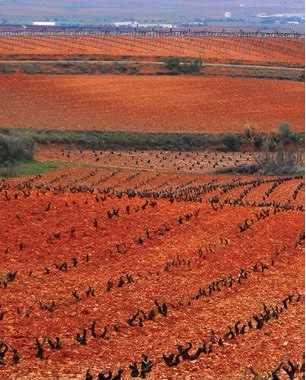
Beautiful Cariñena Vineyards.
Source: Cariñena DOP
Today we will be talking about Garnacha, better known around the world under its French name of Grenache. But the region we will focus on is located in Spain, so let’s use regionally-appropriate name.
Garnacha is one of the most important grapes of Spain, rivaled only by Tempranillo. It is planted practically in all the regions, and used both solo and as a blending grape, delivering tremendous range of expression.
Let’s narrow down our focus a bit and talk about Garnacha from Cariñena. Cariñena is a region in the central part of Spain, second oldest official DO (protected origin) in Spain and one of the first in Europe, created in 1932. Most of the vineyards in Cariñena are situated on the mountains, from 400 meters to 800+ meters (1300 ft – 2600 ft) above sea level. One of the best known grapes from the region is … Cariñena, which I find quite confusing considering that this is also the name of the region itself. However, the most planted grape is…yes, Garnacha, which takes 55% of all the grape plantings. Another interesting fact is that Garnacha plantings in Cariñena are some of the oldest in Spain, with age of some vines more than 100 years old.
I will not inundate you here with information which you can find on your own, for instance, on the official D.O.P. Cariñena web site. I recently heard that Andrea Immer Robinson, one of the 18 women Master Sommeliers, and an official Sommelier for Delta Airlines, selected Cariñena Garnacha wines to serve to the Business Class passengers on Delta flights due to its affinity to the high altitude. Obviously I got intrigued with this statement, and I was lucky enough to reach out to Andrea and ask a few questions about it. Here is what I was able to learn:
Q: It sounds like different wines might have different affinity to showing best at the high altitude? Is that really true? Can you elaborate on this a bit?
A: Yes it is true. At altitude your sense of smell is muted and your palate is less hydrated. Consequently, more restrained wine scent/flavor profiles or more intensely tannic wines may not present as well in-flight.
Q: Do you have an example of the wine which is delicious on the ground, and doesn’t taste that well up in the sky?
A: It is less that a wine doesn’t taste well in the sky, and more that it may seem less expressive or flavorful. The subtlety of Italian Pinot Grigio is an example of a style that classically seems muted and less flavorful at altitude. But I did find a great one that belies the broad-brush experience I have had which is exciting.
[TaV comment]: Obviously this is where the limitations of the virtual conversation kick in, as I would love to ask Andrea what was that great Pinot Grigio which she was able to find to serve at the high altitude.
Q: What do you think makes Garnacha from Cariñena good wines to drink at the high altitude? Do you think all Garnacha from Cariñena wines are equally good to drink at the high altitude, or is it only few particular wines?
A: The Garnacha from Carinena is expressive and concentrated and the tannins though present, are soft and ripe – so, the wine shows a lot of character and is not drying to the palate in flight. The particular example that is getting rave reviews presently is a 9 year old Reserva – that extra bottle age gives complexity that customers are going ape over. I don’t thin every wine would garner this type of response–I think the bottle age and complexity of the Reserva level are a big part of it.
[TaV comment]: Yep, here we go again – would love to know what Reserva wine was that…
Q: What are your favorite Garnacha from Cariñena wines, whether on the ground or on the board of the plane?
A: I love the Monasterio de las Vinas Reserva that we are serving on Delta now. I also really love the Castillo de Monserran and the Paniza Vinas Viejas on the ground (haven’t tried them in flight). Perfect as we get into stew season!


I also was able to taste a few of Garnacha from Cariñena wines, and below are my impressions:
2012 Viñas Viejas de Paniza Garnacha Cariñena DO (14% ABV, $18, 100% Garnacha, 6 month in oak)
C: dark ruby
N: lavender, espresso, touch of dark fruit
P: hint of chocolate, cherries, medium body, good acidity
V: 7+
2012 Bodegas San Valero Particular Garnacha Old Vine Cariñena DO (14% ABV, $14.99, 100% Garnacha, 14 month in oak)
C: dark garnet, almost black
N: intense, whiff of alcohol, dark fruit, raspberries
P: fresh raspberries, open, bright, medium body, herbal undertones, pronounced acidity, short to medium finish, but then tannins come in after a while.
V: 7+ at the moment, needs time. Judging by the acidity and late tannins, this wine needs at least 5 years to develop
2013 Corona de Aragon Special Selection Garnacha Cariñena DO (13.5% ABV, $14, 50% Garnacha, 50% Cariñena, 5 month in oak)
C: Dark garnet
N: restrained with herbal undertones, pencil shavings (rarely use this descriptor, but it was very deserving here), hint of blackberries
P: fresh, delicious, dark chocolate, cherries, classic Grenache rendition with good acidity and excellent balance
V: 8-, my favorite of the tasting, would happily drink this wine every day – definitely an excellent QPR
Have you had any of the Garnacha Cariñena wines? What are your thought on the wines at the high altitude? Don’t be shy, comment away! Cheers!
P.S. I would like to thank kind folks at Gregory White PR for providing samples and reaching out to Andrea Immer Robinson
Last Bottle Sign Up ($10 credit)




 Talk-A-Vino