Oh, My Sweet Valentine… – 2005 Version
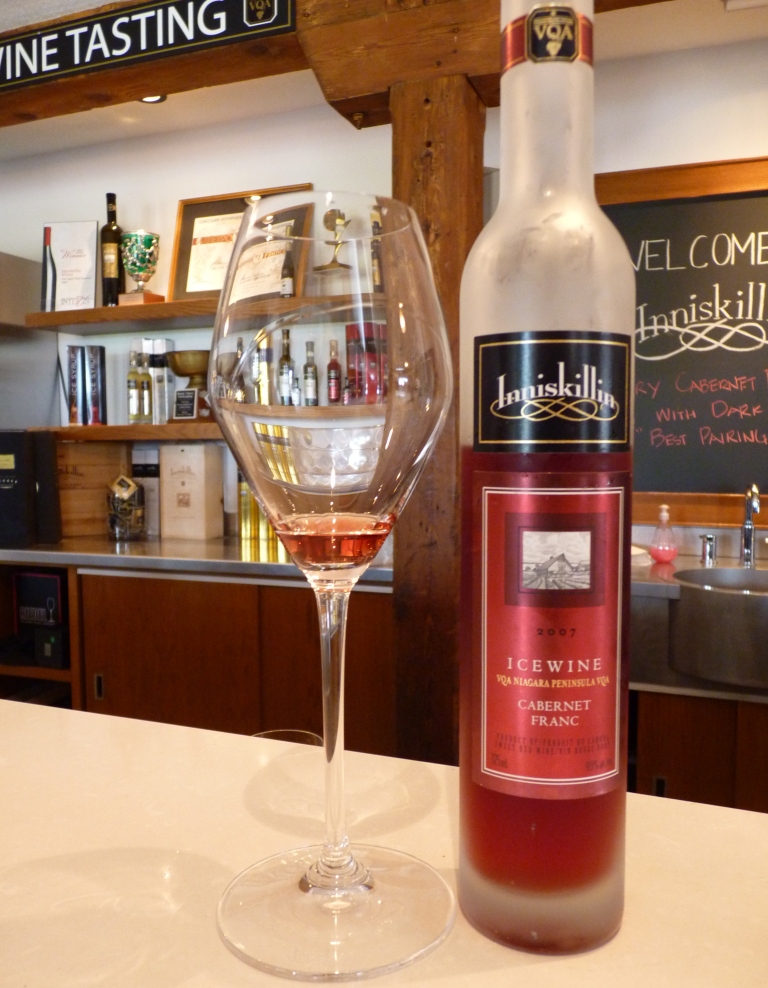 As I did recently with the post about Champagne, let me present you with an article written for the same Stamford Times newspaper in 2005 – talking about sweet wines for your special Valentin’s day, which is coming up in less than a week. For what it worth, here it is in its entirety.
* * *
Well, Valentine’s Day is around the corner. All stores are full of heart-shaped things, candies in particular. Seems that “sweet” is closely entwined into our tradition of Valentine’s Day celebration, and sweets and romance usually go together. While we are on the subject, did you ever think of where the word “honeymoon” came from? If you know the answer – great, you can skip the last paragraph, if not – please keep reading and you will get an answer at the end.
Now, let’s talk about the sweet substance which usually doesn’t come in the heart-shaped form, but nevertheless is worth mentioning – let’s talk about sweet wine. So how come the wine can be sweet? Do they add sugar to it? No, usually, nobody adds sugar to the wine. Sugar is developing in the grape as it ripens, and it is a result of photosynthesis ( no sun – no sugar – no wine, very simple formula). As the grape ripens, the amount of sugar is increasing, thus the idea is very simple – the longer time grape spends under the sun, the sweeter it becomes. The later harvest is, more sugar the grape will have. Have you seen the words “late harvest” on the wine label? What it telling you is that the grape spent more time on the vine and was harvested late, thus you should expect that the wine under such label will generally be sweeter.
Well, then, if sugar is naturally present in the grape, how come most of the wine we drink is not sweet at all – they are so-called dry wines? After grapes are pressed, when grape juice is fermented by adding yeast, the fermentation process stops by itself once all sugar is converted into alcohol – this is why we usually don’t taste sugar in the wine. Based on that fact, we can see that if grape has too much sugar, we might get wine very high in alcohol, which will usually defeat the purpose. The fact that the amount of sugar in the grape needs to be controlled often dictates the starting date of harvest. But when the goal is to produce sweet wine, the grapes are usually left on the vine for as long as possible, they shrivel under the sun, almost becoming raisins, plus very often it is desirable that the mold, called Botrytis cinerea, or “noble rot” will develop on the grapes. This will ensure that grape will have the maximum concentration of sugar, which will be then only partially fermented into alcohol, thus producing a sweet wine.
One more fact would be interesting to note – as it is necessary to wait until the grapes are “raisiny” enough to be made into a sweet wine, usually a small number of suitable grapes is harvested, and also such suitable grapes should be picked by hand multiple times. This translates into the fact that very often sweet wines carry a high sticker price (however an exception, but some German Rieslings, for instance, can go for $400 per 375 ml bottle)
To make sweet wines even more concentrated, as unusual as it sounds, next after sun and heat come frost. This is how so-called ice wine is made – grapes are harvested well into the winter months when the temperature drops below 17°F. Frost leads to the further dehydration of grapes, thus ensuring even higher levels of sugar and flavor in the grape. The grapes are pressed while frozen, and usually, a very limited quantity of the grape juice is extracted, which in turn means once again – you guessed it right – high prices. Just to add a historical perspective, ice wine was first produced in Germany at the end of 18th century and since then it is becoming more and more popular and it is now produced in other countries with great success (Austria and Canada are two of top contenders).
So where sweet wines are made? The answer is – pretty much everywhere. While covering all different sweet wine regions in this article would be impossible, let’s take a quick tour around the world.
We will start in … France, of course. Some of the best sweet wines in the world are produced in the region of Bordeaux called Sauternes. Sauternes wine is made primarily out of grape called Semillon. The most famous wine in Sauternes is made at Chateau d’Yquem – you wouldn’t regret having Chateau d’Yquem served at your romantic dinner.
While we are in Europe, let’s make another stop – Germany. Assumingly, German Rieslings don’t need much introduction. Riesling wine is made out of the grape with the same name – Riesling. There are different levels of sweetness (five of them) in German Rieslings – starting from the one called Kabinett, which is a semi-dry wine, and going to the one called Trockenbeerenauslese ( TBA in short), which makes very rich, sweet, honey-like wine ( the price also follows the trail).
Of course, when talking about wine, we can’t forget about Italy. While most of its fame is coming from the red wines like Barolo and Barbaresco, there are a number of well known sweet wines coming from that beautiful country. Asti Spumante, a sweet sparkling wine, would be one. Moscato di Asti would be another one – lightly fizzed wine with a fresh and delicate aroma. Vin Santo out of Tuscany (produced in the Chianti region) might also sound familiar.
Let’s cross the ocean now – in the United States, sweet wines are produced in the number of regions, best of them arguably coming from upstate New York and the state of Washington. These sweet wines are usually made out of Riesling grape. Canada is also worth mentioning as since 1973 it became a very respected producer of ice wine and compete very well in that category with both Germany and Austria.
While there is more to the geography of the sweet wines ( we didn’t even get to talk about Australia, Chili, Spain, Portugal, and others), let’s talk about how and what to serve them with. The serving temperature range for the sweet wines is rather large, from 50°F to 65°F. You can choose the serving temperature depending on what characteristic of the wine you want to bring out – for the sweetness you can serve it warmer (57°F – 65°F), but if you want to stress the light and refreshing side of the wine, you can serve it colder (50°F – 57°F).
What to serve with the sweet wine? One possible choice – nothing. After all, there is plenty of sugar in that glass to qualify as a dessert by itself. But if you want to have the sweet wine with food, the rules are the same as for any wine in general – it can either complement or contrast the food. You can serve sweet wine with dessert to complement it, or you can contrast – serve a nice Riesling with blue cheese, for instance.
One thing left before we conclude – the answer to the “honeymoon question”. The word comes from ancient Persia, where it was a tradition for the father of the bride to provide a month-long supply of alcoholic beverage called mead (made out of honey) for the groom to be enjoyed after the wedding. As lunar calendar was used at that time, hence the “honeymoon” word.
With this, we will conclude our short journey to the world of sweet wine. This Valentine’s Day, bring a bottle of sweet wine to your sweet Valentine, and to make sure it will taste the best – enjoy it together! Cheers!
Touching Time
 I have a special fascinations with man made things which last through time. I remember looking almost in awe at the stone in London which had guarding rail around it and little plaque declaring that this stone was laid there in 1012 (I might be off by a few years, but you got the idea). On another occasion ( about 20 years ago, very shortly after I came to US), I was visiting Metropolitan Museum in New York, and I saw a large structure in one of the rooms which resembled Egypt Pyramid, actually bearing the age of many thousands years. I couldn’t help myself not to put a hand on the wall and touch those thousands of years – the very next second extremely loud and angry voice came out with the words “Don’t touch the Temple!”.
Wine holds special place for me when it comes to its relationship with wine (here is an earlier post on that subject). While in Miami, I was able to literally touch upon wine and time once again (only touch, not taste). We went for a dinner to the restaurant called The Forge, located in North Miami Beach. This restaurant is a landmark on its own, being in existence sine 1920s. But the object of particular interest is their wine cellar, located on the lower floor.
From the first look you take on those bottles, the only thing you can say is “wow”. Then you say it again and again, as you walk around that spacious cellar, beautifully appointed in mahogany. Inside the cellar there is a separate gated section which holds owner’s private collection. That collection has a full line of Chateau Lafite, starting from 1822! The collection is curated by the Chateau Lafite itself, and recently the bottles were re-corked and toppled off with 1982 Chateau Lafite, which was deemed “good enough” for that purpose.
Leaving owner’s collection aside, the main cellar holds so many jewels that any oenophile will tremble in the knees just walking around. Here are few pictures I would like to share with you.
1873 Mouton Rothschild: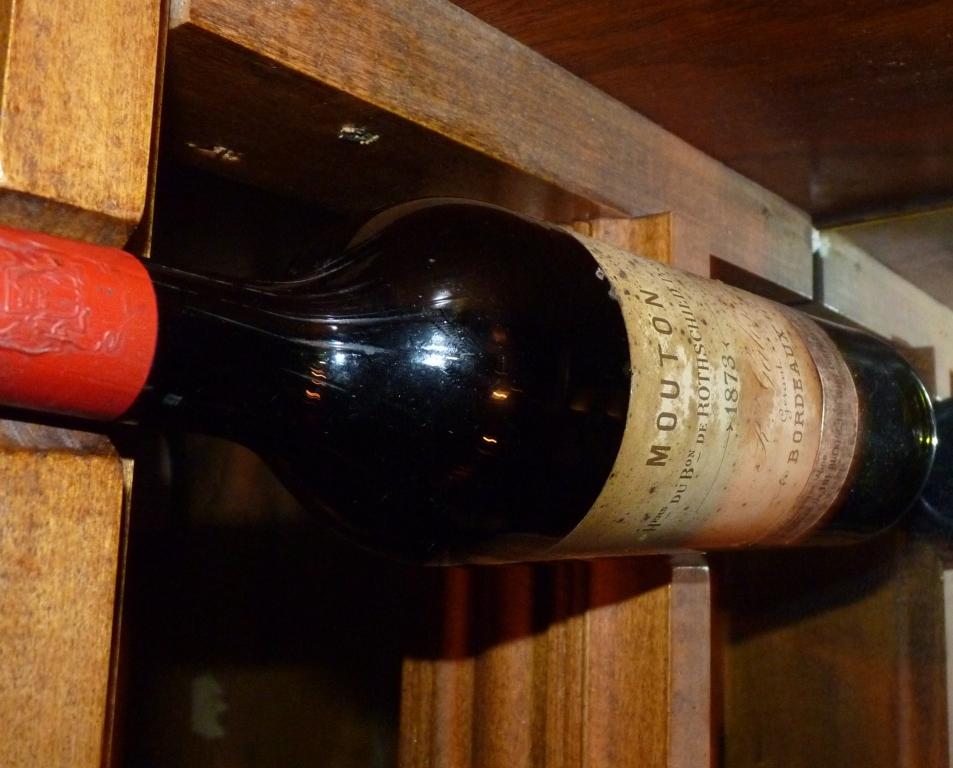
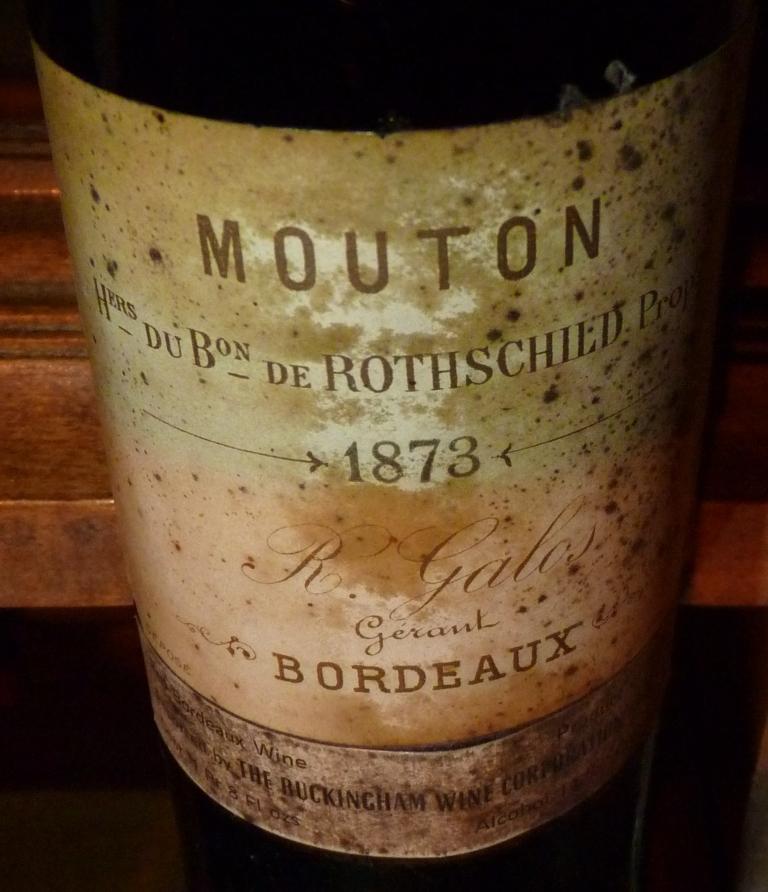
Here is close up on the label, in case you can’t see well enough on the previous picture:
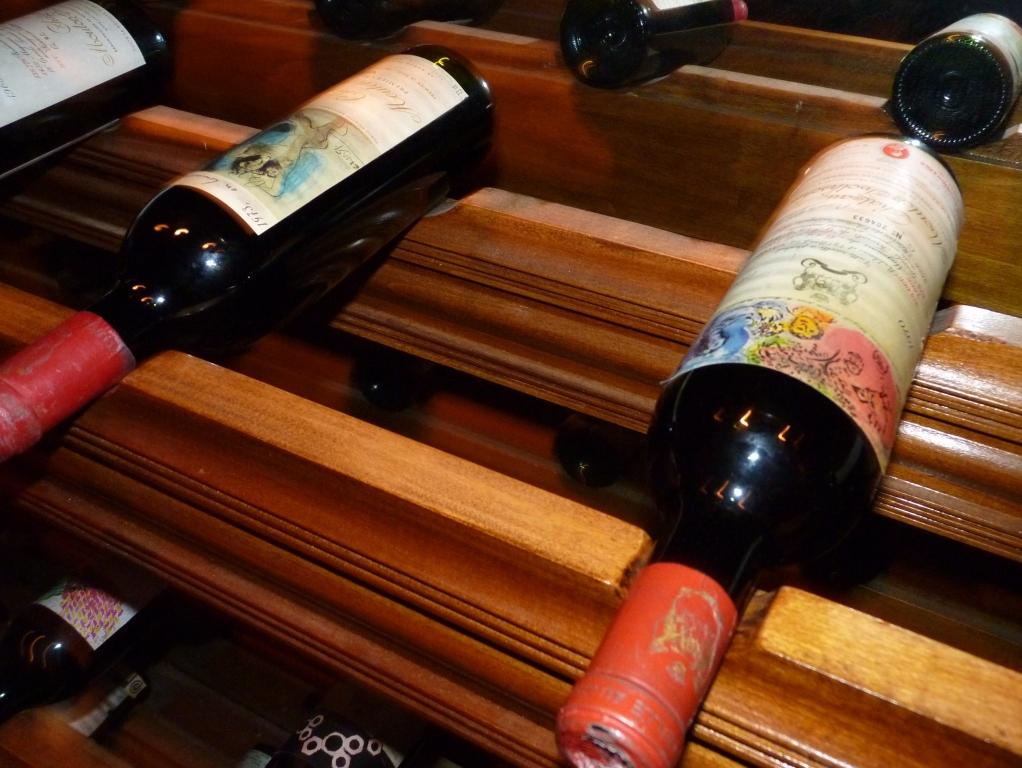
Mouton Rothschild Artistic series ( don’t know if picture is good enough for you to see, but it is Chagal and Picasso labels):
Domaine Romanee Conti, of course:

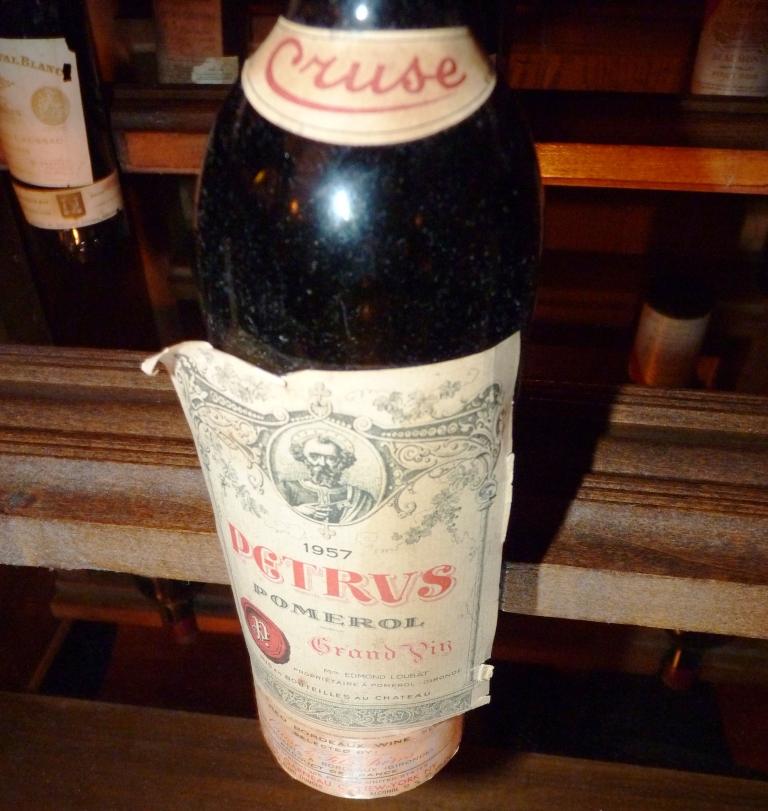
Look at this beauty – 1957 Petrus!
The cellar holds quite a few large format bottles:

And here are couple of general views ( note that cellar is available for private parties…):
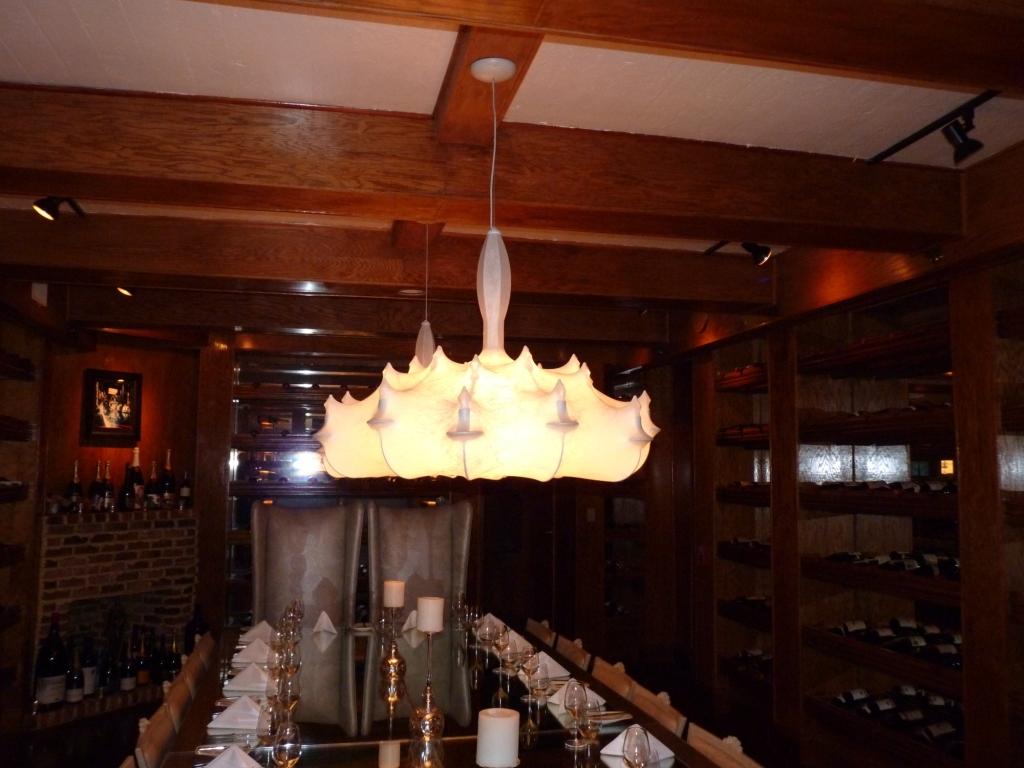
And one more:
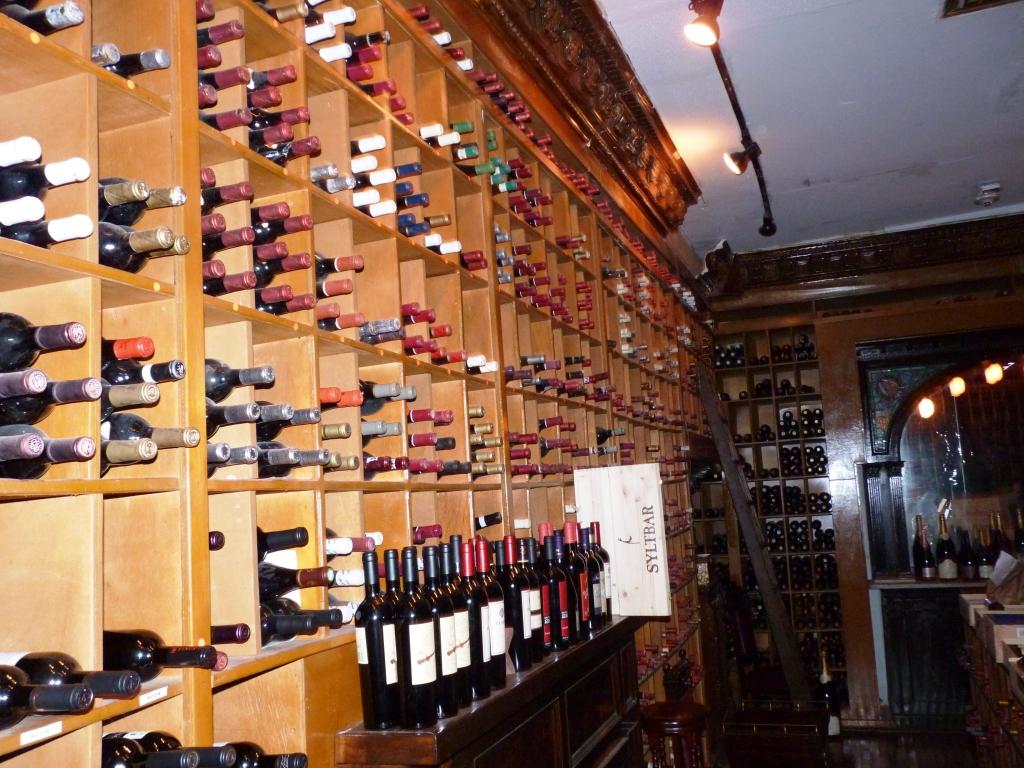
 If you are curious if the opportunity to look at the bottles was enough to replace the dinner – no, we had dinner there – but food was not on par with the view we had before.
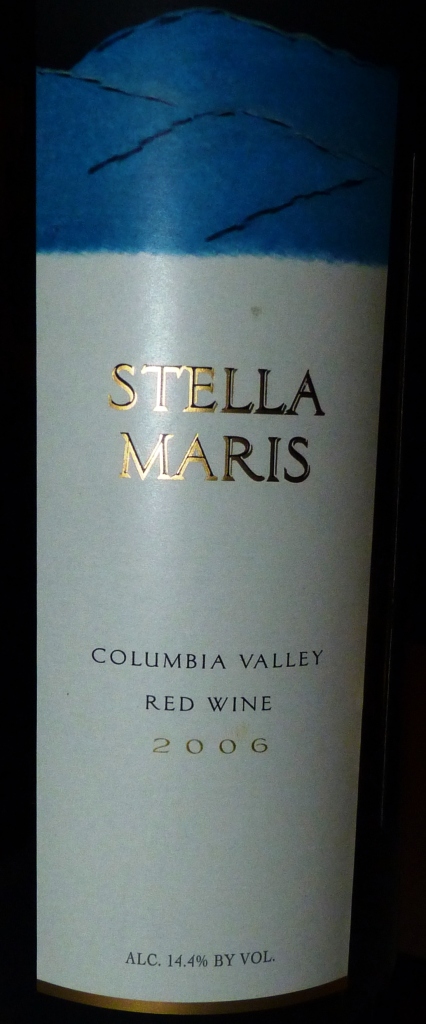
We did pretty good with the wine – 2006 Stella Maris Red Wine from Washington state was nice, round wine, with good red and black fruit both on the nose and the palate, good acidity, medium to full body. Overall, while wine list appears to be a huge book, split into countries and styles of wine, it is not easy to find something interesting and affordable at the same time. Of course, you will be gladly served that 1957 Petrus for about $45,000, so if you plan to celebrate something that special, can I please (did I say “pleeease”?) get an invitation?
Talking about the food, for the appetizers we ordered Salmon Croquets and Roaster Cauliflower florets. The Cauliflower was probably one of the tastiest I ever had, but the salmon croquets were on the mushy side. Here is the picture:

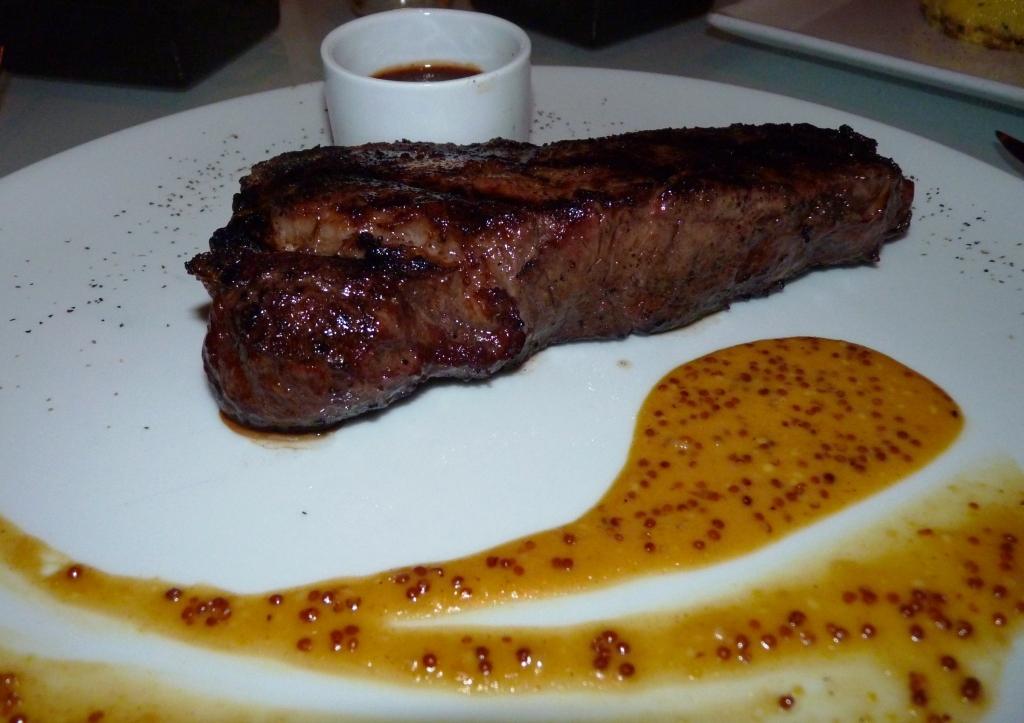
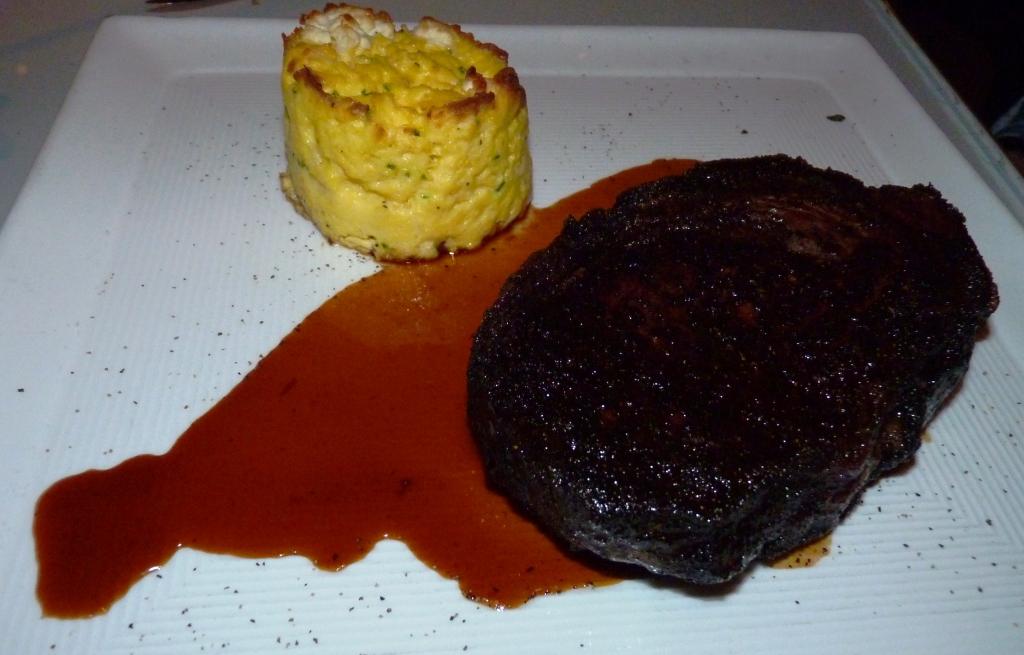
Then we had two steaks, and while the place is considered to be a steakhouse, they were just average, not memorable at all (I would gladly take instead Capital Grille steak at any time). Here are two pictures –
New York Strip:
And “steak and eggs”, steak was encrusted with coffee and pan-seared:
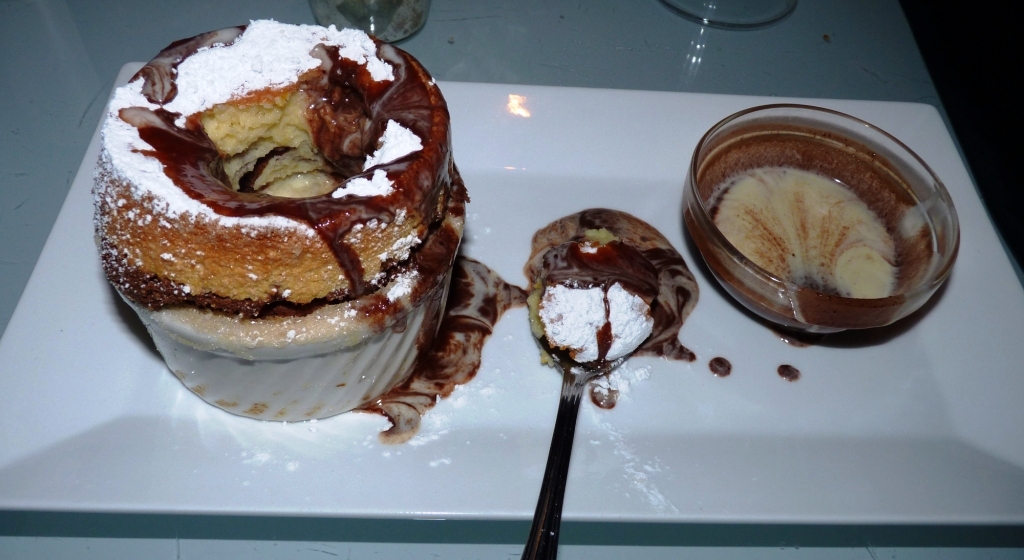
The dessert somewhat compensated for the entrees, though, as it was the best souffle I ever had – chocolate grand marnier souffle:
All in all, it was a great and very memorable visit. If you have an expense account, your possibilities are endless at The Forge. If you are like me, coming for the great “wine and time” experience, you might have better luck with fish. Cheers!
Yakimono – World Class Japanese Food in Israel
 I already told you about great experience at the Kimmel restaurant – luckily, it was only the beginning. The next place we visited was Japanese restaurant called Yakimono.
To tell you the truth, in my previous visits to Israel I was a bit skeptical when it would come to sushi – this can be understood considering that I live in close proximity to New York city. After visiting Yakimono I’m a believer – yes, you can find world-class Japanese food in Israel.
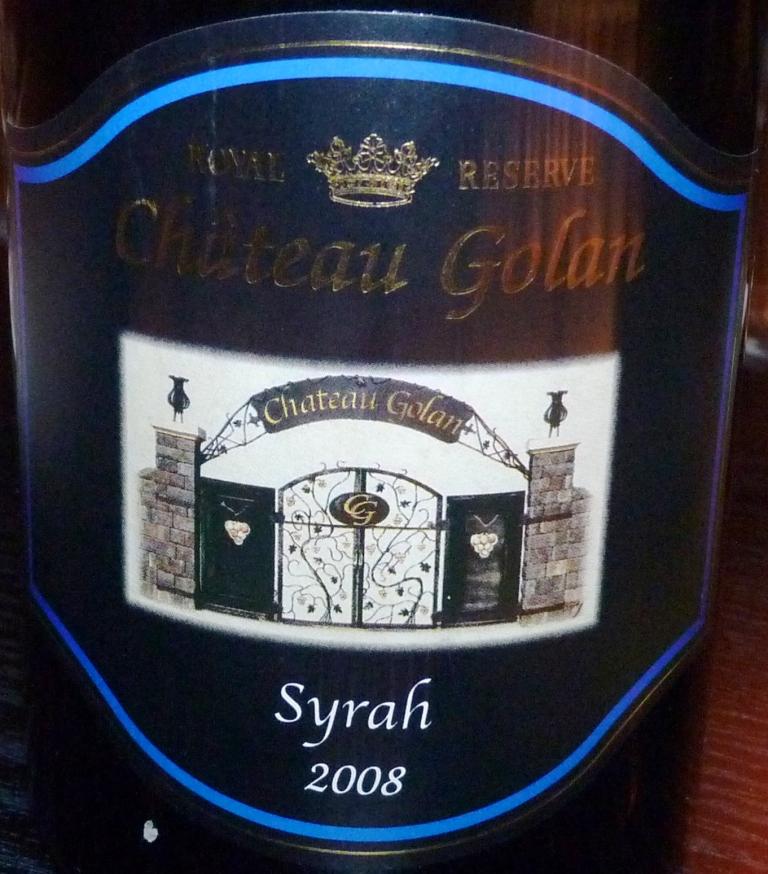
We all decided to go for the tasting menu, which seemed to be much more logical choice versus trying to pick a dish from a very long list. Before I will present you with the photo report of that tasting menu, let me mention the wines. For the white, we had 2010 Yarden Gewurztraminer, fresh, with the floral nose and very delicate palate (not overpowering or sweet, as gewurztraminers get sometimes). This wine had notes of white apples and grapefruit on the palate, but was quite balanced at the same time, and worked as great compliment to spicy dishes. For the red, we had 2008 Chateau Golan Royal Reserve Syrah, which was probably the best wine I had during entire trip, and definitely the most interesting. This wine had a nose of Gorgonzola cheese, and very nice and soft palate, with good peppery notes, hint of smoke and ripe and round black fruit, good acidity and nice overall balance.
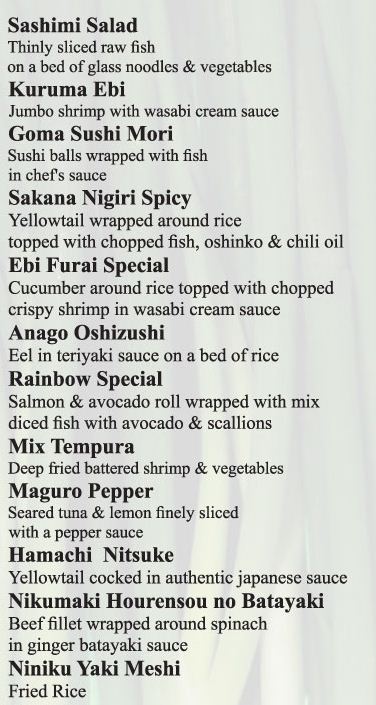
Now, let me present you with the tasting menu in pictures. First, here is the tasting menu itself:
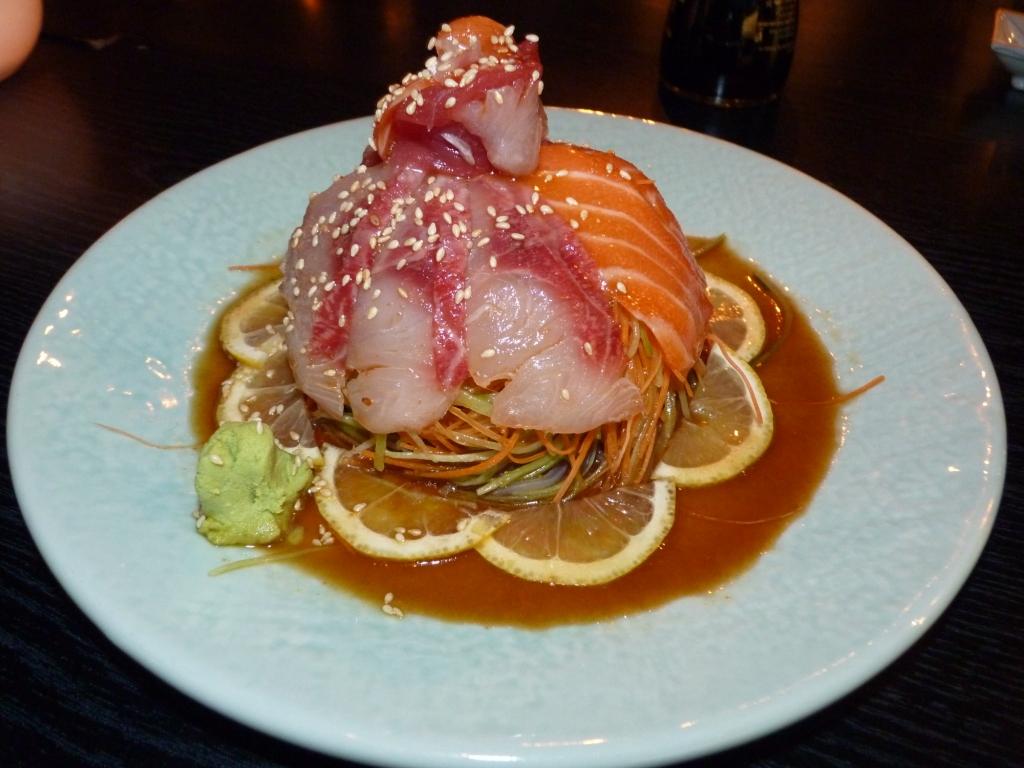
Here is Sashimi Salad, as tasty as it was colorful:
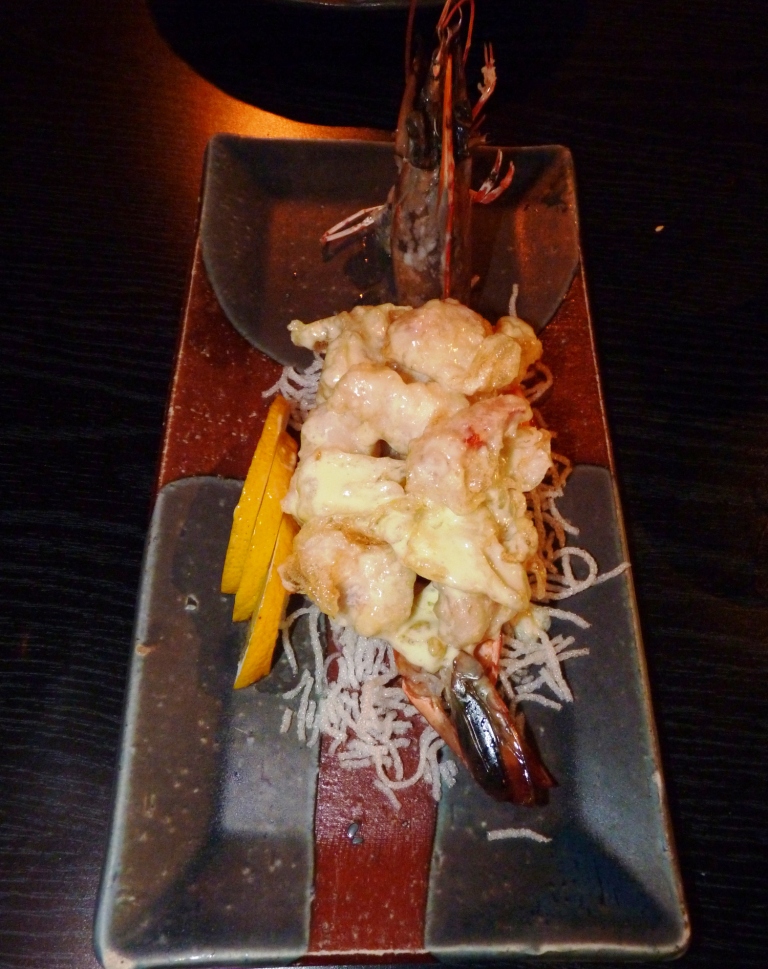
Next was Jumbo shrimp (it was really Jumbo!):
Salmon balls – also take a look at the tiny morsels you see there – those are mushrooms, and I have to admit, they were some of the most flavorful bits of food imaginable:

then sushi plate, which included 4 different kinds (yellowtail, eel, shrimp and salmon and avocado):

Unfortunately, I missed the moment to take a picture of tempura (but most of you know how tempura looks like), so the next picture is showing seared tuna and lemon (tasted great, and take look at the presentation!):
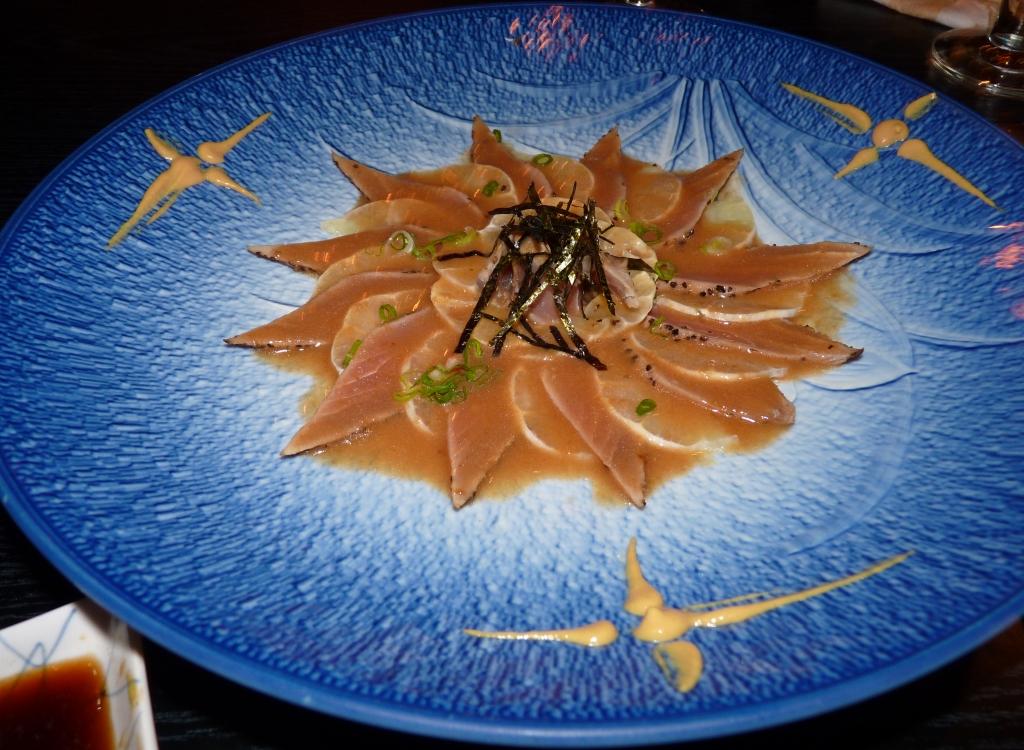
Next dish was yellowtail tuna cooked in the authentic sauce:
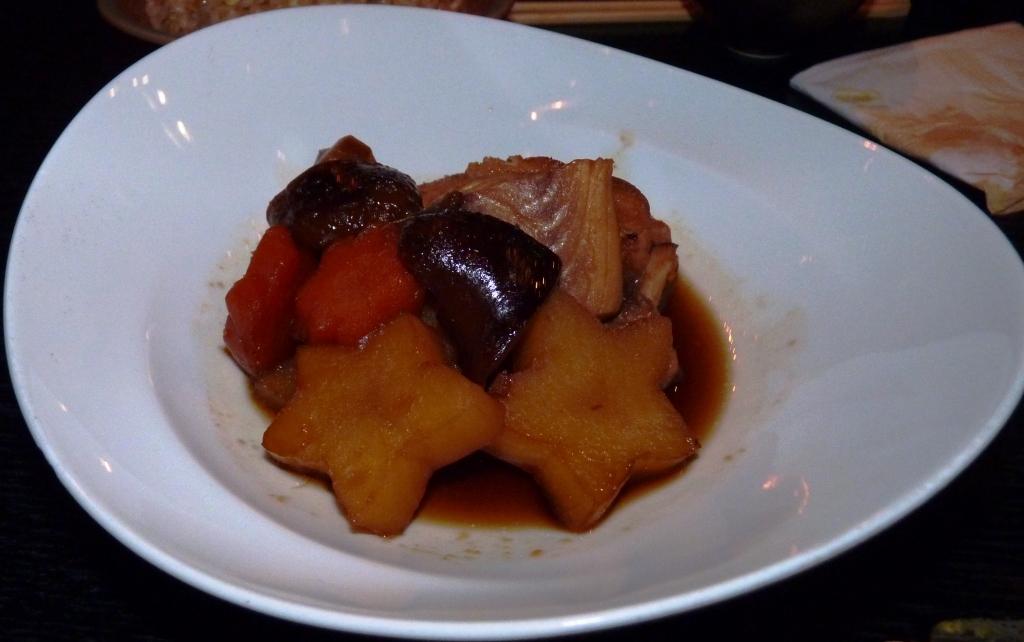
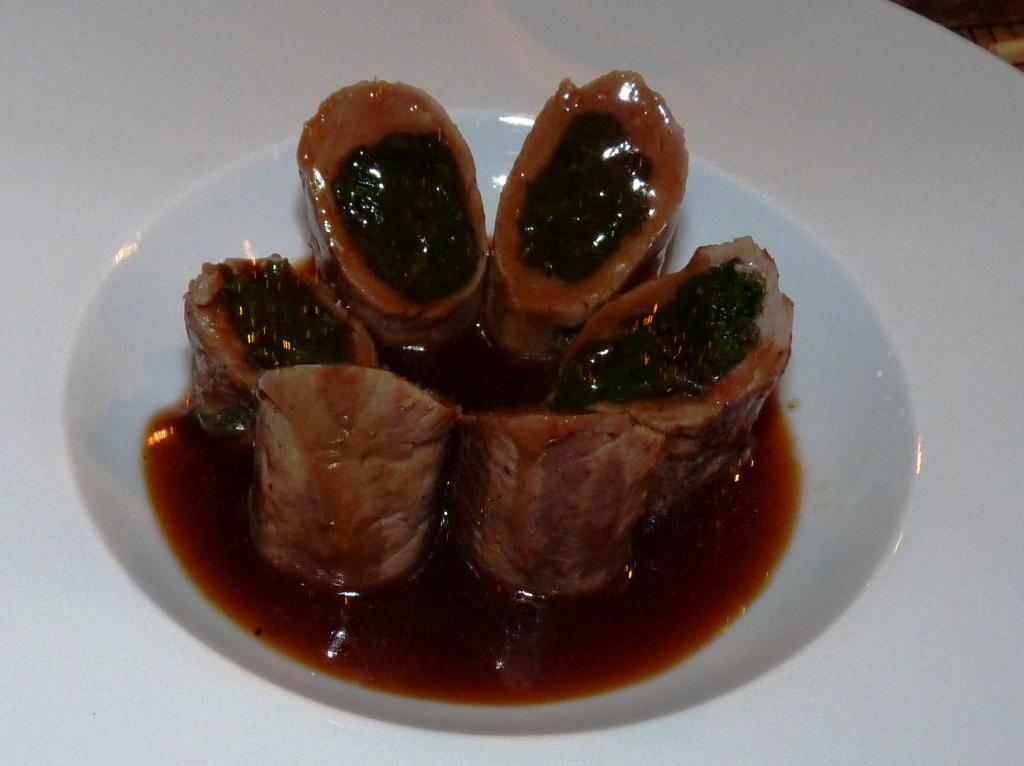
The tasting menu concluded with beef fillet wrap:
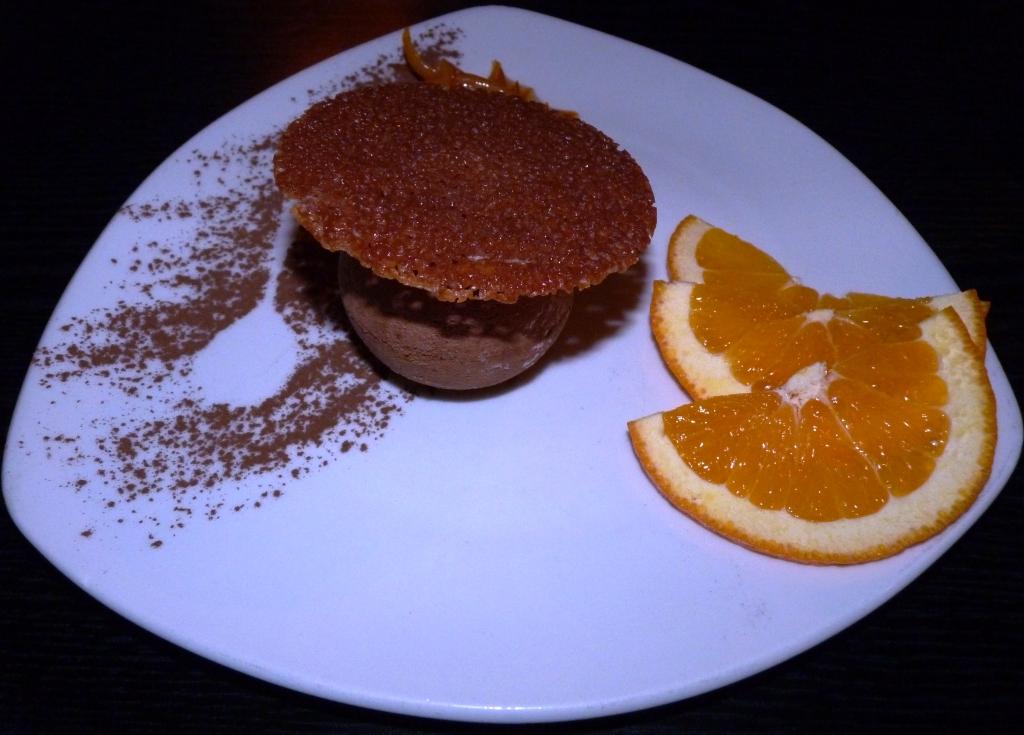
And then – dessert. First, an ice cream:
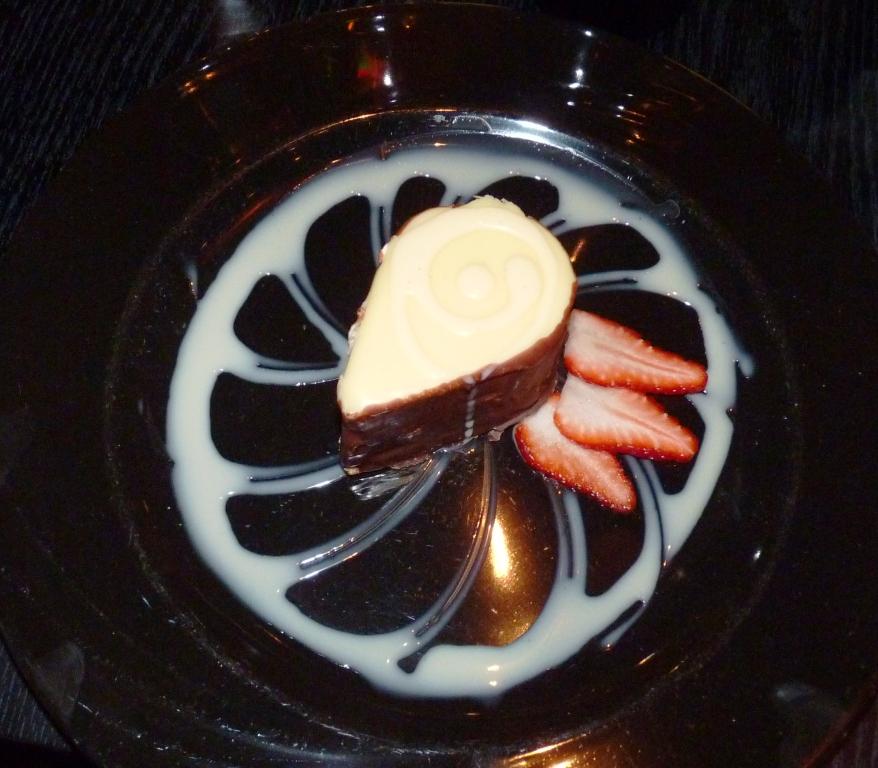
and a cheesecake:
This concludes my photo report. If I convinced you to give this restaurant a try, my mission is accomplished. If I didn’t – you should still try it. Cheers!
Israel Food and Wine Experiences: Kimmel Restaurant–Wow!
 I don’t know how does it work, but every time I come to Israel (which happens about once a year), the food here is getting better and better – every time. This year my friend took me to the Kimmel restaurant, located very close to the Neve Tzedek district in Tel-Aviv.
I can describe my experience at this restaurant with a single word (is that officially a word?) – WOW! Starting from décor, going to service, and then wines and food, everything was just impeccable (am I exaggerating? I don’t think so – it was seriously a “wow” experience).
Starting with the décor (which I don’t have the pictures of, unfortunately), the place has an ambiance of the French countryside tavern – very rustic, dark aged wood paneling, old bottles ( and some new) are everywhere, dimmed lighting.
For an appetizer we had a beets salad with fried goat cheese, pistachio and baby greens (very good):

And then mushrooms with Foie Gras ( outstanding!) – perfect sauce and the overall combination of mushrooms and foie gras ( not your everyday appetizer):

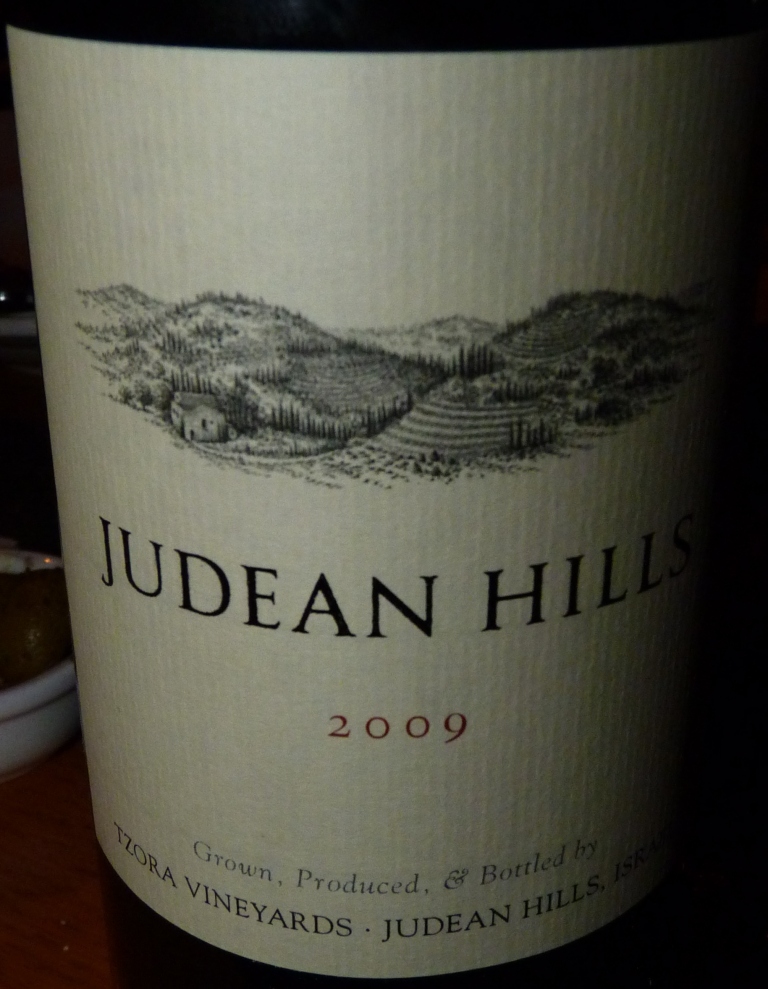 Of course we had wine. I had been a big fan of Israeli wines for a while – the quality of the wine I tried was improving every year – and there are more and more Israeli wines which are simply world-class. We selected 2009 Tzora Vineyards Judean Hills wine, which was a blend Cabernet Sauvignon, Merlot and Syrah – soft, balanced, with good amount of dark fruit, but not overpowering the food. This wine paired very well with our choice of appetizers, and of course it was gone before the main course arrived.
For the main course I choose boulibaise, and it was impeccable. Balance of acidity and spiciness, perfectly cooked, succulent mussels, shrimp and crab claws. And for the great touch – an addition of a shot of anise liquor, which put the whole dish on the next level – perfect!

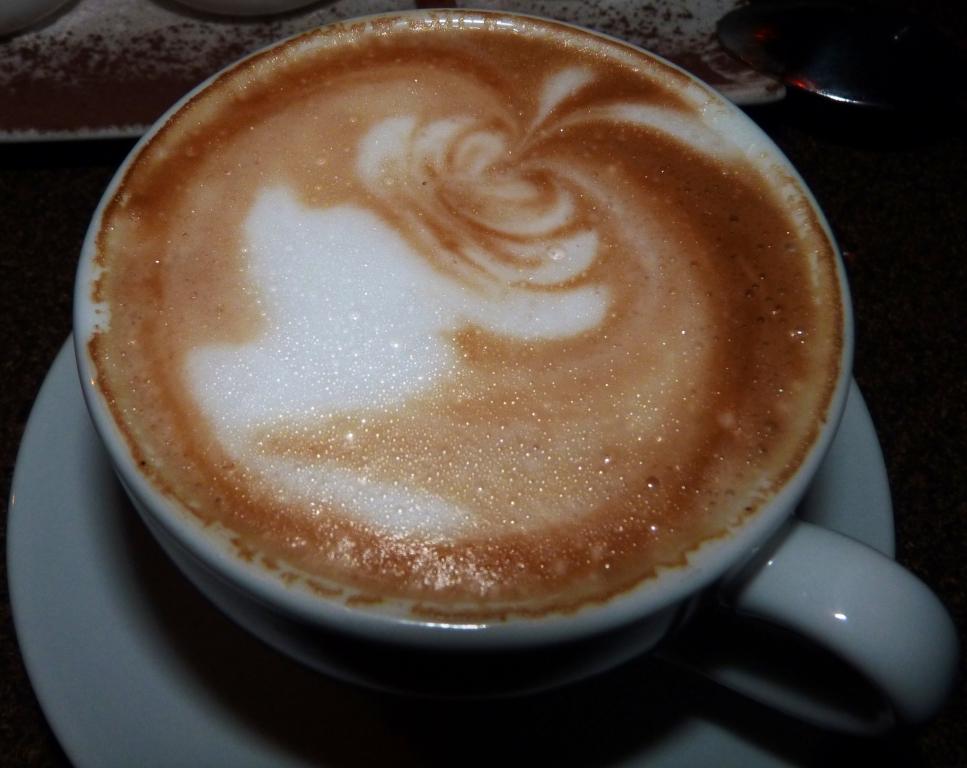
And then desert… Absolutely on par with all the excellent dishes. First, cappuccino:
Then creme brulee four different styles – probably one of the absolute best I ever had, as in a lot of cases creme brulee is simply reminiscent of the sweet omelet – this one was light, creamy and delicious, without any egg taste showing up:

And for the last highlight of the meal – chocolate lady fingers ( that was the name of the dish). I don’t want to sound as judges at Iron Chef or Chopped, but this was one of the rare experiences where the texture was really a key in the dish – perfect balance of creaminess of the chocolate with the crunch of the cookie – totally different from anything I had before – nothing cloying, nothing sticking – just perfect.

All in all, if you are planning your visit Tel-Aviv, put Kimmel restaurant on your “must” list – and you can thank me later. Cheers!
Wine and Time at Franklin Street Works (and some Hyper-Decanting too)
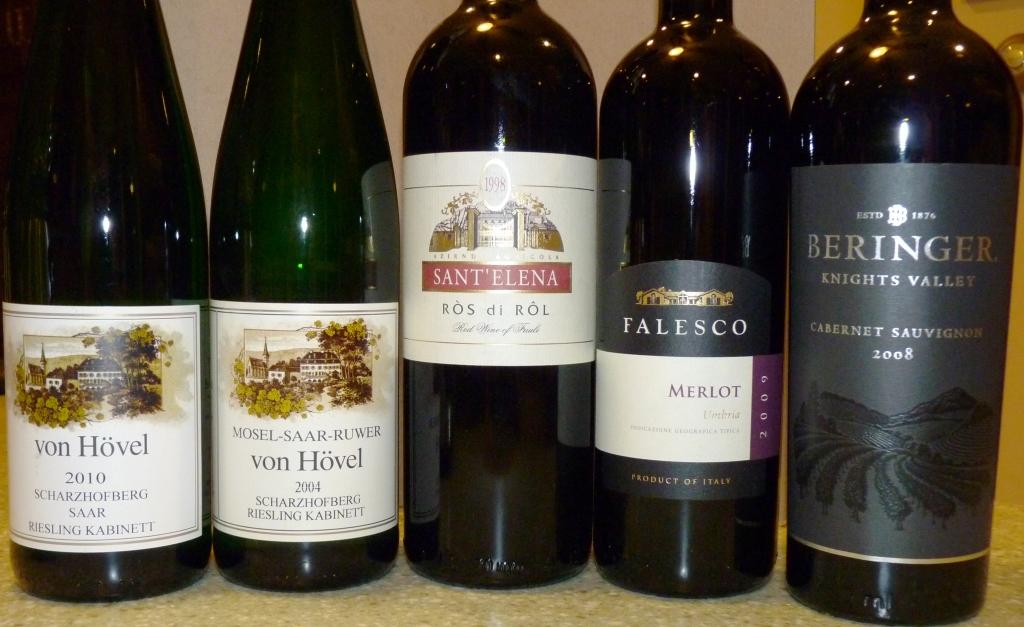 Yesterday we got together at Franklin Street Works in Stamford, CT to talk about wine, time and the relationship between the two (some thoughts on the subject had being posted to this blog before). As you can imagine, we not only talked, we also tried some wines, and even conducted some [not necessarily scientific] experiments.
Here are the wines which were presented in the tasting:
- 2010 von Hövel Riesling Kabinett Scharzhofberg
- 2004 von Hövel Riesling Kabinett Scharzhofberg
- 1998 Azienda Agricola Sant’Elena Ros di Rol Merlot, Friuli
- 2009 Falesco Merlot, Umbria
- 2008 Beringer Cabernet Sauvignon Knights Valley
- 2008 Beringer Cabernet Sauvignon Knights Valley (hyper-decanted!)
First, by pairing together 2010 and 2004 Riesling, we wanted to see the direct effect of aging in the same wine. Despite being called Kabinett, 2010 was rather on the sweet side (I would probably define it as Spatlese) – it was nice and round, and good acidity helped to show up quite fresh. 2010 was people’s favorite, as you might imagine – however, I really liked 2004. One reason is the contrast between the nose and the palate. On the nose it was literally “what the … is this” sensation – probably spoiled cabbage comes to mind first. But then the palate was very balanced, nicely dry and mature, with still a good showing of fruit and excellent acidity.
The Italian wines were good, but not necessarily what I wanted – 1998 Ros di Rol was closed up, dry and somewhat tannic, and 2009 Falesco was bright and fruity, but overall they didn’t play together at all (should look for different comparison tasting pairing).
The last part – Hyper-Decanting – worked out very interestingly (Hyper-Decanting is not my term – please see the origin of Hyper-Decanting here).
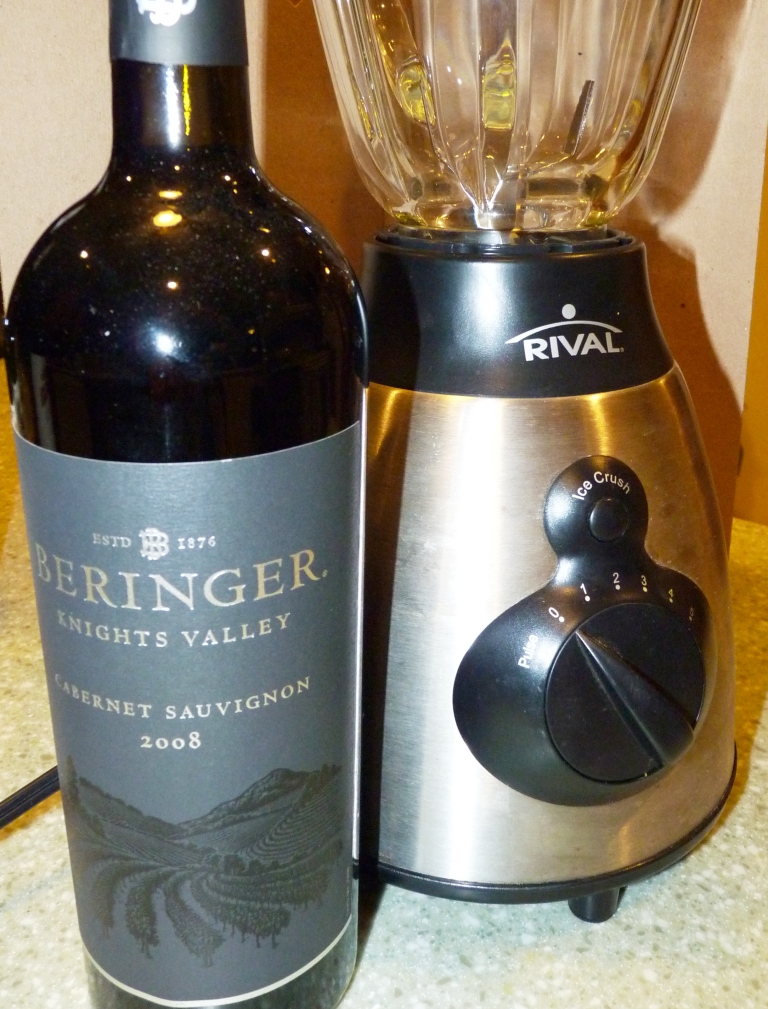
The 2008 Beringer Cabernet by itself showed up in a very classic way – some black currant jammed fruit on the nose, nice bite and nice green notes on the palate. After hyper-decanting ( about 1 minute in the blender), the wine changed dramatically, losing all its sharp edges and becoming soft and mellow.
Would I recommend hyper-decanting as a new way of fast-aging the wines? Probably not. Would I treat a classic Bordeaux this way? Most likely not, unless this is the last bottle left to entertain a party. Is this something you should try for yourself at home? Yes. It is simple, safe and easy, and you probably own the blender anyway, so there is no expense on your part. Will I try it again – yes, but again only as an experiment.
If any of the people reading this post attended the event – please comment, I want to know your opinion! And for everybody else – find the time to open the oldest bottle in your cellar soon, to honor 8000 years of wine and time relationship. Cheers!
Inventions We Can Live Without?
I spotted today a new wine glass design through a Twitter conversation – it is called “Revolution Glass”. You can see an image here (scroll down to see all of them):
http://www.designboom.com/weblog/cat/30/view/18079/martin-jakobsen-revolution.html
I never held it in my hands, but just looking at the pictures of the glass itself and then people using it, my first reaction is to call it an invention we can live without.
Assuming that this is a traditionalist talking in me and even accepting that I don’t understand modern form and design (don’t think so, but will accept it) – what do you say? Would you like to use a wine glass like that?
Ten Wine Blogs I’m Reading
 In the world of wine, reading is second most important thing next to actually drinking the wines. Yes, of course, you can say that no, visiting vineyards and talking to the winemakers is a lot more important – and I would agree with you, however, it is reading that you can do at any time and a lot more often than actually visiting the wineries – at least for someone like me, where wine is a passion but not a profession.
When it comes to reading, books and magazines and indispensable – and there are hundreds and hundreds of them to read, starting from encyclopedias such as The World Atlas Of Wine by Hugh Johnson and Jancis Robinson, great day-to-day books such as Kevin Zraly’s Complete Wine Course to the Wine Spectator magazine which reviews thousands of wines in every issue.
Then there are wine blogs, like the one you are reading right now. Wine blogs deliver information in much timelier fashion than any books or magazines, and they also express a lot more of the author’s personality in a much more direct way than any book or magazine article – which makes them a great fun to read. I like reading blogs when I get a chance, and generally I come across many different blogs as lots of them are referring to each other (very common practice in blogging world). However, while my blog reading is often sporadic, simply based on available time, there are some blogs which I’m making an effort to at least skim through on the regular basis (using Google Reader) – and this is the list which I would like to share with you. The list below has no prioritization whatsoever, and I add few of my thoughts as to what kind of content you can find in the respective blog.
- 1WineDude – IT-convert Joe Roberts provides great insight into the world of wines. Lots of wines are reviewed using the A to F ratings ( no, I didn’t see a single F yet) as opposed to the popular 100 points scale.
- Fermentation – very interesting blog, covering a lot from the world of law, consumer rights, politics and more – of course all centered around wine.
- Serious About Wine – wants to see lots of new cool label designs? Flip through this blog’s pages, its worth it.
- The Feiring Line – Alice Feiring is a book writer and a blogger with “unique and different” point of view. Love her wine descriptions written directly on the bottle’s label.
- Dr. Vino – one of the best wine blogs overall, lots of interesting information tidbits from the wine world.
- The Wine Economist – Great source of information about wine, lots of stats of all kinds – merlot versus pinot noir consumption in the numbers, most requested wine of the past year and so on.
- The Gray Report – W. Blake Gray writes one of the most insightful and controversial wine blogs – I always love reading his posts. You should judge for yourself, though.
- Vinography – Superblog of wine blogs – lots of information plus a comprehensive list of wine blogs on the Internet
- Steve Heimoff Wine Blog – exactly as it says, a wine blog by Steve Heimoff, a wine writer and Wine Enthusiast magazine’s West Coast Editor. Lots of interesting information, especially as it comes to California wines.
- Paul Gregutt Unfined&Unfiltered – Paul Gregutt is a wine writer and a Northwest Editor for Wine Enthusiast magazine. He writes about wines of Pacific Northwest.
That’s all, folks for my list of ten blogs I’m reading – if you like wine, check them out for yourself. Cheers!
Wine and Time
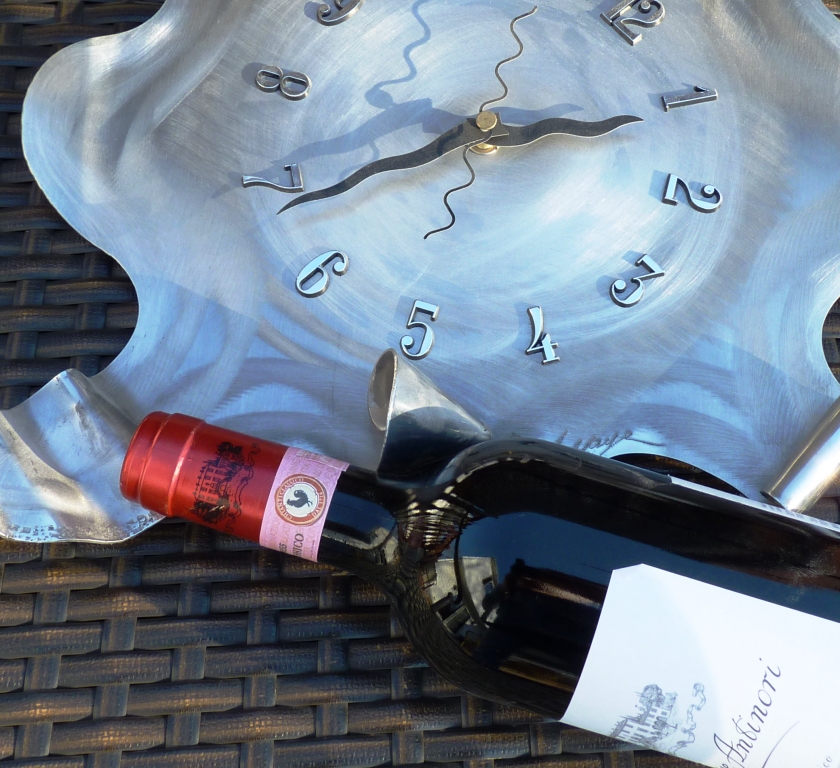 Of course time had being here forever, always moving, and always in one direction (someone, please prove me wrong!). Wine had being around for about 8,000 years, first appearing in the ancient Georgia (no, not the one down south, but the one from the Caucus region, on another continent). Wine is one of the few products literally not changed for such a long time in its form and its production methods – sans reverse osmosis machines, electrical presses and micro-oxygenation boxes. Considering such a long history, you can imagine that relationship between wine and time is very complex, and you would be right.
First, time is a necessary part and an attribute of the wine making process. For the vast majority of wines, if you read winery’s description of the wine, you will see something like “aged for so many month in …”. Sometimes the wine is aged in stainless steel tanks. Sometimes the wine is aged in clay vessels (very popular in Georgia now, the vessels are called Kvevri and produce very distinct wines). Lots of red wines are aged in oak barrels – American oak, French oak, Hungarian Oak, new oak, old oak – variations are endless. For many wines, duration and the type of the aging is a sole decision of winemaker (no pressure, but this decision will greatly affect quality and the taste of wine, and will define success and failure for it). For some of the wines, aging in a specific type of barrels is mandatory before the wine can be released – Rioja Gran Reserva should be aged for a minimum of 2 years in oak barrel and 3 years in the bottle to be officially designated as Rioja Gran Reserva. Barolo must be aged for 3 years, at least two of them in the oak barrel, and Barolo Riserva should be aged at least for 5 years. During the aging process, the wine is changing. Oak imparts very specific flavor, which we, humans, tend to like. Oak aging also acts as a preservative and helps wines to live long life.
Once all the aging is complete (in the tanks, barrels and bottles – whatever the aging was), wine is released – and this is when the second phase of the wine and time relationship kicks in.
This second phase is as tricky, if not trickier, as the first. Have you heard the phrase “needs time” in relation to the particular bottle of wine? If you will look at the wine reviews in Wine Spectator or any other publication which provides wine reviews, you would often see one of the phrases “Drink now”, “Best 2014-2020”, “Best after 2013” – these are the suggestions for how long the wine should be kept in the cellar before it should be consumed.
Why is that? What with all this aging? Why not open the bottle right away and just drink the wine? What was discovered at some point (don’t ask me when, but it was long time ago) is that wine actually changes its taste as it spends time in the bottle (the aging). And it doesn’t just change the taste arbitrarily, it tastes better. Young wines are often sharp, or somewhat single-toned in their taste – you might get pronounced acidity, or only sweetness, or lots of white apples – but only white apples. During aging, trace amounts of air are making its way into he bottle, and they lead to the wine changing its taste, improving to the better in majority of the cases – it becomes complex, bite softens up, bright and diverse fruit tones compensate for the pronounced acidity and the wine brings a lot more pleasure compare to the young wines. Mature wines deliver more pleasure – this is the whole philosophy behind wine aging.
Simple and easy, right? Well, this is were everything becomes complicated and confusing – as not all the wines should be aged (do not try to age Beaujolais Noveau, please) and also it is very tricky to make sure you would drink the wine at its peak – as whatever comes up, goes down in mother nature. This is where time transforms from the friend to the foe – and as a foe, it is merciless. After reaching maturity and staying there for a while, the wines are typically starting their decline in the taste (wine loses fruit, become very acidic, may be oxidized – and it stops delivering pleasure). Different wines made in the different styles will have different peak times and different lifespans. Some of the Jerez, Madeira and similar wines can go on literally for the hundreds of years. Good Rioja, Barolo or Bordeaux can be perfectly aged for 50 years or longer. Simple Cote du Rhone might only last for 3-5 years, same would be true for many of the Chardonnay wines. There is not crystal ball telling you precisely how long the wine will last and when will it taste the best – human trial and error is the best way to find that out. Of course there are many factors which might help you to decide whether to age the wine and if yes, for how long – the winery, the winemaker, the region’s wine style, success of the vintage and many others – but in the end of the day you would need to do the work (err, I meant the wine drinking) as the wine ages to find out when it tastes best to you.
So, does it worth to age wines if you don’t know what will happen to them in the end? For anyone who is into wines, and who had an opportunity to try a mature wine, the wine which reached its optimum taste, I’m sure this is a no-brainer question – yes, of course, and please, please give me more.
How one can experience aged wines? You got a few options. First, you can age it in your own cellar. Second, you can buy aged wines, either in a good wine store, such as Cost Less Wines in Stamford or Benchmark Wine Company. Note that you have to buy aged wines only from the trusted source – not aging the wines in the right conditions will simply ruin them, so you have to trust your source. Third option is to attend a wine tasting, such as PJ Wine Grand Tasting, where you can taste really amazing wines. However, you don’t have to wait of the Grand tasting, which takes place only once a year. If you live in a close proximity to Stamford, CT, you can attend a wine tasting at the Franklin Street Works gallery on Thursday, January 19th at 5:30 pm (here is the link for RSVP). The event is free and open to all. Here are the wines which will be presented in the tasting (the list might change at any time):
2003 Riesling, Mosel Saar River, Germany
1998 Merlot, Italy
2009 Stag’s Leap Hands of Time, Napa Valley
2009 Stag’s Leap Hands of Time, hyper-decanted using Nathan Myhrvold’s methodology.
So you should come and experience the relationship between time and wine for yourself – there is a good chance that you will even enjoy it! Cheers!
Five Essential Traits of the Oenophile
 Do you think all the wine lovers have something in common? Let’s take a look at some of the qualities which I believe, any oenophile possesses.
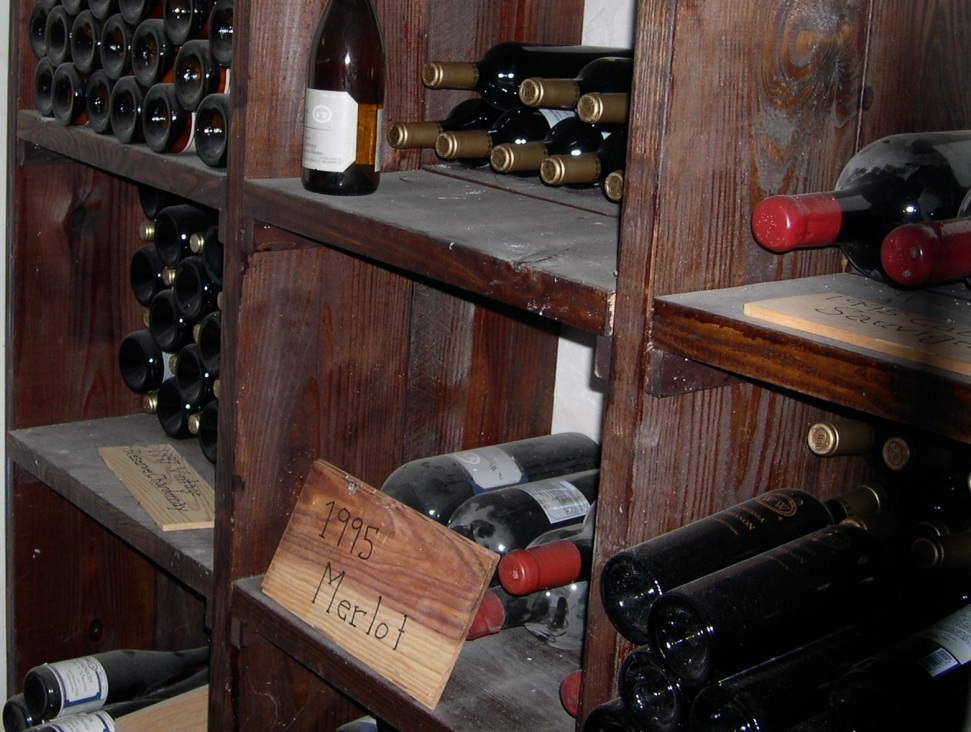
- Patience: I think this is single most important quality of the oenophile – one have to be able to wait. Mostly we are buying young wines, when they are released. If you want to truly enjoy the wine, you want to drink it when it is at its peak – which in turn means that you have to put that wine aside and wait for it to reach its best form. For example, it is considered that California Cabernets need about 13 years to reach their peak of maturity – can I rest my case? Patience has another virtue. Before you can start waiting for the wine to reach its peak, you have to get that wine. Have you heard of the mailing lists? This is how you get many great wines – Cayuse, Alban, Harlan, Bryant Family and many hundreds of others – are available only through the mailing lists. What’s a big deal about the mailing list (sounds so routine, right?) -not much, just keep in mind, that there is a list to get onto the mailing list…
- Passion: Have you ever talked to oenophile about the wine? The eyes would lit up, and information will be flowing – grapes, growing season, winemaker, the rain and the heat, the taste, the emotion, the experience. Wine is a form of art – and the same way as poetry, music, paintings, photography, architecture – it solicits emotion and passion.
- Quick decision-making: when opportunity presents itself, oenophile have to be able to decide on the fly. Is this the wine I want? Is that a good year? Is that a good price? Sometimes, all this information should be processed within split seconds – if you ever tried to get a great true bargain at WTSO.com, you would understand. Spend a bit longer figuring out if that was a good vintage – and it is not relevant anymore, as the wine is gone.
- Good memory: In the simplest form, it supports previous quality – quick decision making. You need to remember good years and bad years (for instance, Bordeaux 2000 and 2005 were amazing, and 2002 is better be avoided), you have to remember the exact name of the wine (Peter Michael makes four Chardonnay wines designated as “Estate Vineyard, Knights Valley, Sonoma County” and distinguished only by name like “Belle Côte” or “Ma Belle-Fille” – you better remember which one did you liked more yesterday at the party). But good memory goes further than remembering only simple words or numbers – how about remembering the taste of your favorite wines? I believe oenophiles will be able to describe the taste of the wine they had 10 or 20 years ago – if it was memorable enough.
- Desire to share: We want to share our joy, we want to share our experiences, we want to share our best wines – with the people who will appreciate it. I don’t mean to sound snobby – but oenophiles often start from trying to convince the whole world that this particular wine is a pure joy – and the beer drinking part of the world might not see it like that (love the beer myself – there is nothing here against beer drinkers, they just prefer different beverage). Then oenophiles start to understand that they better share their experiences with like-minded people. But – once you strike the cord, everything is open and available. Soliciting “wow” from someone who just had a sip of what you deem one of the best wines on Earth (or at least in your cellar) – priceless.
How far off do you think I am? If you acclaim yourself as a wine lover (aficionado, connoisseur) – do you associate with any of these traits?
Please comment, and – Cheers!
As One Year Is Winding Down, Another Year Begins
 Year 2011 is ending very shortly – how was it?
I’m very happy with t he wines I had an opportunity to experience in 2011 (please forgive me, but the term “wine” is used here in all-inclusive way – it also includes Scotch and other tasty alcohol) . There were lots of great wines – I already gave you my “top dozen“, but there were probably another 30-40 wines equally qualified to be included in the “top” list – like these gems from Margaux, great Spanish wines and many others.
Am I happy with the content of the blog? I think some of it was good, and some was just okay (honestly, don’t know if I did something bad – you tell me). I really want you, my readers, to be the judge of it. Was here anything which you really liked? Can you share that with me?
What I’m not happy with is the level of interaction. I know many of you actually read the posts, can you also tell me what do you think? “Great, Cool, Crap, BS, nonsense” – I would gladly take feedback, and consequently, dialog, in any form. Pleeeease?
I also wanted to give you a summary in the numbers ( posts, readers and so on) – but you know what – let’s forget the numbers, not so important. Ahh, only one quick update – on the grape count. Over the past few weeks, I added another 5, so the total count now stands at 360. Here are the new grapes:
Saint George – 2009 Skouras Red saint George Cabernet sauvignon, Peloponese, Greece
Savagnin – 2008 Benedicte & Stephane Tissot Selection Arbois, Jura, France
Noah – Renault Noah, New Jersey
Mouhtaro – 2009 Muses Estates Mouhtaro, Thivakos, Greece
Pais – 2009 Cuvee Del Maule, Chile
And now let’s spin our crystal ball – what is ahead of us, in 2012? One thing for sure – there will be lots of great wines. Wines are becoming better all over the world, and they are becoming more interesting. There will be more amazing natural wines, wines which don’t taste like anything else you tasted before. There will be more sparkling wines, there will be more rose wines, even in the winter.
As for anything else – I will continue to write about my experiences with wine, food and life. And if I can have one New Year wish, only one – I would love to see more comments.
That’s all, folks, for 2011. Make sure your favorite bubbly is chilled, your favorite food is on the table, and your friends are surrounding you. I wish you lots of luck, lots of love, lots of happiness, lots of health, and lots of amazing experiences. Happy 2012! Cheers!
Last Bottle Sign Up ($10 credit)




 Talk-A-Vino