My First Harvest – At Paumanok Winery
This post was supposed to be written at least 2 months ago – but it is only coming out now. Well, the experience was great, so want to share it. And I will also skip a traditional Wine Quiz for the next two weekends, and will start it anew next year.
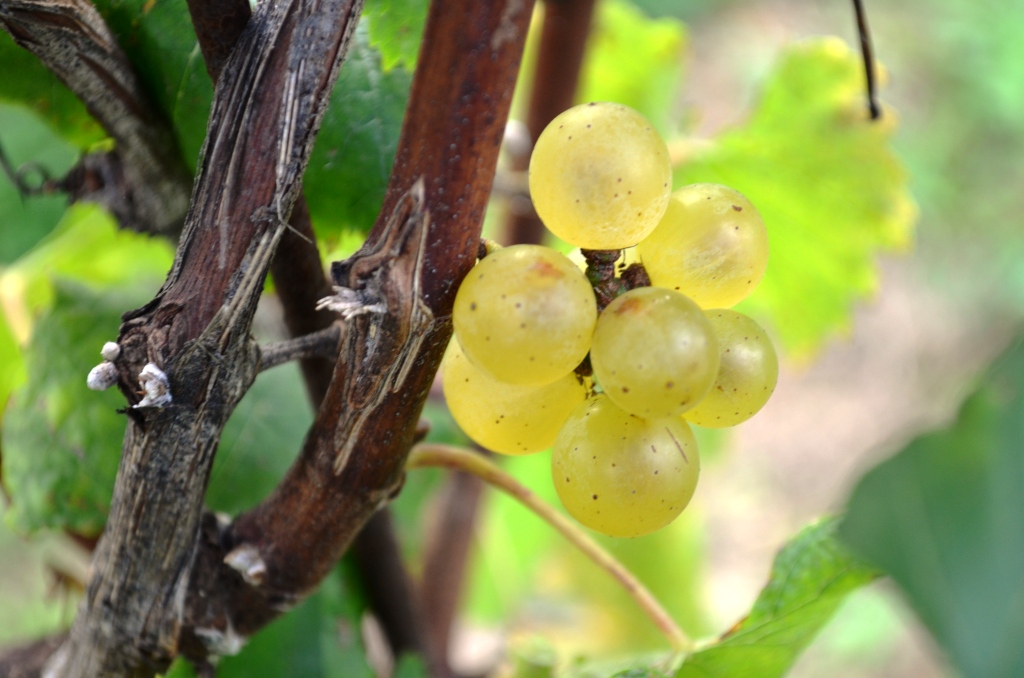 Ahh, all those “firsts” – aren’t they the best, most memorable experiences of your life? First step (well, nobody remembers those, I guess), first kiss (hope now I’m talking about something more memorable), first… well, whatever makes you tick, insert it here. I have somewhat of the extensive experience around wines, but I still have my “firsts”, and plenty of it.
At the beginning of October, while in Austin, I tasted my first “just blended” Viognier (here is the link if you want to read about it). This time, I managed to come across my first harvest. No, I didn’t actually cut, sorted or stomped the grapes. But our visit to Paumanok winery on Long Island in New York coincided with an actual harvest of Merlot which was taking place on exact same day.
For a number of years by now, it is pretty much a tradition – at the beginning of October, we visit Long Island wineries with the group of friends. The weather is usually beautiful – it is so called “Indian summer” in New England, so it is typically warm and sunny, but not hot by all means. We drive all the way down the North Fork of Long Island, stop at a few wineries on the way, taste bunch of wines and then select a few bottles for lunch.
So far we didn’t find a better location for lunch than the outside deck at Paumanok winery – you get to eat outside and enjoy a view of the beautiful sun-filled vineyards:
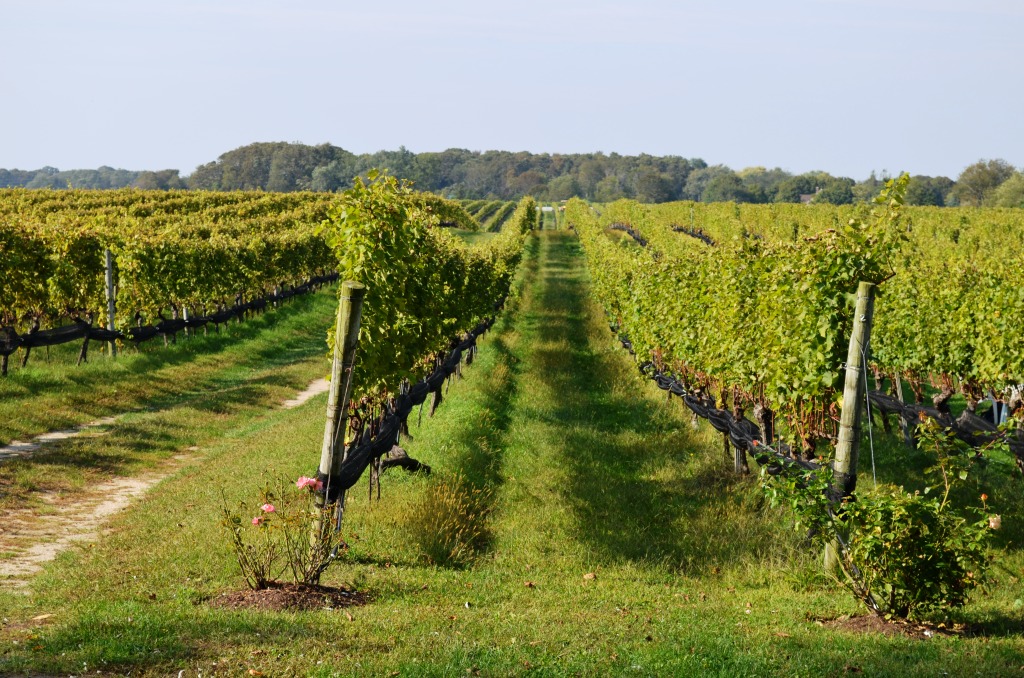
This time our experience had an interesting twist – we managed to hit the harvest day. I called the winery a few days before and talked to winemaker, Kareem, to see if he will be able to spend some time with us – he said “may be, but unlikely. as we probably will be harvesting Merlot”. That is exactly how it was – the harvest was in a full swing by the time we arrived. Before we will talk about our “harvest experience” (mostly in pictures), let’s talk about the wines, as we started from the tasting upon our arrival.
We tasted pretty much through the full line of wines offered at Paumanok. Started with 2011 Paumanok Festival Chardonnay – unoaked and simple, showing clean white fruit and good acidity.
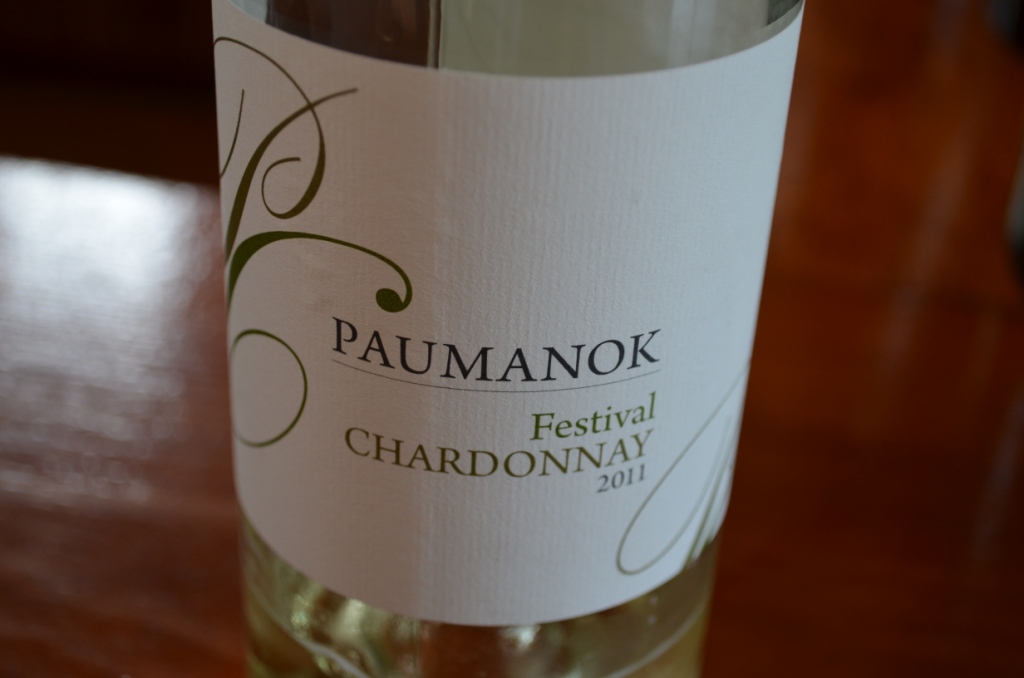 While it was group’s favorite, I generally need more life in my Chardonnay – oak, vanilla, butter – all balanced, of course, but I need more prominent power, so this was not my favorite wine.
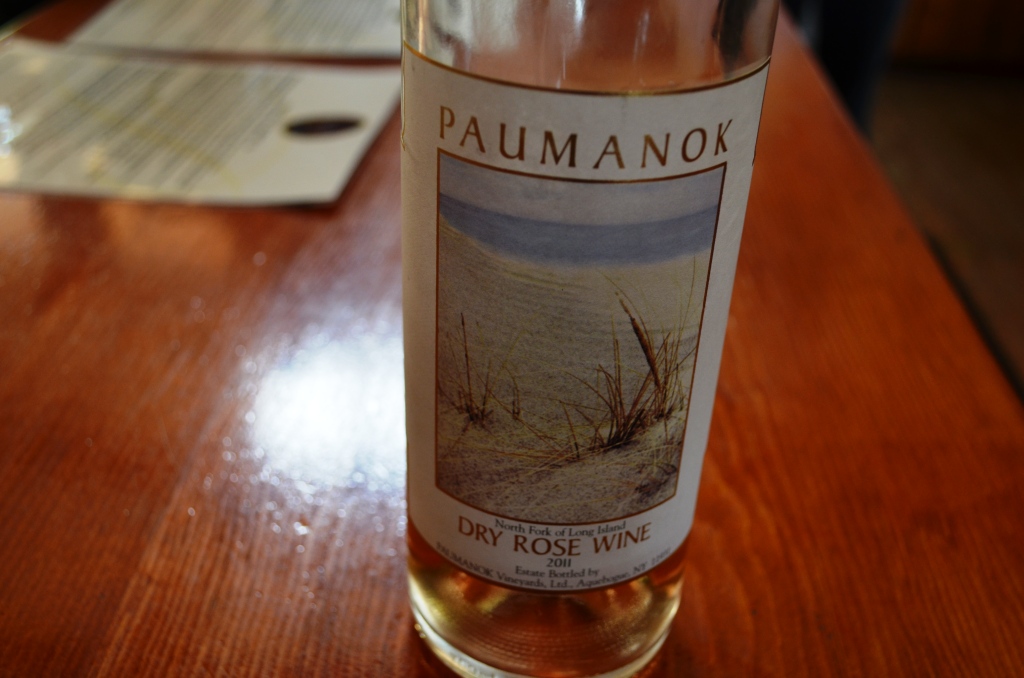
2011 Paumanok Dry Rose was a bit too austere to my taste – I liked 2010 more, but we still took a bottle for lunch.
2011 Paumanok Sauvignon Blanc was very good, a New Zealand style wine, with bright fruit, grapefruit notes, fresh grass and perfect acidity.
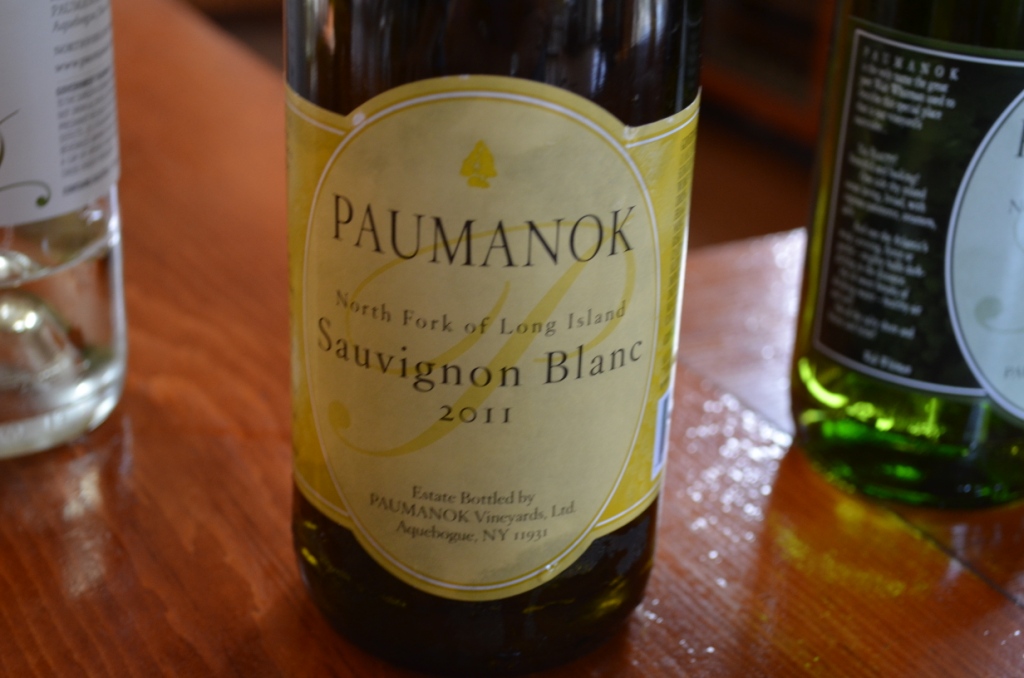
Continuing the line of whites was 2011 Paumanok Dry Riesling – perfectly done in classic style – good white fruit, touch of honey and perfect acidity (also was one of our lunch wine choices). Finishing up the whites we had 2011 Paumanok Barrel Fermented Chardonnay, which I liked a lot more that the unoaked version.
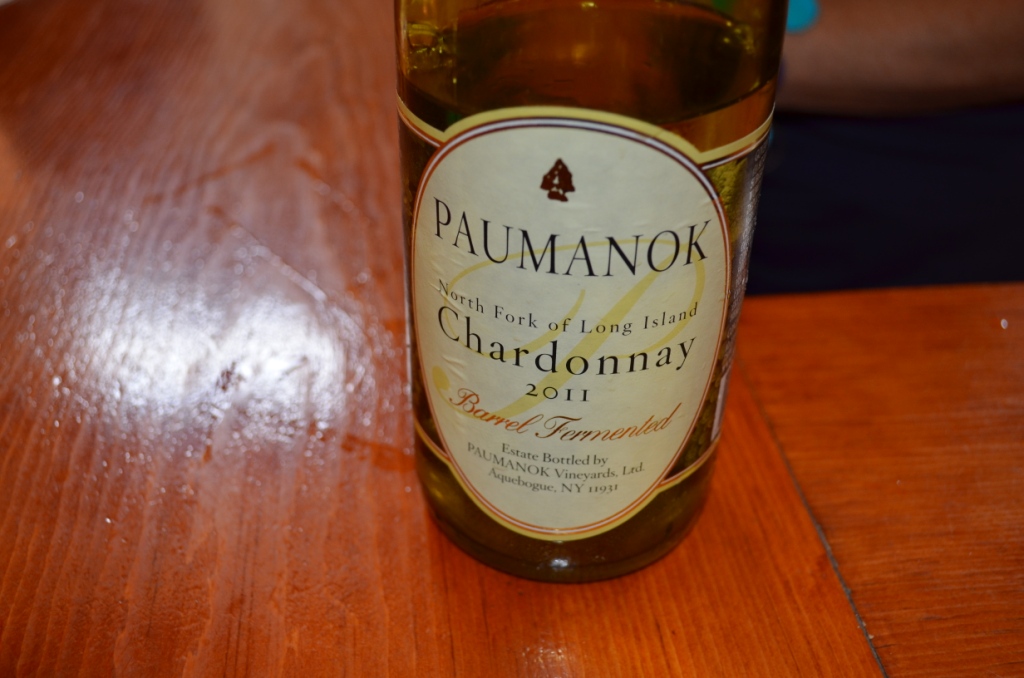 This wine spent 6 months in barrel. Notes of vanilla on the nose, more vanilla, hint of butter and some apples on the palate, very good balance.
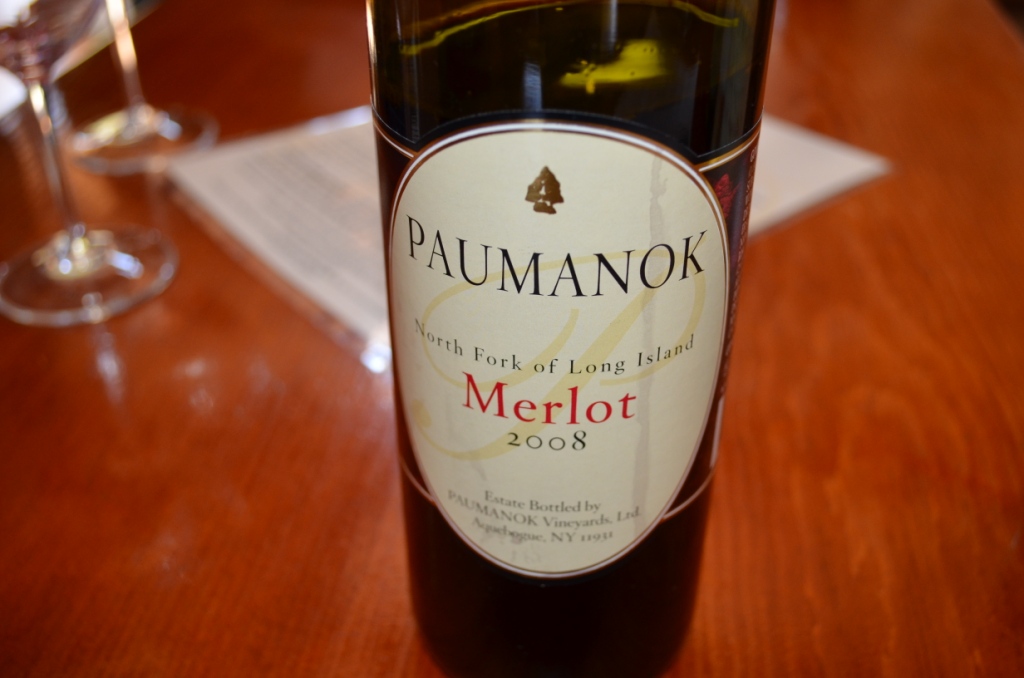
And now, to the reds! We started with 2011 Paumanok Cabernet Franc – nose of fresh berries, somewhat similar to the nose of Beaujolais Nouveau, only with more intensity, medium body, cherry notes on the palate, together with earthy notes and gentle tannins – very good wine. Next wine was 2011 Paumanok Cabernet Sauvignon. It was not bad, but too perfumy for my taste. I honestly think that Long Island makes much better wines with Merlot than with Cabernet Sauvignon. Last wine in this flight was 2008 Paumanok Merlot, which was perfect – medium to full body, good amount of fruit, good acidity and tannins – very balanced.
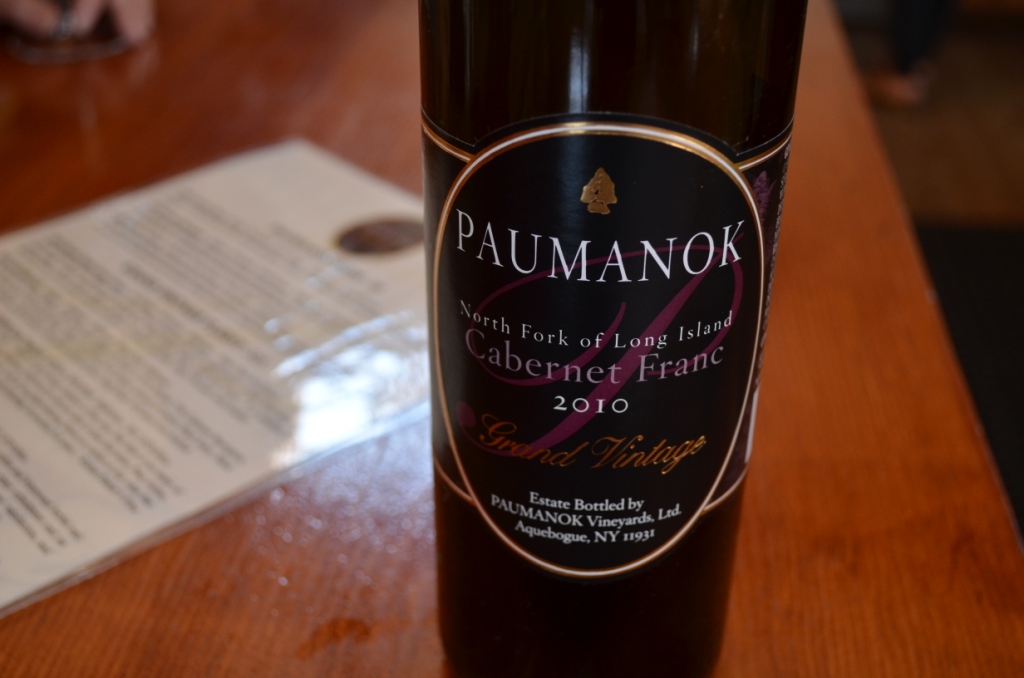
We finished tasting with Grand Vintage Flight. 2010 Paumanok Cabernet Franc Grand Vintage was produced for the first time since 2004 in the quantity of 156 cases. This wine was perfect – full body, ripe cherries, sweet oak, soft tannins – I put “full package” as a summary of my tasting notes.
Next wine in the flight was 2010 Paumanok Assemblage – a blend of 35% Merlot, 33% Cabernet Sauvignon, 21% Petit Verdot and 11% Cabernet Franc. Even bigger than the previous wine, this wine showed some additional dark chocolate notes and great overall balance (as you know, balance in wine is one thing which can push my buttons).
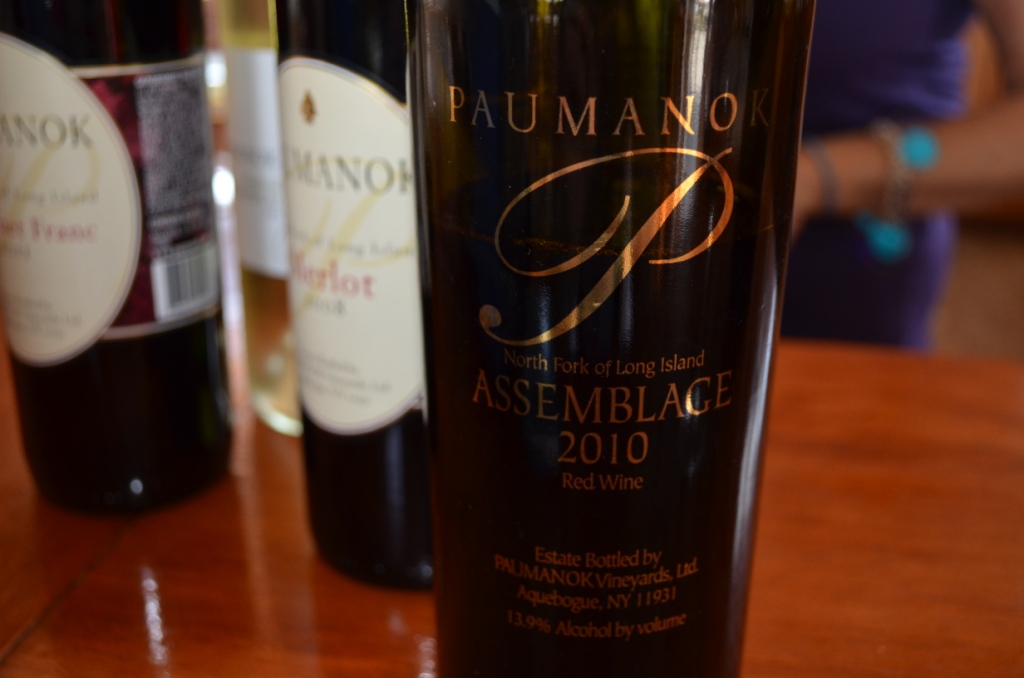
We finished our tasting with 2007 Paumanok Merlot Tuthills Lane Vineyard – which was a great wine – dark fruit, dark chocolate, hint of tobacco, supple tannins and fresh acidity – very tasty.

As we were finishing the tasting we met Ursula, who happened to be the winery owner. She works at the winery together with her three sons, who are in charge of all operations – wine growing, wine making, harvesting and everything else which goes into production of Paumanok wines. Seeing our keen interest in wines, Ursula happened to be the most gracious and welcoming host, and we got really an inside tour of winery and what was happening on that day – which was a Merlot harvest.
Ursula showed us fermentation tanks and barrels, as well as state of the art bottling line:
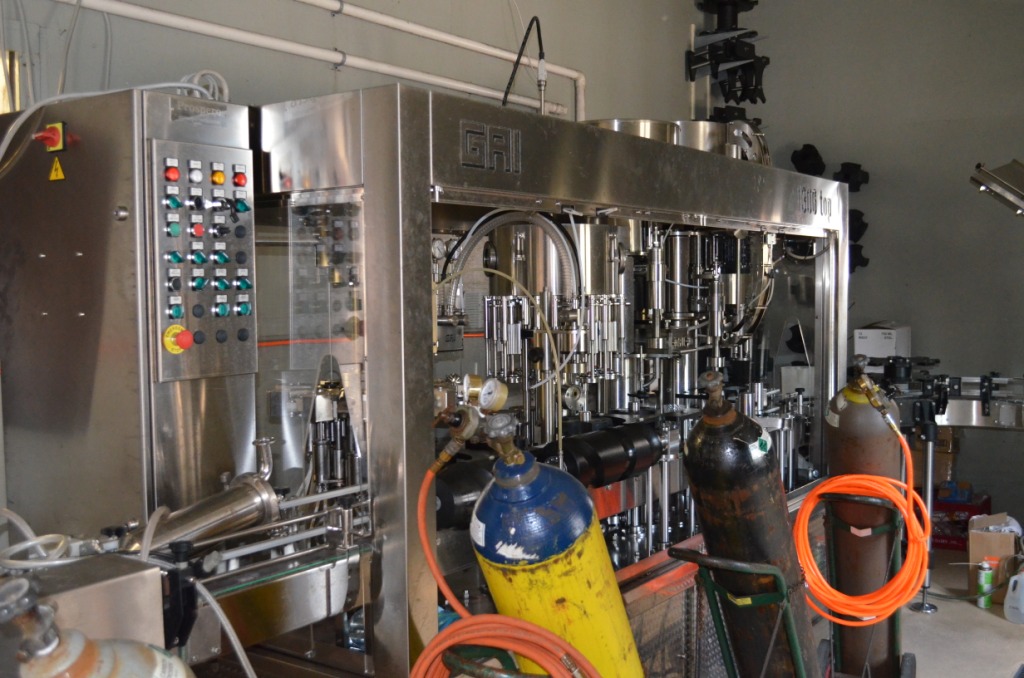
But most importantly, she gave us a taste of just fermented Chenin Blanc, which was incredible! Freshly fermented juice was something I never tasted before, so it was my first encounter with inside magic of winemaking – and it was delicious.

To add up to that experience, she also took us to the backyard, so to speak, where the fresh grapes were arriving.
Merlot grapes at Paumanok are harvested using the machine. Salim, another one of the three brothers was operating the machine and he gave us all the explanations. This machine can’t be used for all the grapes – only for those where whole cluster doesn’t have to be harvested – for instance, it is not used for Chardonnay, as whole clusters are fermented as part of Chardonnay production.

The machine is positioned such a way that the row of the vines happens to be right in a middle of it. As the machine moves forward with the vines all being inside, all the branches are getting a gentle shake from the side rods:
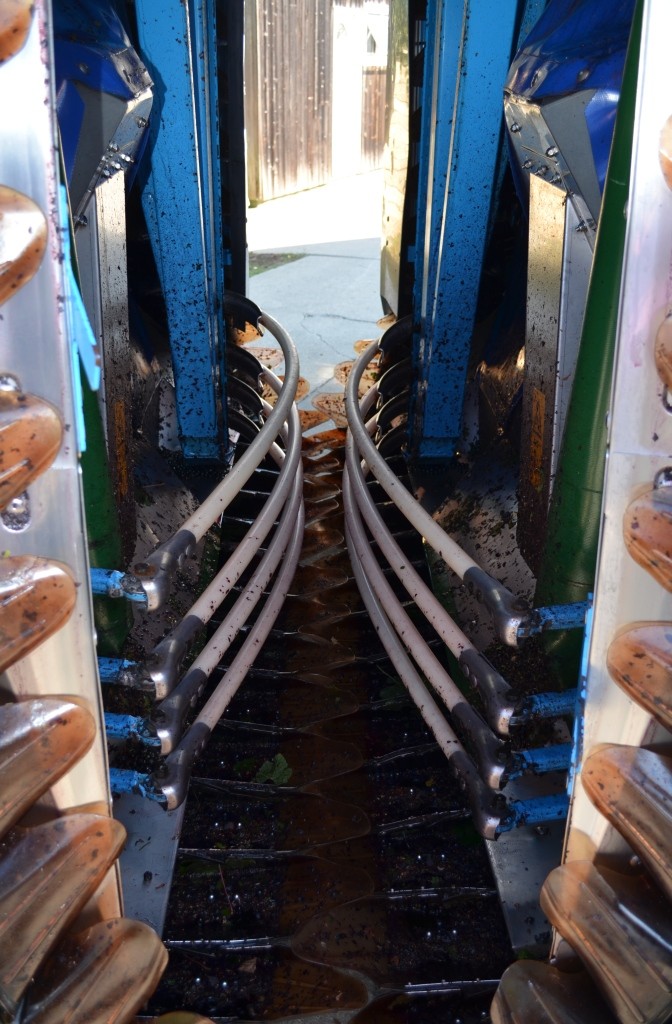
As the result, grapes are falling down into the receptors, which are all moving as a conveyor belt, bringing the grapes up into collection bin.
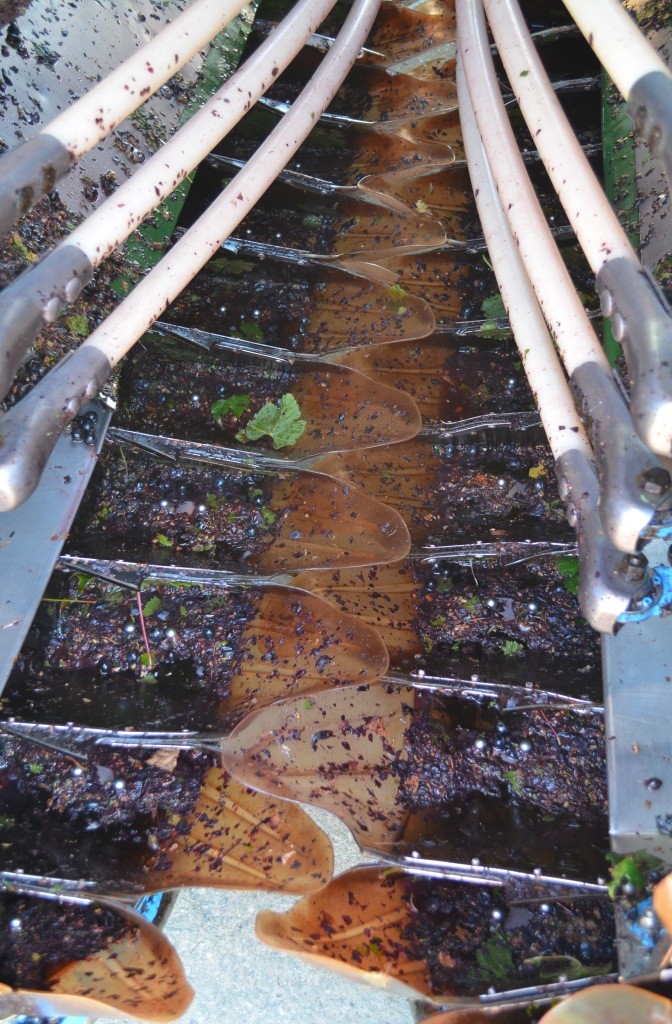 Once arriving at the sorting facility (back at the winery in our case), the grapes are transferred into one big container:
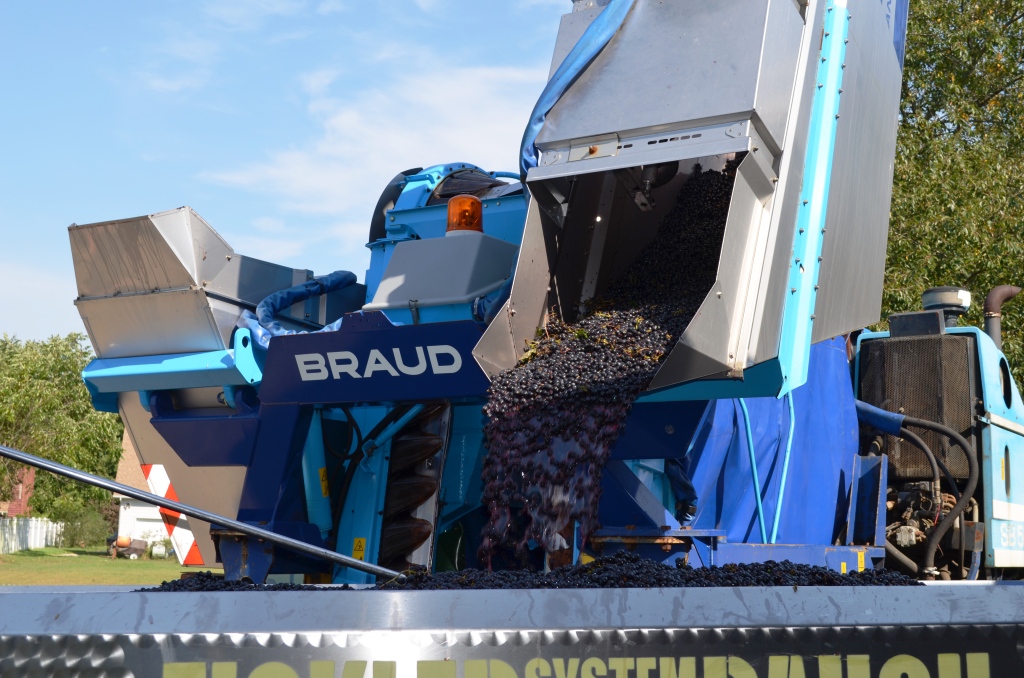
So the result looks like this:

And then the grapes get to the sorting table, where minimal processing is done to remove big branches and spoiled grapes:
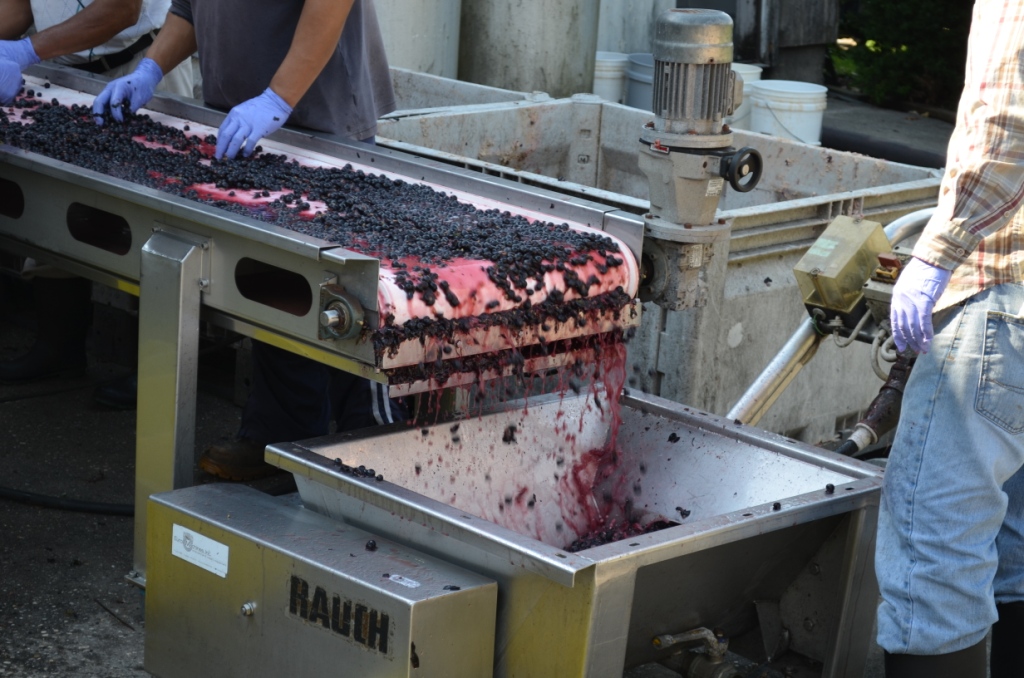
From the sorting table the grapes are transferred directly into the fermentation tank. By the way, do you see that juice coming off the sorting belt? We had a chance to taste that too – it was absolutely delicious – not that I hold any grudge against Welches, but this juice is something I would gladly drink any time (Welches – sorry, can’t do).
We always have a great time at Paumanok (as I mentioned before, this is our “annual outing”) – but never before we were lucky to have such a special experience and see how the magic starts.
After lunch we decided to visit two more wineries – Bedell and Macari. And I have to mention that unfortunately, outside of the cool labels, we didn’t find a single wine from Bedell tasting which we liked – all the reds tasted very green, with lots of branches to chew on.
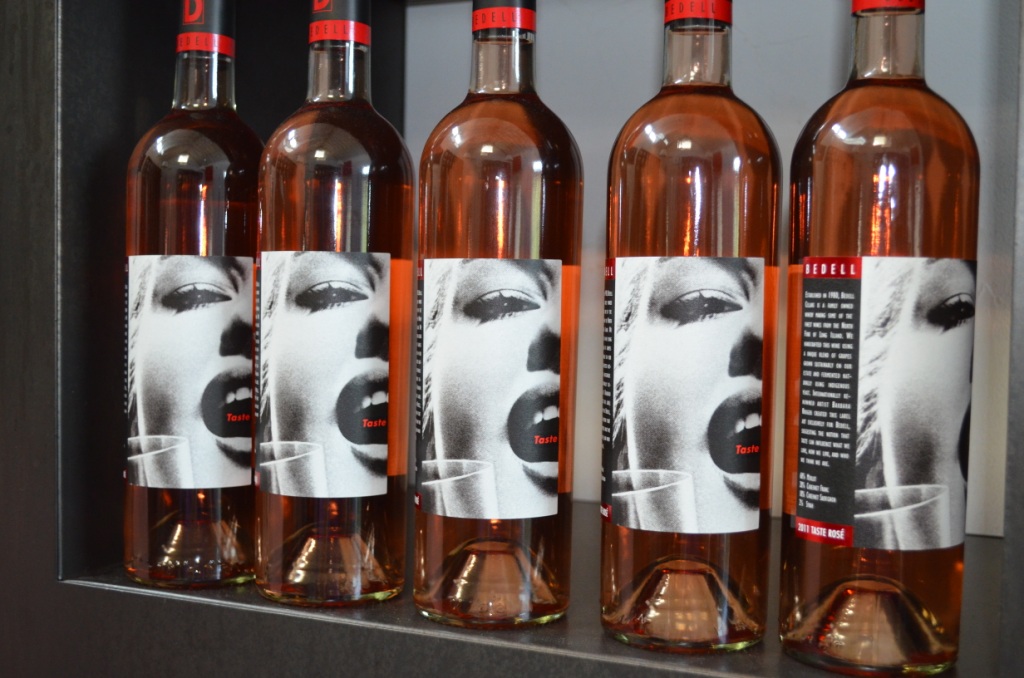
Oh well, at least Paumanok had being very consistent through many years, so we are definitely looking forward continuing our tasty tradition.
I hope I didn’t inundate you with pictures too much, but there you have it – my first harvest experience, and I hope not the last (and if you are into wines, you should seek that experience as well!). Until the next time – cheers!
Wednesday’s Meritage – Wine Quiz Answer, Self-directed Rant, Ouch and more
Meritage time!
As usual, let’s start from the answer to the weekly wine quiz #41, Which one doesn’t belong. I would estimate the complexity of the quiz as medium, as you had to figure out what the question was all about, and then think about what item doesn’t belong to the list (and even explain why). I’m glad to report that we have a winner, who is being quite persistent at winning lately – thedrunkencyclist. He properly identified that Corton, which is a Grand Cru Appellation from Côte de Beaune, doesn’t belong to the list of Grand Cru appellations from Côte de Nuits. Well done, Jeff – and a double amount of unlimited bragging rights is all yours, as you were able to answer the question without the use of Google.
Before we get to the interesting stuff, I need to let some cringe out of the system – so we are getting to my self-directed rant. Let me just scream it out loud – I HAVE SO MANY BLOG POSTS IN MY HEAD AND I CAN’T GET THEM OUT! There, I said it. I don’t think this is a writer’s block, and if it is, it is some very sophisticated masochistic form. I have posts which should’ve been written during summer when I visited wineries in New York Hudson region. Then there were great wine tastings I had all the intentions to write about. We had an amazing time in October at Paumanok winery – and this blog post still sits in the drafts section. The list can go on and on. I still can’t figure it out how this stuff works, and it is upsetting. But – now, that I let it out of the system, I will make sure truly hope all those belated posts will follow. Okay, this is the end of my rant.
Now, there are few interesting things I want to share with you. First is what I called an “ouch” – it appears that Natalie MacLean, a well known wine writer, who has eponymous web site and iPad/Android App, had being borrowing stealing wine reviews from the other wine writers, including the reviews located on “subscription-only” web sites, such as Jancis Robinson, without any acknowledgement to the actual authors. Palate Press put out a big article on the subject, which is worth reading, including the comments section. The story of course reverberated on multiple blogs. Hopefully her readership will adjust accordingly (but I guess we will never know).
Folks behind Wine Folly published a very interesting infographic chart for the different types of wine. As a mind mapping junkie, I can only applaud any efforts to classify an extremely diverse subject, such as wine world, in a compact and comprehensible fashion. Take a look at the link above and let me know what you think (hint: this chart might be a good present for the wine geek in your life).
That’s all I have for you, folks. The glass is empty, but it will be definitely refilled soon. Happy Wine (and Whisky) Wednesday. Cheers!
Re-Post: Best Hidden Secrets Of The Wine World: Second Labels
During 2011 I wrote a number of posts for the project called The Art Of Life Magazine – of course talking about my favorite subject, wine. The project closed, but I still like the posts I wrote, so I decided to re-post them in this blog. Also, in that project, posts were grouped into mini-series, such as “Best Hidden Secrets” you see here – I will continue re-posting them from time to time.
Also note that the series was written for a slightly different audience – I hope none of my readers will take offense in the fact that sometimes I’m stating the obvious…
Second labels. Second is a keyword here. Second – meaning second best? How good it is to be second best?
When it comes to competition, second best is always only second best. Second best means you scored less, you ran not as fast as the best, you jumped not as far as the best. By all means, you really tried – but someone else was better in the same art.
Luckily, the notion of “second best” is not applicable to the world of wine. Of course, you might have your favorite (the best) wine, and then second favorite wine, and the third, and the fourth and many others. However, those are your personal favorites which are driven by your own personal taste. It is entirely possible even that someone’s most favorite wine is totally not drinkable for someone else (I think this is one of the most fascinating aspects of the wine world.
So what is the second label? Many wineries around the world have one wine which is considered the best, most well known and well regarded. Such wine would be their “First Label”. Typically, those wines have two” external” characteristics: they are very expensive and made in the limited quantities – and one way or the other, these subsequently become driving factors to produce so called “second label” wines, which are at least less expensive (quantity still might be an issue).
Actually, officially designated second labels started in Bordeaux in France simply to avoid throwing out the grapes which didn’t make it into the best wines. What started from so called “first growth” Bordeaux wines from famous 1855 classification in the 18th century, the second label movement spread widely across many wine making regions in the last quarter of 20th century (you read more on the subject here). From being only a Bordeaux phenomenon, it became adopted by many wineries all over the world as their main wines elevated to the “cult” status.
Today many of the cult wines from California, Italy and Spain ( other regions joining in as well) have their second labels. It is interesting to point out one essential difference between Bordeaux second labels and the rest of the world. Based on In Bordeaux AOC rules, second label or not, if Chateau is specified on the wine label all the grapes (100%) for that wine have to come from the vineyards which belong to that Chateau. This is not the case for most of the world. For instance, when particular AVA (analog of AOC in USA) is mentioned on the wine label, it means only that at least 85% of the grapes in that wine should be coming from the specified AVA, and 15% of grapes can be coming from any other places. I’m not saying that this is good or bad – this is just something to take into account when talking about second label wines.
Now, putting all the technicalities aside, what is all the fuss? Why are we talking about some kind of “second labels” as a great secret of the wine world? Very simply, it is all about QPR. Let me give you an example. If you hadn’t done so recently, go check how much Chateau Latour or Chateau Lafite costs. 2008 (somewhat of a sleeper vintage, not declared as outstanding) Chateau Latour will cost $1,600 or more, and Chateau Lafite is somewhere in the $2,000 – $2,500 range. No, not for 5 cases – these are the prices per bottle… 2008 Les Forts de Latour, second label of Chateau Latour, will cost about $250 per bottle, and Carruades de Lafite, second label of Chateau Lafite, will cost about $600.This is still very steep, but I’m sure you can see the magnitude of price difference. In addition to the better QPR, second labels are ready to be enjoyed much faster compare to the main wines. You need to wait for 15-20 years for great Bordeaux to open up, and second labels often cane enjoyed right away or after the short time in the cellar.
Let’s talk about some practical examples, but instead of Bordeaux, let’s start from Italy.
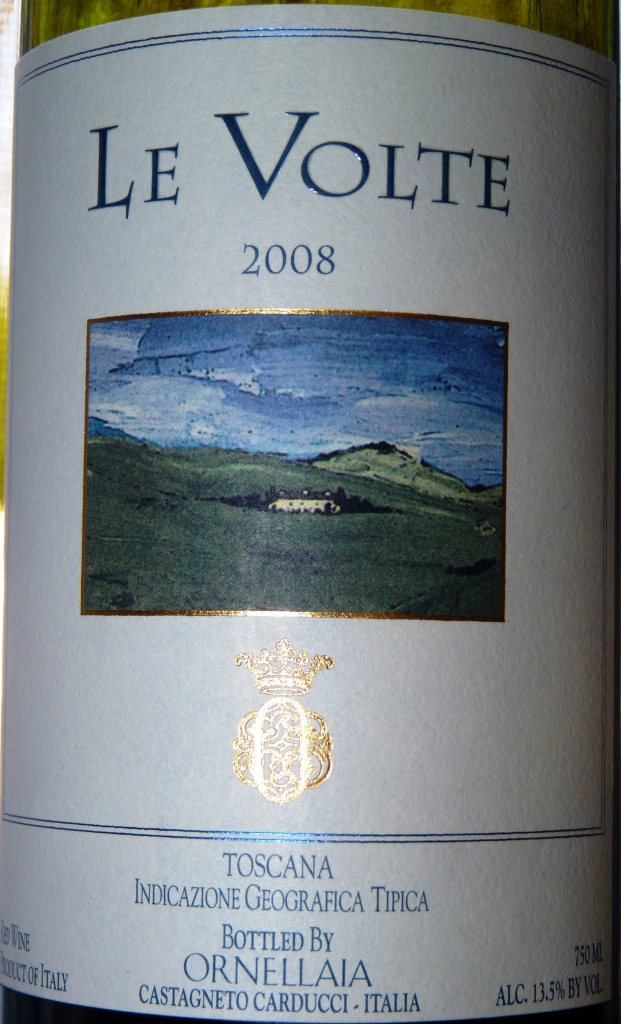 Le Volte is so called Super Tuscan wine made by Tenuta dell’Ornellaia. Their flagship wine, Ornellaia, has won numerous accolades and consistently rated above 95 points by various wine critics. You can buy Ornellaia for about $180 – $220 per bottle. Le Volte is produced by the same winery (it is technically a third label, with Le Serre Nouve being the second) from the grapes which were not selected for the main wine, and you can buy it for about $20-$25 per bottle (about one tenth of the price of Ornellaia).
2008 Le Volte was very tight and aggressive initially. After a while, it changed beautifully showing luscious fruit (dark fruits) and silky smooth tannins. It can be enjoyed right now with the appropriate breathing time (an hour in decanter might be the right call), but it will benefit from another 5 years in the cellar.
 Here is another example – Crouix de Beaucaillou, second label from Chateau Ducru Beaucaillou. Chateau Ducru Beaucaillou is so called second growth winery from Saint-Julien region in Bordeaux – again based on 1855 classification. Taking 2008 as a reference year again, their flagship wine, Chateau Ducru-Beaucaillou, can cost $110 and above (just for comparison, same wine from 2005, which was one of the best years in Bordeaux, will cost you $180+, and 2009 prices start from $250). 2005 Croix de Beaucaillou can be found for about $45 per bottle, which is one fourth of the price of the first label. This 2005 Croix de Beaucaillou opens one with beautiful nose of ripe black plums, oak and spice box. On the palate the wine is very restrained initially, and then opens up with some cedar notes and exhibits pronounced acidity and powerful tannins. Despite my earlier statement about second labels being ready to drink earlier, this particular wine definitely need more time in the cellar (but we should still keep in mind that 2005 was a great year).
After learning the first great secret of the wine world – beautiful Rioja wines, now you are armed with even more knowledge and you can have a lot of fun exploring the world of hidden gems, the second labels. Just to leave you with a little reference, below you will find a table with names of some of the second labels throughout the world, you can enjoy hunting for. And stay tuned, as more secrets are coming!
Note: this post was prompted by the post “Second Label Values” by the fellow blogger wpawinepirate.
Reference: Second Label Wines
| Primary Wine | Second label |
| France – Bordeaux, 1st growth | |
| Chateau Haut-Brion | Le Clarence de Haut-Brion |
| Chateau Lafite Rothschild | Carruades de Lafite Rothschild |
| Chateau Latour | Les Forts de Latour |
| Chateau Margaux | Pavillon Rouge |
| Chateau Mouton Rothschild | Le Petit Mouton |
| France – Bordeaux, others | |
| Chateau Ausone | Chapelle d’Ausone |
| Chateau Cheval Blanc | Le Petit Cheval |
| Château Rauzan-Ségla | Ségla |
| Château Léoville-Las Cases | Le Petit Lion de Marquis de las Cases (Clos du Marquis before 2007) |
| Château Léoville-Poyferré | Château Moulin Riche |
| Château Léoville Barton | La Réserve de Léoville Barton |
| Château Gruaud-Larose | Sarget de Gruaud-Larose |
| Château Lascombes | Chevalier de Lascombes |
| Château Pichon Longueville Baron | Les Tourelles de Longueville |
| Château Pichon Longueville Comtesse de Lalande | Reserve de la Comtesse |
| Château Ducru-Beaucaillou | La Croix de Beaucaillou |
| Château Cos d’Estournel | Les Pagodes de Cos |
| Italy | |
| Sassicaia | Tenuta San Guido Guidalberto |
| Ornellaia | Le Serre Nouve, Le Volte |
| Spain | |
| Vega Sicilia | Valbuena 5° |
| Alto Moncayo | Alto Moncayo Veraton |
| Bodegas El Nido | Clio |
| Clos Mogador | Clos Manyetes |
| USA – California | |
| Bryant Family | DB4 |
| Duckhorn | Migration, Decoy |
| Harlan Estate | Maiden |
| Pahlmeyer | Jayson |
| Paul Hobbs | Crossbarn |
| Screaming Eagle | Leviathan |
| Quilceda Creek | Quilceda Creek Columbia Valley Red |

Weekly Wine Quiz #41: Which One Doesn’t Belong?
As life happens, I had no chance to post the traditional Saturday quiz. But – at least it is still a weekend.
I’m going somewhat back to the basics of the wine world with this quiz, and I will probably stay with this basic theme for a while. The idea is simple – I will present you with the list of objects, which can be grapes, wines, appellations, etc. – you will need to figure out what the list is all about and then find an incongruity, an object which should not be on that list. Here we go.
Which one doesn’t belong and why?
A. Chambertin
B. Corton
C. La Grande Rue
D. Musigny
E. Ruchottes-Chambertin
If you can solve it without Google, you can double your unlimited bragging rights which come here as a prize.
Have fun and good luck. Enjoy the rest of your weekend and cheers!
Wednesday’s Meritage – Wine Quiz Answer, and Some Local Updates
Meritage Time!
Let’s start with the answer for the Wine Quiz #40, Wine Basics 101 – Tannins. In this quiz you were supposed to explain what tannins are, how do they get into the wine and also provide an example of some other foods which also cause an effect similar to tannins. I’m glad to say that we have two winners – both thedrunkencyclist and stefano provided very detailed answers, so they both get that coveted prize consisting of unlimited bragging rights. Yes, tannins are the polyphenolic compounds which naturally occur mostly in red wines due to the prolonged contact of the juice with seeds, stems and oak barrels. Tannins cause the tactile sensation of drying up of your mouth – this is why big tannic wines often work very well with fatty foods, such as steak, as grease of the steak help to alleviate that astringent feeling. And outside of wine, tannins can be found in many other foods – black tea, walnuts, persimmons are just some of the examples of such foods.
Now, let’s talk about interesting stuff, which might not be of such a wide importance, as today it will all relate just to this blog which you are reading right now. First, I have to say “THANK YOU!” to all of you, my readers. About a month ago, there was a wine blogging contest about wines of Tuscany at the To-Tuscany travel site – and with your help, I was actually able to win it! Here is the link to the contest page – and thank you again to all who voted for my blog.
I made some updates in my blogroll section, mainly adding a few new blogs and web sites which I now follow – the additions are Flora’s Table, Vino in Love and American Winery Guide – if you are not following them, check them out. I also added two links for the wine buying service which I recently used and was happy with – Last Bottle Wines and Bin End’s Wines – again, might well worth your attention.
I finally updated the Wine Ratings page in this blog – this table lists wines which I rated as 8- or above, which means that they are all recommended, and now it is current as of November 2012.
And the last update for today – I plan to start reviewing wine gadgets here – I think it should be fun exercise (suggestions and questions will be gladly accepted).
That’s all I have for today, folks – the glass is empty. Cheers!
Re-post: Holiday Gift Guide For Wine Lovers
It is this time of year again – the time when we strive to bring little happiness to those who make our lives complete. Often we endure some frustration in the quest to find that “just the right thing” which will make our friends and families to say “thank you” as they actually mean it.
Last year I published an extensive post about variety of wine gift options available to you – I think this year, it is still every bit as actual, hence I take the liberty of re-posting it here. Hope you will find it useful. Cheers!
Happy Hanukkah!

Weekly Wine Quiz #40: Wine Basics 101 – Tannins
It is Saturday, therefore it is time for the next wine quiz. And I have to honestly admit, my mind couldn’t settle on anything particular – “how about this? Nah… and what about that? Nope.. but then… Nope again”.
After not being able to resolve that in any reasonable amount of time, I have to proceed with something very plain and simple.
Today’s quiz relates to one of the basic characteristics of wine, tannins, and it consists of three questions:
Q1: What is tannins?
Q2: What are the sources of tannins in wine?
Q3: Name at least two other food items which cause effect similar to tannins in wine.
Have fun and good luck! Cheers!
Turley The Label Cabernet Sauvignon: Don’t Judge a Wine by its Bottle
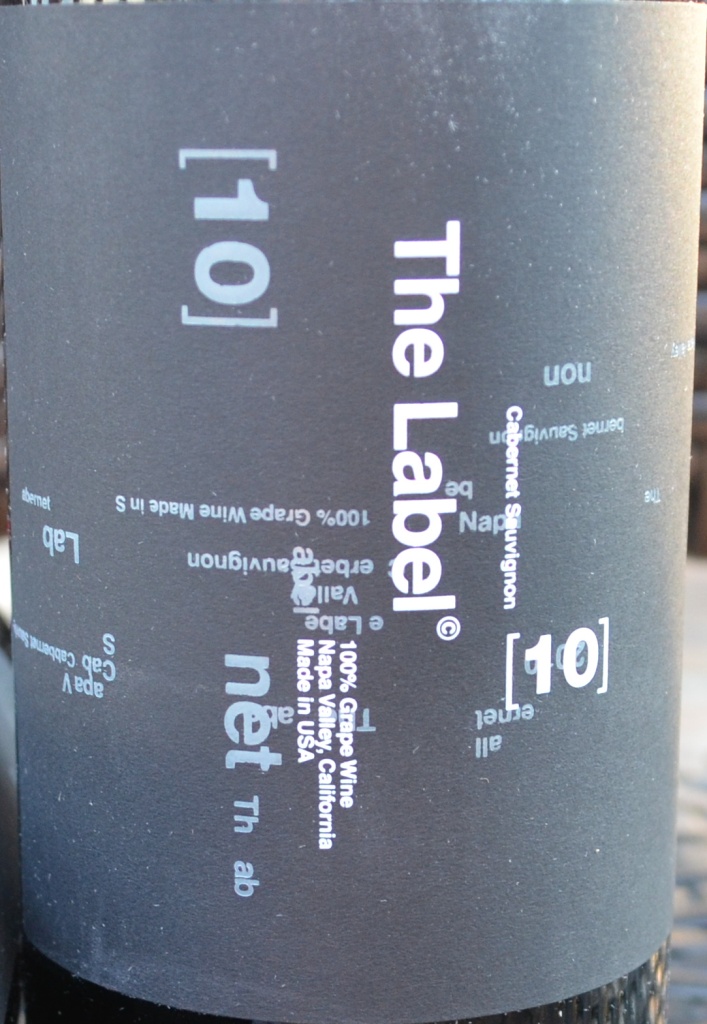 As promised, the bottle of 2010 Turley The Label Cabernet Sauvignon Napa Valley ($40, 14.5% ABV) was open today, and here are my notes – almost live, as I still have some wine left in the glass. For those who just run into this post, it is pretty much a sequel to my rant about the bottle, which is extremely indiscreet, and the post answering that rant and explaining that the bottle looks that way by design.
Now let’s go past the bottle itself, and let’s talk about the content – i. e., the wine. Considering that I started from the rant, I wanted to give this bottle a proper evaluation, so here we go, step by step. We even reached out for the Reidel Cabernet glasses, which are only used for the special occasions.
Color: Dark garnet color. You can’t read through the glass, so the wine definitely needs more time.
Rim variation: absent, it is a young wine. But – rim is pretty wide, which suggests high alcohol content.
Smell: Blueberries, hint of tobacco, earthiness, a touch of barnyard (which I personally like) – on the nose, this wine resembled Dunn Cabernet.
Taste: earthy, with touch of green notes which disappeared after ten minutes in the glass, alcohol initially noticeable, but as wine continued to breathe, it became well integrated. Tobacco and dark chocolate notes, touch of eucalyptus, fresh plums, black currant and more blueberries – but restrained, no blueberry jam of any kind.
Legs: Very visible, also carrying some color – suggesting that this is full-bodied wine.
Finish: Long. Tannins only started showing up after about 30 seconds, and then they lingered for probably another minute.
Conclusion: This is one beautiful wine. This wine was described by the winemakers as an attempt to recreate Napa Cabernet as it was in 60th and 70th, more of restrained and down to earth type – I think this attempt was very successful. The wine was very balanced, with fruit, acidity and tannins being in a complete harmony. Drinkability: 9-
I’m not going to recite my learned lessons again (I already recouped them in the previous post), but yes – don’t judge a wine by its bottle, at least I will try not to. Cheers!
Last Bottle Sign Up ($10 credit)




 Talk-A-Vino