Archive
Wines of 50 United States – A Challenge
Let’s start with the simple fact – today (and for more than past 10 years), the wine is produced in all 50 United States. Yes, that includes Alaska, North Dakota and all other states you would never associate with winemaking. There are more than 8,000 wineries in the United States. I found interesting web site, called the Wine Web, which lists 8,229 wineries across the US (as of today, August 14 2014). Here is the winery map across US which was created using this web site:
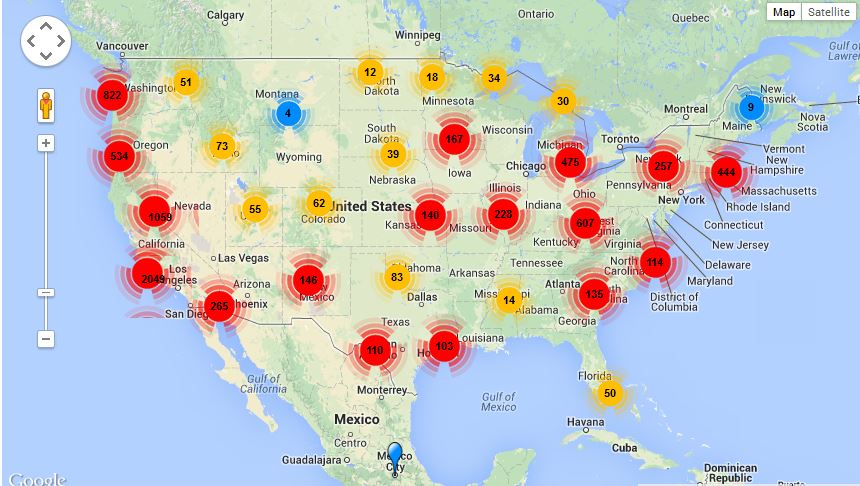 Recently, I tried wines from Vermont and Colorado, and I finally visited for the first time (!), despite the fact that I live here for more than 20 years, the wineries in Connecticut (of course this will be a subject of a separate post). That prompted me to look up my old post about wines of the United States, which had a table with all the states and check marks for the wines tasted and wineries visited, and to update that table.
I know that all of you like wines (if you don’t, you are most likely not reading this). And people generally like challenges, especially those which are fun, can be done at the personal pace and don’t fight back – contrast that with the challenge of losing 10 pounds by the end of the month and I’m sure you will see my point. So the challenge, which will be only your personal, as there are no judges and no competition, is: wines of how many states did you try, and wineries in how many states did you visit? To simplify tracking, here is the word document with the table I created for this challenge – download and fill it up (note – you will need to calculate your totals manually, as this is word document and not an excel spreadsheet). I also added a new page where you can see my current progress.
So, do you accept the challenge? Currently, I tried the wines from 17 states, and visited wineries in 8 – where do you stand? Cheers!
#winechat Finger Lakes Wine Tasting – An Interesting Experience with Happy Ending
Here we go again – another #winechat experience. Lots of wines and lots of talking – with your fingers. The subject of this #winechat – wines of Finger Lakes region in New York.

Finger Lakes is a picturesque area in the upstate New York, very close to Canada, consisting of multiple lakes – technically, Finger Lakes consists of 11 lakes, but most of the people will be able to name only 3 or 4. Outside of being a popular tourist destination, Finger Lakes is actually one of the very first wine making areas in the US – the first winery was established in 1836, and by now the region has well over a hundred wineries.
Despite such a long history, the wines of the Finger Lakes region are still considered up and coming. For the most of the cases, consumers might be familiar with Finger Lakes Riesling, a bit of Gewurztraminer and some of the Icewine, with the Finger Lakes wines mostly available only in New York and some of the neighboring states. As of late ( last 2-3 years) the situation is slowly changing for the better, both in regards to quality and availability of the Finger Lakes wines. It is also important to note that the improvements I’m talking about concern both white and red wines, with the wineries such as Fox Run, Ravines and Charles Fournier delivering full spectrum of wines worth drinking and talking about.
When I got a note about #winechat dedicated to the Finger Lakes wines, I was hesitant at first regarding my participation. The reason was simple. Yes, the quality of the Finger Lakes wines is improving. However, about 4 years ago, when my daughter was going to Ithaca college, located right by the Seneca lake, I visited few of the nearby wineries, and was quite disappointed with the wines I tasted. Therefore, the prospective of tasting bunch of wines and not being able to write anything about them, was rather daunting. After the internal back and forth, I decided okay, let’s give it a try, and signed up for the #winechat. A few weeks later, the box arrived, containing the 8 bottles – 3 different Rieslings, 3 Chardonnays and 2 Gewurztraminer. From the whole set, I only recognized the name of Dr. Konstantin Frank as a producer I heard of before ( I never tried Gewurztraminer which was included in the tasting set).
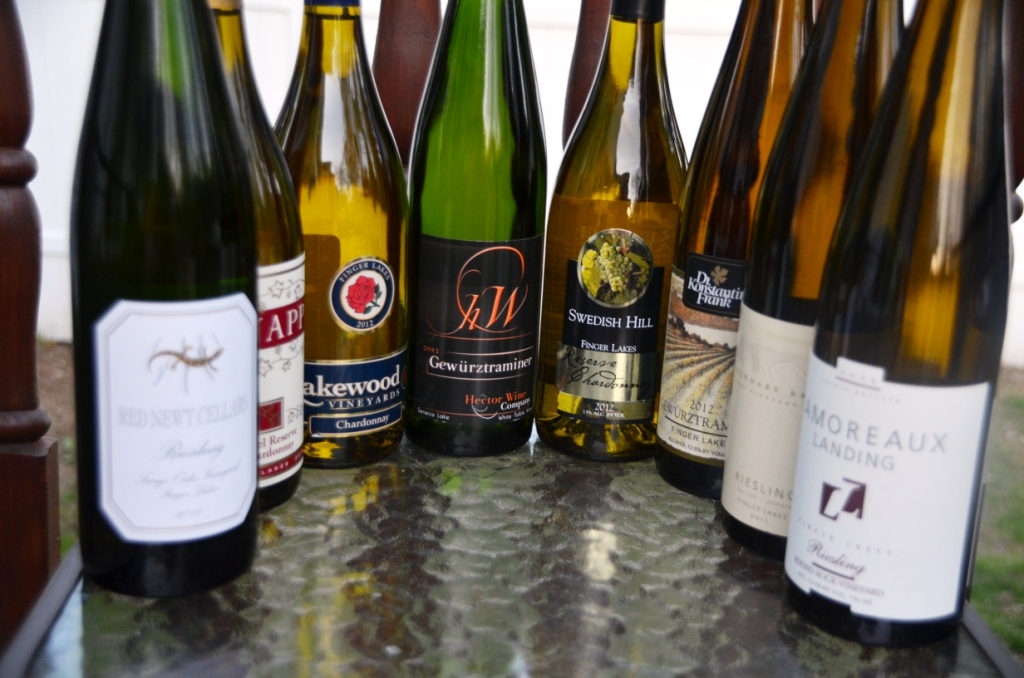
About a week later, it was the time to taste the wines. I freed up the space in the fridge and put all the bottles in to get them ready.
Talking about an “interesting experience”, let me explain what I mean (yes, I know – somehow, when you read “interesting”, you don’t expect anything good). The #winechat usually starts at 9 PM. But of course it would be quite challenging to taste 8 wines in the real time, take notes, and support many simultaneous “finger” conversations at the same time. Therefore, I decided to start an hour before, so I would have enough time to taste all the wines in the thoughtful fashion. I invited my friend Zak to share the tasting with me. We started from the Rieslings, then moved on to Chardonnays, and finished with Gewurztraminers. The first Riesling was okay, but then everything went downhill – the wines were simply from the series “nothing to write home about”, with the exception of Dr. Konstantin Frank Gewurztraminer – that was one and only highlight of the tasting. We kept looking at each other with Zak in disbelief, as this was definitely not expected from the set specially selected for the tasting. Needless to say, at the end of the tasting (I managed to participate in the chat, albeit not as enthusiastically as I normally would), I was rather disappointed. And I had 8 wines to finish or dump. What I decided to do, is to put them aside, and give them another chance, one by one. I used the gas canister (not sure I had much gas left though) to replace the air in all the bottles and put the corks back. One bottle went into the fridge, and the rest were standing, waiting for their term.
Now, for the really interesting part. The next day or a few days later, all, yes all the wines (okay, exclude Dr. Konstantin Frank from here, as it was good from the beginning) tasted better! I couldn’t believe it, and I couldn’t understand it – but they did. Better fruit, better balance, softer, smoother – all of them. Well, thinking about it, the Rieslings only improved a little bit or not at all, but the improvement was very noticeable for all Chardonnay wines. Giving it another thought, I think I’m finally starting to “get it”. When I open a bottle of wine, taste it and decide that it is not ready because it is too tight and closed, I’m generally not surprised, I ofthen expect it, and I put it aside to give a day or a few to open up without any commotion. In case of this Finger Lakes tasting, I had multiple wines opened at the same time, and especially all of the Chardonnays had the nice oak treatment, thus required time to open up – this is not my typical case, hence the issues I had. So bottom line is that I was [again] humbled around wine, and still have lots to learn. Well, not the worst problem to have in life, isn’t it?
I will let you decide how “interesting” my experience was. Below you will find tasting notes, both the initial ones, and those I added after re-tasting the wines in a few days.
Here we go:


2012 Red Newt Cellars Tango Oaks Vineyard Riesling (11.5% ABV)
C: practically clear
N: Initially: golden delicious apples, a bit grassy; 2/3 days later: white fruit
P: Initially: high acidity, not enough fruit, tropical fruit, mango; 2/3 days later: white flowers, hint of sweetness on the palate with nice acidity and addition of minerality.
V:nice, simple, 7/7+; Final: 7+/8-
2012 Lamoreaux Landing Wine Cellars Round Rock Riesling (12.7% ABV)
C: practically clear
N: Initial: candied walnuts, Later on: light, delicate, good white fruit
P: Initial: white fruit with grassy notes, minerality; Later on: a distant hint of Petrol, clean and fresh acidity, elegant, well balanced.
V: Initial: 7+, Final: 7+/8-
2011 Boundary Breaks Riesling Reserve #198 (8.9% ABV)
C: practically clear, almost transparent
N: Petrol (hint of)! white fruit, apricot, honeysuckle.
P: sweet (spatlese or may be even auslese level), needs more acidity, but not bad
V: needs savory food, 7/7+


2012 Knapp Barrel Reserve Chardonnay (13% ABV)
C: straw pale
N: Initially: closed, practically nothing. Later on: nice apple notes, touch of vanilla, pleasant and inviting.
P: Initially: touch of pineapple, white apples, neutral – drinkable, but not fully enjoyable. Later on: nice, cutting acidity, backbone of white fruit, touch of herbal bitterness, but quite round and refreshing. Minerality on the palate, like a limestone. Medium finish,
V: 7, Final: 7+/8-
2012 Lakewood Vineyards Chardonnay (13,9% ABV, 617 cases produced)
C: straw pale
N: Initially: minerality, pretty closed otherwise. 3 days later: very classic nose, with vanilla and toasted oak, nice and clean.
P: Initially: flat, malolactic obvious, touch of vanilla. After 3 days: excellent flavor concentration, good acidity, butter and vanilla, medium to full body, good balance.
V: initially: 6-, final: 7+/8-
2012 Swedish Hill Winery Reserve Chardonnay (13% ABV)
C: straw pale
N: Initial: hint of gunflint, minerality, white fruit. Later: Vanilla and oak, very inviting, with Chablis-like gunflint
P: Initial: oak, vanilla, flat, needs more acidity fruit, opened up reasonably , improved with time, butterscotch, still needs more acidity; 3 days later: great concentration of vanilla, apple and butter, nicely balanced with very persistent depth.
V: 7+, Final: 8-


2012 Hector Wine Company Gewurztraminer
C: Golden color
N: Initial: Beautiful, concentrated fruit; Later: Very pleasant nose of tropical fruit with some spiciness – guava, mango.
P: Initial: Lots of green notes, bitter, biting, not balanced. After 3 days: bitterness subsided, with only a hint left.
V: 6, Final: 7-
2012 Dr. Konstantin Frank Vinifera Wine Cellars Dr. Frank Gewurztraminer (12.5% ABV)
C: golden
N: beautiful fruit, inviting
P: perfect balance, fresh fruit, touch of spiciness, best of tasting
V: 8-
There you have it, my friends. To tell you the truth, I had a different take on the events in the tasting initially, but I’m glad I was able to figure it all out. And this story did have happy ending, as practically all the wines showed very well. Lessons learned – be humble, and give your wines a chance [to breathe].
Before we part, I would like to thank Finger Lakes Wine Alliance for providing the sample for review. Cheers!
J Wrigley #WineChat – Continuing Oregon Pinot Noir Deep Immersion
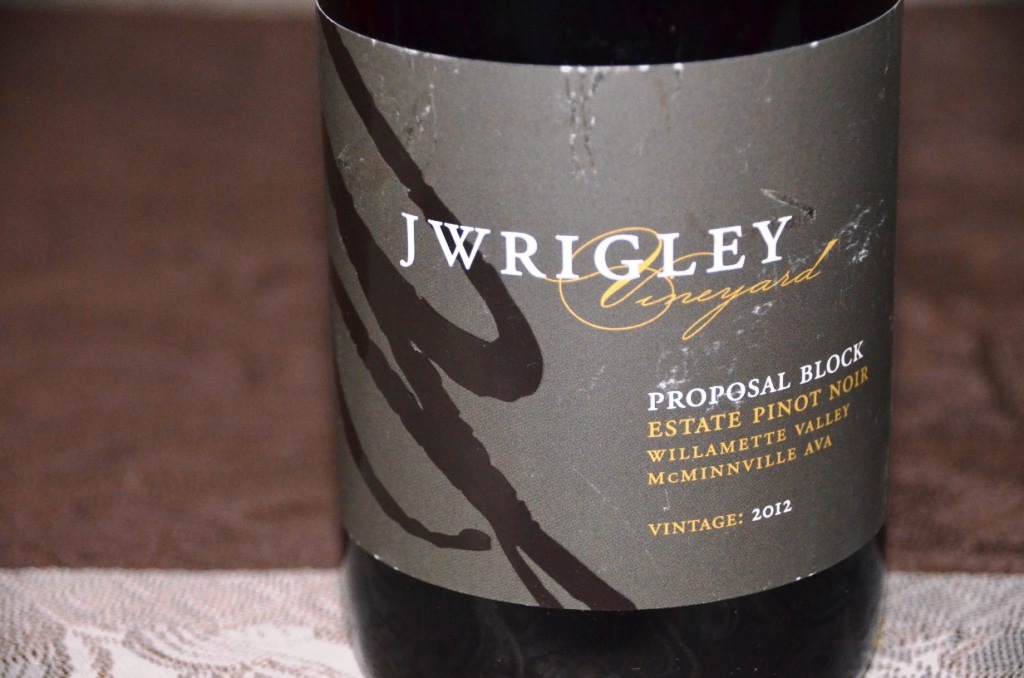 Last Wednesday, April 23, the virtual tasting room opened its #winechat doors to discuss for the third time in the row the endless subject of Oregon Pinot Noir. Presiding over in the hot seat was John Wrigley, the grape grower and winemaker at the J Wrigley Estate in McMinnville AVA in Oregon.
Let me start from the conclusion and tell you what I learned. The terroir, the soil, the elevation, and the winemaker are all matter. Duh, you wanna say? Well, yes, this sounds very pedestrian for the oenophile, like teaching an alphabet to the fifth-grader. However, when you drink the wine made with the soul, when you drink a thought-provoking wine, and when you also get a chance to discuss that thought-provoking wine with the someone who actually made it, and the group of like-minded people, the concept of soil and terroir stops being abstract, and rather becomes something you can…put in your mouth and taste!
We learned a lot during this #winechat. Once again we heard about the peavine soils, which make vines work really hard. We also heard about volcanic rocks and marine sediment soils. You can learn about the soils too – here is the link to the very interesting article about J Wrigley wines, which also includes the video of John Wrigley talking … dirt (not as a matter of speech, but as a substance).
We learned about something called Van Duzer effect. Ever heard of it? A narrow stretch of open land, called Van Duzer corridor, connects Willamette valley to the ocean. Every evening, the cold ocean air runs through that open space to cool off everything in the valley, especially all the grapes growing on elevations. The temperature drop can be in the range of 20°-30°, making grapes to ripen slowly, to retain acidity and concentrate sugars, which in turn means … better wines for us! Here is an article where you can read about Van Duzer effect in far more details.
We also learned about very interesting experiment, called the Cube Project. 3 wineries, 3 winemakers, 9 wines. 3 wineries – Anne Amie from Oregon, Bouchaine from Carneros and Lincourt from Sta. Rita Hills, each took their best Pinot Noir plots, capable of producing at least 6 tons of grapes each, and divided it into 3 equal parcels. Each winemaker had an opportunity to make wines from all three parcels, thus producing 9 different wines. When the wines were tasted by the group of professionals, it was concluded that winemaker style prevails over the terroir – the wines from different plots made by the same winemakers tasted closer than the wines made within the same parcels. I would really love to try all those wines by myself, or at least learn more about how the tasting was conducted – were the wines tasted blind, how many people tasted the wines and the number of other factors would all matter to me. But – as I can’t report first hand, here is a link to the article which explains the experiment in lots of details.
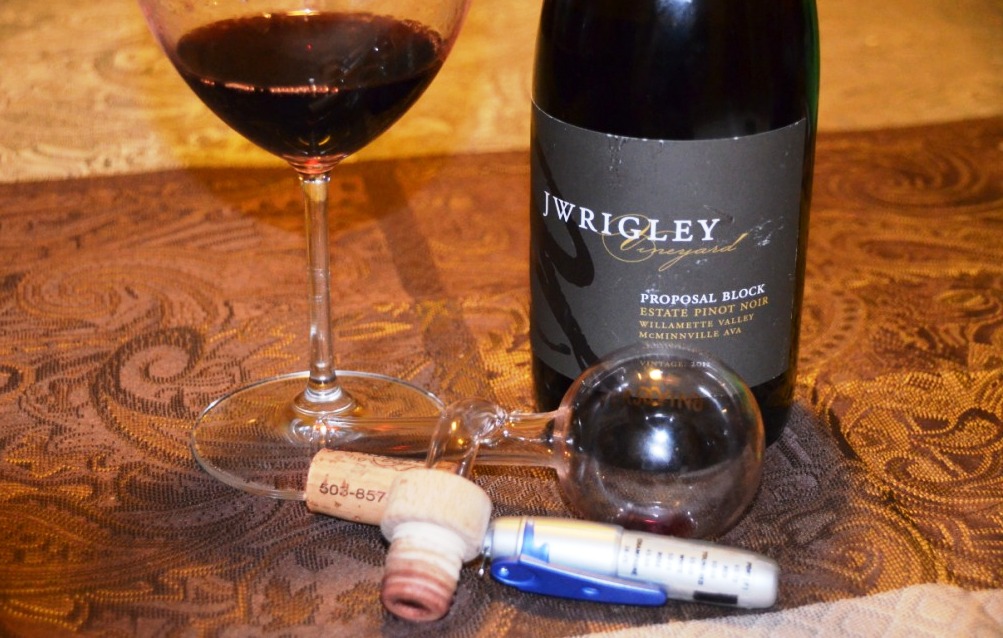
J Wrigley Pinot Noir and tools of the trade
Yes, we learned a lot, but how was the wine, you are probably wondering? This time around, I didn’t play with the temperature, I only measured it once – it was at 22.3°C/72°F. I played a bit with rapid decanting using VersoVino. This 2012 J Wrigley Estate Pinot Noir Proposal Block McMinnville AVA (14% ABV, aged 10 Month in French oak, 250 cases produced. $45 SRP) was very supportive of our conversation. Oh, by the way, can you guess where the name “Proposal Block” comes from? There is a good chance that you guessed it – this was the very first Pinot Noir planted vineyard at the estate, where John Wrigley proposed to his wife (wine and romantics – unbeatable!).
Now, here are some notes regarding the wine:
Color: Garnet
Nose: Fresh, ripe raspberries, floral notes, chocolate, mocha. Smokiness showed up later on.
Palate: Soft, round, good acidity. nice earhiness, dark fruit, very balanced. After a while, smokiness showed up in the back, and the the roasted notes.
Verdict: powerful and balanced Pinot Noir. Will drink well by itself, and can be well paired with food. For the full enjoyment, about one hour decanting is recommended. Will also age well for the next 10-12 years (or may be more, my crystal ball is broken, so I can’t be more precise). Drinkability: 8-
That conclude my report about J Wrigley #winechat and it also concludes the overall Oregon Pinot Noir series – definitely was learning, fun and entertaining experience for me. Don’t be shy – you should really try the #winechat for yourself (every Wednesday, at 9 PM Eastern/6PM Pacific) . Until then – cheers!
Meet the Winemaker: One on One With Morgon and Pouilly-Fuissé Vintners
Talking to the people who make magic is always an experience (yes, I’m comparing winemaking to the magic). I met the winemakers a number of times, but for the most of the cases, they were “in between” of some other important tasks (like harvest, for instance), so the idea of inundating them with questions never crossed my mind.
This time around it was a different experience – the winemakers where actually there to talk to me (feel special and scared at the same time), so I could (and rather was supposed to) to ask a lot of questions.
I met with two winemaking couples – Robert and Jeanine Béranger from Pouilly-Fuissé and Nicole and Pierre Descombes-Savoye from Morgon, both closely working with Georges Duboeuf, the famous French negociant, whose portfolio consists of about 400 different wines, mostly from Beaujolais (I met Georges and Frank Duboeuf a few years back, here is my post talking about it).
So I had an opportunity to ask the questions and then to taste the wines (each family produces only one wine!). Here are my questions with the answers (side note: really despise myself for thinking for the past 10-12 years “must learn French, must learn French” – and really not doing anything about it… The interview was done with the help of Heloise Pepin, brand ambassador for Georges Duboeuf wines).
Of course we started with the white wine, so my questions were directed first at Robert and Jeanine Béranger, whose family produces Domaine Béranger Pouilly-Fuissé wine for more than 200 years. The Domaine Béranger includes about 12 acres of Chardonnay, the only grape used in production of Pouilly-Fuissé wines. The vines at the domaine on average are 55 years old. All the harvesting is done by hand (you typically want to preserve clusters when harvesting the Chardonnay, this is why hand is the best instrument to use). Those 12 acres are split into 32 (!) different parcels, which are vinified separately and blended for the final release. Total production at the Domaine is about 26,000 bottles a year.
For what it worth, here are the questions I asked, together with the answers.
Q: What was most favorite vintage of your wines?
A: 1983 and 2003. 2003 was particularly interesting, as it was a very difficult vintage, and making of the wine was very challenging. 1976 was the exceptional year for the white wines.
Q: What was the oldest wine from your vineyards which you ever tasted?
A: 1969.
Q: For how long your wines can age?
A: In the exceptional vintage, the wines can easily age for 30 years, but generally they age well for about 15 years.
Q: When you are not drinking Pouilly-Fuissé wine, what are the other wines you like to drink?
A: Meursault, Chablis, New Zealand Sauvignon Blanc.

Next we tasted the wine, and here are my tasting notes.
2011 Emile Beranger Pouilly-Fuissé AOC (13% ABV, retail at about $26, 10% of the wine aged in 5 different types of oak barrels, then 14 month in the bottle before release) – pale yellow color in the glass. Hint of apples on the nose. On the palate there is a touch of butter, plump and creamy feeling. The wine is very round, roll-of-your-tongue, perfect acidity and perfect balance. A beautiful wine. Drinkability: 8+
Time to talk about the red wine, Domaine Jean Ernest Descombes from Morgon, so I directed my questions at Nicole and Pierre Descombes-Savoye. Domaine’s property includes 30 acres of the vineyards, all planted with Gamay grape, with three quarters of the vines been more than 50 years old. On average, the yearly production is 100,000 bottles. The grapes are harvested by hand to preserve the full clusters.
Here are some of my questions, along the same lines as the questions above.
Q. What was your favorite vintage of your wine?
A. 1973, as this was the year when our son was born.
Q. And how was that 1973 wine?
A. The wines were opened recently at the big party, and they were put against the 1973 Vosne-Romanée in the format of the blind tasting. Most of the guests at the party preferred the 1973 Morgon over the 1973 Vosne-Romanée. It is also interesting to note that as Gamay wine is aging, the freshness of Gamay grape is evolving into the complexity of Pinot Noir, so the results of the tasting are not surprising.
Q. For how long Morgon wines can last?
A. In the good vintage, the wines can easily last for 40 years or even longer.
Q. What do you drink when you are not drinking your own wine?
A. Burgundy and Bordeaux, especially the Saint-Émilion had been the favorite as of late. But we also like California wine.
Q: How would you compare the 2011 vintage with 2009?
A: Well, the vintage such as 2009, simply can’t happen again ( I’m sure mother nature has its own view on that), it was simply exceptional – and it is literally impossible to beat the 2009 vintage. But 2011 was a good year, and the wines from 2011 will easily last for 10-12 years or longer.
 And then it was the time to taste the wine.
2011 Domaine Jean Ernest Descombes Morgon AOC (12.9% ABV, aged for 6-8 month in cement tanks, $16.99 suggested retail) had bright ruby color in the glass. On the nose, the aroma of raspberries and cherries. Perfectly fresh on the palate, with more raspberry notes, clean, simple, with invigorating acidity and good balance. Drinkability: 8-
And that concludes my first sit down interview with the winemakers. It was fun, and I hope to be able to do more in the future. Cheers!
Sunday Read: The Winegetter: Somewhere, Beyond the Sea
Today I decided to somewhat reverse the roles with Oliver, who writes an excellent blog called The Winegetter (if you want to learn about German wines, and wine appreciation overall – subscribe to his blog for sure). Typically on Sundays Oliver shares a thought-provoking article, which is usually worth reading. Oliver had being traveling in Asia for more than a month by now, and before he left for his trip, he undertook a very interesting project. He contacted many wine bloggers (myself included) and asked if they will be willing to write a guest post for his blog while he is traveling.
I personally liked the idea and agreed to participate (along with many others passionate folks). Oliver called this series “Somewhere, Beyond the Sea”, and he published quite a few guest posts in it already. Today (and it is still Sunday on East Coast), Oliver published my guest post about recent visit to Truro Vineyards on Cape Cod – hence I’m playing Oliver today and bringing my guest post to your attention under the theme of Sunday Read (note – it is not as thought-provoking as what Oliver would typically publish, but at least it is still Sunday). Here we go:
I have a few extra pictures to add to those which Oliver already included into the post, so here are these additional pictures for your viewing enjoyment:


Have a great week ahead and cheers!
Special Tasting Report: Trione Winery
A few month ago I got an email from Trione winery offering me a gift. Not just any gift – wine. Free wine. Words “free” and “wine” put together sound almost magical for the anyone who drinks wine daily (I refuse to take the calculator out – don’t ask). But the word “free” in the email usually means danger. After careful consideration, and actually looking at the winery web site, I decided that it was not a scam or phishing attempt, so I answered that I would be happy to get a free wine. The only caveat in the follow up response was that they can only ship wine to the limited number of states. Connecticut not included (of course). But New York was. And so my friend Emil became a recipient for the wine.
When Emil called me that he got the wine, he mentioned that the box looks very small. Well, okay – it is what it is – free wine, whatever the package is. And then some time later, the package made it to my house. A small black box, probably half of the shoebox in size. But there was actually wine inside. And this is how it looked like:
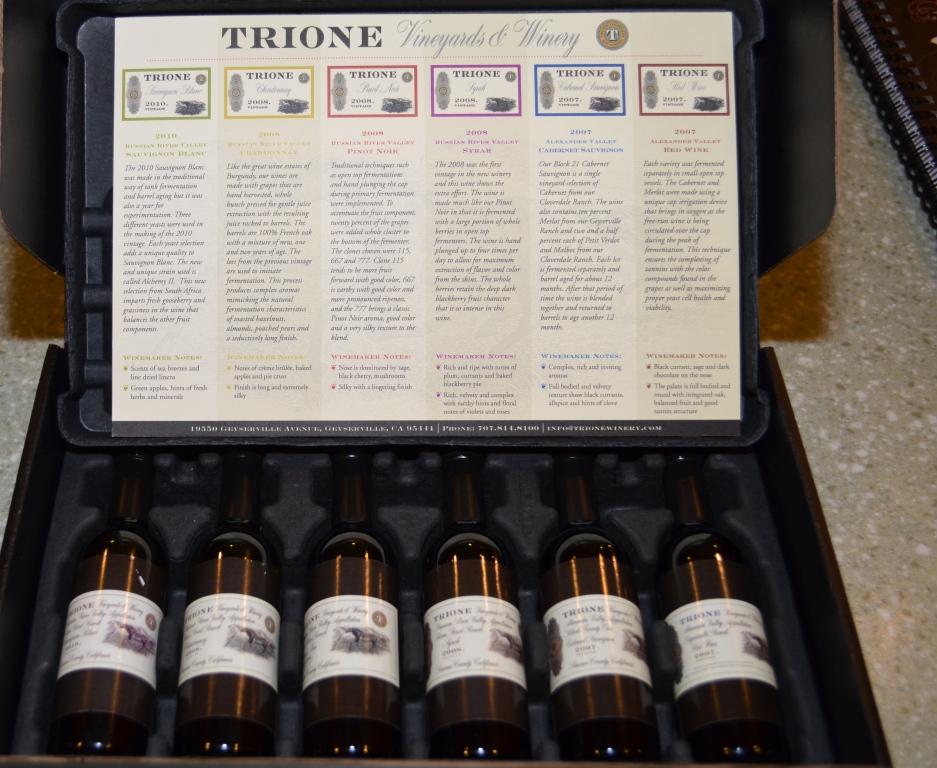
Trione Winery, which I never heard of before, is a new venture of Trione family who was growing grapes in Sonoma for 35 years. Here is what you can read on the front page of their web site:
“For over three decades, the Trione family has raised premium grapes that have been the foundation of many award-winning wines. Now we bring our grapes to you in wines bottled under our own label, Trione Vineyards & Winery. It is the culmination of our family’s long commitment to Sonoma County.”
Here are few more views for you (just trying to build up the anticipation here):


Another interesting detail – it appears that this tasting set consisting of the tiny bottles is actually a concept called Tasting Room. While web site provide literally no information, the card enclosed with the package explained the concept:
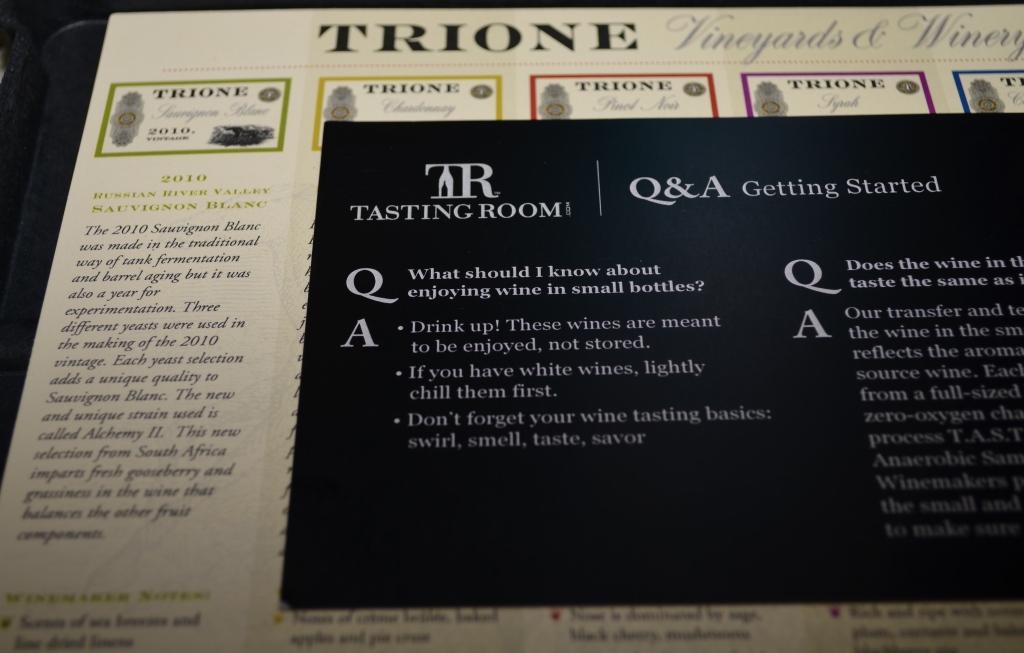
The wines are bottled in the small bottles using special technology which preserves all specifics of the wine, so it is exact same wine which will go into the regular bottles. The only exception – the wine in small bottles is not intended for aging (as you can imagine), so as the card says – drink up!
And with this, let me share my tasting notes. Well, not only mine – in majority of the cases we drink wine together with my wife, especially when we are looking at the interesting and unusual experience – so I’m including her tasting notes too.
2010 Trione Russian River Valley Sauvignon Blanc (14% ABV) – “Pear Grove” my wife said. Some fresh grass on the nose with a bit of grapefruit, but mostly earthy and herbaceous, Earthy and herbaceous on the palate as well, lots of residual acidity, but not “in-your-face”. Food friendly. Interesting. Drinkability: 7+
2010 Trione Russian River Valley Chardonnay(14.3% ABV) – nice butter on the nose, vanilla. Nose is very promising, but palate is not good, very acidic, no fruit, kind of flat. I’m sure it needs time or at least different serving temperature, therefore it is not rated.
2008 Trione Russian River Valley Pinot Noir (14.2% ABV) – Nice nose of dark fruit, tobacco, touch of roasted meat flavor. Nice palate of dark fruit, raspberries, plums, tobacco, pencil and sage undertones. Good palate, good balance. Very good overall. Drinkability: 8-
2008 Trione Russian River Valley Syrah (14.8% ABV) – Wow color – very dark, intense, almost black. My wife’s notes were “oh, this is good” , “great potential”, “very promising” (disclaimer – my wife loves Syrah, probably her favorite wines). Dark roasted fruit, silky smooth, perfect balance, perfect acidity, cherries, earthy notes. Definitely very promising. Very good overall. Drinkability: 8-
2007 Trione Alexander Valley Cabernet Sauvignon (14.5% ABV) – absolutely beautiful nose – perfectly classic, with mint and blackcurrant – textbook flavors. Coffee showed up later on the nose. Wife’s notes: “overpowering , but very yummy”. Big, powerful, silky smooth, noticeable tannins – but excellent balance. Touch over-extracted on the palate, but only in terms of power, not sweetness. Needs time. Drinkability: 8
2007 Trione Alexander Valley Red Wine (14.5% ABV) – Dark chocolate, coffee, blackberries on the palate, nice complexity. Beautiful, round and open fruit. Needs time. Drinkability: 8-
As you can see, it was a very enjoyable experience (it’s too bad that the bottles were that small) – next time you see Trione wine in the store, don’t just stand there, grab a bottle…
That concludes my special tasting report, folks. Until the next time (hopefully someone will send me good and free wine soon) – cheers!
Disclaimer: the wine was provided by Trione Vineyards and Winery free of charge. All opinions are my own.
Tasting The Dust
 Dust? Really? What is going on? What happened to wine? Trying to figure out if you are in the right blog? Don’t worry, you are. But – actually, I intend to talk about dust – Rutherford Dust it is.
Have you heard this expression before – Rutherford dust? This is the terminology often used to describe the mouthfeel of the wines made in the Rutherford AVA in Napa Valley. Some say it is the taste, some say it is the texture – it seems that Rutherford dust means different things to different people. But as a common ground, people agree that wines of Rutherford AVA have some qualities which are not found among the wines from other areas of Napa Valley.
Andre Tchelistcheff, the legendary winemaker of Beaulieu Vineyards and one of the founding fathers of the California wine industry, is usually credited with coining the term “Rutherford dust”. Interestingly enough, according to this article, Tschelistceff only referred to the Rutherford dust as a terroir, but – you will need to let your taste buds guide you to argue that point.
About a month ago, during one of my trips to California, I had an opportunity to visit Beaulieu Vineyards (BV) in Rutherford, where Andre Tchelistcheff worked as a winemaker from 1938 until his retirement in 1973. As you enter the tasting room at BV, Andre Tchelistcheff himself greets you:

BV makes a number of different lines of wines, starting from introductory BV Coastal, going to the “Maestro” series, which is available only at the winery or through the club, and continuing to the Reserve line.
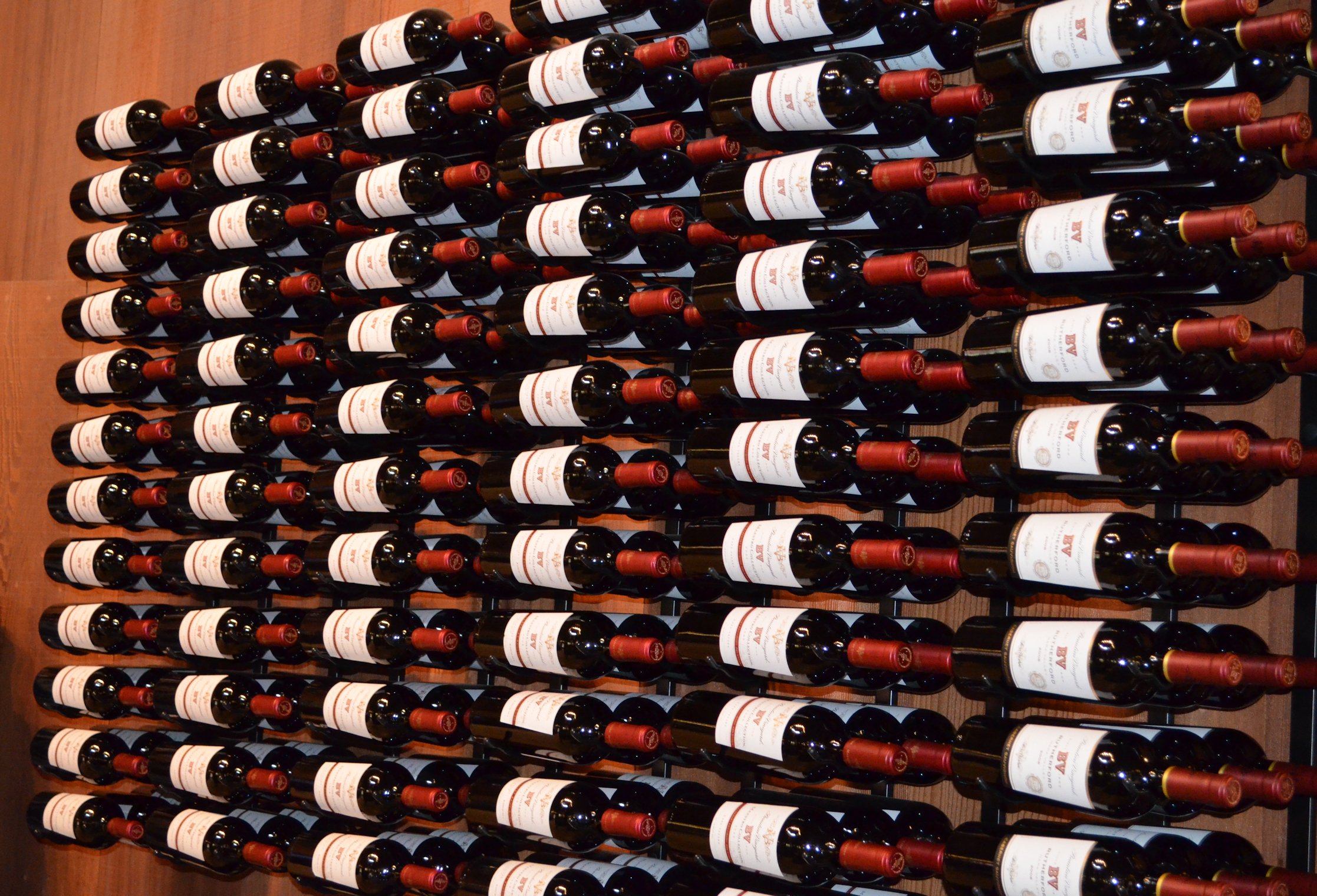 We tasted through the whole Reserve line, and these are the notes I want to share with you.
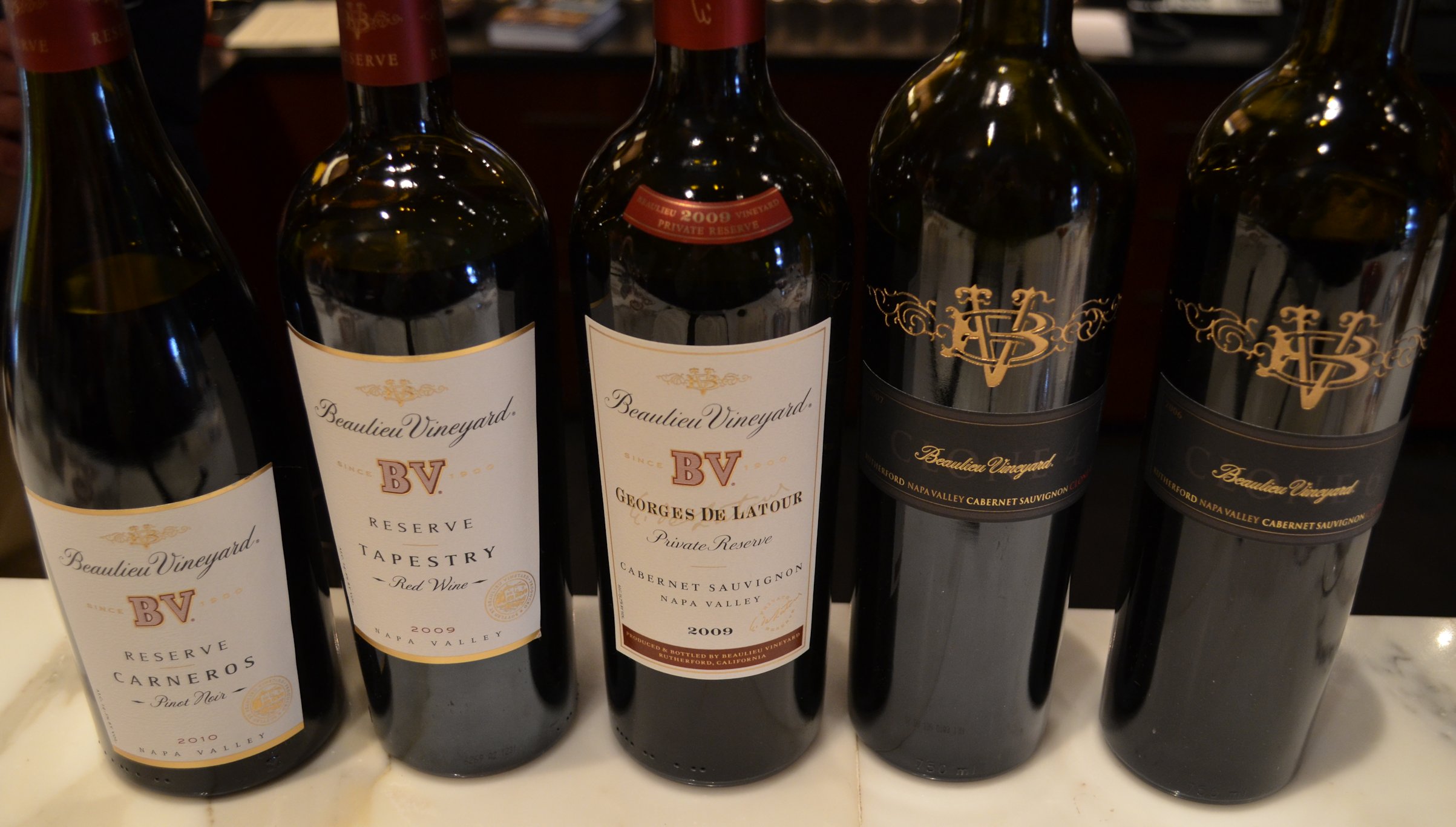
We started with 2009 BV Carneros Reserve Chardonnay, which was beautiful, round, and clean, with just enough vanilla and butter to maintain balance. Next, we tried the 2010 BV Carneros Reserve Pinot Noir. Actually, I had no idea BV even makes Pinot Noir- but now I know, and I will look for it. This wine was beautiful, round and polished, with restrained fruit, silky smooth tannins – very balanced and very drinkable. 2009 BV Tapestry Reserve – a classic Bordeaux blend of Cabernet Sauvignon, Merlot, Cabernet Franc, Petite Verdot, and Malbec – was outstanding, perfectly Bordeaux style, but softer, more approachable.
Then we tasted 2009 Georges de Latour Private Reserve Cabernet Sauvignon – and it was the moment when “Rutherford dust” went on like a light bulb in my head. I only heard the expression before, but never experienced it – and until I tasted this wine, I had no idea what the Rutherford dust is. This was probably the single best Cabernet Sauvignon I tasted throughout this year (well, almost – keep on reading). It had everything the Cabernet should have in my opinion – mint, eucalyptus, black currant, supple tannins, perfect balance – and the texture of the tiny particles on my tongue. This was my “Rutherford dust” moment – I don’t know if Andre Tchelistcheff was talking strictly about the terroir – this wine had something which I never tasted before, so for me, it was that “Rutherford dust”.
And then there were clones:
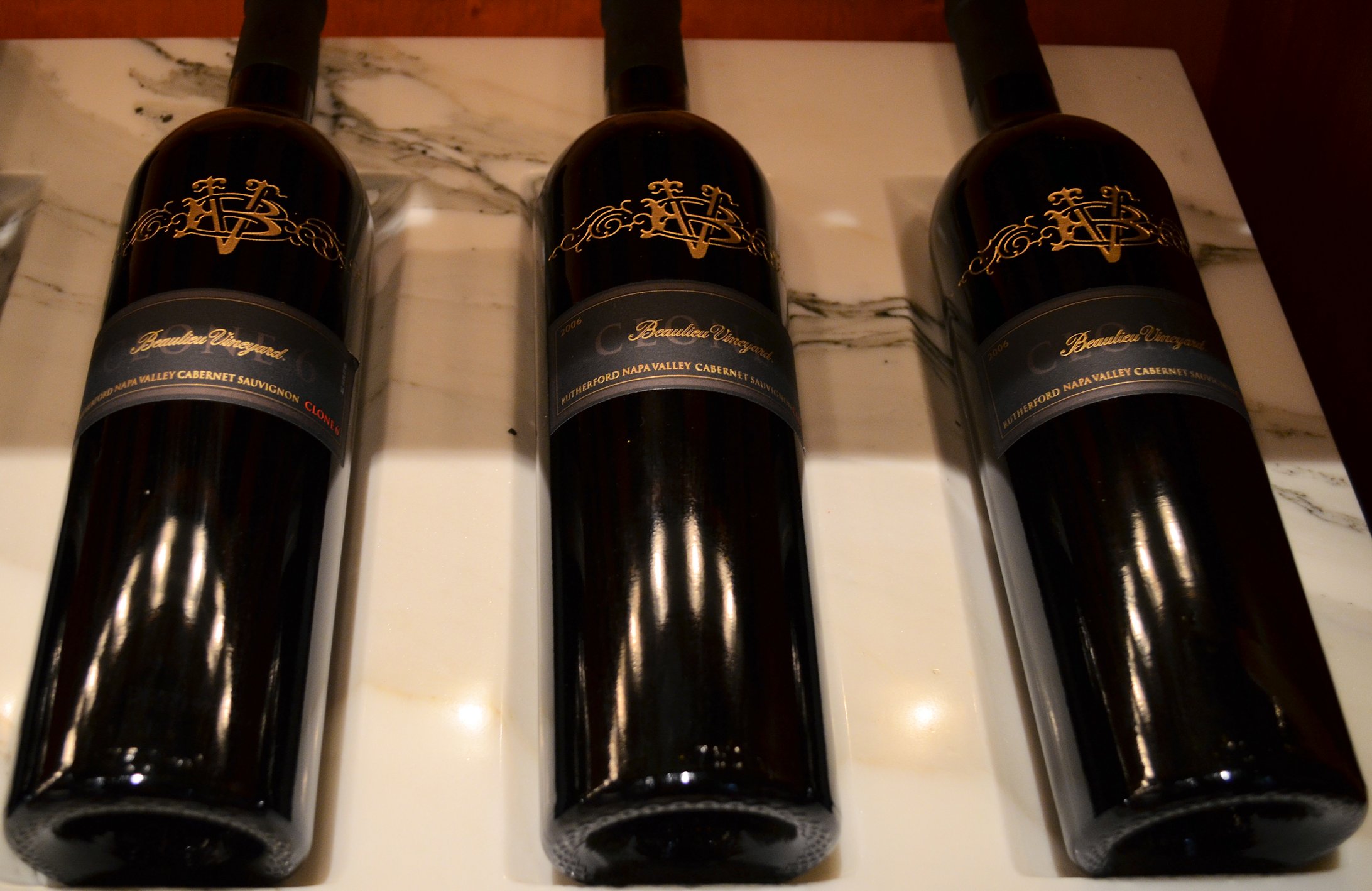
Again, I learned something new here. Yes, I had various encounters with grape clones before – Riesling clones, Sauvignon Blanc clones, such as soliloquy, Wente Chardonnay clone – but I didn’t have an experience with Cabernet Sauvignon clones. It appears that there are a number of clones (here is a good link if you want to learn more about that concept of clones), all originating from different places and thus bringing some unique characteristics to the resulting wine.
We tasted 2007 BV Cabernet Sauvignon Clone 4, where the vines were originally from Bordeaux, then found a home in Mendoza, Argentina, and now are officially known as Mendoza clone. Clone 4 is a primary foundation of the Georges de Latour Private Reserve Cabernet Sauvignon and has similar characteristics to the wine I described above.
Then we tasted 2007 BV Cabernet Sauvignon Clone 6, which was just something else.
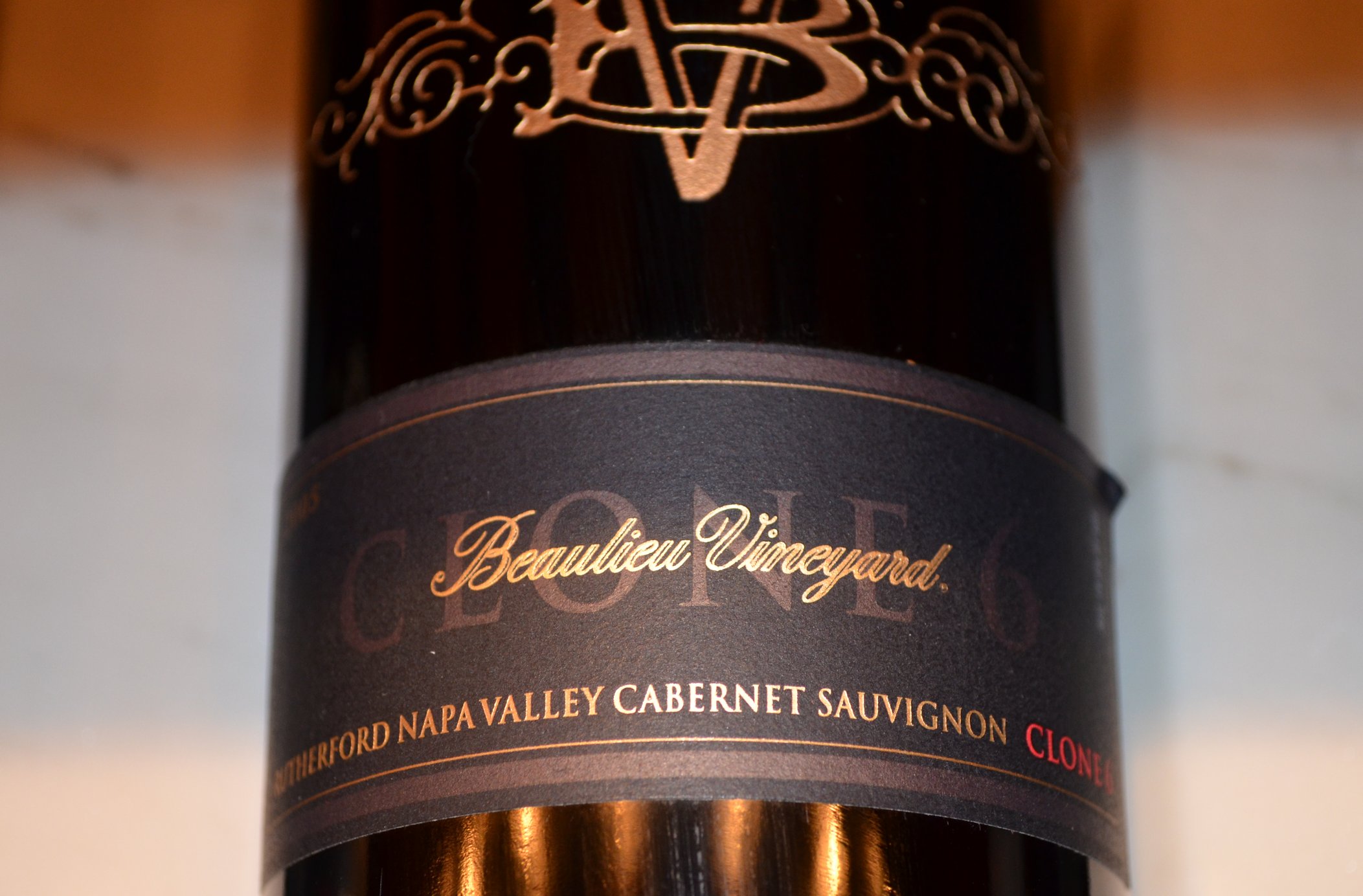 Clone 6 Cabernet Sauvignon comes from abandoned and then rediscovered plantings of Cabernet Sauvignon in Jackson, California. This wine was simply amazing, with the nose of dark roasted coffee, mocha, a touch of bitterness, silky smooth and perfectly balanced, giving you an absolutely luxurious mouthfeel. For me, this wine was definitely rivaling Georges de Latour Private Reserve we tasted before, and I already claimed that the first one was the best Cabernet of the whole year… Tough choice, huh?
And then there were older vintages.
2000 Georges de Latour Private Reserve Cabernet Sauvignon had more pronounced acidity than 2009, and fruit showed a bit tame, but overall the wine still had perfect balance and was very enjoyable.
1997 Georges de Latour Private Reserve Cabernet Sauvignon had beautiful fruit, the same Rutherford dust texture as 2009, and it actually needed time to open up, as the bottle was freshly opened.
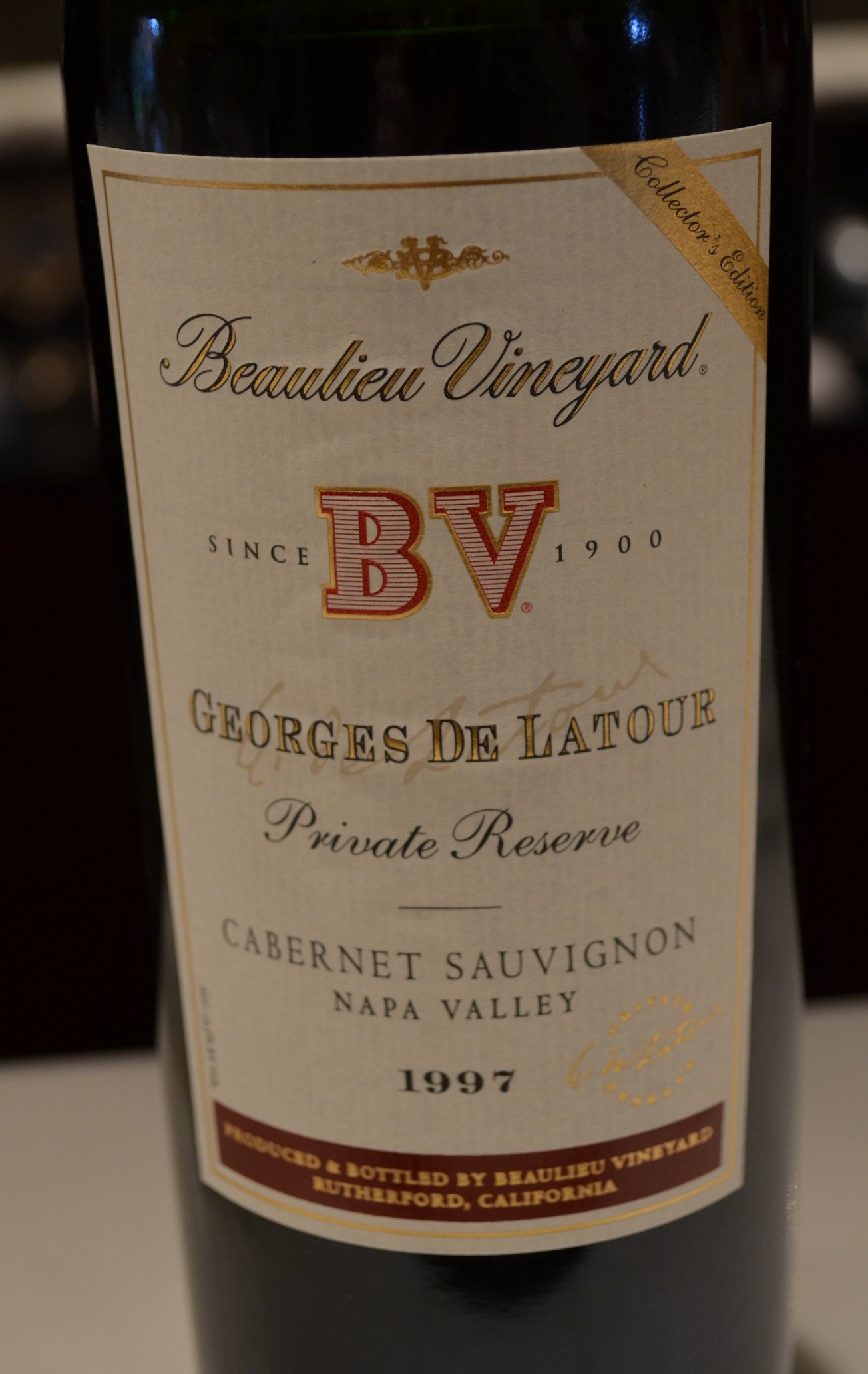
Just to share a few more pictures with you – here is a beautiful Holidays-ready display at the winery:

And if you ever want to make me a present, this box will make me happy – very happy, I have to add:

There you have it, folks – we had an amazing time at Beaulieu Vineyards. This was my second visit to BV – last time I discovered Maestro series wines, which were also great, but tasting through the Private Reserve collection was just an outstanding experience. If I would be able to afford it, I think Georges de Latour Private Reserve Cab would be my everyday wine – at $125 (winery price), this is not happening any time soon. Oh well, but then still there are holidays …
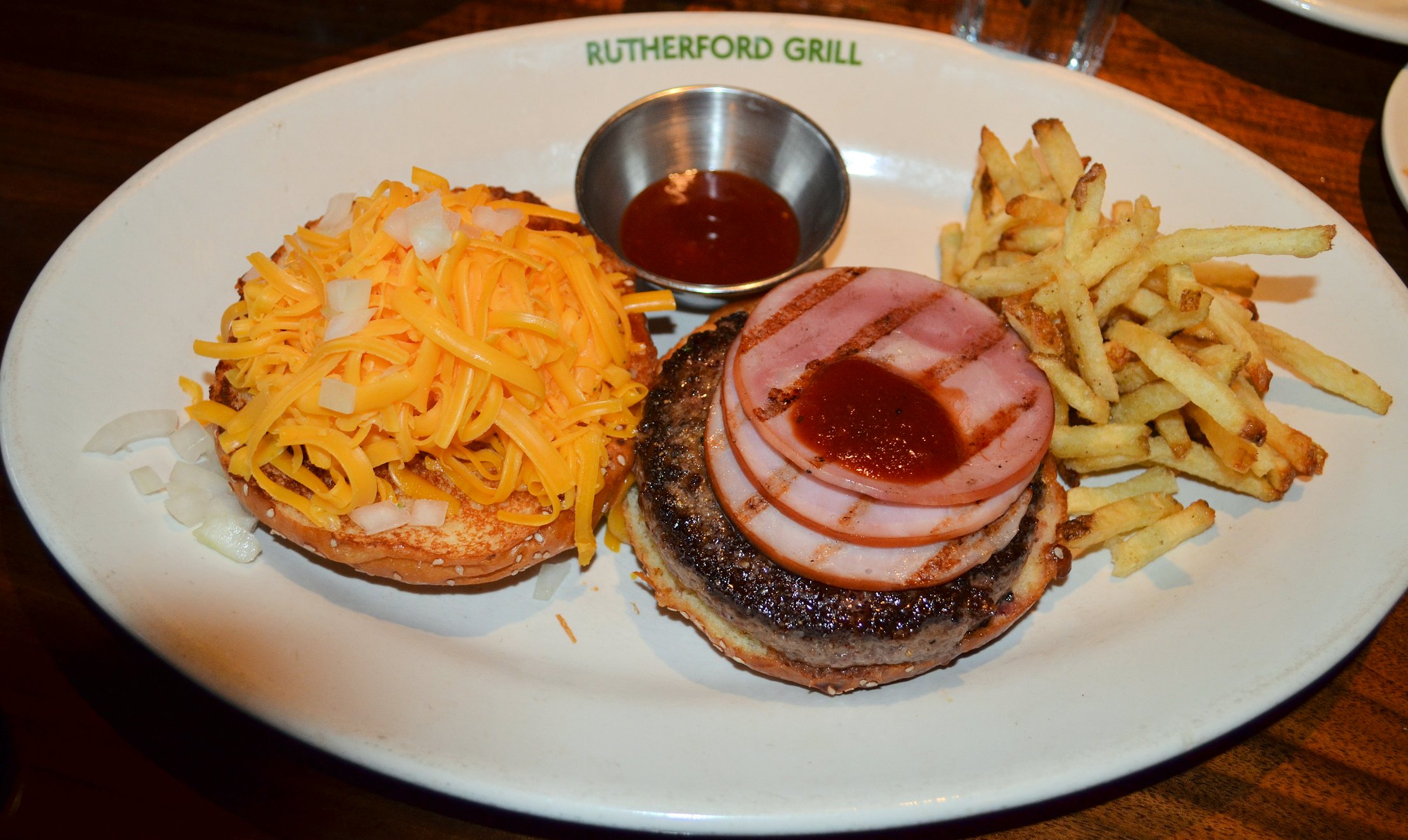
Our next stop was for lunch, and we simply had to walk across the parking lot – to the Rutherford Grill. I heard the name before, but never visited it, so it was very exciting to try one of the Napa Valley well-known restaurants. To give you a quick summary, the food, service, and atmosphere were all great – you should definitely put it on your destinations list if you will be in the area. Here are a few of the food pictures.
Warm Focaccia bread with olives:

Chili (perfectly spicy and delicious):

I had a burger:
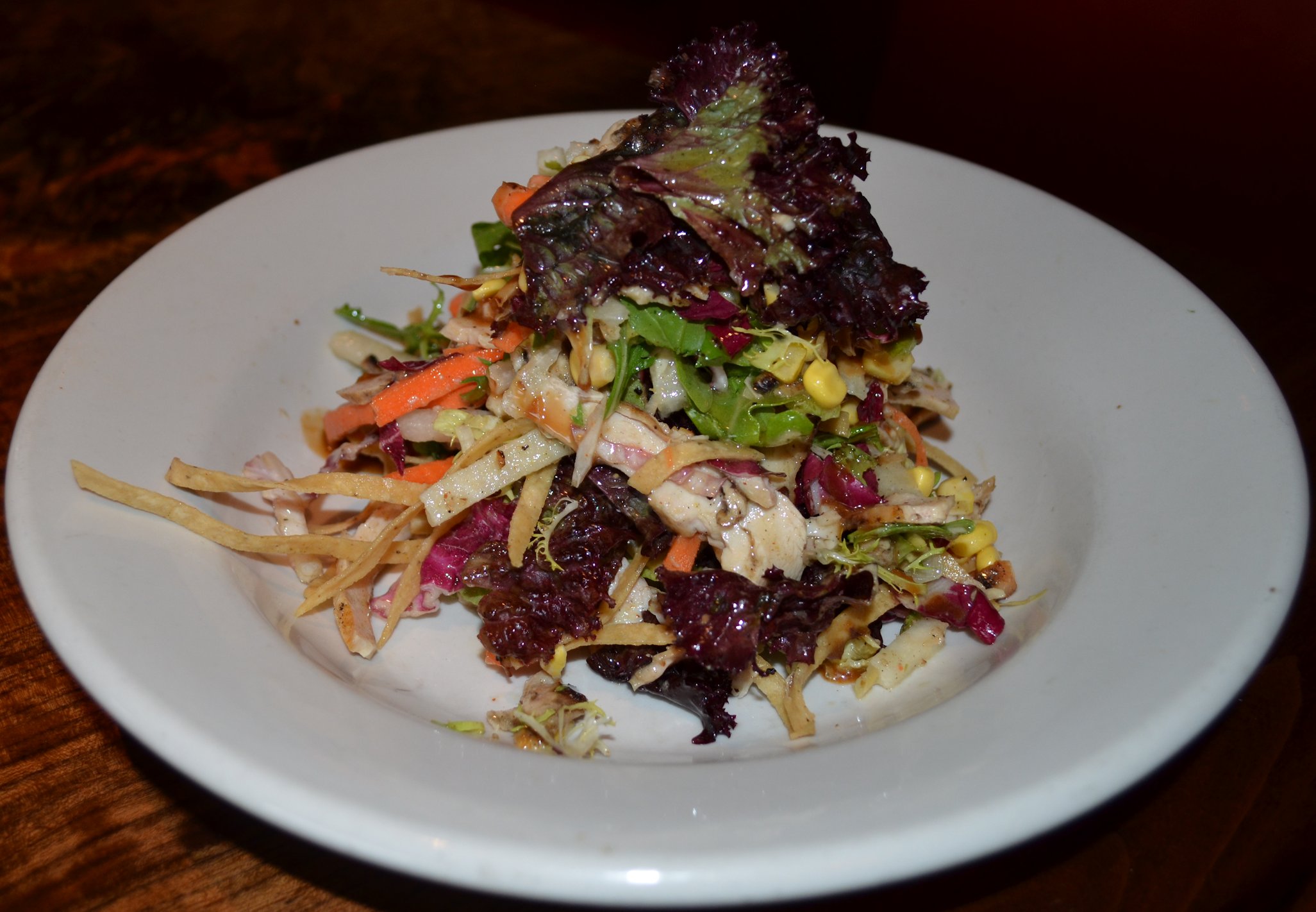
 And my wife went for the Grilled chicken salad:
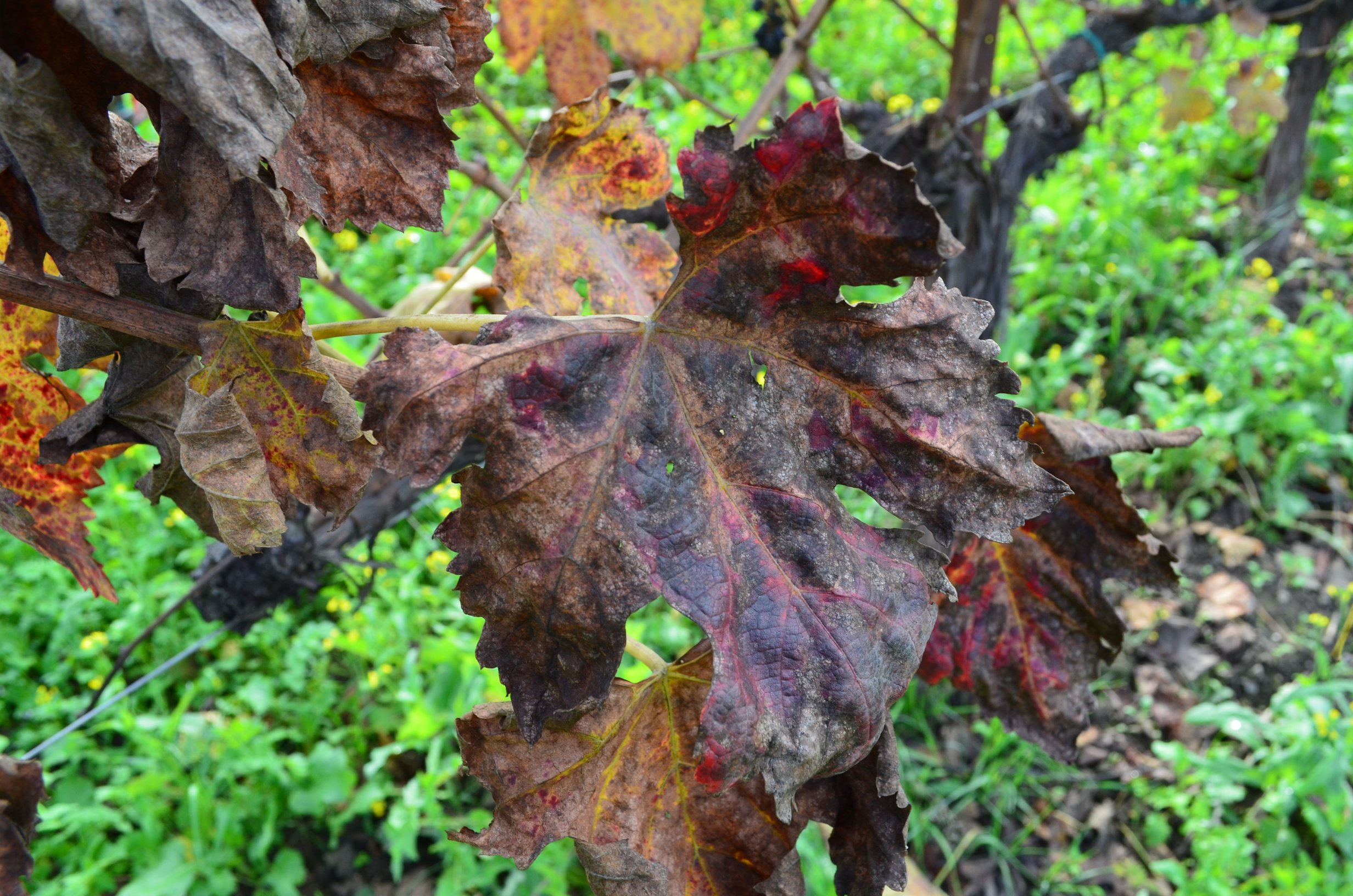
To tell you the truth, I have another “first time” experience to add here – it would be vineyards in the fall. I always admired beautiful pictures of the vines in the fall with all the colorful leaves. These time, I found some to claim my own:
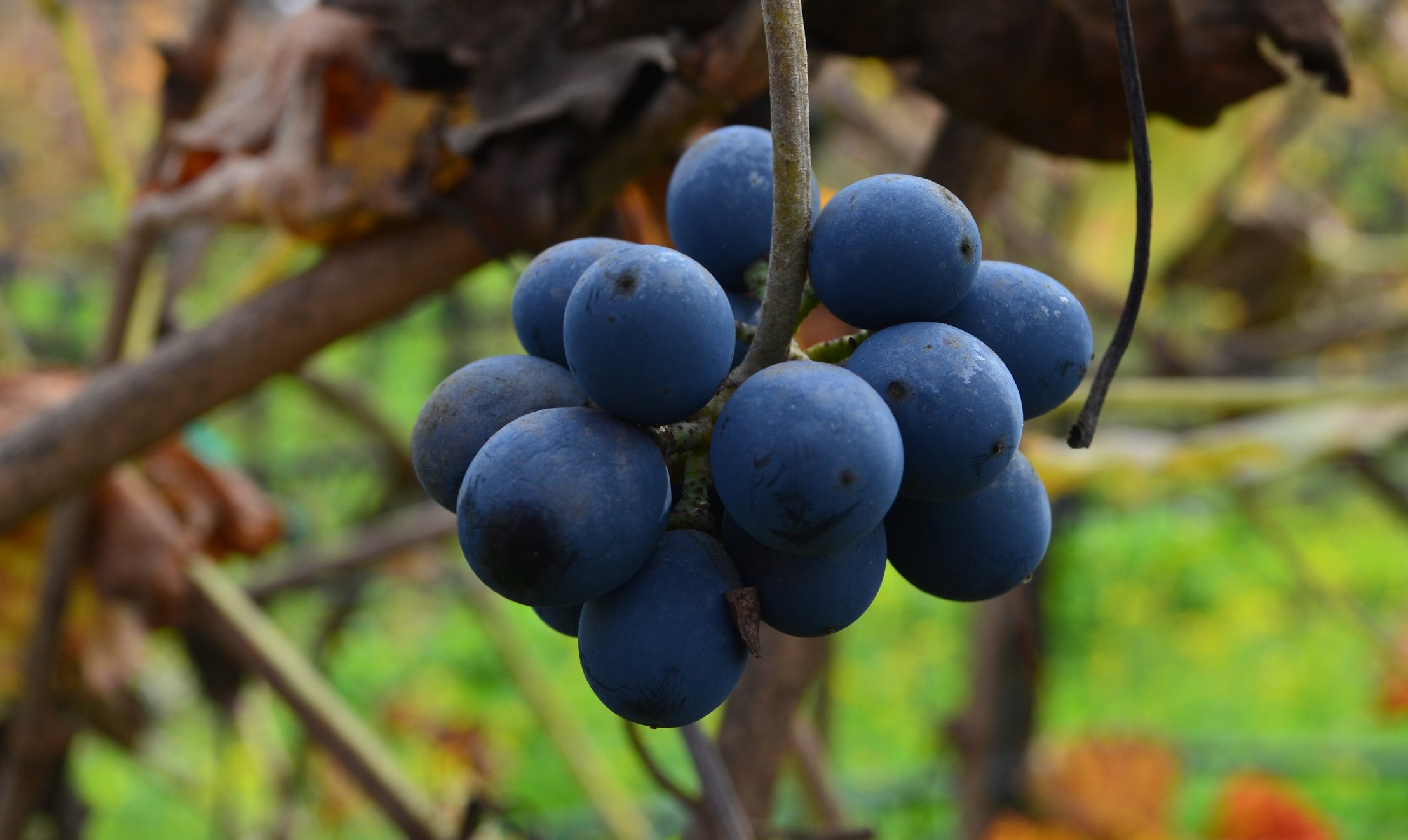
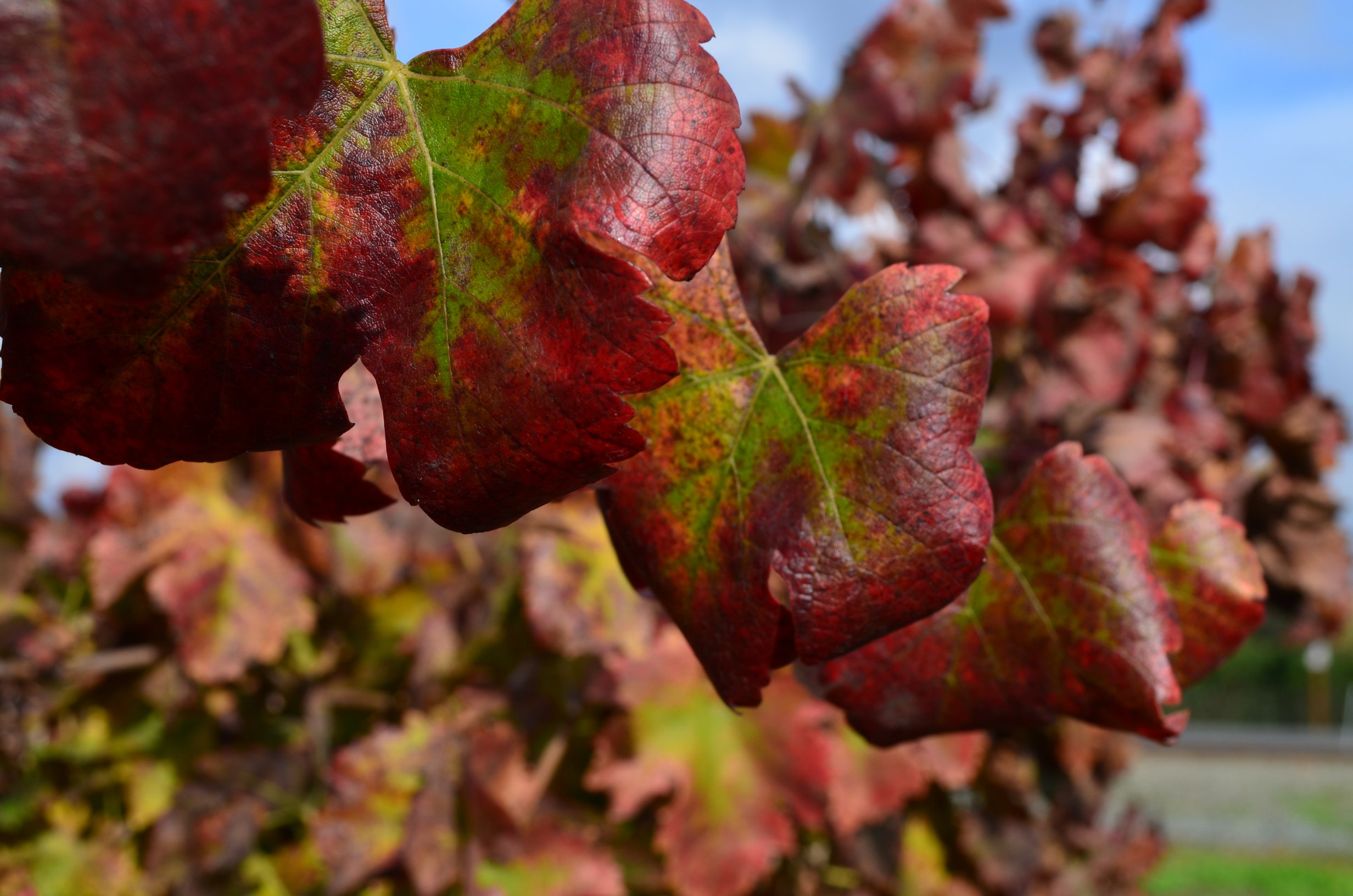 After lunch, we made another stop for tasting – this time at Provenance vineyards. We tasted through the whole portfolio of Provenance and Hewitt wines – and while some of them were good, overall they were not anywhere close to the BV experience, hence I will skip the write-up.
The last experience of the trip was a quick stop on the way back at a small town of Yountville. We didn’t do much there, just walked around for a few minutes, and I snapped a picture of one of my dream destination (I will let you guess what it is, but you will read the answer right on the picture below:

That’s all folks – this was my experience with the Rutherford dust. Have you tried the wines from Rutherford or maybe even the same BV wines – what do you think? Did you taste the dust there? Cheers!
Rutherford Grill
1180 Rutherford Rd
Rutherford, CA 94573
(707) 963-1792

My First Harvest – At Paumanok Winery
This post was supposed to be written at least 2 months ago – but it is only coming out now. Well, the experience was great, so want to share it. And I will also skip a traditional Wine Quiz for the next two weekends, and will start it anew next year.
 Ahh, all those “firsts” – aren’t they the best, most memorable experiences of your life? First step (well, nobody remembers those, I guess), first kiss (hope now I’m talking about something more memorable), first… well, whatever makes you tick, insert it here. I have somewhat of the extensive experience around wines, but I still have my “firsts”, and plenty of it.
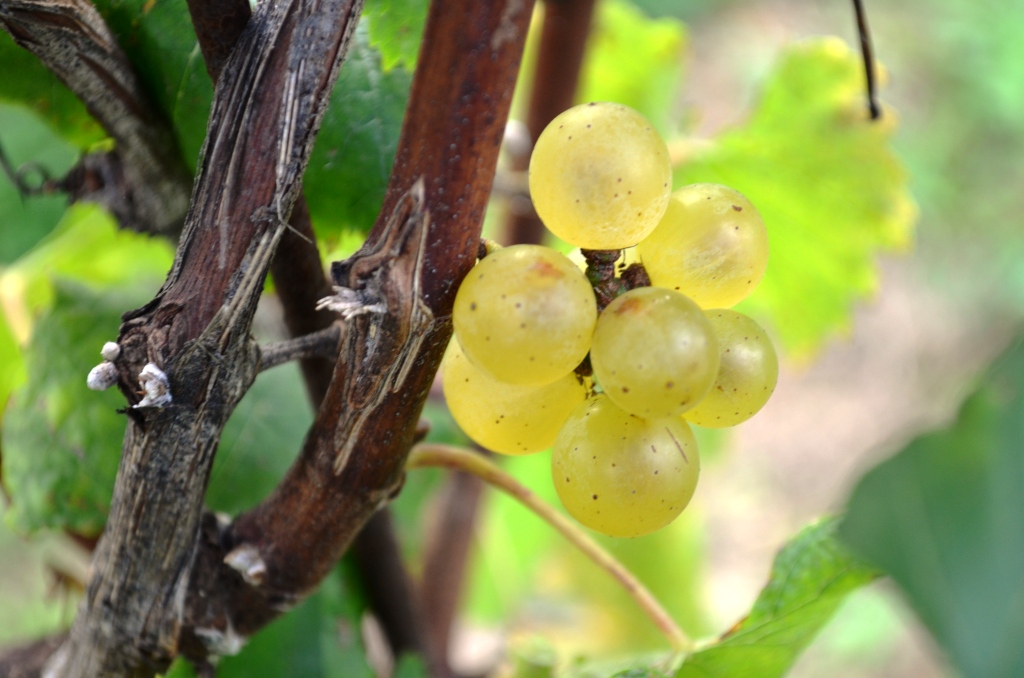
At the beginning of October, while in Austin, I tasted my first “just blended” Viognier (here is the link if you want to read about it). This time, I managed to come across my first harvest. No, I didn’t actually cut, sorted or stomped the grapes. But our visit to Paumanok winery on Long Island in New York coincided with an actual harvest of Merlot which was taking place on exact same day.
For a number of years by now, it is pretty much a tradition – at the beginning of October, we visit Long Island wineries with the group of friends. The weather is usually beautiful – it is so called “Indian summer” in New England, so it is typically warm and sunny, but not hot by all means. We drive all the way down the North Fork of Long Island, stop at a few wineries on the way, taste bunch of wines and then select a few bottles for lunch.
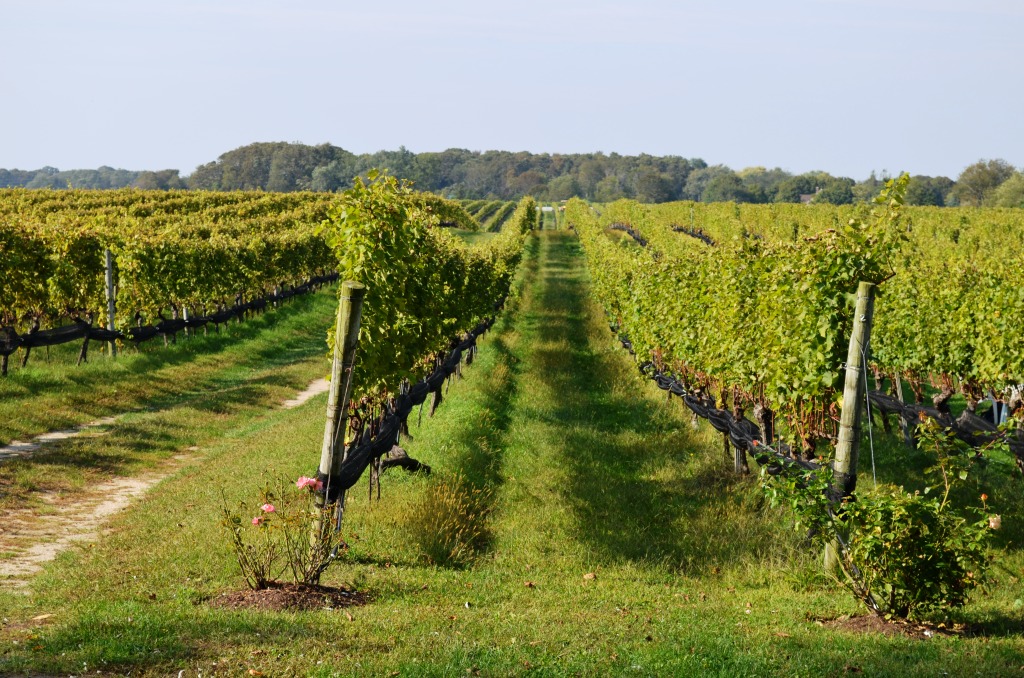
So far we didn’t find a better location for lunch than the outside deck at Paumanok winery – you get to eat outside and enjoy a view of the beautiful sun-filled vineyards:
This time our experience had an interesting twist – we managed to hit the harvest day. I called the winery a few days before and talked to winemaker, Kareem, to see if he will be able to spend some time with us – he said “may be, but unlikely. as we probably will be harvesting Merlot”. That is exactly how it was – the harvest was in a full swing by the time we arrived. Before we will talk about our “harvest experience” (mostly in pictures), let’s talk about the wines, as we started from the tasting upon our arrival.
We tasted pretty much through the full line of wines offered at Paumanok. Started with 2011 Paumanok Festival Chardonnay – unoaked and simple, showing clean white fruit and good acidity.
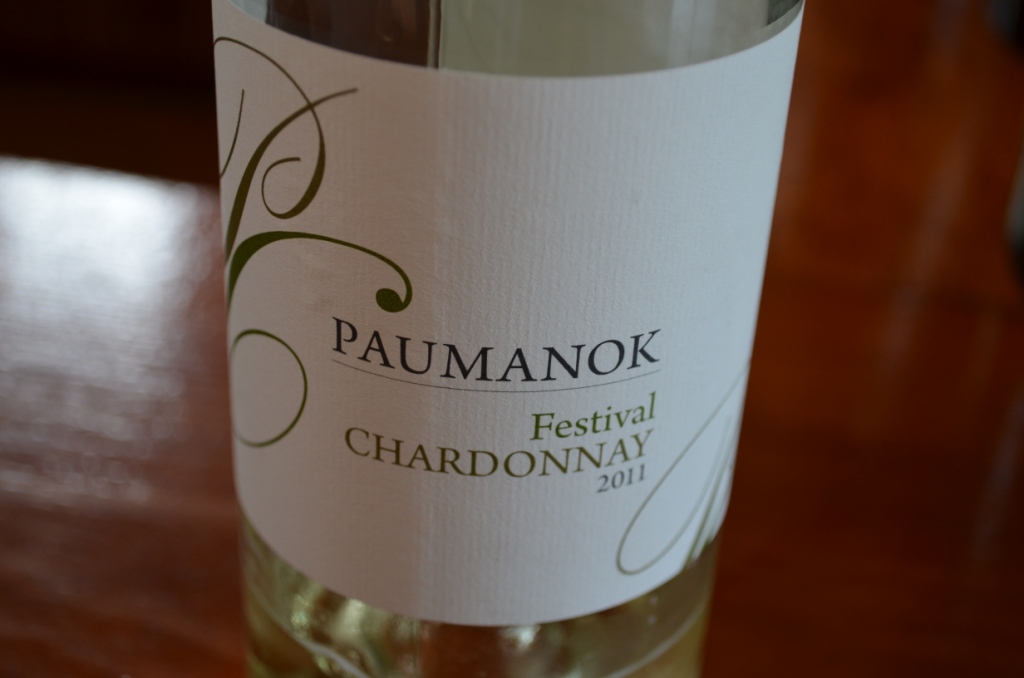 While it was group’s favorite, I generally need more life in my Chardonnay – oak, vanilla, butter – all balanced, of course, but I need more prominent power, so this was not my favorite wine.
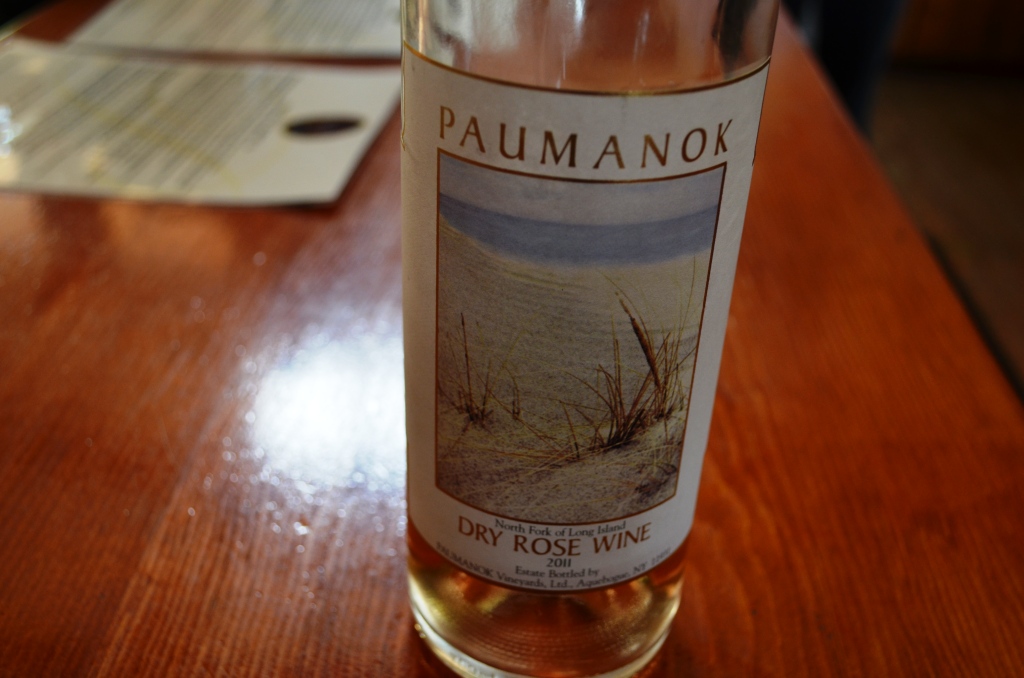
2011 Paumanok Dry Rose was a bit too austere to my taste – I liked 2010 more, but we still took a bottle for lunch.
2011 Paumanok Sauvignon Blanc was very good, a New Zealand style wine, with bright fruit, grapefruit notes, fresh grass and perfect acidity.
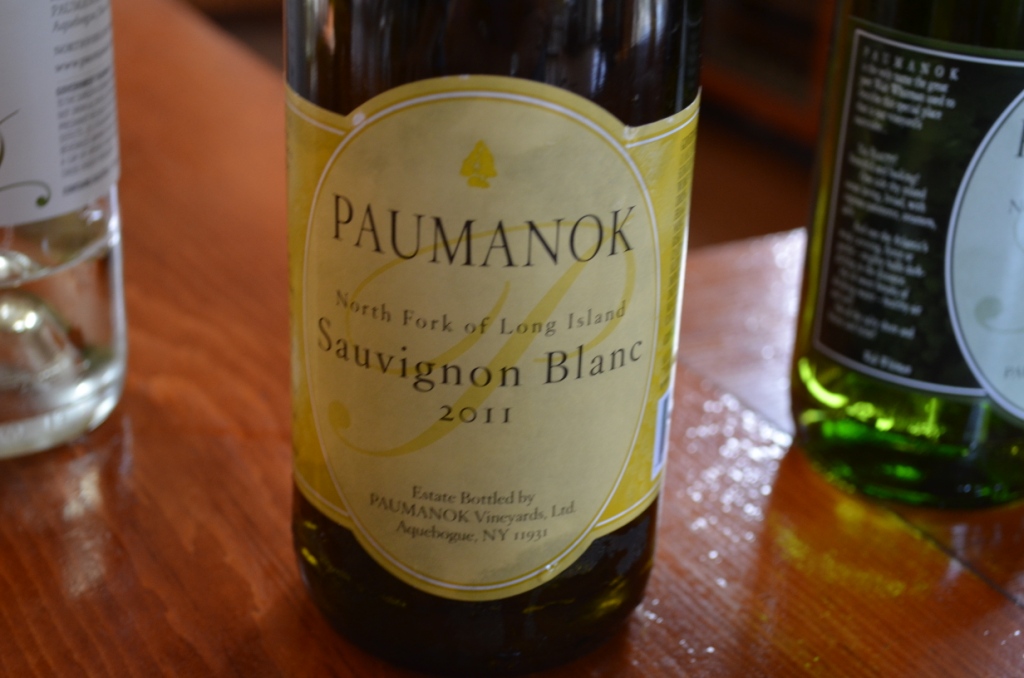
Continuing the line of whites was 2011 Paumanok Dry Riesling – perfectly done in classic style – good white fruit, touch of honey and perfect acidity (also was one of our lunch wine choices). Finishing up the whites we had 2011 Paumanok Barrel Fermented Chardonnay, which I liked a lot more that the unoaked version.
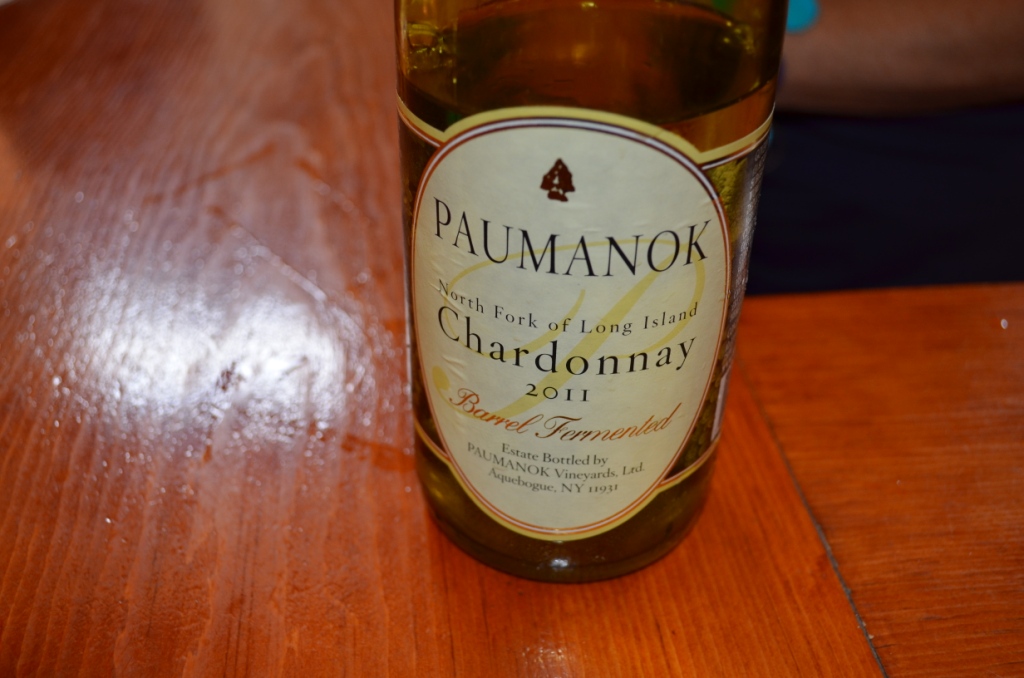 This wine spent 6 months in barrel. Notes of vanilla on the nose, more vanilla, hint of butter and some apples on the palate, very good balance.
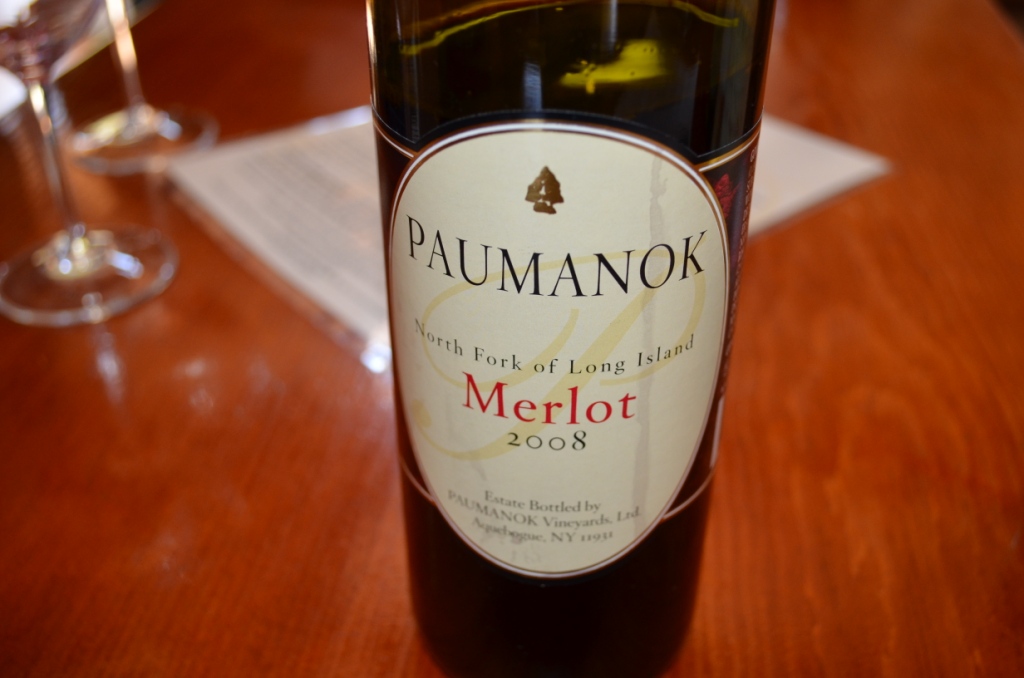
And now, to the reds! We started with 2011 Paumanok Cabernet Franc – nose of fresh berries, somewhat similar to the nose of Beaujolais Nouveau, only with more intensity, medium body, cherry notes on the palate, together with earthy notes and gentle tannins – very good wine. Next wine was 2011 Paumanok Cabernet Sauvignon. It was not bad, but too perfumy for my taste. I honestly think that Long Island makes much better wines with Merlot than with Cabernet Sauvignon. Last wine in this flight was 2008 Paumanok Merlot, which was perfect – medium to full body, good amount of fruit, good acidity and tannins – very balanced.
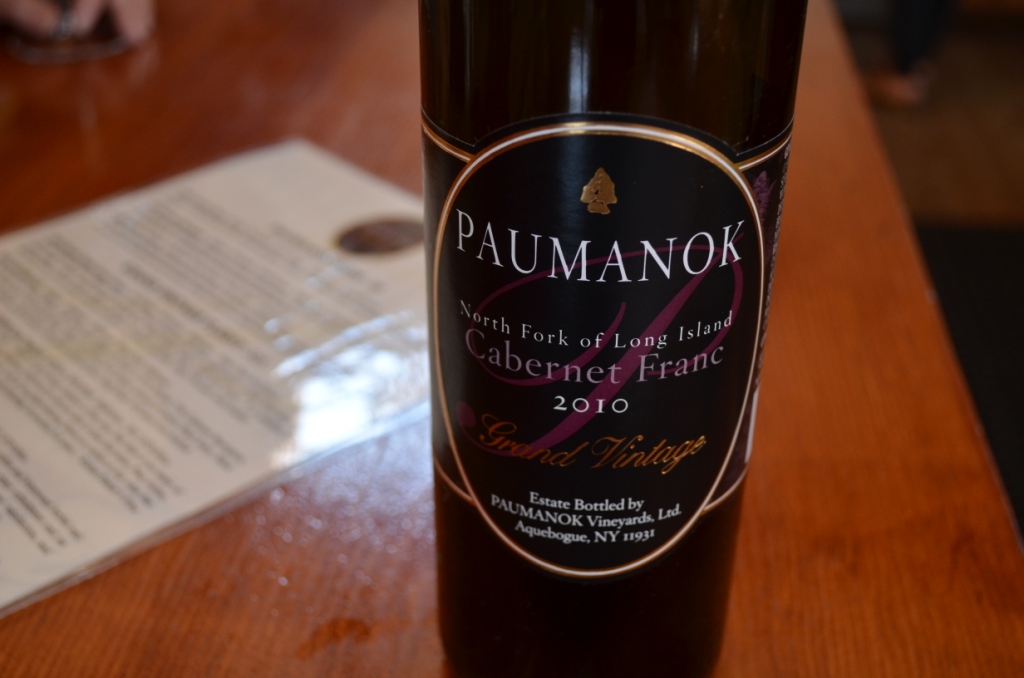
We finished tasting with Grand Vintage Flight. 2010 Paumanok Cabernet Franc Grand Vintage was produced for the first time since 2004 in the quantity of 156 cases. This wine was perfect – full body, ripe cherries, sweet oak, soft tannins – I put “full package” as a summary of my tasting notes.
Next wine in the flight was 2010 Paumanok Assemblage – a blend of 35% Merlot, 33% Cabernet Sauvignon, 21% Petit Verdot and 11% Cabernet Franc. Even bigger than the previous wine, this wine showed some additional dark chocolate notes and great overall balance (as you know, balance in wine is one thing which can push my buttons).
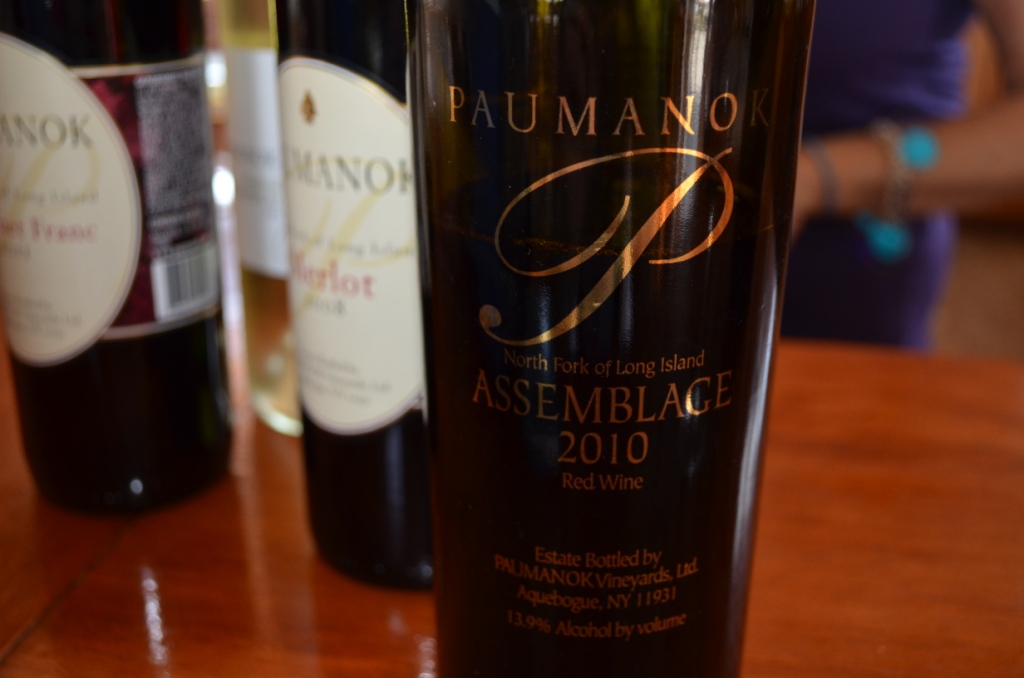
We finished our tasting with 2007 Paumanok Merlot Tuthills Lane Vineyard – which was a great wine – dark fruit, dark chocolate, hint of tobacco, supple tannins and fresh acidity – very tasty.

As we were finishing the tasting we met Ursula, who happened to be the winery owner. She works at the winery together with her three sons, who are in charge of all operations – wine growing, wine making, harvesting and everything else which goes into production of Paumanok wines. Seeing our keen interest in wines, Ursula happened to be the most gracious and welcoming host, and we got really an inside tour of winery and what was happening on that day – which was a Merlot harvest.
Ursula showed us fermentation tanks and barrels, as well as state of the art bottling line:
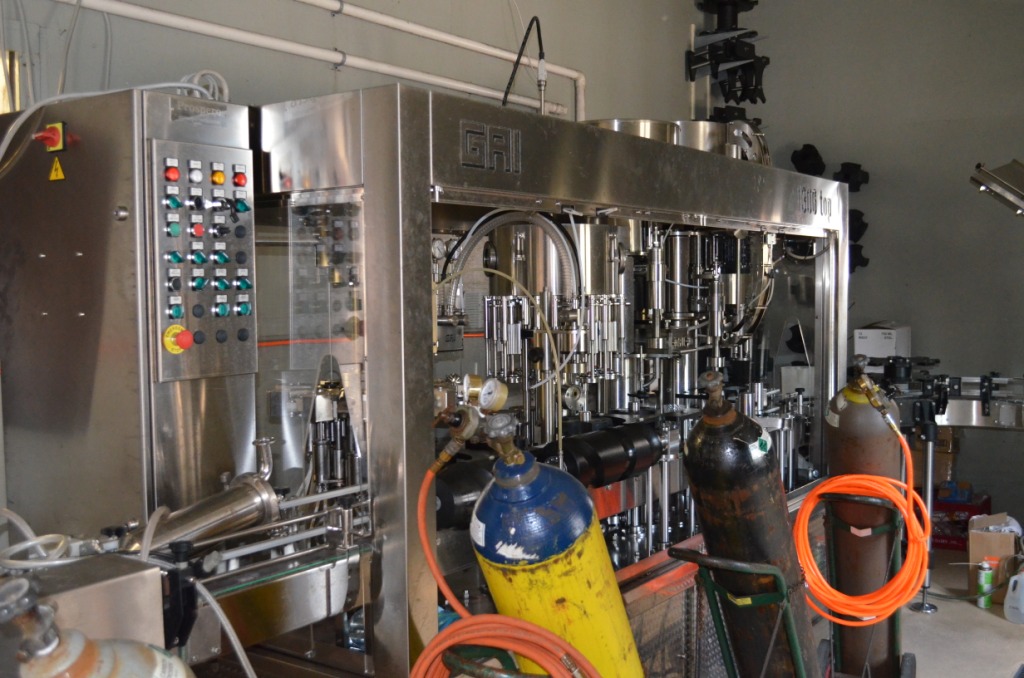
But most importantly, she gave us a taste of just fermented Chenin Blanc, which was incredible! Freshly fermented juice was something I never tasted before, so it was my first encounter with inside magic of winemaking – and it was delicious.

To add up to that experience, she also took us to the backyard, so to speak, where the fresh grapes were arriving.
Merlot grapes at Paumanok are harvested using the machine. Salim, another one of the three brothers was operating the machine and he gave us all the explanations. This machine can’t be used for all the grapes – only for those where whole cluster doesn’t have to be harvested – for instance, it is not used for Chardonnay, as whole clusters are fermented as part of Chardonnay production.

The machine is positioned such a way that the row of the vines happens to be right in a middle of it. As the machine moves forward with the vines all being inside, all the branches are getting a gentle shake from the side rods:
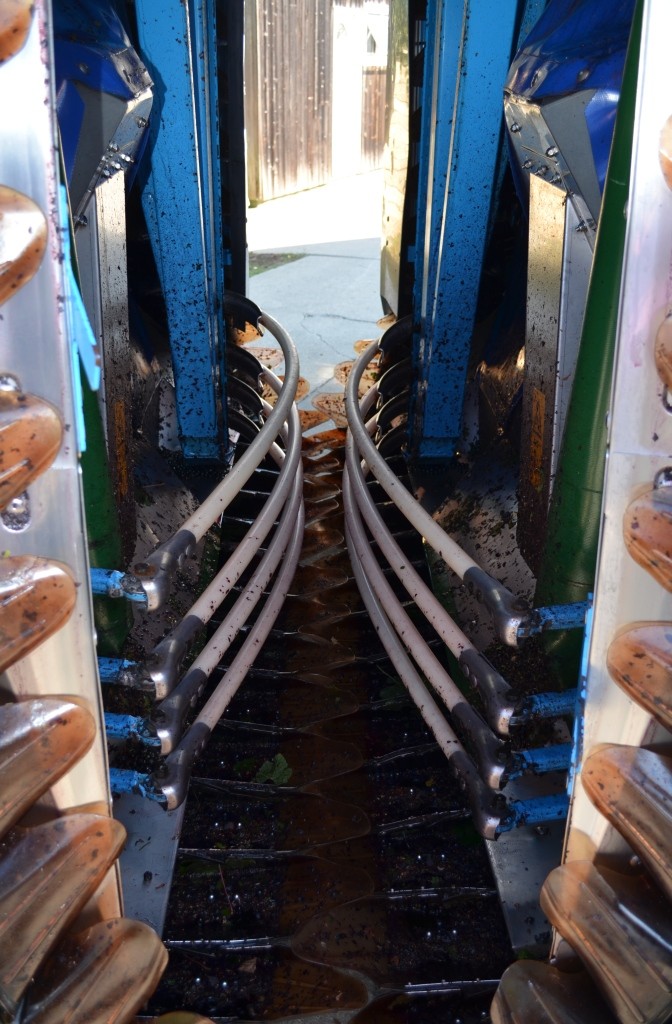
As the result, grapes are falling down into the receptors, which are all moving as a conveyor belt, bringing the grapes up into collection bin.
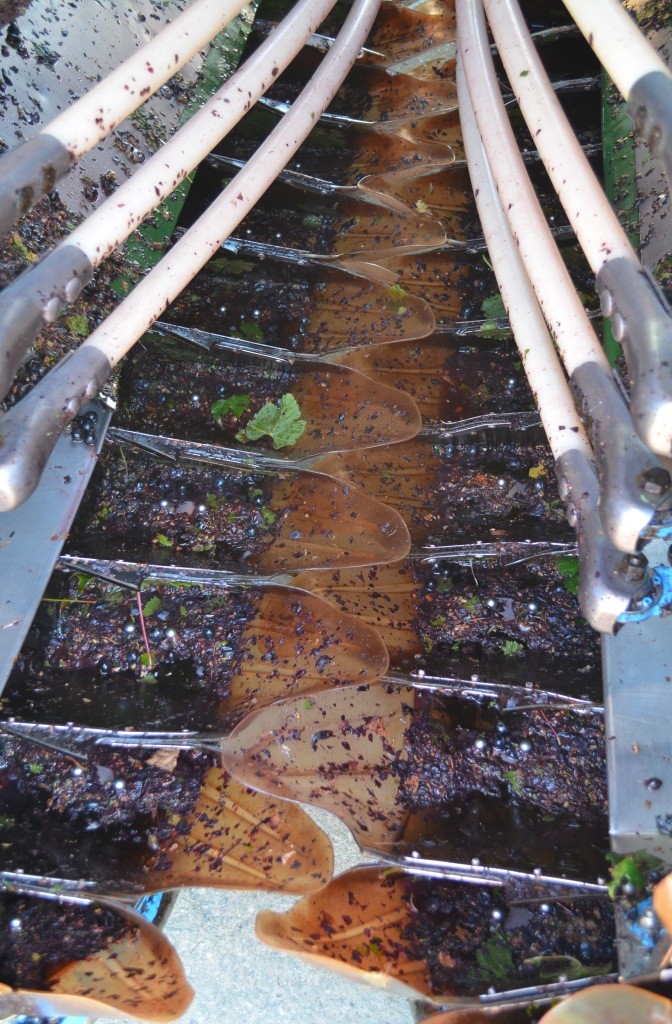 Once arriving at the sorting facility (back at the winery in our case), the grapes are transferred into one big container:
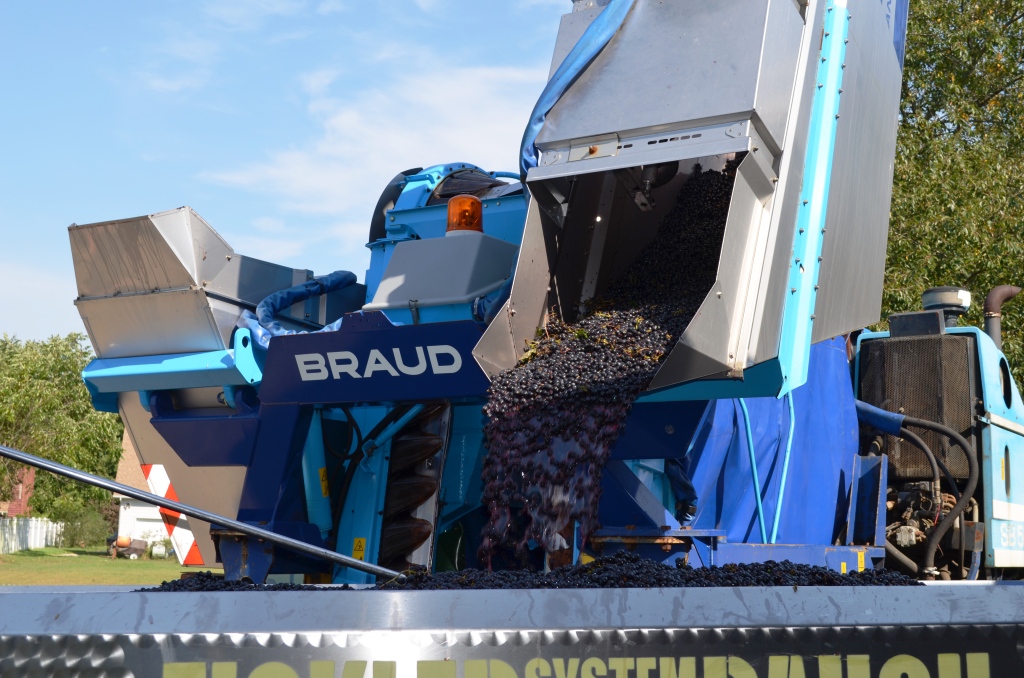
So the result looks like this:

And then the grapes get to the sorting table, where minimal processing is done to remove big branches and spoiled grapes:
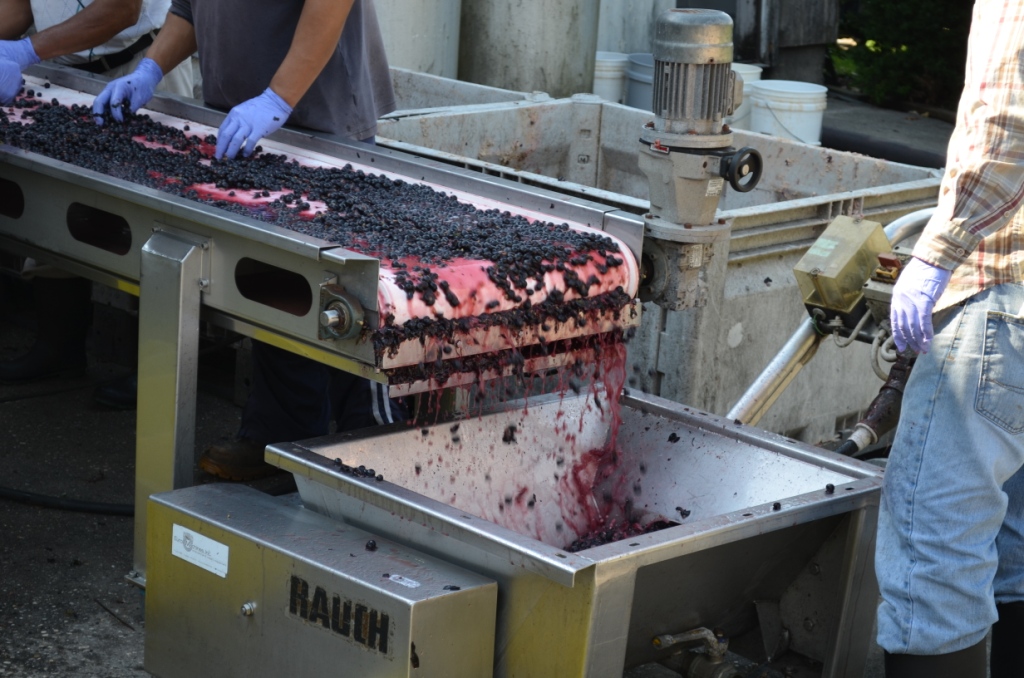
From the sorting table the grapes are transferred directly into the fermentation tank. By the way, do you see that juice coming off the sorting belt? We had a chance to taste that too – it was absolutely delicious – not that I hold any grudge against Welches, but this juice is something I would gladly drink any time (Welches – sorry, can’t do).
We always have a great time at Paumanok (as I mentioned before, this is our “annual outing”) – but never before we were lucky to have such a special experience and see how the magic starts.
After lunch we decided to visit two more wineries – Bedell and Macari. And I have to mention that unfortunately, outside of the cool labels, we didn’t find a single wine from Bedell tasting which we liked – all the reds tasted very green, with lots of branches to chew on.
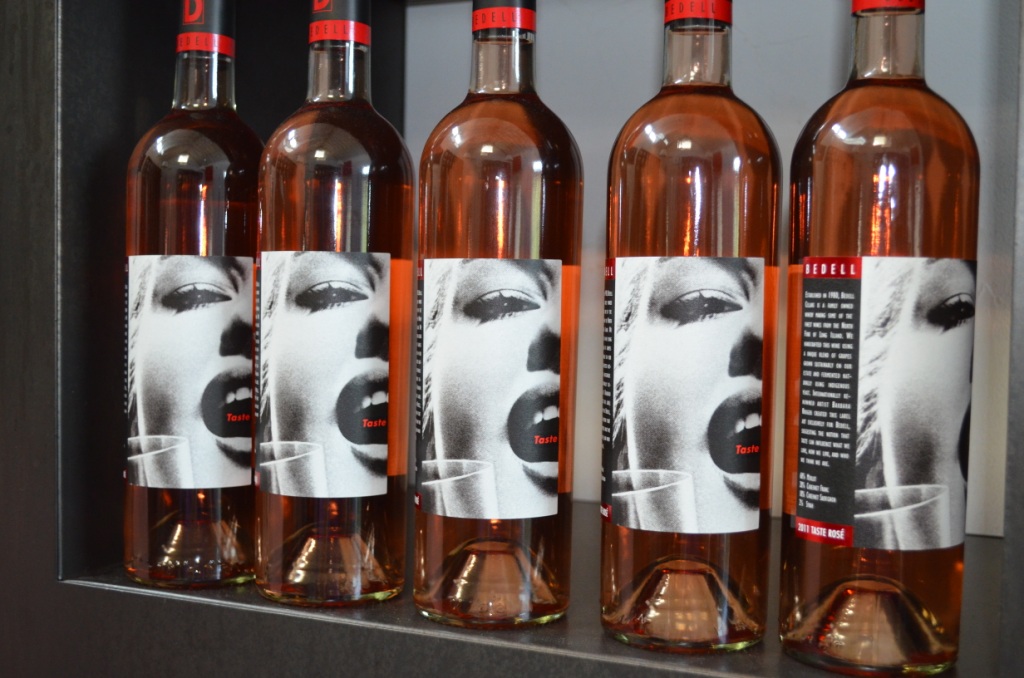
Oh well, at least Paumanok had being very consistent through many years, so we are definitely looking forward continuing our tasty tradition.
I hope I didn’t inundate you with pictures too much, but there you have it – my first harvest experience, and I hope not the last (and if you are into wines, you should seek that experience as well!). Until the next time – cheers!
Big Time at the Big Winery: Visiting Chateau Ste. Michelle
As you know, wine is my hobby – I don’t belong to the “wine trade”, but as a wine aficionado (oenophile and occasional snob), I’m an eternal student of wine (luckily, the world of wine happily offers eternal learning opportunities). How do you learn about wine? There are many ways, but tasting the wines and talking to the people who make them is probably one of the best – I just had a great learning experience which I want to share with you.
Chateau Ste. Michelle is located in the State of Washington, about 30 miles north of Seattle. While visiting Seattle not long ago, I realized that I have enough time before my flight back to the east coast to visit the winery and (yay!) try some wines.
The place looked pretty impressive as I drove in – I visited quite a few wineries over the years and Chateau Ste. Michelle probably was the biggest one I have ever been to. Took me a while even to realize that the big door was there with the purpose and not just a part of the old mansion. Here are a few pictures from you so you will get the idea:
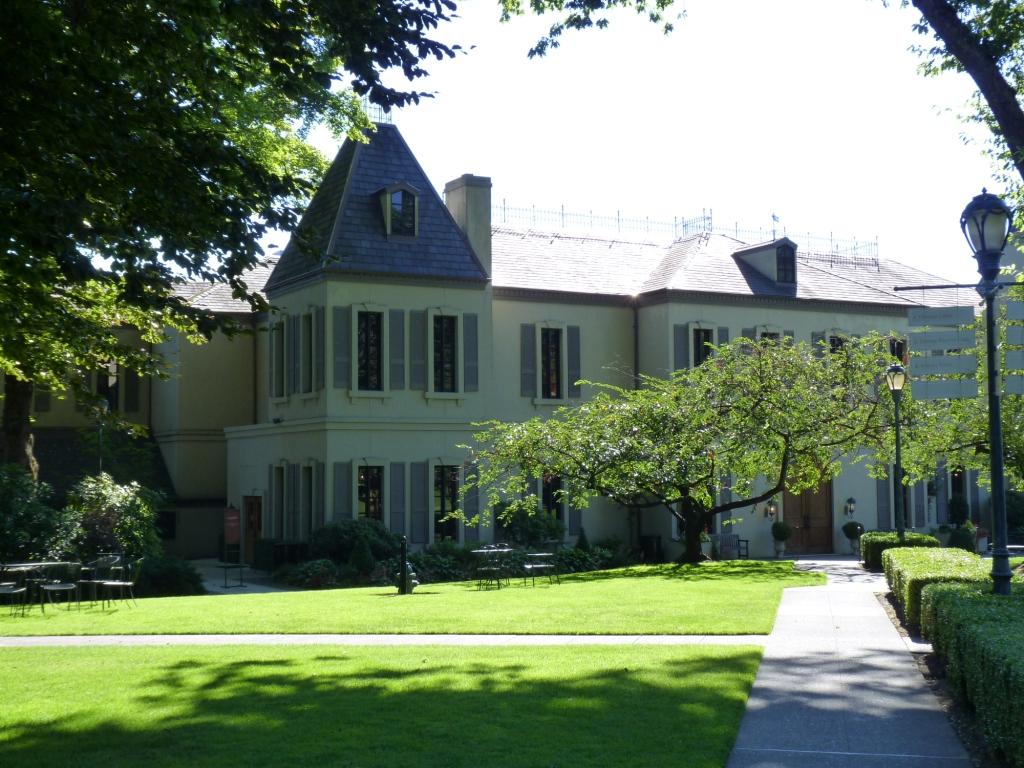 Here is the door I was contemplating to touch:
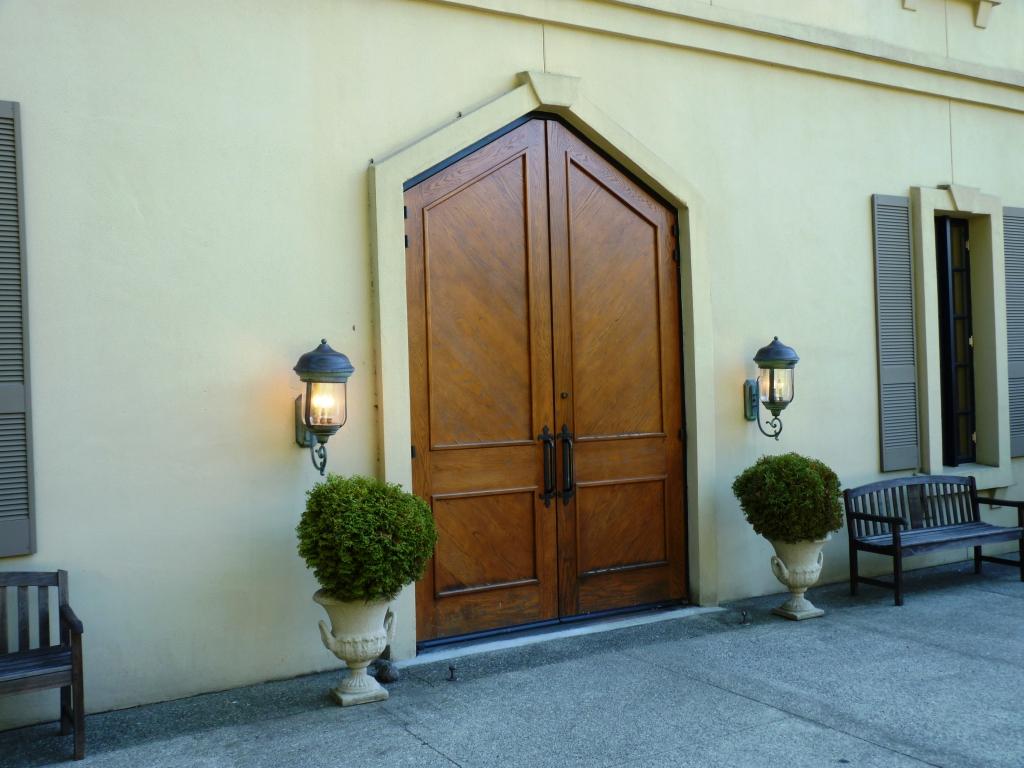
From here on, this will be pretty much a picture report with some tasting notes, of course.
By the way, just to give you an idea of the size of this winery – look at this conveyor belt – there are between 7,000 and 9,000 cases (!) of white wine made there per day (!):
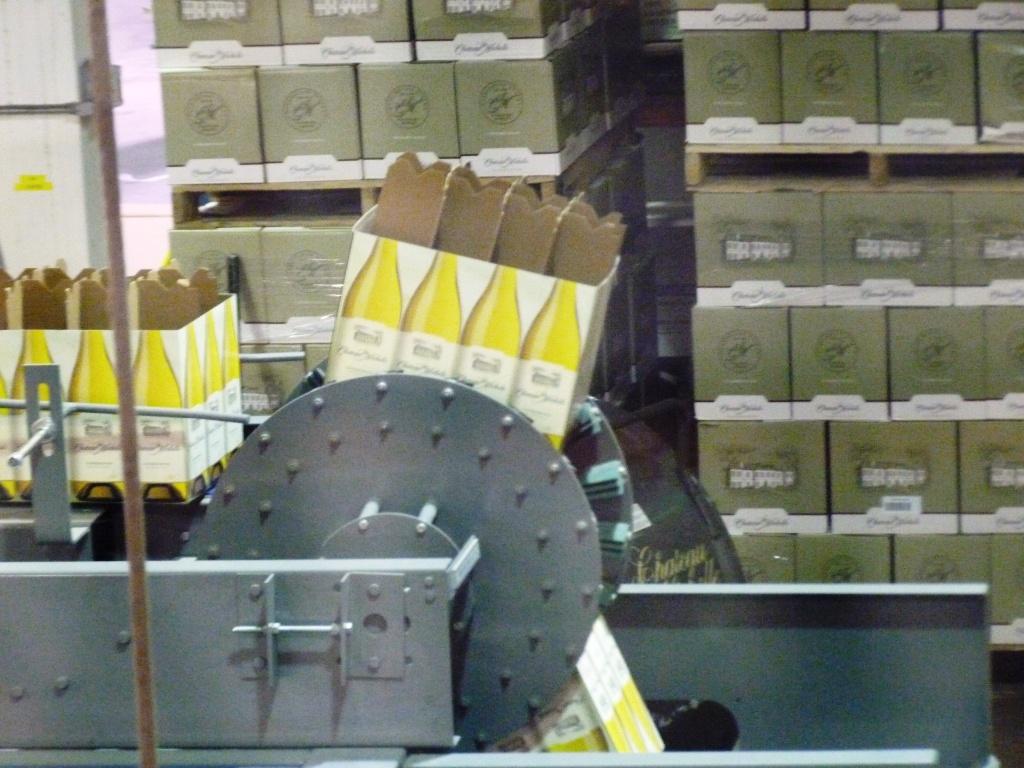
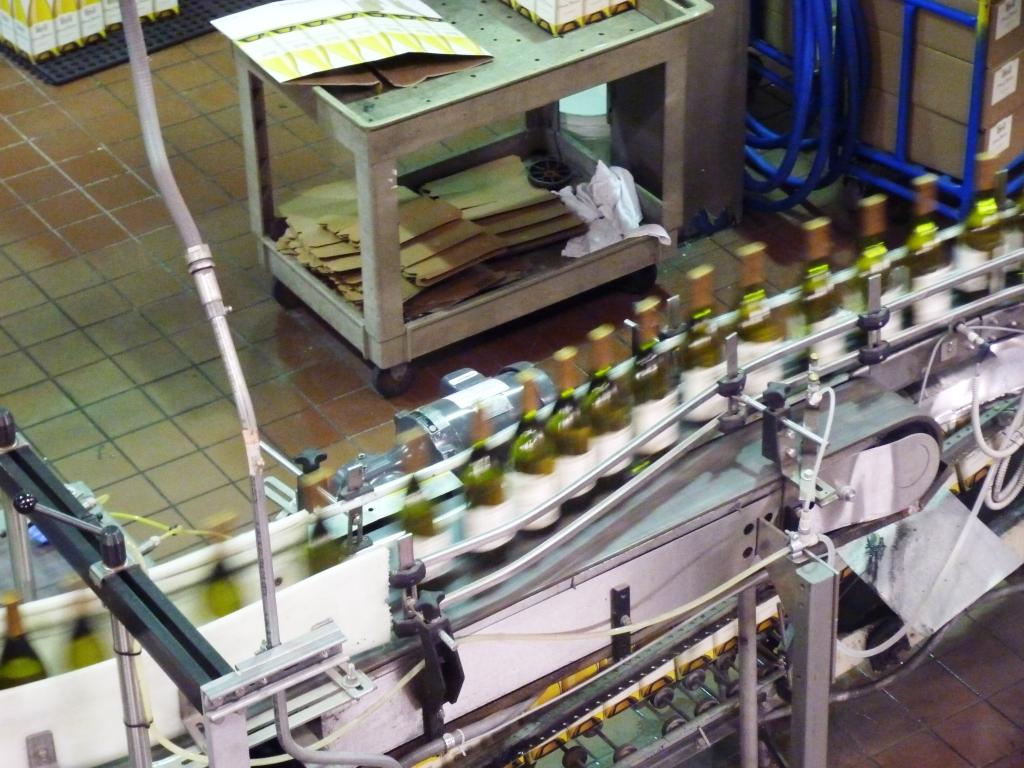
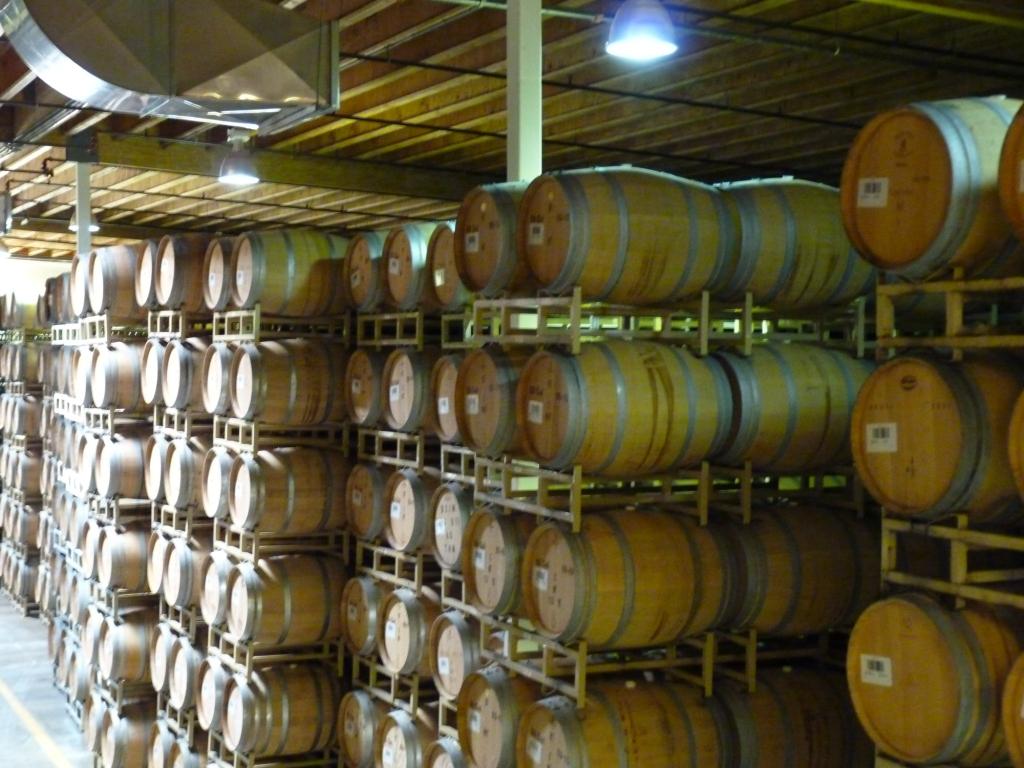
And those barrels? They all hold white wine, and there are 28,000 barrels in that room (!). And the smell alone in that room – ahh, you really should experience it for yourself – the magnificent Chardonnay aromas filling up the air – you really can enjoy this smell countless amount of time.
Wait, here are the tanks first:
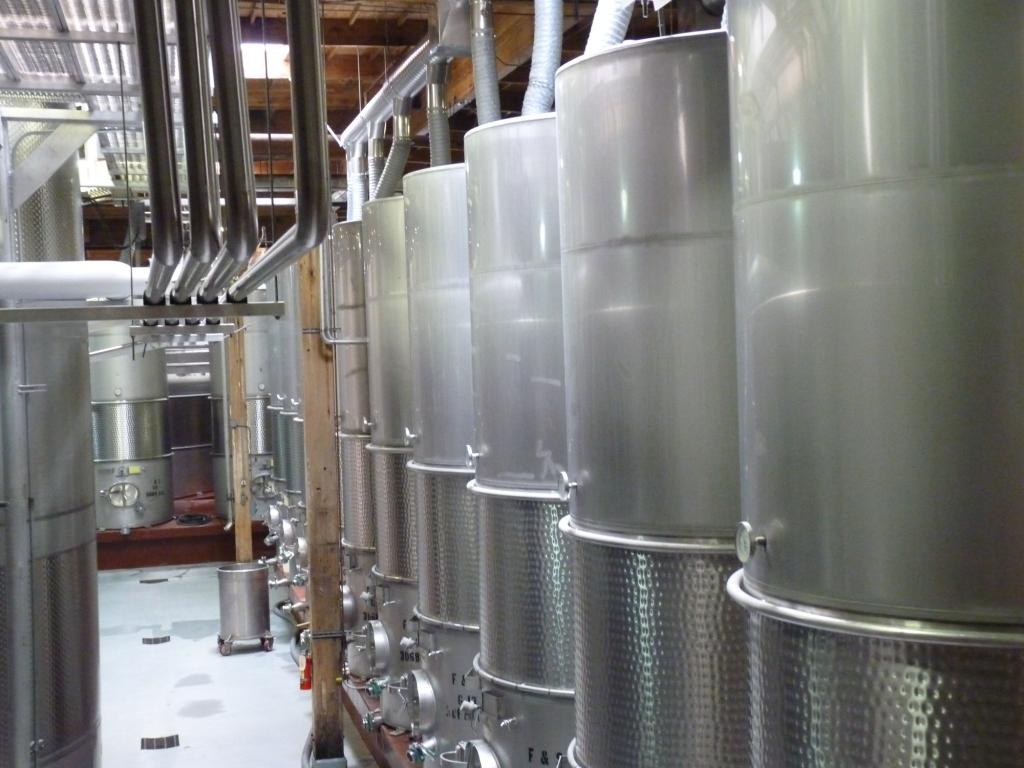
And now, the barrels (no, you can’t see all 28,000 in this picture):
Now, let’s talk about the wine – no more “supporting pictures”.
The tasting was conducted in the library room, where I was surrounded by the wines I really (REALLY!!!) wanted to try – but I had to only look at them… Here are some of the wines I didn’t try:
1977 Cabernet Sauvignon:

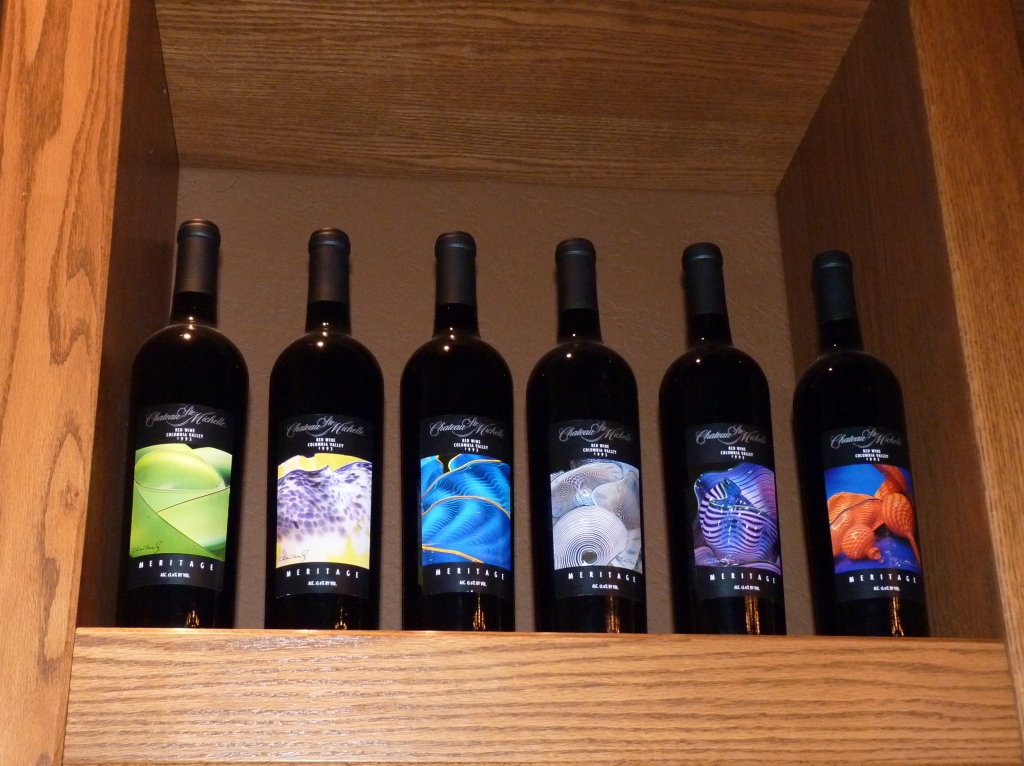
Then I didn’t try this 1993 Meritage:
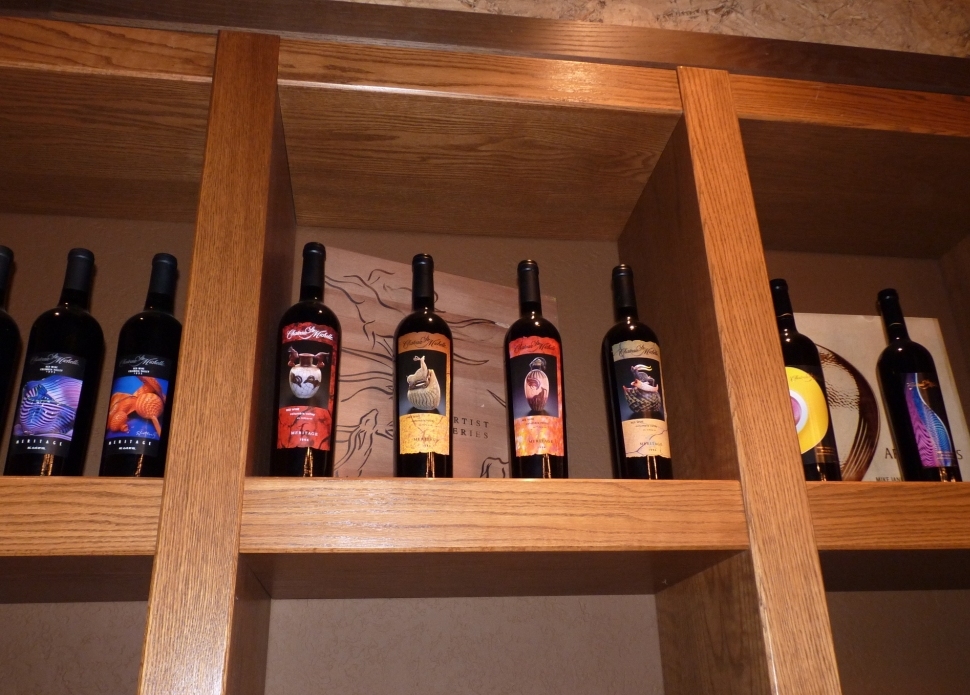
1994 Meritage? Nope, still nothing…
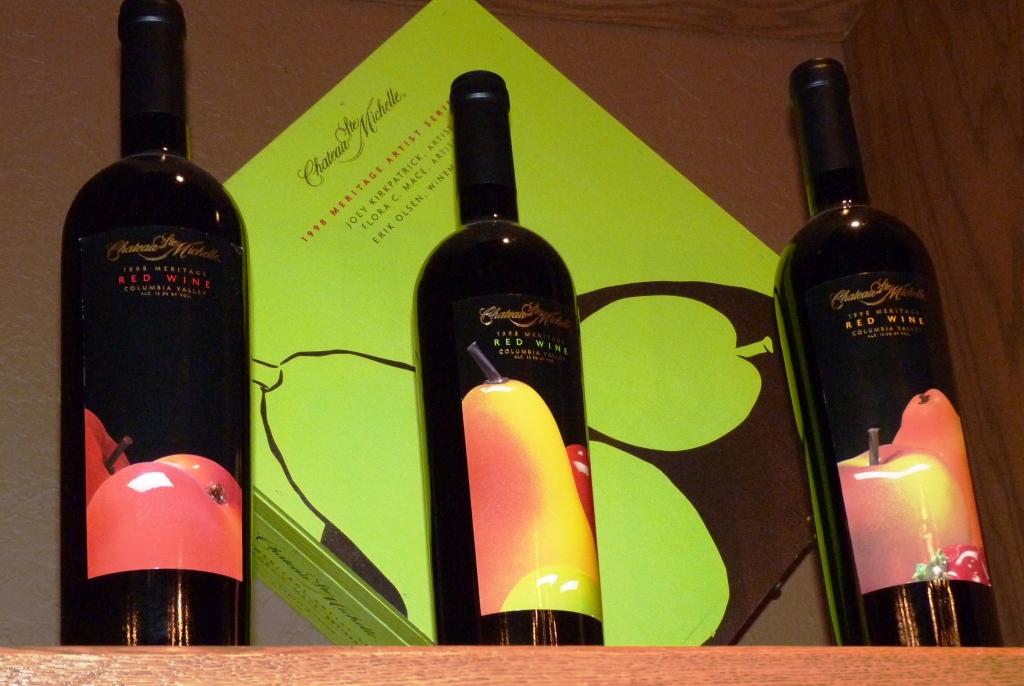
And I didn’t try this 1998 Meritage:
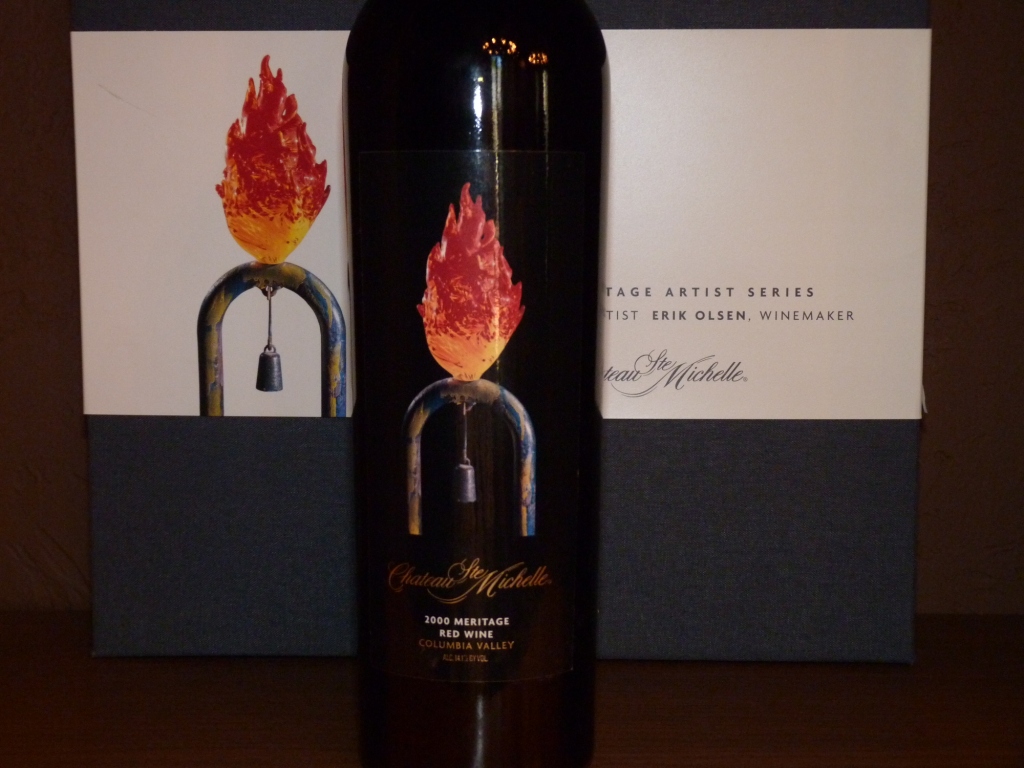
Another wine I missed on, 2000 Meritage:
2004 Meritage? I could touch…the bottle, that’s all:
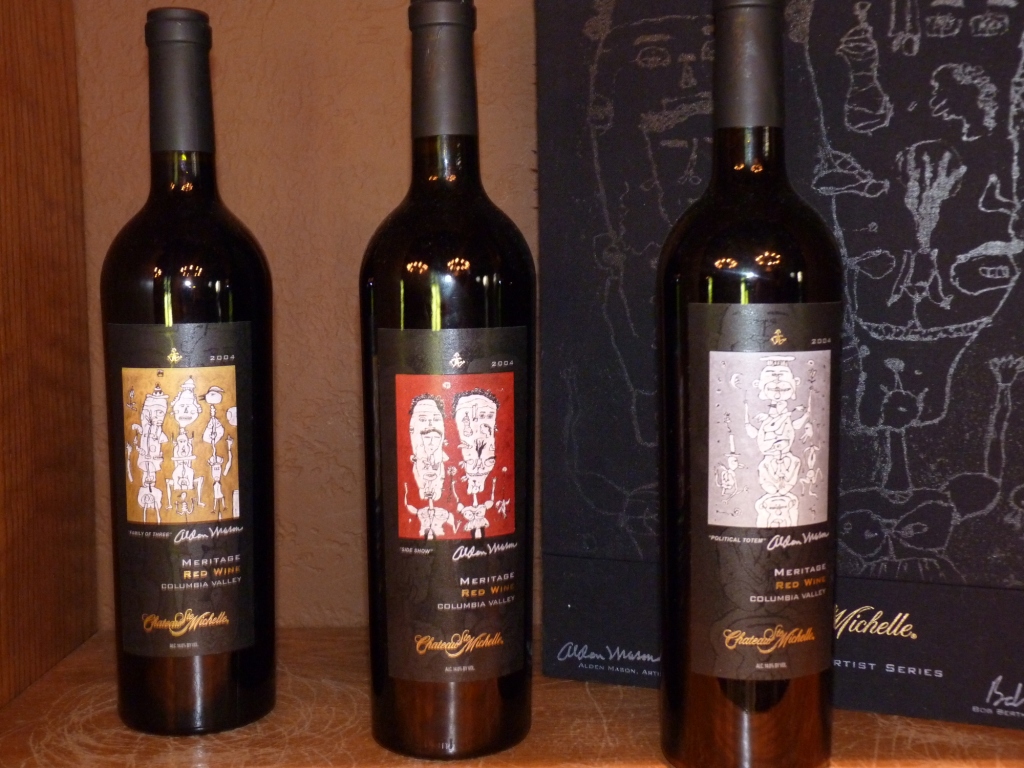
Okay, that’s it. Yes, I just wanted to share some pictures with you, so it would mean that I didn’t take those pictures for nothing.
And now, let’s talk about wines I actually tasted.
The tasting started with Domaine Ste. Michelle Cuvee Brut NV. As a confession of the wine snob (wow! need to patent that – should be a great name for a series of posts) I have to admit that I always passed that sparkler in the wine stores. I will not make this mistake anymore! Perfectly balanced, with the nice notes of green apple, and fresh, clean, high note acidity (and the price of $11 or so), this can be your perfect everyday bottle of sparkling wine.
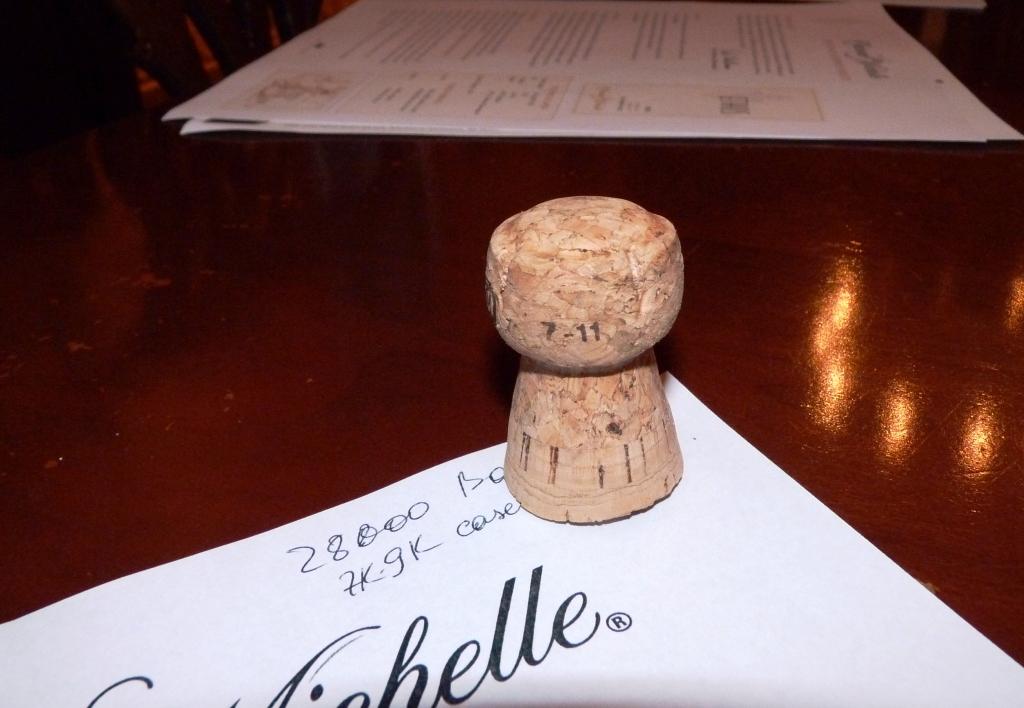
On a related note, I would like to also give you a mini-quiz (the answer will be at the bottom of the post) – below is a picture of the cork – what do you think those numbers mean and why are they there?
Next, we moved to the 2009 Canoe Ridge Chardonnay – it had a touch of butter and toasted oak on the nose, but was somewhat green on the palate – I was hoping for a bit more round profile on the palate.
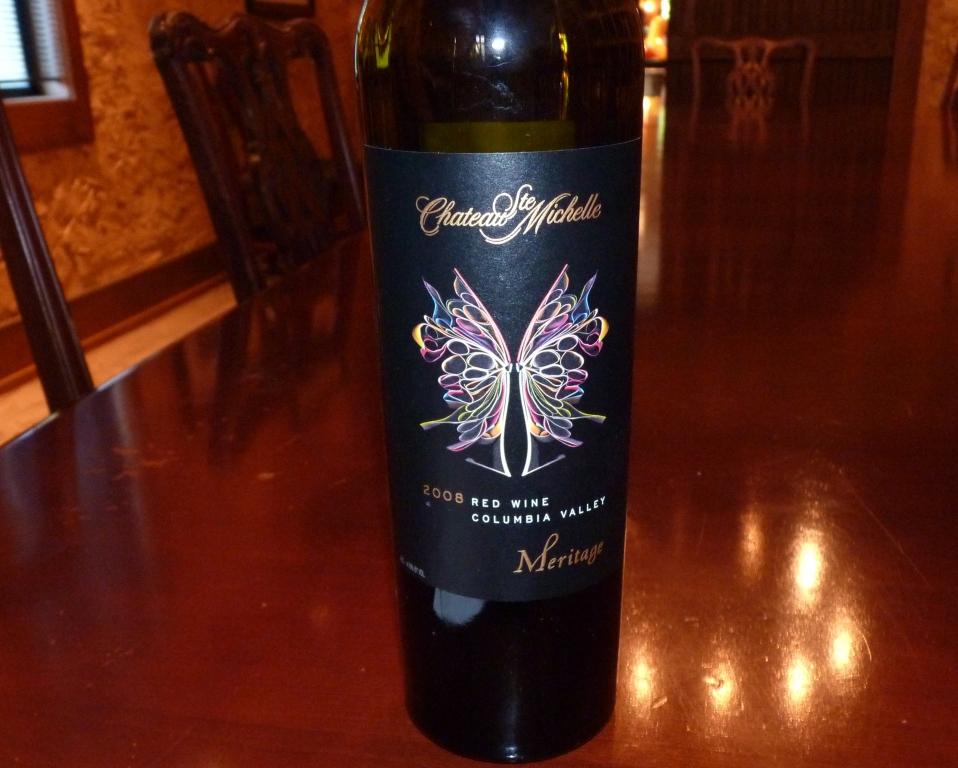
Next wine was the 2008 Artist Series Meritage – 51% Cabernet Sauvignon, 36% Merlot, 6% Cabernet Franc, 6% Malbec and 1% Petit Verdot – this was actually the first year for the whole period of Meritage production when all 5 classic Bordeaux varieties had been used. The wine was beautiful, perfectly balanced and reminiscent of a classic Bordeaux.
2009 Cold Creek Cabernet Sauvignon – single-vineyard Cabernet was perfectly clean with eucalyptus and earthy notes, soft fruit, and a long finish. As Renee ( my host) explained, this wine is usually not really welcomed by guests from California, as it shows much less exuberance compare to the traditional California Cab.
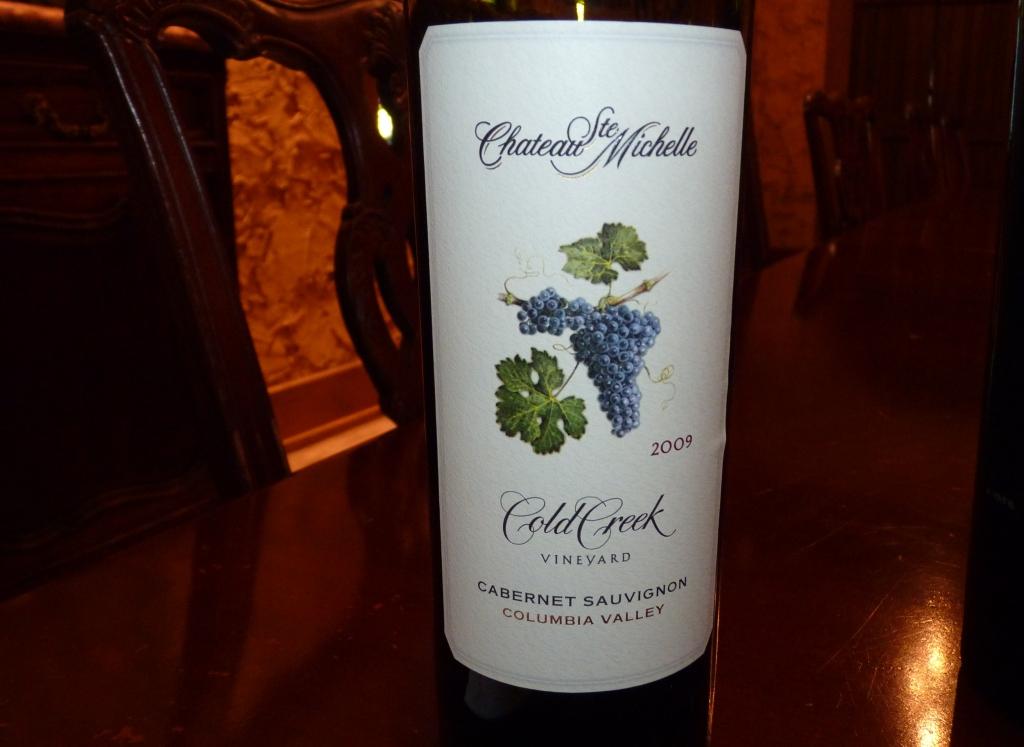
However, Washington Merlot, such as 2009 Ethos Reserve Merlot is fully redeeming the softness of Cabernet – this wine has broad shoulders, very big, powerful, with blueberries and blueberry jam, tobacco and dark chocolate notes – very impressive wine.
Last in that line of the tasting was 2006 Late Harvest Chenin Blanc, single vineyards from Horse Heaven Hills, RS 17.8% – this wine was perfectly balanced, with notes of honey and apricots, and clean, fresh acidity – very nice.
Do you think we are done? Nope. There are a few more wines to report: 2008 Stone Tree Vineyard Syrah Wahluke Slope was soft and supple, with a touch of spice:

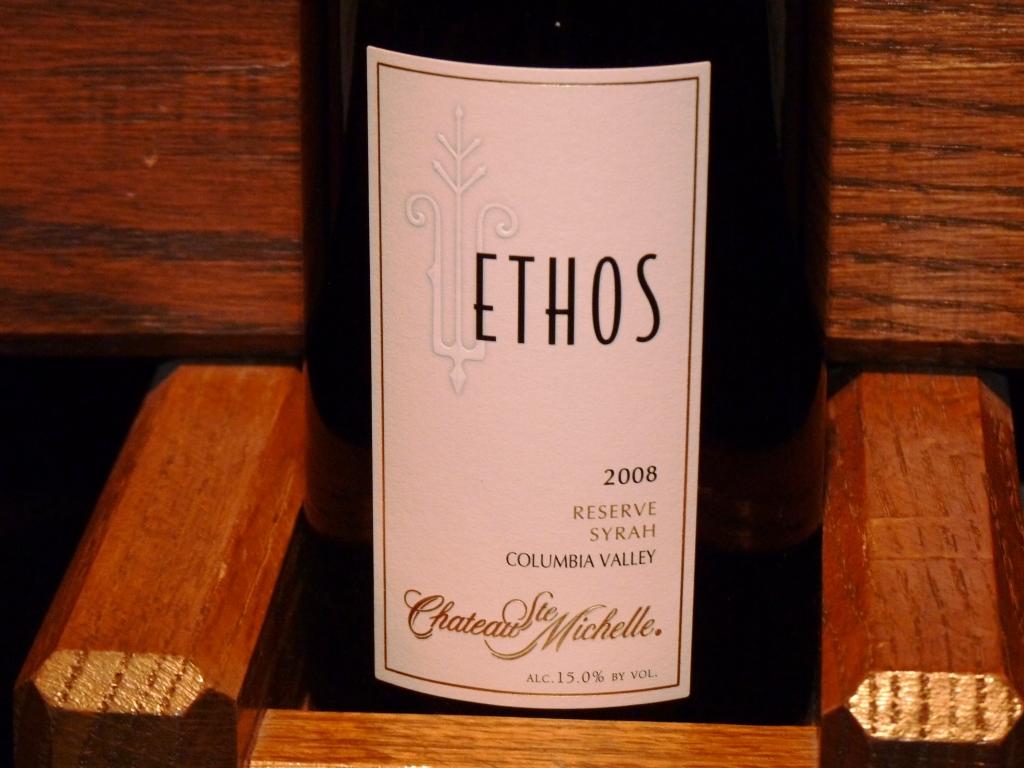
And then there was 2008 Ethos Reserve Syrah, which I have to simply call Best of Tasting – it was a “wow” wine, perfect BBQ wine with the nose of smokey roast, perfect power, balance and beauty:
And… We are not done yet! Then I had an opportunity to try Col Solare wines, which are a product of the partnership between Chateau Ste. Michelle and Tuscany’s Marchesi Antinori. The winery is situated on the Red Mountain in Washington, a part of Columbia Valley appellation, and the vineyards and the whole winery are resembling sun rays – you can see it for yourself in this picture on the website.
The wines are done in the true Super Tuscan style, powerful but reserved. I had an opportunity to try 2006, 2007, and 2008, and as a common point, I can only say – these wines need more time…
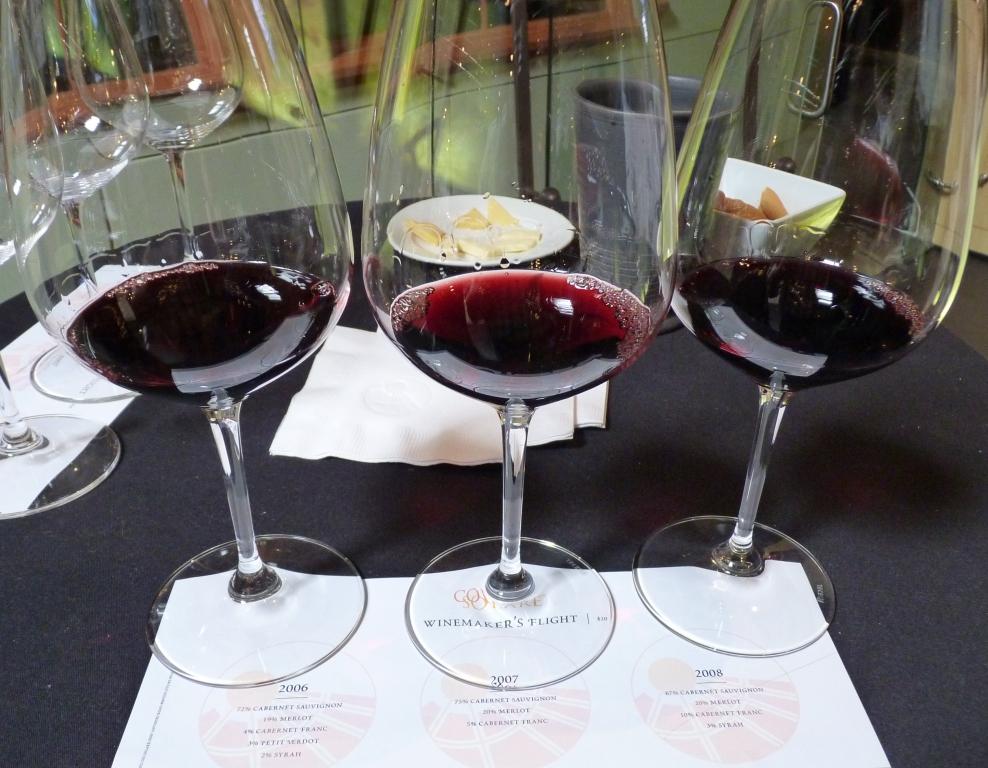 Dense and a touch chewy, with nice dark fruit, cherries and plums, earthy notes and good acidity, very balanced. These wines are not easy to find, but worth seeking.
And for me – here is something again which I didn’t try:

Okay, your photo-torture is done. I’m taking complaints in the comment section. And I’m pretty much done with my report. Ahh, yes, almost forgot – that mini-quiz… Did you figure out those numbers on the cork? Of course, you did, it is a production date. But I managed to surprise even my host Renee, who didn’t know about that date being printed on the cork (I even surprised myself as I never saw it before and only read about it) – the importance of this information is that with this date, you can know how long ago that non-vintage sparkling wine was produced. And I don’t know if you tasted an NV sparkler that was laying around for 5-6 years – it tastes very different from the freshly made version. And with the date on the cork – now you know.
Now I’m done with this post for sure. Find the bottle of Chateau Ste Michelle wine and have a glass – if you managed to read up to this point, you definitely deserve it. And if you are visiting Seattle – well, now you know what you shouldn’t miss. Cheers!
Rediscovering Ridge
 About five years ago, during one of my numerous trips to California, I had a little bit of free time. What do you do when you are in California, have a little bit of free time and love of wine? Of course, you go visit the winery!
A that time I decided to go visit Ridge Vineyards, located in Santa Cruz Mountains region, not far from San Jose. All I knew is that the winery is making wine called Monte Bello, which became famous after beating classic French Bordeaux during 1976 Judgement of Paris event. So I managed a steep 4 miles ride up the Monte Bello road, reached the winery, tasted 5 or 6 different wines and … didn’t like a single one of them. No, I don’t remember what exact wines and what exact vintages I tried, I just remember that none of the wines created any ”oompf”. I was disappointed and squarely put all the Ridge wines into ”I [really] don’t like it” category.
Holding that unhappy memory through the years, last year I even expressed my opinion in the comment to the twitter post by Jancis Robinson (she selected Ridge for a special wine tasting in Hong Kong), which caused some very unhappy reaction among her followers (to say “very unhappy” is a very mild understatement).
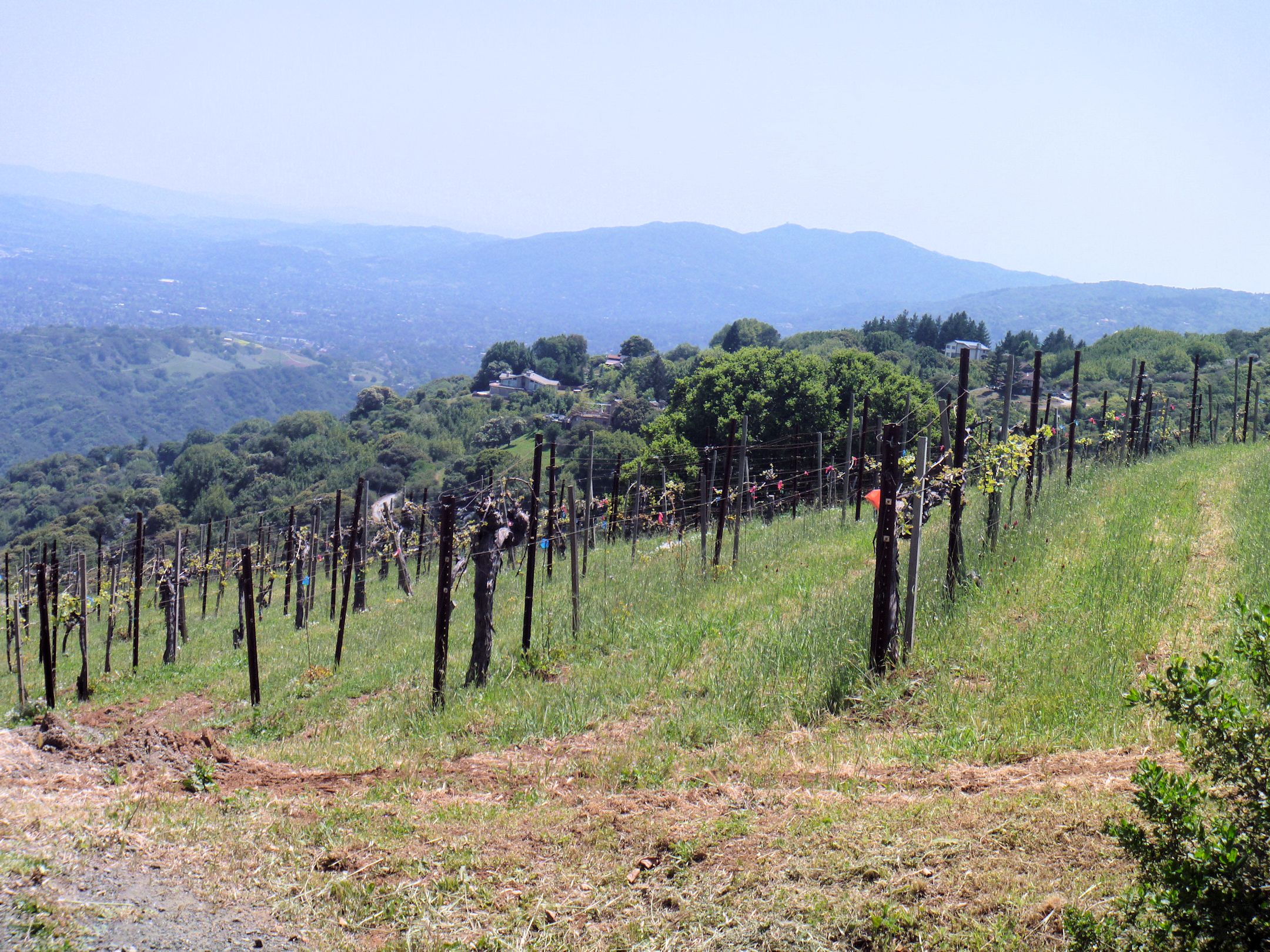
I can’t tell you why, but when this year I found out that I will be in San Jose area and I will have a bit of the free time, very first thought was ”I have to try Ridge wines again”. Four steep miles up the Monte Bello road and here I’m again. The air was beautiful, and so was the scenery – let me share a few pictures with you.
Ridge Vineyards is located near the top of Monte Bello Ridge. This is the “view from the top”:
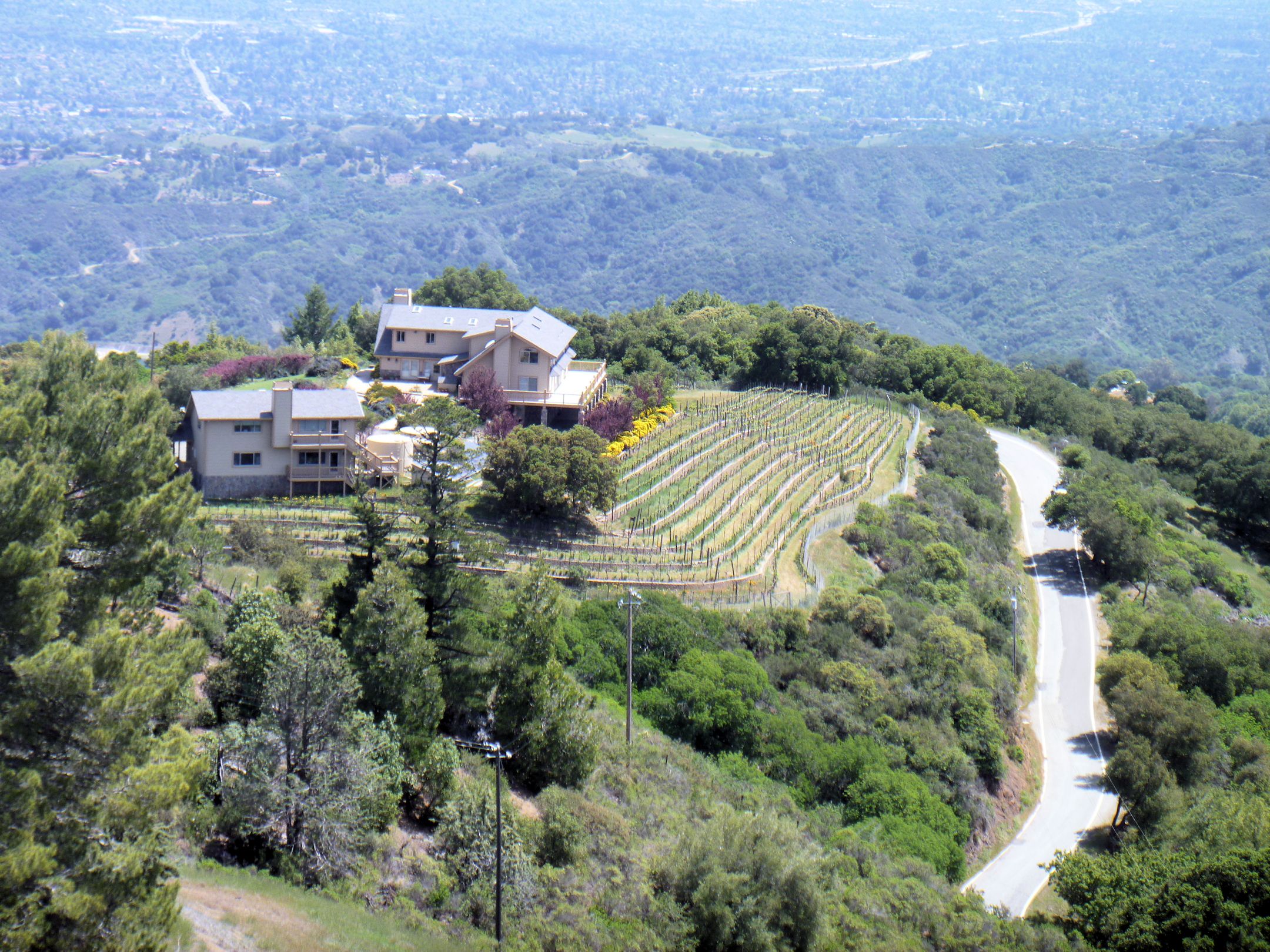
These are the vineyards at Ridge (by the way, in case you recognize the picture, it gives you an answer to the wine quiz #10, Where in California – correct answer is Santa Cruz Mountains region):
Here are some beautiful flowers for you:

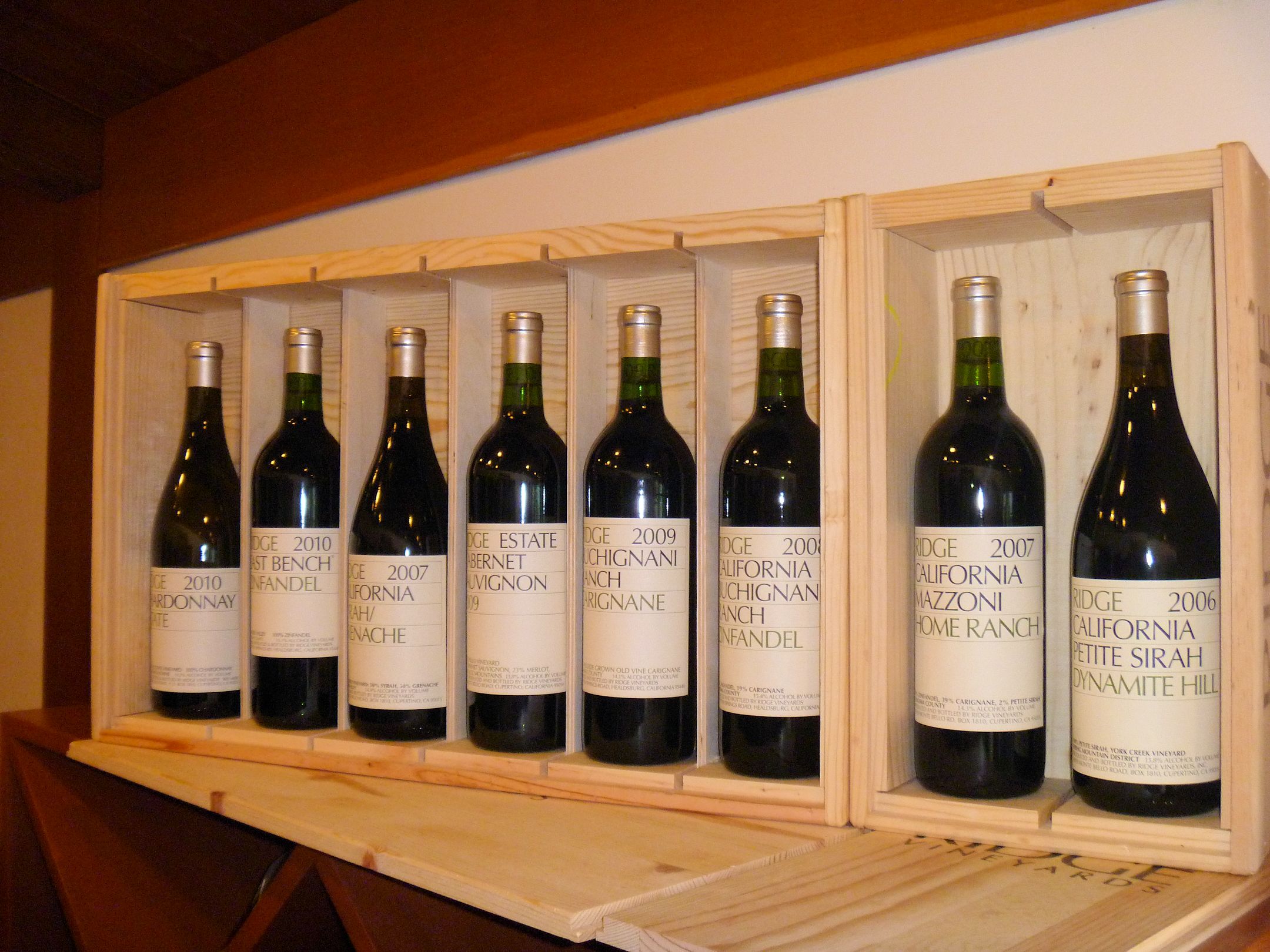
Can you guess what happened now? I tried 7 different wines and … I liked loved every one of them. They all had common trait – balance and elegance, a quiet beauty, and may be most importantly, a sense of place – terroir, as French would put it. None of the wines were in-your-face, see-how-much-muscled-fruit-i-have – all of them were rather subtle, thought provoking and requiring time to reflect upon the content of your glass.
I don’t have an explanation. How come I didn’t like any wines the first time? Was that a ”leaf day”, a ”root day” or ”generally unfavorable” day? Did my palate evolved (that one I’m quite sure is true)? As you can’t enter the same river twice, I will not be able to relive that day 5 years ago and understand my reaction at that time. But I’m glad someone somehow somewhere decided that I have to go and try Ridge wines again – and discover something really beautiful.
 Here are the tasting notes for the wines I tried:
2010 Estate Chardonnay – A little edgy in unusual way, some herbal undertones, oak is unnoticeable, except back palate burn. Opens a bit cleaner later on, long finish with hint of lemon.
2009 East Bench Zinfandel (15.1% ABV) – dry, with some dry rub spices, nice nose of blackberries, unnoticeable alcohol level, very balanced, perfect fruit and acidity on the palate.
2007 Lytton Estate Syrah/Grenache (14.49% ABV) – nice fruit, touch of spice, hint of dry cherries, gentle tannins, good acidity. Perception of tannins increases going forwward.
2009 Estate Cabernet – Tremendous minerality on the nose, you can literally smell the earth. Very nice – hint of green, very Bordeaux-ish in style, restrained and balanced
2009 Buchignani Ranch Carignane – Tobacco and tar, nice bite of spice, nice simplicity. good tannins on the finish.
2006 Dynamite Hill Petite Sirah – Beautiful fruit right on top, dark fruit undertones, some cherries.
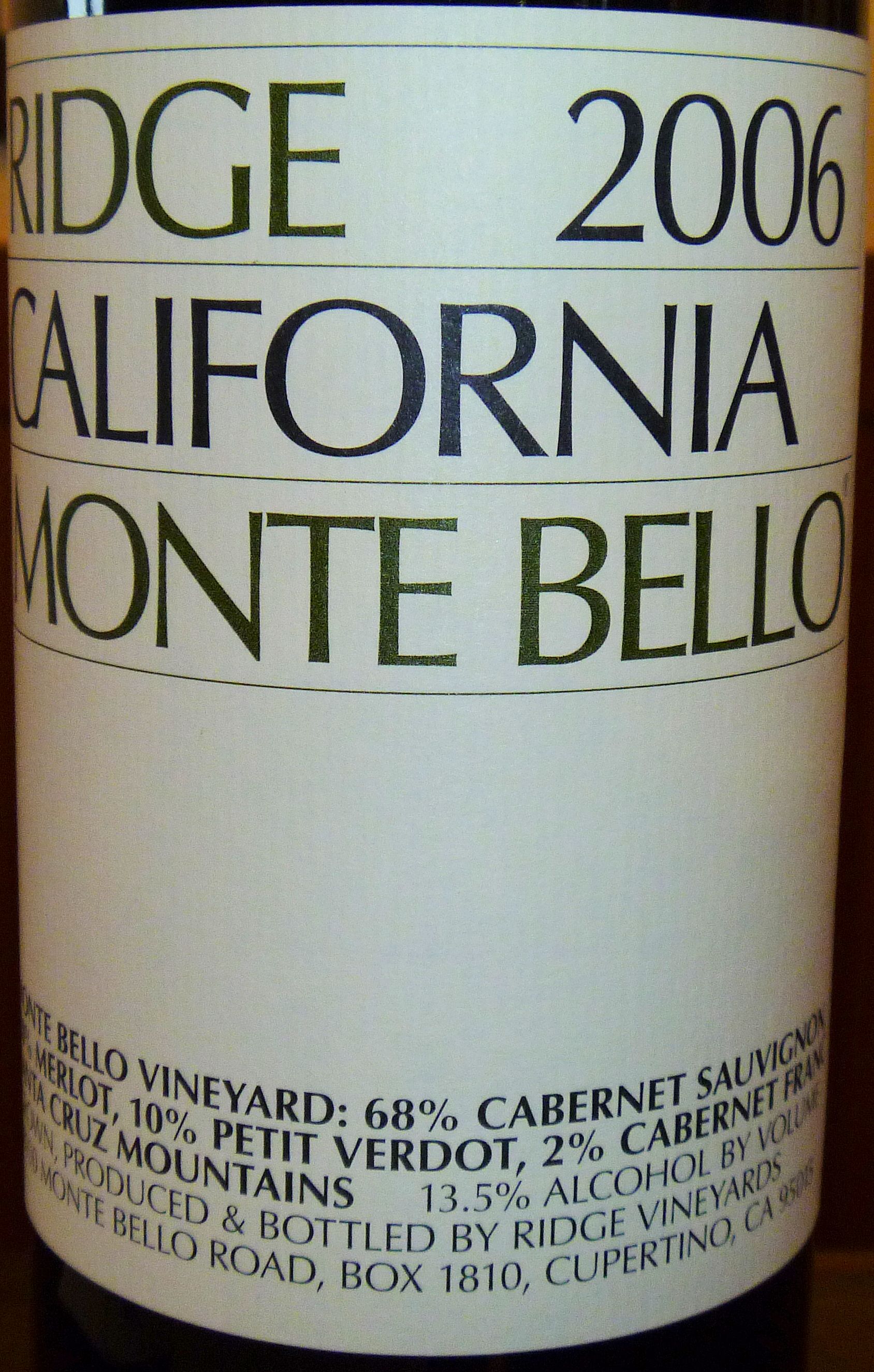
2006 Monte Bello – Beautiful fruit, perfect balance, very classic Cabernet Sauvignon blend, very long finish with tannins which are growing on you, hint of tobacco and earthiness on the palate. I’m glad this was the last wine I tasted, as the finish actually lasted at least for the next 20 minutes.
Yes, I was wrong before, and I don’t have any problems admitting it and getting over it – Ridge Vineyards makes great wines with the sense of place, and – better late than never – I’m very happy I made this discovery. Let’s raise the glass to the great discoveries of our lives! Cheers!
Last Bottle Sign Up ($10 credit)




 Talk-A-Vino