Archive
Honora Winery
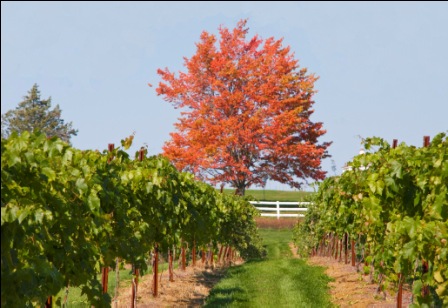 Guest Post by Celine Labarre
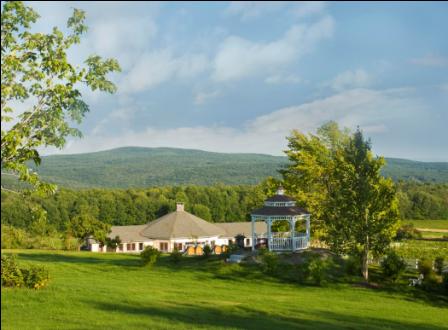
Honora vineyard and estate is located in Southern Vermont’s Green Mountains of West Halifax, only 2 ½ hours from Boston and 3 ½ hours from Manhattan and are within minutes of Mount Snow Ski Resort, Molly Stark State Park and the Harriman Reservoir.
Avigliano at Honora Winery is a very unique and unforgettable setting for your wedding, civil union, special event or corporate gathering.
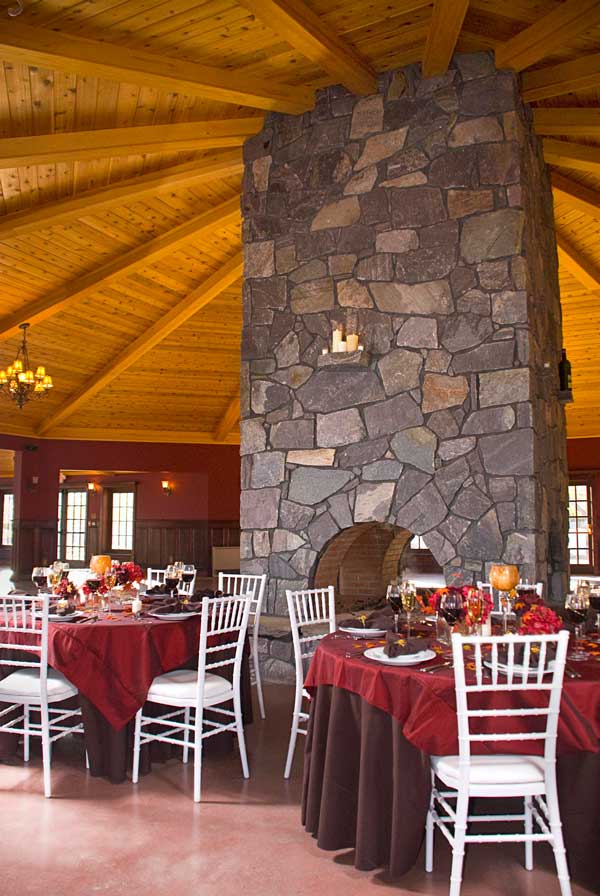
Our beautiful 6,000 square foot Napa Style event center is nestled in between two of our vineyards. The French doors that surround the building allow beautiful views from every direction. It is also complete with 2 hand crafted mahogany bars, 6 wrought iron chandeliers and to enhance the ambiance of any event there is a four-sided stone cut fireplace in the center of the space.
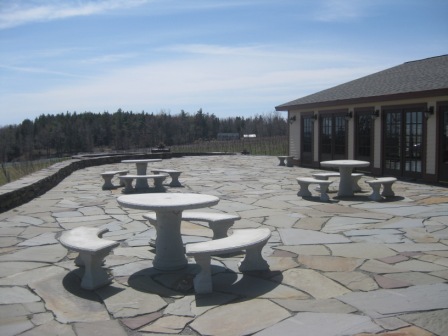
On the grounds there are 3 traditional white gazebos or a more rustic wooden arbor on a Belgium block patio that make great locations for ceremony or cocktail areas.
Our facility will be able to accommodate parties up to 200 guests between the hours of 10am and 9pm.
We at Honora Winery & Vineyard will strive to make your event extra special and memorable by providing you with an experience that is unique to your needs. Whether it is traditional, casual or black tie we will be there to surround your guests with our family hospitality … a mix of elegance and warm familiarity.
For more information about having your event at Honora please contact:
Celine Labarre at Celine@honorawinery.com
Treble Journey: Calling All Clones, Grapes #269 – #272
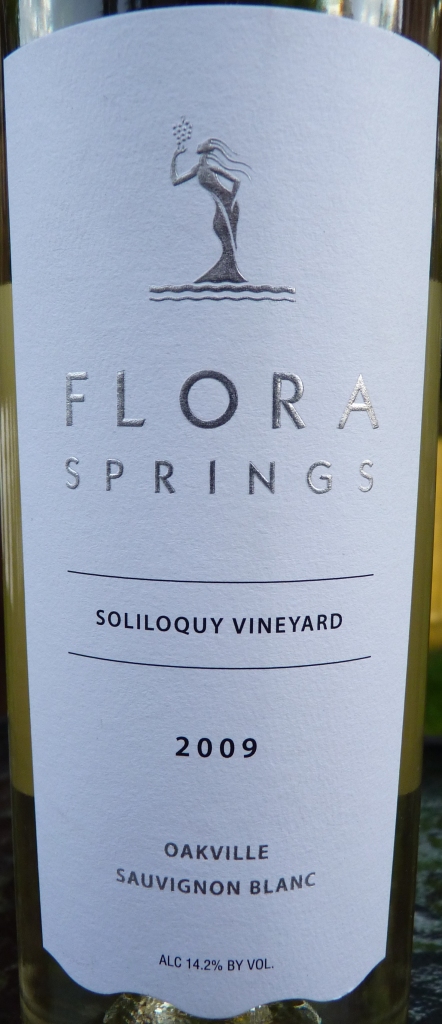 Clones are looked at somewhat skeptical when it comes to wines – simply because in some cases, the origin of the grape is not easy to establish, and then all sorts of claims can be associated with particular characteristics of the grape. Well, when you on the hunch to get to the Treble level, even the clones will help – especially if they are certified by UC Davis.
This Flora Springs Sauvignon Blanc is a blend of two clones of Sauvignon Blanc: Soliloquy Sauvignon Blanc and Sauvignon Musqué clone. It is a beautiful wine, combining finesse, the grassiness of traditional Sancerre and fruit-forward style of California wines, perfectly balanced. This is one of the very few California Sauvignon Blanc wines which I actually enjoy, as in general my preferences are on the Loire and New Zealand style Sauvignon Blanc. I will put drinkability rating on this wine as 8+, and these are the two new grapes.
Then come two more wines, which are adding two more grapes, both grapes being in the main Wine Century Club application table from the beginning. One is Petite Arvine, a grape from Switzerland, which is hard to find in the US. I got the wine directly from Switzerland with the help of my friend Patrick, and it was 2009 Valiciana Petite Arvine du Valais – simple and herbaceous, working well as an aperitif.
And the last grape for this update was Garnacha Peluda, also known as Ladoner Pelut, or Grey Grenache. And even as Wikipedia simply lists all of the clones of Grenache as one and the same grape, as we are counting clones, this is perfectly suitable grape to be counted by itself. It was a part of the blend in wine called 2007 Sexto Terra Alta from Spain – an interesting wine with some dark fruit notes showing up after the wine breathes for a while – it would be an interesting wine to try in 3-4 years.
That’s all for now – and more to follow, as the wine adventures never stop…
Long Island Wineries Trip – Great Weather, Great Wines
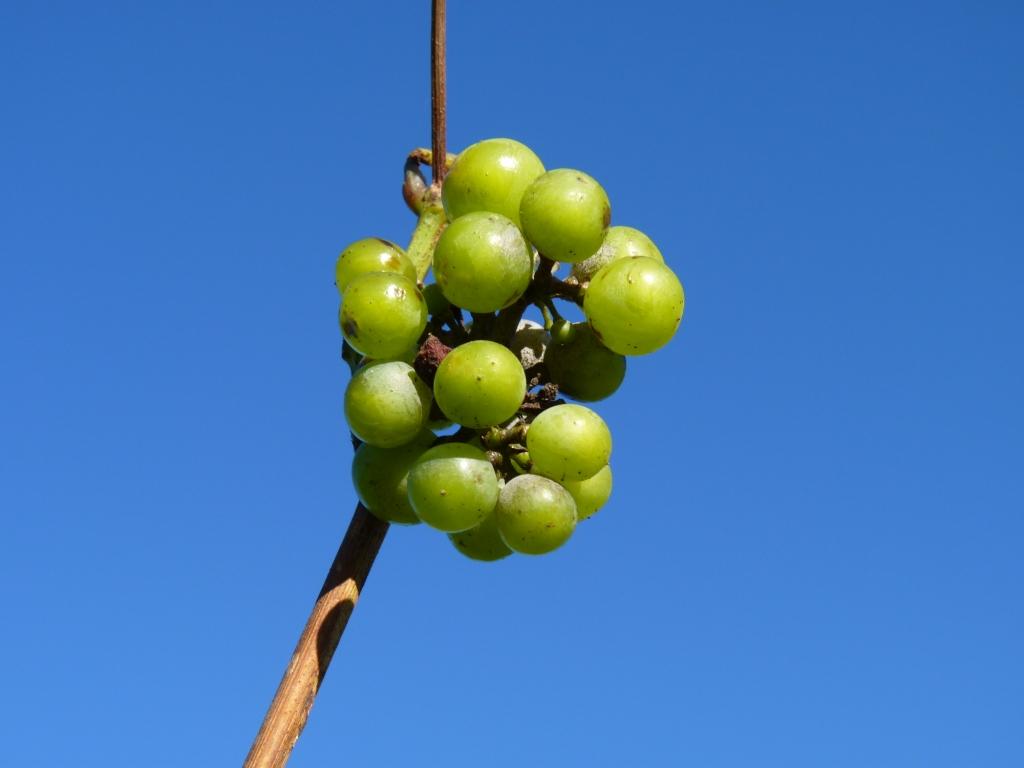 Talk about being lucky. Last year in October we had a great trip to Long Island wine country, enjoying great weather, 2 hours long lunch with good food, wine, and company. We started planning second annual Long Island Wine Country getaway about 3 months ago – we set the weekend, but who can know about the weather? This is why I’m talking about being lucky. Beautiful weather – just look at the picture of the grapes (accidental leftover after the harvest), against the beautiful blue sky… Immaculate.
And there we went. The plan was simple – visit 3 wineries, taste the wines and have lunch with the wines we like. We started with the Lenz Winery, as it was far-most in our plan. Two things were interesting about Lenz Winery – they are well known for their Sparkling wines, and Lenz Merlot was compared with Petrus, one of the best regarded and equally expensive wines in the world (here is the link if you want to read more about Chateau Petrus, Bordeaux wine from Pomerol). The 2004 Sparkling Cuvee, made from 100% Pinot Noir, was nice, yeasty and balanced. Does it worth $30/bottle? Comparing to actual Champagne – may be, comparing with good California Sparkling wines like Chandon or Mumm, or Gruet from New Mexico – probably not. As for 2002 Old Vines Merlot, the one which should be compared with Petrus – I never had Petrus, so I’m not qualified to make any comparisons. I can only state that I didn’t like that Merlot at all.
The next stop was Jamesport winery. One of the driving forces behind our choice of wineries was a post in Wall Street Journal wine blog by Jay McInerney, where he was talking about tasting great Petit Verdot and other good wines at Jamesport and Paumanok wineries. Since we were planning to have lunch at Paumanok anyway, and Jamesport was around the corner, it was easy to decide that we want to taste the same wines.
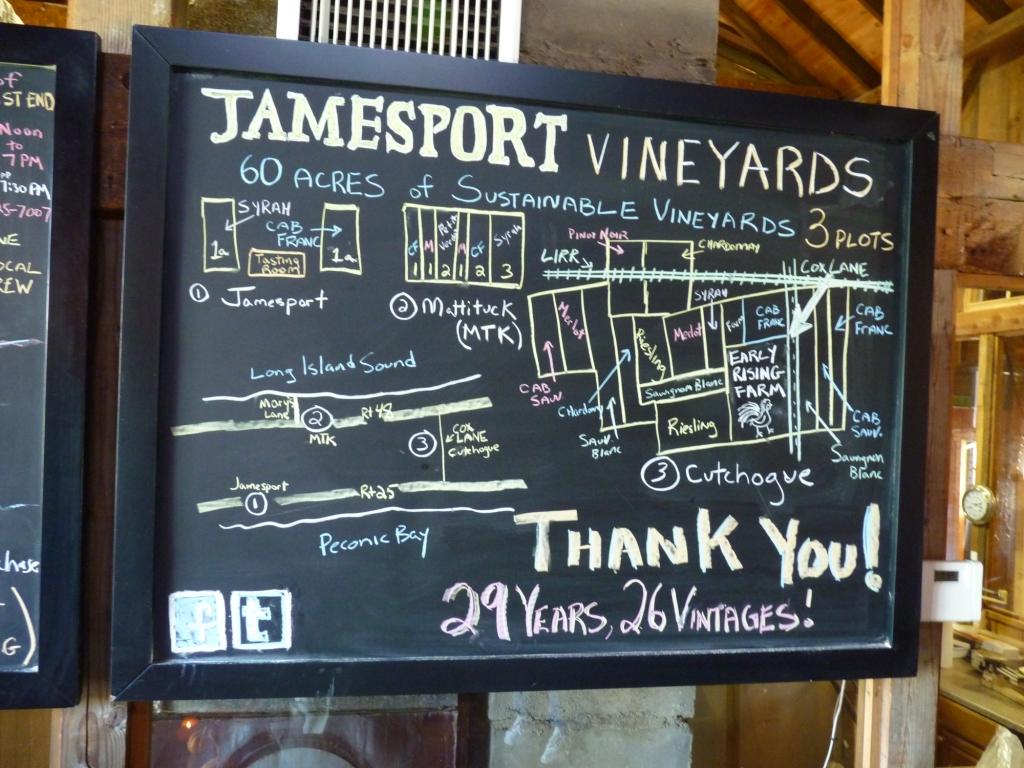
I’m glad we stopped at the Jamesport. I chose Estate Series tasting flight out of many others available, and I can tell you that it was one of the very few experiences where I liked each and every wine in the flight. Reserve Chardonnay 2007, Reserve Sauvignon Blanc 2007, Riesling 2009, Pinot Noir “Sarah’s Hill” 2007, Estate Merlot Block “E” 2005, Syrah MTK 2007 and Melange de Trois 2005 – all were very good wines. One minor disappointment was the fact that Sauvignon Blanc 2009, highly regarded in James McInerney’s article, was sold out. As we were explained, 2009 was a difficult vintage, and only 350 cases of 2009 Jamesport Sauvignon Blanc were produced, so it is not surprising that it was sold out. But then I have to mention an absolute highlight of the trip. We decided to try Petit Verdot Reserve 2007 – at $100/bottle, the tasting of this wine costs $10 for 3 oz pour, but still, looking for the experience we decided to go ahead and try it. This was one of the best $10 spent on the wine ever – luscious, multi-layered fruit, amazing balance of tannins and acidity and great mid-palate density! Considering my rating system, this was definitely a 9 – and I wish I would have a budget to put a few bottles in my cellar – this wine will evolve amazingly over the next 10-15 years.
The next stop was Paumanok winery, where we finally had our lunch.
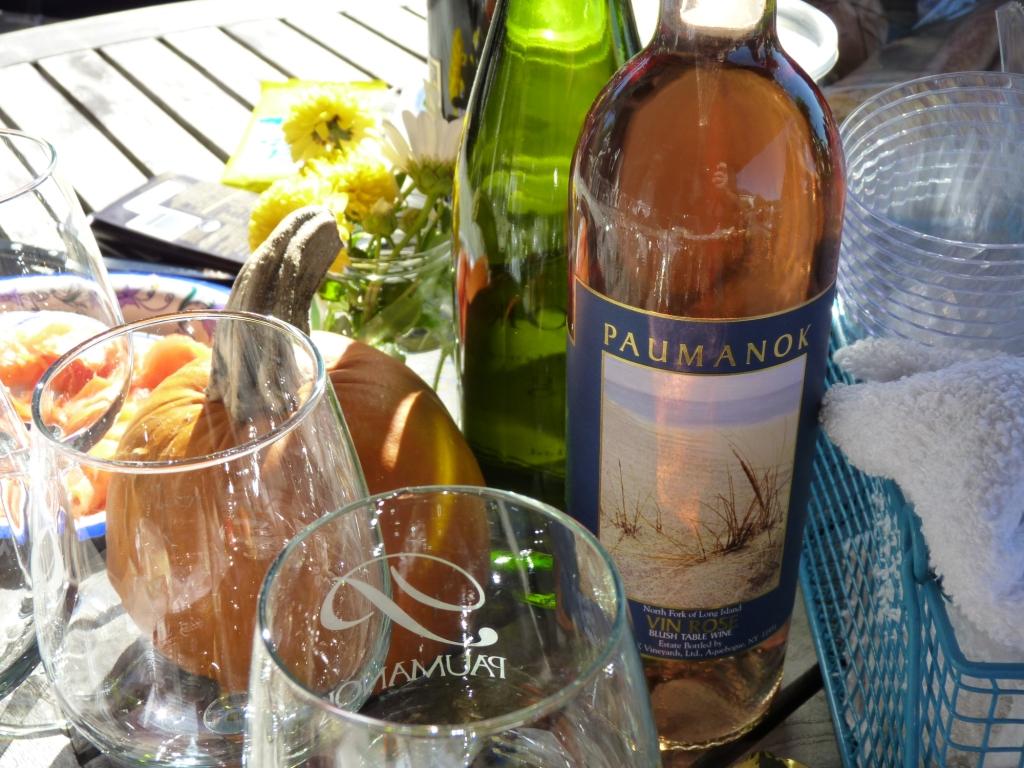
We didn’t do tasting flight there, as everybody was already quite hungry, instead, we got a bottle of Rose, and a bottle of Riesling, and 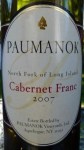 Paumanok Cabernet Franc 2007. Unfortunately, we couldn’t escape our dose of disappointment here as well, as Paumanok Petit Verdot 2007 ($60), lauded the most in Jay McInerney’s article, was sold out! At least the Cabernet Franc 2007, also highly mentioned in the article, was available ( good value at $24.50). The Cab Franc was very nice, with a refreshing tartness, layers of restrained fruits and medium body – it was simple and pleasant to drink.
The grapes are already harvested on Long Island so the new vintage will be on the way.
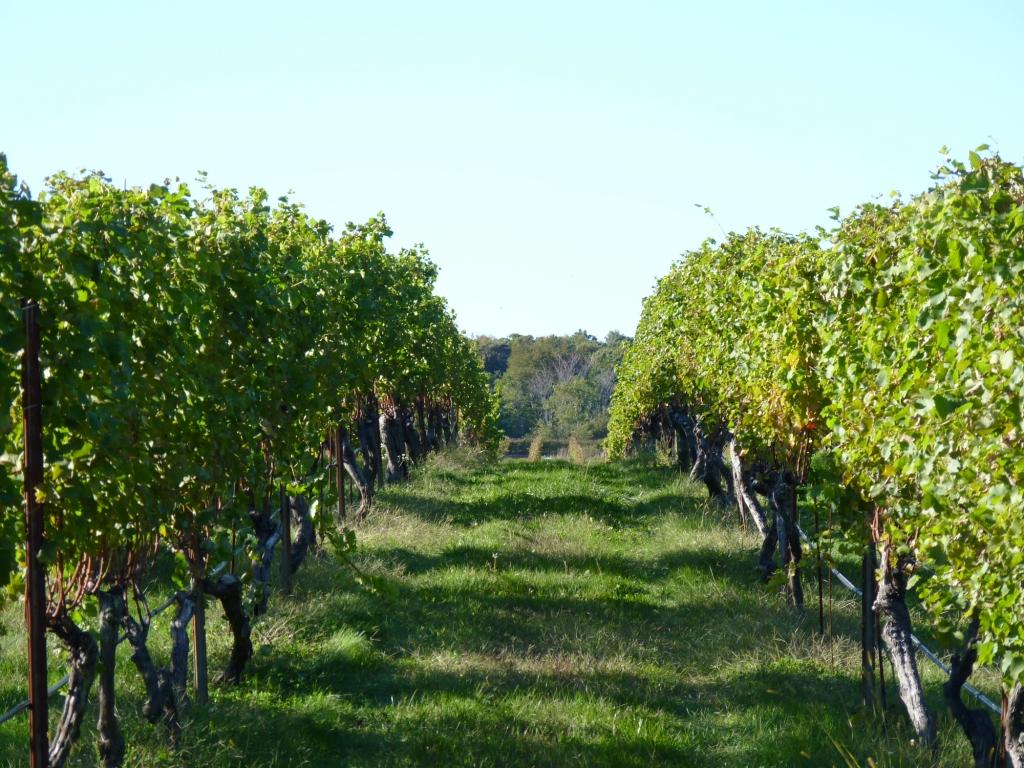
The weather is still warm so you can enjoy yourself in the Long Island Wine Country. This year, or the next year, and many years after – the wines are only getting better. Get your friends together and go out and play…
Daily Glass: Claraval, Another Dangerous Wine
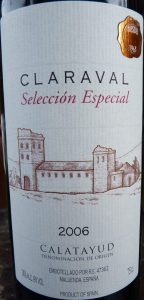 In one of the previous posts, I came up with the term “dangerous wine” – the wine which is so smooth and so good, once you start drinking it, you pretty much can’t put the glass down until the wine is all gone. Here comes the second wine from Spain which I also have to declare “dangerous”.
It is called Claraval and it is coming from the Calatayud region. This wine is a blend of four grapes – Garnacha (50%), Tempranillo (20%), Cabernet Sauvignon (20%) and Syrah (10%). The wine has sour cherries on the nose, and it opens up into a beautiful array of spices and fruit, with earthy notes coming through, all complemented by balancing acidity and tannins. If anything, this wine is reminiscent of good Southern Rhone wines (which is not surprising as it shares the same main grape, Grenache, known as Garnacha in Spain), but it definitely has its own character. Judging by the mid-palate weight and tannins, this wine will also do well in the cellar – and I was glad to see that Robert Parker think the same, giving this wine 91 rating and saying that wine will evolve all the way into 2020.
So, how much do you think such wine should cost? Nope, it is not $30, which would not be surprising at such a level of quality, it is only… $11.99, so it definitely has very high QPR. This is definitely the wine to buy by the case.
And now, it is time for the verdict (of course you already guessed it):
Drinkability: 8
What is next? The trip to Long Island wineries, which is almost a annual tradition by now – a trip to Long Island wineries in the Fall, when it is already not hot, and still very beautiful. Off we go (well, the team members have to wake up first). Report to follow…
American Wine Consumer Coalition
Whether you are a wine lover or not, if you use any of the social media tools (I’m assuming you are if you are reading this text), such as Facebook or Twitter, I’m sure that you came across the picture below, at least once:

Exactly as the name says, this is an undertaking by Tom Wark (here is the link to Tom’s blog, Fermentation), who is putting a lot of efforts in defending the rights of all the wine drinkers in United States.
Believe it or not, but despite tremendous increase in popularity of wine in United States, all the wine consumers still have to deal with the laws stemming from the Prohibition era when it comes to access to one of the most noble and oldest (after the water) beverages on Earth. A few years back, many states started to change their laws in favor of the consumers, allowing interstate wine shipments (in other words, allowing consumers to pay less and get the wine the want). As of recent, HR 5034 was introduced in Congress, greatly threatening to again limit consumer’s access to wine to protect big businesses with big pockets. Tom Wark put a lot of efforts to defeat HR 5034, and he created American Wine Consumer Coalition to help all the wine lovers to protect their rights to get the wine they want at the prices which make sense.
If you like wine – protect your rights, join the AWCC and make your voice heard!
Cafe Pinot in Los Angeles – a Delightful Experience!
 Don’t know about you, but when I visit restaurants at home or being on the family trip, I usually like to do my homework and know where I’m going and why (which is still no guarantee of a great experience, though). When traveling on business, I usually leave it up to luck. And sometimes that works quite well, as in the case of the Cafe Pinot in Los Angeles.
Let’s start with wine. I really liked wine list – very well organized, and while it had good number of wines, it was easy to navigate – and it had a lot of good wines in the sub $50 category, which is always great. I also was happy to learn later on that I’m not the only one who liked Cafe Pinot’s wine list – restaurant holds Wine Spectator’s Restaurant Award!
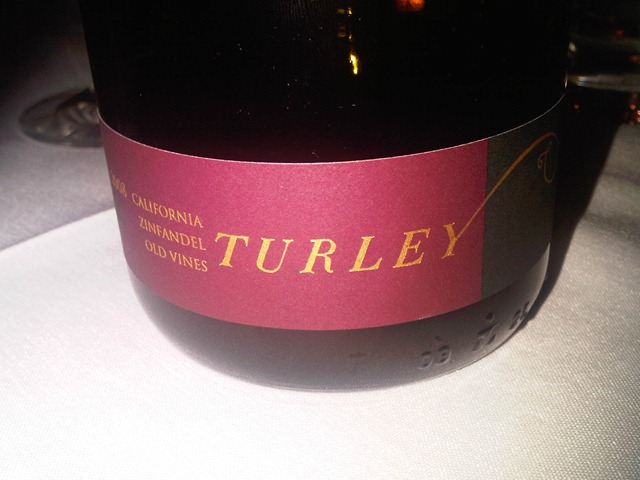
We chose Turley Old Vines Zinfandel 2008 ( $68), simply because Turley Zinfandels are typically 1. good wines and 2. rare and hard to find, on wine lists or in the stores. We were very happy with the choice – this was a beautifully structured wine with all the Zinfandel fruitiness and acidity being in full balance ( I would put my Drinkability rating at 8). Also 15.6% ABV was completely unnoticed, at least until later.
As we were explained by our friendly waitress, the menu is updated all the time with focus on fresh local ingredients. I believe today a lot of places advertise the same approach, but I’m not sure if all those places can execute on it as masterfully as Cafe Pinot. For starter I had a very interesting dish, called “Study of farmers’ market beets”:
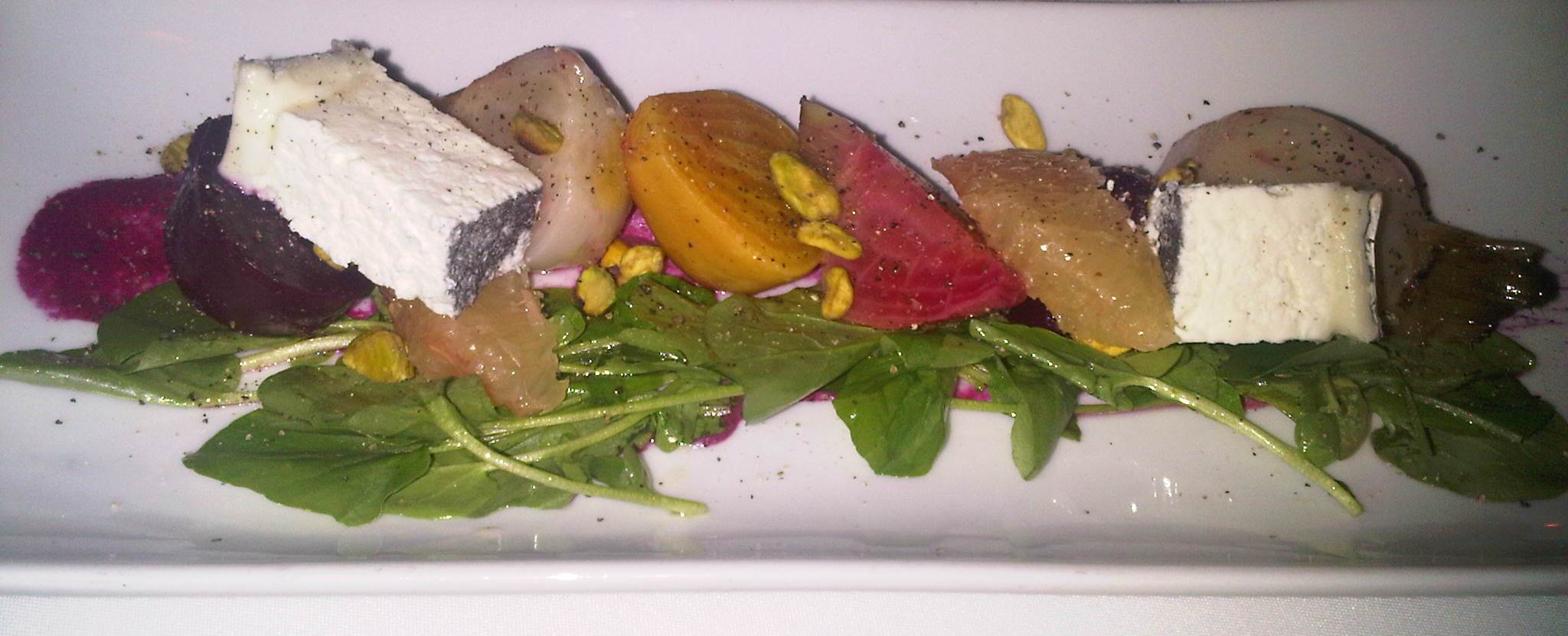
The dish included red, white and yellow beets complemented by ruby grapefruit, pistachio, Humboldt Fog goat cheese and watercress – for someone who likes to experiment with food taste combinations – almost a heaven!
Then comes an entree – striped bass“en papillotte” with cioppino broth, accompanied by Dungeness crab, fennel, tomatoes, basil infused risotto:
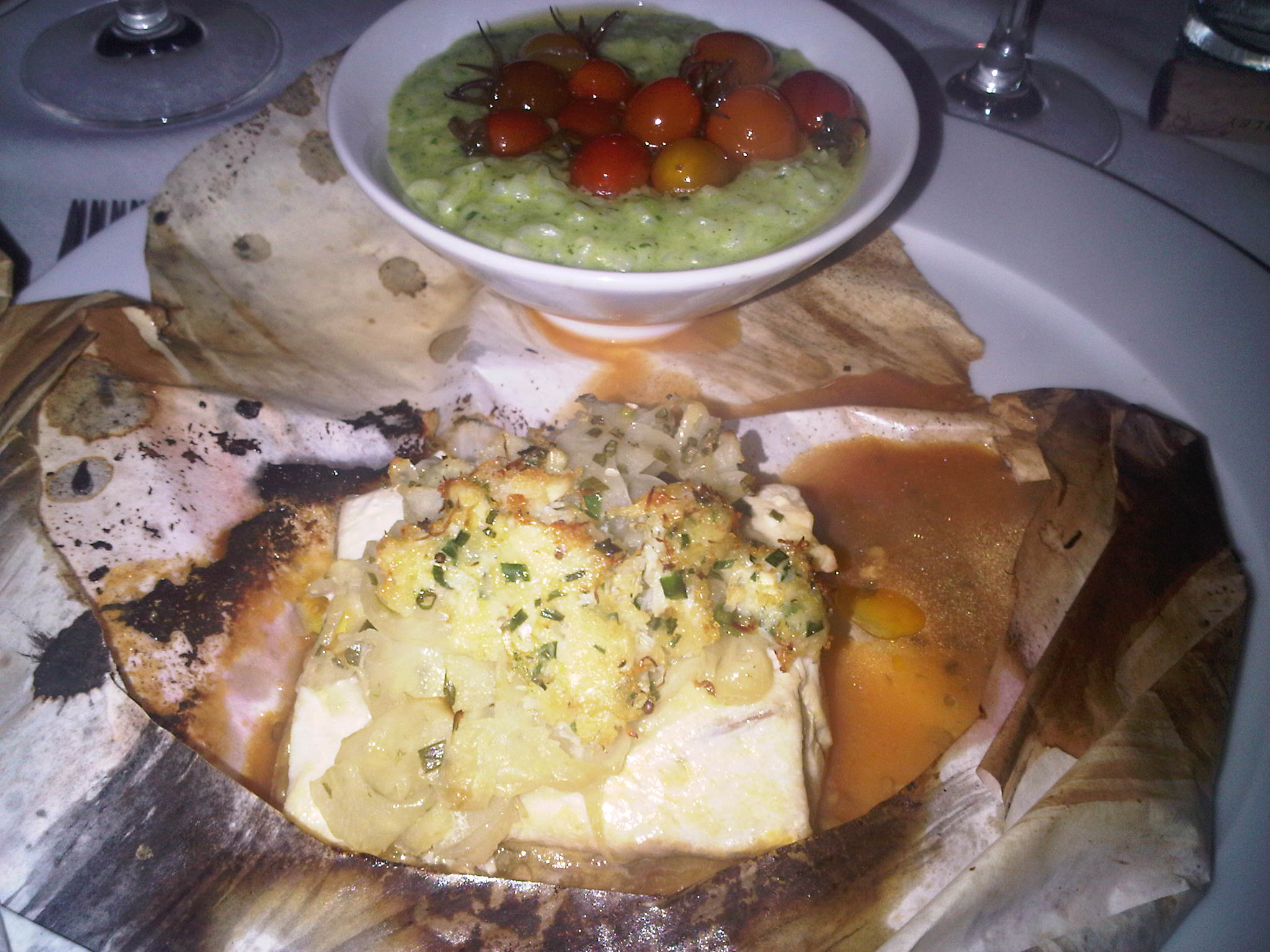
This dish starts with the beautiful presentation, when the paper (“en papillotte”) is cut in front of you after plate is delivered to the table, so this way none of the enticing flavors can escape before the time. Again, great dish with great combination of flavors (risotto’s texture – ahh!).
To end this story (and, probably, you drooling over it), if you are a foodie – or even not, and you are heading to Los Angeles – make sure you will not miss great experience at Cafe Pinot.

Cakebread Cellars Tasting at Stew Leonard’s Wines
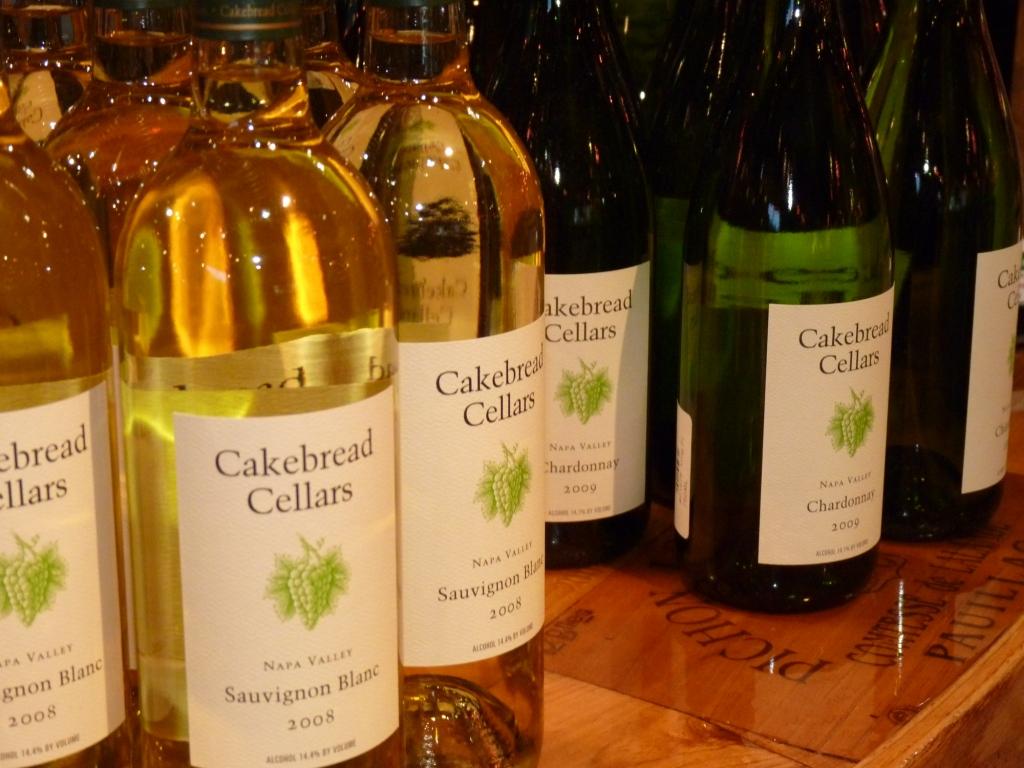 And again I have to thank Stew Leonard’s Wines folks for a free education session. This Friday and Saturday (October 1st and 2nd) you can try three different wines from the Cakebread Cellars. Cakebread cellars is a well regarded producer from Napa Valley in California, so I definitely was interested in experiencing their wines.
Two whites and one red were presented, all classical wines from Napa Valley – Sauvignon Blanc 2008, Chardonnay 2009 and Cabernet Sauvignon 2006, and I tasted them in this exact order. Just to share an overall expression – there are good wines, but I didn’t like them, especially taking into account QPR (Quality Price Ratio), a very popular metric used nowadays among wine aficionados. Sauvignon Blanc has a very nice nose, but on the palate it lacks the acidity, and while it finishes with the fresh cut grass (classic Sauvignon Blanc characteristic), the sensation is too warm and a bit burning. Considering this wine retails for $29.99, I would gladly take any time New Zealanad Sauvignon Blanc instead at $10 to $15 a bottle.
Chardonnay simply didn’t do anything for me. It is very young, somewhat of a Chablis style, but it was missing steely acidity of Chablis. I understand it is 2009, and it might need more time to evolve, but at $39.99 there are so many more better choices, I wouldn’t even go there.
And then the Cabernet Sauvignon, the king of Napa Valley wines – beautiful nose of classic cab, but no mid-palate weight and in general, not enough substance on the palate. At $74, it is really not a player – if not under $20, in the $30 – $40 category there are soooo many better choices…
To conclude, these Cakebread wines are definitely worth trying – and learning. I also have to tell you ( but it is a secret), that tomorrow I plan to try some very interesting wines – and I promise to report on that later on!
Food, Wine and Finger Lakes
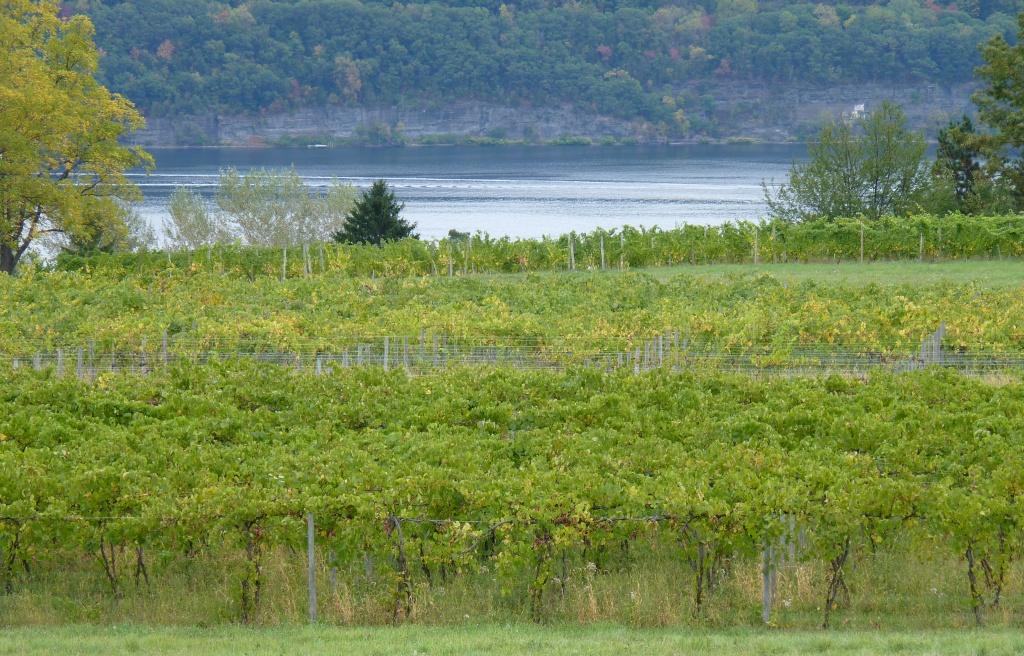 It seems that I’m looking at good prospects of visiting Finger Lakes region of New York quite often over the next four years ( my daughter just started a college there), so I’m gladly taking the opportunity to talk about food and wine in that beautiful part of the country. Finger Lakes region is well known for its multiple wine trails. For a long time, the region was mostly known for it’s Riesling wines, and then white wines, such as Chardonnay and Gewurztraminer, now it is slowly changing with the grapes such as Cabernet Franc, Chambourcin, Baco Noir producing interesting wines.
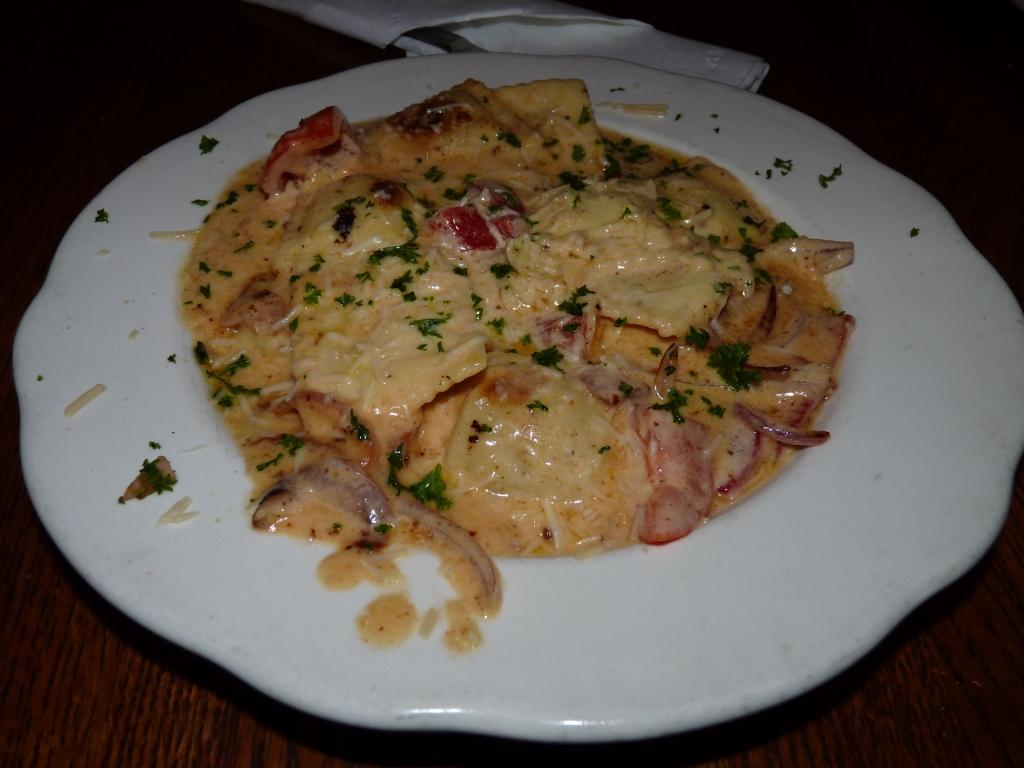
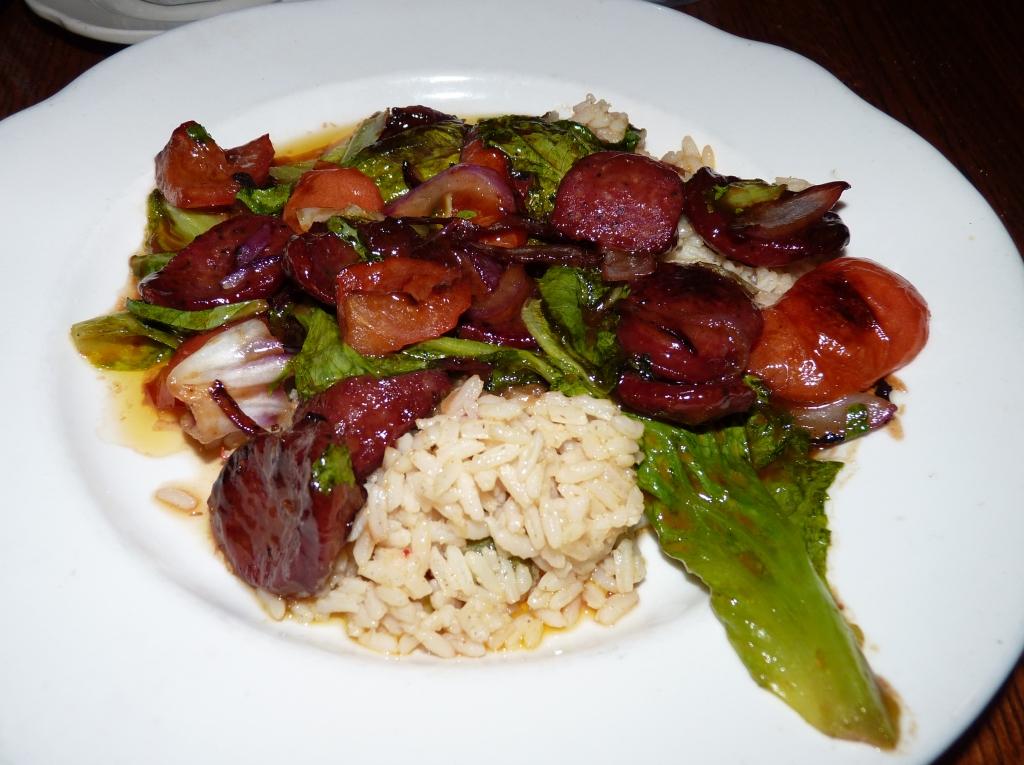
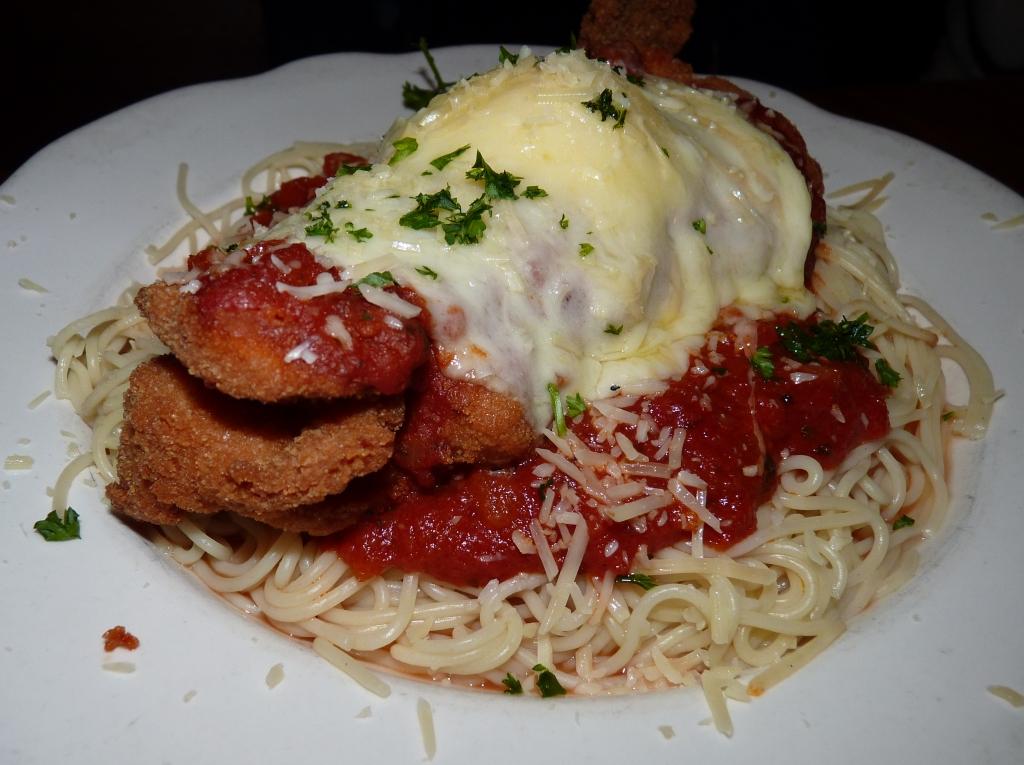
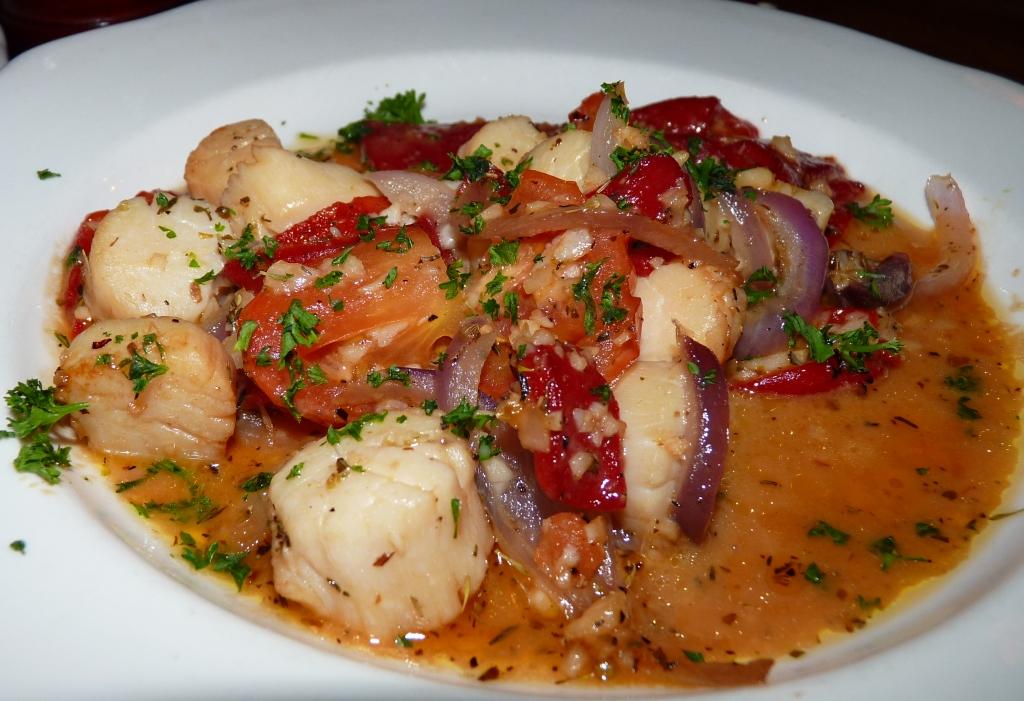
I have to admit that visiting wineries was not the main purpose of this trip, so with this post, I would like to mostly share the experience around the food. Outside of Panera Bread which is consistently good no matter where you go ( I would personally go as far as declaring it the best implementation of “slow food” in the fast food setting), we visited two other places. First, we had dinner at the restaurant at the Inn called Rogue’s Harbor Inn (it is Bed and Breakfast place). Overall all the food was consistently good, with the focus on local ingredients. The only surprise ( in a bad way) was the smallest fried calamari appetizer I ever saw. All the entrees were done very well, so here are some pictures:
Wild Mushroom Ravioli (great mushroom flavors):
Chevon sausage with greens ( local sausage):
Three cheese Chicken Parmesan:
Scallops Solera:
Few notes about the wine: it was great to see a wine list fully composed of local wines – I think it is great when local 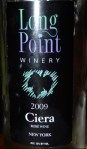 food is complemented by the local wine. We chose Long Point Ciera Rose 2009, simple and pleasant wine, as it was working well with the variety of dishes we ordered.
Another place we stopped at was Castel Grisch winery. Located in a very picturesque place, the winery offers magnificent views of the lake and surroundings. As we made it to the winery, of course, I had to try the wines. I did try most of the wines, except the ice wines, and unfortunately, I didn’t find anything I like, except Gewurztraminer 2007, which was actually done in Alsace style – dry wine with very nice floral and spice expressions. In addition to the winery, Castel Grisch also operates a very nice restaurant, with a good selection of sandwiches and hearty soups, such as Hungarian goulash soup. I would definitely come back there for the food, but most likely not for the wine.
This would effectively conclude the post. As we had good success with the food, I will make an effort to find good wines – I’m sure I will, as I have plenty of time… And until later – Cheers!
Rogues’ Harbor Inn
2079 East Shore Drive
PO Box 97
Lansing NY 14882
607-533-3535
http://roguesharbor.com/

Stew Leonard’s Wines: Meeting Winemaker Chester Osborn
 A few times lately I have come across blog posts talking about too many wines on the shelves of the stores and poor consumers being intimidated and having troubles to find what they want. Quite honestly, I find this annoying – I believe convincing consumers that they should be intimidated is the wrong thing to do. Why am I annoyed with this? Very simple. Today, you need a very few things to navigate the world of wine and feel comfortable. One is desire to learn (if someone doesn’t want to learn, it makes no sense to complain that one can not). Learning about wines simply means trying them and making an effort to remember what you like and what you don’t. Another helpful thing – finding a good wine store.
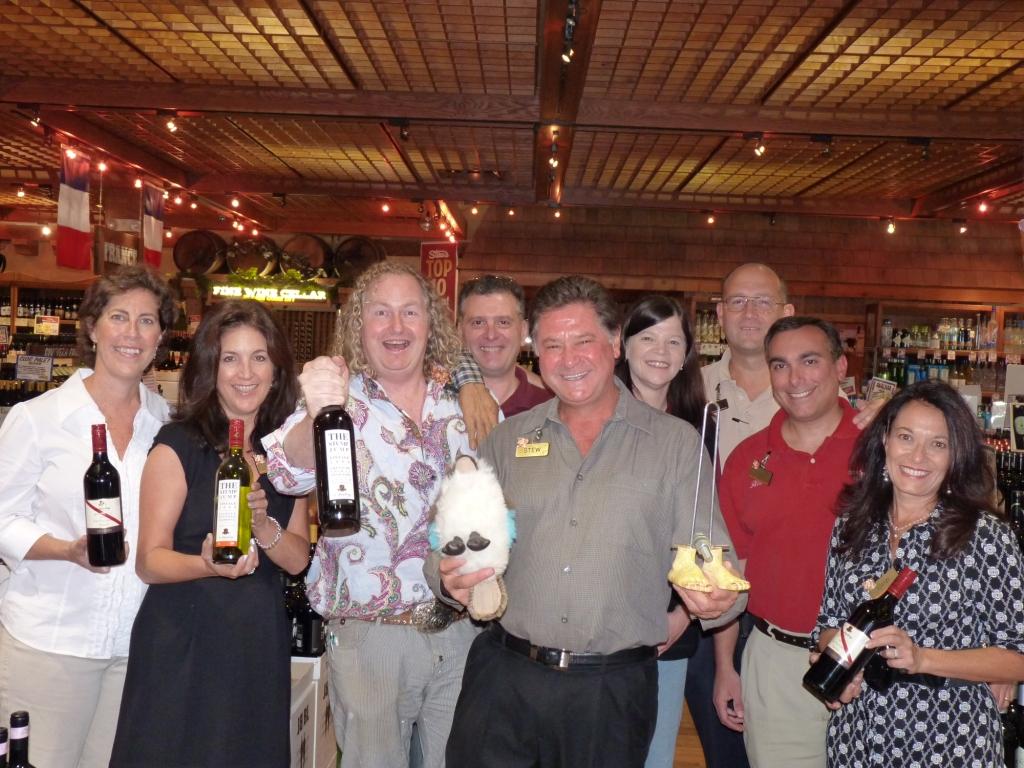
There are quite a few good wine stores where I live – I do plan to write a separate blog post (or may be a few) covering some of those in more detail. One of such good wine stores is Stew Leonard’s Wines in Norwalk, CT. What makes the wine store “good”? It is easy to navigate, it has helpful and knowledgeable personnel, and it is helping you to learn about wines. You got all of that at Stew Leonard’s Wines – easy to navigate, helpful staff and great education. What do I mean by education? When it comes to wines, education consist of learning about wines and tasting them. One of the ultimate forms of “education” then is when you can learn from the best and taste excellent wine – and did I mention that it is usually free? Yep, it is free and available, almost every Friday and Saturday, again, thanks to the folks at Stew Leonard’s Wines. Every Friday and and Saturday, you can come to the store for the wine tasting, and if you are lucky – you will also learn from the winemaker, as it was the case last Friday, September 24th , when Chester Osborn, winemaker of the famed Australian winery, d’Arenberg, was presenting his wines.
d’Arenberg produces quite a few different wines in the McLaren Vale region in the South Australia, of course with Shiraz being a star grape. Five different wines were presented at the tasting. First, Lightly Oaked Chardonnay – it is actually very nice and simple, with clear fruit and light oak expression. Then comes The Stump Jump 2008, which is also should be known at GSM. GSM stands for Grenache, Shiraz and Mourvèdre, and it is a blend modeled after wines from Southern Rhone. It is also interesting to note that Friday, September 24th was the First International Grenache Day which was proudly stressed by Chester holding up the bottle of GSM. Stump Jump is a very nice and approachable wine with great and powerful fruit expression. The next wine was classic The Footbolt Shiraz 2007 (Footbolt actually was the name of the horse), nicely showing spicy bouquet of MacLaren Vale’s shiraz (need my rack of lamb wit that one). And then the flagship Dead Arm Shiraz 2006 – great wine which will need another 15-20 years to be enjoyed fully, very earthy and dense, drinkable now, but boy, will it evolve! In case anyone wonders, the Dead Arm has nothing to do with human body parts – the name is related to the grapevine disease, which can kill part of the plant, producing “dead arm”, or a “dead branch” – in this case the grapes on the surviving part have very high flavor concentration.
And last wine presented was Sticky Chardonnay – beautiful desert wine, made from Chardonnay grapes, exhibiting honey and white peaches notes, all with nice minerals, acidity and green apple bite. At $9.99, the wine of such quality is a pure steal. All in all, it was a pleasure meetings Chester d’Arenberg Osborn, learning from him and experiencing his wines.
To complete the story, I would like to include a picture of the great folks from Stew Leonard’s Wines, including Stew Leonard Jr. himself:
Going back to where we started – it is not difficult to learn about wines today – all you have to do is make an effort. As one of my teachers was saying, when the student is ready, the teacher will come…
The Story of an Apple Cake
Don’t worry, this will not be a story about apple wine. At the minimum, it will be about food and wine. So the weather was beautiful, and the apple-picking trip (almost an annual tradition in the fall) was inevitable, especially considering the free weekend day. Our favorite place to pick apples is Lyman Orchards in Middlefield, Connecticut. This place never disappoints – apples are good and abundant, and getting them off the trees is a lot of fun.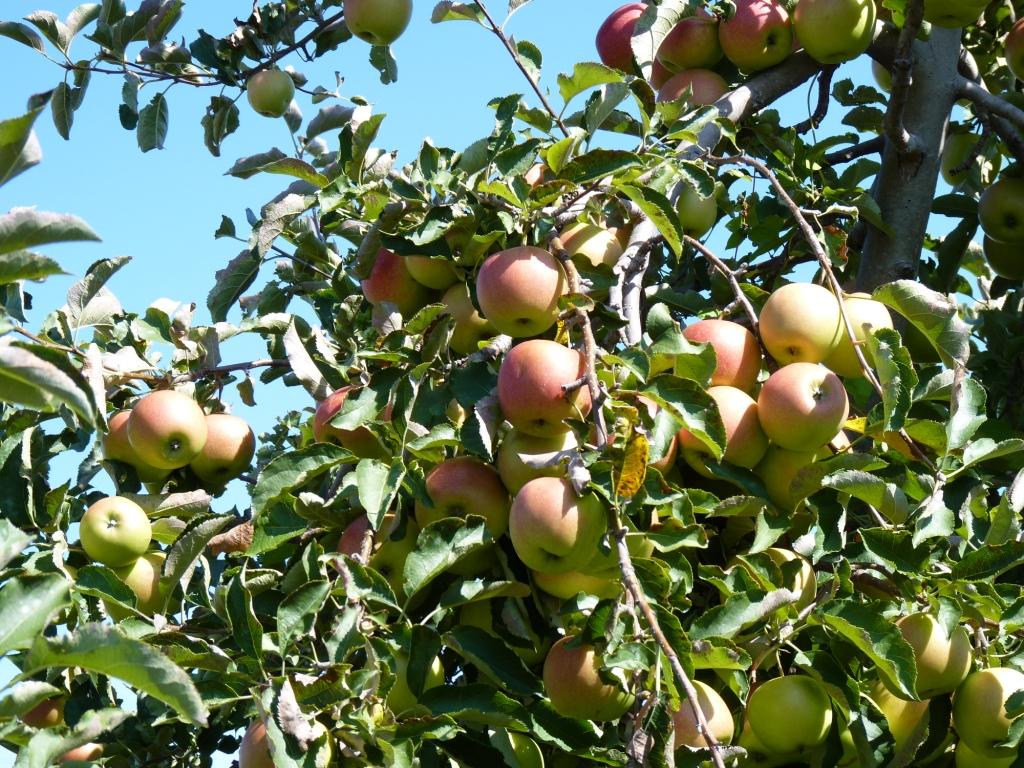 Once you have a lot of apples, what do you do? No, not wine. And for me – not an apple pie either. I don’t really like liquid pies, so my personal preference is an apple cake. How do you make an apple cake? Actually, quite easy. Here is the recipe:
4 apples (Granny Smith is the best as they are usually sour enough to stand against sweet dough)
3 eggs
1 cup of sugar
1 cup of flour
Cinnamon ( by the taste).
Butter to grease the pan
Bread crumbs
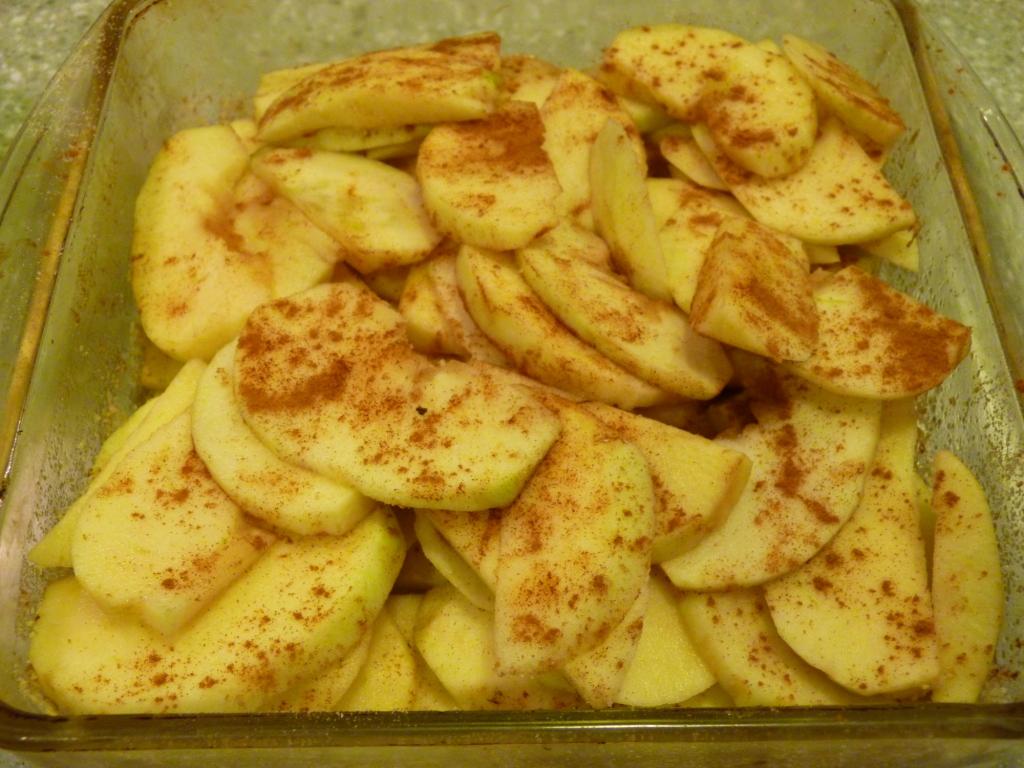
Core and peel the apples, and slice them thin. Make the dough: blend eggs first, then add sugar, and then flour. Make sure you end up with liquid and consistent dough. Meanwhile, preheat the oven to 425F.
Grease pan with butter and cover with bread crumbs. Bread crumbs should cover the bottom and walls of the pan. Remove excess bread crumbs. Your pan should look like this:
 Then, put sliced apples into the pan and sprinkle them with cinnamon (the amount of cinnamon goes by the taste):
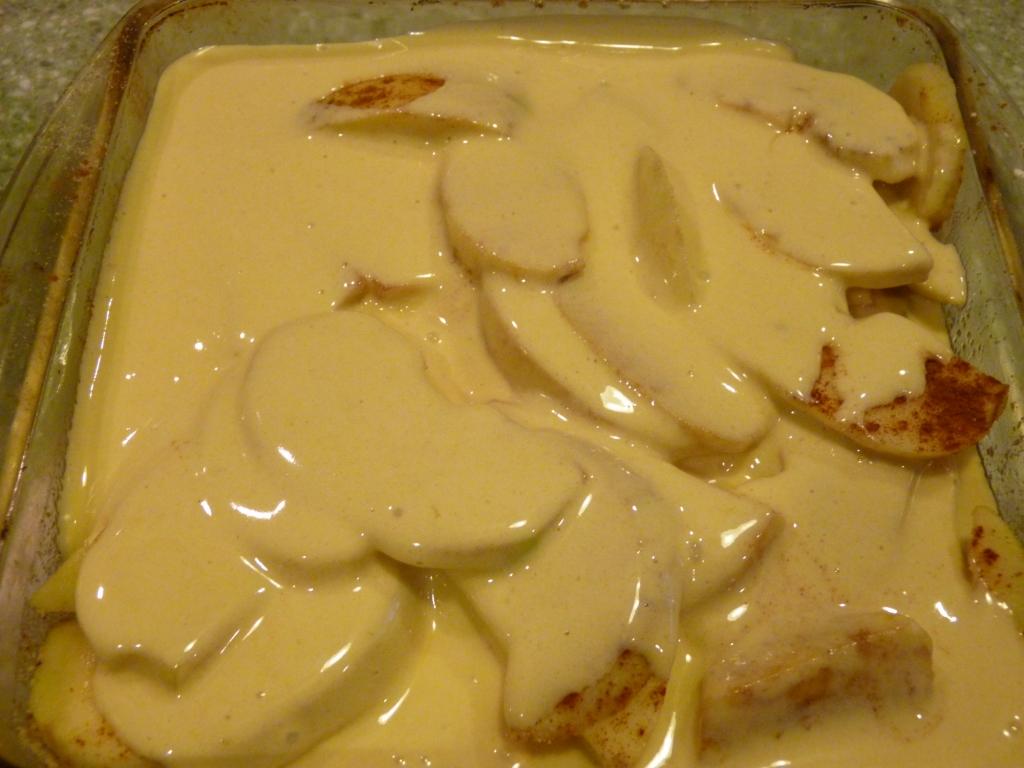
The dough goes on top:
And then the pan goes in the oven:
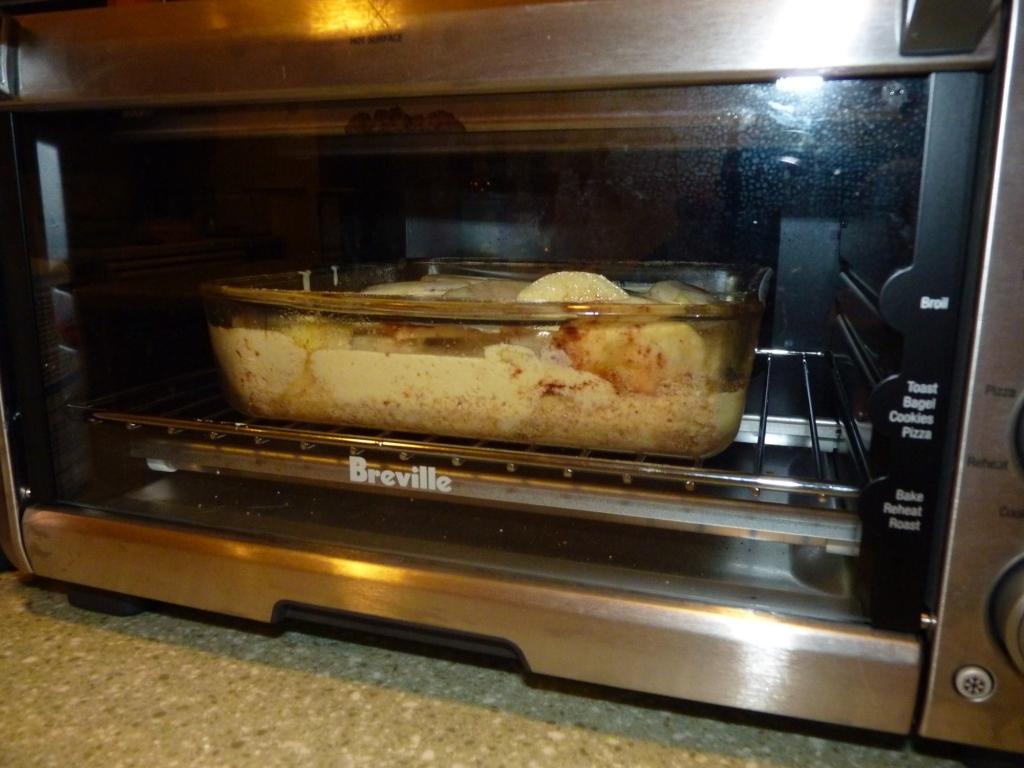
Bake it first for 15 minutes at 425F, then reduce the heat to 375F and continue for another 45 minutes or until the top is brown enough (you can check readiness with a wooden toothpick). DO NOT OPEN the oven until the end – you have to let the cake rise. At the end of the process, you end up with this:
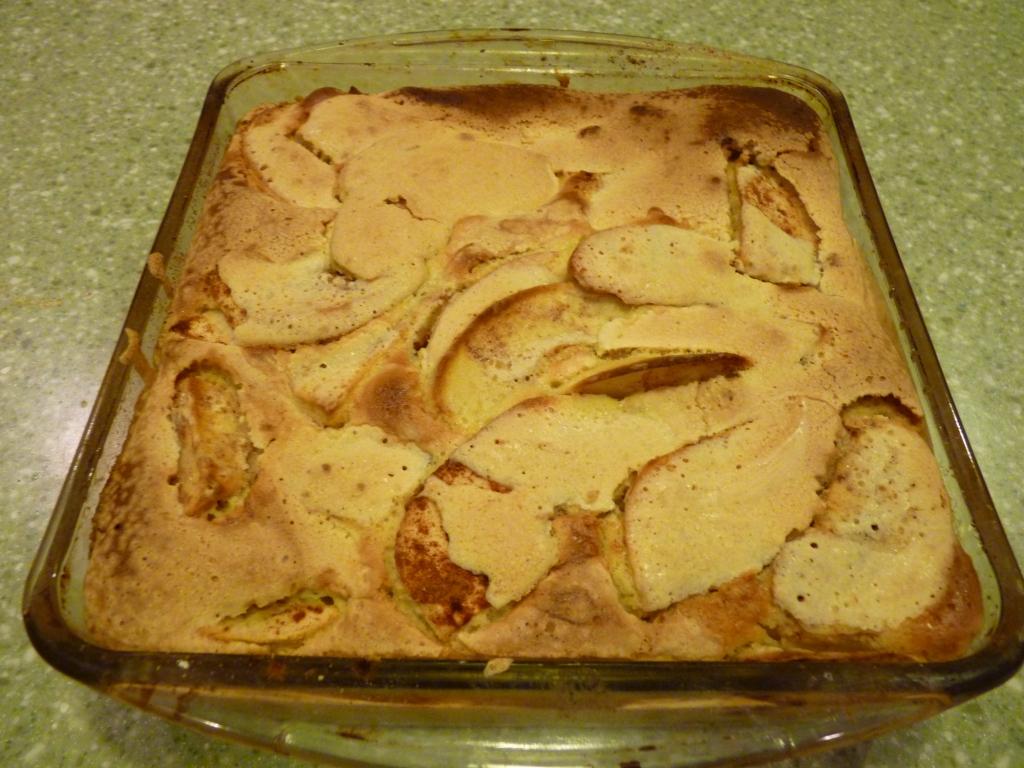
And this is the look inside:

Yep – Yummy!
Do you think this post is about food only? No, of course not. Yes, you can have this cake with ice cream, coffee, and/or tea. But this blog is about wine, so how about it? 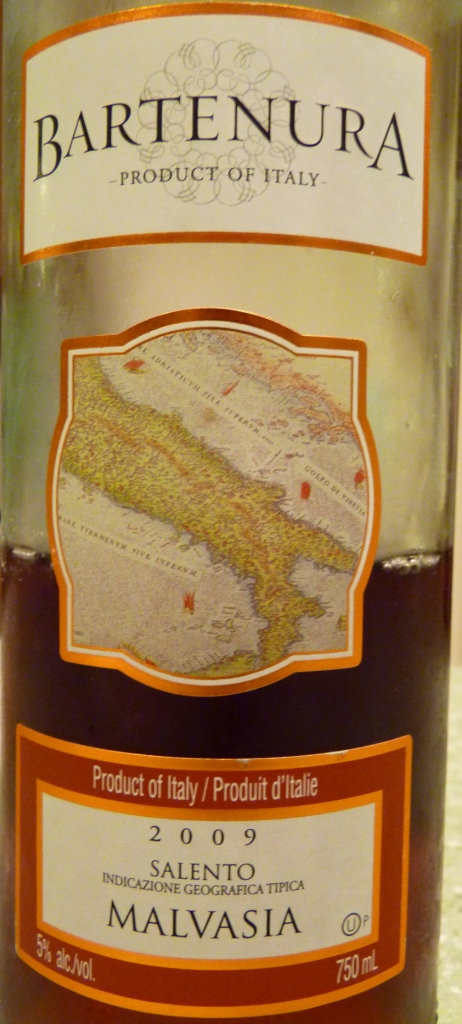 I’m glad to report that Bartenura Malvasia Salento IGT 2009 from Italy, a sweet, lightly fizzed wine worked quite well with that apple cake, complementing each other.
Here we are – tasty and very simple cake ( takes about an hour from start to finish) and simple easy wine – all together equal to a great and enjoyable evening.
Cheers!
P.S. By the way, what would you pair the apple cake with?
Last Bottle Sign Up ($10 credit)




 Talk-A-Vino