Archive
Wine Experiences, From Canadian Riesling to Cult Californian and Beyond
 Delaying, delaying, delaying. I have so many experiences and moments to share – and literally, the whole of September had been a dread. This September will have the least number of posts since I started to regularly write this blog. Oh well. It’s been a busy month, at work and outside, so hopefully October will be more fruitful in terms of wine (and life) writing.
Let me just sum up some of my recent experiences. One of the very first things I want to mention is a substantial advance in the “grape count” – adding 11 new grapes (reaching a total of 351) – well, yes, some of them clones. The Clonal Project Riesling from Cattail Creek winery in Canada brings in 4 different Riesling clones. It was also possible to taste those clones individually, but at about $100 for the set, it was an expensive proposition. However, this Clonal Riesling, a blend of four clones was outright delicious, with a great harmony of fruit, earthiness and acidity – it was a great wine. Here is the list of all the new grapes:
Riesling Clone 239, Riesling Clone 49, Riesling Clone 21 Young Vines, Riesling Clone 21 Old Vines – 2009 Riesling Clonal Blend, VQA Four Mile Creek, Canada
Zibibbo – Donnafugata Ben Rye, Passito di Pantelleria DOC
Pignolo – 2007 Bastianich Callabrone Rosso, Friuli DOC
Schioppettino – 2007 Bastianich Callabrone Rosso, Friuli DOC
Vranac – Rubin Vranac, Serbia
Mavrotragano – 2006 Atlantis Red, Santorini, Greece
Carignan Blanc – 2009 Pico’VDP de l’Herault Blanc
Trepat Blanc – 2007 Blanc de Montsalvat, Priorat DOC
Have to honestly tell you that all these wines were very good, each having it’s own personality and very pleasant to drink. I’m also very glad to add Pignolo and Schioppettino grapes, as those two are part of the main table in the Wine Century club application – may be one day it will be complete!
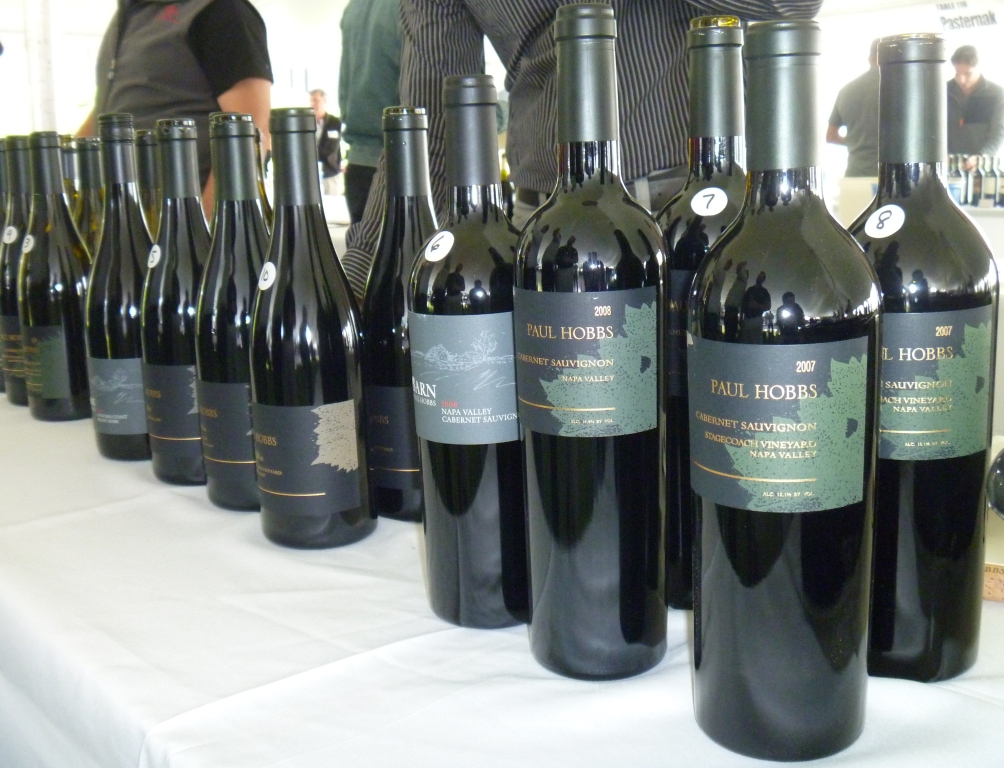
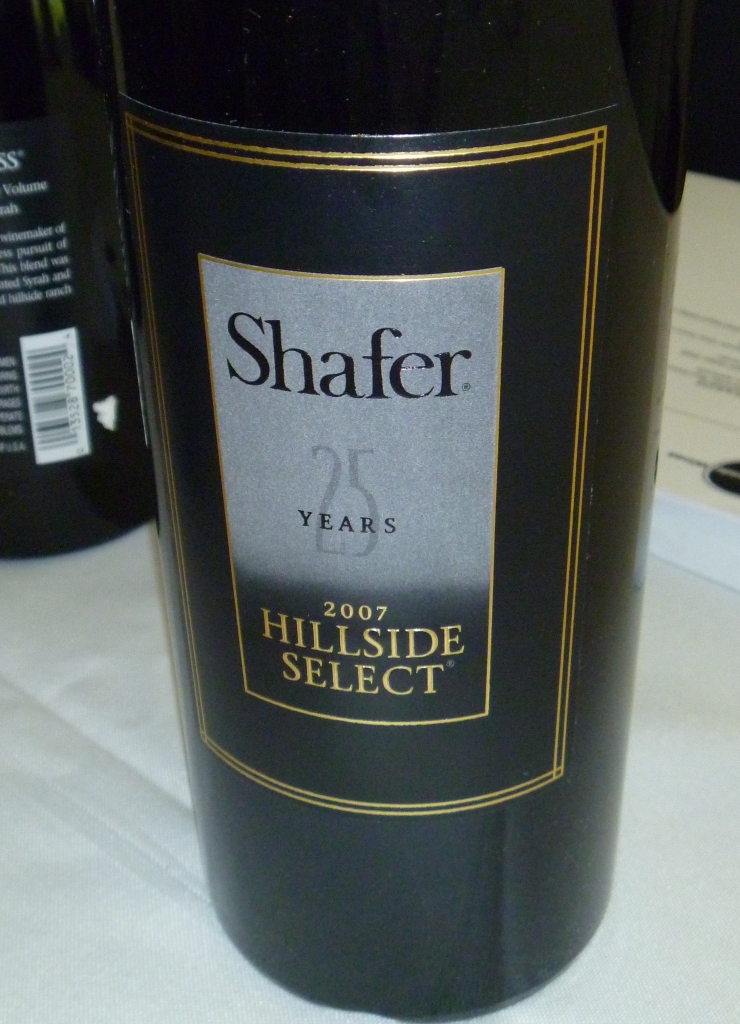
During September I was lucky enough to attend two trade wine tastings. One word to describe the experience is – “overwhelming”. I can’t do a fair representation of all the great wines we tried – Paul Hobbs, Shafer Hillside, Honig, Evening Land, Bussia Barolo, Archery Summit, Blankiet Estate, Palmaz, … – the list can go on and on (just to give you an idea, there were about 1400 wines in the first tasting, and about 700 wines in the second – of course nobody tried all those wines, but you understand the size). Here are some of the highlights, in pictures:
Paul Hobbs wines:
Evening Land Pinot Noirs from Oregon – amazing:

Shafer Hillside:
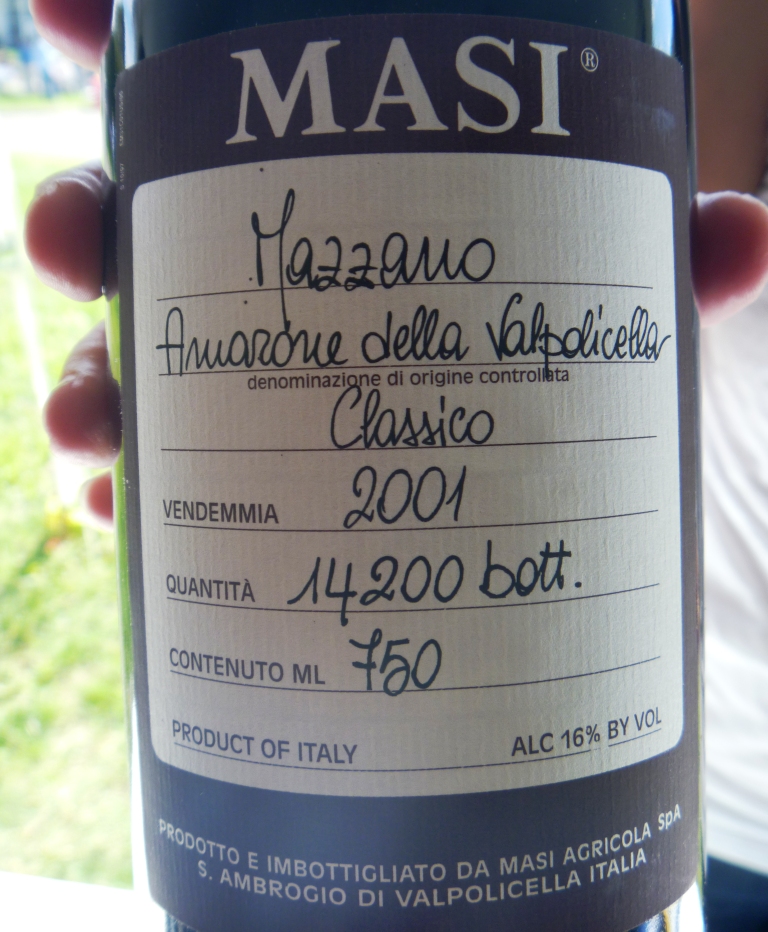
2001 Masi Mazzano Amarone – this is what Amarone should taste like – absolutely amazing, my personal favorite in tasting:
To complete the updates, I started new series of blog posts at The Art Of Life Magazine – the series dedicated to spirits, and first two posts in the series are talking about Brandy and Scotch.
That’s all for now, folks. Have to go – talk to you later. Cheers!
Daily Glass: Domaine Breton Bourgueil, A Vinous Vino
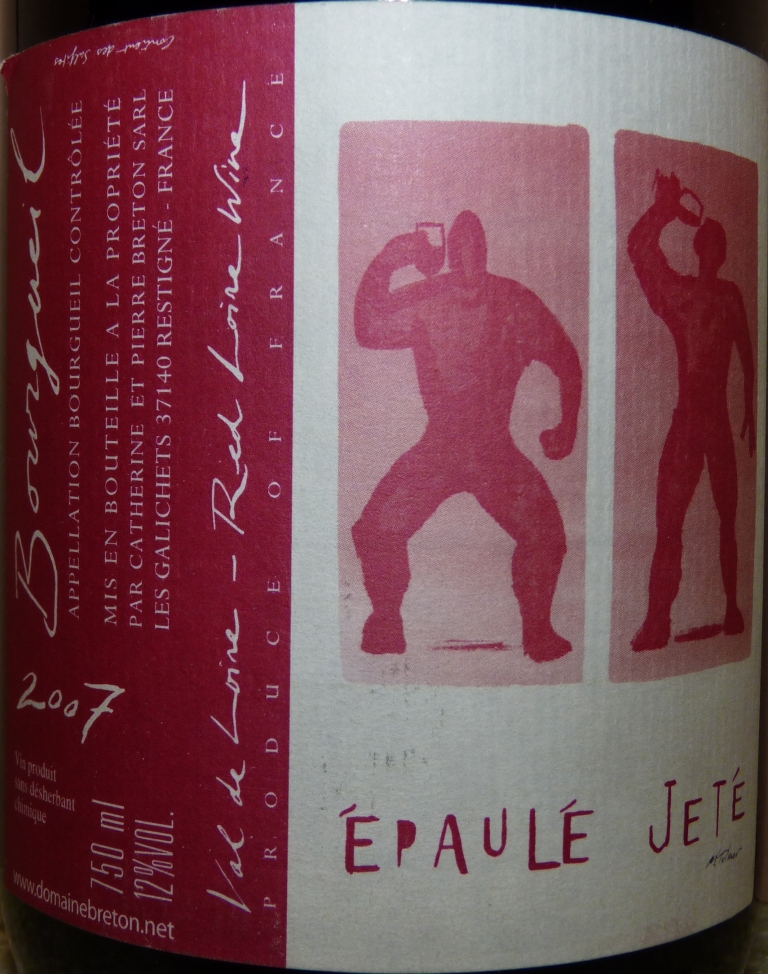 Do you know how old tavern smells? The one were thousands of wine bottles were opened, and wooden tables soaked up all the spills and drops of the wine during many tens or may be even hundreds of years? I don’t know about you, but for me this smell means “hello, vino was here!”. This is what you get when you pour this 2007 Epaule Jete Catherine and Pierre Breton Bourguiel in the glass. You get the most vinous nose you can imagine – not a hint of sweetness, not a hint of berries – only a noble smell of the ageless wine with the whiff of acidity. On the palate you get earthiness, minerality and more acidity, all delicately balanced by the early sour cherry kind of fruit.
Once I tasted this wine, one of the first thoughts was – it reminds me of a recent experience. It was so light and transparent (noted after tasting: 12% alcohol) that it brought back memories of the natural and biodynamic wine tasting at the PJ Wine (here is the link to that post). Similar to the wines in that tasting, this Cabernet Franc wine also let the Terroir to shine through, unadulterated. After checking the web site for Domain Breton – voila, it appears that this wine is also natural, organic and biodynamic!
All in all this was a great experience – I’m not sure it will be easy to repeat, as it was the only bottle I had (I got it in Lavinia wine store in Geneva). Oh well – this wine is worth seeking and experiencing, so talk to your favorite wine store guy – I will certainly talk to mine. Cheers!
And I’m Still Wrong
 I wanted to share an interesting encounter I had on twitter few days ago. Commenting on someone’s tweet, I mentioned that I’m not a fan of one particular (quite famous) California wine, and that I would prefer a number of other California wines on any given day over that particular wine. My reason was very simple – I visited that winery a few years ago, and while I had certain [high] expectations (well, it is a problem in itself), to my demise I was unable to find a single wine that I liked. To tell you more, I was planning to get there a bottle to bring to friend’s house for dinner that night, and again I was unable to find the right bottle.
Next, someone noticed my tweet and replied to it saying that all I have to do is to visit that winery to see for myself that wines are perfect, and provided me with an address. I replied that I speak about the wines from experience, been there, tried the wine and still didn’t like it, but I also mentioned that it is okay to be different. The “dialog” didn’t stop there, as I got new response from the same person, telling me that he also speaks from experience, finishing sentence with “sorry but you are still wrong”.
So this brings up some questions, albeit mostly rhetorical. Are taste “impressions ” universal? Do I have to like something only because someone else liked it already? If I don’t like the wine Robert Parker is raving about, does it mean that I have to stop drinking wine, stop talking about wine or both?
I’m not going to share any details on the winery or regarding the person I had this enchanting dialog with (by the way, I didn’t know this person and don’t follow him on twitter). But I’m curious about your take on this situation – can people express their honest opinion, or do we have to share positive stuff only? And can I please keep my personal tastes and preferences, even if I’m still wrong?
Experiencing Wines of Canada
 Coming back to the memories of “ahh-so-distant-by-now” our Canada vacation (it’s been almost a month!), I need to share my wine experiences with you. You might remember two earlier posts (you can find them here and here), which I prefer to refer to as “picture reports”, which gave you the visual expression of the food and some of the wines in Canada. However, we had an opportunity to spend some time in one of the Canadian wine countries, surrounding the small town of Niagara-on-the-Lake – and it was an eye-opening experience for me.
Until this trip, my idea of Canadian wines was very simple – Icewine. I knew for a while that Canada makes some really famous Icewines, which compete with German and Austrian Icewines. Outside of Icewine, my only reference were wines of the Finger Lakes region in upstate New York (general direction of Canada). While I wouldn’t claim that I visited a mass amount of wineries in Finger Lakes, in a few places we visited the only drinkable wines were Rieslings, and all the red wines were plain bad. Therefore, these were my expectations for Canadian wines.
I decided to start from the winery with the name at least I heard of – Inniskillin, and of course, the only wine I knew “of fame” there was an Icewine. As a side note, I want to mention that the winery had a playroom for kids – which is a very important factor in letting adults enjoy wine tasting, even during family vacation. The first wine we tried was 2010 Two Vineyard Riesling – very clean, good tropical fruit expression, all paired with beautiful acidity, a nice finish. This was a great start of the tasting. The next wine completely blew me away – the 2009 Legacy Series Pinot Gris. First, I didn’t expect Pinot Gris to be produced in Canada. But is not the main factor. Very complex, with explicit minerality and spicy bouquet on the palate, this wine still puts a smile on my face when I think about it.
 After having a great start with the whites, my level of expectations increased for the reds – and rightfully so. 2009 Montague Estate Vineyard Pinot Noir was very nice, varietally correct with a precise expression of smokiness and red fruit. Again, I would never expect to find a Pinot Noir of such clarity at a winery located so high up North – but I did. 2009 Shiraz Cabernet had perfect acidity, good minerality, just the right balance of dark fruit. 2009 Cabernet Franc was simply my favorite red wine – perfect, very balanced, with clearly expressed green peppers and explicit minerality (you might think that I’m abusing the term – but minerality was one of the key characteristics of all the Inniskillin wines we tasted, so I can’t help myself but to call it out).

As you might expect, sweet wines were next. We are not talking about some arbitrary late harvest wines – we are talking about Icewines, which have the highest sugar concentration out of all sweet wines, as the grapes are ripening on the vines until the frost reaches –8°C (about 17F) – then the grapes are harvested while being frozen and pressed right away – which yields a tiny amount of super-concentrated grape juice – this is why the wines are called Icewine (also such a low yield explains the high price of the Icewines). First, we tried the 2010 Sparkling Vidal Icewine, which was very light and delicate. 2007 Cabernet Franc Icewine was a real star though. I have to mention that Inniskillin was the first winery to produce Icewine from the red grape. Also, Inniskillin worked together with Riedel, the leading wine glass maker in the world, to produce a specially shaped Icewine glass that enhances the aromatics of the Icewine.

Going back to Cabernet France Icewine, it was incredible, one of the best ever dessert wines I ever tried. Why am I saying that? Balance. Ultimate Balance was the first and foremost characteristic of this wine. Beautiful balance, perfect lingering acidity, and literally unnoticeable sweetness – great wine. All in all, it was an outstanding lineup of wines at Inniskillin, I can’t recommend highly enough each and every wine I tried.
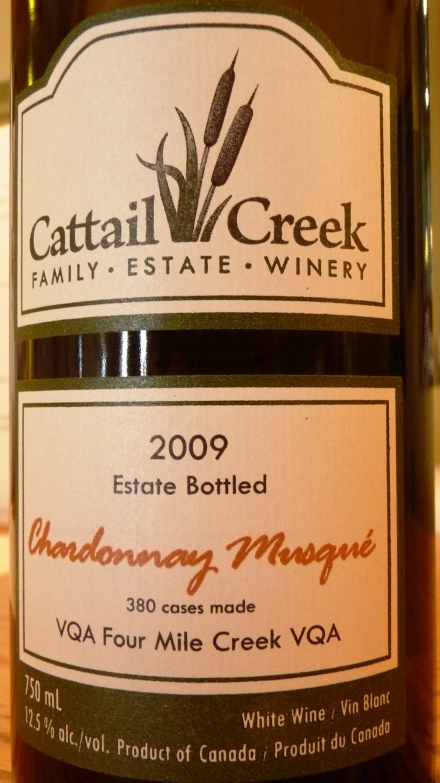 Next stop we made at the Cattail Creek Family Estate winery. One of the reasons to pick that particular winery was the fact that they have a few wines with the grapes I didn’t have before, like Chardonnay Musque, or different Riesling clones. I’m glad we stopped by, as we found more great tasting wines, plus most of the wines are made in very small quantities, so many are available only at the winery itself. First, we tried 2008 Catastrophe White, which was perfectly refreshing, with good acidity and a good amount of white fruit. Then we tried 2009 Catastrophe Red, which had very good balance, nice red and black fruit expression, soft and pleasant. It is interesting to note that Catastrophe wine series labels depict real cats who lived at the winery. Last but not least was the 2009 Chardonnay Musque – very nice, with good acidity, good reflection of what Chardonnay is, good subtle tropical fruit expression, more as a hint. This was yet another great experience.
Our last stop was Chateau des Charmes. This winery had the most impressive building of all:

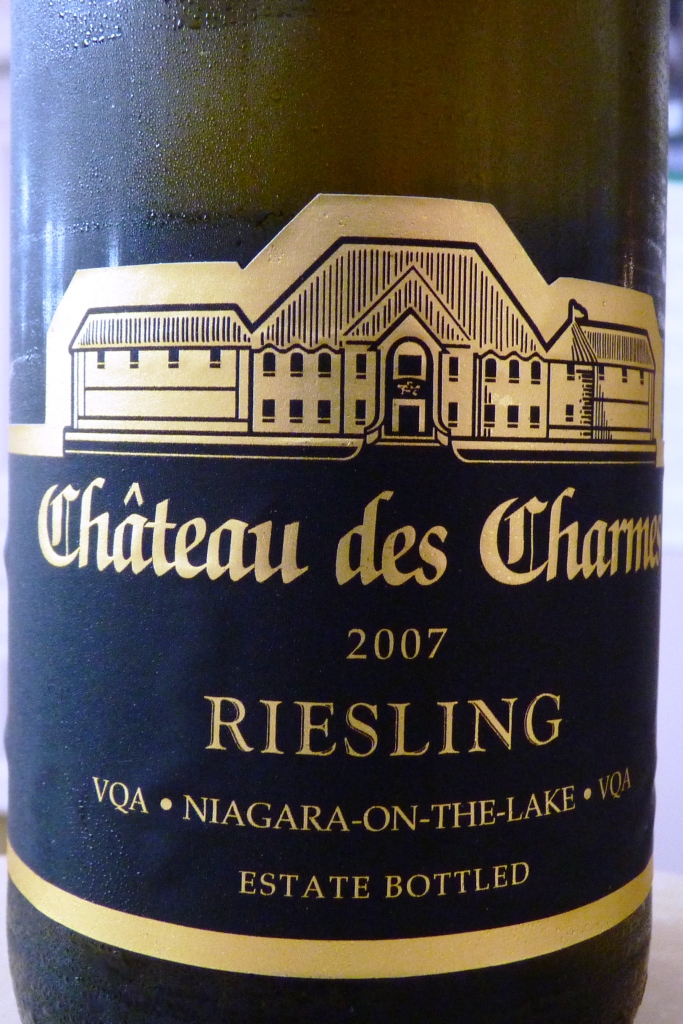 The wines here were also very impressive. We started with 2007 ‘Old Vines’ Riesling (I wanted to experience “old vines” Riesling) – and to my complete surprise, this Riesling had a Petrol nose! I was always under the impression that Petrol nose is a property of only German Rieslings – and here we go, Riesling from Canada with full classic German Riesling expression. In addition to the Petrol nose, it also had very good fruit, medium body and perfect balancing acidity. Next were more of the very impressive Pinot Noirs. 2007 Pinot Noir had a beautiful nose, and lots of tannins on the palate – it was unusually muscular for the Pinot Noir, probably in need of a few years to open up, but still, it was very good. 2007 ‘Old Vines’ Pinot Noir was also very big and powerful, with a clean smoky nose, but also needing time as the previous wine.
 Last but not least was 2008 Gamay Noir ‘Droit’, which happened to be a clone of Gamay and therefore it accounted for an additional grape for my “counting grapes” project. This wine had a very unusual herbaceous nose, and was nice and light on the palate – definitely a food-friendly wine.
That concludes the Canadian wine story, as we didn’t have time to visit more places. But even based on this experience, if before I knew of only Icewines from Canada, now all the Canadian wines are squarely on the “to find and drink” list for me – and I highly recommend that you will make an effort to find them and try them as well. The challenge is – I didn’t see that many Canadian wines on the shelves of the wine stores here in Connecticut. Oh well, hopefully, we can change that. Cheers!
Food Network, Coming To The Bottle Near You
 Yesterday I found out that Food Network is not about only food anymore. Of course wine always was present in various Food Network shows, but only as a cooking ingredient. Now Food Network teamed up with Wente Vineyards to make your in-home entertainment easier by bringing you food friendly wines, which will also fit any budget (all wines are priced at $10.99 at Cost Less Wines and Liquors).
I’m ashamed to admit that I never heard about Wente Vineyards before, and it appears that they are the oldest continuously operated family-owned winery ( they’ve in business for more than 128 years) located close to San Francisco in Livermore Valley. It is interesting to note that Wente Vineyards has Certified Sustainable designation, which means that that they are using sustainable methods to produce their wines ( which is good for us, consumers).
So far there are 4 different wines in the Entwine series, two whites and two reds – Pinot Grigio, Chardonnay, Merlot and Cabernet Sauvignon.

The idea behind the Entwines is simple – food and wine are meant to be consumed together, and Food Network wants to help you to make the pairing effortless and enjoyable. On the Entwines dedicated web site you can find  recipes and food/wine pairing suggestions. Useful pairing information is also available on the back label of each and every bottle.
So what about wines themselves? I had an opportunity to try all four wines yesterday. They are all nice, easy to drink and should pair well with food – but may be they are too easy to drink for my taste. When I drink wine, I’m looking for the experience, and one of main questions which I’m trying to answer for myself is whether or not I would want to experience that wine again. While it might be interesting to try the Entwines with food, these are not the wines I would have a desire to experience again. At the same time, if you need to entertain a group of people, these wines will do just fine, exactly because of their simplicity (don’t forget also that they are inexpensive). In terms of Drinkability, I would rate them all at 7-, except Chardonnay which had more substance to it, so I will give it a 7.
You should try it for yourself – I’m sure these wines will be widely available. As for the Food Network and wines, I think they can kick it up a notch, by introducing a Wine Program. And guess what – I would be delighted to host it. Yep. We can all dream – let’s drink to that. Cheers!
What Do You Drink When Weather Is Like This?
This heat is literally paralyzing…

Is there anything to drink besides water?
Here is one possible answer:

So, what do you drink?
Wine, Aged Beautifully
 Let’s talk about aging. No, that’s not what you think – not people aging and not the world problems with the aging populations. Let’s talk about the aging of the wine. By the way, it appears that second time in the row I’m taking upon the popular subject – in the previous post we were comparing the wine glasses (post can be found here), and now the wine aging.
With all due respect (based on this phrase, my friend Kfir would tell you right away that I’m about to blast something), I completely disagree with the majority of the popular opinion on the subject of wine aging. Open a wine book, read a wine blog, or ask a question on Quora, and for the most part, you will get an answer that 95% of the wines are not supposed to be aged and should be consumed within a year or two from the release date.
Based on my personal experience, I disagree with this viewpoint. I can’t put a percentage or a quantity on it, but I believe that well in excess of half of the wines produced in the world (not by the volume, but by the variety of the actual wines) can age very well for 5 to 10 years – and “age well” means “to improve with age”. My biggest problem with the aging of the wines is … space. If you want to drink aged wine, you either need a lot of space, or you need [typically] lots of money, as most of the aged wines increase in price. If you have a cool and dark area with constant humidity, you can buy wines as they are released. store them and enjoy them later as they evolve and mature. Otherwise, you need to have money and a reputable source of the aged wines (improper storage conditions will ruin any wine in no time). Once you solved your space problem, the rest is easy.
How easy is that? How can we know if that bottle of wine will age well – read: improve with age? There are way too many factors affecting the aging of the wine, and being able to predict age-worthiness of the wine (age-worthiness means that wine will evolve and taste better in the future) is more art than science. As an example, Matt Kramer, one of my favorite wine writers identifies age-worthy wines using characteristic of the mouth-feel, a mid-palate weight of the wine in the mouth. Here is my take on the subject. First, yes, of course, some of the wines are meant to be aged – for instance, Beaujolais Noveau is released in November and should be consumed by May of next year. Outside of the wines which are designated by winemakers as “do not age”, the majority has some aging potential. I believe the biggest dependency here is on the winemaker and what she or he wants to achieve with particular wine – if wine is well made, there is a good chance that it will also age well.
Some wines are helped by their “DNA” – under which I mean from what grape and where in the world the wine is made (of course good/bad year matters too). California Cabernet Sauvignon expected to [typically] reach maturity at around 13 years. Bordeaux easily ages for 30-50 years. Syrah-based wines, whether from Australia or France, can live for 50 years. Many 50-years old Riojas are fresh and vibrant as being just made. But “DNA” alone is not enough – wine should be well made in order to age well.
If you are still reading this post, I guess you might be tired by now by this prolonged escapade into the wine aging, and you might be wondering why, why is all that wine aging might be important? Well, I can’t answer this question. At least not before you will find the wine with a little age on it, which will blow you away. Yes, it is an acquired taste. But once you will actually acquire that “mature wine” taste, this is what you are going to crave, I guarantee you.
 Let me share some recent and exciting discoveries. Let’s start with 1995 Flora Springs Chardonnay Napa Valley. This wine is made out of 100% Chardonnay. While the nose was not very expressive, the level of complexity of this wine is unimaginable. Yes, considering dark golden color, this wine might well be past prime, and without that “acquired taste” for the aged white wine, you might be even upset after the first sip. This wine was exhibiting notes of vanilla which almost moved up to some sort of the almond paste, still showing some acidity. Next are savory notes, almost to the level of saltiness, which was increasing the complexity even further. The wine was in a very stable shape as it tasted the same on the second day as well. Will this wine evolve further? Who knows – but I would be very happy to taste this wine again in five or maybe ten years. Drinkability: 8
 The next wine is 1992 Domaine de Thalabert Crozes-Hermitage from France. Crozes-Hermitage wines are made primarily out of Syrah, typically with a very small addition of Marsanne and Rousanne grapes. As we mentioned before, Syrah wines age quite well, and this was an excellent example of the well-aged Syrah wine. This wine was very playful and soft, with lots of red fruit on the nose and on the palate, very good acidity and a good level of tannins. This wine probably will continue evolving for the next five to ten years, and again I will be glad to help you share the bottle later on – if you will have one. Drinkability: 8-
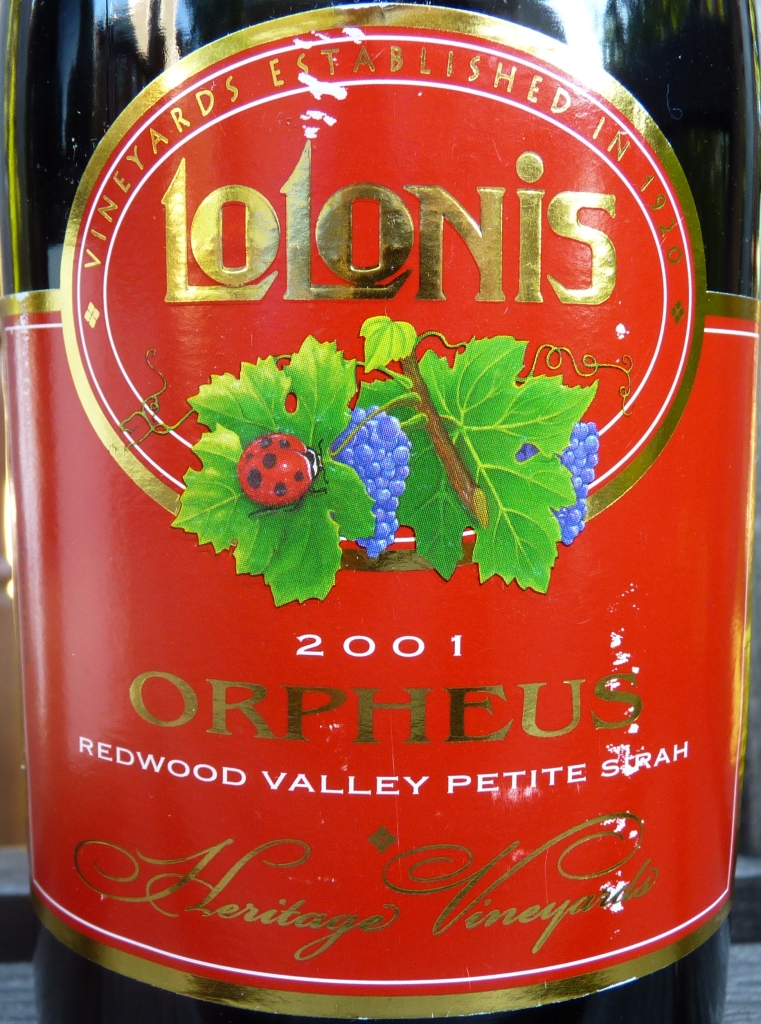 Going back to California, 2001 Lolonis Petite Sirah Redwood Valley. In short – outstanding. This 10 years old wine was completely fresh and beautiful. It is made from organically grown Petite Sirah grape. The wine showed perfect dark fruit, good acidity, full body, excellent tannins, and perfect overall balance. This wine might be evolving for the next 10-20 years – again, the trick will be to find it.
Drinkability: 8+.
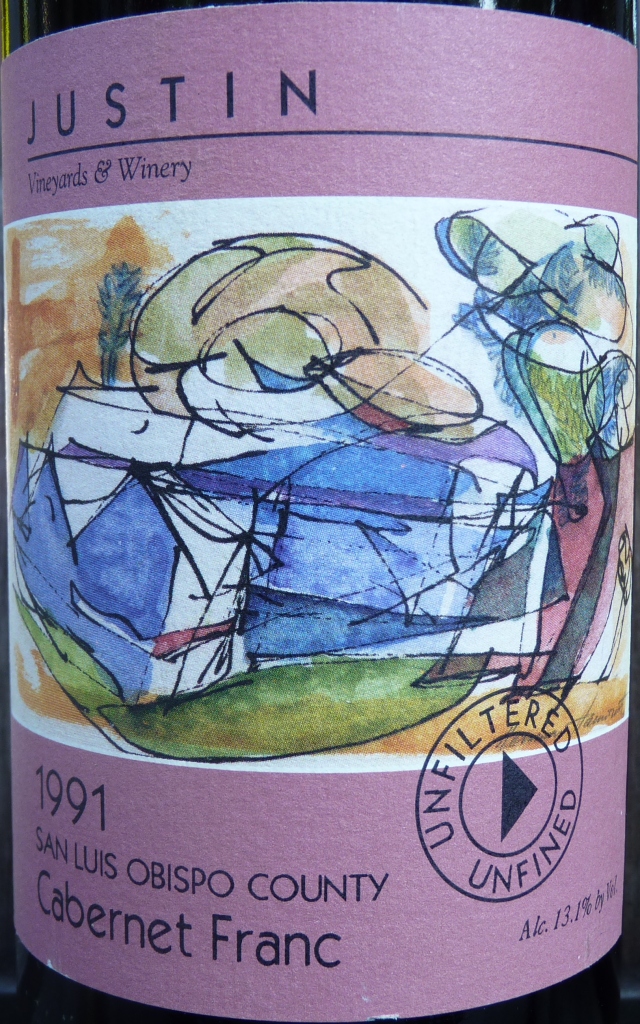
Last, but not least, 1991 Justin Cabernet Franc, San Luis Obispo County. This was the “wow” wine, that exact mind-blowing one. First, while I like Cabernet Franc wines, I had no idea they can age so well. I can literally guarantee that in the blind tasting format, very very few people would be able to guess the age of this wine. Deep garnet color, not a hint of age (no brownish overtones at all). Perfect fresh fruit, soft and luscious, a perfect balance of tannins and acidity. This wine was the oldest in the tasting, and it was definitely the best of tasting. Considering how good it was now, I can’t even guess how much time it has left – but I would be very glad to find a few more bottles to be “wowed” again in the future. Drinkability: 9-
One note before we conclude – this was a rare case of someone doing all the hard work, and me enjoying the results – I got all wines from Benchmark Wine Company and each one of them had been less than $20.
Don’t know if you got the desire to seek well-aged wines – I hope you will one day. For now, I can only wish upon myself, my family, all my friends and all of you, my readers, to age as beautifully as this Justin Cabernet Franc does. Cheers!
War Of The Glasses: Does Wine Glass Matters?
 Of course the topic of wine glasses and their effect on wine’s perceived quality (which includes smell, taste and overall pleasure) is a very popular subject among wine lovers (professionals are also not immune to such discussions). I have no intention to claim any original or unique thoughts on the subject – instead, I want to merely report on my own personal experiment.
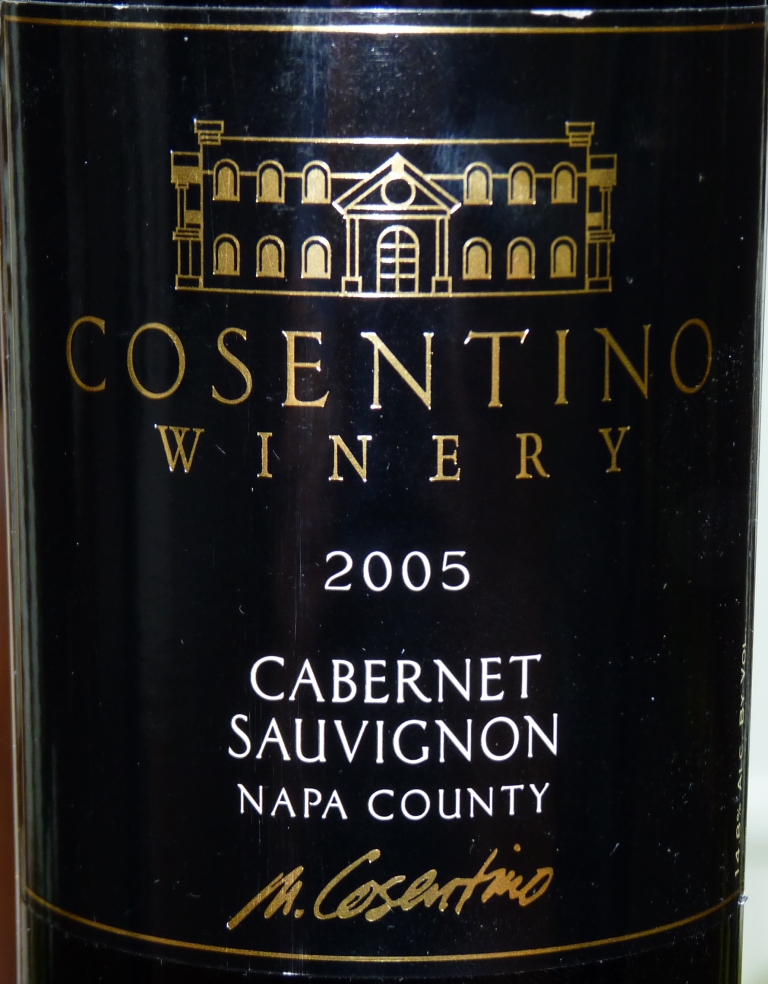
We started with 6 different glasses and a bottle of wine. For this experiment, I wanted to use a wine with classic flavor profile, nothing too obscure – seems that Cabernet Sauvignon would ideally fit the bill. I can tell you now that I was moderately happy with the choice of wine. While I like Cosentino wines, this 2005 Cosentino Napa Valley Cabernet Sauvignon was more fruit forward than I appreciate, but still it was not a very bad choice.
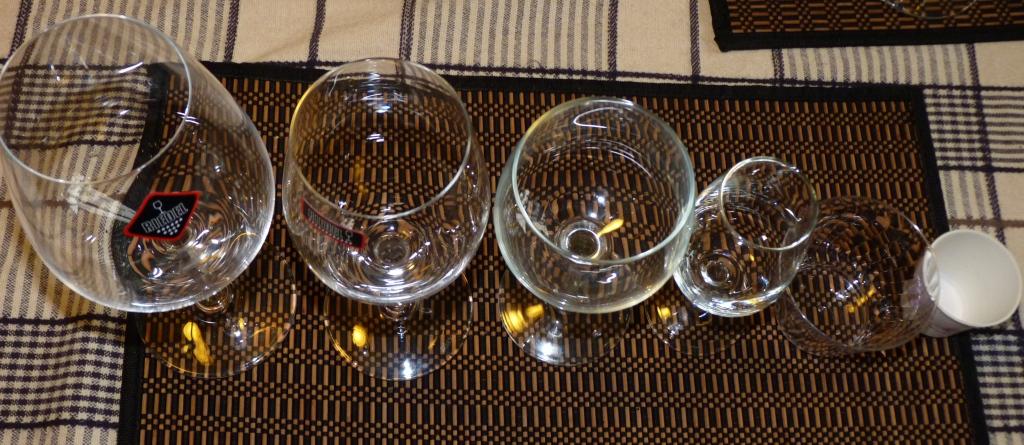
The glasses included: Riedel Cabernet Sauvignon Glass, Riedel Universal tasting (also can be called “restaurant special”, 489 0 in Riedel nomenclature) glass (holds 20 oz), a wide open, almost “square” glass (don’t know if it has a special name), small (8 oz) universal tasting glass, plastic cup and small paper cup.
Now for the notes (results are presented in the exact succession as glasses were assessed):
Riedel Cabernet Glass:
Nose: big concentration, noticeable alcohol, smell of a wet dog (must be something wrong with me)
Palate: lots of fruit, black currant, still quite sharp
Riedel Universal (489 0):
Nose: good concentration of the fruit, alcohol is less noticeable
Palate: very good fruit, round taste
“Square” glass:
Nose: some fruit are a bit more open (black currant), overall less alcohol, less fruit concentration.
Palate: taste is ok, a bit less of everything
Small universal tasting glass (8 oz):
Nose: almost like previous one, noticeable fruit
Palate: the softest of all! Nice round fruit
Plastic cup:
Nose: literally nothing
Palate: ok, similar to the one above
Paper cup:
Nose: none
Palate: bad
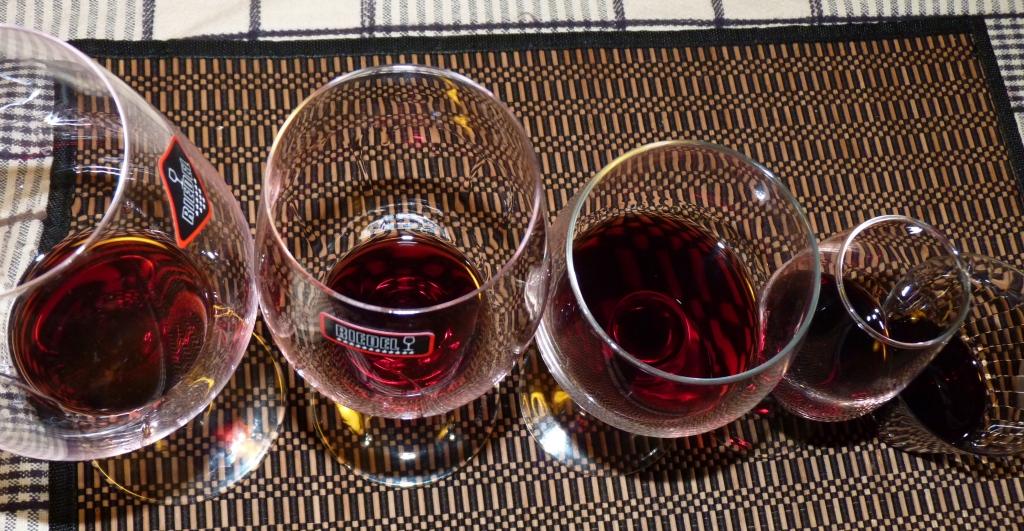
Let’s try to come up with some conclusions now. I think two universal tasting glasses fared the best – size difference didn’t matter. Of course bigger glass was more convenient to use, but outside of aesthetics of wine appearance in a bigger glass, they delivered literally the same flavor and taste. We can also safely say that paper cups shouldn’t be used if you are drinking wine to enjoy it (that was a definite looser). Plastic cup can be used, but you will lose the pleasure of the smell, so if you can avoid it, then avoid it. “Square” glass was okay, but again you will be losing on the aroma details. Lastly, Riedel Cabernet glass still requires more experiments. It was definitely not the best glass in this tasting, but I believe that it might enhance the taste of some particular Cabernet wine, most likely less alcohol, old-world style wine, where it will actually be able to enhance subtle aromas and flavors.
For now, don’t drink your wine from the paper cups, and save the money by avoiding those super-expensive “specialty” glasses, and you will do quite well. And if you have an opinion (different one? even better!) – leave a comment, and let’s have a debate. Cheers!
Daily Glass: Martinet Menut
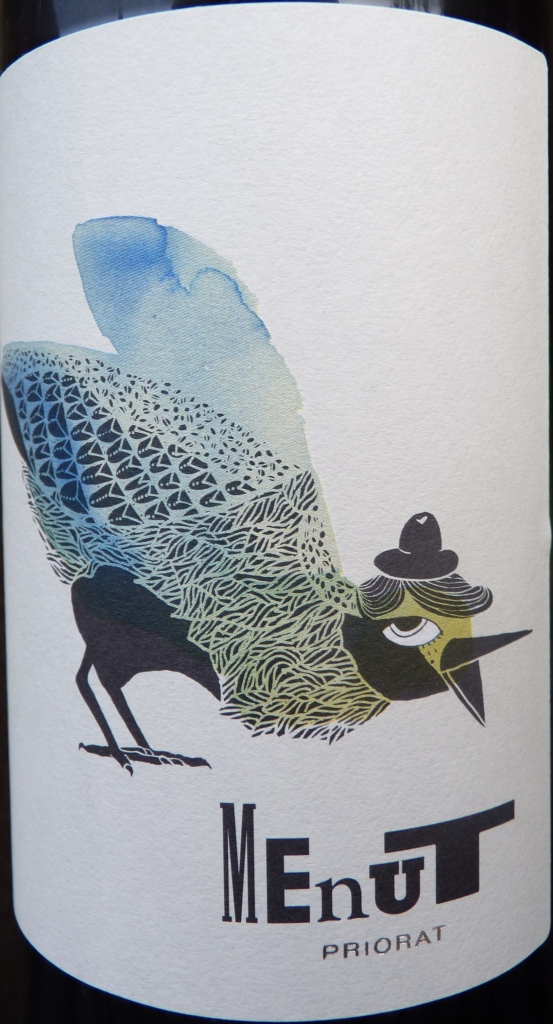 Looking for the bottle to open (this is not ready, not tonight, don’t feel like it,…) I stumbled upon a bottle with the bird picture on the label. Okay, I have no idea how this might taste, never tried that before, don’t know what grape(s) it is made out of – yes, that looks like the right bottle to open.
Cork popped out, and the wine goes in the glass. Energetic swirl (exactly as taught by Kevin Zraly, without covering glass with the hand), sniff and… I couldn’t extort anything beyond sacramental “WOW”… It was a true sensory sensation – the wine had perfect vinous nose, with absolutely everything you want to find in glass of red wine – the fruit, the vineyard, spices, earth, terroir, mystery…
On the palate, it had lots of dark red fruit – plums and cherries, all coupled with good acidity and tannins. Of course, after being blown away so much, I had to check what is it I am actually drinking. This 2007 Martinet Menut is a red wine blend from Priorat region in Spain. I have to tell you – even today, in the age of Internet, there are still plenty of things which are difficult to find. Finding information about this Martinet Menut wine, as well as producer ( supposedly, Clos Martinet, one of the “cult” Priorat wineries) was very challenging. The wine apparently is Grenache-based blend, but this is about all information I’m sure at, so let’s leave it like this. This 2007 Martinet Menut can actually be compared with Clos Mogador I tasted at the Spanish Wine Festival (you can find post here) – definitely in the amount of pleasure one can get from a glass of wine. Drinkability: 8.
You think I got too excited? Always possible, so you’ll be the judge. Get the bottle, and lets compare the notes. Cheers!
Great Gifts for Dad
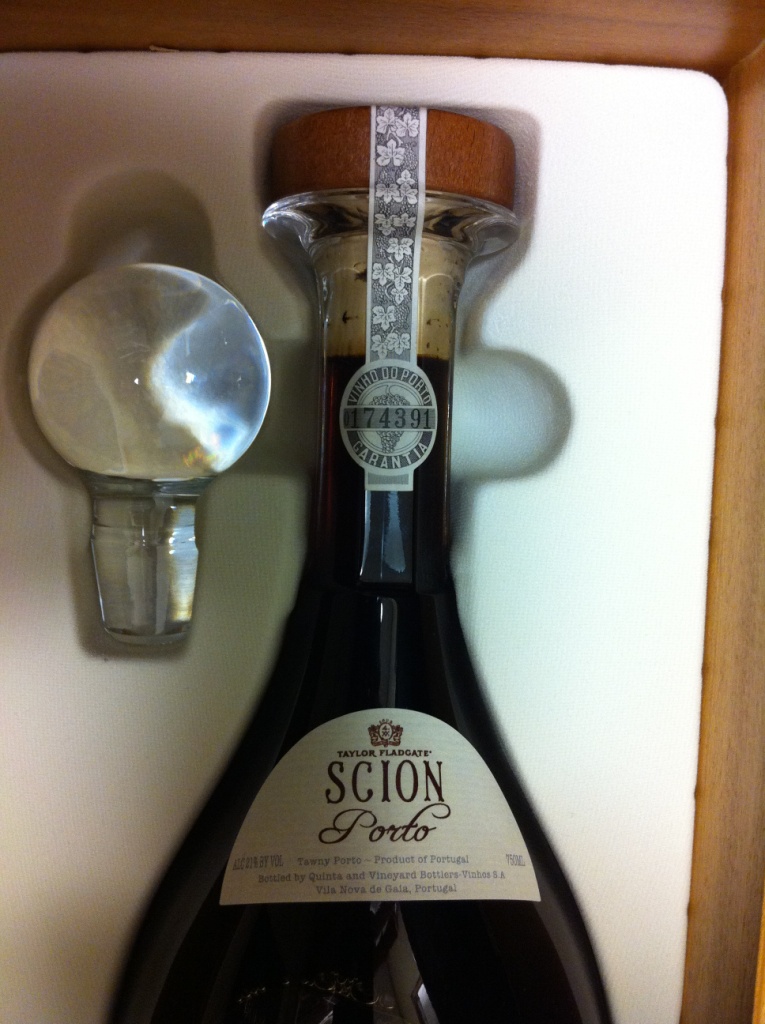 Still looking for the gift for Dad? Wine is always a great gift, so here are some of recommendations I shared in The Art Of Life Magazine blog post. More…
Last Bottle Sign Up ($10 credit)




 Talk-A-Vino