Archive
Wines of the World – A Sequel Challenge
Yesterday I posted about the challenge of trying the wines from all 50 states in US and visiting wineries in those 50 states. One of the comments had a suggestion – how about the wines of the world? Really, how about it?
It is not that simple even to create the list of wine-producing countries of the world. Considering that the wine is at its peak of popularity, many countries are entering the winemaking arena. Yes, of course, there is a core of the wine-producing countries – about ten or so – but based on the data in Wikipedia (which also differs between different articles), about 60 countries produce the wines in the world today, give or take a few.
I wanted to find a good map to illustrate the wineries concentration around the world, but that didn’t happen, so here is the map of the winemaking areas according to the Wikipedia article:
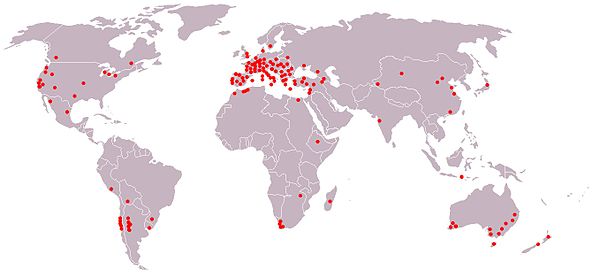
Source: Wikipedia
Now, how many of you tried the wine from Algeria or Thailand (well, I know that Oliver did)? I’m sure those are not easy to find in your local wine boutique. I would argue that the typical [good] wine store in US would have the wines from about 15 countries; some of the best stores will probably account for about 20 at a time. Thus if you really want to try the wines from many different countries, you will have to make an effort.
Is that a worthwhile effort? That is strictly a personal question. I’m genuinely curious how the different wines taste like, so I’m excited to try the wines pretty much from anywhere. Should you expect to find great wines? You definitely will – I had many mind-blowing wines from Serbia, Croatia, Lebanon, Israel, Georgia and other lesser known wine-making countries. Of course you will encounter a lot of plonk along the way, that is also given. So, should you take upon this challenge? I can’t answer that question – as I said, this is strictly driven by the personal interest, so you be the judge.
If you are curious where do you stand now, use this word document to track your progress. As a reference, I can tell you that at this point, I tasted wines from 36 different countries out of 58 listed in the document, and visited wineries in 6 (yeah, need to travel more…). What would be your score?
Below is the table showing my exact list of wines and wineries per country.Challenge yourself! Cheers!
Are You Ready For The Reality TV Wine Drama? It Is Coming, And May The Best Bottle Win!
 Do you like wine? (Argh, with an opening question like that in the wine blog, I probably lost half of my readers on the spot) When you look at the shiny wine bottle in the store with an artfully (or not) designed label, do you know about – better yet, can you vividly imagine – all the hard work which went into making sure that bottle will get to you and [hopefully] will also taste good? Soon, you will get a chance to get to know it first hand and almost experience it – with the help of the big TV. No, I’m not talking about the new Sideways or SOMM – I’m talking about the real winemaking drama taking place in the format of the Reality TV.
10 aspiring winemakers, two teams, two great wine regions. Lots of vineyard and winery chores. Clash of characters. And pain of elimination. Until only two contestants are left to make their best bottle of wine. Then celebrity judges will put an end to it and decide who gets the $100K and opportunity to bottle one vintage under the Best Bottle label. That’s all there is to it. Intrigued? Want to learn more? Great, as I was intrigued too and wanted to learn more when I heard about Best Bottle Reality TV competition series and its kickstarter campaign.
In an effort to learn more, I got an opportunity to interview Scott Krauger, the executive producer of the Best Bottle series – and I would like to share with you our conversation. Oh yes, before we get to the interview, here is the Best Bottle trailer, for you to get an idea of what to expect from the series:
And here is our Q&A:
How did you start your love affair with wine?
In 1993 I was brought on board to help develop the estate vineyard at Archery Summit Winery in Oregon. My mentors Bernard Lacroute and Gary Andrus taught me about the love of wine, showed me how wine is crafted and the terroir. I was exposed to people who had a deep love for wine-making, and through their art and style, learned to craft exceptional wine.
How the idea for Best Bottle was born?
Three years ago I was producing a documentary called Heart of the Vine which highlighted the terroir, Mother Nature, and the vineyard people who craft the wines. I wanted to show how wineries and winemakers express a wine’s location and vintage.
Why California versus Oregon?
First, this show is all about Community (yes, with a capital ‘C’)! Thus the region vs. region. My mentor, Gary Andrus, gave me a huge shot early in my career when he hired me. Gary taught me so much and Community was at the top of the list. So, Best bottle is a celebration of wine regions and those individuals who delicately craft amazing wines for the world to enjoy. Future seasons are planned to expand into a global competition by shooting future seasons in New Zealand, Australia, France, Germany, Spain, and so on.
What was the selection process to select 10 “aspiring winemaker” contestants?
It really goes to the most entertaining characters with great back drop stories. They have an appreciation and love for making wine. They are artisans, aspiring or established wine makers. This show is used to showcase their skill and art on a world stage.
What makes you think that looking at the winery chores will be attractive enough for the viewers to make it a successful TV program?
With more than 20+ years of experience in the wine industry, it really comes down to the characters we cast for the show. We have exciting episodes planned for 14 seasons. The show takes the contestant and viewers through the wine-making process…”behind the scenes”. We are also demonstrating what happens out in the vineyard and the sale side as well. This all done in an exciting competition/challenge and elimination format.
Will the show be available on YouTube, or would it be a live TV-only program? Where on TV?
We have partnered with Mance Media, our World Wide Distribution agent. They will show case and take this show to VOD and foreign markets. They are already working on establishing the domestic broadcaster and global distribution into other television markets. We’ll also have YouTube clips and other video content highlighting not only the show but supporting aspects…i.e. Interviews and additional content from tasting events at food and wine shows all over the United States.
When the first episode will be coming out?
As you know, the wine industry is dependent on the seasons. Right now we are looking at Harvest of 2014 in the northern hemisphere or Harvest 2015 in the southern.
Do you think this show will be as successful as the movie Sideways? Do you expect your show to change the dynamics of the wine consumer market, as Sideways did for Pinot Noir versus Merlot?
That’s the million dollar question and I’d love to say, “Hell yes!” I do think the show will really showcase the thousands of vineyard and winery workers, who are often the unsung heroes. Everyone remembers the winery owner, but do they even think about the men and women who harvest and process the grapes? Or the many who spend hours blending and tasting to get just the right blend? Best Bottle will open people’s eyes, minds and hearts to the entire Community (there’s that word again).
Can you tell us what wineries will be involved in California and Oregon?
Not yet. That’s still super secret Hollywood stuff. We can say we have commitments for locations, support, and participants.
* * *
Here are some additional links and information for you:
Site: WineBestBotte.com
Kickstarter: https://www.kickstarter.com/projects/595310313/best-bottle-show-for-wine-enthusiasts-and-reality
Producers: Scott Krauger, Rob Richards, Matthew Wilson, Annie Tonsiengsom, Matthew Mancinelli
Media contact: Kari Fredheim Karig@geminidigitalfilms.com
Please understand that Best Bottle series needs your support – visit the Kickstarter project page to learn about sponsorship options and use the opportunity to help to create first ever reality TV wine drama. Cheers!
Daily Glass: World Cup-Appropriate Wine
As I didn’t have time to look for the interesting news and articles for the traditional Meritage post, I will skip it and will give you the quiz answers next week. And for today, let’s just talk about an interesting wine find.
Literally days before the World Cup started (even if you are not following the World Cup 2014, I assume you are aware of the soccer’s (it is football for the world outside of the United States) main tournament, taking place in Brazil), I got an e-mail from the Last Bottles Wine, offering the wine with the picture of the soccer ball on the label.

How appropriate, I thought, I definitely should get this wine, especially considering the price of $18 per bottle – and so I did. Not only this wine has a picture of soccer ball on the label, it is also associated with one of the best known names in the soccer today – Leo Messi, the star of the Argentinian team and one of the very best players in the world.
Same as Leo Messi, the wine hails from Argentina, and yes, it is a Malbec (star player to star grape), and it is produced by the Casa Bianchi, an excellent Argentinian winery which makes a wide range of wines, from simple everyday wines to the ultra-premium, cellar-worthy bottles. The connection between the wine and Leo Messi? Simple. As the back label says, “collaborate with the Leo Messi Foundation in long lasting commitment to building projects focused in health-care and educational developments for children with social disadvantages”.
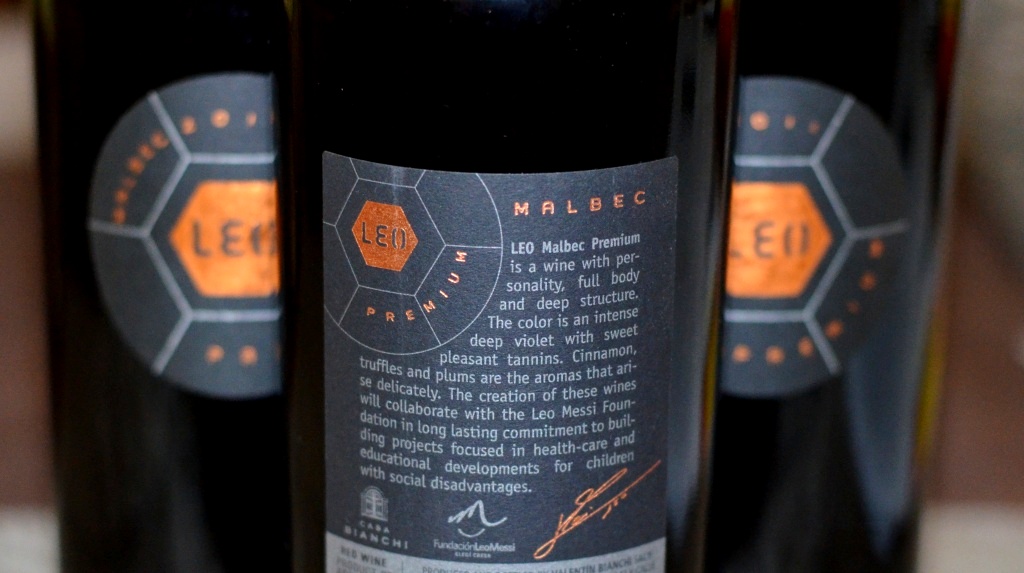
Let’s talk about the wine – 2011 Casa Bianchi Premium Leo Malbec, Mendoza, Argentina (15% ABV). It was definitely World Cup game -worthy. Dark garnet color in the glass. Beautiful nose of supple fruit, herbs and spices – a touch of eucalyptus, a bit of the dark chocolate – very promising. On the palate, the wine opened up very dense, balanced and smooth, then showing some spicy spikes as it was breathing in the glass. On the second day the wine showed more of that spicy nature, with some acidity and tannins not always dancing together. I believe it will come around in another 3-4 years, it is a bit too young at the moment to show its full potential. Drinkability: 8-
That’s all I have for you – go back to the game and wish Leo Messi all the luck – he and his team will need it. Cheers!
Restaurant Files: Canoe Restaurant in Atlanta – Great Food, And Close Encounter With The Rare Bird
Think about your best restaurant experiences – what do they consist of? Of course the company is first and foremost – if you are in the wrong company, nothing will taste or appear right – this is given. So outside of the company, food, wine, service, views, decor, ambiance – all play a role, these are all essential factors of your great restaurant experience.
As I mentioned many times before, when traveling, I always look for the opportunity to experience new restaurants. My last trip to Atlanta, Georgia was not an exception by all means – of course I looked for a good restaurant to visit. I used Yelp as my reference source, and it worked quite well. Canoe restaurant, located in the Vinings neighborhood, was well worth the 4.5 stars yelp rating out of 626 reviews (this was the number of reviews at the time of our restaurant visit).
I read in some of the reviews that the Canoe Restaurant had a perfectly romantic appeal. It definitely had, especially considering how dark it was in the dining room (hooray to all the FlashLight apps on the smartphones, we would be left hungry without them). But on a more serious note, the restaurant is situated right by the river, with luscious greens and smart lighting making an outside look like it was a Thomas Kinkade’a painting. My photos will not do any justice to that outside setting, but I hope they will give you an idea of beauty and tranquility.


Going back to our dinner, while everybody were looking at the menus, I grabbed the wine list (what a surprise, right?). That wine list…. How can I describe it… It was probably the best wine list I ever held in my hands – there was an incredible amount of the excellent wines (that it not necessarily unique), priced in a very (did I say “very”?) appealing way. Moreover, one line in that list almost made me speechless – the rare bird was there, and it looked almost, almost – for the group of like-minded friends – affordable. Take a look below – can you spot the rare bird I’m talking about?

I’m assuming you found it – yes, it is the Screaming Eagle. Of course $850 is an exorbitant amount of money for the bottle of wine, but considering that this wine is simply impossible to find at any price, it might not sound that bad – I have a few friends who would simply jump at such an opportunity. But I was not with those friends, so as you can imagine, I was left salivating about such a close encounter with this rare bird.
Have you ever got excited of seeing something, took a picture, and only later on, looking at the picture, noticed that there was a more to see in the object of your “excitement-driven” photograph? This was precisely my case. Only looking at. The picture I realized that the Screaming Eagle bottle was actually a second label of this cult wine, called Second Flight (it doesn’t make a difference from point of view of the opportunity of trying this rare wine). Then also noticed lots of other cult wines being present in that list, such as Harlan and many others, many at a extremely reasonable price (for example, Peter Michael Le Pavots retails for $175 – $225 on the wine list is a steal). Anyway, I think I have a great incentive to go back to Atlanta, and drag a couple of friends along.
Enough about the wines we didn’t drink, let’s talk about the wines we had. For the white, we got the 2012 Sigalas Assyrtiko-Athiri, Santorini, Greece – touch of minerality on the nose, white stone fruit, refreshing palate with crisp acidity and more of the white stone fruit undertones. Our choice of red was 2011 Chehalem Three Vineyards Pinot Noir from Oregon – nice smokey nose, good fresh red fruit on the palate, some raspberries and sweet cherries, good acidity and good overall balance. It was nice and easygoing wine to drink, and it complemented well most of the group’s dinner selections.


Now, let’s talk about the food. Our waiter (we had a great service, by the way) explained that the restaurant’s specialties are the game and seafood. Somehow, I felt like embracing seafood (we only scored 9 pm reservation, so it was rather a late dinner), and I didn’t regret that at all. For the started, I had an Grilled Australian Octopus (Chorizo, Peppers, Horseradish Tomato Broth) – the octopus was perfectly cooked and it was chewy just enough to preserve the texture, and very tasty overall. For the entree, I went with Bacon Wrapped George’s Bank Monkfish (Asparagus, Brioche, Grape Tomato Vinaigrette), which was absolutely delicious – perfectly cooked, the flaky fish was melting in the mouth, and the vegetables were nicely fitting in.


And then it was the time for a dessert. Our waiter, who brought the dessert menu, mentioned that restaurant’s pastry chef was a genius, so after such an endorsement I had to change my mind (I wanted to skip the dessert altogether). With the dishes such as Caramelized Goat’s Cheese Cake (Bourbon Cherries, Balsamic) or Rhubarb Crisp (Strawberry Ice Cream, Oatmeal Crunch), it was almost impossible to decide on something. I ended up taking Popcorn Ice Cream Sundae (Canoe’s Cracker Jack), which was absolutely delicious and very unusual. Freshly made vanilla ice cream with chocolate covered popcorn and caramel sauce – this might be one of the possible spellings for “nirvana”.
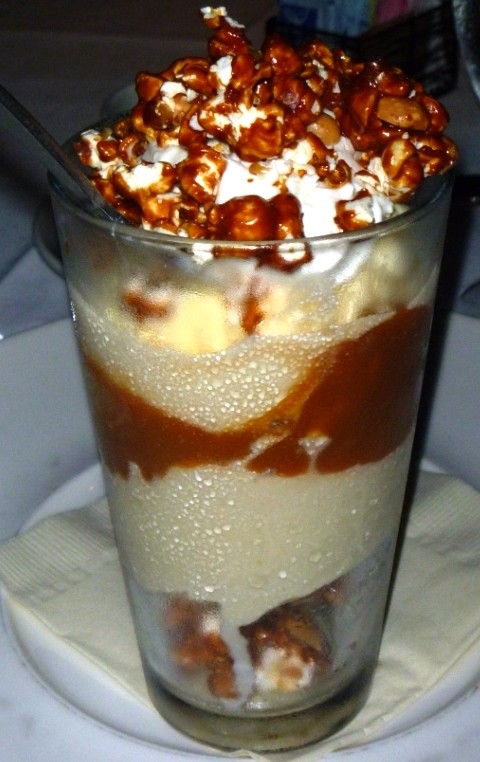
To conclude my report of the wonderful dining experience, I can only say that this was an excellent and very memorable meal, and if your travel plans will take you to Atlanta, I highly recommend you will find the time to visit the Canoe Restaurant – and you can thank me later. Cheers!
Canoe Restaurant
4199 Paces Ferry Road, SE
Atlanta, Georgia 30339
(770) 432-2663

Pairing Life’s Happy Moments with Wine
When you have happy moments in your life, how do you celebrate them? Of course Champagne is a choice number one for all happy events – marriage proposal, wedding, birth of the child, major promotion at work – all good causes to open a bottle of Champagne. But those are more of a major happy moments. And then there are other, smaller scale happy moments, which don’t call for major celebration but still need to be acknowledged. Like the one I had today. I passed yet another Taekwondo tip test, inching very close to becoming the 4th degree black belt candidate. 4th degree in Taekwondo is very special – this is the first black belt when the person owning it is called a “master”. No, I don’t have an amazing martial arts skills, like Bruce Lee, or Jet Lee or anyone like them. Nevertheless, I love Taekwondo, and becoming the Master is definitely a dream. And I’m one tip away from becoming a candidate for the 4th degree black belt. It is very close now.
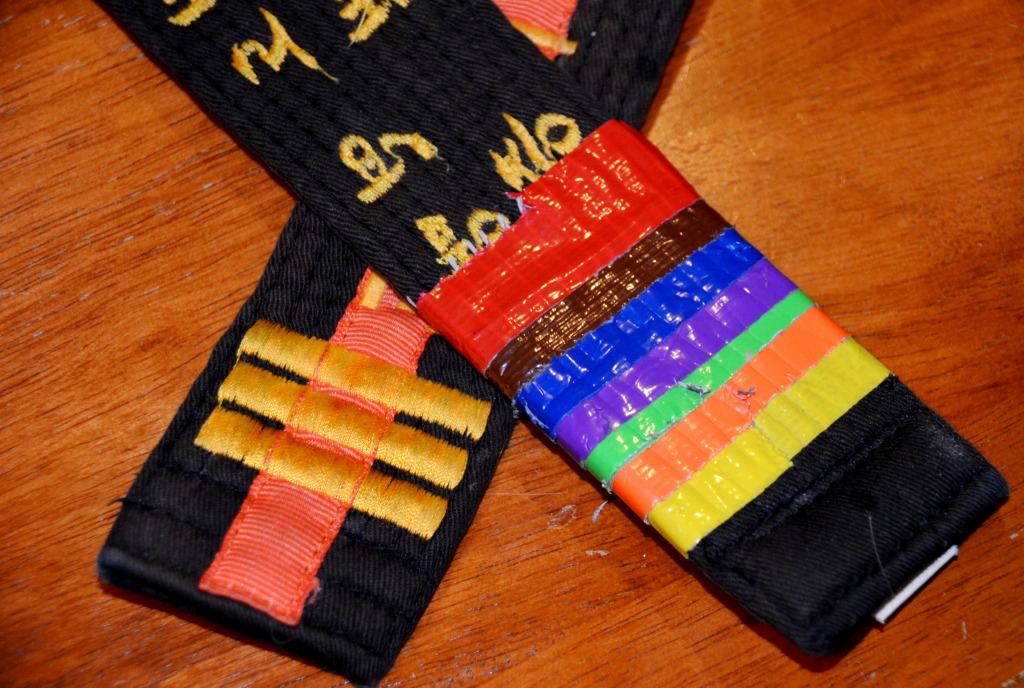
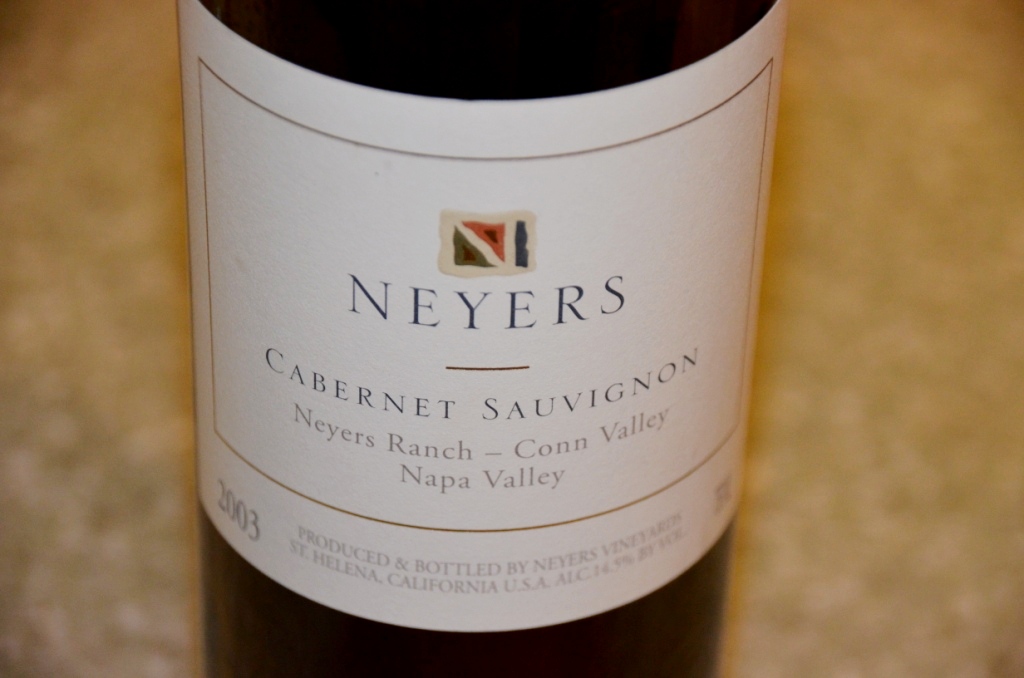
So, for the simple happy moment like this, what would you pair it with, especially when your test just ended at around 9 PM? Somehow, I didn’t even think of Champagne. As I mentioned many times before, I don’t have any kind of lists for my wines, so finding the wine to drink is always fun. Especially when you are looking for the wine for the special occasion. So I went through many shelves in the wine fridge, until I saw the bottle which just clicked – this is it. 2003 Neyers Cabernet Sauvignon Neyers Ranch – Conn Valley, Napa Valley (14.5% ABV). Probably the last bottle I had. The reason this wine worked with the happy moment? Sheer exuberance. On the nose, it had beautiful dark fruit, fresh berries and the touch of barnyard. The palate was even better than the nose – lots of stuff happening, eucalyptus, herbs, sage, bell peppers, cassis, blueberries, truffles, dark chocolate, espresso – just beautiful, beautiful wine. Perfectly balanced, perfectly complementing happy moment, and becoming a happy moment on its own. (If you care to know, I would rate Drinkability at 9).
There you have it. What is your choice of wine for the happy moments in your life? Cheers!
From Family Recipes: Olivie Salad
There are recipes. And then there are family recipes. What is the difference, you ask? Family recipes are more of a traditions. They don’t have to be secret recipes (well, let’s leave the secret recipes discussion for another time), but they are passed from a generation to generation virtually unchanged. They are treasured, and they have a lot of memories connected to them.
It just happened that for me and for my wife, as we were growing up in the same city (large one, mind you – with about 1.6M people living there), one and the same salad was a food icon. This salad, called Olivie, was probably the most popular and famous salad in Russia, or may be I’m simply biased. The origin of the salad is unclear. I was always under impression that this salad came to Russia from France – but according to many sources on Internet (well, they all might be copying from each other), the salad was created in 1860s by the Belgian Chef Lucien Olivier (hence the name of the salad), who was working in Moscow in the French-style restaurant called Hermitage. It seems that the list of ingredients supposedly in the original salad varies widely from the source to the source, and really has nothing to do with the Olivie salad as I know it. But, at this point, I think this is rather a matter of historical curiosity, and not overly important for what we are talking about here.
The salad essentially is very simple, and has only 7 ingredients – potatoes, carrots, meat, pickles, boiled eggs, sweet peas and mayo. Of course a number of variations exists, firstly evolving around the use of different kinds of meat (bologna, boiled/roasted chicken and boiled beef are all possible options), but then some of the other ingredients sometimes can be omitted or substituted. But – once the recipe is changed, it is not the family recipe anymore, it becomes “some other recipe”. In a nutshell, here are all the ingredients of the Olivie Salad:
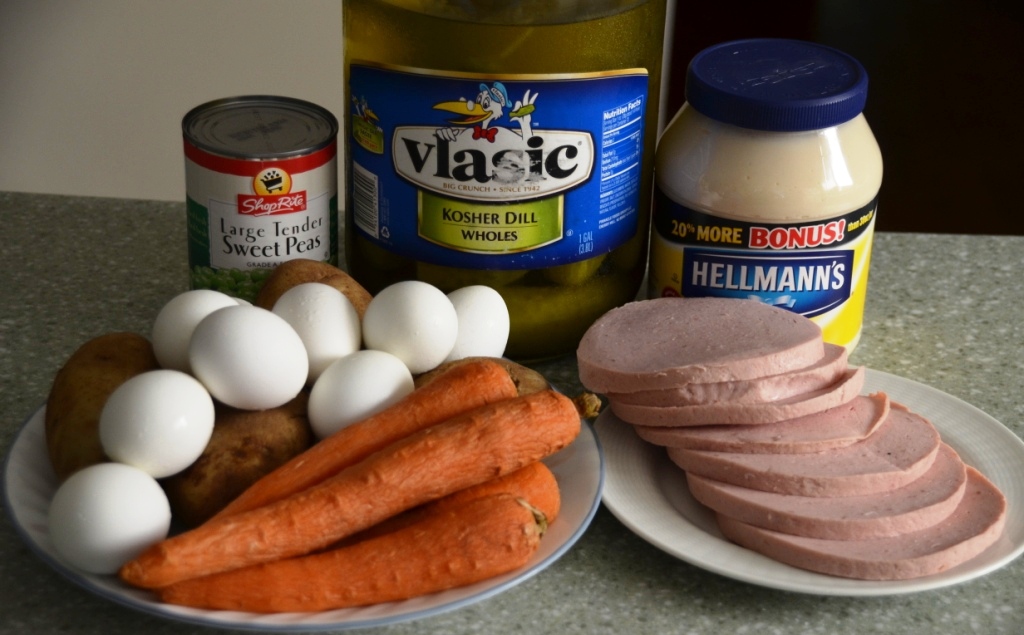
Here is the same, but zooming in on all the individual ingredients:


The family recipe is often associated with the happy moments in life, as it would be typically invoked for the special moments, whatever they are. While now we can make this salad any day (it was not always the case growing up back in Russia – some of the ingredients, like sweat peas, for instance, were very hard to find), it is still typically associated with holidays or at least special dinners of some sort (like a visit of good friends). Also, it is almost a privilege to make this special recipe – 95% of the time my wife simply doesn’t let me to make this salad, exactly as my Dad was, as I don’t always cut all the ingredients uniformly, and this is a big issue in her eyes (and I can’t argue with perfection).
In general, when I cook, I take very relaxed approach to the substitution of the ingredients, use of specific brands etc. – I believe it is totally okay to perform substitutions as needed. Except when it comes to this Olivie salad. If you want to make Olivie salad according to the Levine family recipe, no substitutions or changes are allowed, outside of what I will mention below. Don’t get me wrong – you are free to do what you want, it just not going to be the Levine family Olivie salad.
Okay, time to get to it. Below is the list of the ingredients you will need, and the instructions (very simple, mostly in pictures!) are follow. One more important note – the recipe below will yield the amount good enough to feed a small army, but this is the only way we make it, so feel free to cut it down accordingly.
Levine family Olivie Salad:
4 Medium Potatoes, whole, unpeeled (Russet, White or Idaho – don’t use Yukon gold, it will not retain the shape after it is cut)
4 Large Carrots, unpeeled
1.25 lb good bologna, whole or sliced into quarter an inch rounds (don’t use supermarket deli Bologna, go to the German or Polish specialty deli)
8 medium size pickles, use only Vlasic Whole Kosher Dills, no substitutions!
8 medium hard boiled eggs
1 large can of sweet peas (any brand :))
About 1/2 cup Hellmann’s Real Mayonnaise – no substitutions!!!
Wash potatoes and carrots, don’t peel, and boil them for about 20 minutes (start timer after the water started to boil). You can check readiness with the knife – you should be able to poke through with very little resistance. You want to boil carrots and potatoes with the timer, as you don’t want them to overcook – if they do, they will lose shape once cut. Once potatoes and carrots are boiling, boil eggs for about 10 minutes. When potatoes and carrots are done, transfer them into the cold water to stop cooking process, also cool down the eggs. Get all the ingredients on the plate, and let them cool off so you will be able to handle them.
Next step – peel off and discard skin from potatoes and carrots. Peel off the shell from the eggs, then wash them and dry – you don’t want any pieces of shell in the salad. Okay, now all the prep work is finished, and all you have to do is to cut the ingredients (dice might be a better word).


Dice potatoes into about quarter of inch squares, same goes for carrots, eggs, bologna. Cut the pickles and put them in the strainer – you don’t need extra liquid in the salad. Open sweet peas, drain them completely (again, use strainer), and add them to the bowl.


At this point you need to mix everything together – tread lightly, as you don’t need a mush instead of a salad. Once you are done mixing, taste it – you looking for the balance of flavors. If you think you need more salt or acidity, add more pickles – in the end of the day, you just want to arrive to the tasty combination.


Now, the last step – you need to add mayo. This should really be done “by the taste”. Start from the small quantity, mix it, taste it, and add more if you think you need it. This salad must be served cold, so you have to put it in the fridge before you will serve it. The best thing to do is to let the salad chill, and then add more mayonnaise right before you will serve it – this way it will look and taste the freshest.


There are few possible modifications to this recipe. One is to replace bologna with chicken or beef. The trick is that to cook either one just enough that it will be ready, but not overlooked, because overlooked meat will just break down and it will not be Olivie salad anymore. You can bake or boil chicken breast (should be breast only, as you don’t need any extra fat). If you will use beef, you have to boil it – or if you will decide to roast, it will have to be well done, as you can’t have any blood in this salad.
Last modification you can make is to add a tiny amount finely finely diced white/yellow onion. My dad used to do this, and it adds a nice note to the salad in my opinion, but it is a big no-no in our house now.
There you have it – Levine family recipe Olivie salad. Feel free to comment, especially after you will try it. Cheers!
A Perfect Day In San Diego
When I travel on the plane, I often skim through the airline magazine, such as Hemispheres on United, before I get to my beloved sudoku page. One of the articles I often pay attention to is “Three perfect days in a particular town”, which describes how you can potentially spend three days at some town, starting from the lodging, talking about attractions and dining options. Over the past 3 month, I was in San Diego in California twice, and came across a few places which I found worth talking about, thus I decided to come up with the similar post to those I mentioned before. Writing about 3 perfect days might get a bit too intense, so let me compose for you just one, potentially perfect, day. Here we go.
Let’s start with the place to stay. San Diego has no shortage of the hotels, of course. The reason for me to recommend the two hotels below is because I personally stayed in both and liked them very much. First option is the Residence Inn San Diego Downtown, located at 1747 Pacific Highway. Yes, it is the part of the chain of Marriott hotels, and while it is not unique, it nevertheless offers a great convenience of stay for the family, with all rooms being suites with kitchenettes. It is also located within walking distance from Little Italy area (lots of great restaurants!) and the number of attractions right by the water, like USS Midway Museum. This hotel is within 20-25 minutes walking distance to the Gas Lamp Quarters (lots of restaurants and great night life), and it is easy to get to and from the highway.
The second hotel I can recommend is called Kona Kai Resort and it is located on on 1551 Shelter Island Road. Even taking into account that hotel was undergoing renovation during my stay there, the location and the views were absolutely spectacular. Yes, I stayed at many beach-front hotels before, however, in case of Kona Kai, the combination of marina with numerous boats and the hill covered with the houses was one of the most tranquil settings I ever experienced in the hotel. Just sit in the chair and be transported away in the dreams… Small private beach, lots of different water sport activities, bonfires – the hotel definitely offers a lot for the very enjoyable stay.

Kona kai Marina View at Kona Kai Resort
Now, let’s talk about few things you can do. Of course San Diego Zoo, as well as Seaworld need no introduction, so I will not be talking about them. Also, if you are traveling with kids, don’t forget that Legoland is only about 40 minutes away from San Diego. However, I would like to bring to your attention a few of probably lesser known places. After breakfast (please see below for recommendation), head out to the Cabrillo National Monument. While you can think basedon the name that this is only a single structure, Cabrillo National Monument is actually a park, which offers stunning views of San Diego and San Diego harbor, the Lighthouse, a small military history museum and the number of hiking trails – you can easily spend a few hours there.


Depending on how much time you will spend at the Cabrillo National Monument, you might or might not be ready for lunch – in any case, you will find my suggestion below. After lunch, I have few more places for you to visit. First, the Balboa Park, which is a very interesting collection of botanical gardens, beautiful grounds and lots of different museums. Depending on how much time you will have available, there will be no problems to spend not only half day, but pretty much the whole day in the Balboa Park. One of the most stunning images for me was the Towering Moreton Bay Fig tree, with the root more resembling a dinosaur’s foot and towering crown disappearing high in the sky:

Towering Moreton Bay Fig Tree at Balboa Park
One feels really humbled walking around these magnificent trees.
Once you are done with the Balboa Park, I have the last attraction for you to see for the day – Sunset Cliffs. This is also a park, which offers stunning views of the ocean, as well as opportunity to surf and hike. To me, just sitting down and watching the waves, is enough of attraction on its own. And I would also guess from the name that the best time to visit the cliffs is during the sunset, but I didn’t have an opportunity to check this myself.


And now, let’s talk about food! As we are talking about the perfect day, I would like to share three recommendations with – yes, we are talking breakfast, lunch and dinner.


And now, it is time for lunch. I hope you are craving seafood, as the place I want to send you to is a fresh seafood heaven, very much resembling the New England, or rather even Cape Cod seafood joints, the hallmarks of the fresh seafood restaurants. With its unassuming and non-pretentious simplicity, Point Loma Seafoods reminds you of many of the Guy Fiery’s triple-D worthy establishments – inexpensive, always filled with people, offering great variety of seafood which is as fresh as it can be, with different styles of preparation. In the mood for sashimi? You got it. A plate of fried oysters or clams? No problems. A whole clam sandwich (this is what I had)? Here you go. Fresh fish, salads, soups, oysters, crab cakes – definitely there is a variety to chose from. Make sure you will allocate time, both to find parking and to wait in the line – but the wait is very manageable, the service is quite quick and efficient. I highly recommend you will include Point Loma Seafoods into your travel itinerary.

After all the walking, climbing, and may be swimming, kayaking and sun bathing, you probably feeling tired and reading for an exciting dinner. Your wish is my command. Let me suggest that you will take a short trip to Coronado Island, and find the place called Chez Loma (yep, we are going French again – how about that!).
Again, an interesting parallel with New England, as Chez Loma restaurant is located in the regular house-looking structure. Simple ambiance and chanson music definitely add to your mood. And the food… Well, before we talk about food, few words about the wine. The wine list has reasonable size and very reasonable prices, with most of the selections coming from California, France and New Zealand. For no particular reason, we started with NV Scharffenberger Mendocino County, California – simple wine, with nice touch of toasted apple on the nose, and good weight on the palate. This wine had a bigger body than typical NV Champagne would have, with the same toasted apple being a main theme. Overall, easy to drink and refreshing. Our second wine was delicious 2012 Matua Pinot Noir Marlboro New Zealand (13% ABV) – smokey nose, vibrant acidity, tart cherries on the palate, excellent balance – the wine was perfectly complementing the variety of dishes we had for dinner.


And then, there was food. For the appetizers, we went with the few different options. Ceviche “Verde” (rockfish, tomatillo sauce, avocado) was somewhat “off the beaten path”, very refreshing, with the avocado and tomatillo sauce adding an interesting touch. Escargot (mushroom, sweetbread, asparagus, garlic butter) was probably the best I ever had – somehow, all the elements worked together creating literally a sublime experience. Tartare of Beef (hand cut beef, shallots, horseradish, parsley, pomme frites) was another great appetizer. I fell in love with this dish in Paris, and ever since, when it is on the menu in the restaurant which I would trust to serve me a raw beef, I would go for it. This version was very nicely done, with the perfect flavor profile. And lastly, the Three Beets (yellow, striped and red, thyme vinaigrette, Bucheron goat cheese) was simply a music for the eyes – bright, colorful, and most importantly, very tasty! Perfect texture on the beets – not too hard and not mushy, just right, and an excellent pairing with very gentle goat cheese.


Couple of entrees I want to bring to your attention. Peppered Filet Mignon (tenderloin, black pepper crust, brandy sauce, potato puree, haricot vert) was perfectly cooked, with very fresh cracked black pepper, simply a perfection on the plate. And the Sea Scallops (vanilla infusion, cauliflower puree, bacon crisp, orange sauce) were perfectly done, with the right texture and delicious textural enhancement of cauliflower puree and bacon bits. Again, one of the best Sea Scallops dishes ever, and I have to tell you that 3 times out of 4, if the menu has Sea Scallops on it, this would be the dish I would take. For dessert, we shared Gingerbread (orange-caramel sauce), which was mostly a nicely done bread pudding. All in all, a great dining experience and I can’t recommend this restaurant high enough.


After leaving the restaurant, see if you will be able to get a quick tour of the historical Hotel del Coronado – it definitely worth a few moments of your time – seeing all the wooden paneling and lavishly appointed hallways. Note – you might have to look for the way to sneak in as a registered guest. Upon return to the hotel you are staying at, spend a few moments admiring San Diego and marina nightlights. It was a long day, but I hope it was a good one.


Here you have it, my friends – my version of the perfect day in San Diego. Whether you visited any pf the places I mentioned or not, I would love to know what you all think. Cheers!
Lots of Wines, Zero Pretense – Enjoying Wine at Wine Steals in San Diego
 I love restaurants and wine bars, no questions (well, who doesn’t?). Yet every time I go to the restaurant where I expect to be ordering wine, I go out of my way to find the wine list beforehand and see what is there. No, it is not because I need to play the wine snob and see that a restaurant carries the wines worthy of my exquisite taste. Fine, I’m lying – I will give you 10% on that reason. But the rest of the 90%? I want to see if there is a wine which I can afford and still enjoy drinking at the same time. Yes, I’m a cheap bastard, and no, I’m not willing to pay any price to get what I want. If worst comes to worst, I have enough wine at home – I can just drink water at the restaurant. Considering that restaurants in many cases want to charge triple or more versus retail, I find this atrocious and not wiling to support it. So if I can see the wine list ahead of time, at least I know what to expect.
But – wouldn’t it be nice if the wines would be reasonably priced at the restaurant? Let’s say, the retail plus the fixed markup? I read about some of the restaurants which have this model, but I never been to one. Until now.
Enters Wine Steals San Diego (cue in happy music). No, this is not the place where you can learn how to steal wine or buy the illegal Screaming Eagle for 5 on the dollar. Wine Steals is actually a wine retail store, slash the wine bar. And quite honestly, I want to call them a “concept bar”, as for the sake of all of the oenophiles who don’t get to enjoy the wine in the restaurant because they can’t afford it, I really hope that the concept of Wine Steal will catch like a wild fire and the Wine Steals outlets will pop up all over the country. What is the concept, you ask? In a few words – honest, simple and perfectly reasonable pricing of the wine in the bar/restaurant setting. You can get the wine by the glass – okay, this is not unique, agreed. But you can also buy a bottle of wine at a very reasonable price (how about a bottle of 2005 Toro for less than $16), and have it served to you right at the restaurant for only $6? Yep – buy any bottle at a very reasonable and competitive retail price, and pay only $6 extra to have it served to you. And of course, whatever you will not finish, you can take home with you. So that almost feels like a steal to me – in the best possible sense of the word. How about that for the concept? Would you welcome Wine Steals in your neighborhood? I know I would, gladly and giddily.


While the most fun part (which you don’t get to do in a restaurant) is simply walking around the floor and simply choosing your bottle, we started from the two glasses of wine. Manorossa Negroamaro Lizzano DOP was definitely a fun wine, with perfect acidity, good fruit and enough depth to support the conversation. And then 2005 Dama de Toro Crianza Toro DO was simply spectacular – herbs and spices on the nose, nutmeg, lavender, sage, red and black fruit on the palate, more herbs, soft tannins and perfect balance – this was once delicious glass of wine (I liked it so much that I had to grab a few bottles to take them back home with me – as I said before, at around $17 with the tax, simply a [Wine] Steal). We also had 2010 Mahoney Vineyard Pinot Noir Carneros (about $20 for the bottle), which was just what you expect from the California Pinot Noir – hint of the smoke on the nose, nice dense dark fruit on the palate, concentrated and well balanced. And we finished the evening with Hidalgo Pedro Ximenez, a great value at $17.49 for the bottle – sweet plums on the palate, hint of dried figs, not overly sweet with nice balancing acidity.


Wine Steals also offers a very nice food menu, with various dips, cheese and meat boards, sandwiches, salads and pizzas. We had a cheese board and trio of the deeps which were simple but very tasty.
That concludes my exciting report. I hope the Wine Steals will become a concept, and will catch on everywhere. I think this is really a great way to enjoy wine worry-free in the bar setting, also knowing that you are getting a great deal. What do you think? Would you want to see a Wine Steals store open up around the corner? Comment away! Cheers!

Passion For Jura – The Wines
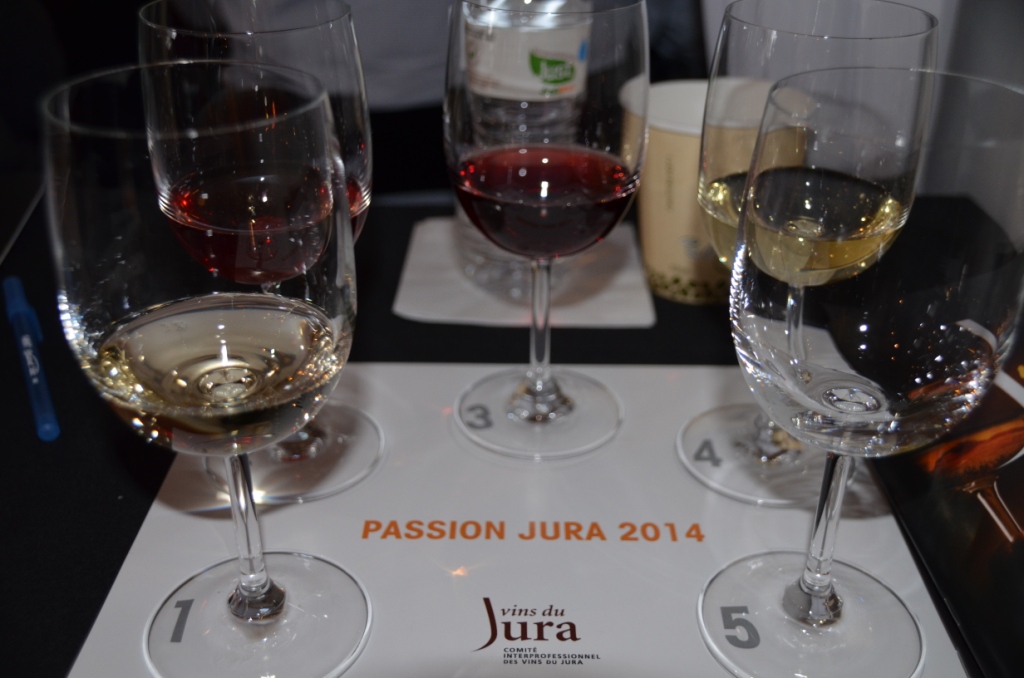 In the previous “Passion for Jura” post, we talked about the region – history, terroir, grapes and types of wines – but we didn’t talk about the wines themselves. “Passion for Jura” was the name of the seminar and tasting which I recently attended in New York city, where I had an opportunity for the first time to really immerse into the fascinating world of one of the oldest wine producing regions, which is really unknown in US.
During the seminar, 6 wines were presented by the winemakers themselves. The idea was to let us experience the full range of the Jura wines (for some strange reason, Vin Jaune was not presented during the seminar). Here are the wines we tasted:
NV Domaine Jacques Tissot Cremant du Jura Blanc Brut (12% ABV) – 100% Chardonnay, refreshing grassy nose, very acidic, bubbles are present but somewhat muted in the glass. Creamy mouthfeel with toasted bread and apple on the nose. Overall, not bad, but lacking a bit an overall energy of the sparkling wine.
2011 Domaine de la Pinte Jura Arbois Polsard de L’Ami Karl (11.5% ABV) – light, refreshing, cranberries with the touch of barnyard, herbs (sage), light but with the nice tannins. Very interesting and very enjoyable.
2011 Benoit Badoz Vermiel (13.5% ABV, 70% Trosseau, 30% Pinot Noir) – fresh grapey nose – not a pronounced as Beaujolais Nouveau, but still quite explicit. Cherries and blackberries show up next. Beautiful, smokey notes on the palate, a bit sharp, but fresh. Clean acidity, long pleasant finish. Somewhat similar to Oregon Pinot Noir, but more round. Also has a noticeable green component.
Compare the colors of the two red wines in the tasting:


2011 Domaine Champ Divin Cotes du Jura (13% ABV, Chardonnay/Savagnin blend) – vanilla, minerality on the nose. Delicious. Acidity and minerality on the palate, fresh apples, very refreshing
2009 Fruitiére D’Arbois Savagnin Arbois AOC (14% ABV, 100% Savagnin) – oxidation is very much pronounced, pretty much like with Sherry, both on the nose and the palate. This wine is typically made as Vin Jaune, but it requires lesser aging time. After the wine breathes, it becomes much less aggressive and comes through as clean, despite the oxidation.
2009 Domaine Pierre Richard Vin de Paille (15% ABV) – delicious nose. Palate is beautiful, with refreshing acidity, touch of bitterness, and full of fresh juicy apricots. Wow!
And here is the list of some of the wines I tasted during the walk around tasting. The place was small, and got very crowded after a while, so I didn’t taste the wines from all 20 producers. As usual for the trade tasting, I’m using the “+” sign system. The wines mentioned below were my favorites, for the most cases with “+++” ratings with some exceptions (of course), such as “++-|” and “++++”.
2010 Domaine Jacques Tissot Arbois Chardonnay (12.5% ABV) – +++, beautiful!
2012 Domaine Jacques Tissot Arbois Chardonnay La Mailloche (12.5% ABV) – +++-|, butter and balance! perfect.
2009 Domaine Jacques Tissot Arbois Savagnin (13% ABV) – +++, very elegant
2006 Domaine Jacques Tissot Arbois Vin Jaune (14.5% ABV) – +++, mushrooms and forest floor! should be amazing with savory dishes. Vin Jaune can last for 6 month after being opened.
2010 Domaine Jacques Tissot Arbois Trousseau (12.5% ABV) – ++-|, clean, elegant, light – red which more feels like white
NV Domaine Jacques Tissot Macvin du Jura (17% ABV) – very unusual palate, with raspberries, almost taste like Framboise, very nice. Can last for 6 month in the fridge.
2010 Domaine Jacques Tissot Cotes du Jura Pinot Noir (12% ABV) – ++-|, very interesting and unusual for a Pinot Noir
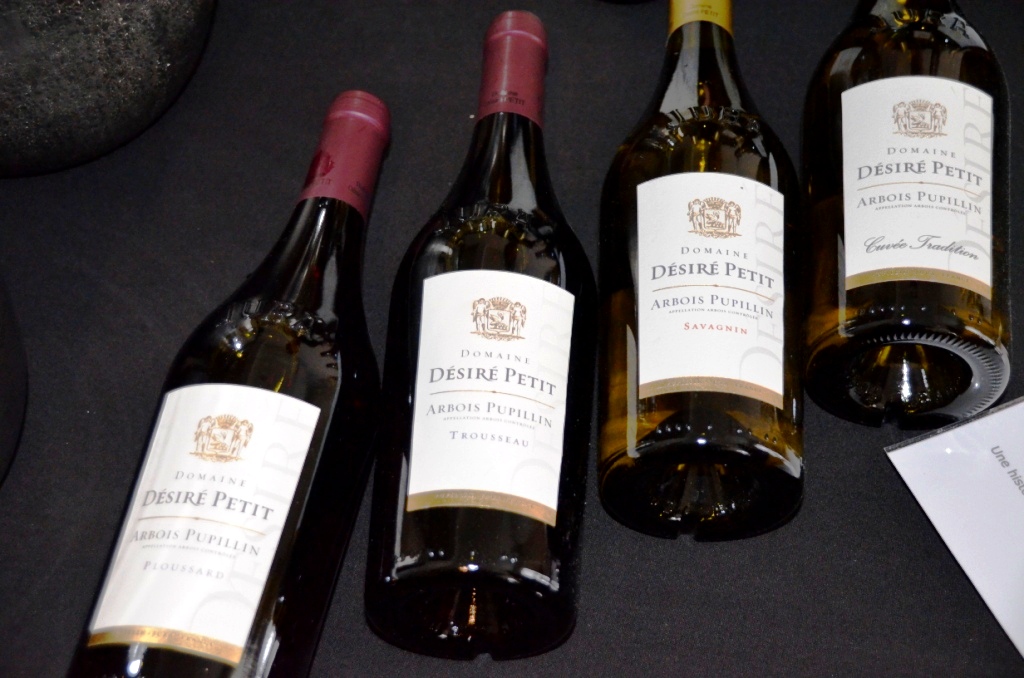
2012 Domaine Désire Petit Ploussard (12.5% ABV) – +++, smokey nose!
2012 Domaine Désire Petit Trousseau (12.5% ABV) – ++-|, dry, clean, nice
2012 Domaine Désire Petit Chardonnay (12.5% ABV) – ++-|, clean, classic, minerality!
2012 Domaine Désire Petit Savagnin Ouillé (13% ABV) – +++, 6 month in oak, very complex wine
2011 Domaine Désire Petit Tradition (12.5% ABV, 25% Savagnin) – +++, perfect acidity
2008 Domaine Désire Petit Savagnin(13% ABV) – ++-|, delicate, elegant
2007 Domaine Désire Petit Vin de Paille (14.5% ABV) – +++, prunes on the nose! perfect balance
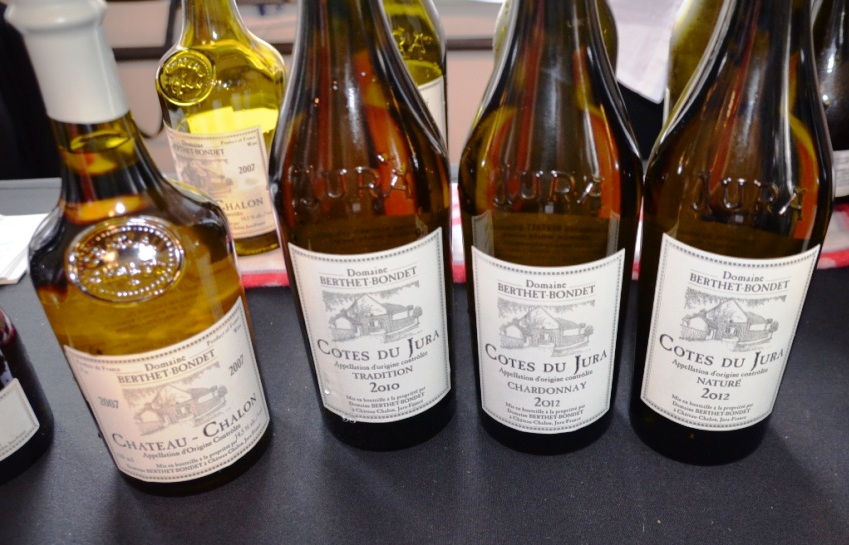
2012 Domaine Berthet-Bondet Cotes du Jura Chardonnay (12.5% ABV) – ++-|, light, round
2012 Domaine Berthet-Bondet Cotes du Jura Naturé (13% ABV) -+++, good fruit
2012 Domaine Berthet-Bondet Cotes du Jura Tradition (13% ABV) -+++, delicious
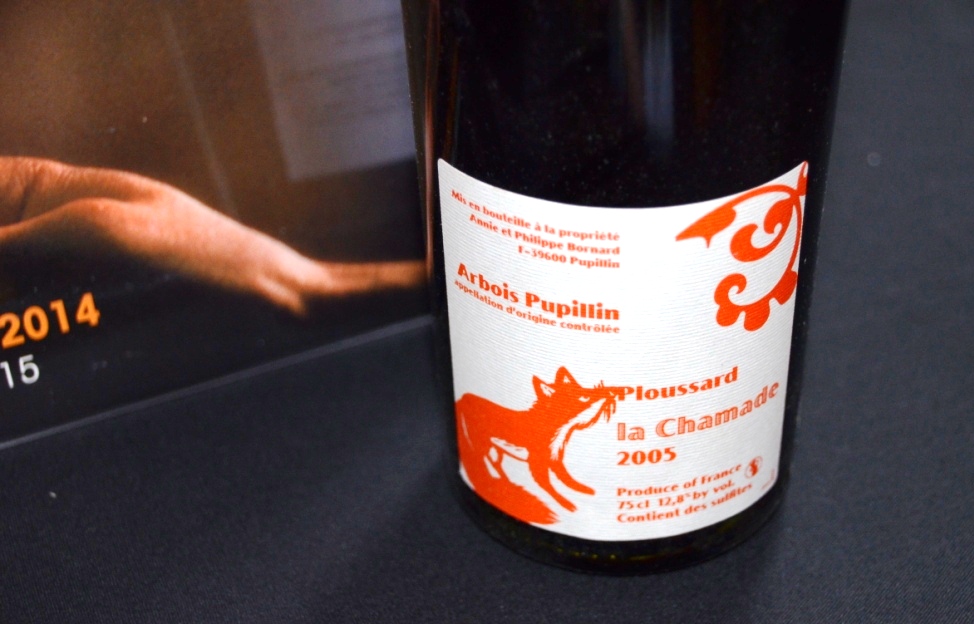
2005 Domaine Philippe Bornard Ploussard La Chamade – Best of tasting!
2005 Domaine Philippe Bornard Arbois Pupillin La Chamade Ploussard (12.8% ABV) – ++++, wow!
2011 Domaine Philippe Bornard Arbois Pupillin La Chamade Ploussard (13.5% ABV) – +++, wow! delicious, sweet undertones
2011 Domaine Philippe Bornard Arbois Pupillin Trousseau Le Ginglet (12% ABV) – +++, delicious complexity in the back
2011 Domaine Philippe Bornard Arbois Pupillin Savagnin Ouille Les Chassagnes (13.5% ABV) – ++-|, complex
2011 Domaine Philippe Bornard Chardonnay Les Gaudrettes (12.5% ABV) – +++, complex, delicate!
2011 Domaine Philippe Bornard Arbois Pupillin L’Ivresse de Noé (14% ABV) – +++, late harvest Savagnin, a touch of sweetness, delicious complexity
I also tasted 4 different Vin Jaune wines from Domaine André & Mireille Tissot, all from 2007 vintage, all single vineyard, and all delicious, with the one from Chateau-Chalon being the best – unfortunately, as all those wines were not listed in the tasting brochure, I can’t give you their exact names – but look for Domaine André & Mireille Tissot Vin Jaune – they are well worth your attention.
That concludes my report on the Passion for Jura tasting. Based on my experience, I can simply tell you – Jura makes delicious wines, and you need to experience them. Go to your wine merchant and ask for the Jura wines by name – and let me know how you will like them. Cheers!
Instant Gratification, and Arrival of the Spring
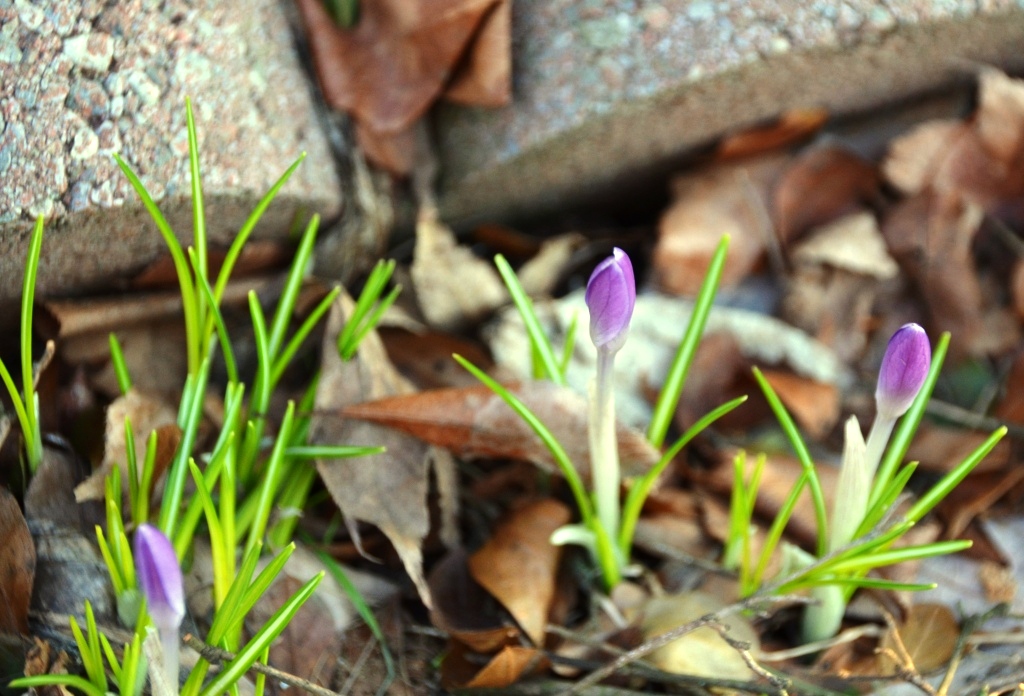 You know, when the winter is like the one we had in New England, you get to the point when you sort of stop believing that the spring will come. You wake up in the morning, your thermometer shows 20F, and your mind doesn’t even comprehends the concept of spring, flowers, grass – no, those leftovers of the snow are going to stay forever. Only a few days ago I was explaining to my daughter about the flowers called snowdrop in English, which are usually showing up as soon as snow melts, and I was lamenting that this year we probably will see no snowdrops as the winter was so brutal here.
Then today was the first official day of spring, and while it was still cold outside, it was definitely more palatable (read: warmer), and the snow was almost gone. And walking around the house all of a sudden I saw… flowers! It was simply magic, the magic of life happening right here, right now. No matter how brutal the winter is, the spring will come no matter what – and I was looking at the proof. Don’t know if this is exactly a snowdrop or simply a similar flower, but I was definitely happy to see it.
Okay, so spring is here. And for the instant gratification part? Easy. Here I’m talking about wine (wow – total surprise, huh?). You know, I can define the instant gratification as a sequence of a few very simple steps – twist, pour, sniff, say “ahh”, sip, roll your eyes towards the ceiling – have a moment of bliss. The wine which gave me this moment of blissful instant gratification – 2006 Mt. Difficulty Pinot Noir Central Otago, New Zealand. I wanted to have a good glass of wine, and as I only have a vague idea of what wines are in the cellar, I was simply looking through the wines on one of the shelves – and when I saw this bottle Mt. Difficulty, I thought – yes, that will do it – and it delivered. Beautiful classic Pinot Noir on the nose – a little smoky, a little earthy – and perfectly fresh, full of juicy cherries and herbs, harmonious palate. You know, the one which gives you an instant gratification. I loved that wine so much that I simply had to connect the first flowers with this wine – as you can see it in the picture below:

The spring is here! Let’s drink to Life! Cheers!
Last Bottle Sign Up ($10 credit)




 Talk-A-Vino