Archive
Perfect Winter Fare – Shiraz and Cassoulet
 You can call it “play it for Australia” (with a little bit of France). Or you can just call it Shiraz tasting. Whatever the name is, but a few months ago (actually, right after the hurricane Sandy – it was a miracle that we didn’t lose an electricity) we got together for a Shiraz blind tasting and the dinner.
For the blind tasting, we had two limitations imposed. First, the bottle was supposed to say “Shiraz” on it. Yes, of course Shiraz and Syrah are the same grapes, but – this was a limitation number one. Limitation number two (a soft one) – preferably, the Shiraz shouldn’t be coming from Barossa region. You wonder why? Easy. I had a couple of bottles in mind, all from Barossa, so I wanted others to do the hard work. Ahh, yes – and no blends were allowed – only 100% Shiraz.
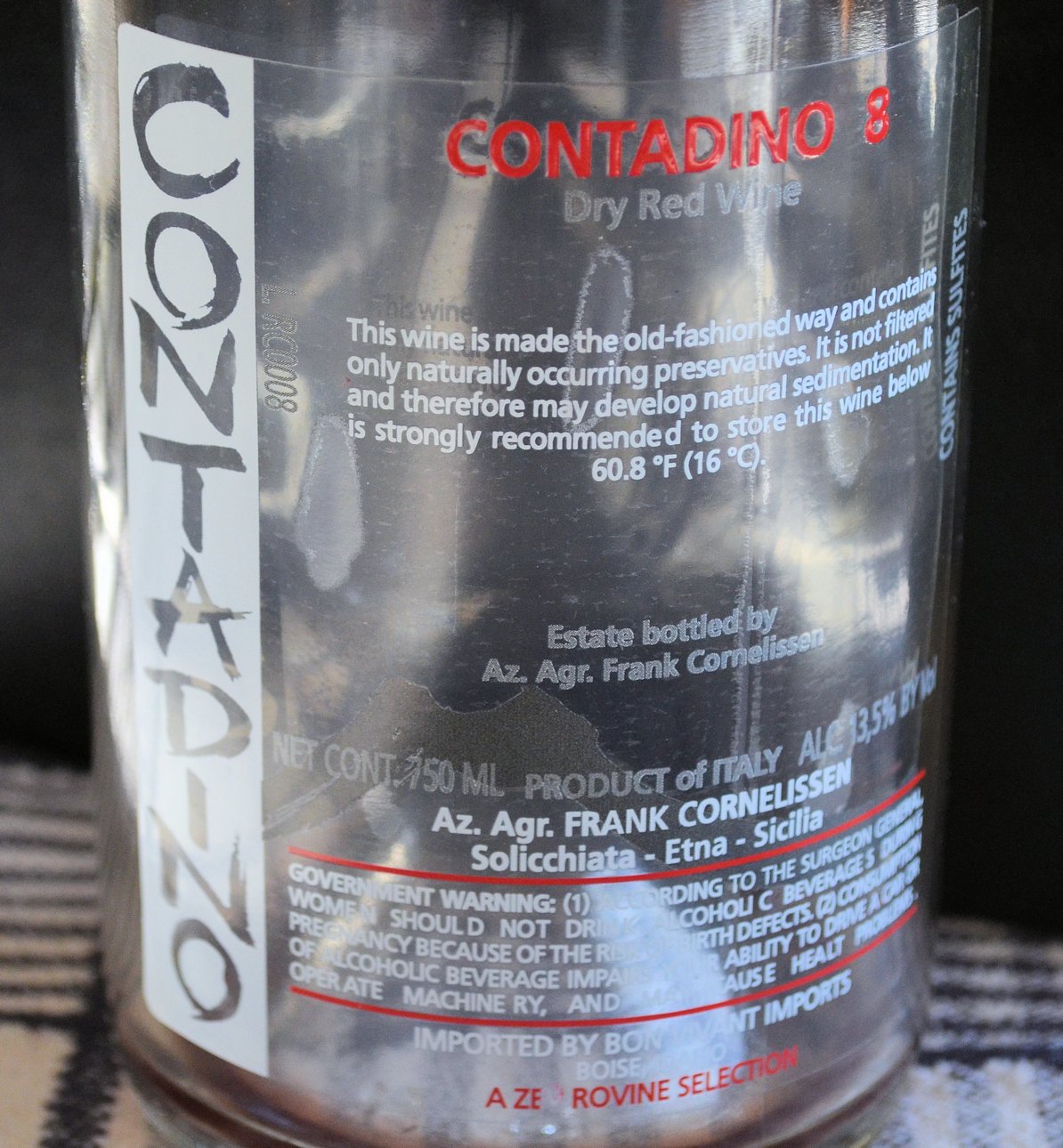 Before we started the tasting, I threw in a monkey wrench. Doesn’t sound right talking about wine, does it? So the role of this allegorical wrench was played by Frank Cornelissen Contadino 8 wine. Frank Cornelissen makes very interesting wines in Sicily – natural, low intervention wines from the grapes growing on volcanic soils of Etna. His aspiration is to let people actually to taste the soil, the actual stones in his wines, and he is probably succeeding with that (here is the link which explains the wine making philosophy – I think it is worth reading). This wine literally represents a very distinct experience – outside of acidity and minerality, there is very little else which you can taste – nevertheless, it is an interesting wine to try (well, I’m not sure we got too many votes of approval for this wine from the group, but still). Okay, let’s get back to the Shiraz.
The tasting was blind. Of course all the wines were Shiraz, but the blind tasting format allows you to focus only on the wine in your glass – no matter who producer is, how cute the animal is on the label (no, I didn’t expect anyone to pull off the Yellow Tail stunt, but thinking about it now, it could’ve been interesting), did someone tasted the wine before or who brought the bottle.
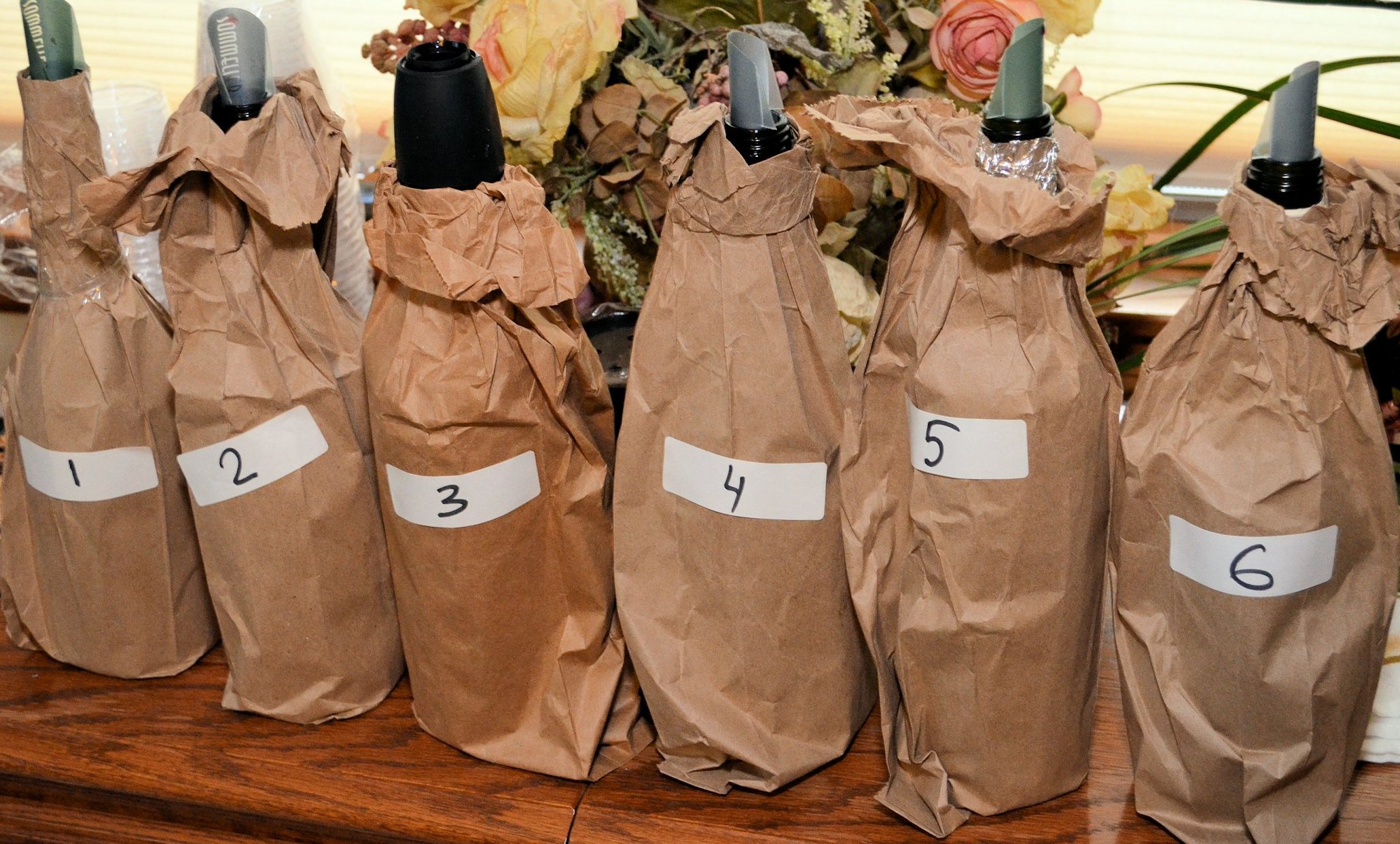
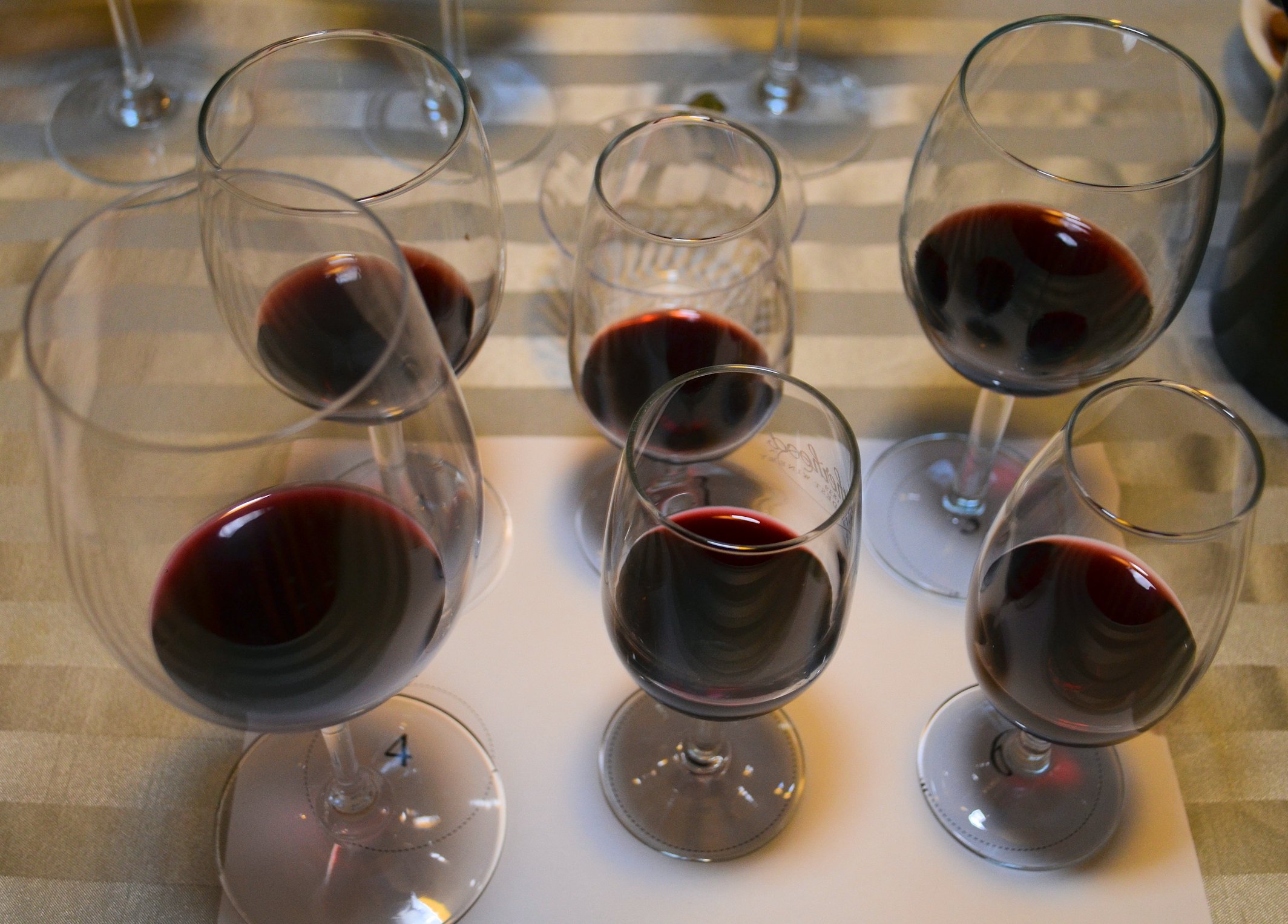
We had 6 wines in the tasting. As the tasting is blind, the person who brings the bottle, gets to open it and puts it in the brown bag. Then we ask kids to stick the numbers on the bags, completely at random. The wines are poured in the numbered glasses, and the fun begins.
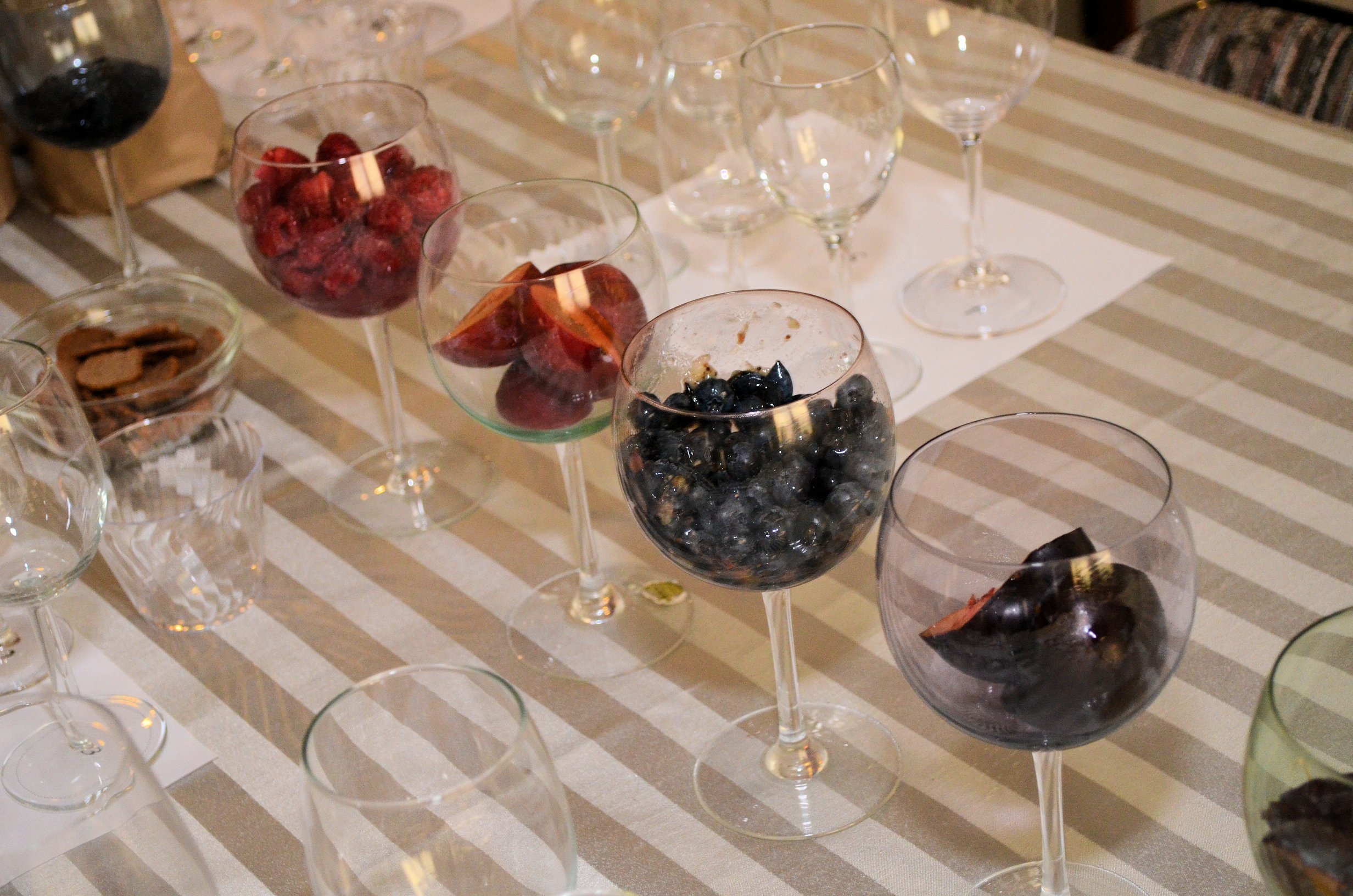
Shiraz is usually quite a playful wine when it comes to the fruit expressions, so this time we decided to add an interesting touch to our tasting – put the fruits on the table. We had raspberries, blackberries, blueberries and couple of different plums in the glasses, slightly smashed to release the flavor. The intent was to use those fruits as a reference while smelling and tasting the wine and to be able to identify what we were tasting. Not sure if it was a successful experiment, but as the very least it was fun.
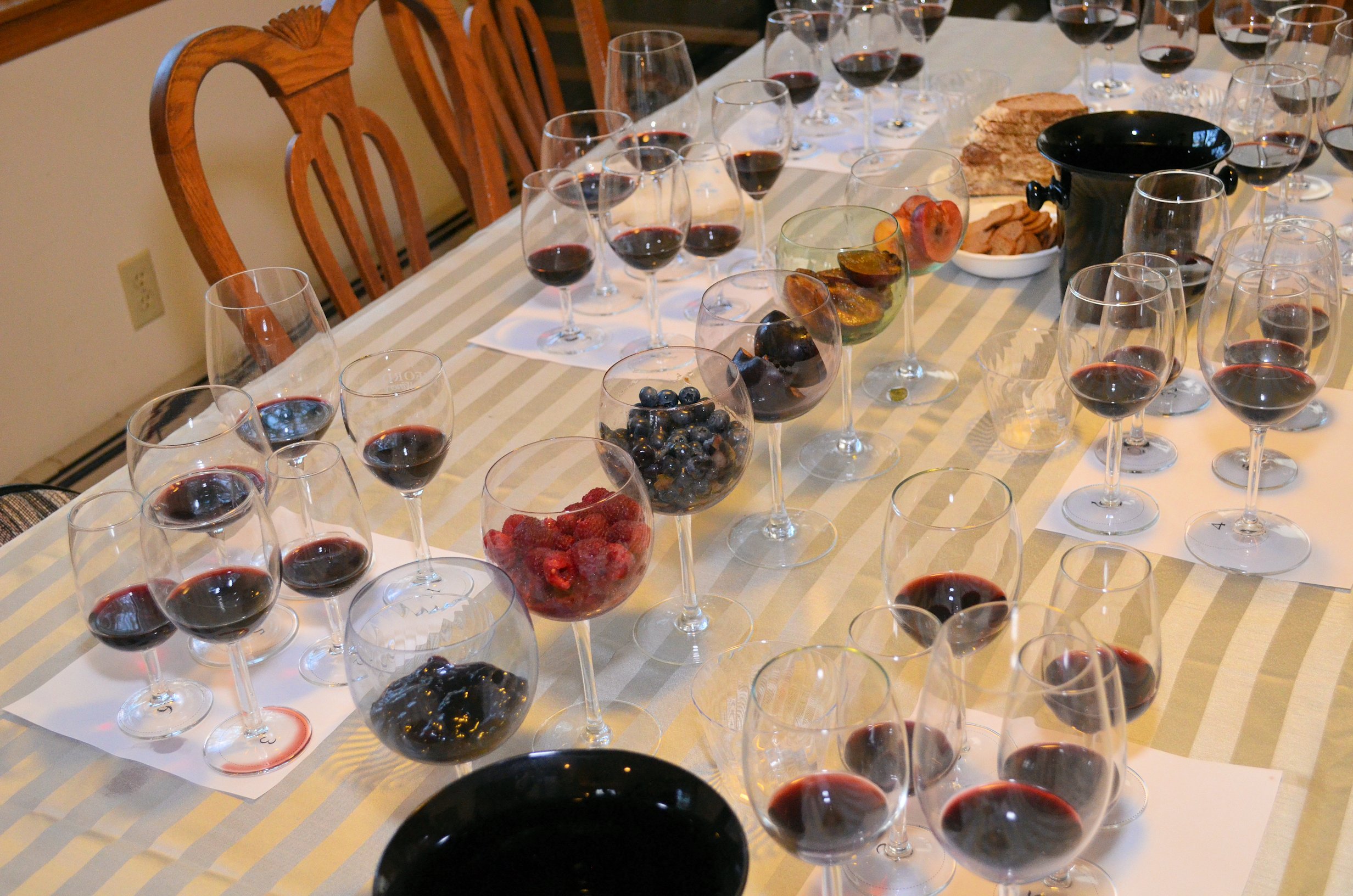
Now everybody are at the table and we start the tasting – sniff, swirl, sniff, more swirling, taste – talking and taking notes at the same time – no, there is no requirement to participate in conversation, but it is part of fun! And the notes are helpful at the end, when we take a popular vote to identify the most favorite wine of the group. Each person can vote for two wines, and the wine which will score the highest, will win. I case of a draw, we take an additional vote to select only one favorite between the two, so we still will have a winner – this all is necessary to have then a culmination point of unwrapping the winner and listening to the collective “ahh?” as pretty much in all of our blind tastings the winning wine was a complete surprise to everyone, including the person who brought the wine.
Once we have a winner, all the wines get unwrapped and admired, and everybody count their surprises for a few minutes. Here is our line up from this tasting:
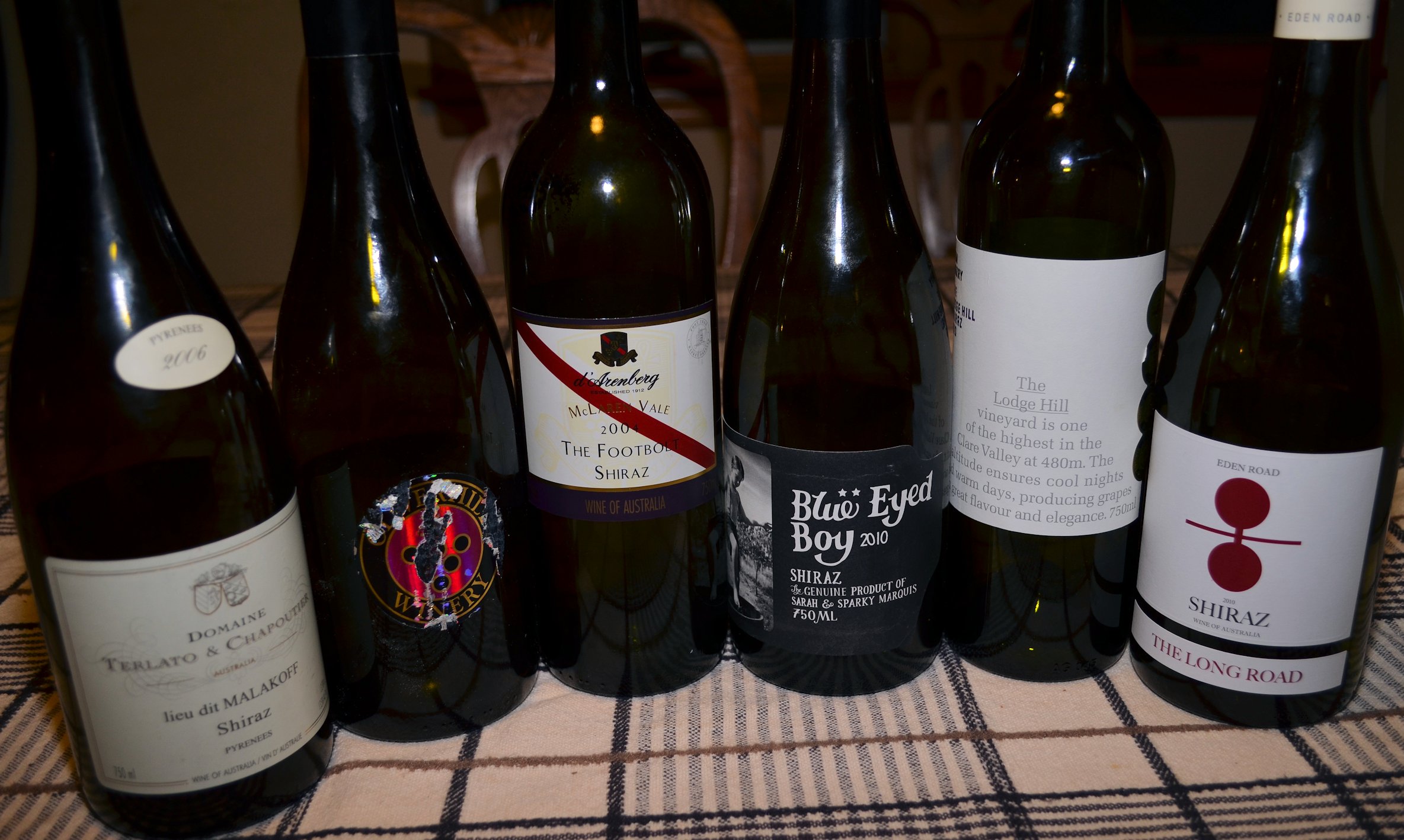
And here are the notes:
1. 2006 Domaine Terlato & Chapoutier lieu dit Malakoff Shiraz Pyrenees (13.5% ABV) – little smoke, blueberries, a bit tart, very restrained. Not a typical Australian Shiraz.
2. 2005 Oliverhill “Jimmy Section” Shiraz McLaren Vale (96RP, no ABV as my label was badly damaged) – a little dust, tart cherries on the nose, blueberries, very sweet on the palate, jammy, a little short on the finish, overall pleasant.
3. 2004 d’Arenberg The Footbolt Shiraz McLaren Vale (14.5% ABV) – interesting blackberries, very tart, not balanced.
4. 2010 Molly Dooker Blue Eyed Boy Shiraz Australia (16.5% ABV) – very nice, dark chocolate, jammy, blackberries, dusty nose, overall very balanced.
5. 2010 Jim Barry the lodge hill Shiraz Clare Valley (14.5% ABV) – very round, balanced, plums on the nose.
6. 2010 Eden Road The Long Road Shiraz Canberra District Australia (13.5% ABV) – Smells very young, but with the tannins in the back. Good dark fruit.
Can you guess the winning wine? I will give you a few moments.
And the winning wine was…
And the winning wine was…
And the winning wine was …

2010 Molly Dooker Blue Eyed Boy Shiraz Australia – the wine got 8 popular votes out of 10. In the second place with 5 votes out of 10 was 2005 Oliverhill “Jimmy Section” Shiraz McLaren Vale – interestingly enough, this wine has a very high rating of Robert Parker ( 96), and expected maturity in 2011 – 2018 – I guess we opened it prematurely… Oh well.
And now – dinner time!
Did you notice the title of this post? Yep, the cassoulet was involved. No, it was probably not cold enough yet, and cassoulet is a dish from south of France, so Cote du Rhone wines would be typically more appropriate – but, cassoulet is one of my all time favorite dishes to make (and to eat too), so you got to do what you want to do, right?
I fell in love with cassoulet during one of my trips to Geneva a while ago. White beans, pork, duck, lamb, sausage – all so succulent and so “together”, a perfectly heart, soul and body warming dish. I tried to find it in the restaurants in US, but never succeeded. Then at some point I came across an article about Cassoulet in Wall Street Journal, which also contained Alain Ducasse recipe – this was a turning moment when I started making it myself. I don’t know what any other cassoulet aficionados would think, but to me it tastes the closest to those I admired in Geneva.
I would like to share the recipe with you – which is mostly Alain Ducasse recipe (here is a link to the article and recipe on WSJ site) – I made certain adaptations which don’t sacrifice the taste, in my opinion, but make it easier to prepare.
Here is list of ingredients – as copied from the original recipe – with my comments.
For the beans:
1.5 lb Tarbais beans or white kidney beans (I’m talking about beans below)
3 carrots
1 celery stalk
1 onion
2 heads of garlic
1 tomato? ( well, in the original recipe there is a mention of tomato being diced – but then it is not used for anything – therefore, I just don’t use it)
Salt
For the meat:
4 sweet Italian sausages
1 lb pork ribs
½ lb garlic sausage
1 lb lamb shoulder
1 lb pork belly
4 duck legs confit
4 qt. chicken stock
3 carrots
1 celery stalk
1 onion
1 head of garlic (I just use garlic cloves here)
1 tomato
2 Tbsp tomato paste
2 sprigs thyme
1 Bay leaf
Salt
12 whole black peppercorns
Cassoulet starts with beans. The subject of proper beans for the cassoulet can almost reach the level of religious war. The original recipe of Alain Ducasse calls for so called Tarbais beans. Good luck finding them here. May be you can order them in advance, but this is a bit too much preparedness for me. So we need a substitute. What’s important is to find beans which will sustain very long cooking time, but will not become a mush – you are looking to see and taste actual beans and not some kind of paste. I successfully used so called Great Northern beans, which can be found in supermarkets, and I believe so called Navy beans will work too, but I don’t remember trying them.
The process starts from soaking the beans overnight in a cold water. The actual cooking starts next day – but you still can do a few things in advance.
The recipe calls for duck leg confit. If you look into the recipes for duck confit, cooking it is a very lengthy process on its own. Buying duck confit is possible, but it is hard to find a supermarket which carries it. I successfully replaced duck confit with just fresh duck legs. Sometimes, finding the duck legs can be a problem too. This was my case this time. Well, when you want a cassoulet, you have to do whatever it takes… Duck flavor profile (gamey, nutty, etc. – you know how the duck tastes) is essential – replacing duck with chicken is not really an option. My solution – using the whole duck. I got the whole duck, cut it up into pieces, leaving the skin on legs and wings, but otherwise removing it together with the fat – there is way too much fat in the duck. I fried the duck in the evening, preserving all of rendered fat together with all the meat, so it was ready to go the next day.
Before we talk about the whole process, let me give you an idea about the sizing. I used 2 pounds of beans, cut up meat from the whole average size duck, about a pound of pork country style ribs, pound of Italian sausage (usually 5 pieces), about a pound of chicken garlic sausage, about a pound of lamb chops (4 large pieces). Instead of pork belly, I used one package of “bacon ends” from Trader Joe’s which were fried the day before. All together, this was enough to feed well 10 or so hungry adults, with some leftovers. Now, lets get back to the cooking.
In the morning, step one was to cook beans. Drain the water from overnight, put beans in the pot together with celery, carrots, garlic and the onion, season, cover with cold water and simmer for about 1.5 hours or until beans are tender but not falling apart. Discard carrots, celery and onion. Technically, you are supposed to discard garlic too, but I just couldn’t do it – so I reused it for the next step.
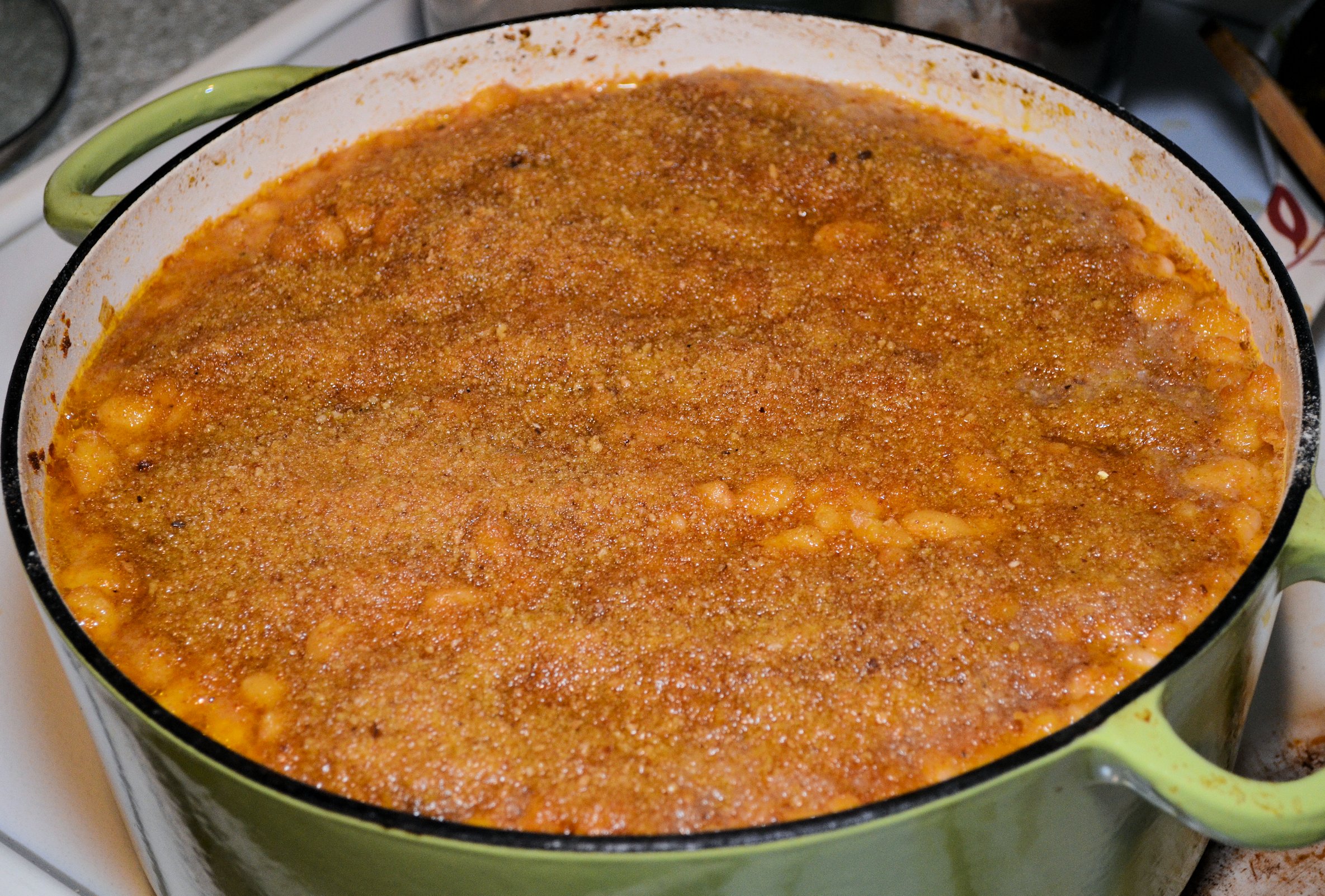
While beans are cooking, you can start working on the meat. First you will need to roast all the meat separately. I use the cast iron pot (you can also use a heavy skillet), and sear all the meat in batches – you will need to season it with salt and pepper. You really want meat to achieve a nice sear, so note that this operation will take time (usually it takes me about 1.5 hours using the amounts mentioned above). Once all the meat is seared by itself, add duck (whether you are using duck confit or the whole duck prepared the day before), add bacon ( unless you will use the pork belly), add diced vegetables and let it roast for another 10 minutes. Then I put together herbs, bay leaf and peppercorns into a cheese cloth, tie it up and use it as Bouquet garni – i.e., put it inside (this way you can remove it all together so nobody need to chase down that peppercorn out of the dish). Now, add broth, cover and let it simmer for about 1.5 hours.
Once done, strain cooking liquid into the beans and put all the meat on the cutting board and let it rest for about 20 minutes or so. Remove and discard all the bones, and cut up meat into large pieces.
We are ready for the last step. Preheat oven for 250F. Take the cast iron pot. Put all the cut up meat on the bottom. Gently put beans with liquid on the top (again, you want to preserve beans as they are, so you will need to handle them with love). Overall, you want to to have enough liquid in the pot, but without making the whole dish looking like soup. Put a good layer of bread crumbs on top of the dish (no skimping on the bread crumbs – having a nice crust on top is one of the important elements of cassoulet). Put uncovered pot in the oven for about 45 minutes. Take the pot out. When serving, make sure to go all the way to the bottom so you will get the meat together with beans. Now, most importantly – enjoy!
Also I have to mention that we had an outstanding “single plantation” chocolate as part of our dessert – can anything pair better with Shiraz than a spicy dark chocolate?

Never heard of “single plantation” chocolate before? Don’t worry, me too – but it appears that Akesson’s has a a substantial collection of single plantation chocolates, and the one we had was absolutely incredible.
Apologies for the post gone too long, but I think I’m finally done by now. I don’t know if I convinced you to make cassoulet, open a bottle of Shiraz or find that chocolate – but if you are still here and reading this – I’m happy. Until the next time – cheers!
Bubbles, Bubbles, Bubbles Everywhere!
New Year is around the corner, and of course, we are all talking about sparkling wines. That little effervescence, the tiny bubbles, they create mood and tell us “this is all good, we got something to celebrate, let’s have fun”.
There is hardly a wine blogger today who didn’t write about Bubbly. Let me join them, and share some recent encounters and (in the spirit of summing up a year) some of the old ones.
My favorite wine store, Cost Less Wines in Stamford, had a Sparkling wine tasting today. Here is what you could try:
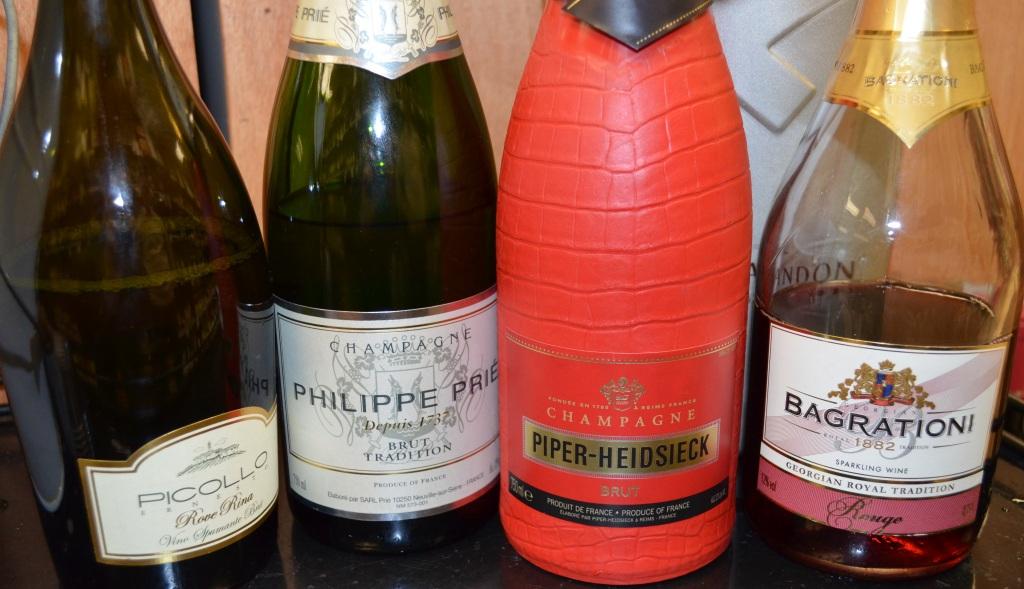
Picollo Ernesto Rove Rina Vino Spumante Brut – Italian sparkling wine made in the Gavi region out of Cortese grape. Simple and refreshing, probably could use a touch more acidity. Has apple undertones on the palate.
Champagne Philippe Prie Brut Tradition NV – very yeasty, lots of freshly baked bread on the nose. Probably could use a touch more acidity (either there was something wrong with me, or may be the wines were a bit too warm…)
Champagne Piper-Heidsieck Brut NV – yeast, baked bread, green apples on the nose – very balanced and refreshing on the palate. Best of tasting.
Bagrationi 1882 Sparkling Wine Rouge NV, Georgia – while I had a number of Bagrationi sparkling wines before, this was my first tasting of the Bagrationi Red. This wine is a blend of 4 different grapes. Very nice nose of fresh fruit. Full bodied, with the touch of sweetness on the palate, but only a touch. Very refreshing and very pleasant.
Here are few extra bubbles for you. First, for the full immersion into the sparkling world, visit this Pinterst collection of all things Champagne.
Now, here are the links for some of my past blog posts about Sparkling wines – a 2006 newspaper article and 2011 update to it.
In 2012, I learned how to saber the bottle of sparkling wine with the wine glass. Here is a link to the blog post about it. And here is how professionals do it.
And here are the Champagne and Sparkling wines which are planned to be open on the New Year’s night:
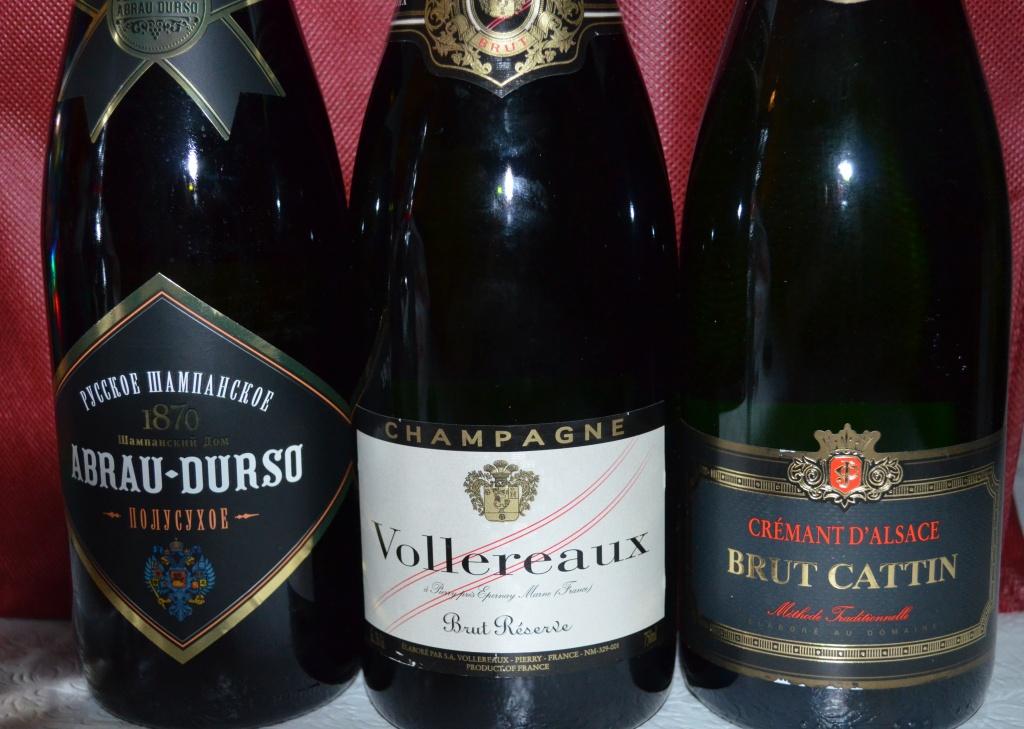
What bubbly will be in your glass? Cheers!
Battle of Viogniers: Texas Wins!
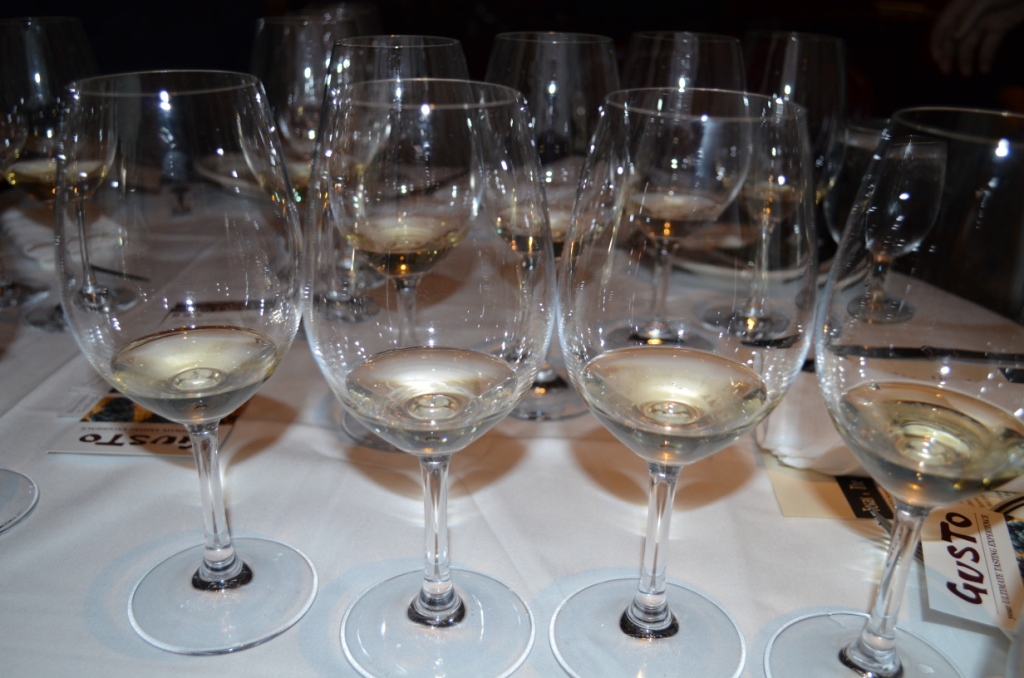 One of the fascinating things about blogging is that you get to meet a lot of great people online. Moreover, you meet people who is passionate about the same subject as you are. And then, at some point, you can even meet those people in real life. This was my story Wednesday last week, when I met @SAHMmelier, who happened to live in Austin (you can find her blog here). As soon as we met, the feeling was that we knew each other for ages – it was so easy to start conversation (it was much more difficult to stop it later : )). Thanks to @SAHMmelier, I got a full embrace of the Texas wines, at the “Texas versus The World” meetup hosted by GUSTO Tastings, which we attended together.
GUSTO Tastings does a great job of hosting multiple wine events every month, each one with a slightly different purpose. Each first Wednesday of the month, the members of the meetup get together for “Texas versus the world” event where the group gets to taste and compare wines made in Texas with similar wines made in the other countries and regions – this was the exact event we attended, and it was dedicated to Viognier (the November event will be all about Tempranillo or Sangiovese, which should be very interesting, as I think both of those grapes produce very good results in Texas – oh well, I will have to live vicariously through that one…). GUSTO Tastings also runs blind tasting events once a month, which are some of the most exhilarating experiences for wine aficionados. Anyway, if you live in a close proximity to Austin (or few other cities in Texas), you should definitely check GUSTO Testings out and use the opportunity to learn about the wines.
Let me tell you now about the event. First of all, we had the best table in the town. We were lucky enough to meet and share the table with Flat Creek Estate winemaker Tim Drake, a witty and charismatic guy and his lovely wife Spring. In addition to all the fun conversations at the table, it was even more fun listening to Tim delivering his thoughts in bright and engaging fashion, with the ability to use very convincing expressions to emphasize his point (I will have to refrain from repeating his vivid answer and explanation for the question about Reserve wines).
This particular event was all about Viognier, once nearly extinct Rhone white grape varietal. A few month ago there was a Wine Blogging Wednesday dedicated to Viognier, so for more details about the grape, including the link to the short video teaching you how to say that “Viognier” word correctly, here is the link to my blog post.
During the course of the evening, we tasted through 17 different Viognier wines – 8 from around the world, and 9 from Texas. All the wines where split into the flights of four, and the last flight had 5 wines in it.
The first four wines represented the old world – my notes are below:
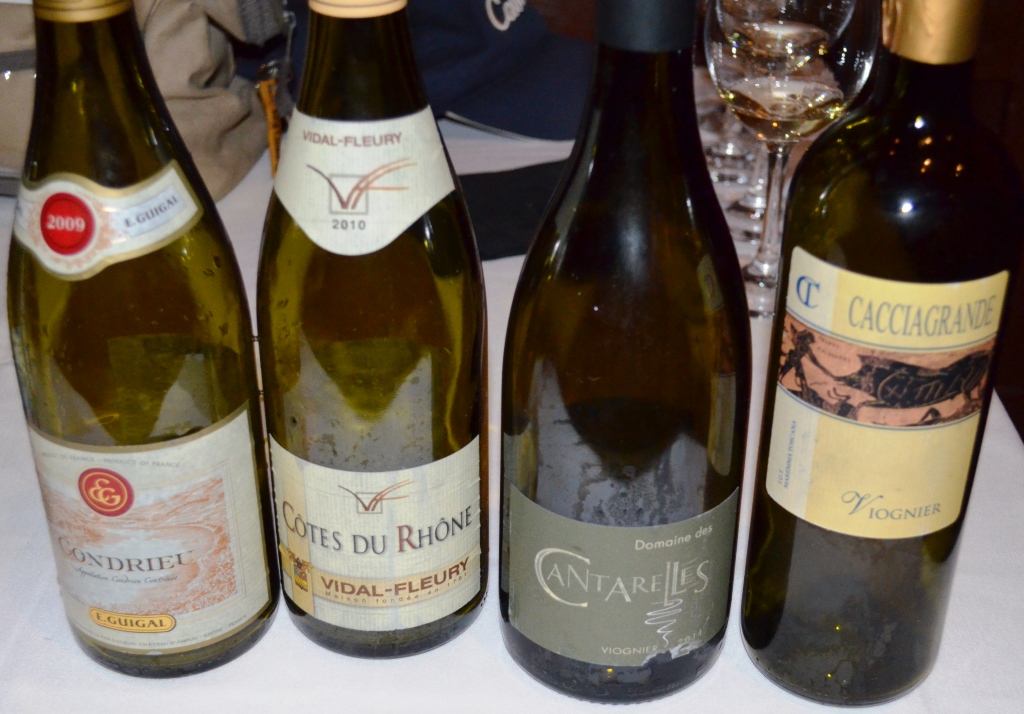
- 2009 Cacciagrande Viognier, Maremma, Toscana – very unusual, I had no idea Viognier is used in Tuscany. The wine had a beautiful nose of classic Riesling, sweet with a hint of petrol – but palate didn’t support that nose at all. Acidic, briny, not pleasant. Drinkability: 6-
- 2011 Domaine des Cantarelles Viognier, Vin de Pays du Gard – Typical nose – perfume, full body expectation -but the body is too watery, almost Pinot Grigio style… Acidic aftertaste. Drinkability: 6
- 2009 Vidal-Fleury Cote du Rhone – Strange nose, a bit vegetative, and then very oily (I never had a wine before with such a mouthfeel; scotch – yes, but wine? Never), some muted fruit – not good. Drinkability: 5
- 2009 E. Guigal Condrieu – this wine was redeeming the first flight – beautiful concentrated nose, with touch of sugar candy. Nice and delicate on the palate, but not enough power. Drinkability: 7
Flight number 2 consisted of the New World wines:

- 2010 Cono Sur Viognier, Colchagua Valley, Chile – Beautiful nose, touch perfumy, perfectly round palate, good acidity, some green apples. Drinkability: 7+ (best so far)
- 2010 La Capra Viognier, Western Cape, South Africa – somewhat green on the nose, with some matchstick. Let me stop here for a second, and I have a question for you, my readers. Have you ever experienced anything like that? Is that a showing of the extra sulfates used during the production? Anyway, let’s continue – there was also some minerality on the nose (or at least Tim suggested that it was) Pleasant on the palate, more of a Sauvignon Blanc qualities – lime, touch of grapefruit. As I was all puzzled by the nose, I’m not even sure how I want to rate this wine.
- 2010 Yalumba Viognier Eden Valley, Australia. If the previous wine had one matchstick on the nose, this one had a whole box. While that smell was going away little by little, the initial encounter with that wine almost game me a headache. Strange nose at first (heavy matchstick? Sulfites?). The wine opened up eventually on the palate into the medium to full bodied wine, retaining some sharpness. Considering that smell (which rendered the wine literally undrinkable to me) I can’t rate it. I can only hope that it was a particular faulty bottle…
- 2010 Miner Viognier Oakville ’Simpson Vineyard’, Napa. Perfect nose – great bright fruit, nice perfume. Best nose so far. Palate doesn’t live up – kind of flat and unimpressive. Judging nose by itself this wine should get Drinakability of 8, but as a whole, I can only give it a 6.
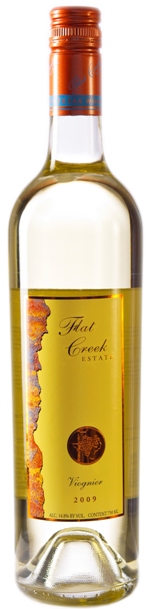 The next flight included a vertical of 4 wines from Flat Creek Estate Winery. As all of those wines were made out of grapes which didn’t grow in Texas (but the wine, of course, was made in Texas), they don’t carry Texas designation on the label. I have to admit that somehow I missed to take a picture of this flight, so just to give you an idea, I had to borrow the picture from the Flat Creek Estate’s web site.
- 2008 Flat Creek Estate Winery Viognier. Nose was practically non-existent (I couldn’t pickup any aroma), sweet on the palate. It is drinkable, but not great. Drinkability: 7
- 2009 Flat Creek Estate Winery Viognier. Nice nose, more of a typical viognier. Palate is touch out of balance (a bit sharp), but very drinkable. Drinkability: 7
- 2010 Flat Creek Estate Winery Viognier. Beautiful bright nose, touch of the pear preserve, fresh brewed tea on the nose. Needs a bit more acid on the palate. Drinkability: 7-
- 2011 Flat Creek Estate Winery Viognier. Perfect nose. Bright, clean, nice white fruit. Outstanding, perfect acidity, ripe fruit, perfect balance. Lodi fruit. To this point, this was my favorite! Drinkability: 8.
As we went to the all-Texas flight, Tim gave a great explanation to the room about different types of yeast and their ability to bring different qualities to the wine (more glycerin versus more esters etc.). And this is all in the hands of the winemaker. Yep, winemaking is Art…
And now, to the all Texas flight (look at my notes – they all show a progression of tasting as the wines were opening in the glass):

- 2011 Lone Oak Winery Viognier, Texas. Smell is similar to detergent. Not balanced. Not good. then it opened up on the nose, but with a note of brine. Pretty balanced now. Drinkability: 7+
- 2010 Brennan Vineyards Viognier, Texas. Some sweetness on the nose. Same sweetness on the palate – but not balanced. Needs more acidity. Leaves burning feeling. Improved after a breathing time!!! Much better! Drinkability: 7
- 2011 Becker Vineyards, Viognier, Texas. Nice nose, some gooseberry, little complexity. Finish is short. Drinkable, but not exciting. Drinkability: 6+
- 2010 McPherson Cellars Viognier, Texas. Interesting complexity on the nose. Sweet with some green notes. Beautiful palate, good round wine. Drinkability: 7+
And now (drum roll, please) let me present to you my best of tasting wine:
2012 Flat Creek Estate Winery Viognier, Texas. Barrel sample. Beautiful nose, light fruit, white fruit. 100% Texas fruit (brownfield). Very nice, good overall, some zest – really pleasant! Drinkability: 8+
The fact that grapes were picked 6 weeks ago, and that Tim had blended wine in the morning of the day of the tasting, is just makes it an incredible experience all together.
There you have it, folks – Texas makes great wines, so if you can get them – you should! And if your travel will take you down to Texas – make sure the wineries are part of your trip. You can tell them I sent you. Cheers!
Serious Fun With Wines
In case you are wondering about the “serious fun” versus “not so serious fun”, somehow this title just got stuck in my head when I thought about this post, and I decided not to fight that. Also, when you have Gaja, Ornellaia, Turley, Bertani and whole bunch of other interesting wines, I think “serious fun” is a good way to put it. And to stress even further how serious the fun was, I’m even using different style of pictures for this post instead of usual “just label” style (and yes, you are right, I also use an opportunity to play with my new camera).
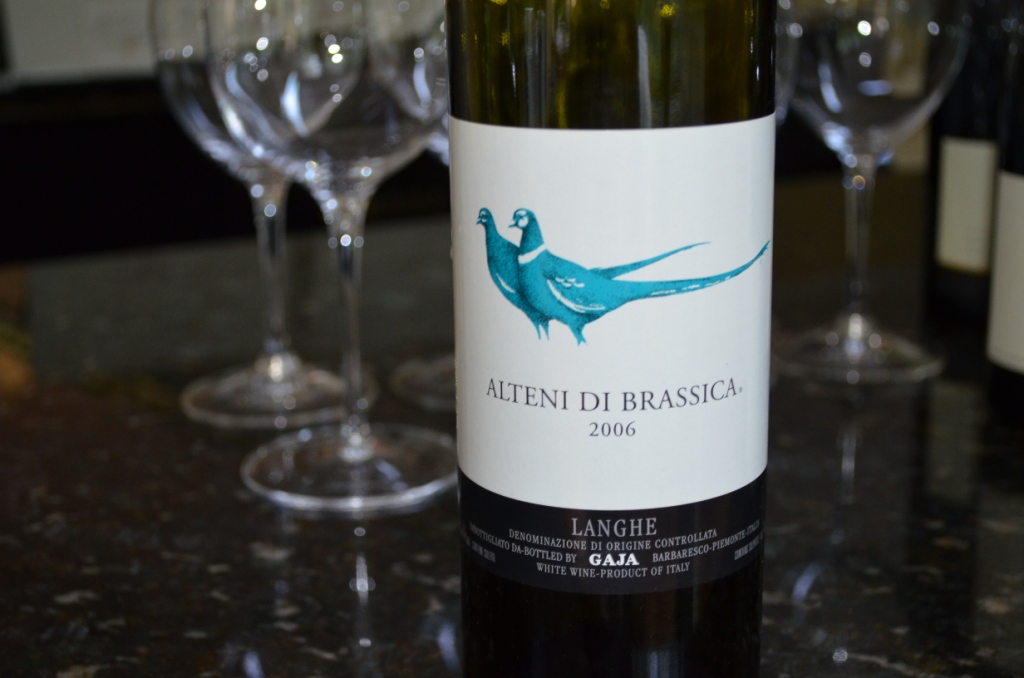
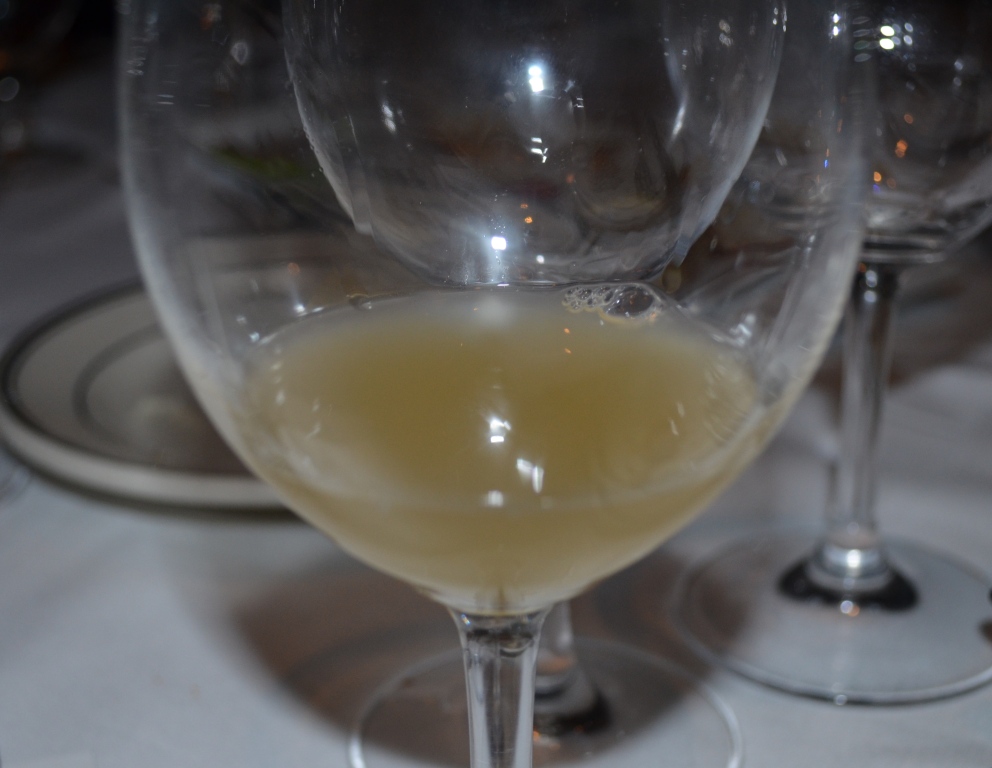
What is your first thought when you see the name like Gaja on the wine list? I don’t know about you, but in majority of the cases I would expect to see a red wine there. Yes, I can think of Gaja Chardonnay, and only because it typically looks at least as an affordable possibility on the wine list, as opposed to the Gaja red wines, which are not. So the wine we had was a white wine made out of …(wait for it)…Sauvignon Blanc!
2006 Gaja Alteni di Brassica Langhe DOC, Italy was a total surprise. Mineral nose, with wet stone, smoke and heavy grass. Touch of white fruit on the palate, more stone, touch of lemon, perfectly balanced. Finish lasted for 3 minutes, if not longer! Very beautiful wine. Drinkability: 9
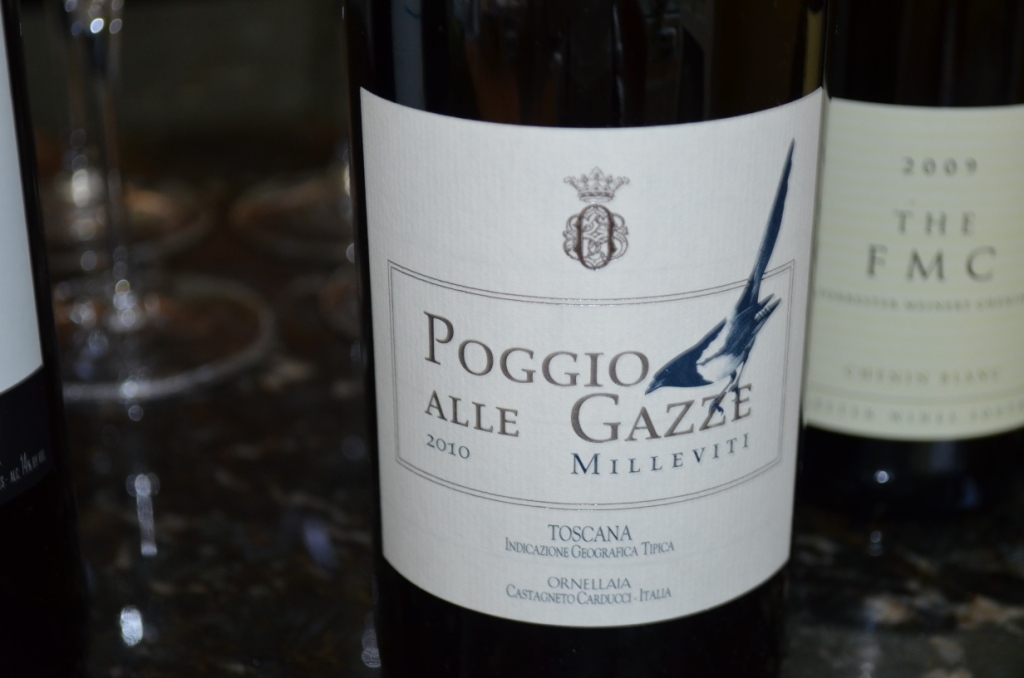
The next wine we had was also coming from a very respectful Italian producer, Tenuta dell’Ornellaia. And the wine was…yes, white again! The grape? Yep, Sauvignon Blanc. 2010 Poggio alle Gazze dell’Ornellaia, Toscana IGT was simply delicious, with perfumed nose of lychees and white apple. Palate was exhibiting nuts and ripe apple. Very long finish with some tropical fruit notes coming in later on. Bright, round, amazing! Drinkability: 9
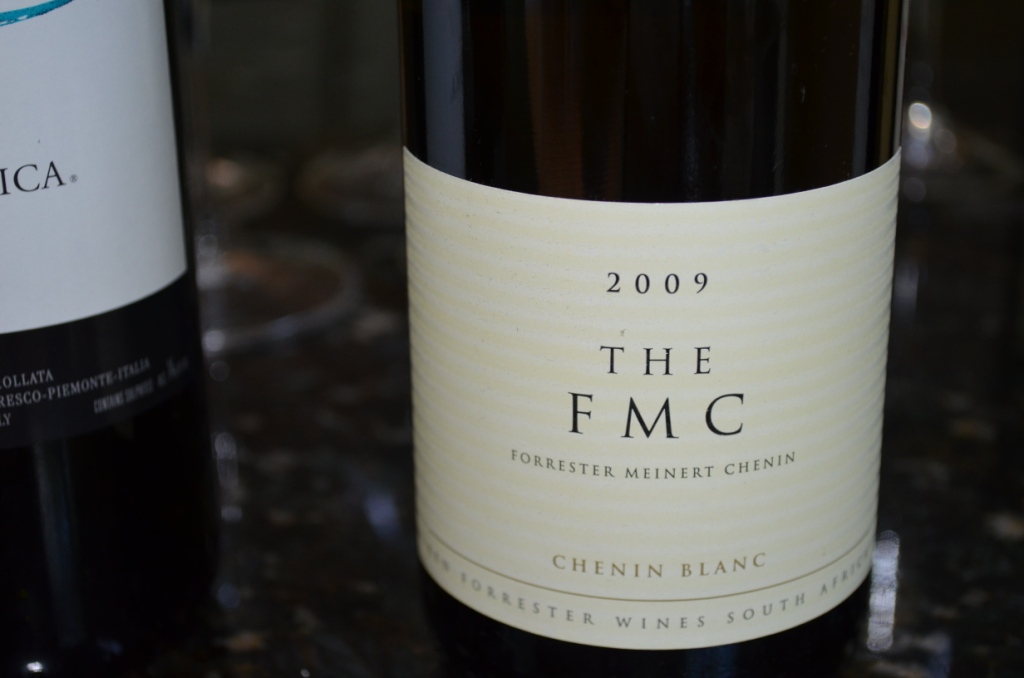
We continued our “whites’ extravaganza” with 2009 Ken Forrester The FMC ( (Forrester Meinert Chenin), South Africa. This wine was made out of the Chenin Blanc grape. While Chenin Blanc is one of the signature white French grapes from Loire, it also makes great wines around the world. It does particularly well in South Africa, where it is also known under the name Steen. This particular The FMC wine is a single vineyard flagship wine of Ken Forrester, one of the oldest producers in South Africa. This wine had a beautiful nose very similar to a typical chardonnay – nutty with some acidity, bright yellow color, very round. Drinkability: 8+

Done with whites. Before switching to the reds, we had a different, very unusual wine – as you can judge from the color above, this wine is not called “Orange” for nothing. Orange wine is one of the latest trends, where skin of the white grapes is left in the contact with juice during maceration. This imparts a nice deep yellow/orange color, hence the name, orange wine. This wine also was not some fly by night experimental plonk. 2008 Marani Satrapezo 10 kvevri, Georgia (100% Rkatsiteli grape, all coming from specific block of the Kondoli vineyard) was made in a traditional Georgian style with maceration for 20-25 days in historical clay vessel called Kvevri.
The wine had beautiful orange color. On the nose it had aromas of a bright fresh apricot. Palate was dry, full bodied, vegetative with enough brightness, touch of apricot but no sweetness whatsoever. After three hours in decanter the wine softened considerably – this wine definitely would benefit from a few years in the cellar. Drinkability: 8
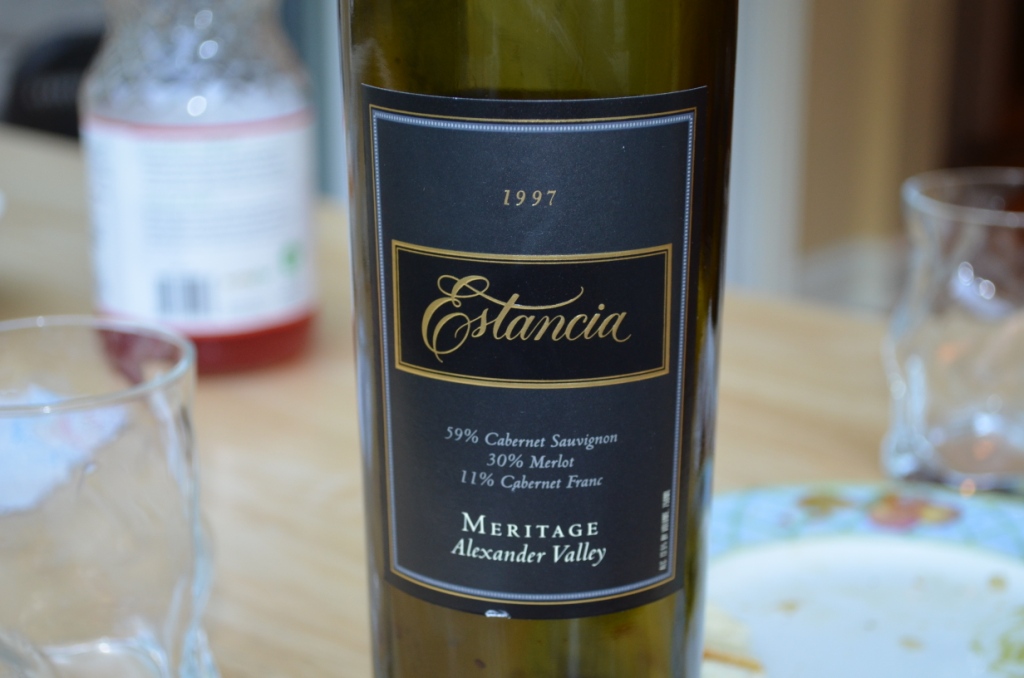 Okay, we are finally switching to reds – with it’s own set of surprises. We started from 1997 Estancia Meritage Alexander Valley (Cabernet Sauvignon/Merlot/Cabernet Franc blend). The wine had perfect color – dark, concentrated ruby red. Eucalyptus, wet stone, dust and raspberries on the nose. Bright red and black fruit on the palate with cassis, eucalyptus and licorice – perfect balance, nice, soft tannins. Drinkability: 8+
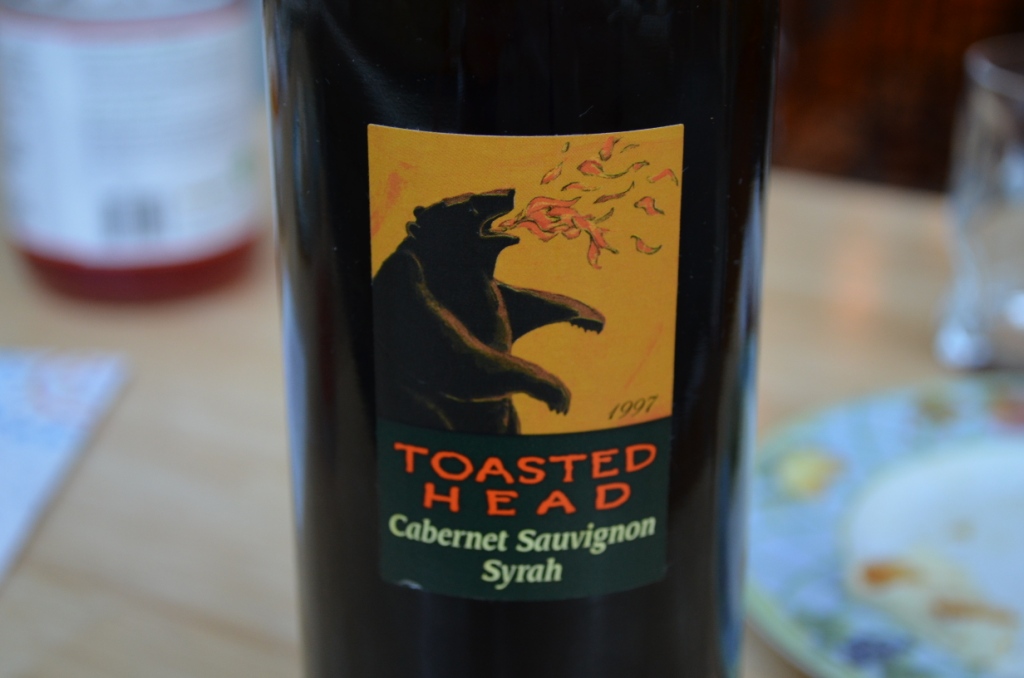 This was probably the biggest surprise of the evening – 1997 Toasted Head Cabernet Sauvignon Syrah California. Generally, Toasted Head makes simple everyday wines – which you generally are not going to age. This wine was simply lost in the cellar, and we opened it to taste but with the full readiness to dump it. To our astonishment (too strong of a word, but – why not), the wine had perfect acidity, bright youthful color, good black fruit, soft tannins and a touch of cassis. Drinkability: 8
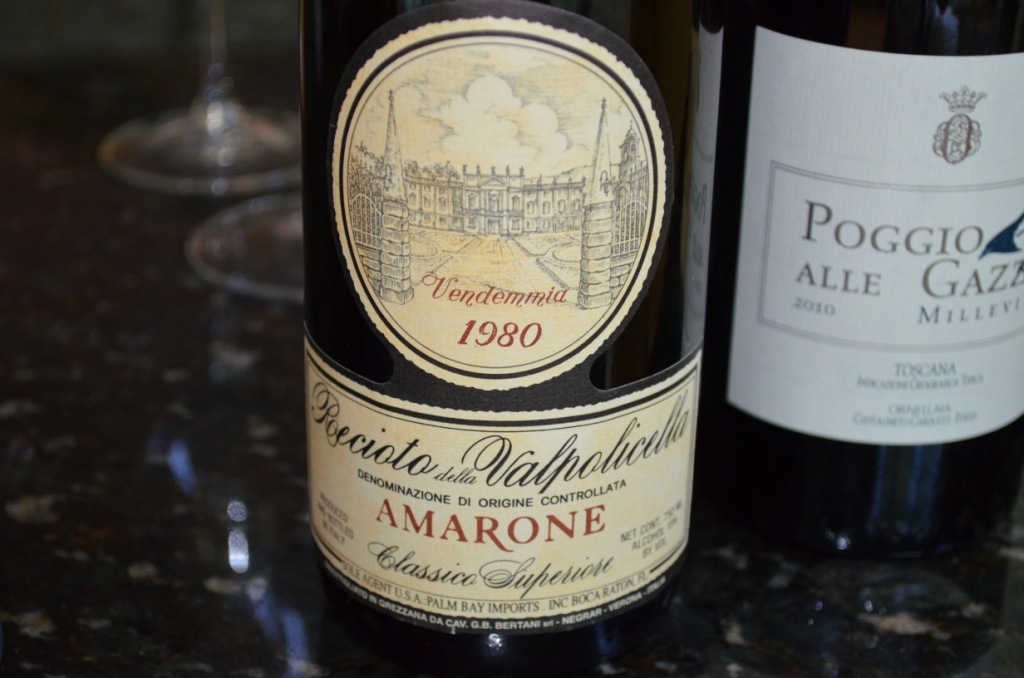
The next wine was Giribaldi Cento Uve – but this will be a subject of a separate post, so I will skip my tasting notes for that wine. And the next wine was the one … we killed – it sounds way too strong, I know – but please read on. Amarone are typically big enough wines, so we decided to decant this wine – without even tasting it first (but the nose was perfect!). This was a [big] mistake. After 3 hours in decanter, the wine became barely drinkable. Another 30 minutes later, the fruit came back, both on the palate and the nose, only to disappear shortly after. Note to self – be careful with decanting. Considering this experience, I will not give this wine any rating – it simply wouldn’t be fair.
As you might expect, we didn’t just drink – we had a lot of good food as well. Just to give you an example, here is lamb kabob in the process of making:
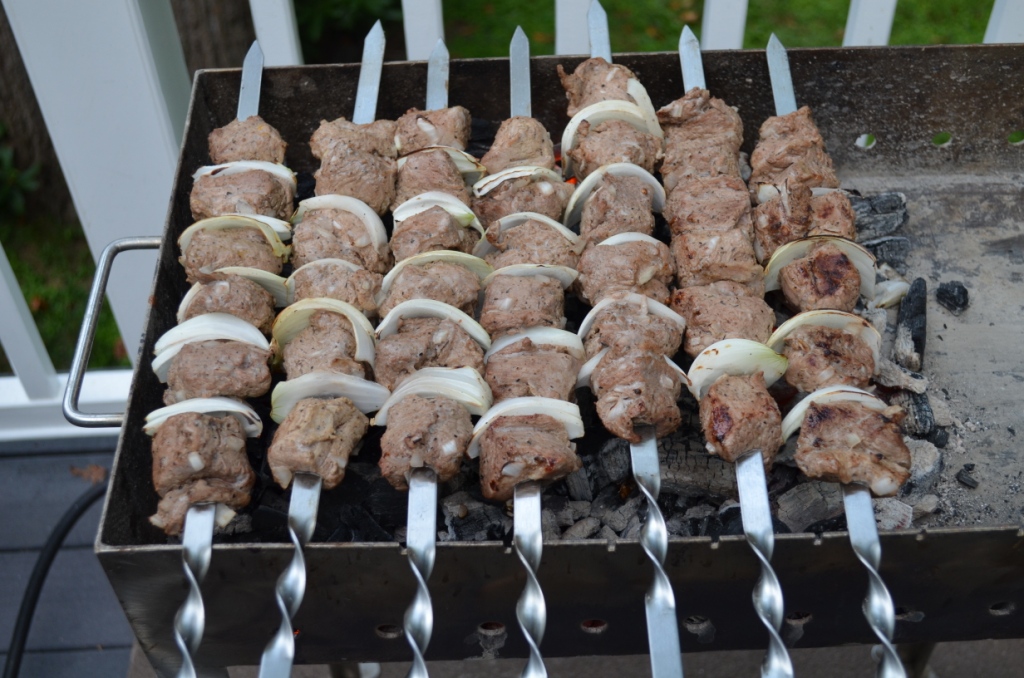
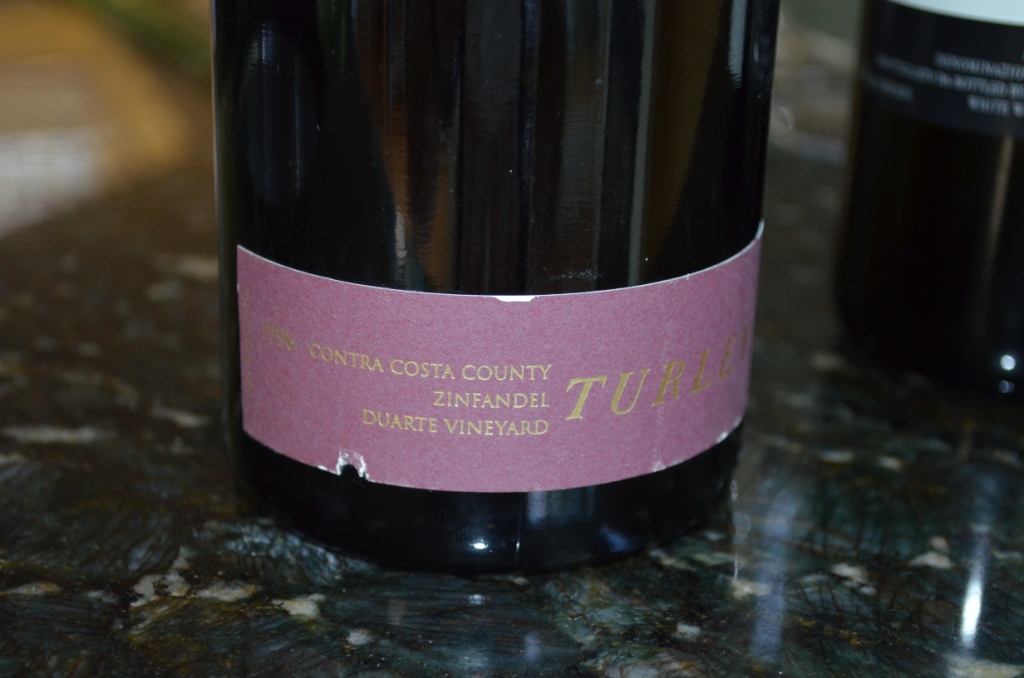
To complement the lamb, we had 1996 Turley Duarte Zinfandel – nice fruit, raspberries on the nose and the palate, hint of jammy fruit later on, plus some eucalyptus. Very good overall balance for the wine at 15.4% ABV. Drinkability: 8-
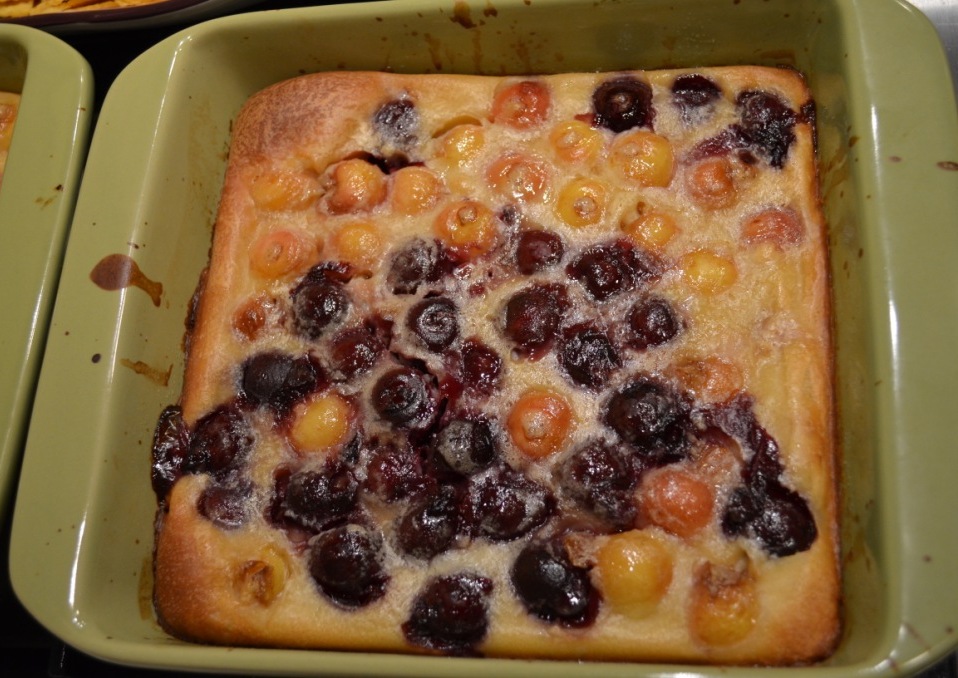
And then of course there was a dessert – Clafoutis (no further comments, just look at the picture):
This was definitely a great experience. Pretty rare case when all the wines worked very well and were absolutely delightful – if I can only re-taste that Amarone… Well, may be one day. Wishing you great wine experiences! Cheers!
Crus of Beaujolais, Year 2011 – Part 2
I like sequels, Well, in the movies – sometimes, not so much. But when it comes to the writing, whatever you forgot to say in the first part, you can say in the second, and feel good about it, claiming that this was the intent from the get go.
What I didn’t mention in the first post about great tasting of Georges Duboeuf 2011 Beaujolais portfolio is that red Beaujolais make one of the best red wines for summer – they are typically light in alcohol (if you noticed, 13% ABV was the most for all wines mentioned in the first post), and they also taste the best when they are slightly chilled. Considering how hot this summer is across pretty much the whole US territory, I hope this will help you to find a good red wine for the hot day, because sometimes it just have to be red.
In the first post, I described a self-guided part of tasting. That tasting was followed by the lunch, both of which (tasting and the lunch) taking place at db Bistro Modern, one of the restaurants of the famous chef Daniel Boulud.
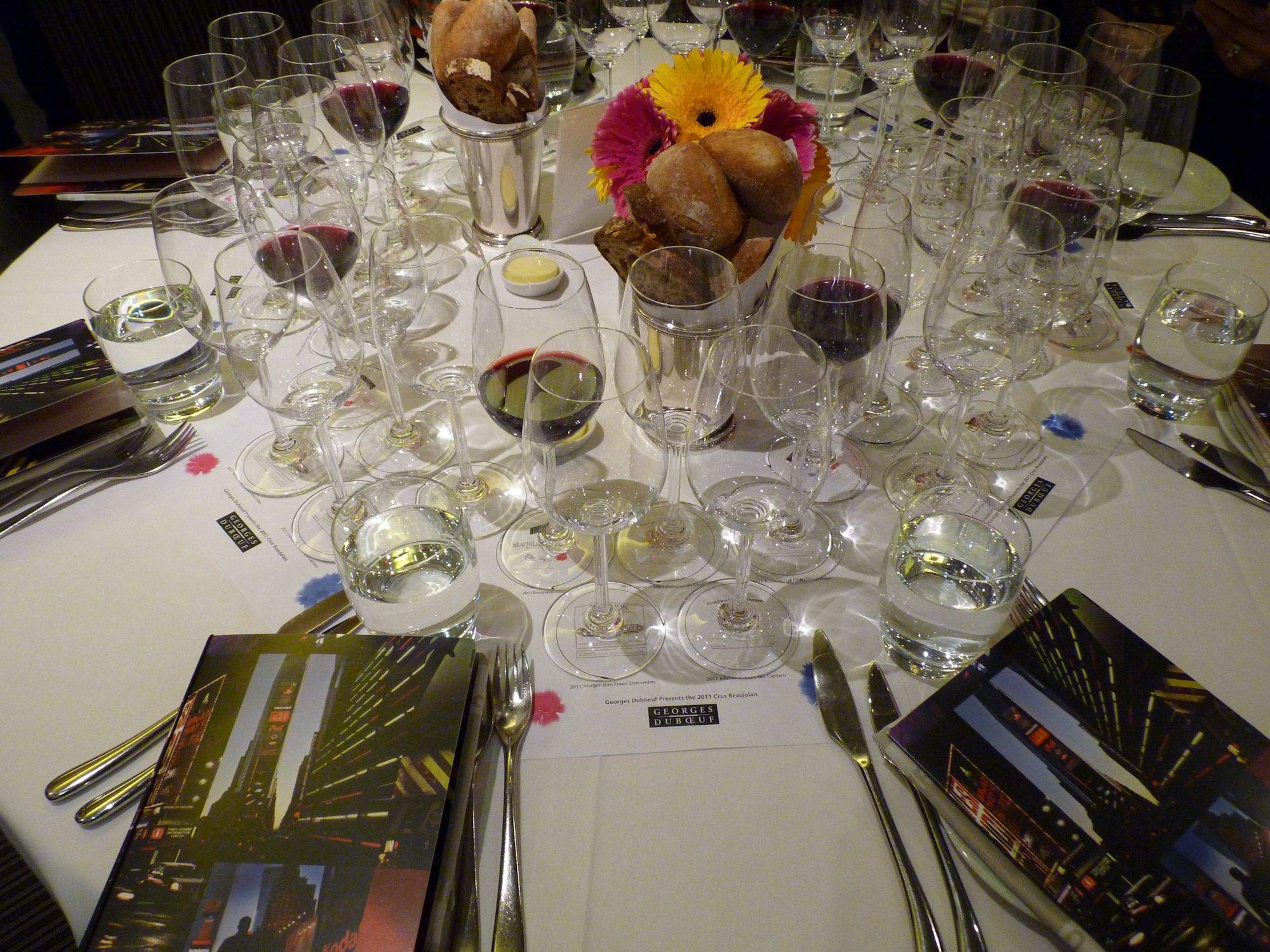
Georges Duboeuf opened the event with presentation of 2011 vintage. Here is my best effort transcript of what he said (remember, I’m not a professional journalist, I’m only pretending): “2011 was a great year. Budding started in April, then flowering started in June, and then harvest started August 22nd and lasted for two weeks. Some areas experienced periods of drought. Overall, grapes reached very good level of ripeness. 2005 and 2009 (considered best in a very long time) were good, but 2011 might be even a little bit better than 2009. Throughout the vintage, there are lots of black cherry and earthy notes.”

After Georges Duboeuf’s presentation, the first dish was served – “Legumes du Marche” – Young Garden Vegetables, Fromage Blanc Dressing, Lavender Honey Vinaigarette.
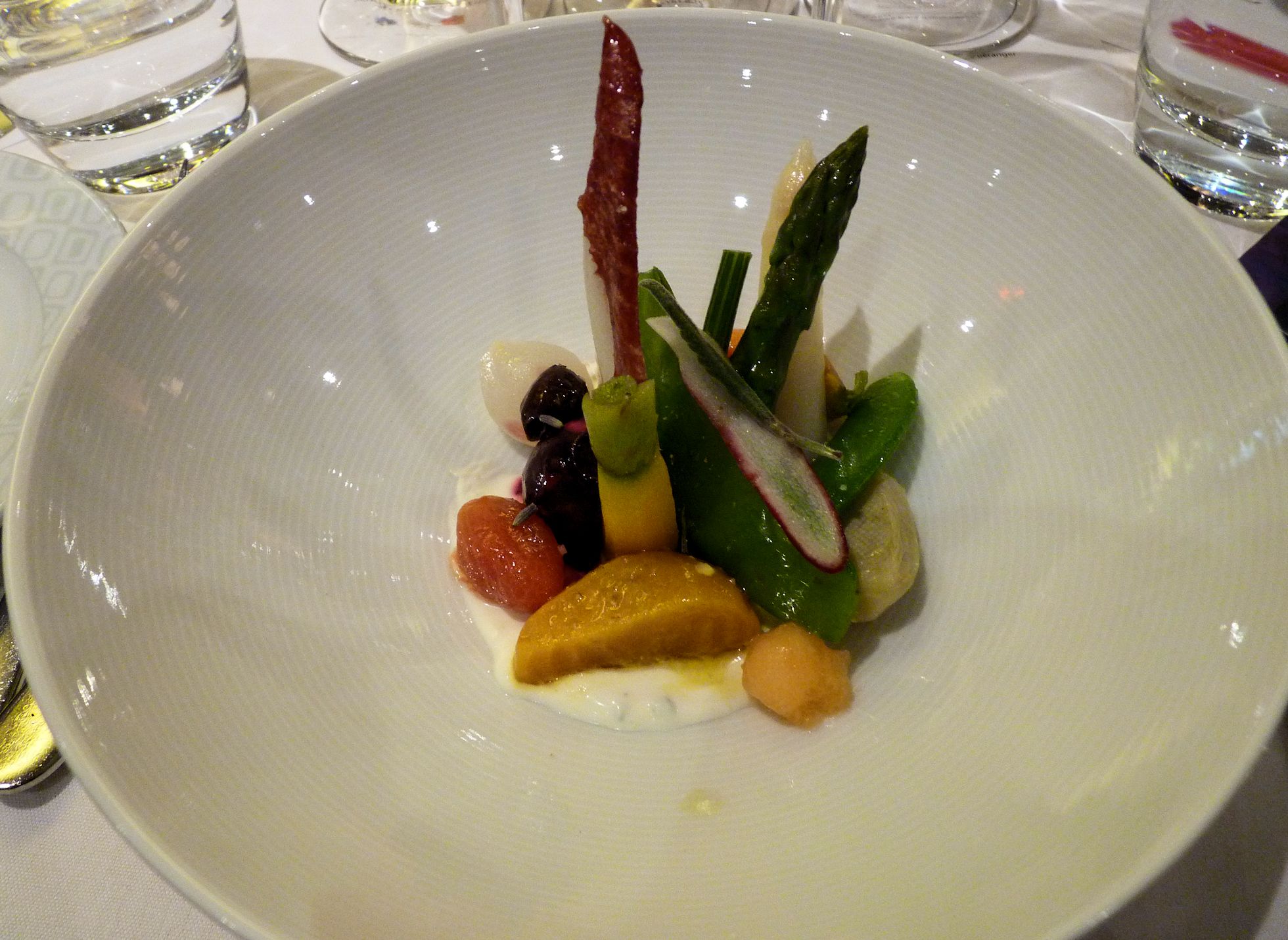
This dish was paired with 2011 Georges Duboeuf Beaujolais-Villages, and it worked together very well by wine complementing soft and earthy flavors of the vegetables.
Next, Frank Duboeuf presented two white wines, Macon-Villages and Pouilly-Fuisse (please see detailed note below). He said that 2011 was equally good year for both whites and the reds, which is a very rare situation. I didn’t take the detailed notes though, as I was preoccupied with parallel discussion at the table and delicious pairing of wine and food ( bad journalism : ( )
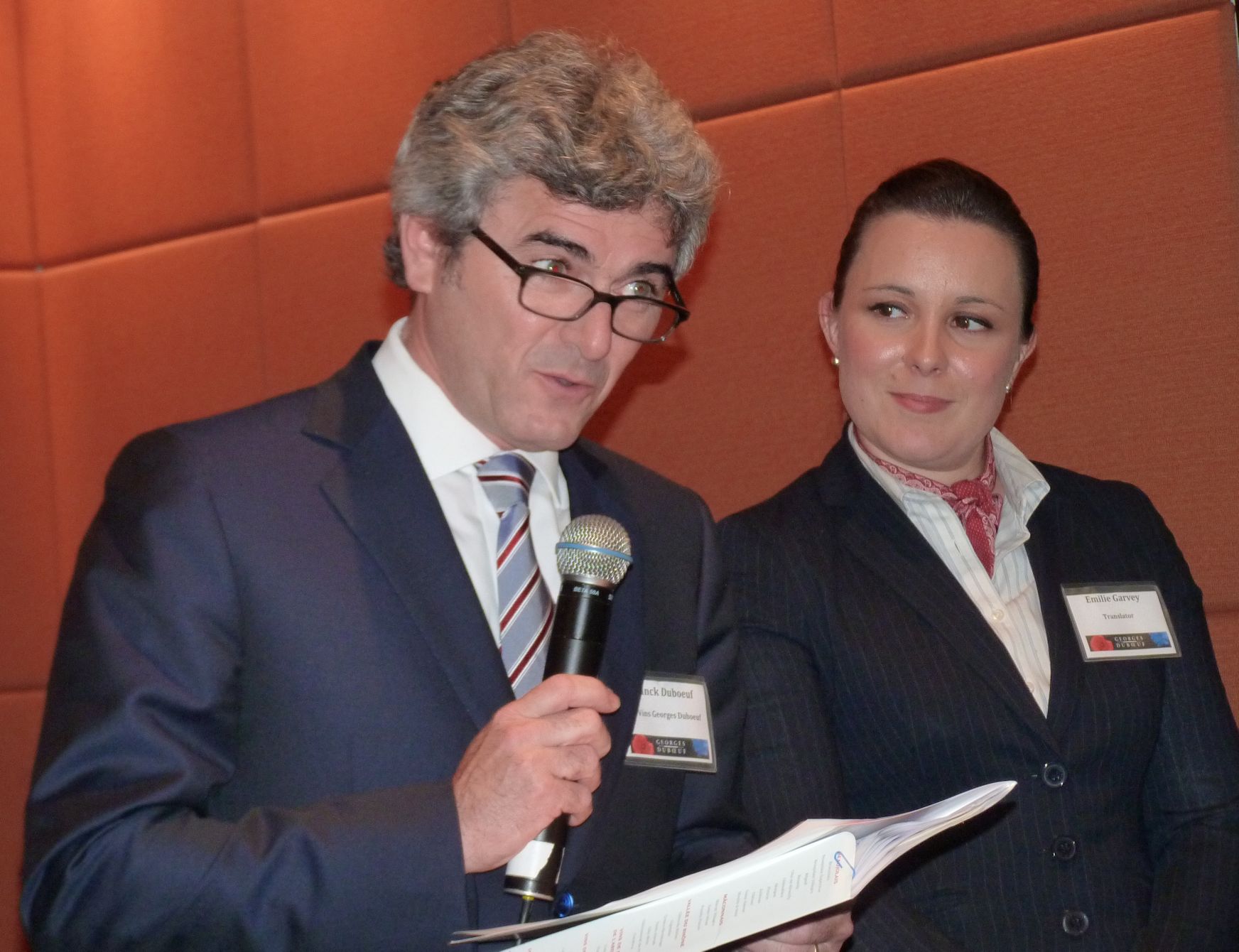
White wines were served with the next course, Seafood Risotto – Black Sea Bass, Scallops, Squids, Cockles, Fennel, Tomato Confit “Fumet” Emulsion.

Pouilly-Fuisse worked perfectly well with risotto, which was a unique experience for me. Creaminess of risotto cancelled out some sharpness of the chardonnay, creating next level of experience.
For the next course, Georges Duboeuf presented two red wines, Morgon and Julienas. He described Morgon as having “violet, cassis, kirsch on the nose, same flavors on the palate. A lot of structure. This wine will age very well”. Regarding Julienas, he said that “it is a very special wine, it has great personality. 2011 was a lot like 2009. This particular wine had the biggest success over the last 5-6 years. It was very critical to expand the vineyard (by 4 acres) for the success of this wine. This is a very noble wine with great aging potential. The wine was bottled a week before, right before the event”.
These two reds accompanied the last course of the meal – Duo of Beef – Braised Short Ribs, Beef Tenderloin, Spring Vegetables, Sauce Bordelaise.
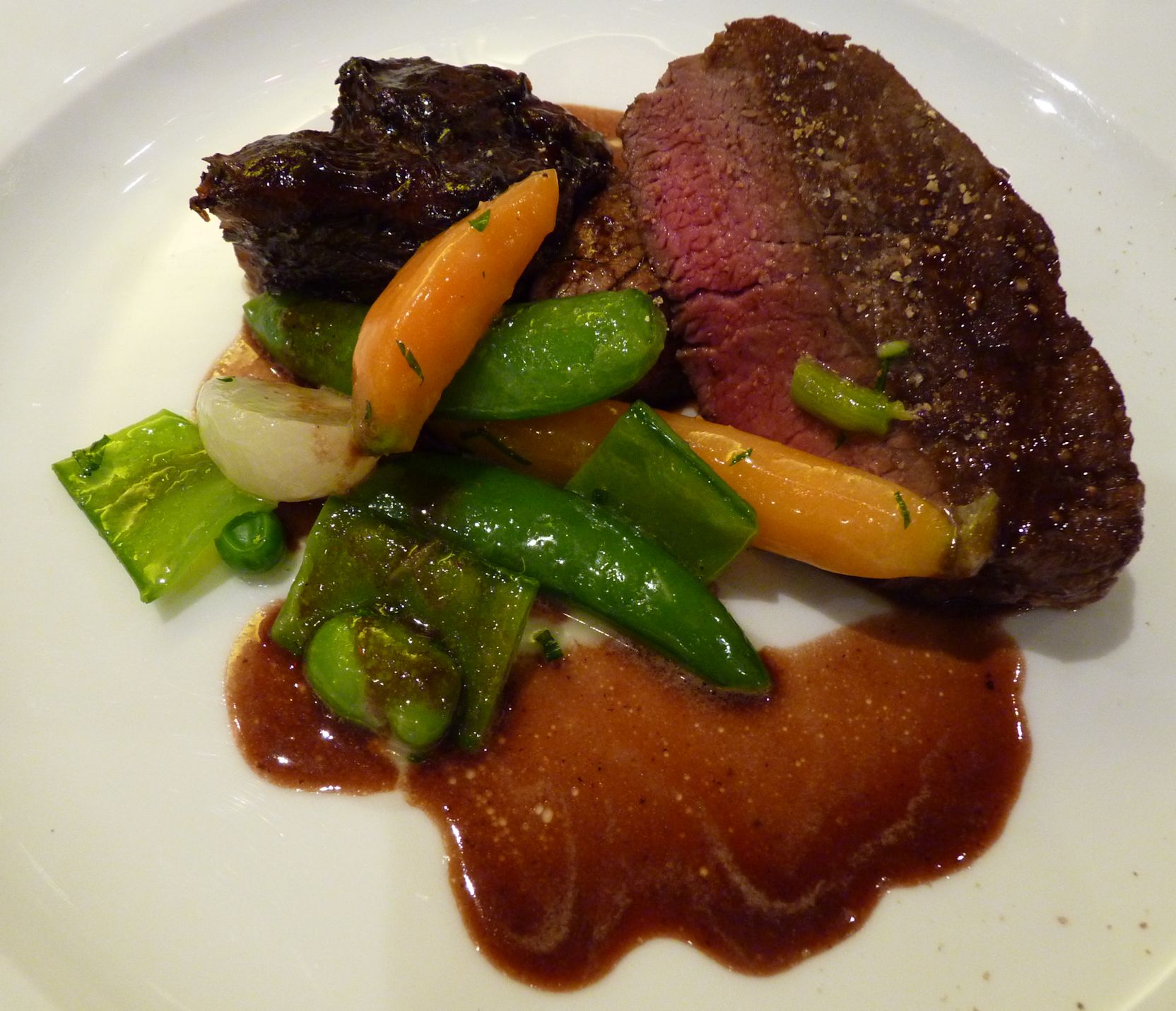
I have to tell that while both food and wine were delicious in its own right, they didn’t work together, so the pairing was not successful by not elevating the whole meal to the next level. But I also have to admit that both food and wine really didn’t bother each other too much – they were really two absolutely parallel experiences without a merge or a collision (which is often the case when wine and food don’t work together).
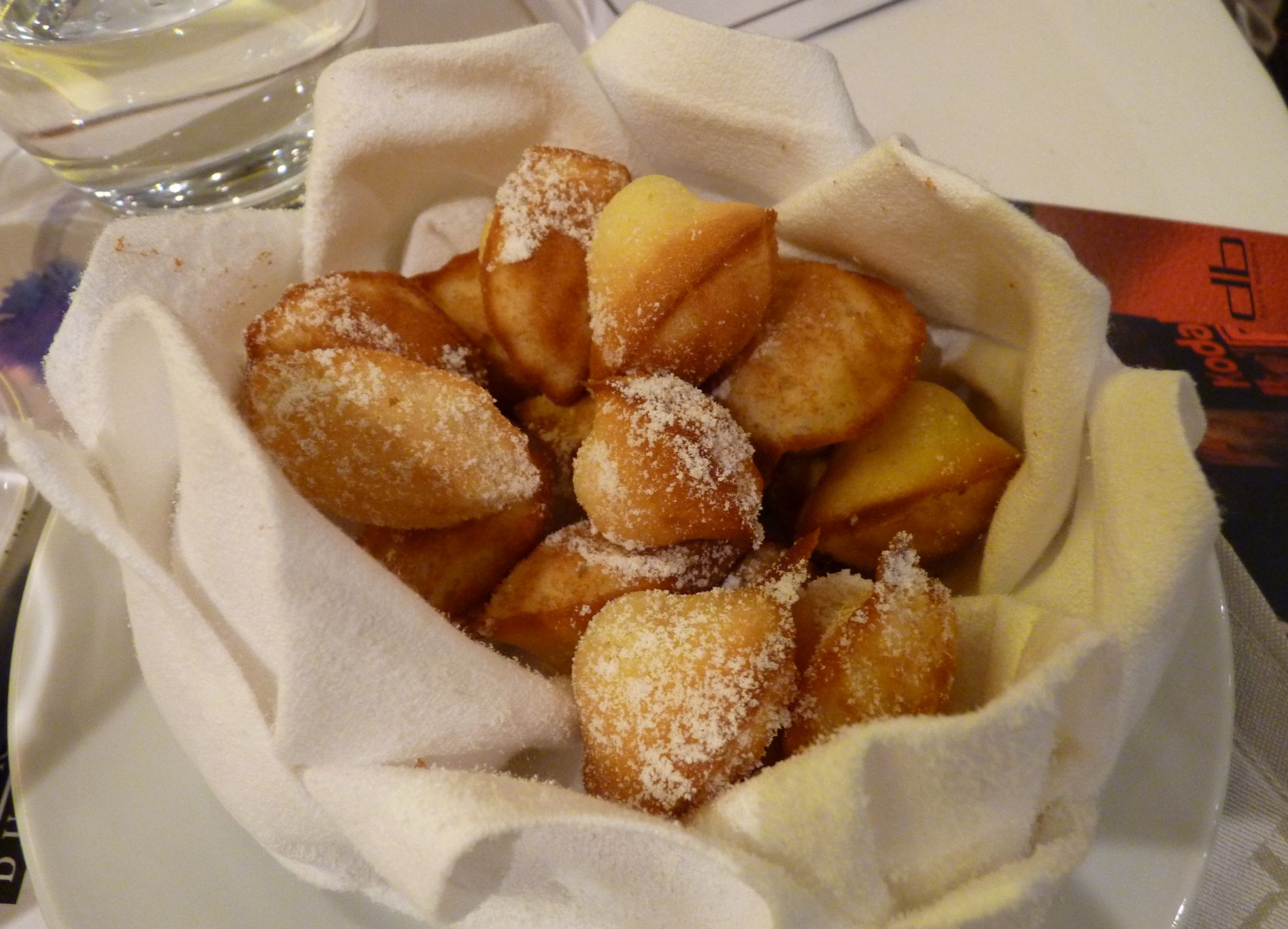
And then…there was a dessert, which was delicious and not paired with any wines (I also have no idea how this little cookies should be called, but it was very hard to stop eating them).
Here are the detailed notes for the wines:
2011 Georges Duboeuf Macon-Villages Domaine Les Chenevieres, Maconnaise, France (100% Chardonnay, SRP: $13.99, 12.5% ABV, 5000 cases produced) – Very nice, hint of hazelnut and citrus on the nose, good fruit, good balance, good acidity, hint of white apples, touch of vanilla and touch of oak on the palate. (Drinkability: 7+)
2011 Georges Duboeuf Pouilly-Fuisse Domaine Beranger, Maconnaise, France (100% Chardonnay, SRP: $17.99, 13% ABV, 3500 cases produced, 1200 imported) – this wine comes from the best area, the actual town of Pouilly-Fuisse. This wine had more pronounced chardonnay qualities than the previous wine – vanilla, touch of citrus and oak notes, excellent balance. (Drinkability: 8- )
2011 Georges Duboeuf Beaujolais-Villages, Beaujolais, France (100% Gamay, SRP: $9.99, 12.5% ABV) – very nice, good balance, a little tartness on the palate, but good overall. (Drinkability: 7)
2011 Georges Duboeuf Morgon, Domaine Jean Descombes, Beaujolais, France (100% Gamay, SRP: $15.99, 13% ABV) – good acidity, fresh fruit, light, soft, a bit too grapey to be great – but should improve with time. (Drinkability: 7)
2011 Georges Duboeuf Julienas Chateau des Capitans, Beaujolais, France (100% Gamay, SRP: $18.99, 14% ABV) – excellent depth, good power, good body, excellent balance. (Drinkability: 8)
All in all, it was one great event, both in the information and experience. Summer is still on, my friends – go find a bottle of Beaujolais to kick it off after a long day. And make an extra effort to find one of Georges Duboeuf wines – it will well worth it. Cheers!
Crus of Beaujolais, Year 2011
(this self-rant doesn’t belong to this blog post, but I have to let it out of the system. I don’t understand how this works – this post was supposed to be out more than a month ago – the event was great, and the content was very clear in my head – nevertheless, it took soooo long to actually write it. Sometimes, the road from the head to the paper medium is all so twisty, not straight at all. The things are not what they appear… But I think we can proceed now.)
 When you hear the word “Beaujolais”, what is the first thing which comes to mind? Beaujolais Noveau? Yes, me too. At the same time, Beaujolais is a large wine producing region, in area much bigger than Burgundy which it is technically considered to be a part of. And of course there is a lot more wine produced in the Beaujolais region than just a Beaujolais Noveau, a celebratory wine of a new vintage.
At the beginning of June, I was lucky enough to be invited for the tasting of the 2011 portfolio of wines of Georges Deboeuf. Georges Deboeuf is one of the largest and well-known wine merchants in France. He is credited with literally single-handily creating the Beaujolais Noveau phenomenon and often is called the “King of Beaujolais”. I also think that his success with Beaujolais Noveau, both wine and celebration of the new vintage with pleasant but very simple grapey wine, appearing in the stores all over the world always on the third Thursday in November, is also an enemy of serious Beaujolais wines, which can be absolutely fantastic – but this can be a subject for a whole different post, so let’s talk about the portfolio tasting of 2011 Georges Duboeuf Beaujolais wines.
 No, wait. Before we talk about the wines presented in the tasting, let’s take a quick look at Beaujolais wine region. Beaujolais region is located to the south of Burgundy. Red wines constitute absolute majority of wine production in Beaujolais, and Gamay is pretty much the only grape used in the production of that red wine (with small plantings of Pinot Noir been phased out little by little). White wines are produced from Chardonnay with Aligote been also allowed, but overall production of white wines is miniscule. Three levels of wines are produced in Beaujolais – Beaujolais, which allows usage of the grapes from the whole appellation – these wine should generally be avoided; Beaujolais-Villages, which are better quality wines, and so called Cru wines (top level). There are 10 Crus in Beaujolais – Brouilly, Côte de Brouilly, Chénas, Chiroubles, Fleurie, Juliénas, Morgon, Moulin-à-Vent, Régnié and Saint-Amour. In general, Beaujolais wines are considered simple and easy (and thus work well with wide variety of food), and also have lesser aging potential than, for instance, the wines of neighboring Burgundy (however aging is usually defined by the talent of winemaker more than anything else). Now that you know all the theory of the Beaujolais wines, let’s talk about tasting.
The tasting was organized by CRT/Tanaka and I would like to thank Caroline Helper (@ForgetBurgundy) for invitation. The tasting took place at DB Bistro Moderne in Manhattan, and it was split into two parts – self-guided tasting of 12 different newly released wines from Georges Duboeuf portfolio (some wines on the list were denoted as barrel samples, as they were just bottled a week before the event), following by organized lunch. Little bites of food were served during the self-guided tasting, and I had an opportunity to try a famous Daniel Burger (with foie gras inside!) – and it was absolutely delicious.
Here I will share with you my notes from the self-guided tasting – description of the lunch, where both Georges and Frank Duboeuf presented their wines, will make up a separate post (ahh, I hope it will not take me another month to write it!). Of course I can’t leave you with just notes, so you will also see some pictures.
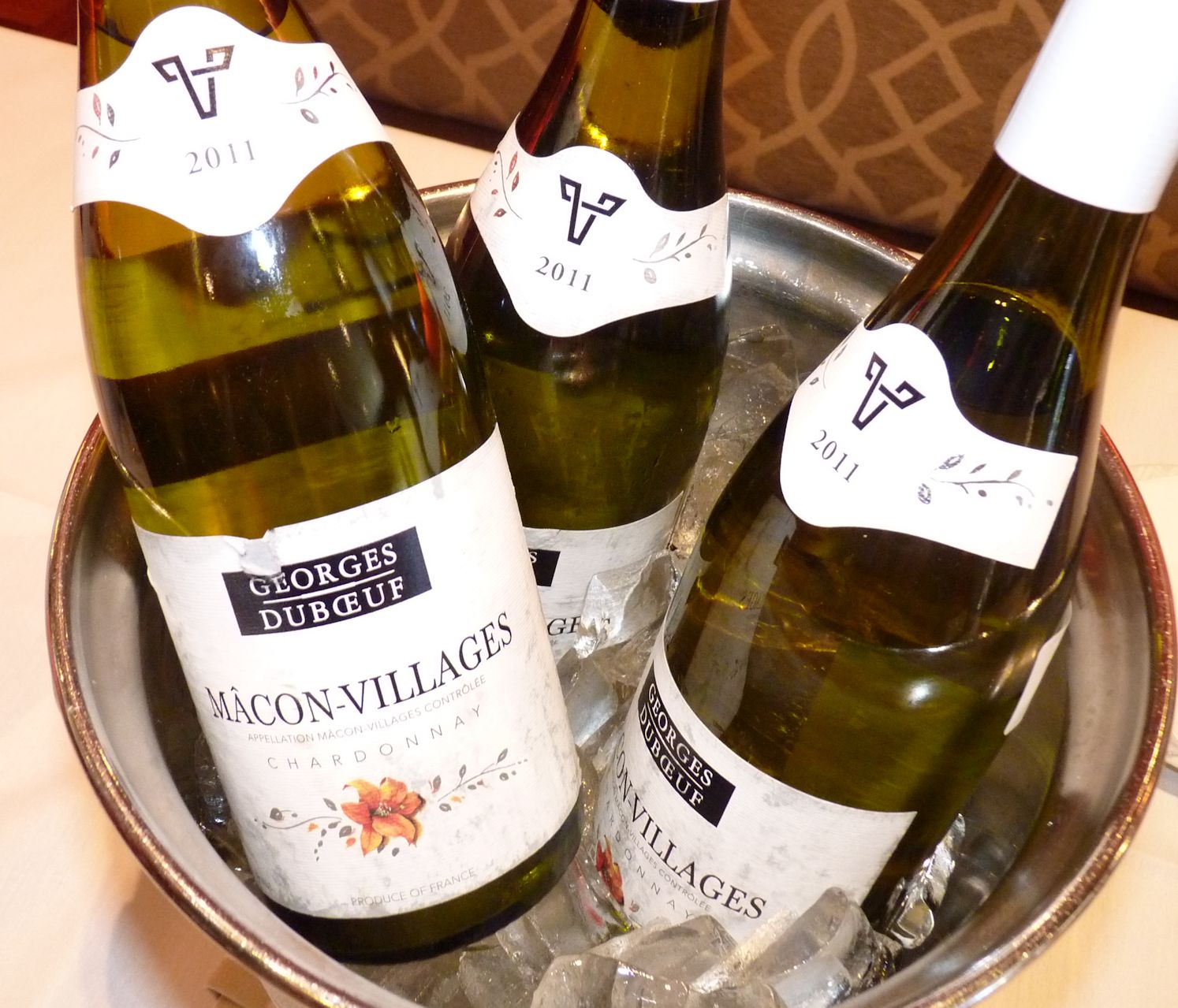
2010 Georges Duboeuf Macon-Villages, Maconnaise, France (100% Chardonnay, SRP: $12.99, 13% ABV) – Crisp acidity, interestingly nutty nose, hint of green apple, very mineral on the palate, with hint of limestone (Drinkability: 7)
2011 Georges Duboeuf Pouilly-Fuisse, Maconnais, France (100% Chardonnay, SRP: $19.99, 13% ABV) – green notes on the nose, lime zest, light, effervescent and crisp on the palate, with a hint of tropical fruit, very refreshing (Drinkability: 8- )
2011 Georges Duboeuf Beaujolais-Villages, Beaujolais, France (100% Gamay, SRP: $9.99, 12.5% ABV) – Fresh fruit nose, very tannic, more fruit and tannins on the palate, with tannins literally reaching Barolo levels. Needs time and may be different temperature (Drinkability: 6 at the moment, but this wine needs to be reassessed)
2011 Georges Duboeuf Chiroubles, Beaujolais, France (100% Gamay, SRP: $13.99, 13% ABV) – plums, acidity out of balance, tamed red fruit on the nose, tannins on the second taste (Drinkability: 6+)
2011 Georges Duboeuf Brouilly, Beaujolais, France (100% Gamay, SRP: $14.99, 13% ABV) – tart cherries on the nose and palate, more balance than the previous wine, but still lacking a bit (Drinkability: 7- )
2011 Georges Duboeuf Brouilly Chateau de Nervers, Beaujolais, France (100% Gamay, SRP: $15.99, 12.5% ABV) – closed, not balanced, all over the place – fruit, acidity, tannins are not harmonious (Drinkability: 6+)
2011 Georges Duboeuf Morgon, Beaujolais, France (100% Gamay, SRP: $14.99, 13% ABV) – very nice nose with open fruit, too dry on the palate, very tannic, needs more fruit (Drinkability: 7- )
2011 Georges Duboeuf Fleurie, Beaujolais, France (100% Gamay, SRP: $15.99, 13% ABV) – good fruit, ghood acidity, reasonably balanced (Drinkability: 7)

2011 Georges Duboeuf Fleurie Domaine des Quatre Vents Beaujolais, France (100% Gamay, SRP: $18.99, 13% ABV) – very nice! Round fruit on the nose and the palate, very good balance (Drinkability: 8- )
2011 Georges Duboeuf Julienas, Beaujolais, France (100% Gamay, SRP: $14.99, 13% ABV) – pleasant nose, good acidity, but fruit is closed (Drinkability: 7)
2011 Georges Duboeuf Moulin-a-Vent, Beaujolais, France (100% Gamay, SRP: $15.99, 13% ABV)- fresh fruit on the nose, lacks substance on the palate, needs more power – this wine is red like white (Drinkability: 7)
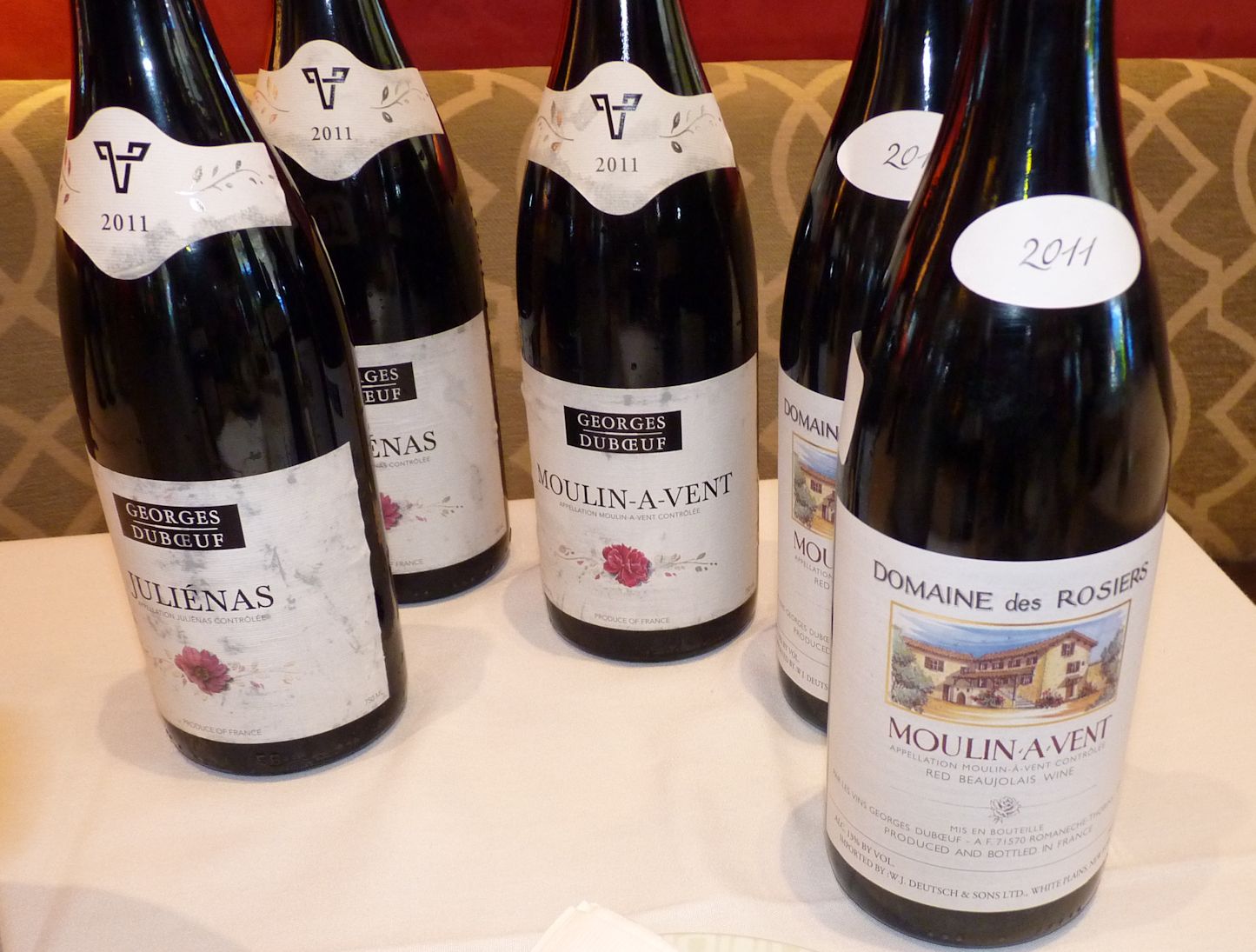
2011 Georges Duboeuf Moulin-a-Vent Domaine des Rosiers, Beaujolais, France (100% Gamay, SRP: $17.99, 13% ABV) – very nice, beautiful color, good fruit on the nose, hint of minerality and spices, good red fruit, plums and raspberries on the palate. Best of tasting. (Drinkability: 8- )
In the end of the day, all the wines were showing very well, and if you think about QPR, all the wines were great values. Make no mistake – some of these wines are in a very limited production (especially all the Domaine-denoted wines), so you will need to make an effort to find them. But – it worth the reward!
That’s all for my first part of the report, folks. Until the next time – cheers!
Wine Tasting Experience – Home Run!
 What home run has to do with the wine tasting? Not much, of course, except when you try four random wines and they all taste great, somehow it seems that “home run” is a good way to adequately describe your experience.
I think nowadays Saturday wine tasting is pretty much a norm for majority of the wine stores. If I have time, I usually stop by the wine tasting at Cost Less Wines in Stamford. There are typically four wines open, and out of the four I would find one or two which I really like. This last Saturday’s tasting was different, as I actually liked all four, and they literally were one better than another.
There were two wines from Argentina and two from Chile (both wineries are owned by Trinchero Family Estates out of California). Interestingly enough, all four wines were priced at $13.99. Here are the notes:
2010 Carmen Gran Reserva Chardonnay Casablanca Valley, Chile – Perfect acidity, very much similar to Chablis – great balance, nice green apple flavor, touch of oak and very long and mouthwatering finish. Drinkability: 8-
2010 Doña Paula Estate Torrontés Cafayate Valley, Salta, Argentina – Extremely perfumed nose – you literally think that you are smelling a nice English or French soap. Of course it is a bad idea to compare wine and soap, but actual smell is highly invigorating, and I use the comparison here in a positive way – rose petals with touch of lavender on the nose. Light and delicate on the palate, however bringing very explicit orange flavors. Very balanced with good acidity. Drinkability: 8-.
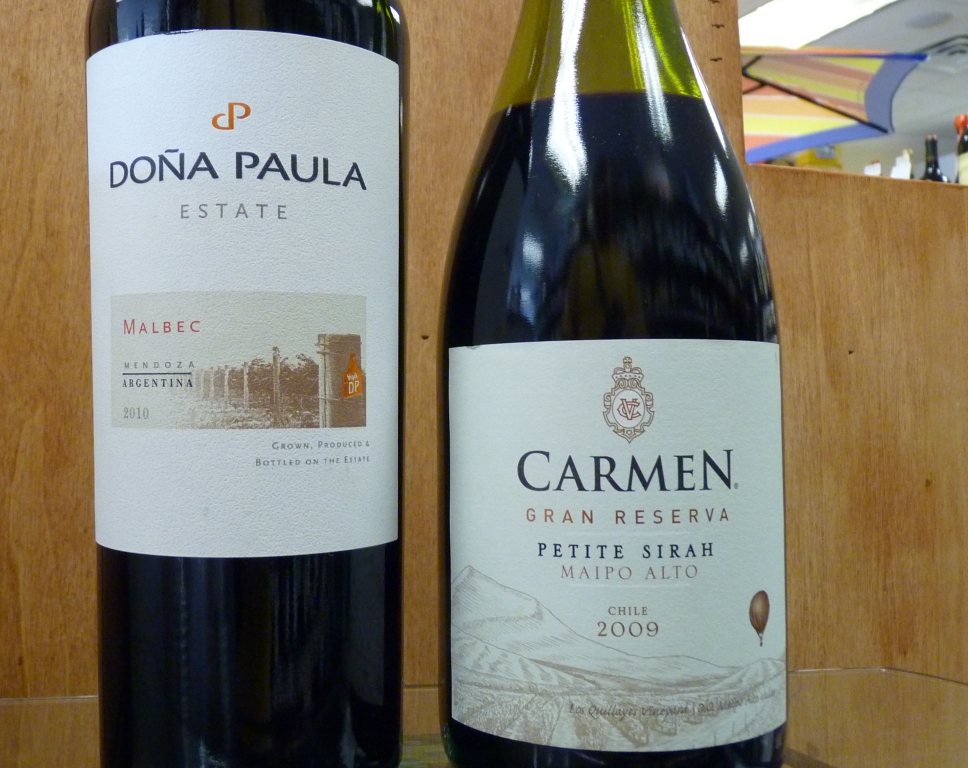 2010 Doña Paula Estate Malbec, Mendoza, Argentina – it seems that lately I have a tendency of single -word wine reviews. Round! (how is that for the review?). Perfect balance of fruit, tannins and acidity, soft tones of the dark fruit with enough underpinning in the oak flavors. Drinkability: 8.
2009 Carmen Gran Reserva Petite Sirah Maipo Alto, Chile – I don’t know about you, but it was my first encounter with Chilean Petite Sirah. Dark fruit, plums and sour cherries on the palate, full bodied and powerful, very balanced, good acidity. Drinkability: 8.
Don’t miss wine tastings in the stores – whether you will like the wine or not, you will learn something new.
For more home run wine tastings – cheers!
Rediscovering Ridge
 About five years ago, during one of my numerous trips to California, I had a little bit of free time. What do you do when you are in California, have a little bit of free time and love of wine? Of course, you go visit the winery!
A that time I decided to go visit Ridge Vineyards, located in Santa Cruz Mountains region, not far from San Jose. All I knew is that the winery is making wine called Monte Bello, which became famous after beating classic French Bordeaux during 1976 Judgement of Paris event. So I managed a steep 4 miles ride up the Monte Bello road, reached the winery, tasted 5 or 6 different wines and … didn’t like a single one of them. No, I don’t remember what exact wines and what exact vintages I tried, I just remember that none of the wines created any ”oompf”. I was disappointed and squarely put all the Ridge wines into ”I [really] don’t like it” category.
Holding that unhappy memory through the years, last year I even expressed my opinion in the comment to the twitter post by Jancis Robinson (she selected Ridge for a special wine tasting in Hong Kong), which caused some very unhappy reaction among her followers (to say “very unhappy” is a very mild understatement).
I can’t tell you why, but when this year I found out that I will be in San Jose area and I will have a bit of the free time, very first thought was ”I have to try Ridge wines again”. Four steep miles up the Monte Bello road and here I’m again. The air was beautiful, and so was the scenery – let me share a few pictures with you.
Ridge Vineyards is located near the top of Monte Bello Ridge. This is the “view from the top”:
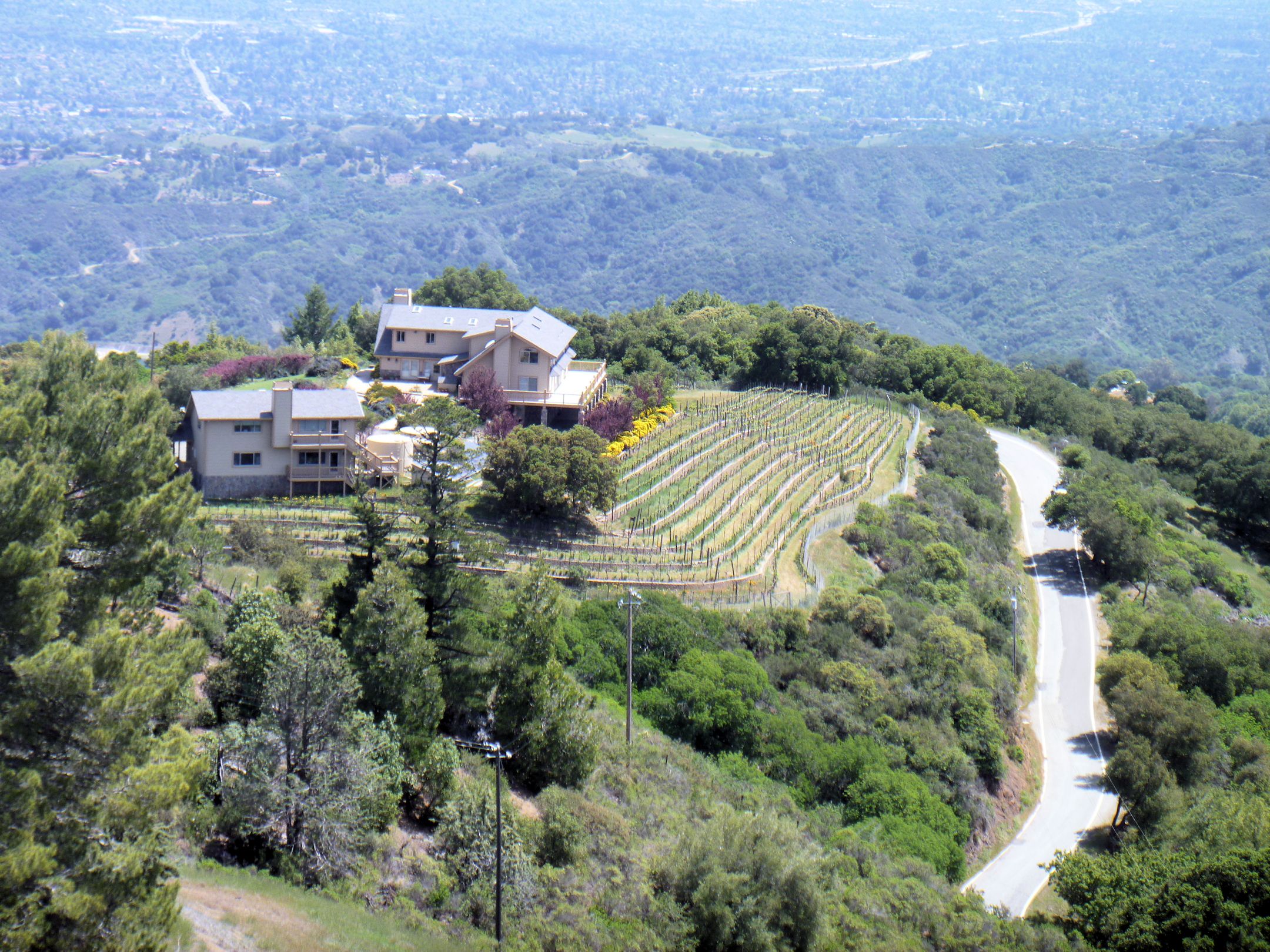
These are the vineyards at Ridge (by the way, in case you recognize the picture, it gives you an answer to the wine quiz #10, Where in California – correct answer is Santa Cruz Mountains region):
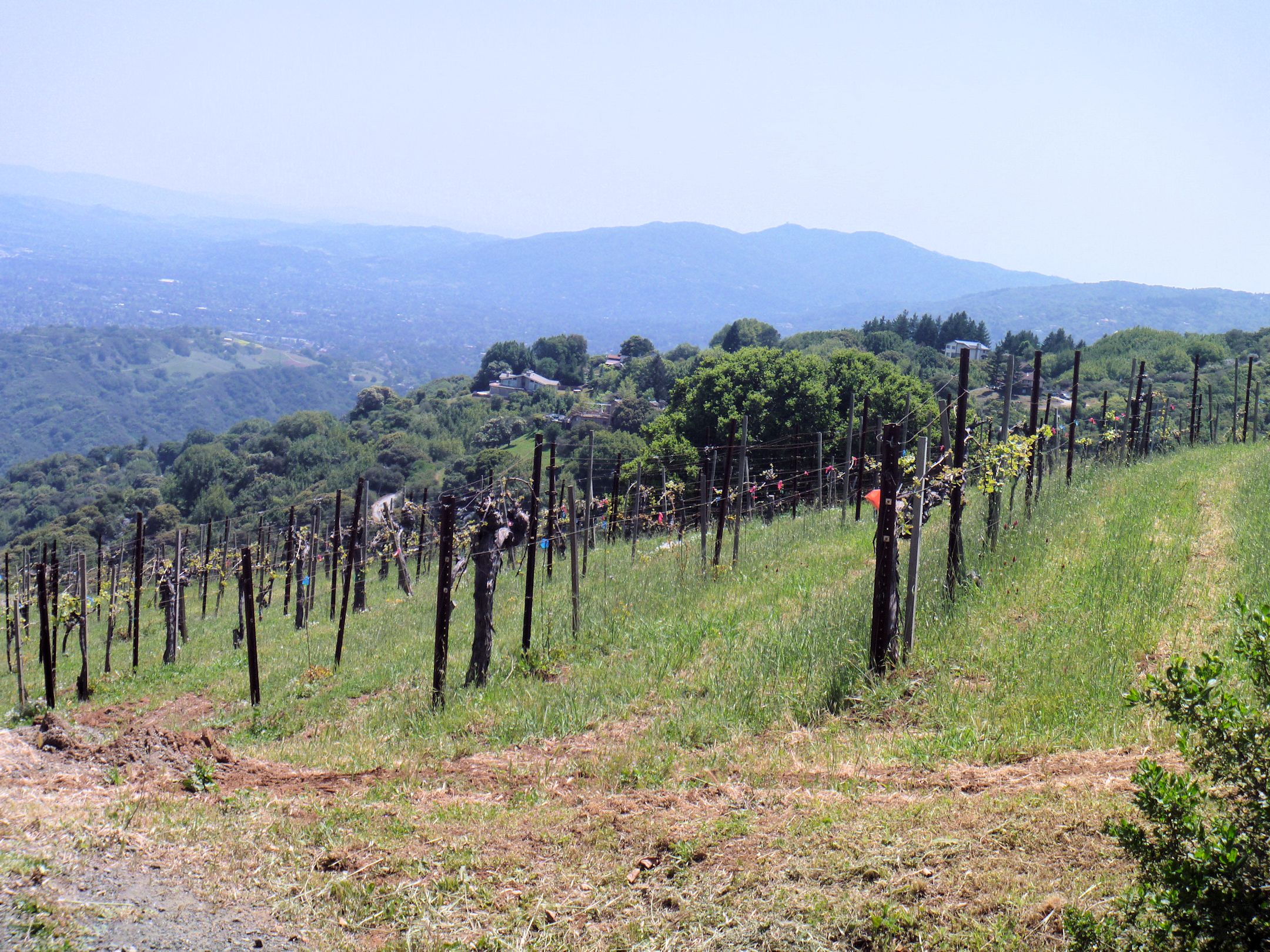
Here are some beautiful flowers for you:

Can you guess what happened now? I tried 7 different wines and … I liked loved every one of them. They all had common trait – balance and elegance, a quiet beauty, and may be most importantly, a sense of place – terroir, as French would put it. None of the wines were in-your-face, see-how-much-muscled-fruit-i-have – all of them were rather subtle, thought provoking and requiring time to reflect upon the content of your glass.
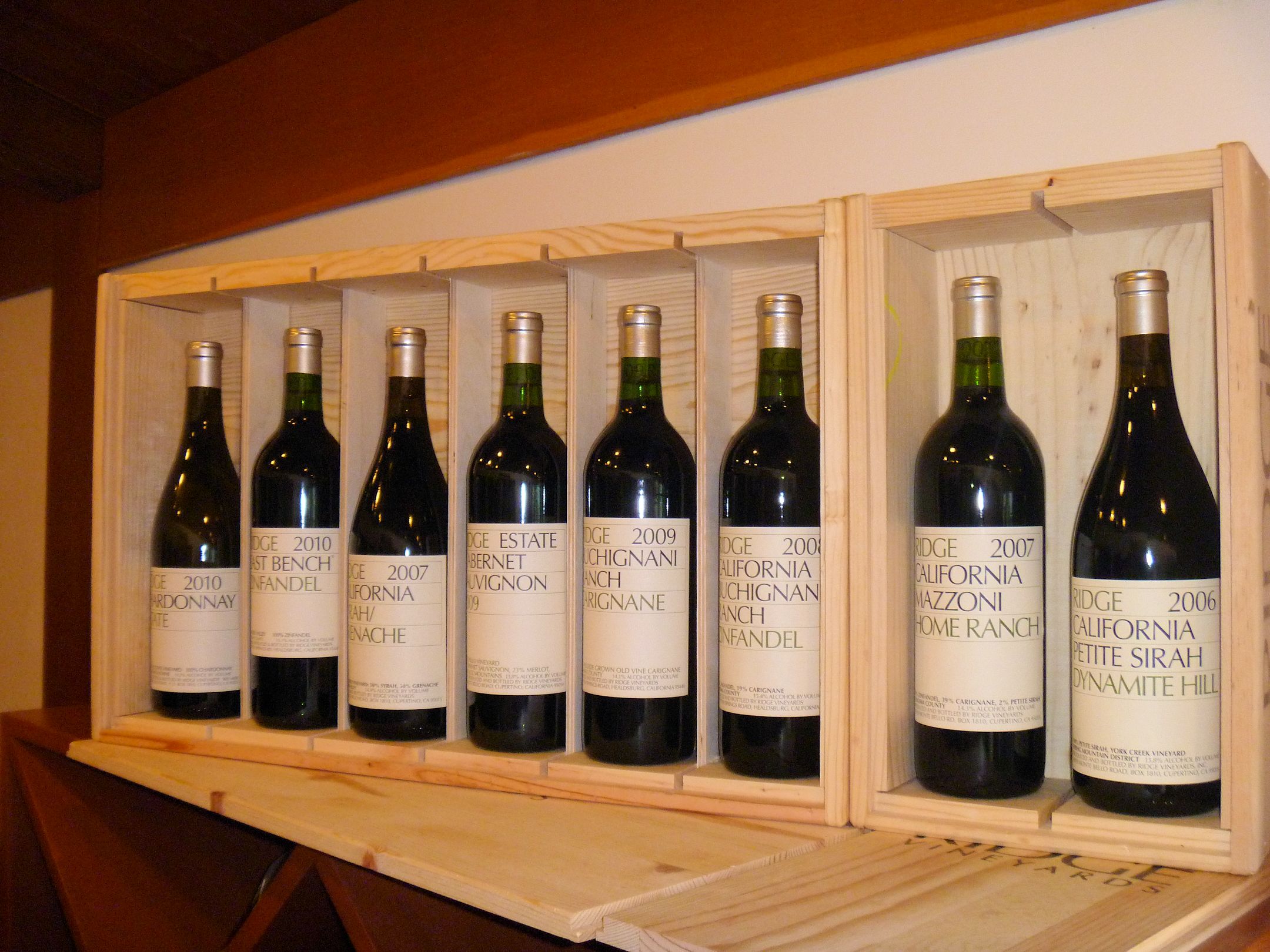
I don’t have an explanation. How come I didn’t like any wines the first time? Was that a ”leaf day”, a ”root day” or ”generally unfavorable” day? Did my palate evolved (that one I’m quite sure is true)? As you can’t enter the same river twice, I will not be able to relive that day 5 years ago and understand my reaction at that time. But I’m glad someone somehow somewhere decided that I have to go and try Ridge wines again – and discover something really beautiful.
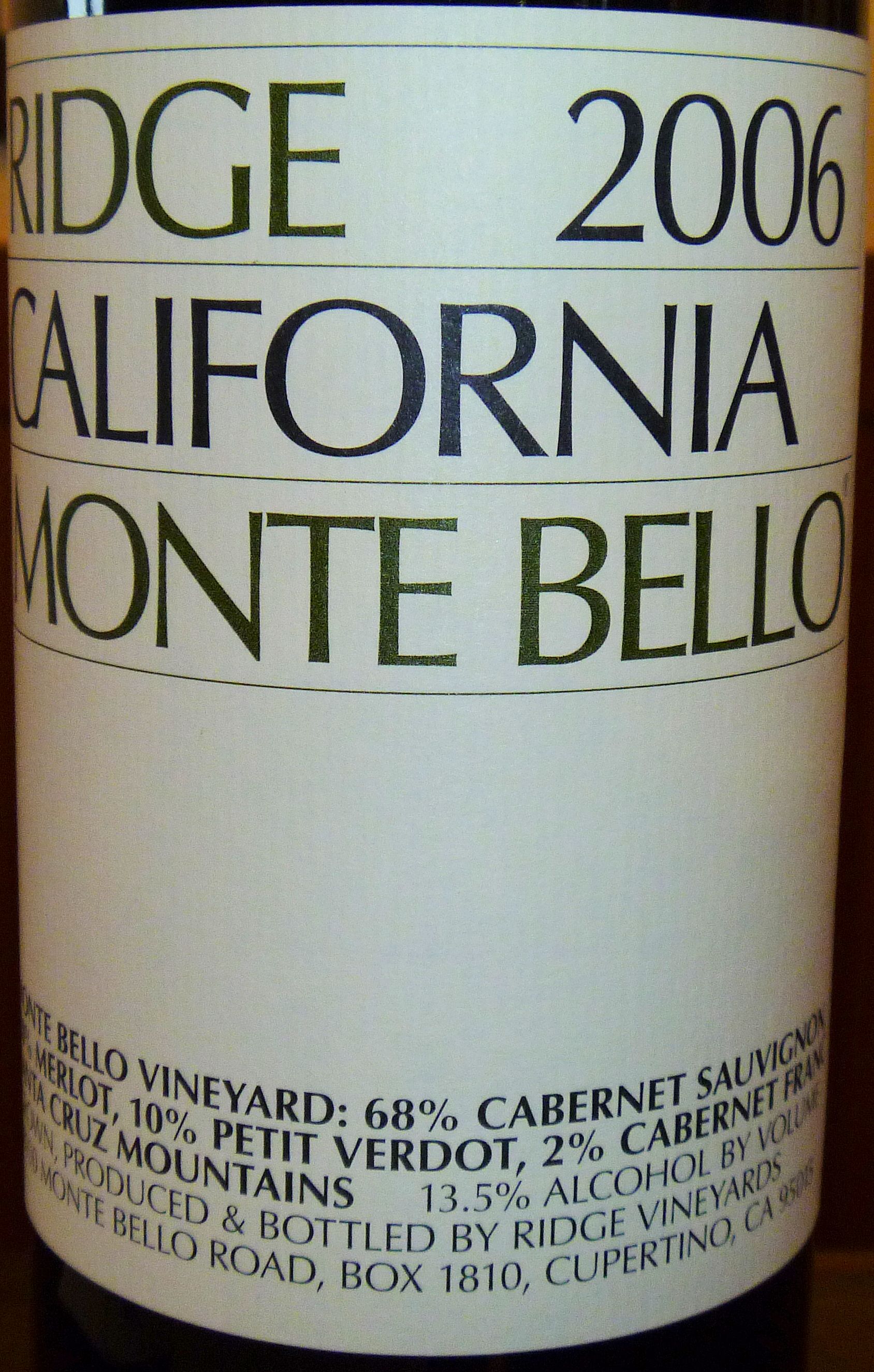 Here are the tasting notes for the wines I tried:
2010 Estate Chardonnay – A little edgy in unusual way, some herbal undertones, oak is unnoticeable, except back palate burn. Opens a bit cleaner later on, long finish with hint of lemon.
2009 East Bench Zinfandel (15.1% ABV) – dry, with some dry rub spices, nice nose of blackberries, unnoticeable alcohol level, very balanced, perfect fruit and acidity on the palate.
2007 Lytton Estate Syrah/Grenache (14.49% ABV) – nice fruit, touch of spice, hint of dry cherries, gentle tannins, good acidity. Perception of tannins increases going forwward.
2009 Estate Cabernet – Tremendous minerality on the nose, you can literally smell the earth. Very nice – hint of green, very Bordeaux-ish in style, restrained and balanced
2009 Buchignani Ranch Carignane – Tobacco and tar, nice bite of spice, nice simplicity. good tannins on the finish.
2006 Dynamite Hill Petite Sirah – Beautiful fruit right on top, dark fruit undertones, some cherries.
2006 Monte Bello – Beautiful fruit, perfect balance, very classic Cabernet Sauvignon blend, very long finish with tannins which are growing on you, hint of tobacco and earthiness on the palate. I’m glad this was the last wine I tasted, as the finish actually lasted at least for the next 20 minutes.
Yes, I was wrong before, and I don’t have any problems admitting it and getting over it – Ridge Vineyards makes great wines with the sense of place, and – better late than never – I’m very happy I made this discovery. Let’s raise the glass to the great discoveries of our lives! Cheers!
Dozen of Personal Favorites From Michael Skurnik Portfolio Wine Tasting
 Thousand bottles of wine (this is not a mere matter of speech, but- more or less an exact count, give or take a hundred bottles). 4 hours. Come up with the list of 12 most favorite wines. What do you think about a task like that?
Whether you think it is easy or hard, this was my experience at the Michael Skurnik 25th Anniversary wine portfolio tasting few weeks ago in New York (selecting 10 wines was not the goal, of course, but tasting many great wines was).
”Overwhelming” would be an under-representation of the experience. Sip, swish for a second, think for a second, spit. Take a mental note, or may be a quick mark in the book. Move on to the next wine, then to the next table. Get through the crowd with your glass. Repeat until your palate is completely locked down by the amount of fresh tannins. Have a sip of fruity white to unlock and refresh. Continue and repeat until fully exhausted. Leave happy.
Above is a quintessence of the experience. Below, I would like to give you mostly a photo report with some comments on the most memorable wines. The list is not prioritized at all – if anything, it may be coming out in the order we tasted the wines. Here we go.
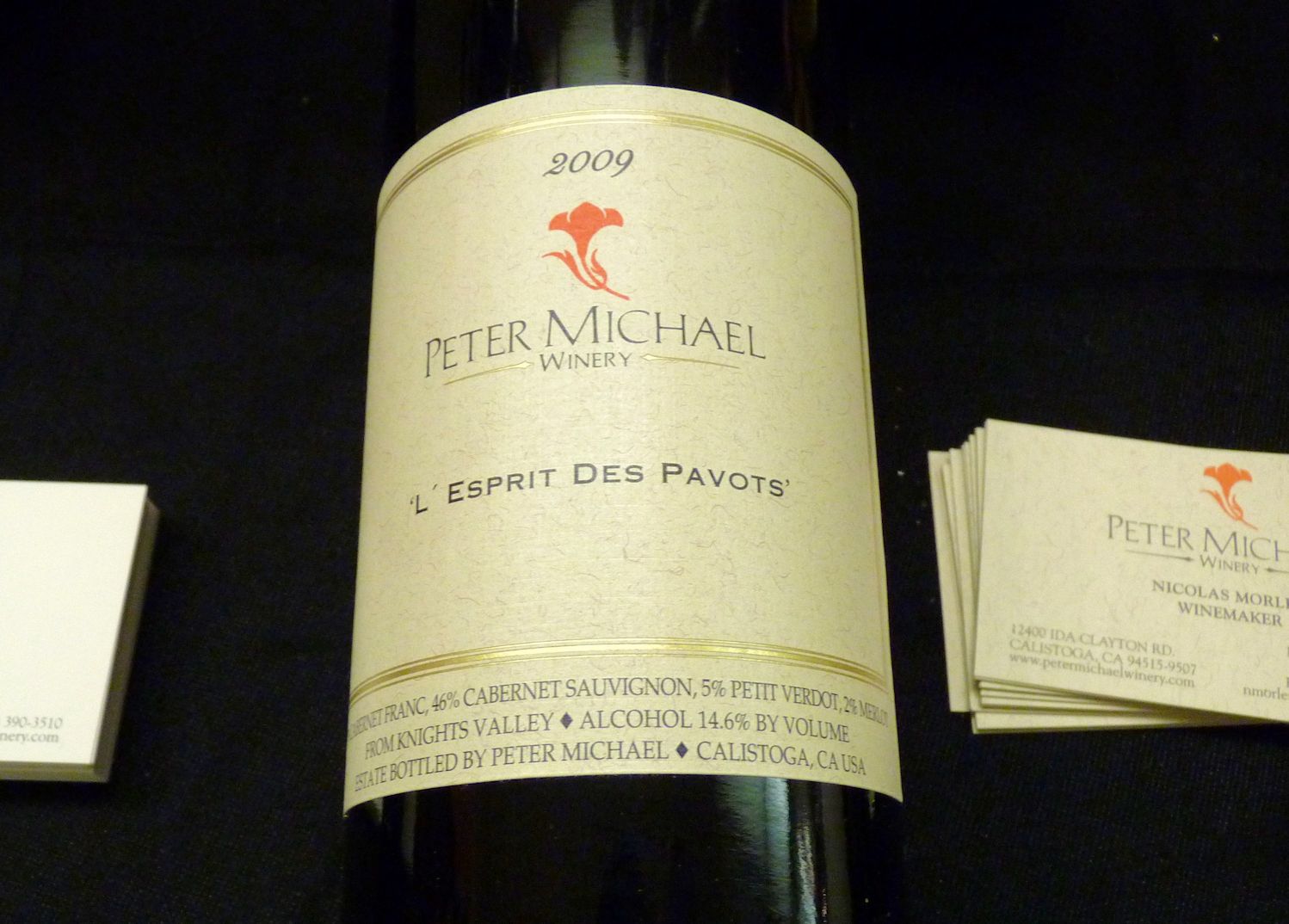
2009 Peter Michael ‘L’Esprit des Pavots’ – clean, gorgeous, elegant, balanced, approachable – this is Bordeaux-style red which you can drink now or cellar for next 20-30 years:
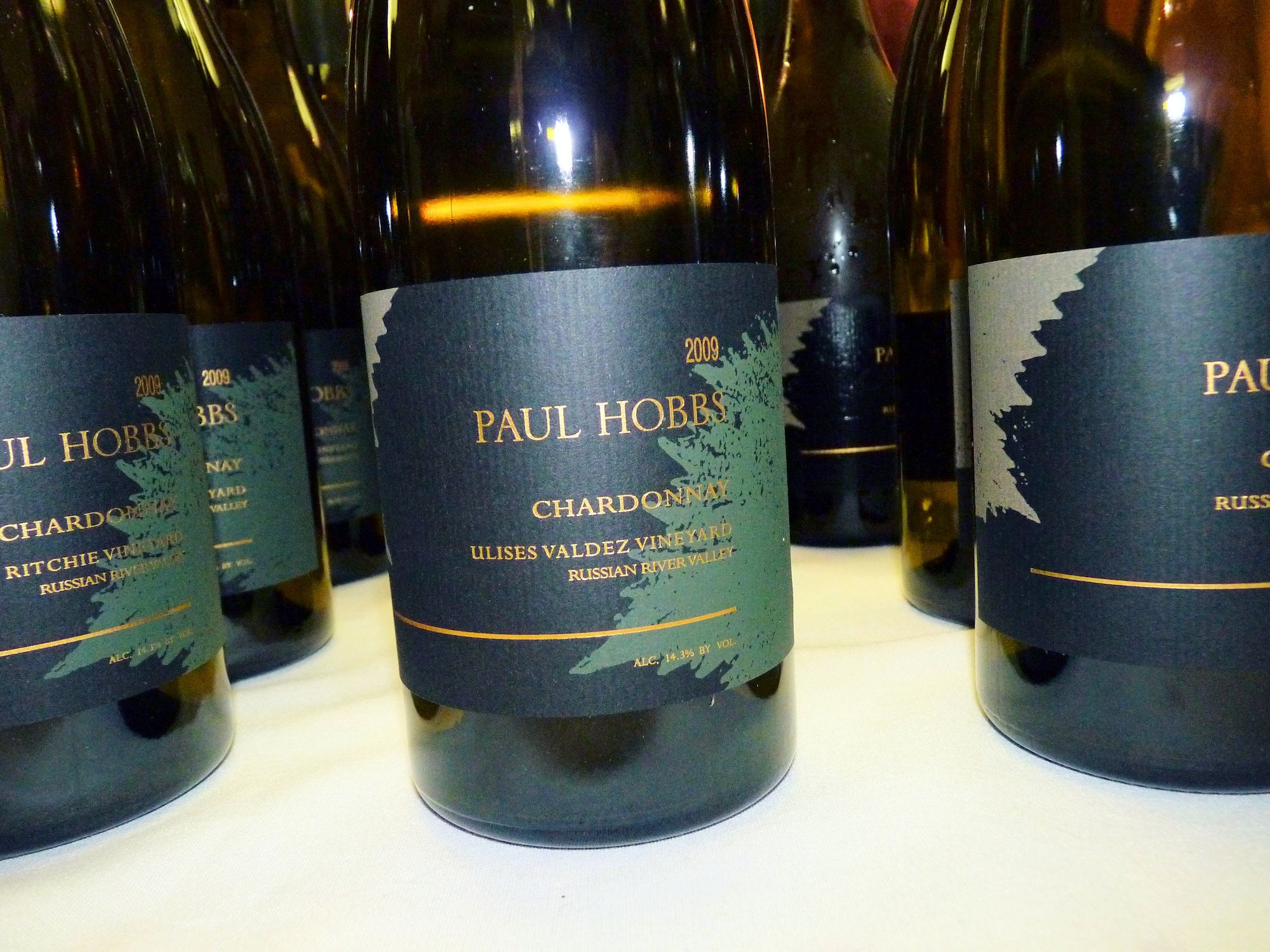
2009 Paul Hobbs Winery Chardonnay, ‘Ulises Valdez Vineyard’ – best non-French Chardonnay I tasted. Elegance and perfection of balance – acidity, hint of vanilla, hint of butter, hint of tasted oak – all in a perfect medley:
2009 Martinelli Syrah ‘Vellutini Ranch’ – full-bodied, luscious and well balanced, with nice dark fruit and spices. Outstanding Syrah:

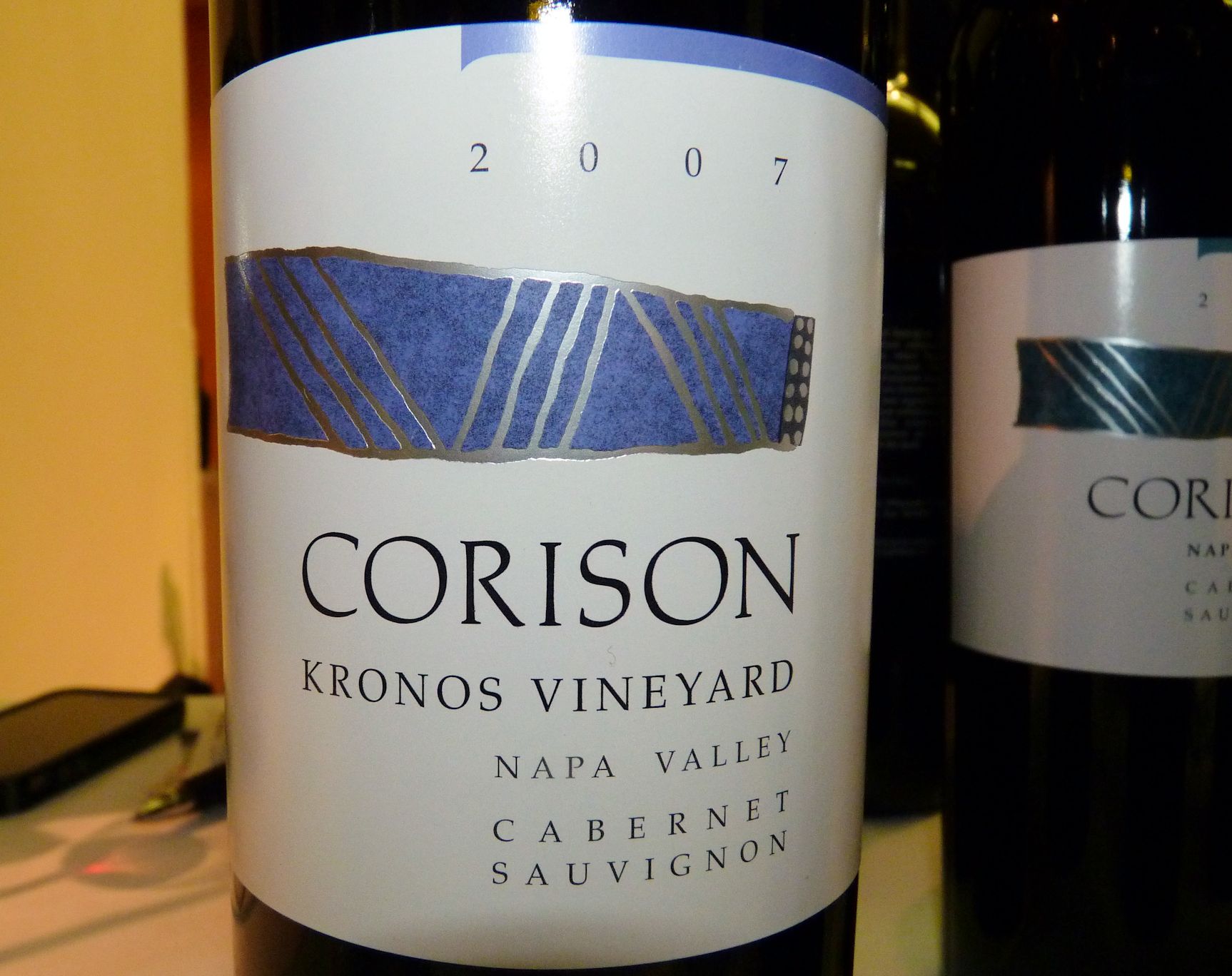
2007 Corison Cabernet Sauvignon ‘Kronos’ – I was really looking forward to trying this wine after Joe Roberts, a.k.a. @1WineDude, called it “Black Panther” in his review. I’m not sure I personally met the panther, I rather discovered a mystery. This wine is impossible to understand in the format of the standard trade wine tasting. It says “let’s dance a little longer, shall we”? When you take a sip of this wine, it is asking you to think – there is no flavor attack, no particular taste element standing out – instead, there is a perfectly balanced, thought-provoking, mysteriously delicious substance. This wine needs double time – time in the cellar, and time in your mouth – then you might stand a chance of solving the mystery:
2009 Domaine Newman Mazis-Chambertin – exemplary Pinot Noir, Pinot Noir by the book – whatever way you want to call it, this was one of the most elegant Pinot Noir at the tasting – perfect balance of earthiness, fruit, acidity and power:

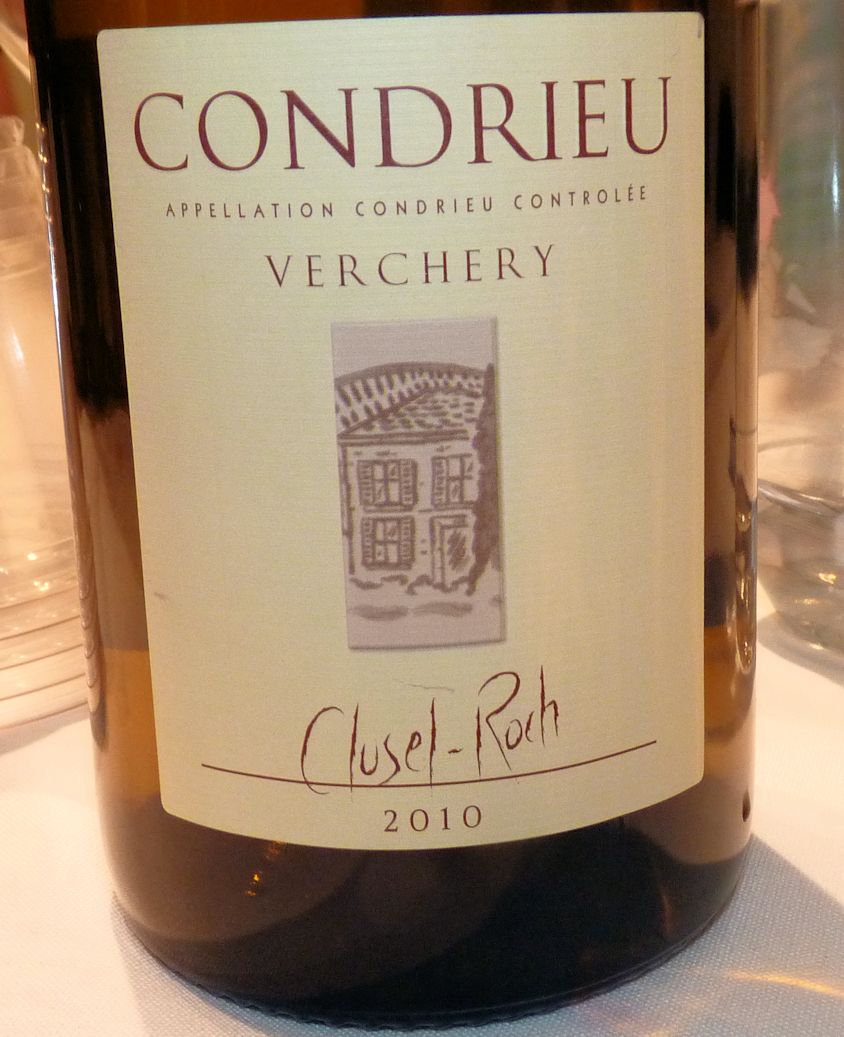
2010 Clusel-Roch Condrieu – beautiful full-bodied white, powerful and structured – great example of Viognier from the most classic Viognier Appellation:
2010 Domaine Saint Prefert Châteauneuf-du-Pape Blanc ‘Cuvée Speciale Vieilles Clairettes’ – fresh, elegant, beautiful white fruit, perfect acidity – definitely one of the best white wines in the tasting. Unfortunately, equally rare and hard to get:
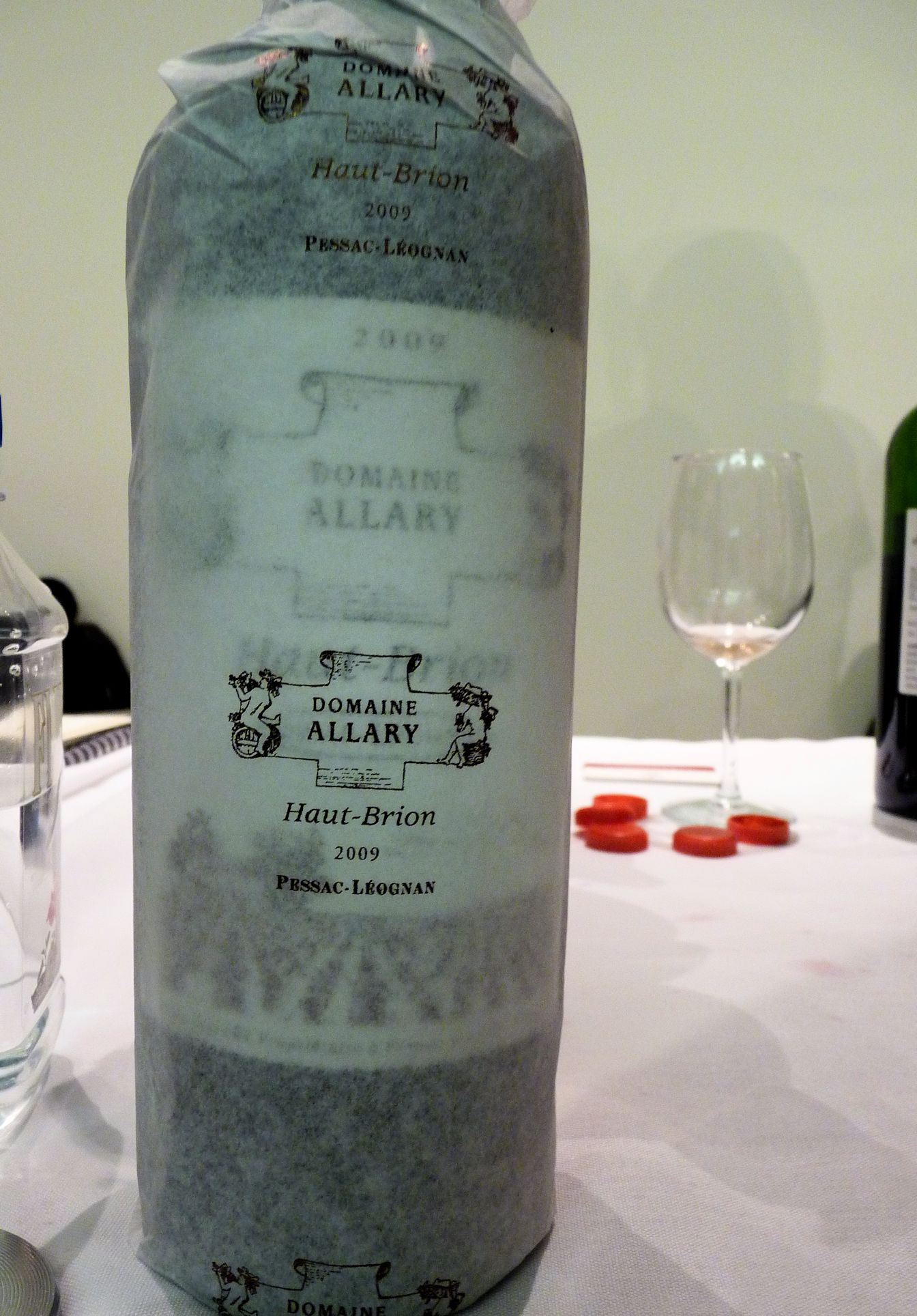
2009 Domaine Allary Haut-Brion Pessac-Léognan – classic Bordeaux from classic vintage. Perfect wine – you can drink it now, or wait for 30 years – the choice is yours:
2010 Boyer-Martenot Meursault 1er, ‘Perrières’ – absolute elegance ( yes, if you think that I’m abusing the word “elegant”, I agree with you, but I can’t find a better word to express my thoughts about these wines, so bear with me, please) – outstanding Chardonnay, great balance of white fruit, acidity, earthiness and tannins:

2011 Domaine du Moulin Méthode Gaillacoise – personal sparkler favorite at the tasting – bright, fresh, full-bodied, with apple and toasted bread perfectly showing on the nose and on the palate. Lots of pleasure:

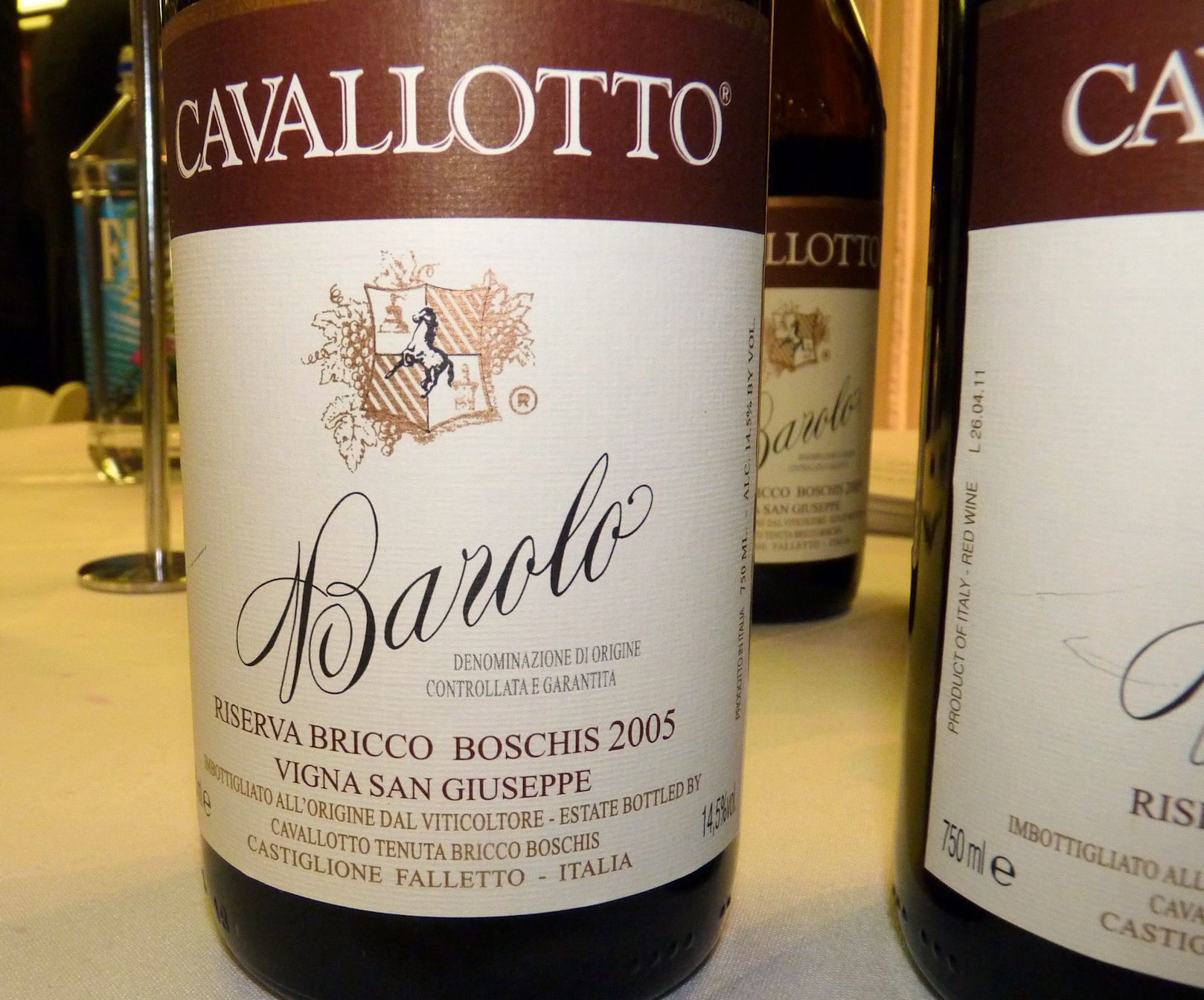
2005 Cavallotto Fratelli Barolo Riserva, ‘San Giuseppe’ – trying Barolos at the such tastings is always fun – you need to build your impressions quickly, before tannins will completely numb your palate. This wine had enough power to get through everything else I tasted before and deliver plums and dark cherries and outstanding balance of spices which make Barolo a King of the Wines. Truly an outstanding wine:
2007 Hendry Vineyards Cabernet Sauvignon and 2007 Hendry Vineyards Red Wine (Meritage Blend) – one of my biggest surprises in the tasting. I never heard of Hendry name before – they mostly had being known as a grape growers for all other prestigious winemakers. But then at some point they started making wines, and I can tell you – it was very hard to pick only one favorite out of the outstanding lineup of wines. This is why you see two red mentioned here – both are very elegant, balanced and varietally correct (and reasonably priced!):

This concludes our journey through the great tasting of Michael Skurnik wines – there were hundreds of other wines worth mentioning, but – sometimes I have to sleep too, right? Thanks for reading and cheers!
Taste Expectations, Or Notes From The Blind Tasting
 If you had been drinking wine for a while, I would expect that you have developed certain taste expectations. As you drink the wines from the different regions, you find that the wines from the same geographic locality made from the same grapes would have somewhat of a similar taste and style (yes, of course, I just described what is properly called Terroir without using the word itself). At some point, the associations between the origin of the wine and its expected taste become engrained in your mind. Looking at the bottle of New Zealand Sauvignon Blanc, you are expecting to find bright acidity and citrus flavor profile even without opening the bottle. Looking at the bottle of California Cabernet Sauvignon you are expecting to find a good amount of fruit with some explicit black currant notes and a probably good amount of tannins – note that I’m really trying to generalize here, but you got the point.
This is the way the wine was for a very long time. However, when you taste modern wines, do you have a feeling that your expectations are no longer valid and don’t match reality any longer? I have had this experience many times lately, when Amarone didn’t taste like anything expected (you can find my rant of pain here), or when unoaked Chardonnay tastes rather like Pinot Grigio – and there are many more examples of “taste confusion”.
Recently, I had another case of “broken” taste expectations – this time it was somewhat sanctioned, as we did a double (almost) blind tasting. The theme was set a bit ambitiously, as France and Italy. The “ambitious” part is coming from the fact that these two countries on their own have such a variety of wine production that it makes it literally impossible to recognize the grape or at least the style of wine (either one of those countries would provide a plentiful selection for a double-blind tasting on its own). Anyway, with the main goal of having fun with the wines, we actually had a great time.
We blind tasted 5 wines, which happened to be 4 reds and one white. For what it is worth, here are my notes as we were moving along:
#1 – Very nice, a bit too sweet. I think Italy, Super Tuscan/Barbera/Dolcetto
#2 – earthy, nice, little green bell peppers, roasted notes? Bordeaux?
#3 – France, nice bright fruit, good sweetness, not enough acidity? No idea about the grape.
#4 – interesting, lots of fruit, very nice – no idea.
#5 – great, round, good fruit – no idea.
While I understand that these a rather limited wine descriptions, would you try to guess what was what? Well, you can see the answers below in the picture (wines are set in the order we tasted them, left to right):
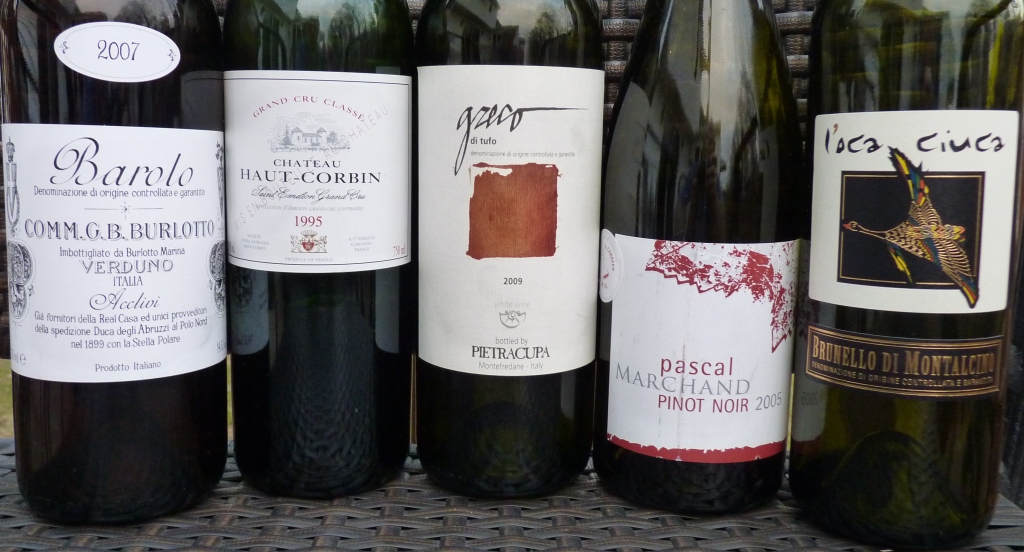
Here is an actual list: 2007 Comm. G. B. Burlotto Barolo Verduno; 1995, Chateau Haut-Corbin Saint-Emillion Grand Cru; 2009 Petracupa Greco di Tufo; 2005 Pascal Marchand Pinot Noir and L’oca Ciuca Brunello di Montalcino DOCG – now compare that with my guesses above…
In case you are curious – of course, we voted for the favorite – Brunello (#5) was a clear winner, with Greco de Tufo (#3) trailing it closely behind (one point difference).
Where is the case of broken taste expectations? Fruit forward, bright and loaded wine with well-masked tannins and almost non-existing earthiness, bright purple in color – 2007 Barolo? I’m very far from a Barolo expert, but this doesn’t match my expectations of Barolo, albeit well decanted. Even winning Brunello was quite uncharacteristic, lacking earthiness and tartness, the traditional Brunello bite. I can’t comment on Greco do Tufo (it was actually quite nice), and the only varietally correct wine was 1995 Bordeaux. Am I making too big of a deal from varietal correctness and taste expectations here? It depends. On their own, both Barolo and Brunello were good wines, but if I would order either one in the restaurant with the goal of pairing it with food, that could’ve been quite disappointing…
Okay, I can’t leave you with this sad impression of disappointment – it was not that bad at all. Also, we had a great cast of supporting wines, even with some pleasant surprises.

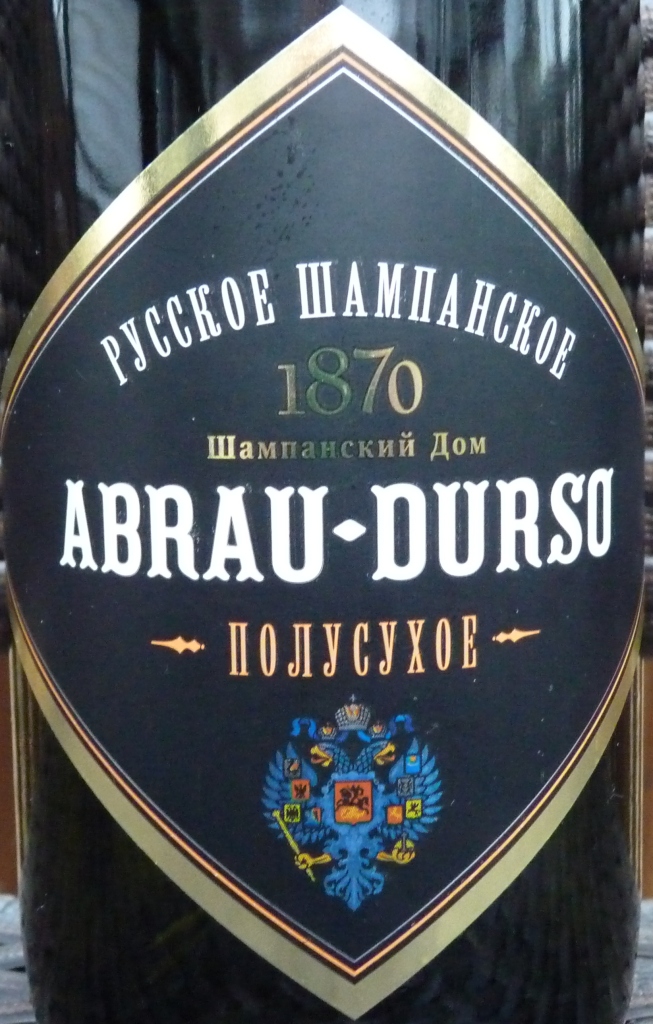
First, two sparkling wines. Chevalier de Grenelle Cuvee Reserve Saumur AOC, a blend of 90% Chenin Blanc with 10% Chardonnay was a very good, full-bodied sparkling wine, with good notes of apple and toasted oak. In addition to good wine, this was also a very special bottle – a magnum with the metal imprinted label. The second sparkling wine was even more unusual – Abrau-Durso Semi-Dry – a sparkling wine from Russia, made by the reincarnated famous producer of sparkling wines for the Russian Tzar (the original company was created in 1870). This wine had just a hint (a whiff) of sweetness, lightly toasted apple and nutmeg on the palate. Very refreshing and delicate. I suggest you will find a bottle and try it for yourself – there is a good chance you might like it.
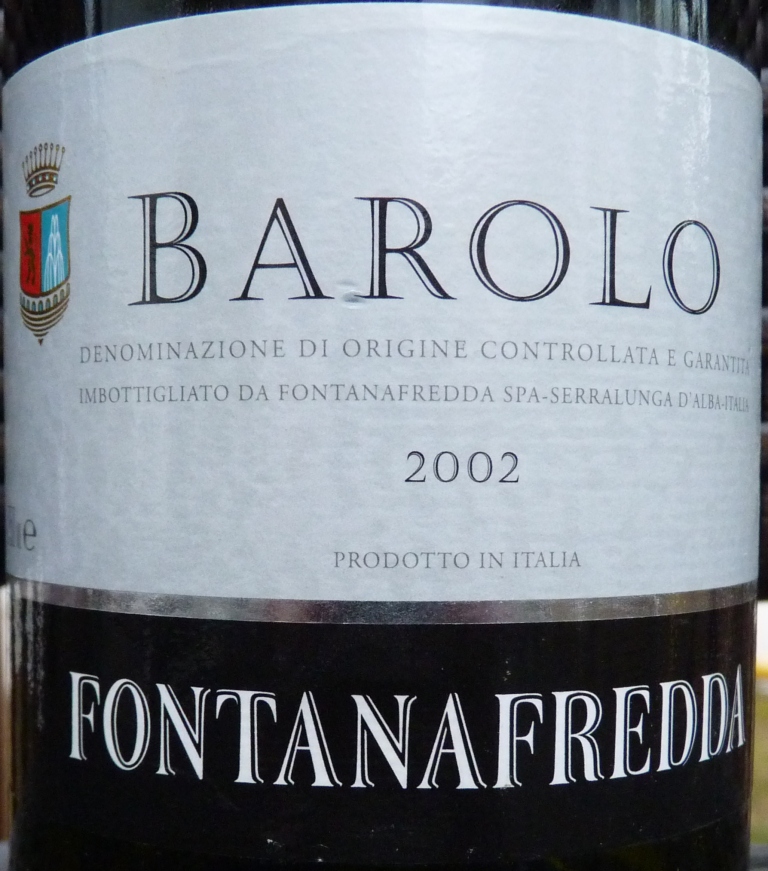 And for the last surprise – 2002 Fontanafredda Barolo DOCG. Why surprising? If you will look at the Wine Spectator’s Vintage Chart, you will see that 2002 was regarded as a very bad year for Barolo, with a rating of 72 and recommendation of wines being past prime. I decanted this bottle at some time in the late morning, and by the early evening, when we actually drank it, it opened up very nicely – while it was lacking powerful tannins, otherwise, it was quite enjoyable wine, very balanced with quite a bit of finesse.
Play with your wine, get friends together and do the blind tasting – I guarantee you will learn something new about your palate, your wine preferences, and maybe even your friends!
Cheers!
Last Bottle Sign Up ($10 credit)





