Archive
Wednesday’s Meritage – Wine Quiz Answer, Fake Wine Again? Noooo, US is #1!, Douro Greatness

Krug Grand Cuvee Brut
Meritage time!
Let’s start with the answer to the wine quiz #102, Grape Trivia – Blends, Part 6.
For the long time, the grape trivia series was focused on the single grapes. But now we are stirring things up, so all the questions in the quiz are about blends (well, even if it is a blend of one ), as most of the wines in the world are actually blends. This time, the focus of the quiz was on bubbles. As usual, there were 5 questions in the quiz.
Here are the questions, now with the answers:
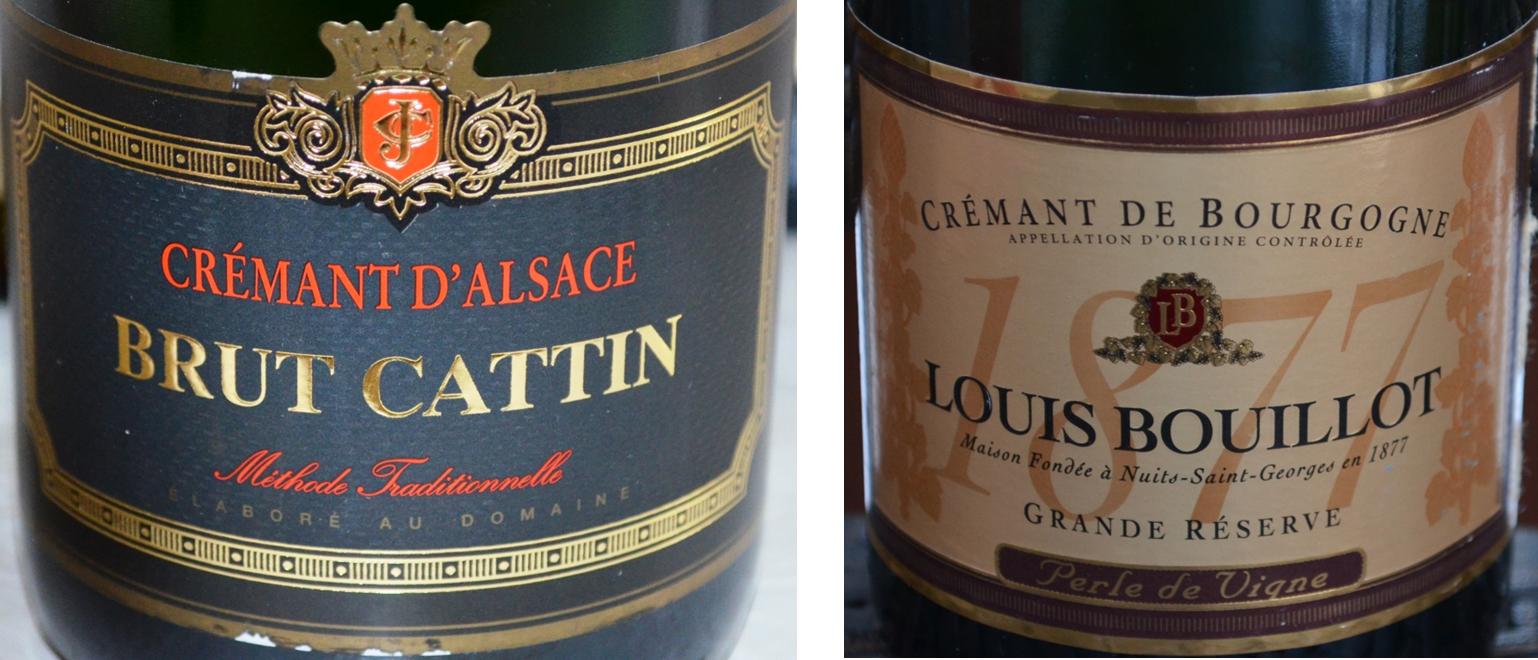
Q1: French sparkling wines produced outside of the Champagne region are generally called Crémant. Today, the Crémant wines are produced in most of the well known regions in France, each region imposing its own requirements on the winemaking techniques. For one of sparkling wines below, if it is identified as Crémant Blanc, it is required for at least 50% of the grapes to be Chardonnay. Do you know which wine has this requirement?
a. Crémant d’Alsace, b. Crémant de Bordeaux, c. Crémant de Bourgogne, d. Crémant du Jura
A1: d, Crémant du Jura – According to Crémant du Jura AOC requirements, Crémant du Jura Blanc should be made with the minimum of 50% Chardonnay grapes.
Q2: Among other reasons, complexity of sparkling wines comes from the extended time the fermented juice have to stay in contact with the yeast (it is also called aging on the lees). Sort the list of the sparkling wines below based on the minimum time required for the non-vintage wine to be aged on the lees, from the longest to the shortest:
a. Cava, b. Champagne, c. Franciacorta, d. Trento
A2: The right sequence is Franciacorta (18 month), Champagne and Trento (both 15 month), Cava (9 month)
Q3: Dom Pérignon, a benedictine monk, largely considered to be the father of Champagne, had a very significant impact on creation the Champagne as we know it. From the list below, what do you think was Dom Pérignon’s major claim to fame?
a. He created the Champagne bottle, b. He discovered the Méthode Champenoise, c. He created the riddling table, d. He mastered the art of blending to improve the taste of the resulting wine
A3: Most of the stuff surrounding Dom Pérignon is made for legends, but there is some level of consensus that he was the first person to perfect the art of blending, so the correct answer is d.
Q4: Below is the blend composition of the sparkling wine – can you name it?
Chardonnay, Chenin Blanc, Mauzac
A4: Blanquette de Limoux in Languedoc is using all three grapes. Technically, it can be also a Crémant de Limoux – again, I should’ve phrased the question better to avoid a possible double-answer. Still learning.
Q5: As tomorrow is the Mother’s Day in US, here is probably an open ended and debatable question, but: Who would you call the Mother of Champagne and why?
A5: As I said, this can be debatable, but my choice would be Barbe-Nicole Clicquot Ponsardin, also known as Madame Clicquot, who pioneered drier Champagne style and invented the riddling table, thus enabling commercial production of Champagne.
When it comes to the results, we had excellent participation and we have the winners! Gene Castellino (no web site), Jennifer Lewis (no web site) and Jeff the drunken cyclist all answered 5 questions correctly and thus they are the winners of this wine quiz round and get the prize of unlimited bragging rights! All of them also provided excellent, very detailed answers – very well done!
Now, to the interesting stuff around the vine and the web!
It is truly mind boggling to see the level of wine fraud increasing together with the popularity of the wine in the world. Dr. Vino has a number of latest and greatest updates to support this “mind-boggliness”. First of all, you can learn that Kurniawan’s lawyers are trying to appeal his “guilty” verdict based on the facts that he loved wine and his victims were rich! I can’t even comment any further here, the level of absurdity is more than I can tolerate. Then Dr. Vino brings up the article in Decanter magazine, where you can find out about fake Bordeaux being made on the offshore boats in China. Lastly, another very recent development involves The White Club, an exclusive $25K membership outfit centered around luxurious and … fake wine! Again, for all the mind-boggling details, here is your link.
United States in #1 wine consuming country in the world! There is a good chance that you already read this, as this urgent news update is coming through all the wine-related news outlets, but in any case, according to just published data for 2013, United States is now the #1 wine consuming country in the world, by total volume (not per capita). It is also interesting that consumption in US increased, while the wine consumption in the world was down 1.7% in 2013. I will let you read all the detailed numbers on your own – here is an article from Jancis Robinson web site, and here is the one from Wine Spectator.
While everybody know Portugal as The Port Producer in the world, I think Portugal is actually the rising star in the world of the regular, non-fortified wine. I’m glad to see that I’m not alone, as Matt Kramer, probably my favorite wine writer, shared his excitement about Douro wines in his feature column in Wine Spectator. I wouldn’t help anyone by trying to recite what Matt Ktramer wrote about the Douro wines, so I would highly recommend you will read his article on your own – it is definitely worth your time. But I would gladly accept any comments you might be willing to share on the subject – please don’t be shy.
And we are done here. The glass is empty – but the refill is on its way! Cheers!
Weekly Wine Quiz #102: Grape Trivia – Blends, Part 6
 The Wine Quiz series is not meant to intimidate. The whole idea here is to have fun and learn something new. When answering the questions, it is fully encouraged to use all available sources of information, including Google or any other search engine. There are no embarrassing answers – the most embarrassing thing is not giving it a try…
Welcome to the weekend and your new wine quiz!
We are continuing our grape trivia series, focusing on the blends, even if it is a blend of 1. White, Red, Rosé, Sparkling, Still, Fortified and Dessert – all goes. Oh yes, and we will blend in some regions and even wineries as well, just to make it more fun.
Absolute majority of the wines are the blends of some sort, but there is one wine which to me is a complete standout in terms of the art of blending – I’m talking about Champagne. A typical bottle of the so called Non-Vintage Champagne is a blend of different wines from different vintages, all magically concocted together to achieve the consistent taste. As a special tribute to Champagne, I would like to focus today’s quiz only on the sparkling wines, which nowadays are produced absolutely everywhere.
And now, to the quiz!
Q1: French sparkling wines produced outside of the Champagne region are generally called Crémant. Today, the Crémant wines are produced in most of the well known regions in France, each region imposing its own requirements on the winemaking techniques. For one of sparkling wines below, if it is identified as Crémant Blanc, it is required for at least 50% of the grapes to be Chardonnay. Do you know which wine has this requirement?
a. Crémant d’Alsace
b. Crémant de Bordeaux
c. Crémant de Bourgogne
d. Crémant du Jura
Q2: Among other reasons, complexity of sparkling wines comes from the extended time the fermented juice have to stay in contact with the yeast (it is also called aging on the lees). Sort the list of the sparkling wines below based on the minimum time required for the non-vintage wine to be aged on the lees, from the longest to the shortest:
a. Cava
b. Champagne
c. Franciacorta
d. Trento
Q3: Dom Pérignon, a benedictine monk, largely considered to be the father of Champagne, had a very significant impact on creation the Champagne as we know it. From the list below, what do you think was Dom Pérignon’s major claim to fame?
a. He created the Champagne bottle
b. He discovered the Méthode Champenoise
c. He created the riddling table
d. He mastered the art of blending to improve the taste of the resulting wine
Q4: Below is the blend composition of the sparkling wine – can you name it?
Chardonnay, Chenin Blanc, Mauzac
Q5: As tomorrow is the Mother’s Day in US, here is probably an open ended and debatable question, but: Who would you call the Mother of Champagne and why?
Good luck, enjoy the quiz and your weekend! Cheers!
Wednesday’s Meritage – Wine Quiz Answer, WTSO Cheapskate Marathon, #MWWC9 Vote, Algeria Wine and French AOC
 Meritage time!
Let’s start with the answer to the wine quiz #101, Grape Trivia – Blends, Part 5.
For the long time, the grape trivia series was focused on the single grapes. But now we are stirring things up, so all the questions in the quiz are about blends (well, even if it is a blend of one ), as most of the wines in the world are actually blends. As usual, there were 5 questions in the quiz.
Here are the questions, now with the answers:
Q1: White wines of this region are considered to be some of the best white wines in the world, and they are made out of the blend of Marsanne and Roussanne grapes. Do you know what region is that?
A1: Hermitage. A region in Northern Rhone, which produces magnificent, long living white wines from Marsanne and Roussanne grapes.
Q2: These wines, made out of primarily Grenache and Cinsault, sometimes with the addition of Syrah and Mourvedre, can be only made as Rosé. Can you name these wines?
A2: Tavel. Of course when thinking about classic Rosé, Provence probably comes to mind first. But Provence allows production of not only Rosé, but also of both white and red wines. Tavel, on the other hand, while much lesser known to the majority of the wine-consuming public, is one of the oldest AOCs and solely dedicated to the production of only Rosé wines (no other wines are allowed).
Q3: Can you continue this sequence? Explain your answer:
Amarone, Vin de Paille, Vin Santo, ?
A3: This was somewhat of a difficult question. The point of the matter is that all the wines mentioned are made out of grapes which are dried out after the harvest, for at least 3-4 month. So the next wine which can be added here is Valtellina Sfursat, which is a dry wine from Norther Italy, made out of Nebbiolo grape which is dried out before pressing for at least 3-4 month.
Q4: This famous Spanish wine is always made out of the Monastrell and Cabernet Sauvignon grapes. The primary wine typically has 70% Cabernet Sauvignon and 30% Monastrell, and the second label has the blend proportions reversed. Can you name both wines?
A4: El Nido and Clio. El Nido ifs the flagship wine of Bodegas El Nido in Jumilla, which is traditionally made with 70% Cabernet Sauvignon and 30% Monastrell. The second wine from Bodegas El Nido, Clio, is made out of 70% Monastrell and 30% Cabernet Sauvignon.
Q5: What is common between Château d’Yquem and Vega-Sicilia, outside of the fact that both make some of the world’s most famous wines?
A5: Both wineries only produce their flagship wines (Chateau d’Yquem and Vega-Sicilia Unico) in the best years – both have a number of years when the top wines were simply not produced.
When it comes to the results, the participation was a bit less than a few last times. Nobody was able all five questions correctly, so we don’t have a winner. Oh well, there is always the next time…
Now, to the interesting stuff around the vine and the web!
Only a few weeks ago, WTSO glued thousands of people to their computer screens for the day with the Magnum Marathon activities. And now they are doing it again. Tuesday, May 13th, starting at 6 AM Eastern, new wines will be offered at the $7.99 to $18.99 range, every 15 minutes or sooner if the previous wine will sold out. All the new wines will be announced only on Twitter. Free some space in your cellar and make sure your credit card has some spending room too. Happy [value wine] Hunting!
The Monthly Wine Writing Challenge #9 has concluded, and now it is the time to vote. The theme of the challenge was “Fear”, so you can find 25 fearless entries at this link. Once you done reading them, you can vote here. The voting is open from now until Monday, May 12th. The winner will be announced on May 13th.
Ever had or even heard of Algerian wine? Me too. But it turns out that only 50 years ago, Algeria was the … number one exporter of the wine in the world! Just to give you an idea for how well they were doing, Algeria was exporting twice (!) as much as France, Italy and Spain combined! While this was quite unexpected to me, it was still not the most interesting fact related to the Algerian wine industry. What is even more fascinating in my mind, that the French AOC system was largely created to protect the wine consumers in France and around the world from the flood of French-associated wine, which was actually not made in France. I don’t want to recite the whole article, so here are the sources for you where you can learn more. The original article appeared in the Journal of Wine Economics, and then W. Blake Gray provided an excellent “Cliff notes” narration for the same where you can learn all the basic facts – both definitely worth your time.
And we are done here. The glass is empty – but the refill is on its way! Cheers!
Weekly Wine Quiz #101: Grape Trivia – Blends, Part 5
 The Wine Quiz series is not meant to intimidate. The whole idea here is to have fun and learn something new. When answering the questions, it is fully encouraged to use all available sources of information, including Google or any other search engine. There are no embarrassing answers – the most embarrassing thing is not giving it a try…
Welcome to the weekend and your new wine quiz!
We are continuing our grape trivia series, focusing on the blends, even if it is a blend of 1. White, Red, Rosé, Sparkling, Still, Fortified and Dessert – all goes. Oh yes, and we will blend in some regions and even wineries as well, just to make it more fun.
And now, to the quiz!
Q1: White wines of this region are considered to be some of the best white wines in the world, and they are made out of the blend of Marsanne and Roussanne grapes. Do you know what region is that?
Q2: These wines, made out of primarily Grenache and Cinsault, sometimes with the addition of Syrah and Mourvedre, can be only made as Rosé. Can you name these wines?
Q3: Can you continue this sequence? Explain your answer:
Amarone, Vin de Paille, Vin Santo, ?
Q4: This famous Spanish wine is always made out of the Monastrell and Cabernet Sauvignon grapes. The primary wine typically has 70% Cabernet Sauvignon and 30% Monastrell, and the second label has the blend proportions reversed. Can you name both wines?
Q5: What is common between Château d’Yquem and Vega-Sicilia, outside of the fact that both make some of the world’s most famous wines?
Good luck, enjoy the quiz and your weekend! Cheers!
Wednesday’s Meritage – Wine Quiz Answer, Wine Blog Awards!, 2013 Bordeaux and Rioja, #winechat tonight
Meritage time!
Let’s start with the answer to the wine quiz #100, Grape Trivia – Blends, Part 4.
For the long time, the grape trivia series was focused on the single grapes. But now we are stirring things up, so all the questions in the quiz are about blends (well, even if it is a blend of one ), as most of the wines in the world are actually blends. As usual, there were 5 questions in the quiz.
Here are the questions, now with the answers:
Q1: True or False: Even if the bottle of wine states the vintage and is made out of 100% of the same grape, there is a very good chance that the wine is still a blend. Explain your answer.
A1: True. Now, this proved to be a very difficult question. Not the “true or false” part of it, of course – but practically nobody (with one exception) managed to provide a satisfactory explanation as to why even if the wine is made out of 100% of the same grape, it is very likely to be still a blend. If wine technical data says that it is made from 100% of Chardonnay, for example, there is no way that any other grapes where blended in. However, have you seen the words “30% malolactic fermentation” or “aged in 15% new French oak barrels”? For the most part, the wine you get in the bottle is the blend – the blend of wines from the different barrels, the blend of wines fermented with different yeasts, or somehow else differently processed. Also (as it was correctly noted in one of the answers), the wine can be made from exact same grape, but be a blend of different vintages (up to 15% allowed in US wines).
Q2: This white grape is known to produce beautiful, delicately perfumed wines. In some appellations in France, it is also the only white grape allowed to be blended into the red wines. Do you know what grape it is?
A2: Viognier. While it makes great wines on its own, it can be blended with Syrah in Northern Rhone or Shiraz in Australia to change the bouquet of the resulting wine.
Q3: What is common between Cabernet Franc, Riesling and Vidal?
A3: All three varietals are used to produce Icewine in Canada.
Q4: Which one is missing?
Rondinella, Corvina, Molinara, ?, Croatina, Negrara, Oseletta
A4: My intended answer was Corvinone, as the grapes listed above are all used in production of Amarone wines. However, I learned quite a bit myself from the answers, and I understand that in Amarone, similar to all other regions in the world, there is an effort to bring back to life many indigenous varieties, thus Forsellina, Pelara and Rossignola would be also all correct answers.
Q5: I’m drinking a delicious French white dry wine, made out of Clairette and Roussane. What AOC designation this wine most likely has?
A5: Châteauneuf-du-Pape. Some of the best white wines in Châteauneuf-du-Pape are made exactly out of the combination of these two grapes. It is possible that such wine would be produced in just a Côtes du Rhône appellation, however, it would be rather expected to see Marsanne as part of the blend, which is a lot easier to produce than Roussanne. However, Marsanne is not allowed in the Châteauneuf-du-Pape wines.
When it comes to the results, I’m very happy with participation in the quiz. However, there was only one full answer for the question #1, which is proven to be most difficult. Thus we don’t have the grand winner(s) this time around, but I would like to definitely acknowledge Gene Castellino (no web site), Julian of vinoinlove and Jennifer (no web site) who all correctly answered 4 questions out of 5. I also would like to acknowledge Steve of Caspernick blog, who provided a good explanation for the question #1. Thank you all for playing, well done!
Now, to the interesting stuff around the vine and the web!
Once again it is the time for Wine Blog Award nominations! This is an 8th annual Blog Awards round, where the best wine blogs are getting their peer recognition. There are 9 different categories for the Wine Blog Awards, so there are plenty of opportunities to get your favorite blogs acknowledged. Here is your link for the Blog Award nominations. And if you like what you read in this blog, I would greatly appreciate your nominations! Note – there are less than 3 days left – nominations are closed on May 2nd, so hurry!
Looks like 2013 vintage didn’t fair too well in some parts of the Europe. Here is an article for you, explaining why 2013 Bordeaux are better be avoided (in a few simple words, it is all about price/performance). Also, 2013 Rioja doesn’t seem to be the vintage to really look forward to – it was rated as “Good” by the Rioja DOC counsel, which is behind “very good” and “excellent” ratings which were given to most of the recent vintages. Of course the things can be worse – there are possible “satisfactory” and “average” ratings, which are even lower than “good”, but those are assigned very rarely. Well, as usual in the average vintages, you need to look for the better producers – as an example, La Rioja Alta Vina Alberdi from 2003 vintage (also rated “good”), was an outstanding wine. Here is the link for the Decanter article where you can read more on the subject of 2013 Rioja.
Last, but not least – new #winechat tonight! This time the subject is the Rhone and Zins of Cline Cellars. I think everybody know Cline Cellars from California as a Zinfandel producer, but looks like we are in for some interesting surprises tonight (Mourvedre, anyone? Marsanne/Roussanne?). To join the #winechat, just click this link at 9 PM Eastern time/ 6 PM Pacific, and you are in! For more information about past and future #winechat events, please use this link for the #winechat FaceBook page. Talk to you tonight!
And we are done here. The glass is empty – but the refill is on its way! Cheers!
Weekly Wine Quiz #100: Grape Trivia – Blends, Part 4
The Wine Quiz series is not meant to intimidate. The whole idea here is to have fun and learn something new. When answering the questions, it is fully encouraged to use all available sources of information, including Google or any other search engine. There are no embarrassing answers – the most embarrassing thing is not giving it a try…
Welcome to the weekend and your new wine quiz!
We are continuing our grape trivia series, focusing on the blends, even if it is a blend of 1. White, Red, Rosé, Sparkling, Still, Fortified and Dessert – all goes. Oh yes, and we will blend in some regions as well.
And now, to the quiz!
Q1: True or False: Even if the bottle of wine states the vintage and is made out of 100% of the same grape, there is a very good chance that the wine is still a blend. Explain your answer.
Q2: This white grape is known to produce beautiful, delicately perfumed wines. In some appellations in France, it is also the only white grape allowed to be blended into the red wines. Do you know what grape it is?
Q3: Whats is common between Cabernet Franc, Riesling and Vidal?
Q4: Which one is missing?
Rondinella, Corvina, Molinara, ?, Croatina, Negrara, Oseletta
Q5: I’m drinking a delicious French white dry wine, made out of Clairette and Roussane. What AOC designation this wine most likely has?
Good luck, enjoy the quiz and your weekend! Cheers!
Wednesday’s Meritage – Wine Quiz Answer, Wine and Biodynamics, Rioja Week in New York, Water Witching and #winechat tonight
 Meritage time!
Let’s start with the answer to the wine quiz #99, Grape Trivia – Blends, Part 3.
For the long time, the grape trivia series was focused on the single grapes. But now we are stirring things up, so all the questions in the quiz are about blends (well, even if it is a blend of one), as most of the wines in the world are actually blends. As usual, there were 5 questions in the quiz.
Here are the questions, now with the answers:
Q1: Sangiovese is the main grape used in production of Chianti. By itself, sometimes it might lack the intensity of the color. For a while, another grape was added to Sangiovese wines specifically to enhance their color. Can you name that grape?
A1: Colorino. It was popular addition for a short while, but now only very few producers still add it.
Q2: I’m blending together Xarel-lo, Macabeo and Parellada. Which wine I’m most likely making?
A2: Cava – the Spanish sparkling wine. These three grapes are generally a classic blend for a Spanish Cava.
Q3: In the past, this white grape used to be blended into the Chianti wines, and now its use is simply prohibited in some of those Chianti wines. Can you name that grape?
A3: Trebbiano, a.k.a. Ugni Blanc, a.k.a. Malvasia Fina (be careful – just using the name Malvasia is incorrect). It used to be a required grape in the Chianti blend, which was leading to diluted, dull wines. Since 2006, Trebbiano use is banned in Chianti Classico wines.
Q4: You can say whatever you want, but Bordeaux and Burgundy are the hallmarks of wine world, and everybody try to measure up to them. Name two regions in Italy, one sometimes compared to Bordeaux, and another one to Burgundy.
A4: Tuscany is often compared to Bordeaux, and Piedmont, or to be more specific, Barolo wines, are often compared to the Burgundy. While Tuscany/Bordeaux parallel is more of the terroir/climate based, the reason for Barolo/Burgundy comparison lies in complicated Vineyard/Sub-zone/Cru/Parcel system of wine identification in Barolo.
Q5: Name the missing grape: Crljenak Kaštelanski, Primitivo, ?, Zinfandel
A5: Tribidrag. All the listed grapes are close relatives of Zinfandel, with Tribidrag being recently discovered as direct predecessor of Zinfandel.
When it comes to the results, we had a great participation in the quiz, and we have a winner – Julian of VinoinLove, who correctly answered all 5 questions! Julian get the coveted prize of unlimited bragging rights. Also (no web site), Jeff a.k.a.the drunken cyclist and Mario Plazio (no web site) are all answered correctly 4 questions out of 5, and they get the honorable mention. Well done, everyone – and we are going to continue blending things up for a while.
Now, to the interesting stuff around the vine and the web!
Last week’s #winechat was all about Biodynamics – we were talking about the wines of Youngberg Hill, the winery in Oregon, were the wines are made using biodynamics. I understand that there is a lot of controversy surrounding the concept of Biodynamics, with all the cow horns, bladders and water manipulations – but a lot of it makes sense if you think about the whole approach holistically. I want to share with you a great article from The Oregonian, which explains in detail how biodynamics works in the vineyard.
Rioja is coming to New York City! Starting Saturday, April 26, there will be a whole slew of events taking place all over the city – seminars, tastings, grand tasting, wine and tapas event and more. Don’t miss the opportunity to experience the vibrancy of the magical Rioja – here is your link for all the information regarding the Rioja festivities. I will be attending the trade tasting and seminar on Thursday – drop me a note if you plan to be there as well.
Heard of water witching? It appears that Marc Mondavi, a son of the legendary winemaker Peter Mondavi, not only makes wine in California – he also possesses special abilities to find water under ground, using set of two special rods. Whether you believe in the water witchery or not, this video and the blog post are quite interesting.
Last but least for today – don’t miss the #winechat tonight! Last from the Oregon Pinot Noir series, tonight we will be talking about the wines of J Wrigley Vineyard – #winechat is easy to join on twitter, just follow the #winechat hashtag, and they are always fun! 9 PM Easter/ 6 PM Pacific – don’t miss it!
And we are done here. The glass is empty – but the refill is on its way! Cheers!
Weekly Wine Quiz #99: Grape Trivia – Blends, Part 3
The Wine Quiz series is not meant to intimidate. The whole idea here is to have fun and learn something new. When answering the questions, it is fully encouraged to use all available sources of information, including Google or any other search engine. There are no embarrassing answers – the most embarrassing thing is not giving it a try…
Welcome to the weekend and your new wine quiz!
We are continuing our grape trivia series, focusing on the blends, even if it is a blend of 1. White, Red, Rosé, Sparkling, Still, Fortified and Dessert – all goes. Oh yes, and we will blend in some regions as well.
And now, to the quiz!
Q1: Sangiovese is the main grape used in production of Chianti. By itself, sometimes it might lack the intensity of the color. For a while, another grape was added to Sangiovese wines specifically to enhance their color. Can you name that grape?
Q2: I’m blending together Xarel-lo, Macabeo and Parellada. Which wine I’m most likely making?
Q3: In the past, this white grape used to be blended into the Chianti wines, and now its use is simply prohibited in some of those Chianti wines. Can you name that grape?
Q4: You can say whatever you want, but Bordeaux and Burgundy are the hallmarks of wine world, and everybody try to measure up to them. Name two regions in Italy, one sometimes compared to Bordeaux, and another one to Burgundy.
Q5: Name the missing grape: Crljenak Kaštelanski, Primitivo, ?, Zinfandel
Good luck, enjoy the quiz and your weekend! Cheers!
Wednesday’s Meritage – Wine Quiz Answer, WTSO Magnum Marathon, #MalbecWorldDay, Can Wine Critic be Objective?, Pinot Noir #winechat
Meritage time!
Let’s start with the answer to the wine quiz #98, Grape Trivia – Blends, Part 2.
For the long time, the grape trivia series was focused on the single grapes. But now we are stirring things up, so all the questions in the quiz are about blends (well, even if it is a blend of one ), as most of the wines in the world are actually blends. As usual, there were 5 questions in the quiz.
Here are the questions, now with the answers:
Q1: This grape was created as a cross between Cinsaut and Pinot Noir. Can you name the grape?
A1: Pinotage, the famous grape of South Africa
Q2: Take a look at this list of the grapes: Chardonnay, Pinot Noir, ?, Arbane, Petit Meslier, Pinot Blanc, Pinot Gris. Two questions:
a. Name the missing grape
A2a: Pinot Meunier. Listed above are the names of all grapes allowed to be used in the Champagne region in France, so the missing grape is Pinot Meunier
b. What wine is made most often by blending some of these grapes?
A2b: Champagne!
Q3: Which grape is missing?
– Tempranillo, Garnacha, ?, Graciano
A3: Mazuelo. This is the list of the grapes typically blended in production of the Rioja wines.
Q4: This dry red wine from California is related to famous Caymus, and made out of the unknown, secret blend of grapes. Can you name this wine?
A4: Conundrum. The famous Caymus wines are made by Wagner family in California. The same Wagner family produces the wine called Conundrum, both white and red, where the exact composition of the blend of grapes is kept secret.
Q5: Carménère to Merlot is the same as Douce Noir to ?
A5: Bonarda/Charbono. Carménère grape (originally from Bordeaux), was mistaken for Merlot for the very long time in Chile. Similarly, the popular Argentinian grape Bonarda, which happened to be identical to the Charbono grape in US, was actually the almost forgotten french grape called Douce Noir in Savoie region.
When it comes to the results, I’m glad to report that again there was good participation in the quiz. We also have a winner – Wayward Wine , who correctly answered all 5 questions, and thus gets the coveted prize of unlimited bragging rights. Jeff the drunken cyclist and Suzanne of apuginthekitchen get honorable mention for correctly answering 4 questions out of 5. Well done all!
Now, to the interesting stuff around the vine and the web!
WTSO is on it again- the time has come for the famous Wine Til Sold Out Marathon! Mark April 22nd in your calendar – it will be go big or go home day – WTSO Magnum Marathon. Starting from 7 AM Eastern until midnight, WTSO will be offering wines in the 1.5L or 3L format. Each wine will be available for 30 minutes or until it will be sold out. All new wines will be announced only on Twitter, so make sure you follow @WTSO if you want to get real time notifications about new wines.
Do you like Malbec? There is a good chance you do, as many other people around the world. Just two easy references for you – shipments of Argentinian Malbec to US increased from 1.9 million cases in 2008, to over 4 million in 2013. Argentinian wines are also most popular wines among people of 25-34 years old in UK – for more interesting details on Argentinian Malbec, here is an article for you to read. Why all of a sudden we are talking about Malbec in the news section? Because tomorrow, April 17th, is Malbec World Day! Get the bottle of your favorite Malbec, pour the glass and join the celebration! Oh yes, and don’t forget to tweet about your favorite Malbec using the #MalbecWorldDay hashtag.
With hundreds of thousands of different wines produced around the world every year, we need to have some guidance as to what is new, what might worth our attention, what might not. This is where the wine critics come into a play – to help us navigate that ocean of wine by writing the wine reviews and rating the wines. Here comes an interesting question – can the wine critic be 100% objective, or can her work be influenced by personal preferences? Here is an interesting post on Jamie Goode’s wine blog, which raises this question – be sure to read the post and all the comments, it is quite a lively discussion.
Few more updates regarding the #winechat (if you are not familiar with the concept of #winechat, here is the blog post which will explain it). Last Wednesday, the #winechat was focused on Lenné Estate Pinot Noir from Yamhill-Carlton AVA in Oregon. Continuing the Oregon Pinot Noir theme, the subject of tonight’s #winechat is biodynamics of Youngberg Hill vineyards. The next week’s #winechat subject is wines of J Wrigley Vineyards from Willamette Valley in Oregon. All #winechat take place on twitter on Wednesdays at 6 PM Pacific/9 PM Eastern time. You can always participate using the #winechat hashtag. Join the conversation, it is fun!
And we are done here. The glass is empty – but the refill is on its way! Cheers!
Weekly Wine Quiz #98: Grape Trivia – Blends, Part 2
The Wine Quiz series is not meant to intimidate. The whole idea here is to have fun and learn something new. When answering the questions, it is fully encouraged to use all available sources of information, including Google or any other search engine. There are no embarrassing answers – the most embarrassing thing is not giving it a try…
Welcome to the weekend and your new wine quiz!
We are continuing our grape trivia series, with the focus now on Blends. All the questions below are focused on the grapes which work well in the blends – and occasionally on those which do not. White, Red, Rosé, Sparkling and not, dry, sweet and may be even fortified – all goes.
Let’s proceed!
Q1: This grape was created as a cross between Cinsaut and Pinot Noir. Can you name the grape?
Q2: Take a look at this list of the grapes: Chardonnay, Pinot Noir, ?, Arbane, Petit Meslier, Pinot Blanc, Pinot Gris. Two questions:
a. Name the missing grape
b. What wine is made most often by blending some of these grapes?
Q3: Which grape is missing?
– Tempranillo, Garnacha, ?, Graciano
Q4: This dry red wine from California is related to famous Caymus, and made out of the unknown, secret blend of grapes. Can you name this wine?
Q5: Carménère to Merlot is the same as Douce Noir to ?
Good luck, enjoy the quiz and your weekend! Cheers!
Last Bottle Sign Up ($10 credit)




 Talk-A-Vino