Archive
500!
 Here we are – another post about stats, right??? Before you click away, can I ask for a minute to explain myself? 500 has nothing to do with views, followers or any other blog statistics, no, not at all. These 500 has a bit more interesting meaning (dare I suggest so). It is actually not even 500 but 517 to be precise (but I think 500 looks cool in the title), and if you didn’t guessed it yet, I’m talking about the grape counter which appears in the right column of this blog, and it is also related to The Wine Century Club.
This post is well overdue – I submitted my Pentavini application back in March (didn’t hear anything yet). I was planning to write a few more posts explaining in greater detail how I finally got to cross the 500 grapes boundary before I would write this very post. One post was supposed to be about a great Hungarian wine tasting last June (2014) where I picked up 5 new grapes – that post never happened, unfortunately.
Finally I gave up on trying to catch up on all the “shoulda, coulda”, and moved right to this post.
When I started the Wine Century Club journey about 8 years ago, I couldn’t even imagine that I will get hooked on it so well; even when I crossed 300 grapes mark, I didn’t see it possible to get to the 500. Nevertheless, here I am, at 517, and I’m sure there will be more.
I know that many of my readers are participating in The Wine Century Club. For those of you who are not familiar with the concept, you can find all information here. The Wine Century Club is a free and open “self-guiding” group of “grape enthusiasts” (yes, you call us geeks) – people who obsess themselves with looking for and tasting as many grapes as possible – and of course having fun while doing that.
The grape hunting becomes an obsession when you scour the back label, producer web site and everything else possible on Internet to find information about the grapes used to make that bottle of wine. Once you figure out the grapes (if you are lucky enough to do it for the given wine and given vintage), your job is not done – you still have to figure out if you didn’t have already the same grape under a different name (simple example – Grenache and Garnacha), or may be this is still the same grape, only with a slightly different spelling. Once all the checks pass successfully, you can add the grape to you collection.
Today it is a lot easier to “collect the grapes”, compare to the time when I just started with the Century Club. Information is more readily available, and also there are lots more grapes which were almost extinct, but now reborn, replanted and becoming tasty differentiators for the winemakers. And more often than not, these obscure wines are a pleasure to drink. They often offer surprising depth of flavor and nuances which make this grape journey really a pleasant experience. I had wines made from Pigato, Pugnitello, Coda di Volpe, Bobal, Trepat, Listan Negro and many others, and they were delicious – what else do you need from a bottle of wine?
If you will get hooked on this Wine Century geekiness, you should know that there are some shortcuts you can take. Well, there is one shortcut which is legal – Giribaldi Cento Uve wine from Piedmont in Italy, which is made out of 152 varietals (though 50% of grapes in that wine are Nebbiolo, and the other 51% comprise 151 varietals) – however, you need to have at least the first level (100 grapes) to make this shortcut legal. I did took it, and you can read about it here.
Second shortcut exists, but it is illegal (The Wine Century Club rules prohibit using of it). Another Italian wine, Vino Della Pace Cantina Produttori Cormòns Vino Blanco, is made out of the whopping 855 varietals. This wine is produced from the experimental vineyard called The Vineyard of the World, where all those 855 (or more) varietals are growing together. Most of the information about this wine is available only in Italian, but if interested, search for it by the name, you will be able to find some bits and pieces (here is one reference for you). If you are curious to see the list of grapes, I got it for you here – you can count on your own. I have a bottle of this wine, but as usual, I don’t know what would be the right moment to open it (hopeless, I know).


Last piece of advice in case you will embrace this fun journey or you are already in, but stumbling: pay attention. Yes, pay attention to the back labels and wine descriptions. During recent Provence tasting I found out that there is a grape called Tibouren which is very often used in Provence Rosé – I would guess that I had it before, but never paid attention to. Another example – Turley Petite Sirah Library Vineyard. This particular wine is a treasure trove for the grape hunters. Here are the grapes which can be found in that bottle: Red – Petite Syrah, Peloursin, Cinsault, Syrah, Mission, Alicante Bouschet, Grand Noir, Carignan, Grenache, and Zinfandel; White – Muscat Alexandria, Muscadelle, Burger, and Green Hungarian. 14 different grapes in one bottle of wine, and many of them are very rare – not bad for a bottle of wine. And by the way, Turley Petite Sirah Library Vineyard is one delicious wine.
In case you might find it helpful, I recently updated the page which contains information about all the grapes I tried for The Wine Century journey, together with the names of the wines which I had. I have to admit that there are still 3 grapes from the original table (the one which I downloaded when I just started with the Wine Century Club) which I still was unable to try – Arvine Grosso, Irsai Oliver and Plavac Mali – they are extremely hard to find in the US. Well, the journey is not over…
What can I leave you with? Go get a bottle of wine made from the grapes which you never had before – there is a good chance you will enjoy it. The grape journey is one of the most fun journeys you can take – let’s drink to the never ending pleasures of discovery! Cheers!
Rare and Beautiful
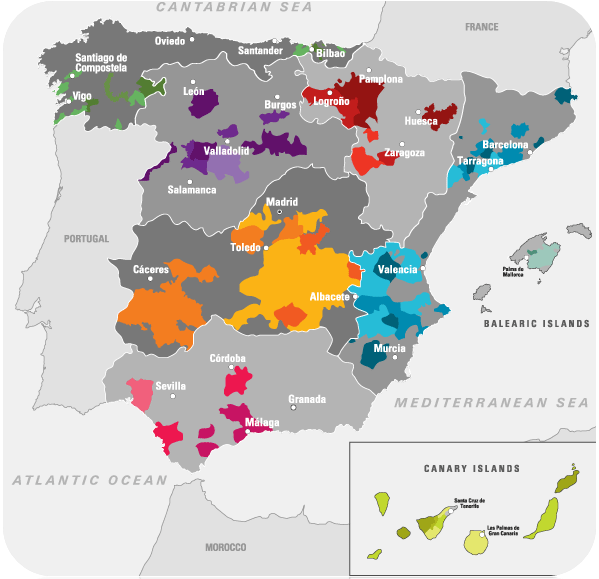 If you read this blog even on a semi-regular basis, you probably noticed that I’m a sucker for the obscure grapes. So let me just proclaim it in the simple and direct way – I love rare grapes. The more obscure, the lesser known the grape, the better it is.
What I like about rare grapes is a complete mystery in the glass. As the grape is unknown, nothing gets in the way of perceiving it exactly for what and how it is. The closest thing to this experience is a blind tasting, but even then you have some knowledge for what you might be tasting, so instead of been focused on just what is in the glass in front of you, your brain is also trying to place it into some potential brackets, fit it into something familiar – but not in case of the unknown and rare grape. Tasting the unknown grape is an open book without any restrictions – you can write there whatever you want.
In addition to the mystery element, I have to say that most of of my “rare grape” encounters so far were quite pleasant. Of course there were some wines I didn’t care for, but still, the majority were interesting and thought provoking. If anything, my only gripe with the rare grapes is that the respective wines are equally rare – the production is usually very small, and even smaller quantities are imported (for sure in U.S.), which makes those wines very hard to find.
Now you understand that when I was asked if I would be interested to participate in the virtual tasting of rare Spanish grapes, I enthusiastically said “yes, of course!”. I’m a big fun of the Spanish wines in general, and now the rare grapes? That doubles the fun on the spot!
The wines arrived, and then the day of the tasting. The tasting was done in the virtual format, with Lucas Payà presenting over the ustream TV, and all the bloggers and media asking questions through the social media channels (Twitter, primarily). Lucas Payà is a well known figure in the wine industry – particularly, he worked for 5 years as head sommelier for acclaimed chef Ferran Adrià’s elBulli, and he was definitely a wealth of knowledge on the subject of Spain’s lesser known wine regions and rare grapes. I will not be trying to recite here an hour long presentation – if you have a bit of time, the recording is available here. Instead, I will give you my thoughts and tasting notes on the 8 excellent wines we had an opportunity to taste.
Here we go:


2014 Baron de Ley Rioja White (12% ABV, SRP $10.99, 90% Viura, 10% Malvasia) – out of 123,000 acres of vineyards in Rioja, less than 10% is planted with white grapes (11,000 acres), so it is given that white Rioja wines are rare. This wine was simple and well quaffable.
C: pale straw
N: touch of the candied fruit, white peach, expressive
P: intense fresh white fruit, good acidity, short finish
V: dangerous wine, too easy to drink 7+
2013 A Coroa Godello Valdeorras DO (13.5% ABV, SRP $23, 100% Godello) – Valdeorras region is located in Galicia, and it is a part of so called Green Spain – a territory with wet and cool climate. Godello grape was nearly extinct with only 400 vines remaining in 1980. Today Godello is starting to compete with Albariño in popularity, and it is capable of a great depth of expression.
C: light yellow
N: white stone fruit, touch of vanilla, spices
P: fresh, light white fruit, lemon, grapefruit, clean
V: good, 7/7+, finish is a bit sweet
2013 Raventós i Blanc Silencis Xarel-lo Penedes DO (12% ABV, SRP $21, 100% Xarel-lo) – Penedes region is best known for its sparkling wines, Cava, and Raventós is the oldest producer of Cava. Xarel-lo, difficult to pronounce grape (listen to it here), is one of the main components of Cava, but increasingly it is bottled as a dry still wine, and I would say it is worth seeking.
C: light straw, almost invisible
N: hazelnut, vanilla, touch of tropical fruit
P: creamy, intense, plump, green apple, good acidity, reach
V: 8-
2013 Guímaro Tinto Ribeira Sacra DO (13% ABV, SRP $18, 100% Mencía) – Ribeira Sacra is another region classified as Green Spain (cool and wet), and this is second region focused on the indigenous Spanish grape called Mencía. The first region is Bierzo, where Mencía makes powerful, concentrated reds. Here in Ribeira Sacra, Mencía shows totally different, with the emphasis on fresh, fruity profile.
C: garnet red
N: bright, fresh fruit, gamay-like
P: beautiful! Pepper, dark fruit, touch of smokiness, earthy, bright, delicious
V: 8-
2013 Suertes del Marques 7 Fuentes Valle de la Orotava DO Tenerife (Canary Islands) (13% ABV, $22, blend of Listán Negro, Tintilla) – Canary Islands, and Tenerife in particular, have a lot of unique climatic zones – and unique grapes. The two grapes used in production of this wine – Listán Negro and Tintilla – are the new grapes for me, adding up to the count. The volcanic soil influence is spectacular, and this wine is a treat for any wine geek.
C: ruby red
N: smoke, mushrooms, forest, dark intensity
P: smoke, forest floor, campfire, spice, beautiful
V: 8
2012 Bodegas Margón Pricum Primeur Tierra de León DO (13.5% ABV, SRP $28, 100% Prieto Picudo) – another indigenous grape, Prieto Picudo, coming from the vineyards which are 60 – 100 years old. Truly special wine, definitely worth seeking.
C: dark garnet red
N: slightly vegetative, touch of plums, earthy, unusual, chocolate
P: texture, velvety, silky, good dark fruit, very round
V: 8, excellent
2012 Navaherreros Garnacha de Bernabeleva Viños de Madrid DO (15% ABV, SRP $25, blend of Garnacha, small quantities of Albillo, Macabeo) – Garnacha is definitely not a rare grape in Spain, but here it has yet a different expression compare to Priorat or Borsao. The grapes for this wine come from the 40 – 80 years old vineyards, and the wine itself is a perfect rendition of Garnacha.
C: bright garnet red
N: dark chocolate, fruit, open, nice, touch of blueberries
P: dark chocolate, good acidity, good fruit, clean and excellent
V: 8, excellent
Lustau Palo Cortado Península Jerez (19% ABV, SRP $22, 100% Palomino Fino) – Sherry (Jerez) is grossly under-appreciated wine as a category, which allows wine aficionados to enjoy unique taste without having to spend a fortune.
C: dark golden yellow
N: mint, herbs, caramel, hazelnuts
P: perfectly balanced, touch of salinity and expressive acidity, begging for some aged cheese
V: 8-
There you have it, my friends – a unique experience of the rare grapes and regions, and beautiful wines which I would be happy to drink every day. Are you familiar with any of these wines, grapes or regions? When presented with an opportunity to try the new and unknown grape, would you gladly go for it, or would you ask for Pinot Noir instead? Comment away! Cheers!
Top Highlights From Gambero Rosso Tre Bicchieri 2015
 At this point, you most likely already read a number of reviews from Gambero Rosso 2015 (here are the links for the John and Stefano posts, the two that I know of), so it will be difficult for me to add much there. Considering that lots of hard work is already done by the others, I will take an easy path and this year will limit my post only to the 10 (or so) of the personal highlights. But before we will get to those, a couple of notes.
First of all, just in case you didn’t read the other posts and in case you are not familiar with Tre Bicchieri, let me explain what Tre Bicchieri is all about. In 1986, an Italian food  and wine magazine was created under the name of Gambero Rosso (in translation from Italian it simply means “red shrimp”, and it comes after the name of the tavern in Pinocchio). Starting in 2002, the magazine introduced the rating of the Italian wines using the symbol of glasses (Bicchieri), with 3 glasses (Tre Bicchieri) being the highest rating. This rating proved to be successful and demanded, and since then the Gambero Rosso created a special event, called Tre Bicchieri, to celebrate all those best wine Italy has to offer. Tre Bicchieri events take place around the globe, and the event I attended was in New York (it was the third Tre Bicchieri event I attended in the past 3 years, all in New York).
For the next note, here comes the rant. Yes, Tre Bicchieri is a great event which gives an opportunity to taste some of the best Italian wines. But in terms of the overall organization, this is one of the worst wine tastings I ever attended. I have two major problems with the event. Just so you understand the size of the event – there were 185 producers showing between 1 and 3 wines each, which would roughly equate to 350 wines. First problem is that all the producers were not organized by the region. And they were not organized alphabetically by the producer, oh no, that would be too logical, right? Instead, the tables were arranged in the alphabetical order of the … distributors! So the wine from Tuscany stands next to the wine from Sicily. What makes it even worse is that the numbering of the tables is not straightforward, so the table #142 can be next to the table #50; to make matters even more interesting, some of the distributors who pour the wine, don’t have enough people to cover all the separate tables, so some of the tables had been simply “pulled in” to have #122 to be nested between #42 and #43 – makes it easy to find, eh?
This story was the same for the past 3 years I attended the event – but I still can’t get used to it and still find it very annoying.
The second problem was probably even more annoying, and for all I remember, it is getting worse, year after year. The problem can be expressed with one word (okay, two) – wine glasses. Puzzled? Let me elaborate. When you arrive to the event and show your registration, you get a little piece of paper, which is your coupon for the wine glass (! only at Gambero Rosso!). You come to the counter and exchange your coupon for the glass. All is good so far. Now, you start tasting, which means that white, red and even dessert wines get to be poured into the same glass – after 50 – 60 pours, the glass has traces of wine all over it, inside and outside, and what you can do at the regular wine tasting is to put your glass aside and go get a fresh glass. Makes sense, right? But not at the Tre Bicchieri. They bring best wines of Italy for a special tasting – but they can’t procure enough glasses for the people who would want to get a fresh glass to be able to do so. Believe me – I tried, was almost screamed at. I don’t remember having this problem 2 years ago; I was able to get a clean glass with the organizers intervention last year, but this year – no, was told to go away by the multiple people. Of course I appreciate been invited to the event where you can taste the best Italian wines, yes, for free – but I just think that organizers must make an effort to match the level of the wines with the overall level of the event.
Okay, I vented, so it is the end of the rant. Now let’s talk about the wines.
As you tell from the title, I want to mention here only the highlights. Before we talk about those, a few general notes.
- No, I didn’t taste all 350+ wines. May be someone did, but no, that was not me.
- There were lots and lots of truly spectacular wines, as you would expect at an event like Tre Bicchieri, where only the best wines are presented. But don’t assume that I found all wines to be spectacular. Some were just good, some were just okay, and a few I regarded in my personal notes as “terrible”. Taste is personal, and that’s okay.
- I want to reiterate it again – while there were lots of wines and wineries worth mentioning, I’m purposefully limiting this post only by 10 – they might not be all around the best, but they were the most memorable. Oh yes, these are not the wines – these are rather 10 wineries – yep, guilty as charged.
- As usual in the overwhelming tastings like this, I’m using the “plus” ratings. “+++” should stand for Excellent, but trust me, I had more than a fair share of “++++” spectacular.
Okay, now we are ready – here we go.
I want to start with one of my favorite wines which I was very happy to find at the Tre Bicchieri event – Podere Il Carnasciale Caberlot from Tuscany. This wine is made out of unique, “self-created” but officially recognized grape called Caberlot, which came to being as a cross between Cabernet Sauvignon and Merlot. First time I tasted this wine was 2 years ago, and it was a love at first sight, errr, taste. The wine is produced in minuscule quantities and only made in magnums – and needless to say, very hard to find. We tasted the following wines:
2012 Poderel Il Carnasciale Carnasciale, Tuscany – +++. excellent, old world style
2010 Poderel Il Carnasciale Caberlot, Tuscany – ++++, wow! classic Bordeaux blend, spectacular taste profile
2011 Poderel Il Carnasciale Caberlot, Tuscany – ++++, similar to the 2010, only with more tannins
There were lots of other great wines coming from Tuscany ( just think about all the super-Tuscans), so I had to limit myself in what to include in this post. Here is one more winery where I was literally blown away by the quality – Azienda Agricola I Luoghi:
2010 Azienda Agricola I Luoghi Campo al Fico, Bolgheri Superiore – ++++, wow!
2011 Azienda Agricola I Luoghi Ritorti, Bolgheri Superiore – ++++, beautiful, clean
2011 Azienda Agricola I Luoghi Fuori Solco, Bolgheri Superiore – ++++, 100% Cabernet Sauvignon, wow!, precision!
Moving from Tuscany up north to Piedmont, Michele Chiarlo was perfectly representative of the area. Yes, there were other Barolo present in the tasting, but some were boring, and some where plain undrinkable due to the tannin attack (not just attack, a juggernaut rather). This wine was just perfect.
2010 Michele Chiarlo Barolo Cerequio, Piedmont – ++++, outstanding, clean, lavender, herbs
Continuing to explore the Northern Italy, we are now moving to Trentino, where we can find one of my favorite Italian Sparkling wines, Ferrari. While Ferrari wines are very hard to find in US, they are well worth seeking. Ferrari had 3 wines presented at the Tre Bicchieri, one better than another:
2004 Ferrari Trento Brut Giulio Ferrari Riserva del Fondatore – ++++, spectacular, notes of fresh dough, bread, yeast
2006 Ferrari Trento Brut Lunelli Riserva – ++++, very unique sparkling wine, undergoing maturation process in the oak casks, silky smooth palate
2007 Ferrari Trento Brut Perlé – ++++, beautiful!
Representing Campania, a few delicious wines. First, a beautiful white:
2013 Pietracupa Fiano di Avelino, Campania – ++++, fresh fruit on the nose, perfect palate with lemon and tart apples
And then the red and the white from the Fattoria Alois:
2011 Fattoria Alois Trebulanum Casavecchia, Campania – +++, rare grape, powerful tannins
2013 Fattoria Alois Pallagrello Bianco Caiati, Campania – +++, nice, acidic, clean, with some oily notes, unique and different. Plus, a new grape – Pallagrello Bianco.
A few wines from Puglia:
2012 Torrevento Castel del Monte Rosso Bolonero, Puglia – +++-|, fruity, open, beautiful ripe raspberries
2012 Torrevento Primitivo di Manduria Ghenos, Puglia – +++-|, playful, notes of tobacco and cedar
and
2012 Tenute Eméra Sud del Sud Salento IGT – +++, very good, soft approachable, reminiscent of Gamay, chocolate mocha notes
2013 Tenute Eméra Qu.ale Salento IGT – ++++, spectacular, great palate – not only this wine was outstanding, it was also a part of the very interesting project called Wine Democracy, which is all about making great affordable wines for the people and taking care of our little planet. Great cause, great wine.


Now, I need to mention another one of my favorite Italian producers – Jermann. Jermann wines represent Friuli Venezia Giulia, and I think these are some of the most thought-provoking Italian wines you can find. And as a side benefit, many of Jermann wines will age extremely well.
2012 Jermann W…. Dreams…. Friuli Venezia Giulia IGT – +++-|, spectacular, Chablis nose, light palate
2012 Jermann Vintage Tunina Friuli Venezia Giulia IGT – ++++, complex, delicious
2013 Jermann Pinot Grigio, Friuli Venezia Giulia IGT – +++
We are already at 9, and there are yet a few more wines I have to mention. I guess I’m really bad at math and self-control. Oh well, I hope you are still with me – here are few more wines, wineries and regions.
A very interesting wine from Lazio:
2012 Principe Pallavicini Casa Romana Rosso Lazio IGT – ++++, outstanding claret, perfectly classic
And then an excellent wine from Veneto. Of course Veneto is best known for its Amarone. And those who can’t afford Amarone, should settle for the Valpolicella, often made from the same set of grapes (Corvina/Molinara etc.). I generally not a big fun of Valpolicella, as I hadn’t been successful in finding the Valpolicella wines which would speak to me. Until now.
2012 Musella Valpolicella Superopre DOCG – ++++, simple, clean, with dried fruit on the palate, excellent! Wine is produced biodynamically, and probably the most amazing part is cost, at about €5! For the price, this is simply a stunning wine.
I would feel bad if I wouldn’t have at least one wine to mention from Sicily, where volcanic soils produce unique minerally-driven wines.
2013 Cantine Rallo Beleda Alcamo Catarratto, Sicily – ++++, spectacular, touch of sweetness, full body
And we are going to finish with some sparkling wines from Emilia-Romagna. There were lots of sparkling wines at the tasting, and many of them were outstanding. However, these wines really stood apart for me, as they were produced from the grape which generally commands very little respect – Lambrusco, and they were pretty much on par with any classic Champagne.


2013 Cantina Della Volta Lambrusco di Sorbara Rimosso, Emilia-Romagna – +++, excellent, fresh, crisp
2010 Cantina Della Volta Lambrusco di Modena Brut Rosé, Emilia-Romagna – ++++, classic Champagne nose
2010 Cantina Della Volta Lambrusco di Modena Brut, Emilia-Romagna – +++, excellent!
Yep, this is the end of my report. As I said before, this is only a small excerpt from a great selection of spectacular wines – but I have to draw the line somewhere. I’m curious in your opinion if you had any of these wines. Cheers!
Valentine’s Day Wine Experiences
 Last week I gave you some recommendations for the wines to serve on Valentine’s Day. Now, let’s see if I followed my own recommendations.
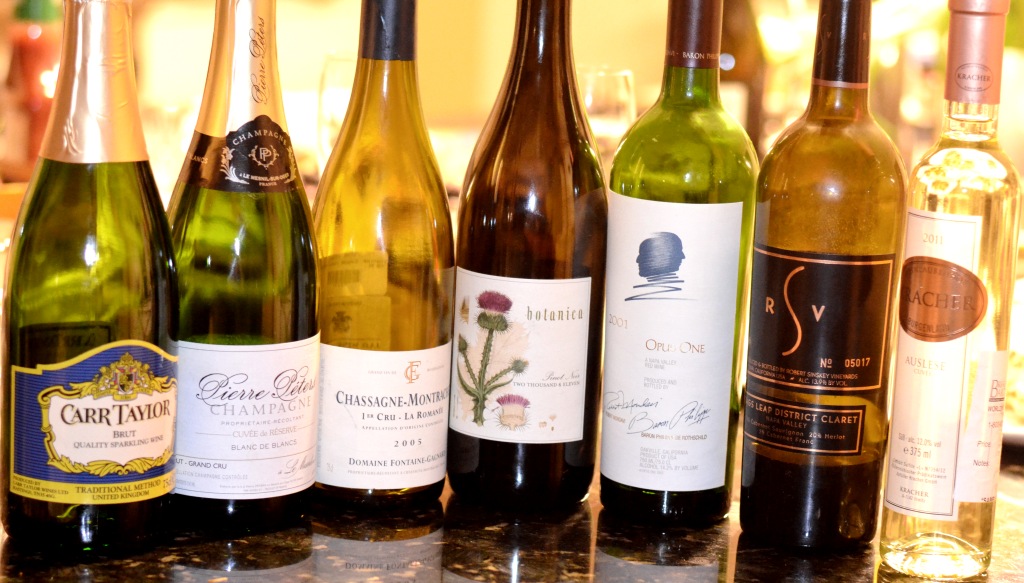
Of course the plan was to start the evening with the Champagne – and then there was a … but. I recently got my hands (told you many times before – I love my friends) on the very interesting sparkling wine from UK. What was the most interesting for me even before I tried the wine is that it contains one of the extremely difficult to find, rare grapes called Schönburger. As I mentioned last time regarding my quest to complete all the grapes in the original Wine Century Club application, Schönburger was one of those “last standing”, extremely difficult to find grapes – and the Carr Taylor Brut was the only wine containing Schönburger, which Wine-Searcher was able to find pretty much anywhere. In case you are curious, Schönburger is a rose grape created in 1979 in Germany as a cross of Pinot Noir, Chasselas and Muscat Hamburg, As an added bonus, the Carr Taylor Brut contained another grape I never heard of, another cross from Germany called Reichensteiner.
Okay, now that I provided a full disclosure, let’s talk about the wines. NV Carr Taylor Brut Sparkling Wine, England (12% ABV, $35) was an excellent start for the evening. Fine bubbles, very intense, very reminiscent of Champagne. Hint of toasted bread on the nose and may be a touch of almonds. The palate had all the toasted and yeasty notes, packaged together in compact but bright way – the wine had no sweetness, but nevertheless was perceived as a fuller body than a typical Champagne. I would gladly drink this wine again any time – if it would be available in US. Drinkability: 8-
Now it was the time for Champagne – Pierre Peters “Cuvée de Réserve” Brut Blanc de Blancs Champagne (12% ABV, $55) – very classic, a hint of brioche on the nose, and nice toasted notes on the palate. Quite honestly, after the first sparkling wine, I wanted a bit more life in the glass – this was clean and fine, but more of the usual. Drinkability: 7+
Our next wine was a white Burgundy. Considering my limited experience with Burgundy, I was concerned if 10 years old wine would hold well (all of you, Burgundy buffs, please stop laughing out there – I’m still learning), so the Valentine’s Day seemed to be quite a good occasion to find out. This 2005 Domaine Fontaine-Gagnard La Romanee, Chassagne-Montrachet Premier Cru, France (13.5% ABV, $65) was outright delicious – beautiful nose of fresh apples, and then apples and honey on the palate – full bodied, supple, with perfect lingering weight in the mouth – this was really a treat. Too bad it didn’t last – but this was definitely an excellent wine. Drinkability: 8
Time for the reds, don’t you think? Remembering the pleasure of the Antica Terra Ceras Pinot Noir (here is the post in case you missed it), I wanted to try another Pinot Noir from Antica Terra – this time it was 2011 Antica Terra Botanica Pinot Noir Willamete Valley (13.2% ABV, $75). The nose was very similar to the Ceras – cranberries, touch of forest floor, lavender, bright and intense. On the palate, this wine had much bigger shoulders than Ceras. Ceras Pinot Noir need no breathing time – it was ready to drink from the moment the bottle was opened. Botanica needed a bit of time. After about 20 minutes in the glass, it showed its structure, dark concentrated fruit, touch of coffee, earthiness, all with a perfect balance, and again, finesse. Drinkability: 8
And then there was Opus One. 2001 Opus One Napa Valley (14.2% ABV, $250). Quite honestly, when I learned that we will be opening Opus One, I was a bit concerned. Yes, this is one of the legendary California Cabernet Sauvignon wines, and yet when I tasted it before, I was not blown away. And when you are not visually excited about $250 bottle of wine, you feel that something is wrong with you, don’t you think? Bottle is opened, and wine is poured in the glass. Based on the color, the wine looks like it was bottled only yesterday – dark, very dark garnet. On the nose, the wine was somewhat muted but pleasant – touch of black fruit and eucalyptus. On the palate, the wine was simply closed – and aggressively tannic, with a touch of green brunches on the finish. Well, to the decanter, of course. After about an hour in decanter, the wine definitely changed for the better, showing touch of cassis and coffee notes on the palate – the tannins still stayed, but reduced, and the finish became spicy, peppery if you will – still not leading to the “wow” which you want to find in the bottle like that. Oh well. Drinkability: 7+
As we were waiting for Opus One to come around, another bottle was pulled out – 1996 Robert Sinskey Vineyards RSV Stag’s Leap District Claret Napa Valley (13.9% ABV, $55). This wine amply compensated for the Opus One shortcomings – in a word, it was delicious. Perfectly young appearance in the glass was supported by the fresh fruit on the nose. And the palate had cassis, touch of mint, mocha, sweet oak, silky smooth tannins, perfectly layered and perfectly balanced. This was Napa Valley Cabernet at its peak, and it was not afraid to show it. Drinkability: 8
Logically (Valentine’s Day!) we had to finish on a sweet note. This was my first experience with Austrian dessert wine, and it was also a first experience with Kracher – I only heard the name before, but never tasted the wines. 2011 Kracher Auslese Cuvée Burgenland, Austria (12% ABV, $22) had everything you want in the dessert wine and nothing you don’t – delicious light honey notes, lychees, vibrant acidity, lemon peel – it was an outstanding way to finish the evening. Drinkability: 8
That is the story of our Valentine’s Day wine experiences. Well, I can’t leave with the wines alone – the food was delicious too, so let me at least share some pictures – I spent time working on them, you know. Here we go:


And we are done here. So, what were your Valentine’s day wine highlights? Cheers!
Grenache! Grenache? Grenache!, Few Rare Grapes and a Recipe
 What’s up with Grenache? One of the most planted grapes in the world, a star of Spain, and often a foundation of greatness in the wines of Australia, France, California and Washington. A grape with the range of expression from light, fruity and frivolous to the dark, firm, brooding and confident. Yep, Grenache is well worth an oenophile’s attention. And a special wine dinner.
The theme was set, and then the dinner’s day arrived. This time around, we were a small group (6 adults), so we decided to skip the usual formal blind tasting with the multiple glasses, and instead simply integrate the tasting (still blind) into the format of the dinner. Each couple brought a bottle of Grenache wine, wrapped in paper bag. The wines were numbered at random and then poured one by one. All in all, quite simple.
But before we got to the Grenache, I wanted to share two special bottles. Don’t get all jumpy at the word “special” – it means different things for different people. Your idea of special bottle might be Chateau Latour, Penfolds Grange or Amarone from Quintarelly – well, if you want to share any of those with me, I’m available any day of the week. However, my idea of special is often limited to something simply unique and different, such as “rare grapes”, for instance – an opportunity to add to my grape count and reach the coveted Wine Century Pentavini (500 grapes).
Along these lines, the first “special” was the white wine from Spain, which was made mostly from Roussanne, but also contained the grape called Albillo. 2011 Navaherreros Blanco de Bernabeleva Vinos de Madrid DO (14.5% ABV, $14.99, 50% Roussanne, Albillo, Macabeo and other varieties) had beautiful golden color, inviting nose of white fruit, touch of vanilla. Full bodied, creamy, luscious on the palate, touch of earthiness and baking spices, touch of vanilla, good acidity. (Drinkability: 8). This was definitely a delicious way to start the evening.


The next wine was Rosé. It was not just some generic Rosé – it was actually made form the grape which is practically impossible to find, at least in US – and it was on my “target” list for the very, very long time. Just to explain – if you will look at the original Wine Century Club application, you will find 186 grapes listed there, so we can consider those 186 to be a mainstream. In that list, there are still 6 grapes which I never tasted. Well, let me take that back – now there are 5.
There is a good chance that you heard of or even tasted the wine called Picpoul de Pinet, a light, crisp white wine from Rhone made from the grape called Picpoul Blanc. Picpoul Blanc has a cousin, a red grape called Picpoul Noir, which is literally impossible to find. During one of my countless searches online, I found that Picpoul Noir Rosé was available in one (!) single store in US in San Francisco – and luckily, I had a friend there who was kind enough to get it for me. Here is what I thought of the Rosé made out of this super-rare grape: 2013 Julie Benau Pink Poul Rosé Vin de France (12.5% ABV, $17, 100% Picpoul Noir) – restrained nose with a hint of strawberries. The same restrained profile continues on the palate – limited fruit expression, medium to full body, good acidity, food friendly. (Drinkability: 7+)
Okay, now we can finally talk Grenache, which I mentioned 3 times in the title of this post, right? I think when it comes to the range of expression among 7-10 most widely known red grapes, Grenache offer the most versatility, competing may be only with Syrah. From over the top dark chocolate, tar and sweet cherries to the soft, earthy and even acidic, Grenache can showcase quite a range of winemaking styles and terroirs. Thinking more about our tasting, it served exactly as a confirmation to this statement.
The first Grenache we had was that exact over the top style – dark, concentrated, firm, loaded with sweet pleasure in every sip. The second Grenache couldn’t be more different than what we experienced – smoke, mushrooms, forest floor, earthiness, herbs – a restrained beauty which I would never even think of as Grenache – but it was. And the last bottle was all too shy and closed at the beginning, showing again differently from the first two – but as it opened up, it became a younger brother of the first wine – same traits, only dialed down. The 3 bottles we chose completely at random managed to demonstrate that tremendous Grenache range. When we removed brown bags, we learned that we traveled from Spain to Washington and then to France – a very interesting journey.


Here are a bit more formal notes for the the wines, in the tasting order:
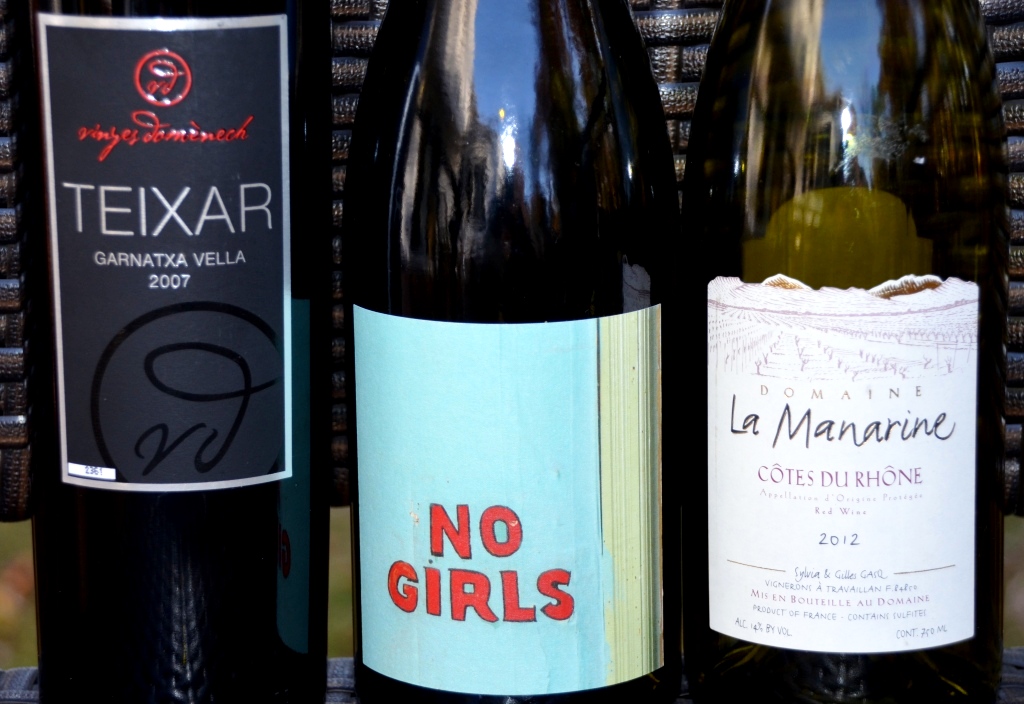
2007 Vinyes Doménech Teixar Garnatxa Vella Montsant DO, Spain (14.5% ABV, $75) – Delicious! Dark chocolate on the nose, very intense, ripe red fruit. The same continues on the palate – firm texture, dark chocolate, touch of plums, earthiness, perfect balance and long finish. 8+/9-
2008 No Girls Grenache La Paciencia Vineyard Walla Walla Valley (14.2% ABV, $65) – very interesting. Both nose and the palate show a profile of concentrated Oregon Pinot Noir. Smokey fruit, earthiness, very concentrated, touch of coffee, licorice, raspberries, sage and lavender. Very unique. 8
2012 Domaine La Manarine Côtes du Rhône (14% ABV, $16) – closed nose, similarly closed palate. Opened up after a while, just enough to show some dark fruit (plums, cherries) and a touch of chocolate on the palate. 7+
Okay, enough about wines. Now, this was a dinner, and I promised you the recipe, remember? The dish I made, and the recipe I would like to share will perfectly pair with the cold weather, and it is one of the ultimate comfort dishes ever – braised short ribs. Starting from the ease of cooking and the simplicity of the recipe, and then admiring the goodness of the smell during the long, slow cooking – this is definitely one of the ways to properly spell the word comfort.
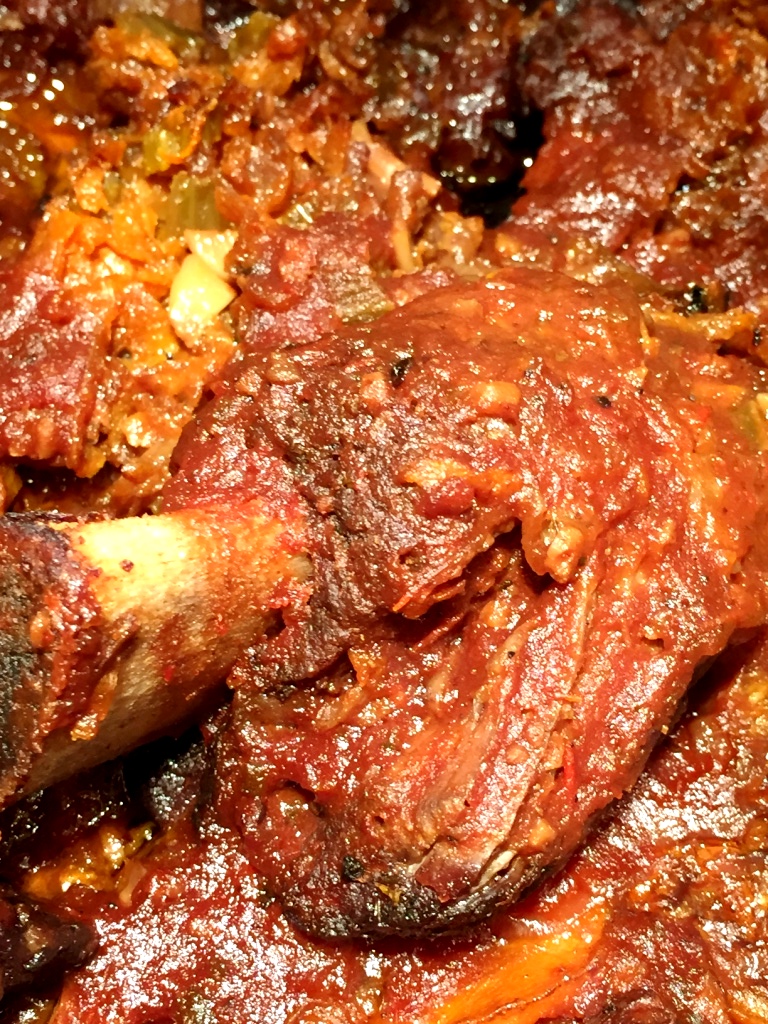
Doesn’t it say “comfort”?
Here is the recipe:
Braised Short Ribs
Prep time: about 1 hour. Cooking time: 4-5 hours
Yield: 10 servings of two ribs each
8-10 lb beef short ribs – I don’t go specifically by the weight – I generally like to cook considering 2 ribs per person
1 bottle of red wine – Pinot Noir or Beaujolais
5 medium yellow onions
8 sticks of celery
4 large carrots
BBQ/Grilling spices – I use Penzeys spices
4 tbsp Olive oil
Salt and pepper
Serve with: mashed potatoes, rice, pasta, etc.
First of all, decide on what spices you want to use. I generally combine different Penzeys spices, but really – feel free to use anything you have:
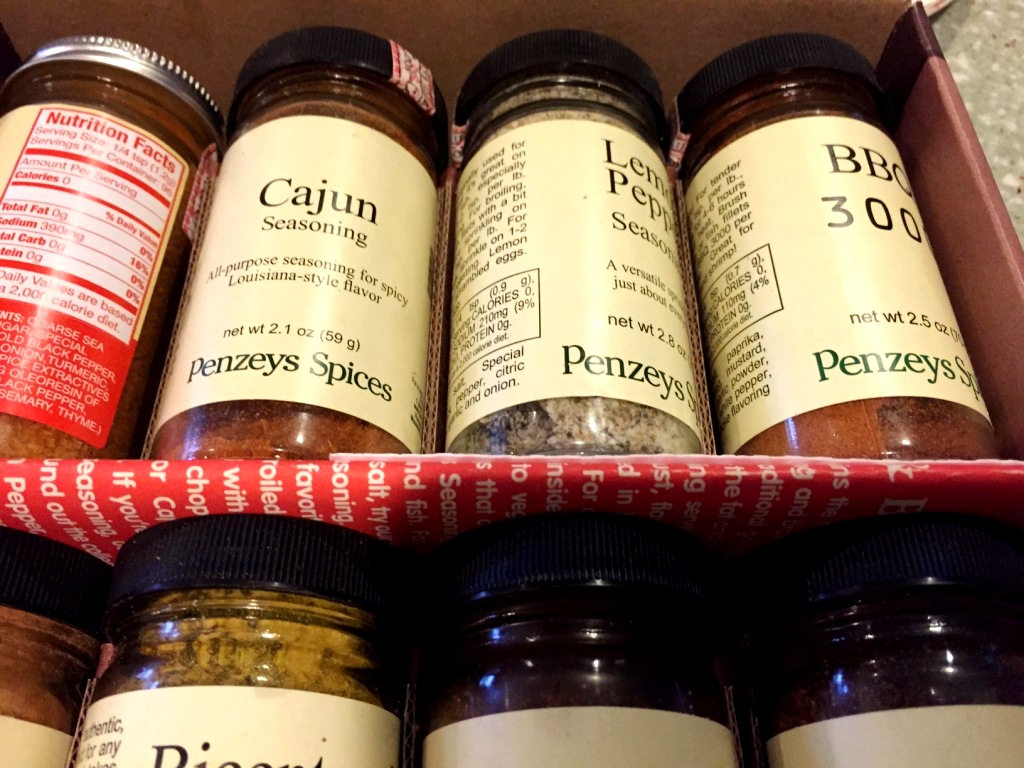
Next, take the meat out of the fridge and line it up on the prepping board, then sprinkle with the spices on both sides, add salt and pepper as needed:


Let meat warm up to the room temperature. Preheat over to 325ºF. While the meat is warming up, you can start working on your “trifecta”. Dice the onions and start sauteing them in the skillet or dutch oven with 2 tbsp of olive oil on the medium heat. Dice carrots and celery. Once onions become soft and translucent and then start gaining color (usually takes about 20 minutes), add carrots and celery and sauté all together for another 10 minutes, then set aside.
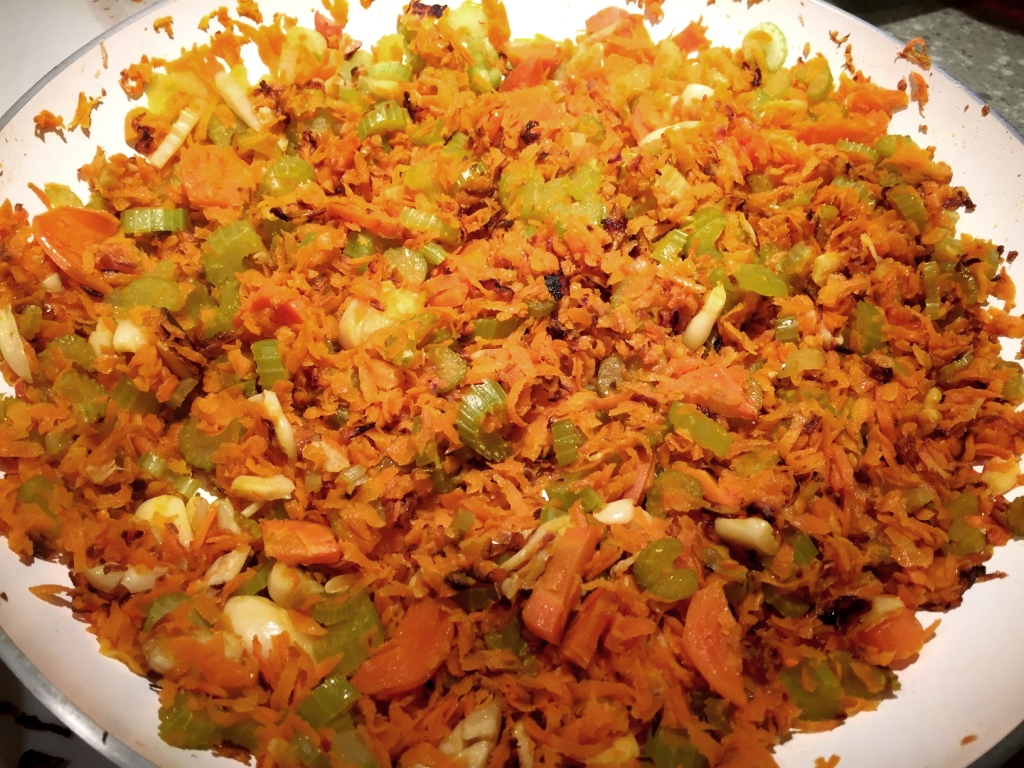 Now, put remaining olive oil into the dutch oven, and heat it up to the high heat. Start searing the short ribs, meaty side down first. You might have to work in the batches, as you want all of the ribs to be nicely seared on both sides:
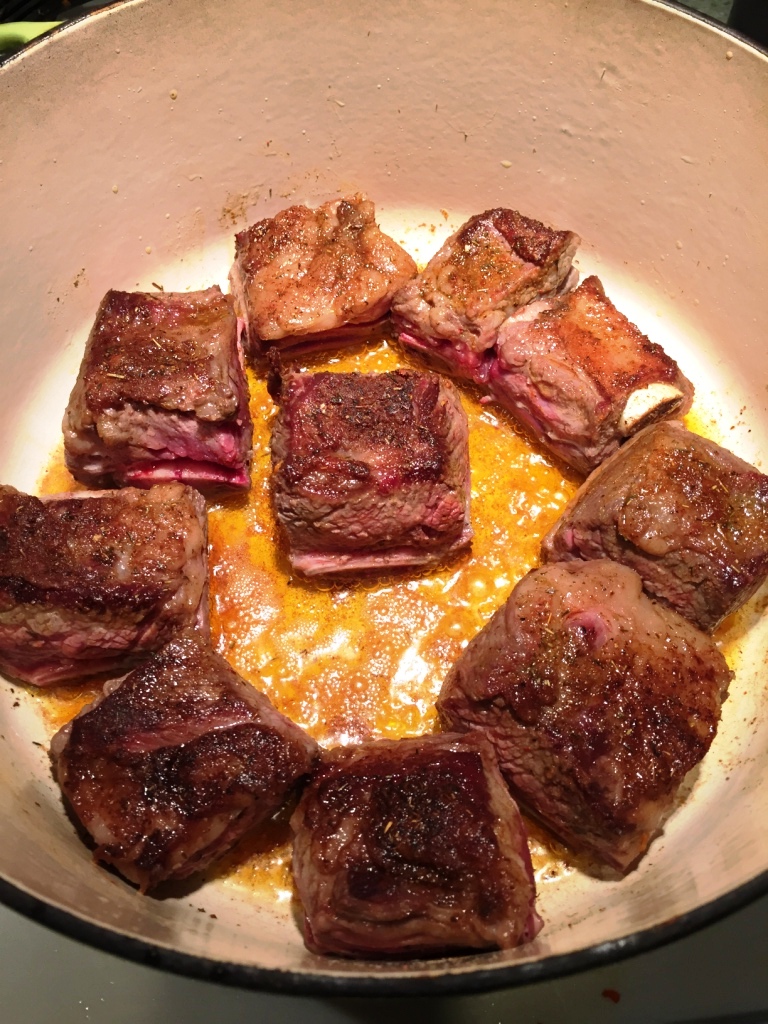 Once all the ribs are seared, combine them all in the dutch oven, then add the onions, carrots and celery:
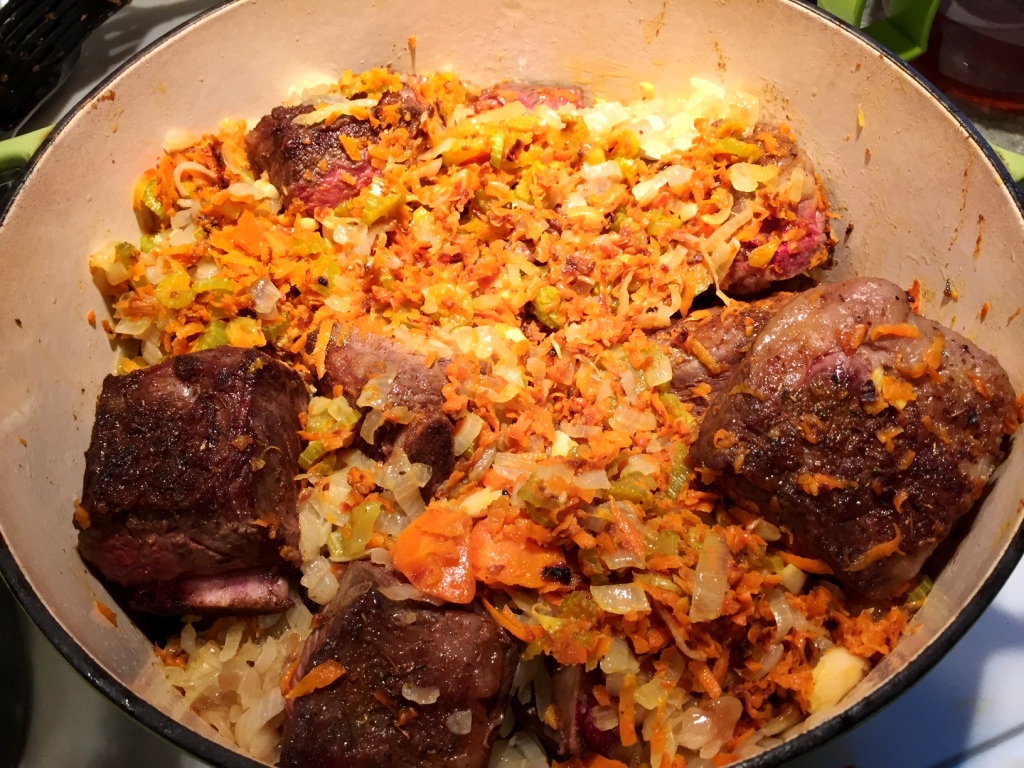 Add a bottle of wine, cover, put it in the oven and forget it for the next 4-5 hours (you really don’t want to rush this process). When done, you probably will find something like this:
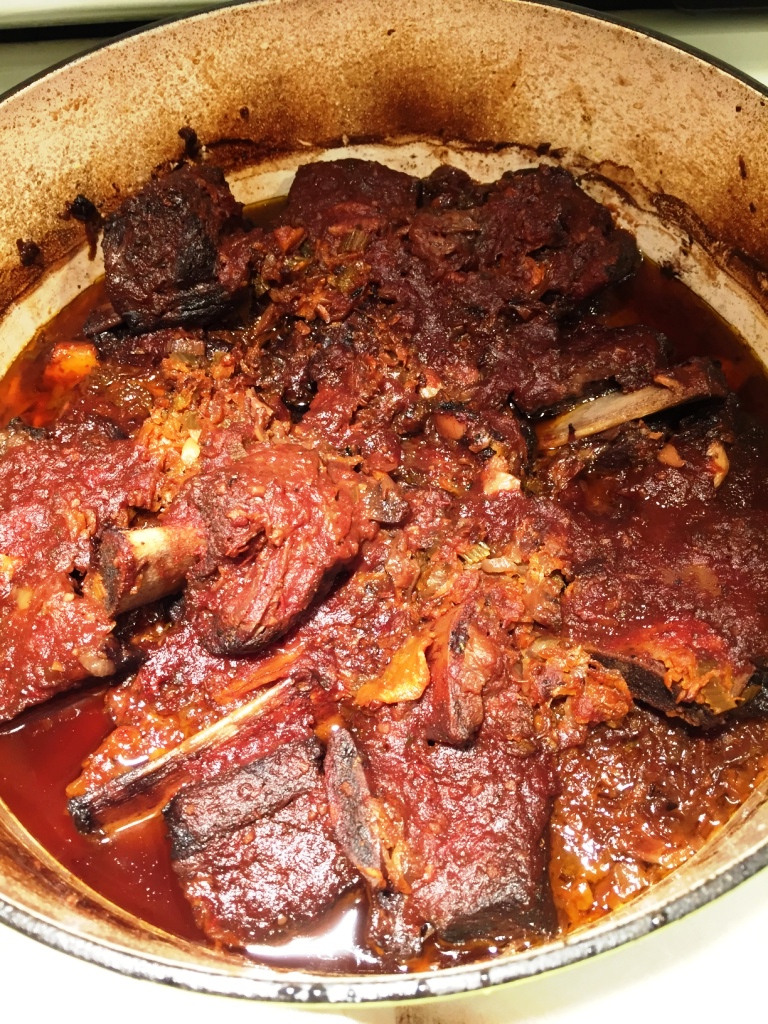 As you can imagine, hearty Grenache is a perfect pairing for such a hearty, homey dish – but of course this shouldn’t be your only choice.
Here we are, my friends. A few rare grapes, an amazing range of Grenache wines, and winter-storm-alleviating-ultimately-comforting dish. Stay warm and drink well. Cheers!
Wineries of New England: Connecticut Winery Trail
 I was back and forth on this post for a while. One one side, an experience is an experience, and it is worth sharing in the blog, as this is what it is for. On another side, what if the experience was not on par? Not on par with your expectations, not on par with what you thought it should’ve been – is that something worth sharing? Or is it not? I’m talking about an experience which was not bad – in general, bad experiences are worth sharing as you might help others to avoid repeating them, or at least you can shout to the world and feel better. The tough case is when the experience was simply mediocre, just an okay type – what do you do then?
Well, I only have two options here – keep the internal debate going, or write the post and share the experience for what it was. Considering that you are reading this post, you already know what route I took, so let’s get to it.
I live in Connecticut for more than 20 years. I’ve caught the wine bug at least 12 years ago. All these years, while I knew that wines are made in Connecticut, I never visited a Connecticut winery – and was actually kind of ashamed of it. During the summer of 2014, the opportunity presented itself, and I was very happy to finally get acquainted with the Connecticut wines at the source.
It appears that modern winemaking started in Connecticut in 1975. Haight Vineyards, now known as Haight-Brown Vineyards, was the first winery to open, and the first vineyard in Connecticut to successfully grow Chardonnay and Riesling. From there, the industry had grown to about 37 wineries in the state in 2014. While Connecticut is not a large state by all means, the wineries are located all over it, so you can only visit a handful of wineries in one day.
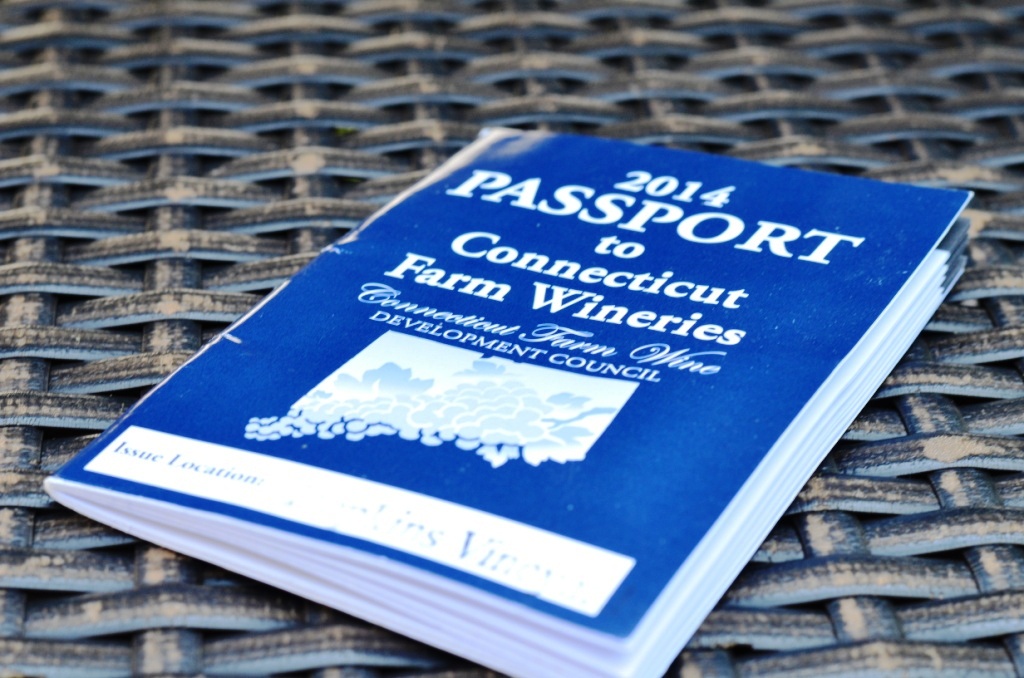
Before we talk about wines and wineries, I want to mention an interesting program, called “Passport to Connecticut Farm Wineries”, which is a very smart way to get people interested in visiting more wineries than they otherwise would. The Passport is a small booklet which lists participating Connecticut wineries and allows you to collect special stamps from all the wineries you visited. In case you are wondering, this Passport booklet can be picked up at any participating winery. New “Passport” is issued every year, and it is sponsored by the Connecticut Department of Agriculture. However, it is worth noting that to be listed in the Passport, each winery have to pay an X amount of money ($2,400 in 2014), and some of the wineries simply skip on participation as they don’t find that worthwhile.
As you collect the stamps at the wineries you visit, you have an option to turn the Passport in by the certain date (it was November 16th in 2014). If you happened to collect all the stamps in the Passport booklet (i.e., visited all the wineries listed, 33 of them in 2014), you will be entered into a drawing to win a two week long trip for two to Spain. With less than a hundred people accomplishing it every year, your chances of winning are quite high. Also, if you will visit 16-32 wineries, you can still participate in the drawing for many interesting prizes. Prizes are good, of course, but even the sheer idea of collecting the stamps makes people to visit more wineries (works on yours truly as a charm).
Okay, now – let’s talk wineries. We only explored 4 wineries during our trip in August, all located in the north-west corner of the state. As a generic note, most of the wineries in the Northeast grow mostly an American hybrid grapes (Vidal Blanc, Cayuga, Marechal Foch, Chambourcin and so on), with the addition of the traditional staples such as Chardonnay, Riesling, Cabernet Franc and Cabernet Sauvignon. Also, most of the wineries we visited charge $10 – $12 for the tasting ($12 tasting also includes the winery logo glass), which is not that bad.
Our first stop was Hopkins Vineyard, one of the oldest in the state – it was founded in 1979, as the result of conversion from the dairy farm to the vineyard. I was very excited to start my discovery of the Connecticut vineyards – but somehow, that enthusiasm was quickly extinguished with the cold and indifferent demeanor of our host. The guy who was running the tasting for us, couldn’t care less about the group. He was not interested in conversation. He barely answered questions, with his whole attitude been “I’m so tired of you people”. And the wines themselves were not helping. For what is worth, below are my brief notes:
2011 Hopkins Vineyard Duet Estate Bottled ($14.99, Chardonnay/Vidal Blanc) – nice acidity, good white fruit, medium-long finish. Drinkability: 7
2012 Hopkins Vineyard Vineyard Reserve Estate Bottled ($14.99, Seyval Blanc/Traminette) – nice nose, flat palate. Not recommended.
2013 Hopkins Vineyard Lady Rosé Estate Bottled ($15.99, Dornfelder/Lemberger/Pinot Noir) – nice, strawberries on the nose, crisp, but acidity is overbearing. Not recommended.
2010 Hopkins Vineyard Cabernet Franc Estate Bottled ($21.99) – excellent nose, green bell pepper, nice earthiness, good earthy palate. Drinkability: 7+


NV Hopkins Vineyard Red Bard Red ($14.50, Corette Noir and other hybrid grapes) – nice, young, simple, fresh fruit, touch of spices, raspberries and blackberries. In addition to the fact that this was one of the better wines in the tasting, Corette Noir was also a new grape! Drinkability: 7+
NV Hopkins Vineyard Sachem’s Picnic ($14.50, Boca Noir, Dechaunoc) – touch of sweetness, nice for Sangria. Drinkability: 6+
As you can see, this was not a very exciting beginning of the discovery of Connecticut wineries. The actual highlights of this first stop were found outside of the winery in the form of the beautiful sunflowers:


Our next stop was a Haight-Brown Vineyards – the winery I already mentioned as the very first in Connecticut, opening its doors in 1975. The winery was known as the Haight Vineyards until 2007, when it was acquired and renamed into the Haight-Brown Vineyards.
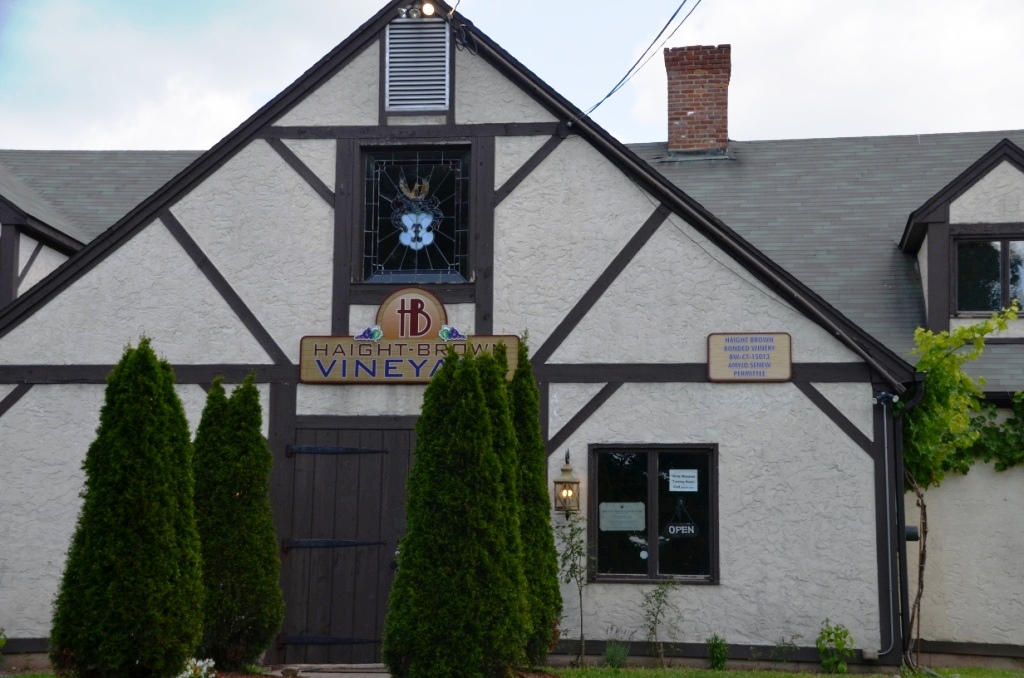 Here we received a better reception, and things started to look up a bit compare to the first visit. Still, no revelations and really no wines which would leave any memory marks. I’m also curious why none of the tasting notes list any vintages for any of the wines. You would think that the notes are reprinted for every new wine, so it shouldn’t be very difficult to add the vintage there – however, none of the wineries we visited had this information on. Another interesting note was a proud mention of the 15% ABV for the Big Red wine (none of the other notes have ABV listed) – it was almost shown as a point of achievement, which was really mind boggling to me. In addition to the wines, you can buy different olive oils at the Haight-Brown tasting room. And, most importantly, Haight-Brown offers meat and cheese boards, which came in very handy as the group was ready to eat. For what it worth, below are the wine notes:
Haight-Brown Vineyards Chardonnay ($16.98) – Chablis nose, restrained, green apple, good acidity. Drinkability: 7+
Haight-Brown Vineyards Railway White ($14.98, Seyval Blanc) – tropical fruit and lychees on the nose, nice creaminess on the palate, ripe golden delicious, good acidity. Drinkability: 7-
Haight-Brown Vineyards Riesling ($16.98) – Finger Lakes fruit. Nice nose, but needs more acidity. Drinkability: 7-
Haight-Brown Vineyards Picnic Red ($15.98, Foch/Dechaunoc) – simple, nice, open grapey nose, the same on the palate. Drinkability: 7
Haight-Brown Vineyards Morning Harvest ($19.98, Ruby Red Cabernet) – green bell pepper nose, classic, light and balanced Cabernet palate with a touch of sweet oak. Drinkability: 7+
Haight-Brown Vineyards Big Red ($19.98, 15% ABV, California Cabernet Sauvignon) – Classic, big flavors, nice green notes, okay balance. Drinkability: 7-


Our next stop was at the Sunset Meadow Vineyards, which probably was the highlight of the day – for sure in the terms of very friendly service. And then the wines were a bit better than at the previous two wineries. Interestingly enough, the Shades of Risqué Sparkling Wine, simple and unassuming, was my personal favorite. Here is what we tasted, with the notes:
Sunset Meadow Vineyards Riesling ($21.99) – interesting, acidic, light. Drinkability: 7
Sunset Meadow Vineyards Cayuga White ($16.99) – beautiful nose of pear and apple, good acidity, good balance. Drinkability: 7+
Sunset Meadow Vineyards Vidal Blanc ($18.99) – nice residual sweetness, good balance. Drinkability: 7+
Sunset Meadow Vineyards Blustery Blend ($16.99, Cayuga/Seyval Blanc/Chardonel) – nice nose, palate too sweet. And new grape – Chardonel! Drinkability: 7
Sunset Meadow Vineyards St. Croix ($24.99, 24 mo in oak) – nice earthy nose, a bit astringent on the palate with some salinity. Drinkability: 7-
Sunset Meadow Vineyards Merlot ($18.99, 24 mo in French oak) – tobacco and green pepper on the palate, overall missing the balance. Drinkability: 6+
2012 Sunset Meadow Vineyards New Dawn ($22.00, Landot Noir/Frontenac/Petit Verdot/Merlot) – astringent, sharp, spicy. Drinkability: 7-
Sunset Meadow Vineyards Shades of Risqué Sparkling Wine ($16.99) – round, simple, good balance. Drinkability: 7+
Sunset Meadow Vineyards Root 63 ($16.99) – nice and round, good balance. Drinkability: 7+
To be entirely honest, we also stopped at the Miranda Vineyards, but – I don’t have any notes to share. I remember tasting the wines (no standouts), and I remember taking the pictures – I even have a stamp in the Passport book – but no notes. So here are a few pictures for you:


There you have it, my friends – my first encounter with the Connecticut wineries. Not a great experience – but still an experience, which will leave a memory mark. I would think that 40 years should be a good time period to figure out what works, what doesn’t, what grows well, and then make interesting wines – but it was not really the case. Yes, there are more wineries in Connecticut, and so there is a hope for the memorable wines to be found close to home. And by the way, if you visited wineries I mentioned, and had a different experience – let me know – may be it was a root day after all. Cheers!
From Value to World-Class – Celebrating 30 Years of Spanish Wines in USA
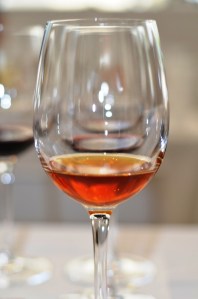 I’m sure that any proud oenophile and wine aficionado is acutely aware of the high class, delicious Spanish wines. Considering that Spain has the biggest planted area under vines in the world, and that wines had been made there for thousand of years, it is a no-brainer that Spanish wines are so well known and well recognized. Right? Well, the interesting fact is that for many casual wine drinkers, Spanish wines are still largely unknown. And, to top it of, you also need to understand that measly 30 years back, the only way to talk about Spanish wines, at least in the US, was by presenting them strictly as “value wines”.
30 years doesn’t sound like a lot – but the notion of time is relative, it fully depends on what is happening during that time. Wines from Spain mission was established in New York in 1984 to increase awareness of the Spanish wines in USA. Spanish quality control system, D.O., was established in 1986. Modern Priorat wines started in 1989. The pace of success and recognition only accelerated from there, with Parker awarding 100 points ratings to 5 Spanish wines in 2007 and Rioja named “Wine Region of the Year” by the Wine Enthusiast magazine in 2007. In 2012 Ribera del Duero became Wine Enthusiast magazine’s “Wine Region of the Year” and 2004 Cune Imperial Gram Reserva became Wine Spectator’s wine of the year in 2013.
To celebrate all the success of the Spanish wines in the USA, Wines from Spain recently conducted special tasting event in New York, called “Spain’s Great Match – wine food design”. The tasting consisted of a number of seminars and traditional walk-around tasting which included both wine and the food. The seminars were hard to get into, I only managed to attend one out of 4 (there rest was sold out almost before they were offered) – but boy, what a seminar it was!
The seminar was led by the wine educator Steve Olson, who was one of the early proponents of the Spanish wines and who was instrumental in helping Spanish wines to gain market recognition in the US.
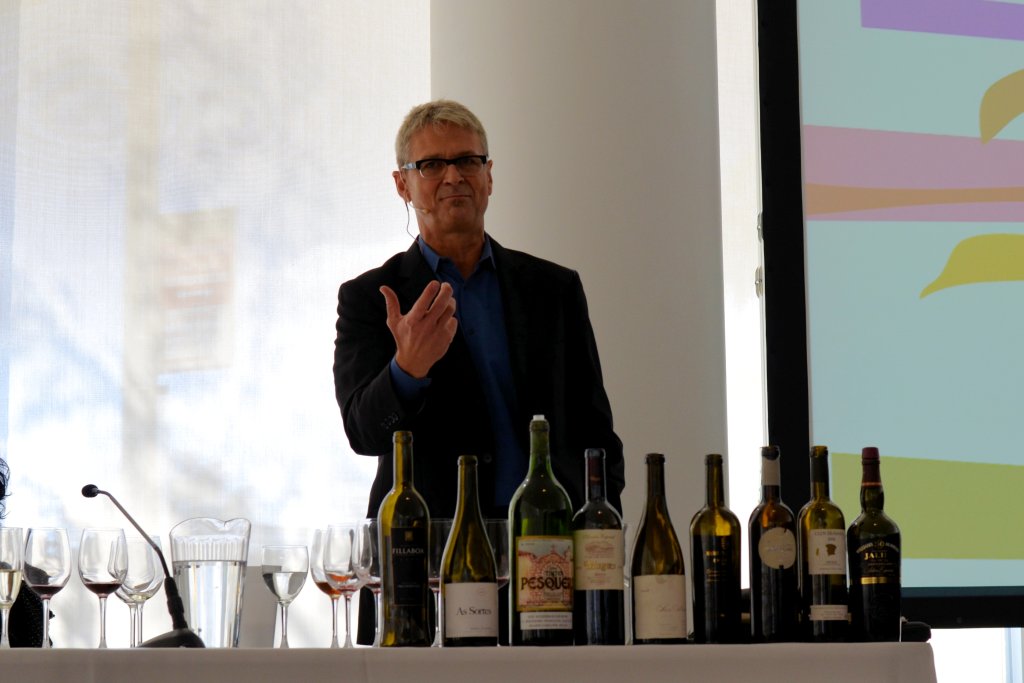 We started tasting from the toast of NV Freixenet Cordón Negro DO Cava, which was surprisingly (yes, please pardon my inner snob) nice, with some toasty notes and good mousse. It turns out that Freixenet was one of the very first importers of the Spanish wines in US, starting from 1974.
Next we had two beautiful whites:
2012 Bodegas Fillaboa Selección Finca Monte Alto Albariño DO Rias Baixas ($30) – Single vineyard, hand-harvested and sorted, made to age. Beautiful complex nose, white fruit, herbal nose. On the palate – pronounced minerality and acidity, literally devoid of fruit – will be interesting to see how this wine will evolve. Extremely long finish. Needs food.
2012 Rafael Palaciós As Sortes Valdeorras DO ($30, 100% Godello) – beautiful nose, white fruit, spices, a good Burgundy-rivaling complexity. On the palate -great acidity, white fruit, perfect balance – excellent texture, minerality and finish. The wine was double decanted before serving.
And then there were [spectacular] reds. All the red wines with the exception of 1984 were double-decanted to help them open up.
1984 Bodegas Alejandro Fernandez Tinto Pesquera DO Ribera del Duero ($30/current release, 100% Tempranillo) – 1984 was very unusual year – grapes were harvested in December(!). Nose – wow! Everything you want in the red wine – cedar box, red fruit, spice cabinet – warm, inviting. Palate – young, astringent, with very present tannins, blackberries – outstanding wine.
2010 Bodegas Muga Reserva Especial DOCa Rioja ($40) – Beautiful, warm nose, complex, touch of rhubarb, ripe fruit. Dry, perfect acidity, blackberries, restrained, great balance, dust on the palate, firm structure.
2005 Descendientes de José Palacio Corullón San Martin, Bierzo DO ($75, 100% Mencia) – this wine was produced for the first time in 1998 at the biodynamically farmed estate. Production is tiny, about 120 cases. Ripe fruit on the nose, eucalyptus, herbs. On the palate – firm structure, great minerality and acidity, spices, great depth, textural dust.
2007 Pago Marqués de Griñon Emeritus, DO Dominio de Valdepusa ($75, 66% Cabernet Sauvignon, 17% Syrah, 17% Petite Verdot) – wow! Amazing – would beat any California Cabernet. Green bell pepper, touch of cassis, great concentration, firm structure, great balance. Drinkability: 9
2004 Bodegas Mauduros San Román, Toro DO ($150, 100% Ink of Toro) – baking spices, concentrated dark fruit, tar, hazelnut. On the palate – delicious, complex, starts from sweetness and evolves almost to astringency. General Tempranillo traits with tremendous concentration.
2005 Clos Terrasses Clos Erasmus Priorat DOCa (~$1,000 for 2005 vintage, about $300 current vintage, 85% Garnacha, 15% Syrah, 100 points Parker) – elegant, open nose, sage, cherries, incredible palate, sweet fruit, spices, blackberries, blueberries, tight frame, impeccable balance, just beautiful. Drinkability: 9
Williams & Humbert Jalifa Amontillado VORS Jerez DO ($35) – this wine is about 50 years old. Very complex nose with anchovy, almonds, hazelnuts. Wow – incredible complexity on the palate – leather, spices, truffle oil – wow! Craves food – and will work with variety of foods.
To say that this was a great tasting would be an understatement – I also like the fact that the wines were selected to showcase major regions and capabilities of the Spanish winemaking.
Yes, this was one and only seminar I was able to attend – but the tasting continued with the extravaganza of other Spanish wines and food. One interesting observation from the tasting was the fact that most of the big name in Spanish wines were absent in the tasting itself – La Rioja Alta, Cvne, Lopez de Heredia, Vega Sicilia, none of the great Grenache wines, like Alto Moncayo, Bodegas Gil – the list can go on and on – none of them were represented. Yes, I understand that for the most part the tasting is run through the distributors and not directly by the wineries, but still. This was the only peculiar observation I made.
And here are two more interesting observations for you (here interesting = positive). First, Godello is coming! Godello is a white grape, indigenous to Spain, which is capable of producing Chardonnay-comparable wines. There were a lot of Godello wines presented at the tasting, most of them of a very good quality. I can definitely say that Godello is squarely joining the ranks of Albariño, Viura and Verdejo, the best known Spanish white grapes. You should definitely look for Godello wines in the store if you want to try something unique and different.
And the second point: in the “inexpensive wines” category, Spain clearly kicks butt! Some of the wines priced at $10 or less were simply outstanding, but even outside of that price range, it is almost impossible to beat Spanish wines in the QPR category.
Before we we will talk about the wines, a few words about the food. There was a lot of delicious Spanish food presented at the event. First of all, there was cheese. For anyone who likes Spanish cheese, that was simply a heaven – lots of different Manchego, Iberico and other cheeses – different age, different pasteurization – a lot more options than you can find at the average store. There were also anchovy, called boquerones in Spain – white boquerones were simply delicious (yes, of course it is a personal opinion). And there was lots of tapas, masterfully prepared right in front of the desiring crowd. The tapas were made periodically, and every time that process would create a crowd of people, all hoping not to miss the new and interesting dish. Food at this event definitely commanded as much attention as the wine had. Here are a few pictures, just to attest to what I just said.


And of course, for what it worth, here are the notes from the rest of the tasting. I have to say that the tasting was organized in a bit of a strange way. My major complaint was the fact that there was no reasonable handout of any sort, so taking any notes of essence was simply impossible. Also the whole tasting was not logically organized, with packets of regional wines mixed with individual wineries and also distributors – the was no system of any sort, which made the overall tasting experience frustrating rather than productive. Anyway, below are my notes, in the usual tasting style, using “+” signs. You will not see any “+” wines, “++” only if really deserve mentioning, so most of the wines should be above “++”. On a positive side, I picked up again a few grapes, which I will mention in the notes. Here we go:
2005 Agricultura y Bodega Renacimento de Olivares Rento, Ribera del Duero ($55) – ++-|, overextracted
2011 Alejandro Fernández Tinto Pesquera, Ribera del Duero ($40) – +++, excellent
2009 Bodega Matarromera Matarromera Crianza, Ribera del Duero ($30) – +++, restrained, nice, ready
2011 Bodegas Emilio Moro Ribera del Duero ($25) – +++, delicious, round
2010 Condado de Haza, Ribera del Duero ($28) – +++, beautiful
2011 Legaris Crianza, Ribera del Duero ($27) – ++-|, not ready
2010 Bodegas Reyes Teofilo Reyes Crianza, Ribera del Duero DO ($31.50) – +++
2013 Bodegas Marqués de Vizhoja Torre La Moreira Albariño, Rias Baixas DO ($19.99) – ++
2012 Condes de Albarei Albariño, Rias Baixas DO ($15) – ++-|, nice, clean
2013 Adegas Morgadio Albariño, Risa Baixas DO ($22) – +++-|, wow! fruit, great! delicious!
2009 Bodega Prado Rey PR3 Barricas Verdejo Rueda DO ($22) – ++-|
2013 Bodegas Angel Rodriguez Martinsancho Verdejo Rueda DO ($22) – +++
NV Finca Hispana Fino DO Montilla Moriles ($8.99)- +++, unbeatable QPR!
2013 Finca Hispana Xarel.lo DO Penedés ($8.99)- +++, unbeatable QPR!
NV Finca Hispana Cava Brut Imperial Reserva Cava DO ($14.99)- +++
2013 Vitivinícola do Ribeiro Viña Costeira Ribeiro DO – +++, clean!
2013 Moure Vinos Artesans Moure Tradicion Blanco, DO Ribeira Sacra ($40) – ++-|
2013 Nivarius Rioja DOCa ($24.99, Tempranillo Blanco and Viura) – ++-| new grape!
2011 Quinta de Muradella Alanda Blanco, DO Monterrei ($35, 30% Dona Blanca, 30% Treixadura, 30% Verdello, 10% Monstruosa de Monterrei) – ++-|, new grapes!
2013 Bodegas Nivarius Nivei Rioja DOCa ($11.99) – ++-|
2011 Losada Vinos de Finca Bierzo DO ($22) – +++, great!
2013 2013 Finca Hispana Garnacha Terra Alta DO ($8.99)- +++, unbeatable QPR
2009 Martinez Lacuesta Crianza, Rioja DOCa ($17.50) – +++
2005 Bodega de Sarria Reserva, Navarra DO ($16.95) – +++
2011 Terra de Falanis Muac! DO Montsant ($16.95) – +++, delicious, spicy!
2012 Pagos Los Balancines Crash, VT Extremadura ($10.50) – ++, mnice!
2012 Moure Vinos Artesans Moure Tradicion Barrica, DO Ribeira Sacra ($29, Merenzao) – ++-| new grape!
Here we are, my friends – a delicious Spanish wine experience with many personal discoveries (like Marqués de Griñon Emeritus – you have to taste it believe it) and the new grapes. Let me finish this post with the question – are the Spanish wines part of your regular “wine lifestyle”? Do you look at the Spanish wines only as a source of value, or do you consider them world-class and the best hidden secret of the wine world? Let me know and cheers!
Wineries of New England: Newport Vineyards
 Have you heard the term “tourist winery” before? I didn’t, but now I have. Follow along, I will explain.
Recently, the subject of the wines of 50 states came back into my focus – after tasting wines from Vermont, Colorado, Texas and Connecticut, it was kind of easy to get carried away, right? When we arranged a short weekend getaway with family in Newport, Rhode Island, I decided to check on the wineries on Rhode Island. Yes, the almighty google said, there are a few on Rhode Island, and one of them, called Newport Vineyards, is about 20 minutes away from the downtown Newport. My wife likes to visit wineries, and kids are old enough to sustain at least one winery visit, giving me only a reasonable amount of hard time, so our first destination of the trip was set.
Finding our destination was easy – a long building with clear sign, adjacent vineyards and very substantial parking lot ( I understand they got land, but still). Walked in, waited a bit in the lane and bought a ticket for the tasting ($12 allows you to taste 5 wines, or you can pay $15 if you want a logo glass). The tastings were happening in the multiple locations, both inside and outside. We settled for the tasting bar on the second floor, as the crowd appeared to be smaller than in the other places.
We looked at the list of available wines, and it contained 32(!) selections – white, rose, red, sweet – a substantial number of wines, as you see. When I handed the ticket to the gentleman at the bar, I told him that I have a wine blog and would like to try a few more wines if I can. That solicit really no interest, rather a surprise that I asked to taste more wines, and the answer came “okay, may be one or two, but no more”. The next uncomfortable moment came when after the taste of the first wine I did what I usually do at the wine tasting – I used the spittoon for its intended purpose – and the gentleman almost run over to me from another side of the large bar and said that it is fine to use the spittoon to pour over the leftovers of wine if I don’t want to finish it, but I should use it only for that (he didn’t say directly “don’t spit!”, but my wife helped to translate his rather long tirade about usage of the spittoon into the simple instruction). I would guess that seeing someone spit the wine will make the other guests uneasy (and he also said something about “sanitary”). Anyway, moving along…
Before I will talk about the wines, let me tell you a few things about the winery which I picked up from the back and forth conversation with our pourer (it was back and forth as we couldn’t just stand and talk – he had to serve the other guests as well). The winery was founded in 1988. 70% production are the white wines. Winery makes about 22,000 cases a year, primarily from the estate grapes. The mix of grapes is somewhat eclectic, at least judging by the wines of neighboring Connecticut and Massachusetts – for the whites, in addition to Chardonnay, Riesling, Vidal, Cayuga and Seyval Blanc, the winery also grows Sauvignon Blanc and Pinot Gris. The red grapes include Merlot and Cabernet Franc, which are both pretty standard for New England, but Cabernet Sauvignon and Pinot Noir are not so much. Additionally, Newport Vineyards makes single varietal wine from the hybrid grape called Landot Noir – will talk about this wine later. The soils are heavy clay loam (just as a statement of fact – I can’t tell you how does it affect the taste of the wine).
Here is the part of our conversation which I found most interesting. As you know, I’m a big fan of the aged, older wines, and I’m always looking for an opportunity to taste them. If I can’t taste the older wines myself, at least I would like to hear what the winery staff thinks about aging of their own wines, what was was the oldest vintage they ever tasted, what do they think about aging of the current release. Any and all of my inquiries were met with the stern “we don’t do do it”, “no, I have not”, “I never had”, etc, until the phrase came “we are a tourist winery. We have 50,000 people visiting winery every year, and all of our current releases sell out”. This was definitely a revelation for me. I always associate winery existence with utmost passion, borderline obsession to create great wines just for the art of creation (I understand that winery is a business – wines should be created and sold – don’t grab on this, please) – and I always thought that tourists were an afterthought to the winery’s existence. Now, having heard the term almost as an official statement (of course this is not a statement from the winery), that makes me think – yes, I can come up with more examples of the “tourist wineries”, based on my experiences in Temecula Valley and Connecticut. With that concept in mind, I can now better understand the logic of some of the winery decisions which appear puzzling otherwise.
Talking about learning new things, I also learned about new AVA – Southern New England AVA (SENE AVA), which stretches along the Eastern coast of US from Coastal Connecticut through Coastal Rhode Island, South Coast of Massachusetts and into the Cape Cod and the islands. SENE AVA was defined in 1984, so it celebrates 30 years this year. All together, the wineries form the Coastal Wine Trail (here is the link to the web site).


Let’s finally talk about the wines, shall we? I can tell you that the attitude of our pourer changed as we were talking, so we ended up trying way more than the intended 5+1. One general note about most of the wines we tasted – they all had clear cut, vibrant acidity. I don’t know if this is the result of the “heavy clay loam” soils, but the acidity was very present. Here is what we tasted:
2013 Newport Vineyards Newport Chardonnay SENE AVA ($18) – touch of gunflint, apple and tropical fruit on the nose, vibrant cutting-through acidity, apple on the palate. Drinkability: 7+
2013 Newport Vineyards Vintner’s Select Pinot Gris SENE AVA ($22) -very perfumy, pear, substantial sweetness on the nose, fruit forward on the palate, needs acidity. Drinkability: 7
2013 Newport Vineyards Dry Riesling SENE AVA ($23) – traditional east coast Riesling, touch of honeysuckle on the nose, lucks minerality and complexity on the palate, extremely acidic. Drinkability: 7
2013 Newport Vineyards Vidal Blanc SENE AVA ($15) – nice summer wine. Perfumed nose and shellfish-craving acidity on the palate (Muscadet style). Drinkability: 7
2013 Newport Vineyards Rosé White Merlot SENE AVA ($14) – touch of strawberries on the nose. Very light wine with very strong acidity. Drinkability: 7
2012 Newport Vineyards Rochabeau SENE AVA ($19, blend of Merlot, Cabernet Franc, Cabernet Sauvignon and Landot Noir) – fresh fruit nose, nice acidity, old world style. Drinkability: 7
2011 Newport Vineyards Cabernet Franc SENE AVA ($18) – touch of smoke , green bell pepper nose, touch of cassis on the palate, strong acidity. Drinkability: 7
2012 Newport Vineyards Cabernet Sauvignon SENE AVA ($18) -varietally correct profile on the nose and palate (green bell peppers and cassis). Drinkability: 7
2013 Newport Vineyards Landot Noir SENE AVA ($18) -barnyard on the nose, freshly crushed berries on the nose and palate, very unusual. An extra bonus – a new grape. Drinkability: 7+
NV Newport Vineyards Port SENE AVA ($18) -Nice and elegant, clearly a classic Portuguese style, good berry profile, elegant. Drinkability: 7
There you have it, my friends. Definitely an interesting and learning experience. If Newport is in your travel plans, stop by the Newport Vineyards, I’m sure it will worth your time. Cheers!
Wine Bloggers Conference (#WBC14), Day 3
 A month after, but we are on the finishing stretch! Don’t know if it makes sense to provide such a detailed account of the day’s events now – but, I feel compelled to complete this self-appointed assignment. Here is what was happening during the Day3, technically the last day of the Wine Bloggers Conference (here are my notes from the Day 1 and Day 2).
We started our morning a bit earlier than the day before, and with the breakout session, not with the brunch (yeah, I was getting very comfortable starting to drink the wine at 10 am, but no…). From the group of offered breakout sessions I chose the one called Business of Blogging. Considering the amount of time, hard work and obsession going into all of the blogs, it is only reasonable to expect that bloggers would be interested in learning about the ways their passion can bear some tangible fruit (yep, I’m talking about money here).
The session was presented by the twin sisters, Alexandra and Kymberly Williams, who run popular fitness blog called Fun and Fit. Their blog is also a successful business, thus they definitely have a lot of good advice to offer. Here are few of the basic takeaways from that session:
- Ethics – your reputation is all you got. Make sure you have the business ethics rules, and follow them.
- Referrals! (Cooperate, don’t compete) – help the others, and they will help you.
- Say no when necessary – don’t take upon every project which might be coming your way – sometimes, “no” is the best answer.
- Ask what you want (people can’t read your mind) – I think this is quite clear
- Clarify and define – work on your offerings!
- Negotiate – find the way to get what you want!
- Work with brand partners, help them to make money, and build relationships – I think you got this one
- Know your readers and service to their lifestyle – know your followers and give them what they want
Second breakout session was about Search Engine Optimization (SEO), and still no wine…. SEO is literally one and only tool bloggers have to be found and to build the listening audience. The session was presented by Timothy Resnik from the company called Moz, which provides set of tools for search optimization and web site analytics. Timothy’s presentation was excellent and very detailed – unfortunately, I can’t take an advantage of most of his suggestions, as it requires a self-hosted blog web site, such as WordPress.org, and I’m using here WordPress.com, where I pretty much have no control over analytics data. Just in case this information might help you, Timothy’s presentation is available on SlideShare – here is the link.
Next – yes, we got to drink wine, as this was the lunch time! It was the lunch with with the Santa Barbara County winemakers, and there were many of them present, pouring and explaining at the same time. I have to admit that the choice of food for the lunch with wine was very strange – technically, the only choice was green salad with grilled chicken, made in three slight variations of flavor – this is not the food to serve if you expect people to drink the wine. Well, anyway, the were many good wines, and here are just a very few highlights:
2013 Baehner Fournier Rosé de Merlot, Santa Ynez Valley – very impressive, clean strawberries profile on the nose and the palate, supple, plump, with substantial body and overall delicious. Drinkability: 8
2011 Consilience Grenache Santa Barbara County – restrained fruit on the nose, round, well balanced, smokey fruit in the back. Drinkability: 8-
2010 Bedford Archive Syrah Santa Barbara County – elegant dark fruit on the nose and palate, dark and dense. Drinkability: 8-
2012 Stolpman Vineyards Estate Syrah Ballard Canyon – dark roasted fruit, touch of spices, good balance. Drinkability: 8-
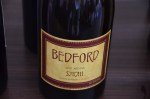
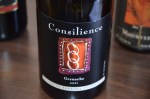
We started afternoon again with the breakout sessions. This time all the sessions were dedicated to wine and of course, included the tasting (Theme: Wine Discovery Breakout Sessions). Out of the 3 available, I picked Ballard Canyon Syrah session (two others were Sanford Winery Sta. Rita Hills and Wines of Greece) – I love Syrah in all forms, and I never heard of Ballard Canyon, so it was an easy choice for me.
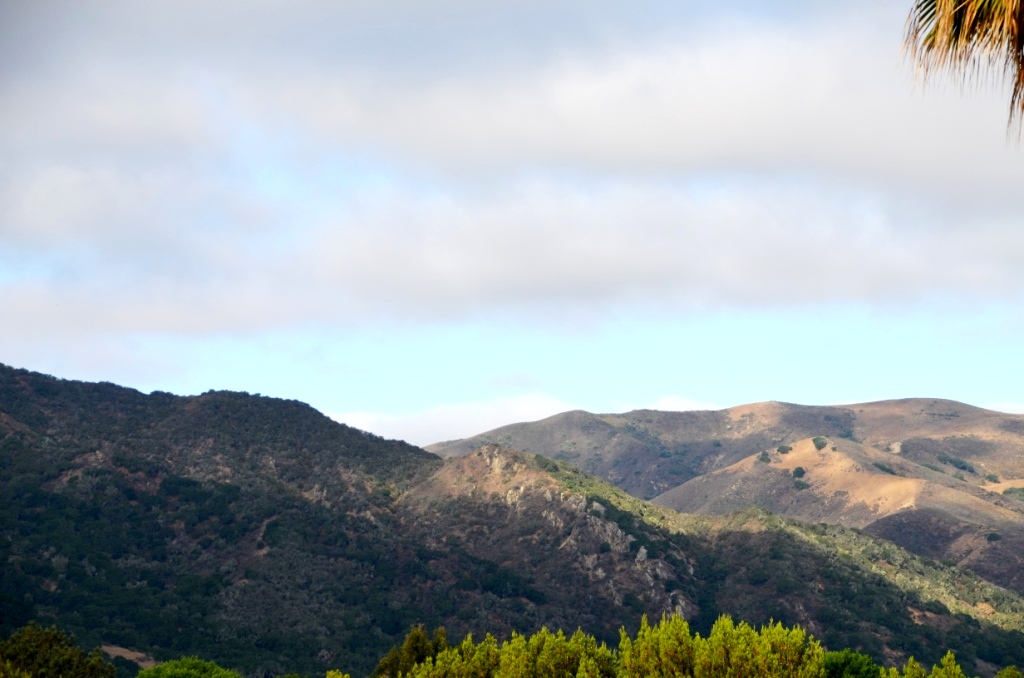
Let me say a few words about Ballard Canyon appellation first. Ballard Canyon AVA is not even one year old – it was approved in October of 2013. Syrah is the primary grape in this small appellation located right in the middle of the Santa Barbara County:
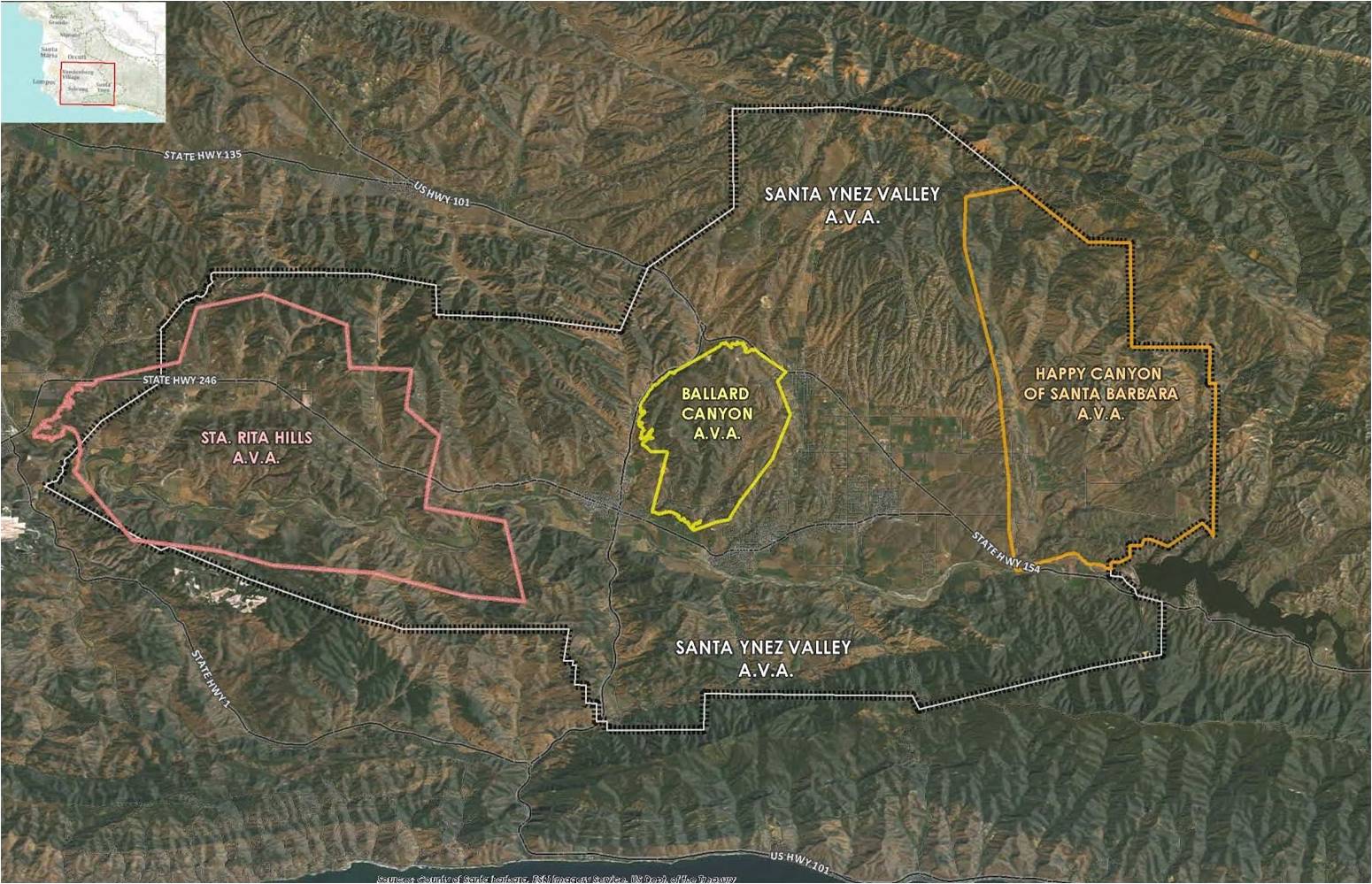 Ballard Canyon AVA was created to capture the essence of soil and climate through the noble grape, Syrah, which is significant enough for this AVA to be known as “Syrah Territory”. Well, yes, Syrah is not the only grape growing in Ballard Canyon AVA, but Syrah plantings exceed plantings of all other grapes, red and white, combined.
The session was presented as a panel discussion, with Patrick Comiskey, Senior Editor for the Wine & Spirits Magazine starting it off with introduction into the state of Syrah in the US. Patrick is one of the leading authorities on the Rhone varieties (and Syrah is squarely one of them), and he is also writing the book on American Rhône movement. I was surprised to hear from Patrick that Syrah is not doing well in US, that it is very difficult to sell and it doesn’t get much recognition. Leaving Shiraz aside for a moment, best known Syrah wines in the world are coming from France. If we will compare Syrah with Cabernet, Merlot and Pinot Noir based on the French wines, and then will look at the US, the proportions of popularity/demand are about the same. And thinking about all the cult and impossible to get wines such as Sin Qua None, Alban, Saxum, Cayuse, No Girls and many others, I think Syrah is doing not that bad… Oh well, I would love to debate it with Patrick over a glass of 1999 La Landonne, but let’s get back to our Ballard Canyon session.


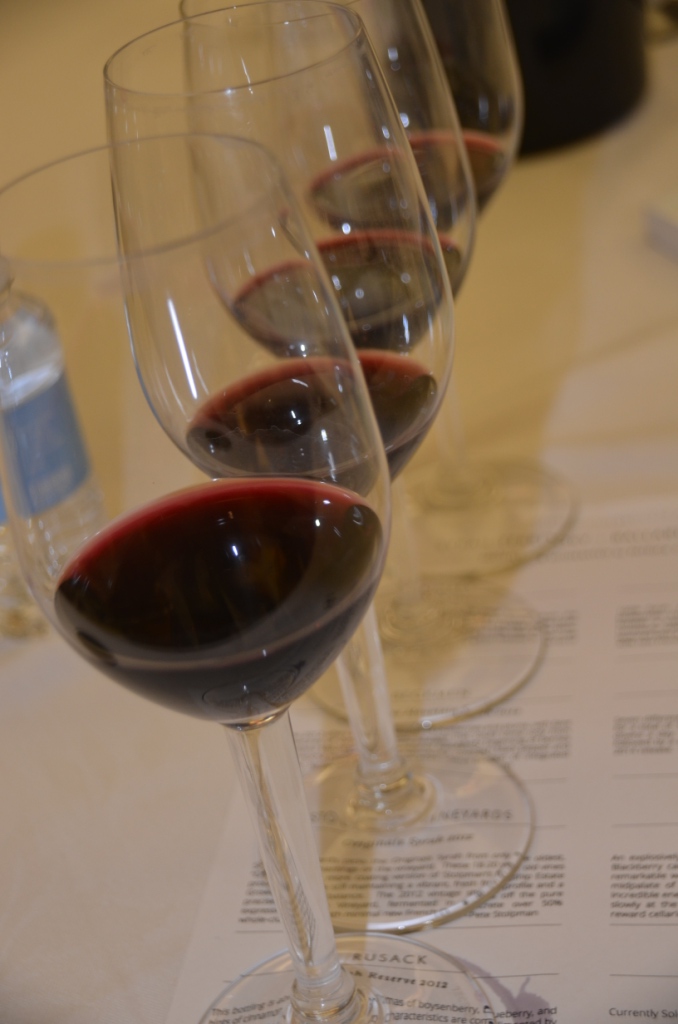 Eight Ballard Canyon winemakers presented at our session (which is a half of total of 16 wineries in the Ballard Canyon AVA), and we had an opportunity to try 7 different wines (the Saarloos + Sons was completely sold out). Here are my notes from the tasting:
2012 Kimsey Syrah
Southwest corner of the appellation. Soft fruit on the nose, dark roasted notes. Spicy, mineral, strong acidity. Young vineyard. Drinkability: 7
2012 Beckmen Purisma Mountain Syrah
BiodynamicLly farmed since 2006, certified since 2009. Tobacco on the nose, nice dark fruit, inviting. Nice, soft fruit, perfect acidity, dark chocolate. Drinkability: 8-/8
2012 Stolpman Original Syrah
Nice, open nose, fresh red fruit,blueberries, a bit sharp on the palate, cherries, espresso. Drinkability: 7+
2012 Rusack Syrah Reserve
Nice, concentrated nose, hint of fresh berries – blueberries, raspberries, touch of roasted flavors. Beautiful fruit on the palate, fresh berries, but supported by fresh tannins. Needs time as tannins are overpowering. Drinkability: 7+
2010 Harrison Clarke Cuvée Charlotte Syrah (15.2% ABV)
Hint of barnyard! dark fruit, baking spices. Cherries on the palate, tannins explicit. Drinkability: 8-
2010 Larner Estate Syrah
Bright Fresh berries, touch medicinal smell on the nose (iodine?), inviting. Beautiful palate, a touch of pepper, enveloping tannins, fresh and open berries, lavender. Drinkability: 8
2010 Jonata Sangre de Jonata Syrah
Bright nose of your fruit, touch of blueberries. More bright fruit on the palate, but then green branches and strong tannins, lacking pleasure. Drinkability: 7
Our day continued with the Panel of Professional Print Wine Writers. Steve Heimoff, James Conaway and Mike Dunne, professional journalists, wine writers and authors of a number of wine books, talked about various aspects of the wine writing. This happened to be one of the most controversial panels of the WBC14, which generated multiple blog posts and whirlwind of opinionated exchanges among the participants. I would have to agree with the Messrs. Heimoff, Conaway and Dunne that in a big schema of things, the quality of writing in the wine blogs can be greatly improved (this very blog you are reading is definitely the subject of such criticism). For the rest of it, just google “Panel of Professional Print Wine Writers wbc14”, and you will get tons of reading material blasting this session, presenters and content – though I have to say that I disagree with a lot of popular criticism. When presented with information, often it is our personal choice whether we will see it as positive or negative, so let’s leave it at that (yes, I do think it was a useful session overall).
Moving on, our next session was the Live Wine Blogging – The Reds, the speed tasting of the red wines, which I already covered in the full detail here. Well, it was actually the last organized session for the day. We still had more wine to drink events in the agenda, but from point of view of the organized sessions we were done.
Our next event was Wines of the World Reception, where we had an opportunity to taste wines from Greece, Italy, Portugal and other countries. At this point in time, I lost an ability to take any kind of reasonable tasting notes, so I had to go simply by “aha, this is good” or “ouch, moving on”. I have to mention that wines of Greece helped me to make a good progress with my Wine Century Club journey towards the coveted Pentavini (500 grapes tasted level) – I added 5 new grapes:
Liatico – 2011 Domaine Douloufakis “Dafnios” Liatiko Crete (red)
Krassato – 2007 Tsantali Rapsani reserve Rapsani AOP Greece (red)
Stavroto – 2007 Tsantali Rapsani reserve Rapsani AOP Greece (red)
Avgoustiatis – 2013 Mercouri Estate Lampadias Rose, Greece (red)
Savatiano – 2013 Papagiannakos Savatiano Greece (white)
Last two events of the day – Wine Blog Awards Presentation and Dinner. To me, Wine Blog Awards feels like a coveted achievement. However, for the last three years, watching the process of nomination, then selection of the finalists and then, for the first time, presentation of the awards, gives me only a thought of diminishing returns. The duration of the time for nomination is literally reducing from a year to a year, and nomination period is open out of blue (I don’t know if this is the attempt to reduce the number of nominations?). This year, we didn’t even know who the judges were. Selection of the wine blogs for the finalists is very strange, as many of the same blogs are nominated for the different categories, and moreover, the blogs are nominated year after year after year. And finally, out of the 9 awards, only two winners were present at the WBC to pick up their awards… It is funny that if you go to the Wine Blog Awards web site now, instead of finding information about the 2014 winners, you can finally find out who the judges were… The whole wine blog awards process needs a revamp and a fresh start, it is way too disorganized as it is.
You know what – this blog post is becoming one of the longest I ever written, so I need to round it up. The food at the dinner was okay, the wines were very good – there was a good selection of the Santa Barbara County wines present at every table, and the selection was different from the table to a table. After dinner, there was more wine – not only parties continued in the number of rooms and suites, but also a number of people brought the wines with them to share, and it was really the last night to drink them. I tried for the first time Horton Norton from Virginia – I had Norton wines before, but this was the first time I tried any of the Horton wines, which is considered one of the best wineries in Virginia (the wine was excellent). Then there were Texas wines, courtesy of SAHMMelier. She brought 2012 Brennan Vineyards Viognier (perfumy and delicious) and 2011 Bending Branch Winery Tannat (powerful and sophisticated). We also tasted 2001 Cottonwood Canyon Pinot Noir Santa Maria Valley (fragrant and beautiful for the 13 years old wine), and 2011 Kalyra MC2 Santa Ynez Valley (restrained and balanced). For some reason, I’m under impression that there was also a wine from Oklahoma (!), but – no picture and no notes, so yeah, it is my loss.


And we are done, done, done here! Sometimes procrastination has its rewards – only yesterday I got the email from organizers of WBC14, Zephyr Adventures, which also included the link to the blog post with all presentations from the WBC14 – here it is if you would like to look at them. And (almost) last but not least – Wine Bloggers Conference 2015 will take place in the beautiful town of Corning in the Finger Lakes region in New York, August 13-16, 2015 – if you are into the wine blogging, you definitely have to be there, you have to experience WBC to yourself. The registration is open now, and (this is what they say) availability is limited, so you might want to think about putting the stake into the ground now…
Last thing (I promise) before we are done – I would like to thank Zephyr Adventures and Santa Barbara Vintners for the great event they put together for all the wine bloggers. I know firsthand how hard it is to organize a great conference, and especially considering the size and diversity of the wine bloggers group, I can only say wholeheartedly “Thank you very much!!” for all the hard work put into bringing together such a great event.
Yes, we are done. If you are still with me, thank you very much for reading. Cheers!
Learning With #WineStudio – Coup de Foudre Pétillant Naturel from Vermont
 Have you tasted wines from Vermont? Do you know what Pétillant Naturel is, or have you tasted any of them before? Yep, me neither – until I joined the #winestudio event a few weeks ago. In case you are still not familiar with the concept (which you should be by now!), #winestudio events are intended to showcase unique and often lesser known wines and wine regions; these events are usually organized in series, take place every Tuesday on Twitter (just search for the hashtag #winestudio), and represent great learning opportunity.
The event I’m talking about was part of the series discovering lesser known wines of United States – Colorado, Texas, Vermont, Virginia, Wisconsin – not a bad line up, huh? This particular session was dedicated to the wines of Vermont, and for me, there couldn’t be a better wine selected to represent the Vermont in the series. Just look at the bottle top in the picture – how many wines did you see with this type of closure? Yep, not many. And the learning? Wow, all the way!
Let’s start with Pétillant Naturel. It was the first time I encountered this type of wine, and looking for the information on internet, I discovered that I’m almost missing a train (well, I’m on it now). Classic méthode champenoise sparkling wines are made with the secondary fermentation taking place in the bottle. Pétillant Naturel wines are also sparkling wines, but made with the first(!) fermentation finishing in the bottle. No blending, not chaptalization, only the grapes and (usually) the natural yeast. The resulting wines are typically more fruit forward and expressive of the terroir, and also lighter than Champagne and such. They also develop only half of the pressure of the typical Champagne bottle, thus a standard “beer bottle” closure works quite well. Talking about “missing the train”, it appears that Pétillant Naturel wines are made all over the world and have quite a substantial following – here is an interesting article from the Wine & Spirits magazine.


Let’s continue with the learning and let’s talk about the wine. First, I love the name – French expression “Coup de Foudre” stands for “love at first sight” (unfortunately, the winery will not be able to use this name going forward, as there is now the winery in Napa Valley under the same name, so going forward the wine will be called “CdeF”).
I don’t want to use the term “natural wine” here due to the associated controversy in the wine media, but I will let you be the judge of it. The La Garagista winery is using organic methods and in the process of conversion to biodynamic. The grapes for this wine had been hand harvested and foot tread (!), and fermented with the natural yeast in the glass semijohn for about 5 weeks, then bottled to finish fermentation under cap as pétillant naturel. I think this is as natural as the winemaking can be.
And the love at first sight (and sniff and sip) it was for me! 2013 La Garagista Coup de Foudre White Pétillant Naturel, Vermont (11% ABV) had a yellow tingled color in the glass, quite intense. The nose was hard to describe – minerality was the first thing which was coming to mind, but also it was light, balanced, showing flowers and fresh bread, touch medicinal. On the palate, the wine was very refreshing, with herbs and touch of white stone fruit + minerality. If I can give you a frame of reference, the natural wines of Jean-Pierre Robinot and Frank Cornelissen come to mind, with their pure expression of terroir. I couldn’t stop drinking this CdeF wine, and the best overall descriptor I can come up with is “delicious”. Drinkability: 8
Added [personal] bonus – this wine is made out of the grape called Brianna, which is a cross between European varieties Bourboulenc and Tibouren Gris – this is a new grape for me, so I’m inching forward towards the coveted 500.
That’s all I wanted to share with you. If you like to learn more about unique wines and regions, do yourself a favor and join the #winestudio conversations, I’m sure you will be happy you did. If you can find this Coup de Foudre wine anywhere – buy a case (and send me a few bottles, will you?) Also, go and look for the Pétillant Naturel wines – you might discover the new love. Cheers!
Last Bottle Sign Up ($10 credit)




 Talk-A-Vino