Archive
One On One With Winemaker: Michel Rolland
To anyone inside of the wine circles, the name “Michel Rolland” needs no introduction. If you enjoy an occasional glass of wine but don’t dig deep, very deep into what is behind the label, it will probably tell you nothing. Unlike Araujo, Bryant Family, Harlan, Staglin – right? All of these are the cult wines from California, revered, adored and drooled upon by many wine connoisseurs. Let’s not forget Tenuta dell’Ornellaia from Italy, Angélus and Ausone from St-Emilion and l’Evangile from Pomerol. In case you didn’t know, Michel Rolland, classically trained French winemaker, is behind these and hundreds (I’m not exaggerating – search for his name on Wikipedia) of other wines. He is a consulting winemaker, sometimes also referred to as “flying winemaker”, who made wine on all continents and all possible and impossible corners of the world.
When I got an invitation for lunch with Michel Rolland, who was visiting New York to introduce some of his newest wines, I was excited at first, and then bummed. The lunch was overlapping with the Jura wine tasting, which I was planning to attend for a very long time. So as a last resort, I asked if I can meet with Michel Rolland after the lunch so I can ask him a few questions. To my absolute delight, kind folks at Deutsch Family, a wine importer company hosting the event, managed to arrange the time for me right after the lunch to sit down and talk to Michel Rolland.
As you understand by now, unlike most of my virtual interviews in this “one on one” series, this was a real face to face conversation, with a real handshake and visible emotions. At first, I was thinking about recording our conversation. That probably would be okay, but I never did this before, and fighting with technology in front of the busy man who was doing me a favor didn’t feel right. So I did what I always do – I prepared my questions in advance. After a subway ride and a brisk walk, I arrived – on time – and shake hands with the legend. We sat at the table, three different glasses of red wine appeared on the table. And conversation started – here is what we were talking about, with the precision of my fingers hitting the screen of the trusted iPad:
Q1: You made wine all over the world. Is there one place or one wine which was your absolute favorite?
“No. I like the challenge, so every time I’m going to the new place, it is very exciting.”
Q2: What was your most difficult project and why?
“To make wine, we need soil, grapes, and weather. When the weather is not playing, it is very difficult. There were 2 places which were the most difficult. First one was India – everything is great except the climate. India has only 2 seasons – dry and wet. Another one was China – extreme climate, very difficult to make wines. In the project in China, years 1,2 and 3 had no frost, then in the year 4 we decided not to cover the vines, and half of the vineyard became dead.”
Q3: You are known to create big and bold style wines. At the same time, it seems that wines with restrained are more popular today. Did you make any changes to your winemaking style to yield to the popular demand?
“After 43 years in this job, it is good that I have style. So the style is what the market is asking – the wines are made to be sold, so we have to follow tendencies in the market. Even that not everything is changed at the same time, it is more of the evolution and adhering to the fashion. The wine to drink tonight is not the one to be stored for 10–15 years. So the wine have to be made more enjoyable younger, and this is what we do.”
Q4: Where there any projects which you rejected and if yes, why?
“Yes, of course, but it doesn’t happen very often. The biggest concern is the relationship with the team. Day to day in the cellar and field it is the team – if the relationship with the team is not good, I prefer to leave. For sure if nobody is happy, then it is better to leave. I never refused project because it is too challenging. In Chile, 25 years ago the variety called Sauvignonne had to be used, which was hard – and I didn’t refuse the project because it was challenging. So the relationship is the major part.”
Q5: Again, appealing to your worldwide expertise, what do you think is the hottest new wine region today, if there is one?
“We have to look back – we have new world and old world. France, Italy, Spain – being there before. Then came US, then South America. Chile, and Argentina is growing the fastest now. Then there is New Zealand and Australia. But I think the area around the Black Sea, which was historically there, is very promising. Now Turkey, Georgia, Armenia, Russia all started making really good wines and we will see great wines coming from there. I [actually] currently work in Turkey, Russia, Bulgaria.”
Q6: What are the most undervalued wine regions in the world today, if there are any left?
“One of the most difficult countries to make and produce wines is South Africa – great wines which sell well only in UK, but very difficult everywhere else.”
Q7: What do you think of natural wines, which are very often are very opposite in style to “big and bold”
“We can’t fight against natural wines, but all the wines are natural [laughing], minimal intervention. We have to slow down with all the chemicals, but the wines should be made to be good wines – a lot of “Bio” is done only for marketing, so if it is done smart, it is good. I have small estate Val de Flores in Argentina which is for 8 years is completely “bio”, so yes, I support that.”
Q8: What are the latest projects you are working on?
“The one in Tuscany (Maremma) running by the German family, they have a wonderful vineyard and wonderful winery, and now making very good wines.”
Q9: You are a role model and a teacher for many in the wine world. Who were your role models and teachers?
“When I began my job my mentor was Émile Peynaud. It was another era. When I began the oenology, we were not speaking about quality. The goal was to avoid problems. I discussed this a lot with Peynaud. Peynaud was convincing people to do better in the cellar, to have clean wines, to use better material. It was very difficult, but Peynaud was great dealing with the people, so I learned a lot from him, including the patience for dealing with people. I often said that my job is 80% psychology, and 20% oenology, this is what I learned from Peynaud.”
Q10: What are the new trends in the wine world? What wine consumers should expect to see and experience over the next few years?
“I think people like more and more approachable, and gentle wines – full bodied, but gentle. The big problem I see is that during the 90s, I did a lot of work where we dramatically improved quality. In the 2000s, we drunk best wines we could. What I don’t like now that everybody is going after cheaper and cheaper wines – we can still do good wines, but not better than in the previous years. In the end, the wine is a business, so I don’t want to see people reduce quality just to survive.”
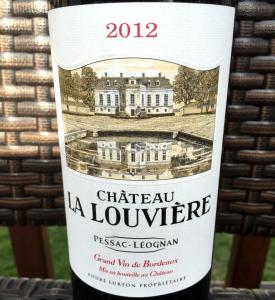 As you can imagine, Michel Rolland didn’t come to the New York to talk to me. He was promoting his latest project, the wines of André Lurton which he helped to create. André Lurton is the winemaker in Bordeaux whose family winemaking heritage goes back more than 200 years, and who is not only known as a winemaker but also was very instrumental in advancing Bordeaux wine industry, including creating of the new appellations.
Here is the story of how Michel Rolland started working with André Lurton (don’t you love wines with the story?):
“Lurton is one of the last projects. I had an interview on the radio, and the journalist asked me if I have any regrets. I said at 65 years old, I don’t have a lot of regrets. When making wines, you get to meet wonderful people from all over the world. So the regret is “why I never met this guy” – one of such people is André Tchelistcheff – I met his wife, but never met him. And then the journalist asked me “who else”. So I said in Bordeaux, there is André Lurton, who I never met and worked together.
3 hours after the interview I received a call from Andre Lurton who said: “come and meet me”. Now we are working together.
So what we are doing is looking after the future, what can we produce for the people. We have to make approachable wines – still with the ability to age, but more approachable. “
This was the end of my conversation with Michel Rolland. We spoke for about 45 minutes, and it was clear that Michel had to continue on with his day. But there were still three wines standing in front of me, so I had to go through the speed tasting and only capture general impressions, there was no time for detailed notes. Here are my brief notes:
2012 Château Bonnet Réserve Rouge Bordeaux ($14.99, Merlot/Cabernet Sauvignon blend) – beautiful tobacco nose, fresh fruit, soft, round – clearly Bordeaux on the palate, green notes, restrained. Green notes do get in the way, though.
2012 Château de Rochemorin Rouge Pessac-Léognan ($33.99, Cabernet Sauvignon/Merlot blend) – beautiful, classic Bordeaux, great finish, some presence of the green notes
2012 Château La Louviére Rouge Pessac-Léognan ($74.99, Cabernet Sauvignon/Merlot/Petite Verdot), new oak, open fruit on the nose, lots of complexity, very beautiful, layers, delicious finish. Overall delicious wine, my favorite of the tasting. This wine was polished and concentrated, and I would love to drink it every day.
What is interesting for me here (besides the clear proof that I’m a wine snob who prefers expensive wines) is that there is a clear progression of taste and pleasure in this three wines – the price was increasing accordingly, and this is how things are quite often in the wine world.
After an encounter like this one, and the pleasure of talking with the legend, if blogging would be my job, I would gladly proclaim “I love my job”. But even without it, I still would proudly say that I love blogging as it makes possible conversations like this one, which is priceless for any oenophile. Cheers!
One on One with Winemaker: Marcello Lunelli of Ferrari Trento
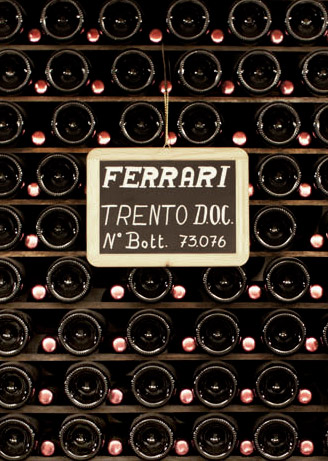
Source: Ferrari Winery web site
I’m sure Ferrari wines don’t need long introduction to any oenophile. Giulio Ferrari started eponymous winery in 1902 in the mountainous region in Northern Italy called Trento. He was the first person in Italy to plant substantial quantities Chardonnay, which he personally brought from France, and then started production of the “Classic Method” sparkling wines, inspired by the French Champagne. In 1952, Giulio Ferrari had chosen Bruno Lunelli to become his successor at the winery, and this was the beginning of the second chapter of Ferrari’s history. The rest is, yes, history, and you can read it for yourself here.
Over the years, Ferrari received numerous accolades, including most recent ones, “Sparkling Wine Producer of the Year 2015” from Tom Stevenson in the UK and “European Winery of the Year” from Wine Enthusiast magazine in the US. I had an opportunity to [virtually] sit down with Marcello Lunelli, Ferrari’s winemaker, and ask him a few questions – you can read our conversation below:
Q1: Ferrari is considered a symbol of the Italian Art of Living. What this “Italian Art of living” concept includes, how would you define it?
A: My family is incredibly proud that Ferrari as a brand is considered a symbol of the Italian Art of Living internationally. Whether it is being served at the Quirinale, home of the President of the Italian Republic, or used to toast celebrated events in the world of fashion, sport, cinema, culture, or design, Ferrari represents that hugely evocative emotional blend of tradition, sense of place, inherent quality, and the poetic virtues of our most cherished way of life.
The Italian Art of Living embodies the passion for beauty, taste and elegance; the ability to embrace innovation while respecting traditions; and a zest for life that is the very soul of the Italian spirit.
I firmly believe that the success of Italian wine is due to a unique love affair that exists in many countries for our way of life, our food, our rich and unique history, and the traditions of our culture. Beauty and pleasure are mutual to one another and Ferrari wines has joined together with fashion and design brands as ambassadors of the Italian lifestyle.
Q2: How is riddling done at Ferrari – still by hand or with use of the machines?
A: In the Ferrari winery we still do 1/3 of the riddling by hand, in particular, all the vintage wines and reserves. The rest is done with use of the machines.
Q3: Typical “house cuvée” at the Champagne house is a blend which might include about a 100 so called Vin Clairs, still wines coming from different vineyards and vintages. Does Ferrari have similar approach in the production of the non-vintage sparkling wines?
A: We do have a similar approach in the production of non-vintage sparkling wines. The biggest work in the vineyards and in the cellar is to keep separate each single homogeneous zone production in order to create the best cuvée.
Non-vintage sparkling wine cuvée includes grapes coming from vineyards within the Trentodoc denomination, which means only in Trentino region and it is created with 70/80 different base wines. Moreover vintage sparkling wine is made with grapes coming only from our own vineyards and it is a result of 40/60 diverse base wines of the same year.
Q4: Ferrari is promoting sustainable viticulture. Do you have any plans to become all organic, or at least to produce an organic wine?
A: One of the core philosophies of the Lunelli Group and Ferrari Winery is the advancement of sustainable practices throughout all our vineyards. We believe that by practicing sustainable farming techniques we not only improve the quality of our wines but protect and preserve our majestic environment and improve significantly the health and safety of our farmers. Indeed we strive to make sustainability a cultural heritage for all of our grape growers.
All of the vineyards owned by my family including those of the Ferrari winery and Tenute Lunelli are cultivated according to organic agricultural principles and in the near future they will all be organic. At the moment we are already producing an organic certified red still wine, Aliotto from our estate in Tuscany.
Q5: Considering that you share common name with the world famous car manufacturer, did you ever try to create a business relationship with Ferrari the car maker?
A: We are glad to share common name with an iconic brand such as Ferrari Maranello and to have a very good relationship with them. We are also proud to have in our photo gallery of famous moments, striking pictures of Grand prix ceremonies celebrated with Ferrari wines.
We both work throughout the world in promoting the very best of Made In Italy.
Q6: What was your most difficult vintage at Ferrari and why?
A: One of the most difficult vintages was 2014 due to a very long and intense rainfall during the growth cycle of the vine which presented a great challenge in vineyard management to ensure healthy grapes for the harvest. It is in a very complex year like 2014 that man, his work and his vision make the difference.
Q7: What is the oldest Ferrari wine you have in the cellar? What was the oldest Ferrari wine you tasted?
A: The oldest Ferrari wines already disgorged are from the sixties, when Giulio Ferrari and Bruno Lunelli were still working in the winery. The oldest Ferrari, still on the lees, is 1972 vintage, which is also the first vintage of Giulio Ferrari Riserva del Fondatore.
I was lucky enough to taste the first vintage of Giulio Ferrari Riserva del Fondatore. It was amazing, well balanced mature notes with an unexpected youth, fruit of our Trentino territory, Trentodoc mountain agriculture which allows for both longevity and youthfulness.
Q8: Do you have a favorite vintage of Ferrari wines?
A: My favorite vintage is Giulio Ferrari Riserva del Fondatore 1995 for two reasons: first of all because it is considered the vintage of the century where power, elegance, longevity and freshness are combined in one single wine and all these factors are in a perfect and unshakeable balance. Secondly this vintage has a personal affection because I had the good fortune to start to work at Ferrari in 1995.
Q9: Do you only use two varieties in the winemaking – Chardonnay and Pinot Noir – or do you use any others, such as Pinot Meunier, for instance?
A: We use Chardonnay and Pinot Noir grapes separately for white wine making in order to create all our 100% Chardonnay Ferrari wines and the Ferrari Perlé Nero, our 100% Pinot Noir, blanc de noirs. For our Rosé we use both the grape varieties: Pinot Noir, using the Rose making-process, which gives body and structure to wines and Chardonnay which provides elegance and freshness.
Q10: Do you produce or do you have any plans to produce still wines?
A: Ferrari Winery creates a remarkable collection of Trentodoc sparkling wines, yet the Lunelli Group also includes a series of elegant and long-lived still wines, under the brand, Tenute Lunelli. This brand embraces wines from three regions, each superbly suited to the production of winemaking grapes: Trentino with its mountain viticulture; Tuscany with the rolling Pisan hills and Umbria which reveals herself in the small, fascinating DOCG of Montefalco. All our still wines are representative of our standards of high quality with the ability to demonstrate the variety of our diverse lands; this is the incredible richness of the Italian wine industry. Respect for the land and sustainability are today common core values in all our brands. Besides the Estates and Ferrari, the Lunelli Group is made up of a distillery, Segnana, a mineral water, Surgiva.
Q11: Do you have any favorite Champagne wines, or any sparkling wines for that matter?
A: Champagne Bollinger and Cuvée Sir Winston Churchill Pol Roger which embody the characteristics I love in sparkling wines; elegance, refinement and longevity.
Q12: When you are not drinking Ferrari wines, what are your favorite wines, from Italy or anywhere in the world?
A: When I do not drink Ferrari I drink my favorite red still wines from Sangiovese grapes and Nebbiolo grapes: Brunello di Montalcino and Barolo. When I choose Barolo I always have discussion with my father because he prefers Barbaresco, with less power but more elegance.
And we are done here, my friends. I think this was quite fascinating and interesting conversation, adding an interesting detail to what you might already know about Ferrari wines – for sure this was very informative for me. I have to admit that I would looooove to try that 1972 Giulio Ferrari Riserva del Fondatore – well, the man can dream, right?
I didn’t have any new wines to taste to leave you with some tasting notes, but if this conversation made you thirsty, here are the links to my older posts about Ferrari Brut Classico and Ferrari Perlé. Cheers!
One on One with Winemaker: Aurelio Montes of Montes Winery, Part 2
As promised, here is the continuation of our conversation with Aurelio Montes Sr – Founder and Chief Winemaker of Montes Winery. You can find first part of the interview here.
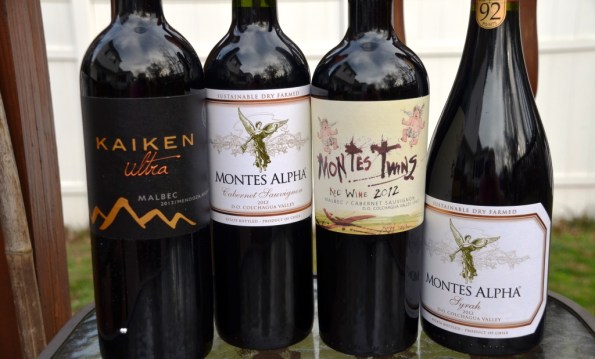 While the first part offered insight into unique (and unexpected) areas such as using of Feng Shui principles and Gregorian Chants at the Montes winery, this second half of the interview is also full of interesting details about present and future of Chilean winemaking. Here we go:
Q7: Do you use natural yeast in production of your wines?
A: Not for white varieties, although we have made Chardonnay trials in coastal areas, but in most cases result in that we obtain a very slow and long fermentation, which jeopardizes the final quality of the wine.
We prefer to use selected yeasts in white varieties, which ensure us a good rate of fermentation, working at low temperatures and retaining maximum aromatic potential of the wine.
In the case of reds it is different. We love to work with natural yeast when possible. They tend to express terroir better than the selected ones. However, much will depend on the conditions of the season, that is, if the season was very warm and the fruit arrives to the winery with a very high potential alcohol, we then prefer to use selected yeast that will ensure a good end fermentation. In the case of very rainy seasons, where the grapes arrive at the winery in bad conditions with some presence of fungi, we prefer to don´t take any risk and use selected yeast as well.
Under normal harvest of red grapes, without rain during maturity or heat peak’s that can cause an exaggerated increases in sugar content, we can then use natural yeast, maintaining important regimes of oxygen during fermentation and also moderated temperatures, in order to not stress these yeasts that behave in some cases very sensitive when the conditions are adverse during fermentation.
Q8: Montes Alpha had been a pioneer in many areas of winemaking in Chile. Particularly, it was the first winery to produce Syrah wines. How would you describe your Syrah compare to Northern Rhone, California or Australian wines?
A; Our Syrah, because of the natural conditions, and some winemaking policies, is different to Rhone or Australian Syrah. Ours is midway between the two mentioned valleys. It is ripe but not as jammy as the Australian one…is austere but still far more friendly and approachable than the Rhone style. This puts us in a perfect position, in terms of quality, and in fact my opinion is that the best New World Syrah comes from Chile
Q9: What was your most favorite vintage of Montes Alpha Syrah and why?
A: I think the 2006 vintage was a very good harvest, where this wine was well known. But I feel that the 2012 was even better. We had a very good season in terms of absence of spring frosts, an accumulation of rain water which enabled us to reach harvest with a low level of risk, and also a free of summer rains and reasonable temperatures. In particular, our Syrah from Apalta that comes from mountain grown fruit behaved very well, controlling a balanced amount of clusters per vine, allowing us to concentrate fruit color and body. Elegance and aromatic complexity found in the Apalta Syrah is really incredible. From this estate also comes the Syrah that goes to our Icon Folly made 100% out of Syrah.
Q10: In the wine world, there is always a conversation of the “next big grape”, which is usually country and region specific – like Sauvignon Blanc in Argentina, for instance, or Chardonnay in Oregon. Is there a “next big grape” for Chile?
A: I like to believe that the Carmenère can be our “next big grape”. But we struggled to position it, despite the efforts the sector makes. Chile has a high level of quality in this variety, considering various valleys and different heights, in the central and even coastal areas of Chile. After this many years of experience we must remain vigilant and continue working and learning in order to deliver the best quality Carmenère in the world.
I would like to add that recently Chile also has been making quite some noise on varieties such as Pais, Cinsault, Muscat, Grenache, Carignan, etc. In this last varieties with very good results.
In our case we crafted the Outer Limits line, which allows us to be more adventurous, dreamers, and let our imagination fly to experiment;
However I believe that the Cabernet Sauvignon is still the king of varieties that Chile has. Not only well renowned for the great quality but also because it represents the productive power and essence of the Chilean wine.
Q11: Does Montes Alpha have plans for the new grapes to be planted? Anything you are experimenting with right now?
A: We are not closed to the possibility. We are always looking for new things, but today to plant new surface is a sensitive issue. Chile is going through a time of overstock of wine, which forces us to be cautious about increasing our production. In the northern hemisphere the situation is similar, which puts us at a critical point.
Without adding the irrigation problem that the viticulture is facing around the world, which forces us to be very astute at this point. Today, more than planting new varieties on new surfaces, we are willing to replace those varieties and vineyards that do not meet our expectations, and replace this to try some new things.
For example, we have had very good reviews on our Tempranillo and Tannat 2015, after years of testing and harvesting dates, and exploring winemaking forms. Maybe we can do something about those varieties in the near future.
We are also touring various new areas as Cachapoal Valley, in search of a distinctive variety with unique quality and expression. Is under this inspiration that we have found and made quite interesting things, such as Pink Moscatel from Curtiduría, or a Pais from Lolol and other interesting projects that currently are still in the oenological kitchen … but this strategy of seeking other wine realities has given us many satisfactions to myself and the team.
Q12: when you are not drinking Chilean wines, can you give me a few examples of your favorite wines, regions and producers?
A: In terms of wines, if I were to pick an outstanding wine I would choose an Ornellaia Masseto. And if I could delight and reward myself with another, it could be an old vintage of Pétrus.
And we are done with the interview. It is time to take a look at another two Alpha Montes wines I tasted:


2012 Montes Alpha Syrah Colchagua Valley, Chile (14.5% ABV, $25)
C: very dark garnet, almost black
N: blueberries, violet, sage, fresh, touch of tobacco
P: silky smooth, round, roll-of-your-tongue, restrained, nice minerality, balanced fresh berries, touch of spice, touch of sweet licorice, excellent overall balance
V: 8, easy to drink, will greatly evolve
2012 Kaiken Ultra Malbec Uco Valley, Argentina (14.5% ABV, $25)
C: dark garnet, practically black
N: concentrated, dark fruit, plums, violet, tar, tobacco, very, very inviting – super sexy, first analogy
P: wow, concentrated fruit, luscious, polished, layered, round, balanced, great dark power, well integrated tannins
V: 8+, outstanding, wow and dangerous (and sexy! – I rarely designate wines like this, but … of well, I will wait for you to try it)
And we are finally done here. I hope you enjoyed our conversation as much as I did, and may be even learned something new. Until the next time – cheers!
One on One with Winemaker: Aurelio Montes of Montes Winery
 Things in life often connect in most unexpected ways. Few years ago I read an article about the ways music affects the winemaking. I was unable to find that article or much references ever since. Many times I came across the wine with an interesting label and somewhat peculiar name of Montes Alpha – but I never tasted one.
Few weeks ago I got a note about wine samples from the winery called Montes Alpha from Chile. That note also mentioned Gregorian Chants and Feng Shui been essential elements in wine production at that very winery. This was enough to send my curiosity through the roof and ask for more information – and talk about the way things connect in life, right?
Who can better answer questions wine and winery questions if not the winemaker? I gladly used an opportunity to [yet again] sit down (yes, virtually) with the winemaker and send the barrage of questions his way. I have to tell you that all my questions were answered well in depth – and I think you will find this conversation interesting too. Here is our dialog with Aurelio Montes Sr – Founder and Chief Winemaker of Montes Winery.
Q1: I understand that your winery was built using Feng Shui principles. Are there any specifics in using Feng Shui specifically for the wineries? Do you have any followers from other wineries who came to learn from Montes Alpha experience?
A: We seek to apply the principle of balance and harmony of space in our winery. If you live and / or work in nice balance places, the energy will continue their natural rhythms and will lead to welfare in all its aspects.
It is in this sense, it was incorporated as a fundamental principle in the early stages of design and construction of our winery, the inclusion of all basic elements such as water, metal, wood, stone, etc., in accordance with the principles of this Asian discipline, to ensure this harmony and above all a positive atmosphere.
For example at the entrance to the building is the wooden bridge over a small lagoon, whose water flows toward the building. A fundamental principle of Feng Shui is that prosperity will only come if the water, which represents energy, flows into the center of the building, rather than away from it.
I understand that no other winery has incorporated the Feng shui principle. In our case, one of our founders, Douglas Murray, was always fascinated with this concept and idea of building a harmonious winery and wine with our environment, therefore we hired the advise of an expert in this field to introduce the principles of feng shui in the foundations of our construction.
Q2: Did you apply or can you even apply Feng Shui principles in the design of the vineyards?
A: Feng shui is related to harmonize spaces. In our case it was considered to harmonize the spaces between the vineyards, winery and of course, our people. To get, as a result, the best wine we can possibly achieve. I believe that in a balanced environment, all pieces come together to perfectly to achieve a greater result.
I am not an expert on the subject though, and not sure how Feng shui can be applied to the vineyard. However our vineyards are planted according to quality policies, soil conditions, variety, etc. I believe that the harmony in the management of our vineyards is the result of the best possible quality grapes we can achieve, keeping always in mind the sustainable conditions.
Q3: I heard about Gregorian chants at the winery. How and where do you use them?
A: The Gregorian chants play constantly in the icon barrel room of our winery at our La Finca de Apalta Estate. The wine seems to enjoy it and I love it. In my opinion, besides the physical effect on wine, it does have an important effect on people’s moods and they work with more happiness and confidence. It keeps us calm in the cellar.

Q4: Did you try to test the effect of Gregorian chants on aging of the wines by creating a “control group” of same exact wine from same exact vintage and aging it under regular conditions (no music), and then comparing the two wines in the blind tasting?
A: For long now I have been interested in the effects of music in wine. I am happy to share with you a study we funded at Heriot Watt University about the effect of background music in wine tasting.
In terms of wine tasting the “control” with no music at all had a score 20% lower than the tasting held in presence of music.
Q5: Did you experiment with impact of music on the grapes in the vineyard? I remember reading about some of the experiments in that area, and I wonder if you have any information you can share here
A: Not yet and I don’t know of anyone that has done it. I presume there are so many uncontrollable variables such as temperature oscillation, different weather conditions, etc that would make it difficult to assess the particular influence of music in the vineyards.
Q6: Montes Alpha is certified Sustainable winery. Do you have any plans to become an organic or may be even biodynamic winery?
A: From our beginnings, our philosophy has been to produce wines of the highest quality, always concerned with the care of the environment, developing a sustainable viticulture in all stages of winemaking.
We believe sustainability covers a broader spectrum and a larger concept than being only an organic or biodynamic winery. It not only concerns the caring of our vineyards and the environment that surrounds it, but also the legacy that we leave for the next generations. We are very careful with our habitat, natural resources and above all improving conditions for the community.
Being sustainable also takes care of the social aspects of our workers – having a profitable operation permitting us to offer a stable place to work.
We also minimize our use of energy and treat our waste-water to reuse it in the irrigation of our vineyards.
Having said all the above we still have some plans to develop a line of biodynamic wines in a few years. We have also moved forward in improving our carbon footprint, becoming one of the few carbon neutral wineries in Chile. We have not only traveled to improve our carbon footprint but also to significantly reduce the use of pesticides and replace them with more friendly environmental agents.


No, we are not done yet with the interview, but I don’t want to overload you with an information. I can also bet you are thirsty now, so let me present to you two of the Montes Alpha wines I had an opportunity to taste:
2012 Montes Alpha Montes Twins DO Colchagua Valley (14% ABV, $15, 50% Cabernet Sauvignon, 50% Malbec)
C: very dark garnet, almost black
N: a bit of funk, herbs, blackberries, hint of black currant, inviting
P: good dark fruit, chalk, firm structure, pencil shavings, tart acidity on the finish, restrained. Next day the wine acquired some umami complexity with notes of tobacco.
V: 8-/8, an excellent wine hiding under simplistic packaging; outstanding QPR
2012 Montes Alpha Cabernet Sauvignon Colchagua Valley (14% ABV, $25, 90% Cabernet Sauvignon, 10% Merlot)
C: dark garnet, almost black
N: cedar, cassis, classic
P: cassis, dark fruit, clean, round, soft
V: 8, outstanding, round, easy to drink
Here you go, my friends. Do you use Feng Shui in your life? What do you think of wine and music? And of course, did you have any of the Montes Alpha wines? I have two more wines to talk to you about, and continuation of our conversation with Aurelio Montes Sr. to share, so stay tuned.
To be continued…
From Marche to Mendoza, With Vine
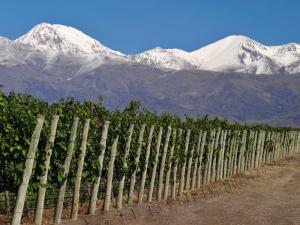
Rutini Vineyards. Source: Rutini Wines web site
In 1884, Felipe Rutini arrived to Mendoza area in Argentina. Continuing family traditions from the early 1800s when his father, Francisco Rutini, started making wine in the area known as Le Marche in Italy, he planted grapes and started making wine now in Argentina. Don Felipe, as he became later known at, was 19 years old when he founded La Rural winery in the district of Coquimbito. In 1925, Rutini family continued pioneering traditions of Don Felipe by planting first vines in the Tupungato area of the Uco Valley, a high altitude home to some of the very best vineyards in Argentina.
Today Rutini family is one of the biggest wine producers in Argentina, making about 9.5 million bottles of wine per year and exporting it to the 40 countries. You might be well familiar with the line of wines under a common name of Trumpeter, which include Chardonnay, Torrontes, Malbec, Cabernet Sauvignon, Pinot Noir and a number of others – Trumpeter is one of the 6 different ranges produced by Rutini Wines. Recently, Rutini Wines started introducing a new “Classic Series” line of wines in the United States, and I wanted to share my impressions from few of the wines in this line which I had an opportunity to taste.
But before we talk about the wines, let’s talk a bit more about Rutini family wine business today. Once again, I got together – well, yes, virtually, same as few times in the past – with Mariano Di Paola, head winemaker for Rutini Wines and one of the top winemakers in Argentina, and I had an opportunity to ask him a few questions. Here is what we talked about:
Q: Rutini family started making wines in Italy. Is there still a connection today at the Rutini Winery back to the traditions and customs of Region Marche?
A: No there are no direct links, but we still try to use the original Rutini winemaking influence today. Felipe Rutini was a visionary man who believed in Argentina’s winemaking capabilities, planting the first vines in Mendoza, and generations after we still work hard to maintain his legacy.
Q: If I understand correctly, Rutini is introducing its Classic Collection wines in the US. For how long had you been producing the Classic Collection wines? What were the main markets for it until now?
The Rutini collection was first released in Argentina with the 1996 Malbec, followed by Merlot and Gewürztraminer. It has been available in the U.S.: NY, TX, FL, MD, DC, MA, RI, and CA since the end of 2013.
Q: What are the oldest vines growing at Rutini vineyards?
A: Select Malbec vines in La Consulta date back over 100 years.
Q: What was the source of inspiration for the Rutini Sauvignon Blanc?
A: We wanted to create a well- balanced Sauvignon Blanc that spoke to the true characteristics of this varietal and represented the best quality of this wine.
Q: Sauvignon Blanc is really not the grape Argentina is known for. Do you think Argentinian Sauvignon Blanc has its own style and will become a wide movement?
A: Yes, Argentine Sauvignon Blanc has its own style which is heavily dictated by the particular growing region. Our continental climate, highly influenced by the Andes, and high altitude provide us with optimal grape growing conditions. Sunny day and dry summer conditions allow us to harvest fully ripened grapes. The cool evening temperatures and controlled irrigation serve to prolong hang time and to create a good balance between sugar and acidity. As there is more interest to try other Argentine varietals, there will be more Sauvignon Blanc production. Our Sauvignon Blanc style, of course, offers really good acidity, lemongrass aromas, floral aromas, but we also focus on producing a mineral style.
Q: Malbec is unquestionably a star red grape of Argentina. Is there a next great Argentinian Grape on the horizon, or is it going to be Malbec for a while?
A: We are always experimenting with different varietals, and while the native varietal Torrontes produces an exceptional and distinct white wine, Malbec will always shine when grown in this region, and it really speaks for the tradition and future of winemaking in Argentina.
Q: Do you use any of sustained, organic or biodynamic methods in production of your wines?
A: In our vineyards we do not practice organic or biodynamic methods, due to the health and hygiene of the plants themselves and the nobility of our soils, all of which , the use of pesticides that may eventually affect the vineyard is not necessary.
Q: It seems that most of the Rutini wines made from the grapes coming from the multiple vineyards. Do you have any plans to produce single vineyard or even single plot wines?
A: Yes, we do have plans to produce single-vineyard wines. At the moment wines are in the aging process and will launch in the market soon. ( Malbec and Cabernet Sauvignon ).
Q: Probably a very unexpected question 🙂 – I understand that Rutini wines are sold in China. How big and/or important that market for Rutini family wines? What wines sell best in China?
China is a very important market for Rutini. As of 2013, the U.S. and China represented 50% of our sales, with the Rutini collection being the most popular brand sold. Chinese consume mostly red wines /red blends and for Argentina, they prefer of course Malbec and Cabernet Sauvignon. Sparkling also sells well in this market.
So, what do you think? I think it was a very interesting conversation, albeit virtual. But now, I’m sure you are thirsty, so let’s have some wines. Here are my notes on the 3 Rutini wines form the Classic collection which I tasted:


2012 Rutini Wines Rutini Sauvignon Blanc Mendoza Argentina (12.5% ABV, $25, 3 months in oak, 50% new, 50% 2nd and 3rd use)
C: light golden
N: minerality, Chablis-like nose, very restrained
P: plump, creamy, delicious. I would never identify this as Sauvignon Blanc – Marsanne, Roussanne or Chardonnay come to mind. The wine was also not over-chilled, just chilled slightly. This wine is an enigma – coming straight from the fridge, it shows more of restrained sweetness, somewhat between New Zealand and California style
V: 8-, unique and interesting. The price looks somewhat high, but then this wine clearly aims at a nice Sancerre, so this provides a rationale behind it
2012 Rutini Wines Rutini Malbec Mendoza Argentina (14% ABV, $35, 12 months in oak, 80% new French oak, 20% new American oak)
C: dark garnet
N: licorice, a touch of tobacco, dark chocolate, blackberries, very inviting
P: fresh berries, touch dark chocolate, raspberries and blueberries, very smooth, medium body
V: 8-. I have to be very honest – this is not exactly my type of wine – however, there is a large category of wine drinkers who will be ecstatic about this wine because of its smoothness.
2012 Rutini Wines Rutini Cabernet Sauvignon Mendoza Argentina (14% ABV, $35, 14 months in oak, 50% new oak, 50% second use oak)
C: dark garnet
N: a touch of mint, fresh berries, black currant, a touch of barnyard, very interesting
P: surprisingly light and smooth, medium body (very unusual for the Cab), blackberries, vibrant acidity, good balance. Shows firmer structure after 10–15 minutes in the glass.
V: 8-, lighter style with lots of pleasure, this wine would definitely appeal to the people who prefer their reds to be not too heavy
Have you had any of the Rutini Wines, Classic Series, Trumpeter or any other? What are your thoughts?
I would like to thank kind folks at Gregory White PR for helping with the virtual interview and for providing the samples. Cheers!
One on One with the Winemaker: Luke McCollom of Left Coast Cellars, Oregon – Part 2
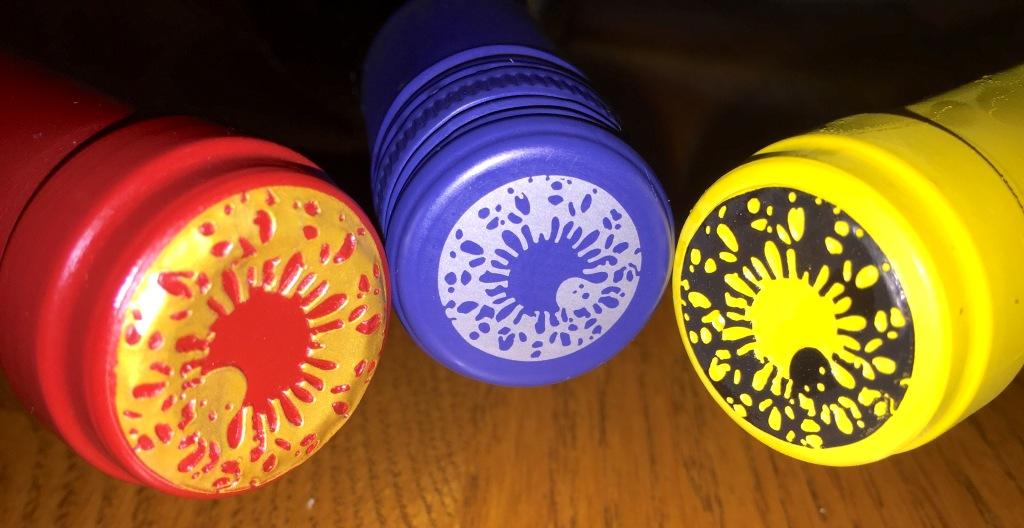 Welcome back to Oregon – we are continuing the conversation with Luke McCollom, Founding winemaker, Viticulturist and General Manager of one of the largest estates in Oregon, Left Coast Cellars. First part of our conversation was focused on the history of the estate, its name, its logo, and selection of the grapes which comprise 150 acres of the vineyards. Now we are going to talk about growing the grapes, sustainable viticulture, mother nature and some of the personal favorites. Here we go:
Can you elaborate a bit on the sustainable viticulture you are practicing in your vineyards?
We are certified by a third party Audit as LIVE Sustainable. This is a whole farm approach which uses scientifically proven methods to reduce inputs into the vineyard and reduce impact on our land and environment. LIVE also monitors the treatment of people, carbon footprint, energy, and water usage.
Both the Vineyards and Winery are certified LIVE sustainable For example: we are also certified Salmon Safe…this means we do not spray or use any chemicals which are toxic to or can harm fish. We do not use chemicals that can run off or enter water ways. We use a permanent, no-till, cover cropping system in the vineyards which great reduces dust, sediment, and run-off that pollutes our water ways.
We of course are mostly Solar Powered…100% of our irrigation system is powered by Solar. The irrigation system is also gravity fed with a pond located on top of one of our highest hills. So, water is pumped up via solar and runs down into the vineyard drip irrigation systems via gravity. We also collect our winery rinse water into tanks where we can re-use the water for irrigating landscaping. All of the “grape waste” from the winery is composted on-site and returned to vineyards and gardens. Our property is shaped like a bowl, so there are no other source of outside contaminates or pollution entering the property. All of the water in our Lakes comes from our property only. We also have steelhead and trout in these lakes…so anything we do can and will directly affect our own water source.
Do your sustainable practices also include dry farming and natural yeasts?
All of our vineyards have the ability to be irrigated with their drip systems if needed!? Of course, we only irrigate vines if and when they need water. We believe with future changes in our climate that water is one of the most important factors in the quality of our wines. Our water is sustainably collected in the wintertime from rainfall runoff. Our 100 acre foot lake is the life blood of the Estate. With our sustainable methods of using this water our combined peak usage of water and electricity costs $11.70/mo a typical water and electric bill on an Estate our size would be anywhere from $10,000-$15,000/mo. This gives an idea of the power of Sustainability and the power of harnessing the sun. Yes, we use natural yeast and we also use commercially available yeasts to make wine.
Do you have any plans to go beyond sustainable into full organic or may be even biodynamic?
Yes, we would like to eventually have wines bottled as sustainable, organic, and biodynamic so people can taste the comparisons. We currently spray almost exclusively organic sprays and utilize many biodynamic practices although do not have certifications in either.
I’m sure that some of the hard core Oregon Pinot fans are familiar with Van Duzer effect, but can you give a short explanation of it to those who don’t?
The Van Duzer Corridor is the main path by which cool Pacific Ocean breezes enter the Willamette Valley. We are in the Heart of where the corridor opens into the Center of the Valley. We are currently involved with a group working on a “Van Duzer Corridor AVA”. The effects of these ocean breezes are critical in producing the highest quality Pinot Noir. On a warm summer day at the Estate, our day time temperatures will reach 90 degrees. In the evening, the Corridor ushers in the cool ocean breezes and our night time temperatures fall to 40 or 50 degrees! A huge temperature swing! The result is sort of like a refrigerator…at night, when the vines are not producing sugars, the Pinot grapes are preserved with the cool outside temperatures. What this means is…the grapes will retain freshness, acidity, and increased wine ageability because they respire less and are preserved with the cool night air.
Out of all Pinot Noir which you produced so far, do you have the most favorite wine from the favorite vintage?
My favorite Left Coast wine is the 2010 Suzanne’s Estate. This is the first vintage Luke and Joe Wright worked together making wine. We hand selected small lots of grapes from the vineyards and made them in small batches with minimal influence and impact from Winemaking. The result is a very cool vintage Pinot with minimal manipulation in the Winery and a 92pts. Wine Spectator rating. It was very rewarding for me to receive an outstanding rating when the wine was selected in the field and winemaking was at a minimum.
When you are not drinking your own wines, what are the other Oregon producers you would be happy to drink wines from?
We enjoy drinking many of our Neighbors wines including Bethel Heights, Cristom, and Witness Tree just to name a few…
And the same question, only going outside of the Oregon – any favorite wines and producers?
Reaching in and out of Oregon we have always kept an eye on Maison Joseph Drouhin. Locally, Drouhin of course makes Domaine Drouhin Oregon Pinot, but from Burgundy continues to offer an incredible range of wines from very affordable negociant blends to very expensive premier and grand crus from individual Domaines. We believe Drouhin continues to make and blend wines which celebrate classic Burgundy. Of course this is what intrigued us to try and grow World Class Pinot Noir in Oregon…it was Burgundy! We wanted to try and replicate the classic Terroirs of Burgundy and now we are trying to beat Burgundy with our classic Terroirs of Oregon and the Willamette Valley! Viva The Left Coast!
I don’t know about your take, but I think Luke McCollom did an excellent job answering my questions – I had a real feeling of being in the same room with him and looking out at the same vineyard. It is definitely very interesting to learn about sustainable viticulture and how it is done at the Left Coast Cellars – the example with $11.70 monthly electric bill versus potential $10,000+ was extremely impressive.
Of course the proof is in the glass, right? In the previous post, I shared my thoughts on estate’s The Orchards Pinot Gris and Cali’s Pinot Noir. To round up this portion of the interview, I had an opportunity to taste Chardonnay and another Pinot Noir. Before I will talk about the wines, I have to mention the bottles – as the saying goes for the food world “we eat with our eyes first”, same holds true for the wine. Talking about Left Coast Cellar wines, I really enjoyed holding the bottles in my hands – somehow they felt very promising in terms of their content. All four bottles had very nice punt, which would make elegant pouring of the wines an easy job. And the labels are perfectly design and spell “quality” with their look and feel.
Okay, okay – I’m sure you are ready to drink something – here are my notes on the two wines:
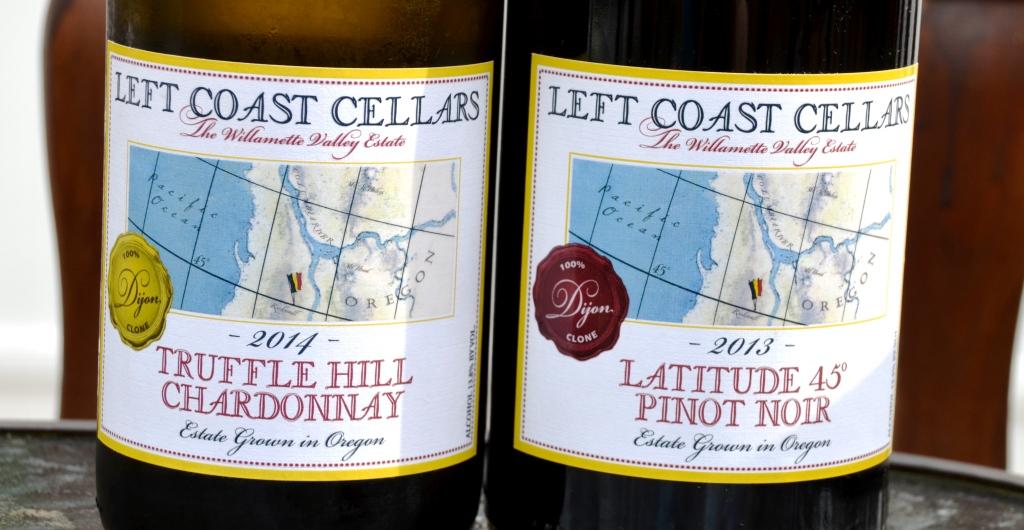 2014 Left Coast Cellars Truffle Hill Chardonnay Willamette Valley, Oregon (13.5% ABV, $24)
C: light golden
N: white ripe fruit, intense, touch of vanilla, caramel, touch of flowers
P: unusual, plump, medium to full body, hint of white peach, pear, supporting acidity, Burgundian elegance
V: 8, very unusual Chardonnay, with a style of its own, and overall delicious wine
2013 Left Coast Cellars Latitude 45 Pinot Noir Willamette Valley, Oregon (13.5% ABV, $50)
C: garnet
N: intense, crushed red berries, lavender, sweet plums, vanilla, hint of chocolate, Bing cherries
P: wow, very unusual. Herbal profile with some fruit, initial tannin attack, almost light and effervescent on the palate, but tannins are very assertive. As I don’t have enough experience with red burgundies, my best analogy is wines of ArPePe, which are some of the most elegant Nebbiolo wines in existence. Clean, pure and unadulterated Pinot Noir. Just wow.
V: 9-, truly unique and different
Sustainable viticulture. Passion. Unique and different wines. Simple recipe for success, isn’t it? I can let you in on a secret. Quite often, I don’t finish a bottle of wine on the same day. Especially if I have a few open at the same time. So I happened to drink Cali’s Pinot Noir I mentioned in the previous post over 4 days. Just closing with the same screw top every night. And the wine was delicious, every day. I think folks at the Left Coast Cellars know what they are doing, and their wines are well worth seeking. Follow the passion, my friends. Cheers!
One on One with the Winemaker: Luke McCollom of Left Coast Cellars, Oregon
 Let me tell you something – I really liked the concept of my first “one on one” post. Which means that I will try to make it into a feature and a series in this blog. And today I invite you to travel with me to the Oregon, third largest grape-producing state in the US. Our destination is Left Coast Cellars estate, home to one of the largest contiguous vineyards in Oregon, focused on sustainable viticulture and precisely focused wines. I had an opportunity to “sit down” (yes – virtually) with Luke McCollom, Founding Winemaker, Viticulturist and General Manager of the Left Coast Cellars, and ask him whole bunch of questions. I really asked lots of questions – and I got lots of great answers. I actually will have to split our conversation into two parts, just not to overwhelm you, my reader.
Without further ado, please pour yourself a glass of (Oregon, of course!) wine – here is our conversation with Luke McCollom:
Why “Left Coast Cellars”?
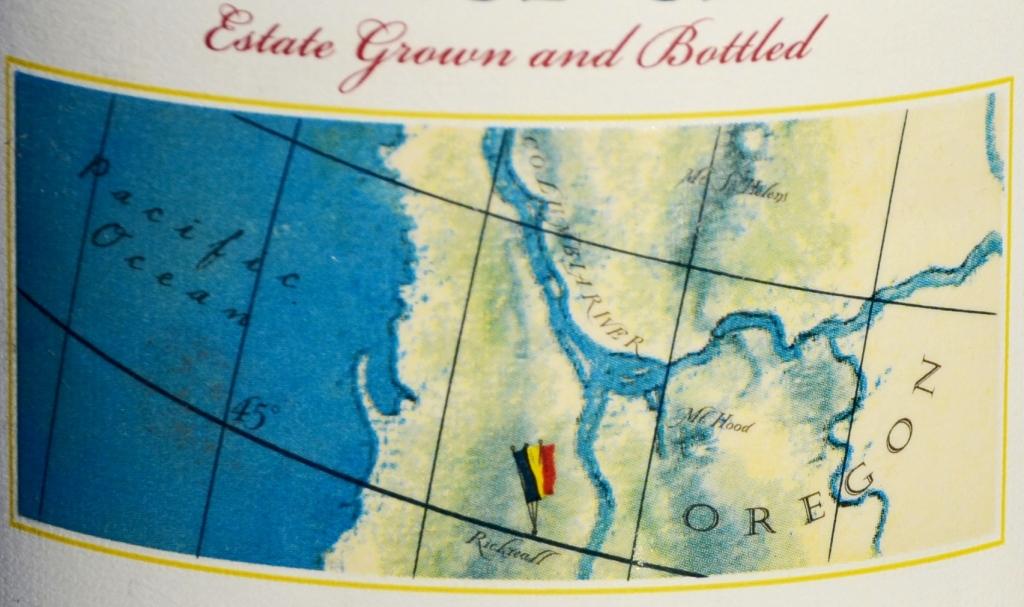
Well, we want to represent and paint a picture of our sense of place. The “Left Coast” can be seen on our Lewis and Clark Map rendered Labels. When you’re looking at a Map of the United States… we are on the Left Side! Also, of course… Left Coast is Family owned and 3 of the Family members running the Estate are Left Handed. When visiting Left Coast, coming from the closest Major city….The State Capitol Salem, you need to make Left Hand turns to get to the Winery. The Winery and Tasting room are both on the Left Side of the Drive. The term Left Coast not only describes our location, but our wholesome, casual style, and creative ability to artistically craft… unique, exquisite, Estate Grown handmade wines. Not to mention, the heavy “Coast” Influence brought in daily by the Van Duzer Corridor.
[TaV comment: I asked this question rather matter-of-factly, expecting the explanation about Left Coast, but it appears that there is so much more to this name]
Your logo looks very interesting. Is there a story behind it?
The “Sun” Logo is from a large Copper Sculpture which can be seen as you enter the property. The Sculpture was a gift given to Suzanne by husband Robert for an Anniversary. It is a beautiful, unique piece created by a Hawaiian artist named Abe Santoro. Santoro’s work can be seen at places like the Smithsonian. I believe Santoro is nearly 90 years old and is referred to as a Treasure of Hawaii.
For us it represents the Founders love for each other and the commitment of life partnership which led to a beautiful family, with passion for food, and wine. The logo is a symbol of the vision created together to Build an amazing Estate in The Willamette Valley. This “Circle of Life” logo also represents their commitment to Sustainability, the Earth, the Sun and the cycle of every vintage of wine.
When you started the winery in 2003 and purchased the land, were there any vines planted already or did you have to start from scratch?
When the Family purchased the property there were 25 acres of Pinot Noir. The first vintage crafted from these young Latitude 45 Vines received an 88pts. in Wine Spectator. This was very exciting because the vines where only 3 years old! Other than that, there was a large spring fed lake and most of the property was overgrown with poison oak and black berry bushes. All of the extensive gardens, landscaping, buildings, infrastructure, and design were created by the Family from scratch. Since then we have also planted another 115 acres of vineyards including 11 different types of Pinot Noir as well as some of the most extensive white wine grape plantings in Oregon.
According to the information on your web site, there are 8 distinct microclimates across your vineyards. Do your wines today already showcase the different microclimates or do you plan to expand on that in the future?
Yes, we constantly strive to showcase our different micro climates and to bottle distinct unique wines. Probably the best example of this is in the Vineyard Designate Pinot Noirs…(Right Bank Pommard, Truffle Hill Wadenswil, and Latitude 45 Dijon Bottlings). These Pinot Noirs are planted in locations best suited for their type of micro climate. Each Vineyard Designate Pinot is hand made in small, open top, French Oak Wine Vats. Each wine is made using different yeast and different dedicated barrel coopers selected to exemplify the Clone and Micro climate of each wine. For example, the Truffle Hill is a Swiss type of Pinot Noir, grown on one of our cooler sites (sort of like Switzerland) We use only Swiss Yeast in making the wine to showcase the tradition of the clonal selection and create distinct style and flavor. The Truffle Hill is aged using specific barrel cooperage which does not dominate the complex nuances of the Wadenswil Selection Pinot Noir. In the future, we would like to expand our showcasing of different soil types from the property comparing Sedimentary Soils to Our Volcanic Soils.
You grow Pinot Meunier, Syrah and Viognier – how do you use those grapes?
Pinot Meunier is used as a base in our Sparkling wines and is also made into a Field of Dreams Pinot Meunier still red wine. This year the Meunier was crafted into a sparkling Brut Rose and a couple hundred cases of still red wine. Meunier of course means “miller” in French like flour miller…because the vines are covered with white fuzz that makes them look like they were dusted with flour. Meunier is a mutation of Pinot Noir and loks like a “wild” Pinot Noir vine. The Meunier still wine sort of tastes like a wild pinot noir with it’s firm structure tannins and distinct brambly and pomegranate flavors.
Syrah and Viognier are also made into Field of Dreams Varietal wines for Wine Club and Tasting Room. The warm 2014 and 2015 vintages are good vintages for perfectly ripe Rhone Varietals in our climate. These vintages also make good quantity of these varietals for potential availability in the National Market. For 2015 Look for Left Coasts’ own Left Cote du Rotie…this is a Syrah co-fermented with up to 25% of Viognier. The Viognier has an enzyme in the skins which creates more extraction of color and flavor in the Syrah fermentation. Very Cool! Northern Rhone style wines which pair beautiful with food. We are a Pinot House, but the 45th parallel where we sit aligns exactly with Northern Rhone…this is why we grow small amounts of these varieties on the Estate. Another small celebration of Terroir, Microclimate, and Unique sense of place.
[TaV comment: this was a really a “duh” moment for me – and a clear showcase of deficiency of the virtual conversation – I forgot that many wines can be made in such a small quantities that they will be available at the winery only and never show on the web site, duh…]
to continue previous question – do you have any plans for single varietal Syrah wine?
Our first varietal vintage of Syrah was 2008…we recently opened a bottle to taste and the wine is incredible… still very youthful!
[TaV comment: “duh” moment didn’t stop with the previous question, right?]
It seems that Chardonnay is a rising star in Oregon – I see that you now offer Chardonnay wines for the past few vintages. What do you think of Oregon Chardonnays? What makes them unique? What is your chardonnay style?
Yes, we have committed some of our best land to growing Chardonnay. We have some of the largest modern plantings of Chardonnay in Oregon. The reason being, most people were ripping out Chardonnay when we were developing the vineyards, while we were planting it. We see Chardonnay as going hand in hand with Pinot Noir. Our 2005 Chardonnay was selected by the Oregon Wine Industry in 2010 as a “World Class Ageable White Wine” by our peers at the Oregon Wine Symposium.
We think this shows the potential of Chardonnay in Oregon and the potential of the Left Coast Estate. We strive to create a balanced Chardonnay with equal parts acidity, minerality, fruit, and oak. We believe we hand craft a Chardonnay which is very Oregonian in style meaning a wine which is clean, not oak dominated, will please non-chardonnay drinkers, and of course pairs well with Northwest Cuisine. For lack of description we try to craft Oregon Chardonnay as somewhere halfway between California and Burgundy. We love Oregon Chardonnay!!! and often ferment ours half in Stainless Steel Vats and Half in French Oak barrels. We believe the stainless portion of the fermentation preserves the fruit and acidty and the French Oak fermented portion provides subtle oak flavors with round mouth feel and volume. These wines are blended, married, and bottled together as one. We also have an extremely distinct Musque Clone Chardonnay that is concrete fermented and bottled for Wine Club.
I don’t know about you, but I definitely need a glass at this point, so here are two of the Left Coast Cellars wines I had an opportunity to try (as samples, courtesy of Donna White PR):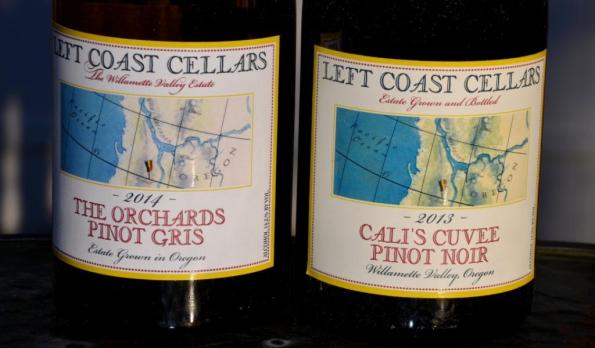
2014 Left Coast Cellars The Orchards Pinot Gris Willamette Valley, Oregon (14.2% ABV, $18)
C: straw golden
N: fresh flowers, fresh white fruit, candy, bright, exciting
P: nicely restrained of the palate, quite a contrast with the nose. Lemon zest, touch of grass, medium body with nice mid-palate weight, wine is nicely present, tart finish
V: 8-, should develop interestingly with time
2013 Left Coast Cellars Cali’s Cuvée Pinot Noir Willamette Valley, Oregon (13.5% ABV, $24)
C: garnet
N: typical Pinot Noir, sweet plum, violet, touch of licorice and vanilla
P: delicious. Sweet cherries, touch of eucalyptus, medium body, firm, touch of smoke, good acidity, good balance, very (very) long mouthwatering finish
V: 8, dangerous wine – once you start, it is very difficult to stop
That’s all I have for you for today. To be continued…
One on One With Winemaker: Jeff Fyfe from The Crossings Winery, New Zealand
 Few days ago I was offered an opportunity to meet Jeff Fyfe, senior winemaker at The Crossings Winery from New Zealand – only I couldn’t. What about the title of this post, you ask? No, I’m not trying to purposefully mislead you with some dark intent. What I did was very simple and logical 🙂 – I came up with a bunch of questions, and asked Jeff to answer them on his own. We can call it a “virtual interview”. I also had an opportunity to taste two of the latest wines from The Crossings – including the 2015 Sauvignon Blanc. I was quite excited about it, as my first wine of the current vintage typically is Beaujolais Nouveau, so this was a welcome deviation.
Let’s start with the interview. Imagine yourself out in the vineyard, on a sunny day, with the glass of cold and refreshing white wine, talking to Jeff Fyfe:
What was your favorite vintage(s) for both Pinot Noir and Sauvignon Blanc and why?
We have been extremely lucky in Marlborough in recent years with a number of great vintages in a row. In 2014 we had harvested all of the Pinot Noir prior to commencing any Sauvignon Blanc which is fairly unusual. This gave us the opportunity to focus on the varieties individually a little more than usual which was nice. There are some great Sauvignon Blancs from 2015 and we are excited about releasing them.
What was your most difficult vintage for both Pinot Noir and Sauvignon Blanc and why?
Both 2008 and 2009 were reasonably difficult vintages in the fact that the crops were slightly heavier than normal and we had some unseasonal rain during harvest making things difficult.
Many winemakers in NZ experiment with oak and Sauvignon Blanc. What do you think of that? Is this an up and coming trend? Do you make any oaked Sauvignon Blanc wines?
I don’t know if I would call it a trend, I think it is now a style in its own right in Marlborough. Many producers are making them, and have been for some time. Dog Point Section 94 is a great example of barrel fermented Sauvignon Blanc. They wines obviously age well, in my opinion the better examples show great balance and integration of the oak and the fruit. Some producers are also creating wines with small amounts of barrel fermented Sauvignon Blanc to add texture and weight to their tank fermented Sauvignon Blancs.
Today, there are many new grapes been planted in NZ – Chardonnay, Pinot Gris, Riesling, Gruner Veltliner, Syrah. I see that you are already making Riesling and Pinot Gris wines – do you have plans for any other new grapes?
Yes, we already make very small quantities of Chardonnay, Pinot Gris, and Riesling and we planted some Gruner Veltliner at our Willowflat vineyard 2 years ago, which is looking promising. I think Marlborough already produces world class aromatics, particularly from the cooler sites which enables longer ripening and extended hang time for the fruit which creates wines with texture, weight and acidity.
Outside of your own wines, what are your other favorite wines from New Zealand?
There are some great aromatics coming out of the Nelson region, Waimea, and Seifreid are favourites. Also Hawkes Bay Syrah, in my opinion the best examples can rival the great Syrahs of the world. Bilancia, Crossroads, Trinity Hill are all great examples.
What are your favorite Sauvignon Blanc wine outside of New Zealand – regions and/or producers?
White Bordeaux! If only I could drink them more often. Generally I like to drink Austrian or German Rieslings, there are so many amazing producers, Brundlmayer, Ansgar Clusserath, Donnhoff, Wittman to name a few.
Same question for Pinot Noir – favorite regions/wines/producers outside of New Zealand?
I tend to drink the wines coming from cooler climate regions as I like the elegance and finesse they can have, cooler parts of Australia such as Tasmania, and the Mornington Peninsula are great. There are obviously some pretty special wines coming out of Burgundy, I just can’t afford to drink them that often! Although when I do I enjoy wines from the appellation of Volnay.
If you would have a “do-over” opportunity – go back in time and start the winery again – would you still start it at the exact same place, or would you chose a different location, region or even country?
I wouldn’t change the location of the vineyards that’s for sure. We have 3 amazing vineyard locations in the Awatere Valley, each very unique which provides us with quality fruit to make the wines that we do.
Today, a lot of wineries around the world add sparkling and Rosé wines to their portfolios, but this trend doesn’t seem to catch up in New Zealand. Do you think this will change? Do you have any plans to start producing sparkling or Rosé wines?
There are already a number of producers in Marlborough making some great rosés. The demand for Marlborough Pinot Noir is strong, so I guess that has an impact on the ability of some producers to make Rose, hence why you don’t see them often on a global scale. At The Crossings we are hoping to make a rose in vintage 2016. It’s the same with sparkling wines in Marlborough, some world class wines being produced but on a reasonably small scale.
What is the oldest vintage of your own wines you ever tried? Do you think the wines held up well?
We recently had a vertical tasting of The Crossings Sauvignon Blanc from 2005 to 2015. We were pleasantly surprised at how well the wines were holding up. The majority of the older vintages still looked fresh, showing varietal character and maintained the mineral acidity that is signature of the Awatere Valley. All of the wines were under screw cap
* * *
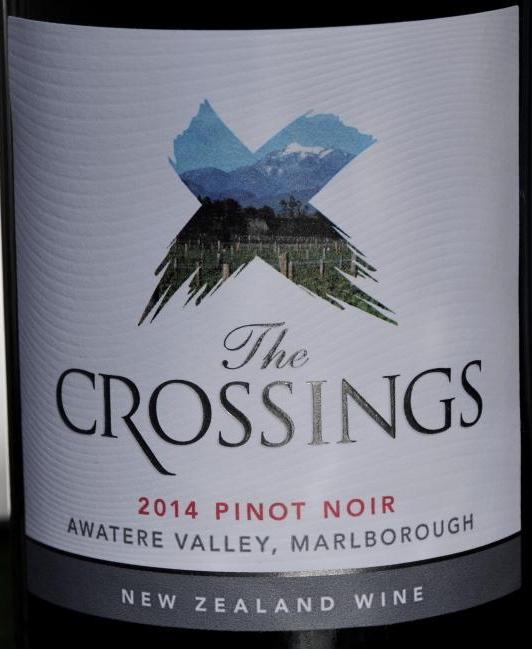 I think Jeff provided great answers. Hearing that 10 years old Sauvignon Blanc is still fresh makes me very happy – I love wines with an age on them, and I love it when the wines are aging gracefully, so I would love to try it by myself. Well, yes, I didn’t try the 2005 – instead, I tried the wine from the vintage Jeff was so happy about it – the 2015. I tasted latest releases of both Sauvignon Blanc and Pinot Noir, which I got as samples, courtesy of the importer, Deutsch Family Wine & Spirits. For you to understand how new the 2015 was, the bottle even didn’t have an official label on it yet.
Here are my tasting notes:
2015 The Crossings Sauvignon Blanc Awatare Valley Marlboro, New Zealand (13% ABV, SRP $14)
C: straw pale
N: beautiful fresh cut grass, just a hint of grapefruit, lemon zest
P: clean acidity, fresh, lemon undertones, herbal notes, perfectly balanced
V: 8, one of the very best NZ sauvignon Blanc wines I ever tasted. Summer day in the glass.
2014 The Crossings Pinot Noir Awatare Valley Marlboro, New Zealand (14% ABV, SRP $18)
C: dark ruby
N: smoke and raspberries, lavender, touch of mint, baking spices
P: sweet cherries, plums, hint of vanilla, touch of spices, good balance, medium body, medium-long finish.
V: 7+/8-, classic Marlboro Pinot Noir
There you have it, my friends – virtual interview and very real, delicious wines. Now, let me ask you a question – if you would have an opportunity to talk to the winemaker, what would be your questions? What do you think of our Q&A session? Happy Friday and Cheers!
Meet the Winemaker: One on One With Morgon and Pouilly-Fuissé Vintners
Talking to the people who make magic is always an experience (yes, I’m comparing winemaking to the magic). I met the winemakers a number of times, but for the most of the cases, they were “in between” of some other important tasks (like harvest, for instance), so the idea of inundating them with questions never crossed my mind.
This time around it was a different experience – the winemakers where actually there to talk to me (feel special and scared at the same time), so I could (and rather was supposed to) to ask a lot of questions.
I met with two winemaking couples – Robert and Jeanine Béranger from Pouilly-Fuissé and Nicole and Pierre Descombes-Savoye from Morgon, both closely working with Georges Duboeuf, the famous French negociant, whose portfolio consists of about 400 different wines, mostly from Beaujolais (I met Georges and Frank Duboeuf a few years back, here is my post talking about it).
So I had an opportunity to ask the questions and then to taste the wines (each family produces only one wine!). Here are my questions with the answers (side note: really despise myself for thinking for the past 10-12 years “must learn French, must learn French” – and really not doing anything about it… The interview was done with the help of Heloise Pepin, brand ambassador for Georges Duboeuf wines).
Of course we started with the white wine, so my questions were directed first at Robert and Jeanine Béranger, whose family produces Domaine Béranger Pouilly-Fuissé wine for more than 200 years. The Domaine Béranger includes about 12 acres of Chardonnay, the only grape used in production of Pouilly-Fuissé wines. The vines at the domaine on average are 55 years old. All the harvesting is done by hand (you typically want to preserve clusters when harvesting the Chardonnay, this is why hand is the best instrument to use). Those 12 acres are split into 32 (!) different parcels, which are vinified separately and blended for the final release. Total production at the Domaine is about 26,000 bottles a year.
For what it worth, here are the questions I asked, together with the answers.
Q: What was most favorite vintage of your wines?
A: 1983 and 2003. 2003 was particularly interesting, as it was a very difficult vintage, and making of the wine was very challenging. 1976 was the exceptional year for the white wines.
Q: What was the oldest wine from your vineyards which you ever tasted?
A: 1969.
Q: For how long your wines can age?
A: In the exceptional vintage, the wines can easily age for 30 years, but generally they age well for about 15 years.
Q: When you are not drinking Pouilly-Fuissé wine, what are the other wines you like to drink?
A: Meursault, Chablis, New Zealand Sauvignon Blanc.

Next we tasted the wine, and here are my tasting notes.
2011 Emile Beranger Pouilly-Fuissé AOC (13% ABV, retail at about $26, 10% of the wine aged in 5 different types of oak barrels, then 14 month in the bottle before release) – pale yellow color in the glass. Hint of apples on the nose. On the palate there is a touch of butter, plump and creamy feeling. The wine is very round, roll-of-your-tongue, perfect acidity and perfect balance. A beautiful wine. Drinkability: 8+
Time to talk about the red wine, Domaine Jean Ernest Descombes from Morgon, so I directed my questions at Nicole and Pierre Descombes-Savoye. Domaine’s property includes 30 acres of the vineyards, all planted with Gamay grape, with three quarters of the vines been more than 50 years old. On average, the yearly production is 100,000 bottles. The grapes are harvested by hand to preserve the full clusters.
Here are some of my questions, along the same lines as the questions above.
Q. What was your favorite vintage of your wine?
A. 1973, as this was the year when our son was born.
Q. And how was that 1973 wine?
A. The wines were opened recently at the big party, and they were put against the 1973 Vosne-Romanée in the format of the blind tasting. Most of the guests at the party preferred the 1973 Morgon over the 1973 Vosne-Romanée. It is also interesting to note that as Gamay wine is aging, the freshness of Gamay grape is evolving into the complexity of Pinot Noir, so the results of the tasting are not surprising.
Q. For how long Morgon wines can last?
A. In the good vintage, the wines can easily last for 40 years or even longer.
Q. What do you drink when you are not drinking your own wine?
A. Burgundy and Bordeaux, especially the Saint-Émilion had been the favorite as of late. But we also like California wine.
Q: How would you compare the 2011 vintage with 2009?
A: Well, the vintage such as 2009, simply can’t happen again ( I’m sure mother nature has its own view on that), it was simply exceptional – and it is literally impossible to beat the 2009 vintage. But 2011 was a good year, and the wines from 2011 will easily last for 10-12 years or longer.
 And then it was the time to taste the wine.
2011 Domaine Jean Ernest Descombes Morgon AOC (12.9% ABV, aged for 6-8 month in cement tanks, $16.99 suggested retail) had bright ruby color in the glass. On the nose, the aroma of raspberries and cherries. Perfectly fresh on the palate, with more raspberry notes, clean, simple, with invigorating acidity and good balance. Drinkability: 8-
And that concludes my first sit down interview with the winemakers. It was fun, and I hope to be able to do more in the future. Cheers!
Last Bottle Sign Up ($10 credit)




 Talk-A-Vino