Archive
Wednesday’s Meritage – Wine Quiz Answer, WTSO Magnum Marathon, Globalization!, #MWWC6 and more
 Meritage time!
First, let’s start with the answer for the wine quiz #84, grape trivia – Barbera.
In the quiz, you were supposed to answer 5 questions about red grape called Barbera. Here are the questions, now with the answers:
Q1: Based on the latest DNA analysis, which well known Spanish grape appears to be a close relative of Barbera?
A1: Spanish grape Monastrell (known in France as Mourvèdre) appears to be a close relative of Barbera (but ohh so different).
Q2: What well-known grape became popular blending partner of Barbera as of late?
A2: As of late, Nebbiolo, a close neighbor of Barbera, is often used in the blends with Barbera to round up the resulting wine.
Q3: The new technique was introduced in making the wines out of Barbera in the second half of the 20th century, which helped to improved the quality of the wines. Which one do you think it was:
a. Malolactic fermentation, b. Fermentation and aging in the small oak casks, c. Carbonic maceration, d. Reverse osmosis
A3: b, Fermentation and aging in the small oak casks, seems to be the preferred method to tame the acidity and add some tannins to the resulting wine, making it also age-worthy.
Q4: Wine Spectator calls wines rated in 95-100 range Classic (the highest and the most prestigious category). True or False: there are no Barbera-based wines rated in the Classic category
A4: False. But I have to admit that Barbera is only marginally there, with just 2 wines having 95 rating.
Q5: Fill in the blanks: Barbera typically ripens two weeks later than _____, but at the same time it is two weeks earlier than ____.
A5: Barbera typically ripens two weeks later than Dolcetto, but at the same time it is two weeks earlier than Nebbiolo.
Talking about the results, Jeff, a.k.a. the drunken cyclist, answered all 5 questions correctly so he gets (again) the prize of unlimited bragging rights. Well done! I also would like to mention Alissa, who put the quiz upside down and instead of answering the questions in the quiz, asked me a very interesting question. As a “bonus question”, I would like to pass it on to you: “Outside of Asti is a place which pays homage to a man who helped with the unification of Italy, commercialization of Italy’s wine industry, and houses the first regional enoteca in the Piedmont region. Name it.” If you know the answer, don’t be shy and comment away!
Now, to the interesting stuff around the vine and the web!
First, don’t miss the WTSO Magnum Marathon tomorrow, December 12. Starting at 8 AM Eastern time, WTSO will be offering large format wines, at least 1.5L or more in size. The wines will be priced from $24.99 to $499.99/bottle, and the new wines will be offered every 30 minutes or sooner, if the previous wine will sold out. The new wines will be announced only on Twitter, follow @WTSO so you will not miss out.
Next, I came across a very interesting article by Mike Veseth of The Wine Economist fame, talking about Globalization of wine and food. Actually, his article in itself is already an aggregation of a number of other articles. It is definitely worth a few minutes of your time, so please head to Mike’s blog to read it.
Now, it appears that The Drunken Cyclist is definitely a star of today’s Meritage. In addition to correctly solving the quiz, he is behind two noteworthy events. First, as a winner of the Monthly Wine Writing Challenge #5 (#MWWC5) – Congratulations, Jeff! – he announced the theme for #MWWC6, which is going to be … Mystery. Sharpen your pencils, or may be flex your fingers, get your thinking cap/hat/fedora on and start writing. #MWWC6 Rules and regulations can be found here.
Second event is also a brainchild of TDC, and it is a secret Wine Santa project. The idea is to get all the bloggers (and readers) who is interested in playing a secret wine Santa by sending the wine to the completely unsuspecting recipient (and of course also getting the one him- or herself) to provide their address information back to Jeff, who will then randomly assign the aspiring alcoholics in pairs. All the rules can be found here, and if you are interested in participation, make sure to get back to Jeff not later than this coming Friday 12/13.
That’s all I have for you for today, folks. The glass is empty – but refill is on its way. Until the next time – cheers!
Weekly Wine Quiz #84: Grape Trivia – Barbera
 The Wine Quiz series is not meant to intimidate. The whole idea here is to have fun and learn something new. When answering the questions, it is fully encouraged to use all available sources of information, including Google or any other search engine. There are no embarrassing answers – the most embarrassing thing is not giving it a try…
Welcome to the weekend and your new wine quiz!
We are continuing our grape trivia series, with the focus again on the red grapes, and today’s subject is Barbera.
It is interesting to see the level of difference in the available information for different grapes, especially when it comes to the historical data (not that it is unexpected). When it comes to the grape such as Cabernet Sauvignon, absolute majority of the different sources converge on the 17th century as the time when Cabernet Sauvignon become known as the particular grape. When it comes to Barbera, the range of opinion is rather stunning – some sources say that Barbera was mentioned for the first time only in 18th century, some say it was 13th, and some of them put it even back to the 7th. Therefore, I can’t tell you when Barbera first became known as a grape, but as a fun fact, do you know that Barbera is 3rd most planted grape in Italy, after Sangiovese and Montepulciano? Today, there are about 70,000 acres of Barbera planted throughout the Italy
Barbera is one of the main grapes in Piedmont, where it is often planted right next to its noble neighbour, Nebbiolo. Typically Nebbiolo takes over the best spots on the hills, and Barbera is planted right under. Some of the best Barbera wines are produced in Asti, Alba and Monferrato areas in Piedmont, with Barbera d’Asti and Barbera del Monferrato having the DOCG status (highest quality standing in Italian wine classification). Of course Barbera is planted in many other regions in Italy, such as Lombardy, Emilia-Romagna and others. Barbera spread out all over the world with Italian immigrants, nowadays planted in Australia, United States (California, Texas and others), Argentina, Brazil, Israel and other countries.
Barbera grapes have dark thin skin. Barbera has a well known tendency for overproduction, so the plantings have to be controlled to achieve higher quality of the wines. Barbera typically has high level of acidity and low tannins, which makes winemaking somewhat challenging to produce wines which will be able to age well – of course ageing in the oak barrels helps with that. One of the well known characteristics of Barbera wines is intense berries aroma, and the wines typically have a medium body, at least in the classical Italian versions ( some of the New World Barberas can be quite bombastic). Barbera wines are generally food friendly with their inherent acidity, and they complement quite well a wide range of traditional Italian dishes.
And now, to the quiz!
Q1: Based on the latest DNA analysis, which well known Spanish grape appears to be a close relative of Barbera?
Q2: What well-known grape became popular blending partner of Barbera as of late?
Q3: The new technique was introduced in making the wines out of Barbera in the second half of the 20th century, which helped to improved the quality of the wines. Which one do you think it was:
a. Malolactic fermentation
b. Fermentation and aging in the small oak casks
c. Carbonic maceration
d. Reverse osmosis
Q4: Wine Spectator calls wines rated in 95-100 range Classic (the highest and the most prestigious category). True or False: there are no Barbera-based wines rated in the Classic category
Q5: Fill in the blanks: Barbera typically ripens two weeks later than _____, but at the same time it is two weeks earlier than ____.
Good luck, enjoy the quiz and your weekend! Cheers!
Beauty of Montefalco Rosso and Power of Sagrantino
About two month ago (yes, I know, I’m the speedy one) I was invited to participate in the virtual tasting. The subject – Italian wines. To be more precise, the wines from Umbria, made out of the grape called Sagrantino.
I never participated in the virtual tasting before, so I was not sure how it was going to work. The idea was simple. I will get the wine, which should be opened and tasted in parallel with the winemakers, who will be doing it live on ustream. Of course I gladly agreed to take part in this wine drinking tasting.
The subject was wines from Umbria, from the region called Montefalco. Actually, it was not just one tasting, but two – one for the wines called Montefalco Rosso, and the second one for the wines called Montefalco Sagrantino.
It appears that Sagrantino is an Italian indigenous grape, which seems to be cultivated in Umbria for at least 500 years, if not longer. However in the 1960s it became literally extinct, and if it would not be the effort of the few winemakers, Sagrantino would be gone completely from the winemaking scene.
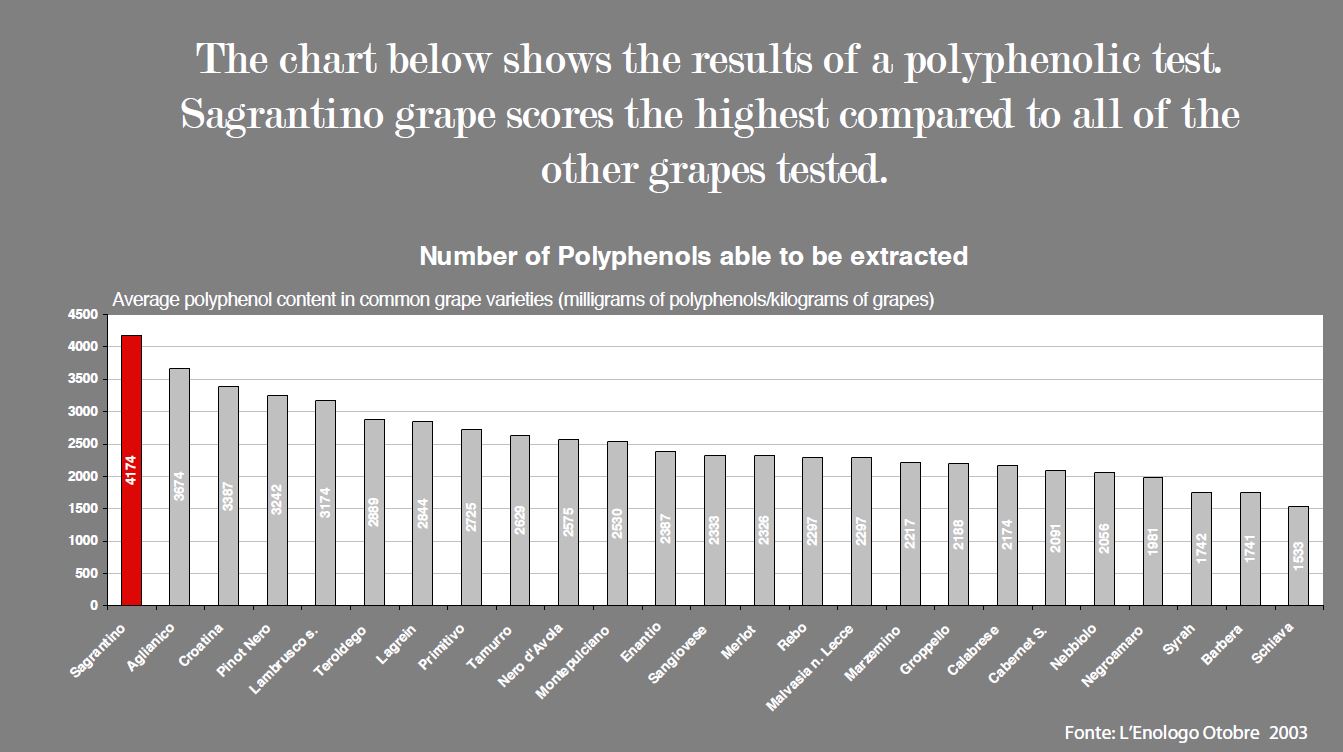
Sagrantino has dark and very thick skin, which results in very tannic and concentrated wines, literally black in color when young. Sagrantino has the highest polyphenolic content among most of the red grapes, if not among all red grapes in the world (take a look at the chart below). Just to get technical for a second, polyphenols (also called phenolic compounds) is a large group of chemical compounds, responsible for color, texture and mouthfeel of the wine (think tannins!), and the group also includes medically beneficial elements, such as reservatrol. As usual, I have to refer you to Wikipedia for additional reading, but I hope you get the point here.
My wines arrived few days before the tasting. As luck would have it, the day which the wines spent on the UPS truck, was one and only day in September when temperature outside reached 96F (extremely atypical for Connecticut in September). When I took the wines out of the box, I could feel that they are quite warm – on average, my wine thermometer showed all the bottles to be at around 84F, so I was obviously concerned… I opened a number of bottles the next day, and to my big relief, the was no sign of heat damage (I quickly closed the wines back using the gas canister) – I was ready for the tasting.
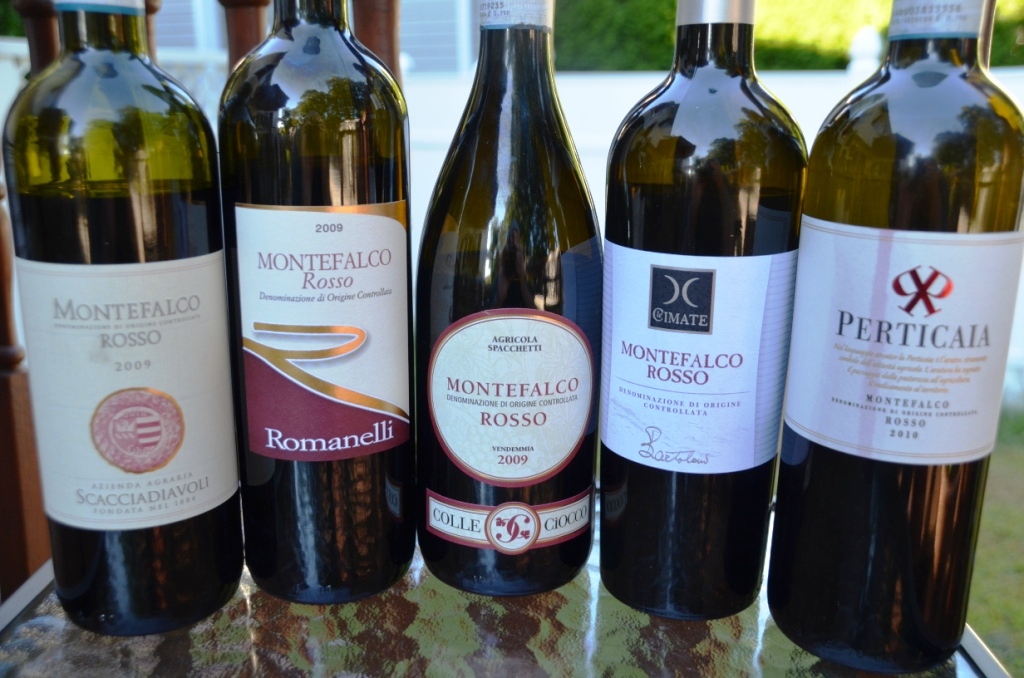
First day of tasting was dedicated to the wines called Montefalco Rosso. Montefalco Rosso wines typically are Sangiovese based, with the addition of 10% – 15% Sagrantino and 10%-15% Merlot and Cabernet Sauvignon. We had an opportunity to taste through 5 different wines:
At the specific time, the ustream broadcast started with live tasting, where the panel of winemakers from all 5 wineries were talking about their wines and answering the questions. The ustream broadcast was accompanied by the live twitter exchange among all the participants in the tasting. The twitter stream was used to ask panelists the questions, share tasting notes and impressions. Definitely was interesting to see and hear the diversity of opinion both from the panel, and from the audience on twitter. To be entirely honest, the most difficult part was to do a few things at once – taking my own notes, talking to the people on twitter and listening to the panelists – difficult, but well worth it!
Below are my notes for the 5 Montefalco Rosso wines we tasted (as you will see, not necessarily taken exactly during that live tasting session).
2009 Romanelli Montefalco Rosso DOC (14.5% ABV, Sangiovese 65%, Sagrantino 15%, Merlot 10%, Cabernet Sauvignon 10%, 12 month French oak, 6 month in the bottle) – good dark fruit, easy to drink. Drinkability: 7
2010 Perticaia Montefalco Rosso DOC (13.5% ABV, Sangiovese 70%, Sagrantino 15%, Colorino 15%, 12 month in stainless steel, 6 month in the bottle) – day 2 notes – outstanding. Dark inviting fruit with a hint of sage on the nose, spicy cherries (cherries + black pepper) on the palate, with tobacco notes in the background. Delicious! Drinkability: 8+
2010 Le Cimate Montefalco Rosso DOC (14.5% ABV, Sangiovese 60%, Sagrantino 15%, Merlot 15%, Cabernet Sauvignon 10%) – was perfectly drinkable 6 (!) days after opening the bottle. Spectacular. Supple, ripe cherries, perfect acidity, espresso and dark chocolate, powerful, balanced. Drinkability: 8+
2009 Scacciadiavoli Montefalco Rosso DOC (14% ABV, 60% Sangiovese, 15% Sagrantino, 25% Merlot, 12 month French oak, 6 month in bottle) – Excellent. Dark, spicy earthy nose with some gaminess. Excellent minerality and dark fruit on the palate. Drinkability: 8+
2009 Colle Ciocco Montefalco Rosso DOC (14% ABV, Sangiovese 70%, Sagrantino 15%, Merlot 15%, 12 month in oak barrels, 4 month in the bottle) – nice soft red fruit on the nose, sweet and supple fruit on the palate, good acidity, soft tannins. Drinkability: 7+
The next day we had the tasting of Montefalco Sagrantino wines. Montefalco Sagrantino wines are made out of 100% Sagrantino grapes. The tasting was done in the same format – panel of winemakers discusses the wines live via ustream, and twitter followers taste and discuss in parallel.
It was recommended to open wines one hour before the tasting. Considering how massive those wines are, I would think the right suggestion would’ve been to open them in the morning. I don’t know if it could make the difference, but I have to admit that my experience was rather frustrating during the live tasting. For the most of the wines, I couldn’t get any of the flavor descriptors and impressions, compare to what was exposed by the other twitter tasters. For instance, Arnaldo Caprai was showing literally as corked, where the other tasters had violets, black tea and other nice things to say. Literally only one or two wines cooperated with me during tasting. But – most of them came back nicely right after (see the notes).
Below are my notes for the Montefalco Sagrantino wines (all wines are 100% Sagrantino).
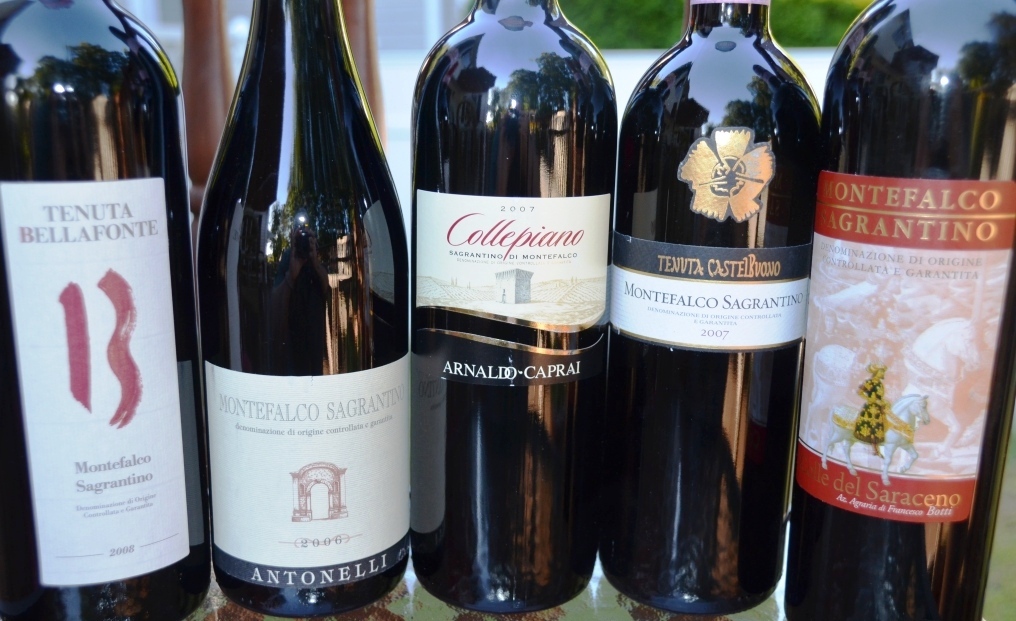
2006 Antonelli Montefalco Sagrantino DOCG (14.5% ABV, 15 month in oak, 12 month in the bottle) – Dark fruit on the nose, same on the palate, very restrained. I’m sure needed more time. Drinkability: 7+
2007 Caprai Collepiano Montefalco Sagrantino DOCG (14.5% ABV, 20-24 month in French oak barrique, minimum 6 month in the bottle) – opened on 09/17, then closed with the argon canister. Reopened on 09/23. Concentrated, very dark. Initially gave an impression of being mildly corked. After 3 days finally started to open up into something interesting. Very substantial tannins ( more of stem/seeds tannins than oak). Dark fruit with undertones of leather and black tea. Drinkability: 8-
2007 Tenuta Castelbuono Montefalco Sagrantino DOCG (14.5% ABV, 28 month in oak, 10 month in the bottle) – dark supple fruit on the palate, very powerful, a wine with “broad shoulders”. Beautifully opened over the next few days, showing roasted meat notes on the palate, good acidity, excellent balance. Drinkability: 8-
2008 Tenuta Bellafonte Montefalco Sagrantino DOCG (14% ABV, 36 month in large barrels, 10 month in bottle) – wine was first tasted on 9/17, then closed with gas canister. Reopened on 9/25. Powerful, concentrated, almost black color in the glass. Nice fruit undertones, cassis and plums, with more tannins coming in later. Overall delicious and “dangerous” wine. Drinkability: 8
2008 Colle del Saraceno Montefalco Sagrantino DOCG (14.5% ABV, 12 month stainless steel, 12 month French oak barriques, 6 month in the bottle) – this wine unfortunately showed signs of the heat damage. N/R.
All in all, this was a great experience. The virtual tasting format was pretty well done, and I definitely will be looking forward to more virtual wine tastings in the future. And for the wines – my notes are above, and I definitely recommend looking for Montefalco wines – both Rosso and Sagrantino well worth your attention. Cheers!
Disclaimer: The wines were provided complementary by the PR agency. All opinions are my own.
Oak Hills Restaurant: Great Food, Great Wine
I recently shared with you my take on the Madonia restaurant in Stamford. Few weeks after visiting Madonia, we went to another restaurant with the similar type of cuisine – Mediterranean with Italian flair. This restaurant is called Oak Hills Restaurant on the Green and it is located in Norwalk, Connecticut, at the Oak Hills Park (it is actually a municipal golf course).
When the restaurant is located on the golf course, what do you think it can come with? Of course, the view! We were sitting outside on the terrace, overlooking beautiful greens. Yes, you can watch the crowd French style, sitting right in a middle of the street with cup of coffee or glass of wine. Or you can just relax and admire the serenity around you – this is where the golf course is simply a good place to be.
First, let me say a few words about the wine. The wine list was short, but had a few good values. My eye stopped at Barbi Rosso di Montalcino – at $40/bottle, this was quite reasonable wine to get, considering that it retails at around $20.
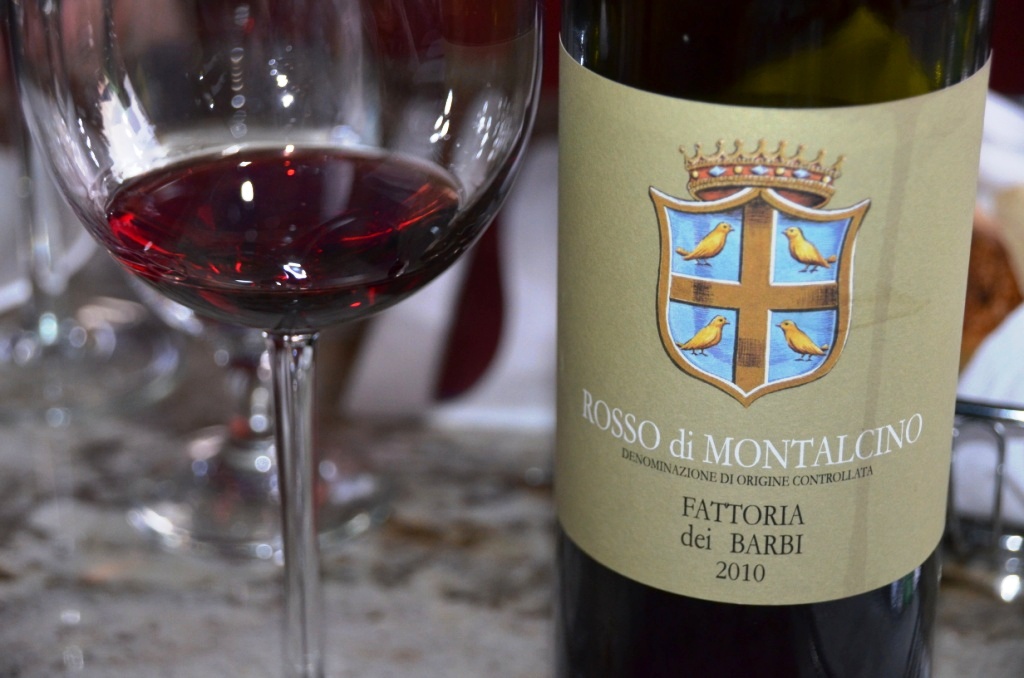
Barbi Rosso di Montalcino
This 2010 Fattoria dei Barbi Rosso di Montalcino DOC was very nice, ready to drink from the get go. Light ruby color in the glass, rustic nose of light cherries with hint of leather, more cherries on the palate, perfect acidity, soft and round – this wine was perfectly fitting our appetizers. For the appetizers, we had a few dishes, here are two of the memorable ones:
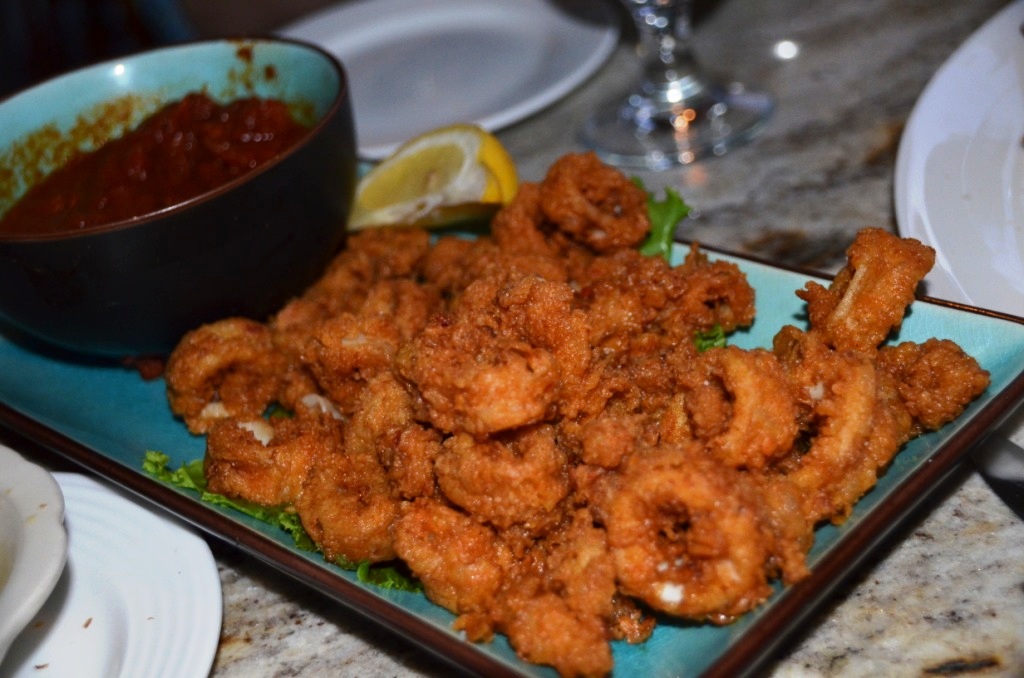
Fried Calamari
Calamari were perfectly done, with just the right amount of breading, crispy with perfect texture, and delicious sauce with just enough bite.
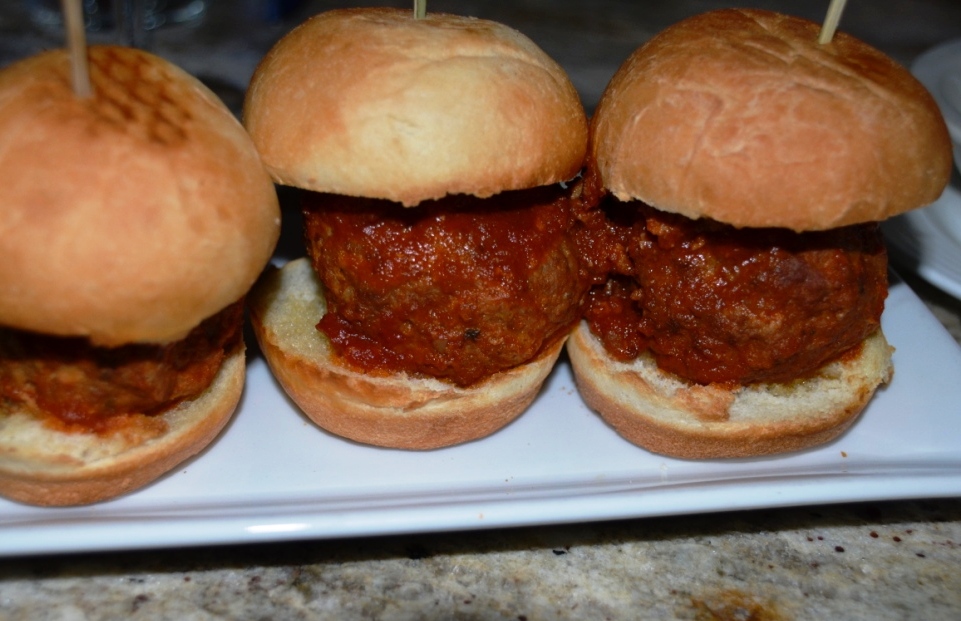
Meatball Sliders
Generous meatballs paired perfectly with our Rosso di Montalcino wine.
Then it was time to get another bottle of wine. We decided to continue with the same wine – but Omar, Maître D and co-owner of the restaurant, insisted that we would get the big brother of the Rosso di Montalcino, the Brunello. It was listed on the wine list for $80 (still a good price), but he offered us the wine at the same price as the first one, so we couldn’t resist. The wine also came with the story – Omar told us that in the very old times (1300s), Barbi family were the assassins in the village of Montalcino, and they were offered the land in exchange of promise to stop killing people (which they did). I tried to find some confirmation of this story on the internet ( including Fattoria Barbi’s web site), but was unsuccessful. If you heard anything about it, I would be very curious to learn more.
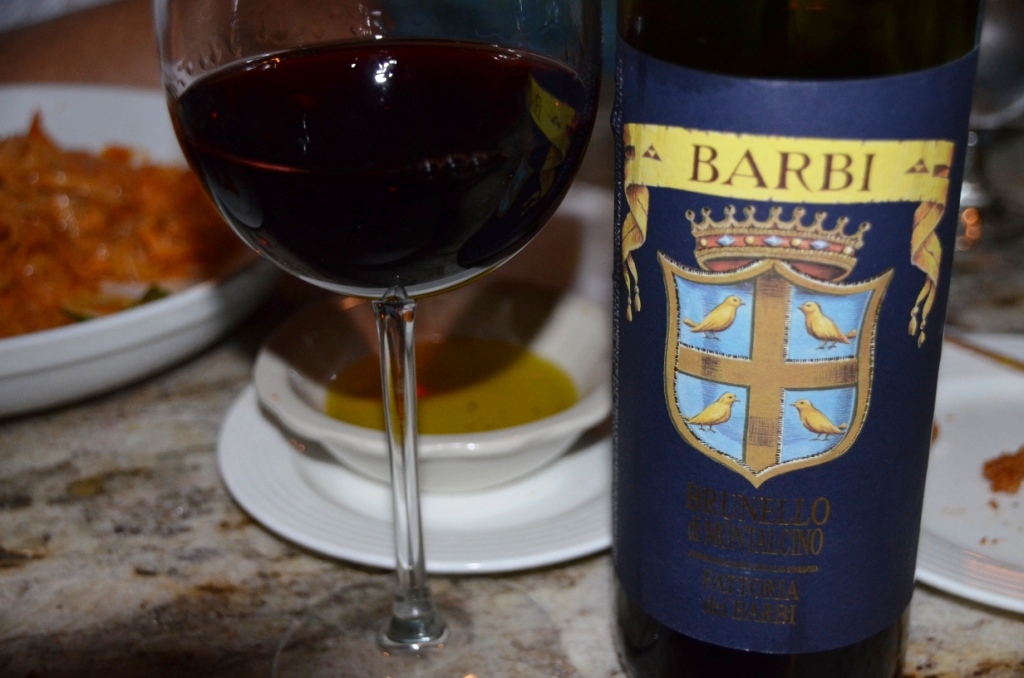
Barbi Brunello di Montalcino
This 2006 Fattoria dei Barbi Brunello di Montalcino DOCG was decanted for a short period of time. Dark garnet color in the glass, invigorating nose of the dark fruit and spices, full bodied, slightly chewy, dense wine on the palate, with lots of dark fruit, cherries and blackberries, touch of tobacco, powerful, but well balanced tannins – this was definitely a great wine.
Here are couple of examples of our entrees:
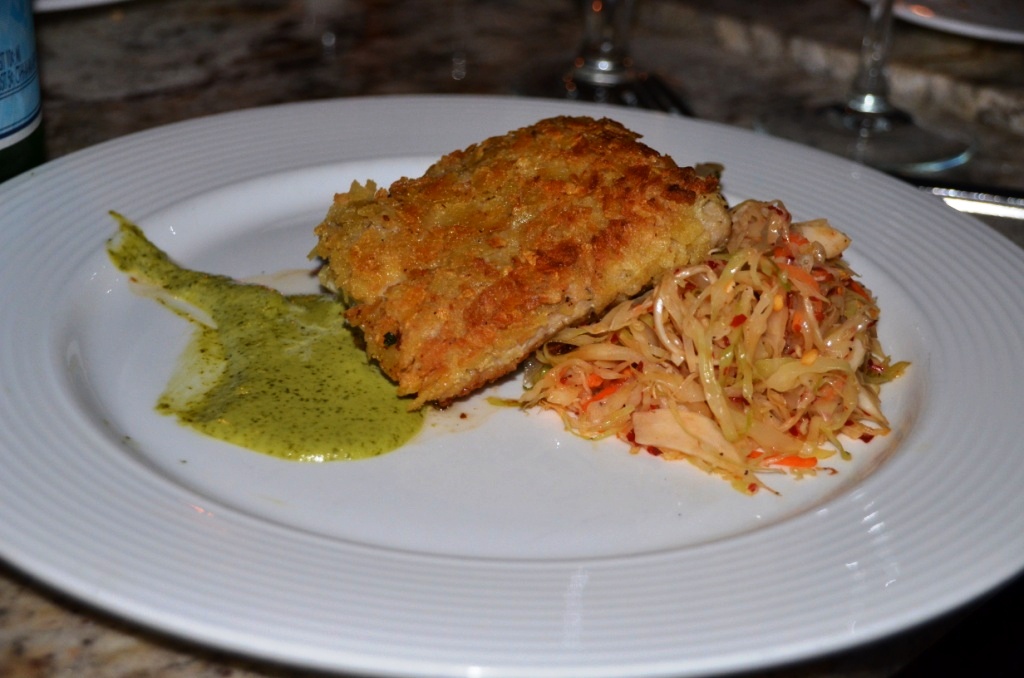
Potato Chip Crusted Mahi Mahi
My wife got this potato-chips encrusted Mahi Mahi. I can tell you – my wife is very picky about her fish – and she said this was probably the best fish she ever had. I have to agree with her – it was absolutely delicious.
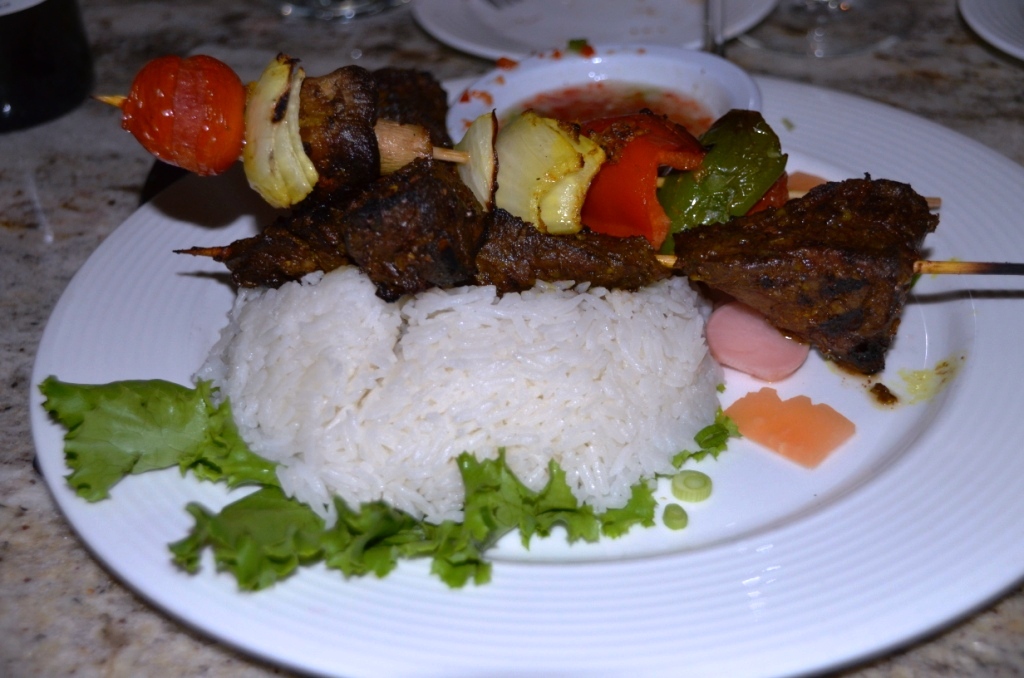
Thai style Kabob
I’m generally skeptical about beef kabob (you need lamb or pork for the best tasting kabob – both chicken and beef have a tendency to come out too dry) – but this execution was just perfect! Meat was perfectly tender, with wonderfully refreshing Thai-style spicy sauce. Definitely an excellent dish.
And then of course was dessert:

French Cannoli
Imagine Italian Cannoli, only with the French crepe instead of the typical Cannoli crust – with banana cream filling, covered with chocolate sauce and scoop of ice cream on top. I rest my case.
All in all, this was a great experience – all is left to do it so thank Chef Vinny La Forte for the delicious meal.
Until the next time – cheers!
Oak Hills Restaurant on the Green
165 Fillow Street,
Norwalk, CT, 06850
(203) 855-1800

Wines, Wines, Wines – Part 2
As promised, here is the second part of the Wines, Wines, Wines post. In the first part, we talked about great Riesling and Gewurzrtraminer wines, with some extra value wines and Prosecco. Let’s continue our “memorable wine extravaganza” with a couple of Chardonnays.
Chardonnay
It is so interesting how things work in life. You might walk past say, a picture, every day, and never notice it. And then all of a sudden you say “what is it? Was it always here, or is it something new??”, and people around you look at you like you have two heads or something. Where am I going with this? Give me a minute, I will make my point.
Couple of month ago I got a bottle of Chardonnay, accompanied by the words “try it, it is pretty good”. I’m a sucker for good Chardonnay (yeah, true, you can substitute “Chardonnay” with any other varietal – I’m just a sucker for any good wine, but this can be a subject for a different post). But this Chardonnay was from New Zealand. And New Zealand in by book is the land of Sauvignon Blanc and Pinot Noir – but not really a Chardonnay. So I finally got the bottle opened and … wow.

Seresin Chardonnay
2008 Seresin Chardonnay Reserve Marlboro New Zealand (13.5% ABV, 11 month in oak). The symbol of the hand on the label has a deep meaning. Quoting few words from Seresin Estate web site, “The hand is a symbol of strength, gateway to the heart, tiller of the soil, the mark of the artisan, and embodies the philosophy of Seresin Estate”. Here are my tasting notes for this wine: Outstanding, classic. Perfect nose of vanilla and white apples, just right. Very balanced fruit on the palate – hint of butter, vanilla, oak, good acidity – one of the most balanced Chardonnays ever. Drinkability: 8+
Oh yes, you are still waiting for me to connect to the opening sentence about passing by and not seeing things around for the long time, right? As of very recently, as I walked in the New Zealand isle in the store, I noticed all of a sudden that almost every producer now features Chardonnay in addition to Sauvignon Blanc and Pinot Noir. When did it happen, how long this was the case with New Zealand Chardonnays – I don’t have any idea, but based on this experience, I definitely want to try more.
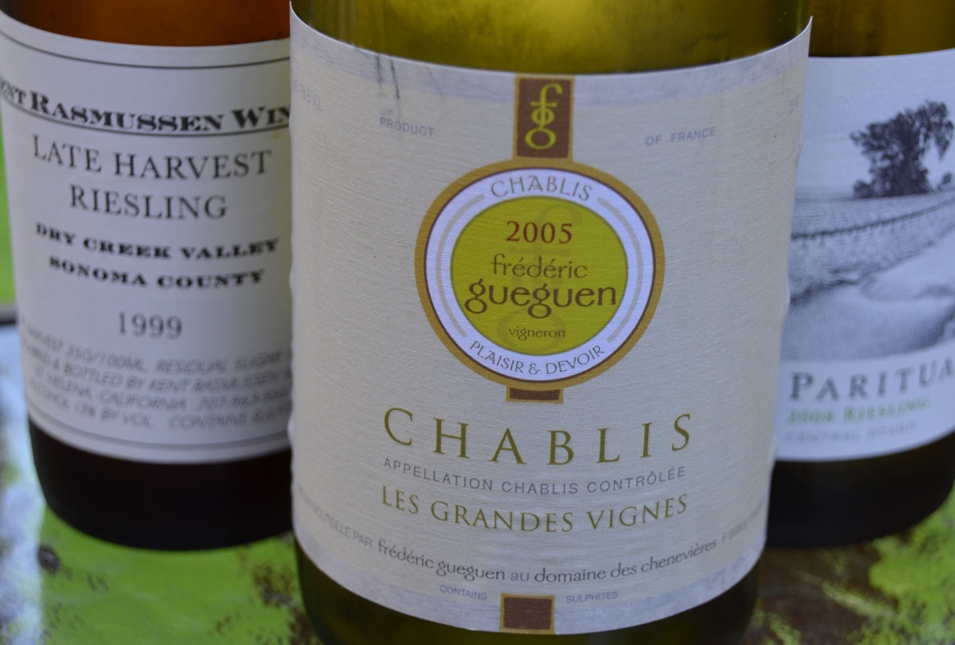
Frédéric Gueguen Chablis
2005 Frédéric Gueguen Chablis Les Grandes Vignes (13% ABV) – I don’t have a lot of experience with Chablis overall. I had a few bottles of Chablis here and there, but never was really impressed with it (I never had Chablis of a Grand Cru or even Premier Cru level). I don’t know what possessed me to get this wine from the Benchmark Wine Company, I guess it was in the right price range ( under $20), and somehow caught my attention. Then I read somewhere, that Chablis requires on average about 10 years of age in the bottle to really start transforming and going past the initial “steely acidity” flavor profile to get to the next level. And then I tried this Frédéric Gueguen wine – wow. Here are my tasting notes: some darker yellow color, but not quite golden yet. Amazing nose, reminiscent of Côte-Rôtie – almost a touch of sulfur (think freshly burnt matches), or even more of a smell of a hot piece of granite on a summer day, a “roasted rock”. Side note: pardon my naive definition here – I recently learned that professionals call it a “gunflint” – but I will not use this term as it doesn’t lead to any associations for me. Perfect complexity on the palate – white fruit, vanilla. Lots and lots of minerality. Full bodied and very balanced, excellent wine overall. Drinkability: 8+
Pinot Noir
And we are moving along to the Pinot Noir wines – both of the wines below were excellent:

Siduri Pinot Noir
2011 Siduri Pinot Noir Sonoma County (13.1% ABV) – perfectly clean California Pinot – good smokey nose, with a touch of red fruit aromas. Light cherries on the palate, hint of earthiness, medium body, perfect acidity, very clean and balanced. Drinkability: 8-
Carmel Road Pinot Noir
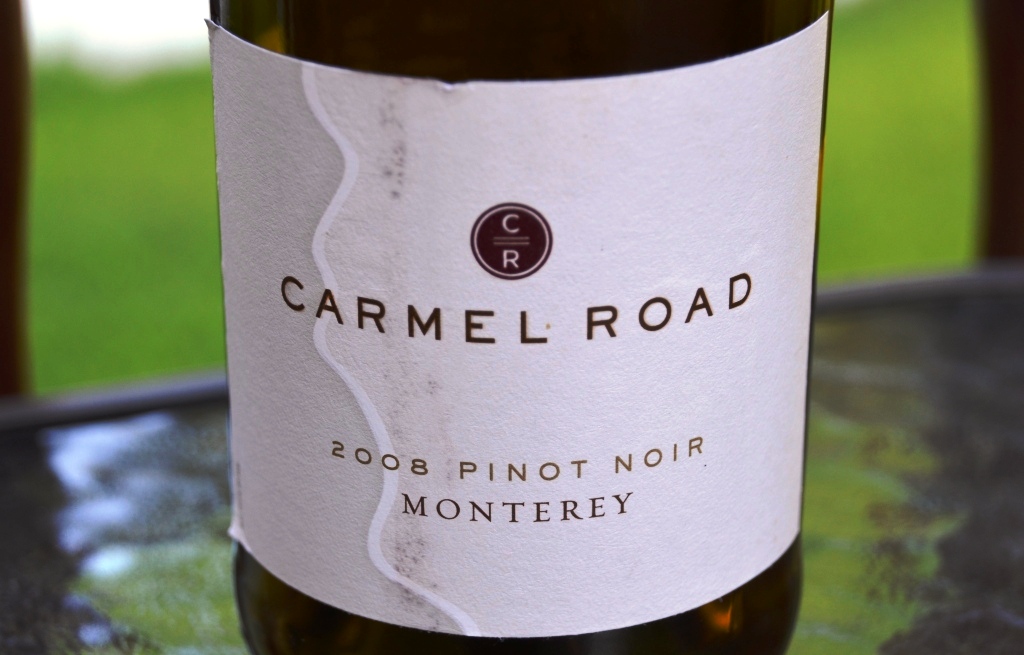
2008 Carmel Road Pinot Noir Monterey (14.0% ABV) – outstanding. Bright ruby color in the glass, raspberries and hint of smokiness on the nose. Raspberries, cranberries and cherries on the palate. Medium to full body. Excellent acidity, overall perfectly balanced. Drinkability: 8+
Cabernet Franc
I have only one wine for you here, but it was mind blowing.
Field Recordings Cabernet Franc
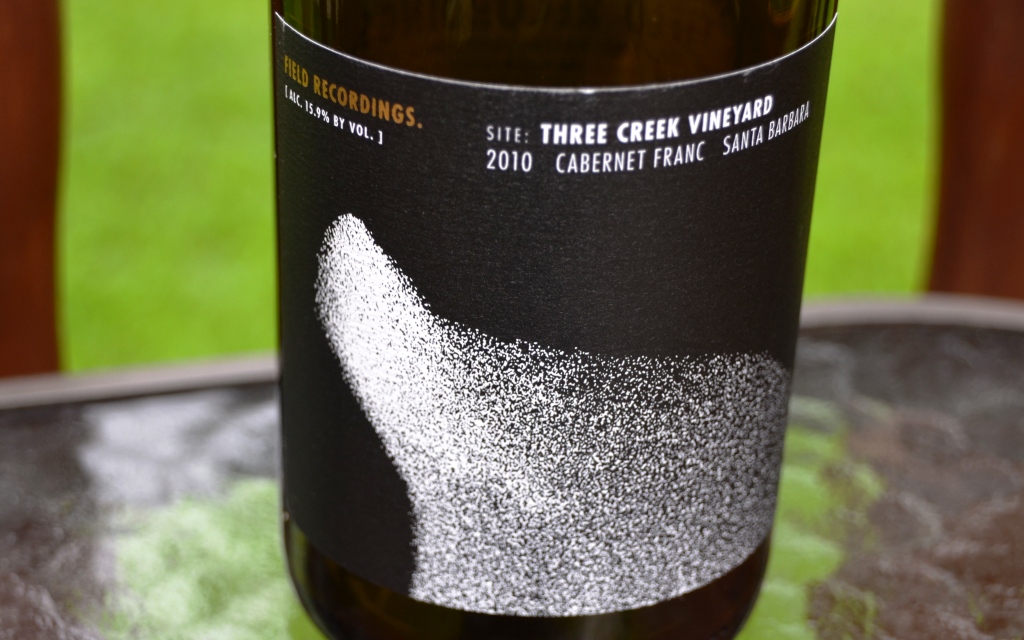
2010 Field Recordings Three Creek Vineyard Cabernet Franc Santa Barbara (15.9% ABV, 90% Cabernet Franc, 10% Malbec, 18 month in French oak) – spectacular. If you read this blog on the regular basis, you know that I’m very impartial to the wines of Field Recordings – but this is not my fault, it is Andrew Jones’ fault ( Andrew Jones is the winemaker behind Field Recordings). This wine had beautiful garnet color in the glass. The nose was clean and open, withhint of black currant and other red fruit. The palate is stunning with black currant, cherries, touch of black pepper, dark chocolate, perfect acidity, soft and supple tannins, all in the format of full-bodied wine. Perfect balance of fruit, acidity, tannins and alcohol – which is pretty amazing at 15.9% ABV. Drinkability: 9
Last, but not least – Syrah
Villa Pillo Syrah
Appearance of the large amount of Italian Syrah wines is also somewhat of a revelation, similar to the one I mentioned at the beginning of this post. All of a sudden I start noticing that there are more Italian Syrah wines showing in the wine stores, and people are just talking more about them, in the blogs and otherwise.
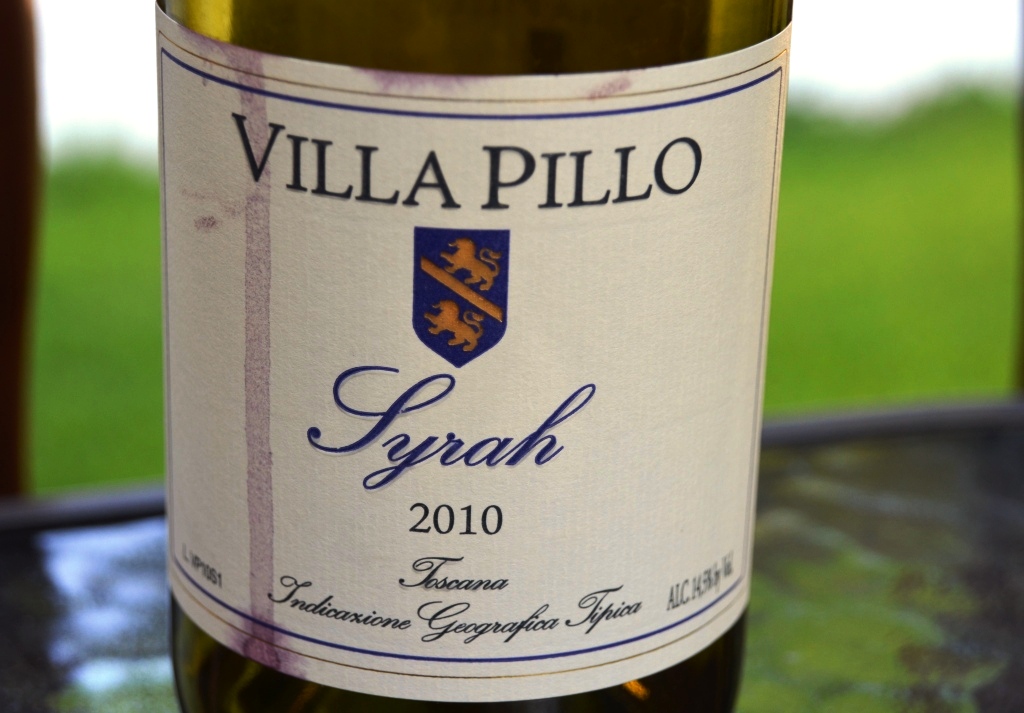
2010 Villa Pillo Syrah Toscana IGT (14.5% ABV) – we got this wine when we visited Millbrook Winery in New York (this will be a subject of a separate post), as they are importing this and a number of other wines from Italy. Tasting notes: Dark garnet color in the glass. Nose of dark fruit and dark chocolate. Outstanding on the palate – hint of pepper, cherries, plums and raspberries, more dark chocolate. Full bodied, with the velvety texture weaved over firm structure. Drinkability: 8
Whew, we are done here! Enjoy the rest of your weekend and cheers!
Wines, Wines, Wines
A couple of weeks ago, an interesting (concerning, rather?) thought came in – this is the wine blog. I’m doing my best to keep you entertained and informed, with all the weekly quizzes and potpourri wine news (a.k.a. Wednesday’s Meritage), but I don’t do enough of the core wine blogging stuff – namely, the wine reviews. No, I don’t have a plan to address this radically – say, but introducing a new weekly topic or so. But during the past month, I had quite a few wines worth talking about, so this is exactly what I’m going to do – write a post to review those wines. Well, yeah, I guess you are already reading this very post… The usual warning – there will be pictures,… many pictures…
It is still summer, so let’s start with super-quaffable Prosecco. It is not even Prosecco, it is pretty much a complete cocktail in the bottle. The wine is made by Mionetto, a well known Prosecco producer in Valdobbiadene region in Italy.
Mionetto Il Ugo
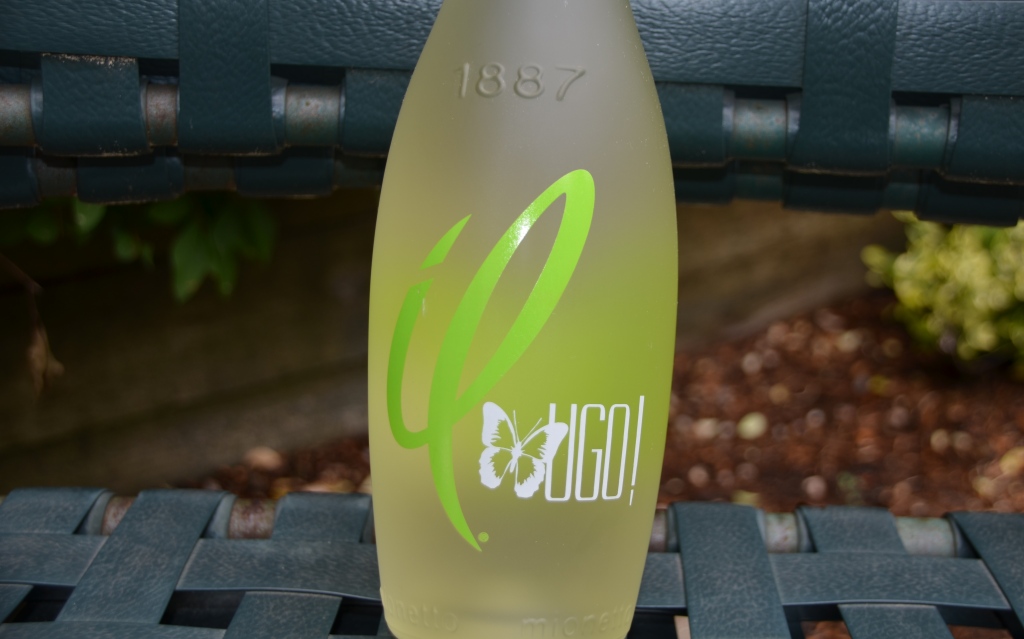
Mionetto Il Ugo, a blend of Prosecco with elderflower blossoms and wildflowers – bright and uplifting on the nose, touch of sweetness with a charismatic bitterness and enough acidity – it is so refreshing, you don’t want to put the glass down. Yes, I know, the purists will disagree – but this is an outstanding wine in my book. Drinkability: 8
Now, a couple of value wines for your consideration. These wines come from Chile under the brand name of the Beach Kite. While you can’t find this information on the wine label, Beach Kite is presumable affiliated with 90+ Cellars. 90+ Cellars has a similar model of operation to Hughes Wines and Oriel (at least the two that I’m familiar with), which is: find good wines which well-known wineries have a hard time selling, bottle under your own private label, and sell for the reasonable price at around $20. Beach Kite seems to be more of a “second label” to the 90+ Cellars wines, considering the price of $7.99 per bottle. But – don’t judge the wine by its price.


2012 Beach Kite Sauvignon Blanc Central Valley Chile (13% ABV) had herbaceous nose, and zesty grapefruit on the palate, a bit more restrained compare to the typical New Zealand Sauvignon Blanc, but still fruit forward next to Sancerre. Refreshing, with good acidity. Drinkability: 7
2012 Beach Kite Pinot Noir Central Valley Chile (13% ABV) – simple, round, good red fruit on the nose and the palate, touch of plums, good acidity – perfect sipping wine for a hot summer day. Drinkability: 7
Next I want to talk about few wines, sorted by the grape.
Riesling
While this is not how I rate the wines, but I would say that I had two Rieslings which were outstanding, and one which was … just spectacular.
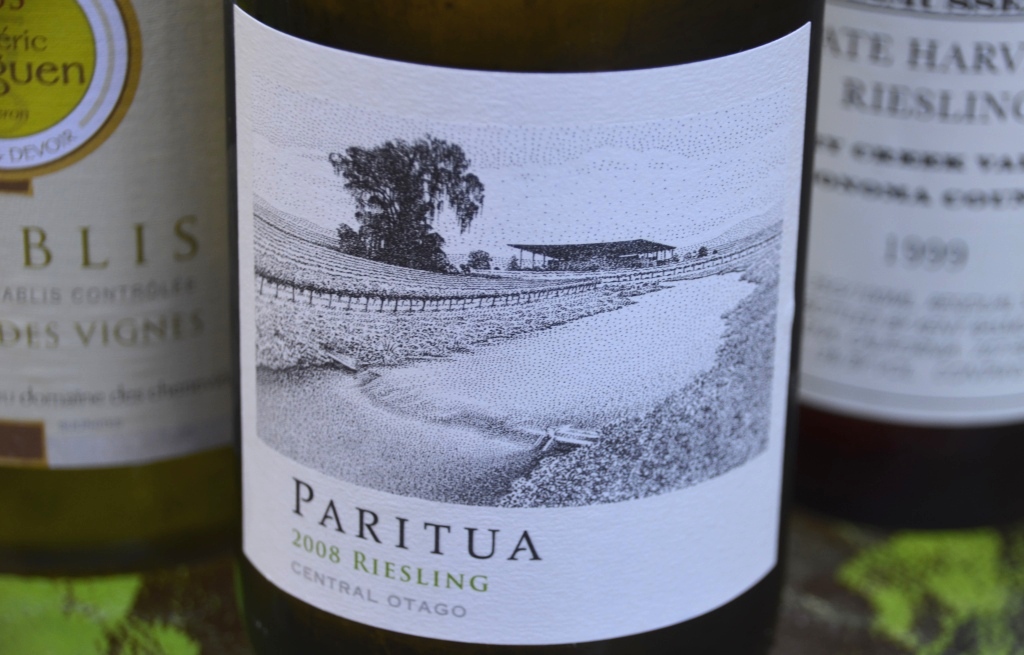
Paritua Riesling Central Otago
2008 Paritua Riesling Central Otago New Zealand (11.5% ABV). I got this wine for $6/bottle at Last Bottle Wines. I was questioning myself a bit when placing an order for this wine, as I never heard of Riesling from Central Otago – a region in New Zealand known for their world-class Pinot Noir, but not Riesling. I’m glad I took my chances and got this wine, as it was outstanding. Perfect ripe peach flavors on the nose with the hint of petrol (yes, I know some people are not very happy about this flavor, but I personally love it). Very delicate on the palate, with some honey and apricot notes, perfect acidity and very restrained sweetness. This New Zealand Riesling would rival many of the German Rieslings at Kabinett level. One night we had it with Thai food, and [as expected] it paired perfectly. Drinkability: 8


2005 Eitelsbacher Karthauserhofberg Riesling Spatlese Mosel-Saar–Ruwer (9% ABV) – what I value the most in Riesling (any Riesling) is balance. My sweet tooth is not any smaller than the one any sweets lover would have out there. But I can’t take bottomless sweetness in the wine – I need acidity to come and play it supportive and refreshing role right next to the sweetness. This Riesling is perfectly balanced, with excellent acidity – and showing no signs of age. Just had an interesting revelation – may be I should replace my “drinkability” ratings with “quaffability”, as this wine was not just drinkable, it was perfectly quaffable. Anyway, I digress. This is not the first Riesling I had from Eitelsbacher Karthauserhofberg – and it seems to be a very interesting winery – but I need to refer you to the Riesling expert Oliver TheWinegetter if you want to learn more. Here is a link to the comment Oliver left on one of my previous posts where he is talking about this winery. Drinkability: 8+

Kurt Rasmussen Late Harvest Riesling
1999 Kurt Rasmussen Late Harvest Riesling Dry Creek Valley (13%ABV) – I’m not sure I can do justice to this wine trying to describe it. In a word – spectacular. Liquid viscous dark gold in the glass, honey, honeydew, caramelized pecan, apricot notes all over, both on the nose and the palate – and perfectly balanced (I’m know I’m abusing this one), with still bright supporting acidity. Drinkability: 9
Next up – Gewurztraminer
To be honest, I don’t drink Gewurztraminer all that often. I find a lot of Gewurztraminer wines to be all over the place in terms of taste – many of them have wonderful nose, but then on the palate the wine often doesn’t appear to be “together”, it shows up quite disjointed. But – not this wine.
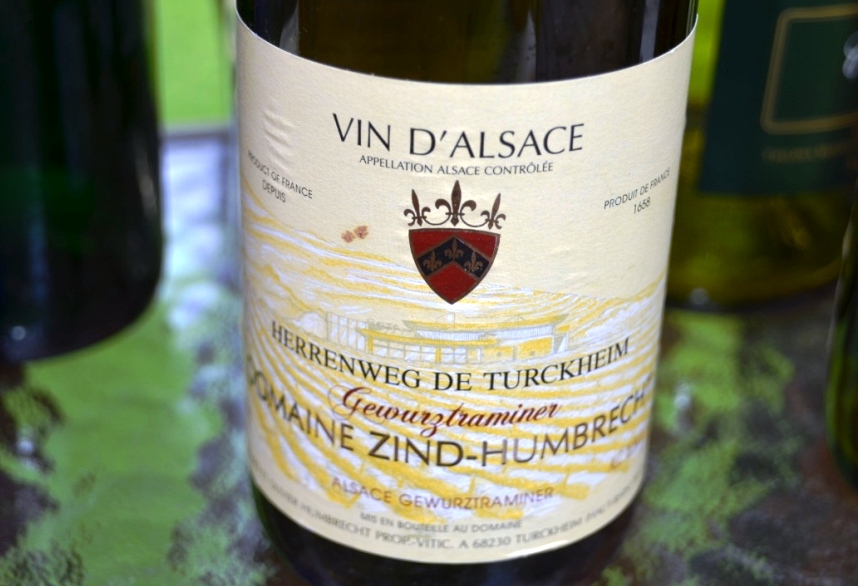
Zind-Humbrecht Gewurztraminer
Domain Zind-Humbrecht is one of the best producers in Alsace, probably best known for its Pinot Gris wines. Just to put things in perspective, 36 wines of Domain Zind-Humbrecht have classic ratings from Wine Spectator (95-100), including perfect score 100 point 2001 Pinot Gris. Well, this is not the wine I’m talking about here.
2002 Domaine Zind-Humbrecht Herrenweg de Turckheim Gewurztraminer Alsace (15.5% ABV) – I got two bottles of this wine at Bottle King in New Jersey on a big sale for about $20 each – this wine typically retails for $60 or so. I had a bottle few years back, and was not impressed. So when I pulled this bottle out, I was not expecting much ( it was more like “yeah, let’s free some space in the wine fridge”). My, was I wrong! In one word, I have to use again my abused wine definition of the day – spectacular. Dark golden color, beautiful nose of candied apricot, perfect honey tones on the palate, fresh acidity, more candied apricot, perfectly balanced. Drinkability: 9
Food break
Tired of wine? Let’s make a short break for some food pictures. First, I promised to Food and Wine Hedonist that when I will make Elotes according to his recipe, I will share my impressions. Elotes is Mexican street food which is essentially a grilled corn with spicy mayo and Cotija cheese – this is precisely what I did and it was tasty! For the recipe, use the link above, and here are the pictures:


Yes, I continue admiring my “mangal”, a special charcoal grill – here are few pictures for your drooling pleasure:


You know what – I think this is enough for one post. Let’s stop here. In the next post – Chardonnay, Cabernet Franc, Pinot Noir and may be something else.
To be continued…
Weekly Wine Quiz #62: Wine Trivia – Nebbiolo
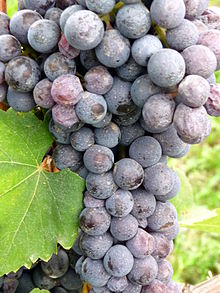
Nebbiolo grapes, picture from Wikipedia
Welcome to the weekend! Your new wine quiz has arrived.
Today our subject is the Italian grape called Nebbiolo – a power grape of Piedmont, solely responsible for some of the world’s best wines, Barolo and Barbareso.
As I’m working on this series of quizzes, I’m of course learning a lot myself. It was very interesting for me to realize, that unlike any other major red grape we talked about so far, Nebbiolo is pretty much confined to the 6 or so areas in Italy, where it makes wonderful wines – its world-wide spread is non existent, not even in the form of clones, like Zinfandel. And this is all despite the fact that Nebbiolo is quite an old grape, with first mentions going all the way back to the 13th century.
Nebbiolo is a very tricky grape to work with. It has the longest ripening cycle out of many grapes – buds early, ripens very late, prone both to mutation (there are about 40 known clones) and grape diseases. But – the resulting wines, like Barolo and Barbaresco, clearly worth the trouble, with wonderful aromatics, power and concentration. Also the ageing potential of the Nebbiolo wines is almost unlimited.
Now, to the quiz!
Q1: Explain the meaning of the name “Nebbiolo”
Q2: In one of the regions outside Piedmont, the wines are produced from Nebbiolo grapes in the style of Amarone – with grapes drying on the straw mats before they are pressed. Can you name that region?
Q3: True or False: Blending is not allowed for any of the wines produced from Nebbiolo grape in Piedmont region.
Q4: White grape used to be such a traditional blending partner for Nebbiolo that it was sometimes called White Barolo. Do you know the name of this grape?
Q5: In the blind tasting setting, the wines made out of Nebbiolo can be very distinguishable even before you take a first sip. Do you know what is this distinct feature of Nebbiolo wines?
Good luck, enjoy your weekend and cheers!
Weekly Wine Quiz #60: Grape Trivia – Sangiovese

Sangiovese grapes close up from Wikipedia
Welcome to the weekend! Yep, it is the time for the new wine knowledge test.
We are continuing our Grape Trivia series, and today we will talk about Sangiovese – one of the most famous Italian grapes. Sangiovese is typically associated with Chianti, but in reality, Sangiovese is one of the most planted grapes all over Italy. One of the interesting issues is that Sangiovese, similarly to Pinot Noir, is very clone-prone, so it is known in different places under different names, such as Sangiovese Grosso, Prugnolo Gentile or Calabrese, to take a few.
Sangiovese is black skinned grape with cherry-dominant, earthy and savory profile. Sangiovese is capable of a wide range of expressions, starting from simple food friendly wines from Chianti to the oak-loaded monsters requiring long ageing and long decanting, coming from different regions in Tuscany and beyond. Absolute majority of Sangiovese plantings are located in Italy, but the grape is also slowly becoming popular in the other regions such as United States or Argentina.
Now, to the quiz! I thought that Zinfandel was not a simple quiz to compose, but then I realized that it is even more difficult to create an interesting quiz all around Sangiovese. For what it worth, 5 questions are below.
Q1: Grape, blending partner mostly of the past, typically leading to Sangiovese wines becoming dull and unexciting.
Q2: What is Fiasco, and how is it related to the Chianti wines?
Q3: On some of the bottles of Chianti, you could see an image of the black rooster. What is the meaning of it?
Q4: Tuscany no doubts is the major source of Sangiovese wines. Can you name 4 sub-regions in Tuscany, producing great wines with Sangiovese as the main variety?
Q5: Name 3 leading regions in United States producing Sangiovese wines. For an extra bonus, add your favorite producer(s).
Have a great weekend, have fun and cheers!
[My belated notes from ] Gambero Rosso Tre Bicchieri Event
 Two months ago I attended the Gambero Rosso Tre Bicchieri event in New York City. Writing this blog post late in the game has some advantages – particularly, I can refer you to the work of others. Here is the link to the excellent blog post by Stefano of Flora’s Table and Clicks and Corks fame. Moreover, I had the pleasure of attending the event in Stefano’s company, where his expert knowledge of Italian wines was very helpful in navigating the selection of about 500 creme de la creme wines. Thus you can even compare our notes (I doubt though you will find much discrepancy in our thoughts).
Every year since 1986, Gambero Rosso publishes its guide to Italian wines and awards its prestigious Tre Bicchieri (three glasses) rating to the best wines. An event like the one we attended has the purpose of showcasing all the best wines, and it attracts a lot of attention.
I have to start with the same rant as you can see in Stefano’s post. All the wineries were arranged by the distributors and not by the region – therefore, in the presence of 173 wine tables and countless people, my well-thought plan fell apart. Yes, I understand that distributors are important, but I don’t see why all the wineries couldn’t be pulled together by the region, instead of being all over the place. In terms of the overall organization, Vinitaly, which we attended about two weeks before the Tre Bicchieri event, was put together in a lot more logical way.
Leaving that aside, let’s talk about the event. I generally attend a good number of trade wine tastings. So when you start going from table to table, it takes time to find the wine which will “wow” you. What I didn’t realize at first was that the Tre Bicchiery event was different. All the wines which you taste there already had been preselected, they were all winners of the Tre Bicchiery award, and therefore they were all great wines by definition. This was exactly my experience. Table one – wow, this is good. Table two – very good. Table three – excellent! Table four – excellent again – what is happening? How is that possible? Ahh, it is the Tre Bicchiere event, so all the wines are rather expected to be great…
Another important part of the events such as Tre Bicchieri is the opportunity to meet a lot of great people there. For instance, we met Giuseppe Vajra, a winemaker at G.D Vajra in Piedmont, who was a pleasure to talk to.
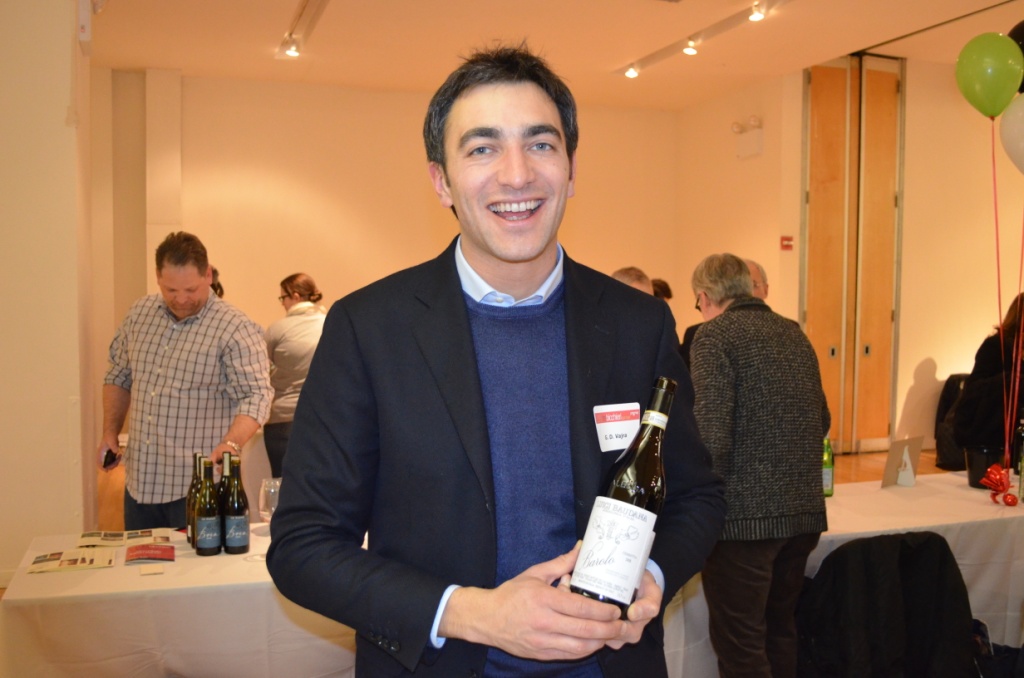
He gave us a taste of his 2004 Barolo Cerretta Luigi Baudana, which he was not supposed to do at the event ( this wine was not a part of the 2013 Tre Bicchieri awards), and the wine was stunning.
Meeting people is great, but navigating the crowds – not so much. Here is a “Hail Mary” style picture – you raise your arm with the camera as high as you can, at the angle you think will fit, and then release the shutter. Here are a few pictures for you, I think it gives you an idea that the event was quite busy:
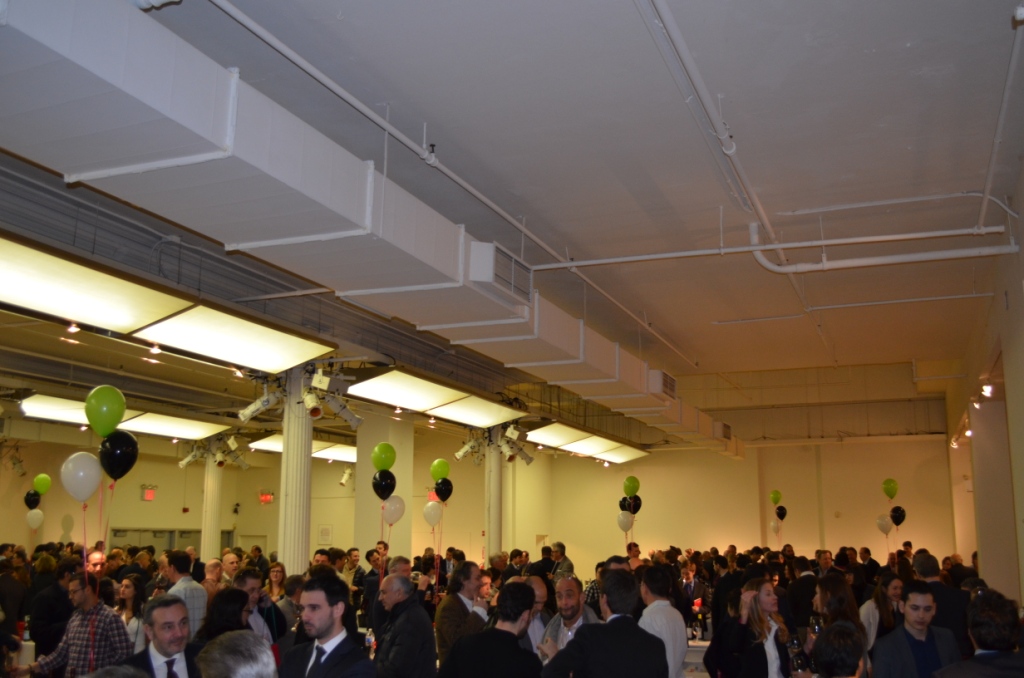
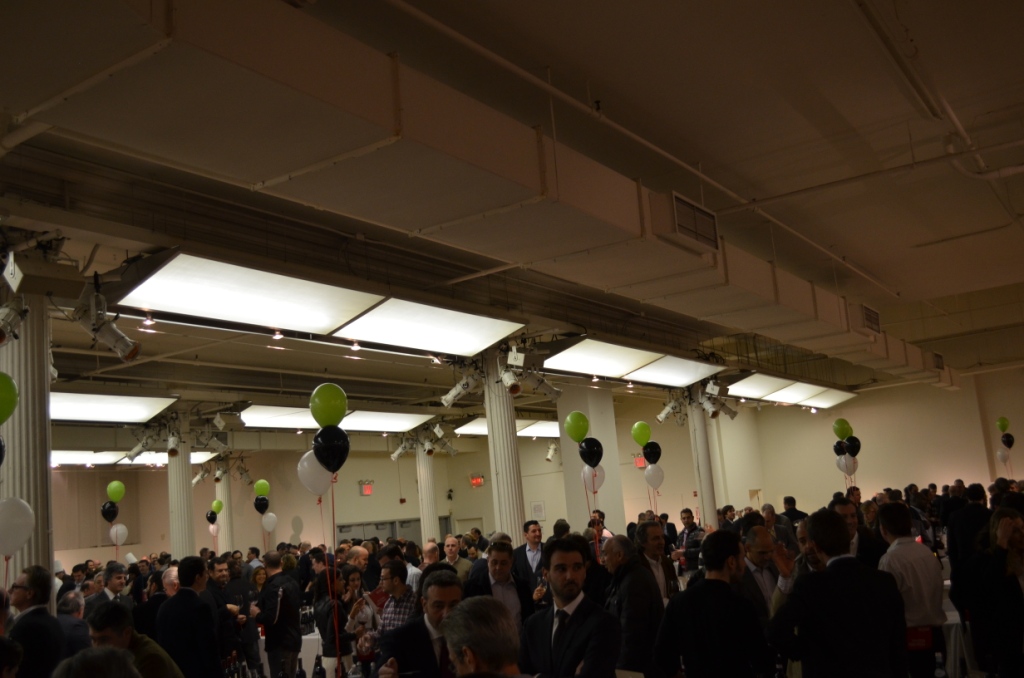
Another problem with an event like this? You are destined to miss out on some of the wines. Taking into account the gross level of disorganization at the event, it is obvious that you will miss out on the best wines. The list of the wines we missed includes Masseto, Ornellaia, Sassicaia, Oreno, Bertani, and more…


The real bummer in this group was Masseto, which is a part of my “Must Try Wines ” list – it is Super Tuscan made out of 100% Merlot – this is the wine that can rival Petrus. Well, maybe next year…
Now, let me offer you my highlights from the event. In the format of such an event, it is impossible (for me, at least) to take any detailed notes – I’m trying to experience as many wines as possible, only jotting down a single word descriptors at the best, which often don’t go beyond “wow” or “outstanding”. Below is the list of wines I really liked (a lot, huh?), with maybe one-word descriptors on them (or maybe not), and then I offer to your attention a picture gallery of mostly the same wines. Oh yes – and unlike the Gambero Rosso event itself, the wines below are grouped by region. Remember I recently suggested a new scale of ratings (yuck, ok, nice, wow, OMG) – let me use it here when possible, and I promise not to bring any “yuck” and “ok” wines to your attention. And one last note – not all the wines below have “three glasses” rating – some of them are rated at 2, but I believe they would still be worth your attention. Here we go.
ABRUZZO
2009 Torre dei Beati Montepulciano d’Abruzzo Cocciapazza – perfect!
ALTO ADIGE
2011 Abbazia di Novacella Alto Adige Valle Isarco Sylvaner Praepositus – outstanding bouquet on the nose, very nice overall
2009 Cantina Tarlano Alto Adige Pinot Blanco Vorberg Riserva – complex, beautiful, perfect minerality, wow!
CAMPANIA
2010 Nanni Cope Sabbie di Sopra il Bosco Terre del Volturno – nice acidity, very good overall. Added bonus – this wine has two rare grapes which I need to add to my grape count – Palagrello and Casavecchia
2010 Marisa Cuomo Casta di Amalfi Furore Bianco Fiorduva – my descriptors for this wine include “beautiful”, “amazing” and “balanced” – definitely a wow! wine. This is a very unique wine in many ways (outside of the fact that it is made out of three rare grapes Ginestra, Fenile and Ripoli) – I need to refer you to Stefano’s blog post where you can learn more about this fascinating wine.
FRIULI VENEZIA GIULIA
2010 Livon Collio Friulano Manditocai – complex nose, nice palate
2011 Ronco dei Tassi Collio Malvasia – nice minerality, very good overall
2011 La Tunella COF Ribolla Gialla Rjgialla – perfect white fruit, clean, excellent
2011 Livio Felluga Friulano – super-expressive wine, very good overall
LAZIO
2010 Sergio Mottura Grechetto Latour a Civitella – excellent
LIGURIA
2011 Cantine Lunae Bosoni Colli di Luni Vermentino Cavagnino – mint and apricot on the nose and palate, OMG
LOMBARDY
2009 Mamete Prevostini Valtellina Superiore Riserva – very unusual nose, perfect power.
2004 Ca’Del Bosco Franciacorta Brut Rose Cuvee Annamaria Clementi – 100% Pinot Noir, the nose of fresh bread and yeast, strawberries on the palate – OMG
2007 Ricci Curbastro Franciacorta Extra Brut – perfect
NV Ricci Curbastro Franciacorta Brut Rose – more complex than the previous one, OMG
2006 Ferghettina Franciacorta Extra Brut – 80% Chardonnay, 20% Pinot Noir; wow!
2007 Cavalleri Franciacorta Pas Rose – very bread-y, excellent!
2008 Guido Berlucchi Franciacorta Cellarius Brut – wow!
MARCHE
2010 Umani Ronchi Verdicchio dei Cazstelli di Jesi Classico Superiore Vecchie Vigne – wow!
2009 Umani Ronchi Conero Cumaro Riserva – excellent!
2009 Velenosi Rosso Piceno Superiore Roggio del Filare – roasted, gamey nose, a touch too sweet, but good
PIEDMONT
2009 Bricco del Cucu Dogliani Bricco S. Bernardo – 100% Grechetto, cherries on the nose and palate, very nice!
2008 Le Piane Boca – a blend of 85% Barolo, 15% Vespolina – wow!
2008 G.D Vajra Barolo Ceretta Luigi Baudana – this wine comes from a specific plot in the vineyard, called Baudana. This was a wow wine, but the next one was one level up, as it had an age on it
2004 G.D Vajra Barolo Ceretta Luigi Baudana – OMG
2008 Schiavenza Barolo Prapo – perfect fruit, open, beautiful, wow!
2009 Vietty Barbera d’Asti Superiore Nizza La Crena – excellent
2006 Massolino Barolo Villa Rionda Riserva – wow!
2010 Villa Sparina Gavi del Commune di Gavi Monterotondo – very nice
2008 Marchesi di Barolo Barolo Sarmassa – nice, round, perfect!
2006 Elvio Cogno Barolo Vigna Elena Riserva – excellent!
SARDINIA
2009 Cantina di Santandi Carignano del Sulcis Superiore Rocca Rubia Riserva – aged for 24 months in oak, excellent.
2009 6Mura Carignano del Sulcis – 120 years old vines, growing on sandy soils, very good balance, excellent.
SICILY
2010 Pietradolce Etna Rosso Archineri – very green
2010 Pietradolce Vigna Barbagalli – nice
2010 Donnafugata Ben Ryé Passito di Pantelleria – the only wine in Italy to receive top awards from all wine publications! Apricots on the nose and palate, perfectly balanced. Overall – wow and OMG!
2010 Tenute Rapitala Conte Hugues Bernard de la Gatinais Grand Cru – 100% Chardonnay, excellent, clean
2010 Firriato Ribeca Perricone – excellent! ( and the rare grape called Perricone)
TRENTINO
2006 Ferrari Trento Extra Brut Perle Nero – outstanding, off brut
2002 Ferrari Trento Brut Giulio Ferrari Riserva del Fondatore – 10 years aging on the lees, wow!
TUSCANY
2008 Famiglia Cecchi Chianti Classico Villa Cerna Riserva – very nice
2009 Famiglia Cecchi Coevo – wow!
2009 Tolani Picconero – 65% Merlot, perfectly Bordeaux in style, excellent!
2007 Poggio di Sotto Brunello di Montalcino – open, fresh, clean – wow!
2009 Poliziano Vino Nobile di Montepulciano – tannins! very good.
2009 Brancaia Chianti Classico Riserva – perfect balance, wow!
2010 Tenuta San Guido Montessu Isola dei Nuraghi – excellent!
2009 Tenuta Sette Ponti Orma Toscana – OMG! depth and breadth of this wine were phenomenal
2010 Marchesi Antinori Cervaro della Sala – perfect chardonnay, outstanding!
VENETO
2010 Ottello Lugana Superiore Molceo – perfumy, perfect!
2010 Ottello Campo Sireso – a blend of Cabernet Sauvignon, Merlot, Corvina and Lagrein – roasted notes, wow!
2009 Roccolo Grassi Valpolicella Superiore Roccolo Grassi -very nice
2007 Vignalta Colli Euganei Rosso Gemola – Merlot/Cabernet Franc blend, classic Bordeaux profile, wow!
2005 Cantina Valpolicella Negrar Amarone della Valpolicella Classico Villa Domini Veneti – pure chocolate on the nose, a bit too sweet and too tannic on the palate. Just ok (I know, I promised that there will be no ok or lesser wines – but I’m an Amarone junkie, you will have to excuse me for that…)
2007 Tedeschi Amarone della Valpolicella Classico Capitel Monte Olmi – 16% ABV, alcohol on the nose – not “yack”, but not good [at all]
2008 Tedeschi Amarone della Valpolicella Classico – very good
2006 Masi Amarone della Valpolicella Mazzano – 120 days of drying the grapes, good overall (not great), too much alcohol on the nose and palate
2008 Viticoltori Speri Amarone della Valpolicella Classico Monte Sant’Urbano – 15% ABV; wow!
And here is the photo gallery for you – enjoy!
Long post, after a long delay – but it is finally done. Yay! Cheers!
Last Bottle Sign Up ($10 credit)




 Talk-A-Vino