Archive
[My belated notes from ] Gambero Rosso Tre Bicchieri Event
 Two months ago I attended the Gambero Rosso Tre Bicchieri event in New York City. Writing this blog post late in the game has some advantages – particularly, I can refer you to the work of others. Here is the link to the excellent blog post by Stefano of Flora’s Table and Clicks and Corks fame. Moreover, I had the pleasure of attending the event in Stefano’s company, where his expert knowledge of Italian wines was very helpful in navigating the selection of about 500 creme de la creme wines. Thus you can even compare our notes (I doubt though you will find much discrepancy in our thoughts).
Every year since 1986, Gambero Rosso publishes its guide to Italian wines and awards its prestigious Tre Bicchieri (three glasses) rating to the best wines. An event like the one we attended has the purpose of showcasing all the best wines, and it attracts a lot of attention.
I have to start with the same rant as you can see in Stefano’s post. All the wineries were arranged by the distributors and not by the region – therefore, in the presence of 173 wine tables and countless people, my well-thought plan fell apart. Yes, I understand that distributors are important, but I don’t see why all the wineries couldn’t be pulled together by the region, instead of being all over the place. In terms of the overall organization, Vinitaly, which we attended about two weeks before the Tre Bicchieri event, was put together in a lot more logical way.
Leaving that aside, let’s talk about the event. I generally attend a good number of trade wine tastings. So when you start going from table to table, it takes time to find the wine which will “wow” you. What I didn’t realize at first was that the Tre Bicchiery event was different. All the wines which you taste there already had been preselected, they were all winners of the Tre Bicchiery award, and therefore they were all great wines by definition. This was exactly my experience. Table one – wow, this is good. Table two – very good. Table three – excellent! Table four – excellent again – what is happening? How is that possible? Ahh, it is the Tre Bicchiere event, so all the wines are rather expected to be great…
Another important part of the events such as Tre Bicchieri is the opportunity to meet a lot of great people there. For instance, we met Giuseppe Vajra, a winemaker at G.D Vajra in Piedmont, who was a pleasure to talk to.
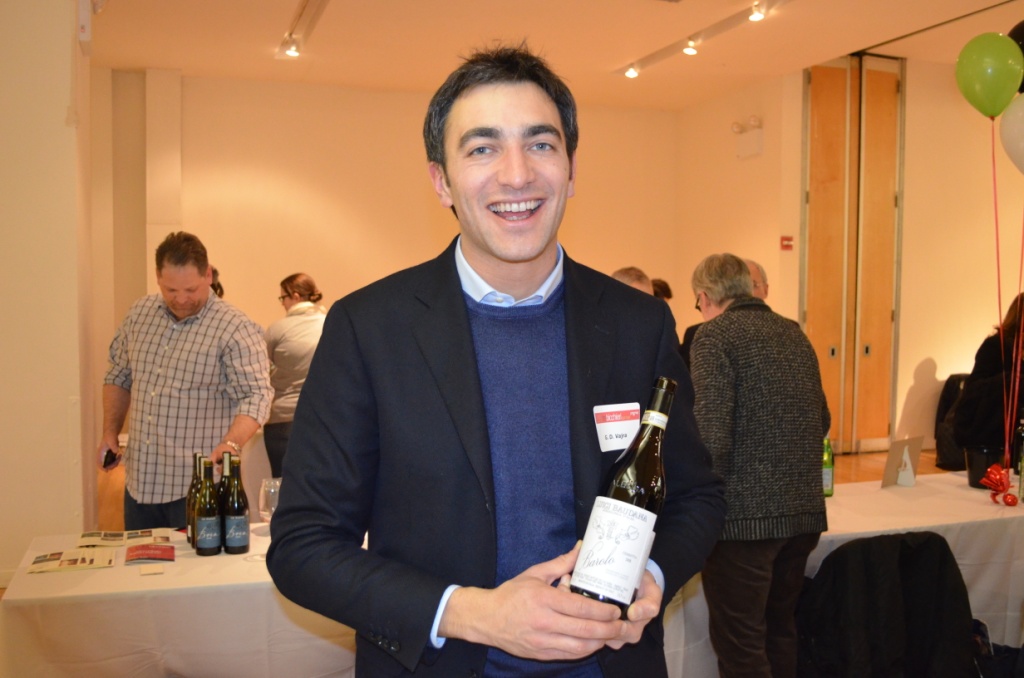
He gave us a taste of his 2004 Barolo Cerretta Luigi Baudana, which he was not supposed to do at the event ( this wine was not a part of the 2013 Tre Bicchieri awards), and the wine was stunning.
Meeting people is great, but navigating the crowds – not so much. Here is a “Hail Mary” style picture – you raise your arm with the camera as high as you can, at the angle you think will fit, and then release the shutter. Here are a few pictures for you, I think it gives you an idea that the event was quite busy:
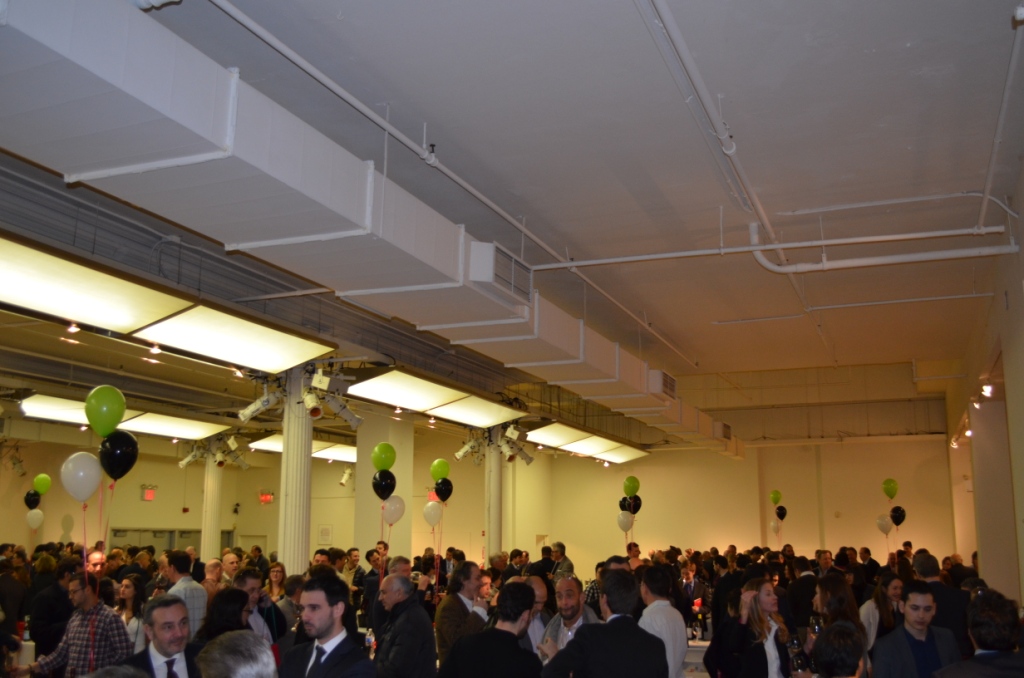
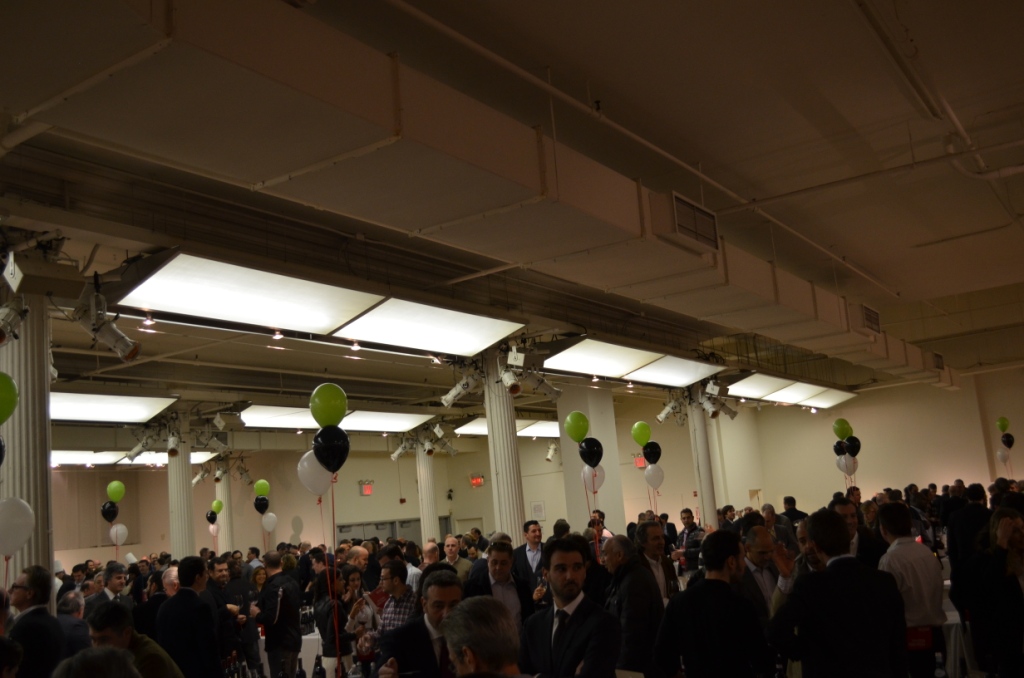
Another problem with an event like this? You are destined to miss out on some of the wines. Taking into account the gross level of disorganization at the event, it is obvious that you will miss out on the best wines. The list of the wines we missed includes Masseto, Ornellaia, Sassicaia, Oreno, Bertani, and more…


The real bummer in this group was Masseto, which is a part of my “Must Try Wines ” list – it is Super Tuscan made out of 100% Merlot – this is the wine that can rival Petrus. Well, maybe next year…
Now, let me offer you my highlights from the event. In the format of such an event, it is impossible (for me, at least) to take any detailed notes – I’m trying to experience as many wines as possible, only jotting down a single word descriptors at the best, which often don’t go beyond “wow” or “outstanding”. Below is the list of wines I really liked (a lot, huh?), with maybe one-word descriptors on them (or maybe not), and then I offer to your attention a picture gallery of mostly the same wines. Oh yes – and unlike the Gambero Rosso event itself, the wines below are grouped by region. Remember I recently suggested a new scale of ratings (yuck, ok, nice, wow, OMG) – let me use it here when possible, and I promise not to bring any “yuck” and “ok” wines to your attention. And one last note – not all the wines below have “three glasses” rating – some of them are rated at 2, but I believe they would still be worth your attention. Here we go.
ABRUZZO
2009 Torre dei Beati Montepulciano d’Abruzzo Cocciapazza – perfect!
ALTO ADIGE
2011 Abbazia di Novacella Alto Adige Valle Isarco Sylvaner Praepositus – outstanding bouquet on the nose, very nice overall
2009 Cantina Tarlano Alto Adige Pinot Blanco Vorberg Riserva – complex, beautiful, perfect minerality, wow!
CAMPANIA
2010 Nanni Cope Sabbie di Sopra il Bosco Terre del Volturno – nice acidity, very good overall. Added bonus – this wine has two rare grapes which I need to add to my grape count – Palagrello and Casavecchia
2010 Marisa Cuomo Casta di Amalfi Furore Bianco Fiorduva – my descriptors for this wine include “beautiful”, “amazing” and “balanced” – definitely a wow! wine. This is a very unique wine in many ways (outside of the fact that it is made out of three rare grapes Ginestra, Fenile and Ripoli) – I need to refer you to Stefano’s blog post where you can learn more about this fascinating wine.
FRIULI VENEZIA GIULIA
2010 Livon Collio Friulano Manditocai – complex nose, nice palate
2011 Ronco dei Tassi Collio Malvasia – nice minerality, very good overall
2011 La Tunella COF Ribolla Gialla Rjgialla – perfect white fruit, clean, excellent
2011 Livio Felluga Friulano – super-expressive wine, very good overall
LAZIO
2010 Sergio Mottura Grechetto Latour a Civitella – excellent
LIGURIA
2011 Cantine Lunae Bosoni Colli di Luni Vermentino Cavagnino – mint and apricot on the nose and palate, OMG
LOMBARDY
2009 Mamete Prevostini Valtellina Superiore Riserva – very unusual nose, perfect power.
2004 Ca’Del Bosco Franciacorta Brut Rose Cuvee Annamaria Clementi – 100% Pinot Noir, the nose of fresh bread and yeast, strawberries on the palate – OMG
2007 Ricci Curbastro Franciacorta Extra Brut – perfect
NV Ricci Curbastro Franciacorta Brut Rose – more complex than the previous one, OMG
2006 Ferghettina Franciacorta Extra Brut – 80% Chardonnay, 20% Pinot Noir; wow!
2007 Cavalleri Franciacorta Pas Rose – very bread-y, excellent!
2008 Guido Berlucchi Franciacorta Cellarius Brut – wow!
MARCHE
2010 Umani Ronchi Verdicchio dei Cazstelli di Jesi Classico Superiore Vecchie Vigne – wow!
2009 Umani Ronchi Conero Cumaro Riserva – excellent!
2009 Velenosi Rosso Piceno Superiore Roggio del Filare – roasted, gamey nose, a touch too sweet, but good
PIEDMONT
2009 Bricco del Cucu Dogliani Bricco S. Bernardo – 100% Grechetto, cherries on the nose and palate, very nice!
2008 Le Piane Boca – a blend of 85% Barolo, 15% Vespolina – wow!
2008 G.D Vajra Barolo Ceretta Luigi Baudana – this wine comes from a specific plot in the vineyard, called Baudana. This was a wow wine, but the next one was one level up, as it had an age on it
2004 G.D Vajra Barolo Ceretta Luigi Baudana – OMG
2008 Schiavenza Barolo Prapo – perfect fruit, open, beautiful, wow!
2009 Vietty Barbera d’Asti Superiore Nizza La Crena – excellent
2006 Massolino Barolo Villa Rionda Riserva – wow!
2010 Villa Sparina Gavi del Commune di Gavi Monterotondo – very nice
2008 Marchesi di Barolo Barolo Sarmassa – nice, round, perfect!
2006 Elvio Cogno Barolo Vigna Elena Riserva – excellent!
SARDINIA
2009 Cantina di Santandi Carignano del Sulcis Superiore Rocca Rubia Riserva – aged for 24 months in oak, excellent.
2009 6Mura Carignano del Sulcis – 120 years old vines, growing on sandy soils, very good balance, excellent.
SICILY
2010 Pietradolce Etna Rosso Archineri – very green
2010 Pietradolce Vigna Barbagalli – nice
2010 Donnafugata Ben Ryé Passito di Pantelleria – the only wine in Italy to receive top awards from all wine publications! Apricots on the nose and palate, perfectly balanced. Overall – wow and OMG!
2010 Tenute Rapitala Conte Hugues Bernard de la Gatinais Grand Cru – 100% Chardonnay, excellent, clean
2010 Firriato Ribeca Perricone – excellent! ( and the rare grape called Perricone)
TRENTINO
2006 Ferrari Trento Extra Brut Perle Nero – outstanding, off brut
2002 Ferrari Trento Brut Giulio Ferrari Riserva del Fondatore – 10 years aging on the lees, wow!
TUSCANY
2008 Famiglia Cecchi Chianti Classico Villa Cerna Riserva – very nice
2009 Famiglia Cecchi Coevo – wow!
2009 Tolani Picconero – 65% Merlot, perfectly Bordeaux in style, excellent!
2007 Poggio di Sotto Brunello di Montalcino – open, fresh, clean – wow!
2009 Poliziano Vino Nobile di Montepulciano – tannins! very good.
2009 Brancaia Chianti Classico Riserva – perfect balance, wow!
2010 Tenuta San Guido Montessu Isola dei Nuraghi – excellent!
2009 Tenuta Sette Ponti Orma Toscana – OMG! depth and breadth of this wine were phenomenal
2010 Marchesi Antinori Cervaro della Sala – perfect chardonnay, outstanding!
VENETO
2010 Ottello Lugana Superiore Molceo – perfumy, perfect!
2010 Ottello Campo Sireso – a blend of Cabernet Sauvignon, Merlot, Corvina and Lagrein – roasted notes, wow!
2009 Roccolo Grassi Valpolicella Superiore Roccolo Grassi -very nice
2007 Vignalta Colli Euganei Rosso Gemola – Merlot/Cabernet Franc blend, classic Bordeaux profile, wow!
2005 Cantina Valpolicella Negrar Amarone della Valpolicella Classico Villa Domini Veneti – pure chocolate on the nose, a bit too sweet and too tannic on the palate. Just ok (I know, I promised that there will be no ok or lesser wines – but I’m an Amarone junkie, you will have to excuse me for that…)
2007 Tedeschi Amarone della Valpolicella Classico Capitel Monte Olmi – 16% ABV, alcohol on the nose – not “yack”, but not good [at all]
2008 Tedeschi Amarone della Valpolicella Classico – very good
2006 Masi Amarone della Valpolicella Mazzano – 120 days of drying the grapes, good overall (not great), too much alcohol on the nose and palate
2008 Viticoltori Speri Amarone della Valpolicella Classico Monte Sant’Urbano – 15% ABV; wow!
And here is the photo gallery for you – enjoy!
Long post, after a long delay – but it is finally done. Yay! Cheers!
Daily Glass: Perfect [Monday] Wine
Can there be such thing as perfect Monday wine? What makes Monday special? On one side, it is almost “politically appropriate” to dread Monday as “yicks, it is work again” kind of day. But if you think of it the other way, Monday is the beginning of the new week – you got seven more days ahead of you, and nothing stops you from enjoying every one of them. Of course Friday is great, the weekend is ahead of you, yay! – but you just bid farewell to the 5 days of your life, and hopefully those were the good days… The Monday is the beginning, bright and exciting – I’m ignoring the smirk on your face… So excitement is the angle I want to take, because in the simple terms, the wine I’m about to present to you is exciting!
What wine is that and was it the wine at all, or may be it was some kind of obscure drug or a head trauma which caused my brain to falter and call Monday exciting? Yes, this was the wine, delivered to my doorstep by Last Bottle wines.
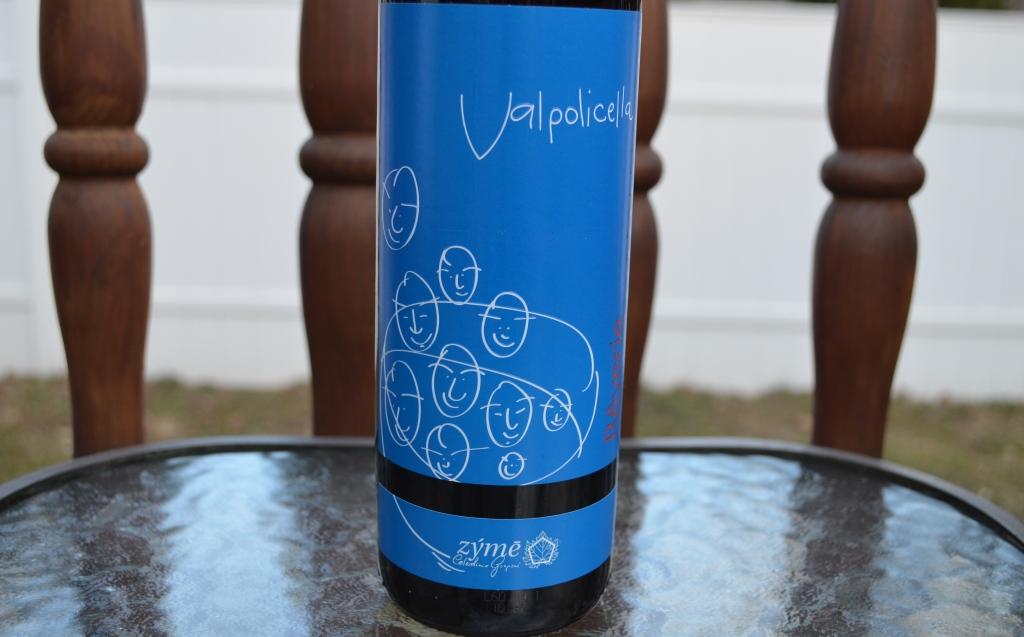
2009 Zýmē Valpolicella Réverie (a blend of Corvina 40%, Corvinone 30%, Rondinella 25%, Oseleta 5%; 11.5% ABV), made by Celestino Gaspari. Don’t know about you, but I never heard of Celestino Gaspari before. But when I read the note from Last Bottle wines that this Valpolicella is made by the winemaker who worked before for Giuseppe Quintarelli, I was sold instantly. Giuseppe Quintarelli holds a lot of respect in my mind (never tasted his wines, but according to the general consensus, it is very hard to find better Italian wines than those made by Giuseppe Quintarelli) – so when I see the wine made by someone who worked for Giuseppe Quintarelli for 11 years, you don’t really need to convince me to buy the wine as long as I can afford it – $13/bottle sounds quite affordable to me.
What makes me call this Valpolicella a perfect wine? It is the whole package.
Color – ruby red, pretty bright.
Nose – fresh fruit, raspberries, touch of cherries, very inviting.
Palate – clean acidity and young fruit, very light at first, evolves in the glass as it breezes, showing broader shoulders, more substance, adding plums and earthy notes to those bright sour cherries which were dominating at first.
Finish – long, with lingering fruit.
Overall very balanced, very bright, well made wine – guaranteed to brighten up your Monday, no matter what. As a bonus, I think this wine will evolve with time (will I be willing to wait is a whole another question). Drinkability: 8-
In addition to this Valpolicella Réverie, Celestino Gaspari makes a number of other wines at Zýmē, including Amarone and Amarone Riserva – but those would have to go more into the dream category. Well, Monday is as good of a day for dreaming as any other day, isn’t it?
Do you have a special Monday wine? Happy Monday to all of you and cheers!
Vinitaly and Slow Wine Tastings – Part 3, Wine, And More Wine
 In the first two posts I gave you some interesting stats and shared our experience with wine seminars at Vinitaly. Now, it is time to actually talk about wines.
Those of you who follow this blog for the while know by now that I mostly talk about wines with the pictures, adding a few words here and there, mostly of a very “excited” nature. If you are looking for the detailed report, I can give you two great references – blog posts by Stefano and John M. Fodera, both covering wines and wineries very extensively.
I have to thank Stefano again, as if it would not be for him, I would be pointlessly wondering from a table to a table, and surely would miss some of the gems. Stefano had a plan, and I gladly followed.
Again, if you are looking for systematic representation of wines, based on the regions and styles, [please refer to the two blog posts I mentioned above. I will just share my personal highlights. Oh, and one side note. It is so happened that I’m writing this last post about Vinitaly after attending another Italian wine event, Gambero Rosso’s Tri Bicchiery. While in general I had no complaints about organization of Vinitaly event, now I can also say that it was organized incomparably better that the Tri Bicchiery event – expect to hear my rant with the Tri Bicchiery post.
Enough words. Here are mostly pictures, with some comments, in the order of the regions appearing in the show guide.
Piedmont

Damilano Barolo
Damilano presented two outstanding Barolos – 2008 Damilano Barolo Lecinquevigne was beautiful, round and easy to drink. 2008 Damilano Barolo Cannubi was exactly what classic Barolo is – powerful, dense, mouth-puckering, but very enjoyable at the same time.
G.D. Vajra presented 2008 G.D Vajra Barolo Bricco Delle Viole, very delicate wine for the Barolo style overall. The wine underwent a 40 days maceration (quite long) and was bottled in the summer of 2012.
Two beautiful wines from Elvio Cogno:
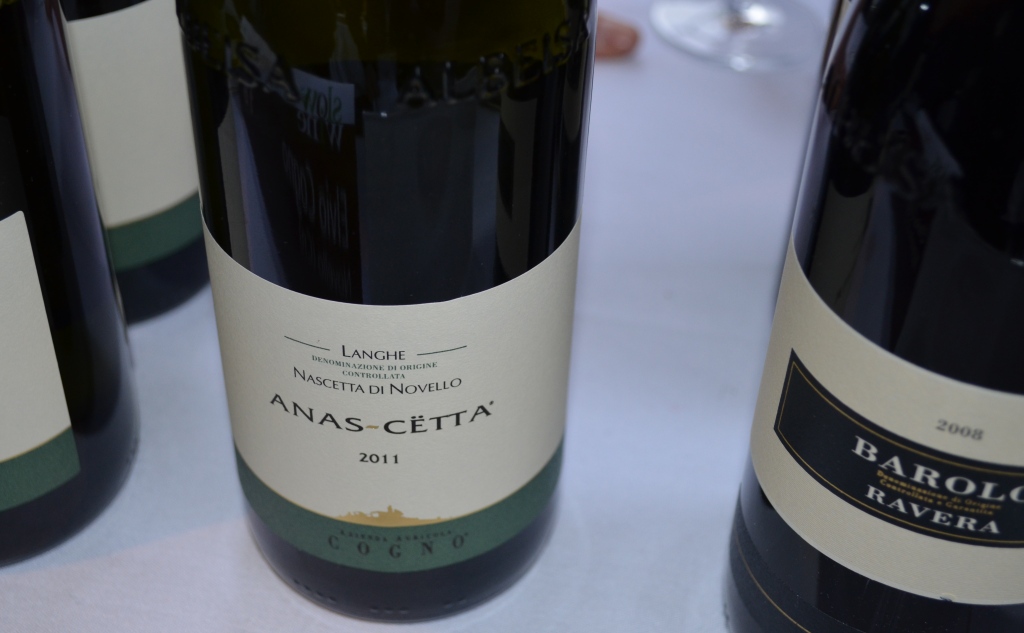
Elvio Cogno Nascetta
2011 Elvio Cogno Langhe Nascetta Anas-Cetta – bright white fruit on the nose, same on the palate, very balanced and refreshing.
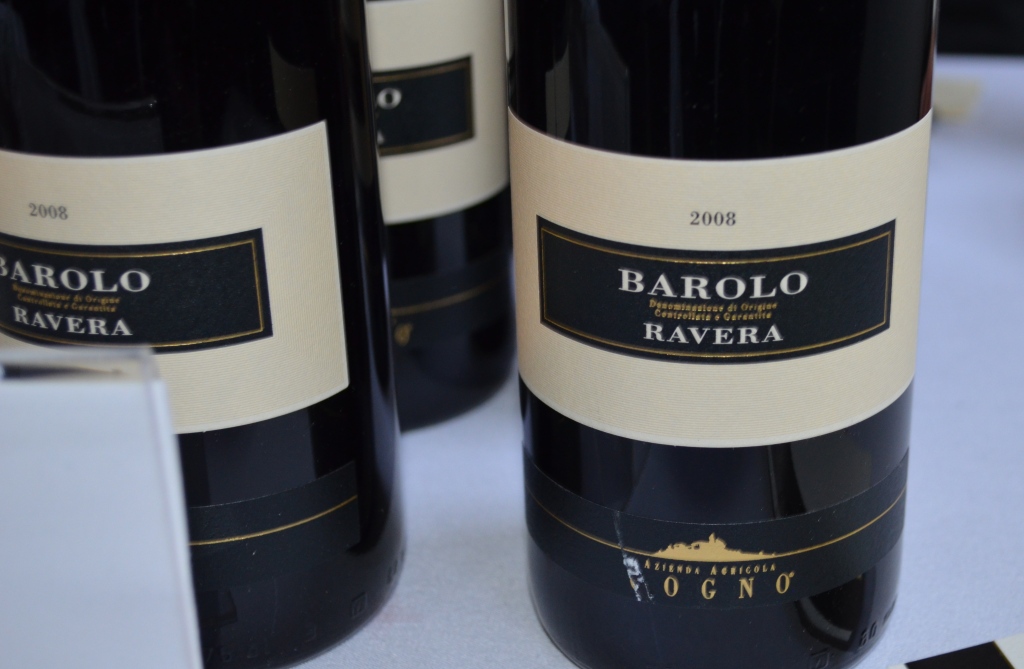
Elvio Cogno Barolo Ravera
2008 Elvio Cogno Barolo Ravera – so far it seems that 2008 vintage of Barolo is great across the board and the wines are very approachable from the beginning – perfect taste profile of Barolo (plums, minerality, earthiness) with the shot of tannins in the finish.
Liguria
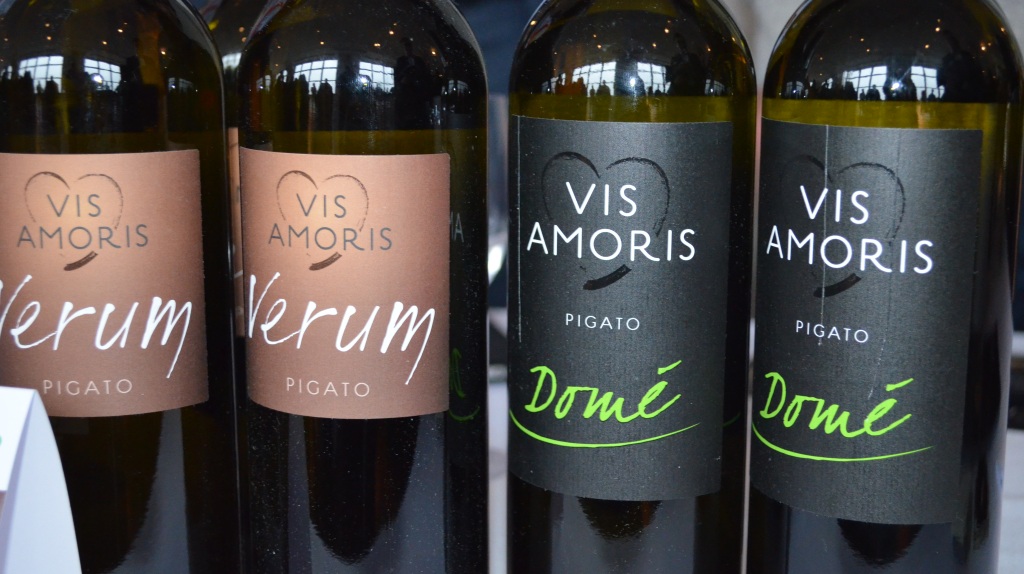
VisAmoris
I can’t tell you which of the two wines from Vis Amoris I liked more. 2011 Vis Amoris Rivera Ligure di Ponente Pigato Dome – beautiful, toned down fruit, soft and opulent, more in style of Rhone whites, very refreshing and balanced. 2011 Vis Amoris Rivera Ligure di Ponente Pigato Verum was a touch bigger and brighter, showing very soft tannins without being fermented in oak. Truly two wonderful white wines.
Lombardia

Ar PePe Nebbiolo
Two excellent Nebbiolo-based wines from Ar.Pe.Pe – 2001 Ar Pe Pe Valtellina Superopre Sassella Rocce Rosse Riserva and 2005 Ar Pe Pe Valtellina Superopre Sassella Ultimi Raggi. The 2001 Riserva was one of the most delicate expressions of Nebbiolo I ever tasted, but it was perfectly balanced and very enjoyable.
Veneto
Veneto = Amarone – okay, never mind, this is just my personal biased statement, Veneto is actually a home to many great wines outside of Amarone. But – once you taste Trabucchi wines, Amarone will be on your mind.

Trabucchi Valpolicella
While Trabucchi had only 2 wines listed in the book, they brought a substantial line of wines to the tasting. 2003 Trabucchi “Terre del Cereolo” Valpolicella Superiore DOC was probably the best Valpolicella I ever tasted – round, supple dark fruit expression, dark chocolate undertones, very balanced. 2007 Trabucchi d’Illasi Terra di San Colombano Valpolicella Superiore DOC, was very comparable, concentrated, round and again very balanced.

Trabucchi Amarone
While 2004 Trabucchi Amarone della Valpolicella DOC and 2006 Trabucchi d’Illasi Amarone Della Valpolicella were very good, 2004 Trabucchi d’Illasi Amarone Della Valpolicella Cent’Anni was spectacular. Perfectly balanced, without any “over the top” fruit, showing dry fruit flavors on the nose, and showing full bodied, balanced and very polished wine on the palate. Definitely a highlight of the event.
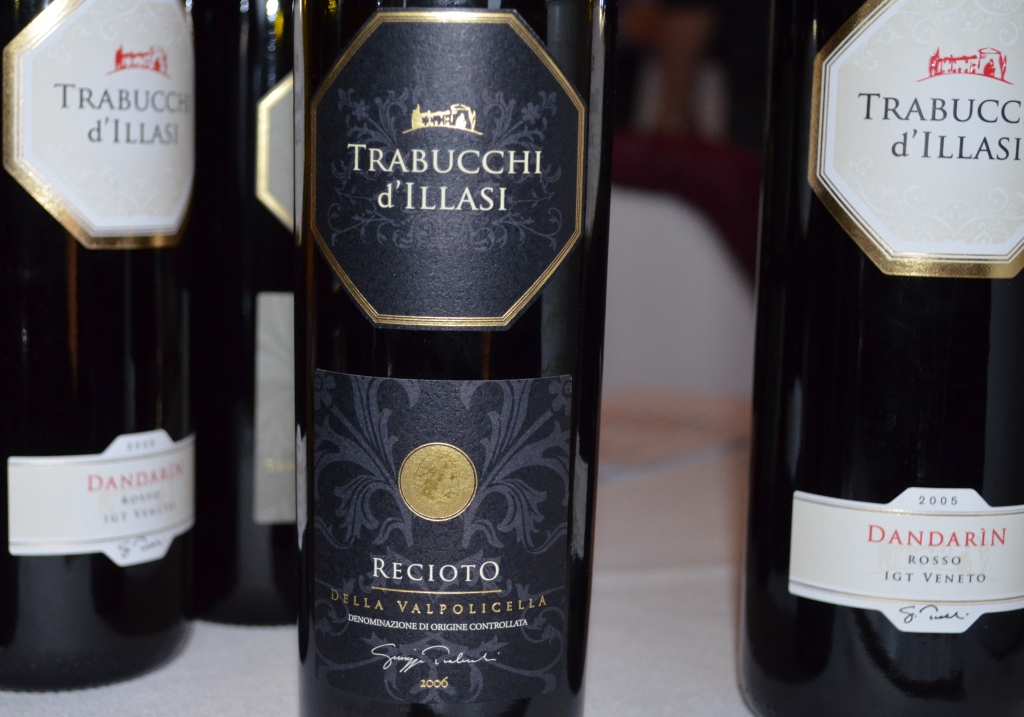
Trabucchi Recioto and Dandarin
2005 Trabucchi d’Illasi Dandarin Rosso Veneto IGT was quite unusual – a blend of traditional Valpolicella varieties Corvina, Corvinone and Rondinella, with 30% of Teroldego and Syrah – slightly different flavor profile compare to Amarone, but quite powerful and expressive. One of the true gems of the day was 2006 Trabucchi d’Illasi Recioto Della Valpolicella – grapes for this wine were dried for 6 month ( typical length of Appasimento process for Amarone wines is 110 – 120 days, i.e. up to 4 month). Tremendous concentration of the dried fruit ( figs, raisins), supported but vibrant acidity – you have to try this wine to believe it!
Before we leave Veneto, a quick stop in Soave, at Pieropan winery:
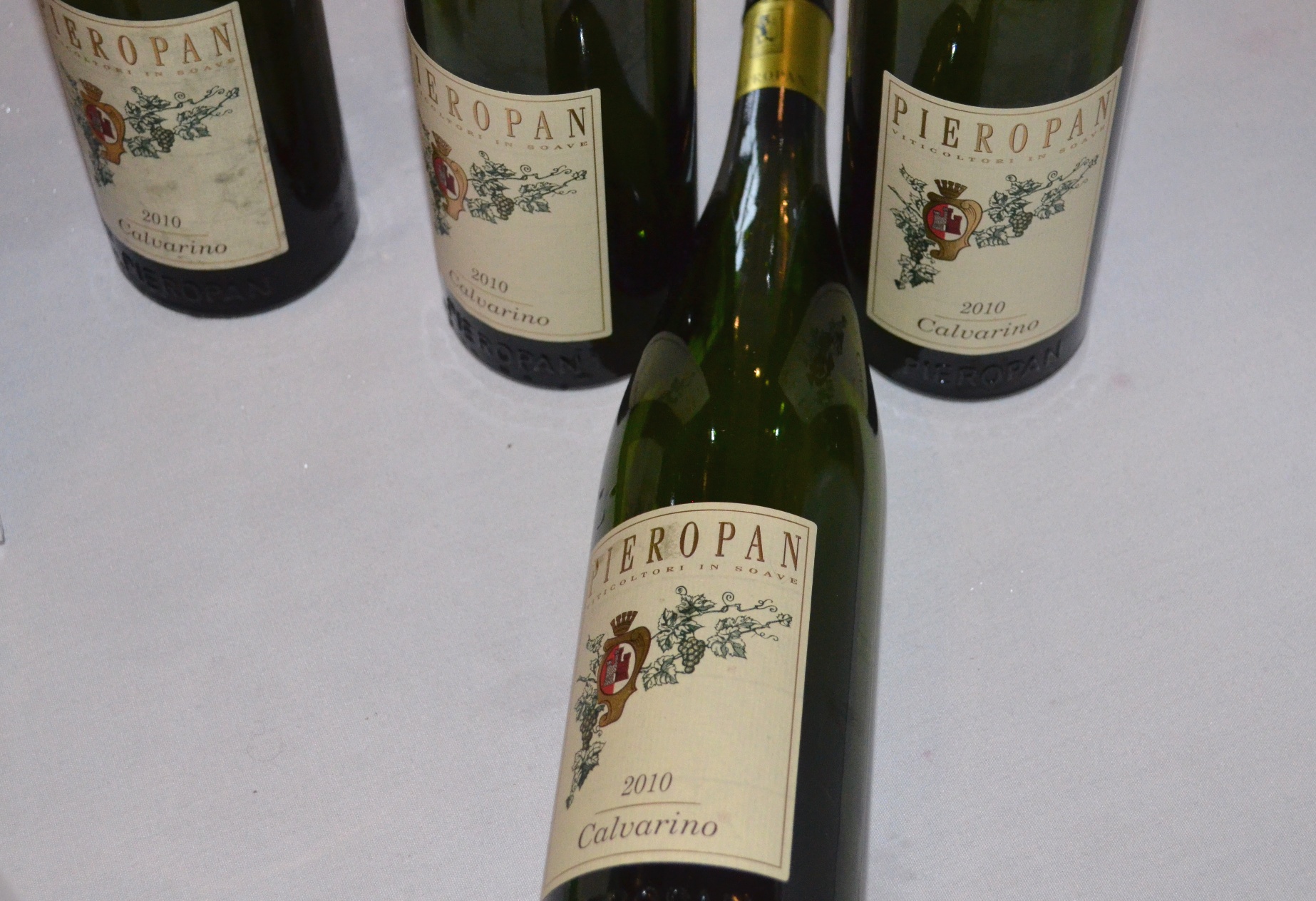
Pieropan Calvarino
2010 Leonido Pieropan Soave Classico Calvarino is a single vineyard blend of Garganega and Trebbiano – showing excellent minerality both on the nose and the palate, very round and refreshing.

Pieropan La Rocca
2010 Leonido Pieropan Soave Classico La Rocca is another single vineyard wine, 100% Garganega, showing more restrained fruit than the previous wine, as well as a touch of butter on the palate. Definitely a very nice wine.
Friuli Venezia Giulia
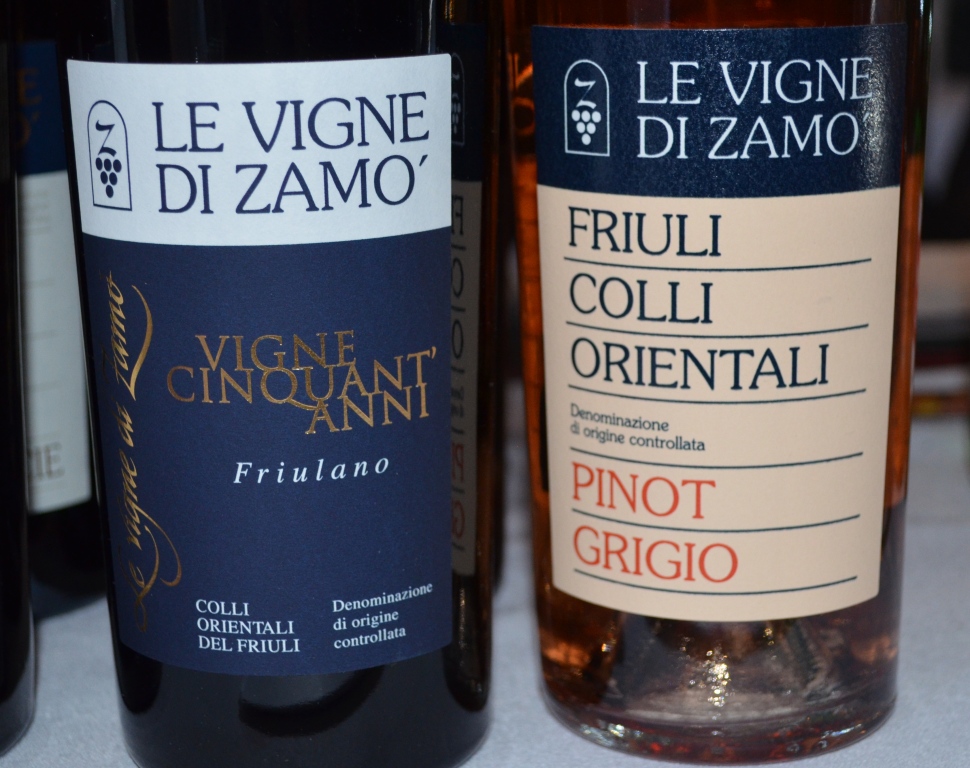
Le Vigne Di Zamo
Two beautiful wines from Le Vigne di Zamo in Friuli. 2010 Le Vigne di Zamo Colli Orientali del Friuli Friulano Vigne Cinquant’Anni ( that was one long name) had perfect nose of raisins, and supple, round white fruit on the palate, medium body and balancing acidity. 2011 Le Vigne di Zamo Colli Orientali del Friuli Pinot Grigio was one of the best Pinot Grigio wines I tasted in a while ( yes, I don’t drink too many of them), with good fruit and touch of minerality.
Toscana
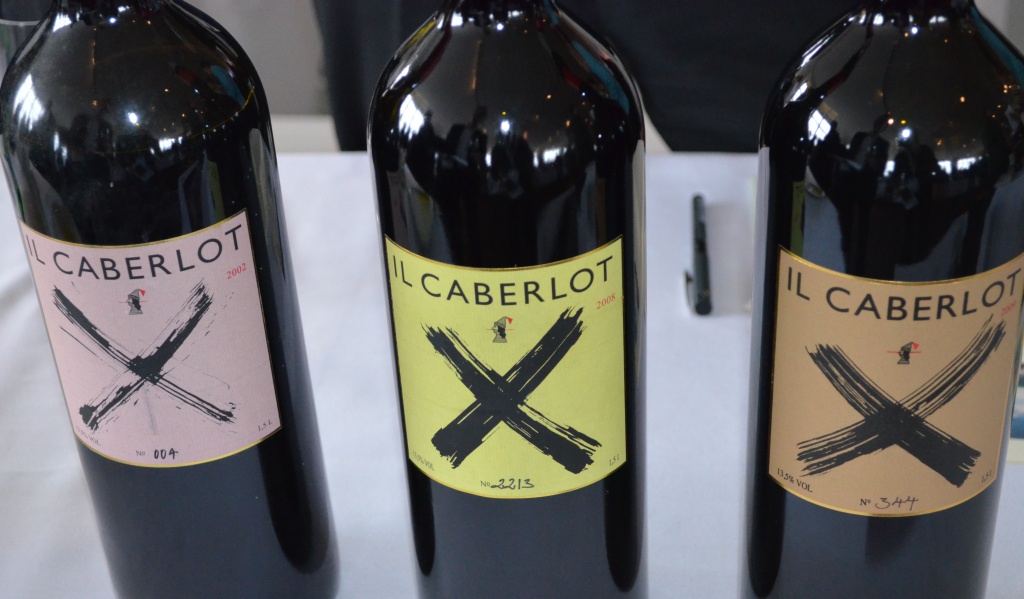
Caberlot trilogy
Podere Il Carnasciale makes only about 3,200 bottles a year, all in the magnum size. All made out of the grape called Caberlot, which is an officially recognized hybrid of Cabernet Franc and Merlot. All Magnums. And all magnificent. We tasted 2009, 2008 and 2004 vintages of Podere Il Carnasciale Caberlot – both 2009 and 2008 were somewhat similar, showing perfect trait of Cabernet Franc green profile with fresh raspberries. And 2002 was whole another story:

Caberlot 2002
Take a look at the number at the bottom of the label – we were drinking the bottle number 4! Tobacco, pepper, dark fruit and perfect complexity – a Wow wine without any doubts. I wish the wines would be a bit more affordable… May be someone wants to get me a present?
Umbria
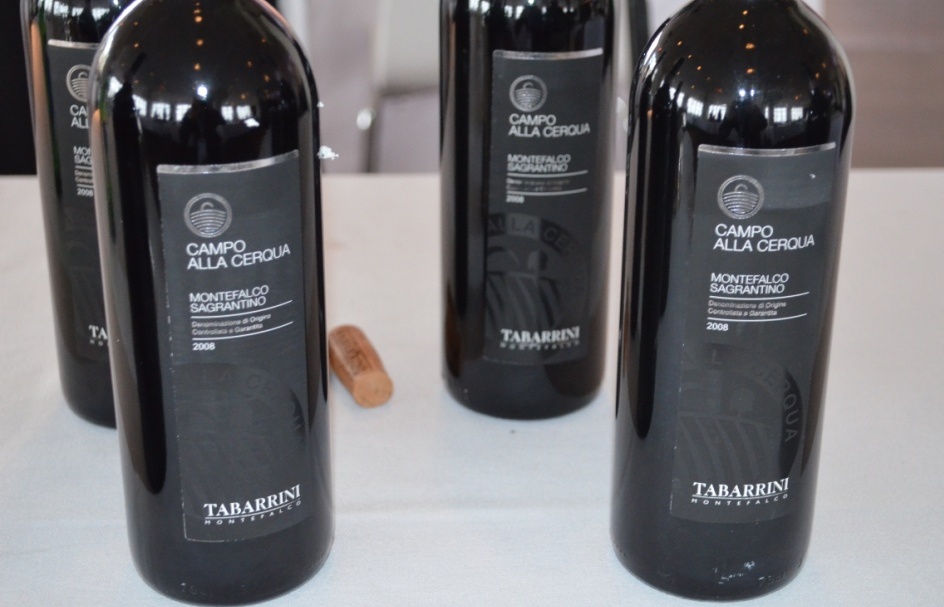
Tabarrini Montefaloc Sagrantino
We tasted two great wines from Tabarrini (yes, I know, I’m abusing “great” and “beautiful” in this post – but hey, these are the highlights – if I don’t think the wine was great, I’m not going to bother you with the detail…). 2010 Tabarrini Adarmando is made out of Trebbiano Spoletino, which is very different from the Trebbiano di Soave – Trebbiano Spoletino grows in the huge vines and it is a very late ripening variety (beginning of November). The wine had perfect acidity and bright fruit, somewhat of a citrus profile – very enjoyable. Next we tried 2008 Tabarrini Sagrantino di Montefalco Campo Alla Cerqua – perfect power, dark fruit, very balanced.
Marche
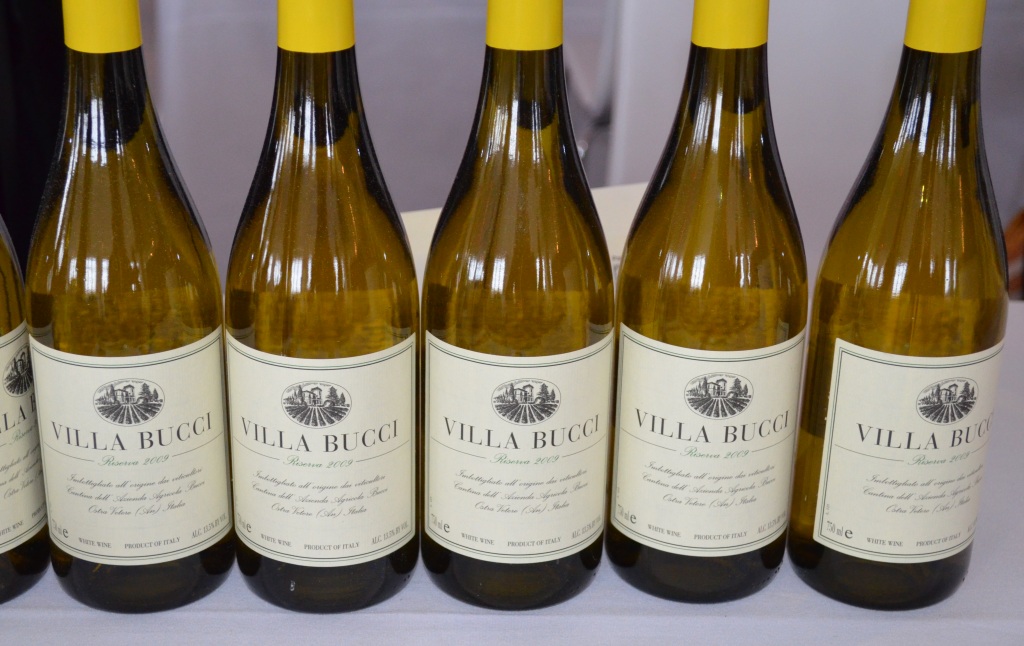
Villa Bucci
There were quite a few very good wines coming from Marche. 2010 Marotti Campi Lacrima di Morro D’Alba Superiore Orginolo was excellent, very open and food frendly ( or shall we say, food-craving), with very subtle warm fruit nuances. 2009 Villa Bucci Verdicchio dei Lastelli di Jesi Classico Riserva had perfect fruit on the nose and it was very light and refreshing. 2009 Villa Bucci Verdicchio dei Lastelli di Jesi Superiore had very good depth and clear fruit expression. Both Villa Bucci wines are expected to age very well.
Lazio
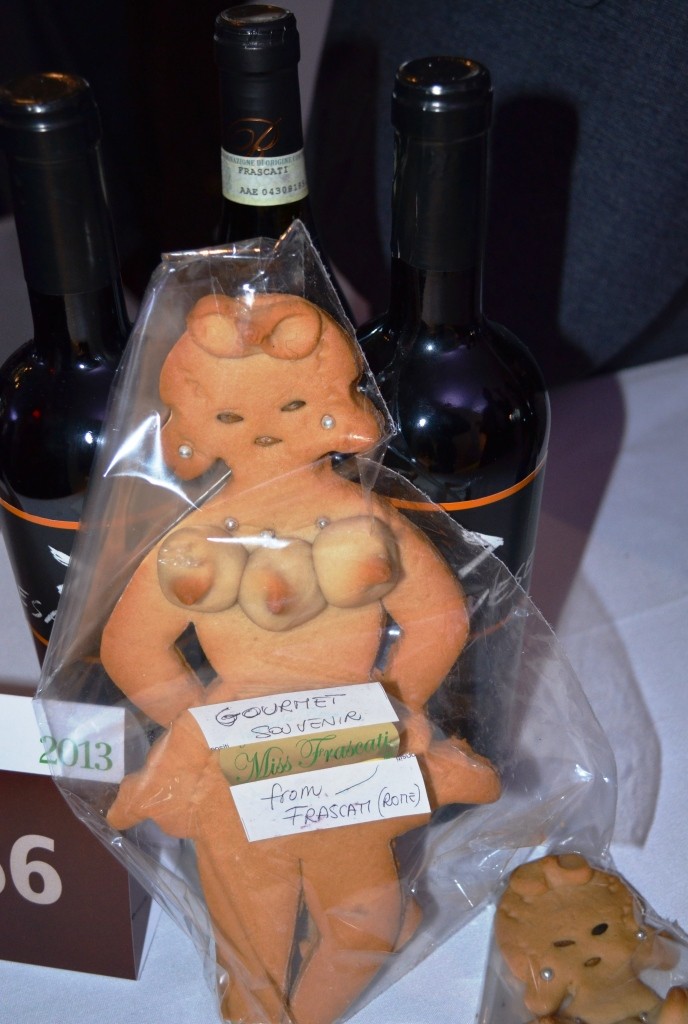
Frascati Girl
First, we found a very friendly girl.
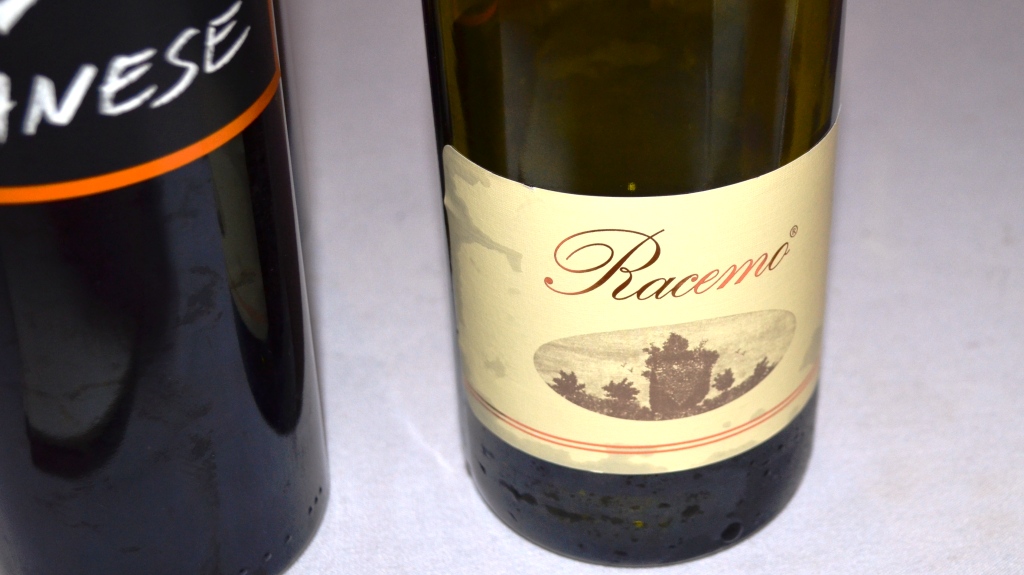
Frascati Racemo
Then we found an excellent white wine 2011 L’Olivella Frascati Superiore Racemo. This wine is a blend of malvasia puntinata, malvasia del Lazio, malvasia di Candia, tgrebbiano and bellone – the wine was very round, with excellent acidity and white fruit.
Abruzzo
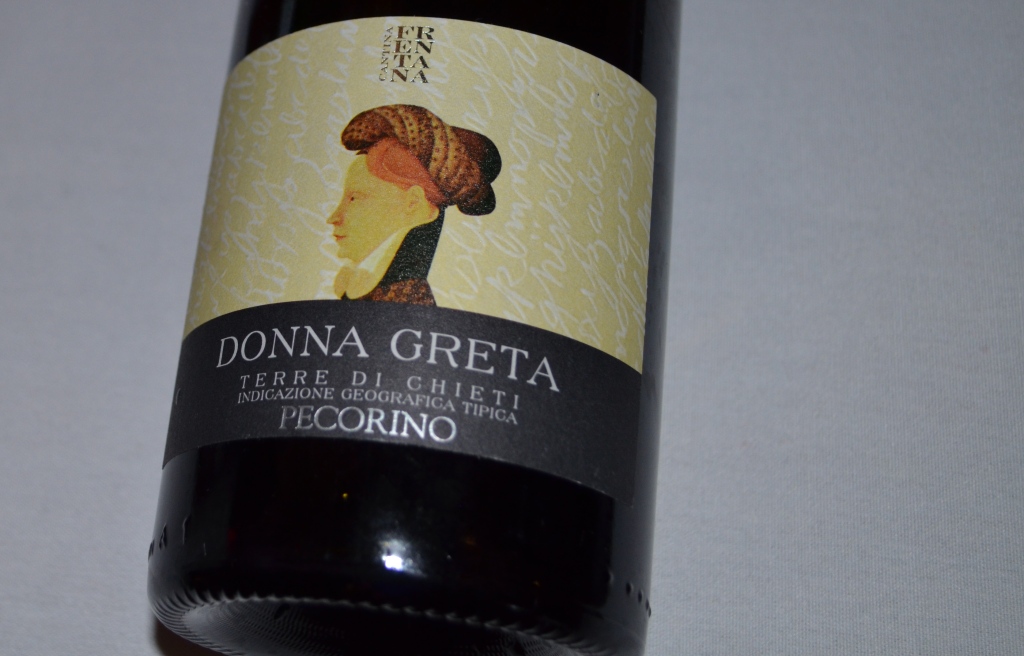
Donna Greto Pecorino
2010 Cantina Frentana Pecorino Donna Greta is 100% Pecorino. Very long maceration ( 8 month) allows to achieve a very nice complexity. White fruit, touch of minerality, good balance.
Sicilia

Planeta wines
Last, but not least for this post – Planeta from Sicilia, one of the best Italian producers overall. 2010 Planeta Cerasuolo di Vittoria Classico Dorilli – beautiful nose, fresh fruit, strawberries on the nose and the palate. 2011 Planeta La Segreta had very nice nose of dark fruit, and perfect dark fruit expression on the palate. 2008 Planeta Santa Cecilia was soft and approachable, with nice soft fruit.
Aren’t you tired yet to look at all these pictures and enjoy all those wines vicariously? There were lots more of excellent wines presented at the event – but we have to call it a post. That’s all I have for my Vinitaly and Slow Wine report, hope you got the idea of what was happening at the event. The next event post I will be writing about Gambero Rosso, and I believe it will be even more difficult that this one. Until that time – cheers!
Vinitaly and Slow Wine Tastings – Part 2, Wine Seminars
This is the second post about my experience at Vinitaly and Slow Wine 2013 in New York. In the first post I only gave you some interesting stats. Now, it is time to actually talk about wines.
Attending big wine tasting is great, wine is everywhere, and lots of it – at the same time, it is also very challenging. You can’t really assess wine methodically, it is more of a “swirl (carefully), sniff, sip, suck air, spit” – in case you wonder, “swallow” is typically not the part of the process, otherwise your tasting will be very, very short. After “spit” goes “write a word, may be two or three”, and move on, either to next wine or to the next table. No, of course I’m not complaining, just explaining that as usual for this type of my “tasting posts” there will be lots of pictures, and a few words.
We – oh yes, let me explain “we” – I spent all of the time at the event with Stefano of Flora’s Table fame (by the way, Stefano also just started the new blog called Clicks & Corks – be sure to check it out). Stefano is a wealth of knowledge and a pleasure to be around – if it would not be for him, I’m sure I would miss out on a number of gems at this tasting.
Now, let’s start again . We spent most of the time in the Slow Wine section of the event, with the exception of two wine Master Classes and a few wineries in the actual Vinitaly section. Let me start from the seminars, and then we will talk about other wines (probably in yet another post).
The first Master Class was a vertical tasting of Nino Negri ‘5 Stelle’ Sfursat di Valtellina DOCG, a wine made out of Nebbiolo grape. Both Stefano and myself took care of pre-registering for this seminar (when I came to register, I got one of the last 3 seats). No matter. In addition to registration, program also mentioned that Master Classes are first come first serve events. So, do you think our registration helped us? Yep, you got it – not really. When we arrived about 15 minutes before the starting time, we were told that the room is full and there are no spaces left. Well, based on the fact that we had registered, we ignored the guy who was trying to stop us from getting inside of the room. But the room was full. No seats. And it is not that you need just seat – you also need a place for 6 glasses in front of you. I was witnessing a futile attempt of one of the organizers to remove two people who were sitting down and had no tickets. Nope, that was not happening. So when one wants to taste wine, this is what the one wants, right? Luckily for us, the place had very wide window seals. Stand by the window, get 6 glasses, ask for the wines to be poured. Actually, I have to say that service staff was super nice and super accommodating – we all got tasting placemats and we all got wine. Here are few pictures:


Just look at this bottle… Unfortunately, the wine was oxidized. But the bottle was way too cool.
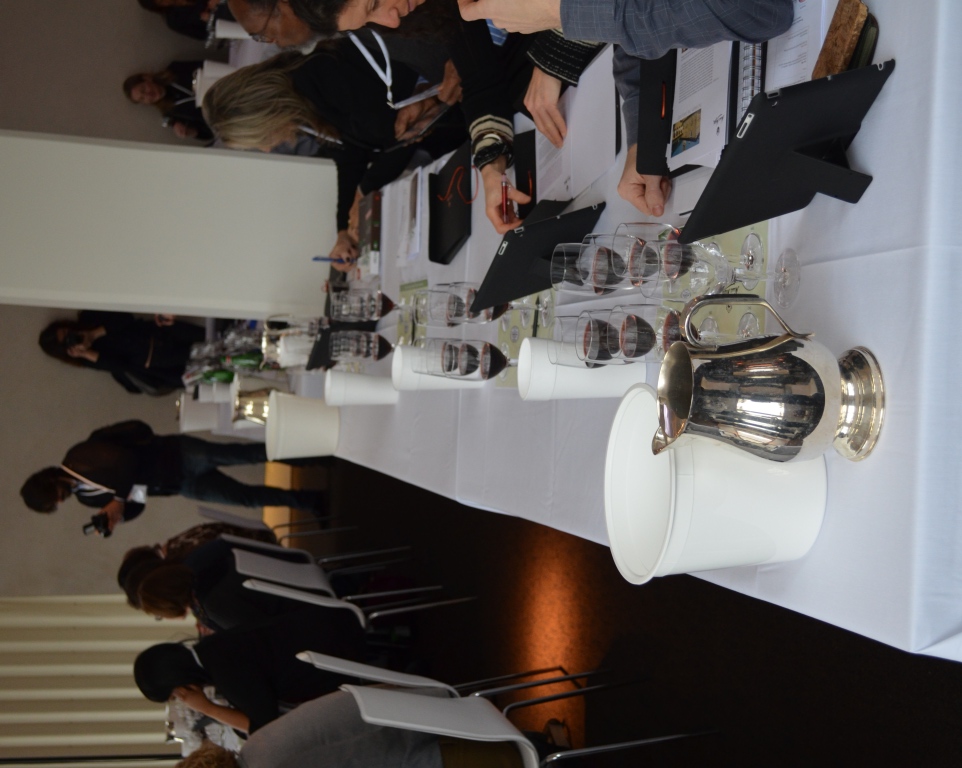
No tickets, but hey, who need tickets when it is first come first serve…
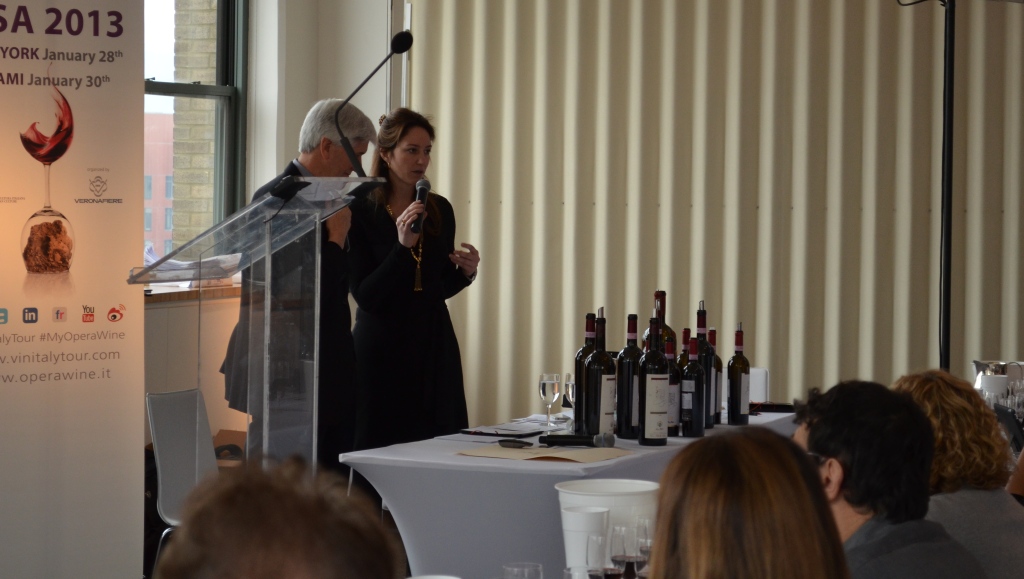
Casimiro Maule, Oenologist at Nino Negri, presents the wines. In 2007, he was awarded the title of “Winemaker of the Year” by Gambero Rosso
Nino Negri winery started in 1897 in the Valtellina region of Lombardy, in the area of Alps close to the Switzerland. This location makes harvesting of the grapes very difficult – actually, a helicopter is used nowadays to transport crates with grapes from the vineyard to the winery – here is a short video in case you want to see how the harvest looks like:
Nino Negri estate makes many different wines out of Nebbiolo grape. The wines we tasted, ‘5 Stelle’ Sfursat, are only made in the best years, and they are done in the style similar to Amarone. After grapes are harvested, they are dried outside for 100 days before they are pressed. During these 100 days, grapes are sorted a few times, and all the grapes which don’t cut it are used to produce some other wines. After 100 days of drying the grapes are pressed with subsequent long maceration, and then aged for 18 month in new French oak barriques and 6 month in the bottle. Note that all these wines are not for the faint at heart – they boast 15% – 16% ABV.

Just look at the beautiful color
Here are the notes for the wines we tasted, in the order we proceeded:
2009 – Prunes, brick dust on the nose, pretty green on the palate, very light for Nebbiolo, good minerality, short finish. Better on the second try, but too watery. Probably needs time.
2007 – According to the winemaker, 2007 was a great year. But – this bottle was oxidized. Some prunes on the palate, tasted more like a dry sherry than a normal wine.
2004 – this year had low yield, and drying season was very difficult. But the wine had nice power, good minerality, good tannins, long finish.
2002 – Prunes on the nose, with some raisins, soft, round, dark roasted fruit on the palate, tobacco, savory herbaceous notes, great balance, overall very nice.
2001 – Perfect beauty! Supple, round, with only a hint of dried fruits on the nose, perfectly balanced, really a outstanding wine. Hell with the rest of the tasting – need a full glass of this one to enjoy. Best of tasting.
1997 – This wine was as good as 2001 – more herbaceous notes than fruit, but perfectly elegant. Dried fruit on the nose (more than the previous wine), graphite and tobacco notes on the palate. Great complexity, balance and elegance. Borderline better than 2001 ( wait, didn’t I just called 2001 “best of tasting” – yeah, I always have trouble with making up my mind…)
All in all, tasting through the vertical of Nino Negri ‘5 Stelle’ Sfursat wines was a special experience and I’m grateful to organizers for making it happen – the beauty of the wines overweight the logistical challenges.
At the end of the day, we attended another seminar, this one dedicated to the wines made on Volcanic soils of Italy. We were preregistered, at this point knew what to expect, ready for a fight and this time got the seats.
If you look at the map below (maps were provided as part of the seminar):

Map of Italy’s Volcanic Wines
there are many volcanoes all over Italy, including even some of the active ones, like Etna in Sicily. Volcanic environments are uniquely different for all the things growing, vines included, and this whole “volcanic wines” project is dedicated to researching the effect of the volcanic soils on the resulting wines. It is also interesting to note that at this point, the whole project is only dedicated to white wines ( and I was hoping to taste some reds).
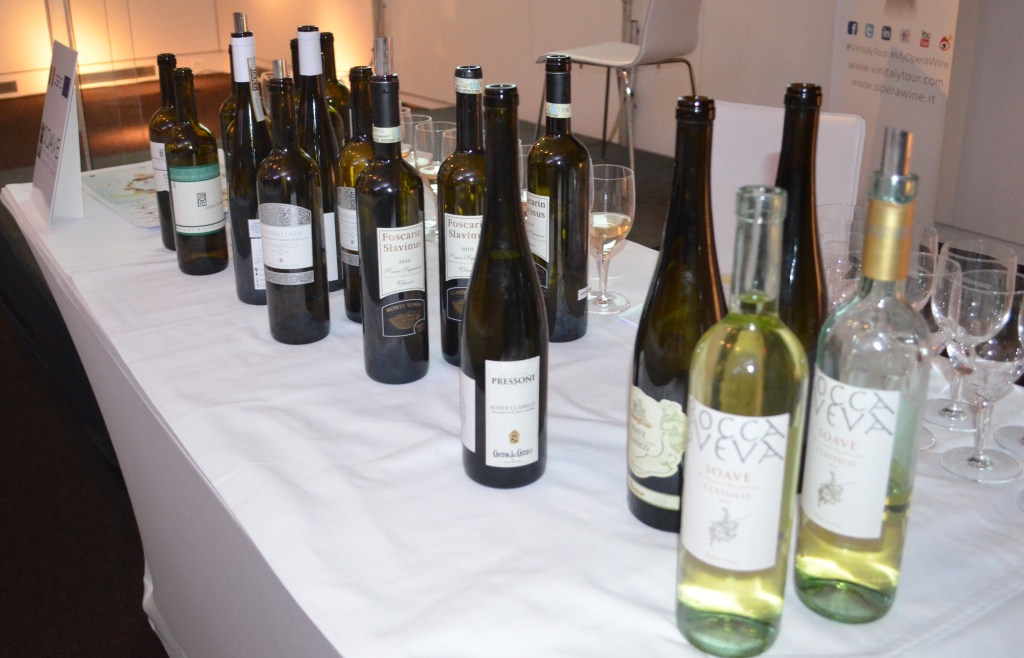
All together, we tasted 9 white wines:
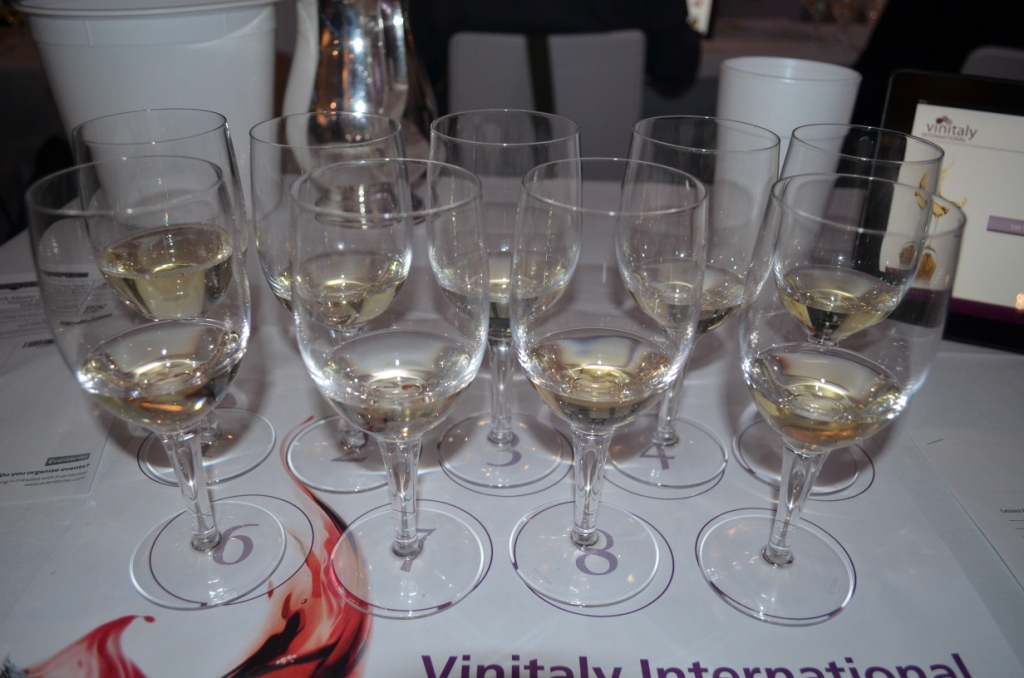
Overall, I wouldn’t say that I was super impressed with the wines. Some wines were better than the others, but there were no OMG moments. Here are the notes for my favorites:
Azienda Marcato – Lessini Durello Metodo Classico 36 Mesi NV – this was the only sparkling wine in the tasting, and it was outstanding. A blend of 85% Durello, 10% Chardonnay, 5% Pinot Nero, 12% ABV. Apple and toasted bread on the nose, nice minerality, smell of granite. Perfect minerality on the palate, very dry. Excellent.
2011 Cantina del Castello – DOC Soave Classico “Pressoni” – a blend of 80% Garganega, 20% Trebbiano di Soave, 13.5% ABV. Nice nose of lemon, green apple, good acidity. White apple and pear on the palate, good acidity, nice lemony aftertaste.
2011 Barone di Villagrande – Etna Bianco Superiore – 100% Carricante. Nice nose with minerality and some saltiness, very dry on the palate with pineapple aftertaste.
That concludes the part 2 of the Vinitaly experience. In the part 3, I will (finally) tell you about the wonderful wines we experienced at the event. Cheers!
Last Bottle Sign Up ($10 credit)