Archive
One on One with the Winemaker: Luke McCollom of Left Coast Cellars, Oregon – Part 2
 Welcome back to Oregon – we are continuing the conversation with Luke McCollom, Founding winemaker, Viticulturist and General Manager of one of the largest estates in Oregon, Left Coast Cellars. First part of our conversation was focused on the history of the estate, its name, its logo, and selection of the grapes which comprise 150 acres of the vineyards. Now we are going to talk about growing the grapes, sustainable viticulture, mother nature and some of the personal favorites. Here we go:
Can you elaborate a bit on the sustainable viticulture you are practicing in your vineyards?
We are certified by a third party Audit as LIVE Sustainable. This is a whole farm approach which uses scientifically proven methods to reduce inputs into the vineyard and reduce impact on our land and environment. LIVE also monitors the treatment of people, carbon footprint, energy, and water usage.
Both the Vineyards and Winery are certified LIVE sustainable For example: we are also certified Salmon Safe…this means we do not spray or use any chemicals which are toxic to or can harm fish. We do not use chemicals that can run off or enter water ways. We use a permanent, no-till, cover cropping system in the vineyards which great reduces dust, sediment, and run-off that pollutes our water ways.
We of course are mostly Solar Powered…100% of our irrigation system is powered by Solar. The irrigation system is also gravity fed with a pond located on top of one of our highest hills. So, water is pumped up via solar and runs down into the vineyard drip irrigation systems via gravity. We also collect our winery rinse water into tanks where we can re-use the water for irrigating landscaping. All of the “grape waste” from the winery is composted on-site and returned to vineyards and gardens. Our property is shaped like a bowl, so there are no other source of outside contaminates or pollution entering the property. All of the water in our Lakes comes from our property only. We also have steelhead and trout in these lakes…so anything we do can and will directly affect our own water source.
Do your sustainable practices also include dry farming and natural yeasts?
All of our vineyards have the ability to be irrigated with their drip systems if needed!? Of course, we only irrigate vines if and when they need water. We believe with future changes in our climate that water is one of the most important factors in the quality of our wines. Our water is sustainably collected in the wintertime from rainfall runoff. Our 100 acre foot lake is the life blood of the Estate. With our sustainable methods of using this water our combined peak usage of water and electricity costs $11.70/mo a typical water and electric bill on an Estate our size would be anywhere from $10,000-$15,000/mo. This gives an idea of the power of Sustainability and the power of harnessing the sun. Yes, we use natural yeast and we also use commercially available yeasts to make wine.
Do you have any plans to go beyond sustainable into full organic or may be even biodynamic?
Yes, we would like to eventually have wines bottled as sustainable, organic, and biodynamic so people can taste the comparisons. We currently spray almost exclusively organic sprays and utilize many biodynamic practices although do not have certifications in either.
I’m sure that some of the hard core Oregon Pinot fans are familiar with Van Duzer effect, but can you give a short explanation of it to those who don’t?
The Van Duzer Corridor is the main path by which cool Pacific Ocean breezes enter the Willamette Valley. We are in the Heart of where the corridor opens into the Center of the Valley. We are currently involved with a group working on a “Van Duzer Corridor AVA”. The effects of these ocean breezes are critical in producing the highest quality Pinot Noir. On a warm summer day at the Estate, our day time temperatures will reach 90 degrees. In the evening, the Corridor ushers in the cool ocean breezes and our night time temperatures fall to 40 or 50 degrees! A huge temperature swing! The result is sort of like a refrigerator…at night, when the vines are not producing sugars, the Pinot grapes are preserved with the cool outside temperatures. What this means is…the grapes will retain freshness, acidity, and increased wine ageability because they respire less and are preserved with the cool night air.
Out of all Pinot Noir which you produced so far, do you have the most favorite wine from the favorite vintage?
My favorite Left Coast wine is the 2010 Suzanne’s Estate. This is the first vintage Luke and Joe Wright worked together making wine. We hand selected small lots of grapes from the vineyards and made them in small batches with minimal influence and impact from Winemaking. The result is a very cool vintage Pinot with minimal manipulation in the Winery and a 92pts. Wine Spectator rating. It was very rewarding for me to receive an outstanding rating when the wine was selected in the field and winemaking was at a minimum.
When you are not drinking your own wines, what are the other Oregon producers you would be happy to drink wines from?
We enjoy drinking many of our Neighbors wines including Bethel Heights, Cristom, and Witness Tree just to name a few…
And the same question, only going outside of the Oregon – any favorite wines and producers?
Reaching in and out of Oregon we have always kept an eye on Maison Joseph Drouhin. Locally, Drouhin of course makes Domaine Drouhin Oregon Pinot, but from Burgundy continues to offer an incredible range of wines from very affordable negociant blends to very expensive premier and grand crus from individual Domaines. We believe Drouhin continues to make and blend wines which celebrate classic Burgundy. Of course this is what intrigued us to try and grow World Class Pinot Noir in Oregon…it was Burgundy! We wanted to try and replicate the classic Terroirs of Burgundy and now we are trying to beat Burgundy with our classic Terroirs of Oregon and the Willamette Valley! Viva The Left Coast!
I don’t know about your take, but I think Luke McCollom did an excellent job answering my questions – I had a real feeling of being in the same room with him and looking out at the same vineyard. It is definitely very interesting to learn about sustainable viticulture and how it is done at the Left Coast Cellars – the example with $11.70 monthly electric bill versus potential $10,000+ was extremely impressive.
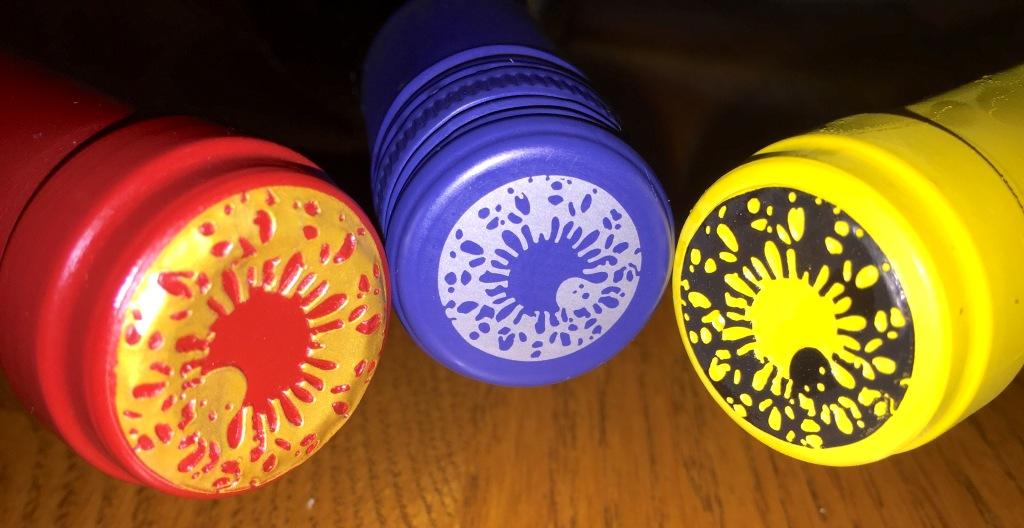
Of course the proof is in the glass, right? In the previous post, I shared my thoughts on estate’s The Orchards Pinot Gris and Cali’s Pinot Noir. To round up this portion of the interview, I had an opportunity to taste Chardonnay and another Pinot Noir. Before I will talk about the wines, I have to mention the bottles – as the saying goes for the food world “we eat with our eyes first”, same holds true for the wine. Talking about Left Coast Cellar wines, I really enjoyed holding the bottles in my hands – somehow they felt very promising in terms of their content. All four bottles had very nice punt, which would make elegant pouring of the wines an easy job. And the labels are perfectly design and spell “quality” with their look and feel.
Okay, okay – I’m sure you are ready to drink something – here are my notes on the two wines:
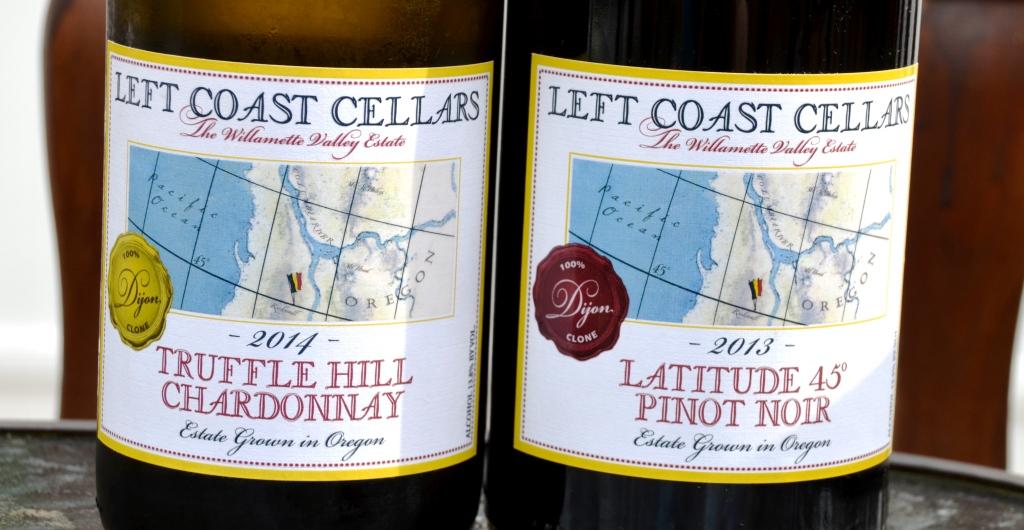 2014 Left Coast Cellars Truffle Hill Chardonnay Willamette Valley, Oregon (13.5% ABV, $24)
C: light golden
N: white ripe fruit, intense, touch of vanilla, caramel, touch of flowers
P: unusual, plump, medium to full body, hint of white peach, pear, supporting acidity, Burgundian elegance
V: 8, very unusual Chardonnay, with a style of its own, and overall delicious wine
2013 Left Coast Cellars Latitude 45 Pinot Noir Willamette Valley, Oregon (13.5% ABV, $50)
C: garnet
N: intense, crushed red berries, lavender, sweet plums, vanilla, hint of chocolate, Bing cherries
P: wow, very unusual. Herbal profile with some fruit, initial tannin attack, almost light and effervescent on the palate, but tannins are very assertive. As I don’t have enough experience with red burgundies, my best analogy is wines of ArPePe, which are some of the most elegant Nebbiolo wines in existence. Clean, pure and unadulterated Pinot Noir. Just wow.
V: 9-, truly unique and different
Sustainable viticulture. Passion. Unique and different wines. Simple recipe for success, isn’t it? I can let you in on a secret. Quite often, I don’t finish a bottle of wine on the same day. Especially if I have a few open at the same time. So I happened to drink Cali’s Pinot Noir I mentioned in the previous post over 4 days. Just closing with the same screw top every night. And the wine was delicious, every day. I think folks at the Left Coast Cellars know what they are doing, and their wines are well worth seeking. Follow the passion, my friends. Cheers!
Wednesday’s Meritage – Wine Quiz Answer, #MWWC17 Reminder, Chardonnay Day and more

Tawny Owl. Source: Wikipedia
Meritage time!
Let’s start with the answer to the wine quiz #118 – What Is It?
In that quiz, you were given a picture of the bird (an owl), and the request was to identify the connection between the bird and the wine world.
I have to say that a number of people had very good answers, suggesting that owls are used to protect vineyards against various kinds of rodents, obviously in a natural way. However, this was not the answer I was looking for. The particular type of owl is called Tawny Owl, and it is the color of its feathers that gave the name to the Tawny Port. As the Tawny Port ages, the color of the wine becomes reminiscent of the Tawny Owl coloring, hence the name.
I’m glad to report that we have two winners: Margot from Gather and Graze and Gwain609 of Oz’s Travels – they both identified the owl as a Tawny Owl and suggested that “Tawny” is the key word we are looking for here. They both get the usual price of unlimited bragging rights. Well done!
Now, to the interesting stuff around the vine and the web!
First of all, I want to remind everyone that Monthly Wine Writing Challenge number 17 (#MWWC17) with the theme “Epiphany” is in the full swing! There had been a number of entries submitted, and everyone who didn’t submit one yet (you know who you are!) is very much encouraged to participate. For all the official rules and regulations please use this link.
Next, we got a few of the grape and wine region holidays to celebrate – I’m sure you don’t need a reason to open a bottle of wine, but those holidays solve the problem of choice. Today, I got 3 of them for you. Tomorrow, May 21st, is a Chardonnay Day! Chardonnay needs no introduction – the grape is successfully grown all over the world, a hallmark of Burgundy, Champagne, California and practically any other wine growing country and the region. You should have no problems finding the good bottle to open, and then sharing your thoughts in the social media using the hash tag #ChardonnayDay.
Next we have two distinct regions celebrating its heritage in May – May is an Oregon Wine Month and also an Aussie Wine Month! Oregon today is a lot more than just a Pinot Noir, and Australia is a lot more than just a Shiraz – lots of wonderful wines are made in both places, so you will have no issues finding excellent authentic wines to drink for the next 10 days.
Last but not least for today – the new danger for your wallet had just became a reality. Well, no, I’m not talking about some elaborate wine scam or a new series of emails with unbeatable business proposals from Africa. Last Bottle Wines, one of my favorite purveyors of the fine wines at the value prices, finally joined the 21st century and announced availability of the Last Bottle App for the iPhone – here are the details. Now you can be notified of all the new offerings and will have a better chance to react to them. If you are still not a customer of Last Bottle Wines, I will be glad to be your reference – yes, I will get a $20 credit after your first purchase, and you will get $5 credit on that same purchase – but then you will be able to sign up your friends. And, of course, to thank me again and again. You can click here to sign up for the Last Bottle Wines account.
And we are done here. The glass is empty – but the refill is on its way! Cheers!
Finally, I’m a Convert
Yes, this will be a post about the wine – what did you think I will be writing about? I completely changed my perception of one wine region, so convert or not, but this is what this post is all about.
Don’t know about you, but when I visit the wine region and wineries in it, I generally come with certain set of expectations, a perceived notion if you will. These perceived notions usually are very opposite and have no middle ground. Perceived notion number one – visiting many wineries, I generally expect to find a lot of wines which I will like, and a few which I will not care for. This would be true for many wine regions in California – Napa, Sonoma, Santa Barbara – but not all of them (for instance, Temecula is not included in that list). Perceived notion number two – I will not care for the most wines I will be tasting, but if I’m lucky, there might be a few wines which I will like. Connecticut wine region would be a good example of this second group – but we will talk about it later in a separate post.
Of course both of this perceived notions are founded based on the prior experience with the wines of the region, both at the winery and outside. It is easy to build – just visit a few wineries, where you don’t like the wines, or buy a few bottles in the store which you will not care for, and that’s enough to label the whole region as “not my thing”. Once the perceived notion is born, it is very hard to overcome and change. I agree that this sounds very shortsighted, but this is how we are [very commonly] wired – try something once, don’t like it (think about first time your mom forced you to eat broccoli), and you might be set in your “unlove” for life. This “tried this, didn’t like it, never again” type of attitude is never practically helpful around food and wine, as it prevents us from having great experiences. This perceived notion is hard to get rid of – but not impossible if you are willing to take an “open mind” approach – try and try again, until a specific experience will trigger the change.
Okay, done with the philosophical intro, let’s get to the conversion details. The region I finally changed my view on is Finger Lakes. During multiple visits over the few years, I kept trying and trying new wineries, only to come up to the same resolution every time – “nope, not my wine” – and that included even Riesling, which is considered the signature wine of the Finger Lakes region. Then I discovered wines of Fox Run and Dr. Konstantin Frank, which created a crack in my preconceived notion. The Finger Lakes #winechat I took part of in May, made the crack wider. But what made me to change the whole perception were the wines of Villa Bellangelo.
Villa Bellangelo is a small producer, located in a close proximity to the Seneca Lake. The family owned winery produces a number of different Rieslings, as well as Chardonnay, Gewurztraminer, Merlot and other wines. About two month ago, I received a sample set of wines form the Villa Bellangelo, 5 bottles of Riesling and a bottle of Chardonnay. As I mentioned in some other posts, while samples sound great (“yay, free wine!”), to me they are more challenging to deal with than the regular wines I buy. I would not crack a sample bottle just casually in the evening – I need to make sure I can give it my undivided attention and spend time with the wine – thus it often takes me quite some time to find the right opportunity. Finally, the moment presented itself and I opened the first bottle of Riesling. Pour, sniff – delicious, take a sip – wow. Clean and beautiful Riesling, perfectly fitting my definition of “classic Riesling”. Next bottle, then next – all 5 Rieslings and the Chardonnay delivered lots of pleasure, sip after sip, bottle after bottle. 6 out of 6? I think this is very convincing performance, hence the title of this post and yes, the change in the perceived notion.


For what it worth, here are the notes on all 6 wines:
2012 Villa Bellangelo Dry Riesling Finger Lakes (12.3% ABV, $19) – Color is lighter than straw pale. On the nose, great Riesling aromatics, classic, honeysuckle, pear, fresh apple. palate is dry, clean, great acidity, very light, green apple, super-refreshing, present minerality, short finish. A wine of a great quality. Drinkability: 8-/8
2013 Villa Bellangelo Dry Riesling Seneca Lake Finger Lakes (11.3% ABV, $19) – Beautiful nose of the white stone fruit, hint of honeydew sweetness. Perfectly balanced on the palate, crisp acidity, minerality, touch of green apple. Excellent overall. Drinkability: 8
2012 Villa Bellangelo Semi-Dry Riesling Finger Lakes (11% ABV, $19) – Nice straw color. Pleasant nose of white apples and touch of apricot. Palate exhibits good acidity, good balance, hint of sweetness and white stone fruit. This wine is showing better once it warms up a bit (not straight from the fridge), which I find interesting. Drinkability: 8-
2013 Villa Bellangelo Semi-Dry Riesling Finger Lakes (10.8% ABV, $N/A) – Open nose of apricot and white peaches. Palate has nice level of sweetness, supported by good acidity. Very refreshing and a pleasure to drink. Drinkability: 8-/8
2012 Villa Bellangelo 1866 Reserve Riesling Finger Lakes (11% ABV, $32) – This wine is a dedication to the Dr. Byron Spence, who in 1866 planted 20 acres of the sloping western hills of Seneca Lake with the wine grapes. This vineyard is where the Villa Bellangelo makes their best wines from, hence the 1866 in the name of the wine.
The wine had a beautiful light golden color. Classic Riesling nose, with honeysuckle, white peach, apricot, all very subdued and delicate; touch of minerality. On the palate, apricot notes together with a touch of the apricot pit bite, touch of white apple, clean and vibrant acidity, present minerality, perfect balanced and nice complexity on the finish. Drinkability: 8/8+
2012 Villa Bellangelo Chardonnay Finger Lakes (13.8% ABV, $20) – Outstanding. Perfect Chablis-like, complex nose – minerality, distant hint of gunflint, touch of fresh apple. Palate is clean, balanced, with white apple and vanilla notes, vibrant acidity. Drinkability: 8
There you have it, my friends. One winery, which finally did it for me. Now Finger Lakes is squarely on my “yes, I love those wines” list. I don’t know what is your opinion about Finger Lakes wines, but if you were like me, find some Bellangelo wines and see if they will make you a convert. Cheers to the great wine discoveries!
Beauty of Chardonnay and The Game of the Blind Tasting
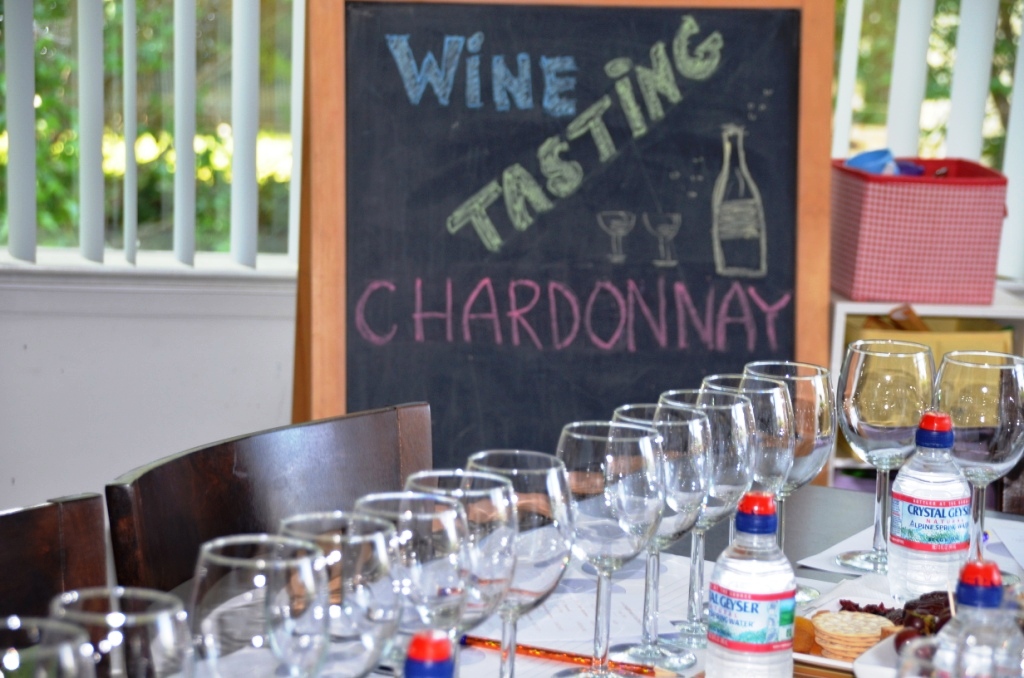 Blind tasting is probably one of the most favorite pastimes of any oenophile – especially when it is done in the non-competitive and non-intimidating manner, let’s say as a part of the fun evening with friends. While the words “blind tasting” sound simplistic, there are actually multiple options of it, all with the varying levels of difficulty. The most difficult type is a double blind tasting – you are just given a random glass of wine, and you have to identify the grape(s), the place, the vintage and possibly even the producer – this is the level at which the Court of Master Sommeliers plays, the ultimate challenge so to speak. The next level down would be a regular blind tasting – there would be at least one common factor between all the wines – let’s say, they all will be made out of Cabernet Sauvignon grape. Or they all might be the Bordeaux wines. While the level of a challenge is unquestionably lower that in the previous case, this type of tasting is great for assessment of the wine without an influence of the external factors, such as producer, label, region, etc. I also call it “an ultimate wine snobbery squasher”, as looking at the bottle of your supposedly favorite wine and realizing you just thought it was terrible (while you had no idea what was in your glass), is really a humbling experience.
My recent blind tasting experience was yet different. It was mostly the regular blind tasting, as it had a theme – Chardonnay, but it was also more limited, may be even “framed” is the right word – we knew all 10 Chardonnay wines which were present in the tasting, so it was not really wide open. And to make it more fun, we tried to identify each wine we tasted, and of course, look for the group’s favorite. To avoid crowding the table too much, we split the tasting into two sets of 5, and then we went over our notes to come up with our guesses – and then, of course, there was the moment of truth – when the bottles were revealed.


Chardonnay needs no introduction, of course. One of the most popular white grapes in the world, with literally every wine producing country having its stake in satisfying the thirst of Chardonnay lovers around the globe. I would dare to say that left alone, Chardonnay is great at expressing the terroir, the soil and climate of the area where it was growing, may be better than most of the other white grapes (may be Riesling can contest that). From the gravely soils of New Zealand to the expressive ‘gunflint” minerality of Chablis, biting acidity of Champagne, the round goodness of the mature Burgundy, to the warm and toasty expressions (sigh – hard to find it anymore) of California – Chardonnay rules them all. Our tasting was extremely representative of this world-wide phenomena – California, Long Island, Burgundy, Italy, Hungary, New Zealand and Australia were all present! Not a bad line up, huh?!
Okay so let me tell you about the wines. First, I will give you my notes, together with the guesses I made as we were going along. Once we completed the tasting of all 10 wines, we had a bit of time to think through and to complete our tasting cards to say what was what. And then of course, we unwrapped the bottles for the “moment of truth”.
Here are my notes as we went along with the tasting:
#1: Touch of butter, green apples, a bit harsh, tannins, young, lots of tannins. 7+/8-. Not sure what it can be.
#2: Minerality (gunflint) on the nose, green apple, great acidity, good balance. Classic. 8. Positive it is a Burgundy
#3: Fresh flowers on the nose, caramel, butterscotch, fig, pears, unusual, apples. 7/7+. I’m sure this is Long Island, no questions.
#4: Savory nose, oxidized, past prime, lost fruit. N/R. Considering the group, must be the Mersault (it is a well known and very unfortunate problem for the producers in Mersault – starting from some time in 2000, their wines lost ability to age and oxidize very quickly).
#5: Mint, rosemary, thyme on the nose, touch of oak, apples, very delicate profile, nice tannins, slightly off balance. 7+/8-. Australia?
#6: Butterscotch on the nose! Vanilla, amazing, very balanced, apples, vanilla, beautiful! 8. I’m quite convinced it is Hungary – I had this wine before and I believe this is the one.
#7: Beautiful nose! White fruit, lychee, spiciness on the palate, apples, delicate fruit. 8+. Not sure what it can be.
#8: Minerality, very unusual, herbs, – sorry for possibly putting some people off, but – a dog poop! (Yeah, I know, sounds crazy – but I’m speaking from experience as a dog owner), salty, herbal, acidic profile, more minerality on the palate. 8-. Again, not sure. Need to think about it.
#9: Candy on the nose, noticeable malolactic fermentation on the palate, and then acidity, acidity, acidity. 7. Not sure.
#10: Minerality, hint of butter, a bit too sweet, not enough acidity, not balanced. 6. No idea.
That was the end of the tasting. Now, we took a bit of time to compose our thoughts and come up with our “final answer”. As this was not a competition, it was also okay to consult each other. I was quite convinced about wines #3, #4 and #6, so it was making my task easier. Also my friend Zak was positive about #7 being Jermann, as he recently tasted that wine. The rest had to fall in place after some thinking. Now, the drum roll, please…
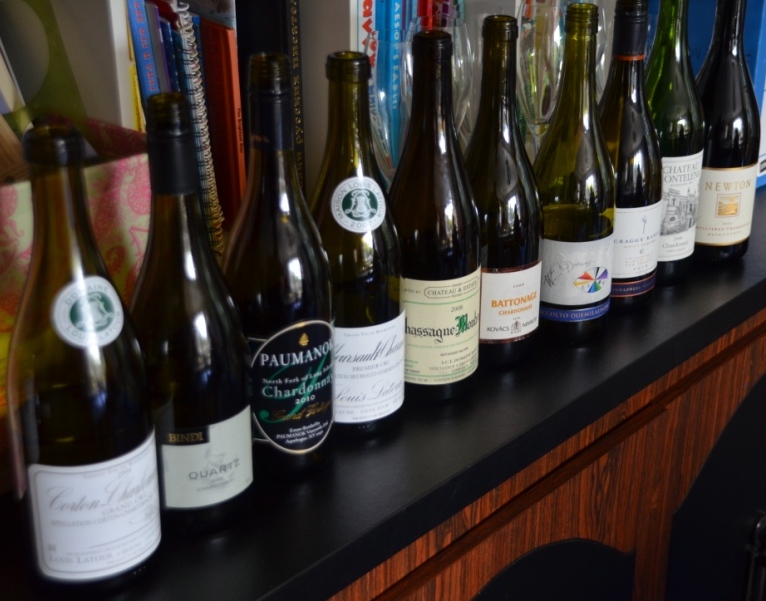 And the wines were:
1. 2006 Louis Latour Cortone-Charlemane, Burgundy
2. 2009 Bindi Quartz, Australia
3. 2010 Paumanok Grand Vintage Estate Chardonnay, Long Island, NY
4. 2007 Louis Latour Mersault-Charmes, Burgundy
5. 2008 S.C.E. Domaine Ramonet Chassagne-Montrachet, Burgundy
6. 2008 Kovács Nimród Winery Battonage Chardonnay, Hungary
7. 2011 Jermann W… Dreams … Chardonnay, Italy
8. 2008 Craggy Range Kidnappers Vineyard Hawkes Bay, New Zealand
9. 2008 Chateau Montelena Chardonnay, Napa Valley
10. 2008 Newton Unfiltered Chardonnay, Napa Valley
With a bit of knowledge and a bit of luck, I managed to get all the wines correctly with the exception of Bindi and Chassagne-Montrachet, which I got in reverse – it is interesting how I thought that #2 was a classic Burgundy, and it turned out to be an Australian wine. We also did a popularity vote, which was won by the Newton Chardonnay – quite awkward, as this was my least favorite wine. My favorite was probably the Jermann, but it is hard to pick a favorite from such a group of outstanding wines. It is also very interesting how different and unique the wines tasted, greatly demonstrating their terroir- and winemaking style-driven differences. Here are all the wines we tasted again, now in more detail for the labels:
And then, of course, there was food – lots of wonderful, home made dishes. It will take too much time to describe it all, so I will just leave you with the few pictures.


Now, I have a bit of the strangely sad part to share (nothing terrible, don’t worry). To complement all the wonderful Chardonnays, I brought a bottle of Sherry to add to our dessert list. 2011 Bodegas Alvear Pedro Ximemez de Añada Montilla-Moriles DO – the wine was excellent, more or less along the lines of what I would expect from Pedro Ximenez – considering the age, it was young and nicely balanced, both with sweetness and acidity. Where is the sad part? Take a look at the picture of that bottle:
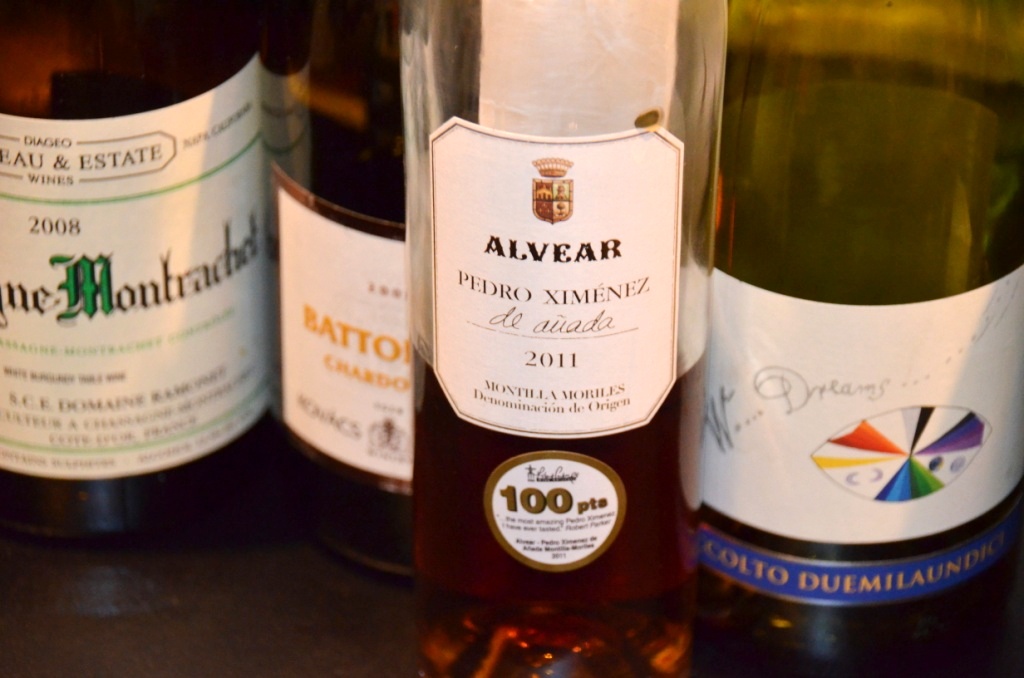
Bodegas Alvear PX de Añada
See that sticker “RobertParker 100 pts”? Yes, this was the 100 points rated wine from Robert Parker!!!!! First time I tried anything rated 100 points by one of the biggest wine critics in the world!!! And I have nothing to write home about it. The wine was good – but I don’t remember it as being earth-shattering. Not sure what to take out of it, but surely feels strange. My only consolation is that I have another bottle of the same wine – and I will keep it for as long as I can before drinking it again – may be then I will be able to see what Robert Parker found in this wine.
That concludes my report on the wonderful game of Chardonnay tasting. We had a great time, and I think restricting the level of “blindness” in this tasting was a very interesting twist, making that blind tasting exercise even more enjoyable. Until the next time – cheers!
#winechat Finger Lakes Wine Tasting – An Interesting Experience with Happy Ending
Here we go again – another #winechat experience. Lots of wines and lots of talking – with your fingers. The subject of this #winechat – wines of Finger Lakes region in New York.

Finger Lakes is a picturesque area in the upstate New York, very close to Canada, consisting of multiple lakes – technically, Finger Lakes consists of 11 lakes, but most of the people will be able to name only 3 or 4. Outside of being a popular tourist destination, Finger Lakes is actually one of the very first wine making areas in the US – the first winery was established in 1836, and by now the region has well over a hundred wineries.
Despite such a long history, the wines of the Finger Lakes region are still considered up and coming. For the most of the cases, consumers might be familiar with Finger Lakes Riesling, a bit of Gewurztraminer and some of the Icewine, with the Finger Lakes wines mostly available only in New York and some of the neighboring states. As of late ( last 2-3 years) the situation is slowly changing for the better, both in regards to quality and availability of the Finger Lakes wines. It is also important to note that the improvements I’m talking about concern both white and red wines, with the wineries such as Fox Run, Ravines and Charles Fournier delivering full spectrum of wines worth drinking and talking about.
When I got a note about #winechat dedicated to the Finger Lakes wines, I was hesitant at first regarding my participation. The reason was simple. Yes, the quality of the Finger Lakes wines is improving. However, about 4 years ago, when my daughter was going to Ithaca college, located right by the Seneca lake, I visited few of the nearby wineries, and was quite disappointed with the wines I tasted. Therefore, the prospective of tasting bunch of wines and not being able to write anything about them, was rather daunting. After the internal back and forth, I decided okay, let’s give it a try, and signed up for the #winechat. A few weeks later, the box arrived, containing the 8 bottles – 3 different Rieslings, 3 Chardonnays and 2 Gewurztraminer. From the whole set, I only recognized the name of Dr. Konstantin Frank as a producer I heard of before ( I never tried Gewurztraminer which was included in the tasting set).
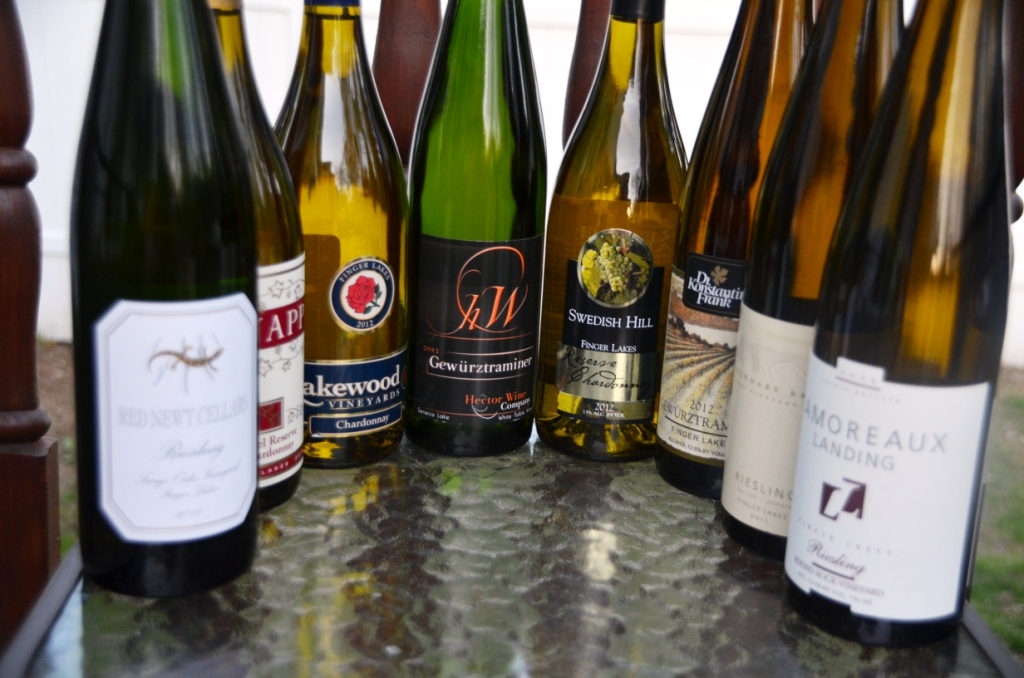
About a week later, it was the time to taste the wines. I freed up the space in the fridge and put all the bottles in to get them ready.
Talking about an “interesting experience”, let me explain what I mean (yes, I know – somehow, when you read “interesting”, you don’t expect anything good). The #winechat usually starts at 9 PM. But of course it would be quite challenging to taste 8 wines in the real time, take notes, and support many simultaneous “finger” conversations at the same time. Therefore, I decided to start an hour before, so I would have enough time to taste all the wines in the thoughtful fashion. I invited my friend Zak to share the tasting with me. We started from the Rieslings, then moved on to Chardonnays, and finished with Gewurztraminers. The first Riesling was okay, but then everything went downhill – the wines were simply from the series “nothing to write home about”, with the exception of Dr. Konstantin Frank Gewurztraminer – that was one and only highlight of the tasting. We kept looking at each other with Zak in disbelief, as this was definitely not expected from the set specially selected for the tasting. Needless to say, at the end of the tasting (I managed to participate in the chat, albeit not as enthusiastically as I normally would), I was rather disappointed. And I had 8 wines to finish or dump. What I decided to do, is to put them aside, and give them another chance, one by one. I used the gas canister (not sure I had much gas left though) to replace the air in all the bottles and put the corks back. One bottle went into the fridge, and the rest were standing, waiting for their term.
Now, for the really interesting part. The next day or a few days later, all, yes all the wines (okay, exclude Dr. Konstantin Frank from here, as it was good from the beginning) tasted better! I couldn’t believe it, and I couldn’t understand it – but they did. Better fruit, better balance, softer, smoother – all of them. Well, thinking about it, the Rieslings only improved a little bit or not at all, but the improvement was very noticeable for all Chardonnay wines. Giving it another thought, I think I’m finally starting to “get it”. When I open a bottle of wine, taste it and decide that it is not ready because it is too tight and closed, I’m generally not surprised, I ofthen expect it, and I put it aside to give a day or a few to open up without any commotion. In case of this Finger Lakes tasting, I had multiple wines opened at the same time, and especially all of the Chardonnays had the nice oak treatment, thus required time to open up – this is not my typical case, hence the issues I had. So bottom line is that I was [again] humbled around wine, and still have lots to learn. Well, not the worst problem to have in life, isn’t it?
I will let you decide how “interesting” my experience was. Below you will find tasting notes, both the initial ones, and those I added after re-tasting the wines in a few days.
Here we go:


2012 Red Newt Cellars Tango Oaks Vineyard Riesling (11.5% ABV)
C: practically clear
N: Initially: golden delicious apples, a bit grassy; 2/3 days later: white fruit
P: Initially: high acidity, not enough fruit, tropical fruit, mango; 2/3 days later: white flowers, hint of sweetness on the palate with nice acidity and addition of minerality.
V:nice, simple, 7/7+; Final: 7+/8-
2012 Lamoreaux Landing Wine Cellars Round Rock Riesling (12.7% ABV)
C: practically clear
N: Initial: candied walnuts, Later on: light, delicate, good white fruit
P: Initial: white fruit with grassy notes, minerality; Later on: a distant hint of Petrol, clean and fresh acidity, elegant, well balanced.
V: Initial: 7+, Final: 7+/8-
2011 Boundary Breaks Riesling Reserve #198 (8.9% ABV)
C: practically clear, almost transparent
N: Petrol (hint of)! white fruit, apricot, honeysuckle.
P: sweet (spatlese or may be even auslese level), needs more acidity, but not bad
V: needs savory food, 7/7+


2012 Knapp Barrel Reserve Chardonnay (13% ABV)
C: straw pale
N: Initially: closed, practically nothing. Later on: nice apple notes, touch of vanilla, pleasant and inviting.
P: Initially: touch of pineapple, white apples, neutral – drinkable, but not fully enjoyable. Later on: nice, cutting acidity, backbone of white fruit, touch of herbal bitterness, but quite round and refreshing. Minerality on the palate, like a limestone. Medium finish,
V: 7, Final: 7+/8-
2012 Lakewood Vineyards Chardonnay (13,9% ABV, 617 cases produced)
C: straw pale
N: Initially: minerality, pretty closed otherwise. 3 days later: very classic nose, with vanilla and toasted oak, nice and clean.
P: Initially: flat, malolactic obvious, touch of vanilla. After 3 days: excellent flavor concentration, good acidity, butter and vanilla, medium to full body, good balance.
V: initially: 6-, final: 7+/8-
2012 Swedish Hill Winery Reserve Chardonnay (13% ABV)
C: straw pale
N: Initial: hint of gunflint, minerality, white fruit. Later: Vanilla and oak, very inviting, with Chablis-like gunflint
P: Initial: oak, vanilla, flat, needs more acidity fruit, opened up reasonably , improved with time, butterscotch, still needs more acidity; 3 days later: great concentration of vanilla, apple and butter, nicely balanced with very persistent depth.
V: 7+, Final: 8-


2012 Hector Wine Company Gewurztraminer
C: Golden color
N: Initial: Beautiful, concentrated fruit; Later: Very pleasant nose of tropical fruit with some spiciness – guava, mango.
P: Initial: Lots of green notes, bitter, biting, not balanced. After 3 days: bitterness subsided, with only a hint left.
V: 6, Final: 7-
2012 Dr. Konstantin Frank Vinifera Wine Cellars Dr. Frank Gewurztraminer (12.5% ABV)
C: golden
N: beautiful fruit, inviting
P: perfect balance, fresh fruit, touch of spiciness, best of tasting
V: 8-
There you have it, my friends. To tell you the truth, I had a different take on the events in the tasting initially, but I’m glad I was able to figure it all out. And this story did have happy ending, as practically all the wines showed very well. Lessons learned – be humble, and give your wines a chance [to breathe].
Before we part, I would like to thank Finger Lakes Wine Alliance for providing the sample for review. Cheers!
Month in Wines – April 2014
April was a good month for the good wines, with some of the gems worthy of Top Dozen consideration. Syrah and Pinot Noir were probably the biggest stars, but not the only stars. I already wrote about some of the wines before, so I will not inundate you with the repetitive details, and instead will simply give you the reference to the prior post. All the wines are rated on the 10 points scale, with + and – adjustments. These summary posts only include the wines with the ratings of 8- and higher – in the very very rare cases, I might include 7+ wines if I feel that the wine was simply unique.
Let’s go!


2010 Lenné Estate Pinot Noir Yamhill-Carlton AVA, Oregon (14% ABV, $45) – dark and delicious, and will age well for the next 10-12 years. 8+
2010 Renieri Invetro Rosso Toscano IGT (14% ABV) – delicious Super-Tuscan, powerful, round, a pure joy. 8+
2011 Michel Chapoutier Tournon Mathilda Shiraz Victoria, Australia (13% ABV, $14.99) – simply spectacular. A clear pepper profile on the nose and the palate. A stunning beauty. 9
2003 J.L. Chave Offerus Saint-Joseph, France (13.5% ABV) – Barnyard, touch of spice (pepper), dark and delicious. 8
2005 Domaine Philippe Bornard Arbois Pupillin La Chamade Ploussard (12.8% ABV) – beautiful, powerful, multi-layred. Pleasure in every sip. 8+
2012 J Wrigley Estate Pinot Noir Proposal Block McMinnville AVA (14% ABV, aged 10 Month in French oak, 250 cases produced. $45 SRP) – chocolate, mocha, a bit of mushrooms. Nice and balanced, and will age well. 8-
2010 Joel Gott Cabernet Sauvignon Napa Valley (SRP: $47.99) – perfect Claret, if you will. This wine would rival many top California Cabernet Sauvignon wines, which would also cost at least 2-3 times as much. 8
2007 La Rioja Alta Vina Alberdi Rioja Riserva, Spain (SRP: $19.99) – Perfect balance of fruit, structure, power and earthiness which only Rioja possess. Beautifully round and delicious. 8+
2001 La Rioja Alta 904 Rioja Gran Riserva, Spain (SRP: $47.99) – Mature and delicious, with lots of subtle nuances. A thought provoking wine. 8+


2009 Shiloh Legend Judean Hills, Israel (14.2% ABV, 45% Shiraz, 40% Petite Sirah, 9% Petite Verdot, 6% Merlot, each grape vinified and oak-cask aged separately for 8 month, then blended and aged for another 8 month) – round, velvety, delicious, with dark fruit core and firm structure. Perfect balance of power and concentration. 8
2012 Tousey Chardonnay Estate, Hudson River, New York (12% ABV) – a Chablis on Hudson would be a good way to define this wine. Chablis style minerality and hint of gunflint on the nose, creamy and round on the palate, with subtle apple and vanilla notes. Delicious Chardonnay. 8-
2012 M. Chapoutier Les Vignes des Bila-Haut White Côtes-du-Roussillon (13% ABV, $13.99, blend of Grenache Blanc, Grenache Gris and Macabeu) – in a word, delicious. Bright white fruit on the nose, fresh lemon, some earthiness. Perfect balance on the palate, each sip makes you crave for another. 8+
2004 Bodegas Ondarre Rioja Reserva Rioja DOC (13% ABV) – dark fruit on the nose, with the hint of eucalyptus and cigar box. Palate full of dark fruit with earthy profile, supple tannins and bright acidity, very balanced. 8-
2010 Chapelle-St-Arnoux Côtes du Rhône AOC (13.5 % ABV, $10.99) – nose of inviting dark fruit, the same on the palate with addition of dark chocolate notes and rounding acidity. Very dense and well structured for Côtes du Rhône. A steal for the price (sorry, it was some sort of closeout). 8
2010 Les Trois Chemins Côtes du Rhône AOP (13% ABV, $8.99) – fresh red fruit on the nose, blackberries and cherries, more of the same on the palate, coupled with bright acidity. Simple and elegant, and beyond steal at the price (again, a closeout of sorts). 8-
That concludes my report on the April wine highlights. Did you taste any of these wines? What were your best wine experiences of the month? Cheers!
Passion for Jura – The Land
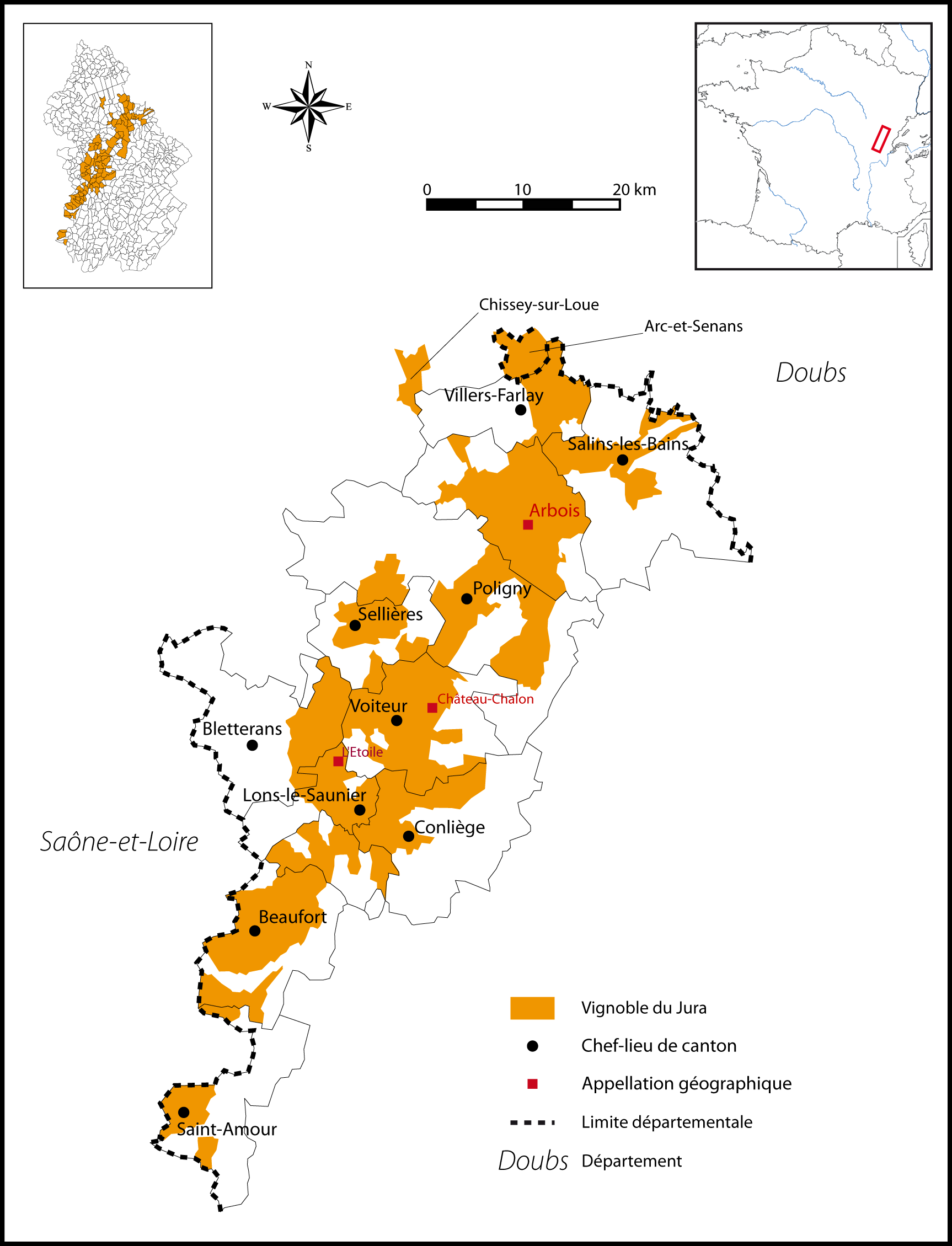 Let’s say you are talking to an oenophile. Ask her to name the major wine regions in France. I’m sure that Bordeaux, Burgundy and Champagne will be first. With the small pause, Loire and Rhone will follow, and then may be (may be!) Languedoc. I wonder how many of the oenophiles will mention Jura? Next question might be even more “tricky” – how many oenophiles tasted Jura wines? And the trickiest question of all – how many of you, my readers, tasted Jura wines? No, you don’t need to answer – Jura wines are almost impossible to find in US, and very difficult to find outside of France in general, so it is not surprising that they are not winning popularity contests, and thus it is really not your fault that you are not familiar with Jura wines.
We live in the times of the dramatic globalization of wine. Not only wine is exceedingly produced in the new and unusual places, but wine availability is becoming more and more global. No, Jura is not a newcomer to the world of wine, if anything, it is quite the opposite – Jura wines had been produced for more than two thousand years. The global availability is what changed – as consumers demand more and different wines, Jura wines, which are definitely unique and different, are becoming better known and more demanded.
Few days ago I was lucky to attend the wine tasting in New York City, called Passion for Jura, which was a great learning experience. The event consisted of seminar and walk around tasting, with more than 20 producers represented. Before we talk about wines themselves, lets take a look at the Jura region and many of its unique qualities first.
Jura region is a narrow stretch of land, about 50 miles long and less than 2 miles wide, in the north-west part of France, sandwiched between Burgundy and Switzerland. First mentions of the Jura region go all the way back to 80 A.D. When it comes to the different aspects of terroir, climate in Jura is somewhat similar to Burgundy, with the potential for more severe cold temperatures, especially during winter time. Soils are probably the most unique aspect of Jura terroir, with some of the shale formations aging between 200 and 230 million years – so yes, you can probably find dinosaur imprints in that soil, if you look deep enough. Overall, the difference in the age of soil can be quite dramatic, tens of millions of years between the neighboring vineyards.
Jura wines were well regarded in France, with Arbois (one of the main towns in the region) wines being known for what they are since the 10th century, and Château-Chalon wines (this is where the famous Vin Jaune is made) being well known since the 16th century. Similarly to all other winemaking regions in France, Phylloxera wrecked havoc in Jura’s wine industry. Before the Phylloxera, Jura region had about 50,000 acres under the vine, with 42 grape varieties, out of which 14 were identified in 1774 as “good grapes”. Today, Jura region has only about 5,000 acres planted, and only 5 varietals are used in the winemaking. Of course everything has two sides – only the best areas were replanted after the Phylloxera epidemic, and only with the grapes which produced the best results, so yes, there is silver lining in most everything in this life.
It is impossible to talk about Jura and not to mention a few of the famous people who dramatically impacted the wine world, while living in Jura at the same time. First, of course is Louis Pasteur, whose seminal work “Studies its diseases, their causes and new preservation and aging process“, published in 1886, was really a key element of the modern oenology. While Pasteur’s name is probably familiar to many, I wonder how many people will recognize the name of Alexis Millardet, also of Jura – meanwhile, he came up with the technique of grafting French vines on the American rootstock, which allowed to restart the French wine industry after the Phylloxera devastation. And the last person I would like to mention here is Joseph Girard, a resident of Arbois, who founded INAO (National Institute of Denominations of Origin) and was instrumental in establishing the AOC system of quality, which was subsequently copied all over the world. It is probably not very surprising that the very first AOC in France, established in 1936, was … the Arbois AOC!
Let’s talk about the grapes. Now, this is somewhat of the simple task, as there are only 5 grapes growing in Jura – 3 reds and 2 whites. Here they are:
Poulsard – indigenous red grape of Jura, sometimes also called Ploussard. Most planted red grape in Jura (about 40% of all red grape plantings), and about 14% of total grape plantings. Produces bright looking wines, almost Rosé in color, which are very refreshing and age quite well.
Trousseau – another red grape of Jura, part of the Savagnin family, most likely originated in Jura. The same grape is known as Bastardo in Portugal. Has about 8% of the total planted area, and about 22% of the red grape plantings. Often blended with Pinot Noir.
Pinot Noir – was introduced in Jura in 14th century. Has about 13% of the total plantings, and a bit less that 40% of the red grape plantings. Early ripening variety, thus has high degree of risk of frost damage in spring.
Chardonnay – same as Pinot Noir, was introduced in Jura in 14th century. Also known as Melon d’Arbois in the north, and Gamay Blanc in the south. Few vignerons are still growing Melon á Queue Rouge, a rare red clone of Chardonnay. Chardonnay is the most popular grape in Jura, at about 43% of total area plantings and 2/3 of the white grapes plantings.
Savagnin – most famous grape of Jura, and the only one allowed to be used in Vin Jaune. Late ripening variety with low yield. makes up about 22% of the total grape plantings and about 1/3 of the white grape plantings.
Before we get to the styles of wines and regions, let me give you a few interesting numbers. With 5,000 acres planted, there are about 300 grape growers in Jura, each taking care of about 17 acres of vineyards. There are also about 200 producers and about 100 villages in the Jura region.
With only 5 grapes, Jura produces a great variety of stylistically very different wines. Historically, Jura wine were very unique, as oxidation always played a very important role in the white wines of Jura. While oxidation is great, as the oxidized wine can be preserved almost forever, it doesn’t necessarily appeal to the tastes of the mass of the wine drinkers in the world. Starting in 1990, the style of Jura wines started to change, to move from oxidized to fresh, generally more acceptable style. As the result, there is a number of styles which you need to be aware of in order to make sure the wine will actually taste as you would expect instead of “OMG, what is it???”. Additional problem is that these styles are not necessarily clearly indicated on the from label, so sometimes you really need to look through all the information on the labels and outside in order to understand what type of wine it is. The oxidation is only relevant to the white wines, so the styles of the white wines are:
- Ouillé – non-oxidized
- non-Ouillé – oxidized
- Naturé – Savagnin wine in the oxidized style
- Tradition – a blend of oxidized Savagnin and Chardonnay
For what I understand, all it means is that if you don’t see the word Ouillé somewhere on the label or description of the wine, there is a good chance that the wine will be oxidized – if anyone who reads this post has better knowledge of the subject, I would greatly appreciate the comment!
Tired yet? We are almost done! Last part – let’s talk about wine styles and appellations. Before we get to the Jura details, one general note. Have you noticed the words AOP showing up more and more on the wine labels, especially on the latest releases of wine? This is because the French government, following overall EU requirements, is changing the AOC (Appellation d’Origine Contrôlée) nomenclature to the AOP (Appellation d’Origine Protégée), so you should expect to see the words AOP more and more on the bottles of French wines.
Jura uses total of 6 appellation designations – 2 of them are product designations, and 4 are geographical designations. Additionally, there are two wines which can be made in different appellations but they still have very specific product requirements. Here we are:
 Crémant du Jura AOP – this is the product AOP for Sparkling wines in Jura. Made by the traditional (méthode champenoise) method, with 9 month minimum aging on lees. The wine can be produced anywhere in Jura, using all 5 varietals. Grapes should be harvested by hand and whole-cluster pressed.
Macvin du Jura AOP – this is the product AOP for fortified dessert wines. Can be made anywhere in Jura AOPs using any of the 5 grapes. The wine is made by blending of 2/3 of unfermented grape juice with 1/3 of the local brandy, called Marc du Jura, which should be made at the same property from the grape skin pomace. The wine should be aged for at least 12 month in the oak barrels before release.
Arbois AOP – geographic AOP, the biggest in terms of production. All 5 grapes are grown and permitted in production of the wines, with all types of wine allowed for production.
Château-Chalon AOP – a dedicated geographic AOP for production of Vin Jaune. Savagnin is the only allowed grape, harvested late. If any other wines are made, they are designated as Côtes du Jura. For more details, please see below.
Côtes du Jura AOP – a geographic AOP. All 5 grapes are allowed to be used, and all styles of wines can be produced.
L’Étoile AOP – a geographic AOP, the smallest in Jura, consisting of only 4 villages. Only Chardonnay, Savagnin and Poulsard are allowed. All styles of the wines can be produced.
Vin Jaune – Most famous wine of Jura, so called “yellow” or “golden” wine. Can be made only out of the 100% Savagnin, in any of the 4 geographic AOPs. The grape is harvested late, and vinified as any other white wine would. After that, the wine is aged in the oak barrels which are not completely filled up. The barrels are never topped off and never racked. Similar to the Jerez, the thin film is formed on the wine’s surface, which is called The Veil – it allows the wine to age gently. The minimum age of the wine before it can be bottled is 6 years and 3 month. The wine requires pre-tasting prior to the bottling, and it is produced only in the good years. Vin Jaune is bottled in the special bottles called Clavelin, which contain 620 ml – Jura winemakers had to endure a long fight with the authorities in order to keep the historical, but not EU standard size (750ml) of the bottle.
Vin de Paille – the dessert! Generally produced from Chardonnay, Savagnin, Poulsard and sometimes Trousseau in Arbois, L’Étoile or Côtes du Jura AOPs. The grapes are harvested early and then dried up either in the boxes or hanged up in the air for 3 -5 month. After pressing, the wine have to age for at least 3 years with minimum of 18 month in the oak.
Whew, and we are pretty much done. Believe it or not, but I think this is probably the longest ever post with the least number of pictures – if not The longest, then definitely one of the longest. Jura is unique and special region, as you will see when we will be talking about the wines in the next post, and I really wanted to give you all the information together, without breaking it into the pieces. If you are still reading it – I definitely want to thank you for your patience. I hope you learned something new here. Also, if you have an experience with Jura wines, your comments and opinion will be greatly appreciated. Hell, your comments will be greatly appreciated even if you never heard of Jura wines till today. With that, until the next time – cheers!
Wines, Wines, Wines – Part 2
As promised, here is the second part of the Wines, Wines, Wines post. In the first part, we talked about great Riesling and Gewurzrtraminer wines, with some extra value wines and Prosecco. Let’s continue our “memorable wine extravaganza” with a couple of Chardonnays.
Chardonnay
It is so interesting how things work in life. You might walk past say, a picture, every day, and never notice it. And then all of a sudden you say “what is it? Was it always here, or is it something new??”, and people around you look at you like you have two heads or something. Where am I going with this? Give me a minute, I will make my point.
Couple of month ago I got a bottle of Chardonnay, accompanied by the words “try it, it is pretty good”. I’m a sucker for good Chardonnay (yeah, true, you can substitute “Chardonnay” with any other varietal – I’m just a sucker for any good wine, but this can be a subject for a different post). But this Chardonnay was from New Zealand. And New Zealand in by book is the land of Sauvignon Blanc and Pinot Noir – but not really a Chardonnay. So I finally got the bottle opened and … wow.

Seresin Chardonnay
2008 Seresin Chardonnay Reserve Marlboro New Zealand (13.5% ABV, 11 month in oak). The symbol of the hand on the label has a deep meaning. Quoting few words from Seresin Estate web site, “The hand is a symbol of strength, gateway to the heart, tiller of the soil, the mark of the artisan, and embodies the philosophy of Seresin Estate”. Here are my tasting notes for this wine: Outstanding, classic. Perfect nose of vanilla and white apples, just right. Very balanced fruit on the palate – hint of butter, vanilla, oak, good acidity – one of the most balanced Chardonnays ever. Drinkability: 8+
Oh yes, you are still waiting for me to connect to the opening sentence about passing by and not seeing things around for the long time, right? As of very recently, as I walked in the New Zealand isle in the store, I noticed all of a sudden that almost every producer now features Chardonnay in addition to Sauvignon Blanc and Pinot Noir. When did it happen, how long this was the case with New Zealand Chardonnays – I don’t have any idea, but based on this experience, I definitely want to try more.
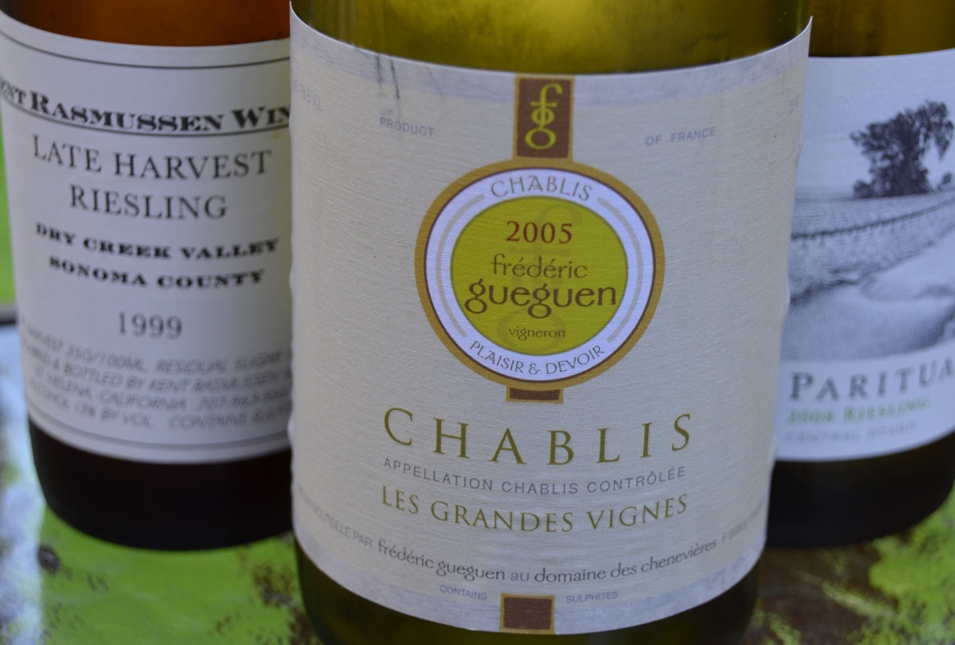
Frédéric Gueguen Chablis
2005 Frédéric Gueguen Chablis Les Grandes Vignes (13% ABV) – I don’t have a lot of experience with Chablis overall. I had a few bottles of Chablis here and there, but never was really impressed with it (I never had Chablis of a Grand Cru or even Premier Cru level). I don’t know what possessed me to get this wine from the Benchmark Wine Company, I guess it was in the right price range ( under $20), and somehow caught my attention. Then I read somewhere, that Chablis requires on average about 10 years of age in the bottle to really start transforming and going past the initial “steely acidity” flavor profile to get to the next level. And then I tried this Frédéric Gueguen wine – wow. Here are my tasting notes: some darker yellow color, but not quite golden yet. Amazing nose, reminiscent of Côte-Rôtie – almost a touch of sulfur (think freshly burnt matches), or even more of a smell of a hot piece of granite on a summer day, a “roasted rock”. Side note: pardon my naive definition here – I recently learned that professionals call it a “gunflint” – but I will not use this term as it doesn’t lead to any associations for me. Perfect complexity on the palate – white fruit, vanilla. Lots and lots of minerality. Full bodied and very balanced, excellent wine overall. Drinkability: 8+
Pinot Noir
And we are moving along to the Pinot Noir wines – both of the wines below were excellent:

Siduri Pinot Noir
2011 Siduri Pinot Noir Sonoma County (13.1% ABV) – perfectly clean California Pinot – good smokey nose, with a touch of red fruit aromas. Light cherries on the palate, hint of earthiness, medium body, perfect acidity, very clean and balanced. Drinkability: 8-
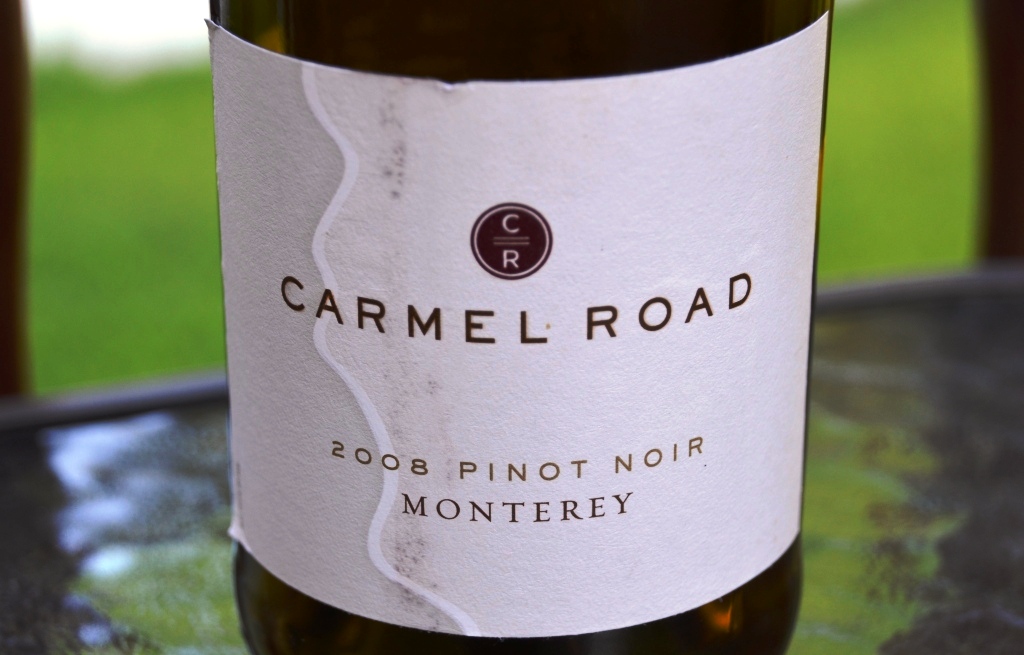
Carmel Road Pinot Noir
2008 Carmel Road Pinot Noir Monterey (14.0% ABV) – outstanding. Bright ruby color in the glass, raspberries and hint of smokiness on the nose. Raspberries, cranberries and cherries on the palate. Medium to full body. Excellent acidity, overall perfectly balanced. Drinkability: 8+
Cabernet Franc
I have only one wine for you here, but it was mind blowing.
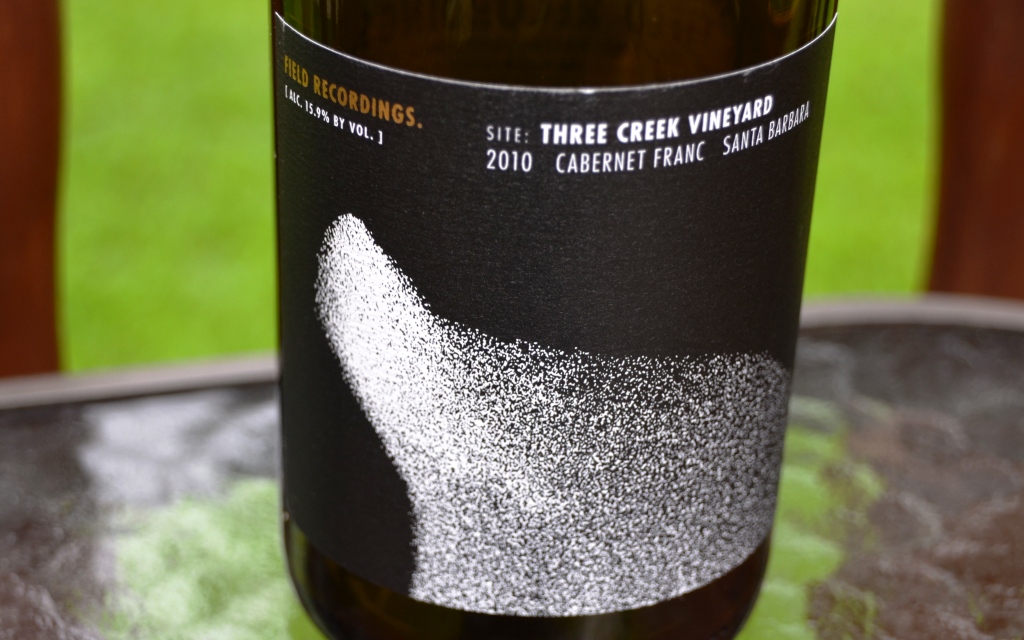
Field Recordings Cabernet Franc
2010 Field Recordings Three Creek Vineyard Cabernet Franc Santa Barbara (15.9% ABV, 90% Cabernet Franc, 10% Malbec, 18 month in French oak) – spectacular. If you read this blog on the regular basis, you know that I’m very impartial to the wines of Field Recordings – but this is not my fault, it is Andrew Jones’ fault ( Andrew Jones is the winemaker behind Field Recordings). This wine had beautiful garnet color in the glass. The nose was clean and open, withhint of black currant and other red fruit. The palate is stunning with black currant, cherries, touch of black pepper, dark chocolate, perfect acidity, soft and supple tannins, all in the format of full-bodied wine. Perfect balance of fruit, acidity, tannins and alcohol – which is pretty amazing at 15.9% ABV. Drinkability: 9
Last, but not least – Syrah
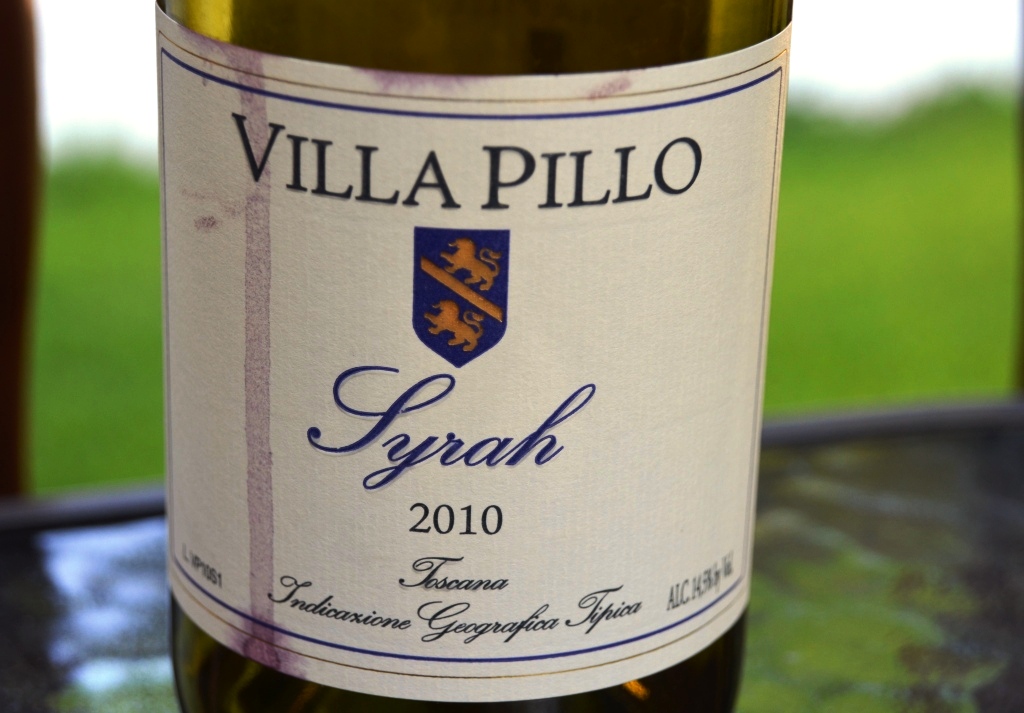
Villa Pillo Syrah
Appearance of the large amount of Italian Syrah wines is also somewhat of a revelation, similar to the one I mentioned at the beginning of this post. All of a sudden I start noticing that there are more Italian Syrah wines showing in the wine stores, and people are just talking more about them, in the blogs and otherwise.
2010 Villa Pillo Syrah Toscana IGT (14.5% ABV) – we got this wine when we visited Millbrook Winery in New York (this will be a subject of a separate post), as they are importing this and a number of other wines from Italy. Tasting notes: Dark garnet color in the glass. Nose of dark fruit and dark chocolate. Outstanding on the palate – hint of pepper, cherries, plums and raspberries, more dark chocolate. Full bodied, with the velvety texture weaved over firm structure. Drinkability: 8
Whew, we are done here! Enjoy the rest of your weekend and cheers!
Wednesday’s Meritage – Wine Quiz Answer, Wine Blogging Wednesday Returns, New Wine Writing Challenge Announced, And more
 Meritage time!
Let’s start with the answer for the wine quiz #66, Grape Trivia – Chardonnay. In that quiz you were supposed to answer 5 questions about probably most popular white grape in the world – Chardonnay.
Here are the questions, now with the answers.
Q1: Name the producer of the most expensive Chardonnay wine in the world. As an added bonus, please also provide the name of the wine.
A1: Domaine Romanee-Conti (DRC), which is probably the most famous in the world producer of red Burgundy wines also makes a tiny quantity of the white Burgundy in Montrachet. This wine is impossible to find, but if you will, it will set you back by at least $3,000.
Q2: Chablis used to be the bustling Chardonnay producer in France, supplying most of the wine in Paris and beyond, until it came to the severe decline during the beginning to the middle of the 20th century. Do you know what was one of the biggest factors which led to that decline?
A2: The time periods in this question should be slightly adjusted – it should be really late 19th century, not beginning to middle of the 20th. Nevertheless, the quick answer here is … railroad. Until the railroad was built in France in 1850s, Chablis held near monopoly on Parisian wine market, being able to easily supply the wine by the river. Railroads allowed easy access for much cheaper wines of South of France to the lucrative market, which shook Chablis’ dominance. Then there were other factors, such a philloxera, but it all started from the railroad…
Q3: Name 3 main flavor descriptors of the *big* California Chardonnay
A3: Vanilla, butter and oak – read the description of any “big” California chard, and most likely you will find all these words.
Q4: Judgement of Paris of 1976 was instrumental in bringing California Chardonnay onto the world-class wine map. Do you know which California winery we need to thank for that?
A4: Chateau Montelena was the one!
Q5: As with many other grapes, various clones had being developed for Chardonnay, to adapt better for the particular region and/or resulting wine style – for example, there is a number of so called Dijon clones of Chardonnay, which can be used by anyone wishing to produce a classic Burgundy style wine. One of the clones was developed in California in the middle of 20th century, and it is still a very popular choice among many California Chardonnay producers to the date. Can you name that clone?
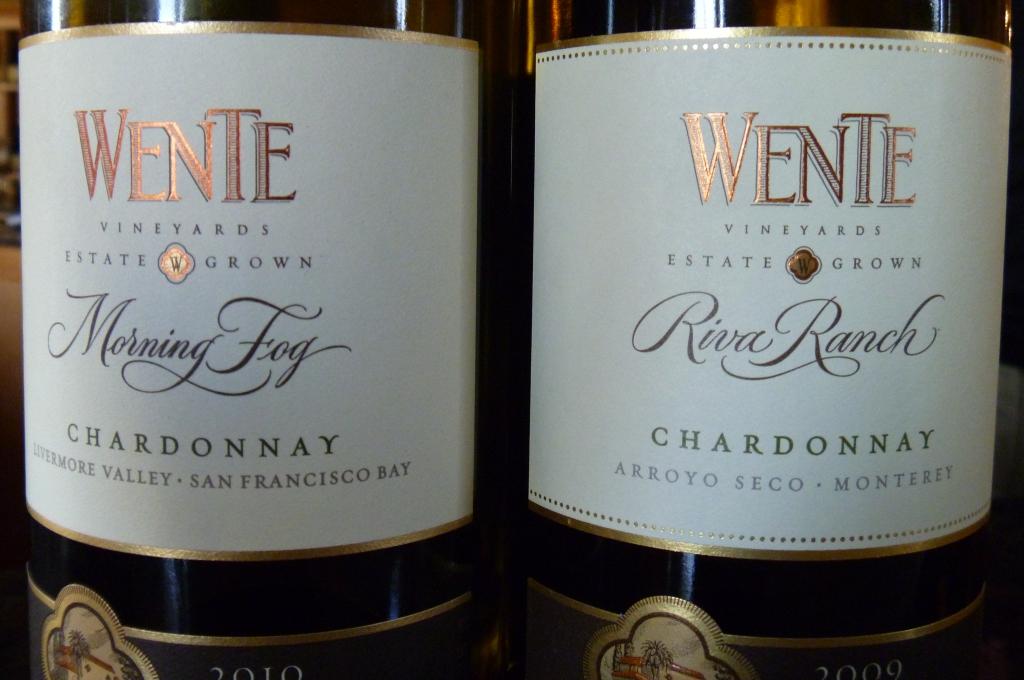
A5: Wente clone. It took about 40 years to create the Wente Chardonnay clone, which became a popular choice among winegrowers in California in the 1940s – 1950s. You can read this article for more details.
Looking at the results of this quiz, I have to tell you that I actually anticipated higher success rate – but it seems that outside of the question 4, which was answered correctly by all, the rest of the questions came up to be rather difficult. We don’t have a winner today, bu the honorable mention goes to Asueba, who correctly answered questions 1 and 4, and was quite close with the answers for the questions 2 and 3.
Now, to the interesting stuff around vine and web!
Well, I don’t even know where to start – lots of interesting things are happening!
First, the newly minted queen of the Wine Writing Challenge, Kirsten, a.k.a. The Armchair Sommelier, announced the new trouble theme for the 2nd Monthly Wine Writing Challenge. Why “trouble theme” you ask? That’s just the name of the theme – Trouble. You can read all the details here, and start getting in trouble. Oh yes, and if you are a creative type, we are also looking for the cool loge for this Monthly Wine Writing Challenge exercise – get your creative juices flowing! The submission deadline is August 17th – summer days are flying fast, don’t get in trouble and don’t miss your chance to steal the crown…
 Now, I have to tell you that Wine Blogging Wednesday is back!!! For those of you who missed it ( which will probably be quite a few people), this was a popular monthly wine blogging exercise. Every month a new theme was announced, like Cabernet Sauvignon, or Viognier, or Single Vineyards and so on, with various bloggers playing role of the host. This was not a competition, but rather a thematic submission with the host producing a summary blog post after the wine blogging Wednesday, or #WBW, would take place. These #WBW events stopped for almost a year – and I’m glad to see them come back. The theme for the Wine Blogging Wednesday #80 (#WBW80) is Dry Rosé, and the #WBW80 event will take place on August 14th. For all the details on the #WBW80 and previous 79 #WBW events, please visit Wine Blogging Wednesday web site.
It is hot. It is the summer. But – 31 days of Riesling event is in full swing! Nothing cools you off better than nice and refreshing glass of Riesling. The 31 Days of Riesling event is going on until the end of July – check the event web site for the participating restaurants, stores and tons of interesting stuff about Riesling.
When was the last time you tasted Chenin Blanc wines? Lettie Teague, the wine writer for the Wall Street Journal, calls Chenin Blanc a “delicious underdog” in her recent article. You might want to read it, and then may be even grab a bottle or two based on her recommendations – you might be in for a delicious surprise, as I was with Field Recordings Jurassic Park Vineyard Chenin Blanc.
Last but not least, I want to bring to your attention a rant by Duff Wines about the way we taste the wines and live our lives. It will worth your time, so I highly recommend it.
That’s all I have for you, folks. The glass is empty – but refill is on the way! Until the next time – Cheers!
Weekly Wine Quiz #66: Grape Trivia – Chardonnay
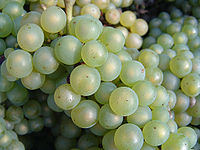
Chardonnay grapes after harvest, as presented in Wikipedia
Welcome to the weekend!
Here we are, continuing our wine quizzes now with the (dare I say it) most famous white grape – Chardonnay!
Seriously, is there another grape which receives equal amount of attention? Not as a fad, but as a constant center of attention all the time, with new winemakers offering their own personal take on the grape, coming from all over the world, competing for supremacy with producers who boast hundreds and hundreds years of “prior experience”? Is there a winemaking country in the world *not* making wine out of Chardonnay – I doubt so…
Origins of Chardonnay go all the way back to the 12th century, starting (of course, where else) in France in Burgundy region. Today, Chardonnay is one of the most planted grapes in the world with 400,000 acres planted worldwide (and about quarter of that in California alone). Part of such a wide success of the Chardonnay can be attributed to the fact that Chardonnay is very adaptable, and can be successfully grown in various conditions, including climate and soils. Additionally, Chardonnay is very “malleable” in the hands of the winemaker and can be used in variety of styles both with and without oak, and successfully ranging in the expression from sparkling to light and acidic white wines, going all the way to the heavy, big and monumental wines and then continuing on to the dessert wines (Australian “sticky”s come to mind). As you can imagine, such a popularity with the wine makers leads to the overproduction of boring and indiscreet wines, which generates periodic consumer backlash and creation of the self-proclaimed ABC clubs (Anything But Chardonnay). Nevertheless, anyone who had ever experienced great Chardonnay – coming from France, California, Chile, Australia, New Zealand, Italy, Hungary and many other places, will always come back for more.
Now, to the quiz!
Q1: Name the producer of the most expensive Chardonnay wine in the world. As an added bonus, please also provide the name of the wine.
Q2: Chablis used to be the bustling Chardonnay producer in France, supplying most of the wine in Paris and beyond, until it came to the severe decline during the beginning to the middle of the 20th century. Do you know what was one of the biggest factors which led to that decline?
Q3: Name 3 main flavor descriptors of the *big* California Chardonnay
Q4: Judgement of Paris of 1976 was instrumental in bringing California Chardonnay onto the world-class wine map. Do you know which California winery we need to thank for that?
Q5: As with many other grapes, various clones had being developed for Chardonnay, to adapt better for the particular region and/or resulting wine style – for example, there is a number of so called Dijon clones of Chardonnay, which can be used by anyone wishing to produce a classic Burgundy style wine. One of the clones was developed in California in the middle of 20th century, and it is still a very popular choice among many California Chardonnay producers to the date. Can you name that clone?
Good luck, have fun, enjoy your weekend and cheers!
Last Bottle Sign Up ($10 credit)




 Talk-A-Vino