Archive
Reminiscing About Chardonnay
It’s been two weeks since the Chardonnay Day (May 23rd). So far I missed all the grape holidays this year, so why bother bringing it up, right?
Well, there are a few reasons. First, after carefully checking the blog, I realized that I never wrote about Chardonnay Day, which is a pity, because…
And here is the next reason – Chardonnay is one of my most favorite grapes. Of course, as a wine lover, you can say that I share this sentiment about every grape. Somewhat true, and yet in my book Chardonnay is different than most other white grapes.
While considered to originate in France, Chardonnay today is growing everywhere. I’m not sure if there is any well-known winemaking country that doesn’t produce Chardonnay – France, Italy, Australia, New Zealand, USA (everywhere – New York, Pennsylvania, California, Washington, Oregon, Virginia, Texas…), Chile, Argentina, South Africa and literally everywhere else.
Chardonnay can be produced in all wine “forms” – still, sparkling, dessert. In still wines, Chardonnay is best known as a solo player, even though sometimes it can be added to the blend. In sparkling wines, Chardonnay can be used just by itself, producing Blanc de Blancs sparklers, but it also plays very well with others, such as Pinot Noir and Pinot Meunier in the case of classic French Champagne. But even in the still format, the range of Chardonnay’s expressions is endless, from steely, razor-sharp cut-through acidity in the young Chablis or some of the unoaked Chardonnay wines from the new world to the big, buttery, “love my every curve” wines that almost are not made anymore in California. And speaking about dessert, let’s not forget “stickies” from Australia.
Another important characteristic of Chardonnay – properly made wines can age. There are very few aging-capable white wines. Riesling probably holds a crown there, but anyone who tried well-aged Chablis or Burgundy knows the joy of the heavenly, honey-and-lemon liquid which forces you to meditate over a glass of wine, not just drink it.

To prove my “special affinity” to Chardonnay, I decided to enlist the help of my Top Wine of the Year lists. At the end of every year, I publish the list of the most memorable wines of the year – what can be a better proof of recognition? I analyzed all of the lists from 2010 to 2023 to see how often Chardonnay was included, and only in its pure form, not as a part of the blend – and it appears that Chardonnay wines were a part of the Top Wines lists in 12 out of 14 years. For comparison, my beloved Rioja only made it into the 8 Top lists out of 14.
For what it is worth, in addition to my favorite collage picture of the Chardonnay wine labels over the years, I’m including here the list of my favorite Chardonnays of all time. I’m sure there are other wonderful Chardonnay wines that simply didn’t make it to the top list, but the list of wines below is still well-representative, Let’s take a look, in chronological order:
2010, #11 – Cambria Bench Break Chardonnay 2006, Santa Maria
2011, #4 – 2009 Peter Michael “Belle Cote” Estate Chardonnay
2012, #13 – 2008 Kovacs Nimrod Battonage Chardonnay, Eger Winery, Hungary
2013, a double entry
#12 – 2008 Seresin Chardonnay Reserve Marlboro New Zealand
#2 – 2005 Frédéric Gueguen Chablis Les Grandes Vignes
2015, #14 – 2012 Marchesi de’ Frescobaldi Pomino Bianco Benefizio Riserva DOC
2016, again a double-entry
#17 – 2001 The Lucas Winery Chardonnay Lodi California
#9 – 2015 Vidon Vineyard Chardonnay Estate Chehalem Mountains, Oregon
2017, yet another double
#13 – 2012 Sandhi Chardonnay Santa Barbara County
#12 – 2016 Salabka LA COQUINE Chardonnay Praha Czech Republic
2018, #6 – 2015 Domaine Jean-Noel Gagnard Chassagne-Montrachet Blanc 1er Cru Les Caillerets
2019, a triple!
#17 – 2017 Oceano Chardonnay Spanish Springs Vineyard San Luis Obispo County
#16 – 1990 Dom Ruinart Ruinart Blanc de Blancs Champagne
#9 – 2005 Giulio Ferrari Riserva del Fondatory Metodo Classico Trento
2020, a double
#10 – 2016 Domaine Anderson Estate Chardonnay Anderson Valley California
#8 – 2018 Landmark Vineyards Overlook Chardonnay Sonoma County
2021, a double again
#9 – 2013 Lynmar Estate Chardonnay Russian River Valley
#4 – 2018 Le Cadeau Vineyard Chardonnay Willamette Valley
2023, #1 – 2021 Balverne Chardonnay Russian River Valley AVA
Just to give you another bit of information, among the 19 wines listed above (creme de la creme of Talk-a-Vino Chardonnay experiences) there are 2 sparkling wines, the rest are still wines from 7 different countries and winemaking regions – France, Italy, California, Oregon, New Zealand, Hungary, Czech Republic.
Here you are, my friends. I already feel better – two weeks later, but I acknowledged one of my most favorite grapes.
What are your most memorable Chardonnay wines?
Beaujolais Nouveau Est Arrivé! 2023 Edition
 Beaujolais Nouveau Est Arrivé!
Well, that happened almost 3 weeks ago, but I like the sound of “Beaujolais Nouveau Est Arrivé!”, so let me keep this title.
This might be discouraging, but I don’t have much new to say about the subject compared to what I typically say every year when I’m writing about Beaujolais Nouveau:
– originally more of a marketing gimmick, the Beaujolais Nouveau release became a worldwide celebrated phenomenon, largely thanks to the efforts of Georges Duboeuf, prominent wine negociant and producer.
– the wine is produced from the grape called Gamay in a French region called Beaujolais, neighboring ultra-famous Burgundy, from the grapes of this year’s harvest. Harvesting for the grapes for the Beaujolais Nouveau started on September 1st, so the wine made it from the grapevine to the bottle on your table in a mere 10 weeks.
– this year’s Beaujolais Nouveau was better than the last year. Note that I have said this literally every year for the past 5-7 years (or longer), so at this point you probably expect that this wine drinks at the level of DRC (my saving grace – I never had DRC, so I have no idea how far off I am).
If you want to learn more about Beaujolais Nouveau 2023, here is a link to a good article in Wine Spectator.

But seriously, the wine was simply excellent:
2023 Georges Duboeuf Beaujolais Nouveau AOP (13% ABV, $14.99) has a bright ruby color, a restrained nose of the freshly crushed fruit (no bubble gum, no hard candy – just a pure, pleasant vinous nose). A well-composed core of dark berries on the palate, raspberries and cherries, firm, tight, good structure (how about that structure – it is Beaujolais Nouveau I’m talking about here!) with good acidity and good balance. Drinkability: 8/8+
Every year, the bottles of Beaujolais Nouveau are adorned with specially designed labels, sometimes even multiple labels from the same producer for the same wine – I have no idea how that works. As I have been writing about Beaujolais Nouveau every year since this blog started, I can offer you a collection of labels starting with the 2010 vintage. Below is my little “show and tell”. By the way, in case you feel like it, choose your favorite label and share it in the comments (sorry, this is not a competition so no prizes will be awarded).
Here we go:


Beaujolais Nouveau 2023 has arrived, it is a reasonably priced, festive, and tasty wine. If you had one, I would love to hear your thoughts about this wine. If you haven’t tasted one yet – what are you waiting for? Cheers!
Oh, Grenache
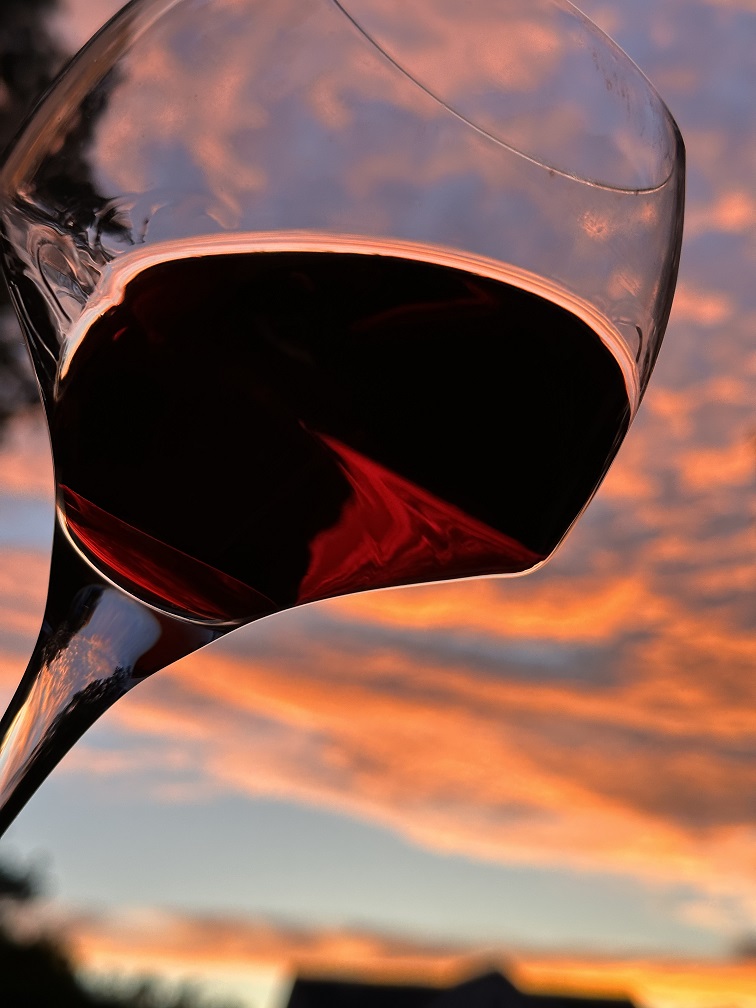 Last Friday, September 15th, we celebrated International Grenache Day. For those rare grape holidays I manage not to miss, I usually write a post on the actual day of celebration. This post didn’t make it on time (obviously), but I managed to open a beautiful bottle, so better late than never…
First, let’s talk about Grenache. Grenache, also known as Garnacha in Spain, is one of the major red wine grapes. Grenache is growing in all major winemaking regions – France, Spain, Italy (under the name of Cannonau), Australia, New Zealand, California, Washington, Israel, and many other places.
I’m sure that when people hear the name Grenache, the instant association is “red wine”. However, close relatives Grenache Blanc and Grenache Gris are also popular grapes, capable of producing delicious white wines – as they do, for example, in Southern Rhône.
Grenache is versatile – it can star on its own, but it is also a great team player. In Spain, Grenache, or rather, Garnacha, is the grape behind some of the most coveted wines of Priorat (Clos Erasmus, anyone?). Campo de Borja in Aragon is another Garnacha’s sacred land – if you have ever experienced the beauty of Alto Moncayo wines, you know what I’m talking about (if you didn’t, it is never too late to rectify). And in some regions, such as Rioja, Garnacha successfully plays a supporting role.
In France, Grenache is the driving force behind the wines of Southern Rhône – Gigondas, Chateauneuf-du-Pape, and everything in between fully relies on Grenache – both solo and as a part of the blend. I’m sure you heard of GSM, which stands for Grenache, Syrah, Mourvèdre – this trio constitutes an absolute majority of Southern Rhône wines, but GSM blends from Australia and the US will give Rhône wines great run for the money.
In the US, Grenache powers many California Rhône Rangers wines – Alban, Saxum, Pax, as well as many of the Washington wines – again, both in solo versions, such as single-vineyard No Girls and Horsepower wines and cult blended renditions such as Sine Qua None.
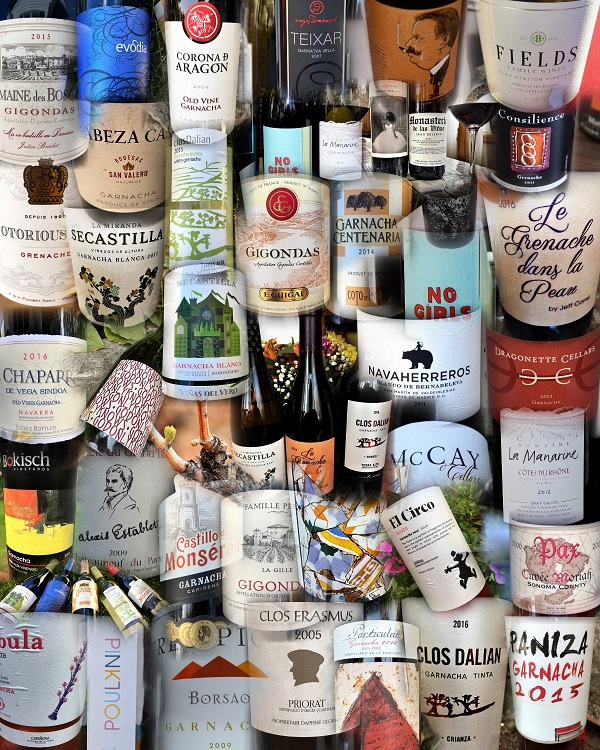
When it comes to the grape holidays, I take pleasure in going through the labels of the wines I had in the past and building a little collage to represent my experiences with the celebrated grape. I realized that even though I wrote about Grenache Day in the past, I never made a collage – fixing this problem was a lot of fun:
Now, let’s talk about the Grenache that put a smile on my face that Friday – 2015 Carlisle Grenache Rossi Ranch Sonoma Valley (15.4% ABV).
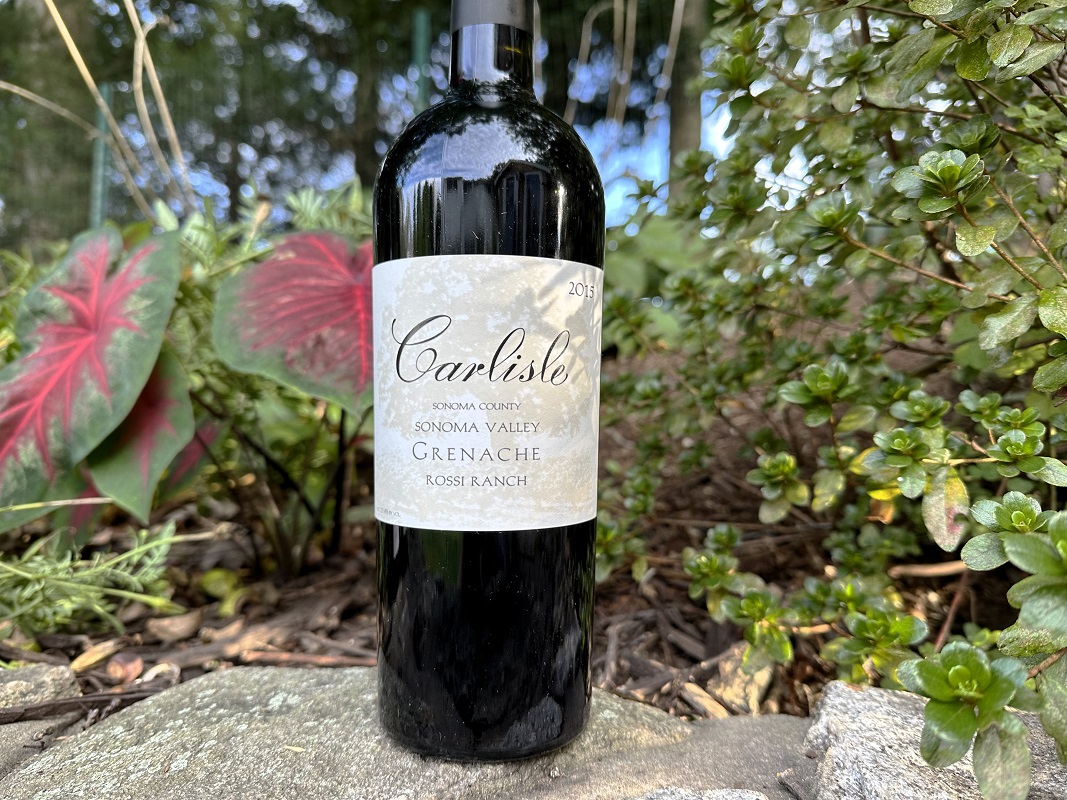
Carlisle is best known for their Zinfandel and Syrah wines. But they also make other wines, such as Grenache, Mourvèdre, Alicante Bouschet, albeit in small quantities and not every year. Carlisle Grenache is a rare animal – I’m not even sure I ever got any other Grenache via the mailing list. It appears that the 2014 vintage was not even bottled, as the wine couldn’t be tamed. However, 2015 worked very well, and Carlisle was able to produce the whooping amount … wait for it … of 77 cases. I don’t even know by what luck I was able to get a bottle, but I’m very happy that I did.
100% Grenache, aged in neutral oak. The wine was stunning – first, the nose, loaded with red berries and herbs, fresh, complex, and vibrant – one of those wines you want to smell indefinitely. When I finally got to sip the wine, it didn’t disappoint – the core of the red fruit, a hint of tobacco and just a tiny splash of dark chocolate, sage, vibrant, full of energy and impeccably balanced. And we got to enjoy the wine over a magnificent sunset – two pleasures at once…
This is my Grenache Day story. What Grenache experiences would you like to share?
Cabernet Sauvignon Reflections on Cabernet Day
Once people realize I’m into wine, 9 times out of 10 someone likes to pop the question – “So, what is your favorite wine”? I really dread this question because I can never answer it, and people think I’m full of pretense.
First, I like wine. Maybe “love” is an even better word. For me, wine is an all-inclusive concept – all types, all regions, all grapes. As long as wine gives pleasure, that is all I need. So it is really hard to pick a favorite. And even if I try, my answer will be different every time – you know how sometimes you are asked to name a favorite book or a favorite movie as an answer to the security question for the new account setup? I always wonder – who can answer that, and then really remember what they said in the first place? I know that it is not me.
But then maybe I had not been honest with myself and I do have a favorite?
It is possible that I’m overthinking such a basic question. But as one of the philosophers said, “Thought spoken is a lie”. In our thoughts, there is a true answer. But every time we try to give it, it is only an approximation – and that’s why the answer to this “favorite” question can be different every time.
Celebration of the International Cabernet Day made me think about this most popular grape in the world and also made me realize – that Cabernet Sauvignon wine might actually be my favorite wine.
How do I mean it?
I’m trying to assess my almost subconscious reaction to hearing about the wine – someone mentions it, I get a promotional email, wine at a restaurant, etc. I believe my brain gives Cabernet Sauvignon preferential treatment, compared to any other wine (interestingly enough, Brunello might be another wine with a similar reaction).
Let me try to explain it better. Let’s say I hear the name Rioja. You know perfectly well that I love Rioja. But just mention of Rioja doesn’t get me excited – I need to know the producer because there is only a handful of producers I trust to offer the wine I will enjoy. A similar story will be with Syrah, Chardonnay, Zinfandel, Riesling, Pinot Noir – I need to know the producer and the region, and then if I hear E. Guigal or M. Chapoutier, the Syrah all of a sudden becomes interesting.
This is not the same with Cabernet Sauvignon. Once I hear about Cabernet Sauvignon, I get instantly excited first, and then wonder about the producer, the region, and so on. I can’t explain this – this might be due to all the wine books I had read in the past. It might be due to the phenomenal encounters such as Vérité, Jordan, Smith-Madrone, Neyers, Kamen, Turley, Chateau Ste. Michelle, Revelry, Neyen, BV, Chateau Margaux and many, many, many others. I don’t know how this works, I’m just doing a bit of the self-searching and it seems to be that this is the case.
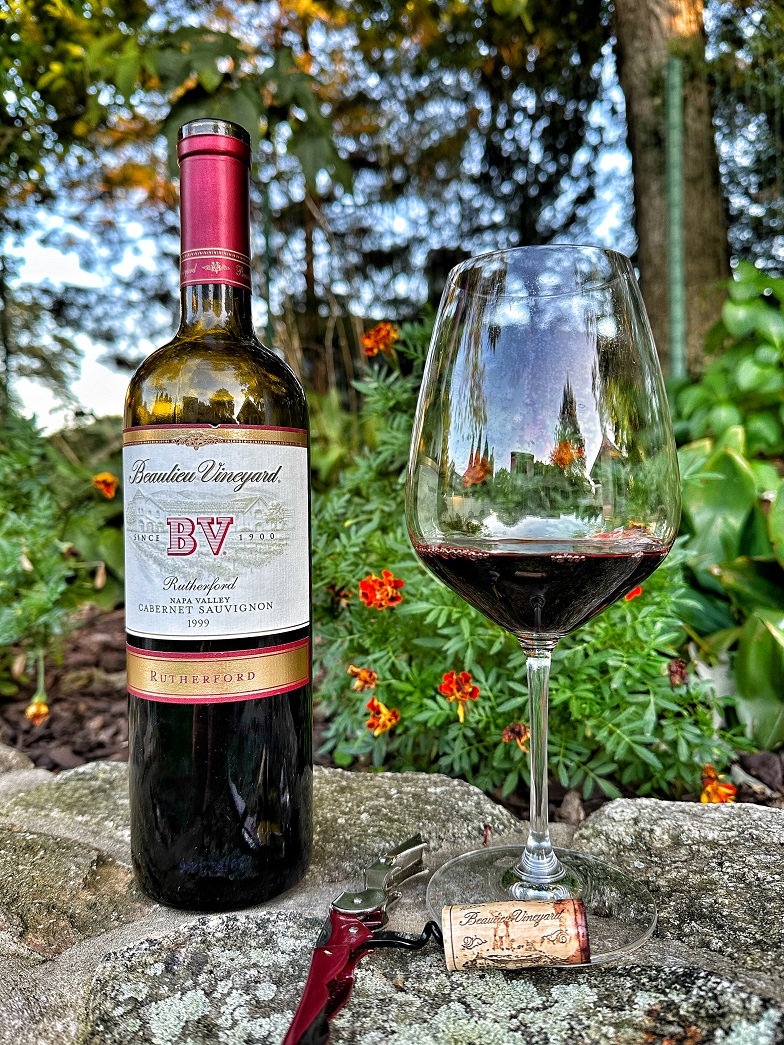
For today’s celebration, I decided to go with the 1999 Beaulieu Vineyards Cabernet Sauvignon Rutherford Napa Valley (13.8% ABV). Drinking this wine brought memories of visiting BV and tasting through the full lineup of wines, including Georges de Latour Private Reserve Cab and Cabernet Sauvignon clonal selections. Despite the 24 years of age, this wine was absolutely youthful and delicious – cassis and eucalyptus on the nose, more of the cassis and eucalyptus on the palate with the addition of cherries. Perfectly present texture, very enjoyable and easily noticeable tannins, perfectly balanced. This is the wine that puts a smile on your face (Drinkability: 8+/9-). Also, as I always maintain that well-made California Cabernet Sauvignon requires between 20 and 30 years of age to be fully enjoyed, and then I find a confirmation to that statement, so that puts another smile on my face.
Here, I said it – Cabernet Sauvignon might be my favorite wine.
But then remember – the thought spoken is a lie.
Celebrate Pinot Noir!
And just like that, I almost missed International Pinot Noir Day, the celebration of one of the most popular red grapes in the world.
Pinot Noir is definitely one of the most popular, even though great Pinot Noirs are mainly limited to only four countries and regions – Burgundy, Oregon, New Zealand, and California – unlike Cabernet Sauvignon and Merlot, which definitely win the popularity contest worldwide, growing successfully absolutely everywhere. Of course, you have Pinot Nero from Italy, Spätburgunder from Germany, Blauburgunder from Austria, Pinot Noir from Australia, Chile, and Argentina, but those rarely take your breath away.

Most popular or not can be contested, but Pinot Noir without a doubt makes the most expensive wines in the world. You can check it for yourself using this “Most expensive wines” page but at the moment of writing (August 18, 2023), Domaine Leroy Musigny Grand Cru is listed by wine-searcher for $43,869 per bottle, which I believe is more than the whole index of the most expensive Cabernet Sauvignon wines on the same day. I really can’t tell if wine can be worth this much to someone to drink it, but hey, it is a free world.
Pinot Noir is definitely a big subject in this blog. I decided to check on some numbers to see how Pinot Noir would stand up against other grapes. In terms of overall mentions, Pinot Noir is the second red grape with 378 posts mentioning it (Cabernet Sauvignon is ahead by almost 100 with 477 posts mentioning it). However, when it comes to tags, Pinot Noir has the highest number of posts, 79, tagged with “pinot noir”, well ahead of any other grape. This is important simply because the tag is matching the content of the post, so at least 79 posts are dedicated to Pinot Noir.
This shouldn’t come as a surprise as Pinot Noir is one of the central subjects of this blog, starring in the series of the Oregon winemakers’ interviews called Stories of Passion and Pinot. The series contains more than 25 articles, highlighting the “passion for the finicky grape” as I typically like to present it through the series of conversations with winemakers who got bitten by the Pinot Noir bug and never looked back. Whether you like Oregon Pinot Noir or not, I still recommend that you would get a glass (or two, or three) of your favorite Pinot Noir ready and go read some stories.
While I love Pinot Noir, I do have one gripe – the price. You can find an amazing Rioja for under $20. You can definitely find a nice Grenache, Sangiovese, or Syrah in that price range. Heck, you might even get lucky with Cabernet Sauvignon or Bordeaux blend. But with the exception of Chile, there is literally no such thing as a drinkable Pinot Noir in the under $20 range. I can’t refer much to Burgundies, but anything tasty from New Zealand’s Central Otago or Marlboro is pushing $40, and all delicious Oregon Pinot Noirs now really sit north of $50. California might offer some exceptions, but I’m not aware of a drinkable sub-$20 California Pinot Noir. Not that I’m complaining here, just stating the obvious.
As today’s celebration caught me off guard, I didn’t have many options to choose from. I have a few random burgundies which I need to look for and think about, nothing from Oregon or New Zealand, leaving California as a primary hope. I remembered that I should have a California Pinot somewhere as it was recently gifted to me, so I was quickly able to locate the 2017 Etude Fiddlestix Vineyard Pinot Noir Santa Rita Hills (14.1% ABV).
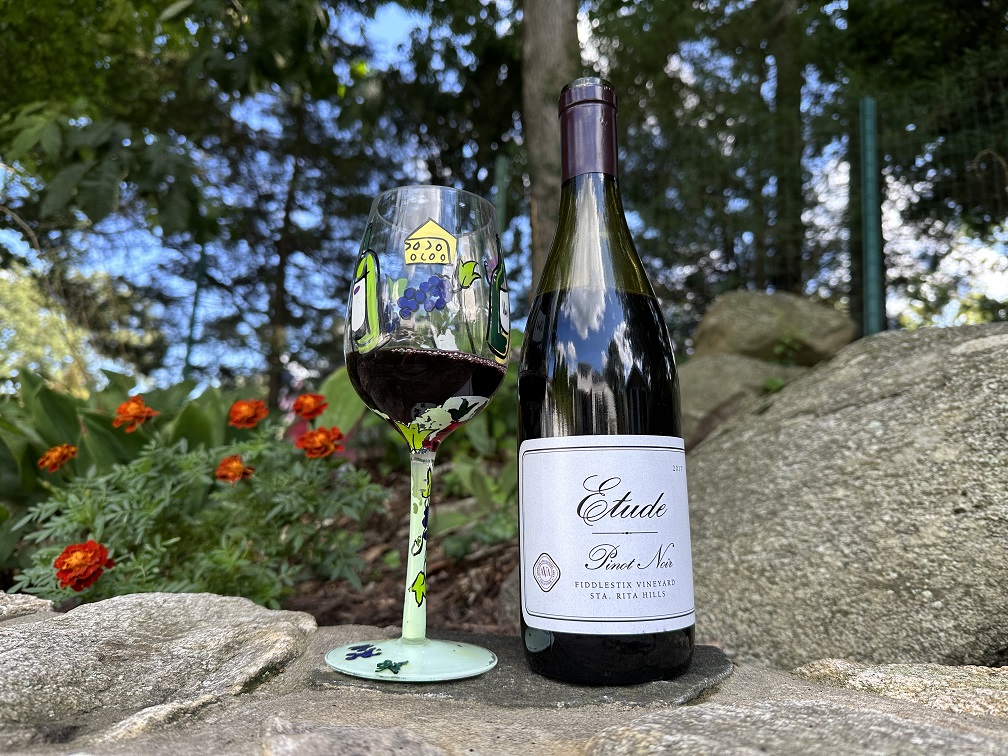
I know the name of the producer – Etude, but I don’t think I had tasted their wines before. Turns out this wine was a very appropriate choice for the Pinot Noir Day celebration, as Etude was founded in 1982 in Carneros in California in a quest to produce world-class Pinot Noir. I love this quote I found on Etude’s website from the founder and winemaker Tony Soter: “Pinot Noir is the most appropriate vehicle with which to study wine growing, precisely because of its demanding nature but also because of its delicacy and transparency. Make no mistake it is a humbling pursuit, but when it’s right, Pinot Noir is a glorious and moving thing. It is in the pursuit of that experience that we all work.” This is a perfect summary of the nature of Pinot Noir that also helps to explain what makes it so good when it is good. Etude produces more than 20 designation-specific Pinot Noir wines – they might be a perfect candidate for the Passion and Pinot series, even if the winery is located in California.
So how was the wine you might ask? In a word, delicious. Dark, unctuous fruit on the nose and the palate, a hint of vanilla, mocha and dark chocolate, nicely layered with perfect structural presence but not overpowering, perfect acidity and perfect balance. An excellent celebratory wine.
There you are, my friends. Another grape holiday just passed by. Hope you had an opportunity to celebrate, and if not – every day is a perfect day to have a glass of Pinot Noir. Until the next time – cheers!
Celebrate Tannat!
Yesterday, April 14th, Tannat Day was celebrated around the world.
Obviously, I’m late to the “Celebrate Tannat” party, so why even bother, right?
Tell me honestly – have you ever forgotten to wish a happy birthday to a friend on the actual birthday day, only to call the next day, apologize, and still wish a happy birthday? If you have never done that, you can probably skip this post altogether as “too late”. For those who had been in this movie once or twice, let’s still celebrate the Tannat grape.
Tannat is an interesting grape due to a number of reasons. First, this is one of the most tannic grapes out there, with one of the highest levels of phenolic compounds in seeds and skin (you can check this article if you would like to get some actual scientific data), competing for the leadership here with Sagrantino grapes from Umbria in Italy. Second, Tannat’s story is very similar to the story of its very close cousin, Malbec.
I’m not implying that Tannat and Malbec are genetically related. But they share similar lifecycle stories. Both grapes originate from the cradle of the French wine world, Southwest France, also known as Sud Ouest. Once upon a time, Malbec used to be the king of Cahors, and Tannat was ruling in Madiran. Both grapes managed to lose their crowns and were reincarnated in full glory in South America – Malbec found kingship in Argentina, and Tannat became an uncontested star of Uruguayan winemaking.
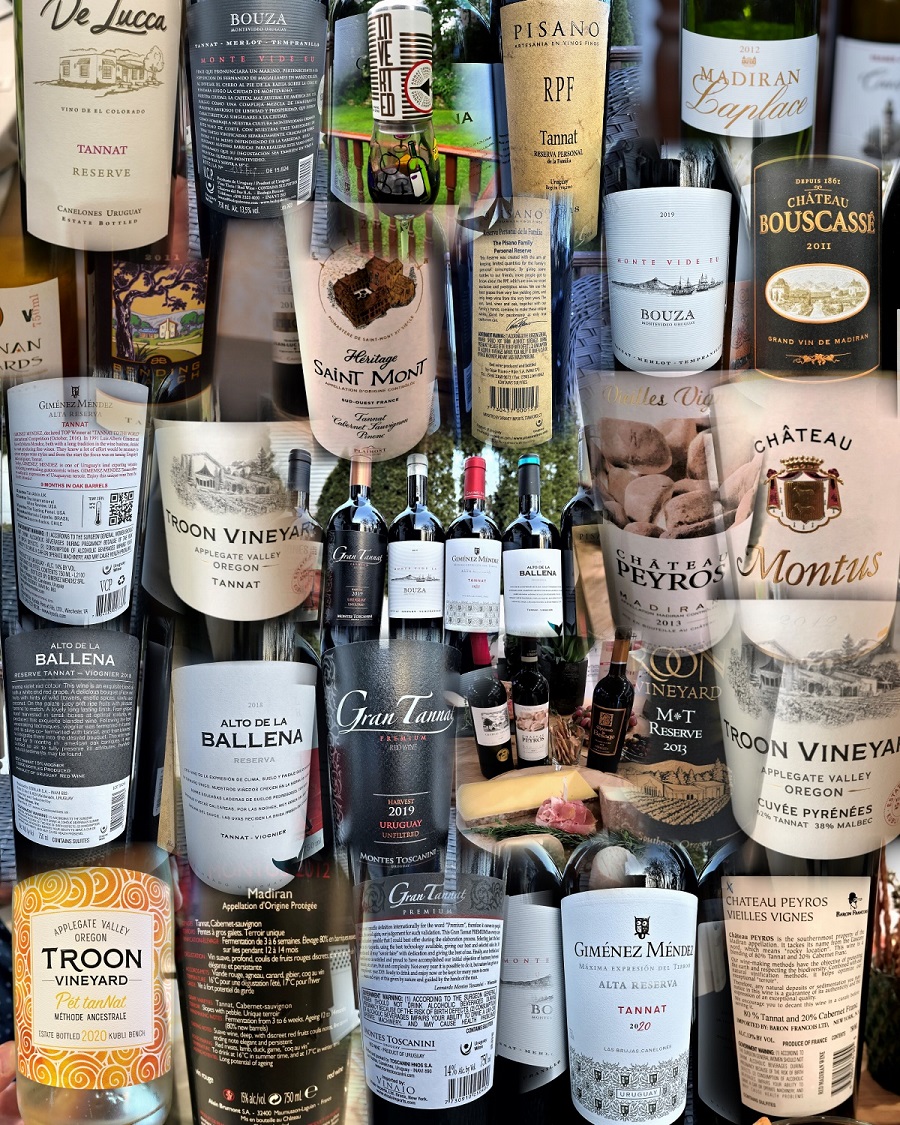
While Tannat found its new home in Uruguay, the grape is actually growing all around the world. But Uruguay is not just the new home. The interesting part about Tannat’s story in Uruguay is that the local winemakers found a way to tame its powerful tannins and acidity, and are able to produce delicious single-grape Tannat wines. However, Tannat can be found in Australia, Chile, Argentina, France, California, Oregon, Texas, and many other winemaking regions, where it is often used as a part of the blend.
While working on this post, I decided to check how often I mentioned Tannat one way or the other in my blog. From almost 1,500 posts, 34 posts contain the word “Tannat”. For comparison, 453 posts contain the words “Cabernet Sauvignon”, 13 times difference. However, just looking at the website word count, the word “Tannat” was mentioned in the blog about 700 times, and Cabernet Sauvignon about 2,500, less than 4 times difference.
Never mind the word count. As we said before, Tannat is the star of Uruguayan winemaking. Also, if you care to look for them, Madiran wines made somewhat of a comeback as of late, and Tannat is a major grape there. You can also find single-grape Tannat wines in Oregon, Texas, and Virginia. Speaking of Oregon, I have to mention the wines of Troon Vineyard. Craig Camp, the head winemaker at Troon, makes wonders with Tannat, from beautiful full-bodied organic reds to sparkling Tannat wines – Pet tanNat is definitely the wine to experience.
And then there is blending. If you would care to look at the list of grapes in the blend, lots of red wines from around the world have some amount of Tannat. Sometimes it is only 1% or 2%, but this might be enough to add acidity and tannins to the blend, to make the wine shine a little bit more.
Playing solo or in a minor supporting role, Tannat is well worth celebrating. Whether you celebrated Tannat yesterday or not, give this grape a chance – you might well like it in your glass.
Celebrate Riesling!
I have to admit, I’m missing most of the grape holidays lately. While checking the Twitter feed today, I was surprised to find out that today we celebrate International Riesling Day. Considering the fact that I never wrote a post about Riesling Day, I couldn’t resist an opportunity to reminisce about my Riesling experiences.
Riesling is one of the 3 main white grape varieties – Chardonnay, Sauvignon Blanc, and Riesling. Of course, there are lots more white grape varieties in the world, but in terms of plantings and production volumes, these three grapes are way ahead of all other white grapes. However, despite the “main variety” consideration, Riesling’s position in the wine world is rather peculiar.
Riesling is capable of a full range of expressions, from bone dry and acidic Rieslings of the Clare Valley in Australia to the dense and viscous late harvest Rieslings made in different parts of the world. Germany, which has about 38% of all Riesling plantings in the world, is typically associated with Riesling – however, there is hardly a wine-producing region in the world where Riesling wines are not made – Germany, Austria, Alsace, Australia, New Zealand, Canada, California, Washington, Oregon, New York – Riesling is literally produced everywhere. And yet walk into any wine store of your choosing – Riesling is typically relegated to the far corner of the store which almost nobody would visit. You can barely find any Riesling on the restaurant’s wine lists. And many consumers are often shy about their love for Riesling as it is almost shameful to be seen with a glass of Riesling in public.
I don’t fully understand the cause of this phenomenon. Germany’s overcomplicated labeling laws might play a role. The fact that it is very difficult to assess the level of sweetness of a bottle of Riesling also plays a role – put a few of the Kabinett Rieslings in the row and see how different the sweetness levels will be where you expect them all to be about the same.
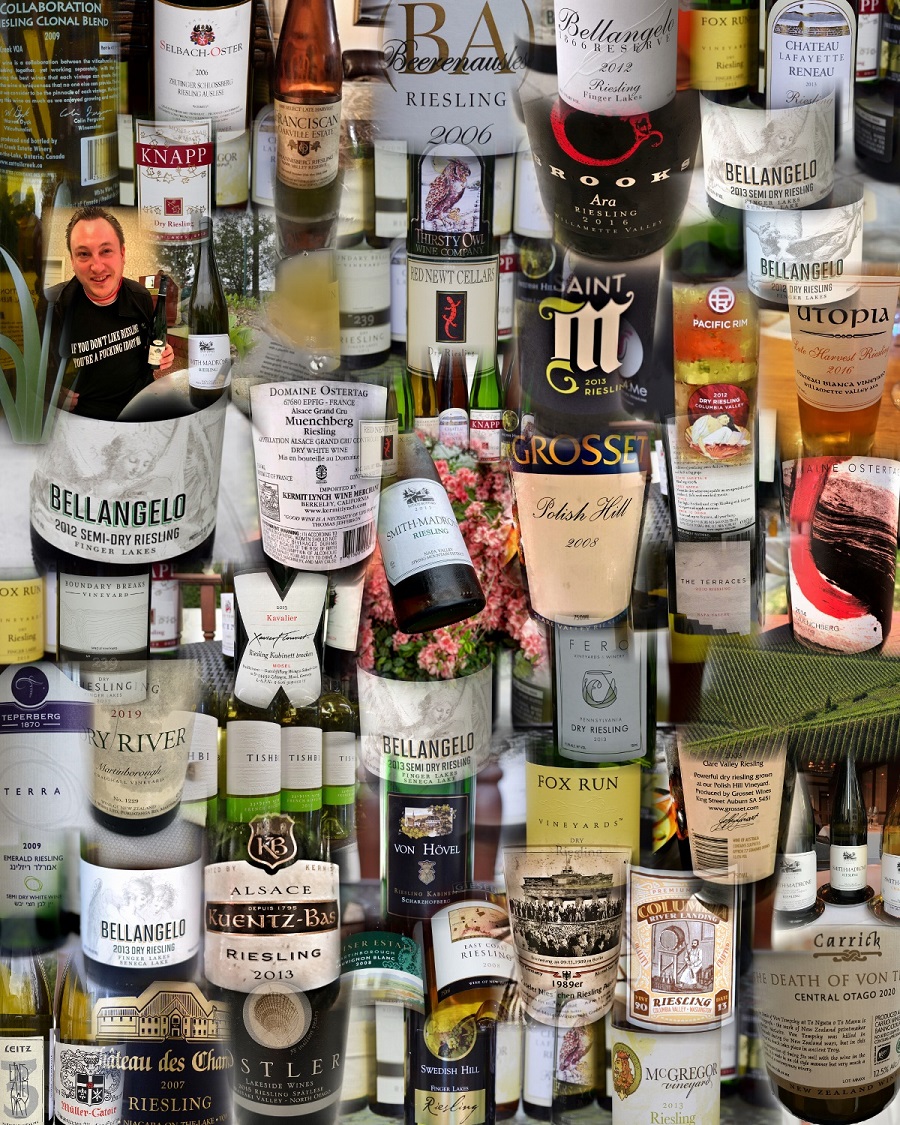 But those of us who trust our own palate and are not afraid of being seen with a glass of Riesling in our hand are typically in for a treat. The everpresent hint of honey, maybe pears, white flowers, and honeysuckle, supported by the cleansing acidity, and hopefully my favorite, a hint of petrol make these wines an absolute delight in my book. Most of the Rieslings also age very well – to understand the pleasure of the 20-30 years old Riesling you simply need to taste one for yourself – the words are very limited in describing the pleasure.
Over the years, I had plenty of delicious Rieslings. And yet if you would ask about the most memorable ones, I would easily give you 3. First, Brooks Ara Riesling from Oregon, which I tasted during a few of the Wine Bloggers Conferences – a pure standout. My next choice would be Smith-Madrone Riesling, which is rather surprising coming from Spring Mountain District in Napa Valley in California – nobody would ever associate California with Riesling, and yet you have a live, delicious proof.
And then, of course, there are Clare Valley Rieslings from Australia. Grosset Polish Hill Riesling from Clare Valley might be a quintessential pleasure, with its high energy, brilliant acidity, intertwined with the fruit – another wine that needs to be tasted to believe it.
I have come across many other excellent renditions of Riesling, but the three I just mentioned are definitely my personal standouts.
What do you think of Rieslings? Do you have your favorite Rieslings which you care to share with everyone?
Happy Reisling Day!
Beaujolais Nouveau 2022 Edition
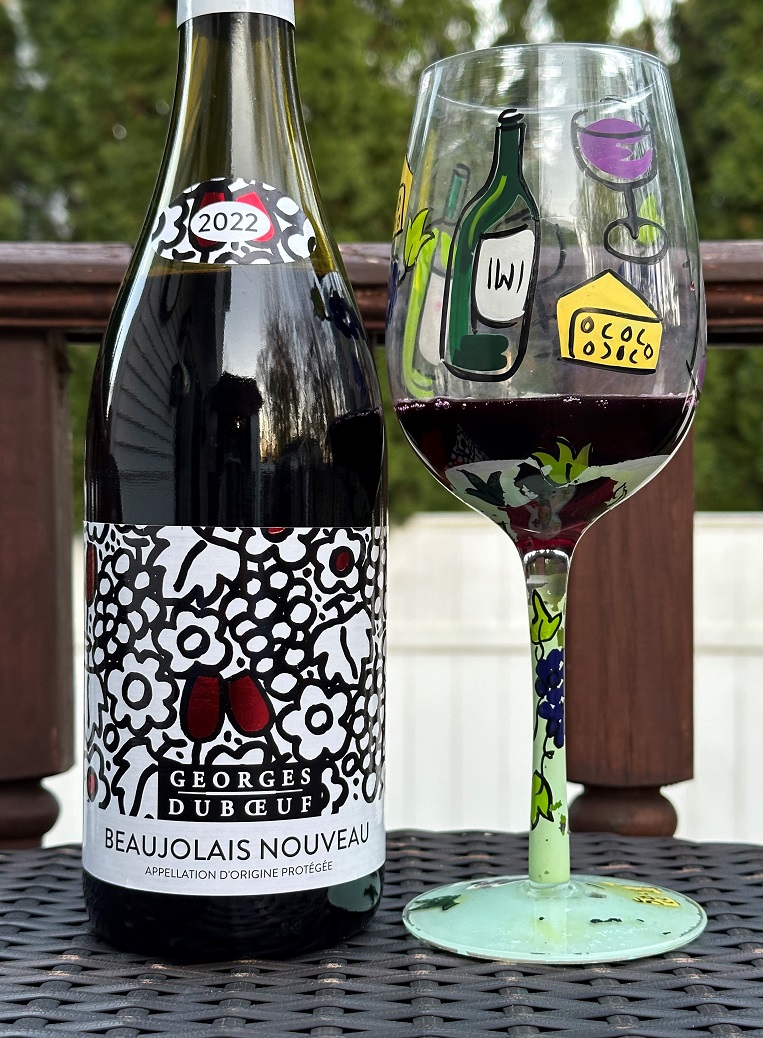 I would typically start this post with Beaujolais Nouveau Est Arrivé! and go out of my way to have the post out on the third Thursday in November when Beaujolais Nouveau is officially released. As this is posted a few days after the third Thursday in November, it is a bit late to announce its arrival.
As luck would have it, I was in France on that third Thursday. While at the hotel restaurant in Toulouse, I asked the waitress if they had Beaujolais Nouveau available – and the answer was a short “no”. When I mentioned that we were supposed to celebrate the arrival of the Beaujolais Nouveau, I got a shoulder shrug back, clearly stating “I have no idea what you are talking about”.
Beaujolais Nouveau is a multifaceted phenomenon. Firstly, it is the wine of a new harvest. Secondly, it should be an indicator of the quality of the vintage. Thirdly, it is a celebration of the new harvest, universally supported throughout the world in the past years. And fourthly, many consider Beaujolais Nouveau a marketing gimmick and simply refuse to get anywhere near that bottle.
I like traditions. As such, I’m happy to celebrate the arrival of Beaujolais Nouveau on the regular basis, simply celebrating the wine of the new harvest. How far back this tradition goes and whether it was really created as a marketing ploy to sell mediocre wine is not something that concerns me. We always need more things to celebrate in our lives, and Beaujolais Nouveau offers this perfect celebration opportunity.
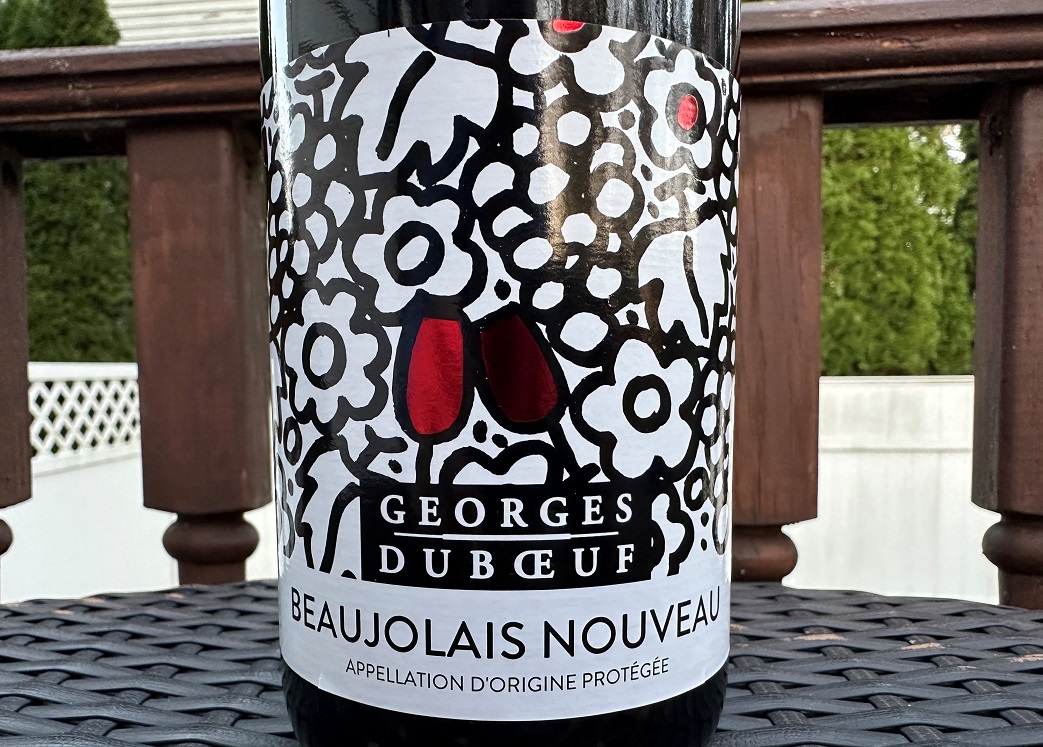
2022 Beaujolais Nouveau seems to stand out in a few different ways. On the positive side, I like the label – it is different from the previous years and I find it very elegant. On the negative side, we have price and availability.
I just went through all of the Beaujolais Nouveau notes from the past years – practically every year I had 2, 3, or sometimes 4 wines to taste. From 2010 until 2020, Georges Duboeuf Beaujolais Nouveau was priced from $8.99 to $10.99. In 2021, it cost $12.99. In 2022 it became $15.99. I always buy my Beaujolais Nouveau wines at the same store, so the pricing is consistent. I understand the inflation, but a 30% increase from the last year? That is a little obnoxious. And there was only one Beaujolais Nouveau available this year. If this wine is a harbinger of the things to come, it doesn’t make me feel very good.
So how was the wine, you ask?
2022 Georges Duboeuf Beaujolais Nouveau AOP (13% ABV, $15.99) had a dark garnet color, very concentrated. Bright and inviting nose of the freshly crushed fruit. The palate was exuding fresh raspberries and blackberries, all tightly packaged with a good amount of energy and supported by crisp acidity. Unlike some of the previous years, I didn’t experiment with the temperature, and the wine was perfectly drinkable at room temperature over the 3 days after it was first opened.
I checked my notes from the previous years, and almost every year I see in my notes “this might be the best Beaujolais Nouveau ever”. This year will not be an exception – once again, this might be the best Beaujolais Nouveau I ever tasted. Drinkability: 8.
Here you can compare the 2022 label with the labels from the previous years. While least colorful, this might be the most elegant label ever – but you be the judge of it. If you care to share your impressions, I would love to hear what you think.
Beaujolais Nouveau 2022 has arrived, It might be a precursor of the harvest of the century. It might be the most interesting Beaujolais Nouveau ever. Let’s wait until Beaujolais Nouveau 2023 to find out. Cheers!
Celebrate Pinot Noir!
Celebrate Pinot Noir!
Another grape holiday is upon us. This time we celebrate none less than Pinot Noir.
None less, huh? Is Pinot Noir so unique and special? Well, you be the judge.
Pinot Noir is the grape behind the world’s most expensive wines. While there are 10 or so major red grapes (Cabernet Sauvignon, Cabernet Franc, Merlot, Pinot Noir, Sangiovese, Tempranillo, Syrah, Grenache, Zinfandel, Nebbiolo), the ultimate supremacy crown can only be decided between Pinot Noir and Cabernet Sauvignon. Yes, it is bad to use money as a measure of influence, but it is one of the “objective” characteristics of wine in the free market. According to the Wine-Searcher lists of most expensive wines (by the way, there is a new feature on this blog – a new page Most Expensive Wines allows you to see always current list of most expensive wines for a select number of grapes and regions), red Burgundies (made out of 100% Pinot Noir) on average are 12 times (!) more expensive than Cabernet Sauvignon wines
Pinot Noir might be the most versatile red grape out there. Unlike most other red grapes, it produces a full range of wine styles. Let’s see.
White wine? Check. Pinot Noir Blanc is increasingly popular in Oregon and not only. Remember, the juice of Pinot Noir is clear, so it is not a problem to produce white Pinot Noir.
Sparkling wine? Triple check, I guess. Champagne Blanc de Noir is very often made from 100% Pinot Noir grapes and needs to introduction to wine lovers.
Rosé? Check. An increasingly popular addition to the repertoire of any Pinot Noir producer, in Oregon, California, and beyond.
Red wine? Well, duh. No check needed – first and foremost, Pinot Noir is a king of red wines.
Sweet/dessert? This is the only category that is still more an exception than the norm, but if you will look, you will have no problems finding late harvest Pinot Noir wines or Port-style Pinot Noir wines.
See – the whole range of wine styles. You can easily pair a whole dinner, from oysters to fish to steak and then dessert with Pinot Noir wines – try that with Cabernet.
One more unique fact about Pinot Noir is that it is practically never blended with any other grapes, with the exception of Champagne/sparkling wines. There can be lots of Pinot Noir clones mixed together – some of the producers grow 20 clones and more – but still, those are just clones. Of course, there are 100% Cabernet Sauvignon wines out there, but this is far from being the norm.
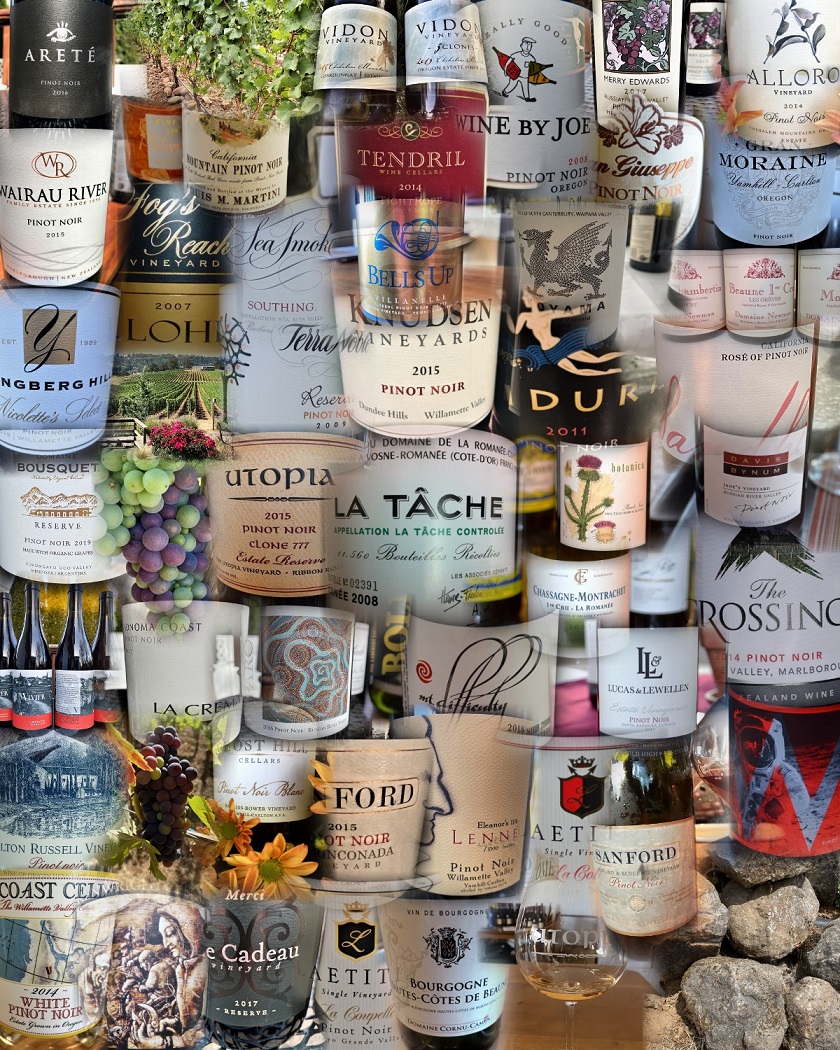
Pinot Noir is featured frequently on this very blog. As I was preparing this post, I decided to look at some statistics. It appears that Pinot Noir is the second most frequently mentioned red grape on the blog, with 356 posts related to the Pinot Noir (Cabernet Sauvignon is mentioned in 445 posts). It is interesting that Chardonnay is mentioned in the 357 posts, literally identical to Pinot Noir.
But it is not just the mentions – there are many memories associated with Pinot Noir.
I love saying that blind tasting is the best arbiter of the wines – in a blind tasting, it is just you and the liquid in the glass, nothing else influences your impression of the wine. It seems that our Pinot Noir blind tasting took place only yesterday – I was literally shocked to see that this post is 12 years old – the tasting took place in August of 2010. Who couldn’ve thought that 2008 Hamilton Russell Pinot Noir from South Africa would be our group’s favorite wine, beating grand cru Burgundy and cult Californian Pinot? I still have a bottle of that wine and I’m looking forward to experiencing the 12 years of evolution.
Another favorite Pinot Noir memory is the 1966 Louis M. Martini California Mountain Pinot Noir – an accidental $25 buy that ended up being a transcendental experience tasting the 48 years old wine from the Cabernet Sauvignon producer who is absolutely not known for the Pinot Noir wines.
And then there are lots and lots of memories of not only the wines but also of the people, passionate Pinot Noir winemakers, acquired through the work on the Stories of Passion and Pinot, an ongoing series of posts dedicated to Oregon Pinot Noir producers and Oregon Pinot Noir wines.
Did I prove my point? Is Pinot Noir the true King of Grapes? I don’t know. But for sure it is a grape worth celebrating. Cheers!
Celebrate Syrah!
Celebrate Syrah Shiraz!
Is it Shiraz or Syrah? The official holiday today is recently enacted “Shiraz Day”, celebrated on the 4th Thursday in July, so it is July 28th in 2022. But Shiraz is simply a typical name of the Australian wine produced from Syrah grapes – it is really Syrah that we should be celebrating here (if you disagree, feel free to express yourself in the comments section).
Syrah is one of the 9 or maybe 10 major red grapes – Cabernet Sauvignon, Cabernet Franc, Merlot, Pinot Noir, Sangiovese, Tempranillo, Syrah, Grenache, Zinfandel (I live in the US, so don’t mind me) and maybe Nebbiolo. It was recently established that Syrah is an offspring of two obscure grapes, Dureza and Mondeuse Blanche, originally appearing somewhere in the southeast of France. Today, Syrah wines are successfully produced all around the world – France, Australia, Chile, Argentina, Italy, California, Washington, Israel, South Africa, and everywhere in between.
It is difficult (and pointless) to compare the wines based on prices, but the price can be used to measure their relative popularity (your liking of the wine in the glass has no relation to its price). Based on prices, Syrah wines are far behind red Burgundy (no wines can match the level of Burgundy prices – out of the 25 most expensive Burgundy wines, the “cheapest” on the list is $8K a bottle), and they are trailing Bordeaux first growth and California cult Cabernet Sauvignon wines. If you want to see for yourself, here are the lists of the most expensive Syrah and Shiraz wines – Wine-Searcher tracks these two categories separately.
We can also say a few words about the most famous producers around the world. Again, these are not absolute positions – unless you are “deeply in the space”, the names might be meaningless, but nevertheless, it is still a fun exercise. As a nod to the exact name of the holiday, Shiraz Day, we can look into the Australian Shiraz world’s first, where Penfolds (iconic Grange, anyone?) and Henschke are probably lead uncontestedly, with Torbeck, Jim Barry, d’Arenberg, Two Hands, Mollydooker, Tahblik definitely worth mentioning as well.
In France, great Syrah wines are concentrated in Hermitage, Cote Rotie, St. Joseph, and Cornas regions. J.L. Chave, E. Guigal, and M. Chapoutier would be on top of my list, and I don’t drink enough of the Northern Rhone wines to extend this list further.
When it comes to the USA, California, and Washington are by far the top Syrah producers, with some notable successes coming also from Oregon. In California, Sine Qua Non, Alban, and Saxum would probably be the ones I would like to mention first, but there is no shortage of other notable Syrah producers such as Carlisle, Zaca Mesa, Andrew Murray, Beckmen, and many, many others.
And then there is Washington. Syrah might truly be a king of Washington wines, produced literally by each and every winemaker, small and large. In that sea of Syrah, Christophe Baron is standing a head and shoulders above all others with his iconic Cayuse, No Girls, Horsepower, and Hors Categorie lines.
I didn’t tell you from the beginning, but if you ask me about my favorite wine grape, I will probably have to decide between Cabernet Sauvignon and Syrah, both in their pure, singular, non-blended expression. My favorite two tell-tale properties of Syrah are pepper and barnyard. I recently learned that pepper notes in the wine are caused by the chemical compound called rotundone, found in the grape skins. It is not very clear why the pepper is most often associated with Syrah, it can be found in the other grapes too, but I always equate the significant presence of black pepper with Syrah. And for the barnyard smell… Ohh, I know I can be beaten up for this, as this is considered to be a fault in wine – according to the Wine Spectator, “Brettanomyces, or “brett,” is a spoilage yeast with aromatic elements that are politely described as “barnyard.”“. I can’t argue with the experts, but nevertheless, I often find the barnyard smell in Syrah wines, and yes, I do like it.
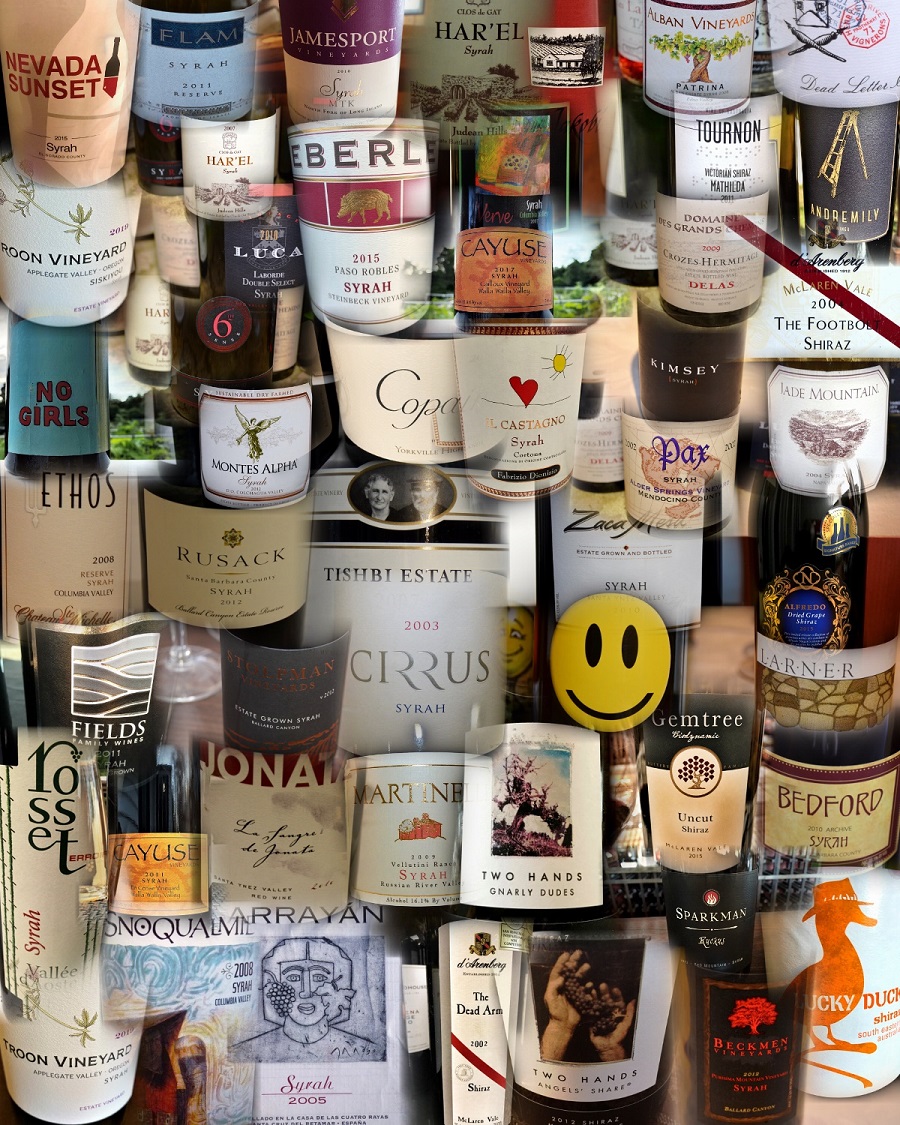
To finish our Syrah conversation on a memorable note, how about a memory exercise?
First, pour yourself a glass of Syrah or Shiraz, whatever your heart desires. Take a piece of paper and a pen. Give yourself, let’s say, 5 minutes of time, and write down the names of the most memorable Syrah/Shiraz wines or Syrah/Shiraz experiences you ever encountered.
Done?
We are not going to compare notes (there are hundreds of thousands of wines in this world), but here are some of mine.
My most memorable encounter with Syrah – actually, Shiraz – is Michel Chapoutier Tournon Mathilda Shiraz. When I tasted this wine for the first time, I was literally blown away by the purity of the black pepper expression. Ever since this is my goto example of the classic Syrah wine. Another one will be a bit unusual, but it was Elephant Hill Syrah Hawke’s Bay from New Zealand – again, beautiful black pepper, and my very first encounter with Syrah produced in the land of Sauvignon Blanc and Pinot Noir.
Then there is Troon Vineyard Estate Syrah from Applegate Valley in Oregon – organic, biodynamic wine of beautiful clarity and finesse. Zaca Mesa Syrah Santa Ynez Valley is a connection to the beautiful experience of visiting Santa Barbara County for my first Wine Bloggers Conference in 2014. Zaca Mesa was my first stop after arrival to Santa Barbara – both hospitality at the winery and the wines themselves created this memory knot, a connection easy to reach out for. Another connection to the same WBC14 was the first encounter with the first (and the only?) AVA dedicated to Syrah wines – Ballard Canyon. The AVA status was just granted to the Ballard Canyon exactly during our visit there, and I attended a session about the Syrah wines of Ballard Canyon where Stolpman Syrah Ballard Canyon for some reason got stuck in my head – another memory connection.
There are uncountably more Syrah wine experiences (just look at the labels in the collage), but hey, the purpose of the exercise was to focus on the few of the first – and this is exactly what I did.
Here you go, my friends – another grape holiday is about to become history. Hope you had something tasty to drink, and if you care to share your most memorable Syrah and Shiraz encounters, this is what the comments section is for.
Last Bottle Sign Up ($10 credit)




 Talk-A-Vino