Archive
Experiencing Texas Wines
I’ve heard [good things] about Texas wines before, but despite being in Texas countless number of times, I never had an opportunity to drink local wines. Thanks to Vino Volo, great wines are available on the go (this is not the first time I’m writing about Vino Volo – previous posts can be found here and here).
This time I was at San Antonio International airport, and I had enough time before the flight to taste some wines. As you know, I would never refuse an opportunity to try new wines, so when I saw “Taste of Texas” flight being available, the decision was very simple.
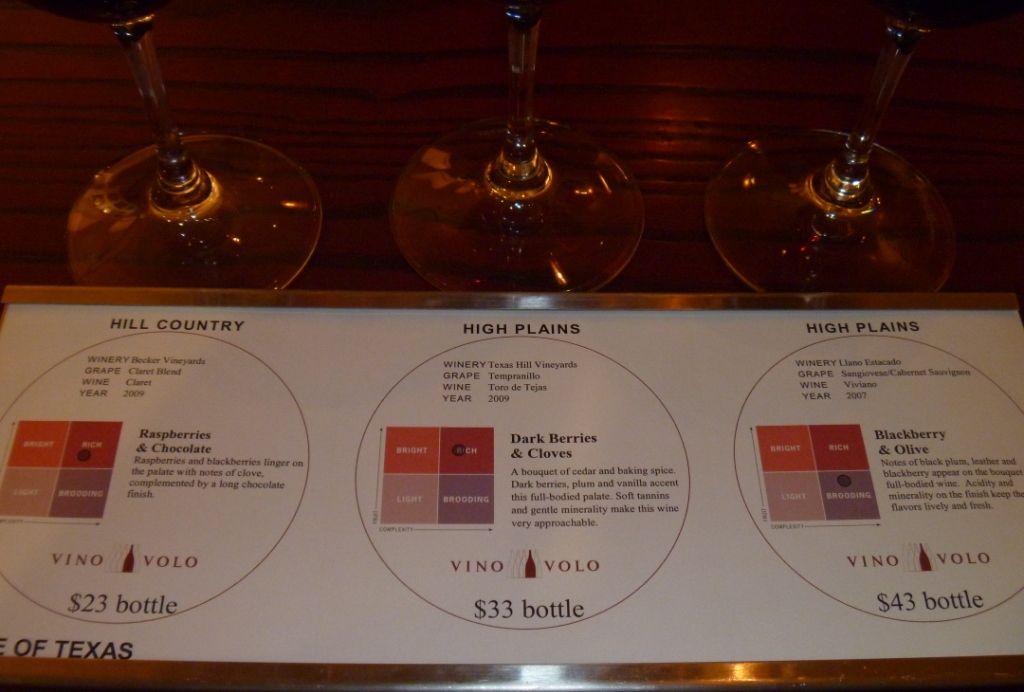
The flight consisted of three red wines, and all three were very good! The first wine was 2009 Becker Vineyards Claret, Hill County. The wine had nice nose with dark fruit, plums and blackberries, good acidity, rustic, with good tannins. The wine was very Bordeaux in style, but without characteristic bell peppers and greenness ( Drinkability: 7+).
Next wine was 2009 Texas Hill Vineyards Toro de Tejas, High Plains (100% Tempanillo) – the wine had smoke, dark fruit, hint of dark chocolate, very dense. This wine very well complemented chorizo and chickpeas chilli. Best of tasting (Drinkability – 8-).
Last wine in the flight was 2007 Llano Estacado Viviano, High Plains (Sangiovese/Cabernet Sauvignon blend). The wine had nose of green olives, and it was very nice on the palate, with hint of chocolate, soft tannins and good balance. Drinkability – 7+.
Overall , all three wines were well done, easy and pleasant to drink – my only regret (actually, two) would be that these wines are not available in Connecticut and also that even in the Texas restaurants, the emphasis is on California, and Texas wines are simply overlooked – definitely a mistake.
That’s all for now, folks. In the next blog post, we will explore the subject of wine fears – cheers!
Should You Really Drink Really Cheap Wines?
 My friend Emil forwarded me a copy of an article in the Slate magazine from November 2nd called “Drink Cheap Wine“, where the author explains his rationale behind the suggestion that everybody should drink really cheap wine. As someone who doesn’t have an unlimited budget and constantly looking for the QPR in wine, the subject stroke a cord, so I thought – how about we will discuss this with my readers?
Should we all start drinking only cheap [the cheapest?] wines? May be, but let’s take a look first at the reasons we drink wine.
Why do we drink wine? If the answer is “to get drunk”, we can stop right here, as there is no need to continue the discussion – at any price wine is too expensive for this purpose (switch to industrial alcohol, I think it should be a cheaper option).
Next reason can be – because it is a habit, a custom. I would dare to say that this is probably the main reason for Europeans to consume wine – this is part of the culture, this is how people there had being born and raised – wine is something which should accompany the food. Period. I’m not saying that people in Europe are not enjoying wine by itself – all I’m saying that they look at it differently. By the way, quite on contrary to what is stated in the article, I would sincerely doubt cheap wine in Europe is worse than in US – cheap wine and wine produced by cooperatives had being around for hundreds and hundreds of years, and it was produced to be consumed with food, so I expect it to have much higher acidity than any cheap US wine, which will be mostly sweet – and I will take acidity in wine over sweetness at any time.
Reason number three to drink wine is to get pleasure – as good bottle of wine is really an art! This is my main reason to drink wine – I like phenomenal range of variations of taste you can reflect upon – this is what makes wine so magical for me. Now, as soon as we look at the wine from this angle, while the cost is still very important, it is a whole different perspective – if cheap wine doesn’t give me pleasure, should I really drink it? Of course not, as still it will be a waste of money – it is better to drink water in such a case (yes, yes, all opinions expressed here are my own).
I perfectly understand what he author is saying about blind tasting and inability of the average consumer to distinguish between the cheap and non-cheap wines. However, if you will taste 10 wines (in the same blind tasting, of course), I would definitely expect that some of them you will like more, and some of them you will like less. Actually, if you like them all the same, or if you don’t like any of them at all, may be you should stick with the cheap wine. Otherwise, if you will find out that your favorite wine in the tasting costs $15, and the one you didn’t like was $3, what are you supposed to do? That is correct – you have to make a decision which will be suitable for you. If we agree that finding pleasure is one of the main ideas behind drinking wine, you simply have to make a decision based on your budget and your preferences – but you shouldn’t drink cheap wine!
So, what do you think? Should we all switch to the cheap wines and force ourselves to be happy with them? Or should we look for wines with the good QPRs which give us pleasure?
Comment now – it is your turn to speak. Cheers!
Eggs Benedict And Bits of Wisdom
This is a sequel to the last year’s post about Katy’s Korner, our favorite breakfast place in San Ramon, California. Eggs Benedict is a staple, of course, and this time I had Eggs Benedict Santa Fe, which has spicy sauce and avocado:

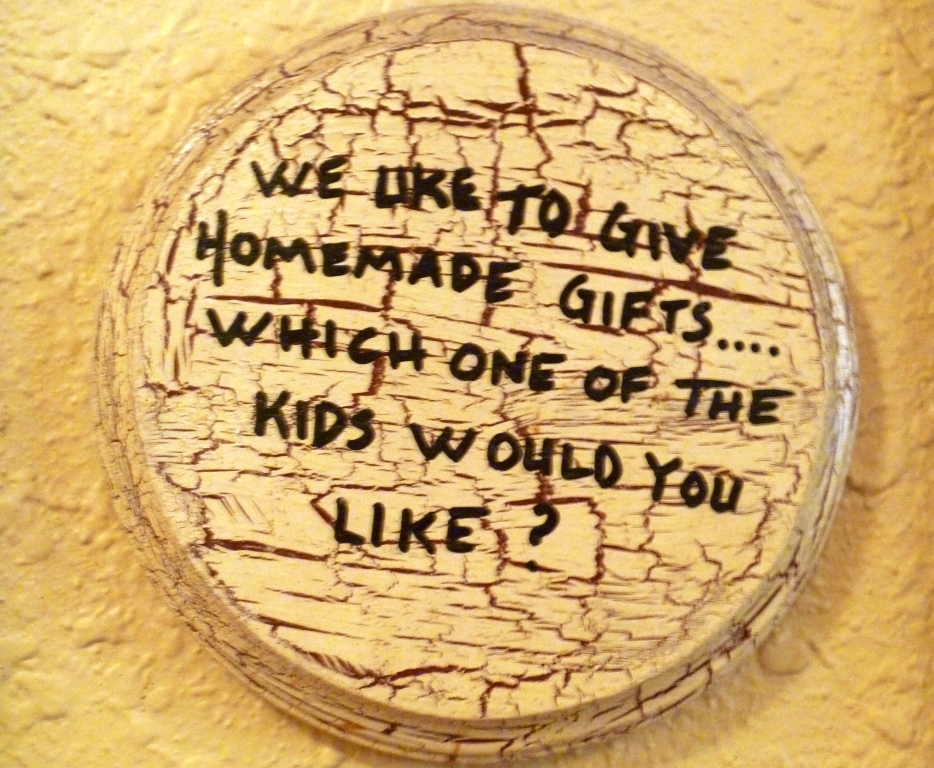
While the food is great, I love the surroundings there, all the bits of history and wisdom, which cover all the walls and tables. Same as last year, I took a number of pictures – interestingly enough, I managed to avoid duplicates with the last year! Here they are, for your viewing and educational pleasure:
And more:

and more:

And more:

And more:

And my favorite:

Which one is your favorite?
Cheers!
Katy’s Korner
2550 San Ramon Valley Blvd # L
San Ramon, CA 94583
(925) 831-2145

In Case You Wanted To Attend PJ Wine Grand Tasting But Still Undecided
here is something which might help you decide – you can save $10 of the ticket price if you will use discount code Talk-A-Vino, courtesy of PJ Wine (they happened to like my post and kindly offered a discount to Talk-A-Vino readers). If you are ready to buy your tickets, you can click here.
Enjoy! Cheers!
Food with Wine, Or Wine with Wine?
 A recent blog post on bottlenotes called “Eat your wine” readily attracted my attention (what does it mean, Eat your wine? The wine is not liquid anymore?). It appears the post is actually not about wine and not about food – it is simply about creativity and imagination, put to a good use.
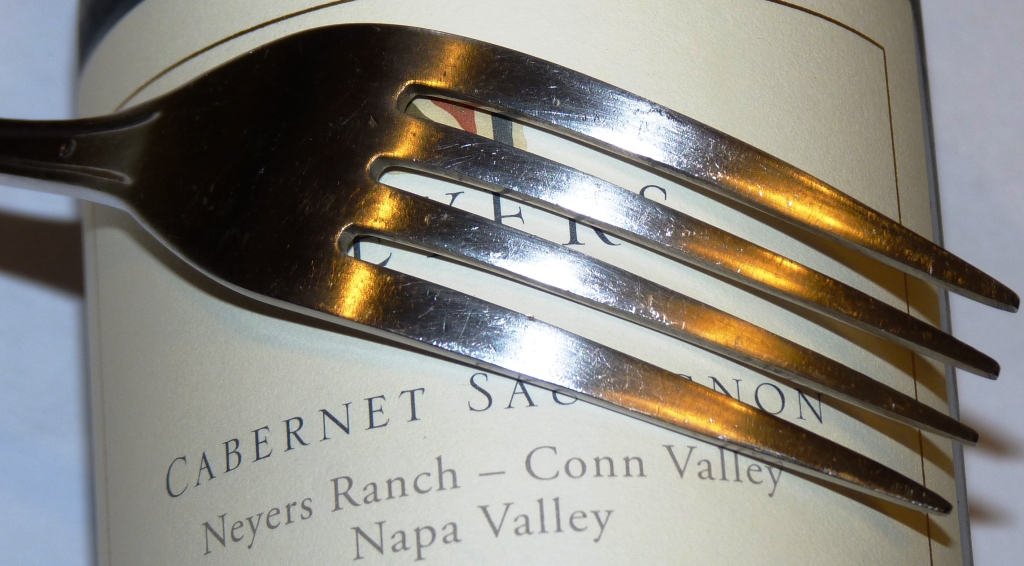
After the Cabernet Sauvignon grapes are pressed, the skins and seeds are kept together with the grape juice through the process of fermentation (much of the color and taste of wine comes from the contact of juice with the skins and seeds). Once fermentation is complete, the young wine (juice) is separated from the skins and seeds mass which is called pomace. Typically, pomace is either discarded or converted into fertilizer. It turns out that it can be used for something else. Particularly, it can be dried and then … milled into the flour!
Such Cabernet flour contains lots of minerals and vitamins, and it is also rich in anti-oxidants and reservatrol. But – while medical benefits are important, it simply produces delicious baked goods (or so this is what the people say). Enters CIA-trained Pastry Chef Rachel Klemek from Blackmarket Bakery who makes Cabernet flour into brownies, brittles and pasta (!). All of the baked goods, as well as Cabernet flour are available online for purchase online through Marché Noir Foods.
Uff, it sounds like advertizement, and I didn’t mean it. Now, the real question is – when you eat Cabernet pasta, literally made from Cabernet grapes which had been already fermented, is that considered eating or drinking? Another question is – if you have a glass of wine with your Cabernet pasta, is that food with wine or wine with wine?
Oh well, I don’t know about you, but I have to try it. Note to self – get some Cabernet flour (or, at least, some Cabernet pasta) and start cooking! Cheers!
Experiencing Wines of Canada
 Coming back to the memories of “ahh-so-distant-by-now” our Canada vacation (it’s been almost a month!), I need to share my wine experiences with you. You might remember two earlier posts (you can find them here and here), which I prefer to refer to as “picture reports”, which gave you the visual expression of the food and some of the wines in Canada. However, we had an opportunity to spend some time in one of the Canadian wine countries, surrounding the small town of Niagara-on-the-Lake – and it was an eye-opening experience for me.
Until this trip, my idea of Canadian wines was very simple – Icewine. I knew for a while that Canada makes some really famous Icewines, which compete with German and Austrian Icewines. Outside of Icewine, my only reference were wines of the Finger Lakes region in upstate New York (general direction of Canada). While I wouldn’t claim that I visited a mass amount of wineries in Finger Lakes, in a few places we visited the only drinkable wines were Rieslings, and all the red wines were plain bad. Therefore, these were my expectations for Canadian wines.
I decided to start from the winery with the name at least I heard of – Inniskillin, and of course, the only wine I knew “of fame” there was an Icewine. As a side note, I want to mention that the winery had a playroom for kids – which is a very important factor in letting adults enjoy wine tasting, even during family vacation. The first wine we tried was 2010 Two Vineyard Riesling – very clean, good tropical fruit expression, all paired with beautiful acidity, a nice finish. This was a great start of the tasting. The next wine completely blew me away – the 2009 Legacy Series Pinot Gris. First, I didn’t expect Pinot Gris to be produced in Canada. But is not the main factor. Very complex, with explicit minerality and spicy bouquet on the palate, this wine still puts a smile on my face when I think about it.
 After having a great start with the whites, my level of expectations increased for the reds – and rightfully so. 2009 Montague Estate Vineyard Pinot Noir was very nice, varietally correct with a precise expression of smokiness and red fruit. Again, I would never expect to find a Pinot Noir of such clarity at a winery located so high up North – but I did. 2009 Shiraz Cabernet had perfect acidity, good minerality, just the right balance of dark fruit. 2009 Cabernet Franc was simply my favorite red wine – perfect, very balanced, with clearly expressed green peppers and explicit minerality (you might think that I’m abusing the term – but minerality was one of the key characteristics of all the Inniskillin wines we tasted, so I can’t help myself but to call it out).

As you might expect, sweet wines were next. We are not talking about some arbitrary late harvest wines – we are talking about Icewines, which have the highest sugar concentration out of all sweet wines, as the grapes are ripening on the vines until the frost reaches –8°C (about 17F) – then the grapes are harvested while being frozen and pressed right away – which yields a tiny amount of super-concentrated grape juice – this is why the wines are called Icewine (also such a low yield explains the high price of the Icewines). First, we tried the 2010 Sparkling Vidal Icewine, which was very light and delicate. 2007 Cabernet Franc Icewine was a real star though. I have to mention that Inniskillin was the first winery to produce Icewine from the red grape. Also, Inniskillin worked together with Riedel, the leading wine glass maker in the world, to produce a specially shaped Icewine glass that enhances the aromatics of the Icewine.

Going back to Cabernet France Icewine, it was incredible, one of the best ever dessert wines I ever tried. Why am I saying that? Balance. Ultimate Balance was the first and foremost characteristic of this wine. Beautiful balance, perfect lingering acidity, and literally unnoticeable sweetness – great wine. All in all, it was an outstanding lineup of wines at Inniskillin, I can’t recommend highly enough each and every wine I tried.
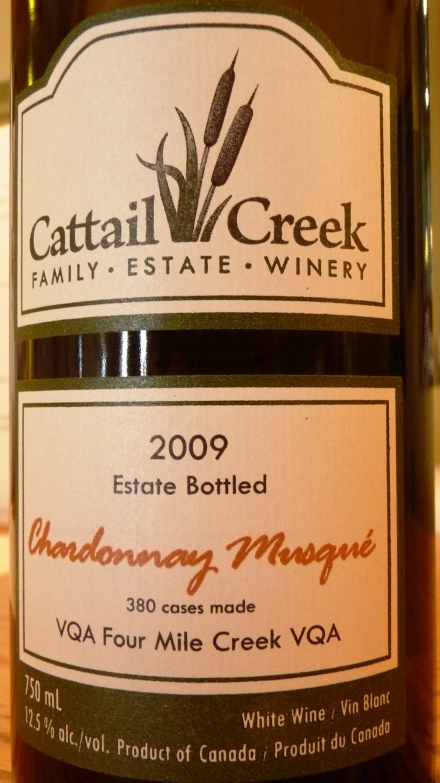 Next stop we made at the Cattail Creek Family Estate winery. One of the reasons to pick that particular winery was the fact that they have a few wines with the grapes I didn’t have before, like Chardonnay Musque, or different Riesling clones. I’m glad we stopped by, as we found more great tasting wines, plus most of the wines are made in very small quantities, so many are available only at the winery itself. First, we tried 2008 Catastrophe White, which was perfectly refreshing, with good acidity and a good amount of white fruit. Then we tried 2009 Catastrophe Red, which had very good balance, nice red and black fruit expression, soft and pleasant. It is interesting to note that Catastrophe wine series labels depict real cats who lived at the winery. Last but not least was the 2009 Chardonnay Musque – very nice, with good acidity, good reflection of what Chardonnay is, good subtle tropical fruit expression, more as a hint. This was yet another great experience.
Our last stop was Chateau des Charmes. This winery had the most impressive building of all:

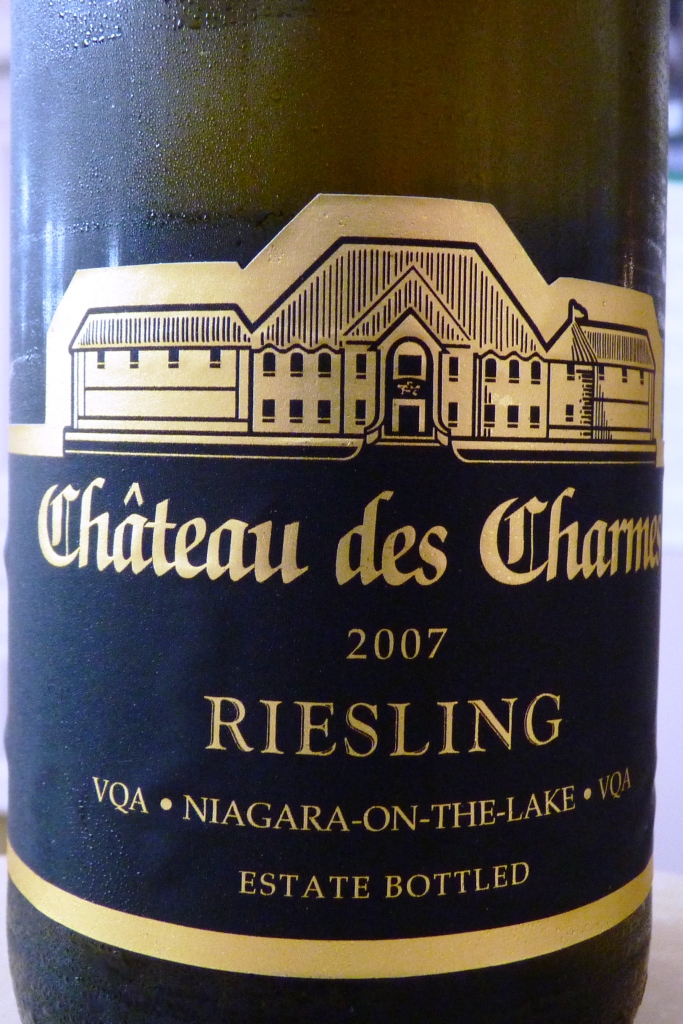 The wines here were also very impressive. We started with 2007 ‘Old Vines’ Riesling (I wanted to experience “old vines” Riesling) – and to my complete surprise, this Riesling had a Petrol nose! I was always under the impression that Petrol nose is a property of only German Rieslings – and here we go, Riesling from Canada with full classic German Riesling expression. In addition to the Petrol nose, it also had very good fruit, medium body and perfect balancing acidity. Next were more of the very impressive Pinot Noirs. 2007 Pinot Noir had a beautiful nose, and lots of tannins on the palate – it was unusually muscular for the Pinot Noir, probably in need of a few years to open up, but still, it was very good. 2007 ‘Old Vines’ Pinot Noir was also very big and powerful, with a clean smoky nose, but also needing time as the previous wine.
 Last but not least was 2008 Gamay Noir ‘Droit’, which happened to be a clone of Gamay and therefore it accounted for an additional grape for my “counting grapes” project. This wine had a very unusual herbaceous nose, and was nice and light on the palate – definitely a food-friendly wine.
That concludes the Canadian wine story, as we didn’t have time to visit more places. But even based on this experience, if before I knew of only Icewines from Canada, now all the Canadian wines are squarely on the “to find and drink” list for me – and I highly recommend that you will make an effort to find them and try them as well. The challenge is – I didn’t see that many Canadian wines on the shelves of the wine stores here in Connecticut. Oh well, hopefully, we can change that. Cheers!
Searching For The Perfect Amarone
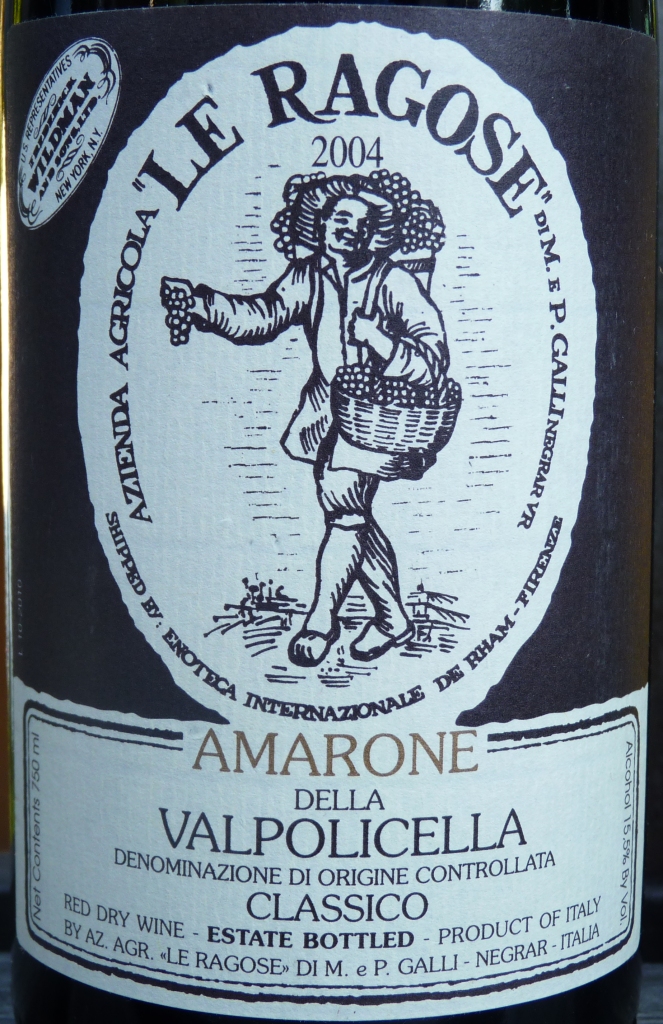
Le Ragose Amarone Della Valpolicella 2004
Let me confess: I have a wine weakness. This weakness is called Amarone. Ever since I tried Amarone for the first time, which happened in 2004 when I was taking Windows on the World Wine School classes, I kept searching for the same experience. Amarone wine which we tried during the class was absolutely amazing – it had a sweet rich nose of raisins, and powerful dry body of muscular wine. Once you experience something like that, you want to do it again and again. The only small issue left – finding that perfect bottle.
Problem is – Amarone is not a cheap wine. Of course it is not super-expensive, like first growth Bordeaux, but at about $60 per bottle, it is way outside of my daily wine budget. That complicates the search, as at such price point Amarone really becomes a “special occasion wine”.
Number of different Amarone later, you can guess that I still had high respect for that wine, as I designated it as one of the “best kept secrets of the wine world” in the post written for The Art of Life Magazine (you can find this pots here). For that blog post, I tried three different wines from Vaona Pegrandi – starting from Valpolicella Ripasso, a “poor man’s Amarone”, and then two of the actual Amarone wines – all good, but not what I was looking for. That forced me to dig out the notebook from that Windows on the World wine school classes, and find out that Amarone I felt in love with was 1997 Le Ragose Amarone della Valpolicella Classico.
Shortly after, with help of my friend Zak, I was holding the bottle of Le Ragose Amarone in my hands. Other than the fact that this bottle was from 2004 vintage, everything looked exactly the same. Except one little detail – 1997 version had 14% alcohol, 2004 – 15.5%. Finally I got to open the bottle. Swirl, sniff – practically nothing. More of the swirl and sniff – still not much. May be a hint of sweetness, but absolutely none of the jammy raisins and dried fruit, which were stuck in my memory forever from that 2004 tasting. On the palate, the wine had more of the dark fruit and may be hint of a fruit jam, but alcohol was not integrated and not balanced, hitting you after the initial taste was subsiding. Nothing changed on the second day – same limited nose, and same unbalanced wine on the palate.
I don’t know what happened with Amarone during those 7 years (interestingly enough, in 2004 I tasted wine from 1997, and in 2011 it was the wine from 2004, so both times the wine was 7 years old). Actually, it doesn’t matter what happened – I want the old Amarone back. The new one has no soul, it is simply one of many unbalanced wines, high in alcohol.
Well, I will keep searching – being an eternal optimist, I will keep looking for that perfect Amarone. True, I might be running simply after the memories which can not be brought back – but hey, at the very least, I will keep trying – new wines, it is. And if you experienced that amazing Amarone wine – any suggestions will be greatly appreciated. I might even share that special bottle with you! Cheers!
Canada Food and Wine Experiences, In Pictures, Part 2
For the love of food photography, here is more pictures from our trip to Canada. Now we moved to the French Canada, Montreal and Quebec, and we definitely focused on experiencing the french-style food for as much as possible. Once again, if you want to read more on the actual restaurants we visited, you can find my reviews on Yelp (click here).
Let’s start with Montreal:
Cappuccino at Second Cup (the place is a striving Starbucks but not that great):

Steak at Le Grill Bistro:

Rack of Lamb at Le Grill Bistro (why is that rack of lamb always tastes amazing in Montreal?):

Breakfast at Chez Cora (again, but now in Montreal) – best Eggs Benedict I ever had, Hollandaise sauce is amazingly balanced !

More coffee – at Cafe Imagination (great place for inexpensive lunch in downtown Montreal):
Honestly – the coffee was good, but I love the cup…

Moving to Quebec now:
La Nouvelle France Resto-Bar Terrasse:
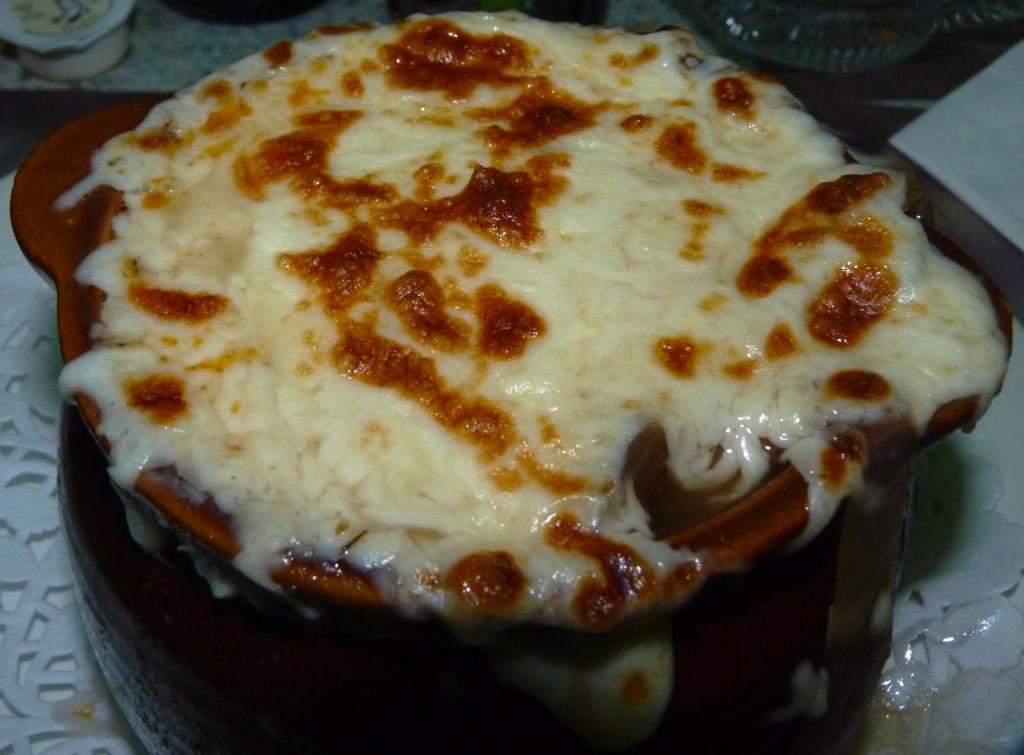
French Onion Soup (more classic than the one in Beef Baron):
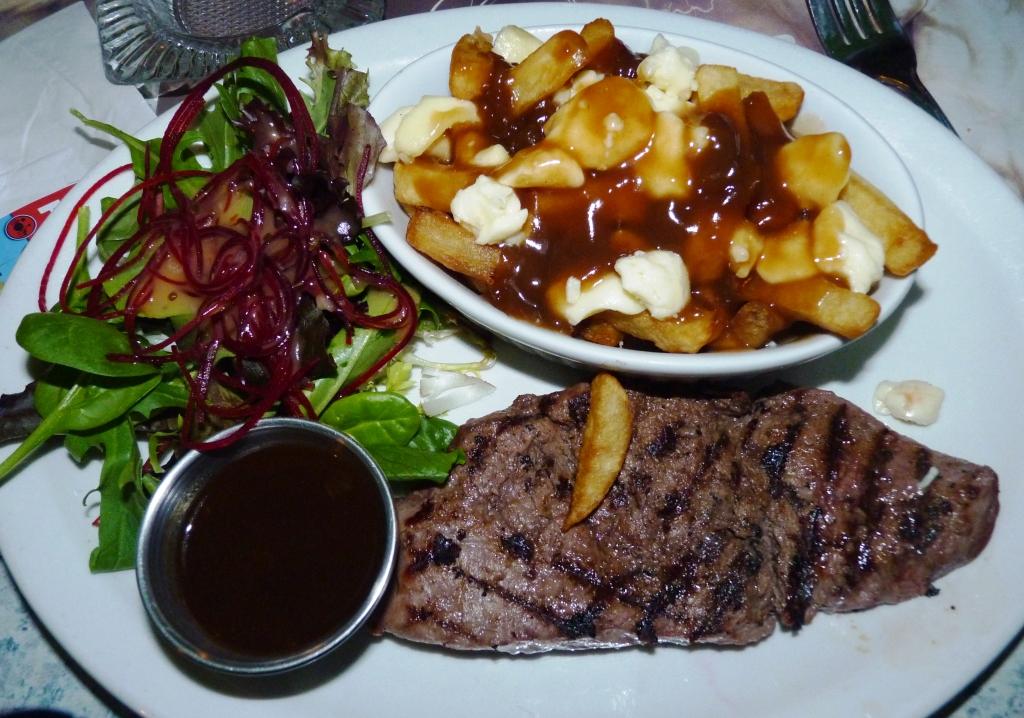
Steak with Poutine (Poutine is Quebec’s specialty – french fries with melted cheese and gravy – very very good):
Quebec Meat Pie (with poutine, of course) – sad thing is that meat pie was supposed to be great, but it was so dry, it was almost inedible:

Breakfast at Cosmos Cafe:
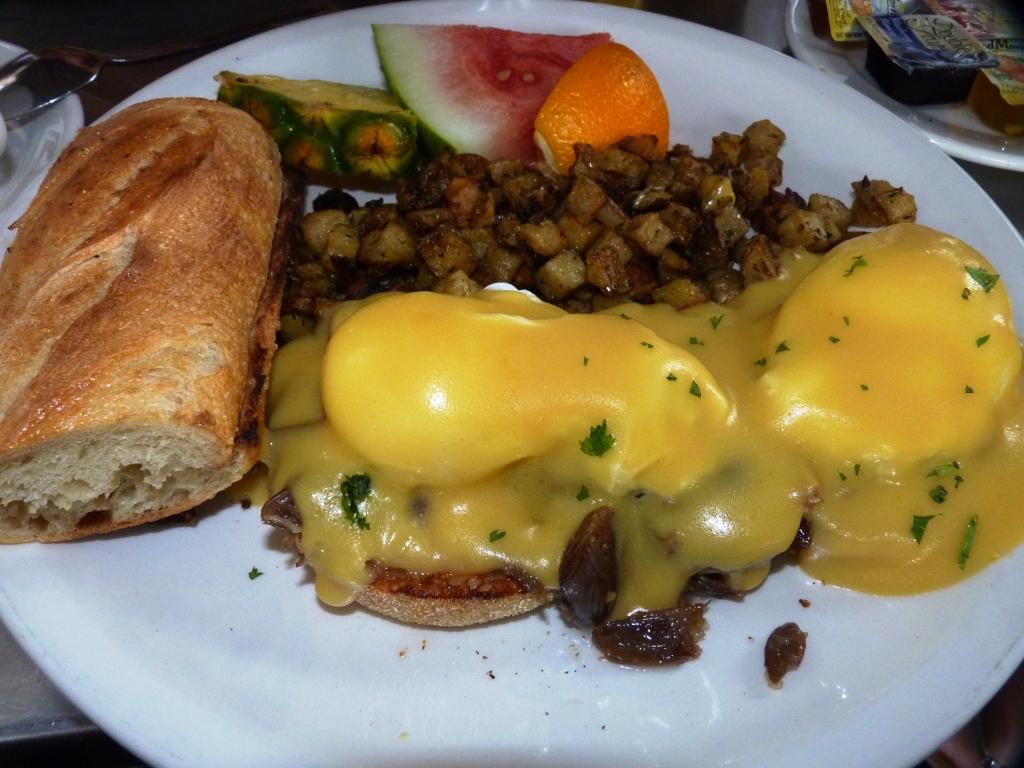
Eggs Benedict with Duck Confit (Eggs Benedict tasted very good – except for the duck confit which was way too salty and simply made no sense in this dish…):
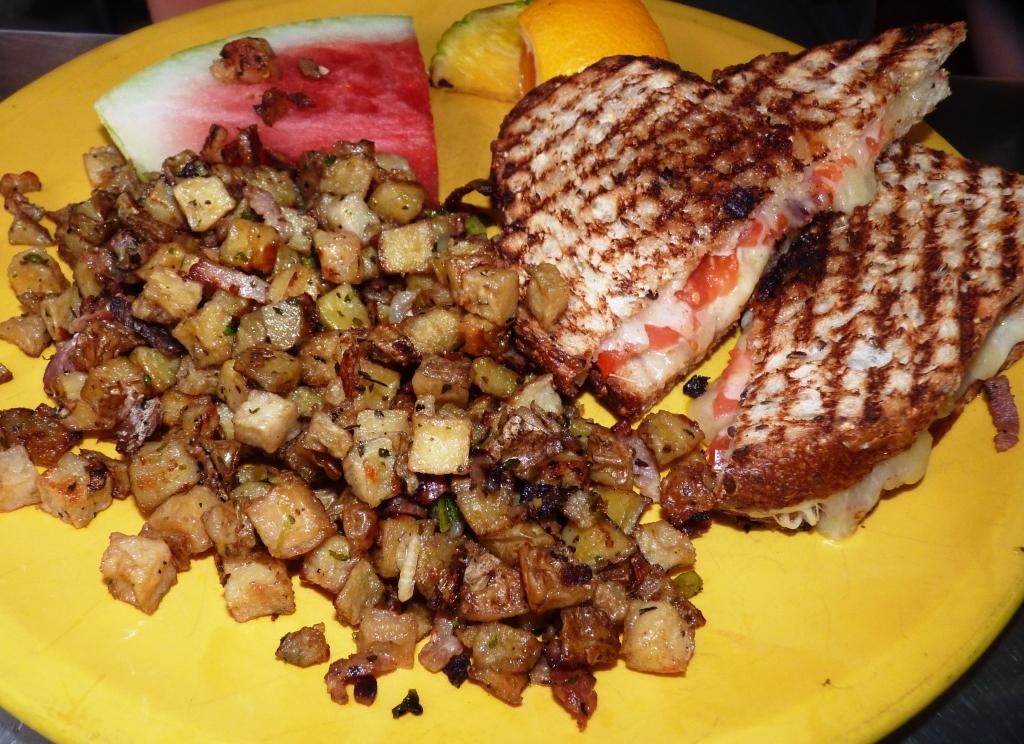
Panini Sandwich:
Le Brigantin Restaurant:
Yes, finally here is the wine – very nice rose LeRose Gabrielle, local Quebec wine:

Of course you can do Pizza any time and anywhere:

Lasagna (phenomenal, amazing array of spices, probably the best Lasagna I ever tasted):

Now, visiting Farmer’s Market in Quebec:
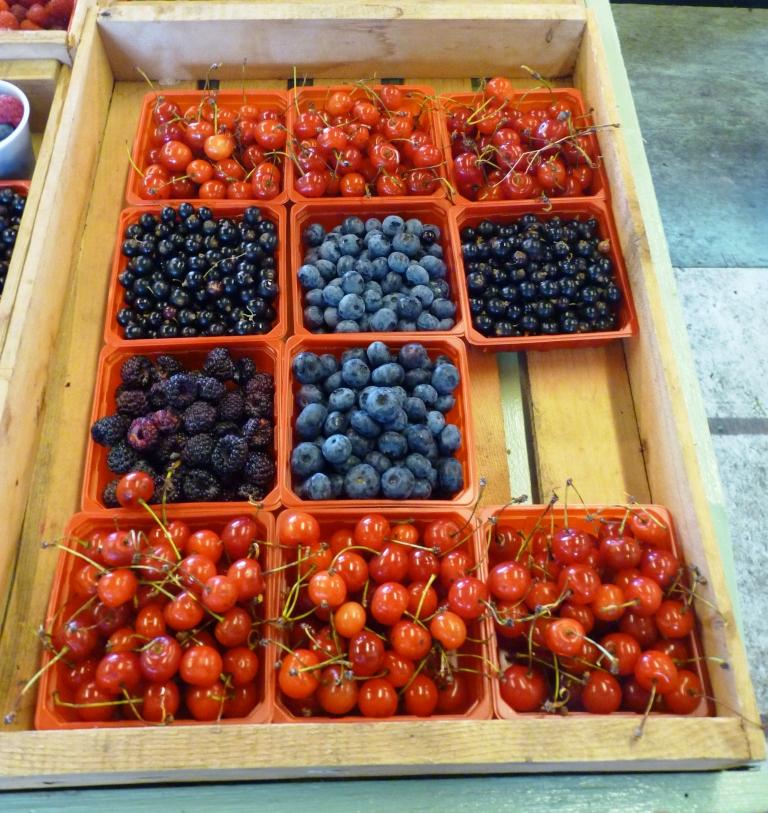
Fresh Berries:
I love Farmer’s Market where you can taste wine! Le Tourelle Vin Rouge (nice and simple):

Le Lapin Saute Restaurant ( the best food experience during the trip, real french cuisine):
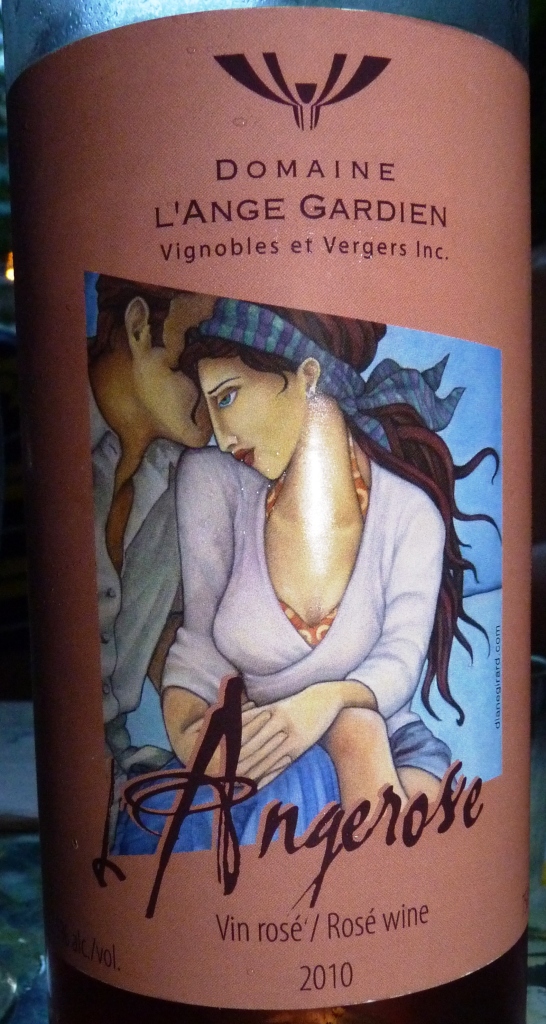
Of course wine goes first: L’Angerose Rose wine – very good, full body:
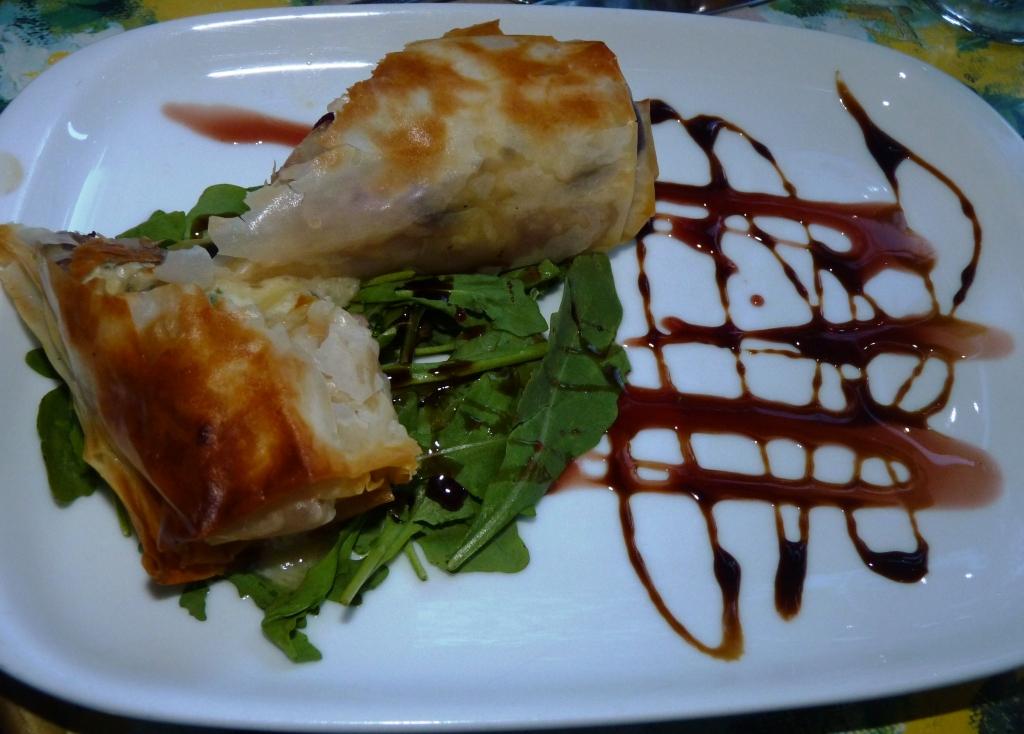
Blue Cheese and Berries Turnover (delicious):
Escargot (unusual style and very tasty):

Rabbit Rilettes:

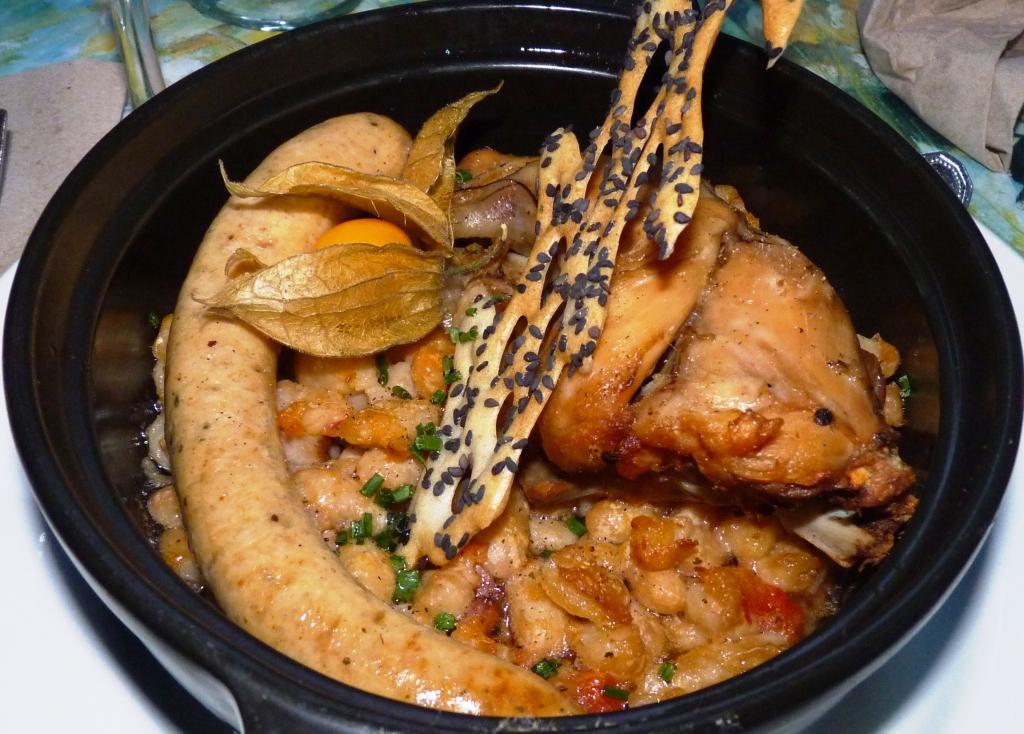
Cassoulet with rabbit leg and rabbit sausage (I’m very impartial to cassoulet and this one was excellent)
That concludes our food in pictures presentation. There still will be a blog post about Canadian wines, coming out soon. However, I want to mention that during this trip I managed to increase grape count by 5 (of course some are clones, but nevertheless):
St. Croix – 2009 De Lavoie La Tourelle Vin Rouge, Quebec
Radisson(ES 5-17) – 2010 Domaine L’Ange Gardien L’Angerose, Quebec
Sabrevois – 2010 Le Rosé Gabrielle Vignoble de la Rivière-du-Chêne, Quebec
Chardonnay Musque – 2009 Cattail Creek Chardonnay Musqué, VQA Four Mile Creek, Canada
Gamay Droit – 2009 Chateau des Charmes Gamay Noir St. David’s Bench Vineyard, Canada
That’s all, folks. Until the next time – cheers!
Scotch Experiences – Talisker, Hello from Oregon, and Something to Dream About
 As you probably know, scotch is my second favorite drink, right after the wine. When it comes to scotch, I pretty much like all of them, with a slight bias toward the smoky style. One of the most unique smoky whiskies is Talisker (one of my favorites), which has a unique, almost medicinal nose full of smoke, in addition to lots of smoke on the palate (it is different from traditional Islay whiskies which have very expressed smokiness on the palate, but not as much on the nose).
When my friend Zak said “you have to try this” and pointed to the bottle of Whiskey, I couldn’t believe it – single malt whisky … from Oregon? What is happening? Well, tasting is believing (seeing is not enough) – and when I tried this McCarthy’s Single Malt Whiskey I was literally blown away. While this whiskey is compared to Lagavulin (probably the most classic Islay scotch) on the producer’s website, my first impression was Talisker. I’m quite convinced that in a blind tasting I would confuse this whiskey for Talisker, both from the smell and the taste ( this probably shows my weak side, but I will live with it). On the nose, this whiskey exhibited the same medicinal smoky flavor, with lots of smoke following on the palate, with expressed minerality and perfect balancing acidity – this scotch was literally refreshing, if scotch can be considered a refreshing drink. At $49.99 at Cost Less Wines and Liquors, I think it is a great deal – if you like smoky peaty scotch, don’t miss it.
And then as I was leaving the store, I spotted this bottle of 1979 Glenrothes…

‘Nuf said… Until the next time – cheers!
Spanish Wine Festival, In Pictures
About 10 days ago, I attended Spanish Wine Festival, organized by PJ Wine in New York. I can give you a summary of the event using only one word: Overwhelming. It is challenging to produce any kind of detailed summary, because there are literally no bad wines in such a well organized tasting event. There are some wines which will leave you indifferent, then there are some which are great, but not ready, and then there is great amount of wines where you go from “wow” to “wow, this is great” and to “wow” again. Therefore, I will simply give you a report in pictures. No, I didn’t get a picture of each and every wine I tried. All the wines shown below are personal favorites, and they are all highly recommended. And the good thing is that PJ Wine regularly carries most of them.
Well, let’s go.
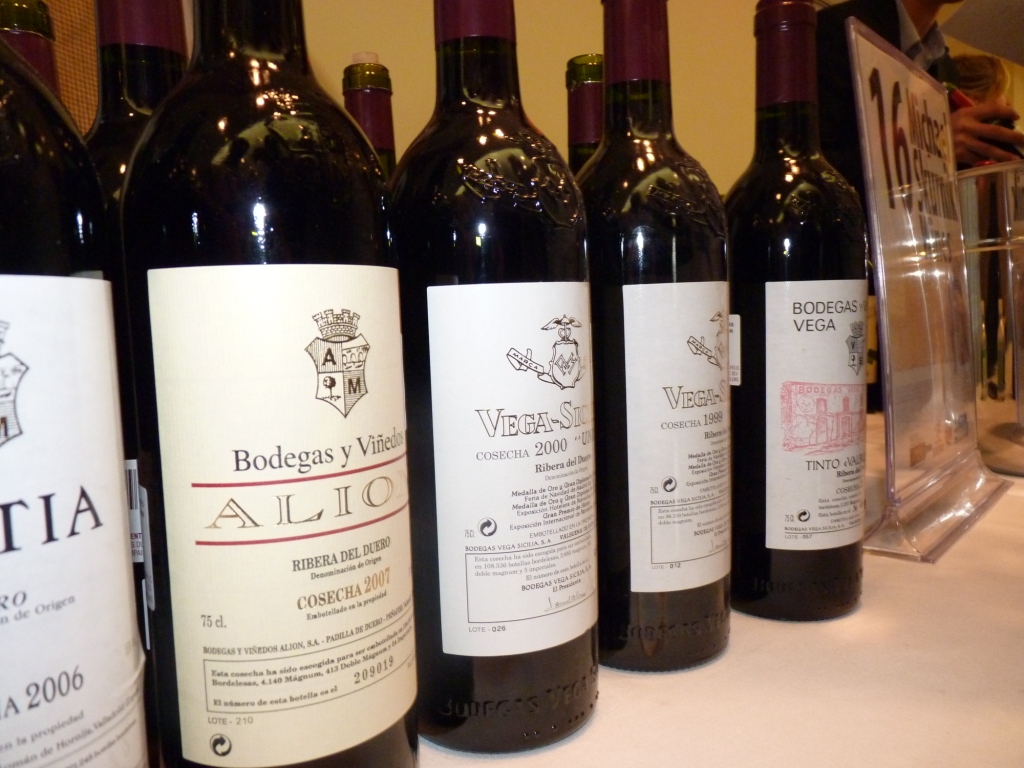
1999 Vega Sicilia Unico and 2000 Vega Sicilia Unico, from Ribera del Duero. These are the wines to be experienced – balanced and luscious:
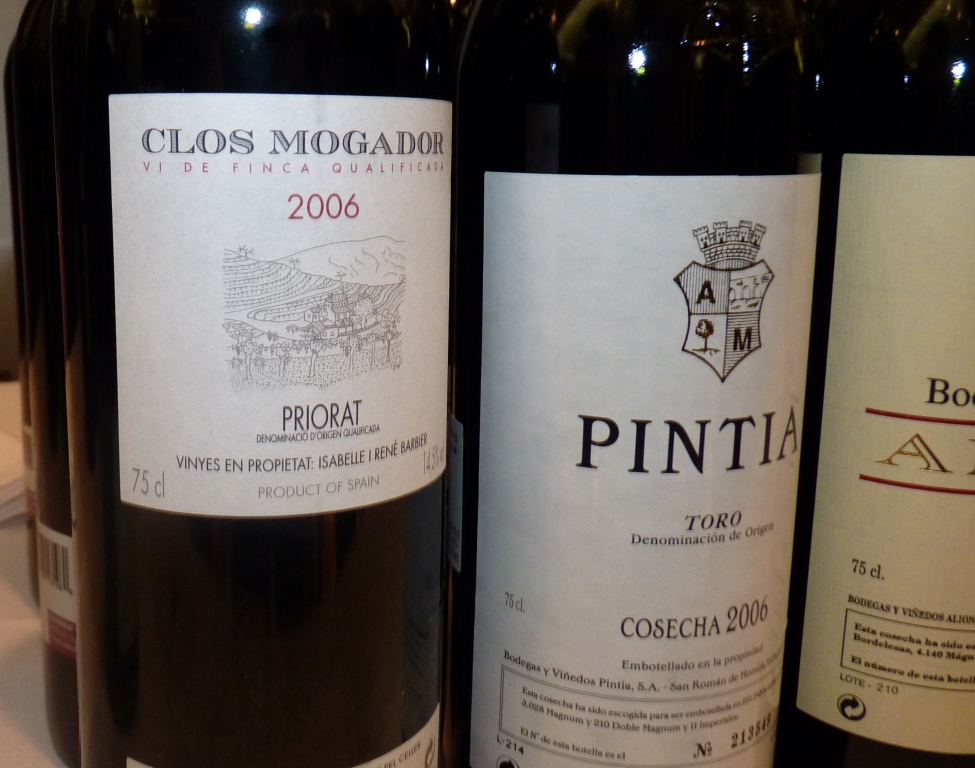
2006 Clos Mogador, Priorat – powerful and balanced:
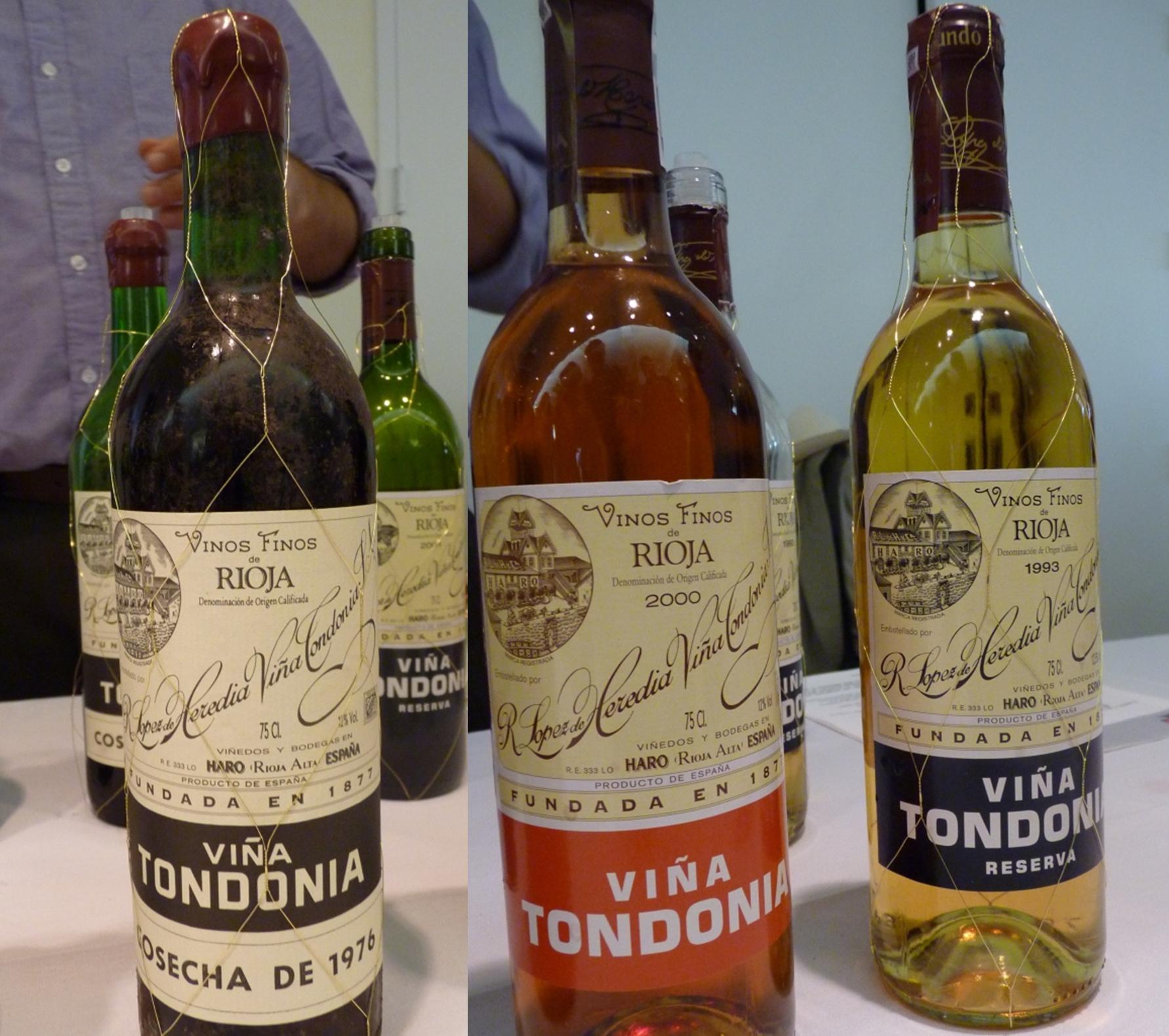
Lopez de Heredia Vino Tondonia Rioja – 1976 Gran Reserva, 2000 Rosado and 1993 Blanco: 18 years old White Rioja and 11 years old Rioja Rosado – both are fresh and vibrant. Wow! And Gran Reserva – beautiful and mature wine, which will still keep going for a while.
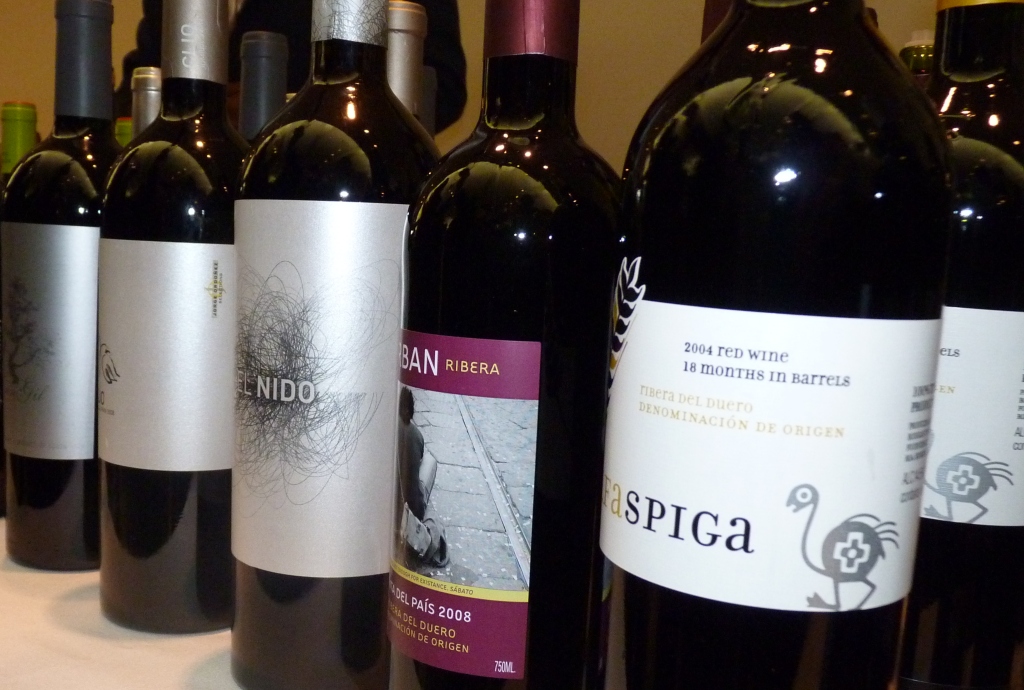
Bodegas El Nido line, including flagship 2006 El Nido – gorgeous layered and balanced, and requiring another 10 years to really blossom:
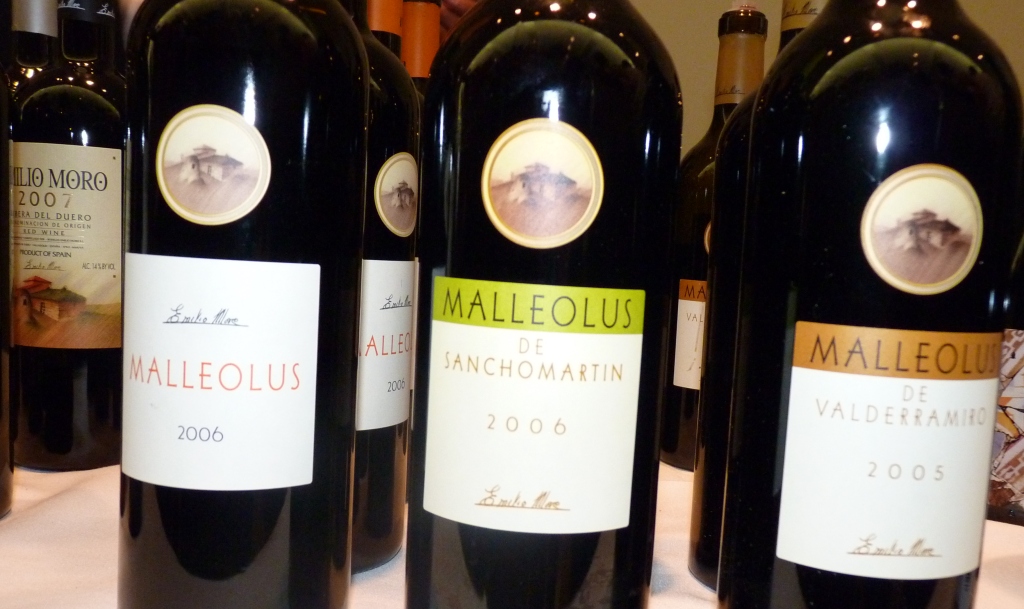
Emilio Moro Ribera del Duero, including full Malleolus line – wines of incredible balance and elegance:
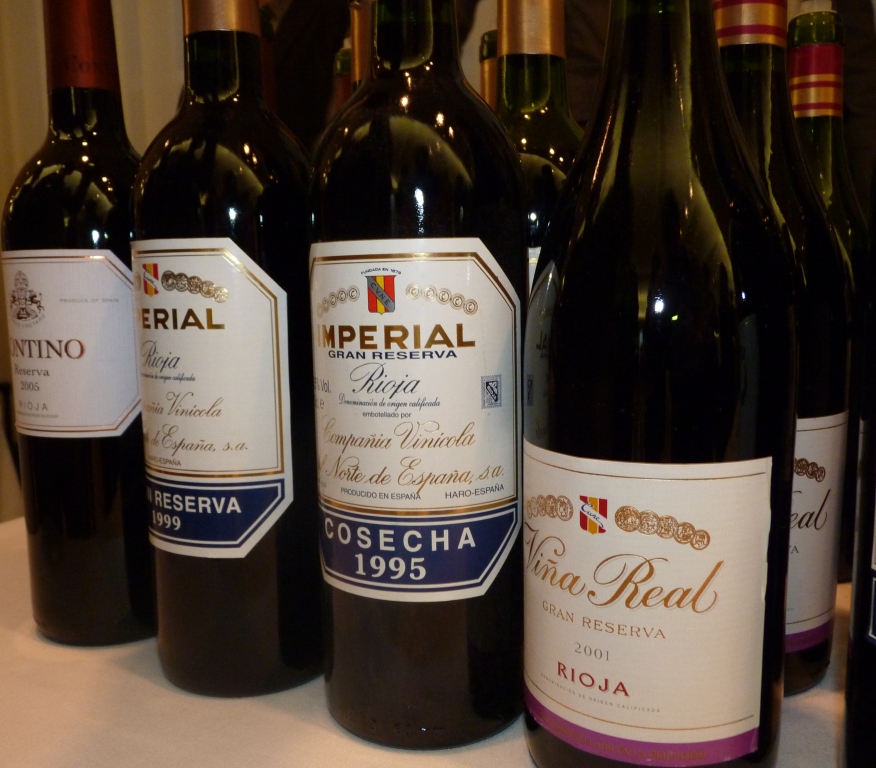
More Rioja – Rioja Imperial Gran Reserva 1995 and 1999, as well as CVNE Vina Real Gran Reserva 2001 –
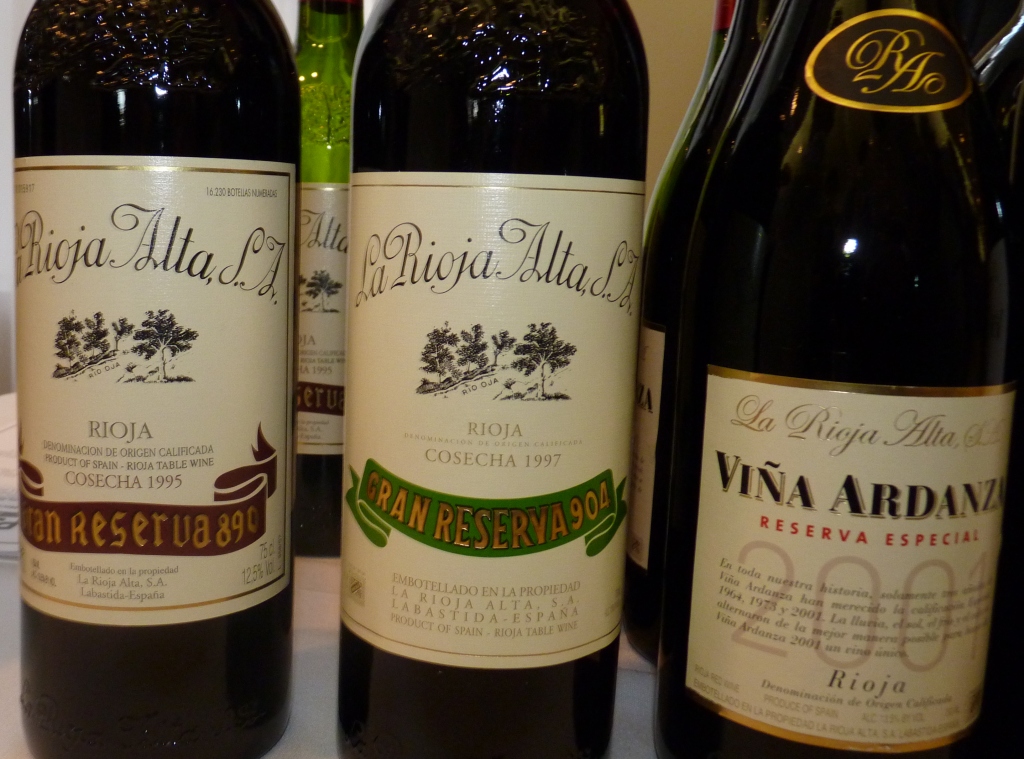
1997 La Rioja Alta Gran Reserva 904, 1995 La Rioja Alta Gran Reserva 890 and 2001 Vina Ardanza Reserva Especial – probably the best Rioja wines. Period. Classic and amazing.
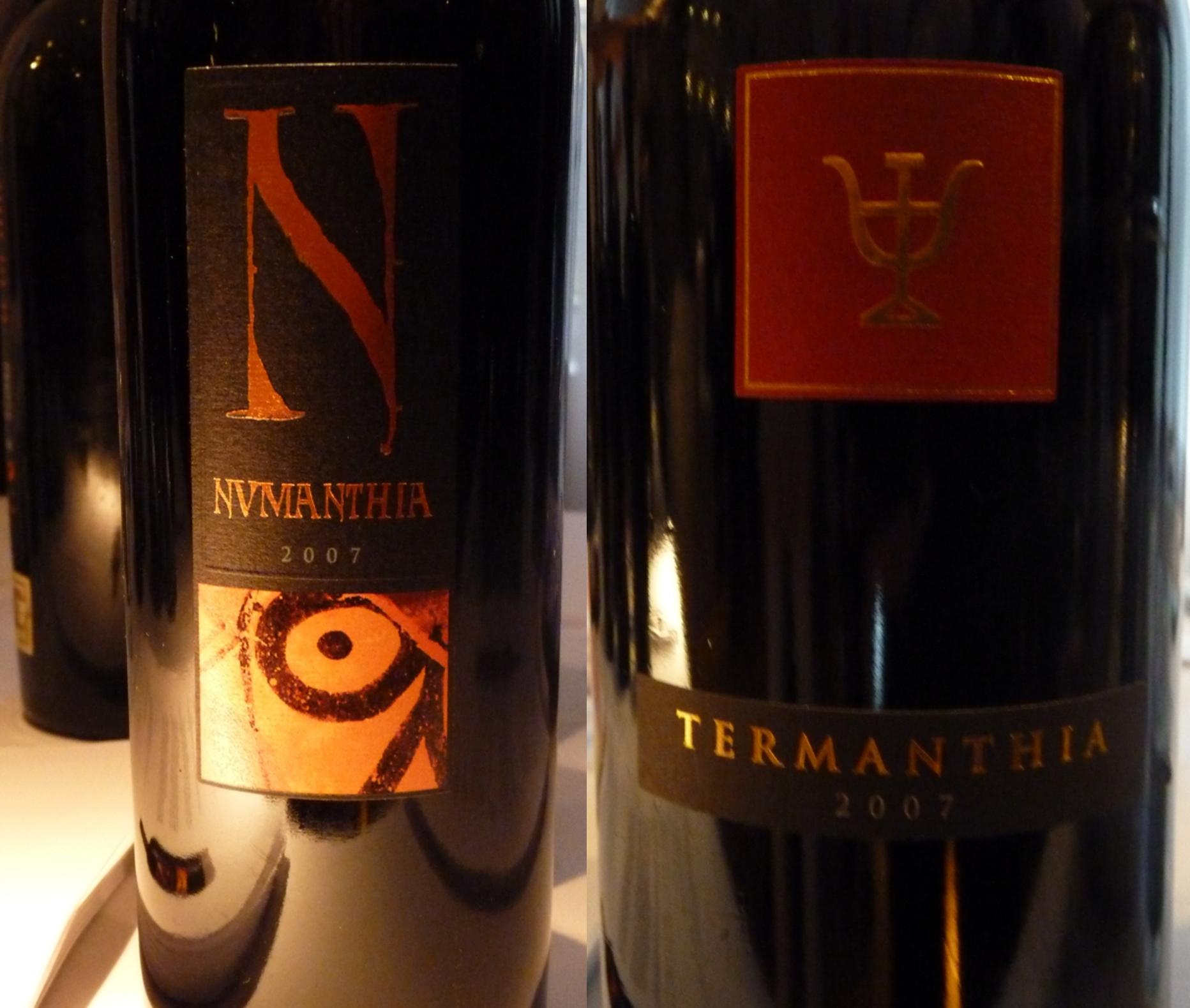
Representing Toro: 2007 Numanthia and 2007 Termanthia, silky smooth, balanced and powerful:
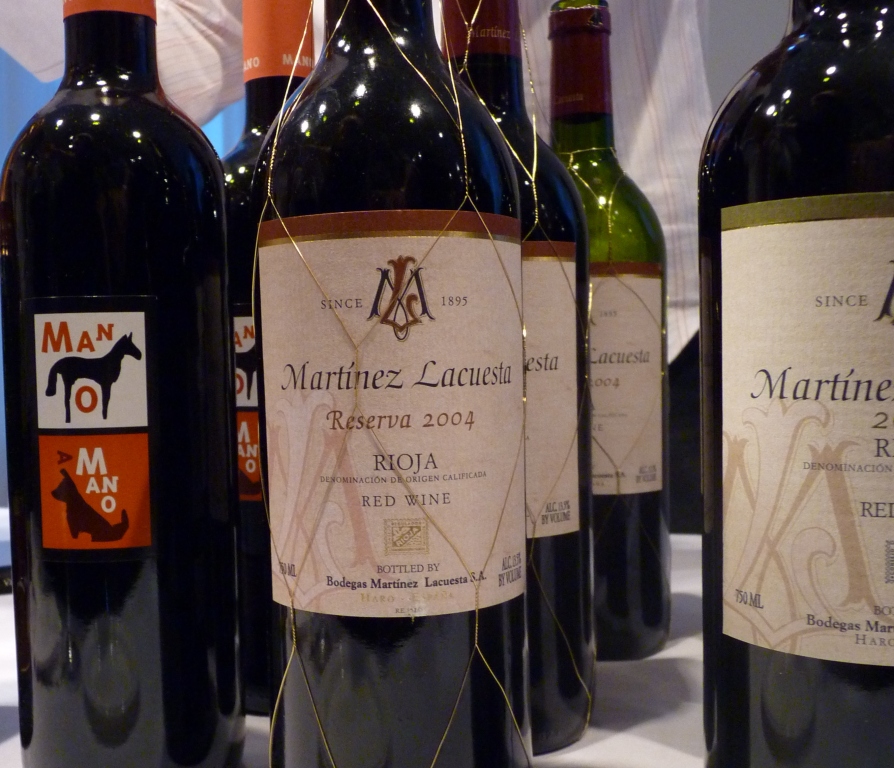
More Rioja – 2004 Martinez Lacuesta Reserva, great wine from the great year:
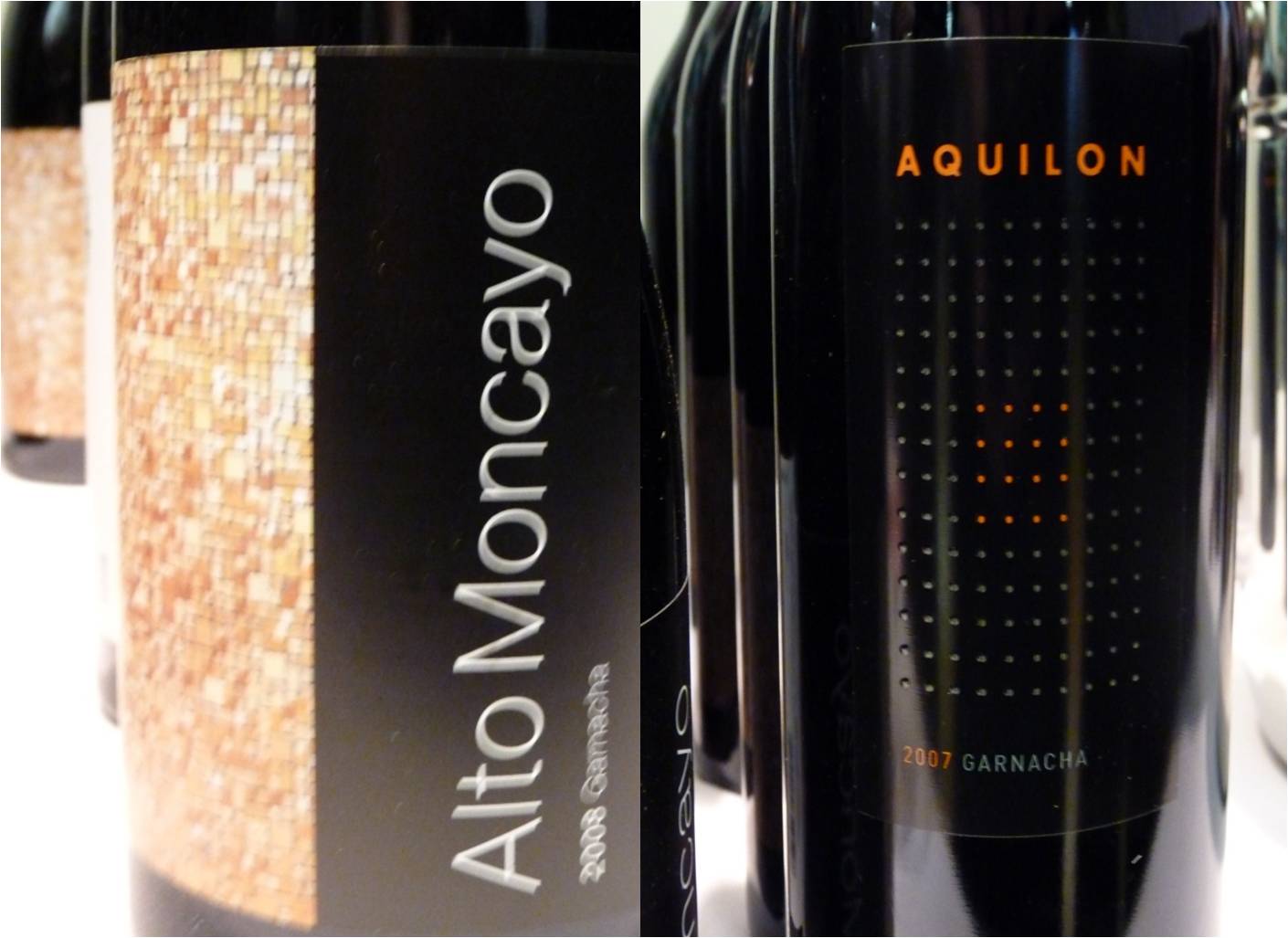
Starring Garnacha from Campo de Borja – 2008 Alto Moncayo and 2007 Aquilon – beautiful, soft and spicy:
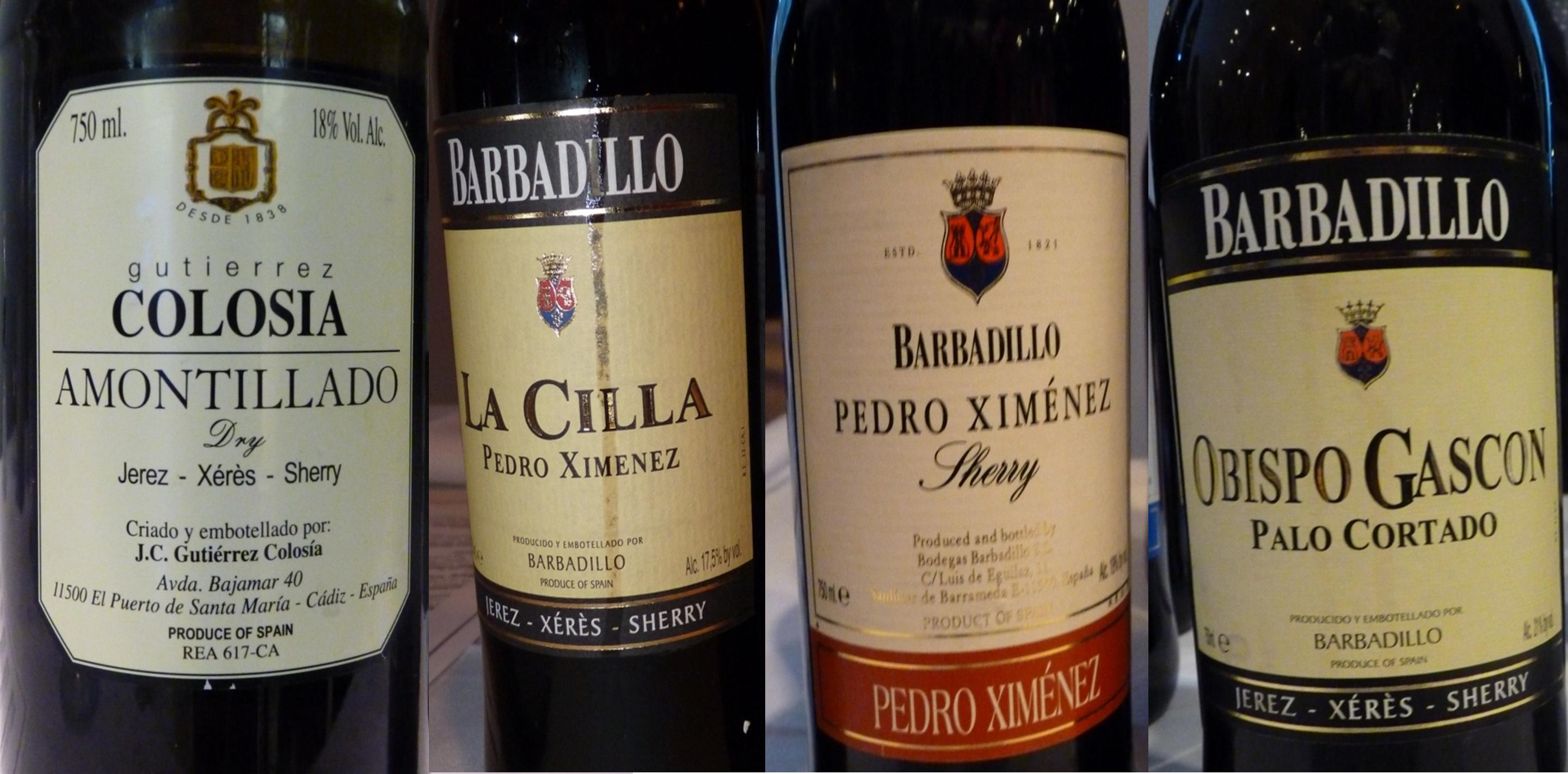
Jerez, a.k.a. Sherry is coming back – take a note of it. All Barbadillo wines were simply delicious, and Colosia Amontillado was also right in the league:
I would like to thank PJ Wine folks profusely for arranging such an amazing line up of wines for the event. And if I can make a suggestion, myself (and I’m sure, hundreds of other wine lovers) would really enjoy PJ Wine Grand Tasting event in the Fall – we can only hope that PJ Wine will be kind enough to organize one…
Last Bottle Sign Up ($10 credit)




 Talk-A-Vino