Archive
Study of Port: First Port Experiences
I’m continuing my notes from Portugal (you can find previous post here). On Sunday we had some free time to walk around the town, so I have more pictures and some actual port tasting notes for you.
Let’s start with the pictures. We walked past beautiful cemetery (is it appropriate to use the word “beautiful” in conjunction with cemetery? not sure, but still). As my friend P likes to say – “lines!”:

Lines!
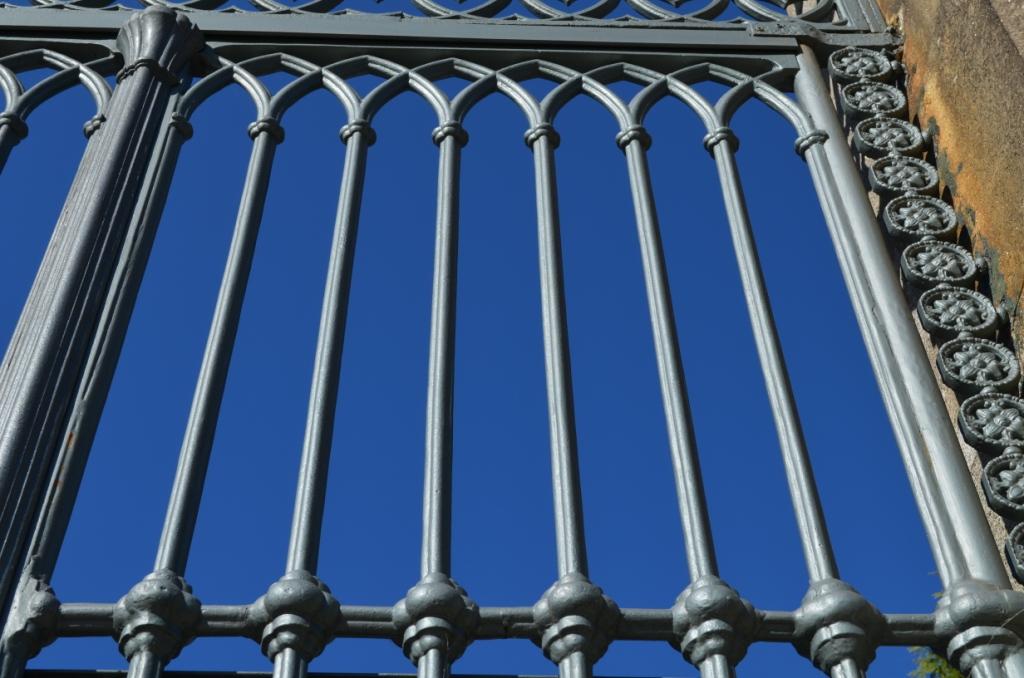
more lines!
Isn’t this pretty?
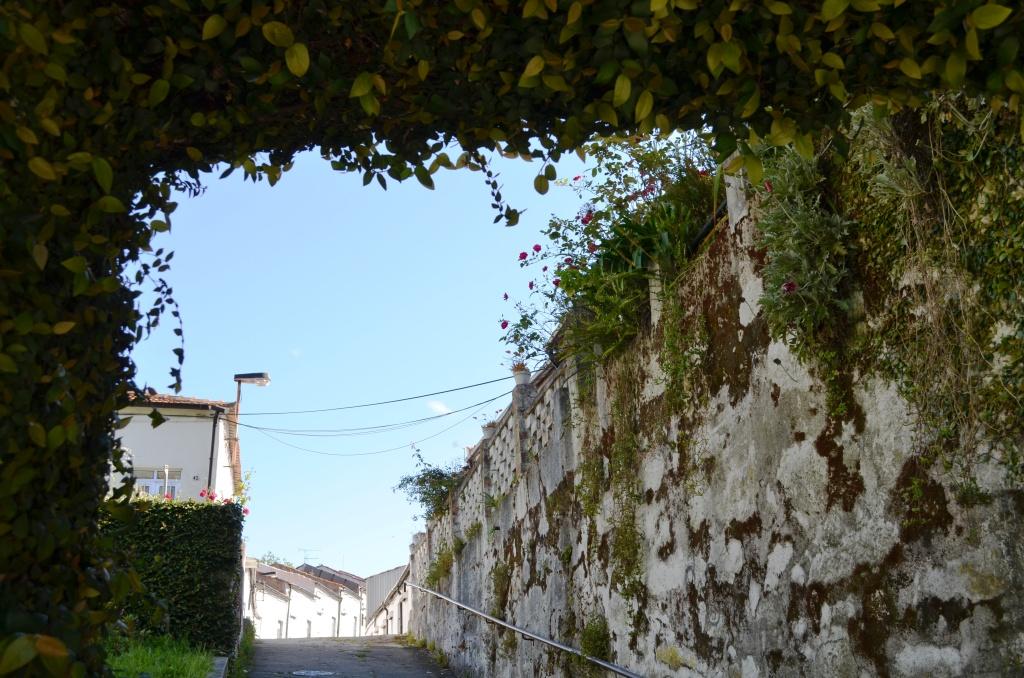
Someone has good sense of humor:

stop sign being carried away…
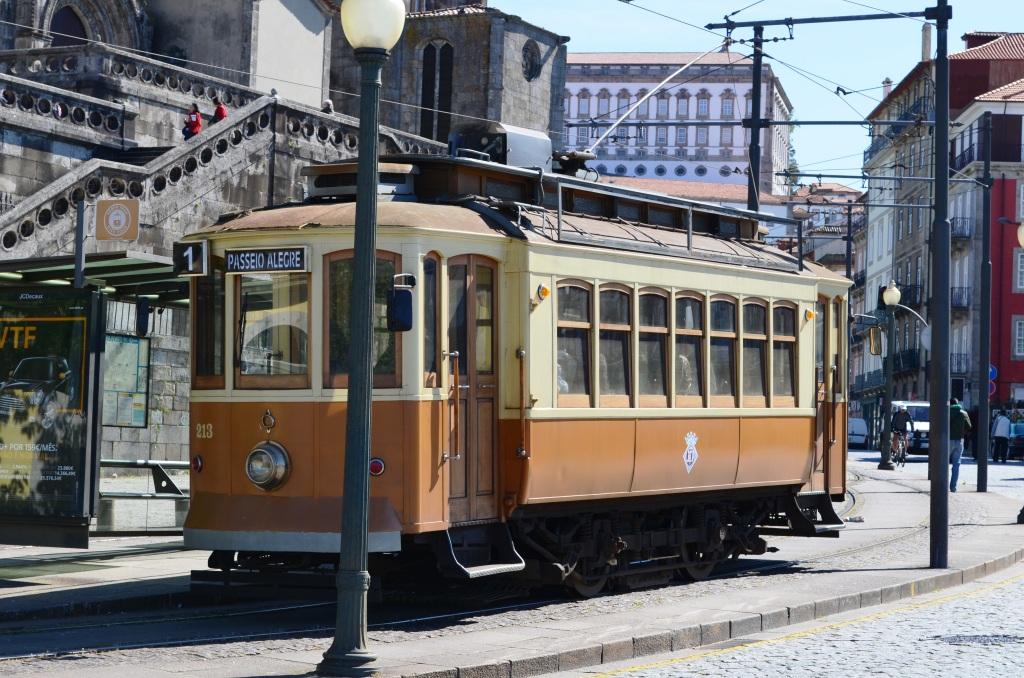
One of the modes of transportation in Porto:
Just look at this beautiful town:
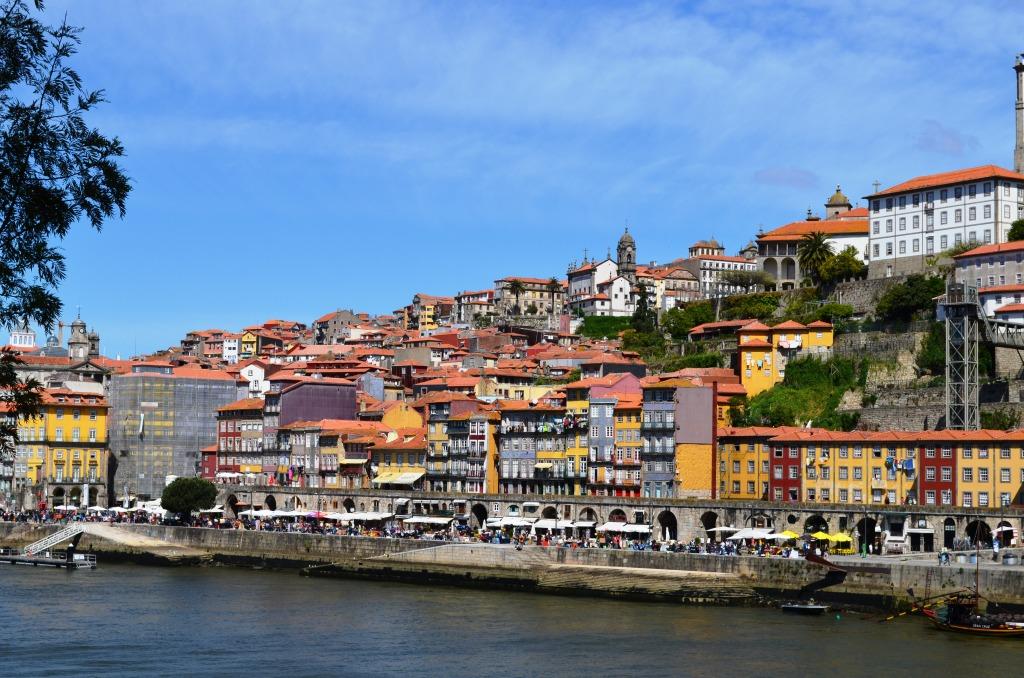
Porto
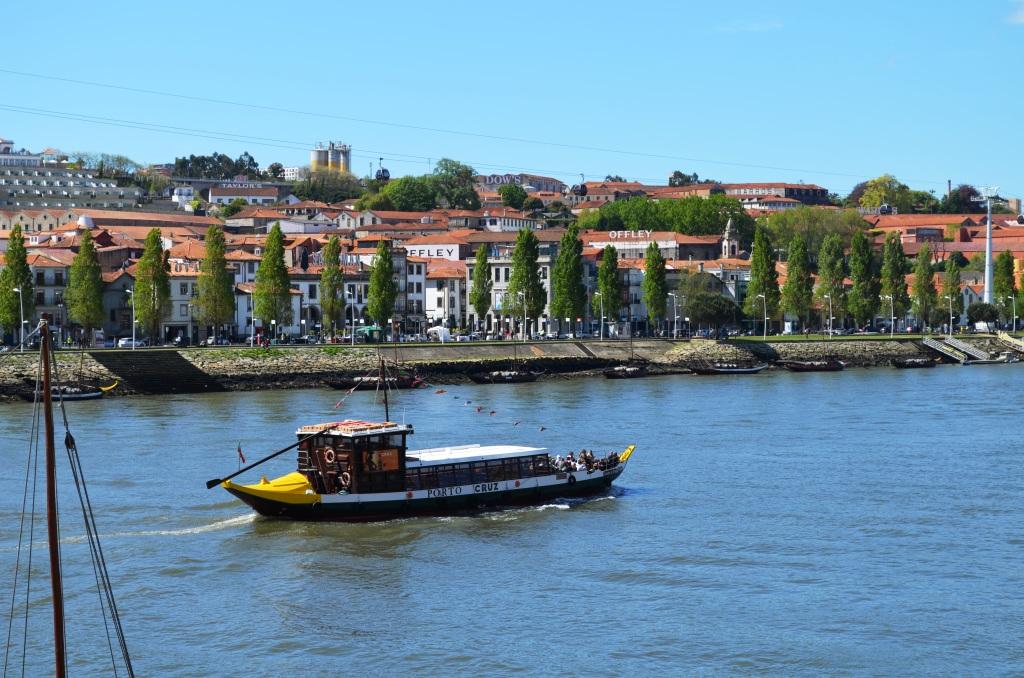
Port, I’m coming:
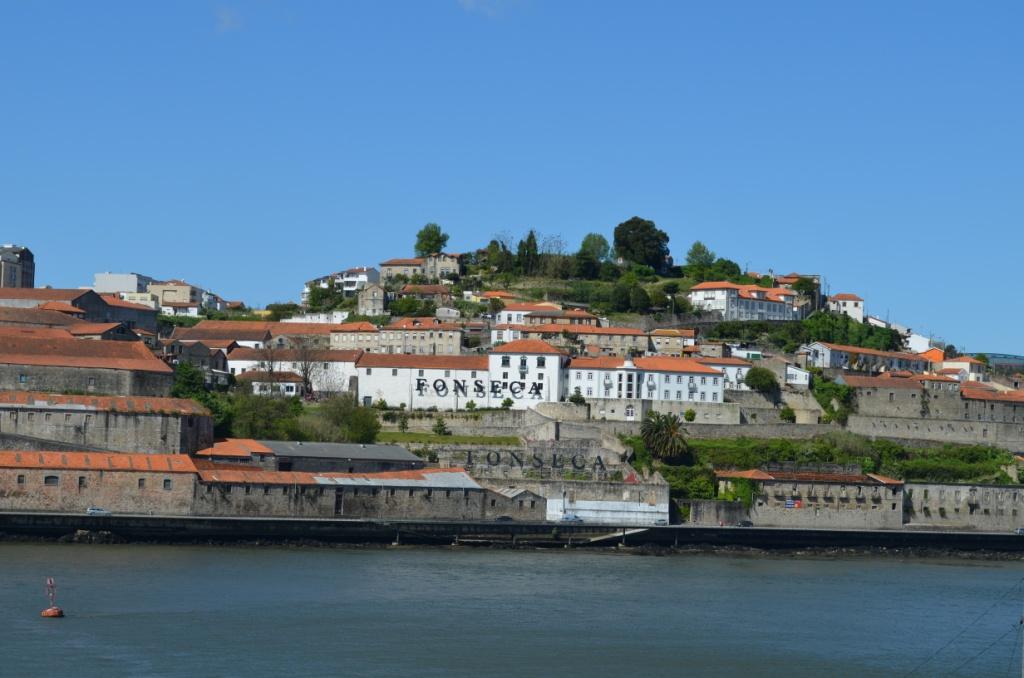
So we finally made it across the river (technically, all the port houses are located across the river from Porto in the town called Gaia). We made our first stop at Quinta do Noval. Quinta do Noval has all the operations in Douro valley, and only a small store in Porto, where you can taste limited number of their Ports. All the ports you can taste are packaged in the form of a single-pour tiny bottles, so as the result you can’t try any of their vintage ports, as those can’t be put in the small bottles. Let me explain.
There are many different types and styles of port, but at this point we only want to distinguish between vintage and non-vintage ports. To begin with, all the ports are made in the same way as any wine – the grapes are harvested, crushed and fermented until desired level of sweetness is achieved. From here on, Port making deviates from the regular wine making process – fermentation now is stopped with addition of very young brandy (neutral grape spirit), and then Port wine goes for aging in the barrels or vats, depending on what kind of port is in the making. Here the distinction will be also made between Vintage and non-vintage ports. If quality of the wine is outstanding, the Port house might declare a vintage year, and then the port will age in the oak cask only for 2 years, and then continue aging in the bottle. Otherwise, the port wine can age anywhere from 5 to a 100 years in the barrels, and it will produce ports with the age ( but not vintage) designation on them.
The key difference (important for us, consumers) between vintage and non-vintage port is that non-vintage port can be kept for extended amount of time after the bottle is open, while vintage port should be consumed within a day or two, same as any other wine. This is also the reason for Vintage port (which is typically very expensive) not being available for the tasting in the tiny bottles.
Okay, going back to our tasting – so we decided to try the 40 years Tawny port from Quinta de Noval:
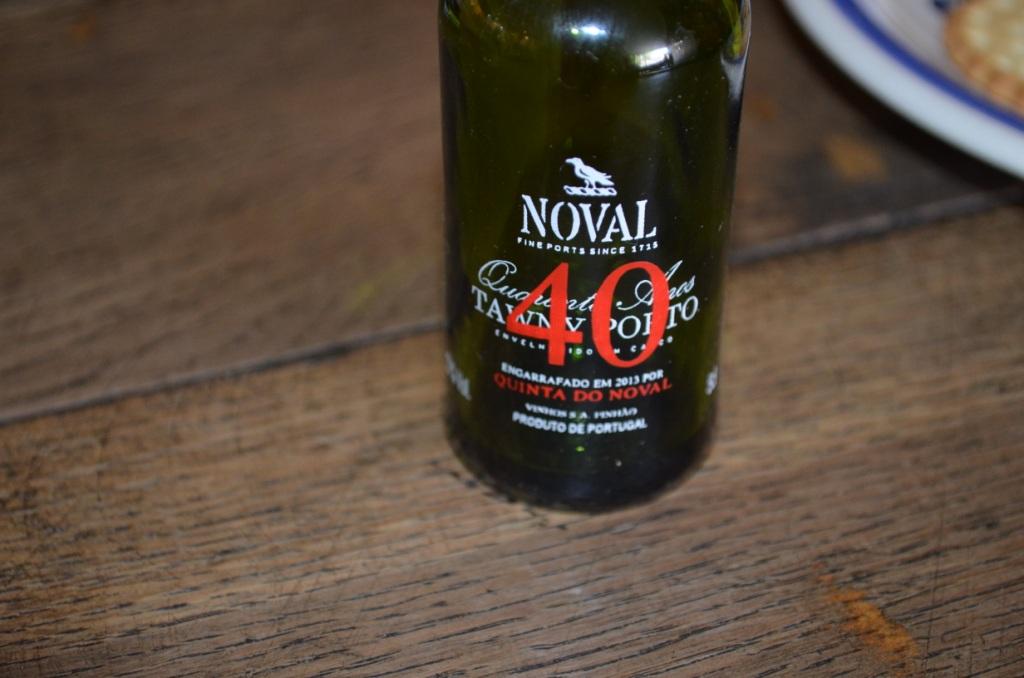
It was good and very complex, with lots of almond variations on the palate, dried fruit and pronounced acidity, which was taming the sweetness. It was good but not amazing (I would be disappointed if I would pay a full price for an actual bottle of it).
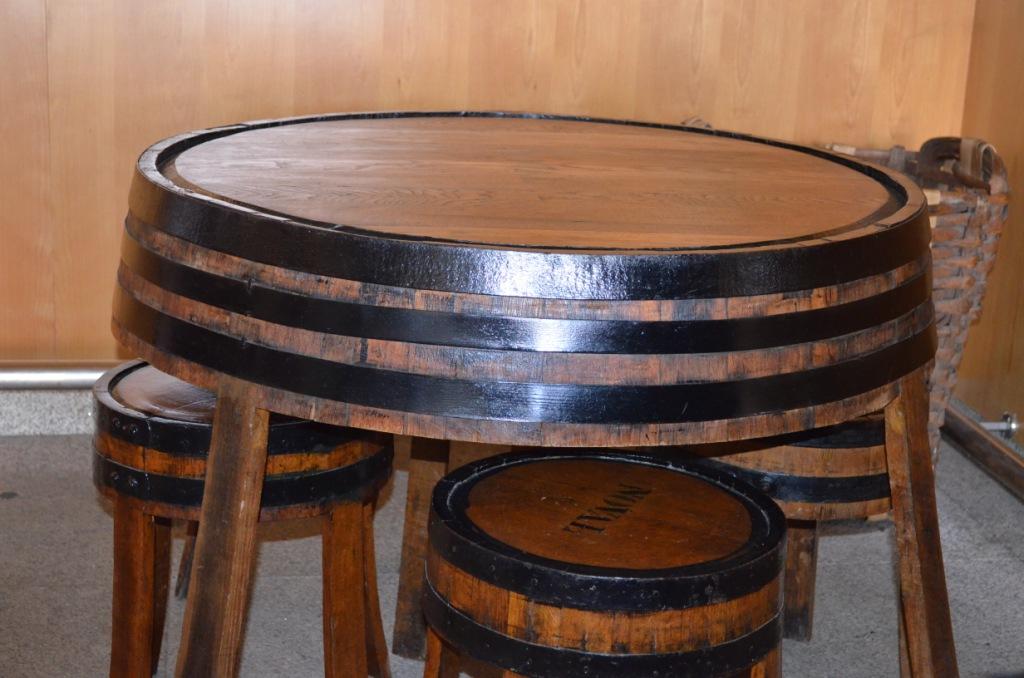
barrel table and stools at Quinta de Noval
Next we stopped at Sandeman:
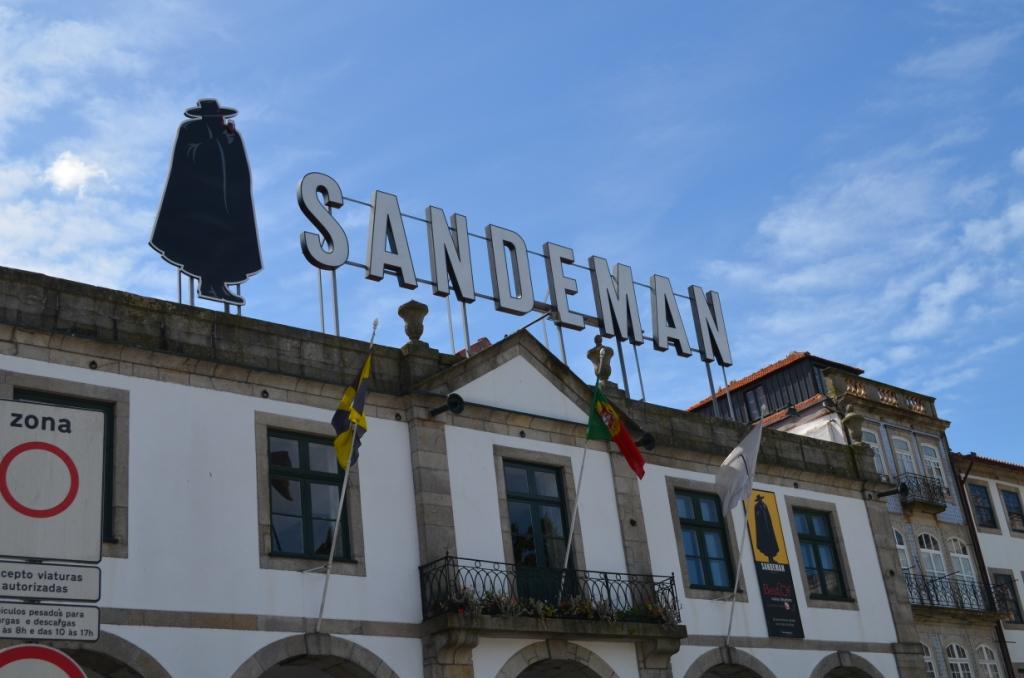
In most of the port houses you can go for the tour and then do the tasting – we decided to skip the tour and just do the tasting.
For the first time I tried White Port – and it was outstanding!
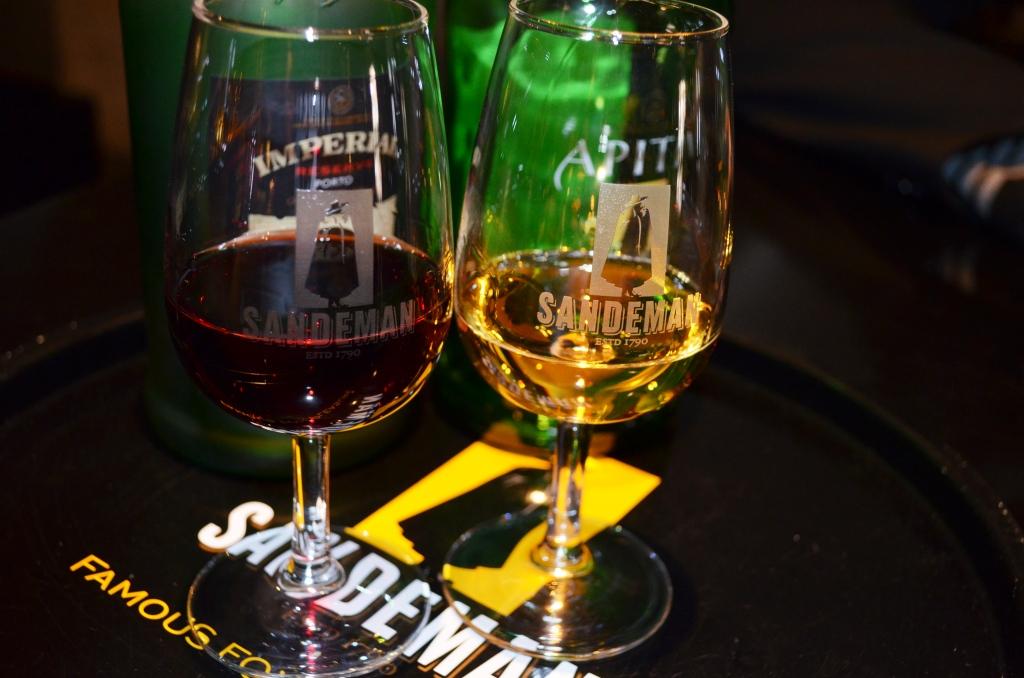
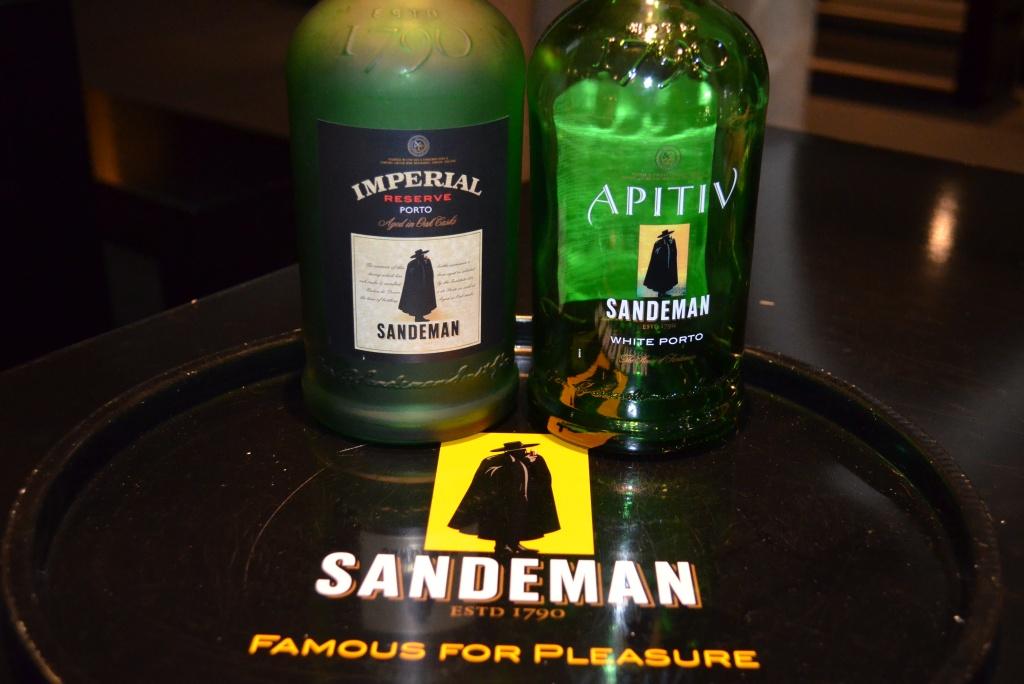
Sandeman Apitiv White Porto was aged for 3 years in the vat. It had golden color, good amount of sweetness ( but not cloying by all means), lots of white fruit, particularly white plums on the palate, good acidity. It was bright and uplifting, very refreshing wine overall.
Sandeman Imperial Reserve Porto ( 8 years of aging in the barrel) had sweetness perfectly supported by the structure underneath – dark fruit, good body, good acidity – overall, probably one of the best ports I ever had.
That’s all I have for you for now – in the next post we will talk about food experiences in Porto. Cheers!
Study of Port: Prologue
I have to break the tradition today – there will be no wine quiz for you to solve. Instead, I’m going to share the experience with you.
As you know, my day time work had nothing to do with wine. But – because of that work, I’m spending this week, in Portugal – hence the title of this blog post. I’m not just in Portugal, I’m actually in the city called Porto – and this is where the Port was born. Over the next few days, I plan to learn as much as I can about Port – and share that with you. But, considering that I’m still jet-lagged, there is not much I can share at the moment – besides a few pictures. Rest assured – more pictures and notes are coming soon!
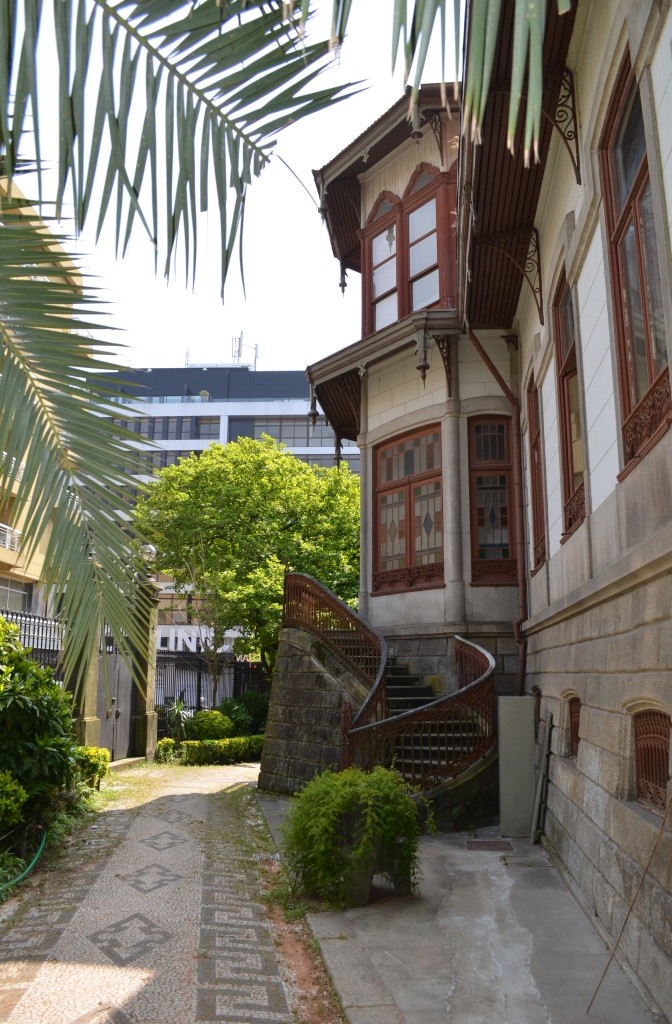
I have no idea what house is this, but I like it
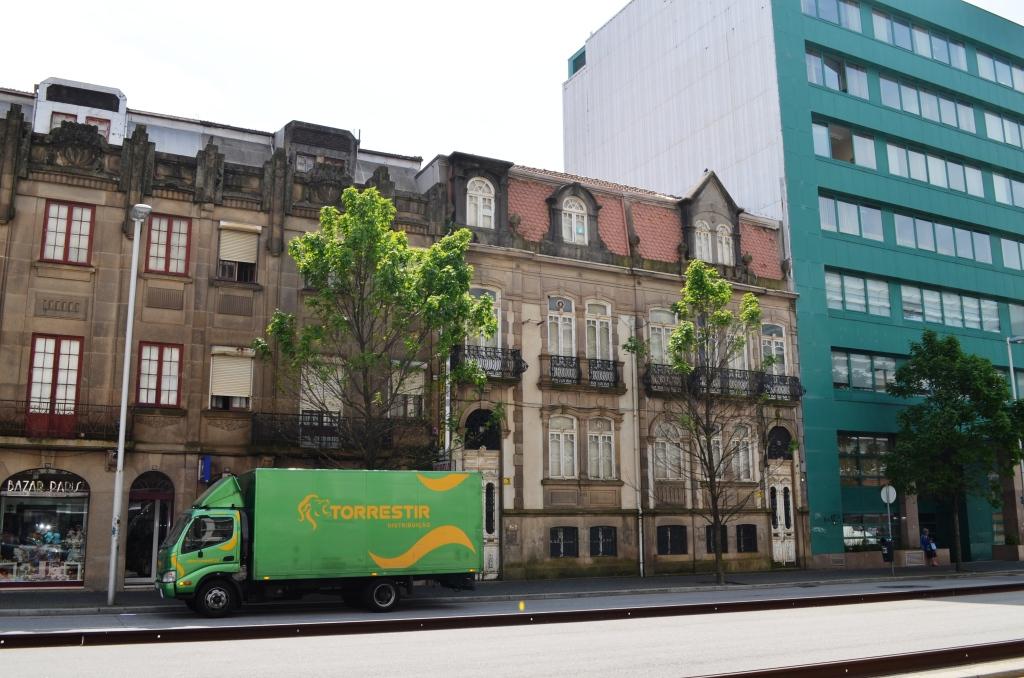
Love the combination of old and new – only in Europe…
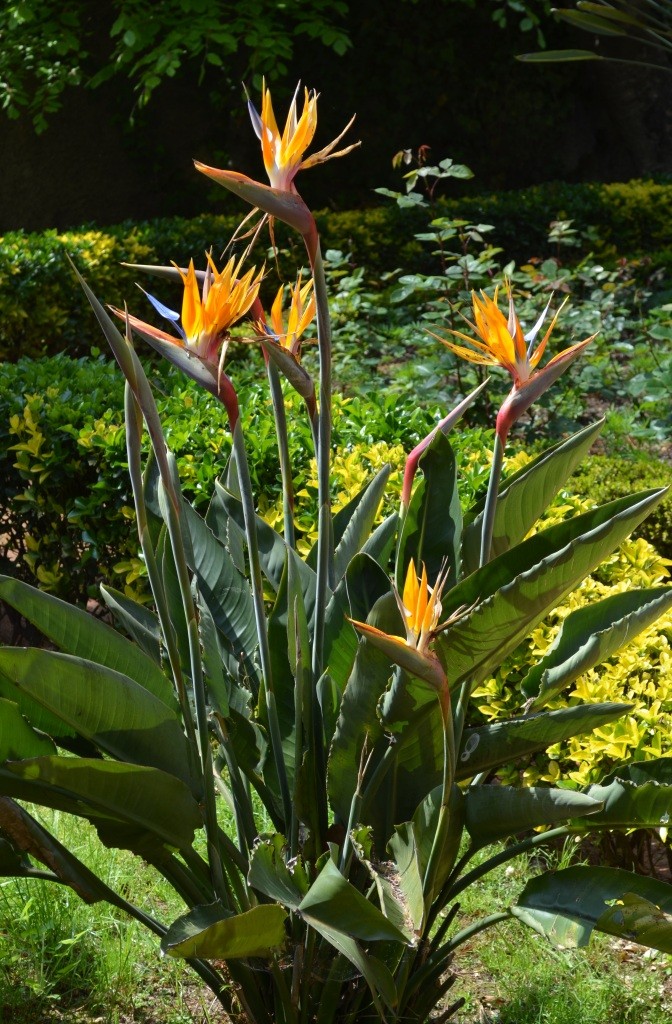
I’m sure you knew that I will not leave you without flowers

and more flowers
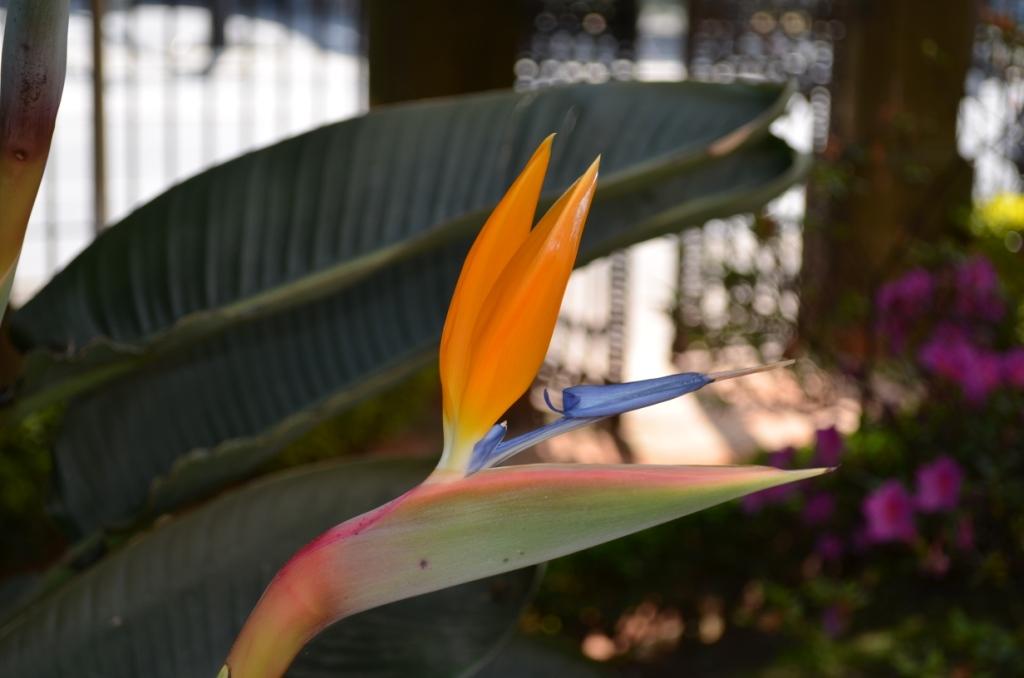
and more flowers…
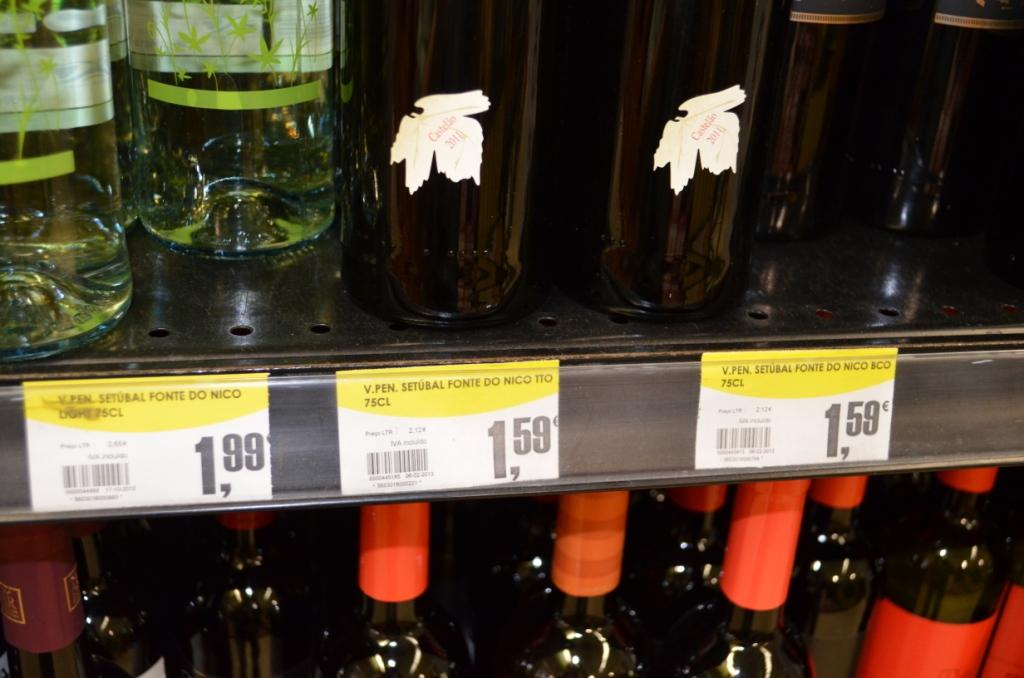
When was the last time you saw $2/bottle wines?
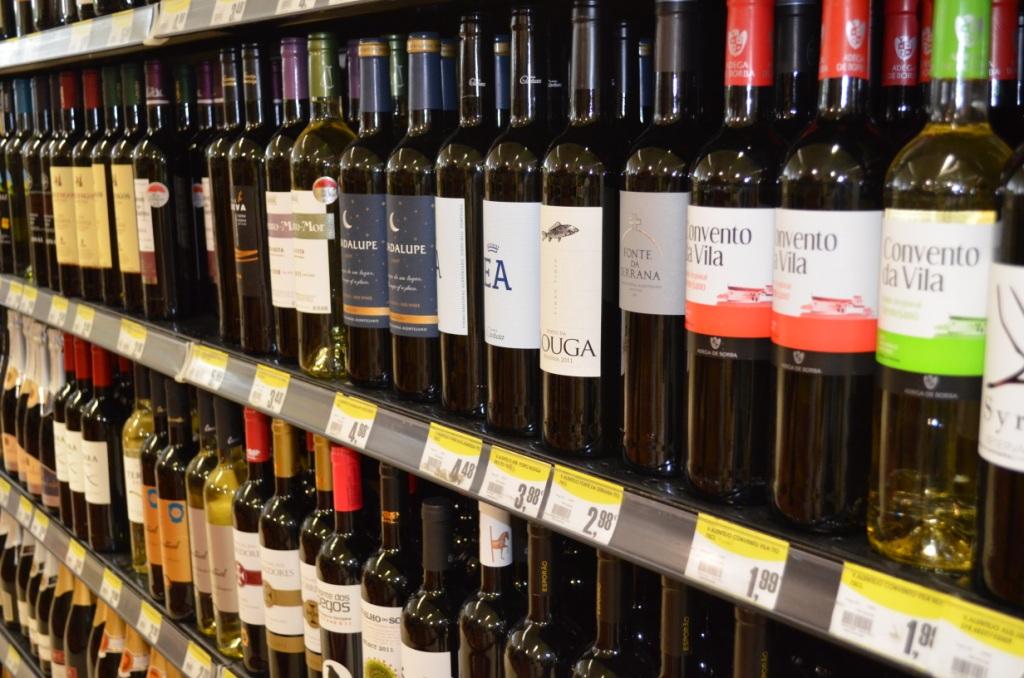
Actually, a lot of very inexpensive wine
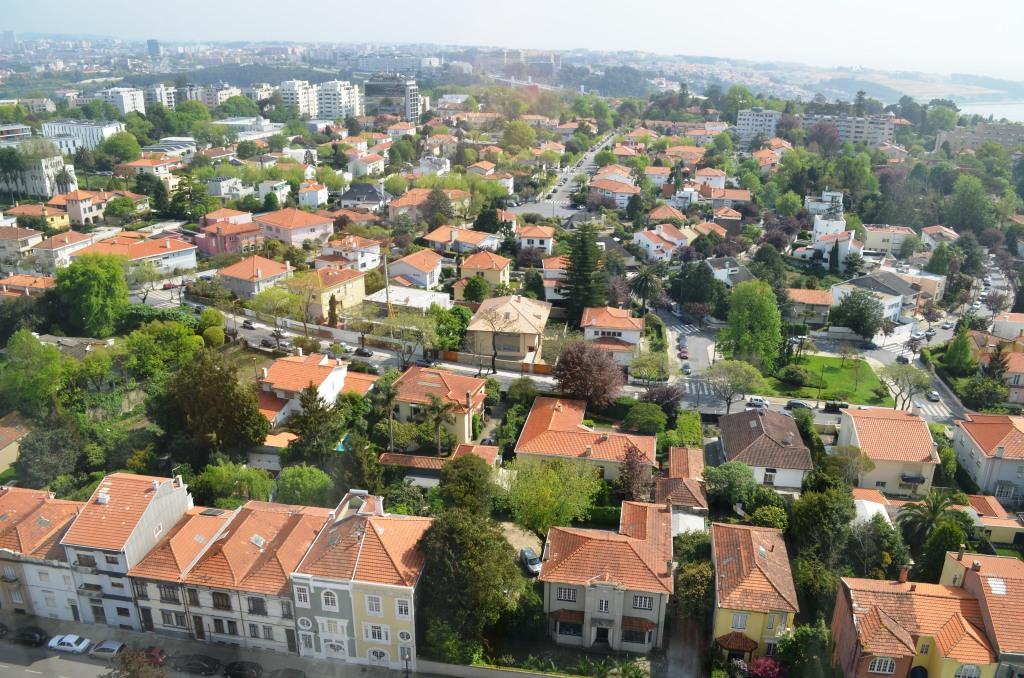
yes, I’m a sucker for the red roofs… Never can get enough of them…
That’s all I have for you for today, folks. Don’t worry – the wine quizzes will be back, just after we will talk a bit about Port. Cheers!
Wine. That. Transforms.
If you followed this blog for a while, you know that I have a tendency to get excited around wines. May be “overly excited” is even better way to put it. Especially when I come across the wines which wow. Like this time.


Field Recordings wines are no strangers in this blog (2010 Fiction by Field Recordings was my 2011 wine of the year). Produced by Andrew Jones, grape-grower-turned-wine-maker, these wines are his personal accounts of people and places – every label on his wines will tell you where exactly the grapes came from, and who grew them – you can see an example above. And his wines have tremendous personality associated with them. What these wines do the best – they don’t leave you indifferent. Like this 2010 Field Recordings Petite Sirah Crockett Hill Vineyard Santa Ynez Valley (15.9% ABV, $22).
The very first smell of this wine just takes you away. Away from the day that passed. Away from all the little things which (of course you knew it), in essence, are not important at all. It is clean. It is powerful, It is beautiful. You can imagine any happy picture you want – the smell will support and carry it. Yes, it is pure fruit forward California wine – but it presents itself in such a bright and uplifting fashion, that this might be the way to spell “happiness” with wine.
The wine appears almost black in the glass. It is dense, it is concentrated, it is powerful. Blueberries, blueberry jam and blueberry pie all together – but without sweetness, all in very balanced, round form. You can have food with this wine – but what you really want is just this wine by itself. From the smell, the happiness continues in the glass.
Then your glass becomes empty. But you sit there, still smiling. Still carried away. To the happy place.
Is this an overly emotional account? You bet. But I invite you to find this wine and experience happy journey in the glass. Of course your personal happy wine might be different. I hope you will discover it. And I will drink to that. Cheers!
And Then There Was Zin…
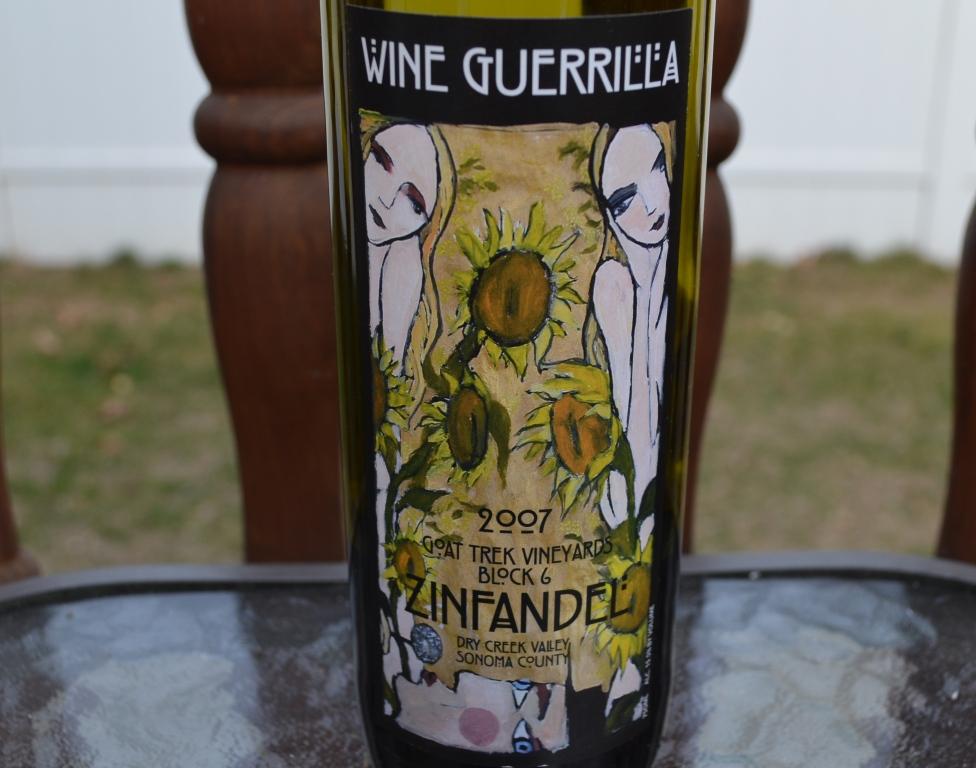 Only yesterday I wrote the post about difficult task of figuring out when the wine is at its peak. And then I opened a bottle of 2007 Zinfandel. Unscrewed the top and poured into the glass. Quick swirl, sniff – and I’m blown away. Pure dried figs. Beautiful. Pure. Clean. Nothing gets in the way. Not overpowering. Just clean and firmly present. May be there were other flavors there – from that moment on, I didn’t look for anything else. It was reincarnation of 1997 Le Ragose Amarone, the magnificent moment I keep re-living on and on.
The first sip brought in the same level of perfection. Dry. Round. Crisp, if you can apply that to the red wine. Dried figs, blueberries, sage, eucalyptus. No fruit jams of any kind. No sweetness at all. Prefect balance and harmony. Yes, this kind of wine makes you emotional and forces you to reflect.
The wine – 2007 Wine Guerrilla Goat Trek Vineyard Block 6 Zinfandel Dry Creek Valley Sonoma County (15.5% ABV). A blend of 87% Zinfandel, 7% Cabernet Franc and 6% Petite Sirah. This wine is made by Wine Guerrilla. And when the have a slogan “Wine Guerrilla – The Art and Soul of Zinfandel”, they are really not kidding. Take a look at their line of Zinfandel wines here.
6 years old wine. Did I manage to hit the peak? I have no idea. Is it possible that the wine would improve further. Quite possible, but this was my last bottle.
Oh yes, and there is a culprit here. The wine I enjoyed so much was a little warmer than the cellar temperature – my wine fridge is set for 55°, so I guess the wine was about 62°-64° when I was drinking it. The next day when I finished the bottle, it was much warmer, probably at about 72° – and while it was good, it was not magical. And the temperature of the wine is literally the last thing I want to deal with instead of just enjoying the wine. Oh well… I’m glad I had this experience in my life. Cheers!
When Is The Wine Really (Really!) Ready To Drink?
 About a week ago, I opened the bottle of 2004 Heritat Mont Rubi Durona Penedes D.O. This is my second experience with the wine. The first one was about a year ago when I opened a bottle to celebrate Wine Century Club’s 7th anniversary (one of the grapes this wine is made of, Sumoll, was a new grape for me). Here is how I described the wine at that time:
“very interesting herbal nose of sage and may be some oregano ( lightly hinted), and some nice red fruit on the palate, medium body, well balanced with pronounced tannins – I think it can still age for a while. Drinkability – 7+“.
Why am I telling you this and even citing my own tasting notes? Let me explain. This time, I opened the wine for a casual evening glass of wine, not for a dinner. I had one glass, and put it aside (using my faithful VacuVin to remove the air). The wine was tight and firm, with some cherries and good acidity on the palate. It was pleasant, but there were no problems with putting the glass down.
The next day, I opened the bottle again. There was not much of a difference with the previous night. May be the fruit became a touch softer, may be some raspberries showed up in addition to cherries, but tannins and acidity were still firm – not biting, no, but firm and present together. I had a glass or two, and closed the bottle again.
On the third day, something happened. The wine transformed from “ok, nice” to “WOW” (by the way, I think we need a new rating system for the wines – “yuck, ok, nice, wow, OMG” should do it – what do you think?). The wine became luscious, velvety, layered, showing the wide range of dark fruit – plums, cherries, touch of blackberries, touch of spices, all very balanced – it was impossible to put the glass down (no need too – there was nothing left in the bottle). In the three days, this wine transformed. It transformed from just an okay to wow, from the wine you can drink if you need to, to the wine you crave.
The subject of wine and time is one of the most fascinating. It is literally impossible to know what time will do to the wine. But I can honestly tell you, for the most of the “drink by” recommendations from the wine critics, I’m almost at the point of laughing. Okay, may be not laughing, but definitely ignoring. No, not all the wines will improve with time. Yes, there are general rules, like “drink Beaujolais Nouveau by the next May”. Yes, there are wines which are not intended to age, especially among the white wines, and especially if the white wine is Pinot Grigio or may be Sauvignon Blanc. Yes, I probably wouldn’t age most of the Rose – but have you ever tried Lopez de Heredia Vino Tondonia Rioja Rosado? The wine was 11 years old when I tried it, and it was stunning.
The way I look at the wine aging is this – most of the wines can age, until it is proven otherwise. I had 1947 Rioja recently, which was youthful, exuberant and outstanding. During recent Rioja seminar, I listened to our presenter to describe his experience with 1917 Rioja. He tried the wine in the group of 8 wine professionals at the dinner – after the first sip, the table got quiet for the next 5 minutes – people simple had to reflect on the wine. If you look through this blog you will find my accounts with well aged California wines, such as 16 years old Flora Springs Chardonnay, 20 years old Justin Cabernet Franc, 15 years old Estansia Meritage and Toasted Head Cab/Syrah blend (probably $12 at the time of purchase!) – the list can go on and on – all the wines I’m mentioning were outstanding, however I’m sure none of them would be declared aging-worthy by conventional wine critics or even winemakers.
The tricky part of wine and time relationship extends even further. We want to drink the wines at their peak. How can we know when the peak will be? I don’t have much experience with red Burgundy wines in general. But I understand that their aging process looks rather interesting – very drinkable form the beginning, they shutdown after a while, and then they come back. How can you know you are drinking the wine when it is ready, and not only that – when it is at its best? I’m not sure… I had my own experience last year with 2002 Dunn Howell Mountain Cabernet Sauvignon. From the moment the bottle was open, it was literally undrinkable – dense, rough, no fruit, just tannins – and it was like that for the 4 days. I didn’t try any aggressive decanting, but I tasted the wine every day. And then on the day number 5, the same magic happened as the one I described at the beginning of this post – the wine opened up into a beautiful WOW nectar – but I could’ve dump it just the day before!
Where am I going with all of this? I don’t have the destination. I want to make you to think about wine and time. I wonder where we, oenophiles, collectively are on this subject. I will hold my position no matter what – “the wine can age until proven otherwise” – but what do you think? What is your experience with “wine and time”? Can we do something to educate all the wine drinkers about it, do we even need to do it, or should we just drop the subject as you don’t believe it’s worth the bits, bytes and emotions? I will keep bringing up this subject from time to time, but hey, don’t be shy – see that comment box below? Cheers!
3/415/1863
 Let me ask you a question (no, today is not Saturday and this is not a quiz post) – what do you think the numbers in the title represent?
Any ideas?
Okay, here it is.
3 years.
415 posts.
1863 comments, which translates into more than 900 dialogs.
Today is third anniversary of Talk-A-Vino blog.
This blog started on March 29, 2010 with this post. Started is somewhat of a big word, as the very next post came out almost 4 month later, on July 20th (interestingly enough, it was about Wine Century Club, same as my post from yesterday).
From there on, this blog went forward. Slowly. Sometimes, I was questioning the entire premise of this writing (believe me – I still do). Sometimes, the going was easy. And sometimes, getting a single word out was as easy as successful as convincing oneself that tooth pain is enjoyable. But – there was always something else to say. Something else to share. And the lucky day would bring a comment. An opportunity to talk and to engage, to have a dialog. I think ultimately, the dialog is what I value the most in the whole blogging paradigm. Yes, I can express myself, I’m talking about the subject I’m extremely passionate about – but I really strive for discussion, strive for dialog, strive for the feedback. Good, bad or ugly – doesn’t matter; having any feedback is much better than having none. This is why I included the number of comments as probably the only metric I care about. No, I’m not trying to lie to you – of course I look at the number of views and visitors. But – dialogs are what really matters, and it is the major reason for this blog to exist.
Okay, I think you got my point (can I please have a comment from each one of you, so I know my message went across? What, no comment? Well, please promise that you will leave one next time?).
Considering that any birthday is an opportunity to reflect, I wanted to give you my own retrospective and tell you what was planned, what worked, what didn’t work, what I liked and what I didn’t like. I dutifully scrolled through many posts, to no avail – I’m ashamed to admit, but I like a lot of them… Here is an “oenophile” mini-series – Fears of the Oenophile, Five Essential Traits of the Oenophile, Five Traps of Oenophile. And then there are Wine and Time, Wine = Art and Taste Of Wine – Engineering Approach, as well as the “wineries” mini-series – BV, Ridge, Paumanok, Chateau Ste. Michelle, … Wine quizzes, Daily Glass, Bars and Restaurants, Travel – all with pictures (can I share one more number? 1309 pictures are attached to this blog…).
Many things didn’t work as planned. My Daily Glass is very far from even weekly. My Categories are all over the place – grapes, wines, experiences and regions are all just lumped together, without any system. I don’t update pages on time (Top Wine Ratings is 5 month behind, for instance)…
Well, it is what it is. It is a live blog. And does create dialog. Thus, I’m happy. Cheers!
Daily Glass: Study of La Rioja Alta Viña Alberdi
 On a given day, outside of any big holidays or special dinners, I have no idea what bottle I’m going to open in the evening. Sometimes it can be a painful procedure of looking at 20-30 bottles not been able to decide. Today, it was easy – @wineking3 mentioned on twitter that he had not the best experience with 2003 La Rioja Alta Vina Alberdi Reserva, which sparked my interest. You see, La Rioja Alta is one of the very best (and of my favorite) producers in Rioja, so I wanted to see if I can taste the same or similar wine – and I quite convinced that I should have some 2003 La Rioja Alta wine. Also it appears that Decanter magazine suggests that 2003 Rioja should be drunk now, however suggesting that better producers created powerful wines – which again only increased my interest.
La Rioja Alta was founded in 1890 by the group of five winegrowers in the Haro Station District. In 1941, the winery introduced its Viña Ardanza brand, which became one of the most famous in Rioja. In 1970, Viña Arana and Viña Alberdi were introduced, and since then La Rioja Alta wine had being produced under all three labels – but not in all the years. Each “brand” has it’s own unique source of grapes and grape composition, which is rather expected.
So as I pulled the 2003 La Rioja Alta Viña Alberdi Reserva from the wine fridge, somehow the thought came to my head – let’s use wine thermometer. You see, I have this nifty device called VinTemp, which is an infrared wine thermometer – it can perfectly measure temperature of the wine in the bottle without actually touching the wine. While I know that temperature has a great effect on the taste of wine, I practically never use this thermometer – but today I did, so the simple wine tasting became more of a study of the temperature effect on the wine.
According to the producer’s notes, 2003 was a very difficult year, due to the extreme heat and lack of the rainfall in July and August. As the result, only the grapes form the highest areas were used to produce the wine, which is made out of 100% Tempranillo coming from 3 different areas. The wine was fermented for 12 days, following by 26 days of malolactic fermentation and then aged for 2 years in American oak casks. The resulting wine has 13% ABV. That’s it – I’m done with all the technical and general stuff – let’s go to the tasting notes. Ahh, sorry, last detail – the winery notes recommend drinking the wine at 17°C (63°F).
The bottle is opened and the wine is poured. Initial temperature – 16.2°C (62°F). Color is dark ruby red, a color of mature red wine, but without brown hues. Rim variation – practically absent. The rim is clear and noticeable, which talks about some age, but it is clear. Nose: Mushrooms, earth, cherries, touch of barnyard – clearly an old world wine. Palate: Perfect acidity on the sides of the tongue, tart cherries, tannins. Tannins completely covering the mouth, very similar to Barolo, only with the wine been a bit lighter. And then there are more tannins. And they are going. And going. And going. For about one minute forty seconds ( yes, I looked at the clock). First verdict – perfectly dry wine. Need time to warm up and to open.
Second taste – about 20 minutes later, temperature measures 17.6°C (64°F). Nose – unchanged. Palate – more fruit, less tannins. Green notes, the wine almost tastes bitter. Worrying – is this the case of bad Rioja? Tannins are back, killing and overpowering.
Third taste – about an hour later, 19.3°C (67°F). Nose – coffee and chocolate showed up. Palate – beautiful. Fresh acidity. Bright fruit, cherries, blackberries. Still lots of tannins, but the fruit now comes first. Very round, smooth and expressive. Lots of pleasure.
Final verdict – Beautiful wine. Needs time!! Drinkability: 8
Let’s sum it up, shall we? In my opinion, this wine needs at least another 10 years to open up. And as you can see, the temperature plays key role here – considering level of tannins, the recommendation of 17°C is very surprising – you do need to drink this wine at a room temperature to let it show up in all its beauty.
Our study is complete. Now, can I have another glass? Cheers!
Re-post: Forgotten Vines: Madeira
During 2011 I wrote a number of posts for the project called The Art Of Life Magazine – of course talking about my favorite subject, wine. The project closed and even web site is down, but as I still like the posts I wrote, so I decided to re-post them in this blog. Also, in that project, posts were grouped into mini-series, such as “Forgotten Vines” you see here – I will continue re-posting them from time to time.
Also note that the series was written for a slightly different audience – I hope none of my readers will take offense in the fact that sometimes I’m stating the obvious…
 Our first post in the Forgotten Vines series was dedicated to Jerez, a not-so-easy-to-find-but-worth-looking-for fortified wine from Spain. Continuing the series, let’s move a little bit to Spain’s west side neighbor, Portugal.
Talking about Portugal’s place on the wine map, what wine comes to mind first? Yes, of course it is Port. And while Port is single most famous Portugal wine, it is not the Port we want to talk about here (don’t worry, Port is squarely positioned in the line of “must-have” experiences, and we will talk about it later). We need to move a bit more down the map in the south-west direction, about 1000 km (600 mi) to the island of Madeira.
Madeira wine takes its name from the name of Madeira Island. History of Madeira, which started at around 15th century, is full of accidental discoveries, glory, overcoming of the hardship, raise and fall, and even love – if you are interested in the full story, you should take a look at Madeira Wine web site. In the 15th / 16th centuries, Madeira wine was created and transported in the barrels through the ocean to the far places such as India and China. It was found ( by accident, of course), that long ocean voyage improves the taste of wine compare to the original one which went into the barrel. After many trial and error experiments, it became apparent that prolonged exposure to the warm weather is the culprit, and then the method of heating the wine up to the 60C (140F) was invented. The process of heating up the wine is called Estufagem, and it is done after the wine is fermented in the oak barrels, same as any other wine – again, you can find more details online – you can find less colorful but more technical details on Wikipedia (click here). Just to give you a few more details from Madeira’s history, trade embargoes led to further improving Madeira by adding brandy spirits in order to preserve the wine. Barrels of Madeira left for prolonged time under the rain lead to development of the new style of Madeira wine, called Rainwater.
In the 18th century, Madeira was one of the most popular wines in the world, especially in England and United States. Madeira was used to toast United States Declaration of Independence, and was highly regarded as a drink of distinction. Unfortunately, first mildew and then phylloxera epidemic delivered way too powerful one-two punch, which Madeira wine industry was unable to overcome. Madeira subsided to nearly a cooking wine level, and was staying like that for the long time. Luckily, overall uptake on the wine industry throughout the world helps to revive Madeira industry, and now it is becoming possible to find a great drinking Madeira even in US – and you will see why. And I have to note that one of the great qualities of Madeira is in the fact that unlike practically any other wine, once you open a bottle of Madeira, it will stay the same more or less indefinitely, due to both Estufagem method and fortification with the spirit.
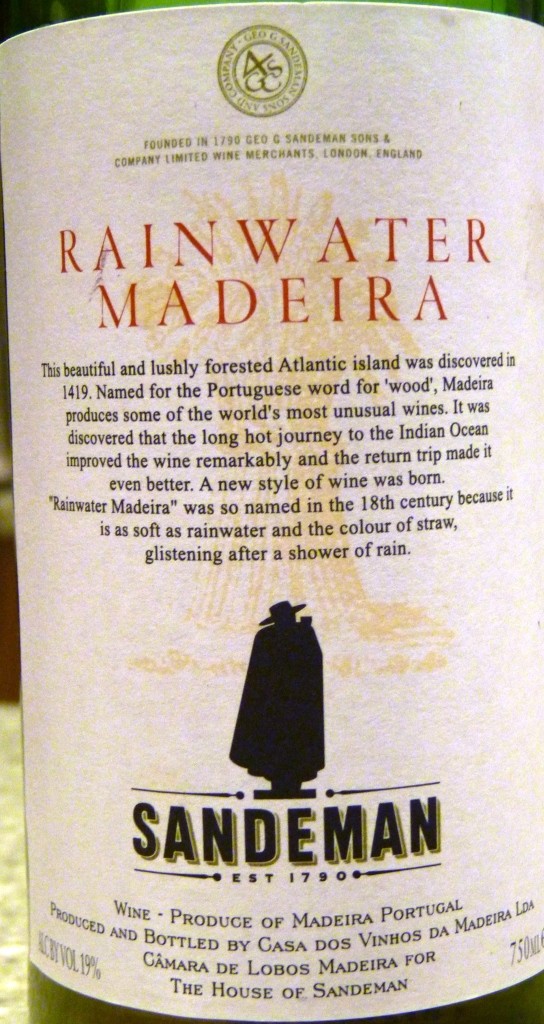
As we say here, time to open a bottle. Madeira comes in many different versions, from completely dry to the sweet. The Rainwater Madeira is somewhat of a simpler style, but still very enjoyable. This Sandeman Rainwater Madeira is deep and heavy on the nose, with hint of aged cheese and sweetness (overripe apple sweetness). On the palate, it shows the same concentration of the sweet notes, which is not really supported by acidity, so the wine comes somewhat unbalanced – however, as a desert wine to have with sharp cheese (like blue cheese, for instance), it will create a heavenly combination.
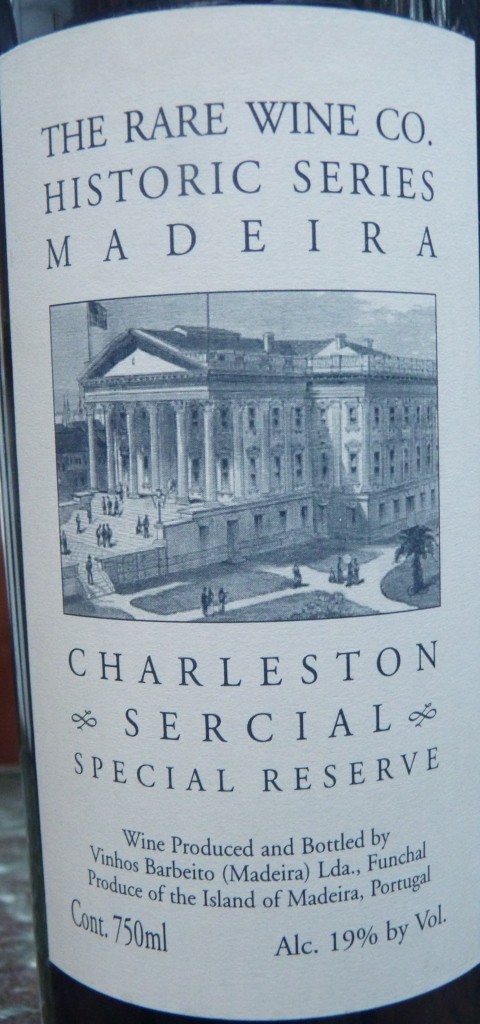 The next wine, Charleston Special Reserve Sercial is few levels up the previous wine. It comes as incredibly complex on the nose – nutty, with hint of sweetness and herbs, lots of herbs. Beautifully balanced on the palate with acidity and sweet delicate flavors of apple blending together perfectly. This Madeira has very long finish and can be used equally well before, during and after dinner – just take your pick. Definitely worth seeking.
Well, it is a great time to be a wine lover – abundance of experiences just grows daily. Now that you are empowered with the knowledge of Jerez and Madeira, it is time for personal encounter – find the bottle and enjoy it tonight!
Vinitaly and Slow Wine Tastings – Part 3, Wine, And More Wine
 In the first two posts I gave you some interesting stats and shared our experience with wine seminars at Vinitaly. Now, it is time to actually talk about wines.
Those of you who follow this blog for the while know by now that I mostly talk about wines with the pictures, adding a few words here and there, mostly of a very “excited” nature. If you are looking for the detailed report, I can give you two great references – blog posts by Stefano and John M. Fodera, both covering wines and wineries very extensively.
I have to thank Stefano again, as if it would not be for him, I would be pointlessly wondering from a table to a table, and surely would miss some of the gems. Stefano had a plan, and I gladly followed.
Again, if you are looking for systematic representation of wines, based on the regions and styles, [please refer to the two blog posts I mentioned above. I will just share my personal highlights. Oh, and one side note. It is so happened that I’m writing this last post about Vinitaly after attending another Italian wine event, Gambero Rosso’s Tri Bicchiery. While in general I had no complaints about organization of Vinitaly event, now I can also say that it was organized incomparably better that the Tri Bicchiery event – expect to hear my rant with the Tri Bicchiery post.
Enough words. Here are mostly pictures, with some comments, in the order of the regions appearing in the show guide.
Piedmont

Damilano Barolo
Damilano presented two outstanding Barolos – 2008 Damilano Barolo Lecinquevigne was beautiful, round and easy to drink. 2008 Damilano Barolo Cannubi was exactly what classic Barolo is – powerful, dense, mouth-puckering, but very enjoyable at the same time.
G.D. Vajra presented 2008 G.D Vajra Barolo Bricco Delle Viole, very delicate wine for the Barolo style overall. The wine underwent a 40 days maceration (quite long) and was bottled in the summer of 2012.
Two beautiful wines from Elvio Cogno:
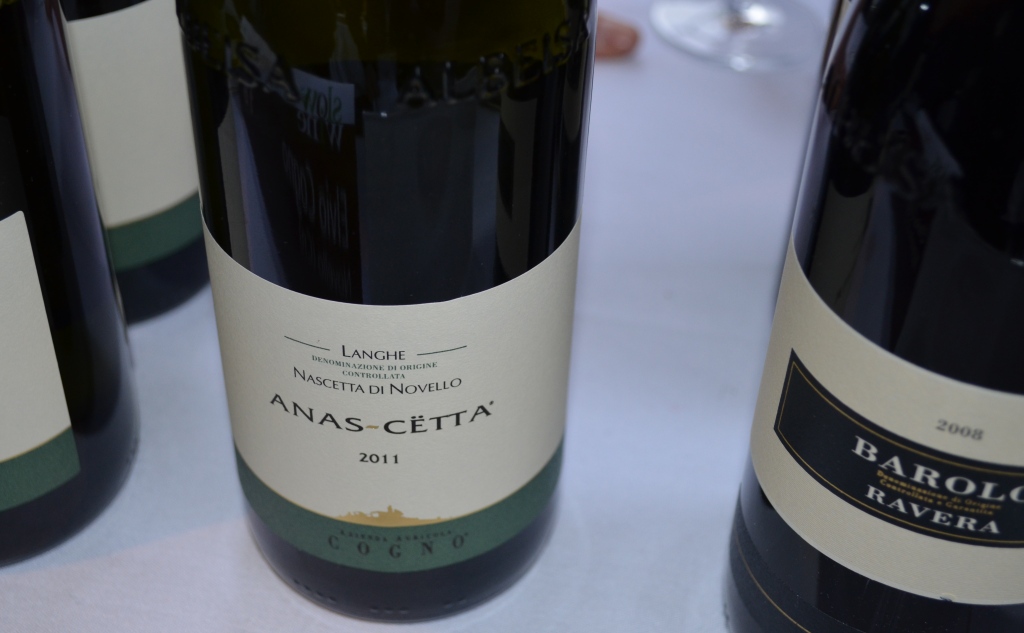
Elvio Cogno Nascetta
2011 Elvio Cogno Langhe Nascetta Anas-Cetta – bright white fruit on the nose, same on the palate, very balanced and refreshing.
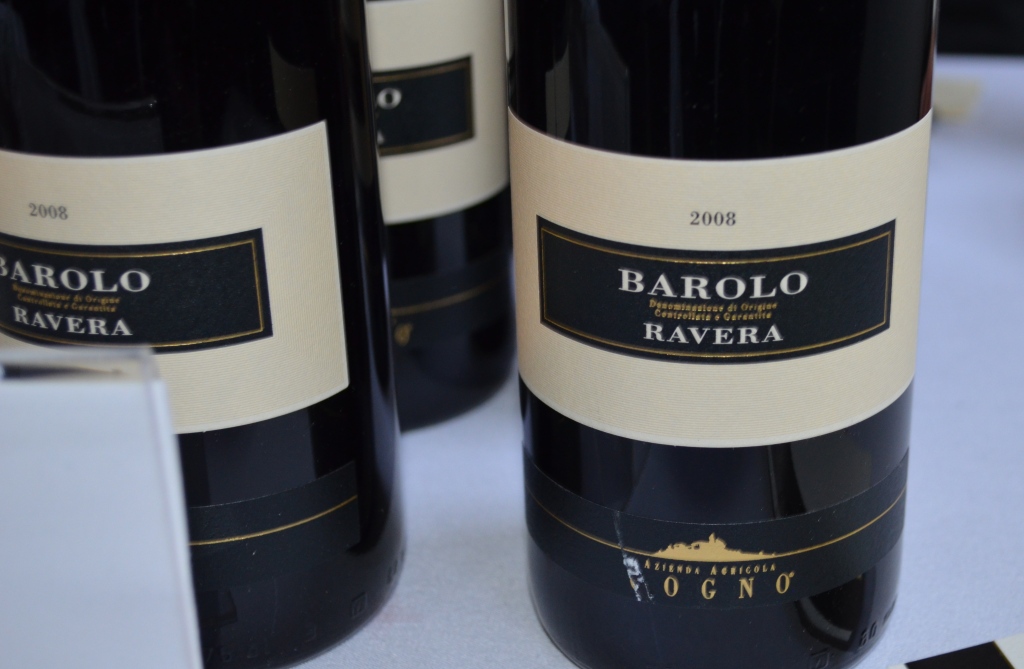
Elvio Cogno Barolo Ravera
2008 Elvio Cogno Barolo Ravera – so far it seems that 2008 vintage of Barolo is great across the board and the wines are very approachable from the beginning – perfect taste profile of Barolo (plums, minerality, earthiness) with the shot of tannins in the finish.
Liguria
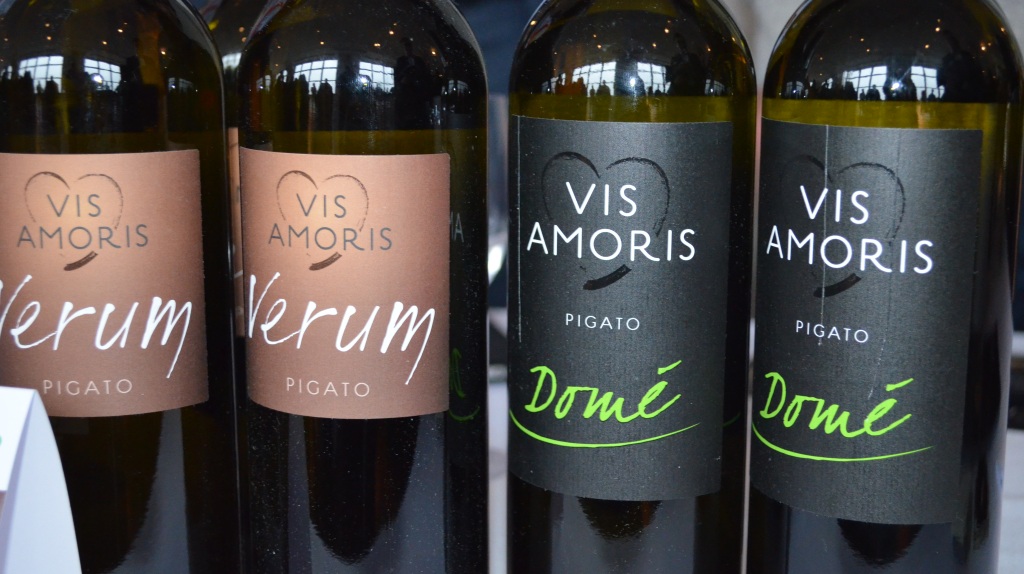
VisAmoris
I can’t tell you which of the two wines from Vis Amoris I liked more. 2011 Vis Amoris Rivera Ligure di Ponente Pigato Dome – beautiful, toned down fruit, soft and opulent, more in style of Rhone whites, very refreshing and balanced. 2011 Vis Amoris Rivera Ligure di Ponente Pigato Verum was a touch bigger and brighter, showing very soft tannins without being fermented in oak. Truly two wonderful white wines.
Lombardia

Ar PePe Nebbiolo
Two excellent Nebbiolo-based wines from Ar.Pe.Pe – 2001 Ar Pe Pe Valtellina Superopre Sassella Rocce Rosse Riserva and 2005 Ar Pe Pe Valtellina Superopre Sassella Ultimi Raggi. The 2001 Riserva was one of the most delicate expressions of Nebbiolo I ever tasted, but it was perfectly balanced and very enjoyable.
Veneto
Veneto = Amarone – okay, never mind, this is just my personal biased statement, Veneto is actually a home to many great wines outside of Amarone. But – once you taste Trabucchi wines, Amarone will be on your mind.

Trabucchi Valpolicella
While Trabucchi had only 2 wines listed in the book, they brought a substantial line of wines to the tasting. 2003 Trabucchi “Terre del Cereolo” Valpolicella Superiore DOC was probably the best Valpolicella I ever tasted – round, supple dark fruit expression, dark chocolate undertones, very balanced. 2007 Trabucchi d’Illasi Terra di San Colombano Valpolicella Superiore DOC, was very comparable, concentrated, round and again very balanced.

Trabucchi Amarone
While 2004 Trabucchi Amarone della Valpolicella DOC and 2006 Trabucchi d’Illasi Amarone Della Valpolicella were very good, 2004 Trabucchi d’Illasi Amarone Della Valpolicella Cent’Anni was spectacular. Perfectly balanced, without any “over the top” fruit, showing dry fruit flavors on the nose, and showing full bodied, balanced and very polished wine on the palate. Definitely a highlight of the event.
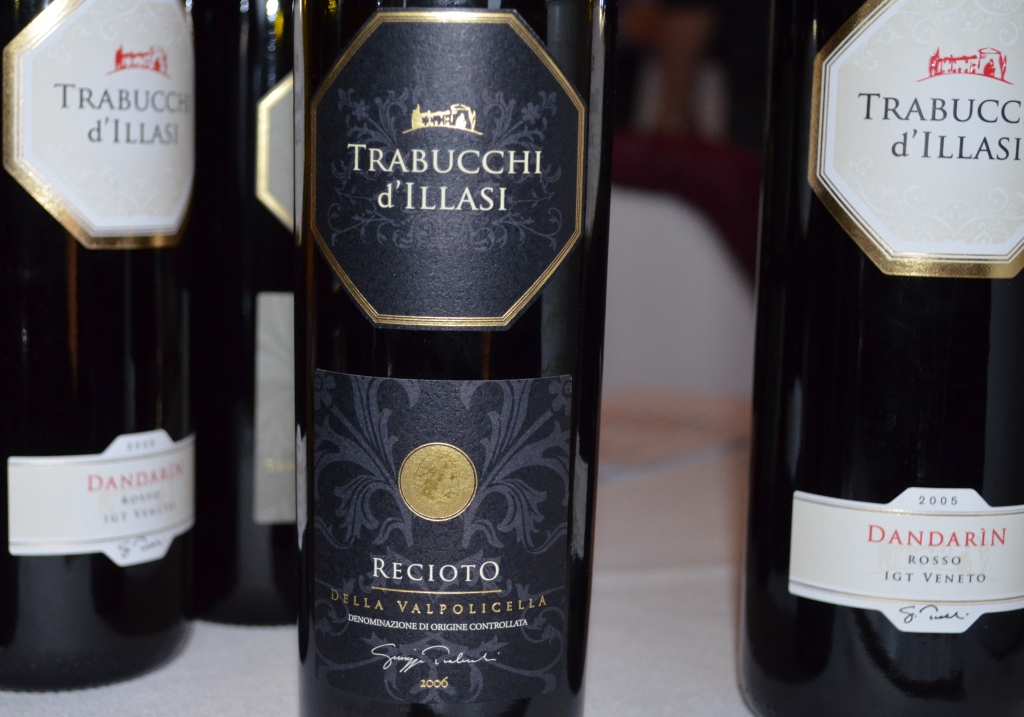
Trabucchi Recioto and Dandarin
2005 Trabucchi d’Illasi Dandarin Rosso Veneto IGT was quite unusual – a blend of traditional Valpolicella varieties Corvina, Corvinone and Rondinella, with 30% of Teroldego and Syrah – slightly different flavor profile compare to Amarone, but quite powerful and expressive. One of the true gems of the day was 2006 Trabucchi d’Illasi Recioto Della Valpolicella – grapes for this wine were dried for 6 month ( typical length of Appasimento process for Amarone wines is 110 – 120 days, i.e. up to 4 month). Tremendous concentration of the dried fruit ( figs, raisins), supported but vibrant acidity – you have to try this wine to believe it!
Before we leave Veneto, a quick stop in Soave, at Pieropan winery:
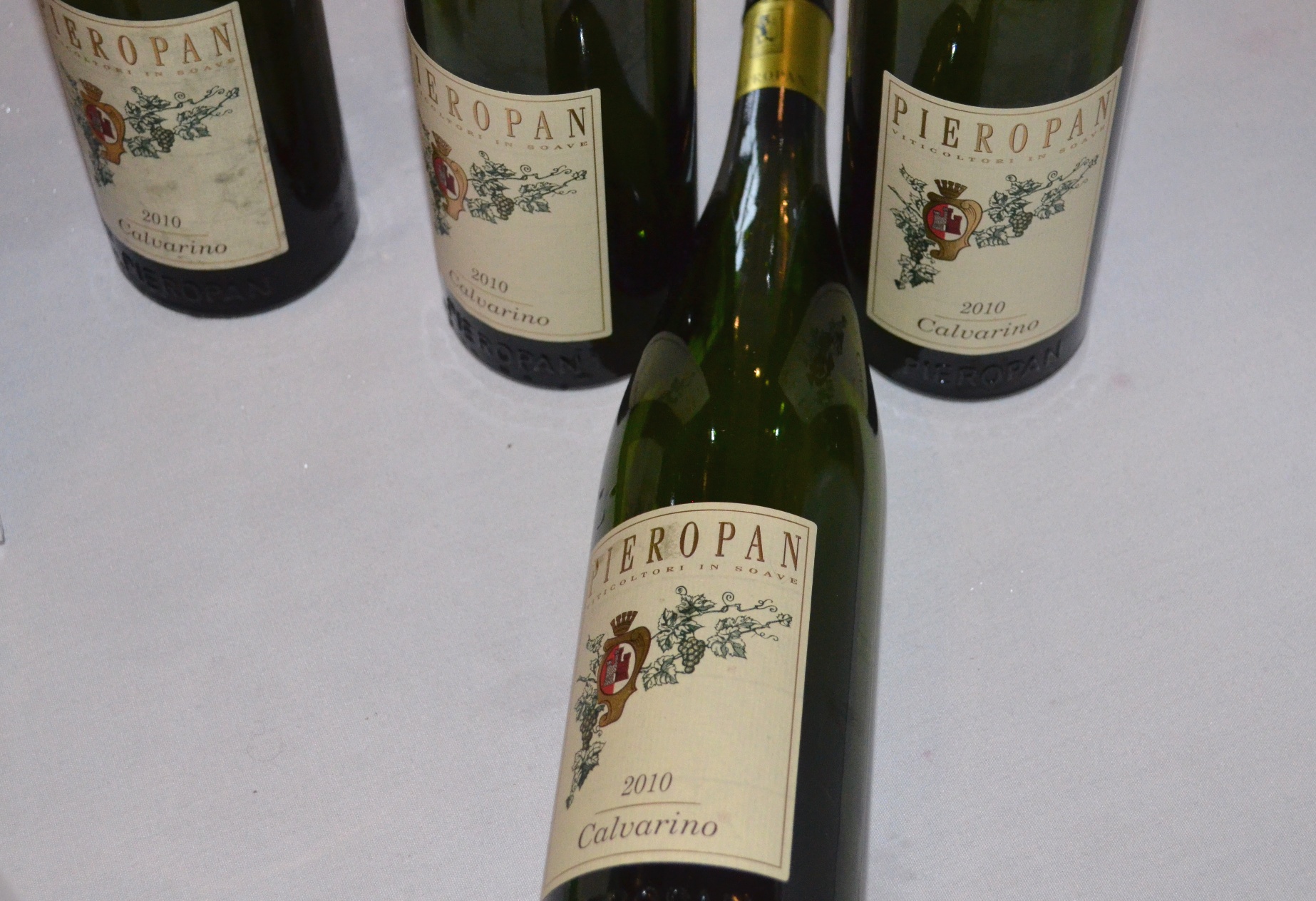
Pieropan Calvarino
2010 Leonido Pieropan Soave Classico Calvarino is a single vineyard blend of Garganega and Trebbiano – showing excellent minerality both on the nose and the palate, very round and refreshing.

Pieropan La Rocca
2010 Leonido Pieropan Soave Classico La Rocca is another single vineyard wine, 100% Garganega, showing more restrained fruit than the previous wine, as well as a touch of butter on the palate. Definitely a very nice wine.
Friuli Venezia Giulia
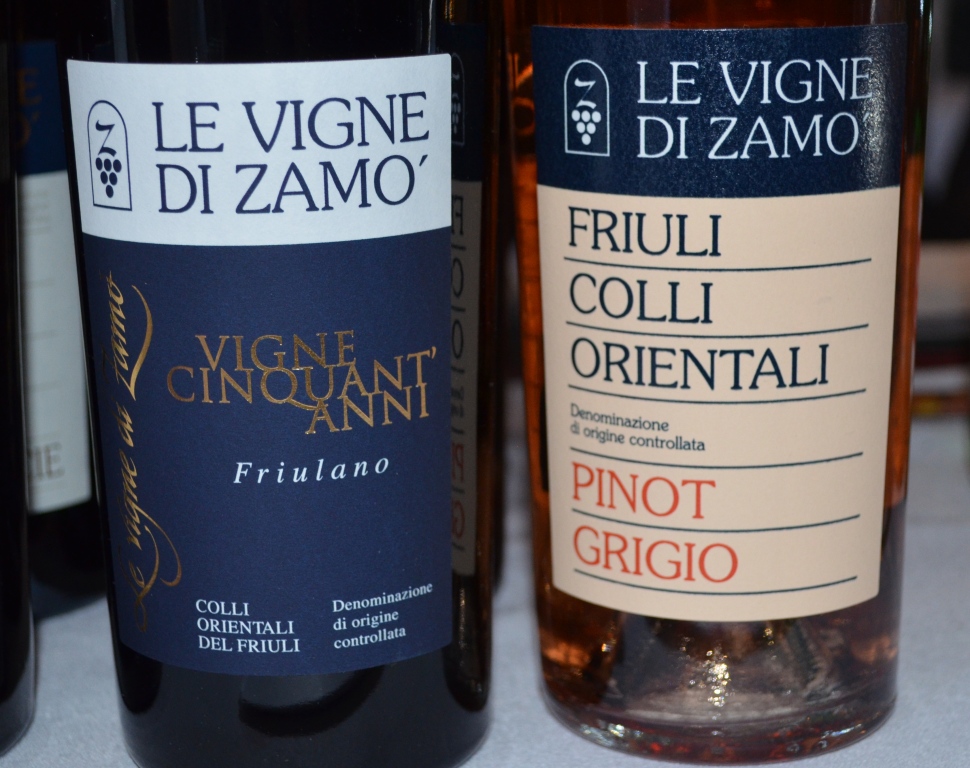
Le Vigne Di Zamo
Two beautiful wines from Le Vigne di Zamo in Friuli. 2010 Le Vigne di Zamo Colli Orientali del Friuli Friulano Vigne Cinquant’Anni ( that was one long name) had perfect nose of raisins, and supple, round white fruit on the palate, medium body and balancing acidity. 2011 Le Vigne di Zamo Colli Orientali del Friuli Pinot Grigio was one of the best Pinot Grigio wines I tasted in a while ( yes, I don’t drink too many of them), with good fruit and touch of minerality.
Toscana
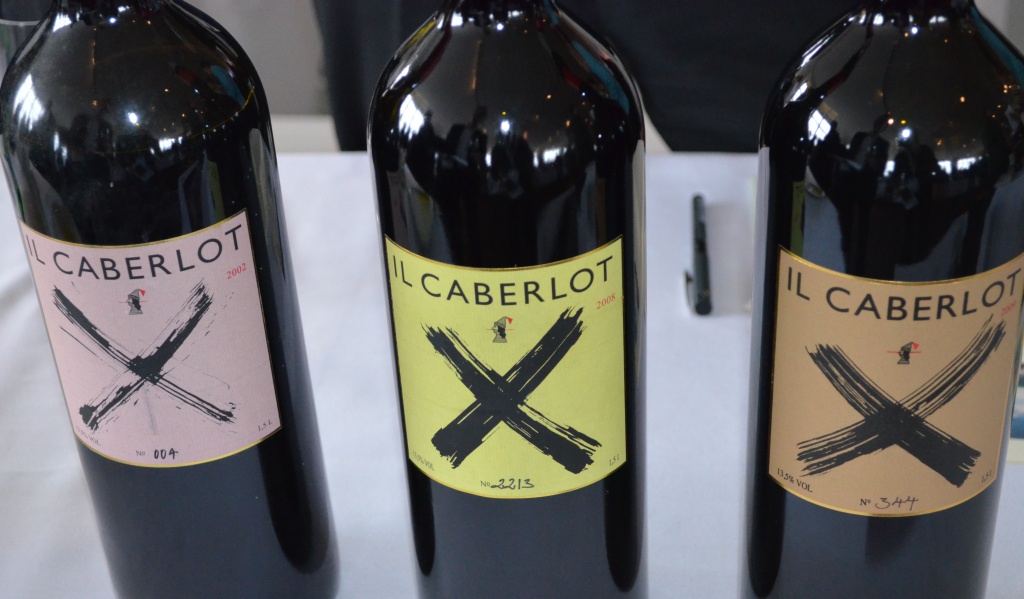
Caberlot trilogy
Podere Il Carnasciale makes only about 3,200 bottles a year, all in the magnum size. All made out of the grape called Caberlot, which is an officially recognized hybrid of Cabernet Franc and Merlot. All Magnums. And all magnificent. We tasted 2009, 2008 and 2004 vintages of Podere Il Carnasciale Caberlot – both 2009 and 2008 were somewhat similar, showing perfect trait of Cabernet Franc green profile with fresh raspberries. And 2002 was whole another story:

Caberlot 2002
Take a look at the number at the bottom of the label – we were drinking the bottle number 4! Tobacco, pepper, dark fruit and perfect complexity – a Wow wine without any doubts. I wish the wines would be a bit more affordable… May be someone wants to get me a present?
Umbria
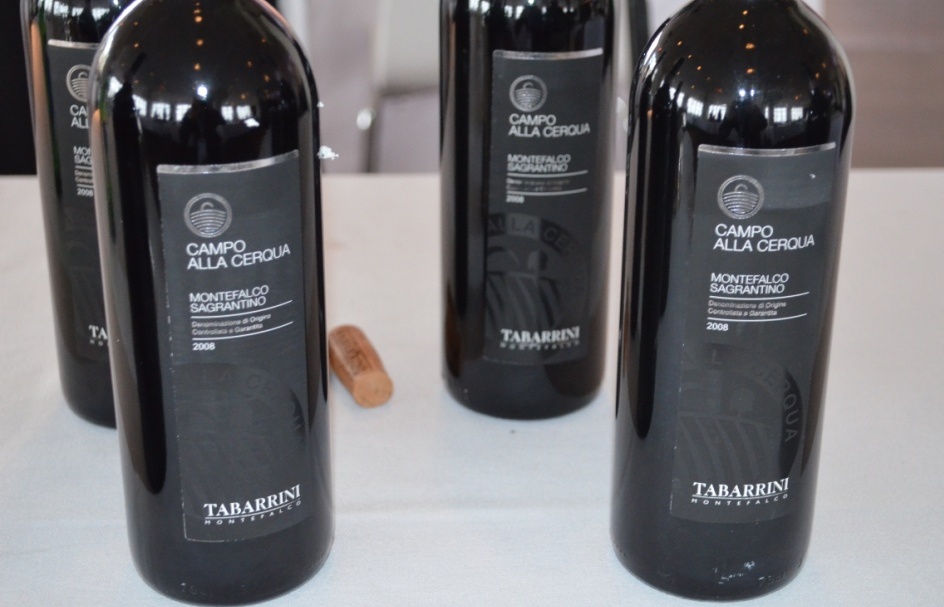
Tabarrini Montefaloc Sagrantino
We tasted two great wines from Tabarrini (yes, I know, I’m abusing “great” and “beautiful” in this post – but hey, these are the highlights – if I don’t think the wine was great, I’m not going to bother you with the detail…). 2010 Tabarrini Adarmando is made out of Trebbiano Spoletino, which is very different from the Trebbiano di Soave – Trebbiano Spoletino grows in the huge vines and it is a very late ripening variety (beginning of November). The wine had perfect acidity and bright fruit, somewhat of a citrus profile – very enjoyable. Next we tried 2008 Tabarrini Sagrantino di Montefalco Campo Alla Cerqua – perfect power, dark fruit, very balanced.
Marche
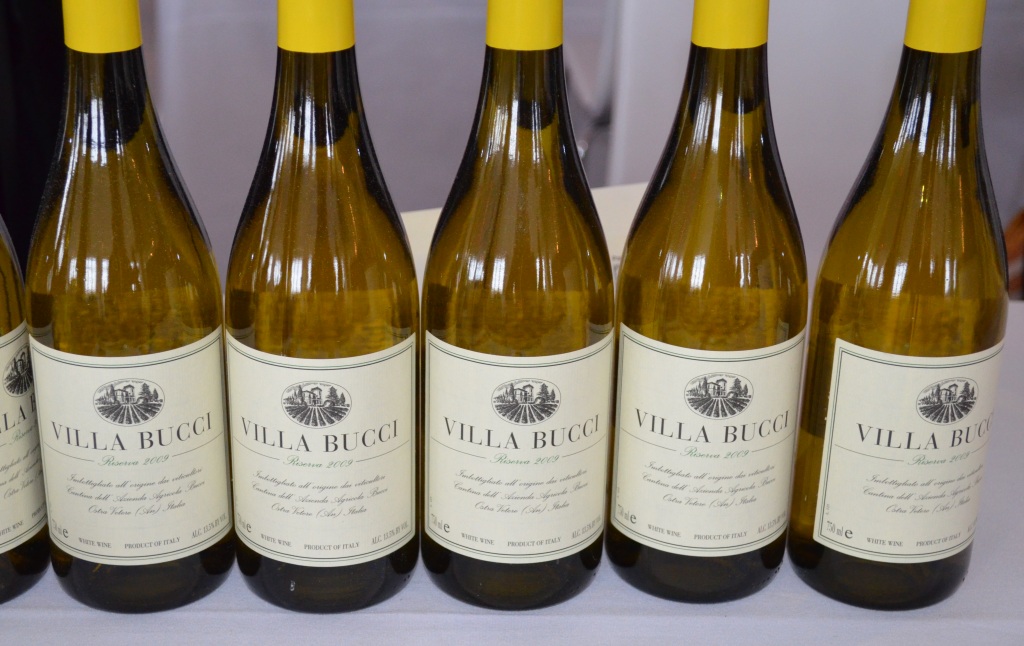
Villa Bucci
There were quite a few very good wines coming from Marche. 2010 Marotti Campi Lacrima di Morro D’Alba Superiore Orginolo was excellent, very open and food frendly ( or shall we say, food-craving), with very subtle warm fruit nuances. 2009 Villa Bucci Verdicchio dei Lastelli di Jesi Classico Riserva had perfect fruit on the nose and it was very light and refreshing. 2009 Villa Bucci Verdicchio dei Lastelli di Jesi Superiore had very good depth and clear fruit expression. Both Villa Bucci wines are expected to age very well.
Lazio
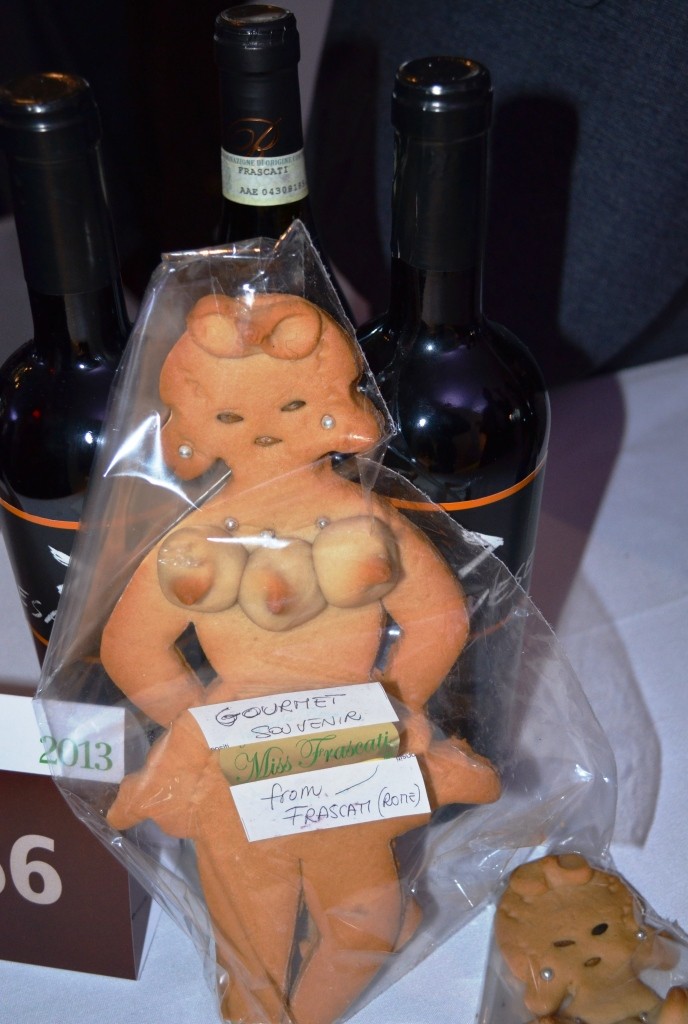
Frascati Girl
First, we found a very friendly girl.
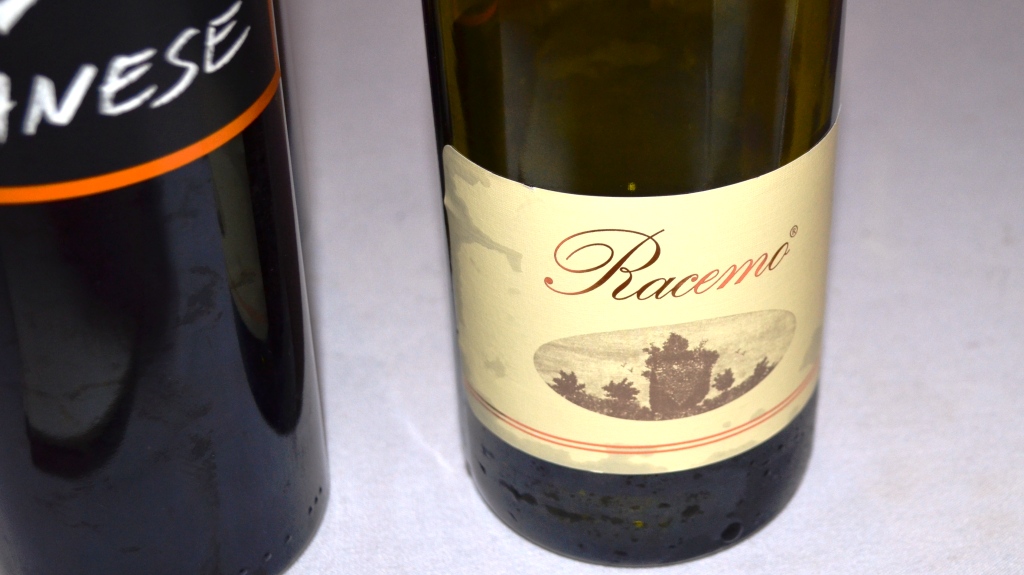
Frascati Racemo
Then we found an excellent white wine 2011 L’Olivella Frascati Superiore Racemo. This wine is a blend of malvasia puntinata, malvasia del Lazio, malvasia di Candia, tgrebbiano and bellone – the wine was very round, with excellent acidity and white fruit.
Abruzzo
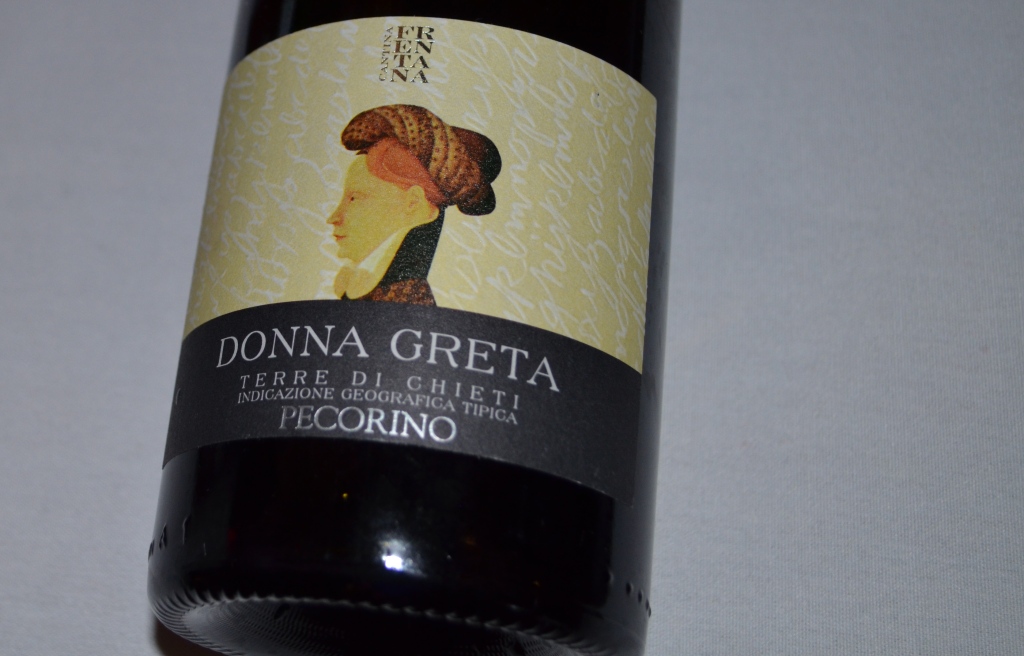
Donna Greto Pecorino
2010 Cantina Frentana Pecorino Donna Greta is 100% Pecorino. Very long maceration ( 8 month) allows to achieve a very nice complexity. White fruit, touch of minerality, good balance.
Sicilia

Planeta wines
Last, but not least for this post – Planeta from Sicilia, one of the best Italian producers overall. 2010 Planeta Cerasuolo di Vittoria Classico Dorilli – beautiful nose, fresh fruit, strawberries on the nose and the palate. 2011 Planeta La Segreta had very nice nose of dark fruit, and perfect dark fruit expression on the palate. 2008 Planeta Santa Cecilia was soft and approachable, with nice soft fruit.
Aren’t you tired yet to look at all these pictures and enjoy all those wines vicariously? There were lots more of excellent wines presented at the event – but we have to call it a post. That’s all I have for my Vinitaly and Slow Wine report, hope you got the idea of what was happening at the event. The next event post I will be writing about Gambero Rosso, and I believe it will be even more difficult that this one. Until that time – cheers!
Vinitaly and Slow Wine Tastings – Part 2, Wine Seminars
This is the second post about my experience at Vinitaly and Slow Wine 2013 in New York. In the first post I only gave you some interesting stats. Now, it is time to actually talk about wines.
Attending big wine tasting is great, wine is everywhere, and lots of it – at the same time, it is also very challenging. You can’t really assess wine methodically, it is more of a “swirl (carefully), sniff, sip, suck air, spit” – in case you wonder, “swallow” is typically not the part of the process, otherwise your tasting will be very, very short. After “spit” goes “write a word, may be two or three”, and move on, either to next wine or to the next table. No, of course I’m not complaining, just explaining that as usual for this type of my “tasting posts” there will be lots of pictures, and a few words.
We – oh yes, let me explain “we” – I spent all of the time at the event with Stefano of Flora’s Table fame (by the way, Stefano also just started the new blog called Clicks & Corks – be sure to check it out). Stefano is a wealth of knowledge and a pleasure to be around – if it would not be for him, I’m sure I would miss out on a number of gems at this tasting.
Now, let’s start again . We spent most of the time in the Slow Wine section of the event, with the exception of two wine Master Classes and a few wineries in the actual Vinitaly section. Let me start from the seminars, and then we will talk about other wines (probably in yet another post).
The first Master Class was a vertical tasting of Nino Negri ‘5 Stelle’ Sfursat di Valtellina DOCG, a wine made out of Nebbiolo grape. Both Stefano and myself took care of pre-registering for this seminar (when I came to register, I got one of the last 3 seats). No matter. In addition to registration, program also mentioned that Master Classes are first come first serve events. So, do you think our registration helped us? Yep, you got it – not really. When we arrived about 15 minutes before the starting time, we were told that the room is full and there are no spaces left. Well, based on the fact that we had registered, we ignored the guy who was trying to stop us from getting inside of the room. But the room was full. No seats. And it is not that you need just seat – you also need a place for 6 glasses in front of you. I was witnessing a futile attempt of one of the organizers to remove two people who were sitting down and had no tickets. Nope, that was not happening. So when one wants to taste wine, this is what the one wants, right? Luckily for us, the place had very wide window seals. Stand by the window, get 6 glasses, ask for the wines to be poured. Actually, I have to say that service staff was super nice and super accommodating – we all got tasting placemats and we all got wine. Here are few pictures:


Just look at this bottle… Unfortunately, the wine was oxidized. But the bottle was way too cool.
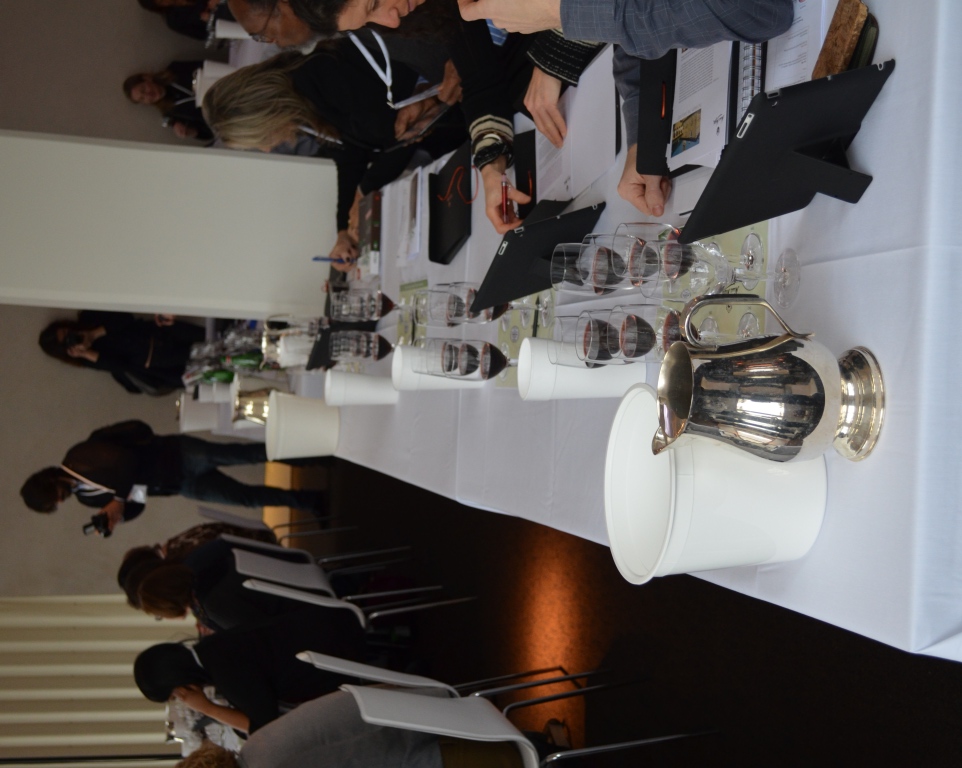
No tickets, but hey, who need tickets when it is first come first serve…
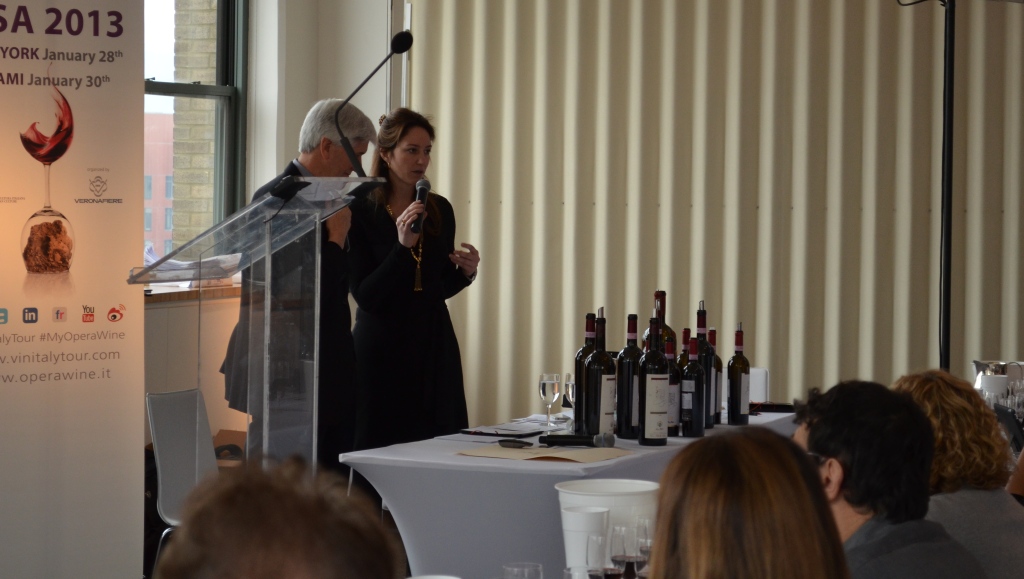
Casimiro Maule, Oenologist at Nino Negri, presents the wines. In 2007, he was awarded the title of “Winemaker of the Year” by Gambero Rosso
Nino Negri winery started in 1897 in the Valtellina region of Lombardy, in the area of Alps close to the Switzerland. This location makes harvesting of the grapes very difficult – actually, a helicopter is used nowadays to transport crates with grapes from the vineyard to the winery – here is a short video in case you want to see how the harvest looks like:
Nino Negri estate makes many different wines out of Nebbiolo grape. The wines we tasted, ‘5 Stelle’ Sfursat, are only made in the best years, and they are done in the style similar to Amarone. After grapes are harvested, they are dried outside for 100 days before they are pressed. During these 100 days, grapes are sorted a few times, and all the grapes which don’t cut it are used to produce some other wines. After 100 days of drying the grapes are pressed with subsequent long maceration, and then aged for 18 month in new French oak barriques and 6 month in the bottle. Note that all these wines are not for the faint at heart – they boast 15% – 16% ABV.

Just look at the beautiful color
Here are the notes for the wines we tasted, in the order we proceeded:
2009 – Prunes, brick dust on the nose, pretty green on the palate, very light for Nebbiolo, good minerality, short finish. Better on the second try, but too watery. Probably needs time.
2007 – According to the winemaker, 2007 was a great year. But – this bottle was oxidized. Some prunes on the palate, tasted more like a dry sherry than a normal wine.
2004 – this year had low yield, and drying season was very difficult. But the wine had nice power, good minerality, good tannins, long finish.
2002 – Prunes on the nose, with some raisins, soft, round, dark roasted fruit on the palate, tobacco, savory herbaceous notes, great balance, overall very nice.
2001 – Perfect beauty! Supple, round, with only a hint of dried fruits on the nose, perfectly balanced, really a outstanding wine. Hell with the rest of the tasting – need a full glass of this one to enjoy. Best of tasting.
1997 – This wine was as good as 2001 – more herbaceous notes than fruit, but perfectly elegant. Dried fruit on the nose (more than the previous wine), graphite and tobacco notes on the palate. Great complexity, balance and elegance. Borderline better than 2001 ( wait, didn’t I just called 2001 “best of tasting” – yeah, I always have trouble with making up my mind…)
All in all, tasting through the vertical of Nino Negri ‘5 Stelle’ Sfursat wines was a special experience and I’m grateful to organizers for making it happen – the beauty of the wines overweight the logistical challenges.
At the end of the day, we attended another seminar, this one dedicated to the wines made on Volcanic soils of Italy. We were preregistered, at this point knew what to expect, ready for a fight and this time got the seats.
If you look at the map below (maps were provided as part of the seminar):

Map of Italy’s Volcanic Wines
there are many volcanoes all over Italy, including even some of the active ones, like Etna in Sicily. Volcanic environments are uniquely different for all the things growing, vines included, and this whole “volcanic wines” project is dedicated to researching the effect of the volcanic soils on the resulting wines. It is also interesting to note that at this point, the whole project is only dedicated to white wines ( and I was hoping to taste some reds).
All together, we tasted 9 white wines:
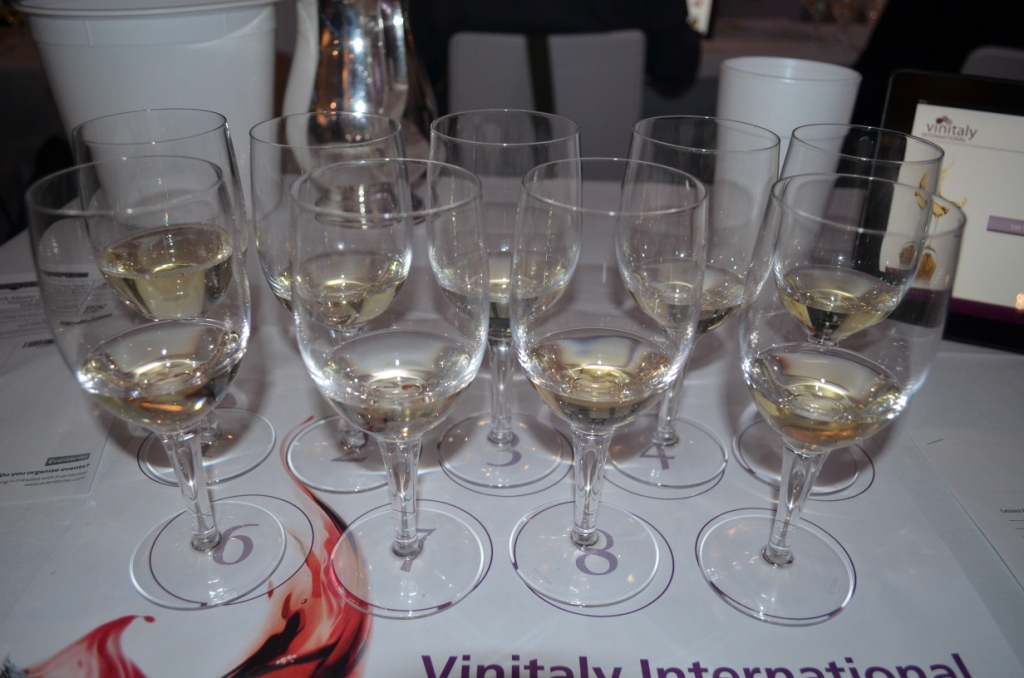
Overall, I wouldn’t say that I was super impressed with the wines. Some wines were better than the others, but there were no OMG moments. Here are the notes for my favorites:
Azienda Marcato – Lessini Durello Metodo Classico 36 Mesi NV – this was the only sparkling wine in the tasting, and it was outstanding. A blend of 85% Durello, 10% Chardonnay, 5% Pinot Nero, 12% ABV. Apple and toasted bread on the nose, nice minerality, smell of granite. Perfect minerality on the palate, very dry. Excellent.
2011 Cantina del Castello – DOC Soave Classico “Pressoni” – a blend of 80% Garganega, 20% Trebbiano di Soave, 13.5% ABV. Nice nose of lemon, green apple, good acidity. White apple and pear on the palate, good acidity, nice lemony aftertaste.
2011 Barone di Villagrande – Etna Bianco Superiore – 100% Carricante. Nice nose with minerality and some saltiness, very dry on the palate with pineapple aftertaste.
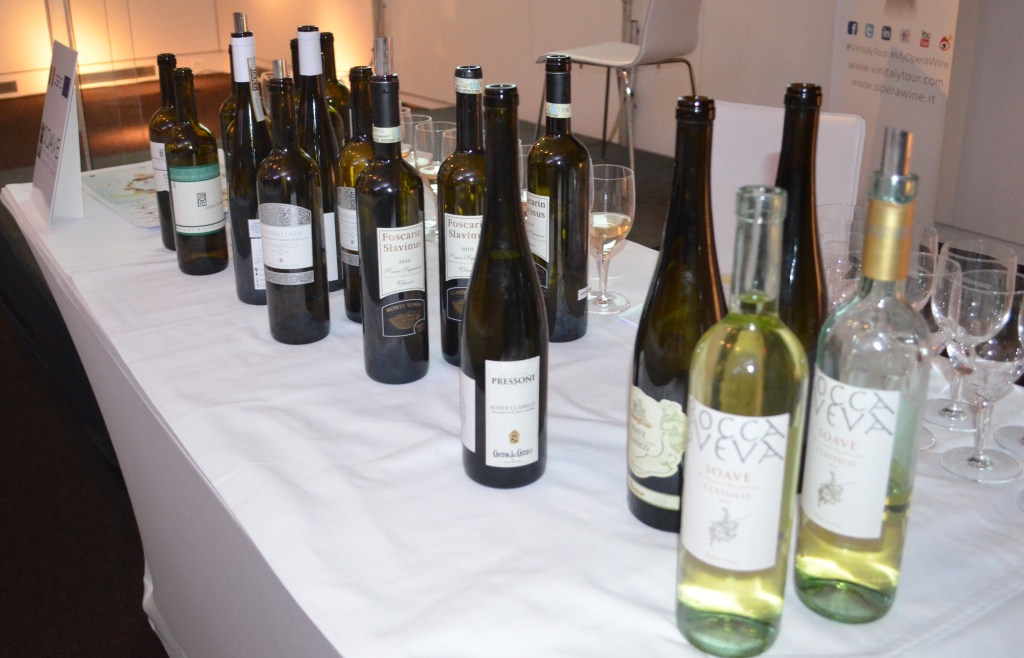
That concludes the part 2 of the Vinitaly experience. In the part 3, I will (finally) tell you about the wonderful wines we experienced at the event. Cheers!
Last Bottle Sign Up ($10 credit)





