Archive
Meet The Winemaker, Get Your Bottle Signed, Now What?
You come to the wine tasting, meet the winemaker. Talk about vintage, talk about history, taste the wine, get very excited, taste another wine, get even more excited, get a few bottles, and the winemaker signs them for you. So far so good, right?

d’Arenberg bottle, signed by Chester Osborn
You come home, put the bottles in the cellar. Now the time comes, and you remember that great wine you put aside to be enjoyed later. And you decide that the moment is now. You get the bottle. And it has a winemaker signature on it!!! Is it still the bottle of wine? Yes, but now, it is also the memorabilia! What now?
Yes, you can keep the signed book, baseball or baseball card, a cap, a painting and many other objects … forever!. You can take them out, show to the friends, tell the stories, rehash the memories, re-live the moment, pass those mementos from generation to generation if you wish. But wine? What do you do with the wine?

Another signed bottle I have – might be past prime already!
Drink the bottle and keep the empty, proudly displaying it (yeah, really not sure about that one)? Never open the bottle and keep it as is? But it is wine. It will not be good indefinitely…
So, what would you do? I’m asking this question as a generic one, not pertinent to the bottles I have. What would you do or what do you do with the signed bottles you have?
Happy Friday, friends. Cheers!
Screw Top Versus Cork – The Jury Is Still Out
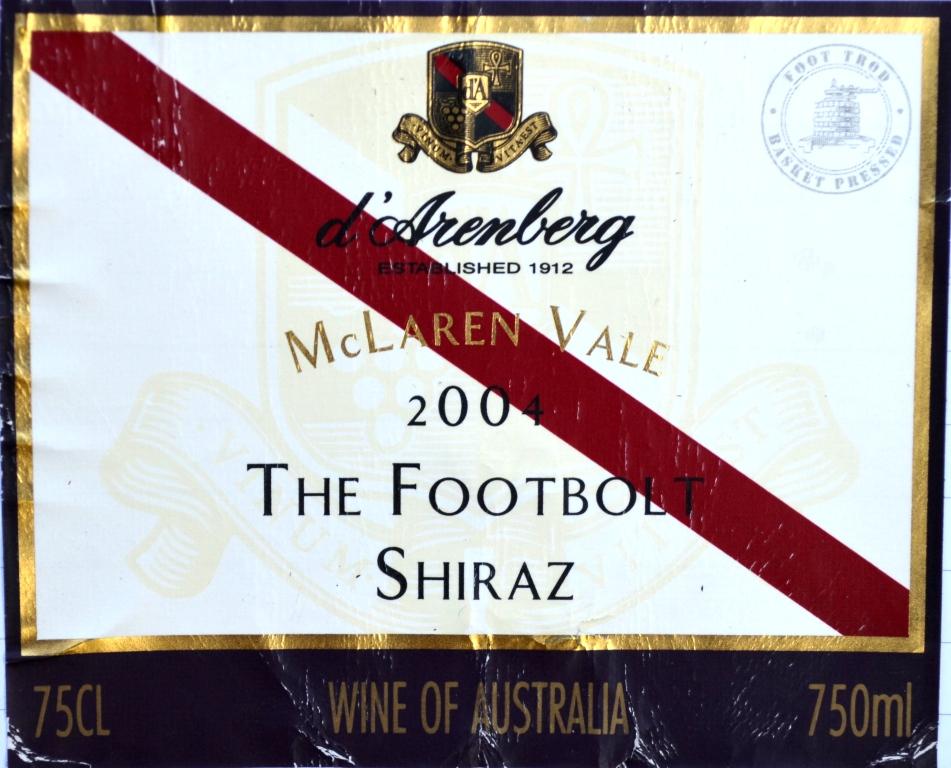 Inadvertently, I run an experiment of cork versus screw top, and the results were interesting enough to discuss them here.
About a week ago, I pulled out of the cellar (which is actually a wine fridge) the bottle of 2004 d’Arenberg The Footbolt Shiraz MacLaren Vale from Australia (14.5% ABV). As I confessed in my blogging addiction in the recent post, before the bottle is open, in addition to just regular anticipation of wine experience itself, now I have added anticipation of the possible blog post which can be written based on the wine experience.
Or not. There are many possible was for the experience not becoming a blog post. Too many things to write about, too little time. Or you just hit the “writer’s block”. Or the experience is not worthy of being captured. Which was the case with this Shiraz.
d’Arenberg is a well known Australian winery, which just celebrated 100 years last year, producing substantial range of typical Australian wines, such as Shiraz, Grenache, Chardonnay, Cabernet Sauvignon and more. I had pleasure of meeting Chester Osborn, d’Arenberg’s winemaker in third generation, and even have couple of bottles with his signature in my cellar (by the way, what do you do with those signed bottles? I should make a separate post to discuss this interesting question).
Now, I didn’t know what to expect from this bottle of Shiraz. The Footbolt is one of the introductory level Shiraz wines from d’Arenberg, but that doesn’t mean anything. Cork is out (regular cork, just keep reading to see why it is important), and judging by the color alone, this wine didn’t reach its prime yet – dark ruby in color. But the nose and then the palate were inconclusive. Acidity would jump up and down with every sip, and while the wine had enough fruit, it was simply not getting together, definitely lacking the balance which is all so important for me in the wine. So, based on this wine alone, the blog post was not born.
And then yesterday I pulled out another bottle of d’Arenberg wine from the same vintage:
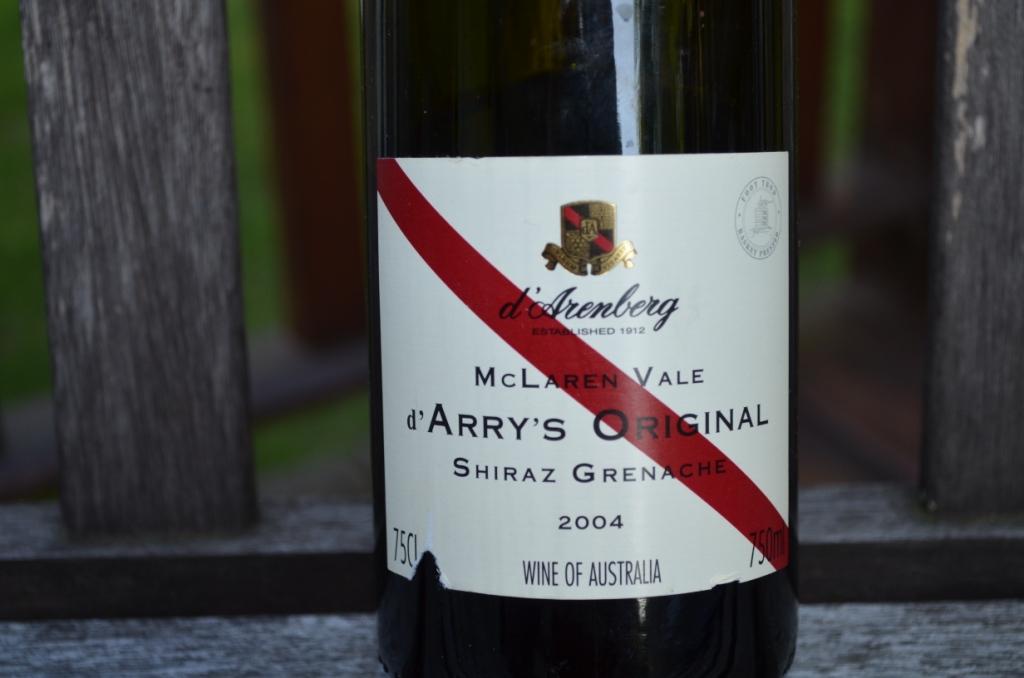
d’Arenberg Shiraz Grenache
2004 d’Arry’s Original Shiraz Grenache McLaren Vale (14.5% ABV) – a blend of 50% Shiraz and 50% Grenache . With the screw top. That was an “aha” moment. Same vintage as the previous wine – but wit the screw top – how different the experience will it be?
No “pop” of the pulled cork. Just a quiet “tsk-tsk-tsk” of unscrewing the top. In the glass, this wine looked like it was made yesterday – dark ruby, very concentrated color. From the get go, the wine showed beautiful fruit on the nose, ripe plums, equally supported on the palate with fresh fruit and energetic acidity.
About 45 minutes or so later, when I poured another glass, the wine tasted almost sweet – the thought was “what happened”? This was a totally a different wine compare to the way the wine started. Another half an hour or so – and we were presented with the new wine again – dark concentrated fruit, firm structure, tannins and acidity all summing up into a gorgeous balanced wine.
Wine ageing in the bottle is typically associated with the tiny inflow of oxygen through the cork. In case of screwtop, the oxygen doesn’t get to the wine at all. Thus my theory is that once you open a bottle under the screwtop, the very quick ageing process starts off, which takes the wine through the different “taste stages” in the rapid succession. Then at the same time, the wine is changing its taste in the glass no matter what, so may be that rapid taste changing has nothing to do with the way the bottle was closed.
Ideally, of course, I would love to compare two identical bottles (same wine, same vintage), only one closed with the screwtop and another one with the regular cork (I believe I actually read about some producers who are doing that). In this experiment, the Shiraz Grenache under the screwtop was a clear winner, but it is hard to tell what it has to do with the screwtop versus regular cork versus the two wines being just differently made.
I guess I can end this report with the words “to be continued…” – and I would love to hear your thoughts. Cheers!
Study of Port: Epilogue
What starts with prologue, should end with epilogue, right? What was supposed to be may be one or two posts, became a whole series. In case you missed any of the posts, here is a full list for the study of Port series:
Finally, let’s talk about Port!
What else can I tell you? We had a great week in Portugal. Very short conclusion can be “great people, great food, great wines, great scenery, great time”.
All people we came across were very nice and helpful. Language barrier was never an issue (I also have to mention that a lot of people speak very good English) – one way or the other we were always able to understand each other. Hotel, restaurants, port houses, stores, our numerous walking tours will only stay in memory with great people encounters.
The food? Very good quality, very reasonably priced. Memorable moments? Bacalhau, Francesinha, lots of fresh fish and shellfish of all kinds. Tuna fish spread is served in almost all restaurants with the bread (you need to ask for butter). Port is available at the buffet breakfast in the hotel, next to the orange juice. Below is the best representation for you (sorry if I make you hungry):
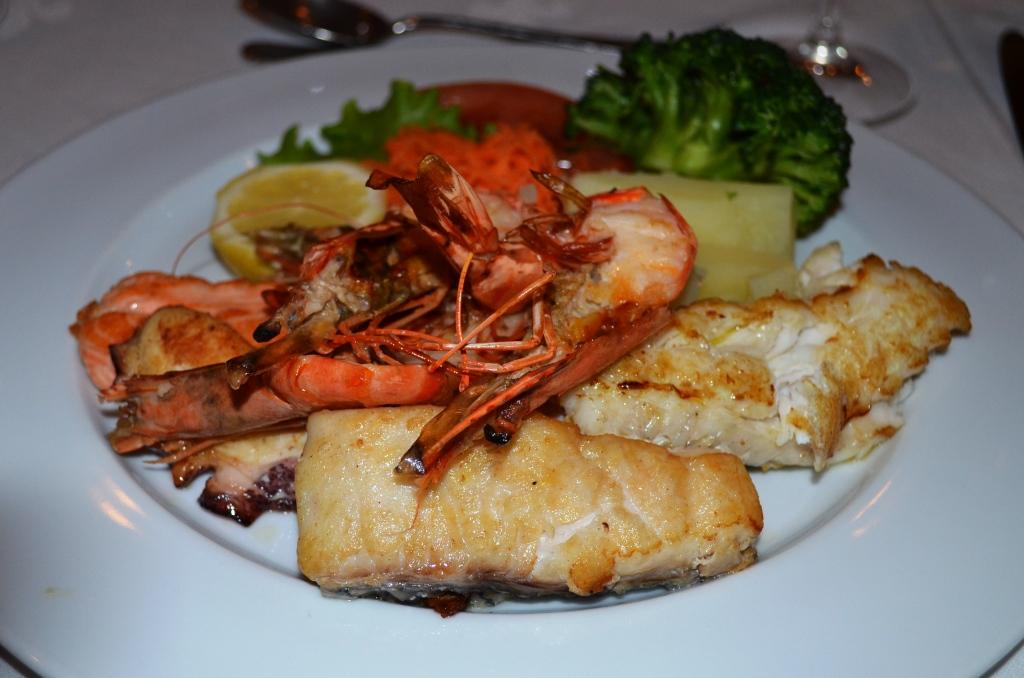
Portuguese Seafood
But probably the most important part about the food in Portugal is the fact that Portugal practically doesn’t import any agricultural products – everything is either produced, caught or raised locally, and you can taste it.
When it comes to wines, the story becomes interesting. First, there are about 80 grape varieties growing in Portugal, most of them are indigenous grapes. Here is a glimpse for you, as captured in the picture below:
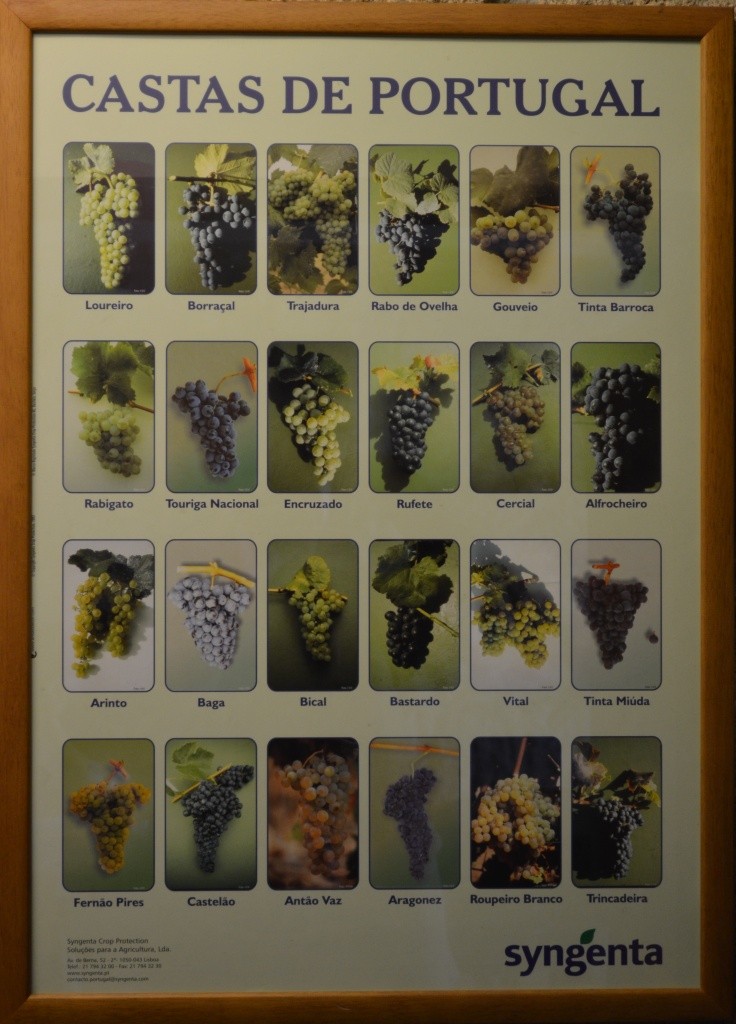
Portuguese Grape Varieties
By the way, these unique grapes are a great find for all aspiring Wine Centurions – I personally added 5 new grapes to my list – here they are:
Codega do Larinho – 2011 Castello D’Alba from Douro
Rabigato – 2011 Castello D’Alba from Douro
Moscatel Galego Branco – 2012 Portal Colheita Branco Douro DOC
Antão Vaz – 2010 Herdade Dos Grous Branco Vinho Regional Alentejano
Donzelinho – 2011 Niepoort Tiara Douro Branco
Outside of Port, very few of the Portuguese wines make it to US, and out of those few, there is even lesser number of wines of notice. Meanwhile, if you will make it to Portugal, you will be literally astonished by the availability of very inexpensive and absolutely delicious wines, both in the stores and in the restaurants. I already gave you my account of great wine encounters in the previous posts (Quinta do Cardo, Niepoort Tiara, Quevedo Vintage Port), but I actually saved the best for last – 2009 Casa Burmester Reserva Douro DOC (blend of Touriga Nacional, Touriga Franca and Tinto Roriz) was an absolute highlight of the red wines I tasted during the Porto trip.
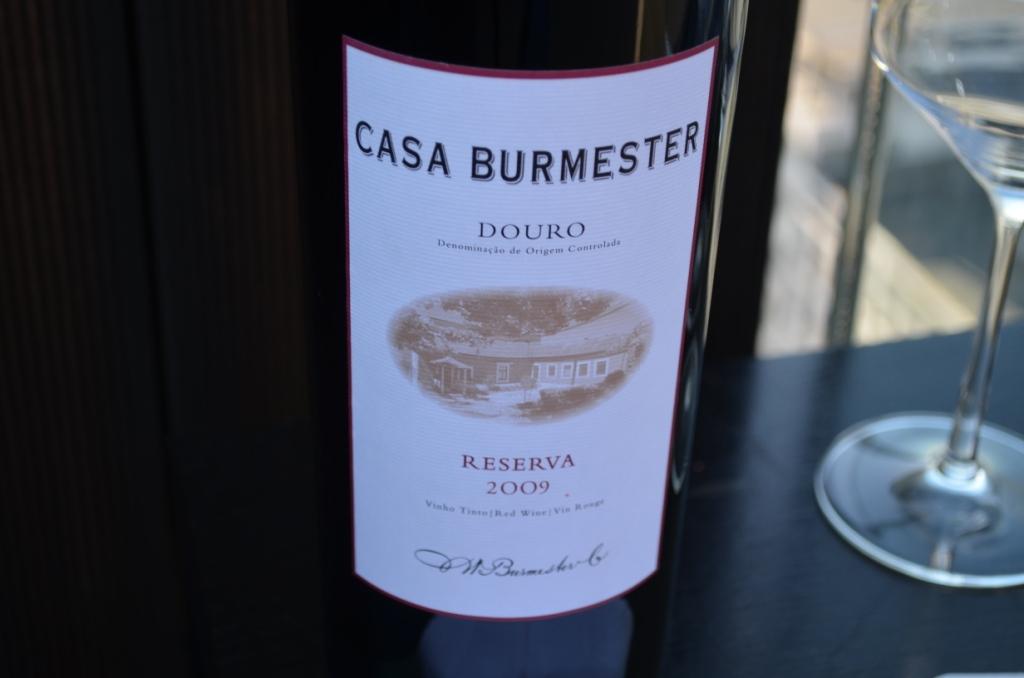
I don’t want to even describe this wine in terms of berries, chocolate, coffee, spices – it had everything, but the major thing about this wine was an absolute balance of fruit, structure, power, acidity, tannins – all the elements which make you go “wow” after the first sip where perfectly there. I can’t give you one to one analogy for the way this wine tasted, but to give you an idea of how impressed I was, I would safely put it in one line with 2000 Chateau Margaux, Vega Sicilia Unico and Vintage Krug Champagne. In case you are curious about my rating, this wine gets Drinkability: 9.
I believe I sufficiently inundated you with the pictures of the beautiful scenery, but let me still add a few more:
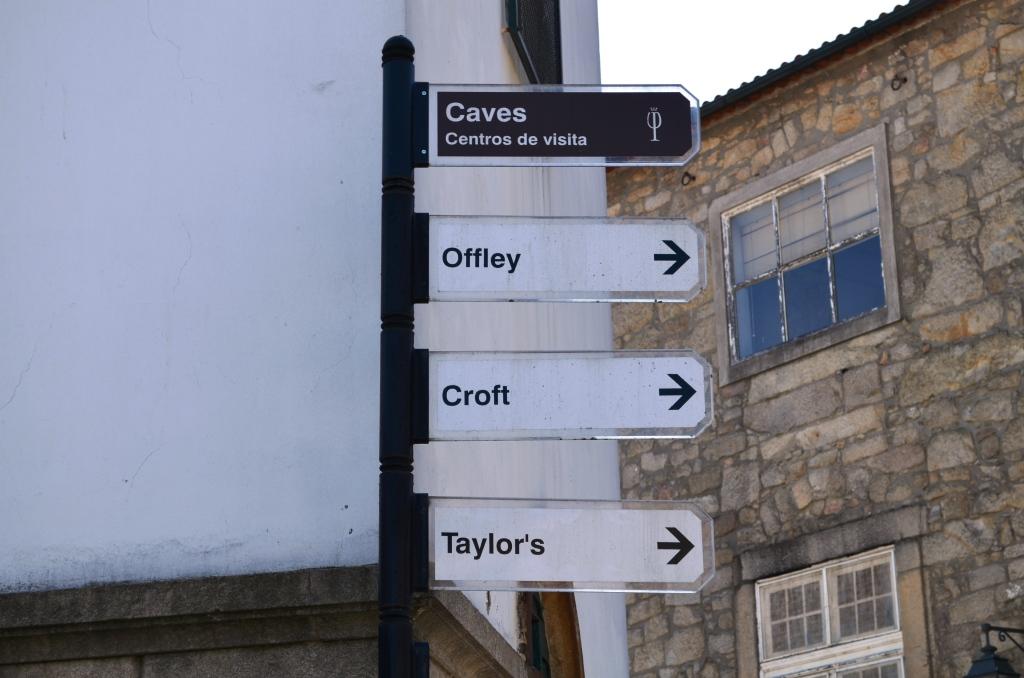
All roads lead to Port…
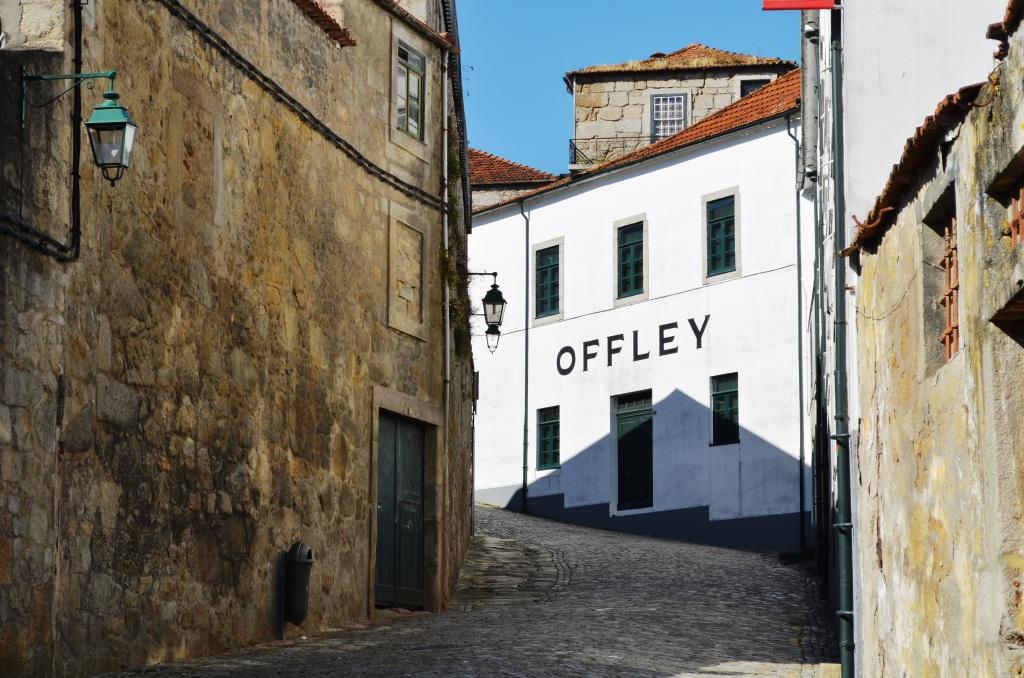
Awakening and Anticipation …
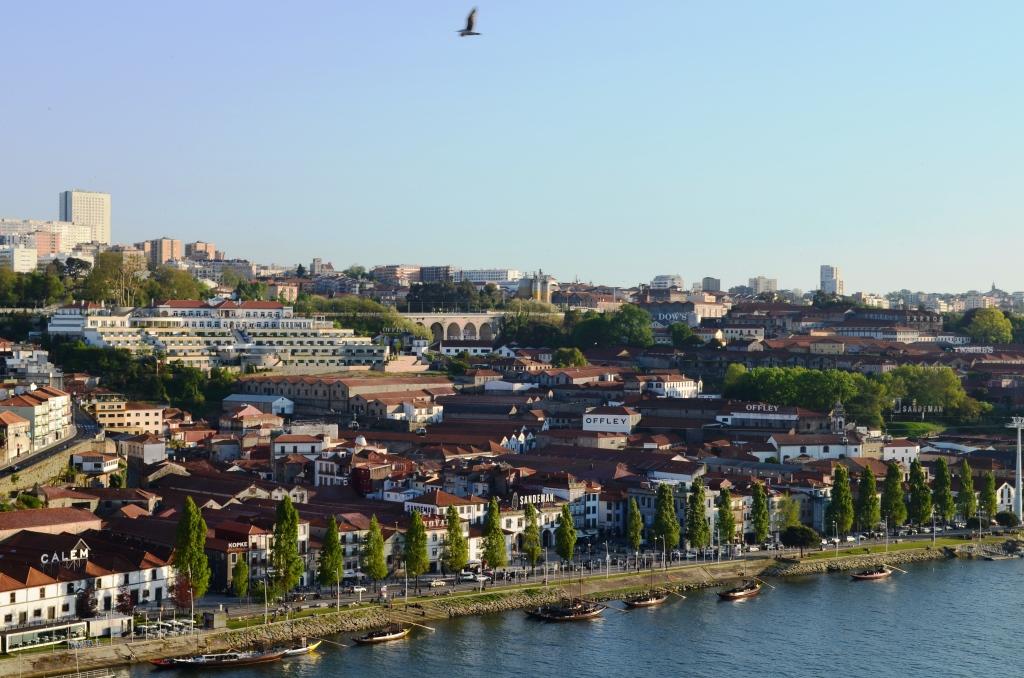
Vila Nova de Gaia
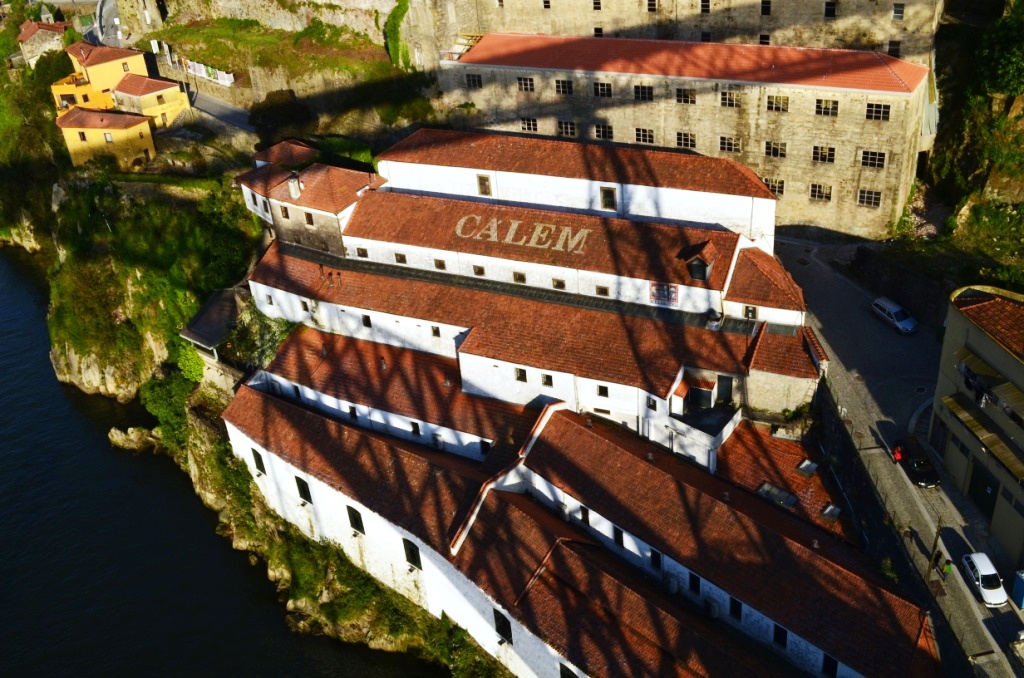
Port caves – view from above
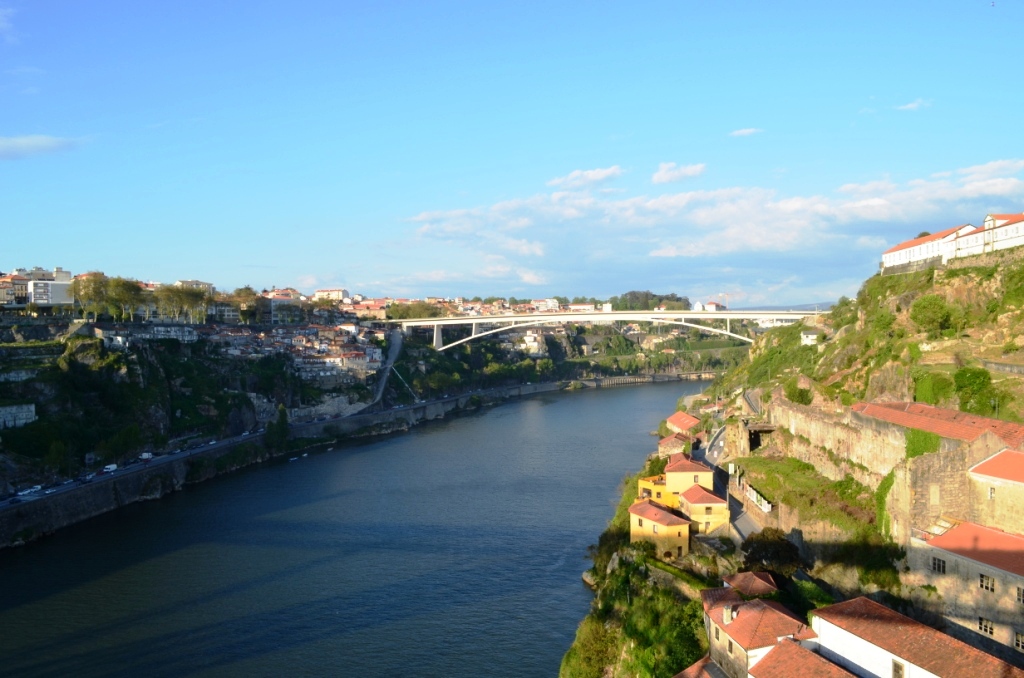
Douro River view
Time to finally conclude the series. I don’t know what you think, but I really enjoyed writing all these posts. I also saw a lot of happy comments, including those where people said that they will definitely go and visit Portugal (which will be very smart, if you ask me). If you will actually travel to Porto, I hope you will find some useful information here. And in any case, thanks for reading and cheers!
Study of Port: Finally, Let’s Talk About Port!
Finally, we’re arriving at the culmination point of our Study of Port cycle (here are the links to the previous four posts – post 1, post 2, post 3, and post 4). You probably noticed that while the cycle is called “study of port”, we talked very little about Port wines themselves.
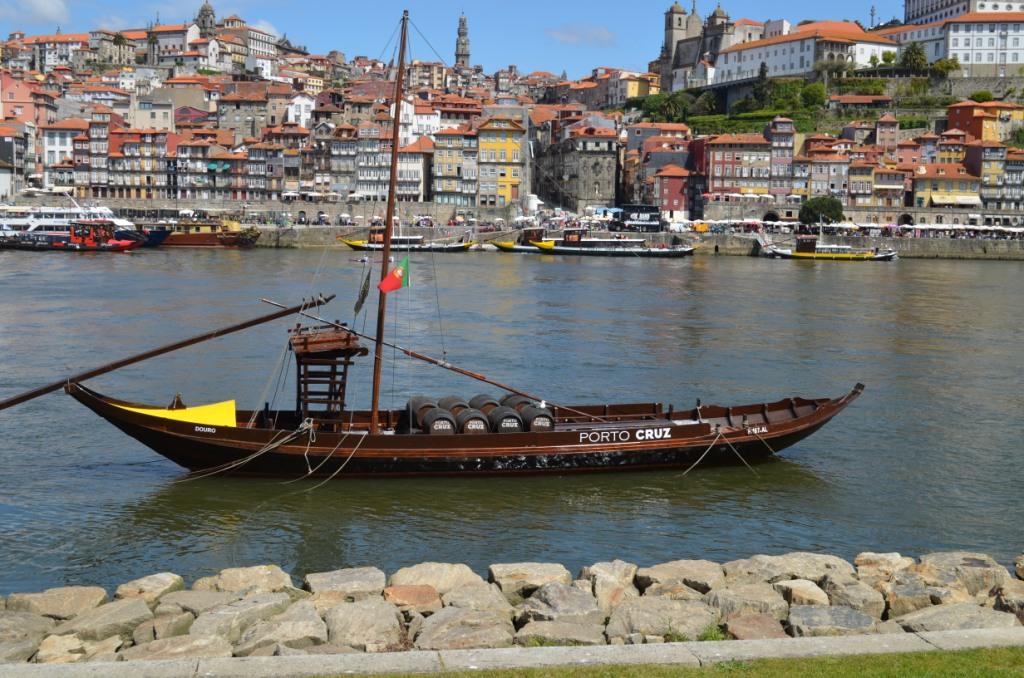
Port Transporter, called Rabelos, now only used to carry around the tourists
For me, Port is one of the most difficult subjects in wine (of course Burgundy classification and German wines are the crown jewels of “difficult wine subjects”). There are many different styles of wine, overall still collectively called Port. There are Ruby, Tawny, non-vintage, Vintage, Late Bottled Vintage, 10-, 20-, 30-, 40- years old ports, all available in the wide pricing range. On top of everything, Port is considered to be a dessert wine, and at a certain point in life, the brain just starts either outright protesting or at least behaving extremely cautiously around anything related to the word “sugar”.
Thus I was determined to use my Porto trip as a learning opportunity and do my best to acquire an understanding of the subject of Port directly from the source (I hope that clarifies the overall name of the theme chosen for this series of posts). Before I arrived in Porto, I sent out a few e-mails and twitter messages to the various Port houses, explaining that I’m a blogger and I would like to learn about Port and taste some of the older vintages. The only person who actually responded to me was Oscar Quevedo from the Quevedo Port house. After a bit of back and forth, we settled on the date and time.
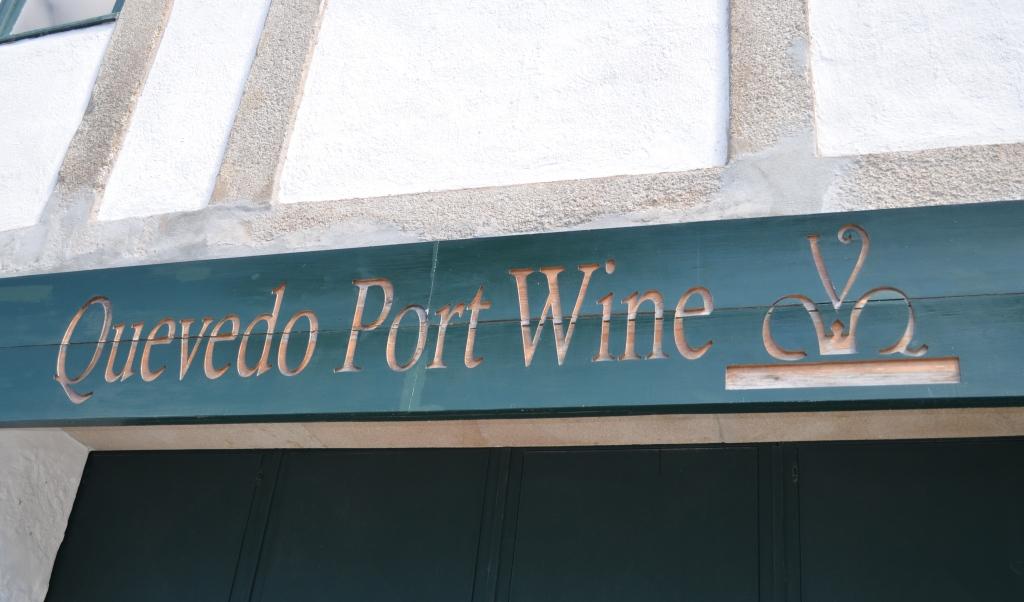
Once I arrived at the Quevedo Port house… Well, I will not inundate you with the long story, and the short story was that Oscar was not there (but he was very kind to stop by the hotel in the afternoon of the same day and undergo my very intense questioning for 30 minutes). Rachel and Manuel were “running the shop”, and while I was there at the Port house, I read a lot of useful information along the walls (I guess it can be called a self-guided tour), but that still didn’t answer all my questions (like why Vintage port should be consumed within 1 to 3 days from the opening of a bottle, and Late Bottled Vintage (LBV for short) does not. I started asking Rachel and Manuel all of my questions, and I think I drove them both a bit insane – I have to thank them both for their patience with me, especially Rachel, as she really did her best trying to figure out all the differences and details together with me.
I also tried young vintage port, 2010 Quevedo Vintage Port – and it made me happy.
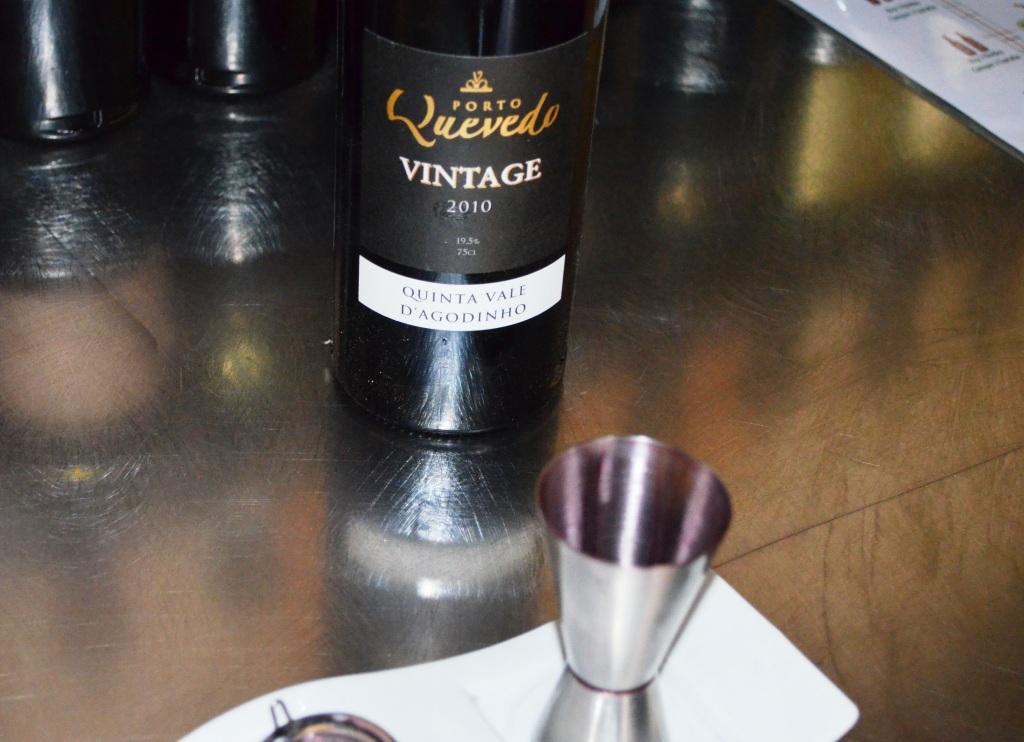
The vintage port is supposed to be filtered when it is poured into the glass, which was performed using the jigger and special metal mesh filter.
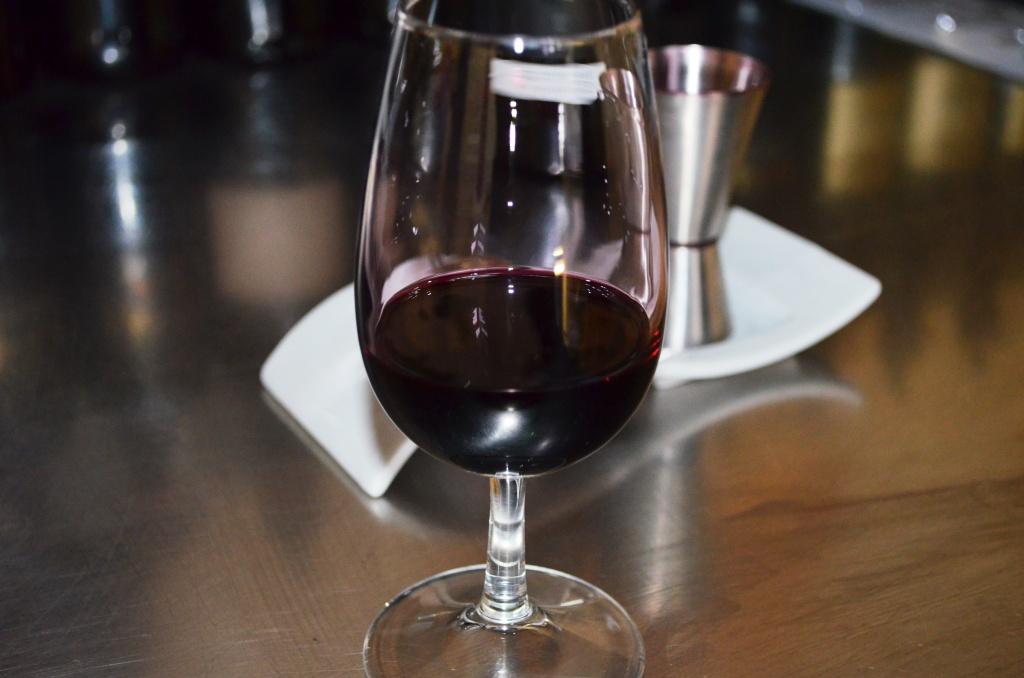
Every aspect of this wine was simply exciting. The color – I don’t know if the picture truly conveys the color, but it was deeply concentrated dark ruby red. The nose – ahh, all the fresh berries you can imagine, … And the palate – texturally present, dense, heavy, lots of fresh fruit. Yes, the was sweetness there, but oh so balanced with acidity, tannins, and overall power. So far I was refraining from rating the wines in this series of posts, but this wine was definitely a 9 and I’m sure it will be a part of my “2013 top dozen”.
When I met with Oscar in the afternoon, I used the opportunity to bombard him with questions in my effort to understand the wine called Port. And now I want to share my newly found understanding with you, so for what it is worth, below is my attempt to dissect and summarize the world of Port.
First, here are some interesting facts about Port.
- As with any other wine, the truth is in the eye of the beholder – and in our case, the “beholder” will be a winemaker. Effectively, the winemaker knows his vineyards, and the winemaker knows what vines are capable of producing specific kinds of ports – Tawny, Ruby, Vintage, non-vintage, and so on. But when it comes to Port, that winemaker’s knowledge is also verified before it can be put in the bottle and on the label – by the governing organization called IVDP.
- Instituto dos Vinhos do Douro e Porto, or IVDP for short, is a top authority regulating the production of all Port wines. When the winemaker wants to declare a vintage, the sample is sent to IVDP, where it is assessed ( in the blind format) for all the quality of the vintage port, starting from the color, and then vintage designation is either granted or declined. According to Oscar, IVDP knows everything about each and every port producer – how much of what kind of port is in the barrels, how many bottles were sold, how many bottles are still remaining with the Port house, and so on – IVDP owns and processes all the information related to the production of Port.
- Less than 1% percent of the total port production is designated as Vintage port.
- Most of the red port wines are made out of Touriga Nacional, Touriga Franca, Tinta Roriz, Tinta Barroca, Tinta Francisca and Tinta Cão grapes.
- Port is typically fermented for 3-5 days, after which fermentation is stopped with the addition of neutral spirit (grape brandy). The addition of the spirit is also a reason behind the port’s classification as “fortified wine”. The resulting port wine usually has ABV in the 18% – 21% range.
- Treading, the process of pressing grapes with the feet, is still in use today, but by a very small number of producers and only for the very special wines. The pressing by the feet creates just the right amount of pressure which doesn’t break the seeds – which helps to reduce the bitterness of the wine.
- The Vintage Port is the only port that continues aging in the bottle. Vintage port should be treated as regular wine in terms of handling and storage, and consumed 24-72 hours after the opening of the bottle.
- New oak barrels are never used in the production of the port. The barrels have to be used a few times for producing the regular wines, only then do they become suitable for the production of the Port.
Now, let’s look at the classification of the Port wines. As you know, I like using mind maps, so here is Port’s classification in the form of the mind map:
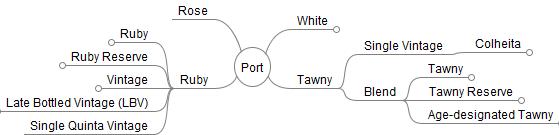
Port classification
Now let’s add some details:
- Rose Port
- the latest addition to the world of Port had been produced only for a few years. Very short contact with the skin after pressing. Personal note – I tried a few and had not been impressed so far.
- White Port
- 3 years aging in stainless steel or neutral oak, then blended, filtered, and bottled. It will not age in the bottle and is ready to be consumed when you bought it. After a bottle is opened, it should be stored in the fridge and consumed relatively quickly. Personal note – the white port from Sandeman was an eye-opening experience – you should really try it.
- Tawny – ages in the small oak barrels with controlled oxidation. All ports in this group don’t age in the bottle and are ready to drink when you buy them. Also, all ports will last for many weeks after the bottle is opened.
- Single Vintage
- Colheita
- Grapes from the single vintage. At least 7 years of aging in the oak barrel (can be longer), then blended, filtered, and bottled.
- Colheita
- Blend of vintages
- Tawny
- 4 years in oak barrel, blended, filtered, bottled
- Tawny Reserve
- 8 years in oak barrel, blended, filtered, bottled
- Age-designated Tawny
- 10 years old, 20 years old, 30 years old, 40 years old – all of these ports are blends of ports of various ages. The blend is composed by winemaker’s discretion – for instance, a 40 years old can be a blend of 30 years old and 100 years old.
- Tawny More Than 40 years old (not an allowed designation in the US)
- Tawny
- Single Vintage
- Ruby
- Ruby
- 3 years of aging in the stainless steel/neutral oak, then blended, filtered, and bottled. After opening, the bottle should be consumed within a few days, and best to be refrigerated.
- Ruby Reserve
- 6 years of aging in the stainless steel/neutral oak, then blended, filtered, and bottled. After opening, the bottle should be consumed within a few days, and best to be refrigerated.
- Vintage
- about 2 years in stainless steel, can be some time in oak barrels, bottled unfiltered, continue aging in the bottle. After opening, consume within 24-48 hours.
- Late Bottled Vintage (LBV)
- 4 – 6 years in the oak barrel (I’m sure about the age, not sure about oak barrel versus stainless steel)
- Single Quinta Vintage
- Somewhat complicated. It designates that grapes are coming from a single vineyard, but age/blending/bottling, etc. is not very clear. But for all intents and purposes, should be treated as a Vintage port.
- Ruby
I think I told you everything I know at the moment about Port – but I will keep adding and refining to this post just to make sure I got it all correctly. Before we part, here are a couple of pictures for you:
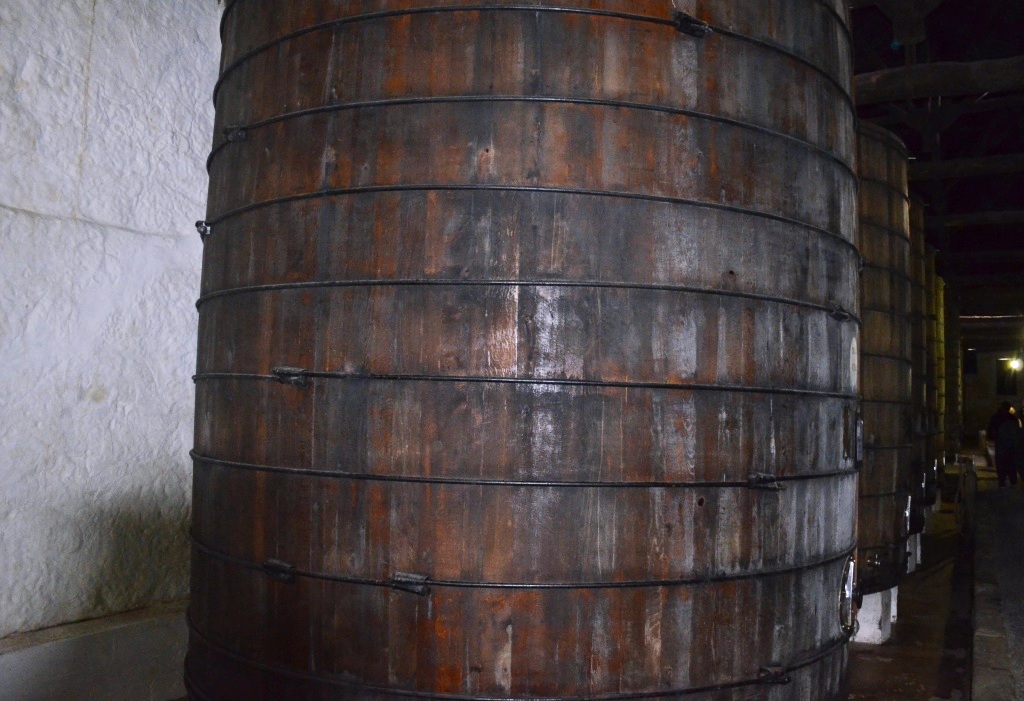
Ruby and White Port age in this huge barrels. One barrel holds 80,000 liters (about 20,000 gallons)
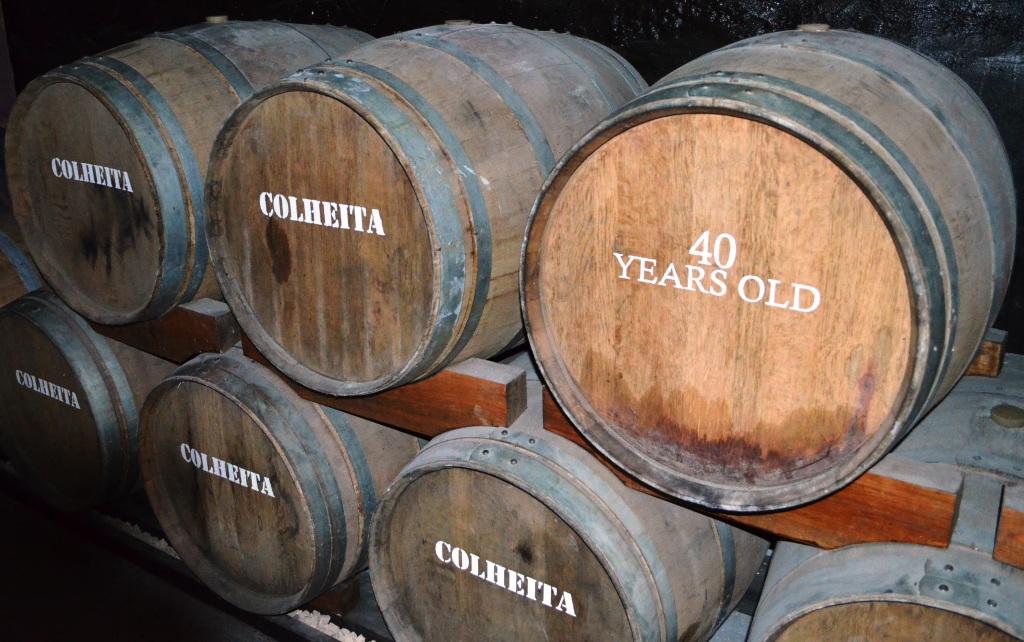
Tawny port ages in the small oak barrels

Do you remember where the cork tree grows? Yes, in Portugal!
That’s all I have for you, folks. Comments and corrections are most welcome. Cheers!
Study of Port: Great Restaurants
You know, I’m continuing this series about great experiences in Portugal (here are part 1, part 2 and part 3), and there is this annoying little voice inside which says “stop talking about it… Keep it for yourself… Once people will find out, they will all start going there, and all the great and inexpensive food and wine will become expensive and inaccessible… Keep it a secret…”. Never mind, the inner voice lost, and one can’t keep great experiences secrets anyway, so let’s proceed, shall we?
Today I want to present to you three restaurants, all three different, but literally one better than the other.
Let’s start with the place called bbGourmet. Actually, bbGourmet is a group of restaurants, and the specific one we visited is called bbGourmet Bull&Bear. The restaurant has good rating on Trip Advisor, but when I walked by the restaurant, it looked modern and not very inviting from outside, so at first I thought we can skip it. But then people on Trip Advisor probably know a thing or two about food, and the place was relatively close, so why not give it a try, right?
Restaurant indeed looked very modern inside, but with the nice ambiance. The menu had tasting option for €35 for four dishes. For another €15 you could add a wine pairing to all the dishes. Yes, you don’t need any hard guesses – of course this is what we did.
To give you a brief summary: perfect dishes + outstanding wines + very good pairing = great experience. I’m an engineer, remember? Of course it is fun to think in math terms, right? Okay, just ignore. Moving along…
First dish: Scallop with risotto. Perfectly gentle array of flavors, with sweetness of scallop complemented by mild tartness and zest of risotto.
Pairing: 2011 Prova Regia Arinto Vinho Regional Lisboa – 100% Arinto grape, bright acidity, some grapefruit notes, very similar to New Zealand Sauvignon Blanc – worked perfectly together with the dish.


Second dish: Sea Bass with black quinoa and fennel puree – that puree was particularlyoutstanding, overall an excellent dish
Pairing: 2012 Portal Colheita Branco Douro DOC, a blend of 45% Vinsinho, 20% Moscatel Galego Branco, 20% Malvasia Fino and 15% Rabigato. A bit drier than the previous white, more saddle and herbaceous flavors. Paired very well with the dish.


Third dish: Stuffed calamari. May be the best, definitely one of the best calamari dishes I ever had – perfect texture, perfect balance of flavors with the creamy sauce.
Pairing: 2011 Niepoort Redoma Rosé Douro DOC – a blend of 30%Tinta Amarela, 20%Touriga Franca and 50% others. A bit austere, needed a touch more fruit in my opinion. This was probably least successful pairing.


Fourth dish: Roasted veal. I’m not big on veal in general, but this was perfectly succulent dish. Those “potato chips” you see in the picture? They are not chips at all! They look like chips, but they soft literally like soft taco shells. Delicious!
Pairing: 2010 Portal Colheita Douro DOC Vinho Tinto – a blend of 60% Tinta Roriz, 25% Touriga Nacional, 15% Touriga Franca – very nice overall, good amount of dark fruit, soft and approachable, good oiverall balance.


And then – liquid desert! Secret Spot 40 years old Moscatel do Douro – I would guess, this is how winemakers play in Portugal – while they make the port all the time, every once in a while they make something for themselves – that is possibly the story behind this Moscatel (well, you will have hard time proving me wrong…). The wine was heavenly, with enough acidity to prevent it from becoming a syrup, and lots of complexity which can be rather expected considering the age. That was a perfect finish for a great meal.
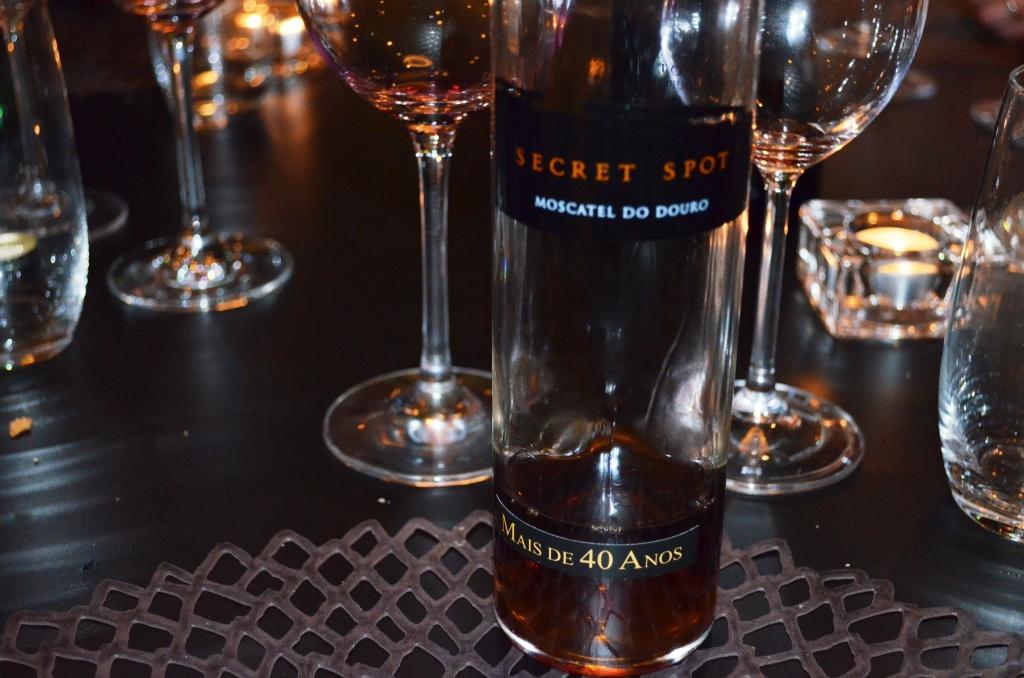
40 years old Moscatel
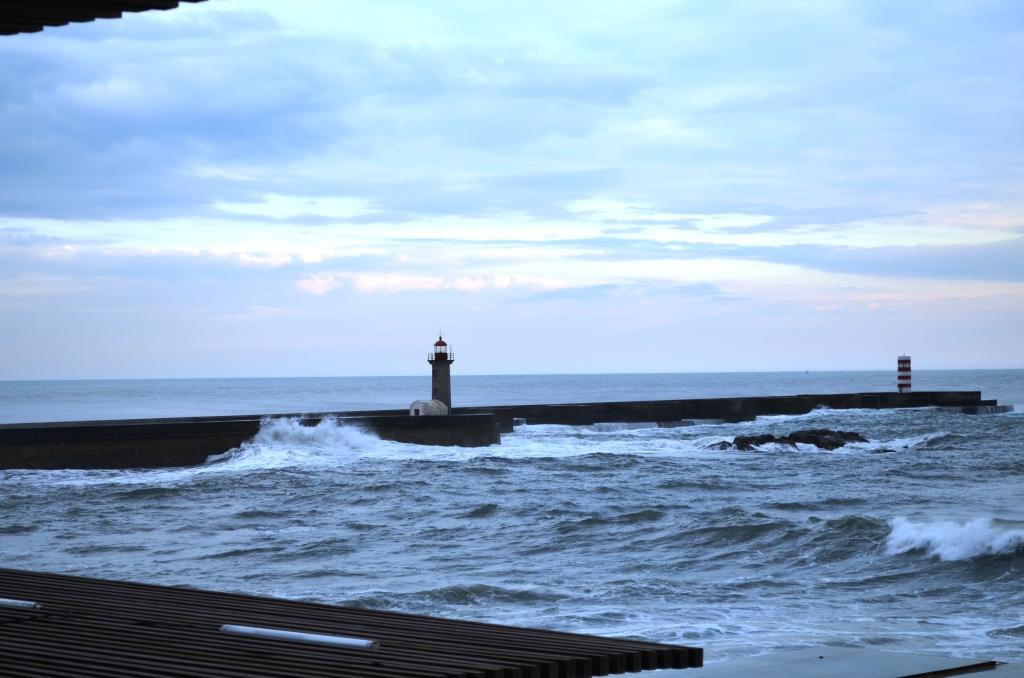
The next restaurant was called ShiS (at the time of writing, the #21 out of 376 on the TripAdvisor’s list of restaurants in Porto). The first thing to mention about this restaurant is its location. It is located right by the wall which protects Douro river from the ocean, and the views are just exceptional. Before we talk about food and wine, here are couple of pictures I managed to snap right by the restaurant:

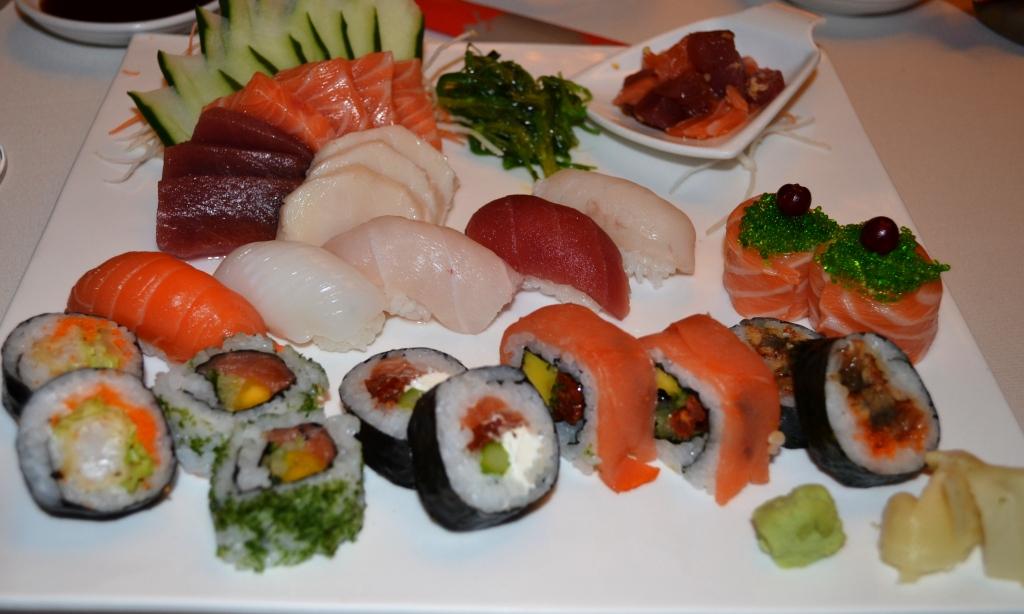
ShiS offers lots of choices of sushi and sashimi. This was our dinner in the making:
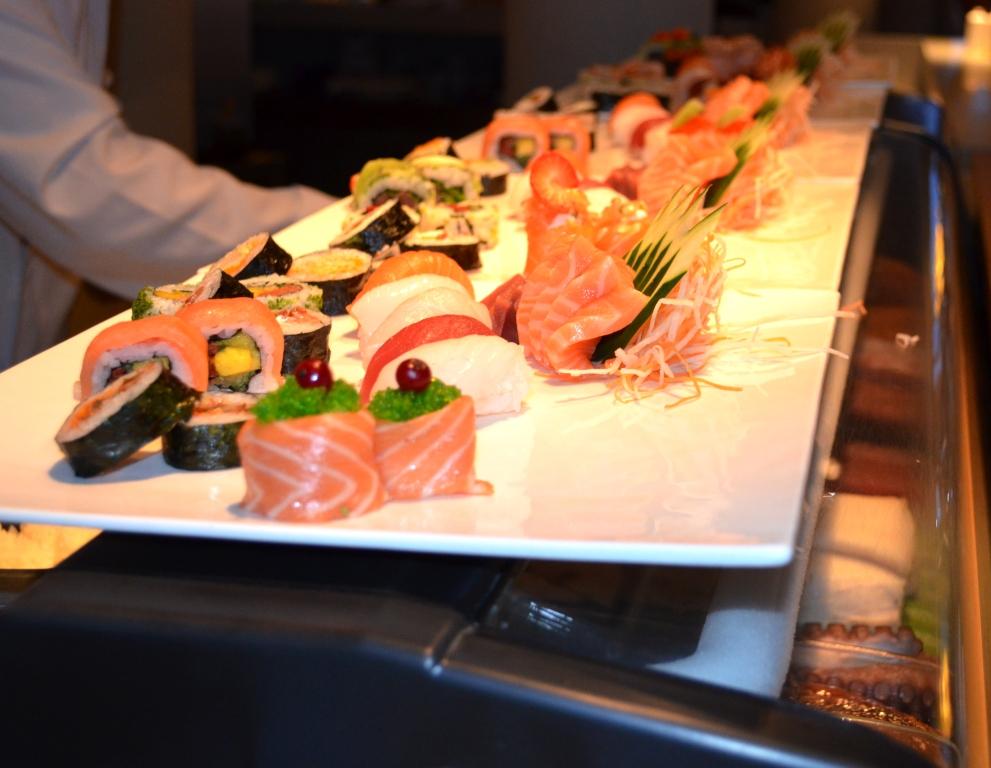
And this was my dish (chef’s selection sushi and sashimi combination):
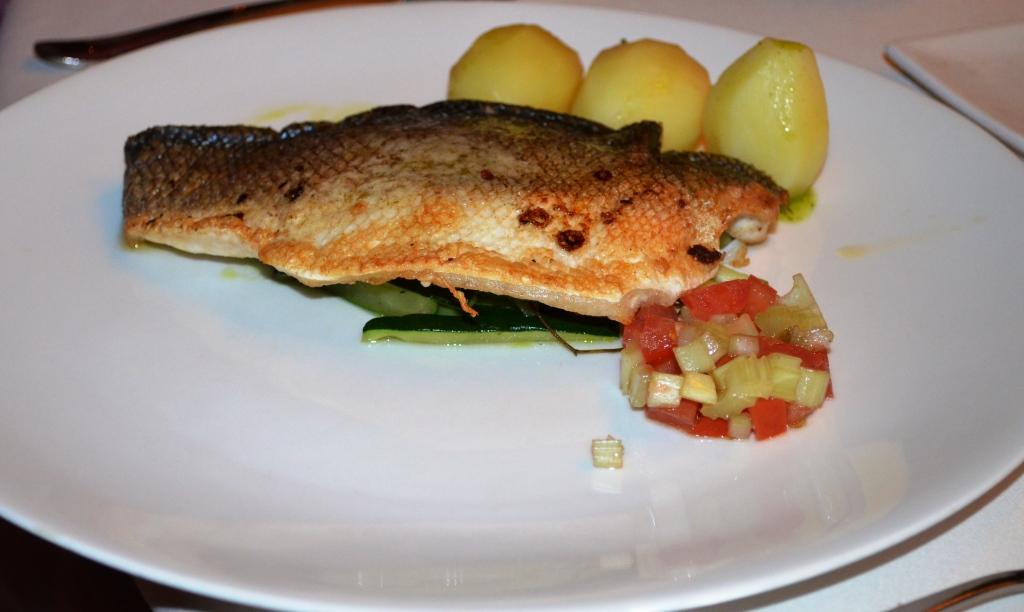
Here is also a sea bass dish:
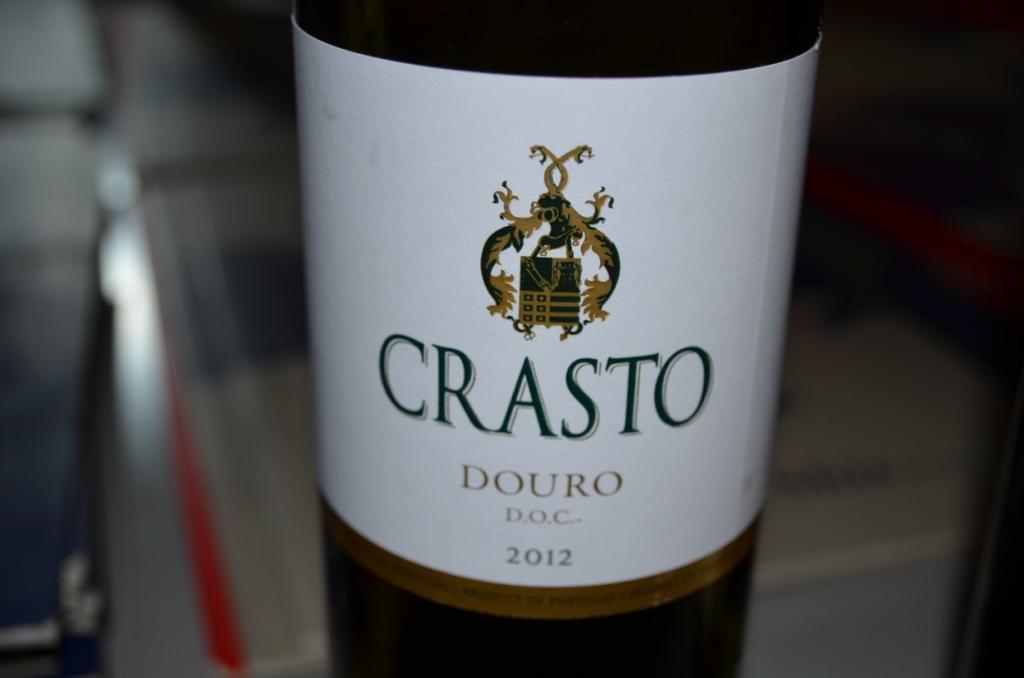
We had few of the very good wines. For the white we had 2012 Quinta do Crasto Douro Branco (a blend of Gouveio, Roupeiro and Rabigato) – somewhat on a fruity side, but overall dry, with good acidity and good balance. Quinta do Crasto produces some of the best wines in Portugal, especially when it comes to red, and these wines should be available in US.
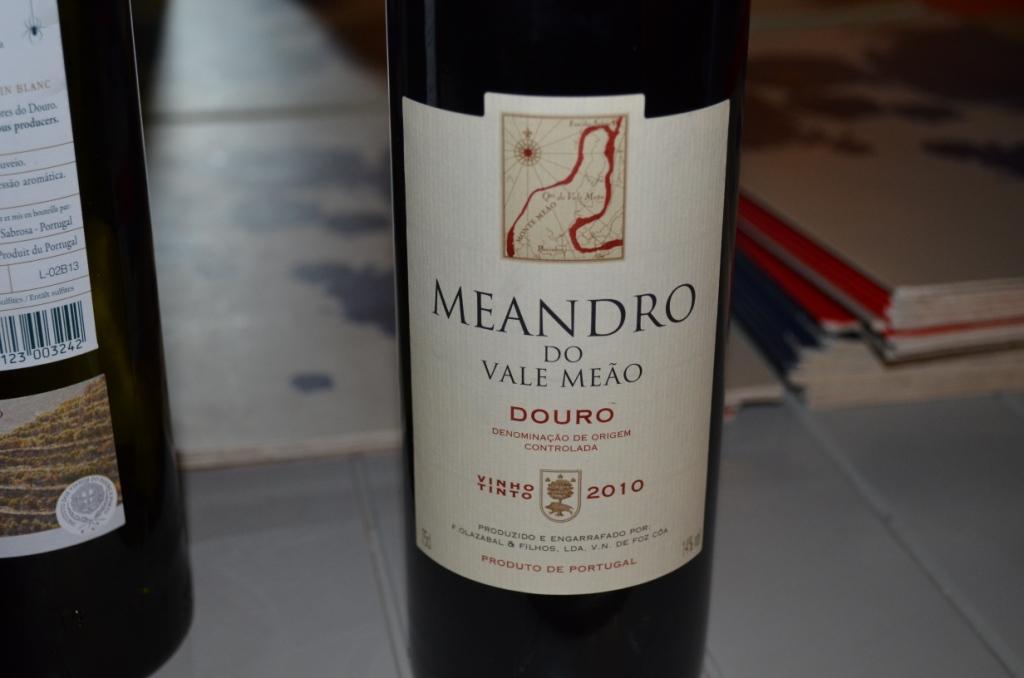
The red wine was 2010 Quinta do Vale do Meandro Meão Meandro Douro DOC, a blend of 45% Touriga Nacional, 30% Touriga Franca, 13% Tinta Roriz, 5% Sousão, 4% Tinta Barroca, and 3% Tinto Cão. Good dark fruit on the nose and on the palate, soft tannins, overall well balanced. It should be available in US and worth seeking.
Dessert – Crème brûlée with chocolate sauce and of course, Port! Taylor’s 20 years old Tawny was very good, with dried fruit and nutty notes, quite light and balanced (we finished the only two bottles the restaurant had, unfortunately).
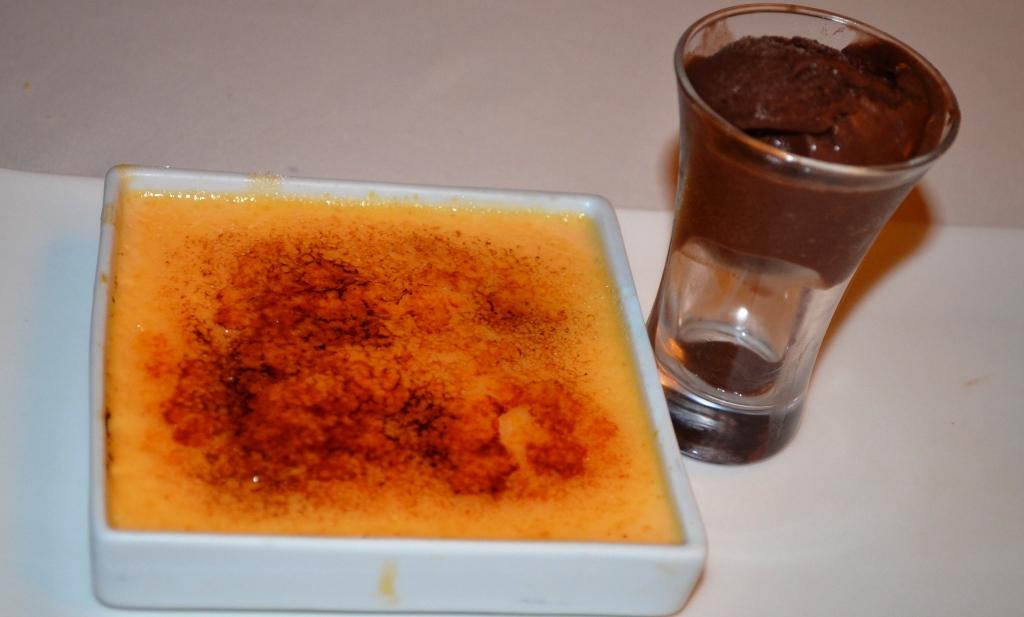
Crème brûlée with chocolate sauce
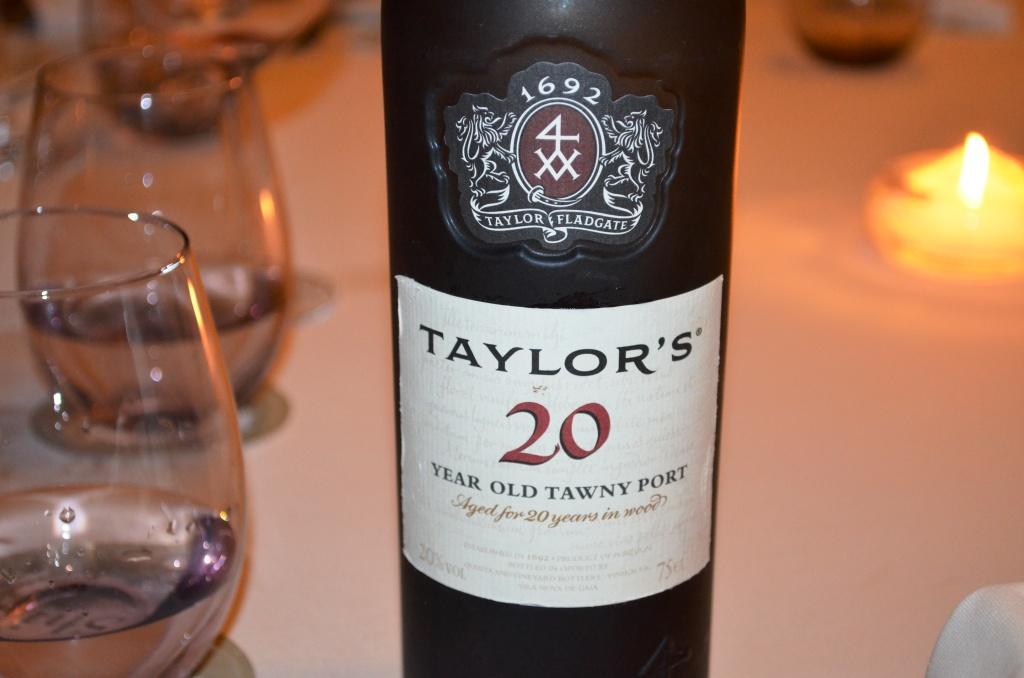
20 years old tawny – always appropriate
By the way, the wine list at ShiS has one interesting detail – it lists ABV for all the wines – I think this is pretty neat and I would be glad to see that in restaurants in the US:
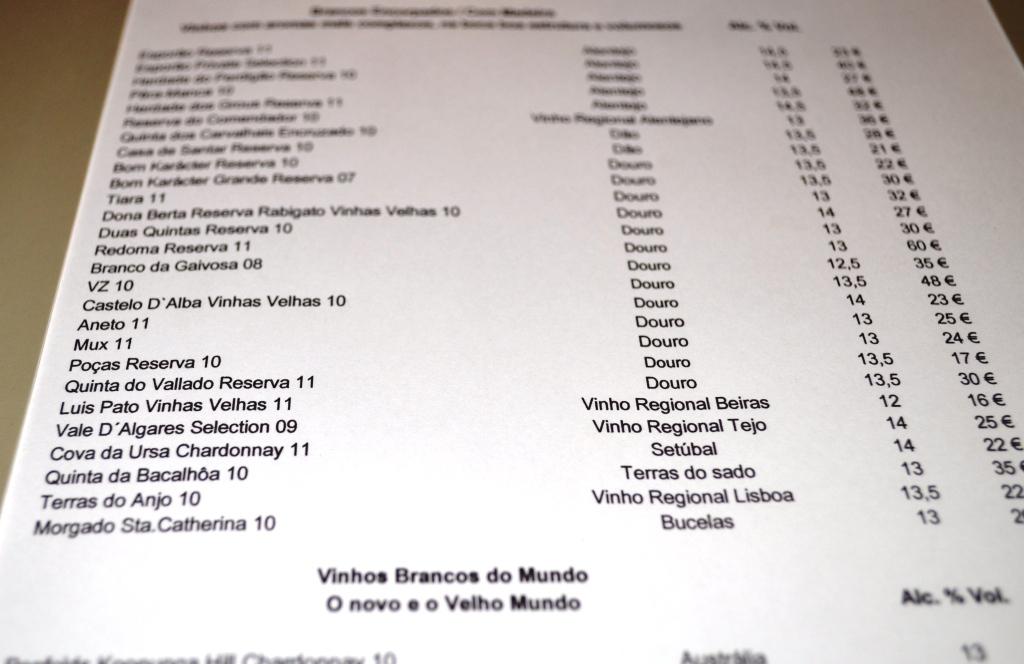
Wine list at ShiS – note ABV ratings for all the wines
And now last, but not the least experience I want to share with you – Cometa Restaurante.
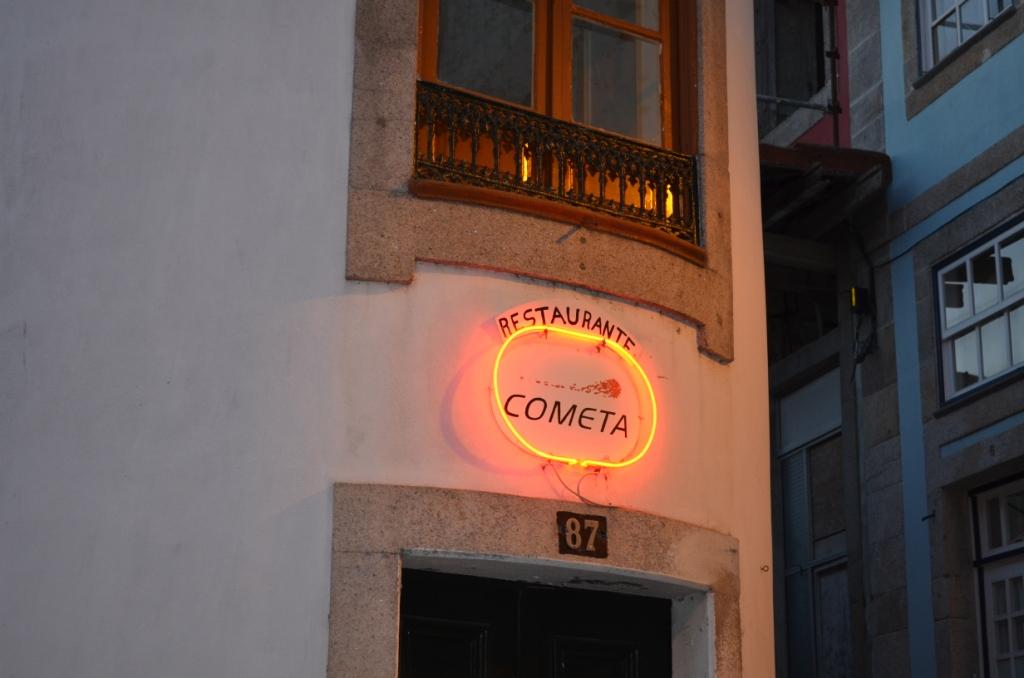
At the moment of this writing, it is #16 out of 376 on the Trip Advisor restaurant list in Porto. Very small restaurant, may be 8 or 10 tables, located on a top of a very long and steep set of stairs leading to the river. We had a very interesting experience at the restaurant with the set of small setbacks getting in the way, but not preventing us from having a great time overall.
The first issue was with wine – the restaurant had pretty small wine list, and even out of that small wine list, our first and then next choice were not available. Finally we settled on the white wine which restaurant had available. Then food became an issue too – most of us quickly set our minds on having a grilled squid – and it appeared that the restaurant only had one portion available for the five of us, so we had to come up with the other choices. The menu also had roasted chestnut soup with pomegranate seeds – but in reality, it was not available (sigh).
As the bottle of wine finally arrived at the table, things started to turn for the better (wine can fix all the problems in the world, right?). Then some appetizers arrived, and it was time to get another bottle of wine – only the same wine was not available anymore. Truth to be told, it was unfortunate that restaurant didn’t get the delivery of the wines they were supposed to get, so that was the reason for the shortcomings with the inventory. Okay, we went through the exercise of selecting the bottle of wine again, I would say, quite successfully – we picked 2010 Herdade Dos Grous Branco Vinho Regional Alentejano, a blend of Antão Vaz, Arinto and Roupeiro (typical for Alntejano white wines) – a medium to full bodied white, with good amount of white stone fruit, very round, good acidity and good finish.
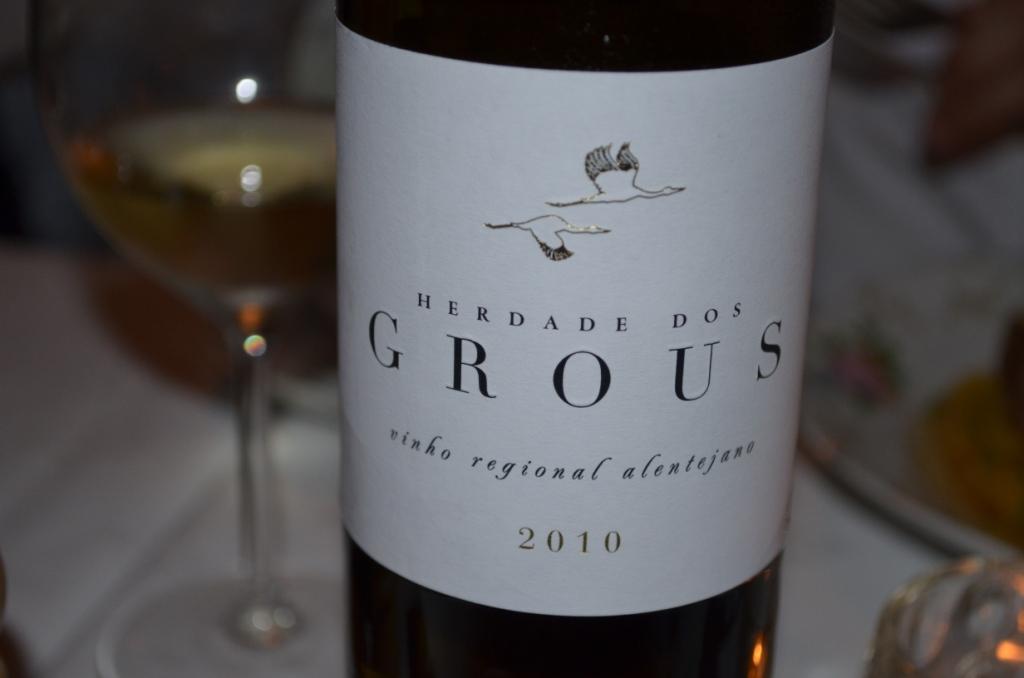
Herdade dos Grous branco
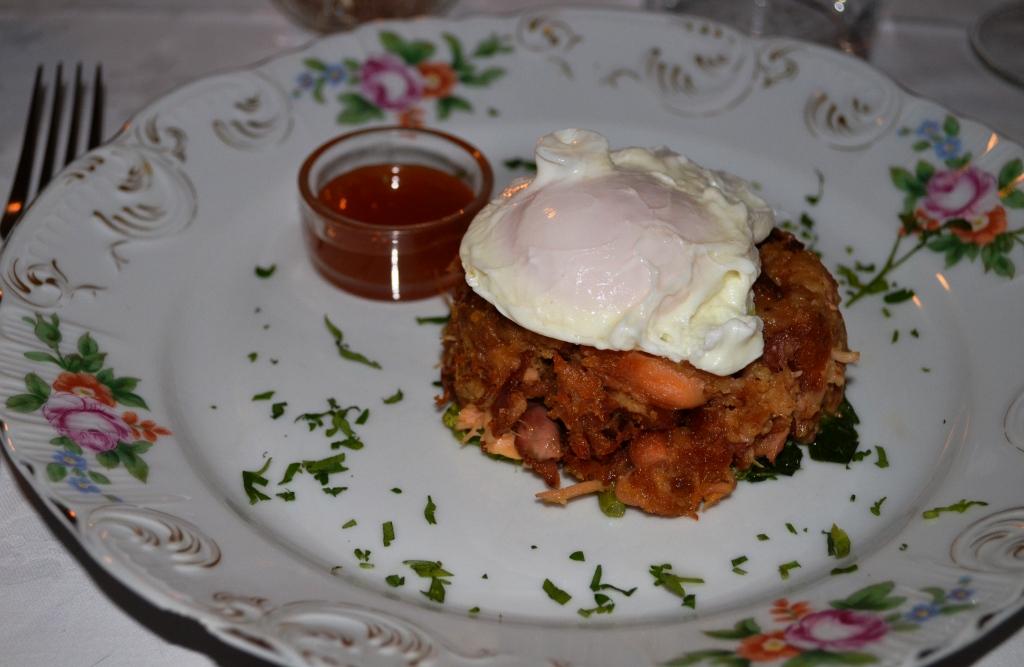
Next – our entrees arrived. I ordered the dish called “Portuguese sausage”, which was effectively a collection of poultry pieces, served with the sweet sauce. By the way, take a look at the china – I love those plates… Real food served on real plates – wow, what a concept! But it feels so unique nowadays, when even in the best restaurant you might get paper napkins instead of a real cloth… This Portuguese sausage was delicious – I’m not sure if it was a duck egg or not on top of it, but the whole dish tasted perfectly.
Considering all the troubles we had with our food and wine selection, the restaurant decided to compensate for that a little bit, and offered us complementary bottle of Sparkling wine, which didn’t encounter much enthusiasm on our side, as we were mostly done with the food. Seeing our reaction, we were offered a bottle of 2011 Niepoort Tiara Douro Branco (at €34, it is one of the most expensive wines on the list) – and all of a sudden, all our troubles seemed well worth having.
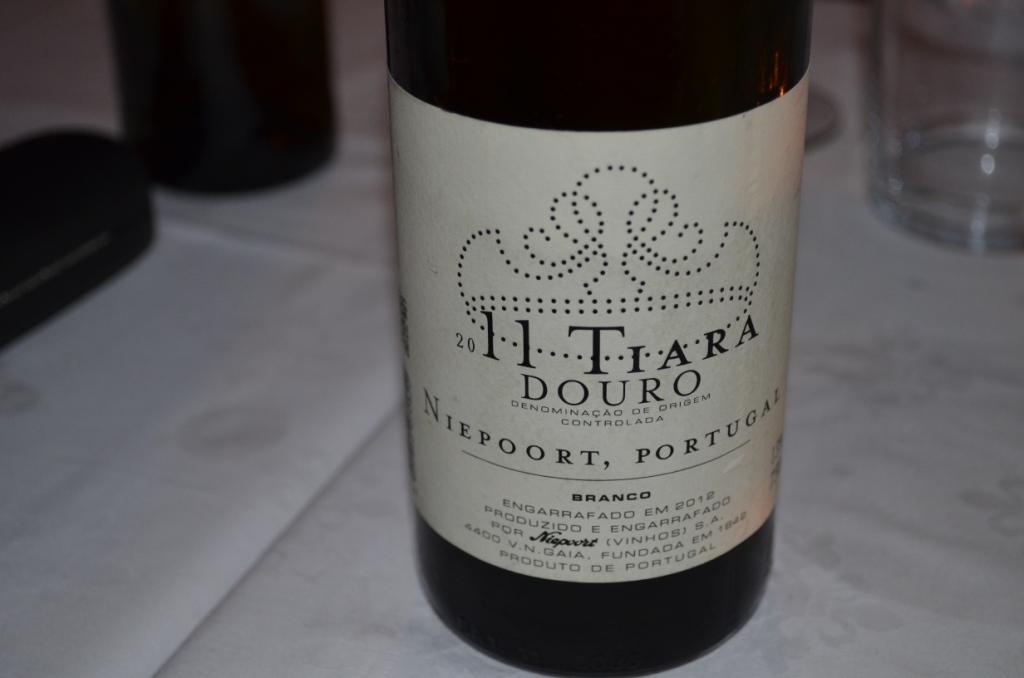
2011 Niepoort Tiara Douro Branco
This wine is a blend of Codega, Rabigato, Donzelinho, Boal, Cercial and other grapes. Bright and full bodied, excellent acidity, very uplifting. This wine has great textural presence, you really feel it in you your mouth, you can roll it around – but it is so balanced, the fruit, the acidity, the whole package is perfectly together. Reminds me of the great Pigato wines I experienced at the Gambero Rosso event. One of the very best white wines I ever had (yeah, my list of “very best” might be a bit too long…).
And then the dinner conclusion with dessert – I’m clearly abusing the “very best” here, but this was one of the very best apple desserts I ever had – apple tart with the scoop of ice cream:
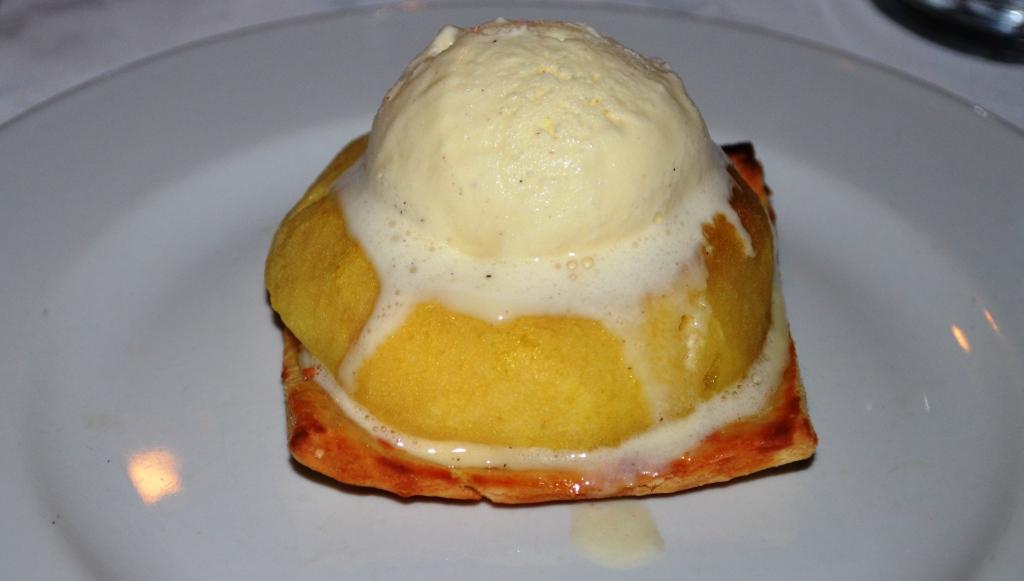
Apple tart
The apples were not visible, but very noticeable – big, juicy apples which say “bite me”. If you like apples – this was an outstanding dessert.
One parting note regarding Cometa Restaurante – the restaurant doesn’t accept international credit cards, so you should have cash on hand with you (well, there is an ATM near by, but it is always unpleasant when you can’t pay for your meal on the spot). By the way, care to guess how much this dinner cost us? We can skip the drum roll, but – it was only €35 per person!
And we are finally done! Every time I promise to myself to write short little posts, easy going for quick consumption – and I still end up with multi-page monstrosities with tons of pictures. Well, I hope I conveyed my main message – there are many great restaurants in Porto and I’m sure in the Portugal overall and they are still reasonably priced, so if you are thinking about going to Europe… No, I’m not encouraging you. Cheers!
Study of Port: Food and Wine Tidbits
Here I’m, continuing to report on my food and wine adventures in Portugal (here are the first and second posts from the series). Well, I guess “adventures” is really too much of a word for simply excellent food and wine experiences, but “adventures” put the things in the right prospective, isn’t it? Never mind, let’s just talk about food and wine.
On the first night we ended up at the small place called Restaurante Nova Europa. The place looked very authentic in the sense that they had a hard time to find an English menu, and our server spoke practically no English – that didn’t prevent us from having a very good dinner. Most of the people at the table ordered some version of the local fish called Bacalhau, which is a cod. It was offered in different variations – mine had a lot of potatoes:

Bacalhau
And as I often ignore food and wine pairing rules, the wine was red:

2010 Evel Tinto Douro
As most of the wines from Douro, this 2010 Evel Tinto Douro, this wine is made from the “classic set” of Portuguese grapes – Touriga Nacional, Touriga Franca, Tinta Roriz a Tinta Barroca. The same grapes are also used as a foundation for most of the Port wines, which are made in exact same Douro region. Good body, good depth, not necessarily spectacular but easy to drink and pleasant.
Now I would like to mention two of the very local products. First one is beer. I’m not sure how many different beers are produced in Portugal (I’m positive though that US microbrewery revolution didn’t take any roots in Portugal so far). The beer is called Super Bock, it comes in lager, stout and few other versions, and it is produced in the area just outside of Porto – according to Wikipedia. I only tried the stout, which was dark, rich, smooth and creamy. I have to mention though that it is somewhat dangerous to rely on my opinion about beer – for the most of the time I prefer dark beer and on contrary to many of my friends, I don’t find Guinness bitter. And here is the picture for you – the picture was taken by my friend Kfir, not by me – but he was using my camera, so I guess I have some rights to it…
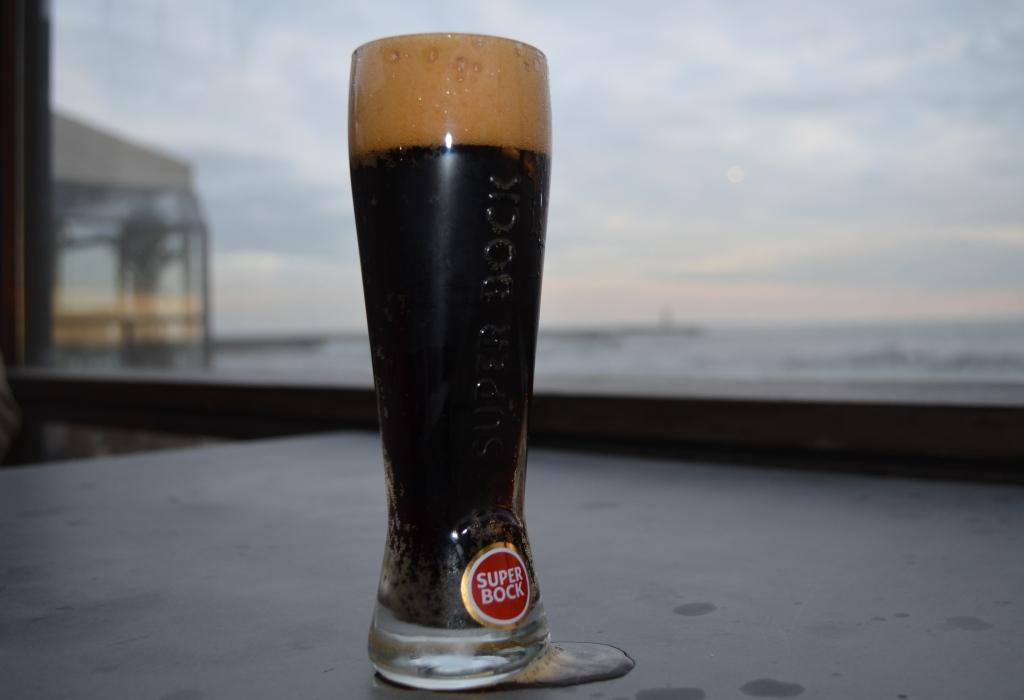
Super Bock stout, as captured by Kfir
Next item to bring to your attention is a local sandwich (supposedly it is Porto’s specialty) called Francesinha. This sandwich is made out of two slices of crust-less bread with various meats (or even veggies) in between – we saw it on the menu in most of the restaurants in Porto, and it can come with steak, white meat, various ham cuts and so on. The sandwich is completely covered by melted cheese (top and all sides), and it is served with the secret sauce which is supposed to be some combination of tomato sauce and beer. I had a steak version and it was very tasty. Believe it or not, but I’m not always carrying my camera to the restaurant, so Francesinha is probably the only dish I regret not taking my picture of – but someone thankfully did on Wikipedia, so below is the picture for you, courtesy of Wikipedia:

Francesinha sandwich, picture courtesy of Wikipedia
And then there was Cufra. Pardon my little drama here, and let me explain. We saw the restaurant while walking by, checked it out on the web, and it looked appealing enough. Service staff spoke not too much of English, but the menu was possible to understand, so we all ended up with decent food – but the wine was more memorable. For the white we had 2011 Castello D’Alba from Douro, a blend of Codega do Larinho, Rabigato and Viosinho – very typical blend for Douro white wine, all indigenous grapes (Wine Centurions, take note!). The wine was very nice, with good acidity and somewhat similar to New Zealand Sauvignon Blanc, only with less of grapefruit.
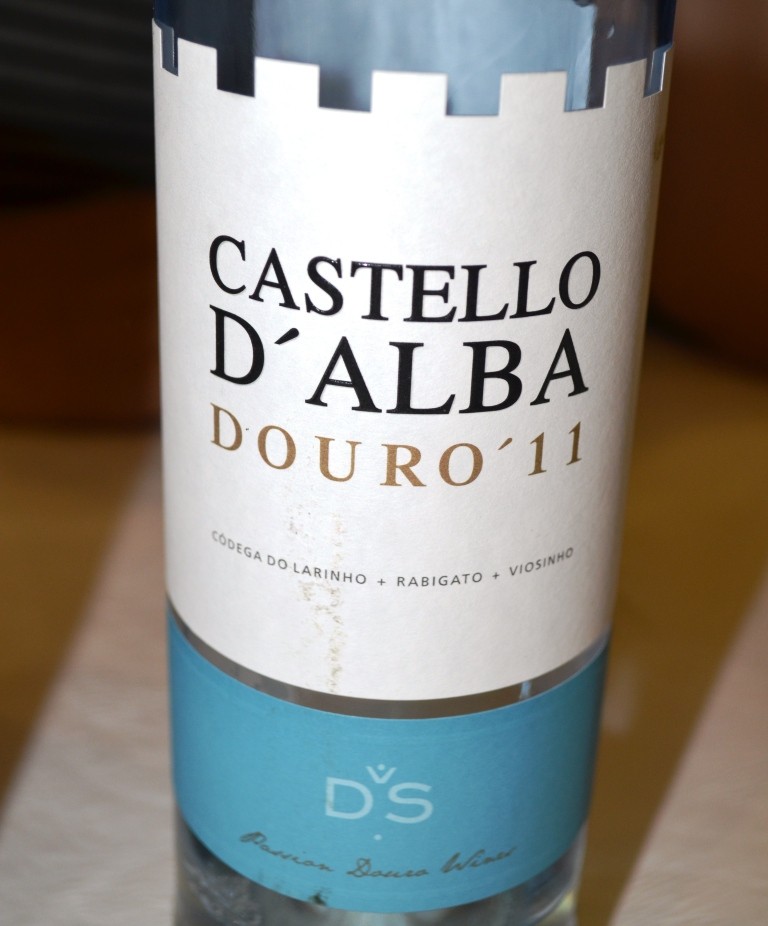
Castello D’Alba Douro White
Then we had a bootle of 2009 Quinta do Cardo Selecção do Enólogo Beiras DOC, a blend of Touriga Nacional, Tinta Roriz and Touriga Franca, produced by Quinta do Cardo. The wine was nothing short of being spectacular – with the exception of vintage port, during the whole week I only had one other red wine which was on the same level or may be even a touch higher – but I will talk about it in another post. Dense and concentrated, with dark fruit, plums and blueberries on the palate, all very round with the hint of smokiness. The wine was so good for the money (€14, in a restaurant!) that I even got two bottles right in the restaurant to take them back home.

Quinta do Cardo Selecção do Enólogo
When we went to the same restaurant second time, about a week later, the menu was quite different, and the wine were too. But – one of the reasons for the second visit was the desire to try the crab dish we saw someone ordering during the first time. Considering that Porto is located right on the cross of ocean and the Douro river, it is rather expected that fish and seafood should be very good – and this dish didn’t disappoint (hope you will find the below picture being enough of the proof):
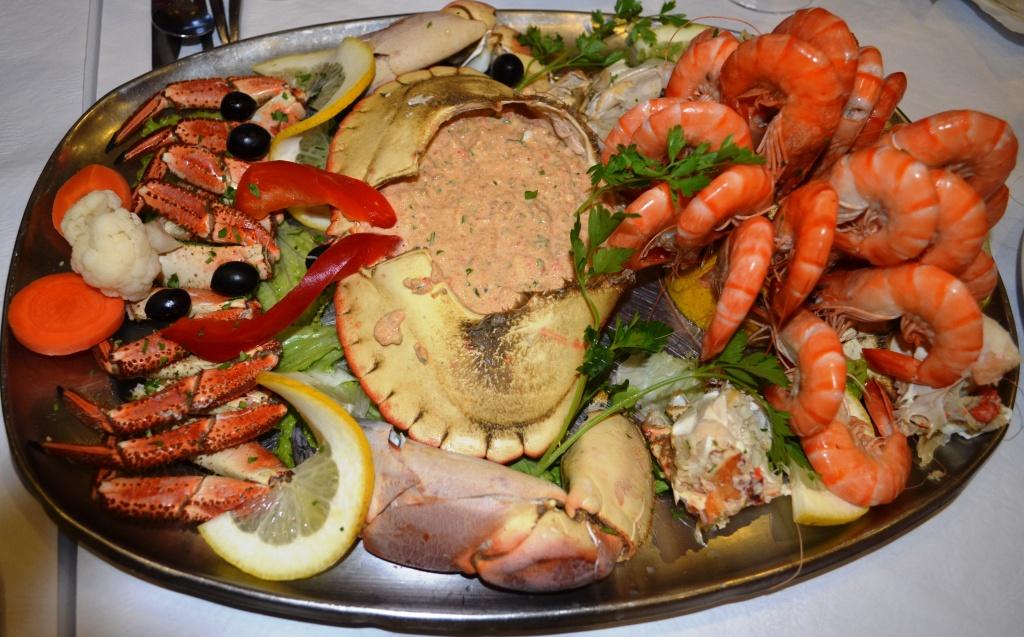
Crab and shrimp at Cufra
I can’t say the same about wines – there was different 2009 Quinta do Cardo wine on the list (about €4 cheaper), and while it was not bad, it was not anywhere as good as the first one. All in all, if you are in Porto and if you will be in the area, Cufra is well worth visiting.
Last place I want to mention (but not least by all means) is a restaurant called Rabelos. Just to give you some prospective, Rabelos are actually flat bottom boats which were used to transport barrels of Port from the wineries to the Port house cellars for aging. Nowadays the wine is transported by the tanker trucks, and Rabelos are only used to move tourists around.

Rabelos Restaurante
Anyway, the restaurant is actually located in Vila Nova de Gaia, a town which houses all the port cellars across the river from Porto. It is located very close to the bridge which connects Porto and Gaia, right along the boardwalk in a place which in general should be considered a tourist trap. But it was no tourist trap at all. The service was outstanding, and we got great recommendations and had great experience overall.
One of the starters was local feta cheese, dusted with Parmesan and slightly roasted with olive oil (take a note – I think it should be as easy to make it at home as it is delicious, and as a very least I’m going to try it…).

Roasted feta cheese with parmesan
Then we had beef carpaccio and shrimp salad – the pictures don’t do justice to those dishes, but both were delicious

beef carpaccio

shrimp salad
Next we had two dishes made from Bacalhau in different styles – one was baked with cheese sauce and one was grilled – both were outstanding:
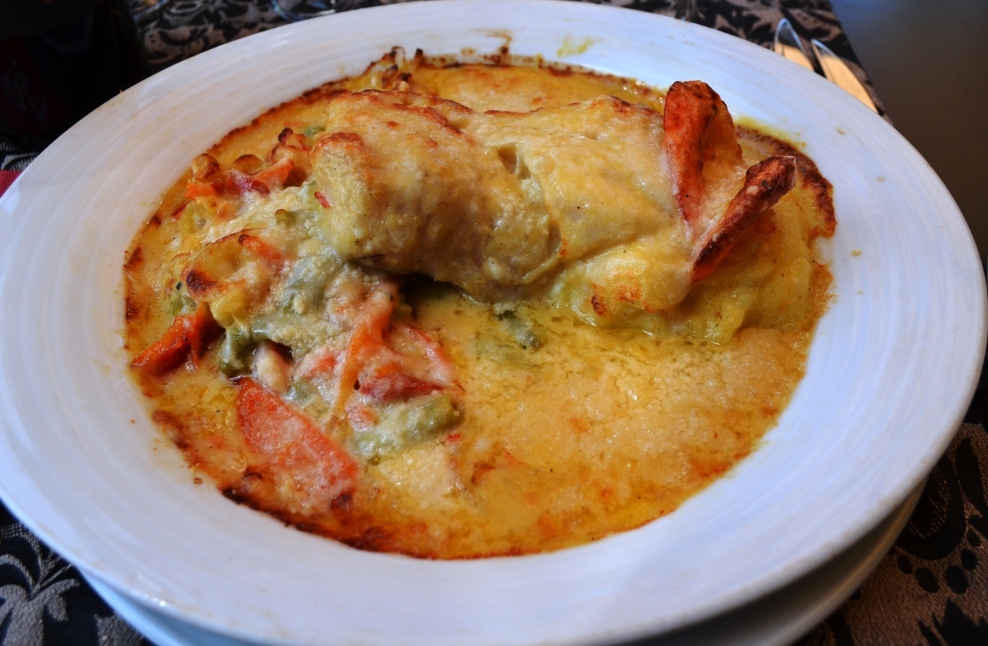
Bacalhau in cheese sauce

grilled bacalhau with shrimp
Again ignoring the pairing rules, we went with the red wine called 2010 Borges Quinta da Soalheira Douro Red, a blend of classic Douro red grapes, Touriga Nacional, Tinta Roriz, Tinta Barroca, Touriga Franca and Tinto Cão, made by Vinhos Borges. The wine had medium body, good acidity, nice red fruit on the palate, well balanced – perfect for every day drinking, considering you can find it.

Borges Quinta da Soalheira
For the desert, we had lemon cake (paired with white Port) and chocolate cake paired with simple tawny. Below are a few pictures – the first one is taken by me ( boring, sigh), and then two others taken by Kfir – I will need to learn how to really use my own camera…

Lemon cake, no excitement in the picture
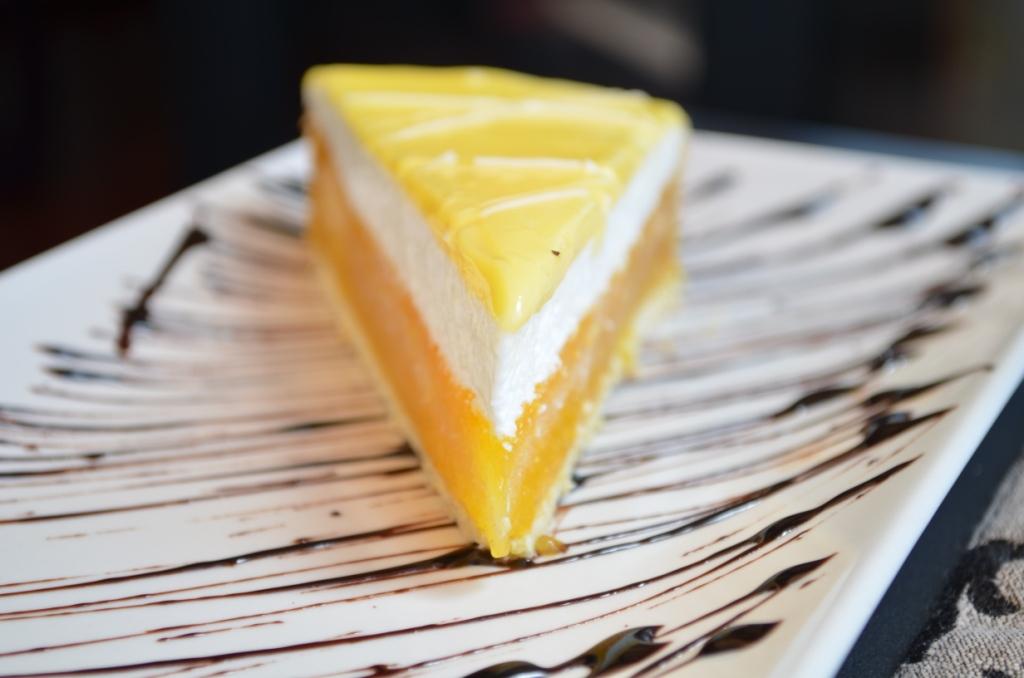
lemon cake, now with excitement, courtesy of Kfir

extreme chocolate cake, as captured by Kfir
And of course nobody can leave the restaurant without coffee, right?

Espresso!
That’s all, we are done for today folks. Sorry for all the pictures, hope you found them at least moderately entertaining. Until the next time – cheers!
Study of Port: First Port Experiences
I’m continuing my notes from Portugal (you can find previous post here). On Sunday we had some free time to walk around the town, so I have more pictures and some actual port tasting notes for you.
Let’s start with the pictures. We walked past beautiful cemetery (is it appropriate to use the word “beautiful” in conjunction with cemetery? not sure, but still). As my friend P likes to say – “lines!”:

Lines!

more lines!
Isn’t this pretty?
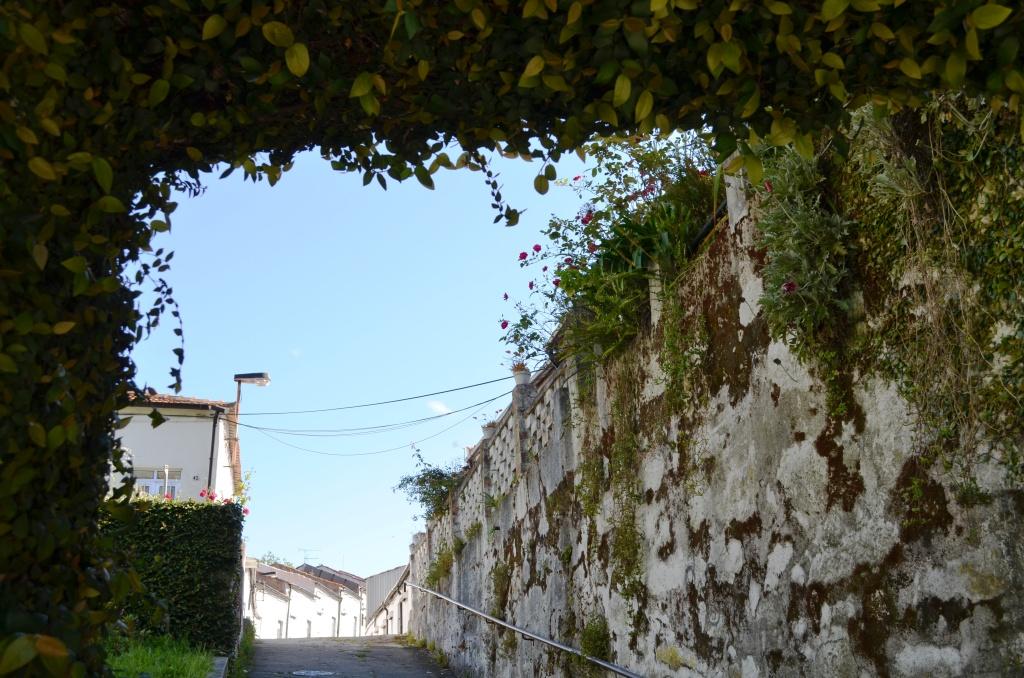
Someone has good sense of humor:

stop sign being carried away…
One of the modes of transportation in Porto:

Just look at this beautiful town:
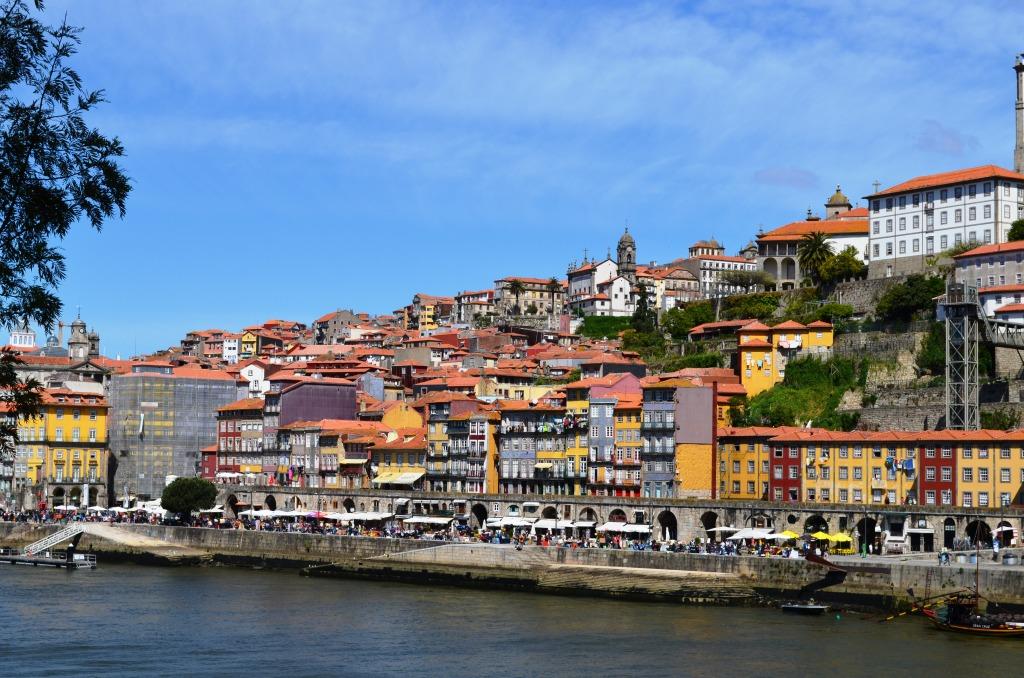
Porto
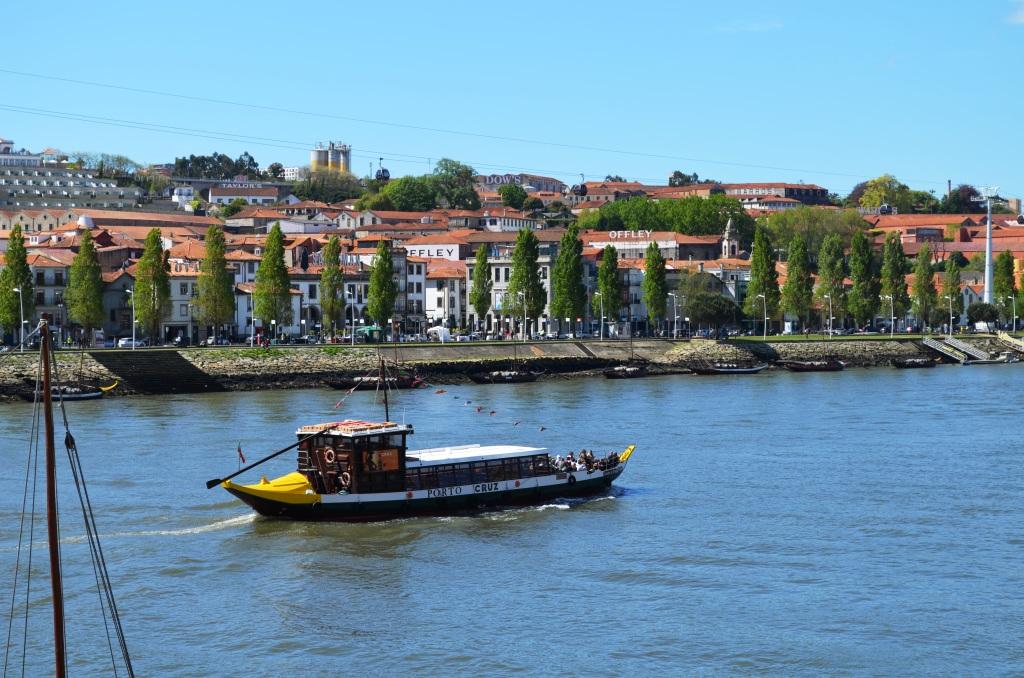
Port, I’m coming:
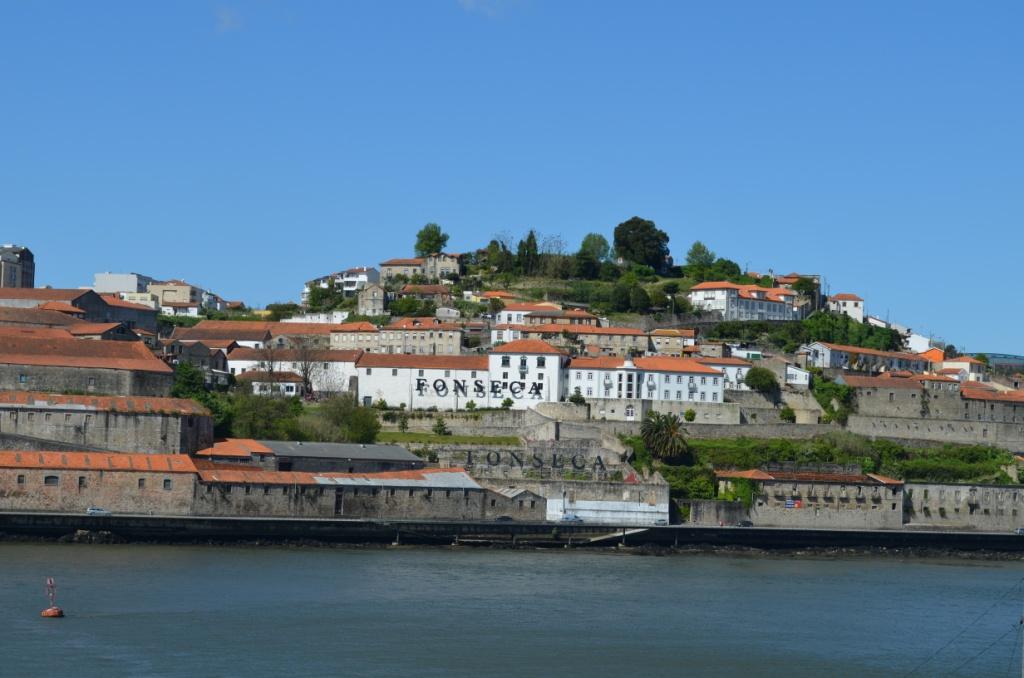
So we finally made it across the river (technically, all the port houses are located across the river from Porto in the town called Gaia). We made our first stop at Quinta do Noval. Quinta do Noval has all the operations in Douro valley, and only a small store in Porto, where you can taste limited number of their Ports. All the ports you can taste are packaged in the form of a single-pour tiny bottles, so as the result you can’t try any of their vintage ports, as those can’t be put in the small bottles. Let me explain.
There are many different types and styles of port, but at this point we only want to distinguish between vintage and non-vintage ports. To begin with, all the ports are made in the same way as any wine – the grapes are harvested, crushed and fermented until desired level of sweetness is achieved. From here on, Port making deviates from the regular wine making process – fermentation now is stopped with addition of very young brandy (neutral grape spirit), and then Port wine goes for aging in the barrels or vats, depending on what kind of port is in the making. Here the distinction will be also made between Vintage and non-vintage ports. If quality of the wine is outstanding, the Port house might declare a vintage year, and then the port will age in the oak cask only for 2 years, and then continue aging in the bottle. Otherwise, the port wine can age anywhere from 5 to a 100 years in the barrels, and it will produce ports with the age ( but not vintage) designation on them.
The key difference (important for us, consumers) between vintage and non-vintage port is that non-vintage port can be kept for extended amount of time after the bottle is open, while vintage port should be consumed within a day or two, same as any other wine. This is also the reason for Vintage port (which is typically very expensive) not being available for the tasting in the tiny bottles.
Okay, going back to our tasting – so we decided to try the 40 years Tawny port from Quinta de Noval:
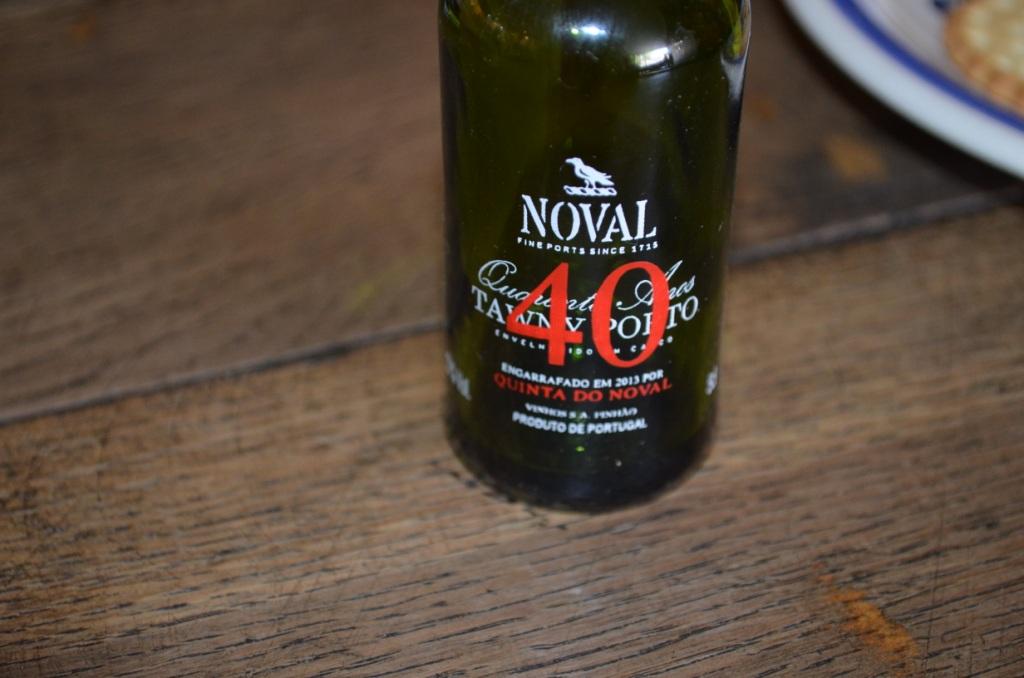
It was good and very complex, with lots of almond variations on the palate, dried fruit and pronounced acidity, which was taming the sweetness. It was good but not amazing (I would be disappointed if I would pay a full price for an actual bottle of it).
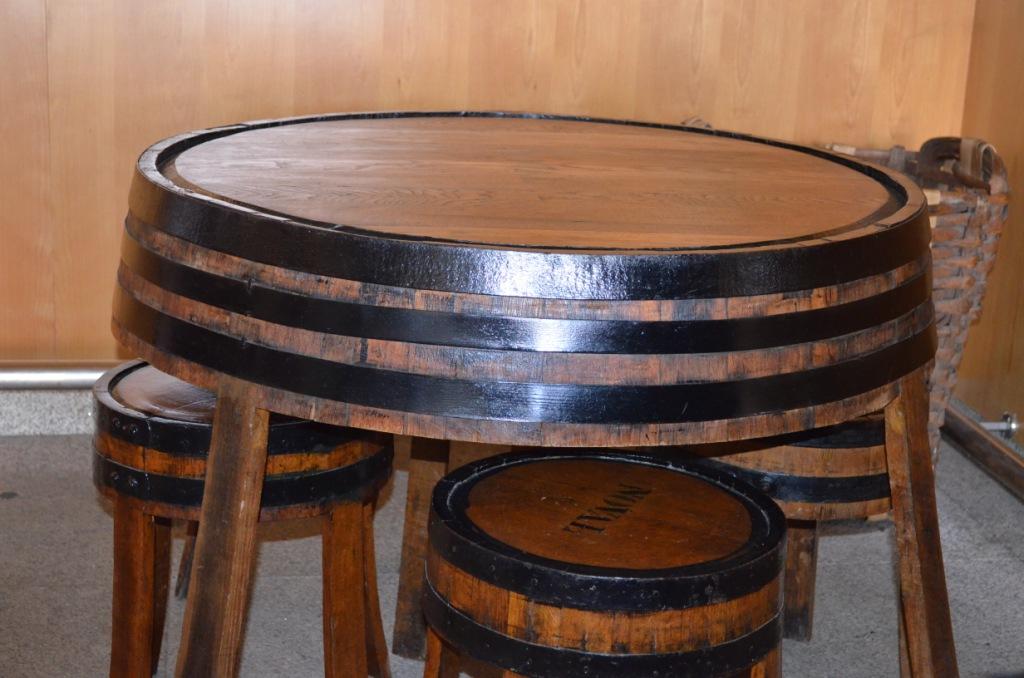
barrel table and stools at Quinta de Noval
Next we stopped at Sandeman:
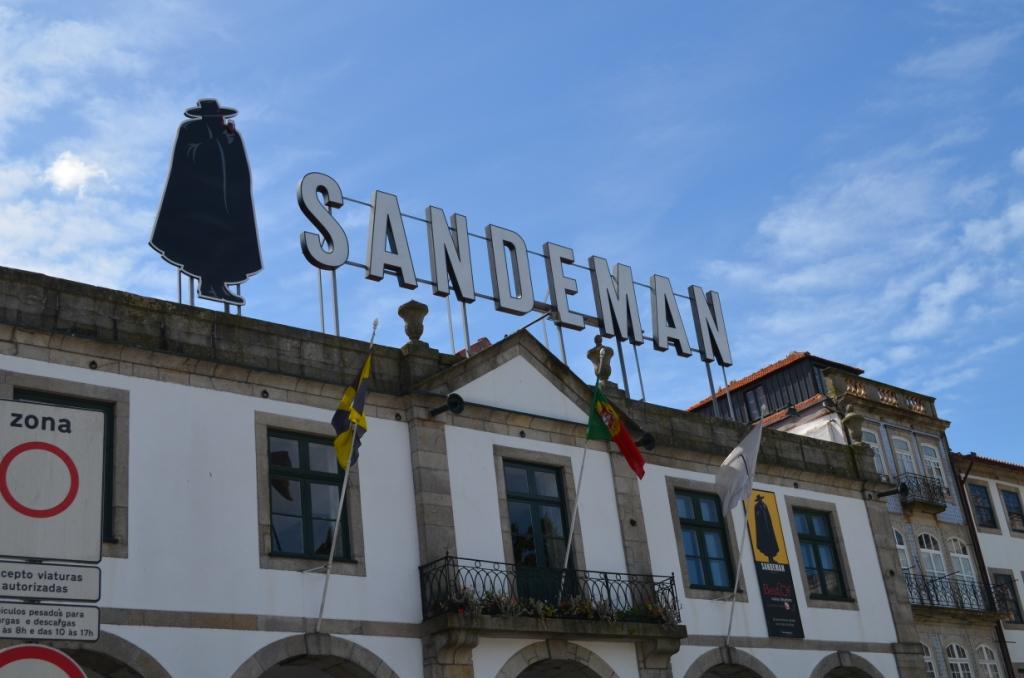
In most of the port houses you can go for the tour and then do the tasting – we decided to skip the tour and just do the tasting.
For the first time I tried White Port – and it was outstanding!
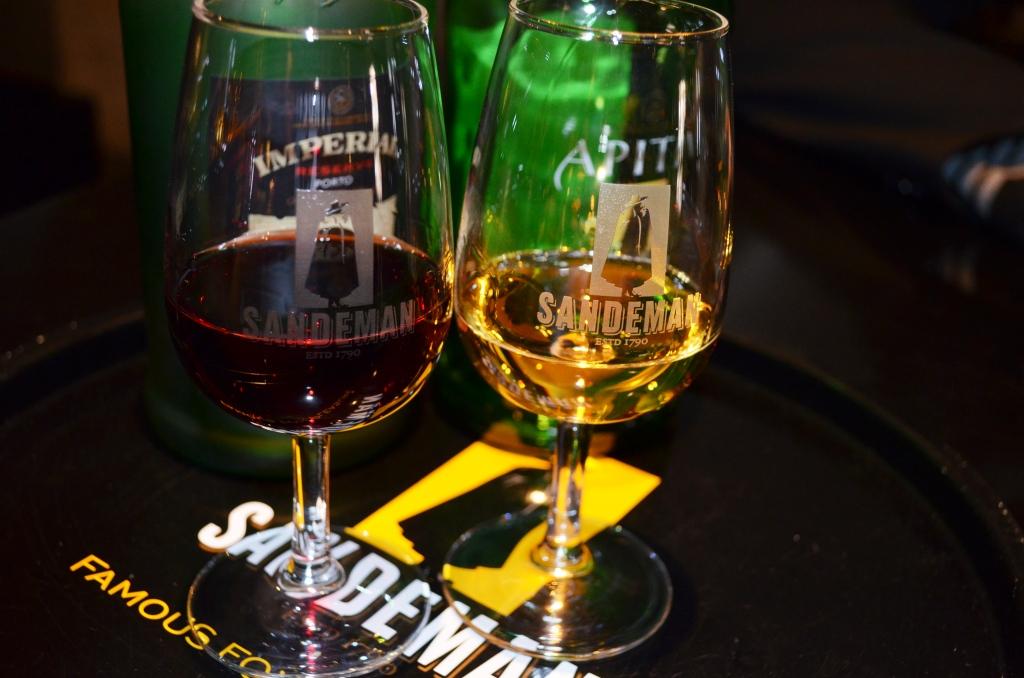
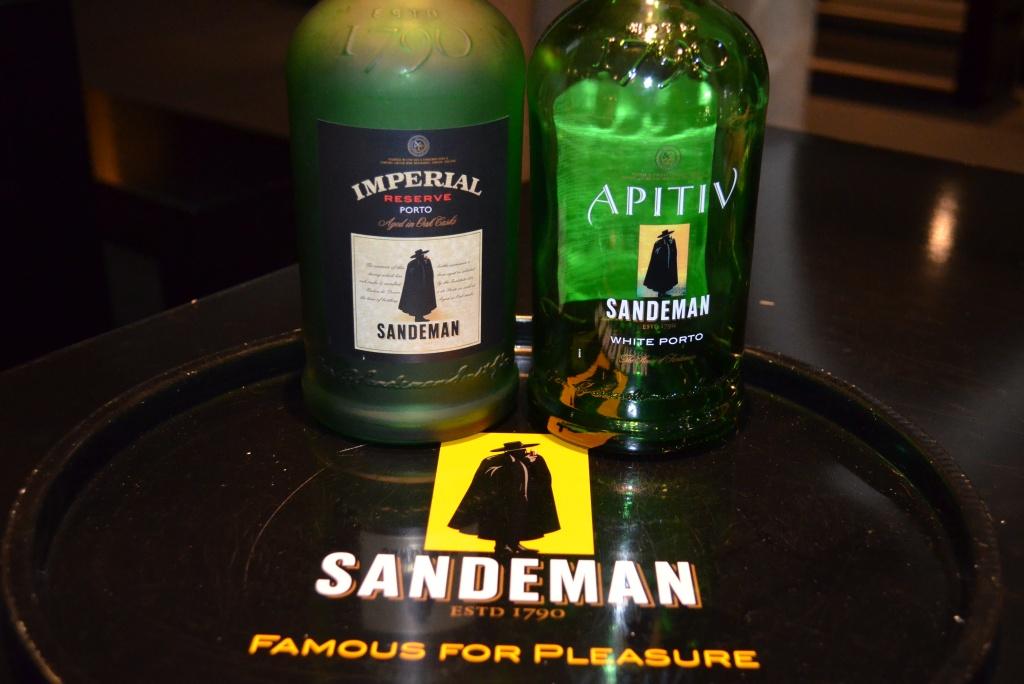
Sandeman Apitiv White Porto was aged for 3 years in the vat. It had golden color, good amount of sweetness ( but not cloying by all means), lots of white fruit, particularly white plums on the palate, good acidity. It was bright and uplifting, very refreshing wine overall.
Sandeman Imperial Reserve Porto ( 8 years of aging in the barrel) had sweetness perfectly supported by the structure underneath – dark fruit, good body, good acidity – overall, probably one of the best ports I ever had.
That’s all I have for you for now – in the next post we will talk about food experiences in Porto. Cheers!
Study of Port: Prologue
I have to break the tradition today – there will be no wine quiz for you to solve. Instead, I’m going to share the experience with you.
As you know, my day time work had nothing to do with wine. But – because of that work, I’m spending this week, in Portugal – hence the title of this blog post. I’m not just in Portugal, I’m actually in the city called Porto – and this is where the Port was born. Over the next few days, I plan to learn as much as I can about Port – and share that with you. But, considering that I’m still jet-lagged, there is not much I can share at the moment – besides a few pictures. Rest assured – more pictures and notes are coming soon!
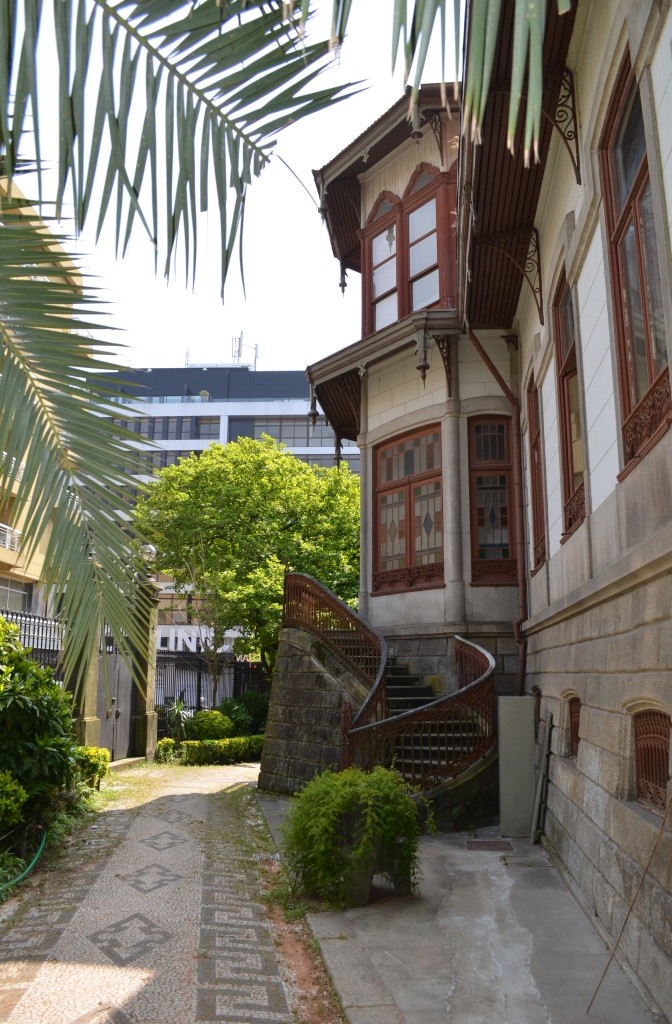
I have no idea what house is this, but I like it
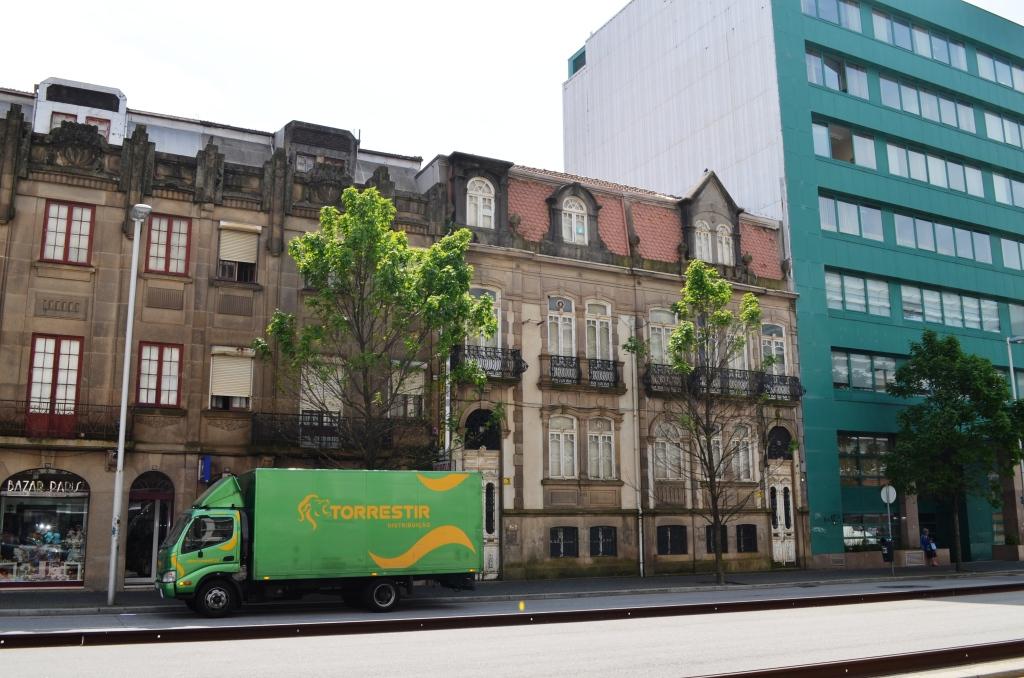
Love the combination of old and new – only in Europe…

I’m sure you knew that I will not leave you without flowers

and more flowers

and more flowers…
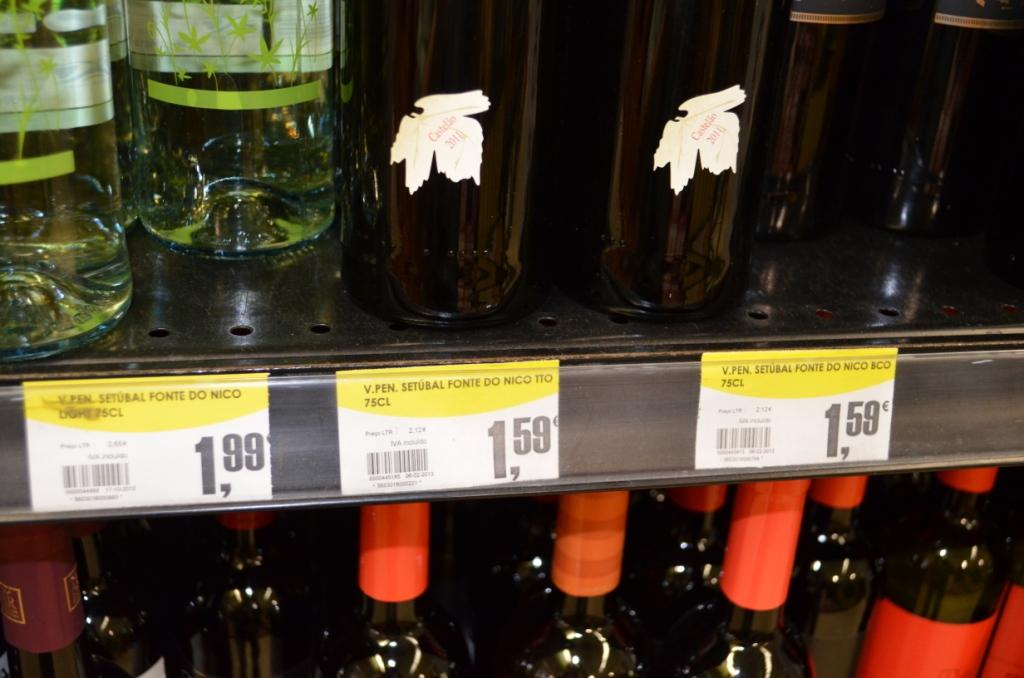
When was the last time you saw $2/bottle wines?
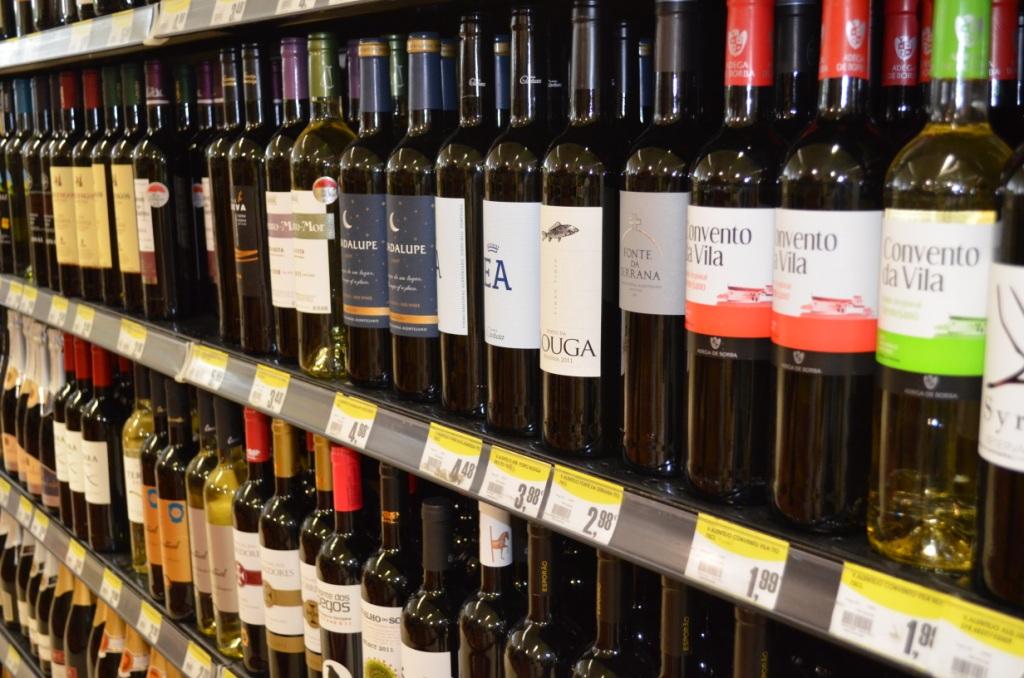
Actually, a lot of very inexpensive wine
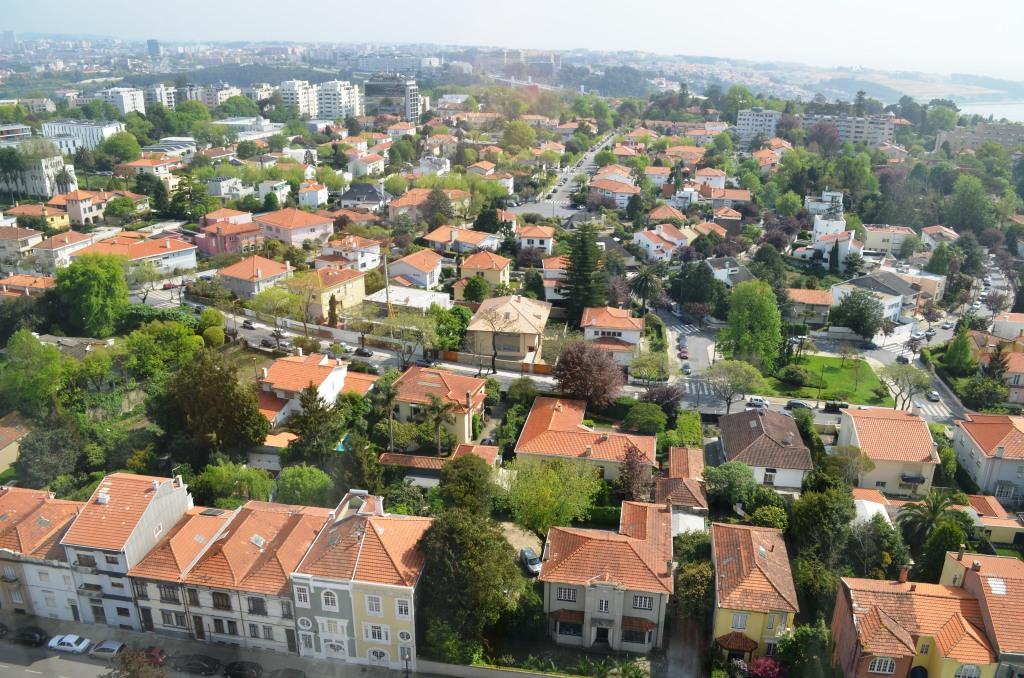
yes, I’m a sucker for the red roofs… Never can get enough of them…
That’s all I have for you for today, folks. Don’t worry – the wine quizzes will be back, just after we will talk a bit about Port. Cheers!
Wine. That. Transforms.
If you followed this blog for a while, you know that I have a tendency to get excited around wines. May be “overly excited” is even better way to put it. Especially when I come across the wines which wow. Like this time.


Field Recordings wines are no strangers in this blog (2010 Fiction by Field Recordings was my 2011 wine of the year). Produced by Andrew Jones, grape-grower-turned-wine-maker, these wines are his personal accounts of people and places – every label on his wines will tell you where exactly the grapes came from, and who grew them – you can see an example above. And his wines have tremendous personality associated with them. What these wines do the best – they don’t leave you indifferent. Like this 2010 Field Recordings Petite Sirah Crockett Hill Vineyard Santa Ynez Valley (15.9% ABV, $22).
The very first smell of this wine just takes you away. Away from the day that passed. Away from all the little things which (of course you knew it), in essence, are not important at all. It is clean. It is powerful, It is beautiful. You can imagine any happy picture you want – the smell will support and carry it. Yes, it is pure fruit forward California wine – but it presents itself in such a bright and uplifting fashion, that this might be the way to spell “happiness” with wine.
The wine appears almost black in the glass. It is dense, it is concentrated, it is powerful. Blueberries, blueberry jam and blueberry pie all together – but without sweetness, all in very balanced, round form. You can have food with this wine – but what you really want is just this wine by itself. From the smell, the happiness continues in the glass.
Then your glass becomes empty. But you sit there, still smiling. Still carried away. To the happy place.
Is this an overly emotional account? You bet. But I invite you to find this wine and experience happy journey in the glass. Of course your personal happy wine might be different. I hope you will discover it. And I will drink to that. Cheers!
And Then There Was Zin…
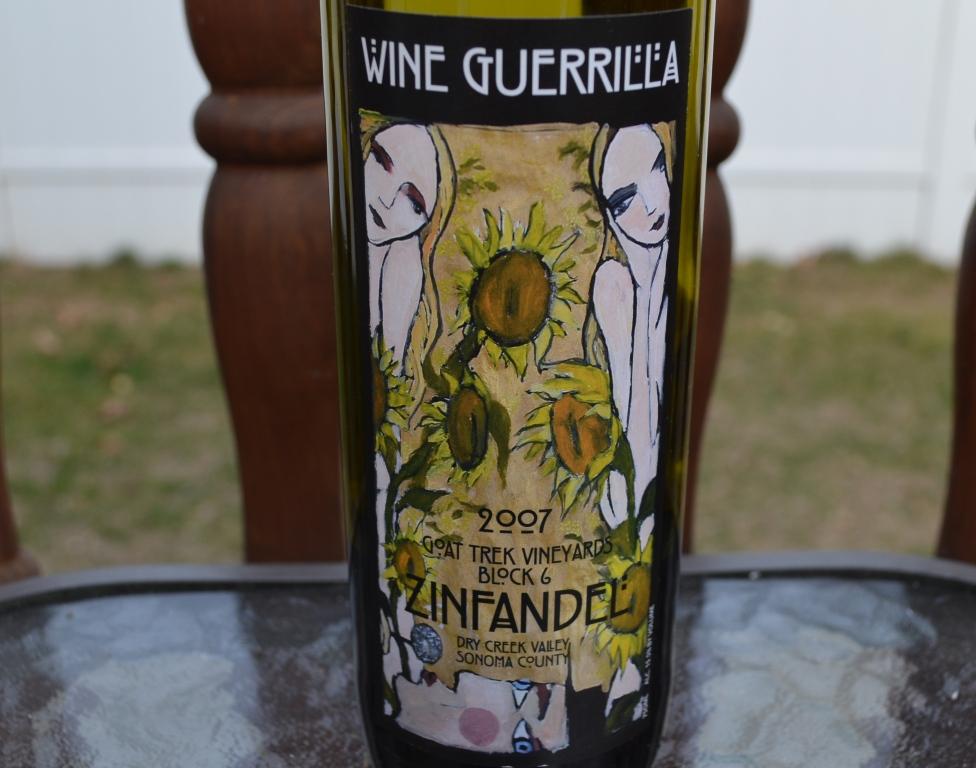 Only yesterday I wrote the post about difficult task of figuring out when the wine is at its peak. And then I opened a bottle of 2007 Zinfandel. Unscrewed the top and poured into the glass. Quick swirl, sniff – and I’m blown away. Pure dried figs. Beautiful. Pure. Clean. Nothing gets in the way. Not overpowering. Just clean and firmly present. May be there were other flavors there – from that moment on, I didn’t look for anything else. It was reincarnation of 1997 Le Ragose Amarone, the magnificent moment I keep re-living on and on.
The first sip brought in the same level of perfection. Dry. Round. Crisp, if you can apply that to the red wine. Dried figs, blueberries, sage, eucalyptus. No fruit jams of any kind. No sweetness at all. Prefect balance and harmony. Yes, this kind of wine makes you emotional and forces you to reflect.
The wine – 2007 Wine Guerrilla Goat Trek Vineyard Block 6 Zinfandel Dry Creek Valley Sonoma County (15.5% ABV). A blend of 87% Zinfandel, 7% Cabernet Franc and 6% Petite Sirah. This wine is made by Wine Guerrilla. And when the have a slogan “Wine Guerrilla – The Art and Soul of Zinfandel”, they are really not kidding. Take a look at their line of Zinfandel wines here.
6 years old wine. Did I manage to hit the peak? I have no idea. Is it possible that the wine would improve further. Quite possible, but this was my last bottle.
Oh yes, and there is a culprit here. The wine I enjoyed so much was a little warmer than the cellar temperature – my wine fridge is set for 55°, so I guess the wine was about 62°-64° when I was drinking it. The next day when I finished the bottle, it was much warmer, probably at about 72° – and while it was good, it was not magical. And the temperature of the wine is literally the last thing I want to deal with instead of just enjoying the wine. Oh well… I’m glad I had this experience in my life. Cheers!
Last Bottle Sign Up ($10 credit)




 Talk-A-Vino