Archive
500! Now Official
As many of you know, I got the bug of The Wine Century Club for the endless quest to try wines made from as many different grapes as possible – yes, you can call me a grape geek, I don’t have an issue with that.
Back in August of last year I wrote a post about reaching the 500 grapes milestone and submitting my application for Pentavini level at The Wine Century club. Two days ago, I got a suspiciously promising envelope in the mail, and there it was:
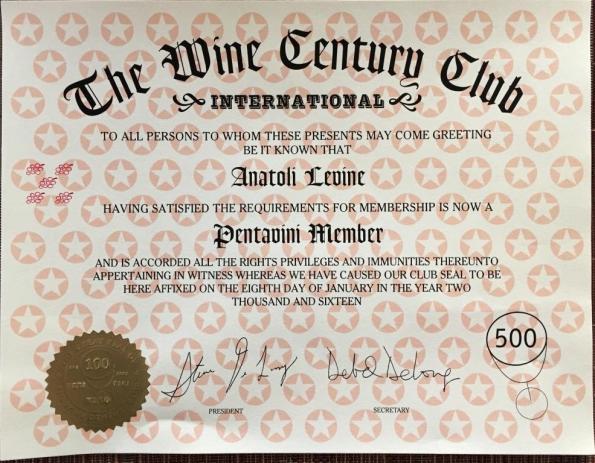 Well, it is nice to get an acknowledgement for your geekiness in the form of this cool paper; it also reinforces desire to continue the quest. You can see my grape count in the right column of this blog page – yes, I got a long way to go to get to the next level, but it is a fun journey. At this point, The Wine Century Club doesn’t have a designation for the 600 grapes level – but it doesn’t make the process any less fun.
To look at things seriously, this is nothing more than a form of an adult fun, just another way to collect the experiences. There is no need to congratulate with this achievement, really. But I will be happy to be a source of encouragement for all the grape aficionados out there; if you want to leave comment, tell me about your own journey in the Wine Century Club quest, no matter how many grapes you tried so far. Grape geeks, rejoice! Cheers!
While The Snow Was Falling on East Coast…
I heard about snow storm targeting East Coast of the USA on Wednesday. As I was at the meetings in San Diego, my first thought was “I have to make it back home to Connecticut”. Originally, I was supposed to take the red eye flight on Friday, come home for a day, and then leave for the conference in Florida on Sunday. I called travel agent right away, and moved my flight back to Newark to the middle of the day on Friday, and Florida flight to Monday morning – and felt pretty comfortable that I dealt well with upcoming storm.
Only on Friday, when I was practically ready to start moving to the airport, I got a message on my phone any air traveler is dreading the most: “your flight had been cancelled”… The thought of my family dealing with the snow on their own was practically unbearable. After talking to the travel agent, the truth settled in – I will not be able to make it home for the weekend, no matter how hard I will try. And yes, I will simply have to go directly to Florida without stopping in New York – no other options.
Coming out of the stupor, I realized – I have very close friends living close by in Irvine, which is about hour and half from San Diego – visiting them for the weekend would be a lot better than sitting by myself at the hotel – so Irvine it was.
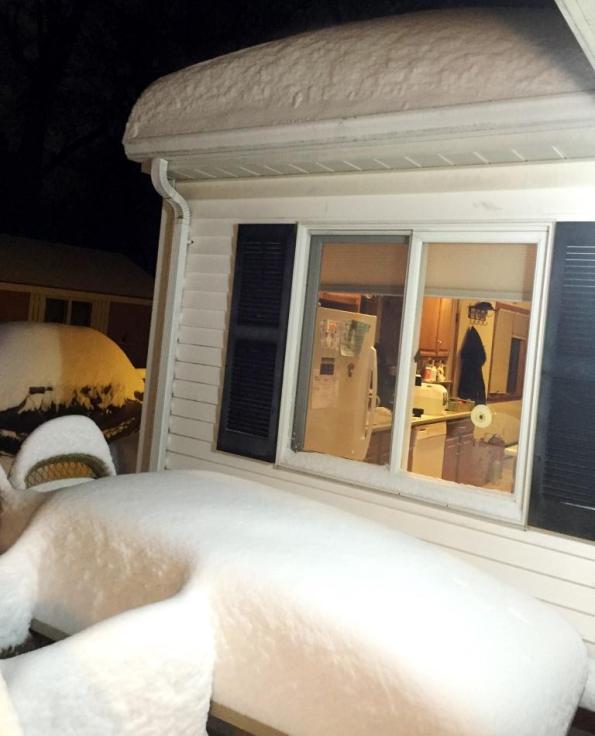
My wife kept me updated on the snow situation back at home – this is what they will have to deal with today, and even for a while:
My day looked quite different – I discovered a Farmer’s Market in California. In the United States, there are two primary sources of fresh fruit and produce all year around – California and Florida, this was of course known to me. And farmer’s market is something which is not difficult to find in Connecticut, where I live – but only during the summer, mostly offering vegetables and a bit of fruit, and somehow always inciting me to challenge the authenticity of the actual “local farm” origin of that produce, seeing it sold from the pretty big trucks.
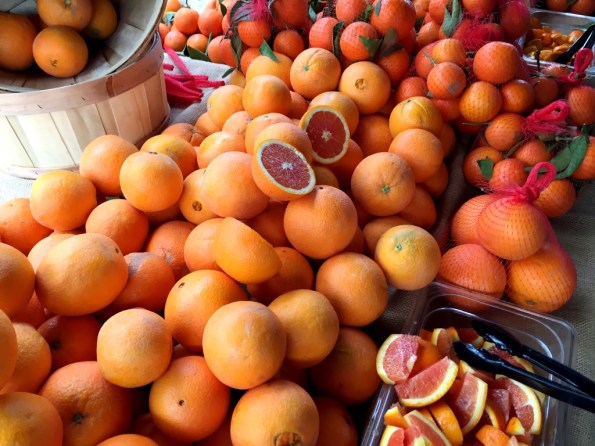
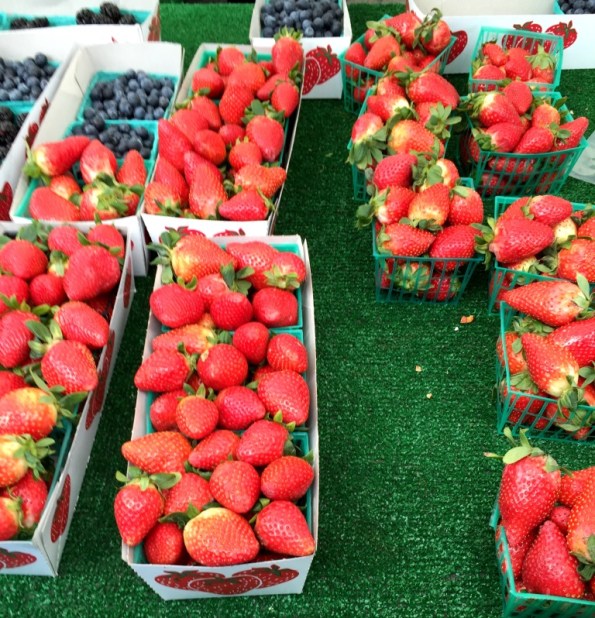
Thus farmer’s market we visited in Laguna Beach in California on Saturday in January was absolutely mind boggling experience for me as a foodie. All the citrus fruit you can imagine – grapefruit red and white, oranges, blood oranges, mandarins, Satsuma mandarins – to be honest, I don’t think I ever tasted a grapefruit which was as sweet and delicious as the one I tasted at this farmer’s market. Then you got strawberries, raspberries, blueberries, apples, pears – lots of them. Everything tastes fresh, delicious and almost unreal for someone from the east coast. All sorts of vegetables, of course, almonds with lots of different preparations, walnuts, dried fruit – I can go on and on – I’m sure you can tell that I can hardly contain my excitement. So here is simply an extravaganza of colors for you, in the form of the pictures – unfortunately, blogs can’t convey taste and smell – not yet, at least:


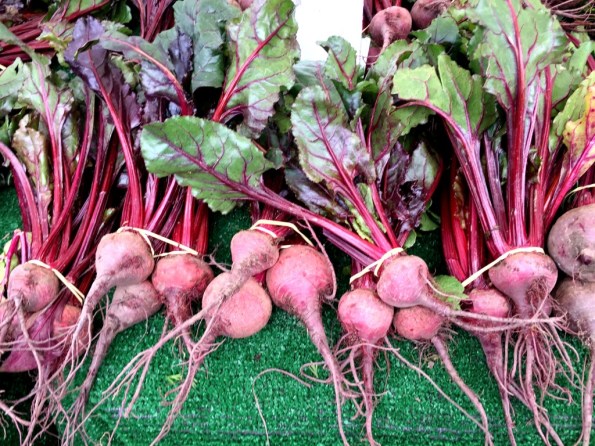


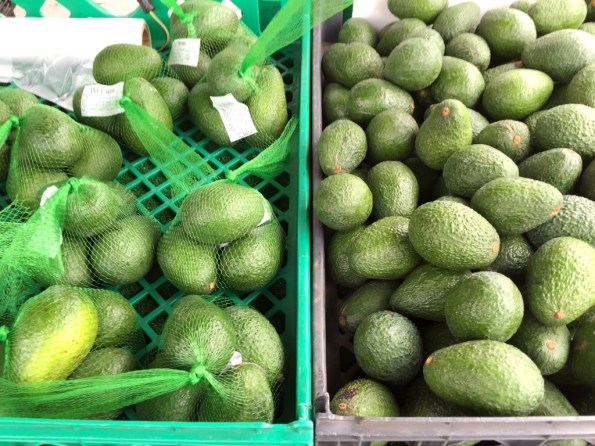
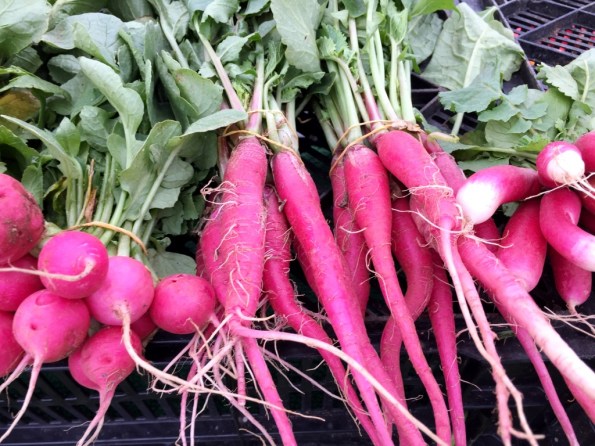

And then of course there were flowers:


Also, you never know then the Universe might strike back, so someone always have to be ready:

Spotted on the street in Laguna Beach – couldn’t resist to include this
If you are on the East Coast, I hope your digging out was successful and not super-tiring, so you can now relax with the glass of wine or whatever your heart’s desires. I’m off to continue flying. Cheers!
Does the Wine Deserves Second Chance?
 This post is an entry for the 22nd Monthly Wine Writing Challenge (#MWWC22), with the theme of “Second Chance”. Previous themes in the order of appearance were: Transportation, Trouble, Possession, Oops, Feast, Mystery, Devotion, Luck, Fear, Value, Friend, Local, Serendipity, Tradition, Success, Finish, Epiphany, Crisis, Choice, Variety, Pairing.
Let me describe to you I’m sure a very familiar situation: the bottle of wine is opened, wine is poured in a glass, you take a sip and … you don’t like it. Too sweet, too acidic, too sharp, too tannic, too “biting” – it is not always that you follow a sip with “wow” or “ahh”. What do you do next? Of course I understand that this question doesn’t have a single answer, as everything depends on the context. And as a side note, it is also implied that the wine is not spoiled – not corked, not cooked, not oxidized – it is simply not to your liking.
Let’s assume that you opened the wine in the comfort of your home. You can simply put the glass aside and decide to wait and see if the wine will change (you of course hope for the better). If this happened in the restaurant, your choices are limited – if you just ordered this bottle out of your own will, in most of the cases you can’t send it back (remember, we said it is not spoiled) – you can ask for the wine to be chilled or decanted, but that is about all you can do. If you are at a friend’s house, you probably have only one choice – to smile and to say that this is delicious, unless you grew tired of that friendship long time ago, so then it might be a good opportunity to end it on a high note.
No matter what setting it was, let’s assume you didn’t get to the point of liking the wine, and now it is in your memory as the wine-I-never-want-to-touch-again. Would you ever think of giving this wine another chance?
Yes, I know. There is such an abundance of wine around us that if we don’t like something, why bother with any “second chances”? It is humanely impossible to taste all the wines produced in the world, so why bother with something which you were done and over with? Yes, by all means you have a point. But is there a tiny little voice inside your head, which says “may be that wine needed more time to open up”, or “may be I was just in the wrong mood”, or “may be my food overpowered the wine”? Do you ever get any of those “may be”s, so you would actually go and try the wine again, just because you are curious?
 I understand that this is matter of personality and an outlook on life in general, but more often than not, I find myself in the “may be?”, a “what if?” group. This is especially true when it comes to the wines which I open at home. If I take a sip of wine and don’t like it, I often put it aside, to try it on the next day. Or may be the day after next. Or may be even after that. One of my favorite examples is the bottle of 2002 Dunn Howell Mountain Cabernet Sauvignon, which opened up only on the 5th day (the wine was 11 years old when it was opened). When I took a first sip after just opening a bottle, the wine was tannic and literally devoid of fruit – there was no pleasure in that wine. Pumped the air out, put it aside for a day. Next day – literally no changes. And so was the story on the next day, and the next day. But I was not not ready to declare the wine a failure and just pour it out – kept giving it second chances. And the reward came on the day number 5, with layered fruit and delicious, powerful wine.
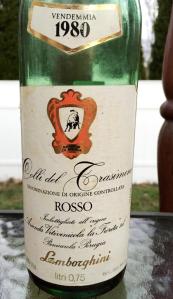
I have another example from literally 2 weeks ago, when we opened a bottle of 1980 Lamborghini Colli del Trasimeno Rosso (I can tell you that I bought the wine strictly on the basis of the fun name – Lamborghini – a car which I’m sure anyone would be happy to drive at least once). The wine was opened, went into a decanter – and for the whole evening nobody liked to drink it, as it tasted more as brine than the wine. I can’t tell you if I was giving the wine a conscious second chance, or was simply lazy to pour it out. Next day before clearing the decanter I decided to take a little sip – why not? And it appeared that the wine actually developed into delicious, mature wine, with the nose of tertiary aromas and palate full of sweet plums. Not the most amazing wine I ever had in my life, but perfectly delicious, mature wine which delivered lots of pleasure.
I could go on and on with similar examples, but I’m sure you got my point – the wine could’ve been discarded as “bad” and the great pleasure would be missed, if it wouldn’t be for the second chances.
So, what do you think? Do you have any “second chance” wine stories of your own, maybe with the happy ending? Do you think wines deserve their second chances? Cheers!
A Puzzle of a Hundred Pieces
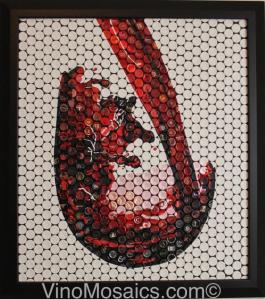
This beautiful artwork is constructed from tops of wine foils. Picture courtesy of Ryan Sorrell of VinoMosaic.com
Is there a person in this world who doesn’t like puzzles? You can save the “duh” exclamation for later – I’m sure there are some people who don’t, but an absolute majority enjoys the puzzles of some sort, whether expressed in the form of words, numbers, colorful picture pieces, link chains or whatever else.
So what if I tell you that you will be given a hundred of random pieces – not just you, but a group of people will receive a hundred of totally random pieces, but they all would have to build exactly one and the same picture out of those 100 random pieces – would you like to take part in such a challenge? Do you think you would be up for it?
While you still considering if you are up for a challenge, you are probably also wondering how puzzles relate to the wine and what you are still doing reading this nonsense where you were looking for the information on the wine, plain and simple. Actually, it appears that this type of puzzle with random pieces but the same resulting picture has very direct relationship with the world of wine. Not necessarily with the whole of it, but definitely with one of the most noble parts – the Champagne.
If you ever read the story of Benedictine monk Dom Perignon, often credited with creation of Champagne (”come quickly, I am drinking the stars”), many wine historians agree that major Dom Perignon achievement is not creation of Champagne itself, but perfection of the art of blending. If you think about it, blending resembles the process of putting together puzzle pieces. And to complete the picture, take a look at the description of any of the Champagne made by so called Champagne Houses – Veuve Clicquot, Moèt and Chandon, Bollinger, Perrie-Jouiet and hundreds of others – they all talk about a “signature taste” of their Champagne House, which is painstaking maintained exactly the same through the hundreds of vintages.
While I knew about significance of blending in production of Champagne, I never understood a true scale of an effort. A month ago (almost two month by the time I was able to finish this writing), I was lucky enough to attend a first ever Vins Clairs (give a few seconds – I will explain what this is) tasting hosted by the Champagne House of Piper-Heidsieck and Terlato Imports in the US – well, it was simply first ever Vins Clairs tasting conducted outside of France. The event was led by Régis Camus, Chef de Cave and Winemaker for Piper-Heidsick. And yes, we spent time learning about puzzles.
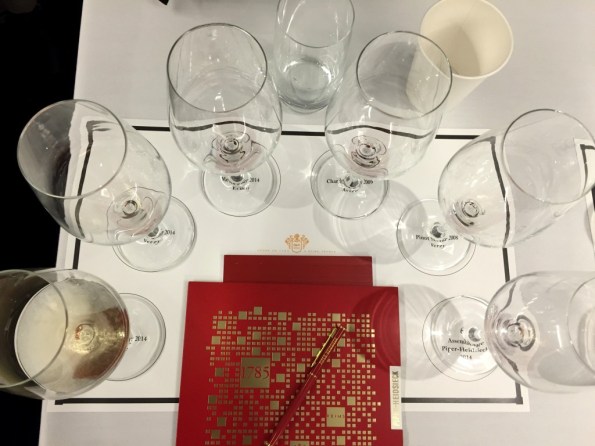
Let me give you a brief photo report for what was happening at the event first, and then of course we will go back to puzzles. When I arrived (early, to get a seat in front), the room was ready for the tasting:
 And the expectations started building as the carts showed up:
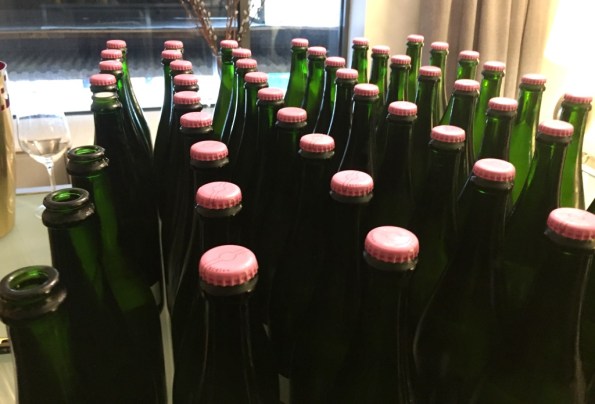
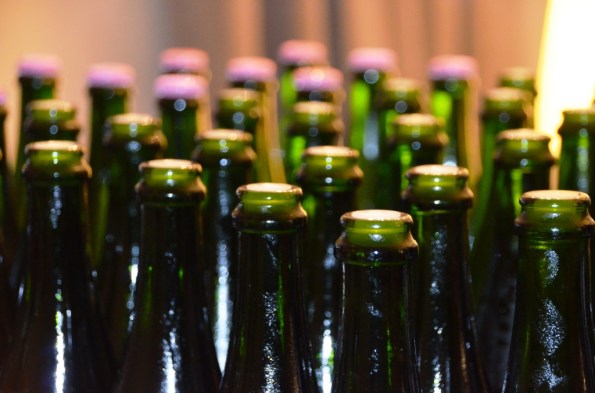 This is what went into our tasting glasses:
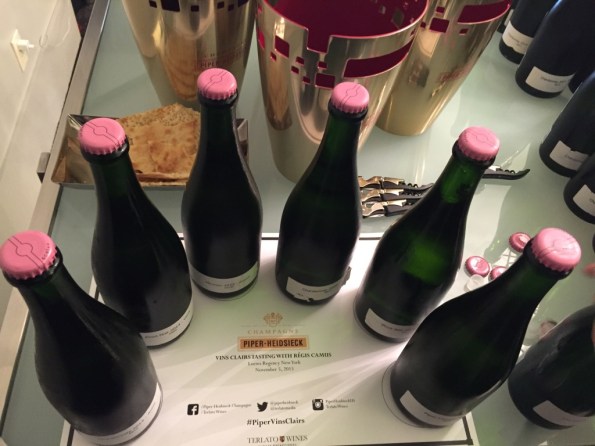
Bill Terlato welcomed everyone to the tasting:
 And then we started to learn about puzzle pieces. Of course, first talked about what Champagne is – “Champagne comes only from Champagne”:
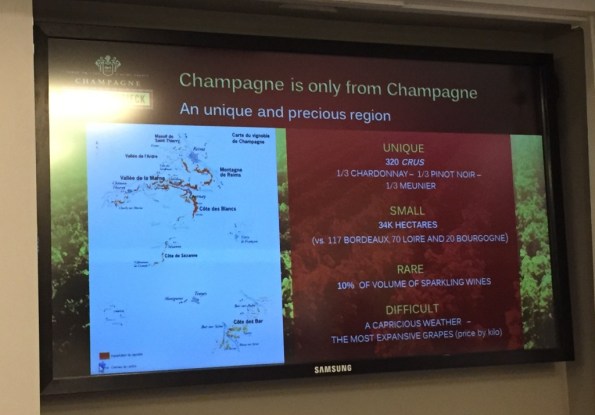 All grapes used in production of Champagne come from 320 different vineyards, which are also called CRUs. Out of those 320, only 17 have a status of Grand Crus – as they produce distinctly better grapes. Just to give you few more fun numbers – there are about 19,000 grape growers in Champagne, out of which only about 2,100 produce their own wine. There are also about 50,000 Champagne labels – which, of course, explains that it is always possible to come across a champagne bottle you never saw before.
But let’s get to our puzzle, as we still need to solve it. Every year, the grapes are harvested (just a quick reminder – there are 7 grapes allowed to be used in Champagne, but only 3 – Chardonnay, Pinot Noir and Pinot Meunier are really used), pressed and fermented into the still wine, same as it would be done with any other wines – with the exception of color – red grapes, such as Pinot Noir and Pinot Meunier, still produce clear juice if not kept in contact with skins, and this is what typically done in production of Champagne – unless Rosé is in the making. Once fermented, these still wines now become foundation of Champagne, known as Vins Clairs.
As common with any still wines, the year is a year is a year – every year is unique and different. If the year was great, let’s say, for Chardonnay, the Chardonnay Vins Clairs will become a Reserve wine and will rightfully occupy the place in the cellar. If the year was just okay, the wine, of course, will be used, but will not be cellared for long. If the year was terrible, the wine simply might not be produced. But it is okay – remember, we got lots of pieces to play with.

Régis Camus (on the left) explains what does it mean to create a Champagne wine
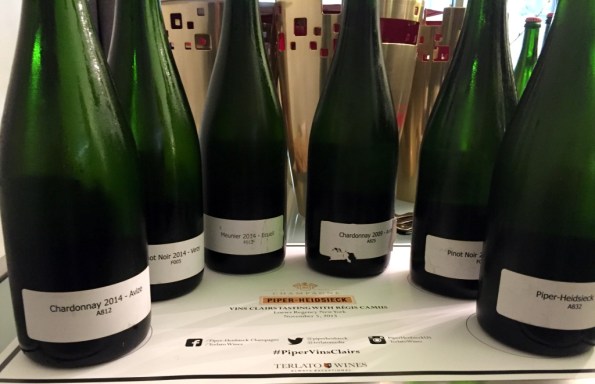
First, we tasted through 5 different Vins Clairs – each one a component in the Piper-Heidsieck Champagne, each one with its own role. Chardonnay brings fruit aroma, citrus, minerality. In reserve wines, Chardonnay will bring more aromas. Pinot Noir provides body and structure, and it is usually main component in Piper-Heidsieck Non-Vintage Champagne. Pinot Meunier brings fresh fruit. Below are my notes, almost verbatim, as I followed explanations and tasted the wines:
2014 Chardonnay Avize – Avize village is in the center of Côtes de Blanc, and it is one of the 17 Grand Crus. Straw pale color. Beautiful nose, minerality, fresh, citrus. Clean acidity on the palate, green apple, nice acidic finish. This wine was mostly used for vintage and reserve wines, and will be a part of non-vintage champagne in 5–6 years down the road.
2014 Pinot Noir Verzy – Verzy is also one of the 17 Grand Crus. Light golden color. Interesting nose, mostly white fruit, very serious acidity, lemon/lime level, very interesting. I would have to agree on structure. In a blind tasting I would say Muscadet.
2014 Pinot Meunier Ecueil (fleshy and fruity, red grape with white juice). Light golden color. Brings in fresh fruit to the blend. White fruit on the nose. Pinot Meunier rarely used for reserve wines. Still acidity, but acidity of the fruit, more of the green apples.
2009 Chardonnay Avize very interesting color – green into golden. Beautiful minerality, classic Chablis gunflint. Delicious. Creamy, medium body, white fruit, restrained acidity, long finish. I would gladly drink this wine by itself.
2008 Pinot Noir Verzy color similar to Chardonnay – green-golden. White fruit on the nose with touch of minerality. A bit more fruit on the palate, but still extremely pronounced acidity.
After we tasted through the 5 Vins Clairs, we were asked to refresh our palates with a sip of Pinot Meunier, and the final wine #6 was poured. Boy, what difference was that – mind boggling, starting from the color:
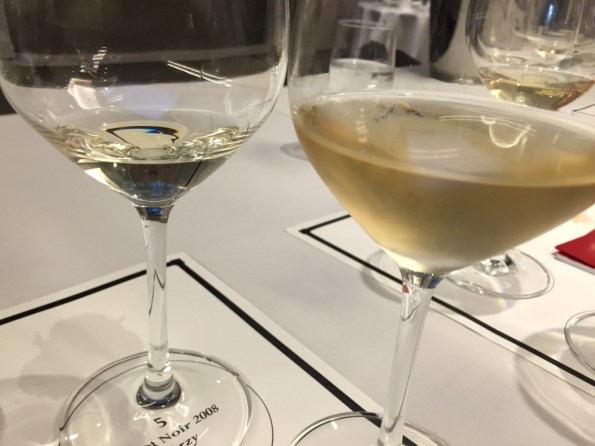
2014 Assemblage Piper-Heidsieck is to the right
2014 Assemblage Piper-Heidsieck – blend of 2014 (90%) and reserve wines (10%) – darkest color of all, beautiful nose with yeastiness, and fresh bread, good minerality. One would never guess that you can get that from individual wines. Color came from the fact that the wine was not stabilized yet. Delicious overall, excellent acidity. 55% Pinot Noir, 15% Chardonnay, the rest is Pinot Meunière. There are 100–110 crus in this final assemblage, and the work on it was finished very recently. This wine was bottled in 2015, and will be released in 2018.
Someone asked if it is possible that the puzzle will not be solved in some years. Régis Camus gave us a little smirk, and said that no, this is not possible – the puzzle will be always solved.
What can I tell you? This was definitely an eye-opening experience – we were allowed to touch the magic, the magic of creation of one of the most revered wines in the world, and it definitely exceeded my expectations.
This was the end of the Vins Clairs tasting, but the beginning of “no-holds-barred” Piper-Heidsieck Champagne tasting -we had an opportunity to try all the major Champagne Piper-Heidsieck offers – 2006 Brut Vintage, 2002 Rare Millesime, Rosé Sauvage and Cuvée Sublime (Demi-Sec)


At this point, I was part exhausted, part excited, and stopped taking notes – I can only tell you that 2006 Brut and Rosé Sauvage were two of my favorites, but I would have to leave it only at that.
Here you go, my friends – the magic of Champagne, a puzzle of a hundred pieces – but the puzzle which is always solved. The New Year is almost here, and of course it calls for a perfect bottle of Champagne – but even if not a New Year, we can simply celebrate life, and every day is a good day for that. Pour yourself a glass of sparkles and let’s drink to the magic, and life. Cheers!
Daily Glass: 17 Years Old Beauty
 Absolute majority of the 17 years old are beautiful. Well, at least when it comes to the people. With the wines, this can be a different story. 17 years old in the wine terms is quite an age – some of those 17 years old are slender and muscular, and some are flabby, tired, and barely stand on their feet. And the beauty of the wine is that you can’t know how the wine will be – until you get the bottle opened.
I have to admit that I had no expectations before opening this bottle of 1998 Shiraz from Australia. Aged Australian wines are hard to come by in US, thus I have very little experience with that class of wines. And having no expectations around the wines is generally good, as it often saves you from disappointment. However, I’m sure that you deduced from the title of this post that there was nothing disappointing about my experience.
Dutschke family owned the parcel of land with a few vineyards on it in Barossa valley in Australia since the end of the 19th century. In the late 1900 the grape plantings increased, with most of the grapes been sold to the other wineries. The first wines under the Dutschke name were produced only starting in 1990. Which makes the wine which I opened today one of the early wines produced at the winery.
As I opened the bottle of the 1998 Dutschke St. Jakobi Shiraz Barossa Valley (15% ABV, $25?), the first nice observation was perfect condition of the cork – not a sign of age. The color was very dark garnet – again, not a sign of age. And the smell – wow – concentrated fresh berries, lavender, sandalwood – bright and uplifting. Then the best part – the wine needed no breathing time. Pour, sip and enjoy the exuberance of the fresh berries, savory herbs, dark power, perfect structure, clean acidity and perfect balance. If I wouldn’t check the label, I would’ve never known the wine was 15% ABV – overall, it was perfectly integrated and perfectly enjoyable (Drinkability: 8+/9-). And then the wine just was.
Wish you lots of small pleasures this holiday season. Cheers!
Oversold and Underappreciated Premise of Wine Pairing
This post is an entry for the 21st Monthly Wine Writing Challenge (#MWWC21), with the theme of “Pairing”. Previous themes in the order of appearance were: Transportation, Trouble, Possession, Oops, Feast, Mystery, Devotion, Luck, Fear, Value, Friend, Local, Serendipity, Tradition, Success, Finish, Epiphany, Crisis, Choice, Variety.
Let’s start from the mini quiz – is food and wine pairing an art or a science? Or is it neither and the question makes no sense?
I’m sure you can successfully argue both sides, as they do in debate competitions. Technically, cooking process is based on science – heat conduction, protein’s reaction to heat and cold, combining acid and alkaline – we can go on and on, of course the scientific approach to the food and then the pairing can be argued very well. But one and the same dish can be flawlessly composed from the scientific point of view – think about a steak which is perfectly cooked with a beautiful crust – but missing on all the seasoning and having either none or way too much salt – it would require an artistry and magic of the Chef to make it a wow food experience. So may be food and wine pairing is an art after all?
I don’t have an answer, and I don’t believe it is even important. The problem is that in many cases, that “food and wine pairing”, which is typically sought out and praised, is not possible, not universal and even not needed.
Yes, there are rules for the pairing of wine and food. Contrast, complement, balance of the body of the wine with the perception of the “weight” of the food, tannins and fat and so on. The rules work well when you create a tasting menu and pair each dish individually with the very specific wine, based on practical trial and error. However, once you try to extend your recommendation to say “try this stew with some Syrah wine”, that begs only one question – really? And overbearing Shiraz from Australia, or earthy, spicy and tremendously restrained Côte-Rôtie or espresso loaded Syrah from Santa Ynez Valley – which one?
Here is another example, simply a personal one. At a restaurant, my first food preference is seafood – scallops, bouillabaisse, fish – anything. My wife typically prefers meat, and so do many of our friends. Going by the standard rules (white with fish etc.), we are either stuck with water or have to order wine by the glass, and ordering wine by the glass is typically not something I enjoy doing – very often, “by the glass” list is short, boring and grossly overpriced. So instead of trying to pair wine with the food (don’t get me wrong – I like the “spot-on” pairing as much as any other foodie and oenophile), I prefer to pair the wine with the moment – a good bottle of wine which doesn’t match the food is still a lot better than crappy wine which would denigrate the experience.
Still not convinced? Think about a simple situation – old friends are coming for a visit, and you know that these friends like wine. Yes, I’m sure you will give some thought to the food, however, there is a good chance that you will comb your cellar over and over again in a search of the wines to create the meaningful wine program for the evening, even if the whole dinner would consist of one dish. You will spend time and time again thinking about your friends and trying to come up with a perfect, special, moment-appropriate and moment-enhancing wines.
Wine is an emotional connector. Wine elevates our experiences, making them a lot more memorable. You might have problem remembering what dish you had at a restaurant, but if the bottle of wine made you say “wow” on the first sip, there is a good chance that the special moment will stay in your memory, thanks to that special pairing which took place.
We pair wine with moments, and we pair wine with the people, for good and bad of it. If Aunt Mary comes for a visit, who enjoys a glass of Chardonnay with a cube of ice in it, is it really the time to break out Peter Michael or Gaja Rossj Bass? A Bogle Chardonnay would pair perfectly with Aunt Mary (not that there is anything wrong with Bogle – it is just perfectly priced for such occasions). However, if you know that your friend Jeff will stop by, who you know as a Pinot Noir aficionado, all the best Pinot Noir in your cellar will all of a sudden enter into a “chose me, I’m better” competition. And if none of them will win, the Pinot Noir at near by store will enter the fray. And keep in mind, all of this will be happening whether you will be serving steak, salmon or cheese and crackers…
Yes, when food is well paired with wine, it is really a special experience. But food and wine pairing which doesn’t work is really not the end of the world, it is still just a nuisance – and a learning experience, if you will. When the wine pairs well with the moments and the people, that’s when the memories are created, and that, as MasterCard likes to teach us, is priceless. Let’s drink to lots of special moments in our lives. Cheers!
China Travel Tidbits
In the previous post, I shared my food and wine experiences in China. In this post, I want to inundate you with pictures, and also share a bit of the first-hand advice. I had certain level of expectations, but those were no match to the actual experiences, hence the post.
One important disclaimer is that while I was traveling on business, I was all on my own, without any arrangements made, outside of having a visa and having the hotel room reservation. I had company for most of the business activities, but overall coming in and out, and moving around for the sightseeing was all by myself. Another important “disclaimer” – I only visited Beijing – your experience in the other cities might be quite different, so keep that in mind.
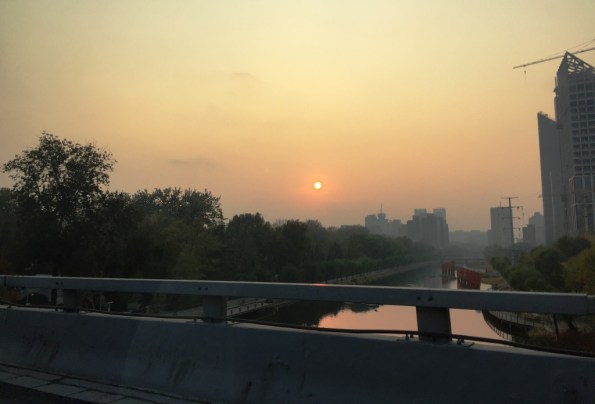
While in the taxi on the way from airport, I took a pictures of my last “sun sighting” for the week in Beijing
I will not be trying to recount the daily activities, as this would be boring and long, but instead, here are my main takeaways regarding travel to China.
Language barrier: yes, I expected it, but it was much more than I expected. Absolute majority of the people don’t speak or understand English (duh). That includes taxi drivers. Yes, there are signs in English, but it doesn’t help you if your taxi driver doesn’t understand a word of what you are saying. Even in hotels, lots of service personnel don’t speak English. The places which offer welcome relief? Anywhere someone wants to sell you something – from Pearl Market to the little street shops by the Great Wall, all sellers are very proficient with “how much” and “tell me your price”.
What exacerbates the language problem is the sheer size (huge!) of the city and everything in it. Let me explain with the simplest, but probably the most critical for any visitor, example – hotels. New York City has around 470 hotels. Seoul has roughly 430 hotels. Beijing has more than 5,500 hotels. 5,500! Do you think any of the taxi drivers had any idea where Sheraton Great Wall is located? No, they didn’t! Even when you have a special card from the hotel where the address is written in Chinese, and the driver speaks decent English – all I got was a smile and “I don’t know where it is”. Keep that in mind. If you have to, have hotel’s number on a speed dial – the taxi driver at the airport called hotel to find out where to go (works at the airport, doesn’t work that well on the street).
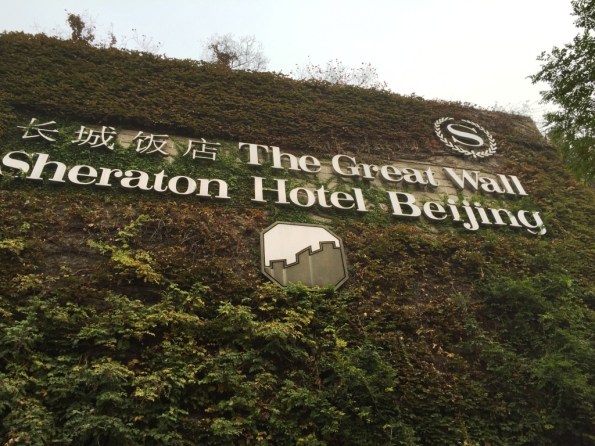
Sheraton Great wall was built about 30 years ago and was one of the very first hotels where foreigners were allowed to stay

A typical morning view from my hotel room
Subway is your friend. I can’t give enough praise to the Beijing subway. Not only it is clean, spacious and all the trains are brand spanking new, but all the signs are bi-lingual. As long as you know where do you need to go, you can buy a ticket from the machine, which can be easily switched into all English prompts with one button. All the fares are distance based, with I think 5 yuan been the most within most areas in Beijing, so it is very inexpensive. Not that the taxi cost a lot – the taxi fares in Beijing are only distance based, independent from the time – which is vital considering insurmountable traffic in Beijing at any time (for sure during the day). The starting fare in taxi is 13 yuan, and you can drive quite a distance before the meter will advance – but then you might be able to walk faster…
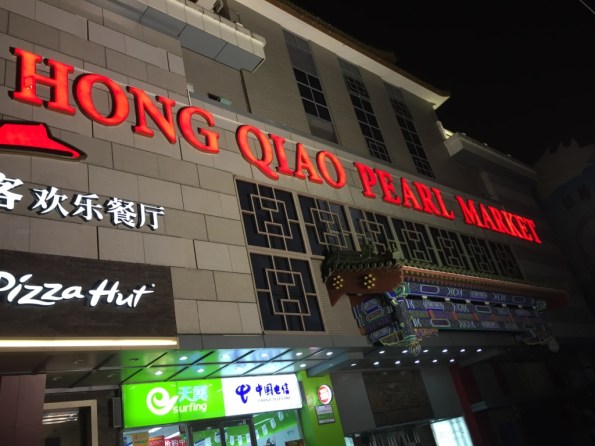
Pearl Market in Beijing
Bargaining. Just a little note here, as I really don’t enjoy the process, but bargaining is unavoidable if you want to buy anything on the street or at any of the tourist-focused shops (which are lots). Two small examples. When visiting pearl market (went there with friends), I didn’t need pearls, but wanted to buy two small key chains. I found some little wooden key chains, and lady asked me for 230 yuan (about $40 for two tiny pieces of wood!). I said “20”, and simply started to walk away. The lady screamed at me to come back, and with the face expression showing that I just offended her beyond belief, asked me to give her the money. So I bought 2 key chains for about $3 each, which I think is a fair price (instead of $20 as requested originally). Thus I recommend that 10% is what you need to start from if you want to buy something from the street vendors. One more example – I was looking at the small pendant with the one single pearl in it. The lady asked the same 230 yuan for it (must be the day, huh). Native speaking colleague standing next to me, quickly found exact same pendant for 19 yuan on Ali-Baba – it is all made in China after all, right?
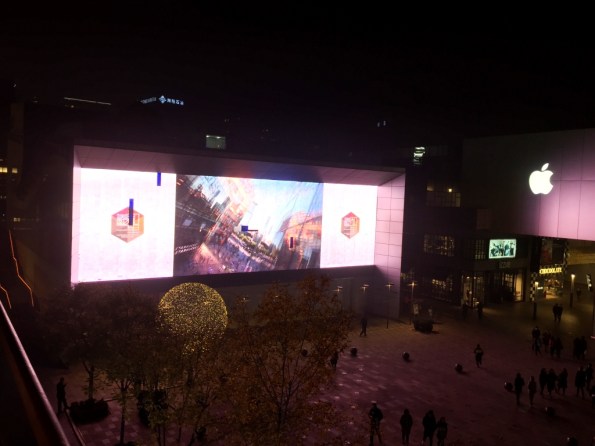
One of the countless ultra modern shopping centers in Beijing
I’m almost ready to talk about sightseeing I was able to do in Beijing, but before we get there, one more important note – a bit out of place, as it concerns my experience at the airport, but I want to mention it as it might save you some aggravation. It appears the Chinese security at the airport has particular admiration for the power charging sticks, a portable batteries in any forms. They request you to take it out of your carry on and put it through the X-ray machine. What they are actually looking for is the capacity (1 Ah, 2.8 Ah, 3.7 Ah, anything of this kind) written on the battery pack. My battery stick, which saved me countless number of times for the last year, didn’t have the capacity written on it, as I got it at one of the conferences as a present, and therefore, it was confiscated. I tried to argue, but you know how much you can argue with airport security, especially in China… Therefore, if you plan to travel to China, check that your power stick has the capacity written on it, to avoid any unpleasant experiences (those little things get you…).
Now, it is the time for a barrage of pictures (almost). I was able to visit Great Wall and Forbidden City, which are probably what any tourist would want to see. There are few locations to get on top of the Great Wall – I chose the place called Mutianyu, which is about 1.5 hours away from Beijing, and it is less crowded than the others. Take a look at the pictures below – while it was extremely foggy, the experience was still magnificent. If you will go there, make sure you would wear something very comfortable, both shoes and clothes – going up and down on the little stairs is quite a strenuous workout.
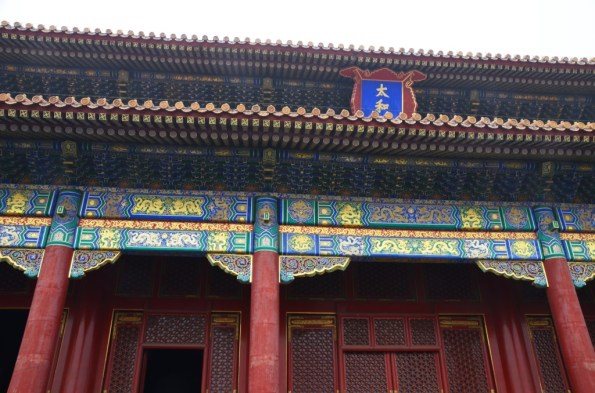
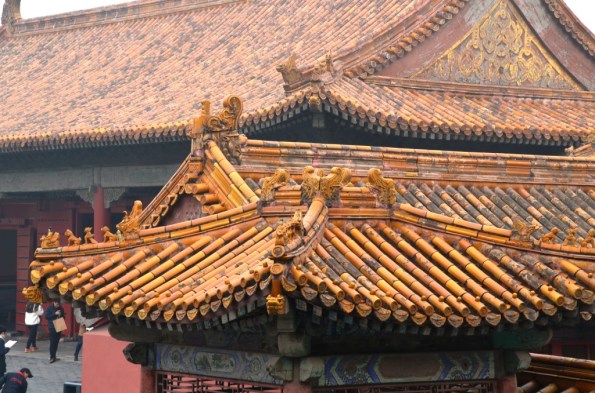
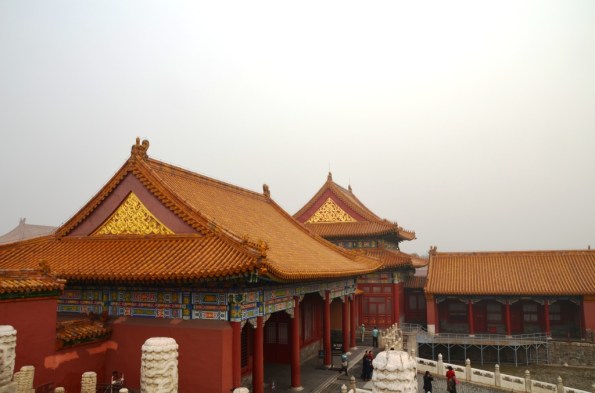
The Forbidden City, which is located right in the center of Beijing and is the largest wooden structure of this kind in the world, is interesting to see, but I would honestly say that it is not a “must see” type. Colorful, yes, but in the end of the day, it is just a bunch of buildings… Anyway, the rest of my China travel expressions are below in the form of the pictures – I also will include comments where possible. By the way, there is a mini-quiz there – scroll through slowly, so you will see the quiz and the answer should be somewhere there as well. Cheers!
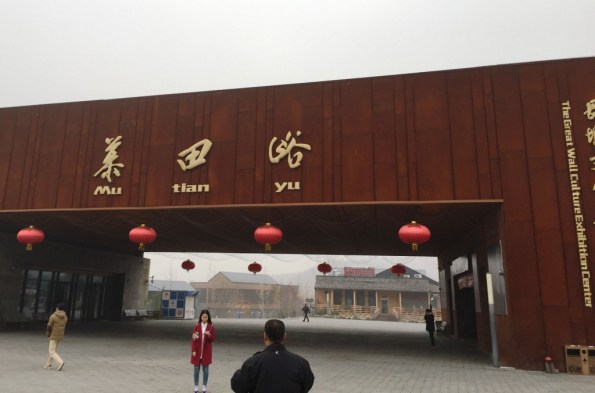
The entrance to the Mutianyu Great Wall complex
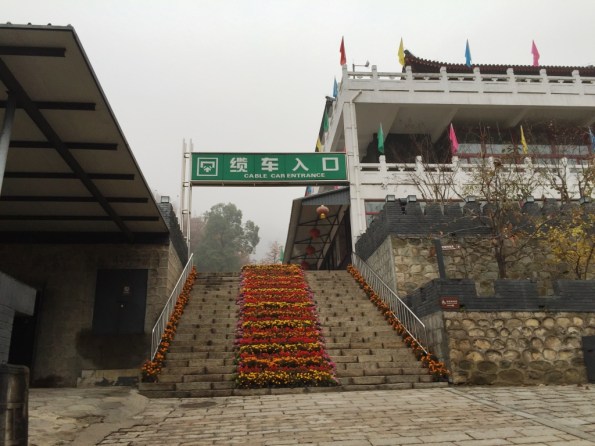
After you take a ride on the shuttle bus, this is your way up to the cable car
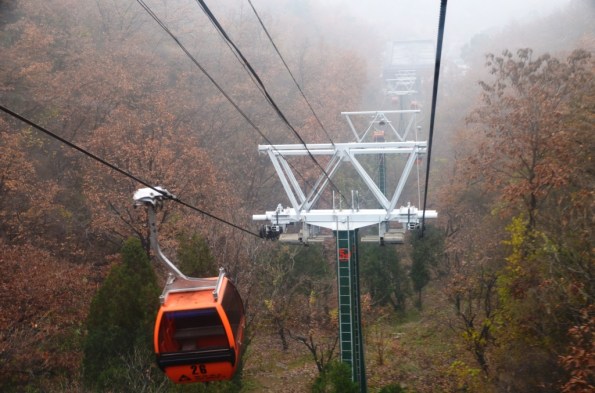
Up on the cable car

Yep, you are finally there
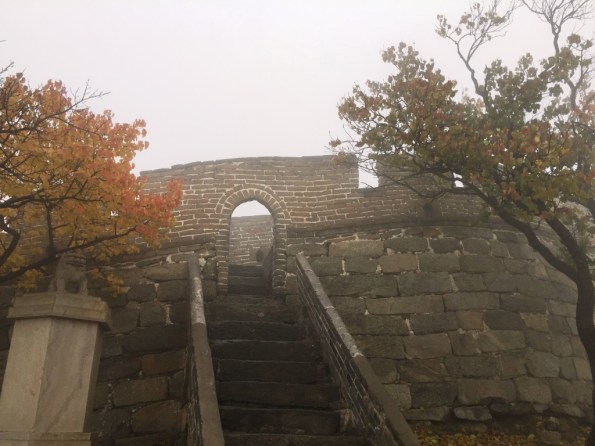
The actual entrance to the very top
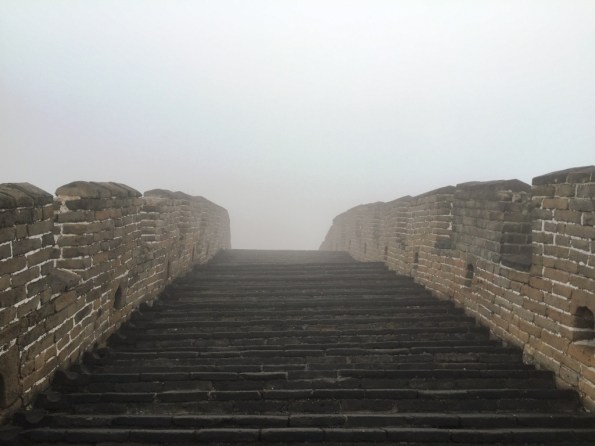
Up and down the Great wall – take a look at the tiny height of the steps – but make sure you pay attention while walking, or else
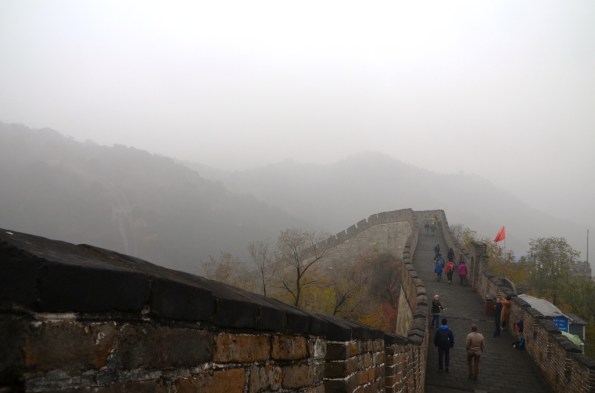
The Great Wall
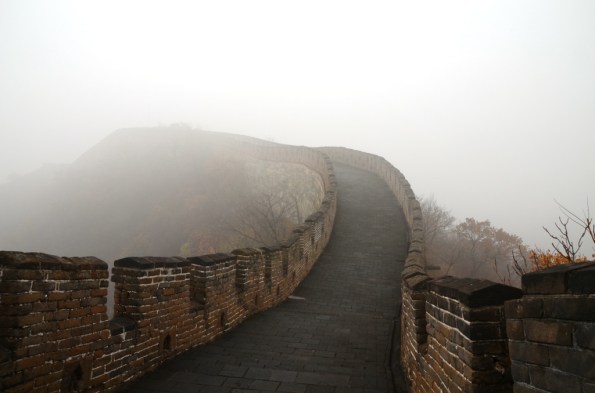
Magnificent…
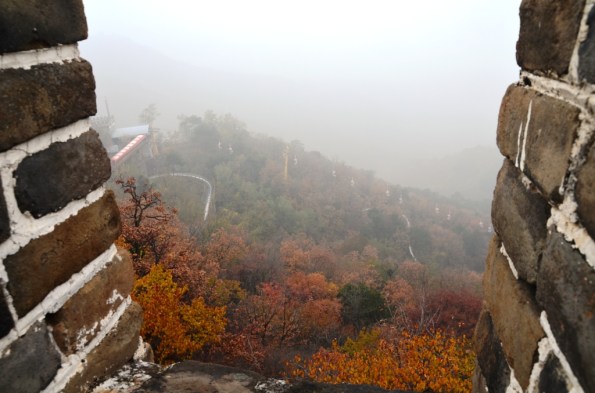
more of the magnificent views, even in the fog…
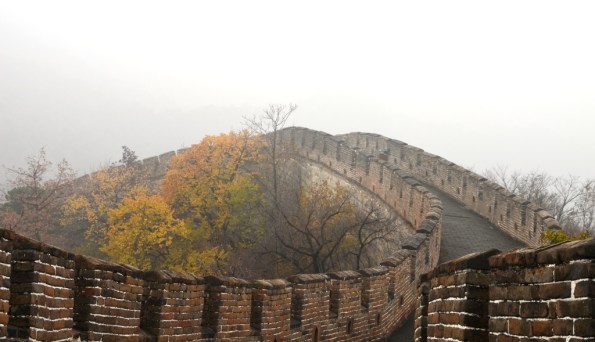
Probably the best shot of the Great Wall I could take
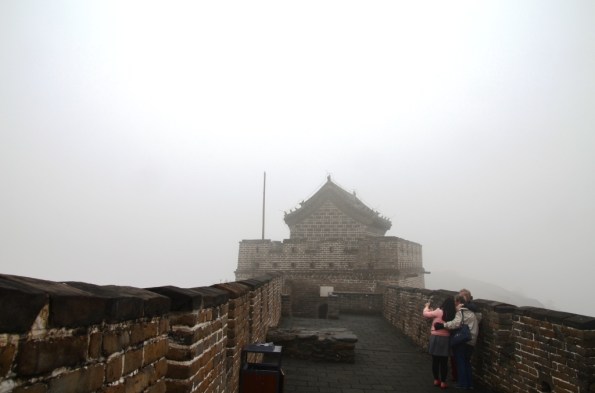
One of the Guard towers
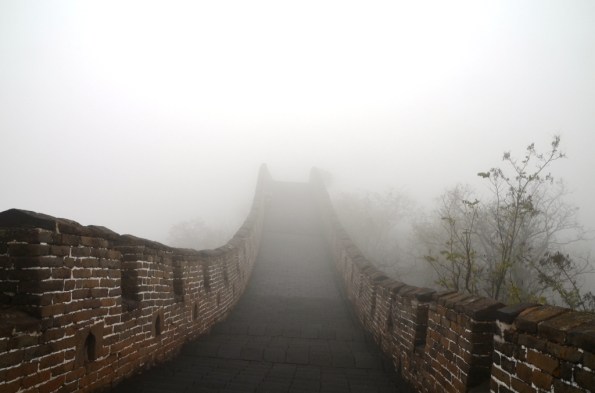
Into the fog…
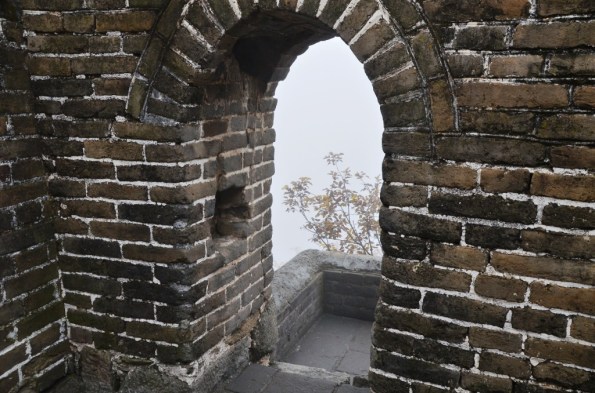
The defence view
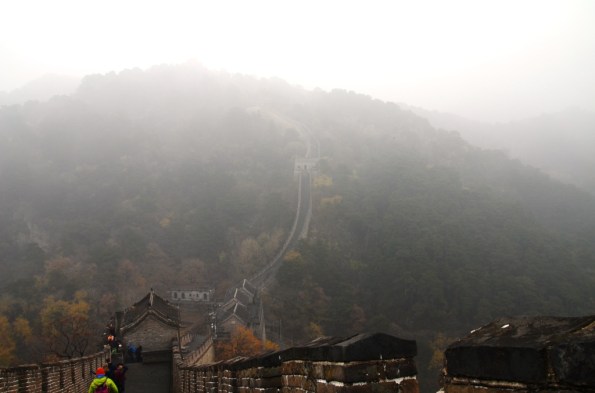
Yep, still on the wall
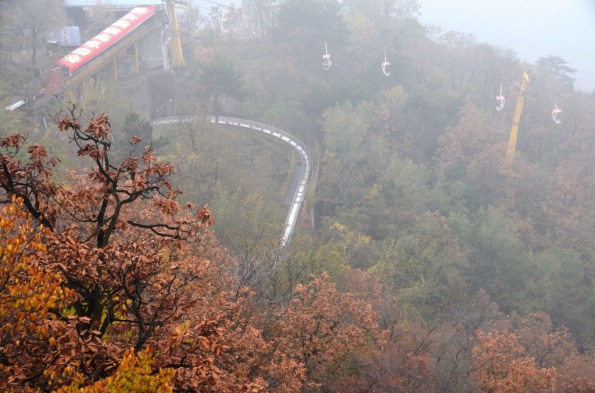
Toboggan – the best way down. You can also see the ski lift which you can take to get up instead of the Cable Car.
And now, The Forbidden City:

Walk towards the entrance to the Forbidden City
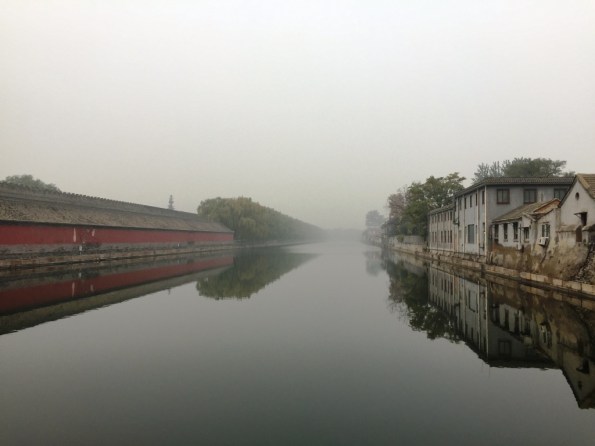
The side wall of the Forbidden City. Love the perspective…
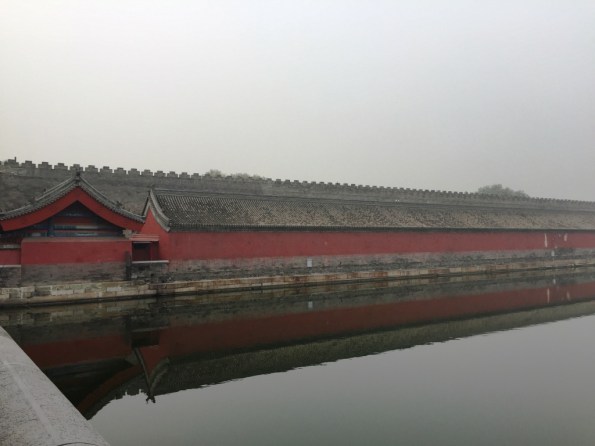
and one more view of the side wall – Forbidden City
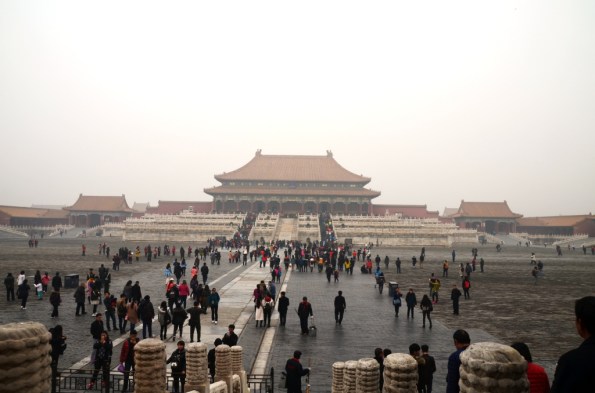
Forbidden City – just the beginning. I wish you could see how many people carry selfies sticks…

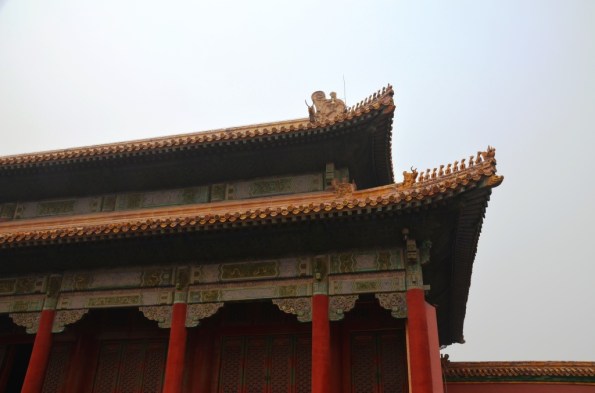
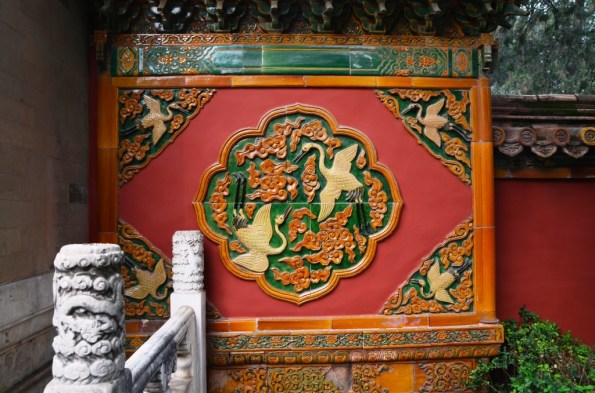
From here on – the fragments of beautiful timeless architecture.
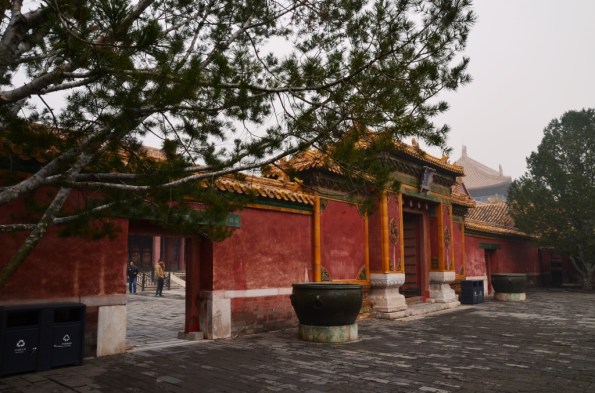
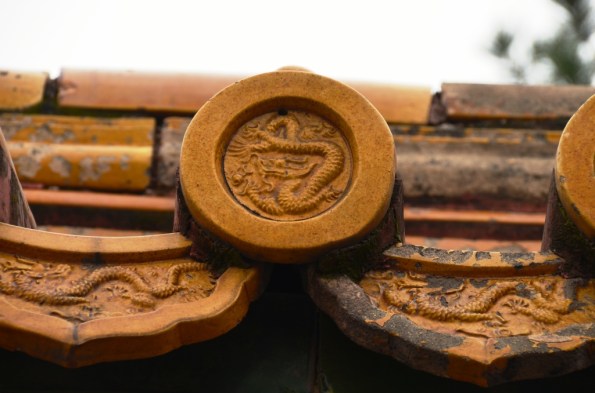


Here is your Quiz – what this urn is for?




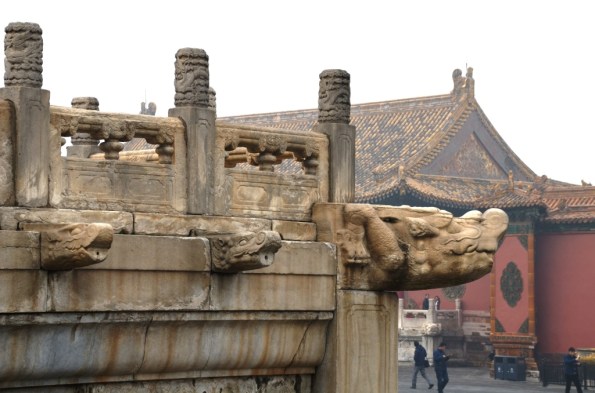

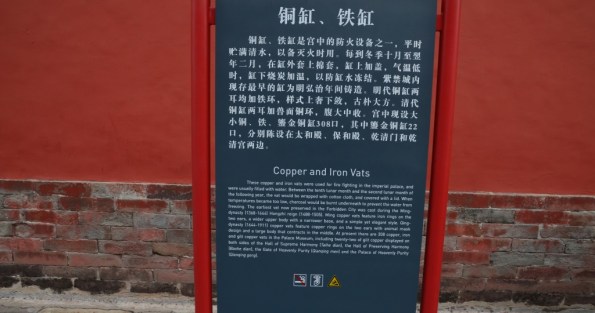
Here is the answer to the quiz – the urn was a fire extinguisher…

And the sun shined (okay, as much as it is possible in Beijing) above the Forbidden City by the time I was leaving
Not that this is anything special, but here is the China Airline birdy which took me to Seoul…

Bye bye China
Feel at Home in the Old Dominion: Luxury B&B’s in Virginia Wine Country
Today I would like to offer to your attention yet another guest post written by Stef Schwalb, Director of PR and Marketing at BnBFinder.com. October is Virginia Wine Month, so just in case you are contemplating a last minute getaway to the “Napa of the South”, you might find information below quite helpful. Note – it is not only about places to stay – the innkeepers also share their favorite wine recommendations. Here we go…
The Old Dominion State is celebrating the 27th year of Virginia Wine Month this October, and the region is definitely on its way up as a desired destination for all wine lovers. With more than 250 wineries participating in the event in one way or another, and the media buzz surrounding the area due to its exquisite scenery and record-breaking sales of 2015, now is the ideal time to check out the Virginia wine. Of course in addition to sipping, you’ll need a place to stay – here is a handful of B&B’s that are great finds in Virginia wine country.
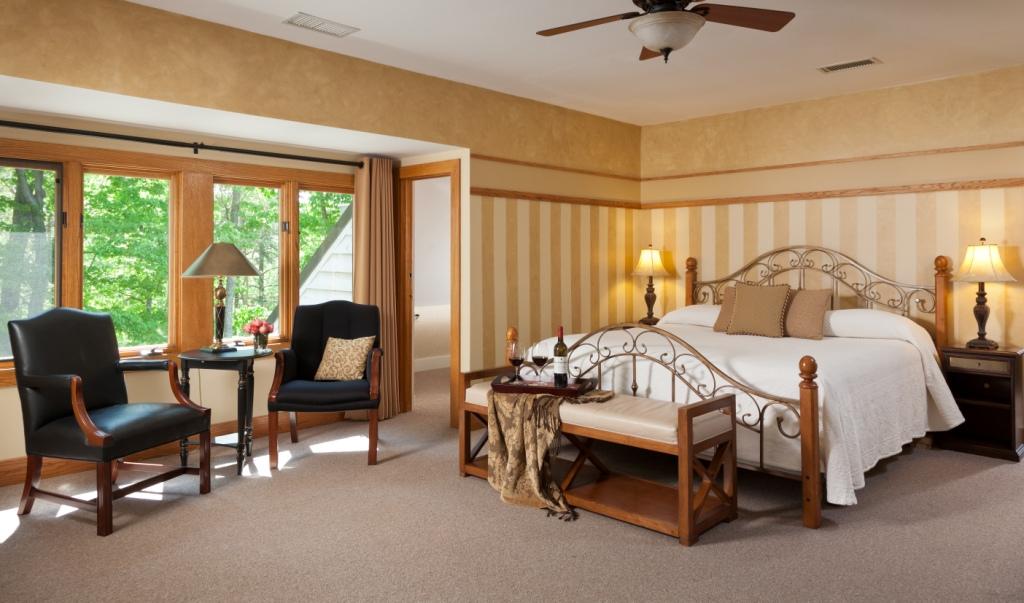
Iris Inn Bed and Breakfast
Iris Inn Bed & Breakfast in Waynesboro, VA is located on 12 wooded acres in the Blue Ridge Mountains. Overlooking the Shenandoah Valley, the inn was designed with comfort in mind. With beautiful mountain views and a woodsy feel, the modern facility features spacious accommodations with expansive outdoor decks; king beds; Wi-Fi; flat-screen HDTVs; DVD players; refrigerators; writing desks; private baths with hairdryers; and cozy sitting areas. A full gourmet breakfast is served in the great room each morning and includes an enticing entrée along with homemade breads, coffee, juice, and fruit. There is also a “bottomless” cookie jar situated on the sideboard and beverages are available at check-in time. Convenient to numerous local attractions, including the Shenandoah Valley, Blue Ridge Parkway, Skyline Drive, Charlottesville, The University of Virginia, Monticello, and several local wineries, Iris Inn is an excellent home base for exploring the region. The inn also offers several wine packages, including Sip & Spa, Sip & Simmer (a cabin dinner), Sip & Slip on Your Boots (hiking), Sip & Saddle (horseback riding), and Sip & Scribble (for aspiring writers). Some wineries located near the inn include King Family Vineyards, Flying Fox Vineyard, and Afton Mountain Vineyard.
Innkeeper Heidi Lanford recommends King Family Vineyard’s blended medium-bodied red, Meritage 2007. “And any vineyard’s Viognier in central VA is excellent,” says Heidi, “as this perfumed white is gaining world acclaim as Virginia signature grape.” One must try a Cabernet Franc, since the grape grows so well in this area, she continues, “we like the Cabernet Franc Reserve from Afton Mountain Vineyard.”

The Inn at Meander Plantation
Situated near Orange, VA in Locust Dale, The Inn at Meander Plantation is a historic B&B located one hour from Washington DC, Fredericksburg, and Charlottesville. The elegantly furnished, pet-friendly accommodations offer triple-sheeted king or queen beds with luxury linens, down comforters, and pillows; large private bathrooms; lavish microfiber bath robes; bottled water; hairdryers; clock radios with CD players and an assorted selection of CDs; Keurig coffeemakers; gas or wood-burning fireplaces; and air conditioning. Each morning, the complimentary breakfast includes a daily entree choice between sweet and savory options, a fresh fruit plate, and muffin or sweet bread. The inn also has a popular restaurant onsite that features a delicious 4-course dinner made from local produce and served strictly with the best of Virginia wines. Since the innkeepers/owners Suzie Blanchard and Suzanne Thomas work so closely with local wineries, the expansive wine list is quite unique. Guests can also indulge in the Virginia Wine Country Special package as well as tasting coupons for select local wineries. This charming Madison County country inn is just a short drive to Monticello and Montpelier, the celebrated residences of presidents Thomas Jefferson and James Madison (respectively).
Suzanne recommends Gray Ghost Vineyards and Winery in Amissville – “I love their Chardonnay Reserve, Ranger Reserve, and of course, their amazing, award-winning Adieu dessert wine”; Reynard Florence Vineyard in Barboursville – “I’m very fond of their Petit Manseng, an excellent example of this white varietal, which is my personal favorite white wine”; and Ducard Vineyards (in Etlan, located in the northern part of Madison County ) – “I like the Popham Run Red Blend and the C’est Trop, a unique red dessert wine.”
Oaks Victorian Inn Bed and Breakfast
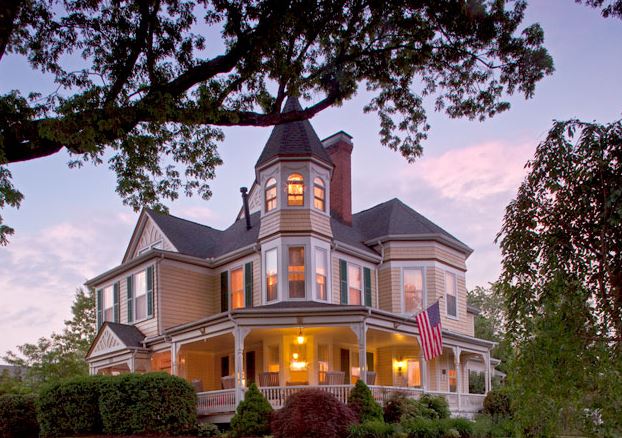
Built in 1889 and listed on the National Register of Historic Places, The Oaks Victorian Inn Bed and Breakfast is at home in the quaint historic town of Christiansburg, VA. This classic Queen Anne Victorian bed and breakfast inn seamlessly combines Victorian elegance with modern day amenities within the backdrop of its stunning surroundings. It features six spacious guestrooms, each comfortably appointed with antique furnishings, private baths, and personal refrigerators with complimentary beverages. Select accommodations feature claw-foot tubs, fireplaces, body showers, and jetted Jacuzzi tubs. There is also a separate facility, The Garden Cottage with gazebo, that has a bathroom complete with sauna and shower, a 400-gallon private hot tub, a microwave, and a refrigerator with complimentary beverages. Guests enjoy downtime in the parlor and library onsite, and they can also relax and take in the scenic landscape on the large wrap-around porch lined with rockers, comfy chairs, and small tables for wine, cheese, and other goodies. The property is highlighted by meticulous landscaping, a fish pond, gorgeous perennial gardens, and oak trees that are more than 300 years old. Just two miles off I-81 in the center of New River Valley near Roanoke, the inn is a quick ride to Blacksburg, Floyd, Roanoke, the Blue Ridge Parkway, and more. The gracious hospitality and unforgettable breakfasts are hallmarks of The Oaks Victorian. With the Virginia is for Wine Lovers Times 2 Package, wine lovers can stay two consecutive nights at the B&B and receive two pairs of tasting passes to the innkeepers’ favorite local wineries – Whitebarrel Winery in Christiansburg and Beliveau Estate Winery in Blacksburg.
At Whitebarrel, the Chambourcin, which used to be called 325 AD, is a favorite of innkeeper Linda Wurtzburger. “And for a white, my favorite is Yesterday’s Song, which is a Chardonnay.”
Wine Dinner at Brasserie Louis
 I love traditions. I’m not talking about anything which is covered in dust and lasted for hundreds of years. I’m talking about simple life pleasures which you call traditions as long as it is something you do repeatedly, hopefully with joy and pleasure.
For about 5 years, we get together with group of friends for a weekend in August, which we call an “Adults Getaway”. The program for the “adults getaway” usually includes driving to an interesting small town within 200 miles radius, a wine tasting if there is a winery near by (doesn’t have to be a winery – one year we visited Hudson Distillery, for instance), a tasty dinner, a stay over at a nice B&B – but primarily lots great and fun time together.
When it comes to the tasty dinner, we usually try to control that experience as much as possible – that translates into finding local restaurant which will be willing to host us and work with us to create tasting menu, and ideally, allow us to bring our own wine which we will of course pair with the dishes on the menu.
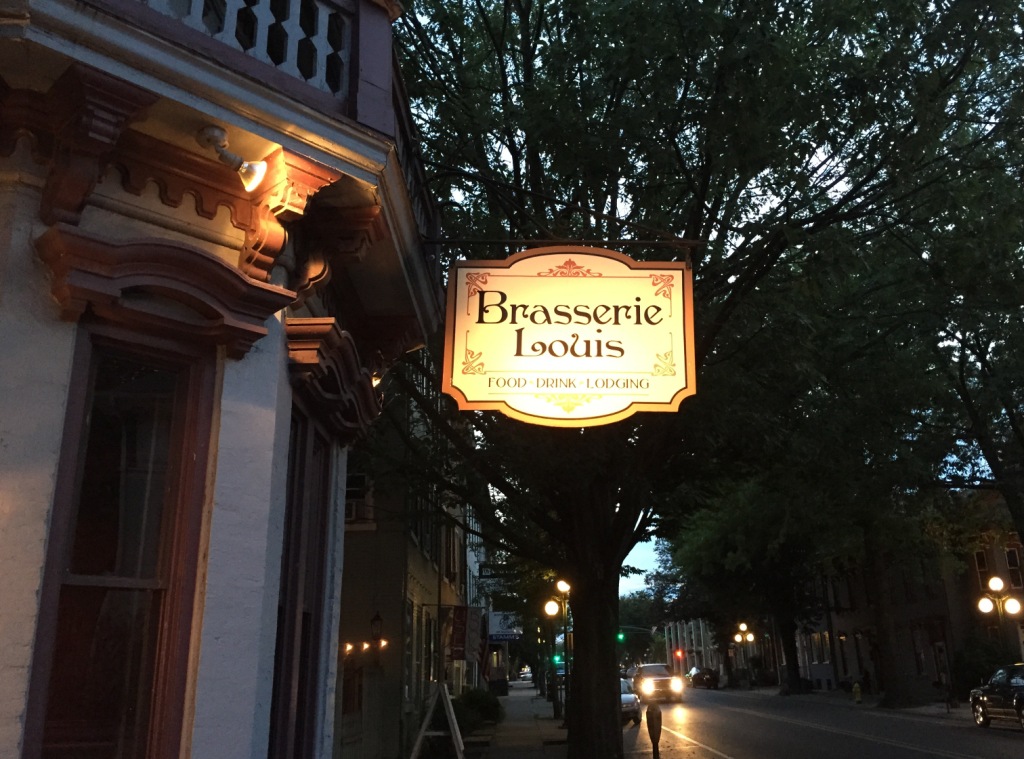 Few weeks ago we got together for our “adults getaway” at Lewisburg in Pennsylvania. Our “anchor” for the trip was visit to the local winery, Fero Vineyards, which will be a subject of a separate post. For the dinner we contacted a few local restaurants, and finally decided to have our dinner at Brasserie Louis.
We didn’t have any specific dining theme in mind, and the suggested menu we received from Scott, owner of Brasserie Louis, exceeded our expectations – 11 different dishes – the dinner looked very promising. Now we had to decide on the wine pairings and go have fun. 11 dishes doesn’t mean we have to have 11 wines – we settled on 7 wines, as two of the desserts really were calling for the two different wine pairings.
The day arrived and we all got together (overcoming some interesting difficulties, such as flat run-flat tire, which appears to be a serious ordeal, especially during long distance travel) and here is the account of the wine dinner with all the details.
Appetizers:
We started with Shrimp Ceviche (diced raw shrimp pieces in lime juice with cilantro, bell pepper, salt and pepper) – very nicely executed dish, great flavor, touch of heat. Our wine pairing was 2014 Fattoria Laila Verdicchio dei Castelli di Jesi DOC, Italy (13% ABV, $11) – wine had a good open profile with some flower and white fruit notes, but most importantly, it paired perfectly with the flavor of ceviche, complementing and enhancing the dish.


Our second dish was Wild Mushroom Tart (puff pastry with wild mushrooms, Gruyere cheese and shallots topped with greens and a balsamic glaze) – another excellent dish, with peppery arugula melding well together with the earthy mushrooms and adding lightness to the cheese. The wine pairing here was NV Anna Codorniu Brut Rosé, Spain (12% ABV, $13, 70% Pinot Noir, 30% Chardonnay) – one of my favorite Sparklers, Anna Codorniu always over-delivers, with good structure and good body. Here the pairing was also successful, with the wine complementing the dish very well.
Intermediate:
Our “in-between” dish was Harvest Salad (baby arugula with goat cheese, beets and candied walnuts tossed with a Champagne vinaigrette) – nice crunch, fresh, simple – and we used the same Anna Codorniu with this dish, and again, this was an excellent pairing.


And now, for the Main Course:
We started with Hand formed Crab Cake (lemon Beurre Blanc sauce, green pea risotto) – this was easily the best dish of the evening. You know how often crab cakes contain a lot of other “stuff”, various fillers (corn, peppers, etc)? This crab cake had just honest goodness of a pure, delicious crab meat – I only had anything similar in Maryland, which can be called a crab cake capital with its blue crab. This was just a “wow”dish. Our wine pairing was also excellent – 2013 Jean-Luc Colombo La Redonne Cotes du Rhone, France (13.5% ABV, $20, 70% Viognier, 30% Roussanne) – Jean-Luc Colombo is a very good producer out of Rhone, and this was one of his higher end wines – plump, full bodied, silky – complemented mild crab cake flavors spot on.


Next up – Black Sesame Crusted Yellowfin Tuna Steak (Yuzu teriyaki glaze) – the dish was nice and simple (tuna was a touch overcooked to my taste, I like it rare), and it paired very well with one of my all-time favorite red wines – 2013 Laetitia Estate Pinot Noir Arroyo Grande Valley, California (13.9% ABV, $20). Laetitia makes an excellent range of Pinot Noir wines, where Estate is an introductory level wine – which makes it perfectly ready to drink young. Delicious California Pinot Noir profile – smoke, plums, touch of earthiness – outstanding. The pairing worked quite well by complementing and enhancing the flavors of the dish.
We continued with Duck a l’Orange (pan seared duck breast, Grand Marnier reduction) – this was an okay dish (my piece of duck was slightly overcooked), but the sauce was excellent and fresh. We used the same Pinot Noir for the pairing, and wine and food worked together well.


Taking a break from the proteins, our next dish was Ratatouille (Provencal vegetable stew of zucchini, squash, wild mushrooms, onions, tomatoes, eggplant and sweet potatoes, touch of Parmesan cheese). This was the dish where the mastery of the Chef combined with amazing Pennsylvania vegetables (I’ve traveled all over East Coast – nothing beats PA vegetables, I’m dead serious) to bring out simply a perfection on the plate – vegetables still had a crunch, and the whole dish was just another “wow” experience.
Our choice of wine for the this and next 2 dishes was 2008 M. Chapoutier Domaine de Bila-Haut Occultum Lapidem Cotes de Roussillon Villages, France (14% ABV, $55/magnum). M. Chapoutier needs no introductions as one of the very best producers in Rhone, and this wine was outstanding – complex, with a touch of roasted flavors, great minerality, lavender. However, there was one problem – this wine didn’t pair well with Ratatouille, and it didn’t pair well with two other dishes. In some cases, it was indifferent (didn’t complement or contrast), and with Ratatouille it was even working against the dish. Well – it is what it is – we still enjoyed the wine and the food – just separately.
Our next dish was Lamb Chops (herb mustard crusted rack of lamb, minted demi-glace) – meat was nicely cooked, and of course lamb and mint jelly is a classic combination.
We finished our main course with Filet Mignon (grilled filet, scalloped potatoes and wilted spinach, truffled veal demi-glace) – the presentation was very interesting, with the steak knife put directly into each piece of the meat. The meat was cooked very well, and overall dish was tasty. And this was probably the only dish where Cotes de Roussillon wine paired marginally acceptable.
Finally, we are at Dessert!
We had two desserts to finish our evening. Strawberry Zabaione (egg yolks, sugar, Marsala wine, fresh strawberries) was very tasty and not too sweet. We paired it with NV Tütidì Brachetto Piemonte DOC, Italy (7% ABV, $12/1L). Brachetto is a lightly fizzed wine with a nice fruit notes, and it perfectly complements wide range of lighter desserts – and this was a case of a perfect pairing – they were delicious together.


We finished our dinner with Flourless Chocolate Cake, which was paired with Mount Palomar Limited Reserve Port, Temecula Valley, California (18% ABV, $38). Port and Chocolate – do I need to say more?


There you have it my friends – our wine dinner at Brasserie Louis in Lewisburg, Pennsylvania. What is left for me to do here is to say Thank You to the owner Scott, Chef Chris Rubino and all the staff at the restaurant who made sure we will have a great time. Cheers!
Brasserie Louis
101 Market Street
Lewisburg, PA 17837
Phone: (570) 524-5559
Facebook: Brasserie Louis
How Good Celebrity Chef’s Restaurant Can be? Mesa Grill in Las Vegas
 Have you ever watched any of the cooking competitions on the Food Network or any other food channels on TV and wondered – how good those chefs really are? Okay, I’m going too far – they must be good at cooking, that shouldn’t be questioned. But – many of those celebrity chefs own restaurants, and in some cases, multiple restaurants, and it is obvious that they don’t personally cook there on an average day, so how good those restaurants can be?
When it comes to the celebrity chefs, Bobby Flay is surely leading the pack. He is an Iron Chef, and he has his own show “Beat Bobby Flay”, where he is fiercely competes with guest chefs – no questions, Bobby Flay knows how to cook.
Bobby Flay owns multiple restaurants around the country. During my recent trip to Las Vegas, I stayed at Caesars Palace casino – which happened to be a home to one of Bobby Flay’s restaurants, Mesa Grill. As you can imagine, I had to use such opportunity to try it out.
We arrived at the restaurant at around 6:30 p.m., and to my surprise we were told that yes, no problems, you will have to wait only for 5 minutes (of course it was in a middle of the week, but still I was expecting a much longer wait). 5 minutes later we were sitting at the table.
 Let’s start from the wine list. The wine list was reasonably sized with good diversity – California, Washington, France, Italy, Spain. There were enough of the reasonably priced wines (under $50); overall, most of the wines were prices at the triple retail. Spanish wine selection was particularly good – Rioja, Ribera Del Duero, Priorat. We settled for 2012 Dominio de Pingus Psi (14% ABV, $85 restaurant wine list price, 100% Tempranillo). This wine comes from the vineyards neighboring the main vineyard of Dominio de Pingus, one of the most “cult” wineries in Spain. The wine was perfectly restrained, with the nose of dark black fruit, firm structure on the palate, young, but well integrated tannins, licorice and fresh acidity. Great wine to have with food and without (finding this wine in the stores might be a challenge though).
And now, let’s talk food. First, the bread basket appeared, featuring Jalapeño bread, raisin and walnut bread and corn bread. All bread was excellent, but Jalapeño bread was a particular standout, delivering nice kick few moments after you would finish chewing on it.
Our appetizer was Goat Cheese “Queso Fundido” (Rajas, Blistered Serrano Vinaigrette + Blue Corn Tortilla Strips), served with house made tortilla chips. Nice presentation, great flavor, touch of heat, very tasty.


There were lots of good choices for the main course – Sixteen Spice Chicken, Cascabel Chile Crusted Rabbit and Mango+Spice Crusted Tuna Steak all sounded very appealing, but I had to settle for Blue Corn Crusted Halibut (Warm Salsa Cruda, Sweet 100 Tomatoes, Kalamata Olives, Oregano + Jalapeno). Our waiter mentioned that Halibut was in the prime season, and somehow all the ingredients sounded very appealing, thus I had to go with it. The dish was just “wow” – great dance of flavors, very creative use of Kalamata olives to add saltiness instead of capers, perfectly cooked fish – delicious! As an added bonus I have to mention that our Tempranillo wine perfectly complemented the dish, enhancing the earthy profile – this happened to be a spot on pairing. We also enjoyed a side order of Roasted Corn (Chipotle Aioli, Lime Cilantro + Cotija) – I generally like this dish often called “Mexican Street Corn”, and the one at the restaurant was nicely done.

Choosing the dessert was also very hard – I wanted to ask for a bite of every dessert on menu, but then I had to bully down that inner kid and we only asked for one – Chocolate Cajeta Cake (Chocolate + Vanilla Swirl Ice Cream + Salted Chocolate Crunch) – the cake was a bit dense, but overall the combination with crunch and ice cream was very tasty.
Overall, this was an outstanding dining experience, and I’m glad to see that my fear of disappointment never materialized. Of course Las Vegas became a culinary mecca nowadays, but in itself this is no guarantee of an amazing meal – thus I’m glad to recommend Mesa Grill as well worthy your attention when you will have an opportunity. Another win for Chef Bobby Flay and a great meal for us. Cheers!
Mesa Grill
3570 Las Vegas Boulevard S
Las Vegas, NV 89109
Phone: (877) 346-4642
http://www.mesagrill.com/las-vegas-restaurant/
Last Bottle Sign Up ($10 credit)




 Talk-A-Vino