Archive
Turley The Label 2011 – Sometimes, Words Are Just Not Enough
 Wine triggers emotions. Emotions become memory knots. Sometimes, just one quick look at the bottle is enough to unleash the memory flood – where, what, how, the images and thoughts are just start coming in. Wine triggers the memory of the moment in the past, and we remember what was happening. But how often do we remember the wine itself? How often do we remember the smell and the taste? Take the wine out of the context of the memorable event, just bring it back to the regular Monday night, just an average, uneventful night – how many Monday (or any other regular weekday or weekend) night bottles can you recall?
And then there are wines which require no memorable setting to be memorable on their own. The wines which don’t bring the memories of the moment, but rather memory of itself. Those wines are rare, few and far in between. But they exist. And from time to time, we are lucky enough to encounter one more. My latest encounter? 2011 Turley The Label.
2011 Turley The Label Cabernet Sauvignon Napa Valley (13.4% ABV) was released in the late fall of 2013, and came out in its traditional simple bottle. Dark garnet color liquid went into the glass. Swirl, another swirl, sniff… OMG. What is it? What is this wonderful aroma, which doesn’t let you put the glass down – nor take a sip – the first smell commands another… and another … and another. At first, you are not even looking for the right words to describe what you smell, you just keep enjoying the aroma. Then the brain starts moving impatiently – “I know this smell, I know this smell, come on, come on”. All of a sudden, the realization comes in – yes, I do know the smell. It is black currant. Bot not the berries. It is the leaves. It’s those meaty, big green leaves on a hot summer day – that’s what it is – and the smell is incredible.
Similar to the fresh meadows of Fiction, or gunflint of Frédéric Gueguen Chablis, those fresh black currant leaves of Turley The Label create an unforgettable image – really a memorable wine in its own right. The magnificent smell was followed by the dark supple fruit on the palate – blackberries and black currant, with firm tannins. It took the wine three days to open up and to actually show what it is capable of, when dark chocolate and espresso joined the profile of much brighter fruit, well structured with supple tannins, good acidity and overall perfect balance. Definitely a great wine which will need about 10 years to really come to its best. Drinkability: 8+
What are your most memorable wines? I would love to hear your stories. Happy Monday and cheers!
Month in Wines (and Whiskeys and …) – November 2013
 It is time to summarize yet another month in wines. This month, I decided to extend this summary to whiskeys and beyond, as I managed to make a number of very interesting discoveries.
Talking about wines, there were two clear standouts – Pinot Noir from South Africa and white Burgundy, but generally, there were quite a few good wines. Here we go:
2010 Clos du Val Cabernet Sauvignon Napa Valley (13.5% ABV) – nice round fruit, good acidity, hint of cassis on the nose and palate, soft tannins, light and balanced. 8-
2009 Chamonix Pinot Noir Reserve Franschhoek South Africa (13.5% ABV) – phenomenal. Muscular, powerful, intimidating – it attacks you with the dark smoky fruit right from the first sniff. An extremely pronounced gunflint, which has an effect of the light on the moth – you just can’t stop smelling this wine. Dark power on the palate, intense, dense, structured, full bodied and shameless. 9-
2008 Basel Cellars Merriment Estate Red Wine Pheasant Run Vineyard Walla Walla Washington (14.57% ABV) – Nice Bordeaux-style blend. Lots of depth, dark fruit, firm structure, good acidity and balance overall. 8-
2007 Mount Palomar Charbono Temecula Valley, California (13.2% ABV) – Mount Palomar is one of my all times favorite producer from the Temecula Valley. This wine was probably at it’s peak. Perfect nose of ripe raspberries. Raspberries and blueberries on the palate, dark chocolate, medium to full body, overall welcoming and heart-warming. Perfect. 8+
2011 Siduri Pinot Noir Sonoma County (13% ABV) – nice and clean. Beautiful nose of light cherries with a touch of herbal notes, a sage profile. Light, perfectly integrated fruit on the palate – fresh cranberries and tart cherries, nice underpinning of a touch of mint and sage. Easy to drink and delightful. 8
2010 Cala de Poet Maremma Toscana IGT, Italy – total surprise from Trader Joe’s considering the price of $5.99. Dark plums and herbs on the nose, tart raspberries, eucalyptus and dark chocolate on the palate, firm structure and nice tannins, very balanced. 8-
2012 Cecilia Beretta Brut Millesimato Prosecco Superiore Coneglian Valdobbiadene DOCG, Italy (11% ABV) – another surprise from Trader Joe’s – tiny refreshing bubbles, notes of fresh apple on the nose, round and roll-of-your-tongue on the palate with more of the fresh apple and yeast notes. Excelllent sparkling wine (and a great value at $9.99). 8-
2013 Georges Duboeuf Beaujolais Nouveau (12% ABV) – Georges Duboeuf Beaujolais Nouveau literally gets better and better every year. Young, fresh and inviting on the nose, with lots of juicy cherries. Very concentrated on the palate, with good, tightly knit, firm body, fruit and acidity fully in check, excellent balance. 8-
2004 Jade Mountain Syrah Napa Valley (14.6% ABV) – this was a total surprise. It was my last bottle from the case, and couple of the previous bottles were hinting that they are getting past prime. When I saw this bottle (unexpectedly) on the wine cabinet’s shelf, the first thought was “oops”. The first sniff and the first sip immediately proved me wrong. Fresh, dark fruit on the nose, same on the palate – nice, round, supple blackberries, dark chocolate, touch of espresso, full body, integrated tannins, overall excellent balance. Now I wish I had more left. 8
2003 Neyers Cabernet Sauvignon Neyres Ranch – Conn Valley Napa Valley (14.5% ABV) – one of my favorite cabernet Sauvignon wines. A classic, cassis nose with a touch of bell peppers. Dark fruit on the palate, more cassis with some blackberries, round, warm and supple. Full body, acidity and tannins are in check. Excellent balance. 8
2006 Clos Pepe Estate Pinot Noir Sta. Rita Hills, California (14.5% ABV) – Dark garnet color, nice touch of smoke on the nose, cherries. Classic California Pinot Noir. Fresh cherries on the palate, medium to full body, round tannins and acidity. Drinkability: 8
2005 Domaine Laleure-Piot Pernand-Vergelesses AOC, Burgundy (13% ABV) – I have no idea how this bottle ended up in my cellar. I also had no expectations, as previously I had bad luck with older white Burgundies. Boy, what a treat this wine was! Pale yellow in the glass, hint of an apple and gunflint on the nose. Touch of vanilla and more fresh apples on the palate, round, inviting, effervescent but perfectly present. Delicious! 8+
Whew, done with wines!
Regarding the whiskeys – I already had a separate post about them, but I want to specifically include them here:
Catskill Distilling Company Wicked White Whiskey – this is six-grain (corn, wheat, buckwheat, rye, smoked corn, malt), un-aged whiskey. Absolutely spectacular nose and flavor – complete impression of delicate single-grape grappa with round sweet fruit and all around delicious. You have to taste it to believe it.
Catskill Distilling Company Most Righteous Bourbon (70% corn, 20% rye, and 10% malt) – round, clean, caramel, butterscotch, all perfectly balanced together. One of the best bourbons I ever tasted.
Catskill Distilling Company One and only Buckwheat (80% buckwheat, 20% small grains) – unique and different. Nose is absolutely unusual, reminiscent of sun flower oil. Viscous, roll-of-your-tongue delicious concoction. Great complexity, another drink you have to taste to believe it.

Last but not least – Gin! Yes, I know – if you ask an audience of 10 “who likes Gin”, you might be lucky if you will get one enthusiastic “yes”. However, this Gin was truly something else.
Caledonia Spirits Barr Hill Gin, locally produced in Vermont, made out of Juniper berries and honey – absolutely spectacular on the nose and the palate, with the refreshing scent of juniper berries and a touch of honey sweetness. Perfect balance. Ability to convert people – two of the gin haters became gin lovers after they tasted this nectar. If you will have an opportunity – find it and taste it for yourself, and let me know if you will become a convert too.
And we are done here. If you tasted any of the wines and spirits I mentioned – don’t be shy, and comment away. And just as a feature preview, the next up in the “best wines” posts is my personal Top Dozen wines of 2013. Don’t miss it… Cheers!
Daily Glass: Simplicity and Value
There are times when you really value simplicity in wines. What? No, I don’t mean single-dimensional excruciatingly boring wines which can be called wine only by association “well, if the bottle says wine, then it must be wine…”. By simplicity I mean more of a convenience. For instance, when the bottle is easy to open – like in the case of a screw top. Or when you just need one glass, and moreover, you might be on the go – and don’t want to carry the glass around. As it is in the case of the wine I’m about to present to you – enter Fetzer Crimson and Quartz.

Fetzer Crimson and Quartz
If you are surprised by the look, it is okay – I was too. When Zak told me “this is a good wine”, I was going with “yeah, right, come on, today ain’t April 1st”. My experience with another wine, called Copa, similarly pre-packaged in the plastic, was outright terrible (while I didn’t write the blog post about it, you can find full rendering of the experience in the post by Kirsten at The Armchair Sommelier). Thus I was not inclined to really experiment – but at the price of $3.99 per “glass”, it sounded like it was still worth trying.
And I’m glad I did. No, neither one of the wines was earth-shuttering. But they were solid, drinkable and enjoyable(!) wines – and a clear reminder that wine snobbery always has two sides, and you can’t judge the wine before you will actually try it. For what it worth, below are my notes, and you can find all the detailed wine information at the Fetzer’s web site (which also looks quite stylish).
2011 Fetzer Quartz California White Blend (12% ABV, $3.99) is a blend of 35% Chardonnay, 23% Riesling, 18% Gewürtraminer, 14% Pinot Grigio,7% Muscat and 3% other grapes. Refreshing, zesty, with lots of citrus notes, such as lemon and grapefruit, touch of pineapple, very balanced. Of course a great value. Just to pet myself on the back, my notes said “definitely has some Moscato, probably with Chardonnay and Gewurztraminer”. Drinkability: 7+
2010 Fetzer Crimson California Red Blend (13.5% ABV, $3.99) is a blend of 32% Zinfandel, 32% Syrah, 29% Cabernet Sauvignon, 4% Petite Sirah, 1% Petit Verdot, 2% other grapes. Nose was unimpressive, but body was very good, medium to full, oak is not fully integrated and well noticeable, but overall wine was still perceived as balanced. Touch of cinnamon and black fruit on the palate. Later on, sweetness became more apparent, as well as alcohol (which is strange at 13.5% ABV). Overall, quite enjoyable. Drinkability: 7.
There you have it, my friends. These wines were yet another perfect example of “don’t judge the wine by its bottle” life comedy. Next time when you will need a convenient glass of wine – you might know what to look for. Cheers!
Sometimes One “Wow” Is Not Enough
If you are a regular reader of this blog, you perfectly know by now that I have a tendency to get overly excited in my reviews (and if you are not a regular reader and just came across accidentally, you know it now). It is entirely possible that you also noticed that I have a soft spot towards Field Recordings wines. Based on this preamble, you probably figured out that I plan to talk about a wine from Field Recordings.
The wine which had me completely blown away a few days ago was 2011 Field Recordings Jurassic Park Vineyard Chenin Blanc Santa Ynez Valley (13.1% ABV). Opened the bottle, poured in the glass, sucked the air – and was blown away. Complex, multi-layered aromatics, which each smell showing slightly differently, and my emotional response (or rather, vocal), rotating between “wow” and “omg” with each and every breath. White stone fruit, apricots, fresh flowers, endless meadows – all coming separately, but together. Andrew Jones, the winemaker at Fields Recordings, is clearly the master of aromatics with his wines. Pretty much any of his wines I tried, have mind-boggling, intense aromatics – here is my post about red wine call Fiction by Field Recordings, read it for yourself.


The palate didn’t disappoint as well. Bright, open, succulent white fruit, more continuing that an apricot theme, with the touch of vanilla and apple, no sweetness whatsoever. Definitely a Chardonnay-like experience, except it is not chardonnay at all! Firm structure, refreshing acidity – each sip of the wine is begging not to stop – just one more sip, pleeease? Drinkability: 8+
The words don’t do this wine enough justice. Your best bet is to find this wine and to taste it. And yes, it is okay to repetitively “wow” all the way through. Cheers!
Daily Glass: Of Wonderwall and Unwooded Pinot
How can you tell when blogging is becoming an addiction? When you drink great wine, you think about it in the terms of the blog post. And when you are not producing that blog post for whatever reason, you become upset and feel incomplete…
I don’t want to feel incomplete – who does? And to avoid that feeling, let me tell you about few great wines I experienced recently.
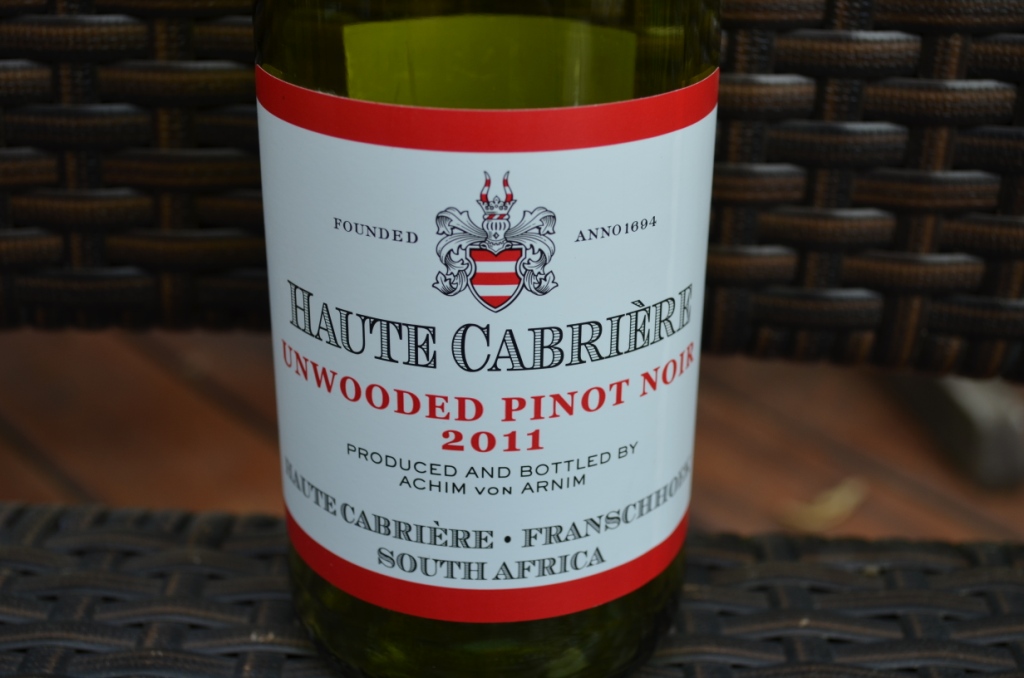 Last week, when it was hot and not crazy rainy as today (did someone up there forgot to turn off the faucet?), I walked into the wine store and told Zak that I’m in the mood for a nice bottle of Rosé. “Here”, he said handing me a bottle, “you have to try this”. Okay, I’m ready to try whatever Zak hands me with such a conviction. 2011 Haute Cabrière Unwooded Pinot Noir Franschhoek South Africa (12% ABV, $15.99) didn’t look like a Rosé, but hey, the proof is in the glass.
And what a proof it was! Light ruby color, the nose of strawberries, cranberries and onion peel (classic Rosé, huh?) – same on the palate – perfect substance, perfectly refreshing body – nothing wimpy, nothing sweet, only refreshing, light and exciting wine. This wine is produced by Achim von Arnim, whose blog is called Sun Soil Vine Man – which is also a motto of his winery. Tasting this unwooded Pinot Noir, I can say that his simple model works quite well. Drinkability: 8-
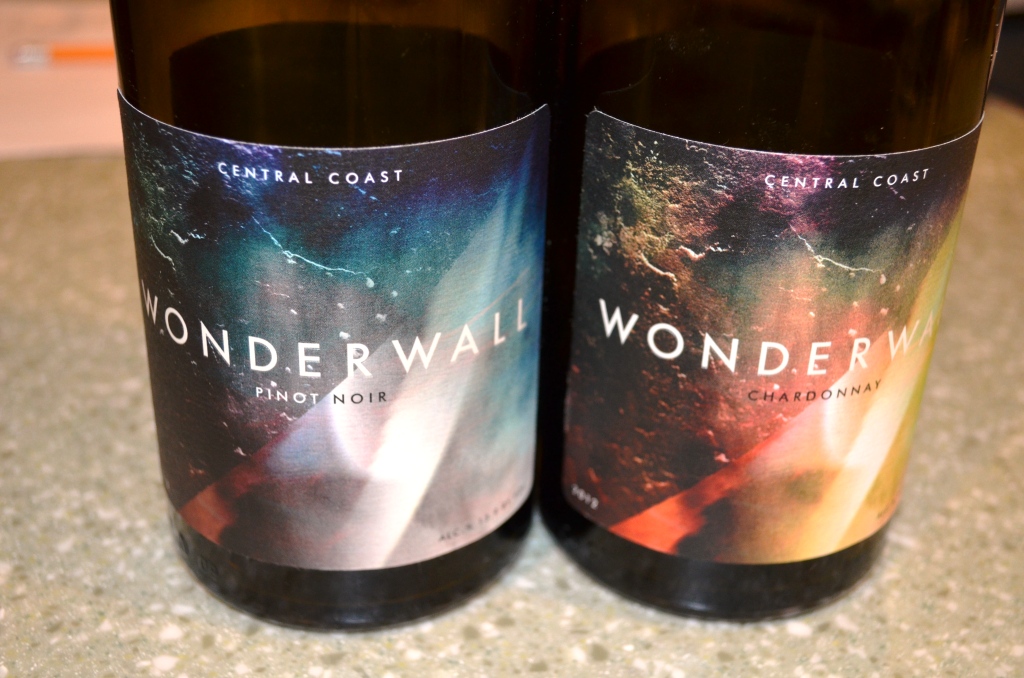
And then there was Wonderwall. First I tried 2012 Wonderwall Chardonnay Central Coast (14.9% ABV, $22/$17.60 for catalog members). These Wonderwall wines are produced by Andrew Jones, the winemaker behind Field Recordings wines, which I discussed many times in the blog – and of which I’m a big fun.
What is amazing about many Field Recordings wines is aromatics. Once you pour the wine into the glass, you simply can’t put it down – but not drinking, only smelling, and smelling and smelling. Some wines transform with their taste, and some just with their aromatics. Bright and beautiful fruit on the nose – together with fresh flowers. I experienced similar aromatics with some of the best Albarino wines – but not with California Chardonnay. Good amount of fruit on the palate, but tame, more controlled, balanced and perfectly weaved around acidity. When the bottle was finished (much faster than I would want to, unfortunately – this was my only bottle) – I smelled the bottle and it showed vanilla and touch of butter – but it was too late. I wish I had another bottle to try it at least in 3-4 years – oh well, may be someone will. Drinkability: 8
Then I had 2012 Wonderwall Pinot Noir Central Coast (13.9% ABV, $22/$17.60 for catalog members). To describe it in a few words, I would put it like this: from nose to palate – classic California Pinot Noir. Violet, cherries and hint of smokiness on the nose, cherries, cranberries and tart blackberries on the palate, all moving and evolving. On the palate, this wine is somewhat elusive, and it gives you a different perception with every sip. On the second day it showed bright, clean and assertive fruit, with mouthwatering acidity – you really want to give this wine some time (I will not, as again this was my only bottle). Drinkability: 7+
Before we part, I have to cite for you the words written on the back label of the Wonderwall wines:
“I’m unsure if it has been me, the grapes or the vineyards. There
has always been a barrier between me and the wine I wanted.
Finally, I have broken through the wall.”
That’s all I have for you, folks. And I feel better already. Cheers!
Daily Glass: WTSO Wines – Mockingbird Hill Cabernet Sauvignon, Just Add A Little Time…
 As you probably know, I’m a big fun of Wine Til Sold Out (WTSO). As someone who consumes wine all the time, I greatly appreciate an opportunity to save money but still drink great wines – and that is what WTSO allows us to do.
A number of wines sold by WTSO are really of an unknown pedigree. Yes, when the wine is offered for sale at WTSO, you get all the info associated with that wine – winemakers notes, technical details, etc. – but quite often, nothing else can be found on Internet.
The Mockingbird Hill wines belong to that group. I know that my WTSO posts are quite popular, and Mockingbird Hill wines come up quite often among search terms in my blog stats (yes, I do look at that info). But when I searched for the info on Mockingbird Hill wines, I was unable to find much. So I decided to try some of the Mockingbird Hill wines and write the review on my own.
Our wine today is 2011 Mockingbird Hill Cabernet Sauvignon Oakville Napa Valley (14.5% ABV, $19.99), 100% Cabernet Sauvignon (according to the info on WTSO web site). I have to honestly tell you that the pop-and-pour model failed completely for this wine. Open the bottle, pour into the glass, nice ruby color, sniff and…nothing. Really, not much to report. The first sip left me disappointed – definitely wine, but very tight, maybe some underripe blackberries. So I decided to stop right there (yes, this was not a happy stopping with a sigh), pump the air out and put it aside.
The next day… What do you think happened to this wine on the next day? Well, in a few words – it actually became pop’n pour wine. Great inviting nose of the succulent berries from the get go. Cassis and blackberries on the palate, bright and fresh, acidity, tannins, all together in a perfect harmony. It is pretty incredible what little time can do with the wine… Drinkability: 8-
I would definitely recommend this wine – as long as you are willing to give it little time. Yes, you can cellar it, or you can decant it – it is your choice, but in the end, you will not be disappointed.
That’s all I have for you folks for today. Happy Monday and cheers!
Daily Glass: Wine Happenings – Georgian Wines, New French Discoveries, Australia Grand Experience and more
Every week (or almost every week) I think that I should start writing a summary post similar to what Jeff at therunkenccyclist does so well – once a week he produces a summary of the wines he had during the past week (here is an example of his recent post), which I think is a great way to round up your experiences.
My “Daily Glass” designation was supposed to be [almost] a daily summary for me, but as you know, things don’t always work in life as we think they should. Nevertheless, the week which is ending today was very “wine eventful” hence I’m sharing those wine happenings with you.
Let me start from 2005 Domaine Lafage El Maset Cotes du Roussillon. I got it at Last Bottle Wines during their last “madness” sale. At $8, you really have nothing to lose, right? Wine arrived about 3 weeks ago, looking good – inviting label, heavy bottle, good punt at the bottom – overall looks quite solid. Before opened the bottle, I went to look for information online – and I didn’t find much except a number of notes on Cellar Tracker, all looking very peculiar. Looks like people had very sporadic luck with this wine, with only one bottle out of three being drinkable, and another claim of one out of 10 (!).
First thing I didn’t like when opened the bottle was the cork. You see, I love real corks (yes, I had my share of corked wines – but this is not the subject of this post). I’m completely okay with screwtops – I would be surprised to see a screwtop on the bottle of DRC, but in general, I get it – and it makes it easier to open a bottle, especially when you travel. But the type of corks I have a problem with are plastic and synthetic corks. They are hard to pull out, and just look very artificial – they just don’t belong to the wine world, in my opinion. Besides, somehow I think that they have the worst impact on aging ability of the wine .


This wine was closed with red plastic cork ( you can see it in the picture). Okay, moving along. It is 8 years old wine, how about pop and pour? Pour, swirl, sip – ouch! The feeling of biting into a freshly cut tree brunch. Bitterrrr! My wife had her taste, put the glass down, and politely said “I think it should breath a little first”. Okay, got a decanter, pour half of the bottle in. By the way, the interesting fact is that after that first bitter sip, the wine stayed in my mouth with a very long and rather pleasant (!) finish – probably for the next 10+ minutes. Two and the half hours later… I wish I can tell you the wine magically transformed – no, it became only somewhat better. Dark fruit appeared, tannins became mellower, but the wine was not together – there was no harmony there.
We finished the bottle next day, and it still didn’t improve much more – may be it needed more time? I’m not sure, but I have one more bottle, which I plan to give a little time – will see what will happen. But I also have to tell you that I had one of the most surprising pairings with this wine – as you can guess from the picture, this wine paired excellently (I’m serious) with … cherry preserve! They were literally meant for each other – take a spoon of cherry preserve, sip of this wine – perfect! I never thought of wine and preserve together before – may be I should try it more often? This wine will stay unrated for now, as it is very hard to put a handle on this experience.
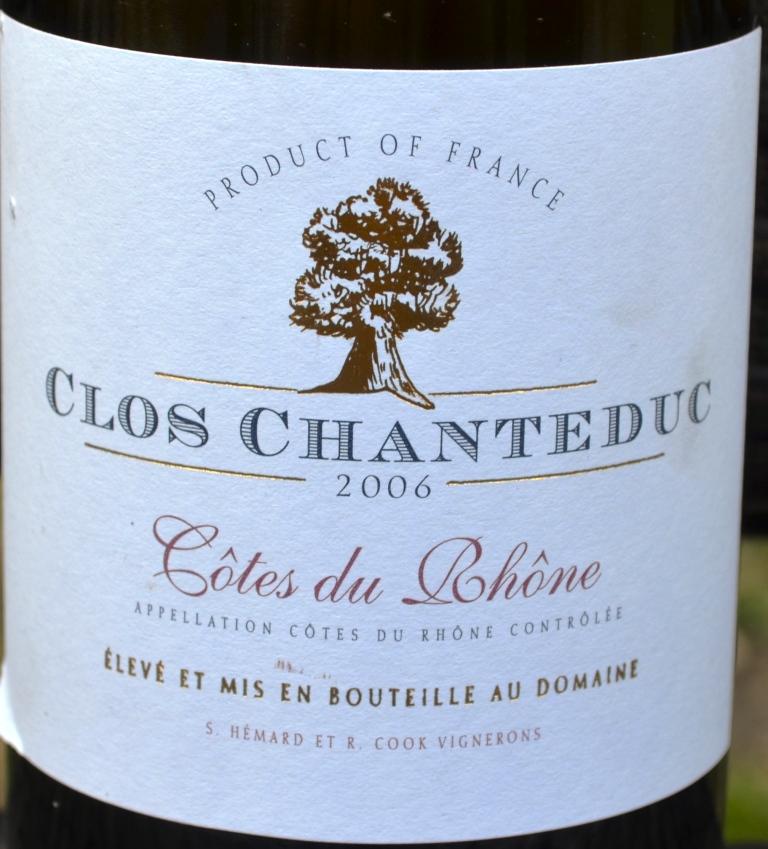 Next wine was also sourced from the Last Bottles – 2006 Clos Chanteduc Cotes Du Rhone. I was unable to find good information on this 2006 vintage, current available vintage of this wine is 2010, but I would assume that the composition stayed about the same, so it should be Grenache/Syrah blend (2/3 Grenache, 1/3 Syrah), a classic Rhone blend. The wine is associated with Patricia Wells, a well known chef living in France. While looking for information about this wine, I found an interesting post about 2009 version in the blog called Wayward Wine – here is a link for you, it is a good reading. Getting back to this 2006 wine, it was rather a typical Cote du Rhone – soft, supple, good mid-palate of plums and cherries – but may be too soft and too supple, it was missing a wow factor. Drinkability: 7.
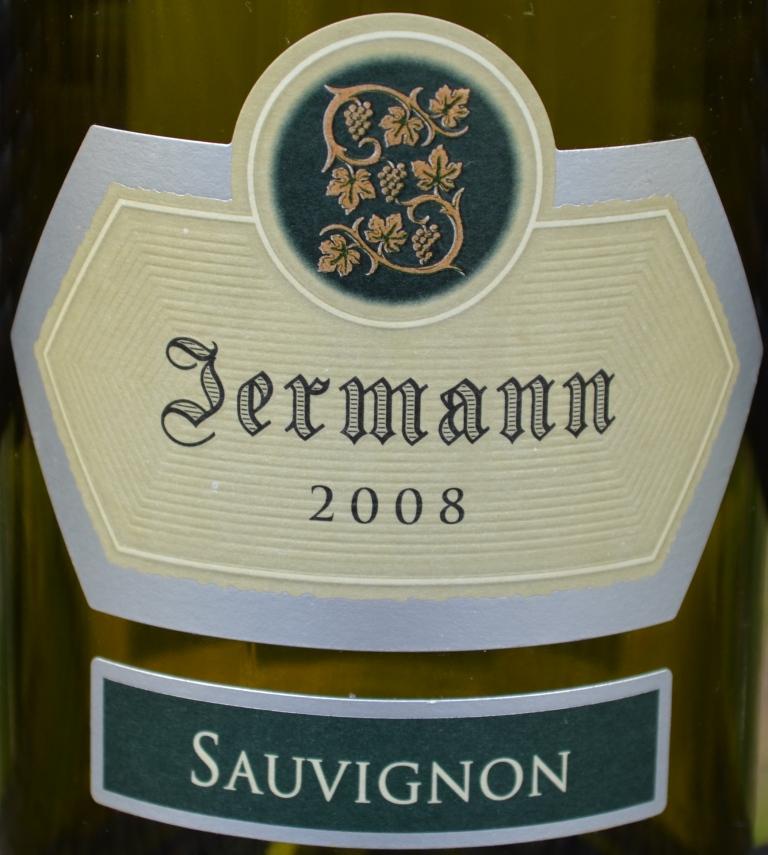 The next wine I want to mention is 2008 Jermann Sauvignon Blanc Venezia Giulia IGT. Jermann is one of my all time favorite Italian producers – I don’t think I tasted any wines I didn’t like from Jermann. This Sauvignon Blanc was closed with screwtop, and the wine is 5 years old – but it came out clean and round on the palate, with perfect amount of white fruit, some herbal notes, perfect minerality and acidity – very enjoyable by itself and with the food. Drinkability: 8-
Now, let’s get to the subject of this post and talk about Georgian and new French wines I discovered. Last Friday I stopped at the tasting at Fairway Market in Stamford, where Michael from importing company called Corus was presenting new Georgina wines. There were four wines included in the tasting, three of them definitely standouts.


2012 Marani Mtsavane is made out of 100% of indigenous Mtsvane grape – very dry, more reminiscent of Muscadet than anything else, with cutting acidity. Will be perfectly refreshing wine for the summer day, also will be very appropriate every time you will decide to serve oysters. Drinkability: 7+
2005 Wine Man Mukuzani – this wine is made out of 100% Saperavi grapes, also grown in one single place – village of Mukuzani. This wine is made by David Maisuradze, who makes amazing wines – here is my post mentioning couple of his wines I tasted before. When I took a first sip, my first thought was about dramatic difference this wine had with the 2005 El Maset I just had a few days ago (both wines are from 2005) – silky smooth, perfect dark fruit, cherries, blackberries, round tannins and balancing acidity – overall, a wine of perfect harmony. Drinkability: 8
2009 Wine Man Kinzmarauli – Kindzmarauli is one of the most famous Georgian wines. Because it was so famous before, you can’t even imagine the amount of fake insipid concoction which arrived to US about 10-15 years ago, knowing that Russian ex-patriots will buy anything under that name. When people realized that they had been doped, the wine lost its appeal and now have to slowly work up its reputation. Kindzmarauli is also made out of 100% Saperavi grapes, but it is semi-sweet. The fake Kindzmarauli wines had nothing but the sugar in them. When you taste this 2009 Kindzmarauli, you actually first get the perfect dry grape underpinning, and then the residual sweetness comes in. Excellent wine to serve with cheese – I think it might even beat Port when served next to Stilton. Drinkability: 8-
Now, for my French discovery – it might not be a discovery for you, but it is a new line of wines which are just being imported to Connecticut. The wines are made by Domaine Laroque in the area called Cité de Carcassonne, a part of Langueoc-Rossillion (Cité de Carcassonne has a status of IGP).


2012 Domaine Laroque Sauvignon Blanc Cite de Carcassonne – in a blind tasting, I would definitely say that this is a restrained version of New Zealand Sauvignon Blanc. Perfectly bright, with hint of grapefruit and lemon zest, refreshing, uplifting – make sure you have enough on hand for your summer entertainment – or you will deal with some upset guests. Drinkability: 8-
2012 Domaine Laroque Rose de Cabernet Cite de Carcassonne – nice, clean Rose, good amount of strawberries, good acidity. Drinkability: 7
2011 Domaine Laroque Cabernet Franc Cite de Carcassonne – this was a “wow” wine. Cabernet Franc is one of my favorite single-grape wines, which are so hard to find. This is two notches up most of the Loire stuff – I guess it is much closer to the best of Bordeaux and Calidornia – prefect dense red fruit, good minerality and herbs, firm structure, supple tannins and overall very balanced. This is what I call a “dangerous wine” – once you start drinking it, it is almost impossible to stop. Drinkability: 8
Are you tired of me yet? Okay, good – I have two more wines to tell you about.
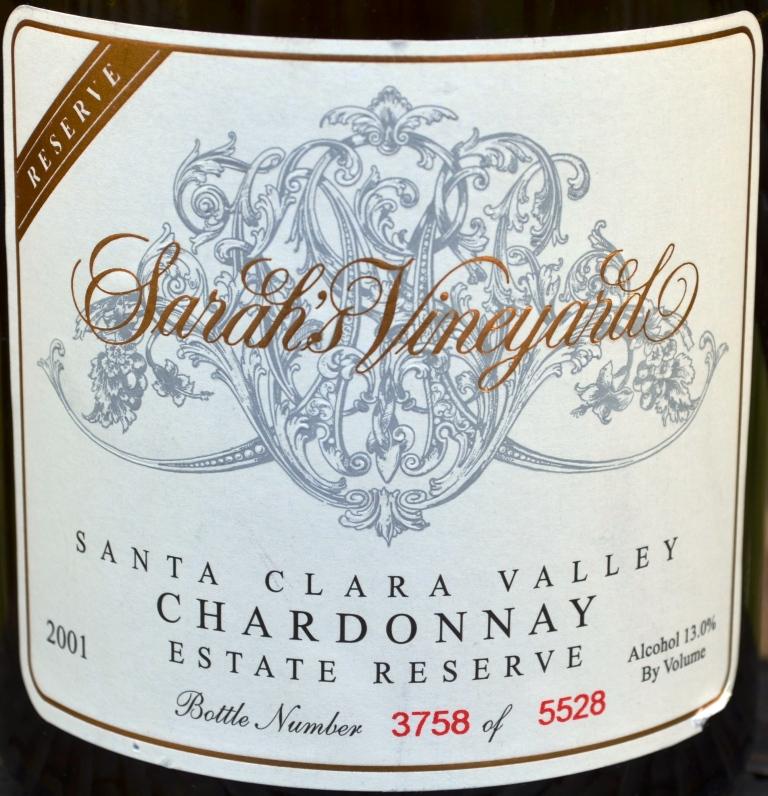 2001 Sarah’s Vineyard Chardonnay Estate Reserve Santa Clara Valley – I got it as Bin Ends in Massachusetts last year. The unfortunate part – this wine was past prime. Well, it was more like a nice sherry – dark yellow color, nicely oxidized. I was able to finish the bottle, but this was not an amazing experience by all means. Mostly you could taste almonds, and that was about all you could find on the palate. I will not rate this wine as it would be simply not fair.
Last, but not least at all – an amazing Aussie experience.
1999 Grant Burge Shadrach Cabernet Sauvignon South Australia – from the very first smell, the expectation was that a “wow” wine is ahead. Perfect dark fruit on the nose, a whiff of chocolate. And the very first sip confirmed that “wow” – blackberries, cherries and cassis, dark chocolate, cocoa, eucalyptus, touch of roasted flavors, perfectly firm and structured. Pronounced acidity, supporting tannins – all perfectly balanced. This was an outstanding glass of wine (it was my one and only bottle, sigh). By the way, you should read an interesting story behind the name of this wine – I don’t want to retype it, hence the picture of the back label below.Drinkability: 8+


That’s all I have for you for today. What was your best wine experience of the week? Have a great week ahead and cheers!
Daily Glass: Kosher [and not only] Wines
 Originally, this post was supposed to be titled Happy Passover! – but Passover started on Monday, and today is Wednesday… Well, considering that celebration technically continues for a week, I guess it is still appropriate to wish Happy Passover even on the third day… By the way, Happy Easter too – just in case I will not be posting anything on Sunday.
In our family Passover is rather cultural holiday than religious, which means that our Passover dinner (seder) takes just a little longer than the regular dinner (when it is done properly, you might have the first real bite of food closer to midnight). What is important for me here, as with any other holiday where dinner is a part of the festivities, I can pay special attention to the wine (not that I don’t do it every day, but holiday is a holiday).
Of course Passover dinner calls for the Kosher wine. About 10 years ago, selecting a kosher wine for Passover or any other holiday used to be a very dreadful experience – sweet grape-juice-more-than-wine Manischewitz was undrinkable, but still better than most of the actual “dry” kosher wines which were outright terrible. Over the last 5-7 years the situation changed dramatically, and now at the most of the stores you can find a great variety of outstanding kosher wines. You don’t need to take my word for it – here are kosher wine recommendations from Eric Asimov of New York Times, here is the list from Lettie Teague from the Wall Street Journal (subscription required, unfortunately), and here is a very interesting post from Alice Feiring describing her recent kosher wine tasting experience.
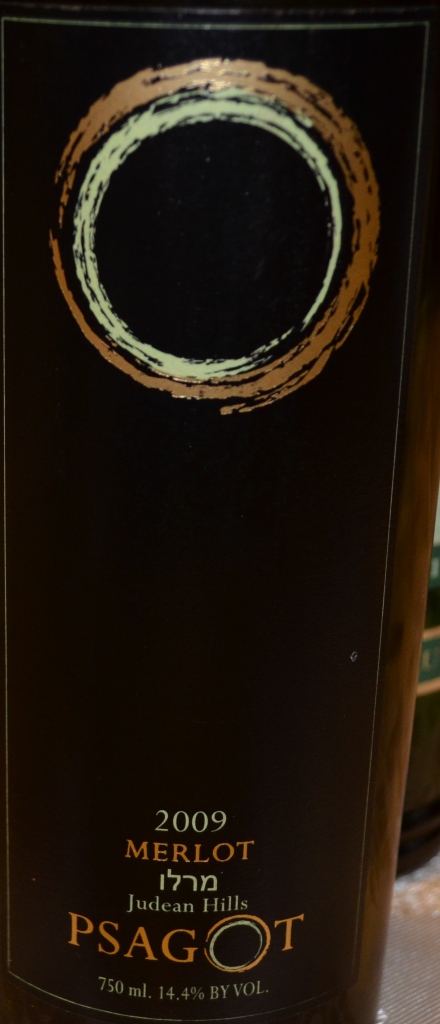
I had a great experience with a two different kosher wines. The first one was 2009 Psagot Merlot Judean Hills (about $25, 14.4% ABV). Psagot means “peak” in Hebrew, and the small community of Psagot is actually located on the peaks of the Benjamin region mountains, 900 meters above sea level – and this is where this wine came from, made at a boutique winery under the same name. It is 100% Merlot, aged for 13 month in small French oak barrels. On the nose and the palate this wine has perfect dark power (umph – I gave you one strong description, but you know that I often describe the wine emotionally rather than technically). Coffee, chocolate, dark fruit on the nose, same on the palate. Roasted notes on the palate. Excellent balance of fruit, acidity and tannins, very harmonious. Drinkability: 8-
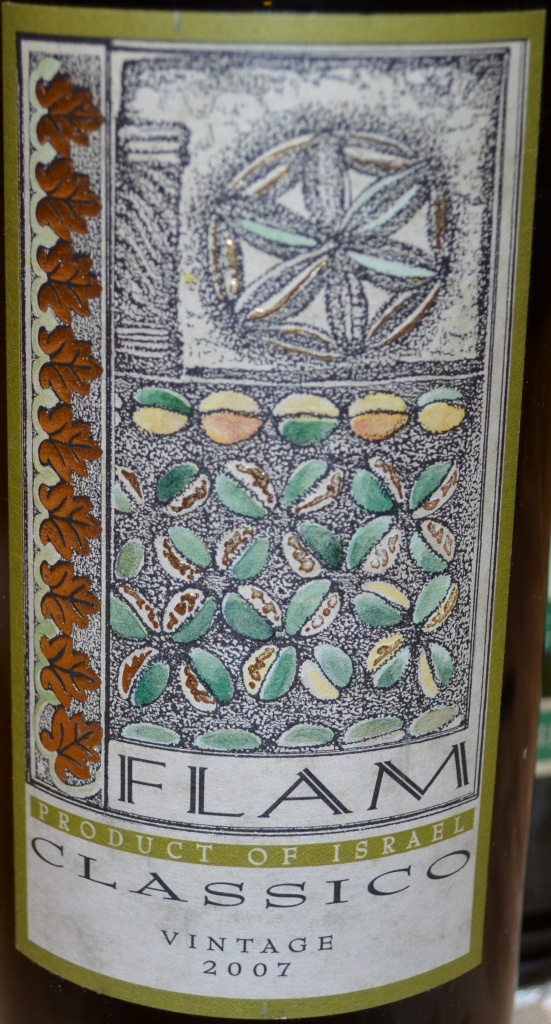 The second wine was 2007 Flam Classico Judean Hills (about $30, 13.5% ABV). Flam winery is also situated in the Judean Hills area. It was founded in 1998 by the brothers Golan and Gilad Flam after they visited Chianti Classico region and fell in love with the wines. While “Classico” is the name of the wine I’m about to present to you, the wine itself is more of a super-Tuscan than an actual Chianti Classico. This 2007 vintage is a blend of 50% Merlot and 50% Cabernet Sauvignon, and if anything, it resembles classic Bordeaux (it is interesting to note that 2010 vintage is even more “classic Bordeaux” than the 2007, with the addition of small amounts of Cabernet Franc and Petit Verdot to the blend).
2007 Flam Classico has nice dark fruit on the nose and the palate, with a tiny whiff of Bordeaux greenness. Classic Bordeaux profile with touch of eucalyptus and mint. Very round and polished, smooth but with pronounced acidity, and literally unstoppable – in terms of not being able to stop drinking it until bottle is empty. Great wine which will evolve further (but it was my one and only bottle, sigh). Drinkability: 8
 I have one more wine to tell you about. It is not kosher wine – but we still drunk it, and I liked it quite a bit so kosher or not but I would like to mention it.
2011 Cave Pomerols Picpoul de Pinet “Hugues de Beauvignac” Coteaux du Languedoc (about $10, 12.5% ABV) – this wine is produced by La Caves Pomerols and it is made out of 100% White Picpoul grape. The wine was clean and refreshing on the nose, with touch of minerality. The same on the palate – white flowers, white fruit, round and easy to drink. Very balanced. Considering the price, this can be your every day white wine – and it will pair nicely with lots of different foods. Drinkability: 8-
This is all I have for you for now, folks. The usual “Wednesday Meritage” post still should be coming out today, as it is in the works already, so until then – cheers!
Daily Glass: Perfect [Monday] Wine
Can there be such thing as perfect Monday wine? What makes Monday special? On one side, it is almost “politically appropriate” to dread Monday as “yicks, it is work again” kind of day. But if you think of it the other way, Monday is the beginning of the new week – you got seven more days ahead of you, and nothing stops you from enjoying every one of them. Of course Friday is great, the weekend is ahead of you, yay! – but you just bid farewell to the 5 days of your life, and hopefully those were the good days… The Monday is the beginning, bright and exciting – I’m ignoring the smirk on your face… So excitement is the angle I want to take, because in the simple terms, the wine I’m about to present to you is exciting!
What wine is that and was it the wine at all, or may be it was some kind of obscure drug or a head trauma which caused my brain to falter and call Monday exciting? Yes, this was the wine, delivered to my doorstep by Last Bottle wines.
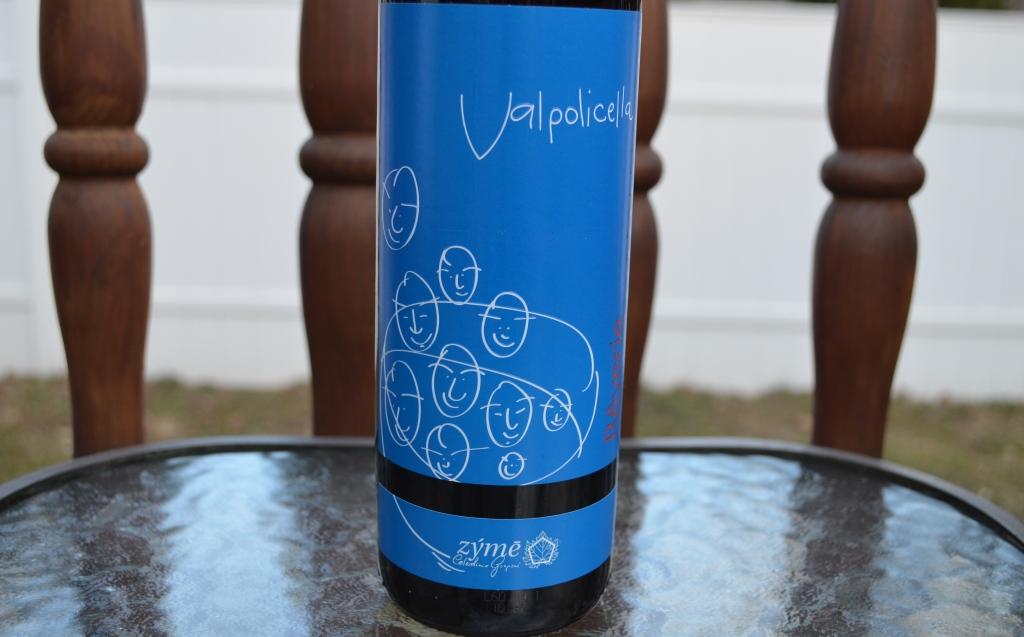
2009 Zýmē Valpolicella Réverie (a blend of Corvina 40%, Corvinone 30%, Rondinella 25%, Oseleta 5%; 11.5% ABV), made by Celestino Gaspari. Don’t know about you, but I never heard of Celestino Gaspari before. But when I read the note from Last Bottle wines that this Valpolicella is made by the winemaker who worked before for Giuseppe Quintarelli, I was sold instantly. Giuseppe Quintarelli holds a lot of respect in my mind (never tasted his wines, but according to the general consensus, it is very hard to find better Italian wines than those made by Giuseppe Quintarelli) – so when I see the wine made by someone who worked for Giuseppe Quintarelli for 11 years, you don’t really need to convince me to buy the wine as long as I can afford it – $13/bottle sounds quite affordable to me.
What makes me call this Valpolicella a perfect wine? It is the whole package.
Color – ruby red, pretty bright.
Nose – fresh fruit, raspberries, touch of cherries, very inviting.
Palate – clean acidity and young fruit, very light at first, evolves in the glass as it breezes, showing broader shoulders, more substance, adding plums and earthy notes to those bright sour cherries which were dominating at first.
Finish – long, with lingering fruit.
Overall very balanced, very bright, well made wine – guaranteed to brighten up your Monday, no matter what. As a bonus, I think this wine will evolve with time (will I be willing to wait is a whole another question). Drinkability: 8-
In addition to this Valpolicella Réverie, Celestino Gaspari makes a number of other wines at Zýmē, including Amarone and Amarone Riserva – but those would have to go more into the dream category. Well, Monday is as good of a day for dreaming as any other day, isn’t it?
Do you have a special Monday wine? Happy Monday to all of you and cheers!
Daily Glass: Study of La Rioja Alta Viña Alberdi
 On a given day, outside of any big holidays or special dinners, I have no idea what bottle I’m going to open in the evening. Sometimes it can be a painful procedure of looking at 20-30 bottles not been able to decide. Today, it was easy – @wineking3 mentioned on twitter that he had not the best experience with 2003 La Rioja Alta Vina Alberdi Reserva, which sparked my interest. You see, La Rioja Alta is one of the very best (and of my favorite) producers in Rioja, so I wanted to see if I can taste the same or similar wine – and I quite convinced that I should have some 2003 La Rioja Alta wine. Also it appears that Decanter magazine suggests that 2003 Rioja should be drunk now, however suggesting that better producers created powerful wines – which again only increased my interest.
La Rioja Alta was founded in 1890 by the group of five winegrowers in the Haro Station District. In 1941, the winery introduced its Viña Ardanza brand, which became one of the most famous in Rioja. In 1970, Viña Arana and Viña Alberdi were introduced, and since then La Rioja Alta wine had being produced under all three labels – but not in all the years. Each “brand” has it’s own unique source of grapes and grape composition, which is rather expected.
So as I pulled the 2003 La Rioja Alta Viña Alberdi Reserva from the wine fridge, somehow the thought came to my head – let’s use wine thermometer. You see, I have this nifty device called VinTemp, which is an infrared wine thermometer – it can perfectly measure temperature of the wine in the bottle without actually touching the wine. While I know that temperature has a great effect on the taste of wine, I practically never use this thermometer – but today I did, so the simple wine tasting became more of a study of the temperature effect on the wine.
According to the producer’s notes, 2003 was a very difficult year, due to the extreme heat and lack of the rainfall in July and August. As the result, only the grapes form the highest areas were used to produce the wine, which is made out of 100% Tempranillo coming from 3 different areas. The wine was fermented for 12 days, following by 26 days of malolactic fermentation and then aged for 2 years in American oak casks. The resulting wine has 13% ABV. That’s it – I’m done with all the technical and general stuff – let’s go to the tasting notes. Ahh, sorry, last detail – the winery notes recommend drinking the wine at 17°C (63°F).
The bottle is opened and the wine is poured. Initial temperature – 16.2°C (62°F). Color is dark ruby red, a color of mature red wine, but without brown hues. Rim variation – practically absent. The rim is clear and noticeable, which talks about some age, but it is clear. Nose: Mushrooms, earth, cherries, touch of barnyard – clearly an old world wine. Palate: Perfect acidity on the sides of the tongue, tart cherries, tannins. Tannins completely covering the mouth, very similar to Barolo, only with the wine been a bit lighter. And then there are more tannins. And they are going. And going. And going. For about one minute forty seconds ( yes, I looked at the clock). First verdict – perfectly dry wine. Need time to warm up and to open.
Second taste – about 20 minutes later, temperature measures 17.6°C (64°F). Nose – unchanged. Palate – more fruit, less tannins. Green notes, the wine almost tastes bitter. Worrying – is this the case of bad Rioja? Tannins are back, killing and overpowering.
Third taste – about an hour later, 19.3°C (67°F). Nose – coffee and chocolate showed up. Palate – beautiful. Fresh acidity. Bright fruit, cherries, blackberries. Still lots of tannins, but the fruit now comes first. Very round, smooth and expressive. Lots of pleasure.
Final verdict – Beautiful wine. Needs time!! Drinkability: 8
Let’s sum it up, shall we? In my opinion, this wine needs at least another 10 years to open up. And as you can see, the temperature plays key role here – considering level of tannins, the recommendation of 17°C is very surprising – you do need to drink this wine at a room temperature to let it show up in all its beauty.
Our study is complete. Now, can I have another glass? Cheers!
Last Bottle Sign Up ($10 credit)




 Talk-A-Vino