Archive
Tales of Kosher Alcohol
Wine is wine, right? So is whiskey, tequila, vodka, rum, and all the other liquors, do you agree?
Leaving cost aside, when choosing alcohol, your typical selection categories are “sustainable”, “organic”, “vegan”, “artisanal”, “biodynamic”, plus all the “certified” categories. And then there is a world of kosher, which trumpets all of those.
I’m sure many of you have heard of kosher food and many rules associated with it, in purchasing the ingredients, cooking, and consuming (don’t mix meat and dairy, for example). But wine is wine, right?
Ahh, no. There is kosher wine, and there is all other wine. And even the word “kosher” by itself is not enough when it comes to wine – the most important word on the bottle of kosher wine is not an appellation, not the name of the producer, not the name of the grape. The most important word is Mevushal.


Okay, if you are just buying the wine for yourself, and you observe kashrut laws, for the wine to be marked as kosher would be a perfectly safe choice. However, if you plan to drink that kosher wine anywhere outside of your house, you want to bring it to a kosher restaurant or to an event, this is where just the word “kosher” is not enough – the word you are looking for is “Mevushal”. The word must be present on the label, or you better leave your bottle at home.
Similar to any food which can be kosher or not, the kosher laws in winemaking are applied at all different stages of wine production, basically from planting and caring for the vineyard until the wine finally goes into the bottle. I have no intentions of diving too deep into the rules – just ask your trusted AI friend, and you will get as much (or much more) information as you want. But as we already said many times, just the word “kosher” on the bottle is not enough.
The kashrut laws extend further than just the liquid in the bottle. It also covers the service, the process of opening the bottle and pouring it into the glasses. And here is the culprit. The moment a non-Jewish person opens the bottle of kosher wine, the wine becomes non-kosher. same goes for the non-Jewish person pouring the wine into the glasses. And as you can imagine, this is an absolutely standard service situation, at any restaurant and any event. So now, finally, Mevushal is to the rescue! If the wine is marked “Mevushal”, then anyone can open the bottle and serve the wine, and it will continue being kosher!
While important for the kashrut, Mevushal used to be almost a swear word among wine lovers. 20-30 years ago, no wine aficionado would touch the wine marked as Mevushal. The reason is simple. To ensure that kosher wine remains kosher no matter who pours it, the wine had to undergo the Mevushal process.
Actually, if you like wine and want to know what “mevushal” means, the translation itself should really scare you – the word means “to cook” or “to boil“. If you ever have forgotten a bottle of wine in the car on a hot summer day, you perfectly know why “cooked wine” is such a swear word in the wine lover’s lexicon. So to become “mevushal”, the entirety of the wine had to be heated up to 180°F (82°C) – then the wine becomes mevushal and can be handled by anyone. And in the old days, the wine would also become undrinkable for the absolute majority of wine lovers. But thanks to modern science and technology, the mevushal process now is very similar to flash pasteurization – wine is heated very quickly, for less than a minute, and then immediately cooled off, thus avoiding inflicting any essential damage on the taste of the wine.
Whew, I hope you got it now. The kosher, mevushal, and the whole nine yards associated with it.


But, the fun with kosher alcohol is only starting now. As you now learned how sacred the grapes are in the Jewish religion, the game with all other types of alcohol becomes even more complicated, as you never know where the pitfalls are located.
Basically, you can look at it like this: if the liquor has anything to do with grapes in any shape and form (grapes/grape juice, wine barrels, whatever else you can think of), unless the bottle is marked as “kosher”, it can’t be served at a kosher restaurant or an event. For example, the vodka made from potatoes or wheat is perfectly appropriate. If the vodka is made from grapes – not at all, unless the bottle says it is kosher. If vodka was flavored by the wine/grape byproduct – again “NO”, unless it is marked “kosher”.
It all might sound somewhat innocent until you realize that lots and lots of higher-end scotches are “non-kosher” – for example, the majority of the Macallan scotches are not kosher. All of the double-wood, sherry cask, port cask, burgundy wine cask finishes and so on render the whisky “non-kosher” and can’t be served. That also affects quite a few of the Anejo tequilas… You really need to spend time to figure out a full pedigree on a bottle of scotch you are planning to serve at your event, or risk it being rejected by the caterer.
Anyway, you might imagine that I didn’t wake up in the morning with the thought “why don’t I write an extensive post about kosher alcohol laws”. Had to plan for a big event later on, so all the learnings were necessary and fresh, hence the desire to share.
We got together to taste some wines and to decide on our choices. The Georgian kosher wine I was able to procure would be a fine choice – tasty, not overpowering, well balanced – but “not mevushal” on the back label rendered it a “no go” option.
Tequila seems to be a popular choice of a sipping alcohol nowadays, and if it is just a blanco, no wood aging is involved, it is fine. Basically, all of tequila blanco is a safe choice even without saying “kosher” on the bottle, it is made out of the agave plant. The problem with good tequila is availability – for example, even the Ocho you can see in the picture is not really available, so we are going with Don Abraham Blanco, which is also hard to procure.
I already explained the problem with scotch, so the only options are the scotch which was not aged or finished in any of the wine casks. Balvenie 14 is simply too expensive, so we tasted both Johnnie Walker 18 and Tomintoul 16, and settled on the Johnnie Walker 18 as it was a bit more structured than Tomintoul.
There you are, my friends. Here is my story of selecting proper kosher wines for an event – and my hope that now you are a tiny bit more educated about the intricacies of kosher alcohol than before.
Until next time – cheers!
Daily Glass: Kosher [and not only] Wines
 Originally, this post was supposed to be titled Happy Passover! – but Passover started on Monday, and today is Wednesday… Well, considering that celebration technically continues for a week, I guess it is still appropriate to wish Happy Passover even on the third day… By the way, Happy Easter too – just in case I will not be posting anything on Sunday.
In our family Passover is rather cultural holiday than religious, which means that our Passover dinner (seder) takes just a little longer than the regular dinner (when it is done properly, you might have the first real bite of food closer to midnight). What is important for me here, as with any other holiday where dinner is a part of the festivities, I can pay special attention to the wine (not that I don’t do it every day, but holiday is a holiday).
Of course Passover dinner calls for the Kosher wine. About 10 years ago, selecting a kosher wine for Passover or any other holiday used to be a very dreadful experience – sweet grape-juice-more-than-wine Manischewitz was undrinkable, but still better than most of the actual “dry” kosher wines which were outright terrible. Over the last 5-7 years the situation changed dramatically, and now at the most of the stores you can find a great variety of outstanding kosher wines. You don’t need to take my word for it – here are kosher wine recommendations from Eric Asimov of New York Times, here is the list from Lettie Teague from the Wall Street Journal (subscription required, unfortunately), and here is a very interesting post from Alice Feiring describing her recent kosher wine tasting experience.
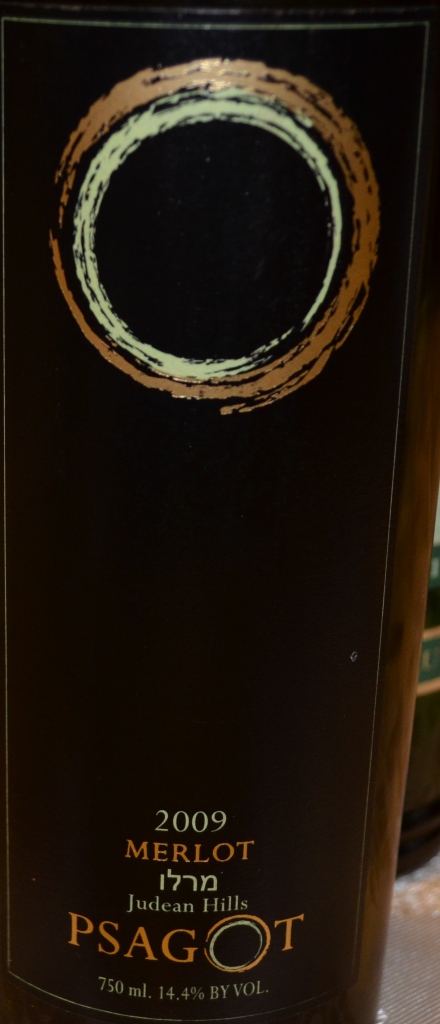
I had a great experience with a two different kosher wines. The first one was 2009 Psagot Merlot Judean Hills (about $25, 14.4% ABV). Psagot means “peak” in Hebrew, and the small community of Psagot is actually located on the peaks of the Benjamin region mountains, 900 meters above sea level – and this is where this wine came from, made at a boutique winery under the same name. It is 100% Merlot, aged for 13 month in small French oak barrels. On the nose and the palate this wine has perfect dark power (umph – I gave you one strong description, but you know that I often describe the wine emotionally rather than technically). Coffee, chocolate, dark fruit on the nose, same on the palate. Roasted notes on the palate. Excellent balance of fruit, acidity and tannins, very harmonious. Drinkability: 8-
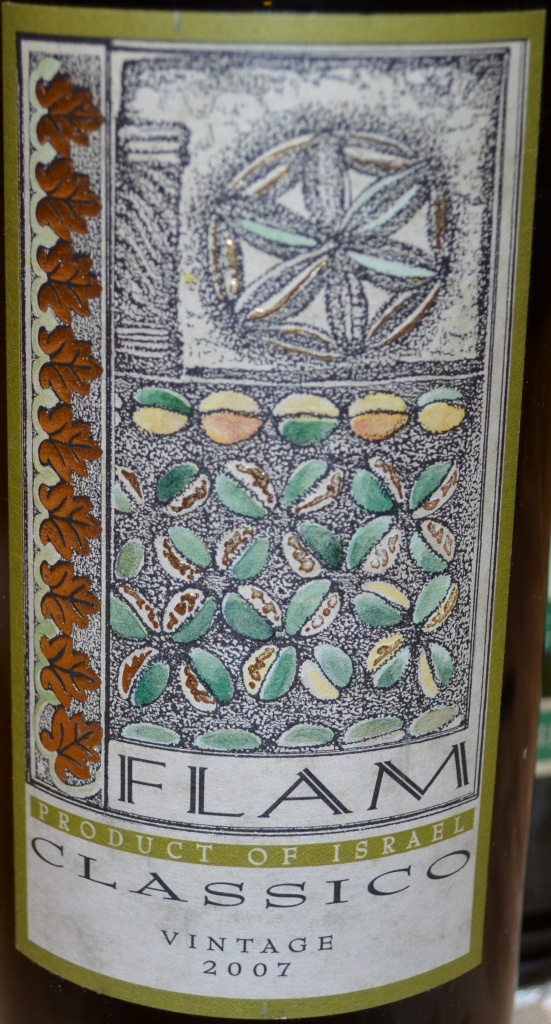 The second wine was 2007 Flam Classico Judean Hills (about $30, 13.5% ABV). Flam winery is also situated in the Judean Hills area. It was founded in 1998 by the brothers Golan and Gilad Flam after they visited Chianti Classico region and fell in love with the wines. While “Classico” is the name of the wine I’m about to present to you, the wine itself is more of a super-Tuscan than an actual Chianti Classico. This 2007 vintage is a blend of 50% Merlot and 50% Cabernet Sauvignon, and if anything, it resembles classic Bordeaux (it is interesting to note that 2010 vintage is even more “classic Bordeaux” than the 2007, with the addition of small amounts of Cabernet Franc and Petit Verdot to the blend).
2007 Flam Classico has nice dark fruit on the nose and the palate, with a tiny whiff of Bordeaux greenness. Classic Bordeaux profile with touch of eucalyptus and mint. Very round and polished, smooth but with pronounced acidity, and literally unstoppable – in terms of not being able to stop drinking it until bottle is empty. Great wine which will evolve further (but it was my one and only bottle, sigh). Drinkability: 8
 I have one more wine to tell you about. It is not kosher wine – but we still drunk it, and I liked it quite a bit so kosher or not but I would like to mention it.
2011 Cave Pomerols Picpoul de Pinet “Hugues de Beauvignac” Coteaux du Languedoc (about $10, 12.5% ABV) – this wine is produced by La Caves Pomerols and it is made out of 100% White Picpoul grape. The wine was clean and refreshing on the nose, with touch of minerality. The same on the palate – white flowers, white fruit, round and easy to drink. Very balanced. Considering the price, this can be your every day white wine – and it will pair nicely with lots of different foods. Drinkability: 8-
This is all I have for you for now, folks. The usual “Wednesday Meritage” post still should be coming out today, as it is in the works already, so until then – cheers!
Last Bottle Sign Up ($10 credit)





